RUPERT’S LAND NEWS
MAY 2 0 17
IN THIS ISSUE 5
Entertaining Angels
6
House Blend Hospitality
9
WestEnd Commons: Home with a Heart
11
Mental Health and the Church
CO N N ECT I N G C H U R C H & CO M M U N I T Y
rln
rupert'slandnews
Publisher | Bishop Donald Phillips Editor | Kyla Neufeld Accounting | Bernice Funk Advertising | Angela Rush Layout & design | cityfolkcreative.ca Rupert’s Land News - is published 10 times per year (September - June) by the Diocese of Rupert’s Land, in the Anglican Church in Canada. It connects churches and communities from Portage la Prairie, MB, to Atikokan, ON, by offering news, events, opinion, and ideas to 6,000 readers per month. RLN is available in a variety of formats: • • • •
rupertslandnews.ca facebook.com/rlandnews twitter.com/rlandnews instagram.com/rlandnews
We also deliver timely news and information via a weekly email. Sign up at: rupertslandnews.ca/email Advertising: RLN accepts advertising in our monthly magazine and our weekly email. Our rate sheet is available at rupertslandnews.ca/ads. To discuss advertising call (905) 630-0390 or email: rlandnews.ads@gmail.com.
A ng e la Rush
Advertising Manager
CONNECTING CHURCH & COMMUNITY
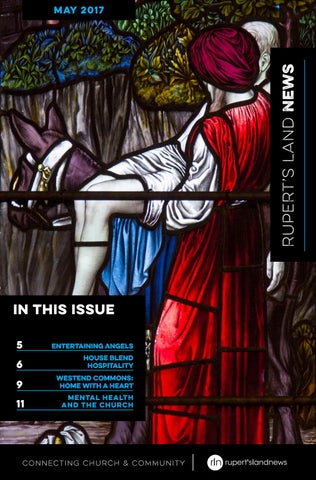
Editorial offices: Anglican Lutheran Centre 935 Nesbitt Bay Winnipeg Manitoba R3T 1W6 RLN exists to explore issues at the intersections of faith and life. In doing so we solicit and publish a range of opinions, not all of which reflect the official positions of the Diocese. We acknowledge that we meet and work in the Treaty 1 Land, the traditional land of the Anishinaabe, Cree, and Dakota people and the homeland of the Metis Nation. We are grateful for their stewardship of this land and their hospitality which allows us to live, work, and serve God the Creator here. RLN welcomes story ideas, news items, and other input. If you want to be involved in this media ministry, please email the editor at: rlnews@rupertsland.ca. Contents copyright 2017 by Rupert’s Land News. All rights reserved. Cover: Lawrence OP, "The Compassionate Samaritan," stained glass detail from St. Salvator's Chapel in University of St. Andrews, Scotland.
Thorvaldson Care Center AN INTERMEDIATE CARE FACILITY FOR SENIORS 24 hr care and supervision Registered Nurse on site Assistance with medications, dressing, hygiene
All meals, laundry and housekeeping Recreation programs Private bed-sitting rooms
OVER 55 YEARS
caring for senio rs
rlandnews.ads@gmail.com 905-630-0390 rupertslandnews.ca 495 Stradbrook Ave | Winnipeg, MB | R3L 0K2
ph (204) 452-4044 | fax (204) 452-4054 thorcare@shaw.ca | www.thorcare.ca
RUPERT’S LAND NEWS
2
E dito r ial
Who is My Neighbour?
I thought about the Parable of the Good Samaritan a lot while putting together this issue on Hospitality; nothing too deep, but it was constantly simmering in the back of my mind. That's why I chose it for the cover image. The Parable of the Good Samaritan was one of the first I can remember learning about in Sunday School. That lesson, I think, came with a simple “do unto others” message, easy for children to understand. Now, though, the political and cultural aspects are much more apparent. “But a Samaritan, as he travelled, came where the man was; and when he saw him, he took pity on him. He went to him and bandaged his wounds, pouring on oil
RUPERT’S LAND NEWS
and wine. Then he put the man on his own donkey, brought him to an inn and took care of him. The next day he took out two denarii and gave them to the innkeeper. ‘Look after him,’ he said, ‘and when I return, I will reimburse you for any extra expense you may have'” (Luke 10:33-35). The Samaritan comes across a Jew, a man who would well be his enemy. And yet, when he sees that the Jew is hurt and vulnerable, he crosses cultural divides to help. Who are the vulnerable in the Diocese of Rupert's Land? The homeless, low-income earners, single parents, foster children, Indigenous peoples, people with physical and mental disabilities, refugees, LGBT* folks. These are our neighbours. These are the people to whom the Church should be extending the hand of Christ-like hospitality, and yet all too often they feel unwel-
come in the pews. In the current toxic political climate of hate towards people of colour, refugees, and the LGBT* community, I think this parable is more important than ever. This issue of Rupert's Land News takes a look at two communities who were formed to prioritize low-income housing, as well as how parishes can be safer spaces for people with mental health issues, and how we can dismantle hurtful attitudes towards refugees. There is also a feature artist, Bob Webster, who sees the resurrection in the subjects he paints – a fitting thought as we continue in the Easter season. There's already a lot of good work happening in the parishes of Rupert's Land, from clothing and food drives to acknowledging the Treaty lands in our services. Let us continue this work of extending hospitality to all of our neighours.
3
Pasto ral note
Breakfast w it h jes us Donald Phillips
At the end of John’s Gospel there is a lovely story of the disciples encountering the risen Christ on the beaches of Lake Tiberias. (John 21:1-14) It takes place sometime after the disciples saw their risen Lord and knew that he was alive. After fishing all night and catching nothing, a man on the beach gives them specific instructions on where to let down their nets and try again. They land an amazing catch and, through this action, begin to recognize that the man on the beach is the risen Christ.
disappears in unpredictable ways – continues to offer them hospitality just as he might have in his earthly life. Interestingly, the author of the text comments with “Now none of the disciples dared to ask him, ‘Who are you?’ because they knew it was the Lord.” There is something strange about the encounter. The disciples know who this mysterious figure is and yet as mortals they are now keenly aware of his divine nature. The power of this encounter lies in its revelation of the nature of hospitality.
Ultimately, when we freely offer hospitality we allow ourselves to be motivated and led by God’s love and by God’s sense of who we are. When they come ashore they discover that Jesus is already cooking fish and bread and he says to them, “Come and have breakfast.” The text reads that he took both the bread and the fish and gave it to them. Jesus serves the disciples breakfast – he offers them hospitality. Think about this scenario. The risen Christ – now an eternal, other-worldly figure who appears and
RUPERT’S LAND NEWS
Jesus’s hospitality is not offered on the basis of his friendship with the disciples; he addresses them from the beach with the impersonal term "children" rather than by their names or some other familiar address. There is no indication that this hospitality is offered because of an assumed need such as hunger because they had been working all night, or on scarcity because they didn’t
catch any fish that night. Jesus offers hospitality because it is a reflection of his character. He offers hospitality (and instructs the disciples to follow his example – cf. John 13) because that is part of God’s nature and God’s intention for us. Ultimately, when we freely offer hospitality we allow ourselves to be motivated and led by God’s love and by God’s sense of who we are. When we do that, we place ourselves in the presence of the living God, regardless of who might be the recipient of our hospitality. When the opportunity presents itself to be hospitable, think of breakfast on the beach with Jesus. Follow his example and know that you are in good company!
Donald Phillips, Bishop of Rupert’s Land 4
Ho spita l ity
Entertaining A n g els Mary Coswin
According to St. Benedict, guests, “who are never lacking in the monastery,” are “to be received as Christ” for Christ said, “as long as you did it to one of these least, you did it to me.” The sculpture located in the St. Benedict's Retreat Centre foyer, “Christa,” is a symbol of the presence of Christ in both the guest and the one who receives the guest. Hospitality is not mere sociability (as in the “hospitality industry”), but a sacred duty. Biblical hospitality invites us to see in the visitor a divine messenger. While the community and each member may have something to offer a guest, the guest also brings a gift. In our day and age, we have become suspect of all that is different, including the stranger. It is a risk to open our doors to those whom we do not know, who are different. Yet the test of true faith is our ability to welcome the strange and the stranger, to make a friend of a potential enemy, to include rather than exclude. In welcoming the “other” we may thereby “entertain angels unawares.” In Benedict’s day, hospitality was offered to travellers who needed shelter for the night before travelling on. Today the ministry of hospitality is exercised in RUPERT’S LAND NEWS
many different ways. At St. Benedict’s Monastery, we often welcomes guests who come for personal retreats or workshops offered in the retreat and conference centre. These guests have the option of being in solitude, requesting time to speak with a spiritual director, or engaging in their group’s activities or a Centre spirituality program. St. Benedict’s Place provides a home to seniors who must leave their homes due to their diminishing age. Younger and older, for them all we provide a room — a share in our home — in simple, safe, and beautiful natural surroundings, an opportunity to celebrate Eucharist in our Chapel, and company in the dining room. Our ministry of hospitality also extends beyond the monastery so that we can exercise hospitality of heart in all our encounters. Thereby, we do our part to extend the reign of the God of peace and justice. As individuals and families, parishes and companies, the gift of hospitality can be extended in many ways in word and deed. Just as Abraham welcomed three strangers and in return was promised a son, we are all promised some new life when we “entertain angels unawares.”
Photo: Mary Coswin
“Christa” by Helen Norman, located at St. Benedict’s Retreat and Conference Centre.
Mary Coswin, OSB, MA (Formative Spirituality) is a member of St. Benedict’s Monastery and currently the Director of St. Benedict’s Retreat and Conference Centre. 5
Ho spita l ity
House Blend Hospitality Rachel Twigg Boyce
House Blend Ministries celebrated its 10th birthday in February with cake, coffee, and community storytelling. This milestone means a lot of different things to me, but one thing it signifies is that, for 10 years, I’ve been a part of a community that has been learning about hospitality, by practising hospitality. House Blend began with a simple question, “How can we rearrange our lives in ways that allow us to follow God and create a caring, Christ-like community?” For the past 10 years, through a process of trial and error and error, we continue to ask that question and every now and then we catch glimpses of the answer. Hospitality is a practice through which I am learning to invite people into my life, as it is, not as I wish it was, and there has been no better place to learn this practice than House Blend. As I invite people into the mess of my life and they invite me into theirs, I am learning that I can be loved and accepted just as I am without fear, judgment, or the need to pretend. I have learned that hospitality and entertaining are not the same thing. When I hear the word “entertain-
RUPERT’S LAND NEWS
Photo: Anthony Schellenberg
House Blend Highlight: Regular Potluck and Prayers nights. ing,” a Martha Stewart like perfection comes to mind. If practising hospitality actually required me to be a Martha Stewart-quality hostess, I’d never measure up, and therefore I’d never practice it. At House Blend, we share at least one meal together every week and we stress that whatever anyone brings is a gift. That means that my contribution is equally welcome when its a store-bought pie I picked up on the way over, a casserole worthy of a magazine cover, or something less palatable with burnt edges. Whatever I bring is accepted with gratitude and I have come to realize that the main thing holding me back from shar-
ing with others is my own inner critic. Which doesn’t mean it is always easy. The House Blend community is diverse and comes with a wide range of unique challenges. As I practice hospitality and become more comfortable with this discipline, I know that I always have more to learn. Several years ago, for example, we discovered we had bed bugs in our community house and I discovered where my growth edge was. I am willing to practice hospitality with people, but not with bed bugs. Did that mean that I would wall myself off from human relationships with people who lived
6
Ho spita l ity know how to get rid of them, and I have good friends who will lend a hand. Our 10-year anniversary has been a time to celebrate all the good things God has done in and through our work. We own a home that has allowed us to provide safe, affordable housing for people who are homeless or at risk of homelessness, and we’ve also been able to use Photo: Courtesy of Rachel Twigg Boyce that space to invite people to join House Blend Highlight: Residents hang with us for a weekly Shane Claiborne. potluck supper, for games nights with bed bugs in order to and other social activities, protect myself? Was I capaand for a cup of coffee and ble of becoming comfortable a conversation on the front living with bed bugs in order porch. to maintain those precious This anniversary has human relationships? also been a time to dream I’d like to say I am, about the next 10 years. As but I’m not. Bed bugs are part of that process we’ve disgusting. But my friends are had to make a very difficult lovely and I found I was able decision. For years we’ve to accept a certain degree known our community house of risk in order to continue was simply too large and those relationships. I armed too expensive for our little myself with information on community to manage and basic prevention techniques so we have decided to sell and continued to develop this property in May. relationships with people We are amazed and on the margins. I hope I deeply grateful that all the never discover bed bugs in people who live in our commy own home, but if I do, I munity home have already
RUPERT’S LAND NEWS
found alternative housing. We are thankful that All Saints' Anglican Church has extended hospitality to us and will become the new home for our weekly potluck and prayer gatherings starting in early May. And, we are hopeful as we imagine what God has in store for us next. Beyond helping people find housing and preparing a house for sale, we’re not sure where this experiment with hospitality will take us – into a new partnership with an existing landlord or housing project? The purchase of a new smaller more affordable house? We’re not sure, but we sure are excited to find out!
Rachel Twigg Boyce serves as a lay pastoral associate at saint benedict’s table and is the Executive Director of House Blend Ministries. Want to learn more, lend a hand, or to come to a potluck? Email her for more information or call her at 204-791-4956. 7
Fe atur e A rtist
The art of Bob Webster
I call this one "Angel Choir." I see in [humpback whales] an affirmation of the expansive life of God's realm, which goes so far beyond what we know here in the flesh. Without consciously knowing it, when we make/create things, we are speaking a symbolic tongue, which can open us further to the language of the Spirit.
When I was a child, I had no artistic ability, so I never followed any of those inclinations. However, in a mid-career evaluation course, I realized that I was doing nothing with my creative drives. I decided to dabble in oils and had a few satisfying results, but for a couple of reasons I drifted away. Upon retirement, living in Mexico, I discovered my neighbour was an artist and RUPERT’S LAND NEWS
she gave me some classes. I have long been impressed with God's call to Adam to join in the acts of creation by naming the animals. The ways in which we serve one another continue to manifest the loving word of God, which called all things out of nothing. Painting is simply one way I use present materials to draw into being something that was not there before.
Bob Webster served in several Winnipeg parishes before retiring in 2012. He is now an honorary assistant at St. Matthew's Anglican and has spent six winter months in Puerto Vallarta over the last five years. 8
Ho spita l ity
WestEnd Commons: Home with a Heart Marilyn Boyd
When St. Matthew’s Anglican Church committed to transforming itself into affordable housing for families, the congregation knew it would be a major undertaking, but we really had no idea of how many challenges we would face along the way. Although the destruction/ construction phase ended over two years ago, problems still present themselves, from the vagaries of repurposed infrastructure (e.g how to create air flow in a space that used to be nothing but air) to molasses-speed negotiations with the different levels of government to resolve errors and release withheld funds. Perhaps it’s just as well we didn’t know all that lay ahead or we might have never begun.
But begin we did, and in the end we have the great satisfaction of sharing our building with 26 occupied apartments, a busy neighbourhood resource centre, and several other faith groups. What distinguishes St. Matthew’s Non-Profit Housing (SMNPH) as a “landlord” is the commitment to creating and sustaining community. There is ministry in the very act of providing low-income families with safe affordable housing, but the commitment of the SMNPH Board goes beyond that: to sustain a “difference that makes a difference” through building relationships of support and caring, and offering opportunities for empowerment. To accomplish this we have not just a
Photo: Irv Kroeker
A trip by young musicians to the Manitoba Conservatory of Music and Art
RUPERT’S LAND NEWS
Photo: Irv Kroeker
Cheryl Starr, WestEnd Commons Community Event Coordinator building manager but also a community coordinator. Matt, an immigrant, and Cheryl, an Indigenous woman, happily mirror the dominant demographic of the WestEnd Commons community. Cheryl arranges monthly meetings where tenants’ concerns and desires are heard and acted upon. For example, in response to a tenant petition, the Board has just drafted a new pet policy to welcome feline and other small furry creatures into the community. Other social events — seasonal celebrations, movie nights, etc. — happen frequently. We provide families with links to educational opportunities either internally or through referral to external resources.
9
Ho spita l ity Photo: Irv Kroeker
Olga Rogozina and Svitlana Tyutyunnyk helping prepare a community supper. Every two weeks we have community kitchen gatherings, where tenants take turns being that evening’s chef, shopping with Cheryl for ingredients, and cooking a dinner for all to enjoy. Other activities — such as a successful art and photography program, field trips to museums, plays and parks, an ongoing music program for the children, and a new dance program created by the children — arise from the initiative of the tenants themselves and are sustained in part through Cheryl’s support. Our resident manager Matt has recruited and trained tenants to take over the cleaning and basic maintenance responsibilities for the building; one recent outcome is a young
RUPERT’S LAND NEWS
person having gained both the self-confidence and job experience to apply for and get a job in the wider community. Another example of individual empowerment is the tenant who has gradually assumed primary responsibility for the recruitment and management of casual rentals in the neighbourhood resource centre space. There are many more stories of growth and transformation as people blossom in the context of safe space and supportive neighbours. Thus, for the SMNPH Board, the current priority for the WestEnd Commons is to maintain it, not just as a well-run affordable housing unit, but also as a vibrant, connected, and caring community. What is worrisome to us on the Community Life
Committee is that Cheryl’s position as Community Coordinator, along with most programs and field trips, are funded by grants and individual donations. Thus, keeping “heart” in the home demands many volunteer hours doing grant applications and writing reports. In the long-term, this funding model is not sustainable. Yet this ministry of community is what makes the WestEnd Commons unique and, according to Archbishop Fred Hiltz, an initiative that the Anglican Church of Canada can look to for inspiration and with pride. We welcome your prayers, dollars, and ideas of how to build long-term stability into this enactment of our Lord’s call to “love your neighbour.”
Marilyn Boyd is a retired family therapist. She is a long-time member of St. Matthew’s Church and is one of three representatives of this church sitting on the SMNPH Board.
10
Menta l Health
Mental Health and the church Annick Boulet
I’ve been depressed for almost 13 years. I have what the The Diagnostic and Statistical Manual of Mental Disorders calls Persistent Depressive Disorder (PDD), or Dysthymia. Basically, I’m always sad. The symptoms that “qualify” someone for a Major Depressive Disorder need to be present for at least two weeks. In order to “qualify” for PDD, the symptoms need to be there for at least two years. Throughout these 13 years, my relationship with God and the Church has grown and evolved. My depression has shaped my relationship with God and has greatly influenced how I experience going to church. I spent many years “trying out” different churches, all of them leaving a bad taste in my mouth. It was very difficult walking into a church where everything and everyone looked perfect and perfectly happy. The people leading the music in the front of the church were all well-groomed and always smiling. The worst part is was that all the songs were about how great God is and how wonderful life is was once we accepted God's love in our hearts. I can’t be in churches like that. They amplified
RUPERT’S LAND NEWS
Image: Bob Webster
I love the humpback whales that come to Banderas Bay, Mexico, to give birth and mate, and decided to try painting one. I was asked if I had named it and I immediately knew his name was "Watcher." He reminds me of the angels God put in charge of watching over us. I also feel a sense of Watcher questioning us about what we are doing when it comes to the deterioration of the earth at human hands. my sense of brokenness and made me feel like I a was reject because I don’t experience God that way. I didn't feel like I was allowed to be sad there, I didn't feel welcomed. God is my strength, my hope, and my constant companion. But, even though my faith infuses me with the courage to keep going, it has not decreased my suffering. I now worship at saint benedict's table. The day that I discovered it, I immediately knew that I was at home. This was a contem-
plative church that touched my brain and my heart all at the same time. This church made me feel like it was okay not to be perfect. This church acknowledged that life was not always easy and that we do suffer, even as Christians. We sang songs about how great God is, but we also sang about doubt and suffering. This church gives me peace. Everyone is open about their hardships and their pain, even our priest. I don’t feel alone in my pain because my church communi-
11
Menta l Health ty is walking along with me. We are struggling together. It feels more honest, more true, more welcoming and I don’t have to hide who I am. What a relief to be given the permission to exist and to be accepted how I am. Saint benedict’s table also has an Emotional Wellness group. This group gathers twice a month and serves as a support for people struggling with mental health issues or who know people that are struggling. For long periods of time, I could not attend this group regularly. However, despite not always being able to attend, it was still great to know that it was there. It made me feel like I was someone that mattered, someone that the church cared about because it wasn't trying to hide all of the people who struggled with mental illness. If a church asked me how they can be more welcoming and accommodating to people with mental health issues, I would encourage them to acknowledge suffering as a normal part of life. I would suggest that
RUPERT’S LAND NEWS
the church make room for people to get together to talk about mental health openly and not hide behind faith. Ask people how they are doing with the intent and the desire to really hear the truth and to be open to listen. I think that people are often afraid to ask because they feel like they will then have to try and fix the other person. I have never met someone struggling with their mental health who wanted to be fixed (by anyone other than a specialist, maybe). People just want to be heard and listened to. I don’t like having to walk this sadness alone. I would love to just be able to talk about how sad I feel and have someone listen. There is not much more that I want besides being treated with love, respect, and dignity. And to be honest, you can’t fix someone anyway. Let God work that out. Finally, I would ask people not to be put off by behaviour that seems out of the norm. If someone leaves suddenly in the middle of church, or runs off immedi-
ately after church, or displays a behaviour seems odd or unfriendly to you, realize that maybe that person is struggling with something. Instead of judging them, next time you see them, ask them if they are okay. Most likely, that person is just trying to cope in the best way that they can.
Annick Boulet has a Masters degree in Social Psychology and currently teaches Personal Growth for the Nathanael program with the Archdiocese of StBoniface. She hopes to continue pursuing a career as a public speaker on the issues surrounding mental health and spirituality.
12
C o mmunity
PARISH NEWS ROUND UP St. Luke's Anglican
St. Luke's is looking for a simple, wooden, adjustable lectern to put in its Chapel. If you have something that might work, call the church office 9 a.m. to noon, Monday to Friday, at (204) 452-3609.
St. Peter's Anglican
In March, two members of St. Peter's Anglican, Rod and Susan Sprange, delivered handmade and new baby items to a hospital in San Pancho near Puerto Vallarta in Mexico. This hospital provides maternity services for the entire region and most of the mothers, who are extremely poor, desperately need baby clothing and toiletry items. To learn more about this project and see photos from the March trip, visit St. Peter's website.
RUPERT’S LAND NEWS
Sisters of St. John the Divine
An opportunity for women in their 20s and 30s who have a passion for the gospel, who want to serve others, and who would like an experience of intentional community. The Sisters of St. John the Divine, an Anglican Monastic community in Toronto, are accepting applications for 2017-18 cohort program, “Companions on an Ancient Path” This is a free program with the opportunity to take spiritual formation courses at Wycliffe. The deadline for applications is June 15, 2017. For more information about the program, visit the Companions website or the Sisterhood's website. Those who are interested can also contact the Rev. Canon Sr. Constance Joanna Gefvert, Companions Coordinator.
13
C o mmunity PWRDF
The Rev. Canon Dr. Cathy Campbell has been appointed as the new representative to the Canadian Foodgrains Bank from The Primate’s World Relief and Development Fund. Campbell is the former incumbent of St. Matthew's Anglican in Winnipeg and has has long been at the forefront of food security issues in Canada. “These are two organizations whose work I appreciate a lot and in an area that I’ve worked in all my life: food security, food justice and food sovereignty,” she says. “I’m thrilled to be able to interface between health, the earth, agriculture, economics and politics in this role.”
About PWRDF and Canadian Foodgrains Bank PWRDF has been a member of the Canadian Foodgrains Bank since 2007. When people give to PWRDF, they can direct their contribution to PWRDF’s account with the CFGB. When PWRDF receives requests for food from its partners in all parts of the world, each request is reviewed to ensure the food and support provided will improve the lives of the people receiving the assistance in both the short and long terms. Once planning is complete, including details to ensure safe and reliable delivery, CFGB withdraws money from PWRDF’s account and arranges the purchase and transport of the food. PWRDF often works together with other Foodgrains Bank members. – Janice Biehn, Communications Coordinator, PWRDF
Upcoming Issues For June's Indigenous History Month we'll explore the UN Declaration on the Rights of Indigenous People as well as the concept of "all my relations," and feature local Indigenous art.
RUPERT’S LAND NEWS
14
Via Me dia
Welcoming the Stranger Gail Schnabl
Regularly we see images and hear news reports of migrants and refugees struggling to find their way to a new life. In conversation — public and private — we hear comments about “the strangers” at our gates or within our borders. The reports and conversations vary in tone or attitude. Some individuals and groups express fear, others anger, though fortunately some still advocate for compassion and justice. Sadly, the first two reactions have become more common of late and this is worrisome. As refugee coordinator for the Diocese, I am especially attuned to comments which are directed to or about refugees. I feel sickened when it is suggested that we should be anxious and wary of people who cross our borders on foot or who arrive by plane because they intend us harm at worst or take our jobs or need social assistance at best. We hear about the importance of "Canadian values" and the implication that these "others" do not have those values. In Canada we are blessed with many riches, not the least among them the gift of living in a country of peace and security. The oceans to the east and west have insulated us for the most RUPERT’S LAND NEWS
part from some of the harsh realities of people fleeing their homes and knocking on our doors. In recent months, we have seen many asylum seekers arrive in Manitoba from the U.S. The numbers are higher than in the past but it is good to remind our-
selves that, in comparison to many countries in the world, our numbers are small and it should be possible to manage the need given Canada's abundant resources. What is the response that we the people of the Church are called to make at this time? The Gospel tells Image: Bob Webster
I began [painting] simply wanting to make something beautiful, so I did a series of flowers. But, as my son Mark moved closer to death, I switched to sunsets. My style is more controlled, so I didn't think my artwork was expressive of my grief; I had not yet clued into the fact that I was painting sunsets while my own sun going was down. A friend asked for a painting of something from Mexico and we decided on a shell. This began a series of shells, which speak to me of life and resurrection. There's an empty tomb element about them as some critters move on to larger shells when they outgrow the one they're in. It is only in the last month or so that I see in them some beginnings of a healing developing. 15
Via Me dia us to welcome the stranger, to open our hearts to the "other," to love our neighbour. What does that mean in today's world? What can we as members of this Diocese do? Canadians have responded generously over the years to assist refugees and the Diocese has been engaged in this ministry since 1979, when the private refugee sponsorship program began. So we haven't turned a blind eye to this need but neither have we previously faced such demands. Today, there are over 65 million displaced persons. By no means can all these be resettled, but each year the UN refers more people for resettlement than are accepted by countries. I encourage congregations to consider sponsoring a refugee family. Gathering together a group of fellow parishioners is the first step. From this group may come a settlement team. Raising money need not be overwhelming. Several congregations and I are happy to share our experience. Partnering with another congregation shares the responsibility and work. Through sponsoring refugees, our lives are changed as we learn about ourselves and the refugee. Once this happens, it just isn't possible to continue to see these new-
rln
comers as "the Other." As individuals or congregations we can reach out in friendship to newcomers and share part of our lives with them. Volunteering is one way to meet newcomers. Once we know "the Stranger" they are no longer the "Other." And, as we learn about the newcomer's experience, we can refute some of the fallacies we hear spouted in conversations. A frequently heard comment is that newcomers take Canadians' jobs or, paradoxically, that newcomers end up on social assistance. The truth is that most refugees settle well, become employed (often in jobs Canadians don't want), pay their taxes, and support their children's education, just like the rest of us. They may dress a bit differently and speak with an accent but once you get past that, we have a lot of the same aspirations. Indeed it is through establishing relationships that we come to "love our neighbour as ourselves." Financial help is always appreciated. Manitoba Interfaith Immigration Council works with refugee claimants and currently has a campaign to raise funds for that work. The Diocese has two representatives on their Board. Finally, the Diocesan Refugee Fund continues to raise money to support
rupert'slandnews
RUPERT’S LAND NEWS
an Afghani family already arrived. Many will recall this family was originally sponsored by the late Rev. Jim Wolf. The Fund will remain alive beyond this sponsorship and funds used to respond to future needs. Sadly the needs are profound and we cannot meet them all. However, as Christians let us be reminded of our many blessings and the abundance with which they have been bestowed. Let us prayerfully consider the extent to which we can individually contribute from that abundance. Whatever that contribution, we can always respond to expressions of hate and fear toward the "Stranger" with the Gospel messages of love and welcome.
Gail Schnable is the Diocesan Refugee Coordinator. If you have any questions, send her an email.
CONNECTING CHURCH & COMMUNITY 16