"A different skill set is needed when you have rapid, comprehensive change efforts than when you just need to maintain status quo, and these two HPLI graduates have applied to their schools the standard business practices that are at the heart of the program. Their significantly improved accountability scores attest to the effectiveness of this approach and its relevance for education reform," said Jordan. Participants commit to two consecutive summers of training, during which they receive instruction from MSU faculty and professional staff from the RCU and the College of Education as well as from other experts from across the state. The content of the training covers systems, processes and best practices, both from education and business perspectives, merging the two into a packaged skill set for executive leadership that empowers the attendees to take the necessary actions to transform their schools. More specifically, the cohort groups address a range of topics from 90-day action plans and crucial conversations to characteristics of high-performing schools and hiring the right people. To help sustain the leaders’ enthusiasm and momentum, HPLI project staff make site visits, and the RCU hosts midyear retreats in the spring that focus on developing management systems for implementing datadriven decision-making and a high-performance team at the school level. A consistent theme exists throughout all of the HPLI training – the use of data to identify needs, track changes and document success. In fact, use of performance data has been essential to both Temple and Dixon-Magee in the changes they have instituted. "We utilize data
to ensure that it drives instruction daily,"
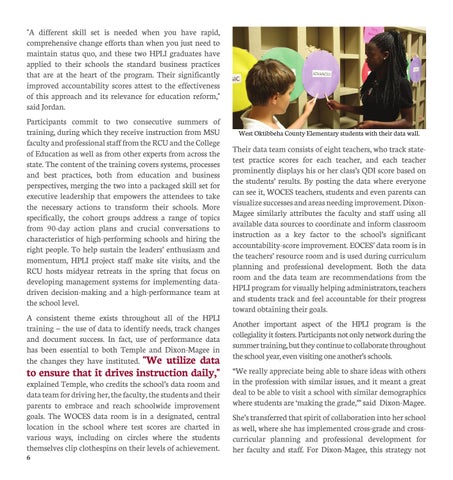
explained Temple, who credits the school’s data room and data team for driving her, the faculty, the students and their parents to embrace and reach schoolwide improvement goals. The WOCES data room is in a designated, central location in the school where test scores are charted in various ways, including on circles where the students themselves clip clothespins on their levels of achievement. 6
West Oktibbeha County Elementary students with their data wall.
Their data team consists of eight teachers, who track statetest practice scores for each teacher, and each teacher prominently displays his or her class’s QDI score based on the students’ results. By posting the data where everyone can see it, WOCES teachers, students and even parents can visualize successes and areas needing improvement. DixonMagee similarly attributes the faculty and staff using all available data sources to coordinate and inform classroom instruction as a key factor to the school’s significant accountability-score improvement. EOCES’ data room is in the teachers’ resource room and is used during curriculum planning and professional development. Both the data room and the data team are recommendations from the HPLI program for visually helping administrators, teachers and students track and feel accountable for their progress toward obtaining their goals. Another important aspect of the HPLI program is the collegiality it fosters. Participants not only network during the summer training, but they continue to collaborate throughout the school year, even visiting one another’s schools. “We really appreciate being able to share ideas with others in the profession with similar issues, and it meant a great deal to be able to visit a school with similar demographics where students are ‘making the grade,’” said Dixon-Magee. She’s transferred that spirit of collaboration into her school as well, where she has implemented cross-grade and crosscurricular planning and professional development for her faculty and staff. For Dixon-Magee, this strategy not