“Each school will have the structure of the model to guide them, but their counseling plan will offer different programs based on the academic and social needs of the students in that school,” Christian said. “Right now, we’re teaching counselors to develop a plan and how to access and gather data about their students to develop programs that will meet their needs.”
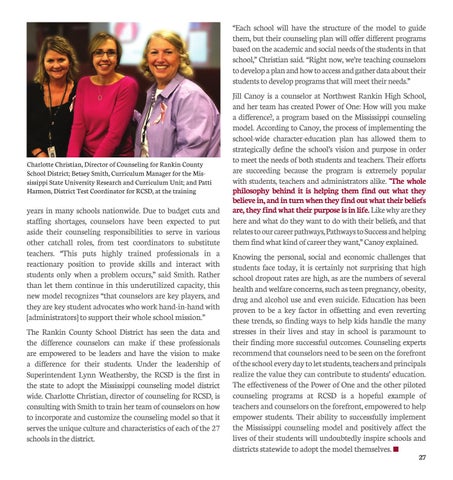
Charlotte Christian, Director of Counseling for Rankin County School District; Betsey Smith, Curriculum Manager for the Mississippi State University Research and Curriculum Unit; and Patti Harmon, District Test Coordinator for RCSD, at the training
years in many schools nationwide. Due to budget cuts and staffing shortages, counselors have been expected to put aside their counseling responsibilities to serve in various other catchall roles, from test coordinators to substitute teachers. “This puts highly trained professionals in a reactionary position to provide skills and interact with students only when a problem occurs,” said Smith. Rather than let them continue in this underutilized capacity, this new model recognizes “that counselors are key players, and they are key student advocates who work hand-in-hand with [administrators] to support their whole school mission.” The Rankin County School District has seen the data and the difference counselors can make if these professionals are empowered to be leaders and have the vision to make a difference for their students. Under the leadership of Superintendent Lynn Weathersby, the RCSD is the first in the state to adopt the Mississippi counseling model district wide. Charlotte Christian, director of counseling for RCSD, is consulting with Smith to train her team of counselors on how to incorporate and customize the counseling model so that it serves the unique culture and characteristics of each of the 27 schools in the district.
Jill Canoy is a counselor at Northwest Rankin High School, and her team has created Power of One: How will you make a difference?, a program based on the Mississippi counseling model. According to Canoy, the process of implementing the school-wide character-education plan has allowed them to strategically define the school’s vision and purpose in order to meet the needs of both students and teachers. Their efforts are succeeding because the program is extremely popular with students, teachers and administrators alike. "The whole philosophy behind it is helping them find out what they believe in, and in turn when they find out what their beliefs are, they find what their purpose is in life. Like why are they here and what do they want to do with their beliefs, and that relates to our career pathways, Pathways to Success and helping them find what kind of career they want,” Canoy explained. Knowing the personal, social and economic challenges that students face today, it is certainly not surprising that high school dropout rates are high, as are the numbers of several health and welfare concerns, such as teen pregnancy, obesity, drug and alcohol use and even suicide. Education has been proven to be a key factor in offsetting and even reverting these trends, so finding ways to help kids handle the many stresses in their lives and stay in school is paramount to their finding more successful outcomes. Counseling experts recommend that counselors need to be seen on the forefront of the school every day to let students, teachers and principals realize the value they can contribute to students’ education. The effectiveness of the Power of One and the other piloted counseling programs at RCSD is a hopeful example of teachers and counselors on the forefront, empowered to help empower students. Their ability to successfully implement the Mississippi counseling model and positively affect the lives of their students will undoubtedly inspire schools and districts statewide to adopt the model themselves.
27