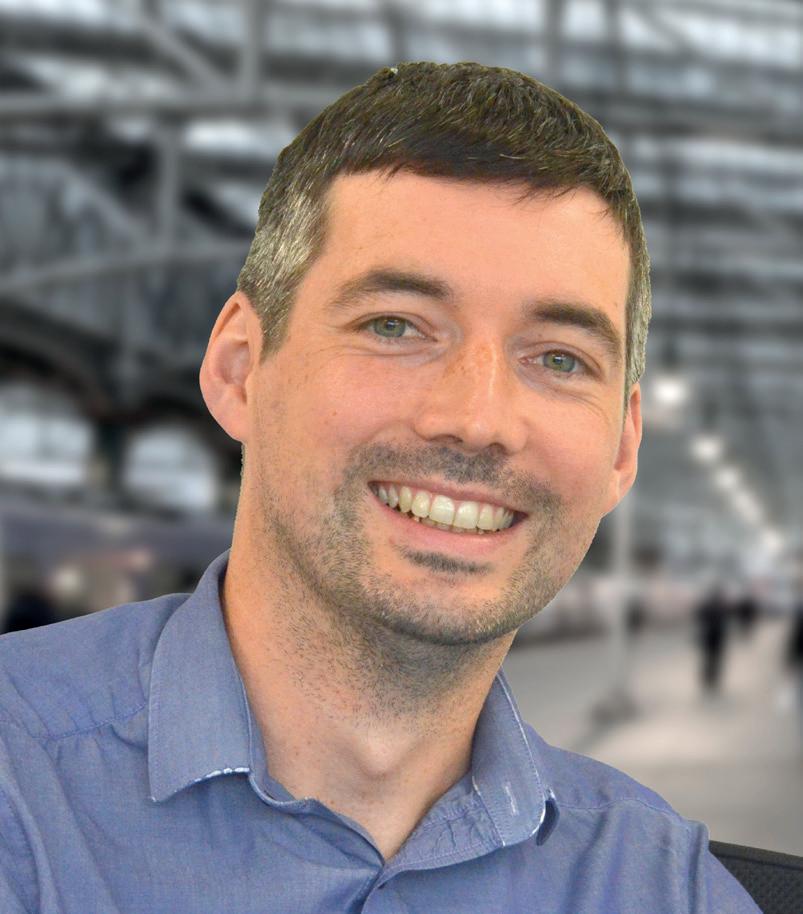
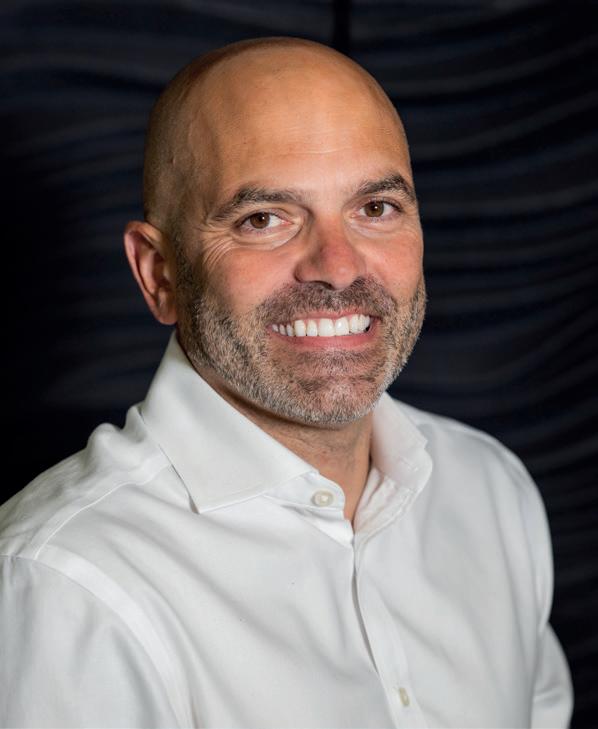
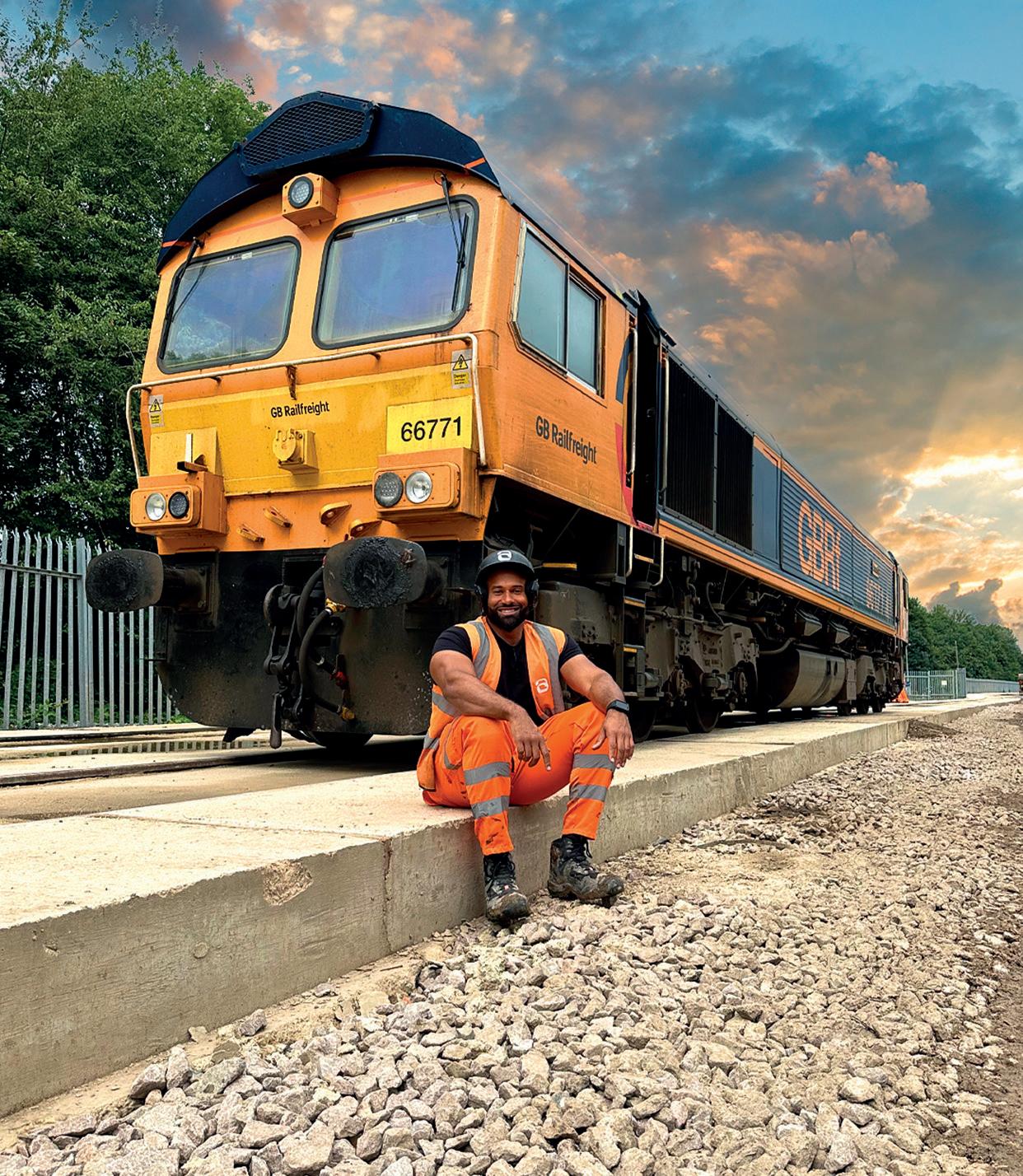
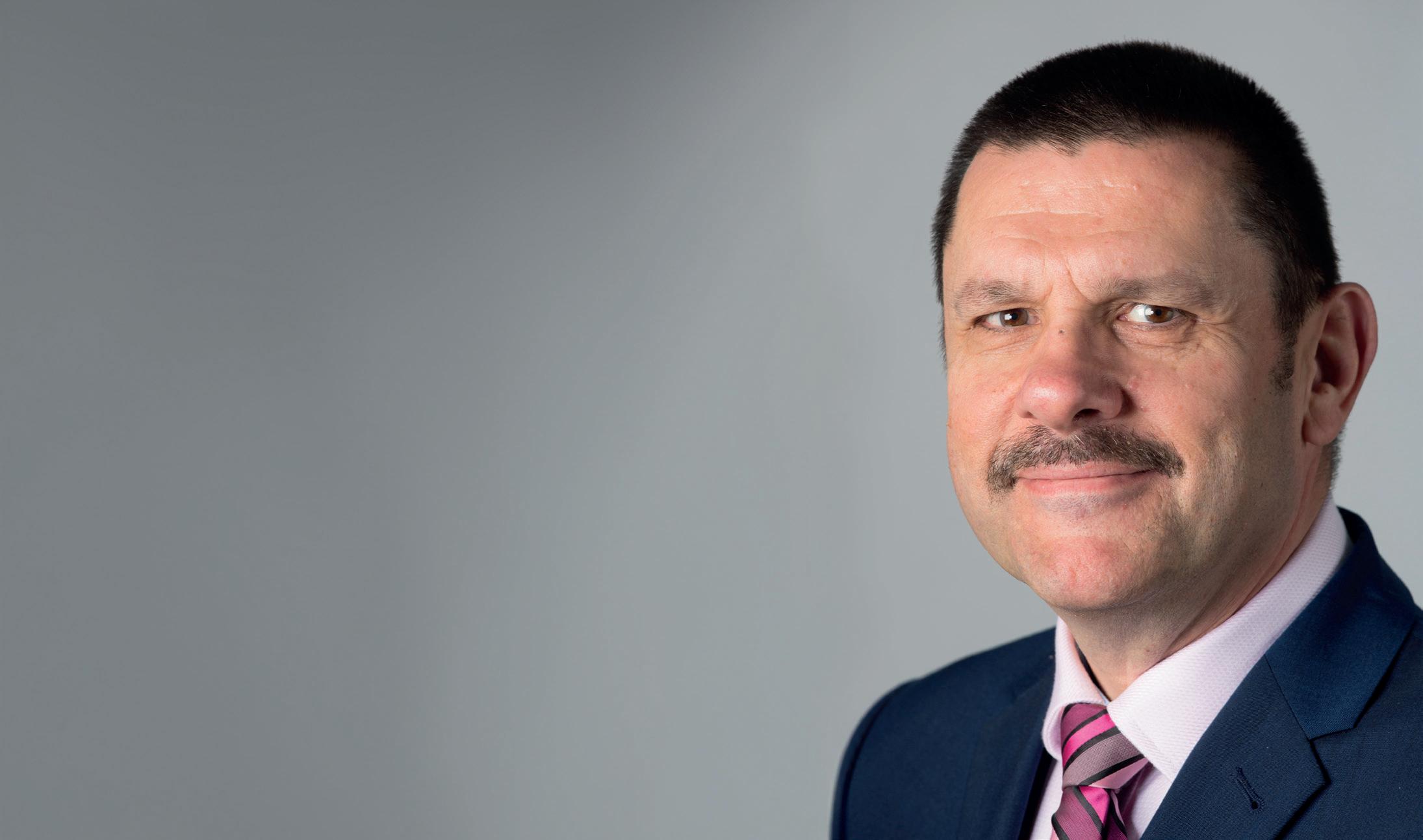
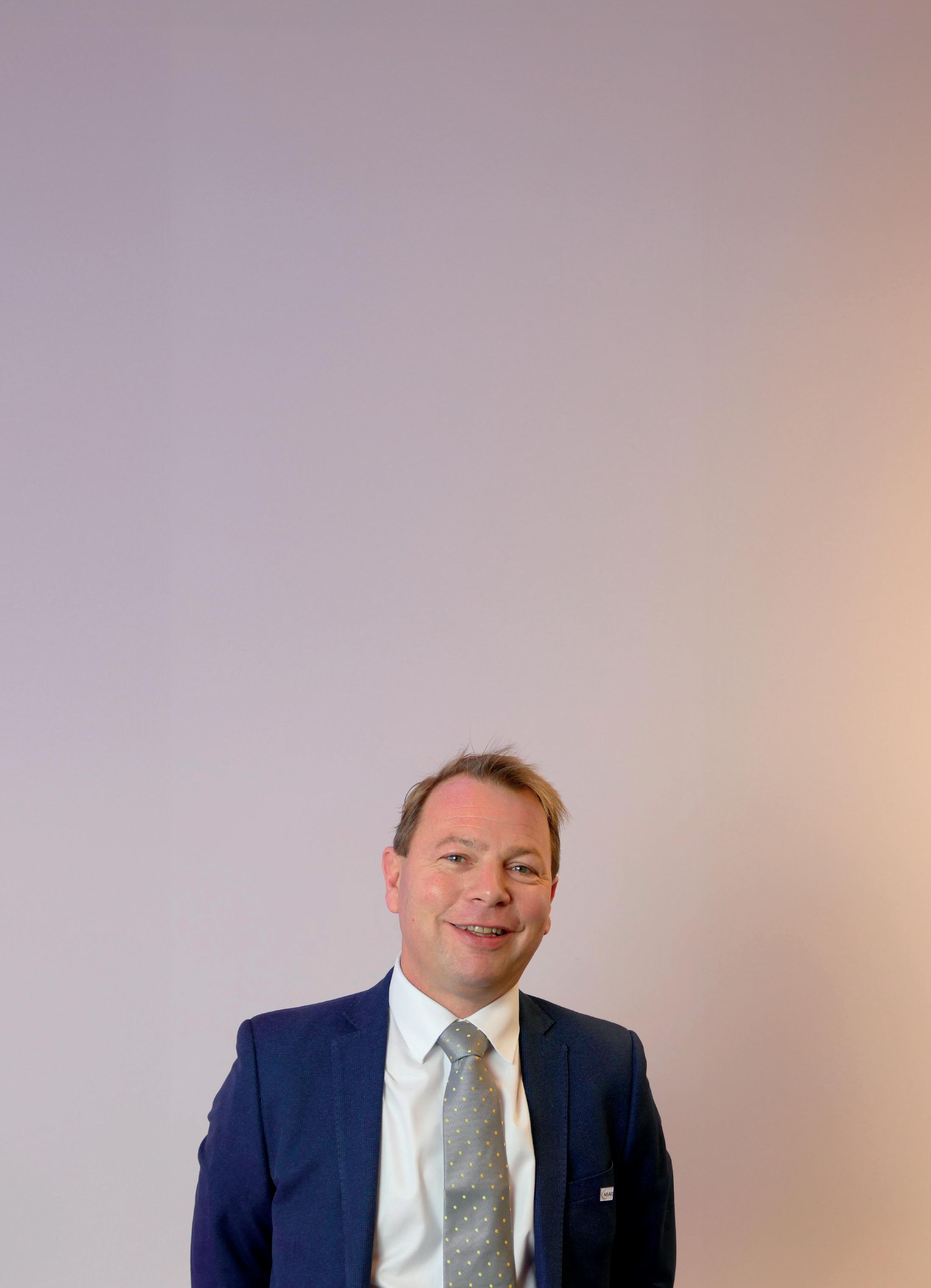
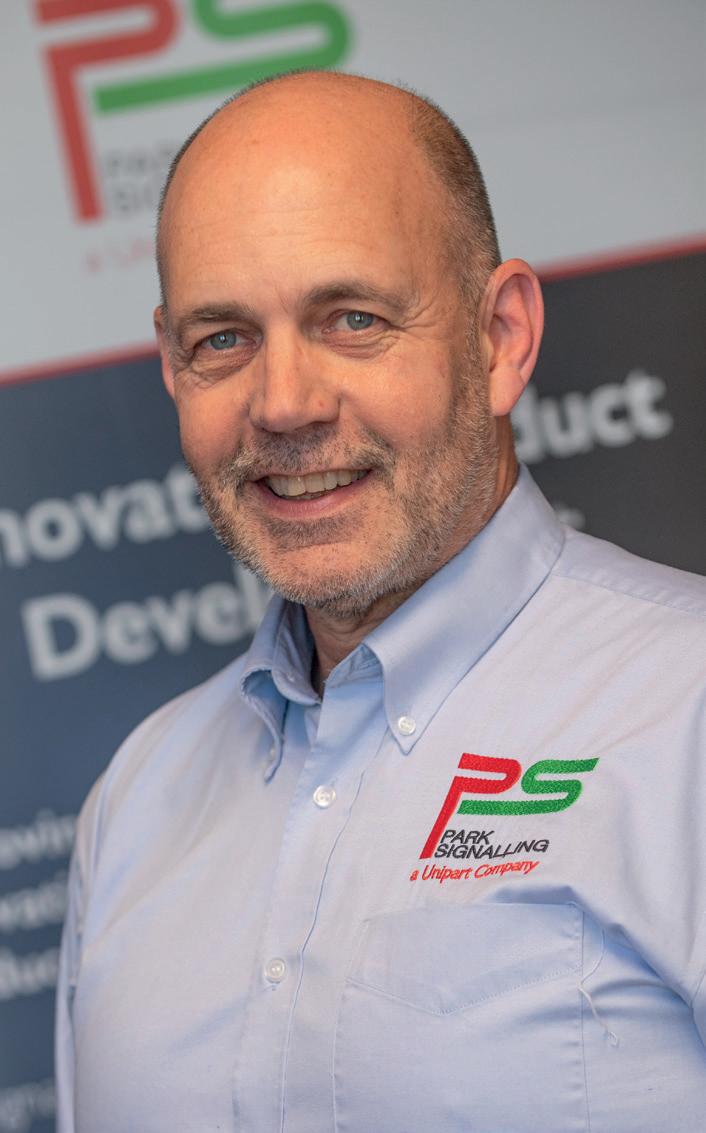
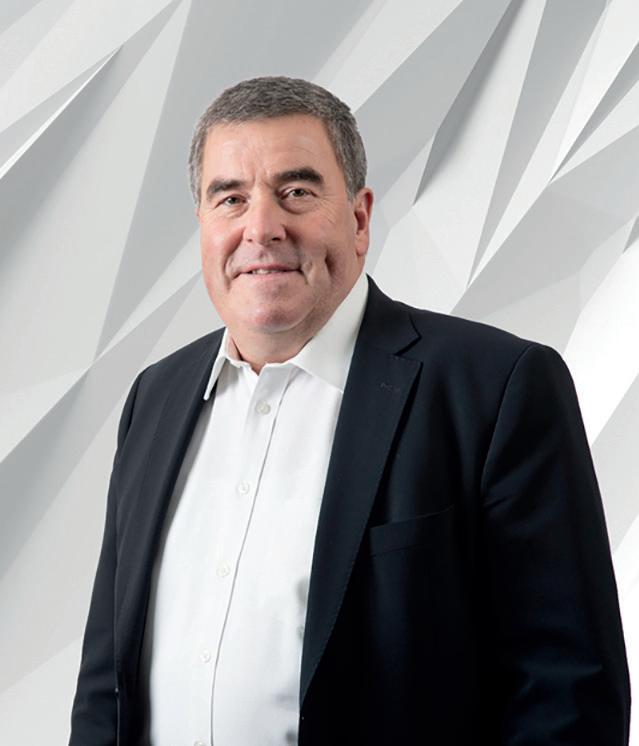
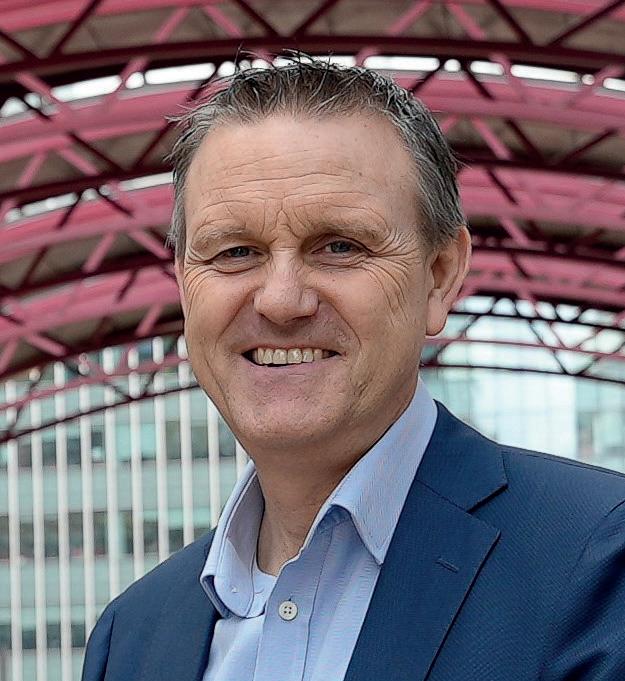
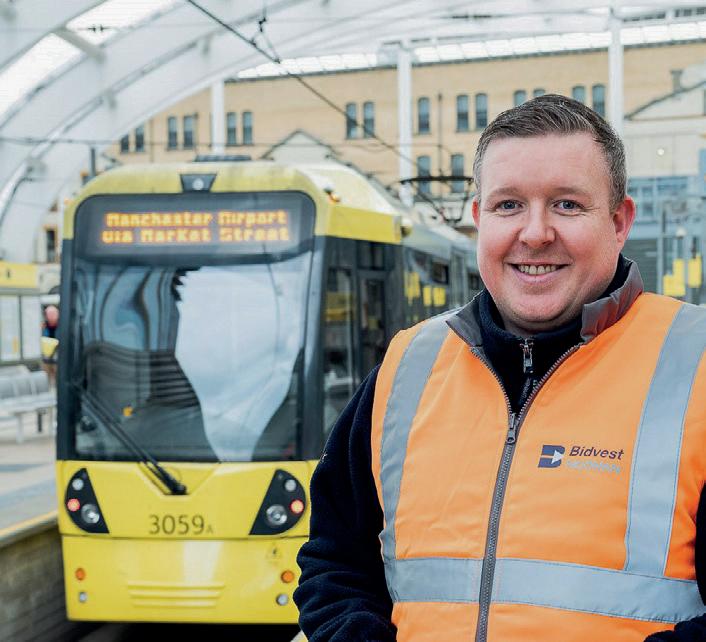
John Trenchard Embracing the opportunity to explore rail
InnoTrans 2024
A review from the world’s leading train fair
ANDREA ROSSI
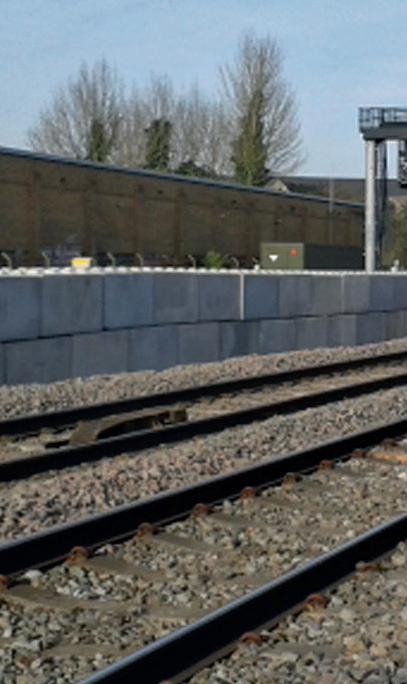
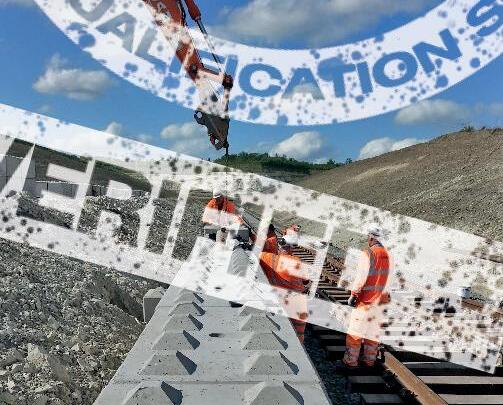
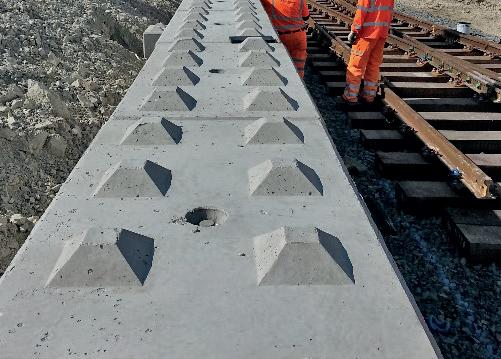
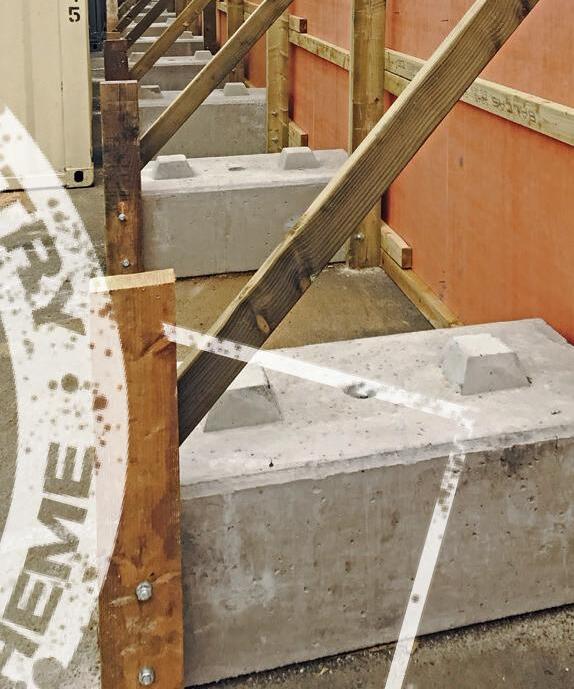
interlocking blocks and barriers
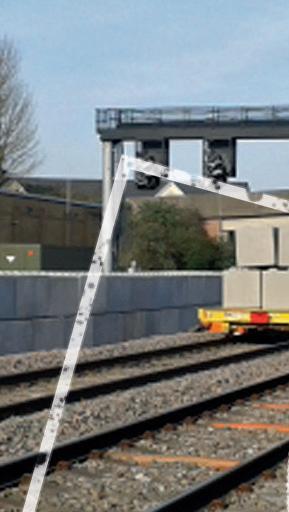
Workforce protection barriers avoiding all line closures with adjacent line open
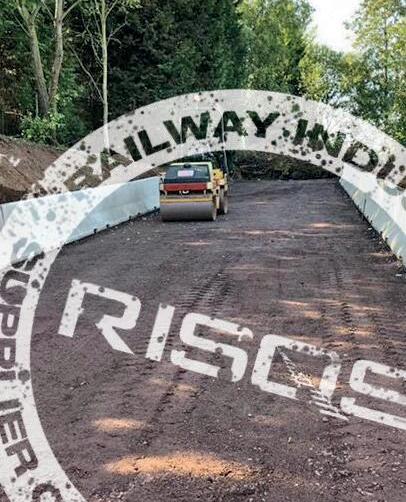
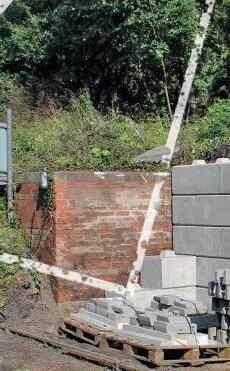
Rockfall prevention with our multi-purpose Jersey barriers
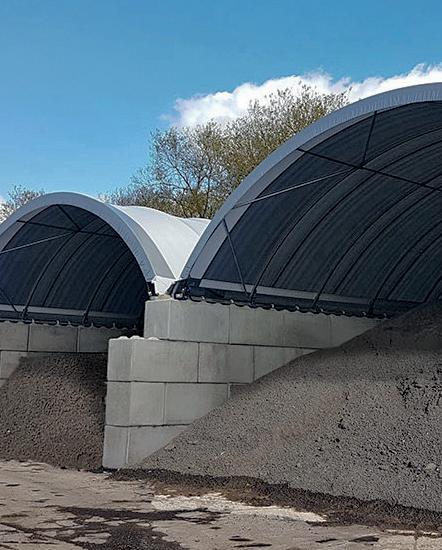
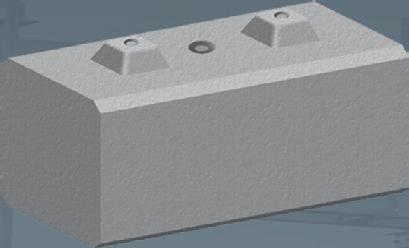
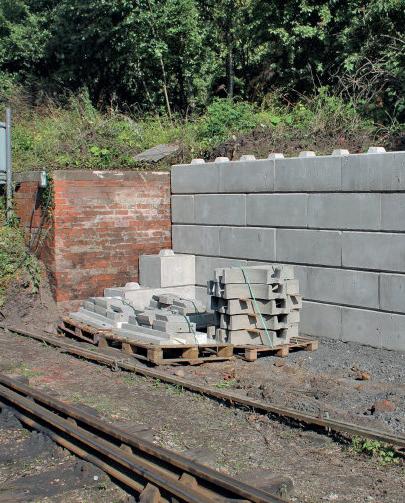
Large ballast bays with walls constructed from our Legato interlocking blocks
Large scale embankment retention using the versatile Legato blocks
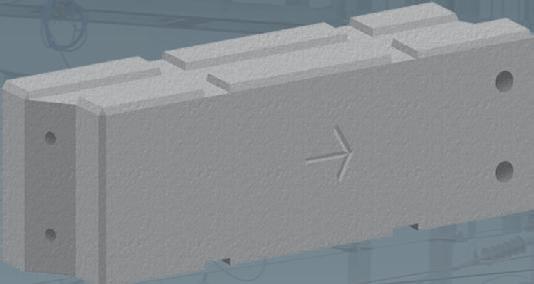
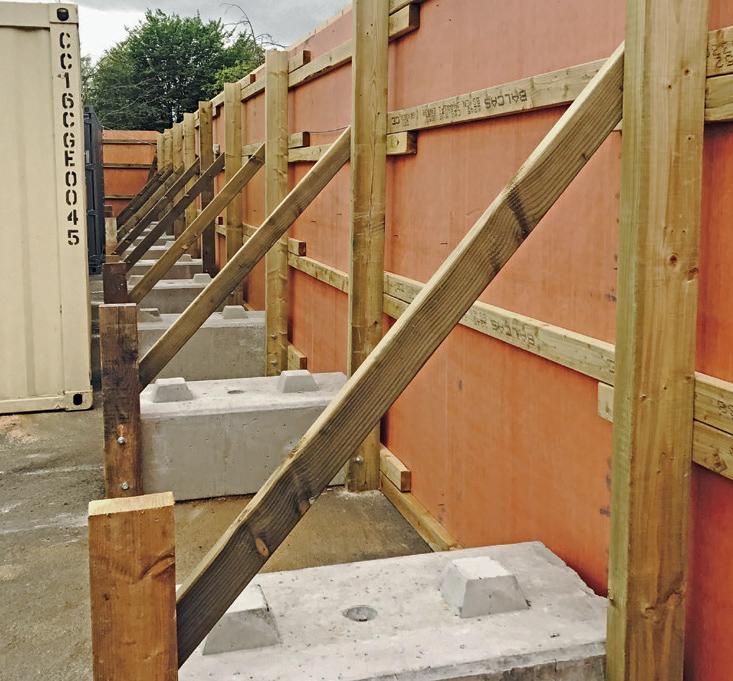
Hoarding stabilisation utilising Elite Duo interlocking blocks
Workforce safety refuges built from Elite Duo blocks
For more information phone 01952 588 885 or browse www.eliteprecast.co.uk or email sales@eliteprecast.co.uk
Unlocking rail freight growth
elcome to the latest edition of Rail Director, which this month focuses on rail freight. “We need to ensure the costs associated with energy and track access make choosing rail an affordable option for our customers who are working hard to grow their businesses, while also decarbonising their supply chains.” That is the message from Andrea Rossi, Chief Executive Officer at DB Cargo UK.
He spoke to the magazine ahead of a rail freight summit, held this month, bringing together freight operating companies, the Office of Rail and Road, Department for Transport, Network Rail and many other leading stakeholders. The meeting focused on practical solutions to boost rail freight growth, including how to strengthen business confidence to secure new investment in services.
There is a lot to be positive about when it comes to rail freight. The green credentials have been well publicised, with a tonne of freight moved by rail producing around a quarter of the carbon emissions that it would if it were moved by road. One train could replace up to 129 heavy goods vehicles, which would ease congestion on the roads. This has been recognised in Government targets of rail freight to grow by 75 per cent by 2050, a target rail freight operators see as a floor rather than a ceiling.
There has been a lot of good news in the sector in the last few weeks. Tesco has introduced its 10th rail service moving 600,000 cases per week, Freightliner launched a new Tilbury2 to Manchester Trafford Park intermodal rail freight service, DP World has launched a second weekly rail service connecting London Gateway and Southampton logistics hubs, and Solent Rail Terminal has recorded more than 55,000 containers handled since opening the multi-million pound upgrade six months ago at the Port of Southampton.
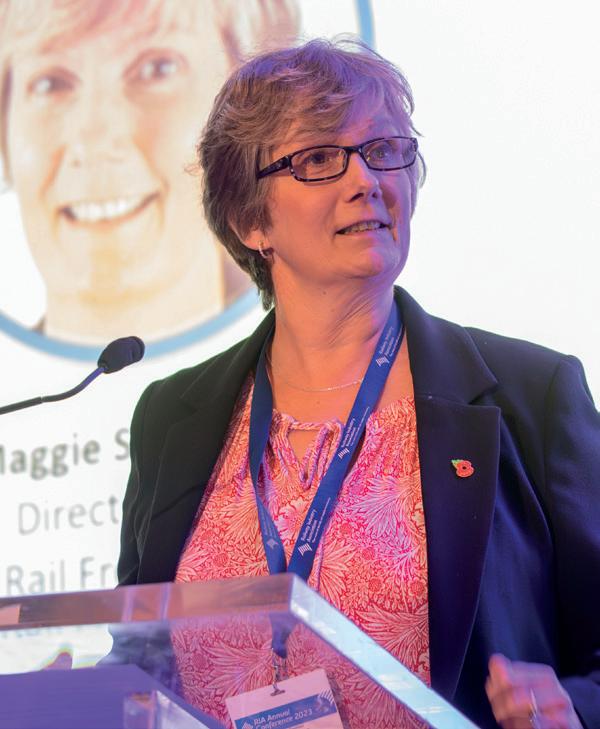
This magazine continues with the positive theme and highlights the investment being made to ensure rail freight thrives. Mark Wyborn has spoken about Porterbrook’s first dedicated freight strategy (page 22), John Trenchard discusses DP World’s Modal Shift Programme (page 10), John Smith explains more about its hybrid Class 99 locomotive (page 36) and Maggie Simpson, Director General of the Rail Freight Group highlights how freight needs to be embedded at the heart of transport and rail policy and planning (page 14).
Alongside the freight articles Rail Director features a fantastic round-up of the recent InnoTrans from Nigel Wordsworth (page 26). It was my first time at the world’s largest railway industry supply exhibition and it didn’t disappoint. What was particularly good to experience was the positivity and optimism among attendees, despite the many miles of walking visitors will have clocked up covering as many of the fantastic exhibits as possible.
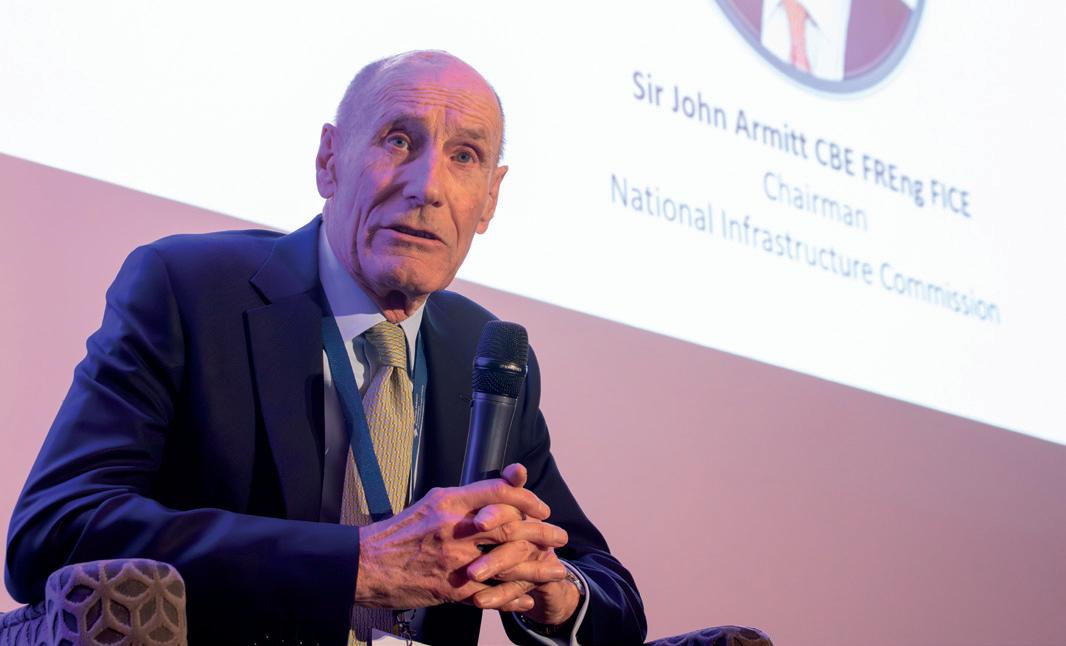
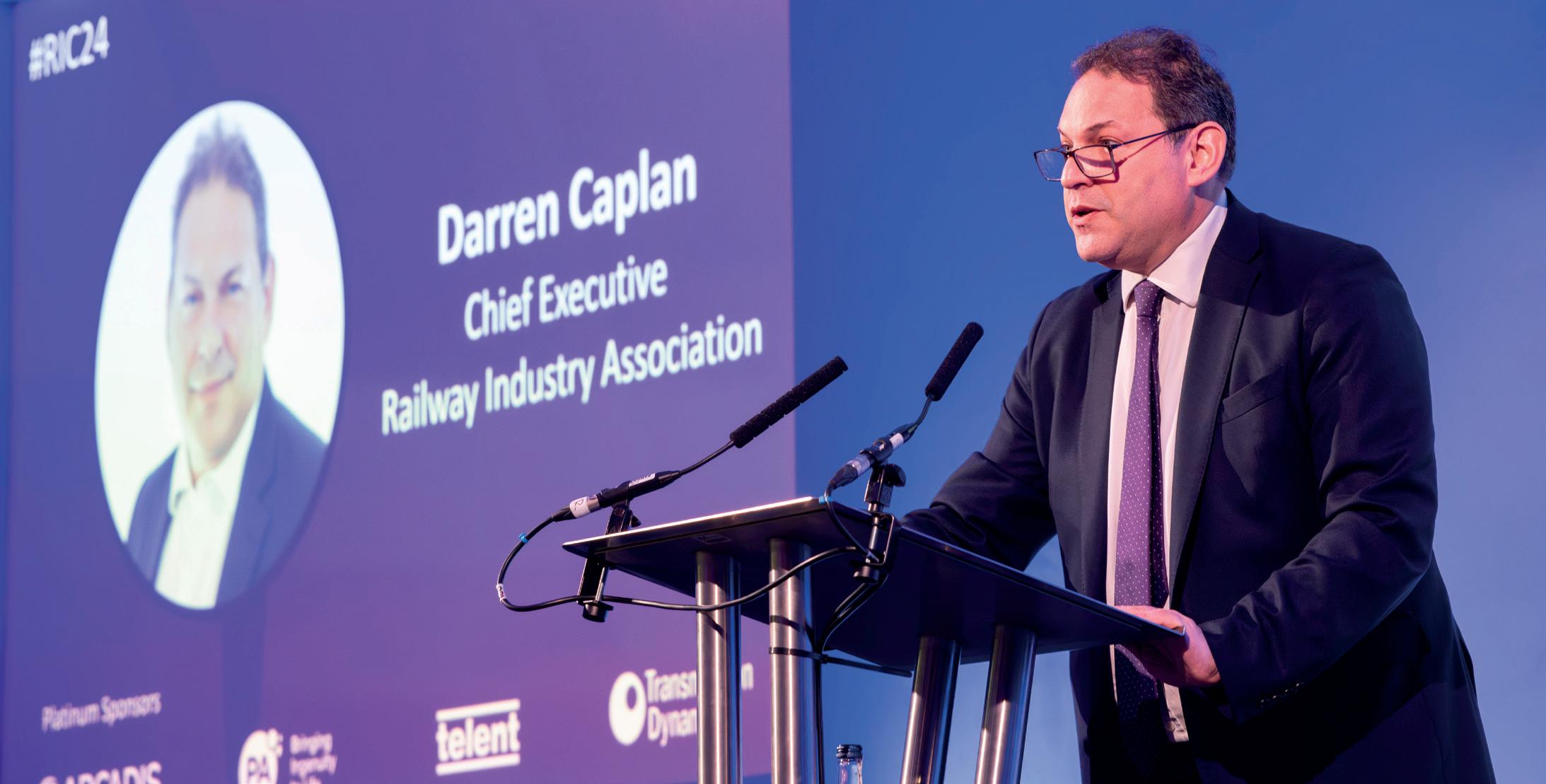
There is also a preview ahead of next month’s Railway Industry Association Annual Conference (page 45). There is an impressive line up of speakers, with this year’s event feeling particularly important with the new Government and rail reform. I’ve been told tickets are selling quickly, so I’d recommend not leaving it too late to get them.
There is a lot to be positive about when it comes to rail freight
As always thanks to everyone who has been involved with the magazine. I hope you enjoy it. All the best,
Danny Longhorn Editor
Rail Director magazine and Railbusinessdaily.com are assets owned by the Railway Industry Association. Railbusinessdaily.com delivers more than 70 stories a week to +73,000 rail industry professionals in our daily 7am newsletter. If you have not already subscribed, it’s free and it’s easy to do so at www.railbusinessdaily.com, please also encourage your colleagues to do the same. This is the very best way to keep abreast of what is happening on the UK’s railways. There is a digital copy of Rail Director on our website.
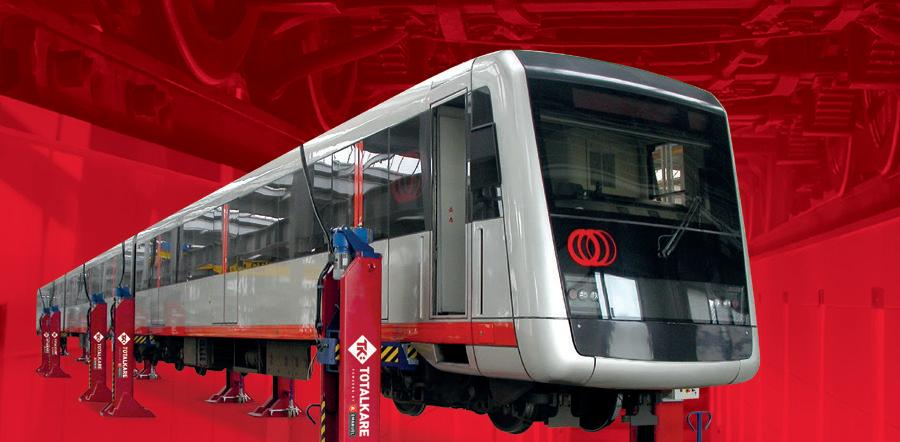
LIFTING JACKS & BOGIE LIFTS
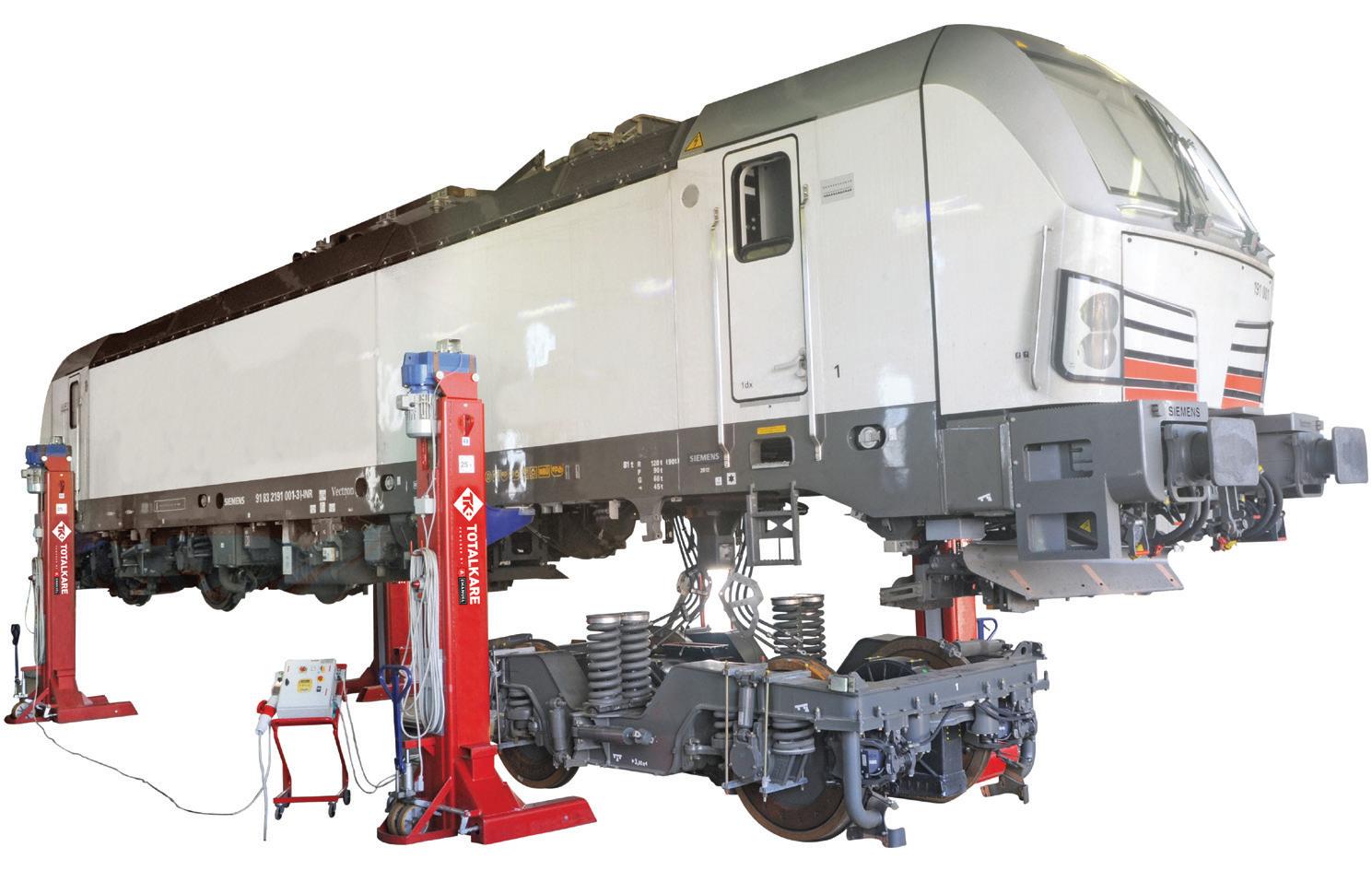
Lifting and inspection equipment you can rely on for all maintenance of rail vehicles. With over 40 years’ experience of high quality, heavy duty vehicle lifting, Totalkare combines world class products with industry leading support to facilitate effective maintenance and repair.
6
Working together to address cost issues
Andrea Rossi, Chief Executive Officer at DB Cargo UK, discusses the company’s transformation project, and explains more about a UK rail freight summit to address road versus rail costs
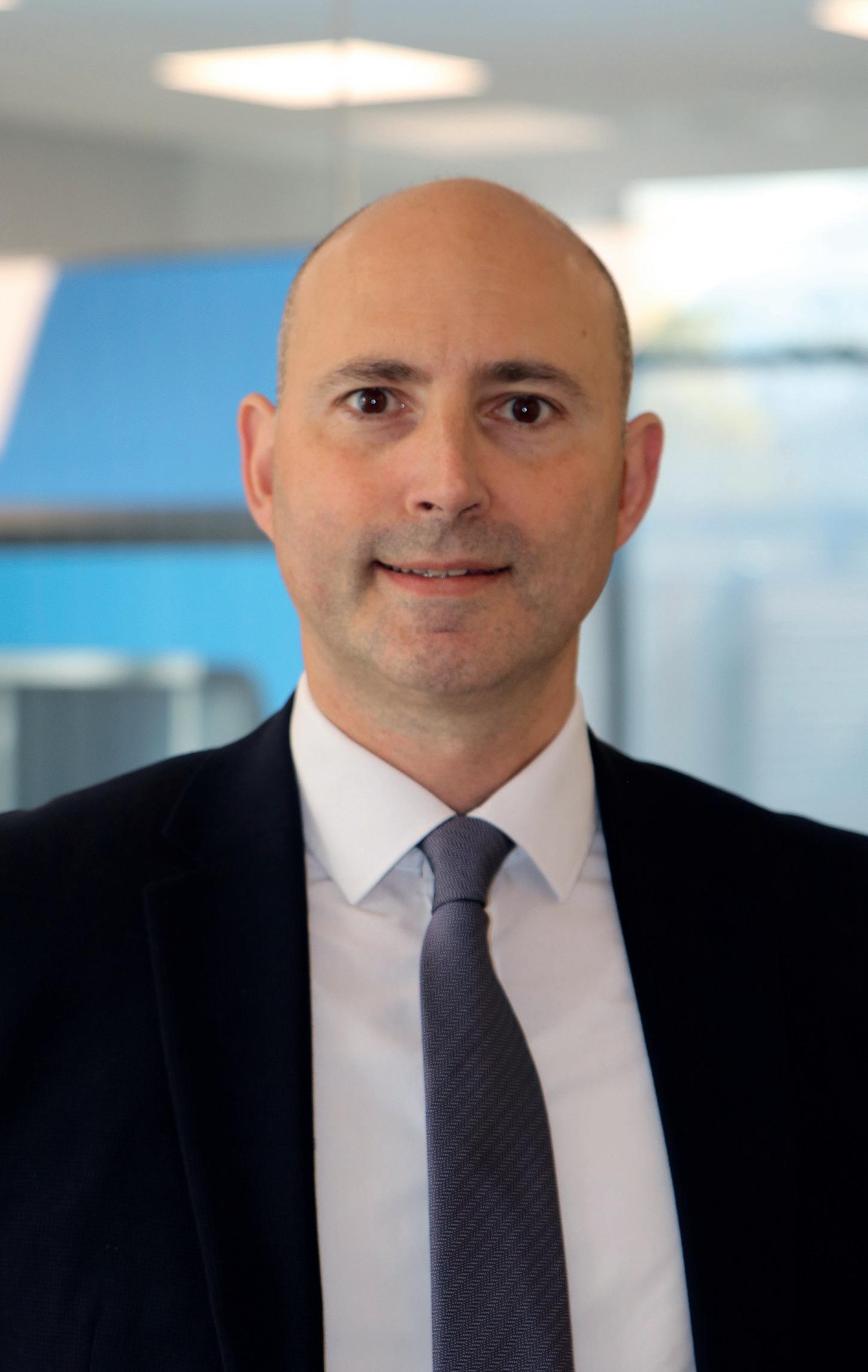
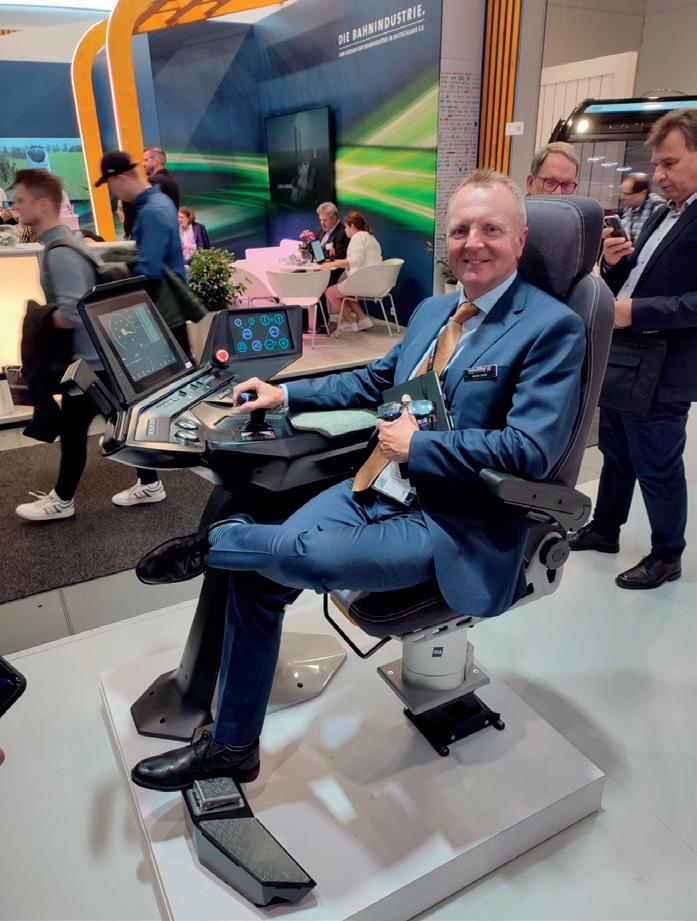
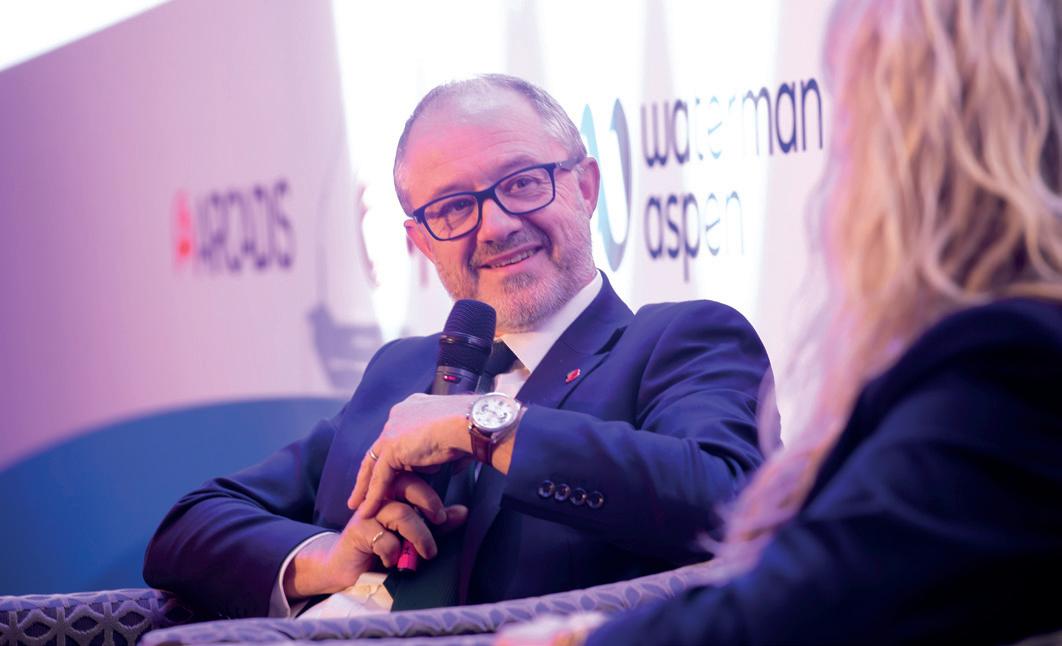
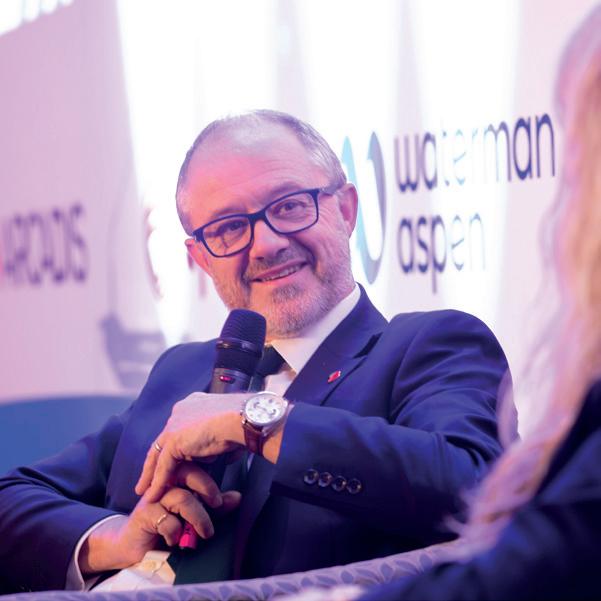
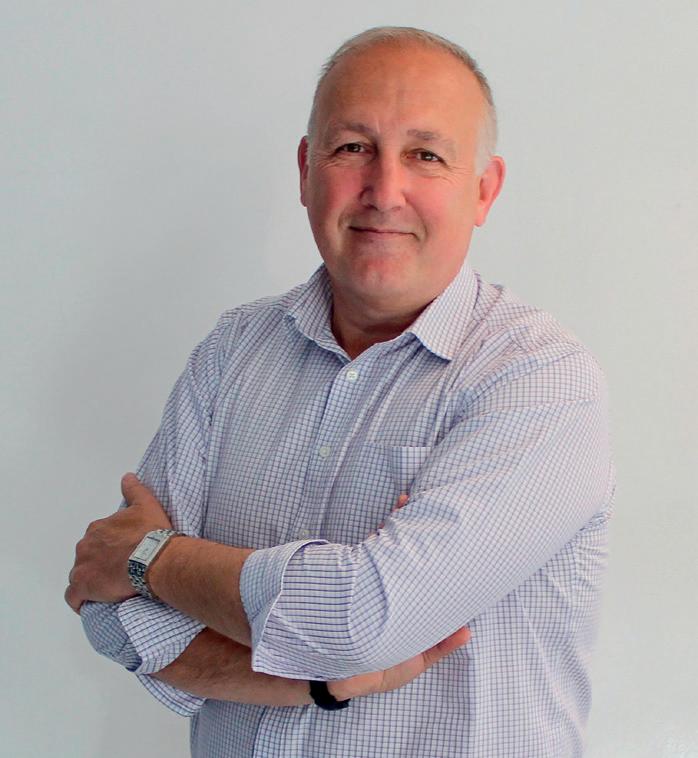
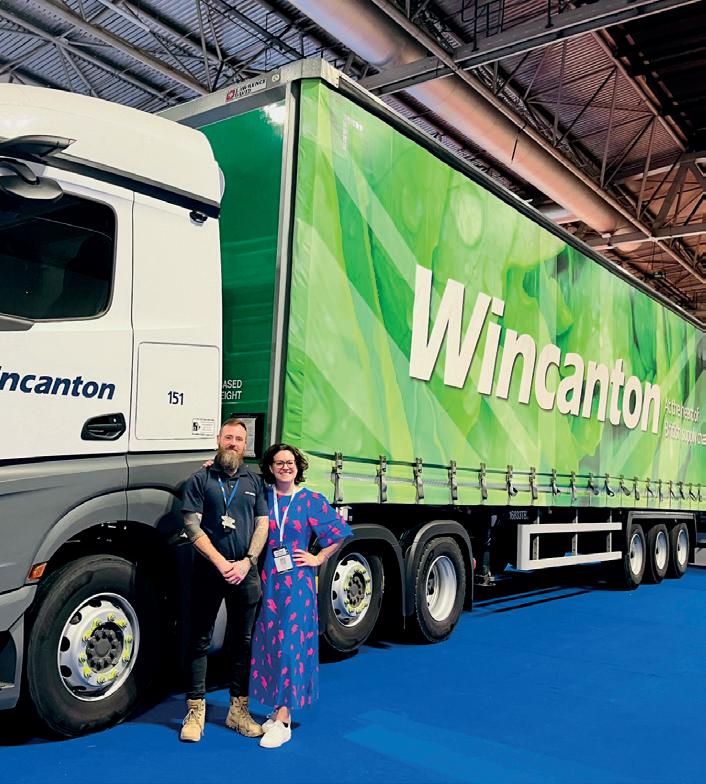
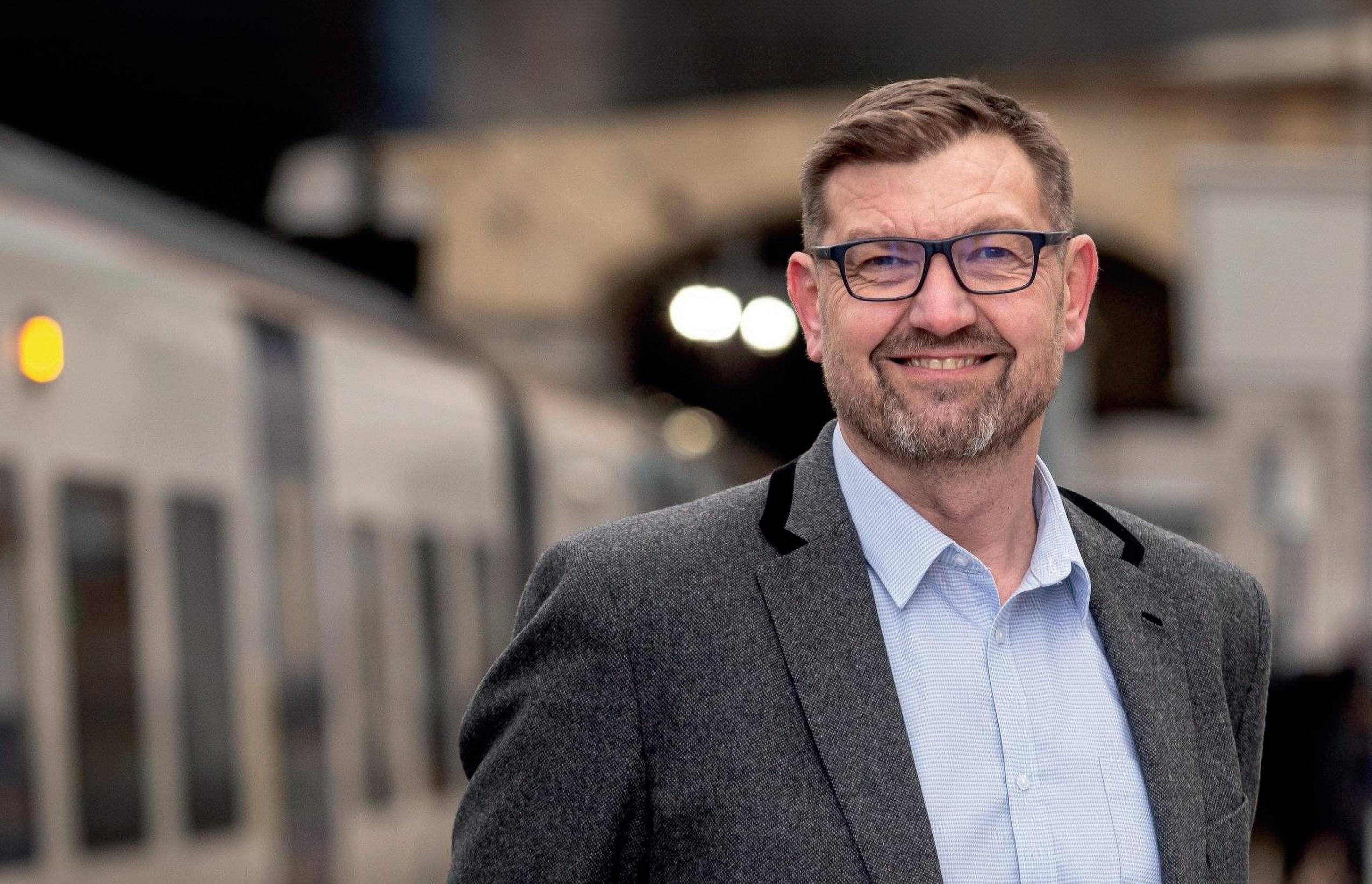
10 Embracing the opportunity to explore rail
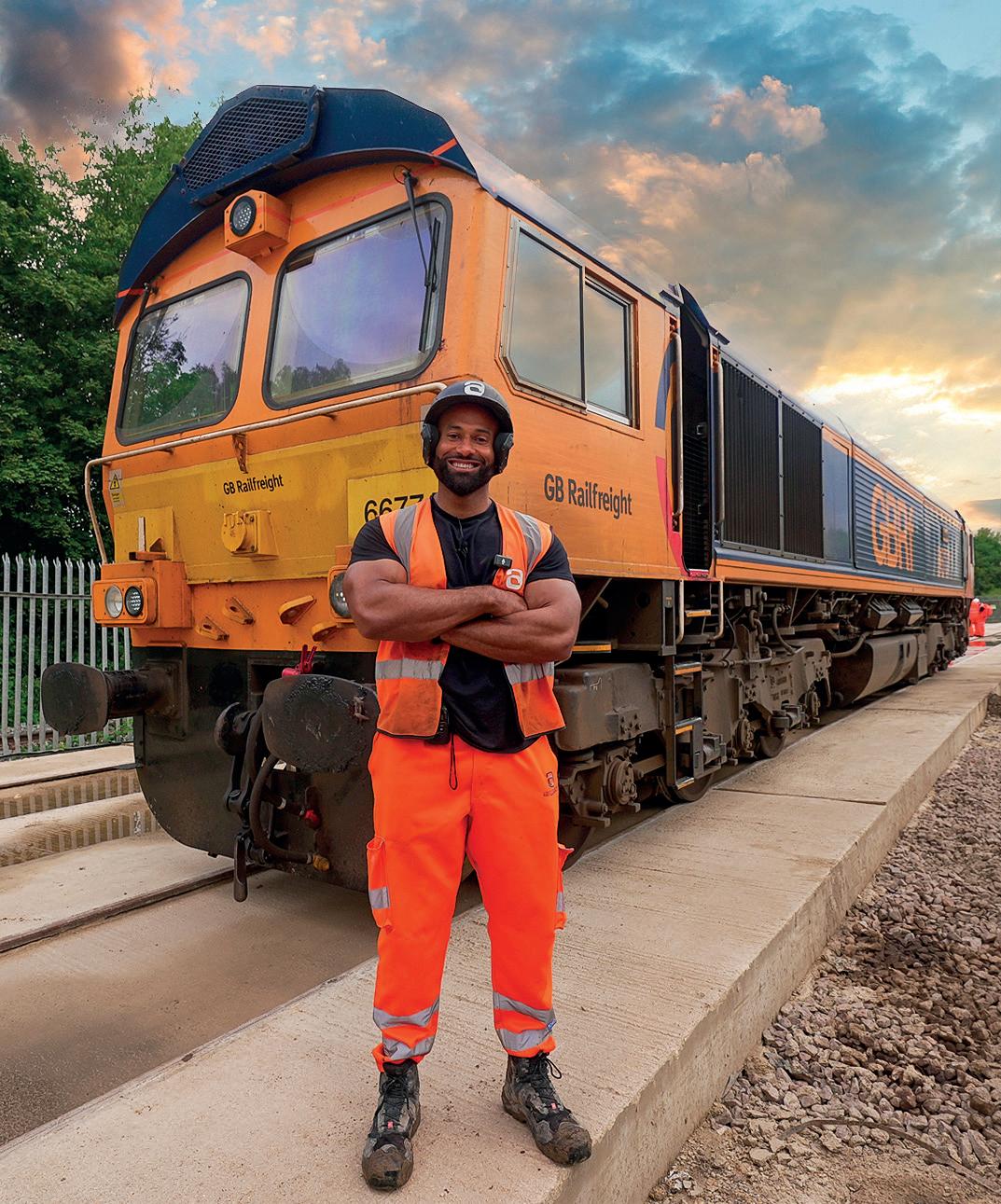
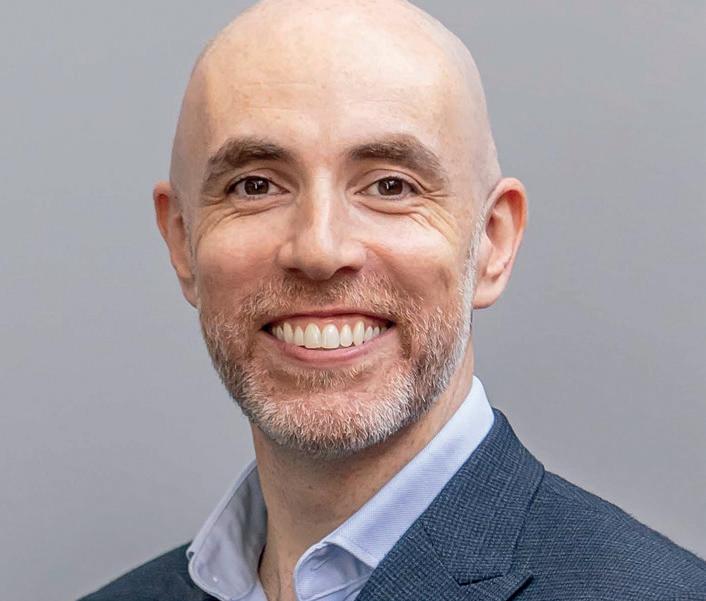
John Trenchard, Vice President Commercial and Supply Chain at DP World in the UK, explains more about its Modal Shift Programme and investments to promote rail freight
14 Government must prioritise freight
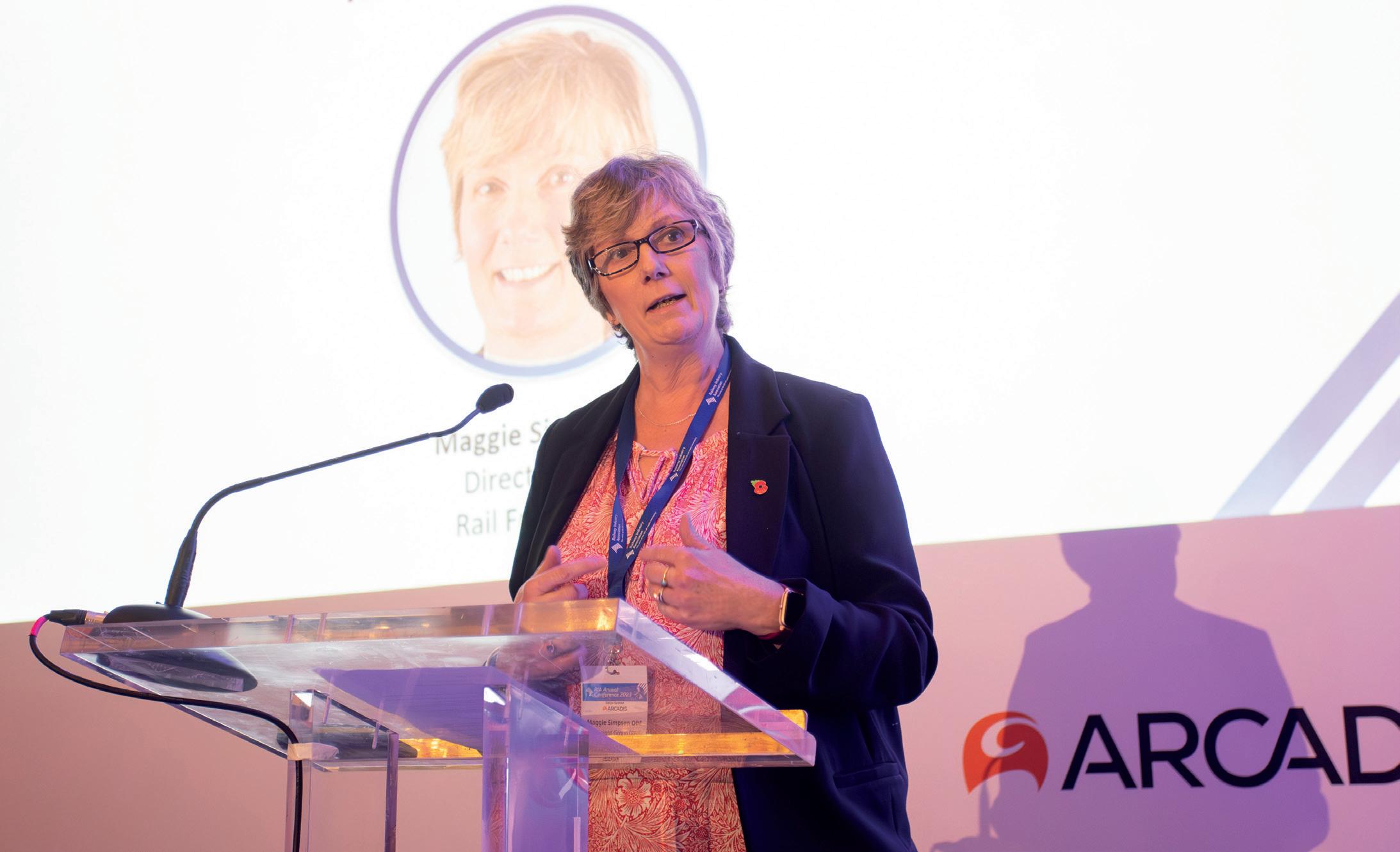
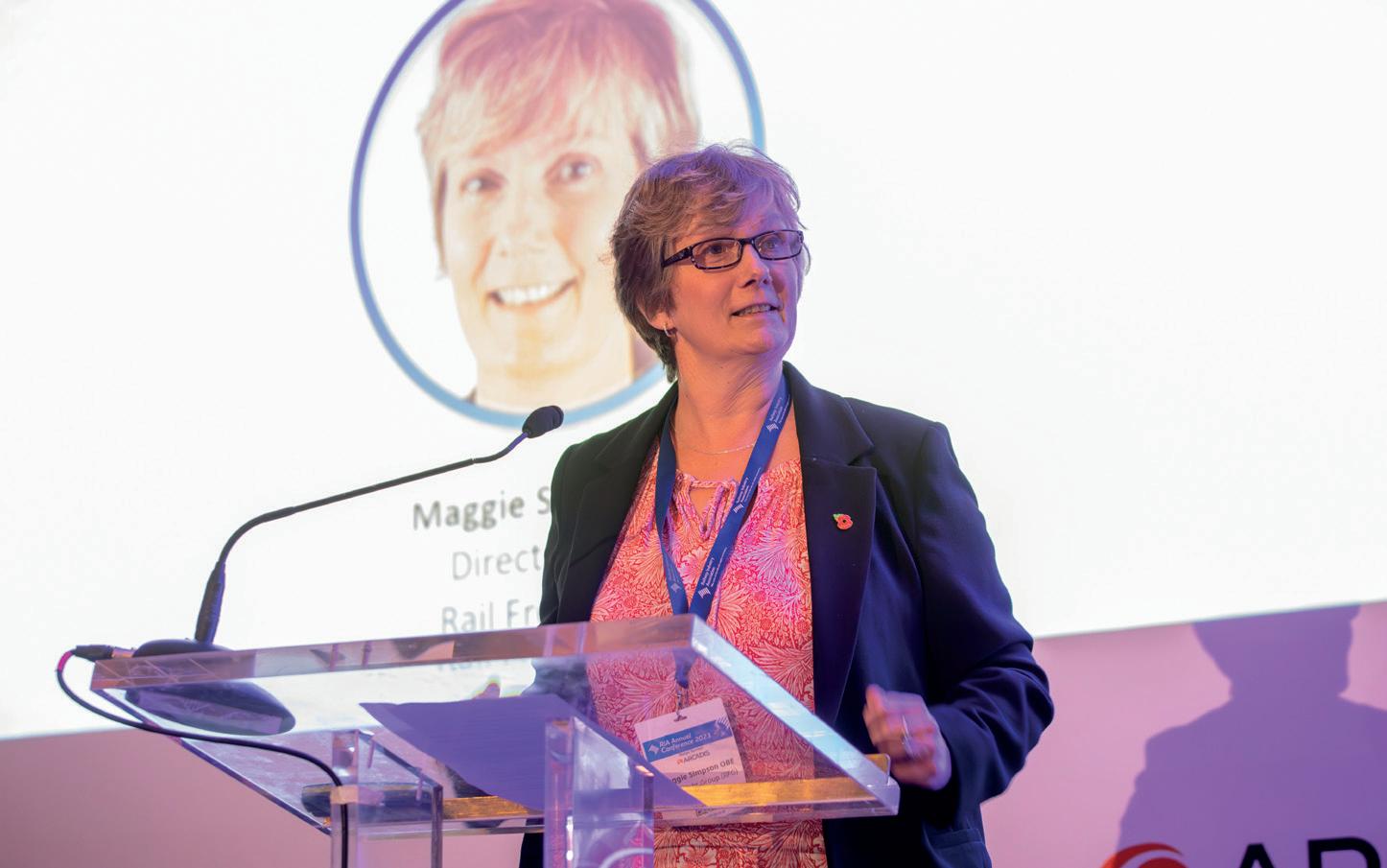
Maggie Simpson, Director General of the Rail Freight Group, writes about the priorities in ensuring the rail freight sector thrives
16 UK rail news
Including Tesco’s 10th rail service rolls into action, and rail freight research: A catalyst for growth and innovation
22 Investing in first class rail freight
Mark Wyborn, Porterbrook’s Head of Freight, was tasked with developing the company’s first dedicated freight strategy when he joined three-and-a-half year ago. He discusses the progress made
26 InnoTrans review
The world’s largest trade fair for transport technology set several records at its 14th edition last month. Nigel Wordsworth was among 170,000 visitors
36 Ushering in a new era of sustainable freight transport
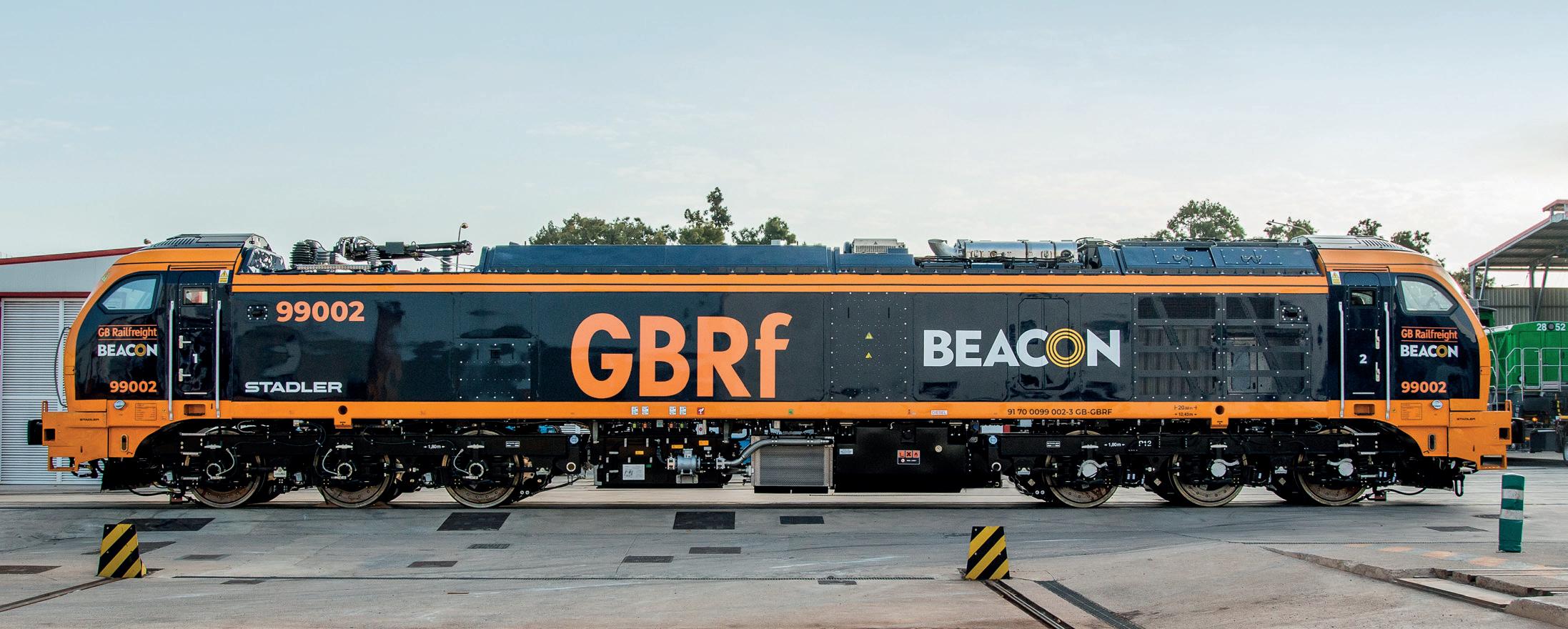
GB Railfreight has revealed its hybrid Class 99 locomotive. Chief Executive Officer John Smith describes it as a game-changing moment for the UK rail freight industry
38 “Masters of our destiny”
Daniel Ashville Louisy has been given a Special Award from the Rail Freight Group for his work promoting the benefits of rail freight. He explains more and tells Rail Director why it is a particularly exciting time for his businesses, which are all based within the construction sector
44 ‘A fresh start for UK Rail?’
A preview ahead of this year’s Railway Industry Association (RIA) Annual Conference, with contributions from speakers Sir Jon Thompson and Neil Robertson
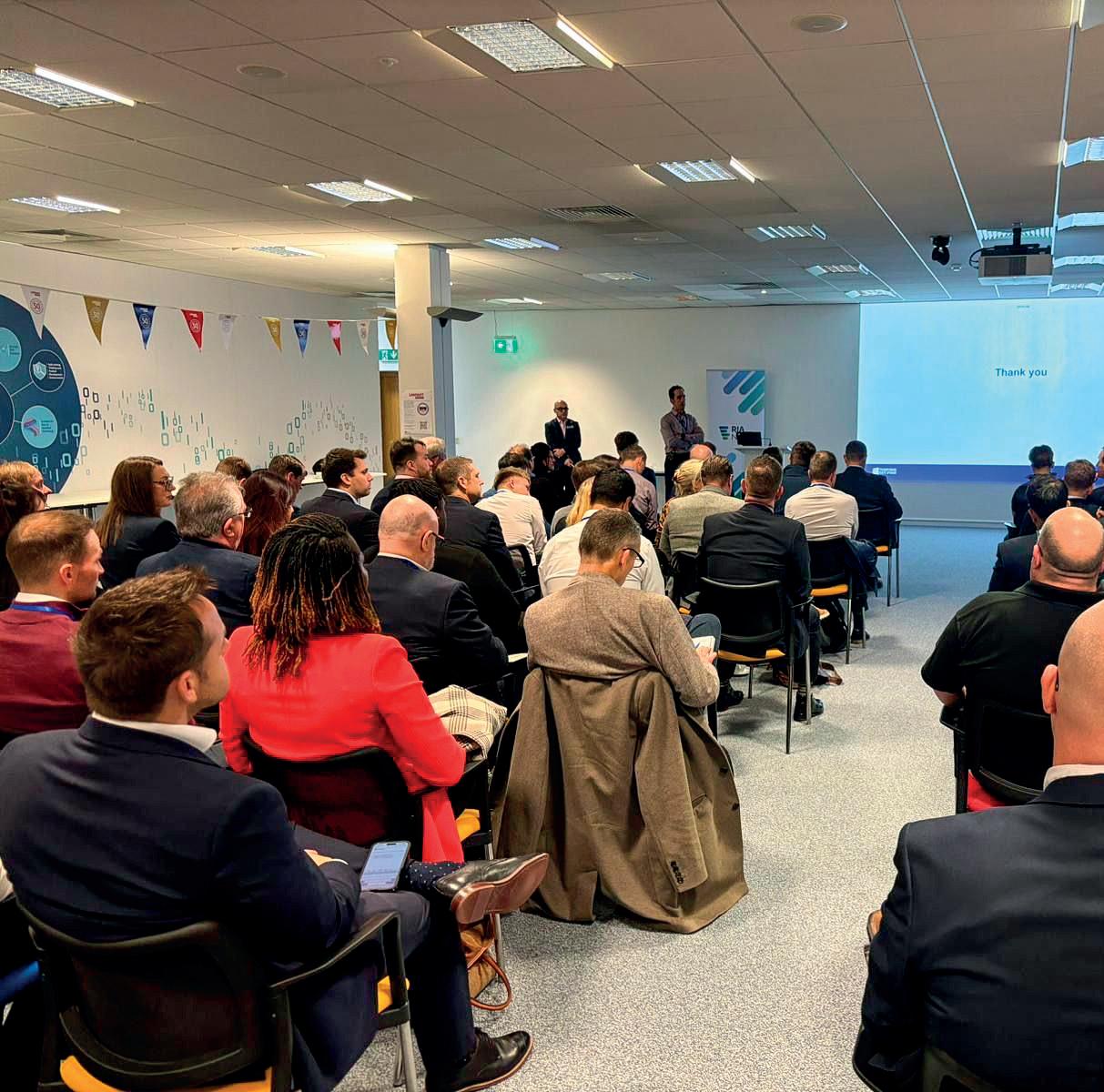
54 RIA North Rail Summit: Strategic direction of the industry in the North
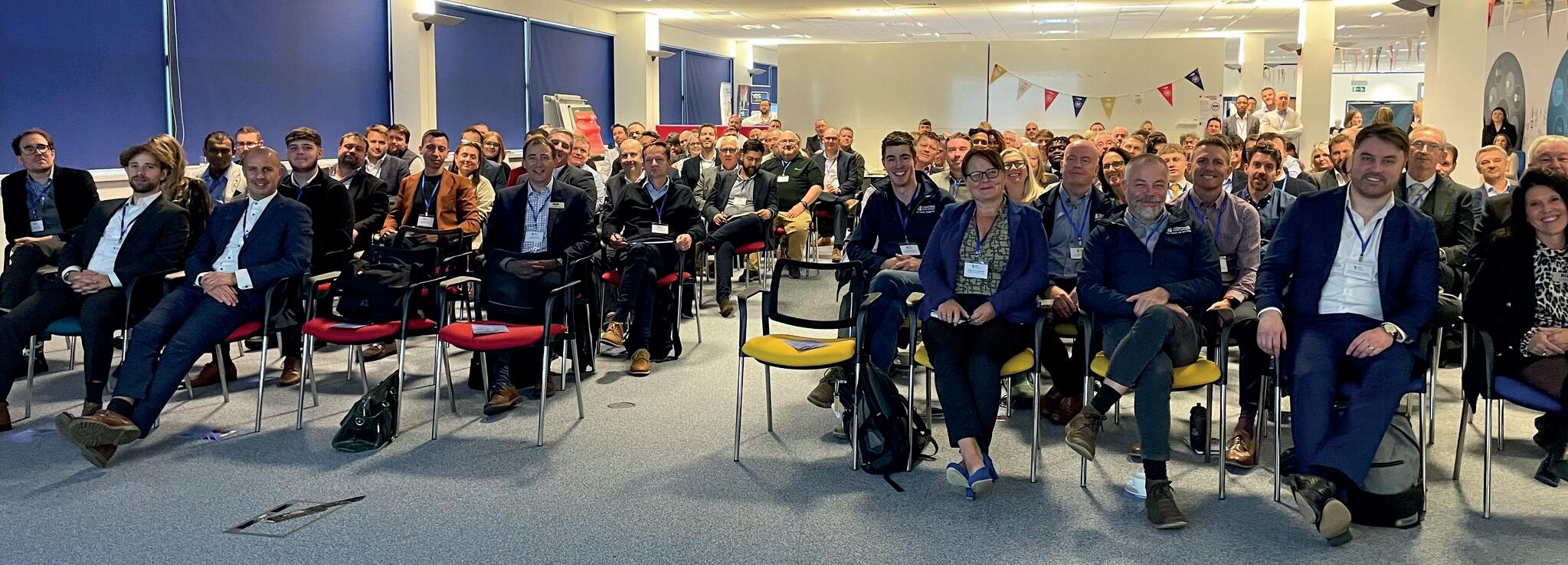
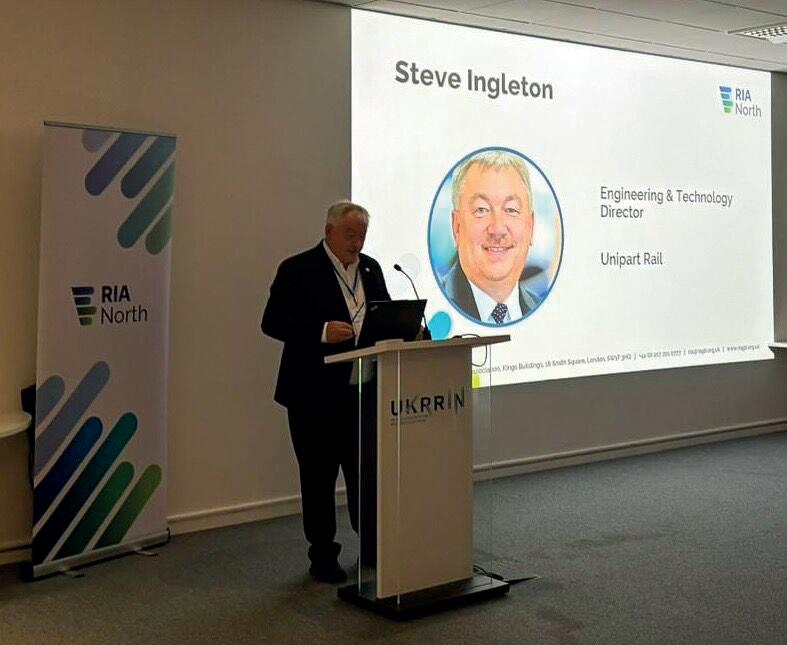
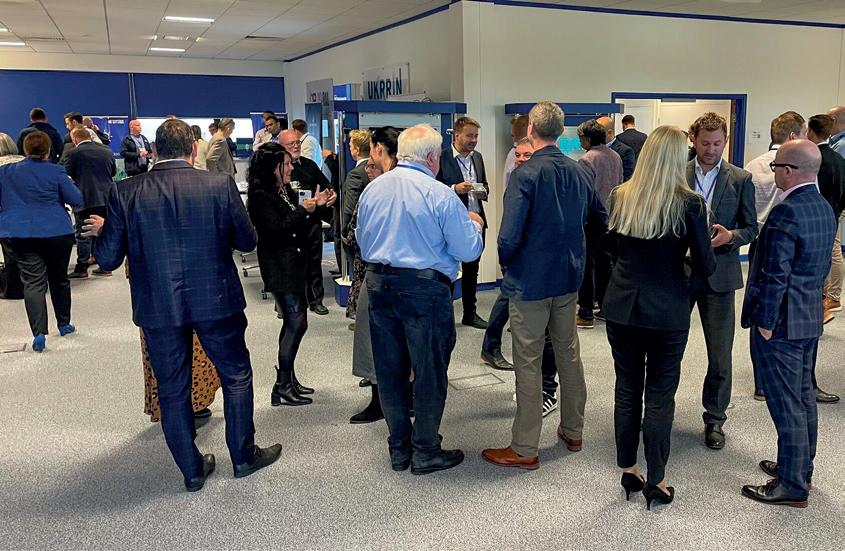
It was a fantastic turnout and insightful day at the RIA North Rail Summit, hosted by Unipart Rail in Doncaster. Rail Director was among the attendees
58 A window of opportunity
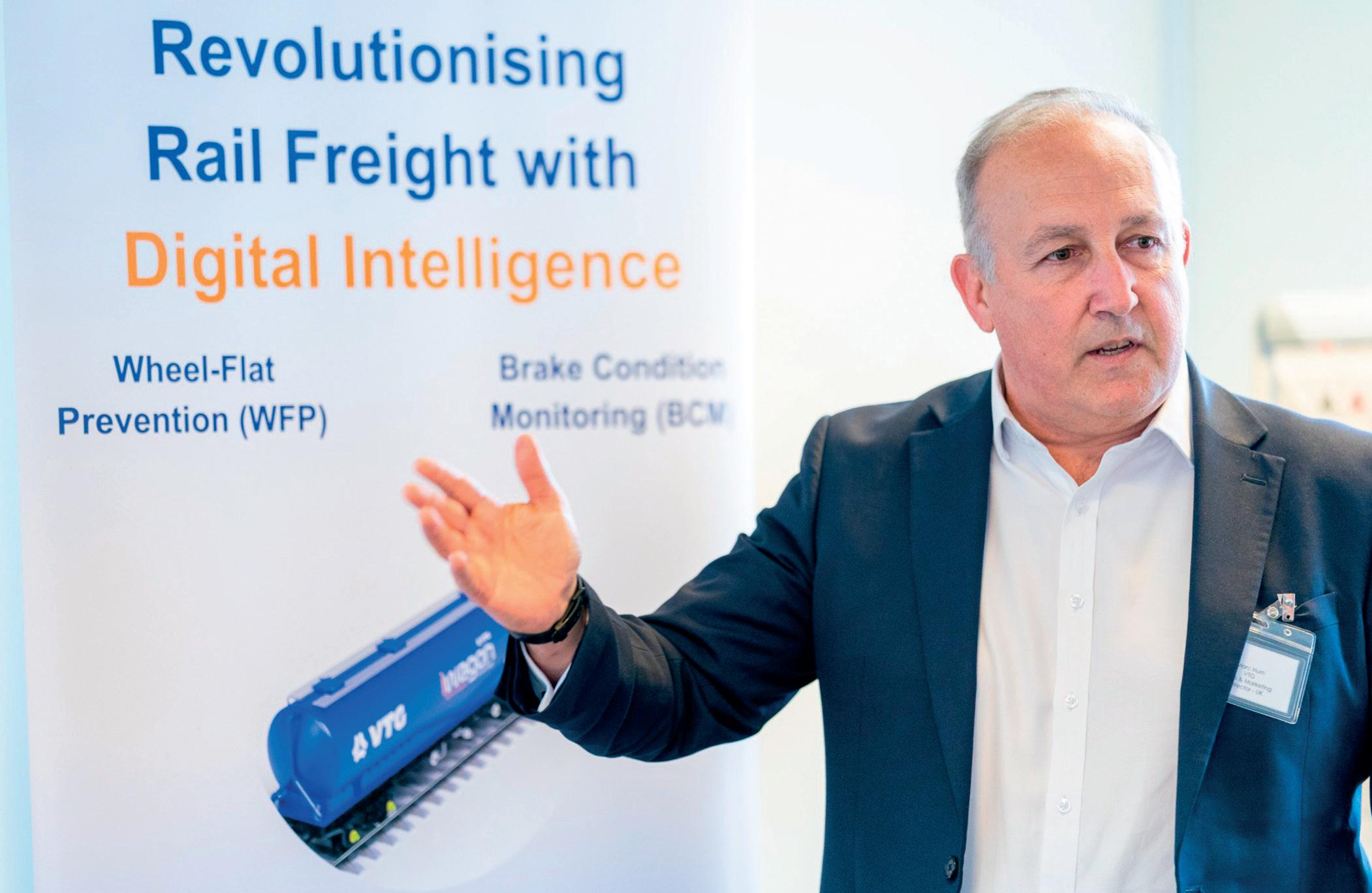
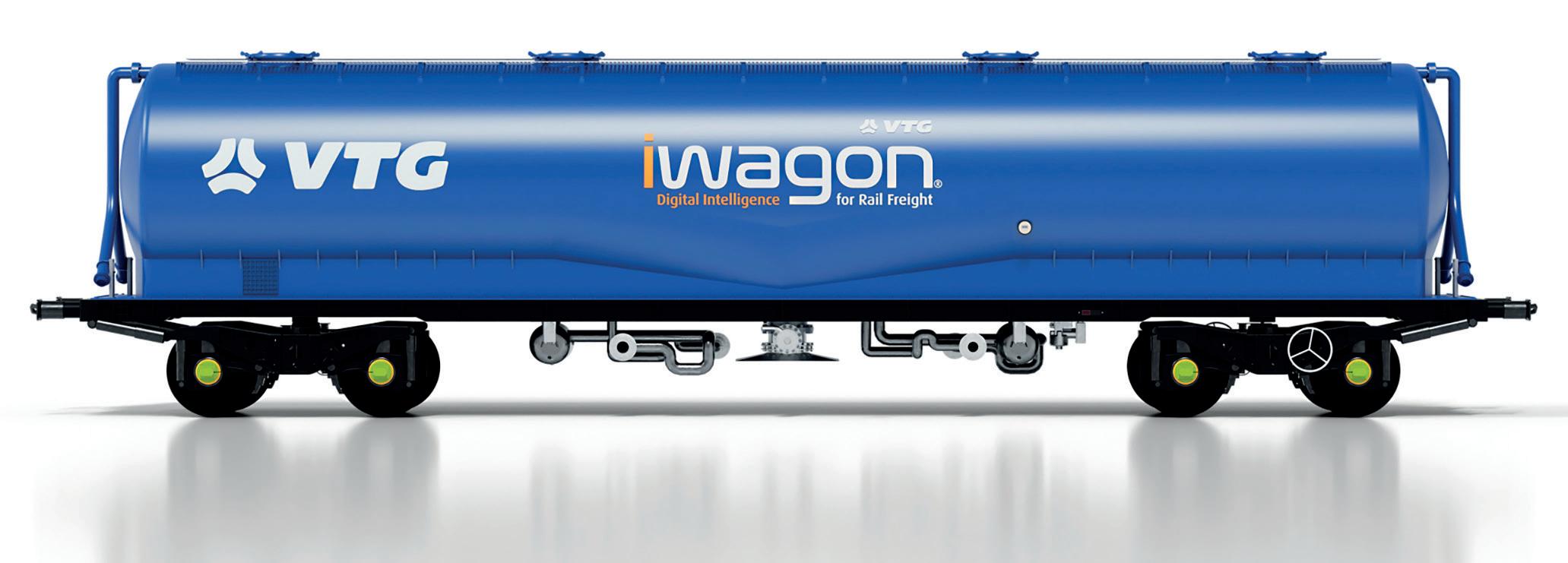
Marc Hurn, interim Managing Director of VTG Rail UK, explains more about the opportunities for rail freight and in bringing the iWagon to market
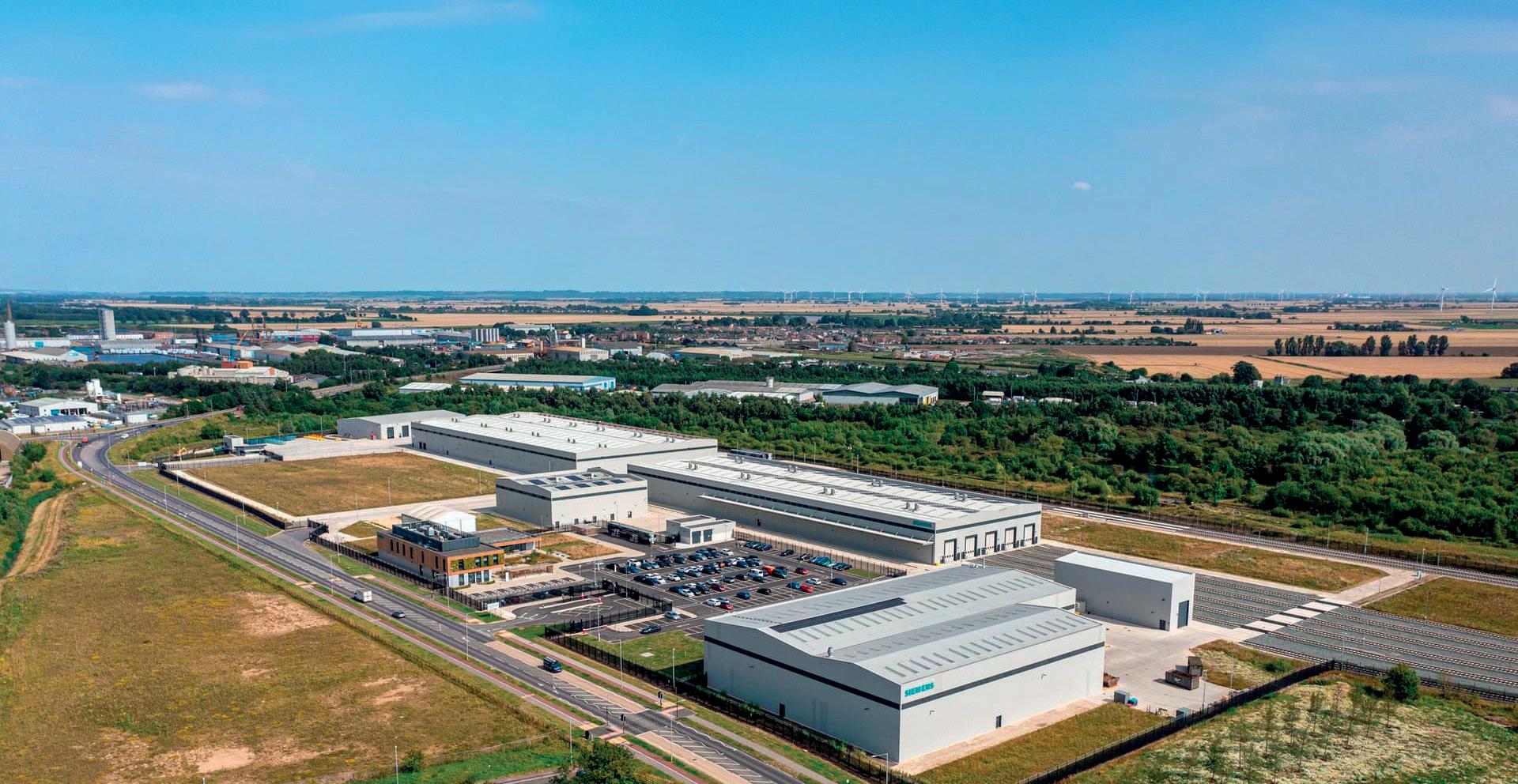
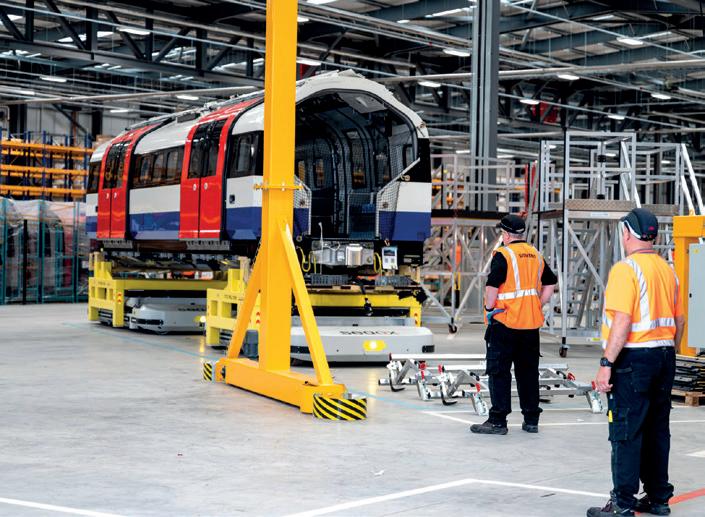
60 Goole Train Manufacturing Facility officially open
The rail village will bring up to 1,000 new jobs to East Riding of Yorkshire, as well as around 1,700 supply chain job opportunities
68 Rail in the North; past, present, and future
In her latest quarterly column, Daisy Chapman-Chamberlain discusses some of the key growth areas and needs for rail in the North
70 Powering the future of mobility
ABB’s Edgar Keller explains how the company is at the forefront of supporting efforts to decarbonise the global rail industry by developing cutting-edge traction systems and solutions
78
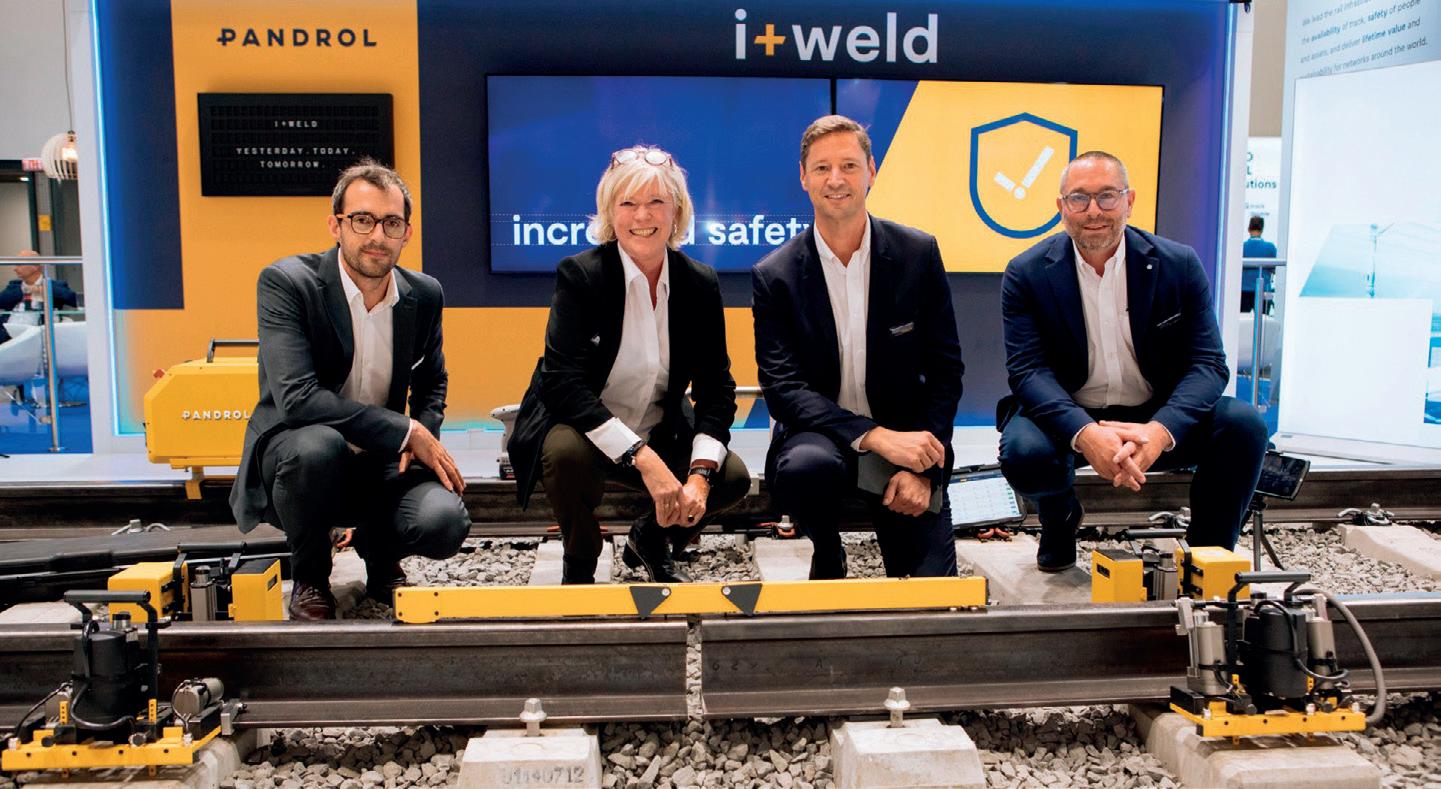
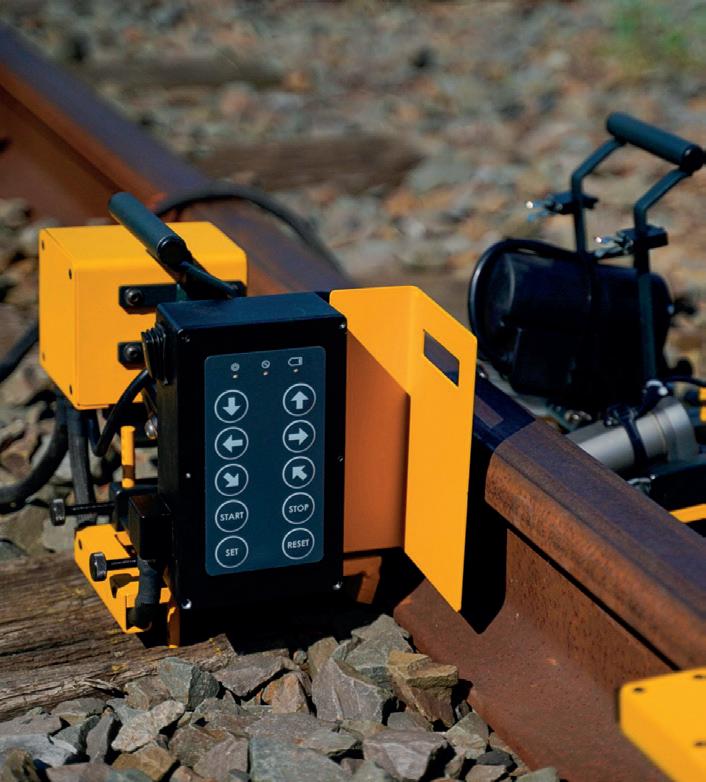
Transforming the process of track welding through automation and data
Thibaut Descamps, Head of Welding at Pandrol, discusses the organisation’s i+weld product range
86
Grinding out new opportunities
Lee Tinney, Operations Director at Loram UK, explains more about the introduction of an exciting new grinding machine, and the journey ahead
94 Leading engineering preparations for the roll-out of ETCS
Tony Plumbley will support Northern’s Head of European Train Control System to ensure a smooth integration of the system for colleagues in operations, programmes, training, engineering, safety and commercial
98 The value of community rail
Jools Townsend, Chief Executive of Community Rail Network, shares new insights on the social value being delivered across the community rail movement
Tel: 01132 082620
Sales: 020 7062 6599
Editor Danny Longhorn danny@railbusinessdaily.com
Designer and Production Manager
Debbie Nolan
Writers
Advertising Team Christian Wiles
chrisw@railbusinessdaily.com
Amy Hudson amy@railbusinessdaily.com
Published by RBDMedia (an asset of the Railway Industry Association) trading address 15 Mariner Court, Calder Park, Wakefield WF4 3FL
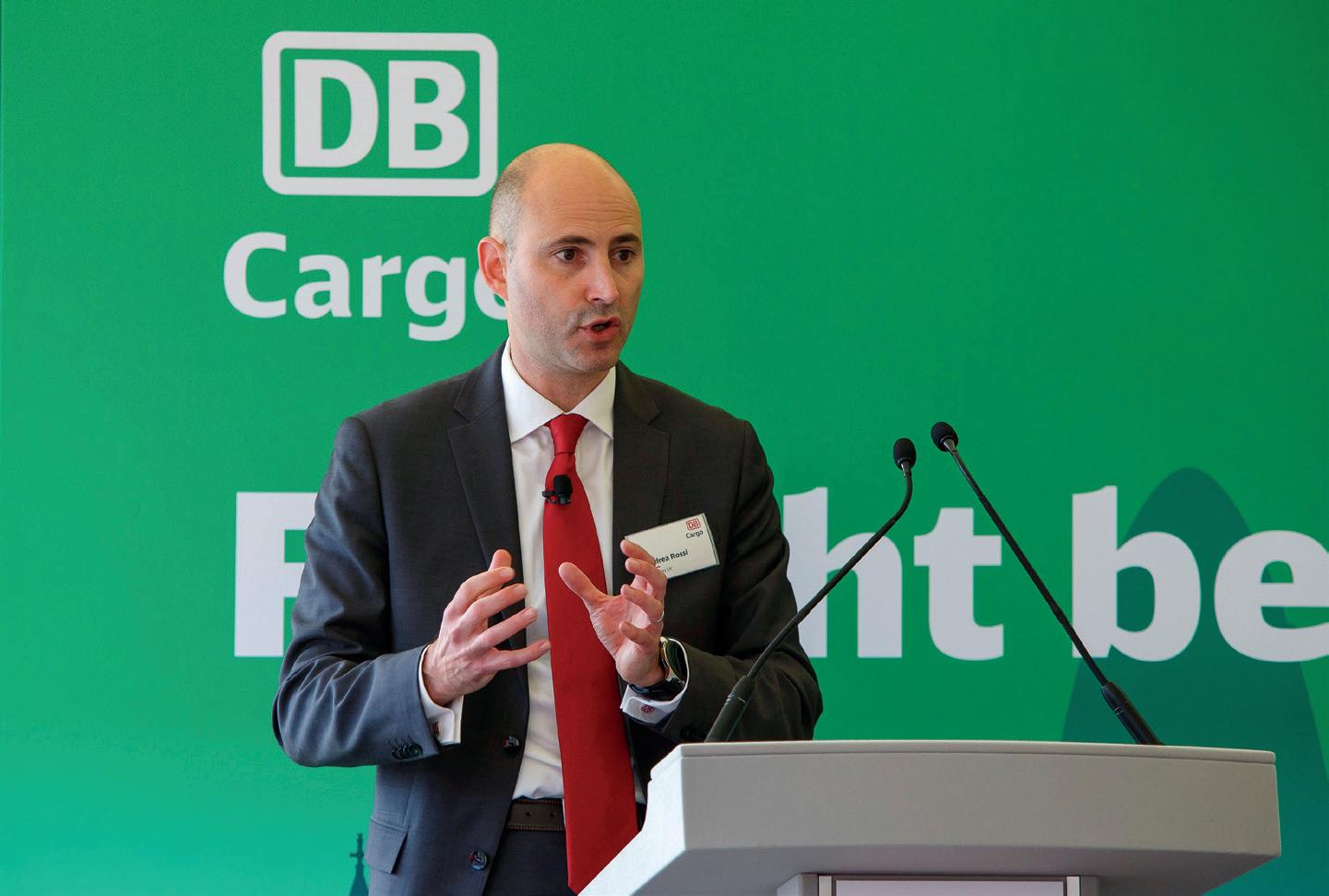
Andrea Rossi, Chief Executive Officer (CEO) at DB Cargo UK, discusses the company’s transformation project, and explains more about a UK rail freight summit to address road versus rail costs
Working together to address cost issues
The facts speak for themselves. A single freight train can take up to 129 lorries off the nation’s roads and rail freight itself saves over one million tonnes of carbon every year, with every train taking the country closer towards net zero.
Despite the green credentials, the industry is suffering due to the difference in costs of moving goods by rail over road, something Andrea Rossi, CEO of DB Cargo UK, believes is growing.
“Road is a price maker and rail is a price taker and we can’t allow this situation to continue because the gap between the two is increasing and it is breaking the rail freight model,” he said. “Rail costs in general are far too high compared to alternative means of transport and the economic reality will in most cases trump the environmental aspirations because customers will look at the bottom line.”
The issue came to a head this summer when Royal Mail announced its decision to end delivery by the railway this month, bringing almost two centuries of mail rail to an end, selling off its freight trains and switching instead to road deliveries.
DB Cargo had operated and maintained its 15-strong fleet of Class 325 electric trains for the last 11 years. Royal Mail’s decision was not made because of any performance issues but because of the increasing costs of electric traction (EC4T) and the high investment needs of its ageing 325 fleet.
“This was not a decision in relation to DB Cargo UK’s performance or capability, with Royal Mail explicitly reiterating our excellent performance in operating and maintaining their services and units over the years, but one against the economics of rail freight as a backbone of their supply chain,” explained Andrea. “Quite simply, the traffic will run via road because it is cheaper. This isn’t just disappointing for us, but for the wider rail freight sector and local road users who will undoubtedly feel the effects of an additional 10,000 HGVs on the road.”
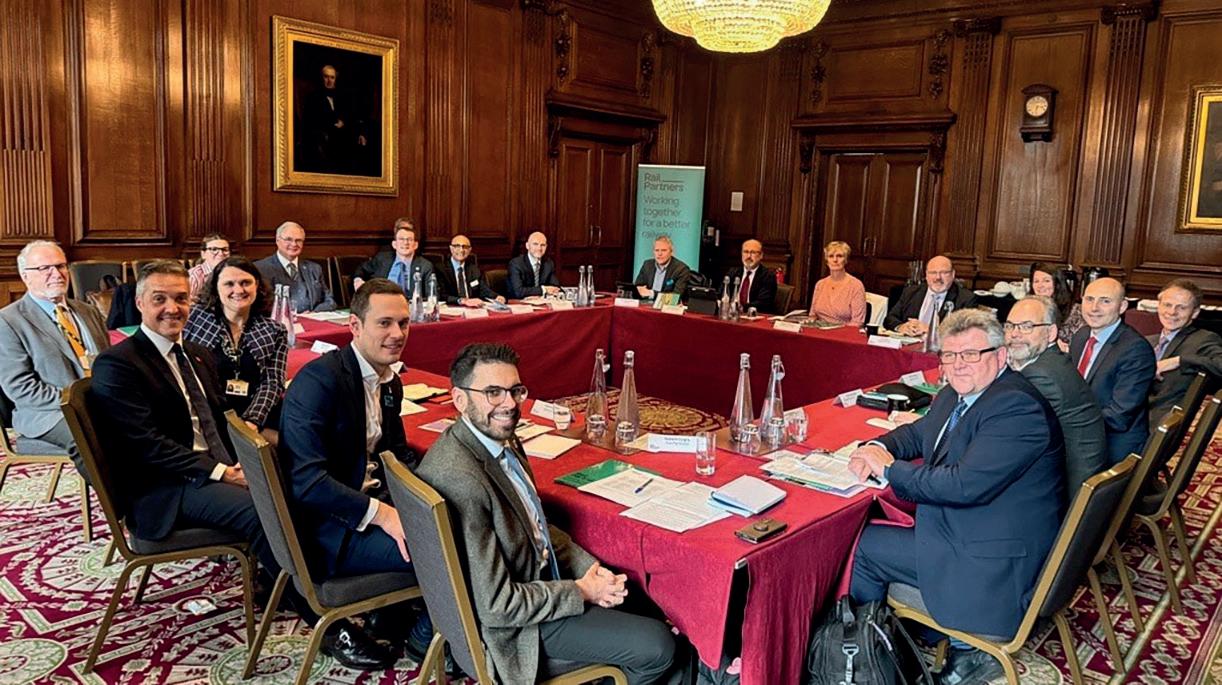
In response, Andrea organised a rail freight summit held this month, facilitated by Rail Partners, and attended by representatives from the Department for Transport and Treasury, Transport Scotland, the Office of Rail and Road (ORR) and Network Rail, along with five major freight operators, who collectively are responsible for 99 per cent of freight volumes in the UK.
“Yes, rail freight operators might compete with one another, but actually the biggest competitor to
us all is road, and that is something we need to tackle collectively,” said Andrea. “We need to address the disparity in charges immediately and stimulate action that will create the platform for modal shift and rail freight growth, to support our new Government’s ambition.
“The summit has provided the space to have meaningful, honest discussions with all the key stakeholders to see how we can level the playing field in charging compared to road. There have been wellpublicised targets of growing rail freight by 75 per cent by 2050, but we need to do something about impacting the reality.”
According to analysis by Deloitte, rail freight contributes £2.45 billion in economic benefits to UK PLC annually, with 90 per cent of these benefits accruing outside of London and the South East. Freight companies have invested more than £3 billion since privatisation in safer, better performing and more reliable freight services.
“We need to ensure the costs associated with energy and track access make choosing rail an affordable option for our customers who are working hard to grow their businesses, while also decarbonising their supply chains,” added Andrea. “Rail freight has huge potential to support Britain’s economic ambitions and its net zero targets, so it’s important to have the right policy framework in place to support ongoing investment.
“We have several key asks that we seek wider industry support to implement and endorse, but alongside that, it is about looking at what we can do ourselves. One solution is to do longer, heavier and faster loads on certain routes, something that would be easy to do, customers would be pleased, and it could be done at a minimal effort to freight operating companies.”
There has been some progress in regards to costs in recent months. Train operators have been offered the opportunity to gain discounts on their track access charges by Network Rail in a bid to encourage new business to the railway, particularly freight. The relevant charges would be waived in full for six months whilst new traffic is being established.
Last month the ORR proposed halving charges to freight using the High Speed 1 line from London St Pancras to the Channel Tunnel in its Draft Determination of HS1 Ltd’s spending plans.
“Good things have been happening in the last few months and I welcome the track access charges initiative, but I’d like to see some longer-term sustainable initiatives which send a strong message about rail freight, reducing the number of lorries on the road,” added Andrea. “I hope the summit will deliver concrete key asks that are implementable, achievable and realistic.”
Although described by the Government at the time as ambitious, the 75 per cent rail freight growth target by 2050 is being seen by the industry professionals as a floor and not a ceiling, with Andrea among those believing with the right initiatives in place that it could be even higher.
A key to achieving and exceeding this is having strong partnerships with customers, with Andrea explaining how a race to the bottom in terms of price will not help the overall industry.
“If you have these strong deep partnerships with customers, you are more than likely going to automatically gain more opportunities,” he said.
“There is always more business when you provide a safe, reliable, high-quality service to your customers and when you actually engage with them on strategic discussions you will find there is more business to be acquired rather than try and shop around to get a few varied contracts based on price.
“I rate the value we get in intense partnerships with customers. That is where I see the value and that is when you come up with more innovative ideas. You exploit the capacity that you have got, you increase efficiency and productivity. Those are the things that will create more growth for yourself and more value for the customer. If we all did that then as an industry, we would thrive even more.”
Building a stronger platform in the UK
Despite the Royal Mail setback and concerns over rail and road charges, this hasn’t stopped DB Cargo UK from cementing its place in the UK. Andrea said the company has invested in the region of £60 million into an ambitious transformation plan centring around three key pillars, the first around lossmaking contracts, the second the optimisation of the locomotive and wagon fleet, and lastly around the company’s IT and technological platform.
“Over the last 12 months we’ve made significant
Road is a price maker and rail is a price taker and we can’t allow this situation to continue because the gap between the two is increasing and it is breaking the rail freight model
Image: Rail Partners
Good things have been happening in the last few months and I welcome the track access charges initiative, but I’d like to see some longerterm sustainable initiatives
progress in these three pillars,” said Andrea. “We’ve converted a lot of the loss-making contracts on the back of some quite difficult discussions with customers, but at a time when we’ve never had better reliability, which has put ourselves in a much better position going forward with them. It has also deepened the relationships in some areas, so some really positive outcomes.
“We’ve also made significant progress on reducing our assets and cost base and improving overall efficiency on the asset side, while maintaining our higher standards of service delivery which has come at quite a big cost to ensure we make the business fit for the future and rebase it to where we think the markets are going. We’ve got the support from our parent company in Germany, who are very supportive of the transformation.
“We’ve also started laying the foundations of our new operational system, which will allow us to generate that data-driven information and AI that will enable us to become even more efficient and optimised going forward and really have an endto-end state-of-the-art operational system that is flexible and versatile, and we’ll be able to add value to our customers.”
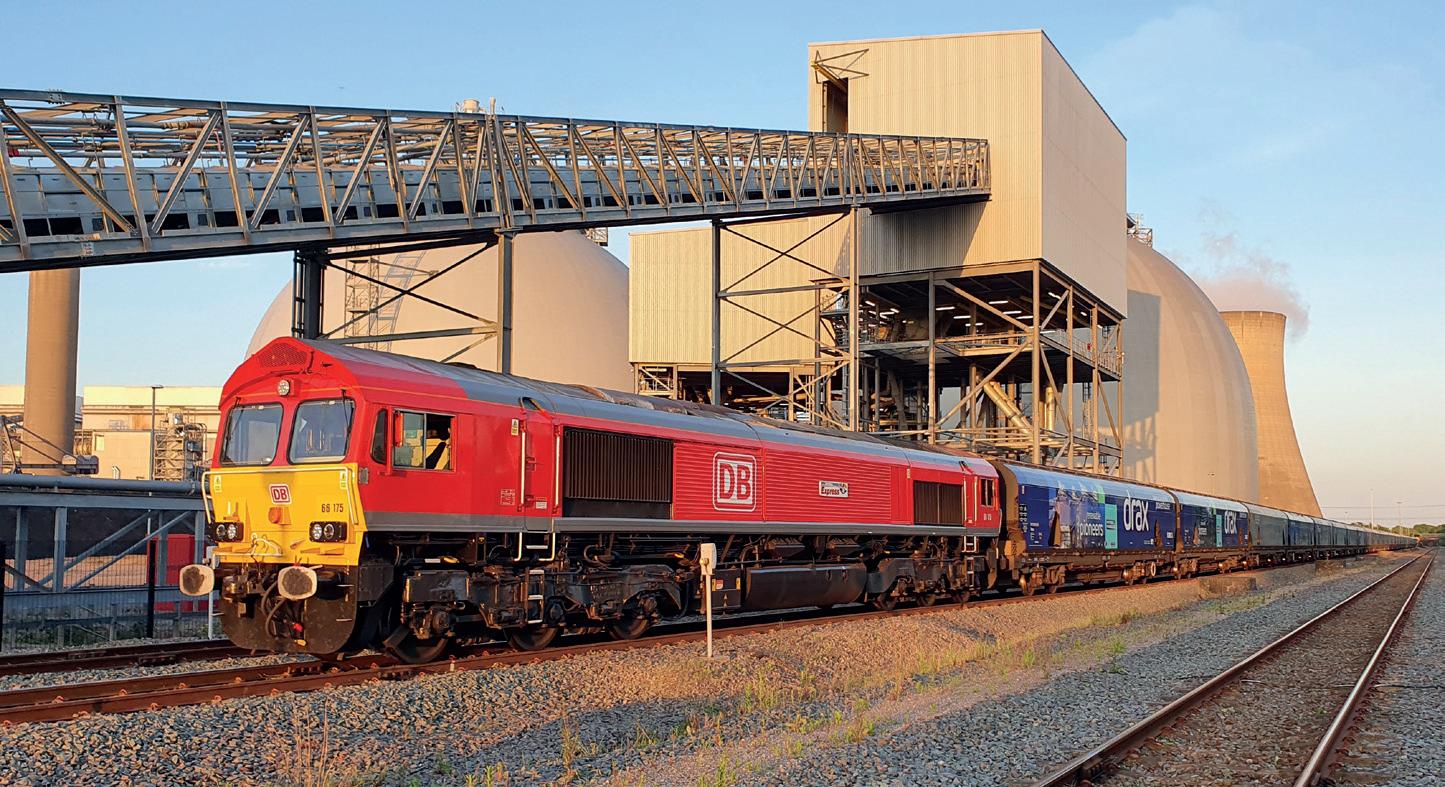
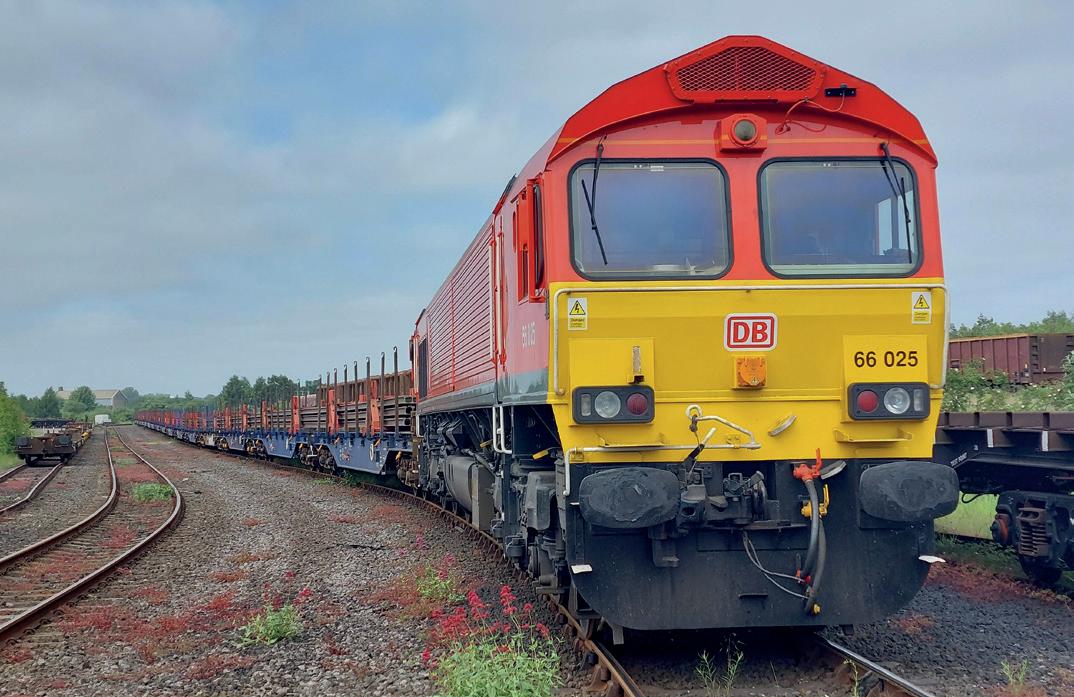
A large part of the investment is going on its locomotive strategy, which will centre around the Class 66s being used for domestic traffic and the Class 92s for international traffic for the Channel Tunnel. The groundbreaking pilot project on the Class 92s will see them almost rebuilt from scratch to improve reliability.
Testing and commissioning is currently underway on the introduction of the Class 66s High Tractive Effort (HTE), which will not have the same tractive effort as the Class 60s, but will be more reliable and a less expensive locomotive to maintain. The company is also promoting the use hydro-treated vegetable oil in locomotives to reduce carbon emissions.
“The aim is to have 10 Class 66s re-geared by the end of this year to have a high tractive effort and that will give us added traction to be able to do longer and heavier with a very reliable locomotive,” explained Andrea.
“There has also been an incredible effort in
the past year on re-engineering. The fact that we have rationalised our fleet has basically freed up a lot of time, energy and resources to focus on the maintenance that we require for the business today and going forward, but it has also freed up resources for third party maintenance, an area that is definitely growing.
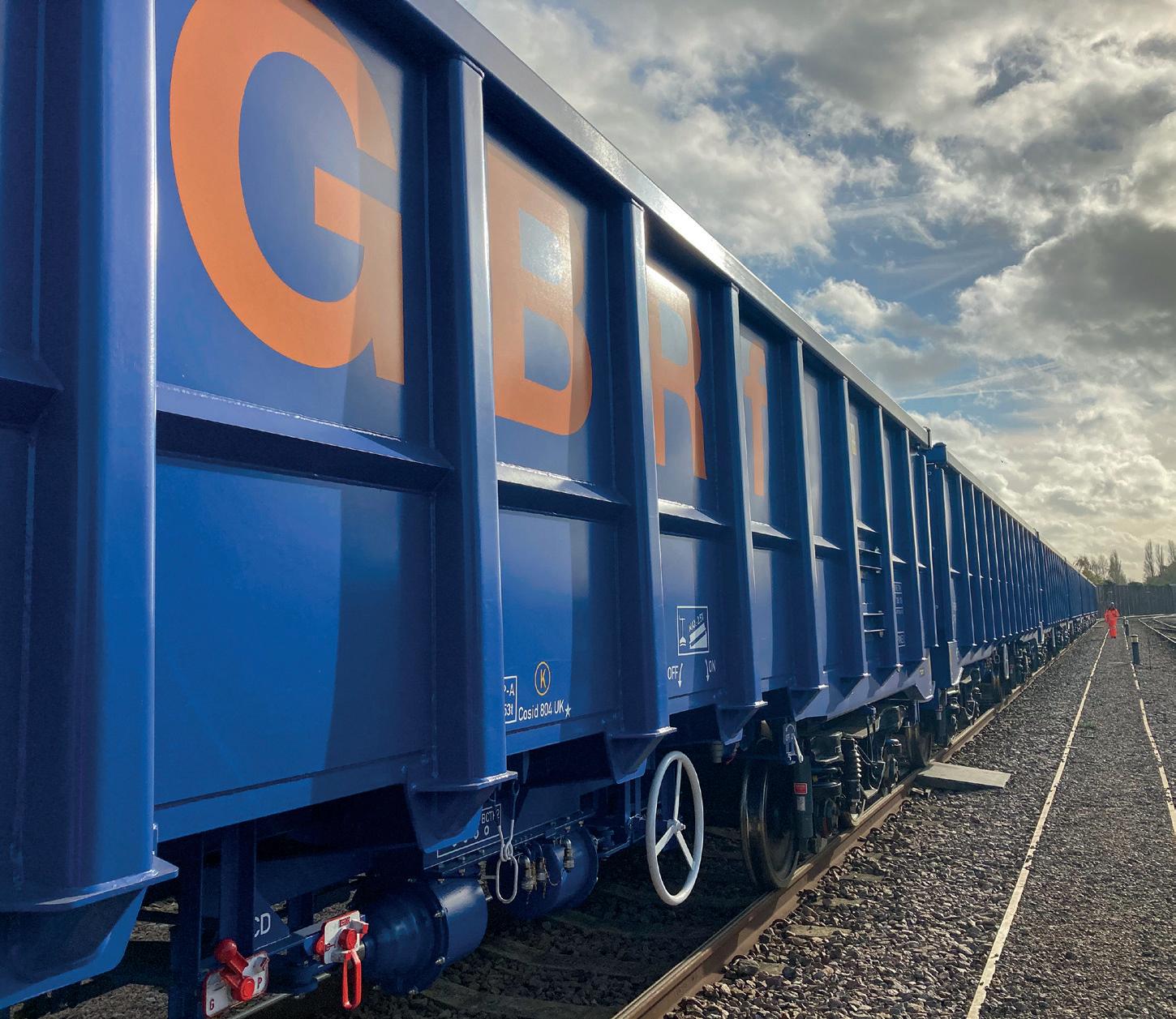
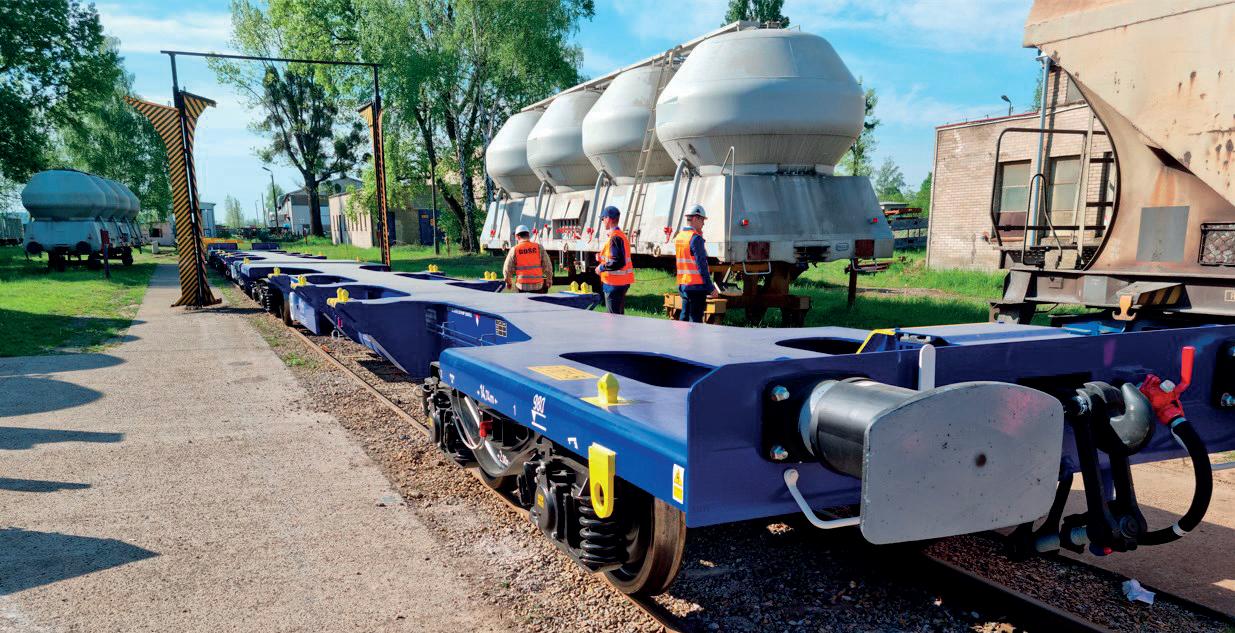
“We’ve also re-engineered more than 200 BYA type wagons to meet the steel demands. Our sister company in Poland has manufactured new frames for another 60 wagons that are being sent over to the UK and then assembled here for re-utilisation. I’m really proud about these projects because they use the strength of the group and add value to the customer in terms of cost and time of production and just show the capabilities and skillset in-house to be able to do such complex engineering work here in the UK.”
There is also a big investment in the UK company’s 2,200 employees. Andrea, who became CEO of DB Cargo UK in September, having been a member of the UK Board in 2013 when he was appointed Chief Financial Officer, is keen to stress that rail freight is a “people’s business”.
“What drives and runs the business and at the heart of its success is its people, which is why we’re investing in people with leadership, personal development and coaching programmes,” he said.
“Over the next few years, there will be lots of developments that will shape the future of the business, focusing it more on key strategic areas that will add value and make us more sustainably profitable for the future. I strongly believe that rail freight is the most environmentally friendly transport mode that this country has to offer.
“There is so much potential, and I take a huge amount of pride to work for a company with such a passionate workforce that tries to help the economy, society and environment. For me, it is rewarding when I see the difference we are making and the impact we are having on customers, particularly on their decarbonisation journeys. There is definitely a future for us and the broader rail freight industry, and one that is only going to be stronger with us working together.”
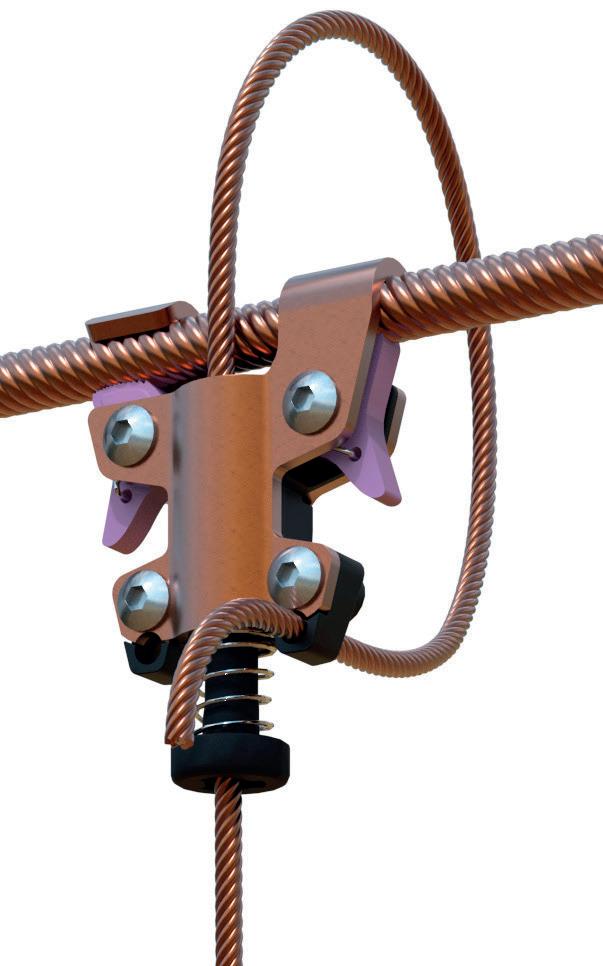
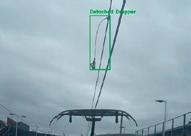
Network Rail-approved, Gripple’s SwiftLine Rail Dropper gives you easy, tool-free installation which needs minimal additional training. Pre-cut and pre-assembled, engineers spend less time working at hight, at night with less risks.
You’ve got to see it to
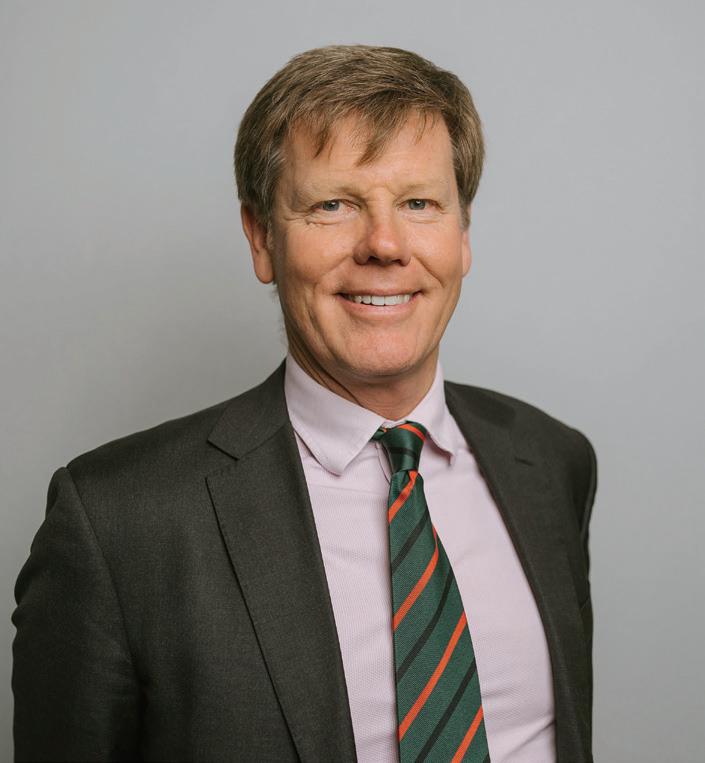
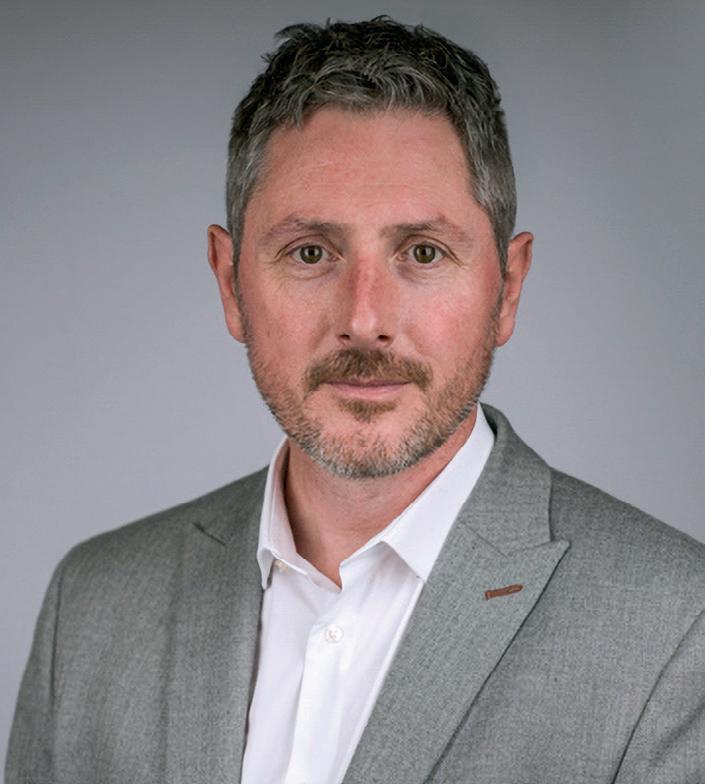
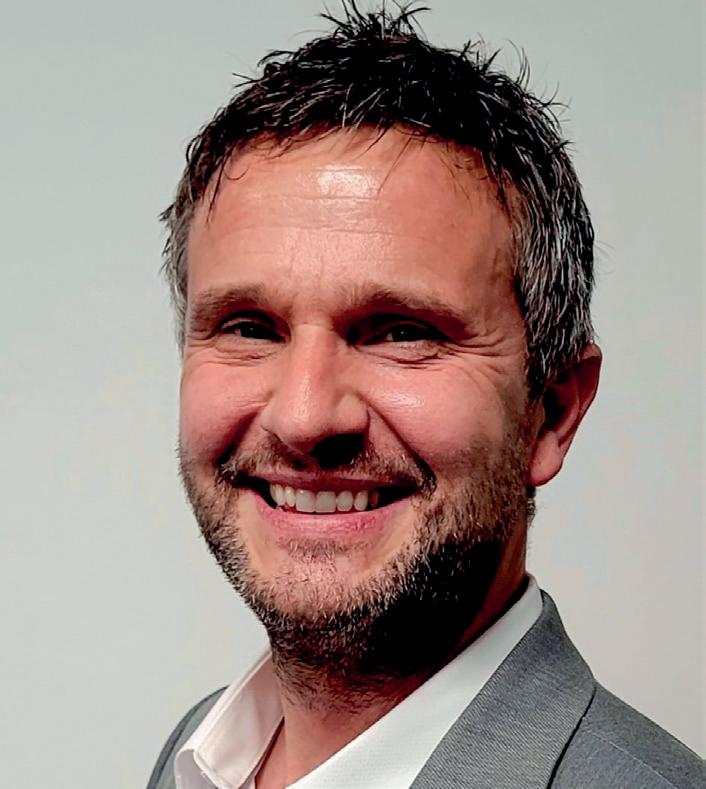
John Trenchard, Vice President, Commercial and Supply Chain at DP World in the UK, explains more about its Modal Shift Programme (MSP) and investments to promote rail freight
Embracing the opportunity to explore rail
The facts speak for themselves one year since DP World launched its MSP, offering financial incentives for customers to move cargo from road to rail. The share of rail freight at the Southampton deep-sea container terminal has risen from 21 per cent to over 30 per cent, with 13,500 truck journeys having been converted to rail, saving 6,400 tonnes of carbon dioxide emissions during the first six months alone.
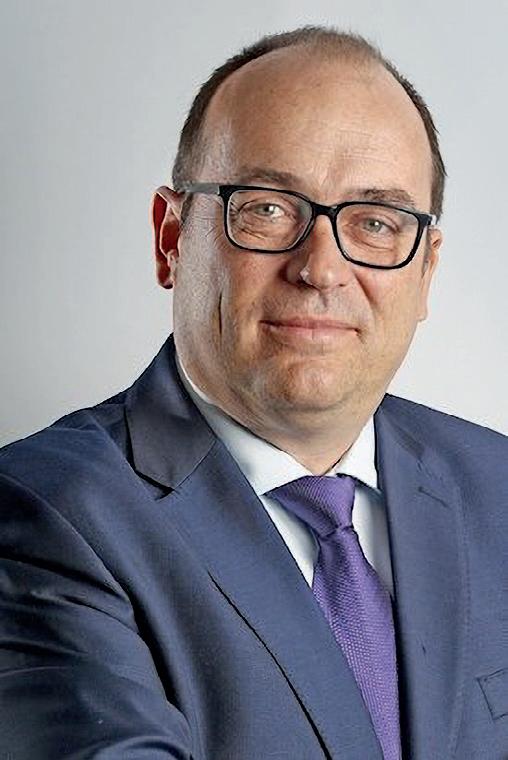
“It is nice to see the tangible results and that customers are embracing the opportunity to explore rail as part of their supply chain,” said John Trenchard, Vice President, Commercial and Supply Chain at DP World in the UK. “This isn’t about road versus rail
though, it is about rail and road working together in a complementary way.
“From a business point of view, we want to do the right thing and provide our customers choices, but there is also a commercial angle to this, enabling us to be relevant to customers up into the hinterland of the UK and in doing so be more attractive.”
The MSP trial was introduced at the company’s Southampton container terminal in September last year to help increase the financial attractiveness of rail for import laden containers. Such has been the success that it has recently been extended to the end of December next year.
The way it works is that a financial incentive
for imports routed by rail is paid for by a relatively small charge on all import laden containers coming through DP World Southampton. The incentive was initially set at £70 per applicable container between September and December and has since fluctuated between £100 and £50 in line with rail share uptake. From this month it has been fixed at £70 per import laden container for the next six months. It will then be reviewed and revised on a six-monthly basis rather than quarterly.
“Rail is conceptionally there in the supply chain, but by amplifying the effect of the MSP it has really created an interest in rail being actively pursued as an opportunity,” explained John.
“We’ve had a lot of discussions and questions on needing to try something new and the MSP was certainly that, with it being really rewarding to see the importance people place on decarbonisation and leaning in and taking a chance with rail freight.
“We charge a £10 modal shift fee to every import laden container that comes into the port of Southampton, and if your container goes to a railhead within 140 miles of the container terminal you receive a modal shift incentive. The reason we chose 140 miles is because that is the economic limit where beyond it, rail makes sense anyway. Below that is where you are competing actively with trucking, and
we really want to amplify that difference.
“Rather interestingly and given the fact that a truck journey up to the Midlands is around about £550 in terms of cost, when you start thinking about £70 it starts being a significant proportion of the total cost which is going through.”
The success of the MSP has led to the launch of four new daily rail services from the Southampton terminal to Cardiff, to the Midlands and one to Doncaster, taking the total number of weekly scheduled trains at Southampton to 172.
“Due to the positive increase in the share of rail freight since the trial’s inception, we believe that
This isn’t about road versus rail though, it is about rail and road working together in a complementary way
If there’s a better engineering consultancy, we haven’t met them yet.
This has got the capability of taking up to 1.5 million truck miles off the road on the basis of filling these trains in both directions
we can target a 40 per cent share of rail in 2026,” said John, who joined DP World in February 2021, returning to the UK following an international career in the global logistics industry with P&O Nedlloyd, Maersk and APM Terminals.
“The 40 per cent target is certainly an ambitious target and a number of things need to be right to get there, so it is important that we give our customers choice, both on the rail side and the road side, including extending the MSP programme to our other site, London Gateway, in the future. If we can keep that dialogue going with supply chain partners there is an option to increase that, so I think it is an ongoing journey, working closely with the market to refine the initiative further, creating a solution that works for all partners across the supply chain.”
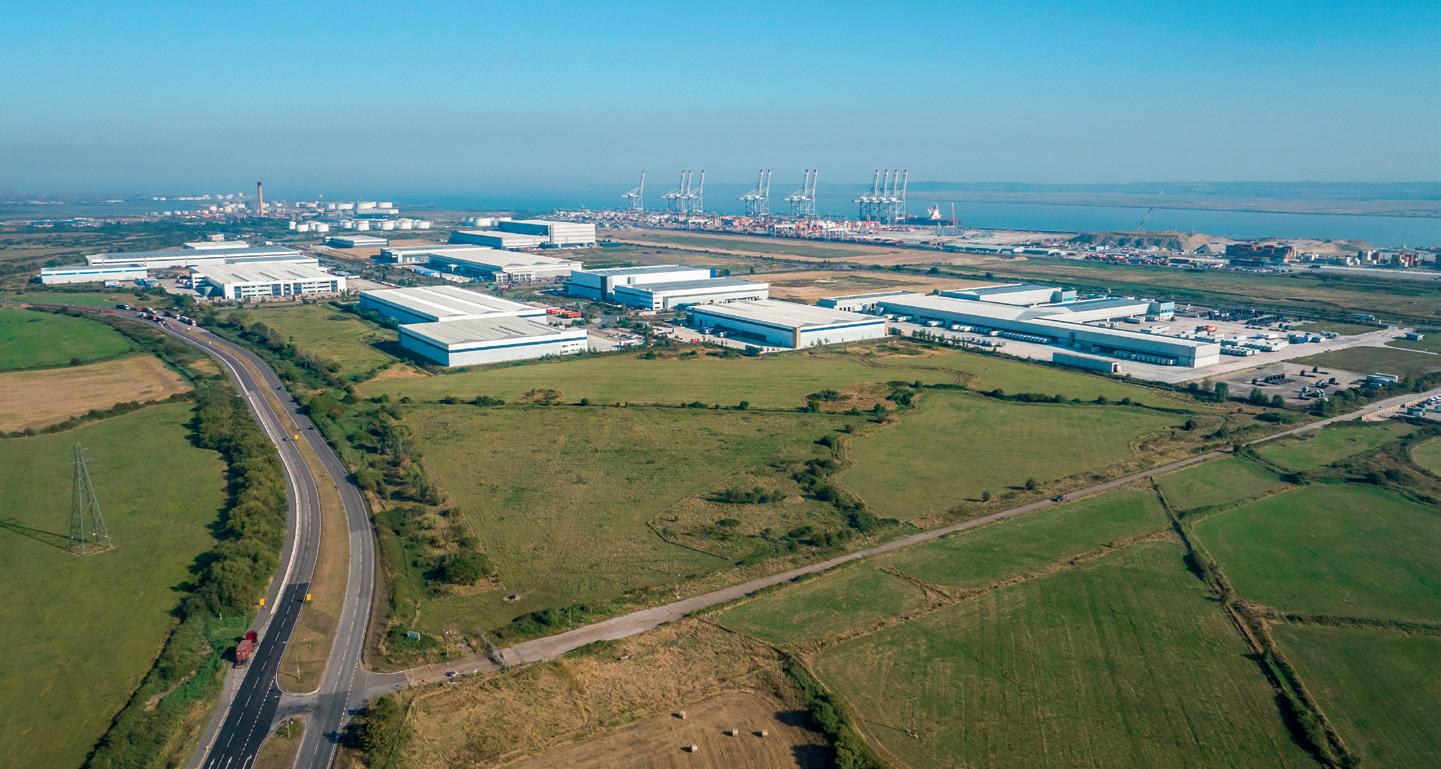
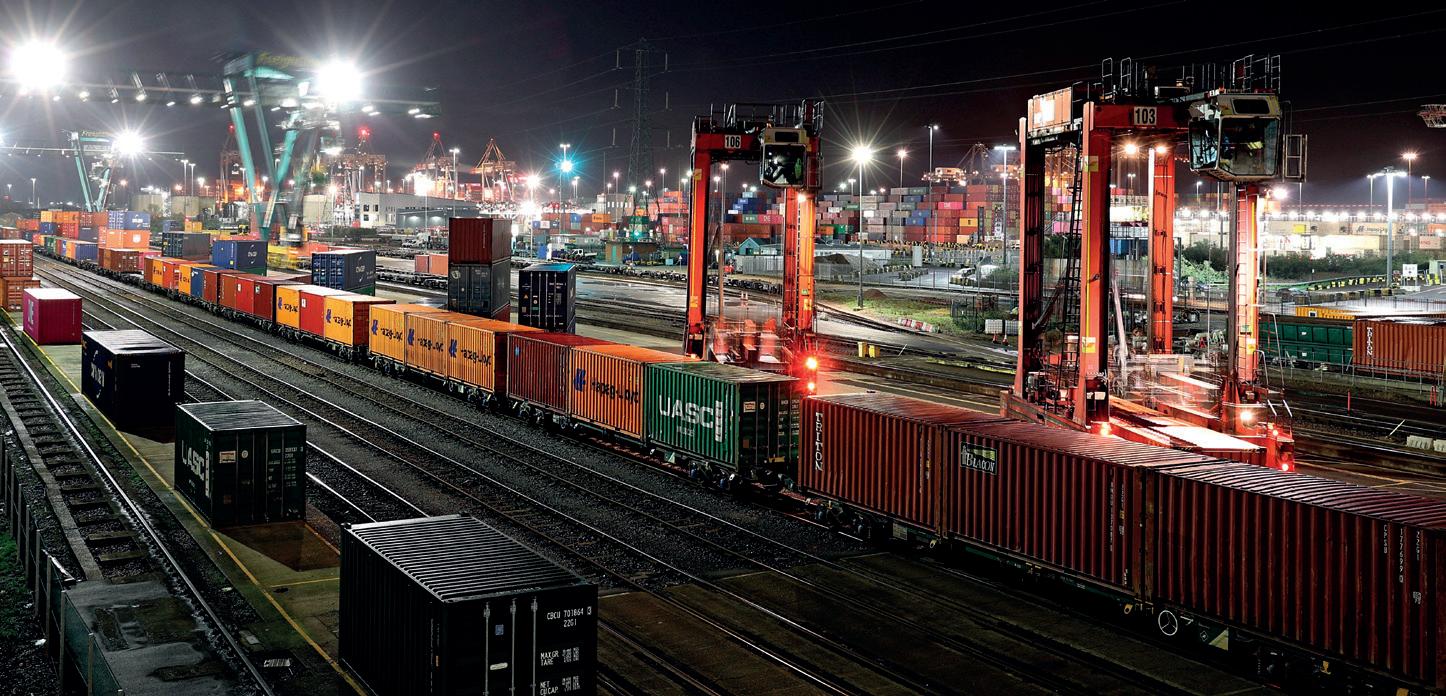
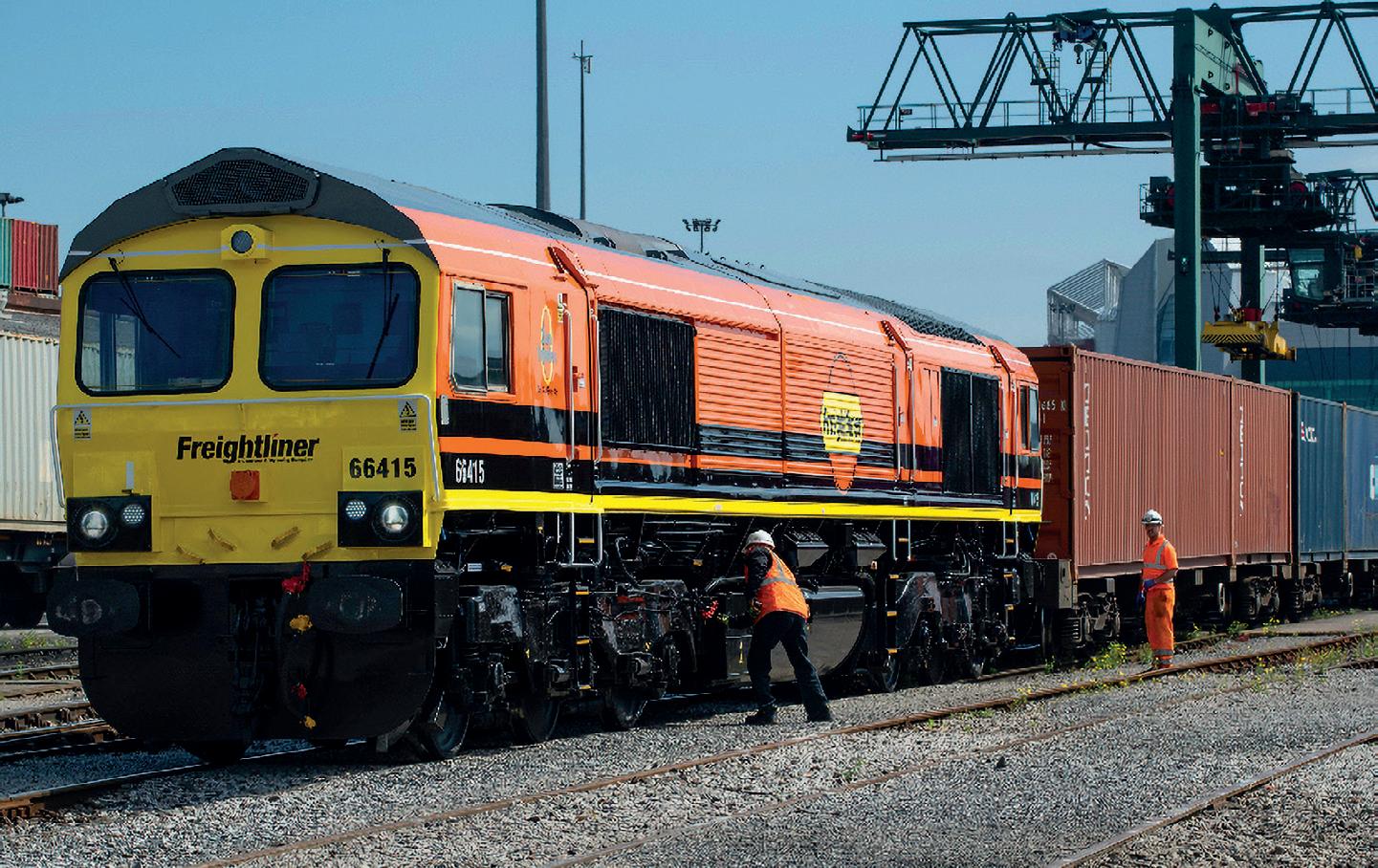
The MSP is just one element of DP World’s commitment and passion to drive rail freight. Four years ago, in conjunction with Freightliner, it launched a new intermodal train service connecting its terminals at London Gateway and Southampton. The service, currently operating on weekends, carries cargos of fresh fruit, beverages and consumer goods between the terminals in several hours.
“It started off as a bit of an experiment but has proved very successful, especially in the temperature control market,” added John. “We have some customers on our logistics park up in London Gateway who are receiving cargo from Southampton and having the delivery all the way through to the logistics park. We are doing bananas, tropical fruit,
clay, all kinds of commodities on this train and moving equipment around for shipping lines as well, which has given us extra flexibility.
“We have just doubled the capacity of those services, adding a midweek service to the weekend service. This has got the capability of taking up to 1.5 million truck miles off the road on the basis of filling these trains in both directions.”
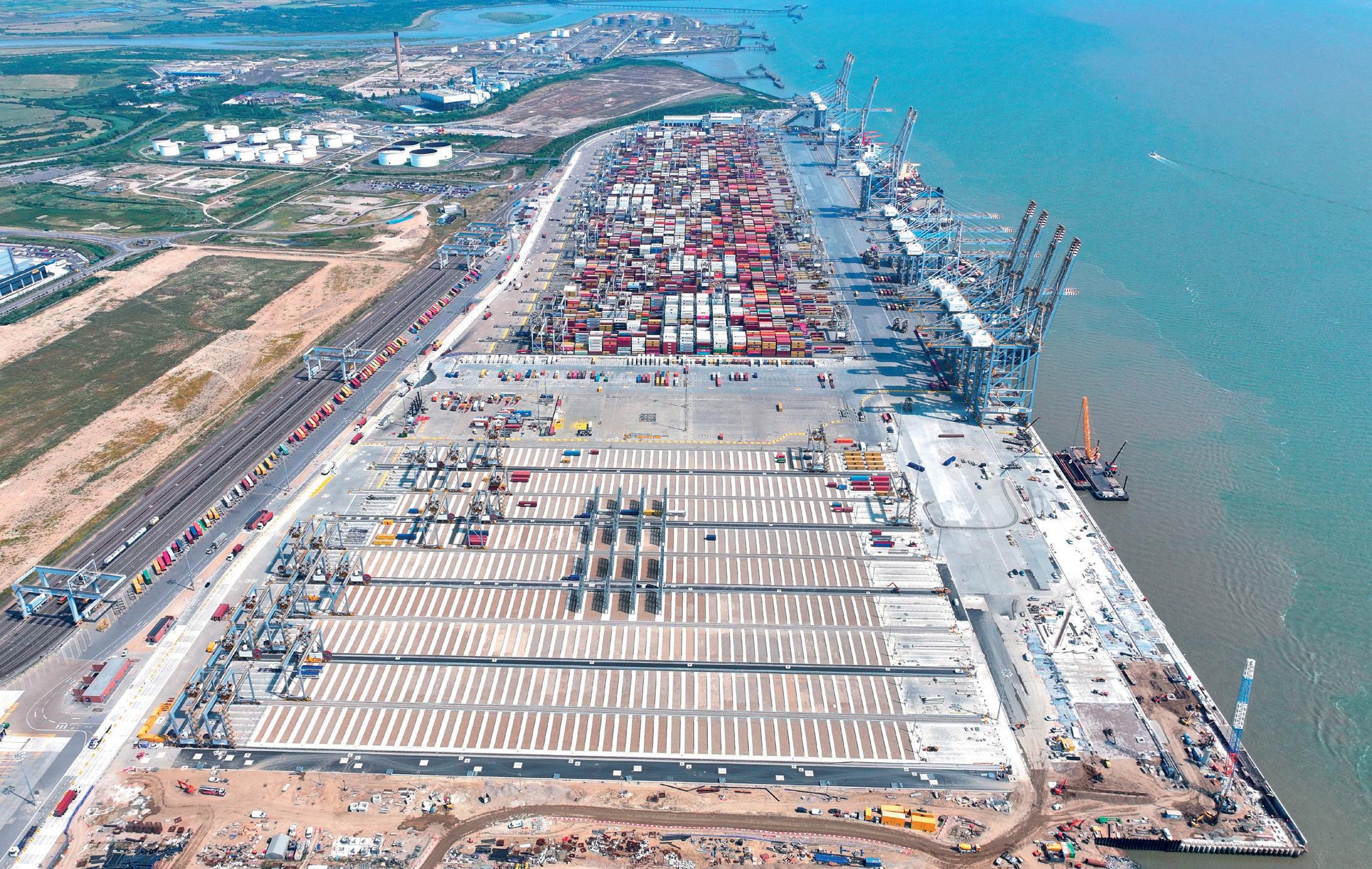
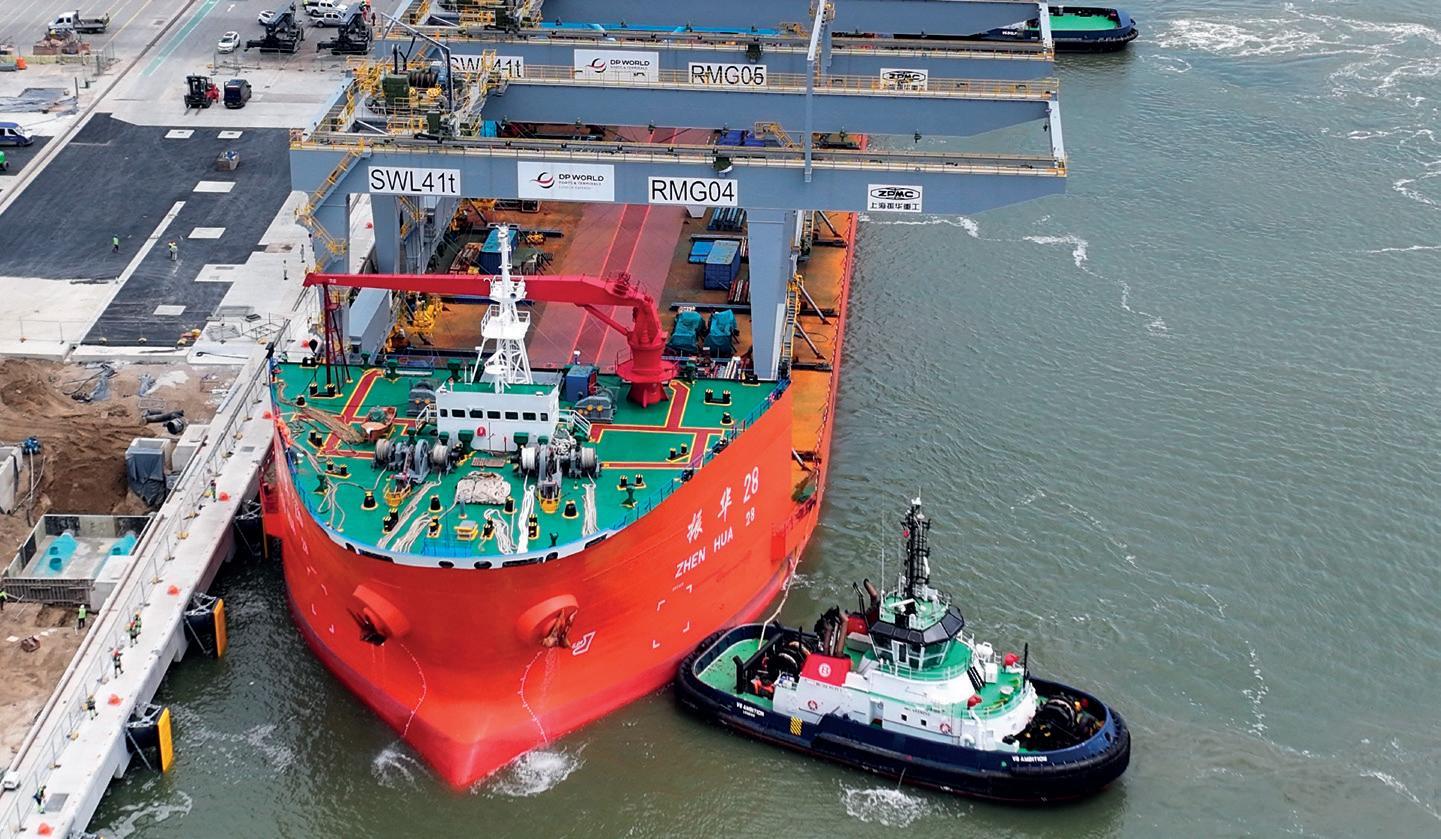
In recent months DP World increased its rail capabilities at its London Gateway site with the arrival of two new Rail-Mounted Gantry (RMG) cranes, which will lift rail capacity at the logistics hub by 50 per cent. The new cranes, which went into operation in mid-August, have increased box handling capacity at the terminal by 75 per cent, enabling more freight to be carried to and from the terminal by rail, reducing congestion on local roads, removing carbon emissions from the supply chain, and helping customers stay competitive.
The £12 million RMG cranes weigh approximately 480 tonnes with a lifting capacity of 41 tonnes. They are equipped with the latest control system and software which will significantly enhance operational efficiency and safety at London Gateway. Their arrival preceded the launch of London Gateway’s £350 million new fourth berth, which was the first all-electric berth at a container port anywhere in the world.
“In addition to the cranes we’ve also invested in the connection vehicles, including the cassette system, which is transporting the containers through the terminal, so it is a systems approach to
having that capacity,” explained John.
“In regards to berth four, the quay cranes are electric, the straddle carriers are electric, and the ASCs are electric as well, and we’ve got a low carbon connection between the port and the railhead which is operated by vehicles powered by hydrotreated vegetable oil (HVO). We have transitioned to HVO at both logistics hubs in Southampton and London Gateway ports, which is a transition step as we continue to look to electrify where it makes sense moving forward.”
The efforts of DP World Port were recognised last month at the Rail Freight Group (RFG) Awards, where it was named ‘Business of the Year’ and won the ‘Driving Rail Freight Growth’ award for its efforts and investment in improving and promoting modal shift.
“We are very proud to get recognised for the two awards,” said John. “A lot of work has gone on behind the scenes with a lot of people involved and I’d also like to thank all of the customers in the supply chain who have taken a punt on embracing rail through the MSP trial, and I hope we can continue the journey together in the future as well.
“We’ve got examples where this use of rail has also been used as a complementary service with other decarbonisation stories. Some of our trucking partners and final mile customers are investing in electric vehicles, which work very well with the near delivery, short, high-frequency journeys which are really complementary to the main haul rail hubs we are operating here.
“This is not that DP World is favouring one mode over another mode but ensuring we can offer the best choices for customers. The market is always changing so it’s important that we ask ourselves how we challenge our existing thinking, how we challenge our existing technology, but also more importantly how we challenge our business models to embrace the opportunities ahead.
“There is a compliance angle to all of the decarbonisation which is going on and there is also a commercial angle, and it has been very exciting exploring what is possible in the commercial space whilst trying to do the right thing on the journey to being a leader in the supply chain, providing efficient, affordable and low carbon solutions for our customers.”
Maggie Simpson, Director General of the Rail Freight Group, writes
about the priorities in ensuring the rail freight
sector thrives
Government must prioritise freight
During the pandemic, moving freight was a huge priority for Government.
Rail freight workers, along with HGV drivers and others in the supply chain worked tirelessly to keep shelves stocked and lights on, and were rightly recognised for their efforts. Almost five years on, and it’s a different matter. Supply chains have continued to work so effectively that no one much notices they are there at all!
Yet there is plenty of uncertainty out there globally. At the start of October workers at 36 ports across the US went on strike indefinitely – collectively handling around half of all goods shipped into and out of the US. Conflict in the Middle East means container ships are still diverting the ‘long way round’ via the Cape, adding time and cost to shippers, and there are fears that the current escalation could start to impact on electricity and fuel costs too. By way of example, the UK imported 30 terawatt hours of liquified natural gas from Qatar last year mostly for use in electricity generation. This all highlights
the essential need for the UK to have resilient and flexible supply chains that can respond effectively to global and domestic disruption. It means that Government needs to focus on, and prioritise, the movement of freight.
Rail freight is a core part of that need, moving around 10 per cent of all surface transport and a much higher share in the core intermodal market in particular. Businesses are still pressing to do more by rail, and we have seen recent starts for a number of new routes including Tesco, which has launched its 10th daily service. Using rail as well as road adds flexibility to supply chains, and takes advantage of rail’s superior performance as well as carbon credentials. Another new service for Freightliner from Tilbury is taking advantage of a new Network Rail scheme which discounts track access charges for the first six months whilst traffic levels build, and is a welcome support for growth.
Government has stated its commitment to growing freight in its announcement of Shadow Great British
Railways (GBR), noting that GBR, when established, will have a statutory duty for freight as well as a target for growth. This is a good start, but there is a lot of critical detail which now needs to be established. It is clear that there will be more radical change than has previously been consulted on, and a fear amongst our members that freight could suffer if vital rules on track access and capacity are changed. Proposals which reduce certainty of access for freight operators or limit the flexibility that customers need to manage supply chains could be deeply damaging, and make private sector investment in rail freight more challenging. We are being assured this is not the case, so look forward to understanding more detail on this over the autumn.
Another key area in reform is how the planned regional partnerships will work, and how freight will be represented. For the most part, we have excellent relationships with local and regional bodies, who want to see rail freight prosper to take HGVs off local roads. Yet there is a tension between those ambitions
and the desire for more control of passenger services, and we need to find a way to give devolved and mayoral authorities the same ambition on freight as GBR through the partnership agreements.
Rail freight also needs to be more integrated into Government thinking on its planned Integrated Transport Strategy and its as yet undeveloped Industrial Strategy. Whilst rail may not be a priority sector in its own right (although there would be good reasons for it being so), rail freight will be instrumental in supporting many sectors that will. Take for example green energy, where rail freight could support movements of liquid hydrogen or alternative fuels. Floating offshore wind which is a priority in South Wales and the North East demands significant amounts of construction aggregate which can move by train, and electric arc steel production will rely on rail for delivery of its feedstock. Even Government plans for housebuilding will need rail freight, with each unit needing up to 200 tonnes of materials if the supporting infrastructure is taken into account. It simply will not be possible to meet these ambitions if rail reform does not provide a framework for access that aligns with supply chain needs.
The new Government’s missions are good news for rail freight and highlight how essential supply chains are, and will be, if the desired economic growth and outcomes are to be delivered. For that to work, we need freight to be embedded at the heart of transport and rail policy and planning, whatever reforms are being progressed.
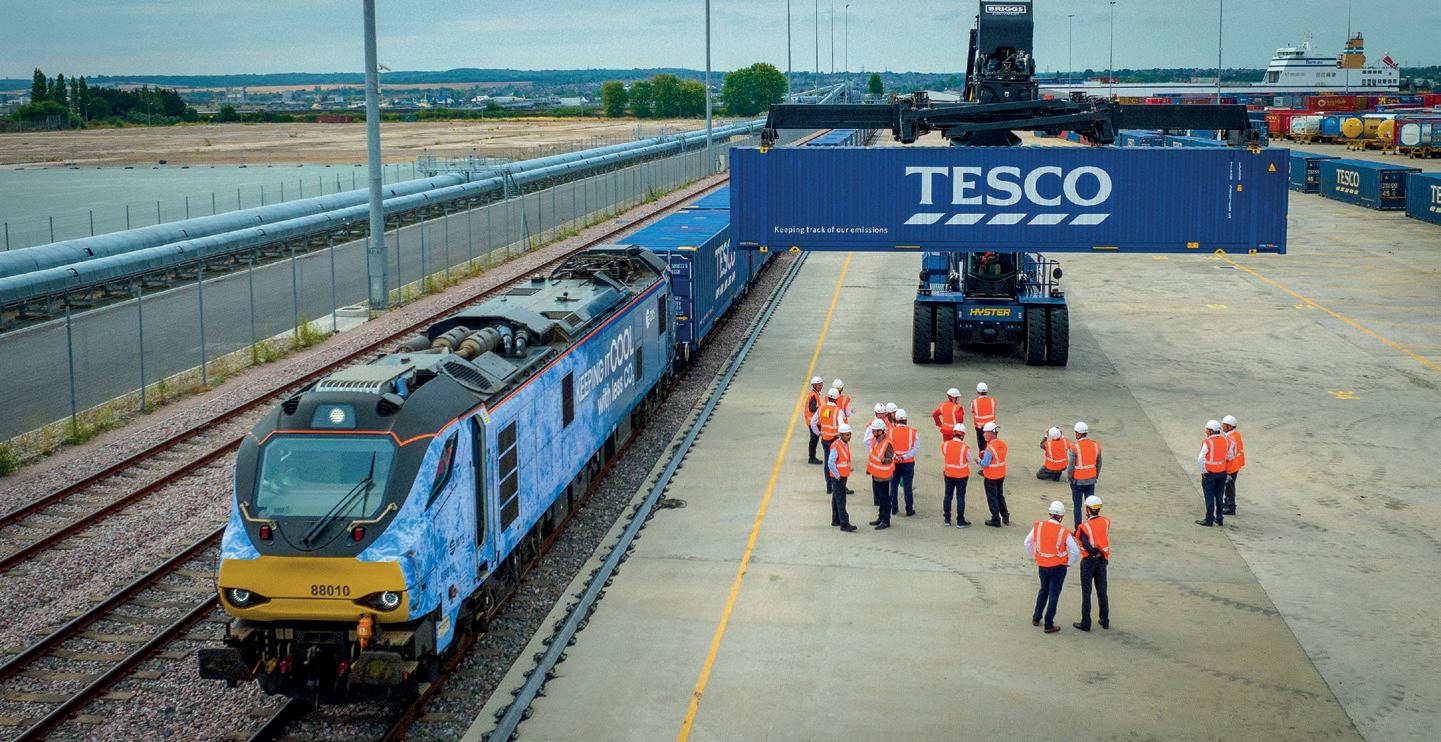
Tesco’s 10th rail service rolls into action
Afurther 31 million cases of goods a year are set to be moved across the country by the Tesco rail network rather than by lorry, with the introduction of the supermarket’s 10th rail service.
The latest ‘Tesco train’ will move 600,000 cases per week, replacing the more than 90 trips per week previously needed to move goods from its main distribution centre in Daventry, Northamptonshire on a 260-mile round trip to its regional distribution centre in Widnes in the Northwest.
The improvements will lead to a significant reduction in road miles – with this new service resulting in an annual emission saving of more than 6,000tCO2e. The service brings the total number of cases moved by the Tesco rail network to
News in brief
Network Rail cuts prices for new traffic flows
Train operators have been offered the opportunity to gain discounts on their track access charges by Network Rail in a bid to encourage new business to the railway, particularly freight.
The relevant charges would be waived in full for six months whilst new traffic is being established.
Network Rail has said the driver behind it was the company’s commitment to support the growth of rail freight. The offer is worth around £1,000 per train circulation (out and back) depending on the length and loading of the trains.
Freightliner launch market
first ECO90 booking service
Freightliner has announced the launch of its ECO90 booking service, offering customers the ability to move as little as one container, across any rail route, on a carbon reduced service utilising alternative fuels.
Freightliner said it is the first rail freight provider to offer a more sustainable solution at a single container level, giving customers, no matter their size or scale, complete flexibility and control to manage and reduce their own carbon emissions.
more than 300 million cases per year.
With the launch of the 10th train service, the total number of cases moved around the country on the retailer’s rail network will increase to over six million cases per week – increasing to more than seven million during peak periods. The train will be Tesco’s biggest service to date. By delivering by rail to Trafford Park, products are much closer to stores for the final step in the delivery process, with lorries collecting cases of goods off the train and delivering them direct to store.
The new service, in partnership with DRS and Maritime, will extend the network across the country moving both fresh and dry goods, and will bring the number of Tesco stores receiving deliveries by rail to 198. The new service will run six times a week (Monday to Saturday), and the retailer is working with
its suppliers to ensure that the return leg of the service is used.
Suppliers benefitting from the route include L’Oréal, AB World Foods, PZ Cussons, and Heinz –with beauty, grocery and household products being moved on the service, in turn helping them reduce their emissions too.
Ken Murphy, Tesco Group Chief Executive, said: “Tesco’s distribution network is one of the most extensive in the UK and plays an important role in our efforts to become carbon neutral in our own operations by 2035.
“Switching from road to rail allows us to get products to our stores in a more sustainable way, by removing thousands of lorry journeys each year and reducing our carbon emissions.”
Rail freight research: A catalyst for growth and innovation
Mark Phillips, Chief Executive of the Rail Safety and Standards Board (RSSB), has called on the rail freight sector to co-fund research to help achieve the ambitious goal of increasing rail freight by 75 per cent by 2050.
Speaking at the 32nd Rail Freight Group Conference in London, Phillips highlighted the transformative potential of research in the rail freight sector. By investing in research together, the freight sector would be able to overcome challenges that cannot be addressed alone, and unlock growth opportunities for individual freight operators.
His speech, which recognised commercial challenges facing the rail freight sector, drew the audience’s attention to some key benefits from recent RSSB freight research: Enhanced efficiency and competitiveness: Research provides the insights and data necessary for strategic decision-making, process optimisation, and maintaining a competitive edge. Projects like the Heavy Axle Weight Interaction Model and the Axle Fault Detection Initiative are already delivering significant operational improvements and cost savings.
Sustainability and decarbonisation: Shifting more goods from road to rail supports national decarbonisation efforts. Initiatives such as improving freight train operational efficiency and redefining freight gauges contribute to reducing emissions and enhancing the sustainability footprint of rail freight.
Market expansion: Research helps identify new opportunities and solutions to expand rail freight markets. Historical examples and recent projects demonstrate how targeted research can unlock new freight flows and improve service offerings.
Closing his speech, Mark issued a call to arms, urging the freight sector to contribute co-funding to the research programme: “We need your input, your collaboration, your commitment, and funding for our future rail freight research programme.
“Co-funding will enable extension of the research programme’s reach, accelerating progress towards the 75 per cent growth target and ensuring the rail freight sector remains competitive, efficient and sustainable.”
Image: Tesco
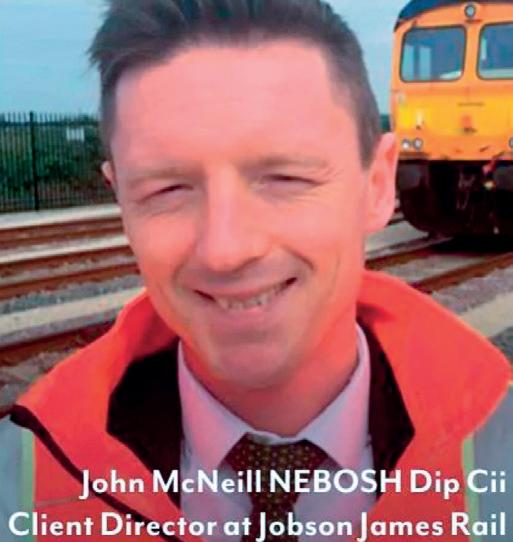
Advice from John McNeill, NEBOSH, Dip Cii, Client Director at Jobson James Rail
An insurance solution that matches risks and liabilities for moving freight
ny business that moves freight by road, sea, air or rail faces a wide range of risks for which it can be contractually liable - the main one being loss of or damage to the cargo transported. This could be due to collision, theft, train derailment, cargo shift during transit, contamination, infrastructure or mechanical failure, train crew or driver error etc. The goods may have also been subject to rail, sea, air or land journeys emanating from overseas where the damage could have been suffered before reaching the UK but only became apparent when the container was opened.
It is possible to insure cargo and contractual liability for damage to goods in transit during import, export or inland UK journey and the insurance industry can offer solutions to match
the liability imposed by specific contract conditions that apply.
The road haulage industry typically works to Road Haulage Association Conditions of Carriage, or equivalent, which impose several obligations and liability is limited to £1,300 per tonne, so road hauliers liability cover can be arranged to match this. It’s possible to increase the limit for higher-value goods, or even remove the limit entirely and have a sum insured that represents the full value at risk.
Marine INCOTERMS create a contractual framework so that it is clear whether the importer or exporter is liable for damage to goods for any part of the journey and Marine Cargo insurance can be purchased to cover the freight for that liability.
Where the goods are kept at a rail terminal or dockside warehouse, the
freight company may have to accept UKWA terms and conditions which make them responsible for damage to the goods when stored outside of the normal course of transit, and insurance can be purchased for the static storage risk.
Freight by rail can be accommodated by BIFA trading terms
which are generally accepted in the industry as a standard and a version of Marine Cargo insurance can be bought to match those terms.
Importantly it is essential for the freight company or owner to know and understand its liability, so that a good insurance broker can provide an insurance solution that matches any risks and contractual liabilities.
The Insurance Act 2015 has created a statutory obligation imposed on all commercial businesses to declare “fair presentation” of all relevant material facts. Our business, Jobson James Rail, is an expert in the matters of full disclosure. We write detailed risk presentations to discharge our clients’ disclosure obligations that they can sign off, so that they know they are compliant.
Call John on 07867 459054
Sarah Butcher, Commercial Manager at Welfare Hire Nationwide, explains how Welfare Hire is working to address the issue of air pollution for construction and built-environment contractors
Breathing easier:
How businesses can join the fight for clean air
As the biggest environmental health risk of our time, air pollution exacerbates climate change, harms economies, and reduces agricultural productivity.
It’s an issue that is prevalent in all aspects of life, but particularly in the construction industry, which is responsible for 18 per cent of large particle pollution in the UK according to a 2022 report from Impact on Urban Health (IoUH) and the Centre for Low Emission Construction (CLEC).
This year’s United Nations International Day of Clean Air for Blue Skies initiative is focused on the theme, ‘Together for Clean Air’, which emphasises the importance of collaboration and shared responsibility.
It outlines how by working together, governments, corporations, civil society, and individuals can make a significant impact on reducing air pollution and protecting our planet.
Welfare Hire Nationwide: leading the way in sustainable construction
As a pioneering provider of eco-friendly towable welfare units, Welfare Hire is proud to lead the way in leveraging advanced technology to minimise our environmental impact. Sustainability is at the heart of our company’s ethos, complementing our other core pillars: Environment, Value, Wellbeing, Quality, and Service. By integrating these principles, we ensure a balanced and responsible approach to our operations.
At Welfare Hire Nationwide, we are committed to contributing to a cleaner and healthier future. We work with companies spanning the construction and built environment sectors to provide modern and innovative welfare units that can help our customers address their environmental concerns.
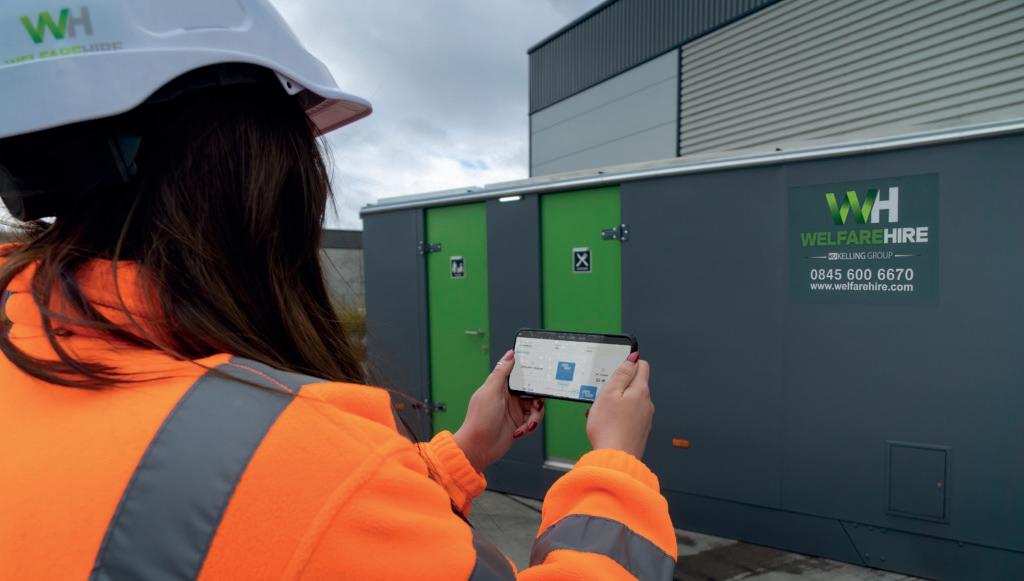
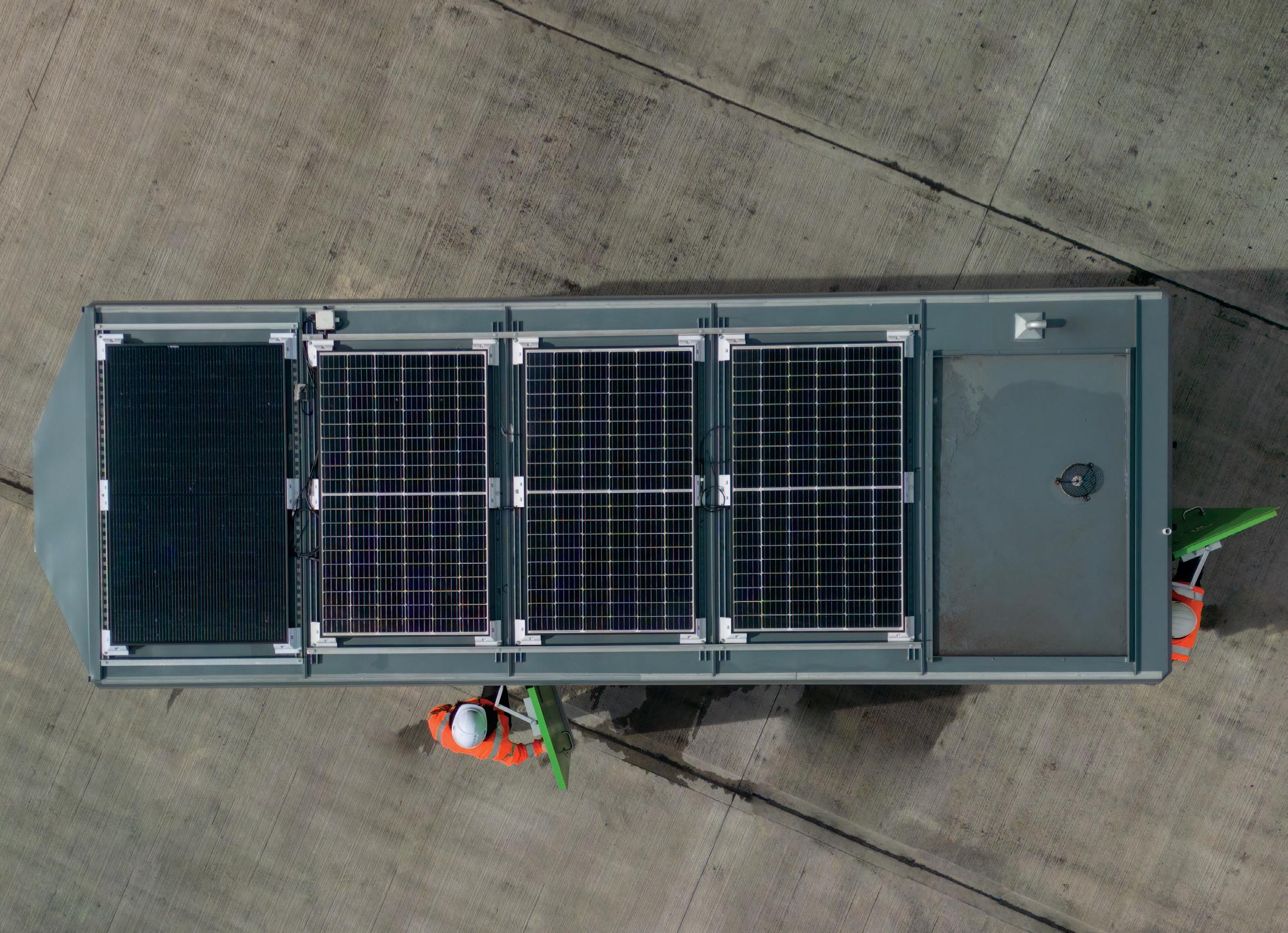
Our EcoXi mobile welfare unit is one of our flagship products and a testament to our dedication to sustainability and innovation.
Sustainability is at the heart of our company’s ethos, complementing our other core pillars: Environment, Value, Wellbeing, Quality, and Service
Introducing the EcoXi: A greener solution to onsite welfare
The EcoXi is the next generation of eco-friendly mobile welfare units. Designed to minimise its environmental footprint, it offers a range of sustainable features, including:
Renewable Energy: Powered by solar energy and lithium batteries, ensuring zero-emission operation.
Water Conservation: Features a rainwater harvesting system for contactless handwashing and non-chemical toilets.
Smart Technology: Telemetry system for efficient power and water management.
Spacious and Comfortable: Accommodates up to 10 people with separate canteen, office, drying room, and WC.
Benefits of the EcoXi
Reduced Carbon Emissions: Significantly lowers your carbon footprint.
Cost Savings: Reduces operating costs by minimising fuel consumption and waste.
Improved Efficiency: Smart technology optimises power and water usage.
Enhanced Comfort: Provides a comfortable and hygienic working environment for your team.
Investing
in a cleaner future
By choosing the EcoXi, you’re not just investing in a mobile welfare unit; you’re investing in a cleaner, healthier future.
Our unwavering commitment to sustainability drives us to innovate and find new ways to reduce our environmental impact.
We believe with sustainable solutions like the EcoXi, Welfare Hire can help our industry contribute to a cleaner and healthier planet for generations to come.
At Welfare Hire Nationwide, we are committed to contributing to a cleaner and healthier future
As we move into the later months of the year, the UK’s rail network faces increasing threats from one of nature’s most destructive forces: water. Geraint Gibbs, Operations Manager at SEP Rail Services, shares insights on how the industry can combat this growing challenge
The enemy of UK rail infrastructure
n April 2024, Network Rail announced that £2.8bn of its total spend over Control Period 7 (CP7) will be directed towards helping the railways better cope with extreme weather and climate change.
Recognising the critical role of drainage systems, £60 million has already been earmarked for improving drainage infrastructure in Yorkshire and the North East alone.
“I’ve seen a shift in how drainage is perceived within the rail industry,” explained Geraint.
“The increasing severity of weather means it’s no longer just about managing water; it’s about
protecting passengers and ensuring the long-term resilience of our infrastructure.”
The tragic derailment near Stonehaven in 2020, which claimed three lives, serves as a stark reminder of the importance of robust drainage systems. The incident, triggered by drainage failure during extreme weather, was a catalyst for change in how the industry approaches infrastructure resilience.
“The Stonehaven disaster was a watershed moment,” Geraint reflected. “It underlined the catastrophic consequences of neglecting drainage systems.
Since then, we’ve seen a decisive move towards not only reinforcing drainage networks but also integrating them more thoughtfully into overall infrastructure planning.”
Innovation in drainage solutions
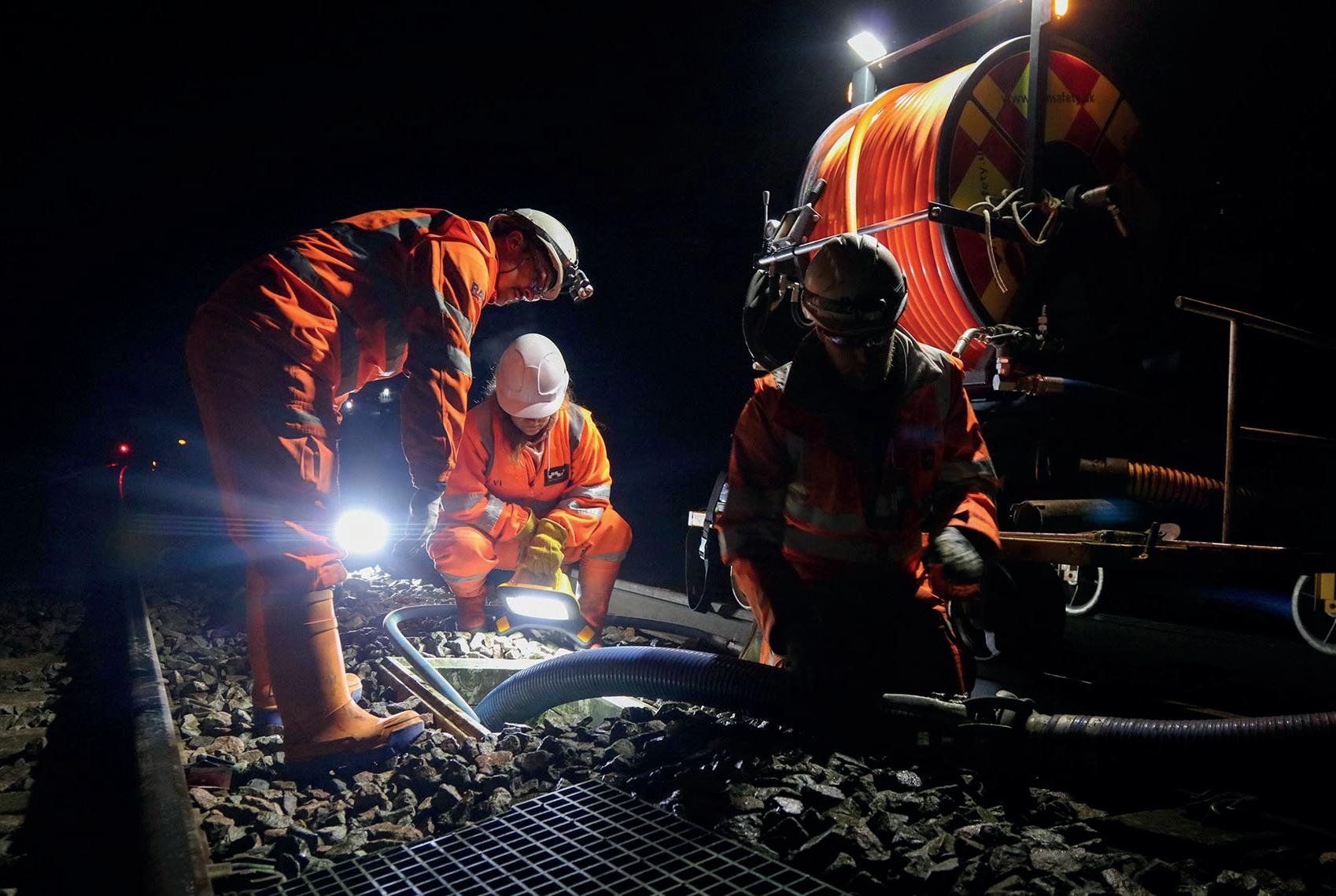
Advancements in diagnostic and construction technologies have transformed the way rail drainage systems are assessed and maintained. Tools like CCTV, sonar and predictive maintenance are enabling more accurate diagnostics with less ground disturbance, ensuring more efficient and cost-effective interventions.
“When you get a call at 2am for emergency drainage support, or when working within tight blockade windows, every minute matters,” said Geraint.
“That’s why we’ve invested heavily in the new technology, ensuring that breaking ground is the last resort.”
Predictive maintenance, in particular, is playing a critical role in proactively identifying potential failures before they escalate.
By leveraging advanced data analytics and diagnostic tools, teams can anticipate drainage issues and rectify them before they impact rail operations.
“This is where the industry is heading – using data to stay one step ahead,” Geraint continued. “With sophisticated data management platforms that facilitate smooth communication between asset managers, designers and construction teams, we can ensure the right decisions are made quickly and effectively.”
Safeguarding the future
While Network Rail’s planned investment will be distributed across the next five years, not all existing drainage infrastructure will be upgraded. This presents an area where strategic focus is still needed.
“Stonehaven highlighted the critical need for thorough diagnostics and ongoing maintenance,” Geraint said.
“This isn’t scaremongering – blocked drainage leads to flooding, which in turn causes track geometry deterioration, delays and service disruptions.
“The consequences compound over time. Although the industry recognises the importance of drainage, it remains one of the most overlooked aspects of rail infrastructure. I hope to see this change over CP7.”
The financial implications of neglecting drainage infrastructure may not have been fully quantified, but real-world events tell the story.
Each year, the costs associated with delays, emergency repairs and infrastructure damage continue to mount.
In 2023/24, the UK experienced the highest number of named storms since the Met Office began its naming system in 2015.
With September 2024 marking the start of the 2024/25 storm season, SEP Rail Services is bracing for its busiest period.
“In five years, we may well reach a point where the infrastructure is sufficiently upgraded to withstand the challenges posed by extreme weather,” Geraint said optimistically.
“But until then, we remain on high alert, providing 24/7 drainage support across the UK to ensure the network continues to operate safely and efficiently.”
Mark Wyborn, Head of Freight and Route Services at Porterbrook, was tasked with developing the company’s first dedicated freight strategy when he joined three-and-a-half year ago. He discusses the progress made
Investing in first class rail freight
Things have changed at Porterbrook in regards to rail freight since 2021. It was three and a half years ago that the rolling stock owner and asset manager appointed Mark Wyborn, giving him the responsibility for developing its first dedicated freight strategy.
“One of the things rolling stock leasing companies have been criticised for in recent times is around how much of a hands-off approach they’ve taken with their assets,” he said. “As we have grown the number of assets we have on lease we have been determined to be more hands-on now, working together with the industry in partnership to achieve industry growth for rail freight.
“We’ve got more wagons, we are stepping into the shunt locomotive space, we’re looking at express freight, we’re doing far more infrastructure monitoring for Network Rail, and we’re looking to expand our locomotive fleet. We stand behind rail freight as the most carbon-friendly way to move goods and we make sure that plays through everything we do, with decarbonisation a key driver behind all of this.”
Porterbrook has been at the heart of the UK rail network for three decades and owns around a quarter of the national passenger rail fleet. Its impact in the rail freight space is gathering momentum, particularly next month when a trial is due to get underway which will see four Class 769s being used for express freight by two different operators. They are currently being converted at Wabtec in Doncaster, and Porterbrook is subsidising the conversion, with the first due to be delivered in November and the second by the end of the year. The final two will be delivered in the first quarter of next year.
“Porterbrook is subsidising this on the backdrop of the fact we want to accelerate rail freight growth and to see if there is a market that can be commercially tested because when we look at rail versus road it is always that pinch point around whether it stacks up when you start converting the trains,” said Mark who added the trial will last six months.
“Porterbrook is subsidising the trial, as we want to accelerate rail freight growth. As part of this strategy, we want to commercially test rail vs road and benchmark this with reliability. If both factors align, we have a model that can push the rail freight growth agenda. Then the idea is that there will be a three-way partnership between the operator, the logistics provider and Porterbrook, and if we need it,
we will bring the maintainer into that mix.
“We’re focusing on reliability, and we will be actively undertaking commissioning and testing of our mileage accumulation and that is going to be a large part of the trial. The unit will only go to the end customer at the point we all feel is right.”
Another approach being looked at is bringing the Great British Railways Transition Team (GBRTT) into the mix, particularly following the Government’s rail freight growth target of 75 per cent by 2050 – a figure set in part after GBRTT’s call for evidence on rail freight growth. In a bid to drive rail freight growth, authorised grants on variable track access have been announced for those competing with road and/or who are new to rail.
“We are actively pushing that agenda to see how that test stands to start a service and what that will look like going forward,” Mark added. “This can’t be done alone, what we are doing is a joint collaborative effort in order to really push that growth agenda,
because otherwise we are all just going off in our different directions. We can bring all of this together and really push all of those different levers and really go for that growth and make sure it makes commercial sense as well, as a partnership approach is the only way to achieve this
“A key part of express freight is that it operates in a passenger timetable because the train was a passenger train. Our current ambition is to target the Midlands belt up to Scotland first and then the Midlands into London; although we are open to working on the specific requirements of the logistic providers network, it has to be an easy transition. We have 30 Class 769s that we can deploy, and it would be great if we could deploy them all, but we know it’s going to be a step-by-step approach because Express Freight is new to rail and is going to be completely reliant on how we can all deliver this from a reliability point of view and ultimately competitively from a commercial point of view.
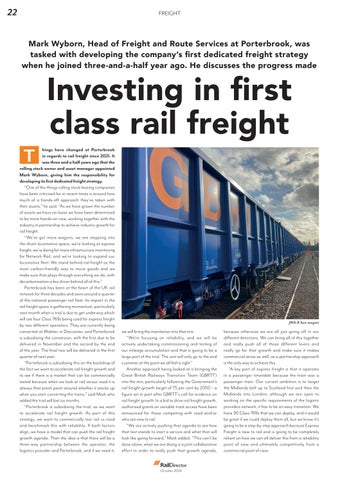
JNA-X box wagon
“We’ve all got to win here, something that is achieved if we are all pushing that modal shift agenda. Class 769s are suited towards express freight because they can go anywhere on the rail network with all of the characteristics of overhead, third rail and a diesel engine. It is going to be an exciting journey for all of us in that partnership to make it work, including the logistics provider.”
Porterbrook isn’t hesitant when it comes to investing in the UK rail industry. Since 1996, the company has invested more than £3.5 billion, including the commissioning of more than 2,500 new passenger and freight vehicles. It is looking to invest over £1 billion into UK rail in the coming years to deliver high-quality new and refurbished vehicles for passengers and freight customers.
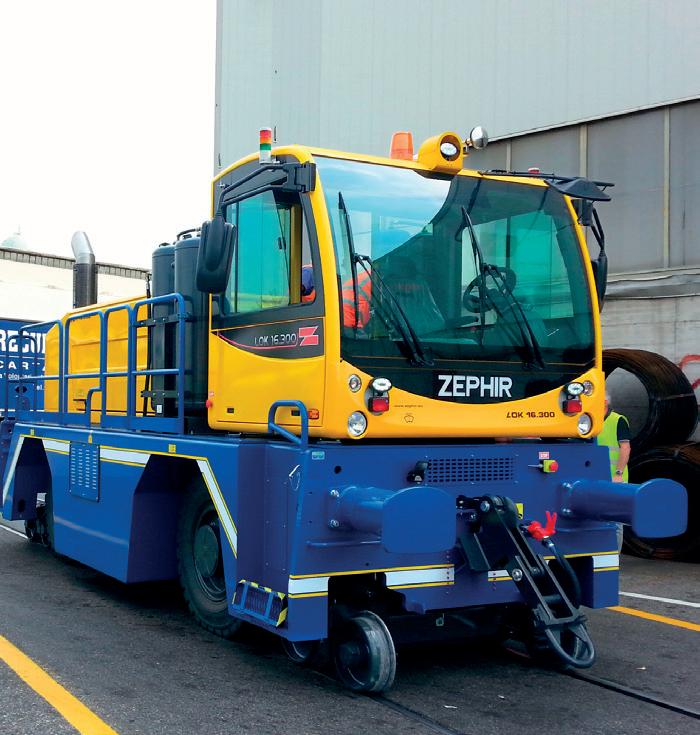
Mark admits the current market has made it challenging to invest in lots of rolling stock, but that hasn’t stopped progress of providing for customers, with the organisation working hard on offering greener solutions in the rail freight and passenger depot yards. Evidence of this was earlier this year when it purchased three Zephir LOK 16.300 depot shunters, which have been leased to GB Railfreight for shunting at Celsa Steel Works in Cardiff.
They are a more sustainable option than traditional depot shunters, with an expected efficiency saving of up to 60 per cent. They are also capable of operating outside of railway infrastructure, which offers more flexibility at rail-connected yards. As it is not currently possible to use battery or electric traction at Celsa Works due to the duty cycle, the Zephir depot shunters are fitted with EU Stage V engines, the latest in low-emission engine standards for reduced pollution and lower CO₂ emissions. They are also able to run on HVO bio-diesel.
“With over 300 depot shunters currently operating in the UK and most due for renewal over the next five years, bringing these lower-emission Zephirs under our ownership and leasing them to GB Railfreight marks a further diversification of our freight fleet, and underlines our dedication to support the sector with affordable, innovative and sustainable rolling stock,” said Mark.
Although Mark admits he will always want more, overall he takes a lot of pride in what has been achieved by the team in recent years, despite the difficulties in making the big investment decisions. That hasn’t stopped the progress, something he puts
down to a passion for pushing the freight agenda, and ensuring a flexible approach.
“The freight operators are there to run trains and we’re there to find them the assets they need, something we do on a daily basis,” said Mark. “A lot of the deals we have won have been born from Porterbrook’s thinking outside of the box and then talked about with the freight operators. It is about taking that flexible approach because we know these investment decisions take time so we need to diversify our approach.
“We’re not going to get a massive locomotive every week, every year, so then we need to start thinking about the longer-term strategy. When I came here, I was quite clear on the lanes of our strategy. One of them was shunt locomotives and how we can decarbonise depots, the second was main line locos and how we can either re-engineer or purchase new, another point was around wagons. We have grown our wagon fleet, particularly in the intermodal and construction sectors, with 300 wagons on lease which we didn’t have in 2021. We are now in a position to expand in the lanes we are active in. As well as to turn focus to the lanes we are not. This success has also enabled us to expand the freight team to give more focus to a key business area.
“There was also the express freight opportunity and what we can do with redundant passenger vehicles and the other big part was around digital, and how we can bring all of this learning through all of these different lanes into the digital sphere within Porterbrook. We are working on quite a few digital strands. One of the biggest successes at the minute is infrastructure monitoring for Network Rail, which is going really well. Compared to 2021 we now have more 153s into Network Rail, and longer-term leases on the Class 43s and on the HST power cars.
“Overall we’ve got strong foundations but we need to build on them, we need to continue being flexible and offering that partnership approach. We are well positioned across the freight sector with wagons, locomotives, shunters and express freight and we will continue to look at further diversification opportunities as they come. That could be a European angle or more of an infrastructure angle. Ultimately it all boils down to relationships and the trust we build. Relationships that deliver on the collective objective. This is what we really pride ourselves on.”
We’ve got strong foundations but we need to build on them, we need to continue being flexible and offering that partnership approach
Daniel Copley, General Manager at Weighwell Engineering Ltd, explains more about its patented Portable Train Weigher
(PTW)
Enhancing rail safety with the Portable Train Weigher
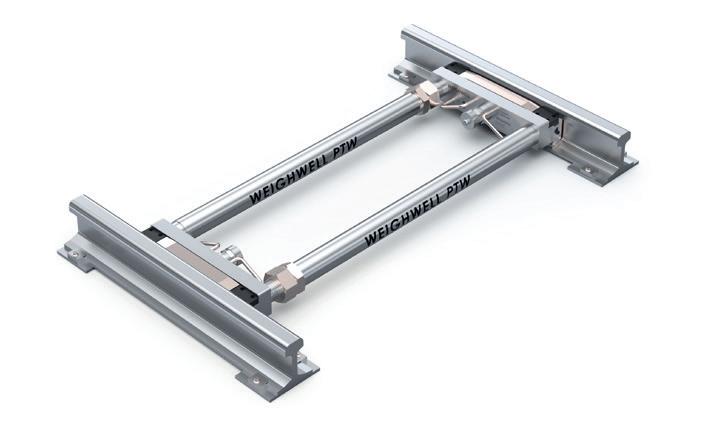
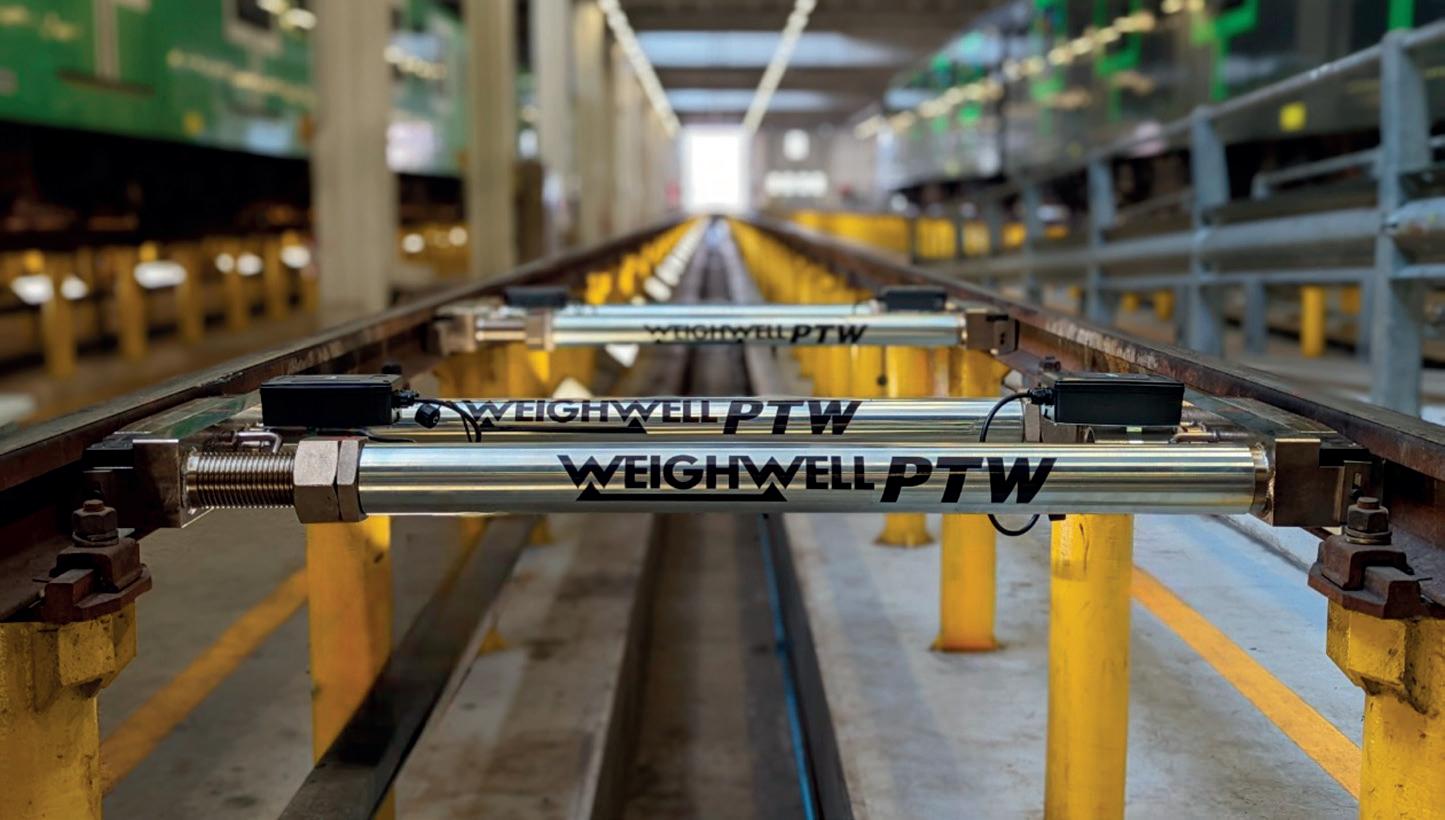
Weighwell Engineering Ltd’s awardwinning PTW has changed the concept of train weighing. It was invented by Founder and Managing Director Paul Horsfall in 1997, instantly becoming an integral part of train manufacture, overhaul and maintenance operations.
“An everyday focus within the rail industry is to provide rolling stock that is safe and reliable,” said Daniel Copley, Weighwell’s General Manager. “The PTW can provide accurate wheel weight data and is an innovative solution for weighing a wide variety of rail vehicles from high-speed trains to metro and tram cars.
“It is suitable for understanding the weight distribution of a rail vehicle. Our weighing results provide rail engineers, fleet managers and rail consultants with the necessary weighing information to implement corrective actions that can help improve ride quality and vehicle stability of rolling stock. ”
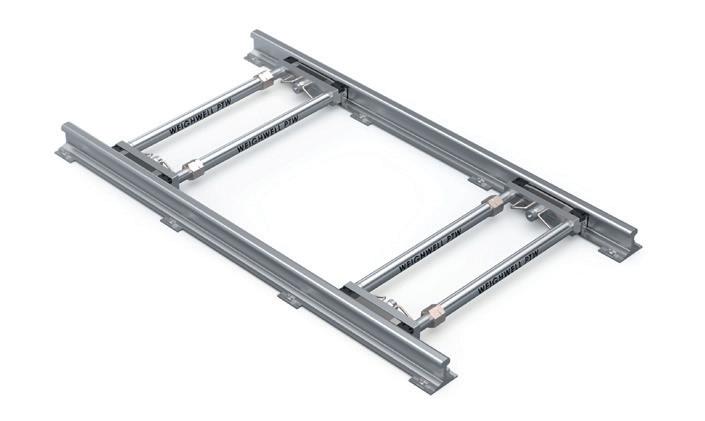
The PTW can be supplied in a variety of configurations and used to statically weigh each axle, bogie or the complete railcar/locomotive. Achievable accuracies with a static train weighing system are ±0.1 per cent.
Soon to celebrate its 30th birthday, Daniel explains how the PTW has evolved from its initial design in 1997.
“The system length has been reduced from 600mm to 500mm and our latest patented design has an in-built ramped portion on the loadcell,” he said. “A shorter PTW length allows for greater flexibility between rail fastenings, whilst the improved loadcell design provides a smoother ‘flange friendly’ interface. The mobile rail scale is suitable for different track gauges and rail profiles, with no obstruction to regular train movements.”
The PTW can be hired on a timescale to suit project requirements. The easy-to-install weighing system requires no permanent track modifications
or mains power connection, which results in a seamless and convenient solution for pre/postmodification weighings. From initial setup to ongoing support, the RISQS audited organisation’s skilled technicians can also attend site to oversee the weighing operations.
Daniel, who recently marked a decade at the company, said: “Our flagship product has been supplied into over 40 countries and led to working with a large and diverse range of rail companies. We are dedicated to providing an exceptional service underpinned by decades of knowledge and experience.”
Weighwell Engineering Ltd has more than 30 years’ experience supplying specialist train weighing systems and has been trusted and respected worldwide for its engineering skill, expertise and innovation. Today it continues to build on this rich engineering heritage by delivering advanced solutions for train weighing.
“Weighwell first began in 1988 by servicing and maintaining weighing equipment of all shapes and
sizes from laboratory scales to train weighbridges,” added Daniel. “The PTW concept was first envisaged with a prototype in 1995 and officially launched at Railtex in 1997. As a result, Weighwell has been recognised for its innovation and valuable contribution to the rail industry with several awards including multiple Department of Trade and Industry awards for innovation.
“In the last 30-plus years, Weighwell has established an unrivalled reputation for quality, reliability and service. We pride ourselves on continuously delivering exceedingly reliable performance with our products and services and making significant advances in train weighing technology.
“This is shown through prototyping and producing the very first PTW, through to our unique ptwX software. In addition, whether your requirements are a calibration, short-term hire or long-term hire we provide a fast and efficient service supported by excellent customer support.”
www.weighwell.com/
Held in Berlin, this year’s InnoTrans exhibition attracted more visitors and exhibitors than ever before
InnoTrans 2024 –bigger than ever!
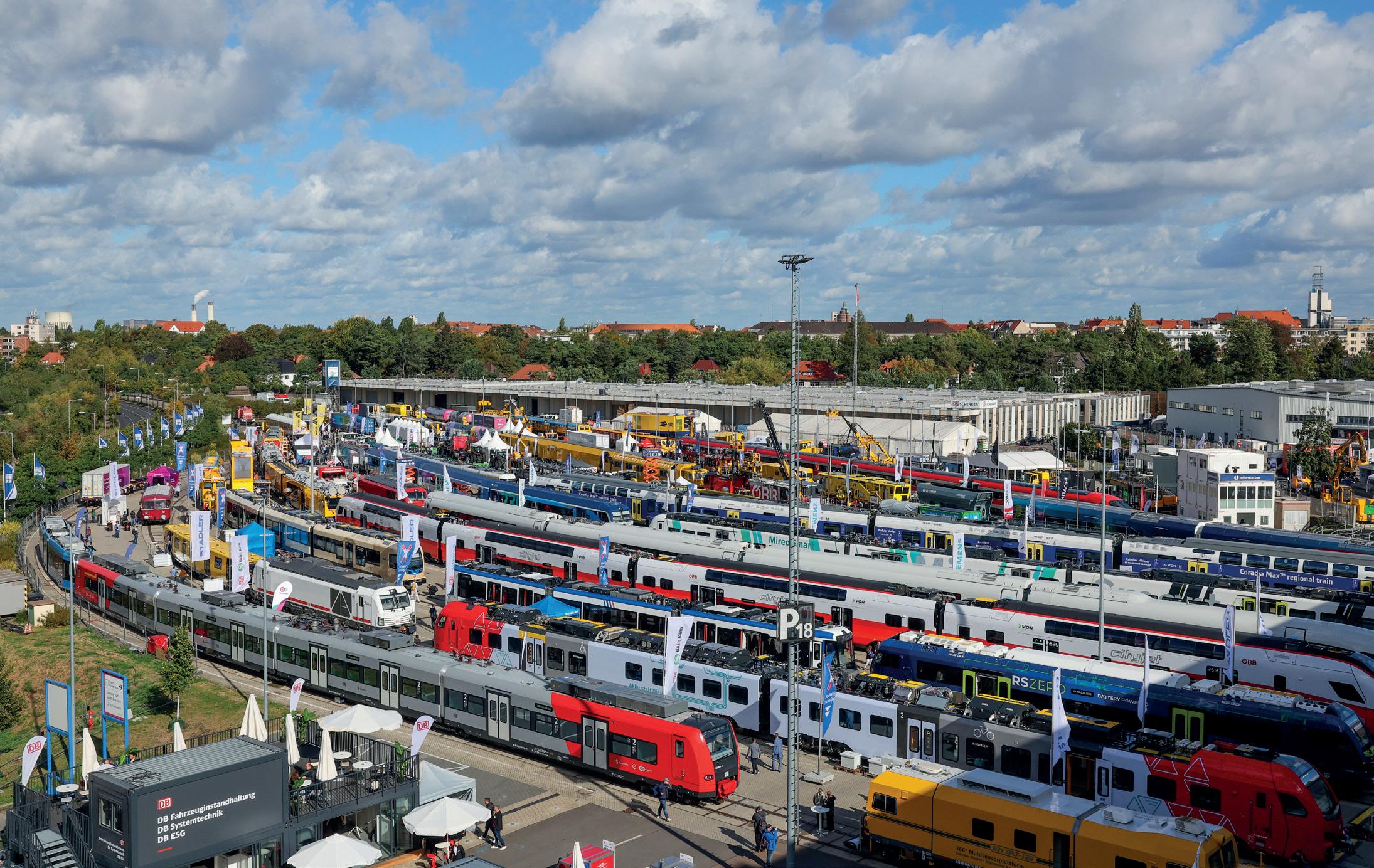
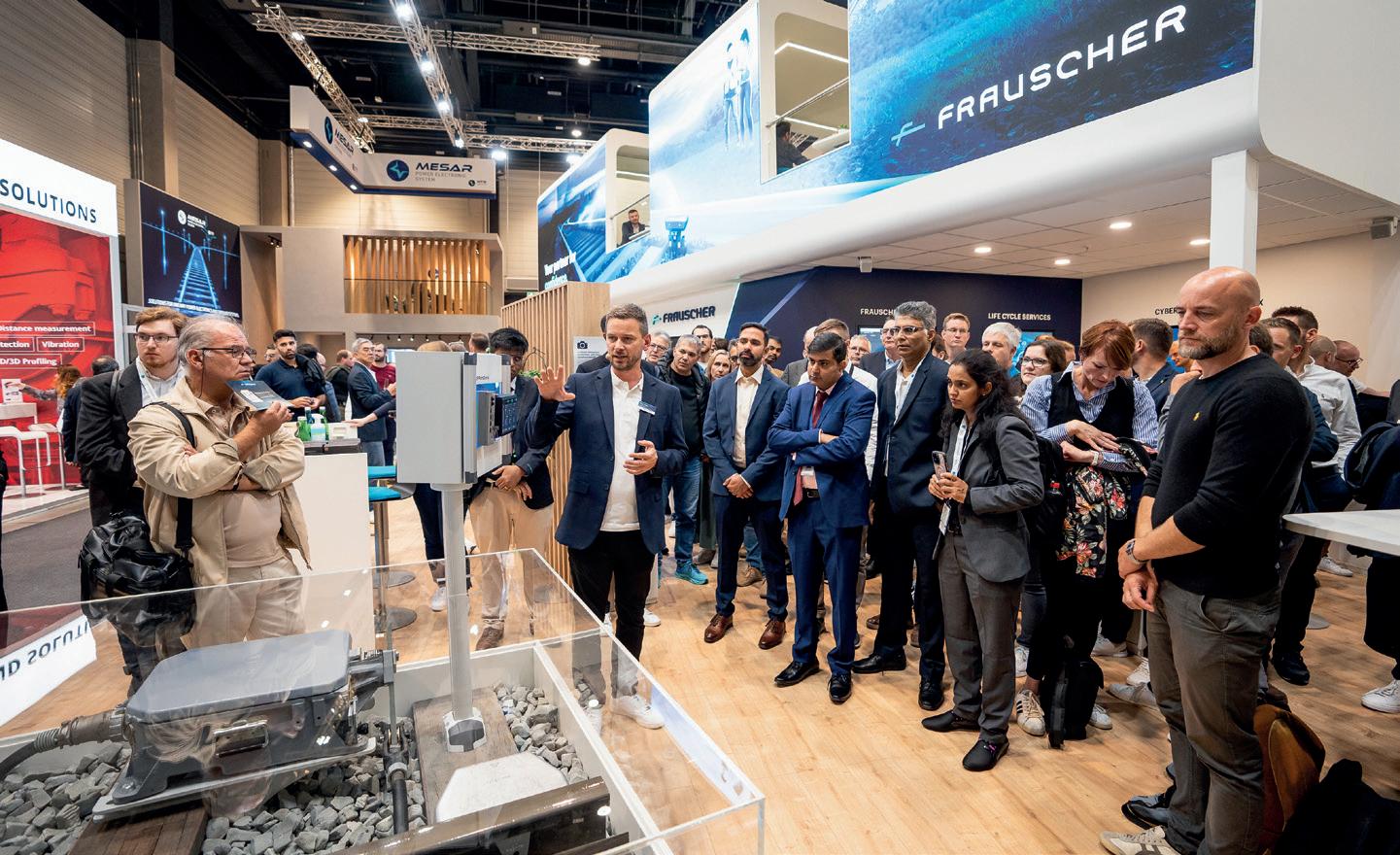
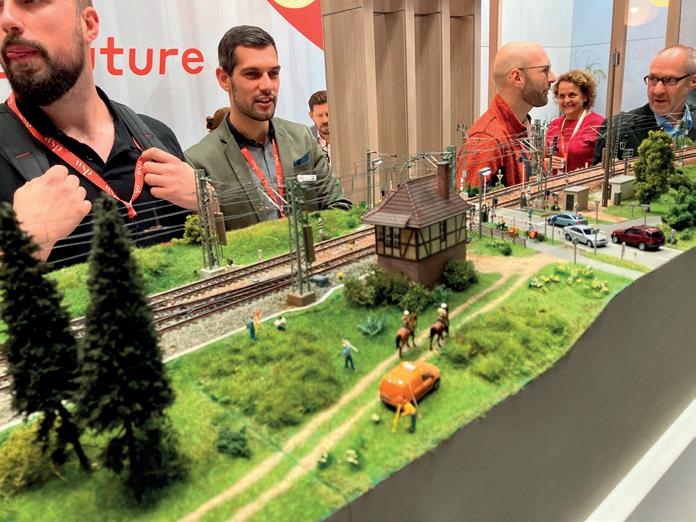
InnoTrans 2024 lived up to its reputation of being the world’s largest railway industry supply exhibition. It occupied all the exhibition halls and the entire outdoor and track area of Messe Berlin – the largest exhibition space since InnoTrans was founded in 1996.
Held every second year, and cancelled in 2020 due to the COVID-19 pandemic, InnoTrans was certainly back to full form this year. It attracted a record attendance – around 170,000 visitors from 133 countries – who came to see 2,940 exhibitors from all around the world. Some 600 new exhibitors took part, some of them representing new countries such as Morocco, Malaysia, Indonesia and South Africa. Outside the main exhibition halls, exhibitors from all over the world displayed 133 vehicles on the 3,500 metres of track.
If the exhibition had a theme, this would be
the increasing use of Artificial Intelligence (AI) in railway systems, along with the more traditional topics of sustainability, electrification, and digitalisation. “AI is becoming increasingly important in the transport industry,” said InnoTrans Director Kerstin Schulz. 42 exhibitors from 17 countries presented their expertise in AI, robotics, data protection and cybersecurity in a new exhibition area, the AI Mobility Lab.
Industry leaders
The major suppliers of trains and railway systems were all at InnoTrans, with huge stands and trains and equipment on display.
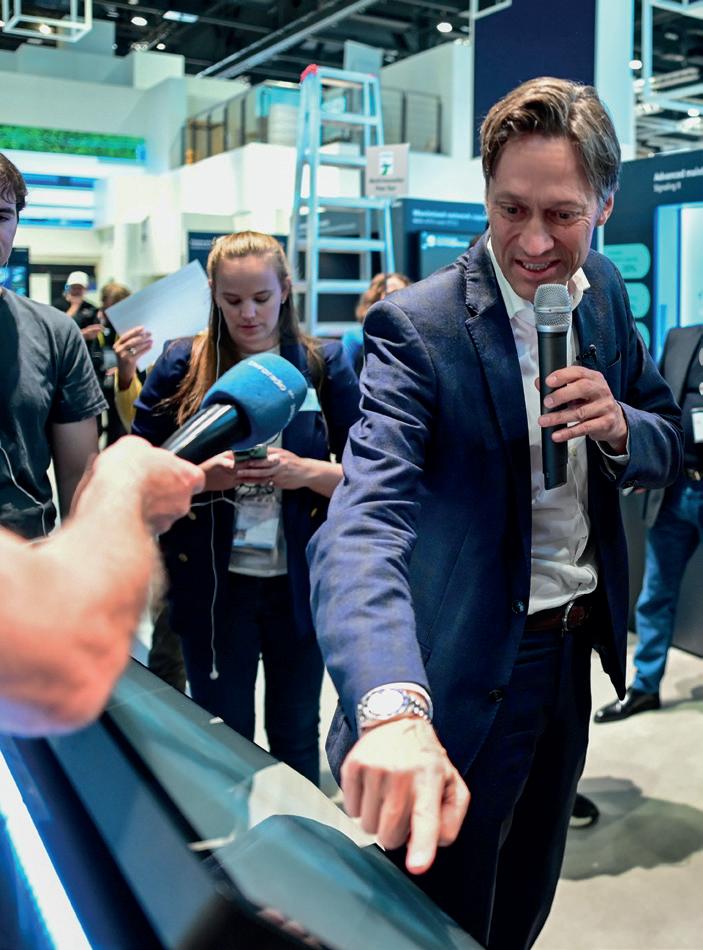
Siemens Mobility attracted so many visitors it was hard to walk across the stand, there were so many people watching presentations and examining new products. Chief amongst these was Signalling X, a cloud-based platform that allows for the seamless
control and operation of both mainline and masstransit signalling applications and systems from one centralised Signalling Data Centre, powered by standard hardware. This Data Centre also enables the management of both safety-critical and nonsafety-critical applications with standardised APIs (Application Programming Interfaces), opening interfaces to diagnostic and optimisation systems, such as Train Planning Systems, in one cloud environment.
Michael Peter, CEO of Siemens Mobility, commented: “The trade fair was a great success. We were able to show thousands of visitors and customers how Siemens Xcelerator uses standardised interfaces to digitally connect data from our products, operators and ecosystem partners in new ways. In this way, we are promoting ground-breaking innovations that make rail transport the most sustainable, convenient and cost-efficient transport solution.”
Image: InnoTrans
Siemens Mobility also took the opportunity to unveil its first Velaro high-speed train for the 2,000km turnkey rail system in Egypt. The train is specifically designed to withstand the climatic and sandy conditions of Egypt and is the first of 41 Velaro trains being manufactured for the multibillion-dollar turnkey project, a consortium between Siemens Mobility, Orascom Construction, and The Arab Contractors.
Alstom announced a significant partnership agreement with Airbus Protect, an Airbus subsidiary, bringing together the two companies’ expertise in cybersecurity, safety and sustainability-related services.
“In the context of rising cyber risks across all sectors, Alstom is committed to safeguarding rail assets of our customers. Our collaboration with Airbus Protect will ensure the continued success of green mobility worldwide,” explained Eddy Thesee, Vice President of Cybersecurity at Alstom.
Julien Touzeau, Head of Cyber Consulting at Airbus Protect, added: “As specialists in the cybersecurity of industrial systems and mobility solutions, we are proud to be working closely with Alstom, bringing our experience in the aeronautical sector to enhance the security of information systems in the rail sector.”
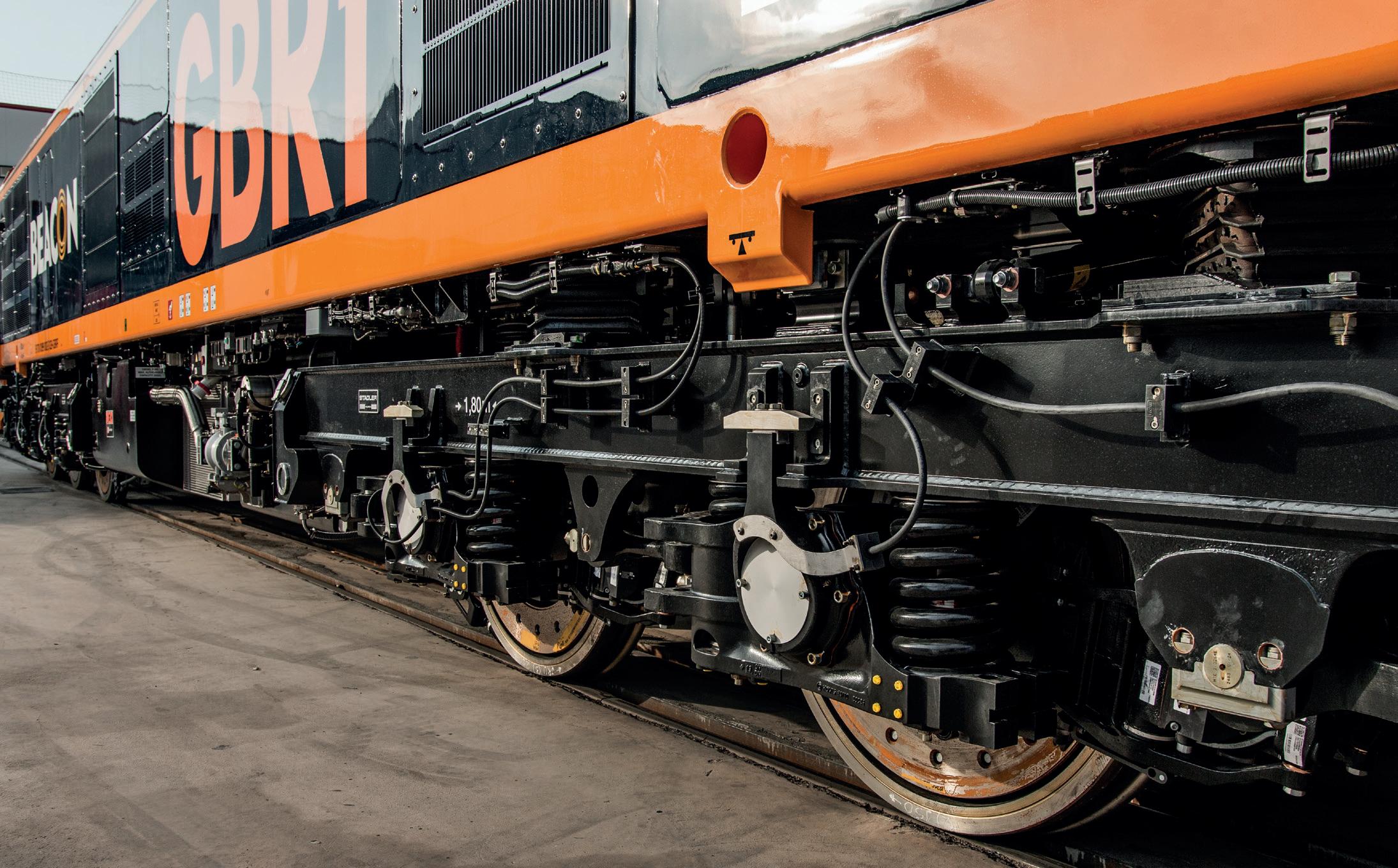
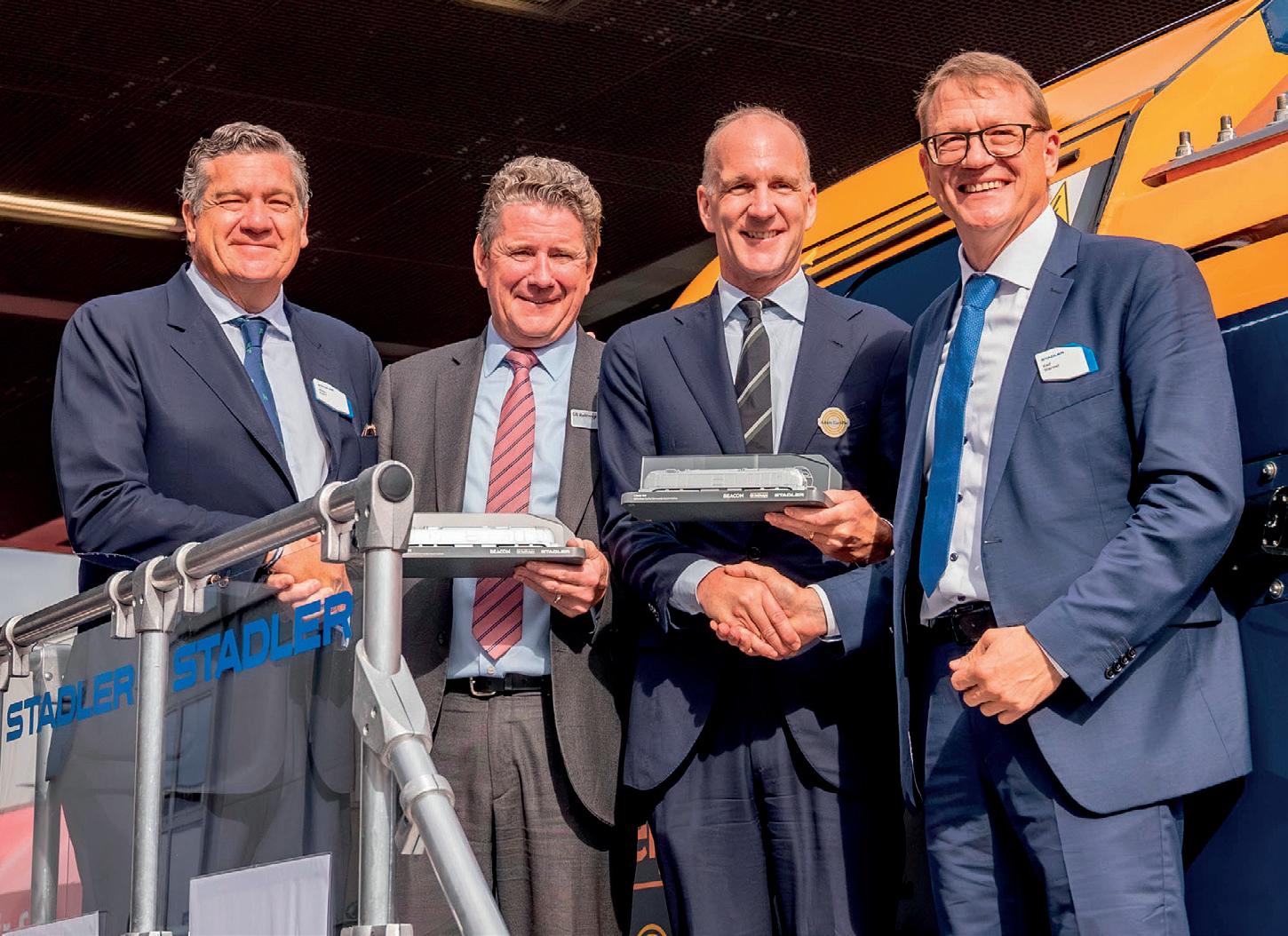
Stadler had more vehicles in the outside display than any other manufacturer. One of these was the new Class 99 freight locomotive for GB Railfreight and Beacon Rail. The first of 30 locomotives adapted for use on the UK railway network and based on the proven EuroDual locomotive design, the Class 99 features a dual drive system that enables the locomotive to operate in purely electric as well as in diesel-electric mode, allowing it to run on both nonelectrified and electrified lines, potentially replacing diesel-powered locomotives and helping cut carbon emissions on the UK railway.
UK Pavilions
Around 200 UK exhibitors took part in InnoTrans 2024, not including those multi-national companies
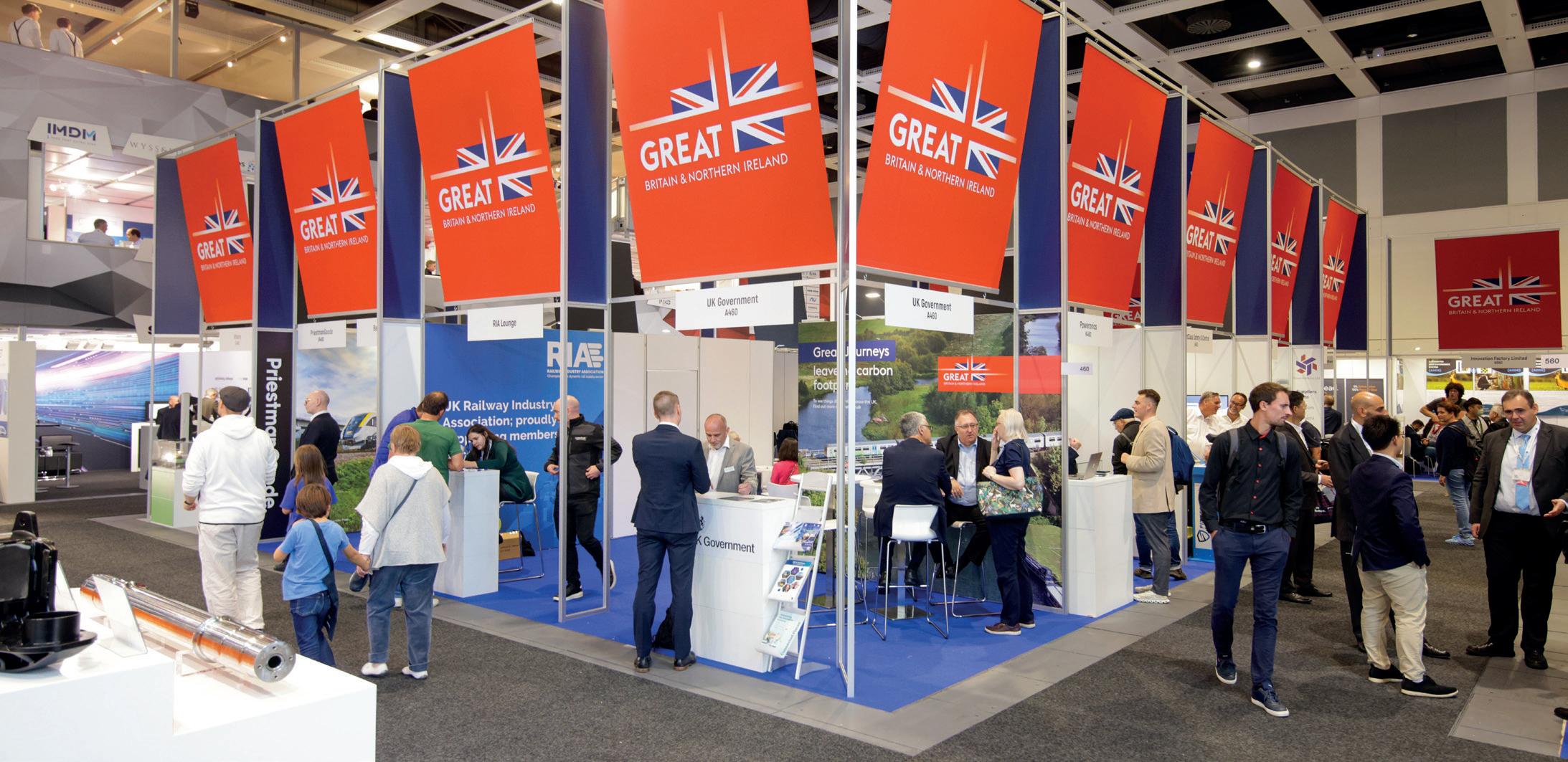
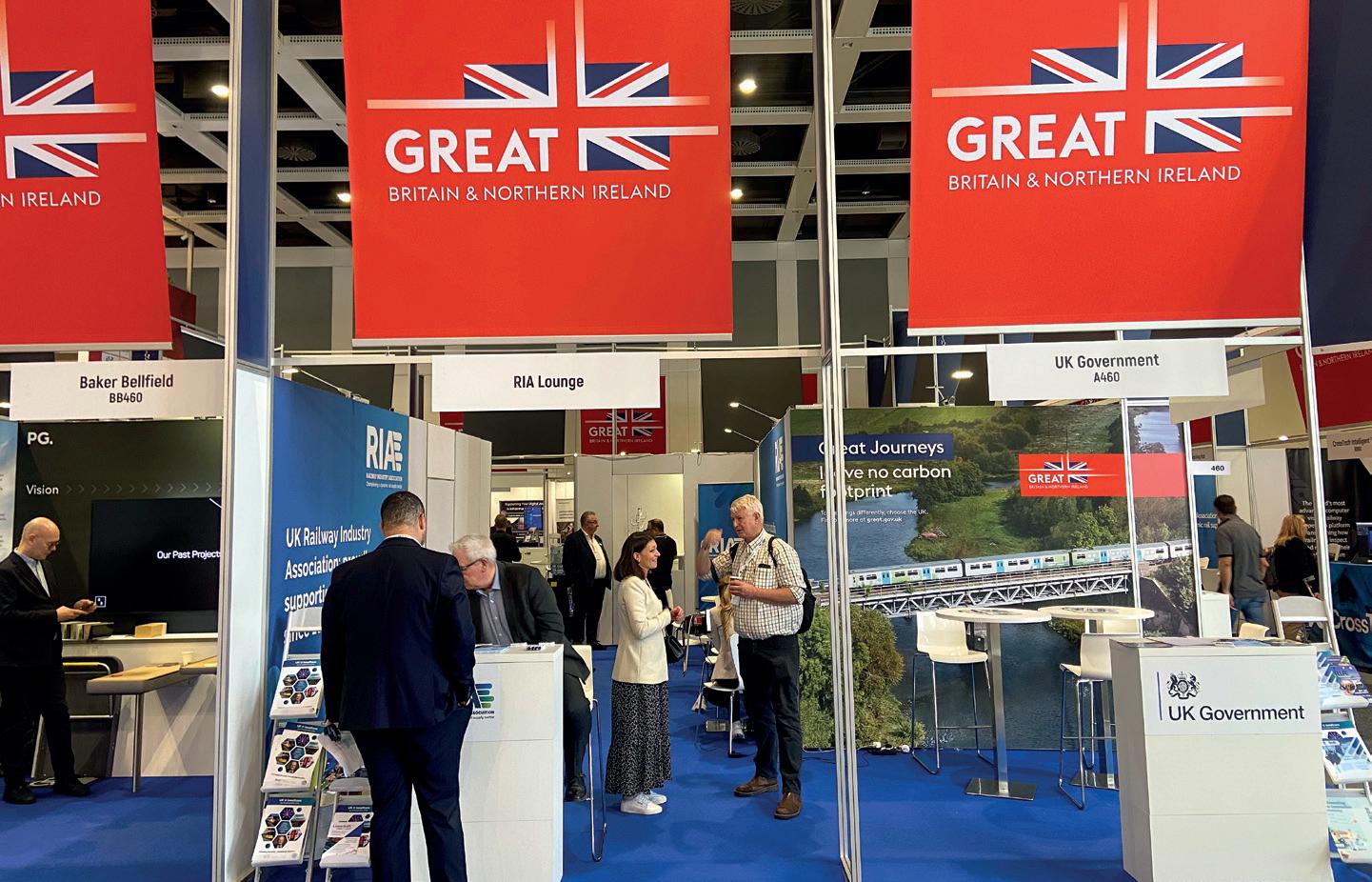
with a significant UK workforce, such as Siemens Mobility and Alstom. A number of these were on one of two UK Pavilions organised by the Railway Industry Association (RIA) and the Department for Business and Trade (DBT). The central area included a lounge, where exhibitors and others could sit and talk, and a ‘Meet the Trade Advisor’ event that gave exhibitors the chance to discuss export opportunities with representatives from a number of overseas British Embassies.
Darren Caplan, Chief Executive of the Railway Industry Association, was pleased with the response that UK exhibitors had. “It was great to see so many UK exhibitors participating at InnoTrans, both in the UK Pavilions and elsewhere in the show,” he said. “They all had more meetings and made more contacts than they expected, and the challenge will now be to turn those conversations into meaningful orders both at home and overseas. The RIA team stands ready to support its members in achieving this.”
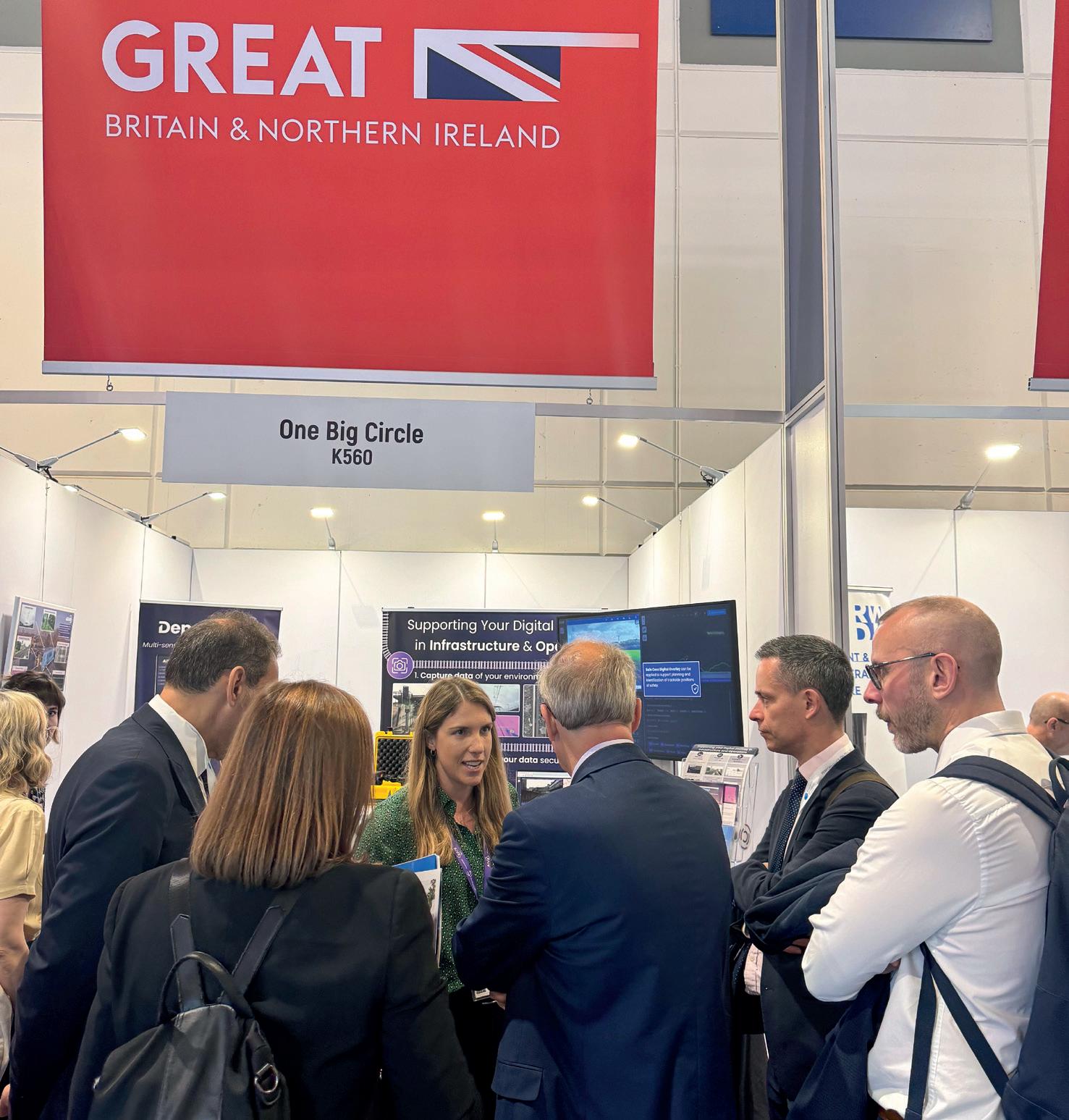
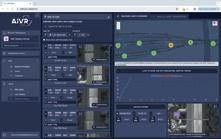
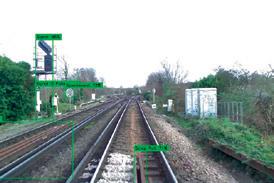
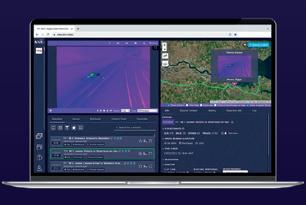
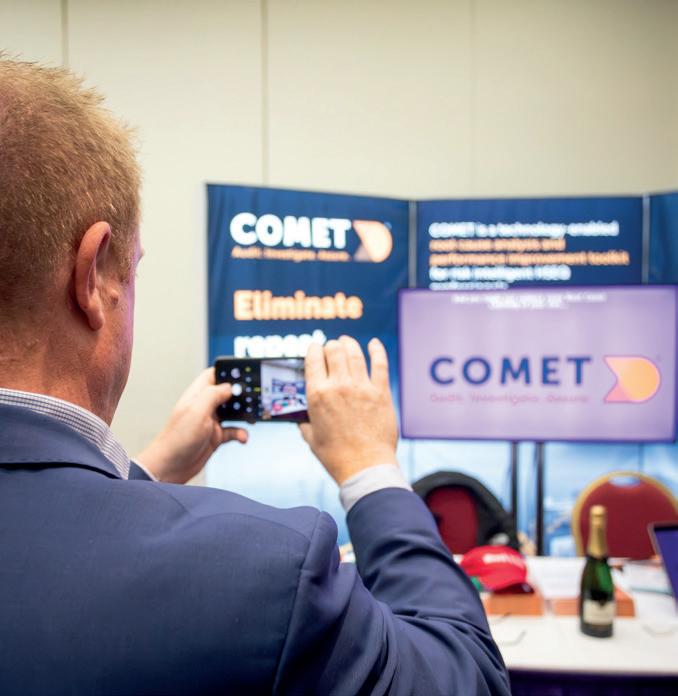
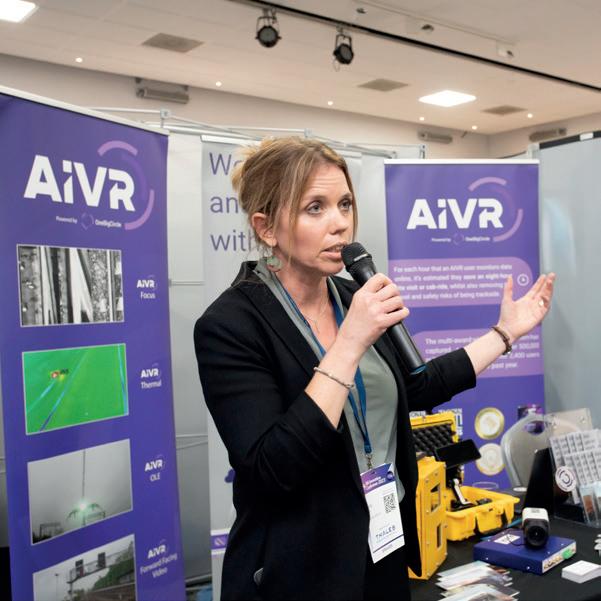
One Big Circle exhibited on the British Pavilion in hall 2.2, showcasing its innovative AIVR technology. The stand drew significant attention, with videos and live demonstrations sparking continuous engagement throughout the four-day event. The team conducted back-to-back demonstrations of the multi-award-winning AIVR system, highlighting its seamless integration at any stage of a company’s digital transformation. From data capture to cloudbased access and machine learning applications, attendees were eager to explore how the technology could address the unique challenges they face.
The new product from One Big CircleDepotMATE - also took the spotlight at the exhibition, with the team explaining how this innovative system enables remote monitoring and inspection of passing rolling stock at depots and sidings, further enhancing safety and efficiency in railway operations.
“It was great to be back in Berlin and at the heart of all things rail!” said Emily Kent, Co-Founder at One Big Circle. “We were very proud to be sharing what
AI is becoming increasingly important in the transport industry
Michael Peter of Siemens Mobility explains one of the latest innovations. Image: InnoTrans
UK Pavilion. Image: InnoTrans
International partners recognise the expertise and value the UK rail supply chain can bring to their railways
we do, demonstrating the extraordinary progress made in AIVR since last time, and to have such great conversations with those we know already and those we got to meet during the week.”
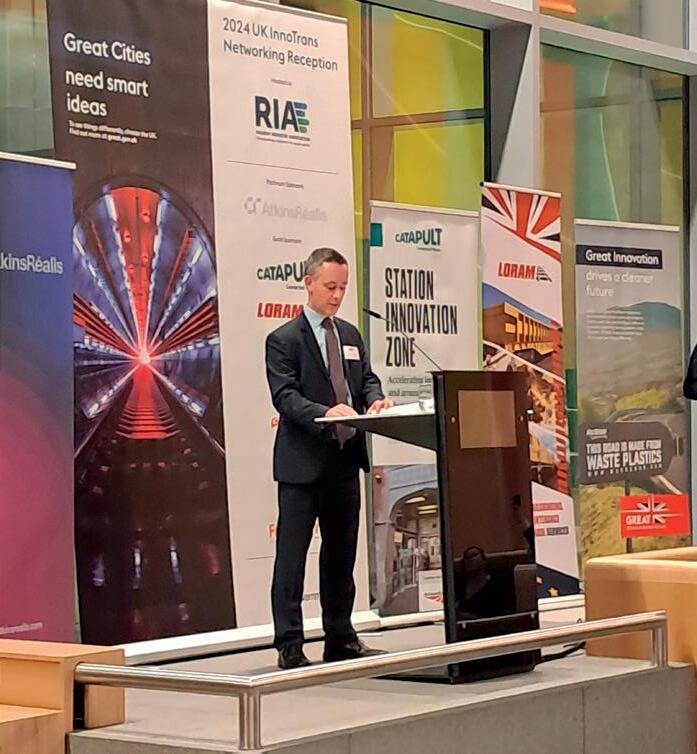
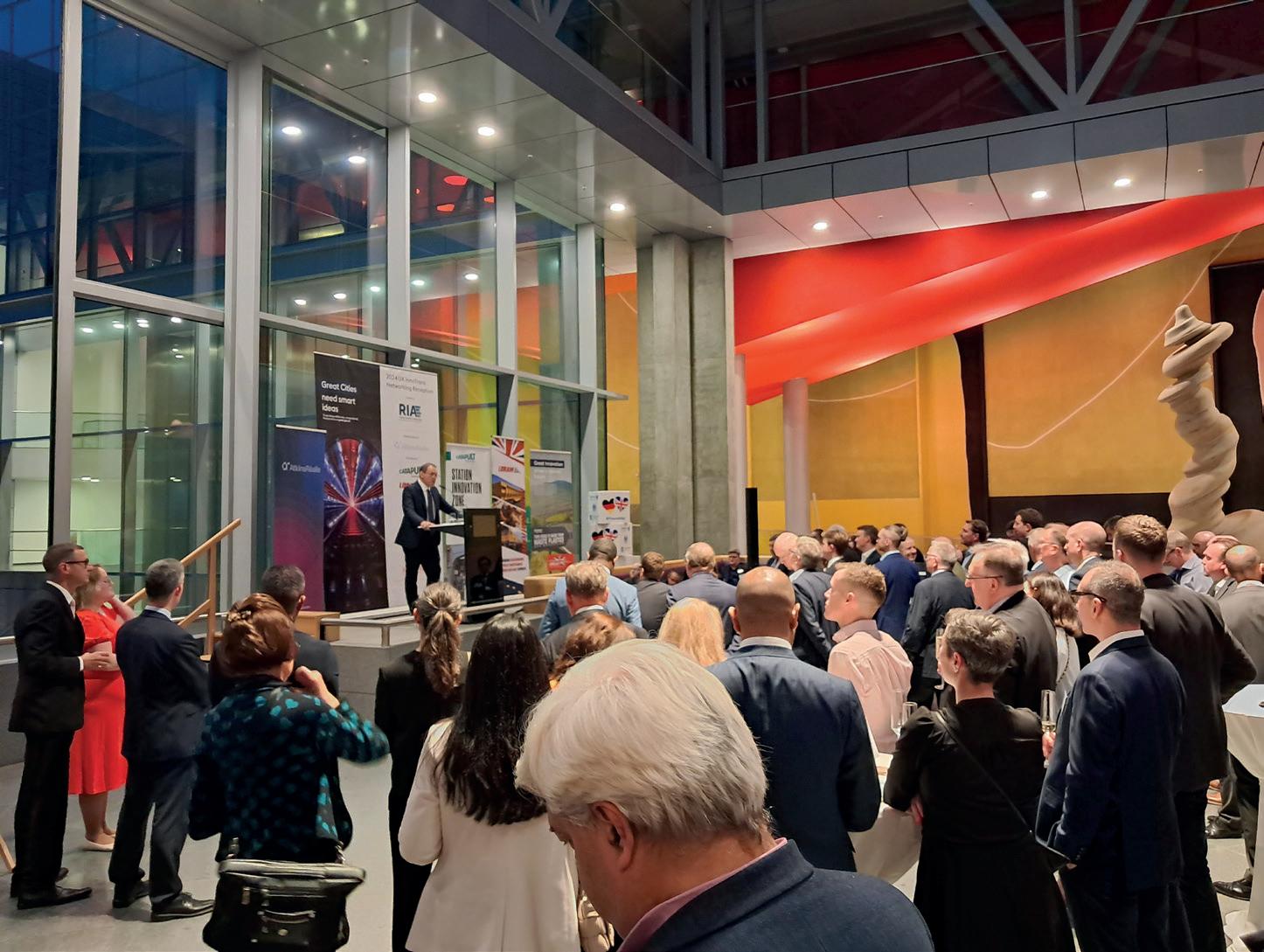
RIA and DBT also organised a reception at the British Embassy on the middle night of InnoTrans. Most of the UK exhibitors and a selection of visitors attended for an evening of networking and to hear speeches from several key industry figures.
Showcasing UK expertise
A number of major UK-based railway industry suppliers had stands elsewhere in the show. AtkinsRéalis had a large stand in CityCube A, where
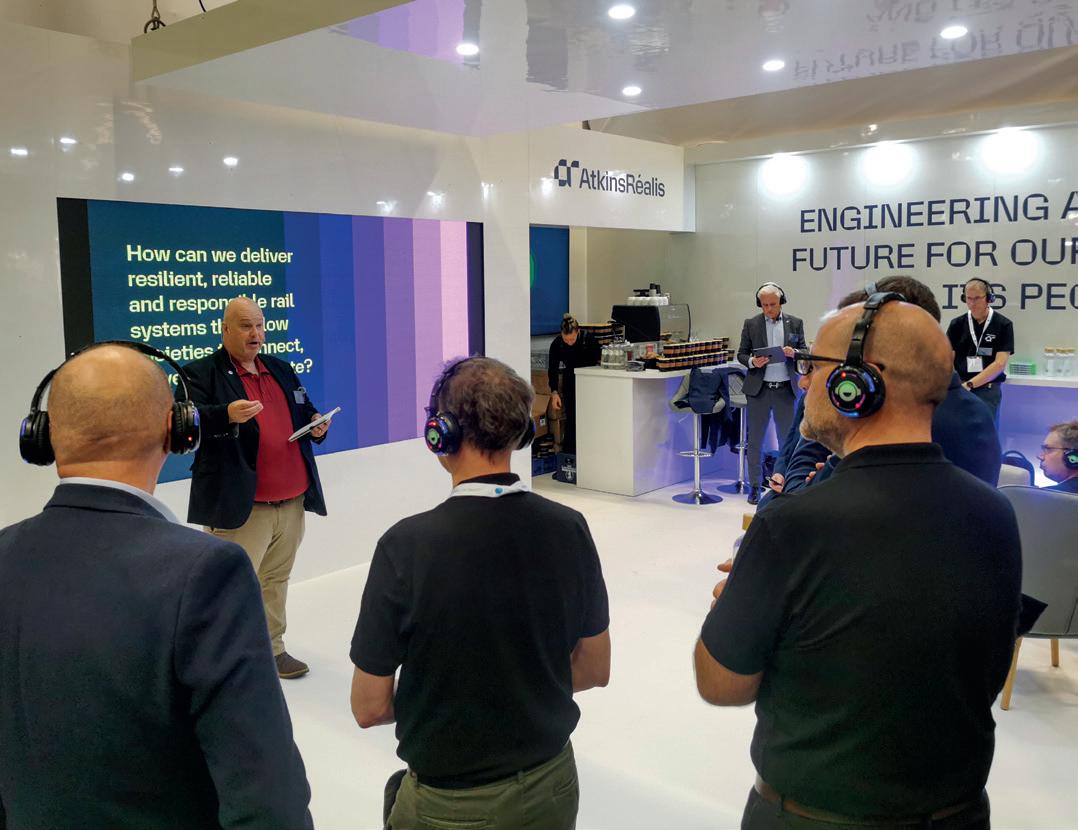
visitors were both greeted and given the opportunity to hear a number of presentations on various topics, ranging from how to deliver integrated rail systems and the case for collaborative contracting, through to trends in high-speed rail and how rail can rebuild communities through place-led growth.
This was the company’s first appearance at InnoTrans as one AtkinsRéalis – an integrated business working across a global transportation market. One of the world’s largest rail consultancy businesses, AtkinsRéalis used this year’s event to showcase how its major projects are inspiring travel that is faster, more sustainable, and better connected to other transport modes.
Scott Kelley, AtkinsRéalis Global Rail Market Lead, said: “InnoTrans is a crucial platform for the global rail industry to come together to share knowledge, showcase innovation, and discuss solutions to important issues such as decarbonisation and digital transformation. Rail has a clear challenge to improve collaboration and integration, so it remains at the forefront of a transport system that is efficient and sustainable, helping to connect communities and unlock economic growth.
“At AtkinsRéalis, we focused on showcasing insights from our major projects - including the East Coast Digital Programme, Canada Line and metro projects in the Middle East - and how they’re shaping the future of mobility.”
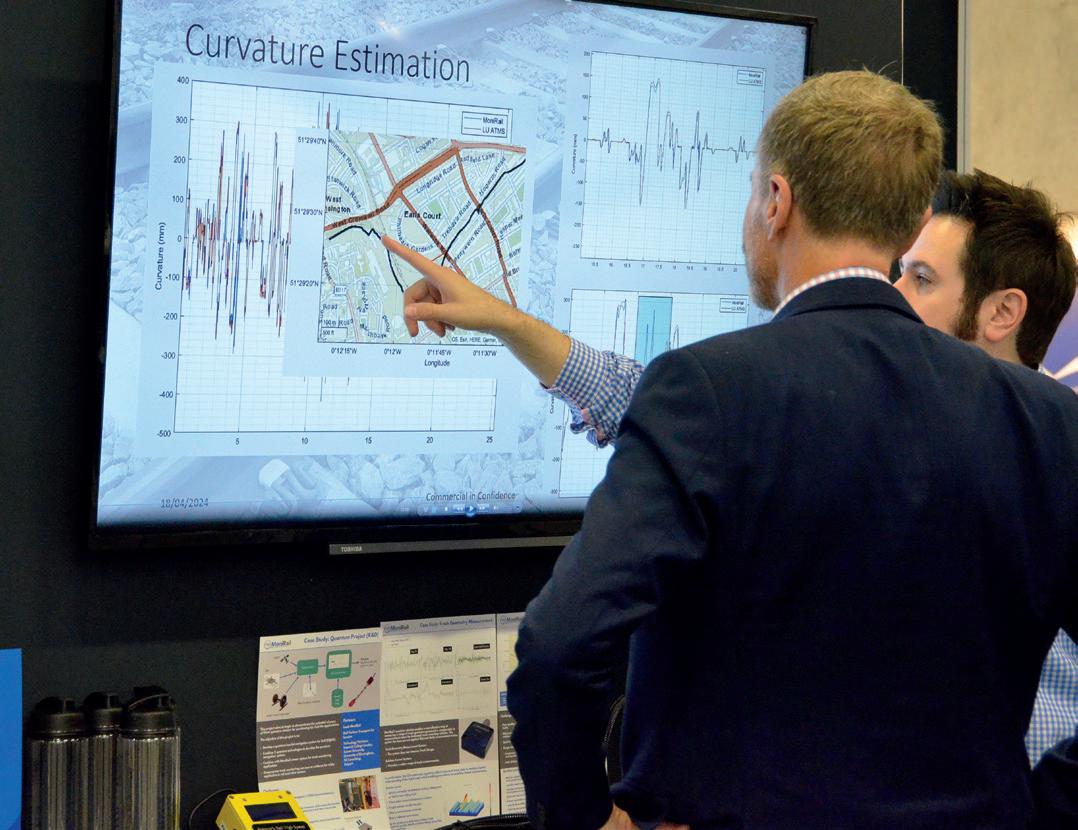
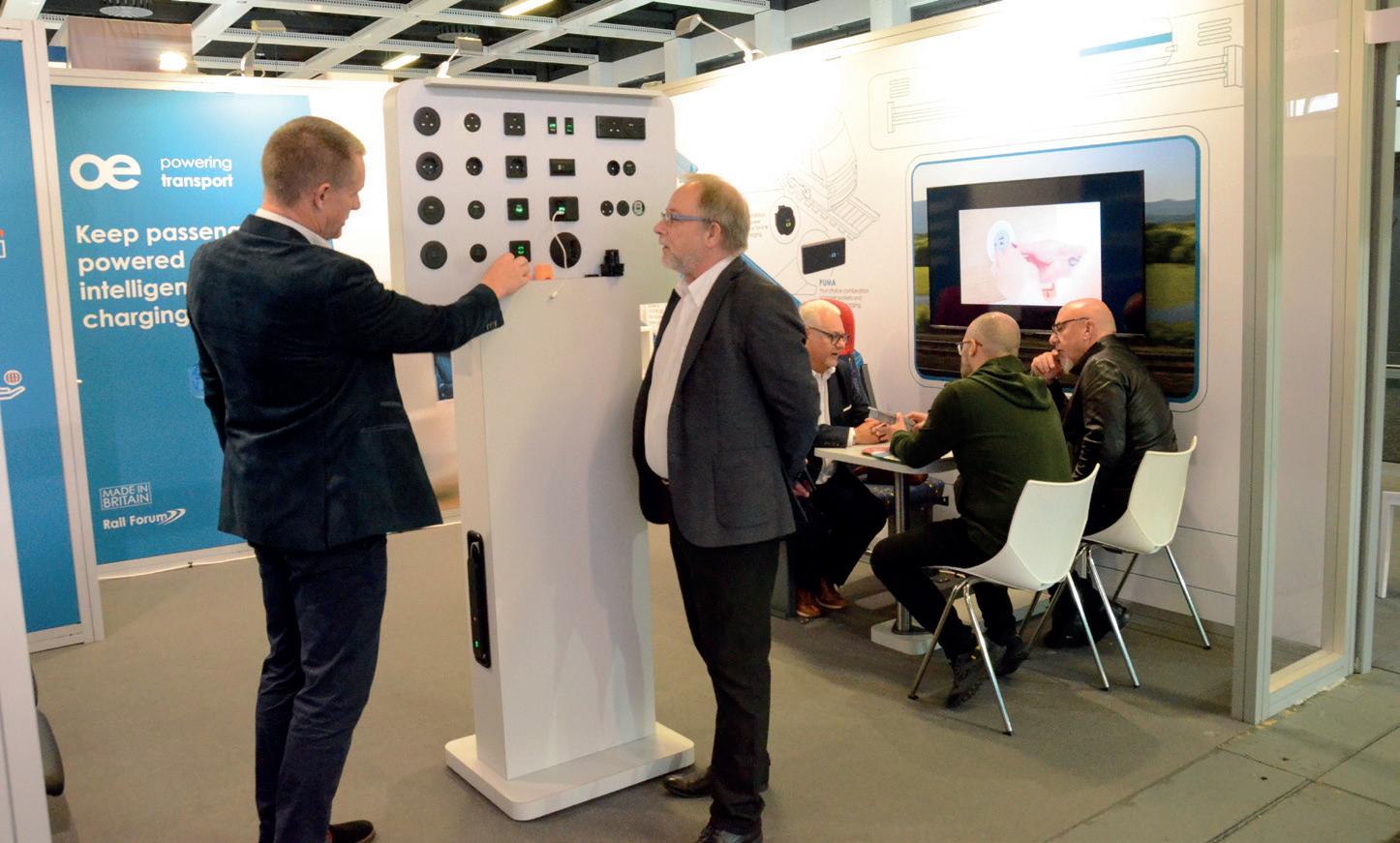
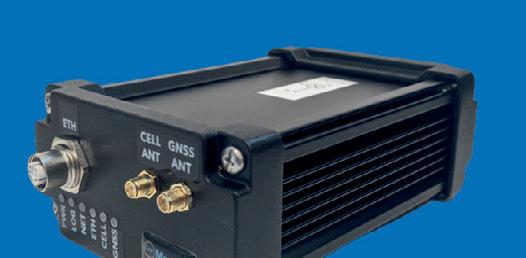
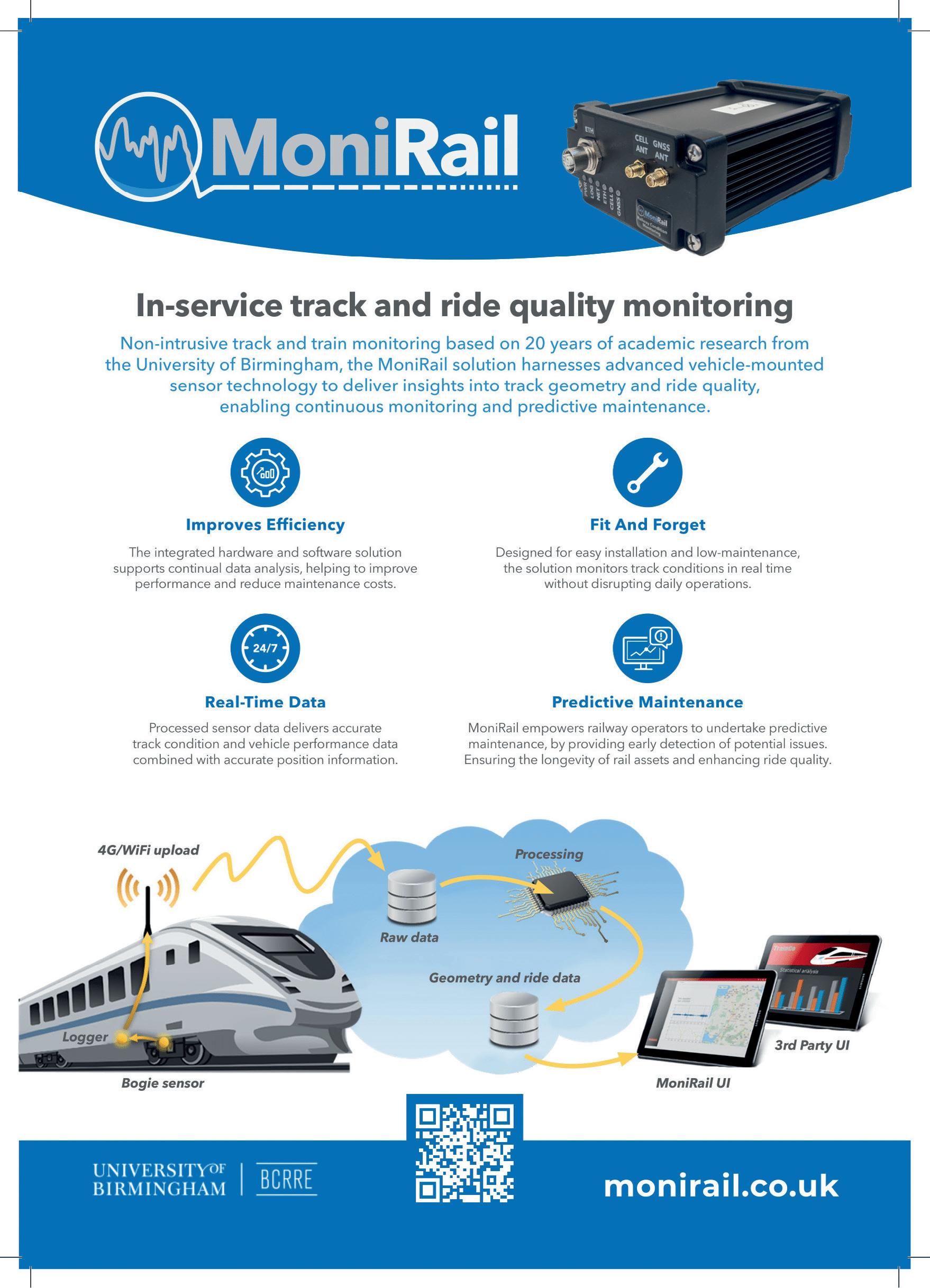
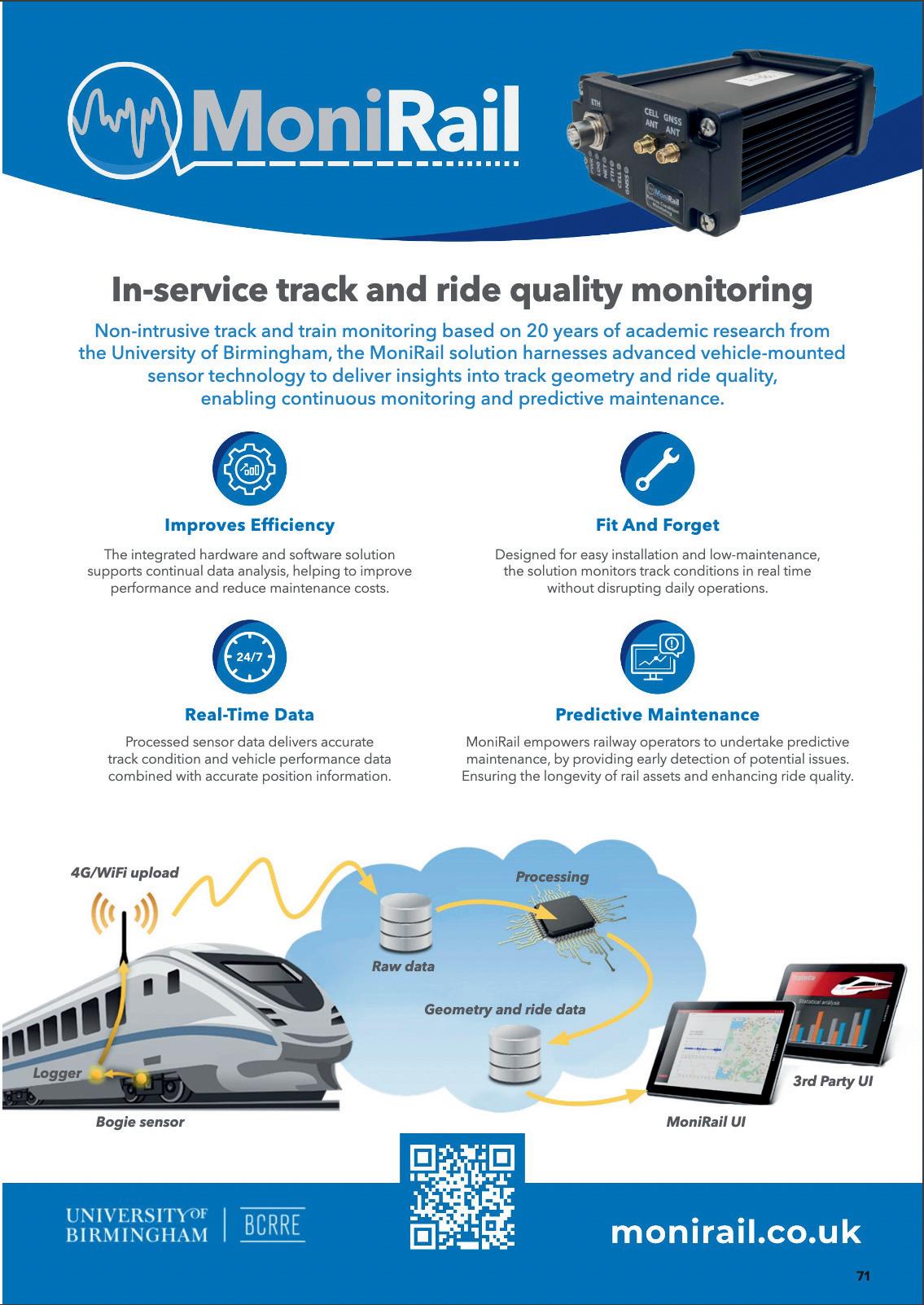
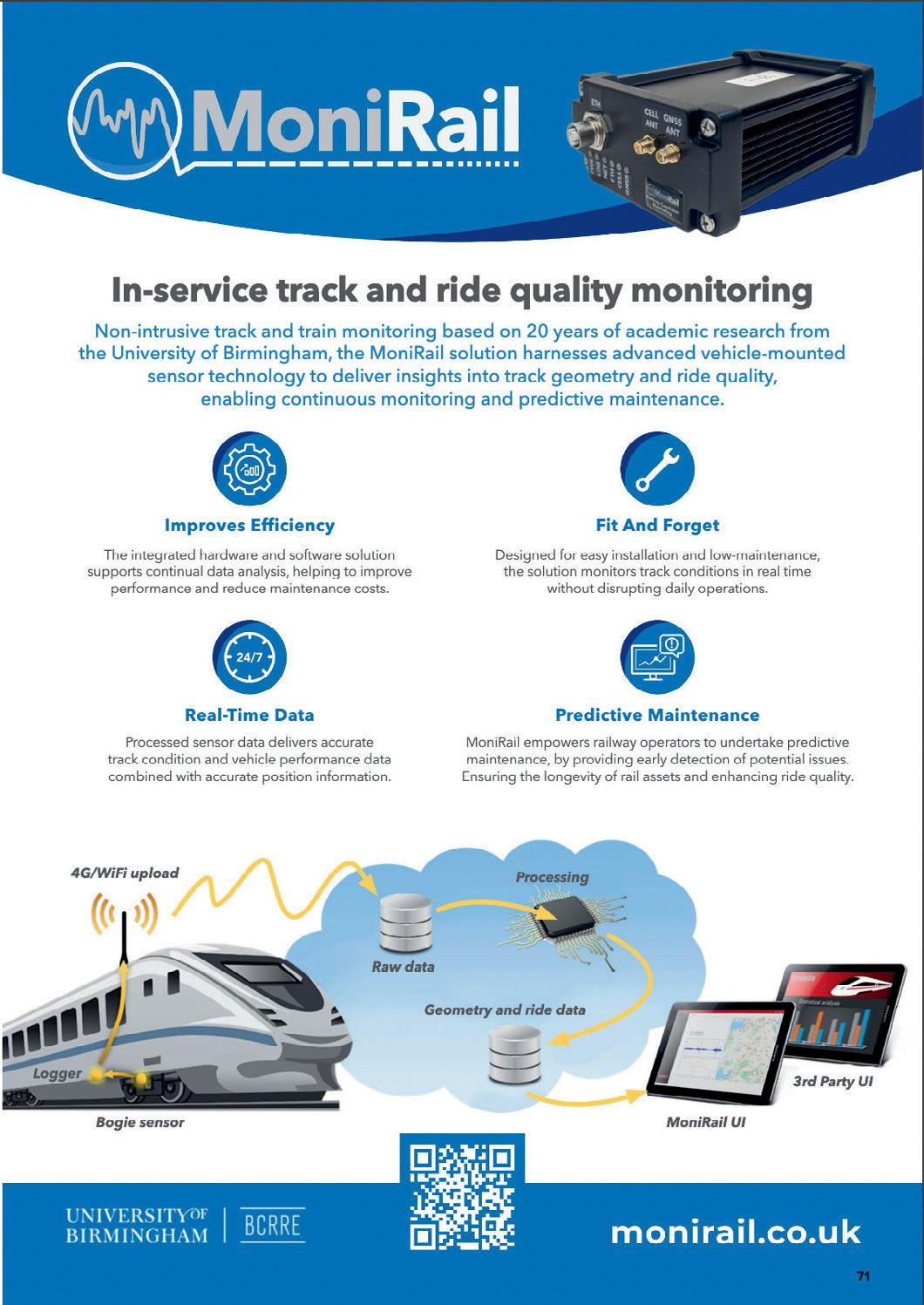
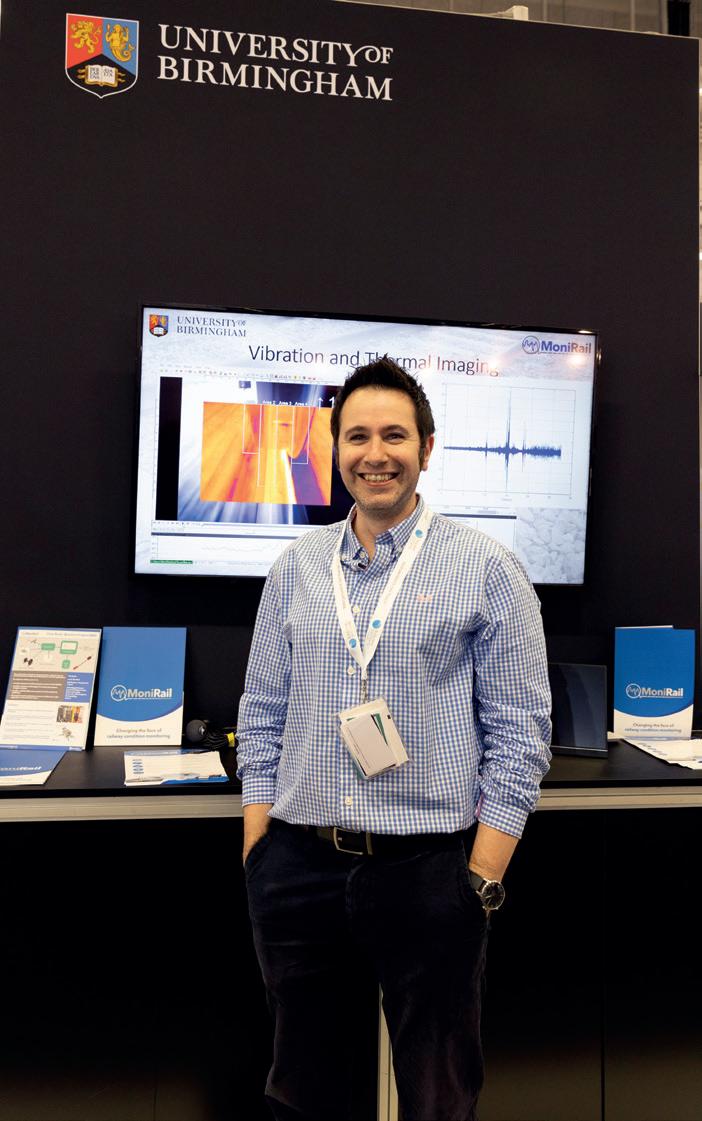
The University of Birmingham also had a stand in CityCube A, highlighting its Centre for Railway Research and Education (BCRRE) and hosting several associated exhibitors. One of these, MoniRail, was promoting its non-intrusive solution for railway condition monitoring and track deterioration. Used on-board ordinary railway vehicles whilst operating in-service, this allows engineers to continuously monitor the state of railway infrastructure without interrupting rail services.
As an integrable system, the sensors are cost-effective and can be fitted during routine maintenance, whilst the accompanying software is cloud-based, easily scalable, and delivers automated information.
“What an amazing week for MoniRail at InnoTrans 2024!” Chief Technical Officer Mani Entezami enthused. “We showcased our latest innovations and rail solutions and connected with many industry leaders.”
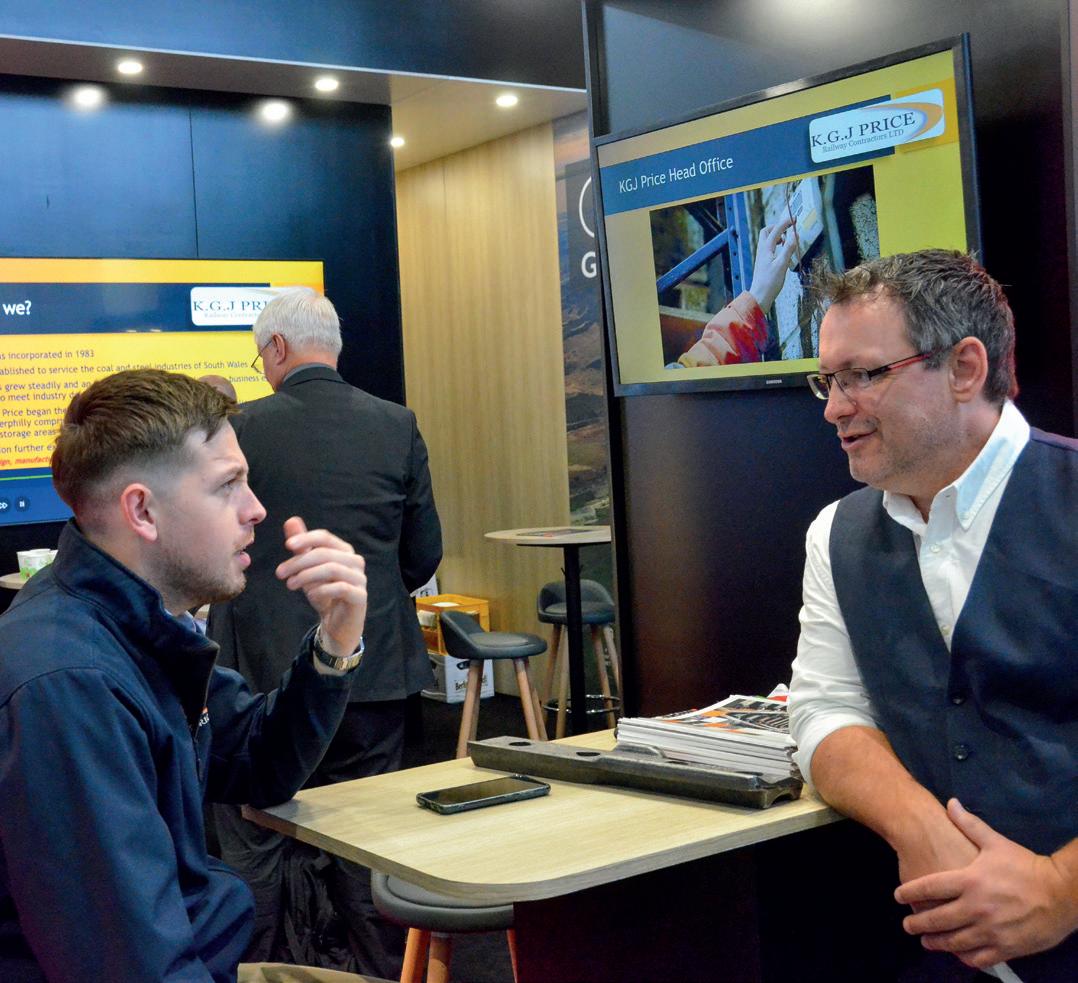
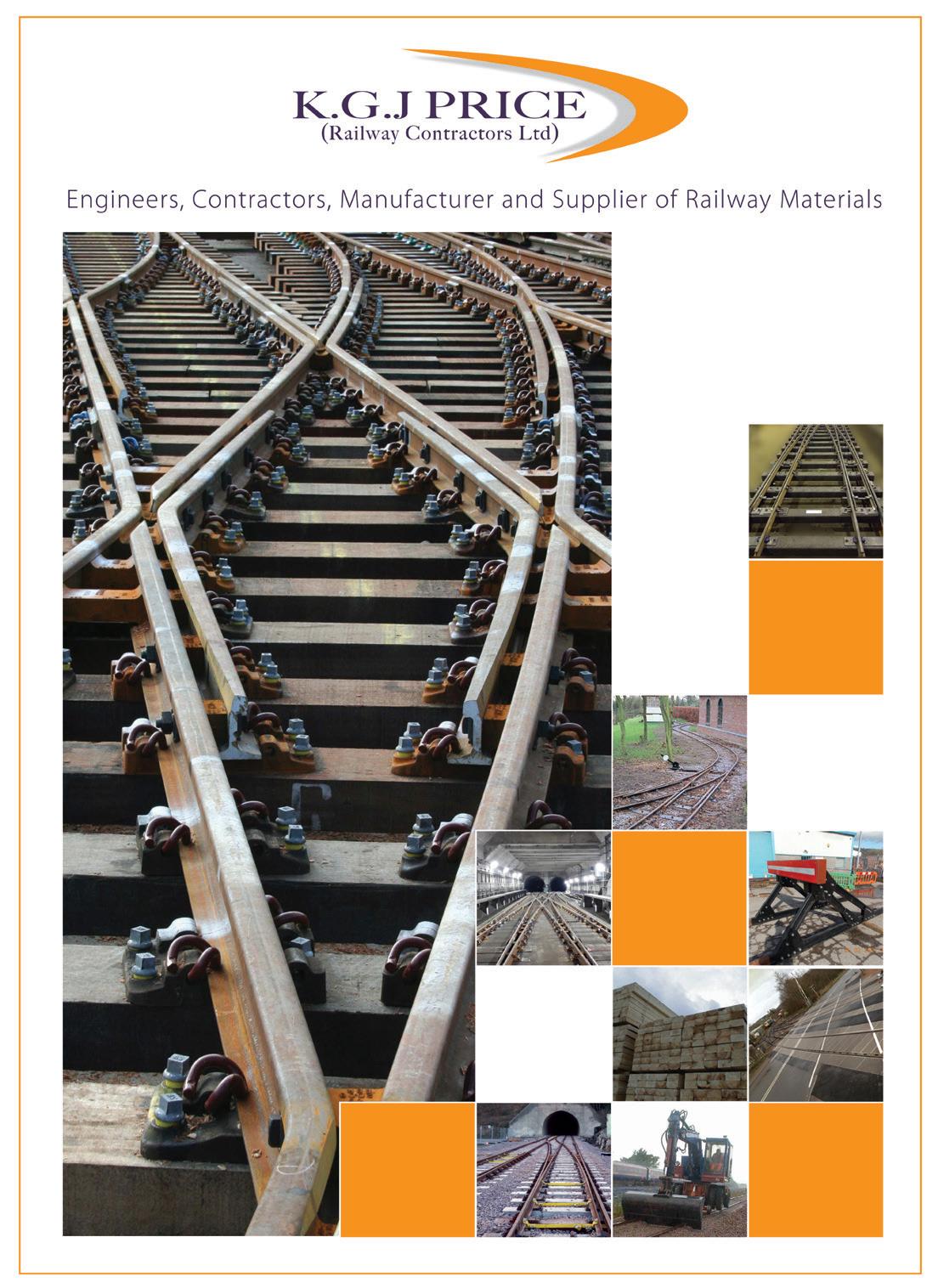
Another multi-exhibitor stand was that organised by the Welsh Government. Trackwork specialist KGJ Price was promoting its ability to design, manufacture, install, maintain, service and repair railway tracks throughout the UK and overseas, covering many different sectors including industrial, mainline, heritage, and narrow-gauge railways.
KGJ Price offers turnkey solutions for a variety of railway systems. Every solution is custom-engineered with an array of field-proven products—all backed by technical support. With a team that is experienced in managing a range of projects and acting as coordinator between client, contractors and consultants, KGJ Price utilised its participation at InnoTrans to display a collection of its manufactured components and to catch up with both its extensive supply chain and customer base.
Image: One Big Circle
RIA UK InnoTrans Networking Reception
KGJ Price Manager Anthony Moyle said: “We had the pleasure of exhibiting on the Welsh Pavilion at InnoTrans, showcasing what we can manufacture at our Bedwas Head Office, from narrow gauge to mainline gauge, along with our capabilities throughout the company from initial design to final installation and furthering to maintaining the Infrastructure.
“We had a very successful exhibition with many new contacts made, from customers to suppliers, and continued working relationships with existing customers and suppliers within the industry.”
Rail technology
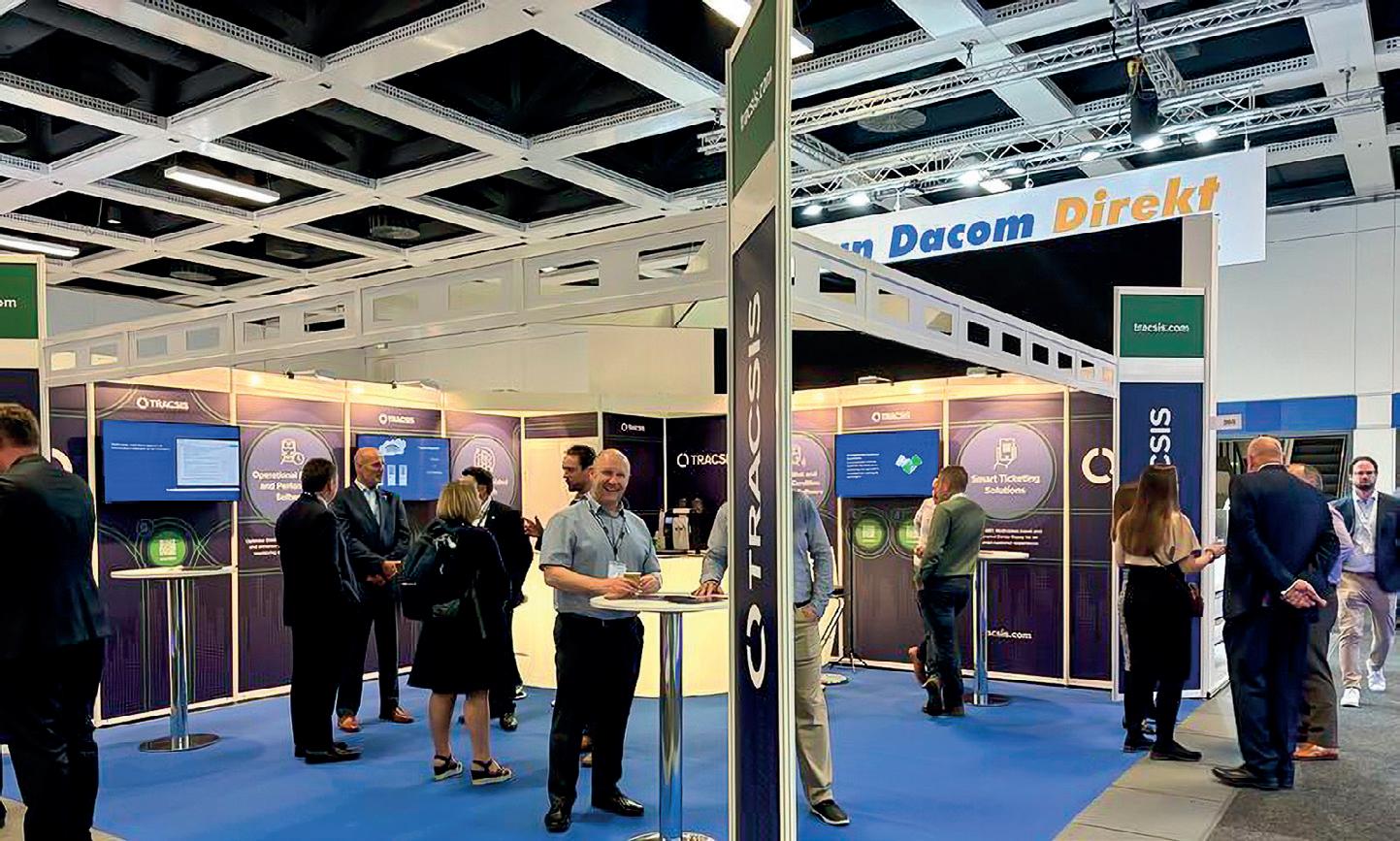
Elsewhere in the show, Tracsis showcased its leadingedge solutions in rail technology, designed to enhance the efficiency and safety of rail operations. The exhibit featured cutting-edge tools in operational planning and performance, safety and risk and remote condition monitoring solutions, smart ticketing, and computer aided dispatch. Tracsis demonstrated how its technologies can empower rail operators and infrastructure managers to improve decision-making and service delivery.
Simon
Critchley, Managing Director at Tracsis,
noted: “Exhibiting at InnoTrans 2024 was a pivotal moment for Tracsis as it marked our entry into the global rail market. The response from industry leaders and potential partners was outstanding, and it confirmed the global demand for our innovative rail technologies and services. We look forward to building on the relationships formed at this event as we expand our international footprint.”
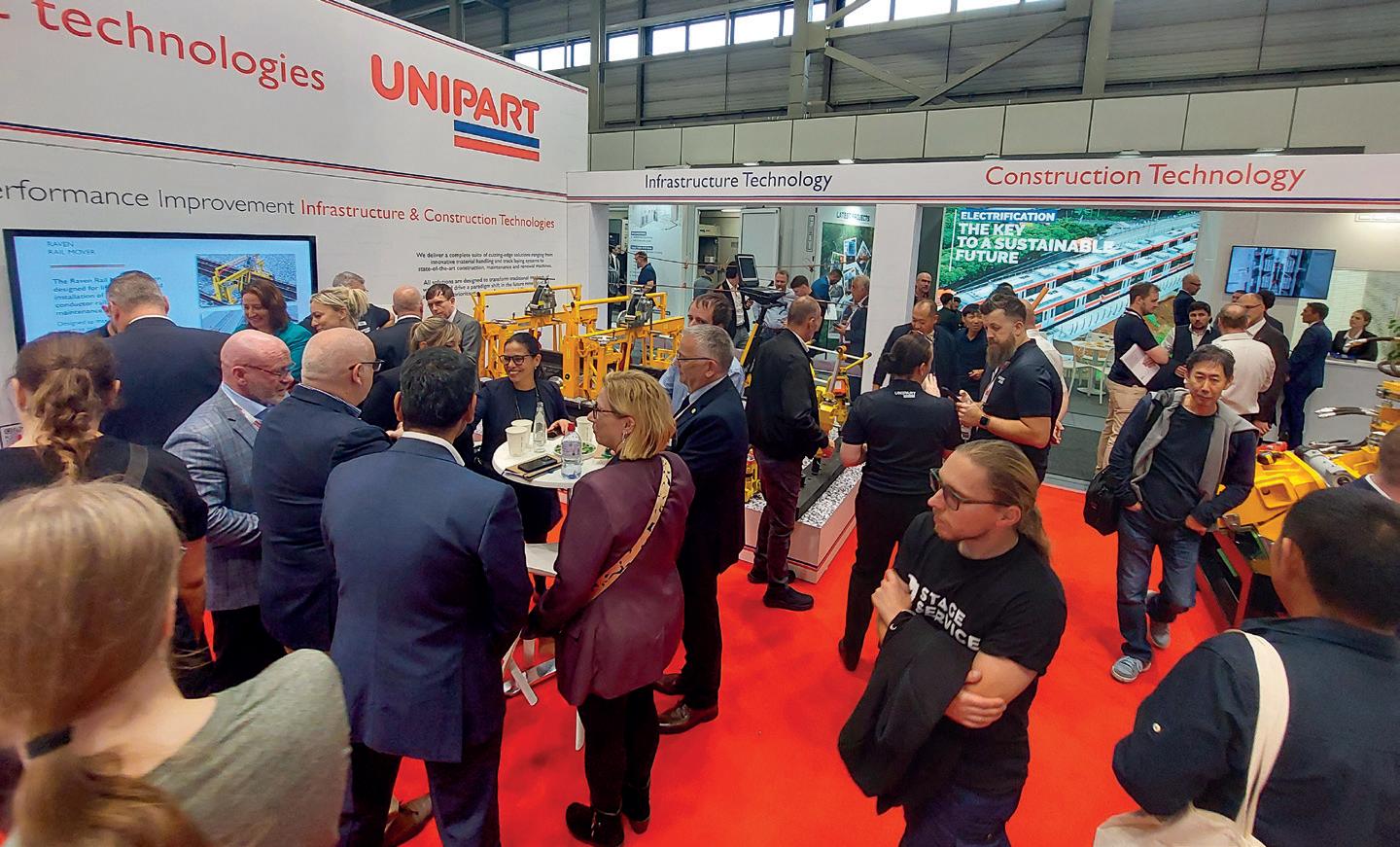
Unipart Rail had a significant stand on which it demonstrated a variety of unique innovations across construction and maintenance, signalling, T&RS (traction and rolling stock) and infrastructure;
Scott Kelley speaking on the AtkinsRéalis stand. Image: AtkinsRéalis
KGJ Price had a stand in the Welsh Pavilion. Image: Nigel Wordsworth
all designed to enhance performance, increase safety, improve reliability and significantly reduce cost and carbon. These included:
Construction and Maintenance solutions: Revolutionary solutions and equipment for global railway maintenance and repair projects;
Gripple SwiftLine Rail Dropper: This gamechanging solution is proven to be eight times faster to install than traditional droppers;
FuelActive: A unique fuel pick-up solution which delivers 92 per cent cleaner fuel to engines, resulting in improved engine performance and reduced fuel consumption;
Racine Battery Powered Tools: The lightweight and portable design reduces hand/ arm vibration and significantly increases safety for users;
tCat: Providing precise real-time measurement of geometric parameters within a railway environment;
Inductive Points Heating: Revolutionising railway track heating by using advanced inductive technology to cut energy costs by up to 40 per cent;
Signalling solutions: Through its extensive range of signalling solutions, Unipart can manage product supply, maintenance, repair and overhaul.
Neil McNicholas, Managing Director of Unipart Rail, was pleased with the response that the Unipart Rail stand received. “InnoTrans 2024 has been a remarkable success for our business, providing the opportunity for us to highlight our innovative solutions to global customers and developing valuable connections. The incredible interest and engagement we received not only highlights the success of the show but also underscores our essential role as the provider of supply chain solutions and performance enhancing products to the global rail industry, helping to set new standards and shape its future.”
OE Electrics’ commitment to sustainability and reliability was a key theme throughout its impressive exhibit. At its centre was the ground-breaking TUFR®, a replaceable USB module set to revolutionise the rail industry. Designed for seamless integration into almost any application, TUF-R can be seen in platform seating, rail tables, and within carriage seating itself. Its patented, replaceable technology allows for quick on-site repairs and upgrades, eliminating the need for specialised electricians, ensuring passengers have reliable access to power throughout their journey.
In addition, OE was also keen to highlight its latest USB-C offering, capable of charging laptops and mobile phones with high-power efficiency, aligning with the European Union’s ‘Common Charger Directive’ and embracing the future of USB-C as the universal charging standard.
“InnoTrans is more than a trade fair; it’s a place where the global rail community comes together,” commented Lee Walker, Sales Manager –
The response from industry leaders and potential partners was outstanding
Tracsis welcomed a number of international visitors to its stand. Image: Tracsis
Image: Unipart Rail
OE Electrics’ range of USB outlets attracted much interest. Image: Nigel Wordsworth
Connecting people and communities
We’re improving the passenger experience for individuals worldwide and connecting communities in innovative ways, fit for the future. atkinsrealis.com
based on 20 years of academic research from the University of Birmingham, the MoniRail solution harnesses advanced vehicle-mounted In-service track and ride quality monitoring
Driving Innovation for a Smarter Railway
From
InnoTrans brings connectivity, it brings creativity, it brings ideas
Transport at OE Electrics. “The feedback to TUF-R, our on-site repairable USB technology, has been phenomenal and we’re excited about the opportunities ahead.”
European innovation
The UK was not the only country with pavilions promoting its national rail industry. The Swissrail Industry Association had a stand with three floors –exhibitors had displays on both the ground and first floors while the second was an area for meetings and conversation. Schweizer Electronic, the market leader on rail safety systems and level crossing control, was one of the companies to benefit from the enhanced exhibition space. A number of innovations were on show including Overwatch, which is used to protect larger areas of track layout, along with locations such as bridges and tunnels where it is difficult to go on track with a mobile system.
Overwatch is a permanent installation that uses axle counters to protect workers and the public around level crossings. Although a hard-wired installation in a location case, it uses the same technology as the company’s mobile warning systems.
UK Managing Director Neil Bradbury said: “We had exceptional footfall on the Schweizer Electronic AG stand (hall 2.2, stand 250 in the Swiss Rail Pavilion) and some fantastic conversations with existing and new potential customers.
“Each time I attend, I’m blown away by the sheer size of the event that covers the entire Messe Berlin. So much work goes into the organisation of the event, the stand designs, stand build and overall aesthetic, but this year I believe it’s proved its worth and more!”
Frauscher Sensor Technology unveiled its latest portfolio of solutions and service offerings at InnoTrans 2024. This included the launch of a new
point control system. This brings intelligence to field elements near wayside objects with reduced wiring and open network communication, results in lower costs and more efficient railway operations.
Frauscher’s newly developed wayside object controller (WOC) – the FAdP Point Control – is an object controller for points which enables precise and reliable control and monitoring of point machines according to commands of the interlocking system. FAdP Point Control features many functionalities, which among others include the standardised EULYNX interface that allows it to be seamlessly integrated into any EULYNX-based system.
Speaking at the launch, Frauscher Chief Executive Officer Michael Thiel said: “This point control system is a perfect addition to our existing offering, reflecting new market requirements and technologies, such as EULYNX. True to our aim of constantly driving innovations, we’ve taken it a step further by developing the future-proof Frauscher Advanced Platform FAdP. Moving forward, our existing solutions and additional object controllers will also be integrated into this platform.”
And there’s more…
Of course, there was much more to see at InnoTrans than just these few examples. There were some novelties too. The team from Kazakhstan attracted much attention, and plenty of visitors took the chance of snapping a selfie with a difference.
WSP was one of several stands to feature a model railway, this one with fully automatic signalling and control and, so it was said, ‘driverless operation’!
With all of the stands, and the trains outside, there was plenty to see and, literally, miles to walk. By the last day, there were plenty of tired visitors and sore feet and the crowd was starting to thin.
Collette Carroll OBE, Managing Director for Transportation at AtkinsRéalis, summed up the InnoTrans experience beautifully. “Enjoy everything that InnoTrans brings,” she told guests at the RIA embassy reception. “InnoTrans brings connectivity, it brings creativity, it brings ideas. But the most important thing it does, it brings people together.”
And there is now less than two years until the next InnoTrans – 22-25 September 2026. Book early!
Image: Frauscher
Image: Nigel Wordsworth
Kazakhstan Railways. Image: Nigel Wordsworth
WSP’s model railway. Image: Nigel Wordsworth
There were more than 100 UK rail exhibitors at this year’s InnoTrans, many of which were based at the Railway Industry Association’s (RIA’s) two UK Pavilions
Flying the fl ag for UK expertise
There was a strong showing from UK-based companies at this year’s InnoTrans, led by RIA. The programme, coordinated by RIA’s Exports Director Neil Walker and delivered by the association’s team, included two branded UK Pavilions, with dozens of companies exhibiting, along with many more businesses of all shapes and sizes exhibiting independently in the various halls. These businesses are either headquartered in the UK or, in the case of some of the multinationals, have a strong footprint in the country.
“It has been a fantastic week at InnoTrans, full of networking with clients, stakeholders and members, whilst exploring all there is to offer across the 42 exhibition halls which includes many RIA member companies among the 100+ exhibiting companies,” said Chief Executive Darren Caplan.
“The UK Pavilions and RIA Lounge have been a vibrant hub of activity with visitors from all across the globe. We also took a delegation of officials from the Department for Transport (DfT) to meet around 40 UK exhibitors, and arranged on behalf of the Department for Business & Trade (DBT) over 150 one-to-one meetings with 24 DBT Trade Advisors from around the world along with an InnoTrans trade mission for more than 20 companies.”
Among those exhibiting at InnoTrans on one of RIA’s UK Pavilions was Rowe Hankins, which was showcasing its overspeed protection and turnkey solutions, along with its speed sensors, AC/DC earth leakage units, tachometers and current monitoring devices.
“Exhibiting on the UK Pavilion was fantastic,”
said Paul Briscoe, Operations Director. “It provided some great networking opportunities/events, and the UK Pavilion almost became a small community supporting each other where possible. For Rowe Hankins, InnoTrans 2024 has provided us with some fantastic leads and contacts, and we are looking forward to a bright future.”
Also exhibiting was Simon Jones, Director of Business Development at Petards Rail, who enthused: “InnoTrans 2024 was all about the ‘Future of Mobility’, and we were able to showcase our unique approach to Automatic Selective Door Operation (ASDO), which enhances passenger safety, as well as highlighting our capabilities for trackside monitoring and analytics.
“Petards Rail is well known for our extensive on-train CCTV and ASDO deployments, but it was great to show the industry that we are doing more than simply supplying hardware and software solutions. We can ingest footage, manage the resulting data and deliver actionable insights, both on the performance of our own equipment and the condition of the environment immediately surrounding the train.”
This year’s InnoTrans has been described as a major success for the Global Centre of Rail Excellence (GCRE) team, who launched a new £500,000 rail innovation competition in partnership with InnovateUK and the DBT to develop new innovations that address major challenges in the global rail industry.
The team also signed partnerships with: Ulusoy Railway Systems, which will use the GCRE site for product development and commercial showcasing; KONUX, which will collaborate on AI and technology;
Thales UK, which will work with GCRE on digital security and local skills development; and Next Generation Rail Technologies, which will showcase its patented infrastructure monitoring system at the GCRE site.
A collaboration was also agreed with Crossrail International (CI) to enhance understanding and share best practice with the rail sector globally on rail infrastructure development and delivery. This will see CI become GCRE’s worldwide partner for systems integration and operational readiness advice.
“There was a huge amount of interest in the GCRE during the show as a world-class facility for rail research, testing and innovation,” said GCRE’s Chief Commercial Officer, Kelly Warburton. “GCRE is not only one of the most interesting projects happening anywhere in Europe, but also has direct commercial relevance to customers across the continent and internationally.
“InnoTrans gave us the opportunity to take the GCRE message onto a truly international stage and at one of rail’s premier trade shows, highlight the way it can support the industry with unique innovation infrastructure at such a critical time. We were proud to speak to the many individuals and companies who came to our stand during the show, who were very interested in our facility. For everyone working in the GCRE team, this is a passion project that we all believe very strongly in.
“It has taken us seven years to get to this point and there is a lot of work still to do, but InnoTrans 2024 felt like an important moment in our journey as we discussed with new customers and new partners the exciting opportunities for collaboration.”
The Railway Industry Association (RIA) hosted the UK InnoTrans Networking Reception at the British Embassy in Berlin, with over 300 people in attendance, including key infl uencers, Government offi cials and industry leaders
InnoTrans Networking Reception: “UK stands ready to support transformational change”
The Director of Rail Integration and Security at the Department for Transport (DfT) has praised the UK’s rail supply chain and the impact organisations are having on projects all over the world.
Benjamin Smith made the comments in front of 300 key influencers, Government officials and industry leaders at the RIA UK InnoTrans Networking Reception at the British Embassy in Berlin, Germany.
“In this exciting time for the UK rail industry, the Government remains committed to the important role the private sector and rail supply chain play in delivering the best for passengers and the taxpayers.
“I’m in no doubt that international partners recognise the expertise and value the UK rail supply chain can bring to their railways and the UK stands ready to support transformational change in projects around the world to pave the way for a greener, safer and more resilient future.”
Earlier on Wednesday, members of RIA had taken Benjamin and his colleagues from the DfT on a tour of the stands of the UK Pavilions at InnoTrans, the world’s leading trade show for transport technology, showcasing the products and services of both RIA members and non-members.
Benjamin added: “I’ve had a fantastic day exploring the UK Pavilions with some counterparts from around the world and flying the flag for the UK rail industry.
“Something that struck me as I’ve gone around the show is the energy amongst businesses here and the depth and breadth of experience on the show. To see it brought to life at InnoTrans really illustrates why the UK is such a sought-after partner for rail projects around the world. The UK has a world-leading rail sector and has had for the last two centuries, leading with creativity, technical prowess and unwavering commitment to grow our industry.”
Guests at the Networking Reception also heard speeches from Darren Caplan, Chief Executive Officer at RIA, who spoke of a need for the industry to talk positively about the light at the end of the tunnel and not just the tunnel, and James Brewer, Head, Rail Supply Chains, at the Department for Business and Trade, who highlighted the work the organisation is doing to support the rail industry. There was also a video message from the Rail Minister Lord Hendy, who highlighted the importance of celebrating the
past, present and future of the railways ahead of its 200th anniversary next year.
“For nearly 200 years the railways have been part of the fabric of our nation and one of our most treasured public institutions,” said Lord Hendy.
“September 2025 marks the 200th anniversary of the opening of the Stockton and Darlington Railway, the first passenger railway in the world. Since then, pioneered designing, engineering and construction have all been, and will always be, at the heart of the UK approach to rail.
“Railway 200 is a cross-industry initiative to recognise this landmark occasion and will celebrate the past, present and future of the rail industry, and it is this future that I am most excited about, this mission focused Government is committed to delivering for Britain’s railway by putting passengers at the heart of the service, reforming the railways and bringing them into public ownership.
“We remain committed to the important role of the private sector to the rail industry such as opportunities for private rolling stock leasing
companies, private rail freight operators and open access operators, and of course the huge rail supply chain. Undoubtedly it is a brilliant and exciting time for the UK’s railways. Our rail sector continues to be a world leader, and this Government stands firmly behind you.”
Platinum sponsor of the Networking Reception was AtkinsRéalis; Gold sponsors were Connected Places Catapult, Loram UK Ltd and Rail Products; and Silver sponsors were Arcadis, Bender UK Ltd, British Steel and Furrer & Frey.
Colette Carroll, OBE, Managing Director, Transportation, AtkinsRéalis, said: “When I think about the mission over the next year, and I think about how important rail is to place-based growth, economic growth, and I’m just really excited. If we span forward 20 years I think this team, this group, will need a bigger embassy to drink in.
“Enjoy everything that InnoTrans brings. InnoTrans brings connectivity, it brings creativity, it brings ideas. But the most important thing it does is bring people together.”
GB Railfreight (GBRf) has revealed its hybrid Class 99 locomotive. Chief Executive Officer (CEO) John Smith describes it as a game-changing moment for the UK rail freight industry
Ushering in a new era of sustainable freight transport
You get good days and bads, but you get occasional ones which can only be described as spot on. John Smith, CEO of GBRf, has put the unveiling of the new hybrid Class 99 locomotive at InnoTrans in Berlin very much in the last category, with the arrival signalling a significant leap forward in decarbonising the UK’s rail freight industry.
“This is the grand starting point for introducing the Class 99s into service,” he said. “This is a massive step forward for the business and the industry.”
Designed in collaboration with Beacon Rail and Stadler, who are manufacturing them at the latter’s Valencia factory, you could argue it is as much a sustainability project as a traction one. They are
expected to reduce emissions by up to 58 per cent per journey compared to the industry norm (Class 66s). Cummins diesel engine is also to Euro Spec Standard 5, which is very clean. That will cut carbon monoxide, nitrous oxide, and also particulate matter.
“They will allow longer trains, they’ll allow quicker trains, they decarbonise what we do, so they are the next step forward,” he added. “You always have the problem with freight locos that they last 30/40 years so you only get this opportunity to change traction almost once in a lifetime and so this is the next step and will allow us, bearing in mind we are still private and we still compete, to be market leading.”
The Class 99s, which are being offered exclusively to GBRf customers as a new solution for the
sustainable movement of goods across the UK, are the first heavy-haul freight locomotives capable of moving significant volume at main line speeds on electrified and non-electrified sections of the rail network.
With the UK moving £30 billion worth of goods by rail each year, GBRf’s investment in the Class 99s aligns with the Government’s mission to become a clean energy superpower and will help reduce the environmental impact of transporting goods.
John hopes it will empower businesses and consumers to make greener purchasing decisions.
“Rail freight has long been the cleanest, safest and most efficient way of transporting goods, taking 129 road lorries off the road for each freight train,”
he added. “But clearly, the development of road transport is moving ahead at pace in terms of decarbonising what they do using HVO, batteries etc, so there is a real need for rail freight to step up to the mark before they catch up with what we’re doing.
“The Class 99s are a game-changing moment for the UK rail freight industry, offering customers the chance to run faster, wholly sustainable, heavy-haul services across the length and breadth of the country. There will be 30 Class 99s; Stadler is actually building 50, Beacon has financed them all, but we have taken the first 30.”
The unveiling comes as the GBRf celebrates its 25th anniversary having been founded in 1999 and headquartered in London, becoming one of the fastest growing companies in the rail sector with a workforce totaling more than 1,400 staff across the UK, transporting goods for a wide range of customers across the country.
It was John who founded the company with the aim of undertaking more open access work on the rail system, bringing with him several decades of rail experience having joined British Rail in 1977 and later Anglia Railways where he became Deputy Managing Director.
“We got our first contract in 2000 and ran our first train in 2001, and I’ve been with it all the way through,” he added. “We started GBRf just to do something that was new and to give good railway people an opportunity to excel, work hard, and build a business up.
“The railways had just been privatised then so there was some real momentum behind that, and that is still the underlying premise of what we do. The fact it has led to where we are now is, I guess, although you would never have thought it at the time, kind of the natural outcome of what we’ve done.
“You’d like to think what you were doing was right, and although there have been mistakes along the way, it has proven it is a success and the original model of what we set the business up to be is what has led us to the point that we are at now, although I didn’t envisage it at the start.”
John is looking to the future with a passion to ensure the business continues to grow. In August it opened a new maintenance facility in Tonbridge to
bolster the efficiency of its locomotive maintenance regime, an investment of £2.5 million and a facility which complements existing sites in Doncaster and Peterborough.
“The aim is to keep expanding the business,” he said. “We need to grow the market because there’s no use if rail freight stays stagnant in terms of demand and the competition in the market just keeps on going around the same loop of tendering for work, so we’ve got to develop other ways of carrying freight, parcels or whatever. It might be on the railways, and we’ve got to be innovative within that.
“It does take time, but ultimately, we need the market to grow and allied to that is that the business will keep growing. It’s about growth. Growth in a business gives us a positive day-to-day attitude to life, you go in with a skip in your step, you’re recruiting people, you’re buying things, you’re selling more traction; as soon as that is reversed it becomes very negative, so for me it is to continue the growth path.”
This is a massive step forward for the business and the industry
Below: Inigo Parra, Stadler; Ralf Warwel, Stadler; John Smith, GBRf; Adam Cunliffe, Beacon Rail
Daniel Ashville Louisy has been given a Special Award from the Rail Freight Group for his work promoting the benefits of rail freight. He explains more and tells Rail Director why it is a particularly exciting time for his businesses, which are all based within the construction sector
“Masters of our destiny”
The smile on Daniel Ashville Louisy’s face says it all. This photograph captures the moment the first train –a GB Railfreight Class 66 - pulled into Ashville’s Thorney Mill Sidings in West Drayton, Middlesex.
“I think someone must have been cutting onions nearby, or a bit of dust must have flown into my eye when the train arrived,” said the Managing Director of Ashville Holdings, which specialises in construction, aggregates, concrete, waste management and plant hire. “It is a little surreal because, for the last six years, I saw this moment and envisioned that this site would be our home.”
Network Rail has been supporting the Ashville group of companies to open the new freight yard, adjacent to the company’s existing aggregate base. The project has revived an old rail siding, which was no longer in use, to allow the company to place more loads onto freight trains. The new track layout enables capacity for 26 freight wagons, compared to the previous capacity at the old yard where it could accept 24.
“It has been an incredible journey, but it feels like there’s a long way to go as it opens a lot of opportunity,” added Daniel, who has built his company from the ground up, having turned his childhood obsessions with construction and engineering into a thriving set of businesses. “If you would have said to me 15 years ago that I would be sitting in a rail yard after setting up a new train line I would have said that would be the dream come true.
“Now I’m sitting here at the desk I am looking outside saying ‘this isn’t good enough, we need to do more’. Although I’ve got to be careful, as you’re never more vulnerable than when you are looking very far into the future, as you might miss the hole that is on the floor right in front of you.”
Prior to the opening of the sidings, hauls to Ashville had to use a section of branch line to manoeuvre to and from the loading area, so the new capacity built has allowed increased maintenance access to the line, improving infrastructure reliability for freight operators.
The new track layout of the sidings has also enabled freight trains to complete a ‘run round’ on site, reducing journey times and carbon emissions.
Daniel added: “In our previous Thorney Mill yard we had to go down to Colnbrook, turn around, and reverse into the site. We had a primary and secondary line, the primary line took 18 wagons, the secondary line took six wagons, but it meant we had to do a lot of shunting, and go out onto the main line which can block other trains.
“In our new yard, Thorney Mill Sidings we have installed a new train line with a run round within the site and we can accept 26 wagons. I have completely concreted the track, other than the two switch points to future proof the site so when we begin to export material as well as import, we can actually drive a road sweeper up and down and keep it immaculately clean.”
What is particularly exciting for Daniel are the opportunities the new site opens up for the future of the business.
“We are the masters of our destiny,” he said. “From a rail freight perspective, we don’t want to be one dimensional, we want to import and export, we
It has been an incredible journey, but it feels like there’s a long way to go as it opens a lot of opportunity
Security, Fire & Blast Doors, Louvre Panels and GRP Platforms/Walkways for the Rail Industry
With clients and projects such as TFL, EuroTunnel, DLR, Crossrail and HS2, Sunray is the Rail Industry partner when specifying Steel Door and associated products. Our consultative and practical approach ensure bespoke product solutions to meet performance needs without compromise to design.
With exceptional Door Size Ratios, Fire Ratings of 1-4 hours plus overrun and Security Levels 1-6 provide total assurance in today’s built environment together with extensive hardware and locking options, vision panels and overall RAL colours.
● SPECIALIST RAIL SOLUTIONS
● REFERENCE PROJECTS
● BESPOKE SOLUTIONS
● INSTALLATION & MAINTENANCE
● TECHNICAL SUPPORT
- Overground, Underground/TFL, DLR
- Crossrail, DLR, TFL, EuroTunnel
- Tailored designs to meet project criteria.
- Qualified, Compliant & Trained Operatives
- Consultative advice with complete back up concept to installation.
For more details, call our specialised team to discuss your particular project on:
sales@sunraydoors.co.uk
www.sunraydoors.co.uk
Rail was an avenue to be able to make our company the masters of our own destiny, and at the same time lower our carbon footprint
want trading and operating relationships, and we want to diversify from construction and get into other sectors. Ashville at Thorney Mill sidings is open to all possibilities in rail, including the creation of a West London hub which provides options for different industries.
“Within this site, we have the permitting to also load waste onto the train. Previously all we did was import primary aggregates, now we are going to be able to import and try to export so we can run trains on a campaign, and we now have the space to try to diversify.
“Anything that somebody can get onto a train, we can offload it and allow them to collect and load it back onto a train. We’re not trying to do everything ourselves, just bring in the material and sell it, we are trying to create operating partnerships. If you would like to send it, I can offload it and load it onto your lorries, or if you would like to bring it in, I can load it onto the train, so however you want to work it. It just gives us a lot more options.”
Daniel’s passion and commitment to rail haven’t gone unrecognised. Last month he received the Special Award at the Rail Freight Group (RFG) Awards for his work in promoting the benefits of rail freight to the wider public, helping attract potential employees and customers. It has also been helped by being mentioned on his Ashville Weekly YouTube series, which has generated in excess of 70 million
views and led to his own show Building Impossible with Daniel Ashville, which aired on National Geo and Disney+ globally.
Speaking on the RFG Award, he said: “It was an honour to be recognised by the Rail Freight Group, especially taking into account the fact I am a fan of rail and have been since I was a kid when I played with train sets. I was the only kid on my estate who liked trains, no-one else seemed to get it.
“Even as a grown up, I’ve had train sets in my living room underneath the TV and when you bring around guests as a grown adult they don’t understand, they probably think there is something wrong with me. I think there’s something wrong with them if they don’t like it. It is fantastic to be recognised by the rail industry.”
And from the joy it gave Daniel as a young child, he explains now how it is proving an important factor in the growth of his business.
“We’re not a second/third generation company, we’re not a major, we don’t have huge capital reserves, we are a growing business, trying to grow organically and if we want to be supplied with material it is a bit of a conflict of interest for those around us to supply us with it because we are all pricing the same work, so rail was an avenue to be able to make our company the masters of our own destiny, and at the same time lower our carbon footprint,” he said.
“Imagine me sending a load of lorries up to Aggregate Industries in Torr. It is not profitable, and it is terrible for the environment. Rail means we can import materials in bulk and opens a wide range of doors and turns the business from tipping a couple of loads here and there and ducking and diving to having enough material to turn ourself into a volume business and then allowing others locally to collect as well.
“There is an appetite when it comes to rail freight. One of the first questions on the major projects we supply for is about what we are doing for the environment and as soon as I mention rail and say we bring it all in by rail it looks fantastic on our CV and gets us in the door with a lot of projects. It is only the last few miles of the journey which are made by road.”
And setting up the sidings was a process Daniel describes as no more difficult than setting up an aggregate yard or a quarry. In some aspects, he also finds his model railway a more stressful experience than the Thorney Mill sidings.
“When you fix a train line here there is nothing you can do with it,” he said. “The trouble with the trainset at home is that every time I put together a load of switches to try and make it look like a massive intersection, I come back the next day looking at it and saying ‘this doesn’t look right.’
“I end up redoing it, redoing it and redoing it each day, and I’m like, ‘that station doesn’t sit there,’ and then I’ll be scrolling online looking for a loco, ‘what goes with those wagons?’ They both require a lot of brain power, but once this train line is in, that is the ending in terms of the infrastructure, but not the opportunities it is going to bring in the future.”
www.ashvilleaggregates.com
www.ashvilleconcrete.com
www.ashvilleconstruction.com
www.ashvilleplanthire.com
High pH chemicals often verge on being classed as ‘Caustic Based’ which is acceptable for unblocking drains but you wouldn’t use a drain cleaner for cleaning rolling stock would you?
Chemicals with a high pH will give you the following -
• Dull Paintwork
• Discharge to Drain issues
• Risk of Chemical Burns to staff
Gard Chemicals are a UK based manufacturer of bespoke formulations for the Rail Industry, and leading the range is our unique Gard RSC - pH Neutral Cleaner for Rolling Stock.
Gard RSC will give you the following benefits -
• Longevity of paint / finishes
• Maintains consent to discharge limits
• High dilution rate
• Safety in use
• CWM or Manual Application
• Approved by numerous manufacturers
• Supplied extensively to TOC’s Stop
Johnny Schute, Chief Operating Officer
of the Rail Safety and
Standards
Board (RSSB), considers various options that
can help
expand the UK rail freight market
The drive to increase rail freight
Rail freight in the UK has a rich history during which it has achieved significant successes. It plays a vital role in the UK economy, contributing £2.45 billion annually, and offers a sustainable and efficient means of transporting goods, reducing road congestion and carbon emissions.
In the fiscal year 2021/2022, rail freight carried £30 billion of goods. Although performance is sometimes variable, the sector has seen encouraging improvements. Data from the Office of Rail and Road (ORR) shows a seven per cent increase in total freight moved from April to June 2024 when compared to the same period in 2023. We welcome this and want to see freight grow even more.
The Government has set an ambitious target to grow rail freight by at least 75 per cent by 2050, aligning with commitments in the Department for Transport’s Plan for Rail and Transport Decarbonisation Plan. We fully support this target. The carbon reduction benefits of freight are significant – it is estimated that one freight train can replace 129 heavy goods vehicles. Nor should we forget that rail freight is 20 times safer than road transport.
Freight is a crucial component of the country’s logistics infrastructure. Although, under the new Labour administration, passenger rail is coming under Government control, the freight sector will remain subject to private investment.
Commercially driven
It can be easy to enthuse about the reduced carbon emissions that will result from a modal shift to rail freight without fully recognising the private sector issues for this sector. One vital issue is that the use of freight is not optional. The type of freight chosen is the result of multiple commercial entities each seeking to maximise their returns in activities essential to their business. Therefore, the facilities and services that rail freight offers need to be highly competitive compared to road haulage. This emphasises the pressing need for high-quality facilities, services and staff.
Equally, the actual needs and assumptions of the non-discretionary use of freight need to be properly understood. Lessons can be learned from the recent modal shift by domestic consumers in London who have reduced their personal carbon footprints by increasing their use of online and delivery services.
Unfortunately, this has resulted in increased traffic from delivery services. Claims of strong proenvironmental motivation therefore seem misplaced. We need to be prudent about sustainability claims if they cause us to misunderstand what freight’s customers really need.
An increased awareness of the commercial drivers of freight leads to a recognition that private sector investment is an important part of the mix. Indeed, freight should be a sector for good returns for private sector investment. The Railway Industry Association (RIA) sees freight as one of seven ways to secure increased private sector investment. Furthermore, RIA has also recognised that investment in the new ports, freight terminals and depots that are needed is less complex than, say, urban station redevelopment projects.
For freight projects, unexpected costs should therefore be lower, and strong returns higher, increasing the attractiveness of freight projects to private sector investment. To achieve this, it would be good to see freight projects learning from Highways England’s new project-cost estimations, which use a method called ‘reference class forecasting’. This has
A GBRf biomass train makes its way from Drax Power Station after February floods. Image: Drax/Chris Davis
reduced project cost estimation errors from 20 per cent to just two.
Private investment
There are also other ways in which private sector investment can be encouraged into the sector. We should all learn from the example of the Public Private Partnership (PPP) that delivered London’s Elizabeth line. Although costing nearly £15 billion, the new line across London has delivered over £42 billion of benefits to the UK economy. The sustainable finance market should also be used for rail freight projects.
Mutual Investment Models (MIMs) should also be explored. These allow for regional Government to share in some of the returns from project investment, via equity stakes in profit-sharing financial structures. MIMs could be particularly useful for improved freight infrastructure with regional benefits, such as new depot facilities that make intermodal changes easier.
We welcome the private application for investment in a new rail freight interchange at Hinckley in Leicestershire, although a decision has been delayed until March 2025, and look forward to further, similar schemes.
Sharing data may also help identify new opportunities for sharing returns on investment. Many argue that, compared to infrastructure investment by national Government in roads, rail freight projects are far better value for money.
Key challenges
Whatever your view on the best way to attract investment into freight, we have been helping freight grow in numerous ways. Freight growth is one of six industry challenges on which our business is most focused. Improving freight also has an impact on four of the remaining industry challenges: cost reduction, improving system reliability and resilience, adopting new technology and rail’s value to society and sustainability. Freight is also explicitly included as an asset management category in the Rail Health and Safety Strategy.
One of the key contributions is the development of the Common Principles for Managing Fatigue in the Freight Sector code of practice, which was published in 2020. This was written collaboratively with freight operating companies across Great Britain so that shared issues unique to the sector were appropriately identified and addressed. The common principles give guidance on how to manage fatigue risk, ensuring safer and more efficient operations that will also be more reliable and commercially attractive.
The benefits of data sharing and data analysis are increasing throughout rail. These approaches can help find pinch points and opportunities that would otherwise be missed, as well as improve efficiency and performance. Freight can, and should, benefit from this, so we’ve also established the Freight Safety Data Hub, which offers metrics on 12 key safety indicators. Users can explore data on freight incidents and accidents, provided they keep that information within their own organisation. This hub serves as a valuable resource for monitoring and improving safety standards within the freight sector.
Additionally, the Common Safe System of Work (CSSoW) approach addresses high-risk interfaces
between operators. Here, we were able to contribute our perspective as an independent organisation for the entire rail industry. In this work, we also leveraged our experience with CSSoW for the passenger sector.
More recently, we updated the J Tables, which are used to provide operators with information about the acceptable combinations of load units and vehicles for each freight gauge so they can recognise whether or not the combinations may be conveyed without authority. Improving freight gauging is crucial for accommodating new freight vehicles and ensuring they meet the required safety and operational standards.
Our freight research programme keeps abreast of current and future issues for freight too. It focuses on key themes such as network access, increasing average and maximum speeds, safe operations and maintenance, and low carbon freight. Future projects will address aerodynamic assessments and mitigations for ‘superfast freight’, improvements to the loads book, and better design for future freight locomotives.
Overall, our role in providing comprehensive guidelines, safety metrics, and research initiatives has significantly contributed to the advancement and safety of the rail freight sector. But collaboration throughout freight, and beyond, is vital too.
We warmly welcome the greater involvement of freight representatives in our groups and committees. We have many areas of shared concern and shared action and can learn from each other. Greater collaboration between freight and passenger sectors will help all of rail.
Freight growth is one of six industry challenges on which our business is most focused
Johnny Schute – author
Many freight trains carry supplies for the railway itself, such as steel rails.
Image: DB Cargo
Freight train crossing the Ribblehead vuiaduct.
Image: Drax
Delivering a bright energy future for the railways
The UK’s rail industry is rapidly evolving as new technologies become available, putting pressure on the associated energy infrastructure.
On every scheme, we take the time to understand your strategic energy requirements, ensuring that we always deliver the best outcomes possible.
Scan here to get in touch
A4RIAAC24AD.indd
6-7 November
Hosted by one of television’s best-loved broadcasters Natasha Kaplinsky
Railway Industry Association’s award-winning Annual Conference is a muchregarded highlight of the UK rail calendar and 2024 will be no exception
A fresh start for UK Rail?
RIA’s award-winning conference in November will provide a fantastic opportunity of meeting face-to-face with clients, industry leaders, influencers, international guests and policy makers.
This year’s event, taking place on 6 and 7 November, at Leonardo Royal Hotel London Tower Bridge in London, focuses on the theme ‘A fresh start for UK rail’ and will feature a large interactive exhibition area and spotlight pitches where new services and products will be showcased. The evening programme includes networking drinks, dinner and entertainment.
Over the space of two days, the programme will combine key note speeches, panel discussions, interview sessions, spotlight exhibitor pitches and unique networking opportunities. Among the keynotes includes Rail Minister Lord Hendy, Andrew Haines OBE, Chief Executive of Network Rail, Sir John Armitt CBE, Chair of the National Infrastructure Commission, and Sir Jon Thompson, Executive Chair of HS2.
The event is open to both RIA and non-RIA members. Visit https://shorturl.at/ OvI2C for more details.
Connecting people and communities
For over 150 years, we’ve dedicated ourselves to enhancing lives by creating sustainable environments and communities where people can live, work and thrive.
From design to delivery, through collaboration, innovation and determination we keep Britain’s railways moving. We put sustainability and great people at the heart of our organisation. It’s how we’ll leave our world a better place than we found it.
We believe in actions, not words. And that’s why we’re on a mission to make possible
Scan to find out more or visit ukandireland.bam.com
#bamukandireland
Scan the QR code Or visit riagb.org.uk
Darren Caplan, Chief Executive of the Railway Industry Association (RIA), writes about the importance of this year’s Annual Conference amidst a new Parliament, rail revenue, passenger and freight growth, and an upcoming special milestone
2024 CONFERENCE
Championing a dynamic rail supply sector
It was the Director of Rail Integration & Security at the Department for Transport, Benjamin Smith, who recently said at the RIA InnoTrans Networking Reception at the British Embassy in Berlin that “the UK stands ready to support transformational change” - and I couldn’t agree more.
As Chief Executive of an organisation that prides itself on championing a dynamic rail supply sector, I am particularly enthused following my return from last month’s huge rail expo in Germany, which showcased what the rail industry is capable of and that the market is growing internationally.
In the UK there is consistently positive news on passenger numbers, which is why there is a need for us as an industry to talk positively about the light at the end of the tunnel and not just the tunnel. The latest figures from the Office of Rail and Road (ORR) show that a total of 1.6 billion journeys were made by rail passengers in the latest 12-month period, a 13 per cent year-on-year increase. The ORR has also recently reported a seven per cent year-on-year growth for rail freight, and, impressively, a 21 per cent increase in revenues from business travel when compared to the same quarter last year.
In terms of revenues, there’s good news there too. For example, LNER made £765 million from passengers last year, up almost £100m, whilst Northern Trains have seen record demand - its Board announced in a statement that “Passenger revenue has now recovered from the pandemic.”
Admittedly we don’t know what Chancellor Rachel Reeves’ Autumn Budget on 30 October will hold, and there are concerns among our members about both Network Rail spend and pipelines at the end of Control Period 6 and
the start this past Spring on CP7, and mixed signals about the future of capital spending by the Government. RIA will continue to raise these concerns with Network Rail and other stakeholders on behalf of our members.
But there have been more positive signals about HS2 being completed to Euston and the Secretary of State recently announced a commitment to a longterm rolling stock strategy – something RIA and our members have been pushing for, for several years.
Beyond the immediate speculation around the Autumn Budget, there are a whole raft of important Government decisions next year such as a long-term transport strategy, a long-term rolling stock plan, a 10-year infrastructure plan and an industrial strategy, all of which are opportunities for a fresh start.
Next year, as UK rail marks 200 years of rail, and we mark our 150 Year Anniversary of RIA, we will not just be looking back and celebrating but also looking forward. More pointedly we will be lobbying on our five big asks for Government: to publish a long-term rail strategy; deliver on industry reform; accelerate new train orders and low carbon network upgrades; support a sustainable supply chain; and leverage private investment into rail.
I am looking forward to discussing all of this at the conference, where we’ll be hearing from the leaders of the industry including Network Rail CEO Andrew Haines and Rail Minister Lord Hendy, and debating the issues ahead, with experts on innovation, exports, and across the RIA Nations & Regions network, making new connections and reconnecting friendships. We look forward to seeing you there and putting the foundations in place for what we hope will be a positive fresh start for rail.
Sir Jon Thompson, Chair of HS2 Ltd explains more about the changes to the high-speed project and the journey ahead
“A once in a lifetime opportunity to bring
the UK’s two biggest cities closer
together”
The UK economy needs increased rail capacity to improve connections and boost growth in our regions.
It’s why, in the face of significant challenges, we’re forging ahead with HS2; building vital new infrastructure for the 21st century and beyond.
Clearly, the past year has seen enormous changes for HS2 as a project and HS2 Ltd as an organisation.
The previous Government’s cancellation of later phases of the project, driven by major cost challenges, including global inflation, have changed the shape of the railway we’re delivering.
In turn, we have responded by changing how we do things while remaining focused on our ultimate goal of building Britain’s new high-speed railway.
First, safety remains one of our core values and it’s a priority for all of us involved in construction on such an unprecedented scale. In 2023, an employee in our supply chain died following an incident on an HS2 site. Since then we have worked with our supply chain partners to learn the lessons from this tragedy and apply them across the programme.
A record 65 million hours were worked across HS2 last year at hundreds of complex, potentially hazardous sites and we must be unwavering in putting safety at the heart of everything we do.
Second, cost has been a key focus since I joined HS2 Ltd as Chair. Inflation has hit the construction sector harder than most: over the past three years, the price of materials has risen by 27 per cent, steel is up 47 per cent and concrete is 48 per cent more expensive. Global economic forces inevitably affect the costs of a major infrastructure project like HS2 and we are responsible for managing these financial pressures on Britain’s biggest build.
To combat this, we are reshaping HS2 Ltd into a leaner, more effective delivery body by reassessing our structure, governance and ways of working. We’re also redoubling efforts to drive efficiencies and engage with our supply chain to bear down on costs and provide value for money for the British taxpayer.
Safety and cost will no doubt be a priorities for our new Chief Executive, Mark Wild, when he takes the helm. Mark will bring a wealth of knowledge from Crossrail to drive forward the momentum we’ve made on delivery of the railway.
Because despite the challenges we’ve faced, we’ve continued to make progress
on our work sites and have delivered a great deal to be proud of. HS2 remains unparalleled in ambition and scale; the longest new railway built in Britain for over a century.
Our work building the line between London and the West Midlands is now at an advanced stage with more than 50 per cent of the civil engineering complete. More than 31,000 people are helping us to build it, over 1,500 apprenticeships have been started and more than 4,200 people who were previously unemployed have secured jobs.
HS2 is also driving urban regeneration and pulling in huge investment around our station sites and further afield. Years before the first trains run, masterplans are in place to transform public spaces and boost growth around Old Oak Common in west London and our stations at Interchange in Solihull and Curzon Street in Birmingham city centre.
In the West Midlands alone, planning applications are up two-thirds around our stations and rolling stock depot. Economic projections suggest the investment HS2 is attracting will create 30,000 new jobs and 40,000 additional homes, and provide a £10 billion pound boost to the region’s economy over the next decade.
As major civil engineering works move through peak construction, we’re now looking ahead to rolling out HS2’s complex railway systems. This year we’ll appoint the expert contractors who will build the track, power cables, signalling and control centres.
In tandem with the teams building our rolling stock, this exciting new phase of work will see us strive to provide an unrivalled experience for all our passengers. Whether it’s designing the electric system to power zero carbon journeys or install technology for unmatched, reliable services, we’re committed to building a 21st century railway that sets new standards for fast, comfortable and convenient intercity travel.
We should be under no illusion that we’ll face new challenges.
The next 12 months will see continued construction progress and rigorous financial control, building on lessons from the past and working together in the best interests of the taxpayer. HS2 remains a unique project: it’s a once in a lifetime opportunity to bring the UK’s two biggest cities closer together, create jobs and spread prosperity.
Scan the QR code Or visit
Neil Robertson, Chief Executive Offi
cer of the
National
Skills
Academy
for Rail (NSAR),
writes about the challenges
facing the industry when it comes to skills
Developing and maintaining a skilled workforce
ail is a complex industry that plays a vital role, responsible for moving vast volumes of goods and people across large distances safely and efficiently. However, the industry faces a significant challenge in developing and maintaining a skilled workforce that can keep pace with rapid technological changes, demographic shifts and evolving market demands.
Rail is facing a critical loss of experience and knowledge. The number of people leaving through retirement and other forms of attrition could be 75,000 workers by 2030. NSAR’s 2023 Rail Workforce Survey (providing a workforce profile across approximately 95 per cent of the sector, including the supply chain) shows that rail has a workforce that is older than before and with fewer younger people, as compared to 2018. There are clear and key areas where consistent workforce deficits exist – which include Signalling & Telecoms, Systems Engineering and Electrification & Plant – where the gaps typically range between 1,000 and 2,000 people per annum. These deficits are creating premiums for skills – for Electrification 12 per cent and for Signalling 10 per cent, evidenced by increased salary demands.
Track and track-side safety competencies and skills remain foundational to the UK railway. However, various factors – including technological advancements, industry trends and regulatory changes – are influencing the demand for specific skills. Proficiency in digital technologies for managing rail operations and data analytics for optimising performance, predictive maintenance and decision-making are becoming more important. Other examples are skills related to autonomous and remote train operations and cybersecurity, as well as commercial and financial skills. What were once common roles with distinct pathways now have different specialisations and development paths. Signalling & Telecoms are becoming more digital and technologically focused and better aligned with emerging digital skills, rather than traditional engineering. Much of these new skills and innovative technologies lie with the supply chains asked to respond to the major capital investment and maintenance programmes.
People are not the same as nuts and bolts – you cannot always buy more when you need them.
Filling workforce gaps requires planned increases in training. Training allows employees to acquire new
skills or upgrade existing ones to meet the needs of the evolving industry and technologies. This training should not be delivered in isolation – it should form part of a wider industry plan providing opportunities for both new recruits to the sector and for those already in the sector to access upskilling. Broader use of apprenticeships needs to be a core component of this training plan at all levels and made available to a wider range of current rail employees.
Apprenticeships are medium-term solutions that remain one of the most efficient and cost-effective ways to build the workforce, as well as increase social value. Predominantly, the skills needed to fill shortages are at levels 2, 3 and 4, which are often most optimally acquired through apprenticeships. Apprentices are also the most cost-effective approach, far cheaper than the alternative of paying inflated wages to retain existing talent.
People are not the same as nuts and bolts – you cannot always buy more when you need them
This year, NSAR became a flexi-job accredited agency to support the rail industry in its efforts to address skills shortages and increase social value through apprenticeships. As a flexi-job apprenticeship agency, we work with businesses to identify which apprenticeships best suit their needs and then recruit and employ the apprentice on their behalf. If they do not have enough work for the apprentice to complete their apprenticeship or the breadth of work to fulfil the apprenticeship standard, NSAR can place the apprentice with a new host business.
Improving diversity can also serve as a solution to the skills gap. Rail remains male dominated, with men constituting 84 per cent of its workforce. The industry is also predominantly a white labour force, accounting for 87.5 per cent of the industry (compared to the national average of 81.7 per cent). If the rail sector is going to tackle the skills challenges, it needs to widen its reach and attract the best talent from more diverse talent pools.
For the industry to meet skills demand in the coming years, the Government must provide the sector with the confidence to invest by clearly outlining its priorities for UK rail and supplying a clear, long-term, and stable pipeline of projects and enhancements. Greater certainty and consistency will be essential for the industry to have the confidence to invest in skills. With a commitment to training, apprenticeships and a diverse and skilled workforce, the rail industry is well-positioned to overcome its current challenges and continue to play a vital role in the UK’s transportation infrastructure.
Neil will be chairing a panel discussion and question and answers on skills on day one of the RIA Conference.
Agenda
WEDNESDAY, 6 NOVEMBER
08.45 Registration, exhibition, and welcome coffee/tea
09.15 Annual General Meeting (RIA members only)
10.15 Opening remarks
Darren Caplan, Chief Executive, Railway Industry Association
10.35 Keynote speech + Q&A session
Lord Peter Hendy CBE, Minister of State for Transport (Minister for Rail)
11.20 Networking break and exhibition
12.00 Fireside chat
Sir John Armitt CBE FREng FICE, Chair, National Infrastructure Commission
12.40 Panel Discussion + Q&A: Nations & Regions panel
Claire Ward, Mayor of East Midlands
Marie Daly, Chief Customer and Culture Office, Transport for Wales
Henri Murison, Chief Executive, The Northern Powerhouse Partnership
Hannah Ross, Head of Major Projects & Commissioning, City of Edinburgh Council
Seb Dance, Deputy Mayor of London
13.30 Networking lunch & exhibitors’ spotlights
14.00 Exhibitor spotlights in Exhibition Hall
Comet
Will Baxter
One Big Circle
14.30 Panel Discussion + Q&A: Skills panel
CHAIR: Neil Robertson, Chief Executive, NSAR
Andrea Singh, Executive Director - People, BAM UK&I
Jo Field Chart.PR FCIPRE FCIHT, President of Women in Transport and Founder & CEO of JFG Communications
Mohammed Taher, Aviation Ambassador, Department for Transport
Martin Thayne, Human Resource Director, GBRTT
Fayon Dixon, Engagement Manager, Equal Engineers, and Founder of ‘FAN Club’ Menopause Network
15.30 Networking break and exhibition
16.05 Keynote + Q&A session
THURSDAY,
7 NOVEMBER
09.00 Registration, exhibition, and welcome coffee/tea
09.45 Live podcast with Green Signals featuring Chris Green
10.30 Fireside chat
Andrew Haines, Chief Executive, Network Rail
11.15 Networking break and exhibition
11.45 Panel Discussion + Q&A: Ticketing panel
CHAIR: Anthony Smith, Chair of Independent Rail Retailers
Divya Prashanth, CEO & Founder, JurnyOn
Mark Plowright, Director of Virgin Trains Ticketing
Martin Howell, Transport Markets Director, Wordline
12.45 Networking lunch and exhibition
13.00 Exhibitors’ spotlights Evifile
Smart Component Technologies Sensonic
14.00 Keynote speech + Q&A session
Anit Chandarana, Group Director, System Operator, Network Rail
14.45 Fireside chat + Q&A session
Huw Merriman, Chair of Liverpool Manchester Railway Partnership Board
15.20 Closing remarks
DAY ONE DAY TWO Sponsors
John Larkinson, Chief Executive, Office of Rail and Road
Seren’s repertoire of infectious floorfillers covers the best of Motown, soul and disco, and includes classics as well as contemporary crowd-pleasers by artists ranging from Chaka Khan to Bruno Mars, Lizzo and Dua Lipa.
DJ/producer Kruel Intentions
International DJ/Producer Kruel Intentions from London, who plays high energetic sets all across Europe, including some of the biggest brands in London including Abode, Lock n Load and Moondance and has played some of Europe’s hottest summer locations including Ibiza’s ‘es paradise’. Kruel Intentions has had a number of top 10 releases on Beatport, ITunes and Apple Music and seen support from the likes of Sister Bliss, David Guetta, Joel Corry, DJ SKT and Roger Sanchez as well as regular support on Kiss, Capital and Flex FM.
2024 CONFERENCE
Fayon is a seasoned broadcaster, events host, and facilitator with a steadfast dedication to inspiring and motivating others for close to two decades. Her passion for fostering positive change extends to her advocacy for equality and diversity in engineering careers. As an ambassador for STEM projects, Fayon collaborates with children, students, and professional engineers to promote inclusivity and representation in the field. Currently serving as an Engagement Manager at EqualEngineers, Fayon utilises her diverse skill set to drive transformative initiatives aimed at shaping the future of engineering for generations to come.
GUEST SPEAKER – Angie Doll
Angie Doll was appointed Chief Executive Officer at Govia Thameslink Railway (GTR) in 2023 with a focus on building on the progress made re-establishing GTR’s customer base since the pandemic to meet customers’ needs, connect people and help communities thrive.
She joined the railway industry in 1999 as station manager in Brighton. Since then she has held several senior roles, including Passenger Services Director for Gatwick Express and Southern, before becoming Managing Director of both of those brands in 2019. During her tenure as Managing Director, Southern won Passenger Operator of the Year in 2021. Angie then went on to become Interim Chief Operating Officer at GTR, a role that was made permanent in April 2022.
She is particularly proud to have championed youth employability programmes such as the Prince’s Trust ‘Get Into Railways’ programme, sectorbased Work Academy Programmes and Kickstart, which has given more than 200 young people from socially and economically deprived areas a career in rail.
Angie is an advocate for diversity in the workplace and increasing the number of women in rail. In 2019 she was awarded the Everywoman in Transport & Logistics Industry Champion Award. In 2021 she was Winner of Rail Business Award for Diversity in Rail.
DJ Producer Kruel Intentions
Seren
Last year’s RIA Conference evening entertainment
6-7 November Leonardo Royal Hotel London Tower Bridge
A fresh start for UK Rail?
2-day conference with inspiring keynotes including:
– Andrew Haines, Chief Executive, Network Rail
– Sir John Armitt CBE FREng FICE, Chair, National Infrastructure Commission
– Sir Jon Thompson, Executive Chair, HS2
– And many more…
Large interactive exhibition area with spotlight pitches presenting services, products and solutions
Evening programme including networking drinks, dinner and entertainment
Scan
It was a fantastic turnout and insightful day at the RIA North Rail Summit, hosted by Unipart Rail in Doncaster. Rail Director was among the attendees
RIA North Rail Summit: Strategic direction of the industry in the North
The Technical Director and Chief Engineer for the Transpennine Route Upgrade (TRU) has said the project is in good shape and there is still a lot of work to be contracted.
David Lawrance was speaking at the Railway Industry Association (RIA) North Rail Summit at the UKRRIN Innovation Hub in Doncaster earlier this month.
“We are in an industry that we can be proud of, doing something worthwhile,” he said. “TRU is well and truly up and running and although we’ve awarded some big contracts, those big alliances can’t deliver everything by themselves so there are opportunities to get involved.”
The TRU is a major, multi-billion-pound programme of railway improvements which will bring better journeys to passengers travelling across the Pennines between Manchester, Huddersfield, Leeds and York. The business case has been approved for the project with £11.5 million funding released for 60 per cent of the works. There is also a £30 million carbon innovation fund. The scheme follows an enterprise business model in a structure that consists of individual projects that are delivered via Alliances both East and West of Leeds.
David added: “The enterprise model is important in the strategy of success with all parties working together as one team combining infrastructure delivery, trains, timetable, operations and maintenance with a common purpose.”
The industry leading conference discussed the strategic direction of the industry in the North, with a lot of positivity about the opportunities in the future.
Steve Ingleton, Engineering and Technology Director at Unipart Rail, said: “It’s quite an interesting challenge, but actually it’s a huge opportunity as well. We at Unipart are expanding internationally having recently acquired a business in Australia and we’ve got a big operation in North America – two markets really buoyant at the moment in rail. We
We are in an industry that we can be proud of, doing something worthwhile
are gearing and expect a real upsurge in the UK market as well.”
He highlighted how there are 2,500 companies within the Northern region of which 92 per cent are SMEs. Its research found that Yorkshire and Humber accounts for 12 per cent of all UK rail employment and that there’s around £35 billion per annum in revenue generated per year in the Northern region.
“At Unipart we have two main offerings really,” he added. “We are supply chain solutions experts and a performance improving partner for technologies. We have a very broad church and are very well placed in the rail sector providing both infrastructure and rolling stock products through working with our suppliers, but we’re also a manufacturer of both of those.
“Unipart provides a really important bridge between suppliers and technology and innovation to our customers and one of the things that we’ve really been trying to work on is trying to help get more of the technology to market.”
Transport UK Limited, said: “These events are about you and the opportunities that these events bring for you. It is a fantastic opportunity to stay up to date with the latest developments in the industry, learn from leaders, and engage in discussions that could shape the future of our rail in our regions.
“It’s also a chance to share knowledge, build partnerships and ensure that specific needs and opportunities in the North are well presented at the national level. Events like these are incredibly important and they create a forum for exchanging ideas and innovations and it’s an opportunity for you to engage with key stakeholders.”
It’s also a chance to share knowledge, build partnerships and ensure that specific needs and opportunities in the North are well presented at the national level
The Rail Summit, sponsored by Unipart Rail and Octavius, is a flagship event in the railway calendar which this year attracted more than 100 leaders and senior players for a series of talks, meet the buyer, presentations, an exhibition and question and answer sessions.
Richard Carr, RIA Technical & Innovation Director and Nations and Regions Lead took the opportunity to introduce Ross Walker as the new Business Engagement Manager for the region and encouraged members of the supply chain to engage with Ross and RIA North to access the opportunities available from clients and stakeholders in the North.
Among the other speakers included Christopher Hawkins, Senior Policy and Strategy Officer at the North East Combined Authority who spoke about upcoming projects; James McCaffery, UK Head of Programmes at Stadler who outlined what they are doing in the UK and opportunities moving forward; and Ian Young – Head of Supplier Manager –Network Rail, Eastern Region, who discussed the journey ahead in Control Period 7.
Addressing the audience, David Maddison, Chair of RIA North, and Regional Director at ALSTOM
There was also an interactive Early Careers workshop in the afternoon session facilitated by David Bassett, the Graduate and Apprentice Manager for Transpennine Route Upgrade at Network Rail.
Lorna McDonald, Head of Sales – Commuter at Hitachi Rail, who is also Vice Chair of RIA North, said: “The Early Careers workshop is critical because the future of our industry depends on nurturing young talent. It is important to provide opportunities for early career professionals to learn, network and engage with the rail sector in meaningful ways.
“Workshops like these will help inspire the next generation of rail professionals in an ever evolving digital world. Our trains and tracks require a new digital engineering mindset, the type of skill set that is second nature to this generation.
“We therefore need to make rail attractive to the next generation and attract young professionals that have the skills and the passion needed to drive the industry forward for years to come. It is up to each and every one of us here to pave the way for those shining stars and invest time in guiding and mentoring them, ready for them to shape the future of our rail industry.”
Marc Hurn, interim Managing Director of VTG Rail UK, explains more about the opportunities for rail freight and in bringing the iWagon to market
A window of opportunity
ail freight is acutely placed to be front and centre of the transport policy. As an industry we need to back ourselves and constantly strive for continuous improvement, work closely with our customers and understand their challenges and needs in order to get more product moved by rail,” said Marc Hurn, interim Managing Director of VTG Rail UK.
VTG Rail UK is the country’s largest rail freight wagon hire company with circa 4,500 wagons, which is part of the bigger VTG GmbH Group which has 85,000 + wagons within Europe. It has been at the forefront of driving the market and providing innovative technology, most notably in the last year with the launch of the VTG iWagon, which is transforming rail freight with its advanced safety features and operational efficiencies to significantly increase wagon availability and reliability.
“When people say ‘no, it can’t be done’ then to me, it’s a challenge. I am a great fan of continuous improvement and thinking outside the box,” said Marc. “It’s fair to say that rail freight has sometimes been conservative in previous challenges; we are now operating in a world of supply chain logistics with companies like Amazon who are embracing technology, and they don’t stand still.
“Rail freight has a window of opportunity over the next five to 10 years to really grasp the nettle and encourage customers to take the transportation of products off the road and use rail instead. However, road freight is aggressive in its technical capabilities. Is rail freight developing as fast as road is, in terms of tech? Probably not, and so the rail freight industry needs to realise that we can and must keep up.”
The journey in bringing the VTG iWagon to market began over a decade ago when Nigel Day, Business
Improvement Director at VTG Rail UK, and Sanjay Albert, Director of Engineering and Innovation at Knorr-Bremse Rail Systems (UK), came together to realise how the two companies could collaborate by providing new and significant digital wagon technology, which would also create operational efficiencies and increase wagon availability.
Over the last one to two years, the teams of dedicated engineers and innovators from VTG and Knorr-Bremse worked together to create the iWagon, which integrates Wheel Flat Prevention, state-ofthe-art sensors, data analytics, and automation to enhance the safety, performance and reliability of rail freight wagons.
Marc said: “Rail freight has, in some cases, been good in the past for theoretical developments but there are very few of these concepts that have made it off the drawing board. Why? Because it is difficult
to achieve consensus and also realise a business case which, often involves multiple stakeholders.
“People like Nigel Day at VTG and Sanjay Albert at Knorr-Bremse have driven huge change through collaborating on technical innovations. Our two companies have put our money where our mouth is. We have invested, taken a big risk and brought gamechanging technology to the market. Some may have been resistant because innovation is challenging which is always the case with ground-breaking technology because they change the status quo and that’s exactly why the iWagon has hit the ground running. We have really listened to our customers, and we’ve brought to the market a product that both supports and benefits the industry as a whole. We also welcome further competition because this is one of our driving factors.”
The strategy has paid off, with customers realising the benefits the iWagon technology will bring to them and embracing it. In June 2024 Heidelberg Materials UK won the race to become the first company in the world to adopt iWagon, saying its decision to retrofit its entire wagon fleet with the technology was a “no-brainer”.
But it certainly doesn’t stop there. New technology breeds new ideas and they are certainly coming thick and fast.
“We are currently working on a project called ‘i-Maintenance’ which has been developed entirely because of iWagon,” said Marc. “Once you take the first successful step there will always, naturally become further developments and innovations.
“The interest in iWagon is very buoyant and we have multiple customers on board, it’s out on the network and we are seeing its benefits. We are very ambitious and optimistic that our position in the market will grow and be reinforced as the market leader with all the innovations that we are working on at the moment.”
With the Government target to grow rail freight by no less than 75 per cent by 2050 across Great Britain, how does Marc see the industry adapting to the changing markets and achieving such growth?
“We must continue to bring new technologies to the market, it’s not just about having a technology mindset, it’s about challenging that mindset to ask what we can continually do to improve the customer journey,” he said.
“For example, with the iWagon we are focusing on getting to really know our customers and stakeholders, really understanding the pain points, it’s not just about providing them with the iWagon’s capabilities, it’s about ensuring that it delivers what our customers need and what they want.
“For us, here at VTG Rail UK, to get rail freight to where it needs to go in the future, we have to equip the wagons with necessary and ground-breaking technologies, to keep innovating, and thinking outside the box, making everything easier for the customer.”
Marc joined VTG Rail UK as Sales and Marketing Director in May 2023 and was promoted to the role of Interim Managing Director in September 2024, stepping in for Colin Denman who has been promoted to Interim Chief Customer Services Officer (CCSO) for VTG GmbH, based out of Hamburg in Germany. Marc has previously worked in roles for Invensys, Trelleborg Sealing Solutions, DWK Life Sciences and Conveyor Units Limited.
A keen rugby union fan and former player, Marc played blindside flank for Worcester Rugby Football Club and also played for US Canet Rugby Union Team which is based near Perpignan in the South of France. He uses the firm grounding and experiences gained through playing the sport in his business life. He said: “I’m a firm believer in working as part of a team and as a team you are only ever as strong as your weakest link. Being part of a rugby team teaches strong life skills in how to behave not only on the pitch but off it too. Working with a team ethos is such an important part of creating business success.”
So what does Marc believe the future holds for VTG Rail UK and the rail freight industry as a whole?
“VTG Rail UK is very excited for what the future may bring, there are multiple tech innovations and wagon design developments that we are working on which will come to fruition in the next three to five years,” he said.
“In the future, I think the industry may very well see more alliances and collaborations in rail freight, as we have done with Knorr-Bremse on the iWagon, which has brought huge benefits. Future successes for the rail freight industry won’t be realised as quickly if there isn’t collaboration.”
https://uk.vtg.com
https://uk.vtg.com/products-and-services/iwagon
When people say ‘no, it can’t be done’ then to me, it’s a challenge
Goole Train Manufacturing Facility officially open
The rail village will bring up to 1,000 new jobs to East Riding of Yorkshire, as well as around 1,700 supply chain job opportunities “A
dream come true” are the words Sambit Banerjee uses to describe the opening of the Goole Train Manufacturing Facility.
The Joint Chief Executive Officer at Siemens Mobility had a smile wider than usual welcoming dignitaries to the site in East Yorkshire where 80 per cent of London’s new Piccadilly line trains will be assembled and future Siemens trains for the UK will be built.
“This is a landmark event for Siemens Mobility with our first Train Manufacturing Facility in the UK,” he added. “The UK has always been considered as a home market by our headquarters and we have supplied many commuter trains in this country, including the high-speed trains for Eurostar, but they were manufactured in Germany. These are the first ones that will be manufactured out of the UK, so it is a very proud moment.”
Siemens Mobility is investing up to £200 million in the rail village at Goole, a site that spans 67 acres, the size of 35 football pitches. London Underground’s new Piccadilly line trains will be assembled at Goole before they start entering passenger service from 2025. The company’s investment in the region will create 700 new jobs, with a further 300 roles created during the construction phase and an additional 1,700 indirect supply chain opportunities promoting localisation and helping to serve other global markets by 2030.
In addition, the company has also just announced an investment of up to £40 million in a state-ofthe-art Bogie Assembly and Service Centre at the site, which will incorporate and expand the organisation’s current capabilities to overall bogies from UK trains, including the 3,224 strong fleet of vehicles (572
trains) it maintains in the UK, and will also include new production lines for assembling bogies for new trains, a first for Siemens in the UK. This new investment will secure around 100 existing jobs and create up to a further 200, and will be operational towards the end of 2026.
Sambit added: “We started with a Train Manufacturing Assembly Facility, the Components Facility came over from Leeds and really added a lot of inertial energy into the thinking, and then we are setting up our main warehouse for service
business across the street and now we are investing in the Bogie Assembly and Service Centre.
“Overall, we have created an ecosystem which has not just been about manufacturing and train assembly and maintenance, it is also about giving it back to the communities and the society. I’m so proud that my team here in Goole has been working tirelessly to build that relationship with the communities, Primary Engineering, STEM activities, and contributing to local charities, food banks etc. We are very close with the community.
“The other unique feature of the rail village is that it is next to a wildlife reserve. Nowhere in the world will you see a manufacturing facility of this size and a wildlife reserve coexisting side by side and that is our contribution to the sustainable and zero carbon UK for the next generations to come.”
The Goole Rail Village consists of the Train Manufacturing Facility which assembles and commissions trains, the Components Facility where Siemens maintains gearboxes, traction motors and other parts for train and tram fleets, the Logistics Centre warehousing facility and the Rail Accelerator and Innovation Solutions Hub for Enterprise (RaisE) business centre, all of which will now be joined by the Bogie Assembly and Service Centre.
Among the first people to start work on the site, was Craig Beech, Siemens’ Service Operations Manager for Components, who was the first employee of the new division which officially opened in April 2023. Having initially worked in Leeds in a team of 40, he now has a team of 80 working at a state-of-the-art facility in Goole.
“The facilities we have got here are far in advance of what we had in Leeds,” said Craig. “Because we have come here and it was a field, we have been able
Images: Siemens Mobility, unless otherwise stated
Building strong foundations With a keen eye on the future, Kieran recognised there was a gap in SEP Geotech’s offering:
to design it perfectly for the products and services that we are delivering. All the production lines are orientated for the best possible production.
“What SEP Geotech does ties together perfectly with piling. The purpose of our investigation forms the basis of the pile design, and our sister company, SEP Rail Design, designs the piles; now we will install them.”
“The plans for the future for me are to take on more service activities for the trains that we’ve got. As well as building up for potential new trains going into service it is bringing more critical capability into Siemens so we have a robust facility that can service and support itself.”
Piling, in engineering terms, involves the installation of foundations driven or bored into the ground to transfer loads to deeper, more stable soil. These structural elements are essential when the natural bearing capacity of the soil is insufficient for supporting heavy construction loads.
While the demand is always there for new staff, Kieran knows the value of hiring the right people:
are transformative and really make a difference to so many lives.
“This industry isn’t for the faint-hearted. Late nights, early mornings. Long periods of time away from your family. My office is my mobile phone and my van; we’re always on the road, on-site, and getting our hands dirty.
“In respects of the Piccadilly work, with the infrastructure changes we are making and the new fleet we are delivering we are going to increase the timetable to 27 trains per hour, there is more capacity on these trains, and they are air conditioned, you can walk through, and they are spacious. They are a great train.”
This is a
Among those having a tour around the site on the official opening earlier this month was Steve Ristow, Head of Fleet Introduction, Piccadilly Line Upgrade at Transport for London (TfL). The trains being assembled in Goole will replace the existing 1970s fleet, significantly improving the experience of millions of customers, with wider doors and longer, walk-through, air-conditioned carriages.
“Our team shares a deep commitment to the enduring success of our business and is constantly seeking ways to enhance their skills and improve our services.
Kieran’s extensive engineering experience, developed since his teenage years, has been centred around piling. He explained:
“This is a critical moment for the piling and foundations industry. Exciting innovations within pile design and installations are allowing for improved project turnaround times and more technically demanding programmes.
Steve said: “What a fantastic facility, and I said to Sambit the biggest thing that blows me away is the culture and people that Siemens have built here. They are really passionate and have a really high level of attention to detail and quality and you can really see the knowledge share that they have embedded through Vienna to the teams here.
“By leveraging our team’s experience, alongside utilising the wider SEP Rail Group’s capabilities, SEP Geotech is in a perfect position to deliver projects from feasibility to design through to completion.”
Prioritising growth and expertise
Investing in the professional development of the current team is also not just a priority; it’s a key part of SEP Geotech’s vision for the future.
“We’ve seen the test trains in Germany, but it is special to see them being assembled in the UK as TfL is passionate to move as much as we can of the Piccadilly line to the UK in terms of build. Personally, it is really exciting – I buy trains for a living. I’ve worked on major projects for TfL for over 20 years and it never gets dull and boring. We do amazing projects that
Looking further ahead and Siemens Mobility is currently developing battery trains to be assembled in Goole, which could replace ageing diesel fleets. With these, only small sections of track would need to be electrified, with fast charging at key points on routes supplied from the domestic grid via Siemens’ Rail Charging Converters.
Sambit Banerjee. Image: Nigel Wordsworth
“We take pride in being one of the few geotechnical companies that offer specialised drilling NVQs to our team, ensuring that our workforce remains at the forefront of industry expertise and quality.”
Investment in staff is one thing. But the evolving rail industry landscape also demands industryleading equipment. To address this, Kieran provides a candid glimpse into a forthcoming investment at SEP Geotech:
“Britain should never have to buy a diesel passenger train again,” said Sambit. “Our battery trains, which we’d assemble in our new Goole factory, can replace Britain’s ageing diesel trains without us having to electrify hundreds of miles more track in the next few years.
“We’re investing in a new, state-of-the-art solution designed for safe work on embankments, slopes, and even over water. This innovation eliminates the need for traditional rope access, streamlining our processes even further.”
“So, on routes from Perth to Penzance, passengers could be travelling on clean, green battery-electric trains by the early 2030s. Our first battery train fleet is already in passenger service in Germany, and we have already sold several of them in Europe and they are running very successfully.
“What we are doing is the engineering of it so they can work in the UK. We are pretty confident we can be very successful in the UK.”
As SEP Geotech continues to evolve and expand its offerings, one thing is clear: Kieran Moran’s experience, dedication, and vision will remain at the forefront, driving the company to even greater heights in the geotechnical engineering industry.
We have created an ecosystem which has not just been about manufacturing and train assembly and maintenance, it is also about giving it back to the communities and the society
LIFTING JACKS RAISING STANDARDS
MoniRail provides a non-intrusive solution for railway condition monitoring and track deterioration. Founder Dr Entezami explains more
Cost-effective track and ride monitoring solution
oniRail is transforming rail performance with its non-intrusive track monitoring solutions, through comprehensive knowledge of the infrastructure and its pitfalls.
The solution centres on its small, light-weight inertial measurement units (IMUs) which, when fitting to railway vehicles, continuously produce accurate measurements of the railway track and vehicle dynamics, allowing engineers to monitor their state, without interrupting rail services.
“The on-vehicle monitoring hardware collects data from the onboard IMUs,” explained MoniRail Founder Dr Entezami. “From there, the data is automatically processed using a mathematicalbased model, providing accurate identification of track conditions and vehicle performance, including geo-spatial positioning.
“This recorded data is transmitted to the cloud for analysis in near-real-time, providing live, up-to-date information that can be easily viewed on the online portal. MoniRail’s intelligent software algorithm interprets data from multiple sources, supplying accurate and reliable information to those who need it.”
MoniRail is a team of solution-driven data experts, backed by 20 years of academic data as well as 50-plus years of combined rail experience. MoniRail started as a spin-out company from the University of Birmingham Centre for Railway Research & Education (BCRRE) in 2019 to develop an in-service train data analytics platform that integrates data from IMUs to enable continuous monitoring of track and trains.
“Some organisations can be apprehensive about data as there is a lot of data coming in and they might not be sure what to do with it, but you don’t need to look at it all of the time, and you can leave the algorithm to analyse the data and highlight if anything interesting comes up, or use for root cause analysis of any unprecedented faults or failures ” added Dr Entezami, who has more than 20 years of experience in research and engineering, including 15 years in condition monitoring, system modelling and signal processing.
“The data we provide can prove an excellent predictive maintenance solution and overall, enables change as part of the digital railway, prioritising maintenance, decreasing boots on ballast, and improving the customer experience through automated data collection, processing and analysis.”
This collaboration not only highlights our commitment to cutting-edge research and innovation but also solidifies our position at the forefront of technological advancements in rail
MoniRail’s bespoke in-service monitoring solution is continually evolving, driven by the organisation’s partnerships with both industry and academics. Since the company was formed nearly six years ago there has been a lot of hard work in developing the hardware and algorithms to make it even more useful to the industry, working with different operators in the UK and internationally.
“It is important to us to continue working with universities and making sure that we are bringing the latest research into our future products, and collaborating with them to enhance our solutions,” added Dr Entezami, who is also a Research Fellow in Condition Monitoring at the BCRRE.
“It is something we are proud of because collaboration is key, and not just with industry but also with academia. When you talk to industry you see the challenges and then you talk to academics or go to conferences and see what they are doing and suddenly it just sparks something new.”
Advancing rail transportation
Earlier this year MoniRail was awarded a prestigious SBRI: Quantum Catalyst Fund (Phase 2) contract by the Department for Science, Innovation and Technology and Innovate UK. It will enable the company and its partners Transport for London, Imperial College London, University of Sussex, University of Birmingham, PA Consulting, QinetiQ and Unipart, to develop a quantum-based navigation system for railways to address the issues arising from the loss of satellite signal in tunnels.
Dr Entezami said: “This project represents a significant leap forward in our quest to advance rail transportation, focusing on enhancing tunnel positioning and condition monitoring through innovative quantum technology (QT).
“Our role in this groundbreaking initiative will be to support system integration, ensuring that QT becomes a practical and transformative tool within the rail environment. This collaboration not only highlights our commitment to cuttingedge research and innovation but also solidifies our position at the forefront of technological advancements in rail.
“We are proud to partner with MoniRail on this venture, combining our academic expertise with their industry-leading innovations. Together, we are set to redefine what’s possible in rail technology, making transportation more efficient, and more reliable.”
Revitalise Rail Infrastructure with our stateof-the-art Powercube solutions. Designed to meet the unique challenges of the Rail industry, our Containerised, Modular, Critical Infrastructure solutions provide the perfect balance of efficiency, sustainability, and costeffectiveness. T:
ADVANTAGES
✔ Reduce Costs and On-site Disruption
✔ Fast Scalable Deployment
✔ Modular Harmonisation
✔ Modern Methods of Construction (MMC)
✔ Reduce Carbon Footprint
✔ Built Off-site, Delivered to Site
Marc Winterton, Managing Director (MD) of Park Signalling, discusses innovations and milestones
Addressing the challenges of the rail industry
ext year Solid State Interlocking (SSI) will be 40 years old. The Founders of Park Signalling were instrumental in the development of SSI, a foundation which has enabled the team to continually develop innovative solutions to help manage system obsolescence and performance improvements.
“Roughly about 40 per cent of the rail network is still SSI and if there is a problem on any signalling system in the UK at the moment some of the first people who will be called to solve the fault will be us,” said MD Marc Winterton. “We’ve got a maintenance contract with Network Rail and have some worldrenowned experts in the field, respected within the signalling community.”
Park Signalling was formed in 1999 by key staff from Alstom Signalling and since then has evolved into an industry-renowned, highly motivated team of specialists, who together offer unrivalled signalling system knowledge complemented with in-house hardware, firmware and software design and build expertise.
“We support electronic and electro-mechanical legacy equipment, and our capabilities include providing problem-solving and performanceenhancing solutions,” added Marc. “In addition, we have designed and developed software and hardware products, which enable improved reliability and availability that leads to superior system utilisation and extends the life of existing equipment. We undertake system upgrades, enhancements and temporary installations, where other suppliers cannot or will not.”
It is the innovation side that particularly excites Marc, driven by an environment where colleagues have a voice in making suggestions, and working collaboratively with partners to deliver technology and solutions that improve performance, reduce risk and optimise cost.
“As a Unipart Company, there is an embedded culture of engagement and continuous improvement that combines people and process excellence with technology and system solutions to create real differentiation for new and existing customers and industry,” he said.
Marc spoke to Rail Director shortly after having supplied five MT04 Technician’s Terminals into Rugby Signalling Control Centre which will enable signalling staff there to monitor and look for faults on the network; and days after the start of a trial with Network Rail for product approval for its Optical
Data Link Module (ODLM).
Explaining the latter, Marc said: “This replaces the standard SSI Data Link Module with a physically compatible unit that transmits the SSI signal over optical fibres or copper cable, providing extreme immunity to electrical interference when optical fibres are used in preference to copper cabling. It is a direct plug-and-play replacement for the existing unit that is out there.
“For us, it is all about safe delivery, whilst helping customers achieve significant efficiency and cost benefits. A new development we are launching in January is an advancement on our existing Technician’s Terminals which will allow more engineering time in possessions by reducing the online set up of the possession by the signaller.”
Another success story for Park Signalling has been its Network Rail-approved Digital Block Controller (DiBloC), which allows a section of single line railway to be controlled without the need for end-to-end cabling or on-board equipment,
“The product shares many of the same operational and safety concepts with traditional electric key token machines, which have been in operation on railways around the world for many years,” said Marc. “DiBloC
is designed to communicate digitally (optionally wirelessly) through IP-based systems and include provision for TPWS and section signal release.
“We see even more potential with this abroad, particularly in the likes of Africa where our version is a safer, more robust system, yet it still has the physical representation that the drivers are used to so there would be no retraining to operate the kit.”
As well as opportunities on global rail networks, Marc and the team have got exciting plans for DiBloC outside of rail and are seeing major interest in its application in safety critical industries including tunnelling and mining, where the controlled movement of vehicles on single track routes is critical.
Indeed, the product has been an enabler to the safe construction of tunnels supporting the HS2 build project in London, leading to it being shortlisted as a finalist in the Health, Safety and Wellbeing Initiative category at this year’s New Civil Engineering Tunnelling Awards.
Park Signalling is part of Unipart Technologies Group (UTG) alongside Comms Design, Instrumentel, MetLase and Unipart Construction Technologies. UTG businesses design, develop and support performance improvement technologies that deliver customers savings in time, carbon and cost in sectors including rail, utilities, aerospace, construction, engineering and manufacturing.
“Collaboration between our business is key to Unipart being able to continually deliver performance improvement solutions for the rail industry.
“Whether that be with Unipart Rail where we collaborate on hardware and software solutions for global industry products including Track Circuit Assistor, or Comms Design, our radio partners within Radio Electronic Token Block (RETB) signalling systems that we collaborate with in Scotland on the systems that we are rolling out with Telent,” said Marc.
“Another example is Instrumentel who provide a range of on-board and lineside condition solutions for conditioning monitoring. At InnoTrans they launched ThermOptic Insight, a new lineside product that measures and monitors the temperatures of different parts of the train’s engine, axels, auxiliary systems and identifiers, using thermal radiometry, optics and AI to detect temperature and wear, and reduce service failures and cost.
“We are working in partnership with them to develop a product called GateLock, which is a manufactured gate and post solution with an
a Unipar t Company
electronic locking system to be used at worker crossing on the Rail Network.
Rail is what Park Signalling is all about, delivering safety on our railways. We are a Safety Integral Level 4 based company which prides itself on safety critical systems.”
its 25th birthday in December, its parent company Unipart has turned 50.
certainly should be celebrated,” said Marc, who explained how Park Signalling gets its name from the fact it was first based at Trafford Park in Manchester but is now based in Houldsworth Mill in Stockport.
be moving in January to the first floor at Houldsworth Mill, which will be double the floorspace of the combined three floors that we currently occupy. This investment will provide space to grow the business and meet industry demands over the next few years.
“It will lead to more opportunities and will mean we can do more things in-house. We have an environmental test facility, and we are also looking at incorporating an Electromagnetic Compatibility (EMC) test facility there as well, so we don’t have to send our products to be EMC tested externally. There will also be better access to loading bays so we can move our products around a lot easier.”
Marc recently marked his first anniversary as MD, following his appointment as Commercial Director in June 2023, bringing with him more than 30 years’ technical engineering and commercial experience in digital and telecommunication technologies, for companies including Cable & Wireless, Globecast, Arcadis Consulting and Arup.
He is leading the ongoing development of Park Signalling’s specialist control systems and digital solutions for heavy and light rail networks and accelerating the extension of these performance improvement technologies into new industries and geographies, a challenge that he is excited about.
“Although our core business will always be servicing the UK rail sector, our aspiration and our strategy for the business, as already demonstrated with DiBloC, is to find opportunities in new territories and in other sectors.
“Already we’re progressing a number of opportunities in the utilities sector where there is a real synergy between the safety critical control and asset monitoring solutions that we provide in the rail sector and the industry-wide challenges that the utilities sector faces to enhance the service life of critical communication systems and equipment.
“I’ve thoroughly enjoyed my time at Park Signalling so far and I look forward to working with our engineers, consultants and technology specialists to continue developing innovative new products for use in the rail sector and building on our expertise in obsolescence and digital control systems to support other industries in the UK and around the world. Keep an eye on our LinkedIn page for some exciting announcements in the next months.”
www.park-signalling.co.uk/
Digital Block Controller
The DiBloC system is designed to function in a similar manner to conventional key token instruments; using the normal type of key token with the usual four configurations.
Optical Data Link Module (ODLM)
The DiBloC system is designed to function in a similar manner to conventional key token instruments; using
a Unipar t Company
Jessica Ellery, Director of Infrastructure and Industrial at Wincanton, explains why logistics should be much higher on the agenda when it comes to major construction projects
Making the logistics everyone’s business
The on-time and on-budget delivery of infrastructure projects has never been more important and under more intense scrutiny to demonstrate value for all stakeholders.
But a trick is being missed by not placing enough emphasis on logistics earlier in a project, according to Jessica Ellery, Director of Infrastructure and Industrial at supply chain solutions specialist Wincanton.
“It is common for logistics to be seen as an afterthought and not considered strategically to support on-time project delivery. It’s often only considered well into the process, and well after contracts have been procured with suppliers,” she said. “At that stage, it’s too late to make substantial corrections to inbound supply arrangements as projects progress, with vital opportunities to improve project profit and productivity being missed.”
Wincanton has a near 100-year track record of getting people, equipment, or materials to the right place, at the right time, safely and in the right condition, with each stage fully visible and traceable digitally.
Its vast network comprises more than 19,000 skilled colleagues, operating over 6,700 commercial
vehicles and managing some 17.4 million square feet of warehousing space across the UK and Republic of Ireland. This team threads efficiency, safety, and innovation into the fabric of every project. The firm’s exceptional scale enables it to share best practices across the widest spectrum of sectors, bringing bestin-class ideas from grocery, defence, construction, consumer and fast-moving consumer goods markets and applying them to infrastructure.
“We want to do more business supporting the infrastructure and industrial sectors because we know that what we offer can help and have a really positive impact in driving financial gains and also in adding social value as well,” added Jessica, who joined Wincanton last December, and is also Chair of the Railway Industry Association’s (RIA) Consultants Group and Co-Secretary for the Nuclear Rainbow Forum.
“I took on the RIA role to encourage the rail industry to learn from other sectors because it can feel quite insular at times,” she added. “It all comes back to us all being part of the same ecosystem and I want to bring thinking from different elements of the transport industry and other sectors, taking the best bits from each one to drive forward positive change.”
Many projects are limited by their geography, from city centre to rural locations, creating challenges for warehousing and transport provision. If these challenges are not addressed early in the project planning stages, costs can accelerate, and productivity can reduce, which in some cases can see operational teams spending nine per cent of their time looking for their materials.
“This is clearly a waste which does not contribute
to the successful delivery of a project and can be avoided by placing more emphasis on logistics earlier on in a project,” said Jessica. “Take major grocers; the way they move goods around, keeping them fresh, and getting them to the right place and right time is at the heart of their success and what they prioritise.
“In infrastructure and construction, it is sometimes a case of having a really great design and then trying to work out how to build it. It is the opposite way around. We should be thinking about how we get the right stuff, in the right place, at the right time, in the most visible and secure way possible, and then we look at what the design needs to be. There is an untapped mine of cost savings and value that hasn’t been put to use yet.”
Jessica said the tone should be set in the contracting phase, ensuring logistics is given the same definition as design and procurement to ensure a coordinated view of on-time, on-budget project delivery. By controlling the output, outcomes and benefits at a project governance level, risk can be mitigated and managed effectively.
“Traditional construction models are often fragmented, either vertically or horizontally, across projects and contractors,” added Jessica, who previously held senior roles at Jacobs and Transport for London. “Putting logistics at the heart of on-time project delivery focuses effort and attention, removes silos, and ensures all aspects of the build are on a combined journey with a single focus on the future.
“Building a compelling reputation for delivering certainty by being on time and on budget means the sector will be more successful in delivering future projects.”
Wincanton’s work isn’t just driven by a passion to help customers, but also in helping its customers be good neighbours. The Wincanton Way acts as the organisation’s compass, making sure it is always heading in the right direction, remaining safety and performance-focused and productive, while doing the right thing and being legally compliant in everything it does.
Part of that is its environmental, social, and governance policy, which includes a dedication to minimising its carbon footprint and environmental impact across all aspects of its operations, as well as supporting optimised efficiency with all its projects to reduce the need for additional transportation.
“The average infrastructure project length is over 10 years, which provides a huge amount of time to be a good neighbour over the lifetime of the project while delivering a strong environmental and social legacy,” said Jessica. “Moving materials in as few movements as possible means consolidating inbound and outbound loads and reducing repeat visits to site. Smarter logistics eliminates waste in these journeys, reducing cost and carbon and improving public safety.
“With logistics at the heart of project delivery, infrastructure can embrace alternative fuel technologies in transport and take bold initiatives to eliminate carbon emissions. Major infrastructure projects and the wider construction sector remain rightly concerned about scope 1 emissions, but the effective implementation of logistics can provide opportunities for reductions in scope 2 and 3.”
On the topic of alternative fuel technologies, Jessica explained that rail has an important role to play in the end-to-end delivery with its strong environmental credentials.
“Come to us, come to the experts because we can help reduce carbon emissions with our electric fleets,” she said. “Rail freight is a great efficient, low carbon, quick way to transport the goods, but we are then part of the ecosystem to carry on the low carbon and efficiency and low wastage bit of the onward transport and last miles.
“More and more, we are proposing the option to our customers for the last miles of the journey where the railways don’t go. Once you’ve done the long miles on a train, it then absolutely lends itself to electric fleets and that is what we’ve got.
“We’ve also got access to grants which we have been successful with, so alongside our own investment with innovation around low carbon and transportation, we do have a vital role to play in the transportation of goods.
“Overall, having a collaborative approach will secure the sector’s reputation as a forward-thinking industry focused on delivering world-leading projects and services on time and on budget.”
www.wincanton.co.uk
We know that what we offer can help and have a really positive impact in driving financial gains and also in adding social value as well
In her latest quarterly column, Daisy Chapman-Chamberlain discusses some of the key growth areas and needs for rail in the North
Rail in the North; past, present, and future
Rail in the UK is facing a period of significant, once-in-a-generation change. Nodding to the past, the 200year anniversary of rail is rapidly approaching, with the Railway 200 campaign leading the celebrations commencing in 2025. Rail was born in the North of England, with the Stockton and Darlington Railway opening in September 1825. The North has long been the catalyst for global, social, economic and industrial change - a trend which Transport for the North (TfN) aims to continue as we simultaneously look forward to the creation of Great British Railways (GBR). This once-in-a-generation opportunity for change will enable us to collaborate nationally, to focus regionally, and to empower communities at a local level.
It is with this blend of past, present, and future in mind that TfN aims to enable transformation and growth for communities across the North. TfN is the first sub-national transport body in England, formed to transform the transport system across the North. Our aim is to drive economic growth and prosperity for communities and businesses and we are tasked
by Government to provide advice on investment priorities for the region that will realise this ambition. Our vision is of a thriving North of England, where modern transport connections drive sustainable economic growth and support an excellent quality of life. Rail has changed immeasurably since the first passenger services roared into life in the North – with 1.61 billion passenger journeys made in Great Britain per year (April 2023 to March 2024), steam now being a heritage offer, the impact of COVID-19 still being felt, and passenger patterns potentially permanently altered, it is essential that we look forward whilst keeping the lessons of the past firmly in mind.
Focusing on this central question of combining past and future, we can identify a few of the key growth areas and needs for rail in the North:
1. Working within a changing landscape
The COVID-19 crisis has significantly changed the operating environment for rail services, with passenger numbers remaining at lower levels than they were pre-pandemic. TfN, and the Rail North
Partnership (RNP), are playing key roles in the ongoing rail recovery effort by working with partner authorities to shape the industry response. Whilst ensuring we maintain a focus on business and commuter travel, TfN and RNP also recognise the growing opportunities presented by leisure travel and tourism; from the charming heritage attractions of York to the wilds of the Lake District, and the urban edge of Manchester’s music scene, leisure travel will play a significant role in rail growth and opportunity into the future. Rail in the UK already returns £2.20 to the wider economy for every £1 spent within it; a strong focus on growing sectors of opportunity such as tourism and leisure remains vital to boosting the economy of the North.
2. Decarbonisation and sustainability
Across the need for regional and national economic growth is the global need for decarbonisation and sustainability. The UK is aiming to be net zero by 2050, and rail has a crucial role to play in this in both passenger and freight terms.
Rail is already a generally sustainable way to travel
Image: Transport for the North
and to transport goods when compared to road travel. When we think of decarbonisation, we tend to think of the rolling stock itself, such as replacing diesel locomotives with electric/battery alternatives, just as we once replaced steam locomotives. This is an important item on the agenda but is not the only factor in growing the sustainability credentials of rail. Looking to stations, there are a myriad of carbon-friendly and net zero opportunities. From rainwater harvesting and recycling to the use of solar panels and other energy generation opportunities, rail infrastructure often quietly represents one of the areas with the highest potential for sustainability growth. Even the most unexpected (and smallest) local stakeholders can benefit from rail sustainability and biodiversity initiatives; on the Furness Line, a recent wildlife bridge infrastructure project has enabled dormouse communities to be connected safely in a UK-first project.
3. Accessibility and gender inclusion
Something which is, in the context of the lifespan of rail, a very modern consideration is the accessibility of the rail network. A growing focus on the need to enable access for all passengers is a relatively new phenomenon, with rail in the UK now holistically focusing on enabling access for passengers with reduced mobility, and increasingly a focus on supporting passengers who are neurodivergent. Both these areas still have a long way to go for full accessibility, and they are areas which TfN and RNP are ensuring are a key policy and investment priority. However, within accessibility, we can see the need to ensure access and safe travel for all, including safe and inclusive travel for women and girls. The number of reports of gender-based incidents and crimes reported to the British Transport Police (BTP) doubled from 2021 to 2024, largely due to the increased ease of reporting through facilities such as the Railway Guardian app and the 61016 reporting number; but the BTP estimates that even accounting for this increased number of reports, it is only receiving reports for around 15 per cent of the gender-based crimes and incidents that take place on UK rail. Enabling safe access to rail through education campaigns, smart CCTV, easy reporting systems, staff presence, appropriate and inclusive digital interventions and beyond are all crucial to the work of TfN.
Twenty-four per cent of people in the UK are disabled, over 50 per cent are women, 18 per cent belong to non-white ethnicities; the majority of people in the UK belong to groups which require a greater focus on access. Financially this has an obvious implication – more access means rail is more attractive, rail being more attractive means higher ridership in the North (and beyond) and therefore revenue growth. Morally it is also simply the right thing to do; everyone has the right to access transport safely. In a sustainability sense, modal shift to rail is also vital to reach the UK’s net zero target by 2050. TfN’s new community severance visualiser tool shows us that 12.6 million people in England struggle to reach essential services due to infrastructure, impacting physical activity, social isolation, sense of community and more. In order to
have thriving communities we need accessible, safe, and multimodal transport connections.
4. Collaboration
Working in partnership TfN brings the North’s local transport authorities and business leaders together with Network Rail, National Highways, and HS2 Ltd, whilst working closely with Central Government; collaboration is central to all that we do, based on transparency, openness, trust, and integrity. We enable the North, as a functional economic area, to speak with ‘one voice’ on the transport infrastructure investment needed to drive transformational growth and rebalance the UK economy.
As we look to the future, the formation of GBR presents an exciting enabling opportunity to build on TfN’s record of collaborative change and growth - a once-in-a-generation opportunity to shape rail for communities through the unifying power of GBR. Working with GBR, existing partners, and future collaborators, TfN will continue to add strategic value by ensuring that funding and strategy decisions about transport in the North are informed by local knowledge and requirements; aligning with the devolution agenda, and maximising the current and future positive impact of TfN’s regional political oversight of the North’s railway services and infrastructure.
5. Community
Within this wider collaboration drive, is the need to support communities at the most local level; not only in tailoring services, timetables, and ticketing (all where appropriate) to support local needs and the needs of marginalised groups, but also in supporting the invaluable work of community rail. Community rail is the national movement enabling community engagement within the rail industry; from DIY work by station volunteers to wider inclusion programmes encompassing dementia-friendly initiatives and autism-friendly railway lines, the work of community rail partnerships and groups is not only morally and socially central to rail growth, but also a convincing enabler for revenue growth. According to the ‘Value of Community Rail’ report (2018), community rail lines (routes with community rail partnerships) experience passenger growth at a seven per cent higher rate annually than lines without community rail partnerships. The updated report in 2024 found that community rail activity is worth £129 million in social value to communities across Britain, produces a social return on investment of £17.89p per £1 spent, and helped their rail routes recover from the COVID-19 pandemic - passenger journeys on a significant sample of lines with community rail partnerships recovered faster from the pandemic, standing at 89 per cent of pre-COVID levels in 2023-24, compared to an average of 83 per cent across the network. The North saw some of the earliest forerunners of the community rail movement; supporting the growth of this proud Northern tradition into the future is a key need for authentic, grassroots rail improvement at the most granular level.
In short, the North is the birthplace of rail, and it can, should, and must be the focus for growth and development of rail into the future.
This oncein-a-generation opportunity for change will enable us to collaborate nationally, to focus regionally, and to empower communities at a local level
About the author: Daisy Chapman-Chamberlain is Specification Manager at TfN, the first sub-national transport body in England, formed to transform the transport system across the North. She focuses on improving transport systems, accessibility, safety and beyond. Daisy can be reached at daisy. chapman-chamberlain@transportforthenorth.com or via LinkedIn.
ABB’s Edgar Keller explains how the company is at the forefront of supporting efforts to decarbonise the global rail industry by developing cutting-edge traction systems and solutions
Powering the future of mobility
Helping the global rail industry decarbonise and meet ambitious global sustainability targets is what drives Edgar Keller, President of Traction ABB.
“We don’t like to reduce our comfort, but why not have the same comfort with less energy consumption,” he said.
ABB has been a pioneering technology leader in the railway sector for more than a century and has continued its journey of decarbonising the rail industry with innovative and sustainable solutions.
Edgar spoke with Rail Director as ABB Traction launched its Pro series traction battery, designed specifically for demanding transportation applications. It is the newest addition to the company’s already extensive traction battery family, and is engineered to offer modularity and scalability, as well as best-in-class performance, a high level of safety, and superior energy density in a company design.
“The new Traction Battery Pro also provides long lifetime with over 20,000 cycles and has rapid charging capabilities, enabling 80 per cent charge in 10 minutes,” explained Edgar. “It is the third generation of our batteries with an even more customer-specific solution.
“This development is a very compact battery with high energy density, less weight, more compactness, but the same safety and strength. It is part of our drive to continue developing and improving energy efficiency, compactness, and reliability, something that is ongoing. We are always looking to improve,
It is the third generation of our batteries with an even more customer-specific solution
the company explained the role of traction batteries in enabling sustainable mobility and demonstrated how the company powers energy-efficient hybrid and fully electric-powered trains all over the world. There was also a joint case study presentation with TMR on how ABB created a regenerative power solution to improve reliability and lowered the environmental impact of the Mont-Blanc Express via annual energy savings of 552 MWh.
This year, ABB Traction was responsible for converting 44 Adelaide Metro train sets to a dieselhybrid operation, reducing noise and emissions for nearly 16 million commuters a year. ABB’s traction batteries play a substantial role in driving energy savings in the rail industry and have contributed to conversion projects around the world where up to 35 per cent energy savings have been achieved.
“We are offering a total system, and our target is always to have the most efficient propulsion system, which means it starts with the transformer and we introduce storage to make it even more efficient,” said Edgar, who has been at ABB for more than four decades.
“This is especially important for diesel electric applications saving 30+ per cent of fuel if you introduce such a battery in a diesel train. We have proven it, which would mean that one of three trains would be running for free. It is also a big step in reducing emissions and CO2 and why not do it if the technology is available.”
ABB is a technology leader in electrification and automation, enabling a more sustainable and resource-efficient future. The company’s solutions connect engineering know-how and software to optimise how things are manufactured, moved, powered, and operated. Building on 140 years of excellence, ABB’s 105,000 employees are committed to driving innovations that accelerate industrial transformation.
Edgar, whose traction division is one of 20 that is part of the ABB family, concluded: “It’s certainly never been boring working at ABB, you can do so many different things and particularly in the last few years the business has been really accelerating its growth. We have a really great team and a very motivated team and following the success this year and the interest at InnoTrans I am really excited for the journey ahead.”
The Digital equivalent of the electro-mechanical standard
A replacement for the existing Block Controller for single line track.
Our fully digital version of key token equipment communicates digitally through IP based systems, including provision for TPWS and section signal release.
The DiBloC features:
•IP connectivity with two redundant connections
•Physical key compatibility with existing key token machine equipment such as ground frame locks
•Ability to work in sets of 2-6 units
•Ability to operate TPWS and/or single throw/starting signals
•No on-board equipment –compatibility with all rolling stock
Matt Azzopardi, EMEA Sales Director at global IoT (internet of things) pioneer Worldsensing, asks if rail organisations can afford not to invest in the latest remote monitoring technology
Worldsensing: monitoring assets, managing risk
“It’s about fostering an understanding of just how simple it is to provide this level of protection to assets – because ultimately, we’re talking about protecting human life.”
Matt Azzopardi is clear about the importance of efficient, accurate asset monitoring. And, for Worldsensing’s EMEA Sales Director, the question isn’t why rail organisations would want to implement the latest remote monitoring technology - but rather, why they wouldn’t.
“It is very simple to deploy – the epitome of plug and play,” he added. “In a situation like that, why wouldn’t an asset owner want to protect their assets, for peace of mind, and that long-term assurance that a potential risk can be monitored and essentially mitigated?”
Cost-efficient and fully remote, this technology is transforming the way rail organisations monitor assets and manage risk. It’s something Worldsensing – which serves the mining, civil infrastructure, construction and rail industries – is renowned for.
“We offer a telemetry solution – giving clients the ability to remotely monitor sensors deployed in known problem areas or on existing ageing structures, providing timely information to asset managers,” Matt added. “Those managers can then make informed decisions. Ultimately, it’s about safety –preventing risk, accidents and incidents on the rail network.”
Powered by IoT technology, Worldsensing’s remote solutions enable organisations to monitor multiple assets from a distance – all without wires, and using ultra-long life batteries. This makes them ideal for
the extensive, complex and sometimes hazardous rail network.
The technology itself is remarkably simple. Monitoring instrumentation (from strain gauges to water level sensors) records valuable asset data - which is then streamed, via Worldsensing’s longrange network, to visualisation software.
“The IoT technology provides a full wireless connectivity solution with an astoundingly long range,” Matt explained. “Around 15 km between the device recording what the sensor is saying and its internet connection, which we call ‘the gateway’.
“That means you can deploy a number of devices in a rail environment, and stream all that data through the gateway to a ‘visualisation package’ – a dashboard, if you like – which will show you what’s going on with various sensors on various assets.”
The assets in question range from bridges and catenary wires to rails, cuttings and embankments. This versatility means that Worldsensing’s solutions can be deployed at any stage of a project or operational life cycle.
As existing infrastructure ages, for example, remote monitoring is being used to track changes and mitigate risk. Crack meters can be placed on ageing railway bridges, while piezometers measure water levels in embankments or cuttings.
“As a rule of thumb, infrastructure over 50 years old is likely to be coming to the end of its design life, and may well be experiencing some form of degradation,” Matt said. “And when we look back at Victorian cuttings and embankments - when soil mechanics wasn’t understood as a science. Some of these earth structures are becoming increasingly unpredictable.”
Climate change only compounds the issue.
“When groundwater levels rise and saturate soil structures, there’s a significantly increased risk that a poorly engineered embankment could slip and move,” he added. “The worst possible combination is for it to get very dry during a hot summer, and then very wet in a severe weather event. Add in several other technical factors, including for instance drainage problems, and this leads to things moving in an unexpected way.”
With remote monitoring, changes can be carefully tracked, and action taken before an incident occurs.
And, as Matt explained, Worldsensing’s technology is also being deployed during major infrastructure projects.
“There’s the issue of building next to rail assets,” he said. “Reassuringly, on most occasions, Network Rail asks whoever’s building a structure beside the railway to provide monitoring data that proves its construction isn’t deforming the rails or adversely affecting the rail envelope. Of course, the faster trains are moving through that area, the greater the risk.”
Indeed, Matt believes that in today’s complex rail environment, in-person inspections alone are inadequate. Assets must be monitored continuously, with incremental changes recorded.
“Generally speaking, nothing happens, or things happen very slowly, with a given problem becoming worse and worse until the asset fails. You’re looking for a trend over a long period of time,” he explained. “Arguably, if you were making sporadic visits to measure the water table in a cutting, you wouldn’t see what happened on Tuesday at 11 am - which was a torrential storm that nearly led to the embankment sliding onto the track 12 hours later. You wouldn’t see that unless you happened to be on site at the time.
“However, the additional automated course would provide you with that background data – it would raise a predefined alert, letting you know that something potentially risky happened.”
Matt added that, with their long battery life, devices can provide a continuous stream of data for several years – “the epitome of trend reporting.”
“The cost of equipment can be recouped several times over,” he explained.
And Worldsensing’s rail-verified solutions aren’t just cost-effective – they’re also easy to use.
“IoT is something we’re familiar with at home,”
Matt said. “Appliances can talk to each other, and you can control it all with your smartphone. Our solutions are very similar; you use your smartphone to configure the device, and geotag it so you can locate it.”
Now, Matt is urging more rail organisations to embrace remote monitoring technology – which is already the norm in industries like mining.
“The relatively low cost of these solutions and the ease with which they can be deployed should make them something that people consider part of their opex (operating expenses),” he commented. “It’s something rail operators should be doing, particularly in areas where they know there’s a risk.”
It’s a technology that continues to evolve, as Matt explained.
“We manufacture here in Europe, and are continually innovating,” he said. “And we have a range of new products coming out that may well prove quite disruptive in the medium to long term.
“We’ve been able to harness some slight advances in tracking and GPS technology, and will make an announcement about our new range in January. It’s an existing, very accurate technology, but it’s going to become very affordable and easy to deploy. That’s the key thing with our solutions; they’re designed to be plug-and-play, providing simplicity and ease of use.”
Ultimately, though, the priority is protecting the rail network - and those who work on and use it.
“As humans, we struggle to look beyond the way we’ve always done things,” Matt concluded. “But we are in uncharted territory in terms of what the climate could present us with as challenges. Sadly, we’ve also seen some instances in the rail industry where indirect effects of this have caused loss of life. This is something serious and worth considering; the technology isn’t just affordable, but provides simple access to a level of data accuracy and granularity that has hitherto been unachievable.”
https://www.worldsensing.com/
The technology isn’t just affordable, but provides simple access to a level of data accuracy and granularity that has hitherto been unachievable
This year marks 10 years since Warren Garforth set up Garco Rail. He explains how the business has evolved from a one-man consultant
A decade of infl uence on the UK railway
When Garco Rail was recently called into action by its client KAM, which manages Manchester Metrolink, over concerns about track movements on a part of the network, its involvement went far beyond the initial task of monitoring to confirm that was the case.
“The location was in fact moving pretty rapidly due to an embankment issue and we confirmed this with onsite monitoring technicians,” explained Warren Garforth, Managing Director. “As a result, the line had to be blocked for safety of the line. We then worked closely with the KAM maintenance team to come up with a package to rectify the track temporarily to keep the trams running.
“We then called on our supply chain partners to develop temporary track designs, the result being our Pway team on the ground completed the work and the track was reopened with a temporary speed restriction in place. Our input didn’t stop there, and we now manage the site with a combination of remote track and structure monitoring together with manual checks.”
This job alone epitomises how Garco Rail has evolved since being set up 10 years ago by Warren, taking his 25 years’ experience in the railways and assisting clients and partners in the industry with practical solutions.
“I wanted to deliver work for clients, driven by the fact I was seeing more and more civils companies moving into the rail projects, and I felt my Pway perspective on these projects would benefit the clients,” said Warren.
“I started as a one-man band, acting as a consultant to civils and companies with projects on the infrastructure, helping to guide them through the
railway paraphernalia that they needed to comply with, delivering that permanent way engineering experience to allow them to deliver without any issues.
“Remote monitoring has always been a key for me, and although it requires ongoing investment, it is something that has continued to expand, and something important to me as it reduces the need for staff working trackside and is ultimately safer.”
It was around three years ago when Warren got to a crossroads. His role as a consultant was proving a success, but he had reached about the maximum he could achieve, so he had to decide whether to carry on as he was doing, or to expand. He chose the latter.
“I’ve gone from a company of one to a company where staff growth has exceeded 200 per cent in the last year, a growing supply chain and having
I’m really proud of what has been achieved, with the growth driven by the success with projects and clients, building some really good relationships
seen the company grow year on year,” he added. “I’m really proud of what has been achieved, with the growth driven by the success with projects and clients, building some really good relationships. We pride ourselves on offering that personal touch and we are small enough to be flexible to do lots of things.”
Garco Rail now works with clients nationally and aids major infrastructure managers including Network Rail, offering support with track consultancy, track monitoring, permanent way, and civils support. With a wide range of colleagues and supply chains in the industry, it also has a collaborative approach to solving clients’ problems.
“Remote monitoring is a major part of the business, and such has been its success that we’ve recently moved to a purpose-built workshop,” added Warren. “Our workshop capacity has doubled in the last 18 months, so the monitoring side of things is a real success story. That drives our team to learn and develop new skills in fields they may not have normally worked in, which is great for the business.
“We also have the permanent way arm which builds on our expertise in the field. Our Pway manager has over 30 years’ experience, the team has experience of being hands-on in the past and that drives the whole package of the firm as well.
“Overall, I’m really proud of what has been achieved since setting up the business in the North West as a one-man consultancy. The last 10 years have seen challenges, however the company is still here and growing. Our industry is supported by many micro and SME companies like mine delivering for Tier 1 and Framework suppliers 24/7, 365 days of the year keeping the network running. Well done us.”
www.garcorail.co.uk/
Providing civil engineering products and services, with expertise in foundations and piling to the Rail, Civils, Energy, Residential and Water sectors
With over 20 years of Rail and Construction industry experience, our familyrun company provides expert advice and cost-effective solutions to all sectors looking for experts that they can rely on. Delivering safe and sustainable solutions at the forefront of innovation and technology, ensuring the highest quality results first time, every time. We can assist clients from advisory and design to compliance and delivery, providing tailor-made solutions to meet clients’ needs.
Installation of all Piled foundation - bored, driven & screw piles
Erection and installation of OHL Gantry structures (masts, booms)
RED, LOC and DNO foundations and platform installations (GI, Design & Install)
Platform renewals and refurbishments
Cess walkways and throughing routes
Fencing and Access stairways
Site compound establishment and access road
Trial Holes
Excavation and installation of concrete bases
Embankment stabilisation & Cess retention
De-vegetation
Piling and Soil nails
Rabbit Netting
Gabian Walls
David Phillips, Head of Engineering Services & Facilities at KeolisAmey Metrolink and Keith Middleton, Managing Director (MD) of Bidvest Noonan’s transport business, share their thoughts on how improving passenger experience is crucial to the continued growth of public transport
Ensuring a first class passenger experience
When it comes to passenger experience, David has said it’s all about doing the basics brilliantly every time.
“Passengers want to know that their transport system will be safe, clean, punctual and reliable,” he said. “They expect well-lit stations, well-maintained lifts and escalators, and they need to feel safe day and night.”
But it’s not just about the technical side of things. Keith said: “What really makes a difference is having approachable people ready to help. Passengers should always feel reassured that there’s someone
they can turn to, whether for information about the next tram or for help in an emergency.” David added that “the human touch turns a good experience into a great one.”
Bidvest Noonan is a market-leading provider of services to the transport sector including cleaning, with colleagues efficiently cleaning more than 10,000 vehicles across rail, light rail, and bus operations every day. The teams never compromise on standards but make it their mission to achieve the fastest turnaround times possible.
Keith, who was appointed MD a year ago, said:
“Our teams are often the first point of contact for passengers. They keep the place clean and secure and are there to support people, help them out, and ensure they have a positive experience every time. Talk to our teams. You will find a group of people who are very proud of their work and passionate about the difference they are making. You will see that they feel connected to our purpose and know exactly how their work makes a difference.”
The KeolisAmey Metrolink tram system is the largest in the UK, working together with Transport for Greater Manchester (TfGM) and the Bee Network
Image: David Jensen
to provide journeys that are reliable, safe and secure, handling more than 44 million journeys annually. In May 2024, it welcomed over 4.1 million passengers on the network, setting a record for monthly usage since the network opened in 1992.
David, who will soon be marking his second anniversary at KeolisAmey Metrolink, said: “Manchester is a global city. We serve millions of customers every year, and we always have tourists coming in for concerts, football matches, and other big events. If people feel the service is reliable and easy to use, it makes the city more attractive as a destination.”
He points out that a smooth, enjoyable journey helps to build loyalty. “If passengers know they can rely on the Metrolink to get them safely in and out of the city, especially at night, they’re more likely to use it again, which is very important for Manchester’s night-time economy.” he added. “And that’s good for everyone. It builds trust and strengthens our relationship with our customers.”
There’s a clear push to get more people using public transport like the Metrolink, and David and Keith both see the bigger picture when it comes to sustainability and reducing road congestion.
Keith said: “We want to see more people leave their cars behind and use public transport systems. This reduces road congestion and improves air quality. It makes our towns and cities greener and better places for everyone.”
David added: “The more people we can move onto transport systems like the Metrolink, the more we can invest in improving these systems. It’s a cycle. As the system gets better, it attracts more passengers, which enables us to invest further. Everyone wins.”
Particularly exciting for David and Keith alongside the roles they play in getting more people on public transport, is the impact technology is having on the industry.
“With real-time data, we’ve taken control of passenger experience in a way that was impossible before,” Keith explained. “We’ve invested a lot in technology, recently introducing a new digital operations system, Task. This gives us real-time updates on cleaning activities. We know exactly when a station was cleaned, when the bathroom was serviced and when the bins were emptied. This allows us much greater control over passenger experience.”
David highlighted the substantial advancements in battery-powered equipment used by cleaning teams in recent years. “It can be difficult to access mains power in certain areas of stations and trams,” he said. “But the new battery-powered equipment used by the Bidvest Noonan teams at Metrolink makes a big difference. Thanks to improvements in battery technology, the equipment is more powerful than ever and runs for much longer. It’s made a huge difference to the standards of cleanliness here.”
A key to the success of both Bidvest Noonan and KeolisAmey Metrolink is a passion to improve.
“We’re committed to improving standards across our sector,” Keith said. “Whether it’s through new technology, better training, better practices or finding more sustainable ways to operate, we’re always looking for ways to improve our service and help our
customers improve passenger experience. Of course, having the right people and building a passengercentric culture is at the very heart of great service.”
“We are very proud of our achievements in the area of sustainability. We recently helped one of the busiest light rail networks in the UK to reduce packaging waste by 95 per cent while simplifying operations for our teams to provide cleaner and more sustainable journeys.”
David agrees, particularly when it comes to training. He said: “We’ve invested a lot in making sure our staff are fully equipped to handle any situation, whether it’s answering a basic question or dealing with an emergency. Our people are the face of the Metrolink. We want them to be approachable and feel confident and capable in their roles. This is why we have introduced the Keolis Signature Service across all our customer-facing roles, including colleagues from cleaning and security.” Keith added: “At Bidvest Noonan, we’re constantly trying new ideas to improve how we do things. We’re always bringing innovations to the table, whether it’s using TwinSpace, our digital twin technology, to train our teams or introducing more environmentally friendly cleaning solutions. We’re passionate about what we do, and that’s reflected in the service we provide.”
Ultimately, the future of rail and light rail networks depends on providing a service that passengers can trust, enjoy, and rely on. By delivering a better passenger experience, David, Keith, and their teams are helping to build a better future for everyone. www.bidvestnoonan.co.uk/
Passengers want to know that their transport system will be safe, clean, punctual and reliable
Image: David Jensen
David Phillips
Keith Middleton
Thibaut Descamps, Head of Welding at Pandrol, discusses the organisation’s i+weld
product range
Transforming the process of track welding through automation and data
lobal rail infrastructure specialist Pandrol has recently unveiled its revolutionary i+weld product range with the promise of transforming the process of track welding through automation and data.
“Innovation has always been at the heart of Pandrol and that continues with this product which will not only make the process of track welding easier, but will make it more efficient, more sustainable and more reliable,” said the company’s Head of Welding Thibaut Descamps.
The i+weld solution is made of seven devices –including the newly-patented i+align – and relies on automation and data to improve the overall operational experience, increasing quality, reliability, and productivity by 40 per cent, as well as safety and ergonomics.
The product is more than five years in the making, with the Pandrol team of engineers confident the solution will support railway networks and contractors faced with a rising shortage of skilled aluminothermic welders and a flash butt welding method which has proven financially unsustainable on smaller projects.
Thibaut added: “This product is based around feedback from our customers who said the priorities are improving quality and safety on the track. You might need to go on the track during the night, during the weekend, and will have a short time to carry out the work and repair. Our products save time while ensuring the usual standards are met,
and workers are kept safe.”
Traditional aluminothermic welding (ATW) takes around one hour to complete from start to finishing grinding, but Pandrol says i+weld reduces this to approximately 45 minutes and saves around 20 minutes of active labour time. As a result, across a five-weld shift, the time saved could be used to cast two extra welds – a 40 per cent increase in output.
Traditional ATW relies heavily on a welder’s skills, with errors in the welding operation – in particular, weld preheating and rail misalignment – leading to lower weld performance, increased defect rates and weld rejection. With i+weld, these issues are addressed through automated preheating and rail alignment. Trials with i+heat showed a 100 per cent acceptance rate.
Automatic equipment reduces the physical strain on welders. The time a welder spends kneeling on the ballast to cast a weld is reduced from around 25 minutes to five minutes with automatic rail aligners and self-sealing moulds.
The equipment also decreases the incidence of hand injuries, which average three per year in the UK when aligning welds. A significant reduction in accidents leading to lost workdays can be expected.
Better-quality data available through the new i+connect app enhances process reliability and saves on operational time.
“It is very exciting now this product has been
launched, especially having seen it develop from the prototype to now seeing it on the track and seeing people use it,” said Thibaut, who was among the staff at its launch at InnoTrans in Berlin in September.
“There has been a lot of interest from customers, and it also opens up new markets where we are not currently present. Mainly working for maintenance, we can also work for new track because we will be able to make more welds in one shift compared to what we have previously been able to do.
“This isn’t the end though, we will continue developing new products and innovating, pushing this business to be in partnership with our customers to deliver when it comes to efficiency and safety.”
Defining the industry standard for rail fastening systems and aluminothermic welding, Pandrol has created rail infrastructure in more than 100 countries. Its capabilities extend to manufacturing castings and plastics, track electrification, and creating equipment for track construction, fastening installation, and welding.
Chief Executive Officer Nicolas Groult added: “Pandrol’s long-held traditions of design excellence, product reliability and skilled engineering have ensured our place as a recognised leader within the rail infrastructure market.
“The i+weld solution – including the newlypatented i+align innovation – promises to revolutionise the welding process across the globe in what we truly believe is a game-changing moment for the industry.”
When someone listens, people will make the right call.
Thousands of organisations in the transport sector are members of CIRAS. We build a strong listening partnership with our members to improve safety. Our confidential safety hotline provides extra listening to help staff make the right call and report their concerns even when they feel they can’t use other channels. When we listen, we learn.
Learn how you can build your listening partnership with CIRAS at ciras.org.uk/rightcall.
QTS Group is a National Skills Academy for Rail (NSAR) gold-rated provider of railway safety critical and on-track plant training. Training Director Lorna Gibson explains what goes into maintaining this accreditation - and why employers should invest in the best for their teams
Why it pays to invest in gold-standard training for rail employees
When it comes to staff training, many employers are tempted to opt for the quickest, most cost-effective solution. Surely one Personal Track Safety (PTS) course is as good as the next?
QTS Group’s Lorna Gibson believes it’s never that simple. Speaking to Rail Director, she explained that safety-critical and on-track training is only as good as the provider delivering it. NSAR’s gold, silver and bronze accreditations serve as quality markers, helping employers to identify the training companies they can trust.
“That’s why, at QTS, we work hard to maintain our NSAR gold accreditation, which guarantees we’re meeting – and exceeding – industry standards,” added Lorna, who is Chair of Women in Rail Scotland, and Vice Chair of the Rail Industry Association Scotland. “A lot of time and effort goes into retaining this accreditation – and we believe that it really pays to invest in gold-standard training for operational staff.”
Why compliance is key
NSAR awards three grades to training providers: bronze (meaning there might be room for improvement), silver (when a company is performing adequately), and the coveted gold (which is reserved for companies that go above and beyond).
To qualify for an accreditation, providers must be assessed in three areas – starting with compliance. This ensures that their procedures and processes are in line with Rail Training Assurance Scheme and Sentinel Rules and Network Rail standards and codes of practice.
Lorna explained: “At QTS, a huge amount of work goes into ensuring that our own processes are up to date, and that we’re aware of any changes to rules and regulations. It’s a big investment, but it means that our trainers – and by extension, our learners –aren’t at risk of flouting the rules.
“Because, in the dangerous, highly regulated rail environment, compliance is key. If your staff aren’t aware of the latest rules, the implications could be serious – both from a safety perspective, and reputationally.”
Going above and beyond in the classroom
The next element is delivery – simply put, how training is delivered to learners. To qualify for NSAR gold status, training providers must prove that they are going above and beyond in the classroom.
“This means supplementing Network Rail training materials with our own, carefully developed resources,” said Lorna, who joined QTS Group in 2018. “We recently 3D-printed hand trolleys, which learners can practice with before going out on track, for example.
“Supplementing the standard materials with interactive resources makes for a better, more inclusive training environment – because not everyone learns best by copying notes from a PowerPoint slide.”
Differentiation is key, and Lorna added that QTS Group’s trainers are qualified to support team members with dyslexia or other learning difficulties, ensuring they achieve the best results.
“Our trainers also have plenty of relevant operational experience, which they share with learners,” she said. “Ultimately, it’s about ensuring that every cohort is given more information than they need to pass their test – and that they leave the classroom with more knowledge and a greater understanding of the railway environment. Because a pass mark only goes so far. If your employees’
knowledge isn’t as good as it could be, only meeting mandatory requirements, can you really guarantee they’re safe on the infrastructure?”
The best learning environment
Finally, NSAR assesses learning providers’ premises. Lorna commented: “You might think a classroom is just a classroom - but if they’re in the right environment, your employees will have a better learning experience.
“We’re continually investing in our facilities. That means ensuring they’re spacious, pleasantly decorated, and equipped with the best furniture and audio-visual equipment. It’s all about putting learners at ease – because some people (particularly those who spend most of their time on-site) feel deeply uncomfortable in a classroom environment.
“And who can blame them? They know their job might hinge on the results of a single test – the pressure is very real. Trainers need to recognise this, creating a pleasant and comfortable environment in which they can achieve their best.”
Investing in staff
Lorna stresses that maintaining NSAR gold accreditation is a significant undertaking – she and her team invest time and money in the process. But, in her eyes, the benefits are clear; candidates enjoy a better learning experience, and are more likely to be deemed competent.
“It’s in employers’ best interests to invest in this kind of high-quality training,” she added. “If their employees have a poor learning experience and fail to achieve a ‘competent’ mark, they will be unable to work – which may cause costly project delays. They will also have to retake the test in question – another cost rail organisations could do without.”
But, for experienced business director Lorna, the final word is safety.
“The rail environment can be extremely dangerous,” she concluded. “If, as an employer, you ensure people receive the highest level of training, you can have some confidence that they’ll go out and operate as safely as possible.”
www.qtsgroup.com/
Greg Sharp, RS’ Transport and Defence Industry Sector Manager, discusses the organisation’s Performance
in Focus report
Freight operators must look to specialist solutions providers as report highlights skills shortages
Rail freight is important to the UK economy, reportedly contributing £2.45 billion to it each year. It is essential to moving goods cross country and supporting maintenance of the passenger network by transporting materials. It is also key to the nation reaching its decarbonisation targets and hitting net zero, with the shift of freight from road to rail.
Maintenance of rolling stock is an essential part of keeping this vital sector on track. But a new report on the state of maintenance engineering has highlighted some challenges that will need to be carefully navigated to keep the much relied-on freight network moving.
The recent maintenance engineering report from RS, Performance in Focus, has revealed that respondents to the survey on which the report is based – comprising people working in a variety of maintenance roles – have cited the engineering skills shortfall as one of the biggest challenges facing them.
More than a third (37 per cent) point to it as their top challenge, rising to 42 per cent for larger organisations. These findings, combined with the issue of years of inefficiency and under-investment in the UK’s railways, mean the industry needs to carefully consider the maintenance approach.
Greg Sharp, RS’ Transport and Defence Industry Sector Manager, said: “The limited investment in the railways has resulted in challenges to the infrastructure. With the findings of our report compounding the issue with further challenges like
skills shortages, the industry should now consider turning to maintenance solutions providers to fulfil some of the activities that are becoming more difficult to tackle with existing resources.
“Maintaining rolling stock with vital measures like oil analysis and relubrication for wheels and gearboxes has to be built into maintenance programmes. But as oil analysis requires a specialist skill set and capital investment, this can cause maintenance to be held up or be more costly as a result of misdiagnosis of oil type or replacement requirements. This is where outsourcing to specialists can be the answer.
“There are also other condition monitoring maintenance activities like thermography, lighting and air leak surveys, all of which can be outsourced to specialists to help plug resource gaps. It is a strategy that will ensure the efficient maintenance needed, particularly in times of engineering skills shortages.”
The newly introduced Passenger Services Railway Services bill and the Government’s commitment to rail reform will also drive the need for efficient maintenance, as the passenger network relies on the freight industry for essential maintenance support. This makes the requirement for proactive and efficient maintenance strategies even more pertinent.
According to the Office of Rail and Road’s latest statistical release, the total freight moved was 3.88 billion net tonne kilometres in January to March 2024, with freight train kilometres reaching 7.78 million in the same period. Freight moved includes that from
industries like construction, intermodal maritime, metals, industrial minerals and biomass.
Greg concluded: “Opting for a solution like managed lubrication services or oil condition monitoring will not only help in the case of lack of resource, but the increased efficiencies should lead to bottom-line savings. It’s certainly an option that should be explored as the rail sector looks to get the long-awaited help it needs.”
RS offers a variety of services under its maintenance solutions offering, including managed lubrication services and oil condition monitoring, calibration, energy management and condition monitoring.
The report can be downloaded here: https://uk.rs-online.com/web/content/m/ imeche-report?cm_mmc=UK-3P-_-RBD_-MCC_237_1024_NE-_-Report-Advertorial-Oct
The limited investment in the railways has resulted in challenges to the infrastructure
Railway Competence Group (RCG) are a premier provider of comprehensive train driver assessment and training services. Our suite of offerings, including Train Driver End Point Assessment, Psychometric Testing, and Train Driver Incident Prevention Courses, are designed to elevate the standards of railway operations and safety.
The OPC and Freightliner share a sector-leading, Non-Technical Skills (NTS) initiative that is impacting safety culture and operational performance
Transforming safety culture in freight operations
Rail freight is a critical part of the UK economy, moving essential goods. As the UK’s largest maritime intermodal logistics operator, Freightliner plays a leading role in the rail freight market. With growing commercial pressures and the challenges of shared infrastructure, maintaining high safety standards is crucial and Freightliner has made a recent significant investment in its workforce.
The tailored NTS development programme, devised in collaboration with the OPC, covers the breadth and depth of its driver population and ground staff teams to support enhanced safety and drive operational performance, positioning Freightliner as an industry leader.
An all-encompassing change programme
The programme started with a two-day NTS workshop for senior leaders, followed by a three-day session for operational trainers and an immersive ‘Train the Trainer’ initiative. Specifically tailored and delivered by the OPC, it aimed to fully equip the team to implement the NTS internal change programme.
Chris Fowler, Professional Head of Competence and Assurance at Freightliner, shared: “This programme represents significant organisational buy-in and investment. We’re going ‘all-out’ for NTS – not just for a select few, but for all frontline operational staff. Every driver, ground staff member, engineering team, and all our support managers. Over the next year, nearly 1,200 employees will go through it. Our aim is not just to meet industry NTS standards but to empower our teams to set new industry benchmarks, leading the way as a top performing freight operator.”
Developing a bespoke programme
OPC psychologists worked with Freightliner to develop their programme – not a generic NTS solution, but one tailored to reflect the specific demands of freight operations. An internal survey with key job experts identified six key NTS that became the focus of the bespoke training.
Laura Hedley, Head of Consultancy and Talent Services at the OPC, noted, “Freight drivers often face unique challenges – long, varied routes, frequent signal restrictions, and unexpected disruptions. This programme was customised to equip drivers to better anticipate risks and use NTS techniques to manage these challenges.”
The impact of the NTS programme
Sam Boucher, Freightliner’s recently appointed Training Manager for Safety and NTS, has overseen the rollout of the programme. She shared, “The driver workshops are reflective and practical. Drivers are supported to create a reflection log for each of our top six NTS including personalised actions and NTS techniques to support specific development areas. It’s a real commitment to performance and safety.”
Chris Fowler said: “We’ve trained over two-thirds of our driving team, with 98 per cent positive course feedback. Those who manage and support drivers are the backbone of this initiative, helping to apply NTS and realise its benefits in daily operations. We’re proud of the progress and excited to lead the way in implementing this across our operations.”
Safety culture has seen a shift. Sam Boucher added: “NTS is now a hot topic in the mess rooms. We’re seeing real changes as operational teams apply these new skills. It’s inspiring to see them openly discuss mistakes as learning opportunities.”
Where next?
NTS is now integral to Freightliner’s operations. It features in safety briefings, forms part of ongoing driver training, and it is expanding across all frontline operations.
Chris Fowler concluded: “Our next steps are to fully embed NTS into the daily routines of all operational teams, while closely monitoring its impact,
particularly in the prevention of safety incidents. We’ll also focus on capturing and sharing success stories to spread best practices. With the support and expertise of the OPC, we’re seeing meaningful change, and we’re excited to expand the NTS programme further, driving continuous improvement in safety and performance.”
admin@theopc.co.uk
+44 (0)1923 234646
www.theopc.co.uk
We’re going ‘all-out’ for NTS – not just for a select few, but for all frontline operational staff
Image: Freightliner
Lee Tinney, Operations Director at Loram UK, explains more about the introduction of an exciting new grinding machine, and the journey ahead
Grinding out new opportunities
Loram UK Ltd has introduced the firstever UK-built rail grinder, RGX-02 to the industry at InnoTrans. It comes as the company marks its 70th anniversary.
“It has been quite the journey and a remarkable achievement thanks to a huge team effort from everyone involved,” said Lee Tinney, Operations Director. “It really plants the flag that we’re here to stay. To achieve this milestone off the back of COVID that created such adverse economic and labour market conditions is simply remarkable and is something we can be incredibly proud of as a company.”
Loram prides itself on leading the transformation of track maintenance and infrastructure management, coalescing data that unlocks maintenance insights.
Although the UK side of the business has a track record of overhauling older equipment such as old passenger rolling stock, side tipper box conversions, repaints and corrosion works, the EN-compliant RGX-02 is the first time the company has built anything from the ground up, taking the product from concept design, to building the equipment, commissioning it before going into the market place.
“As a global product, It is a high output grinder, extremely versatile, that has essentially been downsized and downscaled to meet the axle weights of multiple market segments, not only main line works, but also urban transport and metro transport and tunnels,” explained Lee, who said the machine has been built to technical specifications for interoperability across Europe and the Middle East with on board ETCS and highly innovational rail measurement systems.
“We have taken our market-leading high-output
grinder apparatus and wrapped a small frame around it which means globally we can access more areas of the network and maintain high production, providing cost value add to the client. The RGX-02 itself comes in sizes of 10 to 40 stones depending on customer requirements and specification applicable to the network.”
Its unveiling comes as the company continues to build with contract extensions across several of its major contracts, delivering infrastructure monitoring for Etihad rail, and having been awarded the ETCS retrofit of two rail grinding machines. But it hasn’t come without its challenges, most notably a small number of redundancies, some difficult decisions around contracts, as well as taking the opportunity to activate a break clause on part of the site that it operates on in Derby.
Loram UK is now in a stronger position, and has a vision for its expansion, particularly into Europe, with every aspect of the UK business now in a profitable position. In parallel with implementing a new strategy, management has also been looking introspectively at its organisation structures, training, development and processes.
Lee added: “We realigned the companies highly competent resources and are concentrating on our core clients, products and services which have allowed us to go from an unsustainable position to a very bright, vibrant sustainable future. We received an extremely positive contribution from our highly competent staff which translates nicely down to what we see on the balance sheet.”
Lee is particularly keen to praise the efforts of Managing Director (MD) Debbie Francis OBE, who first joined the company as a senior independent
non-executive in 2020, becoming MD in August 2023 to guide the company into a period of stabilisation before planning for the next stage.
“There is a new streamlined, more efficient structure which has taken us into a new way of thinking under Debbie,” explained Lee, who was promoted from the company’s Director of Rail Grinding Systems and Services to Operations Director in August 2023. “We’re in a positive structured place from headcount to financials, with the right people in the right roles.
“We are one Loram, one team, and one group, whereas before we were a bit fragmented. We are now pulling in the same direction and although there are different workstreams, collectively we are concentrating on our core products and services and clients so we can promote our products more deliberately, providing innovational solutions for our clients’ needs.
“We have to evolve and be versatile, adapt and adjust to the changing marketplace, particularly around alternative power and clean energy. We’re here to provide innovational technologies and solutions, whether that is in the infrastructure monitoring space, moving things around the network, or building new equipment for profile treatment around the globe. That is what we are here for and what we will continue to do in the future.”
The conversation with Rail Director concludes with the question of whether the RGX-02 will be the first of many to be built in the UK.
“We very much plan on Derby being our hub for building EN-compliant equipment as we go forward and over the next five to 10 years,” said Lee. “So watch this space.”
IMAGINE THE JOURNEY
IMAGINE THE JOURNEY
SIGNALLING CONTROL
SIGNALLING CONTROL
Operations wide, results focused, digital management; improving performance and increasing capacity.
Operations wide, results focused, digital management; improving performance and increasing capacity.
Digital platform with automated movement authorities. Integrates with all interlockings and any TMS; reducing the cost of operations and infrastructure renewals.
Digital platform with automated movement authorities. Integrates with all interlockings and any TMS; reducing the cost of operations and infrastructure renewals.
Real time, disruption management. Plan optimum stock and crew utilisation; improving service resilience and customer satisfaction.
Real time, disruption management. Plan optimum stock and crew utilisation; improving service resilience and customer satisfaction.
Customer communication, data gathering and analytics; delivering personalised engagement and informed journeys.
Customer communication, data gathering and analytics; delivering personalised engagement and informed journeys.
An expert in business excellence, Adastra Group helps organisations to stabilise their performance, develop transformative strategies, and optimise their people, processes, systems, and data. info@adastra.group www.adastra.group 020 3745 0604
Media RBDCommunity RailBusinessDaily RailDirector
BMAC Ltd develops innovative vehicle lighting solutions – including exterior and interior light fittings, control panels, switch assemblies, and audible warning devices. enquiries@bmac.ltd.uk www.bmac.ltd.uk
0161 337 3070
Charcroft Electronics Ltd is a specialist, CECC/BS approved distributor of passive, interconnect, power, magnetics, optoelectronics and electromechanical components. sales@charcroft.com www.charcroft.com 01591 610 408
Devin Scobie Consulting specialises in projects where several decades of experience in the transport and infrastructure sectors, and the all-important contacts, can deliver real results. devinscobieconsulting@yahoo.com www.linkedin.com/in/devinscobie 07900 397 872
Digital Transit Limited (DTL) is a technology business specializing in condition monitoring and machine vision, safety critical software assessment, cybersecurity support and training. info@digitaltransit.co.uk www.digitaltransit.co.uk 07803 581 849
BK3 Training Limited is a leading provider of signalling training, and the RISQS-accredited courses are approved by Network Rail and Transport for London. www.bk3.co.uk
An award-winning engineering and environmental design consultancy, BWB Consulting is renowned for its technical expertise and exceptional customer service. nottingham@bwbconsulting.com www.bwbconsulting.com 0115 924 1100
Colas Rail Ltd provide a range of rail infrastructure, on track plant, and freight services, as well as delivering urban and high speed rail projects. enquiries@colasrail.co.uk www.colasrail.co.uk 020 7593 5353
DigiRail delivers smart, sustainable, fit-for-purpose tailored digital solutions. We offer a powerful blend of digital and engineering expertise combined with an indepth knowledge of the rail industry. info@digirail.com www.digirail.com 020 4577 3400
Erskine Nash Associates helps organisations with the challenge of ‘Perfecting Team Performance’. Working with clients all over the world, from small businesses to multinationals, to help them drive effectiveness and performance. hello@erskinenash.co.uk www.erskinenash.co.uk 020 3542 2969
Eurofins York is an established market leader for the provision of Electromagnetic Compatibility assurance services to the railway industry. Offering regulatory guidance, research, compliance management, testing and training. enquiryyork@eurofins.com www.yorkemc.com
0330 430 3456
A leading multi-disciplinary construction consultancy, Frankham Consultancy Group Ltd specialises in infrastructure, station, and depot design. marketing@frankham.com www.frankham.com 020 8309 7777
Harmonic Limited specialises in complex delivery and change management, serving as a catalyst for clients, helping them to manage change, take action, and build a better future. Business.Development@harmonic.co.uk www.harmonic.co.uk
01460 256 500
The Highlands and Islands Transport Partnership (HITRANS) work to improve infrastructure and transport services in the North of Scotland and across the Highlands and Islands. info@HITRANS.org.uk www.hitrans.org.uk 01463 719 002
Jobson James Rail is a national specialist railway insurance broker, the market leader in the UK by a huge margin with over 800+ rail clients across the UK, Middle East and Australasia. kevin.parker@jjrail.co.uk jjrail.co.uk 07816 283949
L.B. Foster enjoys a market leading reputation around the world for high-quality, innovative friction management solutions for both trackside and on-board applications as well as high-performance track components. uksales@lbfoster.com www.lbfoster.com 0114 256 2225
Forte Engineering offers a comprehensive design and construction service, ensuring safety and reliability for systems, and increasing passenger confidence through improved station accessibility and facilities. info@forte-engineering.co.uk www.forte-engineering.co.uk 0141 212 0836
Graybar is a specialist manufacturer of products for the rail industry, with an impressive range of products that have PADS approval from Network Rail. sales@graybar.co.uk www.graybar.co.uk 01933 676 700
Heatrod Elements is the UK’s leading manufacturer of heating elements and associated equipment for domestic and industrial heating applications. info@heatrod.com www.heatrod.com 0161 727 3713
Jacobs is delivering some of the most iconic, diverse and innovative infrastructure projects globally, across multiple sectors, including digital, transport, and the built environment. www.jacobs.com 0118 946 7000
Knorr-Bremse Rail leads the market in braking and sub-systems for rail vehicles – including braking, power supply, HVAC, sanding, train doors, toilets, wash/wipe, and digital control and monitoring technologies. railenquiries.mlk@knorr-bremse.com www.knorr-bremse.com/en 01225 898 700
Lancashire & Midlands Stations Ltd (L&MS Rail) focuses on the day-to-day operation of train station ticket offices and other associated train station services. operations@lancashiremidlands-stations.com www.lancashiremidlands-stations.com 0161 945 1685
For over 50 years, Jones Nuttall Ltd, based in Warrington, Cheshire, has been at the forefront of precision engineering, specialising in rail overhaul, refurbishment, CNC machining, and fabrication. Our extensive experience and customer-focused approach have allowed us to forge long-standing partnerships with some of the UK’s largest rail operators, including Metrolink, part of the iconic yellow Bee Network.
As the Bee Network continues to grow, Metrolink has ambitious plans to expand its tram network over the next 10 years, providing even more seamless connectivity across Greater Manchester. Jones Nuttall is proud to play a pivotal role in this expansion, contributing our engineering expertise to ensure the reliability and safety of the system as it evolves.
Our partnership with Metrolink is built on trust, reliability, and innovation. By supplying precision-engineered rail components, we play a crucial role in maintaining and upgrading their tram network. One of the standout projects has been the refurbishment and moderniation of Metrolink’s electro-magnetic track brake systems—essential emergency braking systems that provide additional stopping power in critical situations. These systems are vital for the safe and efficient operation of trams, activating during emergencies to deliver fast, reliable braking independent of the vehicle’s primary brake system. Our engineering expertise allows us to breathe new life into aging parts, offering cost-effective solutions to replace discontinued components without compromising performance, ensuring these systems remain reliable and effective for years to come.
At Jones Nuttall, we maintain full control over production through our comprehensive in-house machining capabilities. Whether it’s producing aluminum rubbing plates or other critical components on our CNC milling machines, we ensure every part meets the highest precision and quality standards demanded by the rail industry.
Beyond component manufacturing, we specialise in refurbishment and modifications. Our work on electro-magnetic track brake systems is a prime example of how we help our clients maintain safety and operational efficiency. By refurbishing these emergency braking systems, we ensure trams are equipped to handle critical braking situations, significantly enhancing both safety and reliabilitity while minimising downtime and operational costs. As a company, we are dedicated to advancing the rail industry by investing in the latest technology, skilled engineering talent, and innovative processes. This commitment enables us to meet the evolving needs of the sector, delivering high-quality solutions on time and within budget.
With Metrolink’s future expansion plans on the horizon, Jones Nuttall is excited to continue our partnership, providing the precision engineering expertise necessary to support the modernization and growth of the Bee Network. Our focus on precision engineering, innovation, and customer satisfaction makes us the ideal partner for rail operators seeking to enhance performance, safety, and longevity in their fleets.
LCS offer a comprehensive range of DC switchgear, incorporating on load and off load disconnectors and fast acting contactors, designed to provide low maintenance, cost-effective solutions for railway isolation and bonding requirements. sales@lcswitchgear.com www.lcswitchgear.co.uk 01273 770 540
The Birmingham-based company works closely with promoters of construction works – including contractors, financial institutions, and other members of the supply chain. info@michaelbyng.com www.michaelbyng.com 01675 463 956
SRS Rail System Ltd specialise in the hire of road/rail vehicles, sale and repair of road/rail vehicles, sale and installation of level crossings. info@srsrailuk.co.uk www.srsrailuk.co.uk
01246 241 312
Trough-Tec Systems (TTS) is a supplier of marketleading, sustainable cable management products and anti-slip walkways that are designed for the rail industry. ttsinfo@hird.group www.hirdtts.com 01302 343 633
WAGO specialises in railway systems and with over 7,500 employees worldwide, we are on location for customers around the globe. uksales@wago.com www.wago.com/gb 01788 568 008
The Control Systems Research Group at Loughborough University employs a range of established theoretical techniques to provide solutions to industrial problems across rail.
www.lboro.ac.uk 01509 227 014
Pragmatex is a complete consultancy service that enables and supports innovation – from technology and strategy to funding and delivery. We help bring your ideas to life, and to market. business@pragmatex.co.uk www.pragmatex.co.uk
STAUFF are proud to manufacture and develop fluid power components, manipulated tube products, and finished kits. Tested, sealed and ready to install on production lines. uk.sales@stauff.com www.stauff.co.uk
0114 251 85 18
UK Power Networks Services solve your energy challenges through innovative solutions, delivering resilience, cost efficiency and sustainability to deliver a bright energy future. www.ukpowernetworksservices.co.uk 020 7397 7845
YESSS Rail, part of YESSS Electrical, are a RISQS approved supplier of a wide range of electrical materials, associated products and innovative services to the rail sector.
To be featured in the Rail Supplier Directory contact Fiona Broomfield on 07949 409 829 or email fiona@railbusinessdaily.com
Tony Plumbley will support Northern’s Head of European Train Control System (ETCS) to ensure a smooth integration of the system for colleagues in operations, programmes, training, engineering, safety and commercial
Leading engineering preparations for the roll-out of ETCS
Ho do you feel about your appointment?
I’m very excited to take on this new role and support Barry Thomas, our Head of ETCS, to ensure a smooth integration of the system for colleagues in operations, programmes, training, engineering, safety and commercial.
What attracted you to the role?
The ETCS is going to be game-changing for the industry when it is introduced across the network. Northern was assembling a team to ensure we’d be able to play our part in making the rail network even safer and more efficient – and I wanted to be a part of that.
How does it feel to be involved with such a transformative project for the railways?
There are so many great projects underway across the rail industry. In a little over two and a half years at Northern, I’ve been able to deliver our digital trains programme, help develop a new operations
management and maintenance system and support the preparation of our fleet for autumn leaf fall. There’s always something new and exciting to do!
What is going to be the key to successful engineering preparations for the roll-out of ETCS?
Ensuring that all our teams are co-ordinated and understand every detail of the systems they will support and maintain. We also need the roll-out to the operational teams to be as robust as possible. Training and the way ETCS is introduced will be really key to the system being a success.
What impact will ETCS have for Northern?
We operate around 2,500 services a day to more than 500 stations across the North of England. Our network covers more than 3,000km of track and one of our trains departs a station every 30-40 seconds, 22 hours a day! That’s a huge logistical challenge and ETCS will help ensure the network integration
is managed in the most safe and efficient way that it can be.
How has your time been at Northern –particularly being involved in the digital trains programme, and developing the new operations management maintenance system and preparing the Northern fleet for autumn leaf fall?
Northern has given me so many great opportunities to work on exciting projects with real-world customer benefits.
The digital trains programme was an ambitious, multi-million-pound project that saw us ensure the older trains in our fleet had the same digital facilities as the 101 new trains we introduced into service in 2021. In total, the team re-fitted 233 trains with Wi-Fi, HD CCTV cameras, live passenger information screens, passenger counting and 17,200 USB charging sockets. By the end of the project, we checked and it worked out it accounted for 510,00
Image: Northern
nuts and bolts, 4,000 circuit relays, 6,800 circuit breakers, 1,200 antenna mounting plates and 725km of electric cable!
With the introduction of SOROS, which is the name of our new operations management maintenance system, it was all about planning and visualising our maintenance much further in advance and with greater surety – making sure we had the right train in the right place at the right time in front of the right engineers. Our trains clock up an average of 500 miles a day and just like anything mechanical, they need regular servicing to keep them, quite literally, on track. SOROS makes that massive logistical challenge a whole lot easier.
At the time of writing this, we’re about to enter peak leaf fall season – and we’ve deployed an increasingly innovative range of tactics in recent years to combat ‘leaves on the line’. This year, we’ll be using Water-Trak technology, Wheel Slide Prevention kit and Double Variable Rate Sanders
New Chair appointed to drive forward major rail reform
The Transport Secretary has appointed Laura Shoaf as Chair of Shadow Great British Railways (SGBR).
In the role, Laura will help drive the Government’s overhaul of the railways, bringing senior leaders together to deliver improvements for passengers and work towards a more unified rail system. SGBR will also help design Great British Railways – a permanent body that will oversee railway infrastructure and services. Before leading the West Midlands Combined Authority, Laura was Managing Director of Transport for West Midlands, where she oversaw a multi-million-pound transport investment package for the region. She was the first female Chair of the Urban Transport Group, which comprises transport leaders from across the UK, and supported the industry in its recovery from the COVID-19 pandemic.
She said: “I recognise the great power that our transport network plays in our day-to-day lives, but in order for it to work and in order for it to keep opening up these opportunities, it has to be built around our passengers and freight users.
“It is my privilege to have been asked to chair Shadow Great British Railways and my focus will be ensuring people are at the heart of the railways and to ensure this remains a focus for years to come.”
What I think is so great about Northern is the ambition that it has. There are so many colleagues working on programmes across the business – all with a view to improving the experience for our customers
Image:
Greater Anglia Martin Beable joins Greater Anglia as Managing Director
Martin Beable has joined Greater Anglia (GA) as its new Managing Director. He returns to the train operator from Transport UK, where he has been the New Trains and Fleet Director since October 2023.
He previously spent nearly five years as GA’s Engineering Director, where he helped to oversee the full fleet replacement programme and boost its performance. He also led the upgrades for key train maintenance depots at Ilford and Norwich Crown Point and secured excellent commercial relationships with suppliers.
All these initiatives contributed to the smooth introduction of a complete fleet of new trains and the industry-leading performance that GA has achieved in recent years.
Martin said: “I am delighted to be returning to GA as its new Managing Director. With new trains right across our network and industry-leading punctuality, we are well placed to keep on improving rail services for customers and communities throughout our region.
“Everyone at GA is committed to delivering the best possible service, day in, day out, and I am passionate about the role the railway plays in ensuring East Anglia is a successful and sustainable place to live and work.”
to make sure we put our best foot forward. It’s never an easy job!
What attracted you to working in the railways and how has the journey been so far?
I’ve worked in the rail industry for a long time! Prior to joining Northern, I was at Merseyrail – and before that, I’ve worked at Knorr-Bremse, Cross Country, Arriva and Bombardier.
At Northern, I was brought in to manage major fleet projects and performance enhancement schemes aimed at improving the maintenance and performance of our rolling stock, and to help deliver new asset information systems. As an engineer, that was too exciting a challenge to miss. What I think is so great about Northern is the ambition that it has. There are so many colleagues working on programmes across the business – all with a view to improving the experience for our customers.
FirstGroup plc has announced that Lena Wilson CBE will be joining the board as Chair on 1 February 2025.
Lena is an experienced director and chair having held roles on listed and private companies for over a decade, serving on the boards of Scottish Power Renewables Limited and Intertek Group plc and chairing AGS Airports Limited. Lena was Chief Executive of Scottish Enterprise from 2009 to 2017 and prior to that, was a Senior Investment Advisor to The World Bank in Washington DC.
Lena is currently a Non-Executive Director and Remuneration Committee Chair at NatWest Group plc and also the Chair of Picton Property Income Limited.
She said: “I am very pleased to be joining the board of FirstGroup as Chair. I am excited about the opportunities that exist to deliver public transport services for our customers and employees in a sector that is vitally important to the nation’s economy and to continue the good progress the group has made over recent years.”
Peter Lynas, Senior Independent Director said: “We are delighted that Lena will be joining us to chair our board, bringing substantial experience from both the public and private sector.”
Image: NatWest FirstGroup announces new Board Chair
Jools Townsend, Chief Executive of Community Rail Network,
shares new insights on the social value being delivered across the community rail movement
The value of community rail
Community rail is all about helping communities derive maximum value from their local railways and stations. As the national umbrella body for this unique grassroots movement, we know it delivers farreaching, often life-changing, benefits for local people and places, and how this feeds into the success and sustainability of our railways.
But as community rail continues to grow, and with a rapidly evolving policy and transport landscape around us, we wanted to get a fuller picture of the impact and value the movement delivers, within and with so many communities across Britain. We felt this would help us to understand how community rail’s role and impact could be further developed into the future, as we move towards the renationalisation of rail, and Great British Railways being stood up.
Our new ‘value of community rail’ report, produced with support from the Rail Delivery Group, showcases the work of 75 community rail partnerships, a diverse mix of locally-based community organisations, which now span more than a third of Britain’s rail network, and nearly 1,300 station groups, now covering half of its stations.
Our research found that community rail achieves an incredible social return on investment of £17.89 per £1 of funding from Government and industry.
For the first time we’ve calculated, working with our members, that community rail directly engages 125,000 people a year, through empowering and enriching activities, putting local railways and stations at the heart of inclusive, prosperous, sustainable and healthy communities.
To break that down by key types of activity:
A significant proportion of those engaged are children and young people, with an estimated 65,000 involved annually in education and youth engagement projects worth £45 million in social value, via partnership working with 2,000 schools, colleges and youth groups. These projects are shown to deliver profound, lifechanging benefits, developing rail confidence and travel skills, often sorely lacking amongst young people, forging sustainable mobility habits, and opening up work, training and leisure opportunities.
Community rail engages around 12,000 people per year in activities to increase travel confidence
and make rail more accessible and inclusive, including empowering disabled people and others who often feel excluded from rail. That’s calculated to be worth £16.4 million in social value, but I’d argue that the freedom, confidence, mobility and opportunity that this work brings is hard to put a price on.
More than 8,250 volunteers give around 380,000 hours of their time to community rail every year, worth £30.9 million in social value to individuals and their communities – this inspiring activity, mostly at stations, promotes community cohesion and pride, enhances biodiversity and green spaces, and enables healthy outdoor exercise, skills development and new friendships.
Looking at community rail’s overall influence on rail use, we also found that passenger journeys on lines with community rail partnerships recovered faster from the pandemic, standing at 89 per cent of pre-COVID levels at the end of 202324, compared to 83 per cent across the network (excluding the Elizabeth line).
I know that’s a lot of facts and figures, but community rail is completely dedicated to people and communities, engaging and empowering them,
and achieving positive change, using the railway as a rich resource for that. Alongside all the numbers, our report includes powerful examples and testimonies that bring all this to life.
Given the ambitions to create a railway that’s more orientated around and responsive to local needs, working together with local leaders, surely the ‘community voice’ part of what community rail does so well, will really come into its own. We’re excited about that, and looking forward to working with our members across Britain, our partners across rail, transport and Government, and of course local communities, to unlock all the value the railways can offer.
To view the report, visit communityrail.org.uk
Community rail is all about helping communities derive maximum value from their local railways and stations
The Camberwell Society, Denmark Hill Station
HOPPECKE is an
in customised rail battery systems. Our energy storage solutions are used globally for railway applications.