EXCLUSIVELY FOR RAIL INDUSTRY LEADERS
June 2023

Tim Dunn
Shining a light on the very best stations
Daniel Golton
Great Western Railway’s rising star

Lea Harrison
Edinburgh Trams enters new era
Steve Boshier
Connecting people, processes and technologies


SIMON GOODMAN



Accelerating the digital journey



Discover potential. Drive performance.



With over 30 years’ experience working in the rail industry, specialising in the safety sector, the OPC provides practical, reliable ways of improving performance and assessing ability.















Unlocking new opportunities in rail



Welcome to the latest edition of Rail Director. It’s exciting times at the Business Daily Group, no more so than with the recent launch of the much-anticipated The UK Rail Report 2023, brought to us by Rail Business Daily.
Summing it up, it is just as billed – essential reading for everyone in rail. The report is an insider’s guide to unlocking new opportunities in rail, exploring how the industry is organised, governed, and operated and highlighting who’s who.
There’s a lot of detail, all of it useful. I particularly like that it’s a dynamic ‘live’ online report with everything in one place and that key information will be updated periodically. The report is free to RBD Community members (the fastest growing community in rail, who pay £350 per year and receive £3,800 of profile-raising benefits) and available to non-members for £500. You can learn more about the report on pages 72 and 73.














It continues to be all go in the industry. Later this month thousands of rail professionals, including many representatives of organisations featured in this magazine, will be attending the fantastic Rail Live.
There is also Rail Safety Week (June 26 to July 2), an industry-wide and industry-led initiative focused on rail safety for all, promoting the vital importance of safety across and beyond the industry to the communities it serves.



The event feels particularly poignant this year after the recent devastating train collision in India. Investigations are underway as I write this, and will continue for many months, and my thoughts are with all those who have been impacted.

It got me thinking of the work that goes on day in, day out in the UK to ensure the railways are safe, a lot of which goes unnoticed and doesn’t get the recognition deserved. Rail Safety Week highlights its importance and the great work happening, so I would urge the industry to get behind it.
Turning attention to the latest Rail Director, I hope you agree it is another great read, highlighting some of the rail industry’s leaders. It was fascinating talking to Network Rail’s Simon Goodman about the delivery of a simpler and more efficient suite of technology solutions and associated innovation.
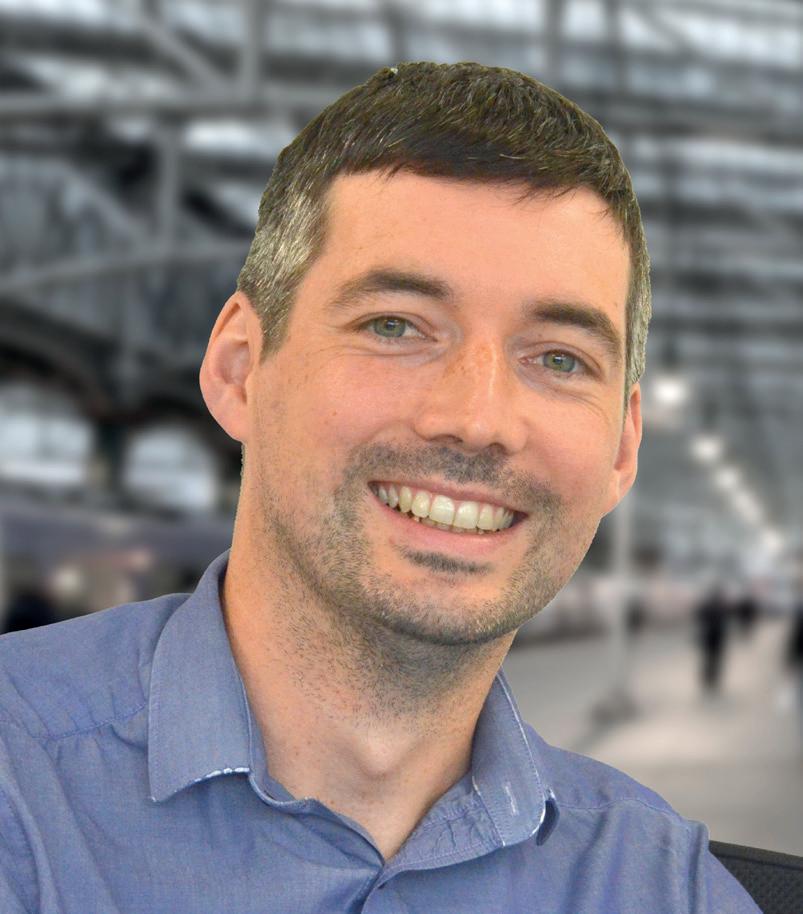
This month also saw Edinburgh Trams launch services along a recently completed line to Newhaven. Managing director Lea Harrison has taken the time to write about the project and his vision to be an integral part of the city’s future prosperity.
Who can forget the hotly contested World Cup of Stations. More than 70,000 votes were cast, with Wemyss Bay railway station in Scotland being crowned this year’s champion. It was a real delight to speak with broadcaster and shortlist judge Tim Dunn about the competition and the brand-new opportunity for railway stations.
I hope you enjoy this month’s offering and thanks to everyone who has contributed, from those who have taken the time to share their stories, products or services, to you the readers. Do get in touch if you would like to get involved with a future edition.

Stay safe,
 Danny Longhorn Editor
daily newsletter. Please subscribe and encourage your colleagues and team members to do the same. It’s free and it’s easy: www.railbusinessdaily.com. This is the very best way to keep abreast of what is happening on Britain’s railways. There is a digital copy of Rail Director on our website.


Lifting
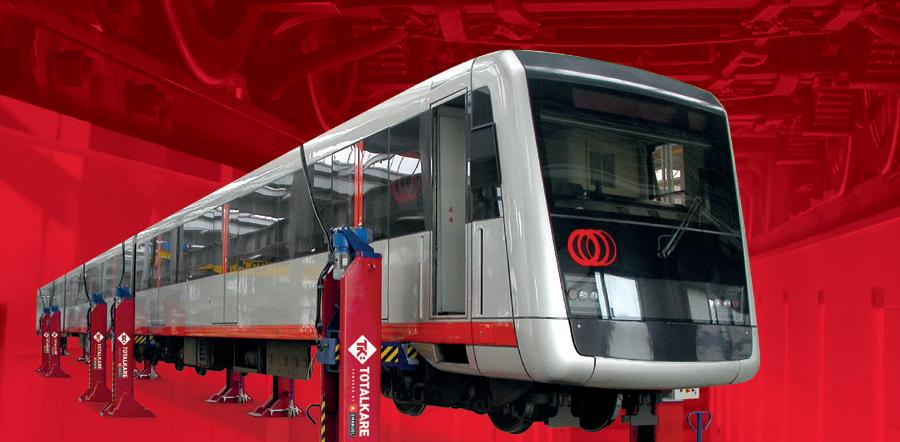
With over 40 years’ experience of high quality, heavy duty vehicle lifting, Totalkare combines world class products with industry leading support to facilitate effective maintenance and repair.



Summing it up, it is just as billed – essential reading for everyone in rail
Rail Director magazine is part of the Business Daily Group of companies, which includes the hugely popular railbusinessdaily.com. We deliver more than 70 stories a week to +70,000 rail industry professionals who now subscribe to our 7am
RELIABLE SYNCHRONISED MOBILE LIFTING JACKS SERVICING TRAINING LIFTING
and inspection equipment you can rely on for all maintenance of rail vehicles.
LIFTING JACKS
BOGIE LIFTS
WITH DIFFERENT RAIL GAUGE SYSTEMS 6,000
14,000KG HYDRAULIC LIFT PLATFORM HEAVY DUTY INTRODUCTION 3 June 2023
& BOGIE LIFTS
COMPLIANT
-
6 Accelerating the digital journey
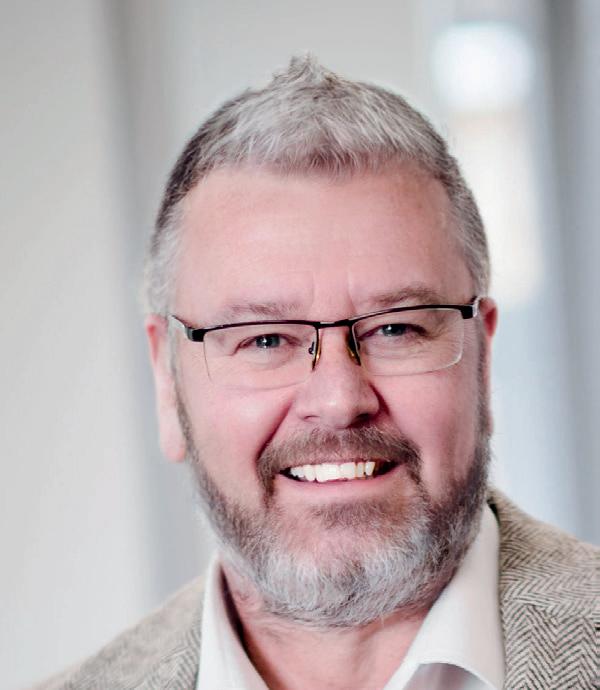
Simon Goodman, Network Rail’s chief information officer, discusses the delivery of a simpler and more efficient suite of technology solutions and associated innovation
12 Come to Ontario
Creating seamless connections and transit possibilities
16 Great Western Railway’s rising star
Daniel Golton is on a mission to improve the railway for the consumer, the business and the south-west region, recently receiving recognition for his efforts. He shares his story

24 Shining a light on the very best stations in England, Scotland and Wales
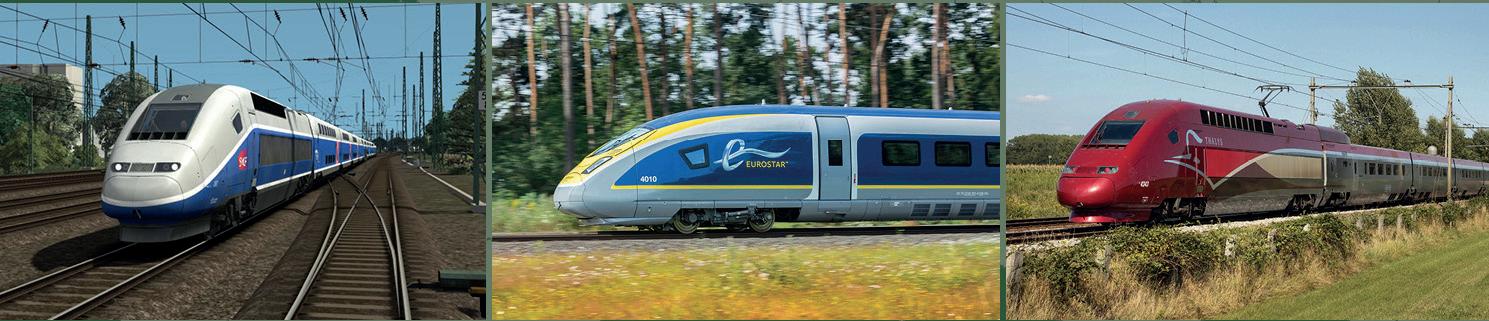
Wemyss Bay station has been crowned World Cup of Stations champion 2023. TV broadcaster and shortlist judge Tim Dunn explains more about the competition and the different incarnations of railway stations
30 Inspiring array of activities celebrates Community Rail Week
Jools Townsend, chief executive of Community Rail Network, looks back on this year’s Community Rail Week, which celebrated the vital role of Britain’s railways in bringing communities together
52 Andy Lord appointed as London’s permanent transport commissioner
He says one of the key focuses will be on securing the long-term government funding
54 Edinburgh Trams enters new era as new route opens
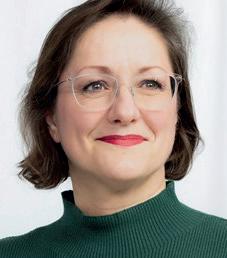
As the first passengers takes advantage of eight new stops on the growing tramway in Edinburgh, managing director Lea Harrison reflects on its achievements to date and how these provide a solid platform for future success
June 2023
16 72 86 Times House, Bravingtons Walk, Regent Quarter, London N1 9AW | +44 (0)20 7042 9961 | david.hiscock@rmf.co.uk www.rmf.co.uk
CONTENTS 4
RMF
is a leading provider of railway reservation based international settlement and clearing services, providing sophisticated revenue and cost allocation, including business critical management information.
Inside Track – June 2023




An in-depth look at what is happening across the industry by those who make the decisions. This issue’s features include: A look at the plans to remove scrap metal from the sides of the tracks, an overview of the Union Chain Bridge work and a glimpse of recent innovation in train diesel

58 Connecting people, processes and technologies

Steve Boshier has been announced as the new president of the Institution of Railway Signal Engineers (IRSE). His theme for the year is global integration


60 The search is on for a new CEO for the Railway Benefit Fund
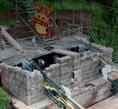
Claire Houghton has announced her retirement from the charity which supports railway people and their families. The organisation is now seeking a new chief executive to lead it through its next stage of growth and development
Tel: 0800 046 7320















Sales: 020 7062 6599





Editor Danny Longhorn danny@railbusinessdaily.com



Designer/Production Manager































Chris Cassidy
Production Editor James Jackaman


Director of Marketing



Phil Loades

Editor (Inside Track)


Nigel Wordsworth nigel@railbusinessdaily.com

Advertising Team Christian Wiles chris@rbdpublications.com

Amy Hudson amy@rbdpublications.com Published
94 £80 million Dawlish sea wall opens to the public
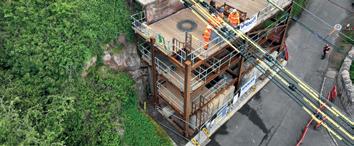
The project protects the rail line that connects the south-west of England with the rest of the country from extreme weather and rising sea levels
June 2023
by RBD Media 15 Mariner Court, Calder Park,
WF4 3FL
by The Manson Group © 2023
rights reserved. Reproduction of the contents of this magazine in any manner whatsoever is
without prior consent from the publisher. All rights reserved. Reproduction of the contents of this magazine in any manner whatsoever is
without prior consent from the publisher. For subscription enquiries and to make sure
copy of RailDirector
Wakefield
Printed
All
prohibited
prohibited
you get your
please ring 0800 046 7320 or email subscriptions@rbdpublications.com
adverts,
SIMON GOODMAN EXCLUSIVELY FOR RAIL INDUSTRY LEADERS Tim Dunn Shining a light on the very best stations Daniel Golton Great Western Railway’s rising star Lea Harrison Edinburgh Trams Steve Boshier Connecting people, processes and technologies June 2023 Accelerating the digital journey
The views expressed in the articles reflect the author’s opinions and do not necessarily reflect the views of the publisher and editor. The published material,
editorials and all other content is published in good faith.
62 UK News
The UK Rail Report
the UK rail industry which is a key insider’s
to
International News
Movers and Shakers
72
Simon Taylor, CEO at Rail Business Daily, discusses a unique new report about
guide
unlocking opportunities… 74
86
40 Keeping Britain Tidy (or the railway at least!) 44 Reconnecting the Borders 48 Keeping diesel fuel clean Bridging the
“There isn’t really a tried and tested method of dismantling a 200-year-old suspension bridge!” June 2023
gap
NOTHING TO SNOOZE AT Subscribe today for all the best news in UK rail from 7am daily news.railbusinessdaily.com CONTENTS 5
Simon Goodman, Network Rail’s chief information officer, discusses the delivery of a simpler and more efficient suite of technology solutions and associated innovation
Accelerating the digital journey
Alot has changed in the two decades Simon Goodman has been working for Network Rail. The organisation’s chief information officer remembers introducing an early handheld device (before iphones/ipads existed) to
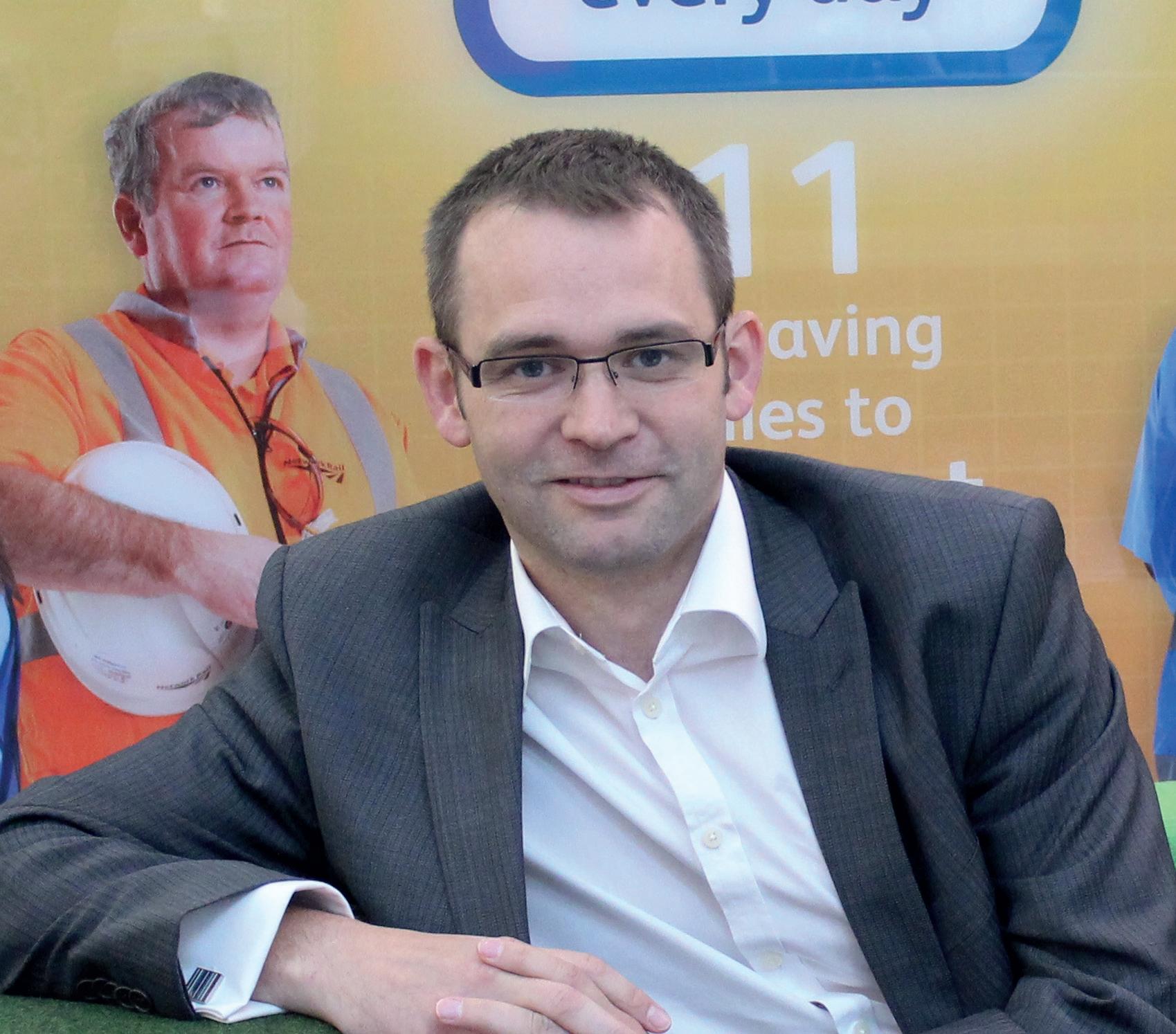
an engineer and watching as the worker used such force with the stylus pen that he cracked the screen.
“It was one of the first projects I worked on in 2002 in which we introduced personal digital assistants and created an app which allowed us to do inspections
at level crossings,” he said. “We’ve come a long way since then, embracing more and more technology and we are starting to see it change the way we maintain, operate and engage with passengers. We are just on the cusp of what we can do with it.”
PEOPLE 6 June 2023
Simon is a vital cog in that wheel, leading the organisation’s IT and Telecoms Services, the recent combination of Network Rail’s Telecom and IT divisions, a move described as a natural fit which will reduce complexity and allow greater collaboration within the organisation.

“Essentially I see IT and Telecoms as the fourth utility; it is second nature to you to put the electrics in a building, the plumbing and water in, but so many people forget about the telecoms, despite the fact that everything is so interconnected these days,” he said.
“The transformation programme is about bringing the IT and Telecoms departments together which will enable the delivery of a simpler and more efficient suite of technology solutions and associated innovation. The operations of the two are clearly very distinct operations but there are lots of synergies such as security, and commodity IT services that underpin both.
“What is clear is we are not an IT business and we are not a telecoms business, our business is maintaining and operating a safe and efficient railway, and there are two strategic technology capabilities that are so important to running a railway that we’ve got to ensure that service is optimal, understood and fully monitored, especially as we become more reliant on technology.”
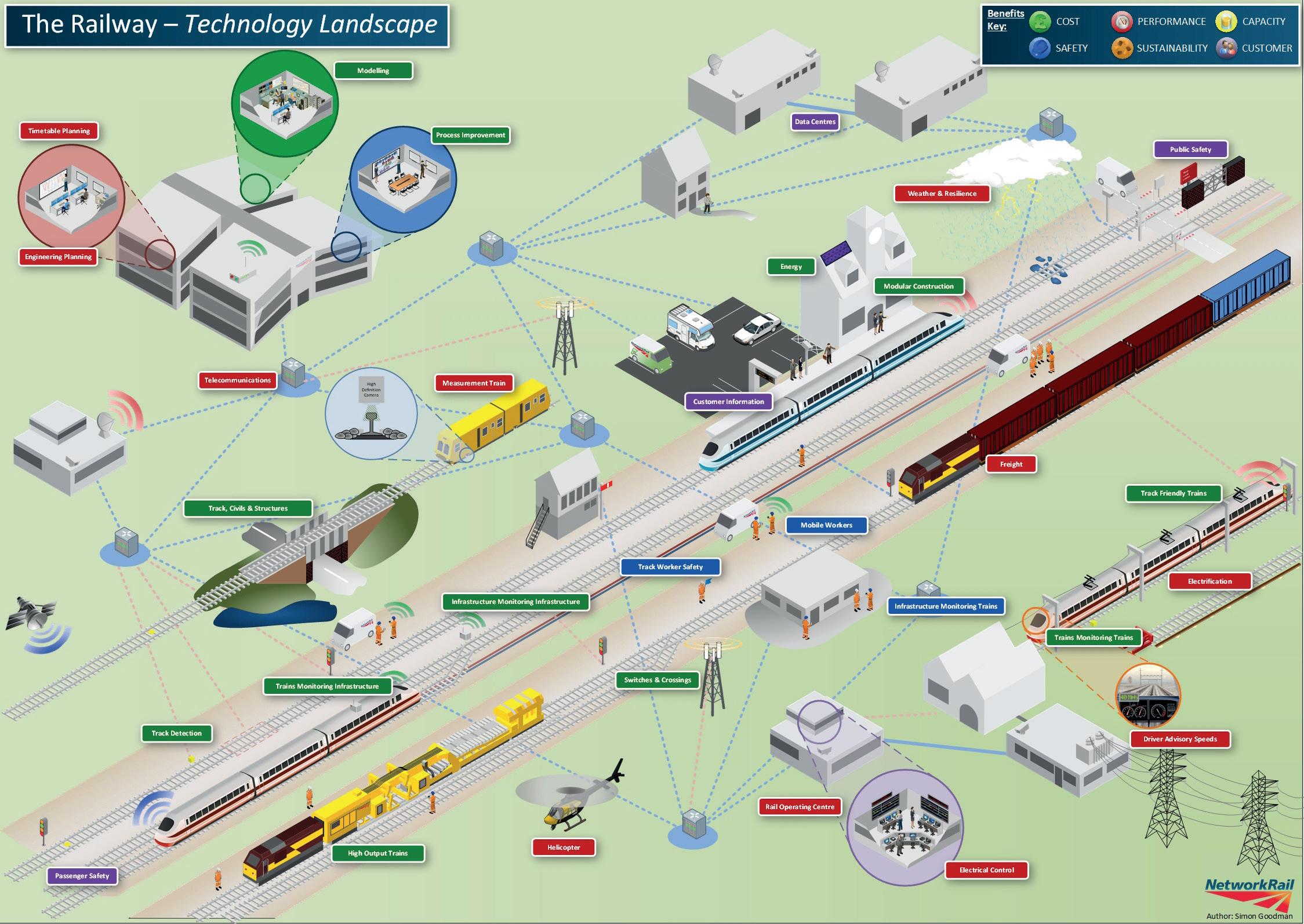
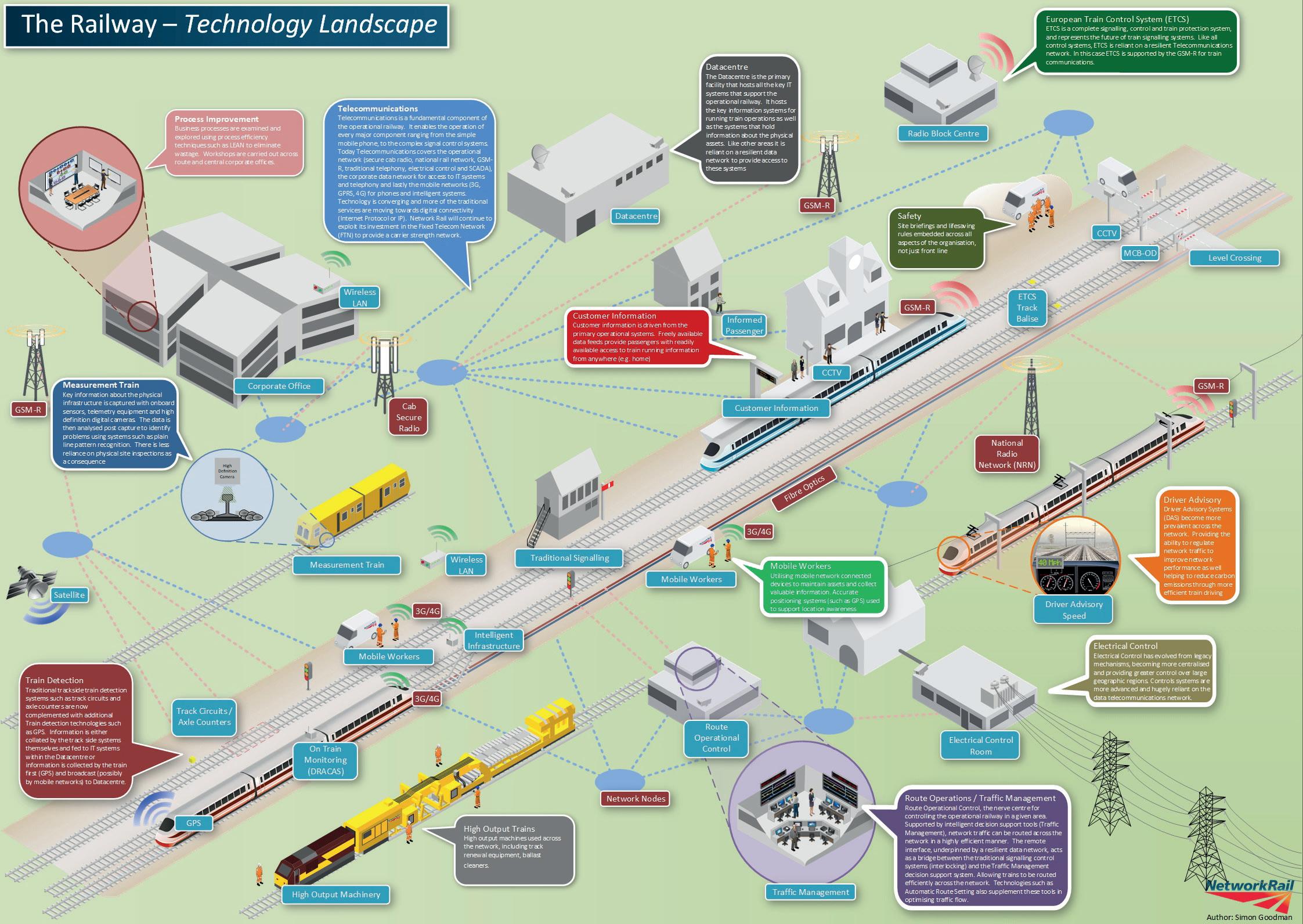
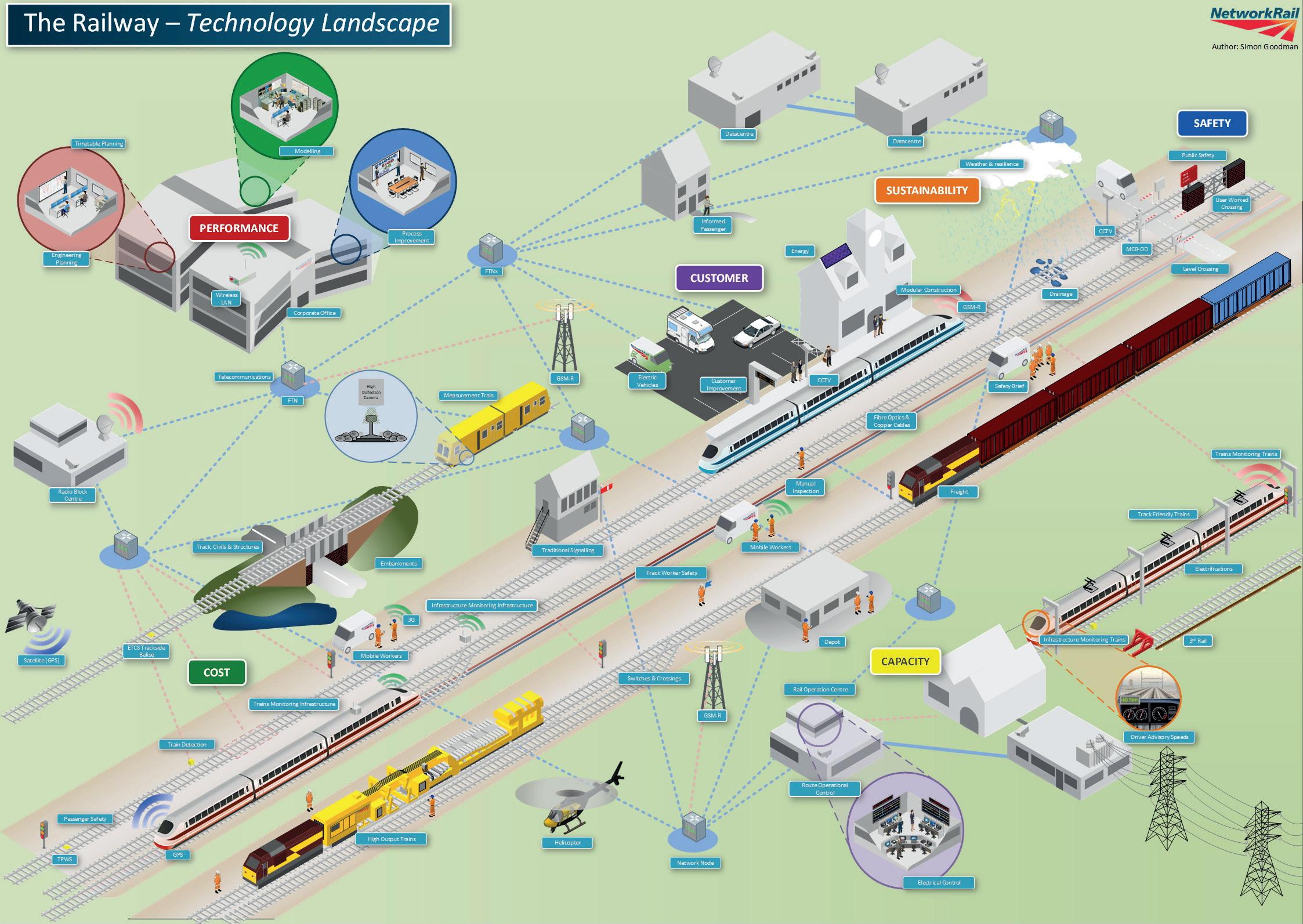
The division was officially launched last November, although it stems from an idea Simon had a decade earlier while the organisation’s head of information systems strategy. He created a visual for his bosses about how IT/telecoms could work, an image he has shared with Rail Director.

“My aim was to explain the importance of IT and telecoms on the railway, especially as it starts to converge with digital rail and digital signalling, all using the same internet protocol (IP) networks as what I use to provide for the running of the core IT applications such enterprise resource planning (ERP), email and everything else,” he said.
“What I’ve drawn up shows how integral comms and running IT across the network is to the operation, making the point that it needs to become more aligned to provide a really solid backbone. I am proud and delighted to be given the opportunity to lead Network Rail’s IT & Telecoms into a brave new world.
“While this is incredibly challenging, it is quite possibly the most exciting time ever being given the chance to help transform the industry for the better.”









A new beginning
Simon was one of the architects who helped with the business case to bring Network Rail Telecom into existence around 11 years ago, providing the industry with a national telecommunications capability which is essential to its safe, reliable and efficient operation.
At the time the Global System for Mobile Communications-Railway (GSMR) was being part commissioned and the traditional maintenance telecoms team was dealing with normal power systems, signalling systems, lineside telephones, and level crossing telephones.
The UK Rail Report

Be the most informed person in the room… … get the insider’s guide to UK rail today. Key intelligence Valuable insights Routes into rail Who’s who And more Powered by Buy now or join RBD Community and get it free.
PEOPLE 7 June 2023
The creation of IT & Telecoms just means that we can finally have a really strong solid foundation that provides a whole host of potential services offering a better experience to the passenger
From an IT division perspective, it included different technologies from Asymmetric Digital Subscriber Line (ADSL) largely and also MultiProtocol Label Switching (MPLS) circuits, and IT also ran the mobile network contract for corporate mobile phones and trackside sensors.
“While that was all good, the reality is that the traditional point-to-point was going to disappear. Even when you are laying all of the GSMR network, which is fibre-connected, ultimately it was and will be going to go IP, so over a period of time it would absolutely converge, same technology, same skills to maintain it, and hence why it made sense to bring together the separate telecoms capabilities.” he said.
“There is such a symbiotic relationship between IT and telecoms that I can’t run IT without telecoms and telecoms oddly enough can’t run the telecoms network without IT because you have to have applications to underpin the different telecoms services (e.g. GSMR network). Telecoms came out of digital railway and into Route Services a few years ago and Rob Morton (managing director, route services) asked if stuff could be brought together, and the answer was yes.
“It is about looking at economies of scale that we can drive out of it, especially bearing in mind the increase in sensors on the network. Our Internet of Things (IoT) day-to-day is going to increase, and even big yellow plant now has got a huge number of sensors on it. There is a huge opportunity in the aggregation of that data, how we want to bring it in and moving much more into a digital world.
“The creation of IT & Telecoms just means that we can finally have a really strong solid foundation that provides a whole host of potential services offering a better experience to the passenger.”
Building a better model
Having spent the first few months speaking with internal customers about the IT and Telecom divisions to get a picture of how they worked, both good and bad, the key aspiration for Simon and the team now is to take the relative strengths of both sides of the organisations to provide a more consistent, efficient service.
“The opportunities going forward are huge because we will provide really strong foundational capabilities that will allow us to start putting more sensors out on the network. I can start providing more intelligent data to the maintenance teams and depots to make more informed decisions about what they do and how they manage and operate the railway,” he said. “With a more interconnected estate, there are literally hundreds of use cases that become enabled; there is no end to what the potential could be.
“The challenges will be on whether I have enough resources to do everything, and the time available to do it, not least recognising the demands that will come through once we have demonstrated the art of the possible. If an idea really delivers benefits, I can guarantee everybody will want it, and quickly. I am all for thinking big, starting small, but scaling really quickly.”
Version one
I am proud and delighted to be given the opportunity to lead Network Rail’s IT & Telecoms into a brave new world
PEOPLE 8 June 2023
Version three Version two PEOPLE 9 June 2023
It is all part of Network Rail’s drive to be more digital and maximise the benefits of data, and supporting the Digital Railway Programme.
This programme aims to support the industry with transforming the rail network for passengers, businesses, and freight operators, introducing modern signalling and train control technology to increase capacity, reduce delays, enhance safety and drive down costs.
“Digital can mean so many things to so many different people,” said Simon. “It can be simply the experience as a customer of a system that is modern and can be used on a mobile-based device. In another aspect, it can mean fundamentally going to look at how to disrupt your own business model and deliver new services through different channels such as web and mobile, that better serve customers.
“It is about bringing business and technology together. It is not just a technology problem, it is about how to transform a business into doing something differently and that could be as a consequence of growing into new markets, improving the overall experience of your customer base, or it could be just because you are under threat because there is a new entrant, or a disrupter that is transforming the way in which they deliver that service.”
Greater connections
It has already been some digital journey for Network Rail, even in Simon’s time at the organisation. In 2010, Network Rail introduced a remote condition monitoring system (RADAR) which for the first time saw 50,000 IoT sensors placed across the network, telling engineers
in real time what was happening to the infrastructure (e.g. points motors, points heaters, etc).
Eight years ago, the organisation started removing maintenance standard tasks from paper and putting them on an iPad - the digitisation of works management at the coal face, off the back of which multiple developments were spawned.

“Our railway is no longer about just civil, mechanical and electrical engineering; computer system engineering is now the fourth engineering discipline that is so vitally important and will become more important as we move forward,” he said.
“The future aspiration for me is that we will be in a far more connected world. We are taking data from trackside, but it is really in its infancy at the moment.
“Building that future telecoms capability as we move forward opens up further opportunities. Actually having compute capability on site at the edge, exposing vaster quantities of data – but with the ability to then analyse that, pretty much in real-time - gives us a huge opportunity to change the way in which we run the railway and make it a more efficient railway. These are just some of the ways to help improve passenger services.
“You will see more sensors on the network, we’ll have a much more intelligent railway out there and among the benefits will be not having to send maintenance workers out on site as much. Overall if we fast forward 10 years, in some respects the railway will look similar because we will still be running trains on steel across sleepers and ballast, but the capabilities of the railway will have transformed massively, not least the passenger experience.”
PEOPLE 10 June 2023
The future aspiration for me is that we will be in a far more connected world
The precautions you can take to protect plant
Irecently joined Jobson James Rail as a Senior Account Executive. I am very excited to work in the rail industry and to become part of such a professional, knowledgeable and friendly team.


I have a technical background as an Engineering and Construction underwriter designing and placing construction contract works, statutory inspections, tools and plant insurance contracts and am looking forward to helping our clients with their problems using my experience.
Theft is incredibly common and a leading cause of insurance claims for contractor’s plant, additionally the recovery rates of stolen plant have
historically been very low, at just five per cent which increases insurance premiums.

Fortunately, there are plenty of precautions you can take to better protect both owned and hired-in
constructional plant. In addition to less disruption to your business due to thefts and lower premiums due to fewer claims, insurers will often allow premium discounts for robust security – win/win!
Firstly, you can reduce incidences of the theft of plant by good physical security such as locked gates on compounds, CCTV, security guards, and double gated airlocks to protect your assets and vehicles from opportunists and professional criminals.
Fit dummy trackers as well as the real thing so the crooks are fooled if they take your vehicle, they will hopefully dump the fake tracker and you can trace where they take it.
The CESAR (Construction Equipment & Security Registration)


initiative is an excellent way to protect individual items of selfpropelled plant. Benefits of the scheme include both overt and covert security measures, such as the easily recognisable triangular registration plate, state of the art Datatag technology, a central database and free recovery of plant that is located.
I can also give advice around tools and equipment contractual hire terms which do raise concerns such as onerous conditions which prolong the period of risk after the official off hire date so demand scrutiny.
If you would like advice on your insurance, please do get in touch.

 Kerry Parnell, DIP CII Senior Account Executive at
Jobson James Rail. Call the team on 07816283949

Contact Keven Parker on 07816 283949 | 0121 4528717 keven.parker@jjrail.co.uk WE ARE A RAIL SPECIALIST INSURANCE BROKER (RISQS LINK UP APPROVED) We insure RRV and Plant Companies • P-Way/S&C, S&T, OLE/Third Rail and Civils contractors • Rolling Sock Turnkey Modifications companies • Manufacturers, Wholesalers and Installers of rail products • ROSCOs and TOCs supply chain Rail Consultants, Surveyors and Design Companies Why us? • Specialist rail knowledge • NEBOSH/Safety approach producing lower premiums • Contractual liability checking Better technical advice • Specialist rail safety consultancy site audits funded by insurers info@jjrail.co.uk www.jjrail.co.uk • The company had an excellent health and safety record however we felt this was not recognised by the current insurers. • A 15 page detailed report was compiled explaining the companies safety investment and accreditations achieved. • The result was improved cover with 32% premium saving. Jobson James Rail is a trading name of Aston Lark Limited. Registered in England and Wales No. 02831010. Registered office: One Creechurch Place, London, United Kingdom, EC3A 5AF.Aston Lark Limited is authorised and regulated by the Financial Conduct Authority. 0523 32% SAVING CROSSRAIL SITE REPORT 15-PAGE £12,351 SAVING ON INSURANCE PREMIUM HAPPY TO RECOMMEND SPECIALIST RAIL DEVEGETATION CONTRACTOR - £2M TURNOVER £2M TURNOVER BESPOKE COVER WIDE AND
Advice from Kerry Parnell, DIP CII, Senior Account
ADVERTORIAL 11 June 2023
Executive at Jobson James Rail
Come to Ontario Creating seamless connections and transit possibilities

Some opportunities are too good to miss. Working on a once-in-a-lifetime rail project knowing its positive impact on generations to come is enough reward itself, but how about undertaking that work in the stunning country of Canada?
That is the opportunity on offer from Metrolinx, an agency of the Government of Ontario, which is turning to the expertise of the UK’s rail industry workers to help with the largest transportation investment in Ontario’s history, and the largest transit expansion programme in North America.
The transformation is centred on five priority projects – including an expansion of the Greater Toronto region’s widely used heavy rail network, various new Light Rail Transit (LRT) projects and subway extensions.
Making new connections
Municipal agencies already provide networks that criss-cross cities, with Metrolinx connecting everything it builds into those existing systems.
When complete, this will double the size of the subway network in Toronto, quadruple the size and reach of the local rapid transit network and double
the intensity of use of the GO system that serves as the backbone of regional connections.
“This is an opportunity too good to miss for anyone with ambition and a passion to create transformational change to the railways, working with the best in the business,” said Phil Verster, President and chief executive officer of Metrolinx.
“What we are doing will create endless possibilities in our region, with economic and environmental benefits for generations to come, full of exciting new services for our customers, as well as being a catalyst for change in our communities.
COMPANY PROFILE 12 June 2023
“I have a huge sense of pride in what we are delivering for the people of Ontario and hope the UK’s rail industry workers will grasp the opportunity to work with some of the largest transit/construction companies in the world, adding their expertise which is renowned throughout the world.
“We embody our values in everything that we do, working with passion, forward thinking and playing as a team.
“Having the best in the business is pivotal in ensuring the project is carried out effectively, efficiently and safely, which is why we are looking to the UK – a country steeped in history and expertise when it comes to the railways. In return they get the opportunity to play an important role in creating a piece of rail history in Ontario.”
The opportunities
The roles available on the largest transportation investment in Ontario’s history – with the capital projects portfolio alone worth more than £43 billion – includes a range of rail, construction and engineering expertise, with a commitment towards diversifying the workforce with people from different backgrounds.

Among the high-profile roles up for grabs includes:
Vice President, RT – Eglinton Crosstown LRT
Vice President, GO Expansion Integration
Director, Ontario Line
Director, OnCorr Operational Readiness
Director, Line Stations
Director, Airport Segment
Director, Technical Management Office
Director, Operations
Director, Maintenance Delivery Strategy & Transformation
Director, Signalling & Train Control
Phil said: “We are creating diverse teams allowing workers to bring their knowledge, expertise and innovation to our work. They will join our organisation, one of more than 5,000 employees, that place health, safety, equality and diversity as a priority.
“As for moving to Canada, it is a country on the bucket list for many and one that will not disappoint and you’ll be working for an organisation that really cares about its staff on a project which will no doubt be a career highlight for those who make up part of the team.
“On top of that you’ll be transforming travel in Ontario and creating connections that will dramatically improve the way we live, work and explore all that the region has to offer. What’s not to like about the opportunity?”
Metrolinx connects communities across the Greater Golden Horseshoe, a vibrant region in southern Ontario that is expected to grow by one million people every five years and reach 15 million by 2051.
COMPANY PROFILE 13 June 2023
Metrolinx operates GO Transit and UP Express serving the region and connecting customers across the communities, as well as the PRESTO fare payment system, widely used on these systems and 11 other local transit agencies. This is alongside the building of the new and improved rapid transit, including the GO Expansion, Light Rail transit routes and major expansions to Toronto’s subway system.
Phil added: “New routes to reshape transit across Canada’s most dynamic region will create future possibilities and better, more seamless connections. This is not just about the journeys of tomorrow, but the journeys being made in decades to come.
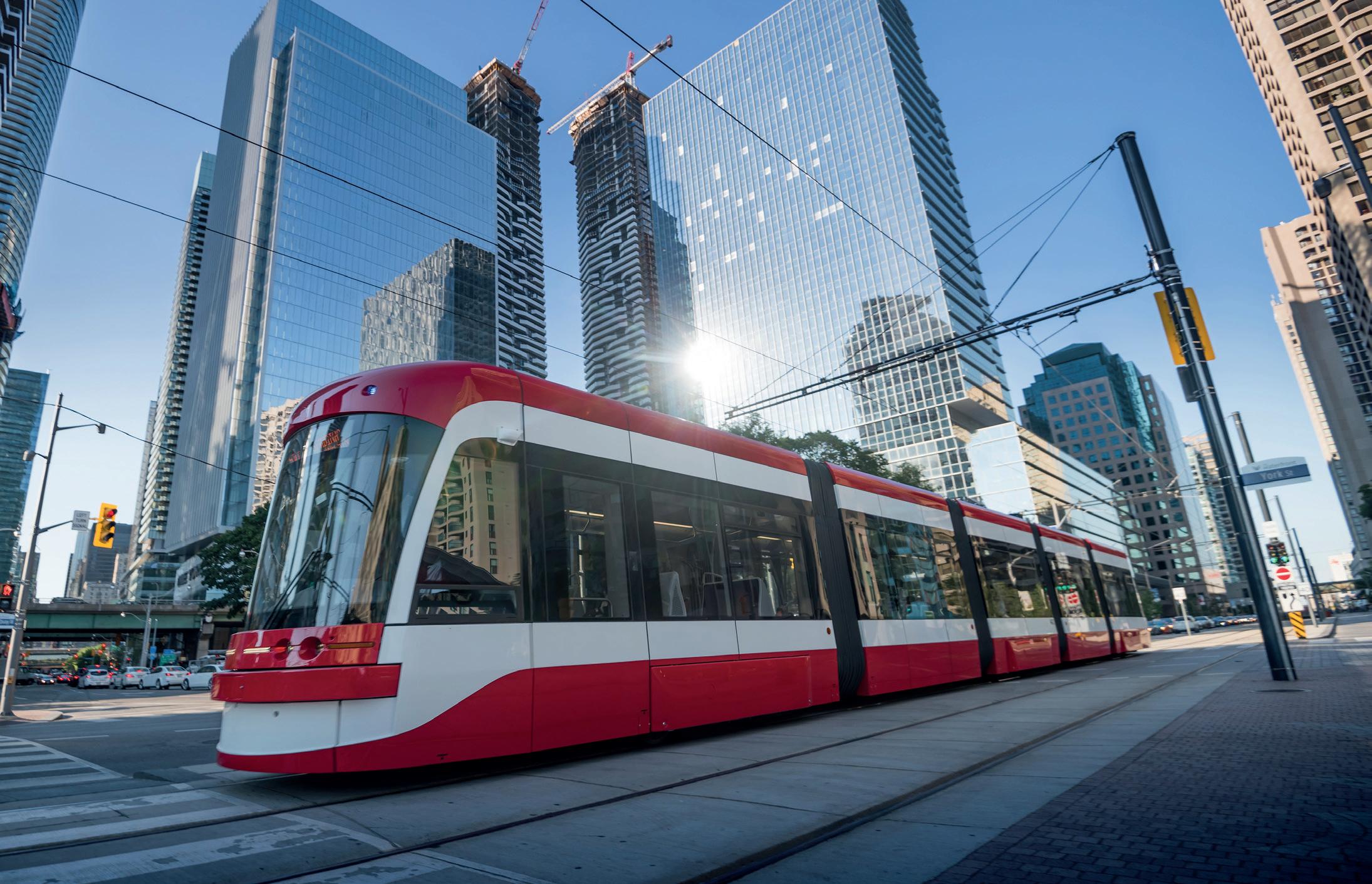
“Faster, more frequent services with more options to move seamlessly from one transit provider to another –from a subway to a train or light rail vehicle as easily as scrolling on your smart phone isn’t a daydream.
“For Metrolinx, it’s the heart of our day’s work, work that is already underway, and we want to the best rail workers from the UK to join us on that journey and play a vital role in long lasting change.”
The transformation
The Ontario Line will create faster, easier connections between dozens of vibrant neighbourhoods and make it easier than ever to travel within Toronto and beyond thanks to a 15.6km, 15-stop subway line.
“Having the best in the business is pivotal in ensuring the project is carried out effectively, efficiently and safely,” Phil said.
The GO Expansion scheme will transform the GO rail network from a commuter service into an all-day, rapid system with work underway to deliver a two-way, all-day service across the GO lines.
Trains will run every 15 minutes or better, with customers served by higher-speed electric trains that can reach a maximum speed around 120km/h and will be able to decelerate quicker. Almost £7 billion of early works and off-corridor projects are already underway including 16 stations under renovation, one new station and two expanded stations complete, five tunnel/bridge expansions, and two new rail maintenance facilities.
Like what you read?
Creating options for tomorrow’s passengers is well underway. But with the projects accelerating, Metrolinx has upped its recruitment. All applicants must be legally entitled to work in Ontario and a Criminal Record Check may be required of the successful candidate. Candidates will also be required to participate in a labour market impact assessment.
Phil said: “It is not every day that you get an opportunity like this, and just like previous job opportunities I expect the number of applicants for all the posts we advertise to be high. Moving to Ontario to work is incredibly easy and as an organisation we’ll be there with you every step of the way to ensure it is a smooth process.
“We will continue to update our job opportunities and would urge those interested to get in touch for more information and to not hesitate in applying. The UK people were the pioneers of the railway and I hope what we do in Ontario is the next chapter on that glorious evolution of the industry concluding in a transportation system envied throughout the world.”
Do you want to help innovate a world-class transit system? Visit www.metrolinx.com for more details about helping to build the next great railway and see yourself in Downtown Toronto
COMPANY PROFILE 14 June 2023
As for moving to Canada, it is a country on the bucket list for many and one that will not disappoint and you’ll be working for an organisation that really cares about its staff
TBF offers financial and medical benefits, a wide range of complementary and alternative therapies, bereavement grants and welfare advice. Supporting members during times of need, hardship and distress for less than 20p per day. £1.25





















































































































































































































































































ABOUT PEOPLE
in
transport... ...people like you!
TO 2023: ONE HUNDRED YEARS
FOR
DURING TIMES OF NEED.
ALL
people working
public
1923
OF SUPPORT
PUBLIC TRANSPORT WORKERS
a week covers you, your live-in partner and dependent children. Join online today www.tbf.org.uk Transport Benevolent Fund CIO, known as TBF, is a registered charity in England and Wales, 1160901, and Scotland, SC047016.
Daniel Golton is on a mission to improve the railway for the consumer, the business and the south-west region, recently receiving recognition for his efforts. He shares his story
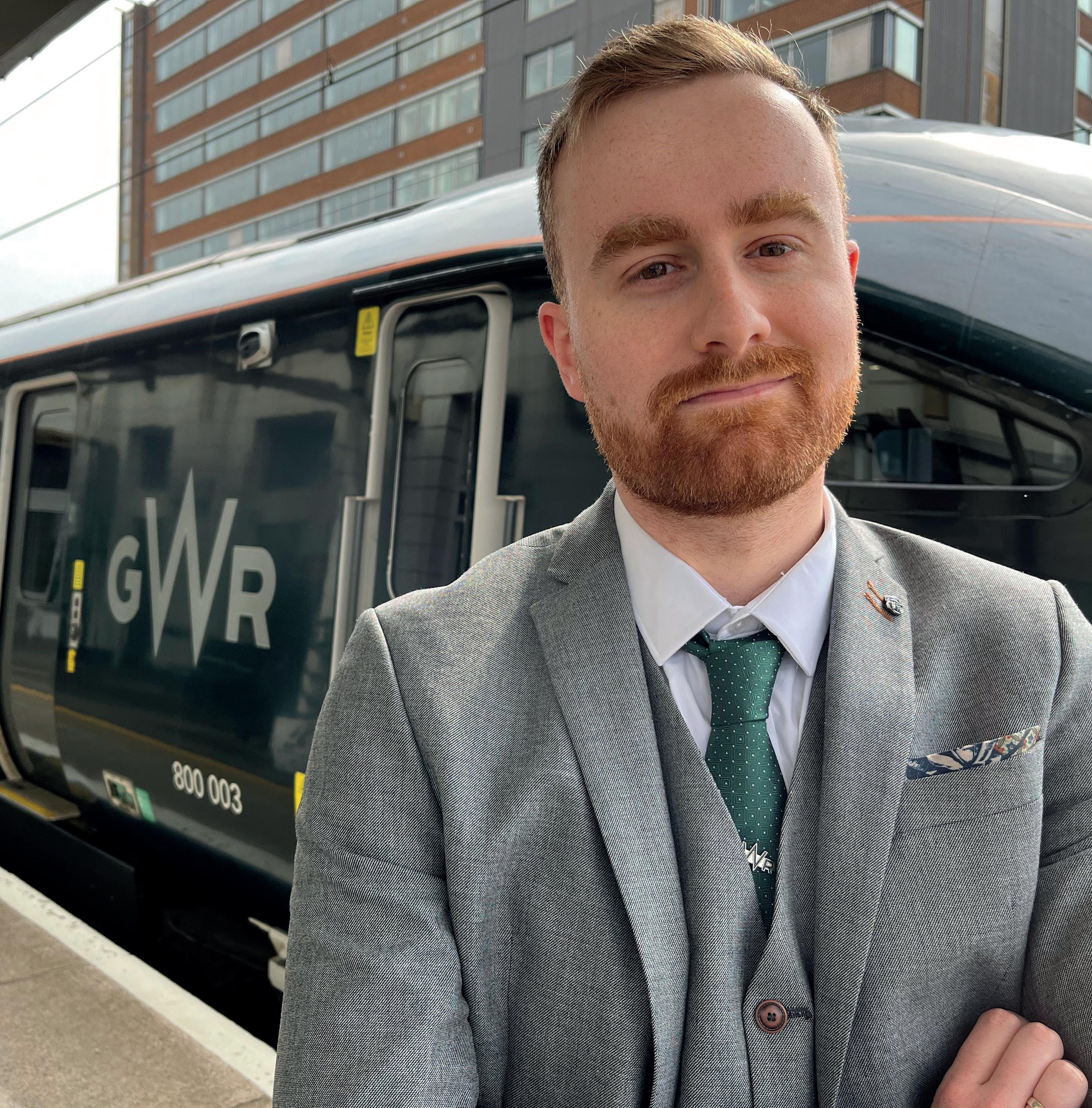
Great Western Railway’s rising star
PEOPLE 16 June 2023
he go-to-person for addressing complex train service delivery issues.”
That is how Great Western Railway’s (GWR) managing director Mark Hopwood has described the train operator’s performance manager Daniel Golton.
Daniel’s giant strides in his short career at GWR, playing a pivotal role in enhancing the operator’s train service performance, recently earned him the title of Young Professional of the Year at the Rail Business Awards.
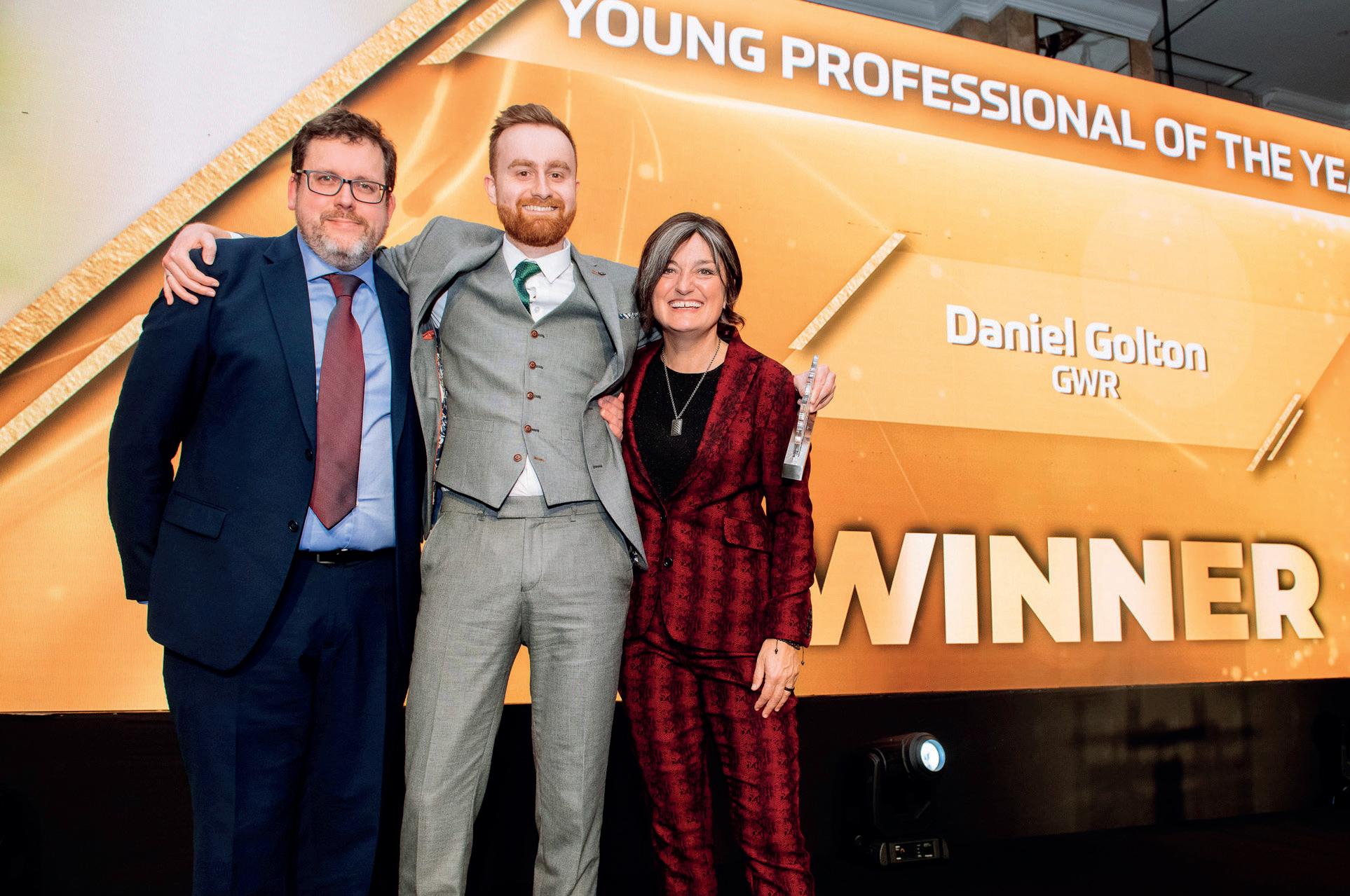
“I’m immensely pleased to be recognised and on a more philosophical level, I find it very reaffirming that the kinds of things I’ve been trying to do in my short time in the industry are the sorts of things that are deemed worthy of an award,” he said.
Daniel joined the company in 2019, straight out of university, where he studied physics. “Coming from an environment where data is everything, it’s been my priority to advocate the use of analytical techniques on age-old railway problems and increase awareness of proper data literacy.”
He was promoted from performance analyst to performance manager in December 2021, where his job is to find areas of the railway that are holding the train operator back from delivering a punctual service and work out ways to fix them.
“It’s up there as one of the world’s most interesting system-thinking problems for me,” he added. “I get excited at the prospect of taking any system and trying to work out how to run it better.
“Thousands of people have to pull in the same
direction to make this thing work. It is crazy once you get in through the door and you realise how much goes into making a single journey go ahead.”
A history in the railway
Although it was his first job outside university, it wasn’t a completely new industry for him to learn about. He has grown up around the railways, with his dad, Matthew, the former managing director of TransPennine Express.
PEOPLE 17 June 2023
“T
“Fundamentally I see the railway as this awesome power for social good. It is this great catalyst for literally everything else that happens in the country and around the world. As far as saving the planet goes, the railway is the best bet for medium/ long-range journeys with few exceptions.
“I firmly believe that we should be getting as many people as possible on trains, but in order to do that we need to understand why they’re not doing so. I want to be involved in making the railway the natural choice for transportation. It needs to be a seamless experience, where you’re not thinking about whether your train is going to be late or not.”
In little over four years at GWR, Daniel has helped produce performance reports, developing fresh insight and providing ad-hoc analysis for key stakeholders in the railway.
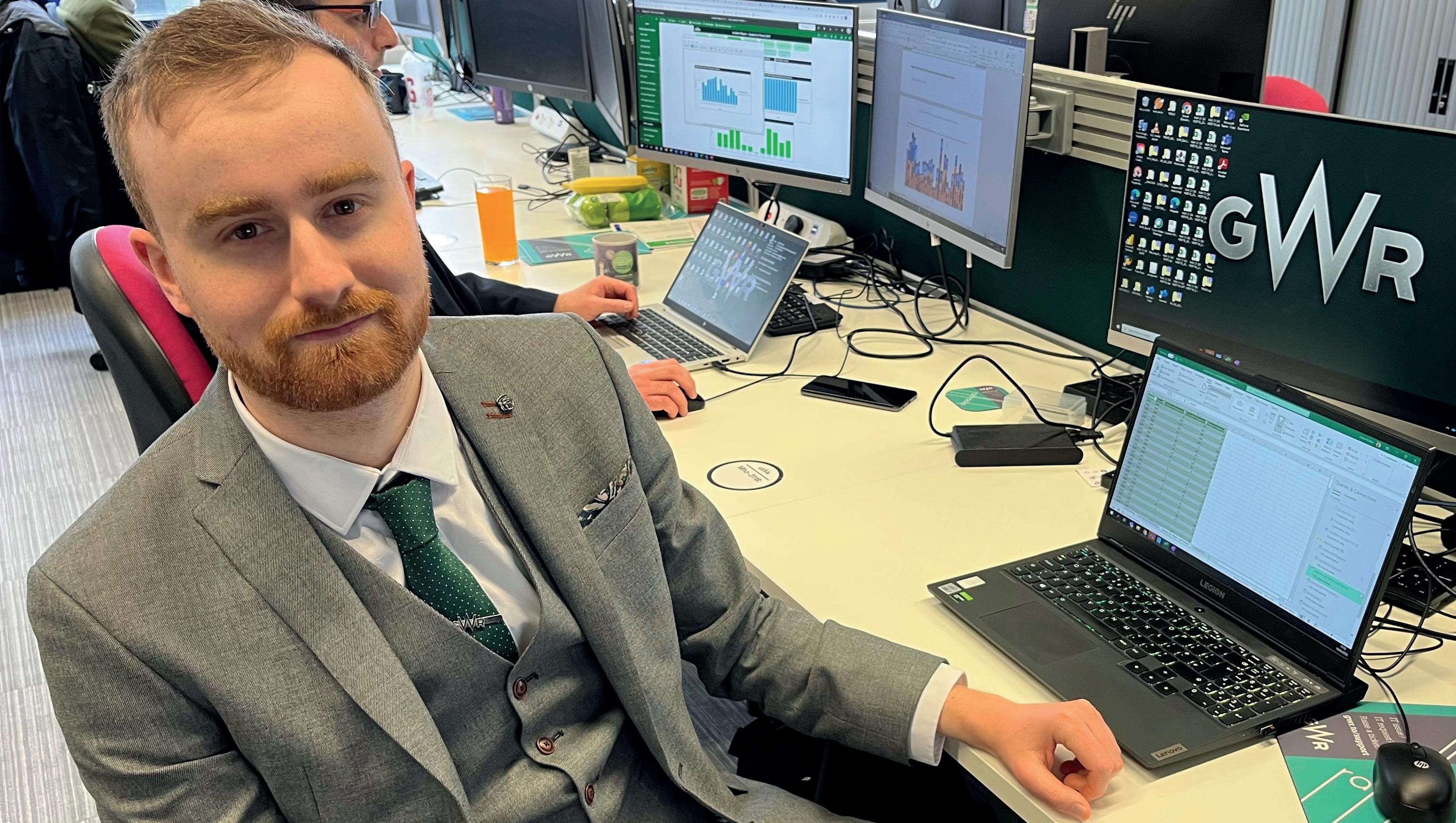
He’s developed a Key Performance Indicator scorecard to help colleagues at all levels. His efforts have played a significant role in improving the performance of train services, introducing and updating systems to monitor performance of key services, and working with GWR and Network Rail colleagues to find solutions to improve reliability and punctuality.
“On day one I was shown a map of the UK and there were all these coloured dots relating to a single delay incident that happened in Ealing Broadway,” he said. “There were dots around London and the GWR network, but the thing that really caught me were the dots all the way up in Scotland and I was like ‘wow, this stuff can really spread’. I quickly learnt that there was a lot of inter-connectedness and that changes you seek to make will ripple throughout the whole system.
“I’ve been working with a colleague on an interactive tool – a web application – that depots can use to establish how much resource they need to run an overnight plan in terms of drivers.
“I’ve written an algorithm that reviews the plan you are plotting on the screen and establishes how many drivers you are going to need; what competencies are they going to need? What are the walking times? When will they sign on and so on.”
The aim is to facilitate a more articulate conversation between engineering, the driver team and timetable planners about managing workloads at depots.
Meeting new challenges
Daniel said communication was key to helping resolve complex train service delivery issues. “There has been no point when having an extended conversation about something, talking through data and listening to them, hasn’t at least given a chance to the thing I’m trying to suggest. Where you really hit challenges is the moment it gets real about decision-making and the investment needed to bring the changes to fruition.
“The industry is in a very complex place financially and a lot of the time you can find your way to a potential solution, but trying it out requires money. You can have all the data in the world but getting that through might be difficult.”
It is a challenge Daniel is ready to face. He is open, honest and very passionate about playing his part in the future of the railways
“I love working in the rail industry. It is a fascinating place and has much potential as a force for good in the world. Although it can be frustrating at times, receiving the recognition of my work with the recent award has been uplifting and enthuses me about making the railway a thing that enriches people’s lives, fits seamlessly into their day, gets them out of cars and benefits society, the environment and the economy, all in one fell, electrified, automated swoop – it all seems possible.
PEOPLE 18 June 2023
I love working in the rail industry. It is a fascinating place and has much potential as a force for good in the world
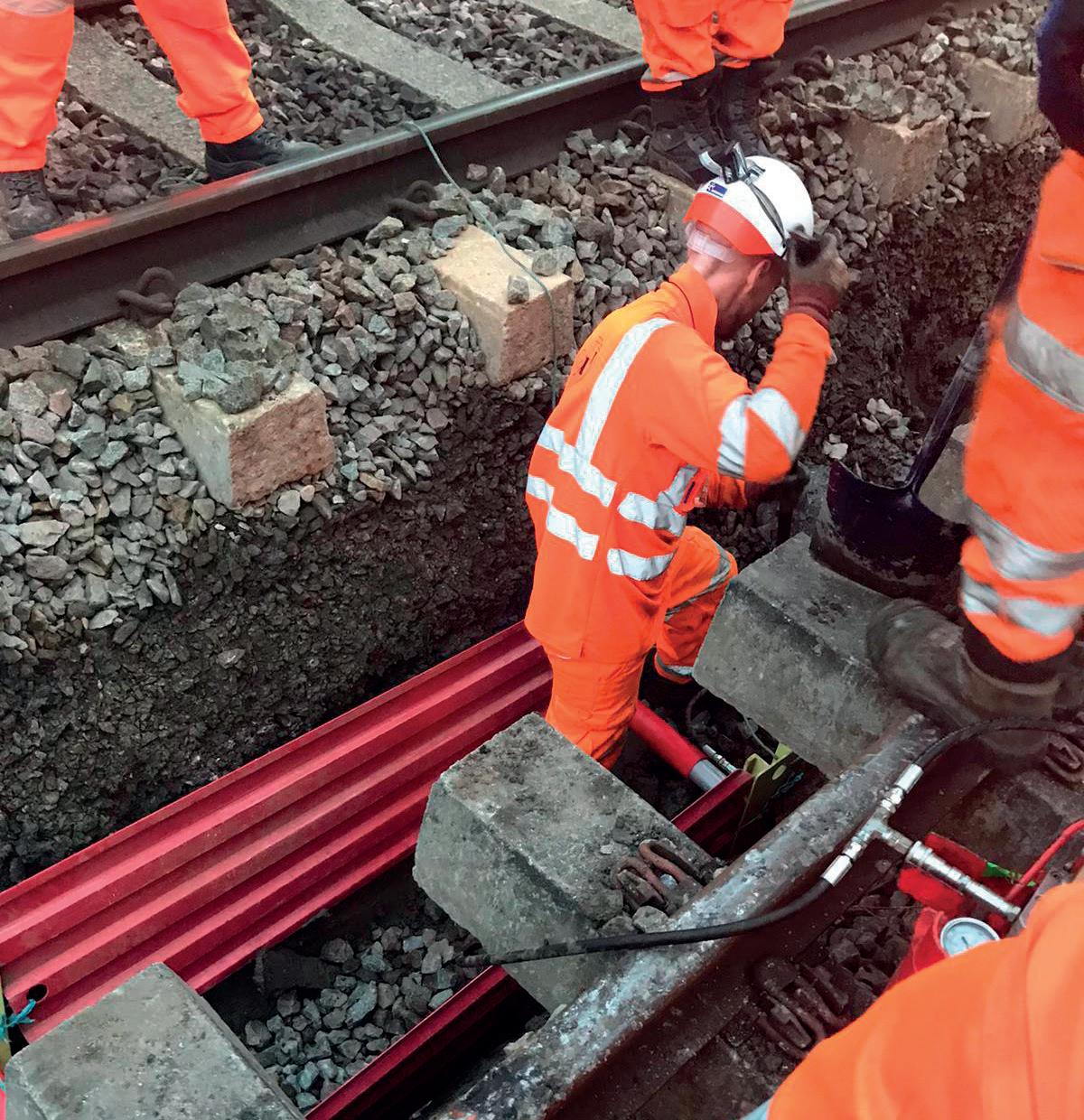
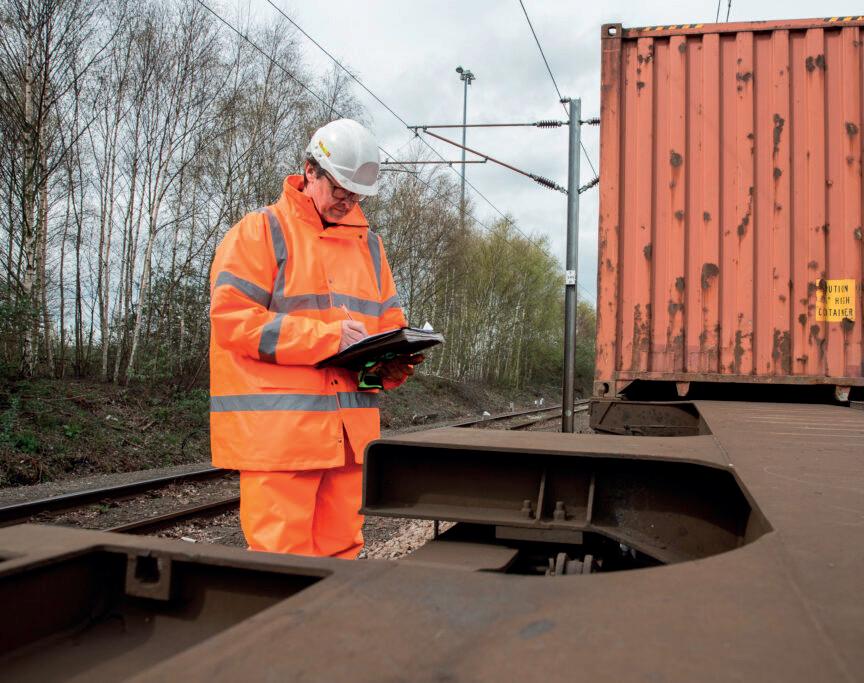
Specialist construction and civils company with extensive experience within the railway environment

Service Delivery
• Concrete walkways, steps, bases, maintenance and repairs
• Brick & Block work to include heritage services
• All Fencing & Gates – Supply & Install (Palisade, Wire, Wooden, Security)
• Platform Refurbishment, stone slab installation, coping stones and line painting
• Route works to include earthworks, stairways, handrails and gates
• Cable Management Systems (CMS) & Concrete Trough Route works
• Enabling and Ground works
• Network Rail Access Points
• LUL Step Free Access works
• Vegetation Management (Clearance, waste management, metal recycling)
• Road Rail Access Points (RRAP installation and maintenance)
• All projects fully managed on and off site
• Safety Critical protection, Protection Plans & SSOW / SWP planning

• High Street construction & civils
• Welfare Facilities
• Waste Management & Environmental support services
Part of Viking-group.co.uk 0800 389 4704 14 West Station Yard, Essex, CM9 6TW www.marail.co.uk info@marail.co.uk
Three decades of challenging and supporting organisations to succeed in uncertain and complex environments
e offer an informed, credible ear to listen and understand the problems faced by organisations and on major projects, and we offer tailored, but structured solutions that we know – through the last 30 years of experience – deliver value and benefit.” That is how Al Simmonite, Managing Director of The Advance Consultancy, sums up the business.
The consulting and services organisation was founded in 1993 by Norman Kerfoot to blend business and behavioural knowledge to catalyse improvement and sustained change. It was born out of frustration that organisations weren’t working as effectively as they could together.
“Norman’s vision was centred on teams and individuals doing better things by working collaboratively, rather than being transactional and confrontational,” said Al, who joined the team nearly six years ago and became Managing Director five years ago. “Those early values have stood the test of time and as a business, we have weathered the storms to more than just survive, but to continue to thrive. Although society and technology have changed significantly over the years, the work we do in complex environments is fundamentally the same and all about those human interactions and how individuals work together in teams and teams of teams.”
Person to person
Such is the company’s focus around that interaction that it describes itself as a P2P business (person to person), something that stood it in good stead during the recent pandemic when its ability to adapt quickly allowed it to support clients struggling to get to grips with new and uncertain ways of working, having already fully established its own ways of working online long before COVID.
“The fact that we’ve existed and been a successful business for the last 30 years, having weathered significant storms along the way including global economic shocks and the recent pandemic says a lot about the value we offer,” he said. “The key to that is the fact that we really do take the time to listen and pride ourselves on our agility and flexibility, with everyone in our team being a credible professional in their own right.
“Fundamental to our approach is taking the time to listen and understand and apply that to co-create an enduring solution and capability in the teams we work with.
“Critical to the success is having a strong sponsor in our client organisation that can work hand-in-hand with us to drive the work that needs to be done, define and underwrite those outcomes and work together with their teams in taking on board the outputs we catalyse through our work.
“In all honesty, the ideal result for us is that we are no longer required. By creating the right capabilities
in the team, enabling transfer to the organisation to stand up that capability, we empower them to take that forward themselves through life.
“We still add value through life with ongoing challenge, support and mentoring, but with a light touch.”
It is a system that has worked well, with The Advance Consultancy having worked on some of the largest projects and with businesses in the UK, Europe, the Middle East and the Americas, with more than 90 per cent of work coming from repeat business and referrals.
Al Simmonite, Managing Director of The Advance Consultancy, discusses challenging and supporting individuals, teams, projects and organisations to allow them to evolve
“W ADVERTORIAL 20 June 2023
The company has worked with HS2, Network Rail (NR), Siemens and Crossrail and now has an established presence in the Canadian Rail Infrastructure sector.
“Rail is one of the biggest sectors we currently work in going back many years to the North West Electrification, Staffordshire Alliance and through Control Periods 5 and 6 (CP5 and CP6) when NR was looking at the collaborative procurement model, now actively supporting the Supply Chain and Contractors as the sector mobilises for CP7,” he said, with Advance closely involved with the developing Enterprise and Project 13 approaches to delivery being championed across the NR regions.
“A key capability we deliver for both client teams and bidding teams is challenging and supporting them in going through collaborative procurement. We are working with the rail supply chain in the UK and Canada to mobilise teams through that collaboration assessment process and then transitioning those successful teams into effective delivery.”
Further expertise
Although particularly strong when it comes to the rail industry, Advance’s expertise also stretches into construction, oil and gas, utilities, and energy. It delivered a transformational programme to one of the UK’s leading engineering and construction companies during the COVID-19 pandemic and its contribution to BP Andrew in 1995 (often seen as the parent of alliancing) practically wrote the book on complex collaborative projects.
“We are looking to work more in other sectors, with an increasing focus on renewables and on supporting innovation cross-sector. Because the work we do relates to people and teams, the principles are the same and the issues are generally the same. We can bring that perspective to bear in any team in any sector where there is uncertainty and complexity,” said Al, who has decades of military, programme and bid experience.
“The other principle for us is about encouraging organisations to pick up on the whole learning journey. We talk a lot about learning organisation, learning cultures, and one thing we always try and weave into our conversations is how organisations often struggle with genuinely embedding learning and improvement.
“One of the things we talk about when we do project mobilisation is ‘OK, you’re starting off on a project, how do you – at the very start – create a culture, a behaviour, and a set of processes that allow you to capture that learning to improve your project, but also to think about improving the next project, so it is a real lifecycle perspective’.”

Looking to the future and Al is optimistic about what it holds, particularly for the rail industry, where there is plenty to be done supporting the sector, particularly some of the big projects in CP7 and with HS2. Al is cautiously optimistic that the drive towards Enterprise models like Project 13 can improve efficiency and effectiveness in complex rail projects, but is adamant that sponsors need to invest appropriately in early setup and effective through life development of professional collaboration.
Al said: “We are looking at expanding, diversifying and strengthening the business and have just started making some inroads into the renewables sector, such as offshore and onshore wind.
“Over the last three years we’ve also developed a line of business in Canada and have strong relationships with a number of the supply chain construction contractors in rail in Canada and we’re working there on a number of projects supporting the collaborative procurement process.
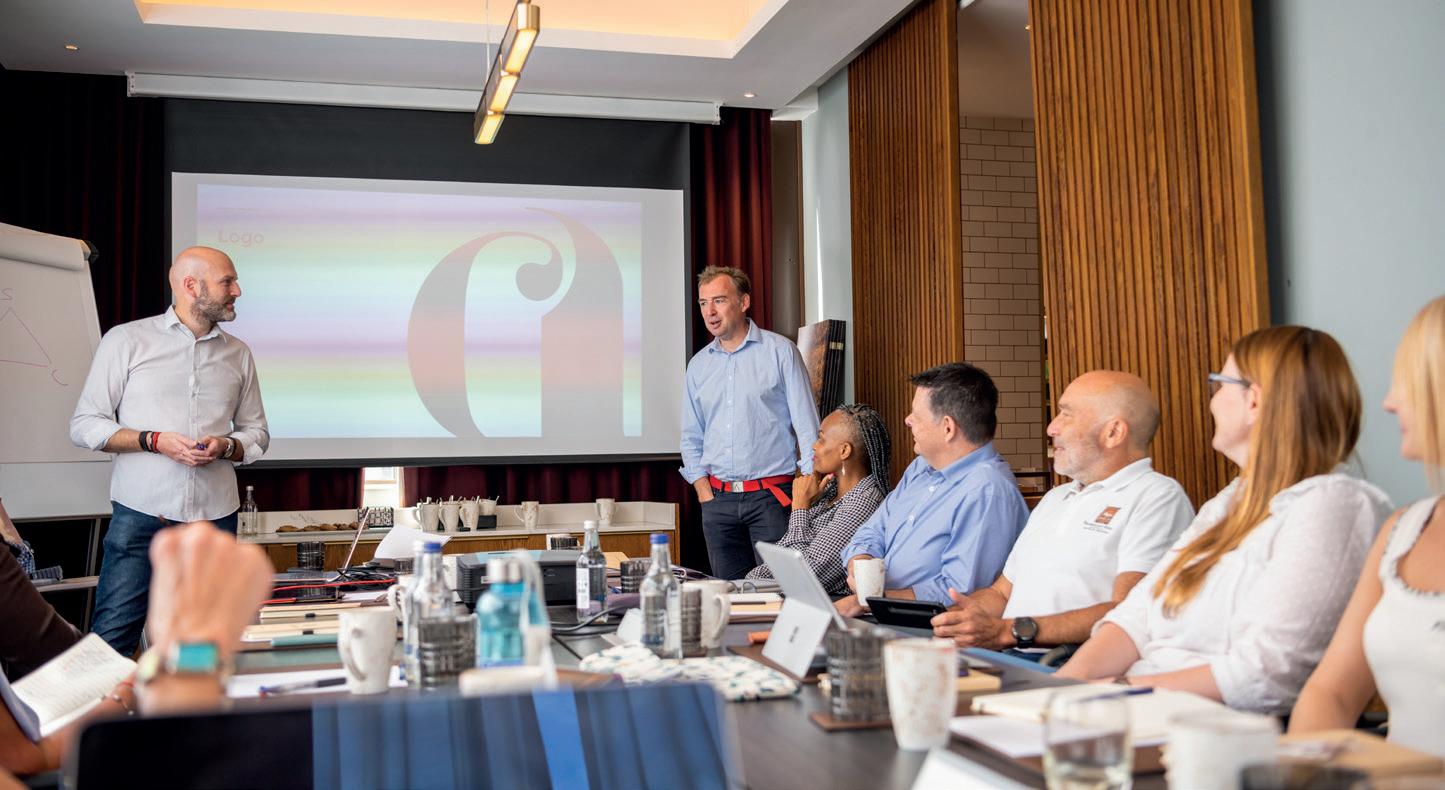
“The future of the business really is to continue to maintain our values as a small medium enterprise, recognising that a lot of the value we can deliver comes from our size and agility. Our capabilities and service offering are expanding, as is our team, but in a measured and controlled way, we are always looking for people with the right mindset and ethos to join us. We are focusing on how we operate in a sustainable way (in all the elements defined by the UN Sustainable Development Goals) including starting our own journey to be B Corp certified in the next 12-18 months. We will always keep control of the value we offer and our ethos in what we call The Advance Way.
“We’re looking forward to the next 30 years and while it definitely won’t be me in 30 years’ time, I definitely see Advance as a brand, as an entity delivering value through future generations. It’s all about living our ethos and values which give us a solid base to develop, to learn, to innovate and to deliver more value to our clients.”
Visit https://www.advance-consultancy.com/ for more details.
ADVERTORIAL 21 June 2023
Fundamental to our approach is taking the time to listen and understand and apply that to cocreate an enduring solution and capability in the teams we work with
TVS Supply Chain Solutions (TVS SCS) has launched a Rail Spares business. Head of business development Andy Lawrence explains the passion to be the partner of choice for the supply chain requirements in the sector
Ready and raring to supply the UK rail industry
Agame-changer when it comes to rail spares. That is how TVS Supply Chain Solutions’ (TVS SCS) Andy Lawrence describes the launch of the organisation’s new business unit.
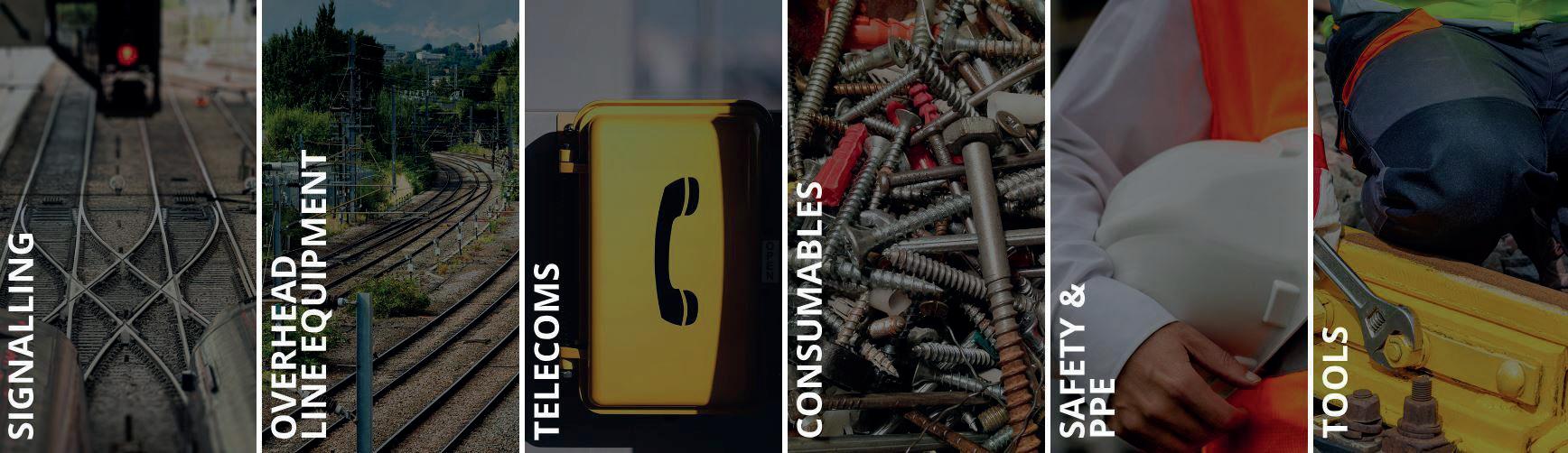
TVS Rail Spares’ range of products is huge, with more than 10,000 lines of everything from signalling, overhead line equipment (OLE), telecoms, PPE, tools, and various consumable items, through to barriers, fencing, track gauges and point heaters.
“It is the rail spares equivalent of Amazon with the whole brand built around it being easy to use, readily available and backed up by the technical expertise to support customers,” added the company’s head of business development for the UK & Europe.
“You could be an engineer out in the field surveying a job you’ve got to do and pull out your mobile phone or tablet, log in to the catalogue and order it there and then, knowing that it will be all there ready for the job to commence.”
The business is being run as a separate brand
within TVS SCS with its own website and e-commerce catalogue created with access and efficiency at its heart.
Andy said: “Ahead of the launch, we’ve done a lot of research and had lots of conversations about who we are and what we can do with many varied experts in the rail sector, both with rolling stock original equipment manufacturers (OEMs) and many of the Tier 1, 2 and 3 contractors who support Network Rail. We have a good insight of the opportunities and where we can support organisations with their infrastructure projects.”
ADVERTORIAL 22 June 2023
The launch of TVS Rail Spares should come as no surprise to the industry. TVS SCS already has a proven track record in providing for the UK rail industry, through a long term contract for the supply of indirect infrastructure materials and consumables.
“For the last three years we’ve been responsible for all of the sourcing, procurement and inventory management, coupled with the logistics solutions for all of their indirect material spend,” added Andy. “That puts into context a little bit more about us, our capabilities and why I am both confident and excited about the launch of TVS Rail Spares.
“Prior to setting this new venture up, we’ve been speaking with our potential customers about what they actually need, what challenges and difficulties they currently face and what ultimately they would look for from a rail spares company. From that feedback, we’re confident that our new service offering will deliver an exciting and innovative new solution that will disrupt the marketplace.
Value and interest
Andy continued “In addition to this new Rail Spares business, we’ve also had interest from some of the train operating companies and we are firm believers that we’ve got something of interest and value to offer them in terms of their supply chain management requirements. Our strengths are in providing transformational supply chain support through an agile and efficient outsourced model that provides specialist procurement activity, inventory management, and logistics services. Essentially doing things more efficiently and saving organisations money.”
To turn TVS Rail Spares into a reality, the company appointed Steve Welch, an experienced industry professional in the sector with approaching 20 years of knowledge in complex logistics, material planning and project management.
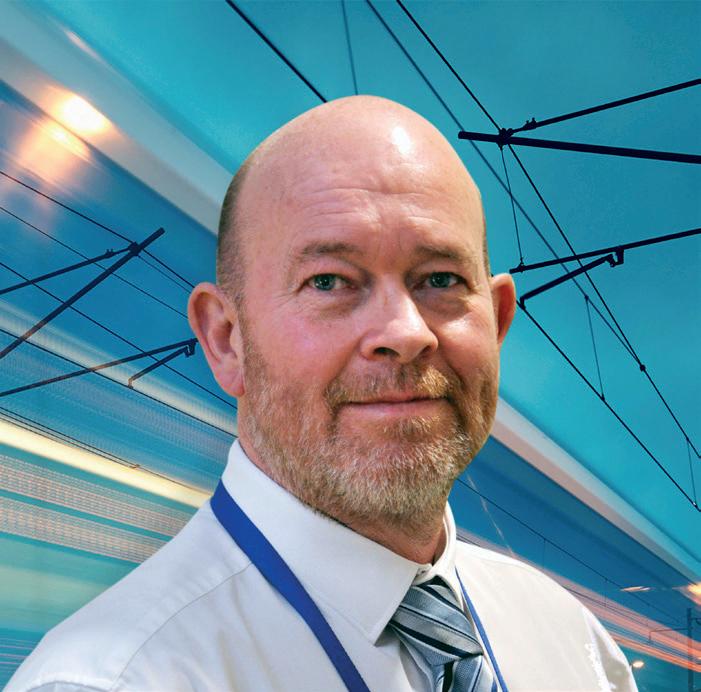
“It is fantastic to have Steve on board, whose role has been to set up the new business, letting us know what the sector needs and bringing a whole host of new suppliers and products to the catalogue, which will continue to evolve,” said Andy. “What Steve has achieved in a short space of time has been phenomenal. He is a huge asset for us, extremely passionate about delivering great service, knowledgeable and full of energy.
“He is supported by a team of procurement and supply chain professionals who are experts within the sector.”
For Andy, it is a dream come true for TVS Rail Spares to have been launched, and a highlight of his six-plus years at TVS SCS.
“It’s been a real privilege to have been empowered to make it happen and a highlight of my TVS SCS career,” he said. “This is just the start though, as overall we have growth plans of 20 per cent year on year, across the multiple sectors we work in, also including automotive, defence, beverage and utilities.
“An ambition for me is to see our rail business continue to develop and grow and that within the next two to three years we have a very significant share of the supply chain for the UK’s rail sector. That is the target I have set myself and I am confident that can be achieved based on our service offerings.
“Further ambitions would be to develop our service offerings and we have ambitions to expand into Europe. We have already got operations in both Spain and Germany, so we would like to develop our rail offering into those countries as well.”
A hidden gem
TVS Rail Spares is part of the wider TVS SCS group, an Indian-owned organisation currently being run by the fourth generation of the same family. TV Sundaram lyengar started his entrepreneurial journey in 1911 with a passion to build a business which would create a family of like-minded individuals pursuing only the best in quality and standards.
The success of the company is deeply rooted in that initial belief of commitment to the values of trust and customer services and although the company was named after the founder, the letters TVS have always stood for Trust, Value and Service within the organisation.
“The parent group has revenues of around $8 billion and the part of the business that we work for, integrated supply chain logistics, has revenues of around $1 billion and operates right across the globe with operations in UK & Europe, North America, Asia Pacific, Oceania and India which is our Global HQ,” said Andy, who explained that Chorley in Lancashire is the head office of the European business.
“The TVS SCS brand is very well known in India, but outside of India it is a bit more of a hidden gem, although that is changing. We have grown 15 to 20 per cent year on year for the last six years and have ambitions to continue to grow at that rate. Overall, TVS SCS is becoming synonymous with innovative, quality-driven, end to end supply chain solutions, something the rail industry will benefit from following the launch of TVS Rail Spares.”
Visit www.tvsrailspares.com for more details.
ADVERTORIAL 23 June 2023
An ambition for me is to see our rail business continue to develop and grow and that within the next two to three years we have a very significant share of the supply chain for the UK’s rail sector
Wemyss Bay station has been crowned World Cup of Stations champion 2023. TV broadcaster and shortlist judge Tim Dunn explains more about the competition and the different incarnations of railway stations
Shining a light on the very best stations
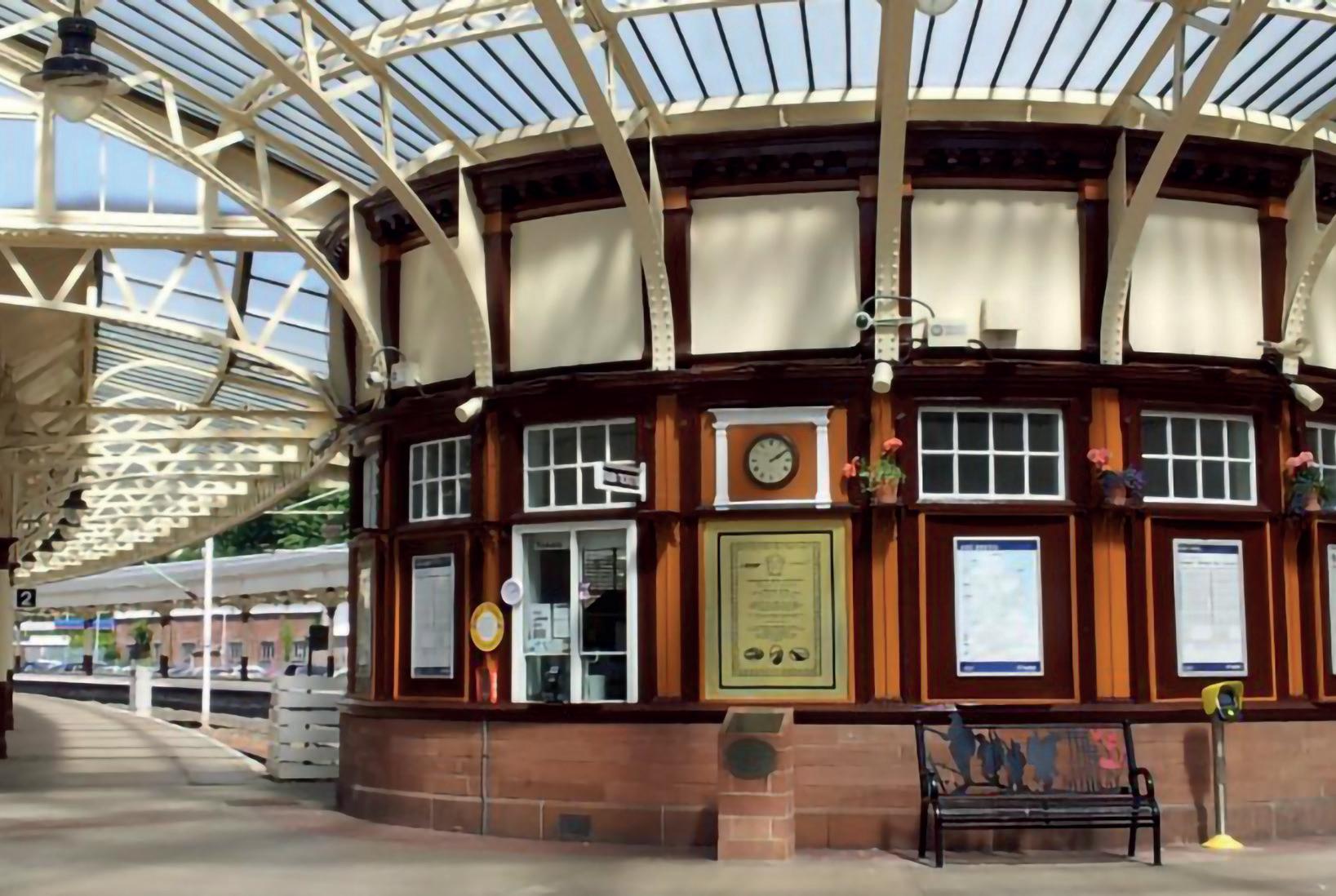
Wemyss Bay railway station in Scotland has been named the best-loved in the UK following a public vote to find the winner of the World Cup of Stations 2023, thanks to the dedicated efforts of their local Community Rail volunteer group who have transformed the station.

The title was decided after a week of hotly contested regional heats, sensational semis, and a fantastic final, in an event supported by the Rail Delivery Group and Community Rail Network.
Tim Dunn, broadcaster and historian, said: “Wemyss Bay station has amazed visitors ever since its 1903 rebuild, which resulted in a spectacular glass roof and sweeping walkways to minimise friction for crowds dashing from train to ferry to get to Rothesay.
“This vast waterside interchange needed a reason to survive now that holiday crowds go elsewhere; the Friends of Wemyss Bay created that reason.”
Station staff, volunteers, train operators and customers in England, Wales and Scotland embraced the competition and over the course of five days, there were fierce (but friendly) battles across 11 geographical regions, with more than 70,000 votes cast.
During the 16 head-to-head battles, the 48 stations chosen by Tim – whose TV shows include Trainspotting Live, The Architecture the Railways Built and Secrets of the London Underground – were whittled down to the UK’s best-loved station.
“It was so tough selecting the stations to feature in the competition from the fantastic 143 nominations,
reading about the volunteers’ dedication to improve the stations they adore and, so much so that we had to increase the number of finalists from the initially planned 44 up to 48 stations,” he said.
“The things that people have created in their stations are beautiful, wonderful and heartbreaking and represent the absolute best of what the railway can do when you have a building in the middle of the community that is connected to the community around it and the rest of the country.
“Railway stations are portals to the rest of the world, and they are also the front door and shop window for towns and villages. A beautifully kept station gives a great first impression and reading the submissions fills me with excitement about the impact they are having on communities.”
STATIONS 24 June 2023
Maintenance provider of choice
We’ve
been keeping rail moving for the last 150 years.
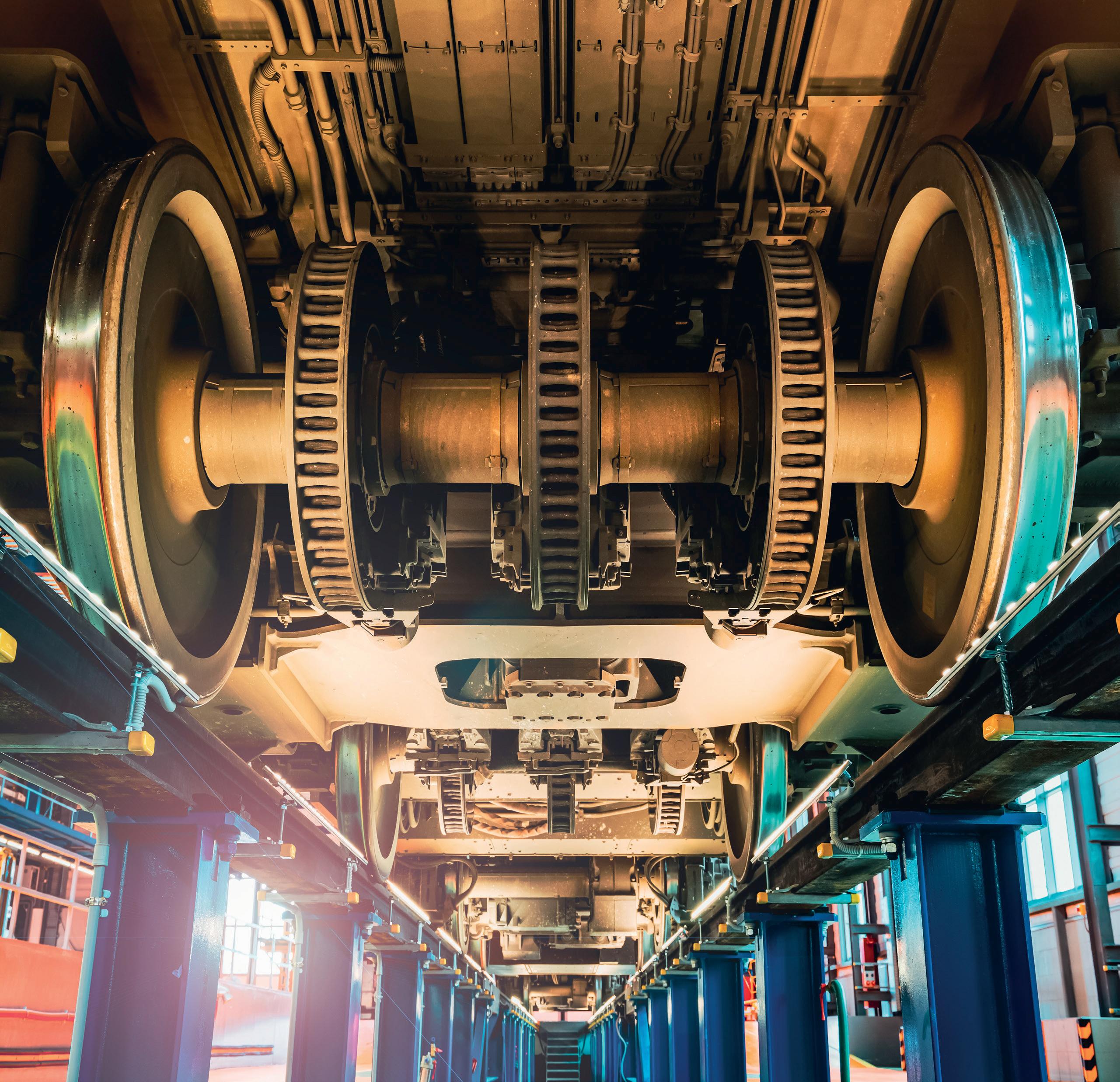
Our maintenance and asset management capabilities are second to none, taking care of every aspect of your maintenance requirements from service, parts management and overhaul through to innovative engineering solutions and life-cycle cost reduction.

Whether for passenger rolling stock or freight vehicles our skilled experienced operators combined with our envious range of nationwide services will ensure you stay on track.
There could only be one winner, and that was the station serving the village of Wemyss Bay, Inverclyde in Scotland, which is managed by ScotRail. Among the initiatives that won the hearts of a nation includes the volunteers’ work in developing a vibrant and colourful community garden, as well as the opening of the Station Bookshop.
“The backdrop of it is a stunning station in which the architecture is fabulous,” said Tim. “It fell into disrepair a little bit when the day-trippers fell away, but then the volunteers took it upon themselves to look after and restore it and it is looking marvellous.
“They built a second-hand book shop and started doing flower beds which have got bigger and bigger and bigger. There are some very interesting clever professionals, including a former director for the Glasgow School of Art, who love the building and they have breathed new life into all of these separate buildings around the edge of it.
“Working with ScotRail and Network Rail Scotland, they have created a destination station and somewhere in which people want to go and visit. That is really special and why I think people voted it number one.”
Shining light
The World Cup of Stations ran during Community Rail Week, with the competition shining a spotlight on the variety of stations and the creative ways they are used, often with help from Community Rail volunteers, who work tirelessly to improve over 1,200 UK stations for local residents, the environment and the local economy.
“The railway in Britain is vastly improved by the volunteers’ love, care and dedication that is shown through every single adopted station and project I’ve ever witnessed in Community Rail,” said Tim. “It shows we are much more than just a railway; we are a system and network of people who care about the places we go through.
“Those involved in Community Rail do a tremendous job and I hope the World Cup of Stations has shone a light on some of that and I look forward to highlighting those efforts even more in the future because they are the true champions of the railway.”
The Community Rail grassroots movement is made up of hundreds of community groups and 10,000 volunteers, with partnerships covering 34 per cent of Britain’s railway network and volunteer groups who tend to nearly half of Britain’s stations.
Tim says their efforts can’t be underestimated, at a time when we are trying to welcome passengers back to rail like never before, and to do it as cleverly as we can with funding harder to come by.
“Community Rail embeds the railway back into the culture of the area,” he said. “With my historian hat on the railways changed and often completely built or rebuilt communities that they entered. With all of the stations we’ve got there now, it is our duty as a railway to go back and use those buildings to support that community that we changed or created all those years ago.
“The volunteers realise the opportunities and are turning each of the stations they have got a hand in into something remarkable, and reading through the submissions for the competition almost brought me to tears. It did make it very hard to draw up a shortlist and overall, has significantly changed my view on the potential of Community Rail. It is a real force for good and reading the breadth of the work, you go ‘wow these people are doing small wonders, miracles’.”
And it is for that reason that Tim is full of optimism for the role railways stations have to play in the future not just for the passengers using the railways, but also the communities, with unused station buildings already being transformed into shops, community facilities and foodbanks.
Rich heritage
Nearly 200 years after the first railway tickets for the world’s first railway (Stockton & Darlington Railway) were sold to passengers over the bar by publicans, volunteers are turning unused spaces into essential spaces for communities, with even talk of a railway vineyard on a south facing railway embankment.
“These railway stations are buildings that unite us, with a rich heritage and so much history, but their story and use is evolving, and I think they will always evolve,” he said. “We have got 2,763 little nodes of things, we could have more offices, community hubs, or multi-functional spaces.
“The first railway station was in a pub, that is how it started off, they sold tickets across the bar in the pub. I think the next incarnation will see a lot more multiple uses and why not concentrate things like post services and so on in one building located at the heart of a community. With more freight on the railways where better than to have your hubs on these railway stations where you pick up your parcels and so on. Overall, I think the railway station is about to see a whole brand-new opportunity, we just need to start exploring some of those and I’m excited about what is happening and for what happens in the future.”
STATIONS 26 June 2023
These railway stations are buildings that unite us, with a rich heritage and so much history, but their story and use is evolving, and I think they will always evolve




Led by People, Powered by Technology Visit thespencergroup.co.uk to browse our current vacancies • LARGE MULTI-DISCIPLINARY PROJECTS • STATIONS & ACCESS FOR ALL • DEPOTS & SIDINGS • CONTROL CENTRES • E&P AND M&E SERVICES
BRIDGES
CAR PARKS
•
•
It is a year since Network Rail’s Eastern region was granted an industry-fi rst licence for great crested newts, the UK’s largest and rarest native newt species, protecting them from vital engineering work and helping the species along on the journey towards recovery.
NatureSpace’s Sarah Garratt and Rowan Avery explain more

How Network Rail’s industry-first licence is delivering nature recovery
For large operators such as Network Rail, great crested newts could often bring significant delays to routine planned engineering works. The species is protected by law, making it an offence to harm or disturb the animals or their habitat.

In cases where harm cannot be avoided, a mitigation licence can be acquired from Natural England, but the standard licensing route for the amphibians can take months and requires a large amount of evidence to be submitted throughout the process, often leading to major works being stalled and increasing the cost.
It has gained great crested newts an unwelcome reputation in some corners of the rail industry, at a time when their numbers and habitats are declining. But that is changing thanks to NatureSpace,

which, alongside a partnership of leading amphibian Non-Governmental Organisations (NGOs) and Network Rail, has launched a high-speed licensing scheme, enabling a simpler and quicker process for Network Rail and its contractors, and one that delivers long-term meaningful conservation.
The scheme is built around habitats created by specialists at Newt Conservation Partnership, who work with national experts from the Amphibian and Reptile Conservation Trust and Freshwater Habitats Trust, to deliver high-quality conservation outcomes by creating a new network of conservation sites.
“We designed a scheme that makes licensing for great crested newts easier and much faster for Network Rail and its contractors, and delivers much better conservation outcomes for newts,” said chief operations officer Sarah Garratt. “It is all about a
strategic landscape-scale approach – bigger, better, and more joined-up habitat across the landscape that delivers outcomes on a much wider scale.
“There’s no need to wait for the seasonal newt survey window, and no requirement for additional survey information to be provided – we provide a full site assessment within 10 days.”

Cost-effective solution
NatureSpace’s Natural England-approved impact assessments ensure projects pay fair fees that are proportionate to their proposed ecological impacts, with money going straight into habitat creation, delivered by the Newt Conservation Partnership off-site. That means the scheme is quick, simple and cost-effective for everything from a simple track renewal project up to construction of a new station.
ADVERTORIAL 28 June 2023
The compensatory habitats (usually ponds) are created in strategic locations for newts, away from the pressures of development, with a team of experts creating, managing, and monitoring these aquatic and terrestrial habitats long-term, ensuring a sustainable future for newts.
Rowan Avery, senior technical officer, said: “Our scheme came together in 2017 when the development sector was tiring of the approach of dealing with great crested newts that had been in place for 35 years, with lots of media headlines about newts causing delays to national infrastructure.

“The breakthrough idea came from our research with NGO partners and scientific advances (such as eDNA) that allow us to model and predict where great crested newts live in the landscape, dealing with it at a strategic scale through risk mapping. And rather than compensating for each individual impact, developers or organisations pay into a fund used to create habitats elsewhere, building up a network that, over time, becomes a real joined-up landscape-scale habitat.”
A successful first year
The NatureSpace licensing scheme has been brought into the rail industry, with Network Rail’s Eastern region recently marking its first anniversary since Natural England granted the organisational licence following a successful trial on the Midland main line in 2021.
Designed in collaboration with Network Rail from the outset, the NatureSpace licence covers all aspects of Network Rail’s work, from setting up compounds to building railway embankments, clearing lineside vegetation and installing new equipment. The scheme is also accessible to sub-contractors working under Network Rail, who find huge value in the speedy application process.
Sarah said: “NatureSpace works with leading experts and NGOs and provides cutting-edge methods, technology and expertise to model and map suitable habitats for great crested newts, which means that impacts can be predicted with a high degree of confidence well ahead of works and compensation delivered at a landscape-scale to provide quantifiable net gain for newts and wider biodiversity.
“For Network Rail, the organisational licence removes a layer of bureaucracy in terms of planning and managing works, meaning they can react more quickly, avoid delays to engineering and be more agile in the way that they work. It also means they can spend more money directly on their conservation efforts, which will benefit great crested newts and many other species.”
The initial pilot on the Midland main line covered about 100km of tracks from London up to Market Harborough, with the licence used on around 10 projects in the year. In the first 12 months since being adopted by the full Eastern region, over 16 hectares of great crested newt habitat have been created with eight fullymanaged ponds.
Sarah added: “We’ve seen about 10 hectares of land of compensation requirement generated by scheme entries, so we are well ahead of the level of impact. Add to that the positive impact on each project’s timescales, which has been a real success and will only become stronger.”
The scheme’s flagship compensation site is at an ambitious rewilding project near Grantham in Lincolnshire. The project seeks to ensure a real net gain for wildlife by transforming agricultural land into a thriving wildlife ecosystem, and as part of this, the Newt Conservation Partnership created a network of five new and three restored ponds in early 2023.
Improving biodiversity
The newt partnership is already a significant win for sustainability across the region, which is in keeping with the Varley Review analysis of lineside vegetation management. Network Rail’s estate is about 52,000 hectares in size, with the land around the railway home to a diverse variety of species and a valuable asset that needs management and protection in order to improve biodiversity and create an environmentally friendly railway that’s fit for future generations.
Sarah said: “We are committed to helping find a solution that values its wildlife and protected species without them being seen as a constraint. The railway has got to be maintained and safe and works must be done in a timely, efficient and cost-effective manner, so it is a case of finding that balance.
“Fundamentally, the great crested newt organisational licence allows Network Rail and its supply chain to do the work, but makes sure that any harm is properly compensated for in the right way.”
Looking to the future, NatureSpace will soon be extending the licence to all English Network Rail regions. There are also separate plans for the expansion of NatureSpace’s current District Licensing scheme within the planning system (with almost 70 planning authorities offering the licensing option to developers applying for planning permission), and the creation of more compensation sites to help wildlife thrive.
Sarah said: “It is a pleasure to see the growing enthusiasm from the rail industry to play a major role in contributing to nature recovery and to value the railway as a biodiversity asset – the scheme is a great example of how to provide an operational, functional, efficient railway service for freight and passengers, while also valuing its biodiversity.
“Being such a large part of our infrastructure, there is a big responsibility to use, maintain and manage that land so it can operate as a functionally efficient railway and also be a really valuable biodiversity asset. We are delighted to be working with Network Rail on that journey.”
Visit https://naturespaceuk.com/ for more details
Above: Sarah Garratt
ADVERTORIAL 29 June 2023
Below: Rowan Avery Images: NatureSpace
Jools
executive of Community Rail Network,
Inspiring array of activities celebrates Community Rail Week
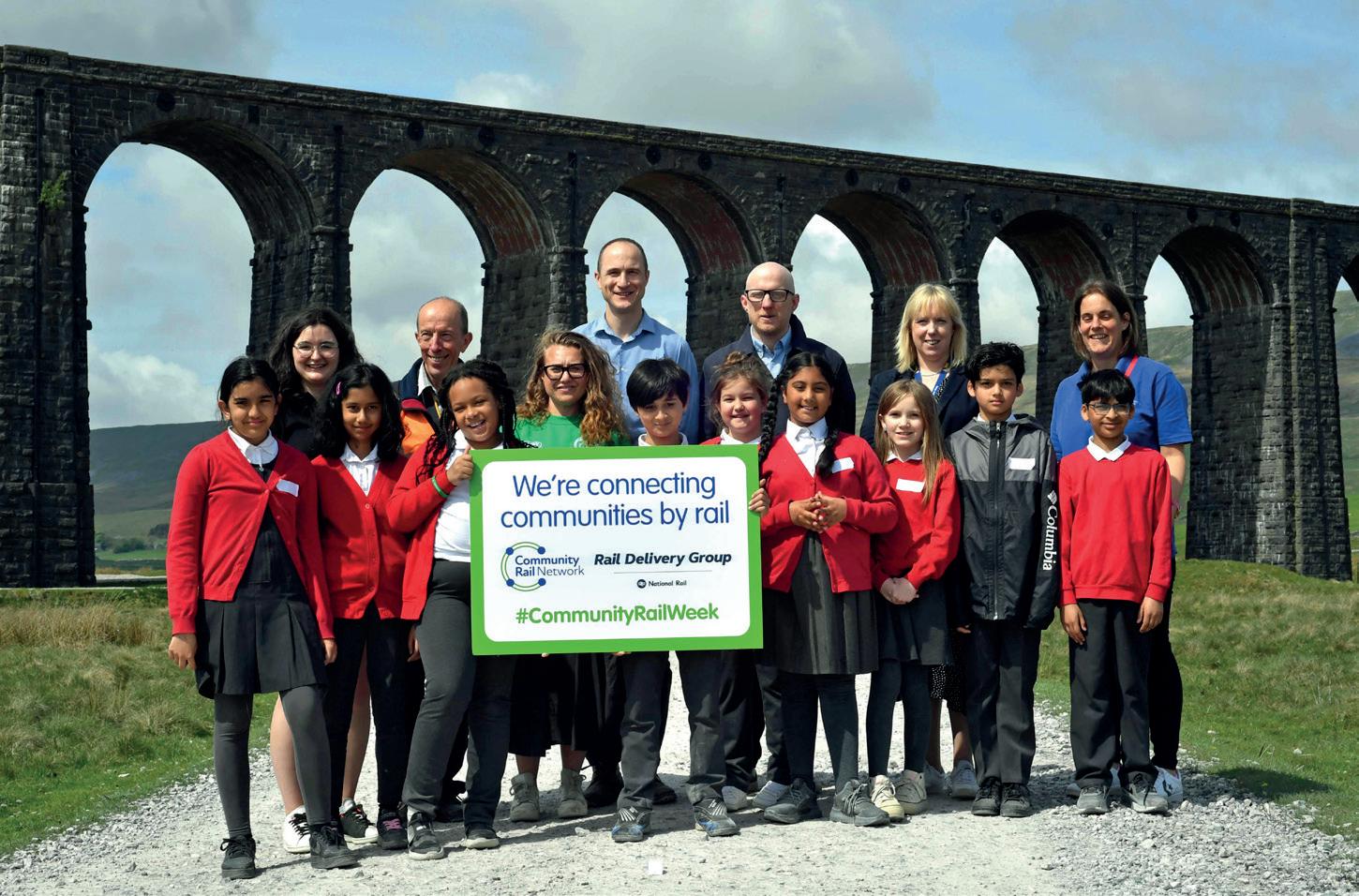
Community Rail Network has delivered its third annual Community Rail Week event, promoting the positive differences that community rail makes to so many communities across Britain. There are now 76 community rail partnerships and 1,200 station groups engaging communities with their local railways and stations. Many groups used the national week of action to highlight how rail ‘connects communities,’ increasing access to opportunity, giving communities a voice, and putting railways and stations at the heart of community life.
More than 90 events took place across the week, which was sponsored by Rail Delivery Group, including ‘try the train’ trips, cultural and arts projects, outdoor education trips and rail safety sessions, and guided railway walks. Social media was also awash with activity, with millions of users reached through #CommunityRailWeek posts from partners and supporters.
Jools said: “We got off to a fantastic start at Tolworth Station, seeing and hearing about the inspiring, empowering activities of our newest member, ‘Community Train’ – Southwest London’s Community Rail Partnership. The partnership is using the station and local railway to bring people together and encourage them to be creative, happy, and connected, hosting a Polish-Ukrainian women’s group, a community kitchen and garden, and a base for local artists.”
A Scottish first
Community Rail Network also held its first-ever Scottish parliamentary reception at Holyrood to show how community rail is developing in Scotland – especially supporting the Scottish Government’s climate targets and a shift towards more sustainable travel – and welcome a new partnership for the Far North Line.
Jools said: “We were so proud to showcase how community rail partnerships and station groups work tirelessly across Scotland to engage communities, raise awareness of rail as a sustainable form of travel, and empower people to become confident travellers and access the opportunities they want.
“We were also delighted to welcome Kevin Stewart MSP, the Scottish Minister for Transport, who spoke about how community rail encourages greater local buy-in to our rail network.”
Elsewhere, community rail partnerships and groups helped increase confidence to travel by organising train trips with young people and groups marginalised from rail or with accessibility needs, highlighting the huge range of opportunities that rail travel can open up. Others encouraged people who might rarely use public transport to consider the benefits of making at least the occasional switch to greener, healthier, more social forms of travel, including rail.
Community Rail also went on tour throughout the week as partnerships and groups showcased their work and promoted leisure and tourism trips by train at larger stations across the network. Various partnerships met Rail Minister Huw Merriman MP at Waterloo, with other promotional displays at London Liverpool Street, Manchester Piccadilly, Nottingham, Doncaster, and Crewe.
Other groups ventured further afield to reach
non-railway audiences, promoting community rail projects and activities at shopping centres and markets, highlighting some of the beautiful destinations and attractions easily reached by rail. Other notable events included ‘Feel Good Field Trips’ by rail for young people to places including the Guardian Newspaper and the Lake District fells, and a journey giving Bradford school children – many of whom had never travelled by train before – the chance to visit and recreate their own versions of the iconic Ribblehead Viaduct.
Community rail was also celebrated in Rail Delivery Group’s ‘World Cup of Stations,’ which was won by Wemyss Bay.
Jools said: “Overall, the week really captured the passion and commitment which makes the community rail movement so relevant and important, especially at the present time. Our members again went the extra mile, and we applaud them for their efforts. We are already looking forward to Community Rail Week 2024.”
Visit https://communityrail.org.uk/ for more details
COMMUNITY
Townsend, chief
looks back on this year’s Community Rail Week, which celebrated the vital role of Britain’s railways in bringing communities together
30 June 2023
Children at Ribblehead Viaduct
Finally a USB charger that won’t let your customers down
REPLACE USB MODULES ON-SITE, IN MINUTES
There is nothing more frustrating than having nowhere to charge your mobile device on the move.




Improve the passenger experience with reliable USB charging.


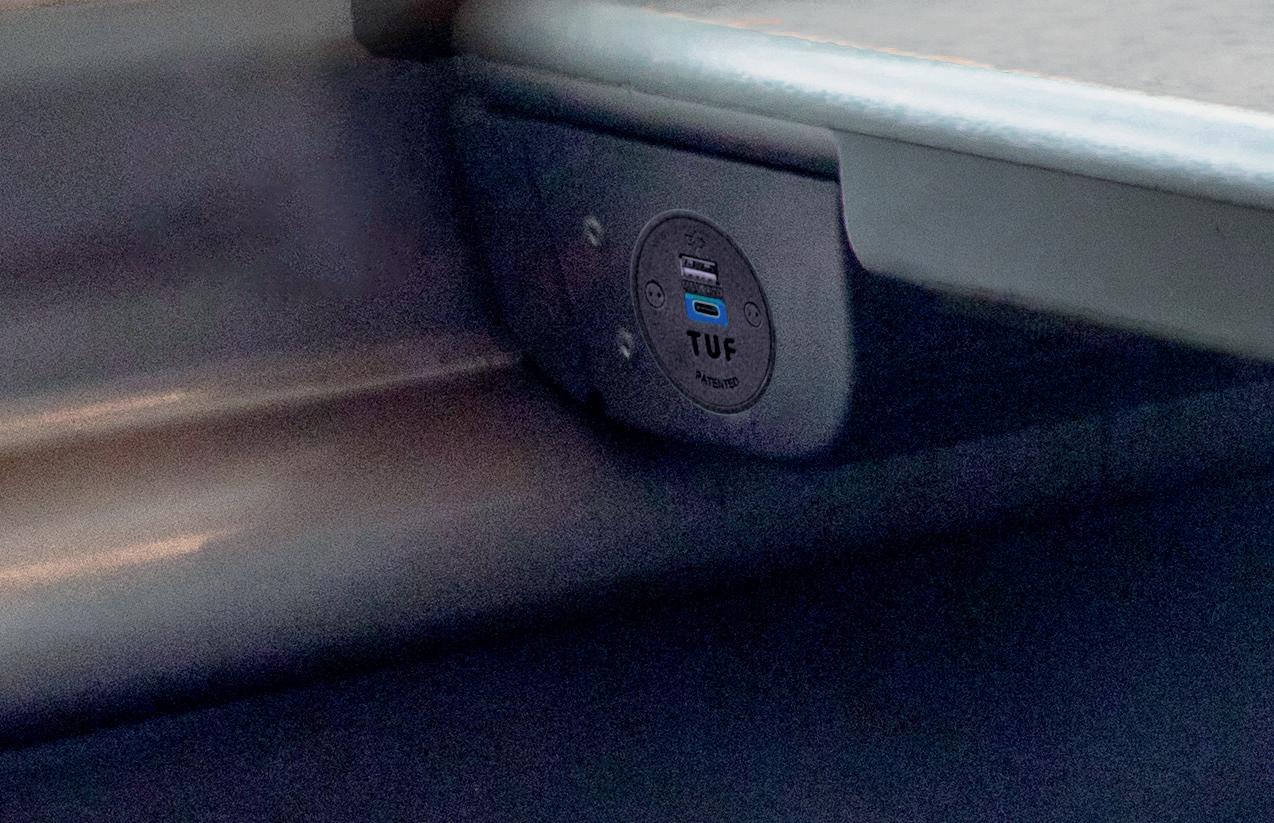


• On-board Replacement

• Minimize downtime from dysfunctional power outlets.
• Hot Swap in minutes

DYWIDAG Structural Health Monitoring
Focusing on working safer, stronger, and smarter
There is more than a hint of excitement for the team at DYWIDAG Structural Health Monitoring, ahead of appearing at Rail Live later this month.
It is approaching five years since DYWIDAG acquired Datum Monitoring, the well-established provider of a range of manual survey and remote monitoring solutions, with the business going from strength to strength.


“At the cutting edge of the monitoring industry, developing new products and solutions, with a significant client base, DYWIDAG’s addition to the portfolio provides natural synergies,” said Robert Paterson, regional director of DYWIDAG Structural Health Monitoring.
“DYWIDAG has been able to provide the Structural Health Monitoring business with a foundation for investment in research and development (R&D), fully supported by the parent R&D facility in Leipzig in Germany.”

Working safer, stronger, and smarter
In recent years the different DYWIDAG entities have been aligned under a single brand focusing on working safer, stronger, and smarter.
“The R&D focus is on reducing the number of human interventions, increasing the reliability of our range of products, and advancing the technology,” added Robert, who joined the business in April. “DYWIDAG provides a complete monitoring service from scope identification through design, installation and then hosting the data on our Infrastructure Intelligence platform.
“For installation, we regularly work with other specialist contractors, but we can also utilise our in-house rope access capability for swift installation where possession times are restricted or temporary access methods would be time-consuming and labour intensive.
“Our products, technology and installation have a laser focus on boots off ballast.”
Robert is particularly excited about the latest addition to the organisation’s range of monitors, The Smart Tilt, which is a fully optimised upgrade on its previous tilt monitor.
“With significantly improved battery life, enhanced transmitter range, increased durability and reduced weight, the Smart Tilt is setting the standards for monitors to be used in the harshest of environments,” he said.
“The monitor transmits data to a logger for up to 10 years, depending on the sample number and the frequency of readings. The data can be hosted on our own Infrastructure Intelligence platform (or compatible platform of the client’s choice) and is accessible 24/7 with alert levels set by the client.”
For Robert, joining DYWIDAG Structural Health Monitoring in April was an easy decision to make. He has a passion for all things railway, which started in the 1980s when he became a volunteer at the Keighley and Worth Valley Railway.
“I assisted with the restoration of two standard class steam locomotives (75078 and 78022) and the operation and maintenance of a five-mile long re-opened branch line,” he said. “I developed an affinity with railways that is as strong today as it ever was.”
After a career in the Royal Engineers, he was a project manager at the 2012 London Olympics, an experience he said developed his understanding of the highest standards of safety and workmanship in a high-pressure environment.
It was as a Tier-2 project manager on the Blackfriars Station rebuild that his interest and understanding of Victorian railways and structures increased.
Robert then worked in the offshore oil and gas industry installing digital fire and gas detection systems, followed by roles at Taziker Industrial and Carrs’ Group Plc, before starting his current challenge.
“I am thoroughly enjoying my time at DYWIDAG Structural Health Monitoring,” he said. “From longterm projects and planning to providing rapid crisis response, our team has proved its ability to deliver in challenging circumstances whatever the requirement.
“The innovations we have introduced into the rail sector have made a significant contribution to the safety and performance of the UK rail network, which will continue into the future.
“I’m looking forward to taking part in Rail Live, where we will have a range of monitors and surveying services to be viewed, with our in-house team of experts on hand to answer questions and provide advice for projects.”
Visit https://dywidag.com/products/automatedtrack-monitoring for more details.
sales.uk@dywidag.com
https://dywidag.com/






is entering an exciting new chapter with a new appointment and product. Newly appointed regional director Robert Paterson explains more
ADVERTORIAL 32 June 2023
































To help you do more business, better... Rail Business Daily has carefully prepared an essential range of benefits and services for our RBD Community members. Rail Director magazine subscription Rail Business Daily subscription Microsite within the Rail Business Daily website (21m page views) Two news stories with social media support Three ‘Directory Spotlights’ in the RBD newsletter (70k distribution) Featured Directory for one week Welcome social media post (20k followers) Promote your business in the Community Marketplace Post your events in the Ultimate Rail Calendar Advertising spot in Rail Director magazine Win a ½ page feature in Rail Director Marketing and website review 20% off all marketing and profile enhancement services Profile Enhancement Networking Access to live roundtable events Four webinar masterclasses Introductions to other Community members and broader rail community Intelligence Insight reports and latest industry thinking Tender opportunities Informative newsletter Unlimited logins to OnePlace Sound too good to be true? Get in touch today: louise@rbdrailrecruiter.com 01924 667939 Is your project EMC compliant? Work with the EMC experts & stay on track. 0330 430 3456 enquiryyork@euro ns.com www.euro ns.co.uk/york EMC Strategy & Control Plans EMC Test Plans EMC Risk Assessments EMC Project Files & Documentation Reviews
Taking structural inspections to new heights, and underground
When carrying out structural inspections on rail infrastructure it is essential to prioritise safety above everything else. Should an accident happen, every second counts and you need those with experience to bring about a positive outcome.
That is why structural inspection specialists Kredas Ltd has teamed up with Restech Services to ensure there is a confined space rescue team on site, and available for other organisations for medium to high-risk jobs.
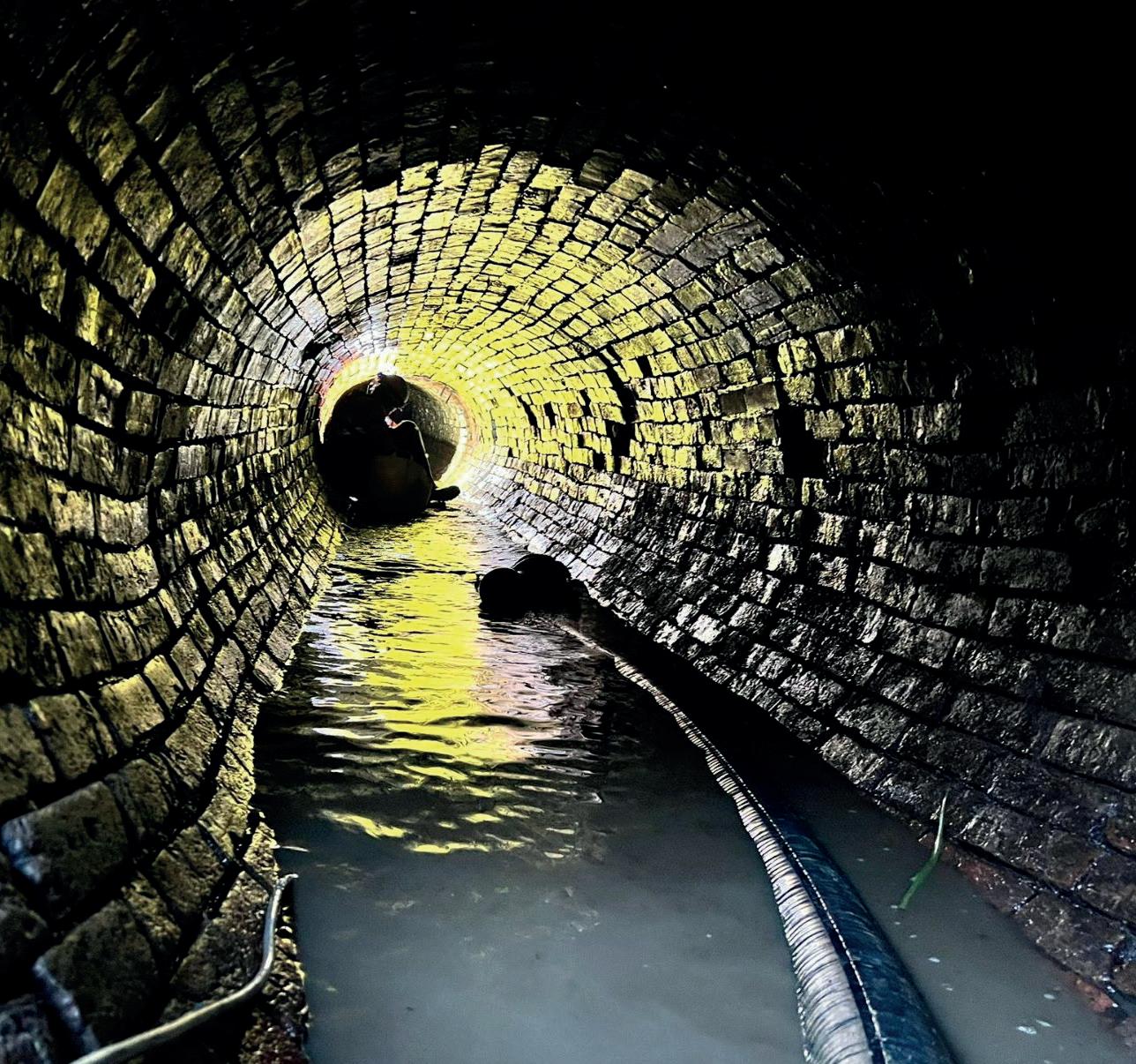
“These highly trained professionals have the skills and equipment necessary to respond quickly and safely in the event of an emergency,” said Restech Services’ Danny Howard. “Don’t take chances with your team’s safety.”
Kredas provides clients with a wide range of structural inspection and rescue services on rail, highways, and commercial and private infrastructure.
Stace Fencott, who has more than 20 years’ experience working on a variety of rail and highways contracts as a bridge and structures inspector, set up the business in January 2021. It was when he was working as a freelancer that he saw a gap in the market to expand his work, which involved looking after various bridges, structures, gantries, confined spaces and subways.
“Our staff use tried and tested inspection methods as well as modern technology, including drones and CCTV inspections offering accurate reporting services and repair solutions,” he said.
Experienced experts
The team includes experienced bridge and structures inspectors to STE4 and BICS level, as well as internal competency assessors. The services offered include everything from structural inspections, rescue and safety services, to working at height and confined space access.
Stace added: “There just aren’t enough STE4 inspectors in the rail industry with the experience and high standards we offer at Kredas. This business has been built around offering a team of technical experts and support technicians, so we are a one-stop shop.
“As our reputation has continued to grow, so has our service offering. This was accelerated when we joined forces with Restech, which Danny has developed.”
Restech provides experienced interactive rescue and safety staff for site needs, from small two-person medium-risk teams for short-duration works, to larger multi-skilled teams on complex sites that require 24-hour cover.
Danny leads a team which provides a range of rescue and safety services, including high-risk confined space rescue teams (City and Guilds trained), working at height rescue teams, scaffold rescue teams and water rescue teams.
“After spending nearly 20 years within the emergency services I realised there was a shortfall in immediate help on site when it’s most needed,” said Danny, whose background is a structures examiner in the railways, but who has also worked as a firefighter and now also for HM Coastguard.
Structural inspection specialist Kredas Ltd has recently added emergency rescue teams to its areas of expertise.
Stace and Rebecca Fencott and Danny Howard explain more
ADVERTORIAL 34 June 2023
The rescue plan is a legal requirement and has to be sufficient, that should the worst happen, it can be enacted quickly
“I had been concentrating on doing confined space work for some of the principal contractors and then the opportunity came to develop our own rescue teams.
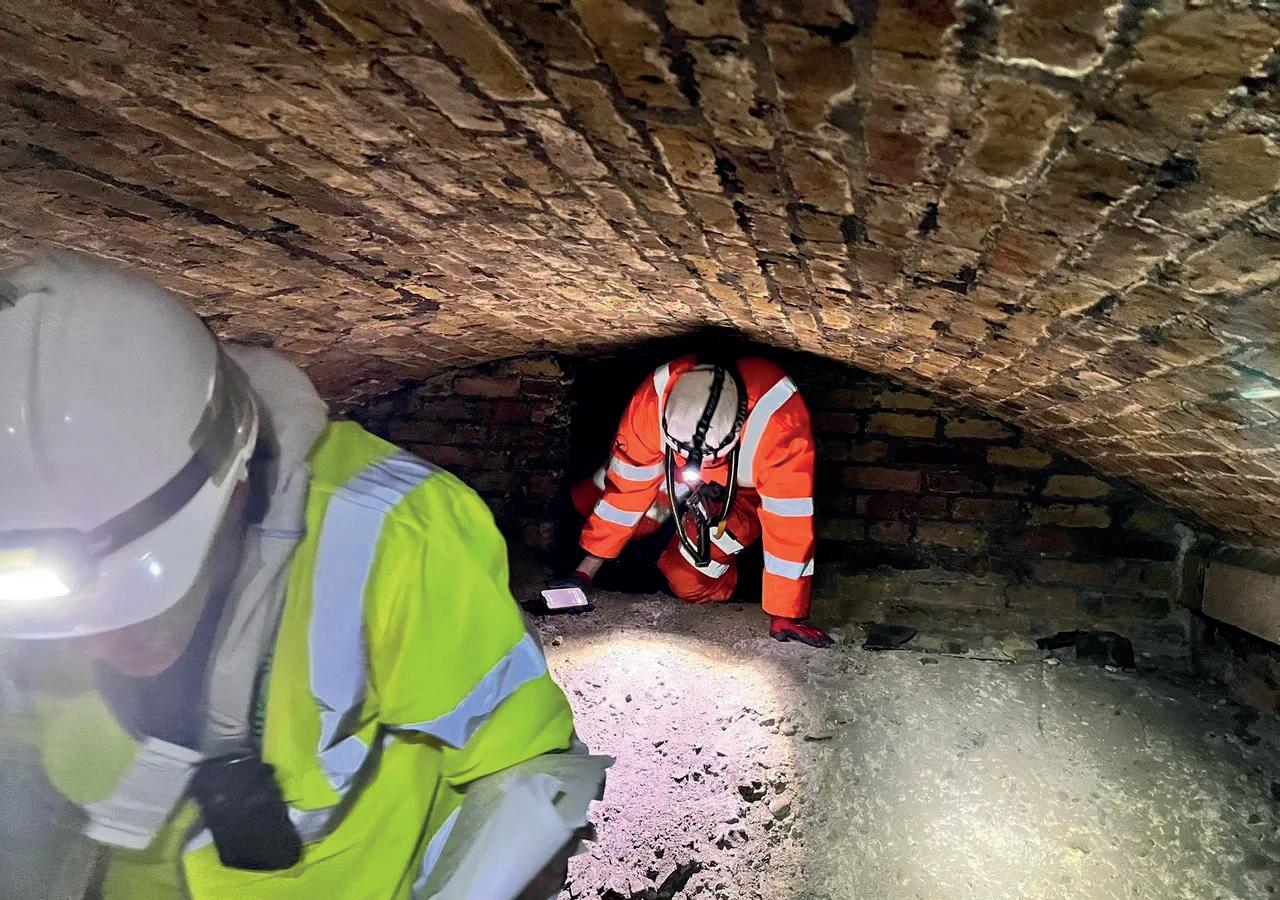
“In the rail industry, when it comes to culverts, box girders on a bridge, or chambers, there are certain times when you have to have a rescue team on standby.
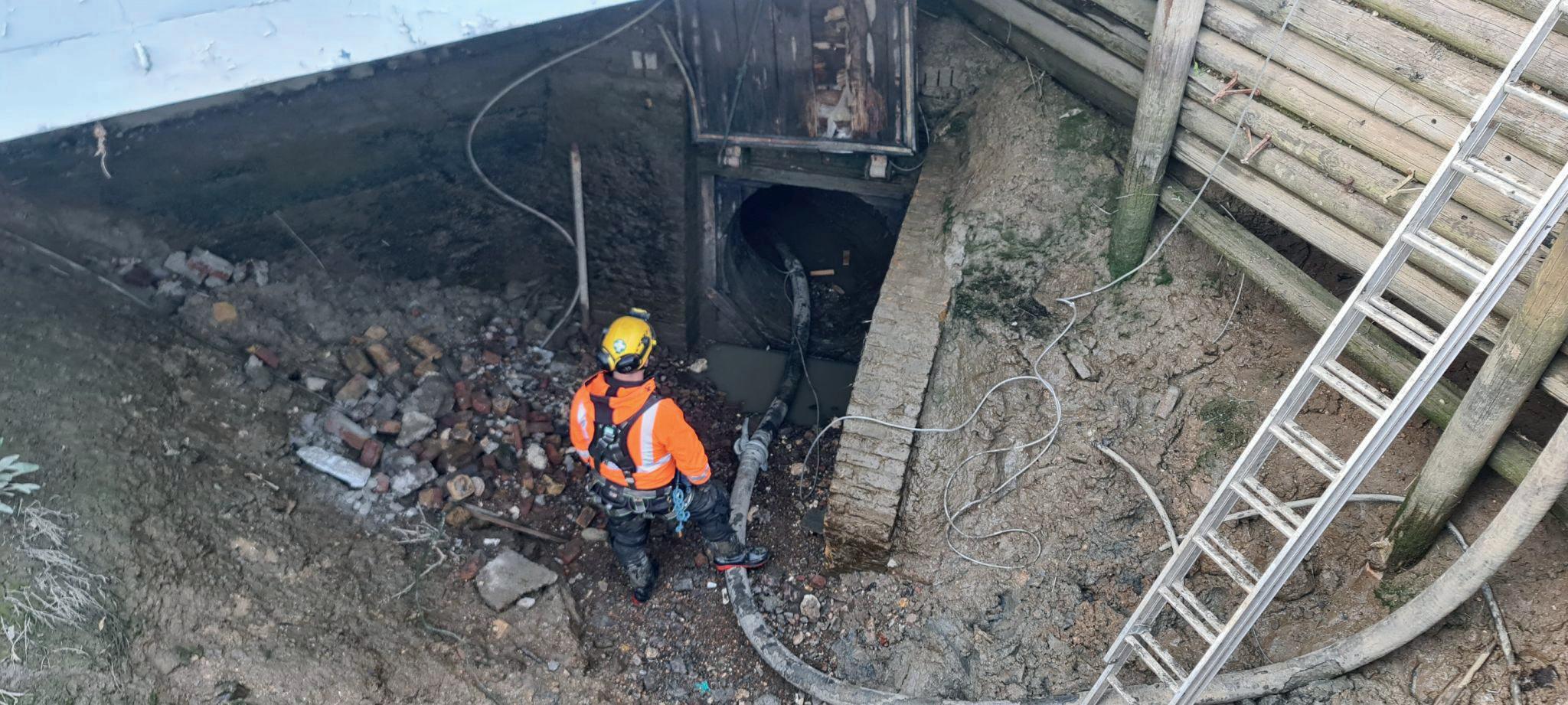
“The Health and Safety Executive Approved Code of Practice (Confined Spaces Regulations 1997) states that you must make suitable arrangements for emergency rescue which will depend on the nature of the confined space, the risks identified and the likely
nature of an emergency rescue. You should not rely on the public emergency services.
“It’s worth noting that the rescue plan is a legal requirement and has to be sufficient, that should the worst happen, it can be enacted quickly,” said Danny. “Having a dedicated rescue team on site throughout the work satisfies this need.
“Simply having your staff trained in rescue and recovery, but not familiar with it, is a risk, and puts a burden on them, whereas with us, all of our staff have decades of experience in the field. Importantly, the rescue team cannot be part of the work party, and need to be a separate standalone team.
“That is why we saw a gap in the market to not just offer the inspection side of things, but also the rescue team. What would happen normally is that examiners would go in, and carry out the inspection, while a third party would provide a rescue team. With Kredas we can do the whole lot together which leads to savings, and overall being more efficient.”
The team has decades of experience working in the emergency services and offers full first aid and trauma care on site when needed, including the ability to administer oxygen and pain relief on scene to casualties.
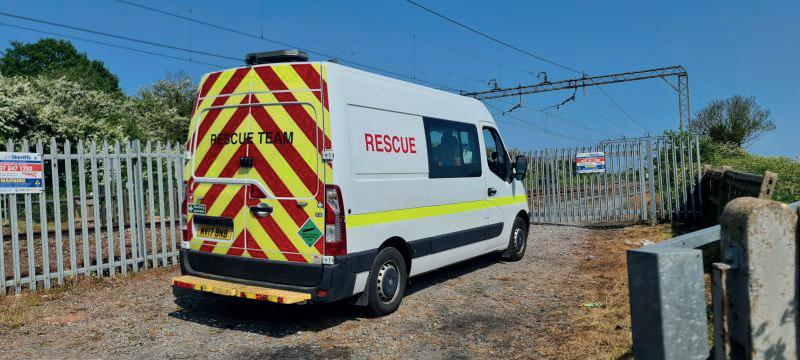
Managing risk
Each team has a full medical rescue kit at each job including defibrillators, stretchers, trauma care packs and lots more, ensuring the team and clients are in the safest possible hands at all times. The organisation also offers advanced first aid teams for site cover where a specific risk is present and there is a requirement for a higher level of first aid cover.
“A confined space rescue team manages all aspects of confined space entries, we provide all the equipment, the PPE, the access equipment, tripod, winches, ventilation etc,” said Danny. “We test and monitor the atmosphere throughout the works as well, to ensure it is safe for anyone entering the risk area.
“Sometimes a confined space can be a narrow manhole access opening into a larger chamber. With the potential for an accident or injury to occur within the chamber, the law states a rescue team must be on standby to evacuate any injured members of the work party. I don’t think all companies know that, and not having a rescue team in place is putting workers’ safety at risk.”
The two organisations joined forces last year, with the combined service being rolled out for the last six months.
Stace said: “It has been a real eye-opener. There are some companies who don’t take it seriously enough. My experience of working with Restech has ensured the team and my clients have really been looked after.
“The atmosphere is continually monitored throughout the inspection, and you are constantly in communication with the team while you are working in the risk area. Working alongside Restech allows our inspection team to focus on the inspection task while being confident they are in the safest possible hands.”
Moving forward, the team is looking to expand into the rail industry and is also offering training to other organisations.
Rebecca Fencott, head of marketing communications, said: “If there are companies out there that have their own inhouse staff that would benefit from specialist training or a refresher course we are able to offer our assistance.”
“We are excited about what the future holds. With the enhanced services we offer, we can look after our own teams and our clients with safety at the heart of everything we do.”
Visit https://kredasltd.co.uk/ or https://restechservices.com/ for more details
ADVERTORIAL 35 June 2023
Test driving future transport technologies
The Black Country Innovative Manufacturing Organisation has launched a new Mobility Hub and cutting-edge Transport Systems Simulator at its centre for Rail innovation.
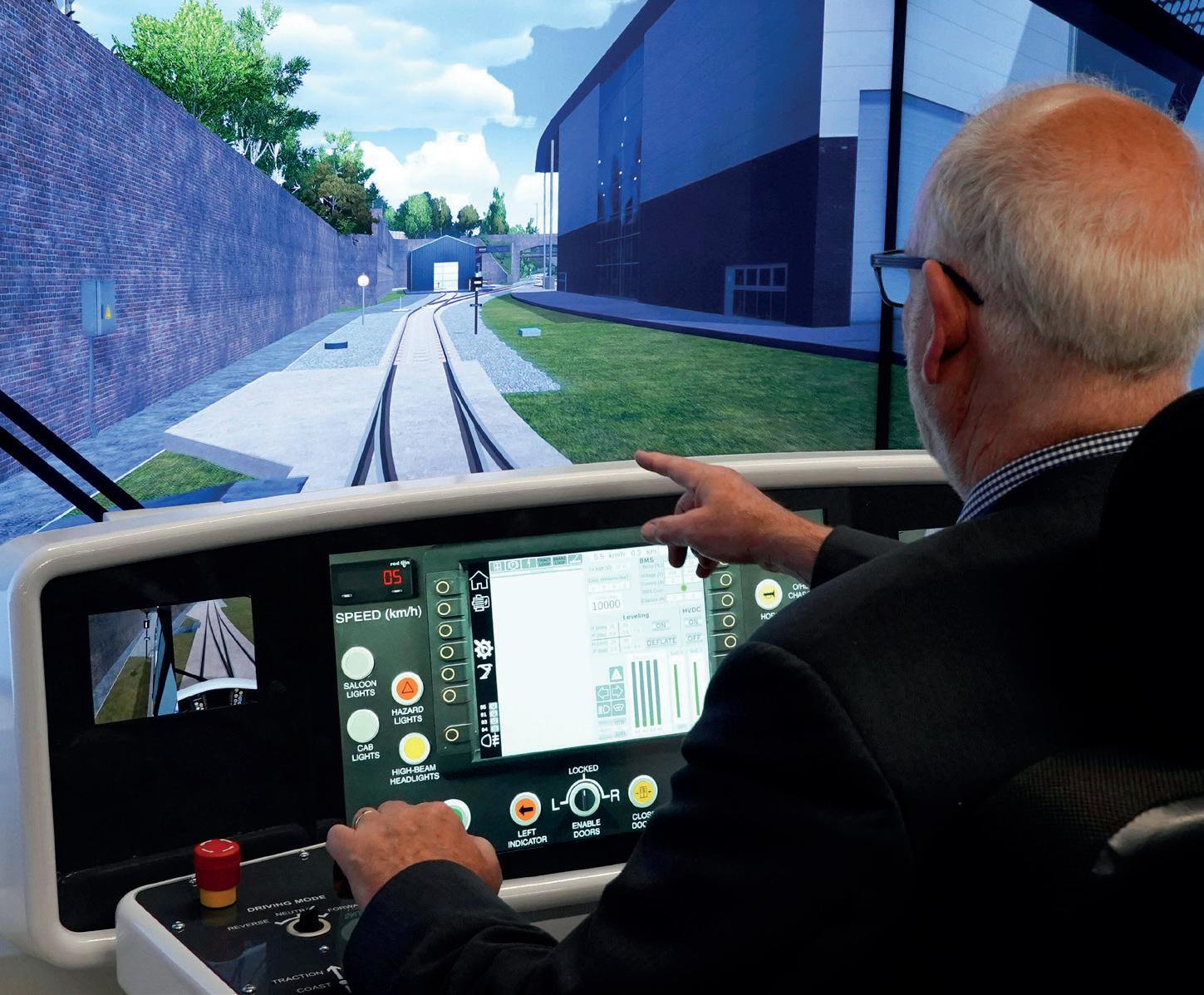
In 2022, not-for-profit research and technology company The Black Country Innovative Manufacturing Organisation (BCIMO) oversaw the launch of the Very Light Rail National Innovation Centre (VLRNIC), a world-leading hub for transport innovation.
Built on the site of Dudley’s former railway station, and with Office of Rail and Road (ORR) licence exemption, the £32 million centre already offers a range of cutting-edge facilities – including a Rail Development and Test Site comprising engineering hall and workshop, a 2.2km test track, a world-first 15m radius loop, and a rapid battery charger, as well as a number of test laboratories, serviced office spaces and a soon to be fully launched state-ofthe-art Events Suite. These facilities were designed to support the testing and development of Very Light Rail (VLR), and other greener, more affordable transport systems.
Exciting new training, R&D and testing facilities
Now, the centre has launched two new features – a Mobility Hub, and a cutting-edge Transport Systems Simulator. Both will be used, not just as part of the ongoing Coventry Very Light Rail (CVLR) project (which BCIMO is supporting), but by companies looking to develop their own new transport technologies.
Tony Joy, Head of Engineering and Programmes at BCIMO, explained that the mobility hub is operational and ready to use. Developed in collaboration with Coventry City Council, it is a first-off prototype of the hubs that may one day be rolled out across Coventryas part of the Coventry Very Light Rail scheme.
The modular mobility hub (which was built with support from the European Development Fund and the UK government’s Getting Building Fund) could also be used by organisations looking to develop or trial alternative VLR systems. It was designed by London-based industrial design company Quarterre, and built by passenger transport specialist Trueform.
Cutting-edge transport systems simulator
The hub was launched alongside VLRNIC’s new Transport Systems Simulator, which will be used to train a new generation of VLR drivers, and to research, develop and test new VLR and transport technologies.
The simulator was designed and manufactured by Avansim, a leading supplier of simulation systems. Tony explained that this cutting-edge technology will play a key role in the CVLR scheme, enabling its team to demonstrate and test routes, and even train new drivers.
Tony added: “Avansim were an absolutely key partner in terms of developing the simulator, which is currently based on the CVLR vehicle. It was designed to mimic that vehicle, and has the touch screens that simulate the controls.”
At present, the system is programmed with two demonstrator routes – the proposed demonstrator CVLR route (from Coventry Railway Station to Pool Meadow Bus Station), and the VLRNIC’s own test track.
“Organisations can use the simulator to drive
along our track and get a good appreciation of the different facilities that make up our Rail Development and Test Site, but they can also drive the vehicle around Coventry and get a sense of what the VLR system will actually look like in operation,” Tony said.
Supporting research and development projects
While the new simulator is set to play an important role in the development of CVLR, Tony explained that it has applications beyond this scheme. The system can be programmed to emulate different vehicles, making it ideal for transport research and development projects.
“Its touch screens simulate controls, so it could be used for driver interface development,” he said. “You could put the buttons in different positions, or explore different ways of operating it. In this way, it could be used to prove that the interface is optimised for the vehicle.
“Similarly, you could use it to explore interfaces with the driver, looking at how information from camera or sensing systems is fed to them.”
BCIMO’s Head of Engineering and Programmes, Tony Joy, and Director of Business and Innovation, Dr Nick Mallinson explain how two new features will be used to support the development of new technologies
ADVERTORIAL 36 June 2023
Beyond the cab, the simulator can be used to explore the way passengers interact with vehicles – an important consideration when developing transport systems for urban centres. It also enables organisations to explore issues like driver awareness.
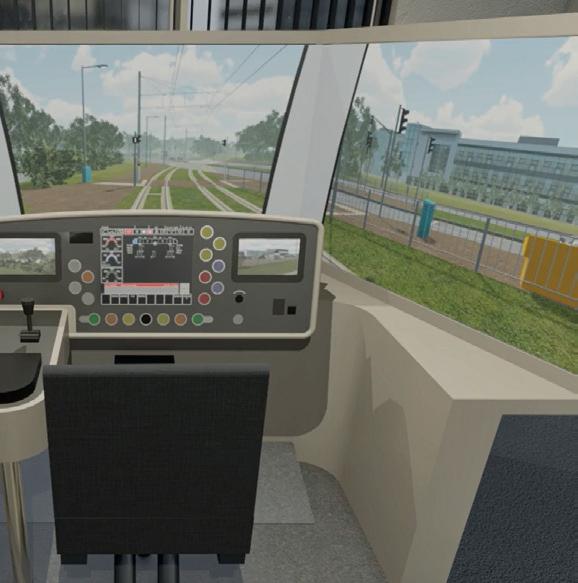
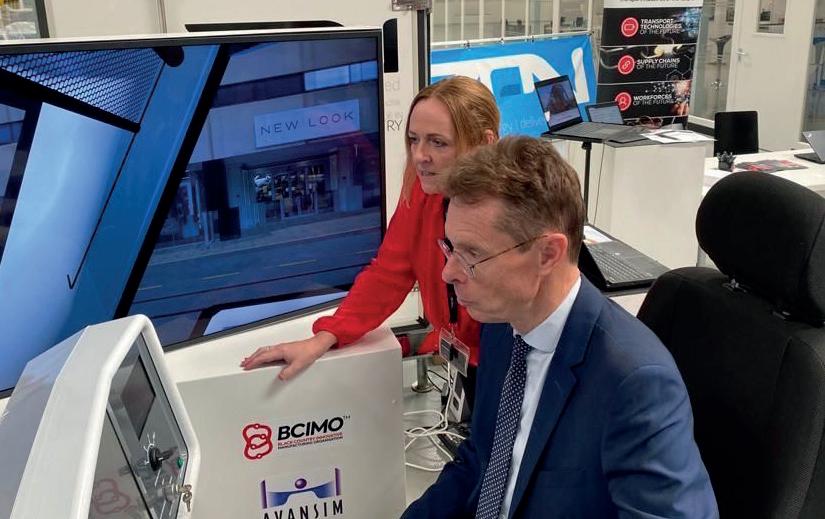
Tony explained: “You could put drivers on the simulator, give them a set scenario, and see what their performance level is over time – how their alertness changes. You could also compare that to an autonomous vehicle, quantifying the benefits from a safety point of view. These are just some of the R&D projects we’re exploring.”
Ultimately, the simulator will support one of BCIMO’s four key objectives – facilitating the development of future transport technologies.
Enabling local authorities to explore VLR
Another of BCIMO’s areas of focus (captured in its ‘cog’ model for innovation) is supporting the development of emerging markets, such as VLR. Nick Mallinson, the organisation’s Director of Business and Innovation, explained that the simulator could also be used to help develop these transport markets.
He said: “The simulator is useful in helping to develop the potential market for Very Light Rail. One of the things you can do on it is install a new route. If a particular city is interested in introducing its own VLR system, and is doing some low-level assessments, you could scan the potential route and transfer it into the simulator.
“It’s a way of taking really early thoughts about a potential route, and bringing it to life. You can literally sit in the driver’s seat and drive along that proposed route; we can add road vehicles, people walking across the street, and even the buildings that line the route. It can be very realistic.”


Nick added that the system could be used, both to secure stakeholder buy-in, and to explore potential challenges.
“If you say, for example, ‘we’re taking it down Market Street’, but that happens to be an area that the local population is particularly fond of, there might be objections,” he explained. “It’s a great way of demonstrating the potential route, but also surfacing issues that might arise in future.”
Equipped with this technology, and working with appropriate industry partners, Nick believes that the centre could act as a VLR advice centre.
“If we were approached by a local authority that was keen to develop an affordable tram system, we could take them through the early work to help them establish whether it’s worth looking at VLR seriously,” he commented. “This would be supported by the simulator; we could mock-up several potential routes, looking at areas where they might see a lot of development.
“To some extent, the technology is incidental. The actual issue is creating a market for VLR solutions, and we hope to do this by raising awareness, and getting local transport authorities to recognise the potential of VLR.”
Road testing VLRNIC’s new facilities
The portable driver simulator has already been well received, and staff from BCIMO and Coventry City Council were shown how to set up and operate it during a training day in May.
It later went on display at Coventry’s popular MotoFest, with visitors able to take the controls and ‘drive’ along the CVLR demonstrator route. The system was also showcased at Love Electric on 13 June; with delegates invited to try out for BCIMO’s ‘best driver award’, with the winner receiving a special prize. Andy Street, Mayor of the West Midlands Combined Authority, who was a keynote speaker, tried out the simulator at the event.
Neil Fulton, Chief Executive Officer of the Black Country Innovative Manufacturing Organisation (BCIMO), said: “Events provide a great opportunity to showcase our Transport Systems Simulator, part of our investment into making sure BCIMO is a worldclass hub for transport innovation. While it’s designed to be accessible for driver training, we’re also going to be offering this as a facility for our research partners to allow them to do cutting-edge work on Very Light Rail and other transport systems.
“The transport systems simulator is a key part of our strategy to be a national hub for Rail innovation, driving forward transport innovation and supporting transport modes that combat climate change. I look forward to seeing the simulator in action in the future, helping us train the first generation of VLR drivers and see how these vehicles integrate into the broader transport network.”
Organisations keen to learn more about VLRNIC’s facilities can get in touch via bcimo.co.uk/contact
ADVERTORIAL 37 June 2023
You could put drivers on the simulator, give them a set scenario, and see what their performance level is over time – how their alertness changes


In an uncertain, complex, and ambiguous world, business change is essential and inevitable Helping companies lead the way, we partner with clients to become trusted advisors, consulting to support their future state visions by providing innovative strategy, advice and solutions to deliver transformative business growth. Business Transformation Delivered in Partnership www.txmconsult.com Strategic Advisory Services Turnkey Solutions Digital Infrastructure & Systems Integration Portfolio, Programme & Project Management (P3M) Engineering, Asset Management & Maintenance Services
June
Bridging the gap
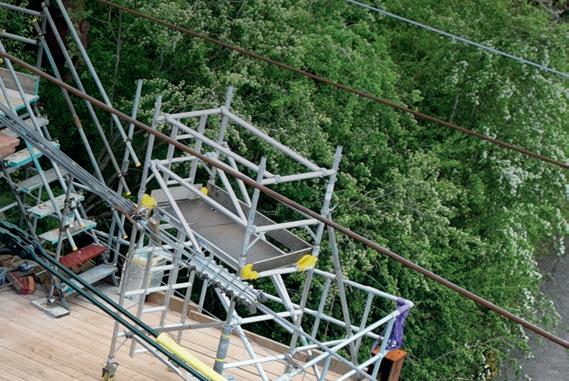
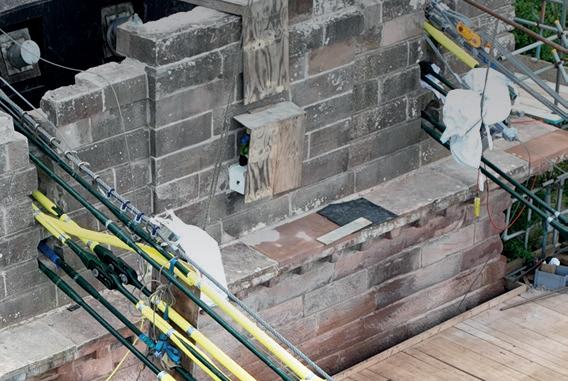
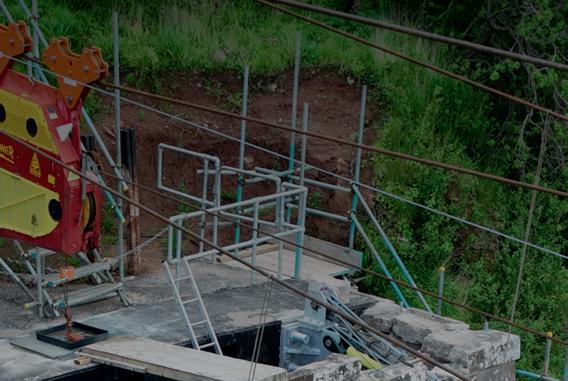
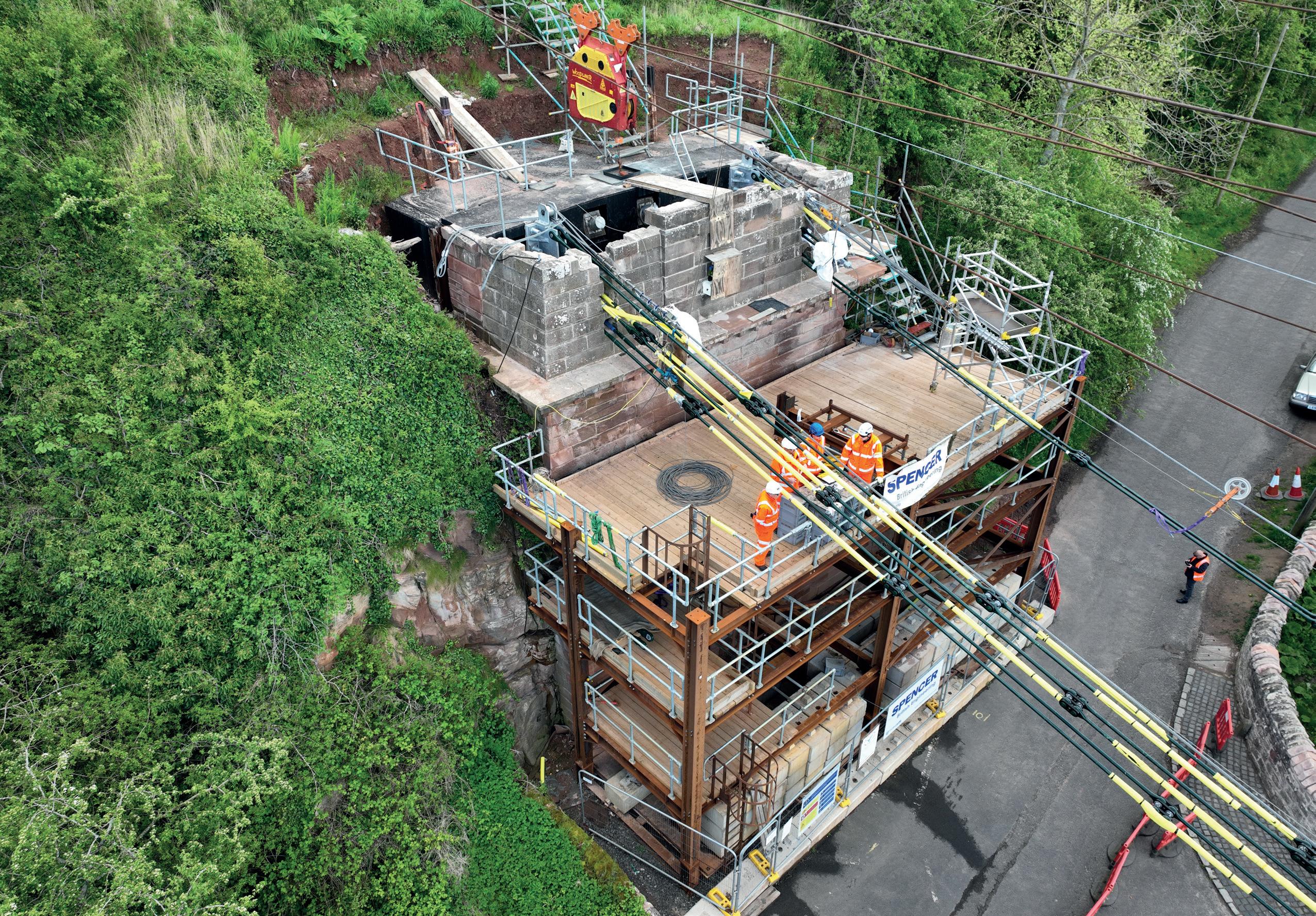
40 Keeping Britain Tidy (or the railway at least!)
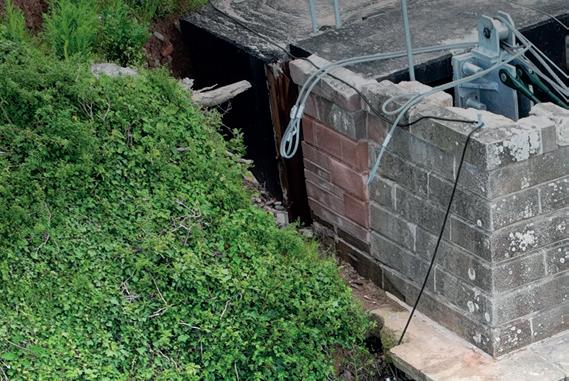

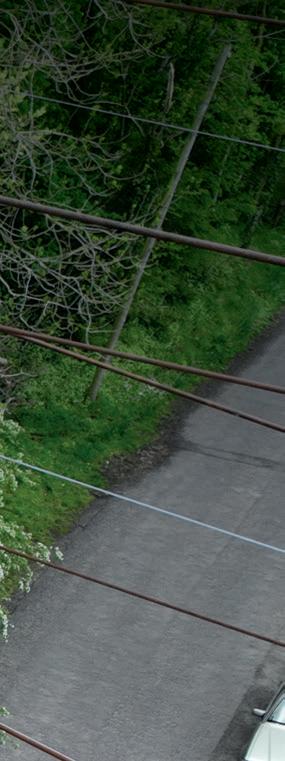
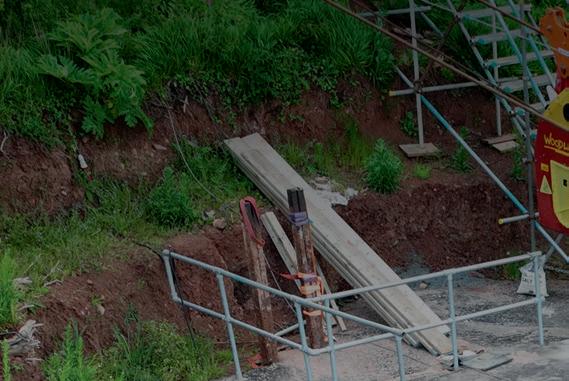
44 Reconnecting the Borders
48 Keeping diesel fuel clean
“There isn’t really a tried and tested method of dismantling a 200-year-old suspension bridge!” 2023
Keeping Britain Tidy
(or the railway at least!)
The railway is so much more than just a mode of transport, it’s an experience. Just a few metres the other side of the carriage window, beyond the railway fence, passengers can see everything from spectacular scenery to rolling farmland and even suburban back gardens.
Closer to the train are bushes and trees and other vegetation that makes the railway corridor such an important area for wildlife. Network Rail owns 52,000 hectares (129,000 acres) of land around the railway where, due to it being relatively undisturbed thanks to a lack of public access, common lizards, grass snakes, deer and water vole make their homes close to the railway in East Anglia, while slow worms have been spotted in the south-west of England. Pipistrelle bats also often live on the railway, roosting in trees, tunnels and bridges.
But all is not idyllic. Closer still to the train, so that passengers may have to crane their necks to look down, they can see lengths of steel rail, half-empty bags of ballast, concrete and wooden sleepers, and other detritus left over from railway work over the years.
This is not just unsightly, it is also dangerous. People who work on the track, often on the hours of darkness, can easily trip over a length of rail lying in the grass. This in itself can result in a sprained or broken ankle, or, if they happen to fall on more rail or a pile of rail clips, can cause even more serious injuries.
Keeping staff safe
Martyn Shaftoe is the health and safety advisor for Network Rail’s Wessex route. He has been analysing staff accidents across the route over the last seven
years. Slips, trips and falls are by far the largest causes of injury, and much of that can be put down to scrap material left alongside the line. “Whenever people go out on site, they are told not to have a slip, trip or fall. One of the biggest hazards is lineside scrap – old rail, discarded ballast bags, sleepers, you name it. But there is no science behind it, we don’t know where these hazards are and there is no central repository of what’s out there.”
When planning any work, safety teams have to check the site in advance, making sure that there are safe walking routes and that workers aren’t being sent to areas where an injury is statistically more likely.
Little wonder then that there is a push to clean up the railway and the debris left alongside it. There is even a financial incentive – Network Rail delivery units that weigh-in scrap material can use the money for other projects.
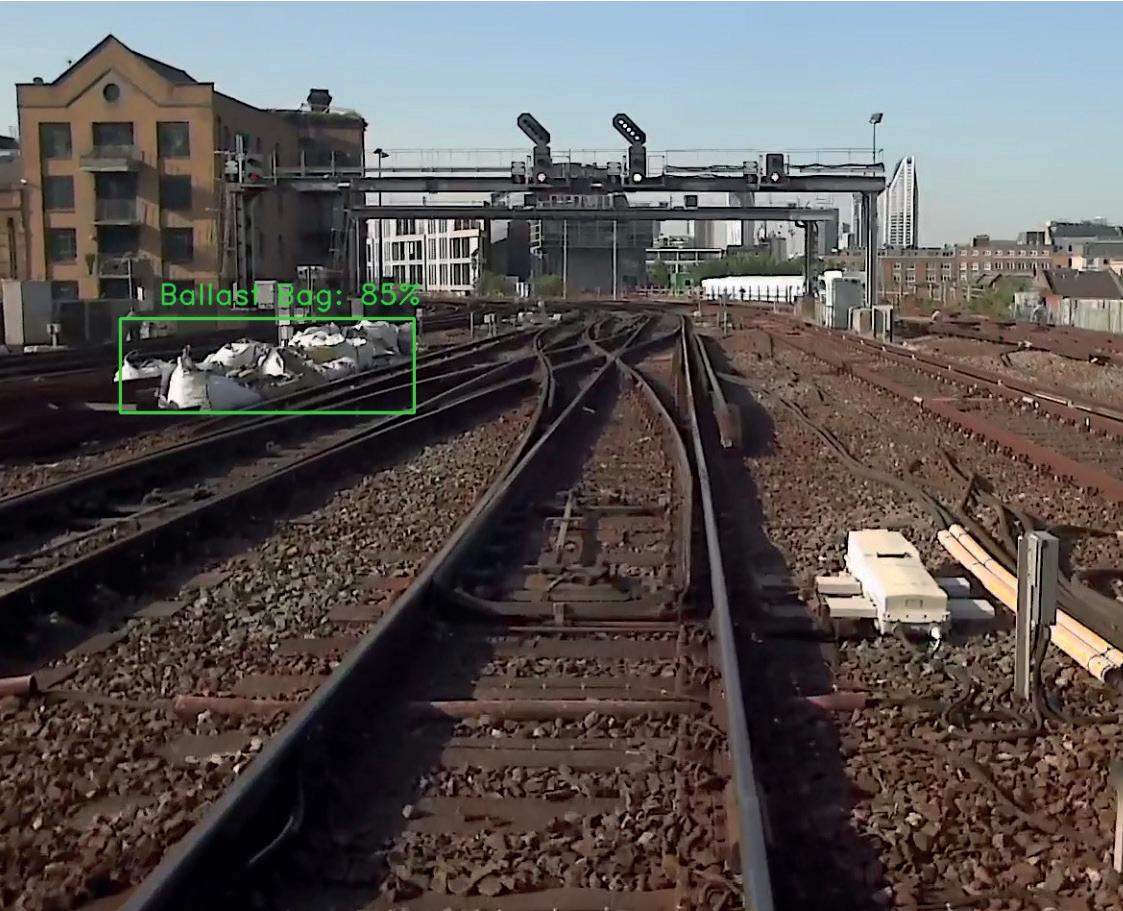
Over the years, track maintenance gangs have left their mark alongside Britain’s railway. Moves are now afoot to clear it all up, in the name of safety and economy
INSIDE TRACK: SCRAP METAL 40 June 2023
But there are two problems. The material is heavy – steel rail can weigh 60kg/metre and is often in lengths of up to 20 metres weighing over a tonne, while full bags of ballast also weigh a tonne, so lifting equipment and a powered trailer are needed to collect them. Bags are also designed to rot over time, so older discards are likely to burst when lifted, meaning the ballast either has to be recovered manually or spread out where it can do no harm.
Before this material can be collected up, maintenance teams need to know where it is as recovery has to be done when the railway is closed and suitable machinery can enter the railway from the nearest access point.
The locations of the various items can be mapped by people walking the track and so putting themselves at risk, however slight. They can be recorded by passing train drivers and crew, or they can be spotted from the air by helicopter or drone, but none of these methods are really satisfactory and some are downright expensive. Which is why, of course, much of it is still lying there.
Intelligent video
However, technology is now coming to the rescue. Bristol-based One Big Circle describes itself as a technology company that provides ‘Intelligent Video’ solutions in challenging industrial environments, to improve efficiency and safety. It has developed AIVR (Automated Intelligent Video Review), a vehicle-borne video system that can capture critical data whilst on the move.
Arthur Flury forked collar sockets and conical couplers
Holding the OLE securely for more than 50 years around the world, forked collar sockets and conical couplers from Arthur Flury are embedded in all of the UK’s electrified routes.

The cone holds the conductor tight and engineering tests have consistently verified that the conductor will break before slipping from the cone.
Manufactured in our ISO9001 appoved factory, Arthur Flury forked collar sockets and conical couplers hold full product acceptance with Network Rail and are included in OLEMI, Series 2 and Series 1 catenary designs.
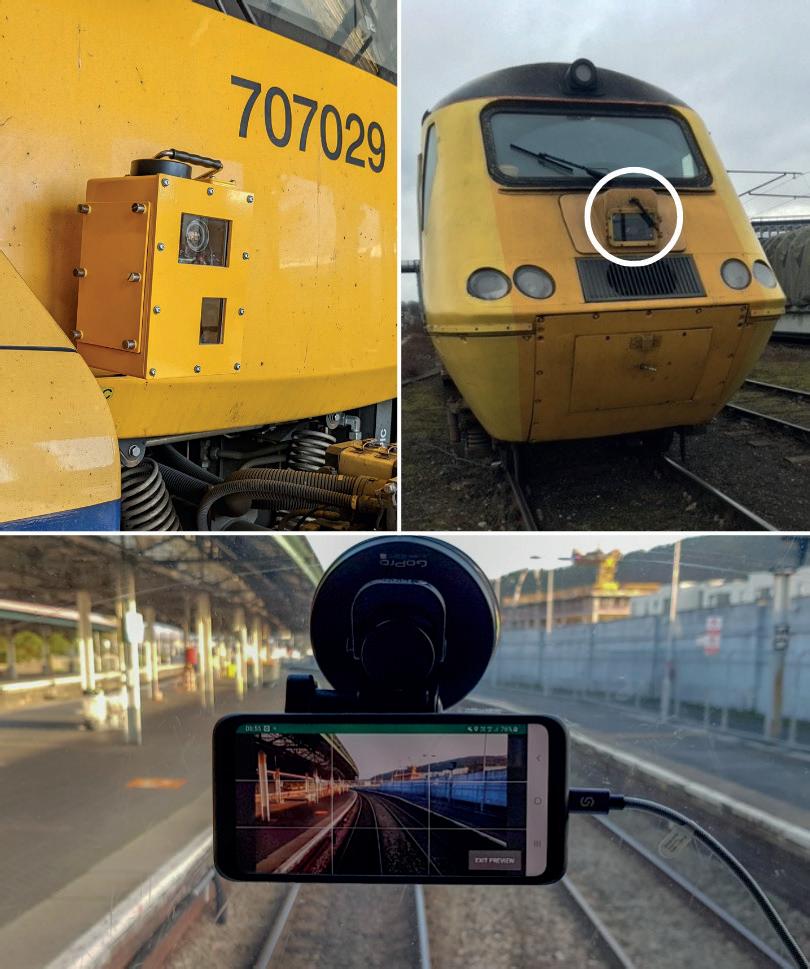

Please contact our Milton Keynes office for further information.
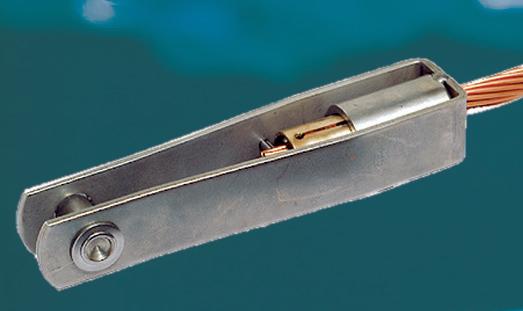
Arthur Flury (UK) LTD info@aflury.co.uk aflury.co.uk
INSIDE TRACK: SCRAP METAL 41 June 2023
Video has been captured from moving trains before, but the AIVR system provides two things that are new. Firstly, it captures video from across the rail network and makes it instantly and securely accessible in the ‘cloud’.
Secondly, the resulting files can be analysed using artificial intelligence so that objects captured on video can be identified – and that includes scrap rail and sleepers.
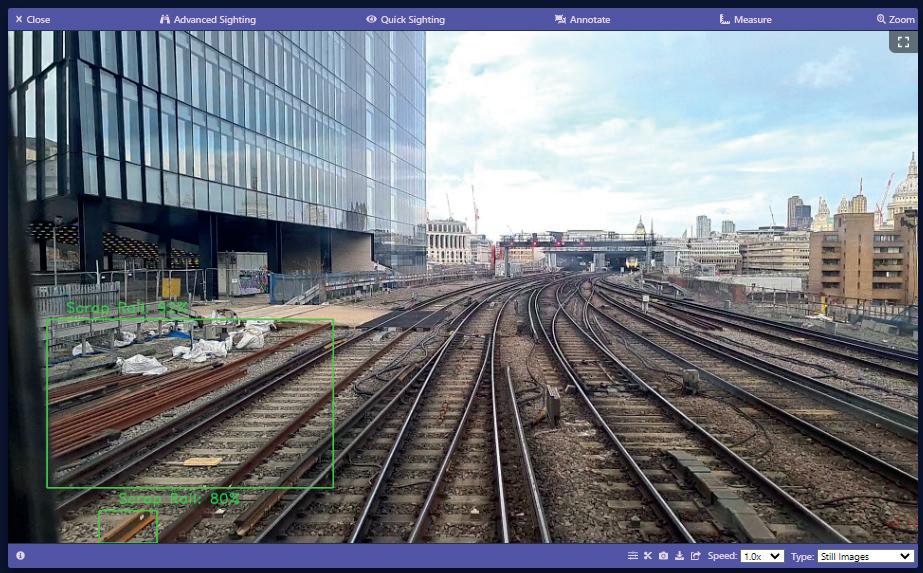
So now the position of scrap materials can be accurately logged using GPS and reported to maintenance teams.
Originally, this was being done as part of planning safe systems of work, but it quickly became apparent that the same information could be used to make arrangements to recover the materials, with teams even being able to review the video to see it there are any potential snags that might make recovery particularly tricky.
“When we were looking to establish safe walking routes, we looked at all the hazards in the area,” explained Wayne Cherry, senior innovations engineer with Network Rail.
“So we looked at vegetation, cable troughs and rough ground as well as discarded material. Frankly, it took a while before we saw how we could spin it around and use the information to gather up the scrap and tidy up the railway as well as make these sites safe.”
“Just to give you an idea,” Martyn interjected, “scrap rail can currently be weighed in for around £282 per tonne. So, a 20-tonne lorry can be stacked up with about £5,000 of scrap rail. Take off £1,000 for haulage costs and that’s £4,000 back to the delivery unit to use to augment its budget.
“And not only that, some of the material is useful too. Bomac concrete sleepers haven’t been manufactured for a number of years, but there is still a demand for them as replacements on sidings and on plain line.
“We identified a site between Yeovil and Weymouth where there were 40 of them. Now we know where they are, we can make arrangements to recover them and put them in a central store somewhere.
“Then if a section manager at Clapham or somewhere needs 14 of them he can call them off rather than having to buy new ones at vast expense.”
Teaching the system
Using AIVR to identify scrap materials abandoned alongside the railway wasn’t its original intended use. “It was developed as intelligent video for use on the railway,” One Big Circle’s Cate Lough explained.
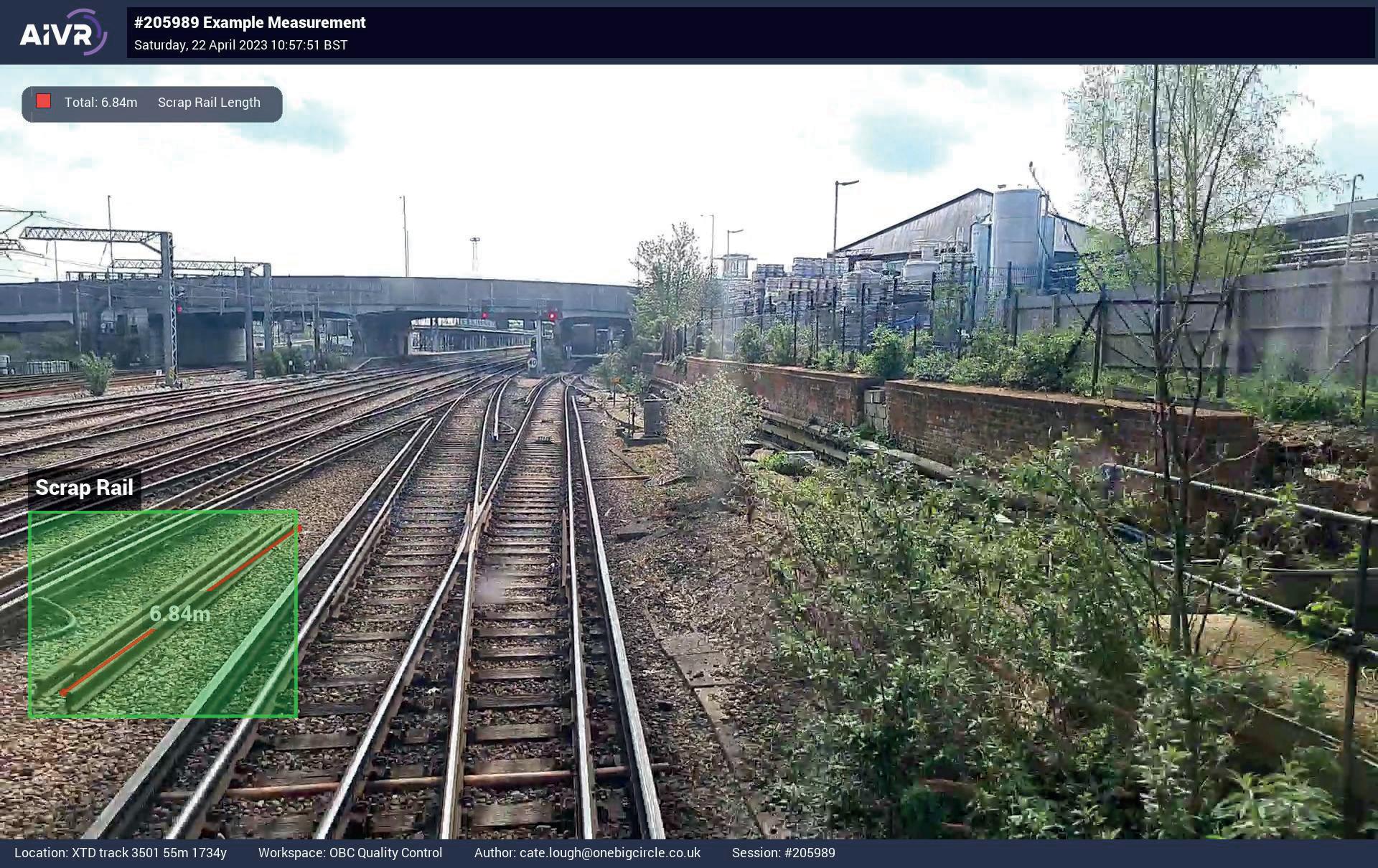
“We kept it as broad as possible – the main challenge was getting the video data off the train and into the cloud in real time. Once we had done that, then people began to use it for whatever they wanted to do.
“Every time we want AIVR to identify something, we have to take 500 to 1,000 images of what we are trying to detect and load that into the algorithm and teach it what we are looking for. It can’t automatically detect everything, it has to be taught.”
So AIVR has been taught to recognise discarded rails in the cess, in the four-foot and elsewhere. It has also been taught what ballast bags look like – full ones, half-full ones, empty ones and ones on their sides.
The system has also been taught what a signal post looks like, as well as overhead electrification structures, graffiti, bushes, trees, signs (speed restrictions, limited clearance and others), location cases and all the other items likely to be caught on video – even people and cows.
Separate projects are using AIVR to identify where vegetation is growing perilously close to the track or is obscuring signs, and to map cable troughs and examine their condition.
“One Big Circle has this great technology – AIVR – and then various different Network Rail teams are using it for various different things,” Wayne explained.
“There is even work being done to use AIVR, linked to static CCTV cameras rather than ones on board trains, to identify if people are trapped on level crossings when they close the barriers,” Martyn added.
INSIDE TRACK: SCRAP METAL 42 June 2023
AIVR captures video from across the rail network and makes it instantly and securely accessible in the ‘cloud’
But those are all separate projects. Martyn is concerned about discarded rail and materials, for safety reasons, to reclaim unwanted materials and to tidy the railway. And it’s not just about slips, trips and falls.
“In some places, discarded ballast is blocking the safe walkways,” he explained.
“Then workers either have to climb over it, with the chance they could fall, or walk around it, which can put them too close to any passing trains.
“In other places, ballast and rails are covering cable troughs, so when our signalling or
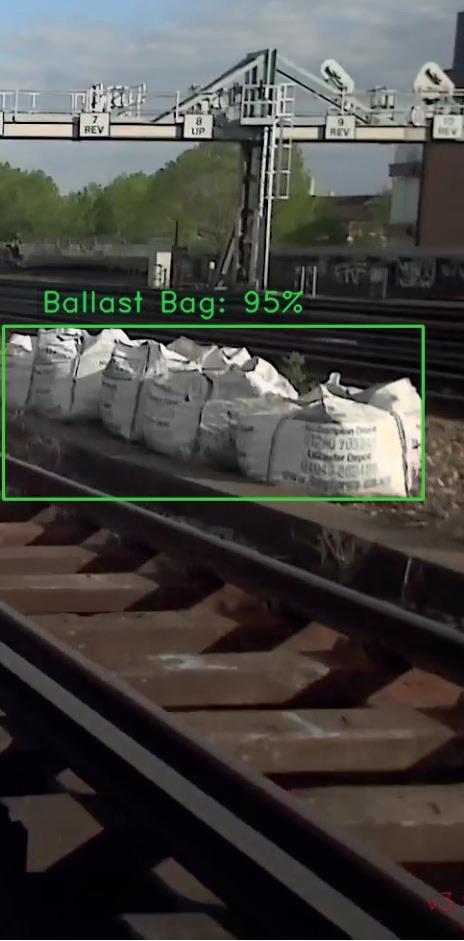



telecommunications need to access them, they can’t. It all needs sorting out.”















Why work gangs in the past have been allowed to leave surplus and scrap material beside the railway is a pertinent question, but really no longer relevant. They did, which is causing the problem. They don’t, or at least shouldn’t do, today. The pile of excess sleepers mentioned earlier are remnants of track work that was undertaken in 2011, before the London Olympics – they and other scrap materials have been there a very long time.
But now their days are numbered…




One Big Circle has this great technology – AIVR – and then various different Network Rail teams are using it for various different things Simplify your business payments Send bulk payouts instantly to anywhere in the world, at the click of a button. The Ultimate Payout Platform Fast and Easy access to the latest instant payment solutions: UK Faster Payments GBP Instant Payment 24/7. SEPA Payments EUR Instant Payment 24/7. Global Bank Transfers Local and SWIFT payments to 220+ countries. Pay2Card Make payment to any Visa or MasterCard debit or credit card across 200+ countries. info@repay.solutions RocketSpace, Regent House, 40 Islington High Street, London Tel: +44 203 026 2468
INSIDE TRACK: SCRAP METAL 43 June 2023
A historic bridge connecting England and Scotland has reopened after being closed in October 2020 for a much-needed refurbishment
Reconnecting the Borders
Britain’s railways were largely built by the Victorians in the middle of the nineteenth century. While many changes have been made in the meantime, a number of the structures are original and many of them are now listed. Network Rail alone owns more than 1,450 items that are listed as being of architectural or historic interest — including over 380 station buildings, 639 viaducts and bridges, 65 tunnels, 67 signal boxes, 4 hotels, 40 memorials, gates and clocks and over 250 other buildings or structures.
A number of railway contractors are therefore well versed in maintaining these structures, making sure they are still safe to be part of today’s railway while retaining as many original features as possible to comply with the strictures of their listing. Some specialise – in bridges or tunnels or station buildings. Others act as specialist subcontractors, working on masonry, glass and wrought and cast iron details.
Small wonder then that when Northumberland County Council wished to refurbish a historic bridge, it turned to a railway contractor with the required skill set. Spencer Group, based in Hull, has worked on a number of historic bridges as well as modern ones –for example, it was the company that dehumidified all the cables on the Humber Bridge to prevent them from corroding internally.
It was a suspension bridge that Northumberland CC wanted Spencer Group to restore, but not a railway bridge – it was older than that.
The Union Chain Bridge was opened in 1820. It spans the River Tweed between Horncliffe, on the English side, and Fishwick in Scotland, four miles west of Berwick-upon-Tweed. At the time, it was the longest wrought-iron suspension bridge in the world, with a span of 449 feet (137 metres).
It was designed by Captain Samuel Brown, who had developed wrought-iron chains for the navy to use in the rigging of ships in place of traditional ropes. He brought this technology to bridge design, although he had no experience of designing the masonry elements so that work was undertaken by renowned architect John Rennie.
Like all working structures, the Union bridge was repaired and upgraded through the years. The chains were reinforced and the bridge deck was substantially replaced twice. In 2007, one of the hanger rods supporting the deck broke, closing the bridge until a repair could be affected.
Although Grade 1 listed in England and Grade
A listed in Scotland, by 2013, with funds for maintenance and repairs in short supply, the bridge was placed on English Heritage’s ‘At Risk’ register. This spurred local enthusiasts to rally round and organise a campaign to save the bridge.
Northumberland County Council, working with Scottish Borders Council and Historic England, and with funding from the National Lottery Heritage Fund, formulated a plan to restore the bridge and keep it open, hence the approach to Spencer Group.
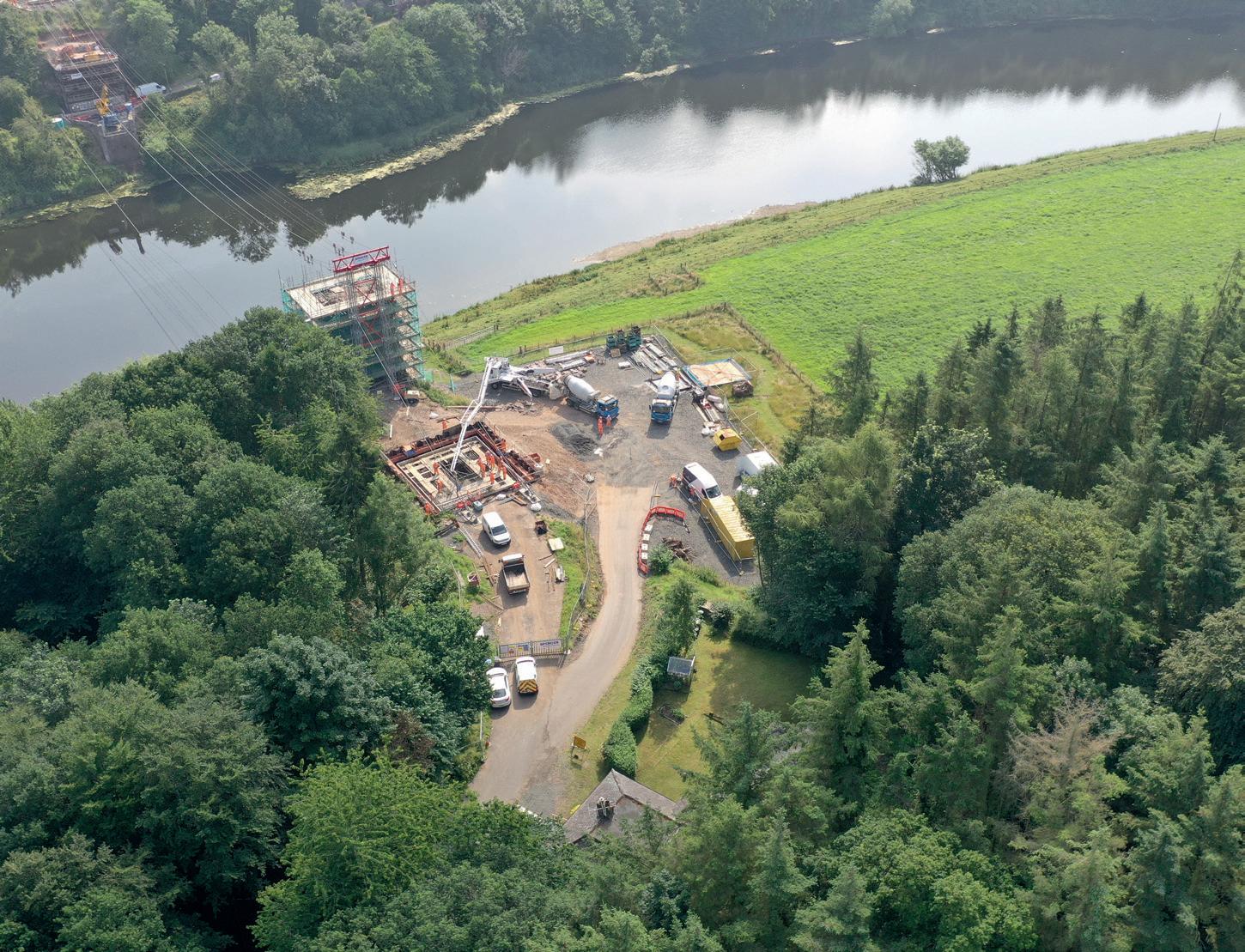
Formulating the repairs
The Union Chain Bridge consists of two stone towers with twelve wrought-iron chains running between them. These are arranged six to a side in three pairs –one above the other. Each of the 444 chain rods is 4.5 metres long with an eye at each end.
The chains are joined by 800 pins and links – oblong loops that connect the two chain rods via the pinned connections. There are no fixed connections between the pairs of chains, they are fully independent. However, hanger caps do straddle the pair of independent chains, and these provide the connection for the hanger rods from which the deck is suspended, allowing the deck loads to be transferred back into the suspension chains.
The hanger rods descend from the link pins in sequence to support the bridge deck. One rod drops from the top pair of cables, the next from the middle pair, the next from the lower pair, the next from the top pair again, and so on. In the original design, they passed through eyes in the handrail and then through the timber deck into a metal channel running along and underneath the bridge.
At the Scottish end, the chains pass over the top of the tower and down into anchorages below ground. At the English end, however, the tower is really a facade as it sits against a rock cliff. The chains run through the top of the tower and into anchorages in the rockface behind it.
Northumberland CC’s own design team formulated plans for the repair of the structure, while Spencer Group developed the methodology to do it.
Working from the river on barges was ruled out as the river level changes and sometimes floods, and it can’t be used at all in salmon-spawning season. Instead, Spencer planned to hang its own cables from scaffolding towers and work off a platform suspended from them, in effect converting the system into two bridges, one above the other.
INSIDE TRACK: INFRASTRUCTURE 44 June 2023


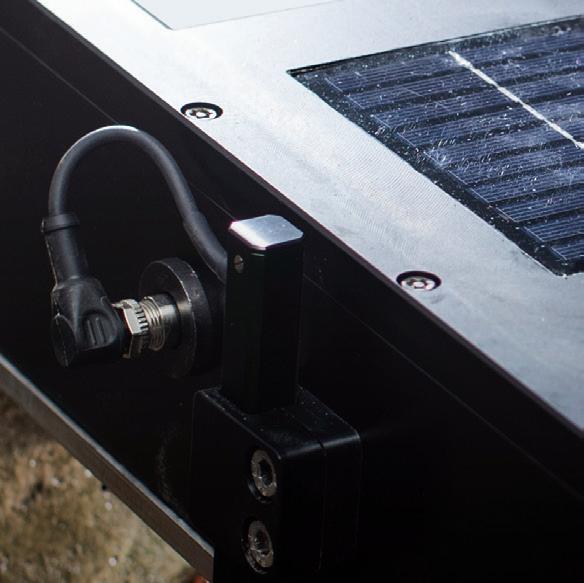
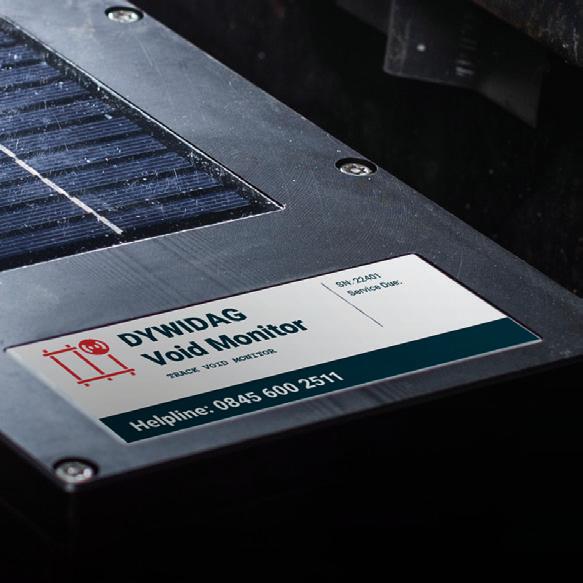

The DYWIDAG Void Monitoring system - remotely programmable, providing continuous recording of track stability. dywidag.com For more information please contact sales.uk@dywidag.com Rail monitoring solutions
Spencer project manager Joe DiMauro explained: “We were given a pack of drawings and some specifications by Northumberland County Council, describing the planned refurbishment works and how the bridge was put together. These showed, as best as the county council could ascertain, the condition the structure as it was before the refurbishment works and what they were trying to achieve afterwards. But how that was actually to be done was up to us, because there isn’t really a tried and tested method of dismantling a two-hundred-year-old suspension bridge!”
Two bridges in one
Joe’s team installed an overhead cable crane and access control system – basically a series of suspended cables that ran above the bridge but were completely separate from it. From these were suspended access platforms and cradles, and there was a 2.2 tonne capacity cable crane that ran down the middle of the bridge, giving lifting capacity anywhere on the structure without imparting any temporary construction loads into the bridge.

Two suspension cables were also used to support the structure as it was dismantled, as there was real concern that something might fail during the process, stressing the whole structure and leading to a major collapse into the river. So all the elements of the bridge – hanger rods and chains – were individually attached to the suspension cables. The overhead cables were then tightened, reducing the catenary and taking all the weight off the bridge’s own chains. The deck was removed using the working platform, then the hanger rods were removed.
One of the pins was then removed from each chain and the whole assembly was pulled across the river to the English side “like a shower curtain,” Joe said, where it could be dismantled over dry land. During the disassembly, every link of every chain was labelled to identify its position and orientation, so it could later be replaced exactly where it had been before.
However, on inspection, the components were found to be in worse condition than expected. 60 per cent of the chain links needed to be replaced, as did all 170 hanger rods.
New chain links were fabricated from steel rods onto which cast steel eyes were welded. Once painted, these were almost indistinguishable from the originals. Likewise, the hanger rods were replaced with new steel equivalents.
Deck and handrails
In the original design, the hanger rods passed through eyes in the handrail. This restrained the hanger rods to some extent, not allowing them to move as freely as they might. It also caused excessive wear, one of the reasons that the rods could not be reused.
In the centre of the bridge, there was no handrail. The chain catenary descended so low that the chains themselves acted as a handrail, albeit one that would be difficult to hold onto.
The answer to this lay in a redesign of the bridge deck. This is a single-lane road with a walkway both sides. However, the carriageway was wide enough that drivers of small cars had, in the past, attempted to pass each other on the bridge, whereas they should have waited for one car to leave before entering. The walkways were correspondingly narrow, only around 600mm.
The solution was to reduce the width of the carriageway and increase the width of the walkways, making it safer for pedestrians. This also allowed the handrail to be moved inboard of the hanger rods and chains, so that the hanger rods no longer pass through it.
The new position meant that an end-to-end balustrade could be constructed, in part using repurposed wrought iron sourced from the scrap chain links by heritage metalworker Top Co.
The deck itself was replaced using new transverse timbers fastened to the longitudinal steel beams into which the hangers were fastened.
On top of the timbers is a glass-reinforced polymer deck that is both lighter than the original and will need less maintenance, but which has the appearance of the original plywood deck and its non-slip resin coating.
Stonework and anchors
While the bridge was being disassembled and reassembled, others on the Spencer team were addressing the two sets of anchorages. On the Scottish end, the chains ran down to anchors buried in the ground. However, no one knew what these actually looked like. Even the use of groundpenetrating radar didn’t throw any light on the subject.
In the end, a completely new gravity-based retaining block anchor was constructed. A cofferdam was built into the ground and filled with reinforced concrete. New anchorage plates were built in and, for future maintenance, two inspection chambers.
On the English side, the top of the tower façade was removed so that a new anchorage beam could be attached to the cliff face using seven singlebore multiple anchors (SBMA) – multi-strand, post tensioned rock anchors – installed by subcontractor Keller Foundations. Anchor plates were fastened to the beam and the refurbished chains anchored to the two plates.
INSIDE TRACK: INFRASTRUCTURE 46 June 2023
There isn’t really a tried and tested method of dismantling a two-hundred-yearold suspension bridge!
The tower was then rebuilt with a new roof and an inspection chamber. At the same time, the two approach roads were improved to make parking easier for sightseers.
Replacement stones
On the towers themselves, specialist stonemasons had been cutting out stones that had crumbled and replacing them with near-identical ones carved from the local stone. When built, the original lime mortar was porous, allowing any moisture to escape from the towers.
However, when the towers were repointed in the mid twentieth century, it had been done using hard cement. As a result, moisture started exiting the towers through the stonework, corroding some of the blocks.
With those blocks replaced, and the towers repointed using the correct lime-based mortar, the towers once again look the part as well as being structurally sound.
With everything back in place, and the metalwork freshly painted in Brunswick Green two-part epoxy paint that should last 30 years or more, the bridge was reopened on 17 April 2023 with a weight limit of three tonnes – an increase from the previous two tonne restriction.
The colour was determined by Northumberland CC after analysing paint layers on various metal components as being close to the original used back in 1820 on what is now the world’s oldest suspension bridge still carrying traffic.
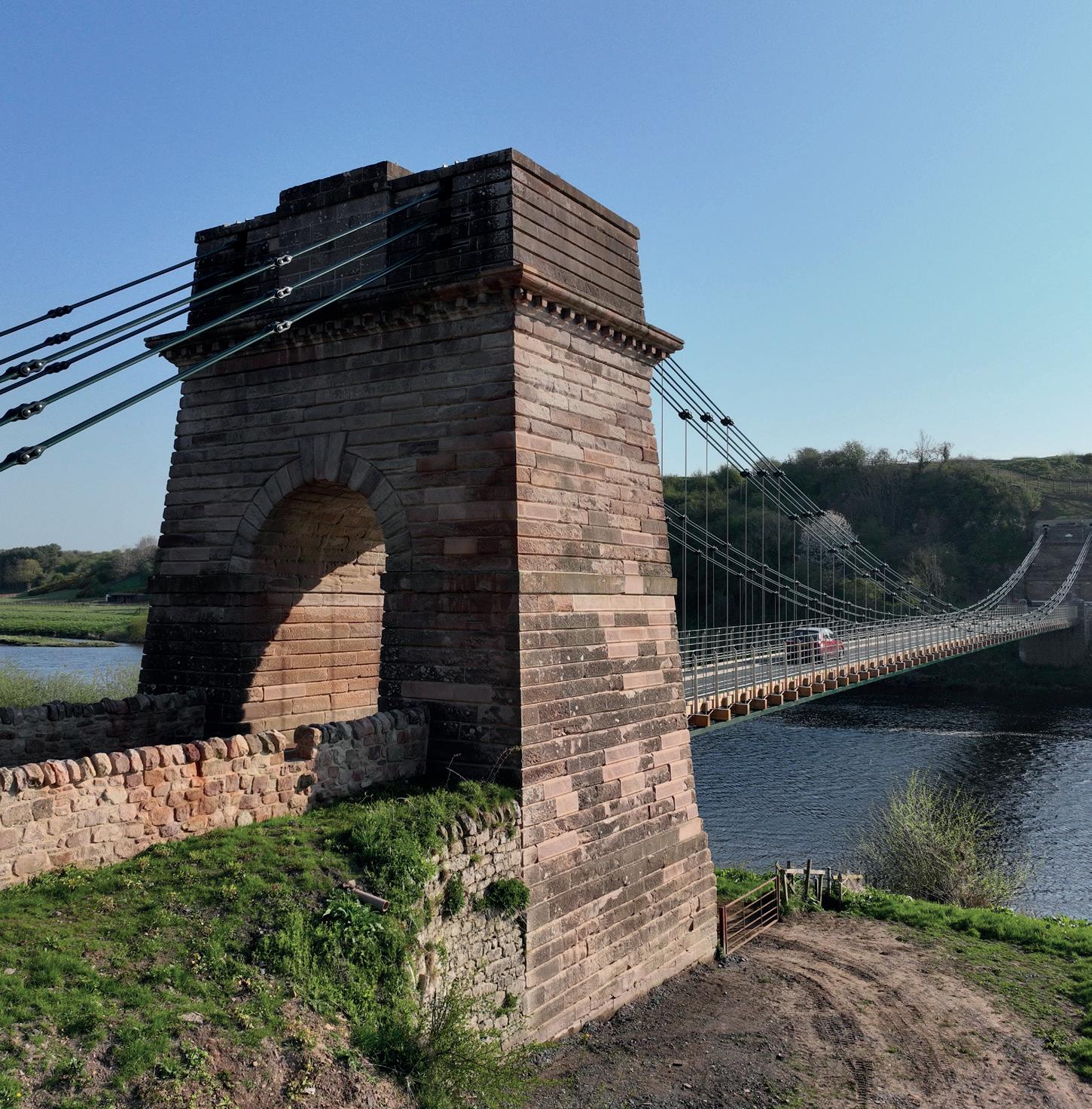
Keeping you on the right track
Specialists in bespoke hydraulic lifting equipment for the rail industry
A well established 100% British company, with safety and quality being our number one priority
Quality approved to BS EN ISO9001:2015 standard
We will be pleased to quote, design and build hydraulic lifting equipment to suit your individual needs
Proud suppliers to major UK rail companies
Majorlift Hydraulic Equipment Ltd.
Arnolds Field Estate, Wickwar, Wotton-Under-Edge GL12 8JD (+44) (0)1454 299299 www.majorlift.com
Specialists in bespoke hydraulic lifting equipment for the rail industry
A well established 100% British company, with safety and quality being our number one priority
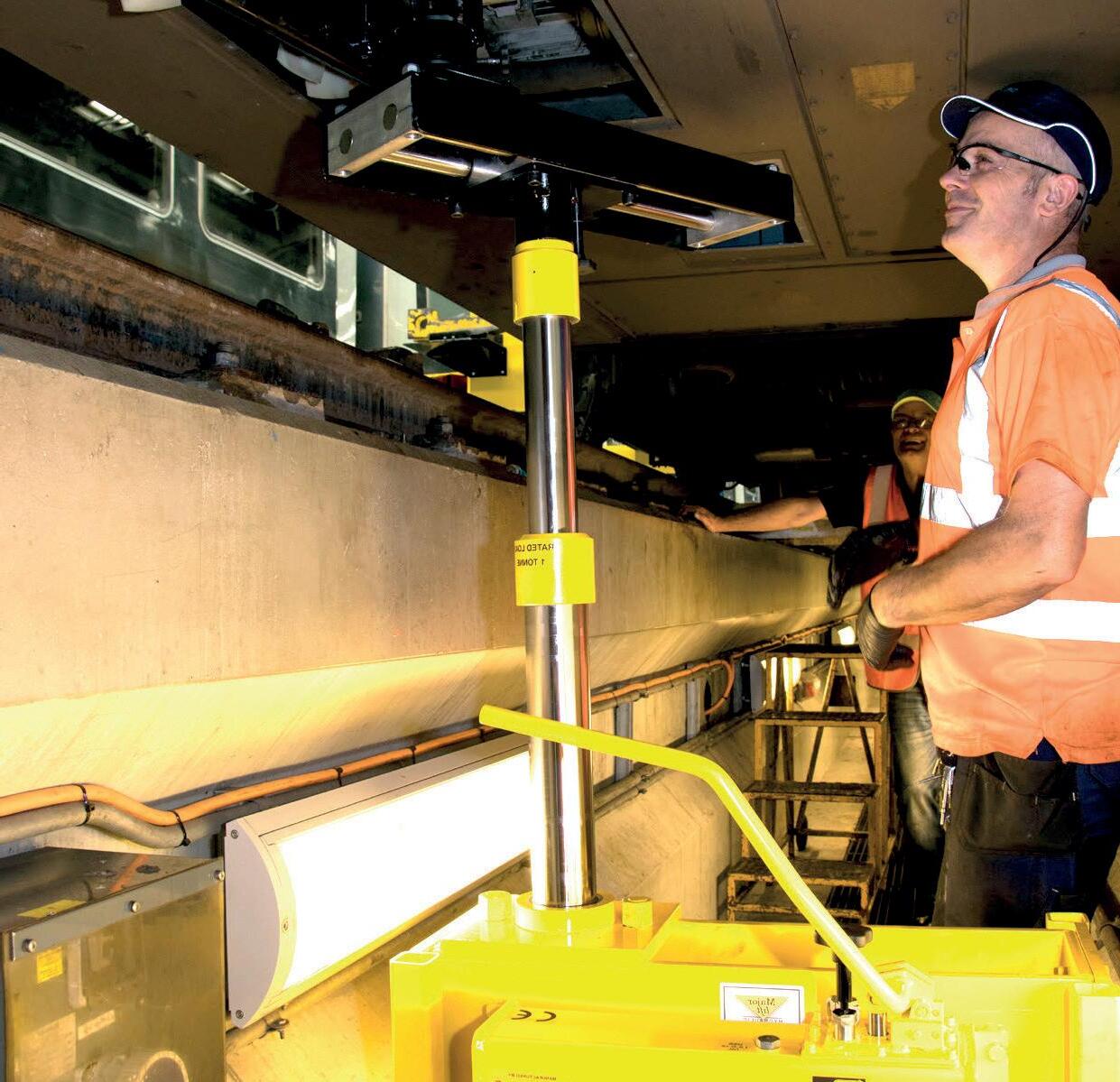
INSIDE TRACK: INFRASTRUCTURE 47 June 2023
Diesel engines perform best when supplied with clean fuel, something that, up to now, hasn’t always been possible on hard-working trains
Keeping diesel fuel clean
In today’s green and sustainable Britain, diesel engines are thought of as being dirty, polluting, expensive to maintain and past their sell-by date.
The government has pledged to remove dieselpowered trains from the rail network by 2040, with diesel/electric and other hybrids gone by 2050. But even that first date is 17 years away.
The challenge today is to make diesels as clean
and economic as possible. And 17 years (or 27 for hybrids) allows plenty of payback time so that it is still worthwhile installing new kit to improve emissions and economy.
Which is why railway supply specialist Unipart Rail is introducing a product that both cleans up emissions and provides fuel savings, yet is still relatively inexpensive.

FuelActive is, in essence, a hi-tech fuel pickup. To
understand how this can improve the performance of a diesel engine, it is necessary to understand how the fuelling process works.
Fuel tanks
On a train, diesel fuel is stored in what is essentially a rectangular tank. This contains baffles, to prevent the fuel from being agitated too much due to the movement of the train and vibration from the engine.
INSIDE TRACK: DIESEL
48 June 2023
FUEL
A pickup tube draws fuel from the bottom of the tank, with only a small gap left between the end of the pickup and the tank.
The tank is fitted with a breather, so that as the fuel pump sucks diesel out of the tank, air can flow in to maintain the volume and make sure the process doesn’t create a vacuum.
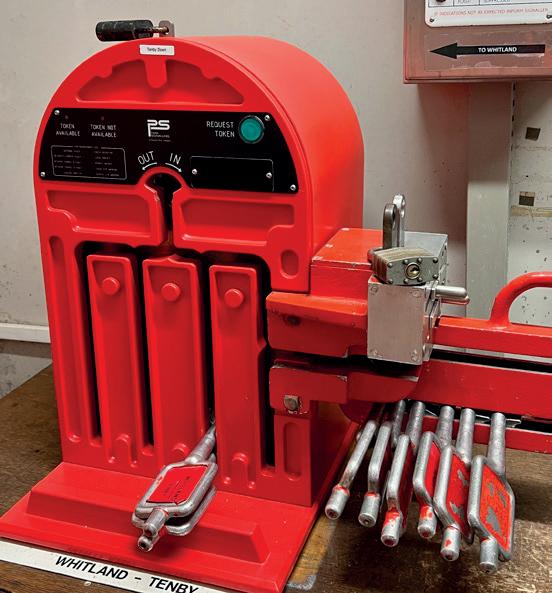
It is that breather that can also cause problems. The air that flows into the tank can bring with it both dirt and moisture.
Particles of dirt can come from ballast dust thrown up by the train, brake dust generated when the train slows down, sand and other contaminants blown around the train by winds and from the train’s own passing.
On damp days, for example when there is rain and fog about, the air entering the fuel tank through the breather can contain a significant amount of moisture. Having mixed with the warm fuel returning from cooling the injection system’s fuel rail, the moisture condenses out into liquid water as the mixture cools.
Water, being denser than fuel, then settles at the bottom of the tank, as do the particles of dirt that have entered via the breather and corrosion product from the inside of the tank itself. Some may even have come from the storage tanks from which the train was refuelled.
However it got there, the result is a layer of contaminated and dirty fuel at the bottom of the fuel tank. And that is exactly where the fuel pickup draws its fuel supply from. Stirred up by the swirling of fuel in the tank and the suction from the fuel pump, the result is contaminated fuel being pumped into the injection system, where it causes problems.

Dirty fuel
Having water in the fuel promotes rust and corrosion, leading to even more contamination. The current switch to biodiesel is actually making the problem worse. Biodiesel is hygroscopic, which means that it attracts water.
Design Develop Integrate Investigate Delivering Performance Improvement through Re-engineering Solutions & Obsolecence Management We deliver a Technical Consultancy Service that offers support through the whole life cycle of products and systems, from concept to installation. Working in collaboration with industry professionals to deliver Innovative Performance Improving Solutions www.park-signalling.co.uk +44 (0) 161 219 0161 sales@park-signalling.co.uk • Prototype equipment manufacturing • Re-engineering and reverse engineering
Sourcing of obsolete components • Replication of obsolete equipment • New equipment build / manufacture • Repair and testing
Calibration and certification a Unipar t Company a Unipar t Company
•
•
Opposite: Contaminants can cause wear that reduces the performance of costly fuel injectors INSIDE TRACK: DIESEL FUEL 49 June 2023
Above: A demonstration showing clean fuel from the FuelActive pickup on the right and a conventional pickup on the left with emulsified water in the fuel clear to see
This makes it even more prone to water contamination than the ‘pure’ fossil-fuel diesel that was used years ago. The EN590 standard for diesel fuel includes a compulsory seven per cent biodiesel component and allows 200mg of water per kilo of fuel – that’s 200 parts per million.
AT 200PPM, the combustion process isn’t markedly affected, but having free water in the fuel reduces its lubrication effect, so can increase wear on moving parts such as injectors. In addition, water in biodiesel can promote microbial growth, a bloom of bacteria, moulds and yeasts known colloquially as ‘diesel bug’. This adds to the contamination problem, mixing with corrosion products to further attack closetolerance moving parts.
Modern diesel injectors work at pressures of between 10,000 and 30,000-psi. Scientific research has shown that, at these very high pressures, water and contaminants contained within fuel etch metal components, such as the injectors, causing premature wear. This will impact their performance, resulting in a degraded spray pattern, a less-optimal combustion process and an increase in fuel consumption. Fuel filters also become clogged more quickly, further increasing the need for costly servicing.
Solving the problem
However, just because the fuel tank contains water and contaminants, steps can be taken to stop them getting into the engine. If the water/contamination layer is at the bottom of the tank, then the fuel pickup that feeds the engine’s injectors needs to take its fuel from another part of the tank where the fuel is not contaminated.
Having a dynamic floating pickup solves this problem by drawing clean fuel a set distance from below the surface of the fuel where it is clean and uncontaminated. However, just having it floating would not be enough, it would have to be constrained to stop it moving around the tank and getting caught up in the baffles.
Engineer Mike James first came up with his solution in 1998, locating the floating fuel filler within a perforated metal tube that would secure the pickup in a horizontal axis while allowing it freedom to move vertically. Further work carried out in various sectors over the last 23 years has refined the product so that it is now in use on six continents for applications in transportation, construction and mining.
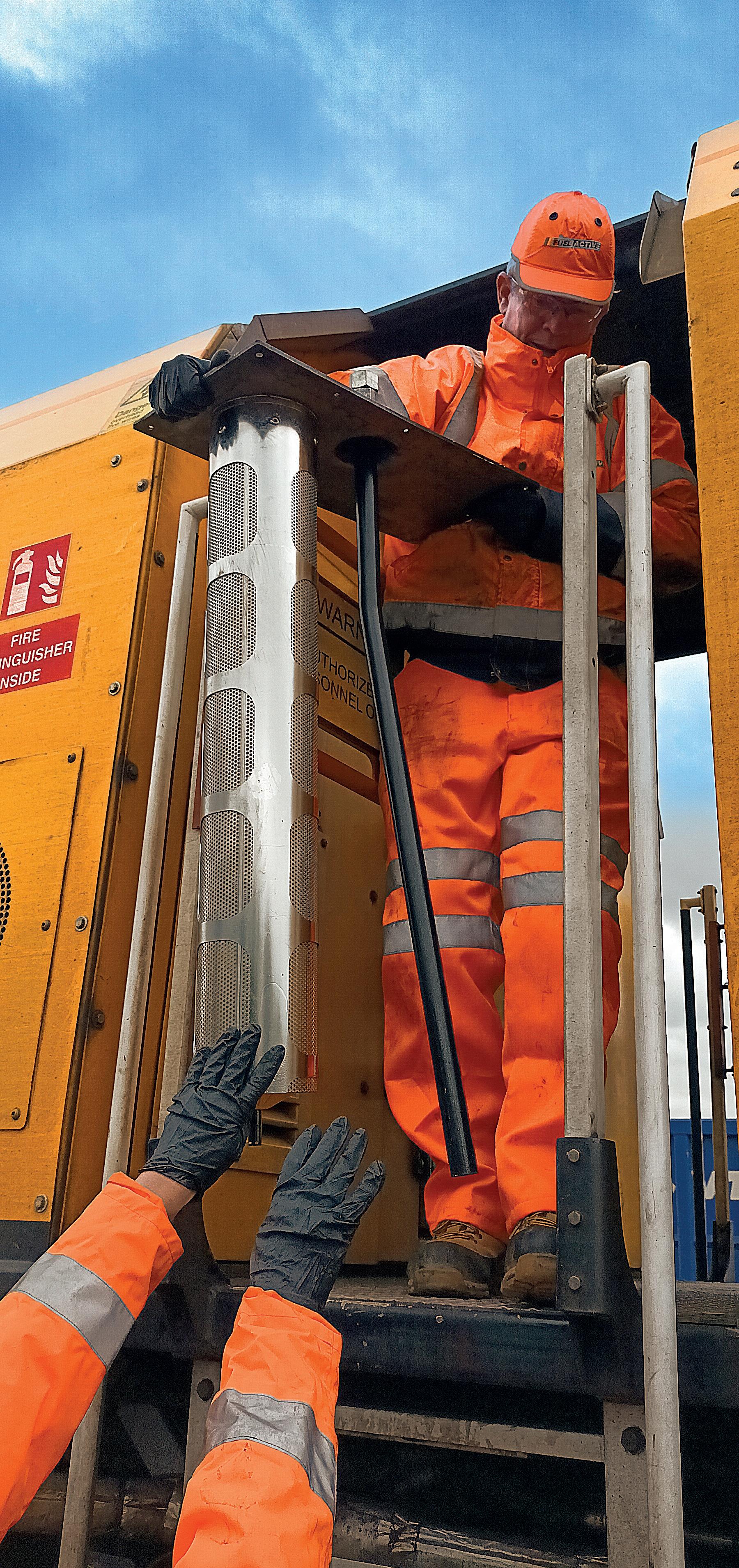
The FuelActive pick-up unit features a conicalshaped pickup with slots around its periphery. This gives a much larger surface area at the entrance to the fuel pipe, reducing the speed and pressure at which fuel is collected and so reducing the ‘vacuum cleaner’ effect that tends to suck up sediments and draw them directly into the fuel system. The float is actually a truncated cone – a stopper can be fitted to the flat end so that the float will never quite reach the bottom of the tank, but instead will be held off by the length of the stop.
Nick Massey, FuelActive’s chief executive officer, explained: “In our design development process, we used computational fluid dynamics, the same technique that Formula One designers use to work out their aerodynamics, to show the effect on the water and contamination layer.
INSIDE TRACK: DIESEL FUEL 50 June 2023
The CFD showed that a conventional pipe, with a small diameter, creates a high velocity, high pressure point sucking everything off the bottom of the tank. Our design has a much bigger diameter, so the velocity of the fuel and the pressure is much lower.



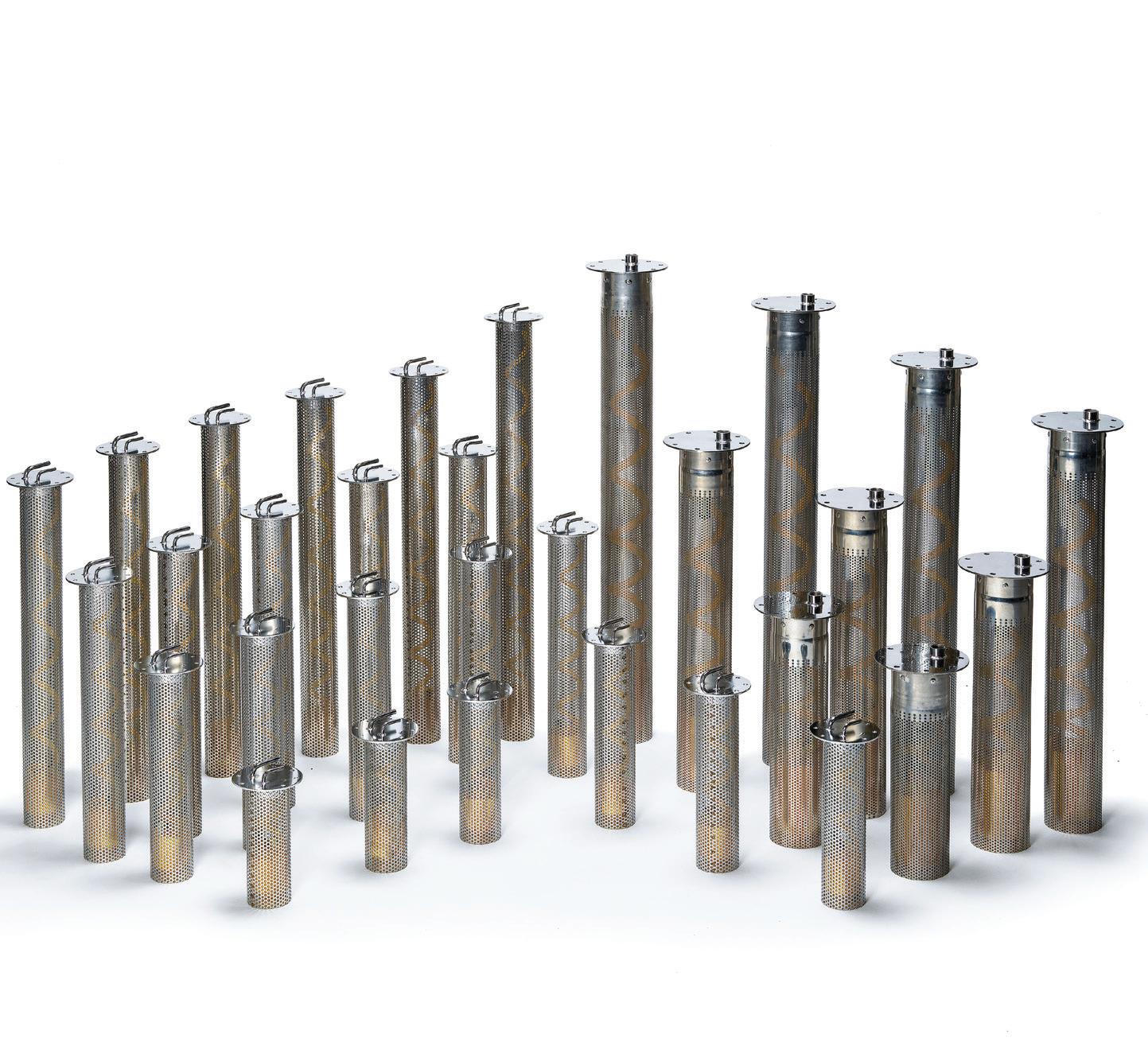
“Even when the float does reach the bottom of the tank, the fuel is being drawn in at an angle, minimising the impact on the contamination at the bottom of the fuel tank.”
Kevin Orton, Unipart Rail’s business development director, explained the benefits. “Independent testing





has proven that the fuel supplied via a FuelActive device is 92 per cent cleaner than using a traditional pickup pipe,” he said. “This typically provides fuel and CO₂ savings of up to five per cent. Return on investment is usually within less than 12 months.”




FuelActive’s recent agreement with Unipart Rail will see its innovative fuel pickup fitted to passenger and freight trains across the country, with export markets also looking interesting. And with fuel economies of up to five per cent and reduced maintenance bills, it’s easy to see why.




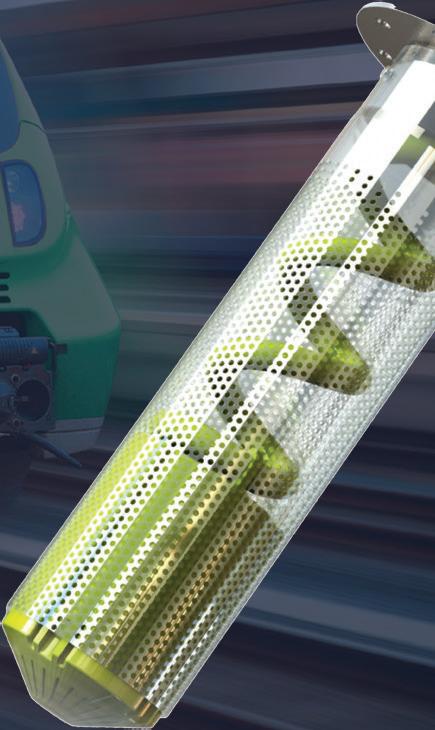







YOUR PERFORMANCE IMPROVEMENT PARTNER Together we have the technology to save fuel and the planet. FuelActive’s innovative technology improves fuel efficiency, reduces CO2 and increases uptime. Using a patented fuel pick-up solution, the engine is supplied with 92% cleaner fuel. Scan the QR code for more information and email us at enquiries@unipartrail.com Visit us at stand G9 for a live FuelActive demo at Rail Live, 21st-22nd June. Save up to 5% in Fuel Save up to 5% in CO2 Reduces maintenance Improve engine reliability Less component failure Lower operating costs Fuel Active Half Page Ad.indd 2 19/05/2023 15:07
INSIDE TRACK: DIESEL FUEL 51 June 2023
A conventional pipe, with a small diameter, creates a high velocity, high pressure point sucking everything off the bottom of the tank
He says one of the key focuses will be on securing the long-term government funding
Andy Lord appointed as London’s permanent transport commissioner
Andy Lord has said he is “hugely honoured and proud to have the opportunity to continue to steer Transport for London (TfL) in moving forward with the work of supporting London’s recovery from the pandemic”.
His comments come following his appointment as London’s permanent transport commissioner confirmed by the Mayor of London and the board of TfL earlier this month.
He said: “Transport for London is an incredible organisation, full of highly committed people who come to work each day to serve our customers and to make the capital a better place.
“In the months ahead, one of my key focuses will be on securing the long-term government funding that we need to continue our vital work. With transport authorities across the UK now having long-term ‘London-style’ funding agreements in place, London is now ironically the outlier.
“With the amazing economic driver that is the Elizabeth line, and with our partners and supply chain across the country, we have proven that investment in transport in London can benefit the entire UK. We must now move forward and work together to provide the services and infrastructure that will benefit everyone.”
Managed projects
Andy joined TfL in November 2019 as managing director of London Underground and became chief operating officer for all of TfL’s operations in 2022.
He took on the role of commissioner of TfL on an interim basis last October, following the departure of the former commissioner Andy Byford. Since then, his focus has been on attracting customers to public transport, rebuilding TfL’s finances, advancing its work to decarbonise and improve London’s environment, and developing plans to further support its diverse staff and customers.
Andy has overseen the completion of the transformational Elizabeth line railway, the completion of the Bank station upgrade, the development of the plans for new bus provision in outer London, the delivery of new cycleways, and TfL’s work to support safe and successful events to mark the coronation of King Charles III and Queen Camilla.
The Mayor of London, Sadiq Khan, said: “I’m delighted to confirm Andy Lord as London’s permanent transport commissioner. Andy brings with him a wealth of experience and expertise to lead TfL as we work to deliver the most affordable, accessible and sustainable transport network possible.
“I have seen first-hand Andy’s dedication to rebuilding TfL’s finances following the devastating impact of the pandemic and his commitment to delivering better services for Londoners and more sustainable travel across the capital, as well as promoting walking and cycling.
“I look forward to working with Andy as we continue building a safer, greener and more prosperous London for everyone – and a transport system that remains the envy of the world.”
We have proven that investment in transport in London can benefit the entire UK
PEOPLE 52 June 2023
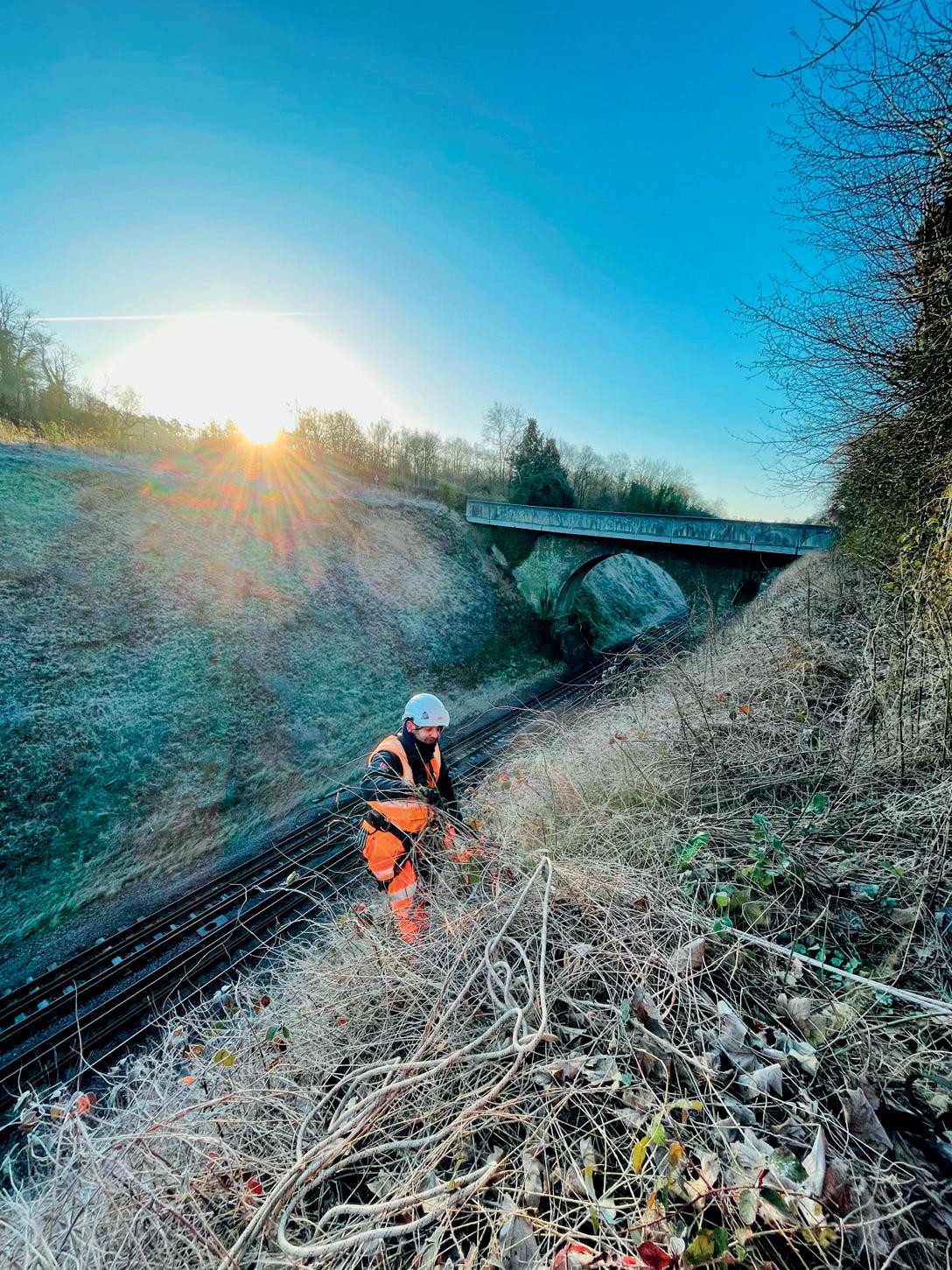
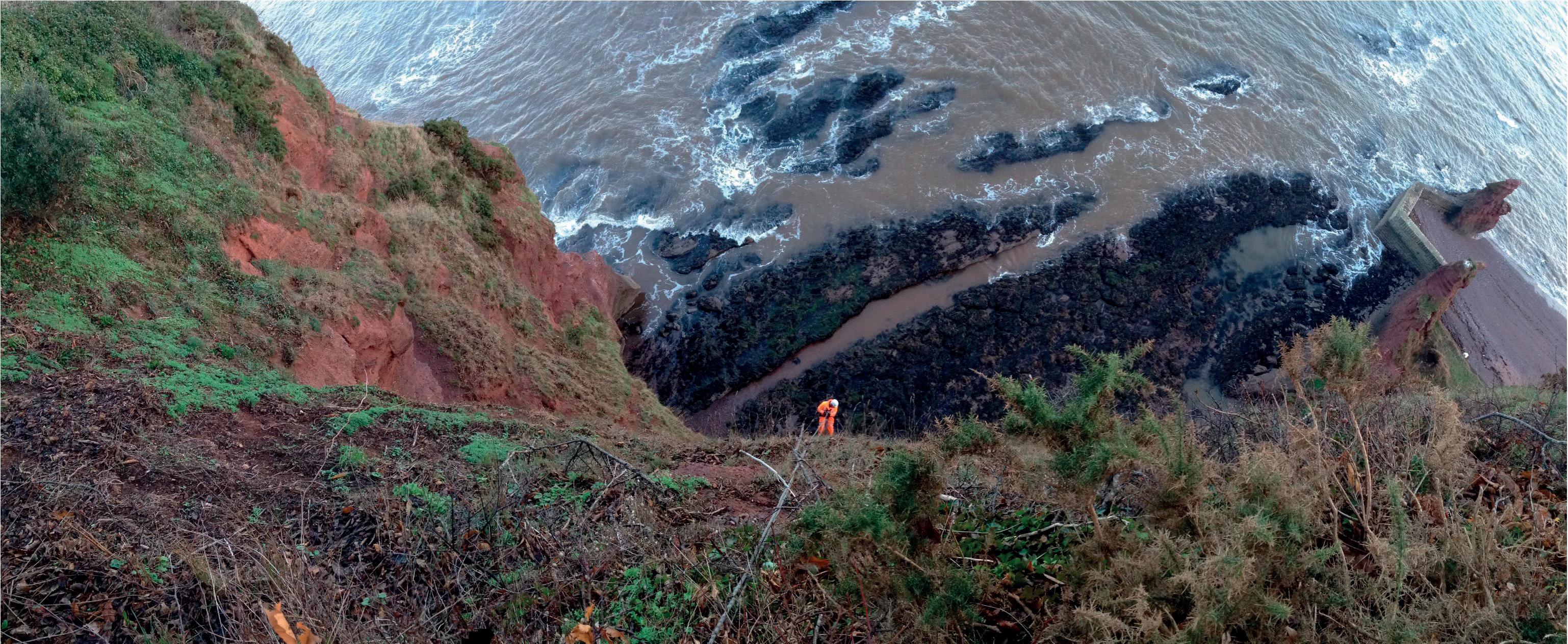

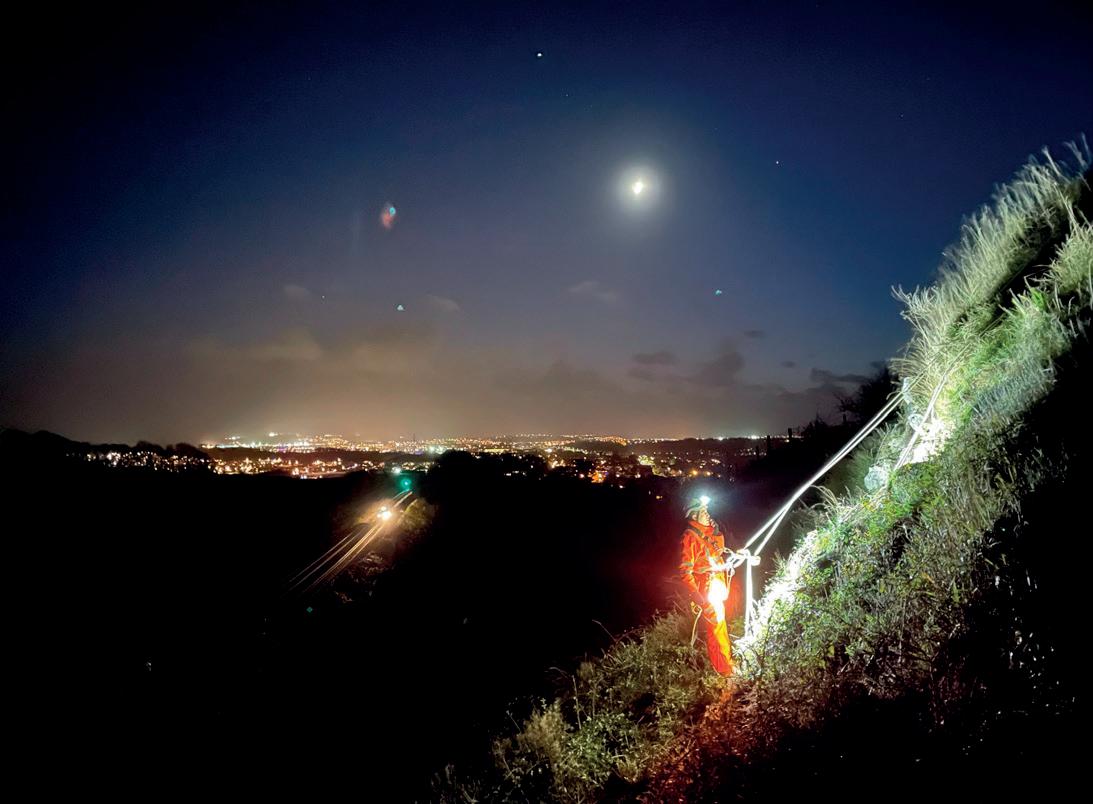
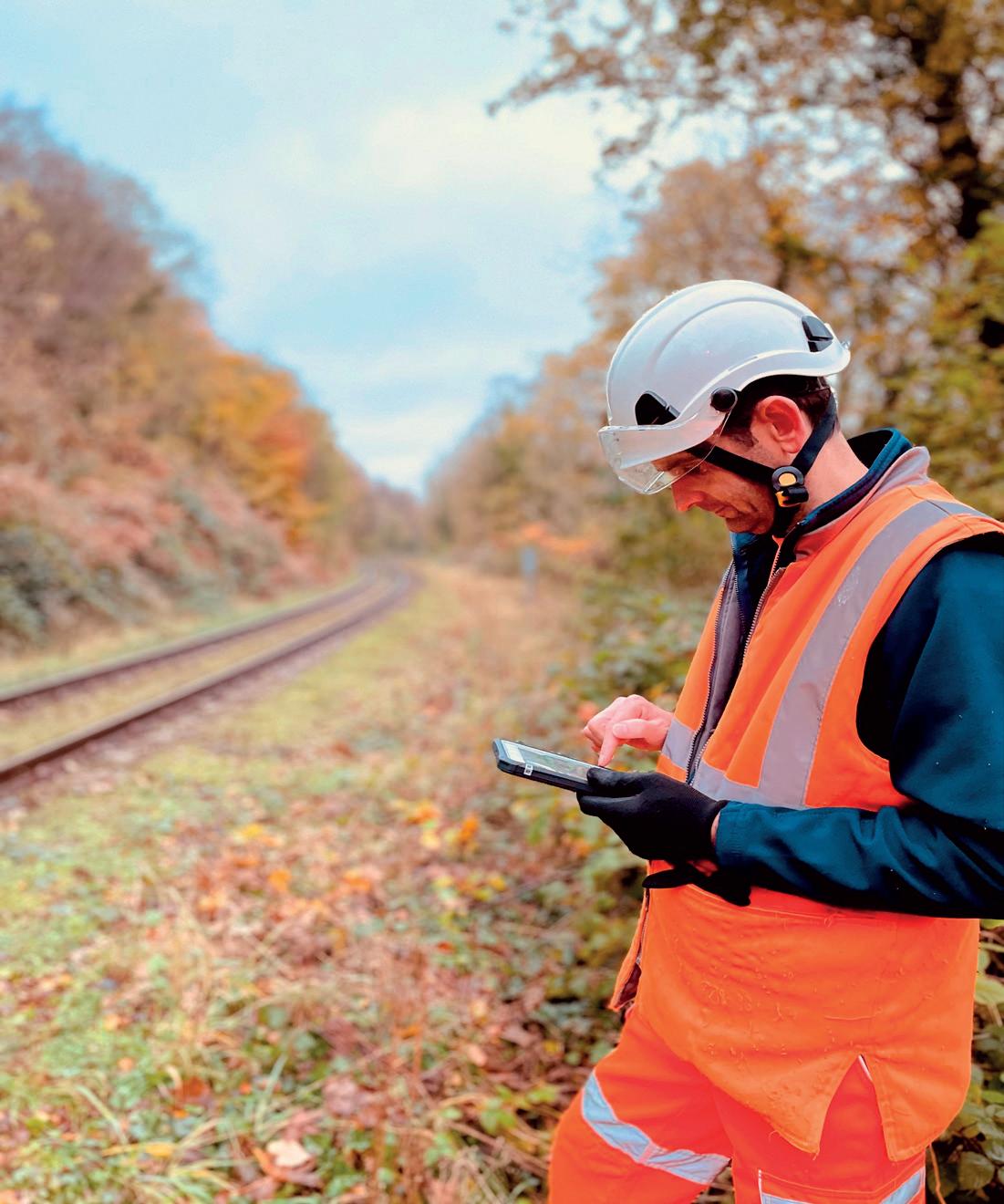
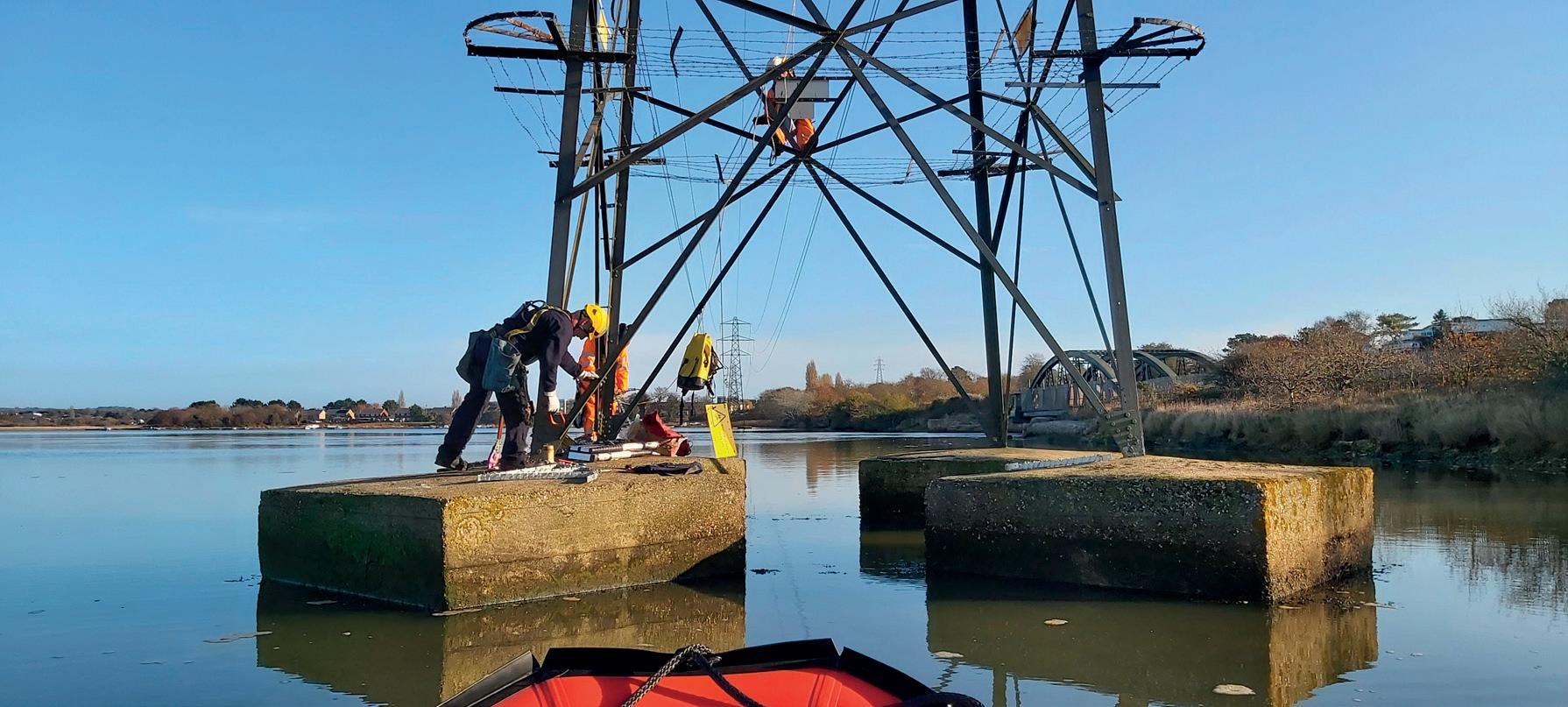



ASSET INSPECTIONS Earthworks Structures Drainage ACCESS SOLUTIONS Rope Access Underwater Drones Confined Space T: 01543 411994 E: info@geoaccess.co.uk www.geoaccess.co.uk WE COLLABORATE WE INNOVATE WE SOLVE
As the first passengers took advantage of eight new stops on the growing tramway in Edinburgh, managing director Lea Harrison reflects on its achievements to date and how these provide a solid platform for future success
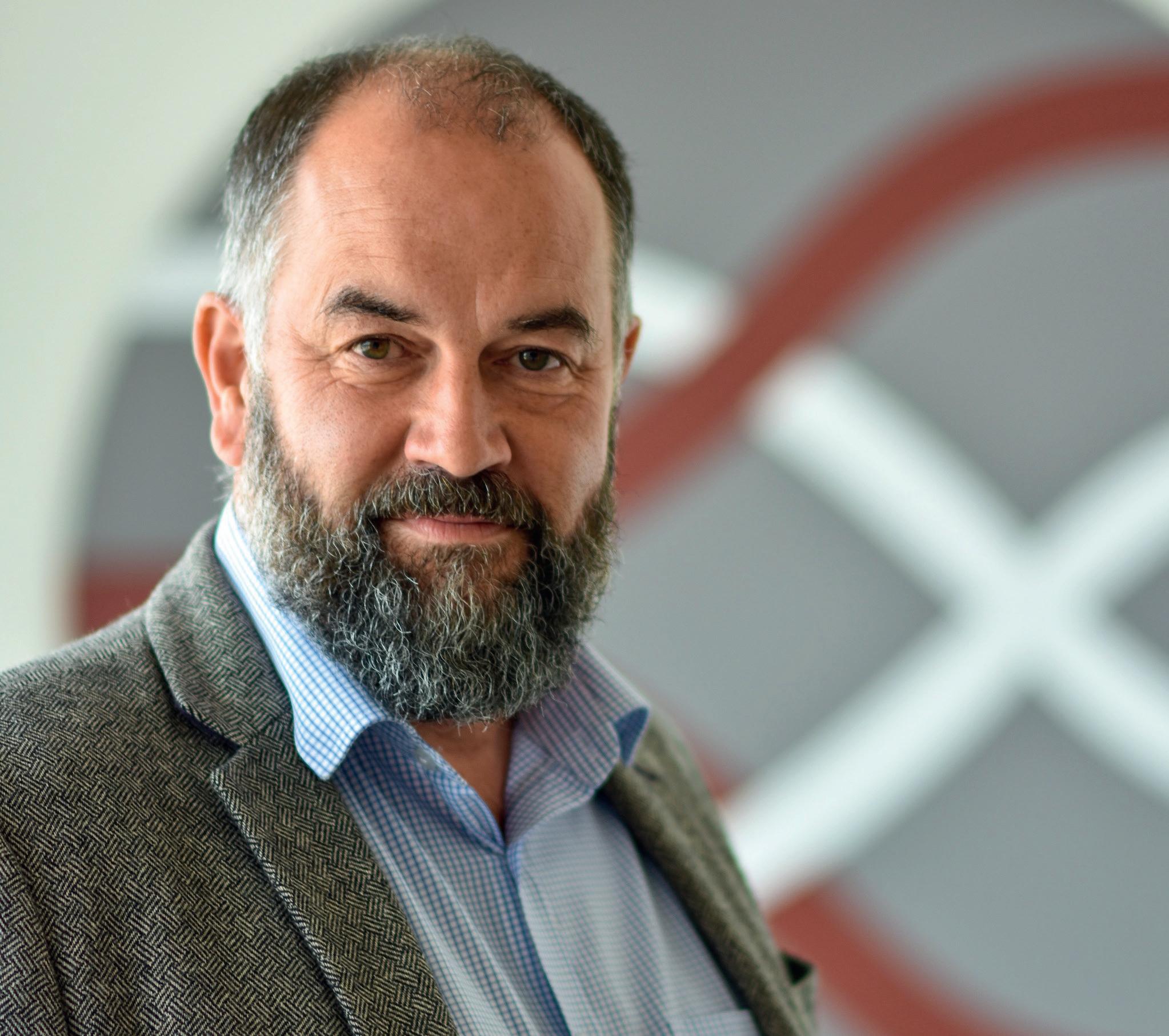
Edinburgh Trams enters new era as new route opens
INFRASTRUCTURE 54 June 2023
With the launch of services along a recently completed line to Newhaven, the Edinburgh Trams team is looking forward to delivering its award-winning brand of service excellence to tens of thousands of new customers along the three-mile route.
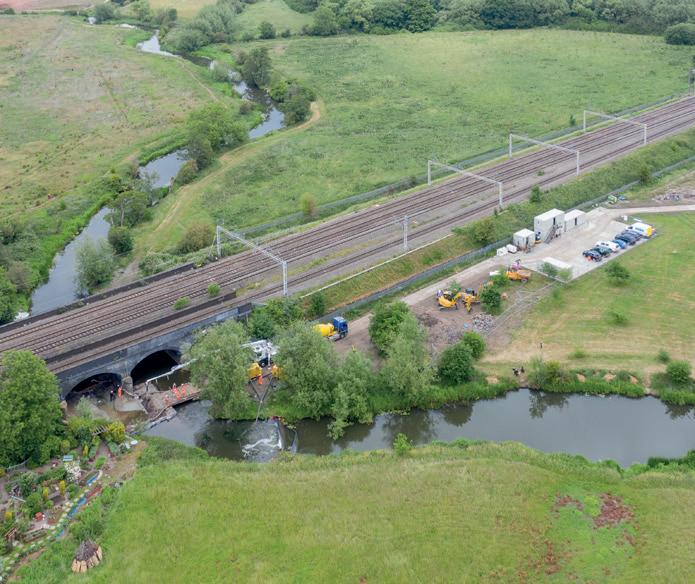
Since the first trams ran from Edinburgh Airport to the city centre on May 31, 2014, they have clearly proved massively popular with both residents and visitors to our great city.


Prior to the COVID-19 pandemic, we were seeing annual patronage of more than 7.5 million, representing consistent year-on-year growth, and this success created an environment in which decisions to continue the line on to Newhaven could be taken with confidence.


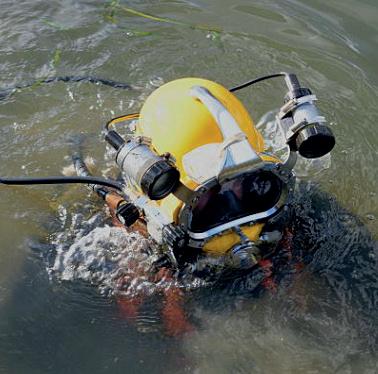
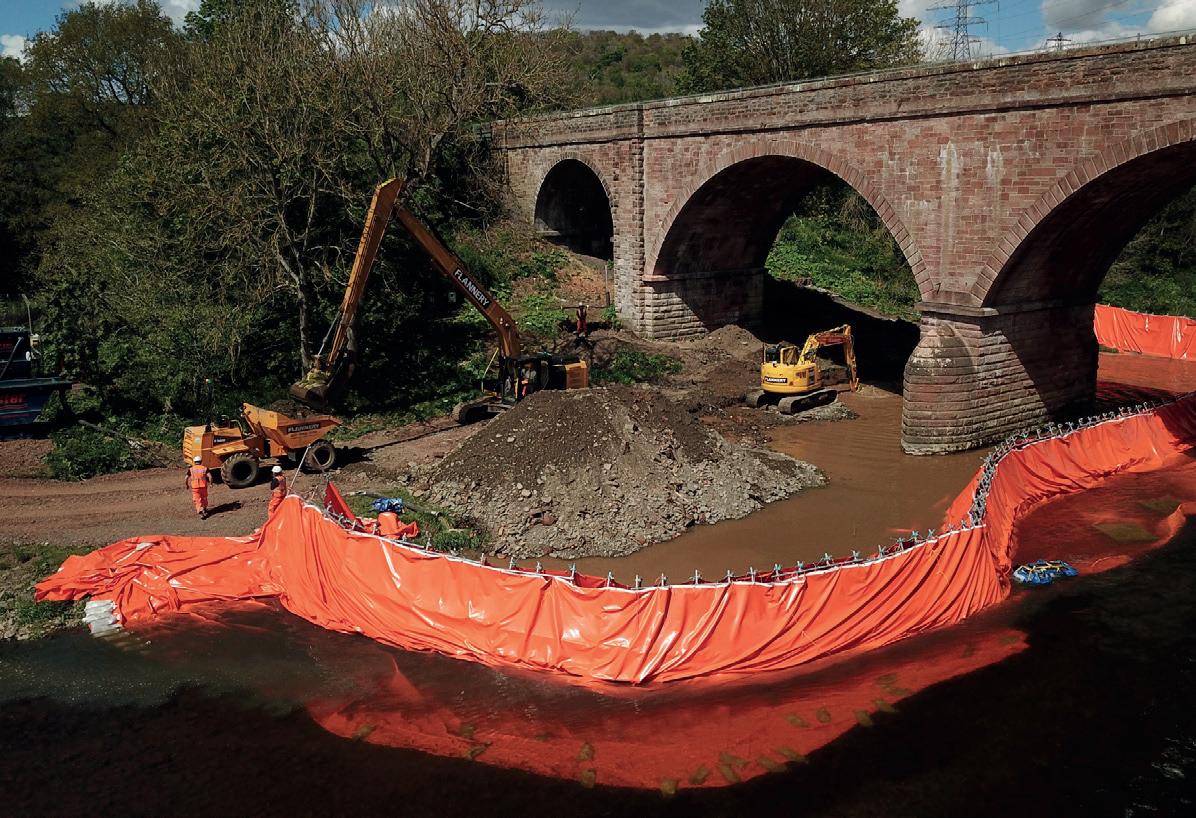

Since coronavirus restrictions were lifted, we’ve worked hard to attract passengers back to a light rail system that has already proved its worth when it comes to keeping the city moving, even during a global health crisis. We’re also on track to repeat the near-perfect customer satisfaction scores recorded in pre-pandemic surveys and, as a result, we have entered this exciting new era for both the tramway and the city with huge amounts of optimism for the future.


Completed on time and on budget, the £200 million Trams to Newhaven project offers us the opportunity to take our popularity to the next level by providing a swift and convenient transport link between some of Edinburgh’s most densely populated neighbourhoods and the city centre.

Swansea • Bristol • Kent 01792 301818 www.kaymacmarine.co.uk
Tamworth Scour Protection Scheme
Redbridge Scour Protection Scheme, River Tweed, Galashiels, Scotland
Kaymac Marine & Civil Engineering is the leading provider of marine civil and subsea diving engineering services supporting major rail asset maintenance schemes across the UK
Above and Below
Waterline
Rail specialist contractors since 1989
Engineering Innovation
the
INFRASTRUCTURE 55 June 2023
Serving Leith and other key destinations such as Ocean Terminal, with its extensive shopping facilities and other popular attractions, the line promises to deliver a real boost to local businesses and the communities it serves. There’s no doubt its successful launch has been a real team effort. It follows the completion of a complex construction programme that has seen contractors, led by the Trams to Newhaven project team, overcome a series of unforeseen challenges. These included the unprecedented COVID-19 lockdowns and unexpected utilities diversions. The uncovering of a medieval graveyard also provided a somewhat unusual obstacle to preliminary groundworks.
Once the core construction work was completed, history was made in March this year when the first tram in close to 70 years ran down Leith Walk and on to Newhaven. This milestone signalled the start of a major testing and commissioning programme to fully integrate the new line within the existing network, and trials of a new timetable that now sees trams run from every seven minutes, seven days a week between 6am and midnight between the airport and Newhaven.
Recent months have also seen us recruit 60 new drivers and create a further 40 jobs within our customer experience team, providing valuable career opportunities for local people from a wide range of backgrounds.
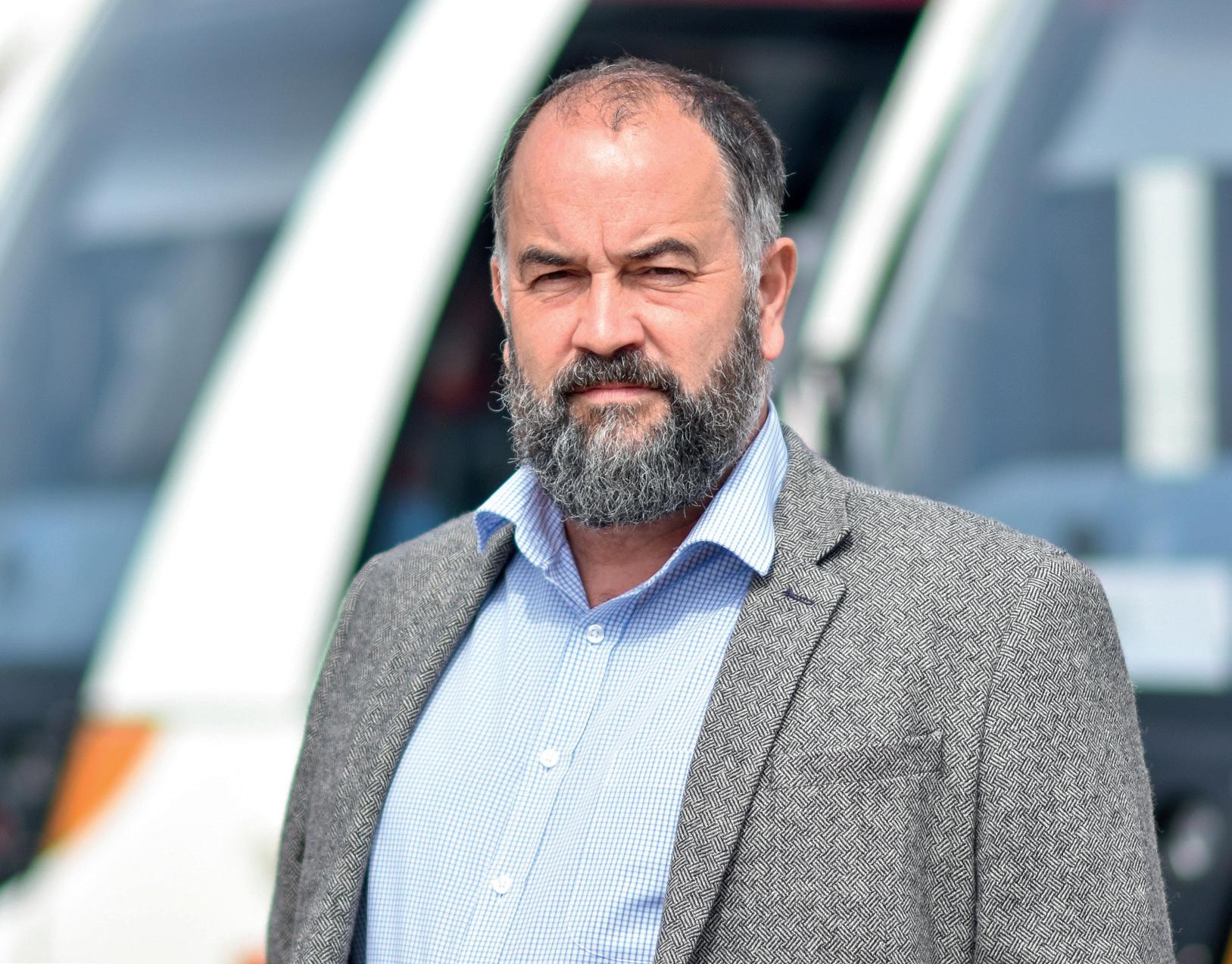
Deploying a state-of-the-art simulator at our purpose-built learning and development facility enabled us to put new and existing tram drivers through an intensive training and route familiarisation programme. Using the latest technology to train multiple candidates simultaneously was highly advantageous in that it enabled us to reduce costs and drive operational efficiencies without impacting on existing services.
Of course, the journey to this point has not always been easy, with the pandemic representing an unprecedented challenge for all transport operators. Our response, heralded by industry commentators, was to redouble our efforts to maintain a reliable and robust service for our customers. We were able to do this thanks to sheer hard work, with the flexibility of the entire team and the ‘can do’ attitude of managers and front-line employees enabling us to maintain 99 per cent of scheduled services.
New horizons
Looking to the future, our talented and enthusiastic team is committed to building on a formula that has already earned it wide acclaim from the wider light rail sector, as well as the thousands of people who rely on it every day for work or pleasure.
For example, we will continue our support for major sporting and cultural events in the city, including increasing the number of trams running at key times. This helps avoids congestion and delays around venues and ensures the best possible experience for passengers.
Just a few weeks ago, we set new daily patronage records, with more than 100,000 customer journeys recorded over two days when we increased service frequency before and after Harry Styles concerts at the BT Murrayfield Stadium.
Furthermore, to meet customer needs we routinely boost services during Edinburgh’s festival season and at Christmas.
As well as helping us to drive up patronage, such initiatives help improve the experience of event ticket holders and visitors to the city, and we will continue to forge partnerships with world-famous attractions located across Scotland’s capital city.
Clearly, the new route will help us to bring the tram within easy reach of even more potential customers, and ahead of the launch our customer experience team has been out and meeting members of the travelling public face-to-face, providing information on the new services. We’ve also been meeting with local businesses to help them capitalise on the opportunities they offer –in terms of attracting new customers and helping their employees get to and from work.
As the clock ticked down to the launch, this information exercise ran alongside a vital campaign focusing on safety, one which has urged members of the public to stay alert when near the new tramway. This is particularly important in areas where pedestrians, cyclists and motorists may be sharing the roadways with trams for the first time.
Following so much hard work by so many people over a number of years, the opening of the new route is certainly a milestone for Edinburgh Trams. But it means so much more for Scotland’s capital, making a popular and convenient mode of transport available to even more communities while helping to further its ambitions to become a sustainable, net zero city.
We firmly believe the tramway can go from strength to strength, creating a more connected city and improving its already excellent transport network. By building on the system’s undoubted success over the past nine years, we aim to be an integral part of the city’s future prosperity by providing worldclass, environmentally friendly and socially inclusive transport.
INFRASTRUCTURE 56 June 2023
We firmly believe the tramway can go from strength to strength, creating a more connected city

A great British company that continues to innovate and grow Call us on: 020 8305 1988 Millcroft Services Plc Salutation House, 1 Salutation Road, Greenwich, London, SE10 0AT Email: sales@millcroft.co.uk www.millcroft.co.uk
Steve Boshier has been announced as the new president of the Institution of Railway Signal Engineers (IRSE). His theme for the year is global integration
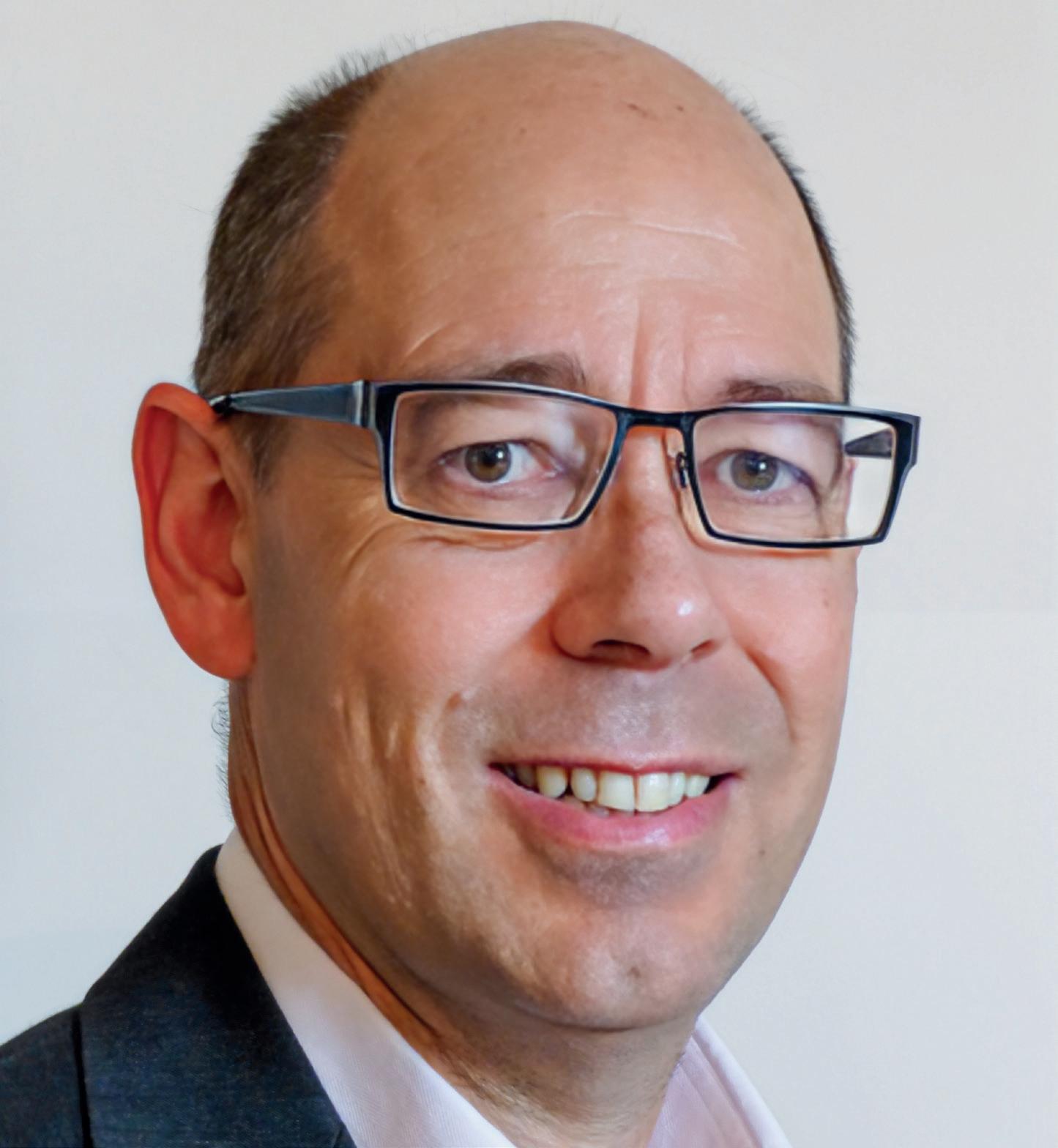
Connecting people, processes and technologies
e are living in a hi-tech connected society these days and we need to look at how we best leverage the global expertise the IRSE membership can provide for the safe and efficient operation of railways.”
That is the message from Steve Boshier, who has recently become the 99th president of the IRSE, the professional institution for all those engaged in or associated with railway signalling and telecommunications, train control, traffic management and allied professions.
Held in Melbourne, this year’s AGM – where Steve was inaugurated as president – was the first to take place outside the UK in the institution’s 111year history. It recognises the global nature of the organisation, with over 50 per cent of IRSE members living and working outside the UK, including Steve who lives in Australia.
“During my presidential year, my theme is global integration, with a particular focus on listening to the membership’s needs and how we best provide the required process and technologies to support them.”
He takes over from Andy Knight as president. Jane Power has become senior vice president and both Bogdan Godziejewski and Professor Rod Muttram are junior vice presidents.
A wealth of knowledge and experience
For Steve, his railway signalling journey began as an engineering officer cadet within New Zealand Railways. He’s now had more than 40 years’ experience, playing a pivotal role as manager, asset integration and completions for Victoria’s level crossings removal project, working to remove 110 dangerous and congested level crossings by 2030.
“The safe operation of the railway is something that happens behind the scenes, and it’s been a big part of my career,” he said.
“Back in the good old days, as I hear people refer to it, I initially started working in the district engineer’s office under the mentorship of a senior signals engineer.
“I was provided with a cadetship training programme where I rotated through and worked in the various signals and telecoms areas of the railway.
“This included the signals maintenance teams working out in the field, the wiring shop where we produced various types of relay and power racks, the relay repair and test room fixing and refurbishing relays, and the telecoms maintenance team.
“The training programme ensured that I received some great hands-on training working with a range of teams that would eventually end up supporting me when I progressed to testing and commissioning signalling systems.”
It was the start of a journey which has allowed him to work in a range of different roles over the years on a variety of major projects and railway systems around the world.
But one thing that has remained important has been the involvement of the IRSE, credited with supporting his training and education over the four decades through its online body of knowledge, networking opportunities, and various conference and site visits to see numerous rail operations.
“W PEOPLE 58 June 2023
“My involvement with the IRSE began when I joined in 1992 and since then I have continued being an active member, participating and supporting the industry,” he said. “It has been a great source of knowledge and networking, and provides access to rail systems that you wouldn’t ordinarily be able to get to see.

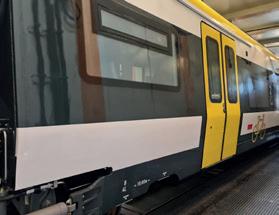
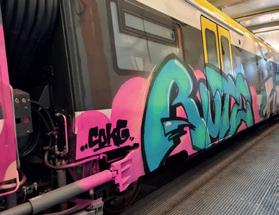
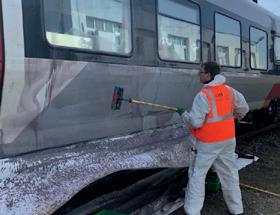
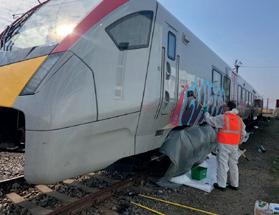
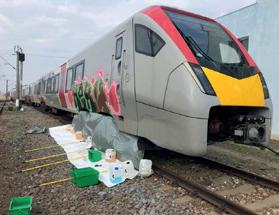
“This has allowed me to support the institution through actively participating in a range of committee roles and I have organised and participated in many IRSE technical conventions and conferences over the years. I am a great believer that you get back whatever you put into an organisation, which is why I have continued to support the IRSE in a variety of different ways over all of those years.”
Improving connections

Turning attention to the year ahead as president, and Steve announced at the AGM that the theme would be Global Integration, in keeping with the five key pillars of the institution’s strategic plan, which is to engage, grow, network, develop and assure.
“Today we are very much a connected society through technology and systems such as social media, the internet, and our smartphones, but there is still much more we need to do to get the right balance,” he said. “Global Integration is about people, processes and technologies together and underpins how the IRSE can continue to develop and change for the good of the industry. We are a global organisation of over 5,000 members living in 54 countries around the world. We have 21 sections supporting those members
and we need to look at how we can leverage those local sections, to grow more of them and to get better at sharing our knowledge and expertise.
“As a professional institution, my objectives are to ensure that we are leveraging our members’ knowledge and experience and continue to look at ways to improve our processes, both from a business point of view and within the rail industry. Technology is our friend so let’s not try and reinvent a solution if it’s being used elsewhere in the world and is suitable.
“As part of continuous improvement, when we are looking to solve technical issues, global integration should be our aim. We all need to stop and ask, has it been done before, who can I ask and how do I get the help I need? People, process, and technology all go hand-in-hand, and the year ahead is about how to do better with all three.”
During their presidential year, each IRSE president organises a themed series of presidential papers, presented by leading experts in railway signalling, communications, train control and traffic management. Steve’s presidential programme on global integration will feature presidential lectures from industry experts across Australia, New Zealand and the UK. Recordings of these in-person events will be added to the growing number of lectures and educational materials on the Institution’s Vimeo channel over the course of the year and are free to view. Full details for each lecture will be published in the events section of the Institution’s website https://www.irse.org/Get-Involved/Events
LECM Industries Ltd, is an innovative family company with more than 49 years of tradition and knowledge in the scientific evolution of environmentally friendly cleaning and protection products. For more than 25 years, we have specialised in graffiti removal and protection systems for the interior and exterior of railway vehicles, buildings and stations. The satisfaction of our customers is of great importance to us and we strive to meet the highest expectations and guarantee professionalism and reliability.






We are currently a market leader and partner of many major companies in the private and public sector in Europe. For many years, we have been a Q1 supplier to Deutsche Bahn AG, Stadler Rail, SBB AG, ÖBB, private railways and transport companies as well as many state municipalities over Europe and some in the UK.


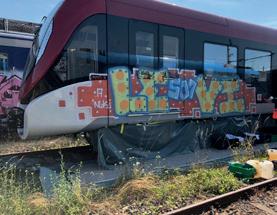
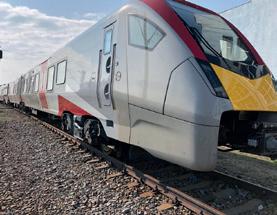



We specialise in Graffiti Removal, AC train tubes, heavy duty interior and exterior cleaning.
www.crous-group.com Adrian@crocuschemicals.co.uk +44 (0) 7753 667 287
PEOPLE 59 June 2023
The safe operation of the railway is something that happens behind the scenes, and it’s been a big part of my career
Claire Houghton has announced her retirement from the charity which supports railway people and their families. The organisation is now seeking a new chief executive to lead it through its next stage of growth and development
The search is on for a new CEO for the Railway Benefi t Fund
hen I first approached Railway Benefit Fund (RBF), I was physically and mentally spent, homeless, with no family contact or support network. I freely admit that I considered the ultimate option of ending the pain. After contacting RBF, I saw an opening, a glimmer of hope. I now have a furnished flat, am in good mental health and physical health and back in contact with my family.”
A powerful story and one with a happy ending thanks to RBF. Since 1858 the charity has supported thousands of former and current railway workers with everything from financial grants and confidential advice to online tools and a legal helpline. In the past five years alone, demand for the charity has more than tripled with someone in rail reaching out every four minutes.
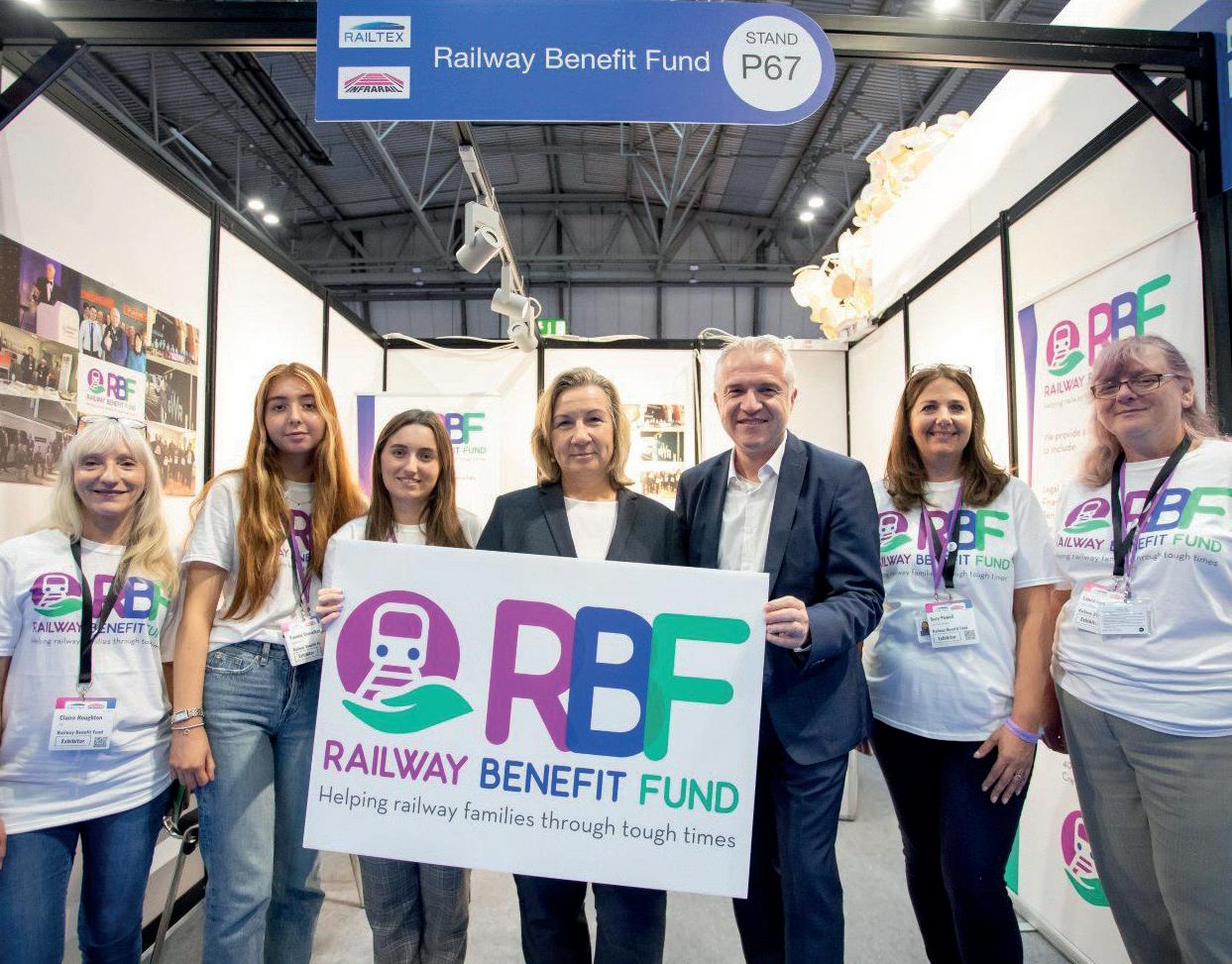
Claire Houghton, the charity’s current CEO, announced her retirement earlier this year after successfully leading RBF for the past three years, providing an opportunity for an individual with vision, drive and passion to take on this role and progress the charity’s objectives and goals in line with its overall strategy.
Tim Shoveller, managing director of Network Rail’s North West and Central region and incoming CEO at Genesee and Wyoming has been chairman of the RBF since 2015. He said: “Having been involved with the charity for the past eight years, I have seen firsthand the incredible work that RBF does with railway staff past and present.”
Expanding horizons
The new chief executive will lead the organisation through its next stage of growth and development.
The successful candidate will be an exceptional communicator with the ability to engage effectively with partners, stakeholders and funders within the rail industry and the wider community.
They will have a keen understanding of how to maximise a range of income streams and be able to support an experienced management team in delivering crucial services to rail industry people.
Tim added: “In 2022, RBF supported over 1,000 railway families with financial support; 25 per cent more than in 2021.
“One interesting takeaway has been a significant shift in the number of current workers reaching out for help; over 60 per cent of grants were awarded for those who currently work in rail, from sectors such as passenger, freight, infrastructure, supply chain and ancillary services.
“Furthermore, the average age of beneficiaries is younger than previous years, with those in their thirties and forties being the predominant age group.
“The CEO role is a fantastic opportunity for an experienced rail professional to support and give something back to the industry.”
To find out more about the role and apply, visit www.railwaybenefitfund.org.uk/vacancies/ceo/ For an informal discussion about the role, please email choughton@railwaybenefitfund.org.uk
“W
The CEO role is a fantastic opportunity for an experienced rail professional to support and give something back to the industry
PEOPLE 60 June 2023
Claire Houghton
(far left) with some of the RBF team at Railtex








East West Rail: new proposals bring Oxford-Cambridge rail service one step closer
East West Railway Company (EWR Co) has published its latest proposals for East West Rail (EWR), which will connect Oxford, Milton Keynes and Cambridge. Construction of the railway between Bicester and Bletchley is already well underway and track-laying passed the halfway mark earlier this year before passenger services between Oxford and Milton Keynes begin in 2025. Plans for the rest of the route have been updated following feedback from the second non-statutory public consultation with local people, which has been analysed alongside environmental and technical studies. The updated proposals include a route alignment that best serves the Cambridge Biomedical Campus, a new station near Tempsford, trains every 20 minutes on Marston Vale Line, and a new station for Bedford Hospital.
Opening of Reading Green Park station
Passenger services have got underway at Reading Green Park, after the town’s first new station in 116 years opened its doors. A special celebration event was held at Reading Green Park on Thursday, with a plaque unveiled to mark the town’s first new station since Reading West in July 1906. Reading Green Park is the first of three new Great Western Railway (GWR) stations opening this year, along with Portway Park & Ride in Bristol and Marsh Barton in Exeter.
Planning permission granted for Cameron Bridge station
Network Rail has secured planning permission for the construction of the new Cameron Bridge station as part of the Levenmouth Rail Link project. Located southeast of Windygates just off the A915, Cameron Bridge station will have 125 car parking spaces with provision for electric vehicle charging, accessible spaces and cycle storage. It will have a bus stop and turning circle and will connect to local communities via new footpaths. It will also connect to Methilhill via a new bridge over the river to the south. Cameron Bridge is one of two new stations being built on the new rail link, with the other at Leven also now under construction.
Network Rail: Passengers and freight at the heart of new £44 billion, fi ve-year plan for railway
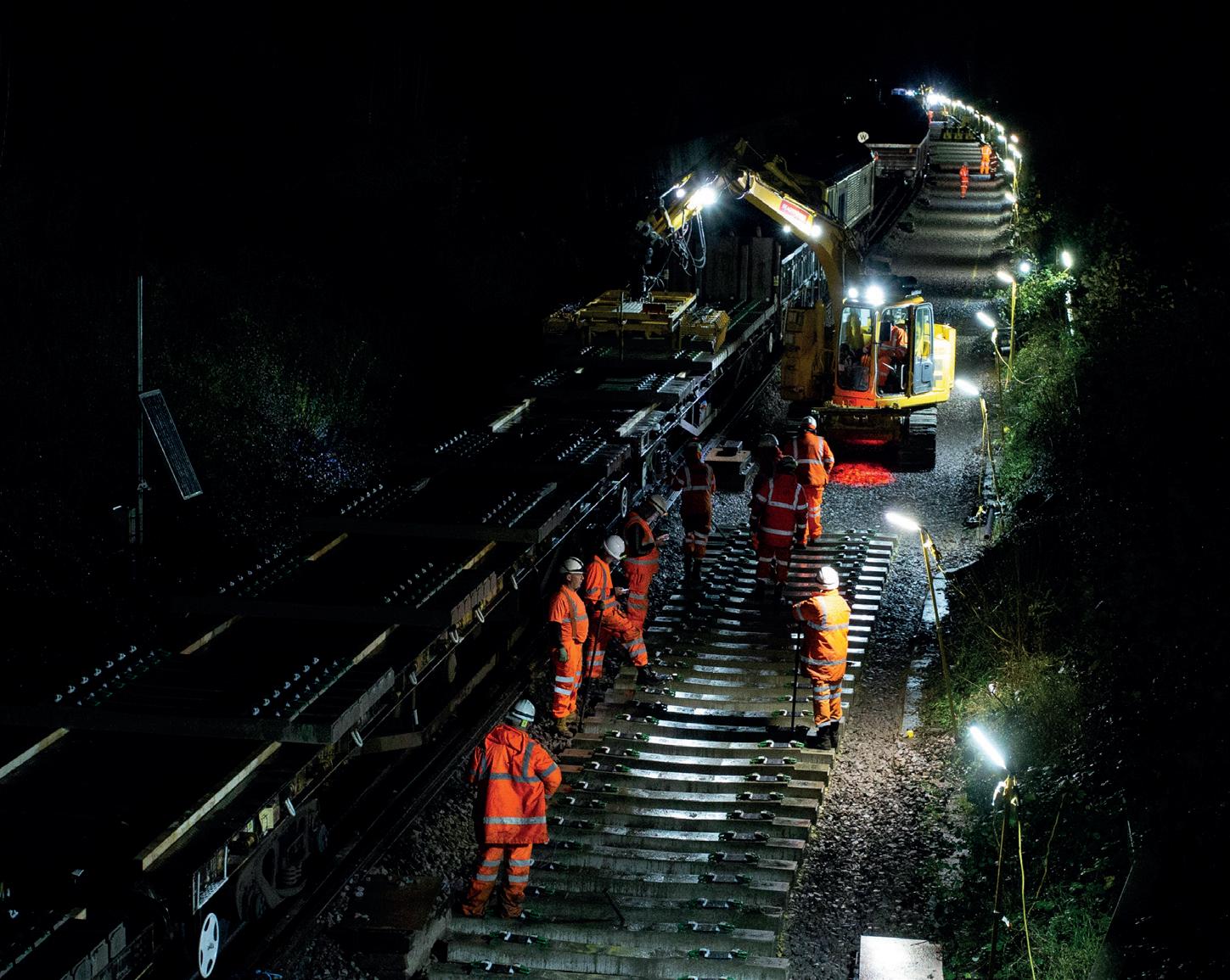
Network Rail has published its £44 billion, five-year plan (2024-29, Control Period 7 – CP7) for the railway in England and Wales.
It sees increased investment in tackling climate change, improving train performance from current levels, investing in things that matter most to passengers and freight users, and making our ‘green’ railway, even greener.
Network Rail’s chief executive Andrew Haines said: “As we look to the next five years, the government’s commitment to invest £44 billion in the operations, maintenance and renewal of England and Wales’s railway is a clear indication of the strong economic value rail brings to Britain.”
In December the Department for Transport (DfT) published two key documents. One set out what it wanted the railway to deliver (High Level Output Statement – HLOS) and the other, how much funding it was making available (Statement of Funds Available – SoFA).
Over the last two years, and more intensively over the past three months, Network Rail has been working on plans to deliver the best railway it can for the amount of money available - £44.1 billion, which, after adjusting for changes in electricity costs, is £1.8 billion more than CP6 (2019-2024).
While funding for enhancements to the railway is no longer included in this funding settlement, the government has already committed £96 billion in the Integrated Rail Plan, with a substantial portion of these funds being delivered in projects during the course of CP7.
Sitting below the national overview, are four more detailed, regional plans for England and Wales, and plans for the national functions. Scotland’s Railway continues to align CP7 plans with Scottish ministers’ HLOS and SoFA, which was published in early February 2023. Network Rail says it aims to publish the final Scotland CP7 SBP in Summer 2023.
Andrew added: “Our plan for CP7 is ambitious, focussed on our passengers and customers and reflects the current complexities and challenges facing the industry.
“There will no doubt be obstacles ahead and I look forward to working collaboratively with the sector to deliver this plan, reshape the industry and build a railway that is fit for the future.”
The Office of Rail and Road (ORR) will now review this initial strategic business plan and review how it measures up against the government’s HLOS and SoFA. It will publish its draft determination on this plan later this year including targets, measures and incentives that will hold Network Rail to deliver over CP7.
News in brief NEWS 62 June 2023









Above 96% Availability 10,000 Catalogued Items Next Day Delivery Experience of £300m Rail Contract More Than 400 Suppliers Consolidated £ Introducing a brand new service TVS Rail Spares Providing you with all your needs in the rail sector across infrastructure, signalling, rolling rock and maintenance support. For all your Rail Needs www.tvsrailspares.com
Paul Bolton, managing director of SEP Rail Engineering, discusses his career as a track engineer, his work with leading clients, and the collaborative approach that has set the business apart from its competitors
Expert engineering services that ensure clients shine
e’re there to support the client, making them look good – it doesn’t matter if our name isn’t up in lights. If I can say we’ve delivered in partnership with CRSA, Tata Steel, Network Rail, or any of the other organisations we work alongside, I’m more than happy.”
This remark neatly sums up SEP Rail Engineering’s client-focussed approach – and reflects the pragmatic, forward-looking attitude of its managing director, Paul Bolton. Experienced track specialist Paul and his nine-strong team provide engineering, management and consultancy support to some of rail’s leading names, working in close partnership with them. Their collaborative approach sets SEP Rail Engineering apart from the countless suppliers offering self-delivery services to the industry, and has yielded strong results for clients – which, Paul explained, is always the priority.
An expert in track engineering
He added that, with over 100 years of rail experience between them, he and his engineers act as the “experts in their clients’ teams.” Paul began his own rail career at Jarvis, first as an apprentice track engineer, and later a technical engineer.
“I did my further learning on week release while I was out working 60 or 70 hours a week on track,” he remembered. “At first, I was doing things like setting out and surveying, but as I gained more experience, I was trusted to lead excavations and tamping shifts.”
A project engineering role with Trackwork followed, and Paul spent five years gaining invaluable experience in a range of rail environments.
He added: “I travelled the length and breadth of the country on my own, setting out and surveying for all types of railway work. It was really good for me –working on different kinds of railways, coming to understand that there’s more to it than just the main line, and realising what a key mode of transport rail is.”
Trusted to work independently at this early stage in his career, Paul developed strong time management skills and a big-picture understanding of the industry. His first experience of leading a team was at
AmeyColas, where he initially helped to deliver high output ballast cleaning and track relaying services. He was later promoted to lead engineer and CRE, overseeing both high output track renewal systems.
Four years later, Paul launched his own track engineering consultancy, TEC4TRACK, which went on to support clients like Story, Amey and BAM Nuttall. In 2020, the business was acquired by independent rail group SEP Rail Services and became SEP Rail Engineering, part of the SEP Rail Group.
“It has grown faster, better and stronger since it became part of the SEP Rail family,” he commented. “Rikki (SEP Rail Services’ managing director and a director of SEP Rail Engineering) is the kite and I’m the anchor, which is why we work so well together.”
A different approach to track engineering
Today, Paul, colleague Sam Pinkney (the business’s finance and commercial director), and a team of nine full-time engineers support rail projects across the UK. The services they provide range from expert site engineering to consulting, engineering management, and project and delivery management.
Seasoned rail engineer Paul explained that the business is still driven by a simple vision – to become a “leading supplier of engineering services to the rail industry with safety and technical excellence at the heart of everything it does.” He drafted this vision statement himself, shortly after joining SEP Rail.
What really sets SEP Rail Engineering apart from the competition, however, is its collaborative approach.

“W ADVERTORIAL 64 June 2023
Engineering Support for
the UK’s Railways
Providing critical support to projects throughout the UK, we work alongside the leading names in rail, delivering the engineering, management and consultancy their schemes demand.


Site Engineering
Provision of site engineering expertise to support the preparation, core delivery and commissioning/entry into service deliverables.

Engineering Consultancy

HOW CAN WE HELP?
Supporting clients with technical support, guidance and solutions to ensure engineering is considered through the life-cycle of any project.

Engineering Management
Provision of key engineering assurance and delivery roles to align with the Engineering Management for Projects standard.
Project and Delivery Management
Provision of experienced professionals to support the client with the planning and delivery of projects.
Need engineering support on your projects? Get in touch

01904 403 322 info@seprail.co.uk www.seprail.co.uk
Where other suppliers frequently opt to selfdeliver projects, Paul and his engineers work alongside clients, dovetailing with their teams.
“It’s not just a case of ‘you’ve got a gap in your organisation and need a bum on a seat’,” he explained. “We’re engineers putting engineers to work; we understand our clients’ problem statements, and strive to address them.”
Paul believes that, in practice, this approach is more effective, more cost-efficient and more coherent. Working, not just as a supplier, but a fully invested partner, SEP Rail Engineering is better able to understand and meet its clients’ needs.
“We have to be fully integrated with their plan – it’s all aligned,” he added. “Everyone is pulling together in the same direction; we have the same goals as our clients, and share the jeopardy.”
Close working relationships
For Paul, building strong working relationships is also key. At the outset of a project, his engineers spend time in a client’s office, getting to know their teams and gaining a clear understanding of their requirements. They remain in close contact as the project progresses, providing deliverables in a way that works for the customer.
He said: “We tailor our service to the client’s needs, ensuring that the correct person is there, and the correct level of support is supplied. And they don’t just get the individual – they get the support of our other engineers, too.”
Paul explained that this delivery method involves commitment and hard work on the part of his team, adding: “You’ve got to have the right processes and the right people in place, making sure that everyone is aligned. It takes a lot of effort, but we do the delivery very, very well.”
Key to this is ensuring that SEP Rail Engineering’s team remains engaged, and Paul draws on his experience to support and inspire them.
“We often find that, as engineers become more senior, they move into management positions that they don’t necessarily enjoy,” he commented. “The way I’ve kept our team engaged is by removing the majority of these management responsibilities. And that’s what they love about it – they feel like engineers, and can focus on the cool, clever stuff.”
Delivering projects for the biggest names in rail
This approach is working well, not just with SEP Rail Engineering’s team, but for its growing client base. In 2022, the business was contracted to support Network Rail with the track renewal of four switch and crossing layouts at Windsor Bridge North and South Junctions. Over the course of four consecutive weekend possessions, it provided a managed technical service – with the renewals delivered safely and successfully, despite challenging weather conditions and the complex geometry of the track. Today, Network Rail is one of the business’s most important partners.
SEP Rail Engineering has also forged strong working relationships with the teams at Tata Steel’s two South Wales sites. There, Paul and his engineers carry out track maintenance inspections on the
privately owned rail networks used to transport materials, ensuring that they remain safe and operational. The data SEP Rail Engineering provides has enabled Tata Steel to prioritise trackwork, while its teams now have a better understanding of the railways’ infrastructure.
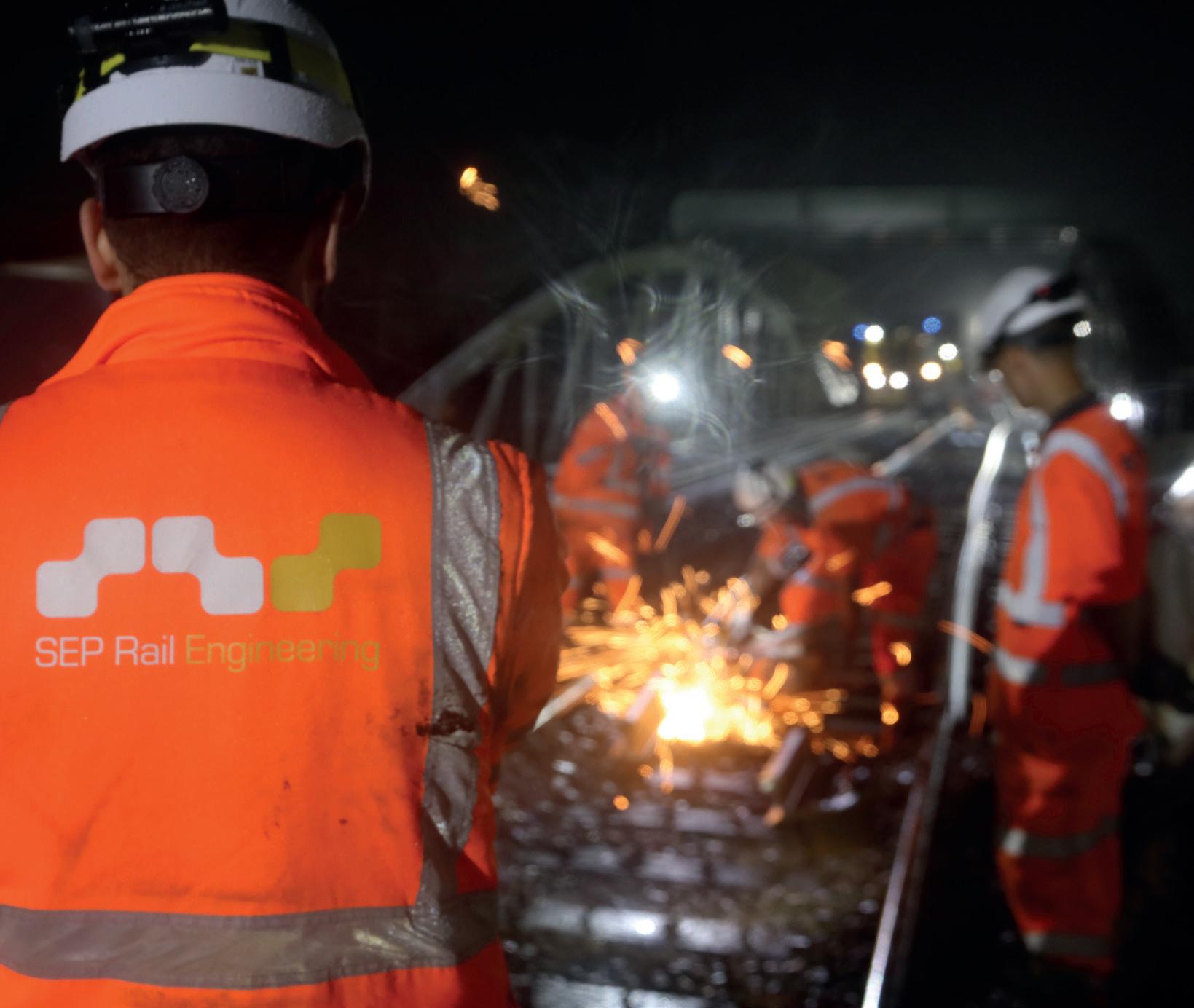
“Our contact at Tata Steel, who is a maritime engineer, said it was the best service of its kind he’s come across in the industry,” Paul remembered.
A bright future
SEP Rail Engineering works closely, both with its clients, and the other businesses in the SEP Rail Group family.
“There are engineering synergies with the other businesses, and it means we can take jobs from cradle to grave,” Paul added. “SEP Rail Services can survey it, James and his team at SEP Rail Design can design it, and we can deliver it.”
Following a period of dramatic growth, Paul has spent the last year “steadying the ship.” Now, he is keen to focus on controlled growth, while investing in a new generation of track engineering talent.
He concluded: “We need to make sure that we’re bringing the next generation through. We’ve got one apprentice already, and another engineer fresh out of university. I think we owe it to the industry, which has a massive skills gap – and I’d like to partner up with colleges and other institutions.
“For us, that’s going to be a key focus in the next 18 months. Our current team is well-placed to mentor and teach new starters, ensuring they’re doing things in the right way. Investing in the next generation will enable the business to thrive, and continue to thrive, for years to come.”
ADVERTORIAL 66 June 2023
You’ve got to have the right processes and the right people in place, making sure that everyone is aligned. It takes a lot of effort, but we do the delivery very, very well


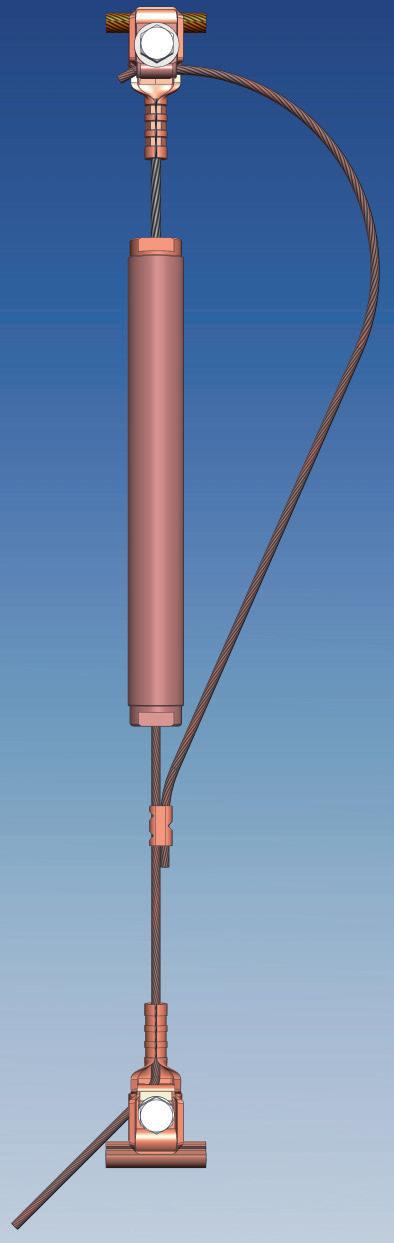



Mark Rushton, chief executive officer at STC INSISO, explains more about COMET, which is improving performance through root cause learning
Moving the dial from reactive to proactive incident prevention
he perfect solution in helping organisations understand what has gone wrong, what could go wrong, and what they need to do to prevent incidents.”
That is how STC INSISO CEO Mark Rushton describes a unique methodology that captures issues spanning Communication, Operating Environment, Management, Equipment, and Training; or COMET as it is better known.
Aberdeen-based STC INSISO provides risk control and assurance software and services for the rail, oil and gas, utilities, construction and marine sectors. It is COMET which is proving particularly useful for the railways, with modules already being used by the likes of Network Rail and major contractors building HS2.
“COMET is all about helping organisations control risk, whether that’s through proactive audit and assurance activity, or reactive incident investigation, capturing root causes in both their ‘dormant’ and more regrettably their ‘active’ states” added Mark.
COMET’S journey began when Senior PLC had a problem with incident investigation and RCA and after evaluating the market found existing solutions were too complex, too safety-focused, incomplete and lacking investigative rigor, and too expensive.
A development team with a combined total of 400 plus years of incident investigation experience worked with Senior plc to set a target and document what was missing.
They defined which application areas were needed, built and tested the RC spectrum which drove the name COMET, established process and methodology, and built a training course Senior was happy with.
Mark said: “COMET started life in 2012, out of a passion to do things differently. At its heart is an ecosystem of software, training and supporting tools that help organisations to ultimately prevent failure and therefore repeat success.
“It allows them to really understand incidents and near misses; recording, classifying and reporting them, but more importantly it allows organisations to do an in-depth, organic, real live investigation, understanding from that investigation what happened, crucially why it happened and what are we going to do to prevent it from happening again.
“That was its core DNA and in the last few years it has really grown and now for example we’ve entered into this philosophy of root cause learning. We’ve built COMET Assured now, which enables us to do the value that COMET provides, but do it before an incident happens, applying the system’s intelligence to audits and assurance activities.
“We’re moving that dial from reactive prevention to proactive prevention with the overall aim about incident prevention, not incident cure, and eventually we want to be at a point where we’re helping support the industry to stop these bad events from happening in the first place.”
“T ADVERTORIAL 68 June 2023
COMET has come a long way since first being developed more than a decade ago, with its suite now including:
COMET Assured: Audit and inspection analysis model that delivers root causes for priority findings.
COMET Investigate: World-leading methodology, training package and online solution for incident investigation, root cause analysis and prevention.

COMET Expert: A mobile-friendly application that guides the user in gathering relevant data during an ongoing investigation.
COMET Essentials: A simplified investigation and RCA process which enables organisations to consistently identify root causes across their full spectrum of incidents.
COMET Signals: Using AI to scan both structured and unstructured data to deliver clear, immediate and essential information you can’t see with the human eye.
COMET Resilience: Ensuring that human and organisational performance is an integral part of your learning and improvement efforts through a unique learning team toolkit.
“We bring an ability to capture all of this and understand it, and that for an industry the size of UK rail is significant,” said Mark. “We’re very early in the journey in the rail sector, but the interaction and conversations we’re having are extremely positive.
“We want to be different and we want to stand out and also at an industry level we are keen to give something back. Because the nature of COMET is that it gathers lots of data from lots of places and it makes intelligence out of that data, it means that at an industry level, we are ideally positioned to potentially collect on behalf of multiple stakeholders.
“If we are able to do that and we are able to look at trends at a very high level, we will be able to give something back. When COMET becomes well enough established and we’ve got the ability to anonymise that data and do something more with it, we would like to do that non-commercially and give it back to the appropriate people to be able to act on to keep people safer and try to prevent failure.”
Positive change
Mark has recently marked 20 years at STC INSISO, two years as chief executive officer. He’s been at the helm since the merger between STC Global and Insiso, which was completed in 2021, and more recently for the £2 million investment from Business Growth Fund (BGF) to support a business growth strategy focusing on the company’s ever-evolving suite of software products.
“The business itself has undergone perpetual change over the last few years, but very positive change, grown consistently year on year in terms of turnover, but also in terms of diversification,” he said. “A catalyst for the next phase of growth has been in taking external investment.

“STC Global was founded by my dad, I went away for a few years and did my own thing before I eventually joined him, and I’ve loved it. He was the first person in business I genuinely looked up to so I’m very pleased to
be carrying on that journey, one that has seen us work in every corner of the world.
“We’re helping to prevent failure and to save lives which is fantastic. The variety of the work continues to challenge us in a positive way, especially as we diversify further to meet specific industry needs.”
STC INSISO’s products, which span culture, safety and solutions to improve business processes and performance, are widely trusted and used across not just the railways, but also oil, gas, construction, marine and utilities.

Its annual revenue for 2022 was £4 million and that figure is predicted to grow significantly over the next two to four years, with the BGF investment already resulting in the creation of three new product development positions, and further recruitment continuing this year. The investment has also led to the COMET software platform receiving an accelerated development plan and roll-out.
“BGF’s investment proposition was particularly attractive to us for two reasons; firstly because of their strong track record of supporting innovative Scottish businesses, and secondly because of their people who gave us immediate confidence that they were culturally aligned to our team from day one of the journey,” Mark said.
“Overall, the future looks very bright for STC INSISO, and particularly for COMET where we will look to keep pushing the dialogue of what’s possible in that performance improvement space. Everything we do is around risk control and assurance, whether that is developing management training programmes that are going to make better supervisors, whether it is implementing COMET to go and understand incidents, or whether it is implementing an access solution to make sure the contractors aren’t running about on sites not inducted or qualified.
“All of it comes back to being better at risk control and helping organisations assure their operations, which in turn will help them grow confidently, and if they can grow confidently that makes industries grow and makes everything better. That’s where we fit; our small piece in that jigsaw, in being the company that gives organisations that assurance and security that what they are doing is safe, productive and efficient, whether that is building their software or implementing a new process, or training their people – that is where we fit.”
Visit www.cometanalysis.com/ for more details
ADVERTORIAL 69 June 2023
We’re helping to prevent failure and to save lives which is fantastic
Demco, a brand of Marton Geotechnical Services (MGS), is a market leader in drainage pipe systems. Anthony Stupak and David Bland explain more
The specialist in pipework for rail track drainage
Demco has manufactured specialist thermoplastic pipework systems for 40 years, driven by the importance of increasing the productivity and sustainability of drainage on the UK railways.
The UK manufacturer of a high-load, shallow install, rail track, UTX and cess drainage pipe system continues to lead the way, its position cemented with a Network Rail Certificate of Acceptance (PA05/02084) held since 2005.
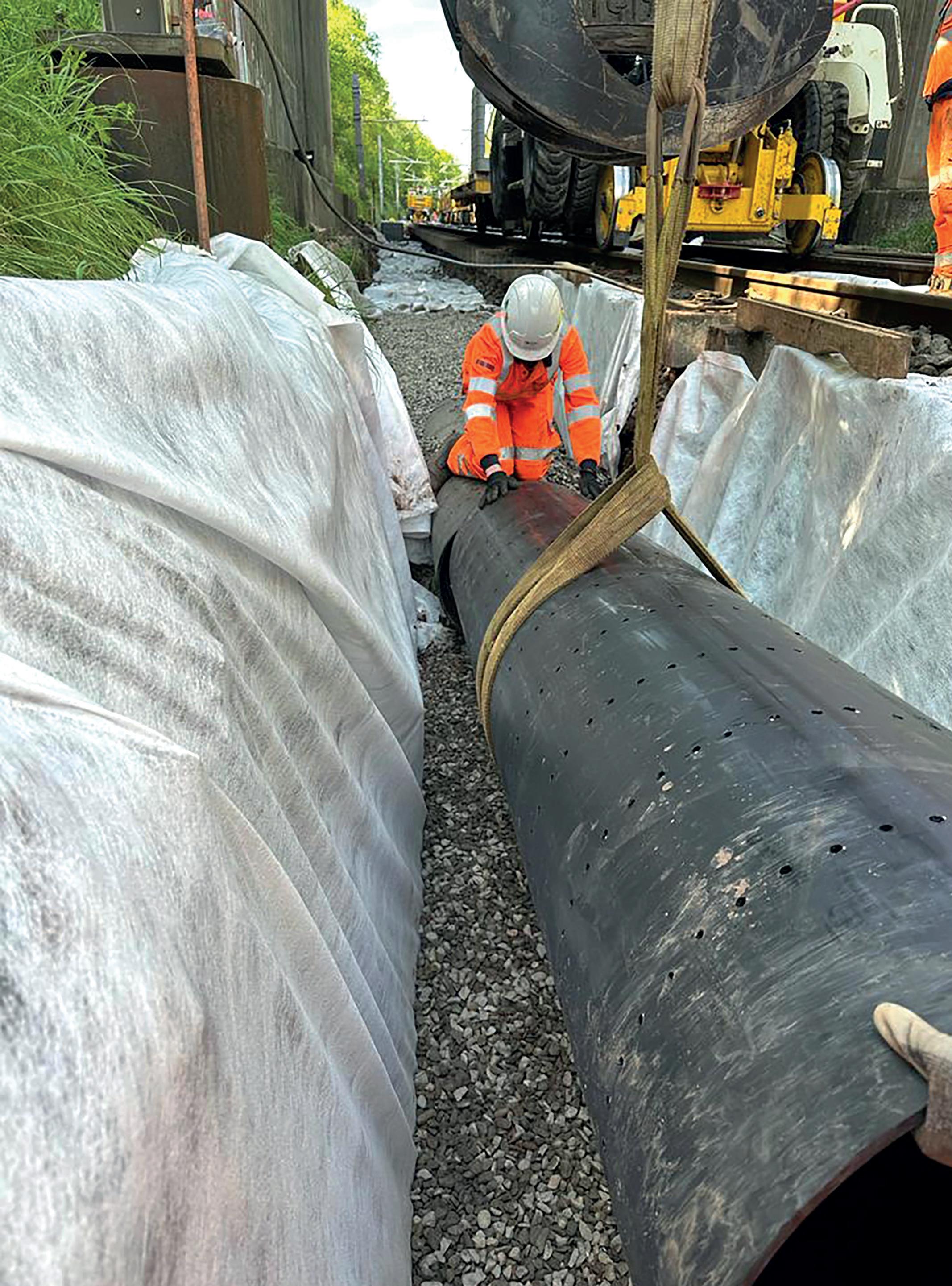
“The products are only becoming more and more important in ensuring that the track and passengers are safe on trains, with climate change and the conditions on the railway,” said David Bland, Demco’s rail division manager.
“The advantage of the Demco TerraRange of pipes is that they can be installed as shallow as 300mm under the track, which reduces the overall installation cost and time. Add to this the fact it is UK manufactured, which means we can be nimble, and the products have got a 60-year plus lifespan.”
The TerraRange products, including TerraDrain and TerraLine, are already widely used across the UK rail industry, and they comply with Network Rail’s Design for Reliability (DfR) and London Underground’s M 3360 A2 drainage specifications.
Demco also works closely in partnership with Cubis Systems, which manufactures a wide range of Network Rail-approved access chambers, catchpits (FLEXIpit) and cable protection products. The combination of Demco’s TerraRange of pipes and Cubis’ FLEXIpit provides a complete product that meets all Network Rail DfR requirements for rail drainage, including University of Birmingham performance validation tests of the FLEXIpits.
David, who will soon be marking 20 years at the business, said: “At our 35,000 ft2 factory in Coventry, Demco manufactures the TerraRange of products, which has a unique, integral, rapid push-fit jointing system, simplifying installation and helping installers utilise rail possessions most effectively. Using specialist equipment, Demco perforates the pipework to the necessary specification.
ADVERTORIAL 70 June 2023
“From concept to installation, Demco supports and assists its customers with product selection, design specification, costing and delivery requirements. We work regularly with consultants, merchants and installers, supplying high-quality products, often within rapid timeframes to meet clients’ urgent requirements.”
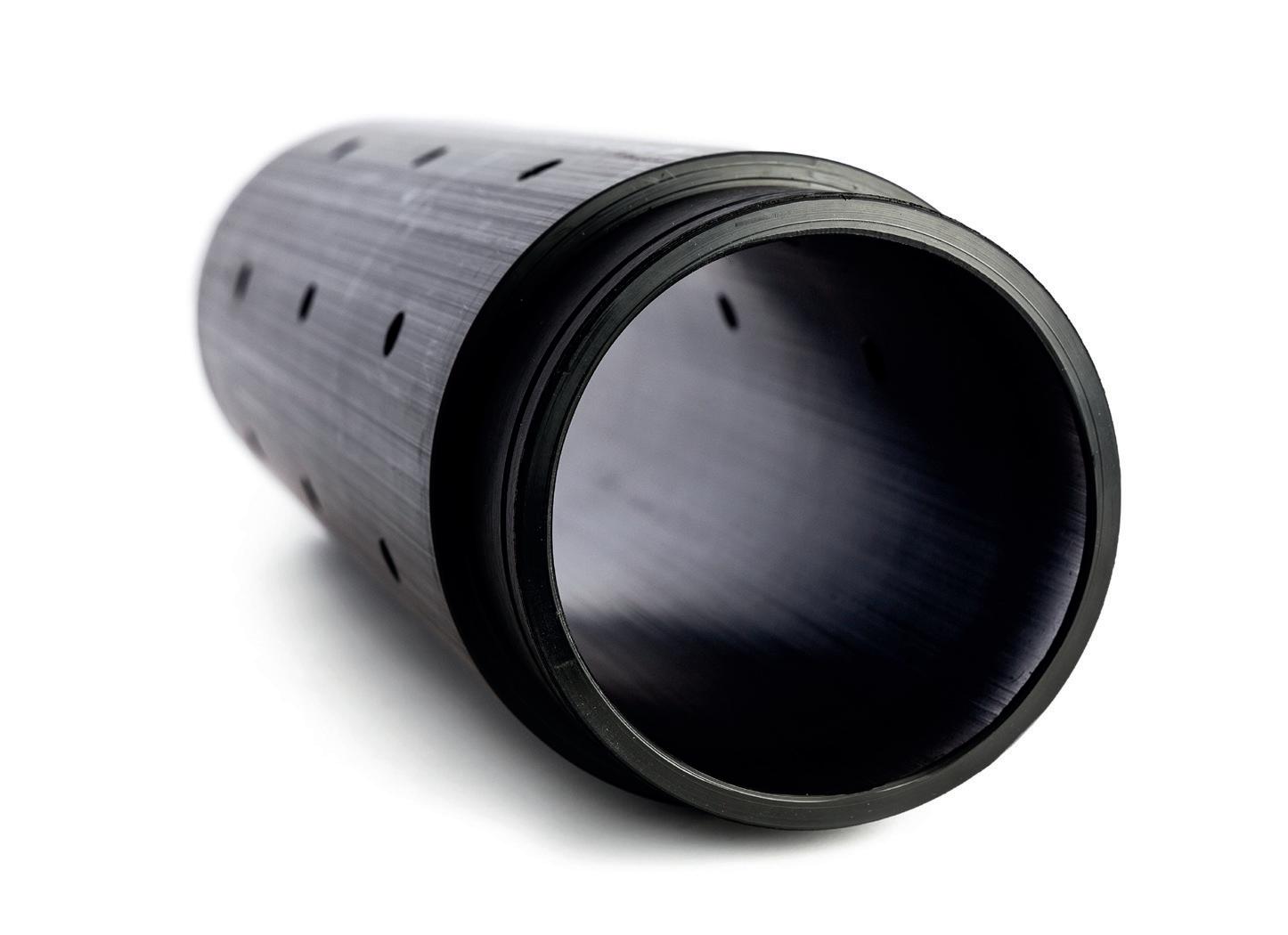
Demco is a trading brand of MGS, based in Bury St Edmunds, Suffolk, with further production and warehousing in Newcastle, Coventry and near Düsseldorf in Germany. The company, set up by Martin Clegg and Tony Osborne 35 years ago, also provides a wide range of products into geotechnical, geothermal and landfill markets.
A bright future
Anthony Stupak, who has been managing director for two years, said: “The future looks very bright for the company, with the service we can offer the rail industry very much at the heart of that.
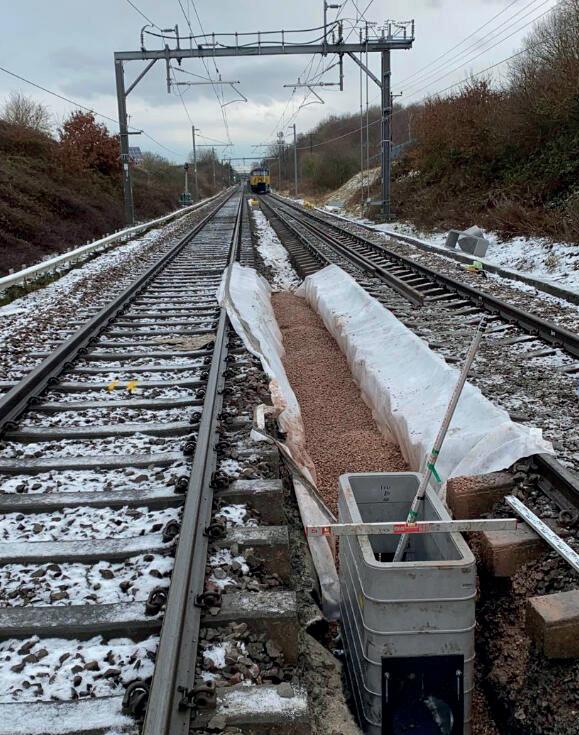
“We have ambitious growth plans, bringing the company into the 21st century, however ensuring we stick with those initial values of being nimble and having that can-do attitude in driving the company forward.
“We are considering a number of products that will expand our offering to customers and clients, along with utilising existing assets and capabilities within the business to help with the growth of rail.”
David concluded: “The team get an enormous sense of pride when we see the rail industry driving itself forward and know that we are playing an important part of that.
“The role we play may not be seen by the passengers, but it is vital in ensuring trains are running efficiently and safely.”
Call David Bland on 02476 602323 (landline) or 07793 444957 (mobile), email david.bland@mgs.co.uk, or visit https://www.mgs.co.uk/rail/ for more details
ADVERTORIAL 71 June 2023
From concept to installation, Demco supports and assists its customers with product selection, design specification, costing and delivery requirement
Simon Taylor, CEO at Rail Business Daily,
The UK Rail Report
The thinking behind creating a report of this scale is to help people make sense of it all, looking at the top level – the roles of government, operators and owners. Without delving down into second and third tier suppliers, there are simply too many of them. But it does provide a level of detail never seen before in one place. And the report fully supports our force for good ethos.
This is the UK’s most comprehensive rail report – a must for organisations working in the rail industry and essential reading for everyone in rail.
It has been months in the making. Researched, authored and edited by industry experts so that we can really empower and add value for audiences. And I think that it’s arguably somewhat of a guide to doing responsible business in UK rail and a fantastic way to induct people by giving them a deep-rooted understanding of how the industry works.
Bringing people the inside track on the governance, structure, infrastructure and organisations involved in rail and the rail supply chain The UK Rail Report will help people to understand the landscape we operate in and how to navigate it. The report is also packed with useful information about the myriad of organisations that govern and run UK rail, the key players, and interesting facts and stats to help people identify and explore routes into rail.
Inside the report
The UK Rail Report reveals:
The current landscape of the UK rail industry.
The organisations governing it and the roles of government, operators and owners.
Key facts and stats.
Information about routes into the UK rail market.
Who’s who in UK rail.
Key projects across UK regions.
Useful information about test facilities and innovation centres.
Important rail events for networking and exhibiting opportunities.
ur aim is being a force for good for the railways. Supporting those who want to win more work and showcasing all that is good and great about this industry. Which is why we are delighted this month to publish a new report that is essential reading for everyone in rail.
The UK Rail Report is an insider’s guide to unlocking new opportunities in rail, exploring how this complex and fascinating industry is organised, governed, built, operated and maintained.
Detailing key industry facts and stats and ‘unearthing in one place’ who’s who in rail, it is packed with key intelligence to help everyone – from industry veterans to newcomers – to understand and navigate the UK rail industry and be empowered by these insights. After all, as the saying goes… knowledge is power.
A force for good
As we know, the UK’s rail system is complex, multifaceted and it can be confusing.
Who it is for
It is a must-read for everyone working in rail both in the UK and abroad, companies already doing business or seeking to do business in rail and people and organisations new to the industry and supply chain. It will be useful to people who want to understand the state of the UK rail marketplace and how it is governed and operates.
O 72 June 2023
discusses a unique new report about the UK rail industry which is a key insider’s guide to unlocking opportunities…
Key considerations in developing a report of this significance also circled sustainability and relevance. How could we create a report that didn’t go out of date quickly? As we know things can change fast – from personnel to operators and everything in between.
So, you won’t find a hard copy of The UK Rail Report. Instead, we’ve developed a dynamic online report that is accessible, searchable and with all categories presented in easy to digest segments. You can read it from start to finish or jump straight to the areas of most interest and keep going back to it when you want to.
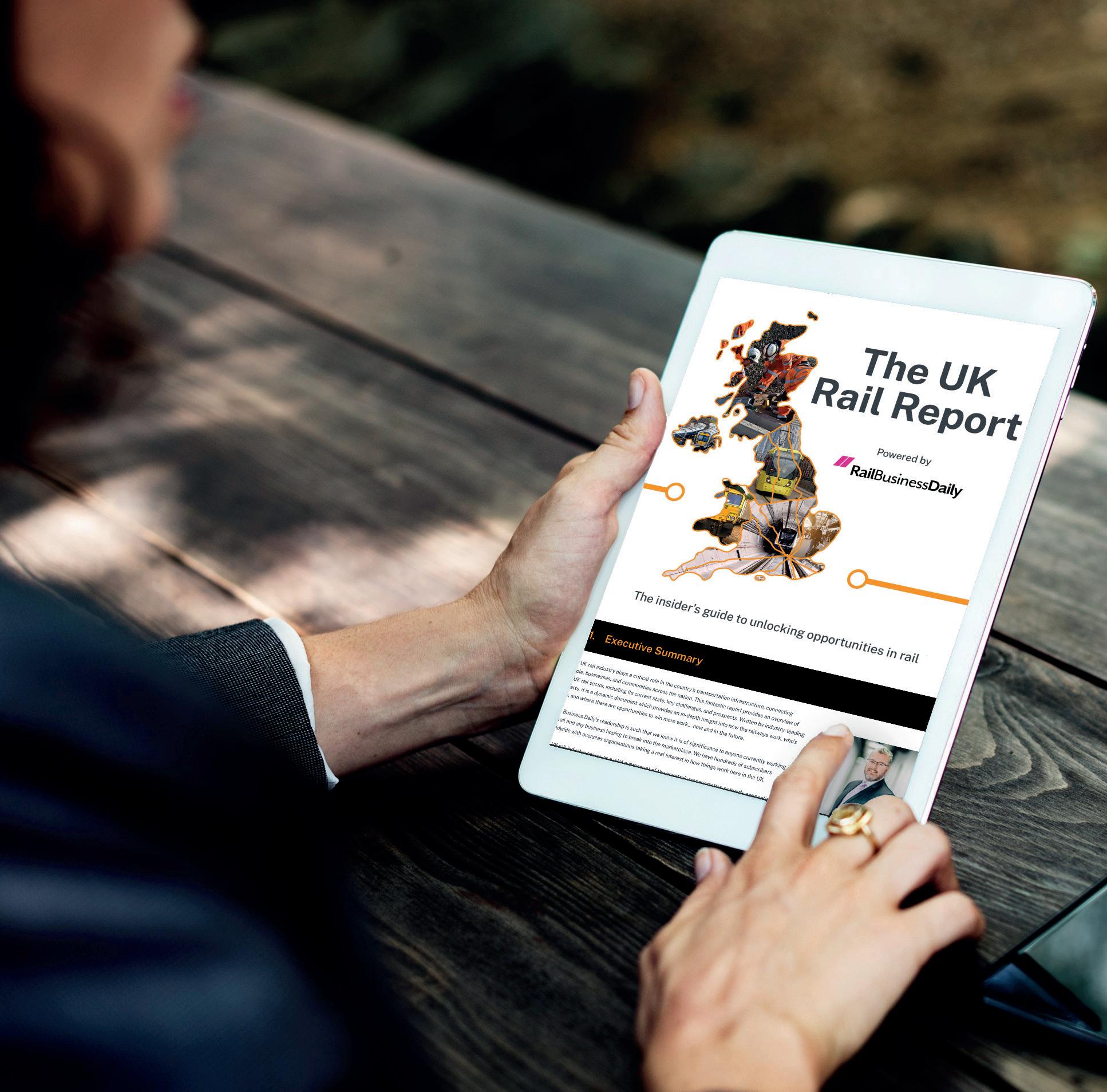

And the report will be updated periodically so it remains relevant, whether you’re reading it today, or six months from now.

Everyone in rail should get this report – it really is essential reading and will add value for all.
How to get your hands on a copy of The UK Rail Report
It is available FREE to RBD Community members as part of their membership benefits.
You can join the RBD Community – for £350 per year and access the report free. Members get up to £3,800 of profile enhancement benefits as well. Or you can buy access to the report for £500.
To join RBD Community or buy the report visit: railbusinessdaily.com/the-uk-rail-report
Or email: fiona@railbusinessdaily.com




Tel: +44(0)1952 204357




Email: info@reinforcedearth.co.uk
Reinforced Earth® are global leaders in innovative, low carbon, aesthetic engineered soil solutions. We design and supply fully geosynthetic retaining solutions for integral bridge abutments for rail overbridge and under-bridges, embankments and steep slopes.
We have a range of solutions available for rail use, Reinforced Earth/MSE, T-Wall® and TechWall™.








For constructing green-bridges, cut and cover tunnels and large culverts, Reinforced Earth® offer precast arch solutions up to 30m spans.


For acoustic protection, Reinforced Earth® have a range of precast noise barriers under our WhispRE™ ranges.







All of these solutions offer significant benefits and are ideally suited to construct many types of railway structures supporting heavy freight rail, light passenger rail, and highspeed railways.
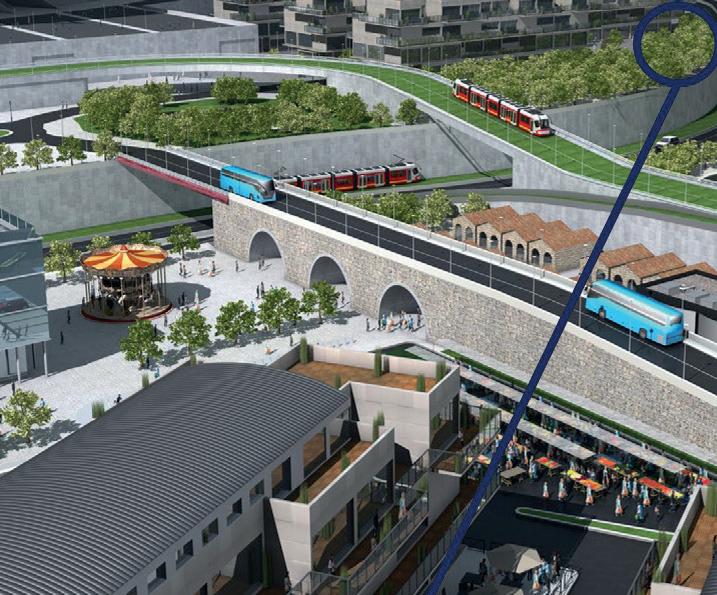
For further information visit: www.reinforcedearth.co.uk/reinforced-earth/railways/


73 June 2023
RBD Community Member Spotlight Feature
News in brief
DB orders 56 new Talgo 230 trains
German federal railway company Deutsche Bahn has announced plans to expand its ICE high-speed train fleet, which will result in the largest train supply contract for Talgo in its over 80-plus year history: 56 new units worth approximately 1,400 million euros. This new order is part of the framework contract signed in 2019 along with a first order for 23 trains. Both orders will take the Talgo-made ICE L fleet to reach 79 units. Carlos Palacio Oriol, president of Talgo, said: “The new order from Deutsche Bahn is the largest in the company’s history and demonstrates the European operator’s confidence in the innovations that our trains will bring to the German market, improving accessibility, comfort, energy efficiency and reliability.”
Los Angeles Regional Connector due to open this month
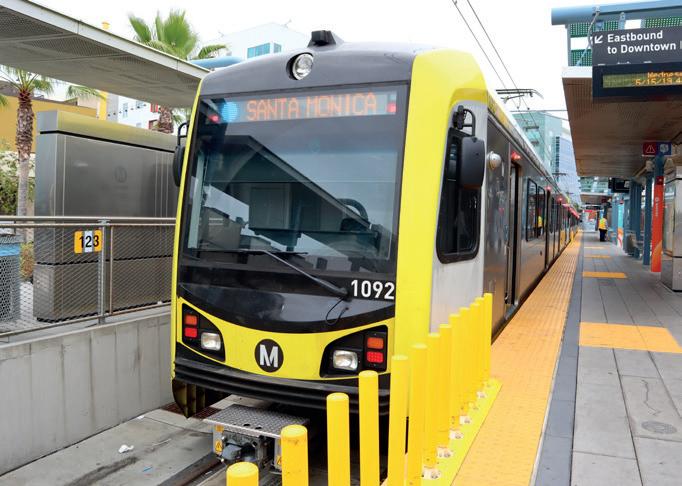
Hitachi and Toshiba in 124 billion Yen deal to build trains for Taiwan
A rail line from Azusa to Long Beach and from East Los Angeles to Santa Monica, through the downtown LA core was due to open on 16 June. The project includes three new underground stations and extends from the L Line (Gold) in Little Tokyo and Arts District communities to the A (Blue) and E (Expo) Lines at 7th Street/ Metro Center Station. Construction of the $1.6 billion project began in 2014.
Brazil and Costa Rica join the International Transport Forum
Brazil and Costa Rica have joined the International Transport Forum (ITF) as the organisation’s 65th and 66th member countries. The ITF’s highest statutory body, the Council of Ministers of Transport, voted to admit both Latin American nations on 24 May 2023 at its meeting in Leipzig, Germany. Brazil’s Minister of Transport, Renan Filho, and Costa Rica’s ViceMinister for Transport and Public Works, Efraím Zeledón Leiva, were in attendance. More than 1,000 delegates from around the world met in Leipzig in May for the annual summit of transport ministers under the theme “Transport Enabling Sustainable Economies”.
Hitachi Toshiba Supreme Consortium, consisting of Hitachi Ltd, Toshiba Corporation and Toshiba Infrastructure Systems & Solutions Corporation, has been awarded the order to build 12 sets of new generation high-speed trains (144 cars) by Taiwan High Speed Rail Corporation (THSRC).
The contract is worth approximately 124 billion Japanese Yen. HTSC will deliver the trains based on the most advanced N700S train of Central Japan Railway Company, with delivery beginning in 2026.
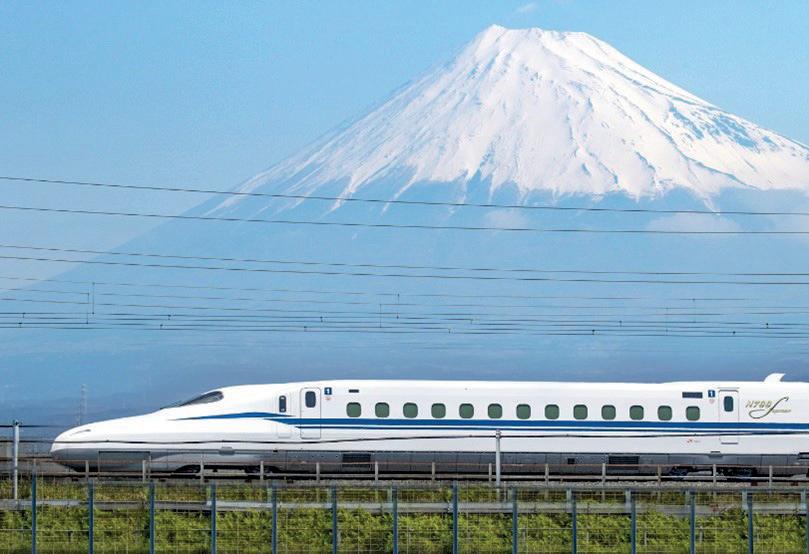
THSRC started the operation of high-speed trains in 2007 between Taipei and Kaohsiung, introducing the Japanese Shinkansen system. The new trains will enhance the capacity of passenger services.
The 300-metre-long train will be put into operation at a maximum speed of 300km/h. The new high-speed train, based on the N700S train, will be lighter and have better aerodynamic performance compared with the existing 700T.
It will be energy efficient by adopting the compact traction system, combining a silicon carbide (SiC) device with a blower-less cooling system. The new train will be equipped with lithium-ion batteries (SCiBTM) to power the train at low speed in case of power outage.
It is anticipated that introducing the new rolling stock will encourage even more people to make the modal shift to an environmentally friendly high-speed railway.
Alstom to deliver 130 low fl oor electric Citadis light rail vehicles
Alstom has signed a contract with the Southeastern Pennsylvania Transportation Authority (SEPTA), to deliver 130 full low floor electric streetcars valued at over €667 million, with options to build an additional 30 streetcars.
The agreement calls for the delivery of fully customised, sustainable, next-generation Citadis light rail vehicles (LRVs) specifically designed for North America and made to navigate the historic streets of Philadelphia.
The new Citadis streetcars will provide an energyefficient mobility solution that utilises state-of-the-art,
service-proven traction technology and offers a 20 per cent reduction in energy consumption compared to a standard light rail solution.
Additionally, energy efficiency is achieved by integrating LED lights and sensor-based airconditioning, and each vehicle is 99 per cent recyclable at the end of its 30-year lifespan.
Michael Keroullé, president and chief executive officer at Alstom Americas, said: “The new Citadis streetcars will bring more efficient accessible and equitable service to the people of Philadelphia’s metropolis.”
INTERNATIONAL NEWS 74 June 2023

Delivering railway signalling courses and training programmes to members of the Rail Signalling Industry Specialising in Technical Training and Development Want to know more? Contact us today 01332 343585 enquiries@signet-solutions.com signetsolutions.com Different course types: - ETCS and New Technology - Bespoke Courses - Online Courses available - Signalling Design Courses - Signalling Maintenance Courses - Signalling Testing Courses - Off-site Courses
Project integration and consultancy: From concept to delivery
Project integration; the process of coordinating and managing resources, time, budgets, and scope against predefined goals. At the centre of what moves an organisation forward is its ability to meet business requirements, achieve the desired outcomes, deliver, and maintain on schedule, to scope and within budget, whilst ensuring value is captured. Success is driven by ensuring all these elements align, even when faced with constraints and delays; the goal is to achieve maximum efficiency and output.
At Serco Rail Technical Services (SRTS), we believe that ‘one size doesn’t fit all’, and we pride ourselves on offering tailored packages of work that enable us to support our customers in achieving the best possible outcome.
That’s why we challenge the norm, and our staff engage with every project from concept to closure. Working closely enables us to adapt, providing the flexibility and commitment needed for a successful outcome every time. Combining experience with our rail industry knowledge, we emphasise the importance of building genuine relationships and working closely with our customers to provide the capability and trust required to deliver complex projects.
We’ll work with our customers to ensure a smooth transition and provide ongoing support at all stages of the project lifecycle, maintaining agreed deliverables and minimising downtime, delays, additional cost, and risk. Our team guide and support customers through the entire integration process, from system design and development to testing and commission, bringing with them a wealth of project management expertise.
At SRTS, we help customers to stay on track and meet project goals, whilst keeping them informed and involved every step of the way. We have a deep understanding of project integration and management, helping customers to improve efficiency and productivity.
The SRTS team provide the skills and experience needed to manage the challenges faced across complex projects, involving multiple stakeholders, bringing together consulting, delivery and operations to provide seamlessly managed projects.
We work with customers to help them prioritise their projects to ensure they deliver their business needs whilst also focusing on programme performance to ensure delivery.
Our capabilities include:
Exper ienced project management for small to large projects
Project management of the homologation process
Procurement of new rolling stock
Programme management of the implementation of new rolling stock
At SRTS we recognise that every project is unique, and that’s why we take the time to get to know our customers and understand their challenges. We work collaboratively to develop solutions that are tailored to their needs, ensuring that we deliver the best possible results.
Contact us today to learn more about how we can work together, www.serco.com/srts | enquiries.
srts@serco.com | 0330 109 8852
Serco Rail Technical Services is challenging the norm when it comes to rail projects, engaging with clients from concept to closure
Our staff engage with every project from concept to closure
ADVERTORIAL 76 June 2023

LOW EMISSION SOLUTIONS USA - CANADA - UNITED KINGDOM - SWITZERLAND WWW.TROJAN-SERVICES.COM TROJAN SERVICES
Swietelsky: Railway construction pioneer and powerhouse
Swietelsky AG is one of Austria’s leading construction companies with international contracts encompassing highways, tunnelling, residential and commercial developments, alpine construction and railways.
Sustainability is at the heart of all Swietelsky AG’s activities and thinking. This has been the case throughout the company’s history and is at the core of AG’s Bahnbau (Rail) division’s ethos. Now, it is acknowledged as leader in the field of specialised track system rehabilitation, renewal, maintenance and measurement.
By developing and using “production line” based technologies, the company has revolutionised railway construction in terms of sustainability, efficiency and safety, and today is a leader in both the European and Australian markets. The company’s journey in the UK started in 2004, and the platform is now set to expand its impact and continue its pioneering journey in the UK rail infrastructure market.
“In the UK, we have built our workforce from scratch in the last 20 years, having initially come over to the UK to commission, operate and maintain Network Rail’s new fleet of high output equipment, Systems 2 and 3,” said UK Swietelsky director Craig Goldie. “We did this using a core of our Austrian, German and Polish colleagues. Since then, we have recruited all of our staff from within the UK, creating a superb workforce with 106 skilled and professional personnel, all of whom we are very proud of.
“Although the company is not particularly big in the UK, we’ve already had an impact greater than our size suggests, investing almost £50 million in new on track plant in the UK market. This shows a real level of commitment and a passion to keep moving the technology forward to meet the demands of a modernising railway.”
Swietelsky AG’s Bahnbau division is one of the largest private owner/operators of specialised high output track maintenance and renewals equipment in Europe. With in-house machine design and development capability backed up by a workforce of over 1,700 who are fully engaged in the operation, maintenance and overhaul of the fleet of over 600 on track machines, it is big on delivery.
“Swietelsky is arguably the biggest track renewals contractor in Europe where we ballast clean and renew around 1,000km of track a year,” he said. “A problem is that we haven’t been able to bring over some of our really big equipment into the UK because it is too large being built to the mainland European structure gauge which is more generous than that in the UK.
“We operate 10 high output systems ranging from track relayers and very sophisticated three chain formation re-habilitation systems to Europe’s only combined high output track renewal and reballasting combined systems. We have a large fleet of over a dozen specialised rail cranes from small to enormous in size. The 600 on track machines work all around Europe with a core of almost 20 based in the UK.
Discussions are underway into increasing our presence in the UK, building on the track record we already have.”
The company already has a strong platform to build on in the UK, with a reputation as a market leader in new technologies for on-track machines. In the last 15 years, it has grown from no machines to 19 and has a joint venture relationship with Babcock (SB Rail) which was set up by Craig and has been going strong since 2004.
“SB Rail is probably one of the longest-running joint ventures that Network Rail currently has and it is still going strong with us offering a full range of track maintenance and renewals equipment, including high output plain line and S&C tampers, track finishing machines and specially developed rail cranes with multi-purpose attachments”, he said.
An innovative, pioneering specialist construction company, Swietelsky AG will next year be marking 20 years of its UK subsidiary Swietelsky Construction. Managing Director Craig Goldie discusses the journey so far and the aspirations for the future
ADVERTORIAL 78 June 2023
Wheel Flange Lubrication & Top Of Rail Friction Modifier
WFL
Rowe Hankins Intelligent & Sensory Wheel Flange Lubrication systems, are a trainborne dispensing system, designed to help improve rail safety whilst reducing wheel wear & noise, saving time, money and service affecting failures.
As fitted on the Class 345 (Elizabeth Line Fleet)
ToRFM
Top of Rail Friction Modifier is engineered to reduce curve squeal noise and short pitch corrugation by the application of a Friction Modification grease to the top of the rail track. This reduction in friction reduces wheel and the track wear and noise. The application of Friction Modifier (RHC-TG1) is achieved by a bespoke compressed air system which transfers the Friction Modifier to the top of rail. The Friction Modifier is also subsequently picked up by other passing wheels.
Both OEM & Retrofit Applications.
Features
Interfaces
Interfaces to train management systems, track balises and GPS antenna.
Modes
Standalone / fall-back inertial (YAW, acceleration and distance) based operation mode.
Maintenance & cost reduction
Wheel and track wear are greatly reduced, extending service and maintenance intervals, reducing down-time and costs.
Control
Control via a dedicated flange area lubrication controller (Falcon).

Dispensing
Dispensed to the top of rail or back of flange in a controlled manner.
Safety
No impairment of braking safety. Helps with rail and wheel fatigue.
Get in touch! +44 (0) 161 765 3000 | sales@rowehankins.com | www.rowehankins.com Power House | Mason Street | Bury | Greater Manchester | BL9 0RH Innovate Design Deliver
“Swietelsky’s fleet includes a variety of cranes with all sorts of specialist attachments, we’ve brought in the first Automatic Finishing Machines, the first 09 4X4 4S’, which are now the staple high-performance universal tamper/DTS machines in the UK market place. In addition to introducing the high output technology for Network Rail in 2005 with system two and system three, this represents where we have come from, hence, we have had a much greater influence than many might think.”
The whole Swietelsky team is passionate to grow its market in the UK and in doing so, continue to stimulate new methods and bring in new more efficient and sustainable technologies to the sector.
“The aim is to be more involved with the track renewals alliances because we think we can offer some unique solutions to the market,” said Craig, who first joined the rail industry in the latter half of the 1970s as a technical officer with British Rail’s divisional civil engineers’ office in Glasgow. “We would also very much like to be involved in HS2. We’ve just finished, in joint venture with another company, the Stuttgart to Ulm high-speed track construction, laying almost 120km of high-speed slab track of which half was in tunnel over the 60km route. The route’s line speed of 250 km/h brings it close to the model being adopted for HS2 and we are confident the experience from this project could be fully utilised on the HS2 project.
“We also want to help Network Rail on its journey to zero carbon and we’ve got some ideas about how we can change how on track machines operate. We are working with the manufacturers on proposals based on our experience operating bi-modal on track machines in Europe.
Innovative thinking
Craig added: “We strongly believe we can continue to make a positive difference, bringing down costs and improving reliability and sustainability as well as increasing production and reducing time on track. We admire some of the work contractors have delivered in the UK in the constrained environment in which they work. Some of their efforts using conventional techniques are very efficient and quite ingenious, but ultimately to run the kind of traffic levels seven days a week that the UK needs, it is going to have to fully recognise that production line track renewals and track maintenance are the most realistic route to deliver this kind of operation seamlessly on a seven-day railway.
“Some of the bigger projects will always have to be carried out over days and weeks but it is the dayto-day maintenance, renewals and having machines that have got the highest level of performance that can go in and out while doing a meaningful amount of work without disruption – that is the target.”
It is talking about the sorts of machines that could transform track work that excites Craig. He wants to see some of Swietelsky’s core advanced technologies adopted in the UK. Among Bahnbau’s fleet are two unique systems that it has worked with the manufacturer to design and build, which do both the ballast cleaning and track relaying at the same time –when at present it can take two mobilisations.
“The benefit to the network is immense and we would like to bring that technology into the UK and do something game-changing and achieve single intervention track renewal in one pass” he said.
“The savings in logistics, possession and disruptions costs could be immense. Using a completely rail mounted system with a core professional crew would reduce the risks associated with multi-activity sites where numbers of individual groups and movements take place throughout an occupation.
“We also specialise in formation rehabilitation systems and have six systems operating in Europe, all of them constantly busy. These are used to repair the foundations of the track structure to a far higher and more sustainable standard than when it was originally built.
“Our latest formation rehabilitation creates a multi-layer track formation structure in one continuous cycle and about 50 per cent of what it excavates is recycled, which offers huge logistic, material and waste cost savings. The crew includes geotechnical engineers who constantly measure the strength and integrity of the old and new formation layers to ensure the best results are consistently achieved. What is left behind the machine is ready for the next 50 to 100 years of operation.
“We’re now operating bi-modal machines in Europe in that they are driven by a generator which can be powered by either a diesel engine or by the overhead line. Savings in fuel consumption are running at near 75 per cent, noise levels are significantly reduced, and transit speeds are far higher. This is the way forward, for the majority of our on track technology at least, and I expect will be
joined by hydrogen power in the future. Basically, if you don’t need to switch the overhead line power off, why not use the power when it is available to do track maintenance work; it is the most environmentally friendly power you can get.”
All in all, it sets an impressive platform for Swietelsky to grow in the UK, and the UK rail sector to get more benefit from what the company can offer.
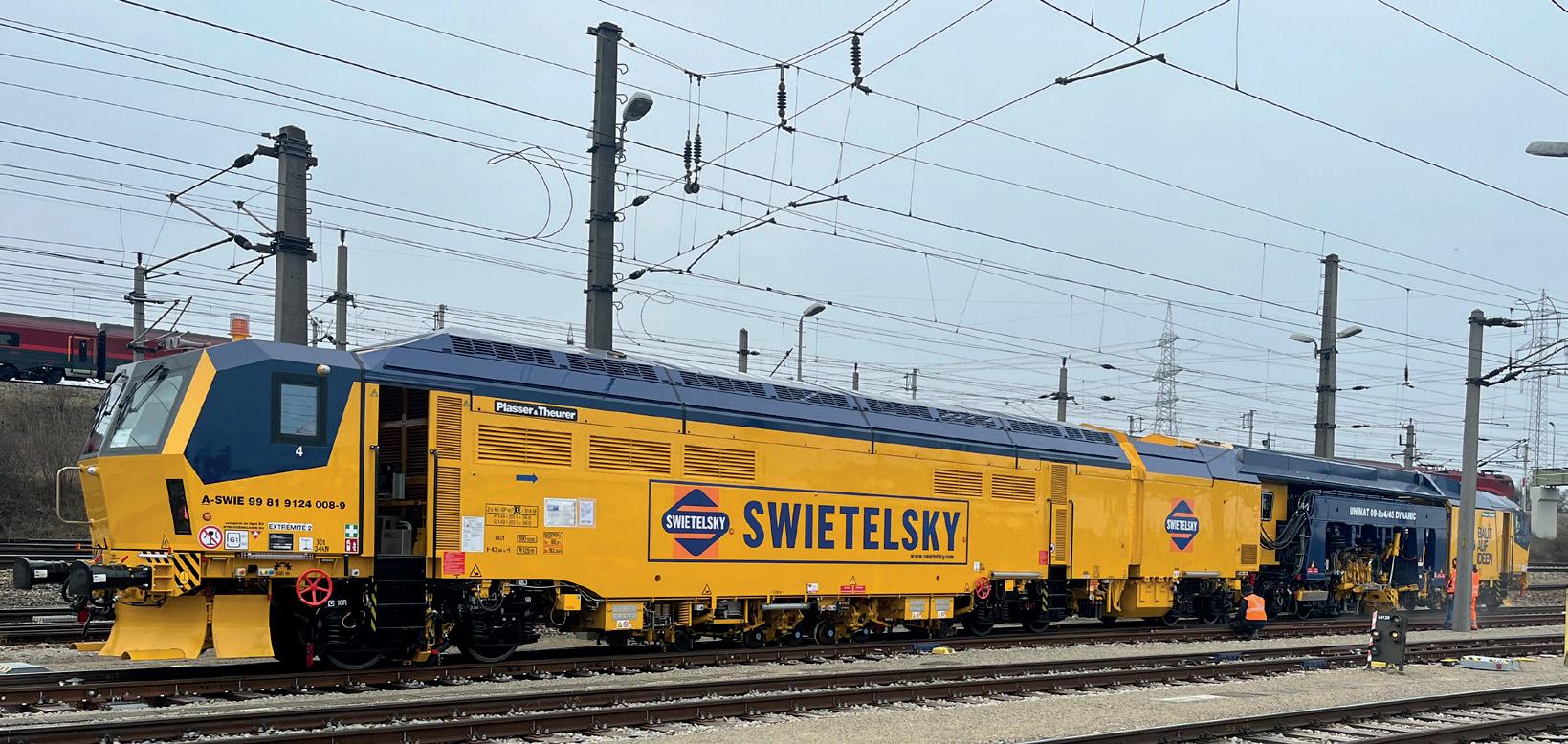
Craig concluded: “Overall I believe the railways have got a very bright future and that HS2 continues the revolution started by HS1. It is hard to imagine the UK rail network without that physical link to Europe. In reality, if you’re going to encourage people out of cars and motorways you are going to have to have a first-rate national railways infrastructure and that is the journey that HS2 is a major part of, fast, sustainable and economic.
“HS1 has been running for a long time, and we’re very proud to provide maintenance on it with our own Swietelsky machines. We bring machines over from Austria every year to carry out track work throughout the route. It is a fantastic network, and it shows you how reliable a modern high-speed railway can be.
“In terms of Swietelsky the future is looking very exciting. I want it to grow in the UK and discussions are underway into how we can do that. The company has a huge amount to offer and I would like us to get more involved and we will. It is a challenging time, but we are always up for a challenge.”
Visit www.swietelsky.co.uk for more details.
ADVERTORIAL 80 June 2023







For more than 30 years ACOREL has been delivering innovative solutions to manage passenger flow in trains and railway stations. UK director Phil Linnecor explains how they have supported organisations on the whole journey

The platform for a more efficient data driven railway
Where’s Wally approach is the way data has previously been presented to rail operators.” That is the problem Phil Linnecor, UK director of ACOREL, highlights when it comes to data. “There is a picture in which you’ve got a character that is lost and you’ve got to find him. That is the same with handling large volumes of data and asking operators to find problems and solutions.”
Although pointing out Wally might make the puzzle books a little less interesting, when it comes to data and the rail industry, highlighting the relevant information won’t just transform the experience for passengers, it will also save operators money.
“What is happening is that all the data is there, and people are looking at it as a Where’s Wally and
they cannot always spot the problem in the data,” he added. “That is why we don’t just provide the data that is relevant, but we work with organisations and report back what we are seeing which is outside the norm. That is part of our service and one which is helping transform the railways.”
ACOREL has a proven track record in delivering innovative solutions to manage railway passengers, particularly when it comes to trains and stations. Its applications for in-vehicle real-time counting are well-established, offering real-time information on occupancy rates per vehicle or per wagon.
For on-board, it analyses passenger traffic in a fine and precise manner, detects objects such as wheelchairs and bicycles, shows the sizing of rail vehicles and allows for the optimisation of transport plans.
Meanwhile in stations, its mapping of passenger flows qualifies movements in stations and metro stations in real-time, analysing preferred transit areas and congestion zones.
Phil said: “Since 1996 we’ve been installing equipment in the UK rail infrastructure on stations, trains and trams to provide data in regards to passenger flow to understand how passengers interface with the transport infrastructure.
“In regards to stations, the data helps station managers understand how the station is performing and it can be used for marketing and for staffing levels. In the past, it has also shown that when one station is being upgraded compared to another, passengers move to the station that is being upgraded because it gives a better environment feeling to them.
“A ADVERTORIAL 82 June 2023
For more details, call our specialised team to discuss your particular project on: 01233 639039 sales@sunraydoors.co.uk www.sunraydoors.co.uk SECURITY DOORS FOR THE RAIL INDUSTRY ● SPECIALIST RAIL SOLUTIONS - Overground, Underground/TFL, DLR ● REFERENCE PROJECTS - Crossrail, DLR, TFL, EuroTunnel ● BESPOKE SOLUTIONS - Tailored designs to meet project criteria. ● INSTALLATION & MAINTENANCE - Qualified, Compliant & Trained Operatives ● TECHNICAL SUPPORT - Consultative advice with complete back up concept to installation.
“On train we’ve done a lot of fleets throughout the UK, providing real-time passenger information, and giving that data to the passenger so they can understand what carriages are used, is it the right train for the service, and how the services are performing against each other. That information can then be used to understand how the fares should be broken down so they can offer a discounted fare for particular services compared to the peak periods based on historic passenger numbers.”
Continued investment
Over the last three decades ACOREL has continued to invest in accurate automatic passenger counting and enhanced software innovation, to provide the latest analytics to show passenger demands, helping networks like the DLR, Lyon, SNCF, Melbourne, and Morocco. Although many things have changed for the better, one question Phil says many are left still asking is ‘will I get a seat on the train?’
“More than a decade ago I wrote about waiting on the platform for my train to Altrincham, wondering if it will arrive and will I get a seat,” he said. “Some things have improved in terms of ordering tickets and checking timetables, but I am still left asking if I will get a seat on the train.
“Data is really key in understanding what is happening now and if you use it correctly you can project what will happen in the future, but you don’t just need the equipment, you need the infrastructure there to analyse the data. It is getting better, and we are helping to give better understanding to operators about what changes need to be made, such as when planning a service.”
Reducing wastage
Phil, who joined the company 13 years ago, highlights that having accurate data does lead to massive cost savings, reducing wastage costs on board the train. One example given by a rail operator is that knowing roughly how many people would likely be using that service enables them to plan staffing levels, predicting if the café needs to be open, or how many food and drink trolleys are needed.
“Getting the most out of the data is asking the right questions and using the data to help create the solution and that is what ACOREL works on and why we stay on the journey with operators, because the demand of today will change years down the line,”
he said. “Having that data allows a quick analysis of a future problem to be carried out.
“Reflecting on my time at ACOREL, two issues which remain pain spots for operators are fare evasion and overcrowding. In respect to fare evasion, it is a problem globally and in some cases to alarming levels. A key to tackling this is identifying where and when it happens, using data. Understanding the pains isn’t always easy, you have to break down what is creating the pain and then look at where data can be placed into that mechanism to say, if this changes then you are going to have this effect later on in the service.”
Passenger flow ACOREL focuses its expertise on passenger flow data and is passionate about working with operators to collect the data and find a solution on what changes are needed, not just in the immediate, but also years down the line.
“We collect more data than the customer actually first asks for because we know what we collect today will be wanted in five- or 10-years’ time to help them understand different aspects of the service,” said Phil. “An example could be station lift usage; we can use the data to project when would be a good time to service the lift during the day, rather than doing it on engineering hours.
“The systems we are working on at the moment look at how people interface with trains, so we can provide the real-time data and breakdown where people are situated on board the train. Where we are looking next is how passengers are aligning themselves on the platform and how the passengers interface with the train itself.
“This could include whether they are stood in the right place, but also using AI and machine learning to predict how the service is going to be at the station so we can actually have more efficiency with the way that people align themselves. That data also helps with the station as to whether food outlets are in the right place, and if additional improvements can be made for better passenger flow and experience.
“Overall if you have a good experience at a station or on a train there is more chance of using it again and recommending it to other people, which is vital at a time when we are trying to attract more people back onto the railways.” Visit acorel.com for more details.

ADVERTORIAL 84 June 2023
Getting the most out of the data is asking the right questions and using the data to help create the solution
ASSET INSPECTIONS Earthworks Structures Drainage ACCESS SOLUTIONS Rope Access Underwater Drones Confined Space T: 01543 411994 E: info@geoaccess.co.uk www.geoaccess.co.uk WE COLLABORATE WE INNOVATE WE SOLVE
Jon Bradley is Arriva Rail London’s head of performance delivery, a newly created role in the operations team. He brings a wealth of experience to this new role, having worked in operations and performance at a number of UK train operating companies, including c2c, London Overground and MTR-Elizabeth line.
“Working together will be crucial in delivering for our customers”
How does it feel to be appointed as head of performance delivery?
Exciting. I have been lucky enough to work in a variety of roles during my railway career, so I’m looking forward to taking the next step within the Arriva Rail London leadership team.


What attracted you to the opportunity?
I’m passionate about the railway and performance, so I was keen to bring my enthusiasm, knowledge and experience to further develop operational

improvements across the London Overground network.
There will be new challenges and opportunities, so working together will be crucial in delivering for our customers as we continue to see growth across routes within London.
Proudest moment to date?
There have been many but playing a role in the opening of the Elizabeth line is high on the list. Seeing the railway transform into what it is today and the
ever-increasing number of customers was a fantastic journey to be a part of. From a personal perspective, it has to be the Class 315 farewell railtour, which MTR Elizabeth line operated in late November 2022 in conjunction with the Branch Line Society. Leading the co-ordination and organisation of this excursion over several months, whilst also continuing to operate our own railway, certainly kept us busy. When we rolled into Liverpool Street on the morning, seeing so many enthusiasts pay tribute to the units (over 40 years old) made it all worthwhile.
MOVERS AND SHAKERS 86 June 2023
We collectively raised just over £13,000 for the Railway Children. This was followed by marrying my wife a week later, making it a memorable end to the year.
What have you learnt from your previous roles as operations delivery manager and strategic performance manager?

Working with people is key, particularly when we look to performance and how we can work together to implement improvements. I’ve found talking to those who are operating our railway often yields vital information that can be addressed to help prevent or rectify an issue.
This could range from observing a morning or evening peak at a station to cab riding with drivers and spending time in signalling centres – to name but a few.
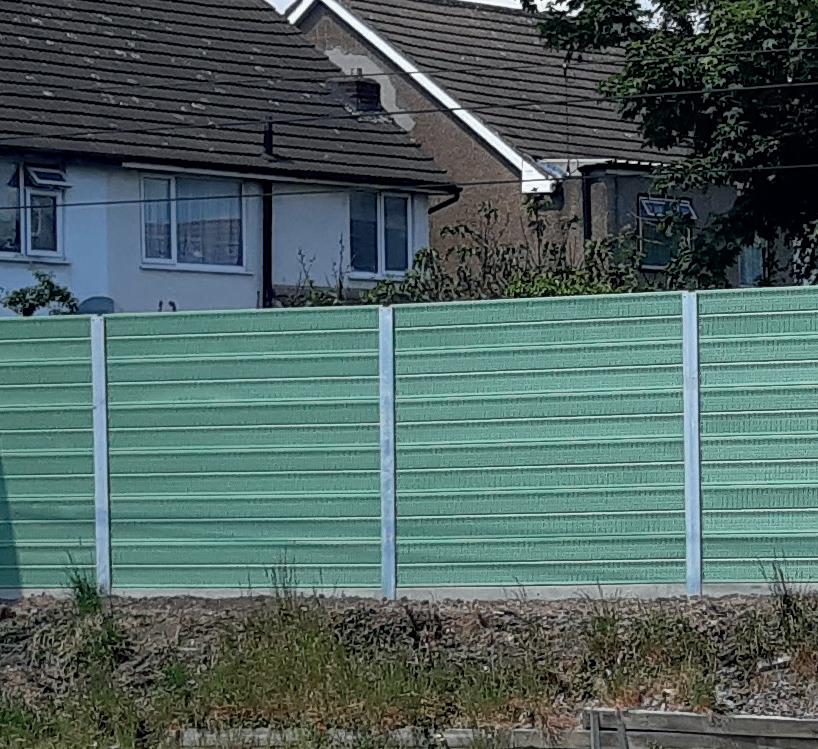
It’s also important to communicate about performance, but to keep this simple and targeted to the audience. Engaging with teams helps generate ideas and suggestions, which can all help in improving our railway for customers.
What are your aims and aspirations as head of performance delivery?

One of the first priorities for me is to travel across the London Overground network, as each route is uniquely different in characteristics so this will help me to understand the operation.


I aim to provide guidance and help drive forward
a safe and reliable railway with our teams, which delivers for our customers consistently.

What are the biggest challenges to overcome?
With more trains operating on the network, this is adding a constraint on our network capacity and, in some cases, adversely impacting on performance. I am a great believer in understanding the root cause, which will allow formulation of plans to address delays through development of improvement initiatives and wider plans.

It is also important to identify the smaller, but often frequent, underlying causes of delay. These can often have a small impact but can sometimes go overlooked due to a focus on significant, larger incidents.


Through a focus on these areas and engaging with our frontline teams, we will be able to overcome any challenge and deliver performance improvements for our customers.
What do you most enjoy about the rail industry?
The people and trains. I most enjoy being out on the network, particularly if it involves a cab ride to oversee one of the routes. I feel proud to work on the railway and I wouldn’t want to do anything else. Being able to embrace my hobby is something many cannot do, and I look forward to many more years to come.
WHIS® wall T: 01323 872243 E: info@grammbarriers com T he rail indu st r y ’s be st k ep t s e c re t.. Acoustic Noise Barrier Specialists • Network Rail Approved WhisWall low level noise diffracting barrier • SilentRail Coating (Acoustic and Thermal) • POLYSoundBlok Acoustic Barrier • CONCRETESoundBlok ® ® ® OUR CLIENTS INCLUDE: CONCRETES oundBlok ® Engaging with teams helps generate ideas and suggestions, which can all help in improving our railway for customers MOVERS AND SHAKERS 87 June 2023
New President and CEO for Skanska UK
Katy Dowding has taken up her new role as president and chief executive officer at Skanska UK.
Over her 20-year career with Skanska, Katy has held a diverse range of commercial, operational and strategic leadership roles, including Managing Director of Skanska UK’s facilities management operation for five years.
Since 2017, Katy has held the role of executive vice president with responsibility for Skanska UK’s building and building services businesses. She is also a member of the Skanska Costain STRABAG joint venture board, overseeing the delivery of the London tunnels section of High Speed 2.
She said: “I’m honoured and hugely excited to be given the opportunity to lead Skanska UK. It’s a fantastic business with talented people who help our customers to deliver successful projects and a lasting legacy for society. We are very much focused on partnering with our customers and supply chain, helping to deliver on the big priorities for our industry, including improved productivity, greater diversity and inclusion, and a net-zero carbon future.”
Nick Westcott announced as new MTR Elizabeth line train service delivery director
MTR Elizabeth line has announced the appointment of its new train service delivery director, Nick Westcott, joining on June 5.
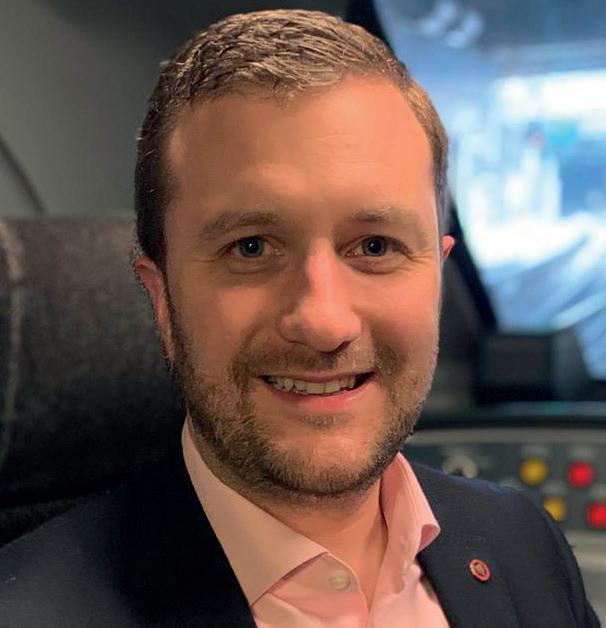
Nick has worked in railway operations for the entirety of his career in the disciplines of driver management, control and performance, for train operators including Virgin Trains, First Trans Pennine Express, First Capital Connect and, more recently, Avanti West Coast.
A Fellow of the Chartered Institution of Railway Operators, Nick has a degree in Transport and Business Management from Loughborough University.
He said: “I am excited to join MTR Elizabeth line at an important time in its development. In addition to its industry-leading train performance, the Elizabeth line has delivered impressive customer journey numbers since opening.
“I am looking forward to working with my new colleagues and our railway partners to deliver high quality services for our customers.”
Jo Shanmugalingam appointed as new Second Permanent Secretary at DfT
The Department for Transport (DfT) permanent secretary, with the approval of the Prime Minister, has announced that Jo Shanmugalingam, currently a director general at the Department for Science, Innovation and Technology (DSIT), has been appointed as the new Second Permanent Secretary at DfT.
The second permanent secretary, appointed following an open competition, provides leadership of a number of high-profile areas across DfT, including decarbonising transport, and starting formally at the end of last month (May).
Jo was previously director general for science, innovation and growth at DSIT. She said: “I’m proud to be appointed Second Permanent Secretary at the Department for Transport and to be working with teams who have been delivering important work to keep the country moving during challenging times.
“It will be a privilege to help drive forward the government’s work to decarbonise and level up transport for the travelling public.”
New operations director appointed for the Tyne and Wear Metro
The Tyne and Wear Metro has appointed Kevin Storey as its operations director. He will be taking over the responsibility for overseeing the day-to-day running of services on the network following a successful recruitment process.
Nexus, the public body which owns and manages Metro, said it was a key appointment, and that he would bring a wealth of experience to the role as it transitions to a new £362 million fleet of trains.
Kevin has worked in Metro operations since 2005 and has been promoted into his new role after previously working as head of operations delivery. He has previously led the successful delivery of services for major events including concerts at the Stadium of Light and the Great North Run.
He said: “I am delighted to be taking up this new role and lead our operations team as we look to a bright future with a new fleet of Metro trains.
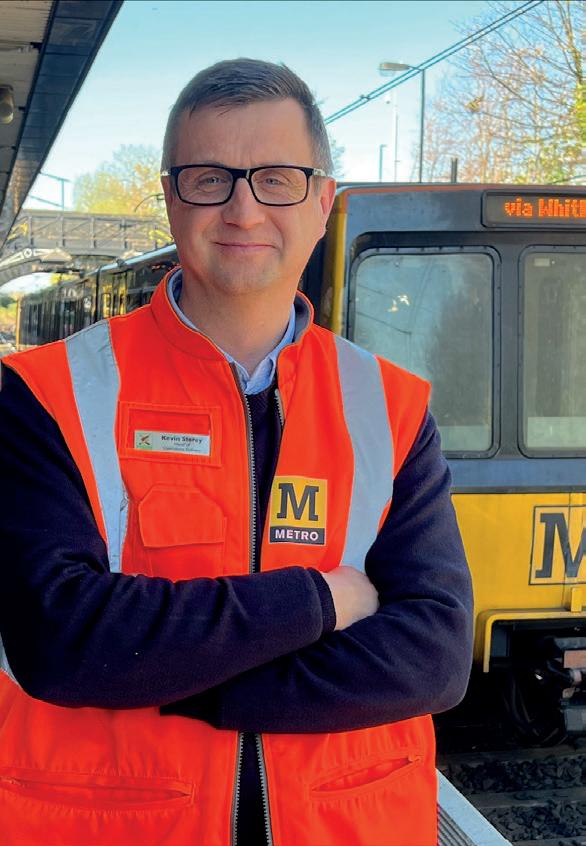
“The immediate challenge is to improve our current performance and reliability for our customers, and to play our part in the transition to the new fleet, which will be a historic period of change and renewal for the Tyne and Wear Metro.
“I am acutely aware of the many challenges we have faced with service punctuality and anti-social behaviour on our network. These are two key areas that I will continue to focus on in order to build customer confidence in Metro.
“I want Metro to be a high-performing service, delivered by a team who are proud of the work they do, with everyone pulling in the same direction and understanding the key roles they play in the success of Metro.”
Katy Dowding Image: Skanska
Nick Westcott Image: MTR Elizabeth line
MOVERS AND SHAKERS 88 June 2023
Jo Shanmugalingam Image: DfT
Providing civil engineering products and services, with expertise in foundations and piling to the Rail, Civils, Energy, Residential and Water sectors
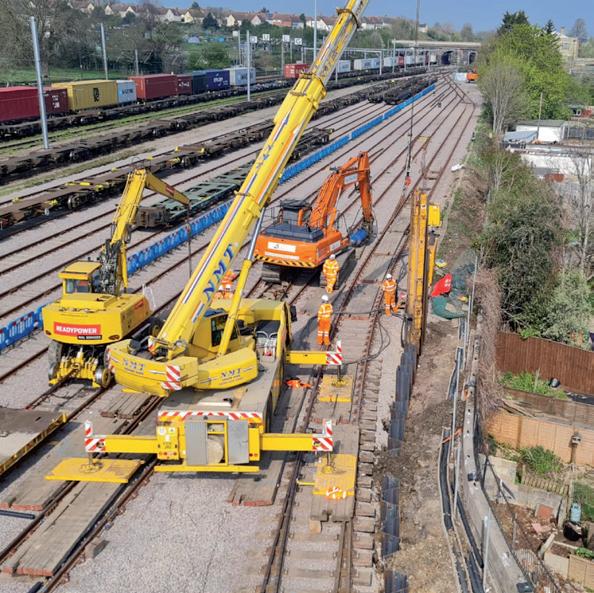
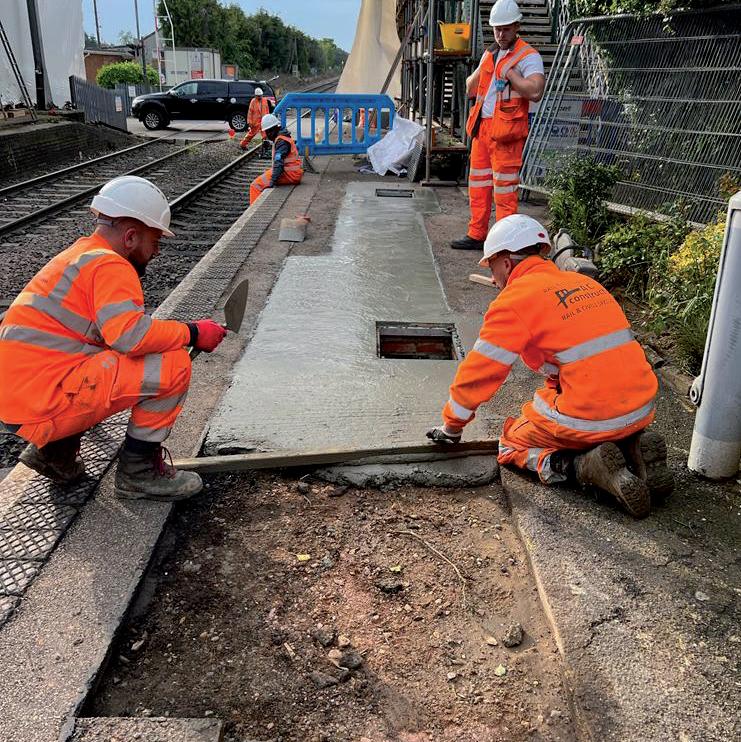
With over 20 years of Rail and Construction industry experience, our familyrun company provides expert advice and cost-effective solutions to all sectors looking for experts that they can rely on. Delivering safe and sustainable solutions at the forefront of innovation and technology, ensuring the highest quality results first time, every time. We can assist clients from advisory and design to compliance and delivery, providing tailor-made solutions to meet clients’ needs.
Installation of all Piled foundation - bored, driven & screw piles
Erection and installation of OHL Gantry structures (masts, booms)
RED, LOC and DNO foundations and platform installations (GI, Design & Install)

Platform renewals and refurbishments
Cess walkways and throughing routes

Fencing and Access stairways
Site compound establishment and access road
Trial Holes
Excavation and installation of concrete bases
Embankment stabilisation & Cess retention
De-vegetation
Piling and Soil nails
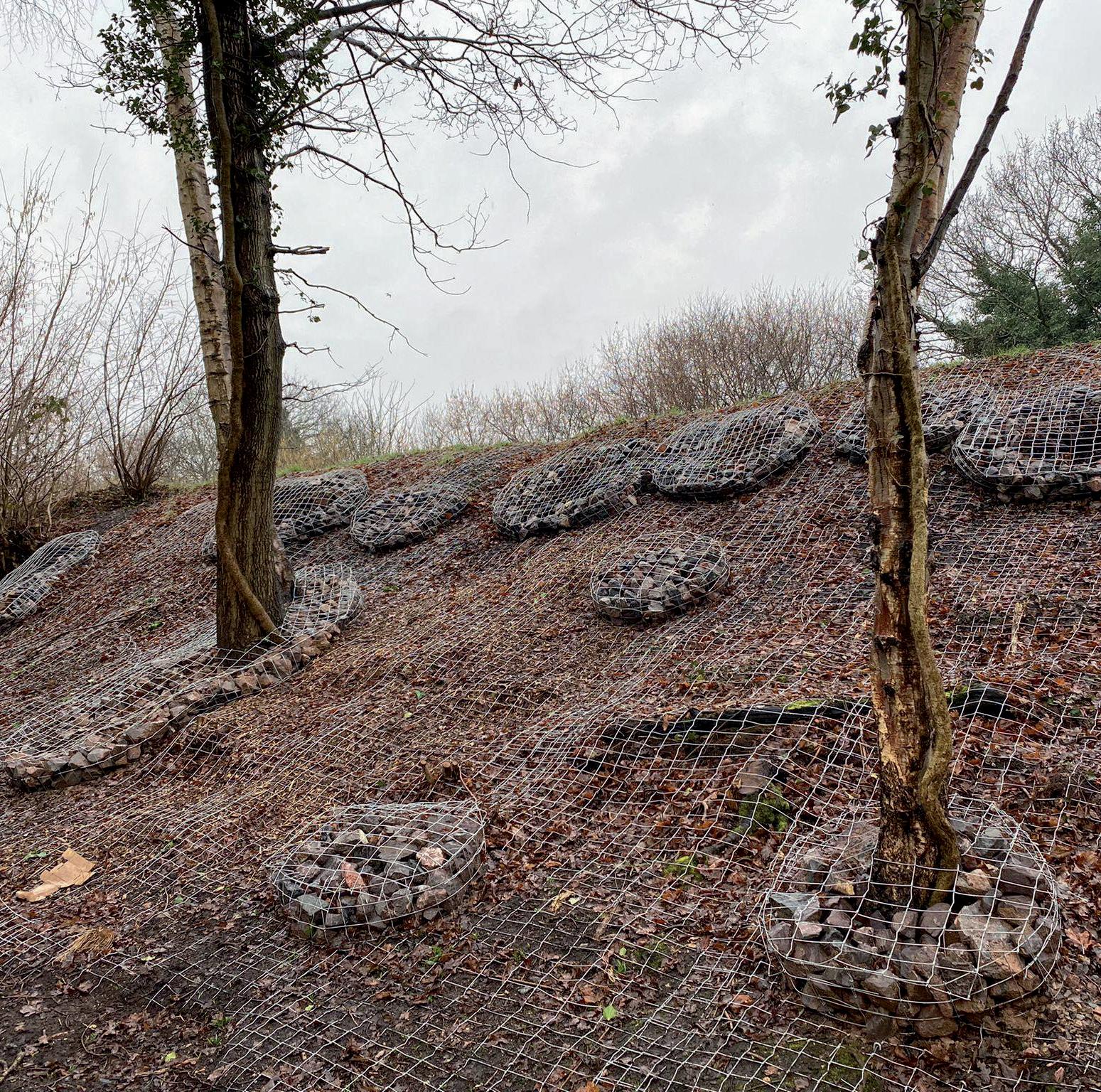
Rabbit Netting
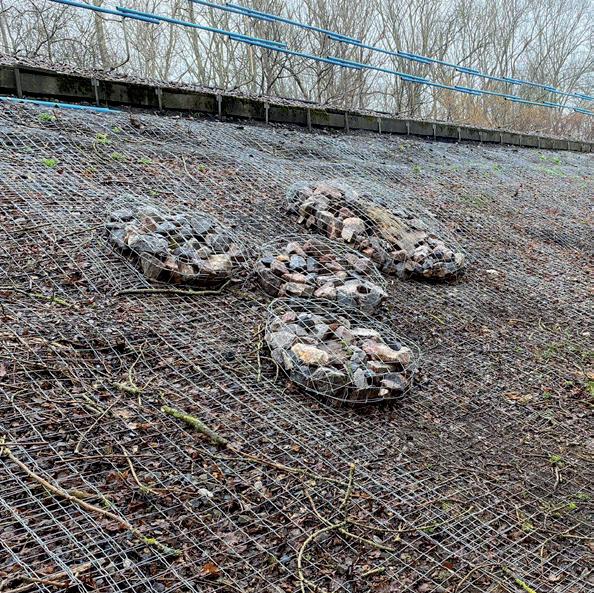
Gabian Walls
Visit our website for more information or give us a call:
01442 731 321
info@fortisfoundations.com
www.fortisfoundations.com
5 Concorde Drive, Gadebridge, Hemel Hempstead, HP2 4AW
Acorel specialises in real-time passenger flow intelligence solutions incorporating automatic people counting delivering the most accurate technology for analysing the passenger analytics since 1989. phil.linnecor@acorel.com
www.acorel.com/en
+44 (0)780 878 8785
AssessTech is a technology and training company specialising in all aspects of Competence Management for the Railway Industry. info@assesstech.com
https://www.assesstech.com/ 01483 338646
SCAN ME
HR Kilns is the premier supplier and manufacturer of GRP/FRP (Glass Reinforced Plastic) products, Embankment Steps, Walkways, Gratings, Stair treads, Handrails and ATP Panels. sales@hrkilns.com
www.hrfibreglass.co.uk
01695 557711
SCAN ME
WorkfloPlus by Intoware transforms paper based forms into digital workflows with access to documents, videos, pictures, weblinks and remote experts to improve safety, accuracy & productivity. hello@intoware.com
https://www.intoware.com
+44 (0)115 977 8969
SCAN ME
Specialty lubricants from Klüber Lubrication for train maintenance and infrastructure prove their worth worldwide every day. From lubrication of traction systems and doors to many other components. info@uk.klueber.com

https://www.klueber.com/uk
01422 205115
SCAN ME
McCulloch Group are transforming rail infrastructure projects with a fleet of bespoke and patented machines that eliminate manual handling and improve the efficiency of installations. enquiries@mccullochgroup.com mccullochgroup.com

+44 (0)330 0130 010
SCAN ME
SCAN ME
Dywidag work to make infrastructure safer, stronger, and smarter with data-driven systems extending the lifespan of new and ageing track, roads, tunnels, and bridges. sales.uk@dywidag.com

https://dywidag.com/ 0161 797 5511
SCAN ME
Jobson James Rail is a national specialist railway insurance broker, the market leader in the UK by a huge margin with over 325 rail clients across the UK, Middle East and Australasia. keven.parker@jjrail.co.uk
jjrail.co.uk 07816 283949
SCAN ME
We are a UK based provider of wellbeing consultancy, training and coaching who support organisations that want to help their staff thrive at work. If we can help, we will.
wendy@thementalwealthcompany.co.uk
www.thementalwealthcompany.co.uk 07305843993
SCAN ME
DIRECTORY 90 June 2023
MPA are the only professional services business specialising in all aspects of innovation, tailoring carefully to help streamline your business, allowing you to focus on growth.

https://mpa.co.uk/ 0808 296 4816
Penn Engineered Solutions delivers highly valued consultancy and training services in the fields of Propulsion System Engineering, Lean & Six Sigma and Leadership Management. info@pennengineeredsolutions.co.uk www.pennengineeredsolutions.co.uk/

SCAN ME
Railsy offers an unmatched variety of courses and programs across the rail industry, created for individuals or groups of all academic levels.
info@railsy.co.uk
www.railsy.co.uk 0330 043 1037
SCAN ME
Since 1961 Rittal has been a global leader in innovation for its products, including enclosures, cooling solutions, power distribution, and IT infrastructure. Rittal’s robust enclosures are a functional solution for the rail environment. information@rittal.co.uk www.rittal.co.uk 01709 704000
At Pugh and Sanders, we come with over 35 years’ experience in supplying Quality Fasteners & Fixings, Stock Replenishment and Kitting Services, all to a diverse array of industry sectors. 03332 401 022
www.pughandsanders.co.uk/ enquiries@pughandsanders.co.uk

SCAN ME
SatSense identify and alert asset owners, managers and engineers of areas at higher risk of ground or structure movement, using satellite-borne radar. contact@satsense.com
www.satsense.com 0113 306 1688


SCAN ME
Schaltbau Transportation UK are leaders when it comes to toilets, doors, interiors, power systems and heating, ventilation and air conditioning (HVAC) on UK trains. sales@schaltbau-transportation-uk.com

https://www.sbt-uk.co.uk/ 01908 224 140
SCAN ME
Schweizer Electronic is the market leader in Europe for on track automated protection on busy railways for both passenger and freight lines. info.seuk@schweizer-electronic.com www.schweizer-electronic.com
+44 (0)1827 289996
SCAN ME
SEED Architects carries out a wide range of services for national and international clients in the rail industry. office@seedarchitects.co.uk

www.seedarchitects.co.uk/projects/ 0161 832 5750
SCAN ME
SCAN ME
SCAN ME
DIRECTORY 91 June 2023
Seen Services provides a full suite of electrical, security and communications services in London, the Home Counties, and across the UK. info@seenservices.co.uk

https://seenservices.co.uk/ 01920 412 383
SCAN ME
Staytite are exclusive suppliers of the Hardlock Nut, the premier fastener used for safety critical applications that need to resist loosening by vibration and other external forces. fasteners@staytite.com

https://www.staytite.com/ 01494 462 322

SCAN ME
TenBroekeCo is an independent international advisory company, focused on the delivery of major infrastructure projects. paul.tweedale@tenbroekeco.com

https://www.tenbroekeco.com/ 01372 824 722
Selectequip is a specialist business covering design, manufacture and installation of standard and bespoke signage products for internal and external use with national coverage. sales@selectequip.co.uk
https://selectequipltd.co.uk/ 01924 366 996
SCAN ME
Standard Gas capture carbon and renewable energy from waste using a low-cost sustainable alternative to reduce environmental issues and atmospheric CO2
info@standardgas.com

https://standardgas.com
020 7363 8888
SCAN ME
Our unique blend of technology, experience and knowledge enables us to create agile and effective manufacturing solutions to address complex manufacturing challenges.
01527 504 910 www.samueltaylor.co.uk info@samueltaylor.co.uk
SCAN ME
Structural Fabrication have established a reputation for performance, service, quality work and expertise within the rail industry. They supply fabrication, engineering and all structural steelwork. paul.tweedale@tenbroekeco.com
www.tenbroekeco.com
01372 824 722
SCAN ME
Tony Gee have comprehensive experience of railways globally with experience ranging from network infrastructure renewal and enhancement to independent validation and verification of highspeed railways. Enquiries@tonygee.com
https://www.tonygee.com/ 01372 461 600
SCAN ME
Welfare Vans 4 Less are one of the UK’s leading suppliers of professionally converted welfare vans, with nationwide delivery 7 days a week.
info@welfarevans4less.co.uk
www.welfarevans4less.co.uk/ 01782 848855
SCAN ME
SCAN ME
DIRECTORY 92 June 2023
Our experience will make all the difference, with in-house Access Planning, Safety Critical Staff & CAA Accredited UAV Pilots.
We provide survey data for today and future BIM environments.
Using the latest technology our services include Gauging • 3D Modelling Asset Management OLE • UAV Surveys Signal Sighting S&C Surveying

The project protects the rail line that connects the south-west of England with the rest of the country from extreme weather and rising sea level
£80 million Dawlish sea wall opens to the public
Work is complete on the £80 million Dawlish sea wall, a two-and-a-halfyear project to protect a vital rail link to the south-west.
The transformation of the seafront was completed when 415 metres of new promenade, along with other fully accessible public areas, opened to the public last month.
Stretching between Coastguards and Colonnade breakwaters, it is linked to the first section at Marine Parade by a new footbridge, running parallel to the railway viaduct.
Ewen Morrison, Network Rail senior programme manager, said: “The project has not been without its challenges, including the COVID-19 pandemic, the discovery of an uncharted gas main and some particularly wet, cold and stormy conditions over the past winter.
“It is testament to the efforts of the teams involved that they have worked around the clock, whatever the weather, to deliver this huge feat of engineering.
“The project is vital not just for Dawlish but for the whole of the south-west peninsula as the railway connects communities in 50 towns and cities with the rest of the UK. The railway is now better protected and we hope the new wall, promenade and footbridge will be used and enjoyed by generations to come.”
The wavewalker
An innovative eight-legged, self-contained walking jack-up barge, known as a Wavewalker, was used during the construction – the first time this type of barge was used to upgrade the UK rail network. It allowed the team to work across high tidal ranges that particularly impact the south Devon coastline.
The wall itself was substantially completed in July 2022, when all 164 front panels, 203 pre-cast blocks and 189 recurve units which return waves back out to sea were in place for the second section.
Since then, Network Rail’s contractor BAM Nuttall has been working to complete the link bridge, promenade, seating areas, ramped access to the beach and a new stilling basin, where Dawlish Water runs under the viaduct into the sea.
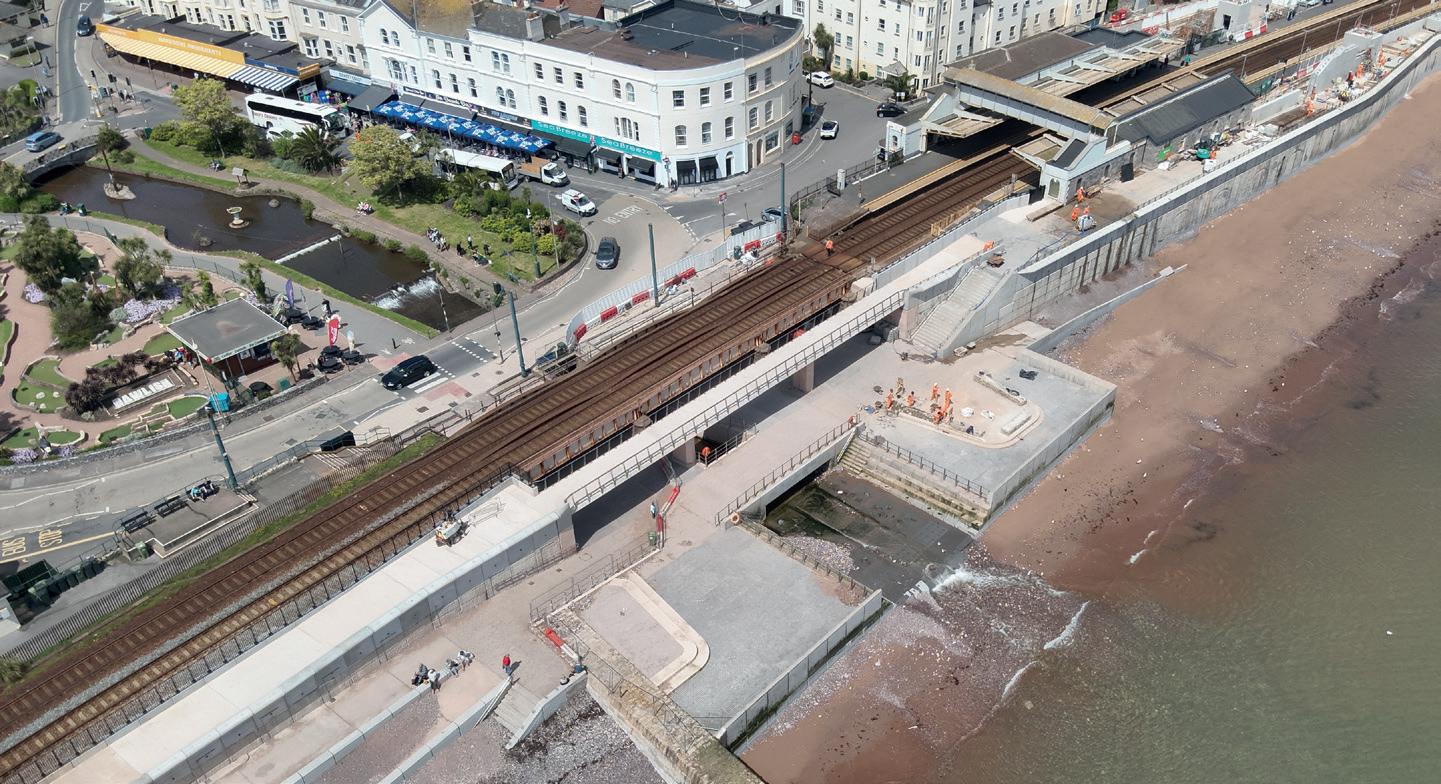
Alan Cox, managing director, transport, BAM Nuttall, said: “Through a spirit of collaboration and resilience, BAM and Network Rail have transformed adversity into triumph at Dawlish.
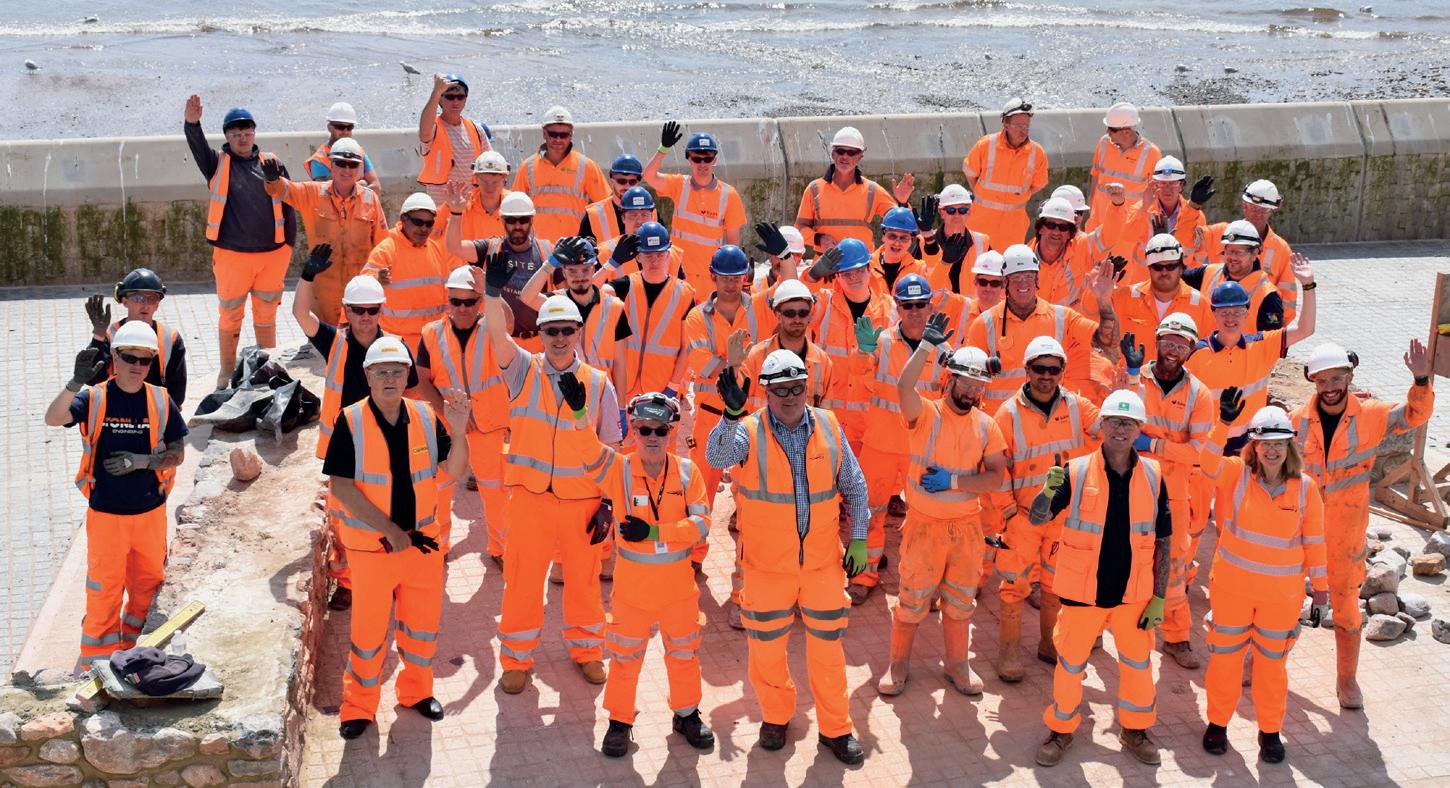
“Guided by a shared vision, our dedicated team has demonstrated ingenuity throughout, defying the physical challenges that beset the site.
“Whether it was the use of stone-filled containers to protect the area following the initial failure in February 2014, the use of the Wavewalker
to install the new piling or the development of a bespoke low-carbon structural concrete, innovation has paved the way for remarkable achievements.
“Looking back, this project will forever be a source of immense pride and satisfaction for our team. The legacy we leave behind in Dawlish exemplifies the power of determination and collaboration and will resonate with the town, the Great Western Railway, and its valued passengers for generations to come.”
AND FINALLY... 94 June 2023












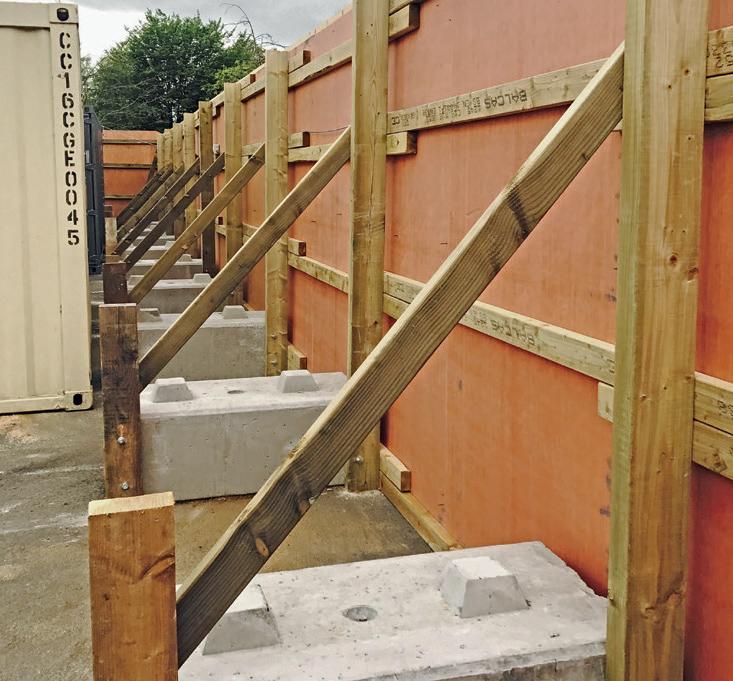
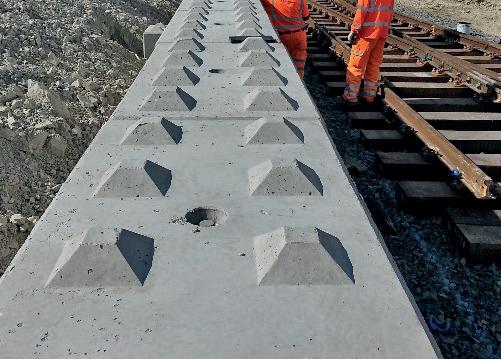
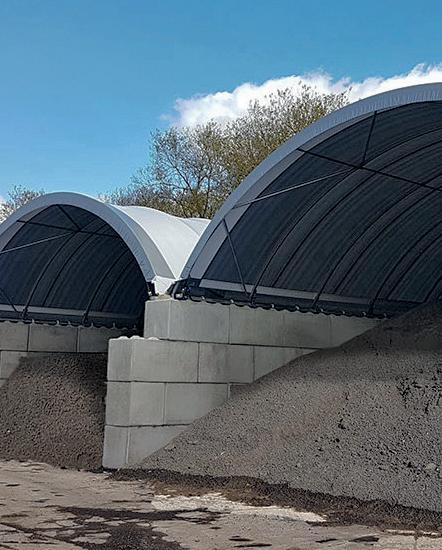

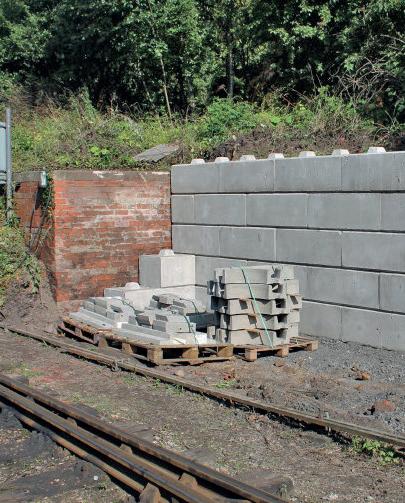


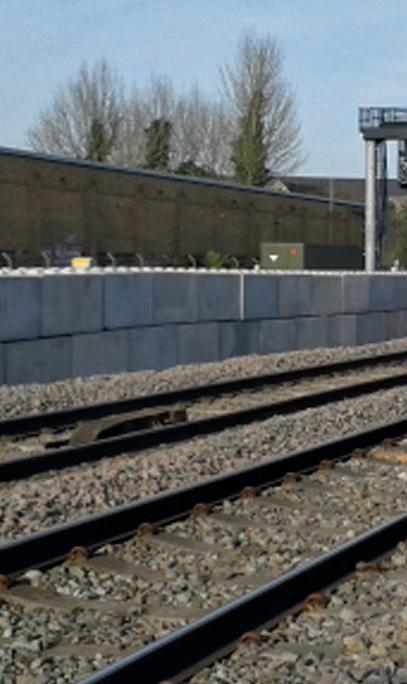






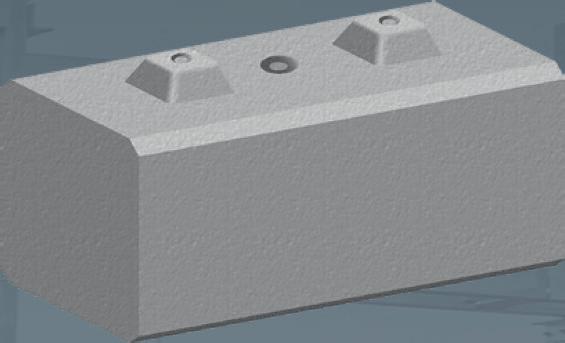


















For more information phone 01952 588 885 or browse www.eliteprecast.co.uk or email sales@eliteprecast.co.uk Everywhere on rail networks Elite products are seen in use British made Suppliers to 2012 London Olympics, 2014 Glasgow Commonwealth Games and approved suppliers to Tideway, Crossrail and HS2 (fully compliant transport) Get on track with Elite interlocking blocks and barriers BS EN 1917 & BS 5911-3 BS 5911-
protection barriers avoiding all line closures with adjacent line open
prevention with our multi-purpose Jersey barriers
stabilisation
Elite Duo interlocking blocks
our Legato
scale embankment
the versatile
Workforce
Rockfall
Hoarding
utilising
Large ballast bays with walls constructed from
interlocking blocks Large
retention using
Legato blocks Workforce safety refuges built from Elite Duo blocks
Safely delivering and constructing electrical infrastructure networks across the UK



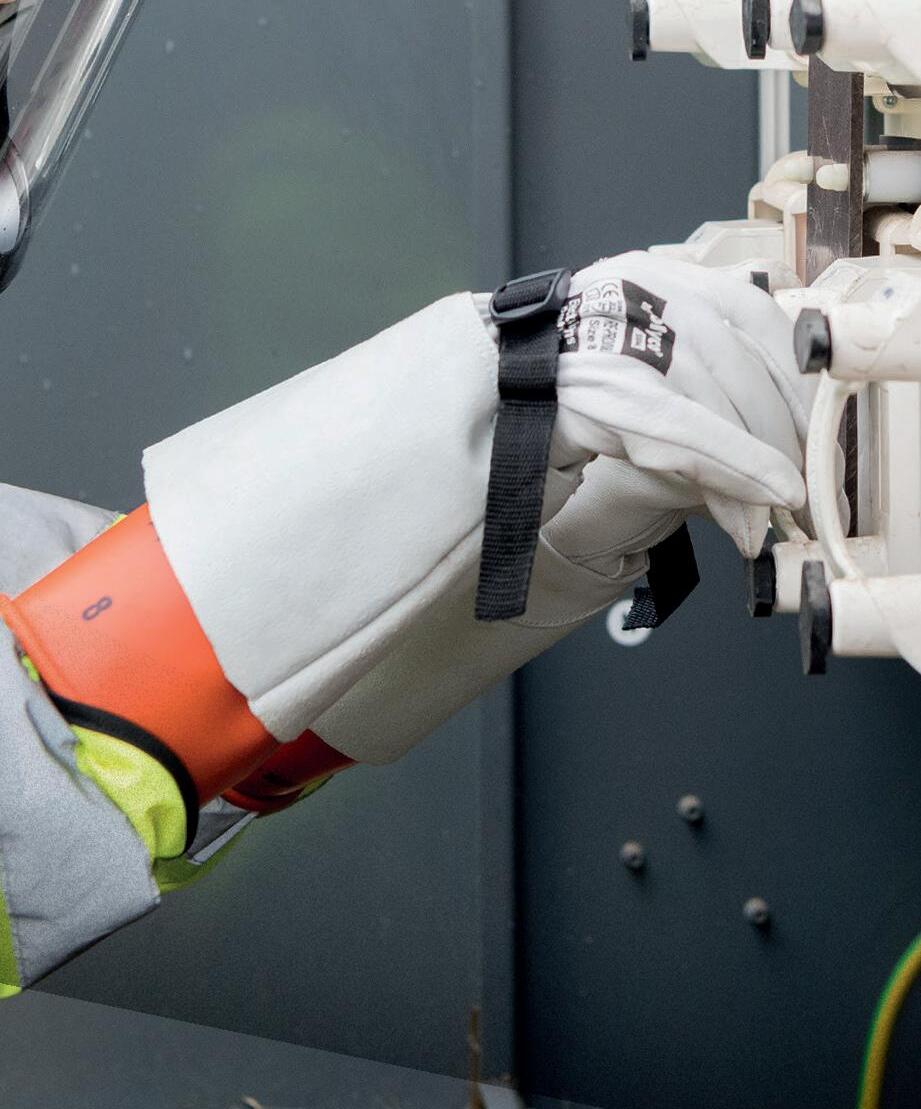
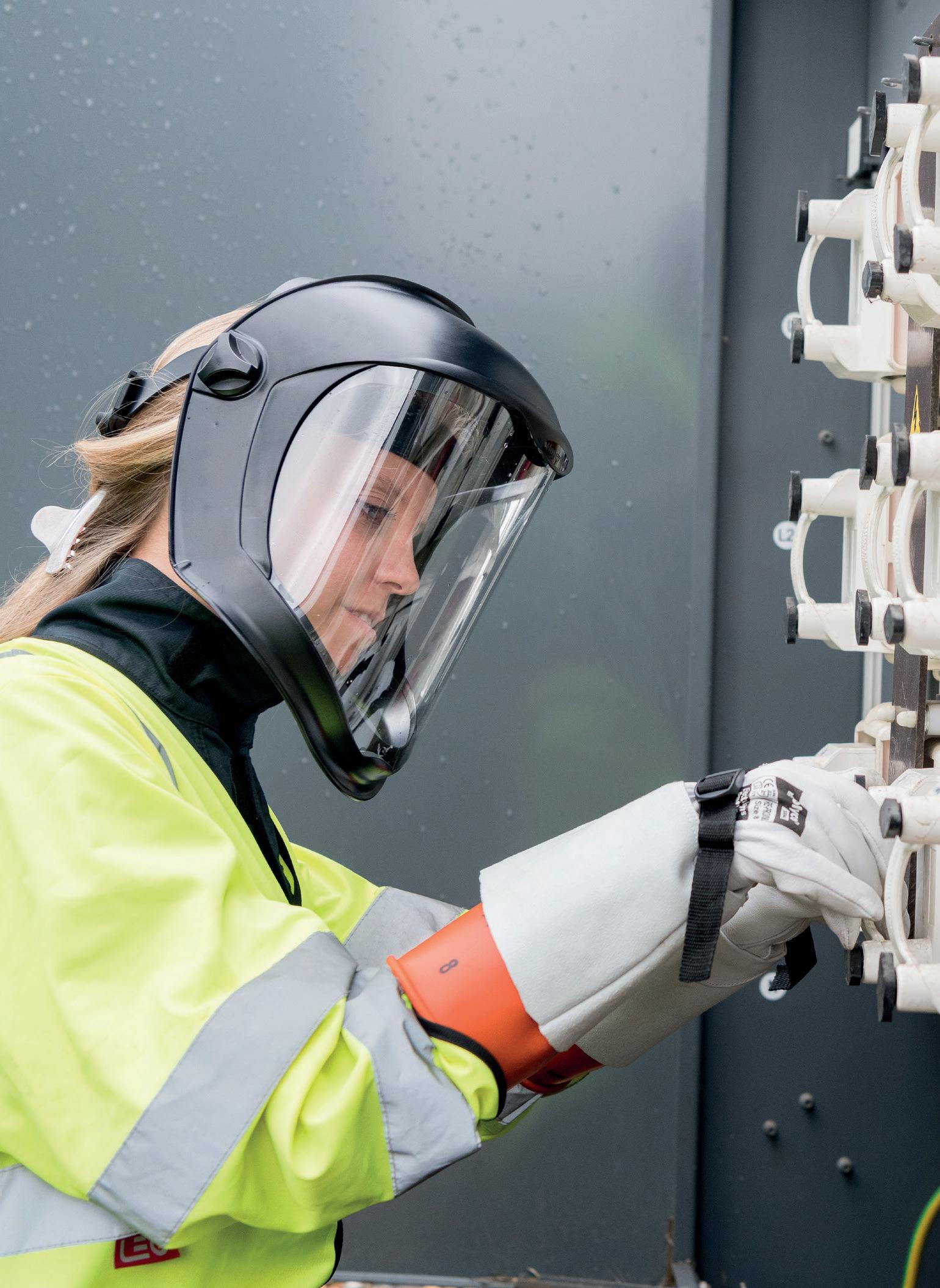
ukpowernetworksservices.co.uk



We are experts in designing, building, connecting, operating and maintaining complex High Voltage and Extra High Voltage Electrical infrastructure to the highest standards, in the most cost effective and innovative ways.
Scan here to get in touch