Royal recognition for rail research keeping the UK on the move
Warrick Dent
Strengthening collaboration across Scotland’s Railway
Alistair Geddes
Culture, constructability, collaboration
Festive works
2,454 possessions safely delivered over Christmas
February 2026
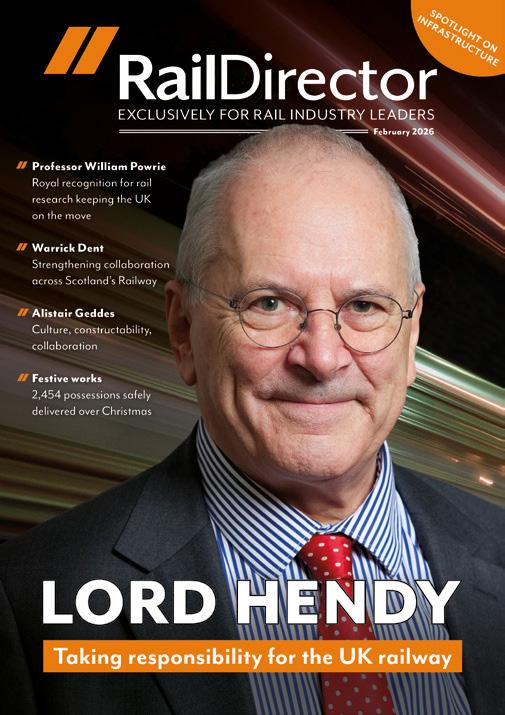
Taking responsibility for the UK railway LORD HENDY
2,454 possessions and a work bank worth £162.7 million
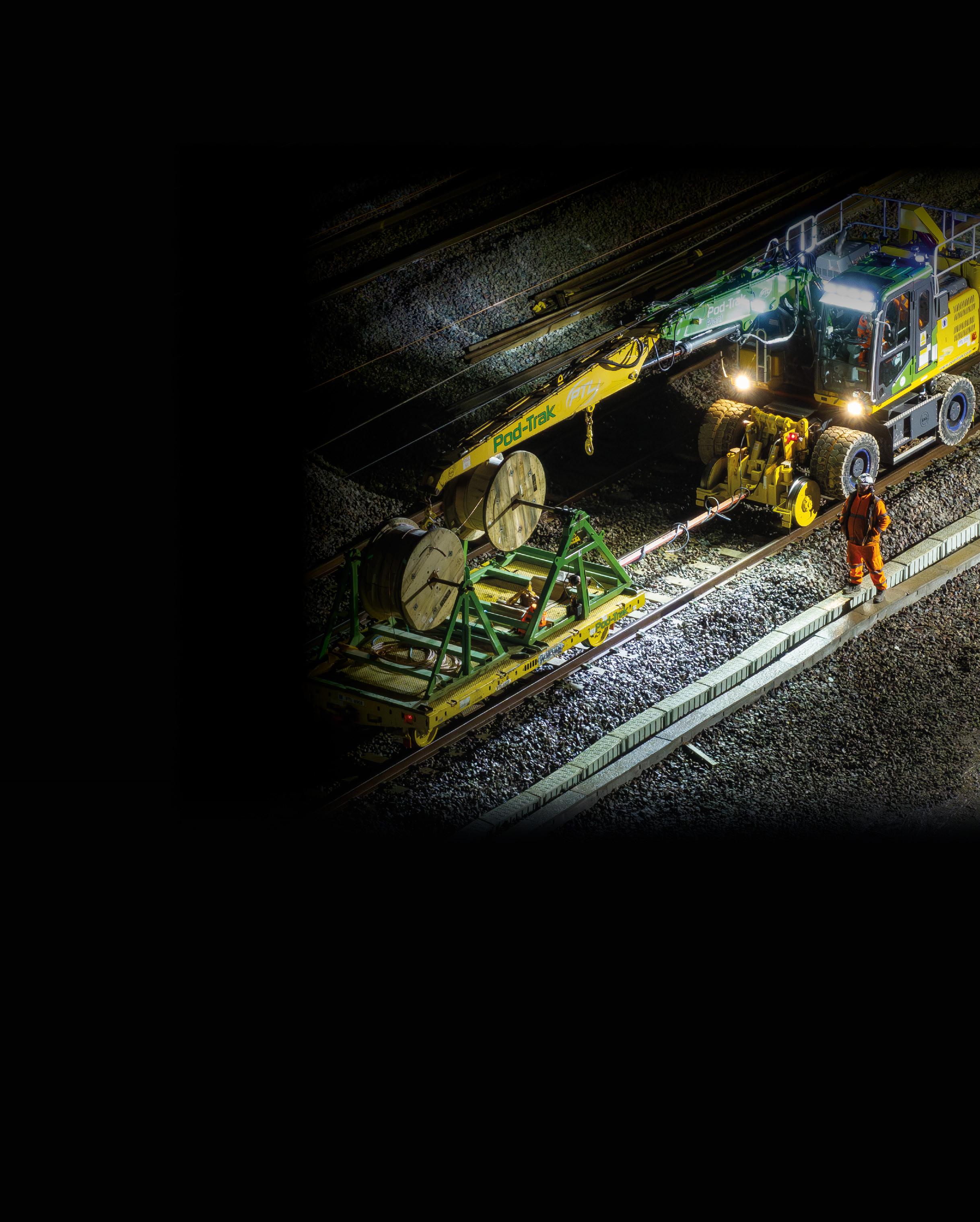
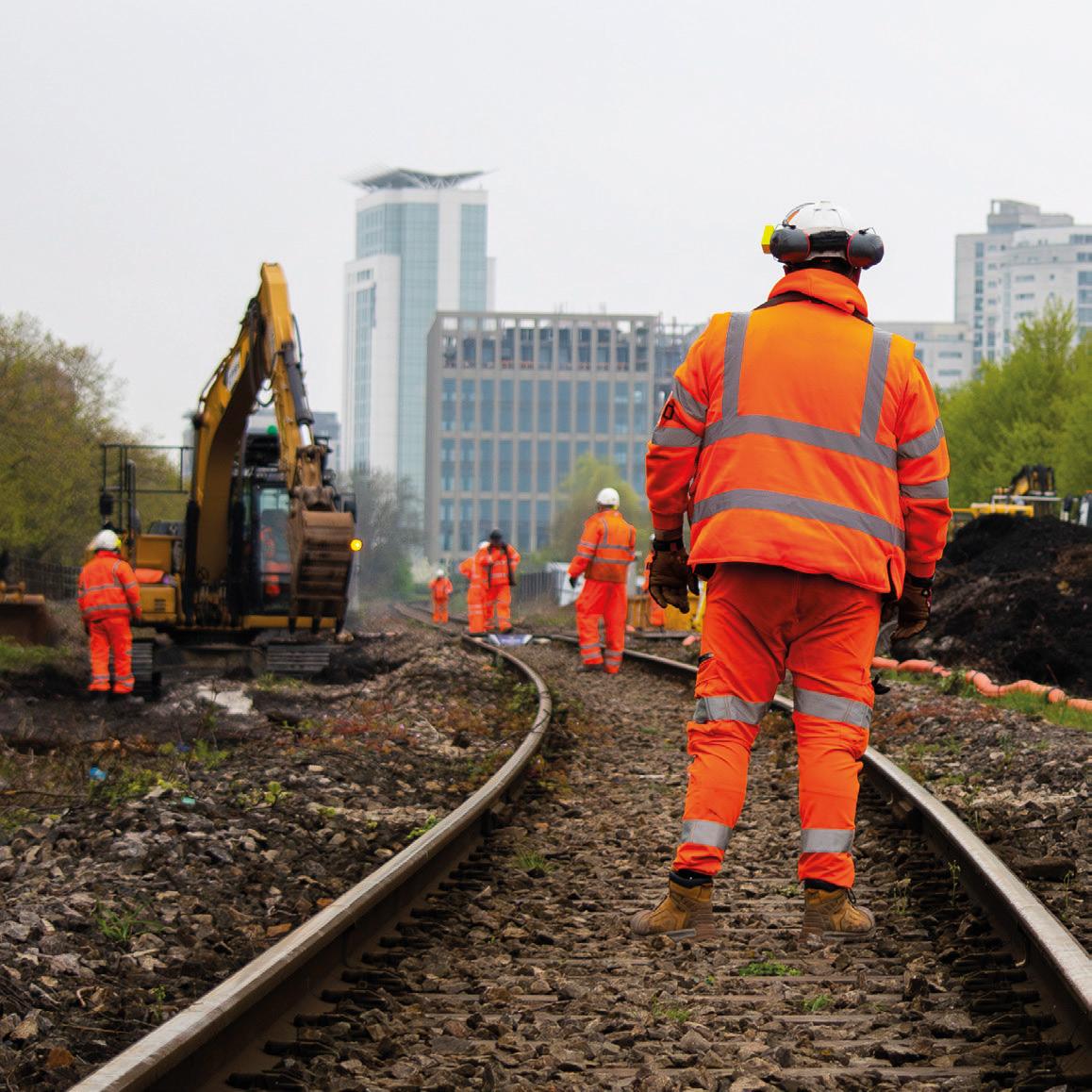
Welcome to the latest Rail Director. I’d like to start by paying tribute to the orange army, who were out in force over Christmas and the New Year delivering projects across the length and breadth of the country, often in complex or challenging locations.
Thanks go to Nigel Wordsworth who from page 20 has written a roundup of the huge variety of schemes, worth an estimated £162.7 million, within 2,454 possessions nationwide. The efforts of Network Rail and the supply chain shouldn’t be underestimated. In the article Network Rail’s Chief Executive Jeremy Westlake praises the effort and teamwork as “inspiring” with the work “strengthening the safety, reliability and performance of Britain’s railway”.
For those who did have a break over Christmas it will no doubt already feel like a distant memory, with the industry going full throttle in 2026. In the last few weeks we’ve seen Great British Railways progress, with Sir Andrew Haines appointed Chair of Department for Transport Operator and Richard George announced as Chair of Network Rail; and the Government has announced plans for the Northern Powerhouse Rail (NPR).
These are two of the topics that I discussed with the Rail Minister Lord Hendy, who is this month’s cover feature. Speaking from page 6 on NPR, he said: “It has not been about whether it should be done at all, but how much of it should be done and how quickly it should be done. The really significant thing about this announcement compared to what was announced in the past is that the project is being funded.”
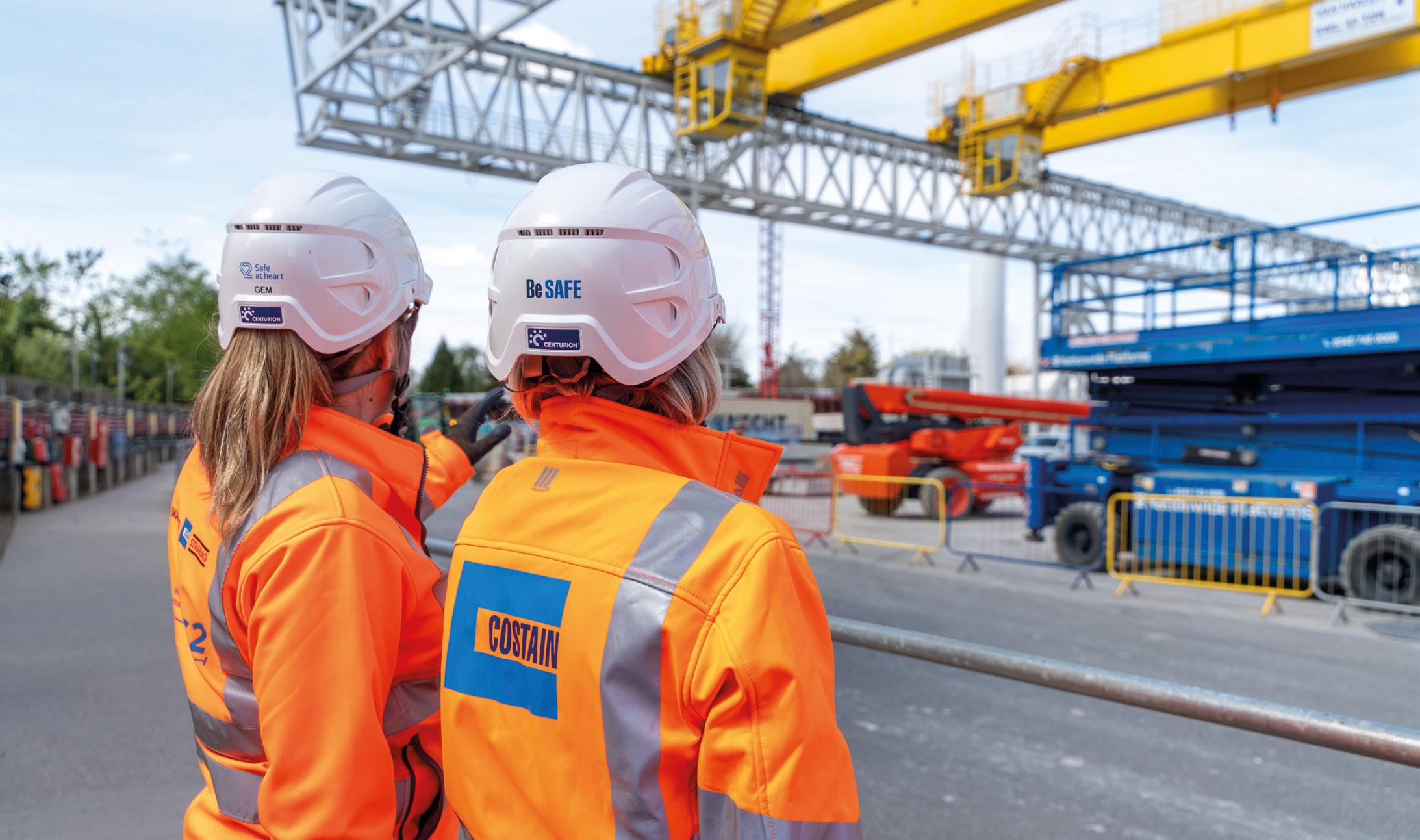
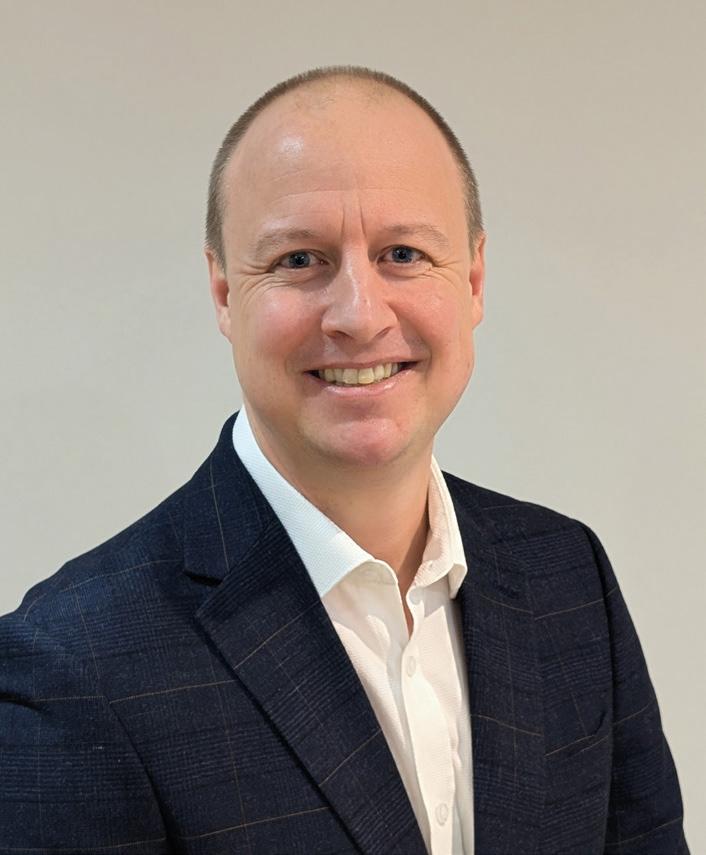
This month’s magazine is themed on infrastructure and also includes an article (page 36) from Alistair Geddes, Rail Sector Director at Costain, who writes about culture, constructability, collaboration: the three ingredients to deliver the rail infrastructure of tomorrow. Phil Harrison, UKIMEA Rail Leader at Arup, writes from page 44, about why the UK must rethink its approach to infrastructure investment to improve asset resilience.
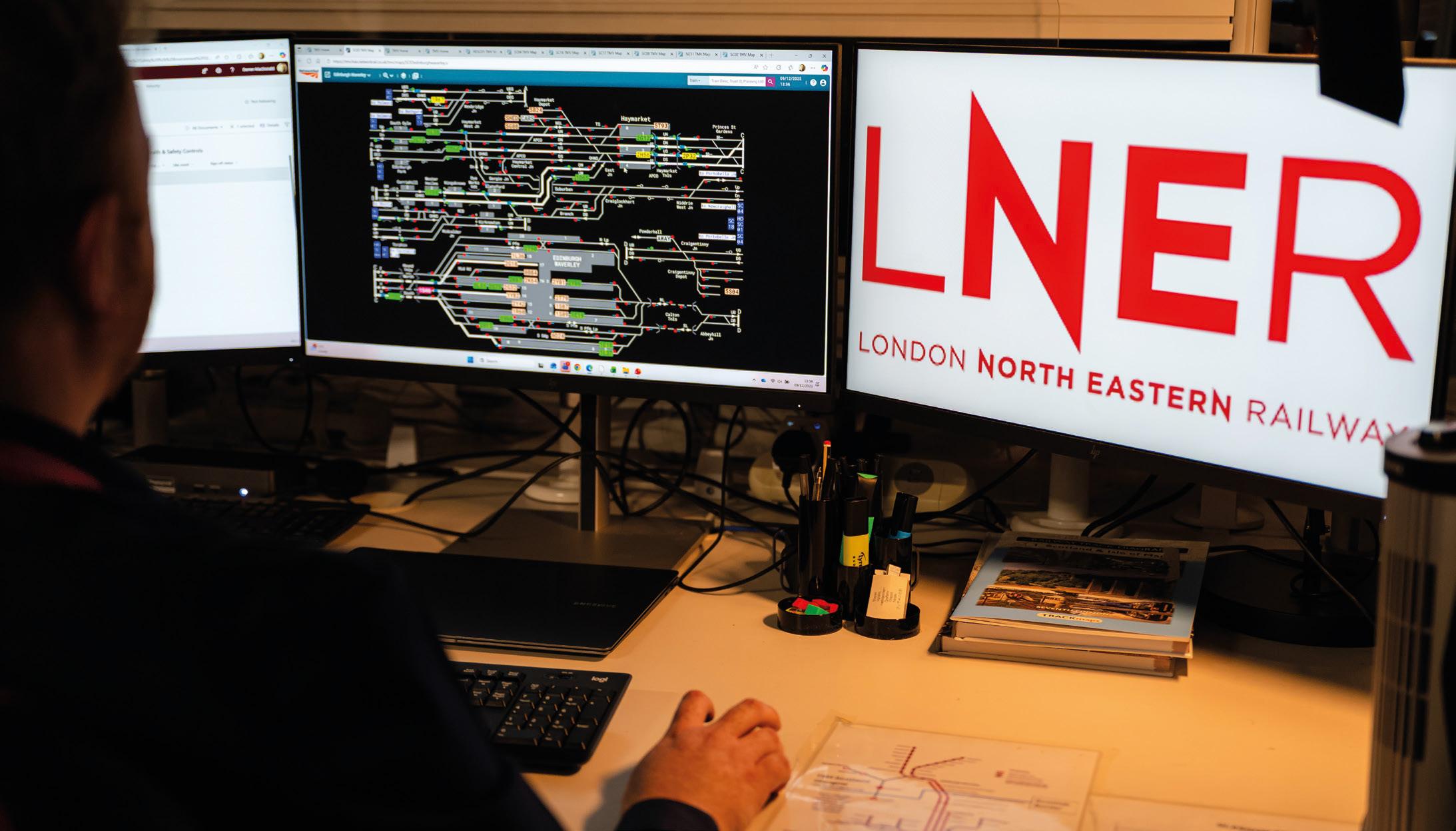
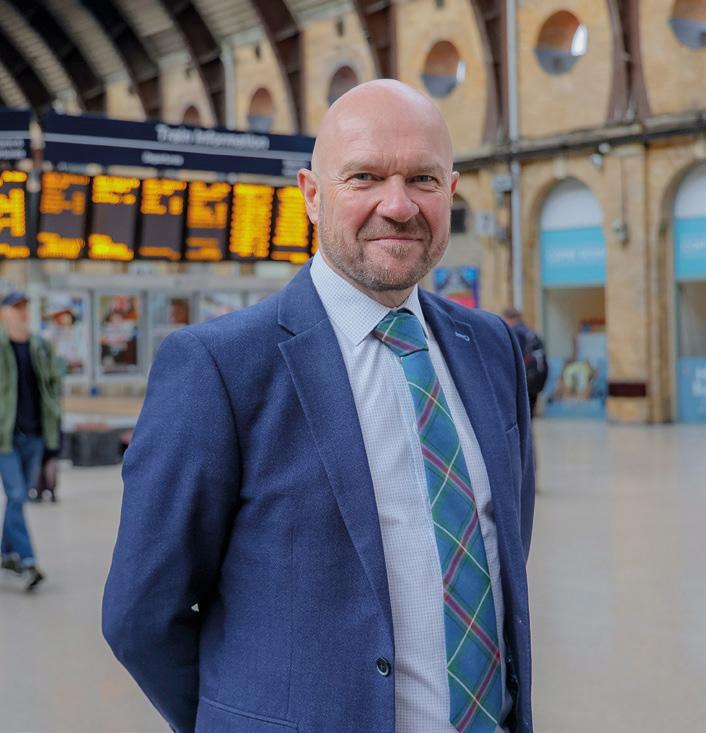
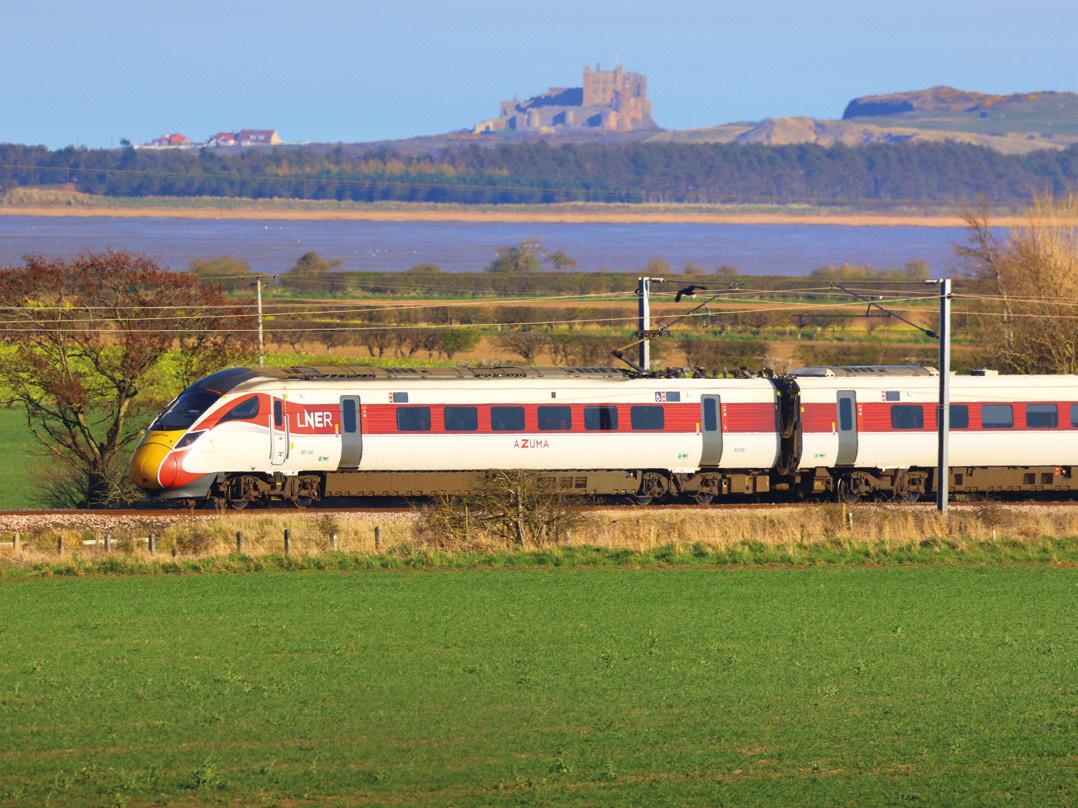
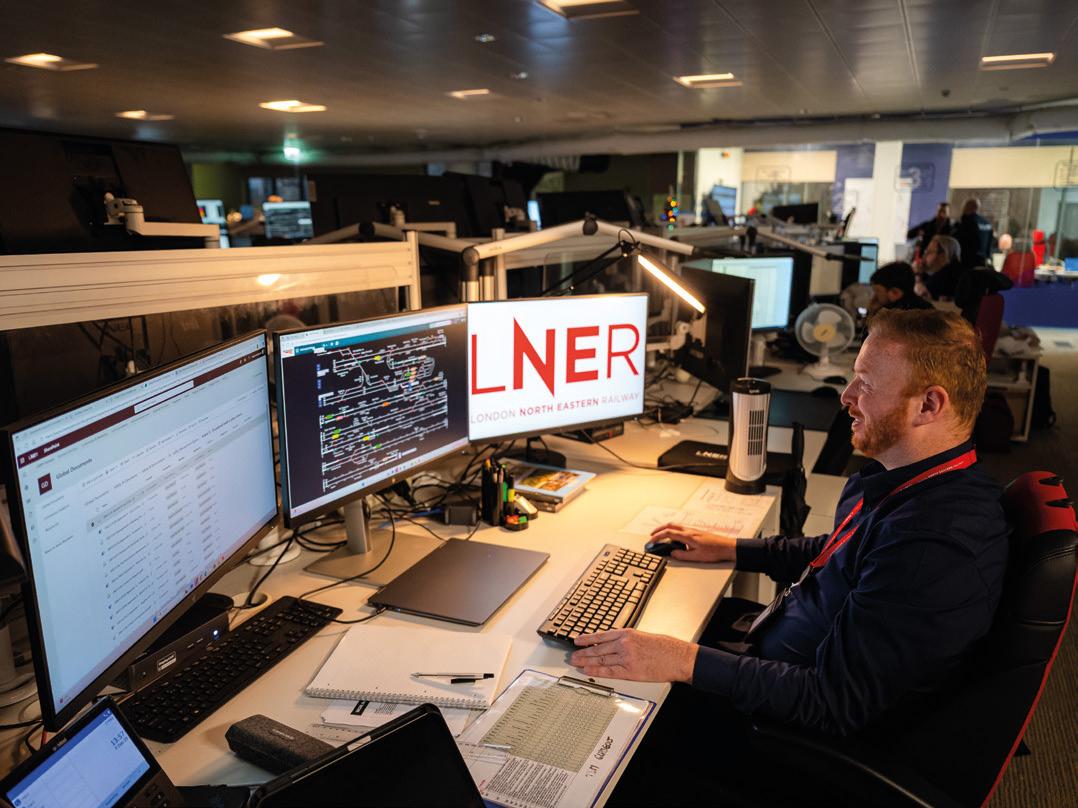
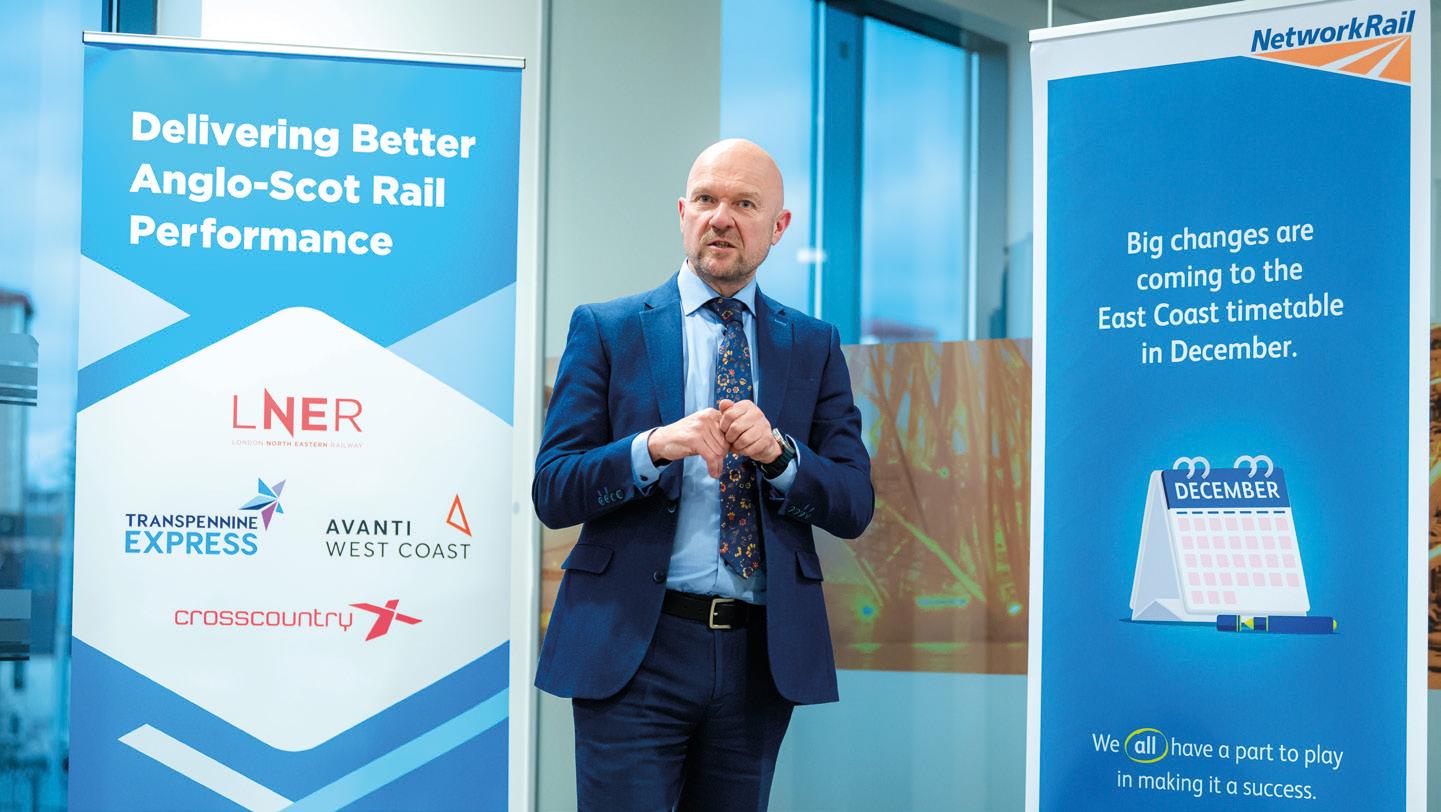
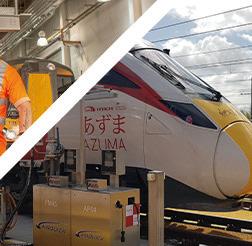
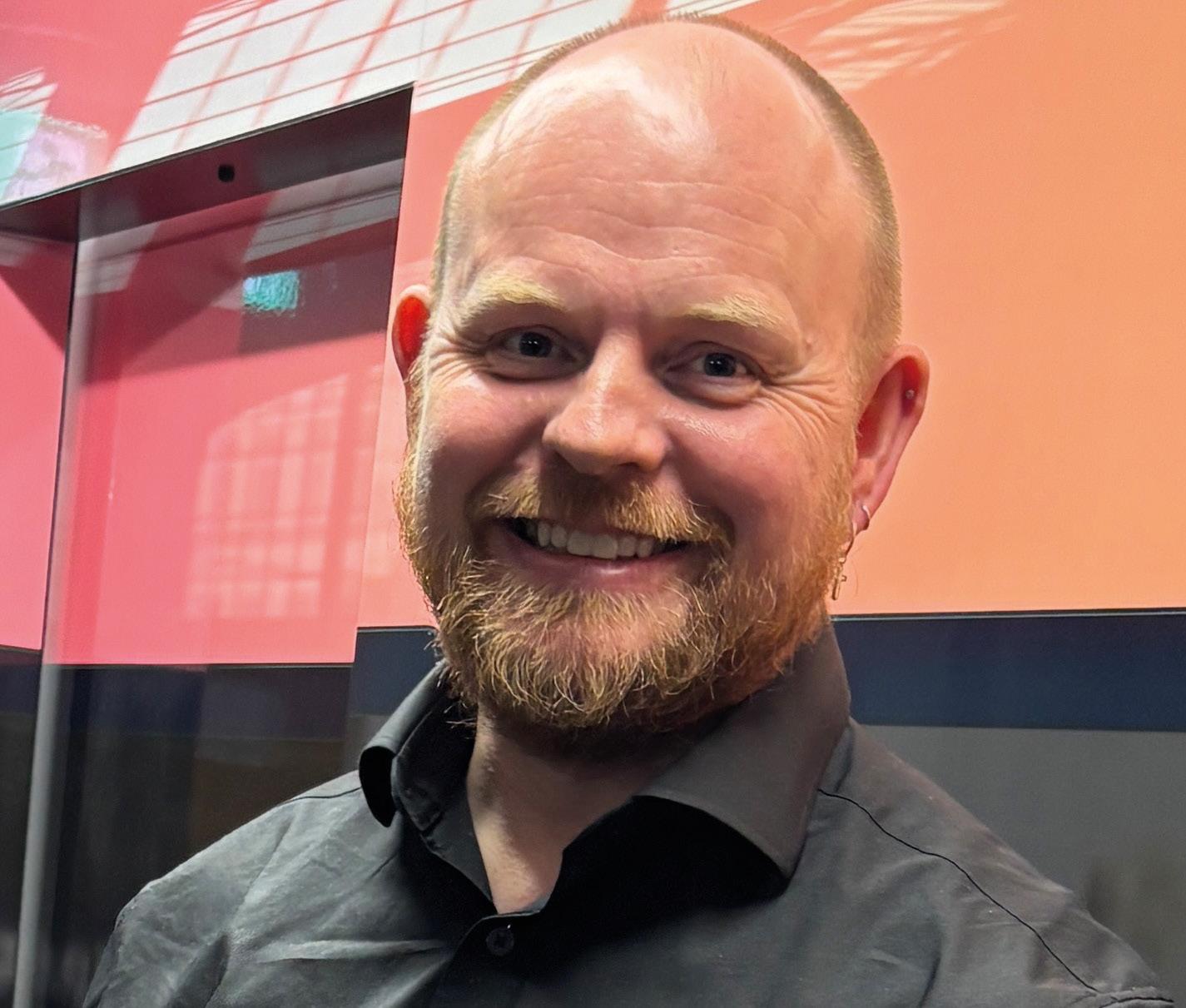
It was also fascinating to chat with Warrick Dent, LNER’s Safety and Operations Director, about the new team of railway colleagues working in Scotland’s rail operating centre, who in a month have already risen to the challenges of a major timetable change and Storm Goretti. Read more from page 48.
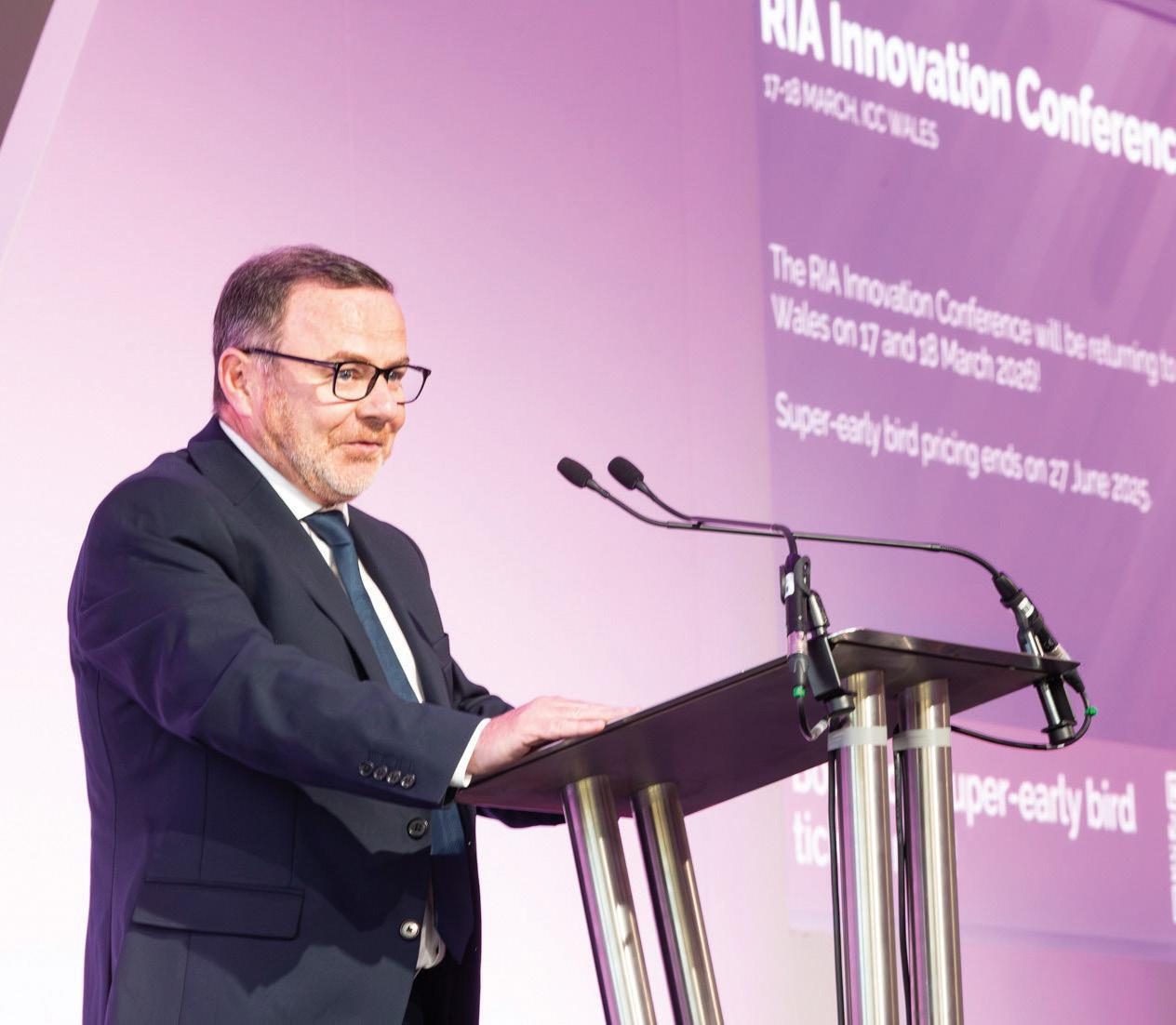
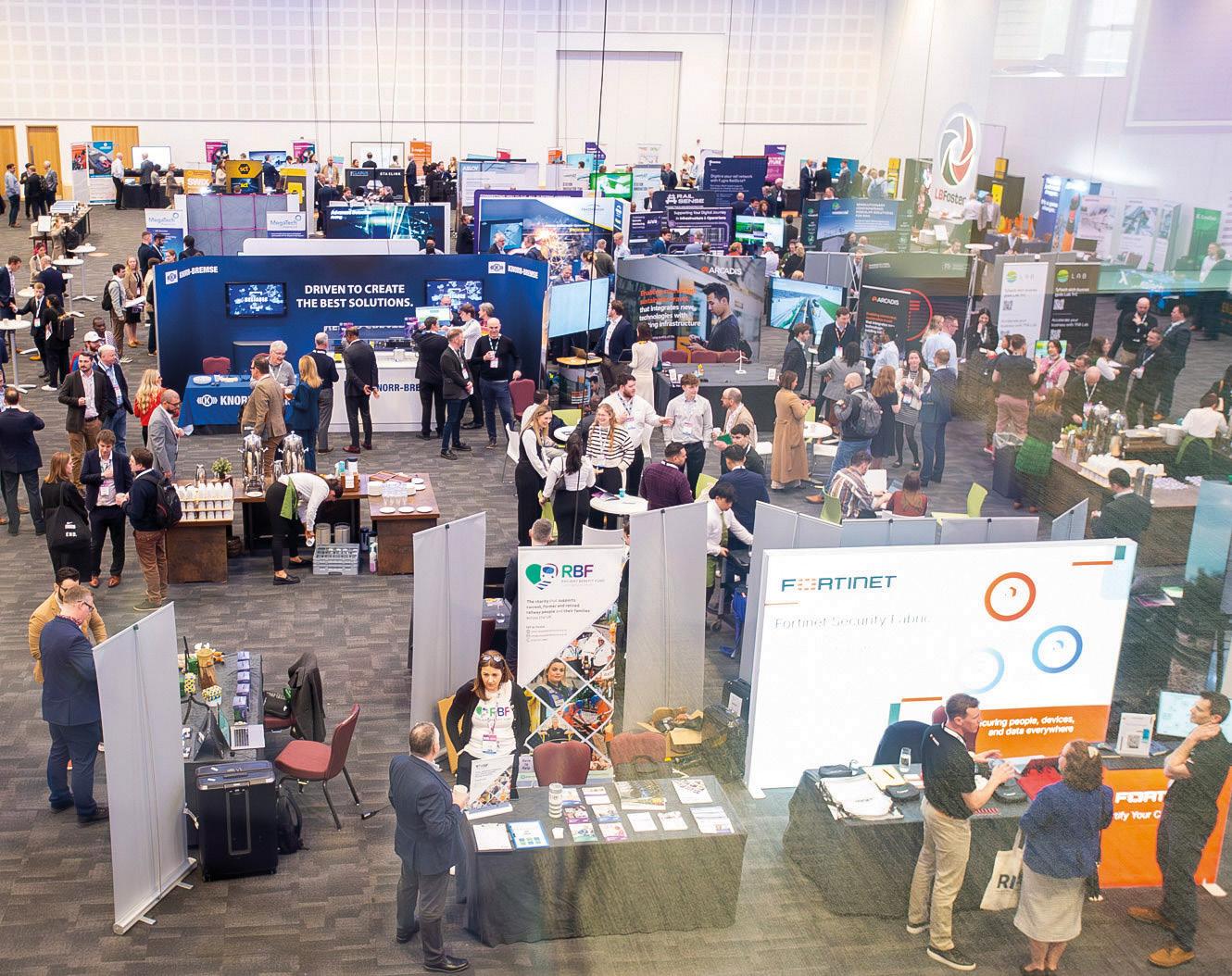
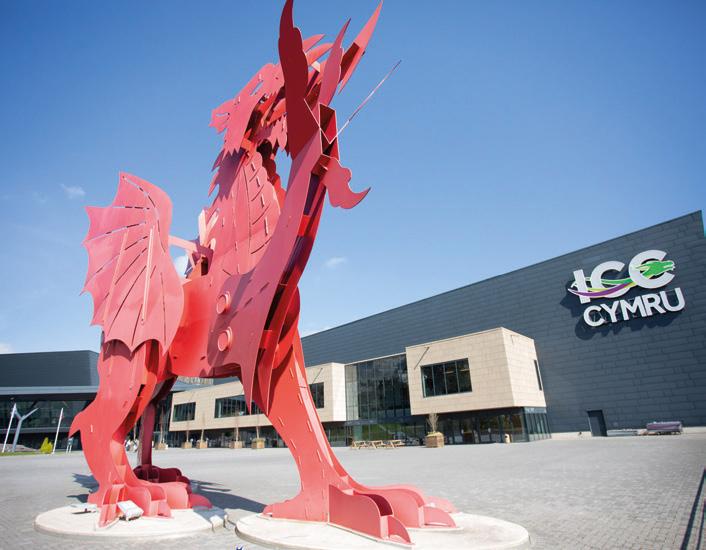
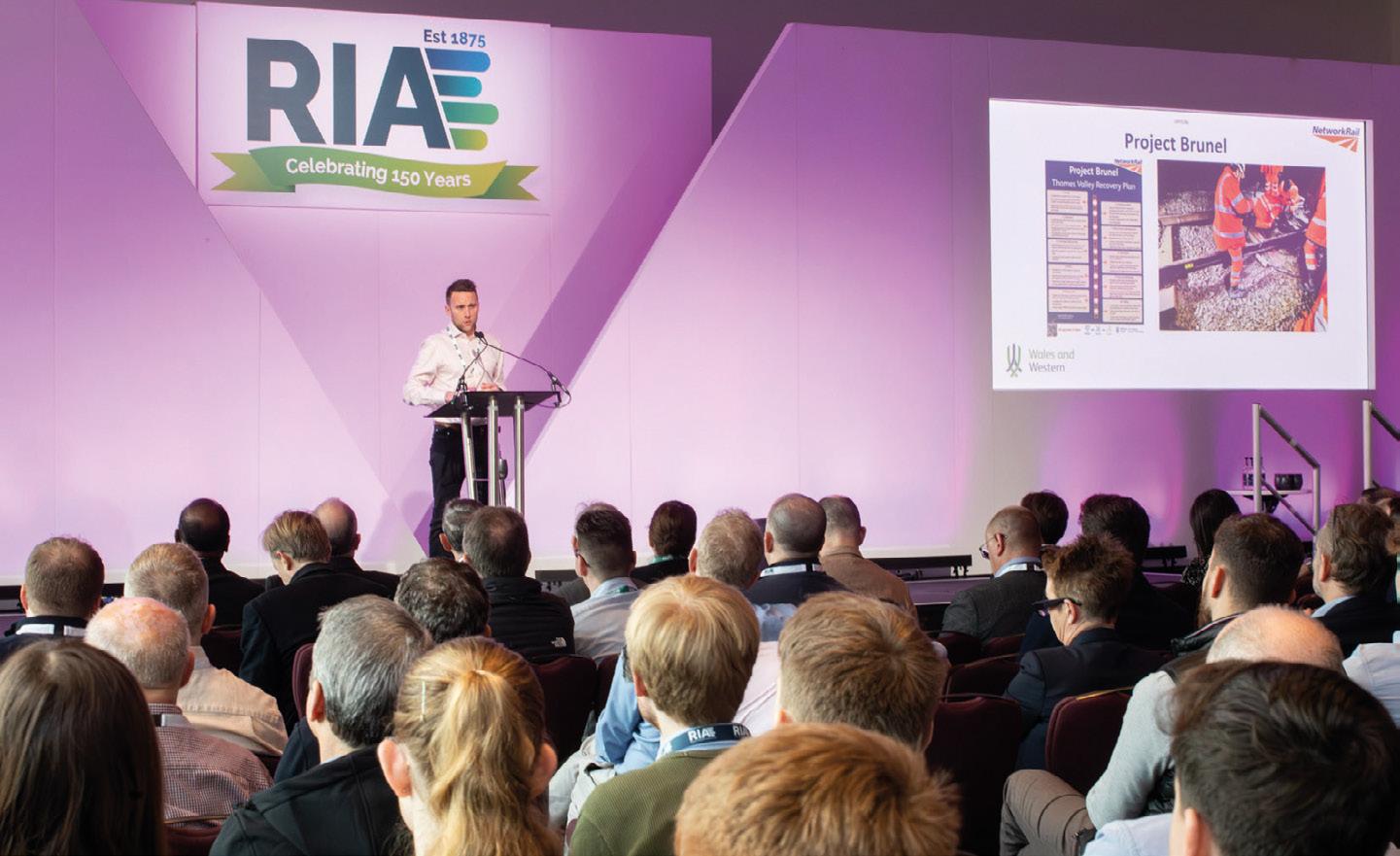
In this edition we also take a forward look at two fantastic events happening next month. Firstly, there is the Railway Industry Association Innovation Conference which returns to Wales (more details from page 54); and earlier next month is Interchange (previewed from page 64).
That’s just a taster as to what is in this month’s magazine, which also includes Daisy Chapman-Chamberlain’s latest column, a look to those who have been recognised in the New Year Honours List, and a railway training track which has been launched at HMP The Mount.
Thanks as always to everyone who has contributed to this month’s edition, and I hope everyone enjoys reading it. Next month’s theme will be the environment and sustainability with some great interviews already conducted. Space is filling fast so if you want to appear in this edition please get in touch soon.
All the best,
Danny Longhorn Editor
Rail Director magazine and Railbusinessdaily.com are assets owned by the Railway Industry Association. Railbusinessdaily.com delivers more than 70 stories a week to +50,000 rail industry professionals in our daily 7am newsletter. If you have not already subscribed, it’s free and it’s easy to do so at www.railbusinessdaily.com, please also encourage your colleagues to do the same. This is the very best way to keep abreast of what is happening on the UK’s railways. There is a digital copy of Rail Director on our website.
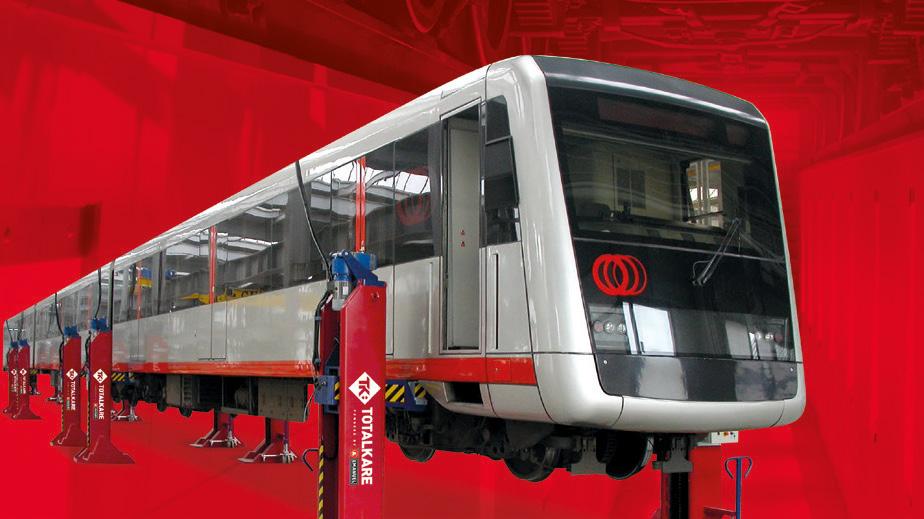
RAIL LIFTING JACKS
With over 40 years’ experience of high quality, heavy duty vehicle lifting, Totalkare combines world class products with industry leading support to facilitate effective maintenance and repair.
For more information or to request a site visit:
6
Taking responsibility for the UK railway
The Rail Minister Lord Hendy discusses the journey ahead for the UK’s railway
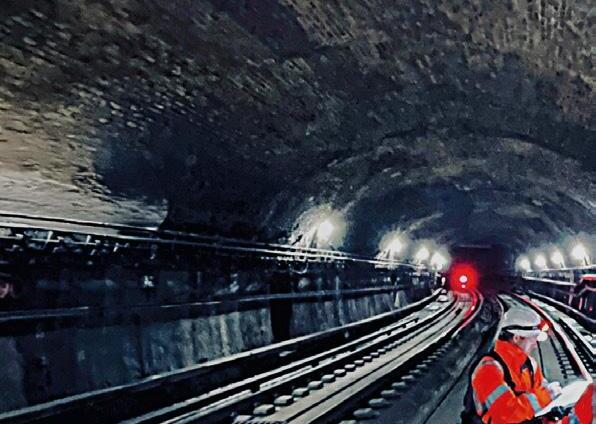
14 Royal recognition for rail research keeping the UK on the move
Professor William Powrie explains how University of Southampton engineers have been leading research to improve the resilience, performance and cost-effectiveness of the rail system
20 Christmas comes but once a year – but Network Rail takes advantage of it when it does
Nigel Wordsworth reports on the huge amount of work that has taken place on Britain’s railway over Christmas and New Year
32 Delivering infrastructure projects differently
Sharif Narouz, a Major Programme Director at WSP UK & Ireland, reflects on his career and explains why collaboration is the route to success
36 The three ingredients to deliver the rail infrastructure of tomorrow
Alistair Geddes, Rail Sector Director, Costain, writes about the key principles that can help the industry align with a clear vision and ensure that the rail infrastructure of tomorrow drives prosperity, builds resilience and supports the UK’s decarbonisation goals
44 Embracing proactive stewardship of the UK’s ageing rail assets
Arup has recently released a new report titled Renewing Ageing Assets – making the case and enabling delivery. Phil Harrison, UKIMEA Rail Leader, writes about why the UK must rethink its approach to infrastructure investment to improve asset resilience
48 Strengthening collaboration across Scotland’s Railway
A new team of railway colleagues working in Scotland’s rail operating centre have risen to the challenges of a major timetable change and Storm Goretti. Warrick Dent, LNER’s Safety and Operations Director explains more
52 Innovations shaping the safety, efficiency and compliance of the rail sector
David Muse, Chief Technical Architect at Petards Rail, explains how artificial intelligence and smart monitoring are improving safety and efficiency in the rail sector
54 Intelligent Systems on Track: Driving Innovation in Rail & Transport
The Railway Industry Association (RIA) Innovation Conference returns next month. Rail Director whets the appetite with a preview
58 The power of design
In her latest quarterly column, Daisy Chapman-Chamberlain looks at strong rail iconography and how it has the potential to span decades or even centuries
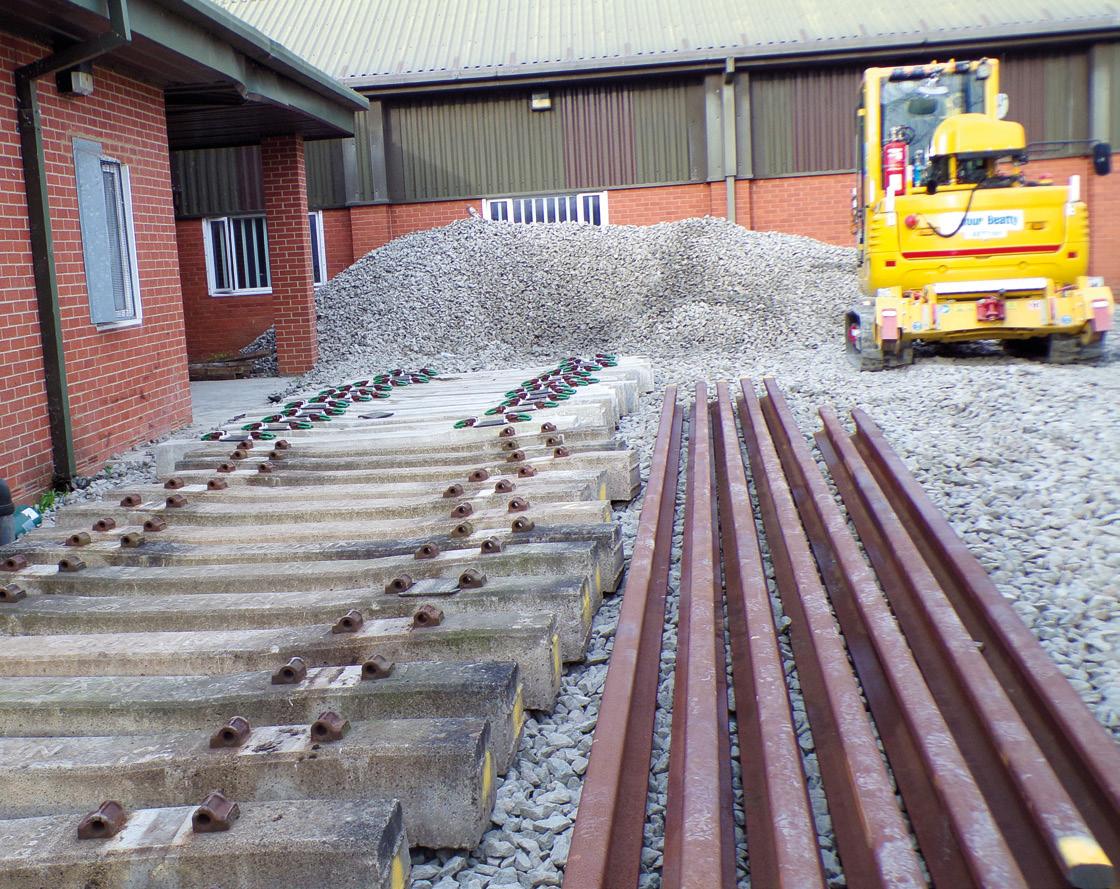
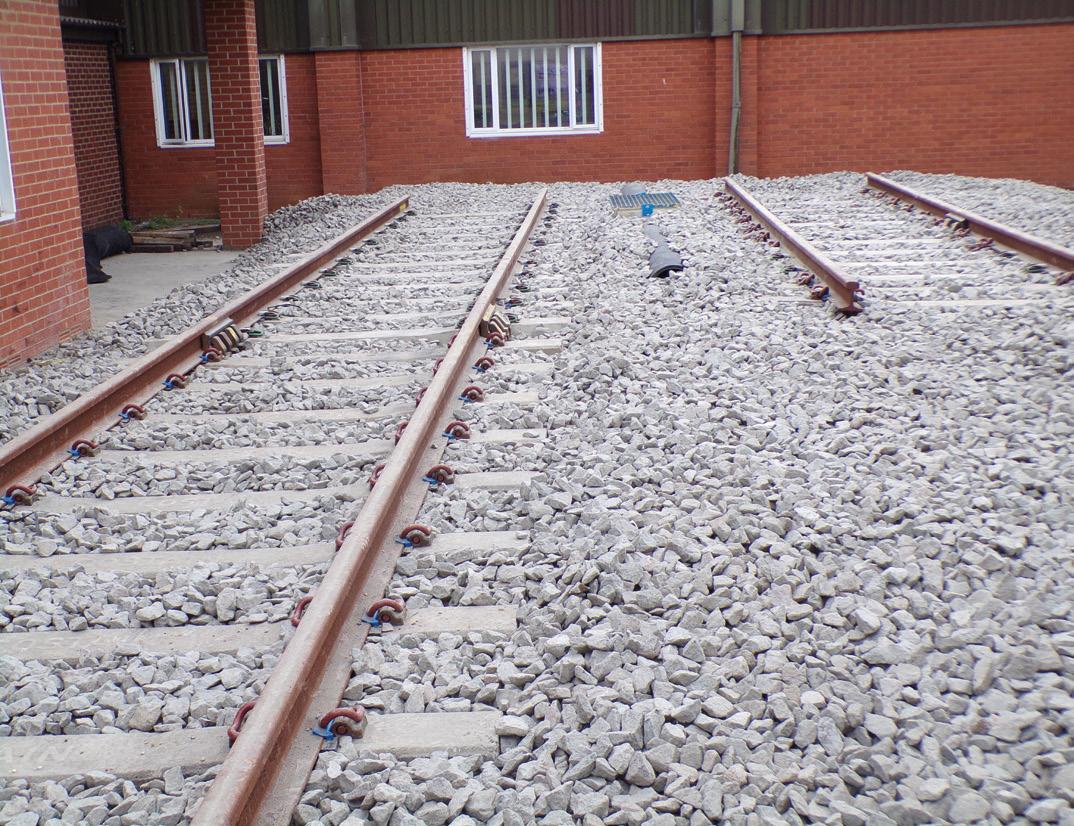
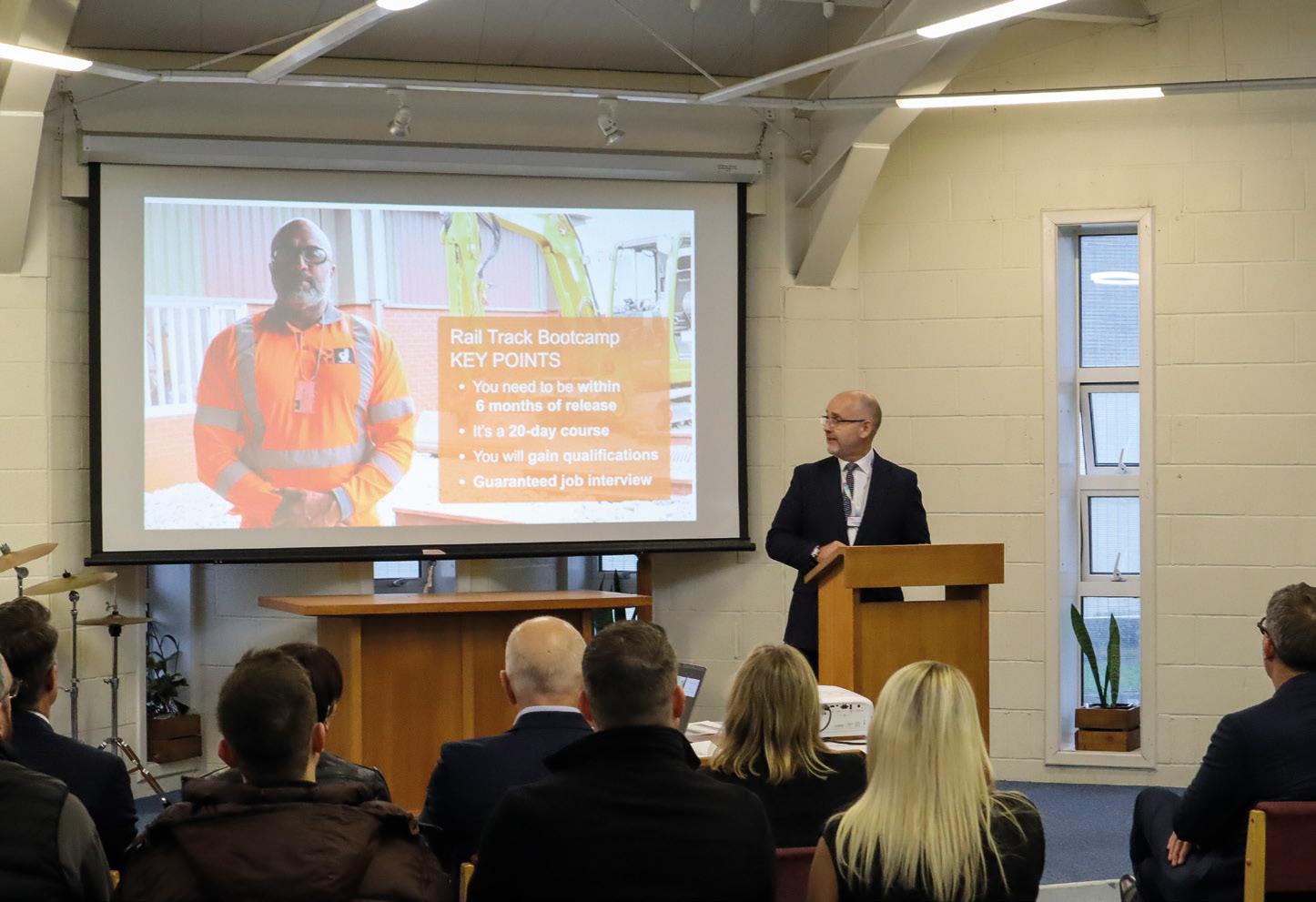
62 A direct pathway from custody to the railways
A Railway Training Track has been launched at HMP The Mount. Rail Director finds out more
64 ‘All transport modes rise together’
RIA and the British Aviation Group will be hosting a joint partner theatre session exploring seamless connectivity between airports and rail at Interchange 26. Darren Caplan and Jane Thompson explain more
72 Rail industry workers recognised in New Year Honours List
Railway workers have been recognised in the King’s 2026 New Year Honours List
78 ‘Developing the workforce within’
Andrew Limb, Organisational Development Manager at Angel Trains, explains how younger employees are leading the way in training more experienced members of staff
86 Movers and shakers
Richard Watts has joined Balfour Beatty as the Managing Director of its UK rail business. He discusses the journey ahead
94 HS2:
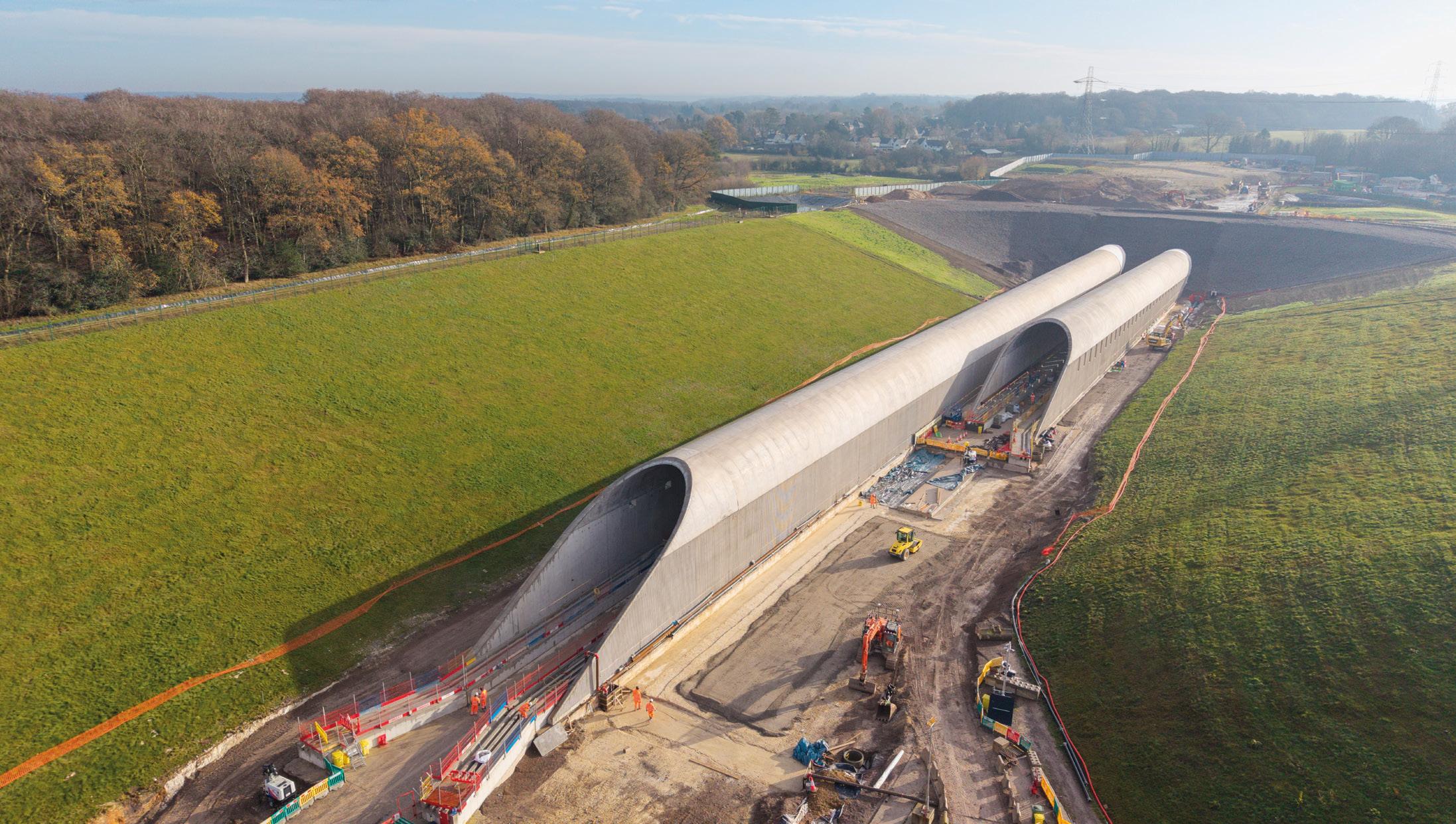
Civil engineering works on longest tunnel project complete
There has been an important civil engineering milestone for the next high-speed railway
Tel: 01132 082620
Sales: 07494 529 803
Editor Danny Longhorn
Danny@railbusinessdaily.com
Designer and Production Manager
Debbie Nolan
Writers Rosie Crampton
Nigel Wordsworth
Advertising Sales
Christian Wiles
Chrisw@railbusinessdaily.com
Marketing Sales
Sarah Hopton
Sarah@railbusinessdaily.com
Published by Rail Business Daily 2 Bond Court, Leeds, LS1 2JZ
Reproduction of the contents of this magazine in any manner whatsoever is prohibited without prior consent from the publisher. For subscription enquiries and to make sure you get your copy of Rail Director please ring 01132 082620 or email info@railbusinessdaily.com. The views expressed in the articles reflect the author’s opinions and do not necessarily reflect the views of the publisher and editor. The published material, adverts, editorials and all other content is published in good faith.
The Rail Minister Lord Hendy has sat down with Rail Director to discuss the journey ahead for the UK’s railway, discussing Great British Railways and Northern Powerhouse Rail
Taking responsibility for the UK railway
The Government has announced plans for Northern Powerhouse Rail (NPR) which will see upgrades to lines between Leeds, York, Bradford and Sheffield first in the 2030s, with better connections to Manchester in later phases.
The first phase will prioritise upgrades and electrification between Leeds-Sheffield, Leeds-York and Leeds-Bradford to transform commutes. In the North East, work on the business case for the Leamside Line will also be taken forward.
NPR has been in the works in some sort of form since 2014 when Conservative George Osborne was Chancellor, but was effectively mothballed when Rishi Sunak cancelled the Birmingham to Manchester leg of HS2.
However, last month the Labour Government announced £1.1 billion to progress planning and development works as soon as possible, including improvements for Leeds, Sheffield and York stations, and pressing forward with work on Bradford station.
“It has not been about whether it should be done at all, but how much of it should be done and how quickly it should be done,” said the Rail Minister Lord Hendy.
“The really significant thing about this announcement compared to what was announced in the past is that the project is being funded.”
Speaking to Rail Director, Lord Hendy reflected on the Conservative’s £96 billion Integrated Rail Plan (IRP), a package of rail construction and upgrades for
the Midlands and the North, including NPR, HS2 East and HS2 West.
“The IRP was a great list of schemes in the North of England which weren’t prioritised and crucially weren’t funded,” he said. “The North has had enough of being promised stuff that isn’t delivered because it is not funded. This Government is committed to funding the stuff and actually delivering it.
“The money is going to be there for spending in this Spending Review to start the work on the links on the east side of the Pennines, and will be there to develop the scheme on the west side of the Pennines.”
Elaborating on the plans, the Rail Minister has said the first phase will enable enhancements of existing routes that can be planned and executed quickly. This also goes alongside more than £11 million of local transport funding, which has been agreed for South Yorkshire to develop a new Rotherham Gateway station and tram projects in Leeds and Sheffield.
The second phase involves building a new route between Liverpool and Manchester in the 2030s, running via Manchester Airport and Warrington, giving connections to North Wales through Warrington and Chester.
“That itself leads to the Government making a long-term commitment to the possibility of a new route between Birmingham and Manchester, so we will not be disposing of the property that has been acquired for what was Phase 2a of HS2,” explained Lord Hendy.
“We’re not saying it is going to be a high-
It has not been about whether it should be done at all, but how much of it should be done and how quickly it should be done
TRU proves we can still build big projects and I want NPR to be done like it because we’ve got a model that works
speed railway or committing any timescales to it, but we’re saying it will be necessary at some stage because the West Coast Main Line is full. We don’t want to make the mistake of HS2, which was to start the contract before you know what you are buying.
“The third phase is around sorting out Manchester to Sheffield and Bradford to Manchester.”
Giving his thoughts on what could be done to improve the West Coast Main Line, Lord Hendy says timescales and whether or not a whole new railway north of Handsacre Junction will be needed is something that needs to be worked out carefully.
“Having bought a load of land for what was going to be the now cancelled Phase 2a of HS2, it makes no sense to dispose of it, but we had to decide whether or not improvements are needed and the answer is yes,” he said.
“The activity that went on after the cancellation of Phase 2 was destructive. There were some people who were not only determined not to do it, but they were determined to deprive the opportunity of ever doing it, which was mad.
“It is implausible that the two track West Coast Main Line north of Handsacre can actually cope with what we are expecting it to do by the 2040s. Whether you have to build it all at once to Crewe – which was the original HS2 plan – is quite doubtful, you might have to build bits of it. But we don’t have to make the decision now.”
On the topic of HS2, the project’s Chief Executive Officer Mark Wild is nearing the deadline of carrying out a fundamental reset, putting the programme’s construction in the right sequence and bringing
certainty to the railway’s final costs and opening dates.
Lord Hendy said: “Mark has done a huge amount of work and has been forensic, and we’re not far off drawing to a conclusion the HS2 reset. It’s a scandal that the first thing he had to do was work out what so far the Government has got for its money. We’ve spent two-thirds of the budget and we’ve probably only got a third of the job.
“Mark and Mike Brown (Chair of HS2) effectively finished Crossrail turning it into the Elizabeth line, so I have got every confidence they will do the same with HS2. But you have to set how much money we’re going to spend on the national railway network and what it can do alongside the significant financial commitment of finishing Phase 1 of HS2.”
Despite the problems of HS2, the Rail Minister is certain NPR can be a success, taking confidence in the progress of the Transpennine Route Upgrade (TRU), which is currently running on time and on budget. Once complete, it will see the upgrade of the Transpennine main line for 70 miles between York and Manchester, providing an electric network and increasing capacity.
“TRU proves we can still build big projects and I want NPR to be done like it because we’ve got a model that works,” he said.
“TRU is a collaborative venture which includes the contractors and the train operators. A lot of the NPR work on the eastern side of the Pennines will have to be done on the existing railway. TRU is a massive job and is being done on an operating railway.
“NPR has got to involve a collaborative method of working involving the operators and contractors.”
Image: Network Rail
Data available
TAPI Bus Information
TAPI Bus Performance
TAPI Bus Disruption
Data available
TAPI Bus Information
TAPI Bus Performance
TAPI Bus Disruption
TAPI Bus Fares
TAPI Rail Information
TAPI Rail Performance
TAPI Bus Fares
TAPI Rail Information
TAPI Rail Performance
TAPI Journey Planner
TAPI Places
TAPI Journey Planner
TAPI Places
Progressing Great British Railways Lord Hendy has recently surpassed 18 months as Rail Minister, although his affiliation with the industry started in 1975 as a graduate trainee with London Transport. He then went on to be Commissioner of Transport for London (TfL) and Chair of Network Rail.
With this first-hand experience, he appreciates more than most the frustrations for those working in the sector, and the importance for change –something he believes is already changing with Great British Railways (GBR).
“We need a coherent railway run by a body that takes the responsibility for it,” he said. “When I ran TfL I’d wake up in a morning, look at the phone, see what was wrong and I knew it was our responsibility to fix it and run the place properly every day. I never thought there was anybody else to blame for it.
“The railway is so frustrating because despite the efforts of so many, it is utterly fragmented. When I talk to Lawrence Bowman (Managing Director South Western Railway), Steve White (Managing Director South Eastern Railway) and Jamie Burles (Managing Director Eastern Region) I can see people who wake up as I used to do, taking responsibility and looking at how to make it run better and do the best for customers.”
Lawrence, Steve and Jamie last year took up positions described as GBR in action, uniting train operators and Network Rail under single leadership teams for specific regions.
“The railway industry has spent more than 30 years with people sitting in a room saying it is not my fault, and that hasn’t produced a better railway,”
said Lord Hendy. “It has produced a culture of people reading the contract and working out how to exploit it.”
Although the Railways Bill (which will lead to the formation of GBR) is currently being debated in the House of Commons, the Rail Minister explained how the industry is already reaping the benefits of bringing track and train closer together, giving the introduction of a new East Coast Main Line timetable last December as just one example.
On the day of its launch, Lord Hendy visited the York Rail Operating Centre (ROC) to meet the teams. “It was really encouraging that we had Network Rail, LNER, TransPennine Express and Northern, all of whom were not sitting there thinking how does my contract work if this doesn’t quite work, but how do they make the timetable work,” he said.
“I left York ROC concluding that the timetable introduction would be fine because the industry is learning again how to work together for the benefit of the customers. Not every day will be brilliant and when things do go wrong you want people to pull together and sort them out, freeing people from saying ‘but the contract says this’.”
It’s a message he’s stressed to the Managing Directors of South Western Railway, South Eastern Railway and Eastern Region.
“I want them to behave as though this is their last job that they are going to have, that they will be there for a very long time, and that the decisions they take today are the ones that should suit them in five or 10 years’ time,” he said.
“I don’t want them thinking that they’ve only got a three-year franchise so won’t bother to do that.
“That’s a real cultural difference. When I went to Network Rail from TfL, on a bad day at Network Rail it becomes second nature to think ‘thank God that’s not our fault’, and that’s not the right way to look at it.
“That’s what I hope for and I know GBR will do. What I care about is that people like Lawrence, Steve and Jamie get the support they need to run a good train service; that’s what will change people’s views of the railway. People are not interested in knowing whose fault everything is, they just want it fixing.”
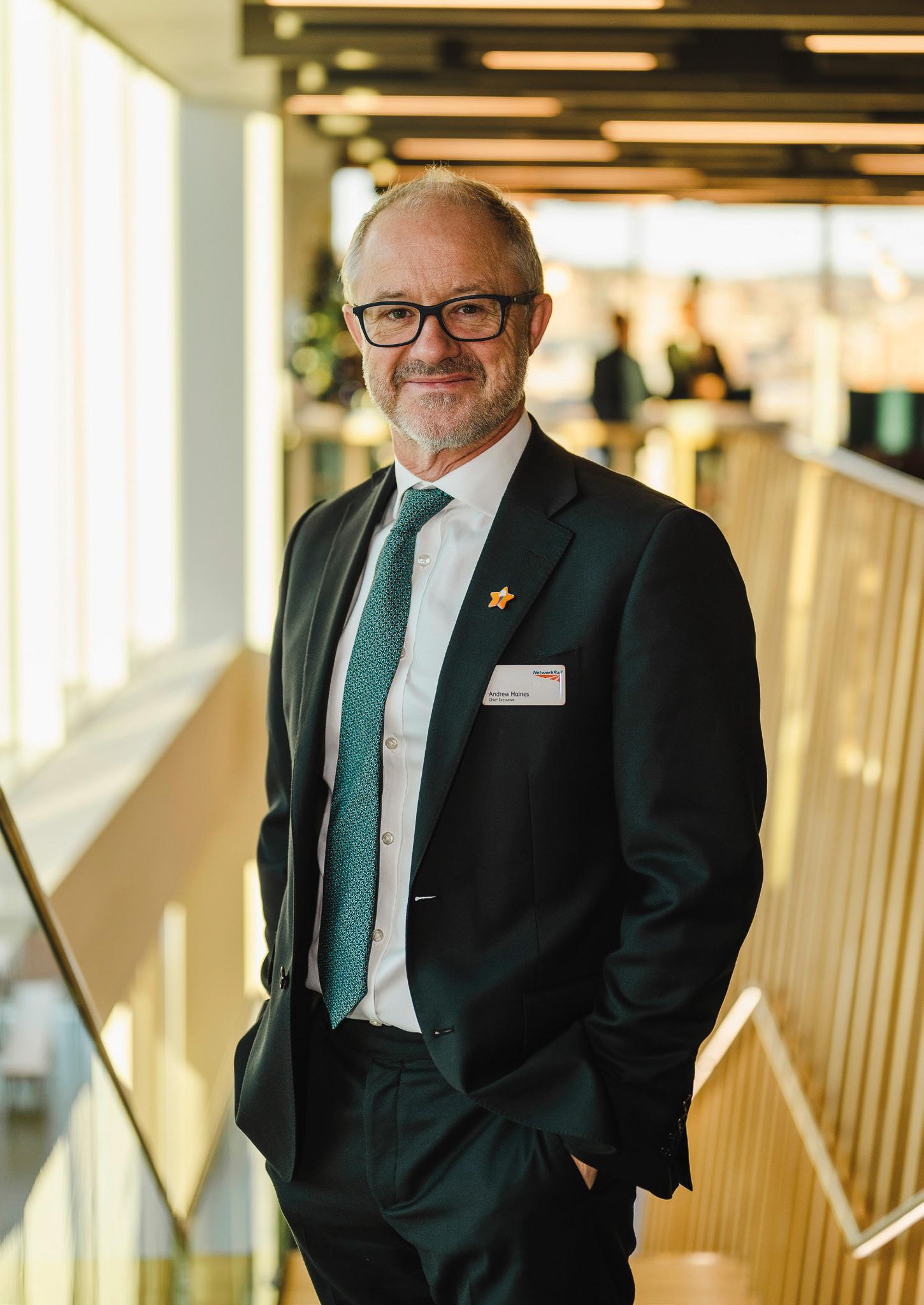
Shortly before Rail Director spoke to Lord Hendy, Sir Andrew Haines was appointed Chair of Department for Transport Operator (DFTO) and Richard George was announced as Chair of Network Rail.
Lord Hendy said: “The appointment of these two really experienced professionals enables me to be sure that during 2026 a lot of the leg work to create GBR will be being done out of GBR. In essence this is the pulling together of Network Rail and DFTO.
“In March DFTO will take in a load of people from the Department for Transport (DfT), and I can rely on Richard and Andrew, and Jeremy (Westlake, Chief Executive at Network Rail), and Alex (Hynes, Chief Executive at DFTO) to do all of the work this year which enables GBR to go forward with a decent start and it’s got a board and a chair and a chief executive of its own.”
Alongside this, and the Railways Bill going through Parliament, this year will also see more train operators coming into public ownership, starting with West Midlands Trains earlier this month, and Govia Thameslink Rail in May.
“As more train companies come into public
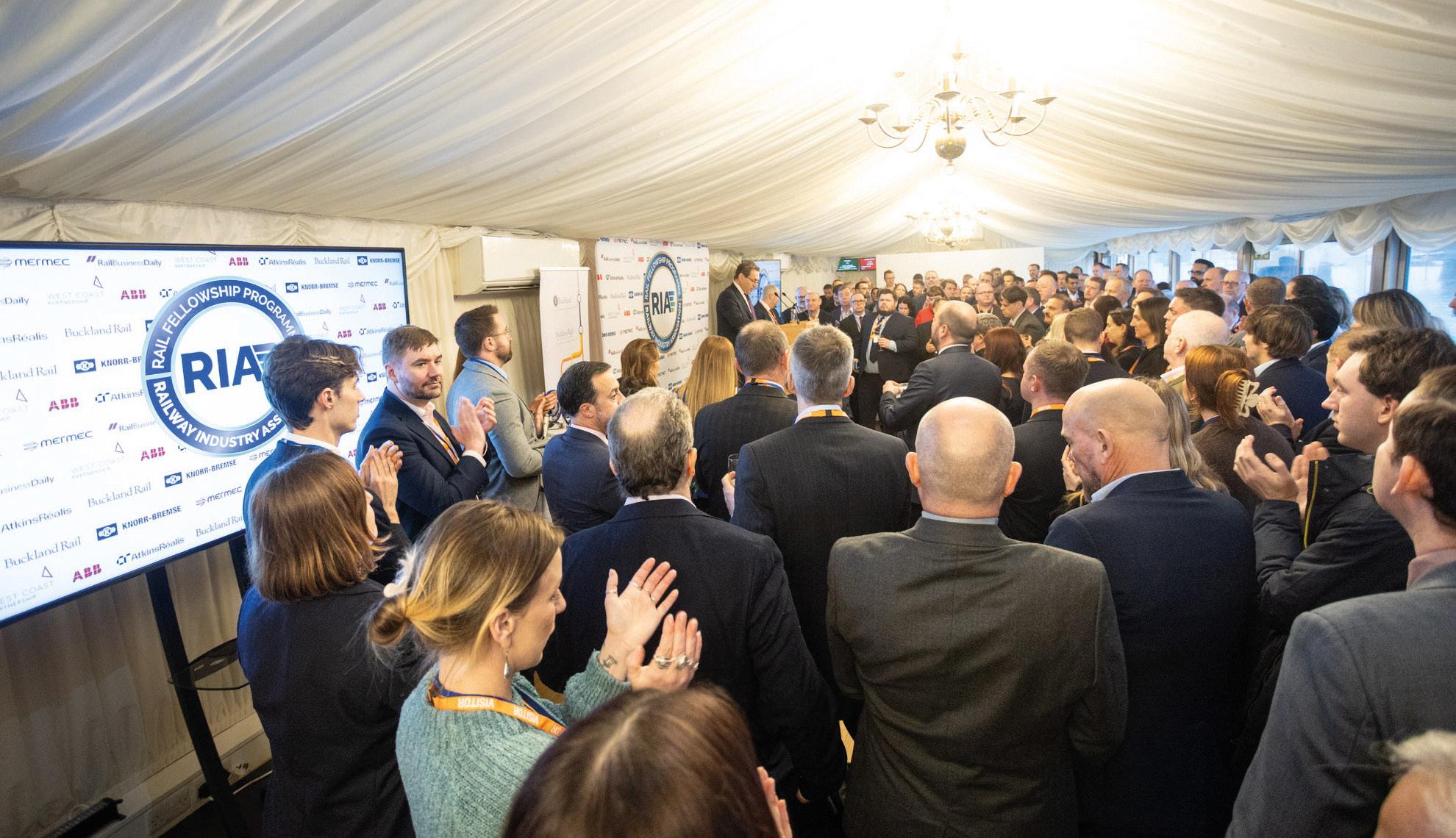
Image: RIA
ownership we will sort out putting the infrastructure together with the operators again like we’ve done with South Western, South Eastern and Greater Anglia,” he said.
“Progressively we will see a number of people around the country responsible for railway performance with nowhere to go when it goes wrong apart from fixing it with the people they’ve got.
“By the end of 2026 we will have had virtually a year’s worth of Andrew and Richard working together with Jeremy and Alex to create the combined entity of GBR and a whole series of operations on the ground that are controlled by one person with both infrastructure and operations committed to improving performance, driving revenue and reducing cost. I think that is a pretty good start for GBR.”
Discussing the structure of GBR, Lord Hendy says it’s not the Government’s intention to interfere with the well-established five-year control period settlement for operations, maintenance and renewal. He adds that in the Bill there is a proposition that would allow a future Government to do the same with the operation of the railway.
“That five years gives the infrastructure and the supply industry much more certainty about the future than it would do if wasn’t there,” he said.
“The Bill also contains the power to fund operations on other than an annual cycle. I don’t see that happening any time soon simply because the current Government inherited a very bad financial position. I think it would be brave or stupid of anybody
to say we’ll give you a five-year operating settlement.
“Apart from anything else, the railway is still in a position where we know there is more revenue to get and we know there is a lot more cost to come out, but I think continuing in essence the five-year control period cycle is the right one for the infrastructure industry.
“One thing people haven’t yet clocked in the Bill is the requirement for the Secretary of State to produce a long-term railway strategy and for the requirement of GBR to publish its business plan, which will give the supply chain much more confidence.
“That requires the railway industry itself to have a much more long-term view about what it is trying to achieve.”
Lord Hendy added: “We need to have a longterm plan that’s really the expression of what the railway contributes to growth, jobs and homes. The railway industry needs to say what can be done with the existing railway which will best serve the national economy and then for the Government to choose what can be taken forward.
“In the past we’ve had projects that came about because of local MPs getting the railway they asked for, which isn’t the same as having a big plan.”
One important area of the plan currently being developed is the Rolling Stock and Infrastructure Strategy. It is a project Alex Hynes started work on when he was Director General, Rail Services at the DfT, and is due to be released in the summer.
“Train orders have been up and down like
GBR is not going to work if it’s some great corporate organisation sending ridiculous messages down to people who can’t action them
a yoyo,” Lord Hendy said. “First of all, the manufacturing plants closed in the 1990s then several opened up and they are desperate for orders.
“The industry has got no vision about what might happen next apart from the renewal of franchises so GBR needs to get a grip of that, work out a programme for rolling stock that is affordable and which keeps the manufacturers in business of buying the right things.
“There are dozens of varieties of train not all of which couple with each other, with different wheelchair spaces, toilets in different places. We can do a lot better than that.”
It’s a task that Lord Hendy doesn’t underestimate.
“It’s a big job,” he said. “You can work out the age of the trains and where they are etc, but we’ve got the issue of net zero and really progressive technical development on that. You’d like to think we wouldn’t buy any more diesel trains unless we really have to.
“You’d also like that strategy to encompass what looks like a very plausible way of doing business, which is partial electrification. East West Rail will be the first example, and I think there is quite a lot of work to do of what the limits of discontinuous electrification are.
“The more battery trains that we buy the cheaper the batteries are, the lighter they will be and the more power they’ve got, so you don’t want to make the wrong decisions too early. We know hydrogen is feasible, but is it actually something we want to be embraced? That has got to be considered.
“Electrification, which everyone immediately says is the answer to everything, is actually very expensive on a capital basis. If we can successfully run bi-mode trains, which we now can, or even tri-mode trains which GB Railfreight have bought, then maybe you can think about putting the wires in the right places where it is relatively cheap to do that.
“There’s a lot to do, but I’m optimistic that these things will produce not only a better operating industry and better infrastructure industry, but a better supply industry because nobody’s had a clue about where the railway is going.”
As to those wanting to know more details of how GBR will be organised, Lord Hendy has this message.
“We haven’t waited to make the changes that we believe need to be made for the railway to work
better, you can see that by what is going on in South Western, South Eastern and Greater Anglia with the management change of putting one person in charge of both the infrastructure and the operations,” he said. “That is my answer of evidence of how GBR will work.
“I’ve said to Lawrence, Steve and Jamie and I’ll say to others as they come in, you get together and work out now what you want this organisation to do for you to give a better service to customers and what you don’t want it to do.
“This is about empowerment. GBR is not going to work if it’s some great corporate organisation sending ridiculous messages down to people who can’t action them. It will work if it says we are committed to the customers, these people are running this at a local and regional level, how can we help them do their job better?
“With NPR and HS2 you can begin to see that the Government is committed to the railway and what we need to do is give the railway time and space to manage itself properly to deliver. That is good news for everybody whether they work in the public sector in the railway or outside it in the supply chain because it must be successful.”
With NPR and HS2 you can begin to see that the Government is committed to the railway and what we need to do is give the railway time and space to manage itself properly to deliver
Transport Secretary Heidi Alexander with Lord Hendy. Image: DfT
Advice from Tim Smith Cert Cii NEBOSH Client Director at Jobson James Rail
Grey fleets: The hidden risk
n the rail industry, risk management is second nature and organisations are used to working hard to control the exposures that could affect staff, customers, and infrastructure. But one area often overlooked – despite carrying significant liability – is grey fleets.
A grey fleet refers to employees using their own privately owned vehicles for business travel, whether driving to depots, sites, compounds, or offices. While this approach offers flexibility and cost savings, it also introduces risks that rail employers must take seriously.
Why grey fleet risk matters
Many rail businesses assume that because the vehicle is privately owned, responsibility sits with the employee. Unfortunately, the law and insurers disagree.
When an employee uses their own
car for work purposes, regardless of vehicle ownership, the employer has the same duty of care as they do over a company vehicle. Failure to manage this exposes the company, its directors and its management to:
HSE investigations after collisions involving staff travelling for work.
Significant fines under the Health and Safety at Work Act 1974 if vehicles / drivers are noncompliant.
Risk of regulatory action.
Corporate manslaughter charges.
When managing grey fleets rail businesses must ensure that: vehicles are roadworthy and suitable for business use; drivers are fit and legally entitled to drive; insurance covers business travel; and clear processes and reporting are in place.
Company fleets offer consistency: known vehicle age, scheduled maintenance, full business insurance and verified safety standards. Grey fleets can’t provide the same
uniformity, which is why strict oversight is essential.
While allowing employees to use their own vehicles offers flexibility and avoids asset costs, rail employers must remember that grey fleets do not remove corporate responsibility.
UK company directors can face prosecution for grey fleet mismanagement, because the law treats work-related driving (including
in privately owned vehicles) as part of the employer’s legal responsibility. When directors fail to ensure compliance with safety and legal obligations, following a serious accident, they may become personally exposed to criminal, civil, and regulatory consequences.
Furthermore, while the Corporate Manslaughter and Corporate Homicide Act 2007 does not prosecute individuals, a company can be prosecuted if management failures lead to a death involving an at-work driver.
Put simply, grey fleet mismanagement is not just a compliance issue – it’s a serious operational and insurance risk. With the right systems and controls in place, rail businesses can reduce risk, fulfil their legal duties, and create a safer environment for everyone travelling on company business.
Contact Tim on 07493 868305.
For the past two decades, University of Southampton engineers have been leading research to improve the resilience, performance and cost-effectiveness of the rail system. Professor William Powrie explains how it has resulted in a more sustainable infrastructure that is scalable to future population growth
Royal recognition for rail research keeping the UK on the move
The UK’s rail system is a catalyst for economic and cultural productivity. It also has a vital role to play in meeting the Government’s environmental and sustainability commitments.
At the same time, the infrastructure is ageing and under increasing stress from the effects of climate change, including increased storminess, intensity of rainfall, and summer heat.
For the past two decades, University of Southampton engineers have been leading research to improve the resilience, performance and costeffectiveness of the rail system, which has resulted in a more sustainable infrastructure that is scalable to future population growth.
The work builds on strong links with industry, including a strategic partnership with Network Rail, and a culture for interdisciplinarity, innovative thinking and collaborative working.
William Powrie, Professor of Geotechnical Engineering and a Fellow of the Royal Academy of Engineering, who leads rail engineering research at the University of Southampton, said: “Railway infrastructure engineering has traditionally been based on experience and observation.
“We have worked to underpin this experiential and empirical evidence with scientific understanding. That enables us to look at how engineering practice needs to change in the light of changing usage, climate, materials, and construction and maintenance processes, and to avoid unnecessarily over-engineering.”
Southampton’s distinctive approach of applying rigorous scientific theory, interdisciplinary methods and advanced analysis to solve practical real-world problems has led to new industry design guidelines and standards that have influenced engineering practices globally.
The work also benefits Southampton students, giving them access to specialist facilities and opportunities for placements, sponsorship and postgraduation employment.
Through outreach activities, the research team contributes to widening participation of under-
represented groups in railway engineering. And, by exchanging knowledge with industry, the work enhances the skills of senior engineers working in rail.
Professor Powrie is no stranger to the railways, having been fascinated by them since an early age –not just trains, but the whole idea of a railway system including its routes and infrastructure, and what socially and democratically the railway network has and continues to achieve.
“I started work as a railway civil engineering trainee with British Rail in York in late 1978, and very much enjoyed the work and being part of an organisation that did everything on the railway itself – something that seems unimaginable now,” he said.
“But by the mid-1980s the atmosphere had changed, with the design office I was in being prepared for privatisation. I decided to stay on at university and pursue a PhD, initially in structures
We are passionate about applying fundamental science to solve real world problems, and it’s fantastic to have this celebrated
Professor William Powrie
but then in soil mechanics, which at the time was an exciting leap into the unknown.
“I became and have remained an academic rather by accident; but I have always been interested in applying soil mechanics principles to difficult materials like landfilled wastes, locked sands which behave like sandstone until they don’t, and latterly railway ballast and highly un-engineered Victorian railway embankments.
“It has also always been important to me that my work might see practical application and be useful. My return to railway engineering from about 2003 has certainly enabled this, and has been something of a homecoming.”
winter, making it difficult to maintain the correct track geometry and potentially leading to the need for speed restrictions.
“An extreme and disruptive example of this was seen on the West of England line (Salisbury to Exeter) in the summer of 2025,” explained Professor Powrie.
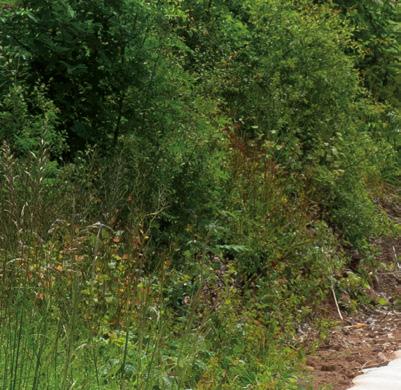
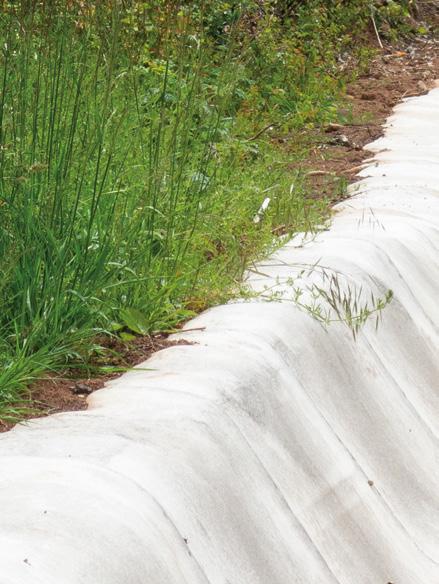
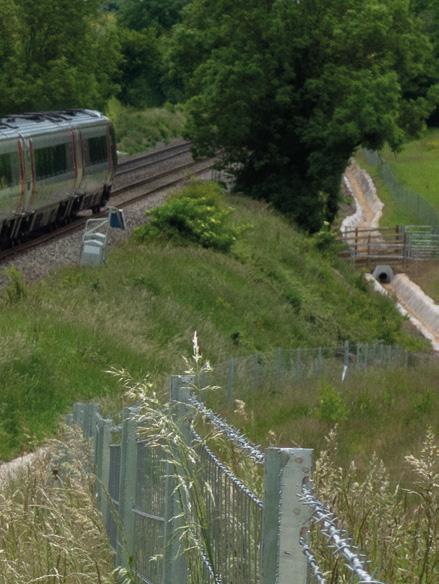
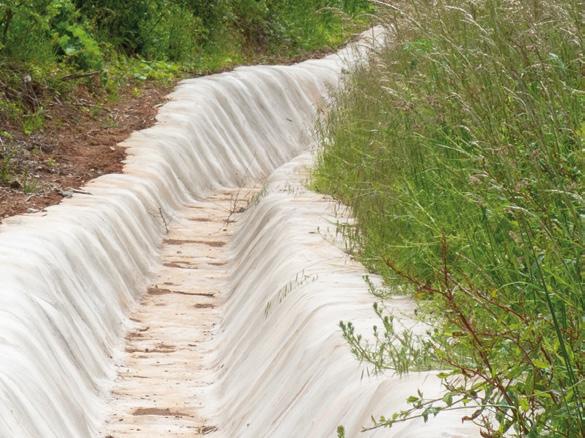
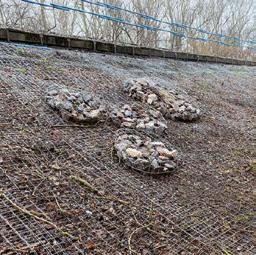
“Our work has shown how the appropriate management of the right kind of vegetation in the vicinity of the track can minimise seasonal movement without compromising the stability of the slope in winter.”
COMPONENT SERVICING
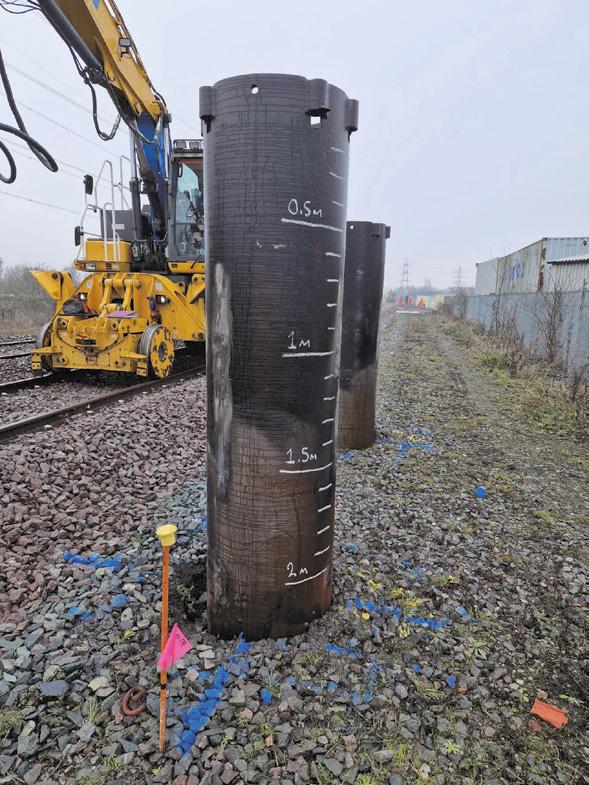
As to the research carried out at Southampton, the two decades has delivered huge cost savings. In electrification, the university developed new standards to cut the need for bridge reconstruction, and to reduce the depth of the foundations for the support masts on overhead electrified lines.
Last November, in recognition of its contribution and impact, the University of Southampton’s research into the sustainability, resilience and costeffectiveness of the UK’s rail system was awarded a prestigious Queen Elizabeth Prize for Education.
COMPONENT SERVICING
Sir Damon Buffini, Chair of the Royal Anniversary Trust, said: “The Queen Elizabeth Prizes for Higher and Further Education celebrate the power of education to change the world for the better.
We carry out thorough analysis of components before providing a full report detailing the necessary repairs. From welding to replacement parts to corrosion prevention, your components will be returned to full working order complete with certi<cates of conformity.
The cost savings associated with these measures contributed to the Government’s decision to restart railway electrification, and direct savings to the industry worth around £600 million over three years. Benefits to the wider UK economy have been independently estimated at several billion GBP.
We carry out thorough analysis of components before providing a full report detailing the necessary repairs. From welding to replacement parts to corrosion prevention, your components will be returned to full working order complete with certi<cates of conformity.
Southampton-led research has also supported the move to more sustainable and less problematic railway embankments in the face of wetter winters and drier summers. Many embankments are made of clay and tend to shrink in summer and swell in
“This much-loved national honour recognises at the highest level of state outstanding work in UK universities and colleges, and the remarkable benefit they bring to our economy, society and the wider world.”
Reacting, Professor Powrie said: “It’s amazing to be recognised for the work we’ve done over many years.
Our investigation and repair services include components such as:
“It’s a real testament to everyone who has been involved, and to rail research and engineering in Southampton. We are passionate about applying fundamental science to solve real-world problems,
Our investigation and repair services include components such
Heritage of Engineering Excellence
Built on Experience. Trusted to Deliver
In rail engineering, confidence comes from experience. Since 1994, Tecforce Limited has been delivering specialist engineering solutions that operators, maintainers and OEMs can rely on.
Based in Derby - the historic heart of UK rail engineering - Tecforce Limited has built its reputation on doing things properly. From structural repairs and complex modifications to inspection, welding and consultancy, the company supports fleets through challenges both planned and unexpected. What sets Tecforce apart is not just technical capability, but consistency.
Skilled people, proven processes and a deep understanding of rolling stock ensure every project is delivered safely, compliantly and to a high standard.
Decades of experience don’t stand still. Tecforce Limited continues to evolve alongside the industry, maintaining modern accreditations and adapting to changing fleet demands - while staying true to the values that built its reputation.
Tecforce Limited isn’t just part of rail engineering’s past. It’s a trusted partner in its future.
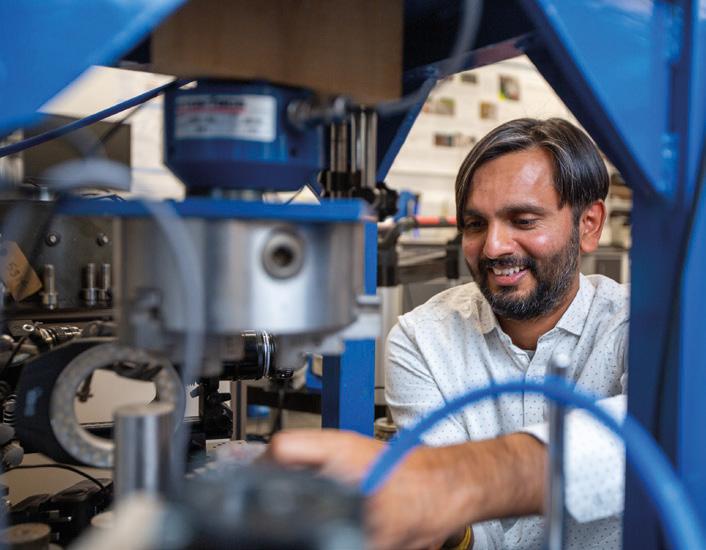
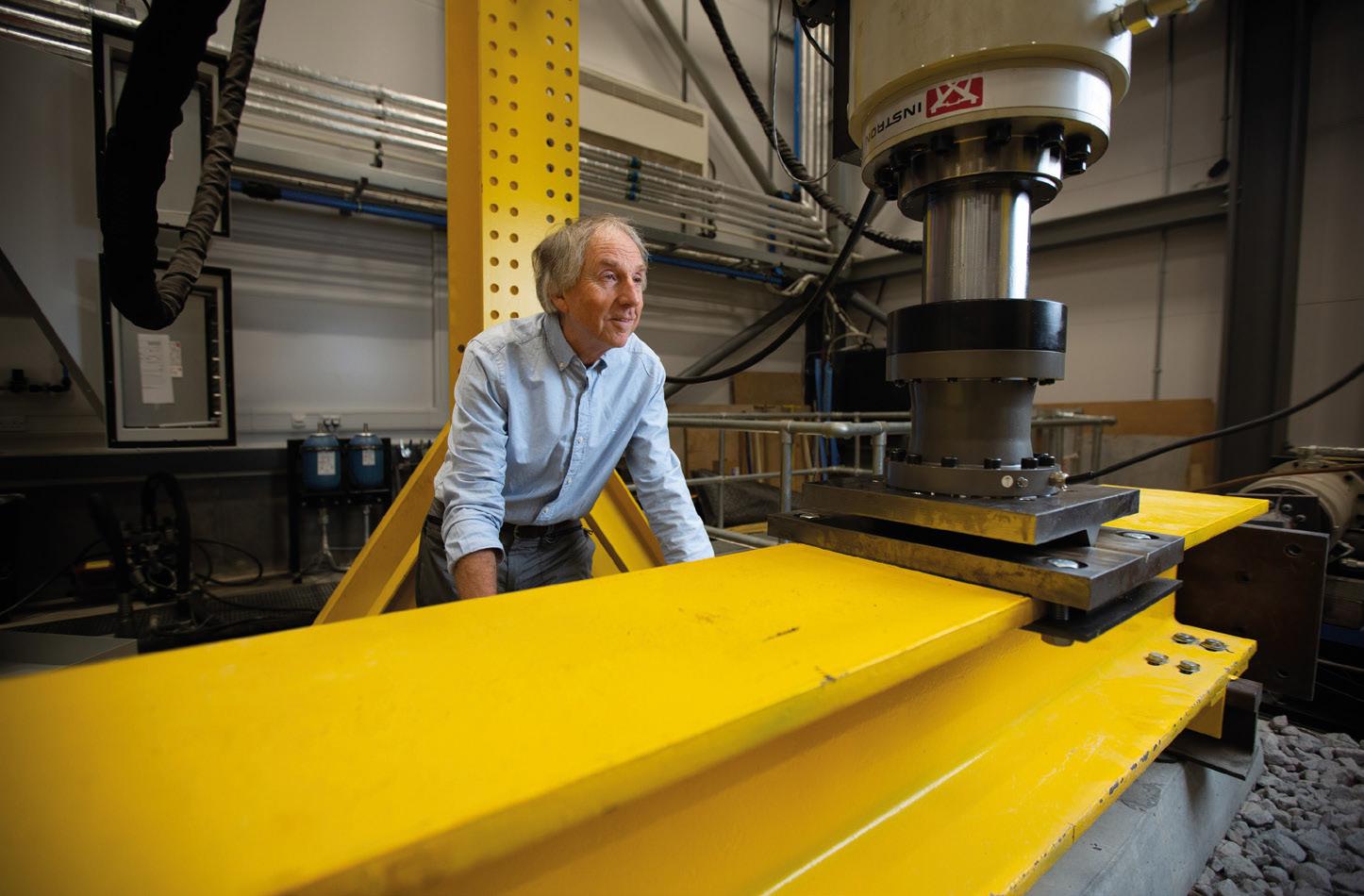
Dr Madhu Murthy, Associate Professor, testing the interface properties of ballast grains
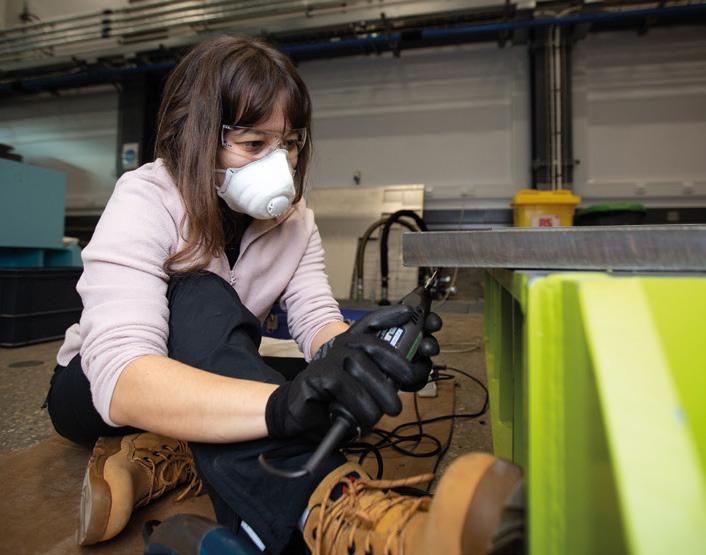
PhD student Sera Cetinkaya working in the university’s Large Structures Laboratory
and it’s fantastic to have this celebrated.
“It is also a recognition of the foresight of the UK Engineering and Physical Sciences Research Council, which in 2003 realised that with the post-privatisation demise of the British Rail Research Centre at Derby there was a need to establish an engineering scientific research base for railways in UK universities.
“We can trace the start of our journey back to that initiative.”
The research is carried out at the UKCRIC (UK Collaboratorium for Research on Infrastructure and Cities) National Infrastructure Laboratory in
Southampton, the Tony Davies High Voltage Laboratory and the Institute of Sound and Vibration Research, and – importantly – in the field by conducting measurements on real railway structures.
“Our laboratories have the apparatus needed to test materials including soils under extreme loads, determine their properties, and assess the performance of full-size sections of complex infrastructure systems such as railway tracks, bridge decks and railway electrification equipment,” explained Professor Powrie.
“We also have a 130 g-tonne geotechnical
centrifuge, which enables 25 years of weather impacts on an earth structure to be modelled in about 24 hours.”
The University of Southampton was a founding member and joint lead of Rail Research UK in 2003 and one of the first universities in the UK to establish a major railway research group. Having built strong relationships with the largest UK rail infrastructure owner, Network Rail, its engineers now have a leading role in rail research in the UK, Europe and beyond, collaborating with other institutions and industry around the world to accelerate advances.
“Our railway network faces major challenges in terms of needing to improve cost and carbon efficiency, carrying an increasing amount of traffic, managing and gradually renewing an ageing infrastructure, and the stressors of climate change,” Professor Powrie said.
“Monitoring, data analysis, artificial intelligence and automation are often seen as silver bullets, but their application needs careful thought and to be underpinned by an understanding of the fundamental underlying physics. This is what our research is now focusing on.”
An example he gives is the advances in monitoring tracks and managing stresses on the rail network due to climate change, which continue to be led by research in Southampton.
“Working with colleagues in the Optoelectronics Research Centre, we have been able to carry out meaningful monitoring and analysis of signals from optical fibres in the track bed to give us a better understanding of what happens when trains pass over,” he added.
“It will enable us to design improvements, enhancements and remediations in a more targeted way and with more confidence. The ultimate goal is to use optical fibres that are already next to railway tracks, for example for communications purposes, to also understand track behaviour and condition.
“We are also working with Network Rail engineers to continue to apply our understanding and techniques to an ever-expanding range of problems, from developing a cost-neutral business case for the use of under-sleeper pads, to better identification of the underlying causes of persistent track geometry problems experienced in some locations.
“Under-sleeper pads can both increase the resistance of track to lateral movement, helping to reduce the potential for track buckling in hot weather, and reduce the gradual settlement that occurs with trafficking, hence reducing the need for traditional maintenance.
“Persistent localised track geometry problems can often be attributed to underlying hard or soft spots, or sometimes a ballast bed that has become overcompacted at the base.
“The use of image analysis and robotics for the quantitative remote condition assessment of difficult to reach assets is a further area of developing research.”
You can read more about the University of Southampton’s rail research in its research highlights on engineering resilient rail embankments , advancing affordable rail electrification and monitoring rail track health with smart sensors .
Professor William Powrie assessing a test in the Large Structures Laboratory
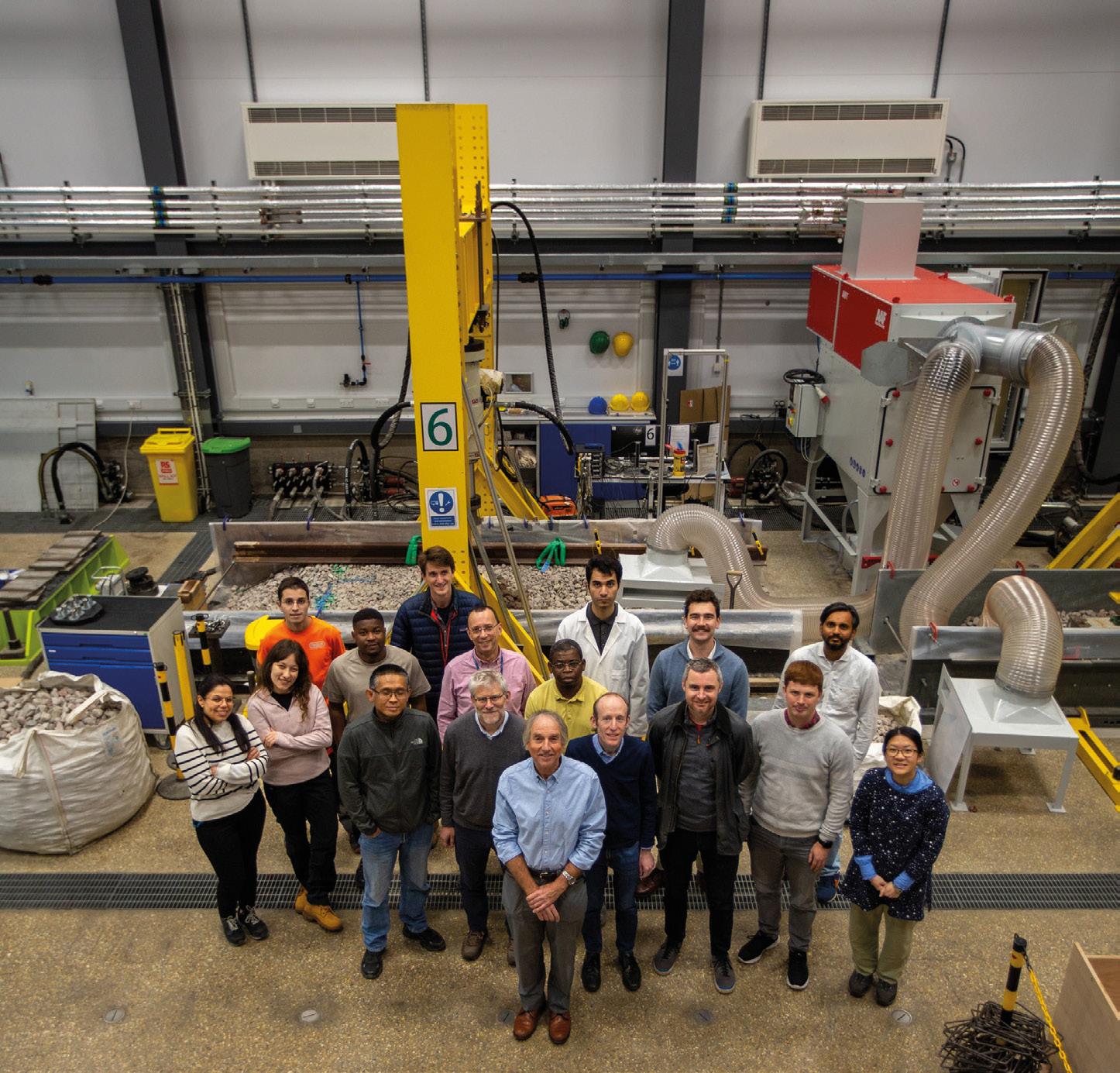
Members of the railway research group at the University of Southampton
Gary Rigler, Vice President of Passenger Transport at digital transformation business OneAdvanced, examines how senior leaders can transition risk management from a bureaucratic headache into a core strategic asset
Compliance or collapse: The strategic imperative to move governance beyond the spreadsheet
The UK rail industry provides critical national infrastructure but is currently navigating a period of profound transformation. This is putting the industry and individuals under immense pressure.
With the transition to Great British Railways the sector is going through the most significant structural shift in decades. Leadership focus is rightfully on the day-to-day business demands, while grappling with the rollout of the Railways Bill.
Yet, in the race toward digital transformation and the integration of AI-driven systems, with new operating models starting to be realised, it is essential that we do not lose sight of the need for robust risk management and governance. Without a modern approach to risk, the promise of new technology and the resilience it could offer remains an illusion.
It is essential that we do not lose sight of the need for robust risk management and governance
The perilous landscape: Why compliance is the new cost crisis
The financial and regulatory pressure on rail operators and infrastructure managers is unrelenting. While the industry saw passenger journeys rise to 1.7 billion in 2024-25 – a 7.2 per cent increase – this growth is occurring against a backdrop of ageing assets and high fixed costs. The pressure to find operational efficiencies is at an all-time high.
This challenge is compounded by escalating, yet often preventable, losses. Fare evasion alone is costing the UK economy an estimated £240 million annually. Beyond revenue, the regulatory burden is intensifying.
Our own internal research at OneAdvanced across the sectors we serve shows an eye-watering 272 per cent increase in regulatory compliance
Image: Shutterstock
requirements. In rail, this is felt acutely through evolving safety standards from the Office of Rail and Road (ORR), environmental targets, and the stringent requirements of the new Economic Crime and Corporate Transparency Act.
The sheer pace of change is creating a crisis of confidence. Around two-thirds of UK firms doubt they are fully compliant with key regulations, and 64 per cent cite keeping pace with regulatory change as a top business challenge.
For emerging areas like AI – critical for future capacity savings – 31 per cent of firms have no governance policy in place. This points to a critical failing. Many organisations remain reactive, manual, and fragmented, leaving them under-prepared for the fast-moving expectations of modern regulators.
The ticking time bomb: The risk of legacy tools
In an industry where safety and accountability are paramount, the continued reliance on legacy manual tools is a significant vulnerability.
Astonishingly, 81 per cent of companies across highly regulated sectors are still using multiple spreadsheets to record risks, list mitigations, and monitor compliance. Even in financial services – often a bellwether for compliance maturity – nearly half rely primarily on spreadsheets for risk reporting.
For a director or a safety lead, spreadsheets are a ticking time bomb. They are brittle, lack version control, and cannot provide the robust audit trail required to appease regulators like the ORR.
In the rail environment, where a single failure in governance can lead to unprecedented fines and immense brand damage, a reactive system will never keep pace with modern risk.
The unseen cost: Personal strain and stress
While the business impact of governance is tracked on the balance sheet, the human cost is often ignored. The rail industry is currently grappling with a significant skills gap and an ageing workforce, placing immense pressure on existing teams.
The balance of trying to fight fires with daily operating realities means that vital risk management tasks are often deferred, kicking the issue into the long grass.
The pressure on compliance and safety professionals is immense. Independent surveys consistently reveal that individuals in governance, risk, and compliance roles experience extremely high levels of stress and burnout compared to the general workforce.
In the context of rail, where the weight of passenger safety sits on these individuals’ shoulders, compliance is not just an organisational problem, it is a human one.
The business case for proactive governance
Effective risk management is the single most powerful tool for improving industry resilience and controlling costs. By moving from manual methods to an integrated risk and governance solution, rail operators can immediately reclaim
time and generate savings.
The evidence for this shift is clear. Implementation of a modern, centralised solution can deliver:
Significant time savings: We have seen organisations achieve savings of up to 41 hours per month, freeing risk management teams to focus on strategic safety opportunities rather than administrative data entry.
Reduced consultancy spend: A mature, in-house system reduces reliance on external auditors. We have seen instances where external consultant usage was reduced from 63 days to just 12, creating annual savings of more than £89,000.
Lower insurance premiums: A robust, proactive risk programme is the only way to manage significant external costs, as insurers reward modern risk management with better terms.
Positioning for the future
The transition from a reactive, manual mindset to a proactive, governance-led culture requires centralisation and clarity. Today’s industry leaders are moving away from the ‘version-control nightmares’ of the past towards systems that provide a single, intuitive view of risk.
The benefits are clear: centralise and automate to eliminate manual administration; enhance visibility to provide the board with auditable data; and empower teams with intuitive systems that are impossible to accidentally compromise.
By adopting a smart risk strategy, rail operators can move past the administrative burden, protect their people and assets, and build the true resilience that a modern national network demands.
www.oneadvanced.com/risk
Image: Shutterstock
Despite the fact that the mix of passengers on Britain’s railways has changed since the COVID pandemic, with fewer business travellers and an increase in leisure travel, the Christmas and New Year period is still the best time to close the railway for major work. Nigel Wordsworth reports
Christmas comes but once a year – but Network Rail takes advantage of it when it does!
An overnight possession, taken between the last train of one day and the first train of the next day, can be for as little as five hours. Once set-up and break-down time is accounted for, some possessions only yield 90 minutes of productive work.
Closing the railway from Saturday evening to Monday morning (28 hours) or from Friday night to Monday morning (52 hours) gives the opportunity for more work to be undertaken, but even these figures are dwarfed by the opportunity to close the railway for several days over Christmas, over New Year or even between Christmas Eve and the day after New Year.
Every year, passengers complain they can’t easily
get to their families for the holiday. But, in all reality, the numbers involved are tiny compared to the effect of closing a main line for a week at the height of summer – even though that is also sometimes necessary.
Summary
So, Christmas and New Year 2025/26 were no different from other Christmas holidays. Network Rail and the rail supply chain successfully delivered a varied work bank worth an estimated £162.7 million, within 2,454 possessions nationwide.
In parts of the country, this continued into midJanuary and beyond, with works on the northern end of the West Coast Main Line (WCML) concluding
on 15 January and elements of Transpennine Route Upgrade (TRU) works continuing until 29 January. Significant projects were delivered across the length and breadth of the country, often in complex or challenging locations. These schemes included a mixture of asset renewal projects, designed to increase reliability and resilience, as well as larger enhancement schemes such as the work associated with the TRU.
Of these, 27 projects delivering infrastructure upgrades or renewals were identified as RED through the Delivering Work Within Possessions (DWWP) standard, being deemed to carry a greater risk of possession overrun and/or a more significant impact in the event of an overrun.
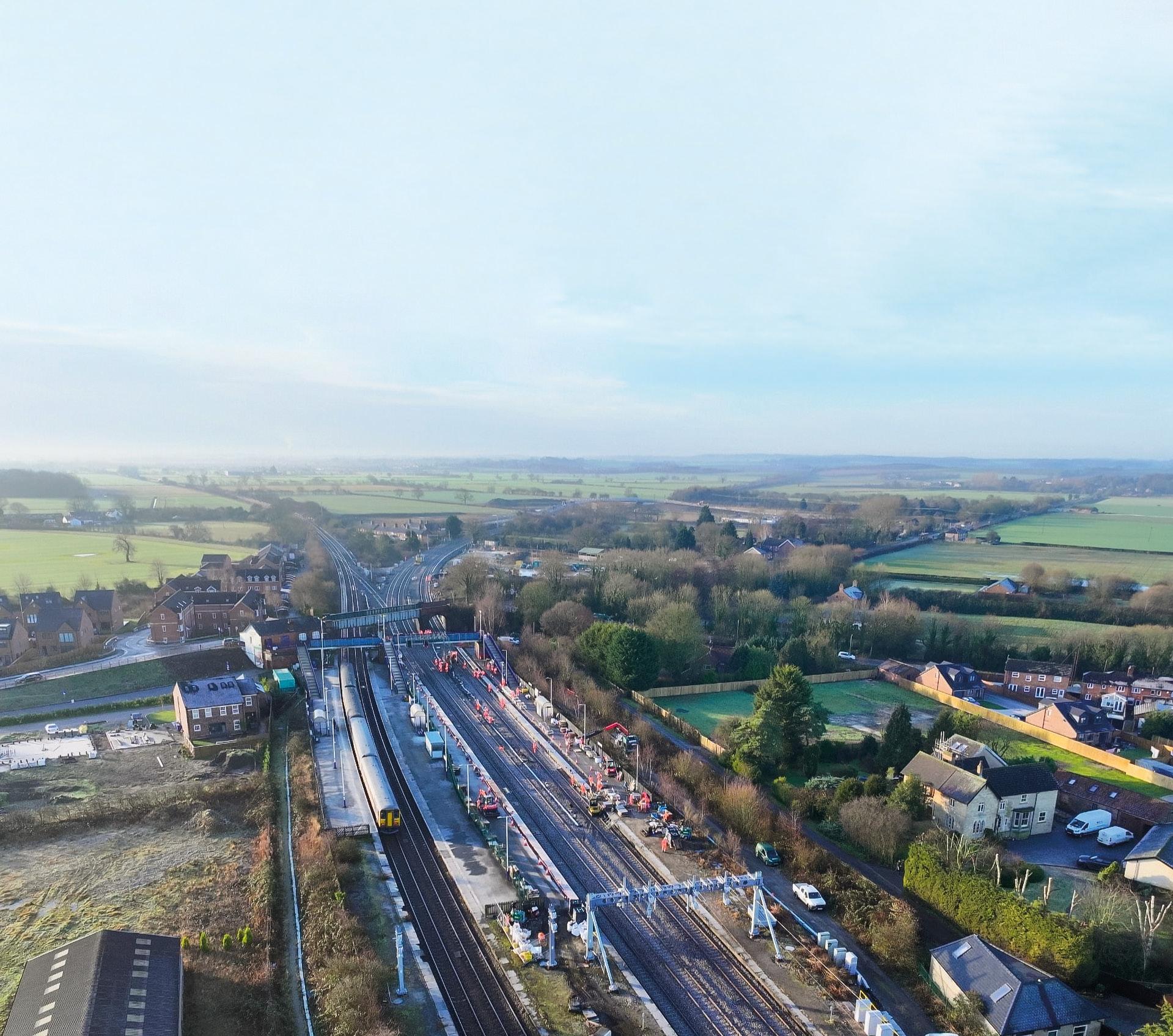
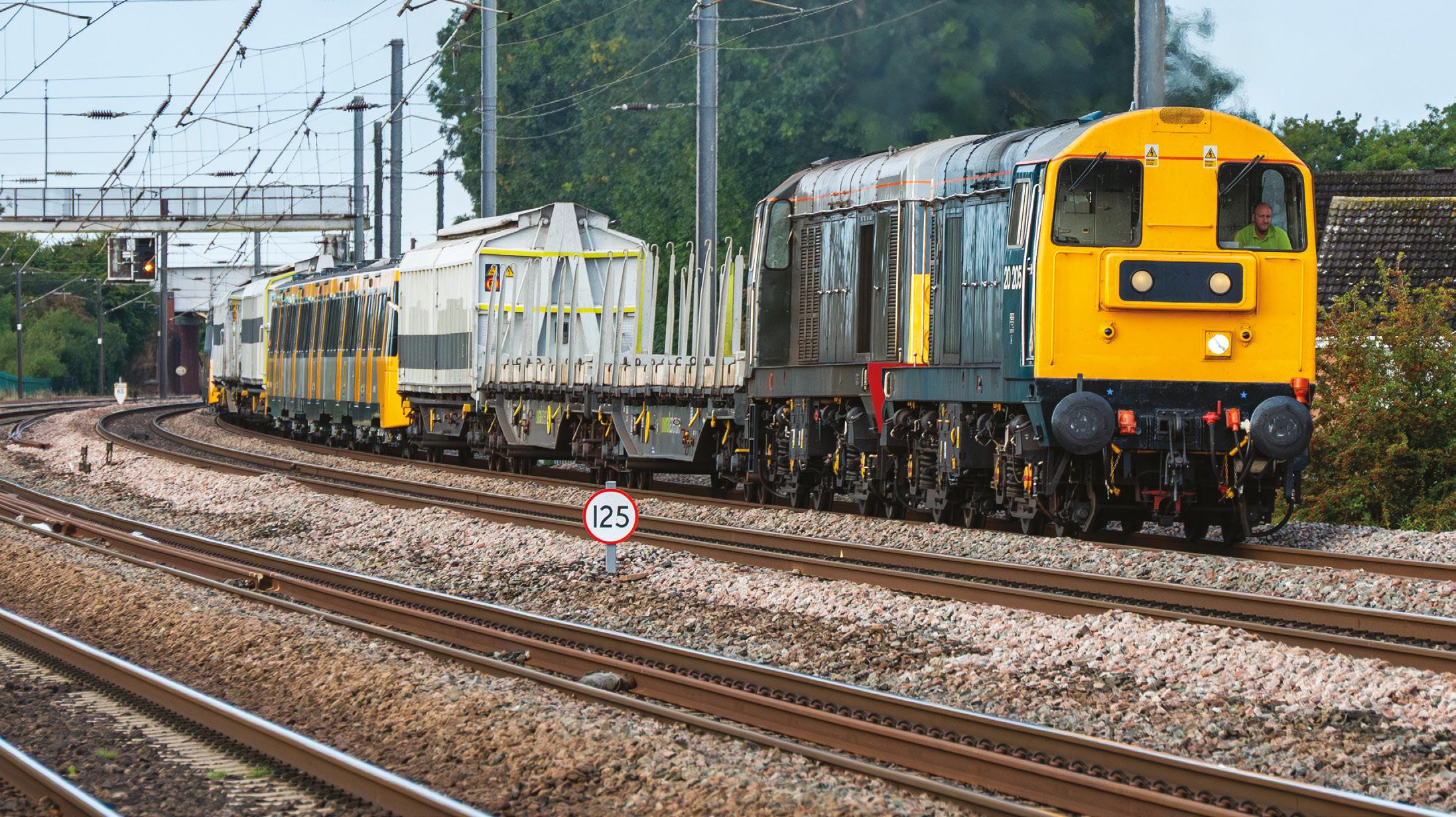
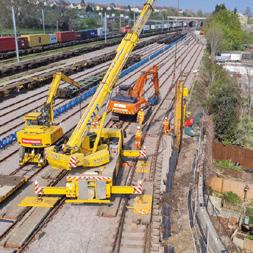
Church Fenton. Images: Network Rail
Map of Major Schemes (Red-ranked
Key pieces of work delivered during the period included:
Six switches and crossings (S&C) renewals, including sites on the WCML (Hanslope), Great Western Main Line (Dolphin Junction), and South West Main Line (Queenstown Road).
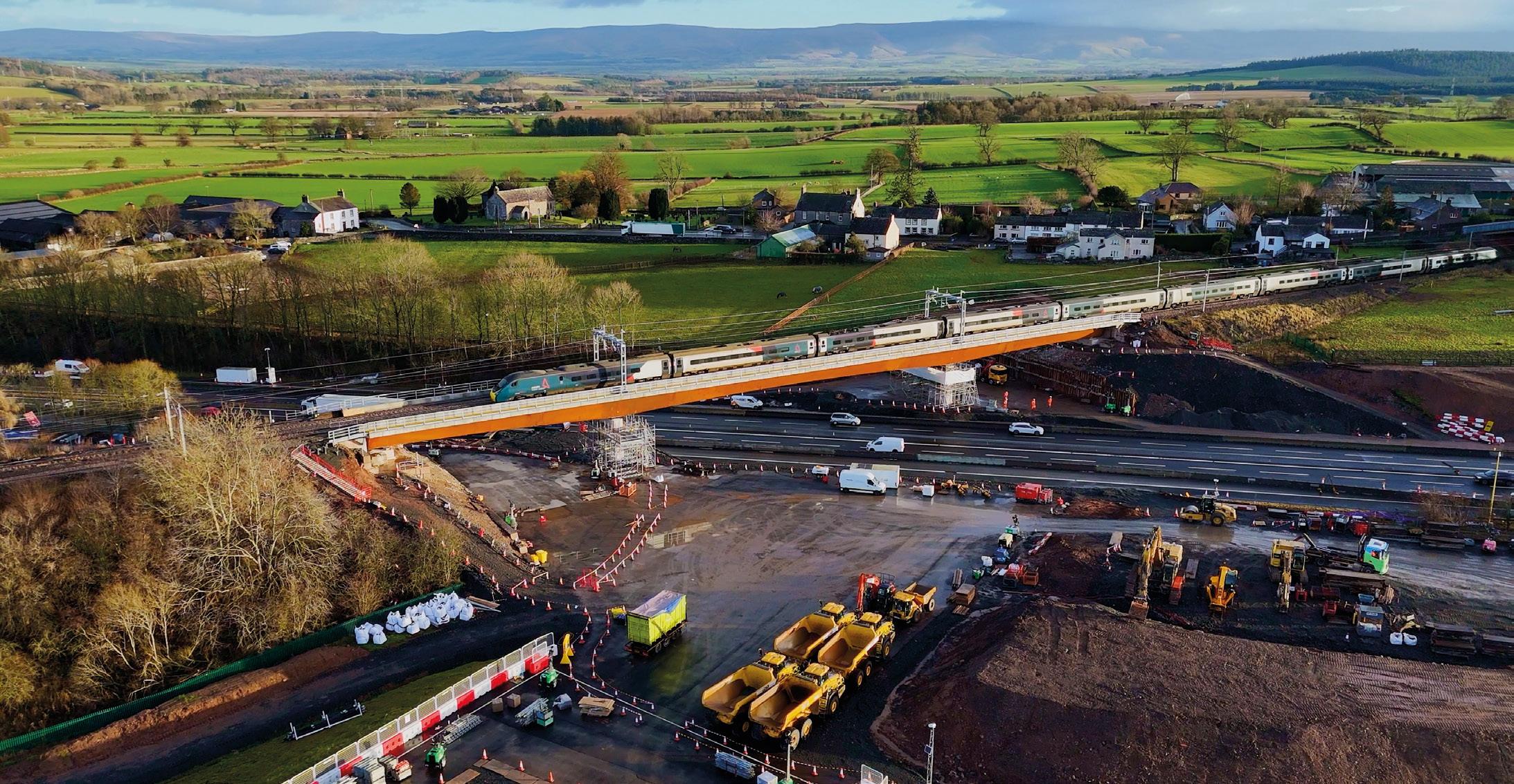
Four bridge/structure schemes, including Clifton Overbridge Replacement in Cumbria, which required two weekend closures of the M6 motorway over the festive period and into January.
Two blockades for TRU, including a 32-day blockade at Church Fenton, which handed back in late January.
Commissioning of signalling at Cambridge, Kingmoor (near Carlisle), and Portobello (Edinburgh).
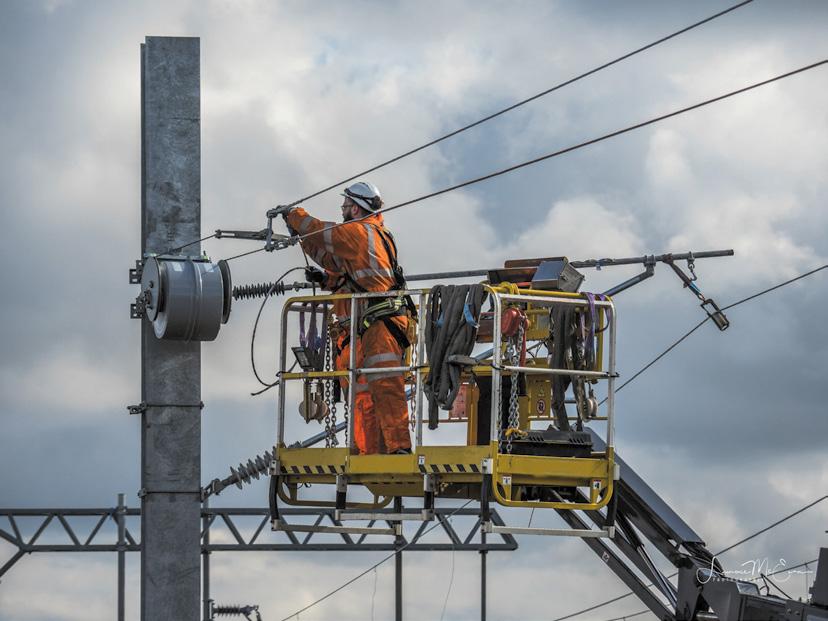
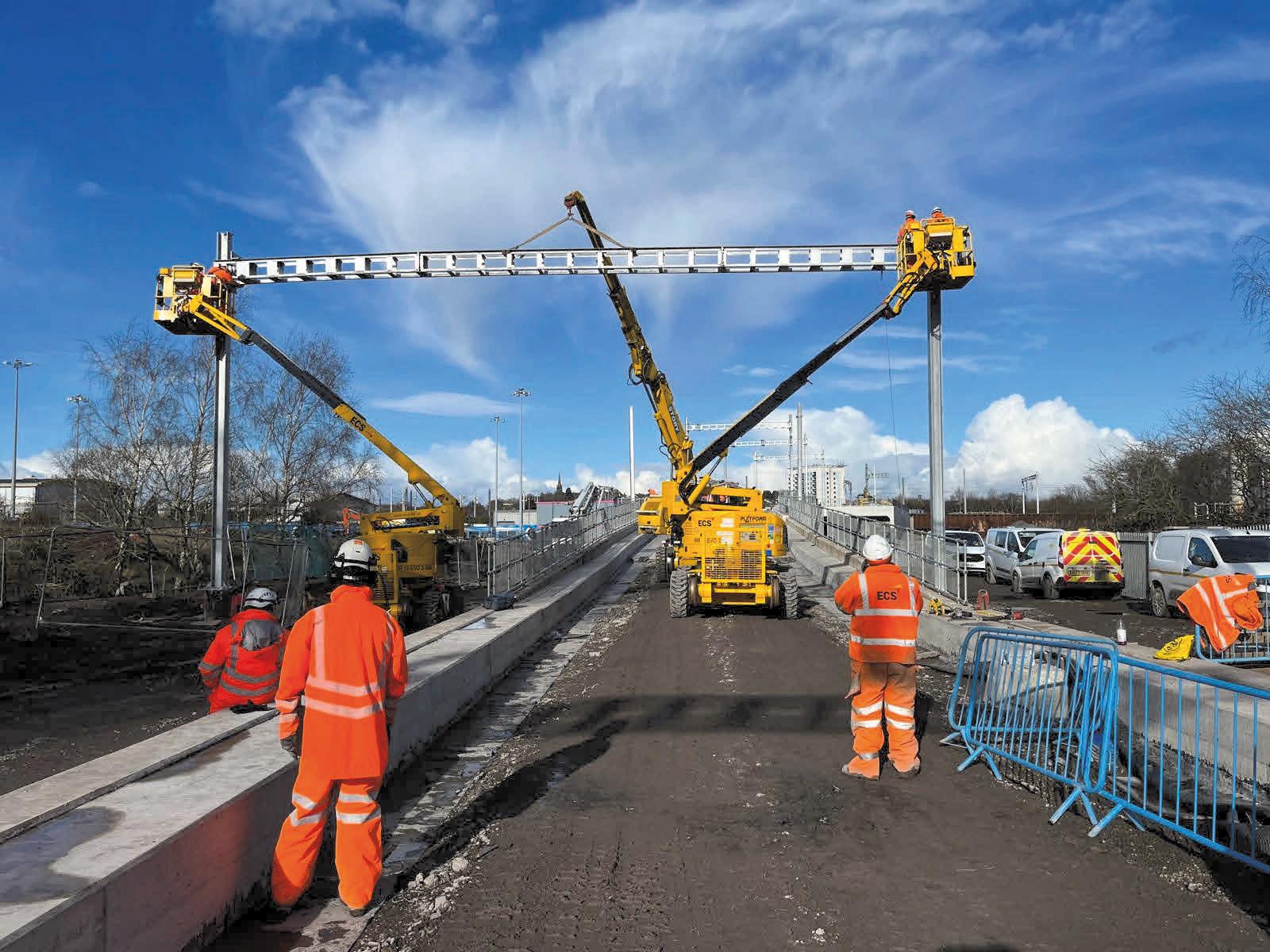
Overhead line equipment (OLE) installations and/or renewals in Edinburgh, West London, and between Preston and Carlisle.
Various station works in London and at the southern end of the WCML.
Other enhancement works in support of new stations at Old Oak Common (HS2) and at North Filton (north of Bristol).
As can be imagined, with so much work taking place not everything went exactly to plan. A total of 21 possessions overran, impacting train services. The worst overrun was at a maintenance worksite at Mount Gould Junction in the Plymouth area. Issues were encountered when placing a switch panel, further exacerbated by staffing issues and machine breakdown, all of which resulted in 1,189 minutes of
delay to passengers of Great Western Railway and 10 other train operators.
A level-crossing failure during signalling maintenance work at Brockenhurst (Wessex) resulted in 514 delay minutes; problems completing welding work in the Northampton area resulted in 402 delay minutes; and a late finish to track maintenance work at Gidea Park (Anglia) caused a 342-minute delay.
In contrast, the 21st and shortest delay was just four minutes, caused by the late finish of track maintenance work at Stratford (Anglia).
Although there were also 13 reported accidents spread across the 2,454 sites, only one resulted in lost time.
Eastern region
Network Rail and its contractors replaced 10 point ends at Kensal Green with their modern equivalents, renewed 223 metres of plain line, made a number
Network Rail and the rail supply chain successfully delivered a varied work bank worth an estimated £162.7 million, within 2,454 possessions nationwide
Hanslope junction
These schemes included a mixture of asset renewal projects, designed to increase reliability and resilience, as well as larger enhancement schemes such as the work associated with the TRU
of adjustments to the layout to accommodate signalling and power cables, and installed two drainage catch pits. The renewal was driven by multiple defects in the existing ironwork, sub-optimal track geometry, and life expired timber bearers, components and ballast.
Despite some initial delays, with adverse ground condition (very muddy) prolonging base-stoning activities, these were absorbed by the planned contingency float and all work was delivered on time.
The Cambridge Resignalling, Relock and Recontrol (C3R) project is a staged, condition-led renewal project to renew the signalling system in the Cambridge area. Stage 2 of the work, delivering vital upgrades between Cambridge, Stansted Airport and Royston, was commissioned over the holiday period, with almost 50,000 staff hours worked. In total, 370 signalling equivalent units were commissioned – the highest number that Alstom has ever delivered in a single project stage.
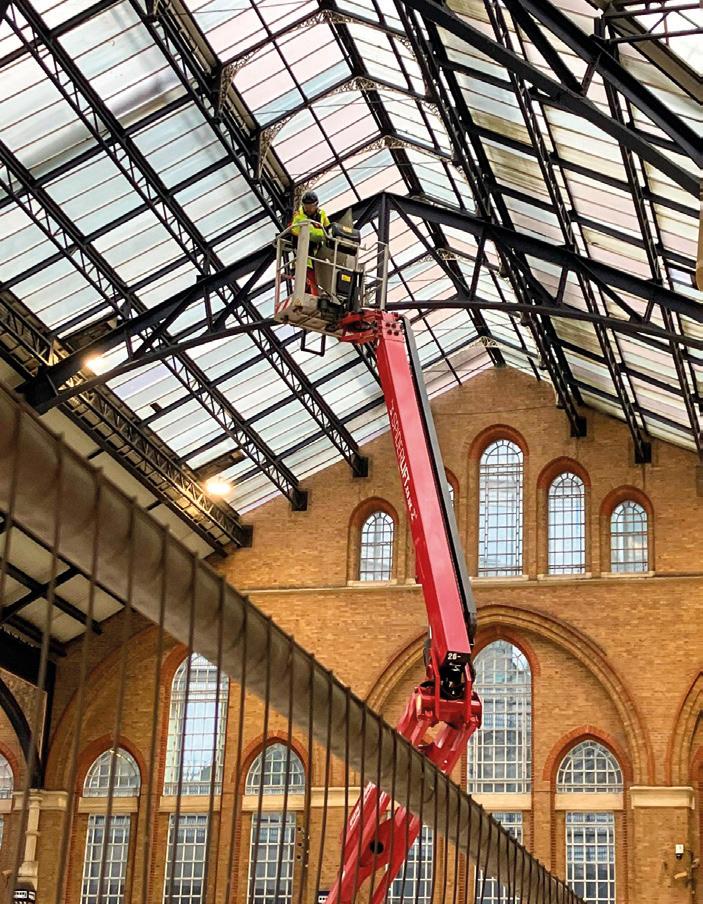
The roof of Liverpool Street station is being
renewed in stages. Consisting of two separate glazed areas – the ‘new’ roof over the concourse to the transept above the buffer stops and the ‘old’ train shed over platforms 1-10 from the buffers to Exchange Square – a total of 224 polycarbonate roof panels were installed within the footprint of the station concourse along with 53 new roof access hatches.
Three new areas of drainage were constructed and the scaffolding on platforms 7 and 8 removed from an earlier phase of the project. No issues were encountered.
Doncaster Plant footbridge is located at the southern end of Doncaster station. It is a nine-span steel lattice girder footbridge incorporating wrought iron elements that historically connected the station forecourt to the former railway plant works, Denison House, and provided access across the tracks to the sidings. It was used primarily by authorised personnel from Denison House (Wabtec) and freight drivers and had no public right of way.
Preparation work to replace the time-expired
Network Rail Chief Executive Jeremy Westlake (centre) visits Cambridge station
Liverpool Street Station
Mirfield
Mildmay line
structure took place over the weeks before Christmas, including the construction of a temporary crane pad opposite platform 8. The sections of the new bridge were lifted into place during the Christmas shutdown, when improvements were also made to the overhead line equipment at the station.
The Dalton Bank bridge deck carrying the railway over Northallerton Road, south of Darlington, was replaced during a 60-hour window with no trains over Christmas. Archive information suggests that an overbridge has existed at this location since about 1840. It was reconstructed in 1921 and has been modified since, but now needed to be replaced.
The replacement bridge – designed for a 110-year operational lifespan – provides new walkways to create a safer environment to inspect and maintain railway assets at and near the structure.
The installation of the ballast retention units encountered some issues resulting in the activity taking longer than planned. Because of this delay, the opportunity to undertake welding within the
core possession was removed to maintain right time hand back. The welding was successfully completed in the following possession, enabling the planned incremental speed increase to proceed four to five days later.
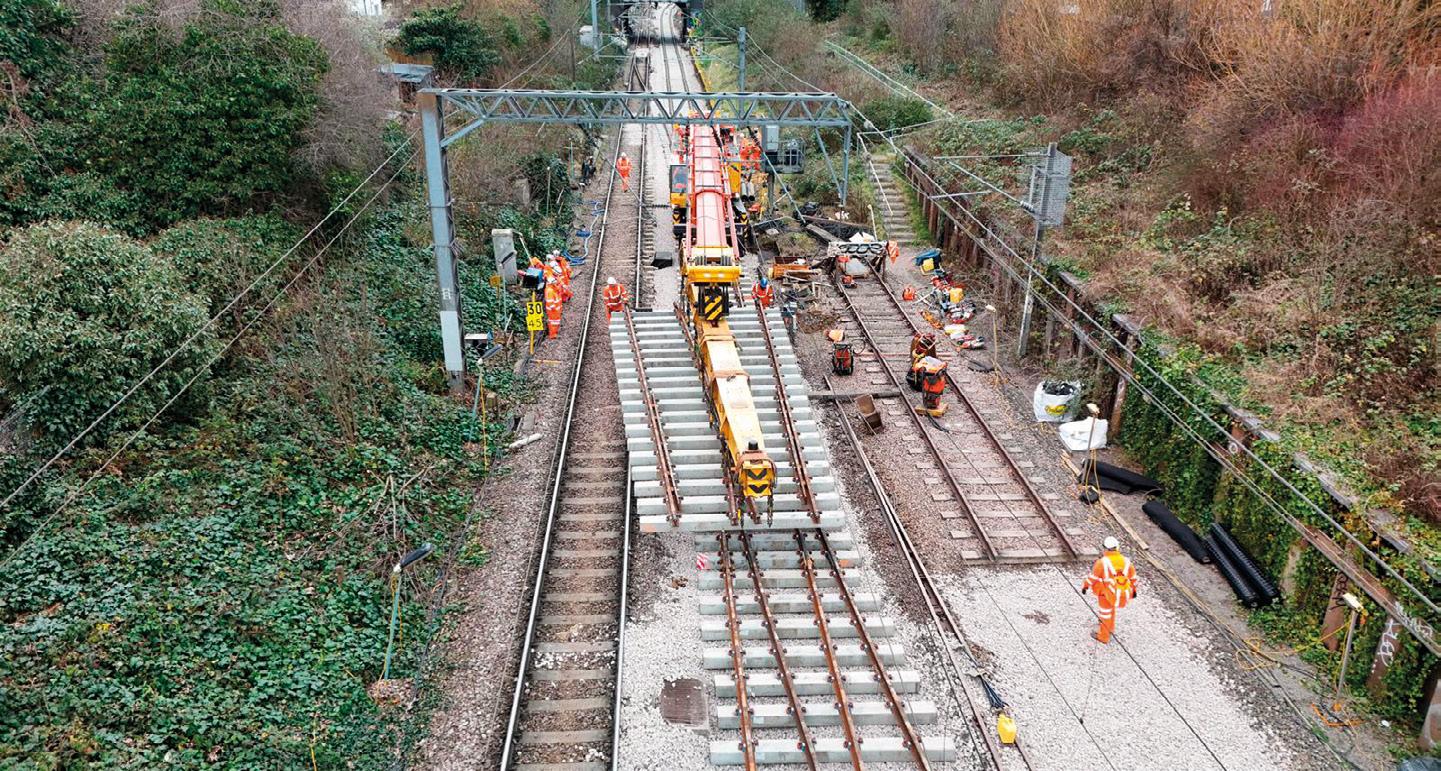
A major piece of work was completed on the London Overground Mildmay line as 10 sets of points were replaced between Camden Road and Richmond/Shepherd’s Bush. Rail crews worked in shifts, 24 hours a day for 11 days, to replace these major sections of track across complex rail junctions and completed the work on time to hand back the line to train services on Monday 5 January.
Transpennine Route Upgrade
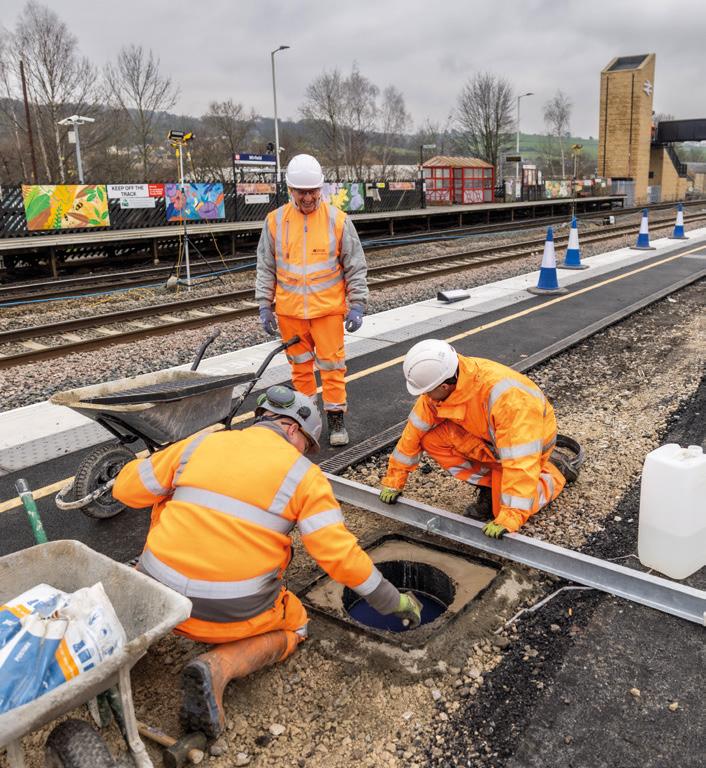
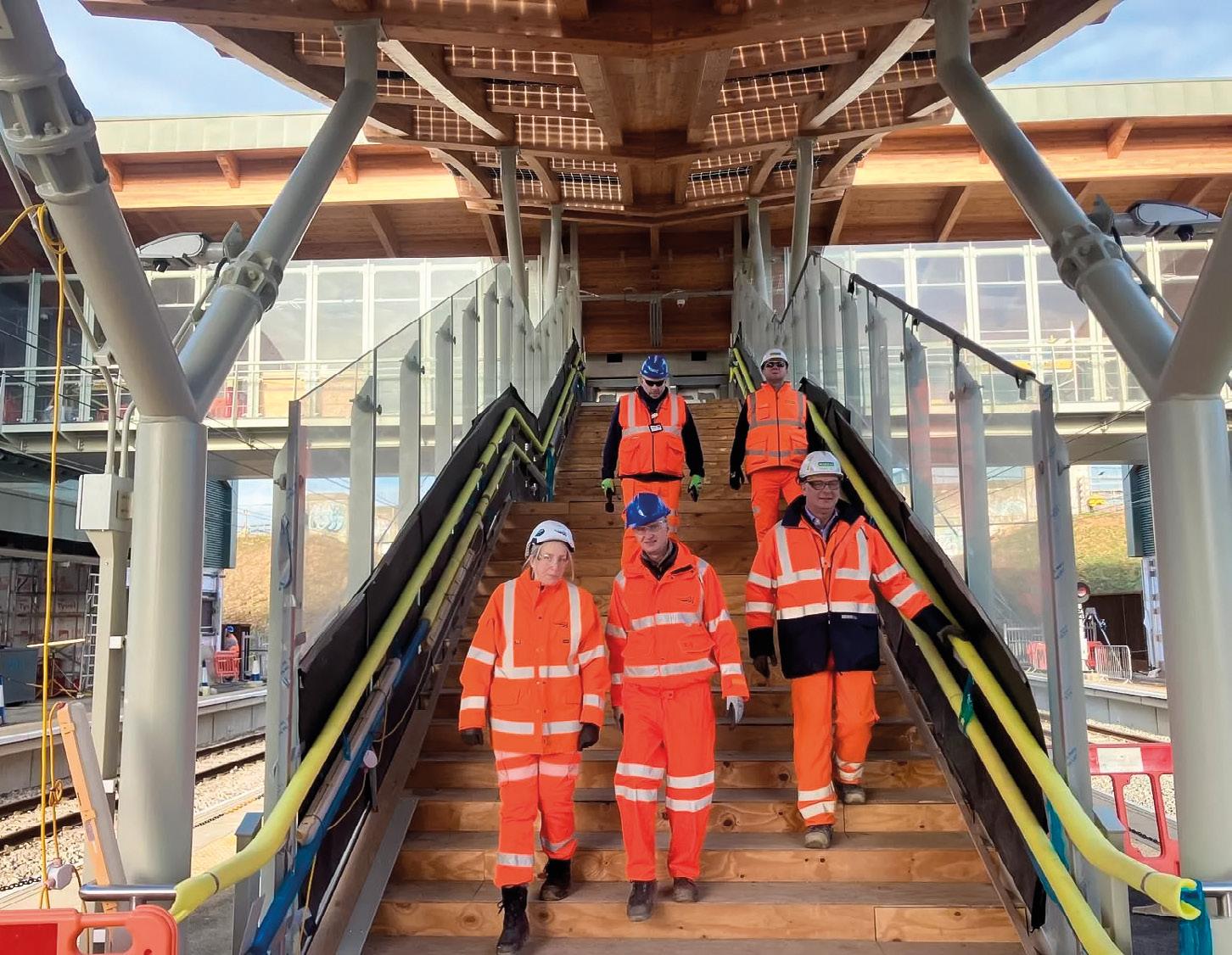
The track on the Down Huddersfield and Up Huddersfield Fast lines was aligned through the new Mirfield station island platform, bringing platforms 1 and 2 into use. Platform hoardings were removed and the surface finished off, then the two platforms were commissioned along with the station footbridge.
Work was completed on the Resignalling and Remodelling Scheme between 24 December 2025 and 5 January 2026. This included signalling work on the East Coast Main Line over Colton Fringe, the Hull lines from Neville Hill East to Gascoigne Wood and Milford to Sherburn, and on the Normanton Lines from Sherburn Jn to Colton Jn.
Track on the Down Leeds line at Church Fenton was renewed, with the blockade lasting until 26 January.
North West and Central region
The S&C at Hanslope junction were last replaced in 1997. At Christmas, eight crossovers and their associated plain line were completely replaced, along with 10km of cabling for the new points. A new OLE gantry was installed to replace one which had previously suffered from collision damage.
During a 15-day blockade of the railway from 31 December 2025 to 15 January 2026, the bridge that carries the WCML over the M6 motorway at
Clifton
Clifton in Cumbria was replaced. The bridge was first stripped of track, OLE and railway systems and then demolished during a motorway closure. The bridge piers and abutments were upgraded and the new bridge deck installed during a second motorway closure. The railway was then reinstalled on top of the bridge using the existing rails laid onto new sleepers.
During the same 15-day blockade of the WCML, OLE contact wires and all in-span equipment, including porcelain terminating insulators, in span insulators, stainless steel droppers, full current jumpers, potential equalising jumpers, disconnector feeds, section insulators and neutral sections as applicable, were replaced on a 10-mile stretch of railway at Tebay, Cumbria.
A similar exercise was conducted at Martin Edwards Yard near Preston. The work was carried out between 24 and 27 December on both tracks of a three-mile stretch of railway.
The signalling system at Kingmoor was upgraded to renew life-expired equipment and to improve level-crossing safety at Burma, Virtual Quarry and Floriston level crossings. During a six-day blockade from 31 December to 7 January, existing signals were replaced with new Dorman Light Weight ILS (Integrated Lightweight Signal) fold-down signals. A new IFS (Individual Function Switch) panel was added at Kingmoor Yard to control moves into and out of the yard and a new NX (entrance-exit) panel installed and commissioned at Carlisle Power Signal Box.
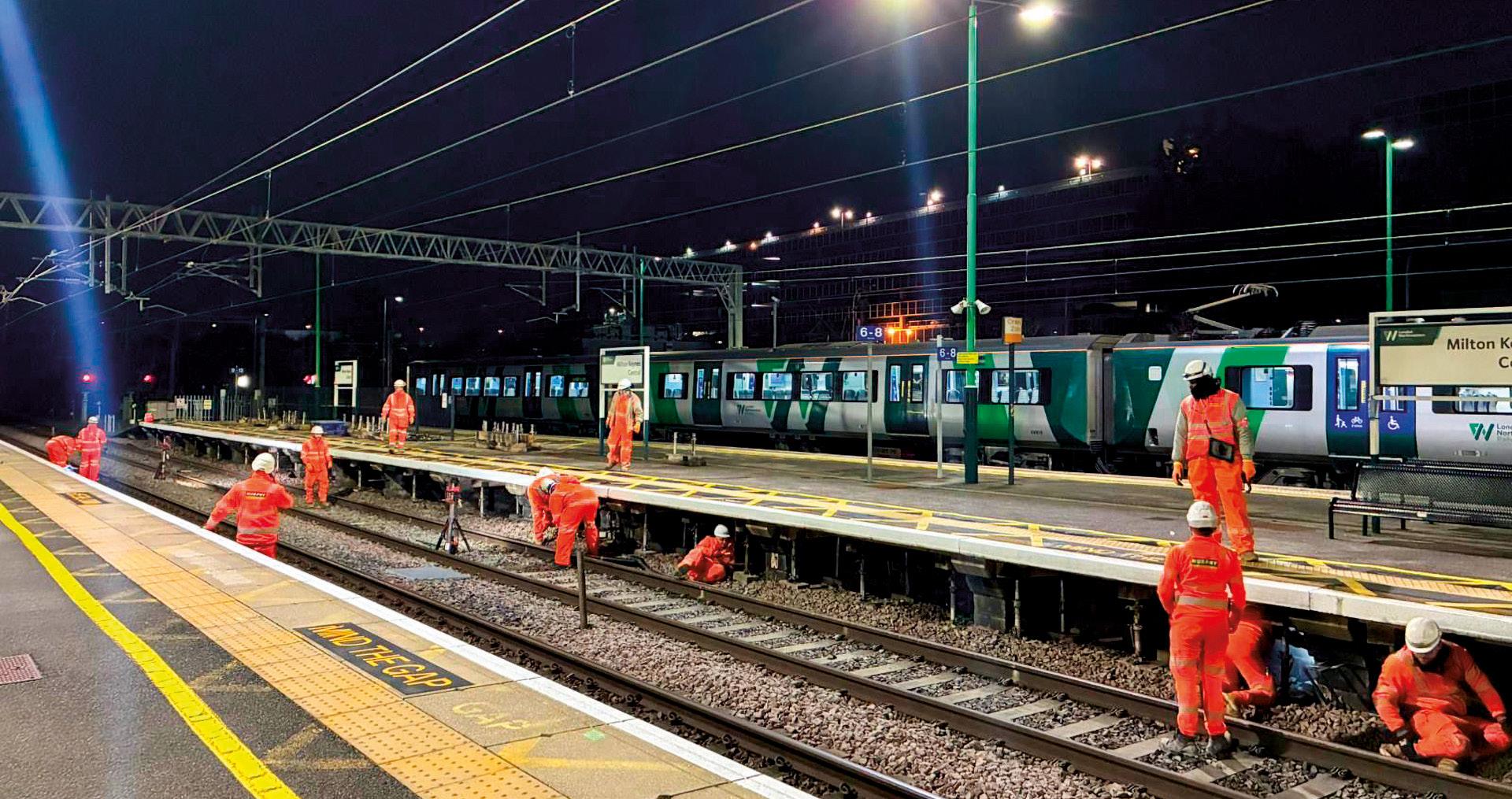
At Milton Keynes station, platform 4 was replaced as the existing structure was time expired, having long relied on extensive temporary propping due to advanced reinforcement corrosion in multiple precast concrete beams. A total of 321 pre-cast concrete copers were replaced, along with 83 hollowcore pre-cast concrete beams. The platform removal
methodology had been tested off site, which greatly assisted with the planning process.
Platforms 3 and 4 were both refurbished at Wolverton station, a total of 518 metres of platform length. The installation of 550 pre-cast copers and 16,000 bricks has improved the line and level of the platforms and 2,000m 2 of surfacing was completed.
The renewal of these platforms has improved stepping distances to the trains significantly, removing risk to passengers boarding and alighting train services. Resurfacing work has removed tripping hazards on the platforms and introduced compliant cross-falls and drainage to improve passenger safety and reduce ponding of rainwater.
Scotland
Over the holiday period, Network Rail and its contractors undertook a major S&C renewal at Burnhouse, between Mossend North Junction and Whifflet South Junction. The work included the
renewal of six point ends, the refurbishment of a further eight, the renewal of 686 metres of track and 412 metres of new drainage.
The work also included OLE alterations, points heating upgrades and line speed increases on the Up and Down Reception lines from 5mph to 15mph. An additional benefit was the removal of a long-standing 50mph temporary speed restriction on both Up and Down Coatbridge lines at Burnhouse, replaced by a permanent speed restriction of 75mph.
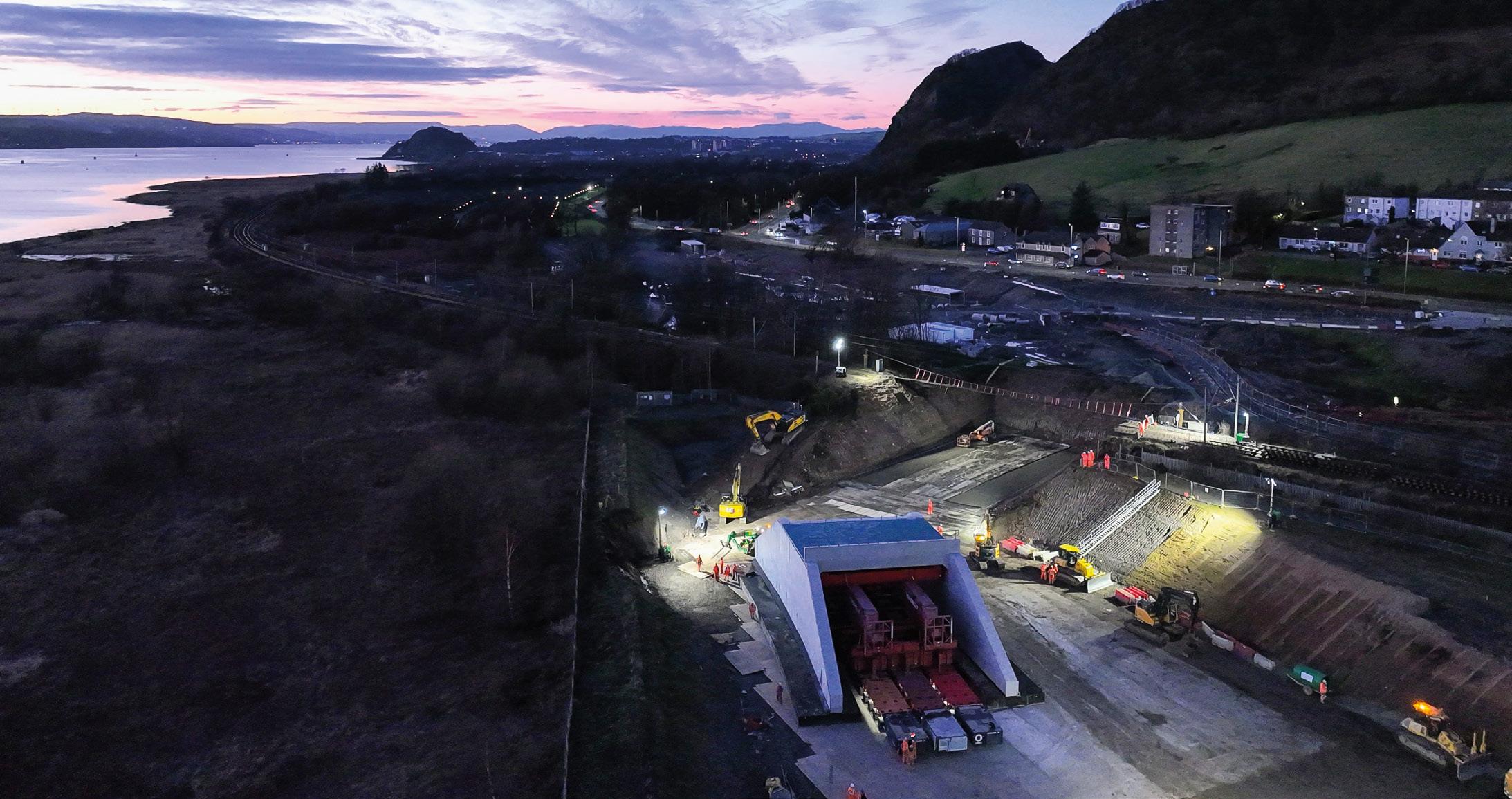
A new underbridge was installed at Bowling in West Dumbartonshire, between Clydebank and Dumbarton. The new bridge, which was installed on behalf of West Dunbartonshire Council using a selfpropelled modular transporter (SPMT), facilitates a new road link between the redevelopment of the former Exxon Oil Terminal at Bowling and the A82 trunk road.
The track and associated signalling were removed and the embankment excavated. The new structure was installed and backfilled and the railway
Kingmoor
Milton Keynes
Pre-fabricated Rail Pits
Transforming Rolling Stock Maintenance and Inspection.
MAINTENANCE PITS
WASHDOWN & ASH COLLECTION PITS
SAFETY COVERS
PIT ACCESSORIES
• Welded construction to ensure a water tight finish
• Quicker installation time compared to precast concrete
• High quality finish
• All internal service ducts fitted prior to installation
• Easy to clean
• Rail attachments fitted prior to installation
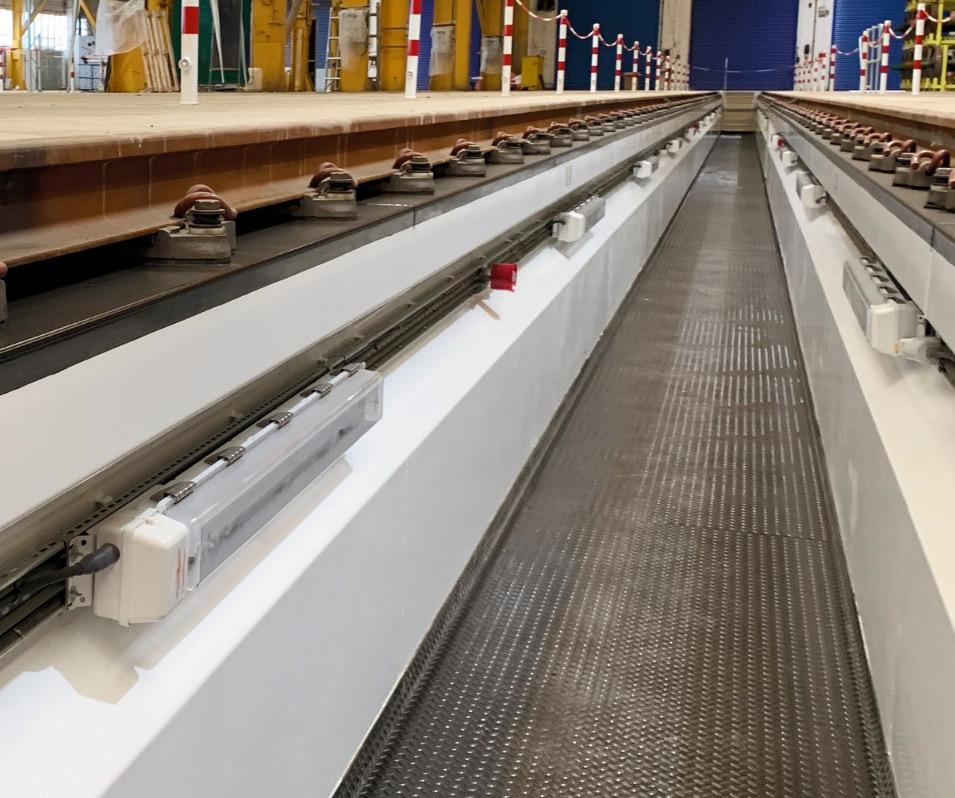
Premier Pits has led the way in pit manufacturing for over 35 years, supplying workshops worldwide. From inspection and maintenance to ATF, rail, and wash pits, we don’t just manufacture - our experienced Installations Teams handle the complete fitment, ensuring your pit is installed safely, efficiently, and with total peace of mind.
Fewer people travel by rail between Christmas and New Year compared to a normal working week, which gives us a valuable opportunity to deliver major upgrades such as this one while causing as little disruption as possible
reinstated. The site will be revisited for some outstanding snagging work early in March.
At Portobello, obsolete and fragile signalling equipment was replaced with resilient fibre, power and communications systems to reduce failures impacting on train performance and passenger experience. A computer-based interlocking was installed, replacing the outdated system, all signal heads were converted to LED and the signalling power was uprated to Class II. A shunter panel was commissioned for Craigentinny depot.
Fife Decarbonisation Phase 1 is a key scheme in the first phase of Scotland’s rail decarbonisation programme designed to support the Scottish Government’s objective of decarbonising transport and meet the target to decarbonise trains operating in Scotland. During Christmas and New Year, a permanent earth section (PES) had to be installed at Haymarket to facilitate OLE construction works.
In addition, the workstation at Edinburgh IECC (Integrated Electronic Control Centre) was updated and overhead contact wires partially installed from Haymarket Depot to Saughton Junction.
Southern region
Geometric improvement of the track layout at Queenstown Road station in Battersea will give a smoother ride for passengers and a reduction in the risk of componentry failures. Three crossovers and two further sets of points were renewed, along with 1,166 metres of conductor rail and the plain line track through platform 2. The points heaters were upgraded and the point operating equipment upgraded to the latest HW2000 from obsolete 1,000-series motors.
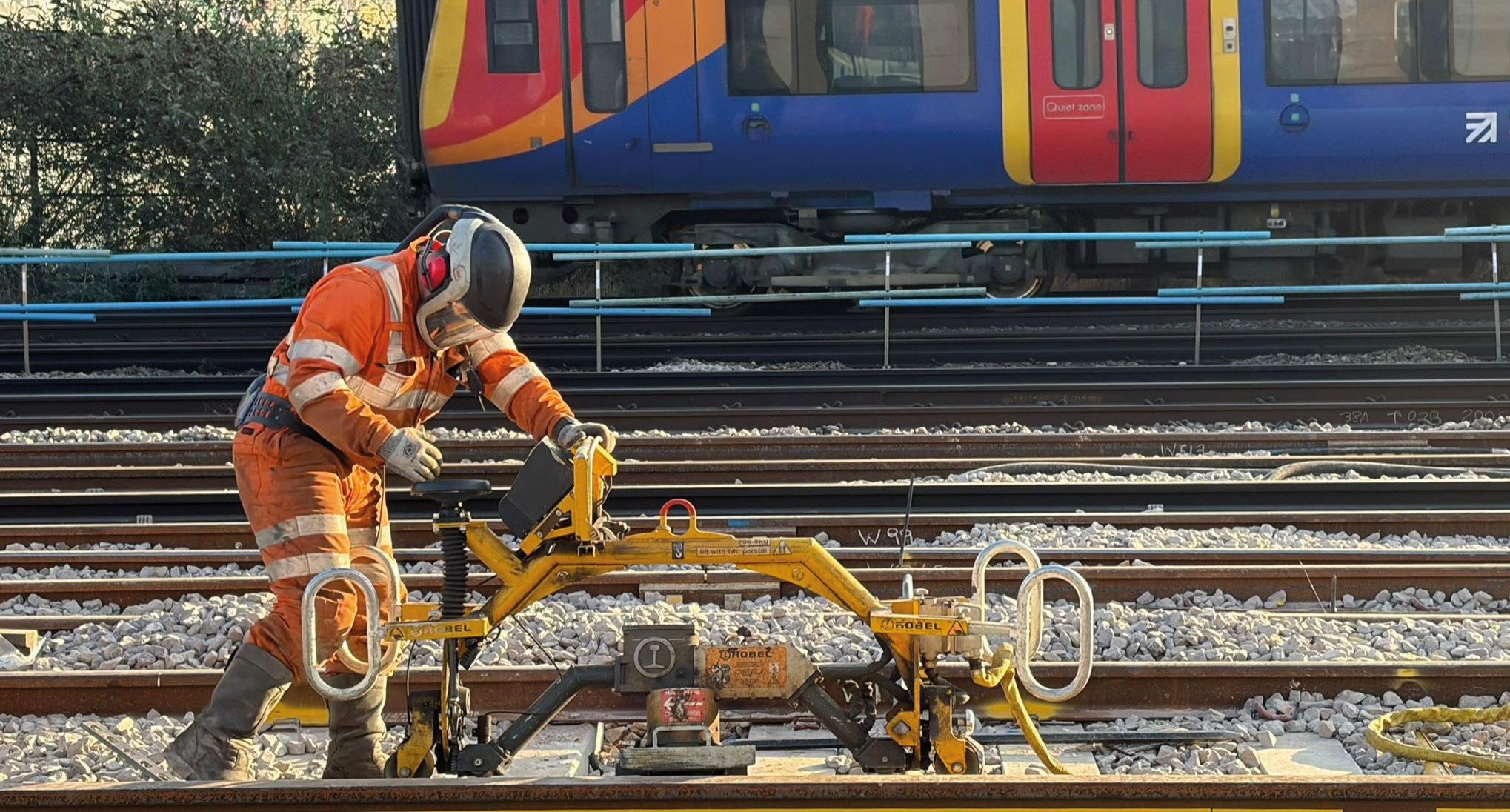
The work required the use of 22 engineering trains, two tampers and a Kirow crane provided by VolkerRail. The train operator took back the Down Main Fast and Up Main Fast lines for a portion of the work and this, although planned, put an extreme
amount of pressure on the delivery plan and reduced logistical flexibility. However, all the signalling and electrification upgrades were completed.
The two platforms at South Bermondsey were built on concrete piers with hardwood beams and ‘Magma’ (plywood) decking, which had exceeded its design life and was severely deteriorated. The platform surface was uneven, with depressions that cause water ponding, non-compliant platform falls, and a failed drainage system. At the country end, the last 25 metres had failed structurally and were only supported by temporary scaffolding.
Over the holiday period, the Platform Train Interface scheme aimed to renew the platform subframe, reusing existing trestle foundations where possible, and fully reconstruct the final 25 metres with new screw piles, a steel sub-frame, and track tamping. New GRP decking on the entire platform will provide a compliant, durable, low-maintenance surface. New lighting foundations and columns, plus upgrades to LV circuits and data cabling, will also bring the station’s electrical and communications systems up to current standards.
All of this was to be delivered in two possessions – a 52-hour possession over Christmas and a 100hour possession during the New Year. This resulted in a piecemeal delivery approach, with limited opportunity between these possessions to install any trackside elements. The team also faced harsh winter conditions, working in temperatures as low as –5°C with snow, sleet, and persistent rainfall.
Despite this, the lines were handed back as planned on 5 January, although the station didn’t reopen until the following day.
Wales and Western Network Rail and its contractors set out to completely renew the time-expired Dolphin West Junction, which lies between Reading and Slough. Three crossovers were renewed like-for-like, and 250
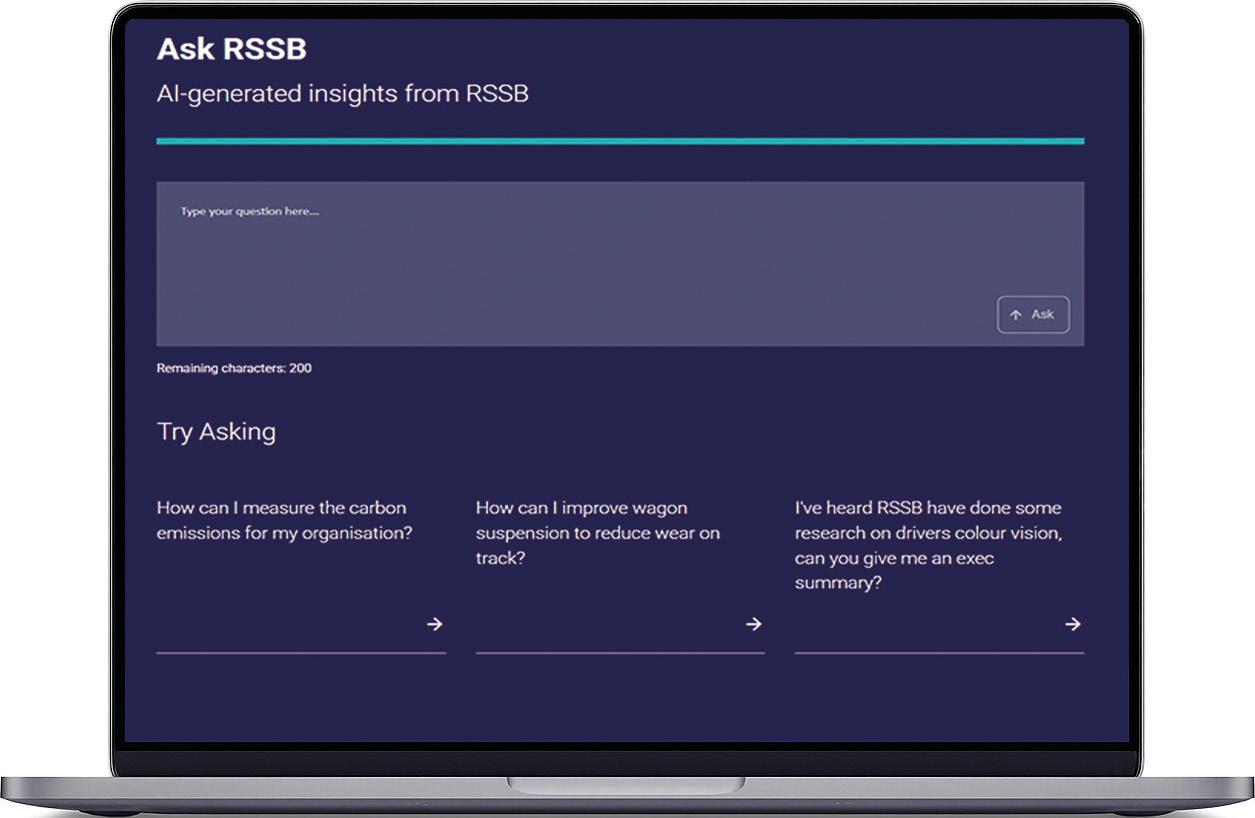
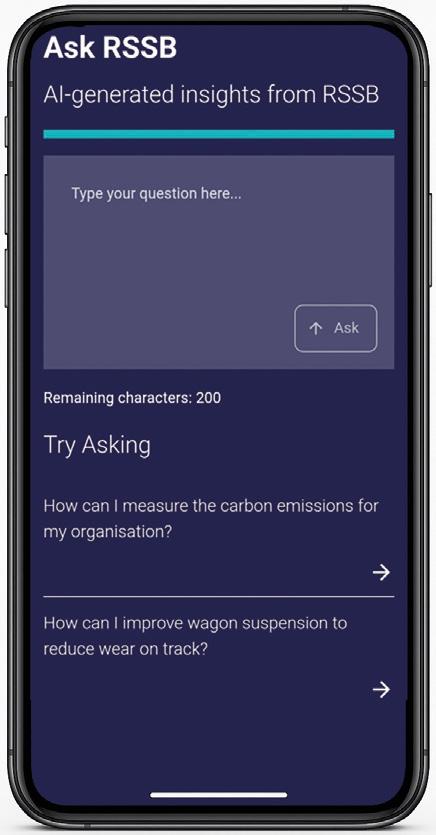
Ask RSSB
Ask RSSB gives you quick, easy access to the wealth of information on the Rail Safety and Standards Board website
One simple question delivers trusted guidance and the tools and services you need to support your role.
metres of plain line on the Up Main and 500 metres on the Down Main were replaced. New pointsoperating equipment was installed along with points heating cabinets and power. Minor OLE adjustments were needed to accommodate the renewed layout.
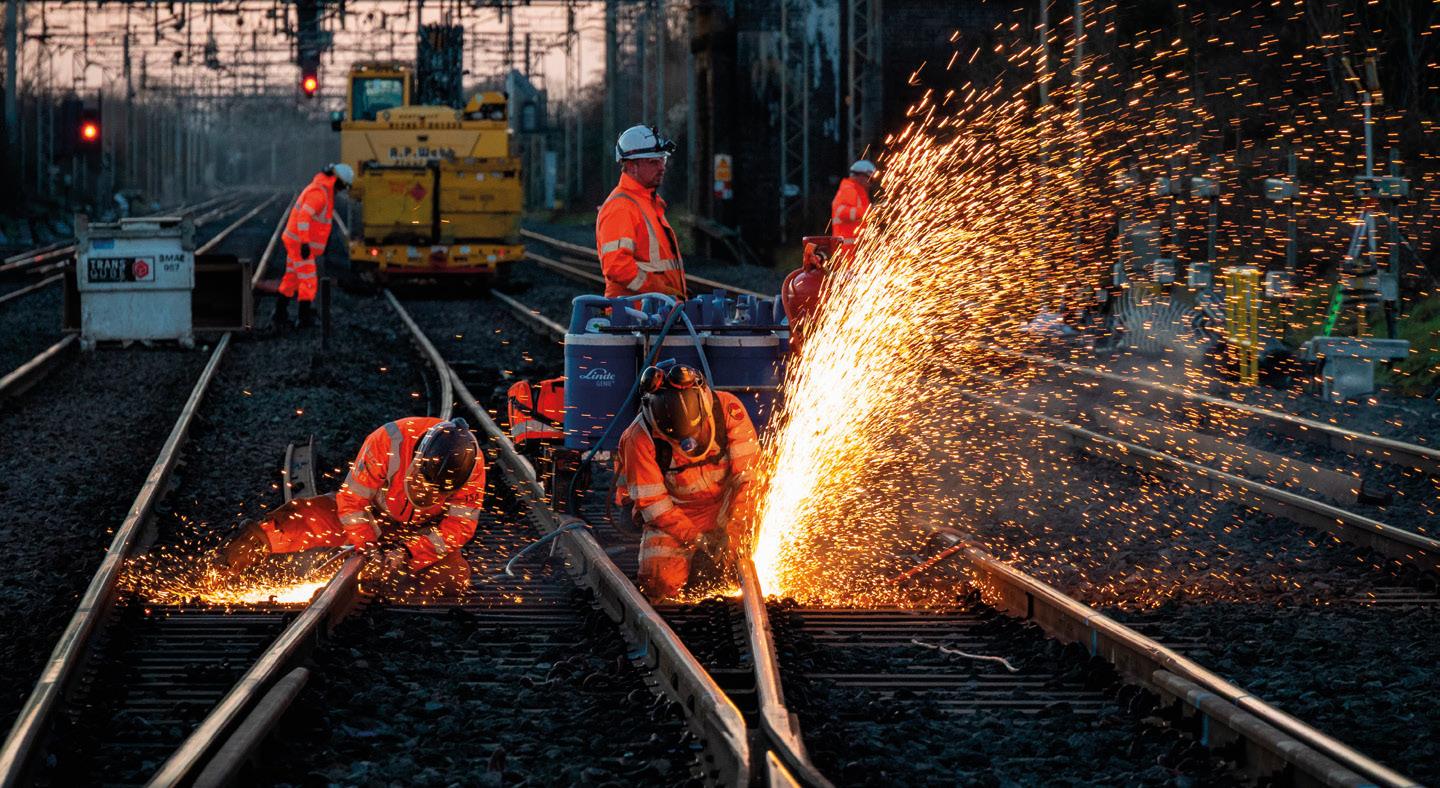
All works were completed, although there was a small overrun of three minutes to the handback of the possession on 4 January. One minor incident occurred when molten steel landed in a welder’s ear while they were cutting/burning rail. No lost time resulted and the injured individual has returned to work.
At Old Oak Common, where a new interchange station is being built as part of the wider HS2 project between London and Birmingham, an undertrack crossing was installed as part of the Cable Management System strategy to facilitate new power/S&T configurations.
OLE works were also carried out to facilitate new/ future layouts, upgrade the existing infrastructure and remove headspans to provide improved reliability and reduced maintenance requirement. Balance weight anchors were converted to a Tensorex arrangement to upgrade existing systems and provide continuity with newly installed OLE infrastructure.
All works were completed, despite a locomotive
failure – quickly mended – and an RRV failure that necessitated the use of a contingency machine.
A new access for all station is being constructed at Filton, near Bristol, on the site of the old Filton airfield, as part of MetroWest Phase 2. As part of this programme, 470 metres of track formation was renewed (240 metres of Up line and 230 metres of Down line), along with 800 metres of track realignment works. Some 150 metres of 6ft drainage works included one under track crossing.
In addition to completing all the work, further opportunity works took place including 60 pre cast L units being installed to support the construction of the Up and Down platforms.
At London Paddington station, work is taking place to replace headspans in the existing MK3 OLE with boom-style structures and independent mechanical registration for the contact wires. The project will deliver headspan to portal structure conversions at six locations between Westbourne Park and Ladbroke Grove on the Great Western Main Line.
Four locations were completed as planned. A fifth could not be undertaken as the track layout did not conform to the requirements for integration, while
a sixth location was not planned for this possession. The wiring that was postponed due to the integration works will be undertaken during March.
Further headspan conversions were undertaken at Southall on the same line. Three full transfers were completed along with seven boom installations, two switch modifications and one balance weight to Tensorex conversion.
Network Rail is electrifying a 1.35-mile (2.2km) section of railway sometimes referred to as the Poplars electrification project. Piles and masts are being installed to carry new overhead line equipment that will enable electric trains to be diverted during planned closures of the Great Western Main Line railway to support the construction of HS2.
Two wire runs were installed over the holiday period as planned, along with some additional installation work. However, the migration of SCADA updates from the engineering workstation to the operational desk failed due to a system fault and was reverted to previous working mode. Further work is planned over Easter 2026.
The first stage of three planned to renew S&C at Wantage Road was completed to plan, with two sets of points renewed along with their point motors.
Queenstown Road
South Bermondsey
Dolphin West
The work included replacement of 125 metres of associated plain track and 46 metres of unassociated plan track and minor OLE adjustments were made to accommodate the new layout.
One track tamper had problems as the ballast was frozen, causing a minor failure. This was quickly replaced and the work completed on time.
And there’s more…
This report highlights the RED projects – the ones that could cause major problems for the rail network if they overran. None of them did, although a few other projects around the country did – 21 in total. Given that the total number of possession overrun delay minutes incurred was 3,576 across those 21 incidents, and the total number of booked possessions across the Network Rail’s business was 2,454, this represents a successful possession handback rate of 99.1 per cent.
That’s not to say everything went perfectly. There were reports of machine breakdowns, staffing issues, unplanned work causing unforeseen delays and even workers having accidents (13 in total, only one causing lost time), but in almost all cases the team worked around the problems, rescheduled work, repaired equipment, yet still delivered the work on time.
Yes, there were some complaints from passengers. But, as Marcus Jones, Network Rail’s Western Route Managing Director, said: “Fewer people travel by rail between Christmas and New Year compared to
a normal working week, which gives us a valuable opportunity to deliver major upgrades such as this one while causing as little disruption as possible.”
New Network Rail Chief Executive Jeremy Westlake went out on the network to see for himself. He appreciated all the hard work and dedication that he found, saying: “While many of us were enjoying a well-earned rest, thousands of colleagues were out in challenging conditions installing new track, signalling and structures, or supporting passengers in our stations. That dedication speaks volumes about who we are as an organisation.
“I had the privilege of visiting some of the engineering works over the festive period. I joined teams realigning track and improving drainage at North Filton Station, re-signalling in Cambridge and renewing switches and crossings at Dolphin Junction and Queenstown Road.
“Seeing the scale of effort and teamwork was inspiring. These upgrades will strengthen the safety, reliability and performance of Britain’s railway –making a real difference for passengers and freight users in the months and years ahead.”
Christmas isn’t the only time that parts of the railway close for maintenance and upgrades, but it is by far the busiest. But the men and women in orange will be out there again every weekend – and over Easter and other bank holidays – to keep the railway in the best condition possible so that the travelling public can enjoy comfortable and safe journeys on Britain’s railways.
Seeing the scale of effort and teamwork was inspiring. These upgrades will strengthen the safety, reliability and performance of Britain’s railway – making a real difference for passengers and freight users in the months and years ahead
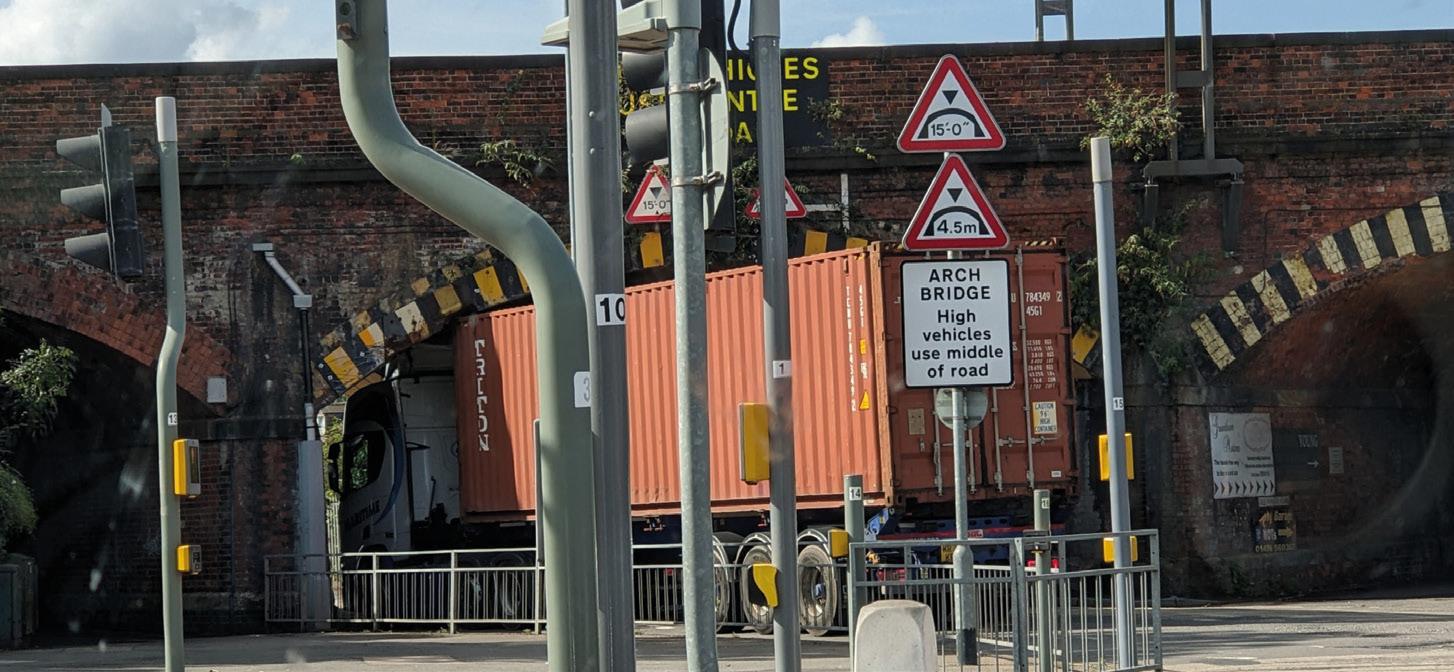
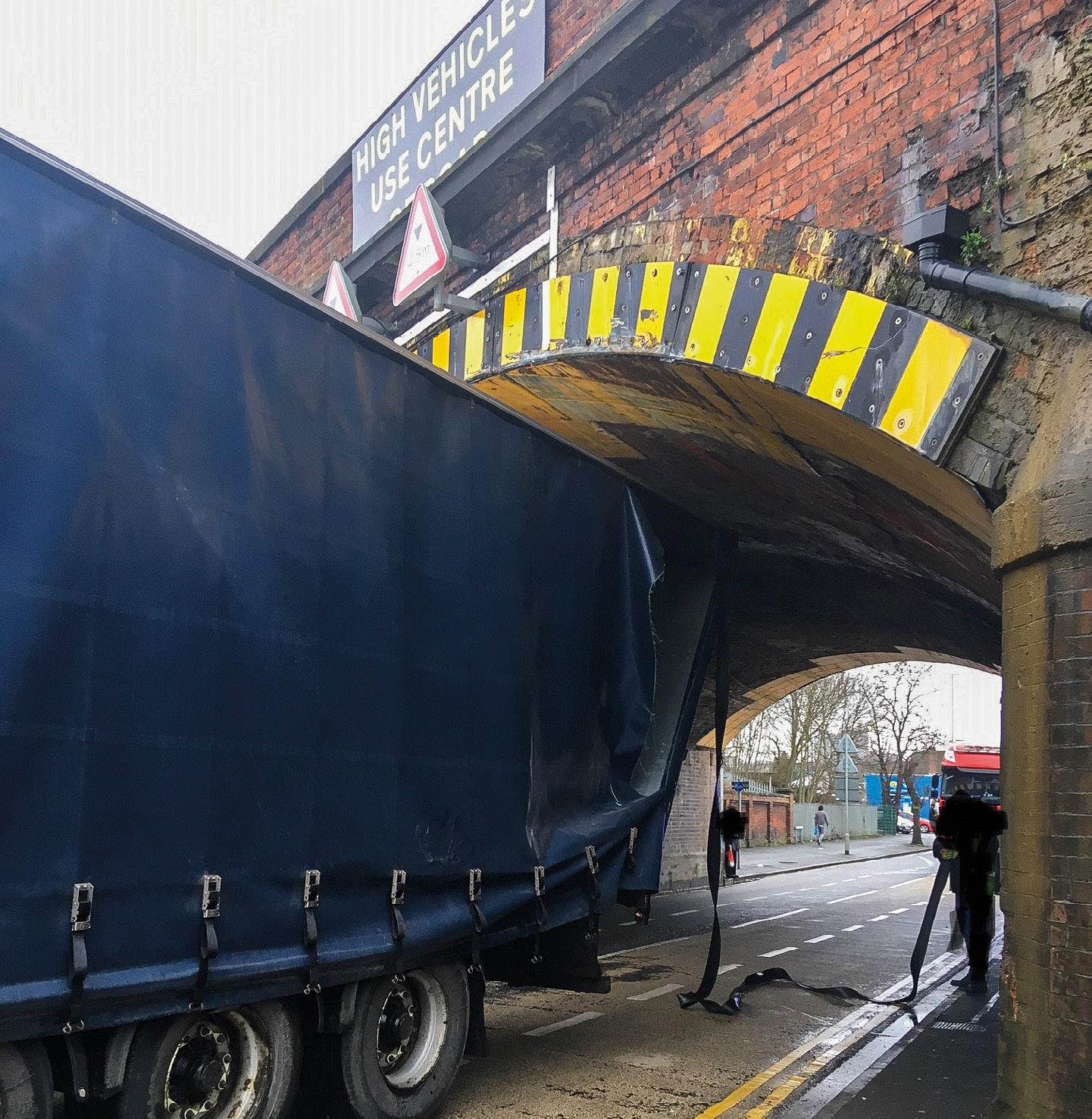
A trial is under way of cameras and sensors installed at one of the country’s most struck railway bridges to speed up the process of checking that the bridge is safe to carry trains
High-tech trial at Britain’s second most bashed bridge
Athree-month hi-tech trial is under way on one of the country’s most struck railway bridges, which Network Rail says could massively speed up the process of checking that the bridge is safe to carry trains.
Nationally, there were 1,666 reported bridge strikes by lorries and other high-sided vehicles for the year to 31 March – one every five hours. This caused 186,384 minutes of delays – more than 120 days – and cost Britain’s rail industry around £12 million in delays and cancellations.
Harlaxton Road bridge in Grantham, which carries the East Coast Main Line over a six-road junction, was hit 18 times in 2024/25 – up from 14 the previous year.
Last year, Network Rail secured £50,000 funding and partnered with risk-management specialists BES Group to trial a pioneering remote monitoring system at the bridge, which already had prominent signage, chevrons and protective beams.
Cameras and sensors were installed at the bridge in December to massively speed up the process of checking that the bridge is safe to carry trains, with the trial checking that the system meets Network Rail’s requirements.
Richard Woodford, Network Rail Asset Engineer, said: “Bridge strikes cost the British rail industry millions of pounds a year in delays, cancellations and repairs. Harlaxton Road already has prominent signage, so this trial using technology aims to cut inspection times after a strike from hours to seconds in many cases.
“This means trains can run again much sooner, boosting the reliability of the railway and potentially saving hundreds of thousands of pounds in this one location alone.”
The remote monitoring system provides real-time alerts using cameras and impact-sensing technology that captures data and video footage instantly after a collision. This allows engineers to assess the bridge remotely within seconds, reducing disruption for passengers and improving safety for staff who would otherwise need to inspect the structure on track.
Network Rail works closely with industry partners to tackle bridge strikes, and its team of bridge strike champions continues to visit haulage companies across Britain to raise awareness and promote safer route planning.
Hideo Takano, Senior Structures Advisor at National Highways, said: “Bridge strikes can cause hours of disruption and pose serious safety risks. We understand how frustrating these delays are for road
users, which is why we work alongside other transport authorities through the Bridge Strike Prevention Group to reduce the number of incidents.
“Two-thirds of strikes on our bridges involve
vehicles carrying loads on open trailers. To help prevent them, we urge drivers to take three simple steps: know your vehicle height, plan your route and make sure your load is secure.”
Images: Network Rail
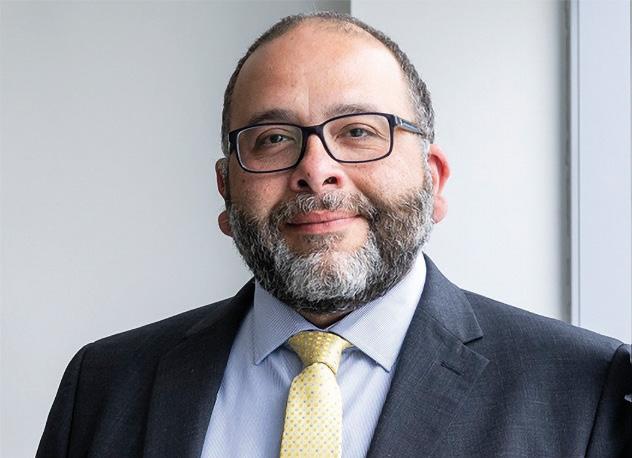
Sharif Narouz, a Major Programme Director at WSP UK & Ireland, reflects on his career and explains why collaboration is the route to success
Delivering infrastructure projects differently
There’s a roundabout in South Harrow in London that many will cross without giving a second glance, but not Sharif Narouz.
Although he describes it as just a drop kerb and a blob of paint, and he has gone on to work on some of the UK’s biggest transport projects, it still holds a special place in his heart, having been the one to design it.
“I can remember sitting there with a pen and pencil and sketching it all out,” he reflected.
“The pride I used to feel when I drove over it, it was like it was my roundabout. It might sound trivial and silly, but I did that and it is those kinds of achievements that get me out of bed.”
Sharif studied civil engineering and originally wanted to be an architect, until that dream was shattered when he was told he couldn’t draw very well. Looking for a graduate scheme, it was one in the railways at Railtrack that stood out.
“I didn’t want to be a railway engineer or anything like that, but it appealed because it offered the most diversity,” he said.
“I was taken around the country, working at every part of the business from rapid response in operations, stations, as well as the engineering and
construction aspects.
“The plan was to try it for a couple of years and do something else. I ended up staying in the railway for 20-odd years, loving the complexity and the passion that people have for the industry. It’s like a family environment.
“Everyone ultimately is working towards the same aim: trains running on time. When it all works smoothly, it is a brilliant feeling to have played a small part in that. I’ve been in projects ever since, pushing the boundaries of what we can do.”
From that first taste at Railtrack, Sharif has gone on to gain extensive experience from senior client roles at AWE, Crossrail and Transport for London, most recently leading a £5 billion-plus programme in the defence nuclear sector.
He is an accredited NISTA Project Reviewer and actively contributed to The Institution of Civil Engineers-sponsored Infrastructure Client Group, with a particular focus on productivity, Project 13 and enterprise alliances.
“I was quite nervous about going from the railways into nuclear because I was thinking ‘what do I know about defence?’” he said. “But actually, once you understand the context of what you’re doing, a lot of the delivery issues are very similar.
“It’s performance, schedule, cost, value for money, issue management, supply chain issues, client issues, stakeholder management and requirements. So there is a lot that you can bring, and it is about being a wellrounded programme person, which allows you to work in these different sectors.
“There’s a lot of learning around how we deliver enterprise and use technology. The nuclear stuff involved some amazing work with scientists/engineers and a lot of first-of-a-kind stuff, but then you look at Crossrail, which was the first digital railway.
“There are also similarities with respect to the pressures of funding, timescales, and a lot of transferable skills in the core of delivering the programme.
“I’m not a technical expert, so I’m not a nuclear expert – it’s ultimately about having a good programme, the delivery skills and capabilities, and understanding the needs and how you deliver them is what I found more easily transferable than I thought.”
Last October Sharif left AWE, where he was Programme Director – Future Materials Campus, and joined WSP as Major Programme Director.
“I’ve always wanted to see what the other side of the fence was like. WSP has welcomed me with open
Curzon Street.
Image: HS2
arms and the culture is great, as is its senior leadership and its engagement with clients.
“I got stuck in very quickly, both on helping what our major programmes offer and what we can do, but also into some of our more challenging programmes, because it’s what I love to do. I drive programmes to successful conclusions.”
Building on strong foundations WSP’s rail and transit heritage spans more than a century, tracing back to the early 1900s when its legacy firm Parsons Brinckerhoff served as chief engineer for the construction of New York City’s first subway line, which opened in 1904.
Currently in the UK, it is leading on HS2 station works for Old Oak Common, Euston and Curzon Street; and is Industry Systems Integrator for the Heathrow Rail Access Programme.
“The company is phenomenal with a lot of heritage,” said Sharif. “Every time you ask the question ‘does anybody know about this’, there will be a pocket somewhere within the business that does do that.”
It is this expertise that Sharif believes will be vital for major rail projects moving forward, especially drawing on the organisation’s technical expertise and programme management delivery capabilities.
“Our depth and system integration are another important factor for me,” he said. “I’ve been really impressed with WSP’s offering around systems integration and it’s something that more and more
projects are moving to, and I’m more and more interested in.
“Our willingness to partner and work with the clients is going to be key for major programmes in the future.”
Prior to joining WSP, Sharif spent a lot of time in the rail industry as a client and was also a board member of the Infrastructure Client Group, helping to drive how clients engage, work and deliver infrastructure projects differently from how they have done in the past.
“One of the big things is how we engage with supply chains and the move to being partners and working in partnership,” he said. “The old carrot and stick methods just don’t work.
“It’s important to build an enterprise, get mutual objectives and success criteria in place for both the client and the supply chain.
“It is refreshing that WSP has already got that mindset, and rather than just do drawing X, we say, ‘what do you need, how do we support it?’, and then together we come up with the answer that you actually need.
“I want to continue to support the business in developing that. This is about working with the client rather than for the client, which is slightly different from my experiences with some organisations in the past, where it can be quite a lonely place as a programme director.
“As a client, to have someone you can turn to and have those open discussions with is key.”
Our willingness to partner and work with the clients is going to be key for major programmes in the future
RAIL LIFTING JACKS & PIT EXPERTS
Sharif Narouz. Image: WSP
I joined the railways at the very end of people still drawing by hand, so looking at where we are now is mind-blowing
Sharif firmly believes that collaboration is the route to success in whatever industry.
“We can’t do these things alone as clients or as a designer; you need to work in a system, you need to work with the wider aspects of the supply chain and you need to be able to work with the client,” he said.
“There is a lot of pressure on projects to be delivered efficiently and it will continue when you look at the Government’s aspirations.
“There is also that social value as well. In the old days, you just built the infrastructure, it’s done and you walk away. Now there’s a lot more focus on what social value you add by building this piece of infrastructure. It’s no longer just pouring concrete but changing the environment that you’re around.
“Take Crossrail as an example and the impact that has had on so many lives. There aren’t many careers that leave such a physical legacy as you do in projects, construction and civil engineering. You are changing the world.”
One of the big changes Sharif has and continues to
adapt to is around innovation and technology.
“I joined the railways at the very end of people still drawing by hand, so looking at where we are now is mind-blowing,” he said.
“We’re working on a project at the moment where there are fly-throughs and the ability to show complex layouts in a way that you can engage in it. You are fully immersed with VR goggles and being able to train operators without putting them at any risk whatsoever.
“In the future, the way we integrate projects between technical and programmes is something that will continue to get stronger and stronger.
“From a digital perspective, AI and how we can improve safety, how we can continue to build digital twins, how we can look at productivity in much earlier stages through digital, I think it is really the cutting edge of where it’s going to be, and not just for WSP, but for the whole industry.
“AI is already starting to change how we deliver projects, and how we use data is changing.”
Concluding the conversation, having had such an illustrious career working on so many big projects, Sharif answers where the roundabout in South Harrow stands on his list of achievements.
“Some of the projects I’ve been involved in are Brunel-esque projects of our era, and just to be a small part of them has been immense,” he said.
“A lot of the programmes I’m working on are oncein-a-generation things and they’re all happening in our generation; it does feel special and I feel lucky.
“There are the dark days where you don’t know which way to go and what to do, but those moments do pass, we do get there and it is important to remember that what we’re trying to do is change things for the better.
“In regard to the roundabout, it is a different type of pride. The large projects are bigger than any one person and are the coming together of great people, which is a real privilege of working with such amazing people. The roundabout is probably the one that feels most mine.”
Old Oak Common. Image: HS2 Ltd
Euston Station. Image: HS2 Ltd
Alistair Geddes, Rail Sector Director, Costain, writes about the key principles that can help the industry align with a clear vision and ensure that the rail infrastructure of tomorrow drives prosperity, builds resilience and supports the UK’s decarbonisation goals
Culture, constructability, collaboration: The three ingredients to deliver the rail infrastructure of tomorrow
UK rail is evolving. Whether it’s the new branding of Great British Railways or the continued transfer of train operators into public ownership, the winds of change are blowing.
Evolution is also taking place in rail infrastructure. There is welcome momentum surrounding major projects such as Northern Powerhouse Rail, the Transpennine Route Upgrade, and the extension of the Docklands Light Railway, which has come alongside continued efforts to maintain rail networks to optimise performance. These are all critical infrastructure projects that will drive regional and national economic prosperity and improve people’s lives.
These positive signals of investment have brought the question of delivery back onto the agenda. But it’s worth stepping back and considering the Elizabeth line, as all these projects should be thinking about how they can replicate its benefits.
I was fortunate enough to be involved in its delivery, and it’s incredibly rewarding to see how transformative it is proving for communities in and out of London; the Office of Rail and Road’s annual list of the UK’s busiest railway stations found that six of the UK’s 10 most used stations in 2025 were served by the line.
There are, of course, competing approaches to delivering infrastructure projects large and small, but when it comes to rail there are three key factors on which successful delivery can be underpinned.
Effective cultural behaviour management key to excellence
The first is culture. Culture is central to the delivery of rail infrastructure, or any complex infrastructure programme for that matter. Often such projects bring together people from different organisations, with varying perspectives and expectations around disciplines and delivery models, whether that’s in areas such safety, sustainability, accountability, respect or inclusion. Without a common sense of behavioural standards it will be impossible to deliver works effectively, and to the required level.
For more than 20 years we’ve been developing, refining and delivering cultural and behavioural leadership training internally and to customers across
Image: Costain
the infrastructure ecosystem. We know just how important this is and we spend a lot of time to ensure we’re creating the right conditions on site.
Our in-house cultural behavioural management experts may work with large groups to create inclusive, trusted environments, or with senior leaders to help actively shape behaviours from the top of the organisation down. This is extremely important and moves the customer-contractor-supply chain relationship beyond a transactional arrangement and to a delivery team that’s safer, more inclusive and collaborative. By fostering genuine partnerships with both customers and the supply chain, workers feel empowered to speak up and address issues as early as possible, and innovative ideas to improve efficiency are more likely to flourish.
It’s never too early for constructability
Another key facet in the successful delivery of infrastructure projects is constructability. Rail projects always encompass a complex set of engineering-led upgrades, but the considerations of engineers aren’t always heard at the optimal time.
The simple remedy? Bring in constructability at the earliest possible stage. Typically, the ‘earliest possible stage’ has simply meant early contractor involvement, but this does not always factor in design considerations and therefore doesn’t necessarily provide added value for asset owners. There is a need to consider the benefits from incorporating it even earlier.
Constructability at the design phase ensures that
all engineering and ‘buildability’ considerations are taken into account from the outset. This creates a more robust design solution for when subsequent stages of a project are tendered to market, promoting more efficient overall spend.
Ultimately the sector needs everyone working together to achieve the same goal of safe and efficient delivery. This mindset is particularly important for a rail sector tasked with spending taxpayer money responsibly; the opportunity cost is that this investment could go towards healthcare or childcare.
So, principles that ingrain efficiencies into infrastructure project delivery are essential. Through modern methods of construction, or production thinking, which factors in constructability as well as innovative techniques such as off-site manufacturing and modularisation, it’s possible to significantly improve the efficiency of rail infrastructure projects.
Working with contractors that can offer in-house engineering and design teams makes it easier for asset owners to embed these principles into the early stages of complex projects. Ultimately, it’s about creating something of a one-stop-shop of services to ensure efficient infrastructure delivery.
Furthermore, a constructability mindset can help accelerate decarbonisation across the rail sector. Modern methods of construction combined with new technologies and techniques – what we call production thinking – can lower carbon footprint compared to using traditional methods. Furthermore, constructability helps to ensure that projects can cascade the right information to the right people
Another key facet in the successful delivery of infrastructure projects is constructability
Alistair Geddes
Rail infrastructure has a huge part to play in powering both the UK’s growth and broader infrastructure ecosystem
at the right time, leading to decisions that reduce the impact of an infrastructure project on the environment.
Indeed, asset owners need to have confidence that delivery partners and their supply chain have robust sustainability credentials and standards in place, such as adopting globally recognised frameworks like PAS2080.
The ongoing nationalisation of train operators and devolution in the sector is prompting a shift in focus from larger stations to more targeted regional or local investment to help improve accessibility. These stations are critical in driving regional connectivity and local prosperity but can become needlessly complex and unaffordable. A playbook for these smaller or local station builds, which offers a decision-making process for the design phase with constructability, manufacturing and supply chain principles at its core, promotes more standardised, cost-efficient solutions that avoid the need to start from first principles each time. Repeatability allows for greater off-site manufacturing, in turn minimising both risk and disruption to external operations.
Collaboration and lessons from other sectors
The right cultures and implementing constructability early on are important ingredients for successful project delivery. But these benefits will only be impactful if they sit on a strong foundation of collaboration.
It may sound obvious, but for any large or complex infrastructure project, enduring relationships between both asset owners and operators, contractors, suppliers and developers need to be established early. The rail sector needs to be both better at cultivating deep, long-term relationships among stakeholders and understanding how they’re adding value to each other.
It’s worth taking inspiration from elsewhere in the infrastructure ecosystem, such as the water sector. The recently completed Thames Tideway Tunnel, which is already preventing tens of millions of tonnes of sewage from entering the River Thames, was successfully delivered by a combination of different Tideway teams and joint ventures collaborating and knowledge-sharing throughout the project.
Similarly, the Strategic Pipeline Alliance, an innovative partnership of organisations set up to
deliver hundreds of kilometres of new pipeline for Anglian Water, is a hugely complex project that is delivering critical infrastructure to boost climate resilience and water security.
These types of alliances, or integrator models, carry myriad benefits. They help create a focus on long-term outcomes around which all stakeholders are aligned, meaning that projects are sure on what and how they want to achieve, whether that be supporting the local economy, decarbonising the transport network or connecting communities.
They also support more efficient and fair risk allocation, which avoids both duplication of risk and a higher burden being placed on suppliers further down the supply chain, as well providing better value for money. Knowledge sharing also becomes easier, as organic forums drive best-in-class procurement practices, assign the right people to the right job, and break down silos between contractors.
If we return to the big picture, the outlook is
positive. We have just celebrated 200 years of the modern railway and the appetite for rail expansion across the UK is clear, particularly as a means to decarbonise the UK’s transport ecosystem. It’s an exciting time to be working in rail, but the stakes are high.
Rail infrastructure has a huge part to play in powering both the UK’s growth and broader infrastructure ecosystem. Whether it be constructing highways, small modular reactors or water pipelines, infrastructure projects from other sectors depend on a high-performing rail network to move materials, plant and people.
Culture, constructability and collaboration are three ingredients that can help the entire rail sector align with a clear vision. By establishing the right behaviours, partnerships and construction principles, we can collectively ensure that the rail infrastructure of tomorrow drives prosperity, builds resilience and supports the UK’s decarbonisation goals.
Thames Tideway. Image: Tideway
Paddington Station Elizabeth line. Image: SCS Railways
People are shaping the future of Wabtec UK, progressing their careers and the railways, while at the same time supporting their communities
Shaping the future of rail: Powered by our people
Wabtec’s £30 million investment in its Barton-under-Needwood facility, together with substantial upgrades at Birkenhead, marks an important step in strengthening its long-term presence and capability within the UK rail supply chain.
These improvements are positioning Barton as a recognised centre of excellence, with comprehensive overhaul capability spanning wheelsets and bogies, powertrain, power collection, door systems, and electronics, alongside expertise in relays and obsolescence management.
The scale and breadth of this work mean Wabtec UK is not only enhancing what its facilities can deliver today, but also securing the specialist expertise needed for future demands across the industry.
But at the heart of this investment is an ongoing commitment to people. The expansion of its engineering capability, the development of apprentices, and the growth of skilled teams across both Barton and Birkenhead are central to what this work is designed to support.
As a leading global rail technology company, we recognise the importance of developing the engineers of the future – individuals who can blend hands-on technical expertise with the digital and analytical skills the industry increasingly relies on. Through structured development, realworld learning, and the chance to work alongside experienced specialists, Wabtec is helping build a new generation of engineers equipped to support the rail sector for years to come.
By investing in modern facilities alongside the
people who power them, the company is creating an environment where expertise can thrive, careers can grow, and teams can continue delivering high quality, reliable solutions for customers across the UK and beyond.
Growing careers and creating new opportunities
As new technologies and capabilities become part of Wabtec’s operations, the range of roles available across its sites is broadening. Employees are finding fresh opportunities to grow their careers, whether by stepping into emerging technical areas, exploring data driven maintenance, or developing expertise in advanced component overhauls.
Learning and development remains central to how it builds capability. Upskilling and reskilling programmes continue to help colleagues expand their technical and digital skillsets. Internal mobility pathways also give employees the freedom to move into new functions or take on leadership opportunities, helping individuals shape careers that match their strengths and interests.
Early career routes are becoming increasingly important too. Wabtec UK’s apprentices – 23 across the UK, with 16 at Barton and seven at Birkenhead – are gaining broad, hands-on experience through structured rotations across different departments. This exposure helps them understand the full operation, discover their specialist interests, and take their first steps towards professional qualifications. Mentoring, regular development reviews, and access
to further training ensure each apprentice is set up for long-term success.
Skills built for the future of rail
The rail sector is evolving rapidly, with digital systems, sustainability requirements and modern maintenance practices becoming the new norm. Employees across its sites are building skills that reflect these future needs – whether through predictive maintenance, digital reporting, or lean operational techniques.
While these advancements shape how the rail industry operates, the focus for Wabtec remains clear: equipping people with the knowledge, confidence, and tools to take on tomorrow’s challenges. From engineering teams to business functions, colleagues play an important role in supporting industry modernisation and contributing to the UK’s long-term rail capability.
Supporting colleagues at every stage
Providing a positive employee experience begins the moment someone joins Wabtec. Work is under way to create a consistent, One Wabtec induction across all sites, ensuring every new starter receives the same high-quality introduction to its culture, expectations, and ways of working.
A refreshed onboarding process will extend beyond day one, giving new colleagues time and support to settle in, build connections, and feel part of the business. Better communication channels – including site updates, briefings, and town halls – help ensure teams stay informed, engaged, and connected.
For employees moving into new roles or learning new skills, guidance and support networks are available to help them navigate change and continue progressing with confidence.
A workplace people want to be part of Across the sites, teams are involved in helping shape a working environment that is safe, inclusive, and enjoyable. Improvements to welfare spaces, updated facilities, and enhancements to work areas help create a better day-to-day experience.Team building events, engagement activities, and recognition schemes celebrate the contributions employees make, helping strengthen connections within and across teams. Clearer pathways for career development and performance also give colleagues greater visibility of how they can grow within the organisation.
Inspiring future talent
Working with young people is a vital part of building the long-term strength of the rail industry. Wabtec partners with several local schools – John Taylor High School, The Observatory School, and Hexthorpe Road Primary School, among others – to offer students insight into engineering, business, and real workplace environments. Activities range from site visits and workshops to career talks and donations of equipment such as refurbished laptops.
These partnerships help young people gain confidence, learn practical skills, and discover career paths they may not have considered otherwise. For Wabtec, they provide an opportunity to share our passion for rail with the next generation.
Making a positive difference in our communities
Community involvement is something many colleagues feel strongly about, and the company’s approach reflects that.
Since 2024, our Quarterly Community and Charity Donation Policy has contributed more than £35,000 to causes nominated by employees themselves.
These include:
The Hygiene Bank, Doncaster.
Everton in the Community.
John Taylor High School.
Housing 21, Derby.
Eggington Primary School.
Alongside this, each site maintains its own relationships with local charities, supporting fundraising, volunteering, recycling schemes, and initiatives that respond directly to community needs.
These activities reflect how deeply employees care about the places they live and work - and the pride they take in giving back.
Contributing to the UK’s rail future
Every colleague, regardless of role, plays a part in supporting the wider ambitions of the UK rail industry. Their work contributes to national goals around efficiency, reliability, decarbonisation, and digital modernisation.
From engineering excellence to quality assurance and customer support, the skills and commitment
Across Wabtec
UK,
employees are driving progress, shaping their own careers, supporting their communities, and playing an important role in the future of rail
of its people help position Wabtec as a trusted partner within the UK’s rail landscape. The expertise developed within the teams strengthens not only its operations, but the wider industry and the communities that depend on it.
Our people, our strength
Across Wabtec UK, employees are driving progress, shaping their own careers, supporting their communities, and playing an important role in the future of rail. Their dedication, expertise, and willingness to grow continue to define who the company is – and what can be achieved together. www.wabteccorp.com/
Noel
Travers, the Chief
Executive Officer
(CEO)
at Buckland Rail,
reflects on his first year in charge and explains how the organisation can help shape the sector in the future
The next phase of growth
It has been a remarkable first year in charge at Buckland Rail for Noel Travers, one that has exceeded his expectations.
His appointment as CEO came little over a year after WH Davis, Davis Wagon Services and Yellow Rail formed the new integrated group.
“I took on a business in a really good place but that had the opportunity to be so much better, which was a great position to be in,” he said.
In the last 12 months the order book for WH Davis, the UK’s leading railway wagon manufacturer, has been significantly filled; and Yellow Rail, which provides high-value and safety-critical rail services to improve asset performance, availability and end-user experience, has moved into new premises in Derby that has tripled the capacity for the business.
Davis Wagon Services, a leading supplier of rail wagon maintenance and repair, has continued to perform both operationally and financially, described by Noel as “the bedrock on which we can build the other two businesses because it is stable and long term.”
Buoyed by the success, Noel has set his aspirations high for the future, looking to grow in the core markets of freight, freight new build or repurposing, freight wagon maintenance and freight bogie and wagon overhaul
Alongside the core business, there is the potential growth in the passenger sector, the possibility of adding business capability through acquisition, and at the same time ensuring there is enough engineering capability to start thinking about what’s next.
“We’re investing for the future in all areas, and we’re keen to talk to anybody who wants to work with us and feels that there is a gap in the market that needs addressing,” he said.
“We have a very strong balance sheet, very supportive shareholders and I have the ability to make investment where there is a market opportunity that comes.
“We’re on the lookout for businesses that would fit within the group and add to the capabilities. We are very good guardians of existing businesses.”
Elaborating on the journey ahead, Noel starts with WH Davis, explaining how the focus has changed over the course of the year in light of major orders for Irish Rail, Freightliner, and the selling of speculative wagons that had already been built and were on site.
“We’ve got an order book for two to three years coming up in which we will be operating at full capacity without making changes such as going to two shifts, taking on extra space and subcontracting out some of the work,” he explained.
“There’s lots of things we can do to create extra
capacity and we’re going to need to do that in 12 months’ time if we want to win more orders.
“WH Davis has changed from the mindset of how do we fill the order book, to improving the operation of the business to maximise the success in delivering the orders that we’ve got.
“The business is motoring in terms of its delivery and the job now is to create the capability to do more. We’re investing in procurement capability, investing in the engineering capability, investing in facilities and tools and continuing a recruitment drive to bring good people in.”
Yellow Rail has been a similar success and has recently moved to Litchurch Lane Works in Derby, tripling its previous workshop space. The company, which managed to maintain production throughout the relocation, has increased capacity and brought new capability into the business in that it now has vehicle spaces in the shed as opposed to just bogies.
The company has just completed its first light rail bogies from Croydon Tram, taking it back into the passenger business where it started, and is in the process of completing its first upgrade to passenger vehicles (Siemens’ Class 350s for West Midlands Trains).
“These are the first passenger vehicles that we’ve
actually had on a Yellow Rail site, as opposed to doing the work at customers’ depots,” explained Noel.
“At the same time we’ve successfully gone through our Railway Industry Supplier Approval Scheme certification, which is a prerequisite for us doing more passenger work.
“It’s been a tough process to go through but having it opens the door for us to go after the passenger market, both in terms of bringing vehicles into Litchurch Lane and also going back out into passenger depots to undertake modifications on site or work on our site for the business.”
With Davis Wagon Services it has been about the challenges in the future. The company maintains the wagons to transport the wood pellets, and with the Government support for biomass stations reducing significantly, Noel has said they are taking steps to find alternative work.
“We’re looking at various fleets around the country,” he said. “We are already a big player in the freight vehicle maintenance market and we’re looking at where we can take that expertise and grow in that market as well, in a business that has been steadily growing.
“Overall the past year has been very successful, both in operational performance and in financial
Noel Travers. Image: RIA
performance, but just as importantly we are getting the businesses ready for the next phase of their growth.
“The target is to double the size of the business in the next five years and we’ve got plans in place that we’re confident will get us there.”
An area Noel is particularly excited to develop is in creating products and services that are going to give the market new options in the coming years. At the moment, there is a focus on box wagons, with a shift to intermodal wagons in light of recent major contract wins with Freightliner and Porterbrook.
“These are UK deep sea container intermodal as opposed to domestic intermodal, which requires a different wagon type,” he explained. “What we’re looking at next is the domestic intermodal market and what concepts we can develop.
“Is there a market for 90mph freight wagons? There is a view that freight trains don’t need to go quicker, they just need to accelerate quicker. But if you have trains that can accelerate quicker because they’ve got new locomotives, more powerful, better technology locomotives, and they can reach 90mph an hour, then that is going to use less paths on the busy parts of the network.”
Noel notes an ongoing trial involving RSSB in operating 90mph container traffic, looking at the challenges of container trains passing through stations and the turbulence it causes on platforms. Buckland Rail is looking to get involved with the project, developing wagons that can fulfil the market need.
“The domestic intermodal wagon is something that we’re looking at with some of the current operators, and that’s about what the wagon deck height needs to be, what the payload needs to be and what the length of the wagon needs to be within what is a very constraining infrastructure set up in the UK,” he explained.
“There’s always trade-offs in terms of deck height, axle load, length, because otherwise you hit tunnels and platforms. We’re doing this development both by ourselves, and also in conjunction with other parties.”
Fast approaching the second birthday of the launch of Buckland Rail, on taking post, Noel spoke of offering every aspect of service that could possibly be needed in the freight wagon market, with the integrated rail services company building an infrastructure to help the businesses operate more effectively, supporting the businesses centrally.
“When I came in I was undecided as to what the right corporate structure was in terms of one business or three businesses,” he reflected.
“Over the course of the year, with how good the performance has been of the businesses working together and being able to stand up a Buckland Rail Group organisation structure that includes finance, engineering, IT, HR, and sales that support all three businesses, there isn’t any need to change.
“We’re operating like one company but maintaining the brand value of the three individual businesses. So I don’t foresee at any point the need to make any organisational changes in that regard. They operate really well together as separate entities at the moment.”
www.bucklandrail.co.uk/
We’re investing for the future in all areas, and we’re keen to talk to anybody who wants to work with us and feels that there is a gap in the market that needs addressing
Left: Davis Wagon Servcies
Below: WH Davis
Bottom: Yellow Rail
Arup has recently released a new report titled Renewing Ageing Assets –making the case and enabling delivery. Phil Harrison, UKIMEA Rail Leader, writes about why the
UK must rethink its approach to
infrastructure
investment to
improve the resilience of assets
Embracing proactive stewardship of the UK’s ageing rail assets
The UK’s transport network is suffering from systemic lack of investment in maintenance and repairs. The Office of Rail and Road reports that there is a forecasted reduction in asset life, and an increase in future risks associated with our continually ageing infrastructure.
Across the UK rail network, much of the infrastructure is made of ageing assets that are either approaching or have exceeded their original design life, with much of the network dating back to the Victorian era. The increased frequency of extreme weather events poses additional challenges, meaning now is the time to tackle these issues head on.
To secure a safe and resilient future for UK railways, we must adopt smarter regulation and funding models and redefine success to measure progress more holistically. This starts with rebalancing our priorities to put asset maintenance front and centre of infrastructure management.
Rebalancing priorities
Maintenance works are regularly pushed to the bottom of the priority list, with uncertain availability of capital and cost inflation placing increasing economic pressure on the transport sector. This often means that the long-term costs of basic maintenance are overlooked in budget planning. This is unsustainable, and is already resulting in major operating inefficiencies, undermining the long-term value of the UK’s transport assets.
Much of our transport network is centuries old – facing the combined pressures of age, underinvestment, and climate change – yet it still carries millions of passengers daily. At the same time, we need new projects that expand capacity, decarbonise journeys, and enable growth for housing and employment. Instead of viewing maintenance and new projects as competing priorities, we need an integrated approach where every investment strengthens the entire system.
The most sustainable path is one that blends both: modern capability while upgrading ageing assets with new investment. This layered, whole-system approach to investment – where new projects are designed as extensions to and reinforcements of what already exists – creates the most value. It will give us resilient assets today and bold new infrastructure for tomorrow, ensuring every pound spent strengthens the system as a whole.
A whole-system approach means planning upgrades and new projects as part of a unified
network strategy. To do this, our industry needs to shift towards a life-cycle approach to investment, prioritising proactive and preventative maintenance that reduces the likelihood of breakdowns and service issues ever occurring.
Arup’s Rail Resilience Framework provides a structured approach to identifying where upgrades are most needed, not just to meet current standards but to anticipate future climate risks. Frameworks such as these can help organisations to move towards performance-led design, even in budget-constrained
environments, ensuring investment delivers layered benefits across the system.
Redefining success
For a long-term approach to infrastructure that benefits people and communities, we need to redefine what we consider to be successful infrastructure investments. Progress should be measured not by how much is built, or the scale of development, but instead the scale of benefit that development can bring to passengers, communities and businesses.
Image: Devlin Photo Ltd
Image: Mulholland Media
This includes looking at how long an investment can provide benefits for. Transport infrastructure should be built to last, as well as to be easily maintained and upgraded. True progress means implementing infrastructure that is long lasting and reliable; beneficial for communities, businesses and the economy; and able to continually deliver benefits for years to come.
Enabling change
Smarter regulation and funding models must be introduced to make infrastructure renewable, realistic and achievable within the constrained budgets industry is faced with. Smarter funding models should reward projects that strengthen the network as a whole – combining maintenance, resilience, and capacity upgrades. This approach ensures that every intervention contributes to a more robust, futureready system.
For example, Arup’s work on the Khorezm Roads project in Uzbekistan used a multi-criteria framework to align physical upgrades with wider community benefits, increasing funding as a result. Similarly, the Transpennine Route Upgrade clustered complex rail interventions to deliver meaningful passenger outcomes, rather than relying on disjointed upgrades.
These successes begin with understanding the broadest context of the projects undertaken, requiring careful consideration of the challenges and stakeholders involved specific to the local context. Once this is fully understood, collaboration is key
to embracing a shared vision for successful project delivery.
Looking ahead, the formation of Great British Railways (GBR) provides new opportunities for improved stakeholder collaboration. Rail reform aims to remove industry fragmentation and centralise decision-making, thereby removing some of the red tape surrounding rail renewal. Specifically, the introduction of GBR will concentrate control of both track and train in the same organisation. This decision has the potential to better streamline systemwide rail upgrades. Starting with a new centralising body could create a new shared consensus surrounding the management of our rail assets, with this shared vision driving a clear strategy for asset management. Devolution also offers part of the solution, giving local people more agency over delivering and maintaining their transport infrastructure.
Embracing the shift
If we are to save the UK’s ageing assets and secure a safe, resilient and optimistic future, we must embrace a fundamental shift. This means moving from reactive solutions to proactive stewardship; from isolated projects to coordinated programmes; and from short-term fixes to outcomes that serve people, places and the planet. If this is done successfully, the UK’s transport system can once again be one of our most valuable assets. By future-proofing our infrastructure, we remove vulnerabilities and work towards a growthoriented, sustainable future for the UK.
By
our infrastructure, we remove
and work towards a growth-oriented, sustainable future
the UK
ON TRACK TO DELIVER CHANGE
Keeping the UK Rail Network Moving for Over 30 Years
Trusted by rail owners, operators, and maintainers, we deliver expert, multi-disciplinary services that keep the network safe, reliable, and moving.
www.cleshar.co.uk
02087338888
The Chancellor
of the Exchequer
has said
the
Government is delivering in grasping the nettle of planning reform and will leave no stone unturned to get spades in the ground
Planning and Infrastructure Bill becomes law
The Planning and Infrastructure Act has become law, which the Government has said will slash delays and costs to get homes and critical infrastructure built faster.
It aims to remove blockages in the planning system, getting dozens of new roads, railway lines, wind farms, and key critical infrastructure built quicker – all while securing a win-win for the environment and the economy.
East West Rail, a new Oxford to Cambridge railway, is set to be one of the first major projects to be authorised through the Planning and Infrastructure Bill.
David Hughes, Chief Executive Officer at the East West Railway Company, said: “The Planning and Infrastructure Act is good news for East West Rail as it should enable us to deliver the project more quickly while providing an important opportunity to engage with communities earlier in a more bespoke and tailored way as the railway moves towards its final design.
“By working closely with Government, this more agile approach will support stronger decisions, foster confidence with stakeholders, and enable the benefits of East West Rail to be realised sooner and more effectively than under previous plans.”
Key changes in the Act include:
New Nature Restoration Fund will allow developers to get spades in the ground faster for multiple housing and infrastructure projects, with Natural England putting in place pro-nature measures at scale to restore natural habitats and wildlife.
The fi ve overarching objectives
Delivering a faster and more certain consenting process for critical infrastructure: The Bill aims to make it quicker and easier to deliver critical infrastructure projects including through streamlining Nationally Significant Infrastructure Projects consultation requirements; ensuring National Policy Statements are kept up to date; and reducing opportunities for judicial review.
Introducing a more strategic approach to nature recovery: The Bill will introduce a new Nature Restoration Fund that will unlock and
Limiting the number of attempts at legal challenge against Government decisions on major infrastructure projects, with only one attempt rather than three for cases deemed by the court as totally without merit.
Modernising planning committees to focus on the most significant developments rather than smaller projects, speeding up local decisions on new homes.
Extra powers for development corporations to speed up delivery of large-scale projects, including the next generation of new towns, with more affordable homes and public transport.
Enabling electricity bill discounts of up to £2,500 over 10 years for communities hosting new pylons and transmission infrastructure.
Chancellor of the Exchequer Rachel Reeves said: “We promised to grasp the nettle of planning reform – and we’re delivering. This landmark legislation ends years of dither and delay that has held back too many vital projects, like Lower Thames Crossing and Sizewell C.
“And we’re not stopping there, this Government will leave no stone unturned to get spades in the ground – building the homes families need and the infrastructure our economy needs to thrive.”
accelerate development while going beyond simply offsetting harm to unlock the positive impact development can have in driving nature recovery.
Improving certainty and decision-making in the planning system: The Bill aims to ensure planning committees play their proper role in scrutinising development without obstructing it, while maximising the use of experienced professional planners.
Unlocking land and securing public value for large-scale investment: To unlock more
sites for development, the Bill will ensure that compensation paid to landowners through the compulsory purchase order process is fair but not excessive, and that development corporations can operate effectively.
Introducing effective new mechanisms for cross-boundary strategic planning: The Bill aims to implement strategic planning at a sub-regional level through the production of Spatial Development Strategies to facilitate effective cross-boundary working to address development and infrastructure needs.
Images: East West Rail
Photo Jack Bowley
In little over a month, a new team of railway colleagues working in Scotland’s rail operating centre have risen to the challenges of a major timetable change and Storm Goretti. Warrick Dent, LNER’s Safety and Operations Director explains how they have been getting on
Strengthening collaboration across Scotland’s Railway
There’s a new team of railway colleagues working in Scotland’s rail operating centre, bringing representatives from cross-border train operators into the state-ofthe-art control room for the first time.
Eight train service managers (TSMs) are working within Network Rail Scotland’s railway control centre in the north of Glasgow on a 24/7 basis, focused on the live running and performance of services between Scotland and England operated by LNER, Avanti West Coast, TransPennine Express, and CrossCountry.
It has been full steam ahead for the teams since the launch in December 2025, being faced with the introduction of the new East Coast Main Line timetable and Storm Goretti, among any day-to-day issues.
Warrick Dent is proud of what has already been achieved, saying this closer working is leading to faster decision-making and action, keeping the railway running smoothly.
“Information is king when it comes to dealing
with disruption and especially in the more complex situations, nothing beats being face to face in the same room with the organisations affected,” he explained.
“All of the modern technology can do a lot and
certainly help us, but nothing beats being there, doing it together.”
The new arrangement builds on the already close collaboration between Network Rail, ScotRail, Caledonian Sleeper and the British Transport Police, who work around-the-clock to manage Scotland’s railway, which operates more than 2,000 trains every day. The introduction of other train operators in the ROC will bring direct benefits for customers and colleagues because of easier and improved communication with Network Rail Scotland.
“This isn’t a criticism of the old ways, more a reflection on the fact that when you’ve got multiple incidents at multiple locations, the complexity and dynamic nature of the incidents makes it very difficult for us remotely in York to keep up to speed,” explained Warrick.
The initiative emerged from discussions between the cross-border operators and Network Rail to identify opportunities to improve performance. Although it is something that had been considered in the past, it seemed an apt time to develop it,
Images: LNER
especially in recognition of the direction of travel of the industry around Great British Railways (GBR) in bringing track and train together.
Another important factor was the launch of the new East Coast Main Line timetable, allowing more frequent and faster services and providing thousands of extra seats per day for passengers.
“It ticks a lot of boxes, not just in responding to big major incidents, but also in managing the train service detail, proactive regulation and dealing with small clashes and station management issues,” Warrick said.
“Those one per cent of things can all add up to make a real difference when it comes to delivering a high frequency, high performance timetable.
“The challenge has been on for the team to do all the practical things such as getting a new desk kitted out, and then all the right systems and all the right equipment in place; as well as recruiting and training a mixture of people.
“The new team consists of existing controllers, LNER colleagues new to the control service delivery environment, and new people from outside the industry.”
Warrick is full of praise of the team. He’s not just delighted with how the launch of the new timetable has gone, but also in how everyone worked together during Storm Goretti last month, when heavy snow meant they lost access to the route north of Dundee for five days.
“The TSMs were actively working with Network Rail Scotland about how they got the snow cleared and when we could get trains up there,” he said.
“We can’t tell a customer in London that they might get to Aberdeen, you’ve got to work to a plan that gives them good, reliable information.
“It took the collaboration to another level, with the TSMs also working with Network Rail maintenance teams to go up and help our colleagues at Clayhills depot clear out the points.”
The work during the storm is just two of several examples of proactive interventions. Another relates to the stopping services from North Berwick into Edinburgh. Previously a late-running LNER train could get stuck behind the local service, increasing the potential for a delay into Edinburgh. However, now the teams work together, sometimes holding the
North Berwick service, to allow the LNER train to get through first.
“You might say it is a trade-off between highspeed long distance and local commuter services, but Network Rail, using Resonate’s Luminate signalling and traffic management tool, found that the net effect of all of the trains that get caught up in that disruption is far greater if our long-distance services are delayed,” Warrick explained.
“If you’re a busy signaller on a workstation, you do need someone to sometimes tap you on the shoulder and say ‘keep your eye on that late-running LNER, will you?’. Those interventions are only really possible if you’re in the room and having that conversation over a desk rather than trying to do it through several phone calls.”
Alongside this initiative, LNER recently introduced a new customer information team. In the past the operator relied on systems and everything being automated but now the Duty Customer Information Manager team at the York Rail Operating Centre works 24/7 to deliver the customer messages across its own channels.
“This is just another example of the investments being made in our control rooms to support a better experience for rail passengers,” Warrick added.
As for the role of TSMs in Scotland, he says the collaboration continues to be a work in progress, learning and maturing as time goes on as to where to make the best use of it.
“It is important that we’ve got eyes and ears when calls are going on and ensuring the views and needs of the long-distance operators are not forgotten in those conversations,” he said.
“For Network Rail Scotland it means they’re not having to make five different phone calls to five different control centres, they have got the TSMs in the room, who can then take that information and pass it on to teams in Birmingham, Manchester and York.
“It’s got off to a great start, and I’m really pleased with how Transport Scotland and Network Rail Scotland have supported us, recognising that we are working in a system and collaboration is key.
“Moving forward it is vital TSMs feel empowered to provide that decision-making almost immediately, rather than having to go away and make a call. Minutes matter and making that decision quickly
and successfully can really make a difference in terms of what we are saying to customers and what the knock-on effect is.
“Apart from the benefits for us, it also demonstrates the benefits GBR can bring. You can make business decisions that have far better benefits collectively than simply doing them in isolation.
“As we move forward, I hope people will see it as a model that can be adopted elsewhere. It can simplify the operation and may also bring cost savings and some of the other wider industry benefits that we have been challenged on.”
The future
LNER came under public ownership in 2018, in more recent years being joined by c2c, Northern Trains, Southeastern Trains, South Western Railway, TransPennine Express and Greater Anglia.
As part of GBR, the Department for Transport Operator’s (DFTO) presence continues to increase. Earlier this month West Midlands Trains, under the West Midlands Railway and London Northwestern Railway brands, transferred to public ownership, with Govia Thameslink Railway joining in May.
“The organisation will be as big as Network Rail by the summer,” said Warrick, describing DFTO. “Having gone from a startup from the operator of last resort to the operator of first choice and an organisation of 28,000 people in the past seven years is quite remarkable.
“One of the most significant benefits that coming under public ownership has brought LNER is the simplification of the relationship we have with the Department for Transport and Network Rail. There is much less reliance on the contract and a greater partnership transparency and mutual understanding of shared objectives.
“With DFTO its role was there to empower and enable us to do what we needed to do to run LNER, with it providing us the framework, the oversight and the support we needed to do that. It was about delegating and empowering rather than commanding and controlling as a structure.
“As DFTO grows, we need to identify areas of commonality where standardising and doing things consistently can make a real benefit for all.”
Warrick has an important role to play in that. Later
this year, he will take on the role of Group Operations and Performance Director at DFTO, overseeing operational delivery across the publicly owned train operators, focusing on enhancing national performance.
“Some of the train operators moving over now had a much great reliance on their owning group than some of those preceding them, so we need to create a central capability for that,” he explained.
“For myself there’s a long list of operational and performance areas that vary from train operator to train operator and we need to create a central capability to support best practice and shared
learning. But at the same time, that capability should only be designed to complement what comes next which is GBR.
“It goes back to the TSM. If it was moving in the opposite direction to what GBR is I think it would have been much more difficult, if not impossible, to get it off the ground. Everybody has got behind it, everybody has been supportive.
“DFTO is on a similar footing to Network Rail. With the train operators together, it is giving us a much more balanced view of what the future needs to look like, which can only be a good thing for the customer.”
Concluding the conversation with Rail Director,
All of the modern technology can do a lot and certainly help us, but nothing beats being there, doing it together
Warrick is excited about what the future holds for the rail industry and proud of the part he will play.
“The industry is on the way back and the future feels quite bright,” he said. “We’ve had some low points with COVID and industrial relations, but we’re in a good place, with a Government that believes in public transport and the railways and one which has given the licence to improve.
“For me, to be going into the centre of that and being given an opportunity to shape and help lay out what will be the future of the industry is something I’m proud to do. I’ll hopefully be able to use my experience and knowledge to help shape it for the better.”
David Muse,
Chief Technical Architect
at Petards Rail, explains how artifi cial intelligence (AI) and smart monitoring are improving safety and effi ciency in the rail sector
Innovations shaping the safety, efficiency and compliance of the rail sector
The UK rail industry is experiencing a technological transformation as AI and smart monitoring systems deliver measurable improvements in safety, efficiency and passenger experience.
Network Rail’s Intelligent Infrastructure programme, which collects data from more than 30,000 sensors across the network, has addressed a critical challenge that historically cost the sector 341 days of delays per year between 2019 and 2023 due to track issues alone.
“Up to maybe five years ago, the only way we could prevent track failures was by foot inspections,” explained Nick Kotsis, Chief Data & Analytics Officer at Network Rail. “Engineers had to walk on the track to identify possible cracks and defects.”
Today, high-definition cameras, Light Detecting and Ranging (LiDAR) scanners and vibration monitors feed data into AI systems that identify degradation in tracks, signalling and electrical systems, sometimes generating alerts up to 365 days before a fault develops.
Here, Petards Rail, a leader in intelligent train technology with more than 35 years of industry expertise, offers its insight on how AI and smart monitoring are impacting the rail sector.
Cutting costs and carbon
The economic and environmental benefits are substantial. Predictive maintenance systems have enabled some European rail operators to achieve 25 per cent cost savings through reduced downtime, while AI-optimised driving advice has delivered energy savings of 10 to 15 per cent.
“Innovation has always been critically important in the rail industry,” explained David Muse, Chief Technical Architect at Petards Rail. “And now more than ever, it’s key to addressing the challenges ahead, from climate change to increased demand.”
The technology is also enhancing safety, with onboard obstacle detection systems using thermal cameras and machine learning identifying hazards such as fallen trees or vehicles on tracks up to 1,000 metres away.
Real-world applications
At London Waterloo, LiDAR and AI crowdmonitoring systems have been trialled to detect congestion and alert staff before safety risks emerge. Meanwhile, automatic passenger counting systems
AI is not replacing rail professionals, it’s empowering them with better tools to deliver safer, more reliable and more efficient services
achieving 98 per cent accuracy are helping operators tailor timetables and provide real-time information to manage busy schedules.
The UK Government has invested £58 million in AI and rail innovations through programmes including First of a Kind, funding 179 projects covering AI-based crowd monitoring, predictive maintenance and energy optimisation.
Industry estimates suggest AI-based predictive maintenance could reduce train breakdowns by 30 per cent, while AI optimisation of ticketing and pricing could boost revenues by three to eight per cent.
Empowering rail professionals
Across the EU, Europe’s Rail Joint Undertaking is funding projects including DAYDREAMS, My-TRAC and SMART, which demonstrate AI’s benefits in predictive maintenance, passenger engagement and safety.
“AI is not replacing rail professionals, it’s empowering them with better tools to deliver safer, more reliable and more efficient services,” added David.
As rail networks face growing pressure from rising passenger volumes and evolving safety expectations, AI and smart monitoring are positioning the sector to meet these challenges while delivering improved service reliability and reduced operational costs.
Visit https://petardsrailsolutions.com/insights for more details.
David Muse, Chief Technical Architect at Petards Rail. Image: Petards Rail
The Railway Industry Association (RIA) Innovation Conference returns to the International Convention Centre (ICC) Wales next month. Rail Director whets the appetite with a preview of what is in store for attendees
Intelligent Systems on Track: Driving Innovation in Rail & Transport
The RIA Innovation Conference 2026 is fast approaching, featuring an exciting line-up of speakers and exhibitors in what will be a dynamic exchange of ideas and actionable insights into the future of rail and transport.
The event returns to the ICC Wales, in Newport, on 17 and 18 March, this year themed Intelligent Systems on Track: Driving Innovation in Rail & Transport. It will explore and reflect the sector’s ambition to harness emerging technologies. From artificial intelligence to data-driven engineering, the packed agenda will explore how digital technologies are disrupting the status quo, driving smarter and more sustainable rail systems.
Among the speakers includes Chrisma Jain, Head of High Speed Engineering, Innovation, at Network Rail High Speed.
“Events like the RIA Innovation Conference are vital for the rail industry,” she said. “They bring innovators, clients and suppliers together in one
space, allowing ideas to be shared, challenged and built on collectively.
“Innovation rarely happens in silos – it thrives on collaboration and diversity of thought, and conferences like this help turn good ideas into practical solutions.”
The Chartered Engineer and Fellow of the Permanent Way Institution, the Institution of Mechanical Engineers, and the Women’s Engineering Society, says she believes the industry and wider landscape is at a crossroads.
“We face major structural change with the formation of Great British Railways, rapidly evolving technology, rising performance expectations and increasing pressure to be safer and more sustainable – all at a time of high inflation and shrinking budgets,” she explained.
“If we continue to work in the same way, we simply won’t succeed. Innovation is not a nice to have; it is essential. At Network Rail, this means using technologies such as automated inspection, machine
vision and data analytics to reduce risk, targeting interventions more intelligently and make better use of limited resources.
“Looking ahead, innovation must go beyond technology. It requires a shift in culture – being more open to change, more willing to trial new approaches, and better at collaborating across the system. This is how we deliver a railway that is fit for the future.”
As for her presentation in Wales next month, Chrisma says it will be titled From Manual to Machine Vision: Intelligent Inspection on HS1.
“It will focus on how we are moving away from traditional, labour-intensive inspection towards automated, data-driven approaches, and the real benefits this is delivering in terms of safety, performance and efficiency,” she said.
She is one of a host of inspirational leaders, pioneering engineers, ambitious entrepreneurs and passionate railway professionals speaking at the award-winning flagship event in the Unlocking Innovation programme.
Images: Rob Finney, unless otherwise stated
Looking to recruit safe and effective engineers?
At OPC Assessment, we offer a wide range of innovative psychometric tools that help recruit and develop engineers with strong safety performance. Our expert psychologists believe that certain Non-Technical Skills (NTS) are vital when recruiting for high-risk environments.
Non-Technical Skills such as:
Risk Anticipation and Time Focus:
Crucial for safety-critical work settings.
Constant Vigilance: Monitoring for hazards, safety alerts, and changing situations.
Understanding Rules and Regulations: Vital for upholding high safety standards.
Checking and conscientiousness: Key to performing tasks to a high standard, and helping reduce safety incidents.
Our Candela™ platform hosts tools that help to evaluate concentration, identify safe behaviours, and measure rules-adherence.
OPC Assessment can support your talent search, streamline recruitment, and help improve safety performance. Scan the QR code below for more information.
Assess candidates online using our practical, psychometric tests
The two-day event will also draw on the expertise of other sectors, including Dr Jo White, Director of Engineering at National Highways, who will be discussing National Highways Structures Moonshot, which looks into non-destructive testing (NDT) technologies that could be deployed on the network’s ageing infrastructure to reveal a more accurate analysis of asset condition.
This is particularly important to those structures that have elements which are difficult to inspect and can deteriorate significantly with no outwardly visible signs.
“National Highways’ purpose is to connect the country to enable safe, smooth and reliable movement of goods and people,” she said. “Fundamental to this is ensuring that the assets that make up our roads are providing the right level of service.
“To try to solve the challenge of inspecting hidden structural elements, we launched the Structures Moonshot in 2003, supported by AtkinsRéalis, looking at identifying and testing new NDTs. This project is a big collaborative activity across road and rail sectors, supply chain academia
Innovation rarely happens in silos – it thrives on collaboration and diversity of thought, and conferences like this help turn good ideas into practical solutions
and technology manufacturers.”
Dr White returns to the RIA Innovation Conference, having spoken two years ago about the organisation’s use of Muon Tomography to look at voids in a railway tunnel in Scotland. She also talked about opportunities with transferring learning across sectors.
“Now I’m back to talk about how we’re trialling techniques including Muon Tomography to see inside some of our structures and provide information on the condition of those hidden elements,” she said.
“I’m also hoping to have some hot off the press updates on live trials on our road network in the North East.”
The Structures Moonshot is one example of where ideas are shared. National Highways is a member of the Transport Research and Innovation Board (TRIB), led by the Department for Transport, where it sits alongside colleagues from HS2 and Network Rail.
Through TRIB, it is co-funding work led by PA Consulting to look at opportunities for the UK manufacture and adoption of calcined clay, a low carbon material.
It also co-funds projects and shares its learnings as a member of the Manufacturing Technology Centre, and also shares learnings through its respective research and innovation advisory boards. This has included sharing information on topics such as drones, inspection techniques, surveying and asset management.
Speaking more widely about the RIA Innovation Conference, she added: “Events like the RIA Innovation Conference are a great opportunity to share updates and information on innovation across different elements of the transport sector.
“They’re also a great place to learn about what’s going on in other sectors and identify opportunities for collaboration where we have similar challenges to solve. We know that many of the organisations we work with in the roads sector also work in the rail sector and therefore are present at this conference.
“Because of the variety of attendees and exhibitors at the conference, the quality of the conversations here helps to spark ideas, knowledge share and ensure that our investment in innovation delivers the outcomes we’re after.”
Inspiration, collaboration and practical insight
This year will see the return of TechTalks, short presentations from suppliers and clients, sharing their journeys of innovations. There will also be two workshops in partnership with Network Rail and Transport for Wales. The Hackathon challenge is run in partnership with Rail Data Marketplace and is specifically targeted to SMEs, start-ups and student groups.
Day one will conclude with an informal networking dinner featuring an evening keynote address. Guests will be able to enjoy live acoustic music, a variety of food stalls and interactive games stalls.
For an energetic start to day two there is the annual RIC run. This 5k loop is optional for attendees but proves popular every year. Alongside more highprofile speakers, in the afternoon Network Rail will be hosting a workshop, focusing on technical integration and collaborating innovation approaches.
Representatives from UKRRIN, RSSB, Connected Places Catapult, and Innovate UK will be on a panel, themed around research investment, and how this can be accelerated and scaled.
Grace Smithen, Marketing & Events Director at RIA, said: “The agenda for 2026 reflects a deliberate balance of inspiration, collaboration and practical insight. By bringing together policymakers, innovators, suppliers and operators in one space, the event will highlight how intelligent systems, from AI-driven analytics to automation and cross-industry collaboration, are shaping the next chapter of rail and transport.
“Whether through keynote discussions, interactive pitches, Tech Talks, or strategic panels, RIA’s flagship event underscores the industry’s commitment to innovation, sustainability, and shared progress, making it an indispensable milestone for anyone invested in the future of rail.”
Visit https://shorturl.at/TWUOw for more details or to register to attend. There are a few exhibition spaces remaining, email events@riagb.org.uk to book your place. There are also limited sponsorship opportunities still available. Contact Rose Garber at rose.garber@riagb.org.uk for more details.
Image: Gavin Priestley/National Highways
Dr Jo White
In her latest quarterly column,
Daisy Chapman-Chamberlain looks at strong rail iconography and how it has the potential to span decades or even centuries
The power of design
Railway stations in the UK and globally have always been embodiments of local and national design principles, ranging from the classic appeal of Victorian splendor to more controversial concrete and Brutalist examples.
What these spaces and the elements within them share is their ability to influence and embed themselves into communities.
The London Underground roundel, for example, is universally recognised. It is not only an icon within rail and transport, but serves as a symbol synonymous with London itself – tourist shops across the city feature keychains, purses and T-shirts bearing the roundel – the type of publicity and brand recognition that is envied on a global scale.
The roundel does not only serve the basic functions of wayfinding and highlighting transport options but has been elevated to an international icon that often represents one of the most important cities in the world.
Another example of instant brand recognition is the British Rail/National Rail double arrow. The double arrow was created for British Rail in 1965 by Gerry Barney as part of the overall push to modernise and standardise logos and the brand identity across the rail network. The double arrow is instantly
recognisable and culturally significant across Britain in identifying railway facilities and property, and it has been incorporated into the new rolling stock livery for Great British Railways (GBR) for this reason.
Looking within stations themselves, I have written previously about design (especially through the use of tiles and colours) to further enhance placemaking: from unique motifs to Leslie Green’s iconic ox-blood red stations.
This principle extends into rolling stock itself –not only on the London Underground but into rail networks beyond and in other regions around the world, moquette design is heavily associated with railway culture (especially in Britain).
Moquette is a durable, woven pile fabric, which is extremely hard-wearing compared to many other fabrics, and has the key benefit of being dirtconcealing due to the patterns selected. Moquette may be practical, but it is also iconic in its own right with Tube moquettes, in particular, having featured on everything from cushion covers and blankets to handbag collections and purses (many of which also feature the roundel). These designs immediately identify the route a passenger is using, as well as being culturally nostalgic and functional.
In Paris in the early 1900s, Hector Guimard designed stunning Art Nouveau entrances for
Railways don’t only connect people physically, but emotionally and across communities
Image: DfT
Engineering Excellence, Global Impact.
For over 35 years, Aarvee has been at the forefront of delivering top-quality railway infrastructure consultancy worldwide. Our expertise encompasses a wide range of rail formats, including High-Speed, Freight, Heavy Haul, Passenger Rail, Metro Rail, and Light Rail. We are passionate about leveraging technology and engineering to create innovative, cost-effective designs that are easy to construct and simple to execute.
Aarvee.co.uk
Unlike some short-term branding, strong rail iconography has the potential to span decades or even centuries, giving a sense of visual continuity even as services and operators evolve
the underground stations of the Paris Métro. The entrances feature cast iron and glass and the associated lettering that he also designed, creating the ‘style Métro’.
His designs caused scandal at the time they were unveiled for being ‘tasteless’, with many being ultimately removed. It is ironic then that those which remain (now protected historical monuments) are often considered to be the representative design of the Paris Métro, featured on artworks and postcards around the world.
Iconic design can be stylish as well as functional; ‘daggerboards’ at the edge of railway station canopies are often seen as a traditional element of heritage railway station buildings. The repetitive designs which line canopy edges feature many decorative shapes; from pointed ‘daggers’ to fleurde-lys, to ‘bauble’ designs and beyond.
Broadly used in stations constructed between 18501930, they also serve practical functions – channeling rainwater in place of gutters to avoid unpleasant splashes on passengers, ensuring water does not sink into wooden canopies and create rot, and reducing the wind-tunnel effect that can impact stations.
Placemaking can also extend beyond the physical. In Japan, a broad range of stations feature their own unique melodies, played for arrivals and departures. “Eki-melodies” are easily recognisable tunes which are played to signify location, helping passengers to know where they are without even looking up from their phones.
They first became popular in the 1970s and quickly
spread to their current modern popularity where train fans called ‘ototetsu’ ( ; ‘sound-train fans’) travel to different stations to record the melodies and share them online.
Many other countries have iconic melodies associated with their rail networks, though few are quite as locally customised as Japan’s. SNCF, for example, plays their characteristic über-French jingle before announcements, a sound now so nationally identifiable that the song ‘Rattle That Lock’was inspired by and features the jingle. David Gilmour recorded the jingle on his phone at Aix-en-Provence railway station, and it was incorporated as the central element of his song.
Unlike some short-term branding, strong rail iconography has the potential to span decades or even centuries, giving a sense of visual continuity even as services and operators evolve; a particularly vital element as we transition to GBR.
Railways don’t only connect people physically, but emotionally and across communities. Design languages not only help to communicate this outwards but themselves become powerful representations of and ambassadors for places, people, the past, and our future.
About the author: Daisy Chapman-Chamberlain is Rail Services Lead at Rail North Partnership. She focuses on improving transport systems, accessibility, safety and beyond. She is also the Chairperson of the Oxfordshire Community Rail Partnership. Daisy can be reached via LinkedIn.
Image: TfL
Boost your team’s skills with our expert-led rail training
Unlock your team’s potential with our dynamic training courses, designed to elevate rail employees’ skills and drive impactful business success!
Upcoming training courses:
Effective Business Writing Training
18 March 2026
This course equips delegates with the knowledge and skills required to produce usercentred business documents that are in line with RSSB’s house style and principles.
Who should attend?
Technical leads who write documents or contribute technical expertise to the content of documents.
Fatigue Risk Management Training
22-23 April 2026
This training equips delegates with the skills to build a robust fatigue risk management system that moves beyond compliance to best practice.
Who should attend?
Attendees may be fatigue and safety managers within rail companies who are responsible for fatigue risk as part of a safety management system.
Sustainable Rail Leadership Programme
Day 1: 13 May 2026 Day2: 17 June 2026
This programme equips rail leaders to deliver the Sustainable Rail Blueprint— embedding sustainability into leadership to drive change and shape a greener future.
Human Factors Integration Training
22-23 April 2026
Our Human Factors Integration course focuses on the practical application of human factors in everyday rail operations. It is designed to include the latest industry developments.
Who should attend?
Who should attend?
Senior rail industry leaders in the UK.
Safety managers, operations managers, safety advisors and safety specialists, hazard analysts, regulators, inspectors, learning and development teams, and human factors advisors. It’s also relevant to those whose role includes investigating accidents and incidents.
A Railway Training Track has been launched at HMP The Mount. Rail Director speaks to those involved in the project and those already benefiting
A direct pathway from custody to the railways
Anew employer-led railway training initiative has been launched at HMP The Mount in Hertfordshire, creating a direct pathway from custody into skilled employment in the rail industry.
Project Leaders and the HMP The Mount Employment Advisory Board marked the launch of The Railway Training Track at HMP The Mount, a unique collaboration between the prison, Project Leaders, Balfour Beatty and a number of rail-sector partners, which has resulted in the installation of a section of railway track within the prison grounds.
The Railway Training Track is already delivering accredited industry-recognised rail skills training, supporting rehabilitation, employability, and equipping prisoners with the practical skills and qualifications needed to move them straight into employment on release.
Daniel, prisoner and programme participant, HMT The Mount, said: “I am so happy that finally after two years being stuck in the system on recall, there was a chance for me to educate myself with a course that fits my future progression.
“It is a breath of fresh air that Angie Evans, the Prison Employment Lead here at The Mount, has managed to get the track fitted and up and running.
“The course was delivered in a professional manner and has given me the insight I need to what life on release will be like working for London Underground. I have been given the contacts to get me up and running and two job offers.
“It’s a fantastic opportunity for me and whoever else here wants to change the pattern of the past and
redirect their own future in a positive way.”
The event, which marked the official opening of the track, brought together senior representatives from the Ministry of Justice, including Lord Timpson, Minister of State for Prisons, Probation and Reducing Reoffending, and Lord Hendy, Minister of State for Rail, who jointly unveiled a commemorative plaque. They were joined by HMP staff, major employers, and leaders from across the rail industry.
Lord Timpson said: “The newly installed railway track at HMP The Mount is already transforming lives – delivering punishment that cuts crime by giving prisoners skills ready for work on release.
It’s a fantastic opportunity for me and whoever else here wants to change the pattern of the past and redirect their own future in a positive way
“Schemes like this are key part of our plan to reduce reoffending through rehabilitation, getting offenders back on track to create safer streets.”
Employment has been found to be a key factor in preventing reoffending, which currently costs the taxpayer an estimated £23.6 billion a year. The Railway Training Track is an example of what can be achieved through collaborative partnerships and demonstrates the impact of employer-led training, which is designed to provide the practical skills needed to obtain future employment.
It sets out a clear case for developing similar initiatives that could be implemented across the prison network to support successful rehabilitation and reduce the likelihood of reoffending.
Richard Schofield, Managing Director at Project Leaders, said: “The Railway Training Track initiative reflects what Project Leaders stands for – investing in people, building long-term partnerships, and delivering outcomes that matter.
“By providing practical, accredited training and clear pathways into employment, we’re helping to build a stronger rail workforce and supporting people to successfully re-enter the community.”
Alison Bell, People and Communications Director at Project Leaders and Chair of the Employment Advisory Board at HMP The Mount, added: “If we are serious about reducing reoffending and addressing skills shortages, we need to move beyond good intentions and create real routes into work.
“The Railway Training Track initiative was designed to provide a structured pathway from custody into skilled employment by combining
Images: Project Leaders
accredited training with employer engagement and available job opportunities.
“As Chair of the HMP The Mount Employment Advisory Board, I would strongly encourage more organisations to step forward and support initiatives like this as part of responsible business leadership and a meaningful, long-term commitment to social values.”
The Railway Training Track programme includes first aid, PTS, manual handling, small tools, health and safety, CSCS and fire safety. Since the track was installed in November 2025, 24 men have completed and passed the course, with all having successfully been interviewed and offered a job on release.
The Railway Training Track is one of several dedicated training programmes on offer at HMP The Mount, which aims to equip prisoners with the practical experience needed to re-enter the workforce.
David Daddow, Governor of HMP The Mount, said: “We have an essential role in preparing prisoners to successfully re-enter the community and find employment so they can provide for themselves and contribute to society, and that means equipping them with the right skills and work ethic employers are looking for.
“When prisoners are trusted with meaningful, industry-standard training, it builds pride, discipline and a sense of purpose.
“Access to on-site training opportunities plays a vital role in changing prisoner behaviour and outlook. Launching The Railway Training Track at HMP The
interview experience and genuine job opportunities, while also providing our sector with motivated, work-ready colleagues.
Lisa McAteer, Regional Social Impact Manager at Balfour Beatty, said: “Employer-led training programmes like The Railway Training Track show the power of industry collaboration – equipping people leaving custody with accredited skills, real
“We are proud to have worked with Project Leaders and HMP The Mount to turn a great idea into a practical talent pipeline that addresses skills shortages and offers people a fair second chance.”
Scan the QR code to register today or visit www.riagb.org.uk/RIC26
Mount with Project Leaders and the full support of other rail partners is a powerful example of what can be achieved through the right partnership.”
The Railway Industry Association and the British Aviation Group will be hosting a joint partner theatre session exploring seamless connectivity between airports and rail at Interchange 26.
The organisations’ Darren Caplan and Jane Thompson explain more
‘All
Ntransport modes rise together’
ext month, the British Aviation Group (BAG) and the Railway Industry Association (RIA) will be discussing and debating the challenges of linking up airports with the railways.
The two organisations are teaming up at Interchange 26 at Manchester Central on March 3 to explore a topic titled ‘Transportation hubs – seamless connectivity between airports and rail’.
“You can’t view air transport in isolation,” said Jane Thompson, Deputy Chair at BAG. “Passengers must get from their home destination or to the destination they are visiting somehow and there is much we can do to improve this surface access connectivity in the UK compared to our peers in Europe.
“In Europe, where there is more public ownership, there is inevitably more joined up thinking between modes of transport. With the more privatised aviation model we have in the UK we have less ability to be agile in our political decision-making.
“We’re also a small island with a lot of legacy transport, and it’s often physically quite difficult to build infrastructure that connects when you’re restricted on space.”
The panel discussion at Interchange 26 will include Darren Caplan, Chief Executive, RIA; Hannah Godfrey, Senior Surface Access Manager, London Gatwick; Alan Corner, Deputy Chair, British Aviation Group; Sue West, Director of Landside Operations, and Manchester Airport; Tim Leech, Head of Surface Access Strategy, Heathrow Airport. They will debate the physical, political and delivery challenges in linking up aviation with rail. Moderator will be Robert Courts.
The recently announced Northern Powerhouse Rail project, including linkage to Manchester Airport, will no doubt feature in the discussions.
Darren said: “Having more linked-up transport hubs and connecting different transport modes is crucial, and we’ve historically not been as good at it as other countries.
“But hopefully that’s something we can work on going forward, and in places like Interchange 26, it is an opportunity to discuss the issues.
“I firmly believe that all transport modes rise together. So if one transport mode is bringing more passengers and there’s more activity generally, then they’ll use other transport modes as well. It’s very rare you have a journey involving one transport mode! If aviation is doing well, rail will do well and vice versa.”
Jane says the topic is particularly important considering upcoming expansions to many UK airports, including Gatwick and Heathrow
“Surface access is going to be hugely important
as a facilitator of that growth and features as a key element in securing planning permissions.
“For Heathrow, for example, it will be essential to find ways to move cars off the M25 in particular. One of the solutions to achieving this will be to enhance rail connectivity to the west and south,” she explained.
Since launching in 2023, Interchange has become a go-to event for those shaping the future of transport.
This year’s event feels particularly important with major changes under way, from devolution and integrated settlements to bus and rail reform; the Integrated National Transport Strategy; planning reform; and the growing role of AI.
This year’s event is co-located with the ITS UK Annual Conference and the new Infrastructure Client Group Live event, and will feature an extensive programme of roundtables, Partner Theatre briefings and a new Tech Start-up Zone.
Darren said: “Interchange is a really good way of bringing together the different modes of transport, whether it’s planes, trains, automobiles, ships or active travel, and that’s the main purpose.
“The kinds of people who are there are really important as well. You’ve got policymakers, suppliers, local government, devolved government, different stakeholders, and the clients. It brings everyone together for a discussion on the transport issues of the day.
“It’s really important that all the different transport modes have a voice there, to see how they integrate and fit together, and not in isolation – something I’m really passionate about.”
It is free to attend the two-day event. www.interchange-uk.com
Interchange is a really good way of bringing together the different modes of transport, whether it’s planes, trains, automobiles, ships or active travel, and that’s the main purpose
South Eastern Railway deploys fl ood warning camera technology
South Eastern Railway is trialling new flood warning camera technology at five high-risk locations to help keep trains running safely and reliably during severe weather.
The solar-powered cameras, supplied by Vision Link – a company already working with the Environment Agency and Network Rail – provide live visual monitoring of track and drainage conditions before, during and after adverse weather events.
The technology will support track and drainage teams in making faster, more informed decisions and ultimately keep trains moving.
The five trial locations – Wadhurst, Hildenborough, Lower Sydenham, Sevenoaks and Selling Tunnel –were selected based on historic flooding incidents and their impact on train performance. In October 2024, flooding at Wadhurst alone caused more than 4,700 minutes of delay and required multiple infrastructure repairs. Cameras have also since been installed at Stonegate.
Each site is equipped with a dual-camera
system, accessible via web browser or mobile app. The cameras offer 24/7 monitoring and can send early warning alerts, helping teams respond proactively to rising water levels and potential drainage issues.
The technology also supports South Eastern Railway’s wider strategy to keep trains safely moving by enabling remote, real-time assessments of highrisk sites. During severe weather live camera feeds allow engineers to monitor water levels and drainage performance in real time, helping avoid unnecessary line closures.
This means teams can make more accurate decisions, prioritise their response, and focus resources where they’re needed most. By reducing the need for routine site visits, the cameras also free up capacity to tackle maintenance backlogs and improve overall operational resilience.
Will Shepherd, Senior Network Delivery Manager at South Eastern Railway, said: “This technology gives us real-time insight into what’s happening on the ground, allowing us to prioritise our response
and keep trains moving safely. It’s a smart, scalable solution that supports our wider strategy for climate resilience and operational efficiency.
“What excites me most is that the cameras don’t just help us react to flooding, they give us the insight to act before it happens. By spotting when the risk of flooding is increasing, we can intervene early and reduce the chance of disruption.
“Above all, it’s about doing the right thing for our passengers. By improving how we monitor and respond to flooding, we can avoid unnecessary disruption and keep services running, even in challenging conditions. Our teams are committed to making every journey as safe and reliable as possible, whatever the weather.”
The cameras were installed in the autumn, following successful demonstrations and site assessments. The trial will inform future decisions about wider rollout and additional flood monitoring features, such as catchpit sensors and flood level trackers, with another six flood warning cameras expected in the near future.
Eurostar celebrates 400-millionth customer
Eurostar says it has reached a significant milestone across its fivecountry network, carrying 400 million customers since services launched in 1994.
The achievement came after a record year – in 2025, 20 million customers chose to travel with Eurostar, an increase of 500,000.
Eurostar says this reflects sustained demand from both leisure and business travellers, building on more than three decades of work to connect major European cities across the UK, France, Belgium, the Netherlands and Germany, and to support sustainable travel.
Gwendoline Cazenave, Eurostar CEO, said: “To have welcomed 400 million people on board Eurostar is an incredible moment in our long history of connecting people across Europe.
“Celebrating the milestone with a lucky customer on our Dutch route made it even more special, as we continue to focus our growth efforts on the Netherlands.
“Another year of growth to 20 million passengers only motivates us to do more for our customers in the years to come as we expand, including into new countries as we introduce the new Celestia fleet.”
Images: Network Rail
Senior leaders and stakeholders from across UK rail have attended the House of Commons for this year’s Railway Industry Association (RIA) Parliamentary Reception. Read more about the key speeches
‘Delivering a railway fit for the future’
The MP for Derby North has emphasised the importance of the rail supply chain in making Great British Railways (GBR) a success.
Catherine Atkinson MP’s comments came as she hosted this year’s RIA Parliamentary Reception at the House of Commons. The event also featured the Rail Fellowship Programme Awards Ceremony, which pairs politicians with RIA members to promote organisations that build and enhance the UK’s railways.
“The rail supply chain will be a vital partner in making GBR a success and I’ve been really pleased to hear ministers reiterating the importance of working alongside business to make that vision a reality,” she said.
“I’m sure that I and other colleagues and all of you will be working together and alongside Government because we know the difference that rail makes to people’s lives and to our economy.
“Thank you for your hard work in this sector, for the growth and the impact that a flourishing railway
will make to our country.”
During her speech, she spoke about the progress made last year with resource support for HS2, East West Rail and the Transpennine Route Upgrade, the introduction of the Railways Bill, and her personal favourite, The Greatest Gathering event showcasing modern and heritage trains.
“2026 has got off to a flying start and the Government’s rail fare freeze shows the continued prioritisation of rail, the passenger experience, and getting more passengers back onto trains,” she said.
“This will only be a good thing for the environment, for growth, and for passengers.
“Rail isn’t just the sector itself, it branches out into so many different parts of our lives and I’m really pleased to have so many colleagues that truly recognise its importance and potential.”
The Derby North MP was among several highprofile speakers at this year’s event at the Terrace Pavilion at the House of Commons. This included Shadow Transport Secretary The Rt Hon Richard Holden MP, who described the present time as
Catherine Atkinson MP
Images: RIA
Delivering critical civil and marine works that keep Britain’s railways moving.
Kaymac ensures the safety and resilience of essential rail infrastructure through expert scour protection, bridge strengthening, and culvert refurbishments. With decades of in‑house experience, we deliver reliable solutions that protect assets and minimise disruption.
Ĺ Trusted by Network Rail and Tier 1 contractors.
Ĺ Safety and quality at the heart of every project.
Delivering beyond expectations
Partnering for progress.
� 01792 301818 | � kaymacmarine.co.uk
The rail supply chain will be a vital partner in making GBR a success and I’ve been really pleased to hear ministers reiterating the importance of working alongside business to make that vision a reality
Rail Fellowship Programme
The RIA Rail Fellowship Programme helps to educate politicians on the sector’s crucial importance to the UK by taking them to different locations and sites where a diverse range of rail professionals undertake their daily work.
Participating Fellows spend a day on location with a RIA Member whose work is relevant to their role or constituency. Participants become part of an annual RIA Rail Fellowship Class and are recognised at the organisation’s yearly Parliamentary Reception.
Class of 2025-26
Jerome Mayhew MP: The Shadow Transport Minister and MP for Broadland and Fakenham visited Siemens Mobility’s depot at Three Bridges.
Baggy Shanker MP: The MP for Derby South visited Universal Signalling’s new office at the Rail Technical Centre in Derby.
Natalie Fleet MP: The MP for Bolsover visited leading road rail vehicles (RRV) supplier, SRS Rail System Ltd, in her constituency.
Johanna Baxter MP: The MP for Paisley and Renfrewshire South visited Scottish Leather Group’s main production site at Bridge Weir.
Joani Reid MP: The MP for East Kilbride and Strathaven visited QTS Group’s head office, gaining an insight into the organisation’s activities in the rail sector.
Chris Murray MP: The MP for Edinburgh East and Musselburgh toured Hitachi’s depot at Craigentinny, Edinburgh.
If you are looking to participate in the programme, please contact ria@riagb.org.uk
“a really pivotal moment for the rail sector”, highlighting critical issues that the Government, the private sector and attendees at the Parliamentary Reception must grapple with.
The Conservative MP for Basildon and Billericay said: “The Government has made its intentions clear in that it believes that state control is the solution. I suspect it won’t come as a surprise to many people that the Conservatives don’t quite share that view.”
On the topic of the Railways Bill, which is currently at the Committee Stage, he highlighted that his colleague, the Shadow Transport Minister Jerome Mayhew, had tabled close to 200 amendments.
“We think there are some flaws in the model the Government is proposing that need to be addressed,” explained Richard. “In short, I think there is a dearth of detail at the moment and all of us are being asked to sign off on the project with enthusiasm, but without quite the reassurance that many of us would like.
“The truth is this – the key way, the most important way for the Government to reduce taxpayer subsidy and deliver a better railway, is growth. Growth in passenger numbers, growth in freight, growth in new routes.
“We want our rail network to succeed. It runs through the very veins of this country, with more than two centuries of our history now tethered to the
train. I want to get out there and visit as many of you as possible, hear from as many of you as possible, and feed that in as much as possible. And wherever possible, I will do that in a constructive way with the Government as well.”
During the event last month, Darren Caplan, Chief Executive at RIA, highlighted the organisation’s manifesto asks, which includes a long-term rail strategy, delivery on rail reform, the acceleration of new train orders and low-carbon network upgrades, support for a sustainable rail supply chain, and for rail to be able to leverage more private and third-party investment.
Darren added: “We also have specific asks of the Government’s current Railways Bill on not intervening in the funding of five-year periods in a negative way, and also when it comes to policies that are not necessarily specific to rail, encouraging investment in those areas too.”
The Rail Minister Lord Hendy of Richmond Hill CBE addressed those comments in his speech which concluded the event.
“It’s not the Government’s intention to interfere with the well-established five-year control period of settlement, operations, maintenance and renewal, because it’s so valuable,” he said. “There’s nobody on our side who willingly wishes to change that arrangement.
Darren Caplan
Promoting a world of
Promoting a world of opportunity accessible to all.
Transport Promoting a world of opportunity accessible to all.
“And in fact, you’ll see in the Bill a proposition that would allow a future Government to do the same with the operation of the railway in a way that clearly hasn’t been done any time in the last 30-odd years. But we’ll leave the Bill for the Bill discussion.”
During his speech, the former Chair of Network Rail and Commissioner of Transport for London praised the supply chain for its efforts.
“I appreciate I hope more than most people who
Promoting a world of opportunity accessible to all.
have sat in my position in the last 20 years the fact that you can’t run the railway without the supply industry,” he said.
“Much of what’s in the Bill is designed to give more future commitment about where the industry is going than anything that people have seen in the past 30 years and the long-term rail strategy I believe is an essential part of that.
“I think it’s for Governments to make up their
mind what they want the railway to deliver in terms of economic growth, jobs and housing. A major part of the long-term strategy ought to be, will be, GBR saying to the Government what it believes it can do to achieve the Government’s aims. That hasn’t been a feature of the last 30 years.”
The event was sponsored by ABB, AtkinsRéalis, Buckland Rail, MERMEC, West Coast Partnership. Knorr-Bremse was Award Sponsor.
Consultancy Ltd (GCL) are working across the Rail Industry to hardwire access and inclusion project management and delivery.
GOSS
Goss Consultancy Ltd (GCL) are working across the Rail Industry to hardwire access and inclusion into project management and delivery.
Consultancy Ltd
services include:
Promoting a world of opportunity accessible to all.
Goss Consultancy Ltd (GCL) are working across the Rail Industry to hardwire access and inclusion into project management and delivery.
Consultancy Ltd (GCL) are working across the Rail Industry to hardwire access and inclusion project management and delivery.
Our services include:
Access and Inclusive Design Appraisals
Goss Consultancy Ltd (GCL) are working across the Rail Industry to hardwire access and inclusion into project management and delivery.
Access and Inclusive Design Training
Access and Inclusive Design Appraisals
Access and Inclusive Design Training
Our services include:
Access and Inclusion Project Management Support
services include:
Goss Consultancy Ltd (GCL) are working across the Rail Industry to hardwire access and inclusion into project management and delivery.
Access and Inclusion Strategy Reviews
Access and Inclusion Project Management Support
Our services include:
Access and Inclusive Design Appraisals
Access Audits/Reviews
Access and Inclusive Design Appraisals
Access and Inclusion Strategy Reviews
Our services include:
Access and Inclusive Design Training
Access and Inclusive Design Appraisals
Access and Inclusive Design Training
Access Audits/Reviews
Digital Accessibility Reviews
Access and Inclusion Project Management Support
Access and Inclusion Project Management Support
Accessibility Reviews
• Access and Inclusive Design Appraisals
Access and Inclusive Design Training
Digital Accessibility Reviews
Access and Inclusion Project Management Support
Access and Inclusion Strategy Reviews
• Access and Inclusive Design Training
Access and Inclusion Strategy Reviews
Diversity/Equality Impact Assessment Training and Development
Access Audits/Reviews
Access Audits/Reviews
Equality, Diversity and Inclusion Audits/Reviews
Diversity/Equality Impact Assessment Training and Development Equality, Diversity and Inclusion Audits/Reviews Inclusive Customer Service Training
• Access and Inclusion Project Management Support
Diversity/Equality Impact Assessment Training and Development
Access and Inclusion Strategy Reviews
Digital Accessibility Reviews
Access Audits/Reviews
Equality, Diversity and Inclusion Audits/Reviews
Digital Accessibility Reviews
• Access and Inclusion Strategy Reviews
Inclusive Customer Service Training
Digital Accessibility Reviews
Diversity/Equality Impact Assessment Training and Development
Diversity/Equality Impact Assessment Training and Development
• Access Audits/Reviews
Inclusive Customer Service Training
Policy/Practice Development
Diversity/Equality Impact Assessment Training and Development
Equality, Diversity and Inclusion Audits/Reviews
Equality, Diversity and Inclusion Audits/Reviews
Policy/Practice Development
• Digital Accessibility Reviews
Equality, Diversity and Inclusion Audits/Reviews
Inclusive Customer Service Training
Stakeholder Engagement
Policy/Practice Development Stakeholder Engagement
Inclusive Customer Service Training
Stakeholder Engagement
Inclusive Customer Service Training
• Diversity/Equality Impact Assessment Training and Development
Policy/Practice Development
Policy/Practice Development
Policy/Practice Development
Stakeholder Engagement
• Equality, Diversity and Inclusion Audits/Reviews
Stakeholder Engagement
supporting the transport sector to future-proof the Rail
supporting the transport sector to future-proof the Rail Industry, for all.
for all.
• Inclusive Customer Service Training
Stakeholder Engagement
We are supporting the transport sector to future-proof the Rail Industry, for all.
• Policy/Practice Development
are supporting the transport sector to future-proof the Rail Industry, for all.
• Stakeholder Engagement
We are supporting the transport sector to future-proof the Rail Industry, for all.
We are supporting the transport sector to future-proof the Rail Industry, for all.
Our clients
Our clients
We are supporting the transport sector to future-proof the Rail Industry, for all.
Our clients
Clients include:
Rail Minister Lord Hendy of Richmond Hill CBE
The Rt Hon Richard Holden MP
Several railway workers
have been recognised in the King’s 2026 New Year Honours List
Rail industry workers recognised in New Year Honours List
Railway workers have spoken of their pride to have been recognised in the New Year Honours List. They join 1,157 recipients from all over the UK.
Prime Minister Keir Starmer said: “This year’s Honours list celebrates the very best of Britain – people who put the common good ahead of themselves to strengthen communities and change lives.
“Their quiet dedication speaks to the decent, compassionate country we are proud to be. On behalf of the whole nation, thank you – and congratulations to everyone recognised today.”
Commander of the Order of the British Empire (CBE)
Vernon Everitt, Transport Commissioner for Greater Manchester, has been made a CBE for his outstanding contribution to public transport.
As Transport Commissioner and Chair of Transport for Greater Manchester’s Executive Board, he has played a pivotal role in the delivery of major transport improvements for the city region’s communities.
Advising Mayor Andy Burnham and the Greater Manchester Combined Authority, he has led the development and delivery of the Bee Network –the city region’s joined-up public transport system
bringing together buses, trams, and trains with better customer service, fares and ticketing and modern data analytics.
Vernon, who is Chair of Transport for Wales, said: “I want to thank the Mayor, the Greater Manchester Combined Authority and Transport for Greater Manchester (TfGM) for allowing me to be part of the Bee Network journey.
“While there’s much still to do to for the people and businesses of the region, real progress has been made thanks to the vision of local leaders and the hard work of TfGM and Manchester’s districts, transport workers and industry partners. I look forward to working with them in the period ahead to complete the job.”
Officer of the Order of the British Empire (OBE)
Rob McIntosh, former Network Rail Regional Managing Director of both Eastern and North West and Central, has been awarded an OBE for services to the railway in the north of England.
Under Rob’s leadership, major projects such as the Borders Railway and multi-billion-pound upgrades of the East Coast and Midland Main Lines were completed, and the Transpennine Route Upgrade was set up. He also transformed rail project delivery by leading the adoption of the Swift Pragmatic
Efficient Enhancement Delivery (SPEED) approach, delivering billions of pounds of savings.
Rob is dedicated to supporting personal development, and as a member of the Employment Advisory Board contributed to many strategies, particularly those focused on the rehabilitation of female prisoners following their release.
He said: “I am really very humbled to be recognised in this way. I have had the privilege to work alongside some fantastic people in my career without whom I would never have achieved these things.”
Liam Johnston, Executive Director of the Railway Mission, has been recognised with an OBE for services to the rail industry. It comes as he also marks 25 years of employment as the organisation’s lead chaplain, now providing leadership to its 20-strong team of regional chaplains as Executive Director.
His work with Railway Mission has included providing urgent care at some of the most significant incidents across the UK railway network. Beyond the rails, Liam was present to support British Transport Police (BTP) at major disasters such as the Grenfell Tower fire and Manchester Arena bombing. Liam serves additionally as Vice-President of Rail Hope International, providing bespoke training, mentorship and advice on best practice to rail organisations around the world.
He said: “Being awarded an MBE is a
Vernon Everitt CBE. Image: Welsh Government
Liam Johnston OBE. Image: Railway Mission
Jo Field OBE
PADS-approved solutions meeting Network Rail requirements, with proven delivery across complex London Underground installations.
+ Proven thyristor-based technology
+ 20+ year operational lifespans
+ Battery tripping units for safe operation
+ Secure substation telecoms & SCADA integration
+ Managed battery replacement & lifecycle support
“Epion
Rob Smid, Client Programme Lead, Rail
Epion is a people-first consultancy, focused on enabling business change.
Get in touch and let’s talk about your own change challenge.
Providing civil engineering products and services, with expertise in foundations and piling to the Rail, Civils, Energy, Residential and Water sectors
With over 20 years of Rail and Construction industry experience, our familyrun company provides expert advice and cost-effective solutions to all sectors looking for experts that they can rely on. Delivering safe and sustainable solutions at the forefront of innovation and technology, ensuring the highest quality results first time, every time. We can assist clients from advisory and design to compliance and delivery, providing tailor-made solutions to meet clients’ needs.
Installation of all Piled foundation - bored, driven & screw piles
Erection and installation of OHL Gantry structures (masts, booms) RED, LOC and DNO foundations and platform installations (GI, Design & Install)
Platform renewals and refurbishments
Cess walkways and throughing routes
Fencing and Access stairways
Site compound establishment and access road
Trial Holes
Excavation and installation of concrete bases
Embankment stabilisation & Cess retention
De-vegetation
Piling and Soil nails
Rabbit Netting
tremendous honour, and I’m deeply grateful. While my name may be on the citation, this recognition belongs to all of us at Railway Mission; to every chaplain and colleague who quietly shows up day after day for railway people. It also belongs to our supporters, without whom we would not be able to achieve as much as we do for the railway family.
“I am proud to accept this as an award for the whole Railway Mission team, as tribute to the compassion, professionalism and commitment that underpins our work.”
Joining them with an OBE is Jo Field, Chair of Women in Transport, for services to diversity and inclusion in transport. She has played a pivotal role in the organisation’s growth and has also led on influential research into gender perceptions of women working in transport across the UK.
She also led Women in Transport’s cross-party political engagement with parliamentarians across the UK and set up the All-Party Parliamentary Group for Women in Transport in 2016. Her achievements beyond this include founding JFG Communications, and prior to this she built and led Transport for London’s award-winning stakeholder engagement team.
She said “I am deeply honoured to receive this recognition. It reflects the incredible dedication of my colleagues at Women in Transport and JFG Communications who are working alongside me every day to champion diversity and inclusion in the transport industry.
“We’ve made significant progress in the last 10 years but there is still more to do in a sector where less than one-third of the workforce are women. This recognition will help us elevate Women in Transport’s mission and provide a catalyst to create a more inclusive future for everyone in transport.”
Jane Cole, the Managing Director of Blackpool Transport has also been recognised with an OBE for services to public transport and the local community. Since joining the organisation after more than three
decades in the rail industry, she has seen the operator scoop numerous industry awards.
Throughout her career, Jane has been a strong advocate for women in transport, and in 2021 became the first female president of the industry trade association The Confederation of Passenger Transport. She is also a Non-Executive Director of the Road Operators Safety Council and the Light Rail Safety and Standards Board.
Jane said: “It really is a privilege to serve the people of Blackpool and the surrounding areas, and I receive this award with humility. This recognition belongs as much to the people who have inspired and supported me as it does to me.
“It has been an honour to work with so many remarkable people here on the Fylde Coast over the past 12 years, and during 35 years in the wider rail industry.
“I am also grateful for having the opportunity to make a contribution to public transport, a sector that brings together communities and is vitally important to so many people who rely on it every day.”
Chris Lewis, Deputy Chair of Maritime Transport, has also been awarded an OBE, recognising his contribution to the UK ports and logistics sector. In a career spanning more than four decades, Chris has held senior leadership positions at the country’s three largest container ports – the Port of Felixstowe, DP World Southampton, and DP World London Gateway – overseeing major developments that have strengthened the UK’s ability to support global trade.
He said: “I am very honoured to receive this award for a career in an industry that plays such a vital role in supporting the UK economy. I have been fortunate to work with many talented people over the years, whose dedication and expertise have been fundamental to the sector’s success, and I see this recognition as reflecting their contribution as much as my own.
“I am proud to continue contributing to the industry through my role at Maritime, helping to deliver a nationally significant road and rail logistics network
that strengthens UK supply chains and supports the UK’s long-term sustainability ambitions.”
Member of the Order of the British Empire (MBE)
AGH Engineering Senior Engineer Andrew Windass has been awarded the honour of MBE for services to the rail industry.
This award is in recognition of the significant impact that Andy has made to the UK rail industry throughout his career. He recently celebrated his 80th birthday and is a Fellow of the Institution of Engineering and Technology, having been a member for more than 50 years.
A post on AGH Engineering’s LinkedIn account says: “Andy has been directly involved in many significant projects and changes within the rail industry over the past 50 years, producing remits, undertaking surveys, designs and providing support on site.
“These schemes have included changes to rail infrastructure brought about by the transition from steam to diesel to electric locomotives, the conversion from gas to electric lighting, the introduction of CCTV and lighting at level crossings, major schemes at Kings Cross Station, Leeds Station, Reading Station, Great Western Route Modernisation and recently the East Coast Digital Railway Programme plus many, many more.
“Andy has been integral to the successful development and delivery of the AGHE IET accredited Professional Development Scheme. Today and throughout his career, Andy has helped countless young engineers in their professional development.”
British Empire Medal (BEM)
Network Rail employees Manjinder (Manny) Kang and Sonia Hazel have been awarded BEMs.
Manny, a Community Safety Manager, joined the railway family 25 years ago and has been recognised for his dedication to educating children about
Jane Cole OBE
Chris Lewis OBE. Image: Maritime Transport
From tracks to tickets: the hidden infrastructure of seamless journeys
At Worldline, we believe it’s what customers don’t see that lies at the heart of every great journey.
There’s no need for them to know about the complex web of technology, data, and coordination keeping Britain’s railways moving.
They don’t need to when behind every tap, connection and reliable service sits a sophisticated digital ecosystem making their travel experience simple.
From mobile booking to journey’s end, our technology silently powers customers’ experience using ticketless travel and unified payments for a frictionless rail experience.
Our Integrale suite and broader digital platforms built on decades of expertise connect operators and planners using seamless data flows that anticipate challenges before they happen.
We use tools driven by AI to analyse thousands of data points every minute, helping operators keep services resilient, smart and sustainable in real-time.
We give operators the power to roster crews efficiently, manage rolling stock dynamically and recover disrupted services faster.
That means customers enjoy smoother journeys with clearer information and trust that they’re getting the best value… blissfully unaware of the tech whirring away in the background.
Collaboration is key. It’s why Worldline join forces with industry to modernise the hidden infrastructure critical to the railway’s future success.
We’re making sure integrated ticketing, predictive maintenance and decisions based on data are everyday realities across the network.
By blending innovation with experience, we’re proud to be playing our part in helping the rail industry move beyond traditional boundaries.
With decades of experience in rail tech, proven integration with global operators and the ability to future-proof systems, Worldline is transforming data into sound decisions.
Because when the technology behind the journey works faultlessly, so does everything else.
For you and your customers.
Find out more in our future of rail whitepaper
railway safety and the dangers of trespassing. Outside of his work he has raised awareness and more than £300,000 for dementia sufferers and their families across the country, an achievement that earned him a Pride of Britain award in 2025.
He said: “It’s a surprise and deeply humbling. Keeping children safe is a role for all of us. I’m grateful I have a chance to connect with so many through my role at work. I hope receiving this honour will inspire others to do the same.
“Dementia is a huge growing concern, and I will keep helping where I can. I would like to thank my family and friends, Dementia UK, the fans of Wolves FC, but most importantly my faith. Sikhi gives me the strongest possible foundation. When we come together, anything is possible.”
Sonia, an Assurance and Controls Manager for the HS2 project, serves as a Health First Aider, workplace mediator, Samaritans volunteer, and Deputy Chair of the Ethnicity and Race in Rail group. She received the BEM for her passion for safety and creating psychologically safe spaces for black, Asian and minority ethnic colleagues.
She said: “I’m still a bit stunned to be honest, the safety person in me thought it was a hoax initially. I am incredibly lucky to be recognised when there are so many colleagues across the industry making the world a better place. I just wanted to support colleagues to be themselves authentically at work.
“I have been fortunate to be championed for most of my railway career but that’s not the same for everyone, so it’s good to be able to give back. I’ve learned so much over the years from amazing railway EDI colleagues that have supported me in making my visions a reality therefore enabling a better place for our industry. I feel very emotional knowing that I make a difference to people’s lives and this honour is very humbling.”
Two members of BTP staff have been awarded BEMs.
PCSO Thomas Gilmour, a School Liaison Officer, was nominated for his outstanding efforts to promote railway safety as well as his charity work. Last year he educated nearly 30,000 young people across Greater Manchester about railway safety,
launched an abandoned bicycle re-distribution scheme in partnership with a cycle charity, as well as spearheading a scheme to send stationery to children in Malawi.
In 2025 Thomas was awarded the Greater Manchester Community Hero Award, and he furthers his efforts to keep young people safe with fire, water and road safety advice as a volunteer with Greater Manchester Fire and Rescue Service.
He said: “I feel honoured and privileged to receive this level of recognition for services to railway safety and being able to make a positive contribution both locally and internationally that will have a lasting impact on communities.
“You can never put statistics on how many lives you save by doing these talks, but I’m sure it does save lives, and that’s job satisfaction at its highest.
“I just try to be a decent human being every day. Any individual can make the world a better place, and every small act of kindness and selflessness makes the world just that little bit better to live in.”
Marion Dudgeon, a Station Support Officer, started her policing career in 1980 and has been recognised for 45 years of dedicated service while continuing to inspire colleagues today. Her early
achievements included helping plan the first Great North Run in 1981 and contributing to Sunderland’s Safer Cities programme, which launched innovative crime prevention projects for young people.
In 1994, Marion joined BTP as manager of the Area Justice Unit and she personally reviewed 1,000 witness statements after the Selby train crash in 2001 as part of the welfare process for her team. Returning to BTP in 2017, she now continues to mentor colleagues and support major operational changes, cementing her reputation as a trusted and influential figure.
She said: “I was shocked, delighted and honoured to receive this nomination and I had to re-read the letter several times before I believed the content.
“As I am nearing the end of my policing career, this really is the icing on the cake of a fantastic career in policing during which time I have worked and continue to work with some amazing people, some no longer with us, and I have been given some fantastic opportunities to expand my experience and knowledge. Thank you to everyone for supporting and believing in me over the last 45 years.”
LNER’s Carter Goodby has also been awarded a BEM for services to championing diversity and inclusion in the rail industry. Within the train operator, Carter is Chair of the company’s LGBT+ network, ‘TOGETHER’, leading initiatives, including planning York Pride, where he unites LGBT+ networks from across the railway.
Carter is also a leadership member of ‘Journey’ – the Transport industry’s LGBT+ group – where he drives community initiatives and is encouraging industry-wide support for London Pride 2026. Alongside this he volunteers as a committee member for Women in Rail and is on the leadership team for Rail Unites for Inclusion.
Carter said: “Being awarded a British Empire Medal is a huge honour and something I am very proud of. I am incredibly passionate about equity and inclusivity in the rail industry and want to make the railway a place where everyone can feel welcomed, valued, and included.
“My work is not for recognition, but it is always lovely to be appreciated by colleagues in the industry. The award is a huge surprise, and I feel humbled to receive it.”
Carter Goodby BEM. Image: LNER
Left to right: Sonia Hazel BEM, Rob McIntosh OBE, Manjinder Kang BEM. Image: Network Rail
Andrew Limb, Organisational Development Manager at Angel Trains, explains how younger employees are leading the way in training more experienced members of staff
Developing the workforce within
Andrew Limb was appointed Organisational Development (OD) Manager at Angel Trains four years ago, where he is responsible for the development and performance of people and teams, as well as the culture, strategy and design of the business.
While relatively new to the rail industry, he brought a long-standing background in helping organisations align people, culture and strategy to enable performance, growth and long-term success, including time serving as an officer in the British Army.
Although leading teams in environments ranging from office-based roles to operational deployments in Iraq and Afghanistan may feel a world apart from life at Angel Trains, Andrew sees clear parallels between the two.
“As an Army officer what you do is develop teams, you enable, encourage and inspire the high performance of individuals and teams,” he said.
“There is definitely a golden thread in my career which I feel comes alive when I’m helping people and teams to perform really well.”
From regiments to rail, Andrew has spent his career working with people, teams and organisations in high-performance environments. Across those experiences, one belief has consistently shaped his approach: the most effective learning and development rarely comes from formal courses or external programmes, but from people learning from each other.
It’s a philosophy Andrew has put into practice in his role as OD Manager at Angel Trains, through the creation of an internal mentoring scheme that has enabled employees across the business to share expertise, build relationships and develop new capabilities, delivering clear benefits for the organisation as a whole.
“It was two years ago when we first tried this,” Andrew explained. “Today, there are more than 160 employees at Angel Trains, meaning we have a huge amount of internal expertise at our disposal.
“If someone came to me with personal development aims for the year ahead, nine times out of 10 we already had the internal expertise to help them develop in the way they want.”
Those development goals and aims ranged from practical aspirations, such as using PowerPoint more effectively, to learning how to contribute more confidently and influence discussions in meetings. In many cases, Andrew was able to simply connect individuals with colleagues within the organisation, who already had those skills and were willing to offer informal, internal support.
Recognising the potential to scale this approach across the wider business, Andrew endeavoured to set up a more formal internal mentoring scheme, inviting colleagues to share any business-relevant skills, interests or even passions that they would be happy to pass on to others.
“Within a couple of weeks, I had a list of more than 50 varied topics across different department skills areas,” he said. “There were some soft skills, such as interpersonal communication, others more technical and some that were extremely niche, profession specifics.
“We’ve got engineers, accountants, financiers and
lawyers in the business, so the variety of expertise is significant.”
Andrew anonymised the list and circulated it internally, asking colleagues which topics they would be interested in learning more about. He then created a matrix to match mentors with colleagues based on those areas of interest.
“Most topics got interest from at least one person, however others received much more, including one on building customer relationships. This ended up leading to a couple of informal group training sessions.”
Those who put themselves forward as mentors were also offered training from Andrew to support them in how to deliver sessions effectively.
“You can’t just have a conversation” he explained. “Mentors are people who share expert knowledge, as opposed to coaches who ask great questions. The webinar I developed covered tips on how to be an effective mentor, how to establish what the person is interested in, how to build relationships, where they might want to do it and the frequency.”
As a result, a wide range of mentoring relationships were formed across the business, some lasting a few weeks, others still going strong nearly two years later, creating a network across Angel Trains, spanning departments, seniority and professional backgrounds.
“The scheme has seen senior people mentoring junior colleagues, peer-to-peer mentoring, and in many cases, junior employees mentoring those more senior,” said Andrew.
“The latter has been particularly rewarding to see, with some of the younger staff giving valuable advice on areas such as AI, internet-based skills and social awareness.”
The initiative takes inspiration from the 70:20:10 model framework for learning and development, which says that learning happens through three main types of experiences: 70 per cent from on-the-job experiences, tasks and problem solving; 20 per cent from feedback and from working with role models; and 10 per cent from formal training and reading.
Andrew said: “Professional development does not have to be an expensive investment. If you are genuinely trying to develop your staff, have them feel valued and inspired to develop capabilities, then you don’t need to spend a fortune buying in external training courses, there is so much you can do internally.
“I see an approach like the 70:20:10 model as being exactly in line with making the best of internal resources and expertise. Not only do you get the capability development that people are looking for as part of their work satisfaction, but you also get developed relationships. The whole feel and culture of the business evolves.”
Such has been its success, the programme is being relaunched with another round of topics. What has stood out is the number of mentors returning, ready and willing to offer their expertise again.
“They say the best way to learn is to teach, and I think there’s real truth in that,” Andrew added. “When you share something you’re interested in, you reinforce what you already know and often deepen your own understanding in the process.
Being able to mentor effectively is a valuable, transferable skill
“Mentoring is a form of teaching. Talking through a topic with someone else helps to open up new perspectives and insights you might not have reached on your own. Being able to mentor effectively is a valuable, transferable skill that makes you a better manager and a better leader.”
The initiative is having a positive impact on the overall business. Among its achievements, Angel Trains has been accredited as Investors in People Platinum, Investors in Wellbeing Platinum, and recognised as a World Class Workplace. It was also winner of Best People Team at the Investors in People Awards 2024 and Best L&D at the People Awards 2025.
“It’s been hugely positive,” Andrew said. “People are consistently telling me how valuable it’s been for building relationships. Learning internally means the knowledge is directly relevant to how we work as a business.
“We receive high scores in our annual engagement surveys, not least for our learning and development. People feel they have great opportunities to learn and develop at the business. As a result, we’ve been awarded World Class Workplace for the last two years, which is evidence that it’s having a positive effect, not just in terms of ability, but in terms of culture.
“People love working at Angel Trains, not just the job, but the development opportunities they get and the culture of which this kind of thing is a part of.”
“I left the forces after 10 years of service in 2008 and I was determined to get back into the learning and development industry. I’ve been in a few different companies both as a consultant and as internal member of staff since those days, but always in the people, culture, leadership management development space. It is why I do what I do, and I find it hugely satisfying.
“All our feedback is that Angel Trains is a great place to work and all of my experience shows that it is a great place to work, surrounded by good people who are passionate about their work and believe in what they do. Together we are doing right by the industry and investing in its future.”
With 2025 moving into the rearview mirror, the focus is firmly on 2026 and the challenges it poses for the UK’s rail network. With ageing infrastructure, overreliance on manual inspections and the need for more accurate data on the condition of tracks and embankments, the rail sector is one which must be improved upon. Here, Dave Bradshaw, Monitoring Manager from Mabey Hire, explores the role that live monitoring has to play in achieving this
On track for the future: Why live monitoring is a must for the rail sector
It is no secret that the rail sector faces major issues – not least of which is the age of the existing infrastructure, with the majority of the UK’s railways first built in the Victorian era.
This results in frequent breakdowns, leading to delays and high maintenance costs. Add to this the increasing weight, speed and frequency of trains in the UK and it is clear that our railways are not properly equipped for modern expectations.
Whilst speed or weight limits can be implemented onto ‘at risk’ areas to reduce pressure, this is by no means a long term solution to reduce damage.
Climate change also has a role to play, with increased rainfall having the ability to wash away
ballast or erode embankments, causing potentially dangerous collapses. Hotter summers are also affecting tracks, with extreme heat able to buckle them to an unsafe degree, further exacerbating any damage from trains passing over.
The traditional fix
Traditionally, to maintain the working condition of rail lines, manual inspections are completed, checking them for any signs of damage or deviation. However, these inspections are few and far between and rely on putting boots on ballast (something Network Rail is working to decrease), as well as requiring costly rail possessions.
Live inspections also don’t gather anywhere near
enough data on the actual condition of tracks and have the added risk that a track could fail shortly after the inspection has been completed and not be detected until the next one – potentially months later.
Finally, due to financial pressures from rising inflation, funding gaps and challenges meeting ambitious sustainability goals, requiring massive investment in electrification, Regional Asset Manager’s (RAMs) budgets are under more strain than ever before.
The solution
With this in mind, the Office for Rail and Road (ORR) has been calling for more live monitoring to be implemented on rail lines, with digital technology and
data analytics a key part of the latest Control Period, CP7, for 2026. It is for this reason that monitoring is crucial to maintaining and improving our country’s railways.
One application of monitoring is predictive maintenance. By analysing real-time data from rail assets – including tracks, signals and bridges –engineers can more accurately predict failures before they ever happen and intervene proactively.
This approach can reduce costly unplanned downtime – for example, detecting an early sign of track wear or electrical fault means it can be fixed during scheduled maintenance hours, rather than causing a service disruption later. It can also help RAMs to better plan which assets need addressing first, allowing them to better spread budget across a longer period of time.
Taking this further, and artificial intelligence and machine learning can be applied to help identify patterns in delays and incidents, uncovering root causes that can be addressed systematically.
For instance, analysis might reveal recurring issues at certain locations or times, leading to targeted fixes. This could include better drainage systems after data showed weather-related delays on certain routes, or mesh coverings for embankments which are frequently recorded to shift with changing weather.
What exactly is monitoring?
Monitoring systems can take shape in numerous formats, from solutions that can be placed directly on the tracks to measure movement on multiple planes, to embankment or bearing sensors. All these solutions can send the data they collect in real-time directly to any stakeholders that need it, ensuring transparent communication between contractors and asset
managers. It also has the added benefit of flagging data in a timely manner, giving teams time to react proactively, rather than responding after an asset (such as a bridge bearing) has failed an inspection.
Specialist providers, such as Mabey Hire, can visit sites or specific structures and assess what monitoring needs they may have, installing bespoke sensors to begin gathering data. Providing clear and concise insight, the client and asset manager can then decide how to act upon it.
Mabey Hire and monitoring
With a dedicated monitoring team, Mabey Hire can supply any number of solutions as required by the job, whether for structural health monitoring, longerterm conditional monitoring or anything in between. All data generated is wirelessly transmitted in real time to Mabey Hire’s unique web portal, Insite, which enables customers to access, view and analyse live information exactly when they need it, supporting fast, informed decision making on site.
Data is presented in clear, intuitive formats and can include built-in alert levels to protect the safety and integrity of works. When specified thresholds are reached, instant alerts are issued, allowing immediate action to be taken before issues escalate. Insite also features an automated reporting tool, generating tailored reports at scheduled intervals or on demand. This saves time, ensures consistency and keeps project teams fully informed without the need for manual data handling.
The portal can also be expertly configured to meet the exact requirements of the customer and is accessible from desktops, tablets, or mobile devices, ensuring critical data is always easy to access.
Find out more, here: https://mabeyhire.co.uk/ product-type/monitoring/
Mabey Hire can supply any number of solutions as required by the job, whether for structural health monitoring, longerterm conditional monitoring or anything in between
John Priestland FICE FInstP CPhys, Founder of the C-Tech Club and Chair of the GIRI Technology Working Group, explains why engineering standards still matter for rail
From screw threads to knowledge graphs
Engineering standards are so embedded in everyday rail practice that they are rarely questioned. They shape how infrastructure is designed, built, assured and operated, yet sit quietly in the background, noticed mainly when something goes wrong.
What is a standard?
At its simplest, an engineering standard is a shared agreement about form, interface, performance or behaviour, allowing multiple parties – designers, manufacturers, constructors and operators – to work independently while remaining compatible. Standards make engineering scalable. Without them, every project becomes bespoke, slow and risky.
A classic illustration comes from mechanical engineering. In the mid-19th century, industrial production was hampered by lack of interchangeability. Bolts and nuts were custom-made to fit each other, making repair and mass production difficult. In 1864, William Sellers proposed a standardised screw thread form. It was quickly adopted by railroads, armaments manufacturers and machine builders because it enabled interchangeable parts at scale with predictable performance. This was not merely convenient – it was a productivity revolution.
From components to systems
Railways were among the first large-scale sociotechnical systems, forcing standards to evolve beyond individual components. Track gauge, wheel profiles, axle loads, signalling and loading gauges all had to be standardised for networks to function safely and efficiently. Unlike many industries, rail could not tolerate local variation: incompatibility was not just inefficient, it was dangerous.
As railways expanded, standards acquired contractual and regulatory weight, embedded in legislation, safety approvals and commercial agreements. Compliance became a proxy for safety, competence and due diligence. Standards are not optional guidance – they are part of rail’s governance fabric.
The document bottleneck
Despite digital design tools, BIM and model-based engineering, most standards remain documents: structured prose, tables and equations distributed as PDFs. This made sense when humans were the only readers, but engineering delivery is now increasingly automated and data-driven while assurance remains
rooted in manual document interpretation.
The authority of standards is unquestioned, but that authority is not computable. Requirements are disconnected from their rationale, relationships between clauses remain implicit, and the effort to demonstrate compliance grows disproportionately as systems become more complex. The result is a productivity drag: engineers spend significant time searching, interpreting and cross-checking requirements, while assurance teams reconstruct evidence trails after the fact.
Knowledge graphs as the normative spine
A different approach is emerging: representing standards as structured knowledge rather than static documents. Knowledge graphs provide a way of expressing requirements, concepts and relationships in machine-readable form. Crucially, they do not replace standards or bypass their authority – they make the structure of that authority explicit.
The knowledge graph can become the normative spine of an engineering system, capturing what is required, how requirements relate, and where they apply. Crucially, when the knowledge graph itself is formalised to an agreed standard, it becomes a shared reference that both human engineers and AI systems can use consistently. The authoritative text remains the source of truth, but the standardised graph allows requirements to be navigated, queried and checked systematically by any practitioner or tool. This is a direct analogue of the move from bespoke components to interchangeable parts – but applied to knowledge.
From generative to assurative AI
This distinction matters as generative AI enters engineering workflows. Generative systems can
produce specifications, designs and analyses at remarkable speed. In safety-critical sectors like rail, however, speed alone is not enough. The central question is trust.
Assurative AI addresses this by checking engineering artefacts against standardised, accredited knowledge-graph representations of engineering requirements, verifying compliance transparently and repeatably. Because the knowledge graph is formalised to a shared standard, both human reviewers and AI systems interpret requirements identically. Generative AI produces candidate outputs; assurative AI tests them against the same authoritative knowledge base that human engineers use. This combination enables faster delivery without compromising safety or accountability.
Why this matters now
The timing is significant. Rail is under strong pressure to improve productivity not through short-term cost cutting, but through better systems of work. The proposed PAS 4010 productivity management standard, sponsored by the Department for Transport and the Institution of Civil Engineers, reflects this shift towards structured approaches to productivity, learning and continuous improvement. Making standards computable aligns directly with this agenda. It reduces rework, improves assurance efficiency and enables earlier error detection. When knowledge graphs are themselves standardised, they create a common language that ensures every engineer – and every tool – works from the same authoritative interpretation. At system level, it changes the economics of compliance, allowing safety and productivity to reinforce rather than oppose each other.
The next standards shift
Rail has never progressed by abandoning standards. Every major advance – from interchangeable components to interoperable networks – has depended on improving how standards function. The next step is not to change what standards require, but how their authority is expressed.
Just as Sellers’ screw thread enabled interchangeable parts, formalised knowledge graph standards enable consistent, verifiable interpretation of engineering requirements – whether by human practitioners or AI systems. In an era of complex systems and rising delivery pressure, that may prove one of the most important productivity shifts rail has seen.
INTEGRATED RAIL SUPPORT SERVICES
DB Cargo UK provides end-to-end rail support services across the UK. With experienced teams and secure facilities, we support train operators through locomotive hire, stabling, train movements and maintenance - helping them run safely, efficiently and on time.
LOCO HIRE
• Short-term Class 66 hire
• Fully fuelled, ready to run
• Maintained by DB engineers
• Fast, flexible turnaround
LIGHT MAINTENANCE
• Cleaning, checks & CET
• Level 1–4 maintenance
• Nationwide field maintenance & recovery support
STABLING
• Secure short & long term storage
• Full length passenger train sidings
• 24/7 monitored access
• Access for operations & testing
STOCK MOVES
• Nationwide passenger fleet movements
• New build, in-service & stored trains
• End-to-end operational support Talk to us about your service requirements: SALES@DEUTSCHEBAHN.COM
Gareth Ellis, Owner of EcoGrit, discusses the journey to make people think differently when it comes to a biodegradable concentrate that can help keep the railways running even in extreme temperatures
A greener way to beat the ice
Every winter platforms, car parks and pavements can turn dangerously slippery. Falls can lead to serious injuries, come at a cost to organisations and lead to train delays.
For decades, the quick fix was simply to use rock salt, but although it may melt ice fast, it can wreak havoc on the environment, corrodes concrete, and can harm pets and wildlife.
Gareth Ellis from EcoGrit is on a journey to change this, driven by a passion to help protect the environment by reducing the use of rock salt and urea while offering customers peace of mind over the colder months.
It goes beyond the biodegradable concentrate product that the company offers. He has seen first-
EcoGrit is about making a change, a sustainable change and preparing
people
hand the consequences that slipping on ice can have on an individual and the damage traditional methods of de-icing can have on infrastructure and the environment.
“EcoGrit is about making a change, a sustainable change and preparing people,” he explained. “It is about taking on the whole de-icing market and word is spreading, with people seeing the benefits, and the need to think differently for the sake of the environment.”
Gareth highlights that conventional rock salt used for de-icing accelerates corrosion in concrete, rebar and vehicles; raises sodium levels and disrupts aquatic ecosystems; and can burn pets’ paws, irritate skin and even cause poisoning if ingested.
A more environmentally friendly alternative is a
Images: Shutterstock
urea-based de-icer, however EcoGrit’s owner has said that this only works in small amounts due to the toxic algae blooms it causes.
“Urea is 45 per cent nitrogen and nitrogen is used in fertilisers which are still needed to grow food,” he explained. “If you switch all the de-icing to urea, it will lead to so much nitrogen going in the waterways that the biodiversity in the country would suffer.
“You need something that works better with less product, which will still work if it gets colder, instead of just having to put more volume of the stuff down.
“It’s important that the alternative is sustainable and something we can make endlessly. What we are offering can do that here in Britain because of all of the ingredients.”
Eco-friendly de-icers are formulated with biodegradable ingredients that work more effectively than traditional salts, but without the environmental toll. Many use natural minerals, organic compounds, or carbohydrate-based blends derived from renewable sources.
In respects to EcoGrit, Gareth says it is a safe de-icer even if used in large quantities, made up in part of repurposed waste products from the cereal industry. It is a biodegradable, natural de-icer, noncorrosive and harmless to wildlife, pets or humans. He adds that it actually protects metals it comes in contact with rather than rusting them, and works down to temperatures of –20 centigrade (it has been found to break ice in Canada at –45 centigrade).
“EcoGrit is a concrete safe de-icer which melts ice and snow safely before it penetrates too deeply underneath the surface,” he said. “It helps prevent the concrete from cracking, splintering or breaking under the strain of colder temperatures and wetter conditions.
“Because EcoGrit can work in really low temperatures the ground doesn’t re-freeze, therefore it doesn’t need to be put down every day, even when it is really cold.”
Gareth, who set up the company more than six years ago, believes the rail industry would benefit from EcoGrit, especially railway station platforms and car parks, saving organisations both time and money.
“Change needs to happen going forward because all the practices we’ve been doing have been causing so much damage,” he said. “Lots of other countries are making change as well and discussing how change can be, so EcoGrit is here to show that there is something new that can take us forward.
“The company has built its reputation on genuine eco-conscious innovation with a mission focused on creating products that balance performance with
Frequently asked questions
What is an eco-friendly de-icer?
A non-toxic, biodegradable product that melts ice without using harmful chemicals. It’s safe for pets, plants, and concrete.
Can I use eco-friendly de-icer on concrete?
Yes. Products such as EcoGrit Concrete Safe
environmental protection, ensuring customers don’t have to compromise safety for sustainability.
“By using renewable resources and local UK manufacturing where possible, EcoGrit helps reduce import-related emissions – a small but meaningful contribution to the nation’s net zero goals, and another example of a company passionate in providing a greener way to beat the ice.”
Looking to the future, Gareth will continue raising awareness about the importance of alternative de-icers and is looking to spread the word and increase the number of partners EcoGrit supplies.
“The days of harsh rock salt and toxic ice melts are fading fast,” he said. “As more UK organisations and households embrace sustainability, eco-friendly de-icers are becoming the smart, responsible choice for driveways, walkways, and public spaces.
“By choosing a non-toxic, pet-safe, and concretesafe formula — like those offered by EcoGrit — you’re not just keeping your organisation safe from slips, you’re helping protect the environment, your pets, and your property for years to come. Safety and sustainability should always go hand in hand.”
https://ecogrit.co.uk/
De-Icer are designed to protect paving, driveways, and slabs from corrosion and cracking.
Do eco-friendly de-icers actually work in very cold weather?
Yes. Many eco de-icers work effectively in temperatures as low as –20°C, outperforming traditional rock salt which typically stops working around –6°C.
By using renewable resources and local UK manufacturing where possible, EcoGrit helps reduce importrelated emissions
Are eco-friendly de-icers expensive?
While the upfront cost may be slightly higher, they last longer and require fewer applications.
Is it safe to use near gardens or plants?
Yes. EcoGrit’s Plant Safe Ice Melt protects soil health, keeping lawns and flower beds safe while preventing ice build-up.
Richard Watts has joined Balfour Beatty as the Managing Director of its UK rail business. He has more than 20 years’ experience in the rail sector, joining the company from BAM Nuttall, where he was Rail Sector Director
Helping to deliver the railway of tomorrow
What attracted you to the post, and how are you settling in?
As a leading rail infrastructure provider, Balfour Beatty Rail is uniquely placed to help the UK and Ireland deliver a safer, greener and higher performing railway. The opportunity to lead the next chapter of a business that has played such an important role in the history of the railways was incredible. Bringing our multidisciplinary strengths together around customer outcomes is a real privilege, and I feel very fortunate to have taken on the role from Mick Rayner.
It is also a very diverse rail business, providing specialist services across almost every stage of the asset lifecycle. Whether it is design, component manufacture, rail plant provision, asset maintenance or asset renewal, through to major project delivery and commissioning, very few companies touch the whole system the way we do. Joining this organisation is an exciting and rare opportunity.
Since stepping into the role, I have focused on listening, learning and building momentum. Externally, that has meant meeting key customers and stakeholders across our many rail contracts to understand their priorities. We even hosted a roundtable in Manchester with regional and national leaders from local authorities and the wider industry, which provided invaluable insight.
Internally, I have spent time with our business units to understand where we can build on existing strengths to deliver even greater efficiency and value for customers. With current industry pressures, it is vital that we lead from the front by embracing concepts such as adopting a Minimal Viable Product approach, working closely with specifiers to reduce unnecessary requirements and designing out waste.
We are also focusing on modern methods of construction and progressive forms of collaborative working such as alliancing and enterprise models. Spending time with our early careers community has been a highlight. Their energy and ambition give me real confidence in the future of the industry.
How does the next chapter for Balfour Beatty look, particularly from a rail perspective?
Our direction is clear. We will support our customers and industry partners to help shape and deliver the railway of tomorrow by focusing on customer value, zero harm, productivity improvements and sustainable outcomes aligned to net zero. In practice, this means drawing on the full strength of the wider Balfour Beatty group to provide more integrated solutions for major rail projects, strengthening customer focus and aligning to national priorities such as decarbonisation and regional growth.
Although the market is seeing a reduction in volume, we continue to see a stable pipeline through the frameworks we support. We will work closely with our strategic customers to deliver successful outcomes throughout Control Period 7 across operations, maintenance and renewals, while also identifying opportunities for greater efficiency as the transition to Great British Railways (GBR) continues. Electrification and systems integration remain critical to improving reliability and reducing carbon, and we will continue to invest and partner in these areas.
GBR presents a real opportunity for us to evolve further. Rather than acting only as a framework contractor, we aim to position ourselves as an infrastructure partner that provides a complete service across the asset lifecycle. I want customers to be able to come to us with a problem or a set of desired outcomes, and for us to shape and deliver the solution rather than simply respond to a specification.
What are your aims and aspirations?
My aims are built around three core ambitions.
First, safety and wellbeing. Everyone should go home safe, fulfilled and energised by the work they do.
Second, trusted delivery. We want to be the partner
customers choose for complex rail programmes because we excel at the fundamentals and innovate where it matters.
Third, sustainable growth. We want to grow in the areas that help decarbonise and modernise the railway, from electrification to digital systems, drawing on our strength across civils, rail systems and plant.
These aims align directly with our Rail 2030 priorities of zero harm, industry leading performance, smarter use of internal capability and disciplined account-led growth. I also want us to explore private funding opportunities that could accelerate investment in UK rail infrastructure where there is a clear return for customers, passengers and communities. Another aspiration is to expand our in-house design and advisory capability, enabling us to offer a truly end-to-end service.
What are the biggest challenges facing the rail industry, and how can Balfour Beatty play a key role in addressing them?
I see four major challenges.
Efficiency and cost certainty. Inflation, funding constraints, increased programme complexity and competition from other transport modes mean the industry must deliver more, at lower cost, with less waste. We will lean into early contractor involvement, standardisation, multisystem delivery models, multiskilling and data-driven planning to enhance performance.
Decarbonisation. Rail is essential to a net zero transport system, but the network and the way we deliver work must become cleaner. We are focusing on electrification, energy systems, waste reduction and whole life carbon to support this shift.
Skills and capacity. The future of the industry depends on attracting and developing diverse talent. Our early careers programmes, leadership development and a major focus on multiskilling will help build a more agile and productive workforce.
Image: Balfour Beatty
Customer outcomes. Passengers and freight operators value reliability, journey times and efficiency. We will bring the strengths of our multidisciplinary teams together to provide whole system solutions rather than delivering isolated packages of work.
These priorities are at the heart of our Rail 2030 strategy and will guide how we partner with customers across the UK.
With more than 20 years in engineering, project management and construction, what are your proudest moments and key learnings you bring to the role?
Following in my father’s footsteps in the rail industry makes me extremely proud. My greatest satisfaction does not come from a single project, but from seeing teams overcome complex challenges and transform difficult programmes into predictable, high-performing operations. I have been fortunate to experience this from many perspectives across the client side, supply chain and principal contracting.
A few learnings stand out.
Safety is a value, not just a priority. Priorities change but values do not. In high-output track renewals, where hundreds of people work across the country every night, giving teams a strong voice and creating psychological safety was essential.
Front-loaded planning pays off. Early definition and integration create certainty. At HS2, procuring the slab track system early helped lock down technical parameters that reduced rework later in the programme.
One team behaviours matter. Bringing customers, suppliers and partners together around shared outcomes always beats working in silos. At Colas Rail, aligning culture across multiple incoming teams after a large TUPE mobilisation was challenging but vital. Developing others multiplies success. As I moved
into senior leadership roles, I learned the importance of empowering people so they can step up while I focus on the wider business.
These lessons shape how I lead at Balfour Beatty Rail and how we aim to deliver for customers.
Having worked on major projects, what is your personal driver – and your biggest advice to those joining the industry?
My motivation comes from purpose. Rail connects people to opportunities, supports local economies and is central to a net zero future. Helping teams deliver that safely, sustainably and predictably is incredibly rewarding. No other industry has the same power to change society in such a positive way. I also love the complexity and interconnected nature of the rail system. The way operators, maintainers, suppliers and infrastructure partners work together every day is fascinating.
For those starting out, my advice is simple. Be curious, be safe and be coachable. Understand the reasons behind the standards. Spend time on site to see how decisions affect the whole system. Seek mentors who will support and challenge you. And remember that rail is a team sport. The best results come from solving problems together and engaging early with designers, delivery partners and the supply chain.
Sir Andrew Haines has been appointed Chair of Department for Transport Operator (DFTO) and Richard George Chair of Network Rail
Appointments to oversee the railways
Sir Andrew Haines and Richard George have given their reactions to important roles they’ve been given in the transformation of the UK railway.
Sir Andrew has become Chair of DFTO, the Government body bringing all currently privately owned train services into public ownership ahead of the creation of Great British Railways (GBR); and Richard Chair of Network Rail, the public body that owns, operate, maintains, and develops Britain’s railway infrastructure.
Transport Secretary Heidi Alexander said: “With legislation now making its way through Parliament, we’re making good progress with our ambitious programme of rail reform. When GBR is established, it will help us to deliver a network which is run for the public, owned by the public.
“Richard and Sir Andrew both bring a wealth of experience, helping to improve passenger experience and operational performance, supporting the integration of our railways and building towards the world-class railway we will see under GBR.”
Richard has 45 years of experience operating at the most senior level in the UK transport industry and is the current Chair of DFTO. His extensive career includes roles as Managing Director of Great Western Trains and HS1 Project Director for Eurostar.
He has also acted as an advisor to the Department for Transport (DfT) on matters relating to rail performance and investment in the North of England. Prior to privatisation, Richard had 20 years of railway management experience with British Rail.
He said: “I am delighted and honoured to be appointed Chair of Network Rail. The rail reform journey we are on towards the creation of GBR is an exciting one with changes across all railway organisations including Network Rail as we work to create an integrated railway fit for the 21st century.
“But those changes must never be at the expense of safety and operational performance, and the whole system relies on Network Rail to deliver that. I am excited to be a part of this, leading Network Rail, alongside DFTO and the publicly owned train operators to improve performance on the railway and drive rail reform.”
Sir Andrew has overseen rail and transport at the highest level, most recently as CEO of Network Rail between 2018 and 2025, where the DfT said he maintained a strong focus on putting passengers first and driving improved performance.
Prior to this, Sir Andrew had a wide-ranging
career in the rail industry, holding roles as Managing Director of South West Trains, and Managing Director of the Rail Division for First Group plc.
He said: “I am delighted to be joining DFTO at this pivotal time, as it focuses on its mission of successfully bringing more services into public ownership,
improving passenger experience and helping create Great British Railways.
“I look forward to working closely with so many talented colleagues from across the publicly owned train operating companies, Network Rail, the DfT and the wider rail industry.”
Sir Andrew Haines. Image: Network Rail
Discover organisations that you want to do more business with. Find new rail suppliers, buyers, partners, and investment opportunities
Althon Limited manufacture and distribute specialist water management products to the construction industry.
sales@althon.co.uk www.althon.co.uk 01603 488700
Accelerating rail businesses’ ambitious net zero goals: Auditel’s powerful supply chain solutions.
The UK market leader in insurance solutions for railway companies. Jobson James Rail has a rail client base, currently at 1000+, growing month by month.
For over 40 years, Diamond Rail Services has powered progress in the rail industry — and we’re just getting started. We specialise in providing a comprehensive range of services, tailored to meet the needs of your rolling stock.
We solve your energy challenges through innovative solutions, delivery resilience, cost efficiency and sustainability to deliver a bright energy future.
ECS Group's one seamless delivery model. Unlocking efficiency. Driving performance.
• HV/LV and integrated energy solutions that boost efficiency and cut carbon impact.
• ESG driven, sustainable delivery for stronger, future ready infrastructure.
Construction works on HS2’s longest tunnel have been completed, marking an important civil engineering milestone for the new high-speed railway
HS2: Civil engineering works on longest tunnel project complete
The Director of the Align Joint Venture (JV), which features Bouygues Travaux Publics, Sir Robert McAlpine and Volker Fitzpatrick, has described being part of the successful delivery of the Chiltern tunnel as a source of “immense pride” for workers and partners across the supply chain.
Adrien Baudard was commenting at the close of work at two of the HS2 line’s Chiltern tunnel vent shafts at Chesham Road and Little Missenden, bringing to an end a five-year project to complete the construction works on HS2’s longest tunnel.
Once the tunnel is fitted out with tracks and overhead electrical equipment as part of later phases of the project, it will carry trains travelling at 200mph, enabling them to traverse its 10 miles in just three minutes.
Adrien said: “Their unwavering commitment, technical skill and collaborative spirit have been truly impressive. Whether it was advancing safety standards, setting new Tunnel Boring Machine (TBM) records, or helping to train future engineers, we’ve had the privilege of learning from and working with some of the top talent in our field.
“With the completion of the Chiltern tunnel’s civil works, the achievements of this integrated project
team as well as the sustainable benefits such as carbon reduction and safety innovations will set a standard in tunnelling for generations to come.”
Main construction of the twin-bore tunnel – each to carry a single track for trains travelling north and south – began in May 2021 with the staggered launch of two 2,000-tonne TBMs from a site next to the M25 near Maple Cross in Hertfordshire.
Five deep ventilation and access shafts were sunk to depths of as much as 78 metres along its route and completed before the TBMs arrived. The understated design of each shaft’s headhouse, by Grimshaw architects, is intended to blend unobtrusively with the surrounding landscape of the Chiltern hills.
The machines progressed north at an average speed of 16 metres per day before breaking through near Great Missenden, Buckinghamshire, in early 2024.
Since then, work has continued to build the porous extensions to its north and south portals, install its internal walkways and fit out 40 cross passages.
It is the second of HS2’s five twin-bore tunnels to be structurally complete after the same achievement was marked for the one-mile Long Itchington Wood tunnel in Warwickshire last year.
Mark Clapp, HS2 Ltd Head of Civil Engineering
for Chiltern tunnel, said: “Multi-facetted projects of the Chiltern tunnel’s scale and complexity don’t often come along; as a civil engineer, you’re lucky to be involved in anything like it.
“The team we assembled at HS2 Ltd, and with Align JV – our main civil works contractor – and all its subcontractors, to deliver this part of the new highspeed railway was exemplary.
“I pay tribute to everyone involved. They can all feel certain that their hard work will stand the test of time.”
The TBMs operated round-the-clock, with each one receiving a continuous supply of 56,000 eighttonne tunnel lining segments from a purpose-built factory near the tunnel’s southern portal.
Named Florence and Cecilia after modern nursing’s founder Florence Nightingale and astronomer Cecilia Payne-Gaposchkin, who both had connections with the local area, the duo excavated three million tonnes of chalk during their 33-month journey.
Rather than being taken away on the public highway, the excavated material has been used on site to create more than 120 hectares of chalk grasslands around the tunnel’s southern portal on the Herts/Bucks border – similar to the environment that existed there before it was farmed.