COVER STORY – THE OCULUS
The Living Building The Oculus reflects its green surroundings through the use of materials such as terracotta, sandstone and spectacular timber technology including glulam beams. The building is architecturally outstanding and set to be valued by generations to come. It is also the venue for the upcoming Solid Wood Solutions event.
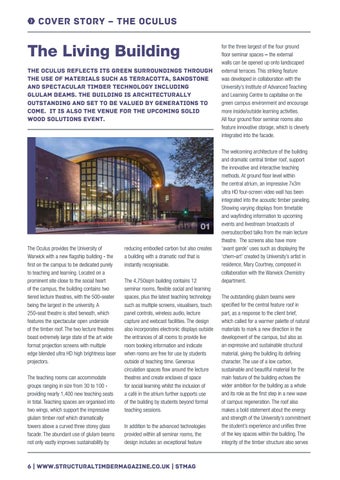
01 The Oculus provides the University of Warwick with a new flagship building - the first on the campus to be dedicated purely to teaching and learning. Located on a prominent site close to the social heart of the campus, the building contains two tiered lecture theatres, with the 500-seater being the largest in the university. A 250-seat theatre is sited beneath, which features the spectacular open underside of the timber roof. The two lecture theatres boast extremely large state of the art wide format projection screens with multiple edge blended ultra HD high brightness laser projectors. The teaching rooms can accommodate groups ranging in size from 30 to 100 providing nearly 1,400 new teaching seats in total. Teaching spaces are organised into two wings, which support the impressive glulam timber roof which dramatically towers above a curved three storey glass facade. The abundant use of glulam beams not only vastly improves sustainability by
reducing embodied carbon but also creates a building with a dramatic roof that is instantly recognisable. The 4,750sqm building contains 12 seminar rooms, flexible social and learning spaces, plus the latest teaching technology such as multiple screens, visualisers, touch panel controls, wireless audio, lecture capture and webcast facilities. The design also incorporates electronic displays outside the entrances of all rooms to provide live room booking information and indicate when rooms are free for use by students outside of teaching time. Generous circulation spaces flow around the lecture theatres and create enclaves of space for social learning whilst the inclusion of a café in the atrium further supports use of the building by students beyond formal teaching sessions. In addition to the advanced technologies provided within all seminar rooms, the design includes an exceptional feature
6 | www.structuraltimbermagazine.co.uk | STMAG
for the three largest of the four ground floor seminar spaces – the external walls can be opened up onto landscaped external terraces. This striking feature was developed in collaboration with the University’s Institute of Advanced Teaching and Learning Centre to capitalise on the green campus environment and encourage more inside/outside learning activities. All four ground floor seminar rooms also feature innovative storage, which is cleverly integrated into the facade. The welcoming architecture of the building and dramatic central timber roof, support the innovative and interactive teaching methods. At ground floor level within the central atrium, an impressive 7x3m ultra HD four-screen video wall has been integrated into the acoustic timber paneling. Showing varying displays from timetable and wayfinding information to upcoming events and livestream broadcasts of oversubscribed talks from the main lecture theatre. The screens also have more ‘avant garde’ uses such as displaying the ‘chem-art’ created by University’s artist in residence, Mary Courtney, composed in collaboration with the Warwick Chemistry department. The outstanding glulam beams were specified for the central feature roof in part, as a response to the client brief, which called for a warmer palette of natural materials to mark a new direction in the development of the campus, but also as an expressive and sustainable structural material, giving the building its defining character. The use of a low carbon, sustainable and beautiful material for the main feature of the building echoes the wider ambition for the building as a whole and its role as the first step in a new wave of campus regeneration. The roof also makes a bold statement about the energy and strength of the University’s commitment the student’s experience and unifies three of the key spaces within the building. The integrity of the timber structure also serves