4 minute read
ACADEMIC WORKS

from Portfolio
by RachelleJune

Médiathèque

Advertisement

Site Location: Rabastens, France
Type: Public building
Collaborator: Rahel Fitzthum
As far as the programme is concerned, solving a functional organisation problem is not the architect’s prerogative; a simple computer programme would be capable of providing the best solution from this point of view. Functional organisation is a necessary but not sufficient condition.

It only takes into account the machine, not the living being. So you need to rewrite this programme. In a way, transcend it to include it in your design process as a foundation to find the spirit, to find what the thing entrusted to you wants to be.
This shift in point of view is essential.
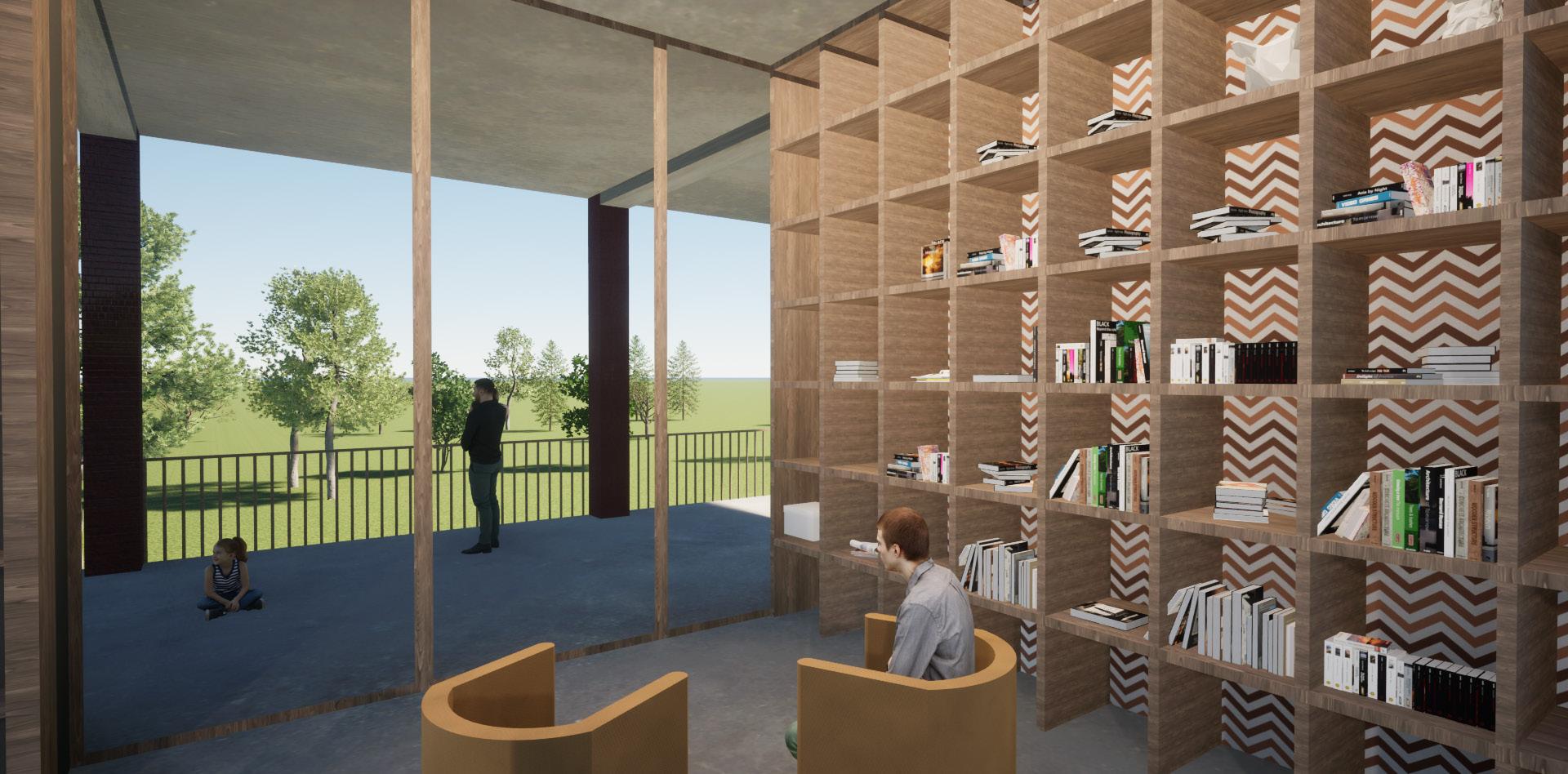
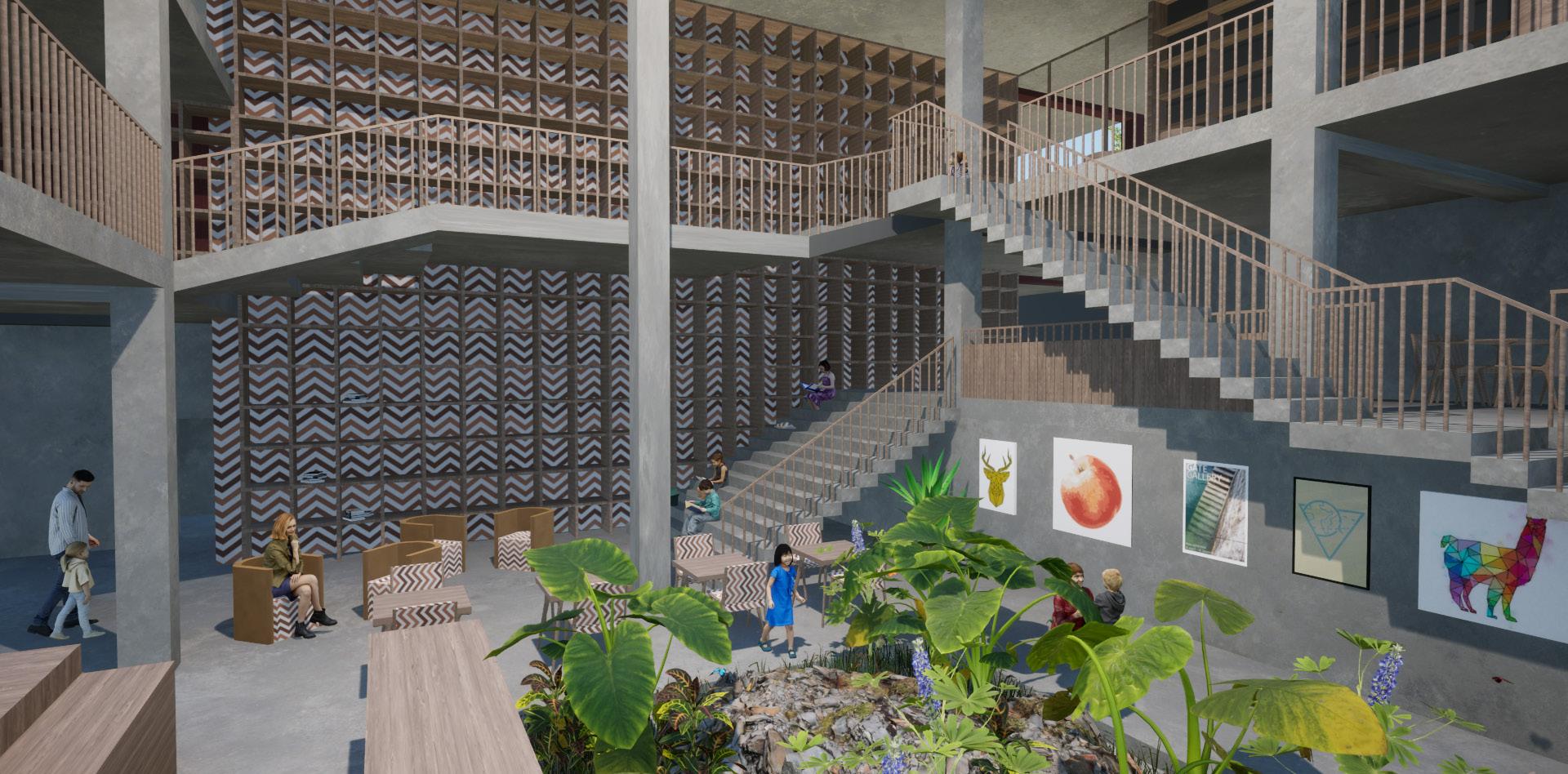
The aim of this project is to design a media library that serves as a centre for social exchange of the community, where people have pleasure to spend time learning or discovering new things.
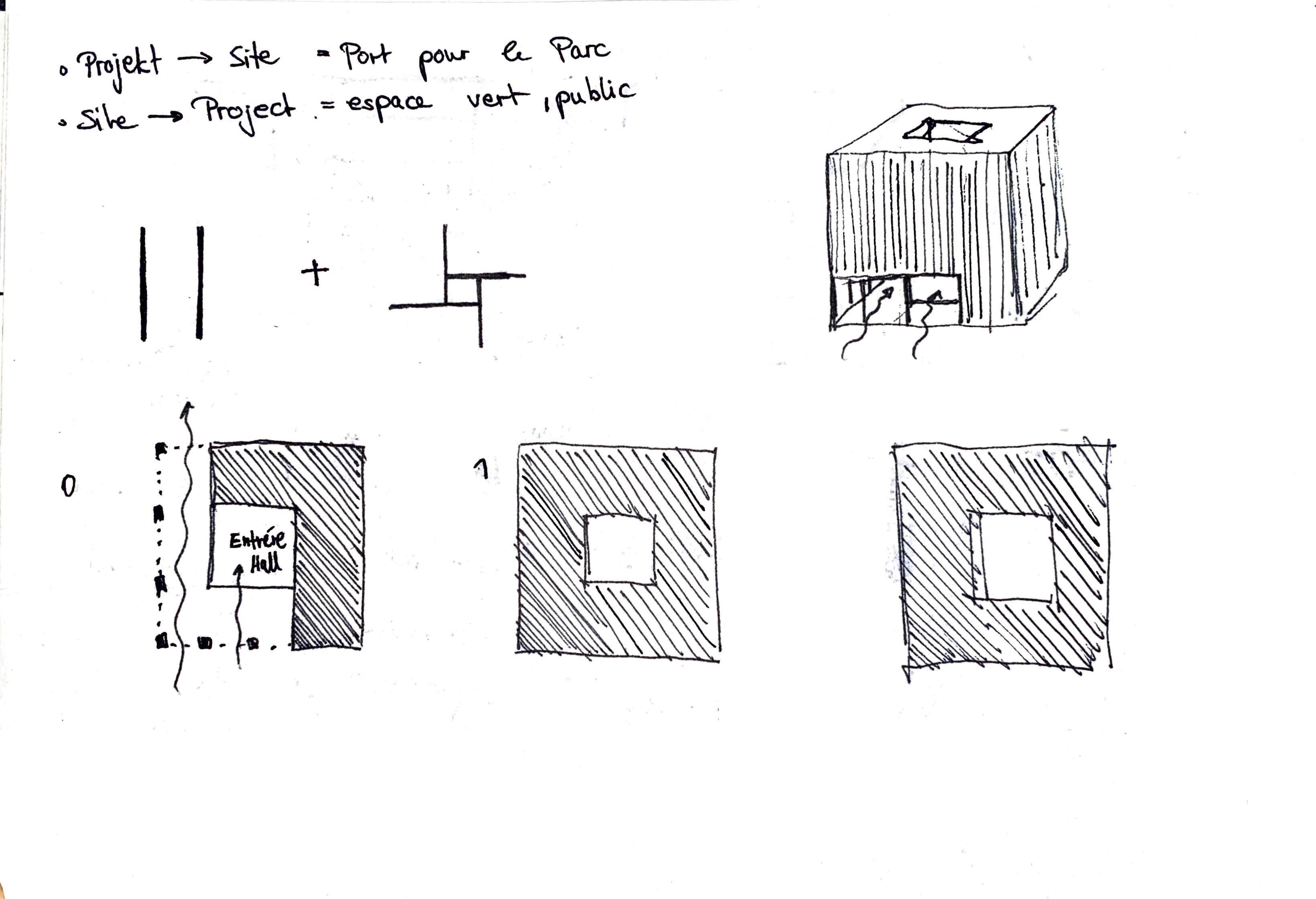
The starting point of this design is to make use of the site to build an opening between the village and the Tarn River.





















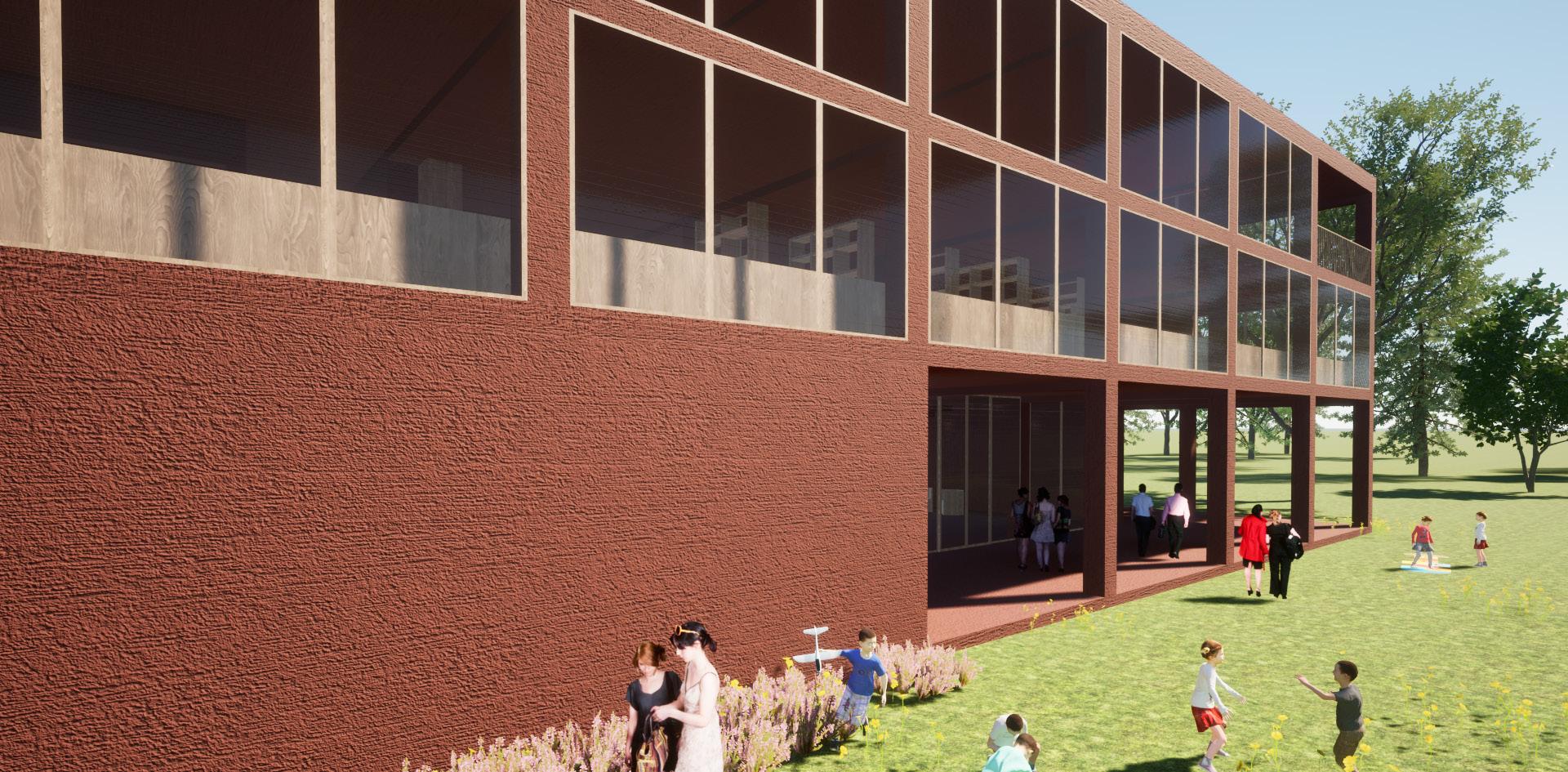
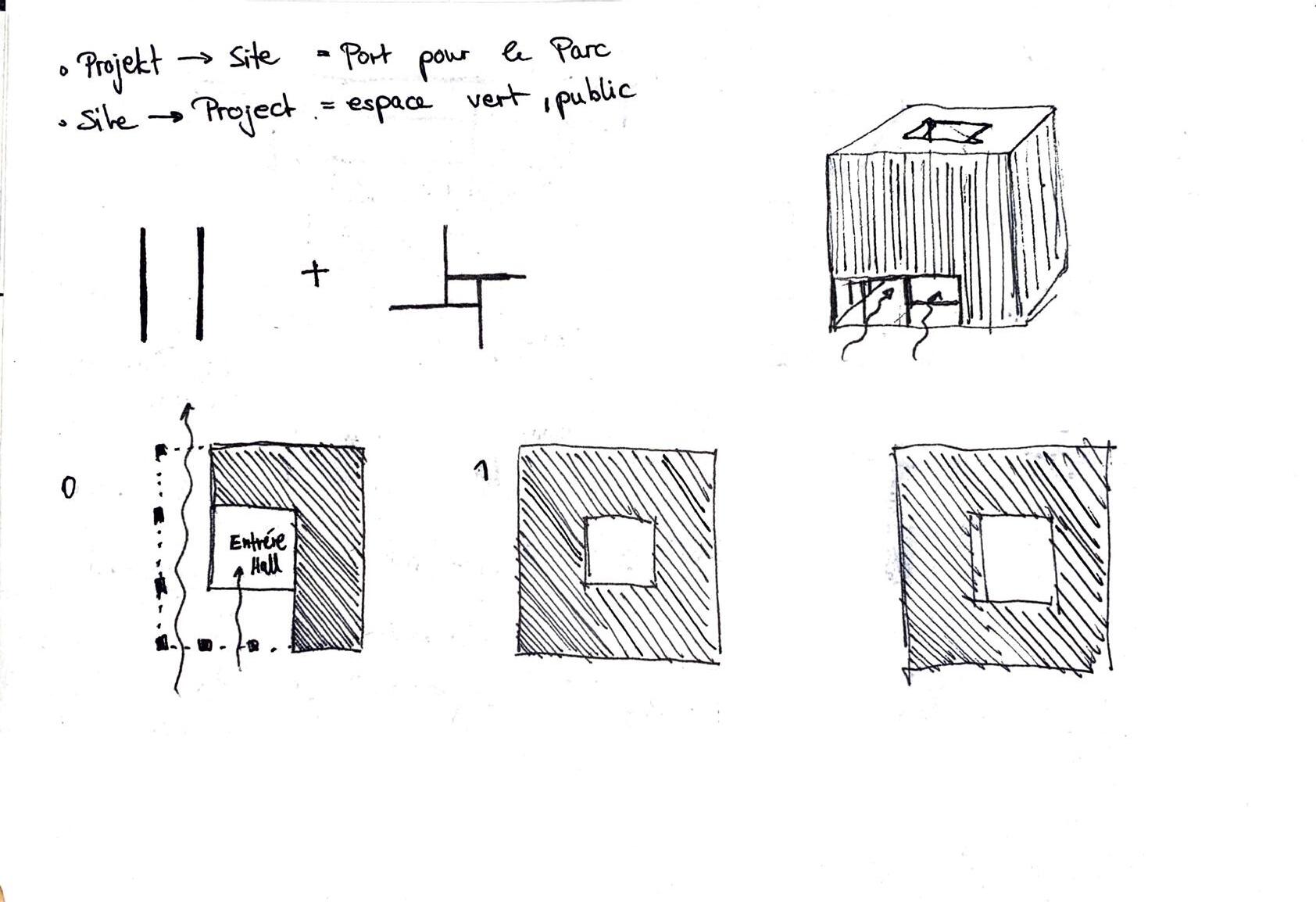
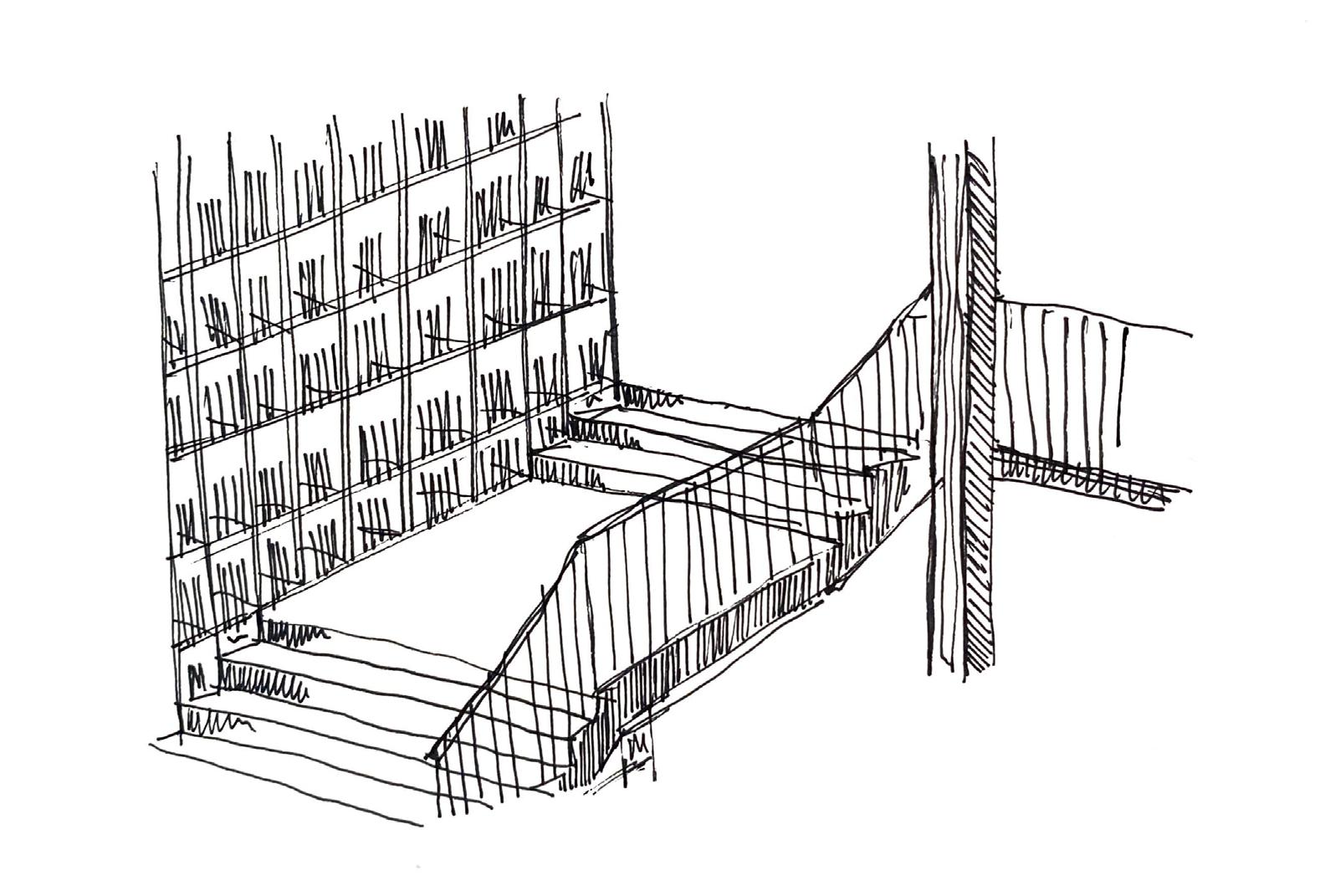
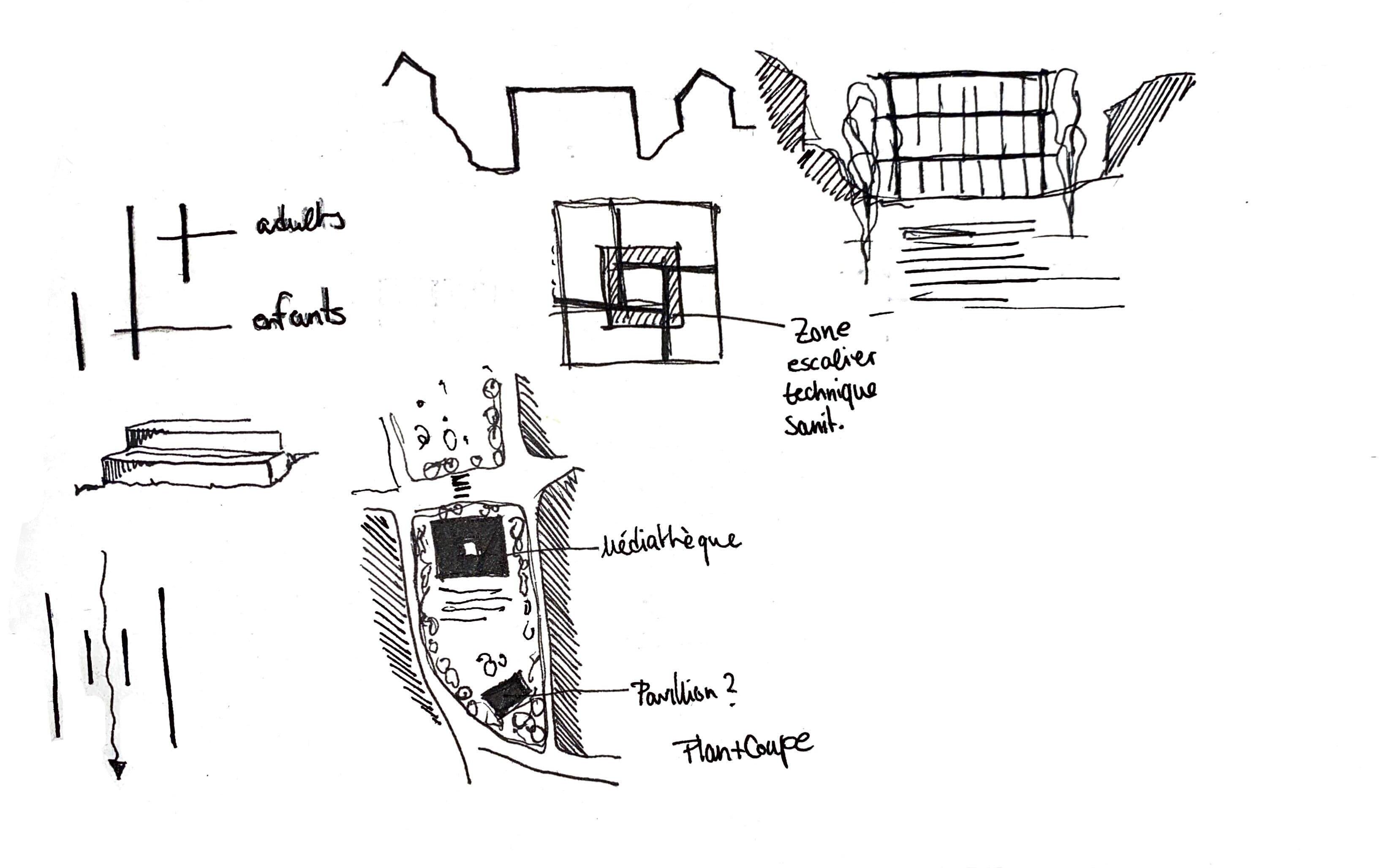
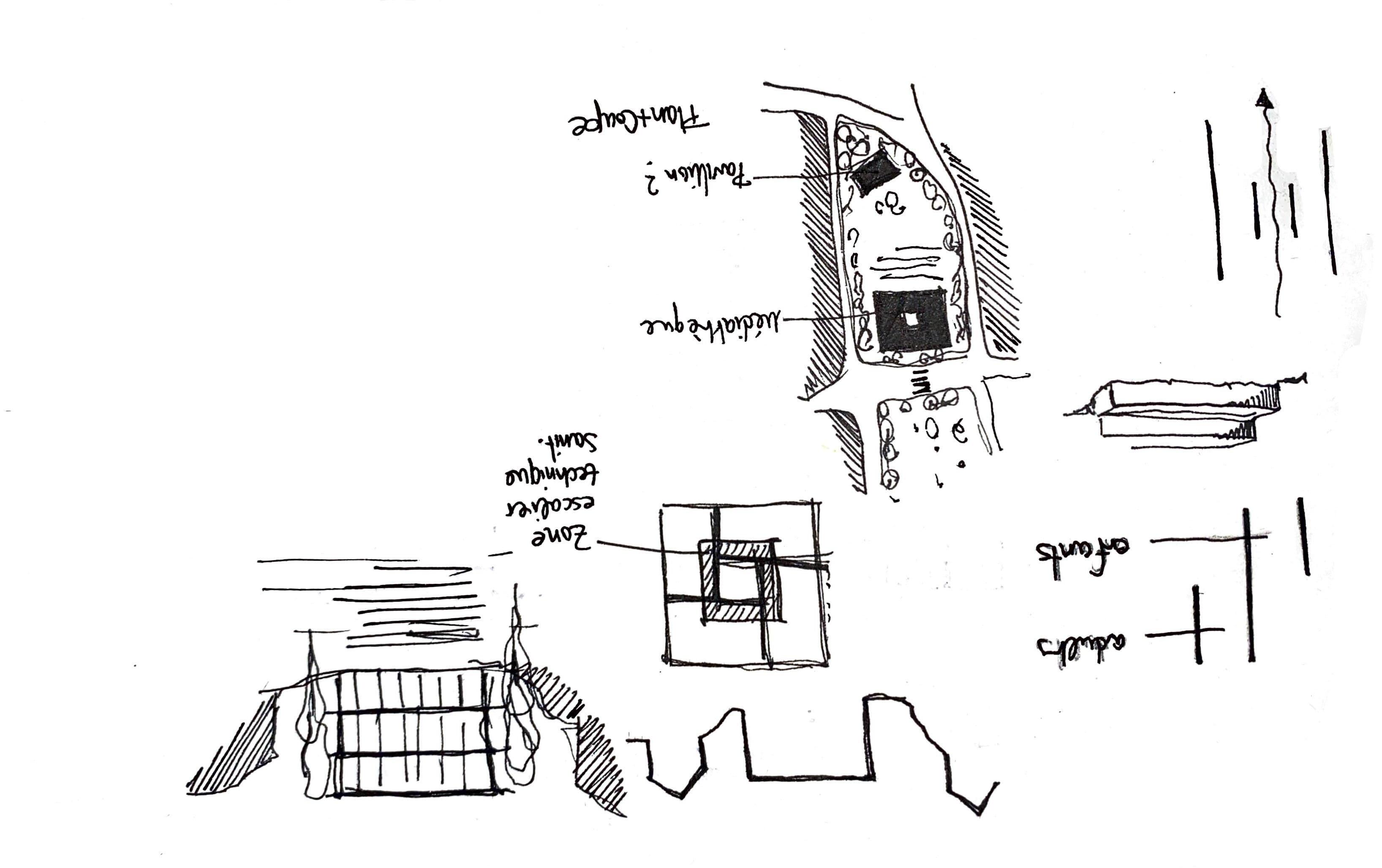
Wind circulation is particularly important in the designed building. At night, cooling is provided by opening windows in the façade and roof. Above the atrium, a glass roof is oriented in such a way that circulation is targeted and the air heated during the day is drawn out.During the day, a Canadian well provides cooling. Air is drawn in from the south of the site and transported through the earth to the building. The cooled air is then distributed throughout the building by fans. The vegetation in the entrance hall also ensures constant air exchange.
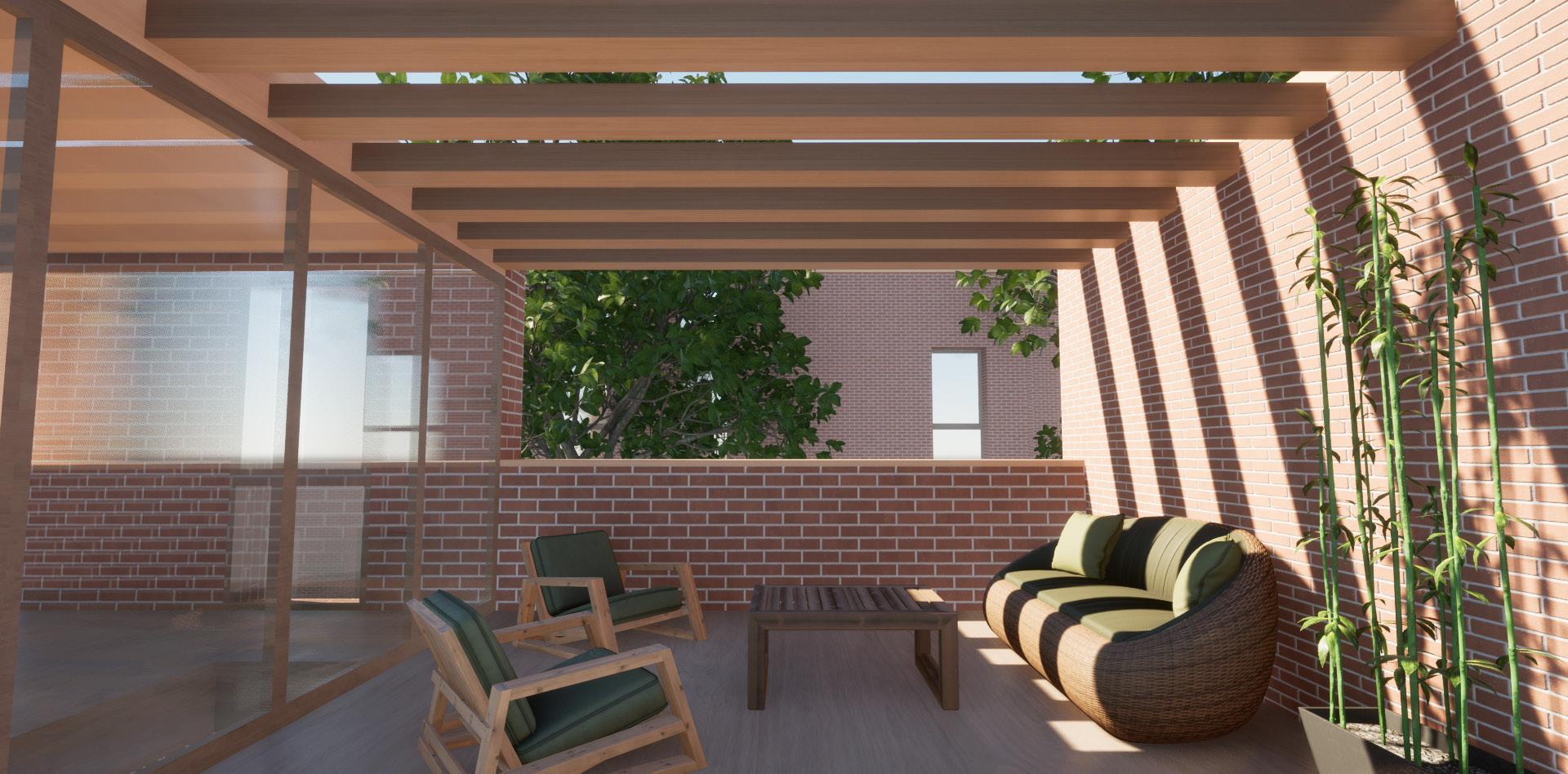
Wooden panels placed in front of the windows are another method of cooling the building. They are horizontal to the south and vertical to the east and west. The glazed roof of the atrium is made up of translucent glass panels to create a luminous atmosphere while at the same time providing protection from direct sunlight. To the south and west, a recess in the façade with a covered terrace provides shade.
The roof, with its extensive vegetation, also plays a role, not only improving insulation, but also cooling the environment by retaining rainwater.
Maison de ville
Site Location: Rabastens, France
Type: Housing





Collaborator: Valeria Totaro
Rabastens is a medieval village located in the Southern France between Toulouse and Albi, known for its water heritage and its river Tarn.
The project site is located in a vacant lot between the narrow road of the rue des Abreuvoirs and the esplanade that holds the parking Quai de la Liberation which plays an important role with its village connection to the river Tarn. Due to its particular landscape linked to its water heritage, one of the main challenges on this project is its topography.
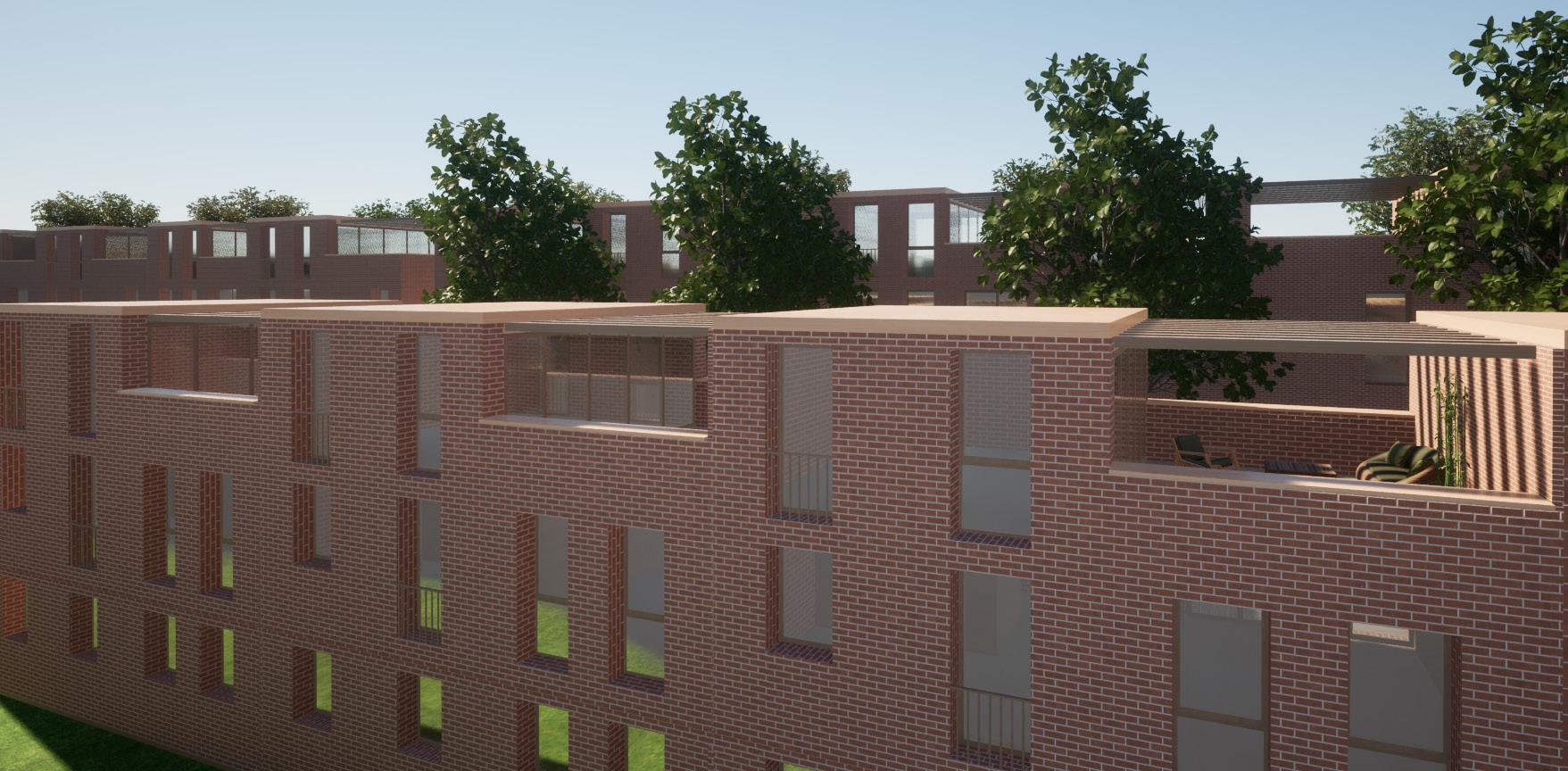
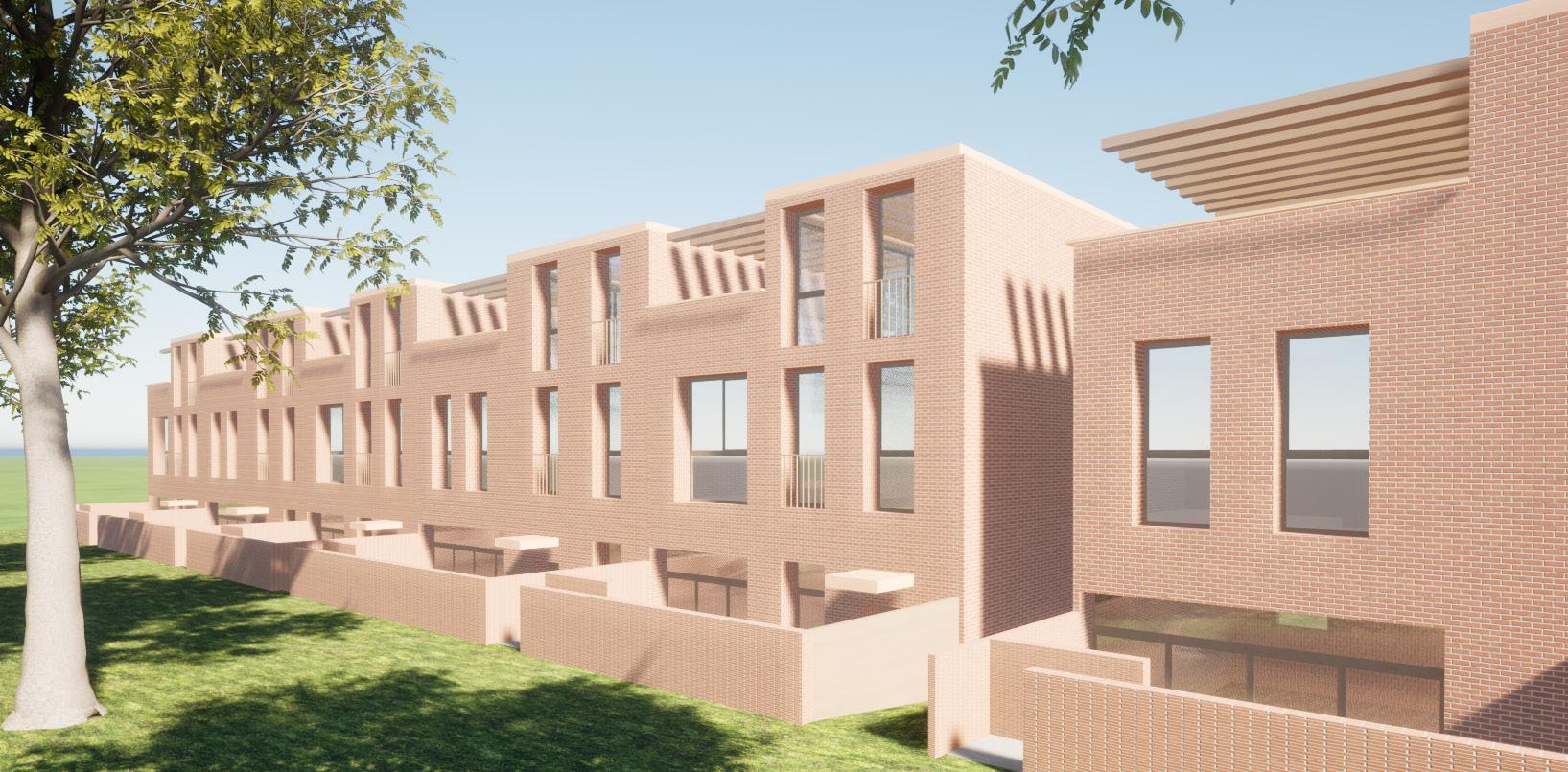
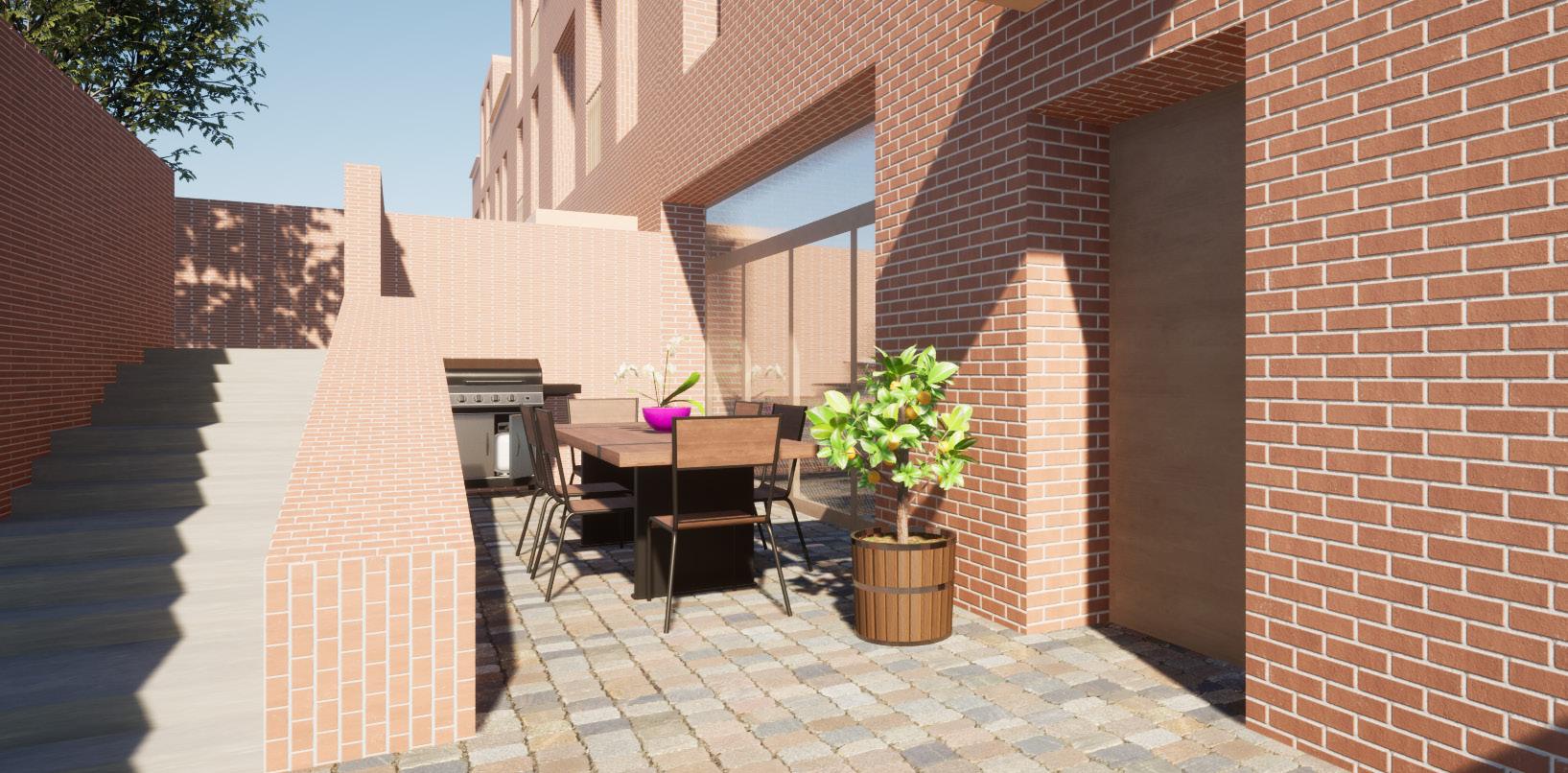
The goal is to design village houses which respects the heritage of its neighbourhood. As medieval village, the main materials used are wood and foraine brick which is typically from the region.
The link between the new site and the town is created by a path on the esplanade that gives access to the majority of the buildings facing the town centre and south, while the other buildings, located at a lower level, have their access inside the plot.
If you look at the plan of the whole area, you can see that, with the exception of the area dedicated to parking, the plot is built right up to the boundaries. This highlights the boundary of Rue des Abreuvoirs at the bottom and the open space of the esplanade at the top.




Typology I

Typology II
Floor level +0
Floor level -1
Floor level +1
Floor level +0
The initial design process is to involve the topography in the project. Thus, two house typologies were proposed. Typology I is facing the Quai de la Liberation and composed by two-bedrooms and four-bedrooms unit, while typology II highlights the plot liit in the rue des Abreuvoirs which is characterized by its lowered position. The particularity in this typology is that the bedrooms are located in the floor level -1 and the living is in the ground floor, a design resulted from its topography.
Olympic Village
Site Location: Porta Romana railway, MI, Italy
Type:
Mixed-use
Collaborator: Kamelia Bozushka, Laura Trobec
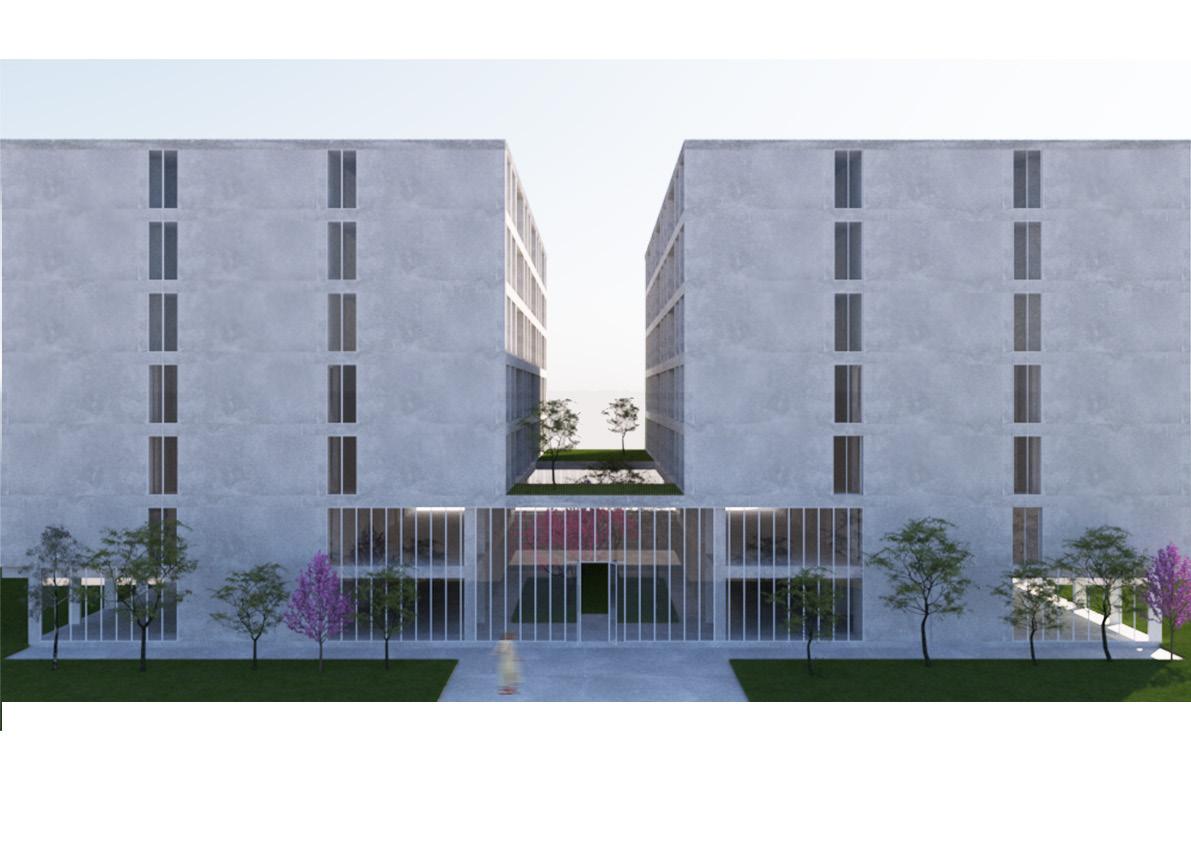
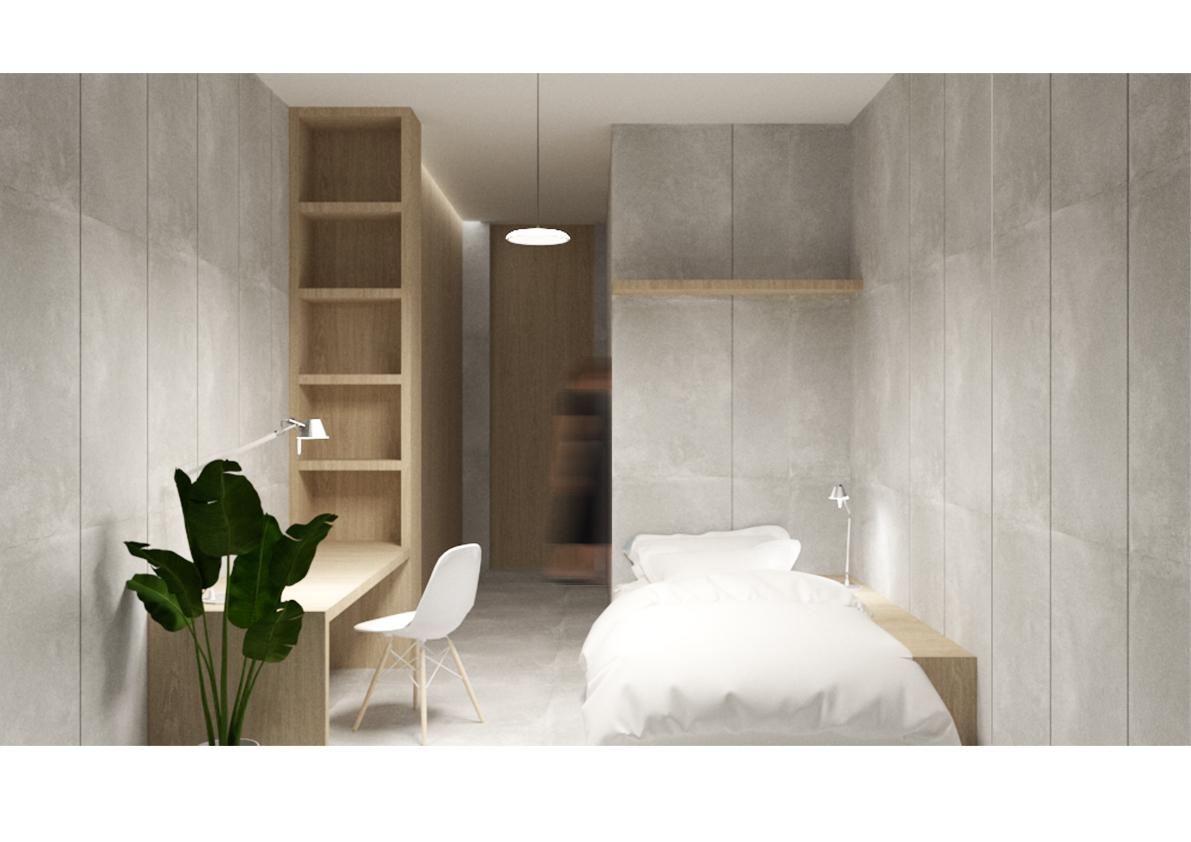
The project is located in developping area of the ex-railway of Porta Romana Milan, Italy. The goal is to design housing units for Winter Olympics 2026 which later on will be used as student housing.
The connectivity of the area, the height and shape of the surrounding buildings were taken into consideration on they can affect the design process.
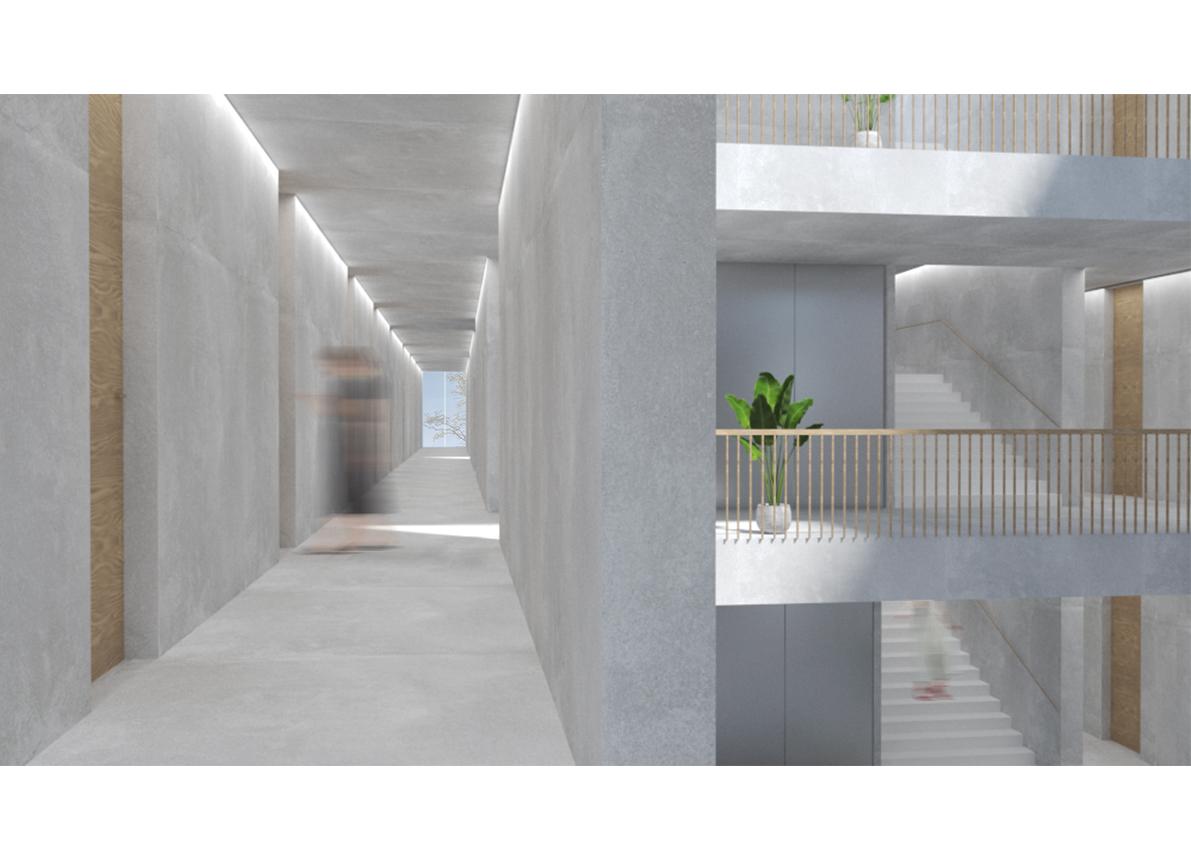
As an initial design process, the service areas were placed in the core of the building and the rest where put in more communicative and open spaces around the it.
The construction is based from these two cores which ensure the main stability of the building by defying torsion and horizontal forces. On the ground and first floor are complemented by a system of pillars and a system of walls on the other floors.
Eight construction lines are repeating on all the floor levels, thus makes it easier to transfer all vertical forces to the ground. The construction system is made entirely of reinforced concrete, which allows larger spans and, consequently, smaller dimensions of columns, which in this case 30x60cm.













Natural ventilation
Warm air
Cool air
Satellite
Floor heating
Grey water reservoir
Grey water used to water green area
Structural core Services: kitchen, connectivity and storages
Green roof - floor level +2
Floor level +4; +5; +6
Heat generator - inner part
Heat saver
Heat generator - outer part
Technical scheme
Shared bedroom + kitchen x 7.7m
Studio 6m x 3.5m
Green area - floor level +0
Elevator
Representative stairs
Stairs
Floor level +2; +3
Main materials
- glass + inside cutains
- concrete slabs
- concrete walls + equitone covering
Building characteristic
Floor level +1
Shared bedroom 6m x 7.7m 46.2sqm
Single room 6m x 3.5m 22.2sqm
Shared bedroom 6m x 7.7m 46.2sqm
Single room 6m x 3.5m
Room-type distribution