CAREER
PERFUSIONIST LIVES FOR THE CUTTING EDGE Innovation makes his heart beat faster
Alumni cedure sometimes associated with adverse neurologic outcomes, such as stroke or neurocognitive changes. He began researching different techniques that could affect outcomes, such as temperature modification and the use of sensors to measure cerebral pressure and oxygen levels. Perfusionists also are involved in other procedures, such as ECMO (extracorporeal membrane oxygenation)—a life-saving adaptation of cardiopulmonary bypass done outside the operating room. ECMO originally was used with pediatric patients, but has been adapted and used successfully for patients of all ages suffering from life-threatening pulmonary disease. He recently earned his MBA at MIT with a focus on health care, innovation and entrepreneurship. He is
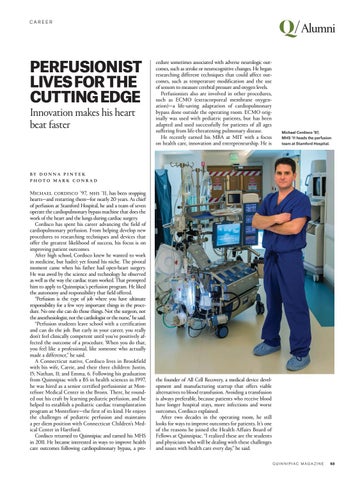
Michael Cordisco ’97, MHS ’11 heads the perfusion team at Stamford Hospital.
BY DONNA PINTEK PHOTO MARK CONRAD
Michael cordisco ’97, mhs ’11, has been stopping hearts—and restarting them—for nearly 20 years. As chief of perfusion at Stamford Hospital, he and a team of seven operate the cardiopulmonary bypass machine that does the work of the heart and the lungs during cardiac surgery. Cordisco has spent his career advancing the field of cardiopulmonary perfusion. From helping develop new procedures to researching techniques and devices that offer the greatest likelihood of success, his focus is on improving patient outcomes. After high school, Cordisco knew he wanted to work in medicine, but hadn’t yet found his niche. The pivotal moment came when his father had open-heart surgery. He was awed by the science and technology he observed as well as the way the cardiac team worked. That prompted him to apply to Quinnipiac’s perfusion program. He liked the autonomy and responsibility that field offered. “Perfusion is the type of job where you have ultimate responsibility for a few very important things in the procedure. No one else can do those things. Not the surgeon, not the anesthesiologist, not the cardiologist or the nurse,” he said. “Perfusion students leave school with a certification and can do the job. But early in your career, you really don’t feel clinically competent until you’ve positively affected the outcome of a procedure. When you do that, you feel like a professional, like someone who actually made a difference,” he said. A Connecticut native, Cordisco lives in Brookfield with his wife, Carrie, and their three children: Justin, 15; Nathan, 11; and Emma, 6. Following his graduation from Quinnipiac with a BS in health sciences in 1997, he was hired as a senior certified perfusionist at Montefiore Medical Center in the Bronx. There, he rounded out his craft by learning pediatric perfusion, and he helped to establish a pediatric cardiac transplantation program at Montefiore—the first of its kind. He enjoys the challenges of pediatric perfusion and maintains a per diem position with Connecticut Children’s Medical Center in Hartford. Cordisco returned to Quinnipiac and earned his MHS in 2011. He became interested in ways to improve health care outcomes following cardiopulmonary bypass, a pro-
the founder of All Cell Recovery, a medical device development and manufacturing startup that offers viable alternatives to blood transfusion. Avoiding a transfusion is always preferable, because patients who receive blood have longer hospital stays, more infections and worse outcomes, Cordisco explained. After two decades in the operating room, he still looks for ways to improve outcomes for patients. It’s one of the reasons he joined the Health Affairs Board of Fellows at Quinnipiac. “I realized these are the students and physicians who will be dealing with these challenges and issues with health care every day,” he said. QUINNIPIAC MAGAZINE
53