1 1 4 Q UE S T
ac a n t h u s p r e s s
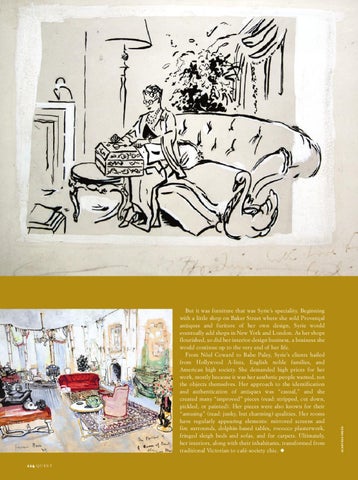
But it was furniture that was Syrie’s speciality. Beginning with a little shop on Baker Street where she sold Provençal antiques and furiture of her own design, Syrie would eventually add shops in New York and London. As her shops flourished, so did her interior-design business, a business she would continue up to the very end of her life. From Nöel Coward to Babe Paley, Syrie’s clients hailed from Hollywood A-lists, English noble families, and American high society. She demanded high prices for her work, mostly because it was her aesthetic people wanted, not the objects themselves. Her approach to the identification and authentication of antiques was “casual,” and she created many “improved” pieces (read: stripped, cut down, pickled, or painted). Her pieces were also known for their “amusing” (read: junky, but charming) qualities. Her rooms have regularly appearing elements: mirrored screens and fire surrounds, dolphin-based tables, rococco plasterwork, fringed sleigh beds and sofas, and fur carpets. Ultimately, her interiors, along with their inhabitants, transformed from traditional Victorian to café-society chic. u