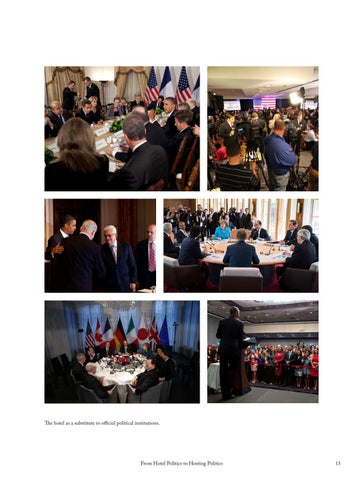
rapprochement and likewise as effective spaces of political negotiation – as embassies for spreading world peace. While Hilton’s interest in the hotel as a political project was concluded with the end of the Cold War and his vision fulfilled with the subsequent aggressive spreading of capitalism around the world, hotels remained places of cultural imagination and until today function as key sites to our political life. Hotels effectively have become supplements to our official institutions. This condition is evident in the reliance of governments, NGOs and industries as well as private people on the hotel as a neutral space that caters for their need of meetings, negotiations and even representational forms of gatherings outside the official channels. Recent practices and routines such as the G7 summit or the Bilderberg group meetings provide evidence of this condition. However, understanding the hotel as a cultural project of major importance to the representational and functional complex of politics, leads us to question its current status and condition. While Hilton’s political vision of shaping particular subjectivities through the use of modern architecture and modern domestic settings has become largely normalised and today is associated with the tropes of commercial architecture par excellence, the potential of the hotel as a project of
Hilton advertisment promoting the idea of international hopitality and the chain‘s hotels as embassies of peace.
12
From Hotel Politics to Hosting Politics
The hotel as a substitute to official political institutions.
From Hotel Politics to Hosting Politics
13