


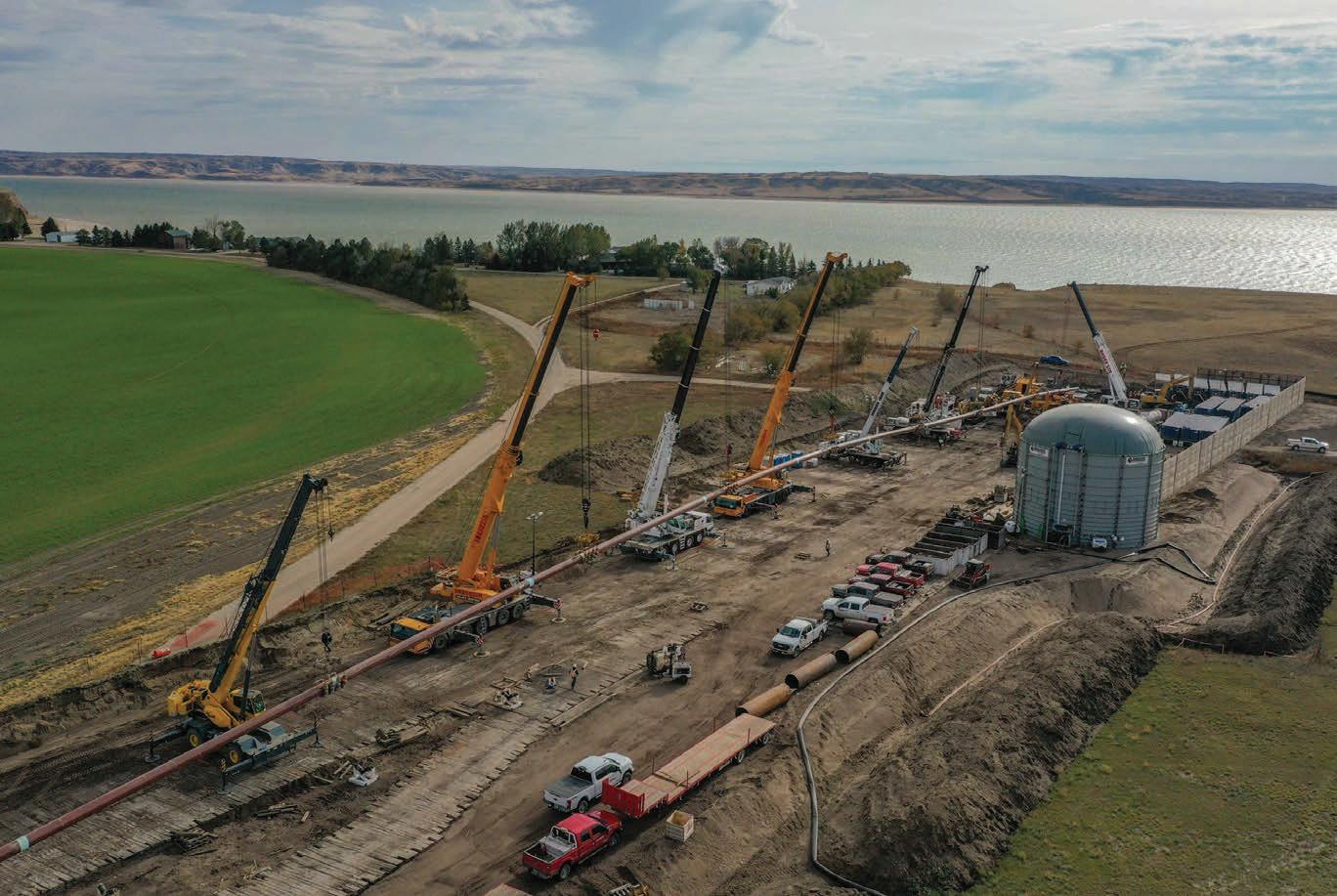
ISSUE 76 | DECEMBER 2022 THE OFFICIAL PUBLICATION OF THE AUSTRALASIAN SOCIETY FOR TRENCHLESS TECHNOLOGY RECORD BREAKING RENEWAL PROJECT Collaboration overcomes challenges during Mt Cole pipeline rehabilitation Veolia positions itself as vanguard for safety | TRACTO hosts Australasian contingent at Europe construction event | Rob Carr invaluable on South Melbourne sewer project | New column tracks trenchless appointments
Ageing pressure pipelines come to life with Primus Line






Wastewater Infrastructure Water Infrastructure Storm water & Culverts Pipe sizes DN150-DN3000
wilmotpipelining.com.au 1300 942 028 UV CIP lining UV Short Lining UV Manhole Lining Pressure Pipe Lining Spiral wound Lining Lateral seal lining Slip lining CCTV Pipeline Cleaning Robotics Civil pipeline construction Mortar repairs & coatings North Coast Office 2/23 Cook Drive Coff’s Harbour NSW, 2450 Newcastle Office 2/88 Munibung Road Cardiff NSW 2285
TRENCHLESS PIONEERS
S&Z Australia General Manager Jim Pound
UNDER VICTORIA
Conservation and expansion hand-in-hand in Victoria
SAFETY
& TRAINING
Veolia is the vanguard for safety SECA expands offerings from inhouse training centre
HDD
Mitigating climate change risk with insurance TRACTO hosts Australasian contingent at Europe’s largest construction event
Prime Drilling: Putting the customer first M Tucker & Sons turns worksite waste into valuable resource
Vacuum excavator becomes tool of choice in council fleets
Pace Drilling partners with horizontal drill specialists Ditch Witch CEA Michels’ mission ensures its people return home safely each day Anti-corrosion measures tailor-made for every solution
REHAB & REPAIR
Sewer cleaning just got easier Smart Lock makes short work of sewer drain repair in Hong Kong NordiTube offers safe solutions for asbestos cement water pipes
Ageing pressure pipelines come to life with Primus Line’s innovative trenchless technology
18 20 22 24 26 28 30 32 34 36 38 40 42 44 46 48
MICROTUNNELLING
Rob Carr invaluable on South Melbourne sewer project kwik-ZIP HDX-90s support Quickway’s trenchless water main installation Fighting against the elements: Pre-planning for success in Townsville
SOFTWARE
& TECHNOLOGY
Stream DP with EsT technology: Bringing GPR performance to the deepest level
RELINING
Aussie Trenchless has the future of pipe rehabilitation solutions sorted iMPREG celebrates international success in the UK EVENTS
No-Dig Down Under 2023
REGULARS
Editor’s Letter From the President From the ASTT Secretary News in brief ASTT Corporate Members People on the Move
50 52 54 56 58 60 62 8 10 12 14 64 66
This magazine is the official journal of the Australasian Society for Trenchless Technology (ASTT) and is distributed to members and other interested parties throughout Australia and the Asia-Pacific. It is also available on subscription.
The publishers welcome editorial contributions from interested parties. However, neither the publishers nor the ASTT accept responsibility for the content of these contributions and the views contained therein are not necessarily the views of the publishers or the ASTT. Neither the publishers nor the ASTT accept responsibility for any claims made by advertisers. All communications should be directed to the publishers.
Unless explicitly stated otherwise in writing, by providing editorial material to Prime Creative Media (PCM), including text and images, you are providing permission for that material to be subsequently used by PCM, whole or in part, edited or unchanged, alone or in combination with other material in any publication or format in print or online or howsoever distributed, whether produced by PCM and its agents and associates or another party to whom PCM has provided permission.
Cover image
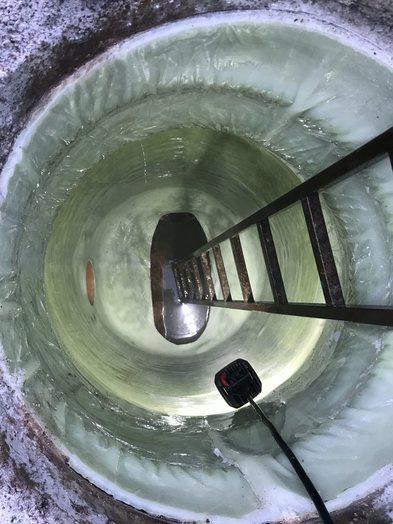
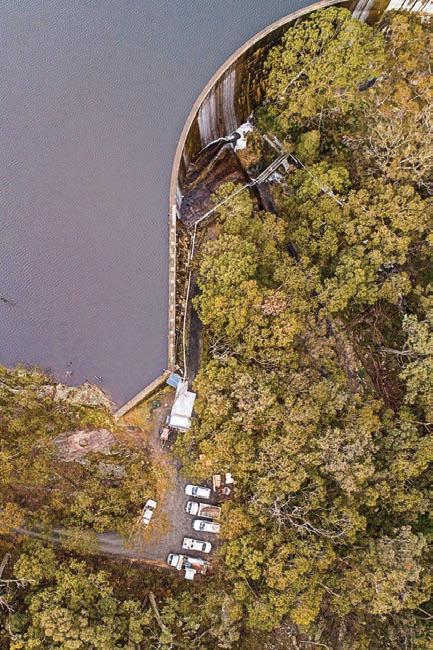
Left: Mt Cole Pipeline. Image source: Interflow.
6 Contents ISSUE 76 DECEMBER 2022
Excellence in tunneling for water, wastewater and energy infrastructure.
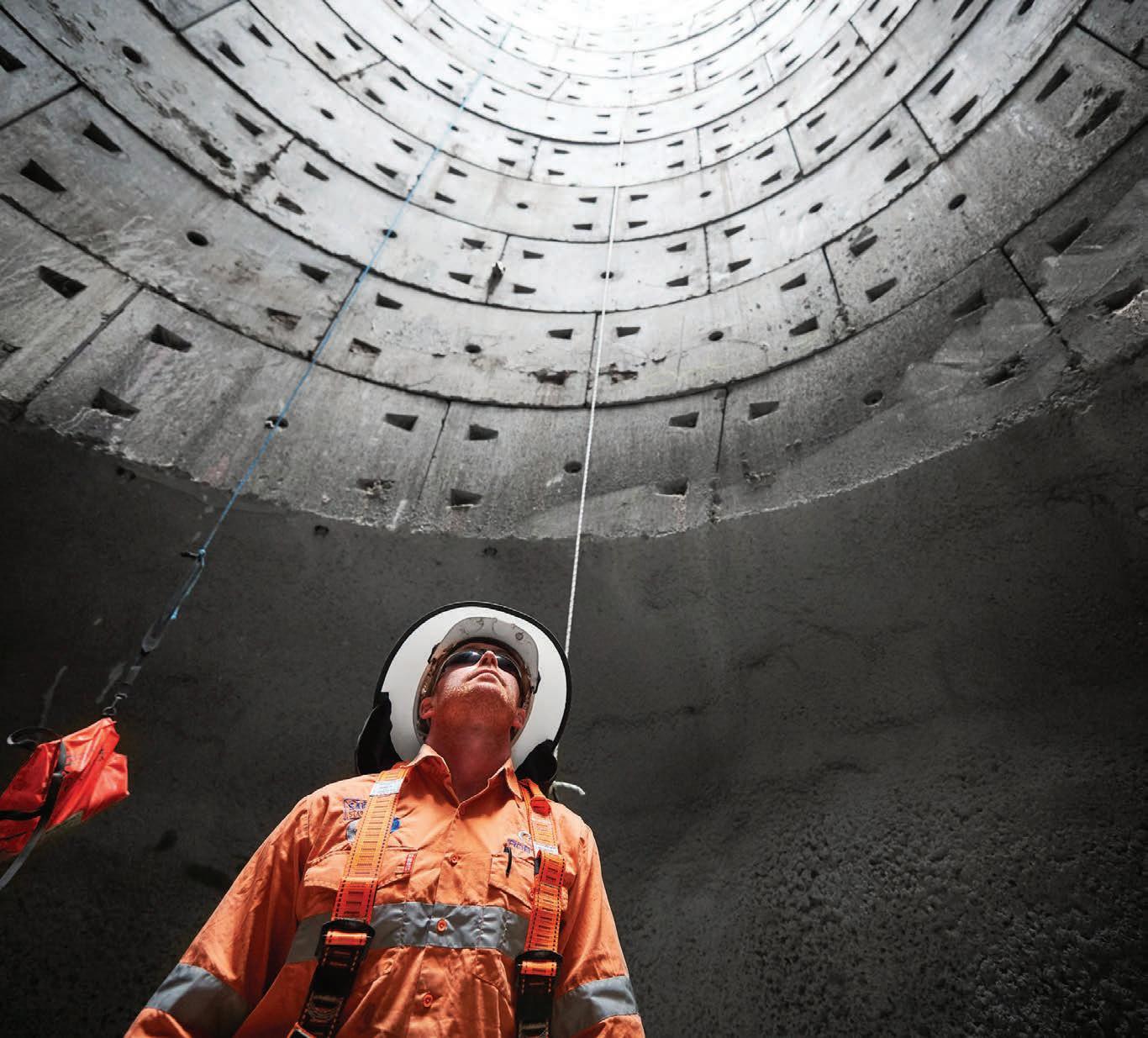
With a focus on safety, innovation and collaborative delivery over the last 30 years, Rob Carr has achieved outstanding outcomes in water, wastewater and energy infrastructure projects in both Australia and overseas. Rob Carr is part of Soletanche Bachy a world leader in foundation and soil technologies and subsidiary of VINCI, a global player in construction across more than 100 countries. With outstanding capabilities to manage the complexities of any project, Rob Carr has the people, knowledge and experience to deliver success.
robcarr.com.au
CEO
John Murphy
COO
Christine Clancy
christine.clancy@primecreative.com.au

MANAGING EDITOR
Molly Hancock molly.hancock@primecreative.com.au
EDITORIAL
Christian Alphonso, Jenna May
BUSINESS DEVELOPMENT
Nick Lovering nick.lovering@primecreative.com.au
DESIGN PRODUCTION MANAGER
Michelle Weston michelle.weston@primecreative.com.au
ART DIRECTOR
Blake Storey blake.storey@primecreative.com.au
DESIGNERS
Kerry Pert, Tom Anderson, Louis Romero
COPYRIGHT
Trenchless Australasia is owned by Prime Creative Media and published by John Murphy. All material in Trenchless Australasia is copyright and no part may be reproduced or copied in any form or by any means (graphic, electronic or mechanical including information and retrieval systems) without written permission of the publisher. The Editor welcomes contributions but reserves the right to accept or reject any material. While every effort has been made to ensure the accuracy of information, Prime Creative Media will not accept responsibility for errors or omissions or for any consequences arising from reliance on information published. The opinions expressed in Trenchless Australasia are not necessarily the opinions of, or endorsed by the publisher unless otherwise stated.
© Copyright Prime Creative Media, 2021
ARTICLES
All articles submitted for publication become the property of the publisher. The Editor reserves the right to adjust any article to conform with the magazine format.
Head Office 379 Docklands Drive, Docklands VIC 3008 Ph: +61 3 9690 8766 enquiries@primecreative.com.au http://www.primecreative.com.au
Sydney Office Suite 303, 1-9 Chandos Street Saint Leonards NSW 2065, Australia Ph: (02) 9439 7227
Editor’s letter
Molly Hancock
Welcome to the last edition of Trenchless Australasia for 2022. What an achievement it is for many to make it through these last 12 months. From completing major projects to surviving another year of COVID-19, and rebuilding following the effects of the recent floods, 2022 has been another challenging year for the industry.
However, the trenchless sector has come out stronger and more versatile, by enhancing its technology and networking back in person to create better solutions for the challenges faced.
This year was also one of firsts ‒ both personally and the magazine itself. My first edition as editor, attending my first No-Dig Down Under convention, and the magazine shifting from four to six editions a year for the first time.
In the spirit of firsts, Trenchless Australasia has introduced a new regular column tracking new appointments in Australia and New Zealand’s trenchless industries.
‘People on the Move’ will be published in every print edition of the magazine, celebrating the people who make the industry what it is. The column gives companies the opportunity to introduce new team members to the Trenchless Australasia’s audience and position them as a point of contact for their business.
Hodnett, and Veolia’s Jason Climo. To read more about their roles and ambitions, check out the People on the Move feature on page 66.
This edition also highlights the safety and training work being done in the industry. While trenchless technology and methodologies are still considered a niche segment of the construction industry, significant work is being done by stakeholders to ensure the benefits of no-dig methods are becoming mainstream, and importantly completed in a safe and sustainable way.
In addition to this theme, other unique features in this edition include Horizontal Directional Drilling, Rehabilitation and Repair, Microtunnelling, Software and Technology, and Relining.
Jim Pound also shares his thoughts on the industry for the Trenchless Pioneers feature, stating that if the industry continues to grow at the same rate it has in the past 20 years, that he is excited to imagine what may be possible.
The team from Trenchless Australasia thank you for your support during 2022, and wish everyone a happy and safe Christmas and New Year. We look forward to joining you again in 2023.
Happy Reading!
Printed by: Manark Printing 28 Dingley Ave Dandenong VIC 3175 Ph: (03) 9794 8337

In this edition we celebrate and welcome kwik-ZIP’s Phil Micallef, PSSS’ Michael
Molly Hancock Editor
molly.hancock@primecreative.com.au
8 TRENCHLESS AUSTRALASIA DECEMBER 2022
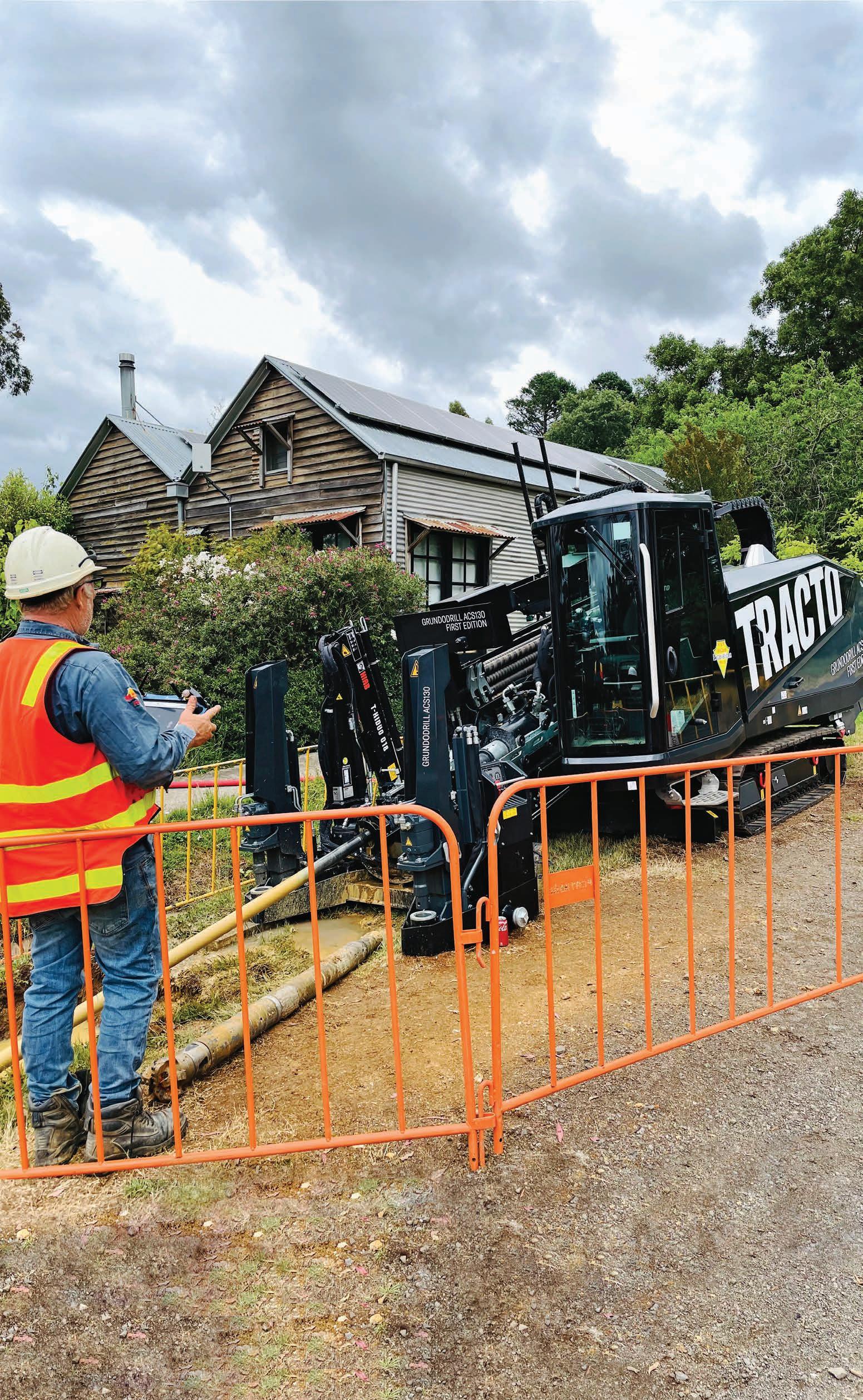
GRUNDODRILL ROCK DRILLING HDD RIG ALWAYS ONE TURN AHEAD The GRUNDODRILL ACS130 is not an ordinary HDD rig. This is German precision engineering and reliability from TRACTO. From the finest silts to impossibly hard rock, the ‘King of Rock’ works where others give up. - Fully automatic operating and rod loading modes - Maximum power output and reaming speeds - Full remote drilling - Dependable power transmission - Flushing capacity of 320 l/min - Minimum working width of just 1.91 m To find out more, please get in touch. info-au@tracto.com T + 61 7 3420 5455
THE AUSTRALASIAN SOCIETY FOR TRENCHLESS TECHNOLOGY
ABN 43 893 870 966 18 Frinton Place Greenwood, WA 6024 www.astt.com.au jeffpace@astt.com.au
President: Ben Crosby
Secretary: Jeff Pace
Vice President: Blair Telfer
COUNCILLORS
Western Australia: Trevor Gosatti
Queensland: Ben Crosby
New South Wales: Matthew Boyle
Victoria: Justin Shepherd
South Australia: Shaun Melville
New Zealand: Blair Telfer
Northern Territory: Vacant
Tasmania: Vacant
INTERIM REPRESENTATIVES
Sudipta Basu
President’s Message
As 2022 draws to a close it enables us at the ASTT and as an industry to reflect on the year that was.
In summary the society continues to work on the following key initiatives to benefit the industry and the membership:
• The roll out of our Strategic Action Plan
• The finalisation of our Liner Design Specification
• The delivery of the Trenchless Technical Stream at Water New Zealand October, 2022
• The finalisation of the Liner Design Training Package
• The continuation of the updates to our NASTT licenced training packages
• The compilation of the report: The State of the Industry (Trenchless)
• The partnership with AusJet
• The partnership with WSAA (Water Services Association of Australia).
All these initiatives are designed to deploy the membership resources to benefit the industry and the membership in one way or another. A reminder to our members; if there is something that you feel we, as the peak trenchless body, should be working on, please reach out and contact either myself or your local Councillor.
As we draw 2022 to a close and we look to 2023, we are excited to plan another NoDig Down Under Conference in Brisbane in September 2023.
The conference planning is well underway, and it will be full of the elements that keeps bringing you back, plus some new exciting initiatives to keep us relevant in our industry.
I encourage you to be creative in the exhibitions that you are planning, and we would really encourage you to showcase your new products and services in the exhibition hall.
I also implore you to celebrate your successes, challenges, and developments in the technical portion of the conference. We had a great technical and case study paper presentation at No-Dig in Sydney 2022 and we’d love to see more in Brisbane 2023.
Thank you to our sponsors and exhibitors for continuing to believe in the vision of No-Dig Down Under and supporting the event through the challenges that the COVID-19 years continued to present.
As we turn into 2023 we all hope that the pandemic is behind us and we can get on with our professional and personal lives. I look forward to seeing you at No-Dig Down Under 2023 in Brisbane.
As Australia’s only dedicated exhibition and conference for trenchless technology, this event is incredibly important for our industry.
2022 has seen us get back to face-to-face technical forums which has proven to be a good way to network and showcase new developments and updates in our industry.
We also saw the ASTT partner with the Australian Tunnelling Society, resulting in two good and informative site visits being conducted and live streamed around Australia and New Zealand.
We hope to see more of these opportunities in 2023 in and around the No-Dig Down Under Conference.
Ben Crosby ASTT President
10 TRENCHLESS AUSTRALASIA DECEMBER 2022
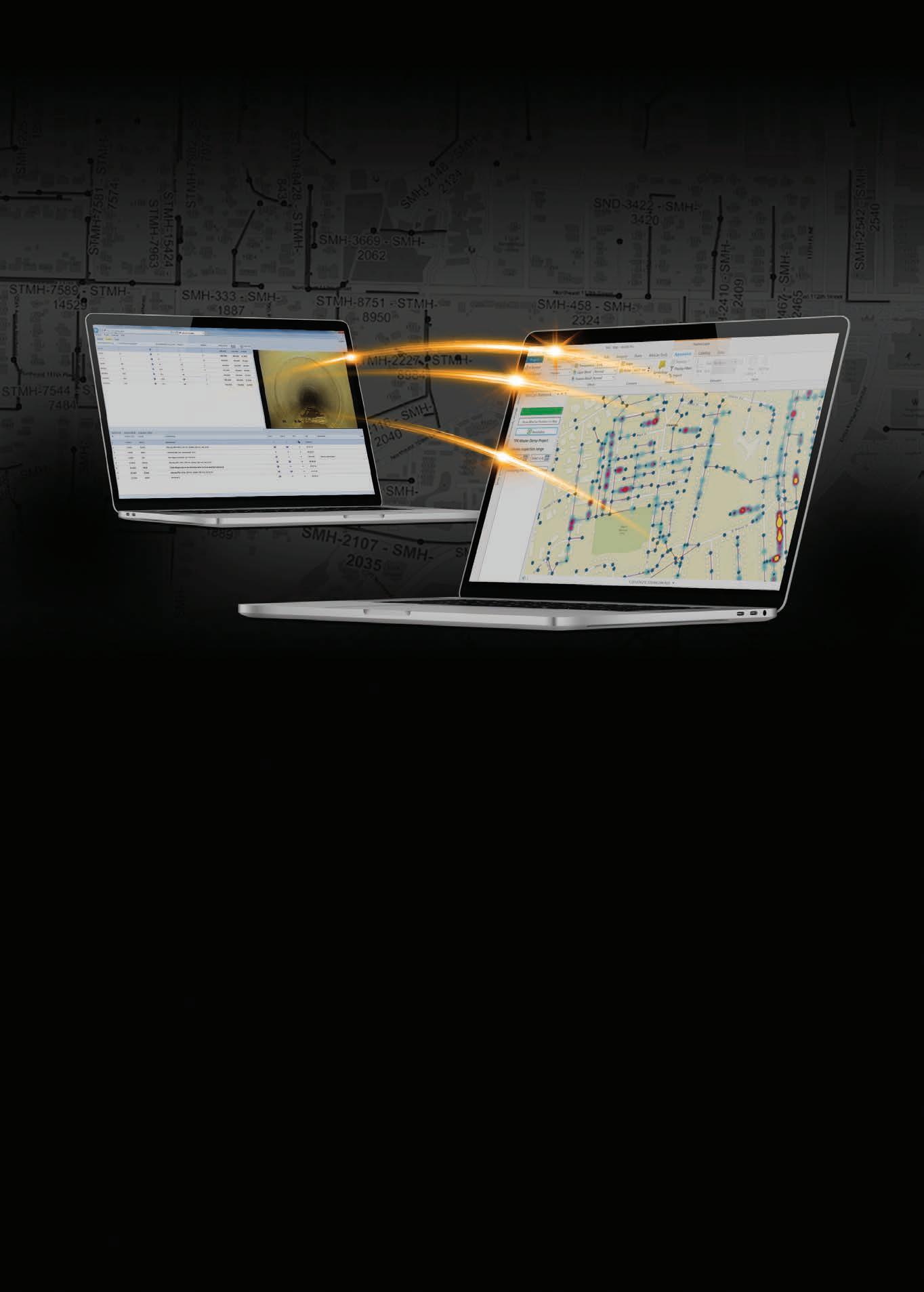
NEW ESRI ARCGIS INTEGRATION FOR SUPERIOR PIPELINE INSPECTION DATA Connects directly with GIS Eliminate human error with direct data transfer Easily locate critical infrastructure FASTER, ACCURATE, VISUAL Report with confidence. Visit us online seca.com.au
Secretary’s Corner December 2022
Gold Corporate Members – Australia
Ben Hayes from Herrenknecht AG
Silver Corporate Members – Australia
Glenn Hayes from DCS Manufacturing
Silver Corporate Members – New Zealand
Asset Owners – Australia
Asset Owners – New Zealand
Individual Members – Australia
Lachlan Rankin from Julconix
Andrew Lukas from AJ Lucas Services
Jiang Aizezi from Downer
Sydney national conference papers
All Papers from the Sydney Conference can now be downloaded by members of the ASTT. Refer: https://astt.wildapricot. org/NDDU-Conference-Papers
2023 national conference Brisbane
The ASTT has now formerly established its 2023 National Conference and Exhibition organising committee that will be working feverishly on your behalf to ensure that the Brisbane Conference will be a resounding success. Exhibition sales are now available and you are interested in exhibiting, please contact: nick.lovering@ primecreative.com.au. More information is also available on the event website, refer: https://nodigdownunder.com/
ASTT members’ survey
Thank you to all members who participated in our recent members survey. The survey covered the key areas of the ASTT membership offer being communication, membership benefits, education, industry standards and promotion of trenchless technology. The results from this year’s survey were compared with the previous surveys conducted in 2019 and 2021.
The key findings from this year’s survey:
• The level of communication the members receive from the ASTT was
seen as sufficient by the large majority of members. The quality of this communication was rated as very good.
• The quality of the trenchless magazine and ASTT website are rated as very good.
• The level of satisfaction with the quality of the ASTT events is high albeit there are some suggestions for improving member attendance and engagement.
• There is an appetite for the ASTT to do more promotion of trenchless technology and capabil-ity in the market.
• There were several suggestions for areas where the ASTT could further develop new industry guidelines, standards, and specifications.
• The Net Promotor Score (NPS) from the 2022 survey was plus 8. This is a slight decline from the 2021 NPS result of plus 12.
The results and feedback from the survey will be reviewed by the ASTT Council.
ASTT reciprocal members
The ASTT is pleased to advise that we have accepted the Australasian High Pressure Water Jetting Association and the Australasian Drain Cleaning and Vacuum Association as reciprocal members. They now join the Australian Tunnelling Society. Refer: https://www.astt.com.au/ reciprocal-members/
2023 membership fee payments
In early December, the majority of the membership will be receiving your Tax Invoices for the 2023 membership renewals through our Wild Apricot new automated database system. Your membership fees will be emailed out to you, and these fees will be due to be paid on or before January 1, 2023. All members are now encouraged to use either PayPal or direct debit to pay your fees. The ASTT will still accept cheques as has been the practices in the past. When making your payment, can you please either ensure that your company name or invoice number is included as a reference. Members from New Zealand, please note that the
amounts shown on your invoices are shown in Australian dollars.
Also, as we now have several new membership categories, any member can request a change of membership category prior to payment of their fees. Members are encouraged to request the changes preferably as soon as you receive your tax invoice. For detailed information of what the benefits are for all categories, please refer to the following - https://www.astt. com.au/member-benefits/
NASTT Good Practices Guidelines
The ASTT has acquired limited numbers of the NASTT publications as listed under which are now being offered to members and non-members. These publications are intended to provide contractors, engineers, and utility owners with an overview of many of the various trenchless methods. All NASTT publications were peer-reviewed by volunteer industry professionals to ensure that they offer generic and non-commercial information. These publications were funded solely by NASTT as part of its educational outreach program. If you would like a copy, email: simon.coburn@primecreative.com.au .
Member directory
A reminder to all members to review the information listed about you and your company on the ASTT website. To view, go to the Members Directory area of the ASTT website, refer https://astt.wildapricot. org/directory. If any changes are required, you can either do the changes yourself or you can send the changes to me and I will amend for you.
Merry Christmas
In closing, may I also take this opportunity to offer all of you on behalf of the ASTT, a very merry Christmas and a happy and safe New Year.
Jeff Pace ASTT Secretary secretary@astt.com.au
12 TRENCHLESS AUSTRALASIA DECEMBER 2022
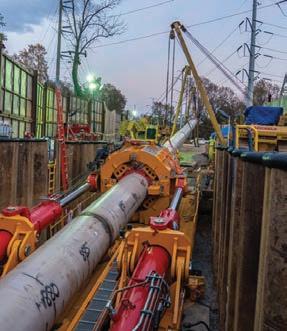
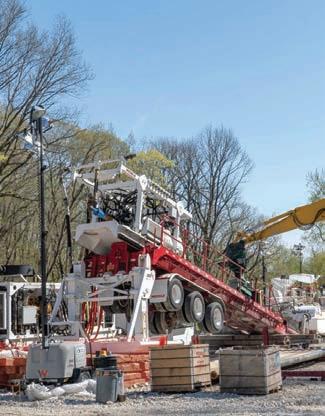
Building the world under your feet Bringing trenchless solutions to Australia Australia-based operations with permanent local resources Fully integrated with our global team at international headquarters Multiple NASTT Project of the Year awards Horizontal Directional Drilling · Completed a 4.7 km drill · 235 intersect crossings completed since 2000 · 195 crossings completed over 3 km since 2009 · Rigs available with push/pull capacity up to 815 tonne · Drill diameters up to 1.5 m 8,000 people strong founded in 17,000 pieces of equipment Pioneering HDD since 1988 Direct Pipe® · 13 installations completed since 2010 · Leading Direct Pipe installer · Land-to-water outfalls · Installations up to 1.5 m in diameter MichelsTrenchless.com.au
ASTT hosts trenchless stream at Water NZ
Watercare kicking off $20 m wastewater upgrade
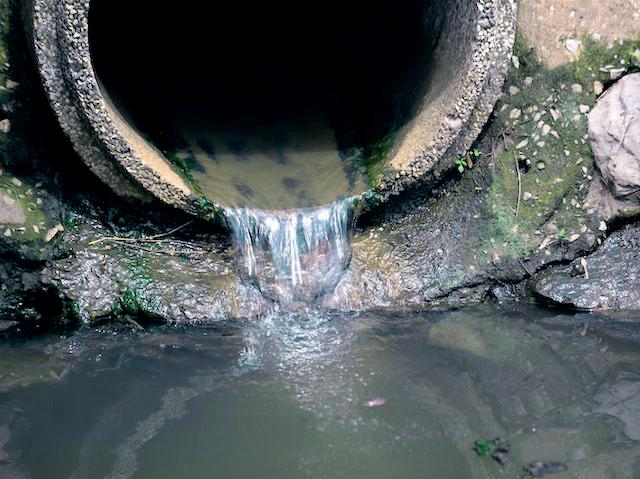
Watercare is set to begin laying down the foundations for a new $20 million wastewater pipe network to reduce wastewater overflows and cater for growth in Rosedale and its surrounding suburbs.
Alongside the $21.5 million Mairangi Bay Pump Station, the new wastewater pipeline will increase the wastewater transmission capacity and reduce wet-weather overflows in the East Coast Bays area.
The construction of the 1.75 km pipeline is one of the many key infrastructure projects that Watercare currently have in the works in the Rosedale and Mairangi Bay areas.
Although it plans to carry out much of the work in Windsor Park and Centurion Reserves, Watercare acknowledged that people may experience disruptions along Apollo Drive and Centurion Drive such as reduced on-street parking, lane widths, speed limits and pedestrian detours.
practical knowledge on utilising trenchless technologies in sustainable industry projects.
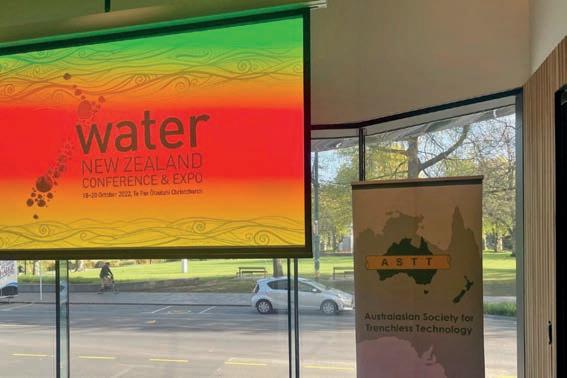
Water New Zealand’s 2022 Conference and Expo brought together some of the most insightful speakers in the water industry last week to share their ideas and vision for the future of sustainability in the industry. The Australasian Society for Trenchless technologies (ASTT) delivered a stream in collaboration with Water NZ.
The series focused on the innovations present in existing projects, from the massive northern interceptor pipeline to the relocation of curved alignment tunnel in Mt Eden.
Operators in the water and wastewater industry were given the opportunity to connect and collaborate, helping to form Whanaungatanga – or, ‘close connections or kinship’ – within the industry to allow innovations to thrive.
Local Government Minister Nanaia Mahuta’s keynote address called on all operators within the industry, saying that the time to make a change is now.
“The current changes and reform present us with the opportunity to be aspirational about how we want key services to be delivered in the future,” Mahuta says.
Rob Carr takes home CCF National
Award
The microtunnelling specialist won the award in the $5 to $10 million category for its Gnangara Branch Sewer section 2 project, located in Western Australia.
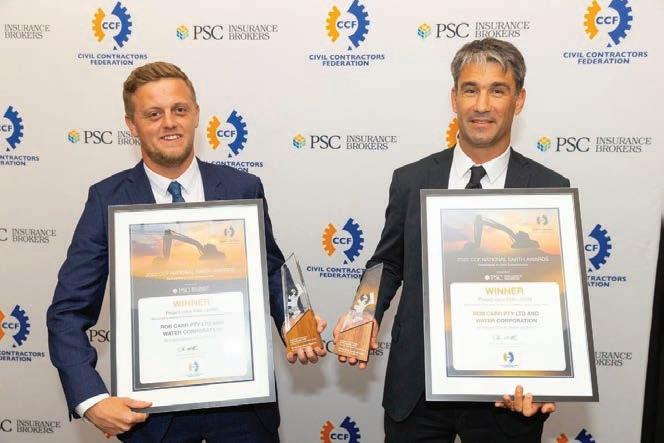
The project, undertaken on behalf of client Water Corporation, involved installing a new pressure main to an existing sewer section.
The company’s expertise in microtunnelling saw overcame a number of challenges for the project, including in-ground infrastructure and a limited time frame.
Teams completed four drives reaching a total 500 metres of microtunnelling, and managed to construct a DN1000 glass reinforced plastic, 259-metre microtunnel in 10 days.
The Gnangara project was automatically nominated following Rob Carr’s win at the CCF WA Awards in September.
Managing director Damien Maitre received the award on behalf of the company.
FEATURE 14 TRENCHLESS AUSTRALASIA DECEMBER 2022 NEWS IN BRIEF
Rob Carr has taken home the 2022 national award for civil construction at the National CCF awards in Canberra.
Water New Zealand’s 2022 Conference and Expo brought together operators from the industry in to share insights and practical knowledge with one another.
Watercare is to lay down the foundations for a new $20 million wastewater pipe network.
Rob Carr wins at national CCF Awards.
FEATURE DECEMBER 2022 TRENCHLESS AUSTRALASIA 15 M. TUCKER & SONS CIVIL AND TRENCHLESS SOLUTIONS www.mtuckerandsons.com mail@mtuckerandsons.com | 03 9736 3439 20 Clancys Road, Mount Evelyn, VIC, 3796 PO Box 955, Lilydale, VIC, 3140 CALL 03 9736 3439 Specialised Services: CCTV INSPECTION LATERAL REINSTATEMENT AND ROBOTIC GRINDING DRAIN CLEANING / NDD AND VACUUM LOADING UV LATERAL SEALING / TOP HATS MAINLINE UV PIPE RELINING. 150MM TO 1500MM PIPE PATCH REPAIRS AMEX, QUICKLOCK, FIBREGLASS AND SMARTLOCK M. Tucker & Sons is a proud family run company. Specialised drainage maintenance and pipe line rehabilitation.
End of the line for CRL TBM
The TBM is an earth pressure balance machine, meaning it can stabilise the earth it excavates to reduce impact on the surface.
It has a 7.15 m diameter, weighs 910 tonnes and is 7.15 meters in length.
Now that the tunnels are completed, crews will begin work fitting them out with everything they will need for use:
• 16 km of rails
• 816 km of signal cables
• 247 km of low voltage cables
• 74 km of cable containment
• 86 km of traction cables.
Tunnelling works for Auckland’s CRL have been completed with the final breakthrough of the tunnel boring machine (TBM) at Te Waihorotiu Station (Aotea) on 14 September.
Over the duration of the project, the TBM bored a total of 3.2 km of tunnels, placed over 2000 segment rings and removed more than 260,000 tonnes of spoil.
The Dame Whina Cooper is now in the process of being lifted out. Despite being custom built for the CRL project, pieces of the equipment will be returned to Germany where manufacturers Herrenknecht AG will repurpose them for future machines.
The 75 tonne cutter head was removed last week, while the shield is being dismantled into six pieces that will each be crane-lifted above ground for removal.
DJ Mac Cormick completes 234 m microtunnelling installation
DJ Mac
have achieved yet another
success on one of its longest single drives for non-man entry to date.
DJ Mac Cormick Contractors has undertaken one of the longest single drives for an 800 mm diameter closed face slurry shield micro tunnelling project, with no-man entry available for installing intermediate jacking stations or slurry pumps.
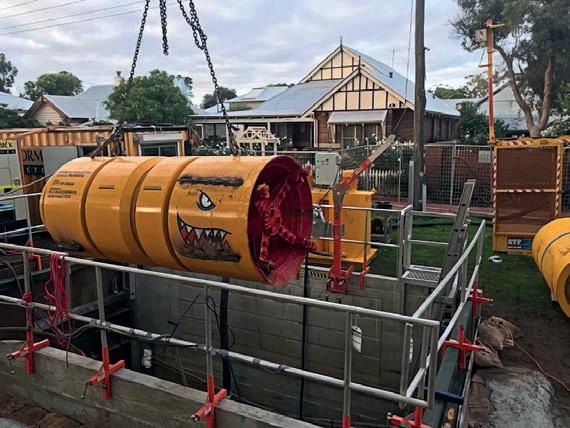
The project was completed on behalf of the city of Swan, located in the eastern metropolitan region of Perth in Western Australia. The drive length for a main drain was 234 m and due to the high level of traffic, community use and business trading work was only able to be undertaken over the Monday to Friday traditional work week.
Launch and receival shafts were constructed utilising Ground Support Systems (Aust) shoring and associated safety equipment, which included certified structural KPA ratings for all the shoring.
Temp designs were certified by structural engineer & undertaken for thrust block, entrance wall and concrete pad.
DJ Mac Cormick Contractors had previously undertaken the previous stage back in 2019.
The works in this stage involved several high complexity traffic MGE plans staged to ensure continual flow traffic through locality in order to minimise disruption to businesses as well as the broader community and residents.
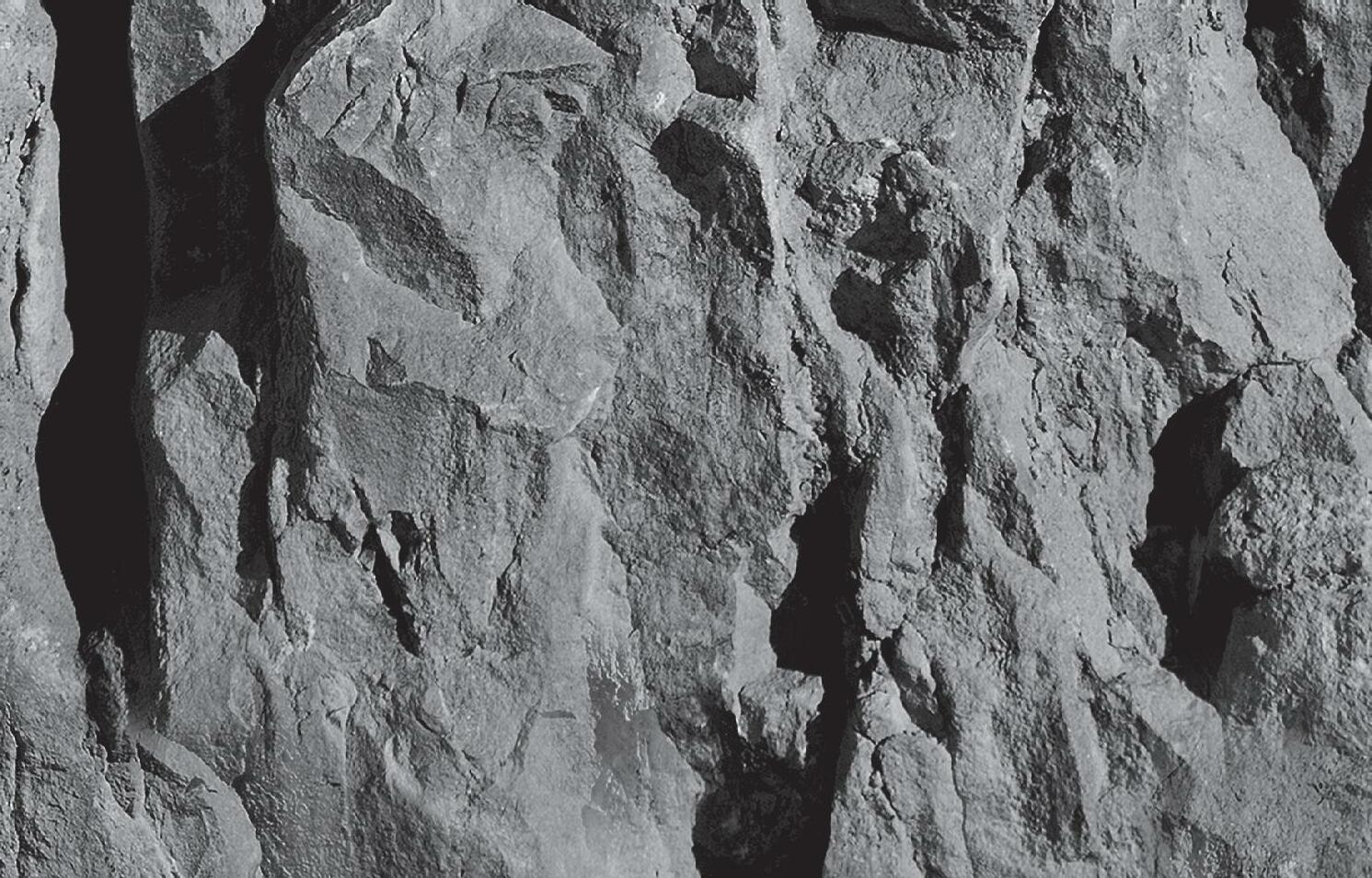
Ground conditions ranged from stiff clay to running sand. Underground streams encountered throughout the project also meant working on river sands and river stone cobbles during the drive length. All works were undertaken within 20 mm tolerance over drive.
Upon completion of the drive, various tie in works and open cut drainage excavations including the construction of drainage manholes and side entry pits were required. This included the construction and maintenance of connections to existing drainage structures.
CCTV inspection of all lines was also required for this stage of the project, with a quality insurance pack and drawings provided upon completion.
DJ Mac Cormick Contractors undertakes tunnelling for diameters from
150 mm to 2500 mm diameter with its a fleet of Iseki & Herrenknecht closed face tunnel boring machines (TBM).
The company boasts a variety of TBM cutting wheels to suit soft, mixed and rock ground conditions in varying ground conditions, both wet and dry, to fit the needs of the Australian people and its landscape country wide.
The company has the capacity to complete drives up to 1 km utilising intermediate jacking stations and intermediate jacking units to run another four stations from within pipelines or intermediate slurry pumps in which pipe diameter is 1500 mm or greater.
For these sizes and more, the company has TBM’s with the ability to change cutters from within where required along the drive length. Not only that, but also DJ Mac Cormick Contractors has rock cutting wheels suitable for 200 MPA rock.
With offices in Perth, Adelaide, Sydney, Melbourne, Brisbane and Townsville, DJ Mac Cormick Contractors is able to provide expertise to its clients throughout Australia.
Further information or enquiries to info@djmaccormickcontractors.com.au
FEATURE 16 TRENCHLESS AUSTRALASIA DECEMBER 2022
Cormick Contractors
shining
NEWS IN BRIEF
This article appeared in the October edition of Trenchless Australasia.
The end has come for City Rail Loop’s tunnel boring machine.
DJ Mac Cormick Contractors undertake tunnelling for diameters from 150 mm to 2500 mm with its a fleet of Iseki & Herrenknecht closed face tunnel boring machines.

DECEMBER 2022 TRENCHLESS AUSTRALASIA 17 optionxgroup.com.au optionxgroup.com.au PART OF THE BUILDING BETTER UNDERGROUND OPTIONS WHEN ACCURACY MATTERS Edge Underground is a precision microtunnelling contractor that operates in Australia and the USA. With a focus on innovative technology and expertise, Edge Underground designs and enhances the performance of trenchless equipment. Full factory backing here in Australia means solutions can be created when they’re needed most. MICROTUNNELLING • PIPE JACKING THRUST BORING • LASER TUNNEL BORING BOX CULVERT JACKING • CANOPY TUBES
Full name: Jim Pound Company: S&Z Australia General Manager
Trenchless Pioneers
In a bid to celebrate the achievements and growth of the trenchless industry and the ASTT, Trenchless will be running a new question and answer segment. In this edition, the Trenchless Pioneer is Jim Pound, the General Manager of S&Z Australia. This is his story.

IThe trenchless industry provides methods that allow infrastructure to be delivered safely with minimum impact on the environment and the community.
How did you become involved in the trenchless industry?
My initial exposure to trenchless was in the early 1990s when working as a plumber. I engaged the services of a pipe bursting company to replace a very deep sewer in Ardeer. Since then, I have worked with several companies including suppliers and trenchless specialist companies. These companies exposed me to various trenchless technologies such as slip lining, pipe cracking, pipe bursting, fold and form pipe lining, HDD and microtunelling.
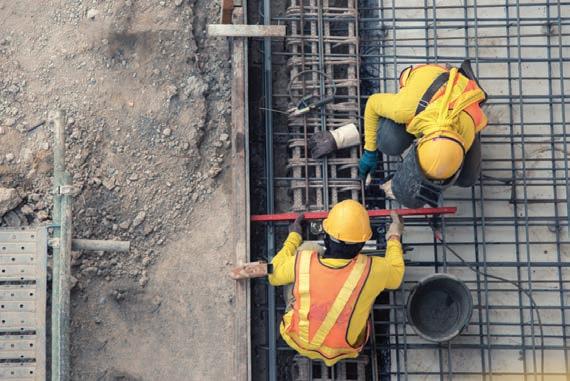
What is a standout trenchless project or milestone you have been involved in? Our involvement in a large project in the NSW Mountains which required us to deliver over 6 km of communication and power through extremely hard rock in a remote and challenging environment is a project that we are extremely proud of. Working day and night in snow and rain to deliver the project
within the necessary time frame, requires great dedication from our staff and we are extremely grateful for their commitment.
What is the best part of trenchless technology? And how has it evolved since you first became part of the industry? Trenchless technology is always evolving. New techniques and improvements to current methods see the industry continually growing and improving. Most companies within trenchless technology are prepared to share experiences to help improve the industry and there is good collaboration within the various companies even if they may compete at times.
Which form of trenchless technology do you think has had the most transformation and why?
Tunnel boring continues to evolve and appears to be becoming a preferred method of trenchless technology due to the advancements in techniques which see longer lengths and larger sizes achievable.
Where do you see the trenchless industry in the next 10-20 years?
If the industry continues to grow at the same rate it has in the past 20 years, I am excited to imagine what may be possible. I
expect the opportunity to reduce emissions and minimise impact on the environment and provide safer work practices will see projects that would normally be delivered by traditional open trench methods be replaced by trenchless technologies.
With trenchless technology having a strong ability to reduce the impact on the environment, what more do you believe the industry needs to do in order to further reduce emissions and the impact on the environment?
The industry should lobby water authorities and other utilities to educate them of the benefits trenchless technologies provide to the environment. The equipment manufactures should continue to invest in technology to investigate alternate power sources for plant and equipment.
How has the industry progressed in being more diverse?
When I commenced in the industry there were no women in the trenchless space. Over the years we have witnessed more women become involved and prove to be extremely valuable contributors to the industry. S&Z Australia welcomes and encourages women to apply for any position we have available.

TRENCHLESS PIONEERS 18 TRENCHLESS AUSTRALASIA DECEMBER 2022
Stream DP
Experience a maximized asset detection in underground surveys with a superior productivity and versatility.
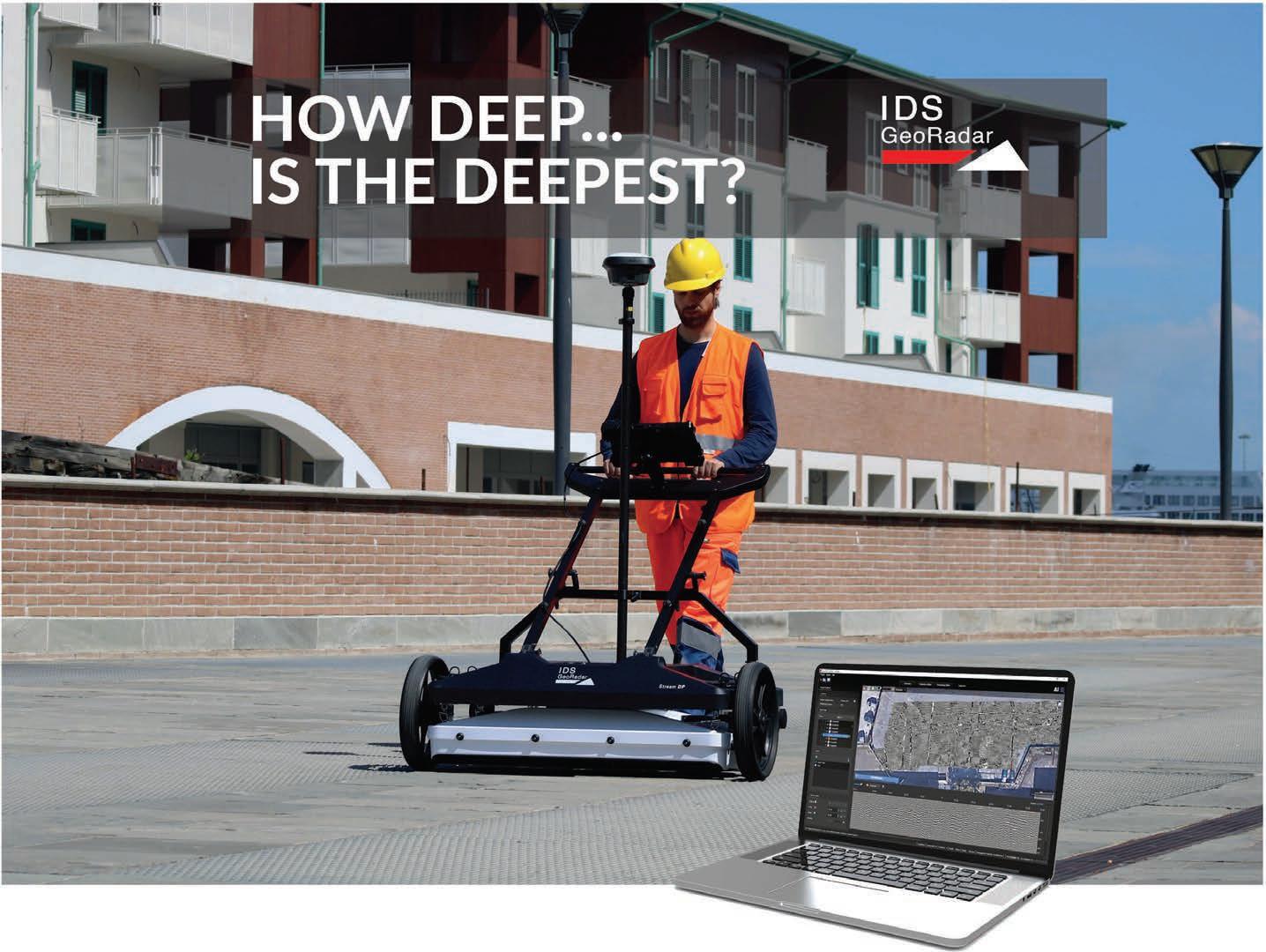
Stream DP is the revolutionary multichannel GPR array solution for real-time 3D mapping of underground utilities overturning the state-of-the-art in underground surveys. Stream DP by IDS GeoRadar features the new radical Equalized scrambled Technology - EsT that brings underground assets detection to the next level: the deepest one.
IDS GeoRadar offers a full range of non-intrusive utility detection and mapping products which exploit the most advanced ground penetrating radar technologies and methodologies.
www.idsgeoradar.com
 PART OF HEXAGON
Conservation and expansion handin-hand in Victoria

As regional utilities make moves to fortify and expand their networks around the state, trenchless operators are overcoming challenging geology and preserving environments with expertise.
Sewer Network in Dandenong Ranges
Yarra Valley Water is installing 91 kms of a reticulated pressure sewer network in the Dandenong Ranges. The geological make-up of the ranges, as well as a number of hard-to-access areas, has necessitated the use of trenchless technologies
For many years, development of the Dandenong Ranges has been held back by lack of access to a sewerage network. Homes in the area rely on septic systems that require property owners to manage their own wastewater. Some of these older systems discharge grey water directly into storm water drains, impacting delicate ecosystems and waterways. The new sewerage network will allow the local community to modernise while still preserving the delicate environment.
The project faces several challenges. Delivery partners Interflow, Melbourne Pipelines and
Pressure Sewer Services Australia (PSSA) are installing DN 50 to DN 90 polyethylene pipe around existing services, dense and protected vegetation, narrow roads, steep hills, and a community going about their daily lives.
Shem Macdonald, construction manager for Melbourne Pipelines, talks about some of the challenges their drillers have encountered.
“We’ve gone from friable red soils in Monbulk to hard ground, boulders and cobbles higher up in the hills. The drillers’ experience and expertise are needed to determine how we deal with each ground type: do we knock floaters out the way, grind through them or cut our losses and stop to excavate and remove them?” said MacDonald.
“We’re also relying on proving pot-holes and excavations to provide a better idea of ground conditions so we can make more informed decisions on our own drill rig
selection, positioning and set-up, and using B&M Infrastructure’s pneumatic drill rig for exceptionally hard ground.”
The narrow lanes, dense vegetation and limited space mean contractors are using small water trucks, vac trucks and excavators to reduce their footprint. Site dumpers transport materials, equipment and longer hoses to the drill truck, offering more flexibility with drill truck set-up.
“We have a variety of trenchless options for property connections such as horizontal directional drilling, a piercing tool, hydro borer and bed borer,” says MacDonald.
HDD protecting native wildlife in Gippsland Water and wastewater in Warragul and Drouin are getting an upgrade as part of the western ring main project.
UNDER VIC 20 TRENCHLESS AUSTRALASIA DECEMBER 2022
Victoria is safeguarding the environment while securing the future of water and wastewater.
The towns include two of the most rapidly growing populations in the Gippsland region, prompting the company to keep ahead of this growth by constructing a new 4.3 km water main.
Warragul has only a single main running through the centre of town, says Gippsland Water’s project engineer for the new pipeline, David Suter. The new water main will provide
much needed redundancy to the Warragul system.
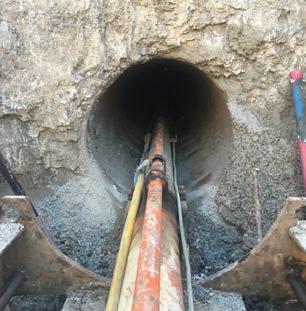
Horizontal directional drilling (HDD) has been chosen to complete the project, as the area is home to some important native species including the Giant Gippsland Earthworm, Warragul Burrowing Crayfish and Strzelecki Gums.
Running the pipeline along already disturbed areas such as the roadside, combined with the use of HDD, will enable operators to keep the impact on these species to a minimum, as well as reduce the cultural heritage and potential artefacts of the area’s Traditional Owners.
The pipeline will assist development in the south-west growth corridor of Warragul, while serving double duty by increasing the volume and security of water supplies for the town of Drouin.
Works on the pipeline are expected to be completed in late 2023, with further work possible in the future to extend it to the south basin, in line with potential urban development.
Heavy hitters for SRL shortlist
Progress towards Melbourne’s suburban rail loop (SRL) is rolling ahead with the announcement of the shortlisted firms vying to build the massive project.
Three joint ventures, all global industry leaders, have been shortlisted for the tunnelling contracts for what is being called a ‘city-shaping’ project in Melbourne’s eastern suburbs:
Metro and the Caulfield to Dandenong level crossing removal
• John Holland and Gamuda (Australia)
Branch: With extensive experience, these have been responsible for a number of projects in Melbourne – Melbourne’s metro tunnel and city loo – as well as abroad
• Webuild and GS Engineering and Construction Australia: Well known globally, these have worked on the North East Link tunnels, as well as projects in Asia and the Middle East.
SRL CEO Frankie Carroll was encouraged by the interest in the project.
“This competitive process has been a massive vote of confidence in Suburban Rail Loop – with construction giants from around the world vying to partner with us to deliver this city-shaping project,” said Carroll.
The project is well on track with the first contract to be awarded next year for twin tunnels between Cheltenham and Glen Waverley.
Initial works on SRL have already begun in Clayton and major works have been given the green light due to an extensive Environmental Effects Statement.
Jacinta Allan, the Minister for Suburban Rail Loop spoke indicated the project could generate up to 8000 local jobs, creating opportunities for professional growth.
• CPB Contractors, Ghella and Acciona Construction Australia: These companies bring with them a wealth of experience in tunnelling and transport infrastructure. Past projects include Brisbane’s Cross River Rail, Sydney
For more information visit www.trenchless-australasia.com
“SRL East is a project Victoria needs… this is an exciting day as we move closer to the start of tunnelling,” said Allan. At L&D Micro Tunnelling we specialize in laser guided boring. Our Tunnel bore machines use a vacuum extraction system where all spoil is sucked into interceptor tanks for easy disposal with no mess. All our heads are hydraulically driven and guided by a high accuracy laser to achieve precision over long distances.
UNDER VIC DECEMBER 2022 TRENCHLESS AUSTRALASIA 21
47a Brunel Road, Seaford, VIC 3198 | luke@ldmt.com.au | chris@ldmt.com.au | 0401 754 929 | www.ldmt.com.au Unrivalled reliability – Accuracy Guaranteed • Specialists in free boring, sleeve boring and pipe jacking • Sizes ranging from 350mm > 600mm in most ground conditions • Drill up to 120 meters with a +/- 10mm tolerance • 20 years experience in the drainage industry
Veolia: The vanguard for safety
Veolia claims few companies have had as much of an influence on safety standards for high pressure water jetting than it has.
In 2021, Veolia began developing a series of guidelines and safety measures collectively called its high-risk management standards (HRMS).
The impact of the HRMS is being seen in Veolia’s operations around the world. In Queensland, the company performs maintenance and operation work on water and sewage assets, looking after all elements of the transport network – the pipes – that keep water and wastewater going where it needs to.
Safety is success
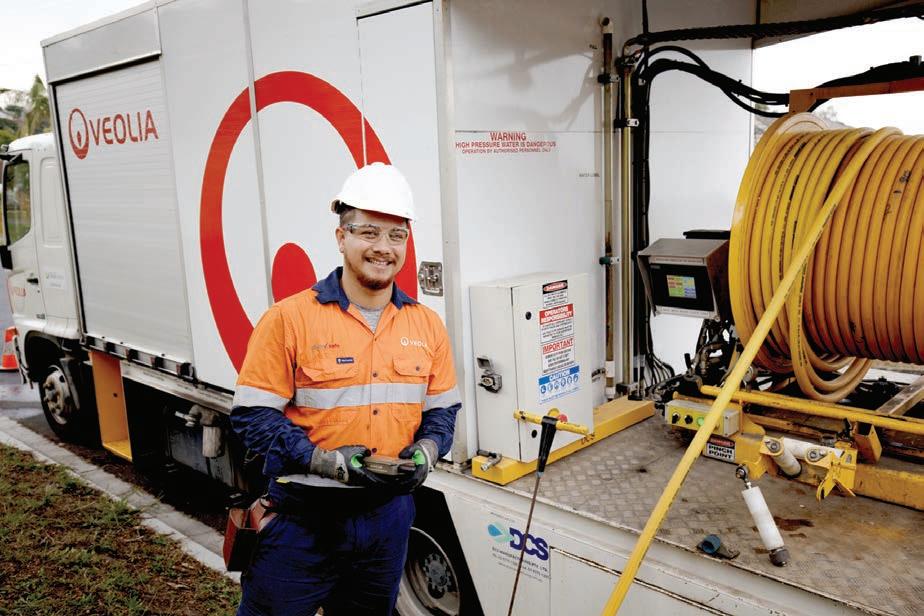
Daniel Faccio is a senior asset engineer for Veolia’s Queensland branch. His work involves customer service and keeps him close to Veolia’s teams on the job. Having been with Veolia for almost a decade, Faccio has seen how the company’s approach to safety has taken shape in its workforce, but also on the industry as a whole.
Faccio says that decades of evidence from work in the field shows that the safest work environments are also the most productive. “Safety is at the forefront of everything we do,” says Faccio. “If the guidelines are
well-structured, then the work is safe, and you then get the highest benefit of productivity out of that outcome. That drives us, because keeping our people safe also guarantees the best outcome for our clients,” he says.
High risk does not mean unsafe
While there are challenges involved with high pressure water jetting (HPWJ), it is still utilised by Veolia as one of the safest methods for cleaning underground assets like sewer pipes and storm water lines. It is an effective way to remove tree roots, sediment, and other blockages from these assets.
Before the advent of water jetting, crews would have to manually pull through chains or steel cables with discs that would remove blockages. These traditional methods had a long list of heightened risks to work crews, especially when combined with the sheer level of manual handling required to complete them.
“Water jetting makes the cleaning of sewers less labour intensive, it is actually safer for the crews to waterjet then manually pull the traditional discs with tensile cables
or plumbing rods. Combining jetting with a vacuum system just adds another level of safety,” says Faccio.
He explains that most of the risk with water jetting comes from the nozzle. Without the appropriate safety measures, there is a risk that the pressure from the hose will whip the nozzle out of the maintenance hole, which can cause property damage, injury, and even death.
This is where Veolia’s HRMS comes in to mitigate those risks. The company fastidiously assessed all the potential causes of harm across the industry to develop these standards and holds to them without compromise.
“The HRMS is basically Veolia’s Bible,” says Faccio. “Our people know we don’t compromise on safety.”
Specific solutions to safety needs
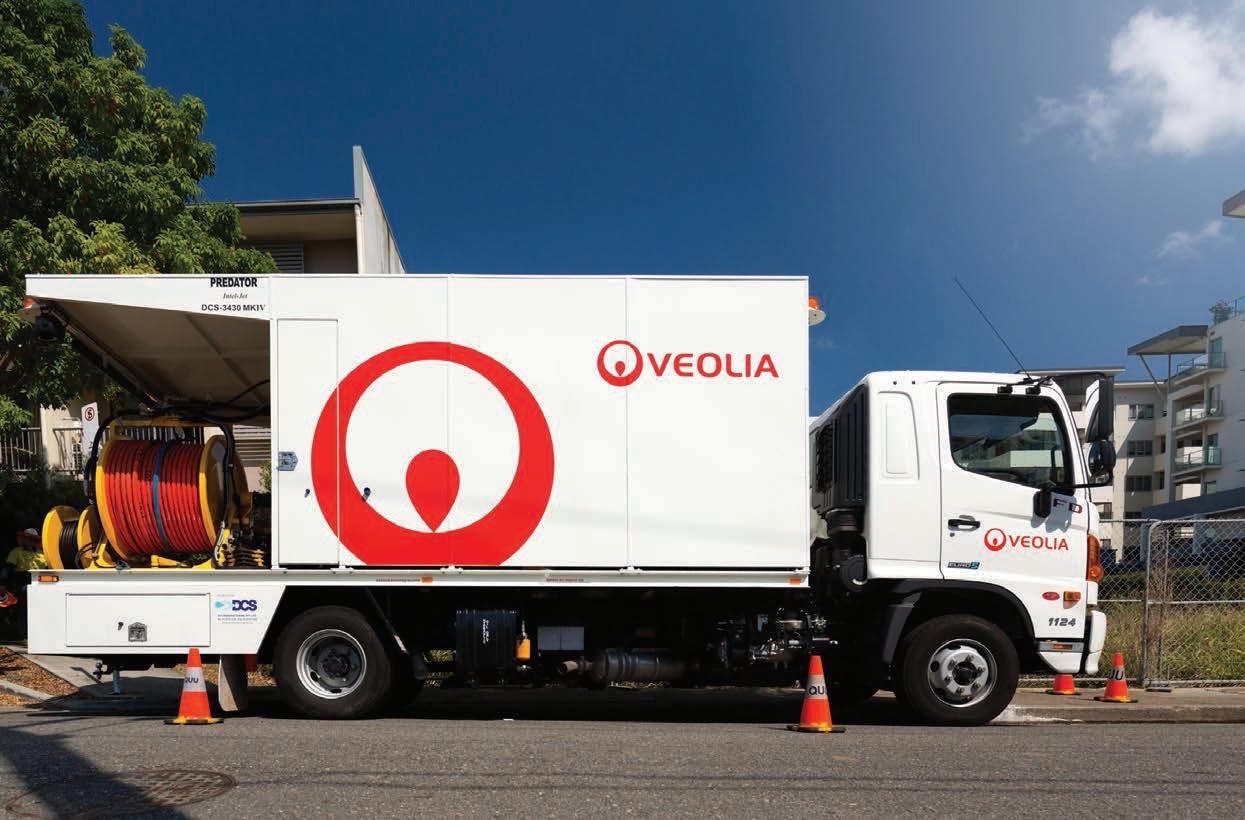
Veolia’s entire fleet of trucks – equipment ranging in value from $200,000 to $1.5 million – are equipped with the highest level of safety equipment. The safety measures cover everything from engineered controls on the equipment, like pressure safety valves, to the
22 TRENCHLESS AUSTRALASIA DECEMBER 2022
hose
(Not
hose end identification as per
Section
Braided
stockings
whip checks) As per AS4233.1 Section 3.2.3.1 Nozzle
AS4233.1
6.8.6
Secondary pressure safety relief device (PSV)
All high pressure hoses are Hydrostatically tested prior use and after every repair as per AS4233.1. Appendix E (Also tested preventatively in intervals no greater then 6m)
highest quality personal protective equipment (PPE).
The company has introduced a mechanism called a hold to activate on the HPWJ controllers on every one of its trucks. If it is released while the equipment is being operated, the entire water pump systems shuts down – minimising the risk of a loose nozzle causing damage.
“We actually managed to get the industry to incorporate the hold to activate feature into all the new trucks, and we’ve retrofitted it into our entire older fleet as well,” says Faccio.
To get things changed, Veolia has had to challenge the status quo. One such instance was in the standard use of whip checks – a piece of equipment designed to restrain a hose, but not to its full extent. With a whip check in place, hoses can still buck up to a metre at incredibly high speeds.
“Once again, we’ve gone through and retrofitted all of our trucks with a hose stocking – which actually restrains the hose and stops it from whipping out in the event of a connection failure,” says Faccio.
He says that the industry assumption was that whip checks would be suitable, but Veolia upgrading its fleet with hose stockings has raised the bar across the industry.
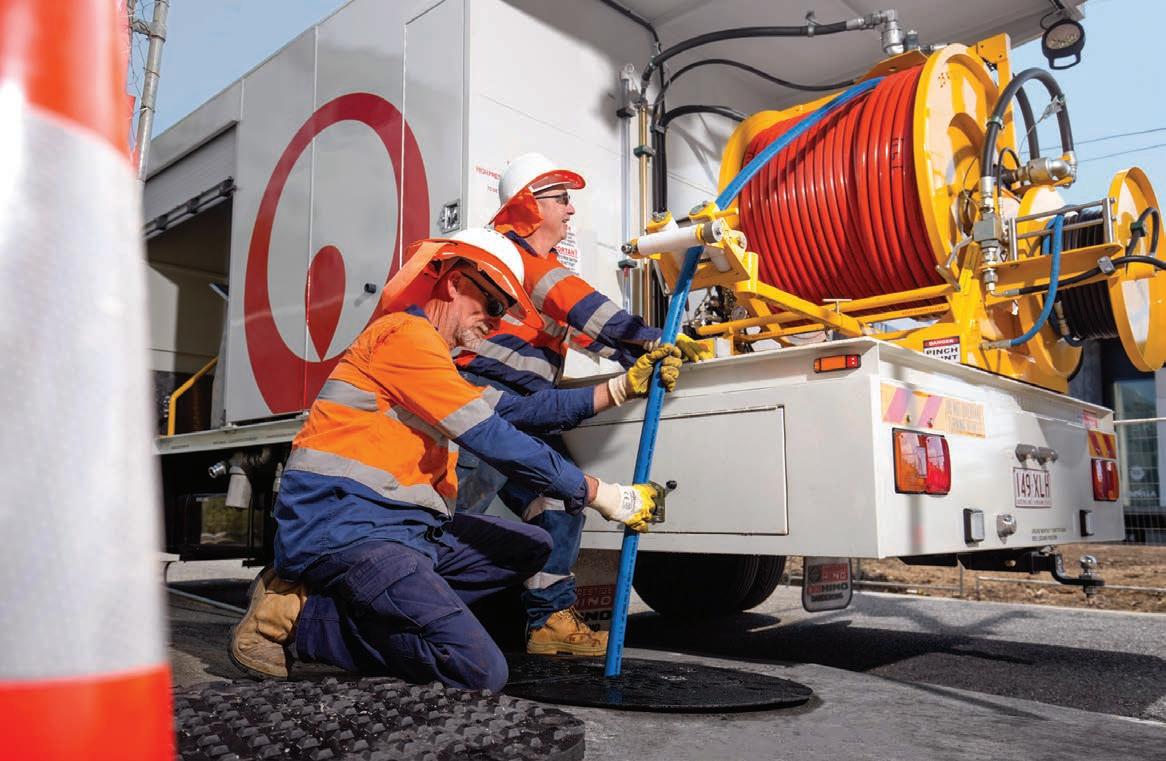
“You can’t downplay the significance of that step. It’s a huge safety advantage to the industry,” Faccio says.
The right equipment is incredibly important, but even the best pieces run the
rigorously pressure tests all its hoses as part of its standard procedure. If a hose does break, it gets repaired and tested again to make sure it is fit for use with the minimum possible risk of rupturing.
All hands on deck
Veolia’s relationship with the industry has demonstrated a far-reaching interest in improving safety measure.
The company worked with an Australian supplier to make anti-withdrawal devices – a kind of customised maintenance hole lid –available to the whole industry. Once again,
Originally, the commonly held industry opinion was that asbestos was safe if it was wet, as in HPWJ work. In teaming with regulators to test the air quality at work sites, Veolia found below-detectable levels of asbestos in the air.
To address this, Veolia modified its safe work method statements (SWMS, or “swims”) to control for the unique risks posed by asbestos pipes, as well as introducing an asbestos management plan for all work.
For the benefit of all industry operators
Veolia didn’t have to raise the bar in the way it did. Safety is now well-known as a strong driver of value. The capital expenditure is offset by increased productivity in the field and less downtime from equipment failures or injury to personnel, increasing value for
More importantly, Faccio says that keeping workers safe is always the right thing to do.
“We weren’t willing to go along with the industry norm when it came to delivery in the field, so we took it upon ourselves to put further practical safety controls in place to make sure the risks were removed.”
Veolia continues to work towards a safer industry, often driving change at significant cost. There is no doubt that the cost is worth it, both for the company and for the industry as it grows to meet safety requirements, and solutions. Developments for which Veolia is at
“Ultimately, we want everyone to get home in the same condition they arrived to work in,”
TRENCHLESS AUSTRALASIA 23
For more information visit
Safety observer when performing manual operations as per AS4233.1 Section 1.6.3 RTO training for class B As per AS4233.1 Section 7 Hold to activate as per AS4233.1
www.veolia.com/anz
Knowledge is power in the trenchless industry
SECA has expanded the training it can provide from its training centre.
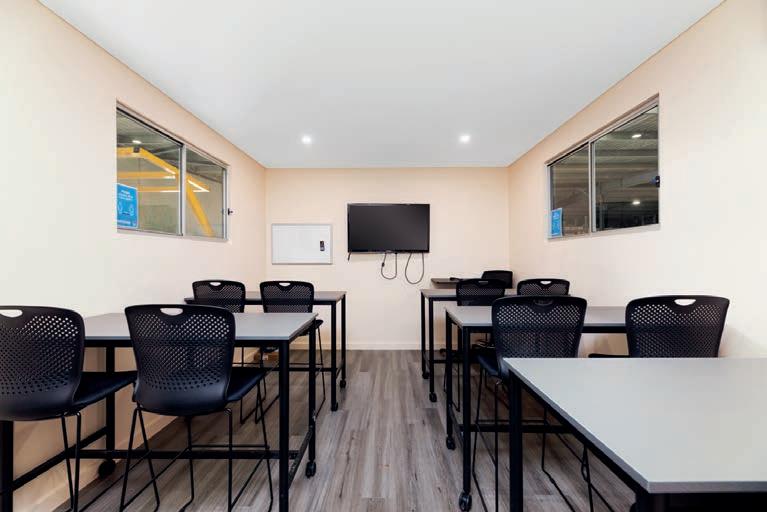
SECA is one of Australia’s leading suppliers of equipment for the cleaning, testing, inspection and rehabilitation of pipes, sewers, and drains. As well as providing cuttingedge equipment to operators in rehabilitation and asset management, the company also provides nationally recognised training courses based in its warehouse at the head office in Sydney’s southwest.
With warehouses opened in other cities around Australia, SECA is also able to offer its training from its other warehouses in Brisbane and Melbourne, ensuring that operators around the country are equipped with the knowledge they need to operate safely across a variety of skillsets.
By reducing risk of harm to people, and damage to equipment, training is one of the most powerful ways that industry bodies can ensure incident-free execution of work and efficient delivery of projects – meeting deadlines and budgets.
SECA provides high-quality training across a variety of equipment and worksite operations that will equip attendees with a working knowledge of health and safety practices. From the operation of industrial drain cleaning systems to the CCTV courses for conduit inspection software and codes, SECA has operators covered.
Use high pressure water jetting (HPWJ assistant) equipment
Commencing in February 2023, this course is designed for anyone who intends to work with Class B high pressure water pumps for either surface cleaning or the cleaning of pipelines. It covers water jetting equipment and how to operate it safely, the dangers of HPWJ, safe work practices and associated law, work permits and emergency response practices. The course produces an operator that requires supervision, but is more than capable of carrying out high pressure water jet work.
Operate a high pressure water jetting system
For personnel with more experience and knowledge of HPWJ, the Operate a High-
SECA’s facility has purpose-built working pipes for training.
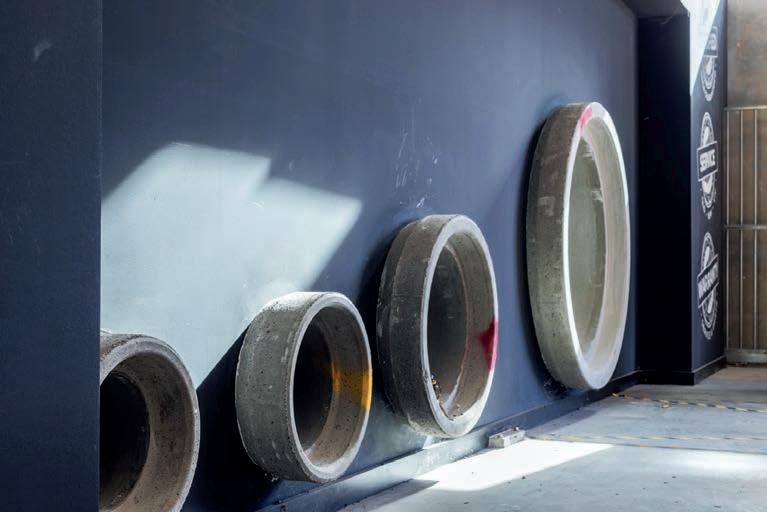
SECA’s provides nationally recognised training courses.
Pressure Water Jetting System course, which also includes organising work permits, reading and interpreting plans, and emergency and rescue practices is the right course. The safe work and emergency practices included in the course equip attendees with the necessary qualifications to supervise HPWJ operations in the field.
Operate a drain cleaning system
The Operate a Drain Cleaning course provides drain cleaning operators with the necessary knowledge to supervise a drain cleaning operation and how to be responsible for a crew of drain cleaning workers. It covers indepth knowledge of industrial drain cleaning operations, managing worksites, safe work practices and associated law, and emergency and rescue practices.
(RTO 91255). By utilising trainers who are chosen for their in-depth knowledge of equipment and procedures and substantial personal experience in the field, the knowledge gained from attending these training courses is sure to have a lasting impact on work crews’ capabilities.
Training is essential when it comes to mitigating the risks associated with work in the field, which is why accredited training courses are typically required before personnel are able to undertake such work.
Well-trained work crews are invaluable when working in the constantly evolving trenchless industry. New technologies, equipment and procedures are appearing constantly, and it pays to keep operators informed of best practices to keep up.

the field SECA provides training through Asset Training
Knowledge in
For more information visit, www.seca.com.au
SAFETY & TRAINING 24 TRENCHLESS AUSTRALASIA DECEMBER 2022
C M Y CM MY CY CMY K
Mitigating climate change risk with insurance
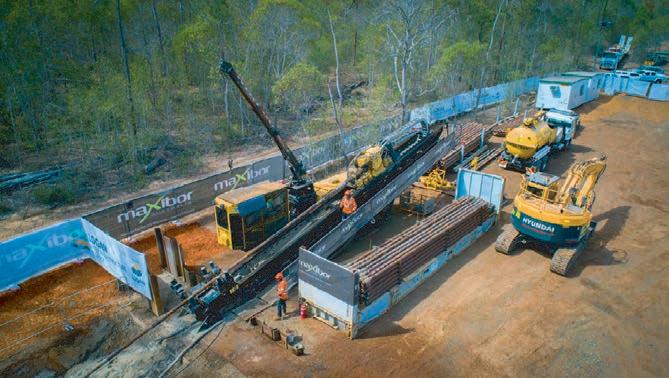
Horizontal directional drilling (HDD) is seen as one of the higher risk areas in the infrastructure sector. Climate change is further increasing this risk as extreme weather events become more frequent. As Chief Executive Officer for a leading HDD design and construction provider, Maxibor’s Rodney O’Meley highlights the key factors in understanding contract works and equipment insurance policies to ensure adequate cover is in place in this changing risk environment.
Why have insurance?
“Simply put, a business can go broke if it doesn’t. One major unforeseen event can stop a business in its tracks, leaving owners and staff without livelihoods, clients without a delivered project and other stakeholders unpaid,” says Maxibor CEO Rodney O’Meley.
It is just not about having insurance. Operators must know what their insurance policy covers and for how much. A simple certificate of currency explains very little – it is the extent of cover contained in the insurance schedule and policy wording that tells the real story.
O’Meley says it is those HDD providers, with appropriate insurance covers in place, that asset owners and principal contractors should be seeking out to undertake HDD works if they are genuinely serious about mitigating their risk.
Insurable HDD risks
In the HDD world, the main risks are covered under contract works, equipment, public liability, professional indemnity and workers compensation insurance policies.
Understanding which HDD risks are covered by these policies and the extent and nature of necessary cover requires alignment of knowledge between HDD engineering, operational, commercial and financial people from the business, as well as the insurance broker and the underwriter.
“If you do not understand what you are insuring and for how much you are just gambling that you will be covered,” O’Meley says.
He says insurance policies are lengthy documents, rarely visited except in the event of a claim. They are accompanied by a policy schedule which often refers to a policy section rather than providing specific detail of what the cover represents.
It can take years of experience to understand what the wording in the policies and schedules
actually means, what events or losses are excluded, and how the policy applies to scenarios which are likely to impact a business.
“Most learnings are unfortunately gained through the experience of claims but by then it is often too late to ensure you are adequately covered or covered at all,” says O’Meley.
Contract works
Contract works covers damage to HDD works and materials under the insured party’s care, custody and control during a project.
It is one of the more complex areas of insurance, but it can be a lifesaver for a business when an unforeseen event occurs.
Claims for loss or damage commonly emanate from events beyond the control of the contractor, including earthquake, landslide, subsidence, collapse, storm, rainwater, flood, tsunami or cyclone.
Factors to watch out for include:
• Contract value limit – the insurer will require a contract value limit to be set under the policy. This limit cannot be set with certainty especially in a growing business or where variations, such as extra overs for rock, come into play.
“If you win a contract in excess of the set policy limit, or have variations causing the contract value to exceed the limit, ensure that you
notify your broker with a view to achieving agreement for coverage by the underwriter (at no additional cost),” says O’Meley.
Bore diameter limit – underwriters struggle providing cover over 500 mm, let alone in excess of one meter diameter bores.
“This is where you need the underwriter to have a good feel for the risk associated with the specific project and your business overall so that cover can be readily provided,” says O’Meley. “You also need to know whether your insurer has the capacity to insure larger diameter bores because finding an underwriter with the wording to allow it can be exceedingly difficult.”
• Free issue materials – even if materials supply is not part of a works contract, if the materials are in the operator’s care and custody, works contracts can contain clauses making the materials the operator’s responsibility until installed.
“This means you are at risk for loss or damage. Ensure you have cover for free issue materials and up to a value of the materials under your care and custody,” says O’Meley.
• Above 26th parallel exclusion – insurers do not like the cyclone areas of Australia. If working above Gladstone, Alice Springs or Exmouth, operators need to ensure that this exclusion does not apply to them.
“If not, it’s a matter of going there at your own risk,” he says.
• Flood – drilling under rivers and low-lying areas will always have the risk of flood attached to them.
O’Meley says that it is necessary to ensure that a policy covers flood events and that that there is an effective flood risk management plan in place for the project.
“Also watch the 72 hour rule – if the flood extends over this timeframe then it can become more than one event triggering extra deductibles,” he says.
• Principal contractor project contract works policies – in cases where the principal contractor has in place contract works
HDD 26 TRENCHLESS AUSTRALASIA DECEMBER 2022
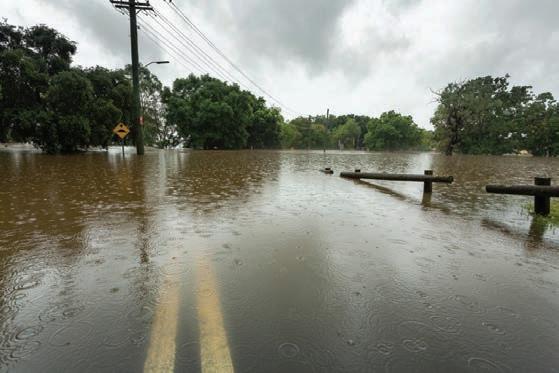
Unforeseen weather events can have disastrous effects on the unprepared.
insurance, which covers the work of its subcontractors, operators should not automatically assume they are adequately covered.
“Know what that policy covers and, in particular, what the deductible is. A $250 k deductible set for a tier 1 contractor is not especially useful in providing cover for a smaller subcontractor,” says O’Meley.
• Ground conditions – the extended La Niña event has made ground conditions less stable and caused the build-up of underground water levels. This can impact on HDD operations either directly or, where nearby other contractors’ works have water problems, “flow through” onto an operator’s HDD bores.
“In these instances, it’s about knowing not only your policy cover, but those of the other contractors on the project,” he says.
Equipment
Equipment policies cover sudden and unforeseen physical loss or damage to the insured equipment. Policies also provide ancillary benefits such a financial protection for loss of revenue and increased cost of working.
Factors to watch out for include:
• Insured value – getting insured values close to a current market value, particularly on higher value equipment that is critical to the business, is essential.
“Having an agreed value under your policy is preferable on the proviso that it is at, or near, market value,” says O’Meley.
In the event of a total loss, having an agreed value will expedite the claims process as valuers will not become involved in the claim settlement process.
• Partial loss - in the event of a partial loss the insurer may compare the market value to the insured value. If there has been under insurance, then they may have a clause in the policy which allows a proportional reduction in the claim to allow for under insurance.
• Valuations – it is good practice to have current valuations of key equipment, especially in the present market where there is the impact of inflation, plus supply shortages, creating alltime high values for used equipment.
• Financial protection – this cover is for consequential loss that occurs if the equipment suffers damage during a flood event. The policy will set both the maximum amount and period of cover. If policies have reference to the average revenue derived over the last year by the individual item
of equipment, that amount will be low if utilisation has been low i.e., the benefit of this cover will be limited. In the case of the numerous recent eastern state floods, it can be up to three months before works can recommence.
• Tooling – equipment policies will not generally cover tooling such as drill pipes, collars, rock bits, reamers, core barrels, stabilisers, logging equipment and casings while in the bore hole.
“In case of flood, make sure you get them out before the waters arrive,” says O’Meley
Maxibor is fortunate that it has been able to establish, over time, exceptionally good working relationships with its insurance broker Luke McMahon of Bespoke Insurance Group.
McMahon has provided a truly knowledgeable and professional link into the underwriters, enabling the full spectrum of Maxibor’s insurance policies to provide good coverage of the business.
The company’s go-to valuer, Tony Taylor of Blue Gum Asset Advisory, has also helped ensure the value of its equipment has been at or near market value in a volatile market space.

The Maxibor team can be contacted at www.maxibor.com.au

HDD DECEMBER 2022
Smart Lock - the gold standard in point repair. A true structural repair that reinstates both form and strength to the damaged pipe. THE SMART WAY TO REPAIR PIPELINE FAULTS. With Smar t Lock, you can seal redundant lateral connections and repair cracked or damaged pipes in three easy steps in only 30 minutes. LOAD Smart Lock into position using the LOCK Smart Lock into place with the intelligent ratchet system LEAVE Installed in under 30 minutes so you can move to the next job For more information visit smartlockgroup•com packer
TRACTO hosts Australasian contingent at Europe’s largest construction event
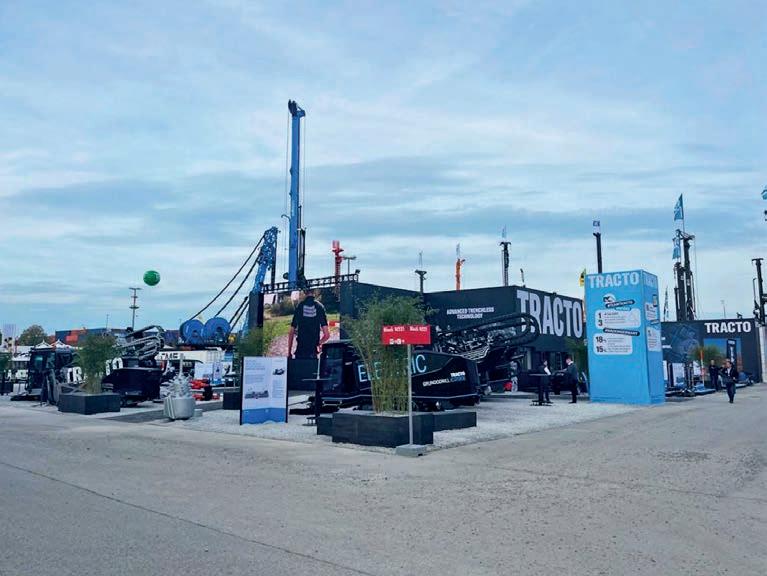
In October, TRACTO Australia hosted a group of contractors and partners from Australia and New Zealand at one of the world’s largest construction events in Munich, Germany. The group of almost 20 people made the pilgrimage to Bauma 22, and were in attendance to see the manufacturer’s launch of its latest horizontal directional drilling (HDD) machine, the GRUNDODRILL ACS300.
Bauma is the one of the world’s leading trade shows for construction equipment and machinery. This year the event boasted approximately 3200 exhibitors from 60 countries, while nearly 500,000 visitors from more than 200 countries descended on Munich, half of which travelled internationally to get to the event.
Fostering partnerships
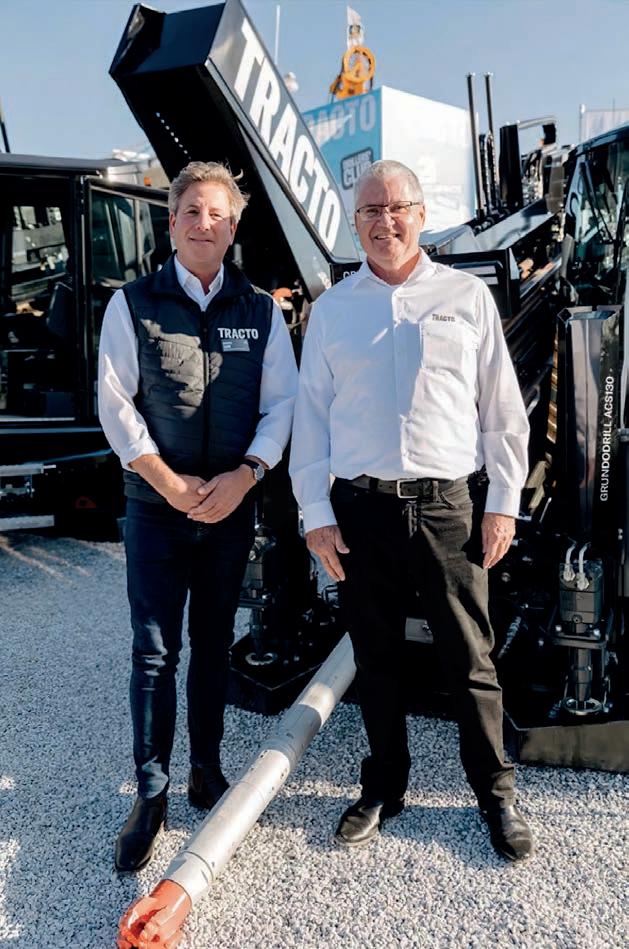
TRACTO Australia, led by Managing Director Jeff Rose and Sales Manager Daniel Toms, hosted a number of contractors and partners from Australia and New Zealand who had travelled over for the event.
Rose says the trip was an opportunity to further develop the relationships the Australian subsidiary has with its clients.
TRACTO’s most important event anywhere in the world,” he says.
“First and foremost, it was exciting to have some of our key partners from Australia and New Zealand here to see the event, and the launch of the machine in person.
“However, it was also an opportunity for us to further develop those relationships, ensuring we have a deep understanding of their needs, enabling us to determine how best to support them and the unique challenges they face.
“We also had key members of our engineering and design team, and service and support at the opportunity to speak directly with the people who
know the whole range of TRACTO machines better than anyone.”
During the course of Bauma, the manufacturer hosted a several networking events on its stand, giving the Australasian delegation an opportunity to learn more about the machines and also form relationships with TRACTO’s international team.
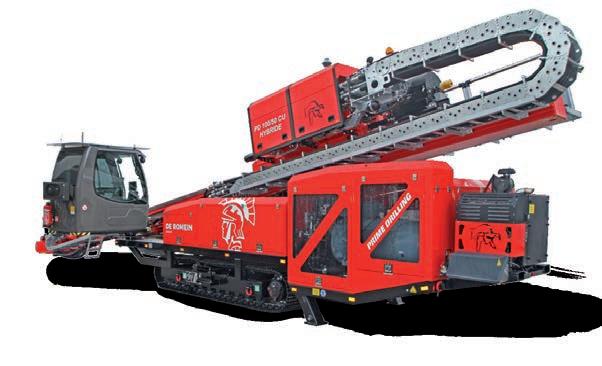
As the local agent for fellow German manufacturer Prime Drilling, the event also enabled the visitors to learn more about Prime’s range of HDD machines as well as the company’s wider team.
Intelligent new machine
The new GRUNDODRILL ACS300, which was launched at Bauma, exemplifies TRACTO’s commitment to providing the HDD industry with intelligent, no-dig solutions for intact infrastructure projects.
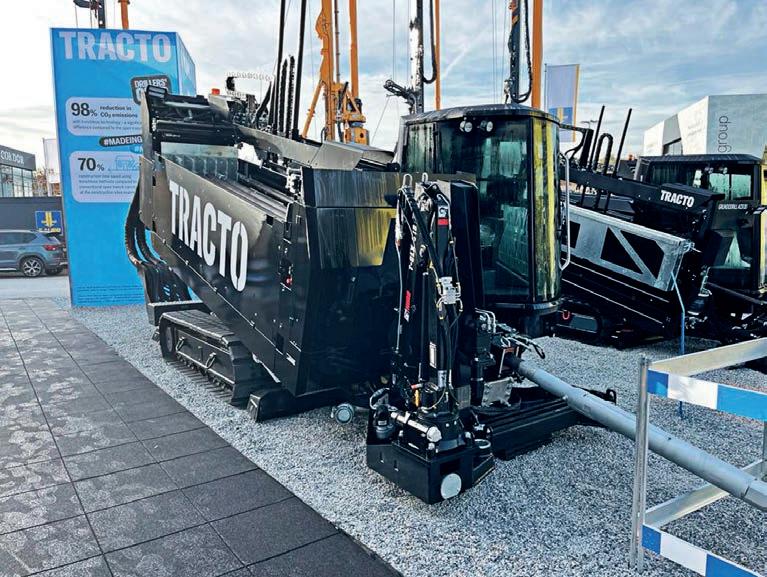
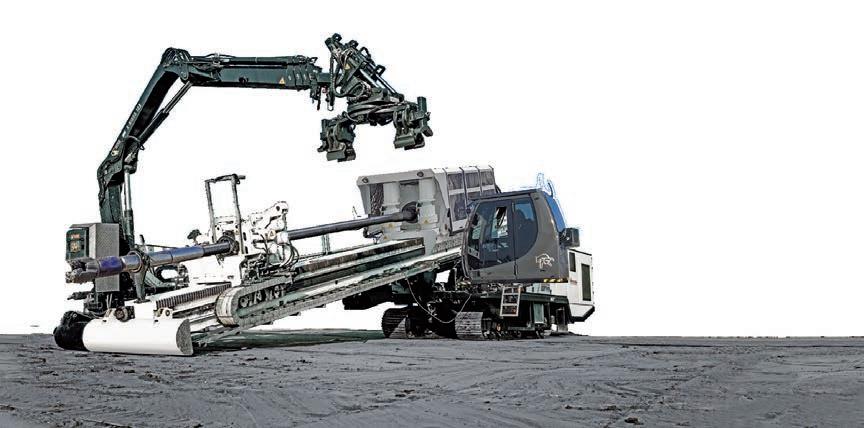
The most powerful rock drilling rig in its class, the newest addition to the GRUNDORILL range is equipped with the largest possible engine, powering a large drill rod magazine and designed to the latest concepts in HDD operations.
The ACS in the machine’s name stands for ‘all condition system’, reflecting the ACS300’s ability to drill in all geologies, up to and including solid rock.
The rig is loaded with features to guarantee success on the job and comfort for the
HDD 28
The new GRUNDODRILL ACS300 provides intelligent HDD solutions.
TRACTO attended Europe’s largest construction event.
operator: from a vibration-cushioned cabin with automatic air conditioning and electrical swivelling mechanism, to stabilisers that enable perfect alignment and positioning and an anchoring system that is perfect for anchoring it on the job site.
A hydraulic loading crane allows for the selfsufficient handling of additional drill rod boxes, single rods and accessories.
The rig combines significantly increased
functions identified for the best daily use on a jobsite.
This diversity in application comes down to the use of the highest quality materials, granting the machine maximum reliability and diverse application.
The GRUNDODRILL ACS300 will be available for Australian operators in 2023.
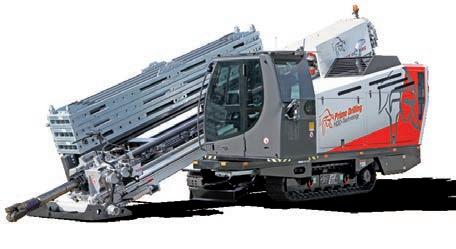
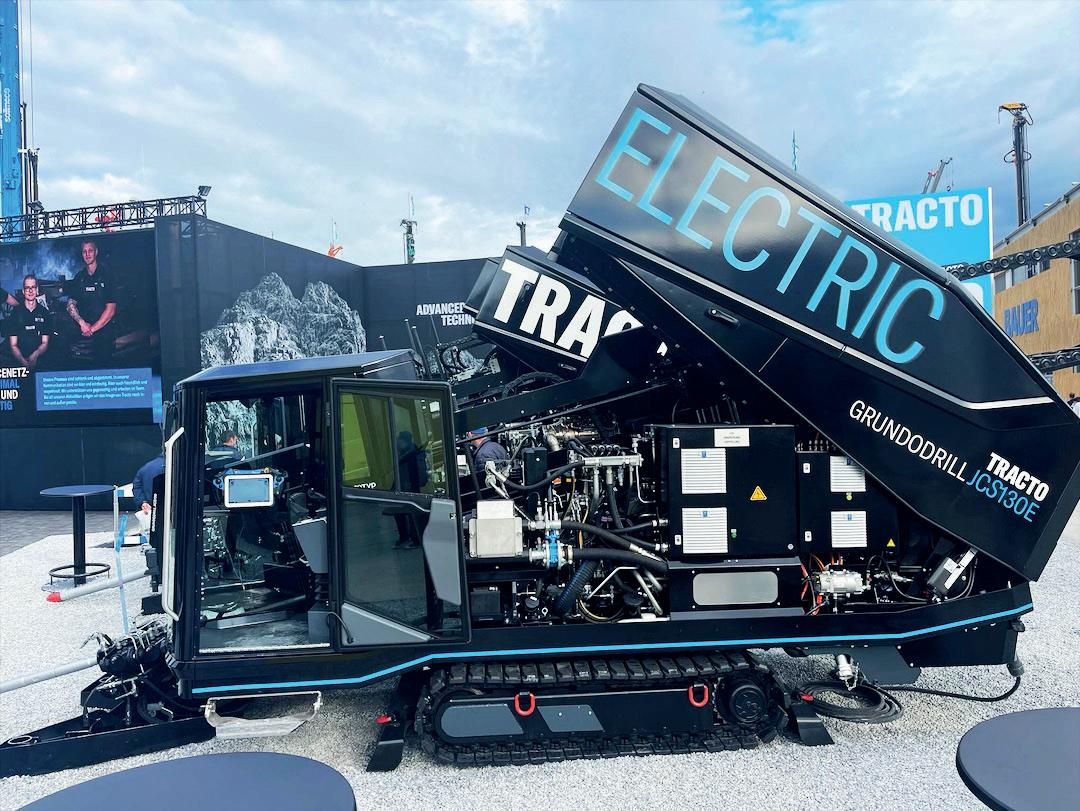
In addition to the ACS300, TRACTO also
exhibited a prototype of the company’s first electric drill, the JCS130 E.
According to the manufacturer, the continued development of the prototype is an opportunity to supply the trenchless solutions in a new and sustainable society.
The whole world of
HDD
We are distributed in Australia by: TRACTO-TECHNIK Australia Pty Ltd 10 Aliciajay Circuit, Yatala QLD 4207 Tel. +61 7 3420 5455 www.TRACTO-TECHNIK.com.au
more information visit
HDD Technology
For
www.tracto.com/AU
Sales Manager Dan Toms (left) and Managing Director Jeff Rose (right).
TRACTO
also exhibited a prototype of the company’s first electric drill, the JCS130E.
Prime Drilling: Putting the customer first
Prime Drilling has earned a reputation as a supplier of high-precision horizontal directional drilling equipment not only in Australia but across the world. Its drilling rigs are made from the highest quality materials, and developed and designed to be robust, reliable, and low maintenance.
made hardy, reliable rigs that have boasted lifespans of at least 40 years – the equivalent of approximately 40,000 hours of use.

“With the bigger rigs, our customers have very specific needs. They’ll come to us with a long wish-list and our designers work very hard to meet those demands,” says Kiesow.
The proof is in the product
Prime Drilling’s PD 45/19 CU is a consistent best-seller from its range of compact equipment. The machine demonstrates great efficiency and a small footprint, setting the standard for other compact rigs in the HDD industry.
It was designed with specific attention to optimising weight and size, keeping the cost of transport and set-up to a bare minimum. Its 205 kilowatts of power and 19,000 Nm of torque makes the PD 45 the rig of choice for customers who need guaranteed fast, economic, and uncomplicated operation.
a notable name in the global horizontal directional drilling (HDD) industry.
Mutual growth
Prime Drilling began as a manufacturer of custom built and designed HDD rigs, allowing the company to showcase its ongoing commitment to meeting the specific needs of its customer base.
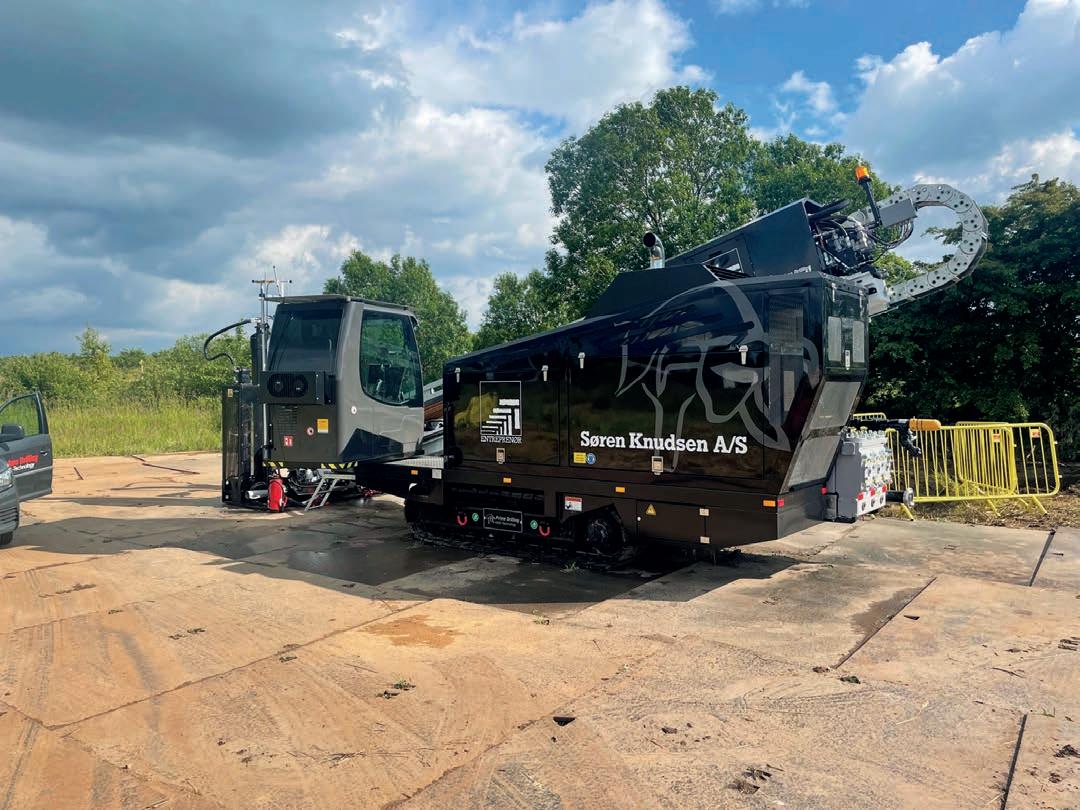
As Prime Drilling demonstrated that hard work and reliability makes the company shine, the satisfaction of its customers ensured that it could grow alongside operators in the HDD industry.
International Sales and Service Director, Ralf Kiesow, has watched Prime Drilling grow since he started with the company 18 years ago.
“Over time, as our reputation and our expertise grew, there became more of a demand for bigger machines,” says Kiesow.
He explains that there was a point in Prime Drilling’s history where it realised that it could

to meet those industry needs.
“From that realisation, we figured out that we could produce a standard model for this unit that could then be customised to suit the needs of specific clients,” says Kiesow.
Kiesow says a number of Prime Drilling’s products are gold standard and range from smaller compact units to the huge 150-tonne rigs that the company manufactures.
Built to last
The longevity of the manufacturer is due in part to the careful consideration that is made with regards to the availability of parts for its customisable rigs. By making its machinery compatible with a range of globally available standard parts, Prime Drilling ensures that clients can easy acquire replacements without the challenges usually involved in repairing custom rigs. The need to replace parts on Prime Drilling’s machines is not as common as operators think. The manufacturer has
Its CAT 7.1 ACERT motor features the latest emission standards and adjustable cooling systems, minimising fuel consumption and further optimising efficiency, while its feed and pull back functions for the hydraulic power rotary head are carefully driven by an internal rack and pinion feed system.
Power in people
Prime Drilling has grown steadily in small, deliberate steps. According to Kiesow, part of the reason for this is that the company has been sure that it is doing everything it can within its capabilities before expanding. The company also makes sure it’s investing in the right people.
“We’re very happy with the people we have,” says Kiesow. “Most of our people have been there since day one. Our people love what they’re doing; they live and breathe HDD.”

With its expertise in the HDD industry, and the focus on getting each step of its operations right, Prime Drilling has earned its place as a global manufacturer.
For more information visit www.prime-drilling.de/en
HDD 30 TRENCHLESS AUSTRALASIA DECEMBER 2022
Prime Drilling has perfected the design of its compact drilling rigs.
Packers: Drainchem now offer high quality pipe packers with or without bypass that are flexible for ease of installation. These high quality packers are available to suit pipe sizes 25mm up to 2000mm in diameter.
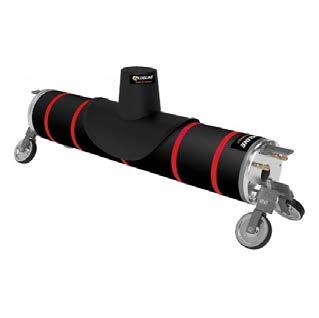
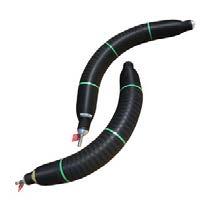





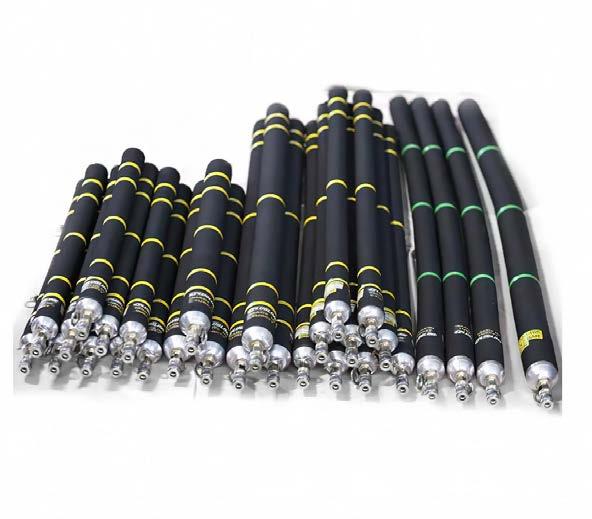
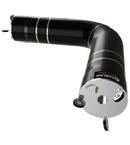
TopHat Packers: Drainchem have also introduced packers that allow the installation of top hats to laterals from mains and are available in 100x100mm, 150x100mm and 150x150mm.











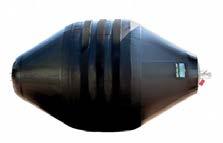
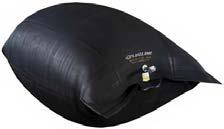
Cone plugs: Also new to the Drainchem range are inflatable Cone plugs to suit multiple pipe diameters chloroprene and Aramid fabric reinforced with vulcanized rubber. The Cone plugs fold down much smaller than a traditional rubber plug and this enables ease of access into pipes and manholes. Pillow plugs: Another exciting product is the Inflatable pillow plugs. Ideal for larger pipes. These are flat like a matt and can be rolled up to help installation into the pipe. Available in sizes 600-100mm up to 1800-2800mm
STOP PAYING TOO MUCH FOR PACKERS.
Drainchem 5 Avian Street, Kunda Park, 4556, Qld sales@drainchem.com.au 0499 758 448 WHR SWITCHER For cleaning 100-450mm pipes. WHR HYBRID SWITCHER For cleaning 100-900mm pipes. WGR SWITCHER For cleaning 200-900mm pipes. ★ ★ ★ ★ ★ Double the cleaning and thrust power with your existing pump. You save Time, Fuel, Labour and Wear & Tear on Pumps and Hoses. Use full pulling thrust to climb inclines and go upstream to problem area. Idle the pump down to “switch” jets to cleaning mode. Bring the pump back to pressure to begin cleaning/cutting mode. sales@drainchem.com.au | 0409 850 577 stoneagetools.com/whr-switcher | drainchem.com.au 1/2”, 3/4”, 1” available now. Contact Drainchem quickly! IF YOU’RE NOT USING A SWITCHER, YOU’RE ROOTED! Drainchem are proud to introduce an exciting range of Packers, Pillow Plugs, Cone Plugs and Lifting bags, now available in Australia.
M Tucker & Sons turns worksite waste into valuable resource
Civil and trenchless drainage specialist M Tucker & Sons is expanding its services it can offer customers and tackling no-dig waste at the same time.
In the trenchless industry, it’s well known that no-dig drilling (NDD) and horizontal directional drilling (HDD) are the methods of choice on projects that aim to minimise disruption and impact on communities and the environment.
The waste produced by these operations is one thing that has been consistently overlooked.
M Tucker & Sons is now set up to take what most operators consider waste and is transforming it into a useable product that can be used to give back to the community –concrete.
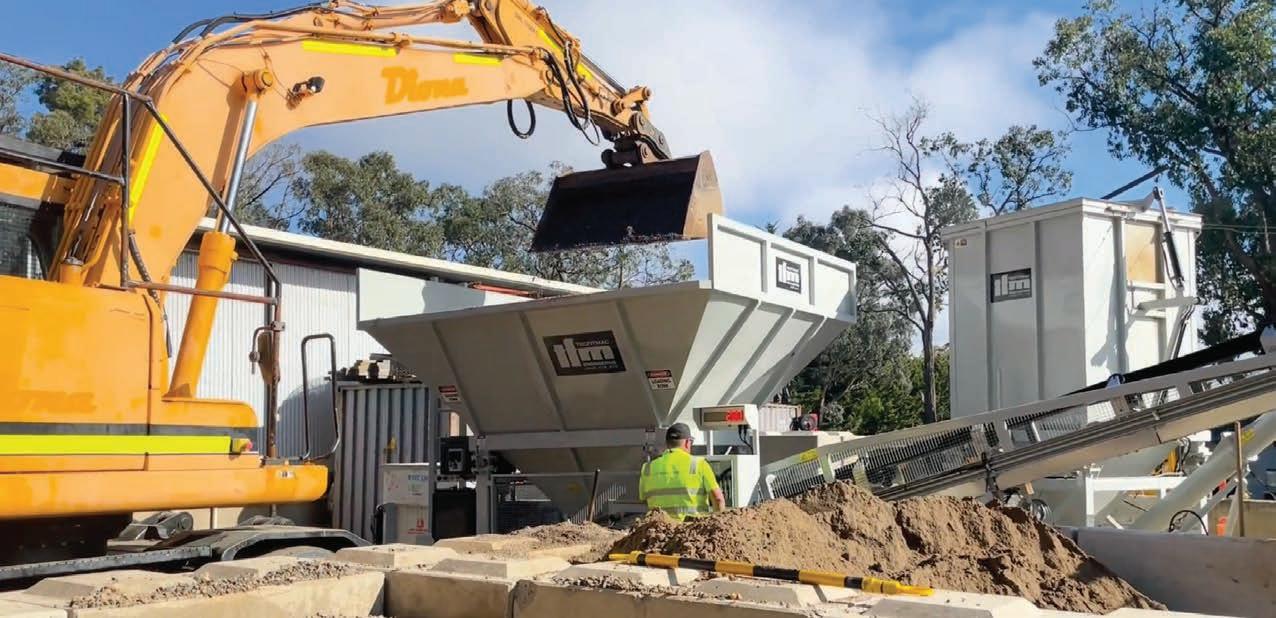
Disposal of waste from NDD and HDD isn’t free. There is a price associated with its collection, as well as fees at the landfill and the cost of trucking it to be thrown away.
Beyond that, there is an environmental cost. In a world where operators are becoming increasingly aware of sustainable practices, reusing waste products is as good as it gets.
A win-win situation
When the company owner Mark Tucker
came up with the idea, the focus was on landfill diversion. While NDD and HDD waste contains vegetation and other contaminants, it also contains all the crushed rock, sand and silt that can be repurposed.
By taking the waste product from work sites to the plant that the company set up at its headquarters in Mount Evelyn, east of Melbourne, the company is able to save money by refining it into concrete that could be transported back to the worksite. The product can be used to construct pits for construction projects, or even for pouredconcrete furniture, planter boxes, and community pathways.
“The goal is to team up with major construction projects to help them meet their sustainability goals, and to keep costs down. Manufacturing concrete also means we don’t have to buy quarry products, which reduces the carbon footprint of a project even further,” says Tucker.
The company is using the concrete on its own work sites, but Tucker says there is more than enough that can be used by one company.
The process
M Tucker & Sons is able to utilise waste not only from NDD and HDD projects, but also storm water waste, excavated material and waste pulled from gutters by local councils.
The waste-turned-resource comes in under an EPA licence where it is registered, stored, and then tested to determine its contents.
Once that’s done, the material pushed through a CDE G:MAX wet recycling system where it is treated and separated into real waste (plant matter and rubbish) and useable material – clean stone, sand and water.
Rocks are then sized so they can be used in different forms of concrete.
“We understand what we have. We have the data to show that we’re manufacturing structural concrete,” says Tucker.
An added benefit is the company doesn’t have to introduce water to the cleaning process. The water from the mud that comes in as waste is treated with special polymers and chemicals that help the solids settle during the cleaning process and can be collected and reused.
With increasing amounts of water
HDD 32 TRENCHLESS AUSTRALASIA DECEMBER 2022
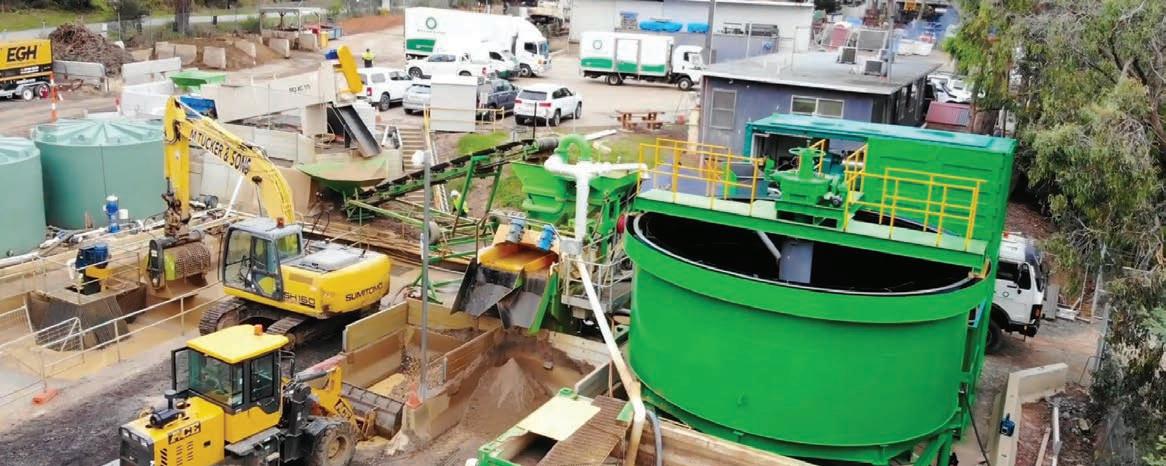
The plant can be set up temporarily on-site for larger projects.
being generated, M Tucker & Sons is now undertaking studies to determine how excess water can be made safe to use as part of the concrete itself, further increasing the amount of recycled material used, which is already 70 per cent.
Able to meet all needs
Tucker says that the entire operation is scalable, allowing the company to increase the amount of waste it processes, or
concrete it generates.
“If the project is big enough, we can set up on a temporary footprint, put a dewatering system there and create the product, the concrete, on site,” Tucker says.
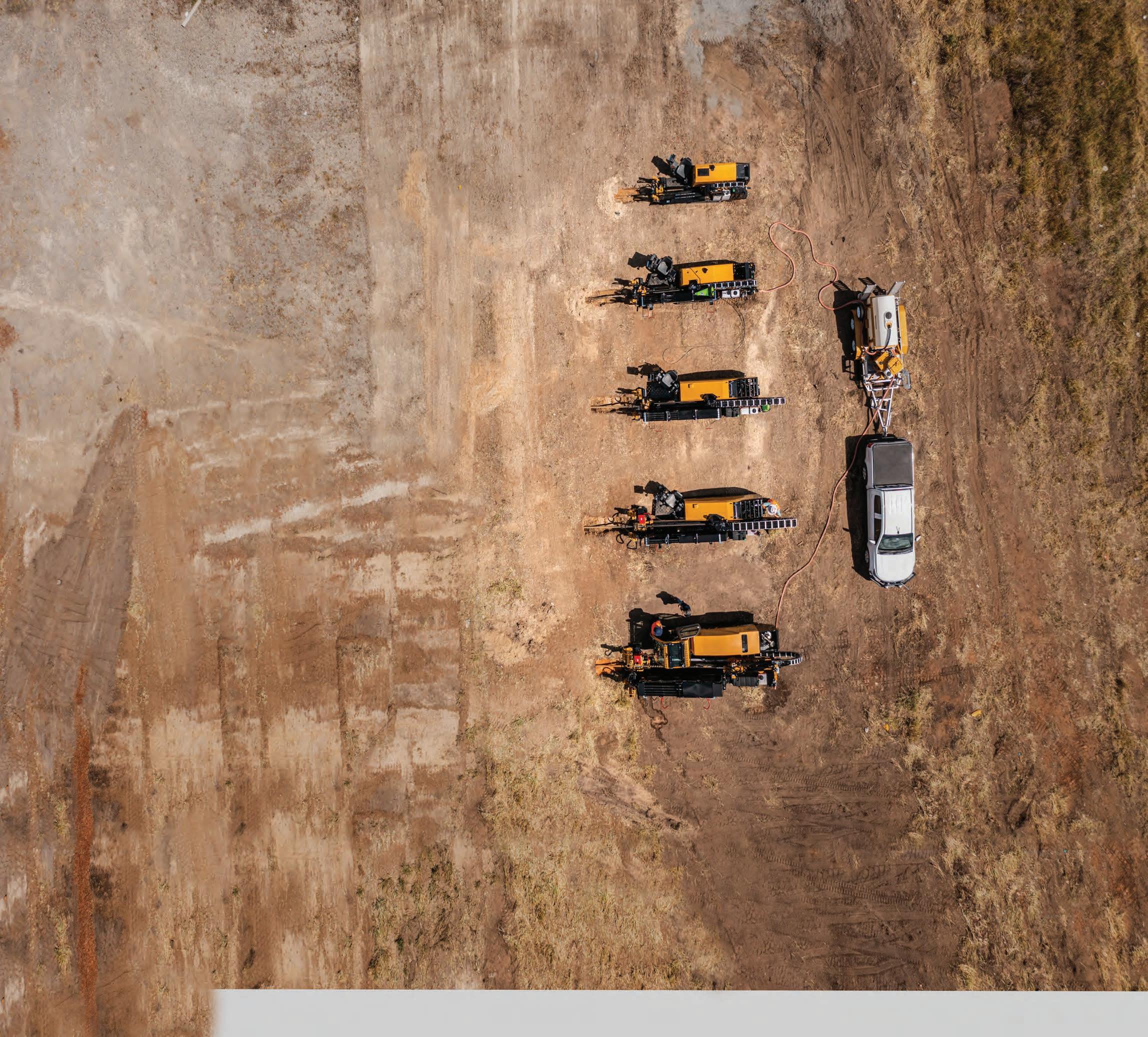
He says that, especially with the prevalence of no-dig options in urban areas with a lot of foot traffic, he would like to see concrete paths underfoot that came from the invisible projects that, despite best efforts, do have some impact on the community.
“It’s how we can give something back,” says Tucker.
Equipped with undeniable proof of the viability of its process, M Tucker & Sons can help industry operators across the civil and construction industry ensure the sustainability of their operations.
HDD
more information visit
Waste is treated, separated and turned into structural concrete. AUSTRALIA’S LEADING HDD SPECIALIST 02 4966 5583 www.maxibor.com.au admin@maxibor.com.au Follow us on LinkedIn, Facebook & Twitter » Quality and collaborative HDD design and construct services » Expertise to advise at the right time in the project delivery cycle » Gas, water and sewer, rail, road, power, telecommunications, mining, residential development, renewables and hydrogen » Maxi-rigs capable of long and wide diameter bores in hard rock and difficult conditions » Building a future we all look forward to Maxibor is using its design and construct expertise to deliver better project outcomes to asset owners and principal contractors alike DECEMBER 2022 TRENCHLESS AUSTRALASIA 33
For
www.mtuckerandsons.com
Vacuum excavator becomes tool of choice in council fleets
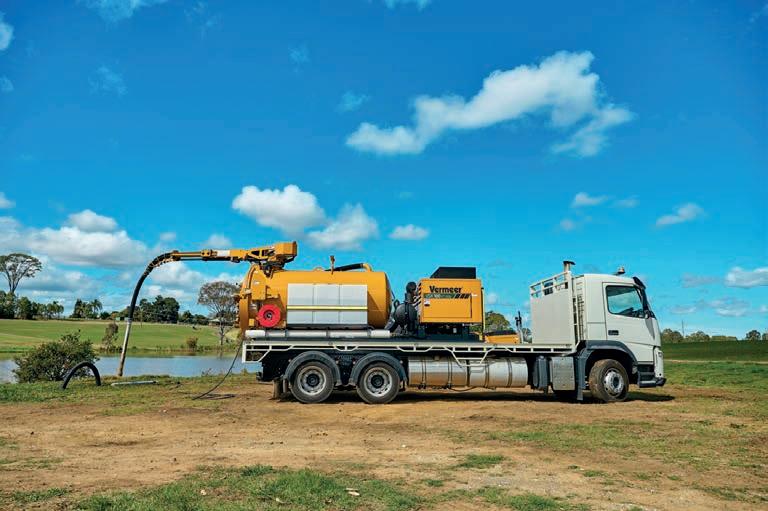
Vacuum excavators are the often unsung hero of the trenchless technology world, quickly and effectively moving soil when needed so that horizontal directional drilling can take place. But now, local governments across Australia and New Zealand are discovering a multitude of uses for vacuum excavators.
For the uninitiated, vacuum excavation, pressure water with an air vacuum, vacuum COMPACT FOOTPRINT. LOW NOISE. COMMON CONTROLS. From small but mighty clay and dirt drills, to large bore rock drills, Vermeer drill rigs are famous Australia wide. And now, with common controls, it’s easy for operators to transition from dirt to dual-rod rock drilling. Every Vermeer HDD Drill is about capability, productivity and profit. Get on board.
Talk to the leader in HDD today and visit your local Vermeer Australia branch.
HDD
YOU KNOW
which save
handling costs.
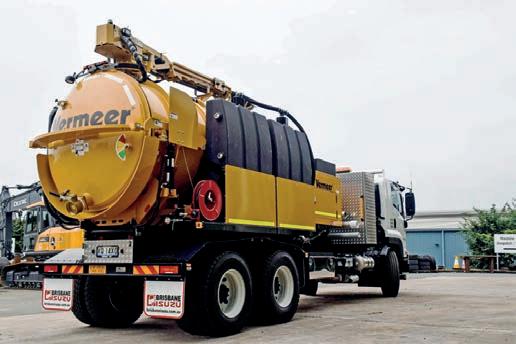
Vermeer manufactures a range of vacuum excavators
time, labour and material
inefficient methods of working.
“In Australia and New Zealand, communities are becoming less tolerant of works that impinge on their daily lives. They expect local governments and contractors to utilise construction methods that reduce the area required to carry out any works,” says Jeff Lawson, Vermeer Australia’s General Manager
footings for poles, signs and fence posts has become common.
One task that is often a challenge for councils is digging up and replacing existing utility poles that have either been damaged or exceeded their useful life. Using an excavator or backhoe to dig up the poles without disrupting surrounding utilities can present a difficult challenge. The
HDD
Vermeer and the Vermeer logo are trademarks of Vermeer Manufacturing Company in the United States and /or other countries.
Product specifications are subject to change by OEM. © 2022 RDO Equipment Pty Ltd (trading as Vermeer Australia). All Rights Reserved.
Vacuum excavators excel in a range of applications in the trenchless industry.
Pace Drilling proud to partner with horizontal drill specialists Ditch Witch CEA
Ditch Witch CEA is helping New South Wales horizontal drilling company Pace Drilling with a range of construction challenges.
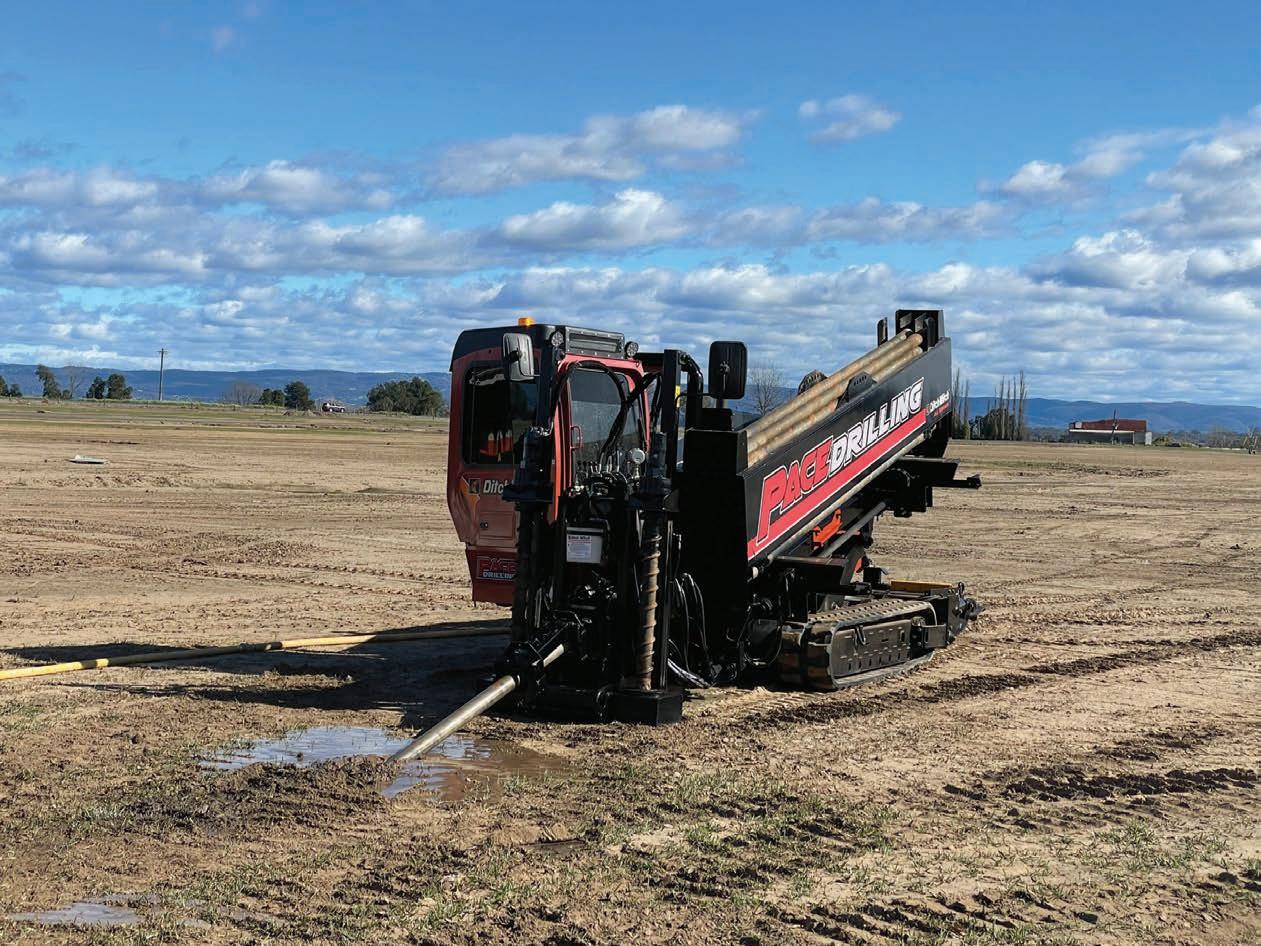
Founded in 2004, Pace Drilling has grown to be one of the most respected and reliable horizontal directional drilling (HDD) specialists in New South Wales.
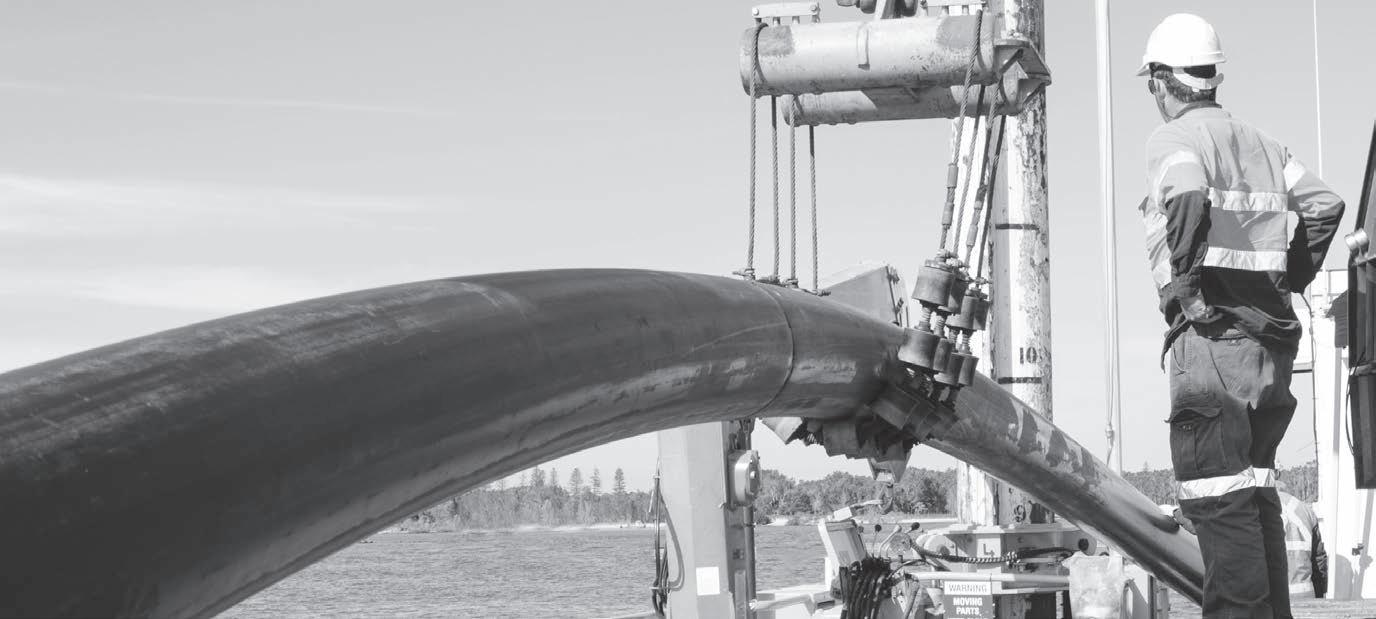
With a track record of cost-effective and quality methods, as well as continually meeting the challenges each construction job requires, Pace Drilling has the expertise and equipment to get the job done.
Pace Drilling has worked on a multitude of projects involving different conditions and challenges including motorway crossings, river crossings, rail corridor crossings and suburban street works.
Aaron Pace, Pace Drilling Primary Driller, has worked in the family business for over a
following bore designs. These skills are ones that I’ve built over several years and I’ve been fortunate enough to have been able to learn from the founder and father of the company, Simon Pace.”
Pace Drilling initially used a relatively small drill rig, which was rated at 20,000 pounds of pullback and was not rock capable, in 2004. Subsequently, the company was limited to completing smaller bores to a maximum distance of 100 m.
Over the years the business has been able to upgrade to newer and more capable equipment. Now the company operates with two drill rigs – the Ditch Witch AT30 and AT60 – both of which are all-terrain machines
Park stage 3 upgrade on behalf of Georgiou, the Nepean Hospital Underbore, and the M4 Motorway Crossing.
The AT60 drill rig is well suited for much larger projects. Pace Drilling is currently completing bores of up to 450 m in length, with their drill, and are capable of larger diameter bores pending ground conditions. Pace Drilling has used the AT60 on projects such as the Western Sydney Airport upgrade on behalf of Sydney Water and Quickway’s Sydney Metro West 33Kv Underbore Crossing.
Optimised for industry-leading performance and productivity when drilling in hard rock conditions, the Ditch Witch AT30 is designed with an advanced version of the proven Ditch Witch all terrain drilling system.
The updated, two-pipe system boosts power to the bit—33 per cent more torque than the competition. The drill leverages the next-generation features of the JT40 model so operators get increased jobsite cycle times, improved durability, and greater control.
“The power enabling works for the Sydney Metro located in Rozelle on behalf of Quickway stands out as an especially proud moment for the team,” says Pace. “The works were completed across Victoria Road and were a dual bore, with each bore being large in diameter and containing multiple electrical
Pace Drilling has been working with Ditch Witch CEA for over 16 years, having purchased its first drill rig in 2007. Since then, Ditch Witch CEA has proved its dedication to delivering the highest level of product support
Employing factory-trained sales and service specialists who are dedicated to supporting clients and all machinery requirements, Ditch Witch CEA is equipped with the expertise and knowledge to help businesses like Pace Drilling develop a strong reputation in the industry.
“Ditch Witch CEA is always willing to provide on-site service whenever called upon to ensure completion of the project is at a high safety standard,” says Pace. “CEA has proved
HDD
Founded in 2004, Pace Drilling has grown to be one of the most respected and reliable horizontal directional drilling specialists in New South Wales.
that we always have their support as a Ditch Witch owner; all the way from the dealership to parts and service.
both powerful and reliable, providing cutting edge technology. The capability to drill and steer in hard rock has assisted us over the years to achieve many successful bores.”
Pace Drilling is accustomed to putting in the hard work and dedication needed to provide
records are meticulously kept. It seems like a little thing, but that attention to detail is key.”
Looking to the future, it seems the only way to go is up – the company has been awarded
several projects with clients including the Botany Duplication project and the South Erskine Zone Substation.
These projects are yet another exciting chance for Pace Drilling to flex its expertise and prove that this family owned and operated company is not to be underestimated.
“In the future, I see Pace Drilling keeping our high work standard and ethic by achieving our clients’ needs within budget and as safely as possible,” says Pace.
“As a company, Pace Drilling is aiming to continue becoming more sustainable and environmentally friendly. With new and innovative technologies arising and evolving, Pace Drilling is always trying to stay ahead of the trend when it comes testing these new technologies to help reduce our carbon footprint.”
Supporting the company during this exciting time, Ditch Witch CEA is committed to continuing to provide Pace Drilling with expert advice on what equipment best suits the company’s needs and ensuring each piece of machinery is of the highest quality.
For more information visit www.ditchwitchcea.com.au.
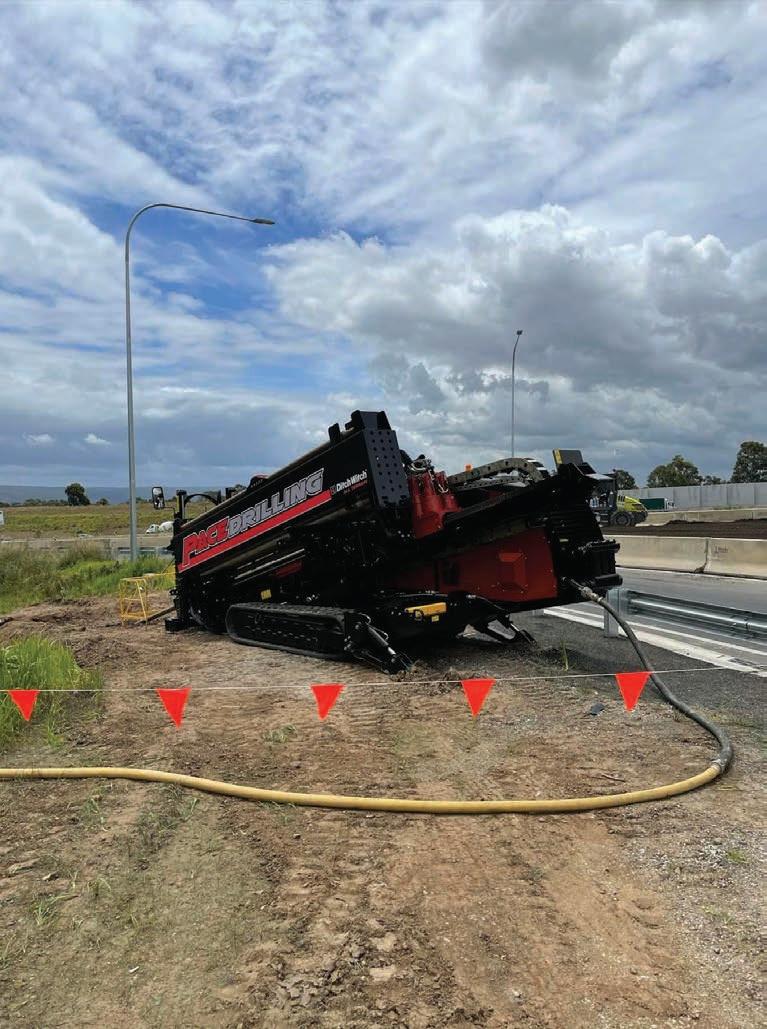
able to upgrade to newer and more
equipment.
INTRODUCING Market Leaders in Trenchless Technology. Yes, we’re direct. directhitt.com.au E. info@directhitt.com.au T. +61 419 794 336 — Eamon Foley If you’d like to know more about the potential of trenchless solutions including Horizontal Directional Drilling or Laser-Guided Microtunnelling for your next project, get in touch with a professional or visit our new website. ©KitBits
Over
the years the business has been
capable
Now
the company operates with two drill rigs – the Ditch Witch AT30 and
AT60.
Michels’s commitment to safety spans the globe
Safety is critical to the success of an energy construction project. More importantly, it is the basis of a strong energy construction company. Michels Trenchless, part of the Michels family of companies, demonstrates its commitment to safety by using it as a framework of its first core value: Safety is the cornerstone of our culture.
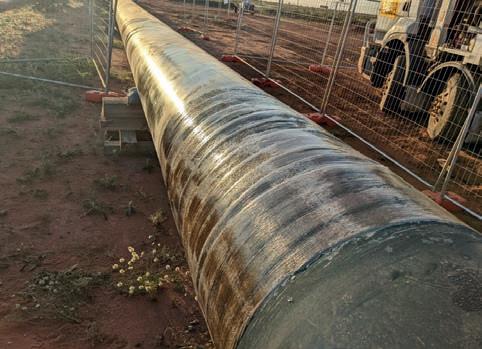
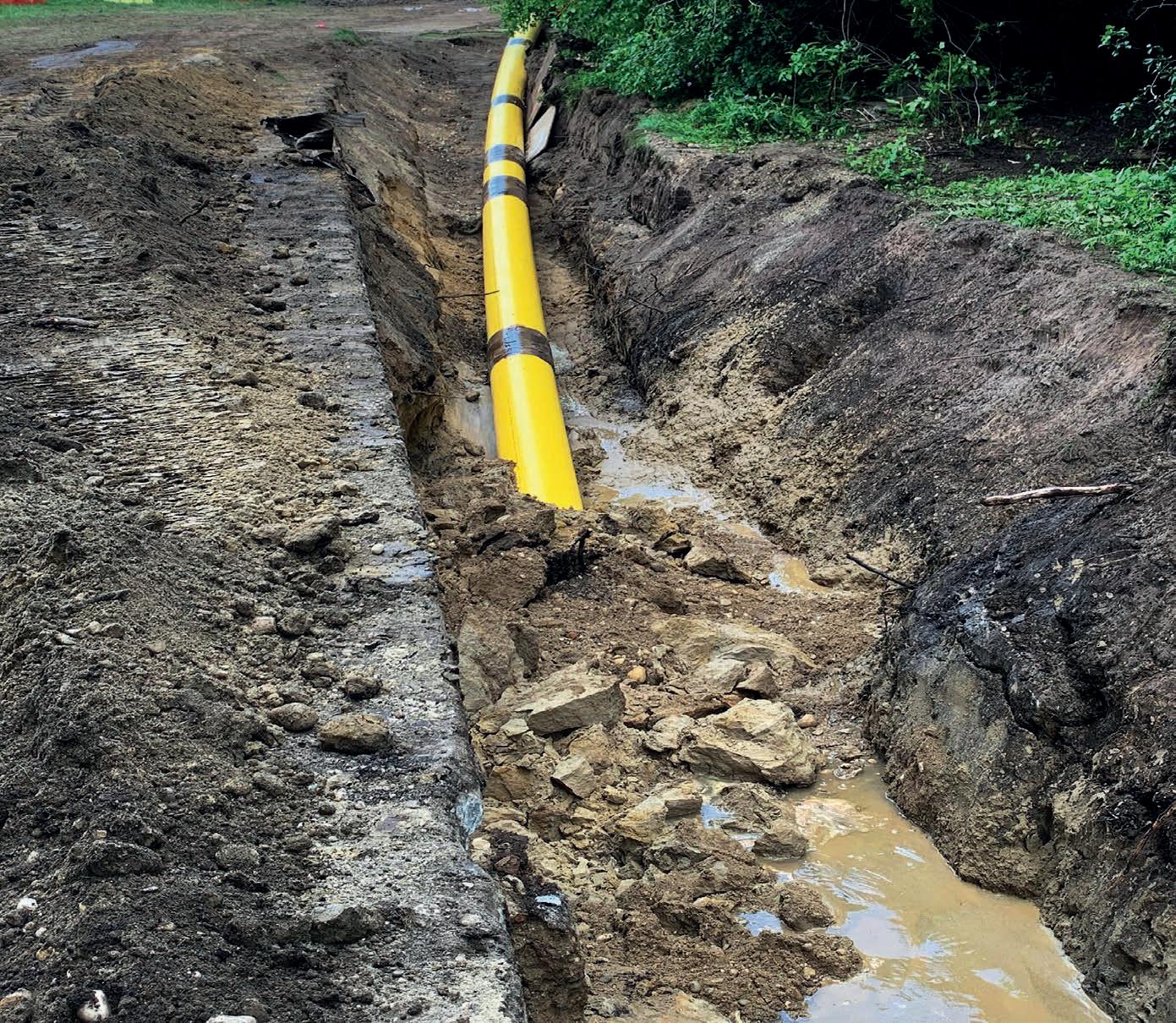
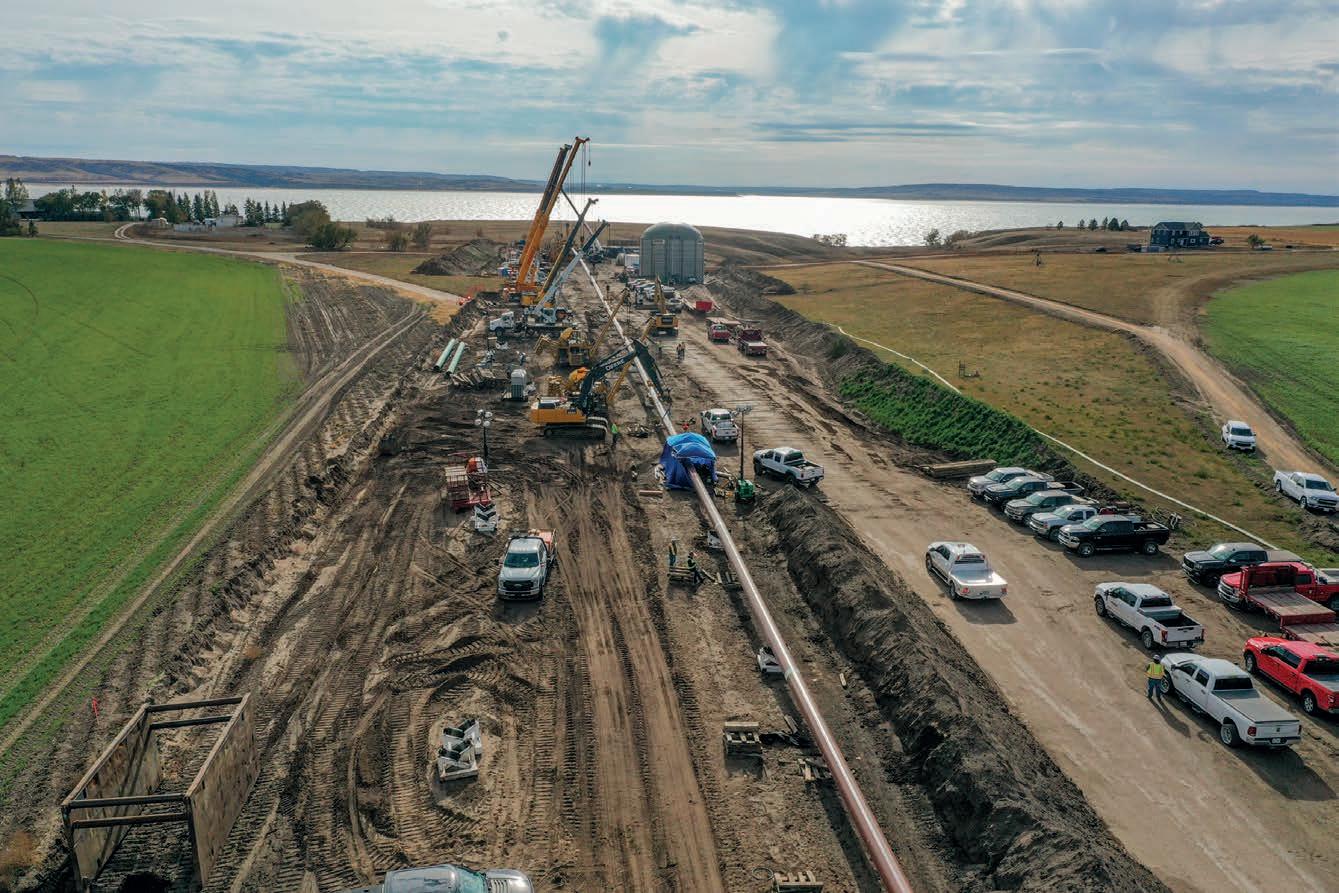
Michels has expanded its international footprint to Australia, selectively specialising in technically challenging trenchless installations in Australia. This is to ensure customers are provided with reliable, unobtrusive service in metropolitan and remote areas. The team consists of Wangaratta-based project management, HSE and field staff supported by industry experts at its international headquarters in Brownsville, WI, USA.
Founded in the Midwestern United States in 1959 as a regional natural gas distribution company, Michels quickly expanded its services to meet the evolving needs of established and new customers. In 1988, Michels entered the horizontal directional drilling (HDD) market, offering a safe, environmentally sound way to install utility lines in areas where traditional open-trench construction would not be practical or feasible.
Keeping with Michlels’s spirit for innovation, the trenchless team has grown and advanced with the industry. By building a reputation for completing some of the world’s most challenging, significant installations, Michels has expanded the capabilities of its team and custom designed and fabricated equipment. The company has completed more than 225 pilothole intersect HDD projects and drills in excess
is being completed, it is backed by Michels’s extensive programs focused on ensuring the safety of everyone who works on its projects. Michels’s Stop Work Promise asks everyone to make a promise to their families, friends and co-workers to stop or not perform any work or action that is or appears to be unsafe without fear of repercussion, whether on the job or in their personal lives.
Michels’s mission is to ensure its people return home safely each day. Projects are supported by a team of nearly 200 trained HSE professionals, including those in Australia, who work with field crews to ensure safety by providing training,
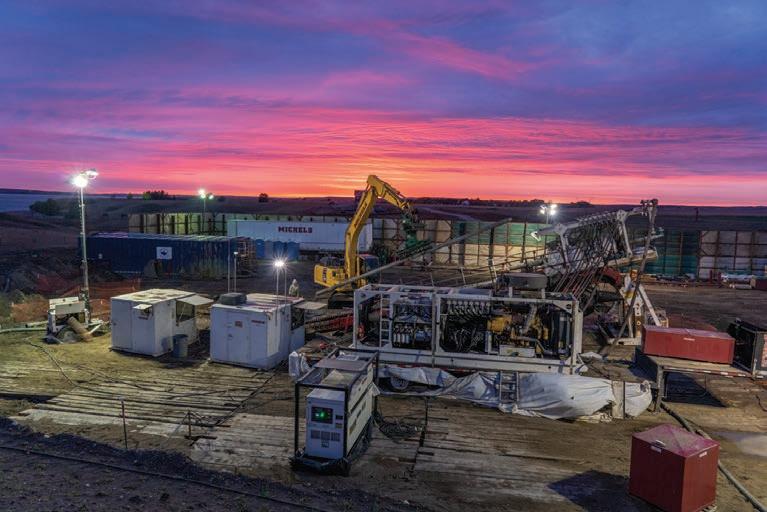
Michels is honored to have been recognised by the national awards programs for the results of its safety culture.
In 2022 and 2021, Michels Canada was named the Gold Winner for Canada’s Best Health & Safety Culture in the Canada’s Safest Employers Awards program. Michels was also honored to receive the 2021 Distribution Contractors Association Arthur T. Everham Safety Award (first place), the 2021 ASDC Outstanding Safety Award, and the 2021 ASA Chicago Bronze Safety Award, among others.
For more information visit www.michels.us
HDD
Michels’s mission is to ensure its people return home safely each day.
38 TRENCHLESS AUSTRALASIA DECEMBER 2022
Michels has expanded its international footprint to Australia, selectively specialising in technically challenging trenchless installations to ensure customers are provided with reliable, unobtrusive service in metropolitan and remote areas.
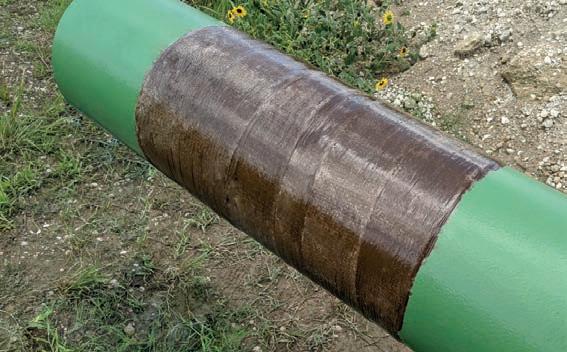
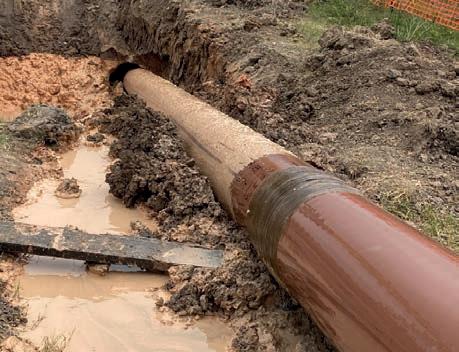
LEADERS IN CORROSION PREVENTION AND SEALING TECHNOLOGY DENSO BORE-WRAP ™ FIELD-APPLIED ABRASION RESISTANT OUTERWRAP(ARO) Scan this QR Code or visit www.densoaustralia.com.au/products/denso-bore-wrap/ to LEARN MORE SUITABLE FOR: Trenchless Installation, Horizontal Directional Drilling and Boring as well as the protection of Mainline and Field Joint Coatings FOR CORROSION PREVENTION DENSO®
corrosion prevention and sealing technology.
service to industry,
field joint coating solutions offer reliable
cost effective protection for buried
Australia & New Zealand United Kingdom, UAE & India USA & Canada Republic of South Africa www.densoaustralia.com.au www.denso.net www.densona.com www.denso.co.za A MEMBER OF WINN & COALES INTERNATIONAL
are leaders in
With over 135 years’
our mainline
and
pipelines worldwide.
Anti-corrosion measures tailormade for every solution
Denso Australia offers the complete range of corrosion prevention technologies to its customers. Its systems are made for individual anti-corrosion and sealing troubleshooting, as well as being
Denso Australia, a subsidiary of Winn and Coales International, was founded in London in 1883 and is one of the leaders in corrosion prevention and sealing technology. The Denso range of products has been used successfully for close to 100 years and has a proven track record with verifiable case histories.
The Denso range comprises a variety of specialised pipeline, structural and marine protection systems. The company offers concrete and tank coatings, including tapes, brush and spray-applied liquid coatings, abrasion resistant outer-wraps, mastics, primers, and sealants based on materials such as petrolatum, butyl rubber, bitumen, plastics and epoxy resins.
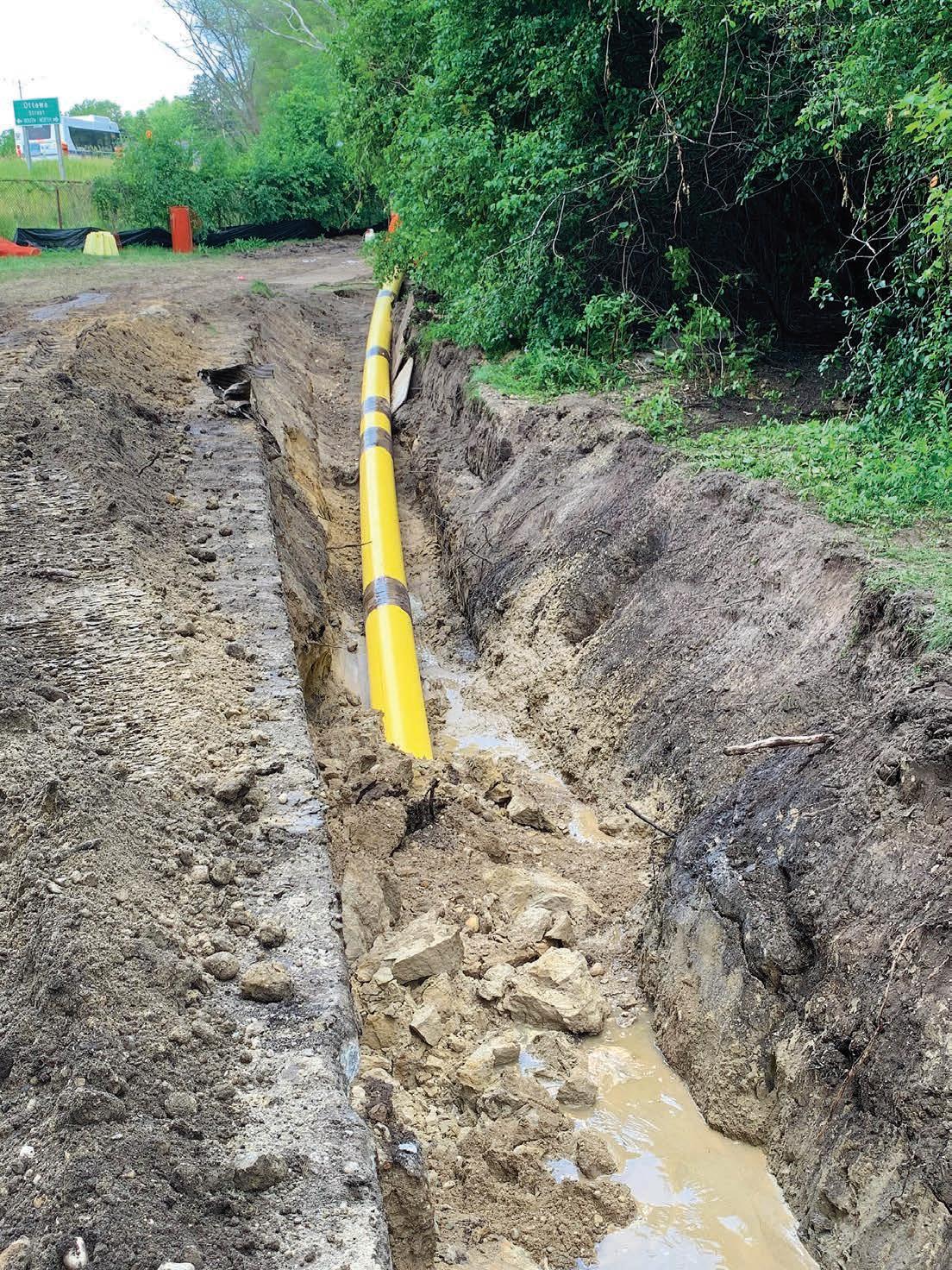
Systems are tailor-made for individual anti-corrosion and sealing problems developed with the realities of an on-site application in mind. The company’s extensive product range is suitable for use in a wide range of highly corrosive environments and operating temperatures.
Protal 7700™
Denso’s Protal 7700™ is a state-of-the-art, solvent-free high-build epoxy. The Protal 7700 is an environmentally friendly, fast cure coating
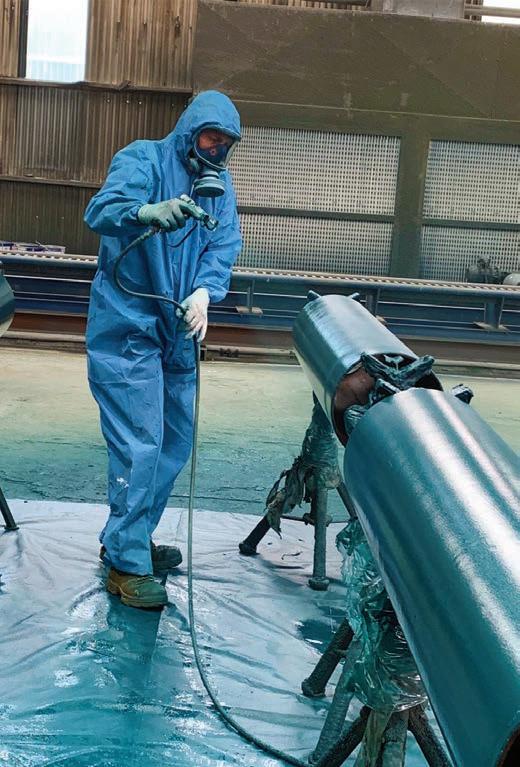
REHAB & REPAIR
Denso Bore-Wrap™ is an abrasion-resistant outerwrap, with outstanding performance against impact, gouge, abrasion, and fracture.
The Protal 7700 is an environmentally friendly, fast cure coating that exhibits superior adhesion, gouge, and impact resistance.
Denso Australia’s Campbellfield office.
that exhibits superior adhesion, gouge, and impact resistance, as well as excellent cathodic disbondment, flexibility properties and abrasion resistant characteristics.
Denso Bore-Wrap™
The company’s Denso Bore-Wrap™ is an abrasion resistant outer-wrap (ARO), with outstanding performance against impact, gouge, abrasion, and fracture. The Denso Bore-Wrap creates a superior
sacrificial outer laminate layer, which protects both pre-approved field joint coatings and mainline coatings. This includes: liquid epoxy coatings, heat shrink sleeves, 3LPE, 3LPP and FBE coatings— from damage during pipeline installations, in difficult terrain or by means of trenchless installation methods, such as directional drilling, horizontal directional drilling (HDD) or boring.
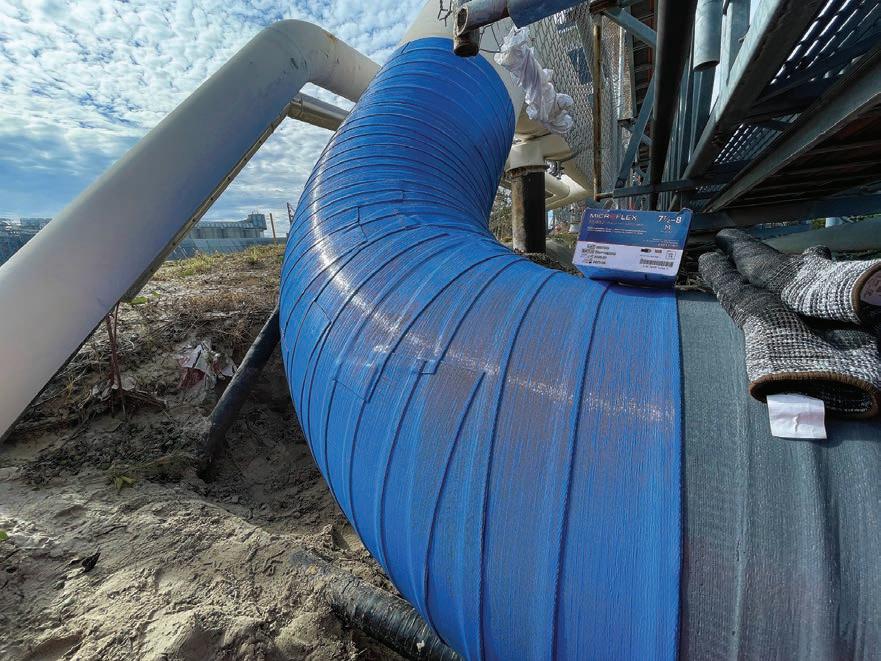
It is easily applied in the field; there is no mixing required. It is simply wrapped
over the existing pipeline coating and cured with water.
Due to its flexibility and exceptional level of mechanical protection, Denso Bore-Wrap minimises the need for costly spot repairs or re-pulling pipe due to damage.
Viscotaq™ acquisition
In May 2021, Winn & Coales International acquired the global business of Viscotaq™, including Amcorr Products & Services.
Amcorr Products & Services, based in San Antonio, USA, is the formulators and manufacturer of the viscoelastic and self-healing protective coating and sealing technology known in the marketplace as Viscotaq. The patented Viscotaq product range is used for corrosion prevention and sealing applications on vital infrastructure across a broad range of sectors.
The acquisition of Amcorr has since been a major stepping stone for Denso, as the Viscotaq product line enhances and complements Denso’s existing range of coatings. Denso is now able to offer the complete range of corrosion prevention technologies to customers.
For more information go to www.densoaustralia.com.au
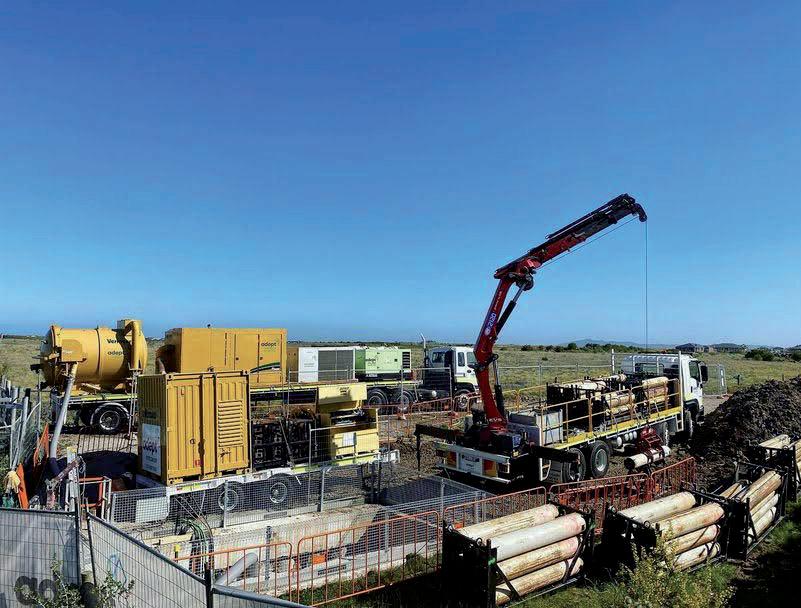
REHAB & REPAIR DECEMBER 2022 TRENCHLESS AUSTRALASIA 41
Adept Civil Group specialise in Laser Guided Tunnel Boring. Bores that require accurate grades or When accuracy and reliability are important contact Adept Civil Group. T: (03) 9863 9530 or 0416087254 Email: info@adeptcivilgroup.com quentin@adeptcivilgroup.com www.adeptcivilgroup.com.au The Viscotaq product line enhances and complements Denso’s existing range of coatings.
Sewer cleaning just got easier
Drainchem is the provider of StoneAge Tools’ cutting-edge nozzle range – the Magnum series.
StoneAge Tools, the makers of one of the world’s best sewer jetting tools, have developed a high-spec nozzle range called the Magnum series.
The series showcases a number of key features including:
• ½-inch to 1-1/4-inch inlet options.
• Suitable for recycled water.
• Increased service life of 1600 hours between seal change.
• Suitable for 150-900 mm pipe (depending on pump capacity).
• Operating pressures from 83-345 bar.
• Operating flows from 50– 450 lpm.
• Reduces toilet blow outs.
• Increased pulling power and cleaning power.
Versatile and powerful
The Warthog Magnum Switcher head is two powerful tools in one. The most significant design change from the classic model is that the Switcher has two sets of jets that operate independently.
One set of jets has one forward and several rear jets (the number of which depends on flow and pressure of the operator’s jetter) and is used to jet up the line, punch through the blockage and reach the upstream manhole.
This angle change increases the thrust or pull of the nozzle when jetting up the pipe, allowing operators to reduce flow and pressure while jetting up the pipe. Doing so reduces the likelihood of breaking a water seal at the house or blowing the toilet.
If the grade is very steep or a very long run, then increasing the pump speed will deliver
much more power.
Once the nozzle reaches the upstream manhole the operator simply reduces the water pressure to below 500 psi and then increases the pressure back to operating pressure. The Switcher will change the direction of water flow from the front and rear jets to the side cleaning jets.
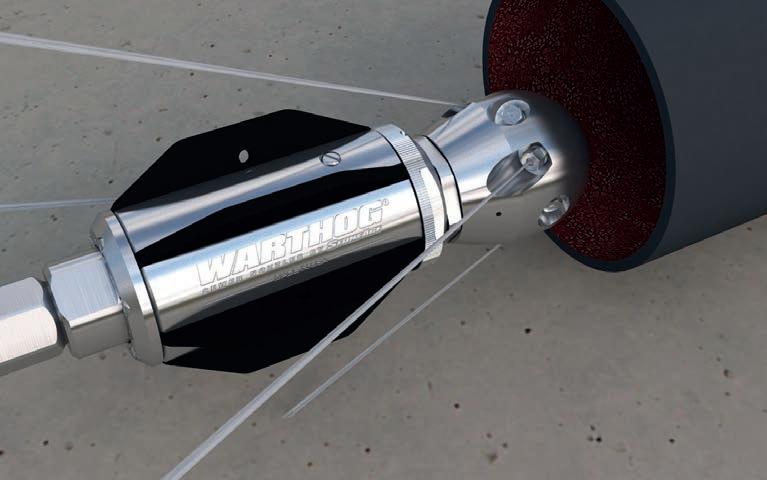
The angle of the cleaning jets is just below 90 degrees which, along with a much shorter distance of travel from the nozzle to the pipe, increases impact pressure on the debris in the pipe and hugely increases cleaning power.
Easy to use
The operator can easily tell if the Switcher is in jetting mode or cleaning mode, as it will not propel up the pipe if it is in cleaning mode. In jetting mode, the hose will pull strongly, allowing the Switcher to be used easy and intuitively.
The Switcher will clean faster – only one pass
is required for a total clean. Drainchem states this results in less water usage, reduced cleaning time, fuel consumption and cost, less wear and tear on valuable jetting equipment, and less wage costs and, more productivity.
The Warthog Switcher tools are one of the most flexible controlled rotation sewer cleaning nozzles on the market. The Switcher is designed to successfully remove obstructions in pipes ranging from 150-900 mm and to be used with at flows from 50-450 lpm. The product also features a range of hose connections in ½-inch to 1-1/4-inch.
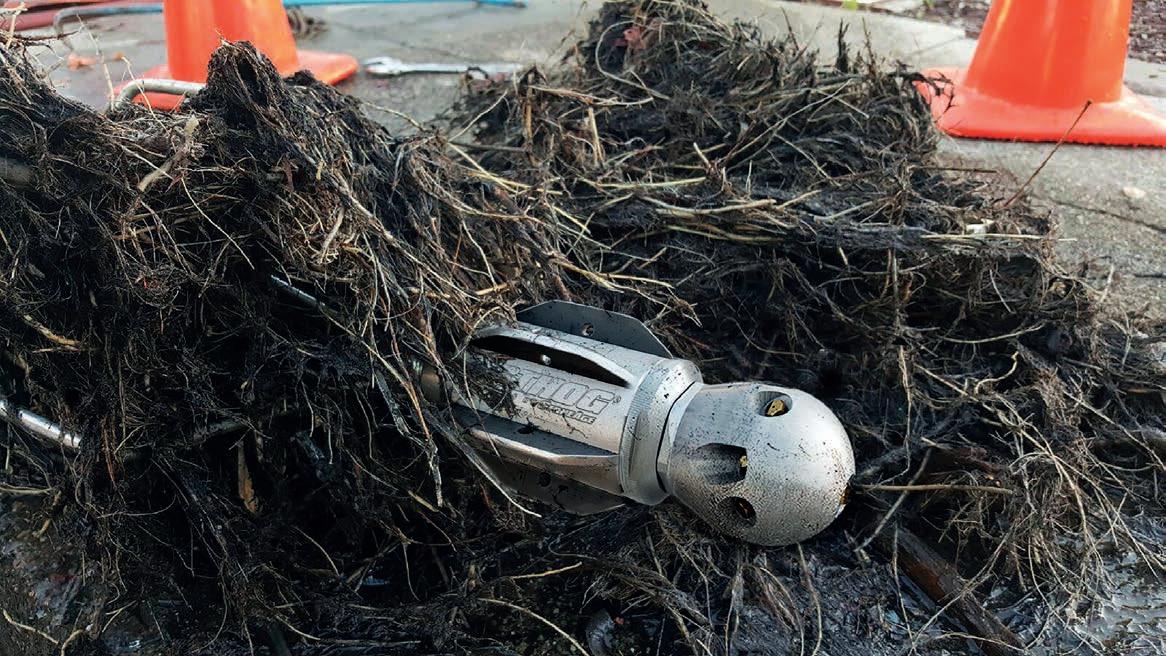
As two tools in one, the Switcher is the only tool a sewer jetting truck needs. Drainchem can assist customers in increasing cleaning power without the expense of purchasing a bigger truck.
For more information visit www.drainchem.com.au
42 TRENCHLESS AUSTRALASIA DECEMBER 2022
The Switcher only requires one pass for a total clean.
The Switcher is designed to successfully remove obstructions in pipes ranging from 150 to 900 mm.
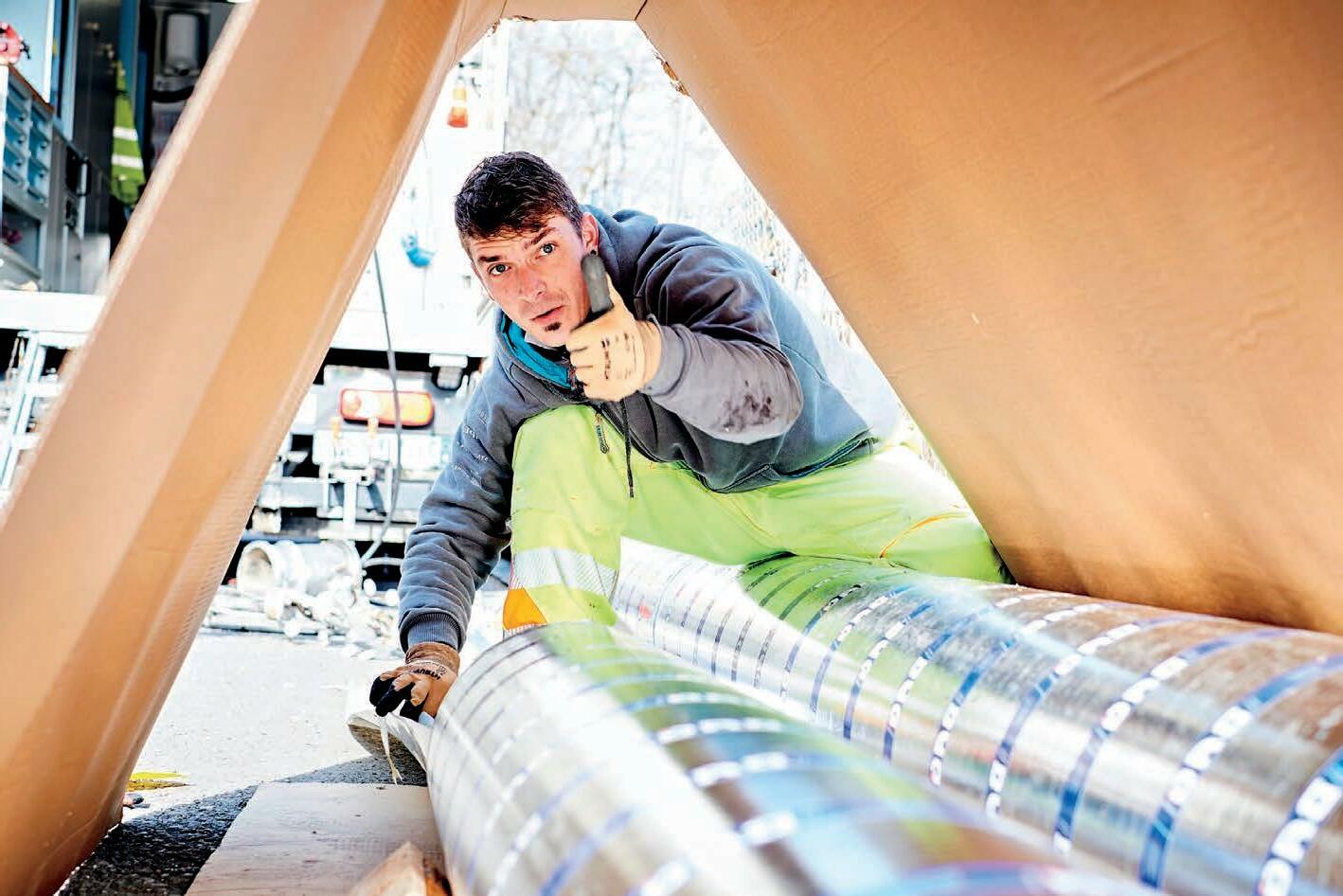

Manufacturing Leader
CIPP Solutions We are a We are the world’s leading manufacturer and supplier of fiberglass reinforced liners for trenchless pipe rehabilitation, Cured-In-Place-Pipe (CIPP) solutions. We are reliable solution partners at all times, and commit ourselves to the highest future-proofed quality and to environmentally conscious conduct. About Us Wherever you're based, we're ready to help. Australia-Wide Our activities are always resource-saving and environmentally conscious. Environmentally Conscious IMPREG CIPP liner systems for UV curing are used and trusted all over the world. Globally Trusted Our Service Why Choose Us? www.impreg.com Our warehouses are fully stocked. Contact us today to secure your pipe rehabilitation project this summer. sales-apac@impreg.com
Global
in
Smart Lock makes short work of sewer drain repair in Hong Kong
When the Hong Kong Drainage Services Department identified a badly damaged pipe, it was Smart Lock’s sleeve solution that empowered contractors to successfully rehabilitate the damaged section.
would be undertaking the work.
The installation took place in normal working hours in September 2022. The depth of the access shaft required a crane to lower the installation equipment and the 825 mm stainless steel sleeve. This was not a job for rope-lowering and retrieval.
After all pipe surfaces had been cleaned using high pressure water jetting, the Smart Lock wheeled-installation-trolley was set up and a trial placement was carried out to gauge position and pipe entry clearances.
With everything in order, the Smart Lock sleeve was positioned on the trolley at transport holding pressure. The trolley was pushed into the pipe and centred on the pipe defect. An installation air pressure of 35 psi was applied to the Smart Lock via the packer.
Challenging from the start
The concrete drainage pipe was aged, partially collapsed, and had sustained severe damage from hydrogen sulphide attack.
Freyssinet Hong Kong was engaged by the Department to carry out a DN825 repair on the pipe. It was a challenging task from the start, with an access shaft required to commence the rehabilitation and other associated works that needed to be done on the important drainage asset.
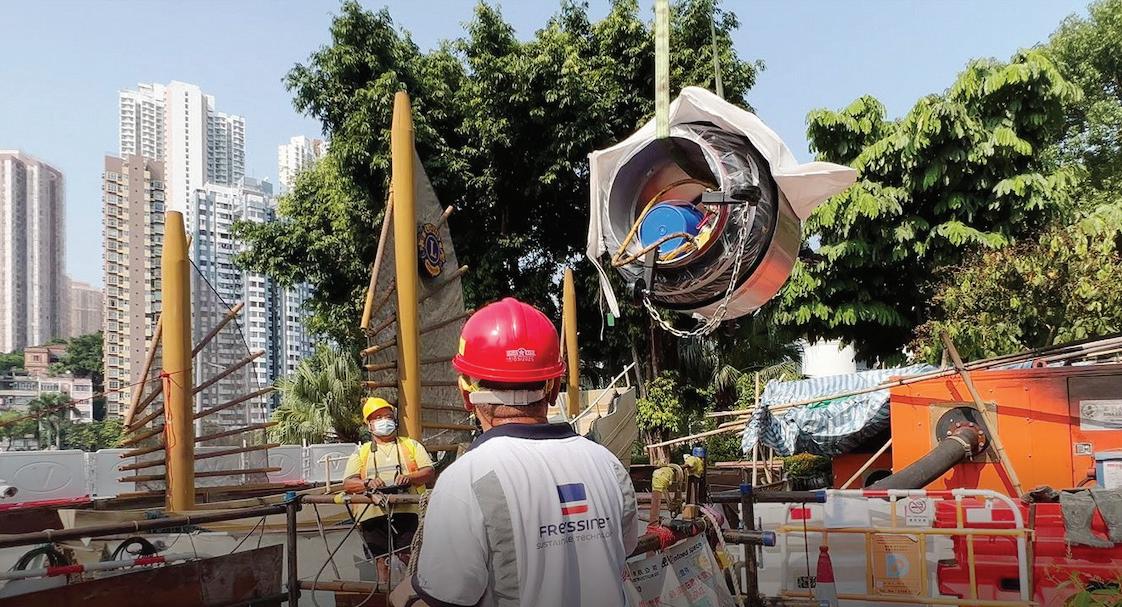
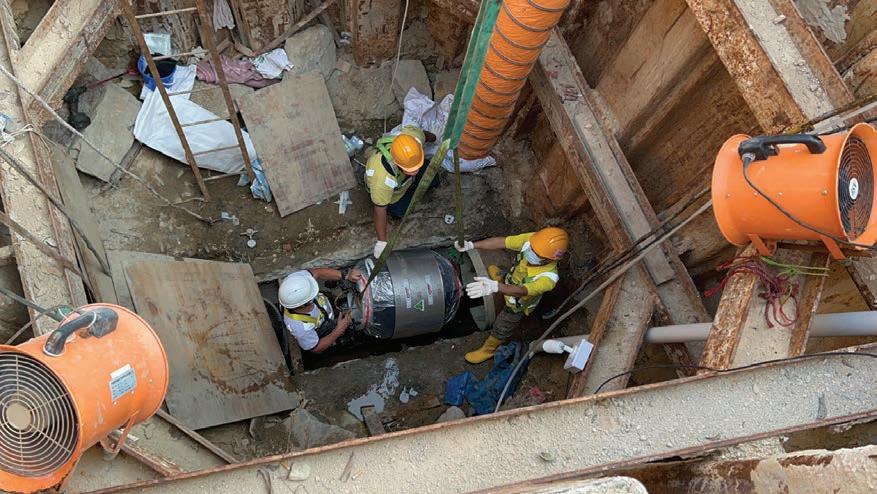
Time was of the essence, as the sewer flow could not be reduced for any extended period of time. Engineers from the contractor company required a structural sleeve that would allow them to complete the job and was able to facilitate a fast-as-possible installation so that the sewer flow would not be greatly impacted during the work.
Adding to the growing list of requirements to execute the work, the proposed air packer needed a full flow through in the event that a short capacity drop was required upstream of the works. This flow through would need to be to be substantial.
Excellent execution
After the necessary technical consultation, the Smart Lock sleeve solution was proposed by distributor Astra Syntech as it met all the criteria to successfully complete the works. The contractor was briefed, and the Smart Lock
was accepted as the best solution. The job was commissioned shortly after.
Freyssinet’s sewer maintenance staff are accomplished with fibreglass silicate resin patching and experienced in the correct use of an air patch packer. The Smart Lock installation methodology is a close match to the teams’ existing skill set in the field of point repairs.
All installers require accreditation to purchase a Smart Lock. With time an important factor in the execution of the work, Smart Lock’s technical support team were able to remotely provide training in the use of the product for the crew and the manager who
In just a few minutes the defect was successfully rehabilitated, and further reinstatement works were able to proceed.
This was the first project for the Australianmade trenchless solution outside of Australia and New Zealand.
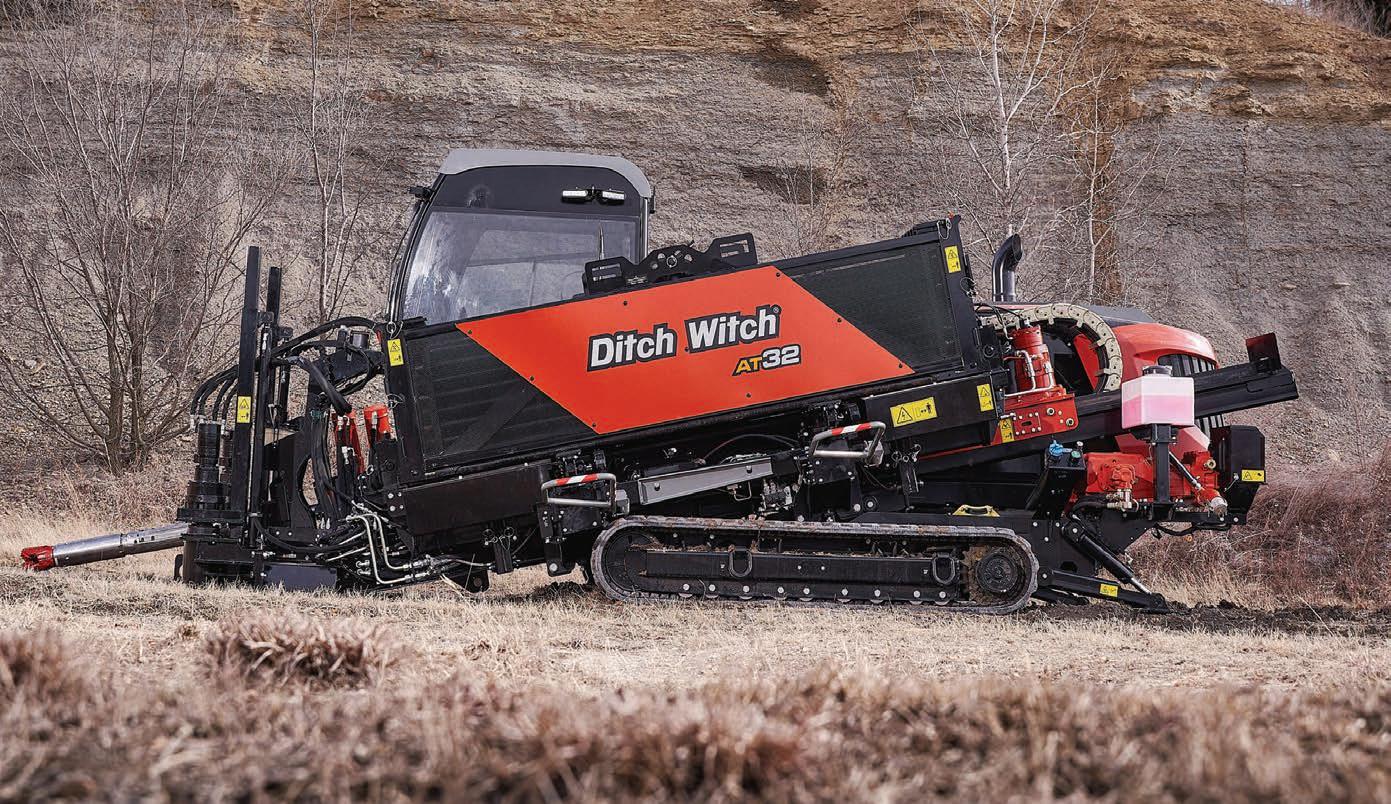
The installation was observed by the drainage authority engineers at Hong Kong Drainage Services Department and the Freyssinet contractor management team and deemed a favourable outcome for all those involved.
For more information visit www.smartlockgroup.com
REHAB & REPAIR 44 TRENCHLESS AUSTRALASIA DECEMBER 2022
The Smart Lock solution ticked all the boxes for the complex project.
A crane was required to lower equipment and materials.
AT32 ALL TERRAIN DIRECTIONAL DRILL
An integrated wireless remote control gives operators the ability to set up the rig outside of the cab, allowing more precise positioning of the unit on the job.
Unique
Patented “slide cartridge” provides backup for the carriage rollers allowing operators to complete a job without stopping to replace failed rollers.
Bursting at the seams with power, the AT32 is the next generation of all-terrain drilling, packing performance and strength into a sleek package.
Featuring a 155hp Cummins diesel engine the AT32 provides plenty of thrust and pullback when the task demands, and with 5694Nm of rotational torque there really is no question, drill beats rock every time.
With a focus on ergonomics the operators station has been built specifically for HDD operators. Offering industry- leading visibility with the best view to all critical vision points including ground entrance, wrenches, shuttle-retract location and rear connection. The AT32 also features a climate-controlled cab with tinted glass for the ultimate in operator comfort.
Like to know more?

Contact
today 1300 788 757 AUS 0800 435 269 NZ ditchwitchcea.com.au
your nearest branch
“add-a-pipe” design allows operators to manually insert additional pipe, improving productivity. (265 l/min) fluid pump supplies drilling fluid for better productivity downhole.
BIG ON PERFORMANCE. SMALL ON FOOTPRINT. 137m
of onboard rock pipe
NordiTube offers safe solutions for asbestos cement water pipes
In the 1950s, asbestos cement (AC) material became popular in the pressure pipe industry because of its good performance and durability. Used until the mid-1980s, AC then became a banned material worldwide.
Today, similar to Australia, thousands of kilometres of asbestos cement (AC) pipes are still being found in Europe, with the rehabilitation solutions for this aging material still being limited.
RTi Asia Managing Director Edmund Luksch says NordiTube provides two liner systems, which can be used to rehabilitate AC pipes successfully.
“The NordiFlow fully structural lining
technology (Class A system) is independent from the AC pipe and able to carry all internal loads (pressure and vacuum), as well as all external loads (soil, ground water, surge, traffic loads available for DN 150 -DN 1400),” Luksch says.
“R-tec Close-Fit Liner systems, pre-folded PE Pipes, are factory made Class A systems – allowing structural liners to carry all loads (DN 150-DN 400).”
In 2021, NordiTube Technologies SE and its Hungarian installation partner Agriapipe Kft were awarded a 5.5 km of DN 400 AC sewer water main, running from a treatment plant to a reservoir.
NordiTube’s expertise, together with the fully independent Class A NORDIFLOWwhich gives 100 per cent vacuum resistance and keeps the maximum flow capacity –introduced a very competitive price to make
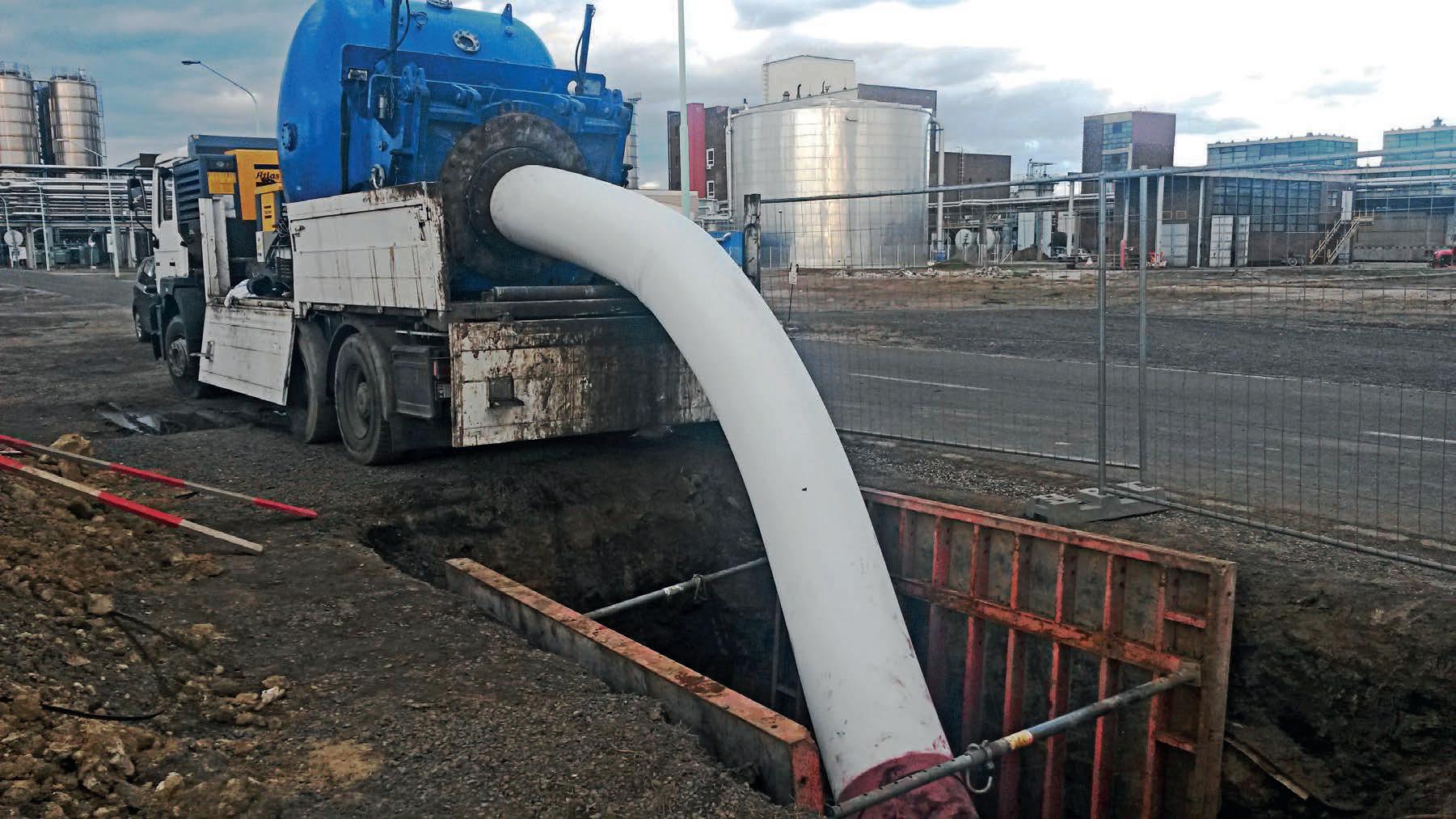
REHAB & REPAIR 46 TRENCHLESS AUSTRALASIA DECEMBER 2022
The inversion process for the NordiFlow liner into the AC Pipe DN 400 at the treatment plant.
the final decision for the end customer easy.
Luksch says as an international tender, to be able to rehabilitate the AC pipes, the pits and pipes needed to be prepared so no AC fibres could leave the area.
“Therefore, the pipe section which had to be taken out needed to be in a sealed environment / tent, which operated with a low negative pressure and a special filter system that could catch all loose fibres,” he says.
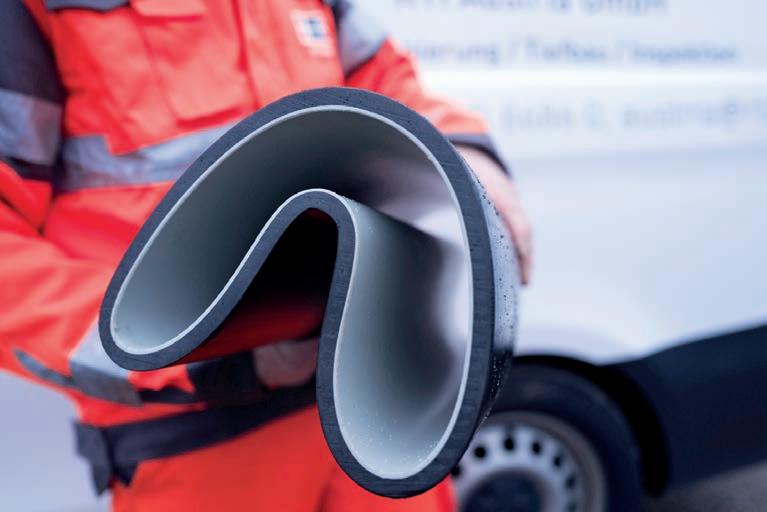
“The workers who were in contact with the material needed to have special protection equipment and masks. All AC parts needed to be packed in special sealed bags and treated by a certified company.”
The host pipe ends had been prepared with a piece of steel pipe (or flange) which had the same ID as the AC pipe. These parts were essential to fix the liner end seals.
Luksch says 50 per cent of the lining had
installation lengths greater than 250 m and had been done with the NORDIFLOW pullin liner, including an an external coating.
However, the other 50 per cent were installed with the NordiFlow Inversion System in combination with a pre-liner.
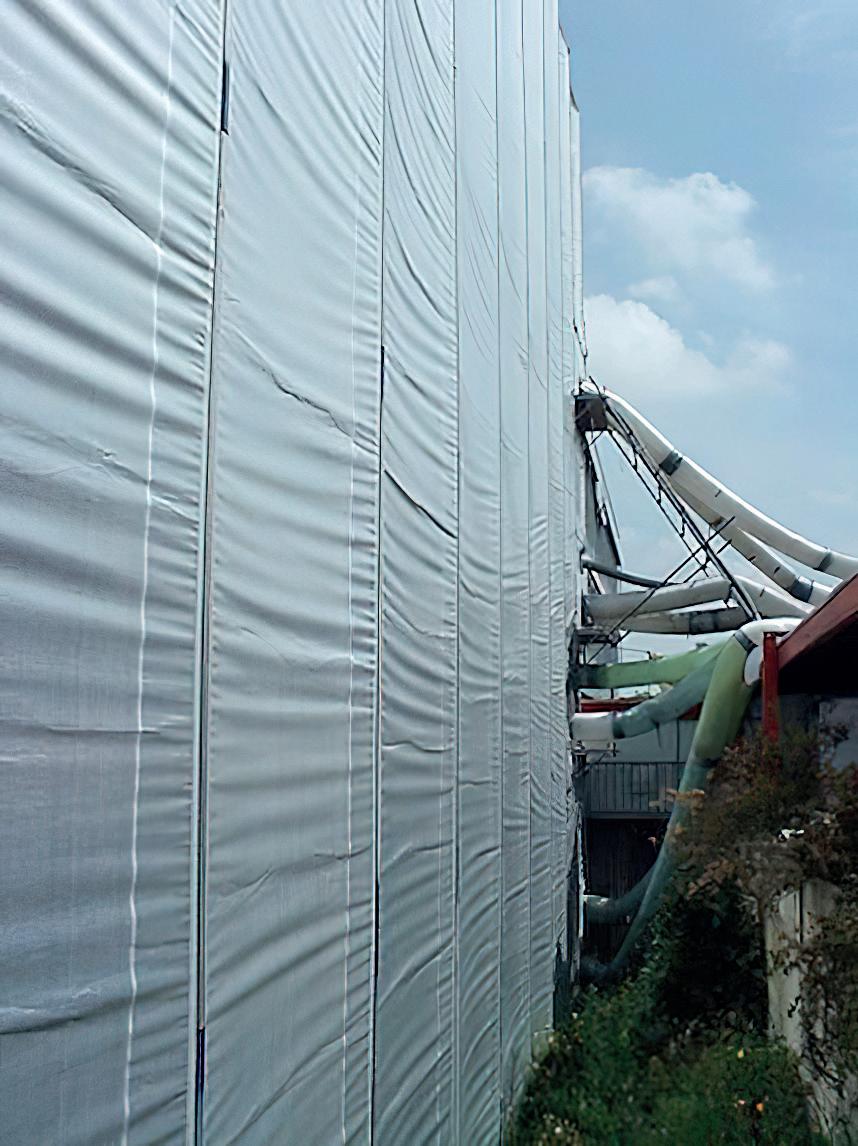
The project was successfully executed and the new stand-alone NordiFlow Liner is now in service.
For more information visit www.rti.eu or www.norditube.com
REHAB & REPAIR DECEMBER 2022 TRENCHLESS AUSTRALASIA 47
Protection tent with negative pressure and an AC filter.
The r-tec close fit liner is a solution for AC pipes.
Ageing pressure pipelines come to life with Primus Line’s innovative trenchless technology
Kilometres of ageing water and pressure sewer pipelines across Australia and New Zealand are in need of renewal. Until recently, some of the more challenging pipelines have left asset owners scratching their heads and in need of a practical, affordable, long-term solution.
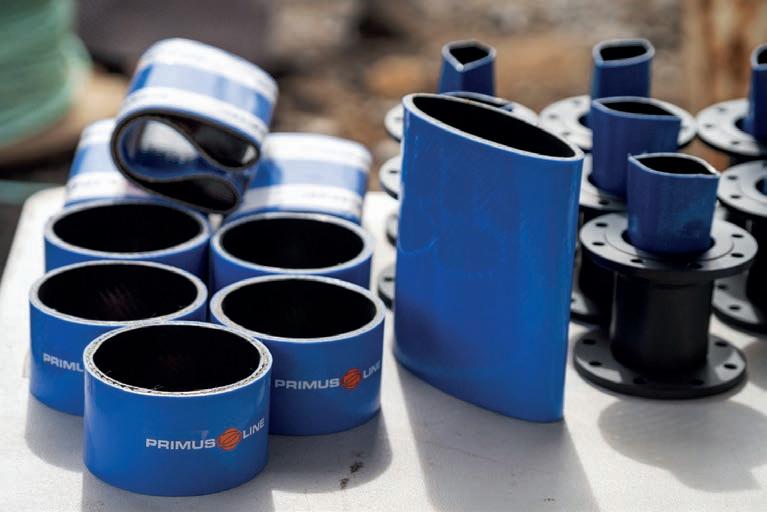
Primus Line, a flexible liner reinforced with aramid fabric, is getting buzz for all the right reasons. The tried and tested lining technology provides a practical, high-quality lining solution for ageing pressure pipelines that is both environmentally friendly and cost-effective.
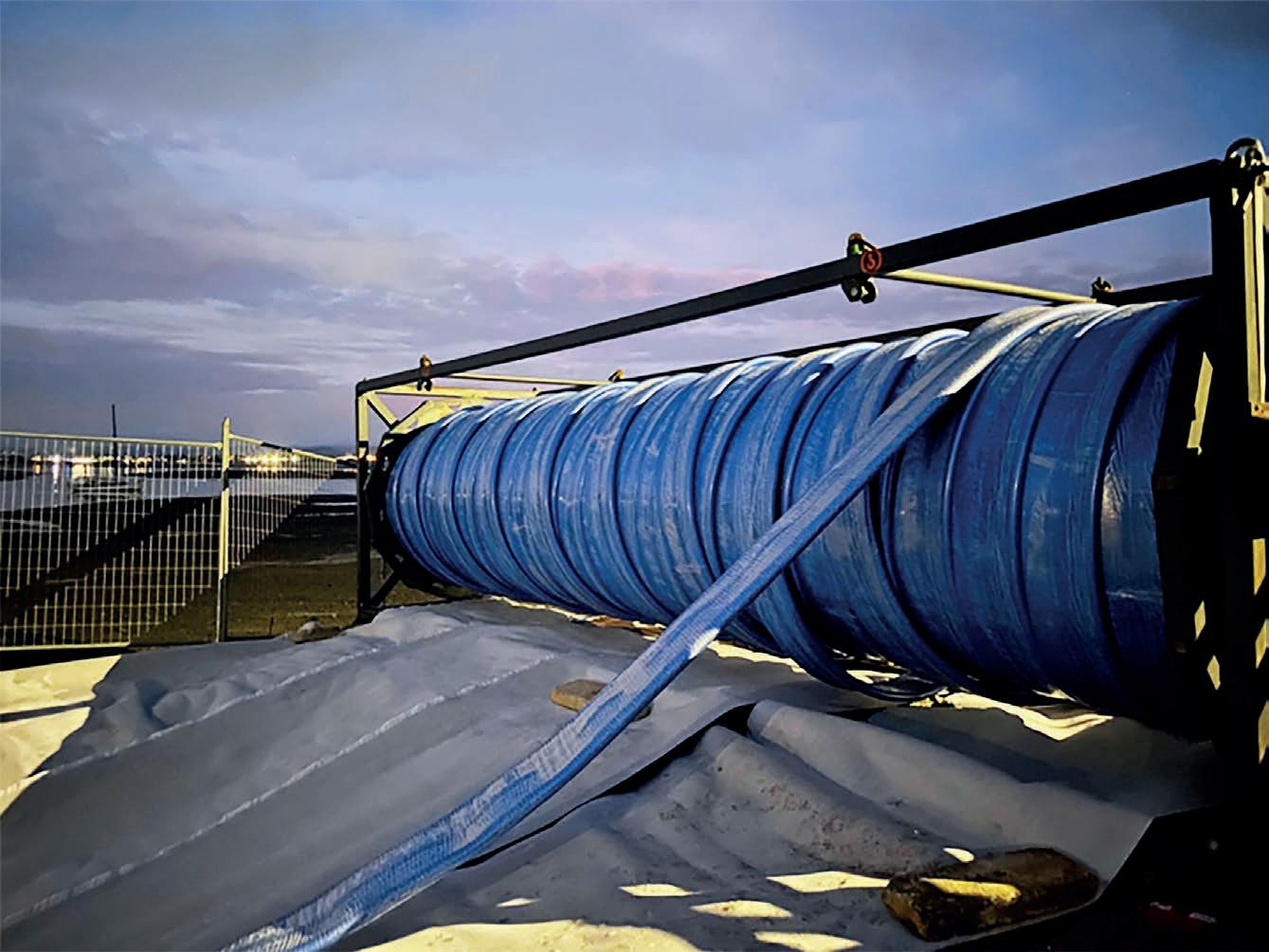
Project Manager at Interflow Fergus Meyer understands the challenges many asset owners face when tackling the problem of ageing infrastructure.
“A lot of projects have been sitting in too hard baskets for years, waiting for the right technology and delivery partner to come along,” he says.
“Environmental constraints, budget limitations and delivery risk are all factors that can stop a project getting off the ground.
“The key is engaging suppliers early and coming up with solutions together. So is
REHAB & REPAIR 48 TRENCHLESS AUSTRALASIA DECEMBER 2022
A 1.1 km Primus Liner on a single compact spool.
Primus Line supply is available on hand.
keeping an open mind to alternate proposals at the time of tender. This can really open the door to affordable, and eco-friendly solutions, like Primus Line.”
Interflow has partnered with Primus Line to provide the innovative system to the Australian and New Zealand market. Leveraging their fiveyear exclusivity agreement, the two companies have made a significant impact throughout the year, rehabilitating some of Australia and New Zealand’s most challenging pressure pipelines.
Primus Line in action
Earlier in 2022, Interflow was given the challenge of rehabilitating a deteriorating section of steel water pipe supplying the remote mining town of Paraburdoo, Western Australia.
The pipeline runs through an area of environmental and cultural significance, so a non-invasive solution was needed. Using Primus Line, Interflow relined a kilometre of watermain in a single pull, meaning no digging or disturbance along the alignment.
The project took just over a week and only a single truck was needed to transport the spool of liner and associated fittings – a significant benefit when the nearest major city is 1500 km away.
More recently, Interflow used Primus Line to rehabilitate and recommission two out of service sewer mains in Sydney’s Inner West. Limited access to the alignment and the
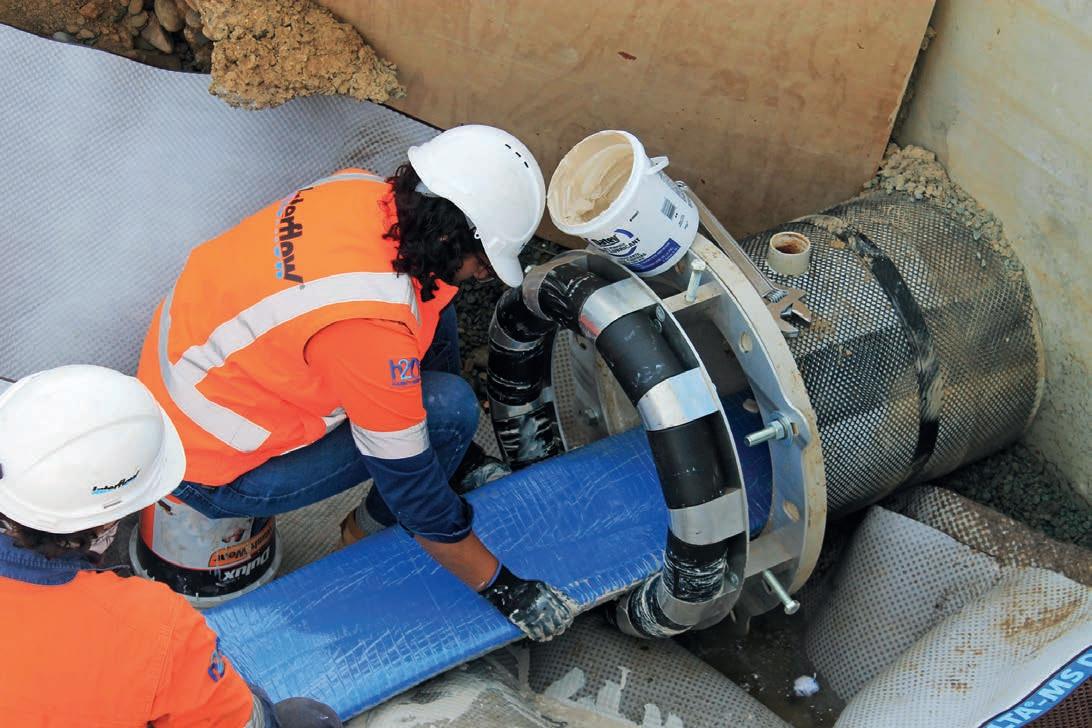
presence of both vertical and horizontal bends ruled out conventional solutions like slip lining and pipe bursting.
Primus Line handles bends up to 45 degrees with ease making it the ideal candidate for the job. Interflow returned the two mains to service with minimal disruption to the busy residential and commercial community.
One of Interflow’s more challenging projects
in 2022 involved 1.4 km of pipeline that transports raw water from a dam to a nearby town. Located deep within a state park and traversing steep and rocky terrain, replacing the pipeline would have been a costly exercise with unacceptable risk to the environment.
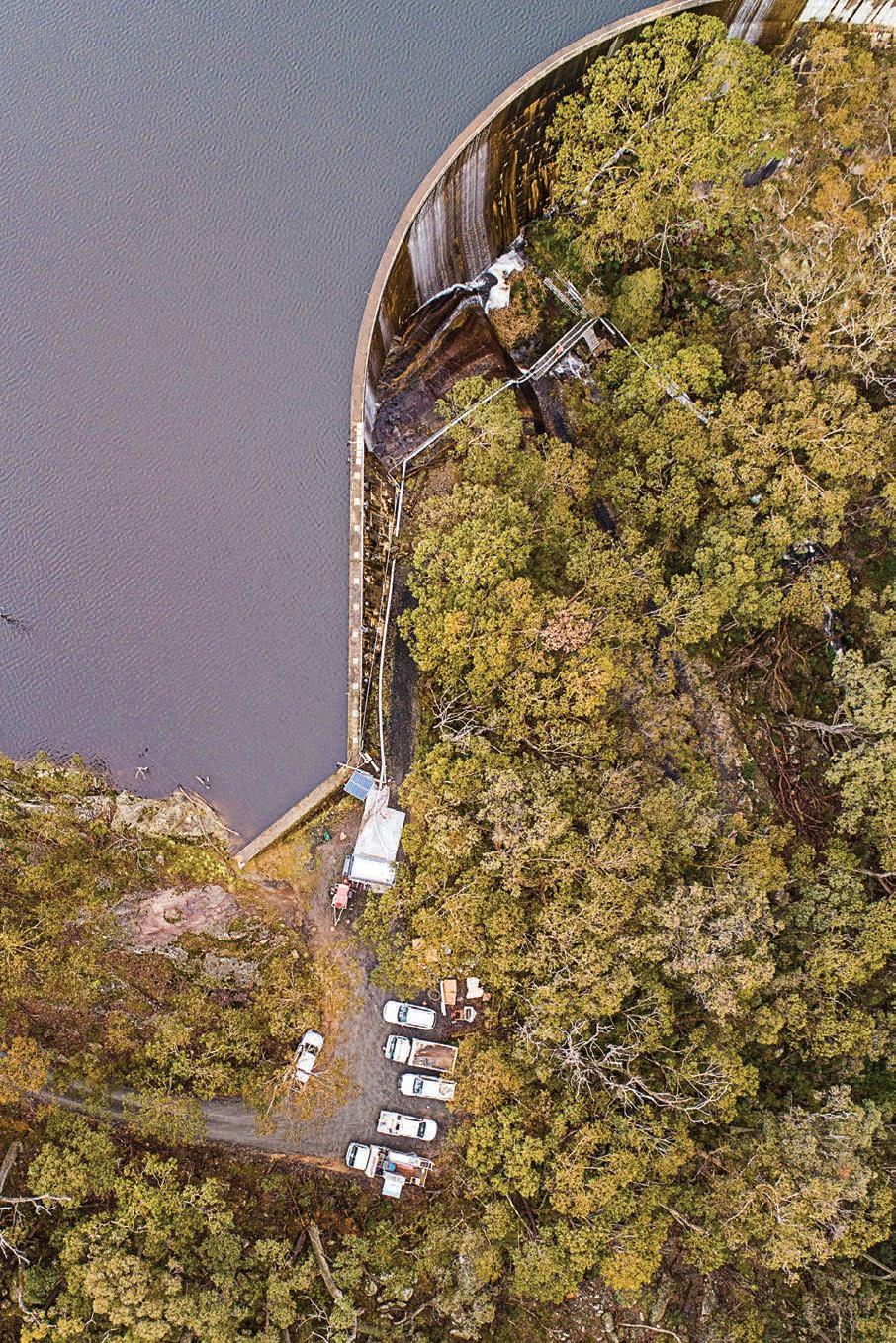
The rugged location left little access to the alignment of the pipe. Having access only to the ends of the line, Primus Line was installed in one continuous pull. This marked the longest single pull of Primus Line in Australia to date and opens the opportunity for longer pulls of a
The project was recently recognised as the winner of an Infrastructure Project Innovation award from the Australian Water Association in
Ready to support your future needs
There is a growing need for asset owners to look for innovative ways to address issues like rising costs, resource availability and the need to
As Interflow moves towards 2023 and beyond, innovative technology like Primus Line presents an exciting opportunity for the water industry to overcome these issues and extend the life of ageing infrastructure for decades to
With local supply right here in Australia, Interflow is ready to support high priority projects without supply-chain setbacks. Speak to them today about your pipeline
For more information visit www.interflow.com.au
REHAB & REPAIR DECEMBER 2022 TRENCHLESS AUSTRALASIA 49
Mt Cole Pipeline renewal project.
Primus Line installation in progress.
Rob Carr invaluable on South Melbourne sewer project
Microtunnelling contractor Rob Carr is the tunneller of choice in the Fulton Hogan Delplant Beca joint venture’s (FHDB) sewer works beneath the streets of South Melbourne on behalf of South East Water.
The Hanna Street Stage 1 capacity upgrade project is part of the larger South Melbourne Sewerage Capacity Upgrade being undertaken by Melbourne’s water utility, South East Water.
Proactive and necessary
Population density in South Melbourne is increasing as time goes on. The existing sewer system is expected to experience significant strain as this happens. In addition, the system needs to be proofed against future extreme weather events in order to protect the South Melbourne catchment.
Josh Sneath, Rob Carr’s Project Engineer for Hanna Street Stage 1, confirms these concerns with a practical view from the ground level.
“With the number of high-rises going up in the surrounding area, we are getting ahead
of the strain predicted for the current sewer system,” Sneath says.
Not without challenges
Work commenced in late September 2022, with Rob Carr beginning 270 m of microtunnelling and installing glass fibre reinforced plastic (GRP) pipe for the new network.
The project also requires two segmental shafts, one with an internal diameter (ID) of 6 m, and the other a 4.5-m ID.
“There’s also an eight by five metre pile shaft,” says Sneath. “We’re constructing it over the South Yarra main, where we’ll eventually install a GRP manhole.”
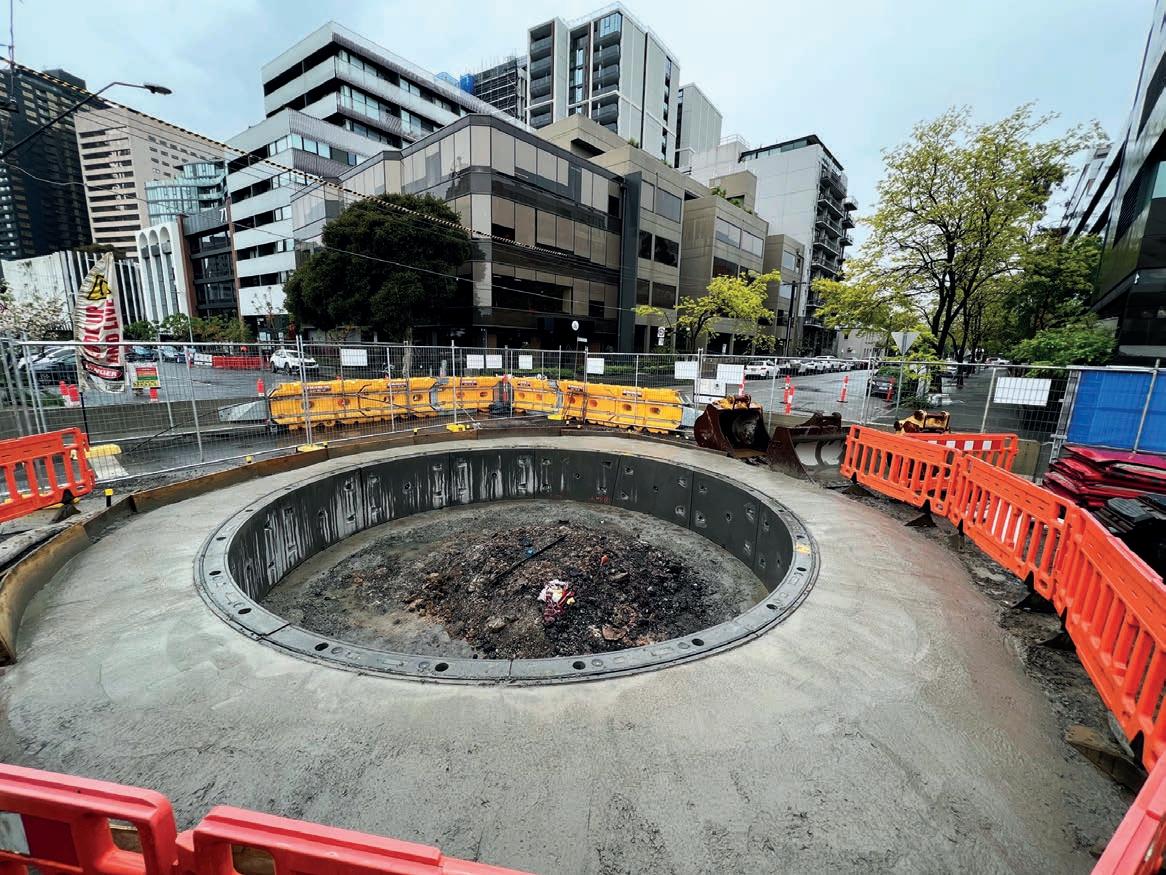
The pile shaft will connect up the branch sewers that Rob Carr is constructing and tie them in with the South Yarra Main, bolstering
the whole network.
The work is not without its challenges, of course. But Rob Carr is no stranger to delivering on technically difficult jobs.
With the number of buildings going up in the area, as well as other complications surrounding the location, the company is still delivering well on the project.
“We’re working in a tight community space, so we have to keep our footprint as small as possible,” says Sneath.
Teams have managed to keep most of the roads in the area open with at least one lane of traffic continuing to minimise the impact on the surrounding community.
The tie-in to the South Yarra main will occur via a 2-m ID brick drain which, according to Sneath, is likely to be the most difficult part of the overall project.
MICROTUNNELLING 50 TRENCHLESS AUSTRALASIA DECEMBER 2022
Collaboration helps minimise community disruption.
“The sewer flow has to be kept live during the tie-in work and while we’re building the manhole, which obviously presents some technical challenges,” says Dickey.
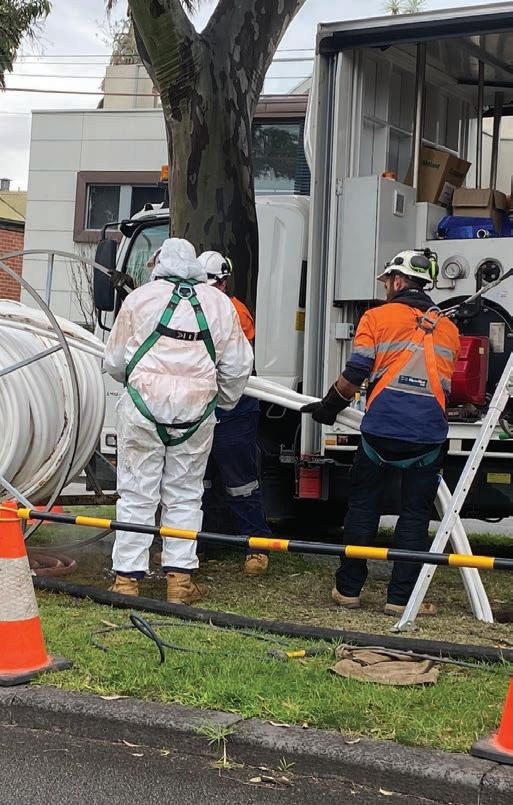
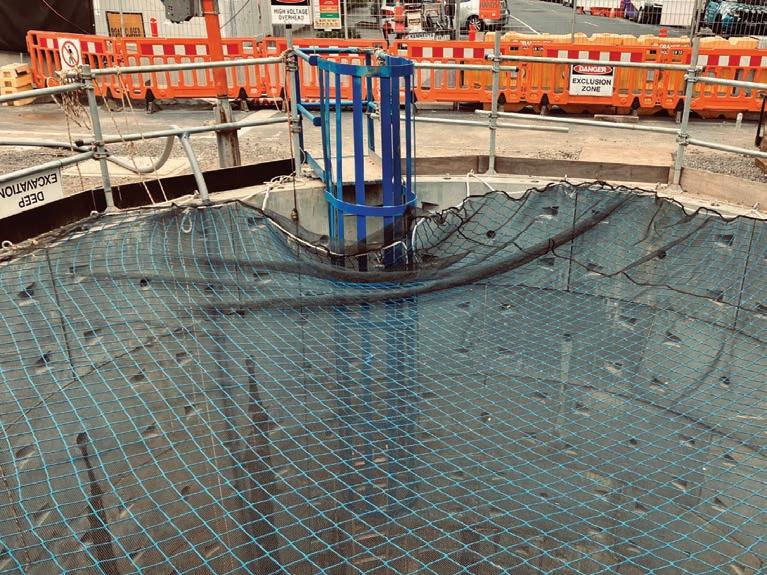
In order to complete the work, the teams have to install a flume pipe while the sewer is live.
“There’s some tricky brick removal
sequencing involved in that, we have to be very careful about which brick we remove as we go,”

Once the bricks are removed the flume can be installed and Rob Carr’s teams can get to work constructing the manhole.
Constant teamwork is the key to success Completing a major project in such a heavily populated area is a difficult ask, but one that has succeeded largely because of Rob Carr’s
long proven track record of teamwork and its focus on collaboration and communication with project partners.
Dickey has not worked directly with FHDB before but has witnessed Rob Carr’s strong relationship with the JV first-hand during his work on the Hanna Street Stage 1 project.
“The collaboration really has been phenomenal,” he says. “We’ve worked through any and all issues that have arisen, from executing the tunnelling to the technical side of things – like monitoring ground and water conditions.”
“It’s an interesting project, with a lot of collaboration needed to keep it moving,” says Sneath. “Tie-in works are on track to start in January, and we should be finished with stage 1 by April or March next year.”
The Hanna Street Stage 1 project once again demonstrates what can be achieved when operators are able to work closely together with a unified goal, a virtue that Rob Carr explicitly shows time and again as the company assists in future-proofing Australia’s infrastructure one successful project at a time.
For more information visit www.robcarr.com.au
MICROTUNNELLING
Dickey, Rob Carr’s Construction Manager for the project.
The Hanna Street Stage 1 project demonstrates what can be achieved when operators are able to work closely together.
kwik-ZIP’s HDX-90 supports Quickway in completing trenchless water main installation
kwik-ZIP’s centraliser and spacer systems are solving production casing centralisation challenges throughout the pipeline industry, in Australia and overseas.
As part of a Water Main installation project situated in Badgerys Creek New South Wales, contractor Quickway, used kwik-ZIP’s HDX-90 spacers to facilitate the slip-lining of an 813 mm outer diameter (mm OD) Steelmains Sintakote carrier pipe over a 180 m run.
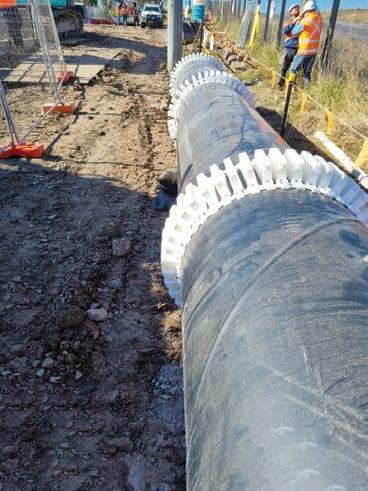
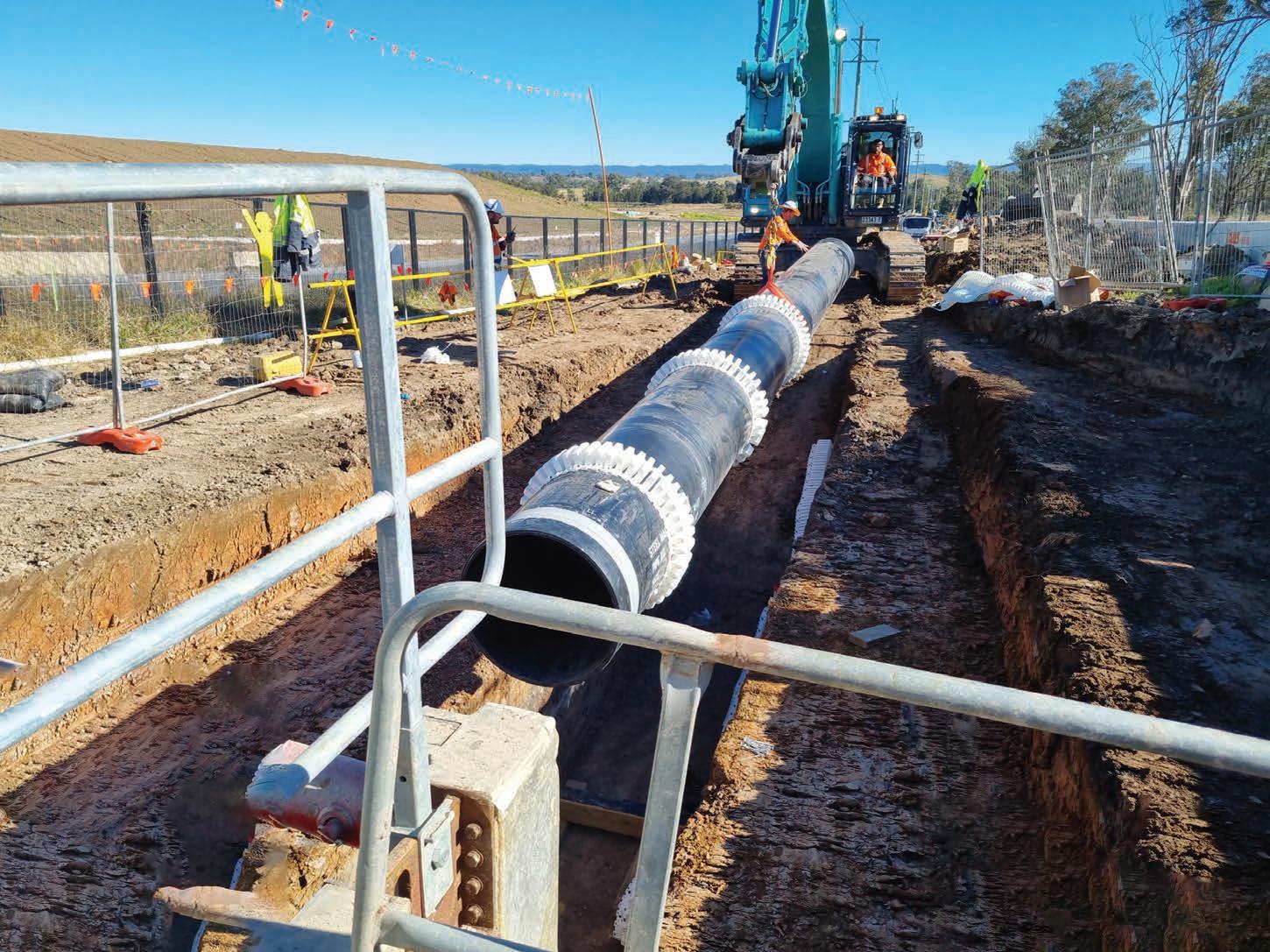
The installation was undertaken by Quickway, on behalf of Sydney Water, and the West Region Delivery Team (WRDT).
kwik-ZIP spacers were installed at 2 m
intervals throughout the project as per Sydney Water’s specifications. Carrier pipe weights were significant at 240 kg per m empty and approximately 700 kg per m when in service.
Having grown steadily over the years since its beginning, Quickway has become a trusted contractor within the trenchless industry and has established a solid reputation for delivering integrated project solutions. The company prides itself on delivering highquality service from concept to completion.
“kwik-ZIP spacers provided both protection and cover for the carrier pipe and enabled us to complete a successful underbore installation,” Matthew Macinnes, Project Engineer for Quickway, says.
The HDX Series used on location at the Badgerys Creek site has a unique load sharing design which maximises the load bearing capacity of each runner and reduces point loading. The simple and efficient installation process does not require any special tools.
MICROTUNNELLING 52 TRENCHLESS AUSTRALASIA DECEMBER 2022
kwik-ZIP spacers were installed at 2 m intervals throughout the project as per Sydney Water‘s specifications.
kwik-ZIP maintains a focus on price effectiveness, simplicity, and rapid on-site assembly.
kwik-ZIP’s large range of spacers caters for different carrier and casing pipe size combinations as well as providing flexibility to deal with project alterations.
Furthermore, the HDX casing spacer comes in four handy runner heights: 38 mm, 65 mm, 90 mm and 125 mm.
The varying runner heights for the model ensures that pipeline installers are able to handle a broad range of carrier pipe outer diameter and casing inner diameter combinations. Additionally, this grants installers the ability to customise pipe position for grade control, otherwise known as centring.
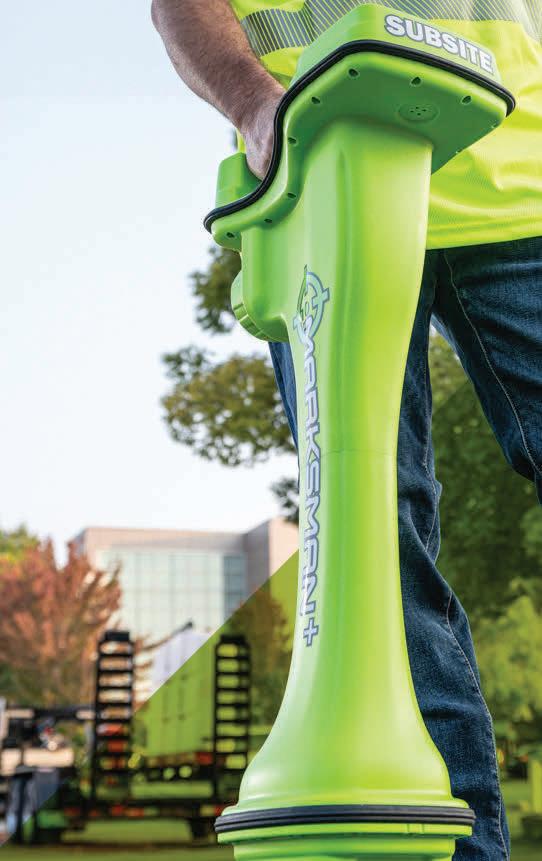
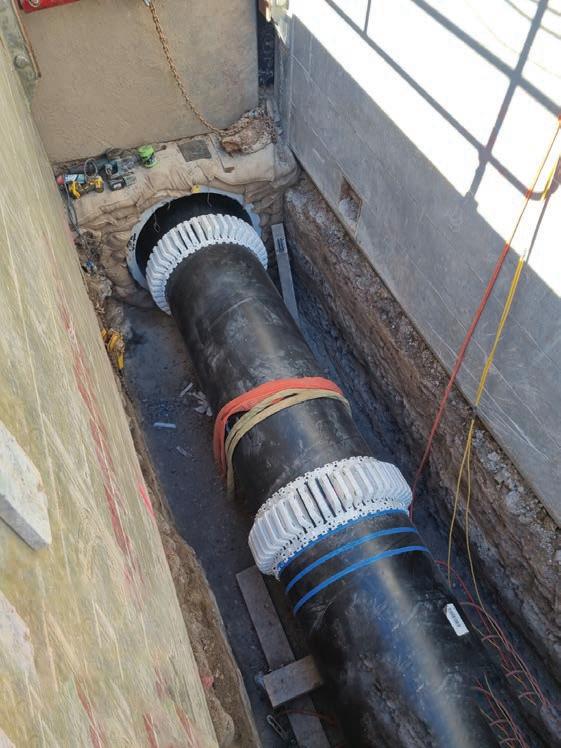
Manufactured from high grade thermoplastic, kwik-ZIP casing spacers and centraliser products are used and recommended by pipeline and civil contractors as well as commercial plumbing companies, water authorities, water well drillers and international engineering firms throughout Australia.


kwik-ZIP spacers have no metal parts and are made from kwik-ZIP’s engineered thermoplastic blend that is flexible and extremely tough. Its low co-efficient of friction also minimises the installation forces for large bore pipes.
kwik-ZIP maintains a focus on price effectiveness, simplicity, and rapid onsite assembly, to ensure that their systems deliver significant cost, time and operational advantages to its customers.
Capable of handling steel, DICL, HDPE, concrete and MSCL carrier pipes at a wide range of sizes, kwik-ZIP’s HDX Series minimises potential damaging vibration and movement transfers from the outer casing to the carrier pipe via innovative suspension and dampening technologies. Likewise, kwik-ZIP’s spacers contain no lead content or metals–ensuring they are fully compatible with all potable water applications and resistant to corrosion and rust. The systems are now used extensively in production well completion, horizontal directional drilling, rock bolt and anchor centralisation and trenchless pipeline installations across Australia, New Zealand, the UK and the US.
kwik-ZIP spacers are one of the only Australian-owned products of its kind on the market and the HDX Series are one of only two spacers (kwik-ZIP’s HDXT is the other) which have been certified and approved by the Water Services Association of Australia against its Product Specification WSA PA 324 Casing Spacers.
For more information visit www.kwikzip.com
MARKSMAN HDD GUIDANCE SYSTEM. CUT THRU THE NOISE.
The Subsite® Marksman HDD Guidance System provides superior performance in high-interference environments with the industry’s widest range of frequencies in a single beacon.

Scanning the most usable frequencies, the Subsite® Marksman selects the best choice to avoid interference while its increased beacon power signal improves performance at extended depths.
Easy to use with your choice of user interface, the new Marksman View features intuitive graphics and clear data, and with a simple single toggle control you’re more productive from day one.
MICROTUNNELLING
kwik-ZIP’s large range of spacers caters for a wide range of carrier and casing pipe size combinations as well as providing flexibility to deal with project alterations.
Ditch Witch CEA // 1300 352 378 AUS 0800 435 269 NZ
Fighting against the elements: preplanning for success in Townsville
Heading into the wet season in northern Queensland, Edge Underground – part of OptionX Group –were working against extreme heat and flash flooding on a microtunnelling project to complete three lines, with one under a major state highway.
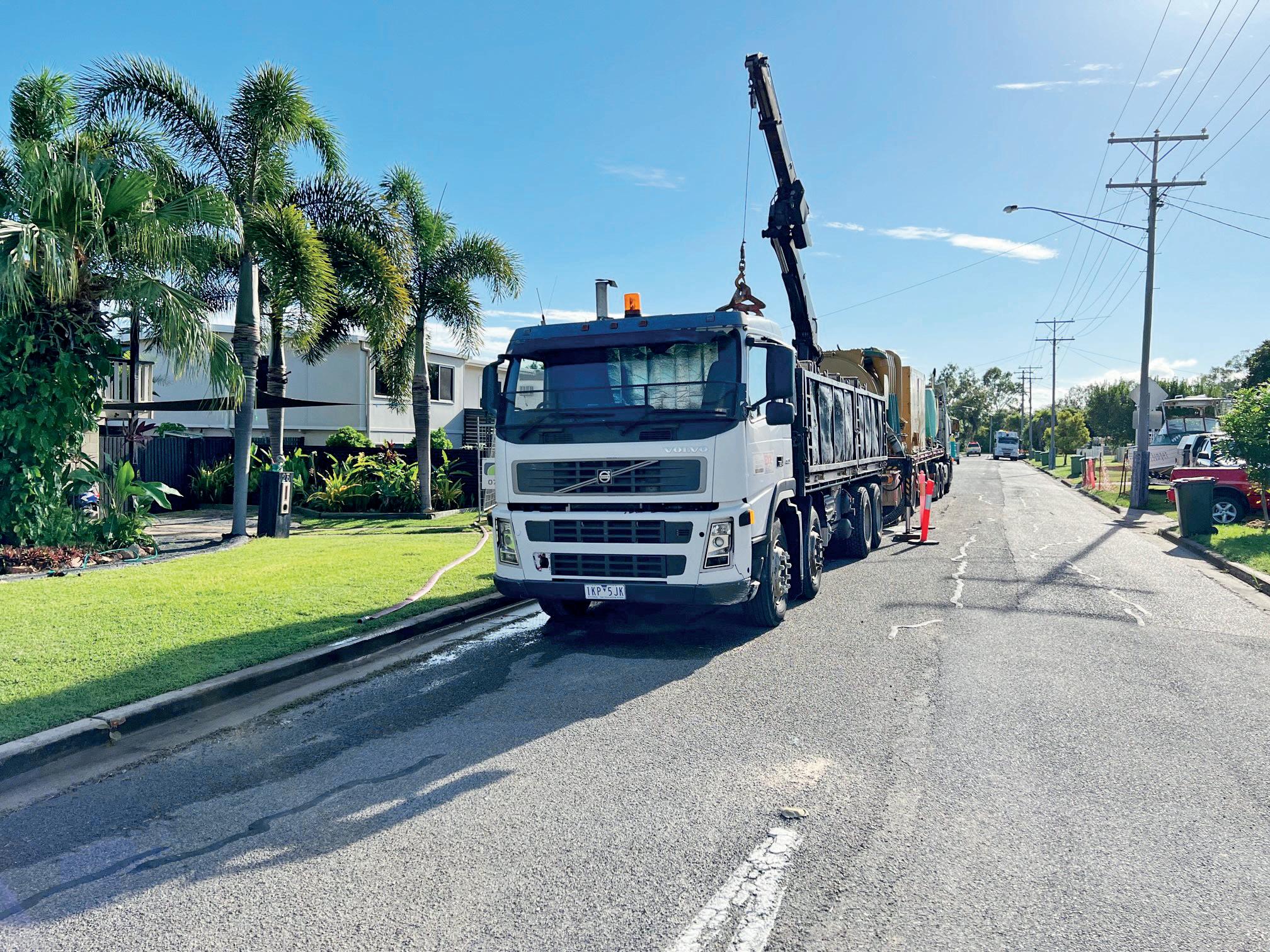
When planning for the success of a major project, time, costs and weather are usually the main contributors to challenges. However, for Edge Underground fighting against the elements and upcoming holidays, planning played a major role in it performing its best and getting the job done on time.
Edge Underground was subcontracted to complete three micro-tunnels in Townsville, Queensland, partnering with Mendi Constructions, a wellknown local business. The job required a 450 DN, 500 DN and 600 DN concrete enveloper pipe to be installed – the small two pipes under one road, and the biggest and longest pipe under the Bruce Highway.
Difficult weather conditions
Stuart Harrison, CEO of OptionX Group, says that going into the project the team knew that there could be challenges due to the extreme heat. The timing of the project, he says, meant that Queensland was heading into the wet season, presenting the team with the risk of flash flooding.
As the team was getting started on the project to install the 450 DN pipe, the worstcase scenario happened - three days of flash flooding stopping work before they were able to get momentum on the project.
“The flash flooding really set the foundation for understanding the need to get the shaft prepared for all weather and assume and plan for the worst as that will definitely allow you to perform at your best,” says Harrison.
“With the first shaft we had to make some compromises, and in this industry, whenever a compromise is made, it eventually catches up to you during the project. If it doesn’t catch up with you, you’re very lucky.
“We don’t like to rely on luck to perform well, so we pre-plan and manage the risk in order to ultimately be able to provide a highend final product.”
Harrison says the flooding made the job more complicated and increased the scope of work and timeframe to complete it.
However, with the lessons learned from line one, the team were able to complete the pilot and ream line two without any problems.
“The bore process was a total of two days of work, which was amazing considering the volume of material,” Harrison says.
MICROTUNNELLING 54 TRENCHLESS AUSTRALASIA DECEMBER 2022
Edge Underground has now completed a number of successful jobs in Townsville and the surrounding areas.
“And like all the jobs we complete, the pipe was installed within millimetres of the required grade.”
Tackling challenges
As well as difficult weather conditions, the team was presented with delays from the Christmas break and changing ground conditions midbore.
Harrison says the timing to start bore three was in the lead up to the Christmas break, so there were going to be several days where work wouldn’t be taking place. However, the project was finished well within the timeframe.
“There was a concern that maybe we shouldn’t start before Christmas, but we felt we had the ability to get it done and that if we started on Wednesday, we could finish it by Thursday night. This would be a great outcome for a 600 DN concrete enveloper pipe with an 800 mm bore,” says Harrison.
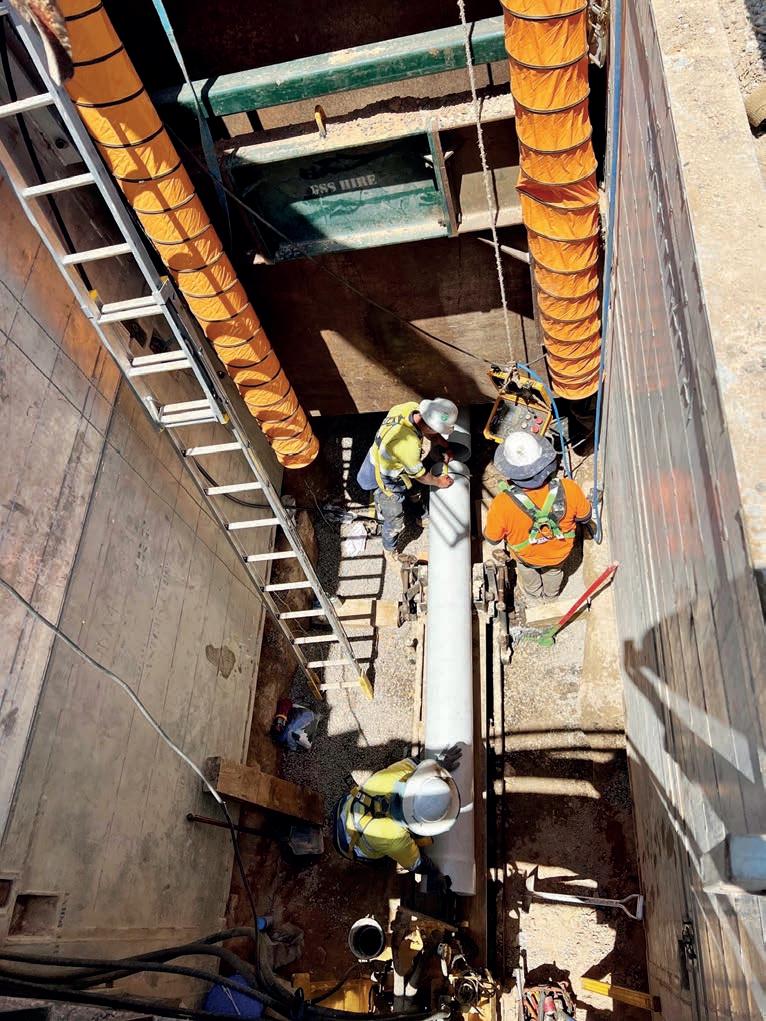
“It did get a bit complicated when we launched on Wednesday as we found there was a change in ground conditions mid-bore. It went from hard consolidated to more alluvial, and the alluvial layer was allowing high water flow across the compacted clay – which wasn’t noted in the geotech.
“However, with the AXIS laser guided boring system we can adapt the setup to best suit conditions, so we were able to readjust our setup and complete the pilot line on Wednesday, allowing us to start reaming Thursday morning.”
Lending experience
Harrison says it can be hard in projects such as these to guide contractors with little experience with microtunnelling to make good decisions that reduce risk without being perceived as arrogant.
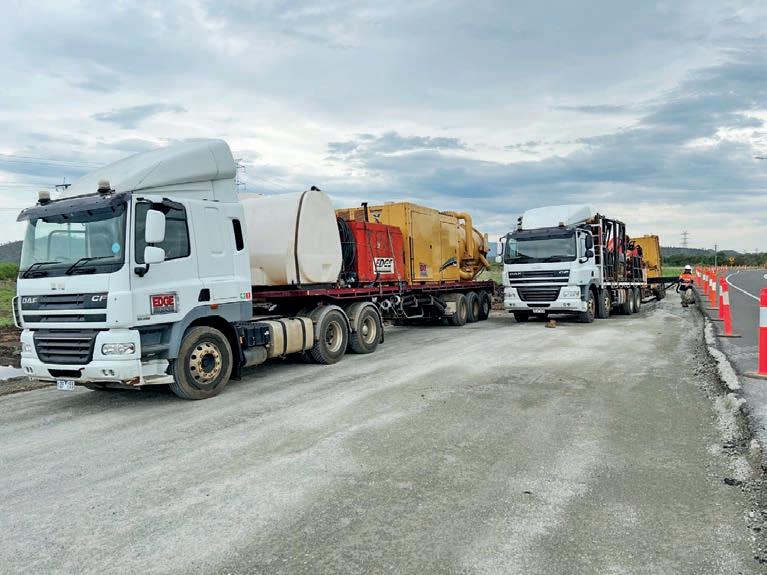
“When we feel it is necessary for the project, we try to highlight the need to spend a little more money in advance rather than pay heavily throughout the construction project,” Harrison says.
“And we saw this in action with this project; bore one was undertaken with the pay-aswe-go approach but bore two and three were quite seamless due to the pre-planning and commitment from everyone to understand the risks and minimise them so the project could be completed in the short timeframe leading into Christmas.
“To everyone else, bores two and three appeared to be uncomplicated but in reality, there was a lot of work that went into their smooth completion.”
For more information, visit www.edgeunderground.co or www.optionxgroup.com.au
MICROTUNNELLING DECEMBER 2022 TRENCHLESS AUSTRALASIA 55
Edge Underground is the contractor of choice many installation of sewer and water pipelines across Australia.
Edge Undergound specialises in the installation of gravity sewer mains using installation techniques including microtunnelling, laser boring, auger boring and thrust boring.
Stream DP with EsT technology: bringing GPR performance to the deepest level
IDS GeoRadar’s Stream DP is the new compact GPR array solution for the highest depth performance in 3D utility mapping.
IDS GeoRadar, part of Hexagon, recently announced the launch of Stream DP, an innovation for 3D utility mapping that uses multi-channel ground penetrating radar (GPR). Stream DP is the first of a ground-breaking generation of GPR products supporting the radical Equalised scrambled Technology (EsT), a disruptive patented
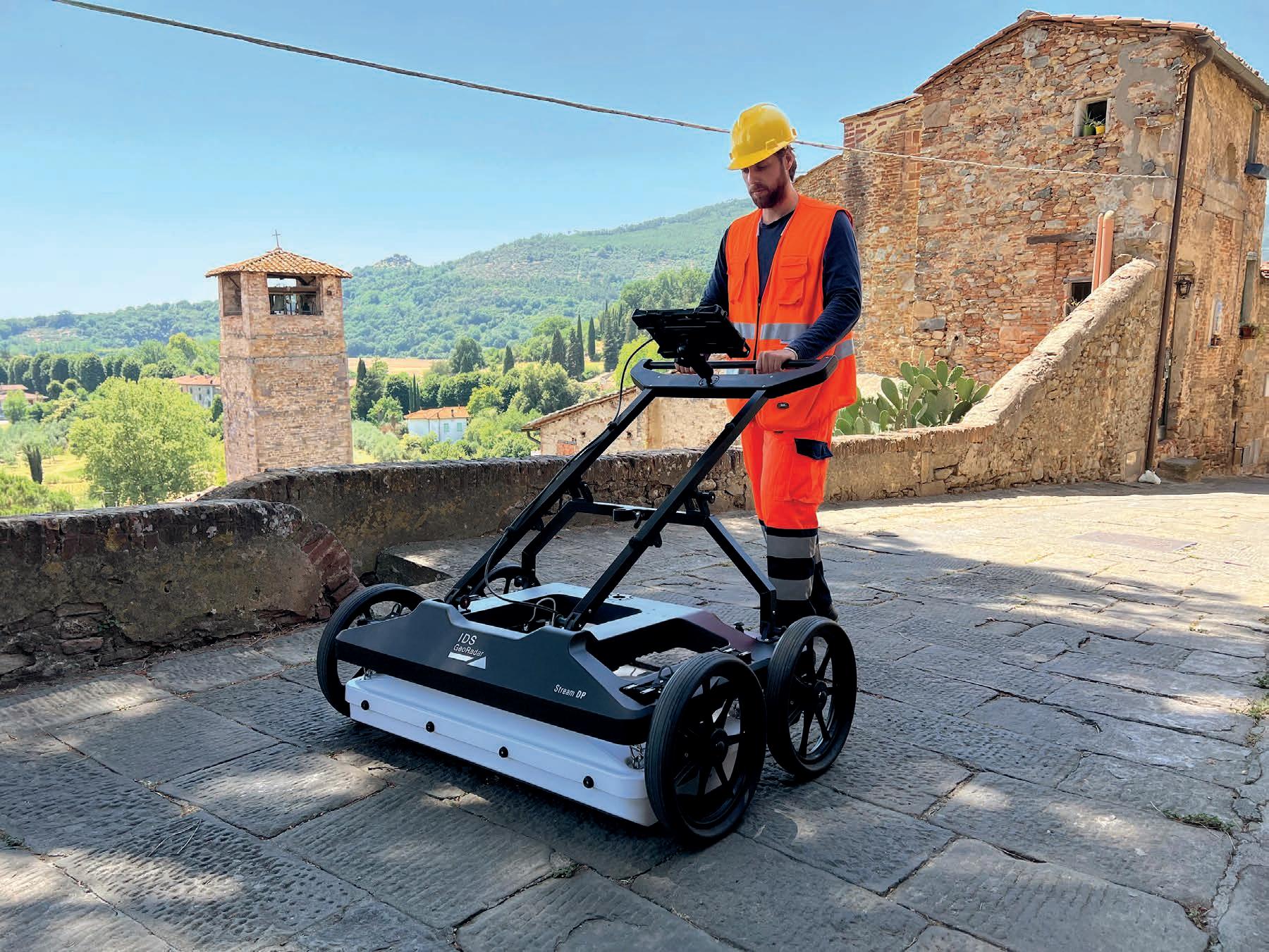
technology that allows an unparalleled control of the GPR signal for a maximised asset detection in underground surveying.
GPR is a well-known and attractive technology which enables a safer investigation of the underground and many efforts have been made to overcome one of the main limitations of this technology - penetration
depth. EsT is the result of a multi-year development by IDS GeoRadar’s research and development team delivering a gamechanging technology to the market.
While other technologies extend the dynamic range through trace stacking and so lowering the noise level to increase penetration depth, with EsT the shallow and
SOFTWARE & TECHNOLOGY 56 TRENCHLESS AUSTRALASIA DECEMBER 2022
Stream DP has large wheels to navigate the rugged terrain.
deep reflections are equalised with an optimal multi-gain boost and thus limitations of traditional GPR solutions are overcome with an unmatched performance offering one of the deepest sensing capabilities ever.
Thanks to EsT, the new Stream DP is able to exploit the entire radiating performance of the antenna for a full and unparalleled control of the GPR signal, performing the best noise rejection and capturing both the lower and higher frequencies for an extended depth range and an ultra-high resolution. Stream DP brings detection of underground assets to the next level - the deepest one.
Thanks to this innovative technology, the new Stream DP is able to provide unrivaled performance in underground surveying - well beyond other technologies available in the market - allowing an increase in underground depth penetration from between 40 per cent to 60 per cent compared to other GPR solutions. Boasting a massive array (30
channels in double polarization: 19 VV + 11 HH), this system provides an accurate 3D reconstruction of the underground utility network with a single scan.
Pulse-per-second integration into Stream DP’s antenna supports precise synchronisation with GPS, ensuring users achieve the most accurate positioning of data which is crucial for data alignment. Stream DP’s onboard software facilitates operations as it can collate data collected from different positioning solutions into one project for full and seamless coverage of the underground.
The system integrates with the latest IDS GeoRadar’s software solutions for data collection and post-processing: uMap, the on-field software for easy radar data collection that provides real-time diagnostic status, and IQMaps, the post-processing software for faster and smarter data analysis.
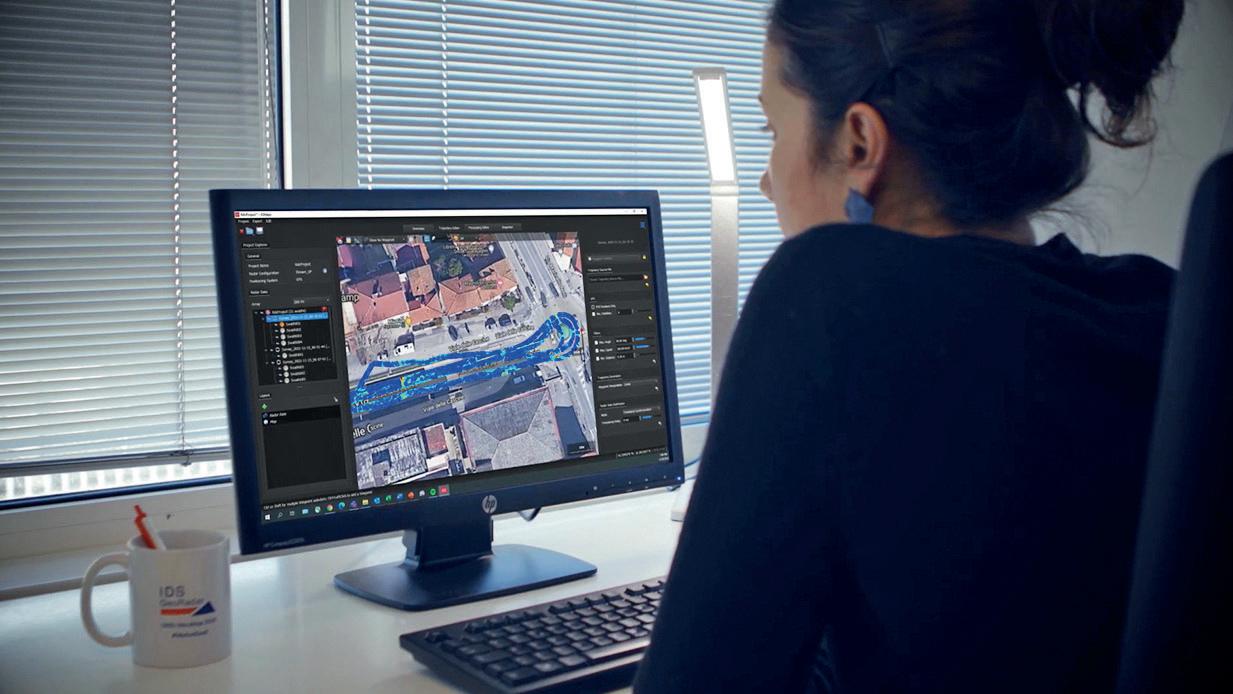
Stream DP is designed for superior productivity and ease of use, offering a lightweight structure for maximum transportability, hot-swap batteries for nonstop performance and multi-environment hardware configuration (rugged and asphalt in a single solution) for unparalleled versatility.
Stream DP can reach the deeper targets and provides exceptional data clarity of the subsurface, supporting professionals in their everyday surveying tasks as an innovative and highly maneuverable GPR array solution that enables a safer survey of the underground.
IDS GeoRadar’s distribution partner in Australia, C.R. Kennedy, are currently conducting demonstrations of the Stream DP around the country.
Please contact sales@crkennedy.com.au or (02) 9552 8370 to book today.
The new patented EsT technology by Hexagon is able to exploit the entire radiating performance of the antenna, performing the best noise rejection, thereby increasing the dynamic range and lowering the noise floor for an extended depth range and ultra-high resolution.
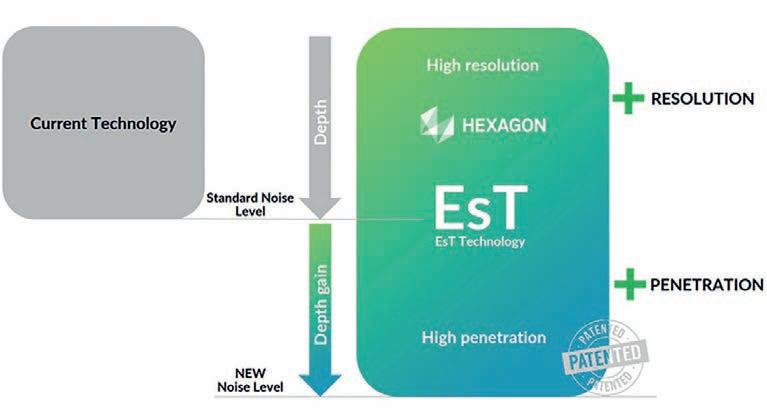
SOFTWARE & TECHNOLOGY DECEMBER 2022 TRENCHLESS AUSTRALASIA 57
IQMaps post processing software is designed to work with very large datasets and provides a streamlined and user friendly experience through optimised workflows.
Aussie Trenchless has the future of pipe rehabilitation solutions sorted
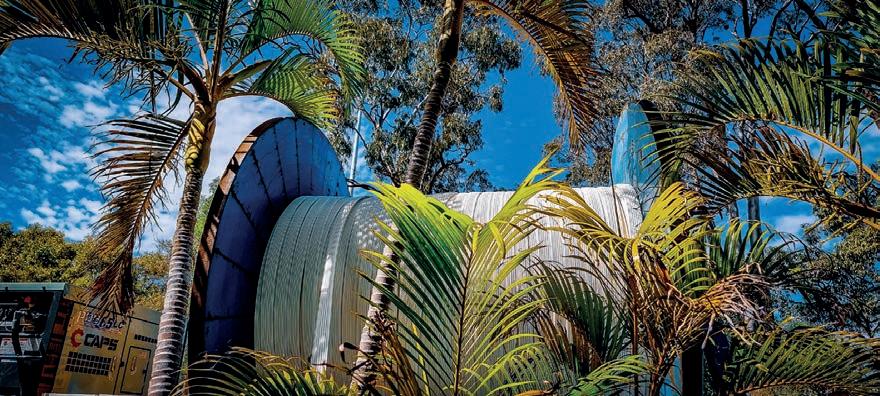
Aussie Trenchless has been passionate about progressing future infrastructure opportunities and accomplishing superior outcomes since it was founded in 2014.
Aussie Trenchless Director Chris Meredith and the team are committed to pioneering state-ofthe-art solutions and furthering business in the trenchless industry. As part of that innovation, the company continually offers a wide range of unique products both in Australia and internationally.
Aussie Trenchless’s SRP-EXP Spiral Lining System is designed to rehabilitate pipes from DN150 to DN1200 using a selection of six different sized profiles. The SRP-EXP system is a close fitting structural spiral ribbed PVC trenchless pipelining system.
The SRP EXP sizes range from a profile type E7-050-5 for DN150 to DN250 pipes, E9-085-6 for DN300 to DN450 pipes, E14-085-6 for DN375 to DN600 pipes, E20-085-6 for DN600 to DN900 pipes.
Wastewater and sewer pipeline networks are under stress, and as time goes by, underground pipeline networks continue to age and breakdown. Aussie Trenchless believes repairs using traditional civil open cut methods are far too costly and disruptive on communities.
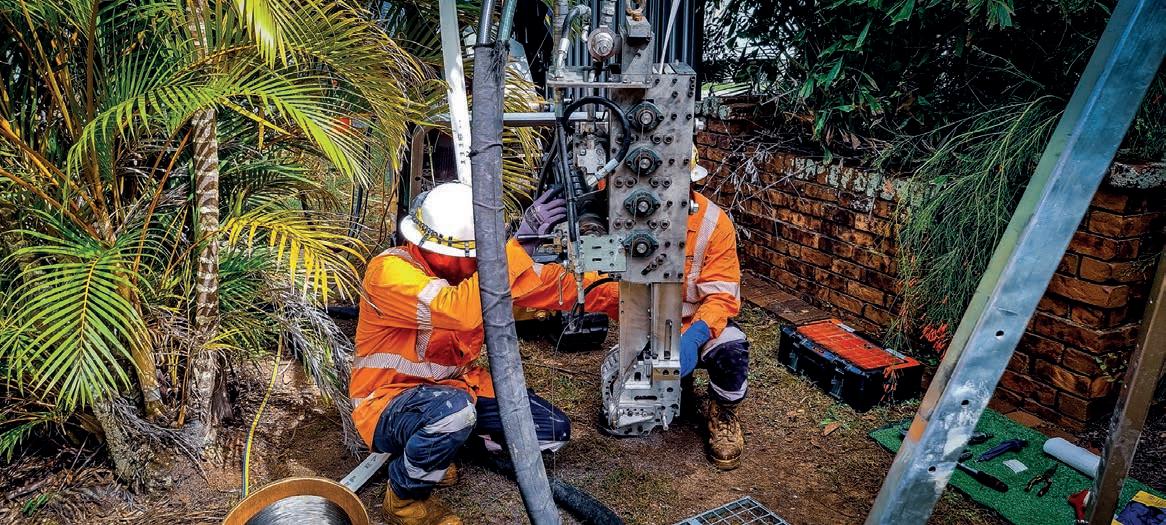
Meredith says trenchless rehabilitation techniques continue to grow in volume as
they are a cost-effective repair solution.
“The SRP EXP Spiral Lining System can be installed under flow conditions. With no by-pass pumping needed, it is quick and efficient using a third-generation, high quality profile to ensure ease of installation, providing a value-added outcome for the network owners,” he says.
The SRP EXP Winding Unit and Cages are a standard design. Each winding unit supplied is the same, the cages vary in diameter to suit the underground pipe size and all parts that make up the cages are standard and interchangeable on some cage sizes.
The special winding machine is positioned into an access chamber or pit, then helically winds the SRP-EXP ribbed strip to produce a pipe within the existing pipeline. Aussie Trenchless’ SRP-EXP is first installed at a smaller diameter, then expanded to closely fit against the internal surface of an existing pipe.
During this initial wind-in process the spiral pipe lock holds the spiral wound pipe tight to the initial and smaller diameter.
Once the far end of the installation length is reached, the SRP-EXP Liner end is then restrained, with the lock area sequentially released such that the SRP-EXP pipe expands in a controlled manner until it has been
RELINING 58 TRENCHLESS AUSTRALASIA DECEMBER 2022
Aussie Trenchless is committed to pioneering state-of-the-art solutions and furthering business in the trenchless industry.
Aussie Trenchless believes repairs using traditional civil open cut methods are far too costly and disruptive on communities.
The installation process is entirely mechanical, meaning that no chemical curing nor steam heating is utilised during the process. Not only is the system easy to install, but it’s likewise easy to remove if necessary.
The SRP-EXP system is capable of negotiating displacement and slight bends while also maintaining a relatively small site footprint. Furthermore, the system is smooth to both work with and install, with minimal and recyclable wastage.
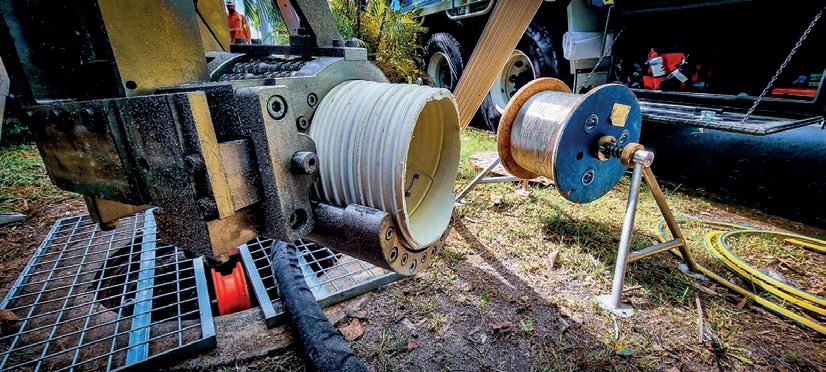
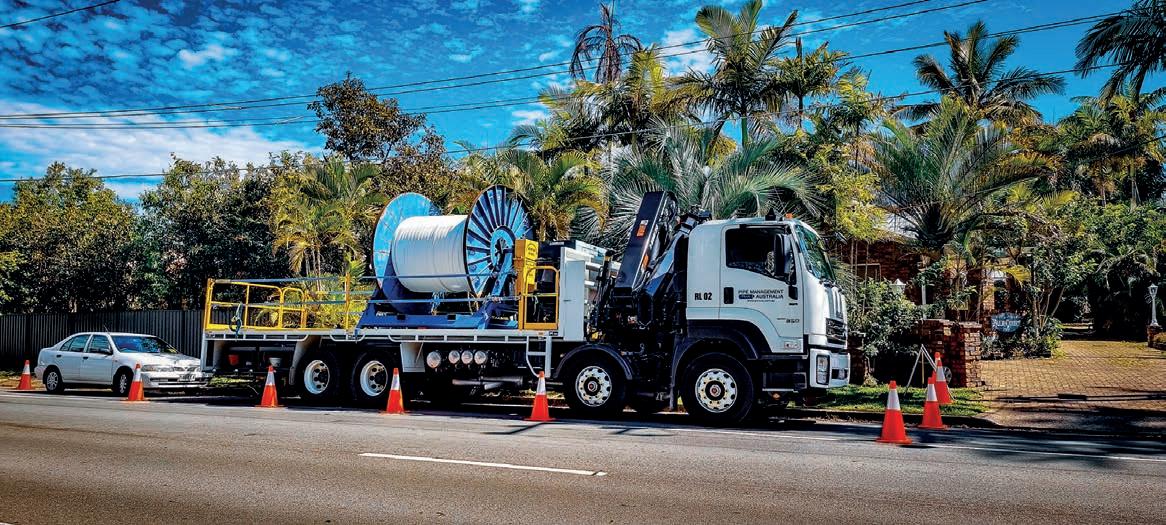
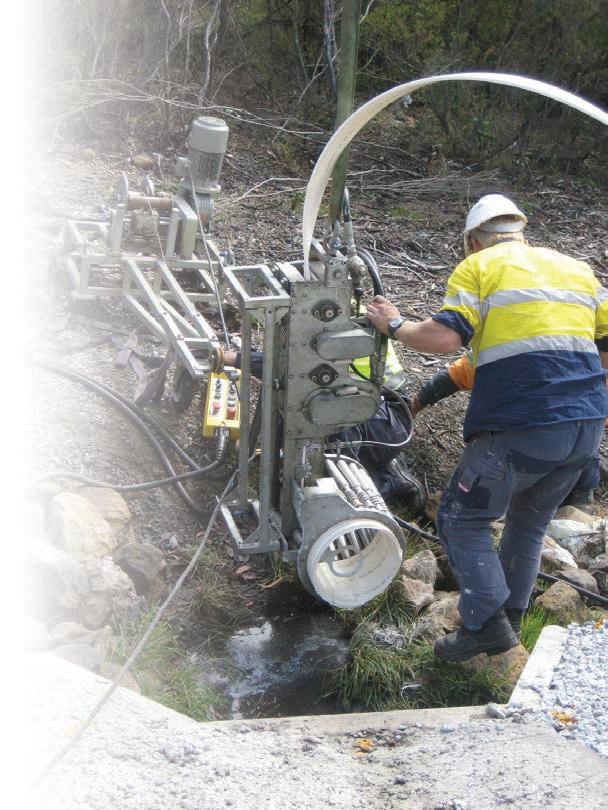
If a client requires a special diameter cage outside of the SRP EXP product range, Meredith says the company can design and supply it.
Spiral lining and pipe segment technology
SRP
Trenchless.
Lining
DECEMBER 2022 TRENCHLESS AUSTRALASIA 59
•
•
is now available to all trenchless rehabilitation contractors in Australia and overseas through Aussie
The perfect rehabilitation solution for deteriorated sewer and storm water pipelines: SRP EXP • An expandable tight fitting liner
No issues with high infiltration
Negotiates displacements and slight bends • Small site foot print • Smooth to work with and install • SRP EXP pipe is made from factory produced PVC profile strip • Profile is supplied on large steel drums which are collapsible for easy reuse • The minimal wastage is recyclable • For DN150 to DN1200 pipe lines • Mechanical installation – no chemical curing or steam heating • Easily removed if site issues encountered
+61
PO
EXP Spiral
System Quick and easy to install
418 691 989
Box 155 Oyster Bay NSW 2225 Australia enquiries@aussietrenchless.com www.aussietrenchless.com For more information, visit www.aussietrenchless.com
The SRP-EXP system is capable of negotiating displacement and slight bends while also maintaining a relatively small site footprint.
The SRP-EXP system is smooth to both work with and install, with minimal and recyclable wastage.
iMPREG celebrates international success in the UK
iMPREG has helped complete the task of installing a ultraviolet liner in the United Kingdom.

In August 2022, a 10-person team installed what could be one of the largest ultraviolet liners ever installed in the United Kingdom. iMPREG states that it was one of the largest UC cured in place pipe (CIPP) liners installed by project partner Lanes Group.
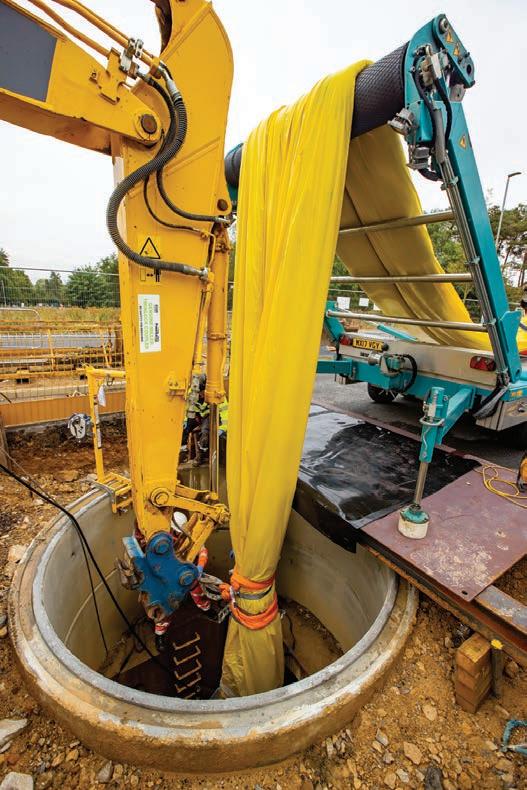
The 42 m long and 1800 mm diameter liner took the effort of a full team and infrastructural planning prior to the installation.
iMPREG’s UK Technical Manager, Jack Talbott, says that this is one of the largest diameter UV liners the company has supplied to a UK contractor.


“The project demonstrates an expansion of what can be achieved by UV CIPP by matching advances in manufacturing and UV lining systems with the installation expertise of Lanes as a contractor,” he says.
A GL16 liner was used at a length of 42 m
and diameter of 1800 mm. The thickness of the liner for this project was approximately 15.5 mm. Additionally, the liner was supercharged with UV light train with three mega light cores with three 2000-watt bulbs each - the combined power output could come to 36,000 watts.
The liner was pulled through the storm drain on the project via a 10-tonne winch. Curing time on the project was approximately 70 minutes, with the curing speed having been set between 500 mm and 700 mm per minute.
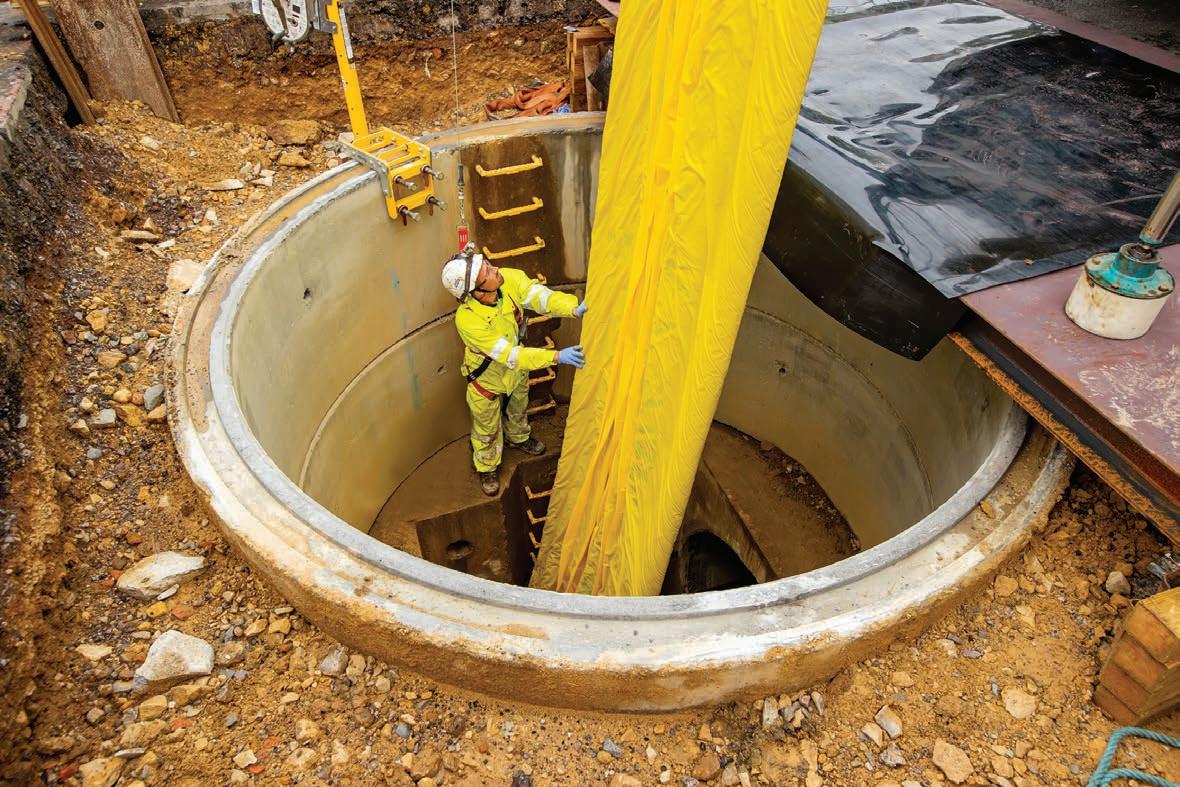
Overall, the operation took around 18 hours to complete.
The GL16 liner made it easy for the team to plan and disregard a worrying weather forecast thanks to its lack of temperature sensitivity. Two 3 m diameter concrete chambers beneath the road were exposed, so the liner could easily be installed between.
However, the true success around this project was a successful collaboration between the teams of iMPREG, Lanes Group, Urban & Civic, and ProKASRO.
What first seemed like an overwhelming task was successfully achieved in one day.
The whole iMPREG team is proud to work with such highly skilled partners around the world to complete projects of any scale.
Gary Carey, Lanes Group’s Lining Supervisor, says that though the project was challenging, it was able to succeed thanks to those involved pulling together as a team.
“The Lanes sewer rehabilitation division’s partnership with iMPREG and ProKASRO worked extremely well,” he says.
For more information, visit www.impreg. de/en/impreg-strengthens-its-roleas-a-training-company
RELINING 60 TRENCHLESS AUSTRALASIA DECEMBER 2022
A 10-person team installed what could be one of the largest ultraviolet liners ever fitted in the United Kingdom.
Liner being installed on site of the project.


12-14 SEPT 2023 EXHIBITION SPACE ON SALE NOW! NO-DIG DOWN UNDER 2022 sold out. Don’t miss your chance to be involved in 2023. Brisbane Convention and Exhibition Centre SUPPORTED BY OFFICIAL MEDIA PARTNER www.nodigdownunder.com www.nodigdownunder.com nodigdownunder@primecreative.com.au #nodigdownunder
Get ready for No-Dig Down Under 2023
No-Dig Down Under is the southern hemisphere’s only large-scale conference and exhibition dedicated to trenchless technology, and it is back in 2023.
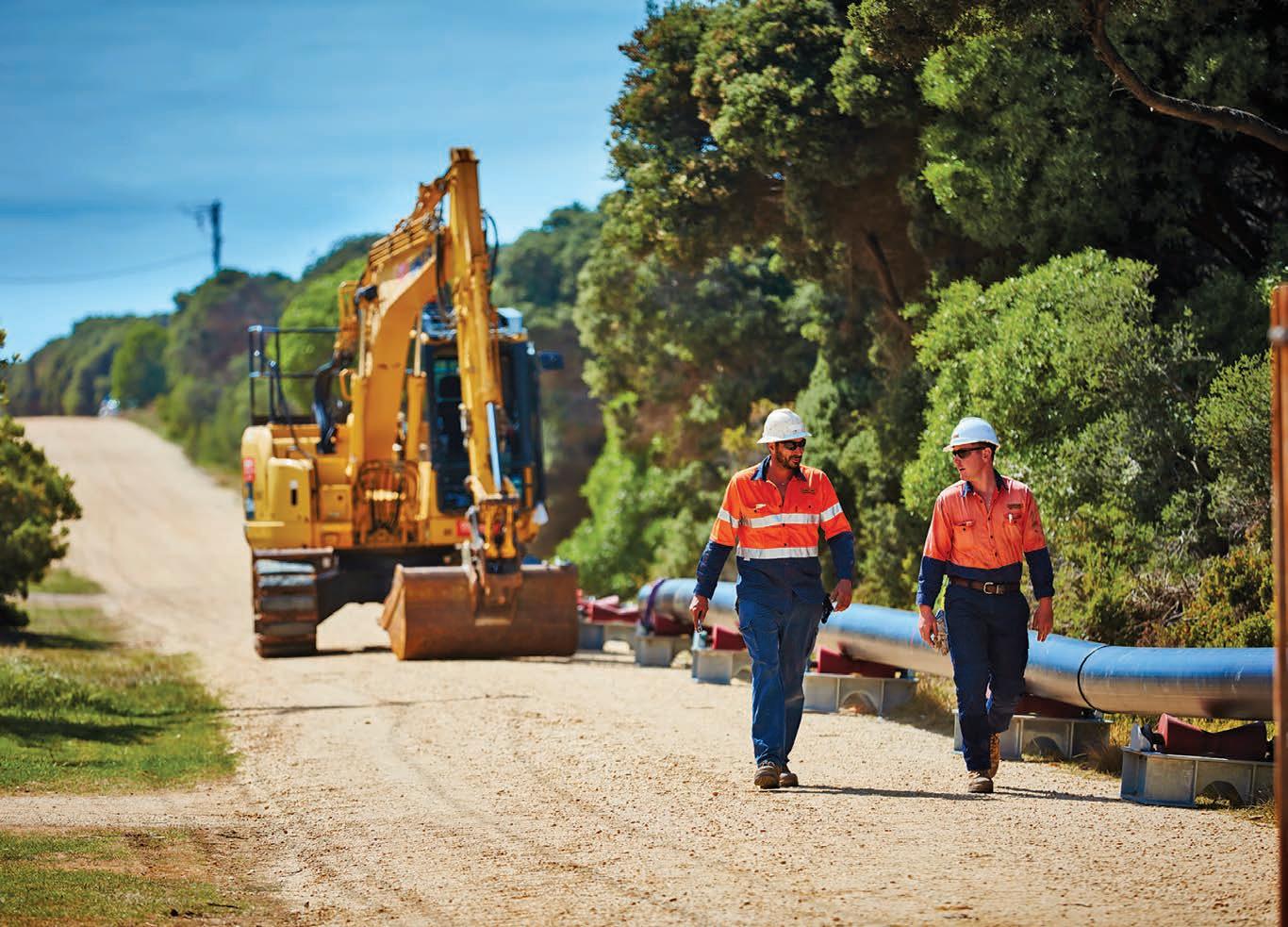
Supported by the Australasian Society for Trenchless Technologies (ASTT), NoDig Down Under 2023 is continuing its reputation as the essential industry event, but places are filling fast. With more than 60 per cent of the available exhibition space, No-Dig Down Under 2023 is looking to be better than ever.
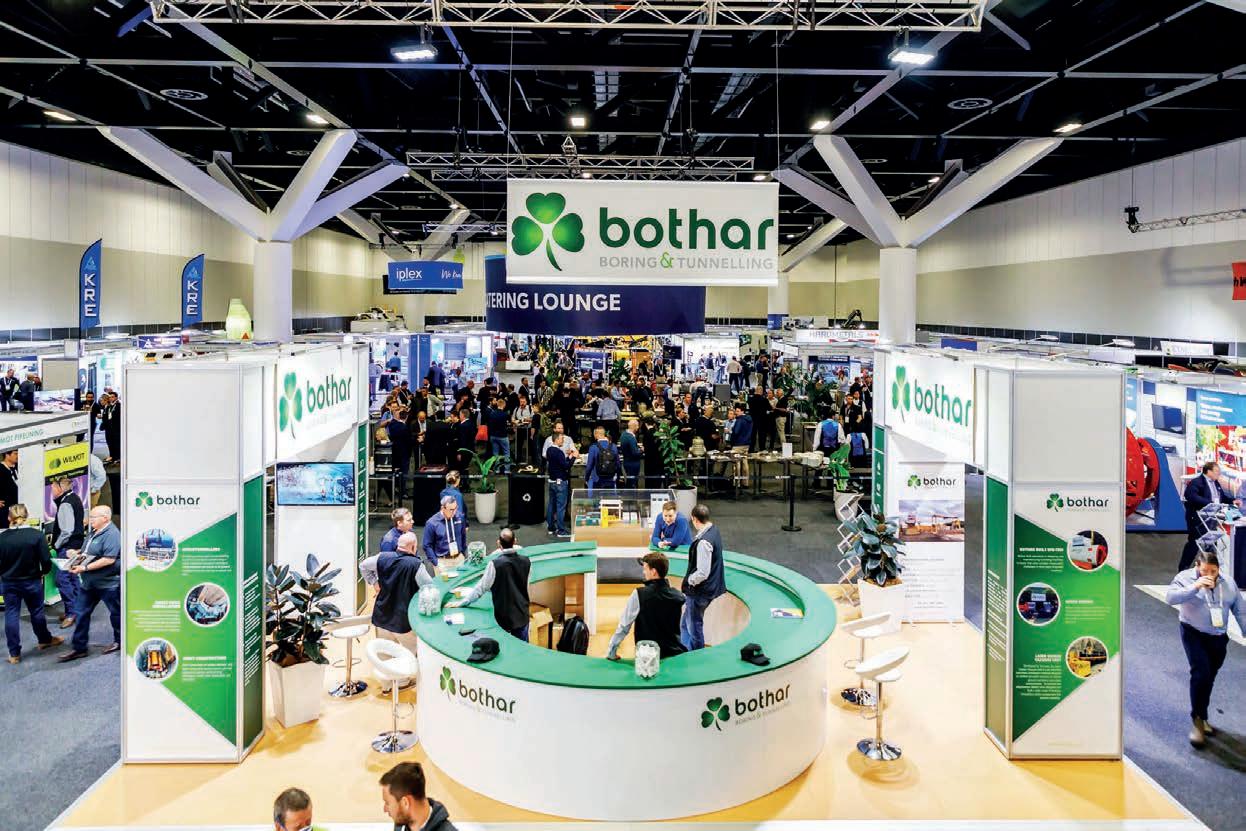
After the undeniable, sold-out success of No-Dig 2022, those who want to exhibit at the event are encouraged to book early to ensure they will have a space on the floor.
No-Dig Down Under will include networking and sponsorship opportunities, training courses, the ASTT Gala Dinner and Awards evening, and exhibitions of the latest and greatest in no-dig innovations.
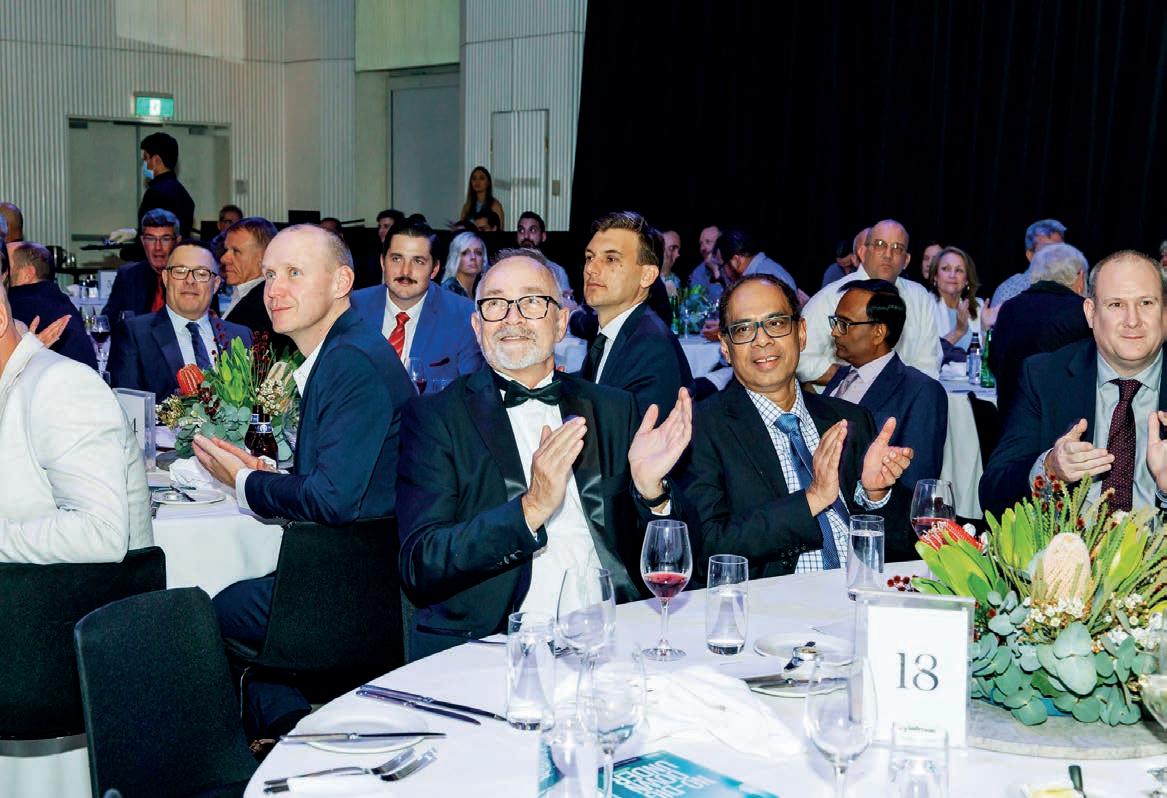
The second-largest no-dig technology event in the world has become the must-attend calendar event of the year for all professionals in the trenchless technology industry.
A range of training courses on trenchless methods will be presented prior to the conference. These will be presented by industry leaders from Australia and overseas and will be of value to anyone who encounters trenchless technologies as part of their employment.
The exhibition will be held at Brisbane Convention and Exhibition Centre on September 13 and 14, 2023.
Want-to-be exhibitors can register their interest here: https://www.cognitoforms.com/PrimeCreativeMedia/ NoDigDownUnder2023ExhibitorRegistration
For more information about No-Dig Down Under 2023 visit: www.nodigdownunder.com/
62 TRENCHLESS AUSTRALASIA AUGUST 2022
ASTT 2022 Gala Dinner.
DECEMBER 2022
No-Dig Down Under 2022.
Maximise brand awareness by connecting with thousands of industry professionals The Trenchless Australasia brand comprises: a bi-monthly magazine, weekly e-newsletter, news website, multiple social media platforms, an annual industry directory, and a biennial conference and exhibition. Partner with the magazine to gain access to our exclusive audience. 9,000+ website views each month 8,200+ e-newsletter subscribers 2,700+ social media followers magazine subscribers 2,700+ www.trenchless-australasia.com A Prime Creative Media publication Contact the business development Manager Nick Lovering to discuss how you can grow your business with Trenchless Australasia. Call 0414 217 190 or email nick.lovering@primecreative.com.au
Corporate Members
Gold Corporate Members
Arcadis Australia Pacific Pty Ltd
Bamser Holdings Pty Ltd
Michels Asia Pacific Pty., Ltd.
Herrenknecht AG
J&R Contracting Limited Orion Consulting Veolia
Silver Corporate Members
AECOM New Zealand Limited
Applied Felts
Aqua Assets
Aqua Metro Pty Ltd
Atteris Pty Ltd
Aurecon
Aussie Trenchless Supplies Pty Ltd Austunnel Pty Ltd
Ballarat Underroad Boring and Excavations Pty Ltd
BG Risk Solutions
Blick Group
Bortec Laser Bore Pty Ltd
Bothar Boring Bullseye Boring
CEA
Connect 8
D.J. Mac Cormick Contractors
DCS Manufacturing Pty Ltd
Denso (Australia) Pty Ltd.
Digital Control - Australia
Directhitt Trenchless Pty Ltd
Diversified Services Australia
DKM Utility Services Pty Ltd
DM Civil
Dormway Pty Ltd
Drillers World Australia
Eco Relining Supplies
Edge Underground
ELB Equipment Pty Ltd
Empire Infrastructure
EPTEC Pty Ltd
Finlease
Fulton Hogan Construction Pty Ltd
Future-Proof Solutions
GM Microtunnelling
Golder
Hard Metals Australia Pty Limited
HDI Lucas
HEB Construction
Asset Owners
Auckland Council
Watercare Services Ltd
Greater Western Water
Knox City Council
Holcim (Australia) Pty Ltd
Hynds Pipe Systems Ltd
Independent Sewer Consulting Services Pty Ltd
Insituform Pacific Pty Ltd Interflow Pty Ltd
Iplex Pipelines Australia
JB Trenchless Pty Ltd
KAISER Technology Pty Ltd kwik-ZIP Spacers
LKL International Pty Ltd
M. Tucker & Sons Pty Ltd March Cato Ltd Marley
Maskell Productions Ltd
Maxibor Australia Pty Limited McBerns Innovative Solutions
McConnell Dowell Constructors (Aust) Pty Ltd
McElroy Manufacturing Inc. McMillen Jacobs Associates (NZ) Melbourne Water Metrocorp Technologies Mudex
Mullane Trenchless Pipeline Solutions Pty Ltd
Nu Flow Technologies 2000 Pty Ltd Pezzimenti Laserbore Pty Ltd Pezzimenti Trenchless Pty Ltd Pezzimenti Tunnelbore Pty Ltd.
Pipe Core Pty ltd Pipe Insight Ltd Pipe Tek
Pipeline Drillers Group
PipeWorks
Prime Creative Media
Prime Horizontal Pty Ltd Qalchek Pty Ltd
Qenos Pty Ltd R & R McClure Excavations
Raedlinger Primus Line Pty Ltd
Ravago NZ Ltd
RBM Plumbing and Drainage Pty Ltd
Reline NZ Ltd
Rob Carr Pty Ltd
Rose Atkins Rimmer (Infrastructure) Pty Ltd
RPC Pipe Systems
SA Water
SASTTI Joint Venture
Schauenburg MAB
SEKISUI Rib Loc Australia Pty Ltd
SEQ Trenchless Sewer Equipment Company (Aust)
Stiles Electrical
STRABAG
Sydney Water
The Drain Man
TRACTO-TECHNIK Australia Pty Ltd
Trenchless Advisor Pty Ltd
UEA Pty Ltd
Vermeer Australia Vertical Horizonz Australia
Vinidex Pty Limited
Warren Smith & Partners Wilmot Pipelining
Wilsons Pipeline Solutions
Yarra Valley Water BRP Corporation Pty Ltd E&CC
GN Solids Control L P Pipe Civil Pipe Doctor Australia Pty Ltd Sika Australia
ASTT CORPORATE MEMBERS
64 TRENCHLESS AUSTRALASIA DECEMBER 2022
About the ASTT
The Australasian Society of Trenchless Technology (ASTT) is a non-profit organisation comprising of members throughout Australia and New Zealand.
The successful establishment of the trenchless industry in Australasia has been supported and promoted by the peak industry organisation, the ASTT, since it was established in 1991.
The society works tirelessly to promote the use of trenchless technology in Australasia, lobbying government and client organisations to highlight the advantages of using trenchless technology and the benefits of training for industry.
Membership is open to all who are concerned with the provision of gas, water, sewerage, drainage, roads, telecommunications and electrical services.
ASTT membership provides trenchless professionals the tools and services they need to be better informed and better connected in this industry.
The ASTT is part of the International Society for Trenchless Technology (ISTT), an affiliation of societies in more than 30 countries worldwide.
Membership applications
The ASTT currently offers seven levels of membership available to all residents of
Australia and New Zealand or anyone who is also a financial member of an existing ISTT Affiliated Society.
The benefits of Membership depending upon category can include:
Up to 10 people from your organisation may be included in your membership and are entitled to receive the below benefits:
• Acknowledgment of your company in every edition of the Trenchless Australasia magazine
• An annual subscription to Trenchless Australasia magazine (four issues per year)
• An annual subscription to ISTT’s Trenchless Works
• A company listing Australasian Trenchless Directory (print and digital)
• Opportunity to promote your membership of the association by including the ASTT logo on your business communications and website
• Access to Guidelines and Standards
• Discount rates (normally 10%) at National Conferences and Exhibition.
• Discount rates (normally 10%) at International Conferences and Exhibition.
• Discount rates (normally 10%) at Trenchless Forums.
• Opportunity to become involved in our Special Interest Groups (SIG’s) which
are technical divisions of the ASTT representing specific trenchless sectors.
• Special offers and links with international organisations including the ISTT
• Opportunity to nominate for ASTT and ISTT awards
• Free access to ISTT past conference proceedings
• A communication network to keep abreast of the advancement of the science and practices of trenchless technology throughout the world
• Discounted rates at International No-Digs and national events including No-Dig Down Under.
How to apply
Visit the ASTT website: https://www.astt. com.au and refer to MEMBERSHIP and check out the membership benefits that apply for each category.
Your membership request will be emailed directly to the ASTT for processing. You will receive an invoice based on the information you supply. Acceptance does not take effect until payment is received in full.
For more information visit www.astt.com.au or email secretary@astt.com.au
ASTT
Membership Category 12 Month Membership Rates 24 Month Membership Rates Gold Corporate $945.00 $1,512.00 Silver Corporate $540.00 $864.00 Asset Owners $405.00 $648.00 Individual $135.00 N/A Young Professional $100.00 N/A Retired Individual $100.00 N/A Tertiary Education Institutions (Students) $40.00 N/A (The rates shown above exclude GST) DECEMBER 2022 TRENCHLESS AUSTRALASIA 65
People on the Move
Development Manager. Micallef brings with him 14 years of experience and skills in geosynthetics in the construction and civil sectors, befitting his ability to succeed in his new role at the company.

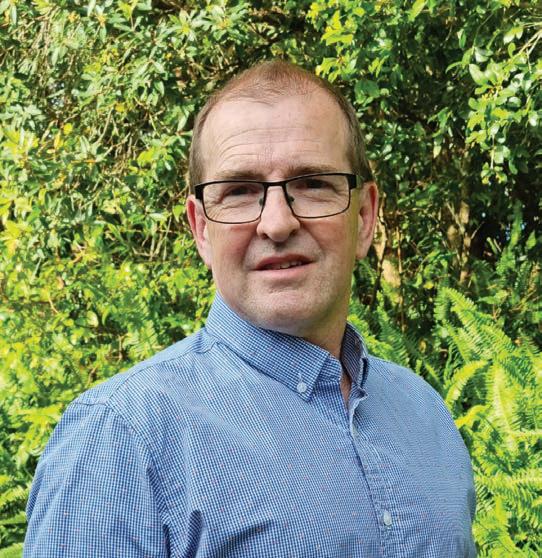
“During my time in the civil industry, I noticed that the trenchless sector was rapidly evolving which sparked my interest and am excited to have a chance be a part of this growing sector,” says Micallef.
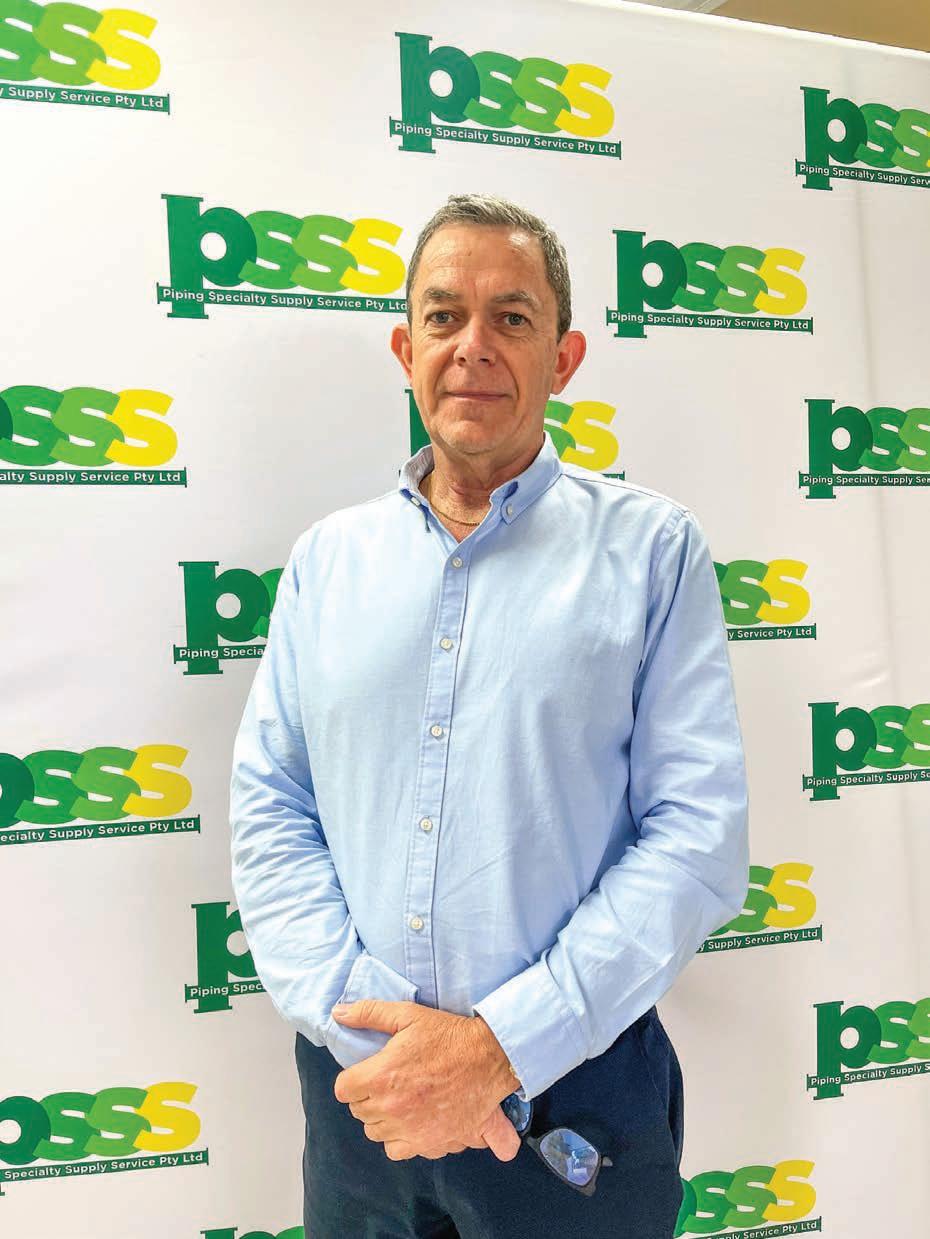
His role with kwik-ZIP will involve providing full cycle business development activities. This includes market research, strategic market development and building deep customer relationships within the industry. Micallef is looking forward to becoming a trusted advisor for kwik-ZIP customers by continuing to develop solutions and creating strong customer relationships within the trenchless and civil industry.
Jandakot-based WA warehouse. “This will expedite our local WA customer orders, and reduce lead times and freight costs,” says Hodnett.
Climo is one of Veolia’s nearly 200,000 employees across five continents. He brings with him over 25 years of experience in the water industry, from water and wastewater treatment to the construction of facilities, pumping stations and pipelines. His directional drilling experience includes projects that have involved pipe bursting, pipe ramming and fold & form lining, spiral
“It’s my passion to see Veolia cement its position as the leader in pipeline renovation across Australia and New Zealand,” says Climo. “I’m particularly looking forward to bringing new and existing innovative technologies to our clients across NZ and further building our great team to continue delivering the best value.”
Climo will provide greater consistency in Veolia’s NZ approach to delivering creative, innovative and where possible trenchless technologies. If your company has recently
‘People
PEOPLE ON THE MOVE 66 TRENCHLESS AUSTRALASIA DECEMBER 2022
In this new and regular column, Trenchless Australasia is tracking new appointments in Australia and New Zealand’s trenchless industries, celebrating the people who make the industry what it is.
employed a new person within your business you would like profiled in
on the Move’, send details of the career news alongside a high-res photo to Journalist Christian Alphonso at christian.alphonso@primecreative.com.au
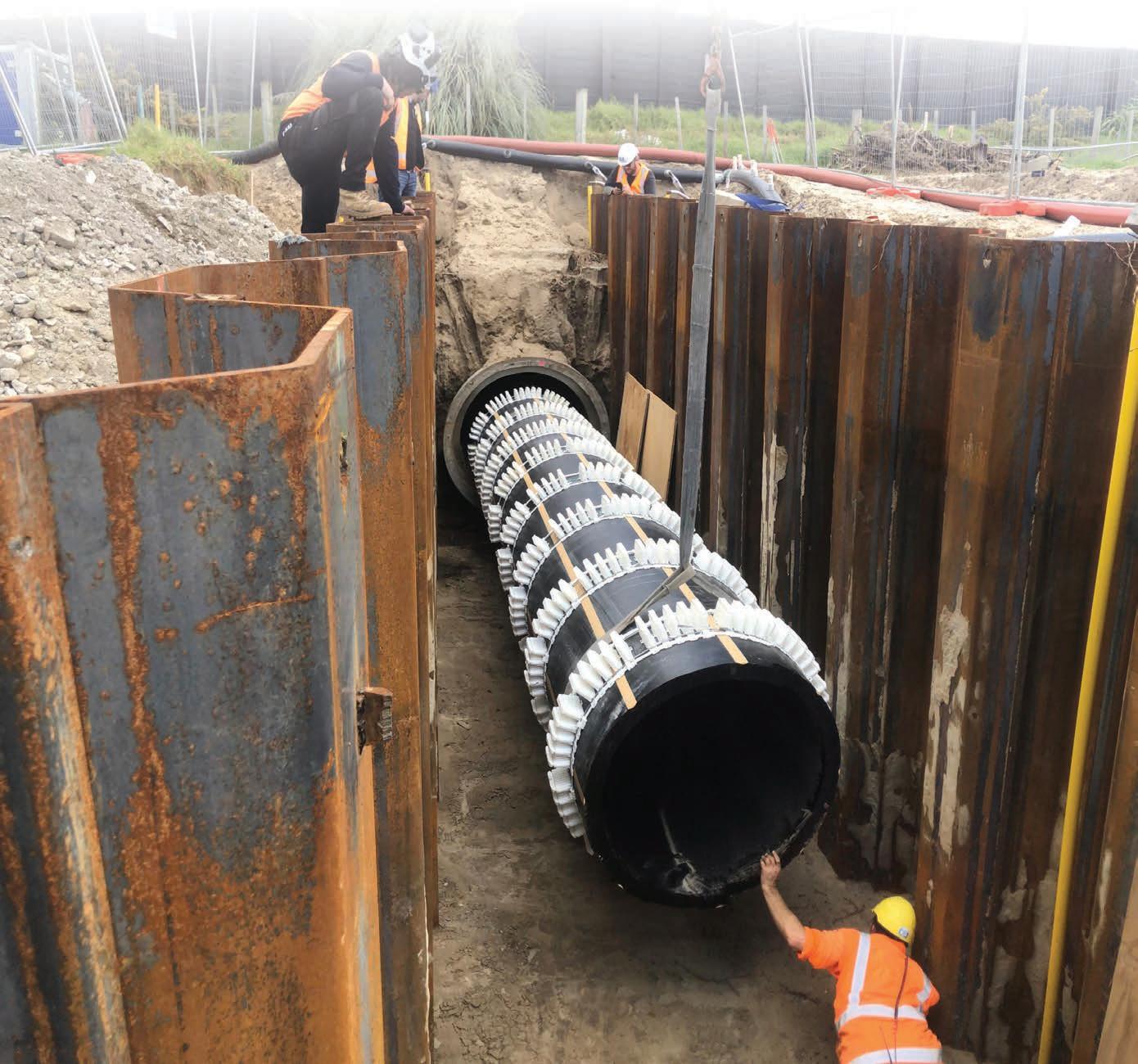
Is your pipe spacer compliant? Call us for details on ordering P (08) 9725 4678 sales@kwikzip.com www.kwikzip.com The only casing spacers successfully appraised by WSAA HDX and HDXT KWIK-ZIP’S HDX & HDXT CASING SPACERS COMPLY WITH WSAA PRODUCT SPEC #324 - CASING SPACERS; REFER WSAA PRODUCT APPRAISAL REPORT #1523
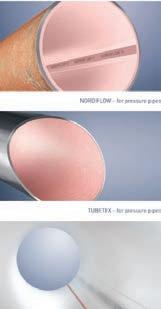
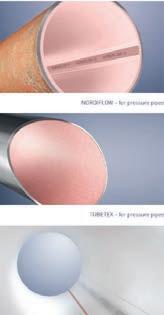

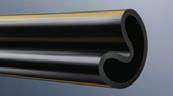




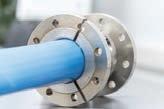
Safe Technology for Asbestos Cement Water Pipes whorton@trenchless-supplies.com.au
Horton edmund.luksch@rti.eu Edmund Luksch r.tec Close-Fit – for pressure and gravity pipes ranging from DN 50 – 1400 mm • Equipment for cleaning and pipe rehabilitation • Technical support INDIVIDUAL SOLUTIONS FOR YOUR NEEDS TECHNOLOGIES • CIPP (Cured-In-Place-Pipe) • PIPP (Pull-In-Place-Pipe) • Close-Fit (Pre-Deformed PE Pipe) • Spiral Wound Systems • Rehabilitation of tanks and manholes • Trenchless renewal PRODUCTS We provide a wide array of pipe rehabilitation materials, including: • Felt Liner • Glass Reinforced Liner • Round Woven Textile Liner • Fiber Reinforced Inserted Hose • Factory Impregnated Liner • Resin • Pre-Deformed PE Pipe (r.tec® Close Fit) • Spiral Wound Systems (for new construction) SYSTEMS Depending on requirements, application areas and host pipe conditions, you may choose from the following pipelining technology systems: EQUIPMENT • Pipe Cleaning Equipment • Liner Impregnation Units • Inversion Units • Curing Units • Accessories (e.g. telemetric system, special tools, etc…) SERVICE • Choice of system • Conceptual design and engineering • Project assistance • Approvals • On-site supervision • Development of customized solutions CIPP installation unit This creates a “one-stop shop” for innovative pipe rehabilitation solutions. Under the motto “all from one source”, NordiTube Technologies provides the entire range of pipe rehabilitation technologies, including materials, equipment, technical support and approved high-end liner systems. * Special diameter on demand 3 PRESSURE GRAVITY NORDIFLOW TUBETEX IH LINER r.tec® CLOSE FITNORDIWALL Application area Sewer, Water, IndustryWater, Gas, IndustrySewer, Water, Gas, Industry Sewer, Water, Gas, Industry Sewer, Industry Special application • NORDIFLOW W PE Pull-in system • NORDIFLOW W PE Inversion system • NORDIFLOW W PP Pull-in system • NORDIFLOW W PP Inversion system • TUBETEX W For drinking water pipes • TUBETEX G For gas pipes • TUBETEX COMBILINER With additional feltlayer • Water: PN4-PN16 • Heat: PN16 • Gas: PN40 • 100 % PE without gap • NORDIWALL HT High temperature up to 115°C • NORDIWALL FLEX Very flexible felt • NORDIWALL FLEX LITE Lateral DN 50mm+ Diameter* 150–1400 mm 80–1200 mm 50-1200 mm 150–400 mm 50–1400 mm Material Glass fibre reinforced felt Round woven polyesteryarn Circular woven reinforcement polyester and/or kevlar PE 100 PE 100 RC Polyester needled felt Coating PE or PP PE, TPU or TPCPE, TPU or other elastomers / PE or PP Resin r.tec 582-25 OFr.tec MK III / / r.tec 521-26 OF r.tec 512-49, UP * * * *
Wayne
