ISSUE 74 | AUGUST 2022 THE OFFICIAL PUBLICATION OF THE AUSTRALASIAN SOCIETY FOR TRENCHLESS TECHNOLOGY RELINING FOR ENVIRONMENTTHE The quick, clean and quiet rehabilitation solution

We can help you create Sustainable Waterways for generations to come Talk to us about stormwateroursolutionstoday


Wastewater Infrastructure Water Infrastructure Storm water & Culverts Pipe sizes DN150-DN3000


wilmotpipelining.com.au 2/88 Munibung Road Cardiff NSW 2285 1300 942 028 UV CIP lining UV Short Lining UV Manhole Lining Pressure Pipe Lining Spiral wound Lining Lateral seal lining Slip lining CCTV Pipeline Cleaning Robotics Civil pipeline construction Mortar repairs & coatings


6 TRENCHLESS AUSTRALASIA AUGUST 2022 Contents ISSUE 74 AUGUST 2022 UNDER WESTERN AUSTRALIA Pipeline rehabilitation and transport at the forefront in WA 16 Helping develop the local directional drilling industry 18 TRENCHLESS PIONEERS Andris Krumins 20 ENERGY Underpinning Australia’s transition to a renewable energy future, Snowy 2.0 is on its way 22 ENGINEERING & DESIGN After the storm: what the floods have taught us 24 Engineered products designed to last 26 kwik-ZIP’s spacers make waves at WSAA 28 FINANCE PEF Commercial Finance is rising to the challenge of increasing 30 interest rates REHAB & REPAIR Iplex’s Restrain a win for Townsville Sewer upgrade 32 SECA leads the way in trenchless pipe rehab and repair needs 34 RELINING iMPREG’s commitment to helping the environment – One trenchlessproject at a time 36 Aussie Trenchless PST the way to go 38 McRoberts restores channels at Woodman Point 40 HDD Directhitt Trenchless targets business growth 42 Vermeer D40x55DR HDD ‘ticks every box’ for Healesville directional drilling 44 HDD and ESG 46 Investing in learning opportunities 48 Hard work and loyalty comes first 50 S&Z Australia delivers Lethbridge Watermain 52 VACUUM & HYDRO EXCAVATION Vacuum excavation: a safer and more environmentally friendly solution 54 MAINTENANCE HOLES From maintenance hole relining to NDD services, Rangedale has Queensland covered 56 PROJECTS Adept continues to progress at Upper Stony Creek Sewer Duplicationproject 58 CDE recycling solution to redirect material from landfill to construction industry 60 EVENTS Trenchless industry back bigger and better 62 No-Dig Down Under photos 64 AUSJET22 67 RE GULARS Editor’s Letter 8 From the President 10 From the ASTT Secretar 12 News in brief 14 ASTT Corporate Members 68 Advertisers’ Index 70 COVER IMAGE iMPREG’s commitment to helping the environment – One trenchlessproject at a time Page 36 Cover image: iMPREG This magazine is the official journal of the Australasian Society for Trenchless Technology (ASTT) and is distributed to members and other interested parties throughout Australia and the Asia-Pacific. It is also available on subscription. The publishers welcome editorial contributions from interested parties. However, neither the publishers nor the ASTT accept responsibility for the content of these contributions and the views contained therein are not necessarily the views of the publishers or the ASTT. Neither the publishers nor the ASTT accept responsibility for any claims made by advertisers. All communications should be directed to the publishers. Unless explicitly stated otherwise in writing, by providing editorial material to Prime Creative Media (PCM), including text and images, you are providing permission for that material to be subsequently used by PCM, whole or in part, edited or unchanged, alone or in combination with other material in any publication or format in print or online or howsoever distributed, whether produced by PCM and its agents and associates or another party to whom PCM has provided permission.
E: office.admin@mcrobert.com.au P: 08 9411 0666 www.mcrobertcontracting.com.au INDUSTRY LEADERS IN REFURBISHMENTS OF UNDERGROUND ASSETS AND PVC PIPELINE TECHNOLOGY We provide infrastructure and construction projects with unique solutions based on our full range of applications, including: • 3D Laser Scan inspections • Sewer Access Chamber and Pump Station refurbishment • PVC and polyethylene welding • High pressure jet pipe cleaning • CCTV inspections of piping and sewage systems BEFORE BEFORE AFTER AFTER KARLOO, GERALDTON WA COCONUT GROVE, NT McRobert Contracting Services provide a 50 year guarantee on all materials and workmanship for the plastic lining of sewer access chambers and waste water pump stations.




On behalf of the team from No-Dig Down Under and Trenchless Australasia, we thank all who attended this year’s event.
It was inspiring to hear the stories and emerging technologies of the industry, from the best rehabilitation project to the new installation project of the year, and new technology, there was lots learn and celebrate this year. However, these projects and technologies would not be possible without the people behind them, with the ASTT also awarding the ASTT Person of the Year and Young Person of the Year. The ASTT Person of the Year recognises an individual who has made major and sustained contributions to the trenchless industry in any area of activity within the Thisindustry.year’s winner was Lance Horlyck from the SASTTI Joint Venture. Horlyck has over 40 years of structural engineering experience. Over the last 30 years, he has developed strategies for the assessment and repair of water and wastewater assets that are now considered industry benchmarks.
S ince the last edition of Trenchless Australasia there has been plenty happening in the trenchless industry.
CEO John Murphy COO Christine Clancy christine.clancy@primecreative.com.au MANAGING EDITOR Molly Hancock molly.hancock@primecreative.com.au EDITORIAL Christian Alphonso, Jenna May BUSINESS DEVELOPMENT Nick Lovering nick.lovering@primecreative.com.au DESIGN PRODUCTION MANAGER Michelle Weston michelle.weston@primecreative.com.au ART DIRECTOR Blake Storey blake.storey@primecreative.com.au DESIGNERS Kerry Pert, Aisling McComiskey COPYRIGHT Trenchless Australasia is owned by Prime Creative Media and published by John Murphy. All material in Trenchless Australasia is copyright and no part may be reproduced or copied in any form or by any means (graphic, electronic or mechanical including information and retrieval systems) without written permission of the publisher. The Editor welcomes contributions but reserves the right to accept or reject any material. While every effort has been made to ensure the accuracy of information, Prime Creative Media will not accept responsibility for errors or omissions or for any consequences arising from reliance on information published. The opinions expressed in Trenchless Australasia are not necessarily the opinions of, or endorsed by the publisher unless otherwise stated. © Copyright Prime Creative Media, 2021 ARTICLES All articles submitted for publication become the property of the publisher. The Editor reserves the right to adjust any article to conform with the magazine format. Head Office 11-15 Buckhurst St South Melbourne VIC 3205 Ph: +61 3 9690 Ph:Saint1-9SuiteShttp://www.primecreative.com.auenquiries@primecreative.com.au8766ydneyOffice303,ChandosStreetLeonardsNSW2065,Australia(02)94397227 8 TRENCHLESS AUSTRALASIA AUGUST 2022 Printed by: Manark Printing 28 Dingley Ave Dandenong VIC 3175 Ph: (03) 9794 8337
Ash Hamer from Yarra Valley Water was the winner of this award. Hamer, Yarra Valley Water’s Major Projects Manager, was recognised for being an innovator and successfully leading the Major Projects team to deliver over $200 million worth of trenchless work over the past few years.
The recipient of the 2022 Young Person of the Year is someone who engaged with the industry and the promotion of trenchless technology and has significantly contributed to the industry over the past two years.
letterEditor’s Molly Hancock
The ASTT Gala Dinner and Awards was a sell-out with 410 attendees celebrating the success of the industry. The gala dinner and awards ceremony was proudly sponsored by Bothar Boring and Tunnelling.
June kicked off with the first No-Dig Down Under Conference and Exhibition in three years. The event saw an impressive 1861 delegates participating over the four days in the Theevent.conference was my first trenchless technology event since taking on the magazine in September 2021. With COVID-19 to thank for the countless postponements and delays, it was great to finally meet everyone and connect in Withperson.the last event in 2019, you could feel the buzz at the Sydney ICC, with attendees celebrating at the opening of the convention, the boat cruise and the gala and awards dinner.
Molly Hancock Managing molly.hancock@primecreative.com.auEditor
A chance to continue recognising the success of the industry and the challenges it has overcome in the last three years were the ASST Awards.


TRACTO.COM/GRUNDODRILL FLUID-ASSISTEDGRUNDODRILL HDD RIG TOP PERFORMER The GRUNDODRILL 18ACS is not an ordinary HDD rig. This is German precision engineering and reliability from TRACTO. From the finest silts to impossibly hard rock, the ‘King of Rock’ works where others give up. - Dependable power transmission - Flushing capacity of 400 l/min - Minimum working width of just 2.35 m - Fully automatic operating and rod loading modes - Maximum power output and reaming speeds - Automatic Anti-Stall function to protect machine, rods and Totoolingfindout more, please get in Tinfo-au@tracto.comtouch.+61734205455

•organisations:Firstly,theASTT Council and the Conference Committee led by Matthew Boyle. Council as a whole (Jeff Pace, Sudipta Basu, Trevor Gosatti, Shaun Melville, Blair Telfer, Justin Shepherd and Matthew Boyle).
• Wilmot Pipelining, PipeCore, McConnell Dowell, Bamser (Bronze);
• The oversold exhibition floor.
• The record attendee numbers.
• The informative training courses in HDD and New Installations.
Highlights for me were many, however, if I could name a few:
• Bothar Boring & Tunnelling (platinum);
I wish to communicate the ASTT’s appreciation of the following people/
• Vermeer Australia and Herrenknecht
• Outstanding keynote speeches and a global summary of our industry from the Panel Discussion.
• Training Course Presenters (Justin Shepherd, Blair Telfer, John Bower, Mike Skull and Terry Farmer).
• A very successful Opening Drinks sponsored by Herrenknecht.
I hope you all give yourselves a pat on the back for a job well done over the course of the past few years. It has been tough, but I am grateful that we were able to finally host and attend a conference such as No-Dig.
• A fantastic night cruising Sydney Harbour that coincided with Vivid sponsored by Vermeer. And a magical Gala Awards Dinner recognising our projects, innovations and achievements of our industry leaders sponsored Bothar Boring & Tunnelling. Apologies, I have got carried away here and named the whole program!
10 TRENCHLESS AUSTRALASIA AUGUST 2022 THE AUSTRALASIAN SOCIETY FOR TRENCHLESS TECHNOLOGY ABN 43 893 870 966 18 Frinton Greenwood,PlaceWA 6024 President:jeffpace@astt.com.auwww.astt.com.au Ben Crosby Secretary: Jeff Pace Vice President: Blair Telfer COUNCILLORS Western Australia: Trevor Gosatti Queensland: Ben Crosby New South Wales: Matthew Boyle Victoria: Justin Shepherd South Australia: Shaun Melville New Zealand: Blair Telfer Northern Territory: Vacant Tasmania: Vacant INTERIM REPRESENTATIVES Sudipta Basu
• Key Sponsors:
From WPresidentthe
•(Gold);Interflow, KRE, Rob Carr (Silver);
elcome to the post 2022 NoDig Down Under Trenchless Australasia Magazine. To say the least, the delivery of No-Dig was a challenge, with the ongoing COVID-19 pandemic causing postponement after postponement. However, I am pleased the ASTT persevered, and we didn’t give up and I’m sure you’ll agree No-Dig was a success and a great chance to reconnect with our industry and communicate our achievements and challenges.AsAustralia’s only dedicated exhibition and conference for trenchless technology, No-Dig is incredibly important for our industry.Thank you to our sponsors and exhibitors for continuing to believe in the vision of NoDig Down Under, and supporting the event through a postponement. Given the standard of the conference program and the exhibition hall it was worth the wait. To all our exhibitors – thank you for showcasing your latest innovations and how you are directly contributing to the advancement of our industry. Without your support, No-Dig Down Under would not be possible.No-Dig is the one place where we can see all the advancements in technology, solutions from suppliers and meet with our peers in one spot. I, for one, find each No-Dig Down Under event more inspiring than the last, and I’m sure you’ll agree that 2022 was a standout; the attendance numbers certainly reinforced this. I am proud that our industry has continued to thrive throughout the pandemic, with many individuals and companies contributing to Australia’s –and indeed, the world’s – ongoing major infrastructure projects.
• Great technical papers with good attendees.
• Our media partner; Prime Creative Media and Simon Coburn and team. Ben Crosby ASTT bencrosby@bamser.com.auPresident


Rob Carr is part of Soletanche Bachy a world leader in foundation and soil technologies and subsidiary of VINCI, a global player in construction across more than 100 countries. With outstanding capabilities to manage the complexities of any project, Rob Carr has the people, knowledge and experience to deliver success.
Excellencerobcarr.com.au
in tunneling for water, wastewater and energy infrastructure.
With a focus on safety, innovation and collaborative delivery over the last 30 years, Rob Carr has achieved outstanding outcomes in water, wastewater and energy infrastructure projects in both Australia and overseas.
Daniel Gamboa from Fluidity Consulting
Jeff Pace ASTT secretary@astt.com.auSecretary
Individual
ASTT Young Person of the Year – awarded to Ash Hamer – Yarra Valley Water.
12 TRENCHLESS AUSTRALASIA AUGUST 2022
Daniel Beech from Subsurface Consulting Dillon Corsbie from No Probs Plumbing and DanielElectricalLewis from No Probs Plumbing and LukeElectricalMcGinnity from RL Communications Pty Ltd Sol Asadollahi from Icon Water Individual Members – New Zealand
Jon Robison from GeoEngineers Inc 2022 NATIONAL CONFERENCE AND EXHIBITION – SYDNEY
Rowan Burgess from Pipe Technologies MaifeaLimitedMaifea from Pipe Technologies Limited Individual Members – United States of America
The ASTT held its COVID-19 delayed 2021 National Conference and Exhibition at the new Sydney Convention and Exhibition Centre over June 14 to 17, 2022. It goes without saying that we owe a debt of gratitude to all of our sponsors that once again demonstrated their support for the ASTT and the trenchless industry. Bothar Boring and Tunnelling was our Platinum Sponsor, Vermeer and Herrenknecht were our Gold Sponsors with Interflow, KRE and Rob Carr as our Silver Sponsors. Wilmot Pipelining, Pipecore, McConnell Dowell and The Bamser Group were our Bronze TheSponsorsASTT greatly appreciates all these sponsorship commitments towards assisting us with the promotion of trenchless technology throughout Australasia
As we did in Melbourne 2019, we kicked off on the Tuesday morning with series of the ASTT and NASTT in-depth training courses for individuals of the infrastructure industry. Produced by the North American Society for Trenchless Technology, and adapted for Australasian audiences, these courses provided attendees with a unique opportunity to learn from leading experts from around the world. The two courses undertaken this time were the Horizontal Directional Drilling Good Practices Guidelines Course and the New Installation Method Good Practices Course. Attendances at these courses was extremely well patronised with some 54 attending. The event officially kicked off on the Tuesday evening with the Exhibition Opening. This event was sponsored by ThenVermeer.on the Wednesday morning, the plenary sessions commenced and featured the keynote presenta-tions from Jonathan Farrell the Program Manager from Urban Utilities. This was immediately followed by a high-level panel discussion that featured key trenchless personalities, namely Jonathan Farrell from Urban Utilities, Queensland, Ben Hayes from Herrenknecht Asia, Tom Sangster from Downly Consultants, Switzerland and Craig Vandaelle from Michels USA. On Wednesday night, we saw close to 500 gathered for an outdoor Sydney Harbour Cruise that was sponsored by Vermeer. It allowed delegates, exhibitors, contractors and other interested trenchless personnel to network while being treated to a wonderful evening on the harbour that also included the Vivid Festival Light Show.
Thursday evening an in excess of 400 delegates gathered for the sold out Bothar Boring and Tunnelling sponsored ASTT Gala Dinner that was held in the IVY Room on George Street. Those that attended all enjoyed a sumptuous three course meal, the presentations of the prestigious awards and some live music. As previously mentioned, during the Gala Dinner, the ASTT Award winners for 2022 were also announced. The winners were: New Installation Project of the Year Award –awarded to Donnybrook Link Branch Sewer Stage 2 – Edge Underground. Rehabilitation Project of the Year Award – awarded to Lihir Island (PNG) Tailings Pipeline Rehabilitation Project – Spiecapag Australia T/a HDI Lucas. New Technology Award – awarded to B-Tech Connections – ISC Services.
Melissa Richards from Pipe Doctor Australia
Pty BradleyLtd Plant from L P Pipe Civil Silver Corporate Members – New Zealand
Dwayne Deprez from Greater Western Water Members – Australia
CMYCYMYCMYMCK
Secretary’s SilverAugust 2022CornerCorporateMembers–Australia
Jaco Griessel from Pipeworks Asset Owners – Australia
Marc Ciochetto from Pipe Insight Ltd Membership upgraded by Americo dos Santos for Hynds Pipe Systems Ltd
ASTT Menno Henneveld Person of the Year – awarded to Lance Horlyck – SASTTI Joint AndVenture.finally, I want to thank both Simon Coburn and Nick Lovering as well as the hard-working team behind the scenes from Prime Creative Media for once again providing a wonderful event for the ASTT.
The event saw some 1861 visitors attend the show over three days. The event gave delegates and visitors an opportunity to see the 112 booths on display.


Interflow after the storm Interflow and other water and pipeline infrastructure companies have been doing their utmost to control unprecedented volumes of water. The solutions for which are heavily dependent on localised conditions and challenges.
Beechworth sewers inch closer to completion
Running the project was Spanish company GRUPO CANALIS –Soluciones Tecnológicas who turned to SAERTEX multiCom GmbH and their advanced UV-CIPP technology to rehabilitate the ageing Thepipeline.jobspanned 500 m of DN 600 cast iron pipe which supplied the Metropolitan region of Valencia with potable water.
“In Australia, our focus has been on water security, on getting ready for the next drought. It’s correct to focus on water security. But at the same time, increasingly regular and extreme rainfall events also deserve attention, as the recent floods proved.”
The company urges other water managers to take on a proactive approach when it comes to stormwater infrastructure by taking on the informed advice and input of those who’ve been there before. Interflow has acknowledged that there is no such thing as a one-size-fits-all solution to the flooding crisis once again impacting Australians. The Beechworth sewer system is being upgraded.
NEWS IN BRIEF
14 TRENCHLESS AUSTRALASIA AUGUST 2022
“It’s a mistake to walk into a council area and assume they all have the same problems and they all should be taking the same approach,” said Interflow contracts manager John Weaver. “It depends on the age of the area, on population growth, ground type and much more.” It appears the best way to mitigate the fallout and impacts of similar flooding events in the future is to spread awareness around Australia’s stormwater infrastructure and the condition of underground assets.
With the successful installation of SAERTEX-LINER H2O, the potable water supply for over 1.6 million people in Valencia, Spain, was secured in the late summer of 2020.
Trenchless in Valencia North East Water’s Beechworth sewer upgrade project has seen great progress, with a 1 km continuous length pipe pulled through a horizontal bore from Beechworth to the sewage treatment plant in TheWoolshed.Beechworth sewer system is being upgraded to address sewage overflows after heavy rain events. The project involves a new sewer transfer pipe being constructed from the bottom of Church Street, along Last Street, Sydney Road and Old Chiltern Road then under the Historic Park to the wastewater treatment plant. Without the upgrade, when prolonged rainfall occurs in Beechworth the sewer system is unable to cope and overflows from an outlet structure on Church Street into the Beechworth Historic Park.
More than 500m of SAERTEX-LINER H2O potable water UV liner installed in Valencia, Spain.
SAERTEX multiCom’s pressure-resistant and hygienic SAERTEXLINER H₂O was selected for the job due to its superior mechanical characteristics and extended shelf life which would allow the liner to be impregnated offsite and delivered ready for installation. This award-winning liner has a smooth surface coupled with low wall thicknesses which maximises flow rate in supply pipes. Its composition also allows it to be tight-fitting and withstand pressures up to 33 bar depending on the DN of the pipe.


Tunnel boring machine.
Minister for Infrastructure, Transport, Regional Development and Local Government Catherine King. The Mannum to Adelaide Pipeline.
“Taking just five days to paint, the artwork recognises the area’s amazing achievement of being recognised as the River Murray Dark Sky Reserve – one of only fifteen located around the world, and the only recognised dark sky reserve in Australia.”
“The Mannum to Adelaide Pipeline plays a critical role in delivering water to thousands of our customers, and we recognise the concrete exterior provides the perfect canvas for large-scale art projects for locals and passers-by through the region,” said Ricci.
NZ’s City Rail Link makes strides with TBM
The TBM has been custom-made for the project, manufactured by German machinery company Herrenknecht in China before being shipped to begin its ground-breaking work.
Capable of travelling 32 m per day while excavating up to 1500 tonnes of spoil in a 24 hour period, the custom-made TBM is an innovative and transformative piece of technology that is vital to the success of the CRL project.
In collaboration with the Murray River, Lakes and Coorong Tourism Alliance, the Mid-Murray Council and Palmer’s Collier Park Community Association, South Australian artist Jack Fran has painted a mural on a 50 m section of the Mannum to Adelaide pipeline.
One of South Australia’s largest water pipelines near Mannum has been given an incredible mural makeover as part of a community art project celebrating the region as Australia’s first dark sky reserve.
NEWS IN BRIEF AUGUST 2022 TRENCHLESS AUSTRALASIA 15
50 m long mural dazzles Mannum to Adelaide pipeline
“As the first female Federal Infrastructure Minister and as part of a diverse ministry, I can’t wait to get to work with my state and territory colleagues,” she said.
New Federal Infrastructure Minister confirmed Ballarat’s Federal MP Catherine King has been named as Minister for Infrastructure, Transport, Regional Development and Local KingGovernment.saidshe was ready to pull on the safety boots and get to work in a recent Twitter post.
New Zealand’s City Rail Link (CRL) has hit the ground running as construction of the second tunnel reaches yet another milestone largely thanks to the efforts of a custom tunnel boring machine The(TBM).star of the CRL project, the TBM is named after Dame Whina Cooper and has facilitated incredible progress for the project. Its most recent breakthrough comes as the TBM broke through into the mined tunnel cavern at the Link Alliance Maungawhau (Mt Eden) Station construction site. This occurred only 85 m after the TBM was launched.
SA Water’s general manager of strategy, engagement and innovation Sandra Ricci said SA Water will continue to investigate ways to visually improve infrastructure for the benefit of the community.
First elected to Federal Parliament in 2001 to represent the electorate of Ballarat, King has been re-elected as member at each subsequent Federal Election.
King has held senior roles in both Opposition and Government relating to the transport and infrastructure portfolio and therefore has extensive experience and understanding of the challenges, opportunities and solutions facing the civil infrastructure sector.
Civil Contractors Federation National (CCF) has welcomed the appointment of King as the Federal Minister for Infrastructure, Transport, Regional Development and Local Government.


A large degree of progress has been made since mid-2021, with works continuing to prepare the tunnels formed using the impressive tunnel boring machine (TBM) for everyday use having been completed. As reminder of the monumental achievement of building WA’s longest tunnels, the 70-tonne TBM has taken on a new life as a industrial sculpture standing proudly at the entrance to the High Wycombe Station precinct.
A greenlight on the ForrestfieldAirport Link
The $1.86 billion METRONET Forrestfield-Airport Link, jointly funded by the federal and WA state governments, is set to deliver a new rail service to the eastern suburbs of Perth – with three new stations at Redcliffe, Airport Central and High Wycombe.
Over the past year, there have been significant developments in the trenchless industry across Western Australia, with projects to improve water security and transport availability experiencing significant progress in their goals to improving prosperity for the state.
APA Group’s Northern Goldfields Interconnect kicks off construction Nacap has kicked off construction, on Western Australia.
Pipeline rehabilitation and transport at the forefront in WA
More recently, Airport Central and Redcliffe stations have undergone safety testing as part of a tunnel ventilation tests which are critical to gauging the tunnel’s safety in emergency scenarios.
UNDER WA 16 TRENCHLESS AUSTRALASIA AUGUST 2022

UNDER WA AUGUST 2022 TRENCHLESS AUSTRALASIA 17 behalf of APA Group, on the approximately 580 km long DN300 Northern Goldfields Interconnect (NGI). Nacap’s crews have begun to mobilise the site and the project is set to build momentum throughout the coming months as activities kick-off across the project.
The Northern Goldfields interconnect project involves the construction of a new buried pipeline, commencing at Ambania approximately 50 km east of Geraldton, connecting into the existing Goldfields Gas Pipeline (GGP), approximately 40 km south of APALeinster.Group’s investment in the NGI will help stimulate significant economic development within WA and has the potential to unlock hundreds of millions of dollars of investment in the Goldfields region. The region is rich in gold, potash and battery minerals such as vanadium, nickel and rare earths. Rehabilitating pipes for Perth WA’S Water Corporation is currently undertaking works to renew ageing water pipes across Perth as part of the Pipes for Perth program. Works include the rehabilitation of approximately 700 m of ageing water pipelines in Kings Park between Mount Eliza Reservoir and Bellevue TerraceStageoneofthe works has commenced as of late June 2022 and is anticipated to take around four months to complete. Following the completion of stage one, stage two will begin and is planned to commence in early October 2022 excluding any delays due to weather events. Stage two is expected to take around two months to complete.
The goal of the Pipes for Perth program works is to help ensure the reliability of water supply to the Perth CBD and the surrounding areas for decades to come. Rob Carr sits firmly in the driver’s seat for Quinns Main Sewer Extension Robb Car was awarded the contract to deliver the Quinns Main Sewer Extension for Water Cooperation in 2021. The first stage of the project was completed over 10 years ago and the extension is set to add approximately 2 km of new 1,800 mm diameter sewer as well as the construction of six new sewer access chambers and two new vortex chambers.RobbCarr began micro-tunnelling in early April 2022, with construction expected to conclude in February 2023. The contractor is utilising its Herrenknecht micro-tunnel boring machine (MTBM) to complete the DN1800 pipeline works. For more information on the latest industry news, projects and products visit www.trenchless-australasia.com
riving around the streets of Perth or Darwin, or even in the regions, you’re likely to see crews performing civil, utility and communications works. Boom times do create extra demands for drilling contractors. As a trusted and knowledgeable market leader, Vermeer Equipment of WA & NT continues to support its customers through the boom times and beyond.
By discussing future projects, Vermeer Equipment of WA & NT is able to assist its existing customers in choosing the right equipment to meet their immediate and future project needs. Sometimes projects present unique challenges, and this is where the global expertise of Vermeer Corporation comes to play – providing the right technical advice to assist in making the right equipment and operational decisions.
“We originally thought we’d need two machines for the projects that were emerging. By working with Vermeer Equipment of WA & NT, we found the perfect solution in one machine. Plus, the team really helped us in planning the deployment of the new machine to improve our productivity,” Silke says.
Assisting new market entrants
CD Drilling Operations Manager Brynn Silke says the guidance provided by Vermeer Equipment of WA & NT was invaluable.
The current boom has also seen the Vermeer WA & NT is continuing its work supporting greenfield and upgrade projects.
UNDER WA 18 TRENCHLESS AUSTRALASIA AUGUST 2022
There is no doubt that the current boom in infrastructure projects both in WA and the NT has had a positive effect on the local drilling industries. Fuelled by Federal and State government stimulus packages, significant opportunities are continuing to emerge for greenfield and upgrade projects, both in WA and the NT.
Helping develop the local directional drilling industry
D
Helping customers manage growth
Vermeer Equipment of WA & NT continues to work with its established customers to help manage their growth, utilising its expertise and product support to improve their efficiencies.
Right to the point where the company has dedicated Product Support Managers, visiting customers onsite to guide and assist crews, and to work with business owners to help them improve operational efficiencies.
Recently CD Drilling took delivery of a powerful yet highly manoeuvrable Vermeer D130S directional drill, to undertake largediameter drilling work both in the Pilbara and Perth metropolitan regions.

We’re expanding our support and service functions in the NT, so that we can keep our growing base of customers operational and productive,” says Wes McCartney, MD of Vermeer Equipment of WA and NT.
Vermeer Equipment of WA & NT is able to assist its existing customers in choosing the right equipment.
“The demand from the Northern Territory has been phenomenal, especially from the civil construction, mining and agricultural sectors.
Growth in technology
UNDER WA AUGUST 2022 TRENCHLESS AUSTRALASIA 19 emergence of companies making the natural progression into the drilling contracting arena. One of these companies is ADCO Group. Starting as a small electrical contractor, the company has developed into a major provider of electrical, mechanical, integration and fire services to the residential, commercial and industrial sectors.
One positive result from COVID-19 has been the advancement in drilling technologies. Locked away for long periods, the Vermeer technical experts in the US focused on developing a number of technological advancements, with these now being introduced to customers in WA and the NT. One of these is Vermeer BoreAssist, which provides on-rig bore planning using user-friendly preloaded templates and innovative technology, providing less stress logging while drilling.
ADCO Group Managing Director Adam Di Placido recounts how Vermeer Equipment of WA & NT provided the right guidance in planning their equipment purchases.
“Directional drilling was a natural progression for our company, especially with the amount of residential and commercial infrastructure work we were securing. The team at Vermeer Equipment of WA & NT helped us plan a role out of equipment in line with our growth and project schedules. We started with pre-owned Vermeer D20x22 and D20x330 drills and have now secured new Vermeer D10x15 and Vermeer D8x12 drills to add to our fleet. This really helped with our cash flow and bottom line. They helped us invest smartly, as we grew,” says Di Placido.
“Our company is focused on productivity. That’s why we rely on Vermeer Equipment of WA & NT to incorporate the latest drilling technologies into our operation,” says Stephen Roberts, Director of Boretech Contracting. Addressing labour and skills shortages Vermeer Equipment of WA & NT have listened to their customers’ needs for a more experienced and larger pool of drilling operators. Local drilling contractors also have a strong and unified desire to improve the standing, reputation and professionalism of the industry. This is also echoed by local utility companies. With this, Vermeer Equipment of WA & NT continues to work with industry and government, acting as a conduit to develop industry skills and resources, backed by the technical expertise that only a global company can provide. Northern Territory expansion Vermeer Equipment of WA & NT also operates in the NT through an office and service centre in Darwin. With demand from local drilling contractors also increasing, the company is currently expanding its NT operation, with the appointment of technical and business experts to assist in providing customers with the right advice and equipment choices.
Ready to assist Whether you’re an established drilling contractor, or venturing into directional drilling, Vermeer Equipment of WA & NT is ready to assist. Whether it’s an equipment related inquiry, or looking at ways of improving productivity, the team at Vermeer Equipment of WA & NT is committed to seeing our industry grow. To discuss your particular specific drilling needs, call (08) 9479 4994.

Since utility industries evolved from service providers to businesses, these projects are now totally in the hands of no-dig companies with little, if any, involvement from the utilities apart from contractual and planning.
Full name: Andris Krumins Company: Retired Role: Civil Engineer
How did you become involved in the trenchless industry? I was lucky to work with innovative engineers where I was promoted to manage many world first sewer relining projects.
TRENCHLESS PIONEERS 20 TRENCHLESS AUSTRALASIA AUGUST 2022
What is a standout trenchless project or milestone you have been involved in? There were many in my 46 plus years in the water industry, such as relining 1.2 metres of the Chermside Branch sewer (18-inch dia) with PVC in the late 1960’s, Australia’s first use of large diameter PE at New Farm for 2.7 miles and world first use of spiral PVC sewer lining at Isles Lane. When these projects were done, there were no contractors in this business and work was performed by day labour. With time this changed as the no-dig industry grew. We only provided site preparation by day labour and contractors provided the technology and work force –as in relining Brisbane’s Main Sewer with Insituform – a project of some miles of man entry sewers through the CBD to Eagle Farm with a depth op to 116 feet. Early international contractors also appeared such as Monier with large projects as above and gunniting this sewer to Eagle Farm in the 1970’s in the man entry sizes of 48-inch dia to 72-inch dia. Trenchless technologies provide solutions to new and old infrastructure extending economic lives with miniscule footprints, limiting environmental impacts on people, traffic and the environment.
PioneersTrenchless
In a bid to celebrate the achievements and growth of the trenchless industry and the ASTT, Trenchless Australasia will be running a new question and answer segment featuring an ASTT member. In this edition, the August Trenchless Pioneer is Andris Krumins, a retired civil engineer. This is his story. I n your own words, how would you explain what the trenchless industry is?
The trenchless industry is total underground services infrastructure construction, refurbishment, renewal and management by processes and procedures devoid of open ground excavations.
What is the best part of trenchless technology? And how has it evolved since you first became part of the industry?
Which form of trenchless technology do you think has had the most transformation and why? I think directional drilling has grown. We now provide underground services through any ground conditions, under rivers, roads, and seas, at any depth, all with minimum impacts and at low costs. We have moved from sewers on line and grade, to curved on grade – a departure from century old givens and this opens brownfield and greenfield to unthought of services solutions. The needs for maintenance holes in sewer works has now become unnecessary. Where do you see the trenchless industry in the next 10-20 years? The trenchless technology needs to highlight its ability boundaries and sell this capability to service providers and professional institutions while developing low whole of life costs by embracing electrification technology as used by the big tunnelling industry, and embrace this as a positive of the industry.
How has the industry progressed in being more diverse?
I remember many years ago, a contractor using strong Maori ladies mixing grout for relining sewers, but this has now extended beyond hard labour to professional and trade trained females who can hold their own with males in the industry. They lead businesses, financial management and planning of projects professionally together with site supervision at project delivery as team members. Our industry provides a real and exciting career opportunity for females.


G CONTACT US TODAY TO SECURE YOUR PROJECT! www.1mpreg.com
Underpinning Australia’s transition to a renewable energy future, Snowy 2.0 is on its way
Hydro.SnowyofcurtseyImages Tantangara Reservoir (top storage for Snowy 2.0).
ENERGY 22 TRENCHLESS AUSTRALASIA AUGUST 2022
W hat is the Snowy 2.0? The Snowy Mountains Hydroelectric Scheme is a hydroelectricity and irrigation complex in south-west Australia which began construction in 1949. The scheme consists of 16 major dams, nine power stations, two pumping stations and approximately 225 km of tunnels, pipelines and aqueducts which have since generated energy
The Snowy 2.0 project involves the linking of two existing dams – the Tantangara and Talbingo – through 27 km of tunnels in addition to building a new underground power station.
The project will allow for water to be pumped to an upper dam where there is a surplus of renewable energy production and where the demand for energy is low. Following this, water will then be released back to the lower dam in order to generate energy when demand is high. Ideally, this will aid in ensuring electricity security for the region in the hopes that an energy crisis similar to the one plaguing Australia over the May to June 2022 period does not occur again. The Snowy 2.0 project will provide the opportunity for flexible, on-demand power while recycling the water in a closed loop and maximise the efficiency of renewables by using excess solar and wind energy to pump water to the higher dam. First power is anticipated to be generated from Snowy 2.0 in 2025. Following this, progressive commissioning of its six generating units will be undertaken.Thehope is that Snowy 2.0 will provide 2000 megawatts of dispatchable, on-demand generating capacity in addition to 350,000 megawatt hours of large-scale storage to the National Electricity Market (NEM). To put it simply; this is enough energy storage to power a total of three million homes for an entireSnowyweek.2.0 will further benefit the Australian economy in other ways – creating significant training and development opportunities for the nation’s workforce. It’s estimated that the project will generate around 4,000 direct jobs in the Snowy Mountains region across the lifespan of the project. However, this doesn’t begin to count the thousands of job opportunities that will arise in service and Talbingo Reservoir (bottom storage for Snowy 2.0) .
Snowy 2.0, the latest and greatest chapter in the history of the Snowy Scheme, is the largest committed renewable energy project in Australia. A nation-building renewable energy project, Snowy 2.0 is set to provide on-demand energy and large-scale energy storage for generations to come.


Subsequently 2020, significant progress was made on the project with infrastructure such as access roads and permanent bridges constructed to ensure safe access. Likewise, the construction of the Snowy 2.0 concrete segment factory located at Polo Flat in Cooma was completed. Planning and environmental approvals were received for main works on Snowy 2.0 from the NSW and federal governments in 2020. The approvals officially allowed for construction to begin on the project’s underground power station, waterways and access tunnels and was a monumental turning point for the momentum of the Snowyproject.2.0’s first tunnel boring machine (TBM) was able to get its start in 2021 as a result of the approvals. Named after an integral Snowy Scheme ambassador, the Lady Eileen Hudson TBM was tasked with excavating the 2.6 km main access tunnel down to the underground power station cavern. The TBM was a whopping 137 m long and is 11 m in diameter; to put that in perspective – the Lady Eileen Hudson was as tall as a threestorey building. The Polo Flat segment factory was also preparing to get to work in 2021, warming up to begins its sizable task of producing more than 130,000 seven-tonne concrete segments. The segments will be used to line the tunnels of the Snowy 2.0. As of June 2022, the Tantangara Intake is well underway. Approximately 85,000 cubic meters of material has been excavated from a total of 270 thousand cubic meters – this is the equivalent of 35 olympic-sized swimming pools of earth. Once completed the intake excavation will sit at around 50 m deep. Progress across the Snowy 2.0 is continuing to power ahead across the project, with first power projected in 2025 and the project to conclude in 2026. Snowy 2.0 bringing more renewables into the system Snowy 2.0 is a win-win project that will assist Australia in meeting its global commitments on climate change. It is good for renewables, will generate more power, lower electricity prices, and provide jobs and opportunities in regional Australia.
At L&D Micro Tunnelling we specialize in laser guided boring. Our Tunnel bore machines use a vacuum extraction system where all spoil is sucked into interceptor tanks for easy disposal with no mess. All our heads are hydraulically driven and guided by a high accuracy laser to achieve precision over long distances. Road,
AUGUST 2022 TRENCHLESS AUSTRALASIA 23 supply chain roles thanks to the project. The journey so far: a look at the progress made on Snowy 2.0 Since the Snowy 2.0 project was announced in 2017, works toward supercharging the Snowy Scheme’s role as the battery of the NEM has progressed steadily. That same year, geotechnical investigations were undertaken to collect data on the various rock types throughout the proposed Snowy 2.0 area. The goal was for geologists to develop an understanding of the geological and hydrogeological conditions in the area which was a key component to developing a solid and final design for the Snowy 2.0 underground tunnels and power station. Following the release of feasibility study, which confirmed the project was both technically and financially feasible, the Snowy Hydro board approved a final investment decision to proceed with the Snowy 2.0 project in In2018.February of 2019, the NSW government granted approval for the Snowy 2.0 exploratory ensure no undue damaged was caused to the surrounding wildlife and ecosystem. Most notably, 2019 saw the partnership between Webuild, Clough and Lane known as the Future Generation joint venture, be appointed by Snowy Hydro to build Snowy 2.0.
47a Brunel
Seaford, VIC 3198 | luke@ldmt.com.au | chris@ldmt.com.au | 0401 754 929 | www.ldmt.com.au Unrivalled reliability – Accuracy Guaranteed • Specialists in free boring, sleeve boring and pipe jacking • Sizes ranging from 350mm > 600mm in most ground conditions • Drill up to 120 meters with a +/- 10mm tolerance • 20 years experience in the drainage industry For more information visit www.snowyhydro.com.au Workers at the Marica worksite.


After the storm: what the floods have taught us
T Furthermore, it has been about how can stormwater infrastructure ever cope with the levels of water that submerged parts of towns and cities such as Byron Bay and Lismore, Brisbane and Sydney experienced.
ENGINEERING & DESIGN
Of course, there is no single solution for issues resulting from extreme weather events like those experienced recently. Not only is Australia trying to control unprecedented volumes of water, solutions also depend heavily on local conditions and challenges.“It’samistake to walk into a council area and assume they all have the same problems and they all should be taking the same approach,” says John Weaver, Contracts Manager at Interflow.“Itdepends on the age of the area, on population growth, ground type and much more.
“Newcastle, for example, is an old city that has had stormwater problems amplified by earthquakes. That’s very different to a newer area like Camden, or a town like Dubbo where they have problems underneath the highways because of subsidence. Then there are other towns where many stormwater problems are caused by silt building up in the pipes.”
John Weaver, Contracts Manager at Interflow.
CMYCYMYCMYMCK
“They’re doing a lot of modelling, making sure that if there are future land developments or growth corridors, they fit into what’s predicted to happen with water in the future,” he Weaversays. says in Australia, its focus has been on water security, on getting ready for the next drought.“It’scorrect to focus on water security.” But at the same time, increasingly regular and extreme rainfall events also deserve attention, as the recent floods proved,” Weaver says.
There is no such thing as a one-size-fits-all solution to the flooding crisis experienced yet again in Australia. But there is a common approach that can help mitigate risk and prepare for the future.
So, do we assume there is no solution?
Australia and New Zealand have been trying to control unprecedented volumes of water.
“Absolutely not,” Weaver says. The secret to success is one that can be shared between water managers everywhere. It means using recent events to create greater awareness around our stormwater infrastructure and the condition of underground assets. Furthermore, it involves the utilisation of modelling to plan future developments of water infrastructure and residential and commercial buildings. Stormwater management into the future “Look to New Zealand for an excellent example of preparation for the effects of climate change on water infrastructure,” Weaver says. “Asset owners and town planners are focussing management strategies on flood events increasing and rising sea levels.”
He says these are typically mandated and they provide an excellent model for it to follow to successfully manage increasingly challenging stormwater issues.
“Directions filter down from the Commonwealth to the states and on to asset owners around water security.


A proactive approach must begin with definitive insight into the condition of all parts of the infrastructure, informed by advice and input. more information www.interflow.com.au
Water managers are facing an infrastructure cliff whilst simultaneously experiencing a dramatic rise in community expectations, driven by flood and associated weather events.
Outside of emptying dams and preparing communities, there is little that can be done in the way of an emergency response to such dramatic flood events.
Practical solutions for current infrastructure
For
Additionally, more was delivered for less when a 50-year extension of life for a vital culvert running beneath a busy Sunshine Coast disruptions, the unique solution involving the installation of a glass-reinforced liner eliminated all need for excavation, enabling a 25 per cent cost reduction.
“The most powerful insight a water manager can have is the real-time, current condition of their infrastructure,” he says.
“There are two sides to innovative and successful asset management,” Weaver says. “One is around building new assets and the other is around what to do with existing assets.”“For example, a major authority that we work with is about to embark on a huge renewal program. We’re working with them and a few other contractors to come up with options to renew their assets without increasing the chances of flooding.”
ENGINEERING & DESIGN
visit
PEF Half page advert - March 2022 - OUTLINED_v3.pdf 1 21/03/2022 5:26:55 PM
Weaver says that works very well by taking an asset owner’s good ideas and running them through a review program that includes advice from highly experienced contractors. This ensures the solutions are as good as they can be.
The focus should instead be on developing greater awareness around the current state of existing infrastructure and putting in place a management plan that extends its useful life and improves its performance.
An Infrastructure Australia report identified ageing infrastructure as a critical issue across Australia.External pressures, the report highlighted, included a growing population, a rise in singleperson occupied dwellings and increasingly frequent extreme weather events.
Gradually, all stormwater assets are deteriorating. If a water manager constantly monitors those assets they will know exactly when they require maintenance. They will enjoy certainty around the order projects should be carried out and can engage with specialist contractors to plan and design solutions that extend the assets’ lives whilst improving their performance. Such insight means asset owners will know when a swift response is required to ensure public safety as experienced in the work contracted to Interflow by Ipswich City Council to restore a failing section of pipeline running beneath a popular and busy outdoor recreational space. It also means custom solutions can be designed and developed well in advance of them becoming catastrophic, such as the bespoke renewal of the stormwater drainage culvert running beneath the bustling Brisbane Corso. Interflow’s unique structural relining of the culvert, which was exposed to the Brisbane River’s rising tides, meant costly cofferdam construction could be avoided whilst all structural requirements were met.
Planning for an ageing infrastructure Prior to the major flood events of the last several years, many Australian councils were already facing the realities of water infrastructure assets, built prior to 1970, beginning to reach the end of their life cycle.


Plastic pipes are a durable product remaining functional without excessive maintenance or repair.
The plastic material used in the manufacturer of pipes are engineered to be robust, reliable, and recyclable.Plasticpipes are produced very efficiently in clean production plants with low emissions, lower embodied energy reusing any of the waste generated back into pipe production.
Engineered products designed to last
ENGINEERING & DESIGN 26 TRENCHLESS AUSTRALASIA AUGUST 2022
Regenerate natural systems: This not only protects but actively improves the environment.
Suitable post-consumer and pre-consumer material can be used in the manufacturer of nonpressure pipes. This is governed by Australian Product Standards to specify what material can be used to manufacture pipes for different applications. Pipes manufactured with recycled content must conform to the relevant Australian Product Standards, just as pipes manufactured from virgin materials do. Plastic pipes must be fit for purpose, regardless of their composition. Production plants for the manufacture of plastic pipes are relatively simple The main inputs are the plastic pellets or powder and electricity. Production equipment is electrically powered, and heating is electric as the temperatures required to melt the plastic are relatively low. This results in a very clean and enclosed process. There is no combustion or chemical reaction require and therefore no smoke or emissions are produced.
H owever, many people don’t realise how plastic pipe systems align with the three key principals of a circular economy: Designing out waste and pollution: This is largely the result of the way things are designed and the disregard for the way Australia dispose of waste. By changing the nation’s mindset to view waste as a design flaw, harnessing materials and technologies PIPA believe it can ensure waste and pollution are not created in the first place.
Durability is a result of product design
Keeping products and material in use: This ensures they can be designed to be reused, repaired, and remanufactured.
“Keeping products and material in use is critical for a circular economy,” Bray says. “Plastic pipes are the preferred material of choice to replace and upgrade pipes throughout the world. This is due to their performance, durability, service life, simplicity of installation, energy efficiency, recyclability, and cost effectiveness.”Inrecentyears the water industry has also embraced PE particularly when trenchless installation techniques like directional drilling, installation or repair of existing pipelines, allowing flexibility and cost-effective installation of pipelines without the need to excavate trenches, lowing the impact to the environment and the
It’s the ability for that product to remain functional, without requiring excess maintenance or repair when used in its installed correctly, and under normal operation over its design lifetime. be installed and not require any maintenance or repair for decades.
PIPA’s Executive General Manager Cindy Bray says one of the important features of plastic pipes is its design life. “They are intended and designed to last a very long time. In typical environmental conditions, plastic pipe systems are well known to last for a very long time, in excess of 100 years,” Bray says. “They withstand the forces they are subjected to; they do not corrode and resist chemical attack; they resist abrasion and maintain a smooth bore for easy fluid flow. They are also designed not to leach secondary materials into the fluid flow which is important for drinking water“Theseapplications.”properties are ideal for a product such as pipes when long life expectancy is required.” This has been proven by the many studies conducted here and around the world showing long term performance of plastic pipes in operation, showing no chemical degradation and the integrity of the pipe still intact. These studies can be found on the PIPA website.
“Plasticcommunity.pipesused in buried infrastructure applications like water will likely never be dug up even at the end of their long service life. Instead, they will likely become a host for a new plastic pipe through trenchless installation, saving huge amounts of energy, resources, significantly reducing the impact to the environment,” Bray says. Using plastic pipe systems in trenchless applications also minimises the environmental footprint and is the best choice for digging under creeks, rivers, and other environmental sensitive areas. The long-term, leak free integrity of plastic pipes prevents water loss, protecting the health of sensitive water ways and minimising flood risk.Bray says you can see the environmental benefits of using plastic pipe systems with trenchless installation methods and how plastic pipes support a circular economy and waste minimisation in Australia, in a closed loop system.“Byusing resources responsibly through better design, we’re working smarter. We’re committed. And we’re working towards creating a healthier environment and sustainable future,” she says. Find out more about PIPA www.pipa.com.au To read more on PIPA’s Sustainability Story to go sustainability-story/www.pipa.com.au/our-
Plastic pipes have transformed the way people live, delivering essential services and utilities to homes and communities. A long service life is critical for infrastructure.

Providing all your safe and environmentally friendly vacuum excavation and service locating needs in Victoria Currently offering the following services with highly qualified operators • Vacuum Excavation • Drain Cleaning • High Pressure Water Jetting dannielle@jamesvacsolutions.com.au jason@jamesvacsolutions.com.au www.jamesvacsolutions.com.au 220709JV


“Flexibility of the design means various runner heights across the two series of products can be achieved, allowing for different pipe/ casing combinations and a broad range of carrier pipe dimensions,” says Linaker.
Likewise, kwik-ZIP have also been added to the Melbourne Retail Water Agencies (MRWA) approved products list. The MRWA is a joint association of three major water retailers owned by the Victorian government: South East Water, Yarra Valley Water and Greater Western Water.WSAA appraisal information can be found at pty-ltd-kwik-zip-hdx-and-hdxt-casing-spacershttps://www.wsaa.asn.au/appraisal/kwik-zipFor more information visit: www.kwikzip.com kwik-ZIP spacers are the only Australianowned spacers on the market. kwik-ZIP spacers are used and recommended by pipeline and civil contractors around the world.
ENGINEERING & DESIGN 28 TRENCHLESS AUSTRALASIA AUGUST 2022
The different runner heights across the HDX and HDXT models ensures that pipeline installers can handle a very broad range of carrier pipe OD and casing host pipe ID combinations. It also grants installers the ability to custom pipe position for grade control or centring. In addition to receiving WSAA approval, other kwik-ZIP products have also been added to the Accepted Infrastructure Products and Materials (IPAM) list for the southeast Queensland Water Supply and Sewerage Design and Construction Code (SEQ Code).
“kwik-ZIP casing spacers will protect pipes, make installation easier and extend the life of your asset, and now with WSAA approval for two product series, choosing the right spacer for longevity and success is even easier,” says Linaker.TheHDXT Series casing spacer can be used for medium to heavy weight pipe materials including steel, ductile iron, GRP, FRP, concrete, PVC and PE. Furthermore, it’s suitable for both pressure and nonpressure pipelines in grouted and un-grouted installations.Thecasing spacers utilise a segmented design that enables the system to be used on a variation of carrier pipes from 100 mm OD to 3000 mm OD. Spacers for larger diameter carrier pipes are also available. The spacers are manufactured from kwik-ZIP’s engineered thermoplastic blend.
The spacers incorporate low friction high abrasion resistant wear pads, attached to load sharing runners. The number of segments required for each spacer is determined by the outside diameter of the carrier pipe.
“Although spacers are usually a small part of the overall pipe installation process, correctly designed and fitted non-metallic spacers with low friction runners can significantly increase the life expectancy of the pipeline by mitigating corrosion, protecting it from abrasion and scoring during insertion and by reducing installation forces on joints during slip lining.”
The WSA PS-324 Product Specification prescribes casings spacer requirements for correct protection of carrier pipes when installed inside casings and was released in early November 2015. The specification outlines various requirements of the spacer including use of materials, abrasion resistance, requirement for wear pads, runner height flexibility and minimum runner spacing around the pipe.
Jason Linaker, Managing Director and creator of the Australian-owned kwik-ZIP HDXT and HDX series, says that he is proud to have a second WSA PS-324 compliant series officially recognised by the industry. The recognition will afford kwik-ZIP the chance to continue to support safer and longer lasting installations across the board.
kwik-ZIP’s spacers make waves at WSAA
kwik-ZIP’s HDXT Series spacers have been successfully appraised by the Water Services Association of Australia (WSAA).
I n mid-2016, kwik-ZIP’s HDX Series casing spacer was the first ever spacer system to be approved as compliant with WSA PS-324. The successful appraisal of the HDXT Series marks the second instance in which kwik-ZIP’s casing spacers have been formally recognised as complying with WSA PS-324 for casing spacers.Notably, both products are the only casing spacers on the market that have been approved as compliant by WSAA.


Contact your nearest branch today 757 269
AUS 0800 435
Unique “add-a-pipe” design allows operators to manually insert additional pipe, improving productivity.
1300 788
Patented “slide cartridge” provides backup for the carriage rollers allowing operators to complete a job without stopping to replace failed rollers.of onboard rock pipe
ditchwitchcea.com.auNZ
Bursting at the seams with power, the AT32 is the next generation of all-terrain drilling, packing performance and strength into a sleek package.
AT32
(265 l/min) fluid pump supplies drilling fluid for better productivity downhole. An integrated wireless remote control gives operators the ability to set up the rig outside of the cab, allowing more precise positioning of the unit on the job.
With a focus on ergonomics the operators station has been built specifically for HDD operators. Offering industry- leading visibility with the best view to all critical vision points including ground entrance, wrenches, shuttle-retract location and rear connection. The AT32 also features a climate-controlled cab with tinted glass for the ultimate in operator comfort.
Featuring a 155hp Cummins diesel engine the AT32 provides plenty of thrust and pullback when the task demands, and with 5694Nm of rotational torque there really is no question, drill beats rock every time.
BIG ON PERFORMANCE. SMALL ON FOOTPRINT. 137m
Like to know more?
ALL TERRAIN DIRECTIONAL DRILL


“If I boil it down, the reason why customers keep coming back to us is because we put in the work to ensure they get the best deals possible,” says Robotis. “We step in and save them not only money, but time by going straight to the most reliable lenders active in the“Bymarket.”reaching out to us to get your financials in order, when the opportunity comes up to buy or lease some equipment, you can find that asset that you’re after and be in a solid position to negotiate good terms.
“It’s about more than locking in the best interest rates or the best deal. It’s also about creating the reassurance that even if something monumental happens in the market, our clients know we have their vested interest and that no nasty increase in interest rates are going to surprise them,” he says.
“Once a client signs their contract and it’s approved – that’s it. Whatever interest rate was secured on the day is locked in, even if interest rates go up,” says Robotis.
D edicated to providing business finance brokering services and consulting, PEF Commercial Finance has been for offering its services to the trenchless industry for over 40 years. Offering its clients friendly, prompt and courteous service, the Melbournebased finance brokering service prides itself on securing the best hassle-free business finance solution for the specific needs of each client. The company prides itself on delivering professional finance brokering services to small, medium and large business with clients operating across a wide range of industries located throughout Australia.
For more information visit www.pefcommercialfinance.com.au
Offering a wide range of services, PEF Commercial Finance appreciates the importance of financial security.
FINANCE 30 TRENCHLESS AUSTRALASIA AUGUST 2022
With experience in dealing with some of the largest and most reliable financers, lenders, bankers and credit providers in the country, PEF has the expertise to provide its clients with the best advice possible. PEF aims to take the hassle out of asset funding applications, by having one of PEF’s experienced finance brokers coordinate, organise and compile a client’s documents for delivery along with any additional required materials. PEF then arranges the final sign-up immediately so that the client can enjoy the use of the new business equipment or vehicle, without the stress of having to organise formal documentation.FinanceBroker
PEF knows better than anyone that deciding on the type of finance most suited to your business needs and circumstances can be difficult – especially during such a tumultuous time. But never fear, PEF has a lock-in interest rate guarantee that ensures certainty and security for the length of a client’s contract.
According to the Reserve Bank, as of 5 July 2022, interest rates are sitting at near historic lows and are looking set to rocket upwards in the coming months. Looking back at historic figures, says Robotis, current interest rates are nothing to panic about. Nevertheless, locking in the rate now before they begin to rise is the best bet when it comes to getting your bang for your buck, says Robotis.ButPEF is focused on more than just helping its clients save; the company understands that its clients’ needs finance brokers as dedicated to their stability and secure as they are.
Theo Robotis has over 30 years’ experience in the financial service world and has been with PEF Commercial Finance for a decade. Robotis understands the challenges clients in the resources and trenchless industry face when it comes to securing quality financial advice and assistance.
Or let us know what you think by emailing us at info@pefcommercialfinance.com.au
“We’re there to facilitate all the nitty and gritty finance aspects; we step in, with a real understanding of how the industry works in a way that a standard bank officer doesn’t, to help guide you in the right direction.”
See what PEF Commercial Finance has to offer.
While PEF Commercial Finance offers a wide range of services, appreciating the importance of getting the deal secured for the client in a timely fashion and understanding the client’s needs are the first step they take.
PEF Commercial Finance is rising to the challenge of increasing interest rates




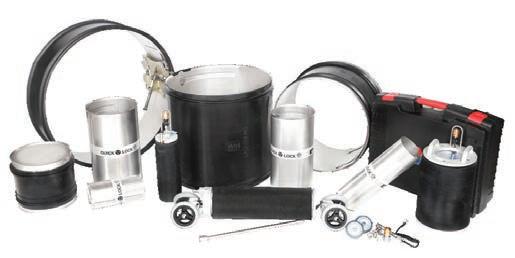
HOW IT WORKS The Quick-Lock system seals and stabilizes damage completely by mechanical means, without any chemicals and is suitable for all pipe Thematerials.patented locking system ensures that the sleeve stays permanently in position. After rehabilitation, the sleeve has its own static capability and absorbs the natural tectonic movements of the pipes. For repairs in longer damages the Quick-Lock sleeves can be consecutively installed in series. REQUIREMENTS The Quick-Lock sleeves are expanded with a compressor and a Quick-Lock packer utilising either a CCTV crawler, CCTV pushrod or a CCTV robotic system. SYSTEM ADVANTAGES Simple installation - only taking minutes 316 stainless steel and EPDM long-life materials No chemicals, requiring minimum PPE Approved according to building legislation with testing for old sewer pipes condition type II Resistance to high pressure rinsing according to DIN 19 523 Low investment in system technology MORE THAN JUST A REPAIR METHOD FOR TRENCHLESS SEWER & REHABILITATIONSTORMWATER Standard sizes include reline, jacking and glass lined pipe sizes No mess, no resins Each packer does 2 to 3 pipe sizes. Quick-Lock available for DN 100 to DN Quick-Lock825 Flex for up to 25 mm pipe Testeddeviationsand proven worldwide to hold back infiltration and stay air tight for all approved applications. No pull In ropes utilizing single end pit access only Visible laser provides easy and accurate installation captured live from start to finish in real time CCTV Fully visible, no catch lock and rail mechanism that applies pressure for the seal’s entire working life of 50 plus Sleeveyearshas built in lock deflectors to fully enable root sawing and relining Expert training and support with no minimum purchases on equipment and seals all items sold separately Contact SECA today for more information about the UHRIG Quick-Lock System INSTALLED LONGMINUTES,INLASTING AFFORDABLE& QUICK-LOCK IS AUSTRALIA’S ANSWER TO REHABILITATIONALTERNATIVEMETHODS Talk to the experts 1800 028 584 or visit us online seca.com.au THE QUICKLOCK REHABILITATIONSEWERREVOLUTIONISESSYSTEM&STORMWATER


Restrain PVC-U pipe was designed for both new sewer networks.
Running out of a small footprint like this means that contractors also save time by minimising the reinstating of trenches after laying long lengths of welded or glued pipe.
André Nunn, Technical Sales Engineer for Iplex Australia, says that the advantages of Restrain are not just in saving time. The pipe length is custom designed to fit the width of the insertion pit or maintenance structure, meaning a lot less above ground space is required by the contractor and less excavation leads to less disruption and cost savings.
Instead of the trench that would have been required by traditional welded or glued pipe, the shorter lengths could be lowered into a smaller trench, each one only 4x2 m, and either pulled or pushed through a pre-bored hole to another trench at the other side.
Restrain Sewer Pipe’s compatibility with trenchless technologies means that it was the perfect choice for use on the Wulguru Gravity Sewer Upgrade. Managing Director of Edge Underground, Stuart Harrison, was the installing contractor on the project. Harrison says that the biggest thing saved by using Restrain was time. The new technology gave Harrison’s team the opportunity to run a keyhole operation.
Edge Underground also saved space with shipping, because the sections of the pipe can be delivered on a pallet rather than longer lengths being delivered by truck like welded products.Taking only a couple of minutes to connect the sections, where in comparison solvent weld joint pipes could take up to 24 hours to dry.
“It takes as long to get the pipe off our drillrod at the other end, as it does for the pipes to be screwed [together],” says Harrison.
In addition, PVC-U has a ring bending stiffness of more than three times other poly Townsville Wulguru Gravity Sewer Upgrade.
R estrain is a PVC-U pipe designed for both new sewer networks and for replacing existing underground gravity sewer infrastructure. The pipe sections have a threaded socket and spigot joint. The rubber ring seal for the joins is nested in a groove behind the spigot thread, which ensures that it is not dislodged during installation.
32 TRENCHLESS AUSTRALASIA AUGUST 2022
Iplex’s innovative product Restrain has contributed to the success of the Townsville Wulguru Gravity Sewer Upgrade.
Iplex’s Restrain a win for Townsville Sewer Upgrade


Harrison says Townsville City Council deserves credit for the decision.
Installation options for Restrain sewer pipe include pipe reaming or pipe eating, auger boring or guided boring, horizontal directional drilling, as well as the micro-tunnelling installations undertaken by Edge Underground for the Wulguru Gravity Sewer upgrade.
©KitBits
The Wulguru Gravity Sewer upgrade has been undertaken to address some of the suburbs sewer capacity issues, and are the third stage of the Council’s $54 million Southern Suburbs Rising Main project. This will see more than 13 km of pipeline laid due to the existing system being unable to cope with the increased capacity for the Wulguru community.
Product Manager Andrew Omer-Cooper says that Restrain has the added benefit of being an Australian made product, ensuring a strong local supply chain. This gives Iplex the flexibility to meet customer project need quickly and effectively. The initial project was drafted for 300 mm pipes when Harrison was contracted, but the change to 375 mm was met with a minimum of fuss.
INTRODUCING Market Leaders in Trenchless Technology. Yes, we’re direct. directhitt.com.au E. info@directhitt.com.auT. +61 419 794 336 — Eamon Foley If you’d like to
For more information visit www.iplex.com.au
“The product is also made using Best Environmental Practice PVC and is a Green Building Council Australia certified product, that is very important to Iplex,” he says.
your
REHAB & REPAIR options, meaning the wall thickness is three times thinner which leads to large cost savings by having a smaller bore hole for the same hydraulic capacity. The product is also quite stiff, again making it ideal for the Wulguru Gravity Sewer Upgrade.“Thepipe stiffness is a minimum of SN16… for typical sewers the minimum rating is often SN6 to SN8,” says Nunn. “The stiffness class, SN16, makes the product suitable for use in deeper installations. The threaded joins also provide full axial restraint, allowing for pushing and/or pulling through pre-bored holes.”“Contractors have always wanted to go with the cheaper option of PVC pipes”, says Harrison. “The problem is that PVC pipe has always been designed for laying in a trench. Pushing traditional pipe into a bore hole creates increasing friction as the pipe is pushed deeper, creating pressure on a product that isn’t designed to be pushed on. “Eventually it’s easier for the pipe section to slip into each other than to push further into the bore hole. The full axial restraint of Restrain makes it the perfect pipe to use with micro-tunnelling machines and other trenchlessTownsvilletechnologies.”willalsobenefit from the use of Restrain in the future. The pipe is compatible with more traditional PVC fittings, so if work needs to be done in the future, traditional fittings can also be used.
get
Restrain has the added benefit of being an Australian made product. know more about the potential of trenchless solutions including Horizontal Directional Drilling or Laser-Guided Microtunnelling for next project, in touch with a professional or visit our new website.
“The industry is forever evolving, but we need the people around the industry to evolve with us,” he says. “What is needed is more people investing in these newer technologies.”

SECA leads the way in trenchless pipe rehab and repair needs
34 TRENCHLESS AUSTRALASIA AUGUST 2022
The UHRIG Quick-Lock system is much more than just a repair procedure. The patented Quick-Lock-System based on compression and the durable materials 1.4404/316L stainless steel and EPDM or NBR or Silicon and without any chemicals has proven itself in the renovation of pipes over many years.
Sewer Equipment Company (Aust), better known as SECA, offers a comprehensive range of products from a simple plumber’s drain cleaning rod, to the latest in high-tech CCTV inspection equipment and software to equip its customers with the latest pipe rehab and repair tools.
A s a one-stop-shop for trenchless pipe repair solutions, SECA has one of the most successful systems for point pipeline repair to date.
In addition to the classic application as
Positioned usually by a crawler and expanded pneumatically, Quick-Lock’s rehab sleeve provides structural, trenchless pipe repair with heavy-gauge 316 stainless steel, plus infiltration abatement with an EPDM rubber gasket.
The Drain Packer method is suitable for the sectional repair of The perfect start into “no-dig” business.
Common applications of the Quick-Lock system include cracked systems, root intrusions, leaks, pressure pipes and joint displacements. Manufactured using long-life materials that are designed to outlast almost any other repair solution, Quick-Lock has revolutionised sewer rehabilitation and is the ideal choice for longterm watertight lining projects.
Mark Haebler, UHRIG International Sales and Development, says that the Quick-Lock system has been successfully used for many years, 30 years in 2023, as a repair method for closed sewer rehabilitation.
The Quick-Lock system is a trenchless pipe repair solution that restores the integrity of pipes and seals out groundwater. Comprised of a pneumatically expanding rehabilitation sleeve, Quick-Lock provides structural repair to the inside of pipelines, and is specifically designed for point repair, pre-lining stabilisation works, and as a liner end seal.
What sets Quick-Lock apart from other rehabilitation systems, however, is its versatility and reliability. Not only is it suitable for all pipe materials, but its patented locking system and static capabilities allow the sleeve to remain permanently in position and absorb the natural tectonic movements of the pipe.


admin@maxibor.com.auwww.maxibor.com.au5583 Follow us on LinkedIn, Facebook & Twitter » Quality and collaborative HDD design and construct services » Expertise to advise at the right time in the project delivery cycle » Gas, water and sewer, rail, road, power, telecommunications, mining, residential development, renewables and hydrogen » Maxi-rigs capable of long and wide diameter bores in hard rock and difficult »conditionsBuildinga future we all look forward to Maxibor is using its design and construct expertise to deliver better project outcomes to asset owners and principal contractors alike For more information visit www.seca.com.au
• Leakage with or without groundwater infiltration or ex-filtration at pipe joints, pipe walls, lateral junctions.
AUSTRALIA’S LEADING HDD SPECIALIST 02
The Cherne Multi-Size Point Repair Carrier can be used for most point repair systems and are available for pipe sizes 4-inch to 36-inch. 4966
• BoastingCorrosion.anumber of benefits, the Drain Packer repairs damage in the pipe and joint region over a length of 0.5 m to 5 m, even in the case of strong infiltration. It also repairs pipes of nominal diameters from DN 50 to DN 1200 (WSA Product Appraisal 1918).“The Drain Packer can repair circular and eggshaped pipes made of concrete, asbestos cement, plastics (PVC, PP, HDPE), cast iron, ductile cast iron, reinforced concrete and vitrified clay,” Haebler says. “For repair lengths exceeding 5 metres, the Epros Drain Packer method can be used with overlapping liners on the basis of specific instructions to be observed in such applications.” For point repair systems, SECA can provide Cherne’s point repair carriers, which are available for multi-size line covers pipe sizes from 100mm to 900mm diameters and lengths up to 4.5m Cherne’s carriers are known for both its durability and reliability. Featuring a maximum pipe contract guides and centre line ensures proper placement of repair medium to minimise waste and increase productivity.
• Mechanical wear.
• Offset pipes, cracks and debris, ruptures.
The carriers have also been redesigned to integrate caster wheel assembly and bypass channel has been optimised for ease of movement and enhanced bypass of effluent.
One of the Telleborg products SECA has on offer is the Telleborg Drain Packer. The Drain Packer method is suitable for the sectional repair of damaged buried gravity sewer pipes and Itpipelines.canbeapplied to the following situations:
REHAB & REPAIR AUGUST 2022 TRENCHLESS AUSTRALASIA 35 a repair method in sewer rehabilitation, the Quick-Lock system is also used for connecting pipe liner systems and for rehabilitating walkable sewers.Further enhancing its rehab and repair capabilities, SECA is also a supplier of Telleborg products. This includes its trenchless pipe rehabilitation solutions, which are ecofriendly technologies to service and maintain underground utilities in a less disruptive way than open trench working, that now has a tested service life of 100 years.
SECA is always looking at ways to continue enhancing its product line to ensure its customers have the best access to trenchless pipe repair solutions in Australia.


Add to that fast-curing times for minimal disturbance and impact to residential areas and traffic conditions, and the advantages become even clearer:
• No negative effects: There is no nuisance to residents and no negative effect on the quality of life.
With future oriented CIPP liners based on fibreglass material, iMPREG rehabilitation solutions master even the largest dimensions and highly complex remits. As a result, no matter what shape a sewage is in, iMPREG liners will fit and prolong the life of any sewer for another 50 years, with fewer raw materials needed per project.
iMPREG’s commitment to helping the environment – One trenchless project at a time
• Low space requirements: Can be implemented even in inner-city areas where space is at a premium.
Thanks to its innovative products and installation practices, iMPREG projects are always resource-saving and environmentally ahead of the curve.
• Rapid: Every day, up to three pipes can be rehabilitated and then immediately returned to operation.
“We promise to rehabilitate sewage and water systems without leaving behind contamination or environmental damage,” says iMPREG’s Manager for Australia and New Zealand Kevin Woolf Jnr. “We achieve this with our globally unique technical installation method, which uses a low power output compared to conventional steam and water inversion.”
RELINING 36 TRENCHLESS AUSTRALASIA AUGUST 2022
iMPREG is committed to help building a sustainable future that supports the environment.
“After rehabilitation with IMPREG liner, our clients’ assets are securely protected for decades to come, even under the most demanding loadings. We are proud of that,” says Woolf.
iMPREG’s UV liners are a quick, clean and quiet way to rehabilitate sewer or stormwater pipes. With CIPP liners based on fibreglass material, iMPREG rehabilitation solutions master even the largest dimensions.
• Trenchless: No more excavation needed –there is almost no effect on traffic, and the environment is protected
Environmentally friendly installation and lower on-site footprint Contrary to conventional methods, iMPREG technology uses clean air to calibrate its liners, thus avoiding the discharge of styrene water.
i MPREG’s UV liners are renowned for being the quickest, cleanest, and quietest method to rehabilitate a sewer or stormwater pipe Suitable liners for any pipe environment


RELINING
Headquartered in New South Wales, the company offers a range of unique products in Australia and overseas. Aussie Trenchless Director Chris Meredith and the team are committed to pioneering state-of-the-art solutions and furthering business in the trenchless industry.
“I see the trenchless industry only expanding The team at Aussie Trenchless were thrilled to be at No-Dig Down Under 2022.
Aussie Trenchless Director Chris Meredith.
Aussie Trenchless PST the way to go
O n full display at No-Dig 2022, were Aussie Trenchless’ innovative Pipe Segment Technology (PST). An innovative lining system that offers a range of benefits including simple self-perform installation, constructed from transparent material and is suitable for live loads, such as under road culverts and rail networks.
“The opportunity to exhibit at NO-DIG 2022 allowed the industry to again get together and exchange ideas,” says Meredith. “New products were on display and many old friends attended the conference; the feeling around the conference was upbeat and optimistic with all parties looking forward to the future and leaving the pass behind.
Aussie Trenchless was thrilled to have been able to exhibit at No-Dig Down Under in June 2022 as it was an opportunity to reconnect with industry contacts after three long years since the last event.


RELINING AUGUST 2022 TRENCHLESS AUSTRALASIA 39 playing a vital role in solutions that will benefit society.”PSTis
one solution for pipe rehabilitation that is easy to build and quick to install. Aussie Trenchless’ pipe segment technology is a segmental pipe rehabilitation system specifically designed for traversable trunk sewers, stormwater culverts and maintenance holes.
The perfect rehabilitation
Pipe lining technologies such as PST have the capacity to substantially increase the service life of pipes and is an ideal method for man-entry pipeline rehabilitation, particularly for gravity sewer
for
PST lining panels are made of polypropylene material, providing a smooth surface with effective hydraulic performance capacities. The panels are lightweight, easy to install and ideal for positioning in confined and tight space, the product being designed to be suitable for all pipe types. Segment pipe rehabilitation technologies are recommended for sewers with complex or non-standard shapes. Additionally, the ring stiffness of PST can be enhanced or altered by attaching circumferential bars, making the product suitable for installing in sewers of various depths. This is possible due to PST being a nimble segmental lining system featuring a grouted annulus gap, making it versatile in tight access locations. solution deteriorated
Aussie Trenchless has been working to trial the PST in maintenance holes as part of a pilot project in manhole rehabilitation. The goal is to monitor the performance of the PST when used for similar rehabilitation projects over time before rolling their maintenance hole refurbishment program out. While PST has not been used to rehabilitate a maintenance holes before, Aussie Trenchless has been the first to adapt and innovate on the technology.
sewer and storm water pipelines: SRP EXP • An expandable tight fitting liner • No issues with high infiltration • Negotiates displacements and slight bends • Small site foot print • Smooth to work with and install • SRP EXP pipe is made from factory produced PVC profile strip • Profile is supplied on large steel drums which are collapsible for easy reuse • The minimal wastage is recyclable • For DN150 to DN1200 pipe lines • Mechanical installation – no chemical curing or steam heating • Easily removed if site issues encountered SRP EXP Spiral Lining System Quick and easy to install +61 418 691 989 PO Box 155 Oyster Bay NSW 2225 Australia enquiries@aussietrenchless.com www.aussietrenchless.com For more information visit http://aussietrenchless.com/ Aussie Trenchless provides state of the art pipe rehabilitation solutions to contractors all around the world.
“Themains.PST grouting process will treat external soil void issue as an inherent part of the rehabilitation process,” says Meredith.
“What makes this PST unique is that you can access the maintenance hole and complete all work through its existing lid as well as seal all maintenance hole wall faults using a high flow cementitious grout,” says Meredith. “It is also possible to fill external voids in soil matrix and seal the maintenance hole bench areas as the grout exfiltrates out through the maintenance hole walls.”


MCS channel lining comes before further upgrades to the Woodman Point’s sludge processing system, which is expected to commence later this year. By upgrading the system, Woodman Point aims to recover 100 per cent of the biosolids, or ‘sludge’, in the Perth metro region.
A minimum of 12 mm of grout was injected into each section using and injection tubes and funnel system. This worked to both secure the lining in place, and to rebuild the existing deteriorated concrete. While rebuilding the internal concrete maintained structural integrity, protection.MSCused an internal bracing and scaffolding systems to stabilise the HDPE lining while the high-density grout was injected and dried.
For more information visit www.mcrobertcontracting.com.au
MCS were called in to use its patented HDPE lining to restore the damaged infrastructure, which included the floors, walls, and roof of the channel, up to the horizontal deck. Before the lining could be attended, MCS undertook a thorough cleaning process using high-pressured water jet cleaning of all concrete surfaces, as well as scabbling works to improve polyethyleneadhesion. (HDPE), striped to 25 mm wide
RELINING 40 TRENCHLESS AUSTRALASIA AUGUST 2022
The process allowed them to extend the lining, including pouring high strength grout behind the lining and existing concrete surfaces.
McRoberts restores PST channels at Woodman Point
The entire process was undertaken in stages, lining 2.6 m sections at a time. The Woodman Point Water Resource Recovery Facility was upgraded in 2020. The upgrade increased the facility’s capacity to 180 megalitres per day and included improvements to its odour control system.
The Woodman Point Waste Water Treatment Plant in Munster, Perth, has experienced deterioration of the concrete structure around its channels due to gas attack.
F ixing the damage was broken into two stages. McRoberts Contracting Services (MCS) were brought in on the first stage of the project, which required the lining of a channel totalling 12 lineal metres. The success of the first stage saw Woodman Point engaging MCS to continue the work on the second stage. This required work on a further 16 lineal metres of channel with similar damage and included both an ‘S’ bend and four launder channel entries on the PST channel.
MCS have developed a name as leaders in the fields of pipeline maintenance and plastic welding, among others. Its HDPE patented innovations were designed with the safety of staff and clients a priority, and with interest in remaining environmentally friendly and beneficial in terms of cost. In order to tackle the task, MCS were able to utilise a number of its innovative patents to ensure the safety of its workers and success on theTheproject.work is covered by MCS’s 50 years guarantee, which will allow Woodman Point to move into the upgrades to its sludge processing system without worry.
Woodman Point Waste Water Treatment Plant in Perth.
McRobert used its patented HDPE lining to restore the damaged infrastructure. By upgrading the system, Woodman Point aims to recover 100 per cent of the biosolids.


The HYDRO:TIP™ is specifically designed to from excavation and street sweepers. It’s dedicated reception station receives from
tankers
the tanker. No sawdust, no ponds or double handling – the HYDRO:TIP ensures a safe platform to unload quickly and efficiently. Visit CDE at AWRE 24 – 25 August 2022 ICC Sydney
Visit cdegroup.com ENGINEERED FOR RESOURCE RECOVERY Recover up to 85% of solid material with our tailored hydro excavation waste solutions.
hydro
waste directly
handle solid-liquid waste
Part of what drew Sijakovski to the company was Cherrington’s place as the innovators and leaders of the HDD Industry. For example, in 2001 Cherrington designed and built a Pipe Thruster HDD rig in Smithfield in Sydney that was utilized on the Partricia Baleen Pipeline project for OMV near Orbost in Victoria, to install 12-inch coated steel pipelines, which were welded onshore and pushed into the boreholes. An innovative approach which was later used by others seeking to manage the risks associated with Shore Crossing construction.
Directhitt covers an extensive range of equipment including laser-guided microtunnelling units for varying ground conditions and has constructed some of the most complex trenchless projects in Australia. With expertise in civil engineering covering pipeline installation, Directhitt is able to provide a total project solution for its clients in a variety of markets. Thanks to Sijakovski this legacy is only set to continue as he works to continue Directhitt’s reputation as hardworking and capable of not only taking on complex projects but delivering on them on every occasion as well.
Following his time with Cherrington, he has continued to work for a variety of trenchless contractors in similar roles such as contract and project management, business development and implementation of Quality Assurance Systems.
Directhitt’s Akkerman 240A Guided Boring machine set up.
Over the years, Directhitt’s record of project delivery has been well-documented earning it of the owner, Albert Henrickx, has – to be honest his references are simply out of this world. He demands a lot of respect in the industry for a very good reason,” says Sijakovski.“Itisagreat opportunity to grow the microtunnelling division of the business given Directhitt is predominantly a major HDD contractor. Our aim is to offer a full package when it comes to trenchless services, including installation of segmental concrete and steel shafts.“The trenchless industry is a small industry but at the same time it’s a complex one – there are different methods of microtunnelling such as vacuum extraction, open face pipe jacking, earth pressure balance microtunnelling and slurry microtunnelling but not all methodologies are appropriate for all ground conditions.“Thecapacity for trenchless technologies to be developed and built in Australia has always attracted me. Directhitt definitely has that capability and capacity for growth. Ensuring the industry is aware of the full scope of capabilities of the company and that their strong reputation continues to develop,” he says.
For more information visit www.directhitt.com.au
“At the time, Cherrington was one of the biggest horizontal directional drilling contractors in not just Australia but internationally,” says Sijakovski. “They were the founders of HDD back in the 70’s in the I was working with Cherrington. I was able to travel extensively, marketing their services around the world. While Cherrington won a lot of work in Australia, I also had the opportunity to work on projects in India and South Korea while marketing the company worldwide to potential clients.”
Directhitt Trenchless’s Business Development Manager for Microtunnelling Dimce Sijakovsk.
Directhitt Trenchless targets business growth
Sijakovski’s new role as Business Development Manager for Microtunnelling at Directhitt will see the company grow and develop its microtunnelling division. An opportunity which, according to Sijakovski, was simply too good to refuse. The Directhitt business is one of Australia’s oldest and long-standing Trenchless companies formed back in 1995 by Albert Hendrickx.
When working on specialised Civil Engineering projects requiring Microtunnelling, having a wealth of experience is key. W ith decades worth of knowledge, Directhitt Trenchless’s new Business Development Manager for Microtunnelling Dimce Sijakovski has the know-how to bring any project to fruition. Sitting down to speak with Trenchless Australasia, Sijakovski reflects on his successful and decades long career within the trenchless industry.Introduced to the industry in eastern Europe at the beginning of his career, Sijakovski spent the mid 90’s working on a large-scale cross country pipeline project in Macedonia. The project involved the completion of multiple trenchless crossings along the pipeline and was ultimately a wonderful exposure to the industry for Sijakovski, introducing him to the innovations unfolding in the trenchless industry at the Followingtime. this, Sijakovski began his career working in the Australian trenchless industry when he joined HDD innovator Cherrington in 2000. At Cherrington, Sijakovski took on the role of International Business Development Manager, shouldering the responsibilities of quality assurance and project management for theThiscompany.rolegranted him the opportunity to work on a wide variety of projects throughout Australia and Asia.
HDD 42


Is your pipe spacer compliant? Call us for details on ordering P (08) 9725 4678 sales@kwikzip.com www.kwikzip.com The only casing spacers successfully appraised by WSAA HDX and HDXT KWIK-ZIP’S HDX & HDXT CASING SPACERS COMPLY WITH WSAA PRODUCT SPEC #324 - CASING REFERSPACERS;WSAA PRODUCT APPRAISAL REPORT #1523

Vermeer D40x55DR HDD ‘ticks every box’ for Healesville Directional Drilling
Vermeer D40x55DRDirectionalHorizontalDrill.
HDD
COMPACT FOOTPRINT. LOW NOISE. COMMON CONTROLS. From small but mighty clay and dirt drills, to large bore rock drills, Vermeer drill rigs are famous Australia wide. And now, with common controls, it’s easy for operators to transition from dirt to dual-rod rock drilling. Every Vermeer HDD Drill is about capability, productivity and profit. Get on board. Talk to the leader in HDD today and visit your local Vermeer Australia branch. YOU KNOW
Cameron Pearson, owner of Healesville Directional Drilling, has great plans for the business after he took the reins from his father in 2021, and his new Vermeer D40x55DR Horizontal Directional Drill plays


HDD Their package suited all our current needs, and we haven’t looked back.”
For more information visit www.vermeeraustralia.com.au
Healesville Directional Drilling purchased a Vermeer D40x55DR HDD.
“The needs for our projects can change every week, from doing 63 mm diameter pipes one day to 350 mm the next, all in different locations and differing conditions, but this had an issue with parts supply, and their customer support on site has been great,” he says.“I’d love to add a bigger Vermeer to my fleet one day when the work is there, a D60x90 HDD would be great, as I love working on big projects and operating larger machines. It’s definitely a goal I’ll be working towards and Vermeer and the Vermeer logo are trademarks of Vermeer Manufacturing Company in the United States and /or other countries. Product specifications are subject to change by OEM. © 2022 RDO Equipment Pty Ltd (trading as Vermeer Australia). All Rights Reserved.
The D40x55DR features dual rod technology.
Pearson says the main thing that stands out with the D40x55DR is the versatility.

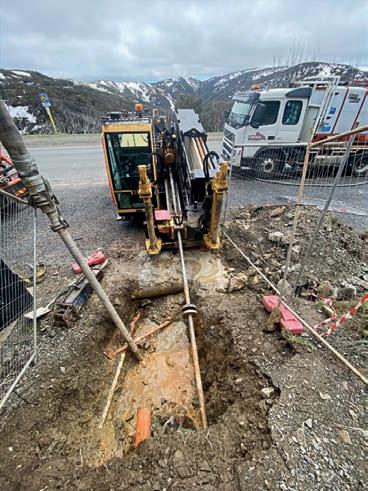
level for
and
• Smaller site footprint and with mostly static site equipment
Maxibor is taking steps to practically applying the use of HDD to help overcome the environmental challenges that communities now face, demonstrating how HDD can be an important part of the environmental solutions to achieve the goals and values of ESG.
• Less local traffic disruptions, diversion and extended waiting times equals less vehicle pollution around civil works that include MaxiborHDD. is able to measure its carbon emissions through a carbon calculator model. The emissions produced by undertaking the works using an open cut method can also be modelled to provide a measure of the carbon emissions benefit of using HDD. For carbon emissions to be reduced by the civil construction industry the way Maxibor delivers Maxibor’s Electric Gallagher 660e maxi-rig (The Hulk).
Having key infrastructure such as electricity and telecommunications underground in times of extreme and higher frequency climate change induced events provides greater certainty of supply as they are safely away from the above ground impact of extreme weather events. Having infrastructure underground also increases community safety and reduces the recovery effort to re-establish essential services.
Even with using diesel powered plant, HDD will have a lower level of carbon emissions than open cut methods of pipeline installation. The key drivers of the lower emissions include:
Design and construct of long (over 1,000 m) and larger diameter (800 mm to 1.6 m) HDD bores is where Maxibor can add most value to climate change mitigation projects. The company’s design expertise in long, challenging pipeline installations and the capacity of its maxi-rigs like the Gallagher 660e, Gallagher 600, American Auger 660 and Vermeer D330x500 plus its powerful Gardner Denver PZ9 pumps with 1000HP engines Gardner Denver PZ8 pumps with 750 HP engines, provide a turnkey solution for infrastructure asset owners on these projects. The involvement of Maxibor’s HDD expertise in projects at the concept and early design stages is where its innovative solutions and experience will optimise Value to a project.
Maxibor is working toward applying the use of HDD to overcome environmental challenges communities now face.
Climate change HDD is an important part of climate change adaptation action to mitigate the impact of fire, wind, flood, inundation, drought and rain bombs.Simultaneous disasters in multiple locations, as happened with the 2019-20 bushfires, and now the 2022 floods, stretches the ability of infrastructure asset owners and emergency services personnel and resources to respond to these events in a timely and effective manner.
• Less high emission machiner y as no need for high emission open cut civil activities such as excavation, backfilling, compaction and reinstatement
at
E SG is an acronym for Environmental, Social, and (Corporate) Governance, related to the standards of social responsibility in investing. Each category of ESG has numerous subcategories, allowing each business or investor to contextualize ESG in relation to their goals or values. its environmental policies procedures a design, construction methodology development and HDD delivery each project it undertakes. Maxibor’s HDD sustainability initiatives are enabling asset owners and tier 1 principal contractors to respond to the accelerating community demand for demonstrated action around the key ESG environmental principles.
• Fewer traffic movements to dispose of surplus excavated materials and bring in replacement materials for drainage, compaction and rehabilitation
Furthermore,
Carbon emissions
The old above ground location of utilities as well as drainage is not sustainable – placement of infrastructure underground is a key part of the climate change mitigation and resilience solution.
sustainability and
It is incumbent on all industries to reduce carbon emissions. The use of emissions friendly electric rig spreads such as can be provided by Maxibor with the Gallagher HDD660e maxi-rig (The Hulk), powerful pumps and drill mud recycling system assists in a cleaner and lower noise delivery of HDD services. Such an HDD delivery solution is ideal for well-established metropolitan areas.
The “E” principles in ESG cover: • Climate change and carbon emissions • Air and water pollution • Biodiversity • Energy efficiency • Deforestation • Waste management • Water Maxiborscarcity.isembracing these principles in
HDD 46 HDD and ESG
The company’s collaborative approach is providing asset owners across the water and sewer, rail, power, gas, telecommunications, mining, defence, fuel, sea cable, data centre, hydrogen and renewables sectors a readily available means to demonstrate evidence of sustainable infrastructure installation practices.


•
Air and water pollution and waste management Aging infrastructure is an increasing issue across Australia. This is particularly so in the water sector where the deleterious nature of fluid leaks from ageing infrastructure is unacceptable environmentally. HDD is a key part of the replacement solution to prevent environmental damage and preserve limited resources.
HDD can help minimise impacts on flora and fauna and habitats in areas including: Natural rivers and creeks. Bays. Protected wetlands. Endangered wildlife habitats. Culturally sensitive sites. Vital agricultural soil. Railway lines. Forests. Tree lined streets.
•
For more information contact Peter Loneragan 720 747 on or visit www.maxibor.com.au
•
•
Preparing and implementing a comprehensive drill mud management plan will help ensure that the drill fluid materials used are appropriate for the local environment. The risk of frac outs or other unplanned escapes of drilling fluid will also be minimised through good practice drilling fluid management.Improveddrill fluid technology is providing products being better able to address bore hole challenges. Ingredients to address bacterial odour from the drill mud and unstable bore holes such as those encountered in water charged sands are reducing the frequency and extent of unwanted outcomes from HDD projects. Improved drill fluid disposal practices are also reducing the amount of waste which needs to be transported from site. Products are now available which solidify the water based drill fluids on site. This reduces the quantity of waste required to be disposed and the number of vehicle movements for disposal to a licenced facility. Biodiversity HDD is beneficial to the environment especially when compared to traditional open-cut trenching and excavation methods. Open-cut trenching methods are more harmful to the environment due to the large increase in mechanical disturbance in the soil profiles where flora and fauna exist. Damage to sensitive cultural areas e.g. first nations peoples’ significant sites such as shell middens, is also much greater as the open cut footprint requires the destruction of all in its longer and broader path. HDD essentially overcomes these problems. A smaller footprint and the installation of pipelines entirely underground with minimal disturbance of the above and surrounding landscape avoids impact on sensitive areas which need to be preserved for environmental or cultural reasons.
•
0409
•
•
•
HDD projects needs to select more carbon emissions friendly methods. Changes in behaviour around design, construction methodologies and equipment used is required. Maxibor’s electric HDD maxi-rig spread and carbon emissions measuring model are examples of how the industry is changing its behaviour.
•
As HDD is able to undertake its work at a greater depth than open cut methods, it is less likely to interfere with existing services. Nevertheless, it is important to utilise modern services location equipment to confirm drawings. As well, use of fit for purpose steering equipment is essential when completing the pilot hole for each bore. All this helps to avoid the pollution of the local water supply and surrounding environment.Gooddesign in the planning stage with quality geotech information and experienced HDD drillers also reduce the underground environmental risks.


In 2021, Michels added Michels Asia Pacific, a permanent trenchless operation in Wangaratta, Victoria, to the Michels Family of companies. Michels Asia Pacific selectively specialises in technically challenging trenchless installations in Australia to allow customers to provide reliable, unobtrusive service in metropolitan and remote areas.The team consists of Wangaratta-based project management and field staff supported from industry experts at Michels’ headquarters in Brownsville, WI, USA.
Flash back nearly 35 years to 1988 when Michels was one of the first contractors to recognize the potential of the new technology of HDD, a safe, environmentally sound way to install utility lines where traditional open-trench construction would not be practical or feasible. Intrigued by HDD’s prospect of allowing energy and infrastructure construction in previously unsuitable areas and soil conditions, Michels dedicated personnel and resources to learning about the technique and introducing it to Incustomers.keeping with Michels’ spirit of innovation and determination to provide customers with the best solutions, Michels set out to master the art and science of HDD. As the operations team completed HDD projects for energy customers, Michels in-house design and fabrication team got to work developing its own equipment to provide more opportunities than commercially available products at the time. In 1996, Michels designed and built what was then the largest machine of its kind: the Hercules 1200, a HDD rig with 1.2 million pounds of thrust/pulling power. Not content to stop with one success, Michels continued to improve and expand its HDD equipment, eventually owning the world’s largest fleet of high-capacity HDD rigs with more than 1.2 million pounds of thrust/ pulling power. At the same time, the Michels team developed best practices for mitigating the risk of inadvertent fluid returns, managing bentonite and drilling fluid pressures for proper hole conditions, lubrication and cutting removal.
Today, Michels is an international, diversified energy and infrastructure contractor and leading provider of construction services to the energy, transportation, communications, power and utility industries.
HDD 48 TRENCHLESS AUSTRALASIA AUGUST 2022
A t about that same time, Michels was growing its utility line construction business in the Midwestern United States. Driven to meet customer needs and offer specialised services, the company expanded its geographic footprint and markets served.
Michels also developed proprietary cutting tools and casing systems to maximize the potential for successful crossings and established processes for land-to-land, water-to-water, landto-water projects.
As HDD’s reputation as a safe, accurate option for trenchless crossings grew, so did requests for longer and larger diameter crossings under transportation corridors, waterways, wetlands and other environmentally sensitive or challenging areas.
As lengths extended into the thousands of feet, Michels Trenchless team pioneered the pilot hole intersect method in a 2003 crossing in Boston. A powerful drill rig set out from each side of the The Georges Island HDD crossing was a 1577 metre hard-rock, water-to-water crossing to install 30-inch diameter pipe.
When horizontal directional drilling (HDD) emerged in the mid-1960s as a new way to install utility lines under immovable or unavoidable obstacles without significant surface disruptions, crossings spanned up to a few hundred feet guided by frequent potholing. That changed in 1971 when a 4-inch gas line was placed under a river in Watsonville, CA, USA, a location where potholing would not be possible.
Michels used horizontal directional drilling to build a 5,787-foot, 24-inch pipeline under a wetland and interstate highway.
Investing in learning opportunities to give customers tools to nurture skills: Michels


performance
toggle control you’re more productive
• It is flexible – projects can span from land-to-land, land-to-water and water-to-water points. When working on water, drill rigs can be set up on stationary barges.
range
HDD alignment with a mission to follow an engineered path and meet at a predetermined spot, essentially doubling an HDD’s potential based solely on the drill rig’s push/pull capacity.
one. Ditch Witch CEA // 1300 352 378 AUS 0800 435 269 NZ
Looking to the future, Michels is committed to building infrastructure to support projects in traditional and emerging industries and to continue providing safe, proven and innovative solutions to customers in Australia and wherever needed.“InAustralia, North America and throughout the world, there is an ever-increasing need for obstacles to be trenchlessly crossed, particularly in a time when there is a very real need for expanded infrastructure for traditional and transitioning markets,” said Matt Smith, President, Michels Trenchless, Inc. “We are honoured to have the skills, expertise, equipment and opportunity to deliver solutions that will build the future.”
superior performance in
MARKSMAN
HDD has many benefits including:
The Subsite® Marksman HDD Guidance System provides high-interference with the industry’s widest of the most usable the Subsite® Marksman selects the best choice avoid while its increased beacon power signal improves at with choice of the new Marksman View features with a simple single from day
frequencies,
interference
The Georges Island HDD crossing was a 1577 m hard-rock, water-to-water crossing to install 30-inch diameter pipe. That technique was a watershed moment in the HDD industry. In passing years, demands for increasingly longer crossings with more complex alignments surfaced around the world from diverse industries, including energy, electrical transmission, water and wastewater and renewables.In2021, Michels completed a 4702 m installation of an NPS-24 steel utility line, the likes of which had not previously been attempted at the 24-inch diameter in the world.
environments
Michels used two rigs and the pilot hole intersect method to drill and ream the alignment through mainly limestone to depths of 150 feet and a width of 42 inches.
to
For more information visit www.michels.us/market/asia-pacific
extended depths. Easy to use
HDD GUIDANCE SYSTEM. CUT THRU THE NOISE.
your
intuitive graphics and clear data, and
• It is accurate – Gyroscopic tracking and surface tooling aids in holding the drill path to the prescribed alignment.
user interface,
• It is trenchless – so no digging is required except for containment pits for the bentonite drilling fluid on either end.
frequencies in a single beacon. Scanning


Ditch Witch CEA provides the most complete line up of directional drills, drill pipe, HDD tooling, vacuum excavators, trenchers, chain, teeth, sprockets, mini-skid steers, and vibratory plows, available on the market today.
“We’ve had a good relationship with Ditch Witch over the years; we’ve been with them since we started. Being able to work alongside likeminded people who are not only excellent at what they do but have the best interest of you and your company at heart is always a pleasure,” says Gray. Ditch Witch CEA is dedicated to delivering the highest level of product support to its customers. Employing factory trained sales and service specialists who are dedicated to supporting clients and all machinery requirements, Ditch Witch CEA is equipped with the expertise and knowledge to help businesses like Walker and Gray Earthworks develop a strong reputation in the industry.
“From the beginning, we were always taking small steps toward our goals of being bigger and better but thanks to the telecommunications industry and to partners like Ditch Witch, we always had plenty of work to do and the best equipment to do it,” saysOneGray.of the first jobs Walker and Gray Earthworks completed was demolishing an old and unsafe office building, on behalf of Telstra. Since then, the company has had a steadfast relationship with the telecommunications juggernaut that has continued to progress largely thanks to the high level of workmanship and professionalism Walker and Gray commits to everyOneproject.ofthe most noticeable and major places of growth within the company, explains Gray, is in the growth of employees. As Walker and Gray Drilling 45 degree slope at Roxby Downs.
But Ditch Witch CEA is about more than just selling clients equipment; the company prides itself on finding the right product for every customer and getting to know every business so that they receive the most accurate sales advice possible.
Hard-work and loyalty comes first at Ditch Witch CEA and Walker and Gray Earthworks
HDD 50 TRENCHLESS AUSTRALASIA AUGUST 2022
Dedicated to delivering expert advice to its customers, Ditch Witch CEA has helped businesses like Walker and Gray Earthworks establish themselves as reputable contractors throughout the trenchless industry. W
alker and Gray Earthworks has come to be recognised as one of the leading and most wellrespected directional drilling companies in the whole of South Australia and Western Victoria since it was first established in 1998 by Greg Walker and Dave Gray. With well over a decade’s worth of experience in civil construction, Walker and Gray has the expertise, experience and professionalism to complete an ever-widening range of projects to the loftiest of industry standards. Thanks to its partnership with Ditch Witch CEA, Walker and Gray Earthworks is more well equipped than ever to tackle any project that comes their way. With 14-years’ worth of experience working for Gambier Earth Movers under his belt, Greg Walker was the one to reach out to his brother-in-law, Dave Gray to ask the question that would alter the trajectory of their careers for the better: Do you want to get into the earth-moving business? The answer, of course, was yes. Sitting down to speak with Trenchless Australasia, Gray spoke about his experience of building the company from the ground up. A glazier by trade initially, Gray explains that stepping outside of his comfort zone and his area of expertise to begin his career in the trenchless industry was a daunting in the beginning.“Whenwe first got into the telecommunications side of the industry, we started directional drilling,” says Gray. “At the time neither Greg nor myself knew anything aboutWithit.”time, a bit training and a whole lot of determination the two men taught themselves the tools of the directional drilling trade. Since that humble beginning, Ditch Witch CEA has helped Walker and Gray develop companywide expertise in an expansive selection of horizontal directional drills (HDD), excavators, trenchers a myriad of high-quality earthmoving equipment.


The almost $60 million project is set to improve quality of life for residents across the Mount Gambier area, with Walker and Gray Earthworks playing a large role in the continued progress of the project.
For more information visit www.ditchwitchcea.com.au
“That was a yearlong project, and it went off without a hitch; it went smoothly. We didn’t have any hiccups, nothing went wrong at all... So that was definitely an outstanding point of our career for the whole team.”
“If you say you’re going to be somewhere at a certain time, if you’re going to reach a certain deadline or achieve a certain goal; you’re going to do it.”
HDD became more well-known and began to draw the interest of the likes of the National Broadband Network (NBN) for contracts, the scope and size of the business began to shift as well.
A crucial aspect of what drives the Walker and Gray Earthworks team is not only their uncompromising work ethic but also their honesty and accountability.
“I think leading by example is a great way to keep that outlook present on a day-to-day basis. We’ve got a lot of ongoing, long-term employees that really follow our lead in maintaining those values,” says Gray. “And we’re working bosses too, so we’re on site as much as anyone else on the team to lead by example and put the best foot forward, so to speak.”
“It’s been a fairly big infrastructure project for us; we’re still completing works on it now,” says Gray. “That’s involved installing multiple conduits around the streets and around the hub to accommodate for the construction of the hub itself. That’s definitely still ongoing at the moment, but the goal is definitely to have the works completed and the hub ready to open by the end of the year.”
Subsequently, the company has completed civil construction projects on behalf of major Australian stakeholders including ESTA Utilities, Telstra, SA Water, Origin Energy, VisionStream and ServiceStream among several others.“There have been a couple projects that we have all felt particularly proud of. One big job, the team was over in Orange, NSW, alongside Robin Johnson Engineering,” says Gray. “From memory, we were pulling back three 225 conduits and two 100’s, all through the township of Orange. Because we aren’t local, we didn’t know the ground conditions of Orange before starting the job. The existing services of telecommunications and gases and the like all work in different assets of each other in NSW, which was different to what we were used to.
As of mid-July 2022, Walker and Gray Earthworks are currently completing works as part of a major infrastructure upgrade project in Mount Gambier, SA. The project centres on the construction of the Wulanda Recreation and Convention Centre which has endured delays due to sourcing issues thanks, in part, to the COVID-19 pandemic.
Looking to the future, there is a lot more to come for Walker and Gray as it set its gazes firmly on breaking into the quarrying business to coincide with the civil work they already perform.“That’ll be our next big step. Limestone and rock supplies will be the next phase for the business that will look even further into the civil side of things, whereas in the past we’ve spent a lot of time working on the telecommunications aspect of the trenchless industry,” Gray says. “This will give us the chance to branch out a little bit, try our hand at something that’s a little bit different. It’ll be exciting to see how weSupportinggo.” them during this exciting time, Ditch Witch CEA is committed to continuing to provide the company with expert advice on what equipment best suits the company’s needs and ensuring each piece of machinery is of the highest quality.
S&Z Australia is a leader in horizontal drilling solutions across all sectors - gas, water, power and communications.
S&Z Australia is able to meet all pit and pipe excavation needs efficiently whilst meeting all safety requirements. HDD was the preferred method of installation to minimise the impact to the environment.
S&Z Australia delivers Lethbridge Watermain
S&Z Australia has successfully installed over 2 kilometres of 280 mm PE water main in extremely hard rock to ensure an adequate water supply to the town the of Lethbridge in Victoria.
HDD 52 TRENCHLESS AUSTRALASIA AUGUST 2022
W orks were required to upgrade the drinking water supply network for the Lethbridge community and surrounding areas. This project increased system capacity, ensuring high quality, secure and affordable water services. Medina Road and Quarry Road. Horizontal directional drilling (HDD) was the preferred method of installation to minimise the impact to the environment and minimal disruption to the local community. The pipeline was installed in the road reserve that was occupied by protected trees


their Grundodrill 18ASCs Rock Drills to deliver the project well before the required timeWorkingframe. on a busy country highway presented challenges with construction vehicle movements combined with residential and rural commuters, all needing to be managed safely and with minimum impact to the community.Theclosest waste disposal facility was a considerable distance away from the worksite and given that two drills were working concurrently additional vacuum trucks were required to allow the drills to operate without anyThedelays.project required careful planning to coordinate waste disposal and keep water up to the HDD units.
in
“We knew we would be drilling in rock but the bluestone we encountered was well above what we were expecting. Utilising the two HDD units allowed us to make up any time we lost due to the hardness of the rock.”
HDD
S&Z Australia pride themselves on their methods and procedures that minimize any impact to the environment while delivering the required projects safely and economically.
S&Z Australia installed a pipeline in a road reserve that was occupied by protected trees and fauna.
the water, sewer, power, telecommunication
Established 2010, S&Z Australia has become and valued partner to industry leaders throughout and industries, providing for infrastructure projects throughout Australia.
S&Z Australia used two drills and vacuum trucks to allow the drills to operate without any delays.
For more information visit www.sandz.com.au
Jim Pound, General Manager at S&Z Australia, said: “it was great to be able to run two drills and smash out the project, but it did need additional resources and equipment to support the volumes of fluids we were dealing with it.”
one of Australia’s leading providers of trenchless technology, offering a variety of installation methods including HDD, microtunnelling and auger boring. The company is a trusted
gas
difficult
TRENCHLESS PROFESSIONALSTECHNOLOGY Specialising in no-dig pipe & conduit installations CHOOSE S&Z FOR YOUR HDD & TUNNEL BORING NEEDS (03)9042 team@sandz.com.au5000 www.sandz.com.au
solutions
S&Z Australia deliver infrastructure projects all over Victoria and Southern New South Wales and are experienced working in rural and country locations as well inner city and suburban locations. HDD installation is often required due to environmental protection concerns.


Dannielle and Jason have run their multiward winning trenchless business, Pipe Pro Directional Drilling, since 2013. The company provides specialist, innovative trenchless technology for the installation of a variety of pipes and utilities.
Specialising in vacuum excavation, the company offers a more environmentally friendly method of excavating. It offers high-pressure water jetting services rather than traditional methods to not only ensure pipes and drains are free from any blockages or build up – but is also safer alternative for the public, the operator and the environment.Notonlydoes it minimise damage underground and to existing pipes, but it also removes build-up of grime, can aid in the removal of stubborn tree roots and is also cost effective. locate or are in high volume which could lead to an increased risk.
VACUUM EXCAVATION 54 TRENCHLESS AUSTRALASIA AUGUST 2022
Traditional digging using excavators requires open cutting roads, paddocks and nature strips to install pipelines or locate underground services. Understandably, this method can cause undue damage to the surrounding environment while vacuum excavation utilises high pressure water jetting to expose underground utilities without the danger of two companies can continue to develop and connect homes and businesses to necessary utilities in a safer and more environmentally conscious“Buildingmanner.PipePro
Thankfully, the company boasts a state-ofthe-art, custom made 11,000 litre vacuum excavation truck which is capable of providing hydro excavation services to fit the needs of any client or project. More recently in 2022, JVS has added an additional two vacuum excavation truck and a street sweeper to keep up with Hydrodemand.excavation provides several benefits compared to alternative excavation methods such as traditional excavators or jackhammers. These benefits include reducing the damage made to existing underground assets (such as power, water and telecommunications assets), improved control over the depth and location of excavation and can be performed in a range of different types of ground surfaces.
Meet the James Vac Solutions team.
“We could see how beneficial Vacuum Excavation was becoming in our industry and constantly fielding enquiries about our existing trucks that were being used every day with our drilling crews,” said Dannielle.
Speaking on founding the company, Dannielle explained that her and Jason believed it was a natural progression of their expansion into the civil construction industry.
For more information visit jamesvacsolutions.com.au/about/www.
Priding itself of providing high quality directional drilling services to all clients, Pipe Pro Directional Drilling is dedicated to meeting each job with stringent safety standards to ensure a safe and professional environment both onsite and in the office. Benefiting from this professionalism and the stellar reputation of Pipe Pro Directional Drilling, is James Vac Solutions.
Drilling over the past 9 years has seen us develop relationships with a diverse client base. Our reputation and brand are trusted across Victoria so adding James Vac Solutions to the fleet has allowed us to provide our customers with a full range of NDD services to safely install underground infrastructure,” said Dannielle.
“We are excited to announce that James Vac Solutions are finalists in two categories of the Federation University Commerce Ballarat Business Excellence Awards. We are down to the final three businesses in the Federation University Technology Park Innovation Award Category and Runway HQ Newcomer Business Award. The winners will be announced at a Gala Dinner on the 25th of August which the whole team is looking forward to.”
F ounded in 2021 by Dannielle and Jason James to work alongside their company Pipe Pro Directional Drilling, James Vac Solutions also operates as an independent hire for a range of projects.
After a recent launch in 2021, James Vac Solutions has taken the trenchless industry by storm thanks to its use of vacuum excavation.
Vacuum excavation: a safer and more environmentally friendly solution
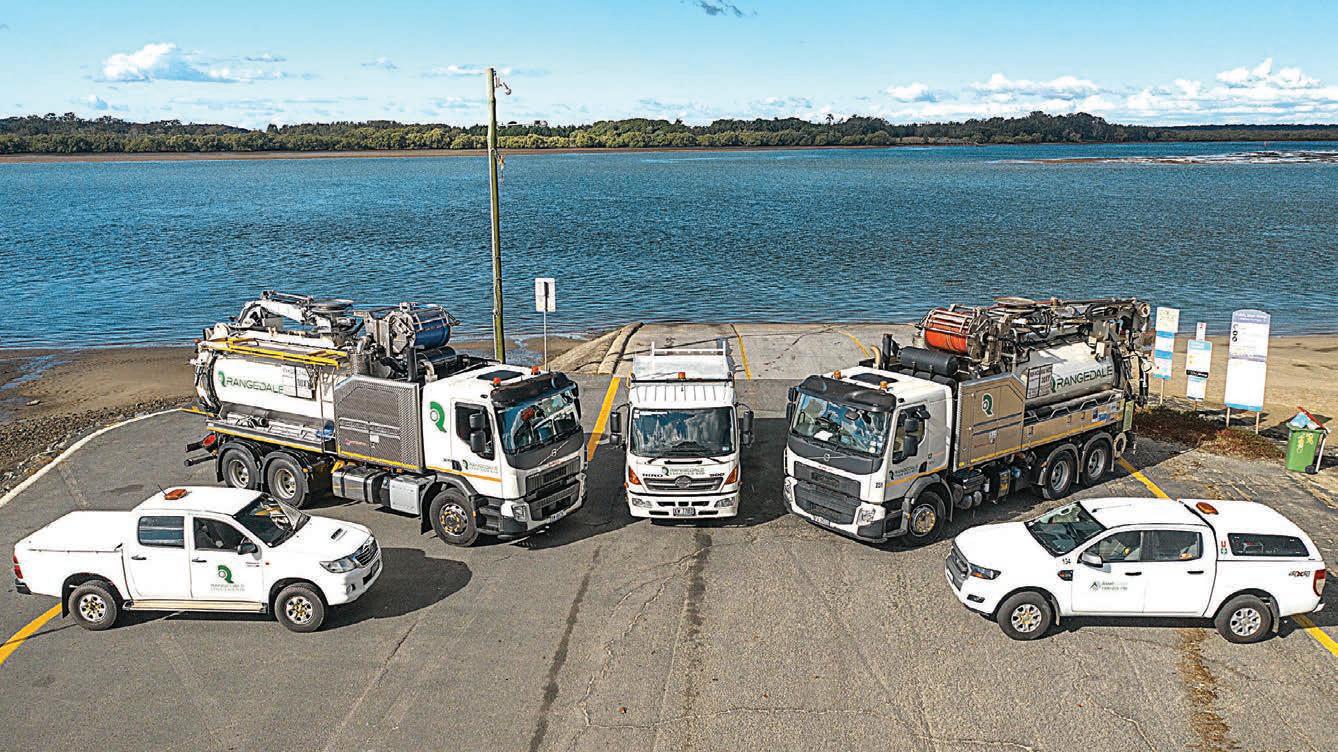


To find out more call us on: 1300 669 610 | rangedale.com.au NEW NOWDEPOTOPENYATALAQLD!! DRAIN CLEANING | DRAIN MAINTENANCE | DRAIN REPAIRS NON-DESTRUCTIVE DIGGING | HYDRO EXCAVATION HIGH PRESSURE/ULTRA HIGH-PRESSURE WATER JETTING REMOVAL AND DISPOSAL OF VARIOUS LIQUID WASTE STREAMS SLURRY BIN MANAGEMENT | TANKER SERVICES ASSET LOCATION AND UTILITY SURVEY COLD CUTTING APPLICATIONS | ASPHALTING PIPELINE CCTV | CIVIL WORKS


Adam Kermeen, General Manager for Drainage and Civil at Rangedale, grew up around the business as the son of the founder and Managing Director of the company. With eight years of experience and a lifetime worth of knowledge under his belt, Kermeen knows first-hand exactly what makes Rangedale stand out from its competitors.
A family-owned, Australian business, Rangedale is dedicated to leading the pack in offering comprehensive and innovative turnkey drainage and infrastructure solutions. After opening its new Queensland depot, Rangedale is more capable than ever to offer its most comprehensive services possible.
From maintenance hole relining to NDD services, Rangedale has Queensland covered
S ince Rangedale was established in 2003, the company’s philosophy has remained the same; “keep it running”. An industry leader in constructing, maintaining and repairing drains across the eastern seaboard of Australia, the Rangedale staff prides themselves on a strong work ethic, always putting safety first and carrying out every job with commitment and professionalism.
MAINTENANCE HOLES 56 TRENCHLESS AUSTRALASIA AUGUST 2022
“I like to think that we’re industry leaders when it comes to the range of things that we do,” says Kermeen. “From non-disruptive digging to CCTV and relining to traffic management, we bring a lot of innovation to the“We’veindustry.”grown quite rapidly over the last 10 years and we’re constantly working to set the bar higher and higher for ourselves – we import a lot of higher spec trucks from Italy in order to offer a better product on site. And in doing so, we encourage other companies to follow suit to do the same thing to meet that demand and continue to elevate the industry.”
The company boasts a comprehensive range of services thanks to the scale of its fleet, personnel, industry knowledge and expertise. This makes Rangedale the first choice for many when it comes to drain cleaning, manhole construction and relining, restoration, NDD, bulk liquid and slurry waste management and a wealth of other Furthermore,services.Rangedale runs Australia’s most modern fleet of industrial vehicles alongside excavators, tippers, vacuum Rangedale boasts a comprehensive range of services thanks to the scale of its fleet, personnel, industry knowledge and expertise.
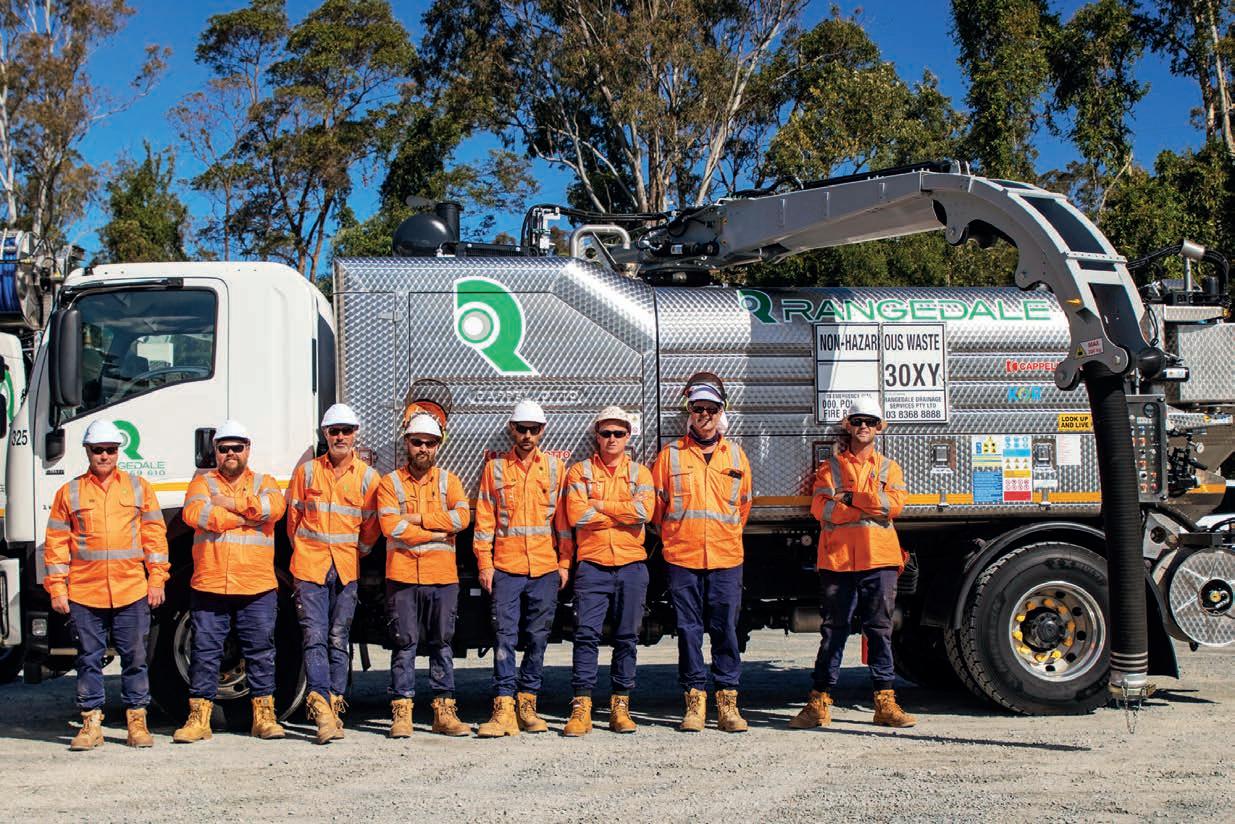

For more information visit smartlockgroup•com
For more information, visit www.rangedale.com.au
Smart Lock is the biggest advancement in point repair technology, in more than 15 years.
With Smart Lock, you can seal redundant lateral connections and repair cracked or damaged pipes in three easy steps, cured in only 30 minutes. LOAD Smart Lock into position using the caddy LOCK Smart lock into place with the intelligent ratchet system LEAVE Cured in under 30 minutes so you can move to the next job
“With NDD trucks, CCTV cameras, relining divisions, service locators and surveyors; there’s not really anyone offering such a vast range in Queensland as we are able to. “With the 2032 Brisbane Olympics on the horizon, the Queensland government is talking about doing some large-scale projects there. Being able to get our foot in the door now and establish the company’s name will be a fantastic opportunity.”Lookingto the future, there is a lot more in store for Rangedale as it sets its sights firmly on building a name and strong presence within the Queensland market. After only recently having established the depot, Rangedale is already reaping the benefits of its hard work and solid reputation as it’s tapped to complete projects such as the Gold Coast Light Rail project. The Gold Coast Light Rail project is a threeyear, $1.2 billion project set to reinvigorate the transportation system as a response to continuing population growth. The project is designed to connect communities with businesses and job opportunities, hospitals and medical facilities, educational opportunities as well as entertainment and sporting centres.
“Weindustry.liketo think of ourselves as sort of a one stop shop in Victoria, New South Wales and now Queensland,” says Kermeen.
In a bid to further its commitment to providing the highest quality and widest range of services to the Australian market as possible, Rangedale has recently opened its first Queensland depot.
THE SMART WAY TO REPAIR PIPELINE FAULTS.
“We saw such a good opportunity to join the Queensland market – there’s not really many larger businesses like Rangedale that work across a range of industries in the way that we do there just yet,” says Kermeen.
“I’ve grown up around the business and have been quite involved in the company from a young age, I’ve seen my dad build it to what it is now,” says “ThroughoutKermeen.allofit we’ve seen the values of hard work and loyalty continue through the management group at every stage, including our employees out there on the ground. At the end of the day, our employees are the reflection of the company, so we like to ensure that those values are carried through at every level of the business and that we look after all our team just as we did when we were a smaller scale family business.“It’simportant to us that no matter how big Rangedale becomes, that we continue to try to hold on to that.”
Rangedale’s work on the project in addition to others, including the Queens Wharf project in Brisbane, is a testament to the company’s determination to build a branch of the business in Queensland that mirrors those located in Victoria and New South Wales.
“A lot of the jobs we go out to are, in a sense, service proving jobs. A lot of companies might have to hire a few different contractors to complete the full scope of a project because maybe they don’t have, for example, services locators or surveyors or saw cutters but at Rangedale we offer the whole range of services.
MAINTENANCE HOLES education units and other specialised equipment, tools, and plant and safety equipment which are purpose built to service any
“This means we don’t have to hire any subcontractors to get a job done; we do it all in house. Anything we need to do; we can do and that’s something that Rangedale really prides itself on being able to provide.”
Since the company was established, Rangedale has completed works on behalf of some of Australia’s major projects and utilities including Yarra Valley Water, VicRoads, the West Gate Tunnel project, Greater Western Water, Multiplex among several others.


“We chose to use the Axis Laser Guided Boring System because of its laser feature that determines the line and grade of the bore, resulting in grade accuracy throughout the duration of the bore,” he says.
FEATURE 58 TRENCHLESS AUSTRALASIA AUGUST 2022
“Adept aims to deliver superior service and completion on all projects that exceed our clients’ expectations.
As a result, this will support the existing sewer and reduce pressure on the existing infrastructure.BusinessDevelopment Manger Quentin Powell says Adept Civil’s contract includes 900mt’s’ of 300 mm GRP sewer by microtunneling methodology in solid rock ground“Boringconditions.alongIndwe Street down Cala Street and under the highly sensitive Stoney Creek ranging depths from 4 - 5 mt’s’,” he says.
By employing a trenchless construction method for part of the project, operators have been able to protect the surrounding environment and cause less disruptions to businesses in the area.
To reduce the impacts of this work on the environment and community, GWW also installed the new pipe by microtunneling under the road and creek.
In particular, the trenchless portion of the project is taking place in close vicinity to a road with a combination of road and foot traffic, so minimising disruption is extremely desirable.
The closed-circuit camera built into the drill head allows the operator to constantly monitor line and grade.
GWW advised that the new sewer pipe started installation in early 2022, with the project scheduled to be completed by December 2022.
“We are constantly looking at ways to improve our installation methods and efficiencies that benefit the customer and the surrounding environment.”
Adept Civil Group has been engaged by Greater Western Water to design and construct the Upper Stoney Creek Sewer Duplication project.
Adept continues to progress at Upper Stony Creek Sewer Duplication project
Powell says Adept chose the Axis Laser Guided Boring System to undertake its work as it minimises the impact to the public and on the environment due to the compact footprint of both the launch and retrieval shafts.
For more information visit https://adeptcivilgroup.com.au/ Adept Civil has been contracted by Greater Western Water for the Upper Stoney Creek Sewer Duplication project.
Adept chose the Axis Laser Guided Boring System to undertake its work. Adept aims to deliver superior service and completion on all projects.
T he sewer network servicing Cala and Indwe streets in West Footscray is nearing capacity.
The project is expected to be completed by December 2022.
The closed-circuit camera built into the drill head allows the operator to constantly monitor line and grade, while the vacuum excavation method removes spoils efficiently without the need for manual labour. Additionally, the system’s modular design can be configured and modified in several ways to match any constraints imposed by the job site.
To ensure Greater Western Water (GWW) can continue delivering safe and reliable sewerage services to customers in the area, it is installing 900 metres of new sewer pipe along Cala and Indwe Streets as well as along Stony Creek.


12 - 15 SEPT 2023 NOW!ONSPACEEXHIBITIONSALE NO-DIG DOWN UNDER 2022 sold out. Don’t miss your chance to be involved in 2023. Brisbane Convention and Exhibition Centre SUPPORTED BY OFFICIAL MEDIA PARTNER www.nodigdownunder.com www.nodigdownunder.com nodigdownunder@primecreative.com.au #nodigdownunder


CDE recycling solution to reDirect material from landfill to construction industry
PROJECTS 60 TRENCHLESS AUSTRALASIA AUGUST 2022
200tph solution commissioned for reDirect Recycling in New South Wales. W et processing experts
Bettergrow, part of the Borg group and sister company of reDirect Recycling, is a long-standing customer of CDE and currently operate a G:MAX dual stage wet recycling system for dewatering hydroexcavated muds and recovering a washed sand. Having previously worked with CDE, Bettergrow’s knowledge of the company’s extensive experience and in-country capability to service and support gave the company the confidence to commission a second CDE solution.CDEworked closely alongside reDirect Recycling to design and develop a plant that could handle both wet and dry materials to recover valuable resources and aid in landfill diversion.Talking about the partnership with CDE, Neale Hogarth from reDirect Recycling said: “We knew that CDE was the right choice for us when we were embarking on this venture. They offer a wealth of experience and expertise in hydro-excavated muds, so it made complete sense.”
Operating since 2020, reDirect Recycling manages one of New South Wales’ largest hydro excavated mud recycling facilities, offering 24-hour service convenience for customers operating on large civil and infrastructure projects.
The solution CDE delivered a C,D&E waste recycling solution, as well as integrating four HYDRO:TIPTM units to process hydroexcavated muds. The plant, which incorporates an EvoWashTM sand wash plant, AquaCycleTM A200 thickener with water tank, centrifuge decanter, R-SeriesTM Primary Scalping Screen, InfinityTM dewatering screens, and AggMaxTM modular logwasher operates at a rate of 200tph.
The R2500 screens the heavily claybound feed and removes any oversize material, thereby protecting downstream processes while also providing sufficient energy to break up and homogenise the feed. The material is then transferred from the R2500 to the AggMax on a conveyor where the overband magnet removes ferrous metal contamination. At the AggMax, the upward flow classification function floats off organics onto the integrated trash screen for dewatering and stockpiling. The paddles of the RotoMax RX160 encourages aggregate on aggregate attrition scrubbing for breaking down clay
The HYDRO:TIP is specifically designed to handle solid-liquid waste from hydro excavation tankers and street sweepers.
CDE have installed a state-of-the-art waste recycling plant for reDirect Recycling at its site in Wetherill Park in a bid to divert waste from landfill and to recover valuable resources.
The reDirect Recycling solution has two feed points, the R-Series and the four HYDRO:TIP systems. At the first feed point, solid waste material is loaded directly into the R2500 with a shovel, while four trucks can simultaneously tip wet waste directly into the HYDRO:TIP bays at the second feed point.
Part of the Borg group, reDirect Recycling offers efficient resource recovery management, creating an industrial ecology which diverts waste from landfill to return resources back into the economy. reDirect Recycling focuses on providing a disposal and recycling solution to customers generating construction, demolition and excavation (C,D&E) waste for both dry and wet materials.
The HYDRO:TIP is specifically designed to handle solid-liquid waste from hydro excavation tankers and street sweepers. It’s dedicated reception station ensures a safe platform to unload wet waste quickly and efficiently, without the need for an additional full-time operator to manually dredge and dewater material prior to feeding.

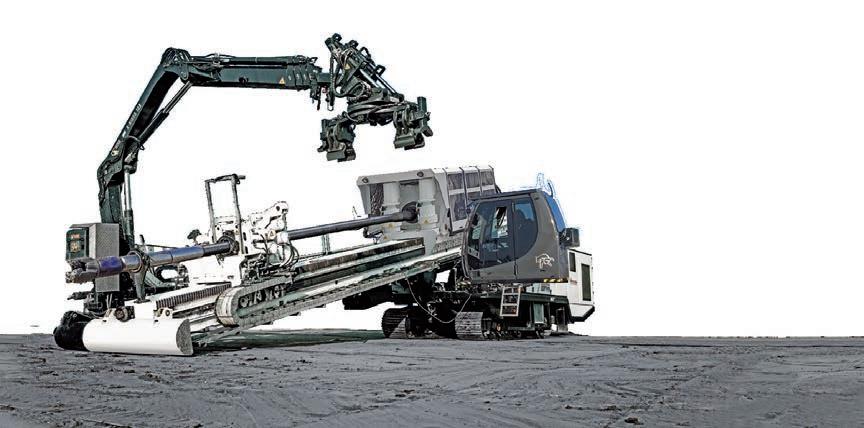
“Both CDE and reDirect Recycling are passionate about sustainability and reducing waste going to landfill, so we used both of our expertise to create a solution which recovers and reuses valuable resources to be repurposed in the construction market.
The whole world of HDD Technology We are distributed in Australia by: TRACTO-TECHNIK Australia Pty Ltd 10 Aliciajay Circuit, Yatala QLD 4207 Tel. +61 7 3420 www.TRACTO-TECHNIK.com.au5455
For details on reDirect Recycling, visit redirectrecycling.com.au
conglomerates and liberating clean aggregate.
The state-of-the-art technology from CDE is allowing reDirect Recycling to produce a sand product (0-5 mm) and three washed aggregates (5-20 mm, 20-40 mm and 40-80 mm) as well as dewatered organics, clays and silts, to be repurposed in the construction market.Neale Hogarth added: “This technology is enabling us to aim for maximum materials recovery and leveraging a new opportunity.
The result
“It’s been a pleasure to work with CDE, the commissioning process went very smoothly, and the local team have been close at hand to support us through the journey with their expertise in dealing with highly variable dry and wet waste. We’re really looking forward to seeing how this plant can help in creating a circularRiccardoeconomy.”Wong, CDE business development manager for Australasia, said that the new plant is allowing reDirect Recycling to close the loop on waste.
The Infinity H2-60 screens and dewaters three aggregate products by size and any trace sand washed off is then processed in the EvoWash wash plant to recover a 0-5mm sand product. Once the cyclone overflow (<75um clay and silts) has been treated and clarified in the AquaCycle, recyclable water overflows across the weirs and onto a static screen to remove lightweight contamination. The thickened sludge is conditioned and discharged from the AquaCycle clarifier to the sludge buffer tank and is then pumped to the centrifuge decanter for final dewatering. The recycled water from the AquaCycle and centrifuge is sent to the water tanks for recycling around the system.
“Plants like this are the future of the industry in their ability to minimise waste and maximise value. At CDE we’re passionate about enabling our customers with our innovative technologies so they can play their part in contributing to a circular economy.”
For more information about CDE waste recycling solutions, visit cdegroup.com
CDE’s professionalism and dedication has been outstanding, and we know we made the right choice partnering with them.
PROJECTS AUGUST 2022 TRENCHLESS AUSTRALASIA 61
CDE will be promoting both its latest innovations for the waste recycling industry at the 2022 Australian Waste & Recycling Expo (AWRE) on Stand B14. For more information go to www.cdegroup.com.
The CDE technology is allowing reDirect Recycling to produce a range of high quality products to be repurposed in the construction market.


Trenchless industry back bigger and better After three long years without the buzz and success of No-Dig Down Under, it was back with an action-packed week in June 2022. T he 2022 No-Dig Down Under Conference and Exhibition saw a record number of attendees with 1861 delegates participating over the four days of the event. This was a 23 per cent increase on 2019 numbers. The event kicked off with the official exhibition opening on Tuesday, June 14, sponsored by Herrenknecht, and gave the industry an opportunity to be back together after three years apart.
ASTT President Ben Crosby officially opened the event, stating he was proud of the trenchless industry and its ability to thrive throughout the pandemic.
62 TRENCHLESS AUSTRALASIA AUGUST 2022
ASTT Award
Pat Barron from Bothar Boring and Tunnelling also addressed those in attendance.“Thankyou ASTT, it’s fantastic to finally be here after what has been a tough couple of years,” says Barron. “That having been said, I believe that there is a silver lining to the passing clouds with the significant increases in expenditure on infrastructure project across all states and territories that will, and is leading, to increased opportunities within the trenchless space. So, to all within this small group of specialist individuals and companies I wish you a safe and prosperous future. Let’s continue to build the world beneath us.”
This award recognises innovation, advancements in technology, environmental benefits and occupational health and safety benefits in rehabilitation projects utilising trenchless technology. The winner of the rehabilitation project of the year award is the Lihir Island Tailings Pipeline Rehabilitation Project, Papua New Guinea, completed by Spiecapag Australia trading as HDI Lucas. New Installation Project of the Year This award recognises innovation, advancements in technology, environmental benefits and occupational health and safety benefits in new No-Dig Down Under had 1861 attendees at the 2022 event.
“Thank you to our sponsors and exhibitors for continuing to believe in the vision of No-Dig Down Under, and supporting the event through a postponement. Looking around at the quality of displays this year, I can say with certainty – it was worth the wait,” says Crosby.Herrenknecht’s Ben Hayes also addressed the crowd, regaling attendees with his introduction to the trenchless industry in Australia and its approach to innovation.“Herein Australia, and New Zealand, I found people telling me what they wanted to do and asking us for a solution. Clients who understood the risks they were taking on in delivering their projects, and merely requiring us at Herrenknecht to provide them the tools to do it,” says Hayes. “We are always willing to engage, discuss, and develop ideas in collaboration with all stake holders, at all stages of the project life cycle, from feasibility through to Thedelivery.”Vermeer boat cruise was the perfect way to cap off the first day of the No-Dig Down Under conference. A chance to catch up with old friends and new, the cruise saw close to 500 delegates soak in the sights of Sydney Harbour at night, and enjoy the renowned VividVermeer’sFestival.Jeff Lawson welcomed attendees to the event and took the opportunity to introduce the new Vermeer D100x140 S3 drill that has just arrived in Australia.“Building on our 30 years of success in Australia, we are pleased to introduce the latest in large HDD technology, to help you with your most challenging projects,” says“WeLawson.atVermeer Australia are humbled that you could join us tonight. I look forward to speaking with you all about how we can assist your business.”
The ASTT Gala Dinner and Awards was also a sell-out with 410 attendees celebrating the success of the industry.
The gala dinner and awards ceremony was proudly sponsored by Bothar Boring and Tunnelling, occurring on the penultimate day of the No-Dig Down Under exhibition.
RehabilitationwinnersProject of the Year

quentin@adeptcivilgroup.com
The winner of the ASTT Young Person of the Year award is Ash Hamer from Yarra ValleyNo-DigWater.Down Under will return next year, from 12-15 September 2023. The event will head back to the sunshine state, with the Brisbane Convention and Exhibition Centre to host the Southern Adept Civil Group specialise in Laser Guided Tunnel Boring.
The award will identify a contribution over and above the call of duty to grow, develop and promote the use of trenchless technology across Australasia and indeed around the world.
The winner of the Menno Henneveld Person of the Year is Lance Horlyck from the SASTTI joint venture. Young Person of the Year This award recognises the important role that younger members of the Australasian trenchless community play in the growth of the industry. The recipient and has significantly contributed to the industry over the past two years.
installation projects using trenchless technology.Thewinner of the new installation project of the year is the Donnybrook Link Branch Sewer Stage 2, Melbourne, Victoria completed by Edge Underground.
The award recognises an individual who has made major and sustained contributions to the trenchless industry in any area of activity within the industry.
AUGUST 2022 TRENCHLESS AUSTRALASIA 63
New Technology: Machine, Tool, Material, System or Technique Winners of this award should demonstrate the practical development of trenchless systems or equipment that results in benefits such as improved economy, accuracy, speed of drive or replacement, ability to overcome difficult installations, or Thesimilar.winner of the new technology award is the B-Tech Connections from ISC Services. Menno Henneveld ASTT Person of the Year
Bores that require accurate grades or When accuracy and reliability are important contact Adept Civil Group.
No-Dig also included a range of training courses.
T: (03) 9863 9530 or 0416087254 Email: info@adeptcivilgroup.com www.adeptcivilgroup.com.au


NO DIG WRAP UP


NO DIG WRAP UP AUGUST 2022 TRENCHLESS AUSTRALASIA 65


NO DIG WRAP UP


The event, which focuses on water jetting, drain cleaning and vacuum and hydro excavation, will occur on October 12 and 13 at the Melbourne Showgrounds.
The first event of its kind in Australia, AUSJET22 will bring together industry experts from around the country. Exhibition
Education & networking
EVENTS
Complementing the exhibition will be a two day conference program, covering industry topics and new technologies and a Key Note presentation from Steven Bradbury, Australia’s first winter gold Olympian. The program will include free floor talks presented to the exhibition-only visitor base.
The ‘Sip + Connect’ cocktail function will be held on the show floor on the afternoon of the 12 October, bringing visitors together in an opportunity to meet old-friends and find new ones.AUSJET22 is open to anyone involved in high pressure water, drain cleaning, hydro excavation and vacuum industries, including users of these services as provided by industry contractors. With a mission to develop a safe work environment through standards, training and advocacy, AUSJET22 is set to be an important event for the whole industry. more information on AUSJET22, or register for the event, visit: www.ausjetconnect.com.au AUSJET22 will take place in Melbourne in October 2022.
Innaugural AUSJET22 event taking place in October
The event’s trade show will feature water jetting, drain, vacuum and hydro excavation industry leaders. The exhibitors will be spread across an indoor and outdoor footprint, presenting the newest technologies and quality supplies for their industries.Demonstrations will be taking place throughout the event, with the schedule including interactive installations across a number of Live Demonstration Arenas, giving visitors the opportunity to get and see hands-on with the newest advances and state-of-the-art technologies.
to
BRINGTHE CREW! Waterjet and Industrial Vacuum Technology Exhibition & Conference October 12 – 13, 2022 Melbourne Showgrounds Official Media PartnerConference SponsorWater Bottle SponsorCoffee Cart SponsorLanyard SponsorProud Platinum PartnerProud Gold Partner Est. 1990 Organised byDedicated to showcasing water jetting, drain cleaning, hydro excavation (ndd) and vacuum technology. ausjetconnect.com.au Discover big ideasandLIVE!solutions For
A USJET22 is an independent event presented by the peak industry bodies: the Australasian High Pressure Water Jetting Association (AUSJET) incorporating the Australasian Drain Cleaning and Vacuuming Association (ADCVA). For almost 30 years AUSJET and ADCVA have been dedicated to strengthening safety standards and influencing change in the water jetting, drain cleaning, vacuum loading and hydro excavation industries.


ASTT CORPORATE MEMBERS Corporate Members Silver Corporate Members Aaro AbergeldieAbergeldieGroupRehabilitation Pty Ltd Adept Drainage Pty Ltd AECOM New Zealand Limited Applied Felts Aqua Assets Aqua Metro Pty Ltd Atteris Pty Ltd Auckland Council AussieAureconTrenchless Supplies Pty Ltd Austunnel Pty Ltd Ballarat Underroad Boring and Excavations Pty Ltd BG Risk Solutions Blick BortecGroupLaser Bore Pty Ltd Bothar D.J.ConnectCEABullseyeBoringBoring8MacCormick Contractors Denso (Australia) Pty Ltd. Digital Control - Australia Directhitt Pty Ltd Directhitt Trenchless Pty Ltd Diversified Services Australia DKM Utility Services Pty Ltd DM DormwayCivil Pty Ltd Drillers World Australia Eco Relining Supplies Edge Underground ELB Equipment Pty Ltd Empire Infrastructure EPTEC Pty Ltd FultonFinleaseHogan Construction Pty Ltd Future-Proof Solutions GM HardGolderMicrotunnellingMetalsAustralia Pty Limited HDI Lucas HEB HolcimConstruction(Australia) Pty Ltd Hynds Pipe Systems Ltd Independent Sewer Consulting Services Pty InsituformInsituformLtd Pacific Pty Ltd Interflow Pty Ltd Iplex Pipelines Australia JB Trenchless Pty Ltd KAISER Technology Pty Ltd kwik-ZIP Spacers LP Pipe Civil LKL International Pty Ltd M. Tucker & Sons Pty Ltd March Cato Ltd Maskell Productions Ltd Maxibor Australia Pty Limited McBerns Innovative Solutions McConnell Dowell Constructors (Aust) Pty McElroyLtd Manufacturing Inc. McMillen Jacobs Associates (NZ) Melbourne Water Metrocorp Technologies MullaneMudex Trenchless Pipeline Solutions Pty NuLtd Flow Technologies 2000 Pty Ltd Openshore Pty Ltd Pezzimenti Laserbore Pty Ltd Pezzimenti Trenchless Pty Ltd Pezzimenti Tunnelbore Pty Ltd. Pipe Core Pty Ltd Pipe Insight Ltd Pipe PipelineTek Drillers Group PrimePipeWorksCreative Media Prime Horizontal Pty Ltd Qalchek Pty Ltd Qenos Pty Ltd R & R McClure Excavations Raedlinger Primus Line Pty Ltd Ravago NZ Ltd RBM Plumbing and Drainage Pty Ltd Reline NZ Ltd Rob Carr Pty Ltd Rose Atkins Rimmer (Infrastructure) Pty Ltd RPC Pipe Systems SA SASTTIWaterJoint SEKISUISchauenburgVentureMABRibLocAustralia Pty Ltd SEQ SewerTrenchlessEquipment Company (Aust) Stiles TRACTO-TECHNIKTheSydneySTRABAGElectricalWaterDrainMan Australia Pty Ltd Trenchless Advisor Pty Ltd UEA Pty YarraWilsonsWilmotWarrenVinidexVerticalVermeerLtdAustraliaHorizonzAustraliaPtyLimitedSmith&PartnersPipeliningPipelineSolutionsValleyWater Gold Corporate Members Arcadis Australia Pacific Pty Ltd Bamser Holdings Pty Ltd Veolia Mitchels Asia Pacific Pty Ltd J&R Contracting Limited Asset Owners Watercare Services Limited Greater Western Water 68 TRENCHLESS AUSTRALASIA AUGUST 2022
• An annual subscription to Trenchless Australasia magazine (four issues per year)
(print and digital) • Opportunity to promote your membership of the association by including the ASTT logo on your business communications and website • Access to Guidelines and Standards • Discount rates (normally 10%) at National Conferences and Exhibition. • Discount rates (normally 10%) at International Conferences and Exhibition. • Discount rates (normally 10%) at Trenchless Forums. • Opportunity to become involved in our Special Interest Groups (SIG’s) which are technical divisions of the ASTT representing specific trenchless sectors. • Special offers and links with international organisations including the ISTT • Opportunity to nominate for ASTT and ISTT awards • Free access to ISTT conference proceedingspast • A communication network to keep abreast of the advancement of the science and practices of trenchless technology throughout the world • Discounted rates at International No-Digs and national events including No-Dig Down Under. How to apply Visit the ASTT website: https://www.astt. com.au and refer to MEMBERSHIP and check out the membership benefits that apply for each category. Your membership request will be emailed directly to the ASTT for processing. You will receive an invoice based on the information you supply. Acceptance does not take effect until payment is received in full. For more information visit www.astt.com.au or email secretary@astt.com.au Membership Category 12 Month Membership Rates 24 Month Membership Rates Gold Corporate $945.00 $1,512.00 Silver Corporate $540.00 $864.00 Asset Owners $405.00 $648.00 Individual $135.00 N/A Young Professional $100.00 N/A Retired Individual $100.00 N/A Tertiary Education Institutions (Students) $40.00 N/A (The rates shown above exclude GST) AUGUST 2022 TRENCHLESS AUSTRALASIA 69
The society works tirelessly to promote the use of trenchless technology in Australasia, lobbying government and client organisations to highlight the advantages of using trenchless technology and the benefits of training
The benefits of Membership depending upon category can include: Up to 10 people from your organisation may be included in your membership and are entitled to receive the below benefits:
• A company listing Australasian Trenchless Directory
The ASTT currently offers seven levels of membership available to all residents of Australia and New Zealand or anyone who is also a financial member of an existing ISTT Affiliated Society.
ASTT
T
The successful establishment of the trenchless industry in Australasia has been supported and promoted by the peak industry organisation, the ASTT, since it was established in 1991.
• Acknowledgment of your company in every edition of the Trenchless Australasia magazine
Membershipfor industry.isopento all who are concerned with the provision of gas, water, sewerage, drainage, roads, telecommunications and electrical services.
ASTT membership provides trenchless professionals the tools and services they need to be better informed and better connected in this industry.
The ASTT is part of the International Society for Trenchless Technology (ISTT), an affiliation of societies in more than 30 countries worldwide.
Membership applications
• An annual subscription to ISTT’s Trenchless Works
he Australasian Society of Trenchless Technology (ASTT) is a non-profit organisation comprising of members throughout Australia and New Zealand.
About the ASTT
ADVERTISERS Advertisers Features and deadlines are subject to change. FEATURES ReliningDrillingTechnologytools/bitsvacuum&hydroexcavationSoftwareUtilitylocation REGIONAL FOCUS New Zealand DISTRIBUTION APGA events DEADLINE 14 September 2022 Here's what's coming up in the next edition: ISSUE 74 | AUGUST 2022 THE OFFICIAL PUBLICATION OF THE AUSTRALASIAN SOCIETY FOR TRENCHLESS TECHNOLOGY RELINING FOR ENVIRONMENTTHE The quick, clean and quiet rehabilitation solution 70 TRENCHLESS AUSTRALASIA AUGUST 2022 Adept Civil 63 Aussie Trenchless 39 AUSJET22 67 Austeck 1 CDE 41 CEA 29, 49 Directhitt 33 iMPREG 21 Interflow IFC Iplex 51 James Vac Solutions 27 kwik-ZIP 43 L&D Microtunnelling 23 Maxibor 35 McRobert Group 7 Michels Asia Pacific OBC No-Dig Down Under 59 PEF Commercial Finance 25 PIPA 37 Prime Drilling 61 Rangedale 55 Rob Carr 11 SECA 31 S&Z Australia 53 Smart Lock 57 TRACTO-TECHNIK 9 Veolia 47 Vermeer Australia 44-45 Vermeer WA & NT 13 Wilmot Pipelining 2-3

PROUDLY PRESENTED BY SEPTTHURSDAY8TH2022 MHD Supply Chain Solutions WOMEN IN INDUSTRY .COM.AU WOMEN IN INDUSTRY AWARDS AWARDS SPONSORS NOWTICKETSAVAILABLE


Building the world under your feet Bringing trenchless solutions to Australia Australia-based operations with permanent local resources Fully integrated with our global team at international headquarters Multiple NASTT Project of the Year awards Horizontal Directional Drilling · Completed a 4.7 km drill · 235 intersect crossings completed since 2000 · 195 crossings completed over 3 km since 2009 · Rigs available with push/pull capacity up to 815 tonne · Drill diameters up to 1.5 m 8,000strongpeoplefounded in 17,000 pieces of equipment Pioneering HDD since 1988 Direct Pipe® · 13 installations completed since 2010 · Leading Direct Pipe installer · Land-to-water outfalls · Installations up to 1.5 m in diameter MichelsTrenchless.com.au