ISSUE 194 | NOVEMBER 2022 Beetaloo Basin’s low carbon future PSSS strives to meet any pipeline needs 36 From filling sandbags to COO 22 32 Outstanding contribution PETER COX RECOGNISED FOR PIPELINE CAREER – page 26






Pipeline Replacement Advanced Leak Survey gas.picarro.com Emissions Measurement Emissions Reduction Measure and Reduce Emissions • Picarro provides the only data driven solution to measure, quantify and report methane emissions across your network • Enables effective and scalable emissions reduction programs • Supports OGMP 2.0, NGSI, One Future, Veritas, Marcogaz • Adopted and implemented by multiple leading operators worldwide NEW! Network Assessment Viewer delivers total measured methane emissions for your entire network, tracked by regions and over time. YOU CAN’T FIX WHAT YOU CAN’T MEASURE
MPCKINETIC.COM SAFELY DELIVERED
SMARTER SOLUTIONS // Infrastructure
MPK. Right solutions. Right people. Right for the future.
re-energised
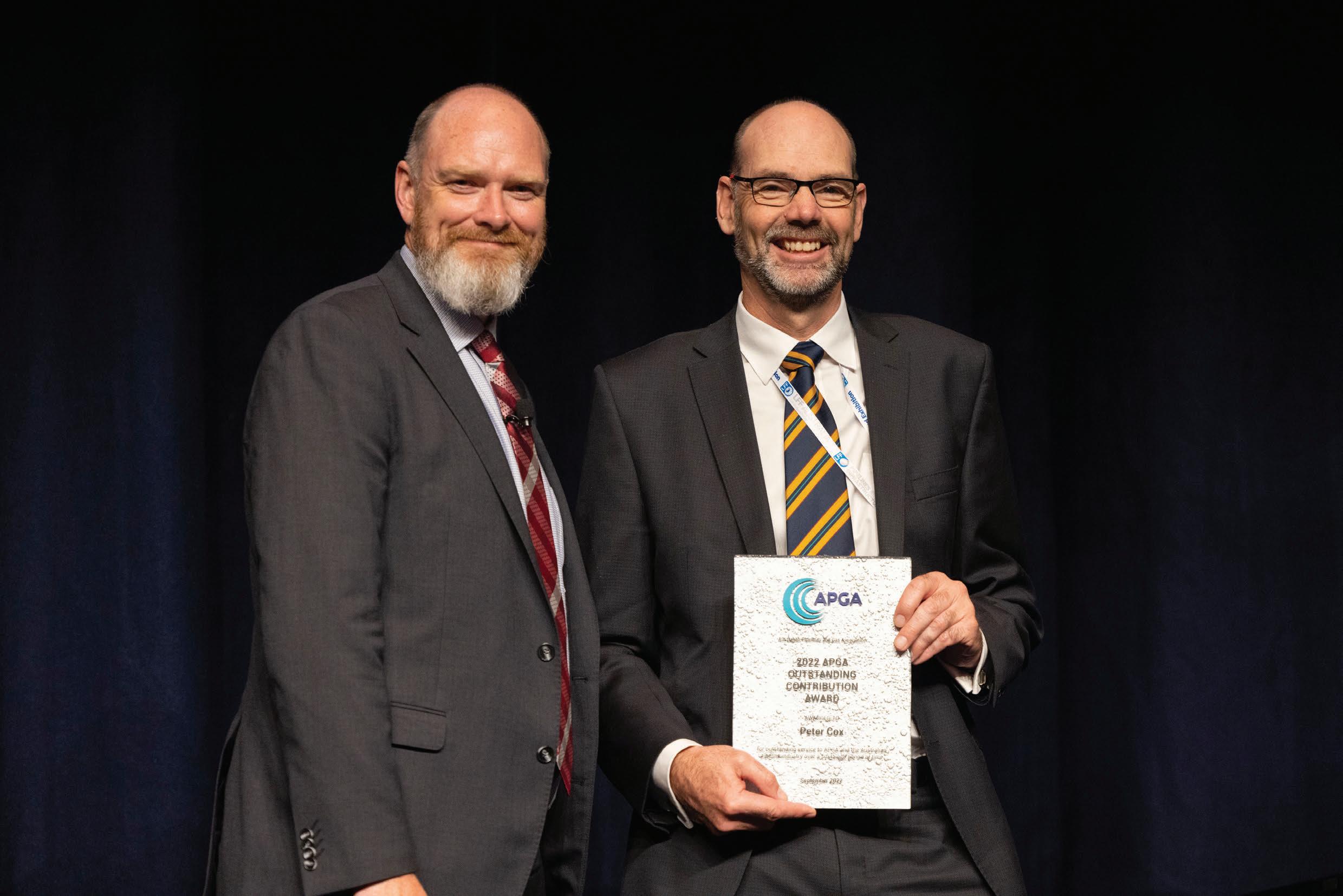
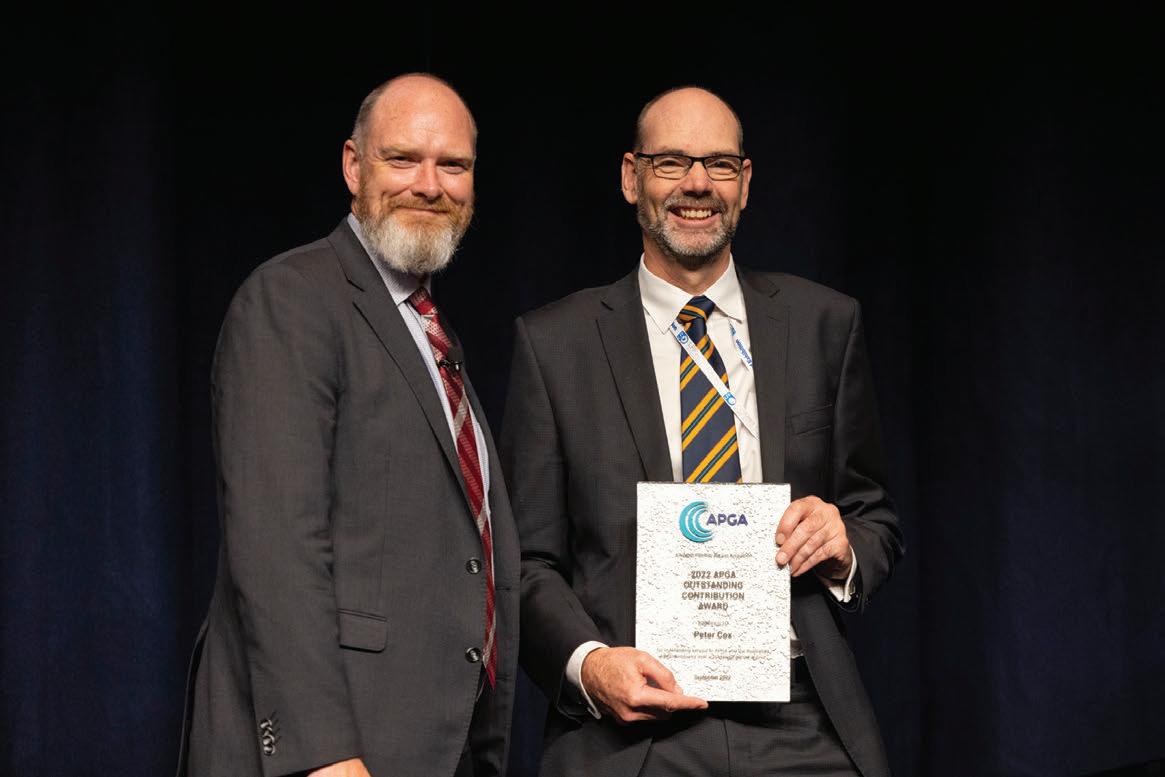
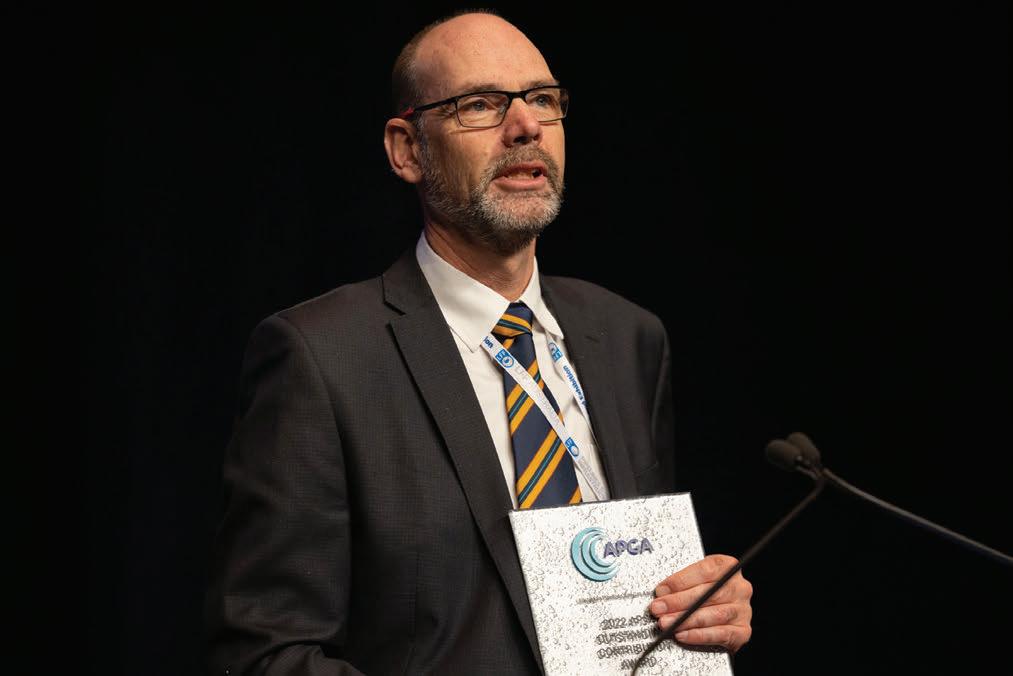
Cover image: Peter Cox receives the Outstanding Contribution to the Australian Pipeline Industry Award from APGA CEO Steve Davies. ImagecourtesyofAPGA.
EXECUTIVE REPORT
CEO’s Message 8 APGA MEMBER NEWS
Speciality pipeline recruiter celebrates 30th anniversary 12 APGA MEMBER Q&A Pipeline Actuation Control's Matt Nash 14 POLICY
Gas and energy policy 16
FUTURE FUELS
Our industry can deliver a global renewable gas industry 18
PIPELINES IN NORTHERN TERRITORY
Northern Territory gives green light for infrastructure progress 20 Beetaloo Basin has promise in a low carbon future 22
PIPELINE PEOPLE
Industry veteran’s contribution recognised with prestigious APGA Award 26
The industry through MPK’s eyes 30
From filling sandbags to COO: Taddam Farrant is no longer a new kid on the block 32 Jonh Kalis’ outstanding contribution 34 PSSS team strives to meet pipeline needs 36
INTEGRITY & MAINTENANCE
Building a reputation for innovation and responsiveness 38 REHAB & REPAIR
Savcor Products help customers avoid costly corrosion failures 41
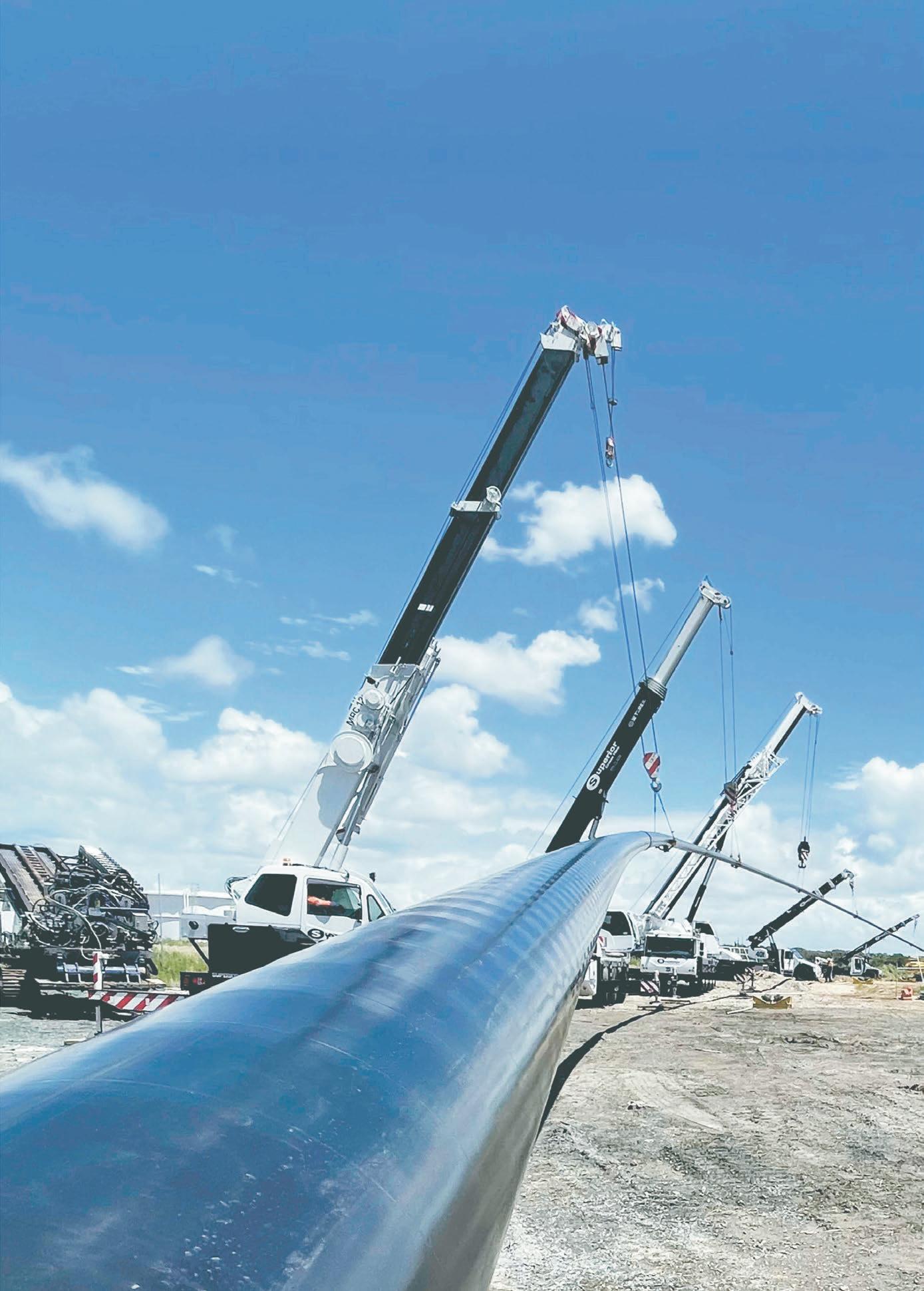
The ongoing journey of composite repairs for pipelines, process piping, tank and vessels 42
PIPELINE
CONSTRUCTION
Delivering enhanced mobility and productivity in a progressing world 44 Optimising value on HDD maxi-rig projects 46 McElroy Manufacturing’s latest and greatest is here: the Tritan 560 48 Australia’s kwik-ZIP and the case of San Francisco’s sinking Millennium Tower 50
APGA CONVENTION
Convention says goodbye for another year 52 Event photos 54
REGULARS
Members & memos 10 APGA members 56
CONTENTS 4 The Australian Pipeliner | November 2022 26

Pipeline integrity Pigging services NATA pressure testing Inline inspection Live line dig ups Leak detection CCTV inspection HDD construction WE KNOW PRESSURE www.pipetek.com.au Taddam: 0432 666 917 taddam@pipetek.com.au Myles: 0417 707 729 myles@pipetek.com.au Our Exclusive Global Partner
CEO
John Murphy COO
Christine Clancy christine.clancy@primecreative.com.au
MANAGING EDITOR
Molly Hancock molly.hancock@primecreative.com.au
JOURNALIST
Jenna May jenna.may@primecreative.com.au
Christian Alphonso christian.alphonso@primecreative.com.au
BUSINESS DEVELOPMENT
Nick Lovering nick.lovering@primecreative.com.au
DESIGN PRODUCTION MANAGER
Michelle Weston michelle.weston@primecreative.com.au
ART DIRECTOR
Blake Storey blake.storey@primecreative.com.au
DESIGNERS
Kerry Pert, Louis Romero
COPYRIGHT
The Australian Pipeliner is owned by Prime Creative Media and published by John Murphy. All material in The Australian Pipeliner is copyright and no part may be reproduced or copied in any form or by any means (graphic, electronic or mechanical including information and retrieval systems) without written permission of the publisher. The Editor welcomes contributions but reserves the right to accept or reject any material. While every effort has been made to ensure the accuracy of information, Prime Creative Media will not accept responsibility for errors or omissions or for any consequences arising from reliance on information published. The opinions expressed in The Australian Pipeliner are not necessarily the opinions of, or endorsed by the publisher unless otherwise stated.
© Copyright Prime Creative Media, 2021
ARTICLES
All articles submitted for publication become the property of the publisher. The Editor reserves the right to adjust any article to conform with the magazine format.

Maximise brand awareness by connecting with thousands of industry professionals
The Australian Pipeliner brand comprises: a quarterly magazine, a news website, a fortnightly e-newsletter, multiple social media platforms, an annual industry directory and an annual pipelines wallchart. Book an advertising and editorial package to gain access to our exclusive audience.
Printed by: Manark Printing
28 Dingley Ave Dandenong VIC 3175 Ph: (03) 9794 8337
2,600+
magazine subscribers
11,700+ social media followers
20,900+ website views each month 20,000+ e-newsletter subscribers
Want to find out more?
Contact our business development team to discuss how you can grow your business with The Australian Pipeliner. Call 0414 217 190 or email nick.lovering@primecreative.com.au
Head Office 379 Docklands Drive, Docklands VIC 3008 Ph: +61 3 9690 8766
Sydney Office Suite 303, 1-9 Chandos Street Saint Leonards NSW 2065 Ph: (02) 9439 7227
enquiries@primecreative.com.au www.primecreative.com.au
The Australian Pipelines and Gas Association’s (APGA) vision is to lead the sustainable growth in pipeline infrastructure for Australasia’s energy. APGA is a non-profit organisation formed to represent the interests of its members involved in: the ownership, operation, maintenance, design, engineering, supply and construction of pipelines, platforms and all other structures used in or in connection with the drilling for, extraction and transmission of hydrocarbons, solids, slurries and similar substances both onshore and offshore. As a single voice representing the collective interests of its members, APGA is dedicated to encouraging the extension and development of the industry. The Australian Pipeliner is the official journal of the Australian Pipelines and Gas Association (APGA) and is distributed to members without charge and circulated to interested organisations throughout Australia and overseas. It is also available on subscription. The publishers welcome editorial contributions from interested parties. However, neither the publishers nor APGA accept responsibility for the content of these contributions and the views contained therein are not necessarily the views of the publishers or APGA. Neither the publishers nor APGA accept responsibility for any claims made by advertisers. All communications should be directed to the publishers.
6 PUBLISHER
The Australian Pipeliner | November 2022
Is your pipe spacer compliant? Call us for details on ordering P (08) 9725 4678 sales@kwikzip.com www.kwikzip.com The only casing spacers successfully appraised by WSAA HDX and HDXT KWIK-ZIP’S HDX & HDXT CASING SPACERS COMPLY WITH WSAA PRODUCT SPEC #324 - CASING SPACERS; REFER WSAA PRODUCT APPRAISAL REPORT #1523
Chief Executive Officer’s report
Wow, all of a sudden, the end of the year is here. All of us have been through a change process or two in our careers and we understand how challenging they can be. 2022 has been a year of unprecedented change. If you cast your mind back to the start of the year, you might recall that COVID-19 cases were through the roof as restrictions started to lift, several states still had closed borders and the airports were largely empty well into March.
Come forward to now and while we don’t experience many restrictions anymore, we all experience the lingering effects of the pandemic in various ways. Travel is more difficult than it used to be, as airlines and airports slowly rebuild capability; projects that have been in hibernation are all waking up at the same time; a couple of years of no migration have depleted the working population of Australia so every sector is looking for people; China’s pursuit of a ‘zero Covid’ strategy and other factors continuing to impact supply chains are all big effects that continue.
Add to all this an energy supply crisis in eastern Australia this year! 2022 will be one to remember. I think it is essential that we all recognise the things we have experienced this year are not one-offs. The energy transition is going to impact projects, resources, skills, supply chains and markets for years (decades) to come. The entire globe is changing its energy system at the same time and demand will outstrip supply for a long time. Our sector is going to be very busy now and into the future.
That’s a great space for the association to be in to support members. Everyone is busy with their version of the same challenges right now. Sharing information and experiences, working on common problems and learning from successes and failures can make life a little bit easier for the whole industry. We’ve had some great examples of that in the last couple of months. APGA held a Gas Infrastructure Emissions Workshop at the start of September
and had over 100 people come together physically and virtually to share information on the common challenge of reducing emissions from gas infrastructure.
And finally, after three years, we had an in-person convention and exhibition in Brisbane at the end of September. The atmosphere was electric across the entire event and an unmissable reminder to all who attended of two things:
1. The importance of getting together to network, share information and spend time with people.
2. The unique culture of APGA and this industry.
I attend many events and there is nothing like an APGA Convention and Exhibition in Australia. Several international exhibitors told me during the event that there’s nothing like it in the world. So check out the photos in this edition, mark the calendar for 14-17 October next year and we’ll see you in Perth in 2023! Happy reading.
ABN: 29 098 754 324
APGA Secretariat Registered Office: 7 National Circuit, Barton ACT 2600 (PO Box 5416, Kingston ACT 2604)
T: +61 2 6273 0577
E: apga@apga.org.au W: www.apga.org.au
Chief Executive Officer
Steve Davies
Corporate Services Manager Peter Heffernan National Policy Manager Jordan McCollum Communications Manager Lawrence Shelton Engagement Manager Dean Bennett Membership Officer Katy Spence Secretariat Coordinator Charmaine Rees Events Coordinator Matthew Freeborough
STEVE DAVIES CHIEF EXECUTIVE OFFICER

EXECUTIVE REPORTS 8 The Australian Pipeliner | November 2022
Safety with Productivity Pipeline Plant Hire provides innovative solutions increasing Safety and Productivity We can engineer a solution to suit your project needs Not just a hire company, our extensive industry experience will match the best equipment to your project needs. We are continually adding new machines to our fleet broadening the type, range and quantity. Fully Equipped Heavy Plant Hire ONE CALL - PROBLEM SOLVED 1300 367 046 www.pipelineplanthire.com.au PIPE HANDLING? Australian Designed and Built industry leading VacLifts and Pipe Handling systems deliver more features and benefits than any other machine available. Made by Pipeliners’ for Pipeliners’. Your machine or ours, our extensive range of VacLift equipment covers from poly pipe to large diameter steel pipe weighing 15Tonne.
Senex to invest $1B in major expansion
Following years of exploration and studies, Senex is set to increase its natural gas production to 60 petajoules (PJ) per year with work planned to begin in coming weeks.

Gas production of 60 PJ per year represents more than 10 per cent of annual east coast domestic natural gas requirements, around 40 per cent of QLD’s domestic gas requirements, and is equivalent to the electricity used by more than 2.7 million homes each year.
Furthermore, Senex’s investment is anticipated to create more 200 jobs during construction and another 50 permanent roles and is expected to inject more than $200 million into local businesses and regional areas.
More than two-thirds of the capital commitment is planned to be invested over the
Senex looks to inject $200 million into local businesses.
next two years on gas infrastructure and wells at Senex’s Surat Basin developments in western Queensland, providing a major economic boost to regional economies.
“With the necessary regulatory approvals in
place, Senex can unlock more gas which Australians need, and create skilled, secure, well-paid jobs for Queensland workers and drive economic growth with this billion-dollar expansion,” CEO Ian Davies said.
Santos set to acquire Hunter
Santos has acquired Hunter Gas Pipeline which owns an approved underground gas pipeline route from Wallumbilla in QLD to
The underground pipeline route passes close to Santos’ Narrabri Gas Project. The company’s goal is to work with infrastructure developers and owners to construct the pipeline and deliver much-needed gas to east coast domestic markets. The pipeline will also be designed to transport hydrogen as customer demand evolves during the energy transition.
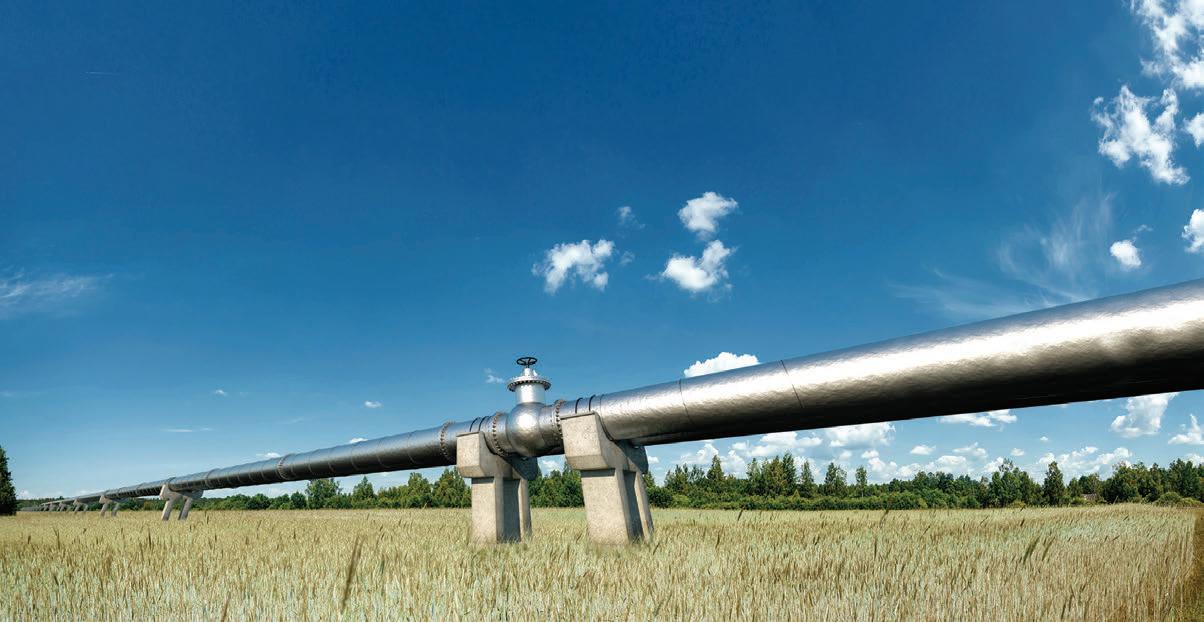
Once fully operational, Narrabri has the potential to deliver more than half of NSW’s gas supply demand and create a more secure, locally based and affordable supply for businesses, manufacturers and families.
Subject to receiving remaining government approvals, construction of the pipeline is expected to commence in early 2024.

Galilee and APA Group sign pipeline MOU
Galilee Energy has signed a non-binding memorandum of understanding (MoU) with the APA Group with regards to a potential pipeline to connect the Glenaras Gas Project to east coast gas markets.
APA Group’s initial concept was to potentially design and develop a pipeline from the Glenaras Gas Project to the Cooladdi compressor station on the South West Queensland Pipeline (SWQP).
Galilee’s managing director, David Casey, noted that the signing of the MoU is an important step in the potential commercialisation of the Glenaras Gas Project.
“Together with the project’s maiden reserve certification due in early 2023, continued planning on gas pipeline infrastructure could help provide a solid basis for progressing future gas sales agreements,” said Casey.
APA group took steps to commercialise the Glenaras Gas project.
10 The Australian Pipeliner | November 2022 MEMBERS & MEMOS
The pipeline passes near Santos’ Narrabri Gas project.
APA Group to acquire Basslink
APA Group has announced that it has entered into a deed of company arrangement (DOCA) with regard to the acquisition of Basslink and BPL.
Under the proposal, APA Group will acquire Basslink for $773 million, including current estimate of stamp duty and other transaction costs of $33 million. The proceeds of this will
be used to repay Basslink creditors, including APA Group’s existing senior secured debt of $648 million.
APA Group’s acting CEO, Adam Watson expressed that the acquisition of Basslink is consistent with the group’s strategy to increase its electricity transmission footprint and play a leading role in the energy transition.

Government legislates emissions reduction targets
The Albanese governments’ landmark Climate Change Bills have officially passed the Senate, ensuring Australia’s emissions reduction target of 43 per cent and net zero emissions by 2050 will be enshrined in legislation. The Climate Change Authority has also been made responsible for advising on future goals, including the government’s 2035 emissions target.
Net zero emissions target to be enshrined in legislation.
GWW mains upgrade underway
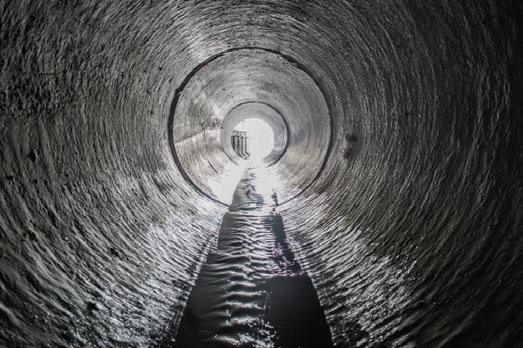
As part of a $2.8 million upgrade being undertaken by Greater Western Water (GWW), the water mains network in Moonee Ponds is being replaced.
Jaydo Construction have been appointed for delivery of the upgrade, which includes 2.8 km of water mains to be constructed in the area on Alexander Avenue, Feehan Avenue, McPherson Street, Albion Street and part of Pasco Vale Road.
Minister for Climate Change and Energy, Chris Bowen, said the legislation is set to place Australia on a credible and structured path toward net zero.
“Legislating these targets gives certainty to investors and participants in the energy market and will help stabilise our energy system. It also strengthens transparency and accountability through the annual climate change statement and will ensure public debate informs government decisions,” said Bowen.
The Albanese government has additionally proposed requiring the nation’s highest polluters to shrink emissions by up to 6 per cent per year under the strengthened centrepiece of its commitment to reduce emissions this decade.
GWW has also foregrounded community engagement with the project by including an onsite drop-in centre where residents and businesses can ask questions and stay informed. Open trenches are required for the construction of the new water mains, and work is expected to be ongoing throughout the year. The construction work should be completed, including the reinstatement of all trenches, by early 2023.

11 The Australian Pipeliner | November 2022 MEMBERS & MEMOS
CORROSION SPECIALIST Sydney I Melbourne I Brisbane I Perth Adelaide I Townsville I New Plymouth Engineering • Field Services • Products
www.cceng.com.au
AUSTRALASIA’S LEADING CATHODIC PROTECTION &
Our Experience Delivers Solutions
Moonee Ponds water mains should be replaced by early next year.
APA group will acquire the Basslink for $773 million.
Speciality pipeline recruiter celebrates 30th anniversary
become some of the industry’s leaders
Cuic singled out changes to diversity and inclusion as some of the most significant changes during the company’s history recruiting
“Continued innovation has helped the industry become more attractive to younger people and helped establish a diversified employee base in which different people can bring with them different experiences and backgrounds,” she said.
“Whether this be more women coming into the industry through engineering or people from overseas, it’s been pleasing to watch the pipeline industry continue to evolve over the years and for Peter Norman Personnel to have played a role in that evolution is an
pipeline industry.
Founder and Director – and namesake – Peter Norman, is a well-known figure in the recruitment, engineering, pipeline, and manufacturing sectors.

Applying his attention to detail and unique industry insights, Norman set out to offer his clients unparalleled access to the industries they work in, always with a smile on his face.
Now, 30 years on, Peter Norman Personnel’s team professionally and compliantly ensure that employment engagement, occupational health and safety, payroll and statutory obligations are met for all its clients across Australia.

Senior Consultant for Contracting and Recruitment Kate Cuic said the company is proud to have been able to stand the test of time, while so much has changed in pipelines and society.
“We’ve been around since before Y2K and not only survived but thrived; it’s great to still be involved and active within the pipeline
12 APGA MEMBER NEWS
industry essentially
Friday 21 October 2022 marked three decades since Peter Norman Personnel was established.
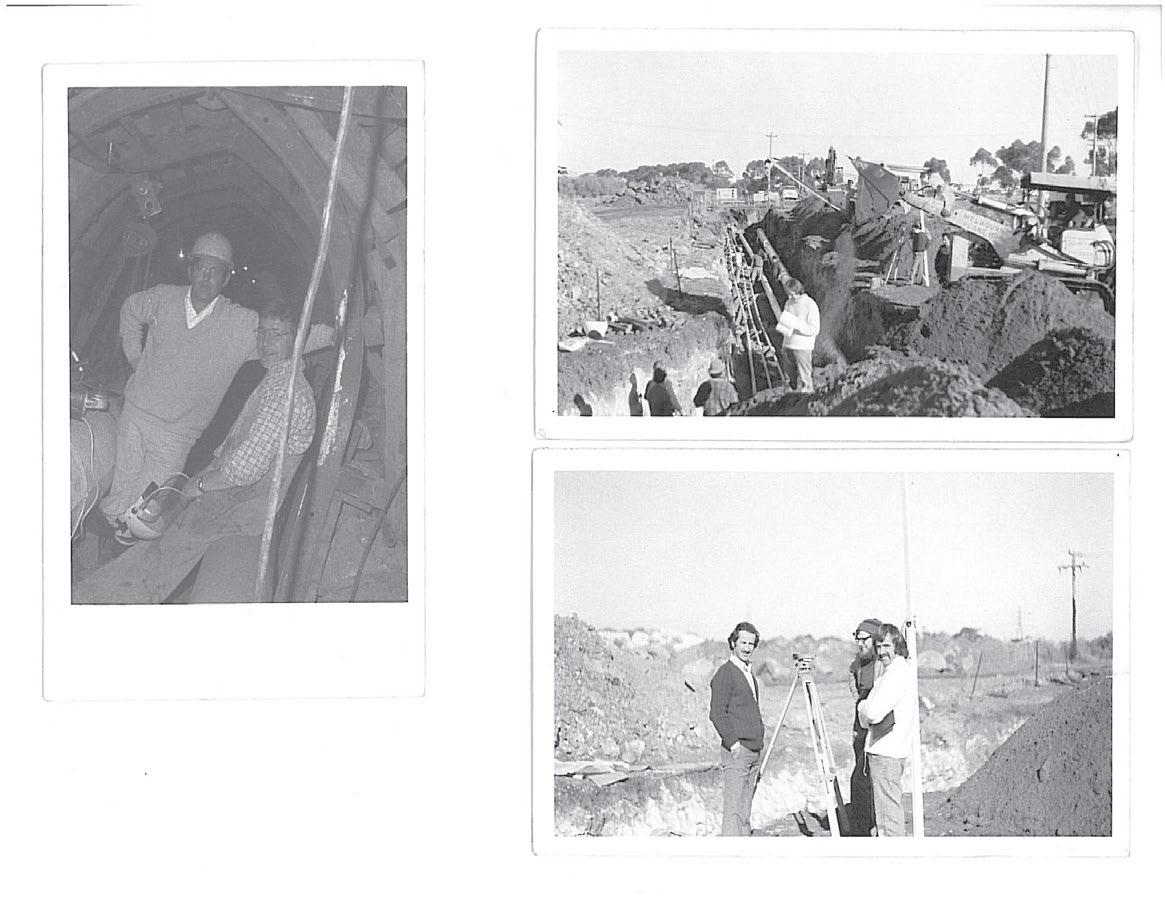
Founder, Director and Senior Consultant for Contracting and Recruitment at Peter Norman Personnel Peter Norman.
Peter Norman on the Brooklyn to Altona Pipeline.
For more information visit Peter Norman Personnel’s website, www.peternorman.com.au
Senior Consultant for Contracting and Recruitment at Peter Norman Personnel Kate Cuic.
E: info@propipeservices.com P: (03) 9330 4016 A: 49 Lambeck Drive, Tullamarine, Vic 3043 www.propipeservices.com Safe, Reliable Pipeline Solutions • Hot Tapping • Line Isolation & Bypass • Pipe Cutting • Commissioning • Decommissioning • Equipment Maintenance • Training Maintenance & repairs: • Natural Gas • Steam • Water • Chemical • Hydrocarbons
Q&A with PAC’s Matt Nash
Tell us who you are and what you do?
My name is Matt Nash, I work for Pipeline Actuation and Control (PAC). We specialise in valving, instruments, pneumatics and hydraulics for the oil and gas industry, which is what prompted us to join the APGA as a member.
Obviously, we sell pipeline valves as part of our repertoire of products. More recently however we've got into hydrogen products, so electrolysers, which we are looking to have manufactured here in Australia, and then all the associated components that go with them, eg storage, dispensing, compression, injection and metering.
Me personally, my background has always been sales. I'm currently the East Coast Sales Manager for PAC so I have the opportunity to travel up and down the East Coast, South Australia, and hopefully at some stage soon New Zealand and Papua New Guinea spruiking our products.
Historically I've been in automotive sales, in real estate, retail, basically any type of sales you can get. I joined PAC back in 2012, making this my 10th year with the organisation.
Which committees have you been a member of?
The first committee that I joined was the APGA WA chapter, I joined back in 2015 by chance actually. One of my colleagues who was already on the committee was injured at the time and couldn’t drive, I was his chauffeur and took him to my first meeting, upon him leaving PAC just kind of kept going along and getting involved.
I joined when Stuart and Spence were in charge and helped organise and run different events over in WA that was my first exposure to an APGA committee.
I was then, because I was Young Pipeliners Forum (YPF) age, roped into helping with some of the YPF events. Although I wasn't officially on the YPF committee in Western Australia, I was sort of just loaned across from the APGA Committee to help out at the time, with my first major event being the YPF quiz night which I have had the honour of hosting almost every year since.
In 2019 I moved to Queensland, to set up a new office for PAC and immediately got in contact with the presiding chair of the YPF, Chris Connor, to see if I could join the YPF committee over in Queensland. I was accepted so I got straight back into the swing of things.
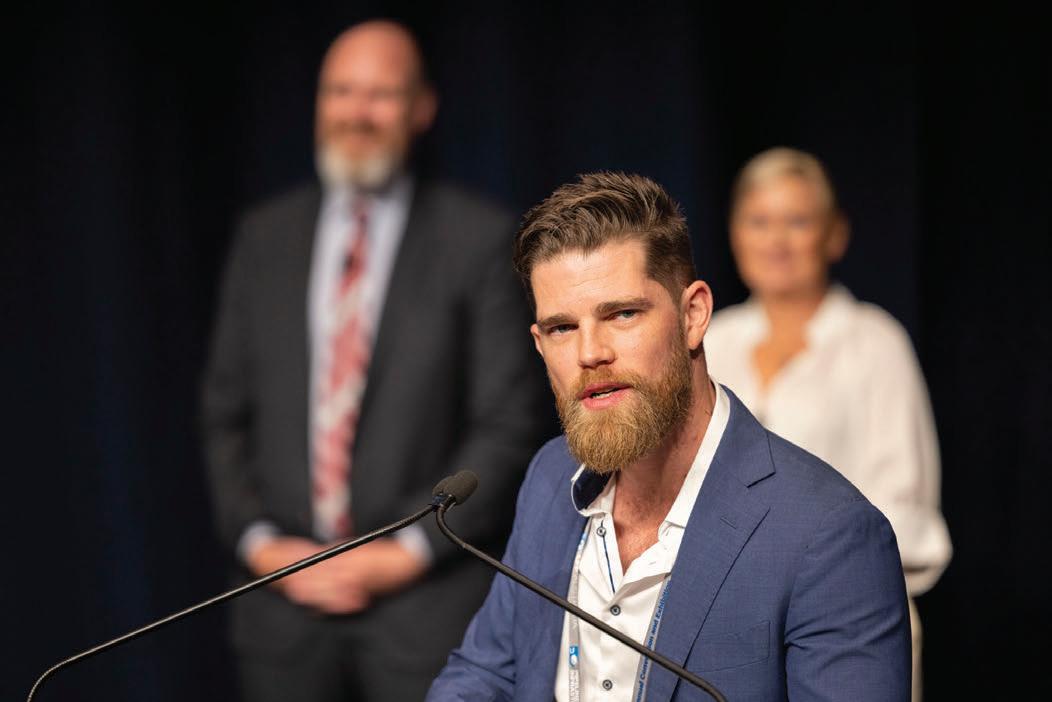
In 2021, I took over as Chair of the committee here in Queensland, and I've held that position for the last two years. We were lucky enough to host the first large event after the COVID outbreak which was our golf day here in Brisbane. We had members of the YPF and the APGA here in Queensland, come along to that, it was fantastic day. So good, in fact, that's the APGA has now decided to hold an annual golf day in Queensland as an East Coast golf day.
I'm also part of the suppliers Committee, which was started by Luis Guevara in 2019. Unfortunately, again due to COVID we haven't been able to have our regular catch ups or seminar, but hopefully we will get things kicked off again pretty soon.
Thank you for those wonderful insights, probing a bit deeper, what prompted you to so quickly contact YPF when you made the move?
Being a member of the YPF over in WA was awesome fun. I loved my time on the APGA committee over the years and wanted to stay involved. I love networking, maybe it's actually just meeting new people or maybe it’s just a good excuse to have a beer. I like making friends, talking with
people getting their insights, seeing where they're from, their background, swapping stories… I'm a sucker for a good story. The more people I know the more opportunities I've got to meet likeminded people and opportunities to make friends, which is maybe why I'm reasonably good at my job.
What does the committee work on?
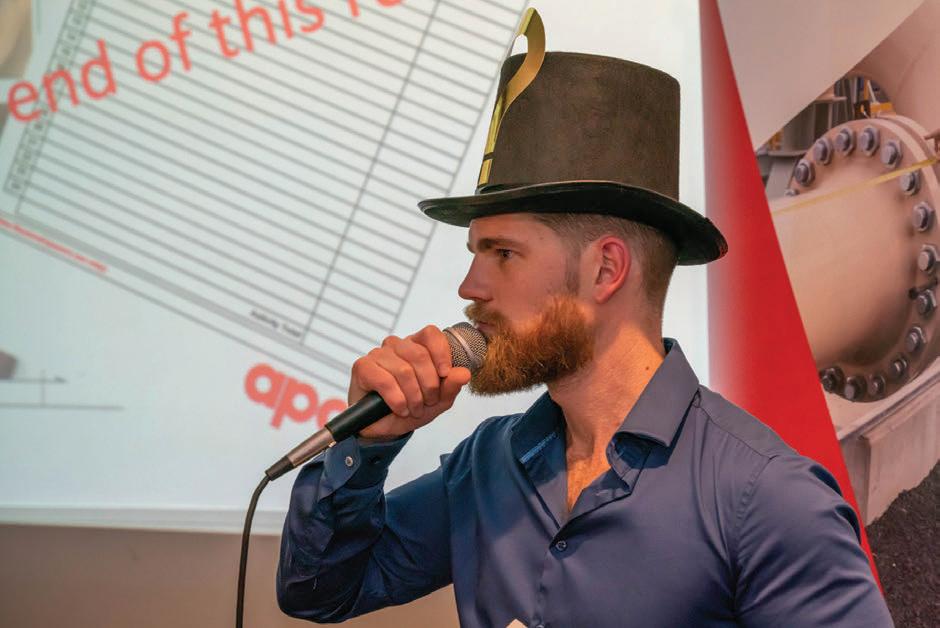
We host quite a number of networking events, but we also hold technical events. We will get a speaker or a couple speakers, rent a venue and run a learning session to try and increase the knowledge of our members with nearly all being a success (rain deters people sometimes on the night of the event). We have also hosted some other events as well, such as meeting some of people from the other committees and meeting board members, broadening the network. Our recent Trivia Night here had 70 young pipeliners competing against each other to see who was the smartest at The Stock Exchange Hotel, it was a fantastic event with everyone fully invested. For me it meant I got to talk on a microphone in front of everyone for 4 hours, everyone had a great time.
14 APGA Q&A
The Australian Pipeliner | November 2022
Pipeline Actuation and Control’s (PAC) Matt Nash shares his experiences in the pipeline industry and how he became involved in the Young Pipeliners Forum and the work the committee is doing.
PAC East Coast Sales Manager Matt Nash.
What is the contribution of APGA committees to the industry?
The two committees that I'm part of, the first being YPF, is making sure this association and this industry continues after we move away from our reliance on fossil fuels. This lays a heavy burden on our young people as it’s our future and we will have to deal with the consequences of it if it’s not done correctly. I think YPF in that regard holds massive responsibility in keeping people involved, invested and interested in in the industry.
The second is the supplier community. I think that 90 per cent of members at the APGA are a supplier of some sort, whether they supply product like myself, provide a service or are a constructor, the committee gives, us as suppliers, a voice to the pipeline owners to come up with more effective and efficient ways to do things as well as greater opportunities within the overall group.
Without these committees I don’t believe there would be a YPF as it’s too much of a workload for the secretariat, especially with all the different state groups, so in saying that I believe they have a huge contribution.
What has the committee done for your career?
The biggest thing for me personally is my confidence. Probably wouldn't believe this but I'm actually a bit of an introvert, most people would laugh if I suggested that, but it is true. The committees have really helped me to come out and realize that most of the people in this industry (and others) are not all that scary, they're just normal people like you or me.
A huge part of being part of a committee, is the opportunity to network. It has been amazing to meet the senior members of organisations and form a personal connection through the committee. It has been a hugely positive driver of my career over the last 10 years and hope it will continue to be so.
It’s nice to have those connections to call on, especially last minute in a pinch and know they will come through.
What would you say to a person considering joining a committee?
Just there really is no downside to joining a committee. Keep in mind I’m not saying to join for the sake of it, join if you're passionate about the industry and want to make a difference.
There have been examples of people in the past that have joined committees just to say they’re member of said committee and not really contributed, they hang around for a year or two they show up to the meetings and have a few beers but don’t really contribute, that’s not what we need. If you're a passionate person and you want to give it a go, do it! There really is no negatives to it, and you’ll hopefully meet some amazing people.
Yes, its extra work outside your actual job, there is no extra pay, but it's great fun and it's appreciated. We have such a good time and who knows what doors it will open.
What are the people like within the committee?
After each event, we'll try catch up on the
people liked or didn't like etc. Then we'll hang around and have a bit of a chat which can last few hours. The vibe of the group, it's pretty casual, relaxed and fun but when the work needs to get done, it's done. I rule with an iron fist, so you know, I delegate you a task, you do
Will you continue your work on the
I definitely would like to, but unfortunately, I've now come of age and I'm too old for the YPF as of the end of this year. This is my last year at the official YPF member, although the age group is a little bit fluid, we still have people in their 40s still hanging around, I guess I’ll be one of
I am looking forward to becoming a bigger part of the suppliers committee. Working with Luis Guevara and the rest of the team. Post that, who knows – maybe apply for the board to have a more direct impact on behalf of the young people in the industry.
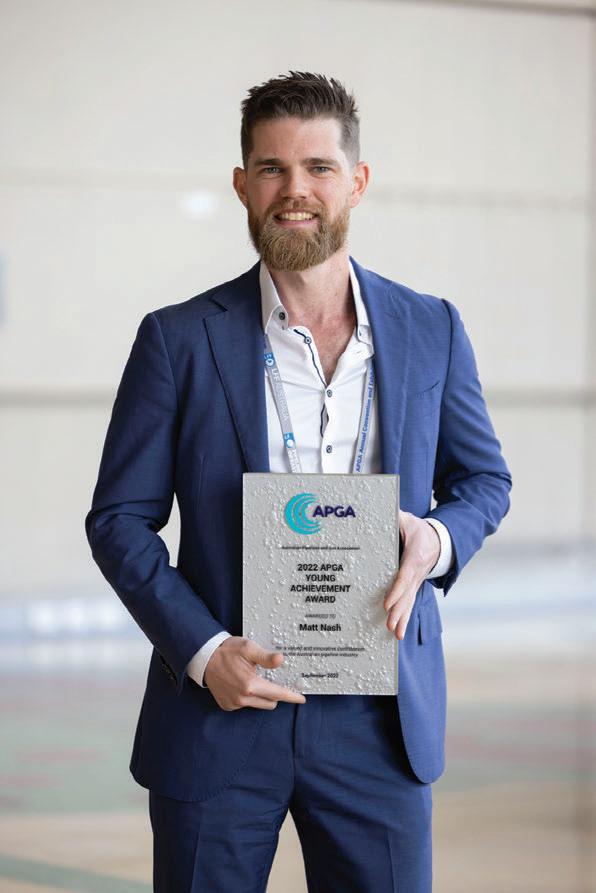
Special mention – post conducting this interview Matt was awarded the Young Pipeliner of the year award at the APGA Convention and Exhibition.
APGA Q&A
15 The Australian Pipeliner | November 2022
Matt Nash has been part of the YPF in WA and QLD.
2022 APGA Young Achievement Award winner Matt Nash.
Gas and energy policy
By Jordan McCollum, National Policy Manager, APGA
Russia’s unjust war in Ukraine and unreliable coal-fired power plants both played roles in creating Australia’s 2022 east coast energy crisis. However, one elephant in the room is yet to be held accountable for the role it has played in the crisis.
An elephant which regulators and governments alike are reluctant to try to solve – the shortness in supply within the east Australian gas market.
The east Australian gas market fundamentally changed around 2015 with the introduction of the Curtis Island LNG facilities. Within a matter of years, the market went from long in supply to short in supply – from a market in which customers could set prices to a market in which producers could set prices. This change in price setting wasn’t the only change that the shortening of the east Australian gas market introduced, however.
The shortness of the gas market, positioned between the international LNG market and domestic electricity market, risks market price coupling in the event that either of the other two markets became short. Worse still, a short gas market sitting between domestic electricity and international LNG markets creates the risk that the gas market may be drawn upon by shortness in both markets at the same time, coupling prices across all three.
APGA has been highlighting this risk for at least a decade. While governments and regulators have been fixated on economic reform to address every last per cent of return in long term bilateral contracts across the gas market, we have been flagging that the true risk of price coupling
remains, and that this risk can only be solved through increased investment in gas supply.
By increasing gas supply, it is possible to close the gap between potential supply and demand, making the east Australian gas market long in supply once more. By being able to produce more than is able to be consumed by domestic and export customers, it would be impossible for all three markets to couple, and the energy crisis which occurred across 2022 would not have happened.
To be clear, the LNG exporters alone are not to blame for the 2022 east Australian energy crisis. While the development of more LNG export capacity than was able to be supplied created the short gas market, governments and regulators have had over a decade since these projects reached FID to identify and mitigate this risk.
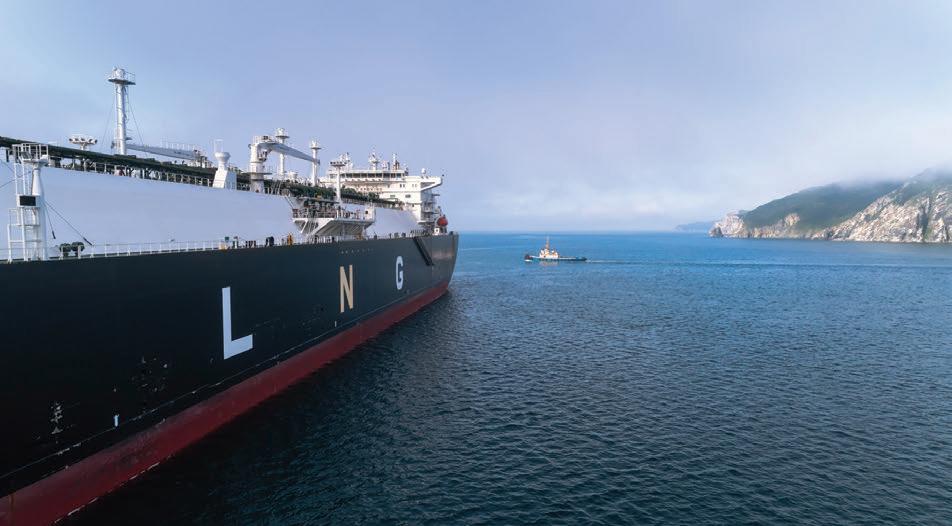
Instead of mitigating this risk by incentivising increased gas production, governments and regulators have introduced increasingly stringent economic regulation of gas production and infrastructure, disincentivising investment in the
supply, but by more incremental transparency and control measures which disincentivise investment in new supply.
Incremental transparency and control measures have proven ineffective in protecting east Australian energy customers as they do not address the genuine risk represented by a short gas market. Only a return to a long gas market will protect customers from the types of price coupling experienced earlier this year.
Importantly, it is not only additional natural gas supply that can help solve this problem. As demonstrated by the European REPowerEU policy, the rapid development of hydrogen and biomethane production can play a substantial role in addressing short gas markets in Europe. Over 1,200 PJ of hydrogen and biomethane production are targeted by the EU policy, accounting for over 20 per cent of total European gas demand.
Australia too has this opportunity to use renewable gas uplift to help address its short east coast gas market. By setting similar targets at a federal level, well above the ACCC flagged 56 PJ shortfall could be accounted for by 2030 through renewable gas uptake alone. In this way, Australian energy consumers could see resilience returned to its energy markets while at the same time supporting whole of energy system decarbonisation.
Beyond the opportunity to address natural gas supply shortages with renewable gas development, the circumstances of the past 9 months and the decade that lead up to it can serve as an important lesson to the future renewable gas industry which may face similar risks.
east Australian gas shortfall, not by enabling new
Ensuring that investment in production development is always supported to ensure a long domestic renewable gas market is a low-regulation way to ensure that international renewable gas prices never couple with domestic renewable gas and renewable electricity prices in Australia’s netzero energy future.

16 POLICY The Australian Pipeliner | November 2022
"By increasing gas supply, it is possible to close the gap between potential supply and demand, making the east Australian gas market long in supply once more."
The east Australian gas market fundamentally changed around 2015 with the introduction of the Curtis Island LNG facilities.
ROLLER CRADLES & SLINGS | PIPE PILLO VACUWORX VACULIFT | PIPE SAK PIPE CUTTING CRADLES | PIPE ROLLER STACKABLE PLASTIC PIPE CONES AJP INDUSTRIAL SUPPLIES Available for Sale & Hire PIPE HANDLING RANGE LIGHTWEIGHT | 5:1 SAFETY RATIO | 3 SIZES PPE SAFETY WORKWEAR TOOLS & EQUIPMENT AUTOMOTIVE REFRESH SAND BLASTING & PAINTING EQUIPMENT 1300794096 | SALES@PSSSA.COM.AU MACKAY - (07) 4998 5299 TOWNSVILLE - (07) 4774 8332 We've got you covered
Our industry can deliver a global renewable gas industry
By David Norman, CEO of Future Fuels Cooperative Research Centre

the total energy mix by 2030, with Europe working to achieve a supply of twenty million tons (20 Mt) of green hydrogen by 2030, with 10 Mt produced domestically and 10 Mt imported. These are enormous quantities by current standards. This already underpinned Shell’s 200 MW electrolyser project in the Netherlands that is now proceeding to construction.
Importantly for our pipeline industry, Europe is now accelerating its European Hydrogen Backbone initiative that is developing a network of over 50,000 kms of new and repurposed hydrogen backbone pipelines covering the industrial centres of Europe, to provide cost-effective reliable transmission for this clean energy.
export emissions and is finding a vital role for renewable gas. The scale of decarbonisation is breathtaking, but our industry has a real opportunity to be a part of it.
Seing many colleagues at the APGA convention was so enjoyable. After the COVID years it reminded me of the shear breadth of the industry and how much value our colleagues create every day. This gives me confidence that our industry can meet the challenges and opportunities of decarbonising with that same combination of energy and expertise. The renewable gas industry is starting to leap forward both in Australia and globally and as an industry we need to be prepared for the opportunities and changes it could create.
Last month Engie and Mitsui reached their final investment decision on Australia's largest confirmed hydrogen project; the 10 MW electrolyser as part of the Yuri Green Hydrogen to Ammonia facility at Yara in the Pilbara. This is the first of three expected 10 MW units as part of the 2021 ARENA funding round and a key milestone in the next phase of scale-up of renewable hydrogen projects in Australia.

Over in the US the scale of their massive Inflation Reduction Act (IRA) is only just being understood. Among many other renewable energy schemes, the IRA offers an effective $3US/kg incentive for zero-carbon hydrogen, makes green hydrogen far more competitive.
In Europe the Renewable Energy Directive REDIII has made a commitment to an overall renewable energy contribution of 45 per cent to
Combined together the US and Europe will bring billions of dollars of support to the emerging hydrogen industry, necessary to bridge the bankability gap of the early investments that are the foundations of this industry.
Although there is much in Australia’s media at the moment on the decarbonisation of our electricity networks, the role of renewable gaseous fuels continues to play an important part. Future Fuels CRC is sponsoring and supporting the ground-breaking Net Zero Australia project (NZAu) that has just delivered its first public findings. NZAu is analysing net zero pathways for both Australia’s domestic and
The decarbonisation of electricity is also an important lesson for all us that every industry must bring our communities with us as we change and develop. We can give Australians a new option for how they decarbonise both at home and at work but we need to listen to them and meet their needs. This underlines the importance of our research into the social license and public perceptions of future fuels. Some of our most interesting research into public perception is already publicly available on our website and more advance work including citizen assemblies and deliberative democracy is coming soon (projects RP2.1-02 and RP2.1-07).
Future Fuels CRC has created an online training package for all pipeliners on understanding social license to operate with your community. It is available for free for APGA members, so contact the APGA, take the short course and help the industry prepare for the future.
18 FUTURE FUELS CRC The Australian Pipeliner | November 2022
You can find the latest on all Future Fuels CRC research at www.futurefuelscrc.com As Australia develops hydrogen industries in every state, it’s worth also looking at the potential of another future fuel, biomethane, to deliver our net-zero energy needs.
The renewable gas industry is starting to leap forward both in Australia and globally.
Future Fuels CRC CEO David Norman.
The leading innovator supplying cutting-edge integrity solutions. Together we can ensure sustainable decision-making. Our combination of advanced inspection systems and expert consultants delivers a comprehensive understanding of asset safety, lifetime, and performance.
Comprehensive Asset Integrity Management

www.rosen-group.com
Northern Territory gives green light for infrastructure progress
Across the Northern Territory, government bodies and industry juggernauts have undertaken projects to improve the state’s infrastructure, with gas and water security, communication, and other utilities.

Darwin Export Gas Pipeline supported by Santos
Santos has been given the green light for the Darwin Export Gas Pipeline which will extend the Barossa Gas Export Pipeline to the Santosoperated Darwin LNG facility (DLNG).
It will also allow for the repurposing of the existing Bayu-Undan to Darwin pipeline to facilitate carbon capture and storage (CCS) options.
Gas from the Barossa field, located 300 km north of Darwin, is intended to replace the current supply from the Bayu-Undan facility located in TimorLeste. First gas production at DLNG using Barossa gas is targeted for the first half of 2025.
Santos Managing Director and Chief Executive Officer Kevin Gallagher said the DLNG life extension, Darwin Pipeline duplication and BayuUndan CCS projects would promote sustainable development and jobs growth in the NT and Timor-Leste, while building momentum for a whole of region carbon reduction solution.
According to Gallagher, taking a final investment decision (FID) on the Darwin Pipeline duplication project will allow for the Barossa project to be CCS ready.
Adding the Darwin Pipeline duplication project is estimated to increase Santos’ share of capital expenditure for the Barossa project by approximately US$311 million ($453 million).
The Barossa joint venture has agreed with the DLNG joint venture partners to terminate the toll arrangement for using the original Bayu-
Undan to DLNG pipeline, reducing operating expenses for Barossa.
State Government planning major infrastructure corridor
The Northern Territory Government is investigating a potential infrastructure corridor from Tennant Creek to Darwin, which would allow for continued development of key regional areas.
The proposed corridor would provide pipelines for future services including gas, water, communications, and other utilities.
A prefeasibility study has identified a preliminary corridor alignment, which considers engineering, environmental, social and infrastructure considerations, and will be further refined and developed during consultation with stakeholders.
Consultation will seek local landowners’ input about the proposed corridor alignment and to identify the constraints that need to be considered to plan for the project.
NT Minister for Infrastructure, Planning and Logistics, Eva Lawler said that the state is in early planning and investigation phase as part of a longterm project to support growth across multiple sectors in the NT economy. This includes natural gas, hydrogen energy and digital infrastructure.
“This proposal has the potential to not only link the regions with key infrastructure but also to provide long-term, sustainable jobs for regional Territorians,” said Lawler.

INPEX signs agreement with NT for net zero targets
The Northern Territory Government has signed a non-binding agreement with Tokyo-based company INPEX to further pursue its commitment to a net zero emissions future.
The memorandum of understanding involves carbon offsets for the company’s offshore liquid natural gas (LNG) project, Ichthys, situated 820 km southwest of Darwin.
This comes shortly after INPEX’s environment plan (EP) was approved by The National Offshore Petroleum Safety and Environmental Management Authority (NOPSEMA). The EP allows the project to continue running for the next five years.
The Ichthys project is one of a handful in the world that incorporates the full chain of development for LNG: subsea, offshore, pipeline and onshore processing.

INPEX’s existing offset commitments includes a number of marine biology monitoring and conservation programs, including monitoring the conservation status of coastal dolphins in the NT.
For more information on the latest industry news, projects and products visit www.pipeliner.com.au
20 The Australian Pipeliner | November 2022
PIPELINES IN NT
infrastructure to further support a net-zero future.
C M Y CM MY CY CMY K





The BISEP® with extensive track record provides industry first double block and bleed isolation while maintaining production. Hydraulically activated dual seals provide fully monitored leak-tight isolation, every time, any pressure. ZERO-ENERGY ZONE SINGLE HOT TAP POINT DUAL Leak-Tight Seals double block & bleed isolation PRODUCTION MAINTAINED BISEP® Hot Tapping & Plugging ISOLATED PIPELINE
Beetaloo Basin has promise in a low carbon future
The Beetaloo Sub-Basin has the potential to rival the world’s biggest and best gas resources. The development of this resource has been subject to many complications and delays, but nevertheless has the potential to create thousands of jobs and act as a significant driving force for economic growth within the Northern Territory.
Since the strategic development plan for the Beetaloo Basin was developed, the field’s potential to spur significant downstream manufacturing opportunities, deliver cheaper and more reliable gas to households and industry and provide additional sources of gas for LNG export facilities has been evident.
Nevertheless, efforts to get the Beetaloo SubBasin running optimally have not been without its complications.
Greater gas production in areas such as the Northern Territory provides an opportunity for commercial-scale carbon offsets, as well as carbon capture and storage developments.
Empire and APA Group ramp up pipeline wars
In October 2021, gas pipeline giant APA Group intensified the competition to build the multibillion-dollar infrastructure project which would help unlock the huge Beetaloo gas resource in the NT. The group signed with explorer Empire Energy, rivalling plans by Jemena and Cheung Kong Group.
News of the memorandum of understanding (MoU) between APA Group and Empire Energy, which envisaged a new common-user pipeline to bring Beetaloo shale gas to the eastern states of Australia, came after major gas producers including Santos, Woodside and Inpex agreed to co-operate to examine the viability of large-scale carbon capture in Darwin.
The proposed infrastructure, which would also involve expanding existing pipelines and building
gas processing plants, also supported the NT government’s ambitions for a gas-based manufacturing industry and the expansion of LNG exports from Darwin.
The pipeline developers were battling to build the larger transmission lines that would move gas from the remote Beetaloo region near Daly Waters in the NT, where majors such as Santos have high hopes for commercial gas production, as do juniors Empire, Tamboran and Falcon Oil & Gas.
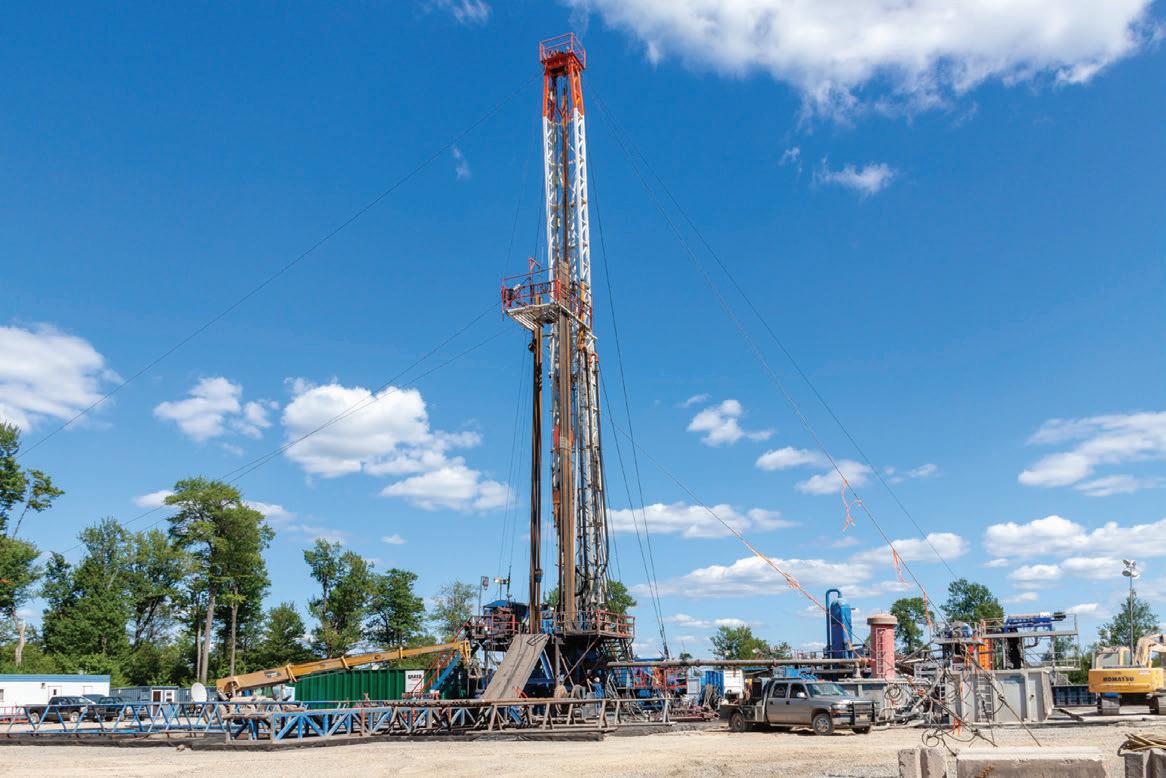
Successful early drilling results from September 2021 indicated that hopes that the Beetaloo could be Australia’s answer to the USA’s shale gas revolution of the previous decade. These hopes have continued and been further solidified in lieu of 2022’s global gas and energy crisis, with the need to have ample and affordable gas to back up renewable energy and supply domestic manufacturers in the market paramount.
22 The Australian Pipeliner | November 2022 NORTHERN TERRITORY
The Beetaloo Basin is one of the most promising shale gas resources anywhere in the world, but the viability of a gas resource is about more than just the volume and quality of the resource.






The project proposed by APA Group and Empire Energy involved a new pipeline connection between the Amadeus pipeline that runs from Alice Springs to Darwin and Mount Isa, where it would then link into APA Group’s existing Carpentaria pipeline that runs south to Ballina in New South Wales. Additionally, it would involve further expansion north from the Beetaloo Basin to Darwin.
The proposed new Beetaloo pipeline would become part of the existing APA Group gas distribution network and be the most capital efficient model for connecting the Beetaloo SubBasin to market.
In March 2022, then Minister for Energy and Emissions Reduction and Minister for Industry Angus Taylor called for priority actions for early works support on a feasibility study for proposed infrastructure in the Beetaloo Sub-Basin. The feasibility study would aim to determine the most efficient infrastructure to deliver natural gas from the Beetaloo Basin to the east coast gas market.
At the time of publishing, neither APA Group nor Jemena have been awarded approval to begin works on the infrastructure.
What happens next as Origin says farewell to Beetaloo
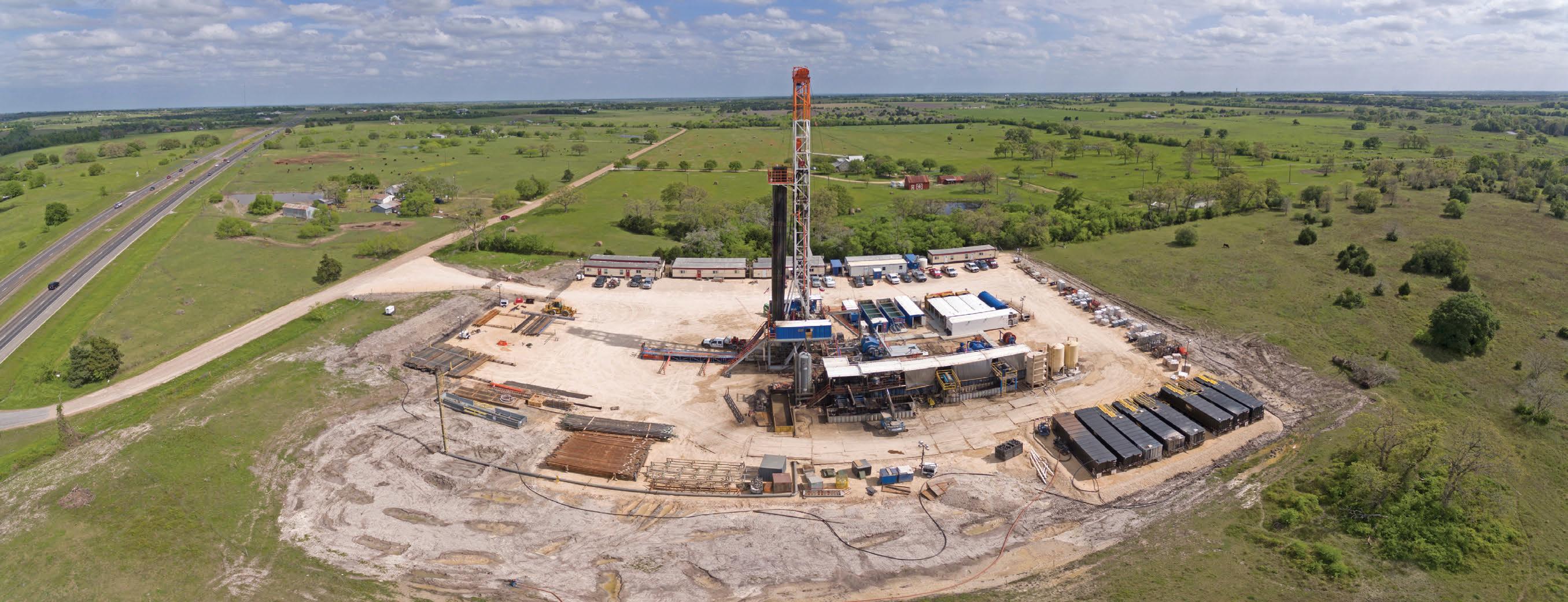
The Beetaloo Basin is now headed by Tamboran Resources alongside Falcon Oil & Gas in a joint venture (JV) under the Beetaloo exploration project after Origin announced its decision to divest its interest in the field in early September 2022.
Upon announcing its decision, Origin said it was going to sell its exploration interests in the basin to Tamboran Resources for $60 million. The company is expected to lose between $70 million and $90 million because of the move but struck deals to buy gas and receive a royalty payment of 5.5 per cent of revenue from gas if production in the field goes ahead.
Origin is set to undertake a strategic review of all remaining exploration permits (excluding its interests in Australia Pacific LNG) with the intention to exit those permits over time. The company will continue to comply with its various obligations under existing joint venture (JV) agreements and work alongside its JV partners as it works to considers potential exits.
Origin CEO Frank Calabria stated that the decision to divest its interest in the Beetaloo and exit similar upstream exploration permits over time will grant the company a greater flexibility to allocate capital to growing cleaner energy and customer solutions.
“We believe gas will continue to play an important role in the energy mix and it remains a core part of our business,” says Calabria.
“Notwithstanding the prospectivity of any of these permits, typically the experience in progressing these types of projects is that the exploration and appraisal phase can be uncertain, and it can be capital intensive to bring projects into production.
“Ultimately, we believe Origin is better placed prioritising capital towards other opportunities that are aligned to our refreshed strategy.”
The company previously described the Beetaloo as one of the most promising shale gas resources anywhere in the world and was the largest player testing commercial viability of the basin’s gas deposits.
Support continues for Beetaloo
While complications have surely staggard the progress of Beetaloo’s seemingly uphill battle toward its production goals, Federal Resources Minister Keith Pitt is among many who have continued to believe in the viability and success of Beetaloo.
In March 2022, Pitt granted another $7.5 million to the industry to continue works in the
As an energy and carbon hub, the Beetaloo Sub-Basin – and the Northern Territory as a whole – have a bright and shining future.
24 The Australian Pipeliner | November 2022 NORTHERN TERRITORY
NT’s Beetaloo Basin. The funding grant was awarded to Sweetpea Petroleum, a subsidiary of Tamboran Resources, to undertake exploration drilling.
Minister Pitt cited the continuing Russian invasion of the Ukraine and the subsequent fallout for the energy sector as a driving force behind the government’s ongoing support for expanding Australia’s gas industry.
“We should take the energy crisis in Europe as a warning of what could happen in Australia if there is not enough investment in the gas sector,” says Pitt.
“Beetaloo has the potential to provide a world-class gas resource and we are determined to support its development as part of our gasled recovery.”
Given the continued supply difficulties for gas and energy across the globe, it’s clear that Australia has been correct to continue expanding oil and gas developments but concerns over gas’ place – and therefore the place of basins such as Beetaloo – in a net zero Australia remain.
Beetaloo’s place in a low carbon future Beetaloo Basin gas, in addition to other onshore
and offshore gas, has a very integral role to play in the transition to lower carbon energy sources such as hydrogen, solar or wind.
The International Energy Agency (IEA) forecasts that the use of gas is anticipated to rise because of the shift to lower carbon energy sources.
Upon examining emissions from the full energy cycle, it’s evident that without gas, emissions from operations are not likely to reduce as quickly when utilising gas to enable a smoother energy transition as there are very limited energy and technology alternatives.
In addition to the benefits provided by switching from coal-to-gas both domestically and through LNG exports to overseas markets, there is a notable potential for development of newer and more future-oriented industries which are built around the development of the Beetaloo – such as carbon offsets, carbon capture and sequestration.
Greater gas production in areas such as the Northern Territory provides an opportunity for commercial-scale carbon offsets, as well as carbon capture and storage developments.
As an energy and carbon hub, the Beetaloo Sub-Basin – and the Northern Territory as a whole – have a bright and shining future.
Northern Territory is home to the Beetaloo Basin, one of the most promising shale gas resources in the world.

25 The Australian Pipeliner | November 2022 NORTHERN TERRITORY
Industry veteran’s contribution recognised with prestigious APGA Award
As part of the Australian Pipeline and Gas Association (APGA) annual conference and exhibition, it hosts an annual awards ceremony to acknowledge and celebrate the services of companies and individuals in the pipeline industry.
This year, the winner of the APGA award for Outstanding Contribution to the Australian Pipeline Industry went to Peter Cox, the Vice President Energy & Chemicals – Australia East & PNG for Worley.
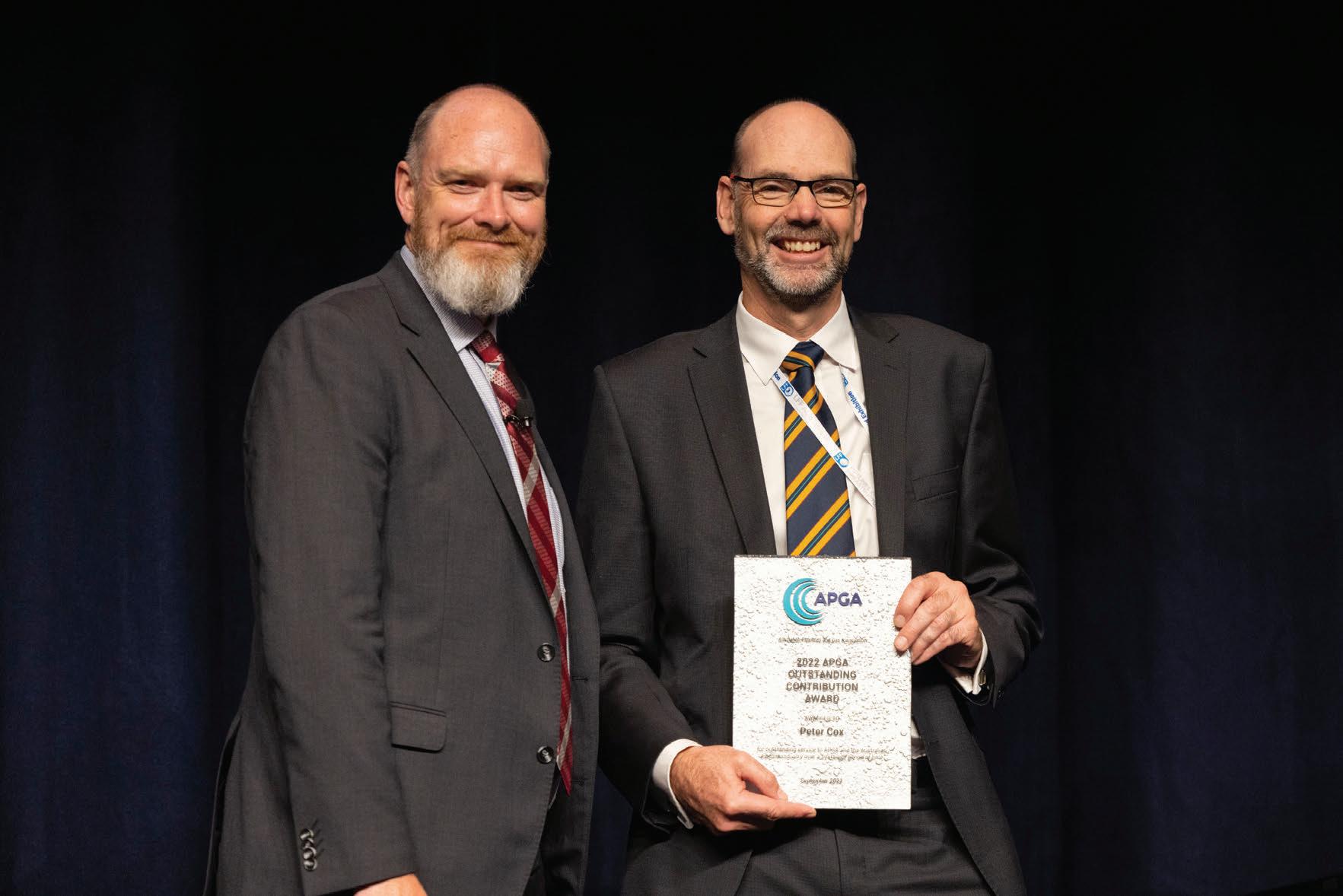
Cox has spent more than three decades working with Worley. First as a mechanical design engineer and eventually attaining his current role,
as well as becoming a member of the APGA board.
As well as continuously exceeding in his career, Cox has given time to mentoring young engineers just stepping into the industry, ensuring a strong new generation for the future.
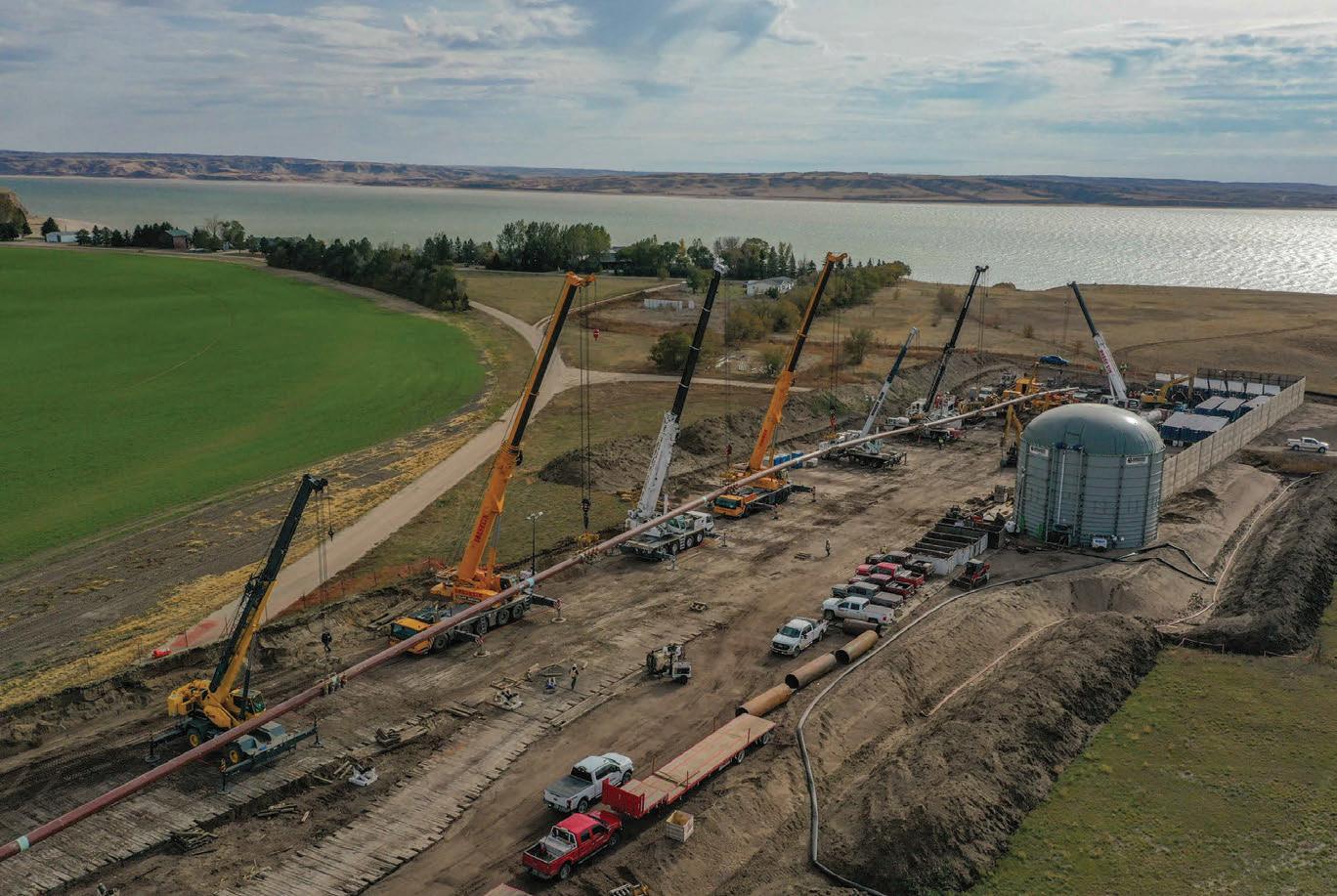
Cox shares with The Australian Pipeliner about his career, the past, and his thoughts on the future of the pipeline industry.
How would you describe your career so far?
My career has been very rewarding as I have taken the opportunities when presented. When Bruce
Andrews started to step back from managing the Worley pipeline business, he gave me the opportunity to step up and succeed in the role, including taking on an APGA Board position. I’ve always put my hand up to contribute to or lead industry initiatives, which has given me the opportunity to work with passionate people across all facets of industry and enabled me to take pride in the achievements made along the way.
Have you always been interested in the strategy and business side of industry, or are you still an engineer at heart?
26 The Australian Pipeliner | November 2022
Peter Cox, one of the winners at the 2022 APGA Awards, offers his perspective on the pipeline industry as it is now, and what may be in store as Australia, and the rest of the world, make moves to lower emissions.
PIPELINE PEOPLE
APGA CEO Steve Davies (left) and Peter Cox (right) at the APGA awards 2022.
Building the world under your feet Bringing trenchless solutions to Australia Australia-based operations with permanent local resources Fully integrated with our global team at international headquarters Multiple NASTT Project of the Year awards Horizontal Directional Drilling · Completed a 4.7 km drill · 235 Intersect crossings completed since 2000 · Rigs available with push/pull capacity up to 815 Tonne · Drill diameters up to 1.5m 8,000 people strong founded in 17,000 pieces of equipment Pioneering HDD since 1988 Direct Pipe · 13 Installations since 2010 · Leading Direct Pipe Installer · Land-to-water outfalls · Installations up to 1.5m in diameter MichelsTrenchless.com.au
I believe that the two cannot be separated. To succeed in business with successful strategy, a detailed knowledge and understanding of the engineering is essential. The real opportunities to find faster and more efficient ways of achieving business objectives can only be done safely through engineering. I’ve been lucky to always have a network of subject matter experts in Worley to test ideas and improve strategies.
The APGA award that you won was for outstanding contributions – which of these contributions are you most proud of?
Helping to steer both APGA and the Future Fuels CRC to successful outcomes through my roles with the board has enabled me to influence many initiatives. Probably the most significant ones, those that I am most proud of, would include producing the Code of Practice for PE Gathering Systems, and mentoring early-career engineers – getting them involved in the many research projects through the Energy Pipelines and Future Fuels CRCs.
Are there any highlights from your career that you’d like to share?
One of the more memorable highlights would be leading the Worley response to the Longford Gas Plant incident back in 1998 which curtailed Melbourne’s gas supply. Firstly, I was involved in designing and constructing a temporary compressor station at Young to boost NSW gas
to Victoria which we got operational within two weeks after the incident. Then I led the design and construction of three permanent compressor stations at Bulla Park, Young and Springhurst which we had operational within six months.
Have you achieved everything you wanted to in your career yet? If not, what’s left?
Definitely not. My passion currently is steering the energy transition to a net zero future through development and implementation of new technologies. It is a major societal change, and it is very exciting to be at the forefront of delivering it.
How do you think the future of the pipeline industry will change in the next 10 years?

We will see major change in the next 10 years through modifying our pipelines to transport blends of hydrogen, carbon dioxide, ammonia, biogas, sustainable aviation fuel and water – to name a just a few. If we don’t make these major changes in the next 10 years, we will not achieve the climate targets set.
What is next for you?
For me personally, I am committed to helping commercialise these new technologies needed, which requires the necessary social licence – and Government policy --- needed to enable the energy transition. My position in Worley and the Future Fuels CRC uniquely provides me the opportunity to play a role to enable all of the changes necessary, and to influence this new and exciting future.

The Outstanding Contribution to the Australian Pipeline Industry award is clearly a well-earned one for this respected and pioneering member of the pipeline industry. It is Cox, and those industry operators like him, who offer the best chance of succeeding in the energy transition faced by Australia in the coming years.
28 The Australian Pipeliner | November 2022 PIPELINE PEOPLE
Peter has been improving the pipeline industry for more than 30 years.
Peter Cox receives his award for outstanding contribution from APGA President Donna McDowell.
With more that 25 networking and technical events every year, the APGA events team is committed to providing the best opportuninty for sharing experiences, information exchange and finding out the latest developments in the pipeline and gas industry. Scan for the latest events schedule




COMMI T TEES EVENTS
EVENTS
P: 02 6273 0577 E: APGA@APGA.ORG.AU
The industry through MPK’s eyes
As part of the People in Pipelines feature, spoke with MPK’s team in the Surat Basin CSG fields, Queensland, to gain an insight into how the industry has changed for them and where they see the industry placed in the future.
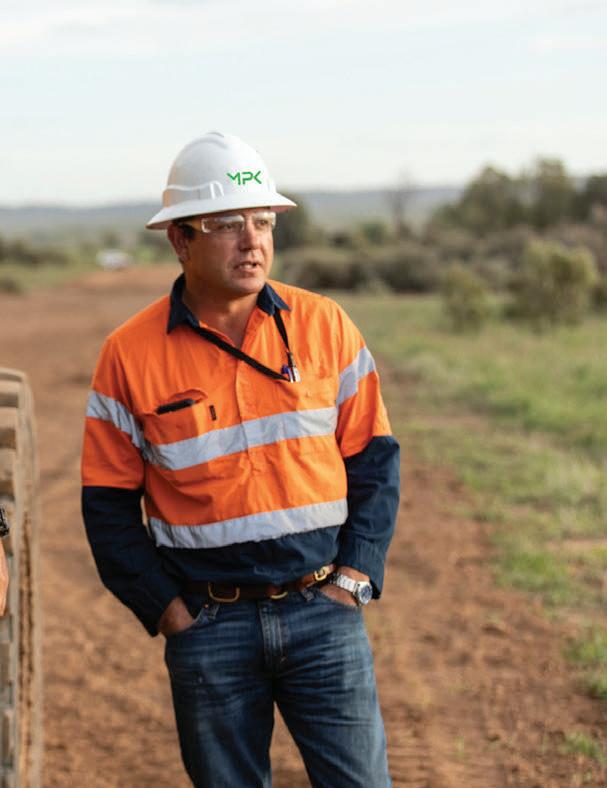 Name: Cathy Carragher
Role: Plant and Maintenance Lead Years in Industry: 15
Most of my industry career has been spent in plant and maintenance roles, originally in civil construction and plant hire companies, but since 2013, I have been with MPK in the Surat Basin.
I have witnessed a lot of changes in this time, particularly the shift from paper-based processes to the digital online tools we use today. I believe this advancement has made the discipline I work in far more effective by ensuring we’re continually compliant, our maintenance monitoring is more accurate, and our reporting more informative and timely, and ultimately more beneficial to MPK and its clients.
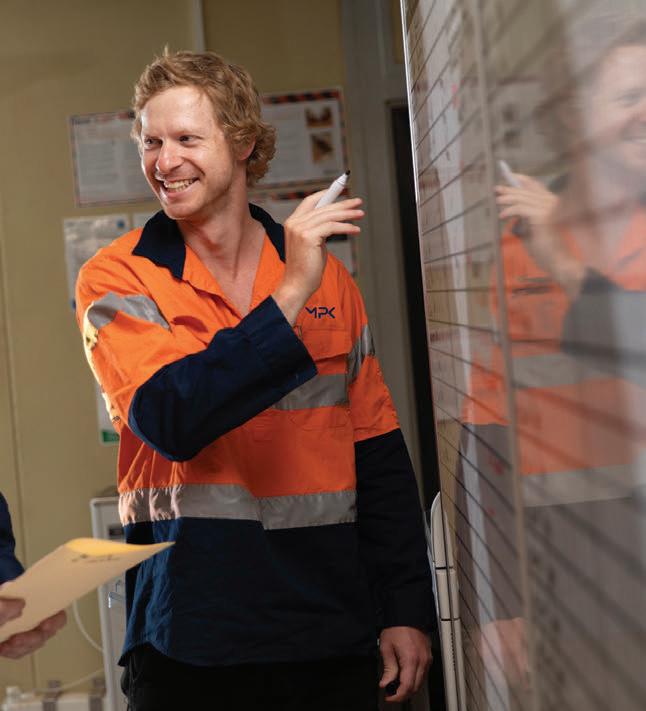
We have 700 items in our fleet, which all require a comprehensive maintenance schedule, so it is imperative we have the correct systems in place to ensure we keep on top of it. In recent years, 'Safer Together' has become a large focus for our plant and maintenance team, with 90 of our 700 maintained assets needing to fully comply with new Safer Together requirements.
Chain of Responsibility (COR) has also become a large focus within plant and maintenance, as our team arranges the external transport for initial mobilisation and demobilisation. To ensure we have a better understanding of our roles and responsibilities, we have run our team through COR courses, and I think these courses have been
highly beneficial, as they’ve enabled our experienced and qualified personnel, MPK as a business, and our Project as a whole, to develop a culture of “future thinking”.
Name: Scott Bourne
Role: Senior Project Engineer
Years in Industry: 9
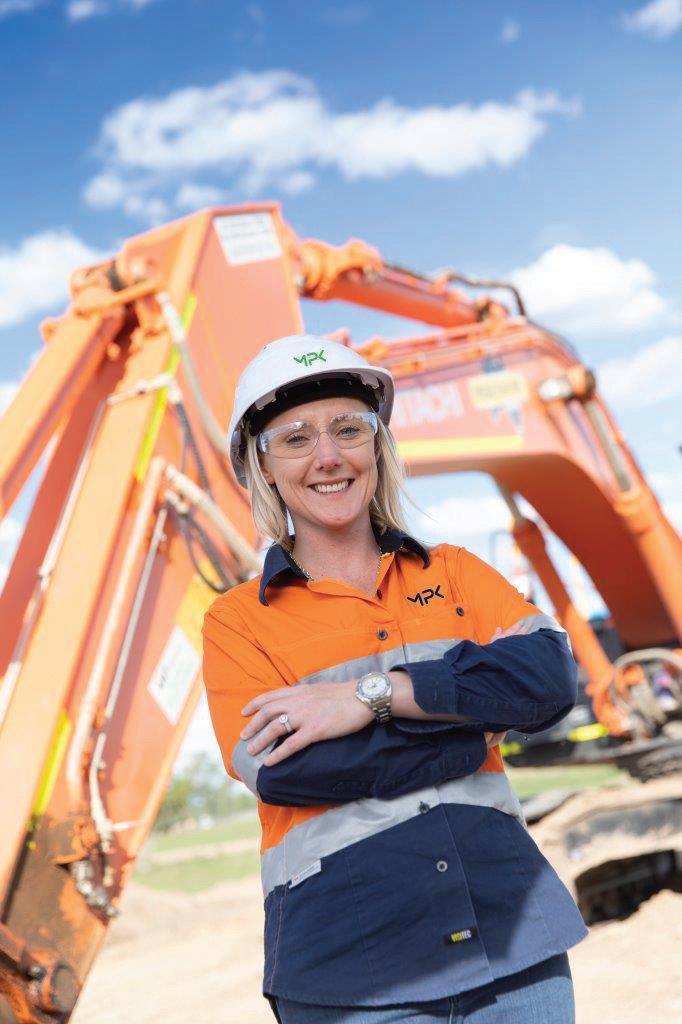
I started my career in 2013 as a Graduate Engineer with MPK and have spent most of my working life on projects across the Surat Basin CSG fields. In this time, I’ve been presented with some great opportunities and have been fortunate enough to have worked with one of the leading LNG pipeline companies in Australia, and also gained an immense amount of knowledge from some of the best likeminded and highly experienced engineers and pipeliners in the industry.
Now, as a Senior Project Engineer, and thanks to the mentorship I’ve received by peers over the years, I’m tackling the day-to-day challenges of running a pipeline construction project. While the elevation through the company ranks has been great, I’m always conscious of ensuring I provide our new graduate engineers with the same support I received when entering the industry. I think it’s important to do that, as over the last few years I’ve witnessed an ever-growing need for engineers and have seen firsthand the integral part they play in making largescale projects successful. What I like about MPK and our industry in general, is our engineers aren’t
pidgeon-holed and are able to become familiar with every stage of the project from design through to handover, which means they can develop a solid understanding of all the works involved in a project. It’s a winning formula and not only makes engineers valuable assets for companies, but also ensures there is a clear pathway for career progression into senior engineering and management roles.
Name: Cameron Holland Role: Supervisor Years in Industry: 17
I’ve spent most of my working life within the oil and gas industry and for the for past seven of those with MPK as a supervisor. I'm a proud Aboriginal man and was recently asked to join an MPK working group of other Aboriginal, Torres Strait Islander and non-indigenous employees to help develop the company’s reconciliation action plan.
It’s been an honour to be part of this reconciliation initiative and play a part in the development of a plan that will guide MPK in its positive engagement with Aboriginal and Torres Strait Islander employees and communities. The main goal of our plan is to increase the level of workforce awareness of Aboriginal and Torres Strait Islander culture and traditions, increase the opportunity for Aboriginal and Torres Strait Islander People to gain employment and training with MPK, and for MPK to increase its use of
30 The Australian Pipeliner | November 2022 PIPELINE PEOPLE
Plant and Maintenance Lead Cathy Carragher.Senior Project Engineer Scott Bourne.
a number of NAIDOC Week events. MPK actively encourages all employees to be involved in these events and to give feedback on reconciliation, so that our planning is better informed and also fully inclusive.
It’s personally important for me that we have positive, two-way relationships built on trust and respect between Aboriginal and Torres Strait Islanders and non-Indigenous Australians, and I look forward to playing my part in helping MPK achieve the positive outcomes it wants to reach as a company.
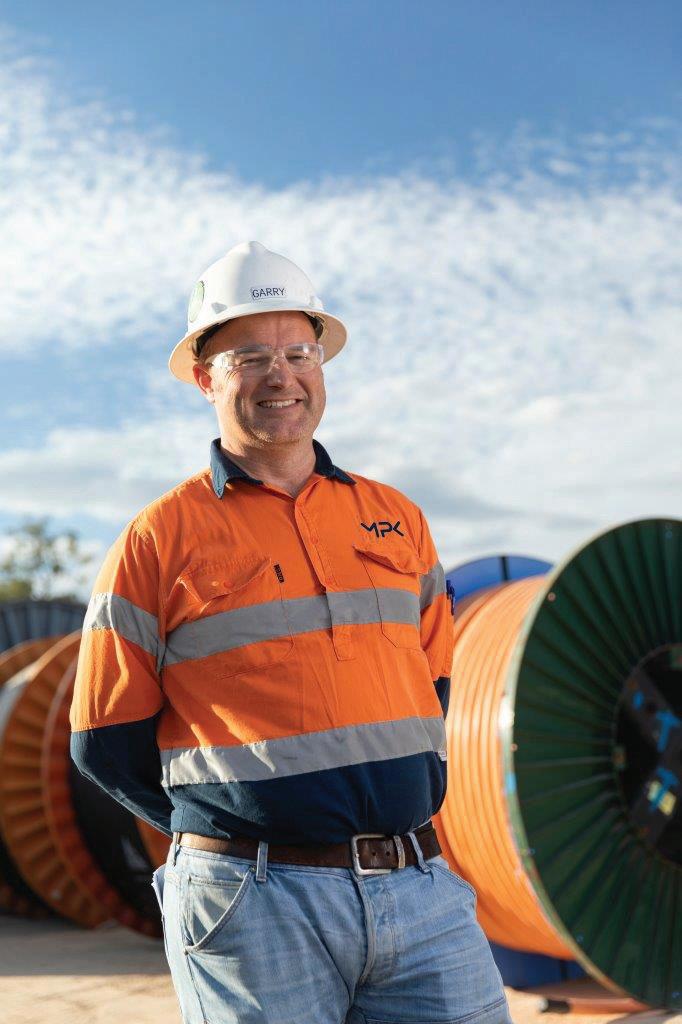
Name: Garry
Muldowney
Role: Electrical Lead Years in Industry: 20 plus
My industry career began in the U.K. before I moved to Australia and joined MPK as an electrician in Chinchilla, right as the coal seam gas sector was taking off. To say it was a contrast to my life back home, would be a massive understatement.
Since starting with MPK, I’ve progressed into the role as Electrical Lead, and now working on sites right across the Surat Basin.
When I look back at the last decade, it’s quite amazing to see the massive progression of the CSG sector in the Surat Basin, but also to see how contractors like MPK have also developed their capacities and capabilities as the CSG sector has grown.
MPK started out as just a pipeline construction company, but even in those early days there was a drive within the company to do more, and as new
opportunities arose, MPK were in a great position to make the most of those opportunities.
One of those key areas of growth for us was in the mechanical and electrical space, and soon after obtaining our electrical contractors’ licence, we were undertaking more complex scopes and working with a much broader client base. To this day, our contract scopes and the skillsets of our ever increasing workforce are broadening too, and does not look like slowing down in the near future.
As a long-term employee, it’s good to see us doing well and winning more work, but importantly, winning new types of work and in new sectors as well, so we can broaden our depth of services and continue to grow as a company into the future.
Name: Bart Robertson Role: HSET Manager Years in Industry: 18
I have spent much of my career in the safety profession, and in that time, I’ve witnessed a lot of changes. But making the move three years ago to work in an organisation that values its people and ensures their skills and abilities are fully utilised is refreshing, and I believe this type of approach delivers positive change.
I know MPK and the wider industry is now moving away from programs that require defined processes, and KPIs that rely on quantity not quality. MPK is now shifting its focus on systems like Step 7, which is heavily geared towards fostering structured conversations and having good communication and culture within a workforce.
Using these types of systems, which have realistic risk management controls, is key to constantly building and maintaining a positive safety culture within the workforce and hopefully the wider CSG industry.
Name: Alan Dunphy Role: Construction Lead Year in Industry: 15
I’ve spent most of my life within the pipeline construction industry and it’s been great to witness the positive changes that have come about over these years across all areas of our operations - from production and quality, to the safety and culture of our employees.
One of the big step changes I’ve noticed over the past few years is the way we’ve moved from the big and very expensive `first gas’ push, where we had massive workforces and big kms of pipe to get into the ground and wells coming online as fast as humanly possible. Moving on from those heady years, our industry is now focusing all of its energy and the skills of its people on working smarter, not harder.
We’re refining the plant, equipment and processes we use, in order to get better outcomes for us and our clients. I think that’s a good place to be in as an industry and makes us far more sustainable for the future. I also see a lot more collaboration within our industry, with companies like MPK now able to work closely with its clients to come up with better ways to do things. When I say better, I mean better ways to do things across every discipline in our industry – not just production, but better for our employees, our host communities and our environment.
As an industry collective, we’re coming up with, and embracing, some very innovative ideas and they’re all coming in from the coal face thanks to developers and companies investing in their people and enabling their R&D to be fully realised. If there was a single thing that has resulted in better retention, it’s having faith in people and their smarts, and giving them the opportunity to develop themselves, ensuring the industry’s future.
31 The Australian Pipeliner | November 2022
From filling sandbags to COO: Taddam Farrant is no longer a new kid on the block
After getting his start in pipelines as a labourer, Taddam Farrant has experienced every stage of the pipeline lifecycle, rising from the tools to the Chief Operating Officer (COO) of one of Asia-Pacific’s
and testing contractors.
Ahard-working pipeline testing firm based in Brisbane, Queensland, Pipe Tek was initially established in 1953 as Tank Calibrators. Known Australia-wide as Pipe Tek since 2015, the company has made a name for itself with its direct approach to safety and its drive toward innovation.
The company offers large scale solutions and project management, delivering its clients the full package. For more than six years, Farrant has acted as Pipe Tek General Manager, before moving into the role of COO alongside his business partner and Pipe Tek’s Managing Director Myles Brannelly.
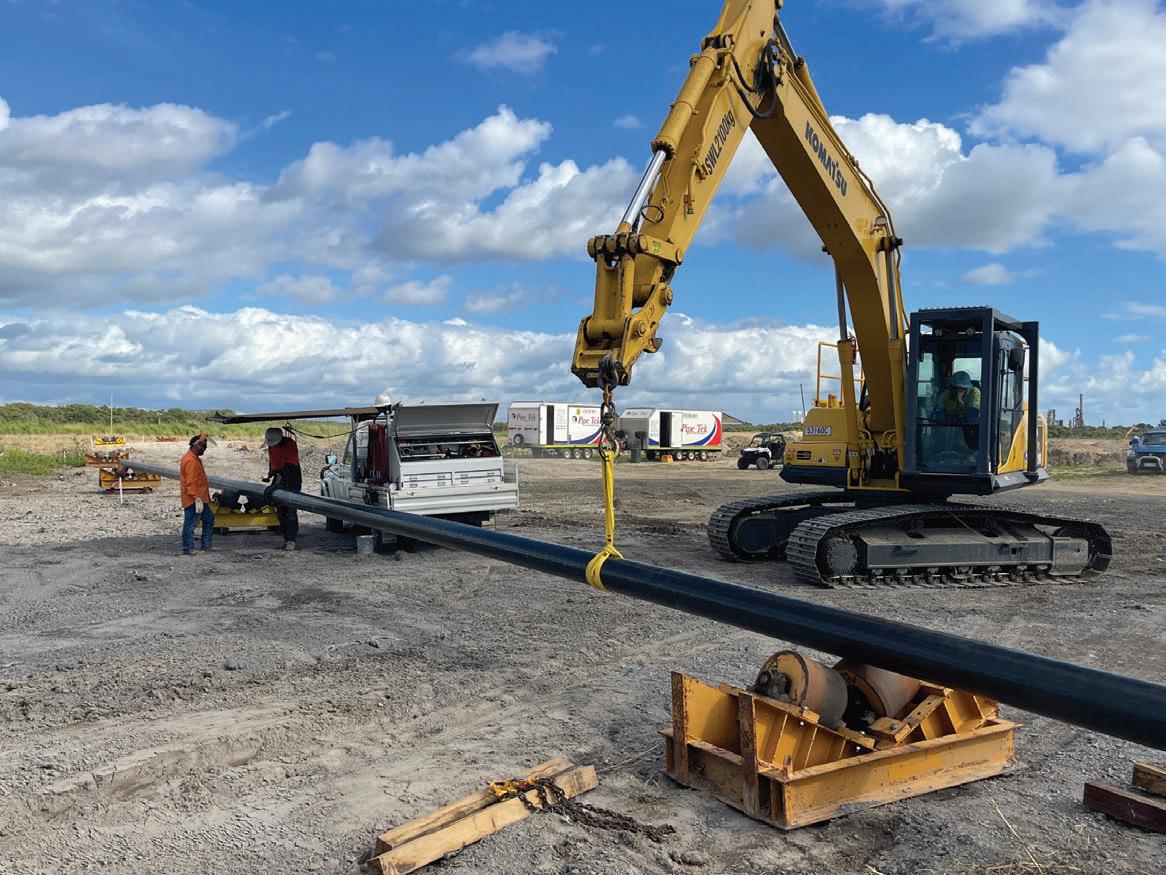
Like many pipeliners, Farrant got his start labouring. His first job was with AJ Lucas, filling sandbags and throwing skids.
“I needed a change from what I was doing at the time,” Farrant tells The Australian Pipeliner
“When the opportunity came up to get started in the industry, I took it. It was the best decision I’ve ever made.”
From there, Farrant’s work ethic led to opportunities working on major projects, including the Eastern Goldfields Pipeline, the Curtis Island QCLNG, stage three of VNIE and extensive work in the Cooper Basin on behalf of oil and gas producer Santos. He delivered a number of varied roles across these projects, including coating, testing and pigging, cleaning, gauging, MFL and UT, as well as acting as a hydrostatic test technician and supervisor.
This experience working alongside major industry stakeholders and asset owners like AJ Lucas, Spiecapag, McConnell Dowell, Nacap, APA Group, Santos, Jemena, Ampol, Chevron, Puma, Shell and UGL gave Farrant the knowledge and experience to step into the role of Pipe Tek General Manager in 2016 after meeting his now business partner, Brannelly, while testing and pigging together.
At the time, Brannelly was working for himself and Farrant for a construction company. It didn’t
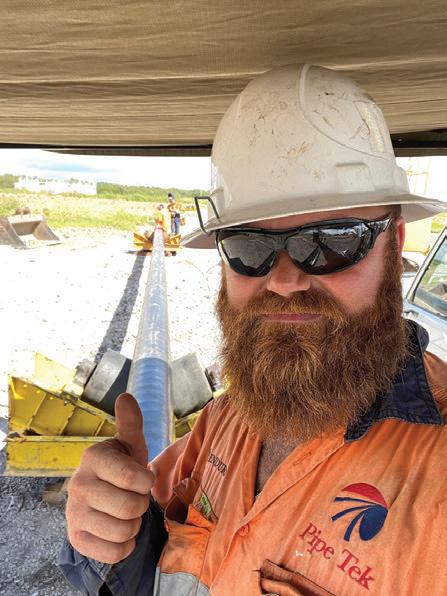
PIPELINE PEOPLE
leading inspection
HDD upgrade 8-inch in Brisbane.
NPPL1 with Ampol – HDD upgrade 8-inch in Brisbane.
take too long before the pair noticed a gap in the industry when it came to testing and commissioning. Backed by their years of culminative experience and a newfound drive, they established a plan to fill that space in the industry – and haven’t looked back since.
In charge of a multitude of crucial responsibilities, Farrant and Brannelly split the main duties of the company. Describing their respective responsibilities, Farrant explains that while Brannelly tends to take on many of the computer and IT related tasks, he prefers to manage things on site. This tends to include organising tools, equipment, the scope of works, the execution of projects and overall resources for a job.
After six years, the two now complement each other like a well-oiled machine, but that’s not to say there hasn’t been challenges along the way.
“Being the new kid on the block was challenging in a lot of ways,” says Farrant.
“While this industry is great, it can be full of places that just do what they’ve always done. Trying to change the way that people think towards a more efficient and effective way of testing, cleaning, and commissioning has been a challenge that through time, hard work and patience we’ve been able to overcome.”
“We have had a lot of support from key industry people to assist us with this. Bringing Enduro Pipeline Services to Australia has been a prime example of this.”
“Enduro were a company we had a keen interest in for a long time before we approached them. We had been doing a lot of research in the different tools available and the technology they can provide. To us it was an easy decision because they have the best tools in the industry, globally, and now we can bring those tools to Australia and the Australian market.”
Conference event in Houston and approach them to become their global partner. Describing the event to The Australian Pipeliner, Farrant admits that the team was nervous; having been working towards solidifying the partnership for several years.
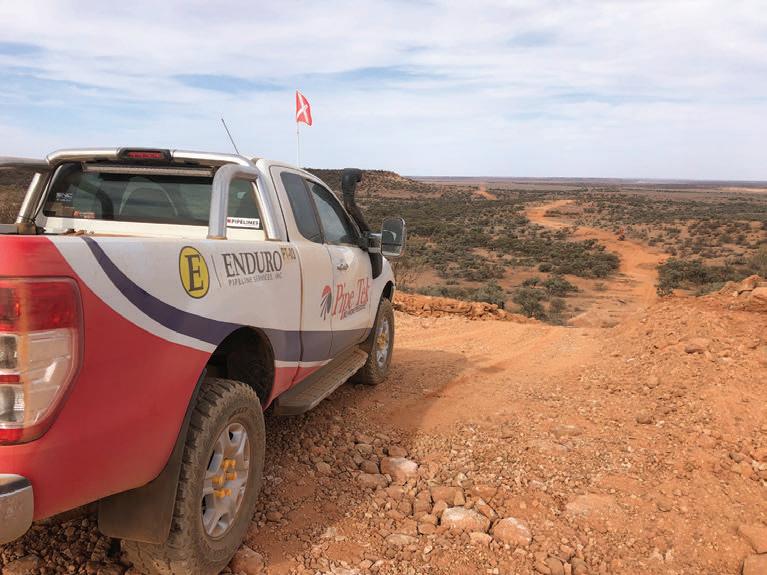
“Their reception was incredible, and they were open to discussing the idea,” Farrant says.
“We’ve been working with them now for four years and look forward to a very exciting future with several things to come in the pipeline.”
Being awarded the Australian Pipelines and Gas Association (APGA) Young Achievement Award in 2021 was yet another moment of recognition that solidified the work he’s put in, not just at Pipe Tek, but in the industry as a whole.
The Young Achievement Award, which was
work and innovative contributions to the industry.
“Being recognised by winning the award felt incredible,” he says.
“To start from filling sandbags to being recognised by all my industry peers for being an integral part of the industry has given me so much to be proud of, and such a sense of achievement. It proves that people can see what we are doing and trying to achieve here at Pipe Tek and the hard work we are completing everyday means something.”
“This industry is incredibly hard to break into and to grow to what we are now from nothing has not been easy on us or our families, and we wouldn’t be here without their support.”
Coming into and rising through the ranks of such a tight-knit and challenging industry has been a daunting task, but over his career Farrant has taken the obstacles to success in his stride. Ensuring that the team around he and Brannelly have always shared the same passion for working and getting jobs done safely, Farrant says helped overcome almost every hurdle he has come across.
Speaking on the importance of getting younger people involved with the industry, he says young people bring a level of enthusiasm and energy to the business that is wholly contagious.
“We’re lucky enough as an industry to have some of the most knowledgeable pipeliners in the world,” he says.
“It’s incredibly important that their experiences and knowledge are passed onto the next generation of young pipeliners to ensure the continued sustenance of the industry into the future. We wouldn’t be here without them.”
www.pipetek.com.au
33 The Australian Pipeliner | November 2022 PIPELINE PEOPLE
the Pipeline Pigging & Integrity Management
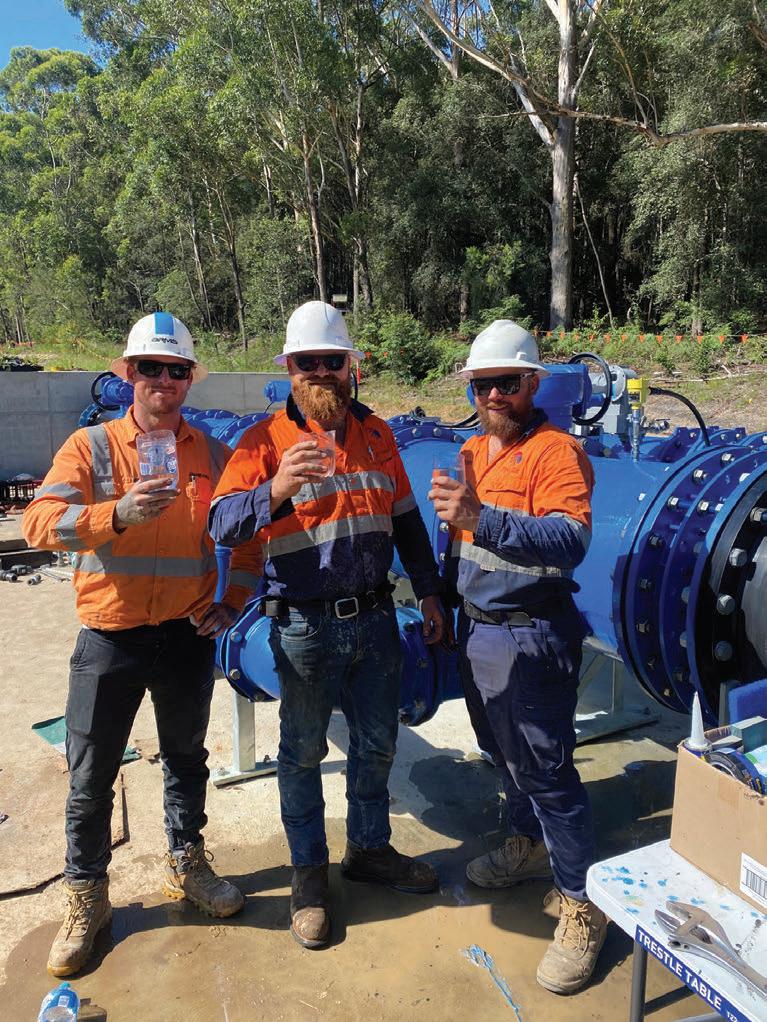
Mardi to Warnervale HDD with Spiecapag – the first lot of drinking water after the pipe was commissioned.
Pipe Tek on 8-inch pipeline for Santos.
Corrosion Control Engineering and the outstanding contribution John Kalis has made to the Australian pipeline industry

As a principal engineer with a degree in chemical engineering, and as an ACA corrosion technologist, John Kalis has over 45 years’ experience in corrosion and cathodic protection engineering, primarily in oil and gas pipelines.
From as early as the 1930’s, cathodic protection (CP) has been widely used around the world to protect buried or immersed steel pipelines from the potentially devastating effects of corrosion. As the pipeline industry developed in Australia throughout the 1960’s, so did the cathodic protection industry.
At the forefront of this movement was John Kalis, one of the true pioneers of the CP industry.
Kalis has dedicated many years of committed service to the pipeline industry. His corrosion engineering expertise has influenced and bettered Australia’s outstanding corrosion related pipeline safety record.
He has been involved in the corrosion industry for over 45 years, beginning his journey as a young graduate chemical engineer with Wilson Walton International in 1977. Following which he joined Corrpro before finally finding his place as Chief Executive Officer (CEO) at Corrosion Control Engineering (CCE). Kalis has been at the helm of CCE and has dedicated himself to the company for the past 20 years.
Nevertheless, the years with Wilson Walton would prove to be crucial in Kalis’ development
as a corrosion engineer, he would gain experience on several large and renown projects such as the Sydney to Moomba and Dampier Bunbury Pipeline.
One of Kalis’ most memorable projects was as a young, city born and bred, 25 year-old engineer in charge of the installation of the impressed current CP systems on the Moomba to Sydney Pipeline. A massive job, Kalis had initially been tapped to perform the initial survey of the pipeline and had not expected to be placed in charge of such a comprehensive and expansive job.
“Initially my task was to survey all the CP sites for the pipeline and perform soil resistivity tests so the company could perform the CP design work,” he says.
At the time, Kalis notes, he wasn’t slated to go out and perform the installation on-site; however, due to issues with team cohesion, Kalis was asked to step up into the role of leader.
“I didn’t think too much about it,” says Kalis. “I probably could’ve let myself be daunted by the size and needs of the project and what we were setting out to do, but I saw it instead as another challenge.”
Kalis had only been with the company for a year and a half by this stage and this was only his first real experience working in the field.
“To this day, being able to deliver such a large project on time and on budget and knowing that the systems have performed well over their life is definitely a highlight of my career.”
It’s clear that Kalis did more than just a good job on the Sydney to Moomba Pipeline project, because a year and a half after the completion of his work on the project he was promoted to the role of manager of Wilson Walton’s New South Wales division.
By the time Wilson Walton International sold to Corpro in 1988, it had become one of the largest corrosion engineering companies in Australia thanks, in part, to Kalis’ nurturing hand. Kalis worked for Corrpro as managing director for a short while, before stepping into the role of CEO for CCE in 2003.
Beginning as a one-man-operation, CCE has become one of Australia’s leading corrosion prevention.
Beginning as a one-man-operation, CCE has become one of Australia’s leading corrosion prevention specialists thanks to Kalis’ guiding hand. In addition to its use of cathodic protection to preserve buried or immersed metallic structures from natural and chemical corrosion processes, CCE also routinely
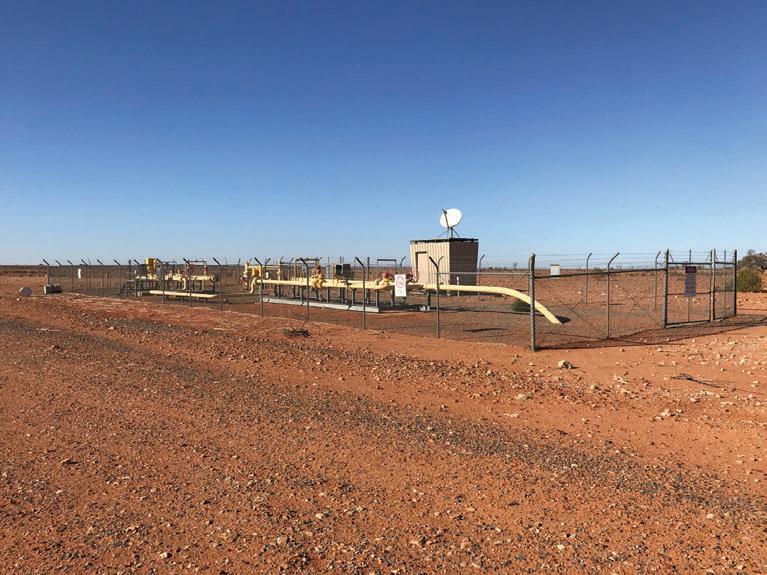
34 The Australian Pipeliner | November 2022 PIPELINE PEOPLE
John Kalis has over 45 years’ experience in corrosion and cathodic protection engineering, primarily in oil and gas pipelines.
undertakes corrosion failure investigations and its regional warehouses stock a wide range of CP and pipeline related products, materials and technical equipment.





In 2003 CCE opened up an office in Victoria and later opened up an office in Queensland in 2005. Just a few years later, in 2010 the company opened up an office in Western Australia shortly before opening an office in New Zealand in 2013.
Speaking on his seemingly magic touch when it comes to establishing innovative corrosion engineering companyies, Kalis attributes that a lot of the success of CCE stems from not only his wholehearted enjoyment of the work he does but also the people and staff he’s been fortunate enough to surround himself with.
“There are people working for CCE that I have known for almost 40 years,” he says.
“Prior to us joing Eptec we had about 100 staff and so I’ve certainly felt a huge responsibility to all my staff ¬– and to their families – to ensure that the company operates as efficiently and successfully to make sure they can feel secure in their place at CCE,” Kalis says.
With CCE having joined Eptec Group, Kalis has taken a step back from his role as CEO but nevertheless continues to work for CCE in the capacity of executive director. With responsibilities now focused on ensuring that both CCE and Eptec can work alongside one another to help further strengthen each other, Kalis is looking forward to the opportunities that are primed to unfold.

“Ultimately what we’re looking to do is to provide a total corrosion mitigation solution to the clients, in which Eptec is able to undertake all the works above ground or above water while we handle all the work below ground and below water,” says Kalis.

While the synergy of CCE and Eptec is a major focus for Kalis throughout the rest of his career, he’s also determined to continue mentoring young, up-and-coming engineers and help point them in the right direction when it comes to strengthening their skills and knowledge.
“I have been fortunate and blessed in my career that I’ve managed to find myself in a profession that I’ve thoroughly enjoyed. It has been

challenging at times, but I can look back and say it has both satisfying and worth it,” says Kalis.
“I think the company has got a really great future ahead of itself, with Jason Paterson stepping into my role as CEO.
“I’ve worked closely with Jason for the past seven years and I’m confident that we’re just going to remain as the dominant company for CP and corrosion mitigation in Australia and continue to grow under his care,” he says.
For more information visit www.cceng.com.au
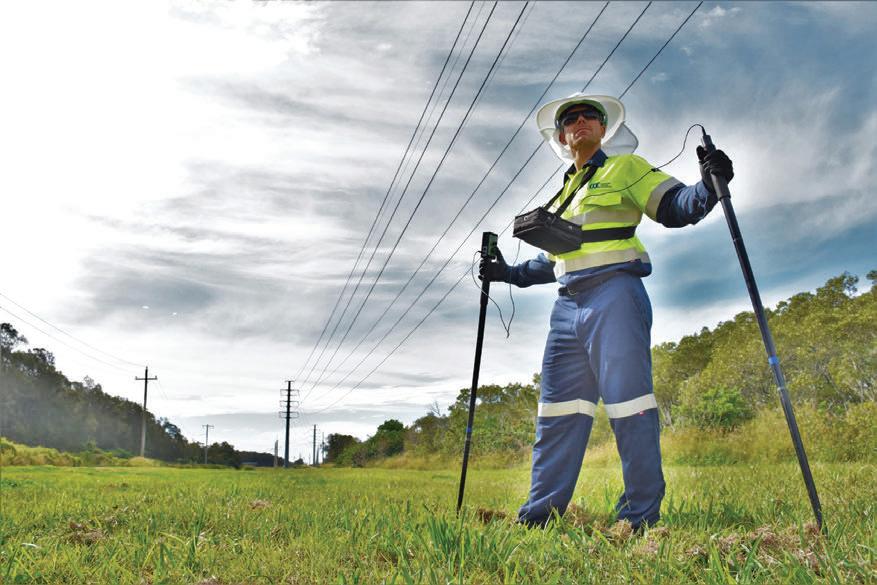
PIPELINE PEOPLE
SUPERIOR INNOVATION +61 0 488 661 985 + sales@wwmach.com + worldwidemachinery.com/SUPERIOR SUPERIOR Manufacturing is a trademark of Worldwide Machinery • Swappable decks to tackle different tasks • Interchangeable u/c (rubber or steel) • One or two crew cabin • Three sizes – up to 13,600 kg capacity Dump Bed Welding Deck Personnel Carrier Rotating Unit Flat Bed Water Tank Sand-blasting Deck, and more!
Cathodic protection has been to protect buried or immersed steel pipelines from the effects of corrosion.
PSSS strives to meet any pipeline needs
When a company is founded with a solid vision for the future, and a real dedication to service for the customer, the sky is the limit.
Without the vision of its founder, John Wilton, Piping Specialty Supply Service (PSSS) would not have moved so seamlessly from strength to strength.
“When John started PSSS, he obviously had quite a vision of where it was going to go. It has grown from strength to strength,” says Hodges.
Entrenched in that vision is the ethos of service to the customer – a drive that sees PSSS providing go-to solutions across the pipeline industry, throughout Australia and abroad.
“PSSS are your go to supplier in sales and hire for all things pipeline service, maintenance, and construction. We pride ourselves on being solution driven,” says Hodges.
Growth and opportunity
It was seeing this same commitment to service in AJP that led to PSSS’s acquisition of the company in July 2022, for the mutual benefit of both.
“In AJP we saw that same commitment to service. That desire to provide sales and service solutions made AJP stand out in the crowd,” says Hodges.
Scott Gibbs, Operations Manager for AJP, finds himself living that same service-based mentality every day.
“My job is to make it a smooth process,” he says. “Get the goods out the door to get them to the customer as quick as possible.
“The ability to increase our level of service and
solutions to both companies through the acquisition of AJP is priceless,” says Hodges. “I couldn’t agree more,” says Gibbs.
“Our goal will be to continue with the ongoing success of AJP, whilst looking for new opportunities to promote growth – such as increasing AJP’s offering and availability of hire equipment,” Hodges says.
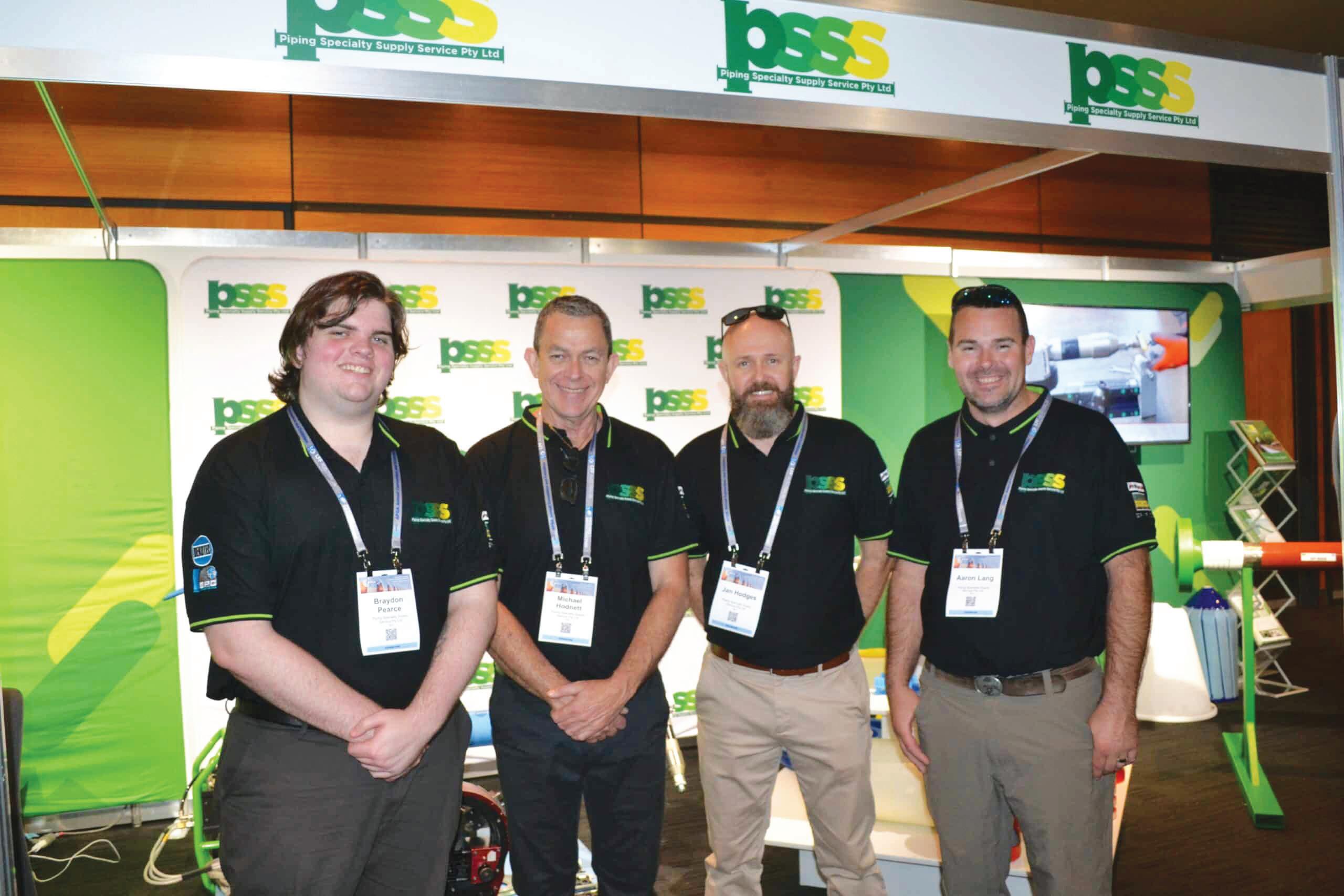
Building a brighter future at home PSSS isn’t interested in growth just for growth’s sake, however. The difficulties that came with trying to import stock and meet the needs of customers during a global pandemic was a challenge that impacted everyone in the industry.
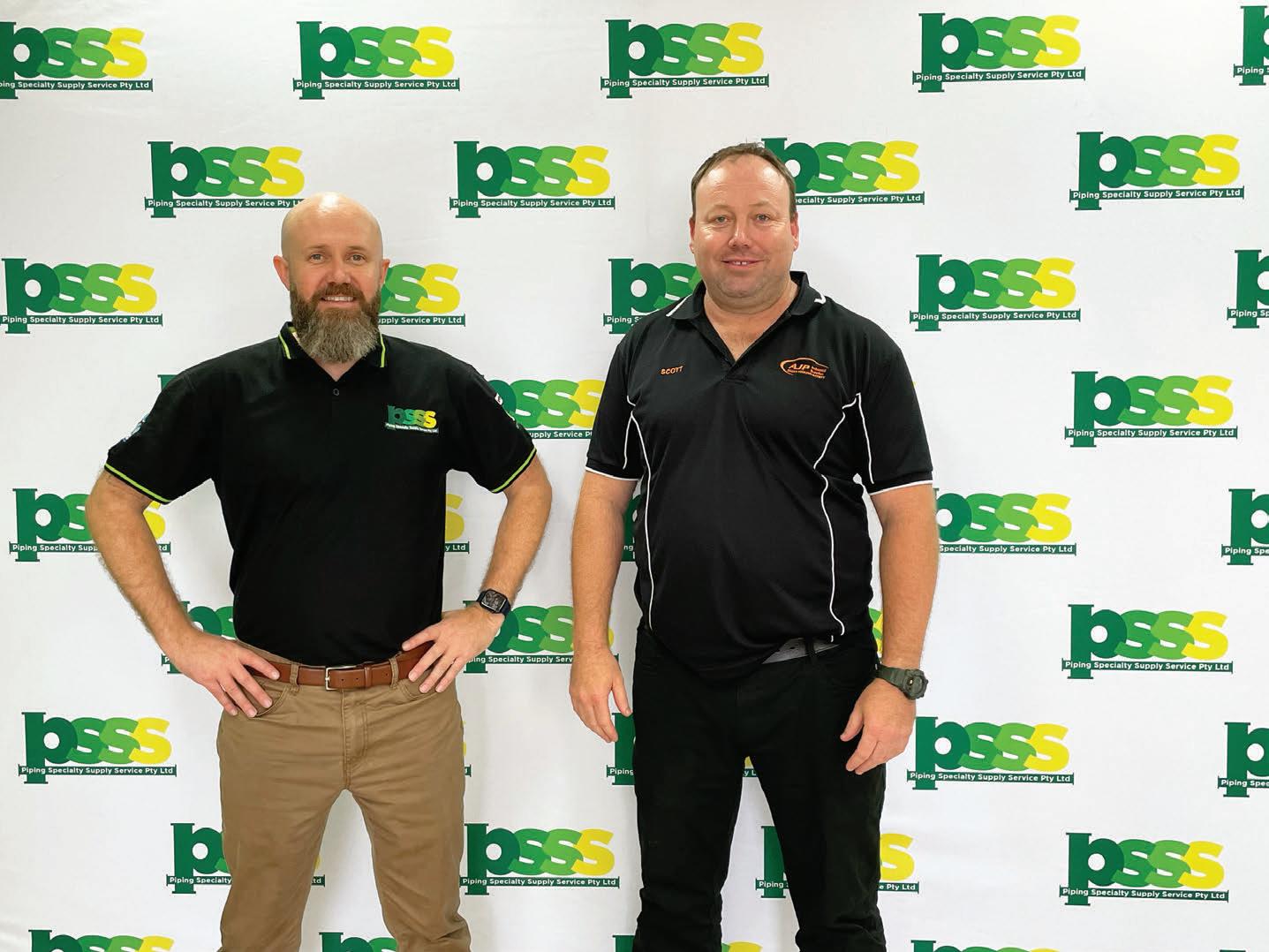
36 PIPELINE PEOPLE The Australian Pipeliner | November 2022
Jan Hodges (left) and Scott Gibbs (right) are united in their goals to provide the best solutions for customers.
“It really brought home our reliance on foreign manufacturing. As a country it has taken this for people to start to realise what’s missing from our own backyard,” says Hodges.
It’s this realisation that has driven PSSS to pursue further operations for the business by setting its sights on manufacturing here in Australia.
First on the agenda is the manufacturing of flange protection, which the company hopes to commence in January 2023. It might seem like a small thing, but Hodges believes that it will be a good way to make a real impact.
“It doesn’t sound like a very big goal,” says Hodges. “It's not that hard to do. Ultimately, My main goal is to be able to supply biodegradable flange protection. That's what we’re working towards.”
Hodges says that it’s not just about manufacturing, but about seeking and promoting partnerships with companies in Australia.
“Aside from our own investments in
manufacturing, we're also trying to promote agreements – exclusivity agreements, in some cases – with other companies that are manufacturing here. We're trying to bring as much back in Australia as we can.”
Recently the company signed an agreement with Royal Oil and Gas, that sees PSSS as the exclusive distributor for Royal’s full range of foam pipeline pigs.
By mitigating the reliance on overseas providers for these products, PSSS can offer customers a huge reduction in lead times. The move also allows PSSS to offer customised foam pigs, tailored to the specific needs of each project as they are needed.
People are key
The growth of PSSS has, of course, led to the hiring and acquisition of further talent. The company has been lucky in its search, with three new staff in the last two and a half months, and an eye towards a handful more in the next few.
“They’re just perfect for their roles. We’re really lucky in that regard,” says Hodges.
What this means is that PSSS now has more minds, all working together with a vision for the future. It grants the business the blessing of multiple perspectives, the opportunity to collaborate and find more ways to grow and meet the ever-changing needs of industry operators.
With AJP on board, Hodges and Gibbs are able to work together on future strategies that will see the operations running in parallel, supporting each other and endeavouring to pursue the service-first backbone of the companies.
“We’ve now got a scenario with more minds sitting around the campfire. When you get more people involved in the discussion, you start to see more opportunities come up. There are more people throwing out ideas. By working together, I believe that both PSSS and AJP are going to continue to grow to new and better heights –watch this space,” Hodges said.
37 PIPELINE PEOPLE The Australian Pipeliner | November 2022
PSSS have been lucky in assembling a strong team.
For more information visit www.psssa.com.au and www.ajpind.com.au
Building a reputation for innovation and responsiveness
Just one year on from establishing a new entity in Australia, pipeline technology specialist STATS Group is looking forward to a bright future after securing a frame agreement with some of the region’s largest tier one operators.
Awider market understanding of the company’s patented BISEP double block and bleed isolation technology has laid the foundations for growth which is being realised in terms of contract wins and formal long-term strategic relationships.
STATS has been engaged on a large variety of
Last year STATS expertise was in demand when the company was commissioned to complete two 12-inch BISEP intervention projects in Darwin, four 14-inch BISEP workscopes in Perth, and in Victoria’s Bass Strait. The company provided a range of hot tapping and remote isolation services on an offshore platform.
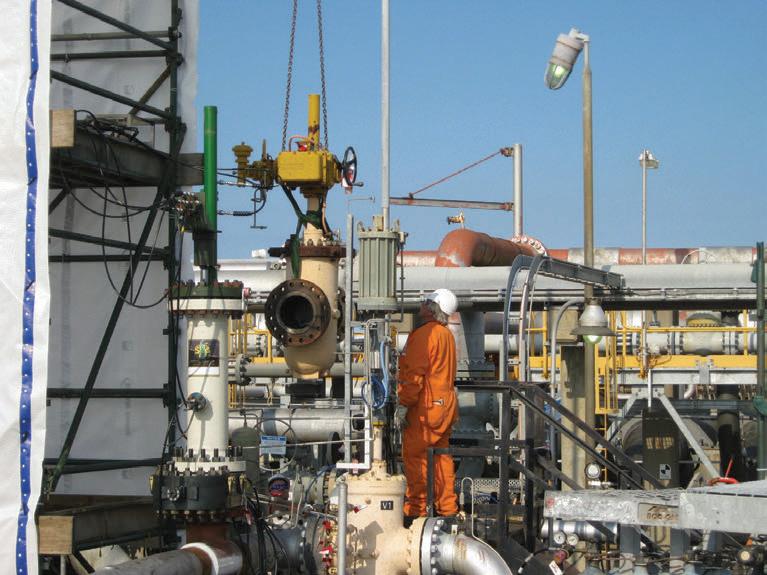
Encouraged by positive client support and multi-billion-dollar investment programs in Australia’s energy and infrastructure sectors by government and private investors, last November STATS announced plans to set up a Perthregistered business which will invest up to $2 million on in-country infrastructure, including workshop and storage capabilities and equipment.
The vision is paying off with increasing numbers of oil and gas operators and contractors opting to commission STATS on pipeline intervention projects and in addition to Santos, frame agreements are in place with a significant number of major gas distribution companies.
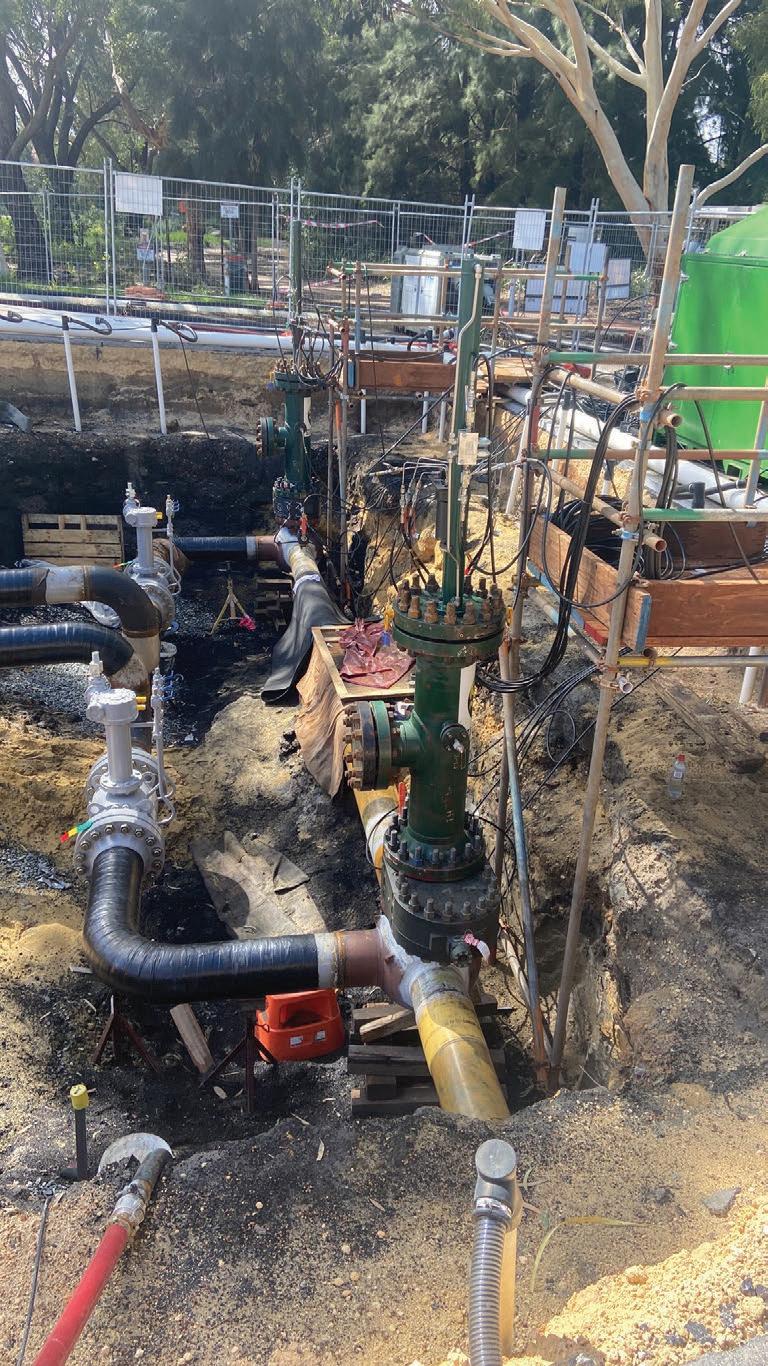
“As one of the youngest players in the Australian pipeline intervention market we focused on demonstrating to clients the advantages of our block and bleed technology versus more traditional products,” says Gareth Campbell, STATS Group’s Regional Manager for Asia Pacific.
“We are finding that once our BISEPs have been used in a shutdown or maintenance scenario, it changes an operators’ perception of how
INTEGRITY & MAINTENANCE
10-inch Dual BISEP isolation in Perth, Australia.
A 10-inch BISEP allows valve replacement at a natural gas plant in Australia.
isolation projects can be executed, and that is reflected in the significant uptick in activity we are currently enjoying.”
STATS' global approach to expanding its geographic presence is to establish a strong local infrastructure with a permanent portfolio of equipment – and personnel – instead of shipping in and out assets as contracts dictate.
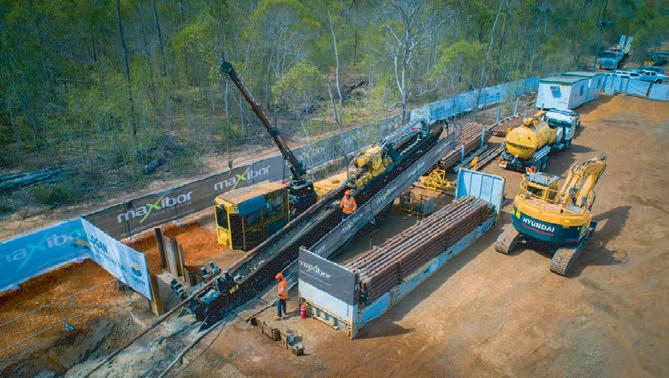
“We are well-placed in terms of the range of equipment we have in-country to service existing contracts and to take on new work, but will continually add to that to mirror expected growth,” says Campbell.
“As part of a well-established international group, we can call on the resource and experience of our colleagues in Kuala Lumpur, Malaysia, and in some cases Abu Dhabi if needed, but selfsufficiency is the objective.
“We are committed to a long-term strategy of increasing our market share in Australia’s pipeline sector, and further capital expenditure in the years ahead and the ongoing recruitment of key personnel, sends out a strong signal that the youngsters have a lot to offer clients and the sector.”
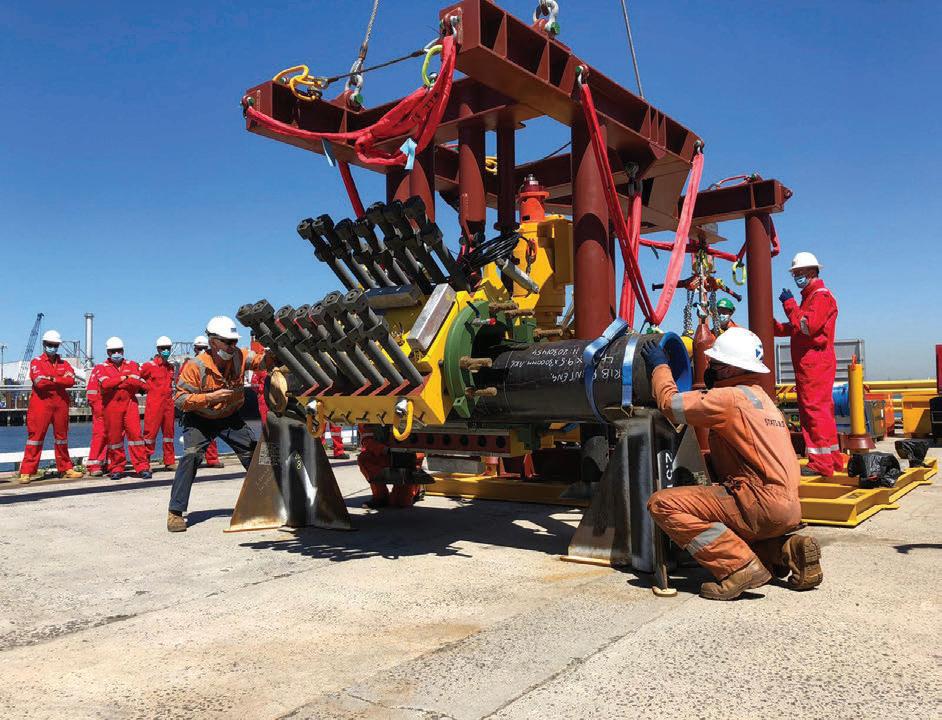
INTEGRITY & MAINTENANCE For more information visit www.statsgroup.com AUSTRALIA’S LEADING HDD SPECIALIST 02 4966 5583 www.maxibor.com.au admin@maxibor.com.au Follow us on LinkedIn, Facebook & Twitter » Quality and collaborative HDD design and construct services » Expertise to advise at the right time in the project delivery cycle » Gas, water and sewer, rail, road, power, telecommunications, mining, residential development, renewables and hydrogen » Maxi-rigs capable of long and wide diameter bores in hard rock and difficult conditions » Building a future we all look forward to Maxibor is using its design and construct expertise to deliver better project outcomes to asset owners and principal contractors alike 39 The
| November 2022
checks of an 18-inch x 12-inch Mechanical Hot Tap
Australian Pipeliner
Pre-deployment
Clamp at Victoria Harbour.






APGA NEWS n APGA Mailing List n Linkedin n Facebook n Website EVENTS CONNECT CONNECT WITH US For all the latest and most up to date on the APGA, the pipelines and gas industry as well as events, convention and other industry news, make sure to connect with us through one of our channels. P: 02 6273 0577 E: APGA@APGA.ORG.AU
Forklifts are the workhorses of almost every industry. Designed to carry, move, and lift loads in warehouses or manufacturing environments, these tools do a variety of heavy tasks that make manufacturing, storage, and shipping possible.
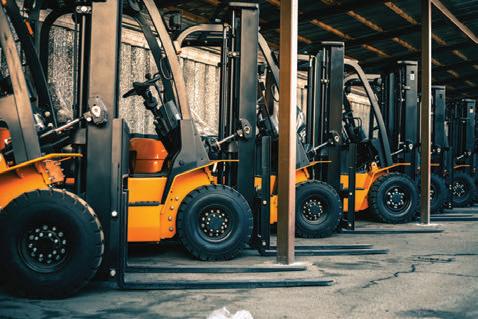
While many forklifts are used in dry, protected environments, others are exposed to salts or harsh chemicals made or used in the production process. With the right tools, a few simple preventative maintenance steps can extend equipment service life and save on costly forklift replacements.
Passivate existing rust
The first step is to passivate existing forklift corrosion. Peeling paint and underlying loose rust should be brushed off and the surface primed with Cortec® CorrVerter® Rust Converter Primer. CorrVerter is a fast-drying, water-based, one-coat system. By utilising a unique formulation of chelating agents, combined with a high solids waterborne latex with extremely low water vapor permeability, CorrVerter is able to convert rusted surfaces to a hydrophobic passive layer that prevents further rusting.
Apply protective coatings
Once existing rust has been passivated, the next step is to apply an anticorrosion coating. Savcor recommends that products such as EcoShield® VpCI®-386 or VpCI®-391 be directly over
the painted surfaces.
EcoShield VpCI-386 is a fast drying, waterbased acrylic topcoat that provides excellent multimetal protection. It can be applied clear but can also be tinted to match most custom colours.
VpCI-391 is a water-based removable coating that dries to a thin, clear, non-tacky film. It has achieved good results when used for annual maintenance on front-end loaders that are used for transporting high-corrosion materials such as fertilisers or deicing salts.
Unpaintable, moving metal parts may be protected with VpCI-369. This is an oil-based, wet-film, corrosion inhibiting temporary coating/ lubricant.
Protect electricals
Last, but not least, electricals should be protected as corrosion to these parts can result in failures and expensive replacements.
Protection can be as simple as spraying exposed electrical connections with ElectriCorr VpCI-239. In addition, or as an alternative, a small VpCI Emitter will emit protective vapor phase corrosion inhibitors and can be placed in an electrical enclosure as another protective measure.
A little preventative maintenance goes a long way
While these products only need to be applied once every year or two to be effective, a quick inspection
during regular monthly maintenance checks is the best practice. Regular checks allow operators to catch any areas that may require reapplication.
In the end, a good forklift maintenance procedure, with the right tools, goes a long way toward helping equipment last longer and keeps costs down to a small monthly or annual investment, rather than a large replacement or repair fee.
Contact Savcor Products to discuss preventative maintenance for forklifts today.
These products are available through Savcor Products Australia Pty Ltd in Australia and New Zealand. For more information please contact your local Savcor Products Australia representative on 1800 SAVCOR or visit www. savcorproducts.com.au
41 The Australian Pipeliner | November 2022
REHAB & REPAIR For more information visit www.savcorproducts.com.au
Products helps customers avoid costly corrosion failures Savcor Products knows that maintenance and protection are essential in protecting key assets in the industrial industry. The company has high-quality, proven solutions that will keep customers equipment running smoothly. Products for the Pipeline Industry www savcorproducts.com.au Call: 1800 SAVCOR Cortec VpCI Preservation Materials Sacrificial anodes (Zn, Mg, Al) Corrosometer resistance probes Gypsum bentonite backfill Dehn & Sohne IEC Certified Spark Gap Arresters Pipeline pigs and equipment including: Foam, Poly Coated & Wire Brush Pigs Monolithic Insulating J oints Hot T apping Equipment Wachs Pipe Cutting and Beveling Pipe Seals, Pipe Clamps, Leak Repair APS Casing Spacers Impress ed Curr ent & Sac rificial Anodes Cathodic Protecti on Materials: Pipeline Fittings & Equipment: Melbourne Sydney Brisbane Perth T: 03 9764 2651 T: 02 9807 4542 T: 07 5549 2248 T: 08 6240 3900 E: melbourne@sav cor.com.auE: sydney@savcor.com.au E: brisbane@sav cor.com.au E: perth@savcor.com.au Trusted Supplier of Cathodic Protection & Prevention materials in Australia. Surge Protectors Borin Permanent & Portable electrodes Loresco Coke Backfill APS Flange Insulation Kits Radolid Nuts Protectors COMMI T TEES EVENTS CONNECT EcoShield® VpCI®-386 is a fast drying, water-based acrylic topcoat that can be tinted to colour-match.
Savcor
The ongoing journey of composite repairs for pipelines, process piping, tank and vessel repairs
For more than a century carbon steel has been the standard material for pipelines and piping systems. Over that time, countless new discoveries, techniques, and improvements have been made. New pipelines laid today share almost nothing in common with their ancestors beyond their cylindrical shape.
With that in mind, let’s consider the recent advances in composite repair materials and technologies for these same pipelines.
A composite repair is a combination of resins and fabrics applied over a damaged pipe area to restore any lost strength and help minimize or prevent future damage.
Often these resins consist of epoxy, polyurethane, or vinyl esters, but can contain more unique resins based on thermal or environmental needs. These combinations of fabric and resin are then applied over a damaged section of pipe.
pipes to full service with the correct engineering, testing, and application. The specific benefits of using a composite repair include being a lightweight, cost-effective, durable, safe, and expedient repair, to name a few.
The first composite repair system created and used in pipeline repair was the Clock Spring® system, which is still available today. Using a pre-cured composite with unidirectional fabric support oriented in the hoop direction, the Clock Spring system was thoroughly tested for wall loss features and dents.
Some more innovative uses have seen Clock Spring technology used as casing spacers and crack arrestors for the construction of new pipelines.
One of the more forward-thinking test programs demonstrated the longevity of a Clock Spring. The manufacturer of the technology, CSNRI, was able to obtain an inservice Clock Spring on a section of pipe that was installed in 1995 and recently removed from service intact.
With a 25-year-old sample on hand, end caps were welded on the 24-inch diameter spool and pressurised. With the worst defect identified on the pipe as a 12 inch long, 63 per cent deep defect, any significant weakening of the Clock Spring could result in a failure within the repair zone.
After several pressure increases and fiveminute holds, the pipe burst outside of the repair zone at 2180 psi (150.3 bar) which was more than three times the maximum allowable operating pressure (MAOP) of this pipe. Using these test results alongside an engineering analysis on a per-defect basis, CSNRI demonstrated this repair method can last over 50 years in most conditions under continuous use.
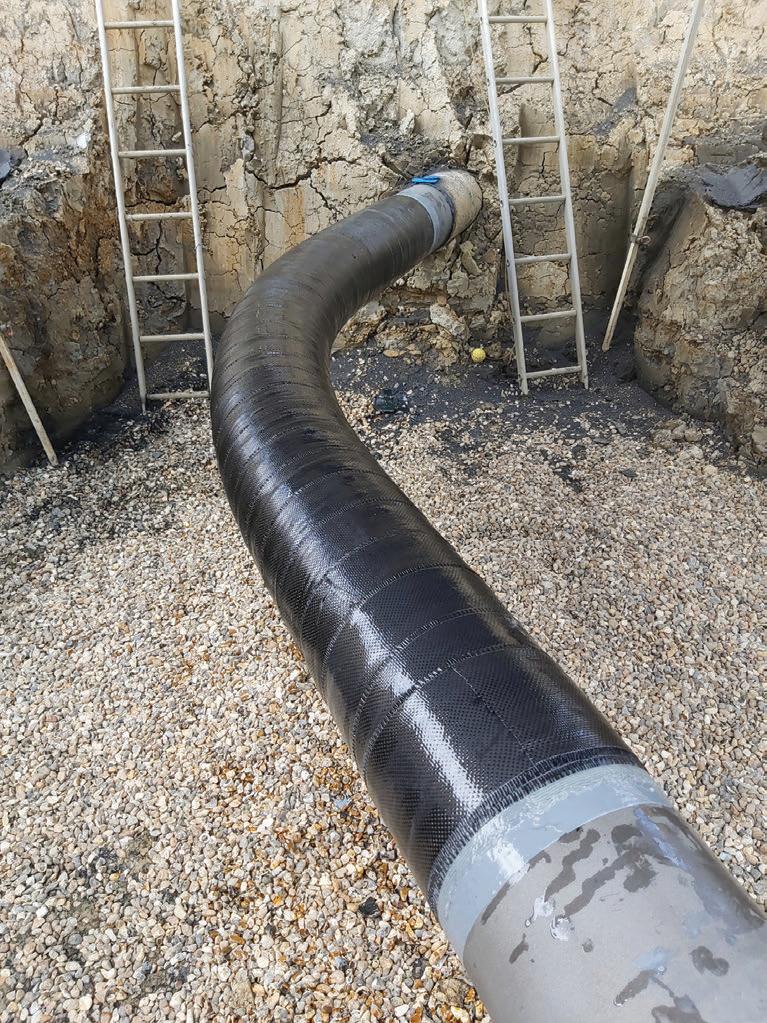
It’s probably safe to say there are likely very few other repair systems with this type of realworld data to reference. The use of composite repairs, Clock Spring or otherwise, has become a commonly accepted repair technique for corrosion and dents, but this article isn’t about origins; it’s about advancements and changes.
Improvements in the engineering capability
42 The Australian Pipeliner | November 2022
REHAB & REPAIR
Composite repair systems are arguably one of the most versatile and robust solutions for pipeline rehabilitation and repair; however, its capabilities don’t stop there. PipeServ Director Geoff Gardiner summarises the history of the technology, its varied uses and previews how it could develop in the future.
Atlas applied to a pipeline bend.
behind composite repairs are not the only thing pushing the composite repair industry forward. Sometimes, it takes thinking outside of the box, or in this case, from outside of the pipe.
The CSNRI ThermoWrap family of products highlights the diverse capability of composites. The ThermoWrap family contains four different products but uses the same fabric to serve the purpose of wall loss reinforcement and leak containment.
All four systems excel at leak containment under an array of temperature conditions and enable long-term solutions. ThermoWrap and ThermoWrap MT provide an ambient cure resin with exceedingly good chemical resistance for services to 156°C. ThermoWrap HT and ThermoWrap 500 can be used up to 220°C and 260°C, but these require heat to cure properly.
AtlasTM is a high-modulus, bi-directional carbon fibre and epoxy system applied to pipelines and piping systems found with corrosion or third-party damage. One of the
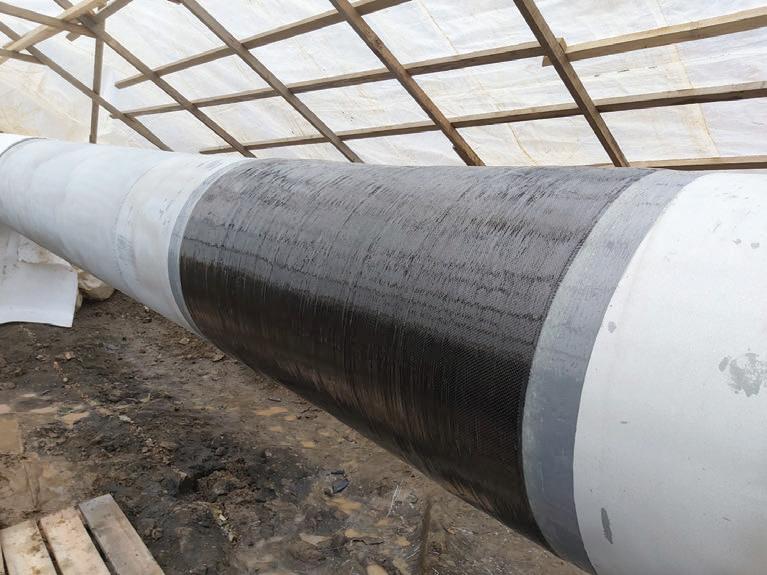
most significant changes that have occurred in the use of composite material, has seen CSNRI’s Atlas repair system used on longitudinal crack or crack-like features, including seam-weld anomalies.
Starting in 2015, the Atlas repair system has been involved in three joint industry programs and nearly a dozen client-specific test programs. Most of the testing performed to date has been on seam weld defects or linear indications in the body of the pipe; however, additional testing is taking place looking at stress corrosion cracking (SCC) as well as girth weld reinforcement.
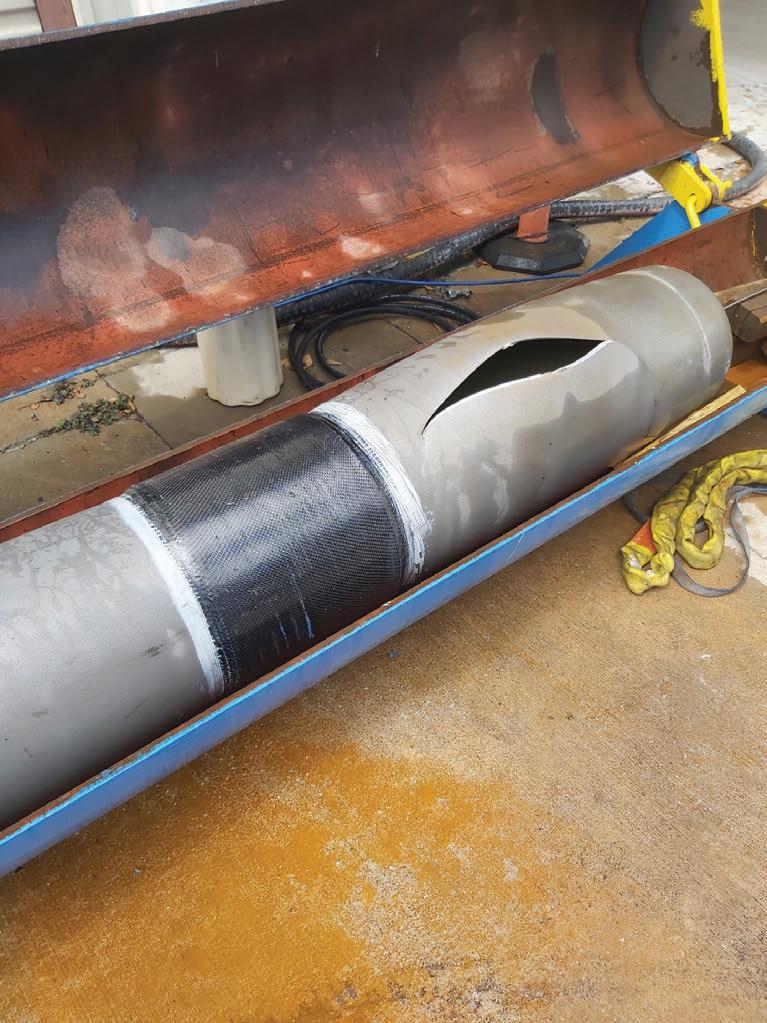
With testing in burst and extensive cyclic fatigue testing – across hundreds of repair samples – the Atlas repair system is now successfully repairing defects previously thought unrepairable by composites only ten years ago.
By continuously exploring and testing with new fabrics, new resins, and new engineering methodologies, we are just scratching the surface for the capabilities of composite repair systems. Composites truly are a durable, economical, and highly customisable solution. With just a few examples discussed here, the diversity of composite solutions used in solving today’s integrity issues has already been demonstrated. There are still significant advancements to be made before the limits of composite repair technologies are found. But PipeServ can already state, with confidence, that a composite repair is not ‘just’ a composite repair; it can be so much more in the right hands.
www.pipeserv.com
43 The Australian Pipeliner | November 2022 REHAB & REPAIR
Atlas is the most tested carbon fibre composite solution for permanent pipeline repair and rehabilitation.
The Atlas repair system is now successfully repairing defects previously thought unrepairable by composites.
Delivering enhanced mobility and productivity in a progressing world
When it comes to executing pipeline installation jobs, there’s no time to think about anything but the task at hand. Every second counts – something Vermeer understands, with its next generation D550 horizontal directional drill (HDD) and R600T reclaimer built to deliver mobility, productivity, efficiency and optimal performance.
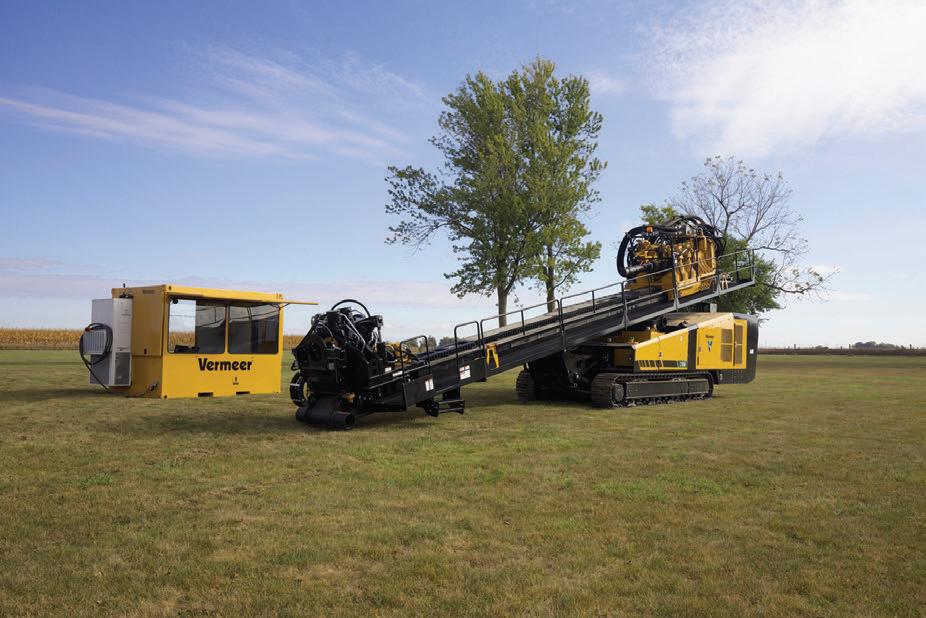
Streamlined productivity with the D550 HDD
The design of a directional drill should enable quick site preparation, and Vermeer’s
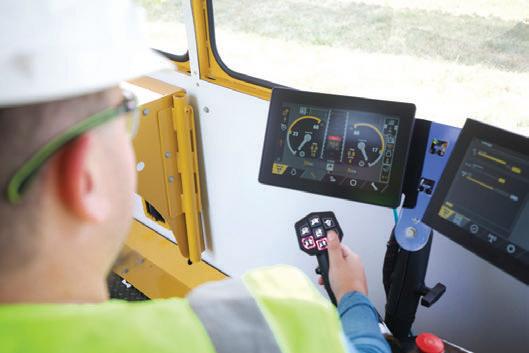
D550 drill does just that – minimising the number of truckloads and additional equipment to the project and making set up quick.
The track mounted D550 drill is selfcontained, removing the need for a trailered rig and, weighing in at less than 46,000 kg, is light for its size and capability.
Project time on sites with challenging ground conditions can also be decreased when using the D550 with its class-leading 135,581.8 Nm of rotational torque, 600hp CAT C18 engine and 550,000lb of thrust/pullback – a tremendous amount for its size.
This allows the reamer to be sized up quicker and minimises reamer passes before it's time to swab the hole and pull back. Productivity is further enhanced with its 10.2 cm fluid course
through the head-shaft and mud swivel, allowing up to 1000 gallons per minute (GPM) of fluid to be pumped downhole while maintaining low pressure.
With more projects required to stick to strict sound limits in residential and urban environments, the D550’s 111 dB(A) sound power helps maintain a quiet jobsite environment and, in some instances, eliminates the need to erect sound barriers.
The D550 also allows for flexible product handling – its enclosed three-cylinder vise can be positioned close to the carriage for optimal casing handling or moved up and down the rack as needed when making/breaking tooling connections. It has an impressive carriage speed of up to 100ft/min, meaning cycle times are reduced
BORE WIDTHS TO 1000MM. THRUST TO 1.36M LBS.
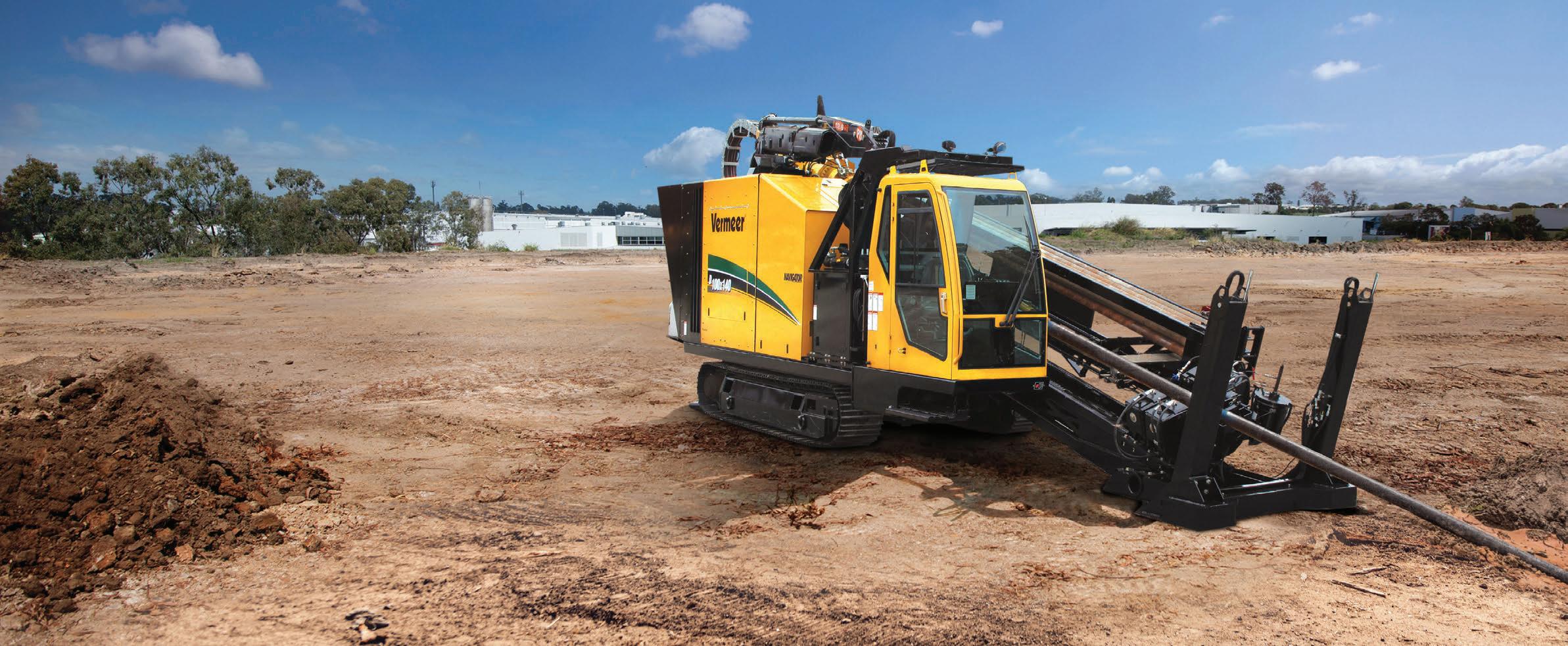
With loads of power, Vermeer HDD drills give you the bore diameters and lengths you need for the large jobs. And, with intuitive, common control systems across the range, operators can easily switch between models. Rugged and precise, they’re Australia’s #1 choice in trenchless.
Talk to the leader in HDD today on 1300 VERMEER.
PIPELINE CONSTRUCTION
The drill operator sits in a soundinsulated and comfortable climatecontrolled cabin with plenty of room.
and more time can be spent drilling.
Tooling life is maximised with the drill’s hydraulic transmission providing peak torque at high rotation speeds (during reaming) while maintaining low system pressures, as well as allowing the operator to slow down the drill speed for precise thrust control and weight-to-bit pressure regulation for optimal cutting action and infinite thrust rotation – compared to previous Vermeer models and other HDD machines on the market.
The drill operator sits in a sound-insulated and comfortable climate-controlled cabin with plenty of room. It is equipped with dual joysticks with touch buttons to control drill functions and has three different auto-directional drilling modes –rotation, thrust and speed. It also comes with a
touchscreen that displays all drilling parameters and important diagnostic information from onboard telematics which makes serviceability quick and easy as issues can be troubleshooted as soon as they arise.
R600T: innovative mobility and fluid management
The R600T is an innovative 600GPM mud recycling system that can pair with maxi rigs pumping between 300-600GPM. It has a total fluid capacity of 7729 GL and can process 1100 GL of drilling slurry, for a true cleaning capacity suited for large-scale HDD projects in the 2271 L/ min range.
It has great efficiency, having been designed with two 25.4 cm desanders and 12.7 cm desilters which
removes sand and coarse silts prior to the next stage in the cleaning process, resulting in dry solids.
Furthermore, its engineered manifold provides an efficient flow of processed drilling fluid exiting the hydrocyclone, which helps reduce turbulence or excessive vacuum – for efficient separation of sands and coarse silts.
Having the right equipment and support
Vermeer strives to deliver real impact in a progressing world through the manufacture of high-quality equipment, and the D550 HDD and R600T are no exception to this.
Drillers demand reliability in equipment and after-sales support with service and spare parts.
Vermeer Australia, throughout the RDO Equipment network, has 29 dealership locations with over 150 service technicians and spare parts stock, ensuring they’re never too far away from the customer's site when needed.
For more information on Vermeer products and services, call 1300 VERMEER or visit www.vermeeraustralia.com.au
PIPELINE CONSTRUCTION
Vermeer's next generation D550 horizontal directional drill.
Optimising value on HDD maxi-rig projects
One of Australia's leading horizontal directional drilling (HDD) design and construction providers, Maxibor Australia, provides insights for asset owners, principal contractors, design engineers and project advisors on how to maximise value on infrastructure projects requiring a HDD maxi-rig spread solution.
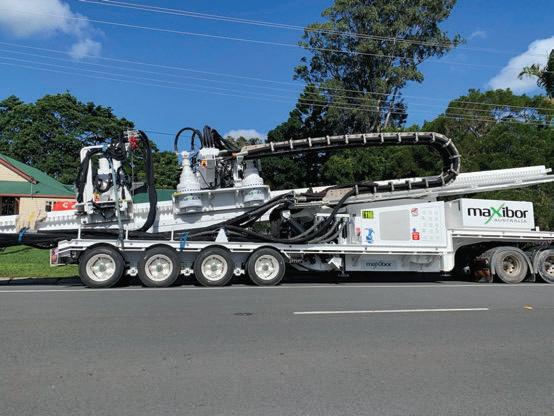
Maxibor is an independent, Australianowned horizontal directional drilling (HDD) design and construct company with operational bases in Queensland and New South Wales that service projects across Australia. Maxibor provides its HDD services across the water, sewer, rail, power, gas, telecommunications, mining, defence, fuel, sea cable, data centre, hydrogen and renewables sectors. It has one of the largest HDD fleets in Australia, including maxi-rigs, midi-rigs, rock rigs and smaller rigs with capacity to complete pipeline bores in length from 20 m to 3 km and with diameters from 63 mm up to 1.6 m. It is also the proud owner of four of the most powerful pumps in the HDD sector.
Maxi-rigs are defined as those HDD rigs required for the installation of pipelines in diameter between 400 mm (16 inches) and 1200 mm (48 inches), rated for more than 45,359 kg (100,000 lb) of thrust and greater than 9072 kg (20,000 lb) of torque. Maxibor has four maxi-rigs – a Vermeer 330x500, American Auger 660, Gallagher 600 and Gallagher 660e, as well as an extended Vermeer 100x120 which is capable of using the longer 9.1 m drill rods used by maxirigs.
The maxi-rig spread is a significant investment as it comprises much more than just the rig. Drill fluid cleaners, high volume pump(s), mud mixer, vacuum truck, rods and tooling and excavators to manage the pipe and rods all add to the on-site cost of the spread even before a rod is turned. The purchase cost of a new spread today would not
leave much change from $9 million.
Rodney O’Meley, Maxibor’s owner and HDD drilling expert, has been involved in the HDD sector across four decades. This has built up an exceptional level of practical HDD knowledge to facilitate Maxibor’s successful delivering of many projects across Australia. O’Meley lives and breathes HDD and is passionate about furthering the development of HDD in Australia.
Maxibor’s design and engineering activities are headed up by Stephen Loneragan, who has similarly lived and breathed HDD design and engineering in Australia and overseas since the early 1990s. He is one of Australia’s original HDD design engineers and leads with experience in complex multidisciplinary global HDD projects.
Aided by the other experienced HDD people within Maxibor and the capabilities of its equipment, this creates an HDD knowledge and delivery powerhouse which can significantly benefit project stakeholders. Maxibor’s cooperative, knowledge sharing approaches is assisting the wider HDD industry and infrastructure sector better appreciate where HDD can add value to their projects for the benefit of all stakeholders.
Project stakeholders have the common objectives of delivering projects safely, on time and within budget. They also have the objective of achieving value for money. “Maxibor brings the opportunity for project stakeholders to optimise value on projects at design, engineering and construct level though its integrated knowledge across all HDD processes,” O’Meley
Design and engineering
Having the knowledge of what is possible to be constructed is vital in providing the optimal design for a project. The extensive design expertise within Maxibor, gained from designing and delivering larger HDD projects across the globe, enables significant value to be added to Australian projects where HDD is a suitable solution. The company’s expertise means that design and engineering participants can confidently put forward solutions which other HDD designers may not even consider. Being human, designers without firsthand experience of what is possible may not have the instincts to put
forward designs that they are not familiar with.
Designers with the larger HDD project experience will be much more comfortable in this space, particularly as, is with the case at Maxibor, they are also intimately familiar with the equipment and people who will be undertaking the delivery.
“Because of its holistic HDD skills mix, Maxibor is increasingly being approached by asset owners and project advisors, in both the private and public sectors, to provide early design advice into key infrastructure projects that require the installation of pipelines. This allows design and engineering innovation to help solve complex project challenges and to have constructable projects on the table from an early stage of the project lifecycle. Clients are finding that a much more informed decisionmaking process, and significant value, is added by this holistically informed collaborative knowledge sharing process,” says O’Meley.
Ground investigation
“The importance of having sufficient geological investigation data to make informed design and construction decisions is important on all HDD projects. It is however even more important on larger HDD projects, as it’s more difficult to address unexpected challenges on longer and deeper bores,” says O’Meley.
Having good data on and experience around the expected ground conditions enables better decision-making on a range of aspects of an HDD project. These can include the selection of the bore path, the rig, pumps, cleaning systems, tooling, drill fluid management, waste disposal and whether steel casing is required for unstable sections of the bore hole.
The value of selecting the right HDD provider is even more important when a HDD project presents the challenge of unexpected ground conditions. HDD drillers who understand what they are encountering along the bore path are able to respond in the most effective manner, thereby minimising the impact on production and, ultimately, time and cost for the project.
Construction
The cost of the HDD projects – excluding the cost of pipe – is predominantly driven by labour and plant.

46 The Australian Pipeliner | November 2022 PIPELINE CONSTRUCTION
Maxibor's Gallagher 600 maxi-rig – the Iceman.
Accordingly, labour skill and productivity are the most important elements in managing project costs. HDD providers with experienced HDD drillers and construction teams can reflect their productivity in the pricing for projects as they know that they can achieve more metres per day on average.
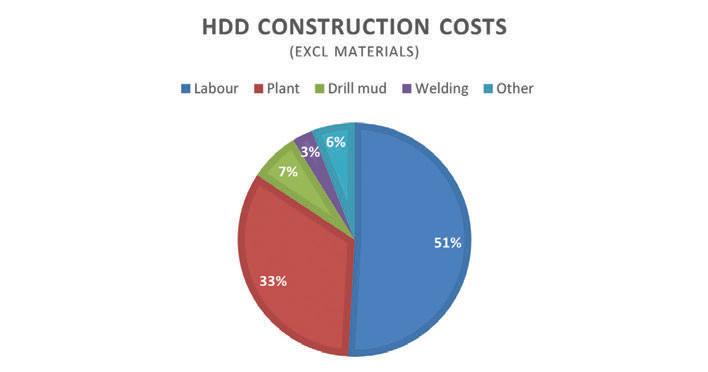
Prerequisites for on-site labour productivity include:
• HDD site supervisors who understand the full HDD operational activities so that they can proactively manage activities to achieve optimal productivity.
• Skilled personnel in key positions, including drill operators and drill mud technicians.
• Staff with a passion for HDD – they want to be working on HDD projects.
• Daily operating hours at a minimum 10 hours with overtime and allowances built into agreed award, or above rates, so that longer days are appreciated by staff and don’t result in unbudgeted costs.
• A culture of safety within the HDD provider, from labourers through to owner and
management, with practical and respected HSEQ oversight and education.
• Good working relationships and communications with the asset owner and/or principal contractor which allows issues to be effectively managed and resolved without impacting productivity.
Having the right HDD plant and tooling on a project is as equally important. Plant operating at full capacity during the project will be achieved by:
• Drill rigs and tooling suitable for the geological conditions and bore length and diameter.
• Equipment with all servicing and maintenance up to date.
• Pre-start checklists and functions properly completed by experienced personnel.
• Ready access to reliable and skilled mechanical, electrical and hydraulic support.
• Spares of critical components either available on site, with ready access at depot, or in arrangements with suppliers.
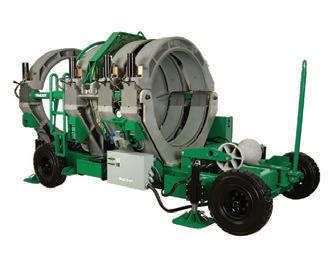
• Back up critical plant equipment, especially
Source: Maxibor five year cost data.
rigs, pumps and cleaners to accelerate production or cover in event of major breakdowns.
In summary, project stakeholders will maximise value on maxi-rig HDD projects where they proactively engage with HDD design and construct providers who can be involved across the full project lifecycle.
For more help and assistance on the design and delivery of HDD projects, contact the Maxibor team at www.maxibor.com.au
Productive
helps you be more efficient on the job. McElroy’s line of fusion machines and accessories has been trusted on the jobsite for over fifty years for that very reason. Finish your job in less time, with the confidence and data that it’s done correctly.
PIPELINE CONSTRUCTION
© 2022 McElroy Manufacturing, Inc. MMI block and MegaMc are registered trademarks of McElroy Manufacturing, Inc. All rights reserved.
equipment MegaMc® 1600
McElroy Manufacturing’s latest and greatest is here: the Tritan™ 560
As pipe fusion standards and methods continue to evolve, McElroy® presents the latest in its line of rugged, industry-leading equipment.
The Tritan™ 560 is the newest member of the McElroy lineup. It combines features of three of McElroy’s most innovative machines: the rugged portability and technology of the TracStar® iSeries, pipe loading capabilities of the Talon™ 2000, and the ability to meet the pipe where it lays, found in the Acrobat™ QuikFit® carriages.
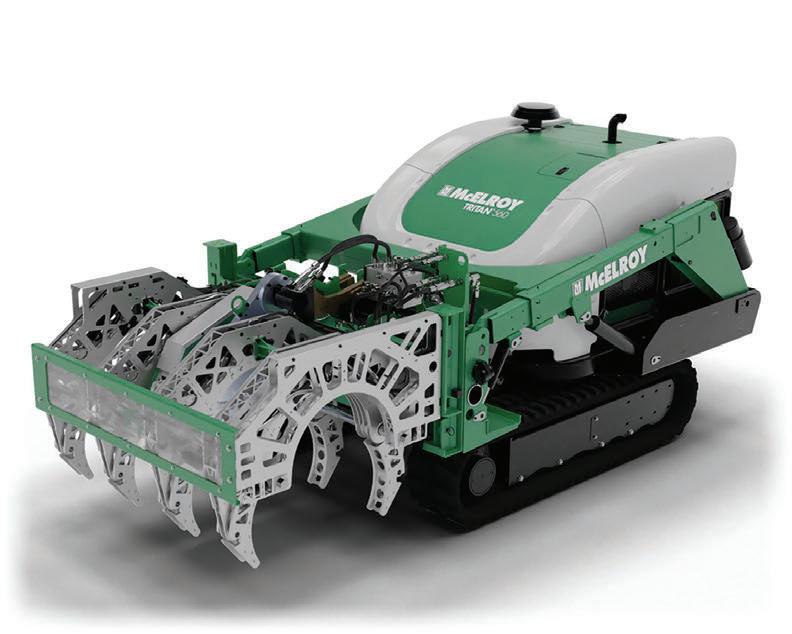
With a full 360-degree rotation and a boom that can raise, extend, and curl the carriage to approach and load pipe, the Tritan boosts jobsite efficiency and improves workplace safety by eliminating the need to top-load pipe into the fusion machine.
The Tritan 560 aids in pipe positioning, allowing for more flexibility and increased performance and productivity. With the same rugged, dual rubber tracks found on McElroy TracStar machines, the Tritan offers all-terrain mobility to easily travel across a variety of
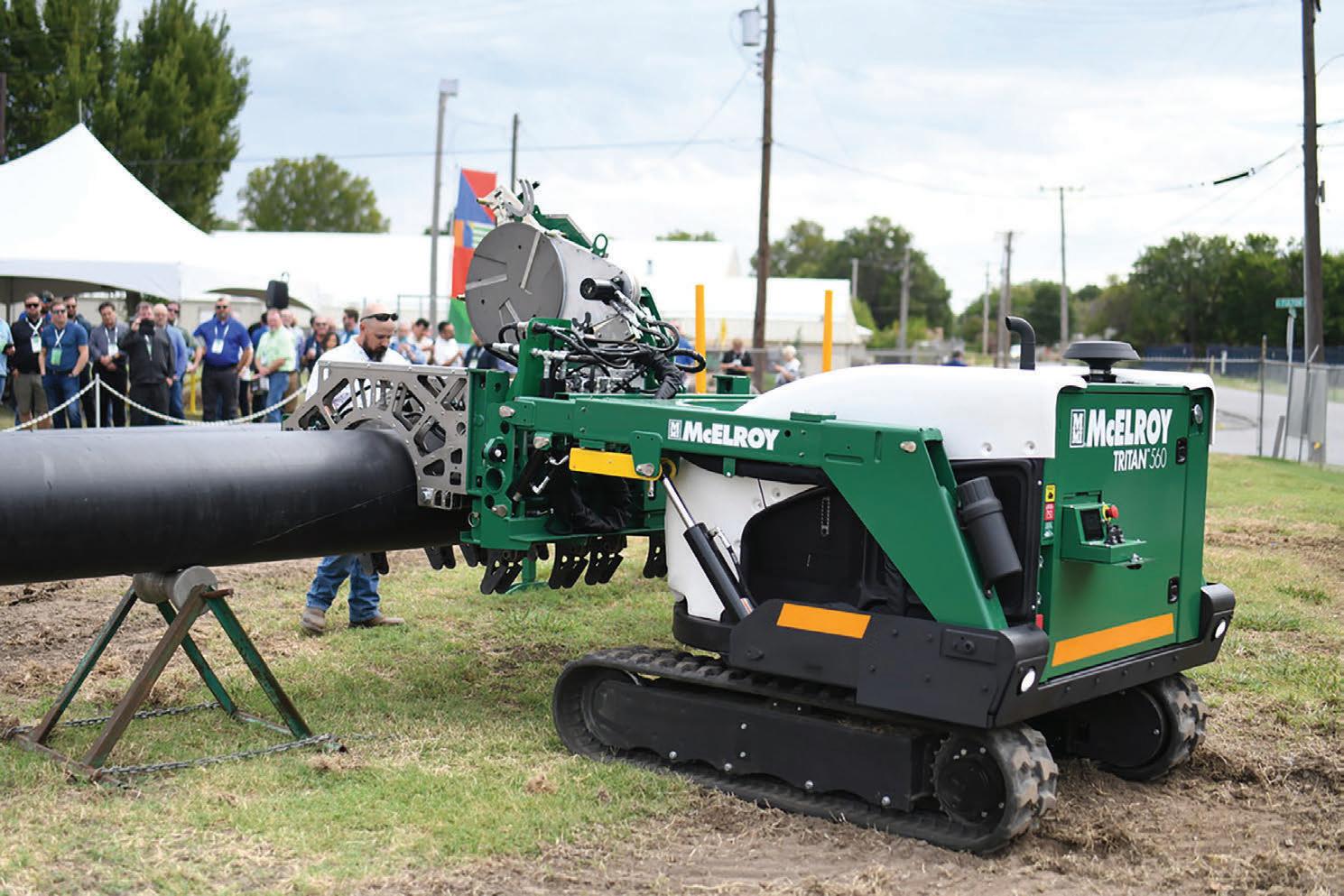
48 The Australian Pipeliner | November 2022 PIPELINE CONSTRUCTION
The Tritan™ 560 is the newest addition to the McElroy lineup.
The Tritan 560 offers a bottom-loading carriage that eliminates the need to lift pipe overhead and into the machine for standard fusions.
terrains and can be driven directly to and from the pipe itself. By building off the legacy and design of multiple McElroy units, the Tritan minimizes the amount of time spent between fusions while also letting the machine work in tight areas.
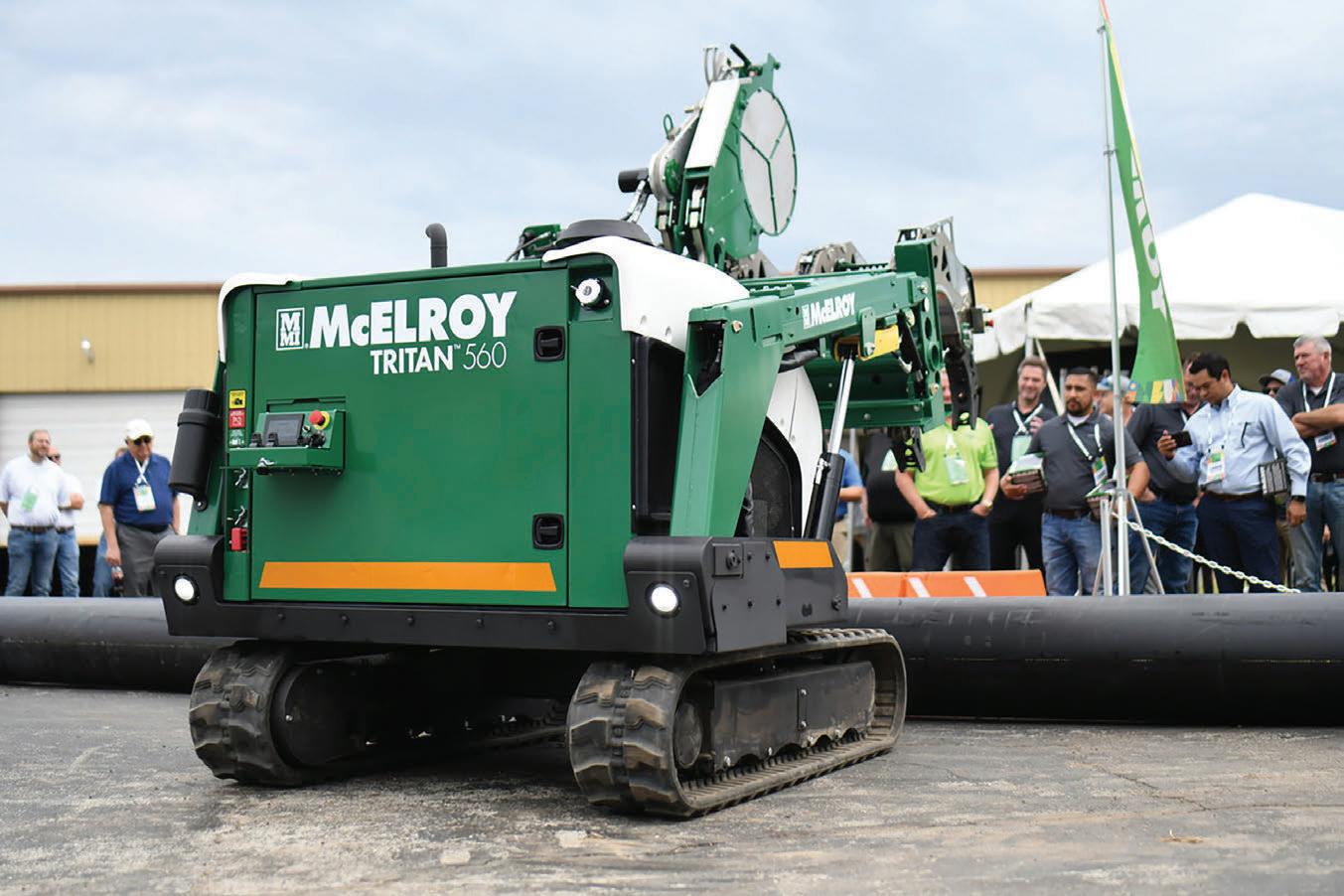
A focus on safety
The Tritan 560 was designed with operator safety in mind. All functions are wirelessly controlled with the DataLogger®, McElroy’s ruggedized touchscreen tablet that also captures the most important information related to fusion operations in real time. No second remote is needed – all controls have been integrated into the DataLogger tablet, allowing a single operator to control all parts of the pipe loading and fusion process. Rather than being tethered to the machine, operators can instead position themselves where they have good visibility and can safely manipulate the machine. No wireless signals allowed? No problem.
The Tritan lets operators connect the DataLogger via a tether when necessary, allowing for operation in environments where
wireless signals are restricted or unavailable.
The Tritan 560 offers a bottom-loading carriage that eliminates the need to lift pipe overhead and into the machine for standard fusions. Operators can load pipe quickly and safely in a variety of configurations. The boom arms can raise, extend, and curl the carriage over a range of motion. This gives operators the ability to precisely adjust the carriage without having to move the vehicle itself.
In addition, the Tritan offers a removable carriage that can operate in a 2+2 or 3+1 configuration, in both a top-loading or bottomloading setup for maximum flexibility in the field. In confined spaces or in-ditch applications, the carriage can be loaded directly onto the pipe from above, minimizing the amount of excavation required under the pipe. And using the DataLogger to wirelessly control Tritan allows operators to carry out the fusion process from the safest possible position.
Standards and features
Position, load, and fuse pipe from 12-inch (305 mm) to 22-inch (560 mm) with ease. The Tritan
560’s full 360-degree swing lets operators fuse in front of the unit or parallel to the tracks on either side of the machine. An updated track motor allows the Tritan to achieve a top speed of 2.75 miles (4.4 km) per hour in high-speed mode, boosting mobility on jobsites and further decreasing the time spent between fusions.
The Tritan is powered by a 50 horsepower Stage V/Tier 4 Final Compliant Kubota engine. Its heater power varies based on need, allowing for full power during the heat-up phase and lower power when maintaining temperature. This equates to lower fuel consumption and quieter operation.
DataLogger integration allows users to take full advantage of McElroy’s Vault™, a powerful cloud-based tool to collect, store, analyze, and share joint reports and project information. Its easy-to-use interface also allows for recording of each fusion’s GPS location, machine, and operator information, along with joint data.
Tritan is expected to begin shipping in the second quarter of 2023.
For more information visit www.mcelroy.com/en/fusion
49 The Australian Pipeliner | November 2022
PIPELINE CONSTRUCTION
The Tritan 560 was designed with operator safety in mind.
Australia’s kwik-ZIP and the case of San Francisco’s sinking Millennium Tower
301 Mission Street is getting a helping hand from Australian-owned kwik-ZIP Spacers as the building foundations are being modified in an effort to keep it from sinking.
San Francisco, officially known as the city and county of San Francisco, is the commercial, financial, and cultural centre of Northern California. The city is the 17th most populous in the United States and is known worldwide for its attractions such as the glittering red wonder of the Golden Gate Bridge from which travellers can look out upon the San Francisco Bay.
While most well recognised for the spooky allure of Alcatraz Island and the vibrant yet somewhat kitschy cable car system, San Francisco has an unfortunate issue affecting one of its very high-profile skyscrapers.
As of March 2022, the 197 m Millennium Tower had sunk more than 45 cm. This has caused the tower to begin to lean 60 cm to the west and 20 cm north. Despite varied attempts to rectify the issue, the tower is continuing to tilt
approximately 7 cm more north and 2 cm more west with each year.
Reportedly, if nothing is done to fix the issue the tower could reach a lean of more than a metre at which point the elevator and plumbing systems within the building would no longer function.
The place to live prior to it beginning to lean, the race is on to save the Millennium Tower.
Taking part in the fight to rectify the issue, Australia’s kwik-ZIP Spacers and Centralisers are getting in on the action.
kwik-ZIP is a well-known and respected brand within many industry sectors in the Australian, New Zealand, UK & USA markets including in production well drilling, trenchless pipeline, horizontal directional drilling (HDD) and the general civil and construction markets. Manufactured from high grade engineering
polymers, kwik-ZIP products are used and recommended by pipeline and civil contractors, water, and gas utilities, drilling companies and international engineering firms.
Engineers proposed and commenced the installation of 52 piles along the North and West sides of the 311,000-tonne building. These new piles are just over 76 m deep and reach to the bedrock under the building.
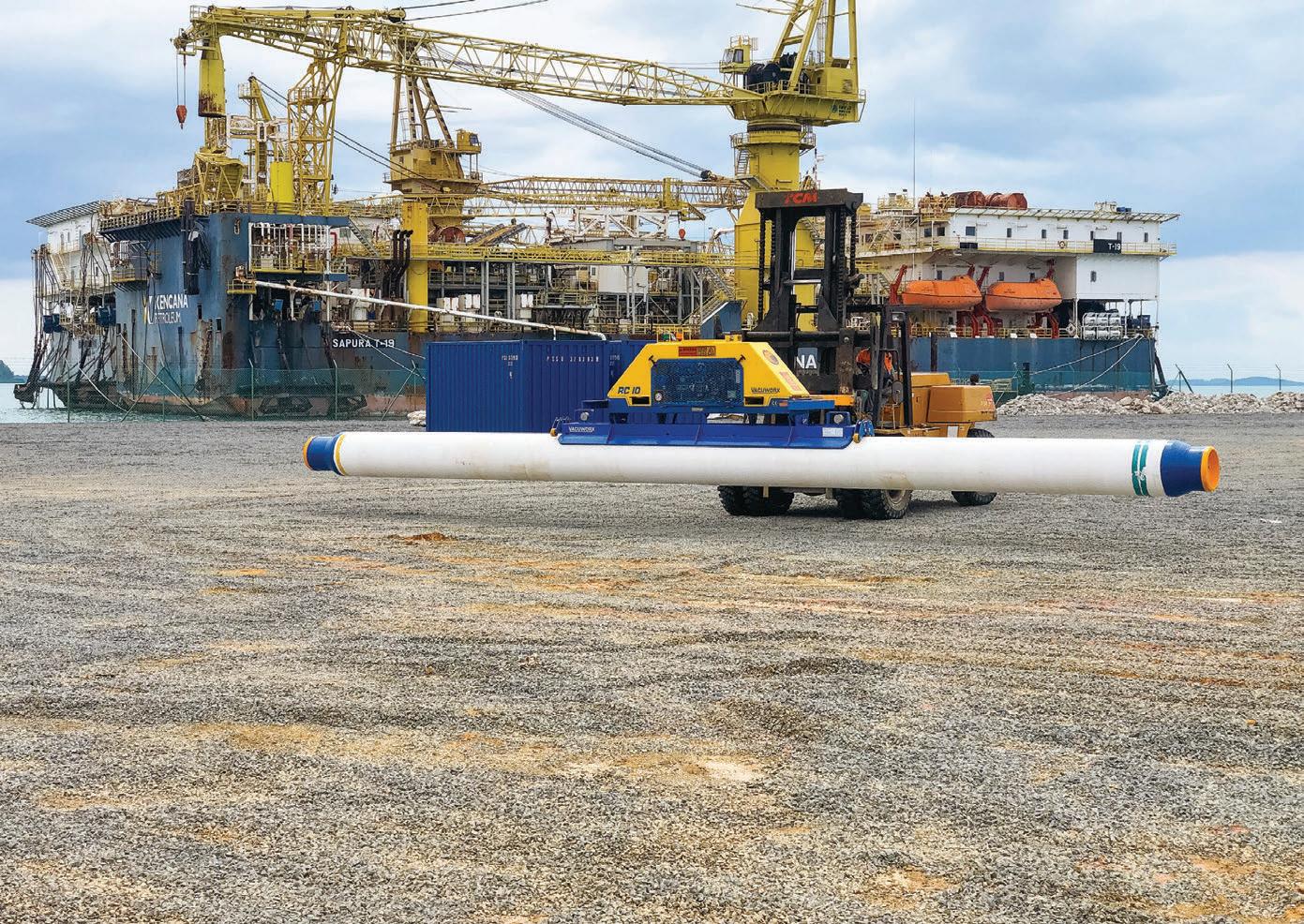
The new piles would be tied to the existing piles (installed during the buildings construction) thus stabilising two sides of the building. The solution proposed involved leaving the building to settle further naturally and it was estimated that further settling of the South and East sides of the building over a period of 10 years would resolve about 50 per cent of the tilt. Once that correction had been achieved, additional piles would be added to the South and East sides and
San Francisco is known worldwide for its attractions such as the glittering red wonder of the Golden Gate Bridge from which travellers can look out upon the San Francisco Bay.

50 The Australian Pipeliner | November 2022 PIPELINE CONSTRUCTION
tied to the original piles to complete the rectification.
kwik-ZIP spacers have been installed into the new piles to help centralise and facilitate the installation process. According to Anthony Lucido – Director of Foundations Operations – the spacers worked well and assisted with the pile installation process.
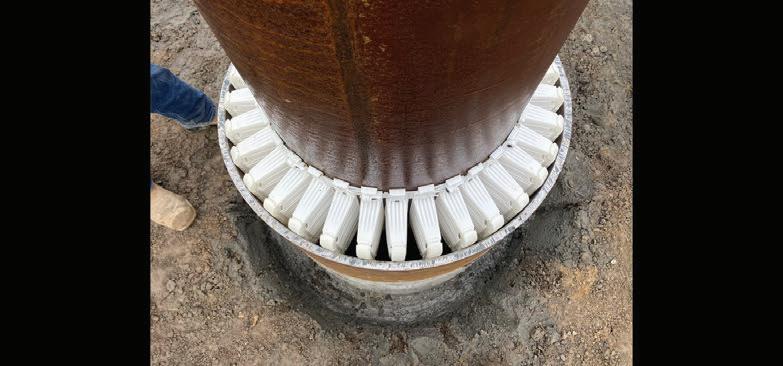
The piles sunk into the ground were 24-inch OD steel pipes, installed into 36-inch OD steel casing with ¾-inch wall thickness. kwik-ZIP HDX-125 spacers provided the customer with the ability to centre the piles during installation and during the grouting process.
Modifications on the tower have not been completed as of this writing, because it was noted that the building had sunk a further inch on one side, during the installation of some of the piles. As the tower is now leaning at 29-inches at the top Northwest corner, planning is currently underway to provide further stabilisation so that the remaining new piles can be installed.
While not a complete solution to the Millennium Tower’s tilt, kwik-ZIP’s spacers and centralisers have been an undeniable help in the reorientation of the once multi-million-dollar

property listing.
Massive buildings with low fault tolerances are built on compactable soil in locations across the globe with very few suffering from the problems that have plagued the Millennium Tower. It’s a testament not only to the engineers working to un-tilt the project as well as the infrastructure companies and manufacturers like kwik-ZIP that attempts can even be made to un-tilt a 197 m skyscraper.
For now, the fight to fix the tilt continues.
www.kwikzip.com
PIPELINE CONSTRUCTION For more information and to find out more about kwik-ZIP’s spacers and centralisers,
Once the ideal residential location, the 197 m Millennium Tower had sunk more than 45 cm. Safer, more efficient material handling solutions. Vacuworx Australia 22 Huntington Street, Clontarf, QLD 4019 Australia P: 0498 101 888 E: sales@vacuworx.com.au www.vacuworx.com
visit
kwik-ZIP HDX-125 spacers installed on 24-inch steel piles to San Francisco’s sinking Millennium Tower.
APGA convention says goodbye for another year
When we all said farewell in Adelaide in 2019, nobody could have anticipated that it would be three turbulent and unprecedented years before we would come back together to the most exciting event of the year: the APGA Annual Convention and Exhibition.
Of the 30 APGA events and functions held each year, the Annual Convention and Exhibition is the highlight: the showcase for the industry. It is an opportunity for all members from all sectors of the industry to meet and address the issues that are important. It is an opportunity to share critical knowledge about the industry.
Saturday and Sunday— Day 1 & 2
Attendees geared up for rounds of golf nice and early on Saturday morning, preparing to leave it all out on the course in a bid to win the tournament, sponsored by Vermeer Australia. In the spirit of Aussie sportsmanship, players did their utmost to win the coveted title of victor but only one team could lay claim.
In the end, Kevin Lester from APA Group, Tayn Palmer from AQUIP, Stephen Ohl and Sandi Ohi from Sandjohl Consulting won the tournament.
While only the team above could be called winners, it goes without saying that the tournament was a great way to kick off the day’s festivities and the activities of the week to come. In typical Aussie fashion, it was a wonderful opportunity to reconnect over a couple rounds of friendly competition.
Saturday also saw a night of fun and reconnection with Pipe Tek sponsoring the Young Pipeliner Function at the Rydges South
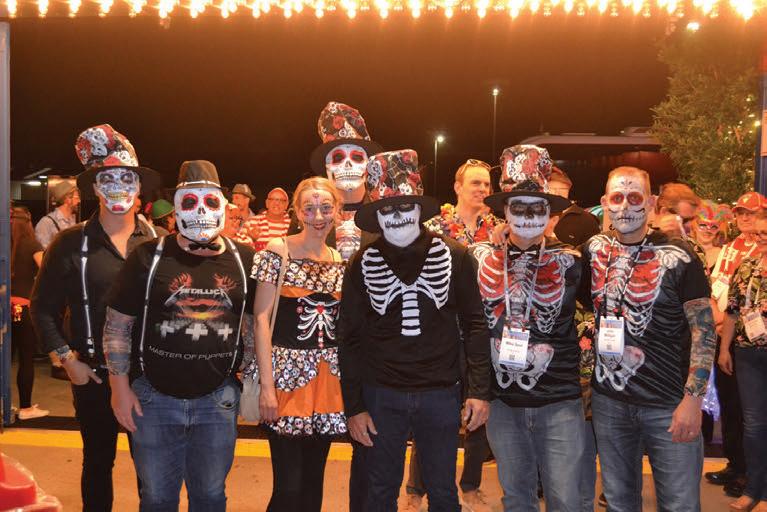
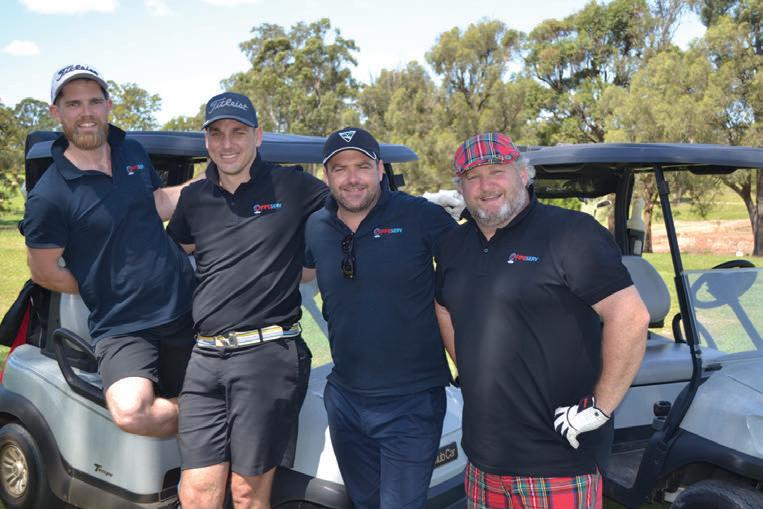
Bank. Followed by a welcome reception sponsored by Pipe Tek, SEAS Gas and Worldwide Group giving attendees a further opportunity to reconnect after the last three years.
There were lots to see on Sunday too, but the highlight for many in attendance was absolutely the official opening dinner. Held at the Brisbane Convention & Exhibition Centre the function was yet another marvellous opportunity to come back together and mingle after so much time apart. Networking was abound that night, with exhibitors teasing all that would be on display over the coming days at the convention.
Monday — Day 3
Monday at the APGA Annual Convention and Exhibition kicked off with the morning business sessions, sponsored by Valmec. On the panel, APGA President Donna McDowall, President and APGA CEO Steve Davies discussed the state of the industry.
Attendees also heard from guest keynote speaker Mark Wales, who has a wealth of experience in all three under very tough circumstances.
Wales was a career special forces officer in charge of 30 elite soldiers. His role was to lead combat missions deep behind enemy lines. He completed 10 tours of duty to Afghanistan, Iraq, East Timor, Lebanon and the Solomon Islands.
His successful transition from the army led him to a high-profile business career. He graduated with an MBA from the Wharton School of Business and joined McKinsey & Company.
He was listed in Wharton’s prestigious 40 under 40 awards for business excellence. He is the founder and CEO of a tough-luxury brand, Kill Kapture.
Mark’s current mission in life is to educate others on leadership, strategy and peak performance while under stress. He emphasises the importance of strategy, execution and agility in any competitive system, drawing lessons from fighting in Afghanistan.
Later in the day GPA Engineering’s Mechanical Engineer Margaret Gayen, and GPA Engineering’s Graduate Mechnaical Engineer Carina Nixon presented a keynote presentation on creating cultural change to support gender equality in engineering.
Since the first woman graduated from an
APGA MEMBERSHIP 52 The Australian Pipeliner | November 2022
The Fancy Dress Dinner, sponsored by Anode Engineering, Solar Turbines and Tremco Pipeline Equipment.
Annual APGA golf day sponsored by Vermeer Australia.
Australian engineering degree in 1944, the engineering and pipeline industries have made significant gender equality progress. The introduction of sexual harassment and sexual discrimination policies, female-oriented mentoring programs, networking opportunities, and training courses such as the APGA Women’s Leadership Development Program, have helped foster better working environments and provided support for the women who have joined the industry.
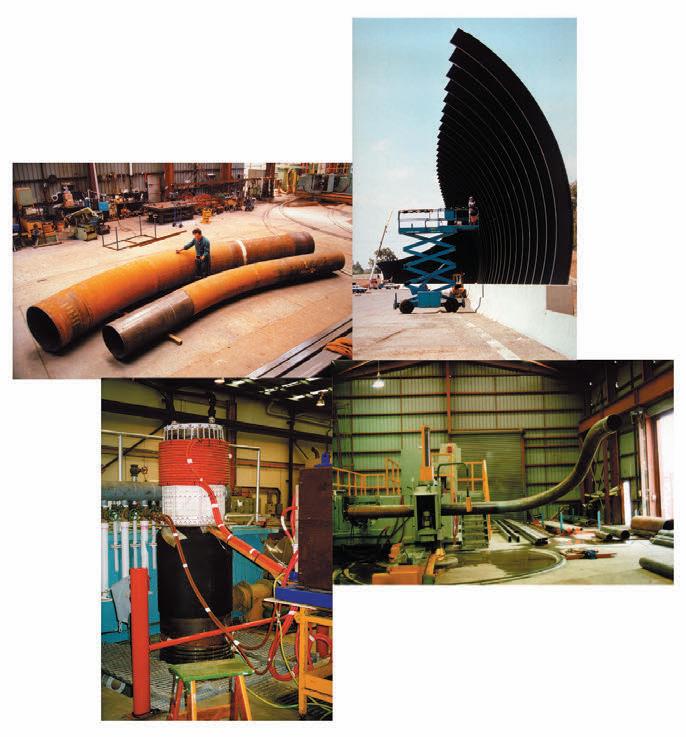
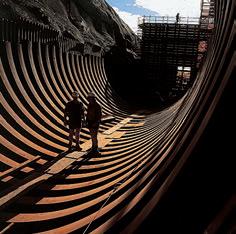
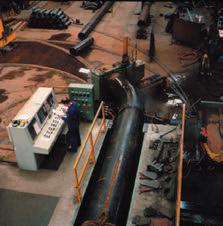

Margaret and Carina have presented their own stories to their colleagues, and collected stories from people in the pipeline industry which supported a paper and presentation at the APGA Convention.
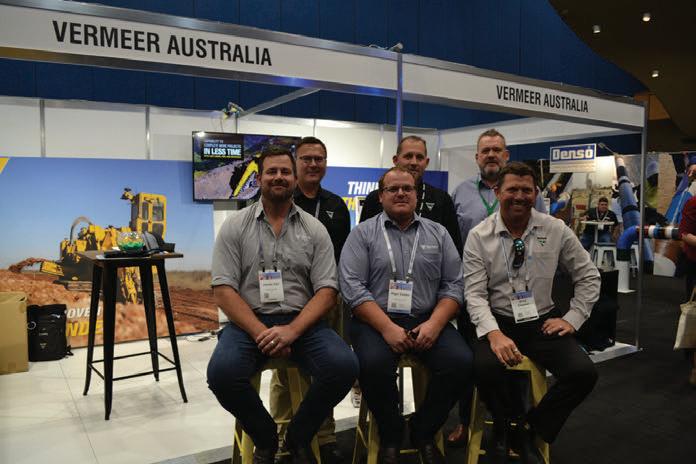
“We believe that sharing these stories can initiate a cultural shift so that we can all work together: let’s build an industry that doesn’t just count women, but makes women feel like they count,” the pair said.
The evening concluded with the Fancy Dress Dinner, sponsored by Anode Engineering, Solar Turbines and Tremco Pipeline Equipment. Several attendees frocked up in their best street festival costumes and enjoyed a fun-filled night.
Tuesday — Day 4
It was great to see that so many had recovered from the festivity-filled evening before. The Tuesday morning business sessions featured a
pipeline operation issues POG session as well as a reflection on 10 years of pipelining and was a great way to kick off day 4 of the convention.
Tuesday also featured a pipeline operations group session which will include a presentation from Colin Yeoh and Alan Creffield as well as a paper on the issue of pipeline encroachment. The morning business session continued on until lunch, with speakers Hannah Rowan and Nathan Kirby talking all things biosecurity obligations and risk-based approaches.
Following lunch, the business sessions resumed and ran into the afternoon. The focus was of the sessions was on emissions and the advances in satellite surveillance for gas and water emissions as well as an address on frequent, small volume
and good conversation.
2022 APGA Annual Convention and Exhibition fancy dress up party.
After so much time apart, it was wonderful for so many within the industry to come together to celebrate not only the chance to reconvene but also our thriving and innovative industry as a whole.
As always, we look forward to seeing you all next year at the 2023 APGA Annual Convention and Exhibition!
APGA MEMBERSHIP 53
Process Control Innovation Leading Technology Experience INDUC We apply induction technology to solve seemingly intractable problems. Bending, shaping, extruding and heating.
The annual APGA Convention and Exhibition was hosted at Brisbane.
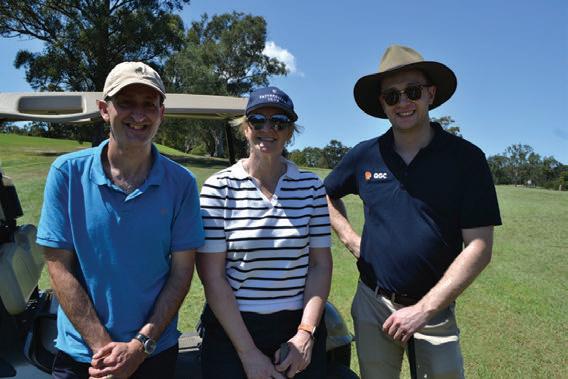
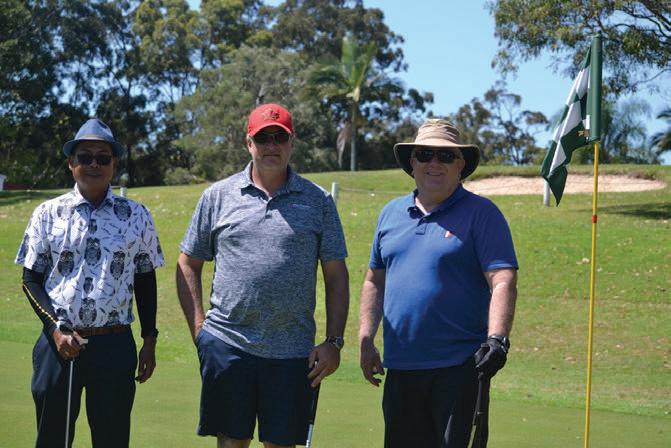

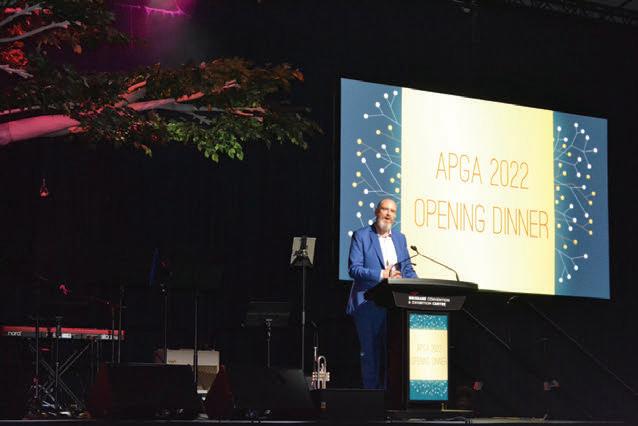



54 APGA CONVENTION The Australian Pipeliner | November 2022



55 APGA CONVENTION
November 2022
The Australian Pipeliner |
Australian Pipelines and Gas Association Membership
CONSTRUCTION CONTRACTOR
Alltype Engineering
Comdain Infrastructure Directhitt Pty Ltd
Enscope Pty Ltd
Global Engineering & Construction Pty Ltd HH Civil Pty Ltd
Maxibor Australia
Michels Corporation
Mitchell Water Australia Pty Ltd Moody Civil & Pipe Pty Ltd
National Australian Pipelines P and G Welding Pty Ltd
Pipecraft
Pipeline Plant Hire Pty Ltd
The Newham Group Valmec Limited
CONSULTANT
ACIL Allen Consulting
Australasian Corrosion Consultants Pty Ltd
CNC Project Management
DNV GL Australia Pty Limited
dss+
Energy Matrix Group Pty Ltd
EnergyQuest Pty Ltd
Jiva Consulting
JLL Infrastructure Advisory Pty Ltd
Kleinfelder Australia Pty Ltd
Land Access & Management Services Pty Ltd
MVC Services Pty Ltd
OC Project Services Pty Ltd
Pipeline Engineering Consultants Plant & Platform Consultants Ltd
Powered Sage Consulting Solutions Pty Ltd
Sustech Engineering Pty Ltd
Ted Metcalfe Independent Consultant Twycross and Partners Pty Ltd Veris
ENERGY DISTRIBUTOR
ATCO Gas Australia
ENGINEERING/PROJECT MANAGER
A J Stack Solutions Pty Ltd
AFS Projects Pty Ltd
Atteris Pty Ltd
Bamser Holdings Pty Ltd Core Group Limited Fyfe
GHD Pty Ltd
GPA Engineering Pty Ltd
ITP Interpipe
Lidiar Group
Long Energy and Resources Pty Ltd
Momentum Engineering Pipeline Drillers Group
SPIE Plexal
GOVERNMENT DEPARTMENTS/ REGULATORS
Department for Energy and Mining Department of Planning and Environment
NSW
Energy Safe Victoria Resources Safety and Health Queensland Water Corporation
INDUSTRY ASSOCIATION
Pipeline Research Council International, Inc
PIPELINE OWNER/OPERATOR
Ampol Australia Petroleum Pty Ltd
Arrow Energy Pty Ltd
AusNet Services
Australian Energy Market Operator
Beach Energy Limited
Brookfield Infrastructure Group
Esperance Pipeline Company
First Gas Ltd
Fortescue Future Industries Pty Ltd
GB Energy
Mobil New Zealand Oil Limited
Mobil Oil Australia Pty Ltd
Origin Energy Limited
Power and Water Corporation
Qenos Pty Ltd Refining NZ
Santos
South Australian Water Corporation Tas Gas Holdings Pty Ltd
Viva Energy Australia Ltd WestSide Corporation Woodside Energy Ltd
SERVICE PROVIDER
ALS Industrial Pty Ltd
Avmin Pty Ltd
AXS Pty Ltd
Baker Hughes Brooks Hire Service Pty Ltd
Brownline Australia Pty Ltd
Bureau Veritas Asset Integrity and Reliability Services Pty Ltd
Civil Geospatial Services Pty Ltd
Corrosion Control Engineering (Holdings) Pty Limited
Deaton Enterprises Pty Ltd trading as CST Hire
Downer EDI Engineering Power Pty Ltd
DSQ Pty Ltd
EnerMech Pty Ltd
ERIAS Group Pty Ltd
IntelliGas
ITI International
LandPartners Pty Ltd
Lochard Energy (Iona Operations) Pty Ltd
Locusview Ltd
LogiCamms
Metropolis Services Pty Ltd
Mipela GeoSolutions
NDT Global Pty Ltd
Oceaneering Australia Pty Limited
ORIX Commercial
Peter Norman Personnel Pty Ltd
Picarro, Inc
Pipe Tek Pty Ltd
Piping Specialty Supply Service Pty Ltd
APGA New Membership Approvals
INDIVIDUAL MEMBERS
Stephen Callaghan - Stephen Callaghan Consulting
John Millett - MilCorp Consulting Pty Ltd
Prime Creative Media
Pro Pipe Services Pty Ltd
Project Communications Australia
QIC Protective Coatings (Aust) Pty Ltd
Qube Energy Pty Ltd
Red Rock Oilfield Service
ROSEN Australia Pty Ltd Scape Consulting Pty Ltd STATS Group
T D Williamson Australia Pty Ltd
TFG Group Pty Ltd
Turbo Systems Australia Pty Ltd Viega Pty Ltd
Wasco Energy Group WRAP Resources Australia Zinfra
SUPPLIER OF EQUIPMENT OR MATERIALS
Aegis Pty Ltd
Anode Engineering Pty Ltd
Anti Corrosion Technology Pty Ltd
Aquip Systems
AtlasGas Pty Ltd
Austrack Equipment Sales and Rentals
Australian Pipeline Valve Bao Australia Pty Ltd
CRC-Evans Pipeline International Delnorth Pty Ltd
Denso (Australia) Pty Ltd
EagleBurgmann Australasia Pty Ltd
EDMI Gas Pty Ltd Fast Fusion, LLC Gasco Pty Ltd
GF Piping Systems
Hard Metal Industries
Heath Pipeline Services Pty Ltd Herrenknecht AG
Horizon Industrial Pty Ltd Inductabend Pty Ltd
iPipe Services
Iplex Pipelines Australia Pty Ltd Jindal Saw Limited
Laurini Officine Meccaniche Srl LFF Australia
Lincoln Electric Company (Australia) Pty Ltd Man Industries India Ltd
McElroy Australia Ozzies, Inc.
PAC
Pipeline Equipment Rentals
Pipeline Machinery International LP PipeServ
PSAH Pty Ltd
RAEDLINGER PRIMUS LINE PTY LTD
RazValve Pacific
RDO Equipment Pty Ltd
Richmond
RTi Asia Pacific PTY LTD
Savcor Products Australia Pty Ltd
Scapeworks Australia Shawcor Pty Ltd
Shipman King
SICK Pty Ltd
System Control Engineering
Tapex Industrial TIB Chemicals AG
TRACTO-TECHNIK Australia Pty Ltd
Tremco Pipeline Equipment Pty Ltd
Universal Corrosion Coatings Pty Ltd
Vacuworx Australia
Vinidex Pty Ltd
Vlentec Australia Pty Ltd
Welspun Corp Limited
Western Process Controls
Worldpoly Pty Ltd Worldwide Group
Advisian Future Fuels CRC
APGA MEMBERSHIP 56
The Australian Pipeliner | November 2022
Body.
APGA would particularly like to acknowledge the generous support of its Owner Members
• APA Group
• Australian Gas Infrastructure Group
• Epic Energ y SA Pty Ltd
• Jemena
• SEA Gas
• Tasmanian Gas Pipeline Pty Ltd
APGA would also like to acknowledge the strong support of its Lead Members
• AGL Energy Limited
• Esso Australia Pty Ltd
• McConnell Dowell Constructors (Aust) Pty Ltd
• MPC Kinetic
• Nacap Pty Ltd
• QGC
Honorary Life Members
• Ken Barker
• David Curry
• Keith Fitzgerald*
• Leigh Fletcher
• D C Gore*
• Robert Gration
Individual Members
• Dean Barker
• John Blain
• Bevan Boocock
• Grant Bowley
• Stephen Callaghan
• Ken Cameron
• Chris Carter
• Mark Cooper
• Geoff Cope
• Max Kimber
• Andy Lukas
• Tony Marletta
• Mick McCormack
• Stuart McDonald
• Jim McDonald*
• Quanta Services Australia Pty Ltd
• Solar Turbines Australia
• Spiecapag Australia Pty Ltd
• Verbrec Ltd (ASX: VBR)
• Worley Services Pty Ltd
• Chris Harvey
• Allan Newham
• Stephen Ohl
• Mark Twycross
• Phil Venton *deceased
• John Millett
• Jasper Tieland
• John de Robillard
• Stephen Dykes
• JP Fortin
• Gretchen Gagel
• Chris Gatehouse
• Lynndon Harnell
• Mark Harris
Employee Members
• Michelle Anderson
• Eric Bardy
• Geoff Barton
• Lauren Beynon
• Rick Boreham
• Andrew Bourke
• Liz Brierley
• Peter Bucki
• Mark Bumpstead
• Francis Carroll
• Philip Colvin
• Jeff Cooke
• Vera Corso
• Craig de Laine
• Edwin De Prinse
• Yuyu Fang
• Daniel Faulkner
• Matt Felvus
• Sean Fleming
• Nick Flint
• Tom Forde
• Mark Fothergill
• Paul Frederick
• Tom Fuller
• Tess Gardner
• Jarrod Gilby
• Calvin Gordon
• Peter Hanily
• Graeme Hogarth
• Justine Hyams
• Jeff Jones
• Ashley Kellett
• Steven Liddell
• Cameron MacDiarmid
• Mick Murphy
• Trevor Nichols
• John Piper
• David Pollock
• Brett Reay
• Shaun Smith
• Ian Spence
• Andrew Wood
• Peter Harcus
• Geoff Harrison
• Chris Hewson
• Ian Israelsohn
• Linda Johnson
• Hugo Kuhn
• Trent Leach
• David Levy
• Stephen Livens
• Nicole Lowndes
• Paul May
• John Messent
• Stephen Mudge
• Matthew O'Connell
• Brian O'Sullivan
• Neil Parry
• Tawake Rakai
• Ben Rees
• Darren Rogers
• Josh Row
• Craig Sheather
• James Smith
• Colin Symonds
• Soheil Taherian
• Warwick Tidswell
• Andrew Tsitas
• John Walsh
• Sean Ward
• Louise Watson
• Rob Wheals
• Paul Williamson
• Michael Xanthopoulos
APGA MEMBERSHIP 57
The Australian Pipeliner | November 2022
FULL
MEMBERSHIP (1) Category Applied for (please tick)
OWNER MEMBER(2)(3) LE AD MEMBER(4) CORPORATE MEMBER
ORGANISATION NAME: ABN: POSTAL ADDRESS: SUBURB: STATE: POSTCODE: STREET ADDRESS: SUBURB: STATE: POSTCODE: PHONE: FAX: WEBSITE:
APPOINTED REPRESENTATIVE (5)
NAME: POSITION: PHONE: FAX: MOBILE: EMAIL: ORGANISATION CHIEF EXECUTIVE (if different from above):
NAME: TITLE:
APGA POINT OF CONTACT – for distribution of APGA information within your organisation (if different from Appointed Representative)
NAME: POSITION: POSTAL ADDRESS: SUBURB: STATE: POSTCODE: PHONE: FAX: MOBILE: EMAIL: ACCOUNTS DEPARTMENT CONTACT: EMAIL:
NUMBER OF EMPLOYEES IN ORGANISATION: 1-5 6-25 26-50 >51
ORGANISATION’S INTEREST IN THE PIPELINE INDUSTRY
(Must tick ONE ONLY. If more than one applies, please tick the one most applicable to your business): Adviser/Consultant Construction Contractor Energ y Distributor Engineering/Project Manager Pipeline Owner/Operator Ser vice Provider Manufacturer/Distributor of Equipment or Materials Government Department/Regulator Other Industry Association (Please Specify)
SECTOR
Please indicate which of the following industry sectors you are primarily working in (please tick ONLY ONE box)
Gas Water Oil Slurry
We hereby apply for Full Membership of the Australian Pipelines and Gas Association in the Category and Interest Group indicated above and agree to abide by the Association’s Constitution and any By-laws set from time to time. We attach our payment for the appropriate portion of the first year’s subscription.
SIGNED:
DATE:
NOTE (1) Upon payment of the relevant fees, an organisation may hold more than one category of full membership.
(2) The appointed representative of an Owner Member should be the Chief Executive. (3) All Owner Members are entitled to nominate up to ten Employee Members without additional subscription.
(4) All Lead members are entitled to nominate up to three Employee Members without additional subscription.
(5) All correspondence will be sent to the appointed representative, who will hold the member’s voting rights. A member’s appointed representative may be changed at any time by advising the Association’s Secretary in writing.
APGA MEMBERSHIP 58 The Australian Pipeliner | November 2022
INDIVIDUAL MEMBERSHIP/EMPLOYEE MEMBERSHIP
INDIVIDUAL MEMBERSHIP(1) EMPLOYEE MEMBERSHIP
APPLICANT’S NAME: ORGANISATION: POSITION: POSTAL ADDRESS: SUBURB: STATE: POSTCODE: STREET ADDRESS: SUBURB: STATE: POSTCODE: PHONE: FAX: MOBILE: EMAIL:
INDIVIDUAL MEMBERSHIP APPLICATION: I hereby apply for Individual Membership of the Australian Pipelines and Gas Association and agree to abide by the Company’s Constitution and any By-laws set from time to time. Payment for the appropriate portion of the first year’s subscription is attached. NOTE (1): Open to any individual consultant with an interest in the pipeline or gas industries. This membership category is designed to accommodate the one-man consultants working within the pipeline and gas industries and will not be open to consulting organisations consisting of more than one person. Employees of a company will not be accepted as an Individual Member of the Australian Pipelines and Gas Association unless the company employing that person is a Full Member of APGA.
EMPLOYEE MEMBERSHIP APPLICATION: (Open to employees of full members of APGA) I hereby apply for Employee Membership of the Australian Pipelines and Gas Association and agree to abide by the Association’s Constitution and any By-laws set from time to time. Payment for the appropriate portion of the first year’s subscription is attached.
SIGNED: DATE:
SUBSCRIPTION RATES (2021/2022 Membership year 1 July 2021 to 30 June 2022)
AUSTRALIA
CORPORATE 1-5 Employees AUD $2,360 6-25 Employees AUD $3,160 26-50 Employees AUD $3,980 >51 Employees AUD $5,100 (incl. GST)
INDIVIDUAL $630 (incl. GST)
New members joining after 1 October 2021, please contact APGA to discuss the appropriate pro-rate subscription rate. (All applications received after 15 May 2022 will be issued with an invoice for the 2021/2022 membership year). ALL PRICES QUOTED FOR AUSTRALIAN MEMBERS INCLUDE 10% GST.
INTERNATIONAL
Membership year 1 July 2021 to 30 June 2022
OWNER
Applicable to owners only – fee upon application
LEAD AUD $10,710 CORPORATE
1-5 Employees AUD $2,140 6-25 Employees AUD $2,880 26-50 Employes AUD $3,620 >51 Employees AUD $4,640 (incl. GST)
PAYMENT
EMPLOYEE $230 (incl. GST)
INDIVIDUAL AUD $580 EMPLOYEE AUD $220
New members joining after 1 October 2021, please contact APGA to discuss the appropriate pro-rate subscription rate. (All applications received after 15 May 2022 will be issued with an invoice for the 2021/2022 membership year). ALL PRICES ARE IN AUSTRALIAN DOLLARS. A TAX INVOICE WILL BE ISSUED.
EF T Bank Westpac Banking Corporation, Swift/ABA/Routing#
owners
fee upon application
Membership year 1 July 2021 to 30 June 2022 OWNER Applicable to
only –
LEAD $11,780 (incl. GST)
WPACAU2S.
No. 032729162756.
032-729. Account No: 16-2756. I enclose my cheque made payable to The Australian Pipelines and Gas Association, or APGA. Please debit my credit card (please tick) Amex Visa MasterCard Credit card processing fee applies. CARD NUMBER: E XPIRY DATE: TOTAL AMOUNT AUD$ CARDHOLDER’S NAME: SIGNATURE: Please return completed form with payment to: AUSTRALIAN PIPELINES AND GAS ASSOCIATION (ABN: 29 098 754 324) PO BOX 5416, KINGSTON ACT 2604 | PHONE: 02 6273 0577 | FAX: 02 6273 0588 EMAIL: apga@apga.org.au |
APGA MEMBERSHIP 59 The Australian Pipeliner | November 2022
IBAN
BSB:
WEBSITE: www.apga.org.au
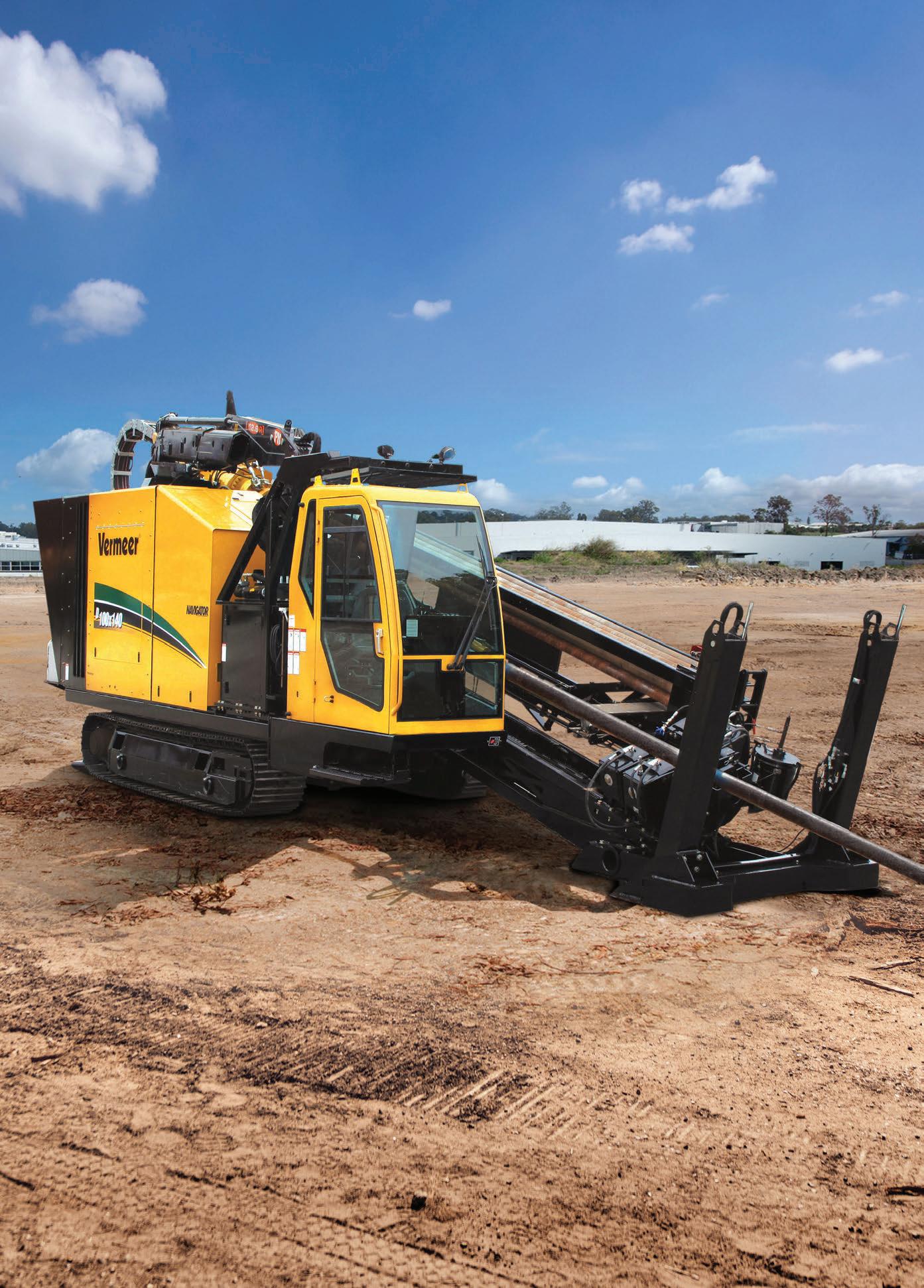
JUST LANDED IN BRISBANE VERMEERAUSTRALIA.COM.AU | 1300 VERMEER Vermeer and the Vermeer logo are trademarks of Vermeer Manufacturing Company in the United States and /or other countries. Product specifications are subject to change by OEM. © 2022 RDO Equipment Pty Ltd (trading as Vermeer Australia). All Rights Reserved. THERE IS NO SUBSTITUTE FOR DOWNHOLE POWER, SO TRY THE VERMEER D100X140 S3 DRILL. With a maximum rotary torque output of 14,000 ft-lb (18,981.5 Nm) and rotational speeds up to 203 RPM. The D100x140 S3 Navigator® horizontal directional drill offers an exceptional one-two punch in response to your most challenging projects. Talk to the leader in HDD today and visit your local Vermeer Australia branch. THINK BIG WITH THE D100x140 S3
