Arminda Ryan is the NSW EPA’s director of incident management and environment health. Ryan has spent the past couple of years as an incident co-ordinator helping environmental services clean up after flood and bushfire events. Over that time the process has been streamlined and she offered her insight into how the recovery processes in place have worked“Fromrecently.myobservations, unfortunately, we’re actually getting quicker in dealing with the aftermath of these events,” she said. “And I say unfortunately, because the reason we’re doing better is because we’ve had so much practice doing the clean-up recently we’re getting more efficient and effective at doing it.” And not all clean-ups are created equal. In the case of bushfires, the NSW EPA appoints a lead contractor, Laing O’Rourke, who manages all the subcontractors. For floods, the clean-up is run by NSW Public Works department, which ironically was to be represented on the panel but was too busy cleaning up the flooding in the Northern Rivers region of NSW. When it comes to collecting the waste and disposing of it, there are a myriad of issues that need to be dealt with from a logistics point of view. How much is there to clean up? Where is it sorted? Can the local landfills take the thousands of tonnes of debris generated by the event? (Continued on page 22)
ISSUE 109 | AUG/SEP 2022
INSIDE 34 Carbon ca pture 40 Legisla tion cohesion 45 Consultant’s review Meet the ZR - Low speed. High torque. Maximum performance. Visit a reference site | Book a trial | Request a free waste audit | info@focusenviro.com.au www.insidewaste.com.au Why recyclingadvancedmatters 1837-5618ISSN100024538PP:
Dr Sarah King has a PhD in the circular economy and works as a senior research consultant on the subject at the CSIRO. Her accomplishments include being integral to the development of Aspire, a matchmaking marketplace for the circular economy; and she was also part of the team that delivered the CSIRO Circular Economy Roadmap. When King was looking into the roadmap as it related to plastics and recycling she realised that there was not enough room in that report to cover off on advanced recycling. (Continued on page 26)
ACCORDING to the United Nation’s World Meteorological Organization (WMO), the number of natural disasters around the world has increased by a factor of five over the past 50 years. The organisation’s Atlas of Mortality and Economic Losses from Weather, Climate and Water Extremes (1970-2019) states there have been more than 11,000 natural disasters over that time period. More than two million people have lost their lives as a result, while there has been more than US$3.6 trillion in monetary losses. Australia has had its fair share of disasters, especially when it comes to flooding and bushfires. Then there is drought and the occasional tropical cyclone in the northern climes of the country. These disasters have been devastating to those who have been at the sharp end of nature’s wrath, while the clean-up process can be almost as traumatic as the event itself.
When disaster strikes who takes charge of the clean-up?
ADVANCED recycling is a buzzword that is becoming part of the narrative of the waste industry, and one that had a whole session dedicated to it at this year’s Waste Expo in Coffs Harbour. A panel discussion, chaired by the Australian Food & Grocery Council’s (AFGC) sustainability manager Barry Cosier, took a deep dive into what advanced recycling is, and what impact it can have on the industry.“TheAFGC has been awarded a grant from the government and we’re creating the national plastics recycling scheme to recycle a targeted 190,000 tonnes of soft plastics,” said Cosier. “If those who aren’t aware, a third of all plastic packaging is soft plastics, and it has a recycling rate of about six per cent so it’s a really big problem. But what we want to do is make sure we create a scheme that has a market. Today, we’re going to hear from the whole supply chain.”
At the Coffs Harbour Waste 2022 conference a panel discussed the issues surrounding waste once a natural disaster has occurred. There are many organisations – both government and private – that help with a clean-up once the emergency has passed.


Land clearing, mulch, compost, asphalt shingle tiles, scrap wood, biomass, green waste-we can handle it am www.komatsuforest.com.au
The Impact Cushion System
The Impact Release System
Astec Peterson offers horizontal grinders from 433-839 kW, offering grinding solutions with output at the lowest cost per ton. Visit us at www.astecindustries.com and see why we have been leading the industry for over 35 years!
3-Stage Grinding Process
Provides Faster Reduction Astec Peterson's powerful up-turn 3-stage grinding process provides better fracturing of material and a more consistent product, giving you just the product your buyers are looking for.
Protects Your Investment Astec Peterson's patented Impact Release System's air bags provides uniform grinding and protection from contaminated feedstock, a feature unique to Astec Peterson grinders.
The Second Line of Defence Urethane cushions and shear pins help protect the mill from catastrophic damage in the event of a severe impact from contaminants in the feedstock.


2710D Horizontal Grinder Portable 6 Efficient Engine 433 kW or 570 kW Length 1612 cm Weight 30900 kg Feed Opening 153 x 81 cm 5710D Horizontal Grinder High Production with Consistent Sizing Engine 722 kW Length 1800 cm Weight 42184 kg Feed Opening 152 x 102 cm Astec - Peterson is represented by Komatsu Forest in Australia and New Zealand, providing industry-leading product support and expertise. 6710D Horizontal Grinder Largest Grinder with Highest Output Engine 839 kW Length 1860 cm Weight 48987 kg Feed Opening 168 x 127 cm Komatsu Forest Pty Ltd. 11/4 Avenue of Ame ricas Newington NSW 2127 Australia T: +61 2 9647 3600 E: info.au@komatsuforest.com Komatsu Forest Pty Ltd
Since I was appointed editor of the magazine, the lack of cohesion at a federal level – mainly due to the various states looking after their own self-interest – has been a bugbear in almost every facet of the industry. Anthony Albanese has mooted a national EPA. That would be a goodEnjoystart.the read. 859 885 2259
E: sales@triconequipment.com.au A: 11 Lucca Road, Wyong NSW
T: 1300
www.triconequipment.com.au 4 INSIDEWASTE AUGUST/SEPTEMBER 2022
Daily news updates at www.insidewaste.com.au Editor’s Note // The importance of advanced recycling Chief Operating Officer Christine christine.clancy@primecreative.com.auClancy General Manager (Sydney) Terry terry.wogan@primecreative.com.auWogan Managing Editor Mike mike.wheeler@primecreative.com.auWheeler Business Development Manager Chelsea chelsea.daniel@primecreative.com.auDaniel-Young Design Production Manager Michelle michelle.weston@primecreative.com.auWeston Design Blake Storey, Kerry Pert, Aisling McComiskey Client Success Manager Justine justine.nardone@primecreative.com.auNardone Head Office Prime Creative Pty Ltd 11-15 Buckhurst Street South Melbourne VIC 3205 Australia p: +61 3 9690 www.insidewaste.com.auenquiries@primecreative.com.au8766 Subscriptions +61 3 9690 subscriptions@primec8766reative.com.au Inside Waste is available by subscription from the publisher. The rights of refusal are reserved by the publisher Articles All articles submitted for publication become the property of the publisher. The Editor reserves the right to adjust any article to conform with the magazine format. Copyright Inside Waste is owned by Prime Creative Media and published by John Murphy. All material in Inside Waste is copyright and no part may be reproduced or copied in any form or by any means (graphic, electronic or mechanical including information and retrieval systems) without written permission of the publisher. The Editor welcomes contributions but reserves the right to accept or reject any material. While every effort has been made to ensure the accuracy of information, Prime Creative Media will not accept responsibility for errors or omissions or for any consequences arising from reliance on information published. The opinions expressed in Inside Waste are not necessarily the opinions of, or endorsed by the publisher unless otherwise stated. Phone: 03 9706 8066 Email: sales@appliedmachinery.com.au appliedmachinery.com.au One of Australia’s most popular brands of shredders and Safe,granulatorsefficient,cost effective size reduction of your bulky, or sensitive waste streams Perfect for reprocessing your waste material for closed loop Hugemanufacturingrangeavailable to suit practically all waste streams; plastic, wood, metals, tyres, e-waste & more Machines in stock in Melbourne shredders for every product, business & budget. That’s Thinking.Applied EXTENDED UNTIL 30TH JUNE 2022 INSTANTUNCAPPEDASSETWRITE-OFF
ADVANCED recycling is seen as one of the answers to making a true circular economy for plastics. Some would state that there is no such thing as a truly circular economy. The argument goes that once something truly comes to the end of its life –which happens to almost everything as it loses its cohesiveness after being recycled many times over –then it has to be buried in a landfill or burned. Therefore, it’s not truly circular. But what about advanced recycling – turning that original product, especially that of plastic origin – back into its virgin state? That is something that was discussed at length by a panel at Waste 2022 at Coffs Harbour. There were many and varied opinions on what needs to be done, and while most agree it is not the holy grail of a plastic circular economy, it is an important piece of a complex puzzle. Another panel was that of disaster waste management. As a recent report by the UN’s World Meteorological Organization pointed out in 2019, natural disasters have increased five-fold over the past 50 years. The causes are a discussion for another day, but what to do with the debris caused by the aftermath of the event is something that was of interest to panellists and the audience alike. In this issue we deep dive into what some of the solutions are to such waste, and some of the problems that still need addressing. Also, check out a piece by the new CEO of the National Waste and Recycling Industry Council, Rick Ralph. Rick doesn’t hold back when it comes to how fragmented the industry is (page 40) when it comes to state and federal legislation. He makes so many great points, that I can literally see in my mind’s eye a lot of nodding heads of agreement.




CSS Recycling Equipment Solutions
News // Daily news updates at www.insidewaste.com.au6 INSIDEWASTE AUGUST/SEPTEMBER 2022 Profile |
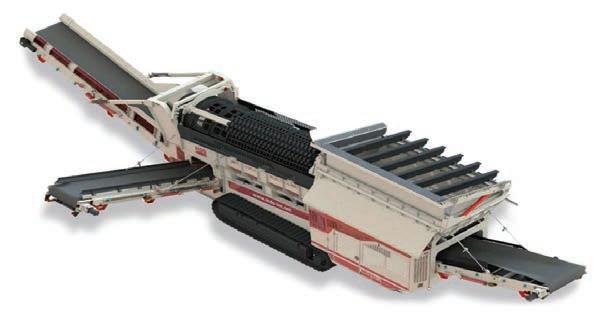
CSS Recycling Equipment Solutions, has been operating for the past 18 years, and was created to bring the best mobile and static recycling machinery and technology to the waste and recycling industry in Australia and New Zealand. From Broome to the Torres Strait, from the Northern Territory to Tasmania, the company sources machinery to manage not just the material, but the environment as well. Its clients’ success is at the heart of its service as it partners with companies to help improve resource recovery, as well as process challenging stockpiles of tough to process waste, and provide custom solutions across all types of waste such as C&D and C&I, wood, biomass, compost, and everything in between.
The technology implanted in machinery to collect data on site and in operation will provide invaluable insights into processes, service needs, efficiency and more. It is working with its manufacturers on a range of product and technology launches, and is excited for the future for its heavy machinery and to assist clients in harnessing the data they will have at their fingertips. Over the COVID years, CSS has been leading a number of turnkey plant projects, which are ready for delivery and will be keeping the company busy alongside increased sales and machine deliveries over the next 12-18 months. iw
“The ARL increases recycling recovery rates and contributes to cleaner recycling streams and it is commendable to see ALDI support its customers to play their part in correctly recycling and disposing of their packaging. Achieving of own-brand products as of the end of 2021 is a fantastic achievement and it’s great to see ALDI is on its way to achieving their goal to have it included on their entire range by the end of 2022,” Donnelly said. In a bid to give customers more options for recycling, ALDI has also partnered with REDcycle to offer a soft plastics recycling program across all of its stores nationally by the end of 2022. The program offers a closed-loop solution that will enable its shoppers to recycle more components of their plastics to its stores to then be reprocessed into new packaging materials.
Report says consumers find recycling confusing
Consumers believe supermarkets need to work with their suppliers to reduce the amount of packaging used in products.
It is the exclusive distributors of: Ecohog density separation technology (windshifters, picking stations, suction and magnetic separation, downstreams and retrofitted accessories to improve resource recovery); Ecostar Dynamic Screens (mobile and static fast and flexible screens); next Hammel Recyclingtech (shredders and plants); Jono Enviro (custom-manufactured turnkey plants); Vezzani Balers, as well as Shears and Shear Balers. Machinery and technology are coming to an exciting intersection as data, AI, machine learning and improved analytics make their impact on the waste and recycling industry.
APCO CEO, Brooke Donnelly, welcomes the plan to help put more knowledge in the hands of customers to encourage accurate recycling:
ALDI Australia has launched its annual 2021 Plastics and Packaging Progress Report, reviewing the supermarket’s progress to achieving its goal of a 25 per cent reduction of plastics and packaging by 2025, and what it all means for customers who are invested in the journey. New research commissioned by ALDI Australia confirms a reduction in plastics waste is top of mind for shoppers, with 73 per cent of Australians agreeing supermarkets should work with suppliers to reduce the packaging on products. This hunger for greater recycling action extends into their own homes, with 64 per cent saying it is important that packaging left over from grocery shopping should be able to be recycled. Aussies’ recycling prowess is hampered by confusion over how it all works. More than two in five (43 per cent) Australians don’t always recycle packaging from their household waste. And when identifying the reason why, 42 per cent pointed to “confusion over what is suitable for recycling”, as the major culprit in not recycling their waste.Looking for direction, four in five (79 per cent) of shoppers confirmed they would correctly sort and dispose of their household waste if given clearer instructions. To help curb this confusion, as part of ALDI’s plastics and packaging commitments, the Australasian Recycling Label (ARL) logo and recycling instructions will exclusive brand products by the end of this year. It is already displaying the information on more than 75 percent of the range as of December 2021.
Aussies committed to doing the ‘right thing’ Despite confusion around household recycling, the research unearthed a committed recycling cohort; with 57 per cent of Aussies surveyed noting they ‘Always’ recycle packaging from household waste, but 62 per cent noting that companies should have sustainable business practices without passing on costs to consumers. iw
CSS Recycling Equipment Solutions offers expert advice and supply of custommade or turn-key plant solutions, along with specialised equipment solutions. Its stable of world-class manufacturers provide a spectrum of technology spanning most materials.


“There is no other event in Australia that gives you the opportunity to hear from some of the biggest names in the industry and do business with leading suppliers for free.”
“Collaboration and working with like-minded people have been essential for sustained innovation in the changing landscape of the recycling industry,” he said. One of Jacobsen’s early mentors was Steve Morris, leader in the field of printer cartridge recycling, where in 2002 Jacobsen became national president of ACRA (Australian Cartridge secretary.Association)RemanufacturingwithMorristhe“Stevewasagreatteacher and leader, and he showed what was possible by thinking outside square which really inspired me,” said Jacobsen.Morrishas gone on to found Close the Loop where he strives for environmental success on a global scale via its take back, recover and reuse programs. Several years later Jacobsen met Liz Kassell who he describes as a champion of the soft plastics recycling industry. “She has such authenticity and passion for her work with what I believe is one of the best product stewardship programs in the world,” saidDesJacobsen.Benjamin was introduced to Replas in 2019 and soon became chair, and mentor to Jacobsen. As a current AICD fellow, and former lecturer at the institute Benjamin inspired Jacobsen to attain his certificate in Foundations of Directorship. Under Benjamin’s leadership, and guided by the four pillars of Governance, Risk Management, Strategy, and Finance, Replas is in good stead to take recycled plastic manufacturing to the next level. Changes in how plastic is perceived and valued have also contributed to the growth of the recycling. APCO (Australian Packaging Covenant Organisation) collaborates with industry to keep plastic out of landfill to meet the 2025 National Packaging Targets, and governments and businesses now share the responsibility for the environmental impacts of packaging, said“TheJacobsen.
Daily news updates at www.insidewaste.com.au8 INSIDEWASTE AUGUST/SEPTEMBER 2022
“The APCO targets for 2025 seem high and without further awareness will struggle to be obtained. However, if “you aim high you will probably at least achieve close to theHemark.”believes government/industry needs to continue their work in ensuring that materials are designed to be circular and not for single use; this will ensure that the circular economy benefits the community, environment and economy. Brand owners producing packaging have a responsibility to contribute towards collection, reuse and recycling.
“Our school tours provide the next generation with knowledge about plastics and how everyone can be part of the solution,” he said. “There is great hope for a future where the value of plastic can be used to full advantage in a truly circularJacobseneconomy.”isretiring from Replas at the end of 2022 with plans to start a part-time consulting business. iw
Profile |
Waste Expo Australia will once again be held in partnership with the Waste Innovation & Recycling Awards.Recognising excellence across waste and resource recovery, the awards will take place on Wednesday 26 October, with nominations open now.Waste Expo Australia is co-located with All-Energy Australia, forming the largest gathering for waste and recycling management, clean and renewable energy and energy storage professionals in the country. Free registration is available www.wasteexpoaustralia.com.au.atiw that has seen tremendous changes over the past 20 years. From the early 2000s to 2022 Jacobsen has seen the value of plastic go from a once maligned product to a viable and renewable choice that can be strictly monitored for sustainable outcomes. Embracing change and taking the Richard Branson approach of ‘Say yes, and work out how later’, Jacobsen has brought Replas to the forefront of government, councils, and communities’ minds when it comes to recycled plastic products.
REGISTRATION is now open for Waste Expo Australia returning to the Melbourne Convention and Exhibition Centre from 26-27 October 2022. As the largest gathering of waste management and resource recovery professionals in the country, Waste Expo Australia brings over 6,200 key decision makers and industry professionals together with solutions providers in the waste management, recycling, resource recovery and sustainability sectors. This free-to-attend exhibition and conference is the country’s largest gathering of waste management and resource recovery professionals, hosting an exhibition with more than 100Withsuppliers.theconference agenda to be announced in September, the program will feature more than 70 expert speakers across two days covering issues impacting the future of waste and recycling in Australia including policy, resource recovery, recycling, collections, WtE, commercial and demolition, CE, and more.Attendees will also have access to industry experts offering case studies with practical and tangible solutions.
War on Waste programme, first screened on ABC in 2017, brought to the public’s attention that they too could contribute to the solution through taking part in recycling programs. Vibrant social media channels give a voice to the community who now realise that they can be a positive vehicle for change and make a difference.
All levels of government need to put measurements in place for circular economy activities and then put into play the appropriate management and incentives.
Mark Jacobsen - managing director of Replas
“It’s now within the hands of every Australian to take part in a sustainable future,” said Jacobsen.
“Our premier event is for businesses to innovate and transform their operations not just through the wide range of solutions on the exhibition floor, but also through practical information and insights at our high-calibre conference.
The ‘Pull Through Effect’ is also an essential factor to drive continued change, said Jacobsen “The only way to achieve high recycling rates is to create demand for these fit-for-purpose products into new markets to use the plastic collected,” he said. And while Replas alone will not solve the plastic waste problem, it shows what is possible when communities, businesses and governments work together. Education is also essential, and Jacobsen is proud to have established the largest recycling education centre in the southern hemisphere in Carrum Downs.
“Waste Expo Australia is all about collaboration, and this year, we’re providing an opportunity to bring the industry together face-to-face,” said Robby Clark, portfolio director at Waste Expo Australia.
Register for Waste Expo Australia now











AUGUST/SEPTEMBER 2022 INSIDEWASTE 11 NSW, ACT & WA Tony Miller 0429 444 tony@garwoodinternational.com.au451 VIC, TAS & SA Ian Pinney 0409 905 ian@garwoodinternational.com.au451 QLD & NT Daniel McHugh 0407 789 daniel@garwoodinternational.com.au370 NEW AndrewZEALANDSchoer 0413 751 andrew@garwoodinternational.com.au292 A proud Australian-owned family business, Garwood International has been at the forefront of specialised waste collection & compaction equipment design and manufacture for over 45 years, providing high quality, innovation equipment solutions to meet the needs of even the most challenging operating environments. • Rear, Side & Front Loading compaction units • Single and split-body collection vehicles from 4m2 to 33.5m2 • VWS Enviroweigh bin weighing equipment for refuse vehicles AVAILABLE EXCLUSIVELY FROM: www.garwoodinternational.com.au AUSSIE! AUSSIE! AUSSIE! DESIGNED & OWNEDBUILTTOUGH
BINGO Industries has announced it has entered the Queensland market through the acquisition of United Waste Services, a management provider. The acquisition gives BINGO a foothold in the South-East Queensland where around 80 per cent of Queensland’s growth is expected.Theregion is currently enjoying a resurgence in construction activity, an infrastructure pipeline of $50 billion and a likely further increase in activity in the lead-up to the 2032 Brisbane Olympics.
Daily news updates at www.insidewaste.com.au // News
market,
• It accelerates BINGO’s expansion into the Queensland market. iw
• four recycling facilities across Brisbane, Ipswich and the Gold Coast for Building and Demolition (B&D) and Commercial and Industrial (C&I) waste; • an operating landfill at Sheldon licensed to accept 100,000 tonnes per annum; • collections fleet of 37 vehicles including skip trucks, prime movers and tippers; and • more than 3,500 skip and hook bins BINGO’s chief executive officer, Chris Jeffrey, said BINGO’s expansion into Queensland was a key part of the company’s five-year plan.
BINGO chairman Tony Shepherd (centre) with BINGO CEO Chris Jeffrey (left) and United Waste Services’ managingTimdirectorFarrell.
Queensland’s United Waste Services
BINGO acquires
Assets acquired under the transaction include:
• United has a complementary customer base with blue-chip, tier one customers in the building and infrastructure sectors.
• United has post-collections assets consisting of four facilities in key locations in South East Queensland.
“We’ve been focused on further expansion across Australia’s eastern seaboard for some time,” Jeffrey said. “We’ve been prepared to be patient in order to identify the right opportunity and I believe we have found that in United. They are a leading independent player in the building and demolition collections market in South East Queensland, with welllocated assets that align with our strategy.”
BINGO identified United as its preferred acquisition target for a number of key reasons:
United’s operating network includes Tivoli, Sheldon, Stapylton and Burleigh.
• United has a capable management team with an owner and founder who will remain in the business.
recycling and waste








The agreement transforms the agencies’ existing relationship from one based on individual projects to a program of solution-driven science, research and innovation. iw
News // Daily news updates at www.insidewaste.com.au12 INSIDEWASTE AUGUST/SEPTEMBER 2022
“It builds on the existing collaboration between our two organisations in solar, energy resilience, the Global Power System Transformation Alliance and plastics research,” he said. “It aligns closely to Australia’s national interests, including in hydrogen and grid resilience as well as CSIRO’s major research missions to help end plastic waste and build Australia’s clean hydrogen industry.”
Tasmanian EPA considers proposal for metal recycling facility
“We are excited about this MoU, which will facilitate expanded collaboration between our two research institutions,” Green said.
Public consultation was open for a 14-day period from 19 February 2022. No representations were received in relation to the permit application.
The agreement was signed at the Sydney Energy Forum by Dr Larry Marshall, CSIRO chief executive and Dr Peter Green, NREL deputy laboratory director for Science and Technology and chief research officer.
The facility will process about 3,000 tonnes of metals a year.
The proposal was considered by the Executive Director, Environmental Assessments, in the context of the sustainable development objectives of the Resource Management and Planning System of Tasmania (RMPS), and in the context of the objectives of the Environmental Management and Pollution Control System (EMPCS) established by the EMPC Act. The functions of the EPA are to administer and enforce the provisions of the EMPC Act, to further the RMPS and EMPCS objectives and, in particular, to use its best endeavours to protect the environment of Tasmania. The assessment of the proposal was undertaken in accordance with the Environmental Impact Assessment Principles defined in Section 74 of the Act.
NREL and CSIRO sign collaboration deal
Marshall said the partnership represents a shared commitment to work together to help drive scientific and technical innovation across nationwide energy systems.
AN agreement between Australia and the United States will see greater international research collaboration in areas related to plastic waste and renewable energy. The CSIRO has signed a MoU with the US Department of Energy’s National Renewable Energy Laboratory (NREL).
The environmental assessment report, including the environmental conditions, has been issued to Thurlow Metal Recycling and Brighton Council. iw
“Together we will leverage the significant intellectual, research, and infrastructure capabilities of both institutions to address some of the most pressing challenges associated with achieving the global energy transition.“Underthe agreement, the CSIRO and NREL will initially focus on four areas of strategic importance to Australia: hydrogen, global power system transformation (G-PST), plastics, and an accelerator/incubator program for small- and medium-sized enterprises (SMEs) that have the potential to transform our global energy future.”
The agreement between the NREL and CSIRO is designed to help end plastic waste.
THE Tasmanian Environment Protection Authority (EPA) has concluded its assessment of a proposal by Thurlow Metal Recycling for a metal recycling facility at Bridgewater, in the Brighton processmunicipality.scrap metal including car bodies, batteries, engines, refrigeration units, drums, and gas cylinders. Up to 3,000 tonnes per annum of materials will be received through the facility, with processed materials stored prior to with certain conditions. The Board requires these conditions to be included in any permit subsequently granted by the


WCRA happy with Fair awardCommissionWork
The Commission’s decision means all pay rates and monetary allowances governed by the Award will be increasing from the first full pay period commencing after 1 July 2022. The ordinary weekly wages for a front or side lift driver will increase from $998 per week to $1,043 per week. Like a lot of industries, the waste and recycling sector is battling to attract new workers. Tony Khoury, from the Waste Contractors & Recyclers Association, welcomed these new increases.“Withcost of living increases having recently risen by five per cent and having endured a tough few pandemic impacted years, existing workers will receive a very welcome and immediate lift in pay rates,” he said. “Despite the risks associated with COVID, these workers continued to perform and provided great service to their employers and across the whole of our community.”Khourysaid it was challenging times for the hiring of workers across all business sectors. The waste and recycling sector is in a similar position to other labour-intensive industries in that it relies on labour hire personnel, overseas workers, casuals and contractors to ensure that collection services can be provided in accordance with the required collection frequencies.
Heavy duty floor topping & repair system for waste handling sites Call us for more information NOFLOORINGDOWNTIME 02 8840 8888 enquiries@ascoatings.com.au | www.ascoatings.com.au > Leachate Resistant > Industrial Strength > High Impact Rating > Rapid Cure Times > Joint Repairs AS/NZS 4801
The increase will see wages go from $998 to $1,043 a week.
News // Daily news updates at www.insidewaste.com.au14 INSIDEWASTE AUGUST/SEPTEMBER 2022
“In past years, personnel from labour hire agencies would fill in the missing gaps but the employment market is in short supply, therefore ruling out this option,” he said. “We are also faced with employee health and attendance issues arising from COVID and the flu, which also places pressure on the current force, creating potential fatigue management issues. Despite these pressures, employers have an obligation under chain of responsibility laws to closely manage their WHS obligations, so that worker safety is not being compromised.” iw
THE Fair Work Commission has provided industry with the updated Waste Management Award that will apply for the 2022/2023 financial year.


The trend today is to build lighter waste collection trucks that save fuel and have higher load capacities. This puts special demands on the steel, which must resist corrosion from acidic waste. Hardox® HiAce is developed specifically for these types of aggressive loads. At lower pH levels, Hardox® HiAce can extend service life by up to 3 times in comparison with a conventional AR400 steel. Test has also showed that Hardox® HiAce can outperform ordinary stainless steel, such as SS304 by almost 20%. Don’t be surprised by unexpected corrosion. Secure your equipment’s service life with Hardox® HiAce for acidic environments. Learn more at hardox.com. Contact SSAB Brisbane. Melbourne. Perth G1, 28 Balacalva Street Woolloongabba, QLD 4102 australia@ssab.com hardox.com
Call new National
McKew’s breadth of experience in Associations, memberships, certification programs and working closely with Government and Stakeholders will be an asset to AORA, its members and the industry.“Welook forward to welcoming John to the organics recycling industry. He is joining AORA at an exciting time as we are about to launch our 10-year roadmap for the industry. His experience with membership and associations is sure to bring a great deal of value to AORA as we, and the industry, are undergoing substantial growth” says Peter Wadewitz, OAM, AORAMcKewChairperson.hascommenced in the role and got a great insight into the industry as well as the opportunity to meet members and many key stakeholders at the AORA Conference in late June in Adelaide. iw John Mckew was previously the CEO of the Tasmanian Farmers and Graziers Association.
Fully-automated Weighing Process
Waste Transportation Optimisation
Legal-for-trade Suitable For Front, Rear, and Side-lift Loaders
Your drivers will receive a fully-automated weighing process with no delay to the tipping cycle, an RFID interface, and data logging to third party data management systems.
If you can’t measure it, you can’t manage it
us on 1300 069 970 McKew appointed AORA’s
Payload Optimisation
News //
Efficient and accurate weighing of bin contents that combines weighing with bin collection, eliminating the need to weigh bin content separately.
Provides high and low-resolution load ranges from up to 4000kg, determined by manufacturer’s bin lifter capacities.
EO
JOHN McKew has joined the Australian Organics Recycling Association (AORA) as its National ExecutiveFollowingOfficer.therecent resignation of Peter Olah, AORA undertook a rigorous recruitment campaign, resulting in applications from excellent candidates from across Australia.McKew, currently residing in Launceston, comes to AORA with a wealth of experience. Most recently McKew has been in the role of CEO of the Tasmanian Farmers and Graziers Association where his achievements include the development of a new strategic plan, significant work around improving employee satisfaction and company culture and improvement in financial performance. Prior to this, he also held CEO roles with the Australian Fodder Industry Association and Herefords Australia. McKew intends to relocate from Launceston, Tasmania to Ballarat, Victoria before the end of the calendar year.


The waste contract has a value of $146 million.
provides the same range of specialist services we offer nationwide.
JJ’s replaces REMONDIS in Sunshine Coast
AUGUST/SEPTEMBER 2022 INSIDEWASTE 17 Did you know that MRA also works Queensland?in Strategy and Commercial Circular CarbonAuditingEducationOrganicsGrantsPlanningEconomyandApprovals BESTSMALL CONSULTANCY Call 02 8541 6169 or email mraconsulting.com.auinfo@mraconsulting.com.au
The garden organics bin collection service will see around an extra 50,000 households divert green waste from landfill to be mulched and re-used. bin service is expected to cost approximately $35 per year, subject to Sunshinechange.CoastCouncil awarded the new $146 million collection contract via a procurement process through an open tender, which was overseen by an independent probity advisor. iw
Our new Brisbane office
QUEENSLAND-based, family-owned company JJ’s Waste & Recycling has taken over the region’s waste collection services from REMONDIS.
The announcement coincides with the start of Sunshine Coast Council’s expanded garden organics collection service, which will see an additional 45,000 households recycling their gardenSunshinewaste.Coast Council Mayor Mark Jamieson unveiled the fleet of newlook“Thistrucks.new contract and expanded garden organics service will deliver on the Sunshine Coast Waste Strategy; council’s goals for a circular economy for waste; and our goal to be a zero net emissions organisation by 2041,” Jamieson said. “In today’s dollars, this is council’s largest service-delivery contract valued at $146 million over council provides, we have sought to offer an excellent customer service that represents real value for“Inmoney.thebeginning, the new fleet will include one electric vehicle which will service public place bins in our community. We also plan to trial a hydrogen fuel cell waste truck the success of the trials, determine how we might transition to electric or hydrogen fuel cell trucks in future years as technology matures.”
Daily news updates at www.insidewaste.com.au


URBAN Utilities has announced a partnership with Australia’s largest waste management company, Cleanaway, to generate renewable energy from organic food waste. The South East Queensland utility will treat fat, oil and grease waste Cleanaway collects from the region’s restaurants as well as food waste that’s unable to be sold or donated from major supermarkets, at its Luggage Point Resource Recovery Centre.
News // Daily news updates at www.insidewaste.com.au18 INSIDEWASTE AUGUST/SEPTEMBER 2022
Magee said Urban Utilities is upgrading its liquid waste receival unit to allow its six large-scale digesters to directly accept and treat organic food waste as well as fat, oil and grease.
“As Queensland’s largest utility we treat the wastewater of 1.5 million people across our region every day and treating industry organic waste is also part of our everyday operations,” he said. “Over the past 18 months we’ve been working with Cleanaway to successfully treat fat, oil and grease waste and use it to generate clean energy using our anaerobic digesters at Luggage Point. “The digesters break down the liquid waste and generate biogas that can be fed into our cogeneration units, which are essentially giant engines, to create renewable electricity.”
Cleanaway’s SEQ liquids collections branch manager, Steven Trajceski, said food waste was one of the most underrecycled waste streams, commonly going into general waste instead of being recovered as a nutrient-rich resource.
Urban Utilities Water Ventures general manager, Matthew Magee, said the five-year partnership followed a successful pilot project at the Brisbanebased facility.
“Food waste is becoming an increasingly important challenge to address, particularly as our population grows, and we want to avoid organics ending up in landfill wherever we can,” he said. “Through our new partnership with Urban Utilities, we’ve found a cleaner, greener way to beneficially reuse both organic food waste and fat, oil and grease waste.” iw Urban Utilities will treat up to 32 million litres of liquid food, fat, oil and grease waste.
“We’re passionate about supporting a circular economy in our region to promote a healthy, sustainable and liveable future for South East Queensland,” he said. “At full scale, we’ll work with Cleanaway to treat up to 32 million litres – or 13 Olympic swimming pools worth – of organic liquid food and fat, oil and grease waste from restaurants and supermarkets across our region each.”
Urban Utilities partners with Cleanaway over energy deal


CALL 1800 800 878 OR VISIT GENERATIONYOURCAPSCAPS.COM.AUAUSTRALIA,COMPLETEPOWERSOLUTION HIGH SPEED TOFROMCOMPLETECAPSINSTALL.ORACOUSTICINPACKAGED4,600KVAGENERATORSDIESELUPTO(50HZ)EITHERAPURPOSE-BUILTENCLOSUREPLANTROOMISYOURSOLUTIONDESIGNTHROUGHCOMMISSIONING.
• Increasing Australia’s domestic recycling capacity.
SOUTH GovernmentAUSTRALIAannounced a $12.4 million support package comprising $2 million of additional expenditure, $5 million additional funding for a loan scheme, together with targeted funding from the Green Industries SA budget. The Government has also offered grants for recycling infrastructure.
NEW SOUTH WALES At first glance, New South Wales’ eye-watering $47 million recycling support package was heralded as the spark of hope industry needed. However, on closer inspection, the bulk of this package that was funded via the Waste Less, Recycle More initiative and therefore the waste levy, was not new, making it very difficult for stakeholders, including local government, to utilise the funds as they were already committed to other activities. Some of the criteria proposed by the NSW EPA also made it challenging for industry to apply to these grants. On the plus side, efforts are being made by the NSW Government to stimulate demand for recycled content through the intergovernmental agency working groups that have been established, though no tangible increase in demand or facilities have developed…
To reiterate, a circular economy is one that designs out waste and pollution, circulates products and materials at their highest value, and is regenerative in nature. There is still work to be done on that first principle, with Australia yet to embark on a genuine EPR path to-date nor tackle sustainable design regulations. We cannot go circular without changing the way products are designed and consumed. According to the Circularity Gap Report, 9 per cent of materials are circular – we have a long way to go, which is also a great opportunity. Governments nationally have an appetite to increase resource recovery and move away from placing valuable materials in landfill. We also recognise the need to alter consumption behaviours as seen in the national targets, e.g., reducing waste generation by 10 per cent per person by 2030. However, there is still no national plan or vision to drive circularity, similar to the European Green Deal, which includes a circular policy action plan. It is clear we have not joined the dots between carbon, material, and our sector. Meanwhile, the federal government continues to roll out the waste export bans, with stage two of the plastics ban having started on 1 July 2022. While this tranche is challenging for some materials – LDPE in particular - the concept of controlling and maximising our resources is the right one. However, we are still lacking a commitment to green public procurement across all levels of government (and business) to buy back products our sector continues to try to make with these secondary raw materials. We need real enforceable targets (dollars and tonnes) in all government policies now if we really are to hit 43 per cent reduction of emissions in 90 months’ time. Further, data has shown that we can avoid carbon emissions by up to 89 per cent if we recycle plastic and reduce energy consumption by a similar amount – it really is a no brainer.
| w: www.wmrr.asn.au From the CEO’s desk WMRR: Suite 4.08 | 57 St Johns Road | Glebe NSW 2037 | t: 02 8746 5000 | e: info@wmrr.asn.au | w: www.wmrr.asn.au Daily news updates at www.insidewaste.com.au20 INSIDEWASTE AUGUST/SEPTEMBER 2022
It is a positive that Australia is taking a closer look at how we manage end-oflife materials on our shores, and there are now regulatory frameworks in place, but what hasn’t kept pace is ensuring that we have appropriate capacity to deal with these materials. Meeting our capacity gaps has become an urgent task but it’s not just a case of “build it and they will come”. What we need is better data (collection and analysis) that captures the composition of all types of end-of-life materials that arise in Australia each year and their movements (i.e., material flows from consumption to end destination/outcome). Gaining a clear picture here will better inform the capacity and services required to manage our materials and how these are interrelated to each other to ensure effective planning of WARR networks. Importantly, we will also be able to map out future trends to future-proof policies, regulatory frameworks, the WARR network, and investments.
It is time to take stock and examine what has been achieved since these decisions were announced. Now, seven (7) months may not seem like a long time, however in that time we have seen further markets close (Malaysia, Indonesia, Vietnam) and if you are an operator under continued financial stress, seven (7) months could make or break you.
•Updating the 2009 Waste Strategy by year end, which will include circular economy principles.
| 10 Century Circuit | Baulkham Hills NSW
AHEAD OF MEM 2
Australia is learning post-China National Sword that we need to manage and control our own resources (that means manufacturing onshore and not just for virgin resources), we need reliable sources of fuel and energy (which includes renewables and what our sector can produce) and that material and carbon are simply two sides of the one coin. How do we turn these factors to our advantage with the climate war possibly over in Australian politics and build a circular economy that our industry is key to?
WESTERN AUSTRALIA
The other important benefit of taking a systems-based approach towards WARR planning is that we will be able to see where the shortfalls and gaps are. For instance, it has become evident that while the intent of the plastics waste ban was right and we support these bans, there are unintended consequences related to e-waste plastics, which we do not have the capacity to process and manage. This is a risk that we are also facing with LDPE when the second ban commences.
FollowingCOMMONWEALTHtheMEM in April, Australia now has a new Federal Environment Minister, Melissa Price, who in October reiterated to media MEM’s commitment to explore waste to energy as part of the solution to the impacts of China’s National Sword, which is troubling (EfW is not a solution to recycling). The Commonwealth has also backed the Australian Recycling Label and endorsed the National Packaging Targets developed by the Australian Packaging Covenant Organisation (APCO), which has to date, failed to incorporate industry feedback in the development of these targets. To the Commonwealth’s credit, there has been significant coordination in reviewing the National Waste Policy, with the Department of Environment bringing together industry players and States during the review Theprocess.updated Policy will now go before Environment Ministers on 7 December. The Commonwealth can play a key role – one that goes beyond the development of the National Waste Policy. WMAA is supportive of the Federal Government maximising the levers it has, including taxation and importation powers, to maintain a strong, sustainable waste and resource recovery industry.
Gayle Sloan, Chief Executive Officer, WMRR
It is also equally vital that governments understand and continue to bolster our WARR sector’s role in supporting the circular economy, ensuring that Australia has an effective WARR model based on a systems-based approach towards material management, and utilising the waste management hierarchy. What does that mean and how do we get there? Do jurisdictions and the community see the link between the materials we manage, the products we could make, and the ability we can have on mitigating carbon impacts? What is the plan between these regulatory decisions with the capacity – facilities, activities, and services – required to ensure Australia meets the national WARR and carbon targets? The WARR system is complex and all elements are interdependent; one cannot simply consider an aspect of WARR in isolation from the others. As such, systems thinking requires attention (strategic, regulatory, policy, investment, and more) to be given to all interrelated parts of the WARR model that work towards managing materials that it receipts – parts that are articulated in the adopted waste management hierarchy.
There may be movement across Australia, with some states doing better than others, but the consensus is, progress is still taking way too long. It is evident that there are funds available in almost all States to assist with developing secondary manufacturing infrastructure, however the only way that this will really happen is if there is government leadership around mandating recycled content in Australia now, not Voluntarylater.schemes like the Used Packaging NEPM, under which APCO is auspiced, are not working. We have 1.6million tonnes of packaging waste in Australia, which needs to be used as an input back into packaging. Barriers to using recycled content in civil infrastructure must be identified and removed, and Government must lead in this field and prefer and purchase recycled material. A tax on virgin material should also be imposed as it is overseas. MEM must show strong leadership on this issue. Ministers have, since April, dealt directly with operators and councils that are under stress and we have a chance to create jobs and investment in Australia at a time when manufacturing is declining. Ministers have the opportunity to be leaders of today, not procrastinators – leaders of tomorrow and we are urging Chief Executive Officer 4.08 2135 02 8746 info@wmrr.asn.au
• Exploring opportunities to advance waste-to-energy and waste-to-biofuels.
WMRR: Suite
The Western Australian Government set up a Waste Taskforce in direct response to the China National Sword. As part of this announcement, the State Government urged all local councils to begin the utilisation of a three (3)-bin system - red for general waste, yellow for recyclables and green for organic waste - over the coming years to reduce contamination. While this taskforce is a step in the right direction, we are yet to see any tangible results from it or any funding for industry. In October, the WA Waste Authority released its draft Waste Strategy to 2030, which comprises a comprehensive and detailed roadmap towards the State’s shared vision of becoming a sustainable, low-waste, circular economy.
•Reducinginclude: waste generation, endorsing a target of 100% of Australian packaging being recyclable, compostable or reusable by 2025, and developing targets for recycled content in packaging.
| t:
Going circular requires integration, not isolation news Environment Ministers will meet for the second time this year on 7 December, following the first 2018 Meeting of Environment Ministers (MEM) in April, which was in part a response to the import restrictions driven by China’s National Sword Policy and the effects this policy has had across the Australian waste and resource recovery (WARR) industry.
5000 | e:
• Increasing the demand for recycled products.
UnlikeQUEENSLANDYet.itsneighbours, Queensland did not provide any financial support to industry however the Queensland Government has embarked on the development of a waste management strategy underpinned by a waste disposal levy to increase recycling and recovery and create new jobs. The State will re-introduce a $70/ tonne landfill levy in March 2019. There are also strong attempts to use policy levers (levy discounts and exemptions) to incentivise the use of recycled material and make it cost competitive with virgin material. However, little has been done to establish new markets and Government has not taken the lead in the procurement of recycled material. There are grants available for resource recovery operations in Queensland although no monies have been allocated to assist in 2018. This is troubling as Queensland rolled out its Container Refund Scheme on 1 November, which will likely impact the cost and revenue models of the State’s MRFs – as we have seen most recently in NSW.
Key decisions derived from the April MEM
VictoriaVICTORIAhas arguably been the most active and earnest in supporting the industry post-China, with two (2) relief packages announced to support the recycling industry, valued at a total of $37 million. The Victorian Government has also gone above and beyond all others states by announcing it would take a leadership role in creating market demand for recycled products.
The other part of this approach relates to the upstream management of materials. An area that perhaps isn’t well understood or articulated by governments is the significant impact that consumption and production decisions have on both the capacity and location of WARR infrastructure. Want more recycling and remanufacturing in Australia? We need regulations to direct the way products are created to be genuinely recyclable and manufactured with recycled content. Have a desire to create less ‘waste’ and eliminate residual waste altogether? Communities need to exert their consumption power and buy with repair, reuse, and refurbishment in mind. Without focusing on each of these elements as interconnected and important players in the WARR and circular economy machine, then all the various government strategies that purport to be circular amount to nothing more than greenwashing.
Following the April MEM, we have had three (3) states step in with varying degrees of financial assistance for industry (councils and operators). This should be expected considering almost all states (except Queensland and Tasmania) have access to significant waste levy income each year. On the eastern seaboard, Victoria has approximately $600 million in waste levy reserves in the Sustainability Fund and NSW raises more than $700 million per annum from the waste levy. There is certainly no lack of funds that can be reinvested into our essential industry.
Funding helps but as we know, the money goes a much longer way with Government support and leadership, as well as appropriate policy levers.
If we had taken a systems-based approach, we would have been able to track the flow of these materials, identifying the need for, and prioritising the processes and facilities required to manage these materials. Each element of our WARR system –collection, recovery, recycling, and remanufacturing – requires strategic planning and thinking, and so does improving existing residual waste management facilities and capabilities; when viewed strategically as a whole, we can then drive greater carbon mitigation as well as improved environmental and societal impacts.
THE circular economy debate has intensified over the last few years, with governments – state/territory and federal – attempting to develop policies and regulatory frameworks that lead Australia towards a circular economy. These efforts are fantastic, and I am encouraged by our new federal government’s keen focus on building a greener Australia. However, there is more we can do quicker to move Australia along a path to a circular economy, one that our essential sector plays a vital role in supporting. Globally, we are living in challenging times.


resourceco.com.au TOMORROW’S SOLUTIONS. TODAY • Construction and Demolition Waste • Commercial and Industrial Waste • Tyre Recycling • Energy from Waste • Complete Material Solutions • Circular Economy Carbon Abatement Since 1992, we have repurposed over 60 million tonnes of waste. We are in the business of resource recovery –transforming waste into usable products. Find out what we can do for you.

“The recovery was immense and fantastic with people from all around the place pulling together. Council also decided pretty early on, a couple of days after the impact had hit us, that we weren’t going to fill our landfill full of disaster waste. We rapidly planned and implemented a temporary processing/recycling facility. Of the 18,700 tonnes of material we received about 700 tonnes of it went to landfill. That’s a diversion rate of 97 per cent, which was an amazing outcome.”
Disaster clean-up // Daily news updates at www.insidewaste.com.au22 INSIDEWASTE AUGUST/SEPTEMBER 2022
Disaster clean-ups –why planning is essential (Continued from Cover)
“In 2019, council had a fire at its waste facility,” he said. “And then our compost facility caught on fire due to some strong dry winds that ignited a few piles of compost. The fire migrated across to our MRF, which burned down at the same time – a double whammy for us. These events crippled the council’s recycling programs for at least 12 months while those facilities were offline. We weren’t prepared at the time because you never think that you’re going to lose both facilities at Thisonce.”meant that the council had nowhere to take the waste materials, and Trustum said it is still an problem today. There were also recycling issues – the council couldn’t take its recyclables to Queensland due to Container Deposit Scheme (CDS) issues so ended up taking its containers to Victoria. As for the aftermath of the flooding, the council has helped remove 70,000 tonnes of waste. Then there was the matter of wheelie“Anotherbins.problem was the loss of wheelie bins,” said Trustum. “We’ve had at least 345 properties that have lost their three bins. There have been people who have been to houses and reported their bins are missing and they want them back.” Finally, there was a significant problem with access to diesel. Trustum said the whole logistics system shut down and there wasn’t enough diesel available for its collection trucks. Among all these issues, there are people working around trying to find solutions to make the clean-ups quicker, cost-effective and trying to find alternative ways of dealing with waster other than throwing it into a landfill.When it comes to new technologies, former soldier Brent Hoade is at the forefront of using the latest instruments to help assess clean-ups. Hoade is the national aerial damage assessment team manager for Disaster Relief Australia (DRA). DRA came into being in 2016 and modelled an idea first tried in the US whereby ex-service members would mobilise quickly to help aid in disaster relief. One of its specialties
IF the local landfill can’t handle the amount of waste generated, where does it go? What about the practicality of collecting the waste itself? Are there enough trucks, people and infrastructure to deal with it? All these things are part of the job, and why states have a disaster management plan in place. That doesn’t mean everything will turn out how it Lismoreshould.innorthern New South Wales has taken the brunt of flooding that has occurred during the first half of 2022. The city council’s commercial service business manager, Kevin Trustum, said that the past couple of years has been testing for the local area, and not just because of the flooding.

Disaster clean-up is to provide aerial intelligence around disaster areas.
“I operate and manage teams of drone operators and Geographic Information System (GIS) specialists. We deal in the disaster side of the recovery, particularly in the resilience and relief phases,” he said. “We’re a national organisation and we have teams in every state. We use multirotor and fixed-wing drones, as well as a lot of different technologies such as hyperspectral thermal imaging. However, a particular service we provide is volumetric measurement, which is useful post disaster in the waste space to try and quantify the type of damage and the load of waste/debris that we’re talking able to do is give the council planners a bit of a heads-up on the volume of debris that they’re going to have to manage.”
And while Windley is happy with the diversion rate, he points to the planning as being the main reason the recovery and disposal of waste was streamlined and easy to do.
A good recovery plan will mean that cleanup is streamlined and completed quickly.
Daily news updates at www.insidewaste.com.au AUGUST/SEPTEMBER 2022 INSIDEWASTE 23 //
“We wrote our disaster waste
“Whatabout.thisis
“The recovery was immense and fantastic with people from all around the place pulling together. Council also decided pretty early on, a couple of days after the impact had hit us, that we weren’t going to fill our landfill full of disaster waste. We rapidly planned and implemented a temporary processing/recycling facility. Of the 18,700 tonnes of material we received, about 700 tonnes of it went to landfill. That’s a diversion rate of 97 per cent, which was an amazing outcome.”
“My point is that disaster waste planning set the tone for how we acted and the recovery. Six to 12-month recovery was made much easier for that,” he said.
Most councils know they have to be proactive and have plans in place for floods and bushfires. However, not all disasters are due to the nature. Peter Windley is the co-ordinator for waste operations and Shoalhaven City Council. During the past couple of decades, the region has had its fair share of floods and fires. However, it has also had biological disasters.
Ryan backed up Windley’s assertion about planning and its role in the recovery of a region after a disaster. Not only does a plan help at the time, but it gives a starting point after the event whereby a council or organisation can then revamp it in areas that need more attention. Ryan said the EPA was keen to share with councils what’s in the plan, so councils know what is available to them.
“We’ve had a botulism outbreak and had to rapidly respond to 350 dying or dead dairy cows,” he said. “Some were already buried by the local farmers, but we had to exhume them to make sure they were not a hazard to the surrounding environment.”Knowingitwas susceptible to a range of disasters, in 2017 Shoalhaven joined up with surrounding Local Government Areas (LGAs) and developed a disaster management plan, which Windley said has kept the council in “good stead over the following years”. This was highlighted in late 2019 when the Currowan bushfire swept through the Shoalhaven, Bega and Eurobodalla areas. It was a “disaster of epic proportions” for the area, according to “ConsideringWindley.thatthe land mass of the Shoalhaven LGA is 4567 square kilometres, 80 per cent of the vegetation was burned in that area,” he said. “It was a monumental disaster. We lost 883 homes 403 other structures, and very sadly, a few people lost their lives.

Waste needs to be separated into various streams so as little as possible ends up in landfill.
clean-up //
management plan after the bushfires, and we’re currently reviewing it because there’s been lessons learned from the flood response as well,” she said. “It’s a state level plan and we’ve started our outreach, through various opportunities, to councils. Unfortunately, with each disaster that work sometimes gets paused because we turn to response mode. But the intention is that this statewide plan has a toolkit with resources available to councils. Some councils are well practised in this area, but we’d like to share the tools so that others can learn from that as well. It’s about capacity building and sharing information between local and state governments.”
“We’re getting into a bit of a rapid response psychosis – that is, we think we need to be there immediately, which is certainly important in terms of helping a community recover,” he said. “But with regard to the waste, it is possible we just have to change our thinking. I know, during the fires, and what we went through in 2009 and 2020, there was a tendency from government to jump straight to filling landfills. We’ve got to think outside the square a bit.”
Giles Perryman, from ASK Waste Management, said that one of the main issues is getting the level of infrastructure up to scratch in order to deal with these events. He wasn’t just talking about landfills and MRFs.
“Our New South Wales offices in Mullumbimby had half a metre of water through our office [and] we lost communication for a week – we didn’t have the internet, we didn’t have a phone,” he said. “At a state level that infrastructure needs to be improved because it was horrible. In terms of disaster waste management, our Western Australia team was doing a lot of work with the Department Severe floods are no longer a one-in-a-100 year event.
Daily news updates at www.insidewaste.com.au24 INSIDEWASTE AUGUST/SEPTEMBER 2022
Disaster
While planning – in terms of practicality – is key to the aftermath of a disaster, Windley believes it’s important to think differently in terms of what to do with the waste. He feels there is a tendency to throw it into landfill straight away when there might be other alternatives.


Regulation (DEWA) in WA. Along with the Department of Fire and Emergency Services (DFAS) and local governments, we’re looking at statewide management plans.”
“The first victim of any event is the plan so you have to try to develop an agile plan. But also look to invest in your people. That’s one of the learnings that came out at the end of our event.
He said that word did go out to the people to make sure they separated the hazardous waste from normal waste, especially after the waters had receded. Ryan backed this up with her on-the-ground experience in the area during that time.
“Our experience around this situation is that the hazardous waste does get mixed up,” he said. “The difficulty for us primarily, in the first few days, was the only avenue we had for communicating to the community was radio and Facebook. Communications in Lismore, including Internet and phones, were down.”
Finally, another issue that arose was how to be prepared for a one in 100 year event, or as Trustum said, one in 3500 year event that are happening more frequently. As Fiona Jenkins from the Adelaide Waste Recycling Authority pointed out, it’s hard to plan for events that are supposed to occur with the aforementioned frequency, but are now happening more often.
When it comes to landfills in disaster-struck areas, according to Perryman, it’s very easy for small landfills to get overwhelmed particularly in relatively large shires. However, he felt that some areas could be provisionally approved by the regulator to be used as a place to take the waste, knowing that environmentally, it ticks most of theByboxes.doing this, Perryman said that if “‘it’ hits the fan, and everyone’s running around trying to sort stuff out, we can take the waste to this sites, which is a secure site. We can stockpile this material and then come back to it once we’ve done the initial response to work out how we can recover and recycle”. During the panel discussion, an audience member asked why hazardous waste was left lying around longer than normal waste. It was understandable that a lot of councils might have been resourcelight when it came to collecting and disposing of chemicals and sheets of asbestos. However, it was put to the panel’s council members why not provide a bundled trailer or something similar that could hold the waste until it could be disposed of Trustumappropriately?agreed it was a problem, but other issues at play made it difficult to co-ordinate even if there is a disaster plan in place.
“I know in Lismore people got the message about separating waste at the kerbside,” she said. “We were seeing people separating their chemical containers from other waste. And then Public Works came in with a milk run collection. I don’t know if that was offered in other communities, but if there was a need there, and it came through, we would have supported that. A milk run collection is when we have a dedicated separate contractor going around collecting a specific type of waste, chemicals or asbestos.”
“Data is incredibly important and if we’d had more data, it would have alleviated a lot of our planning cycles,” said Windley. “But definitely plan. The first victim of any event is the plan so you have to try to develop an agile plan. But also look to invest in your people. That’s one of the learnings that came out at the end of our event. Develop people because it makes planning so much easier when everyone’s on board and heading in the same direction.” iw Separating the hazardous waste from other waste can be an issue after a fire.
Develop people because it makes planning so much easier where everyone’s on board and heading in the same direction.”
Daily news updates at www.insidewaste.com.au AUGUST/SEPTEMBER 2022 INSIDEWASTE 25 // Disaster clean-up

“We basically take a fossil, a hydrocarbon, feedstock – it can be ethane gas or naphtha – and we crack that into ethylene, and then we polymerise it into polyethylene,” he said. “Advanced circular plastics recycling is complementary to mechanical recycling and has the opportunity to divert plastic from landfill and reduce fossil fuel use.”
Founded in 1960, the company was responsible for bringing the world bubble wrap and has since spent a lot of money on R&D trying to make packaging more feasible and sustainable.AlanAdams is the company’s sustainability director and he is excited about advanced recycling because he knows that his company is at the coalface of packaging. He knows that with the 2025 packaging targets looming closer, now is the time to act.
“It’s been the right thing to do, to reduce the cost of the packaging and the total amount of materials put out,” he said.
“What types of plastics are suitable for these technologies? Mixed multilayer, flexible and soft plastics, plus some that might be contaminated withKingfood.”found that advanced recycling produced intermediate products that need further processing in order to become plastics. She gave pyrolysis as an example, whereby a recycled polymer oil (RPO) is produced, which needs further fractionation into a heavy oil, or light oil. That then goes into a refinery – or steam cracker – and is processed further into a monomer or polymer.
“Sealed Air has complex multilayer structures that enable us to deliver high performance. But to use less packaging, it means, ironically, that today we have developed some of the most difficult to recycle structures there“Thisare.is my long-winded way of saying we really need advanced recycling, because advanced recycling does give us the capability not only to reprocess these complex structures, but additionally, to give us content we can put back in that can go into direct food contact packaging.”Nestléisalso in the food space. It has publicly announced that as a company it will reduce its use of virgin plastic by 30 per cent by 2025. To reach this target Nestlé will rely on post-consumer recycled plastics. As a lot of Nestlé’s products are wrapped in soft plastics, which is not only an issue when it comes to collection but also repurposing, reaching these targets could be hard if it relies on the collection of soft plastics alone. Thus, the advanced recycling route is one of its preferred options.Nestlé’s Oceania head of packaging, Jacky Nordsvan, said that advanced recycling is not only a good idea, but necessary for the company
Sealed Air is a company that specialises in food packaging –especially for proteins – and has recently brought to market products such as Cryovac, which has been instrumental in giving foods longer shelf life. This not only means people can keep foodstuffs in their fridges or freezers longer, but it is designed to keep organic waste out of landfills.
Advanced recycling // Daily news updates at www.insidewaste.com.au26 INSIDEWASTE AUGUST/SEPTEMBER 2022
Qenos is a company that manufactures polyethylene and uses advanced recycling technologies to do so. Jeroen Wassenaar, the project leader for advanced recycling at the company, believes that the technology is essential if Australia wants to go from a plastic-to-oil to a plastic-to-plastic supply chain.
(Continued from Cover)
“Usually, the best that can be done is basically down cycle,” he said. “You can put it into a durable application – a bollard or something like that. And you can use it one more time. But what we really want is to keep using it over and over again. This is where advanced recycling can really play a role.” He said the process can break down molecules into the hydrocarbons that they were made from and then they can be built up again.
Why advanced recycling matters
“In order to do that, we need these facilities, this infrastructure in the virgin plastic supply chain,” Wassenaar said. “Because without it, we’re basically just producing an oil. That is waste to energy at best, and it’s a very complicated way of doing it.”With that in mind, Qenos has partnered with Cleanaway to conduct a study to investigate the feasibility of such a plant.
She pitched an internal project to write a paper to understand what advanced recycling is and how it relates to the waste“Advancedindustry.recycling stands for a family of technologies,” said King. “It is where you take a plastic back to a monomer, or back to the chemical building blocks. I see it as complementary to mechanical recycling. There are two major technologies used. The first is depolymerisation – for example where PET can be taken back to a monomer. The second are conversion technologies such as pyrolysis and other hydro-thermal technologies.
A company like Qenos is basically transforming naphtha or ethane back into a virgin plastic state. It then supplies the finished product to a packaging manufacturer that produces its product and then it becomes waste “Unfortunately,again.about 80 per cent of it ends up in landfill,” said Wassenaar.Hesaidthat with mechanical recycling there has been success stories such as PET milk bottles being recycled back into their original application. However, once you come across coloured plastics and multilayer structures – and soft plastics come into this category too – it becomes more difficult.

“We’re encouraged to use this material,” said Nordsvan. “The clear benefit of using Australian-made soft plastics, recycled content from advanced recycling material, is that it’s our own materials – it’s not imported from another country’s waste. It’s our own soft plastics that we’ve converted from a resource to a waste.“Thebarrier for this is obvious –we don’t have collection at scale; we don’t have processing at scale; and we don’t have recycling at scale to close the loop in Australia. In summary, we really want to use advanced recycled material; we know it’s technically possible, but we just can’t get enough of it, fast enough.”
Daily news updates at www.insidewaste.com.au AUGUST/SEPTEMBER 2022 INSIDEWASTE 27 // Advanced recycling to realise its ambitions.
Naphtha is a hydrocarbon that can be cracked into ethylene and polymerised into polyethylene.
“To be frank, 85 per cent of the plastic we put on the market is soft plastic,” she said. “And with the type of polyethylene we use, the only way we can get a food-grade recycled content material is through the advanced recycling system at this stage. Without this, we will struggle to deliver a virgin plastic reduction of 30 per cent by 2025.”
And what about other by-products? What about the fumes that are generated by advanced recycling? What is the risk assessment there? “In our project, what is paramount is we’re trying to convert as much as possible into plastics,” said Wassenaar. “We’re arriving at about a 60 per cent conversion of the input into circular plastics. Obviously there are by-products. There’s a solid by-product, a char, which is being generated and we’re looking for applications for it in the asphalt arena. Then there is the gas. With some of this gas, it is possible for Advanced recycling will help with the repurposing of hard-toprocess plastics like those used in the meat packaging industry.
The main issue with advanced recycling, as far as Nestlé is concerned, is the supply.
One person working hard to change that is Danny Gallagher. As well as being the Chief Executive of IQ Renew, he has an interest in REDcycle, which is the most highprofile scheme in Australia when it comes to the collection of soft plastics. He was also instrumental in launching the Curby program. Trialled on the New South Wales’ Central Coast, the aim of Curby is to make up the shortfall that Nordsvan is talking about – getting more soft plastics recycled.Curbyputs soft plastics into yellow bags, which are tagged. The bags are then put into the yellow recycling bins. Once at the MRF, they are separated from the rest of the recycling and taken to be reused for other purposes. Gallagher sees every household as a mini MRF.
“We are leveraging the already existing infrastructure in our homes and communities,” he said. “We already have the convenience at home of the yellow-lid recycling bin, which means we can scale and collect more material. I call it an unmanaged or an unmet demand. We can give a community what it wants and give them an easy way of being able to help us help them, and ultimately, give industry access to that material for recovery and recycling.”

From there, it will go to the advanced recycling plant, then the manufacturing plant, such as Sealed Air, and then to someone like Nestle who’s putting it on the market, according to Wassenaar. He believes all of those entities will need to be certified according to that same standard.“Itisquite a bit of work involved to get that,” he said. “However, the benefit is that when Nestlé places it on the market, they actually know ‘okay, well this is coming from this
“It’s basically a chain of custody certification system, which starts at your point of origin – a MRF for example – who is supplying the plastic or the bag to a spec facility. That point of origin probably doesn’t need to be certified but will make a self-declaration in terms of the provenance of the material.”
Advanced recycling can have a huge part to play in the circular economy.
Biochar is the end result for some types of plastic after going through the Waste to Energy process.
Advanced recycling // Daily news updates at www.insidewaste.com.au28 INSIDEWASTE AUGUST/SEPTEMBER 2022 are used to generate the heat for the process itself.”
One subject touched on was traceability and how the advanced recycling program can work across the whole value chain – from the recycling of material to the end product on the supermarket shelves.
“There are some best balance programs. The most reputable one at the moment is ICC+,” said Wassenaar.


Daily news updates at www.insidewaste.com.au AUGUST/SEPTEMBER 2022 INSIDEWASTE 29 // Advanced recycling Maximise Recovery... Reduce Landfill Costs Eriez.com.au | 03 8401 7400 through… EquipmentSuperior InnovationService Support Testing Eriez equipment enables the recycling industry to maximise the recovery of mixed metals from comingled waste, in turn increasing product purity to achieve the highest value. See us at the Australasian Waste & Recycling Expo | 24-25 August, Sydney | Stand D15 have a certified system. We’ll be using the ICC+ system to make sure that we can actually follow and trace that material all the way back. It’s not cheap to do, particularly if you’re going to go first – we are going to be paying a premium. But we certainly want to be talking about it loud and Finally, where does advanced recycling sit in the waste landscape? Is it the be-all and end-all solution for recycling a difficult stream? King says no, but it will help solve a missing piece of the puzzle. “What does advanced recycling mean for reuse models?” she said. “CSIRO has acknowledged that we need multiple interventions. I don’t think any of us are here to say advanced recycling is going to solve the plastics problem, because it’s not. It’s not going to displace mechanical recycling and it shouldn’t displace other business models such as reuse, avoid, etcetera. There’s a role for all of them. There’s lots of different technologies that could start up here in Australia to help address that problem, but they won’t do it alone. I’d say we know it’s not a iw





The genesis of CDS in South Australia was litter abatement. Its success since 1977 is seen down every street. Roads, footpaths and spaces that once were strewn with drink containers are no longer littered. Today, the objective is to drive containers out of landfill and into the circular economy.
The SA Container Deposit Scheme has a high return rate, according to Rawlings.
CDS needs increase in deposit refund - now

Pacific Materials Handling has over 40 years experience in machinery sales, rental units and equipment support. PMH back the equipment we supply with factory trained skilled technicians, spare parts availability, and after sales support. We extend our support to clients by having; • Service facilities in Melbourne, Sydney, Brisbane, Adelaide, Perth, Warrnambool • Field Service Technicians at all sites • Parts & Accessories worth in excess of $5 million across our own locations PMH have strong relationships with market leading manufacturers and by diligent and strategic selection we provide a generous suite of products and services to suit a range of applications: • Sennebogen material handling equipment • Rotobec material handler and excavator attachments • RadComm Radiation Detection Systems • COPEX heavy duty range of balers and compactors





Daily news updates at www.insidewaste.com.au32 INSIDEWASTE AUGUST/SEPTEMBER 2022 Container deposit schemes // KIVERCO DS 150 SEPARATORDENSITY • Effectively removes contaminated materials including wood, plastic, paper and card • Quick set-up with no crane required • Efficient material separation into useable fractions, using the latest in air separation technology • Produce quality RDF/SRF by removing any heavy inert materials or metals SALES | HIRE | SERVICE | PARTS 1800 182 888 | www.lincom.com.au | sales@lincom.com.au | OFFICE LOCATIONS | QLD | N QLD | HUNTER REGION | NSW | VIC | WA | NZ TRUSTED CONTINUEDRELIABILITY.SUPPORT. We bring the world’s best recycling equipment to you. than just catch up with inflation. We ask whether an increase to 20 cents is sufficient, or if more is needed for Australia to lead and not follow theRSAworld.cautions strongly against comparisons to European cities when considering collection point options. What works well in densely populated urban centres with small housing areas and limited capacity to store containers is of little or no relevance to most Australian consumers. South Australians return their containers in large batches. Data from RSA members tell us that an average single transaction is 200-300 containers. This correlates with depots’ service that supports efficient counting of large batches from predominately low-density housing where people have room to store containers. The scheme allows customers to crush their containers and readily receive their deposits. Customer feedback to RSA members indicates preference for returning larger batches, particularly where community or sporting groupsTherebenefit.isclear capacity for more collection points in South Australia, but it must avoid overbuild. Provision of greater scheme accessibility will be reflected in the scheme costs. There is an optimum ratio of accessibility to returns. It needs to be realistic for cost impacts and environmental outcomes. The existing contractual arrangements in South Australia are restrictive. The proposed removal of payment by weight, and sorting of aluminium cans by brand, is positive. Such legacy issues discourage the introduction of technology seen in other states. Removal of these will enable collection points to significantly innovate, pave the way for automation of depots and introduce more options such as bag drops, reverse vending machines and community collections. Strong and worthwhile innovation is best achieved by freeing participants to choose and use systems that best suit their needs. Legislators must resist the temptation to over-regulate – don’t lock participants into a system or scheme that stifles innovation. For example, the imposition of a South Australians return on average up to 300 containers each time they visit a collection depot.


The reform process should lightly touch the existing structure to adjust only the elements that hold the scheme back. Smart and sensitive reform in South Australia, along with harmonised national reform of scope and quantum of deposit, bode for a bright future for a proven CDS in South Australia. iw Neville Rawlings in the president of Recyclers South Australia Incorporated Rawlings would like to see the amount of monies returned to consumers increase from the current rate.
single model of collection point often heralds unintended problems such as litter and congestion in retail carparks. NSW, following its introduction of CDS, illustrates theThepoint.beauty of South Australia’s system of multiple network operators is its competitive tension in operations and logistics. It can be enhanced if every collection point does not have a contractual relationship with every network operator.Improving the system doesn’t require a clean sheet of paper –quite the opposite. A hybrid system built on lived experience and success sees the continuity of multiple network operators and enables them to simply choose with whom they contract. A governance body to oversee the scheme would be a positive move. South Australia has never had such oversight. It will ensure that contractual relationships are fair and satisfy the scheme’s objectives. It will also resolve disputes rapidly and at minimal cost. At the same time, competitive tension between network operators will continue to drive efficiencies in handling and back-end Despitelogistics.minimal regulatory change since 1977, South Australia’s CDS compares admirably with still adolescent schemes in other jurisdictions – it has done a lot right.
Daily news updates at www.insidewaste.com.au AUGUST/SEPTEMBER 2022 INSIDEWASTE 33 // Container deposit schemes FABCOM® In Vessel FOGO Tunnels FABCOM® MAF Compost System Quality AustralianWirelessR&DOrganicContaminantOdourCompostAssuranceQualityControlManagementCertificationforyourPlant/ProcessProcessControlownedtechnologyWirelessTemperature,O 2, Humidity probes FOR ALL YOUR FOGO PROCESSING REQUIREMENTS OrganicsFABCOM®Under Control© www.FAB-COM.com.au Email: info@spartel.com.au Web: www.FAB-COM.com.au Mobile: Harrie - 0414 37 66 99 John - 0421 43 97 44 35 years international experience, call us to discuss your project


• The overall methane emissions of a landfill have been managed to such a low level that the carbon storage is equivalent to almost 2.5 million cars on the road. There is just no science to show that the limited sequestration in the landfill outweighs fugitive emissions of methane. Put another way, if we increased the organics we send to landfill, GHG emissions would increase. NotThedecrease.mathstells us the same thing. Here is an example for those readers mathematically inclined: Let’s imagine we landfill one tonne of green waste in a well-run landfill. Let’s also generously assume that only 50 per cent of this decomposes over 1000 years. That means 50 per cent is sequestered (carbon sink) and 50 per cent decomposes anaerobically to form methane. Let’s further assume 75 per cent of the methane is captured over the life of the landfill and burnt to CO2. This again is very generous, as even Sam does not claim 75 per cent capture rates over the whole of life of a landfill. The best science from the US EPA and leading landfill gas experts says that it is 50 per cent over the whole life of the landfill. So, 12.5 per cent (50 per cent x 25 per cent) of the carbon atoms from that one tonne of green waste are now being fugitively emitted as methane. But methane has a 28 times higher Global Warming Potential (GWP) than carbon dioxide. In other words, methane stays in the atmosphere and reradiates heat far more effectively than carbon dioxide. That 12.5 per cent of methane causes 28 times the damage that would have occurred if that green waste had not been landfilled, i.e., allowed to naturally aerobically decompose or be aerobically composted. The key point is that landfills are anaerobic environments that generate methane not carbon dioxide. Methane is a far more potent greenhouse gas. The result of landfilling our one tonne in a well-run landfill, in terms of the heating effect on the planet is 3.5 times higher (12.5 per cent x 28) than if the green waste had been composted or left to decompose in your garden, or burnt in an EfW. Methane is even more carbon forcing over short time frames. It is 80x over 20 years. Food and paper are even worse in landfill. Much more than 50 per Putting organics in a landfill should be the last option.
Landfills // Daily news updates at www.insidewaste.com.au34 INSIDEWASTE AUGUST/SEPTEMBER 2022
Let’s go through the science of his •claims:Landfill remains the only waste disposal option that actually stores carbon. of compost with a carbon credit methodology and ACCU’s (Australian Carbon Credit Units). It further credits the diversion of organics from landfill. In other words, it recognises the harm of putting organics in landfill. Second, the science of storing carbon (sequestration) of carbon in landfill is very weak. Sam suggests the opposite by quoting his personal experience with one landfill at Wollert in Melbourne. Sorry Sam. “One swallow does not a summer make”, to quote Shakespeare.Thereareno CER-approved methodologies for sequestering carbon in landfill, nor agreed methods of accounting for it. In his defence, there is no doubt that some carbon is stored in landfill but how much, or over what period of time, is unknown. For carbon storage to be real, it needs to be stored for thousands of years. There is absolutely no evidence of this. Third, much of the organics eventually decomposes into methane and much of that is fugitively emitted. That makes landfills net GHG emitters, not valuable carbon sinks.
Landfills are strong GHG emitters – that is what the science says
By Mike Ritchie IN Net zero targets and landfill methane emissions in the June/July issue of Inside Waste, Sam Bateman argues that landfills are net carbon sinks and better than Energy from Waste (EfW) from a Greenhouse Gas (GHG) perspective. I wish landfills were net carbon sinks that we could rely on to store organics. It would solve many challenges, but it is just not true. The word ‘net’ gives the impression that they sequester more than they release. The problem is landfills are significant GHG emitters. They sequester some carbon but notDon’tenough.take my word for it, take the science from the Australian Clean Energy Regulator (CER), the National Greenhouse and Emissions Reporting Methodologies (NGERS), the Australian Department of Environment, the US EPA and NASA. They all say ‘keep organics out of landfill’ because the emissions outweigh any sequestration (carbon sink). I go through Sam’s arguments in this article but before I do let me say that Sam has been a massive champion of “best practice” landfills. He, like me, has a world of criticism for poorly run, If that was the only choice we had, then better a well-run landfill with gas capture and electricity generation, than a local tip. But that is not our only choice. Recycling and resource recovery trump landfills every day. EfW is higher up the waste hierarchy than landfill. We need to be led by the science. In the emissions and climate change space, we have for too long been led by politics and tactics. We don’t have time for that. We never did. The IPCC says we have less than a decade to get emissions growth stabilised, with a target of zero emissions by 2050 or earlier just to stay below 1.5 degrees C. Current international commitments put us on track for a 2.4 degree warming. That will not be a benign planet to live on. We need to close almost all local tips and consolidate them into well-run bioreactors with gas capture and also reduce the total amount of waste being landfilled through better resource recovery and EfW. It is this last bit to which Sam takes most umbrage.

• Rapid cell construction, early gas collection, electricity generation and methane oxidation in the final cap can reduce emissions That is true. Sam and I agree, the sooner we close all those poorly run landfills in regional Australia, the better. In terms of GHG emissions it is much better to transport waste to a distant well-run landfill with gas capture, than to landfill it locally without gas capture. This is also mainly true for costs as well, particularly when asset replacement and long-term monitoring are taken into account. I hope mayors and councillors read this paragraph.
• Fossil carbon in plastics is safely stored in a landfill. True. Plastic, computers etc do not decompose in landfills; at least not at a rate relevant to our current global warming challenge. Benign, but a waste of Itresources.ismuch better to recover plastic and recycle it, than to landfill it. Second, our overall GHG footprint is reduced by recycling it. We don’t need to burn fossil fuels to make new plastic. That is why governments should make resource recovery the default response to waste, rather than landfill. That means better market pricing and government intervention.
Methane is much more damaging to the atmosphere than carbon dioxide.
Daily news updates at www.insidewaste.com.au AUGUST/SEPTEMBER 2022 INSIDEWASTE 35 cent breaks down in landfill to generate methane. To put it another way, composting or controlled anaerobic digestion, or even EfW), are always better than landfilling. Anything that prevents the generation of landfill methane is likely to be better.
• The carbon dioxide emitted by landfills, whether directly or after combustion of landfill methane, is biogenic carbon dioxide. It is not of fossil origin. It comes from plants. True. But this ignores the methane that is fugitively emitted along with the carbon dioxide. Carbon dioxide is only part of the story as discussed above.
// Landfills
• Landfills have created hundreds of hectares of parkland in Melbourne Surely, we should be creating parkland for its own benefit not just as a legacy of landfilling. That is hardly a justification for landfills. Bottom line – follow the waste hierarchy: reduce waste, recycle those things that can be recycled, EfW stuff that cannot be recycled and then, and only then, landfill what is left and has no other value. The science is clear. Not only regarding the impact of landfills but also in terms of optimal resource use. It has been clear for years and it has underwritten all waste management policies as visualised in the waste hierarchy pyramid. Now we have moved even further along, adopting the Circular Economy as the basis for all future waste management. We need to focus our efforts on GHG abatement, reaching the government target of 80 per cent diversion from landfill by 2030 and accelerating the transition to a circular economy. iw
The US EPA says the same thing. About one per cent of the compost that is applied to soil will also be sequestered. This is additional. Biochar is even better. Biochar creates recalcitrant carbon, which can be sequestered for thousands of years in soil. Both biochar and compost further stimulate soil microbes to create more stored carbon. We are still developing biochar into a commercially viable option for large-scale sequestration. But watch this space. As we move to regulate and price emissions, biochar will move to centre stage. Equally important is that if we keep food out of landfill, we can use it to harvest biomethane via anaerobic digestion and in doing so, replace fossil fuels with a renewable fuel.


“We could improve the way that we operate with the marketplace. We need a better understanding in local government; we need a better understanding of what the restrictions are. For example, for the private sector in the way that they respond to tenders. Things like their insurance capability or their risk management.”
//
terms of the way that we carry out tendering and I think this becomes a bit of a frustration for the marketplace,” he said. “We have to operate quite differently to the way that state government operates and the Commonwealth Government as well. We’ve also got the changes in technology that have taken place in regard to tendering. At the moment, what we’ve got is a phasing over period – both the market and the council still haven’t quite come to grips with the latest technologies and how to get the best use out of some of those.
Grants are another issue. Scott said there is plenty of grant money available, but due to the intricacies of the tendering process and other factors, some councils don’t take advantage of them as they should, which means the community is missing“Councilsout.often don’t have the capability to take up some of those grants, meaning, we don’t have somebody that can put in the application for the grant,” he said. “Or, perhaps when the grants are available, they are put out to the market in a very short time frame, and the councillors just don’t have the ability to respond, which is really unfortunate, given that
“Buy Local is a political thing, and our councillors would expect that contracts awarded from Blacktown benefit the residents,” he said. “When we assess tenders, five per cent of the scoring goes towards whether the local supplier is in Blacktown. Alternatively, we will consider if half of that five per cent is in the Western Sydney area.”
While the main focus was on roads, the same processes come into play when companies tender for waste processing and collection contracts. Panellists Wayne Rogers and Phil Scott gave their views on some of the pitfalls and areas that need attention in the tendering process. Rogers is the director of corporate services and assistant CEO for Blacktown City Council, one of the largest councils in the country, and the biggest by population in New South Wales. There are 405,000 residents, with that number expected to increase by another 256,000 over the next 25Scottyears.is the chief procurement officer for Local Government Procurement, a not-for-profit organisation that specialises in helping companies navigate through the mountains of red tape and everchanging legislation relating to the tendering process. Rogers said that during the next 10-15 years, Blacktown will be rolling out infrastructure that will cost about $3.5 billion – most of which will be in the form of grants, or be open to the tender process. As well as the bureaucracy that surrounds distributing monies, there are other considerations taken into account when deciding on who gets awarded what as the council makes decisions.“Forus, value for money remains a key priority,” said Rogers. “As a council, we’re subject to external limitations and the revenue we collect. Our two major sources of revenue are rates, which are capped by the New South Wales Government by a process called rate capping, and developer contributions, which are levied under Section 711, which are subject to scrutiny by iPart (Independent Pricing and Regulatory Tribunal). “In both cases, the increase in those revenues is generally below the increase in our costs.”
Daily news updates at www.insidewaste.com.au36 INSIDEWASTE AUGUST/SEPTEMBER 2022
“There are lots of different community expectations, but the timely delivery of services is very important,” he said. “We don’t just look for the cheapest price, we look for the certainty that the work will be done with a minimum of contract variations or issues.”
Rogers said that finding value for increasingly important to the council. One is safety and the other is community expectation.
When it comes to tenders for building roads some councils are asking for information about how much recycled content is going to be used in the final product.
By the same token, he said, local government needs to provide a little bit more information about what happens on the other side of the tendering process so that the private sector understands where they’re coming from. He believes this will enable the private sector to respond to waste industry sectors at the moment, local government is seeing high staff turnover. More worryingly, those with a lot of experience in dealing with the tender process are the ones leaving the local government sector and heading to state government jobs.
By Inside Waste PROCUREMENT in the local and state government sectors can be a minefield in terms of criteria when tendering for projects. At a recent road conference held at the ICC in Sydney, one seminar was on the various criteria that councils look for when procuring.
“That’s creating problems for us,” he said. ”We don’t sometimes have the resources to do some of the things that we want to do, which in turn slows the whole process down and restricts the amount of work that could be getting carried out.”
The council will also look at the sustainability aspect of a tender, as well as how much of the procurement will involve local businesses’ products and services.
Scott can see several areas of improvement in the tendering process, and all parties involved can play a role for a smoother transition. He realises that the process itself can be arduous and annoying to those who have to go through it. He also acknowledges that new challenges are arising.
Lots of work needs to be done with tenders and procurement
Procurement

“Wecomplicated.expectquite lengthy responses.
Daily news updates at www.insidewaste.com.au AUGUST/SEPTEMBER 2022 INSIDEWASTE 37 // Procurement 26-27 October 2022 Melbourne Convention & Exhibition Centre wasteexpoaustralia.com.au Interested in Exhibiting? Contact Us Sherri Pearson Account Manager P: +61 3 8669 3265 E: sherri.pearson@rxglobal.com Face-to-face with over 6,200+ focused buyers Waste Expo Australia 2019 at a glance 6,268* *visits (CAB audited figure) $142,000,000 combined value of authoritypurchasingfrom visitors at Waste Expo Australia 80% visitor growth in 2 years 120+ onbrandsdisplay the money’s there.”
Another peripheral issue that doesn’t happen too often, but can be very frustrating for the tenderer, is the unintended stifling of innovation due to the rules surrounding the tender“Sometimesprocess.somebody has this great idea, and they approach a council and the council says, ‘great idea but we’re going to have to run an open tender process here’,” he said. “This means it goes out to the whole market, which doesn’t go down so well. People feel that they’ve been ripped off and rorted.”
Scott also thought that small businesses tend be at a disadvantage the be
to
The small business market isn’t in a position to respond to those types of tenders adequately,” he said. He thinks that local government needs to either explain processes better, or perhaps understand a small business’s situation better so that the local government can change the tender process to enable businesses to respond efficiently and effectively. In other words, cut costs for the tenderer, but still get meaningful outcomes from the process itself.
application method can
Then there are more modern concerns that are taken into consideration. Rogers said that in the case of Blacktown, the council declared a climate emergency, which means that now plays a role in a lot of its tender processing. For example?
Also, there is an admission from Rogers, something that a lot of companies who tender for grants and “Councils aren’t terribly good at quick procurement,” he said. “We just don’t have the skills in house. We’ve had to outsource some of that. Those sorts of things make it hard for us to balance our business-as-usual procurement with special one-off grant funding programs. But the community expectation is there’s grants on the table – in other words, ‘get as much as you can’.” iw Councils know the tender process can be laborious but value for money is the key element demanded by ratepayers.
“We’ve submitted 55 applications for works, and that’s gone to the first checkpoint,” he said. “Now we’re going to the business case submission process. We really weren’t ready for that. If you’d asked us two months ago, where we were with West Invest, we didn’t even know what it was.”
to the bigger players because
“In the road maintenance and road construction space,” he said. “We’re looking at a greater proportion of recycled material to be used in the roads. Maybe more innovative technologies, where they recycle photocopy cartridges and put that back in the mix and those sorts of things. That requires us to make sure the whole-of-life cost of the asset isn’t diminished by a lower upfront cost.”
Like Scott, Rogers feels the process could be better all round, including when the council is submitting tenders for funding from the state government. He cites the $5 billion Sydney WestInvest fund launched in February 2022, which are grants designed to help with infrastructure and other projects


Organics industry doing its part, now governments need to come to the party
Daily news updates at www.insidewaste.com.au38 INSIDEWASTE AUGUST/SEPTEMBER 2022 Organics //
1. How do we get to 80 per cent recycling of organics by 2026 and 95 per cent by 2031?
2. How do we remove the obstacles to Visiongrowth?2031 has been a long time coming and is the result of previous AORA National Executive Officer, Peter Olah’s, determination to bring together a document that is built on facts and figures and offers a tangible pathway for the Layingindustry.thebaseline for the Roadmap is the AORA Economic Contribution Report, launched in March 2020 and using data from 2018/19. Australia’s overall organic recycling rate was 51.5 per cent with South Australia currently achieving the highest organics material recycling rate at 78.9 per cent (equivalent to 722 kgs per person per year). This was followed by the Australian Capital Territory, New South Wales, Victoria, Queensland, Tasmania, One of the key discussion points was how Australia can reach its organics recycling targets. A recent study showed that, of 7.5 millions tonnes of recycled material, food organics accounted for 7 per cent of it.
BenjaminPaulCredit:
AORA is grateful to all of its 2022 conference sponsors – Green Industries SA, Hitachi, Hitachi Zosen INOVA, conference, Peter Wadewitz OAM, AORA Chairperson, launched Vision 2031, the 10-year roadmap for Australia’s organics recycling industry. Vision 2031 is an important document for the Australian organics meet the objectives of governments in terms of organic recycling targets and the many crucial benefits that will be derived by the Australian economy, environment, public and the organics recycling industry if these targets can be met. At its core, Vision 2031 asks two questions:
BenjaminPaulCredit:
By John McKew VISION 2031, the 10-year roadmap for the Australian Organics Recycling Industry was launched at the AORA conference on June 28, 2022. A record number of attendees joined the AORA Board and team for the three-day event. Part of the conference included an on-site machinery demonstration on Monday 27 June, followed by two days of thought-provoking plenary session presentations at the Stamford Grand, Adelaide.Thetheme for the conference was Building the Future of our Industry – Turning Our Organic Waste into a National Resource. The theme was chosen for a number of reasons. First, to build on the theme from the 2021 Hunter Valley AORA Conference –Pathways to Sustainable Growth, and second, it is a key element of AORA’s vision for the industry via the AORA Roadmap.Through a strong and robust collaboration between Australia’s organics recycling industry, State and Federal governments and businesses, AORA is strategically positioned to play a vital role in adding economic and environmental value to the Australian economy. allowing attendees to catch-up with old friends and colleagues and establish new industry connections.


2. The industry’s capacity to take-up the wellareNeitheropportunities.oftheseconditionsinevitable.AORAisalreadyestablishedanddedicated to working with all levels of Australian government to secure consistent and appropriate policy settlings for organics recycling and it is why AORA delivered its second industry study, addressing industry capacity. The industry capacity report is the second supporting document to Vision 2031. Vision 2031 is neither an academic study nor a technical analysis of organic recycling in Australia. It has been designed and written to capture the practical knowledge and common sense of the Australian Organics Recycling Industry and to show a clear and achievable path to its growth and opportunities. The Roadmap is broken down into six key sections: context, starting point, possible future, inputs, industry, and outputs, culminating in the Roadmap itself. The document highlights the importance of all three levels of Government working together, and with the industry, and it doesn’t seek to reinvent the wheel. As part of the context, it looks at the key objectives of the National Waste Policy, of which 11 of the 14 are central to the future of organics Throughoutrecycling.theprevious challenges to the broader industry, such as China Sword, the organics recycling industry has continued to deliver on its promises. The risk to the industry is not an offshore decision or export bans, the risk is siloed decision making in the different arms of Government. The Roadmap looks at ways to work together as Governments are a key player in moving finished product to end users. Put simply, governments and the industry must work together to do better. Vision 2031 is a roadmap to do so.
Greenhouse gas savings from organics recycling tops 3.8 million tonnes of CO2 annually, equivalent to planting 5.7 million trees or taking 876,663 cars off the road. The report asked (and answered) this question: imagine what could be achieved if we stepped up our recycling rate of organics? If all states and territories achieved an 80 per cent recycling rate for organic material, the industry would generate: • 2,682 extra jobs paying $203m in wages and salaries; • an extra $1.7b in sales;; • an additional $1.6b in supply chain opportunity; and • $401m in industry direct value toward the Australian economy. If the economics of this were not compelling on their own, the environmental considerations are equally persuasive - an additional 2.1 million tonnes of greenhouse gas emissions would be saved, equivalent to 3.1 million trees planted or more than 485,000 cars taken off the road each year. That is without the benefits to improving soil quality, water retention, drought mitigation, and the positive impacts on soil salinity and soil compaction as a result of the application of the industry’s products. AORA is set to release its second Economic Contribution Report later in To2022.realise the potential economic and environmental benefits, the report notes two conditions that have to be met: 1. The right policy settings from governments.
The industry’s major output products include composted soil conditioners (40.1 per cent), soil and soil blends (33.7 per cent), composted mulches (11.2 per cent) and pasteurised mulches (10.7 per cent). The two major end use markets are urban amenity (52.5 per cent) and intensive agriculture (26.2 per cent). The industry’s environmental contributions are just as impressive as its economic contributions.
BenjaminPaulCredit:
John McKew is the Australian Organics Recycling Association’s National Executive Officer. iw The report is a roadmap of how to reach the 2031 recycling targets.
Some of the latest technologies on display are designed to help make the recycling of organics easier. in wages and salaries, and has a collective turnover of more than $2 billion.Thestudy showed that in 2018/19 Australia produced 14.6 million tonnes of organic waste, of which 5.6 million tonnes went to landfill, 7.5 million tonnes were recycled, and 1.5 million tonnes were recovered as energy. Of the 7.5 million tonnes of recycled material, food organics accounted for 7 per cent, garden organics 42 per cent, timber 14 per cent, other organics were 19 per cent. Biosolids also made up 19 per cent of recycled organic materials.
Daily news updates at www.insidewaste.com.au AUGUST/SEPTEMBER 2022 INSIDEWASTE 39 // Organics

National Environmental Standards should be made as the centrepiece of effective planning, regulation, and investment. This will ensure that all decisions clearly track towards improved environmental and heritage outcomes.
By Rick Ralph
With the 2022 election out of the way, the new Federal Government is setting its legislative agenda, advocating reforms to many portfolios and department agendas. With respect to our business environment, it is welcome news that Environment Minister Tanya Plibersek has committed to formally responding to Graeme Samuel’s 2021 review of the Environment Protection and Biodiversity Conservation (EPBC) Act Samuel’s review found that ‘the EPBC Act is ineffective. It does not enable the Commonwealth to effectively protect environmental matters that are important for the nation. It is not fit to address current or future environmental challenges.’ It reports: ‘The EPBC Act has no comprehensive mechanism to describe the environmental outcomes it is seeking to achieve or to ensure decisions are made in a way that contributes to them. Legally enforceable
National Environmental Standards should be a set of binding and enforceable Regulations. They should be one set of rules that apply nationwide. The Commonwealth should make the Standards, and a formal process for doing so should be set out in the EPBC Act.’ The review of the EPBC Act would set a new order in terms of us having legally enforceable national environmental standards and guidelines, and how these would then translate to interaction with state environmental laws. In terms of the waste management and resource recovery industry, one doesn’t have to dig very deep to see clear evidence of
The NWRIC’s Rick Ralph pulls no punches about how dysfunctional the current environmental regulatory system is throughout the Commonwealth.
The lack of co-ordination between federal and state regulators, the setting of individual state rules without any evidence of science behind these, and the fact federal regulations are introduced but then fall over in their delivery is now fundamentally threatening legitimate business owners’ current investments and its confidence.”
Overhaul in legislation will give confidence to market
Daily news updates at www.insidewaste.com.au40 INSIDEWASTE AUGUST/SEPTEMBER 2022 NWRIC //
regulations are introduced but then fall over in their delivery is now fundamentally threatening legitimate business owners’ current investments and its confidence.
THE National Waste and Recycling Industry Council (NWRIC) has investments in major landfills, transfer stations, resource recovery facilities (including advanced manufacturing), firming power facilities, collection services and secondary reprocessing operations. Council members directly employ more than 15,000 Australians across more than 650 specialty industry prizedOverassets.thepast two years, as we all lived the COVID-19 experience, we have seen the challenges of how a federation of governments should work, witnessing how states have interpreted rules and then changing these. COVID was not unique in terms of these federation arrangements, but for the first time it became clear to all, how mature conversations and genuine collaboration between governments agreed one thing, then states did somethingRegrettably,different.thesame situation presents itself in terms of our industry’s environmental regulatory environment. In terms of waste and recycling policy formation and its waste diversion targets, the talk across government and community is constant. The conversation in terms of state and federal targets being set, and policies articulating the benefits of having a ‘circular economy’, genuinely admirable. However, not a word in any of these conversations is any form of acknowledgement about how fragmented the industry’s regulatory system is. The disconnect between federal and state regulation is wider today that it ever has been in my 42-year career in terms of how the system is being managed, regulations implemented, or how this environment is policed. The lack of co-ordination between federal and state regulators, the setting of individual state rules without any evidence of science behind these, and the fact federal

Daily news updates at www.insidewaste.com.au AUGUST/SEPTEMBER 2022 INSIDEWASTE 41 // NWRIC
New federal Environment Minister Tanya Plibersek is committed to a review of the Environment Protection and Biodiversity Conservation (EPBC) Act.
One must question why those same regulators are classifying PFAS contamination in parts per billion for composts when the current threshold levels of Arsenic in the Australian Standard for Compost (AS4454) is set at 20 parts per million. Other examples present where surface water held on some industry assets cannot be discharged to local waterways as it contains levels of PFAS that are below drinking water standards, but the regulator refuses to consider science. This creates genuine conflict to a business operating environment. In another state, our industry is faced with the prospect of a private members bill being introduced that bans licensed landfill facilities from receiving and disposing of PFAScontaminated substances within 50 km of land used for the business of primary production, or within a township or 5 km from the boundaries of a township. That decision, if legislated, will mean the only disposal option for wastes of this type is in the centre of Australia. The cost to business, the community, and existing investments is immeasurable.
captures real-time data, saving time and money with easy reporting via customisable Accuratedashboards.data drives good decisions, so you can check waste quantities and revenues at a glance, seamlessly manage tip passes and even work in off-line environments. Call us on 0447 393 363 or visit us at cooeedata.comWe can help for small to medium landfills and transfer stations Get clarity with Cooee the systemic regulatory disconnect our members are challenged with daily.
IsCooeeyourintuitively
To quote Graeme Samuel ‘National Environmental Standards should be a set of binding and enforceable Regulations. They should be one set of rules that apply nationwide. The Commonwealth should make the Standards, and a formal process for doing so should be set out in the EPBC Act. Consultation with States and Territories is essential. However, the process cannot be one of negotiated agreement to accommodate existing rules or development aspirations. To do so would result in a patchwork of protections or rules set at the lowest bar.’
The announcement by the Albanese Government to commit to establishing a federal Environment Protection Agency during its current term is welcomed, but simply replacing a broken regulatory model with a new agency won’t change a thing unless wholesale change occurs.
The NWRIC will watch with interest to see if the newly elected federal government’s ‘walk’ actually matches its ‘talk’. iw Rick Ralph is the CEO of the NWRIC.
Yet despite us having an agreed federal guideline to manage PFAS, state regulators and our elected state members are over riding these by setting their own rules. Evidence shows that in one state we have the ridiculous regulatory scenario where you can purchase fresh fish fillets from a fishmonger and have a lovely meal, but the fish frame from which the fillets came, cannot be accepted for compost as it contains PFAS levels 16 times higher than state compost standards allow.
As example, The Department of Climate Change, Energy, Environment and Waste has responsibility for the PFAS National Environmental Management Plan (NEMP). It provides nationally agreed guidance on the management of PFAS contamination in the environment, including prevention of the spread of contamination.
With respect to the recently introduced federal export waste bans, business owners already see evidence in the failure by federal regulators to enforce their own rules. Evidence exists where rorting of the reporting system is occurring and waste is being exported against the guidelines under different classifications, yet regulators with evidence presented still fail to act against those responsible.


“The intent is to aggregate a small group of like-minded independent waste businesses, and offer a very focused service to our major customers nationally, within the hazardous waste industry,” Goodwin said.
Instead of starting from scratch, Pure is often buying sites, and in some cases has already bought, businesses within these waste streams, and is consolidating them not only under the Pure name, but importantly, said Goodwin, managed within the Pure culture. It has not been an easy task logistically, but is now beginning to pay off, as the size of the enterprise becomes larger, and economies of scale kick in.
When people think of recycling batteries, what comes to mind are the used lead acid variety, or ULABS as they are known in the trade. This however is changing, he said Lead batteries have been around for 100 years, and will still be here for decades to come, but the newer, broader energy storage opportunities are also exciting, and are developing rapidly. Electrification, and as part of this, Lithium batteries, will soon be much more pervasive across society, and will integrate into many different industries,” he said. “Energy storage in the home, within transport, and the power industry itself of course, and more broadly also within most industrial businesses – the theme is that these technologies will power the country more efficiently and effectively, and most importantly, enable green energy generation to become almost pervasive. In our view energy battery recyclers around the country, Goodwin believes the decentralised model Pure is creating is a winner. Instead of customers sending their used batteries to one, centralised location, Goodwin is heading in the opposite direction.
By Inside Waste AFTER more than 25 years in the waste industry working for Veolia and Toxfree, Peter Goodwin formed a new group, which has led to the development of the Pure brand. Goodwin, along with other partners, has raised capital to create a number of business units under the Pure name. These units will include energy storage recycling, i.e. batteries; clinical waste management; and hazardous liquid treatment.
“The reason it is so hard to enter the industry, and the reason we find this industry sector very attractive, is because there are such high barriers to entry,” he said. “You have to secure licensed facilities, which can take specialised services to the client, managing their waste safely, and securely.”Itisquite a challenging and sophisticated part of our industry, he said, which is why it is more difficult to achieve through organic startups. Securing suitable land, building facilities and developing appropriate services to clients, often takes up to 10 years before such businesses fully“Mymatures.shareholders are very keen to grow our services rapidly, so we are growing both organically, and through acquisition,” he said. “I also have an pleased to help them to continue their interests in two in other states. This means the second significant business unit of Pure is under way and largely in Goodwinplace.” points out the type of business unit is called energy storage recycling, rather than battery recycling because the world, and the vernacular, is changing rapidly.
Transforming the energy storage recycling landscape
As a first step, Pure acquired the businesses of the WestRex Group, a successful hazardous waste treatment provider based in Queensland. And Goodwin is on track to secure more. His enthusiasm for largely acquiring businesses, instead of building them from scratch, is deliberate, and arguably necessary.
“Many run waste businesses using highly centralised models, with little autonomy given to the branches, and most importantly the service providers on the front line,” he said. The Pure model encourages a more decentralised approach, where businesses are supported to provide excellent service, and its corporate office backs local management, with appropriate guidance and essential funding. Its facilities are all new and together as a network, Goodwin believes it will provide a competitive advantage to its clients. Once batteries have been through the recycling process, the product is often exported, usually to Asian markets, where client’s batteries are manufactured.
“However, Pure is also in time, planning its own smelter, and will then have the ability to refine Pure product and sell this to both Australian, as well as the overseas manufacturers, as a finished good,” Goodwin said. Pure is not only looking to transform Once the goods have been processed, they are ready for shipment.
Pure isn’t investing in new infrastructure - it buys up companies that are already in the industry.
Daily news updates at www.insidewaste.com.au42 Battery recycling //


Daily news updates at www.insidewaste.com.au AUGUST/SEPTEMBER 2022 INSIDEWASTE 43 // Battery recycling MULTILIFT Ultima is engineered with radical innovations that give greater control, safety and productivity for all loading jobs. Ready for immediate fitment from August 2022. SPECIFICATIONS | Capacity 21t | G Length 5900 | BW1070 | HH1450-1570 | HWPL | HLOS | HFBL (08) 9271 8000 | info@watm.com.au | watm.com.au MULTILIFT ULTIMA 21Z.59 V19 but also empower those who work for the company, to continue fulfilling careers, that make a difference, within one of Australia’s more problematic waste“Transformingsectors. hazardous waste –the reason we use those words – is because Pure is hoping to transforming the industry of course, as well as the waste,” he said. “It really is about work place culture. In our view, the most important thing in enabling way people are treated in your own work place. Pure has corporate values, and we try to truly live them. We are creating an environment where people can flourish, and we’ve thus got the ability to provide services to clients tailored to their particular needs, essential as we are dealing with problematic waste streams. We believe in our staff and shareholders alike, providing opportunities to crystalise these values.” iw Goodwin purchases going concerns and then adapts them to the Pure model. Dealing with problematic waste streams is one of Pure’s main focuses.


www.wasteawards.com.au WASTE INNOVATION&RECYCLING AWARDS STAND OUT AS AN INDUSTRY LEADER NOMINATIONS NOW OPEN HELD IN CONJUNCTION WITH Sponsors


Record entries for
Those who vote will have to include the project for which they are nominating the consultancy. Voting for the Consultancy of the Year will be divided into only two categories this year – Small Consultancy and Large Consultancy. The size is decided by the number of employees. Voting will commence on August 15 – after the August/September issue of Inside Waste has been distributed – and will run through until September 30. That will give everybody plenty of time to decide on who they think has been outstanding throughout the year.
Consultant’s Registry
Overall, feedback from the industry shows that although the next 12-18 months may be a little unsettling due to interest rate rises and other goings on in the wider world, there is plenty of issues in the industry that need solutions. Consultants will continue to be an integral part of any projects and solutions in this space. iw Audits are just one of the services offered by a range of consultancies.
Daily news updates at www.insidewaste.com.au // Waste Consultant’s Registry AUGUST/SEPTEMBER 2022 INSIDEWASTE 45
WELCOME to the 2022 Consultant’s Registry. The popular directory has grown over the past couple of years, and 2022 is no exception. For the first time in five years more than 90 companies sent their details through on the services they offer and the sectors within the industry where they specialise.Therehave only been minor changes to the previous directory. Because the 2021 version received a lot of positive feedback from the industry, we felt that the latest version only required a couple of tweaks. Of these changes, the most significant is that we have listed each company by state. This means if a company has an office in different states or territories, they will have a separate listing in each of those locales. We thought that as a resource, this would make it easier for those who use the services of a consultant to see where different services are available by a quick scan through the listing in the state/territory where they want the work carried out. As with last year, the number of services that are available are extensive, and every consultancy has something to offer the industry in terms of finding solutions to the array of issues that continue to arise throughout the year. Some of the companies who provided comprehensive outlines of the services they provide will notice that we have shortened/abbreviated some of their entries. This was done purely due to the amount of space available in the publication. If you wish to expand on your offerings, you can explain in more detail to prospective clients when they engage you via the contact details that have been provided for the listing. This registry also provides a platform for people to vote for their favourite consultancy for the Inside Waste Consultants’ Awards, which will be celebrated in conjunction with the Waste Innovation and Recycling Awards that are being held in Melbourne on October 22 as part of the Waste Expo Australia.

Daily news updates at www.insidewaste.com.au46 INSIDEWASTE AUGUST/SEPTEMBER 2022 Waste Consultant’s Registry // Number of staff Sectors serviced Main service areas COMPANY NAME GovernmentLocal GovernmentState GovernmentFederal sectorPrivate engineering&Design facilitiesof evaluationEconomic modelling& &trainingEducation, consultationcommunity projectEnd-to-end management approvalsEnvironmental Environmental/ greenhouse reportingmanagement, compliance& ACT A. Prince Consulting Lessthan5026%to50%10%to25%10%to25%51%to75%•••• ACT NoWaste 50+51%to75% GHD 50+26%to50%10%to25%10%to25%26%to50%••••• EnviroCom Austrlaia Lessthan5051%to75%10%to25%10%to25%• Evered Lessthan1026%to50%10%to25%10%to25%•• Makhado 50+10%to25%10%to25%10%to25%10%to25%•••••• PWC Australia 200+10%to25%• SAGE Group 200+90%+••• SALT Lessthan5051%to75%51%to75%•••••• Sims Limited 200+26%to50%76%to90% SMEC Australia Pty Ltd Lessthan5051%to75%10%to25%10%to25%26%to50%••••• KPMG 200+26%to50%10%to25%26%to50%26%to50%•••••• WSP Golder 200+10%to25%10%to25%10%to25%51%to75%•••••• NSW 4Pillars Environmental Consulting Lessthan5010%to25%10%to25%10%to25%90%+••• A. PRINCE CONSULTING Lessthan5026%to50%10%to25%10%to25%51%to75%•••• ADE Consulting Group 200+10%to25%10%to25%10%to25%51%to75%••••• Arcadis Australia Pacific Pty Ltd 200+10%to25%10%to25%10%to25%10%to25%•••••• Arup Lessthan5010%to25%26%to50%10%to25%51%to75%•••• ASK Waste Management Lessthan1026%to50%10%to25%26%to50%••••• GHD 50+26%to50%10%to25%10%to25%26%to50%••••• DBD Environmental Pty Ltd Lessthan5010%to25%10%to25%51%to75%••••• Earth Exchange Pty Ltd Lessthan1026%to50%• EC Sustainable Pty Ltd Lessthan5076%to90%10%to25%10%to25%•••• EDP CONSULTANTS PTY LTD Lessthan5010%to25%10%to25%10%to25%10%to25%• Elephants Foot Consulting Lessthan1010%to25%10%to25%10%to25%90%+ ENDLOS Sustainability Consulting Pty Ltd Lessthan1010%to25%90%+••••• EnviroCom Austrlaia Lessthan5051%to75%10%to25%10%to25%• Waste Consultant’s Registry
Daily news updates at www.insidewaste.com.au AUGUST/SEPTEMBER 2022 INSIDEWASTE 47 // Waste Consultant’s Registry Main service areas Further Information wasteHazardous reporting design,-Landfill closure,gas,operation, etcrehabilitation collection-Logistics studiestransfer& tender-Procurement &development contractevaluation, management policyStrategy, planning& Technology/infrastructure evaluation&reviews Training auditingWaste ManagementWaste ManagementWaste (development)Plans Other Contact ••••••••www.aprince.com.au •480NorthbourneAvenue,Dickson •2602••••••www.ghd.com/en-au/index.aspx ••••www.envirocom.com.au ••••••www.cleanaway.com.au ••••••••••www.millicentmakhado.com •www.pwc.com.au •••1.MaterialQualityControl (QC)Systems2.Barcode scanning, label printing, track andtrace3.IoT4.Truck Tracking5.WeighScales Integration ••••www.gotosage.com •••www.salt3.com.au •••••••MetalProcessingandRecyclingwww.simsmm.com.au ••www.smec.com •••••••• https://home.kpmg/au/en/home.html ••••••••www.wsp.com ••••• https://www.4pillars.com.au/ ••••••••••www.aprince.com.au ••••••ContaminatedLand,Waste, GeotechnicalServices,Health & Safety, Occupational Hygiene and Remediation Services https://ade.group/ ••••••••• https://www.arcadis.com/en-au ••••••www.arup.com ••••••••askwm.com ••••••• https://www.ghd.com/en-au/index.aspx •••••••••www.dbdenvironmental.com.au ••Haulage&DisposalofCAT1 •andCAT2wastes.www.earthexchange.com.au ••••••••www.ecsustainable.com •• https://edp-au.com/ ••• consulting/https://www.elephantsfoot.com.au/ ••••www.endlos.com.au •••www.envirocom.com.au
Daily news updates at www.insidewaste.com.au48 INSIDEWASTE AUGUST/SEPTEMBER 2022 Waste Consultant’s Registry // Number of staff Sectors serviced Main service areas COMPANY NAME GovernmentLocal GovernmentState GovernmentFederal sectorPrivate engineering&Design facilitiesof evaluationEconomic modelling& &trainingEducation, consultationcommunity projectEnd-to-end management approvalsEnvironmental Environmental/ greenhouse reportingmanagement, compliance& Envirodyne Group Pty Ltd Lessthan1026%to50%26%to50%10%to25%26%to50%•••• Environmental Treatment Solutions Lessthan1010%to25%51%to75%• EVERED Lessthan1026%to50%10%to25%10%to25%•• Expense Reduction Analysts Lessthan1090%+ Good for the Hood Lessthan1051%to75%26%to50%10%to25% Impactus VAP Pty Ltd Lessthan1010%to25%10%to25%10%to25%51%to75%••• InSitu Advisory Pty Ltd Lessthan1026%to50%10%to25%10%to25%51%to75%•••••• Jackson Environment and Planning Pty Ltd Lessthan5010%to25%10%to25%10%to25%51%to75%••••• JS Regulatory Services Lessthan1010%to25%26%to50%10%to25%10%to25%••• Tackle Lab. Lessthan1010%to25%••• Metropolitan Demolitions 50+10%to25%10%to25%10%to25%10%to25%• MRA Consulting Group Lessthan5010%to25%10%to25%10%to25%26%to50%••••• NORMANS SKIPS & Builders Bins Lessthan1010%to25%90%+ PWC Australia 200+10%to25%• Ramboll 200+10%to25%10%to25%10%to25%51%to75%•••••• REMONDIS Integrated & Managed Services 50+26%to50%76%to90%•• Resource Innovations Lessthan1076%to90%90%+••••• Ricardo 50+26%to50%10%to25%10%to25%51%to75%•••••• SAGE Group 200+90%+••• SALT Lessthan5051%to75%51%to75%•••••• Senversa Pty Ltd Lessthan5026%to50%10%to25%51%to75%••••• Sims Limited 200+26%to50%76%to90% SLR Consulting Australia Pty Ltd Lessthan5026%to50%10%to25%10%to25%26%to50%••••• SMEC Australia Pty Ltd Lessthan5051%to75%10%to25%10%to25%26%to50%••••• KPMG 200+26%to50%10%to25%26%to50%26%to50%•••••• Sphere Infrastructure Partners Lessthan1010%to25%10%to25%10%to25%26%to50%••
Daily news updates at www.insidewaste.com.au AUGUST/SEPTEMBER 2022 INSIDEWASTE 49 // Waste Consultant’s Registry Main service areas Further Information wasteHazardous reporting design,-Landfill closure,gas,operation, etcrehabilitation collection-Logistics studiestransfer& tender-Procurement &development contractevaluation, management policyStrategy, planning& Technology/infrastructure evaluation&reviews Training auditingWaste ManagementWaste ManagementWaste (development)Plans Other Contact ••••www.envirodynegroup.com ••HazardousWasteManagement,Transport, •Treatmentwww.envirotreat.com.au •••••••www.cleanaway.com.auhttps://au.expensereduction.com/ •• Education, communications •andengagementwww.goodforthehood.com.au •• Carbon offsets development ••fromwastestreamswww.impactusvap.com •••••••insituadvisory.com ••••EPALicensing,Environmental Compliance,Independent •environmentalauditswww.jacksonenvironment.com.au •••••www.jsrs.com.au • https://www.tacklelab.com.au ••www.metrodemo.com.au ••••••••••CircularEconomy mraconsulting.com.au •• Collection,Transfer,ResourceRecoverynormansplanthire.com.au ••www.pwc.com.au ••••WastetoEnergyWww.Ramboll.com ••••••••Asset/facilitymanagement https://www.remondis-australia.com. •au/managed-services ••••• resourceinnovations.com.au ••••••••www.ricardo.com •••• 1. Performance and downtime reporting 2. Mass balance, production and waste reporting 3. Integrating and connecting systems 4. Automation and process control5.MachineSupport& breakfix ••••gotosage.com •••••salt3.com.au ••••Reourcerecoveryre-use•assessmentswww.senversa.com.au MetalProcessingand •••••Recyclingwww.simsmm.com.au • https://www.slrconsulting.com/en ••••••••www.smec.com •••••••• https://home.kpmg/au/en/home.html •••Businesscasedevelopment and implementation; contract negotiation; feedstock sourcing; grant development and evaluation www.sphereinfrastructure.com
Daily news updates at www.insidewaste.com.au50 INSIDEWASTE AUGUST/SEPTEMBER 2022 Waste Consultant’s Registry // Number of staff Sectors serviced Main service areas COMPANY NAME GovernmentLocal GovernmentState GovernmentFederal sectorPrivate engineering&Design facilitiesof evaluationEconomic modelling& &trainingEducation, consultationcommunity projectEnd-to-end management approvalsEnvironmental Environmental/ greenhouse reportingmanagement, compliance& Summit Enviro Consulting Pty Ltd Lessthan1010%to25%10%to25%26%to50%•• Talis Consultants Lessthan5051%to75%10%to25%26%to50%•••••• The Australian Furniture Association Lessthan1010%to25%•• The Odour Unit Pty Ltd Lessthan1010%to25%10%to25%51%to75%••• Tonkin Consulting Lessthan1026%to50%10%to25%26%to50%•••• WSP Golder 200+10%to25%10%to25%10%to25%51%to75%•••••• NT GHD 50+26%to50%10%to25%10%to25%26%to50%••••• MasterPlan SA Pty Ltd Lessthan5010%to25%76%to90%•• PWC Australia 200+10%to25%• SAGE Group 200+90%+••• Sims Limited 200+26%to50%76%to90% SLR Consulting Australia Pty Ltd Lessthan5026%to50%10%to25%10%to25%26%to50%••••• SMEC Australia Pty Ltd Lessthan5051%to75%10%to25%10%to25%26%to50%••••• KPMG 200+26%to50%10%to25%26%to50%26%to50%•••••• WSP Golder 200+10%to25%10%to25%10%to25%51%to75%•••••• QLD ADE Consulting Group 200+10%to25%10%to25%10%to25%51%to75%••••• Arcadis Australia Pacific Pty Ltd 200+10%to25%10%to25%10%to25%10%to25%•••••• Arup Lessthan5010%to25%26%to50%10%to25%51%to75%•••• Australian Composting Technologies Lessthan1026%to50%26%to50%••• Australian Environmental Auditors Pty Ltd Lessthan5026%to50%26%to50%10%to25%51%to75% GHD 50+26%to50%10%to25%10%to25%26%to50%••••• BlackBio Lessthan1010%to25%•••••• BlueSphere Environmental Pty Ltd Lessthan5051%to75%26%to50%10%to25%10%to25%•• EDP Consultants Pty Ltd Lessthan5010%to25%10%to25%10%to25%10%to25%• EHS Support Pty Ltd Lessthan5026%to50%10%to25%51%to75%••••
Daily news updates at www.insidewaste.com.au AUGUST/SEPTEMBER 2022 INSIDEWASTE 51 // Waste Consultant’s Registry Main service areas Further Information wasteHazardous reporting design,-Landfill closure,gas,operation, etcrehabilitation collection-Logistics studiestransfer& tender-Procurement &development contractevaluation, management policyStrategy, planning& Technology/infrastructure evaluation&reviews Training auditingWaste ManagementWaste ManagementWaste (development)Plans Other Contact •••••••• Expert Witness, acquisition duediligence https://www.linkedin.com/in/andrew••••••••••kosciuszko-56131742/ Resource Recovery projects; Funding Applications; Waste InfrastructureManagement https://www.talisconsultants.com.au/ ••••theafa.asn.au ••Odourassessmentwww.odourunit.com.au •••••• Phytocapping, land application ••••••ofwastematerialstonkin.com.au •••www.wsp.com •••••• https://www.ghd.com/en-au/index.aspx ••masterplan.com.au •www.pwc.com.au ••• 1. Performance and downtime reporting 2. Mass balance, production and waste reporting 3. Integrating and connecting systems 4. Automation and process control5.MachineSupport& breakfix •gotosage.com MetalProcessingand •••••Recyclingwww.simsmm.com.au • https://www.slrconsulting.com/en ••••••••www.smec.com •••••••• https://home.kpmg/au/en/home.html ••••••••www.wsp.com ••••••••ContaminatedLand,Waste, GeotechnicalServices,Health & Safety, Occupational Hygiene and Remediation Services https://ade.group/ ••••••••• https://www.arcadis.com/en-au ••••••www.arup.com •••••Supplyoftechnology https://act-now.com.au/ • Landfill Auditing https://environmental-auditors.com.au/ ••••••• https://www.ghd.com/en-au/index.aspx •••••••••WeareanewCompany wanting to get established. https://blackbio.org/ ••www.bluesphere-enviro.com.au •••• https://edp-au.com/ ••••••ehs-support.com
Daily news updates at www.insidewaste.com.au52 INSIDEWASTE AUGUST/SEPTEMBER 2022 Waste Consultant’s Registry // Number of staff Sectors serviced Main service areas COMPANY NAME GovernmentLocal GovernmentState GovernmentFederal sectorPrivate engineering&Design facilitiesof evaluationEconomic modelling& &trainingEducation, consultationcommunity projectEnd-to-end management approvalsEnvironmental Environmental/ greenhouse reportingmanagement, compliance& Elephants Foot Consulting Lessthan1010%to25%10%to25%10%to25%90%+ EnviroCom Austrlaia Lessthan5051%to75%10%to25%10%to25%• Equilibrium Lessthan1010%to25%10%to25%26%to50%26%to50%•••• Evidn Lessthan5010%to25%10%to25%10%to25%10%to25%•• Expense Reduction Analysts Lessthan1090%+ GreenPowerTek Pty Ltd Lessthan1010%to25%90%+•••••• GreenTec Consulting Lessthan1051%to75%10%to25%10%to25%•••••• Harbak Lessthan1026%to50%51%to75%•• Infrastructure Transaction Network Lessthan1090%+• InSitu Advisory Pty Ltd Lessthan1026%to50%10%to25%10%to25%51%to75%•••••• Makhado 50+10%to25%10%to25%10%to25%10%to25%•••••• MasterPlan SA Pty Ltd Lessthan5010%to25%76%to90%•• MRA Consulting Group Lessthan5010%to25%10%to25%10%to25%26%to50%••••• MRA Environmental Lessthan1010%to25%10%to25%76%to90%•••• Optimal Site Performance PTY LTD Lessthan1010%to25%76%to90%••• Phronis Consulting Lessthan5010%to25%10%to25%••• PWC Australia 200+10%to25%• REMONDIS Integrated & Managed Services 50+26%to50%76%to90%•• Resource Hub Lessthan1051%to75%26%to50%••• Resource Innovations Lessthan1076%to90%90%+••••• SAGE Group 200+90%+••• Salvage & Recycle Lessthan5090%+ Sims Limited 200+26%to50%76%to90% SLR Consulting Australia Pty Ltd Lessthan5026%to50%10%to25%10%to25%26%to50%••••• SMEC Australia Pty Ltd Lessthan5051%to75%10%to25%10%to25%26%to50%••••• KPMG 200+26%to50%10%to25%26%to50%26%to50%••••••
Daily news updates at www.insidewaste.com.au AUGUST/SEPTEMBER 2022 INSIDEWASTE 53 // Waste Consultant’s Registry Main service areas Further Information wasteHazardous reporting design,-Landfill closure,gas,operation, etcrehabilitation collection-Logistics studiestransfer& tender-Procurement &development contractevaluation, management policyStrategy, planning& Technology/infrastructure evaluation&reviews Training auditingWaste ManagementWaste ManagementWaste (development)Plans Other Contact ••• consulting/https://www.elephantsfoot.com.au/ •••www.envirocom.com.au •••••www.equil.com.au ••BehaviourChange Consultating https://www.evidn.com/ • https://au.expensereduction.com/ ••••greenpowertek.com •••••••••• https://www.greentecconsulting.com. •••••au/ •••••www.harbak.com.au ••www.itn.com.au •••••••insituadvisory.com ••••••••••Www.millicentmakhado.com ••masterplan.com.au ••••••••••CircularEconomy mraconsulting.com.au •••••• https://www.mraenvironmental.com. •au/ ••• Landfill Performance •Managementoptsp.com.au •••www.phronis.com.au •••••www.pwc.com.au •••Asset/facilitymanagement https://www.remondis-australia.com. •au/managed-services •••••WasteLevyAdvisory,Remote Administration •www.resourcehub.com.au ••••• resourceinnovations.com.au •••• 1. Performance and downtime reporting 2. Mass balance, production and waste reporting 3. Integrating and connecting systems 4. Automation and process control5.MachineSupport & breakfix 6. Material Quality Control(QC)Systems7. Barcodescanning,label printing, track and trace 8. IoT 9.TruckTracking10.Weigh Scales Integration •gotosage.com •www.salvageandrecycle.com MetalProcessingand •••••Recyclingwww.simsmm.com.au • https://www.slrconsulting.com/en ••••••••www.smec.com •••••••• https://home.kpmg/au/en/home.html
Daily news updates at www.insidewaste.com.au54 INSIDEWASTE AUGUST/SEPTEMBER 2022 Waste Consultant’s Registry // Number of staff Sectors serviced Main service areas COMPANY NAME GovernmentLocal GovernmentState GovernmentFederal sectorPrivate engineering&Design facilitiesof evaluationEconomic modelling& &trainingEducation, consultationcommunity projectEnd-to-end management approvalsEnvironmental Environmental/ greenhouse reportingmanagement, compliance& Sphere Infrastructure Partners Lessthan1010%to25%10%to25%10%to25%26%to50%•• Synergies Economic Consulting Lessthan5076%to90%10%to25%10%to25%•• The Australian Furniture Association Lessthan1010%to25%•• The Odour Unit Pty Ltd Lessthan1010%to25%10%to25%51%to75%••• Tonkin Consulting Lessthan1026%to50%10%to25%26%to50%•••• Kate Stone Consulting Lessthan5010%to25%10%to25%10%to25%90%+• WSP Golder 200+10%to25%10%to25%10%to25%51%to75%•••••• SA Arcadis Australia Pacific Pty Ltd 200+10%to25%10%to25%10%to25%10%to25%•••••• Australian Environmental Auditors Pty Ltd Lessthan5026%to50%26%to50%10%to25%51%to75% Australian Waste Engineering Lessthan1010%to25%90%+•••• GHD 50+26%to50%10%to25%10%to25%26%to50%••••• BlueSphere Environmental Pty Ltd Lessthan5051%to75%26%to50%10%to25%10%to25%•• DBD Environmental Pty Ltd Lessthan5010%to25%10%to25%51%to75%••••• EHS Support Pty Ltd Lessthan5026%to50%10%to25%51%to75%•••• EnviroRisk Management Pty Ltd Lessthan1010%to25%10%to25%51%to75%•• Expense Reduction Analysts Lessthan1090%+ MasterPlan SA Pty Ltd Lessthan5010%to25%76%to90%•• PWC Australia 200+10%to25%• Rawtec Lessthan1010%to25%26%to50%10%to25%26%to50%•• Ricardo 50+26%to50%10%to25%10%to25%51%to75%•••••• SAGE Group 200+90%+••• Senversa Pty Ltd Lessthan5026%to50%10%to25%51%to75%••••• Sims Limited 200+26%to50%76%to90% SLR Consulting Australia Pty Ltd Lessthan5026%to50%10%to25%10%to25%26%to50%•••••
Daily news updates at www.insidewaste.com.au AUGUST/SEPTEMBER 2022 INSIDEWASTE 55 // Waste Consultant’s Registry Main service areas Further Information wasteHazardous reporting design,-Landfill closure,gas,operation, etcrehabilitation collection-Logistics studiestransfer& tender-Procurement &development contractevaluation, management policyStrategy, planning& Technology/infrastructure evaluation&reviews Training auditingWaste ManagementWaste ManagementWaste (development)Plans Other Contact •••Businesscasedevelopment and implementation; contract negotiation; feedstock sourcing; grant development and evaluation ••www.sphereinfrastructure.com https://www.synergies.com.au/ ••••theafa.asn.au ••Odourassessmentwww.odourunit.com.au •••••• Phytocapping, land application ofwastematerialstonkin.com.au AirQuality,Odourand DustAssessmentsand ManagementPlans https://katestone.global/ ••••••••www.wsp.com ••••••••• https://www.arcadis.com/en-au • Landfill Auditing https://environmental-auditors.com.au/ •••••www.austwaste.com.au •••••• https://www.ghd.com/en-au/index.aspx ••www.bluesphere-enviro.com.au •••••••••www.dbdenvironmental.com.au ••••••ehs-support.com •••••AccreditedWasteConsigner•(Vic)www.envirorisk.com.auhttps://au.expensereduction.com/ ••masterplan.com.au ••••••••www.pwc.com.au CircularEconomyAnalysisand ••••••Metricsrawtec.com.au •••www.ricardo.com ••• 1. Performance and downtime reporting 2. Mass balance, production and waste reporting 3. Integrating and connecting systems 4. Automation and process control5.MachineSupport & breakfix 6. Material Quality Control(QC)Systems7. Barcodescanning,label printing, track and trace 8. IoT 9.TruckTracking10.Weigh Scales Integration ••gotosage.com ••••Reourcerecoveryre-use•assessmentswww.senversa.com.au MetalProcessingand •••••Recyclingwww.simsmm.com.au • https://www.slrconsulting.com/en
Daily news updates at www.insidewaste.com.au56 INSIDEWASTE AUGUST/SEPTEMBER 2022 Waste Consultant’s Registry // Number of staff Sectors serviced Main service areas COMPANY NAME GovernmentLocal GovernmentState GovernmentFederal sectorPrivate engineering&Design facilitiesof evaluationEconomic modelling& &trainingEducation, consultationcommunity projectEnd-to-end management approvalsEnvironmental Environmental/ greenhouse reportingmanagement, compliance& SMEC Australia Pty Ltd Lessthan5051%to75%10%to25%10%to25%26%to50%••••• KPMG 200+26%to50%10%to25%26%to50%26%to50%•••••• Tonkin Consulting Lessthan1026%to50%10%to25%26%to50%•••• WSP Golder 200+10%to25%10%to25%10%to25%51%to75%•••••• TAS Australian Environmental Auditors Pty Ltd Lessthan5026%to50%26%to50%10%to25%51%to75% GHD 50+26%to50%10%to25%10%to25%26%to50%••••• JustWaste Consulting Lessthan1026%to50%51%to75%• MRA Consulting Group Lessthan5010%to25%10%to25%10%to25%26%to50%••••• Optimum Standard Lessthan1010%to25%10%to25%•• Rivulet Environmental Lessthan1010%90%+• SAGE Group 200+90%+••• SALT Lessthan5051%to75%51%to75%•••••• Sims Limited 200+26%to50%76%to90% SMEC Australia Pty Ltd Lessthan5051%to75%10%to25%10%to25%26%to50%•NO•••• KPMG 200+26%to50%10%to25%26%to50%26%to50%•••••• WSP Golder 200+10%to25%10%to25%10%to25%51%to75%•••••• VIC ADE Consulting Group 200+10%to25%10%to25%10%to25%51%to75%••••• All Environmental Concepts Lessthan1076%to90%10%to25%10%to25%•• Arcadis Australia Pacific Pty Ltd 200+10%to25%10%to25%10%to25%10%to25%•••••• Arup Lessthan5010%to25%26%to50%10%to25%51%to75%•••• Australian Environmental Auditors Pty Ltd Lessthan5026%to50%26%to50%10%to25%51%to75% GHD 50+26%to50%10%to25%10%to25%26%to50%••••• Blue Environment Pty Ltd Lessthan5010%to25%10%to25%26%to50%26%to50%•••• BlueSphere Environmental Pty Ltd Lessthan5051%to75%26%to50%10%to25%10%to25%••
Daily news updates at www.insidewaste.com.au AUGUST/SEPTEMBER 2022 INSIDEWASTE 57 // Waste Consultant’s Registry Main service areas Further Information wasteHazardous reporting design,-Landfill closure,gas,operation, etcrehabilitation collection-Logistics studiestransfer& tender-Procurement &development contractevaluation, management policyStrategy, planning& Technology/infrastructure evaluation&reviews Training auditingWaste ManagementWaste ManagementWaste (development)Plans Other Contact ••••••••www.smec.com •••••••• https://home.kpmg/au/en/home.html •••••••• Phytocapping, land application ••••••ofwastematerialstonkin.com.au •••www.wsp.com Landfill Auditing https://environmental-auditors.com.au/ ••••••• https://www.ghd.com/en-au/index.aspx ••••••••www.justwaste.com.au ••••••••••CircularEconomy mraconsulting.com.au •• www.optimumstandard.com.au •••••www.rivuletenvironmental.com.au ••• 1. Performance and downtime reporting 2. Mass balance, production and waste reporting 3. Integrating and connecting systems 4. Automation and process control5.MachineSupport & breakfix 6. Material Quality Control(QC)Systems7. Barcodescanning,label printing, track and trace 8. IoT 9.TruckTracking10.Weigh Scales Integration ••••gotosage.com •••salt3.com.au •MetalProcessingand ••••••Recyclingwww.simsmm.com.au ••www.smec.com •••••••• https://home.kpmg/au/en/home.html ••••••••www.wsp.com ••••••••ContaminatedLand,Waste, GeotechnicalServices,Health & Safety, Occupational Hygiene and Remediation Services https://ade.group/ ••••www.allenvironmentalconcepts.com.au ••••••••• https://www.arcadis.com/en-au •••••••www.arup.com Landfill Auditing https://environmental-auditors.com.au/ ••••••• https://www.ghd.com/en-au/index.aspx ••••••••www.blueenvironment.com.au ••www.bluesphere-enviro.com.au
Daily news updates at www.insidewaste.com.au58 INSIDEWASTE AUGUST/SEPTEMBER 2022 Waste Consultant’s Registry // Number of staff Sectors serviced Main service areas COMPANY NAME GovernmentLocal GovernmentState GovernmentFederal sectorPrivate engineering&Design facilitiesof evaluationEconomic modelling& &trainingEducation, consultationcommunity projectEnd-to-end management approvalsEnvironmental Environmental/ greenhouse reportingmanagement, compliance& DBD Environmental Pty Ltd Lessthan5010%to25%10%to25%51%to75%••••• EHS Support Pty Ltd Lessthan5026%to50%10%to25%51%to75%•••• Elephants Foot Consulting Lessthan1010%to25%10%to25%10%to25%90%+ EnviroCom Austrlaia Lessthan5051%to75%10%to25%10%to25%• EnviroRisk Management Pty Ltd Lessthan1010%to25%10%to25%51%to75%•• Equilibrium Lessthan1010%to25%10%to25%26%to50%26%to50%•••• Evered Lessthan1026%to50%10%to25%10%to25%•• Expense Reduction Analysts Lessthan1090%+ HydroTerra Lessthan5026%to50%10%to25%26%to50%•••• Infotech Research Lessthan1090%+••• JustWaste Consulting Lessthan1026%to50%51%to75%• Landserv Lessthan1026%to50%26%to50%26%to50%•• Leigh Design Pty Ltd Lessthan1010%to25%10%to25%76%to90%• MRA Consulting Group Lessthan5010%to25%10%to25%10%to25%26%to50%••••• Phronis Consulting Lessthan5010%to25%10%to25%••• PWC Australia 200+10%to25%• Ramboll 200+10%to25%10%to25%10%to25%51%to75%•••••• REMONDIS Integrated & Managed Services 50+26%to50%76%to90%•• Resource Hub Lessthan1051%to75%26%to50%••• Ricardo 50+26%to50%10%to25%10%to25%51%to75%•••••• SAGE Group 200+90%+••• SALT Lessthan5051%to75%51%to75%•••••• Senversa Pty Ltd Lessthan5026%to50%10%to25%51%to75%••••• Sims Limited 200+26%to50%76%to90% SLR Consulting Australia Pty Ltd Lessthan5026%to50%10%to25%10%to25%26%to50%••••• SMEC Australia Pty Ltd Lessthan5051%to75%10%to25%10%to25%26%to50%••••• KPMG 200+26%to50%10%to25%26%to50%26%to50%•••••• Step Global Lessthan5010%to25%10%to25%10%to25%51%to75% Tandem Solutions Pty Ltd Lessthan1010%to25%10%to25%51%to75%•••
Daily news updates at www.insidewaste.com.au AUGUST/SEPTEMBER 2022 INSIDEWASTE 59 // Waste Consultant’s Registry Main service areas Further Information wasteHazardous reporting design,-Landfill closure,gas,operation, etcrehabilitation collection-Logistics studiestransfer& tender-Procurement &development contractevaluation, management policyStrategy, planning& Technology/infrastructure evaluation&reviews Training auditingWaste ManagementWaste ManagementWaste (development)Plans Other Contact •••••••••www.dbdenvironmental.com.au ••••••ehs-support.com ••• consulting/https://www.elephantsfoot.com.au/ •••••www.envirocom.com.au •••AccreditedWasteConsigner •••(Vic)www.envirorisk.com.au •••www.equil.com.au •••••••www.cleanaway.com.auhttps://au.expensereduction.com/ ••••hydroterra.com.au •••• Cleaner production •••••www.infotechresearch.org •••www.justwaste.com.au Contaminatedsiteassessment and remediation •www.landserv.com.au ••••••••••www.leighdesign.com.au CircularEconomy mraconsulting.com.au ••••www.phronis.com.au ••www.pwc.com.au ••••WastetoEnergyWww.Ramboll.com ••••••••Asset/facilitymanagement https://www.remondis-australia.com. •au/managed-services •••••WasteLevyAdvisory,Remote Administration ••••••www.resourcehub.com.au •••www.ricardo.com ••• 1. Performance and downtime reporting 2. Mass balance, production and waste reporting 3. Integrating and connecting systems 4. Automation and process control5.MachineSupport& breakfix ••••gotosage.com •••••salt3.com.au ••••Reourcerecoveryre-use•assessmentswww.senversa.com.au MetalProcessingand •••••Recyclingwww.simsmm.com.au • https://www.slrconsulting.com/en ••••••••www.smec.com •••••••• https://home.kpmg/au/en/home.html • Telematics, video monitoring technology https://stepglobal.com ••••••NABERSNilwebsite
Daily news updates at www.insidewaste.com.au60 INSIDEWASTE AUGUST/SEPTEMBER 2022 Waste Consultant’s Registry // Number of staff Sectors serviced Main service areas COMPANY NAME GovernmentLocal GovernmentState GovernmentFederal sectorPrivate engineering&Design facilitiesof evaluationEconomic modelling& &trainingEducation, consultationcommunity projectEnd-to-end management approvalsEnvironmental Environmental/ greenhouse reportingmanagement, compliance& The Australian Furniture Association Lessthan1010%to25%•• Tonkin Consulting Lessthan1026%to50%10%to25%26%to50%•••• Wayfarer Consulting Lessthan1010%to25%• WSP Golder 200+10%to25%10%to25%10%to25%51%to75%•••••• WA Arcadis Australia Pacific Pty Ltd 200+10%to25%10%to25%10%to25%10%to25%•••••• ASK Waste Management Lessthan1026%to50%10%to25%26%to50%••••• Australian Environmental Auditors Pty Ltd Lessthan5026%to50%26%to50%10%to25%51%to75% GHD 50+26%to50%10%to25%10%to25%26%to50%••••• Circular Seed Pty Ltd Lessthan1090%+•••• Dallywater Consulting Lessthan10 EHS Support Pty Ltd Lessthan5026%to50%10%to25%51%to75%•••• Encycle Consulting Lessthan1010%to25%10%to25%10%to25%26%to50%•••• Expense Reduction Analysts Lessthan1090%+ Lethlean Fire and Environment Pty Ltd Lessthan1010%to25%76%to90%••• PWC Australia 200+10%to25%• Ramboll 200+10%to25%10%to25%10%to25%51%to75%•••••• Rare Voyage Pty Ltd Lessthan1090%+• SAGE Group 200+90%+••• Senversa Pty Ltd Lessthan5026%to50%10%to25%51%to75%••••• Sims Limited 200+26%to50%76%to90% SLR Consulting Australia Pty Ltd Lessthan5026%to50%10%to25%10%to25%26%to50%••••• SMEC Australia Pty Ltd Lessthan5051%to75%10%to25%10%to25%26%to50%••••• KPMG 200+26%to50%10%to25%26%to50%26%to50%•••••• Synergies Economic Consulting Lessthan5076%to90%10%to25%10%to25%•• Talis Consultants Lessthan5051%to75%10%to25%26%to50%•••••• Westref Enviro Lessthan1010%to25%10%to25%• WSP Golder 200+10%to25%10%to25%10%to25%51%to75%••••••
Daily news updates at www.insidewaste.com.au AUGUST/SEPTEMBER 2022 INSIDEWASTE 61 // Waste Consultant’s Registry Main service areas Further Information wasteHazardous reporting design,-Landfill closure,gas,operation, etcrehabilitation collection-Logistics studiestransfer& tender-Procurement &development contractevaluation, management policyStrategy, planning& Technology/infrastructure evaluation&reviews Training auditingWaste ManagementWaste ManagementWaste (development)Plans Other Contact ••••••theafa.asn.au •••••• Phytocapping, land application •ofwastematerialstonkin.com.au • www.wayfarerconsulting.com.au ••••••••www.wsp.com ••••••••• https://www.arcadis.com/en-au ••••••••askwm.com • Landfill Auditing https://environmental-auditors.com.au/ ••••••• https://www.ghd.com/en-au/index.aspx •••••••••www.circularseed.com.au ••www.dallywater.com.au •••••ehs-support.com •••••••www.encycle.com.au • https://au.expensereduction.com/ •••••Firesafetystudiesforwaste and recycling facilities lethleanfireandenvironment.com.au ••www.pwc.com.au ••••WastetoEnergywww.Ramboll.com •• www.bmh.fi ••••1.MaterialQualityControl (QC)Systems2.Barcode scanning, label printing, track andtrace3.IoT4.Truck Tracking5.WeighScales Integration ••gotosage.com ••••Reourcerecoveryre-use•assessmentswww.senversa.com.au MetalProcessingand •••••Recyclingwww.simsmm.com.au • https://www.slrconsulting.com/en ••••••••www.smec.com •••••••• https://home.kpmg/au/en/home.html •• https://www.synergies.com.au/ ••••••••••ResourceRecoveryproject, Community Consultation, Funding Applications, Waste InfrastructureManagement https://www.talisconsultants.com.au/ •••••www.westrefenviro.com ••••••••www.wsp.com
The MULTILIFT Ultima ensures high productivity in any loading duty.
The CleanStream process can help improve a products’ grade.
The hydraulic-driven drum offers hydraulically controlled speed reduction and increased torque to power through tougher sections of material.Aswell as a robust design, the shredder is PLC controlled, with a touchscreen that allows for optimal operation. Electrical systems prevent access to machine during operation and disabling power supply during maintenance/cleaning.Operationally,theshredder rotor will speed up when under low load and slow down (increasing torque) when under load. A pressure transmitter will sense if the shredder is working too hard or is jammed, and therefore stop the infeed conveyors, and will then carry out a reverse/recovery cycle. There are various power packs sizes available (kw/Hp up to 55kw) to achieve desired throughput. These machines can process paper, books and magazine bundles, hard plastics including pre baled, film, cardboard, cores, as well as rolls of paper. iw
MATERIAL Recovery Solutions has a range of bespoke single-shaft shredders and granulators that have a high capacity and throughput. They are Australian-made from Australian-sourced components, and designs can be tailored to meet the material compositions that are being shredded. They also have custom-feed cambers and cutters configurations to suit input material and to achieve desired outputs. There is a high tolerance waterjet cut screen to ensure outsizes, as well as automated screen change over and self-cleaning being available, too.
The Shred1 not only offers low copper frag, but data shows labour costs can be reduced as only 25 percent of the total product will report to the picking station.Another features is that there is more accessibility to pick copper bearing materials efficiently so fewer pickers are required.Ferrous recovery represents the greatest opportunity scrap operators have to increase their bottom line.
The machine’s shredder rotor will speed up under low load.
MULTILIFT Ultima is engineered to ensure greater control, safety, and productivity in any loading duty. From Hi-Vision camera-guided functions and advanced connectivity, to a unique integrated weighing system and intuitive touchscreen controls, Ultima represents a new era for load handling – and yourThebusiness.Ultima21Z V19’s future touch display provides diagnostic messages, additional function controls, and a three-inch display. Buttons can be configured by the user to provide information on hook-lift position, RPM, and PTO warnings, among otherOtherthings.features include manually adjusted hook heights, hook with pneumatic latch for safety, front and rear body locks, second generation control systems, friction relief with middle frame body rollers, and automatic sequence control. iw
The PokerSort extracts pokers like automotive leaf springs, tie rods, steering and axle components and other uncooperative long shapes directly from the shred before the drum magnet. As pokers exit the shredder, alignment guides on the incline conveyor position poker-type objects parallel in the flow, which increases the chances of tearing the belt. With Eriez’ technology, pokers are held in place by the magnets on the drum.Aspokers reach the end of the conveyor, they are magnetically pulled over the PokerSort, into a chute and collect in a bin or bunker.
THE MULTILIFT hook-lift is one of the market leaders when it comes to performance and reliability. With options for basic through to extra demanding loading tasks, there is a MULTILIFT to fit any need, but the next generation in hook-lift technology is taking things further.
ERIEZ’ CleanStream Process consists of a PokerSort to extract long troublesome pokers early in the process, as well as a single or pair of P-Rex drum magnets to recover up to 99 per cent of the ferrous product.Theunit also includes the Shred1 ballistic metal separator to improve the product’s grade by reducing its copper content to low limits, which is typically below 0.20 per cent.
Daily news updates at www.insidewaste.com.au62 INSIDEWASTE AUGUST/SEPTEMBER 2022
helps produce premium product MULTILIFT offers high productivity Hard-working bespoke shredders
CleanStream ferrous process
Eriez’ innovative CleanStream Process sets a new standard in scrap metal separation with PokerSort, P-Rex, and the Shred1 ballistic metal separator. Working in tandem, this equipment leads to better recovery and a highergrade ferrous product while delivering it at a lower cost per tonne. Eriez will be exhibiting at the Australasian Waste and Recycling Expo in Sydney, Stand D15. Its experts will be available to discuss consumers’ waste management, resource recovery and recycling needs. iw
Equipment News //
The P-Rex’ permanent rare earth circuit design delivers 40 per cent greater strength than some other electromagnets that are on the market. The P-Rex also provides edge-to-edge performance and has enormous pick-up. What this means is greater recovery rate up to 99 per cent. Every tonne processed generates more profit. The new Traction Plate incorporated with the P-Rex aids cleaning by reducing the “clumping” effect on the cleats therefore less fluff and dirt is entrained.TheShred1’s ballistics enables operators to produce a premium lowcopper ferrous product. Its high-speed processing sends clean, high-grade ferrous on a different trajectory than “mixed metals” like meatballs and wire harnesses that contain some copper. These mixed metals degrade the ferrous product and often render the frag fraction to low value uses such as rebarPremiumproduction.low-copper ferrous is highly valued by most steel mills. The more ferrous recovered from the shred, the greater the profit.


The connected load is thus reduced to 44 kW without further restrictions. The integrated power electronics also ensure a gentle motor start that is particularly gentle on the mains power grid. The battery model also offers all the features of the tried-andtested Sennebogen electric material handler in terms of operator comfort and service.
Electric material handler has full mobility
The Hybrid Caddy combines solid and vented components. The Sennebogen electro battery models operate with less vibration and noise.
Hybrid caddy offers more choice for councils during FOGO roll out
iw // Equipment News
The team’s Solid Caddy initially introduced In-Mould Label technology to the waste industry. This provided waste educators with the ability to present a durable, full colour educational label to residents every time they used the caddy. Their new Vented Caddy, designed again by inhouse industry experts, leverages this same technology to provide a full colour insert, while also optimising airflow around the captured food waste. Designed to allow evaporation to escape, and so minimise odours, the unit features venting holes on the lid and all sides. The unique base design has the vents recessed into the caddy, which lifts the Compost-APak Liner off the bench, and provides a liquid capture well, reducing the risk of leaks. The rib on the caddy base is also arched to allow airflow underneath the unit.
SOURCE Separation System’s Hybrid Caddy is proving to be a popular option for those looking for organic disposal options.
IN June 2022, Sennebogen launched its new battery-powered electro material handler at the world’s biggest recycling conference (IFAT) in Munich. For over 30 years, Sennebogen has built electric material handlers, and this new venture combines existing electric machines with battery technology, allowing full mobility while reducing emissions. The first in the new freely movable electric material handler fleet are the 817 and the 825 models. The new electro battery models combine the features of two machine concepts. If the material handler is connected to the mains, it uses the wired power supply for the work movements without restricting the freedom of movement of the upper carriage and equipment. As the charging power is supplied to the undercarriage, the machine can continue to swivel and work 360 degrees.Ifmore power is supplied to the machine than it consumes, the extra power charges the batteries. If the mains connection is disconnected, the 817/825 electro battery automatically detects this and works autonomously in battery operation with the same performance capacity. Depending on the power requirement, the battery pack enables working times of six hours without recharging. For added practicality, Sennebogen have designed the 817 and 825 with a CEE 63 A connector system, meaning the Electro Battery can use the existing infrastructure of an industrial Investmentscompany.inexpensive charging stations can be avoided thanks to the 44-kW on-board charger. Another advantage of a battery-powered electric material handler is its ability to avoid peak issues via peak shaving. For example, if more power is required, e.g. during combined movements and a full grab, this can be covered by the battery.
Daily news updates at www.insidewaste.com.au AUGUST/SEPTEMBER 2022 INSIDEWASTE 63
However, the feature that sets this range apart in the Australian market is the ability to interchange components between the Solid Caddy and Vented Caddy to achieve a Hybrid Model.
The Hybrid Caddy combines either a solid lid with a vented base, or a vented lid with a solid base. It allows councils to engage communities on their priorities, which are often unique depending on the environment and climatic conditions of the region. The preferences for airflow to allow the food waste to breath and so minimise odours, verses sealed units which minimise the risk of spills, is an important consideration. Similarly, councils need to consider the longterm provision of Compost-A-Pak Liners for residents when deciding on the base design. However, the Hybrid Caddy can provide an effective compromise, offering a solid base, which can be used without a liner, while also providing the vented lid that allows some evaporation. Regardless of which specific design is selected, it’s sure to be a sustainable solution with the entire range being manufactured in Australia from up to 100 per cent post-consumer recycled polypropylene. Most commonly, this recycled content has been sourced from council yellow recycling bins and includes items such as food packaging, providing a tangible example of Australia’s circular economy. iw


As for her own future, having worked in the waste and resource recovery space for almost two years, Fordyce is looking at other aspects of the industry that are starting to pique her interest.
“My best friend sent me through the application for the CRJO, but applications were closing at midnight,” said Fordyce. “I put together a cover letter and somehow landed the job. That was October 2020, so it’s coming up to two years since I started.”
“I mean it’s such an exciting time, because we’re at this pivotal point, with the change of government, where I feel like anything could happen,” she said. “I’ve spent my formative years with a conservative government who didn’t prioritise climate science or technology that is economically sound. I feel like it’s a really, really exciting time for me to be in this industry.”
64 INSIDEWASTE AUGUST/SEPTEMBER 2022
Fordyce said maintaining relationships is crucial for successful project delivery.
Passion key to working in waste space
iw Fordyce is excited about the future due to the change in government.
LIKE a lot of people who end up in waste, Jessica Fordyce didn’t initially intend to be involved in the industry. The Canberra-born native studied International Relations at Australian National University but always had a passion for sustainability and the environment. And it wasn’t just lip service, during her time at university, Fordyce was involved in volunteer groups and activism within the environmental space. When she saw that the Canberra Region Joint Organisation (CRJO) was looking for a waste and resource recovery officer, she thought she would give a go. But it was a close call getting the job.
One of the key parts of belonging to such an organisation is the collaboration between the different councils. With a population of approximately 750,000 spread over 48,000 square kilometres, it makes sense that the organisation helps councils put their heads together and get funding for the variety of waste projects that need to be carried out in the region. One such project, which garnered Fordyce the ACT Young Environmentalist Award 2021, was a food donation project funded by the EPA.“I was driving out and meeting people in the food relief space,” she said. “The whole point of that project was connecting food relief agencies with supermarkets to rescue their excess food and put it to good use. It was all about connecting agencies to their local supermarkets, which is hard in a regional setting. It’s quite difficult because there’s long distances and not many major supermarkets in a regional setting who have a lot of excess food. The smaller stores think that ‘Oh, I’m just a very small store, I don’t have a lot of excess food’. But that’s not true once you bring it all together from all the different stores. Working on that project was amazing because I got to meet all these people and volunteers in thisIt’sspace.”notjust the variety of work that she finds interesting, but also the people that work in the arena. “Everyone’s just so friendly, which is really cool. Also, just being able to work in an industry that I’m so passionate about is great. I go on my Instagram, and it’s filled with campaignofawhyactivities?favouriteI’mJustsustainable-relatedwaste-related,thingsandpeople.beingabletoworkinaspacethatpassionateaboutisprobablymything.”Andwhataboutherday-to-dayTheyvaryalot,too,whichisshefindsthejobinteresting.“InoneweekIcouldbeworkingongrantapplication,preparingavarietyactivitiesforourprojects,designingmaterials,attending
meetings, or visiting events in one of our regional councils. I work with the CRJO Waste and Resource Recovery Coordinator, Robbert Mels, and we collaborate with 14 other waste groups under RENEW NSW, who represent all 128 NSW councils. This network is great for sharing strategic and practical knowledge on successful project delivery. Maintaining the relationships we have and building new connections with people is crucial for successful project delivery” she said. As for the future of the industry, Fordyce is excited. With the change in government, she is hoping that having a green economy will become mainstream, which will have a knock-on effect for the waste industry when it comes to funding.
Although the CRJO sounds like an organisation whose purpose is to service the Australian Capital Territory, it is an entity that incorporates 10 NSW councils that surround the ACT, and has three associate members, one of which is theTheACT.CRJO provides a forum for councils, state agencies and other stakeholders to work together at a regional level to identify shared priorities.Variety is a key component of why Fordyce enjoys the job. There is a lot of project management, as well as meetings and making sure those projects are running smoothly. “Alongside with project delivery, the main aspect of my day-to-day work is organising regional waste activities and securing opportunities and collaborations, which our councils would benefit from,” she said. programs for the region, and applying for grants on behalf of councils,” she said. “For example, I am currently delivering an EPA litter project and an EPA FOGO education campaign. Lately I’ve also been speaking at festivals, community events and conferences, such as the Coffs Waste Conference.”
“With climate change, things are only going to get more challenging so that space is going to be become very important. As long as I’m working in a grassroots or community level space, then I’ll be happy.”
Young Professional // Daily news updates at www.insidewaste.com.au
“I’m very interested in approaching waste management from a resilience perspective and I’m keen to learn more about the disaster waste management field,”she said.


Contact AUSTRALIADetails: Komatsu
Pty Ltd 4/11 Ave of Americas Newington, NSW 2127 T : +61 2
Products and Services: We offer products and services that increase productivity while simplifying the working day for you as a machine owner.Wecombine all our services under our Customer Care concept. This is our promise that you will enjoy the benefits of Komatsu Forest’s investments in research, development, servicing, support, logistics and innovative services. These combined resources are at the very heart of Komatsu Forest’s offer. Our goal is to make your working day as safe, problem-free and profitable as possible, no matter where in the world you operate. Let us show you that by choosing Komatsu, peace of mind and accessibility can become a natural part of your working day.
Hitachi
•
3600 E : info.au@komatsuforest.com NEW ZEALAND Komatsu Forest Pty Ltd 15C Hyland Cres Rotorua, New Zealand M: John Kosar + 64 274 865 844 M: Paul Roche + 64 21 350 747
Komatsu Forest’s head office is in Umeå, Sweden, and we have two manufacturing units, in Sweden and the USA. Our own sales companies are located in Sweden, Norway, Finland, Germany, Austria, France, United Kingdom, Russia, USA, Australia and Brazil, and our network of dealers represent us on all other important forestry markets. Our extensive service organisation takes care of the machines, ensuring that they perform their best throughout their service lives. We have workshops throughout the world, service vehicles for quick assistance, in-house machine and methodology instructors to help maximise productivity, and support functions for everything related to our machines and services.
Brands: •
•
Brands • Komatsu • Peterson • TimberPro Core Capabilities: Our world-wide network of highly trained service professionals is ready for you. We know how important it is to be
•
•
•
Recent MANAGEMENTRIVENHALLProjects/Installations:INTEGRATEDWASTEFACILITY(IWMF) AND ENERGY CENTRE Indaver has appointed global greentech company HZI as its EPC contractor for the Rivenhall IWMF and Energy Centre project in Essex, United Kingdom. HZI will be responsible for building the Energy from Waste (EfW) element of the IWMF and Energy Centre, working alongside civil contractor PJ Hegarty Limited and earth moving contractor Tom Blackwell Limited.
The EfW part of the facility is on track to begin commercial operations in Q1 2026, with a capacity of 595,000 tonnes per annum. The total permitted capacity of the IWMF is 853,000 tonnes per annum including other waste management activities. The total projected investment for the IWMF is up to £600 Themillion.UK’s drive for sustainable waste management includes clear recycling targets as well as ensuring that nonrecyclable waste does not end up in landfill. However, it’s important that this waste is also appropriately managed to allow energy and valuable materials to be recovered in the process and lower our overall carbon footprint. Modern EfW plants like the Rivenhall IWMF and Energy Centre will make significant contributions to meet these vital social and environmental goals. With the signing of this EPC contract, HZI will begin work on its 16th project in the United Kingdom.
Products/Services: •
Visit: https://bit.ly/3P5kzbJ Contact Details: Hitachi Zosen Inova Australia Pty Ltd Level 17, 40 Mount Street North Sydney, NSW 2060 Phone: 02-8003 4110 Email: info@hz-inova.com Web site: www.inova.com Key Contacts: Dr Marc Stammbach 02 – 8003 info@hz-inova.com4110
We
•
Hitachi Zosen Inova (HZI) is a global leader in energy from waste (EfW), anaerobic digestion (AD) and Powerto-Gas, acting as an engineering, procurement and construction (EPC) contractor delivering complete turnkey plants and system solutions for energy recovery from waste. Since 2015, HZI Australia, a 100% subsidiary of HZI, is developing new projects in Australia, New Zealand, and the South Pacific. Its first project, the 300,000 tpy East Rockingham WtE is now in construction and will start commercial operation in Dec 2022. Thermal treatment of residual waste, energy recovery, flue gas treatment, and residue recycling Dry anaerobic digestion of food & green resources, renewable power production, biogas upgrading to biomethane and bio-CNG Power-to-Gas for volatile electricity into renewable synthetic gas for a Zosen Inova carbon-neutral economy Development, Design, Build, Finance, Own, Operation & Maintenance Hitachi Zosen • Aquaroll, DYNOR, Kompogas, HZI Etogas, HZI DryMining Core Capabilities: Energy from Waste, Renewable Gas, Project Development, EPC, O&M, Asset Management
•
•
Daily news updates at www.insidewaste.com.au // Capabilities Statements AUGUST/SEPTEMBER 2022 INSIDEWASTE 65 Company Overview:
Komatsu Forest close to service and maintenance when help is needed. Therefore, we have a market-wide network of highly trained service professionals that knows your Komatsu, Peterson & Timberpro machine in every detail. They are, in turn, in constant contact with the Komatsu Forest head office so your voice or needs are never more than a call away from our collective expertise. Furthermore, we are constantly developing new services that will help you in your everyday work. offer: Workshops and field services throughout Australia & New Zealand Well qualified personnel with expert knowledge of Komatsu & affiliated machines Field Service that enables us to remain close to you and your machine Support and maintenance throughout your machine’s service life Maintenance agreements with fixed maintenance prices and other benefits Forest 9647
•
Company Overview: Komatsu Forest is one of the world’s largest manufacturers of forest machines. We are represented on six world continents by a network of dealers and our own sales companies.


conveyor and
•
• TeleStackers • Mobile Conveyors Tricon Mining • Impact Crushers • Cone Crushers • Conveyor Pulleys • Dewatering Plants • Blending Plants • Conveyor Components • Spare Parts Contact Details: Tricon Mining Equipment 11 Lucca Road, Wyong NSW2259 1300 859 triconeequipment.com.ausales@ticoneequipment.com.au885
Tricon Equipment is one of Australia’s leading suppliers of mobile crushing, screening, recycling, associated equipment components since operations began. Tricon has a well-established customer base and have dedicated ourselves to deliver on customer service, support andInsatisfaction.understanding the importance of the productivity and reliability of products to your business, we appreciate the value of minimising downtime and place great emphasis on after sales support. Our attention to the details that help your business on a practical level flows into individualised after-sales programmes, and a commitment to customer care. With Tricon, you get our knowhow and insider information over the long-term. Our trained service engineers have experience with a wide range of crushing, conveyor and screening equipment - and have access to a huge range of OEM & aftermarket spares. Tricon is here to ensure our customers receive the right equipment, at the right priceand delivered on time to meet project schedules. Our products and services meet, and in most instances exceed Australian quality, safety, and environmental standards. Tricon works in alignment to AS/NZS ISO 9001-2016 and management systems comply with Commonwealth and State Legislation. Our suppliers, fabricators, and designers work safely and efficiently all using industry best practices and Australia OHS & Workplace Practices. Recycling Trommel’s
our
Daily news updates at www.insidewaste.com.au Capabilities Statements // 66 INSIDEWASTE AUGUST/SEPTEMBER 2022 Company Overview: Ecocycle Industries has built a reputation of renown for the handling and processing of Mercury based waste in Australia. With some 20 years of experience, we have the National network with facilities in each State to support and look after our valued clients. We deal with most of the larger waste company’s, councils, and industryMercurydirect.isseen in lighting waste, dental amalgam, button cell batteries, TV’s – computer monitors, and lap tops, and other waste catalyst, soils etc and we are able to handle and recycle all these various types of waste. We have a range of specialised stillages, smaller bins, Hook Bins, cabinets, boxes and DG approved containers, with DG registered trucks and DG licenced drivers. This unique processing ability with the National footprint has allowed us to move into Battery Recycling “EcoBatt” and E Waste recycling “Eco E Waste” and links nicely into what we do with metal recycling at Recycal. We have our foundries “Castings Tasmania” melting down our steel and making quality castings for industry in Australia and “ACL Metal Powders” using scrap copper, lead and tin to make Copper based powders for our export markets. This vertical integration allows to use most of the recover metals in house and have the highest recycling rates while making green products from recycled metals and solarYoupower.canbe confident when using our group you will have your materials recycled safely and efficiently, with a first class service back up with quality equipment and containers that will give you the confidence and comfort needed. Contact EcocycleDetails:Industries 5-11 Reo Crescent Campbellfield Melbourne Victoria 3061 Phone 613 93089415 Ecocycle Key Contacts: E Waste/Mercury Tyson Ord tyson.ord@ecocycle.com.au0433205840 Batteries Peter Cage Metalspeter.cage@ecobatt.net0428722144 Jarrod Munday 0431319087jarrod.munday@recycal.net Company Overview: Tricon Mining Equipment Pty Ltd was founded in 2001. Years later; now recognised as one of Australia’s leading materials handling solutions suppliers within Australasia. Continually meeting client expectation and demand for supply, maintenance, servicing, inspection, training, and repair services has made Tricon Equipment what it is today, 20 years on.


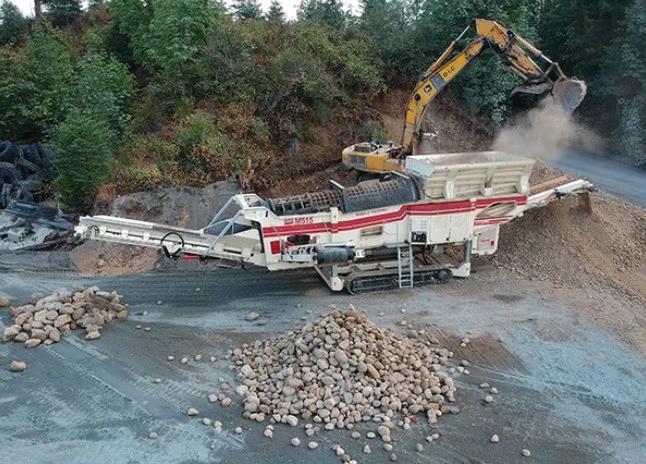

Daily news updates at www.insidewaste.com.au // Capabilities Statements AUGUST/SEPTEMBER 2022 INSIDEWASTE 67 Company Overview: Komptech CEA is the Australasian distributor of Komptech machinery and systems for the treatment and processing of solid waste and organics waste materials for recovery and recycling. Our product range includes over 30 different types of both mobile and stationary machines that cover all key processes in modern waste processing including: • Single-shaft and dual-shaft industrial shredders • Compost windrow turners for commercial operations • Star screen and trommel screen machines • Material separation equipment including windsifters, ballistic separators and stone contaminant separators • Stationary recycling system solutions including shredders, separators and screening machines Brands: • Diamond Z • Screenpod • Trackstack • Rowan • Komptech Core Capabilities: With a specialized product portfolio that includes over thirty different types of machines covering all key processes in modern waste handling, a consultative guiding approach to solution development for customers, and full service aftersales support and parts, Komptech CEA has become a leading supplier to the recycling and waste processing industry. Providing customer value is our focus as we strive to be the industry’s technological leader through continual innovation. Komptech CEA is dedicated to working with you to help you solve your waste problems and identify opportunities with comprehensive, detailed solutions driven by world-class technology. Contact Details: Sydney 50 Skyline HorningseaCrescentPark,NSW 2171 1300 788 www.komptechcea.com.au757 Komptech CEA Melbourne 109 Merola Campbellfield,WayVIC 3061 1300 788 www.komptechcea.com.au757 Brisbane 11 Kiln St, Darra 4076 1300 788 www.komptechcea.com.au757 Adelaide 260 Cormack Rd Wingfield, SA 5013 1300 788 www.komptechcea.com.au757 Perth 230-232 Welshpool Rd Welshpool, WA 6106 1300 788 www.komptechcea.com.au757 Auckland 96 Gavin Street Mt Wellington 1060 0800 435 www.komptechcea.com.au269 Key CraigContacts:Cosgrove Product Manager 0417 320 c.cosgrove@cea.net.au082 Company Overview: With 17 years of experience providing machinery in Australia and New Zealand, CSS Recycling Equipment Solutions is a trusted source of quality Frommachinery.complete plant solutions to ad hoc machinery and technology, CSS Recycling Equipment Solutions takes a client centred approach to maximise waste and recycling operations and deliver improvements right down to the bottom line. CSS Recycling Equipment Solutions encompass applications for C&D, C&I, MSW, General Waste, Organics, FOGO, Biomass / Wood, Scrap Metal, hard to process waste and RDF/SRF. The CSS Recycling Equipment solutions approach is comprehensive, starting with on site reviews of existing processes, machinery and capability, analysis of business objectives, challenges, and end materials. By working closely with clients, CSS EquipmentRecyclingSolutions our exclusive global suppliers and our vast network of operators and manufacturers, we deliver results. CSS Recycling Equipment Solutions are sourced from around the world, are proven and reliable and importantly have been tried and tested in our region and with our unique standards and environment. Products/Services: Specialising in all aspects of reduction, separation and recycling •technology:Complete consultative and collaborative plant design and delivery • Fuel Preparation Technology • Shredding • Screening • Air Separation (Windshifters, Air Knife, Density Separation) • Baling and Shear Baling • Plastics Washing and Preparation • FOGO • Waste to Energy technology Brands: • 3Tek Scrap Metal technologies (USA) • Ecostar Dynamic Screens (Italy) • Ecohog Air Separation Technologies (Northern Ireland) • Hammel Recyclingtechnik (Germany) • Jono Enviro (China) • Vezzani (Italy) Core Capabilities: Collaborate, consult, design, deliver and the supply of high quality equipment and plant solutions for C&D, C&I, Biomass, Organics, Wood Waste, FOGO, MSW, Scrap Metal industries. Source innovative and strategic solutions both within and outside of our stable of equipment solutions, always with the client’s outcome as our focus. Leverage our global relationships and local knowledge to deliver positive business outcomes for our clients and continually improving environmental solutions for Australia and New Zealand. Specialists in: • Hard to process waste and recycling • Mobile and static processing solutions • Manufacture of custom components • High quality and on budget projects Contact Details: CSS Recycling Solutions PO Box 359, Dee Why NSW 2099 Phone: 1800 644 978 Email: info@cssequipment.com.au Web: www.cssequipment.com.au


Daily news updates at www.insidewaste.com.au Capabilities Statements // 68 INSIDEWASTE AUGUST/SEPTEMBER 2022 Company Overview: Leading specialists in metal separation, resource recovery technologies, and developing new recycling strategies and processes. Products and Services: • Magnetic Pulleys & Scrap Drums • Ballistic Metal Separators • Suspended Electromagnets • Eddy Current Separators • Stainless Steel Separators • Fines Metal Recovery Systems • Airless Metal Recovery Systems • Technical Service, Repairs and On-site Inspections Brands: • P-Rex® Scrap Drum • Shred1™ Ballistic Separator • FinesSort® Metal Recovery System • RevX-E Eddy Current Separator Core Capabilities: Eriez designs and manufactures equipment to successfully recover and beneficiate ferrous and nonferrous metals. Identify and remove unwanted metal contaminates to minimise product rejection and maximise product purity. We can help you achieve greater recovery at a higher-grade product delivered at a lower cost per ton. Recover valuable resources from: • MRF, MSW, C & I and C & D, • E-waste, • Tyre recycling and Scrap metal yards, • Energy from waste feed and bottom & fly ash, • Green waste processing, composting and road sweepings Contact Eriez-AustraliaDetails: 21 Shirley Way, Epping, Victoria 3076 Phone: 61-3-8401-7400 Email: sales.au@eriez.com Web: www.eriez.com.au Eriez Magnetics Company Overview: Davis is an industry leader in mobile waste processing in NSW. The company has a range of over 100 pieces of Plant & Equipment on offer for hire or contract in our privately owned fleet. All equipment is modern, portable and efficient. We offer services in Green Waste Recycling, Glass & Concrete Recycling, C&D Shredding, Crushing, Screening, Land Clearing, Mulching, Haulage, Recycled Products & Landscape Supplies. Established in 1975, we are proudly Australian, family-owned and operated, contracting state-wide in NSW. Davis has a reliable reputation and extensive experience gained over 45 years. We are regular contractors for Councils in NSW and have completed tens of thousands of government, civil and commercial projects. For decades we have been delivering high rates of resource recovery. We process, supply and deliver quality materials using innovative and environmentally responsible solutions. We process over a quarter of a million tonnes of material per annum. CEO Eric Davis has in-depth knowledge and experience in sustainable recycling. The company’s focus is recycling and repurposing materials that would otherwise end up in landfill using our high-powered equipment. Our aim is to transform the way the world views and values waste, striving forward towards a circular economy. Products and Services: • Green Waste Recycling • Low Speed, High Speed, C&D Shredding • Crushing & Concrete Recycling • Glass Recycling • Screening • Forest Mulching, Timber & Stump Grinding • Land Clearing, Road Widening & Forestry • Quality Recycled Landscaping Supplies • Plant & Equipment Hire • Bulk & Heavy Haulage Brands: For hire • Low Speed Shredders; Komptech, Pronar • Horizontal Grinders; Diamond Z, Peterson Davis Earthmoving & Quarrying Pty Ltd • Mobile Crushers; Rubblemaster, Metso, Kleemann • Soil & Trommel Screens; Pronar, Metso • Picking Stations; Kiverco • Forestry Mulchers; FAE • Excavators 1.8 to 46 tonne; CAT, Komatsu • Dozers • Rollers, Compactors & Drotts • Wheel & Track Loaders; CAT Posi-Track Core Capabilities: Davis offers high-powered, mobile waste processing equipment for hire or contract in NSW. Our Low Speed Shredders process bulky C&D, logs, palms, carpet, tyres & mattresses with ease. Our Horizontal Grinders process green waste, C&D, timber, stumps & logs. Our mobile Crushers recycle concrete, brick, rock and glass. Mobile and Trommel Screens process soil, timber & green waste. We have equipment available for forestry mulching, subdivisions, road constructions, grubbing, firebreaks. We operate our own service centre for scheduled maintenance and field repairs, this guarantees safety, quality and maximum efficiency for our machinery with minimum down time for our customers. We are dedicated to maximising productivity and efficiently recovering environmentally sustainable and quality recycled products for beneficial reuse. Contact Details: Davis Earthmoving & Quarrying Pty Ltd PO BOX 19 TERREY HILLS NSW 2084 Phone: (02) 9450 2288 Email: davisem@davisem.com.au Web: davisem.com.au


Daily news updates at www.insidewaste.com.au // Capabilities Statements AUGUST/SEPTEMBER 2022 INSIDEWASTE 69 Company Overview: Garwood International a 100% Australian owned & family operated business. All equipment purchased from Garwood International is supported via our comprehensive aftermarket services. With our head office located in Sydney, we also have Service and Sales in Melbourne and Brisbane. We can partner with any of your existing service providers Australia wide. Products and Services: GARWOOD Garbage COMPACTORS Rear, Side, Dualpact & Front Loaders. • Footpath Sweepers • Tow Behind Trailer Brooms • Bin Weighing Systems • Enviroweigh, LoadWeigh and VOPS™ 2 bin weighing equipment Core Capabilities: Garwood International has grown to become a leading designer, manufacturer and distributor of specialised waste and recycling collection and compaction equipment. The company’s reputation for high quality, innovative products, together with its enviable record of outstanding customer service and after-sales support, has delivered strong and consistent growth over the past three decades both in Australia and Internationally. Clients: Our Clients range from City Councils, National and International Airports, Department of Defence to Local Government Sectors and Private Contractors. Contact GarwoodDetails:International Ph: 02 9756 3756 3 Hexham Place, Wetherill Park, NSW, 2164, Australia Website: www.garwoodinternational.com.au Garwood International Applied Machinery Contact Details: 55-61 Nissan Drive Dandenong VIC 3175 Phone: 03 9706 8066 Email: sales@appliedmachinery.com.au Web: www.appliedmachinery.com.au Company Overview: Applied Machinery is one of Australia’s largest suppliers of quality recycling machinery. Over 30 years industry experience enables us to deliver turnkey solutions for all manner of recycling applications across Australia. Products and Services: • Shredders and granulators • Plastic washing, tyre, and e-waste recycling plants • Repelletising systems/screen changers • Polystyrene recycling machines Brands: • Genox • Polystar • Fimic • Greenmax Core Capabilities: Applied Machinery has the capability to service the smallest single machine requirement, through to the largest of multi-site, staged installations and complete recycling line, turn-key projects. We supply some of Australia’s largest recycling organisations. A wide range of shredders and granulators are always in stock for quick delivery. Recent Projects/Installations: PORT PLASTICS Port Macquarie Polystar Repelletising system and Genox large format shredder to drive recycling operations in the Port Macquarie region and reduce the need for transport of recyclables to metropolitan centres. Diverseco • Truck wheel washes for EPA and road safety compliance. • Automated waste sortation systems: comprehensive and completely automated robotic sortation systems for MRFs. Brands: • Waste Robotics • BinWeigh Core Capabilities: At Diverseco, our core capabilities reside in our ongoing ability to meet and exceed customer requirements through our extensive problem-solving resources: we are ideal partners for any organisation looking to turn their operational problems into new, profitable capabilities. Contact Details: 3309 Logan Road Underwood, QLD, 4119 M: 1300 069 970 E: onboardsolutions@diverseco.com.au W: diverseco.com.au Company Overview: As one of Australia’s leading measurement and automation solutions providers, we at Diverseco pride ourselves on the sheer scope of our problem-solving expertise and supply of industry leading innovative technologies. We are heavily involved across a wide range of industries, with a comprehensive solutions portfolio specific for the waste management industry that includes both driver-specific solutions and robotic automation solutions for material recovery facilities. Products and Services: • Waste vehicle on-board payload optimisation and overload monitoring (Chain of Responsibility and legal-fortrade operations).
MRA Consulting Group detailed and practical advice to support your waste and resource recovery needs. Core Capabilities: Customised advice to all levels of government and corporations. Our objective is to collaborate with you from the initial briefing process through to project development and implementation of solutions specifically tailored to your needs in the fields of: Strategy & Commercial – Innovative and tailored strategies
• Weighbridges and portable truck scales for accurate vehicle weighing and accountability.
Circular Economy – Help move your organisation or material towards a circular economy model Planning & Approvals – Development and planning approvals and licensing services Contracts & Tenders – Preparation, review and assessment
Organics – Business case, collection processing and market development solutions Grants – Scoping, application, writing, review and administration Waste Education – Effective and engaging programs Auditing – Research and compliance audits Carbon – Climate adaptation, ERF reporting and accounting Contact Details: MRA Head Office Suite 408 Henry Lawson Building, 19 Roseby DrummoyneStreetNSW 2047 02 8541 www.mraconsulting.com.auinfo@mraconsulting.com.au6169 Company Overview: MRA is one of Australia’s leading environmental consultancy firms, specialising in all aspects of waste and recycling. We are experts in waste, resource recovery and the circular economy, technology, climate change, carbon and sustainable development. Our vision of the future is one that is both environmentally sustainable and economically rational. With over 35 professionals in environmental science, engineering, law and finance, working across Australia we have the experience and technical knowledge to provide


CooeeWASTEFACILITYDATASOLUTIONS We work with our customers to ensure that Cooee is customised to meet their needs and services. Easy to use, the accurate data from Cooee drives good decisions. You can check waste quantities and revenues at a glance, seamlessly manage tip passes and even work in off-line environments.
waste experience and
with
Recent Projects/Installations: Richardson Road landfill and transfer station. Shire of Harvey. Customisation, installation, training and commissioning of Cooee at the Council’s waste facility. At the Council’s request, their version of Cooee includes operational and compliance facility checklists. These are sent to their Waste Officer to review and promptly act upon if there are any Landfillissues. data systems. Shire of Derby West Kimberley. Due to the remote location of the facilities, Cooee’s ability to operate in an off-line environment is important. Cooee provides up-to-date account holder transactions for prompt invoicing. team decades of dedicated data ensure that Cooee is set up to meet each of customer’s circumstances. remaining at the forefront has over 40 years of experience in the Australian market with nine branches across Australia and over
of compressed air, critical power generation solutions. CAPS offers capital sales, rental equipment, engineering & manufacturing, service and parts. CAPS
engineers who
170 employees, including 60 service technicians covering the full national footprint with a 24/7 service offering. CAPS is an independent company with the flexibility to search globally for the best products and technologies that best serve the Australian market’s needs and unique conditions.CAPShas world-renowned partner brands such as Ingersoll-Rand, KOHLER/ SDMO, AIRMAN, Sauer, Pedro Gil and many more.CAPS has in-house engineering capabilities, able to customer engineer any equipment to your needs and specifications. Back this with our Australian ISO 9001 accredited manufacturing facilities, CAPS can provide the complete end-to-end solution. Products & Services: • Power Generators • Air Compressors • Dryers • Blowers • Spare Parts • 24/7 Servicing • Engineering services • Rental / Hire Products & Services: • KOHLER/SDMO • AIRMAN • INGERSOLL-RAND • TEKSAN • SAUER • BEKO • DEEPSEA Core Capabilities: CAPS Diesel Generators; together with KOHLER are tailored designed to meet onsite limited real estate; featuring superior transient performance; maximum reliability; low specific fuel consumption CAPS Australia & market leader with high power density for various segments. Our portfolio covers high speed diesel generators up to 4600kVA (50 Hz); available with different voltage configurations; packaged either in a purpose-built acoustic enclosure or plant roomStandbyinstall.Diesel Generators guarantee energy security for waste to energy facilities; to prevent critical process sudden shutdowns; which are termed detrimental to both equipment & revenue generation.TheCAPS Diesel Generators are engineered; tailored built to deliver superior performance but also meet stringent requirements related to real estate; load acceptance & noise performance; together with in-house engineering & local partners. Contact Details: CAPS Australia 185 Planet Street Welshpool WA 6106 Phone: 1800 800 878 Email: Website:info@caps.com.auwww.caps.com.au Key NestorContacts:DeNiese National Sales Manager – Power Number:Generation+61 8 6250 9871 Email: nestor.deniese@caps.com.au
Daily news updates at www.insidewaste.com.au Capabilities Statements // 70 INSIDEWASTE AUGUST/SEPTEMBER 2022 Australasian Specialty Coatings Products and Services: Flooring (Epoxy and polyurethane) – Commercial & Industrial Floor Resurfacing, Concrete Remediation, Concrete Repair, Anti-Slip Flooring, Anti-Static Flooring, AGV Flooring, Self-Levellers, Demarcation & Line marking Coatings for Concrete Densifiers, Waterproofing Membranes, Sealers, Concrete Resurfacing, Epoxy and Polyurethane Flooring, Chemical Bund Linings, Acid-Resistant Coatings Protective Painting Services Abrasive Blasting, Vapour Blasting, Shot-Blasting, Corrosion Control Coatings, Chemical Resistant Coatings Contact Details: ASC Head Office 1/14 Chicago Avenue Blacktown, NSW 2148 Phone: 02 8840 8888 Email: enquiries@acoatings.com.au Web: ascoatings.com.au Company Overview: Australasian Specialty Coatings – ASC – is an experienced coatings company located in Blacktown. We work in Construction and Maintenance and provide a range of Protective Coatings and Treatments for Concrete & Steel. We have been established since 2003 and we have a strong track record in achieving outstanding results for our customers. ASC successfully works with a wide variety of customers including Sydney Water, Ericsson, Veolia Environmental and Water Services, Suez Water and Waste Services, Unilever, Coca Cola Australia, General Mills, Bega Foodservice, George Weston Foods, Diageo, etc.
Therefore, saving our customers from frustration and wasted time and money. Products and Services • Cooee – Waste Facility Data Solutions, inc: • Conversion of volumes to tonnage by waste type • Manage and monitor tip pass use • Account holder management & invoicing • Compliance data capture and reporting • Operational oversight. Company Overview: CAPS Australia is a privately owned and proud Australian company intent on
ASC is an experienced organisation with ISO 9001, 14001 and 45001 Certified Management Systems as well as the NSW Government 5th Edition. We are also members of the Master Builders Association.
Contact Details: East Coast Office 0447 393363 West Coast Office 0422 525 985 cooeedata.comsolutions@cooeedata.com Company Overview: We have a great
our
unique needs and
Cooee - Waste Facility Data Solutions Core Capabilities:


Daily news updates at www.insidewaste.com.au // Capabilities Statements AUGUST/SEPTEMBER 2022 INSIDEWASTE 71 Spartel Pty Ltd aspects organic waste processing from waste generation to soil beneficiation products, technology, process data processing and control, odour prevention and control Products and Services: • FABCOM® Tunnel compost plants • FABCOM® MAF composting system • Wireless data transmission and processing over a 2 km radius • Aeration controlled by process data • Remote access process control • Design and construct of compost plants • Development and optimisation of compost process and products • ODOROV™ effective odour control agent for organic waste • High nitrogen composts (4% N) Recent Projects/Installations: : FABCOM® MAF SUEZ Newcastle Raymond Terrace NSW Dedicated FABCOM® MAF aeration system for post Bedminster compost maturation & drying; Capacity 10,000 tpa Contact Details: Harrie - 0414 37 66 99 E: info@spartel.com.au W: www.FAB-COM.com.au Company Overview: Spartel Pty Ltd was founded in 1995 by Dr Harrie Hofstede, specialist waste management scientist in waste composting and pollution control. The company has a consulting arm, Hofstede & Associates, and waste technology R&D programme under the umbrella. The R&D has resulted in six patents in international markets. We have designed and developed two main large-scale composting systems under the FABCOM® Brand. FABCOM® Tunnels and the FABCOM® MAF system. Core Capabilities: The overall core capability is all OrFABCOM®ganicsUnder Control© www.FAB-COM.com.au Contact ResourceCoDetails:Head Office Level 1, 162 Fullarton Road Rose Park, SA 5067 Phone: (08) 8406 0300 Email: enquiries@resourceco.com.au Web: www.resourceco.com.au Company Overview: ResourceCo (RC) is a global leader in the recovery and re-manufacture of primary resources, extracting maximum value from materials otherwise destined for landfill. Recent ERSKINEProjects/Installations:PARKPLANT
Operations commenced at Tyrecycle’s (RC’s new multi-million-dollar plant at Erskine Park in Sydney, producing in excess of 10,000 tonnes of rubber crumb for the construction industry, generating 40,000 tonnes of TDF, and providing a local circular economy solution to rubber
waste. ResourceCo Products and Services: • C&D & C&I Recycling • Disposal, Treatment & Management of Contaminated Soils • Renewable Energy & Alternative Fuels • Tyre & Waste Rubber Recycling • Recycled Construction Material Brands: • ResourceCo Pty Ltd • Southern Waste ResourceCo • Cleanaway-ResourceCo • Veolia-ResourceCo • Tyrecycle Pty Ltd Capability statements are a popular medium in Inside Waste that give the industry an insight into your business –how it can help potential clients, the services you offer, and products you sell. If you want access to all the major stakeholders in the waste industry then a Capability Statement is a great introduction to those decisionmakers, allowing your business to get a crucial foothold in a competitive market. GET YOUR STATEMENTCAPABILITYINNOW! If you want to know more about Capability Statements and how they can help your business Contact Chelsea Daniel-Young: Email: Chelsea.daniel@primecreative.com.au | Ph: 0425 699 878
tyre recycling division)


72 INSIDEWASTE AUGUST/SEPTEMBER 2022 Product Profiles - Earthmoving and Organic Equipment // Daily news updates at www.insidewaste.com.au Application: Green Waste Mulching, Timber Grinding, Wood Waste and Organics Recycling (additionally Land Clearing & Landfill Management) Suitable material: For processing trees, palms, logs, stumps, vegetation, green waste, brush, land clearing debris, mixed woody feedstocks and organics Finished product size: Superior particle size control, fine products, mulch Features: Mobile, track mounted, remote control, high lift feed roll, magnetic head pulley Unit Dimensions: Feed opening 152 x 102 cm Weight: 43 tonne Drive Type: PT Clutch Motor: CAT C27 Speed: High speed 1,050 HP Price: FOR HIRE OR CONTRACT. Rates available. Contact for more information: Davis Earthmoving & Quarrying Pty Ltd Phone: 02 9450 2288 Email: davisem@davisem.com.au Web: davisem.com.au Application: Green Waste Mulching, Timber Grinding, Wood Waste and Organics Recycling (additionally C&D Shredding & Landfill Management) Suitable material: Trees, palms, logs, stumps, vegetation, green waste, brush, land clearing debris, mixed woody feedstocks and organics (Additionally Mattresses, C&D, tyres, carpet, green waste, municipal industrial waste, bulky materials, pallets, light scrap). Features: Mobile, track mounted, remote control, twin shaft Weight: 26 tonne Drive Type: Hydraulic Motor: CAT C9.3B Price: FOR HIRE OR CONTRACT. Rates available Contact for more information: Davis Earthmoving & Quarrying Pty Ltd Phone: 02 9450 2288 Email: davisem@davisem.com.au Web: www.davisem.com.au HIREFORLTDPTYQUARRYING&EARTHMOVINGDAVIS HIREFORLTDPTYQUARRYING&EARTHMOVINGDAVIS PETERSON 5710C HORIZONTAL GRINDER FOR HIRE PRONAR MRW 2.85G TWIN SHAFT LOW SPEED SHREDDER FOR HIRE Unit Dimensions: Overall length of the unit - 16,000mm Overall Width over tracks – 2,900mm Overall Height in working position – 4,400mm Overall Height in transport position – 3,700mm Weight: approx. 24,000 kg No. of units in range: 2 units (2F & 3F) Finished product size: +100mm13mm0-13mm-100mm Options/Extras: - Dosage Screw; Tipping grate; Remote control, Volume enlargement for hoppers, Wind shifter for residual material - Manually adjustable retention plate in the hopper Price: Please call for pricing details More: - Diesel-hydraulic drive - Quick-changing screen decks - Modular design - High throughput - Short set-up times - Low fuel consumption - Simple star speed control at the screen deck, to change particle size in seconds - Separation into up to 4 fractions with tipping/ vibrating grate or wind shifter PhoneName: Number: 1800 182 888 Webpage: www.lincom. com.au Email: sales@lincom.com.auGROUPLINCOM Neuenhauser SuperScreener 3F Application: Green Waste Mulching, Timber Grinding, Wood Waste and Organics Recycling (additionally Land Clearing & Landfill Management) Suitable material: For processing trees, palms, logs, stumps, vegetation, green waste, brush, land clearing debris, mixed woody feedstocks and organics Finished product size: superior particle size control, fine products, mulch Features: Mobile, track mounted, remote control, quick screen change, reversing fan Unit Dimensions: Screen Area 3 square metres Weight: 52 tonne Drive Type: Fluid Coupling Drive Motor: CAT C27 Speed: High speed 1,050 HP Throughput: Up to 131 tonnes per hour Price: FOR HIRE OR CONTRACT. Rates available. Contact for more information: Davis Earthmoving & Quarrying Pty Ltd Phone: 02 9450 2288 Email: davisem@davisem.com.au DIAMOND Z DZH 6000TKT Horizontal Grinder FOR HIRE HIREFORLTDPTYQUARRYING&EARTHMOVINGDAVIS


73Daily news updates at // Product Profiles - Earthmoving and Organic Equipment Unit Dimensions: 5635mm (L) x 2520mm (W) x 2670-4250mm (H) Weight: operating weight 12t Capacity (in weight): 5.5t lifting capacity Options/Extras: multi-functional capability via tool change technology; the 355E is able to utilise a variety of attachments including buckets, shovels, fork tynes, waste and sorting grapples. Pacific Materials Handling stock a range of attachments to suit your application. Price: please contact us for pricing More: • 8.5m stacking height • Heavy duty crane boom • Hydrostatic HD transmission • Smallest turning circle on the market • 2 wheel, 4 wheel and crab steering available • Driver eye height up to 4.5m • Highest level of visibility and safety • Z-kinematics offering break away force similar to much larger wheel loaders Name: Andrew Browne Phone Email:Webpage:Number: Sennebogen 355 E Series multi-line telehandler HANDLINGMATERIALSPACIFIC HANDLINGMATERIALSPACIFIC Unit Dimensions: 4790mm (L) x 2500mm (W) x 3245-5880 (H) Weight: 24t Capacity (in weight): See load chart No. of units in range: the 821E Series material handler comes in a mobile, tracked, fixed configuration and has a variety of boom options with maximum reach ranging from 9m-13m. Options/Extras: Boom and sick combinations, undercarriage options –wheeled, tracked, fixed, heavy duty, pylon, motor options – electric, diesel tier 3 or tier 4 stage V, hybrid diesel/electric, many cabin, operator and safety feature options available Price: please contact us for pricing More: Maximum visibility – hydraulically elevating operator’s cabin (eyelevel approximately 5.6m), panoramic operator view, dual camera GreensystemEfficiency – save fuel while reducing operating costs High-capacity cooling, automatic reverse fan Powerful hydraulic system, with “HydroClean” allowing hydraulic oil changes out to 4000 operating hours or more Maximum safety – non-slip surfaces, dual camera system, handrailing and operator sliding door and cabin entry platform Name: Andrew Browne Phone Number: 1300 367 554 Webpage: www.pacificmh.com.au Email: sales@pacificmh.com.au or Andrew.browne@pacificmh.com.au Sennebogen 821M E Series Material Handler Unit Dimensions: Popular 60 Litre option - Height 654mm Width 290mm Depth 606mm. Weight: Approx 3 kg Capacity (in weight): Range of options from 40 Litres to 90 Litres per stream. No. of units in range: Extensive range mirroring popular waste streams, including Landfill, Organics, Recycling, Soft Plastics, Glass Only and 10c Refundables. Finished product size: Capacity can be customised depending on waste streams selected. Options/Extras: Available with Australian-certified Compost-A-Pak compostable liners, an internal Bag Holder and Trolley options. Price: Prices vary based on sizes and streams selected. More: 60 Litre Base is made in Australia from up to 100% Post-Consumer Recycled Content commonly collected from Roadside Council Bins. Name: Melanie Barstow SYSTEMSSEPARATIONSOURCE MultiSort Recycling System Unit Dimensions: Height 235mm Width 225mm Depth 225mm Weight: Approx 1 kg Capacity (in weight): Designed to hold approx. 7 Litres of Organic waste No. of units in range: Designed with a full colour Educational In-mould Label, Caddy is customised for each FOGO Program. Several options available in stock. Finished product size: NA Options/Extras: Available with Australian Certified Compost-A-Pak compostable liners, and a range of external household collection bins. Price: Prices vary based on selections and quantities. More: Units are made in Australia from up to 100% Post-Consumer Recycled Content commonly collected from Roadside Council Bins. Name: Melanie Barstow Phone Number: 02 49 537 644 Webpage: kitchen-caddyhttps://www.sourceseparationsystems.com.au/product/ Email: info@sourceseparationsystems.com.au Kitchen Caddy Range (Solid, Vented, Hybrid) SYSTEMSSEPARATIONSOURCE


Wasted Space // Daily news updates at www.insidewaste.com.au
Fixing that broken record
As Mr Ralph rightly points out, what is the point of having a nationally agreed policy on how to manage a scourge like PFAS waste – the PFAS National Environmental Management Plan – when state legislatures can, and do, override it with their own guidelines? Almost makes one wistful for the good old days (devine right of kingsOneanyone?)brightlight to shine from the appointment of the new left-leaning powers that be in Canberra, is that their intrepid leader, Mr Albanese, has announced his government is committed to appointing a federal Environmental Protection Agency. I’m pretty sure most heads of the state EPAs choked on their asbestosenriched tomes of legislation when that little nugget was announced. I think those in the halls of power at the various legislative assemblies keep on looking after their own self-interests instead of the bigger picture. Sure, they can claim they are looking after what is best for their constituents. But the reality is, the Great Southern Land has less than half the population of Old Blighty, yet has six state legislatures and a couple of territory ones, and some of them are even bicameral (yes, even Eton-educated me had to look that one up)! No wonder some within the waste industry feel like they are hitting their collective heads against a brick wall when it comes to legislation. No wonder there is a legislative tangle. No wonder Mr Ralph is frustrated. Will things change? Don’t know, but methinks a national EPA would be a good start. Anyway, it’s G&T time at the local yachtUntilclub.next time.
JB 74 INSIDEWASTE AUGUST/SEPTEMBER 2022
GOOD AFTERNOON SIR, Do you hear that crackling sound, Sir? Anybody born after 1990 wouldn’t have a clue what it is. You and I, of course, know the sound of a broken record when we hear one, don’t we? A broken record is something that the National Waste Recycling Industry Council’s new CEO Rick Ralph is sick of hearing. Finally, somebody whose managed to put down on paper what a lot of people have been thinking but haven’t quite had the panache to so. In a word: fragmentation.Indeed,the reason I use the broken record analogy is because what he is saying is something that has been mentioned many times on these pages, and now Mr Ralph has got it down to a T. You thought the infighting and pushing for position in the Halls of Power in Westminster was a sight to behold. You should see the various environmental Ministers – both state and federal – preening and posing about how great they are doing heading Terra Australis in the right direction in terms of zero emissions, or how they are onboard with how to dispose or reuse waste – whether it be PFAS, organics or construction and demolition debris. If you think the prancing pooches at Crufts have tickets on themselves, wait until you spot one of these pontificating pollies waxing lyrical about how they love the waste industry; how they’re helping reduce emissions from landfills, and throwing money like confetti at new infrastructure projects (or in the recent case of the NSW premier, putting them on hold – which was about as popular as a Vegan at a sausage-eating competition). It is a problem that doesn’t seem to be going away. Another great (bordering on fatal IMO) word used in the piece is ‘disconnect’. And not just between different departments.


Our solutions are based on efficient and environmentally sound in-house technology, and cover the entire life cycle of an Energy-from-Waste facility. Our proven technologies have been part of more than 700 plants worldwide. As a global leader in energy from waste we are proud to be able to say: We deliver. Check our references. Waste is our Energy www.hz-inova.com London, Oslo and Dublin Rely on Our Energy-from-Waste Technology. So Does Perth. Oslo, Norway Dublin, IrelandLondon, United Kingdom Rockingham, Australia


Komptech CEA’s extensive range of products cover all key processing steps in modern waste handling. At Komptech CEA the focus is always on innovative technology and solutions ensuring maximum benefit to the customer. Like to know more? why not speak to one of our team today?
komptechcea.com.au1300788757DELIVERING A GREENER FUTURE
Komptech CEA is a leading supplier of machinery and systems for the treatment of solid waste through mechanical and mechanical biological treatments, as well as the treatment of biomass as a renewable energy source. Komptech CEA is proud to provide innovative solutions for handling waste and biomass.
TERMINATOR Where Function Meets Technology A slow-running, single-shaft shredder suited to all types of CRAMBOwaste. Less Fuel, More Power Ideal for shredding all types of wood and green cuttings.
TOPTURN X The Ideal Combination of Performance and Design With a sturdy frame, powerful hydraulics and large drum, the Topturn X is ready to handle any work situation.
MULTI STAR Screening with a Star Makes waste wood and biomass processing highly efficient.
NEMUS Robust and Reliable Combining the practice-proven virtues of its predecessors with new solutions for even greater AXTORperformance. Shredding and Chipping Made Easy One of the most versatile machines around for processing wood and green cuttings.
SHREDDERS
TROMMEL SCREENS STAR SCREENS WINDROW TURNERS


