As the founder of Premier Sires and the editor of this publication, I believe part of our responsibility as a community is to ask hard questions—even when the answers are neither simple nor universally agreed upon. Lately, a conversation has been quietly, and at times not so quietly, gaining momentum around the rail: Is alcohol playing too large a role at horse shows? And more importantly, does it truly belong there?
Horse shows have always been social spaces as much as competitive ones. They are where friendships are formed, deals are made, and long days often end in gatherings along the barn aisle. For many, a glass of wine or a beer after the last class feels like a harmless way to unwind, celebrate a good ride, or commiserate over one that didn’t go as planned. In moderation, this ritual has long been part of the culture.
But culture, like our sport, evolves.
What concerns many is not the presence of alcohol itself, but the excess of it—and the growing normalization of behavior that blurs the line between relaxation and irresponsibility. Horse shows are, at their core, centered around animals that demand our full attention, respect, and care. They are also environments filled with young riders, impressionable teens, amateurs, and families, all sharing the same space. When alcohol consumption becomes highly visible, disruptive, or unsafe, it raises important questions about professionalism, example, and welfare—both human and equine.
We must ask ourselves: What kind of environment are we creating? One that reflects the values of horsemanship, stewardship, and sportsmanship? Or one that risks overshadowing them?
This is not a call for prohibition, nor is it an attempt to shame or point fingers. It is an invitation—to reflect, to self-regulate, and to consider how our individual choices shape the collective experience. The best barns, the best riders, and the best shows are built on accountability and respect. Those principles should extend beyond the arena.
There is room in this sport for joy, celebration, community, and fun. There is also room for restraint. Finding the balance is up to all of us. This month, we are sharing the stories of two individuals who have chosen sobriety. My hope is that their experiences will give others pause, spark reflection, and remind us that leadership begins with personal choice.
I welcome thoughtful dialogue on this topic and encourage show organizers, professionals, and exhibitors alike to consider how we can foster environments that feel inclusive, safe, and aligned with the values we want this sport to represent—now and for the next generation watching from the sidelines.
With respect and care for the sport we love,
Claire Binkowski Founder, Premier Sires

Written by Elizabeth Arnold
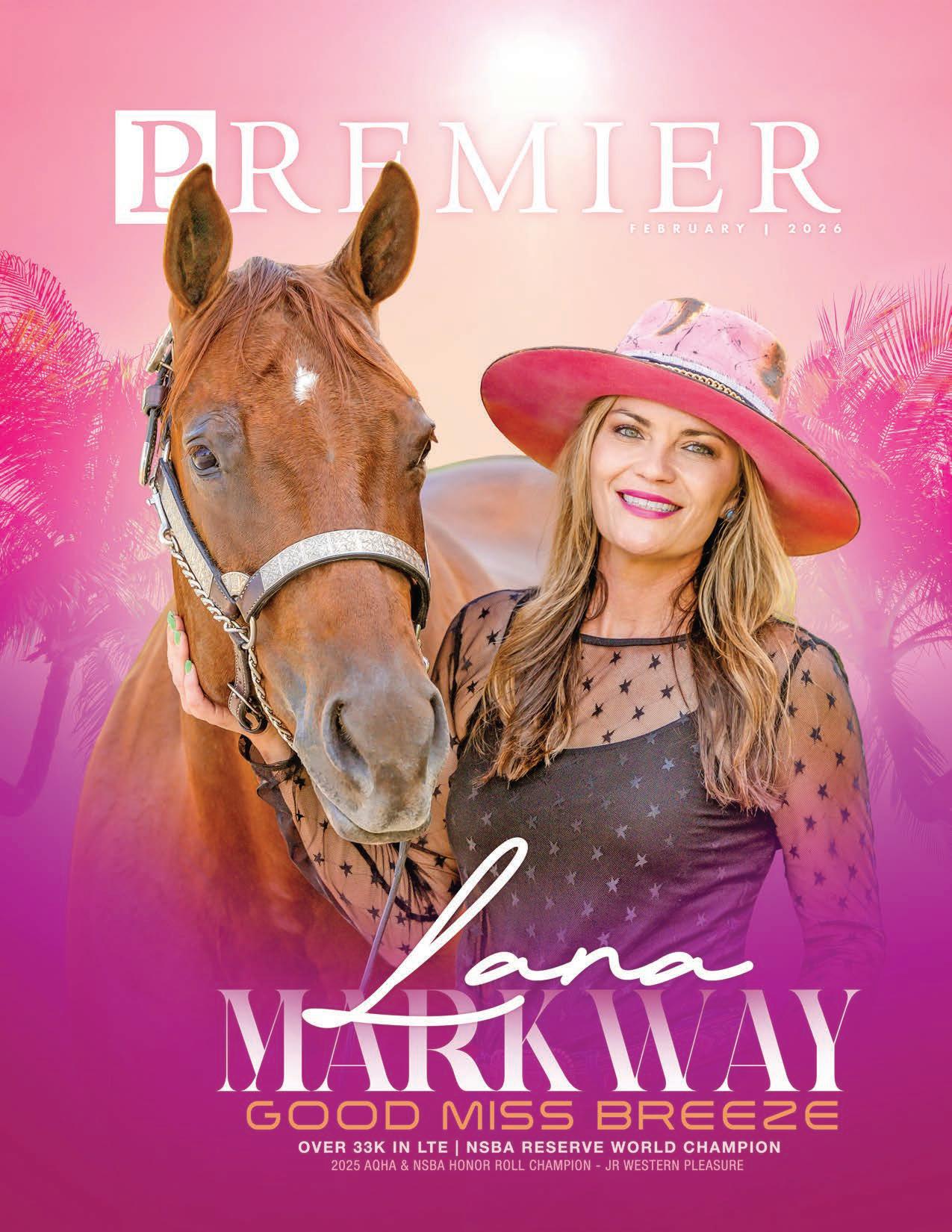
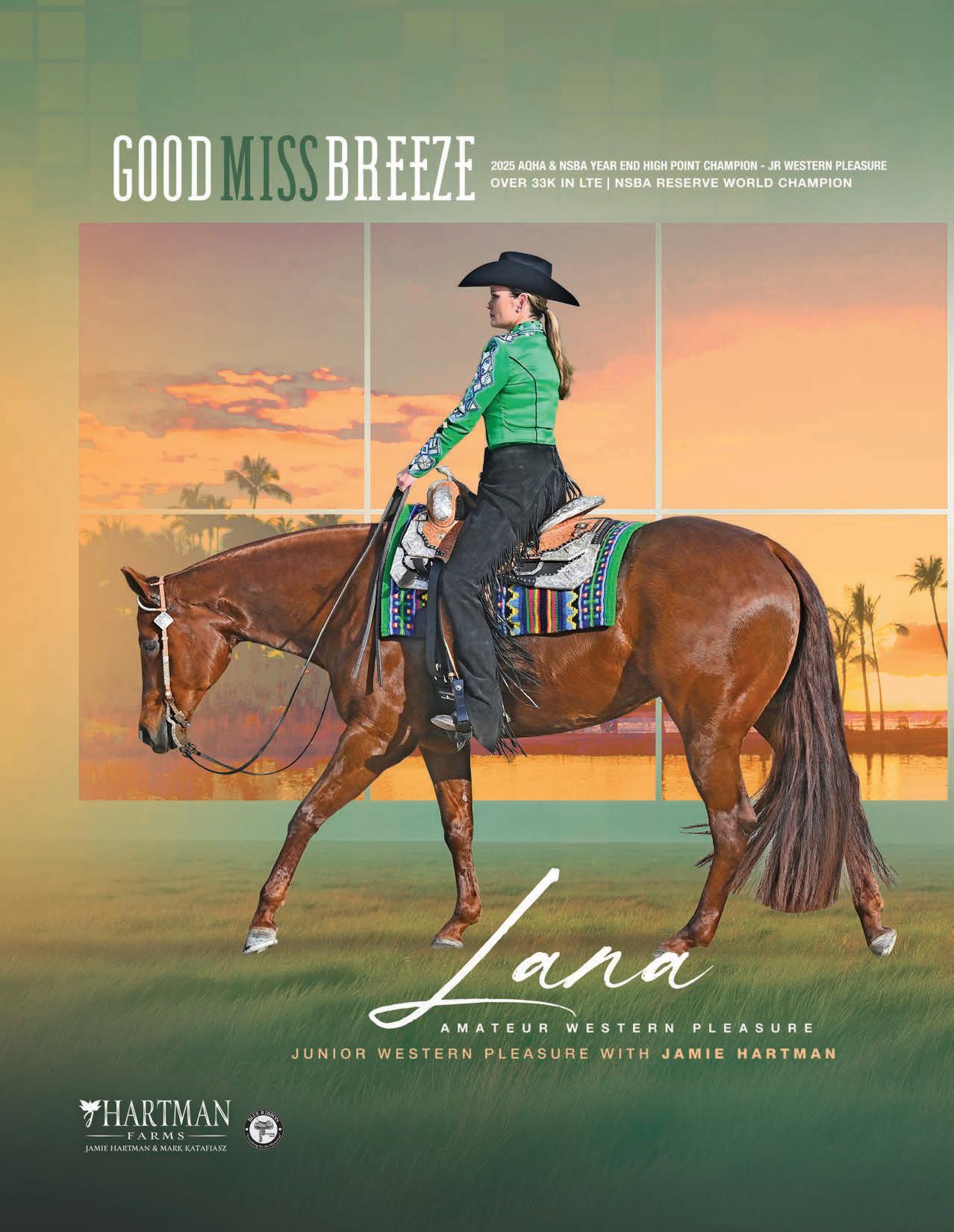
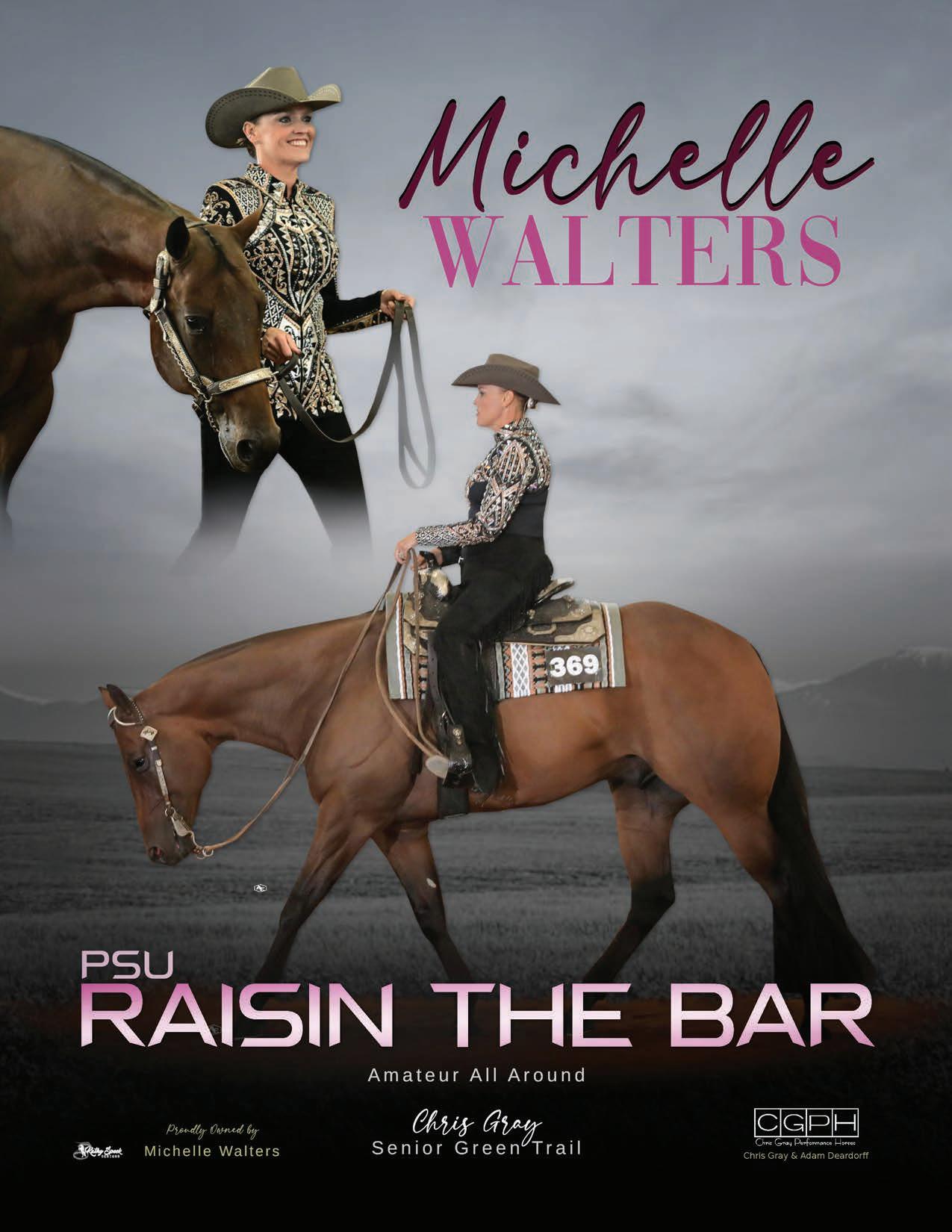
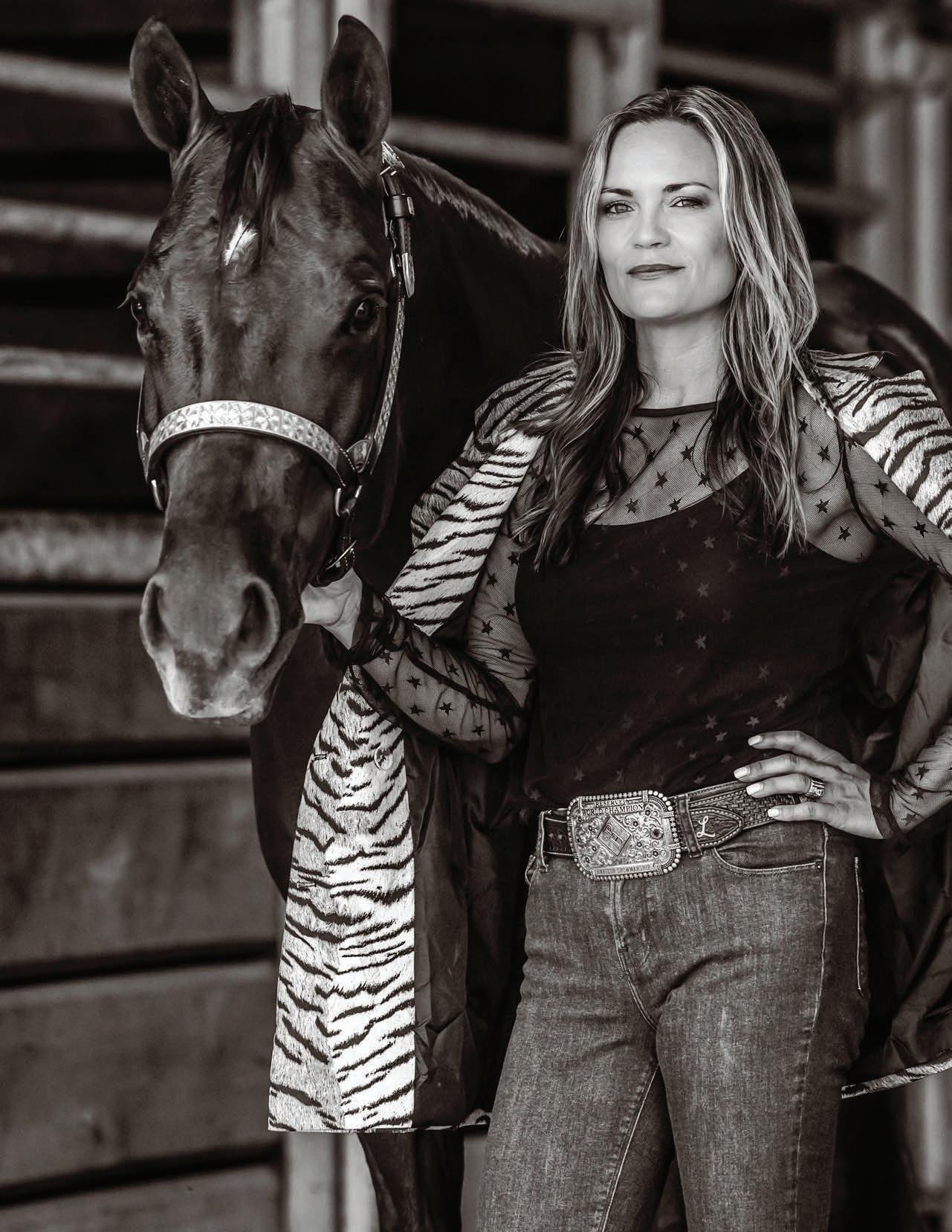
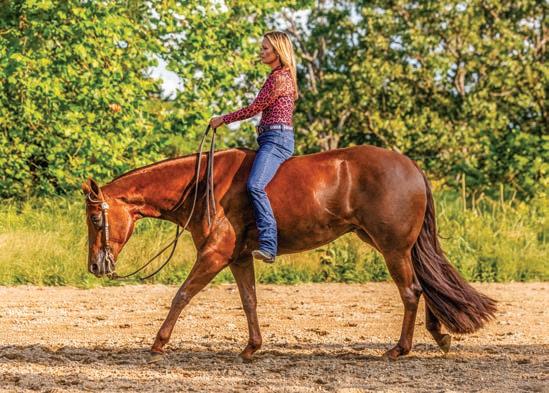
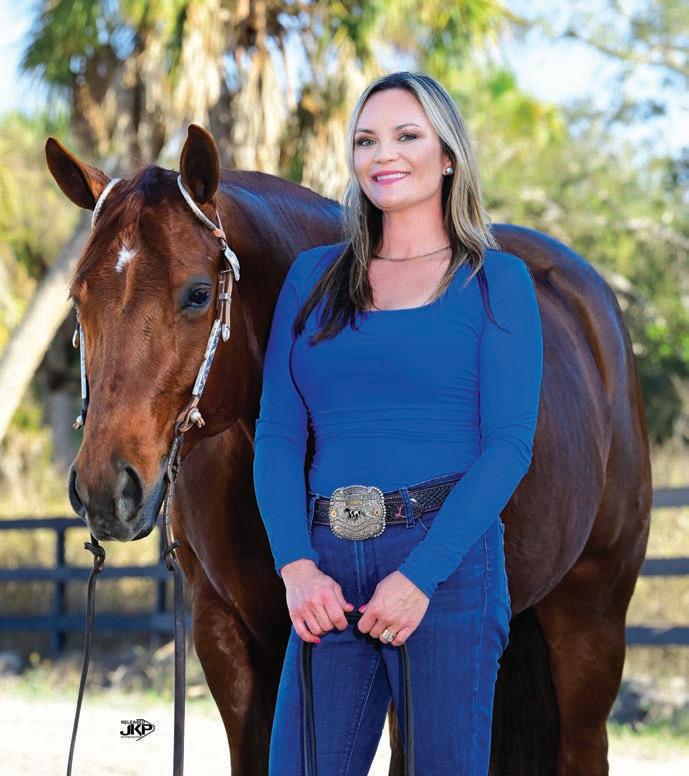
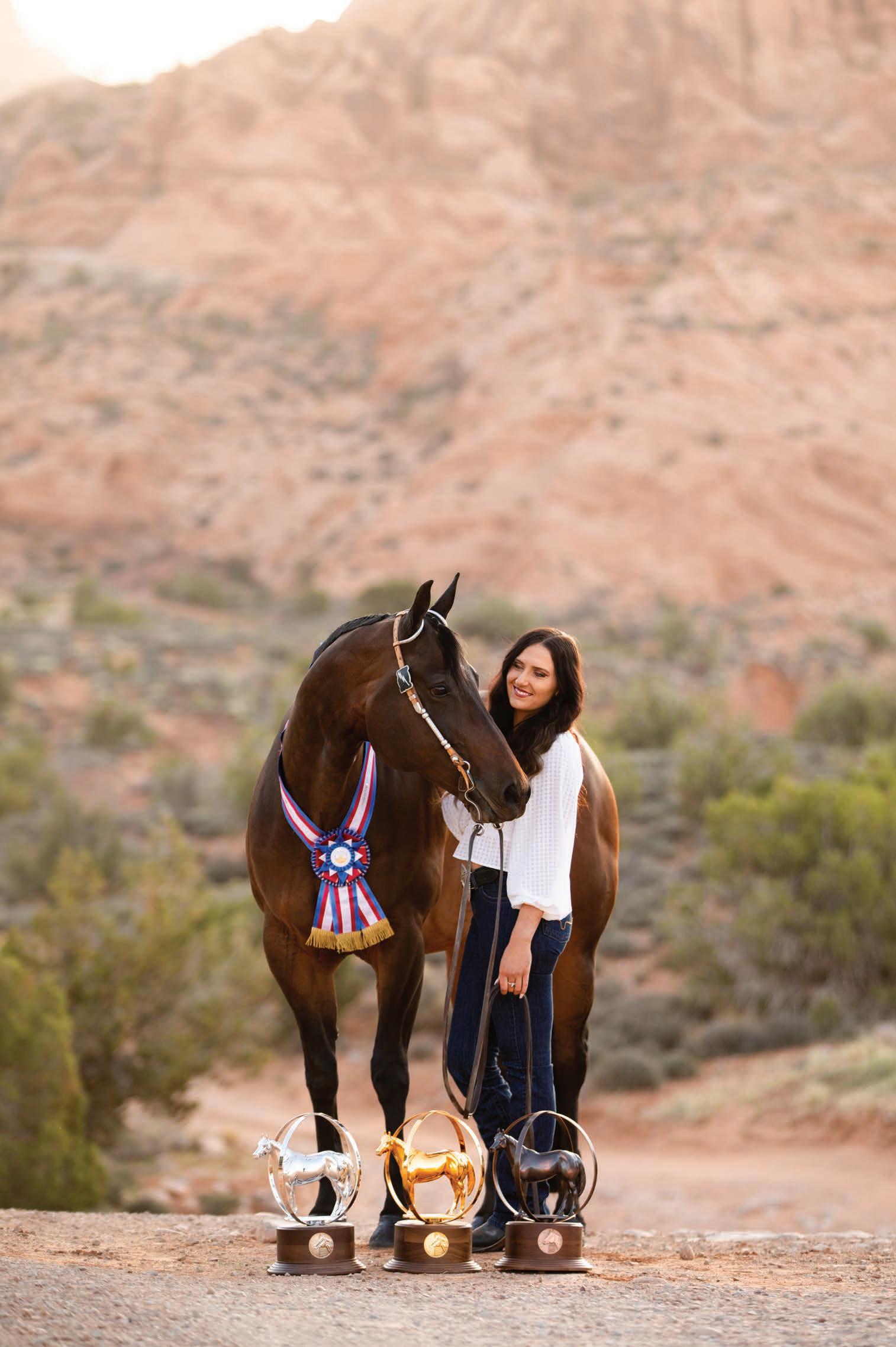
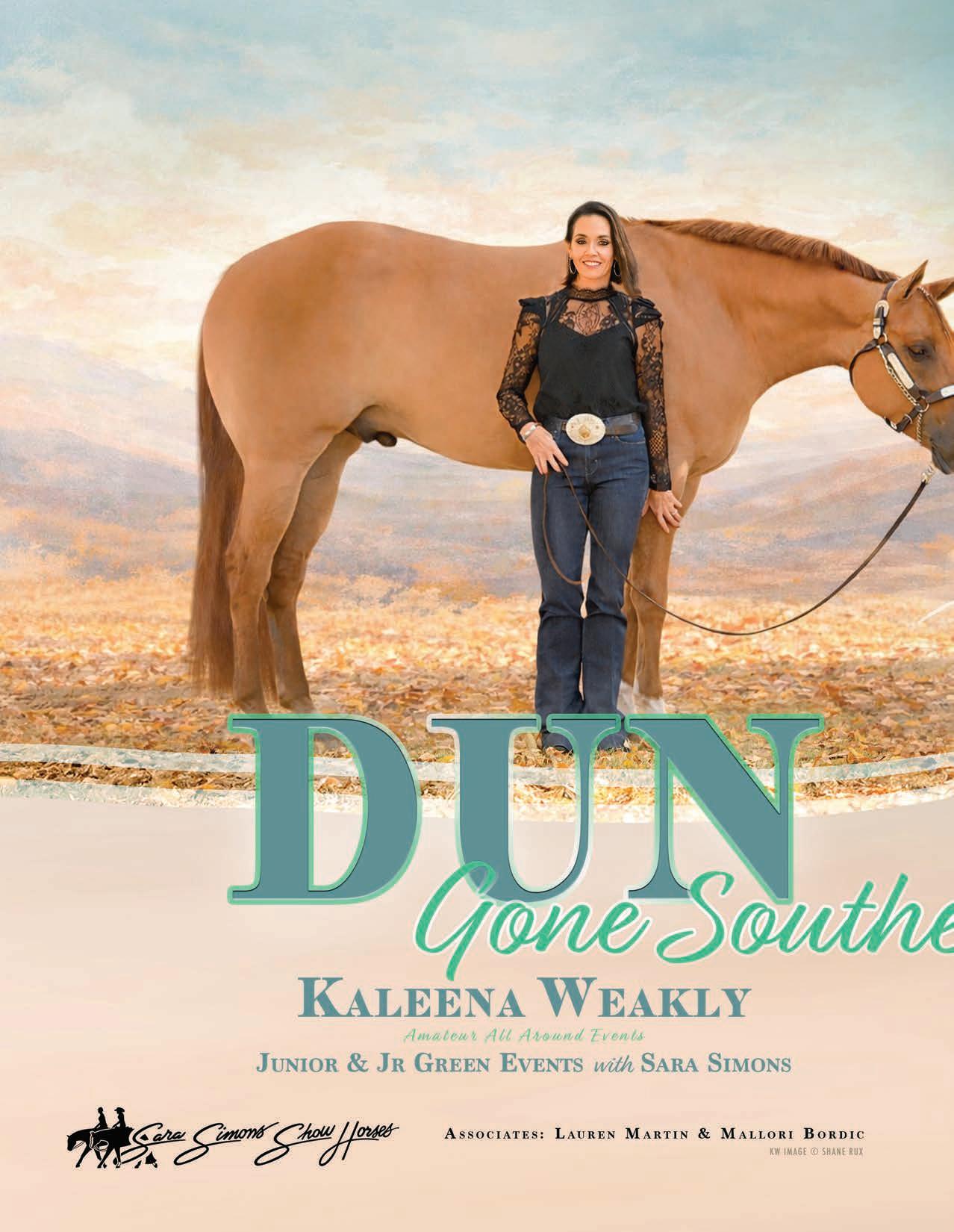
Some horses capture attention instantly. Others—like Good Miss Breeze—rise steadily, reveling their brilliance one stride at a time. For Missouri-based amateur Lana Markway, the 2026 season is shaping up to be her most exciting yet. Paired with the sorrel mare known affectionately as Montana, Lana isn’t just chasing year-end titles and headline wins. She’s building something deeper: a partnership rooted in patience, thoughtful development, and a genuine appreciation for a true all-around horse.
“Last year was really about learning each other,” Lana says, reflecting on her first full season with Montana after purchasing the mare. “She was used to Jamie [trainer Jamie Hartman], and I had to learn her style—and she had to learn mine.”
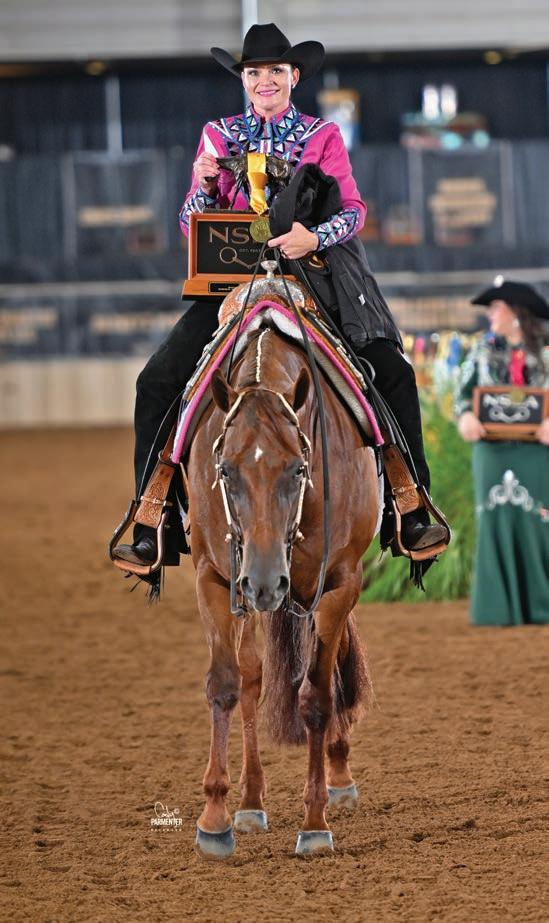
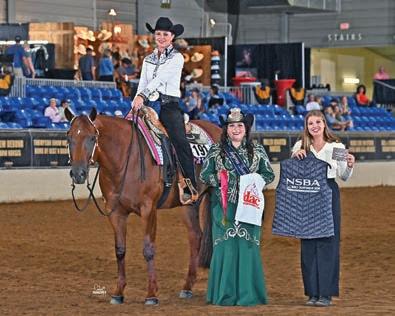
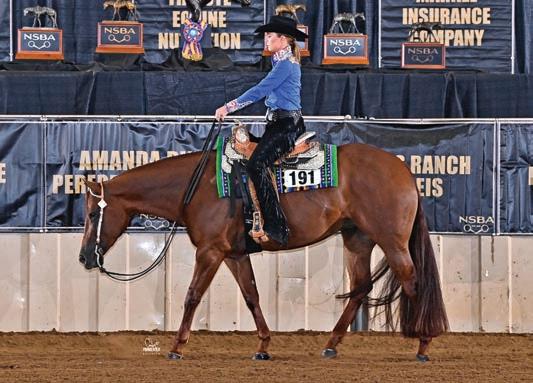
Even during that adjustment period, the now five-year-old mare delivered a standout season in the western pleasure pen. Highlights included a Reserve Championship in the BCF 4–6 Year Old Open at the NSBA World Championship Show, along with bronze placings in the $25,000 Limited Horse, Amateur, and BCF 4–6 Year Old Limited Non-Pro, and a third-place finish at Congress in the Limited Non-Pro Maturity. Despite a relatively small number of appearances, Montana closed out 2025 as both the AQHA and NSBA High Point Junior Western Pleasure Horse.
“She’s matured so much over the last year,” Lana says. “We sent her to the breeding barn and gave her some time off. When she came back, she felt like a completely different horse—fresh, strong, and ready.”
As the pair prepare for 2026, Lana is savoring Montana’s final year of junior competition while beginning to look ahead.
“She’s always had all-around potential,” Lana explains. “She’s got a big stride, a beautiful trot, and such a sweet personality. She just needed time.”
Though Montana has excelled in the western pleasure arena, Lana envisions a future that extends well beyond it. “I think she’ll become a fantastic amateur all-around horse—horsemanship, western riding, maybe even showmanship down the road. She’s that versatile.”
Montana’s significance reaches beyond the show pen. She is out of the late Good Miss Sunny, a respected broodmare whose influence left a lasting mark on the industry. After Good Miss Sunny’s passing, Montana took on added importance—not only as a show horse, but as a future producer.
“I knew I’d regret it if I didn’t have a baby from her,” Lana says. “I want to preserve this line, not just for me, but for the movement and quality it represents. Pedigrees are getting tighter across the industry, and keeping these bloodlines alive matters.”
Over the winter, Montana was bred to a carefully selected group of stallions, including Makin Me Willy Wild, Right Onn, and Gun Smokke. The resulting embryos were frozen with hopes of continuing both Montana’s legacy and that of her dam.
“Makin Me Willy Wild has been incredibly consistent for me,” Lana says. “The ones I have at home are smart, pretty, and easy to train. Right Onn is in Jamie’s barn now. I fell in love with him at Congress. He has the height and strength I want for an all-around horse. And Gun Smokke was Jamie’s suggestion. I trust her completely, and I think he’s an exciting cross for Montana.”
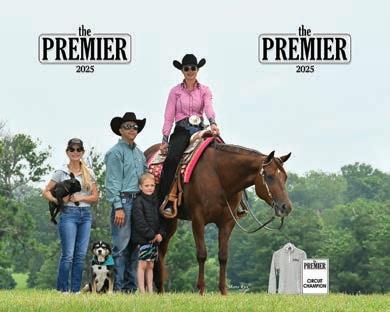
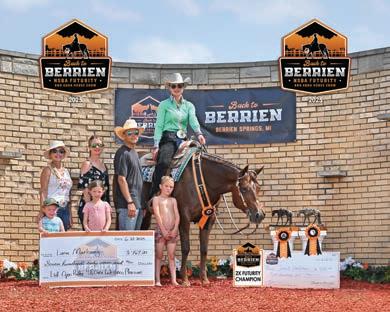
For Lana, success isn’t measured solely by ribbons—though she has plenty to her credit. The 2018 APHA Number One Amateur, she has earned multiple World and Reserve World titles, including APHA Reserve World Championships in Showmanship (2003, 2006) and Equitation (2017). Yet accolades tell only part of the story. Intentional at every step, Lana remains deeply involved in the process, from daily care to thoughtful breeding decisions.
“I love all of it,” she says. “The work, the long drives, the planning. It’s not just a hobby—it’s my passion and something I’m fully vested in.”
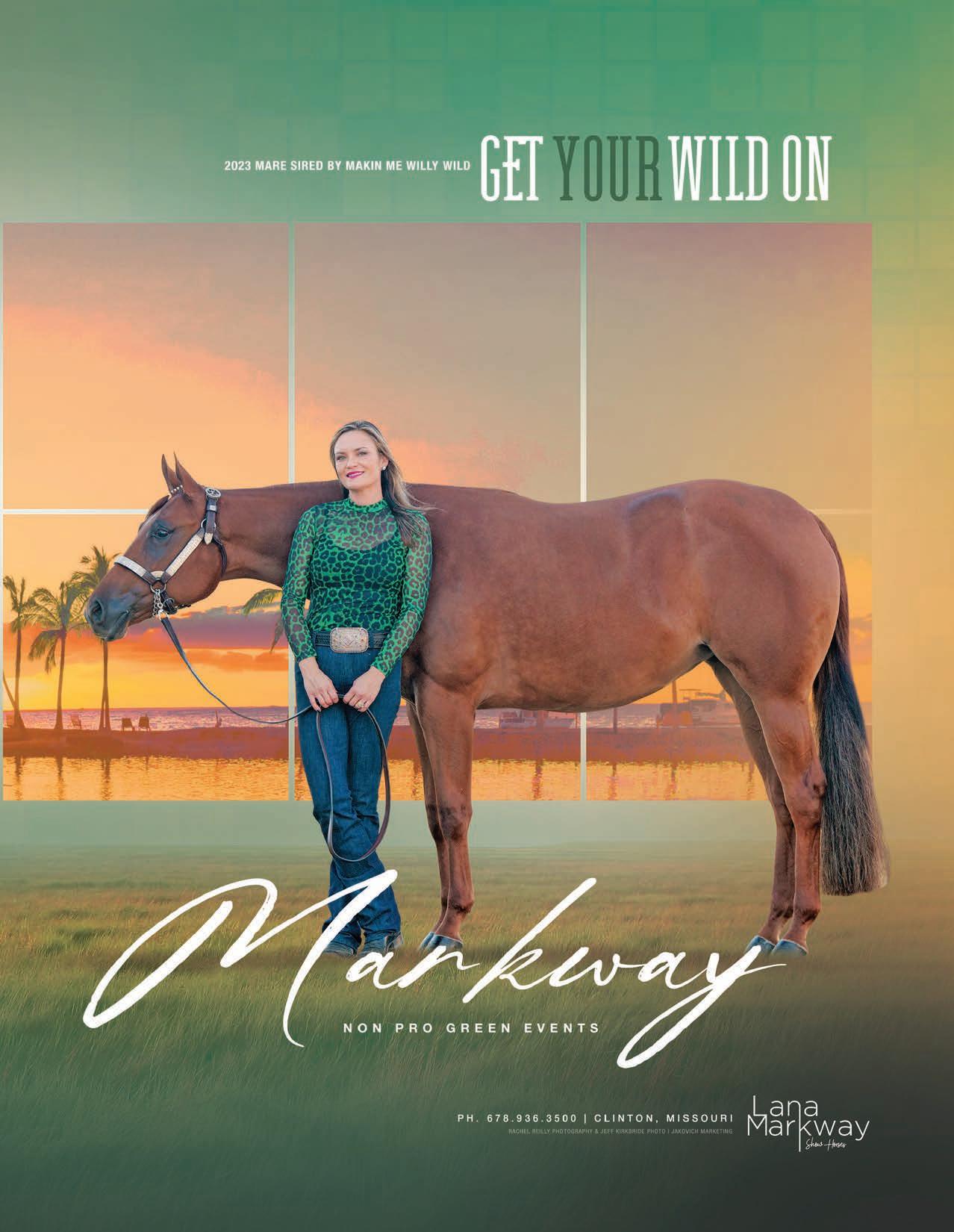
That passion comes through most clearly in the way Lana talks about her horses—especially the younger ones coming up. Get Your Wild On, a promising three-year-old, is preparing for her debut in the green non-pro classes later this spring. “She’s learning her lead changes and is starting horsemanship and equitation,” Lana says. “She was the first horse I ever showed in the longe line, and she truly enjoys being in show pen.”
There’s also Eleven Elevenn, a striking yearling who Lana bred and raised—and briefly offered for sale before realizing she wasn’t going anywhere. “She ended up being doubleregistered, and she’s just too special to let go. I’m excited to start her next year.”
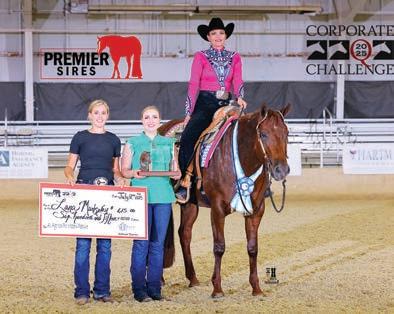

Horses have been—and if you ask Lana, always will be—a constant, anchoring her priorities and shaping the rhythm of her life both in and beyond the arena. Just as she has with Montana, she shares a special relationship with each of her horses, built over time through care, patience, and a deep respect for who they are as individuals.
More than anything, the 2026 season represents a shift in perspective.
“I’ve learned that going slow works,” Lana says. “When you rush a horse, it shows. Montana is proof that patience pays off.”
That change in mindset extends beyond the show pen. For most of her career, Lana has ridden and hauled her own horses, handling nearly every aspect of their development herself. Since purchasing Montana last spring, the mare has been in full-time training with Jamie—a notable adjustment for Lana. Rather than doing everything herself, she’s embraced the value of collaboration, trusting the process and the program while staying deeply involved in Montana’s progress.
“I’ve always been very hands-on,” Lana says. “So having a horse in full training was a bit of a shift for me. But we’ve had a lot of fun, and it’s allowed me to attend some shows I wouldn’t have been able to on my own because of work and other commitments. I’m also looking forward to bringing Montana home eventually so we can start working on the horsemanship together.”
As the season takes shape, Lana remains focused on what comes next. After missing the AQHA World Championship Show last year while Jamie was judging, she’s hopeful for the opportunity to compete there this fall. “I have never shown at
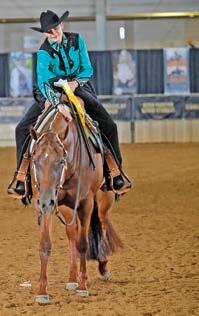
the AQHA World Show, and it would mean a lot to show there,” she says. “Montana feels ready—confident, seasoned, and strong.”
Lana doesn’t shy away from her ultimate goal. “I want her to be a World Champion. That’s what we’re building toward.”
From the outside, Lana’s story may look like a familiar amateur success story—talent aligned with teamwork and timing. At its heart, however, it’s about respect for the horses of the past, thoughtful development in the present, and a genuine appreciation for the process.
“She’s different horse this year,” Lana says of Montana. “And I think I’ve grown a little, too.”
With her focus on the daily work and her eye on the future, Lana Markway is exactly where she belongs—right in the middle of the ride, appreciating every stride along the way.
Photography by Shane Rux Photography, Jeff Kirkbride Photo, Cody Parmenter Photography & Norfleet Photography.



Written by Claire Binkowski
Often the first in the barn and the last to leave, assistant trainers are the steady heartbeat of the horse industry. They carry the weight of long hours, quiet sacrifices, and an unwavering commitment to the horses and programs they help shape. More than a supporting role, they are the future, carrying on tradition while redefining what excellence looks like for the next generation. This series focuses on the assistant trainers who keep the industry moving forward. Because while the spotlight may not always find them, their dedication doesn’t just support the sport—it shapes what it becomes.
Careers in the horse industry are often shaped by defining moments, and for Thomas Lamson, that moment came early. Long before he understood what it meant to be a professional horseman, a childhood connection with an unforgettable horse planted a seed that would grow into a lifelong calling.
Thomas grew up in Randolph, Vermont, a small rural town he describes as “a great place to be in the summer and beautiful in the fall,” though he’s quick to add that in winter “it’s not nearly as nice unless you really like the cold and snow.” It was there, at just four years old, that a chance encounter set the course for his life. His father was working on a dairy farm that happened to have a horse named Atticus, and from the moment Thomas met him, he was smitten.
“Atticus opened up a crucial door for me,” he says. “It was when I first realized I always wanted horses to be part of my life.”
Although his mother had grown up riding, no one in Thomas’ family was actively involved in the equine industry. Looking back, he recognizes just how pivotal that early experience was. “If I had not had the opportunity to ride Atticus, who knows where I would be now,” he reflects. That sense of gratitude has stayed with him. “I’ve tried to carry that sentiment with me—to be thankful for the opportunities I’ve had and confident that things often work out the way they’re supposed to.”
As the years passed, Thomas’ bond with horses deepened. What began as a hobby soon evolved into competing at local shows, then expanded to regional and national events. “As I became more interested in the performance horse world, I knew I wanted to have a job in the equine industry,” he
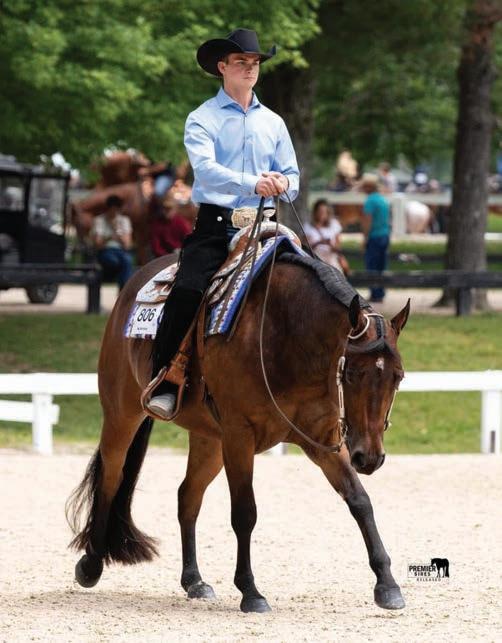
says. “Being able to turn my love of horses into a career has been nothing short of a blessing.”
With his sights firmly set on becoming a horse trainer, Thomas quickly learned that passion alone wouldn’t be enough. He came to understand that talent and ambition could only take him so far—strong mentors would be essential to his growth and long-term success. “Knowing what I know now, I’ve grown to deeply appreciate the wisdom and experience my mentors have shared with me,” he says. “Having mentors in this industry is crucial, and it’s something that I didn’t fully grasp the importance of when I first started.”
Among all his mentors, one stands out above the rest. “Without question, Gretchen Mathes,” Thomas says. “She truly cares about the animal and is a great horsewoman.”
He credits her honesty and high standards for shaping the horseman he is today. “She’s tough on me because she cares, and she continues to push me to be better and learn more.”
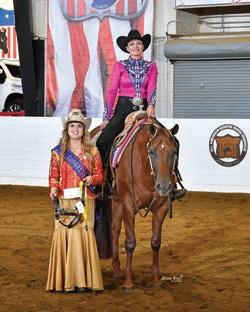
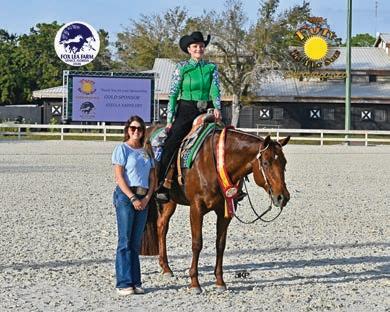
Today, Thomas works for Gene Spagnola (“Geno”) of Powder Brook Farm in Harwinton, Connecticut, where he has been for six years. The opportunity came unexpectedly. While competing at a show in New Jersey during his final youth year, Geno approached him with a job offer. “Having someone of his level and skill seek me out and see potential in me was not only a surprise, but an honor,” Thomas says. “Becoming a horse trainer up until that point was a dream, but Geno helped turn that dream into a reality.”
Prior to joining Powder Brook Farm, Thomas assisted Erin Cecchini of Five Star Performance Horses, where the opportunity to work with hunter and over fence horses expanded his skill set and helped him become a more well-rounded horseman. Just as important, those years instilled lessons that would stay with him throughout his career.
If horses have taught Thomas anything, it’s patience. “No two horses are the same,” he explains. “You need to learn to listen to them. Good things take time. Rome wasn’t built in a day.” That mindset is reflected in the horses that have shaped the most important chapters of his young career.
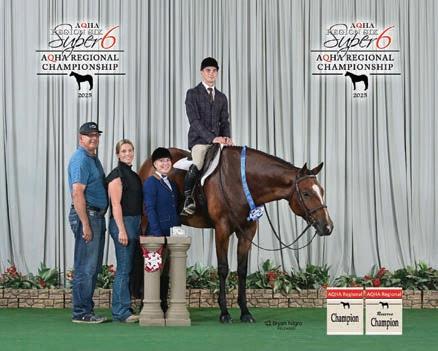
Among those that left an indelible mark are Algorithm, who carried Thomas to Top 15 finish in the Hunter Under Saddle at the Congress, and Best Lopin Machine, the mare who helped him win his first professional trophy and his first AQHA World Championship Show hardware. Perhaps most meaningful, however, was Becuz I Can—the first horse Thomas started entirely on his own and who went on to place Top 10 at the Congress. “You have a special sort of bond with the first horse you start,” he says. “To be able to achieve such an accomplishment was the cherry on top. I was so proud.”
Those moments of success, however, represent only one side of the journey. Behind every milestone is the daily grind of a demanding profession. Being a horse trainer is far from easy, and Thomas is quick to acknowledge the challenge of balancing multiple horses, clients, and responsibilities. Still, the rewards far outweigh the difficulty. For him, the best part of the job is working alongside Geno, whom he considers a model professional horseman. “With Geno, success is never individual,” Thomas says. “It’s something he shares, and he’s constantly uplifting the team around him.”
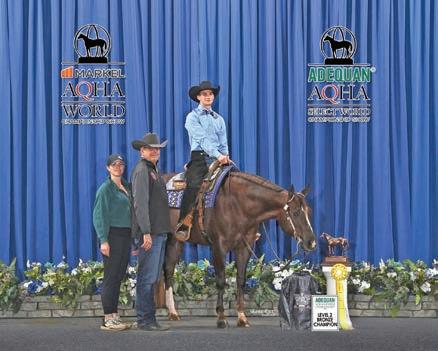
That team-first mindset extends to Thomas’ own accomplishments. His resume includes earning the title of Bronze World Champion in the L2 Senior Trail at the AQHA World Championship Show, along with Top 10 finishes at both the All American Quarter Horse Congress and the NSBA World Championship Show. Earlier on, he also found success in the youth ranks, including a fourth-place finish in the Showmanship at the Congress. Still, he is quick to share the credit. “It takes a village,” he says, echoing the example set by his boss. “No man can do it alone.”
Looking ahead, Thomas dreams of winning the Congress and World Show— and of coaching his clients to those same titles. He also hopes to expand his involvement by earning his judge’s card. At its core, what he values
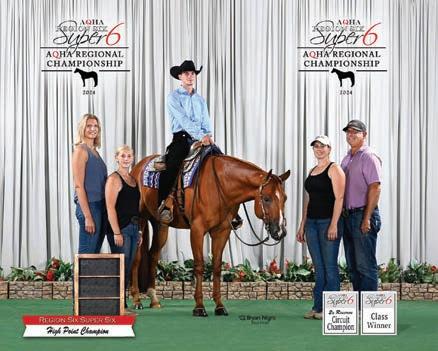
most about the show horse industry is simple: “It gives me an opportunity to make a living doing something I love.”
His advice to those considering the same path is grounded and sincere. “Be open minded. Ask all the questions, listen, and soak it all in,” he says. “Most importantly, stay humble, never give up, and appreciate your team around you.”
From a small town in Vermont to the national stage, Thomas Lamson’s story is one shaped by gratitude, patience, and a deep respect for the horse—and it’s clear he’s only just getting started.
Written by Claire Binkowski
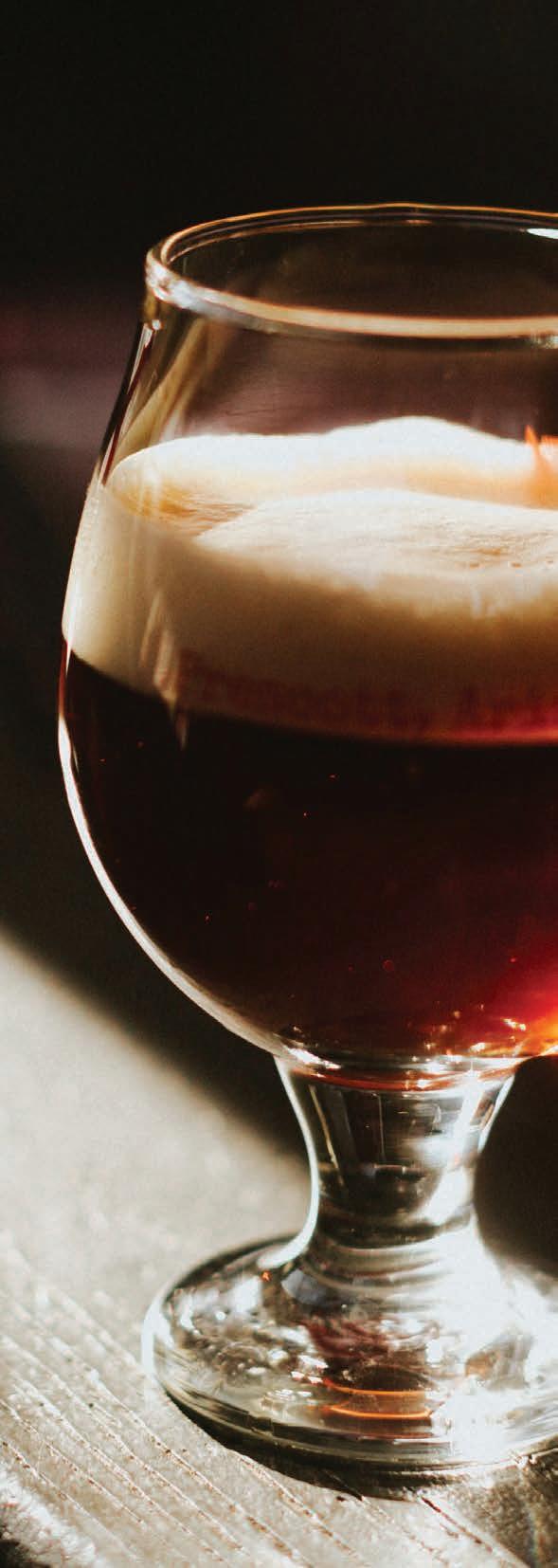
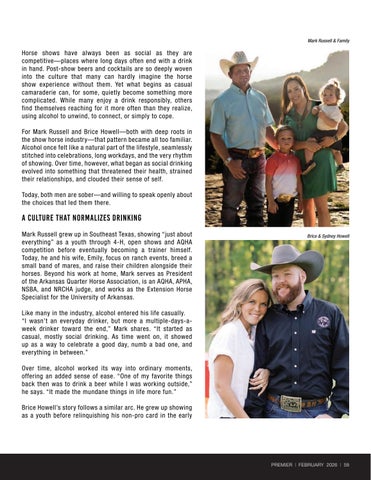
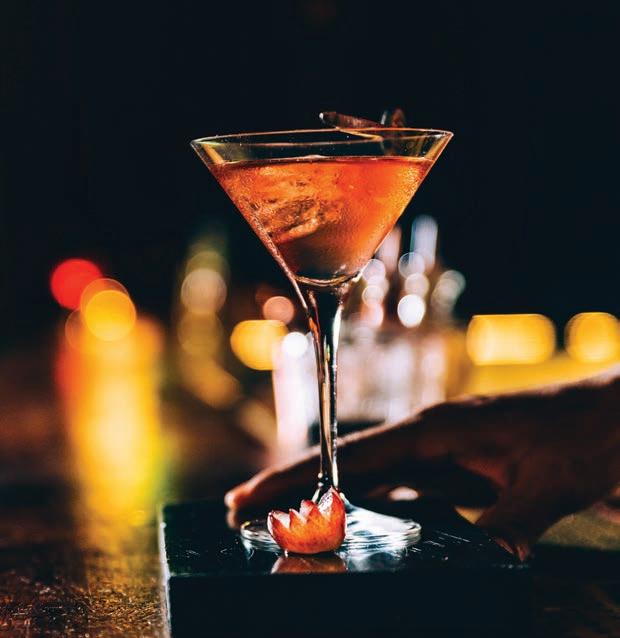
Horse shows have always been as social as they are competitive—places where long days often end with a drink in hand. Post-show beers and cocktails are so deeply woven into the culture that many can hardly imagine the horse show experience without them. Yet what begins as casual camaraderie can, for some, quietly become something more complicated. While many enjoy a drink responsibly, others find themselves reaching for it more often than they realize, using alcohol to unwind, to connect, or simply to cope.
For Mark Russell and Brice Howell—both with deep roots in the show horse industry—that pattern became all too familiar. Alcohol once felt like a natural part of the lifestyle, seamlessly stitched into celebrations, long workdays, and the very rhythm of showing. Over time, however, what began as social drinking evolved into something that threatened their health, strained their relationships, and clouded their sense of self.
Today, both men are sober—and willing to speak openly about the choices that led them there.
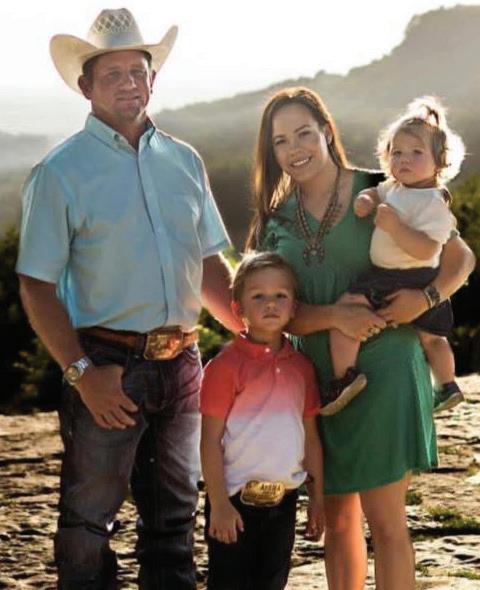
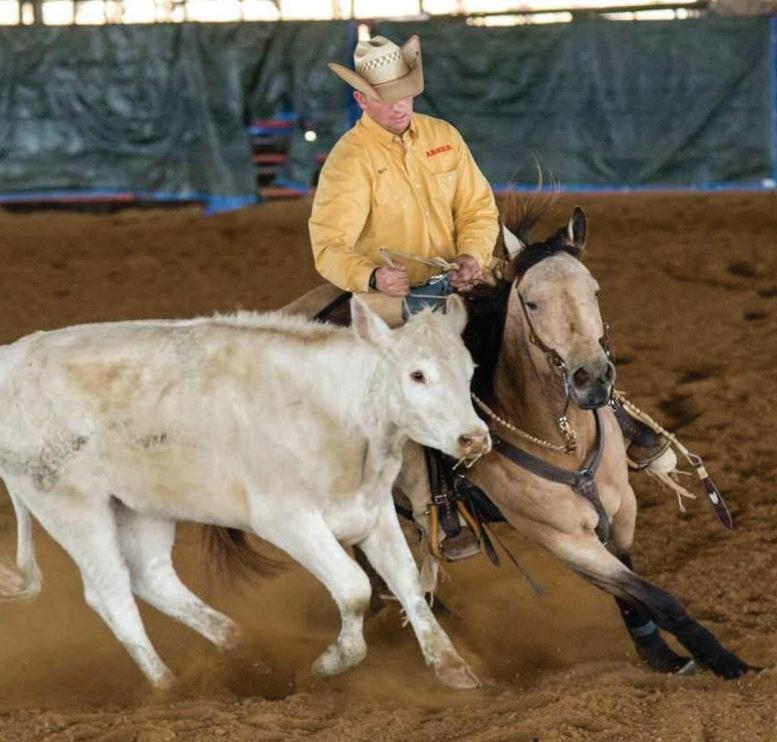
Mark Russell grew up in Southeast Texas, showing “just about everything” as a youth through 4-H, open shows and AQHA competition before eventually becoming a trainer himself. Today, he and his wife, Emily, focus on ranch events, breed a small band of mares, and raise their children alongside their horses. Beyond his work at home, Mark serves as President of the Arkansas Quarter Horse Association, is an AQHA, APHA, NSBA, and NRCHA judge, and works as the Extension Horse Specialist for the University of Arkansas.
Like many in the industry, alcohol entered his life casually. “I wasn’t an everyday drinker, but more a multiple-days-aweek drinker toward the end,” Mark shares. “It started as casual, mostly social drinking. As time went on, it showed up as a way to celebrate a good day, numb a bad one, and everything in between.”
Over time, alcohol worked its way into ordinary moments, offering an added sense of ease. “One of my favorite things back then was to drink a beer while I was working outside,” he says. “It made the mundane things in life more fun.”
Brice Howell’s story follows a similar arc. He grew up showing as a youth before relinquishing his non-pro card in the early
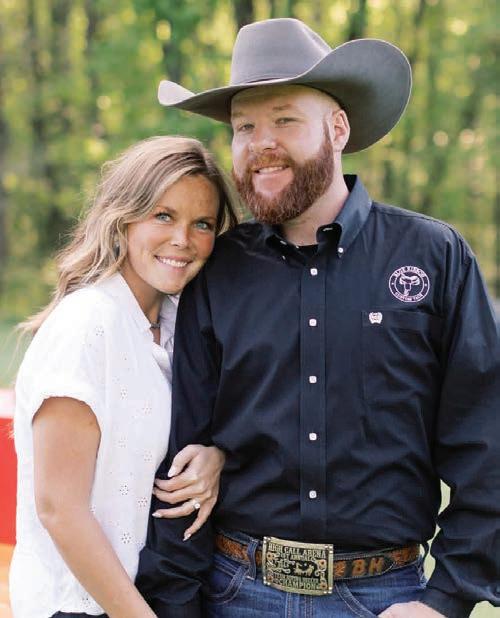
2000s. Today, he works largely behind the scenes, helping producers put on the very events he once competed in, while also balancing life has a husband to his wife, Sydney, and a father to their daughter, Memphis.
Brice says alcohol entered his life in college. “I started drinking in college,” he says. “It went from social drinking to something that was part of my daily life.” Over time, it took on multiple roles—“something to cut loose, a stress relief, and at times even something to help control anxiety.”
In an industry defined by long days, high pressure, and a culture of hospitality centered on entertaining clients, neither man felt particularly out of place in his drinking. In many ways, it wasn’t just accepted—it was expected.
“I feel like society, especially the horse show industry, views drinking as almost a must,” Brice says. “Don’t get me wrong, I loved it more than anyone.”
Mark and Brice are far from alone. According to 2024 data from the Centers for Disease Control and Prevention (CDC), excessive alcohol use is far more common than many people realize. While about 62 percent of adults in the United States report drinking alcohol, 17 percent say they engaged in binge drinking in the past year—defined as four or more drinks for women or five or more for men
on a single occasion—and six percent report heavy drinking, meaning eight or more drinks per week for women or fifteen or more for men. These patterns are linked to increased health and social risks, contributing to an estimated 178,000 deaths each year—nearly 500 every day—along with billions of dollars lost annually to healthcare costs and reduced productivity.
For Mark and Brice, those numbers are no longer abstract. They reflect a culture they lived in—one where drinking was normalized, encouraged, and rarely questioned.
Mark doesn’t describe a single rock-bottom moment. Instead, the consequences crept in quietly.
“As I got older, the alcohol affected me differently,” he says. “I was grumpier toward my kids and started ridiculous arguments with my wife. I also started to get something called ‘hangxiety’ the next morning pretty frequently, which is a combination of anxiety coupled with a hangover.”
What once felt like relief began taking him to “a darker place,” slowly pulling him away from the people who mattered most. “Alcohol separated me from family moments and memories,” he says. “I used to think I could handle moderate drinking, but I couldn’t.”
Brice’s turning point came more abruptly—and nearly cost him his life.
“I was admitted to the hospital for severe pancreatitis caused by heavy alcohol consumption,” he shares. “I spent 8 days in the ICU, and the doctors informed my wife that if I didn’t make major changes, I could die. That was a huge wake-up call.”
Research has long shown that excessive drinking can disrupt sleep, worsen anxiety and depression, impair emotional regulation, and increase feelings of shame and irritability—effects that often linger well beyond the last drink. For both men, sobriety revealed what alcohol had quietly taken away.
“I didn’t know I was missing moments when I was drinking,” Mark says. “What I thought was living in the
moment was anything but that.”
Over time, alcohol had dulled his presence and heightened emotional volatility—a pattern common among people who drink frequently. Sobriety, he says, gave him consistency: rested mornings, steadier emotions, and freedom from the mental burden of replaying what he might have said or done the night before.
“Sobriety has allowed me to get my marriage back on track and be the husband and father God intended me to be,” he says. “Now I’m able to show up as a better partner to my wife and be more present and active with my children. It’s also improved my professional life. I work harder and with more purpose than I used to. The goal used to be rushing through the day so I could reward myself with a beer. Now it’s being grateful for the day and rewarding myself with time with my family.”
Brice’s answer is simpler, but no less powerful. “Peace, honestly,” he says. “I was always looking for my next drink to give me confidence or settle my nerves.”
While alcohol is often used to blunt anxiety, studies show it ultimately worsens stress and anxiety over time, creating a cycle of dependence rather than relief. “I realize now I don’t need a drink to make the next sale or get to the next horse show,” Brice adds.
Both men speak candidly about confidence— how alcohol once felt like a tool, and how sobriety forced them to trust themselves instead.
“I’m an introvert,” Mark says, “so I wrongly thought alcohol loosened me up and helped me to be more outgoing.” Letting go of alcohol meant learning to sit with discomfort rather than escaping it. “You learn that it’s okay to be uncomfortable sometimes,” he says. “Your problems don’t automatically go away when you quit drinking, but you learn to deal with them better.”
Brice echoes that shift. “I am more confident in myself and my abilities than I ever have been without a clouded mind,” he says. “I can be a
good dad, husband, friend, salesman, and employee all on my own—without the help of alcohol to calm my nerves or give me confidence.”
Neither man pretends sobriety removes alcohol from their surroundings—especially at horse shows, where drinking remains part of the social fabric.
“There’s no doubt that alcohol has fueled a lot of bad decisions in this industry,” Mark says. “It’s so widely accepted that I think too many people have gotten too comfortable with it. I know I did.”
Poor decisions aren’t the only concern. In the horse industry, that comfort carries an added layer of risk—one that extends beyond personal choices and into physical safety. Horses weigh, on average, between 1,000 and 1,300 pounds and are prey animals by nature, capable of reacting instantly to perceived threats. Handling, riding, or working around them requires steady judgement, quick reflexes, and constant awareness—skills alcohol is proven to impair.
Alcohol doesn’t need to be consumed in large amounts to influence behavior. Even modest amounts can impair judgement, slow reaction times, and reduce inhibitions, increasing the likelihood of risky or irresponsible decisions. Studies show that low levels of alcohol can affect balance, depth perception, and hand-eye coordination, while also narrowing attention and reducing the ability to process multiple stimuli at once. These effects can occur well before a person feels “drunk” or reaches the legal driving limit.
According to the National Institute on Alcohol Abuse and Alcoholism (NIAAA), alcohol affects the brain areas responsible for decision-making and impulse control, altering how risks are perceived and how consequences are weighed. Even one or two drinks can compromise reaction speed and situational awareness—changes that may seem subtle in everyday settings but can have serious implications in environments where timing, precision, and quick responses matter.
For Brice, those findings put words to what he has witnessed for years at horse shows, where the effects of drinking are visible but too often minimized.
“Social drinking and having a couple to relax is totally fine,” he says. “I am no one to judge. I made a lot of mistakes in my past that I can directly correlate to drinking. I just hope that the ones who are struggling—maybe in the same place I was—get help or at least talk to someone.”
Early on, sobriety required recalibrating expectations. “When I went to places I frequented regularly, bartenders would automatically pour the usual,” Brice says. “People expected me to drink.” Over time, honesty shifted those interactions. “Once I explained the situation, everyone has been super supportive.”
Mark is quick to emphasize that sobriety isn’t about passing judgement on those who do drink. “I’m envious of people who can go out, have a couple drinks with dinner after a long day of work or horse showing, and leave it at that,” he says. “For me, one or two was never easy. Now, nine months sober, I still do most of the same things I did before—just without alcohol—and I actually enjoy the moment for what it is.”
Horse shows will always be social places. Neither Mark nor Brice believes sobriety should be mandatory, nor do they judge those who enjoy a drink responsibly. What they do hope for is awareness—and space for honesty.
“I think there are probably more people out there going through what I was,” Brice says. “I want them to know it’s okay not to drink.”
Mark agrees, noting how easy it is to convince yourself everything is fine. “If someone would have asked me back then, I would have said I didn’t have a problem,” he says. “But deep down, I didn’t feel complete or enough. I think drinking was an attempt to fill a void.”
Their stories are not warnings so much as invitations— to pause, reflect, and ask hard questions without shame. For those quietly wondering whether alcohol has begun to take more than it gives, both men want it known that the conversation doesn’t have to start with a crisis.
“If you’re struggling with alcohol, it doesn’t have to stay that way. The truth really will set you free, but you have to be willing to look it in the eye and fight that battle,” Mark says. “And if you do, every single part of your life will be greatly improved. I’m willing to visit with anyone who wants to talk about getting sober. There will be no judgement, I promise.”
The stories of Mark Russell and Brice Howell remind us that strength and character are not defined by what someone accomplishes in the arena, but by the choices made beyond it—the courage to step away from what no longer serves and toward a life lived with intention. In an industry that often celebrates endurance, excess, and achievement at any cost—where alcohol has been accepted as the norm, flowing freely and without question—their journeys make room for a different kind of bravery: one rooted in self-awareness, responsibility, and the quiet resolve to show up fully for the people who matter most, and for the moments that can never be replayed.

In honor of Valentine’s Day, we asked some of the industry’s favorite couples—those who train together or balance a trainer/non-pro dynamic—what the secret is to building a successful partnership when love and livelihood share the same arena. From communication and trust to boundaries and balance, these couples open up about what it takes to build a strong relationship both in and out of the ring.
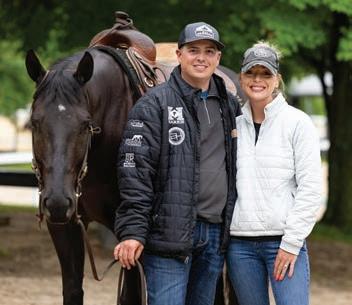
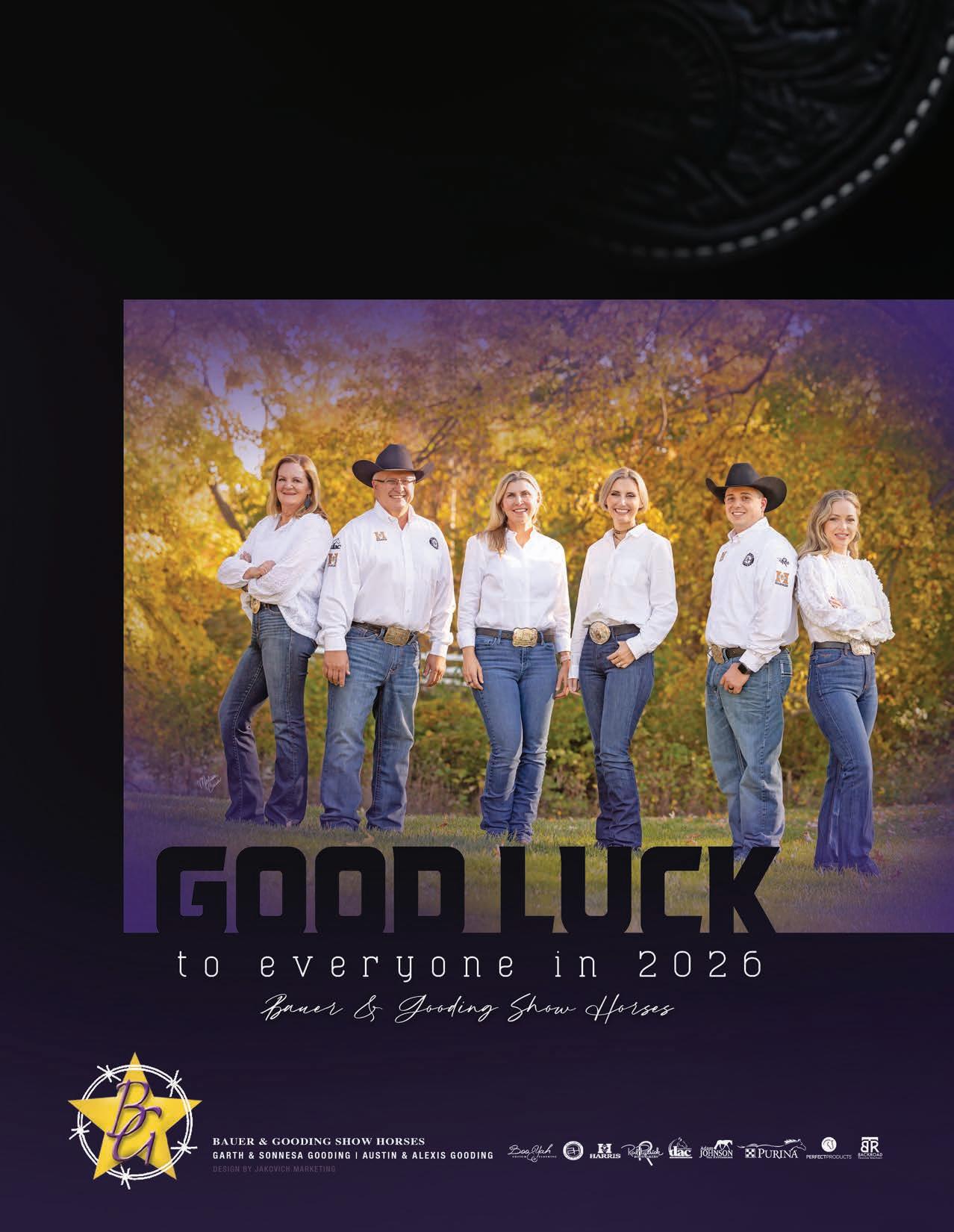
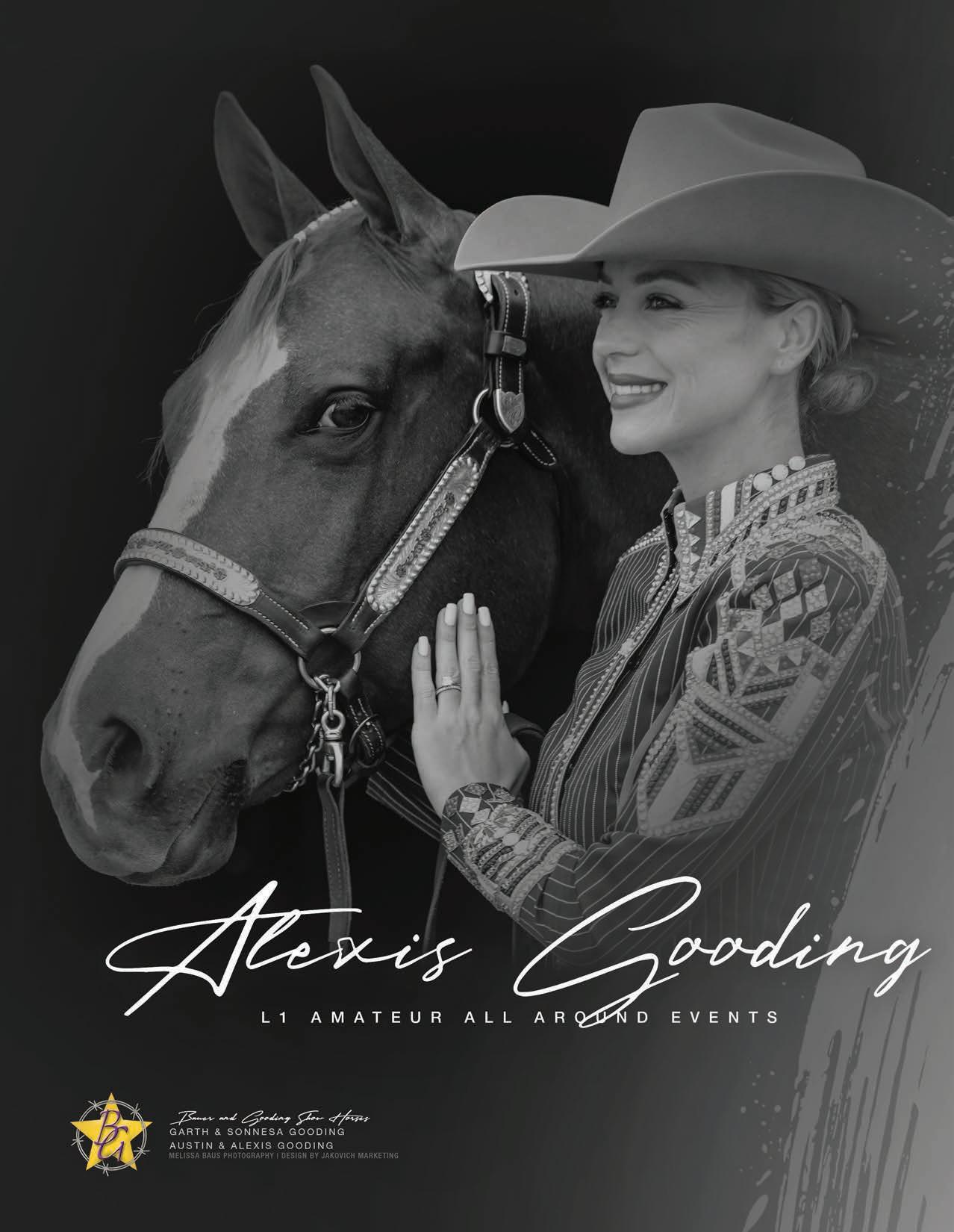
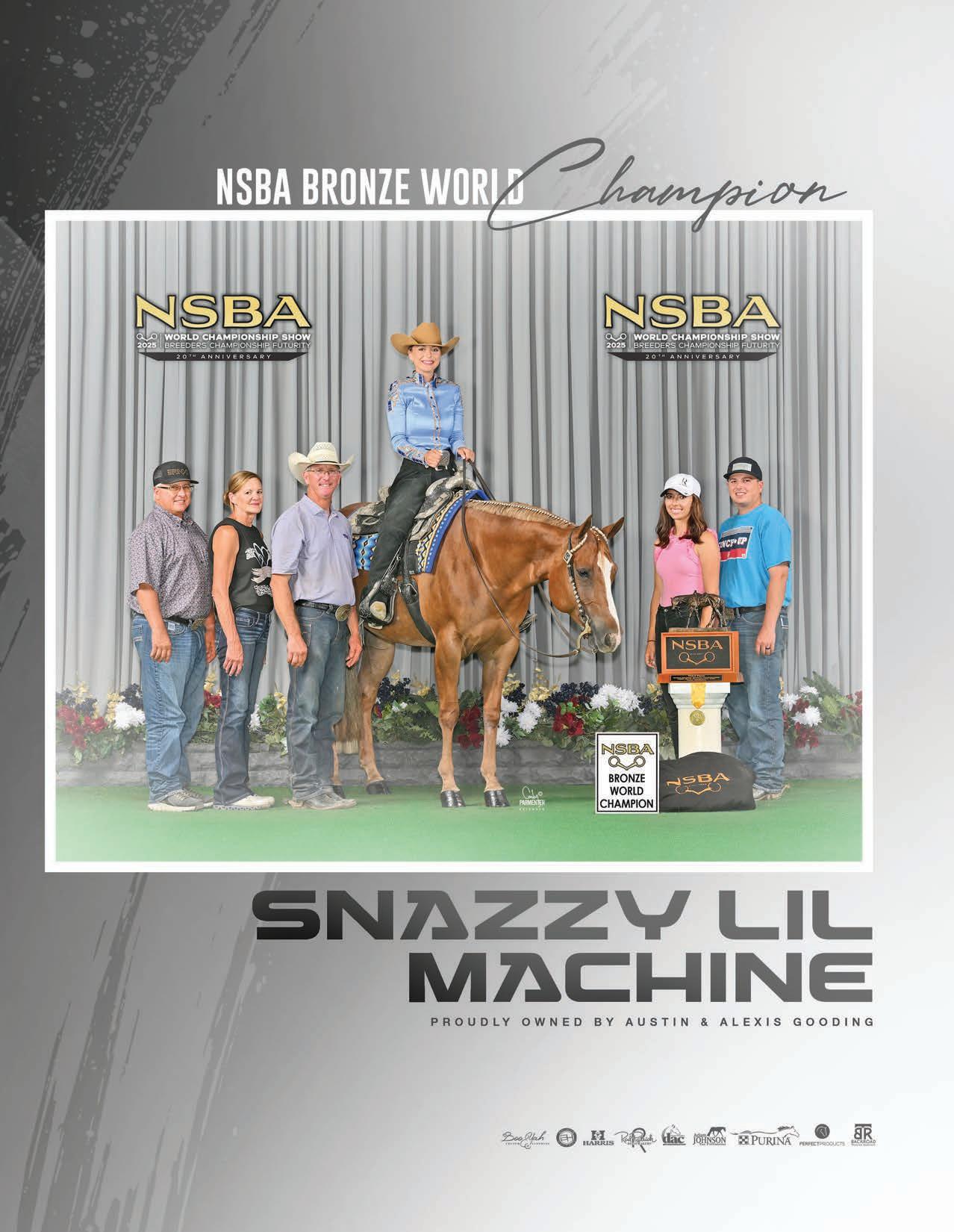
Austin and Alexis Gooding – We’re very lucky that we’re not the only ones involved in our business. Garth and Sonnesa work alongside Austin and help me (Alexis) quite a bit, which takes a lot of pressure off. Interestingly, the horses I usually get along best with are often the ones Garth rides, so it’s not always just Austin and me working side by side—and that balance has been a good thing for all of us. It’s taken nearly a decade of being together for me (Austin) to find the right rhythm between being both a trainer and a “horse show husband.” It’s not always perfect but getting to share this life and build something together makes it incredibly rewarding. A huge help for both of us has been the support of some truly amazing outside trainers and friends, including Gil Galyean, Robin Frid, and Kelly McDowall. Their guidance has made a meaningful difference for both of us and our program. In a trainer-non-pro relationship, it’s important to remember that the marriage comes first. While this is our livelihood, it still needs to be enjoyable—and let’s be honest, feedback almost always sounds better coming from someone other than your spouse!
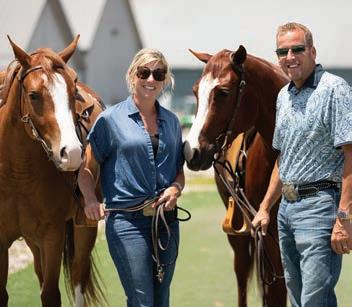
Wade and Laura Spell – When mixing personal and professional lives, the grey area can easily become clouded. The secret to maintaining a successful work-life balance isn’t just one thing. It really starts with finding your best friend, because when you live and work together, you’re around this person almost 24/7, and stress and lack of space can quickly get to you. You’re both striving for the same goal, and constant fighting or arguing in a relationship or business environment simply doesn’t work. We try to use a lot of humor to manage stress and lighten the mood. We also keep things in perspective—it’s a horse show, and we have a separate life at home. You always need to put your spouse first, ahead of everything else, to stay grounded in what’s truly important. You have to ride the wave together through the good and the bad, the up and the downs. It’s not all glamorous or filled with wins. We also try to set aside time just for each other. Just because you’re around one another every day doesn’t mean you don’t need a date night. The main thing we’ve learned is the importance of finding someone with goals like yours—someone who is just as addicted to your dream as you are. Then, you can truly enjoy the process together. Of course, if Wade were answering this on his own, he’d tell you it’s simple: do everything the wife wants! If the wife is happy, everyone is happy.
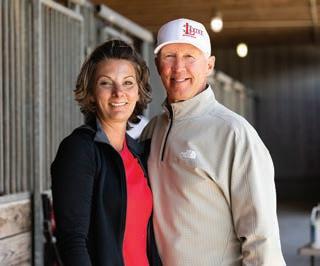
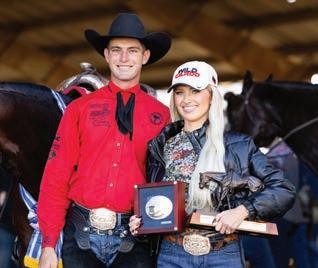
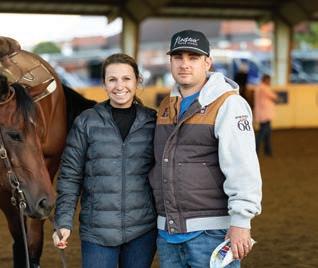
Kenny and Ashley Lakins – We truly love riding together. We enjoy being each other’s ground person, and we’re very honest about what we think of each other’s horses. We both want to succeed at a high level, so we believe in being brutally honest. When we first started dating, that honesty was sometimes hard to hear, but over the years we’ve realized we’re both just trying to make each other—and our horses—better. We work together all day, get along really well, and genuinely enjoy each other’s company.
Clay and Lexie Arrington – For us, the key to a successful trainer/non-pro relationship is remembering that we’re always on the same team, working toward the same goals. We’ve learned that strong, honest communication is what keeps everything moving forward. When you respect each other’s roles, acknowledge both strengths and weaknesses, extend grace, and support one another through the ups and downs, the dynamic of sharing love and livelihood becomes a source of strength rather than strain. Just as important is never losing sight of how fortunate we are to share the same passion. Building a life and career around something we both love is something we don’t take for granted, and that perspective helps keep us grounded as we navigate challenges together.
Ricky and Jessica Noiseux – It is not exactly easy to run a business and be in a relationship with the same person—especially in an industry that can be all-consuming on so many levels. One of the most important things we’ve learned is the need to set boundaries between work and home. We make a conscious effort not to talk horses or business once we walk through the door. Sometimes it inevitable sneaks in, but overall, it’s essential to protect time that’s just for us as a couple—not for the business. We’ve also found that having aligned goals and business principles is critical. When you’re not working toward the same vision for the future, it can create unnecessary friction in both the business and the relationship. Finally, we’ve learned that any outside influence from the business that puts strain on the relationship has to be addressed. Whether it’s a horse, a client, or something in between, if it’s negatively affecting the relationship, a change needs to be made. Otherwise, that strain inevitably carries over into everything else.
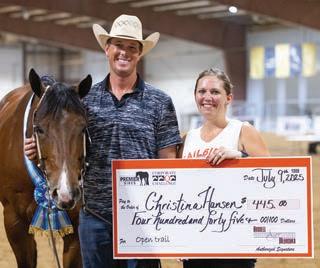
Micah and Christina Hansen – Balancing a trainer/non-pro and husband-and-wife relationship is tough for most couples, but it’s even more challenging in our situation because we work together all day, every day. We own our facility and also board horses, which means caring for roughly 70 horses on our property. Micah focuses on training, while I manage the barn. Respect is essential. We make a conscious effort to respect one another and our individual roles in the barn every day. Communication is just as important. We’re very open and direct with each other, which helps prevent misunderstandings before they grow into bigger issues. One of the keys to our success has been recognizing each other’s strengths and building on them, while also learning not to overstep. A phrase we often use is “stay in your lane.” It’s not meant to be rude or dismissive, but rather a way to ensure we’re aligned and not giving mixed messages. Clearly defining our responsibilities helps everyone and takes pressure off each other. Lastly, we make it a priority to talk through any issues that arise. Being willing to work things out allows us to move forward without letting emotions get in the way, and that’s been critical to making both our marriage and our business work.
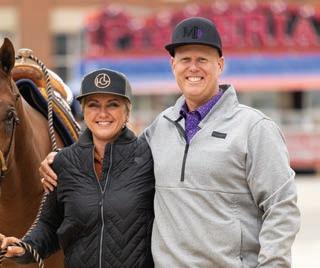
Jay and Kristy Starnes – We’ve found the key to a successful relationship while working together day in and day out is best summed up by a quote on the door above our office: “Don’t get so busy making a living that you forget to make a life.” We also recognize our individual strengths and weaknesses and strive to play to each other’s strengths.
Written by Claire Binkowski
Behind every great horse is a breeder whose dedication began long before the first step into the show pen. Breeders are the backbone of the industry—thoughtfully pairing bloodlines, nurturing young horses, and investing years of patience, knowledge, and heart into each life they help bring into the world. Their work is fueled by passion and built on vision, responsibility, and an unwavering belief in what the next generation can become. They are the stewards of quality and integrity that sustain the industry at every level. This series shines a light on the small breeders whose work lays the foundation for it all. Their influence is woven into every stride, every partnership, and every success.
Amy Darnell Fobbe’s introduction to horses came early— at just six years old—when she climbed, fearless and determined, onto half-broke cow ponies at her great uncle’s ranch in Nebraska. The ponies were wild enough to give most adults pause. “They were mostly feral,” Amy says, “but you couldn’t keep me off them.” On the drive home from that trip, her parents—who at the time only had minimal experience with horses—decided riding lessons might be a fun childhood activity for their daughter. “They had no idea what they were starting,” Amy says, laughing. In that moment, they unknowingly opened the door to a lifelong calling.
Amy’s first formal riding instruction, and her introduction to the AQHA industry, came under the guidance of trainer
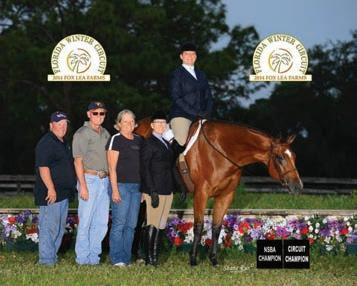
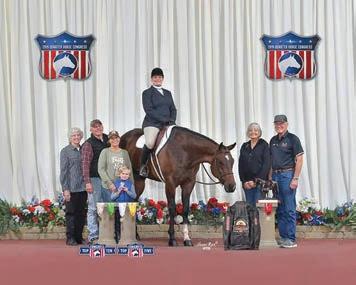
Peter Frost, who coached her through most of her youth and helped lay the foundation for everything that followed. Her first Quarter Horse, a foundation-bred Poco Bueno gelding named Sir Poco Pete, was the kind of horse every young rider dreams of. “Randy was the world’s best kid horse,” Amy says. “We owned him for the rest of his life.”
Not every partnership came as easily. One of Amy’s next mounts, Zippo Eli Lu—a talented but challenging gelding later dubbed “Evil Eli, Prince of Darkness”— tested her resolve and pushed her riding skills to a new level. “He truly taught me how to ride and how to think outside the box to get where you want to go,” she says. The effort paid off, culminating in multiple Superiors, a Performance Championship, and a defining All Around win at the 2000 Toronto International. “A lot of sweat, tears, and early mornings went into that horse,” Amy adds, “but he’s also the one that convinced my parents I was in this horse thing for the long haul.”
process captivated her. “I loved going to the stallion farms,” she says. “Talking to the stallion managers, studying the horses, trying to find the perfect match—it all mattered.”
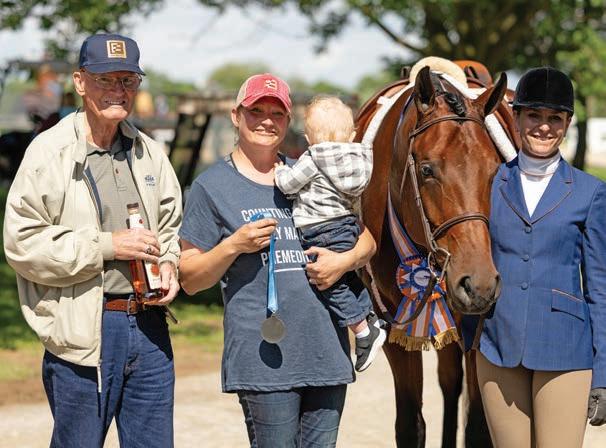
Amy’s early years as a breeder came before the internet reshaped the industry, in a time when breeding was built on face-to-face connections and firsthand experience. Mares were hauled to stallion farms, conversations unfolded in barn aisles, and decisions were made only after seeing horses— not photographs—standing in front of you. “You got to meet the stallions and see the babies in person,” Amy says. “I really miss those days.” That era instilled a lasting sense of responsibility— an understanding that breeding meant creating something worthy of pride—a lesson that continues to guide her program today.
By the time her youth career came to an end, Amy had become accustomed to buying young prospects and developing them into competitive show horses. “We didn’t have a ton of money to spend,” Amy says, “so buying young ones and putting the time and effort into them was how I got nice horses to show.” In the early 1990s, she and her parents took the natural next step, beginning to breed some of the mares Amy had shown. What started as a way to carry on the legacy of their favorite show horses quickly evolved into a passion of its own. These weren’t just pedigrees on paper—they were partners Amy had ridden, learned from, and deeply believed in. The entire
Slowly but steadily, Amy and her parents built Darnell Quarter Horses into a small but successful breeding program at their Hidden Creek Farm in Maple Plain, Minnesota, centered around a select group of exceptional mares. When Amy’s parents eventually traded Minnesota winters for Ocala, Florida, most of the mares followed, where warmer weather made foaling and raising young horses easier. During that time, Amy focused on her career as an ER nurse and starting her own family, while remaining deeply involved in breeding decisions and continuing to show horses bred by her family.
After the loss of her mother, Anita, in November 2023, Amy began transitioning the breeding program back to its roots at Hidden Creek Farm, now owned by Amy and her husband Todd. This year marks a turning point: for the first time since her
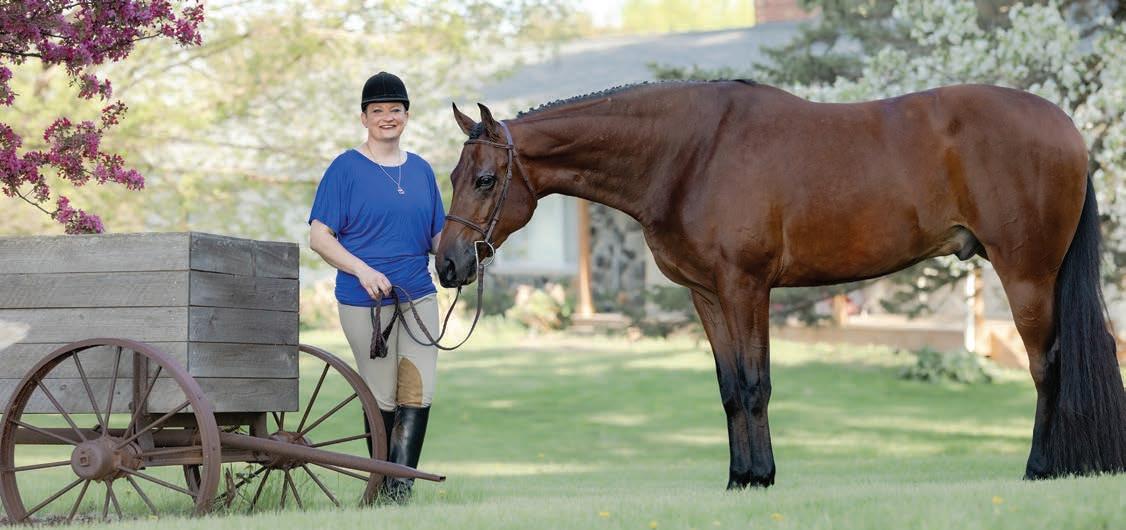
parents moved south, all breeding and foaling will take place exclusively in Minnesota.
The operation remains intentionally small—just three mares and typically one or two foals each year—but deeply personal. “I don’t have endless resources,” Amy says. “I just do the very best I can afford to do. As a family, our goal was always to raise the kind of horses we wanted to show. That’s still my focus now, while also being mindful of the market and where it is shifting.”
Over the decades, a handful of horses have come to define Amy’s philosophy as a breeder. One of the earliest was Invitingly Hot, known as “Mouse,” a 1998 black mare by Invitation Only and out of Hotrods Cover Girl. Mouse became the family’s first true standout, earning multiple Superiors, Youth and Amateur Performance Championships, and nearly 500 AQHA points across halter, showmanship, pleasure, and horsemanship. “She was our first big timer,” Amy says. When Mouse went on to a new home, she found a second chapter as a beloved walk-trot horse and later a successful broodmare, producing a Congress champion. “She really changed what we believed was possible,” Amy says.
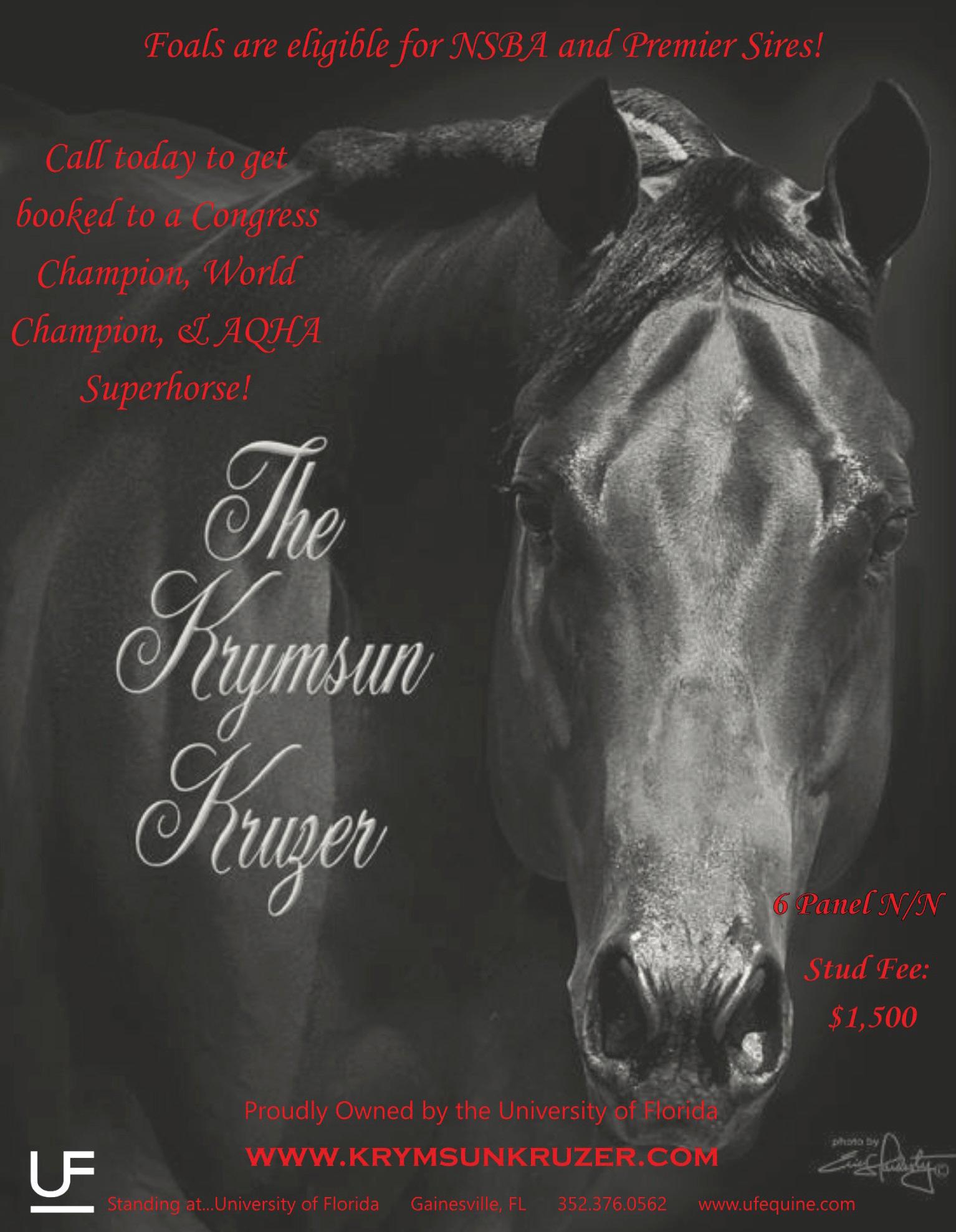
Years later, another horse underscored that belief. Sittin On Kruze, a 2016 gelding by The Krymsun Kruzer out of
Ima Duplicated Lady, embodied everything Amy values. Known as “Dexter,” he found early success in the 3-Year-Old Non-Pro Hunter Under Saddle futurities under the guidance of Paul and Tammy Thurston, but his most meaningful accomplishments came after he was sold. “We sold him to a small fry exhibitor,” Amy says, “and he went on to place Top 10 in the Youth 11 & Under Hunter Under Saddle at the Congress,” while earning points across multiple events. “There is nothing better than breeding horses with minds that make them exceptional youth horses. I feel really strongly about breeding for brain and longevity.”
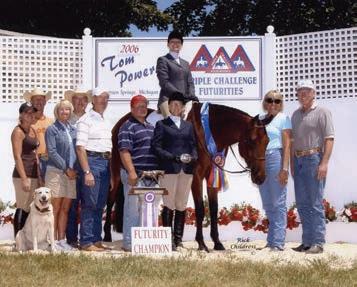
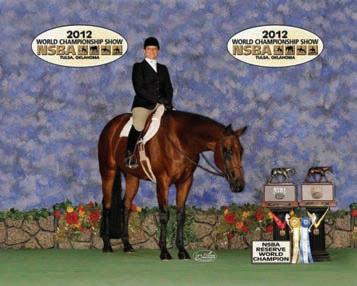
If one mare shaped Amy both as a competitor and a breeder, it was Moxies In Motion. Widely regarded as one of the greatest hunter under saddle mares of her era, “Hummie” dominated the futurities as a 3-year-old in 2006 and followed that with three AQHA Honor Roll titles the next year. “She was bionic,” Amy says, crediting trainers Wayne and Judy Davis for bringing out the mare’s extraordinary potential. Though Hummie’s breeding career was short, her impact was lasting. Several offspring went on to win at the Tom Powers and NSBA World Championship Show and the Breeders Championship Futurity, and one daughter—Sheza Good Moxie—now anchors Amy’s current program.
“In the show ring, Hummie taught me confidence,” Amy says. “She just needed me to trust my homework and stay out of her way. Watching her transition into a broodmare made me fall in love with breeding all over again.”
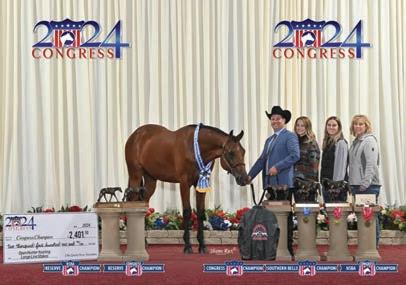
That love was reaffirmed in 2024, when the first baby to show from Amy’s independent program exceeded every expectation. Hubbout Those Eyez, sired by Easy On The Eyez and out of Hubbout A Drink, burst onto the Hunter Longe Line scene, winning everywhere from The Premier to the Congress under trainer Travis Born. “To have the very first one out of my program do that well was such a thrill,” Amy says. The colt’s momentum carried into 2025 with a standout Congress performance in the Maiden 2-Year-Old Hunter Under Saddle. “I can’t wait to see what their future holds.”
That same year also brought a different kind of validation. In 2025, Amy showed the first riding-age baby from her program, Eye WishIt Was True (Easy On The Eyez x Digger Heels In 16), in the 3-Year-Old events. With trainer and close friend Jessi Lueth handling much of the daily work while Amy navigated new motherhood, the season delivered wins at The Premier and strong finishes at the NSBA World Show and the Congress. “It truly takes a village,” Amy says. “I’m pretty independent, but I’ve learned I really can’t do any of this on my own.”
Those milestones reinforced a belief Amy carries far beyond the show pen. For her, breeding comes with a deep obligation to the horses themselves. “I see it as a big responsibility to find a purpose for every horse I bring into this world,” she says. “Not all of them will be show horses. Some become trail horses, lesson horses, or reliable family mounts, but every one of them has a purpose.”
That sense of responsibility guides nearly every breeding decision she makes, with trainability and temperament at the forefront. “I rode some pretty hot-tempered horses as a young competitor,” she says. “I have no interest in making any more of those if I can help it.” While pedigree and market trends still matter, she places equal value on seeing stallions in person and choosing crosses that truly complement her
mares. “If that baby gets everything you don’t love about the mare and everything you don’t love about the stallion, would you still like it?” she asks—a question borrowed from her late mother that continues to shape her program today.
Thoughtful breeding also requires confronting its financial realities. “They say the best way to make a small fortune in breeding horses is to start with a large one,” Amy says. Working full time as an ER nurse, she has learned to scale back or skip shows when necessary and make hard choices along the way. “You have to prioritize what’s important and make sacrifices,” she says. “The minute I no longer love the mares and babies, I’m getting out.”
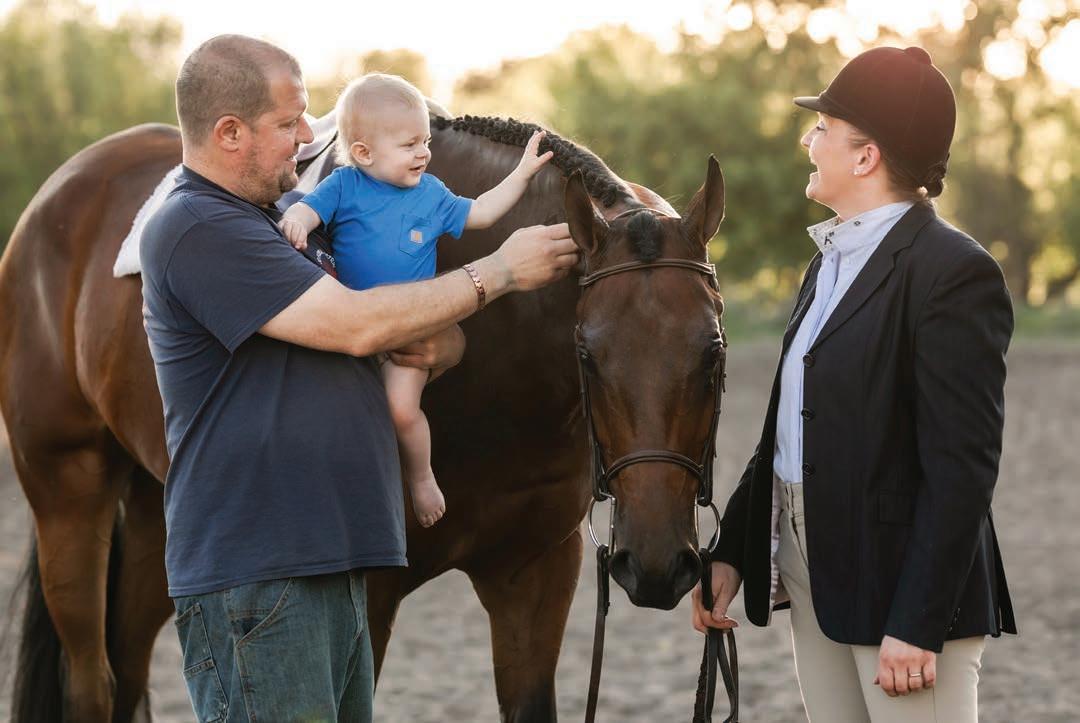
Life at Hidden Creek Farm is full. In addition to Amy’s breeding program, the property is home to Jessi Lueth Show Horses and a small boarding operation. Amy and Todd—“a non-horse guy who had no idea what he was getting into”—welcomed their son, Cody Jack, in May 2024. “The scheduling couldn’t have been better for a horse breeder,” Amy jokes. “Mares due in March and April, baby due in May, and everyone stuck to the plan.”
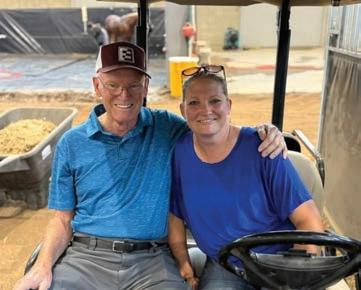
Now a year and a half old, Cody has already spent plenty of time in the barn and even made his first trip to The Premier, thanks in no small part to Amy’s dad, Grandpa Dennis—affectionately known around the show grounds as “the Golf Cart Grandpa.”
Looking ahead, Amy’s goals remain simple and clear. “I plan to do this as long as I can afford to and as long as it brings me joy,” she says. With a carefully chosen group of mares and a deep respect for the responsibility that comes with breeding, she continues to focus on what has always mattered most: creating honest horses with good minds and sending them into the world with a purpose that lasts far beyond the show ring.


Vendors are an integral part of the horse show experience. Over the years, The Premier has been fortunate to welcome an exceptional group of vendors, many of whom return year after year, supporting our exhibitors and elevating the event. This series highlights the people behind the brands and services who play a vital role in our community.
Written by Claire Binkowski
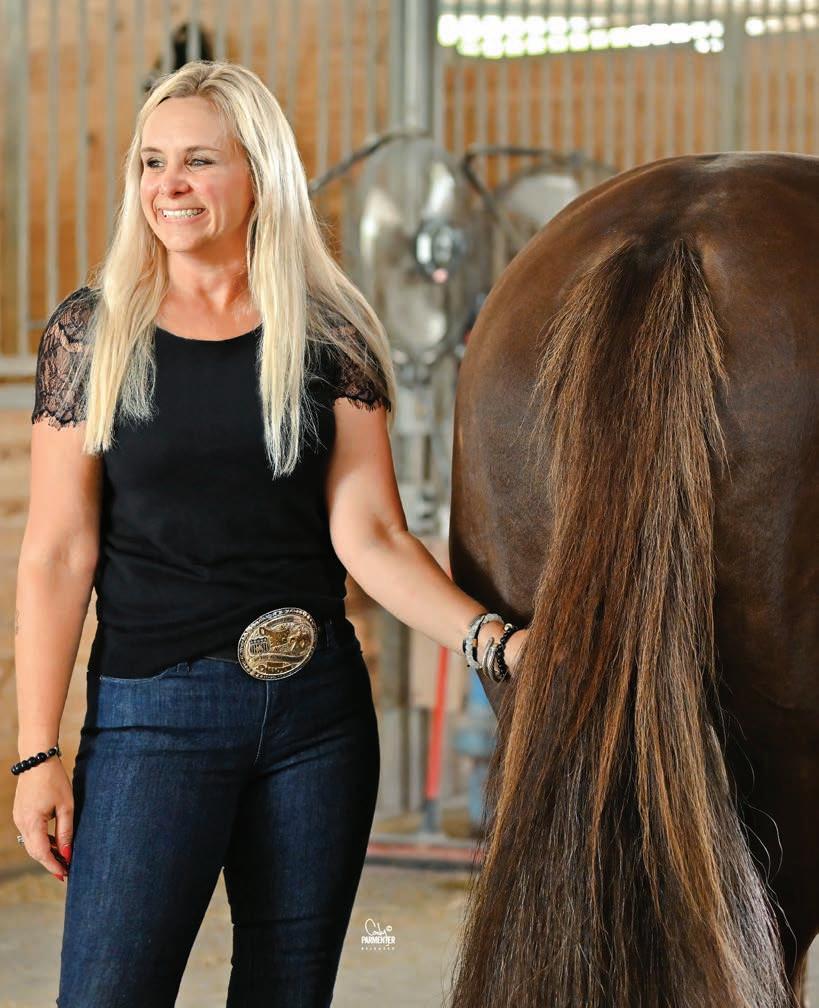
Kelley Mundrick Martin’s story begins in Athens, Georgia where a lifelong love of horses took root. Inspired by her older sister, Kim (Mundrick) Turpin, Kelley followed her into the barn, never imagining what began as a simple desire to do everything her sister did would one day lead her to owning a business. Horses quickly became more than a hobby, and just a few years after her first ride, when faced with the choice between continuing ballet or showing horses, Kelley chose horses and the path that would ultimately shape her life.
After graduating from the University of Georgia, Kelley took a position at Merial, a global animal health company known for its pharmaceuticals and vaccines. Working in their marketing department, she gained valuable experience in brand development, customer relationships, and strategic planning— skills that would later prove instrumental in running her own business.
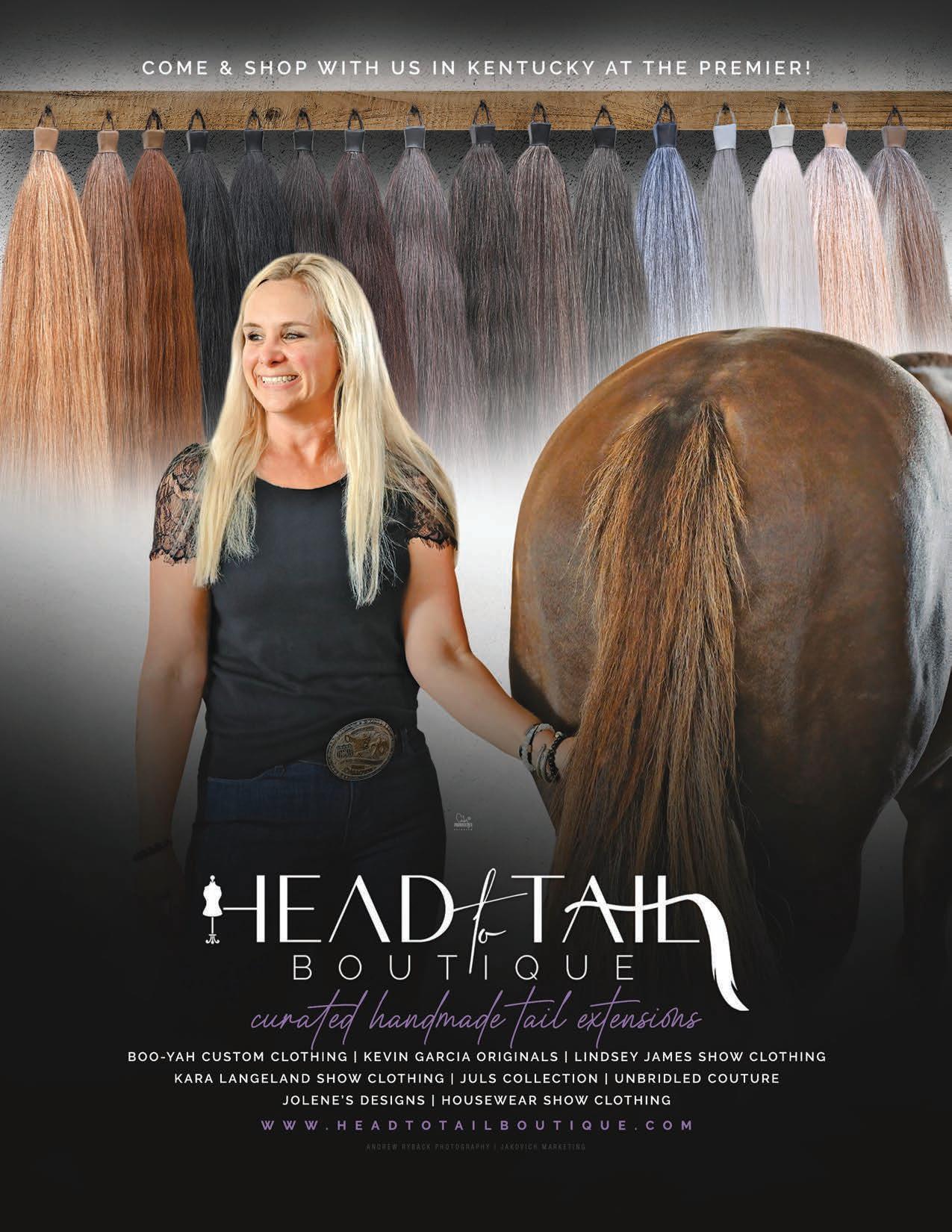
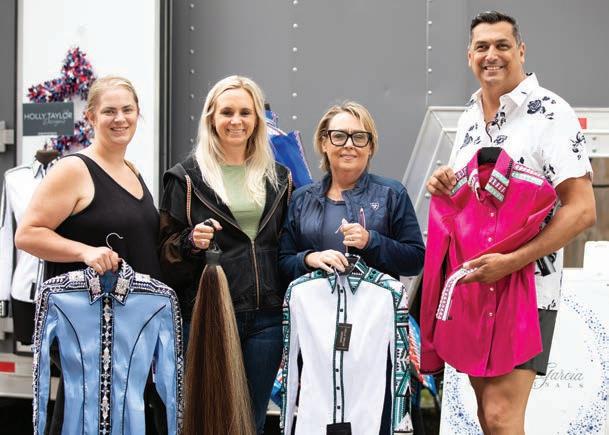
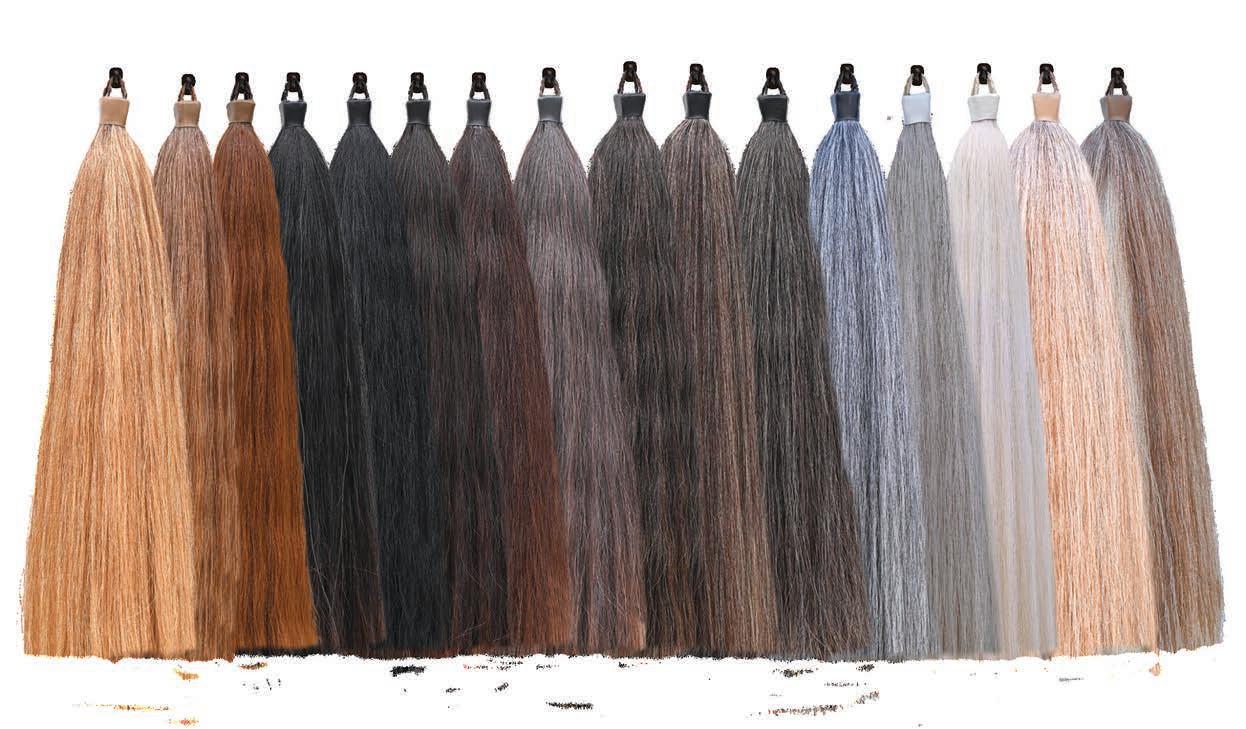
Today, Kelley is the heart behind Head to Tail Boutique, a business that reflects both her keen eye for detail and her deep understanding of the horse show industry and what it takes to be competitive. True to its name, the boutique offers thoughtfully curated pieces for both horse and rider including custom and stock tail, forelock, and mane extensions, as well as designer apparel and show pads. Kelley proudly works with respected designers such as Boo Yah Custom Clothing, Kevin Garcia, Lindsey James, Unbridled Couture, HouseWear, and others whose craftsmanship and creativity align with her vision. Every piece is chosen with one goal in mind: helping riders feel confident, prepared, and proud when they step into the pen.
The path to owning a business in the equine industry wasn’t something Kelley chased—it found her. When longtime industry figure Kathy Williams called Kelley in April of 2020 to ask if she’d be interested in purchasing the business, the answer came easily. By the end of that year, the sale was finalized, and from that moment on, Head to Tail Boutique became uniquely hers—a true reflection of Kelley’s work
ethic, passion for the industry and clear vision for what riders need.
What fuels her most isn’t just the sales—it’s the connections. A message that says, “We absolutely love our shirt,” or a quiet thank-you exchanged in the aisle at a show means everything. For a business owner, appreciation, even in smallest moments, carries real weight, especially for someone like Kelley who pours herself into every order, every customer, and every detail because she genuinely cares. It’s not just what she does, it’s who she is.
As a competitor herself, Kelley brings a rare empathy to her work. She understands the nerves, the long days, the highs and heartbreaks. That perspective—earned, not assumed—sets her business apart. And while customers may see the polished side of Head to Tail Boutique, there’s constant work happening behind the scenes: building inventory, updating the website, planning show schedules, developing new ideas, and ensuring that every discipline and association feels represented. The work doesn’t stop just because her trailer isn’t at a show.
Like many in the industry—and in business—Kelley has weathered seasons that tested her strength. In 2022, she faced profound personal and professional challenges, from losing a beloved broodmare shortly after foaling to managing physical pain and health setbacks while continuing to travel and serve her clients. It was a season that demanded resilience and ultimately reminded her of the power of community. The support she received from friends and clients alike carried her through.
Despite the challenges, the road still calls to her. Kelley loves traveling, discovering new places, and all that comes with life on the show circuit—
though long stretches away from home can still be difficult. Thankfully, her husband Kyle, who works remotely, often travels with her, along with the couple’s dogs. Still, missing holidays and family milestones remains one of the hardest parts of the job.
What keeps her grounded is purpose. Seeing a rider light up over a perfectly matched extension or a beautiful new show pad never gets old. Whether it’s a breakthrough ride, a first trip into the show pen on a homebred, or simply helping someone feel confident again, those moments make it all worthwhile.
Looking forward, Kelley is excited about the continued growth of her business—expanding into new disciplines, bringing on more help, and continuing to evolve alongside the industry. Having navigated business ownership through COVID, shifting social media landscapes, and constant change, she’s emerged stronger, more adaptable, and more committed than ever.
At its core, Kelley hopes Head to Tail Boutique feels like a trusted partner—a place known for quality, authenticity, and genuine care. She wants customers to feel confident, supported, and seen every step of the way.
If she could offer her younger self a bit of wisdom, it would be this: don’t take your youth—or your horses—for granted. Some are once-in-a-lifetime partners, and the moments you’re living
now are more special than you realize. It’s advice that reaches far beyond the barn or business, resonating at every stage of life.
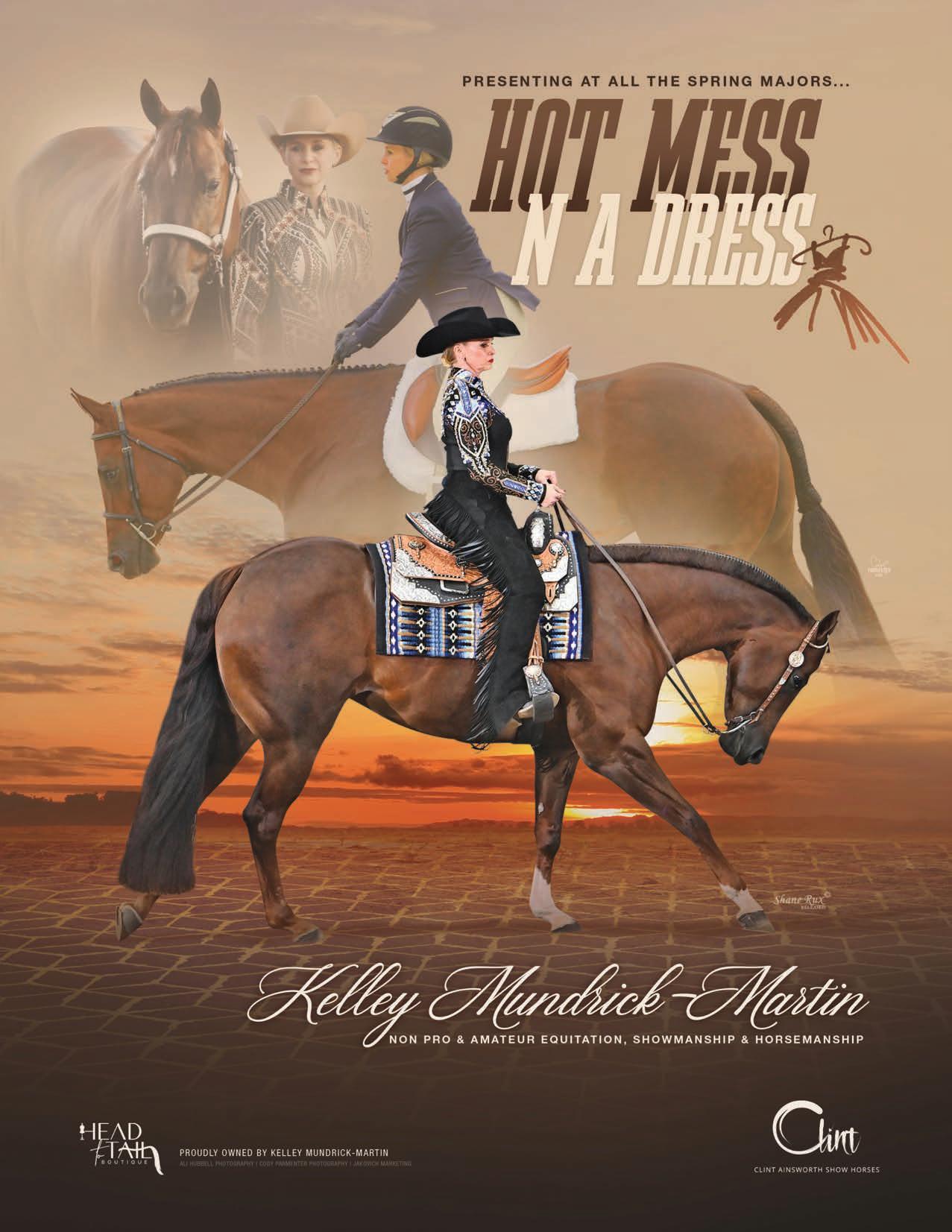
And if you get to know Kelley well, you’ll learn a few personal truths too: her favorite color is purple, she absolutely despises mayonnaise, and she and her husband will celebrate their fiveyear wedding anniversary in May. Her current show partner is the homebred Hot Mess N A Dress, lovingly known as “Emma,” with plans to debut her full sister, Bless This Hot Mess (“Haley”) later this year. Kelley also has two promising two-year-olds waiting in the wings.
To Kelley, horses aren’t just her passion or her business—they’re family. And in every sense of the word, that’s exactly what Head to Tail Boutique is built on.