C REAT I V E ECON O M Y
Farms Flip the Script Twenty-first century Maine farmers discover new ways to thrive. B Y GWEN THOMPSON
COURTESY SANDY RIVER FARM; LINNAEA MALLETTE
“O
ne of the hallmarks of farming as a career is that you have to be nimble and adaptable, especially with the pandemic and so many farms transitioning across generations as farmers are aging nationwide,” says outreach director Ellen Sabina of Maine Farmland Trust. “Farmers are more like general practitioners than specialists—not really good at anything,” says Erik Johnson, who owns and manages Sandy River Farms, a fifthgeneration family farm in Farmington. “When something begins to fail, we have to diversify. We’d been organic dairy farmers for twenty-plus years, until organic milk stalled and we got a Dear John letter from the dairy terminating our contract. We had thirty days to come up with a new plan, so we sold off half our herd to buy our
own milk processing equipment and sell our milk directly. Then we got into biofuel when the market price for feed corn was so depressed it didn’t cover our costs, but when oil prices go down again, people lose interest in biofuel.”
Farmers are getting cold calls from solar companies all over the world trying to lock down land close to power lines.” -Ellen Sabina, Maine Farmland Trust
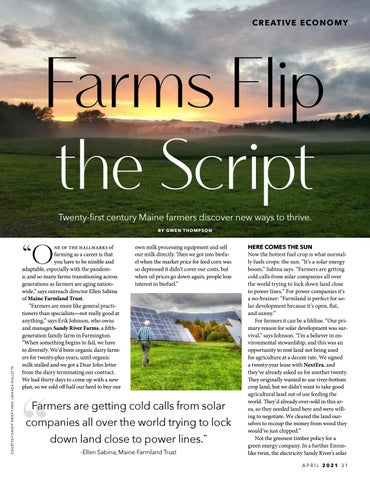
HERE COMES THE SUN Now the hottest fuel crop is what normally fuels crops: the sun. “It’s a solar energy boom,” Sabina says. “Farmers are getting cold calls from solar companies all over the world trying to lock down land close to power lines.” For power companies it’s a no-brainer: “Farmland is perfect for solar development because it’s open, flat, and sunny.” For farmers it can be a lifeline. “Our primary reason for solar development was survival,” says Johnson. “I’m a believer in environmental stewardship, and this was an opportunity to rent land not being used for agriculture at a decent rate. We signed a twenty-year lease with NextEra, and they’ve already asked us for another twenty. They originally wanted to use river-bottom crop land, but we didn’t want to take good agricultural land out of use feeding the world. They’d already over-sold in this area, so they needed land here and were willing to negotiate. We cleared the land ourselves to recoup the money from wood they would’ve just chipped.” Not the greenest timber policy for a green energy company. In a further Enronlike twist, the electricity Sandy River’s solar APRIL 2021 31