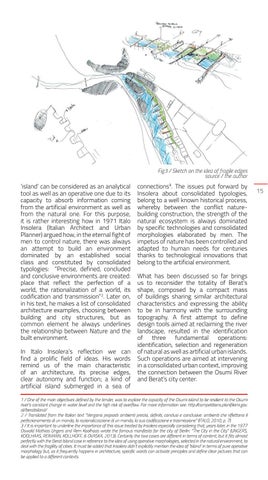
Fig3 / Sketch on the idea of fragile edges source / the author
‘island’ can be considered as an analytical tool as well as an operative one due to its capacity to absorb information coming from the artificial environment as well as from the natural one. For this purpose, it is rather interesting how in 1971 Italo Insolera (Italian Architect and Urban Planner) argued how, in the eternal fight of men to control nature, there was always an attempt to build an environment dominated by an established social class and constituted by consolidated typologies: “Precise, defined, concluded and conclusive environments are created: place that reflect the perfection of a world, the rationalization of a world, its codification and transmission”2. Later on, in his text, he makes a list of consolidated architecture examples, choosing between building and city structures, but as common element he always underlines the relationship between Nature and the built environment. In Italo Insolera’s reflection we can find a prolific field of ideas. His words remind us of the main characteristic of an architecture, its precise edges, clear autonomy and function; a kind of artificial island submerged in a sea of
connections3. The issues put forward by Insolera about consolidated typologies, belong to a well known historical process, whereby between the conflict naturebuilding construction, the strength of the natural ecosystem is always dominated by specific technologies and consolidated morphologies elaborated by men. The impetus of nature has been controlled and adapted to human needs for centuries thanks to technological innovations that belong to the artificial environment. What has been discussed so far brings us to reconsider the totality of Berat’s shape, composed by a compact mass of buildings sharing similar architectural characteristics and expressing the ability to be in harmony with the surrounding topography. A first attempt to define design tools aimed at reclaiming the river landscape, resulted in the identification of three fundamental operations: identification, selection and regeneration of natural as well as artificial urban islands. Such operations are aimed at intervening in a consolidated urban context, improving the connection between the Osumi River and Berat’s city center.
1 / One of the main objectives defined by the tender, was to explore the capacity of the Osumi island to be resilient to the Osumi river’s constant change in water level and the high risk of overflow. For more information see: http://competitions.planifikimi.gov. al/beratisland/ 2 / Translated from the Italian text “Vengono proposti ambienti precisi, definiti, conclusi e conclusive: ambienti che riflettono il perfezionamento di un mondo, la razionalizzazione di un mondo, la sua codificazione e trasmissione” (ITALO, 2010, p. 7) 3 / It is important to underline the importance of this issue treated by Insolera especially considering that, years later, in the 1977 Oswald Mathias Ungers and Rem Koolhaas wrote the famous manifesto for the city of Berlin: “The City in the City” (UNGERS, KOOLHAAS, REIMANN, KOLLHOFF, & OVASKA, 2013). Certainly the two cases are different in terms of content, but it fits almost perfectly with the Berat Island case in reference to the idea of using operative morphologies, selected in the natural environment, to deal with the fragility of cities. It must be added that Insolera didn’t explicitly mention the idea of ‘Island’ in terms of pure operative morphology but, as it frequently happens in architecture, specific words can activate principles and define clear pictures that can be applied to a different contexts.
15