metaphors for human behavior, Stingel replaces the sublime vistas of the alpine landscape with colossal vignettes of the species that inhabit it. Whereas other works in the series depict lone animals, such as a fox, a fsh, a woodpecker, or an owl, Untitled is distinguished for the dynamism and immediacy embodied in the moment it captures. Magnifed and tightly cropped, the vivid scene of two ravens quarreling is exaggerated to a grandiose spectacle of nature. The rich symbolism associated with ravens infuses the work with a dramatic sense of foreboding à la Edgar Allen Poe or Alfred Hitchcock’s thriller The Birds.
Sigmar Polke, Tableau aux herons IV, 1969. Artwork © 2018 Estate of Sigmar Polke/Artists Rights Society (ARS), New York/ VG Bild-Kunst, Bonn, Germany
Untitled and its related works present a striking continuation of Stingel’s iconic series of paintings from 2009-2010, which were based on vintage black-and-white photographs of the Tyrolean Alps, where Stingel was born and grew up. As The New York Times critic Ken Johnson observed of this series, “Nostalgia adds more complexity. While the imagery suggests personal memories and old scrapbooks, it also evokes a time when Romantic artists viewed wild nature with religious awe” (Ken Johnson, “Rudolf Stingel”, The New York Times, March 13, 2014, online). In this series of wildlife paintings from 2015, Stingel similarly plays with the Romantic conception of nature. During the latter 18th and early 19th century, the natural world was divided into the categories of the pastoral, the picturesque, and the sublime – whereby the former two referenced mankind’s ability to control the natural world, and the sublime functioned as a humbling reminder of nature’s overwhelming force. With a knowing nod to this fascination with animals as both forces of nature and
NY_TCA_MAY18_EVE_72-141_BL.indd 135
The gravitas of the scene is belied by its source– a mass reproduced wildlife photograph from a vintage calendar. In his choice of found imagery, Stingel appears to walk in the conceptual footsteps of Gerhard Richter, who in the 1960s took found imagery from mass media and family photographs
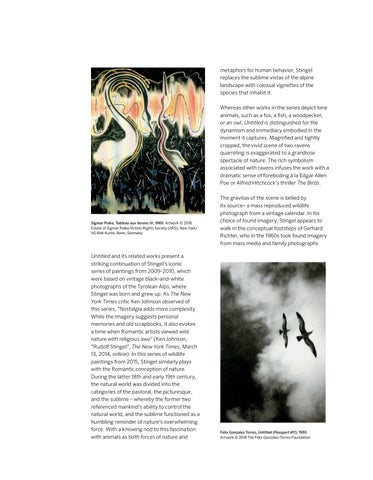
Felix Gonzalez Torres, Untitled (Passport #11), 1993. Artwork © 2018 The Felix Gonzalez-Torres Foundation
25/04/18 09:40