BUSINESS
© Can Stock Photo/4774344sean
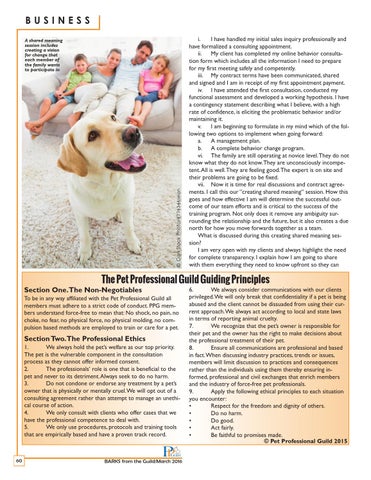
A shared meaning session includes creating a vision for change that each member of the family wants to participate in
i. I have handled my initial sales inquiry professionally and have formalized a consulting appointment. ii. My client has completed my online behavior consultation form which includes all the information I need to prepare for my first meeting safely and competently. iii. My contract terms have been communicated, shared and signed and I am in receipt of my first appointment payment. iv. I have attended the first consultation, conducted my functional assessment and developed a working hypothesis. I have a contingency statement describing what I believe, with a high rate of confidence, is eliciting the problematic behavior and/or maintaining it. v. I am beginning to formulate in my mind which of the following two options to implement when going forward: a. A management plan. b. A complete behavior change program. vi. The family are still operating at novice level. They do not know what they do not know. They are unconsciously incompetent. All is well. They are feeling good. The expert is on site and their problems are going to be fixed. vii. Now it is time for real discussions and contract agreements. I call this our “creating shared meaning” session. How this goes and how effective I am will determine the successful outcome of our team efforts and is critical to the success of the training program. Not only does it remove any ambiguity surrounding the relationship and the future, but it also creates a due north for how you move forwards together as a team. What is discussed during this creating shared meaning session? I am very open with my clients and always highlight the need for complete transparency. I explain how I am going to share with them everything they need to know upfront so they can
The Pet Professional Guild Guiding Principles
Section One.The Non-Negotiables
To be in any way affiliated with the Pet Professional Guild all members must adhere to a strict code of conduct. PPG members understand force-free to mean that: No shock, no pain, no choke, no fear, no physical force, no physical molding, no compulsion based methods are employed to train or care for a pet.
Section Two.The Professional Ethics
1. We always hold the pet’s welfare as our top priority. The pet is the vulnerable component in the consultation process as they cannot offer informed consent. 2. The professionals’ role is one that is beneficial to the pet and never to its detriment. Always seek to do no harm. 3. Do not condone or endorse any treatment by a pet’s owner that is physically or mentally cruel. We will opt out of a consulting agreement rather than attempt to manage an unethical course of action. 4. We only consult with clients who offer cases that we have the professional competence to deal with. 5. We only use procedures, protocols and training tools that are empirically based and have a proven track record. 60
BARKS from the Guild/March 2016
6. We always consider communications with our clients privileged. We will only break that confidentiality if a pet is being abused and the client cannot be dissuaded from using their current approach. We always act according to local and state laws in terms of reporting animal cruelty. 7. We recognize that the pet’s owner is responsible for their pet and the owner has the right to make decisions about the professional treatment of their pet. 8. Ensure all communications are professional and based in fact. When discussing industry practices, trends or issues, members will limit discussion to practices and consequences rather than the individuals using them thereby ensuring informed, professional and civil exchanges that enrich members and the industry of force-free pet professionals. 9. Apply the following ethical principles to each situation you encounter: • Respect for the freedom and dignity of others. • Do no harm. • Do good. • Act fairly. • Be faithful to promises made. © Pet Professional Guild 2015