Datasheet
Stratus ftServer®


A continuously available advanced computing platform uniquely engineered to run mission-critical applications without downtime or data loss—for the enterprise data center, control room, or edge location.
Overview
Enterprises today need failure prevention, not failure recovery. Penguin Solutions® Stratus ftServer® provides organizations with the unmatched reliability, computing power, performance, and serviceability needed they need to rapidly modernize IT architectures, run mission-critical applications with no downtime, and turn data into actionable insights.
Ensuring data integrity and the continuous availability of critical applications is essential to business operations. In distributed locations with scarce information technology (IT) resources—such as at remote plant facilities or at the network edge—organizations also need computing infrastructure that non-IT staff can maintain. Platforms running these critical applications must be easy to deploy, manage, and service.
Stratus ftServer is a fault-tolerant advanced computing platform designed to run mission-critical applications with no downtime or data loss, whether in the data center, in the control room, or at edge locations. It’s hardware-based, fully redundant architecture delivers better than five nines reliability and provides proactive health monitoring and selfhealing capabilities. In addition, it is designed to be easily serviced by IT and operational technology (OT) teams alike.
Key Features
• Eliminate application downtime: Built-in fault tolerance delivers greater than five nines availability to run critical applications.
• Avoid data loss and ensure data integrity: Redundant computing architecture protects in-flight data in the event of component failure.
• Simplify management and support: Proactive health monitoring and selfhealing capabilities save time and are easily managed by OT or IT staff.
• Rapidly modernize computing infrastructure: Run advanced software and deploy virtualization to consolidate multiple software workloads onto a single platform.
• Reduce total cost of ownership (TCO): Platform delivers a lifespan of seven to 10 years (twice that of traditional servers), reduces organizational IT footprint, and requires fewer software licenses.
With Stratus ftServer, organizations can rapidly modernize their IT infrastructure to maximize reliability, simplify manageability, and increase operational efficiency with minimal risk. In addition, application virtualization enables the consolidation of multiple software workloads onto a single Stratus ftServer platform to run an entire data center, digital factory, or remote asset. This unmatched combination of performance, computing power, reliability, and serviceability allows organizations the ability to build the future-proof, edge-to-enterprise architectures necessary to connect edge operations with cloud investments and realize edge-core-cloud data strategies that turn data into actionable insight.
Stratus ftServer features
Several key features make Stratus ftServer easy to deploy, manage, and service, whether in the enterprise data center, in the control room, or edge:
Automated Uptime Layer
Stratus Automated Uptime Layer (AUL) software coordinates processor synchronization, data replication, and logic to ensure continuous availability, even in the event of a hardware component failure. The Stratus AUL monitors nearly 500 alarm points to alert users of potential issues.
Industry-standard components
Stratus ftServer uses the same chipsets, DIMMs, and drives found in other industry-standard x86 systems. It also uses standard shrink-wrapped operating system and virtualization software for ease of management and faster time-to-value.
Serviceable by OT and IT teams
Stratus ftServer is designed for serviceability. The customer replaceable units (CRUs) are hot swappable and do not require platform shutdown or use of special tools. When a CRU is replaced, the system automatically re-synchronizes data, making Stratus ftServer ideal for deployment in remote manufacturing locations or locations with limited IT resources.
Redundant hardware CRUs
Each Stratus ftServer platform consists of two identical CRUs—each with its own processors, memory, storage, and power. All redundant components and subsystems are packaged as a single system. This approach is completely transparent to applications, which means simplified management and no development costs for deployment. The platform can be serviced and maintained while in operation, without disruption or downtime.
Workload consolidation
Stratus ftServer offers organizations the flexibility to run critical applications on bare metal—with the choice of industry-standard operating systems from Microsoft or RedHat—or to consolidate workloads with the hypervisor of your choice—whether VMware vSphere, Microsoft Windows Server with Hyper-V, or Red Hat Enterprise Linux with KVM.
Proactive health monitoring
Stratus ftServer delivers automated self-monitoring, alerting, self-diagnosing, and remediation capabilities. Platform health information sent via the Stratus ActiveService™ Network (ASN) or through an organization’s existing monitoring methods alerts users of potential issues before they occur.
Stratus ftServer models
Stratus ftServer is easy to deploy, manage, and service. With four different models to choose from, Stratus ftServer can meet most every enterprise’s workload, environment, and budget.

Stratus ftServer 2920
Affordability for stable, fixed, standalone applications in remote locations, branch of fices, or on shopfl oors.
Stratus ftServer System Specifications
Processors

Stratus ftServer 4920
Versatility for rapidly growing or evolving applications in regional offices, remote plants, or regional data centers.

Stratus ftServer 6910
High performance for dataor transaction-intensive applications in large remote plants or corporate data centers.
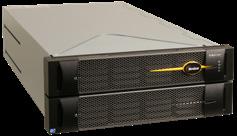
Stratus ftServer 6920
The ultimate in performance for compute-, data- or transaction-intensive applications in corporate data centers or large plants.
Subsystem
Storage Subsystem
Internal system drive bays 12 Gb SAS (8 per CRU) OR 12 Gb SAS (2 per CRU), NVMe PCIe Gen4 x 4 U.2 (4 per CRU)
12 Gb SAS (8 per CRU) OR 12 Gb SAS (2 per CRU), NVMe PCIe Gen4 x 4 U.2 (4 per CRU)
12 Gb SAS (8 per CRU) OR 12 Gb SAS (2 per CRU), NVMe PCIe Gen4 x 4 U.2 (4 per CRU)
Internal 2.5” drives Please visit www.stratus.com/ftserver/disks for a complete list of supported disk drives
Stratus ftScalable Storage Subsystem
(included) (2 per CRU)
12 Gb SAS (8 per CRU) OR 12 Gb SAS (2 per CRU), NVMe PCIe Gen4 x 4 U.2 (4 per CRU)
Expansion drive slots (RAID) Up to 144 Up to 144 Up to 144 Up to 144
RAID levels 1, 5, 6, 10 1, 5, 6, 10 1, 5, 6, 10 1, 5, 6, 10
Drive types Please visit www.stratus.com/ftserver/disks for a complete list of supported disk drives Embedded I/O
10/100/1000 Ethernet ports 4 (2 per CRU) 4 (2 per CRU)
10/100 Management Ethernet ports
(1 per CRU)
Serial (com) ports 2 (9-pin) ports per system
Manageability Baseboard management controller
(2 per CRU)
(1 per CRU)
Specifications
PCI Adapters
1 Gb dual-port Ethernet Up to 4 optional (2 per CRU) Up to 8 optional (4 per CRU) Up to 8 optional (4 per CRU) Up to 8 optional (4 per CRU)
10 Gb dual-port Ethernet server adapter (fi ber & copper) Up to 4 optional (2 per CRU) Up to 4 optional (2 per CRU) Up to 4 optional (2 per CRU) Up to 4 optional (2 per CRU)
32 Gb Fibre Channel for external storage Up to 4 optional (2 per CRU) Up to 4 optional (2 per CRU) Up to 4 optional (2 per CRU) Up to 4 optional (2 per CRU)
Serviceability
Hot-swappable components CPU / I/O module, disks CPU / I/O module, disks CPU / I/O module, disks CPU / I/O module, disks
Operating System*
Microsoft Windows Server with Hyper-V™ virtualization
Windows Server with Hyper-V™ virtualization
Windows Server with Hyper-V™ virtualization
Windows Server with Hyper-V™ virtualization
VMware vSphere vSphere vSphere vSphere
Red Hat Enterprise Linux with KVM Enterprise Linux with KVM Enterprise Linux with KVM Enterprise Linux with KVM Power and Packaging
Input voltage
System dimension (H x W x D)
with bezel
Penguin Solutions support and additional storage
200-240 VAC; 50 Hz, 60 Hz
200-240 VAC; 50 Hz, 60 Hz
Penguin Solutions offers a variety of certified options to easily extend your continuously available platform. From valueadded managed support plans to modular storage, you can get the additional capabilities that you need to satisfy your unique enterprise and edge computing requirements.
Stratus ftServices
Get the help you need when you need it and ensure your systems are up-to-date and operating at peak efficiency. Total Assurance, System Assurance, Extended Platform Support, and Platform Support managed plans are available for different applications, environments, and use cases. More+
Stratus ftScalableTM
Specifically designed to complement Stratus ftServer, this hybrid storage array helps you meet your growing storage needs while also ensuring continuous availability and data integrity. Manage both hot and cold storage with real-time data tiering and protect sensitive data at rest with encrypted disk technology. More+
Contact Us
For sales queries, please contact sales@penguinsolutions.com
To learn more about Stratus ftServer and other Penguin Solutions products, please visit: www.penguinsolutions.com © 2025 Penguin Solutions, Inc. All rights reserved. Penguin Solutions, Penguin Computing, OriginAI, and ICE ClusterWare are trademarks or registered trademarks of Penguin Solutions. All other product names, trademarks, and registered trademarks are the property of their respective owners. All company, product, and service names used in this document are for identification purposes only. Use of these names, trademarks, and brands does not imply endorsement.