Sponsored Content
Groundbreaking Research Leads to New Therapies for Treating Lymphoma
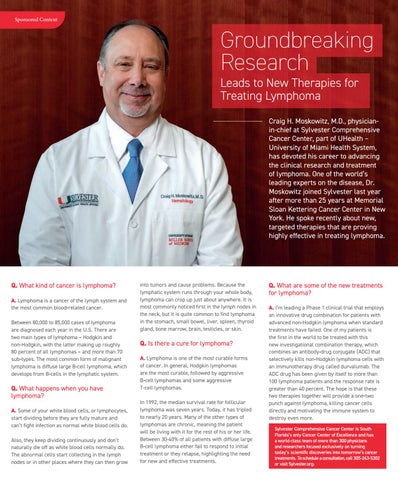
Craig H. Moskowitz, M.D., physicianin-chief at Sylvester Comprehensive Cancer Center, part of UHealth – University of Miami Health System, has devoted his career to advancing the clinical research and treatment of lymphoma. One of the world’s leading experts on the disease, Dr. Moskowitz joined Sylvester last year after more than 25 years at Memorial Sloan Kettering Cancer Center in New York. He spoke recently about new, targeted therapies that are proving highly effective in treating lymphoma.
Q. What kind of cancer is lymphoma? A. Lymphoma is a cancer of the lymph system and the most common blood-related cancer. Between 80,000 to 85,000 cases of lymphoma are diagnosed each year in the U.S. There are two main types of lymphoma – Hodgkin and non-Hodgkin, with the latter making up roughly 80 percent of all lymphomas – and more than 70 sub-types. The most common form of malignant lymphoma is diffuse large B-cell lymphoma, which develops from B-cells in the lymphatic system.
Q. What happens when you have lymphoma? A. Some of your white blood cells, or lymphocytes, start dividing before they are fully mature and can’t fight infection as normal white blood cells do. Also, they keep dividing continuously and don’t naturally die off as white blood cells normally do. The abnormal cells start collecting in the lymph nodes or in other places where they can then grow
into tumors and cause problems. Because the lymphatic system runs through your whole body, lymphoma can crop up just about anywhere. It is most commonly noticed first in the lymph nodes in the neck, but it is quite common to find lymphoma in the stomach, small bowel, liver, spleen, thyroid gland, bone marrow, brain, testicles, or skin.
Q. Is there a cure for lymphoma? A. Lymphoma is one of the most curable forms of cancer. In general, Hodgkin lymphomas are the most curable, followed by aggressive B-cell lymphomas and some aggressive T-cell lymphomas. In 1992, the median survival rate for follicular lymphoma was seven years. Today, it has tripled to nearly 20 years. Many of the other types of lymphomas are chronic, meaning the patient will be living with it for the rest of his or her life. Between 30-40% of all patients with diffuse large B-cell lymphoma either fail to respond to initial treatment or they relapse, highlighting the need for new and effective treatments.
Q. What are some of the new treatments for lymphoma? A. I’m leading a Phase 1 clinical trial that employs an innovative drug combination for patients with advanced non-Hodgkin lymphoma when standard treatments have failed. One of my patients is the first in the world to be treated with this new investigational combination therapy, which combines an antibody-drug conjugate (ADC) that selectively kills non-Hodgkin lymphoma cells with an immunotherapy drug called durvalumab. The ADC drug has been given by itself to more than 100 lymphoma patients and the response rate is greater than 40 percent. The hope is that these two therapies together will provide a one-two punch against lymphoma, killing cancer cells directly and motivating the immune system to destroy even more. Sylvester Comprehensive Cancer Center is South Florida’s only Cancer Center of Excellence and has a world-class team of more than 300 physicians and researchers focused exclusively on turning today’s scientific discoveries into tomorrow’s cancer treatments. To schedule a consultation, call 305-243-5302 or visit Sylvester.org.