W
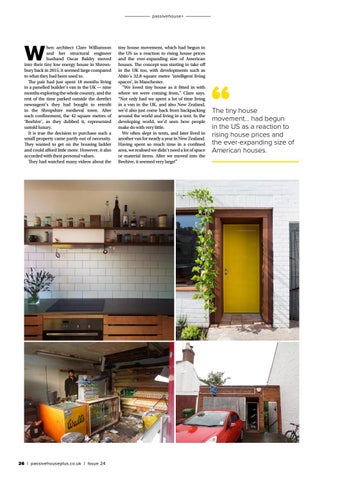
hen architect Clare Williamson and her structural engineer husband Oscar Baldry moved into their tiny low energy house in Shrewsbury back in 2015, it seemed large compared to what they had been used to. The pair had just spent 18 months living in a panelled builder’s van in the UK — nine months exploring the whole country, and the rest of the time parked outside the derelict newsagent’s they had bought to retrofit in the Shropshire medieval town. After such confinement, the 42 square metres of ‘Beehive’, as they dubbed it, represented untold luxury. It is true the decision to purchase such a small property came partly out of necessity. They wanted to get on the housing ladder and could afford little more. However, it also accorded with their personal values. They had watched many videos about the
26 | passivehouseplus.co.uk | Issue 24
tiny house movement, which had begun in the US as a reaction to rising house prices and the ever-expanding size of American houses. The concept was starting to take off in the UK too, with developments such as Abito’s 32.8 square metre ‘intelligent living spaces’, in Manchester. “We loved tiny house as it fitted in with where we were coming from,” Clare says. “Not only had we spent a lot of time living in a van in the UK, and also New Zealand, we’d also just come back from backpacking around the world and living in a tent. In the developing world, we’d seen how people make do with very little. We often slept in tents, and later lived in another van for nearly a year in New Zealand. Having spent so much time in a confined area, we realised we didn’t need a lot of space or material items. After we moved into the Beehive, it seemed very large!”
The tiny house movement… had begun in the US as a reaction to rising house prices and the ever-expanding size of American houses.