Parenting
the review 2024 Essential Articles on
& Education
Parents League of New York is a member of the Independent Schools Admissions Association of Greater New York (ISAAGNY), the New York State Association of Independent Schools (NYSAIS), the International Boys’ School Coalition (IBSC), The Association of Boarding Schools (TABS), and the Association of Independent School Admission Professionals (AISAP).
Neither publication nor advertising in Parents League Review represents endorsement by Parents League of New York, Inc.
Copyright © 2024 Parents League of New York, Inc.
Contents Contents Advice for Giving and Receiving The Power of Community Connections 9 Phoebe Boyer, President and Chief Executive Officer of Children’s Aid Weaving Responsiveness Into the Fabric of School 14 Bill Kuhn, Head of School, Birch Wathen Lenox Admissions: A First Connection to School Culture 18 Andie Levinger, Director of Placement, The Parkside School New York City as a Classroom without Walls 21 Jane Racoosin, Director, Beginnings Nursery School Sensible Parenting From Stress to Strength: Benefits of Yoga for Kids 44 Include Health and Fun D’Angela Alberty, Program Director, Three and a Half Acres Yoga (THAY) Teach- back Technique for Close Communication 48 Kelly Fradin, Pediatrician and Author Growing Up in Public: Overemphasis on College 56 Admissions Devorah Heitner, Author How to Use the “I Do, We Do, You Do” Model to Build 61 Emotional Well-Being in Teens Amanda Morin, Former Vice President Learning and Knowledge, Jed Foundation (JED) How Kids Learn Flexibility and Self-Regulation 67 Chelsey Rosen, Child Psychologist Student Achievement: Is It Ever Enough? 72 Jennifer Breheny Wallace, Author Raising Readers and Writers Developing Critical Literacy Together 89 Shokry Eldaly, Adjunct Course Instructor, Bank Street College of Education Why Voice Matters—and How to Harness It for College 96 Admissions Essays Ashleigh Bell Pedersen, Writer, Coach, Tutor Yes, You Can: Five Touchstones for Parents Who Dare 100 to Teach Maya Smart, Author, Educator
Contents Learning Environments The Wonder Years of K-8 133 Tracy Fedonchik, Head of School, St. Luke’s School Planet Word Is Where Languages Come to Life 139 Ann Friedman, Founder and CEO, Planet Word Casting a School Play Where All the World Is a Stage 144 Willie E. Teacher Upper School Drama Teacher, Hackley School Meaningful Service Learning from the Early Years On 151 Felicia Gordon, Director, The Brownstone School Being There Supporting Students with Special Needs 169 Kathryn Cappella, Educational Advocate, Learning Disabilities Association of New York State Peter Flom, Board Member, Learning Disabilities Association of New York State Social-Emotional Challenges Are Education’s 176 Greatest Opportunity Carrie Catapano, Head of School, West End Day School A Parent’s Perspective: Finding the Just-Right 181 Educational Setting for My Daughter Julie Kandall, Director, Columbus Pre-School Index of Advertisers 197 Parents League Member Schools 198
Welcome to the Review
Parents League of New York was founded in 1913 as a coalition of independent schools and families in New York City. Today our connections reach both our ongoing members as well as the larger public, stretching from coast to coast and abroad. Deeply dedicated to our work, our mission is to empower families by providing advisory services and parenting resources through partnerships with schools and educational providers.
Each year the Review covers many compelling topics serving as a trusted source for parenting and education insights. Whether you are supporting your emerging reader, or balancing high expectations with the desire to lower your child’s anxiety or stress, both Parents League and the Review have much to offer. Consistent in attracting educators, psychologists and parenting experts, we are honored to share a wide range of educational and parenting perspectives from the 1960s to now.
As a fellow parent and educator, I have a deep appreciation for the varied considerations that shape family life. The social, educational and technological landscape seems to shift at rapid speed. Thus, as parents we must tackle both longstanding and novel parenting concerns, sometimes doing so simultaneously. Our Review authors therefore expound on age old and newly emerging concerns. For example, Maya Smart’s Yes, You Can: Five Touchstones for Parents Who Dare to Teach, adds to discussions around parents as “first teachers’’ by offering practical and pragmatic approaches to literacy development in the home, while Devorah Heitner’s Growing Up in Public explores how technology is impacting childhood and how parents might mitigate it. Preschool director Jane Racoosin shares how the city kids process sights and sounds both inside and outside the classroom in her article New York
6 Foreword
City a Classroom without Walls, while Ashleigh Bell Pedersen discusses self discovery in the college admission process in her article, Why Voice Matters. And, of course, the development of the whole child and his or her unique strengths is as meaningful as ever, so reading Jennifer Wallace’s Never Enough offers insight into the emerging “Mattering Movement.”
So, cheers to 2024 and beyond! We hope you enjoy this year’s Review publication, a special endeavor of the volunteer parent community at Parents League. More specifically, I offer many thanks and congratulations to Amanda Newman, Helene Lowenfels, Ellen Birnbaum, Debbie Ashe and Erin Velandy. Of course, this publication would not have been possible without the support of the PLNY team of Ann Levine, Liz Ainsle, Julie Hubert, Allison Trief-Sheller and Laura Mazzaro.
Warmly,
Barbara H. Scott Executive Director
Foreword 7
The Power of Community Connections
Phoebe Boyer President and Chief Executive Officer of Children’s Aid
It’s an old cliché that it takes a village to raise a child, but I know it to be true because of the work I’ve been doing for nearly a decade at Children’s Aid, the nonprofit I have the privilege of leading. Here we recognize that strong children come from strong families, and strong families come from strong communities.
Let me illustrate this idea with a story about a parent I’ll refer to as Maria, who was searching for an after-school program for her son. As a single working mom who was new to the Harlem community, many of the programs she came across were financially out of reach. When Maria walked through the doors of the Dunlevy Milbank Community Center, she may have felt desperate. If she didn’t find a safe place for her son, she knew she could lose her job. Although you may not be familiar with Milbank, it holds a special place in the hearts and minds of many in Harlem. Milbank offers kids year-round programming, including teaching team sports skills like basketball, swimming, and dance to after-school educational enrichment programs and summer camp.
Even though the enrollment deadline had long passed, the staff at Milbank worked some magic and Maria eagerly enrolled her son in Milbank’s after-school program, but that was just the start. As the staff at Milbank sprang into action, Maria was becoming enmeshed in a new community. The staff shared information with Maria about how she could get a weekly bag of fresh produce from a local farm at free or reduced cost right at the center. They connected her to the on-site health clinic so her son could continue to receive the medical services he needed. And they connected her to other parents in the Milbank community. Maria was genuinely touched and incredibly grateful for the outpouring of support she received.
9 Advice for Giving and Receiving
Milbank is one of Children’s Aid’s 40 program sites in New York City. Agencies like ours aim to remove the barriers between New York City’s children and their boundless potential. In the two centuries Children’s Aid has been at work, we have learned that it simply takes more than educational opportunity alone to set children up for future success. It takes a holistic approach to address the effects of poverty. Children’s Aid offers an array of services, from cradle through college and beyond, to 50,000 children and families. At every phase of a child’s development, belonging to a community is key.
Building foundations from early childhood
Parenting is perhaps the most challenging—and rewarding— journey in adult life. Our goal is to offer early childhood services starting with expectant families. The programs become communities where people come together to share resources and wisdom for the momentous life transition to school. The bonds built in these settings extend beyond the early childhood years into the classroom.
In our early childhood centers, staff and families work together as partners. At the start of each school year, a family advocate is assigned to each family. They work together to identify each family’s strengths and areas of concern, and together create goals for their children and their family life. Parent goals might include reading more books to their children, furthering their education, starting their own business—and our family advocates support it all. We know from a vast wealth of research that supportive communities enrich children’s cognitive, emotional, physical, and social development. We further encourage development through evidence-based curricula in classrooms and organized activities outside of it, including playdates and community parties.
When children receive these supports in their earliest years, the impact can be measured through elementary school, high school, and even into college. Our immediate aim in early childhood education programs is to make sure students arrive at kindergarten ready to learn, grow, and lead. But our ultimate vision is to imbed lifelong values in education, friendship, family, and community.
10 Advice for Giving and Receiving
Empowering communities through centers and schools
Community support is no less important as our little ones transition to kindergarten and the school-age years. During the K-8 years, Children’s Aid youth and families feel support through community centers and community schools. We have been operating community centers in New York City for decades, most notably in Harlem – which is home to our Milbank Center, where Maria found what she needed for her family – and in northern Staten Island and the Bronx. At these centers, enriching programs are offered for people of all ages to support academics, social-emotional development, health and wellness, and more. These centers become hubs for people to come together and share the resources and services they offer to the members of their communities.
Building and maintaining a full-service community center is an enormous investment that can take years to get off the ground and even more time to become a trusted resource. We believe they are vital assets helping connect and support communities, especially in times of enormous challenge. During the coronavirus pandemic, for example, virtual programs through our community centers helped counter feelings of isolation and fear for our youth and families, while also being food distribution and learning lab sites.
In the last 30 years of working with the NYC Department of Education, Children’s Aid has brought the best elements of community centers into school buildings themselves through the community school model. We saw how schools were natural communal hubs, and that they were underutilized during evenings and weekends, critical opportunities to engage young people. We proposed a partnership with DOE to operate programming during these non-school hours that would be open to all the students at the school as well as members of the surrounding community.
A community school is a place where the power and resources of a community come together within a school. The children and families in our community schools rely on us for more than
11 Advice for Giving and Receiving
just a high-quality education. We provide dental, medical, and mental health services for our young people and their families. These community schools become hubs where students can explore their interests, discover new passions, and develop lifelong friendships while surrounded by supportive teachers and counselors. On any given day you will find students engaged in after-school programming ranging from homework help to robotics to sports and recreation. Adults in the community may be taking an English as a second language course or learning new recipes utilizing organic and fresh produce from a local farm. We also provide referrals for other resources available in their neighborhoods.
Today we operate 20 of the more than 400 community schools in New York City, which is the largest community school district in the country. And our work extends well beyond the five boroughs now. Through our National Center for Community Schools, we help districts around the country and the world implement this magnificent model within their communities.
Caring for our critical age groups and populations
As teenagers navigate the transition from childhood to adulthood, they seek independence, identity, and a sense of belonging. In this often volatile stage for kids, community provides a safe space for them to explore their interests, passions, and values. Our programs for teens aim to offer peer interaction, mentorship, and exposure to diverse perspectives. Whether through sports teams, clubs, volunteer work, or other communal activities, teenagers benefit from the guidance and encouragement of their peers and role models within their chosen communities.
Moreover, during these formative years, as children develop their identities and move toward independence, community takes on even greater significance. Supportive parents of adolescents know how important it is for their children to have other trusted adults whom they can seek out for support and guidance. We offer parents the opportunity to enroll in our family life and sex ed classes as a strategy for supporting teens. The connections and friendships
12 Advice for Giving and Receiving
adolescents forge within their communities can provide emotional support, a sense of belonging, and the foundations for lifelong relationships. A teen’s community becomes a source of stability, understanding, and shared experiences, helping them navigate the challenges and triumphs of adulthood.
Creating lifelong meaningful connections
Through our long history of working with communities in the often overlooked areas of our city, we have learned that becoming a trusted partner takes total commitment. That is why our work with families begins before babies are born and continues through college and beyond. The aim is to make meaningful connections with each child and family we have the honor of serving with a vision extending beyond just the individual. We hope to restore the strength and power of communities across New York City. That is why we have deep roots and powerful, long-standing relationships where we work.
The Milbank community has benefited from Maria’s presence as she continues to be actively engaged. Her son is taking music classes and is also enrolled in the Milbank Saturday program. He is making many new friends with both staff and other youth, and developing into a leader among his peers. When we work to build a better future for our children, we are working to build a better future for all. When we come together as one village, even a village as large as New York City, we discover a shared strength that never would have been possible alone: the strength of true community.
Phoebe Boyer is the president and chief executive officer of Children’s Aid, working to help New Yorkers in poverty succeed and thrive by providing comprehensive support to students and their families.
13 Advice for Giving and Receiving
Weaving Responsiveness into the Fabric of School
Bill Kuhn Head of School, Birch Wathen Lenox
When I was a child, I was fortunate to attend what many consider to be a “great” school. It was prestigious, academically rigorous, and filled with resources and opportunities. By virtue of attending such a school and meeting the expectations set for me, I was all but guaranteed a prosperous and productive transition to adulthood. So why then, with so much opportunity before me, did I feel like I could not be successful?
Like many students, the biggest obstacle I faced was my own sense of self. I was a timid student, often anxious or afraid of making a mistake that I was sure even the smallest of errors would follow me forever and ruin my reputation among my teachers. My anxious brain created these scenarios and produced what felt like a permanent fear of being wrong.
Mr. Caparelli
“That’s right, Billy!”
Mr. Caparelli was pointing at me with his forefinger and thumb, with a folded piece of paper somehow wedged between his remaining fingers. Prior to this bout of excitement, which one could hear from all the way down the hall—much to the chagrin of the other teachers in session—I was struggling to complete a problem on the blackboard (not the digital learning management system, but an actual blackboard—remember those?!). It was a simple linear equation solving for a variable—in this case “x”—and I was getting stuck on, and extremely nervous about, reversing the operation of division.
Mr. C was a teacher who did more than teach. He nurtured. He cared. He befriended me. He was forthcoming and effusive. Mr. C was committed to getting to know his students. He leveraged knowledge of the individual learner and built relationships to draw more out of them. With Mr. C, I was excited to come to class.
14 Advice for Giving and Receiving
One model of a successful school combines an exceptionally nurturing environment with a progressive philosophy— educating and instilling community values in its students— while still retaining a traditional structure. In the spirit of John Dewey, the term “progressive” signifies a school’s strong commitment to student-centered instruction, problem-solving and critical thinking, life-long learning, and education for social responsibility and democracy. The term “traditional” signifies that a school is curriculum-driven and teacher-led, with an emphasis on respect and mutual understanding. That said, a “traditional” school should be committed to adapting innovation consistent with its traditional values in the classroom to enhance the student experience. These include an exceptional focus on the individual student and meeting them “where they are,” development of critical thinking skills, and viewing the school as “a form of community life,” as Dewey wrote. The combination of traditional and progressive has been a successful model as evidenced by student outcomes.
A responsive environment should be woven into the fabric of the institution and be an essential component of educating children, beyond hiring friendly teachers and administrators. Staff should look at student performance both academically and socially, the latter being a measure of how well the student is integrating into the school culture. If a student is struggling socially, and this is negatively affecting their academic performance, teachers should work with the student on strategies for increased engagement. Students are not necessarily proactive in advocating for themselves, which is why advisors and teachers must step in where appropriate. Creating a strong support system around advisors, for example, is a critical thread that ties together the academic and responsive pieces of school.
Students who form strong attachments and bonds to their teachers do better in school
In elementary school, students who form strong attachments and bonds to their teachers develop strong emotional regulation and
15 Advice for Giving and Receiving
social skills. During these early years, educators aim to identify a student’s strengths. Teachers also collaborate with parents to build on a student’s unique gifts and talents, thus creating the foundation for a strong relationship between teachers and students. The importance of the partnership between home and school is critical
Such teamwork can also enable the early recognition of student needs and can help when there is work to be done to close gaps in a learning profile. As a student progresses into middle school, the development of strong student-teacher bonds means that students display increased academic interest, engagement, and motivation inside and outside the classroom. Of course, one goal of middle school is to increase students’ sense of responsibility for themselves and others. Another is that students develop increased levels of academic responsibility and citizenship in their school community. Thus, one of the most effective community and spirit-oriented tools we employ at our school is the “points” and “house” system. Students are enthusiastic supporters because the framework allows them to develop close relationships with their peers and teachers and compete on a grade-wide level. The system also provides abundant motivation for good behavior, which teachers and staff appreciate.
Unsurprisingly, high schoolers who form strong attachment and bonds to their teachers display elevated levels of engagement and motivation, and importantly, are less likely to experience anti-social behavior or become involved with drug and alcohol use. This is where a strong advisor system acts as a bridge to teachers, parents, and students. In the early years, advisors form the center of this relationship, connecting each of the parties in an organized fashion. In the eleventh and twelfth grades, students take on full ownership of their academics and define their place in the community in a wide variety of ways.
These bonds only strengthen over time—a student who makes fewer transitions over the course of their school career will have more opportunities to create robust relationships. But durable
16 Advice for Giving and Receiving
bonds can also be formed in later years and schools need to understand the importance of facilitating these relationships— programming should be available to continuously welcome, integrate, and assimilate new students and teachers alike.
The importance of the student-teacher relationship cannot be overstated
The Centers for Disease Control (CDC) reports that more than a third of high school students “experienced poor mental health during the pandemic and nearly half of students felt persistently sad or hopeless.” However, they also report that students who feel more connected to teachers and classmates at their schools have improved mental health. Such students are more likely to experience high academic achievement, have better school attendance, and are better equipped to face social challenges. Students with close teacher relationships are more likely to experience “engagement, achievement, self-efficacy, and motivation compared to students with more distant relationships”, according to the CDC.
Our focus as educators should be building connections between students, faculty, and community. As one of our recent graduates noted, “There is definitely space for teachers and students to cultivate wonderful relationships.” Mr. C would be proud. He inspired my passion and love for education, and his spirit lives within me and within the walls of my school.
17 Advice for Giving and Receiving
Bill Kuhn is head of school at Birch Wathen Lenox in Manhattan, a school for students from kindergarten through 12th grade.
Admissions: A First Connection to School Culture
Andie Levinger Director of Placement, The Parkside School
If you were to ask one of our current families to describe the culture of The Parkside School, they might say “warm” or ”collaborative.” The school’s welcoming red doors reflect the atmosphere of cheer and care behind them. We believe that children are complex beings with unique passions, perspectives, and personalities. They come from diverse backgrounds that shape their understanding of the world. Since parents are often their children’s greatest observers and understand them intuitively, we rely on a team approach to help educate our students with languagebased learning challenges. At Parkside, we build a network of support around the child that includes teachers, therapists, parents, and loved ones. We meet with families regularly, communicate frequently, and trade stories with each other of the day’s heartwarming moments and challenges. When students are part of an interconnected web of family and community, they succeed academically and interpersonally in ways they and their parents might not have thought possible. This can look like a shy girl belting out show tunes onstage during the school play as her audience beams with pride. Or, it might manifest as a student who once hated writing now presenting a multi-page book report to his class, who, in turn, pepper him with thoughtful questions in response to his hard work and bravery. When children are at the center of a nurturing community, they thrive.
So how do we build a culture that fosters connections and nourishes sturdy, resilient children? Schools lay the foundation at the very beginning of the application process. This starts with you, the parent, as you begin to explore school websites. A good place to begin your search is with a school’s mission statement. Mission statements are often nuanced collaborations among stakeholders aiming to distill the school’s core values. Though
18 Advice for Giving and Receiving
they can sound similar from school to school, when you parse them apart, you will see they reflect the school’s priorities in subtle, but specific ways. Parkside’s mission statement, for example, reads, “Our goal is to enable students to pursue learning in their areas of strength, to acquire tools and strategies to progress in their areas of challenge, and to develop respect and understanding for themselves and others.” Parkside cares about honoring each child’s individual gifts, and aims to help children understand their own minds. We prioritize their meaningful relationships.
As you read individual school mission statements, consider whether it resonates with you and aligns with your family values. If it does, that’s a good indicator that it might be worth investing your energy into the next steps of the application process at that school.
In many schools across the city, you might then be asked to fill out an inquiry form. This is not merely paperwork; it begins the stream of communication between school and family. It is the start of a relationship. As in all relationships, it’s important to consider the manner and tone of communication. Does your initial relationship with your child’s potential school placement feel supportive and personalized? It should, especially since schools aim for a stance that reflects mutuality, curiosity, and support. Choosing a school is a critical decision about your child’s future. School is where children build memories and friendships, and crystallize their sense of self. With a deep respect for the weight of your decision in mind, we read your responses on the inquiry form and the subsequent application very carefully. All schools seek to get to know you and how you see your child. What comes easily for them? What is their learning style? What environments or settings might be overwhelming? Where does your child thrive? What brings ease and joy to them and to you as a parent? How does your cultural heritage and background inform your parenting? Might this environment be the right stepping stone on the path you see for your child? If so, schools welcome information that provides insight into the rhythms and rituals of your child’s daily life. We believe that the day-to-day details have a profound influence in shaping who they are. Questions
19 Advice for Giving and Receiving
should be (and are) welcome! No question on your mind is too small or too big. They all matter to your sense of comfort as you consider each possible school community and culture. Thus, they matter to us. You are gathering data for a decision that must fit who your child is now and aligns with your hopes and dreams for the future.
Once the dialogue between family and school is established, it is time to deepen understandings of your young learner through school visits to their current education setting, more detailed information gathering, in-depth interactions with families and children, and playdates at our school. When they visit our school, they are treated like an already valued – if temporary – member of the class. We aim to listen: to your child’s unique way of viewing the world, to the experts who know them intimately at this point in their lives, and to your expectations, needs, and concerns. Listening is how we guide you openly and successfully through the application process.
Admissions and placement experts believe we learn best through relationships where we are seen and heard. We have high standards for our children: we expect them to care about their learning, to demonstrate empathy for others, and to develop effective learning strategies and metacognitive skills. But we know that the hard work of self-actualization comes from a sense of safety and trust, which, in turn, comes from belonging. When you embark on a season of school admissions applications, which can feel like a whirlwind of overwhelming pitches, promotional materials, and open houses, take comfort knowing that somewhere out there is an environment that will feel just right for you and your family. Schools are unique organizations made up of the people within them. When you find the sense of comfort a school community offers you and your child, it feels like the stars have aligned. But it just may be that because of your openness and receptivity, you will have found a welcoming community and a genuine sense of familiarity and comfort that feel like home.
Andie Levinger is director of placement at The Parkside School. The program serves the needs of students from kindergarten through fifth grade with language-based learning difficulties.
20 Advice for Giving and Receiving
New York City as a Classroom without Walls
Jane Racoosin Director, Beginnings Nursery School
As a child, I can tell you I never thought I would end up working in a nursery school in the best city in the world. Although I grew up just over the border of Washington, DC, in Bethesda, Maryland, we didn’t spend a ton of time in the city, and New York was far from my parents’ minds. After one trip over Thanksgiving weekend when I was about five years old and the next time when I was 16 and attended a wedding, I was smitten. I started to call New York home after first moving here in 1991. Teaching in the city started for me at the same time, and I began to fall in love with the uniqueness that New York provides children (and their parents!) who attend city schools.
It is hard for many to fathom children under five traveling by subway, stroller, scooter, or walking from the West Side to the East Side or uptown to downtown for school. But that is what all the little ones who come to the school where I work do! For all children, taking a look at what happens on the way to school is an adventure in itself, similar to the sights and sounds of the city as captured by author Amos Vogel in “How Little Lori Visited Times Square.” Children get to see a lot, and there are relationships to be had and nurtured along the way. The workman on a construction site, the cashier in the corner bodega, the barista in the coffee shop, the bus driver, and the farmer in one of the many excellent greenmarkets in the city. A walk to school is more than just a walk for sure. Usually, it is a learning journey.
Once children arrive at school, it is what is being talked about and discussed that is different. For city kids, there is much more variety over the suburban school of my experience working in one. Conversations during circle time might turn to who changes the color on the Empire State Building or what happened to the scaffolding going up on the building next door or why do we notice
21 Advice for Giving and Receiving
that fallish smell along the ginkgo-lined streets. And although some questions are unique to New York, there are universal queries as well: about the leaves, seedpods, and crabapples growing and changing; the worms found on cracks in the sidewalk; the squirrels darting in the park; the magnolia petals “littering” sidewalks and park pathways. Being able to expand on these conversations with children encourages and empowers them to open up and expand on topics they think about and want to share.
City kids dive deep into curriculum in school, and so much of it is what defines New York, what makes it such a special place of learning. Sure, you can have a building curriculum in Iowa, but it is just not the same as constructing a building a city kid has just seen that morning. I mean it could be that a child saw the Flatiron on the way to school, and then decides to research it: in the classroom, perhaps, or maybe on a field trip or city walk. How great that a classroom teacher can assemble a group of kids right outside the classroom door and guide them on an urban adventure to investigate the learning themes and concepts of the day. A recent curriculum about honey took hold after a group of children walked to the Union Square Greenmarket. The farmers and their produce are a huge resource for young children. Students can take their time, slow down, and follow their interests and instincts, turning a seemingly simple learning experience into so much more. The honey did just that. It is these times when you just have to say, “Wow, how lucky to have the ability to ask questions and get information from farmers in the city.” They come from far and away, but when the opportunity presents itself, it becomes a first-hand experience, attracting and extending learning that lasts. Who can turn away?
Even if a school has its own backyard or outdoor space, taking children to local parks, playgrounds, and gardens lends itself to nature investigations, physical activities, studies of landscapes and skyscapes, watching and listening to birds and insects, and so much more. Many city parks have public art to simply sit and observe. It is completely immersive. Who knew four- and fiveyear-olds could learn about modern artists like Sol LeWitt, Roy Lichtenstein, and Elizabeth Catlett by just simply walking through
22 Advice for Giving and Receiving
a subway station. Or visiting City Hall Park, Four Freedoms Park, Riverside Park. Or seeing tree houses being constructed in the trees in Madison Square Park. That particular installation was yet another relationship connector when the artist happened to be on site during a school visit.
And just think of the integrated learning opportunities of visiting historic homes and birthplaces of well-known authors, musicians, and politicians. Students can listen to the music of Louis Armstrong, then visit his home in Queens; read poetry by Langston Hughes and walk by his Harlem brownstone; tour the Theodore Roosevelt National Historic Site and learn of his role in local lawmaking; and so many other experiences that connect the classroom to the city and its treasures. Museums, too, in every New York neighborhood span interests from MoMath to Isamu Noguchi to the Fire Museum.
Community gardens offer many additional lessons, building understanding of how neighbors work together to create safe and beautiful spaces for all. When there is an awareness of nature in the city, students can produce observational drawings and photos; they are able to spend time outdoors sketching, gardening, and playing; and they build a community of their own right in front of them, experiencing and mastering things both challenging and rewarding.
I cannot fail to mention there is nothing like the foods of New York. Even the pickiest young eaters, when exposed to cooking opportunities in or near school, tend to taste what they grow and make. New York offers foods from so many different parts of the world in neighborhoods throughout all five boroughs. And how fun it is to discover new foods and recipes together by noticing what grows outside a classroom window. Taking that seed of inspiration planted at school and turning it into food for thought opens eyes, minds, and hearts. Various cultures and traditions are always within reach in New York, allowing ideas to take place that are incredibly enriching and rewarding.
Jane Racoosin is executive director of Beginnings Nursery School and has been involved with the program and its community since 1992, serving in a variety of different positions and roles.
23 Advice for Giving and Receiving
24 Advertising

25 Advertising

TREVOR TRANSLATES: balance

Academic excellence goes hand-inhand with happiness. High expectations motivate children by stimulating their love of learning from the earliest ages. A Trevor student thrives within a school community that doesn’t rank achievement over wellness, but instead cherishes both, in the pursuit of a simple (yet profound) belief: the idea that happy, engaged children learn more.
Trevor Day School
Ambitious academics. Engaged students. Balanced lives.
Nursery–Grade 5 @ 1 West 88th Street
Grades 6–12 @ 312 East 95th Street
trevor.org
26 Advertising
2022 Parents League Review ad balanceAR2.indd 1 9/15/22 10:04 AM
As the City’s oldest continuous coeducational school, Friends Seminary is distinguished by the practices of keen observation, unhurried reflection, critical thinking, and coherent expression. Driven by a shared intellectual curiosity, and guided by Quaker testimonies, students develop as scholars, artists and athletes




27 Advertising
where your story starts. THIS IS FRIENDS SEMINARY 222 EAST 16TH STREET NEW YORK, NY 10003 212.979.5035
learn more
the
process,
and to
more
visit www.friendsseminary.org.
To
about
admissions
events
learn
about our community, please


28 Advertising NEW YORK | SÃO PAULO | SHENZHEN | SILICON VALLEY | ONLINE AVENUES.O R G | AGES 1–18
Juilliard
String Orchestra, Grade 8 student SCAN CODE TO LEARN MORE
WILLIAM Violinist,
Pre-College
29 Advertising

30 Advertising
T he H

The Abraham school. We foster a lifelong love of learning in an environment of intellectual challenge and academic excellence. By weaving together the best of both Jewish and general studies, we support each student’s intellectual, emotional, social, physical, and spiritual growth.
31 Advertising
Erica Marks Panush, Co-Director of Admissions erica.panush@heschel.org
Iris Klein, Co-Director of Admissions iris.klein@heschel.org
212.784.1234 www.heschel.org 30 West End Avenue, New York, New York 10023
Ariela Dubler, Head of School
“Our aim is as plain as it is sincere: We exist to know, love, and challenge boys in the great hope that they will become men who contribute meaningfully to our world.”
—John Botti, Ph.D. Head of School
52 East 62nd Street, New York, NY 10065
browning.edu / @browningschool
32 Advertising





33 Advertising A new home for NYC’s only K-12+ independent inclusion school Now at 5 Hanover Square in the Financial District At IDEAL, we believe that differentiated learning is the key to academic excellence. We offer a supportive environment where all children are valued and celebrated. www.theidealschool.org Join us for an open house or schedule a private tour. Call 212-769-1699 x10106 or email admissions@theidealschool.org for more information.

Love God. Love Learning.
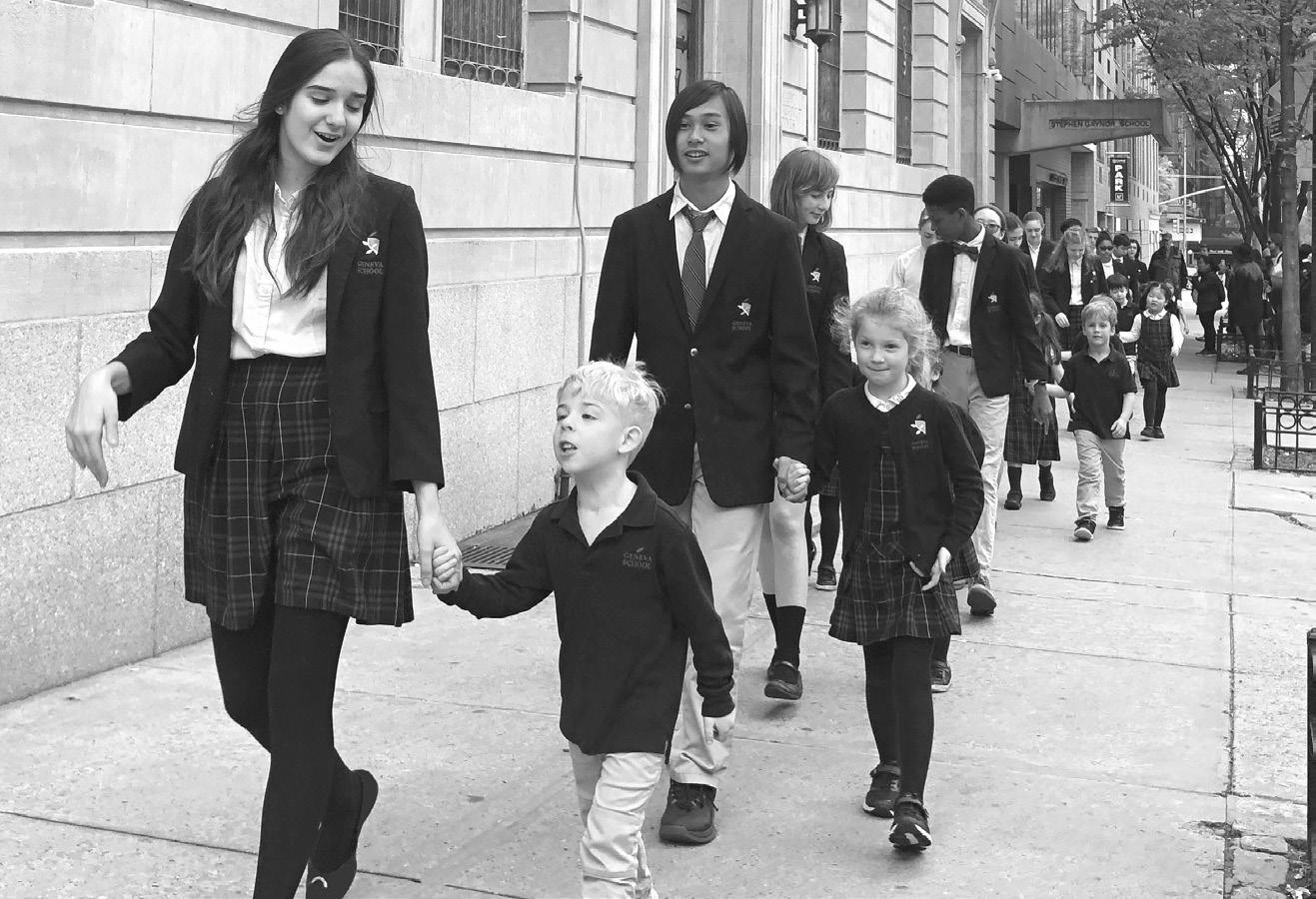
34 Advertising 138 W 90 ST, NEW YORK 212.754.9988 | admissions@genevaschool.net www.genevaschool.net The Geneva School of Manhattan A rich classical curriculum rooted in Christian faith
1996, The Geneva School of Manhattan aims to instill a lifetime love of learning, engage the mind, nourish the spirit, and nurture Christ-centered faith and character.
Since
Preschool through Twelfth Grade

35 Advertising 119-17 UNION TURNPIKE FOREST HILLS, NY 11375 718.268.4667 • WWW.KEWFOREST.ORG WE ARE KEW-FOREST! 100% recent graduates matriculated to four-year colleges and universities 100% $3MM+awarded annually in tuition assistance to families with incomes from $40k to $300k+ $3MM+ 14 average class size 70+ nationalities 15+clubs, including signature programs in science research and Model UN 14 70+ 15+ Get to Know Us! Preschool through Grade 12 2024 – 2025 Admission For more info, scan the code or visit kewforest.org/admission Get to Know Us!
36 Advertising
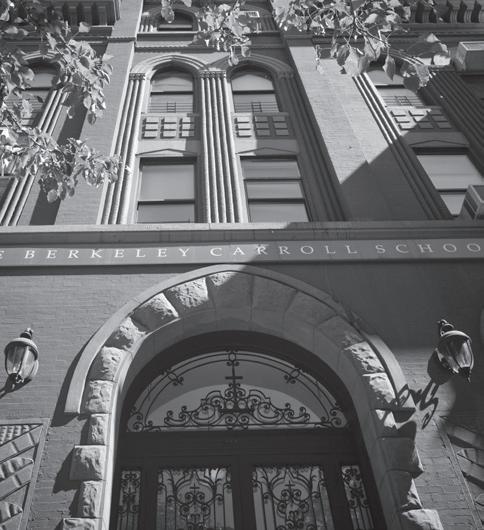
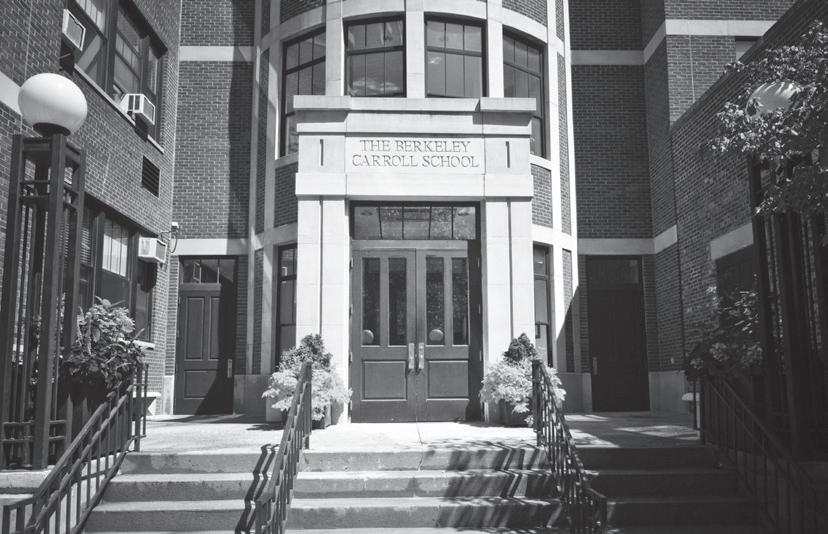
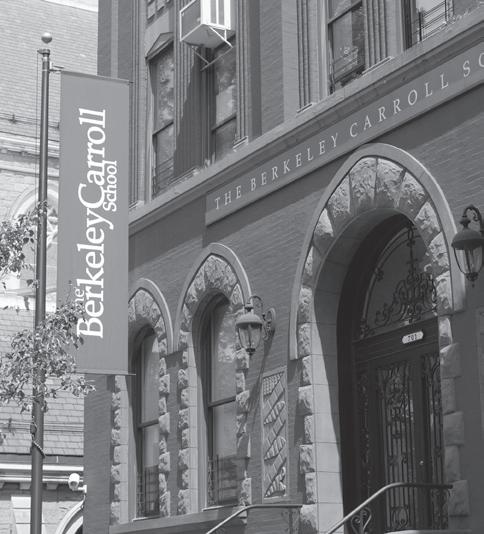
Preparing students for success in college and the greater endeavor – a life of critical, ethical and global thinking.
Lower Division
(Preschool – Grade 4) 701 Carroll St. 718-789-6060 x6608
Middle and Upper Division (Grades 5 – 12) 181 Lincoln Pl. 718-789-6060 x6527
A Vibrant Intellectual Community in Brooklyn www.berkeleycarroll.org
37 Advertising
38 Advertising




39 Advertising 30 West 16th Street • New York, NY 10011 • 212-924-7900 For more than 175 years, we have been guided by this truth: Great acts begin in moments of courage. Learn more about a Xavier education at xavierhs.org/admissions.
Preschool
Unlimited
40 Advertising
• Kindergarten • Lower Grades • Upper Grades
Schools • Boarding Schools • Publications • Book Talks
Special Needs
•
Panel Discussions
School Fairs
a
or email info@parentsleague.org PO Box 1357 New York, NY 10028 212 737 7385 www.parentsleague.org Starting the school admissions process? We know schools
one-on-one appointments with
Parents League School Advisor to discuss independent & private school admission are included with membership.
41 Advertising
Prepare for Middle School & High School Admissions
Led by expert school advisor Evie Gurney, our popular Admissions Workshop guides families through the independent school admissions process!
• School Selection
• Timelines
• Organizational Strategy
• Applications
Register for admissions workshops at www.parentsleague.org

42 Advertising
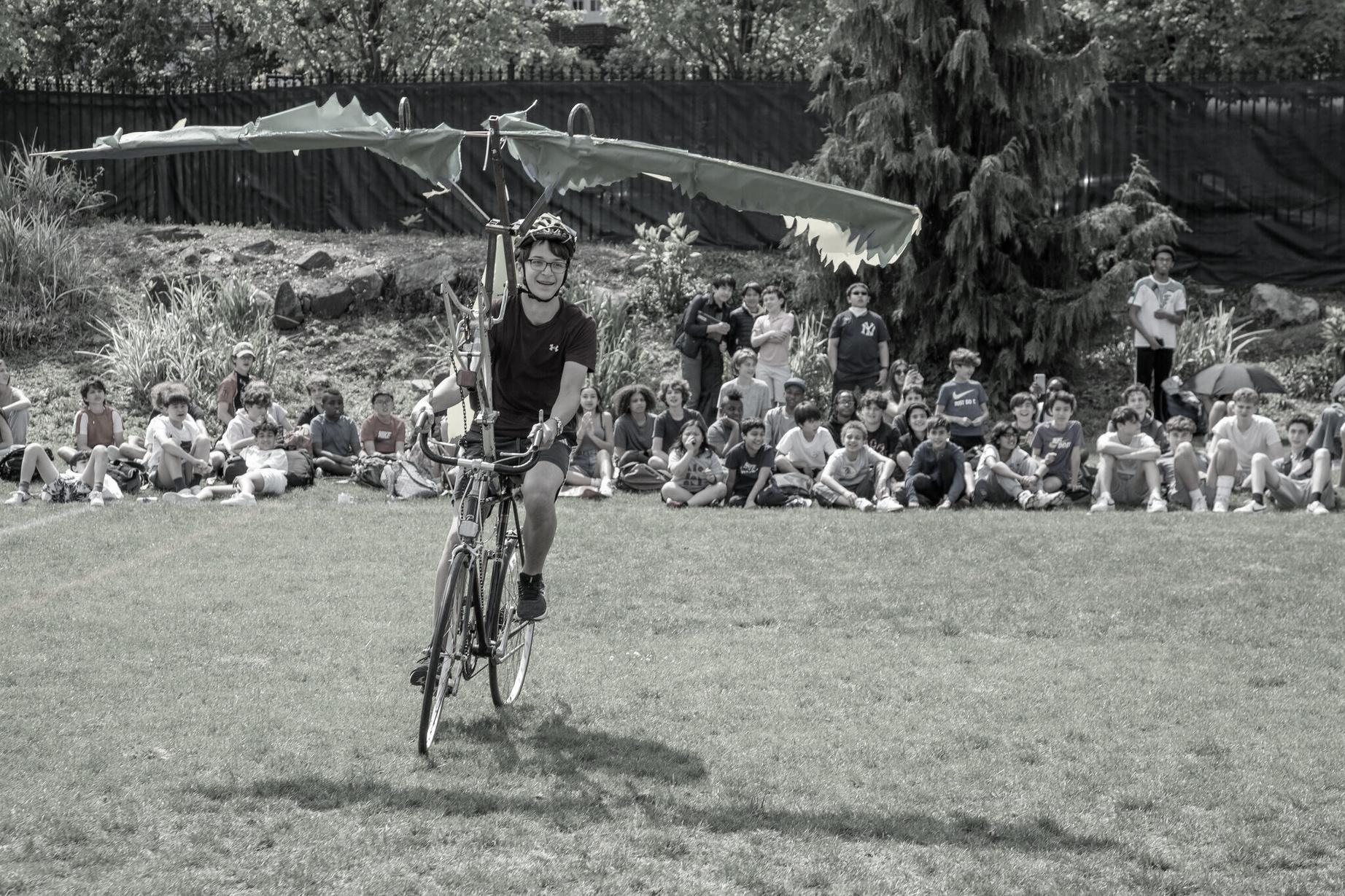
Come to Riverdale to Thrive
Develop your mind, build character, and join our community of lifelong learners committed to changing the world for the good.
43 Advertising
From Stress to Strength: Benefits of Yoga for Kids Include Health and Fun
D’Angela Alberty Program Director, Three and a Half Acres Yoga (THAY)
Our children live in an environment that is very much impatient. Everything surrounding us is gotta-have-it-now energy. Often we don’t realize that the influences around us can be stressful for our kids, but they are. Our children have had to adapt to this fast-paced world and it is affecting their mindset by interfering with their way of navigating their lives as the children that they are. Everything is so busy and society doesn’t allow us to slow down. This chaos has a major impact on our children’s lives which truly devastates their way of being.
Children are naturally joyous, carefree, adventurous; but when the grownups have a “hurry up” mentality, this can be confusing for our children, and even for ourselves as adults. Each and every single one of us are children at heart, and we need to bring joy back to our inner selves. When we are able to step back, take a deep breath, and look at the world around us, we start to become present and engaged in the world again.
The stress and trauma brought on by the Covid-19 pandemic has left a staggering impact on our country’s mental health. The combination of the pandemic along with a sharp increase in technological overuse, most impacted our children, whose mental health has suffered as their lives have to shift to fit the model of where we are now in society.
I am a solo parent to three young children ages seven, four, and three years old. We have survived immense trauma and we practice yoga with mindfulness together every single day. It is a part of our routine to keep us flourishing. The practice of yoga is beneficial for all children and families, particularly when
44 Sensible Parenting
combined with the outdoors. The deep breathing taught with yoga postures accelerates nature’s boost in cognitive function.
I first became connected to Three and a Half Acres Yoga (THAY) in September 2021 while looking for trauma-sensitive yoga for myself on my healing journey. Once I graduated from the training, I spent a year volunteering before becoming the program director. I am honored to be a part of a program that aligns with my values as a parent, and as a survivor. Families who do outdoor yoga in a THAY class can expect to gain awareness of breath as they increase their ability to deal with stress, gain balance, and sustain focus.
Practices are taught by trauma-sensitive yoga teachers, who focus specifically on how to safely work with individuals facing emotional, physical, or social trauma. Yoga classes help manage and reduce stress and the effects of traumatic events through training with adaptive poses, breathing, and mindfulness techniques.
Mindfulness is the ability to observe thoughts, feelings, and sensations calmly and objectively. Mindful breathing helps identify discomfort and enables the management of physical and emotional distress. It is a form of meditation that can reduce anxiety, treat symptoms of depression, promote relaxation, sharpen memory, and even improve heart health. Creating a mindfulness practice calms our sympathetic nervous system, allowing for harmonious self-regulation. Through this practice, we develop a capacity to observe things as they are and become better equipped to respond rather than react.
Creating space for mindfulness and self-care can drastically decrease stress, improve clarity and focus, and have magnificent healing properties. Breathwork, meditation, and mindfulness practices expand our capacity for joy, tranquility, and patience.
I have found that yoga can help counter the pressures of a fast-paced world. When children learn techniques for selfhealth, relaxation, and inner fulfillment, they can navigate life’s challenges with a little more ease. Yoga at an early age encourages self-esteem and body awareness with physical activity that is
45 Sensible Parenting
noncompetitive. Fostering cooperation and compassion, instead of opposition, is a great gift to give our children.
Children receive enormous benefits from yoga. Physically, it enhances their flexibility, strength, coordination, and body awareness. In addition, their concentration and sense of calm and relaxation improves. Doing yoga, children exercise, play, connect more deeply with the inner self, and develop an intimate relationship with the natural world around them. Yoga brings that marvelous inner light that all children possess to the surface.
When children imitate the movements and sounds of nature, they have a chance to get inside another being and imagine taking on its qualities. My kids tell me they love chanting and they express how much they enjoy singing, and when they chant or sing, they are not thinking about anything else except those practices. Certain freeing postures can return them to the world, our planet. Child’s pose is a favorite posture in my home. It brings us back to those very moments as young children when we felt safe, almost like a turtle in its shell, free from harm. The physical movements in asana introduce kids to yoga’s true meaning: union, power, expression, and honor for oneself and one’s part in the delicate web of life.
Yoga is about exploring and learning in a fun, safe, and playful way. Yoga and kids are a perfect match. Yoga teaches us about our bodies. When we practice the physical postures, we learn how to move more freely and with greater ease and awareness. These postures help our bodies become strong and flexible. Yoga teaches us to connect to our breath. When children experience trauma, sometimes we can breathe the opposite way. The way I practice with my kids is by breathing into a balloon to make the balloon bigger and then breathing out so the balloon starts to deflate. Growing up, I would actually breathe the opposite way because my body was in survival mode. When we feel stressed, our body knows what to do to keep us alive, but the technicalities of breathing can get away from us. So when we experience trauma, we need to retrain our bodies and teach ourselves that we are safe and it is okay to breathe with ease. When we breathe
46 Sensible Parenting
deeply and fully and become more aware, we bring peacefulness and energy to our bodies.
Yoga teaches us to use our energy more effectively. When we practice yoga, we learn to use the life force energy in our bodies to feel more relaxed, focused, or motivated. Yoga teaches us how to quiet the mind. When we practice yoga, we learn how to be still. This helps us listen with attention and make good decisions.
Yoga also teaches us about balance. When we practice yoga, we learn to be more aware of the need for balance in our lives. This can mean equal stretching on the left and right sides of our bodies or making sure we balance our very busy days with equal quiet time and relaxation.
Yoga teaches us to be the “boss” of our bodies, allowing ourselves to be the boss of ourselves, which is a big concept for kids. It takes time, but yoga gives us our power back. Yoga teaches us to listen to our bodies by modifying or changing postures that are challenging or cause pain. Yoga teaches us about taking care of ourselves. It is a great way to move our bodies and feel healthy – and teaching children how to take care of themselves is a wonderful way to demonstrate love, kindness, and caring.
As with all forms of exercise, a good yoga practice can mean a good night’s sleep. The beauty of yoga is that children can practice alone, with a friend, or within a group – anytime, anywhere. I even practice yoga with my kids at the grocery store, at the airport, when playing at the park, or in the comfort of our own home.
Teaching yoga to our children at a young age is a strategy that helps them acquire the confidence they are meant to continue building throughout every single stage of life.
47 Sensible Parenting
D’Angela Alberty is program director at Three and a Half Acres Yoga (THAY), a healing yoga, meditation, and mindfulness practice working with underserved communities in New York.
Teach-back Technique for Close Communication
Kelly Fradin Pediatrician and Author
As parents know, most children have a team of people involved in their care: teachers during and after school, therapists, babysitters, and family who aren’t always involved day to day. Even when children aren’t facing challenges, keeping everyone informed can be a time-consuming task — what does your child want to eat, what’s the routine for sleep, what do they wear are all essential pieces of information constantly changing. When a child is facing a challenge, the quantity of information and the essential nature of the information multiplies: medications, therapies, appointments, doctors’ phone numbers, emergency plans, and supplies. If there were a time when you could fully train everyone and just be done with it, that would be one thing, but a child is always changing and so is their plan.
Informing family of the plan to give medication or pick a child up from a certain address on a certain day can seem straightforward, but many challenges involve care plans that bring up individual opinions, values, and beliefs. Diet, discipline, use of medication, making a big deal out of something, or maintaining vigilance about a safety plan are the types of issues I see frequently cause drama between parents and other members of the care team. Fear of judgment and stigma can become barriers to communication. Communication about other conditions such as mental health, disabilities, or genetic conditions can similarly be more complicated to discuss openly, especially with many stakeholders.
As a caregiving parent, you’ll find that you know more about your child than anyone else, sometimes even more than your medical or educational teams. But there will be times when others are caring for, teaching, coaching, or supervising your children. To effectively quarterback your child’s care, you have
48 Sensible Parenting
to share your knowledge with others productively and keep them updated over time. An essential part of this is to build in time and opportunity for communication. When you leave a meeting with a teacher at the school or a physician in a clinic, it’s a good practice to consider not just what you need to do, but who you need to inform about the conversation. You can also consider regular meeting times to solicit feedback from other caregivers on how things are going. When you listen to these other important people in your child’s life, you can learn important information to improve your child’s care plan. You can also share important updates and priorities for their time with your child.
It’s essential for parents to be thoughtful about minimizing errors and maximizing understanding. The Agency for Healthcare Research and Quality (AHRQ) has developed a “Health Literacy Universal Precautions Toolkit,” designed to help medical providers communicate more effectively with patients. Their data show that only 12 percent of individuals receiving instructions from their provider understand them. The education level of the individual is only one of many barriers here; often, health professionals use jargon and convey complex topics quickly, particularly when emotions are high or an individual is not feeling well or focused. Similarly, when you communicate between a caregiving parent and another family member or paid caregiver, there may be a misunderstanding.
To tackle this problem, one of the tools the AHRQ promotes is called “teach-back.” Teach-back was designed for health-care providers to use with their patients, but this tool can be used by caregiving parents when they are communicating their child’s care plan with others. You are now the expert in your child and you are instructing others, so using similar techniques makes sense. Teach-back involves asking the receiver of information to explain what they’ve just been told. The goal isn’t to test their verbatim recall. If they repeat your words back to you, that doesn’t mean what you said was understood. The goal is to see how they have interpreted what you’ve said.
49 Sensible Parenting
Say a parent brings their child into the emergency room after their child has had a seizure. After a workup, my team concludes it is a febrile seizure and I explain what that means. Next, I’d say, “I have just given you a lot of information about your child’s febrile seizures. It’s important for you to understand, and I know you’ve been through a lot today. Because this is important, I want you to pretend that I’m a friend or family member who you’ll be sharing this information with, so I can be certain what I’ve told you is clear and accurate.”
Though many parents are shy to begin this exercise, once they do, I congratulate them and validate what they do understand well and correct whatever they misunderstand. Even the most conscientious, educated parent misses things sometimes, either because I was unclear, their attention wandered, or they were tripped up by jargon.
You can also practice this at home. If you’re just starting out with a new diagnosis, you might say to your co-parent, teacher, or babysitter, “I’ve been learning so much about this new challenge, and I can’t recall exactly how much I’ve shared. Would you mind just summarizing your understanding of what my child’s diagnosis and plan are so I can be certain we’re on the same page?” This big check-in might feel overwhelming, especially at first, so you can start slowly or with a more specific topic. “I really want to ensure we don’t make a mistake with this medicine so can you show me how you’ll pull up the dose?” While it can feel awkward at first, incorporating teach-back is a very effective tool for making sure your child is getting the best care.
Teach-back can also help with assessing the big-picture understanding of those on your team. In my work with children with type 1 diabetes, I frequently encounter families with personal experience with type 2 diabetes. This may appear to be an advantage — a family member with diabetes might be more adept at monitoring blood sugars, identifying the symptoms of high blood sugar, and understanding why it’s important to control the sugars. Unfortunately, this is not always the case.
50 Sensible Parenting
Type 2 diabetes responds to lifestyle modifications in a way that type 1 diabetes does not. An individual with type 2 diabetes is less sensitive to the effects of insulin and has some ability to control elevated blood sugar by changing behavior — exercise, diet, sleep, and maintaining a healthy weight. That said, medication is often an important component of care for people with type 2 diabetes. In type 1 diabetes, the pancreas is essentially burned out and produces no insulin. This means that, for these kids, life with diabetes will be different — their blood sugars will never be normal without insulin. They will always be fully dependent on insulin.
But if you have a family member, nurse, or babysitter who has experience managing type 2 diabetes, they might not fully understand that the child’s blood sugar spikes are not due to their behaviors or dietary habits. They may be inclined to blame the child, which is fundamentally unfair. The goal should be to help these children live and enjoy their best lives while providing the insulin they need.
If these parents use teach-back to communicate with their caregivers to assess their understanding, they can be sure that the caregivers truly understand the condition so they can provide the best care. If the people involved in your child’s life don’t understand the foundations of your child’s condition, they may make errors or mismanage your child’s care. To refer back to the example above, the “why” of the high blood sugar makes all the difference in how you form your plan and the tone of your day-to - day communications with the child. Checking for understanding of the details and the big picture is an important piece of your work.
Working with early intervention services and school-based support teams
My complex-care practice at an academic medical institution involved working fifty hours or more a week and taking patient phone calls one out of every three nights. Though I loved my patients and my team, and I loved doing research and educating future pediatricians, I needed more time and energy to focus on my own growing family. I was not willing to abandon my
51 Sensible Parenting
professional goals, but I decided that moving my practice to a public school setting would allow me to have better boundaries.
Something that helped me make this transition was knowing that school is where most children spend most of their time. The potential impact of appropriate school services on improving a child’s quality of life is substantial. Working within the New York City public school system meant I could have summers off and do shift work. No one would call me in the middle of the night or on weekends. Even so, in many ways going from a hospital setting to a school setting was a more difficult shift than I anticipated. I went from knowing everything about my one hundred patients to knowing next to nothing about the 120,000 children served by my district’s schools. I learned a lot during that time, but one essential takeaway was that every school, even in the same district, in the same neighborhood, had a different way of doing things.
The school offices had the same paperwork, the same job titles filled, and supposedly the same processes, but the stakeholders — the people you really need to talk to when a child needs a specific type of support — were different in each scenario. Some principals took a more hands-on role and some secretaries took on leadership roles in delegating services. Each school had a cohesive process, but I found that parents need to learn how their child’s school works in order to understand what is required to get your child the services they need.
Complexity of the system aside, sending a child to school while they face a challenge is often emotional. In her book, Raising a Rare Girl, author Heather Lanier summarizes how she attempted to navigate entrusting her special needs child to the local school. Her child was smaller than the other children and needed more support. She says, “You do three things. You prepare the school professionals as best you can. You tune your instincts keenly to their responses, sussing out whether they seem competent and respectful of your kid. And then if your instincts approve, you let go.”
While I haven’t navigated the process of sending a child with challenges to school as a parent, I can affirm that sending any child to school is stressful. There’s separation anxiety at drop-
52 Sensible Parenting
off, fatigue and pent-up emotions that get dumped on the parent at pickup, and the new uncertainty of not knowing exactly what happened at school. Did your child drink enough water, eat enough food, or use the bathroom? Were your child’s peers kind and inclusive? Did your child have meaningful engagement with the education provided? When your child is facing challenges, there is even more to worry about.
That said, school can be invaluable to both parent and child. The separation of your life from your child’s life can help both of you grow. Your child will grow and learn and have a space of their own. You will have more room in your life for your own concerns. And if your child has faced challenges, in some way the school community can offer even more benefits: special education services and occupational, speech, and physical therapy not provided through health insurance. Schools can offer teaching plans customized to your child and access to skilled professionals who often care for your child and provide you as a parent with coaching and daily support.
But it’s not an easy transition, and when your children have challenges, the stakes feel higher. In practice, it can be very difficult to sort out “I’m stressed about this transition” from “I don’t trust my children’s school.” Teachers, similar to medical professionals, often pursue their career through a passion for helping children. This means that most of the time they share your goals and strive to work in the best interest of your child.
Teachers, therapists, and educational professionals are still only human, with their own strengths and weaknesses. Sometimes we don’t know what we don’t know. Just as in medicine, educational best practices evolve over time and some schools will be more up to speed and willing to try new things, while other schools may have a more traditional approach. The range of the quality of care schools can offer can be broad. The only way to know is to do the research.
As you approach decisions about school, be honest and upfront about your child’s needs. You’d much rather the school be the right fit than have your child struggle without appropriate support. As part of your research, ask other parents about their experiences
53 Sensible Parenting
with the school. Seek out community resources through social media or educational advocates and consultants.
It’s important for parents to be organized in order to navigate the complexities of school services. While some conversations may seem friendly about your child’s school day, it’s wise to remember that, on the other side, whether public, private, or parochial, the school is bound to rules and protocols. Make requests in writing, ensure all communication is marked with dates, keep records, and ask for written responses. If the school says no to an intervention you’ve requested, remember it may not be a decision based on your child but one based on the capacity to offer necessary support.
Lastly, as you have conversations with educators about interventions in educational considerations, I urge you to ask for the recommended interval for reevaluation. Most schools recommend reevaluation every two to three years, and it can take at least three months for educators to develop an educational plan. If you are used to thinking of medical interventions where you see improvements in a few weeks, it can be disappointing, but not unexpected, to have to wait longer to know if educational interventions are effective. Be sure to have realistic expectations from the beginning.
As you think through the support your child is getting at school, think of the following questions:
• Do you think your child is getting the support they need to thrive? If not, what changes could you make to support them?
• Do you understand how the system works at your child’s school to adjust the plan and communicate effectively?
• Would you benefit from more organization in your communications with school?
I hope reviewing the systems where your child will receive care has been helpful. When you are helping your child through a challenge, sometimes the devil is in the details. If you don’t take the medication, see the right specialist, understand your follow-up plan, or find the right behavioral and educational support, you
54 Sensible Parenting
may have more difficulty addressing your child’s challenge. But another key component of your plan is understanding the big picture. Here we focused on the specifics, but remember as your child develops, you will continue to zoom out to understand common patterns faced by your family and others.
Dr. Kelly Fradin is a New York City pediatrician and author sharing information and advice in fields of health, wellness, and education.
55 Sensible Parenting
Growing Up in Public: Overemphasis on College Admissions
Devorah Heitner Author
The problem with “You won’t get into college if you post that!”
Although parents often think their kids are oblivious to how they are perceived by others on social media—He didn’t even think before he posted that!—kids today are acutely aware that as they post images, videos, and comments, they are “curating” an online presence or persona. The tension is that, well, they are teenagers, experimenting with who they are. The digital persona they may want to communicate at that moment in their lives may not be one you are happy about. Your teenager may want to be known as sexy and “hot.” You probably don’t. They may want to be known as a grunge skater or as someone who doesn’t care about anything. You probably don’t want that, either. Parents tell me over and over: they are terrified their teenagers—who share and reveal more on social media than they are comfortable with— will post a picture or comment that will cost them admission to their top college.
The reality is, our kids’ futures—especially their college careers—don’t depend on their social media profiles. When applying to college, if your child isn’t eliminated by some overarching criteria such as not meeting the minimum grade requirements, the admissions committee will consider their file for only five to seven minutes. High school college counselor Jim Jump told me that “in the last ten to twenty years, [colleges] are getting many more applications. They’re not hiring more staff to read those applications. Students and parents would be appalled to realize…how little time colleges spend reading applications
56 Sensible Parenting
compared to how much time students spend on applications.” That short amount of time does not usually include an extensive online background check of candidates, or a deep dive into their social media history.
Colleges don’t “dig up dirt” on social media
For the most part, colleges expect that most applicants are reasonably good human beings who are still developing. They trust that young people are who they say they are on their college applications. Admissions officers don’t go out of their way to dig up dirt on applicants. “The agreement is that your application will be reviewed fairly on whatever you report,” explains Sonja Montiel, an independent college counselor who’s been guiding high school students through admissions for over twenty years.
Tina Brooks in the Pomona College Admissions office agreed. “We don’t check a student’s social media as any part of the admissions process. On occasion, staff members may look at a student’s social media.” That may happen, Brooks explained, if the student includes a link to a URL to show off some relevant work they’ve done, like a video they starred in for an extracurricular activity. If the web site includes links to social media accounts, an admissions officer might follow that link and peruse the applicant’s profile.
A 2019 survey conducted by Kaplan revealed that 36 percent of admissions officers acknowledge sometimes checking some aspect of an applicant’s social media, an increase from 2018. However, they self-report that this is not something they do routinely, which means 64 percent of surveyed admissions officers report never checking any social media for any of the thousands of students they review. In all my conversations with college admissions staff, they emphasized the time limitations that would make an extensive “background check” implausible.
Colleges rarely reject students because of their social media (but it does happen sometimes)
An applicant at a highly competitive college is far more likely to be rejected because of “fit,” grades, or simply because
57 Sensible Parenting
the admissions committee chose a different student with achievements, talents, or background that better rounded out the incoming class in a certain way—rather than because of an online misstep. But when it happens, it is typically because a social media profile raised significant red flags about questionable or potentially problematic behavior.
“We found a student’s Twitter account with some really questionable language,” said one admissions officer. “It wasn’t quite racist, but it showed a cluelessness that you’d expect of a privileged student who hadn’t seen much of the world. It really ran counter to the rest of her application.” Another admissions officer shared that “a young man who had been involved in a felony did not disclose his past, which is part of our admissions process. His social media page shared his whole story. If he had been forthcoming, we would not have rescinded his acceptance offer, but we had to.” Yet another admissions officer who’s real said that pictures of a student “brandishing weapons” gave him pause when deciding whether to admit the applicant. These are all examples of admissions officers deciding that a student might bring an undesirable trait (i.e., racism, insensitivity, unethical behavior, violence) to campus.
How likely is it that your child will be rejected for anything they posted on their social media accounts? According to a 2017 survey by Inside Higher Ed, just 7 percent of private schools report having done it at least once. But a whopping 93 percent of them said they have never turned away someone over a social media post.
When I asked journalist Jeffrey Selingo, author of Who Gets In and Why, if a social media profile can really torpedo an applicant, he agreed it is incredibly rare. But in the unlikely event that students are rejected due to something they posted, the college probably learned about these posts from someone who took it upon themselves to report them. “That’s how these schools are finding out about something on social media,” said Selingo. In other words, admissions officers aren’t out there scouring
58 Sensible Parenting
social media to find posts that will disqualify kids, but they may investigate the posts if someone brings them to their attention.
Although the number of students who have been turned away from colleges because of their social media is quite small, many of the parents I meet believe this is a significant threat. The media does love a good takedown story—for example, some students whose offers were rescinded from Harvard in 2017 got a lot of media attention. When we read stories like this, it is hard not to worry, especially since some of these cases have revolved around messages shared in private groups, just to a few friends. There is likely no way the university could have found something like that without it being brought to their attention by a third party. Overemphasis on college admissions sends the wrong message about what truly matters
Should we encourage kids to think before they post and not share every passing thought? Well, yes. But we should do it because we want our kids to avoid offending and harming others with their words or actions because it is inherently the right thing to do, not because we’re afraid they won’t get into college. We don’t wait for our kids to hit or say something mean to another kid in the playground and then tell them, “Next time, don’t get caught.” Most of us start teaching our kids that hurting others—physically or verbally—is bad from the time they are toddlers. Similarly, we shouldn’t wait for our kids to offend and hurt others (or themselves) online, either.
We should focus our energies not on catching and “cleaning up” unwanted behavior, but on helping our child to become as good a person online as they are in their in-person relationships. We need to talk to them about empathy. We need to model ethical behavior and expect it of them. We need to teach them how to balance their rights with those of others in a sensitive way. We need to show them how to respect and treat themselves and others well. We need to teach them that being a decent human being is its own quiet reward. No badge, blue ribbon, or Ivy acceptance comes with it—and that is okay.
59 Sensible Parenting
Positive steps for kids to take online
Teaching kids to “clean up their social media,” or warning them not to do this or that because it might close doors in the future, seems like a good idea in theory. After all, presenting ourselves in the best light to colleges, potential employers, and the public at large is something we were encouraged to do ourselves when we were teenagers. That was fine advice–if you grew up at a time when “being in public” was limited to in-person interactions or one-way communications like applications and resumes. But for kids who grow up online, their everyday actions are constantly being captured by academic and behavioral apps and by their classmates, friends, and family. Making sure they are presenting themselves publicly in the “best light” is not so easy.
Devorah Heitner is the author of “Growing Up in Public,” a book helping parents guide tweens and teens toward greater awareness of social media, where everything can be shared and compared.
60 Sensible Parenting
How to Use the “I Do, We Do, You Do” Model to Build
Emotional
Well-Being in Teens
Amanda Morin, Former Vice President Learning and Knowledge, Jed Foundation (JED)
We know that connection and a sense of belonging are the keys to teens’ emotional well-being. Seeking out connection and support can be difficult for teens, but in a time when the U.S. Surgeon General has declared loneliness an epidemic, it’s also critical.
Successfully building connections, recognizing and reducing stress and feelings of isolation requires a strong sense of selfawareness and positive self-esteem. Achieving self-awareness and self-esteem involves being able to understand and recognize emotions, knowing what you care about, and identifying how you view and value yourself. But developing these skills is an internalized process.
No matter how badly we might want to do it for our teens, we can’t. What we can do, though, is provide them with the tools to develop these skills. That’s not just important as they move toward adulthood, it’s also essential so that they’re able to openly talk about and address the effects of loneliness and isolation on their mental and emotional well-being.
Gradually Shifting Responsibility: I Do, We Do, You Do
The skills required to recognize and reduce stress, talk openly to others about their mental health and well-being, and build meaningful connections don’t develop all at once. It requires scaffolded teaching (working in phases) to gradually shift the responsibility from you to your teen.
Using the “I Do, We Do, You Do” model, a strategy developed by Doug Fisher and Nancy Frey gives you a way to eventually become the safety net underneath your teen instead of the shielding umbrella above them.
61 Sensible Parenting
Here’s how it works:
• In the I Do stage, you explain what your teen needs to understand or show them how you’d approach the situation and how to use a particular skill.
• In the We Do stage, you help your teen by being available to talk them through how to approach the situation, or to prompt in appropriate ways, such as providing a script for them to follow during a phone call.
• In the You Do stage, your teen does it on their own or talks you through how they’d handle a situation. (You may want to debrief afterward to make sure they feel confident they understand the skill.)
Here are some of the important skills that will help teens manage stress, build social connections, and begin to have conversations about mental health—and how to teach them using the “I Do, We Do, You Do” framework.
Recognizing and naming stressors
It’s common to confuse stress and anxiety. Knowing the difference between the two is an important start in helping teens know when something is stressing them out or if it’s causing them true anxiety. Stress is something we all experience and a word that gets thrown around a lot at home, in school, and online. There’s academic stress, financial stress, stress about relationships, and even climate-related (or eco-) stress. For the most part, stress is usually caused by something external that causes you to worry— like an upcoming test or an audition for the school play. Ideally, the stress motivates you to study or practice, and then the moment comes, you get through it, and the stress is relieved.
Anxiety, on the other hand, is usually more constant and out of proportion to the situation. Maybe your teen didn’t get the grade they were hoping for on a test, and they can’t stop thinking about it or assume it means the worst will happen—they will fail their class. When teens are living with anxiety, their worries take up a lot of mental real estate and get in the way of their day-to-day life.
When stress becomes constant, it can lead to anxiety, which is why recognizing and identifying the causes of stress is so important.
62 Sensible Parenting
I do: Have a conversation with your teen when you’re stressed and point out what they might notice. That might sound like, “You may have noticed I keep talking about this big project I have at work and am a little distracted. I realized I’m really stressed about meeting the deadline. I just wanted to say it out loud because I want you to know I’m recognizing it’s affecting me. That helps me change how I’m dealing with it and know that it will pass.”
We do: Begin by having a conversation with your teen when they seem stressed. Point out what you notice, ask them to think about what’s going on, and then help them brainstorm their stressors. That might sound like, “I notice you’re talking a lot about how stressed you feel. You do seem kind of distracted. Does that match how you feel? What do you think is causing you stress?”
You do: When your teen is stressed, you can remind them that they have the skills to recognize their own patterns of stress and identify what might be causing it. You may also want to just check in. That can sound as simple, “How are things going lately? I was wondering if talking about stress and how to recognize it was helpful.”
Practicing mental fitness
Emotional health is no different than physical health and, just like doing things to stay physically fit, there are things you can do regularly to build mental fitness, too. When you build mental fitness and are able to have more of an awareness of how you think, behave, and feel, you’re also building the ability to manage life challenges with more emotional flexibility. You know that feeling when your teen says something that bothers you and you make a snappy comment before you can stop yourself? Mental fitness helps you pause and respond in the way you wish you had in the moment, instead of being reactive.
It’s a tool that allows you to proactively support your own wellbeing as well as teaching your teen to handle setbacks, reset in high-stress moments, and get in touch with—and do—things that help them feel good and emotionally healthy.
63 Sensible Parenting
I do: Talk to your teen about building emotional health using the analogy above and then share the things you do to build your own mental fitness (or the things you want to start doing). For instance, you may tell your teen you’re going to take 15 minutes every day to read a book for fun.
We do: Share with your teen ideas that you might have for them to use to build emotional fitness. The key in this stage is to listen to their feedback. That might sound like, “Yeah, that does sound like a suggestion that would work for me, but not for you. Tell me what you’d like to do instead.”
You do: Notice when your teen is using the skills and tools you brainstormed and take the opportunity to check in. That can sound like, “I notice you’re [insert skill/activity] more. How’s that going?”
Having conversations about mental health
It can be much harder to talk about mental health than it can be to talk about physical health. It’s not unusual to hear people talk about how rundown they feel when they have a cold, or how they need to avoid certain foods that might trigger an allergic reaction, but it’s not as typical to hear people talk about feeling too mentally exhausted to get out of bed or needing to avoid environments that cause them anxiety. Traditionally, there’s been more stigma around talking about mental health challenges. People feel ashamed when they’re the one struggling or they may not know how to react when somebody else is.
The good news is that teens are talking more openly about mental health in general, so helping them learn to talk about it on a more personal level may be easier than you think, and using the medical analogy can help.
I do: Be genuine, up front, and honest that you want to start having conversations about mental health. That can sound like, “I know we haven’t talked about this that often, but I want to talk about it more so I can support you in anything you need help with, and so you feel comfortable knowing how to have these conversations not just with me, but with other people, too. Can we talk about how things are going for you?”
64 Sensible Parenting
We do: Initiate a mutual check-in so that you and your teen can both practice having the conversation. That may sound like, “I thought it would be good to check in on each other. I’ll start: On a scale of 1 to 10—with 1 being that I’m struggling to get out of bed each day and 10 being that my mental health is really good—I’m at about 7 right now. But there’s nothing specific I need anybody’s help with because that’s pretty typical for me. How are you doing? ”
You do: Remind your teen that you’re not the only person they can have this conversation with, and encourage them to check in on, or with, a friend. You may want to let them know that it can be easier to have conversations about mental health if you have them regularly and not just when someone is struggling.
Building social connections and finding your people
Building connections and making friends can be difficult at any age. It can be particularly challenging in the teen years when people are still figuring out who they are and trying out different identities. One thing teens may not yet have learned is that they can have different types of friendships and connections with different people.
For instance, it’s OK to have people who they hang out with just at school. It’s OK to be friends with someone who is a lot of fun or someone who has similar interests, but may not be a friend they can talk to about their feelings. Part of growing up emotionally is being able to manage these different levels of emotional closeness and figuring out what level of closeness is reasonable in different situations or relationships.
Helping your teen understand that even if someone may not be a “forever friend,” there’s value to the friendship, is a good start to helping them learn how to build connections.
I do: You also have an opening to talk about building connections when your teen sees you interacting with people you know. Your teen may notice that your posture, tone of voice, and word choice varies depending on who you’re talking to. These situations give you a chance to talk to your teen about what kinds of connections
65 Sensible Parenting
you have—acquaintances, close friends, work friends, and so on, and discuss what the equivalent would be in their life.
We do: When your teen talks to you about problems with their friends (or a worry about not having friends), it’s a good time to explore with your teen what they value in a friend and what they want from a friendship. That can sound like, “What are some important traits for your friends to have? Do you want to be friends with someone fun? Reliable? Easy to talk to? Something else?” The conversation may challenge your teen to think more critically about what “connection” means to them.
You do: Help your teen recognize when they’ve made those positive connections by saying things like, “I notice you’re spending more time with [name]” or “I hear you talking about [name] a lot lately.” If they’re still struggling to build connections, remind them that it’s OK not to have a crowd of friends and that friendships can change and develop over time.
Ultimately, we want our teens to feel mentally healthy, safe, and comfortable in the spaces they inhabit and with the people around them. Using the “I Do, We Do, You Do” framework to help them build the skills to seek out the connection and support gives us—and our teens—a way to become more confident and competent young adults.
Resources
Check out these “10 Tips for Talking to Your Teen About Mental Health” at https://jedfoundation.org/?s=10+Tips+ for+Talking+to+Your+Teen+About+Mental+Health.
Fisher, Douglas, and Nancy Frey. “Homework and the Gradual Release of Responsibility: Making ‘Responsibility’ Possible.”
The English Journal, vol. 98, no. 2, 2008, pp. 40-45. JSTOR, http://www.jstor.org/stable/40503381. Access 11 June 2023.
Amanda Morin is an educator and former Vice President, Learning and Knowledge, Jed Foundation (JED), a nonprofit dedicated to protecting and promoting emotional health for teens and young adults.
66 Sensible Parenting
How Kids Learn Flexibility and Self-Regulation
Chelsey Rosen Child Psychologist
One of the most common things parents seek help for is their concern that their child does not know how to be flexible or that they have difficulty self-regulating. Some kids get so anxious during specific activities or outings that they feel they need to stay close to their parents or not go at all. Other kids start screaming and yelling when they do not get something they want, and parents feel they need to give in or the child will be unable to move on. The truth is that many kids have difficulty with self-regulation and it is our job as parents to teach them how.
The strategy I teach the most in practice is the PRIDE skills from Parent-Child Interaction Therapy (PCIT). PCIT is an evidence-based treatment developed in the 1970s by Sheila Eyberg for children with Oppositional Defiant Disorder (ODD) and Attention Deficit Hyperactivity Disorder (ADHD). The treatment consists of two phases, the first called Child-Directed Interaction (CDI), which is child-led, and the second is ParentDirected Interaction (PDI), which is parent-led (Eyberg & Funderbunk, 2011). The parents are instructed to practice CDI at least five minutes daily. The purpose of teaching CDI first is to have parents focus on strengthening the relationship between parent and child so that when they get to the limit-setting phase (PDI), children are more likely to listen, and the dyad has already established a powerful bond. A study also found that when CDI was introduced first, children were likelier to move on from negative conflict and were less aggressive than those who did not use PRIDE skills first.
Clinicians across the board have found that sometimes by the time we get to PDI, we have already seen much improvement in the child’s behavior. Many children are more likely to listen
67 Sensible Parenting
without parents even having to give commands—they are more flexible and can handle disappointment much better than when they started CDI. We can see a reduction in oppositional behavior and an increase in their ability to attend to a specific task for longer (Hershell et al., 2002). There have been many adaptations for internalizing disorders because many clinicians realize that if we can see these PRIDE skills help children with ODD and ADHD learn to self-regulate, we could use them for all kids, regardless of diagnosis ( Carpenter et al., 2014).
In this article, first, I will go over what PRIDE skills are, and then give some examples of how to use them in practice with your children. These skills will benefit all families and setting aside five minutes of special time with each child is so beneficial. Research shows that five minutes is all it takes, and it is just as important for the parent as it is for the child (Eyberg & Funderbunk, 2011). It is just five minutes of no interruptions, no phone calls, no cooking dinner, and no answering emails for you to be present for yourself and your child.
P—praise (labeled): Make these specific, saying something such as “I love how you stayed calm even though your tower fell” or “Thank you for being flexible when our plans changed.”
R—reflections: Paraphrase or repeat what your child says to show them that you are listening to them.
I—imitate: When playing with your child or doing anything with them, it is helpful to imitate what they are doing so that you are right there with them. They learn that you approve of what they are doing and that they get a chance to take the lead.
D—describe: Often called play-by-play, this skill is beneficial when your child is anxious and hesitant about doing something or when your child is doing something they do not want to do, creating an unhappy attitude.
68 Sensible Parenting
E—enjoy: Especially when playing with our children, we want to show that we are enjoying our time together, which boosts confidence and strengthens relationships.
In addition to using these PRIDE skills, we also want to avoid questions and commands during this time. This way, we are not taking the lead away from the child or adding more pressure.
The first example I will give is a five-year-old girl, Charlie. Charlie loves to play with kids her age and often asks her parents for playdates. Her parents report that she prefers to play one-onone with kids, but teachers say she will play in a small group at school. Her parents also report that Charlie hates birthday parties and dislikes participating in gym or music at school. They report that she cries when she learns she is attending a birthday party and often refuses to go. When they get her there, she will typically cling to her parents the whole time and she rarely participates, even when her best friends are there. Here is how Charlie’s parents can use the PRIDE skills to help her participate and even enjoy the next birthday party.
First, Charlie’s parents should try getting to the party early. It is much easier for a child to have kids walking in while they are already there than to walk into a crowded room. The parents should use their PRIDE skills throughout the party and do their best to avoid questions and commands. Something like, “I see you’re walking into the room, and there are balls and arts and crafts and even balloons. I love arts and crafts, I am going to go and color with the markers on the table. Thank you for following me.” Once at the table and doing the activity, continue to use the PRIDE skills to help Charlie get comfortable and, in turn, help her learn to self-regulate. This may sound like, “I see you’re using the yellow marker to make a sun. I am also going to draw. I am going to draw the stars to go with your sun. You are doing such a great job playing at the party!” If you noticed, the parents avoided asking her what activity she wanted to do. Avoiding questions and commands, automatically takes the pressure off and invites the child to join you.
69 Sensible Parenting
The parents should also use the PRIDE skills with other children who join in on the play to keep them engaged as well. Specifically praise them for playing together. The parents’ goal is to take more of a backseat as she continues to play and eventually move out of proximity and stand on the sidelines. After the party, the parents should praise Charlie for being brave and playing with her friends without mom and dad.
The second example is a seven-year-old boy, David. David needs help being flexible and often shuts down if things go differently than planned. If his parents say “no” he often acts aggressively or yells for 15 to 20 minutes. His parents often give in to avoid the tantrum and keep peace at home. This example is a bit different than Charlie’s example because it is not about a specific event but about things that happen multiple times during a typical day, such as when his tower falls as he plays with MagnaTiles or when his parents say he can’t watch TV until after dinner even though he wants to watch it now.
However, like Charlie, I would recommend that David’s parents practice CDI five minutes each day and when he appears to be dysregulated. First, his parents should use variations of the labeled praises “Thank you for being flexible” and “I love how you stayed calm even though things didn’t go as planned” ALL DAY. Anytime his parents can identify when David was being flexible or calmed himself down quickly, they should point it out. During times he does not get what he wants, such as when his parents say he cannot watch TV until later, his parents should set a clear boundary such as, “I hear that you want to watch TV now, but TV time is after dinner. Now it is time to play with your toys. I see Legos, Magna-Tiles, and books out in your room.” In this statement, the parents let David know they heard him and then let him know exactly what it is he can do.
I often give kids a few options because it can be overwhelming to say, “Play what you want.” When you give children too many options, it makes it harder for them to comply. If David begins to cry and yell, the parents should go over to one of his toys and start narrating their play. Eventually, David will join them because
70 Sensible Parenting
being with his parents is reinforcing. At that time, his parents should praise him for joining them and calming himself down. If the parents cannot join him in play, they should still continue to hold the boundary and implement “active ignoring strategies.” Active ignoring is very different from ignoring. It is a skill taught when children display attention-seeking behaviors, such as screaming and yelling when they do not get their way. Active ignoring means ignoring behaviors that you want to decrease while focusing on positive behaviors, such as taking a deep breath, calming down, etc. It is extremely important to catch children while they are trying to calm down. If we miss those moments, active ignoring will not be effective (Eyberg & Funderbunk, 2011). The more consistent parents are, the more the child will learn to calm themselves down quicker and quicker each time, leading to greater self-regulation.
Using PRIDE skills can help both kids and adults manage anxiety and stressors of everyday life. The more consistently they are used, the more natural—and accessible—they will become.
References
Carpenter, A. L., Puliafico, A. C., Kurtz, S. M., Pincus, D. B., & Comer, J. S. (2014). Extending parent-child interaction therapy for early childhood internalizing problems: new advances for an overlooked population. Clinical Child and Family Psychology Review, 17(4), 340–356. https://doi.org/10.1007/ s10567-014-0172-4.
Eyberg, S. M., & Funderburk, B. (2011). Parent-Child Interaction Therapy Protocol. Gainesville, FL: PCIT International.
Herschell, A. D., Calzada, E. J., Eyberg, S. M., & McNeil, C. B. (2002). Clinical issues in parent-child interaction therapy. Cognitive and Behavioral Practice, 9(1), 16-27.
Dr. Chelsey Rosen is a child psychologist in New York City specializing in work with children, adolescents, and families using therapeutic interventions and cognitive behavioral therapy.
71 Sensible Parenting
Student Achievement: Is It Ever Enough?
Jennifer Breheny Wallace Author
When William, my oldest child, started sixth grade, I somehow became convinced that the clock was running out to find his “passion.” It seemed like so many parents I knew had already figured out what made their kids uniquely tick: there was the violin prodigy, the soccer star, the budding chess aficionado. I’d heard about third graders who were participating in School Scrabble Championships. One boy I knew was so obsessed with ancient artifacts that his mother signed him up for a summer on an archaeological dig. What latent interests and talents was I neglecting in my own three kids?
William had always loved architecture and design. When he was younger, he’d cover the floor of his bedroom with “cities” of wooden blocks, building structures that resembled Greek temples. As he got older, he’d spend full afternoons imagining new worlds to create with his Legos. When we traveled, he would always be looking up, noticing, and pointing out unusual facades of buildings in the cities we toured. Wasn’t it my duty to help foster this passion?
In a parental frenzy, I googled architecture and design classes in New York City and started at the top, both literally and figuratively. I called the Cooper Hewitt, Smithsonian Design Museum, once the home of industrialist Andrew Carnegie, situated on the Upper East Side’s Museum Mile. When I earnestly asked whether they offered classes for sixth graders, they said no, they didn’t. I detected a light chuckle in their response. I made my way down the list. One school that offered an introduction to architecture class asked if my son had a basic understanding of CAD—computer-aided design software used by architects, inventors, and engineers to design bridges, skyscrapers, rockets, and more. I said no, not yet.
72 Sensible Parenting
Undeterred, I kept digging. Eventually, one program did bite. The person who answered the phone told me that if my son wanted to sit in on an intro to architecture evening class aimed at older high school and college students, and if I stayed and sat next to him, he could enroll. When I excitedly shared the news with William, he looked me straight in the eyes.
“Mom, I love architecture,” he said. “Please don’t ruin it for me.”
In generations past, having two employed parents with college degrees, as my kids do, generally meant that your family was upwardly mobile, if not already financially secure. But my parental anxiety to make sure my kids were not “falling behind” wasn’t a personal quirk, as I have come to learn. This anxiety was a symptom of a new, broader cultural trend that has mainly taken root in communities like mine, filled primarily with college-educated professionals. Growing up, our parents might have encouraged us or bought us a pair of running shoes, but they mostly watched our success from the sidelines. Today, many modern parents feel tasked with making their kids a success, pushing them, if they must, to the front of the pack. And this trend has not come without a cost, to both parents and kids.
Being pushed like this can feel dehumanizing. A senior at a high-achieving public high school in Brooklyn, New York, sent me an editorial he wrote for his school paper. He wrote, “Many of us have to resort to fake personalities with fake passions in order to not fall behind in ‘social status’ and the college process.” Pressure to stand out, he said, has had a paradoxical effect on his generation, forcing students to be someone they’re not and feign passions to appear attractive to top colleges. Students become disaffected learners, consumed by getting good grades and accolades instead of taking a genuine interest in the subject matter. “In the hopes of seeing us for who we are, they’ve made us become who we aren’t,” he concluded.
The psychologist Erik Erikson pointed out that an adolescent’s most crucial task is attaining a sense of personal identity. But that
73 Sensible Parenting
process is undermined when adolescents feel they must be high performing or perfect to be loved. Adolescents become overly reliant on others for a sense of who they should be and how much they’re worth. And when personal worth seems to depend solely on getting ahead of their peers, kids may fail to develop a sense of internal meaning and purpose. This can make achievement unfulfilling and lead to burnout and cynicism.
It’s not just the students who feel stuck in this grueling race. Many parents I interviewed said that they, too, felt trapped by hypercompetitive societal norms. An overwhelming 80 percent of the over six thousand parents I surveyed agreed that the children in their community were “under excessive pressure to achieve.” When asked about where that pressure came from, more than 80 percent pointed to other parents as the primary source. One wrote, “Where we live, it is competitive on all levels. Many have endless resources to ‘outdo’ your child if they choose or need to. Your kid comes home stating what everyone else is doing, eating, wearing, participating in, going on vacation, etc., and you feel that you must keep up and provide those same opportunities because that is all they know. It’s the environment that they are growing up in.”
I asked these parents to rank the things they most wanted for their children: happiness, success, having a sense of purpose, and being a compassionate member of society. I also asked them what they thought were the top priorities of other parents in their community. Nearly 80 percent of parents believed that “academic and professional success” was one of the top two priorities of other parents. But only 15 percent of parents named it as their own first or second priority—a discrepancy that may reflect just how much parents feel pitted against one another. While many parents may feel stressed and concerned about the pressure that’s being put on our kids, no one wants to be the first to drop out of the race—or can even conceive of how they would.
None of the parents I surveyed said that what they ultimately wanted for their kids was to be captain of the football team, a
74 Sensible Parenting
straight-A student, or a Rhodes Scholar. They simply wanted happy, productive, and fulfilling lives for their kids. Even Amy Chua, the author of Battle Hymn of the Tiger Mother, has said, “If I could push a magic button and choose either happiness or success for my children, I’d pick happiness in a second.”
But there is no magic button, and the path to happiness is increasingly understood as a high-stakes drag race to “success.” For parents, the logistics alone can strain even the most solid of marriages. And there are times we simply can’t juggle it all, when Saturdays and Sundays are triple booked with soccer games, school projects, and chess tournaments. Standing on the sidelines of a soccer game in the freezing rain, I have looked around and wondered: How is everyone else pulling this off week after week, year after year, with multiple children? Why are we even doing this?
The Pressure Is Everywhere
“When parents ask me where all of the pressure on these kids is coming from,” Luthar likes to say, “I ask them: Where is it not?” Relationships that once protected students and kept them grounded— with parents, coaches, teachers, peers—can be added sources of pressure nowadays, she said. None of these individual people are at fault. Adults, from teachers to school administrators to coaches, also feel pressure to succeed, to achieve top spots in their field, and to prove their mettle once they’re in those prominent jobs, Luthar said. Coaches, for example, are now part of a nearly twenty-billion-dollar competitive youth sports complex, one that pushes kids to specialize in one sport yearround at a very young age, even at the risk of overuse injuries, in order to sustain enrollment. In an editorial written on behalf of over 200,000 New Jersey youth sports participants, student athletes implored high school coaches in their state to rethink the stressful demands being placed on them. Their requests were heartbreaking in their simplicity: one mandatory day off per week during the sports season to recharge and “sleep,” “catch up on homework,” and “spend time with our families.”
75 Sensible Parenting
Meanwhile, with housing prices linked to public school performance rankings, school administrators can feel pressured to main- tain their school’s state ranking, a worry that can trickle down to pressure on students. In a letter to parents, the principal at Harley Avenue Primary School in Elwood, New York, got right to the point: the kindergarten talent show was canceled, and the reason why was “simple.” She wrote, “We are responsible for preparing children for college and career readiness with valuable lifelong skills and know that we can best do that by having them become strong readers, writers, coworkers, and problem solvers.” Accordingly, the talent show was nixed so that teachers could spend more time on career readiness—for five-year-olds.
Private school administrators, too, can feel pressure from their boards and alumni to protect their school’s brand and market share, which increases the pressure on current students to maintain high standards, even as competition for honors and prestigious college seats ratchets up everywhere. In his book
At What
Cost? Defending Adolescent Development
in Fiercely Competitive Schools, the psychologist David Gleason recounts what one head of school told him privately: “If we actually gave in, and a developmentally reasonable schedule emerged, we might achieve a healthy balance for our students at the cost of our school’s distinctiveness; we might lose our edge of excellence and become a vanilla school, and who would want to come to a vanilla school?”
Our wider consumer culture reinforces the idea that your child is an investment, and that the expected return should be measured early. Colleges have long acknowledged top scholars via diplomas with distinction, dean’s lists, and honor societies like Phi Beta Kappa. High schools have the National Honor Society. In 2008, the National Elementary Honor Society made its debut to honor the best and the brightest elementary school scholars. Sports, while always inherently competitive, are not immune to achievement creep. All-star rankings in basketball, for example, now include the top fourth graders in the nation, and
76 Sensible Parenting
semi professional, specialized training starts as early as six years old. Music competitions, dance competitions, arts competitions, and even high school bands have become more demanding, if not all-consuming. It’s hard to find a hobby— Minecraft, mountain biking, macramé—that can’t be turned into an exhausting pursuit of excellence. As a joke, my son and I once googled “Rubik’s Cube competitions”—yep, they exist, too.
Busy schedules inhale all downtime, sucking up the idle afterschool hours or weekend days once spent with friends and family. Birthday parties are missed for all-day chess tournaments or outof-state lacrosse games. I remember my son’s travel soccer coach sending me a stern warning after my son missed a game to attend his great-grandmother’s ninetieth birthday party. Katie, a mother in Alaska, wrote to me that for the past eight years, her kids have missed holiday celebrations with their extended family because of soccer tournaments. “My kids don’t know the joy of a traditional Thanksgiving meal with family gathered around a table,” she wrote. Growing up in a culture that teaches our children that certain types of people matter more—those on the varsity team, those with the most As, those with the most likes, or those who fit into the “idealized norm”—can set students up to chronically question their own importance and worth. For Amanda and her parents, the effect of all those years of mounting pressure, of not meeting unrealistic expectations, of never feeling like she was enough, was devastating. Her parents have sought therapy, too, and taken ownership of the pressures they put on Amanda and her siblings. “My parents are working hard on rebuilding our relationships,” she said. But it will take time. “They think they have failed me as parents.”
Parents Feel It, Too
A mutual friend introduced me to Catherine, a mother of two boys in a suburb of New York City. Catherine had taken my parenting survey and wanted to talk more about the issues it had raised. I drove out of the city to meet her after dropping my kids off at school.
77 Sensible Parenting
Catherine greeted me at the door and warmly welcomed me into the living room. As I sat on the couch, I saw, on the coffee table, a tray of cookies and tea she’d prepared. She took a seat toward the other arm of the couch and took a deep breath. After a sip of tea, she began to tell me her story.
“My husband and I knew our son was smart,” Catherine said, as her brown eyes softened and a faint smile of reminiscence came over her face. “I didn’t buy into the pressure in the community to be on my kids at all times, worrying about which activities were the best and making sure I was constantly enriching all of his talents.” Instead, their afternoons were spent playing Monopoly or riding bikes around the neighborhood.
Excerpted from Never Enough: When Achievement Culture Becomes Toxic-and What We Can Do About It by Jennifer Breheny Wallace, in agreement with Portfolio, an imprint of Penguin Publishing Group, a division of Penguin Random House LLC. Copyright © Jennifer Breheny Wallace, 2023.
Jennifer B. Wallace is an author and journalist writing about students, parents, and educators with special attention to acknowledging achievement and success with good sense and good health.
78 Sensible Parenting

79 Advertising WELCOME TO The Parents League! © 2024 DOUGLAS ELLIMAN REAL ESTATE. EQUAL HOUSING OPPORTUNITY. 575 MADISON AVENUE, NY, NY 10022. 212.891.7000. Lydia “Lyd” Sussek Senior Global Real Estate Advisor Licensed Real Estate Salesperson O 212.350.2224 | M 917.721.7853 Lydia.Sussek@elliman.com REBNY Deal of the Year Award Winner, 2011 As a native New Yorker, there is no place I would rather live than our amazing city. If you are thinking about buying, selling or renting a home, I am happy to discuss your real estate needs or simply chat about the market. Share my experience as a top industry producer to help you navigate the real estate market, and enjoy the benefits of my full-service team of dedicated professionals and international network. I look forward to meeting you.
80 Advertising Reach New Heights At Marvelwood Delivering meaningful, unique, and innovative programming to support all students on their path to success. A co-ed boarding and day school for grades 9-12 in Kent, CT. learn more at Marvelwood.org
is a coeducational, Episcopal, preparatory school in Southborough, Massachusetts.
377
OVER 150 St. Mark’s School
4:1 STUDENTS
STUDENT TO FACULTY RATIO
16%
FACULTY OF COLOR
25
MILES WEST OF BOSTON
96%
ACADEMIC COURSES
75% 25% DAY STUDENTS
FROM 24 STATES AND BOARDING
34% DOMESTIC 26% INTERNATIONAL 16 COUNTRIES
60% STUDENTS OF COLOR
12 AVERAGE CLASS SIZE IS STUDENTS
30% OF STUDENTS RECEIVE FINANCIAL ASSISTANCE
OF FACULTY LIVE ON CAMPUS CO-ED BOARDING AND DAY GRADES 9–12

St. Mark’s School
25 Marlboro Road, Southborough, MA 01772
For more information, contact the St. Mark’s Admission Office at 508.786.6118, or email admission @ stmarksschool.org. Follow us on Instagram @ smlions!
81 Advertising
APPLY NOW! www.stmarksschool.org/apply
82 Advertising
83 Advertising
84 Advertising
Everything You NEVER EXPECTED.

A transformative experience at Choate Rosemary Hall leads to a confidence and adaptability that will serve students not just in one step or a single task, but across their entire lives.
A coeducational day and boarding school for grades 9 through postgraduate in Wallingford, Connecticut
85 Advertising
CHOATE.EDU
Find out more @

86 Advertising At Woodberry Forest School you’ll gain an intentionally structured, deliberate rhythm of life where you can learn free from the distractions of the world. Learn more at woodberry.org/newyork Escape Ordinary THE


87 Advertising


88 Advertising A vibrant and innovative independent Catholic boarding and day school marianapolis.org Thompson, CT SINCE 1926
Developing Critical Literacy Together
Shokry Eldaly Adjunct Course Instructor, Bank Street College of Education
With information, audiences, and advanced design tools now accessible through devices as familiar as our cell phones, our children are now charged with navigating a cacophony of voices and opinions. Tied to this is the reality that even a basic literacy education now must include methods for recognizing an exponentially increasing amount of disinformation, deep fakes, and the products of a growing number of bad actors seeking to utilize the cloak of anonymity to exploit and mislead others for personal gain. While literacy, at its root, can be thought of as the ability to recall and decipher information that has been presented, even sometimes extending to the essential practice of being able to recognize information and identify elements of argument or persuasive tactics, the competencies of critical literacy extend far beyond this threshold.
Under the umbrella of critical literacy are the essential practices of descriptive inquiry, affective learning, and the necessary exploration of conceptual relationships that extend beyond linear thinking. We can support our students in developing critical literacy by serving as co-inquirers into the variety of ideas, expressions, and lived experiences that can be found through observation of art and the world around us. One of the best ways of ensuring our children are equipped with the critical literacies necessary for the world before them is by harnessing the power of story and theater.
While even passive engagement in art and theater can help students develop critical insights into the experiences and cultures of others, the human condition, and civic orientation through exposure to emic perspectives, the benefits of active and intentional
89 Raising Readers and Writers
development of critical literacy surpass even these outcomes. By engaging our students as critical inquirers, we support them in developing the practice of forming iterative insight by examining relational impact, consequence, and opportunities.
For families with younger students, this can mean explicitly articulating and modeling the process and language involved in critical inquiry. It often begins with adults openly considering the emotional state of characters, the impact and likely outcomes of characters’ actions, and providing children opportunities to repeat key phrases until they’ve gathered the language to do the same. Let me think, is this a good plan…
Another plan, may have been…
______ is probably feeling ________, here is why I think that….
While it’s okay to model analysis of the text, key events, and the diversity of life experiences and perspectives represented in characters for pre- and early-stage readers, and equally important that children build agency and efficacy in story analysis, the goal of critical literacy cannot be met by simply answering questions that show comprehension of a story’s components. Critical literacy requires that we engage in more than rote awareness of story elements; it instead requires that we grow our literacy across a continuum. For our children, that continuum starts with the modeling of critical inquiry that develops into the adoption of process and the methodical expansion of worldviews. Families can aid their children in developing their critical literacy by facilitating a shift in focus that advances from self-centric perspectives to interdependence and finally toward examining boundaries and borders generated by societal maps and social practices.
You can start by teaming up with your child to choose stories or art with favorite themes or characters. Once you’ve read, heard, or watched a story, movie, podcast, or play, examine each character’s experience and have your child recount the happenings and occurrences while co-generating an evidencebased hypothesis for their intentions, motivations, and impact on
90 Raising Readers and Writers
others. Then extend from comprehension and shared inquiry to schema building by implementing elements of descriptive inquiry.
At its core, this use of descriptive inquiry supports the practice of relational mapping and cooperative world-building. As you cogenerate vital insights, your student builds connections between the schema presented, other world models, and perspectives they have encountered and become increasingly aware of their interdependence with the world around them.
As you co-consider each of the characters presented in a story, use the prompts below to increase your student’s depth of critical awareness:
Imagine-self inquiry: What thoughts and emotions would you experience if you were in their situation? How might your lived experiences, insights, and beliefs result in having a different perspective than what is portrayed? What lessons can we extract from this, and how can we apply this in our lives?
Imagine-other inquiry: Based on what can be inferred, how might this character navigate some of your life’s daily experiences or challenges? How might the character’s experience parallel that of some individuals or groups in real life?
Following your engagement with the prompts above, use expanding questions like those provided below to help further synthesize descriptive articulations of embedded lessons while ensuring that conclusions are evidence-based and rooted in the intentional analysis of others’ experiences:
• What makes you say that? Why?
• What does this teach us about the world? How so?
• What does this teach us about others? What makes you say that?
• How could this have been different?
• What changes, approaches, or happenings could have improved things for (insert character here)?
91 Raising Readers and Writers
• How might these changes have impacted the outcome of the story?
• How might these changes impact the experiences of other characters?
• (serialization) What would be good first steps if the changes we are discussing couldn’t happen all at once?
» How would you assess whether these first steps had the intended effect?
• What lessons can we extract from our discussion about:
» Ourselves?
» The world?
» Connecting with others?
» Our impact on others?
• How can we apply what we’ve discussed to our decisionmaking?
• In what ways do our considerations inform us how we can be civic or individual catalysts to improve circumstances for others, and how might this lead to yielding more rewards?
Another means of engaging students in the development of critical literacy is through application of the Somatic Inquiry. Somatic Inquiry can be used as a stand-alone approach or a way to expand descriptive inquiry, operating in each case to engage students in learning that builds physiological and affective efficacy. Somatic learning is readily accessed through a combined use of movement and performance that centers on reflecting on what is felt and communicated through our bodies. Moving beyond the goal of social-emotional awareness, Somatic Inquiry aids students in becoming more attuned to the experiences of others through the development of their empathy and emotional intelligence, strengthening their ability to conduct evidenced social-emotional analysis.
• Take turns stepping onto the proverbial stage by consciously manipulating your body into a sculpture of characters at key moments, being intentional about the position of your body and facial expression.
92 Raising Readers and Writers
• For each character, vocalize the process of becoming, working with your partner(s) to further consider the impact of the moment you’ve chosen and the emotions the characters are feeling, experiencing, and expressing. Using the power of your mind, reflect on how your body has carried and created a felt experience.
• Once you’ve been able to center the character’s emotions, consider how those emotions impact the clarity of thought and perspectives.
• Begin to slowly walk in character while considering with your student the context of the character’s life through what is told and known about the setting. How might the physical boundaries and psychological borders of that character’s experience be further represented in your now-living sculpture?
• As appropriate, consider:
» How do the emotional states of the characters influence their perspectives?
» How do setting and context influence their experience, perspective, and actions?
» How do social boundaries, psychological borders, physical environment, resources, acculturation, or lived history influence their experience and response to others?
» How might a shift in variables result in a different state of being or outcome?
• Taking an empathetic view, what can we learn from our embodiment of characters?
» What was challenging or surprising about your experience embodying the characters?
» How did the emotional state and approaches of the character help or hinder their clarity of thought?
» Did the character’s emotional states and approaches limit or expand their options and opportunities?
• Next, work together to reenact the scenes you’ve chosen, return to the state of emotions experienced by the character and gain control of the emotion being experienced in your body.
93 Raising Readers and Writers
» For heightened emotions such as fear and anger, practice locating where these emotions are expressed in the body and cause the feelings to dissipate by intentionally breathing, elongating them through the body, and allowing them to release. Note how this changes openness to information and clarity of thought.
• Consider how recognition of emotional state and its intentional navigation would impact outcomes for the character and how this parallels your lived experience.
• Consider how systems, inherited perspectives, and policies around the character influenced the experience and outlook.
» What parallels can be made to the lived experience of others?
» How can understanding these parallels help engage in actionable empathy with others?
• Returning to encountered…
» Scenes of tension, intervene into the actions of the character(s) you’ve chosen, or through the use of other character(s), to alter the narrative in ways that:
- Build community
- Provide opportunities
- Are beneficial to the entire community
» Scenes of injury, punishment, or loss
- Return to the character responsible and engage in the dissipation of emotions and reflection necessary to alter the character’s action.
- Engage in the embodiment of characters and, while exploring why they didn’t do so, explore how they may have intervened on their own or with others to arrive at different outcomes.
While the formal learning and exposures that our students receive in school play an integral role in developing their critical literacy, leading research continues to evidence that there is no substitute for the guidance and acculturation of critical perspectives and essential efficacies that families can provide.
For our children, who are experiencing the present without the context and insight that we as adults have gained through
94 Raising Readers and Writers
formal learning and lived experience, our intentional provision of entry points into the continuum of critical literacy provides essential opportunity.
Through the scaffolded employment of modeled thinking, the intentional facilitation of ideation, and the expansion of schema that results from co-inquiry, we ensure that our children don’t just build on our earned understandings but that we engage in the co-development of abilities and perspectives that stretch beyond our current frames of reference.
By ensuring that we provide our students with critical literacy through the development of heightened and nuanced understandings of complex human experiences, the societal factors that influence them, and the insights needed to make sense of the world around them, we provide our children with an essential toolkit and empower them to be thoughtful, empathetic, and informed leaders, who can actively shape a juster present and a brighter future.
Shokry Eldaly is an adjunct instructor at Bank Street College of Education and conducts research on critical literacy, transformative learning, and leadership with a variety of cultural institutions and schools systems.
95 Raising Readers and Writers
Why Voice Matters—and How to Harness It for College Admissions Essays
Ashleigh Bell Pedersen Writer, Coach, Tutor
My sixth-grade English teacher was the first person to teach me about voice.
Mrs. B was stern and soft-spoken, a devotee of sentence diagramming and grammar rules. She also possessed a subtle classroom magic, and her lessons and encouragement still inform my life, nearly 30 years later, as an author and writing coach. One afternoon all those years ago, Mrs. B asked us to describe in our journal a moment of solitude. I wrote about lying awake at night, watching the shadows of tree branches play across the bunched floral curtains of my childhood bedroom. I wrote that our family dog often slept in my bed, pressed against my legs; I wrote about the softness of his Spaniel ears, the matted knots my fingers would sometimes discover in the darkness.
This, Mrs. B later noted at the top of the page, has VOICE.
In personal writing, voice is connected in part to the details of our lived experiences. Writers can establish voice through subtle layers of sense memory (Mrs. B’s soft-spoken tone; the feel of my dog’s matted fur) and clear point of view (my affection for Mrs. B and the impression she made on me). It can be tempting to think that describing broader thoughts or feelings will make our ideas more accessible and universal—but it’s actually voice, with its specificity of detail, that beckons readers to meet us in our memories. Then, they follow along as we weave together our insights and revelations.
As Mrs. B taught me, voice is also the quality that makes our writing unique: the details of our lives are so specific, our stories can only belong to us.
96 Raising Readers and Writers
Beyond Mrs. B’s classroom, however, I’ve found that voice is often overlooked. Middle and high school writing lessons tend to focus on building arguments, employing evidence, and organizing ideas. In addition to these important skills, however, we all need voice to more powerfully communicate in so many different contexts of our lives—from resumes to business pitches, cover letters to love letters. Moreover, in the 6+1 Traits of Writing, author Ruth Culham names voice—which she defines in part as “the personal stamp of the writer”—as one of the six main characteristics of writing. Understanding how to create voice is a critical tool in any student’s toolbox. For high school seniors in particular, voice becomes absolutely essential in writing a unique, authentic, and powerful college admissions essay.
When students first begin working with me, they often feel confused about what exactly colleges “want” from these admissions essays. The essay prompts rarely ask about accomplishments, impressive extracurriculars, or examples illustrating strength of character—the obvious list of what students expect will help set them apart from other applicants. Instead, the prompts are either bafflingly specific, or maddeningly broad. Take the University of Chicago’s oddball question: What advice would a wisdom tooth have?; or the wide-open prompt on the Common App: Some students have a background, identity, interest, or talent that is so meaningful they believe their application would be incomplete without it…please share your story.
No matter how widely varying, however, most prompts are asking students for two main components: (1) personal narrative (or more simply: storytelling), and (2) meaningful reflection. Voice is the vehicle writers use to share their stories, and to explain the meaning of these stories in the bigger picture of their lives.
Given the personal details that voice requires, students often express worry about writing something too personal—and it’s a valid concern. A too-personal essay likely means it’s lacking
97 Raising Readers and Writers
meaningful reflection. Absent of reflection, simply writing about our lives and emotions is too personal—more like a long-winded diary entry than an essay.
Students also express concern that their lives, personalities, triumphs, or struggles aren’t original. Once, in response to a prompt asking about a time students faced a challenge or setback and what they learned from it, one of my coaching students told me that she felt pulled to write about her experience navigating anxiety. She was worried, however, that the topic was too common—something half the teenagers in the country would be writing about, too.
Absent of voice, the topic of anxiety likely is too common for an admissions essay. I like to remind my students, though, that love and heartbreak are common topics—yet how many new songs are written about them? How many Taylor Swift tunes might we count as favorites, each evoking new layers of feeling? It’s voice that unlocks originality, and voice that evokes response.
After brainstorming, drafting, and determined revising, this same student completed a gorgeous, thought-provoking essay about surfing on a New York beach. She described the moment a powerful wave sent her churning underwater—and as I read, I could smell the salt air, see the choppy green water, feel its rushing strength. She then reflected on how this terrifying moment reoriented her perspective of herself as only a small part of a larger world; how it taught her to let go of things beyond her control; how, in effect, it offered a means of navigating anxiety.
With authentic voice, almost any topic can feel surprising and unique.
Even after we read example admissions essays and explore the importance of storytelling and reflection, students often feel so much pressure that they feel stuck before they begin. Voice can help create a more accessible starting point.
In loose, chatty brainstorming sessions, I often ask students to begin with a moment (a memory, an image) connected to the topic of their essay, and to remember this moment using their five
98 Raising Readers and Writers
senses. What sights stand out in their mind? What smells, tastes, and physical sensations? This exercise almost always provides a doorway into what will become a first draft.
From there, students organize and reorganize; expand on ideas and cut back on others; get more detailed and add broad-scope reflection. Often in this process, students discover surprise insights and revelation along the way. That sense of discovery lends itself to the authenticity of the essay—as the most powerful reflection occurs not before an essay has been written, not from an idea a parent or teacher or writing coach comes up with, but through writing and revising.
Only when I wrote about the specific memory of that journal entry in Mrs. B’s class, of her note at the top—now this has VOICE—and my affection for her as a teacher, did I discover the meaning of that experience. She taught me something I hadn’t previously understood: my voice mattered.
It’s no exaggeration to say that because of Mrs. B, I followed and achieved my dream of becoming a writer. As I work with students on admissions essays each fall, I’m often reminded that by its nature, writing tends to teach and reinforce that same lesson on voice that Mrs. B first taught me. When students embrace the dedicated writing and revising process that the strongest personal essays demand, a wonderful thing happens: they create the evidence that their voices matter, too.
99 Raising Readers and Writers
Ashleigh Bell Pedersen writes from Brooklyn, New York, while coaching and tutoring students of all ages in the art of self-expression.
Yes, You Can: Five Touchstones for Parents Who Dare to Teach
Maya Smart Author, Educator
Those who can, do. Those who understand, teach.
—Lee S. Shulman
Reading is taught, not caught. This phrase has been in circulation for decades, but it bears repeating with each new generation of parents, and it has never been more fully supported by compelling evidence. Learning to read is a complex, unnatural, years-long odyssey, and parents should bear no illusions that their kids will pick it up merely by watching other people read or being surrounded by books.
We know how fascinating the twists and turns that lead to literacy are, how in fluential parents are in helping kids navigate them, and how early in life that power is in evidence. Now I offer five teaching tenets to carry with you. Don’t worry, there are no scripted sequences, rigid rules, or worksheets forthcoming. These are principles any parent can remember and apply with ease during long, busy days with young children. Some of the five you may know instinctually. Others may have never crossed your mind. All deserve to be hallmarks of the way we approach raising readers.
These touchstones are research-backed and parent-approved. Personally, I’ve found that returning to these principles, even now that my daughter is a strong, fluent, and independent reader, still makes a difference for her, me, and our relationship. Ultimately, they are calls to be a more patient, more responsive, and more purposeful parent in every context.
May you fi nd the same comfort, wisdom, and practical guidance in them that I did. Take them to heart. Repeat them
100 Raising Readers and Writers
like mantras if you like. And remember, the sooner you embrace them, the better this journey gets.
It’s What You Say— and How You Say It
Spurring literacy development, like teaching of any kind, is about creating shared meaning between you and your little one. And that requires meeting them where they are, capturing their attention where they are, engaging them in back-and-forth exchanges, and also providing the stimulation that helps them to their next level.
Parents’ actions such as asking questions vs. giving directives, introducing novel vocabulary, and arranging words and phrases in advanced ways all affect kids’ language development. But parent responsiveness plays a major role as well, for example how reliably and enthusiastically you respond to your child’s speech and actions. As Harvard pediatrics professor Jack Shonko puts it, “Reciprocal and dynamic interactions . . . provide what nothing else in the world can offer—experiences that are individualized to the child’s unique personality style, that build on his or her own interests, capabilities, and initiative, that shape the child’s self-awareness, and that stimulate the child’s growth and development.”
So we must have the awareness to let a child’s age or language ability affect the content and tenor of our speech. Studies provide evidence that infants and young toddlers, for example, benefit from conversations about the here and now with us pointing and gestur- ing to label objects in our immediate surroundings or on the pages of books we’re reading together. And parentese is the speaking style of choice. Slower, higher pitched, and more exaggerated than typical speech, it’s been thought to advance infants’ language learning because of the ways it simpli fies the structure of language and evokes a response from babies.
With older toddlers and preschoolers, we should keep examining what we’re saying and how, but update the range of things we consider. It’s no longer necessary to speak at a slow pace or nearly an octave higher than normal to aid a child’s language
101 Raising Readers and Writers
development. By 30 months, the variety and sophistication of parents’ word choice may have a greater influence on kids’ vocabulary growth. By 42 months, talking about things beyond the present, such as delving into memories of the past or discussions of what will happen in the future, is positively related to kids’ vocabulary skills a year later.
While it’s unnatural and unrealistic to monitor yourself all day, the thing to remember is that our words and responsiveness fuel powerful learning for kids. Set aside ten minutes a day of mindful communication, focusing on your baby, your words, and the inter- play between them. Over time the focused practice will create habits that spill over into other conversations, too.
Learning Takes Time—and Space
We live in a catch-up culture, where people feel perpetually behind and forced to hustle near the finish line after being waylaid by hurdle after hurdle. This contributes to the (false) belief that we can make up in intensity what we lack in good pacing. But we can’t cram kids’ way to reading.
Ask any learning scientist about the relative merits of massing study together versus spreading it out over time. They’ll tell you that spacing between sessions boosts retention of the material. The proof of the principle (known as spaced learning, interleaving, or distributed practice) shows up all over the place. Numerous studies across the human life span, from early childhood through the senior years, have documented its power. And there’s evidence of the benefits of spaced study across a wide range of to-be-learned material, such as vocabulary and grammar, pictures, faces, and foreign language.
Even learners taking CPR courses performed better if their classes were spaced out. So if you want your child to remember what you’re teaching, digging into it for ten minutes a day for three days likely will beat a half-hour deep dive. The spacing effect is among the field of psychology’s most replicated findings
Incidentally, a study found that a bias for massed learning emerges in kids in the early elementary school years, so you’re
102 Raising Readers and Writers
in good company if the approach feels counterintuitive. In the preschool years, the kids were as likely to think learning something bit by bit over time was as effective as learning it in a clump. During elementary school, though, the kids started predicting that massed learning would be better at promoting memory than spaced learning.
Maybe the teaching methods employed in so many classrooms give kids (and parents) the impression that repetition, repetition, repetition in one sitting is the way knowledge sticks in memory. Want to learn your spelling words? Write them over and over again in different colored pencils. Want to practice your handwriting? Fill that page with well-formed letters.
Spacing things out may feel inefficient, but it’s more effective, more fun, and a better fit for daily life with young kids. Parents have a natural advantage in teaching more gradually, because we are with kids for hours a day over the course of years. We aren’t under intense time pressure, at least over the long term, removed as we are from the con fi nes of a school day or school year. Nor do we have to fi nd a way to meet the needs of twenty-five kids or more at once.
And keep in mind that the lessons we give needn’t be formal. Teaching young children often looks like talking, playing, and sing- ing. I once ordered a home spelling program that included what felt like 50 million individual magnetic letter color-coded index cards, and scripted teaching procedures. I was so tired from separating and organizing all the materials that I never got around to working through the curriculum with my daughter.
Ultimately, conversation over a few games of prefi x bingo one week taught her more about prefixes, suffixes, and units of meaning within words than the elaborate curriculum did. Why? Because that was the method I enjoyed and followed through on—the one that worked within the context of our relationship and our attention spans. She loves board games; I love talking about words. Win-win. The takeaway: do what works for you, and do it a little at a time.
103 Raising Readers and Writers
The More Personal the Lesson, the Better
Helping your child learn to read requires making decision after decision. Which letters or words to teach? Which song to sing or story to tell? When making the calls, err on the side of making the lessons themselves personally meaningful for your child. Sometimes it’s as straightforward as teaching the child the letters in their name fi rst, making up songs and stories featuring their pets, or choosing vocabulary words from their favorite books. Sometimes it’s as deep as practicing fluency by reading aloud texts that affirm and sustain a child’s cultural heritage community.
To help conceptualize this, researchers have defi ned three levels of personal relevance, from mere association to usefulness to identification. When a reading lesson centers on a passage about the student’s sport of choice (say, soccer), that’s making a personal association. If you can make it clear how the lesson itself is advancing a goal the child is after (like joining wordplay with older siblings), even better. But if you can make the activity resonate with the child’s sense of self, you’re really cooking with grease. This is what’s going on when a little one named Anna sees the letter A and says, That’s my letter! She’s owning it—and identifying with it. It matters to her and she learns it quickly.
The power of personal meaning also helps explain why parents so often fi nd that something that worked like a charm with one child falls flat with another. Kids’ associations, judgments of usefulness, and identities vary widely, even when they grow up under the same roof. Locking in on what makes your individual learner tick and facilitating resonant experiences just for them is golden.
Luckily, you have a built-in feedback mechanism for determining what’s working: your child. Even infants express preferences. A little one might reach for the same book with bold illustrations or lift-up flaps over and over again. You may also fi nd that what gives the lesson meaning is you—your demeanor, your engagement, and your responsiveness can be tremendous motivators.
104 Raising Readers and Writers
Praise the Process
You’re voluntarily reading a parenting book, so I’ll venture that you value learning and have con fidence that you’ll reap some benefit from the effort you put into acting on the tips compiled here. You believe that you can know more, teach better, and make an impact. And I imagine that you want your child to feel the same sense of self-assurance as they pursue their own challenges.
One way to cultivate that can-do spirit is by cheering on their hard work, focus, and determination by name. Instead of giving generic praise like “You’re so smart,” say speci fically what you loved about how they learned—not just the results. For example, if your little one is beginning to write letters: “Great job picking up the pencil and writing. I see you working to hold it in your grasp.” You’ll celebrate their work and lay the motivational track for other efforts to come.
Research by psychologist Carol Dweck and others has found evidence that when parents praise kids’ effort in the learning process—not outcomes—it impacts their kids’ belief that they can improve their ability with effort. With that growth mindset, they are more likely to think they can get smarter if they work at it, a trait that boosts learning and achievement.
In a longitudinal study, Dweck and colleagues traced the whole path of these relations, from parents uttering things like “Good job working hard” when their kids were 1 to 3 years old, to testing those same kids’ academic achievement in late elementary school. They found evidence that this process-related praise predicted a growth in children, which contributed to strong performance in reading comprehension later on in fourth grade. The study also found evidence that parents established their praise style (more process-focused, or less so) early on. So learn how to give meaningful compliments. The positive vibes leave lasting impressions.
When in Doubt, Look It Up
This was my dad’s go-to saying when I peppered him with questions as a kid. A good reference guide, in our case a giant Webster’s dictionary that he kept on a wooden stand in his office,
105 Raising Readers and Writers
was always the fi rst stop for a spelling, defi nition, or example. His words with me, reminding me how important it is to continue learning as we endeavor to teach our kids. My dad didn’t have all the answers and wasn’t afraid to learn alongside me.
When it comes to nurturing and teaching reading, we should stay curious and work to deepen our content knowledge, versus falling back on instructional methods that are more familiar than effective. For example, parents often do things like tell kids to sound out words like right, people, and sign that can’t be, well, sounded out.
These words clearly don’t feature direct letter-sound matches, but our default response to any decoding question, phonetic or not, is “sound it out.” The lesson a child needs in those instances isn’t how to blend this letter sound into that one, but how the English language and its writing system work overall.
Similarly, if we decide to teach spelling, we should make it a priority to learn something about word origins and get a handle on conventional letter-sequence patterns. Having a child write a word over and over again is one method, but it’s one you’ll probably feel more comfortable letting go of as you know more about why we spell how we do. Fear not, pointers on how to talk about words and spelling in ways that both boost your con fidence and deepen kids’ understanding.
When we’re well informed about how written English works and how reading develops, we can take advantage of the countless teachable moments in everyday life. So, without further ado, keep learning what you need to teach with con fidence.
Maya Smart is an author and reading advocate whose work focuses on the joy of literature and the importance of literacy for children and their families.
106 Raising Readers and Writers

WHERE STUDENTS BECOME THEIR BEST SELVES.
107 Advertising
Grades 6–12 with 5-day boarding for 9–12 in Katonah, NY harveyschool.org
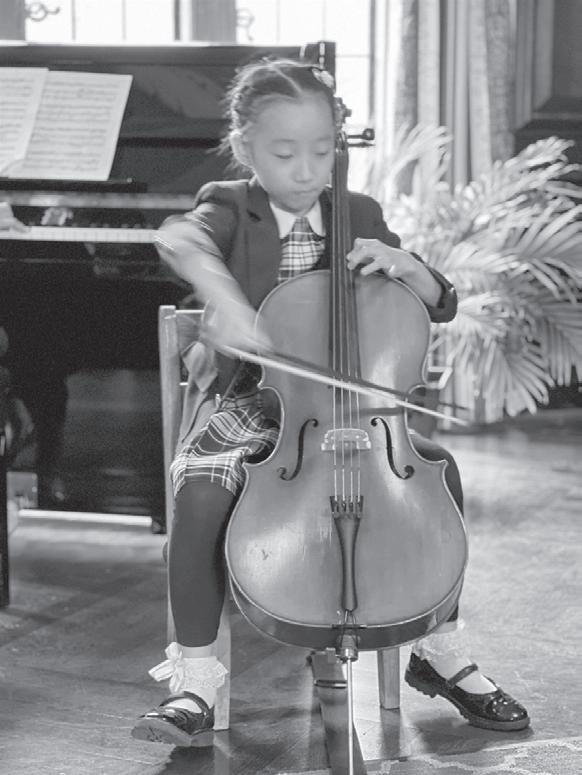
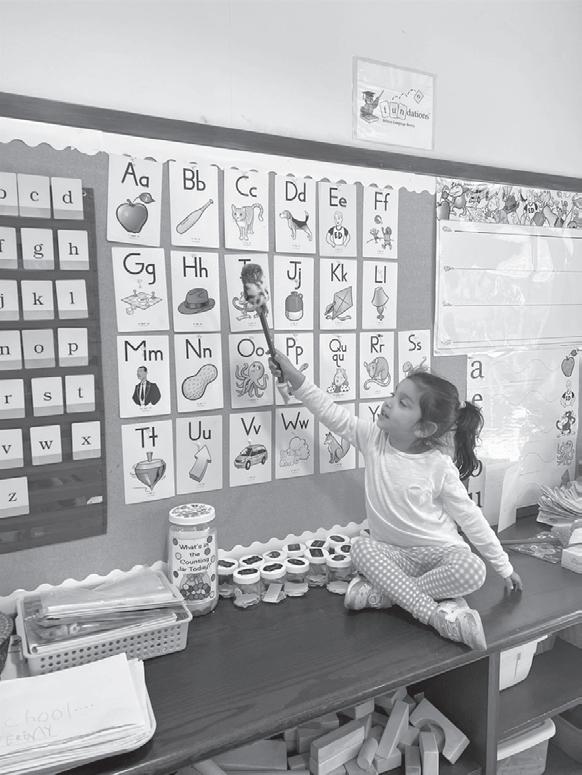

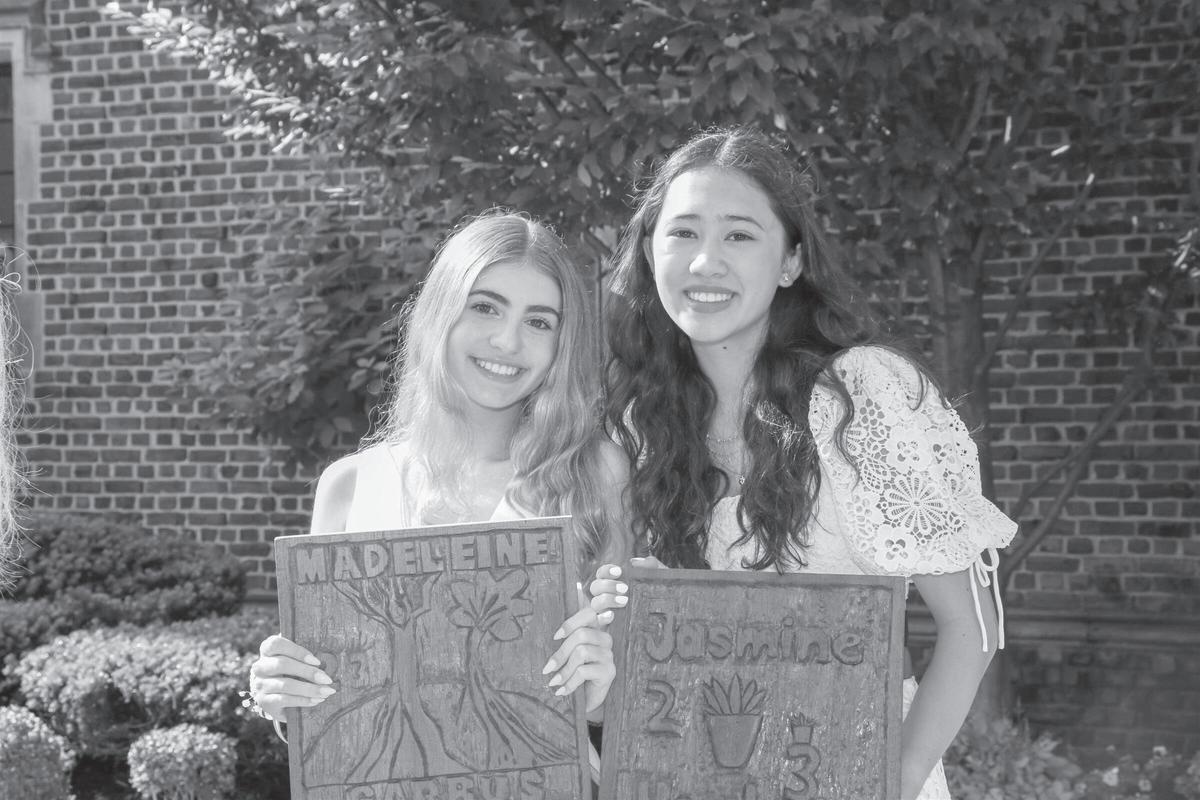
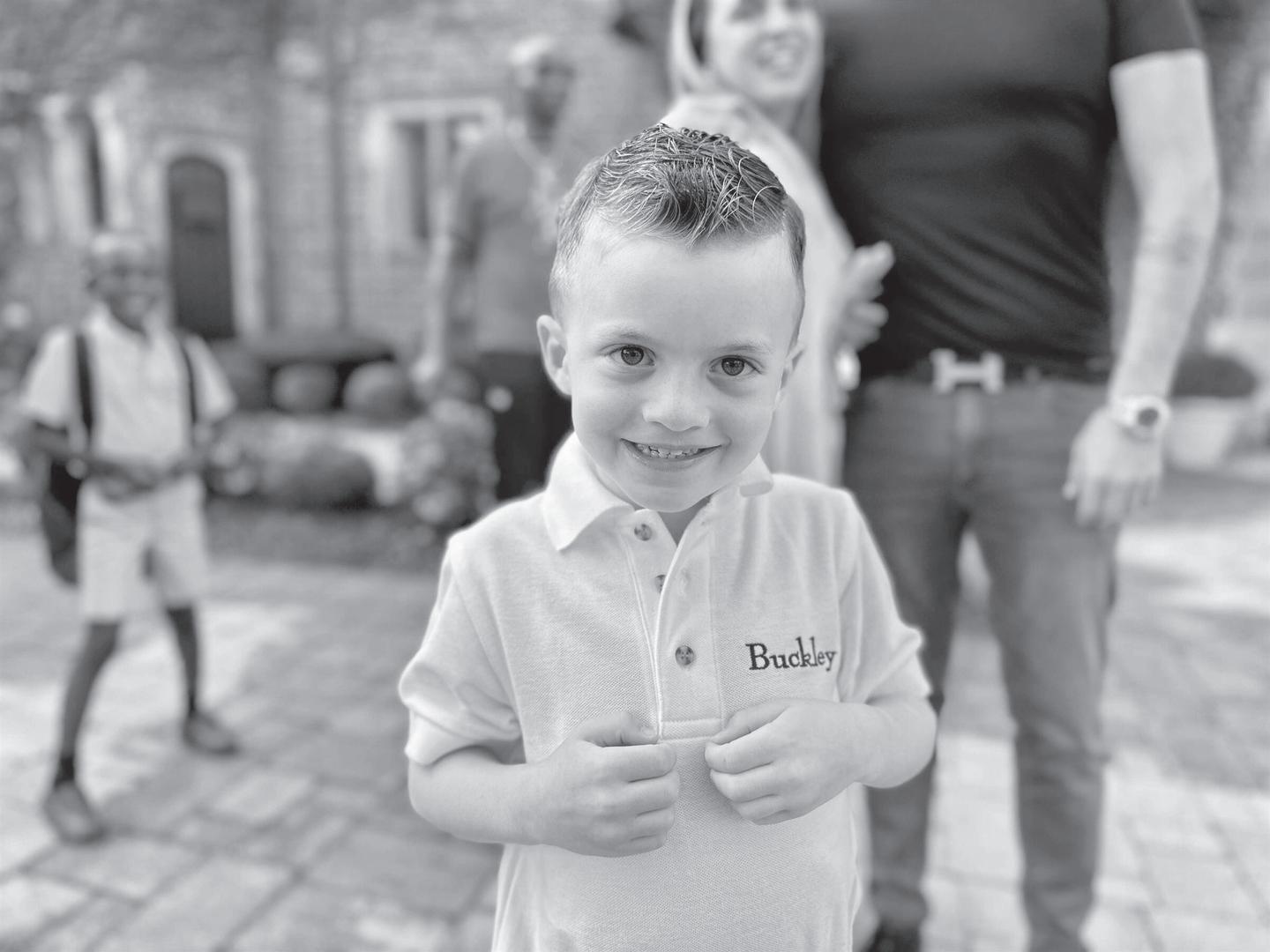
108 Advertising Buckley Country Day School Pre-Nursery - Grade 8 2 I U Willets Road, Roslyn, NY · 516-627-1910 https://www.buckleycountryday.com/ Opening The Eyes And Awakening The Mind Private transportation outside of Long Island available
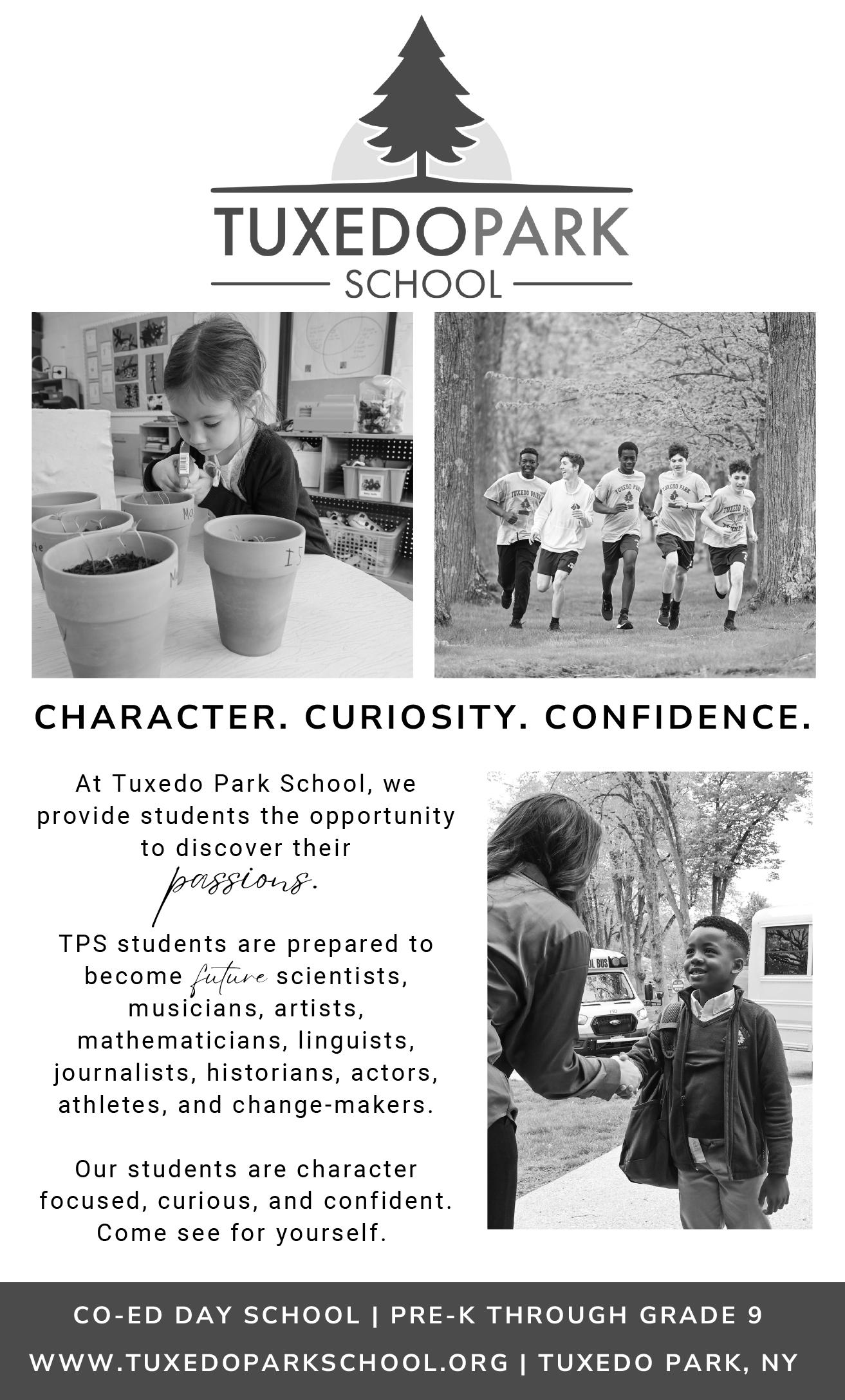
109 Advertising


110 Advertising Greenwich Academy is an independent day school for girls in grades pre-K through 12. greenwichacademy.org/admission 200 North Maple Avenue • Greenwich, CT • 203.625.8990 Girls LEARNING LEADING & Together


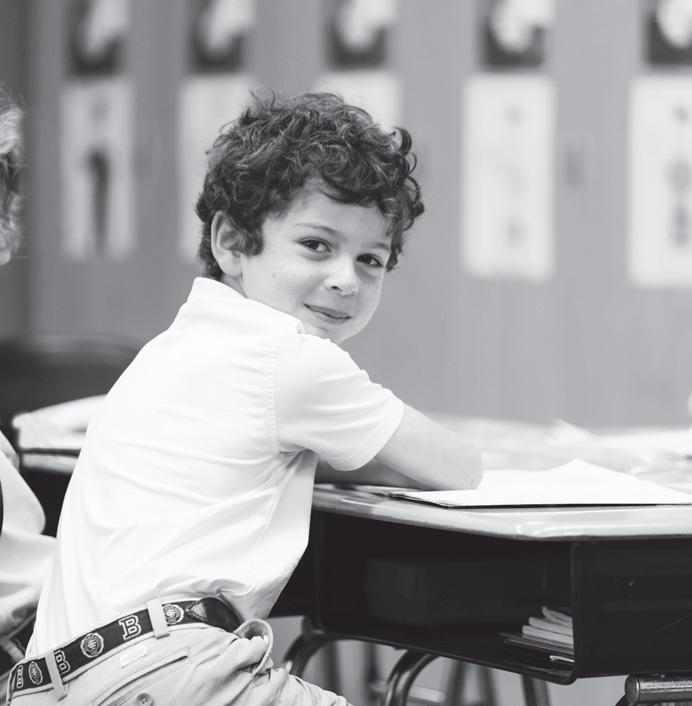
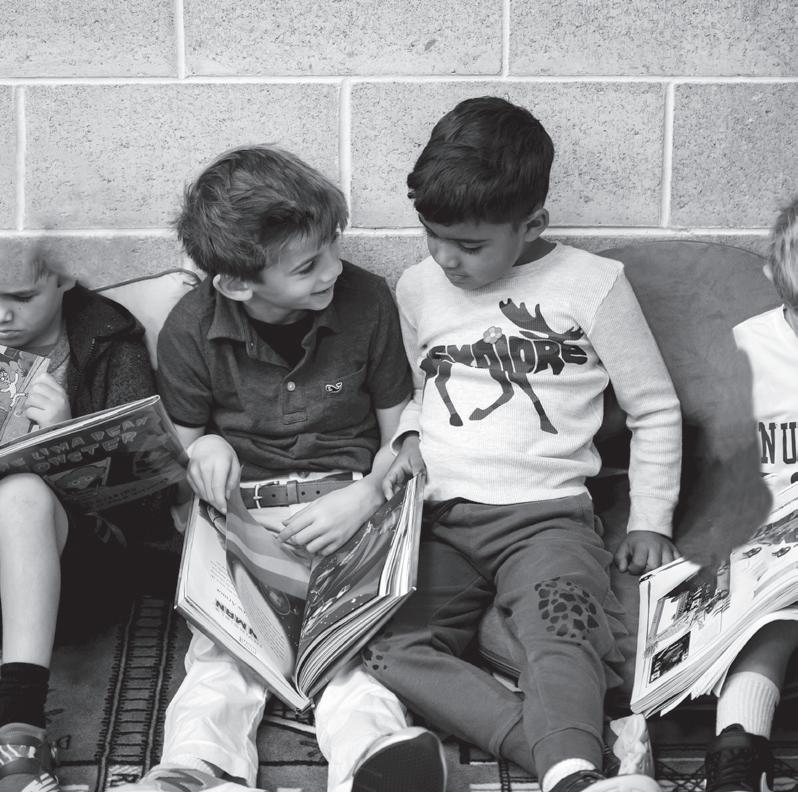
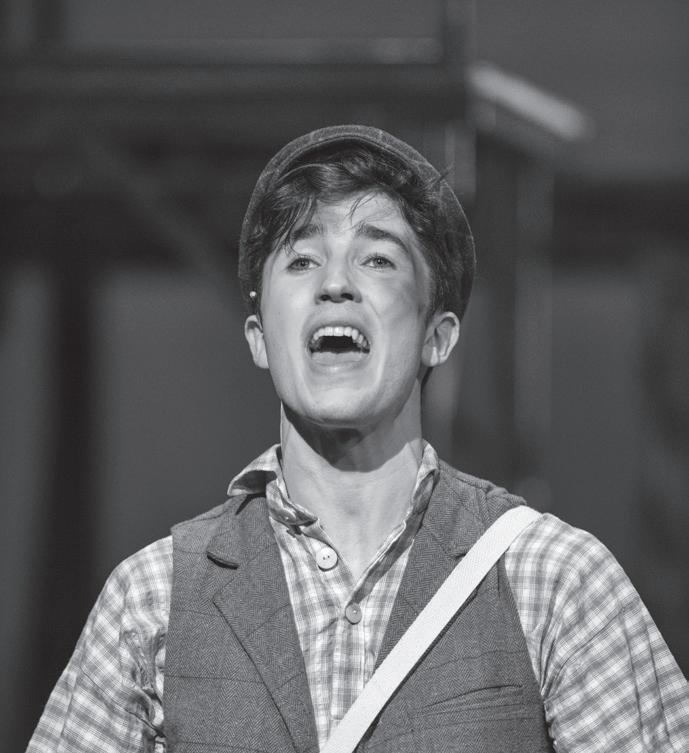
111 Advertising An independent, college preparatory day school, providing character-based education for boys in Pre-Kindergarten through Grade 12.
boys for life in a changing world. bwick.org/openhouse RSVP FOR OUR OPEN HOUSE Admissions Campaign 2023_13_CR.indd 13 8/3/23 1:33 PM
Preparing
Let your life speak.

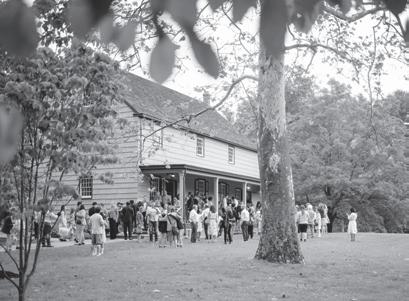
Since 1876, Friends Academy has set the standard of academic excellence on Long Island.
We are the #1 ranked private school by Niche.com and an independent, college-preparatory Quaker school, serving age 3 - Grade 12.
Our timeless values elevate our outstanding academic program to create a unique educational experience, where your student will be empowered to inquire, reflect, and engage in real-world, life-changing ways.

Scan here to learn more and schedule a visit
112 Advertising
We are Friends Academy.
Duck Pond Road, Locust Valley, NY
516-676-0393 | friendsacademy.org
270
11560
113 Advertising
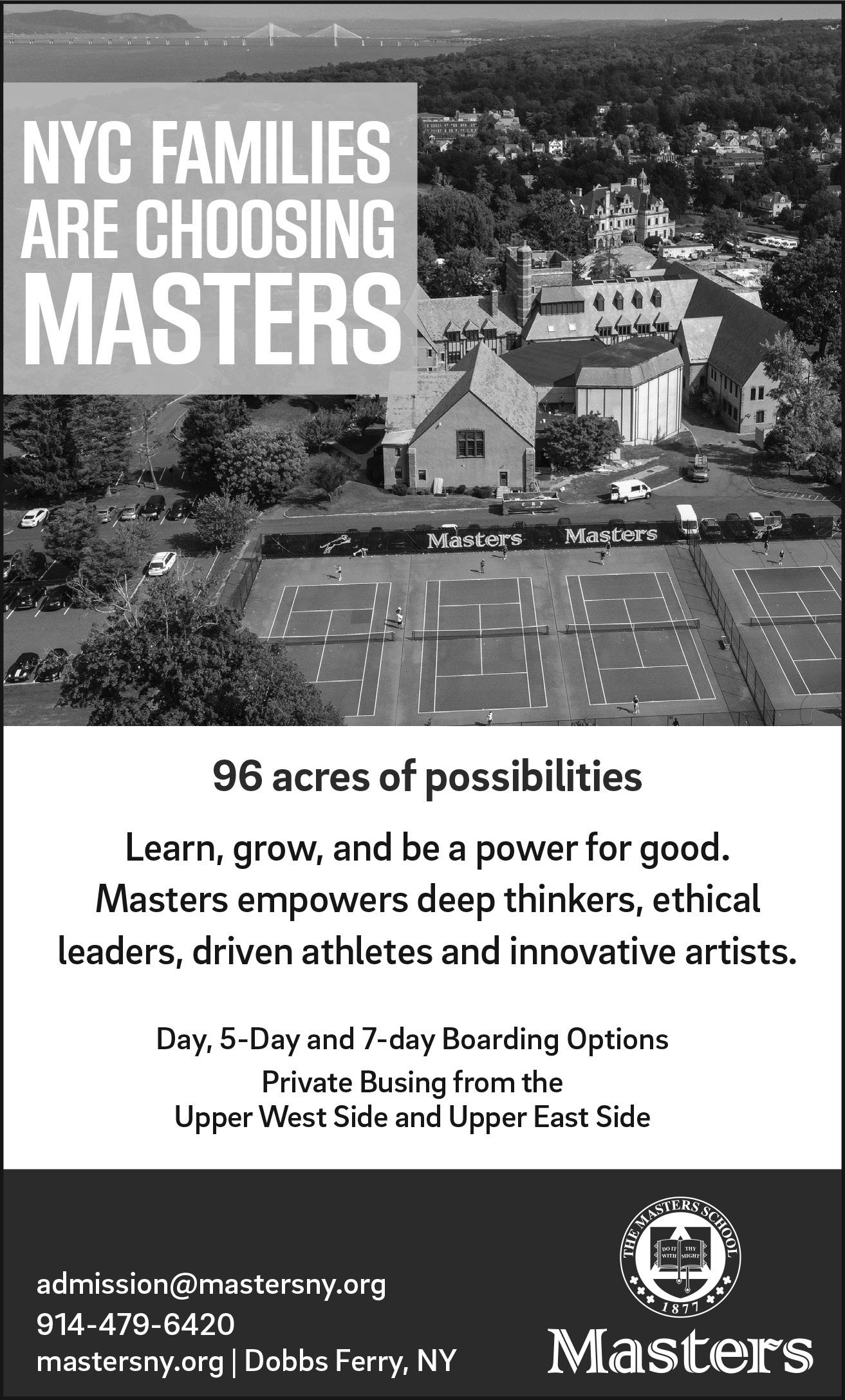
114 Advertising
INNOVATORS MOVE IN ONE DIRECTION—FORWARD
Here at Saddle River Day School, we are always adapting as technology evolves and global connections expand. Students take an honors course in artificial intelligence, explore career-based interests through our Gateway Honors Diploma Program, and choose from 30 AP and college-level courses, culminating in advanced skill sets. They are prepared to succeed as intellectual risk-takers at colleges such as Northwestern, Notre Dame, NYU and Princeton.
APPLY NOW FOR FALL 2024
Transportation Available
SADDLERIVERDAY.ORG/TODAY
Pre-K 3 to Grade 12
Saddle River, NJ • 201-327-4050
115 Advertising
EMPOWERING FUTURES
Sacred Heart Greenwich is an all-girls Catholic, independent day school serving students in preschool through Grade 12. Just 30 miles from midtown Manhattan, we invite you to explore our 110-acre campus in Greenwich, CT, to experience how your daughter and family could become part of our mission-driven community.
SHGREENWICH.ORG 1177 King Street Greenwich, CT 06831 203.531.6500
116 Advertising
117 Advertising Experience the Dutchess Day Difference For more information, please contact Christine Whiting, Director of Admissions: twhiting@dutchessday.org DUTCHESS DAY SCHOOL 415 ROUTE 343 MILLBROOK, NY 12545 PHONE: 845 677 5014 www.dutchessday.org DUTCH ESSDAY SCHOOL H H PARENTS LEAGUE 23.qxp_Layout 1 6/27/23

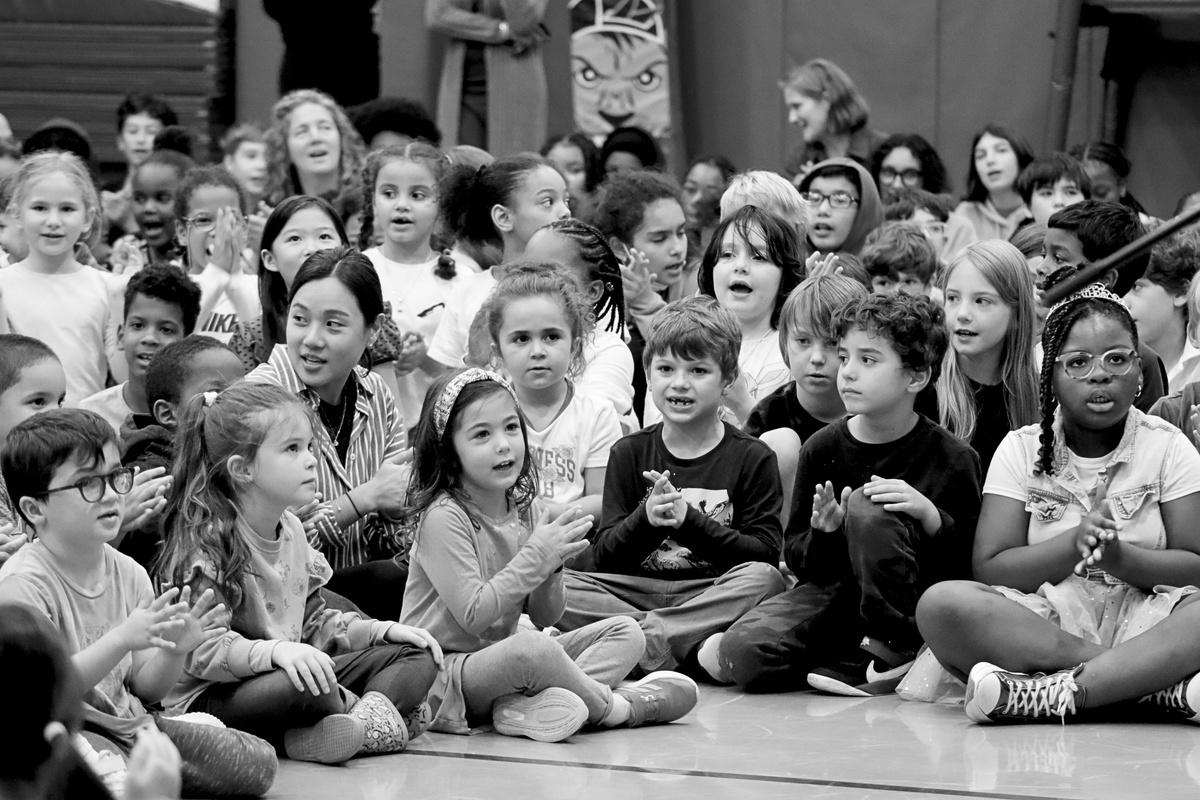
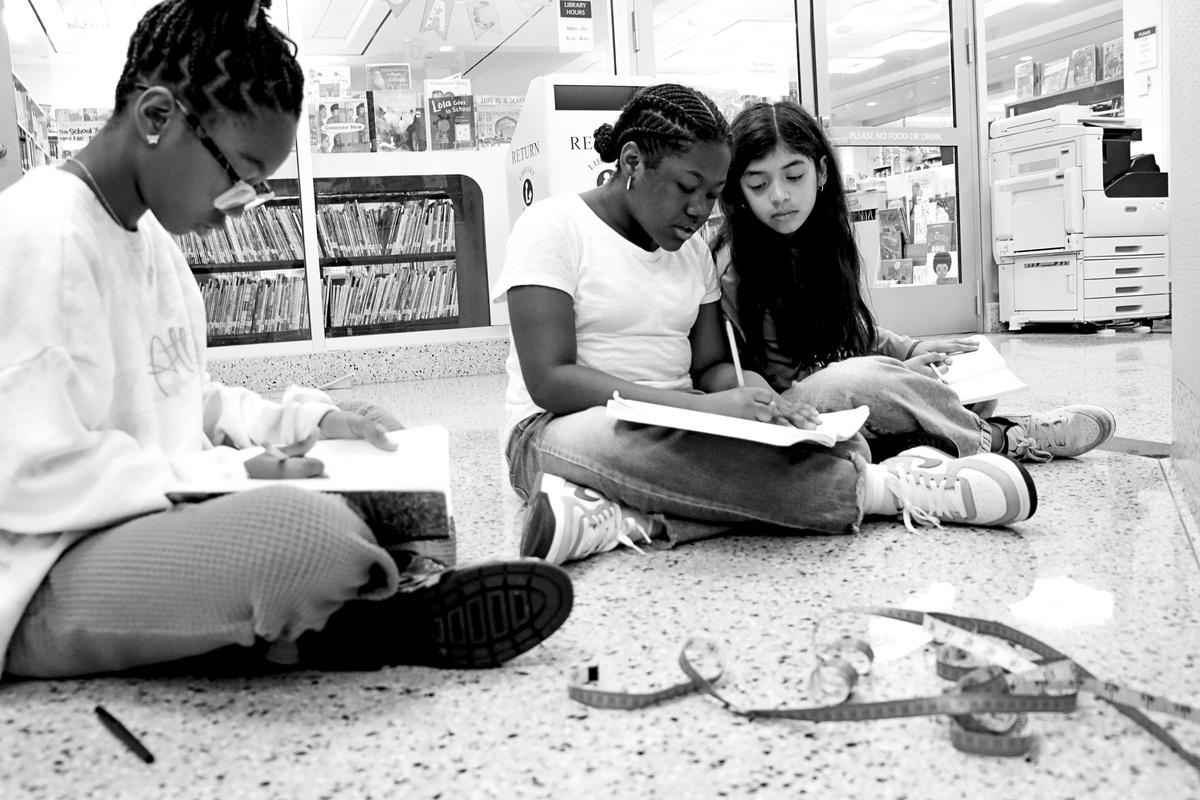
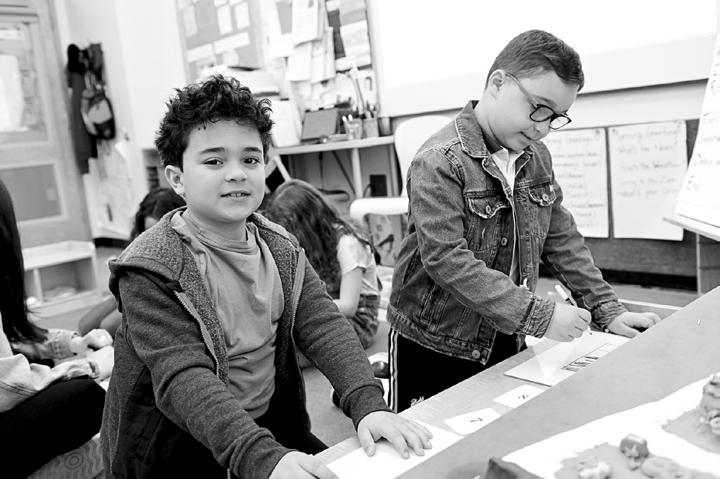
118 Advertising www.theschool.columbia.edu K-8 EDUCATION IN PARTNERSHIP WITH COLUMBIA UNIVERSITY AND OUR COMMUNITY
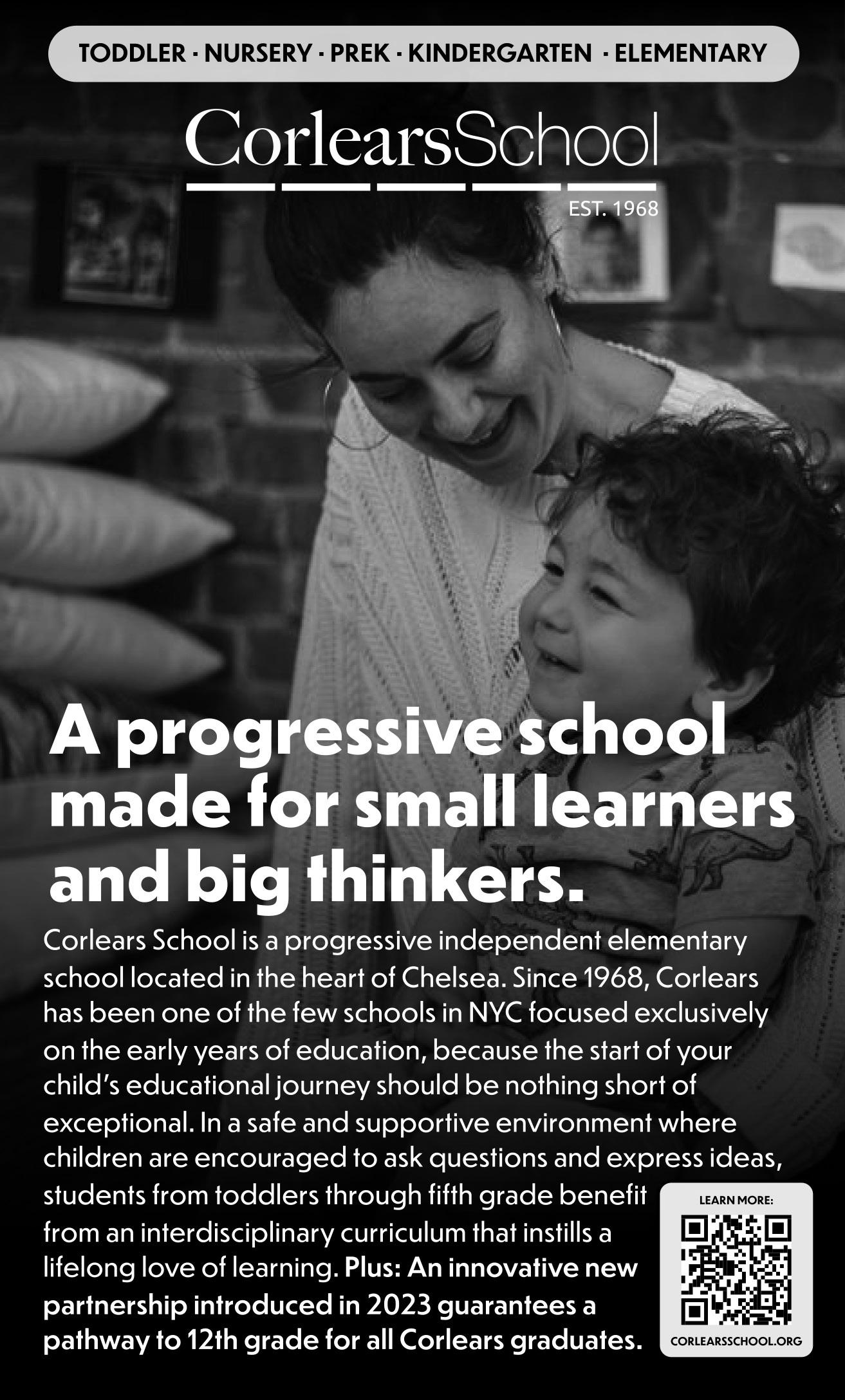
119 Advertising

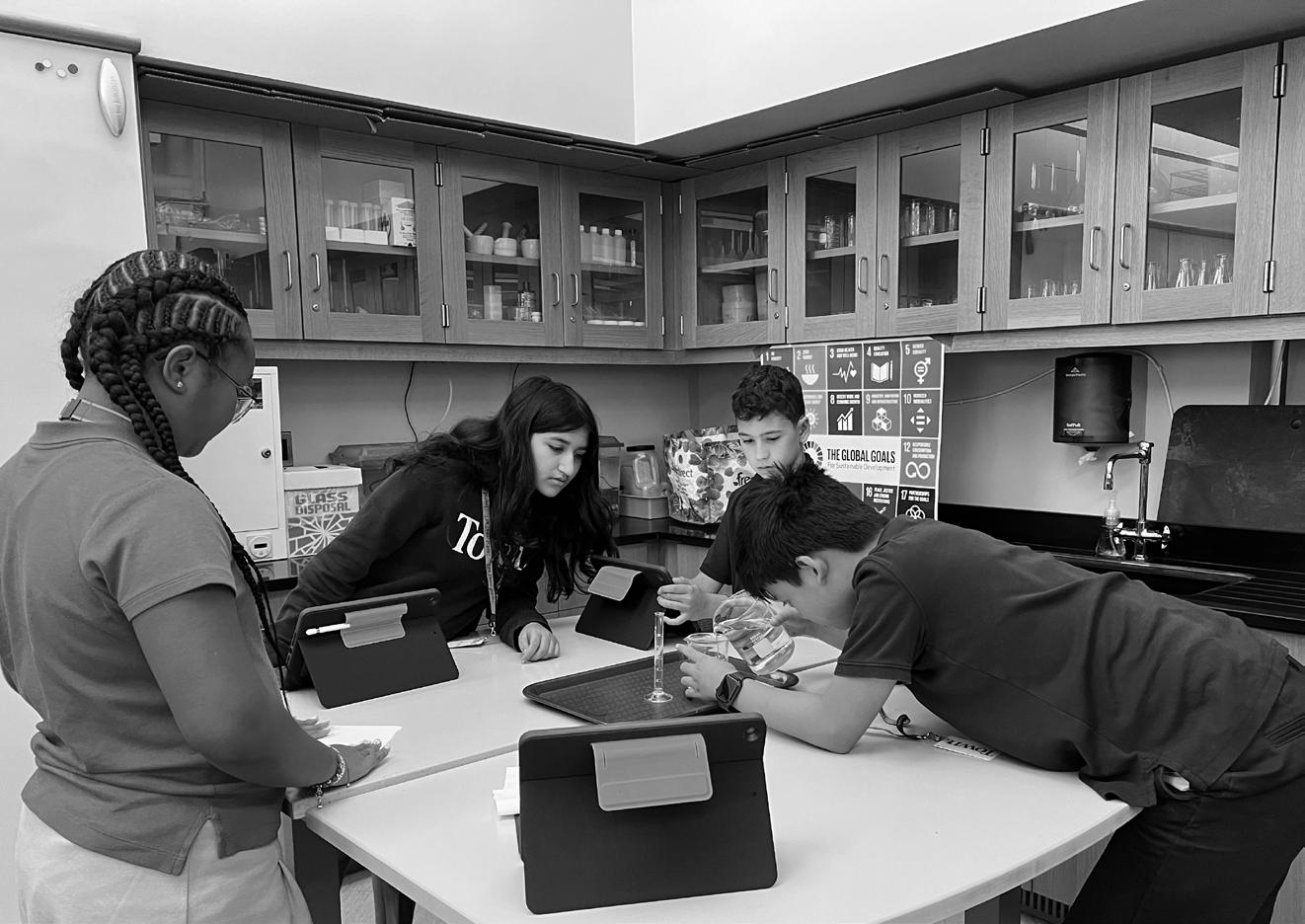
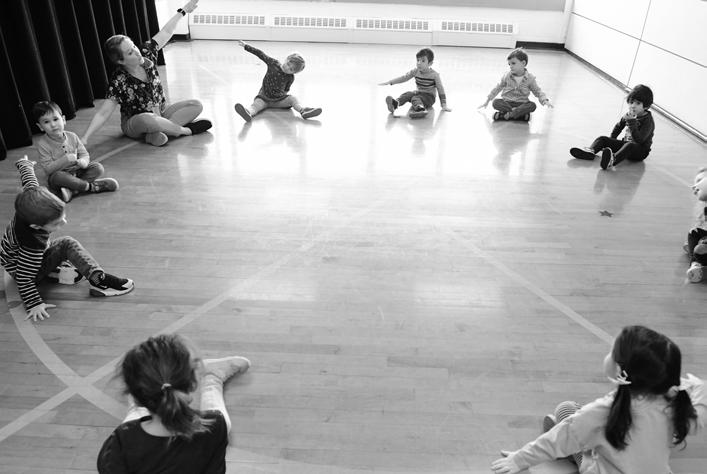
120 Advertising Joyful learners are confident, collaborative, curious, and ready for their next challenge. thetownschool.org Nursery-8th Grade | Co-Educational | 350 Students | Founded 1913 Contact the Admissions team: admissions@townschool.org or (212) 288-6395 540 East 76th Street, New York, NY
Our community is like no other. Together we are celebrating our 48th year! We are so thankful for the dedication and creativity of our faculty and staff. Our amazing community inspires us each day. Thank you to our wonderful TFS family for your support and incredible enthusiasm. We look forward to another year of academic excellence and new experiences.
 LESLEY NAN HABERMAN, Founder and Headmistress
The Family School
18 months through 12 years
DAG HAMMARSKJÖLD PLAZA
323 East 47th Street, New York, N.Y. 10017
FAMILY SCHOOL WEST
308 West 46th Street, New York, N.Y. 10036
Tel: 212-688-5950
Inquiries@thefamilyschools.org
thefamilyschoolsnyc.org
The Family Schools admit students of any race, color, sexual orientation, national or ethnic origin to all the rights and privileges of our programs and activities. We adhere to the same in administration of our educational policies, admission policies and all other school-administered programs.
121 Advertising


122 Advertising F 117 WEST 95TH STREET NYC | 212.678.2416 | STUDIOSCHOOLNYC.ORG MIDDLE | ELEMENTARY | EARLY CHILDHOOD | TODDLER • ACADEMIC SCHOLARSHIP • ORIGINAL THINKING • PASSION FOR LEARNING • EMOTIONAL WELL-BEING
takes curiosity, an open mind, and freedom to see things in new ways. Shaping the world from the INSIDE OUT with purpose, authenticity, and compassion.
It
123 Advertising
124 Advertising
Saint Thomas Choir School
Do you know a boy who loves to sing?
Saint Thomas Choir School nurtures and educates the treble choristers of the renowned Saint Thomas Choir of Men and Boys. Boys in grades 3–8 from across the country sing, study, play, perform, and live together at the school during the academic year, thriving in a community that shares a passion for music. Singing in a professional choir, the boys grow into young men with poise, presence, and a deep sense of serving the community. Graduates of the choir school are prepared for a rewarding journey through adolescence and beyond, regardless of their professional goals. To learn more, visit www.choirschool.org or contact Nora Thomson at admissions@choirschool.org or 212.247.3311, ext. 541.
Give him the opportunity of a lifetime.
125 Advertising
126 Advertising
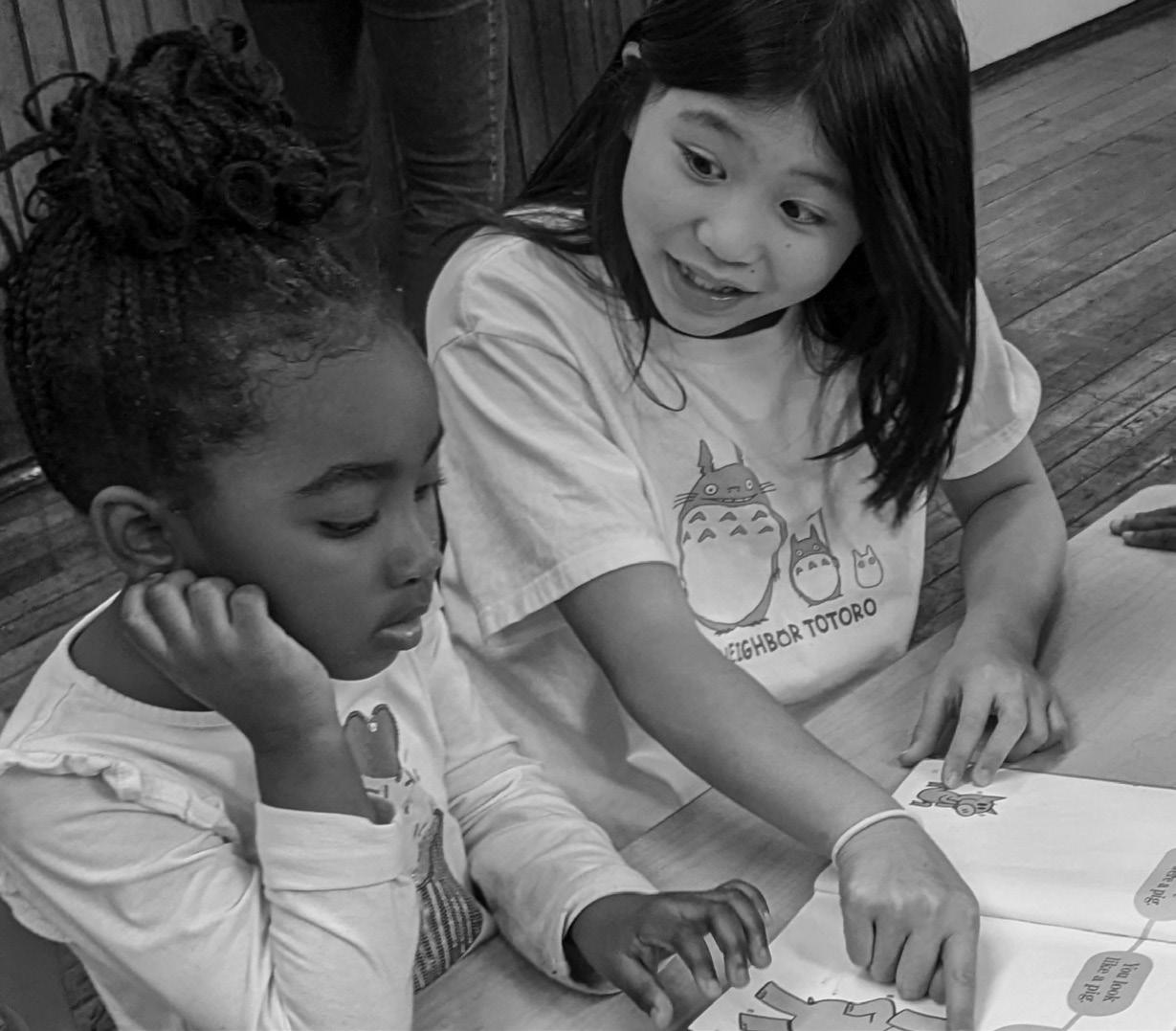
LOVE LEARNING • THINK DEEPLY ACT WITH EMPATHY AND CURIOSITY
Greene Hill School is a PreK-8th grade independent and progressive school located in Fort Greene, Brooklyn with a sliding scale tuition and excellent high school placements.
www.greenehillschool.org
127 Advertising

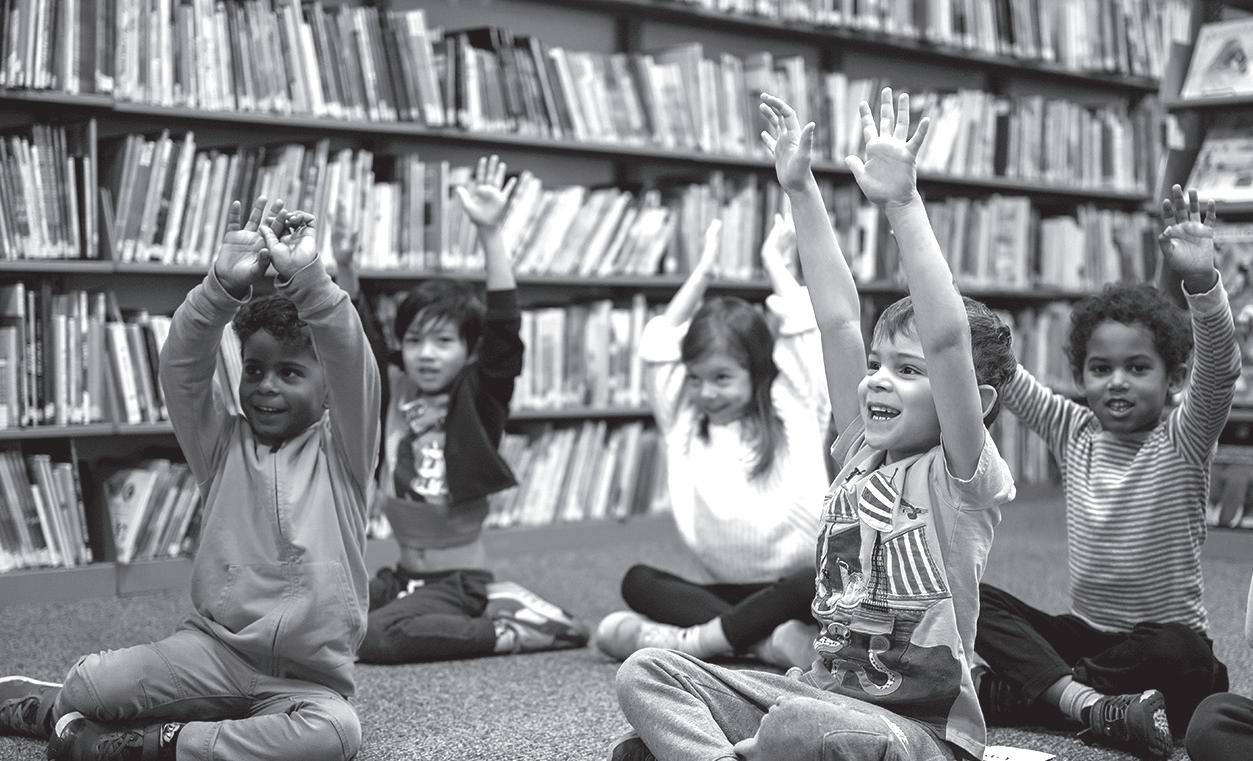
128 Advertising Spanish-English & French-English International Baccalaureate Program A Brooklyn school that speaks to the world isbrooklyn.org
192 Luquer Street Brooklyn, NY 1.718.369.3023
unique
school.bankstreet.edu
greater
greater
Pre-K 3 to 8th Grade
A
combination of bilingualism and a global mindset
Learning with
depth. Teaching with
impact.
Preschool–Eighth Grade on the Upper West Side

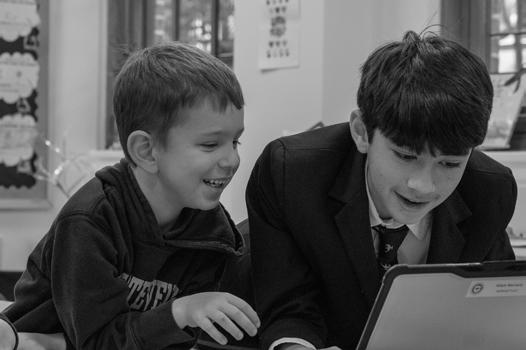
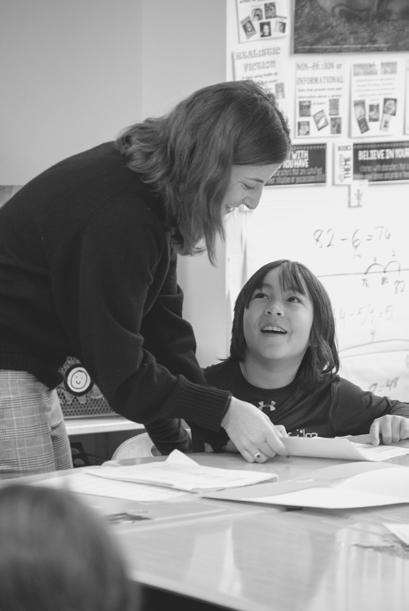
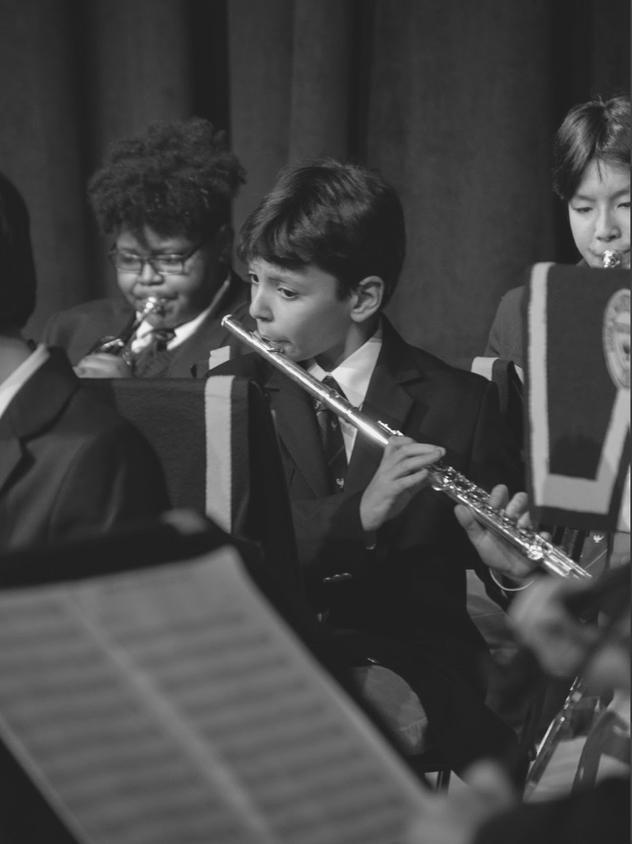


129 Advertising
r e b e
y , b
t o n l
e v e n s o n . A 8 T H E A L L E N N S C H O O L
T h e r e a
a b o
u
y

Inspiring today s curious learners to become tomorrow’s purposedriven leaders. Visit rodephsholomschool.org, call 646-438-8600 or email admissions@rssnyc.org to learn more.
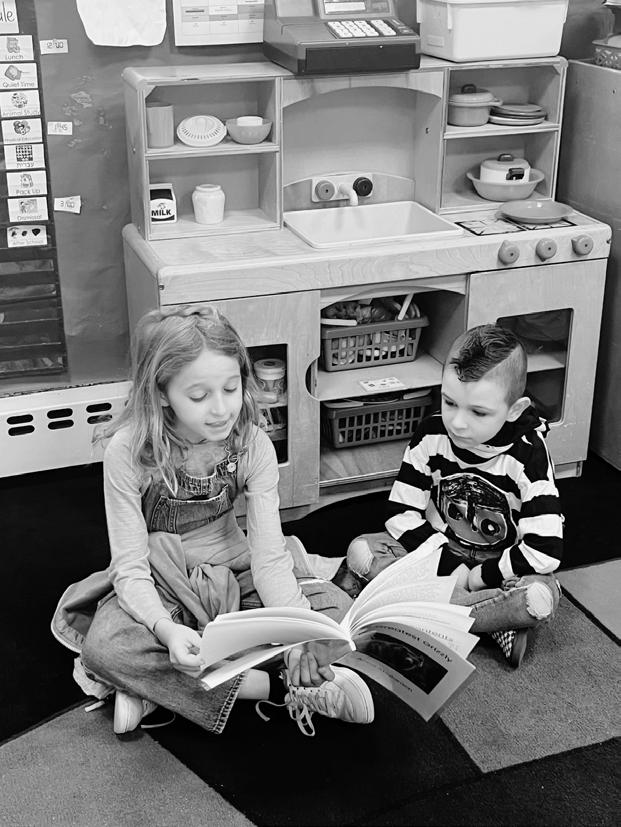
130 Advertising


131 Advertising
Need Help with NYC School Admissions?
Parents League School Advisors are here for you. Topics covered:
• Creating and reviewing a list of schools
• Application procedures and timeline
• Schools’ philosophy, learning environment and curriculum
• Preparing for tour, interview and child’s visit
• Tuition and financial aid Become a member at parentsleague.org and make your appointment.
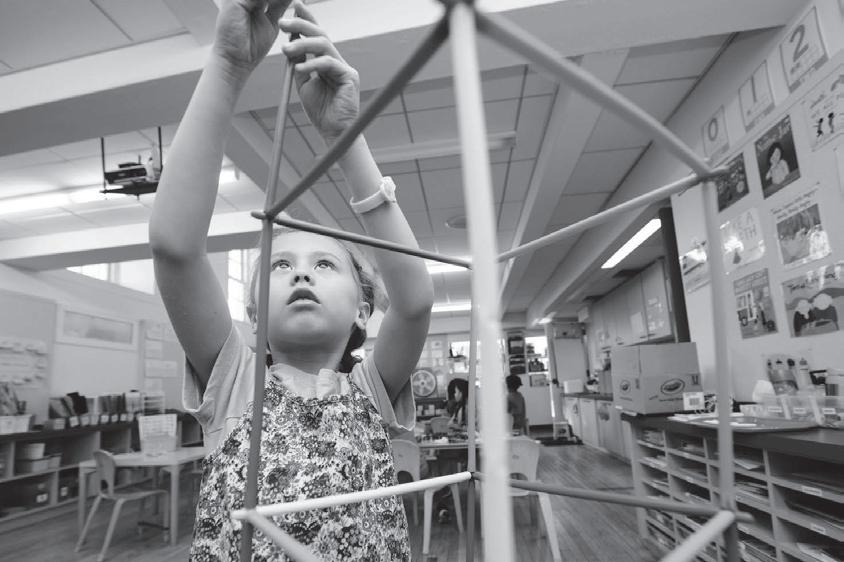

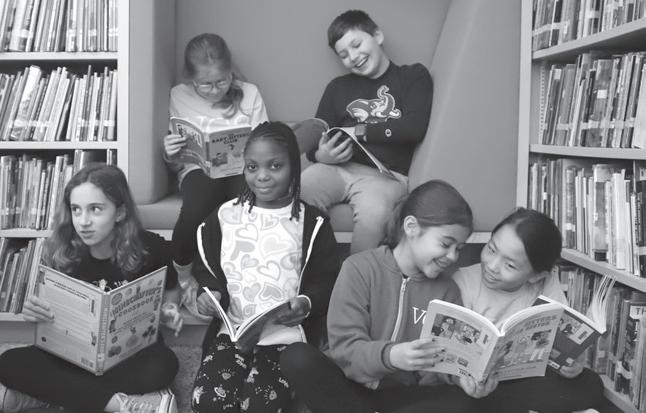
Pre-K through Eighth Grade manhattancountryschool.org
132 Advertising Our NYC classrooms and farm in the Catskill Mountains provide the perfect environment for our students to participate in an engaging, child-centered, and progressive education curriculum.
At VCS, we believe the K-8 years are the most important time in a child’s education. Within our warm and inclusive school environment, we maximize each student’s potential for achievement, equipping them with the skills, knowledge, and confidence to design their own successful futures. For more information about our school, please visit our website at www.vcsnyc.org or contact vcsadmissions@vcs-nyc.org 272-278 West Tenth Street • New York, NY 10014 Tel: 212.691.5146 • Fax: 212.691.9767
PO Box 1357 New York, NY 10028 212
www.parentsleague.org
737 7385
The Wonder Years of K-8
Tracy Fedonchik Head of School, St. Luke’s School
“K-8 schools give children the time to figure out who they are and the opportunity to choose what they want to do next.” As an educator who has spent my career in service to elementary and middle school children, I frequently return to this parent’s quote because it succinctly summarizes the magic of K-8 schools.
In the dynamic landscape of education, the K-8 model is unique in that students progress through a single institution during the important elementary and middle school years. By centering children and early adolescence, educators holistically nurture students’ academic, social, and emotional growth in a learning environment intentionally designed for their developmental journey.
Seamless Transitions and Relationship Building in a Continuous Learning Environment
One of the fundamental advantages of a K-8 school is the stability it offers to students during a crucial period of their growth and development. Most K-8 schools offer students shared spaces within one building. Young learners can progress through grade levels without the stress of adapting to new buildings, teachers, and classmates. As students grow into their adolescent years, they can easily revisit former teachers and classroom spaces. This continuity promotes a sense of security and place for students.
The needs of children ages five to 14 form the foundation for facility and program decisions in K-8 schools; these decisions include the arrangement of classrooms, teachers and staffing, and how concepts are taught. K-8 teachers specialize in elementary and middle-level education, which allows them to use physical spaces and design curricular experiences that meet and challenge each particular developmental level.
This seamless transition throughout elementary and adolescent years extends beyond physical spaces. It is also due to the consistent
133 Learning Environments
support system that students find throughout their formative years. As they advance through each grade, students build strong relationships with their teachers and peers, which creates a sense of belonging and trust. This continuity in relationships fosters a positive and supportive learning environment for students and families alike. By encompassing all these crucial years under one roof, educators can consistently tailor their approach to each student, recognizing and accommodating their unique developmental and educational requirements.
Leadership, Confidence, and Agency
In a K-8 school, eighth graders are the oldest students and thus are encouraged to become and see themselves as role models and leaders in the school. Leadership, though, does not happen overnight. In order to set up eighth grade students for success, it is necessary for K-8 schools to focus on leadership at the earliest ages. A hallmark of K-8 education is its commitment to nurturing leadership qualities in students at every age and grade.
Through carefully designed programming, young minds are encouraged to embrace leadership roles and responsibilities. From this, empowerment and accountability extend throughout their academic journey and ensure that our youngest students are seen, heard, and valued. K-8 educators understand that childhood is a process of learning and becoming where children grow “into themselves.” It is an unfolding journey toward independence, mastery, competence, and an authentic sense of self. Knowing that their voice is heard helps children feel more confident in using their voice as they grow. That’s how leaders are made.
The high school advisory process in K-8 schools is intentionally created to allow students to gain a clear sense of self, leadership experience, and confidence. At ages 13 and 14, students are empowered to take stock of their educational journey and embrace the opportunities and challenges that lie ahead. A K-8 school allows children to be instrumental in guiding their own learning and educational journey, culminating in the process of applying to and attending high school. A parent once said to
134 Learning Environments
me, “I want my child to have a choice in where they go to high school. K-8 schools help students know themselves and find their voice.” Students are empowered and supported in the process of choosing a high school that suits their abilities and interests. Input and guidance from parents, faculty, and administrators provide the scaffolding for students to make meaningful choices about their future.
Strong Sense of Community and Belonging
To be a leader, you need to know yourself. In order to know who you are, it’s important to be in a place that fosters a sense of belonging. K-8 schools foster tight-knit communities where students, teachers, and parents establish lasting connections. The extended time spent together allows for deeper relationships to develop, creating a supportive network that enhances the overall educational experience. Teachers become familiar with students’ strengths, weaknesses, and individual learning styles, which enables them to take a personalized approach to education. Likewise, parents are more likely to find a meaningful community at their child’s school when they share an extended educational journey with other parents.
The sense of community in K-8 schools extends beyond the academic realm. It becomes a social and emotional support system for students, providing a foundation for their overall wellbeing. The collaborative and inclusive nature of this community often translates into a positive school culture where children feel shared school experiences while also fostering a sense of community, wherein guidance and support flow naturally between different age groups. The older students spend time with the younger students and form a genuine friendship throughout the year that turns into a lasting bond.
Positive Outlook on Academic Achievement and Joyful Integrated Learning
In the classroom, K-8 institutions encourage a positive view of academic achievement and emphasize the interconnected nature of academic, social-emotional, and physical learning.
135 Learning Environments
By integrating these facets, educators ensure that students can simultaneously excel academically and develop the essential life skills and emotional intelligence necessary for success beyond the classroom. K-8 schools provide a holistic academic experience by tailoring educational strategies to the developmental stages of children. Teachers carefully compose environments that nurture and scaffold students. By understanding learning profiles and interests, educators create a well-rounded educational experience where classroom and interpersonal learning intersect.
The holistic academic approach in K-8 schools doesn’t solely focus on standardized testing and subject-specific achievements. Instead, it encompasses a broader perspective that encourages students to explore their interests, develop critical thinking skills, and engage in creative pursuits. The diverse academic breadth provided in K-8 educational environments exposes students to what is possible without the pressure of having to choose any one specific path. Younger students benefit from this introduction to a range of subjects as it lays a strong foundation for advanced learning in later grades. Students have time to reflect on who they are, their talents and special interests, and their goals as learners. This personalized approach creates a supportive and enriching atmosphere where students feel seen, heard, valued, and understood.
With a consistent group of educators following students through multiple grades, K-8 schools are better equipped to recognize and address individual learning needs. Teachers can identify strengths and weaknesses early on, implement personalized learning plans that support each student, and cultivate life-long learners who can advocate for themselves and their needs. Individualized learning paths also contribute to the development of a growth mindset among students. As they receive personalized attention and support, they are more likely to embrace challenges and view failures as opportunities for learning and improvement. This mindset is a valuable asset that extends beyond the academic sphere and prepares students for the complexities of life.
136 Learning Environments
Reduced Social Pressures and Emotional Stability
Another quote from a parent conversation I often return to is, “K-8 schools allow children to linger in the joys of childhood.” Middle school, often a challenging time for students due to increased social pressures and peer dynamics, can be less intimidating in a K-8 setting. Older students, having already formed relationships with younger peers, may experience a more positive and nurturing social environment. The absence of the typical middle school transition can mitigate some of the difficulties associated with adolescence and allows students to focus on their studies and personal growth without the added stress of navigating complex social hierarchies. The continuity in the learning environment helps students develop resilience and coping mechanisms, preparing them for transitions and challenges they will face in high school and beyond. Emotional stability is a cornerstone of effective learning. When students feel secure and supported emotionally, they are more likely to engage in the learning process actively. The sense of belonging and emotional well-being that K-8 schools foster empowers students as they navigate complex challenges in both their educational journeys and personal lives.
Students do not have the “social influence” of high school students, which allows them to learn and grow in age-appropriate ways. In a K-8 school, activities and conversations related to wellness, technology, human development, relationships, and social and emotional development are geared to young children and emerging adolescents. Students authentically mature in ways that honor the stages of development without the pressure to accelerate. Children are afforded a unique gift: to be children for longer while also growing into the leaders of the school.
The advantages of K-8 schools extend far beyond the surface and influence academic, social, and emotional aspects of a student’s development. The seamless transitions, strong sense of community, positive outlook on academic achievement, emphasis on emotional stability, and focus on leadership contribute to a
137 Learning Environments
holistic and nurturing educational experience. Because children are able to take risks and be courageous in a developmentally appropriate and stable environment, they are able to grow into young adults who are confident, capable, and kind.
Do keep in mind this defining description of ages and grades from John Lounsbury’s “Understanding and Appreciating the Wonder Years”: No other age level is of more importance to the future of individuals, and, literally, to that of society; because these are the years when youngsters crystallize their beliefs about themselves and firm up their self-concepts, their philosophies of life, and their values - the things that are the ultimate determinants of their behaviors.”
I am proud to lead a school that centers children and allows them to be children. K-8 schools do this and so much more. As you think about a good fit for your child, I urge you to look at K-8 schools. They nurture, challenge, and inspire children as they grow into the leaders, learners, and self-advocates our world needs.
Tracy Fedonchik is head of school at St. Luke’s School, a primary through secondary program in New York. Before arriving at St. Luke’s in 2023, she formerly taught at Dalton School in New York for 20 years.
138 Learning Environments
Planet Word Is Where Languages Come to Life
Ann Friedman Founder and CEO, Planet Word
Most museums are created to showcase a collection or to preserve a historic building or to educate the public about a particular topic. Planet Word, in contrast, was born out of a desire to solve a problem: How could we reintroduce Americans to the joys of words, language, and reading? Why did that matter? Because I believed that readers are the foundation of a strong democracy. Without a nation of readers, I worried, our democracy was at risk. As a 2004 NEA study revealed, readers are more likely to be volunteers, to be active in their communities, and to vote— essential ingredients of a democratic society.
Not only that, readers are also more likely to graduate from high school and find job and career satisfaction. Readers learn tolerance and empathy from reading about people unlike themselves. They learn the advanced vocabulary citizens need to understand the complex issues of the day and to make informed choices. But all the trends in literacy were heading in the wrong direction: Reading test scores were consistently stagnant; newspapers and magazines were continuously closing; studies showed that young people barely read a single book for pleasure in a year; some 20 percent of all adults were functionally illiterate; and our brimming prisons were filled to overcapacity with people who struggled to read.
So I wondered, as a former beginning reading teacher and copy editor, what I could do to reverse these distressing trends. Being a first-grade reading teacher had been the most rewarding job I could have had—seeing students’ eyes light up when they were introduced to the glories of poetry for the first time was a special thrill, and teaching them to read with fluency and expression or to discover the fun of wordplay were priceless experiences.
139 Learning Environments
When I read about a new museum in New York City, MoMath, that was bringing the abstract concepts of math to life through high-tech, hands-on exhibits (without a collection of objects), I had my answer! Why not bring a museum approach to informal learning—to words and language? If done right, I believed, a participatory museum could create a buzz around reading and make words cool and start to rebuild that nation of readers and critical thinkers our country so depends upon.
First step: in 2013, I hired a museum consultant to assist me tackle this idea. After all, my background was in teaching and literacy—not in museum operations! Then I conducted focus groups of boys and girls, ages ten to 12, to see whether they liked the idea of a “word museum” and the name “Planet Word.” (Why 10- to 12-year olds? Because that is the age at which kids lose interest in reading and turn to other forms of entertainment—video games, in particular. At that age they should also have the capacity for empathy and an awareness of other cultures and languages.)
The kids in the focus groups loved the idea sketched out for them, and their enthusiasm was enough to propel me to the next stage: finding a building to house what they had gleefully dubbed a “word museum.” To find a suitable home for this word museum, I considered many different spaces in Washington, D.C., including the National Historic Landmark Franklin School, a former public school that had been shuttered and abandoned for ten years. At first, I didn’t want anything to do with this shambles of a building, but the District’s real estate managers kept encouraging me to take another look. They thought my proposed re-use of the 1869 building—taking a former place of learning and the birthplace of wireless in 1880 and transforming it into a high-tech museum about words and language—was a match made in cyberspace! It took me a while to be convinced to take on such a daunting project, one that required hazardous material abatement, careful restoration of the historic interiors and exterior, and working with the many government organizations with oversight of landmarked buildings.
I almost said no. I had never intended to become a real estate developer and a museum founder at age 64, but the building
140 Learning Environments
called to me—its beauty and historical importance deserved to be rescued for another 150 years of service. And when I learned that Frances Hodgson Burnett, the author of my favorite childhood book, The Secret Garden, had lived just one block away, I was sold! The Franklin School had to become the home of Planet Word; it was bashert! If you’ve ever been on a rollercoaster ride that was a little bit thrilling but also a little bit scary, that’s the ride I found myself on for the next 2½ years. With the support of some incredibly talented architects, exhibit designers (Local Projects, a New York-based experience-design firm), an experienced executive director, Patty Isacson Sabee, and expert exhibit fabricators, we managed to stay on the rails and eventually come up with a one-of-a-kind, voice-activated museum that literally brought words to life.
So imagine my chagrin, when, just weeks from our expected grand opening, this roller-coaster came to a screeching halt. Faced with a global pandemic, we were forced to delay our opening. And even when we did feel it was safe to open, in October 2020, we had to severely restrict the number of visitors and days of operation. This was hardly the “grand” opening we’d anticipated over all those years of planning, but, truth be told, we were excited to have opened at all.
From the beginning, even before I chose an exhibit designer, I knew I had to bring words and language to life and that technology was the way to do that. What I didn’t want, somewhat ironically for a museum about words, was a passive, traditional museum experience where visitors had to do a lot of reading to absorb the content. The museum’s ten main galleries—showcasing everything from early childhood language acquisition to etymology to the diversity of the world’s languages to songwriting, humor writing, oratory, poetry, advertising copywriting, and storytelling—would need to be participatory and immersive.
Visitors would discover surprises and enjoyable experiences that reflected our six core values: being fun, playful, unexpected, meaningful, motivational, and inclusive. We wove those values
141 Learning Environments
inextricably into every exhibit: into the content, the voices heard throughout the museum, and the variety of experiences. We wanted to make sure that from their first step into the museum’s courtyard, where they are greeted by our whispering Speaking Willow tree, visitors would discover something delightful that they could do with words. And that happens most wonderfully in our magical Schwarzman Family Library. Underneath a striking mirrored ceiling in a bookshelf-lined grand space, dozens of carefully chosen books truly do come to life. When a visitor chooses a book and places it in a special holder on a long reading table, an RFID chip hidden in the book triggers animation, and sound effects to create a custom-made trailer about each book. Visitors hear just enough about the book to want to read it. We know this approach has worked when a visitor asks where they can buy the book! We have chosen all sorts of books—something for every reader, even visitors who think they don’t like reading!
Our books can excite even the most reluctant among us. We have fiction and nonfiction, graphic novels, picture books, classics and contemporary works. Similarly, our poetry ranges from Chaucer to Shakespeare to Chen Chen and Silverstein. We watch parents introduce their children to the books they loved or listen to friends exclaim about a book their companion just HAS to read!
Our songwriting gallery brings lyrics to life in a karaoke-style lounge with live mics in front of a screen showing the words from a variety of songs, rap to Dylan to Disney. In our humor writing gallery, visitors laugh at Dad jokes and learn how the homophones in English lend themselves to creating puns and riddles. In our oratory gallery, visitors can give segments of famous speeches from a teleprompter after learning the techniques that make those speeches soar. And at the interactive video stations located throughout the galleries, visitors can dive deeper into topics like dialects, forensic linguistics, implicit bias, hate speech, whether animals have language, or corpus analysis. From the word-related items in our Present Perfect gift shop to the mix of cuisines from all over the world at our on-site restaurant, Immigrant Foods+, the
142 Learning Environments
joys of words and language create a nourishing menu for all who visit! From the bathroom walls tiled with potty humor or foreign phrases for “Where’s the bathroom?” to the lockers decorated with the International Phonetic Alphabet or to the lobby’s terrazzo floor inlaid with the scripts of written languages, visitors have responded enthusiastically to our exploration of words.
The overall message we hope visitors will take home with them is that words matter. We hope visitors start to pay attention to those tiny morphemes that can either bring us together or divide us. It’s up to them to decide how to use their linguistic superpower. Since we opened in October 2020, the relevance and timeliness of a word museum has only increased. We have added a focus on news literacy, the fight against mis- and disinformation, efforts to create trustworthy AI, and preventing the loss of Indigenous languages. At the same time, we don’t shy away from the controversy about how reading is taught in America.
Language is at the heart of so many important national conversations today, so Planet Word is finding itself right there, too.
143 Learning Environments
Ann B. Friedman is the founder and CEO of Planet Word in Washington, D.C., and a former first-grade reading teacher.
Casting a School Play Where
All the World Is a Stage
Willie E. Teacher Upper School Drama Teacher, Hackley School
Acting is transformative. It changes us, it makes us cry, it makes us laugh, it makes us think. One of my favorite quotes proclaims, “Acting is not about being someone different. It’s about finding the similarity in what is apparently different, then finding myself in there.”
—Meryl Streep
To find that humanity and for that transformative process in acting to occur, you need three essential ingredients:
• Audience: In the theater, at the movies, Blockbusters (for those who remember), on our TV screens or mobile phones. Even if we choose to chill and binge-watch on Netflix, there must be an audience to explore our humanity and transform. An audience is a group of individuals who enter as strangers and emerge enlightened, as a community made better through a shared experience.
• Space: Theaters of all kinds: thrust, proscenium, black box, in the round, white space, auditorium, or even out on the street in a public performance. A space for the audience and actor to meet and share an exchange of humanity. A place that is transformed by lights, sound, props, scenery, costumes, and a shared love of storytelling, where lifelong bonds and great friends are found and developed.
• Actor: The job of taking words written on paper and breathing life into them while honoring the playwright, director, theater critic, and perhaps the biggest critic of all, oneself. The actor is practicing one of the oldest forms of communication known to human beings: storytelling.
144 Learning Environments
Before I begin to wax poetic and get ahead of myself, I must address the essential and critical steps necessary before we get to opening night or even before we get to the first day of rehearsals. Although the theater arts receive some support from members of the community (particularly in independent schools), this journey is wrought with numerous challenges that make it a difficult yet worthwhile experience. When we look at casting a school play and working with adolescents, we are looking at a very specific set of tasks and skills that must be achieved to create what one calls a great show, a successful experience, and a wonderful play.
I’ve been blessed to face this challenge for over twenty years of directing, performing, and casting school plays at numerous levels. My insight, from both sides of the curtain, has helped me identify six factors that influence my choices, practices, and pedagogy. These factors keep me alive, excited, and joyfully curious about this experience every day. In no particular order, I share them with you.
• Selection of material: As the director of the play, I am responsible for making sure the piece meets the needs of the actors and is appropriate for the school community. The play must allow us to move forward, explore, and lift our differences with a teaching practice that allows healthy diversity, equity, and inclusion. The selected piece, whether musical, classical, standard, modern, devised, or experimental, must foster the social-emotional learning that is required for working with adolescents. The play selection must also be culturally responsive and prepare students for offstage and onstage future success. I’d be remiss if I also didn’t mention that we live in a world separated by the binary. The play may be perceived as right or wrong, good or bad, appropriate or completely unacceptable. In the arts, ignoring the gray and subscribing to left or right, one or two, yes or no, cancel culture versus calling individuals in, can be a very slippery slope. The material selected must satisfy two major community-based needs: be appropriate and be interesting.
145 Learning Environments
We don’t want anyone or anything to be thrown out, but we certainly don’t want to waste talents in a theater space that is empty because we were rejected and judged before we opened. We need bodies in the seats to share our stories, engage in dialogue, laugh, learn, and love. Remember the audience, space, and actors must come together to support this transformative human process called theater.
• Availability of students: In the “real world” as a casting director, I create a posting or go through an agency and actors flock to auditions in droves. I conduct the audition process and select the best performers to bring to life words written by a playwright. I share those words in a human-centered way during the show. With the goal of sharing a truth and having an impact on the audience, I get to work. Again, in the “real world,” if I find an actor I’m looking for and can afford to hire and pay them, they will help make the show a success. In contrast, when casting a school play, it is the “real world,” but on “opposite day.” In casting a school play, there are numerous factors to be considered. Most importantly, we are fishing in a limited pool so my choices are restricted and therefore so is my material. I have to consider the realities of the extracurricular activities of student actors, sports schedules, game schedules, access to transportation, socioeconomic limitations, students with after-school jobs, and school-life balance. If I was casting Shakespeare’s Othello and a phenomenal actor named Denzel Washington auditioned for the lead, but he had to be on the early bus every day to get home, that would certainly impact my casting choices. We work with talented and hungry adolescents to create opportunities for them to perform. We create a love for the performing arts within students at a young age. It is doable, but there is an extra layer of thought and process to ensure that outcome is equitable and mentally and physically healthy for young performers.
• Seniority of casting resident actors: As previously mentioned, my casting pool is finite and I will have the curse
146 Learning Environments
and the blessing of working with students I know from the past. The blessing is I can help them refine the way they use their acting “tools.” For both off- and on-stage success, there is nothing more valuable than practice. As an acting coach witnessing a performer’s growth and mastery of a life skill, it is the reason I do this work. Being able to work with juniors and seniors as well as first-year students in the same space also helps create a network of peer-to-peer support between the upper-class students and the newbies. These results are all positive and, in my experience, long-lasting. On the other hand, the challenge I face is evaluating the roles students have earned in the past and ensuring that I am continually pushing them academically and artistically as lifelong learners. I seek to have my performers uncomfortable, but never unsafe. I am also continually working and calibrating to create an equitable balance among lead roles and supporting roles in our productions. This balance must also consider the grade level of the students and their abilities. I know that transformation and artistic revolution is not easy, but for the skill we are revealing and developing, it is well worth it.
• Implementation of arts education and academic curriculum: Challenges for the director of the school play in terms of casting and working with adolescents is further complicated by ensuring that we put on a “good show” as well as finding ways to advance and incorporate the arts and education curriculum with other classes. The first piece I address is the idea of a “good show.” Let’s replace “good” choices with “bold” choices and be excited to constantly adjust the process as necessary. To gain academic support throughout the organization, it involves early and effective meetings with department chairs and other faculty members. I want to provide information that identifies creative ways of establishing partnerships between our performances and in class studies. Partnerships between humanities and the sciences as well as partnerships between the hearts and minds
147 Learning Environments
of our talented youth. If you begin this process early and all parties assume good intention, the results will benefit the community, the institution, and mostly, the students.
• How to position arts education and college counseling: Let me reinforce my position by stating that for this off- andon stage experience of casting the play and working with adolescents to be successful, it must be a partnership. All parties must work together to identify and fulfill the needs of the students. After all, that’s why we’re here, in school, participating in this dialogue of education. All members of the production company, from the director to the adult supporters at home, to faculty, staff, and in particular, college counselors and advisors, must agree on one point: acting is essential, not just enrichment. Often when academic institutions shift from normal patterns of behavior, due to funding shortages or worldwide global pandemics, among the first things eliminated are the arts and arts education programs.
• Sweetening the choices: I think when it comes to reading, writing, and math, most individuals regard ice cream as the essential ingredient for a great dessert, and arts education is regarded as the sprinkles or toppings. They are “extracurricular.” Nice, but not necessary. I would like to offer another interpretation of this delicious dessert metaphor. I will accept that reading, writing, and math are important ingredients to a dessert fan like myself. The arts allow for the expression of creativity, the opportunity to solve a problem, and the ability for students, faculty, and teachers to work together to bring an event to life. An event that will never again happen in the same fashion. College counseling must continue to do its part to stress the importance of an arts education program within its community, particularly theatrical arts. Finding a cure for illness, discovering a way to control climate change, or even developing a method for being kinder and more empathetic to one another is all for naught if we can’t communicate an idea, theory, or practice. We need the arts to make dreams a reality and be inspired to dream
148 Learning Environments
again. By downplaying the value of the arts in education, college counselors and administrators may unintentionally dismiss the importance of communication skills among our students. Most parents at one time or another have been frustrated when they find their children overly engaged with an electronic device or spending hours on social media. We feel frustrated when they are not spending quality time with family or friends. Arts education is interactive and helps remove the electronic devices and encourage face-to-face contact, problem-solving skills, ensemble building. The arts develop critical thinking skills and a variety of other intangibles that are necessary for a satisfying, fulfilled life. College counselors and advisors must listen closely to students and encourage them to take classes that feed the soul, the heart, and the head. The challenge is to make well-rounded, contributing, empathetic individuals work toward a common goal of improving life in their own unique and wonderful ways. Arts and arts education are big steps toward achieving that goal.
I take great pride in considering myself a pragmatic realist placed inside a dreamer’s soul so I am constantly seeking ways to maintain balance and optimism. To that end, I offer obstacles and challenges that make the pursuit of a wholesome, rewarding, integrated arts education program difficult to achieve, but this is where I keep us on tack, sailing toward the horizon of greatness. I spoke of six factors, and they are important, but they only occupy part of the show.
I would be remiss in describing only the first half of a performance when there is so much more to learn after intermission. Casting the show and working with adolescents is only successful because the players involved are working from the same script and are on board from the beginning of the educational process – starting with the ABCs and the 123s. After exposure to a range of learning and ideas at an early age, students are prepared to find themselves and their interests. This gives me hope and continues to drive me onward and upward in the theater and dramatic arts towards creating great characters and studying character development.
149 Learning Environments
Kindergarten and Beyond
In many lower and middle school environments you might encounter a poster that lists, in various forms, items that address the following statement: “All I really need to know I learned in kindergarten.” The original list was published in a book by Robert Fulghum and has been expanded and changed numerous times since it was published in 2004. My extensive research has concluded that what is listed below is the most popular learning that shows up on lists that are sometimes redacted and expanded since Mr. Fulghum’s book.
• Share everything
• Play fair
• Keep your hands to yourself
• Put things back where you found them
• Clean up your mess
• Don’t take things that aren’t yours
• Say you are sorry when you hurt somebody
• Take a nap every afternoon
• .When you go out into the world, watch for traffic, hold hands, and stick together
“Live a balanced life. Learn some and think some and draw and sing and dance and play and work some every day.”
—Robert Fulghum
Be inspired by the list and quote above. In my role as a lifelong learner and arts educator, I am always open to the possibilities of meeting and working with the next Meryl Streep or Denzel Washington. That’s the way I embrace the arts and arts education and encourage its existence in school curricula in classrooms everywhere.
Willie E. Teachers is the upper school drama director at Hackley School in Tarrytown, New York, as well as an actor and director with experience in film, stage and television.
150 Learning Environments
Meaningful Service Learning from the Early Years On
Felicia Gordon Director, The Brownstone School
Teaching our children about community service is as important as ever and one of the best ways to model empathy. Using age-appropriate ways to incorporate community service into your home is essential in showing young children the value of kindness, compassion, and selflessness. Volunteering helps the community at large and teaches your child a variety of life skills such as acceptance, tolerance, and the ability to relate to others. There are so many benefits to volunteering and community service—for you and your children. This article provides ideas and insights on its importance and how to experience service learning with young children.
Gratitude and kindness are concepts to be practiced at home and in the community. Being grateful is a core value that leads to so much of what we stand for as human beings, including participating in action items in our neighborhoods and in the world. Expressing gratitude to one another is the essence of what we can convey to young children and is a responsibility to ourselves, to each other, and to our community. Acknowledging gratitude for what we have by helping others is a powerful and effective way to make the world a better place.
Supporting those with vulnerabilities in their lives is a value we agree on and hold near. Whenever possible, we should create conversations with our children about those who are less fortunate. We should talk about recycling and how it helps repair the world, and about being kind to animals and people: all values that permeate society and are accessible to young children who often show innate empathy and observation of profound concepts.
One of the ways to introduce the concept of community service and helping others is to explore the difference between “wants”
151 Learning Environments
and “needs” with young children. Simply talking about how a need is something everyone must have to be healthy and grow is helpful. After introducing this notion, you can discuss how a want is something that brings happiness, but is not something we require to thrive. The goal of these conversations is for children to begin to understand the difference between wanting and needing, and acknowledging the simple, yet complex necessities of life.
At the core, there is a strong belief that preschool-age children are the youngest citizens of the world, the powers of change, and are setting the tone for years to come. Through community service, young children begin to understand that their voice and actions matter; we are helping to make the world a better place, a more tolerant place, and a more beautiful place. It is the hope that through active, hands-on learning, and setting the tone for community service in the early years, young children will participate in positive projects throughout their lives. It is our social responsibility to help honor the planet, do good for others, and help those less fortunate. Children are part of that mission and are capable of executing the goals of building community.
Children of all ages can contribute to the world around them and make a meaningful impact. Any community service project or initiative you engage in should be identified as meaningful to your family. To prepare for any community service activity, a conversation with children about the importance of helping others in need will help children gain deeper understanding.
Here are some concrete ways to introduce and participate in community service with young children. There are many books you can read to help initiate the conversation. For example:
• Maddie’s Fridge by Lois Brandt
• Stone Soup by Marcia Brown
• Miss Rumphius by Barbara Cooney
• Last Stop on Market Street by Matt de la Pena
• Here We Are by Oliver Jeffers
• Thank You, Omu by Oge Mora
• Curious George Says Thank You by Margaret and H.A. Rey
• Rainbow Fish by Marcus Pfister
152 Learning Environments
The central theme of these books is the importance of getting along and how that leads to safety and comfort for others as well as ourselves. These books frame ideas of sharing and caring and provide opportunities for children to learn the meaning of giving in concrete, tangible ways.
If you are active in community service, your child will want to be active as well. When you are involved in doing good in the neighborhood or the world, your child will naturally gravitate to doing good as well. It’s an opportunity for children to spend special time with you and participate in your interests.
Find something fun for you and your child to do together. What are some of the things your child loves? Animals? Maybe there is a shelter looking for volunteers. Does your child like nature and digging in the dirt? See if a local park will let you plant flower and vegetable seeds. Is there a soup kitchen nearby? Ask if you can drop-off healthy packaged foods.
Community service doesn’t have to be time consuming. Eliminate any roadblocks to participating in community service by avoiding an activity or project that requires more time than you can commit. For instance, when book buying for your family, ask your child to make a special choice for a child in need. Or suggest looking at the toys in your child’s closet to find one to pass along. The most important thing is to make time to do something consistently so it becomes part of your family’s traditions while engaging your child.
Talk to your child about social issues like homelessness, aging, illness, etc. These conversations provide context for young children about why they are involved in doing special projects. Have these conversations in conjunction with visiting a soup kitchen or retirement community.
Enlist the help of friends and extended family members. Are you thinking of making care packages for a local food pantry? Ask friends with young children to help assemble these packages with you. It is always more fun doing things with others so your child sees how gratifying it is for everyone involved.
153 Learning Environments
Participating in community service projects is transformative for children and adults alike. For young children, these community service experiences enable them to see the benefits of making a positive impact in their community. As active citizens of the world, volunteering at a young age instills the value of giving back and children are more likely to continue the volunteer habit throughout their lifetime.
Lastly, remember that the act of volunteering feels good and when children feel good about themselves, they see how their actions help reach others. When we do something gratifying, we are more likely to continue. Often it’s the little things we do for others that make a big difference in life.
154 Learning Environments
Felicia Gordon is the director of the Brownstone School, a playbased preschool program for children from ages 2.2 to five years old on the Upper West Side of Manhattan.
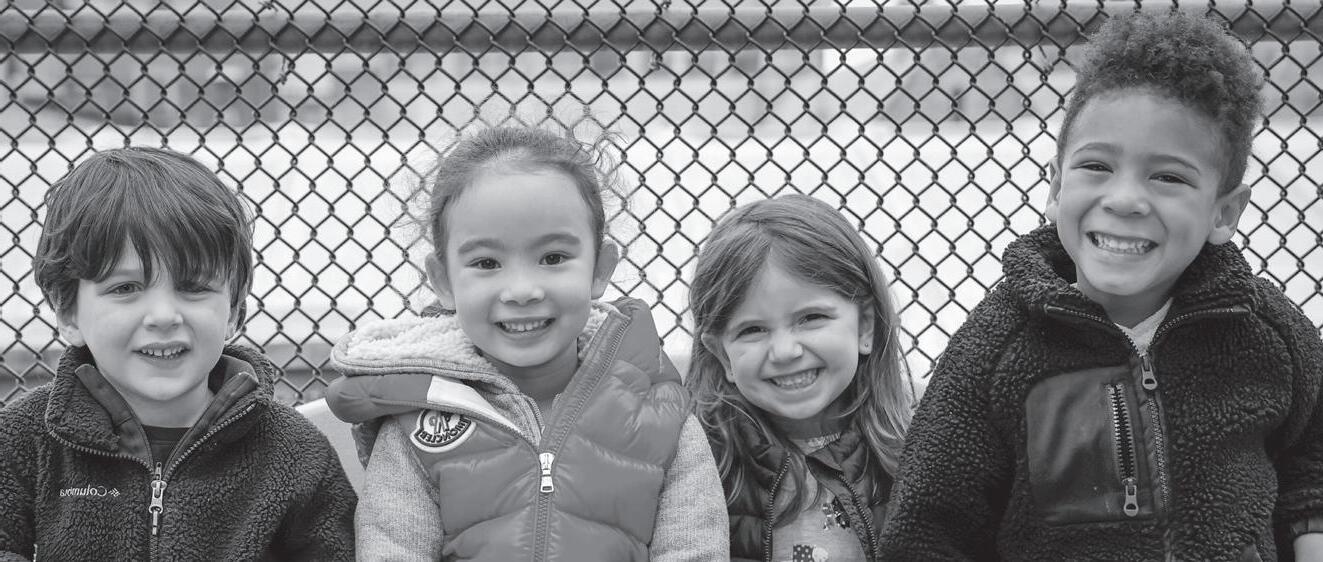
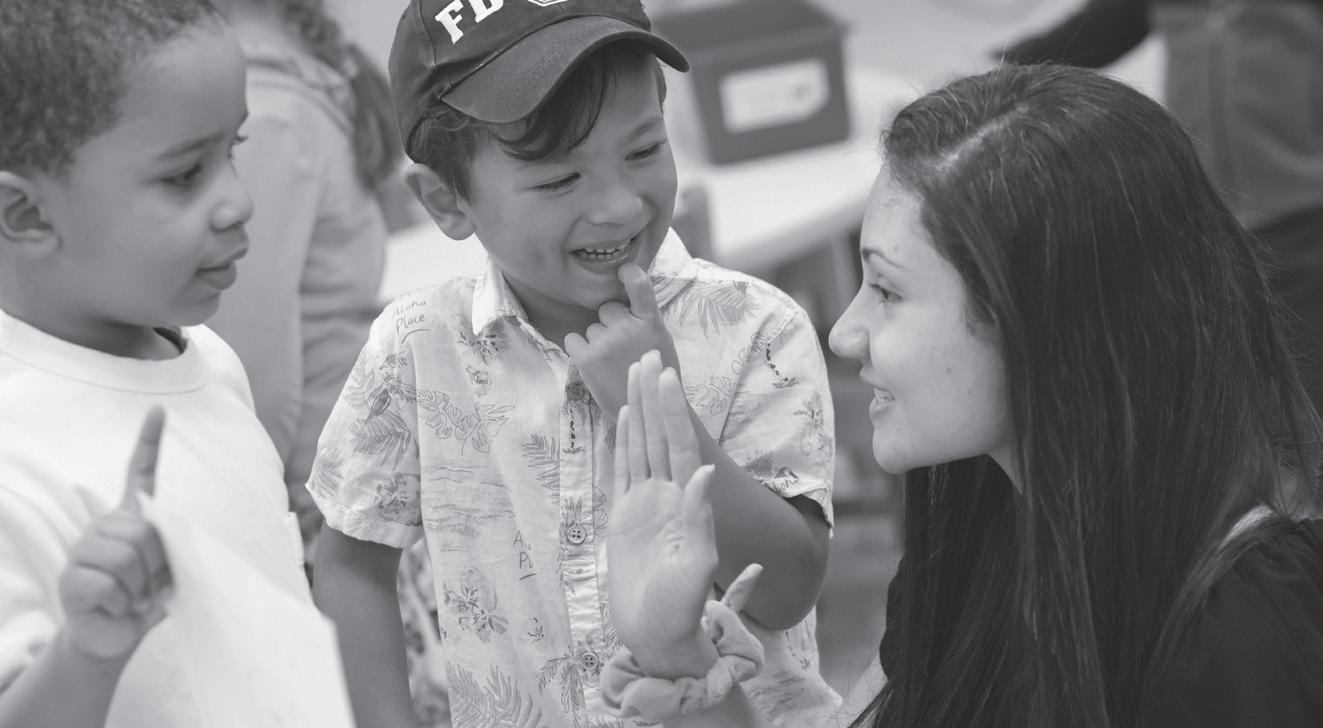
155 Advertising NOW ACCEPTING APPLICATIONS FOR CHILDREN 12 MONTHS TO 5 YEARS OLD. MONTCLARE CHILDREN’S SCHOOL IS AN ENRICHED PRESCHOOL, ENGAGING CHILDREN IN A JOYFUL AND DYNAMIC ENVIRONMENT. MONTCLARE INSPIRES LIFELONG LEARNERS BY CULTIVATING COLLABORATION, CREATIVITY, AND INDEPENDENT THINKING. 747 AMSTERDAM AVENUE | NEW YORK CITY, NEW YORK 10025 T: 212.865.4020 | E: INFO@MONTCLARESCHOOL.ORG WWW.MONTCLARESCHOOL.ORG
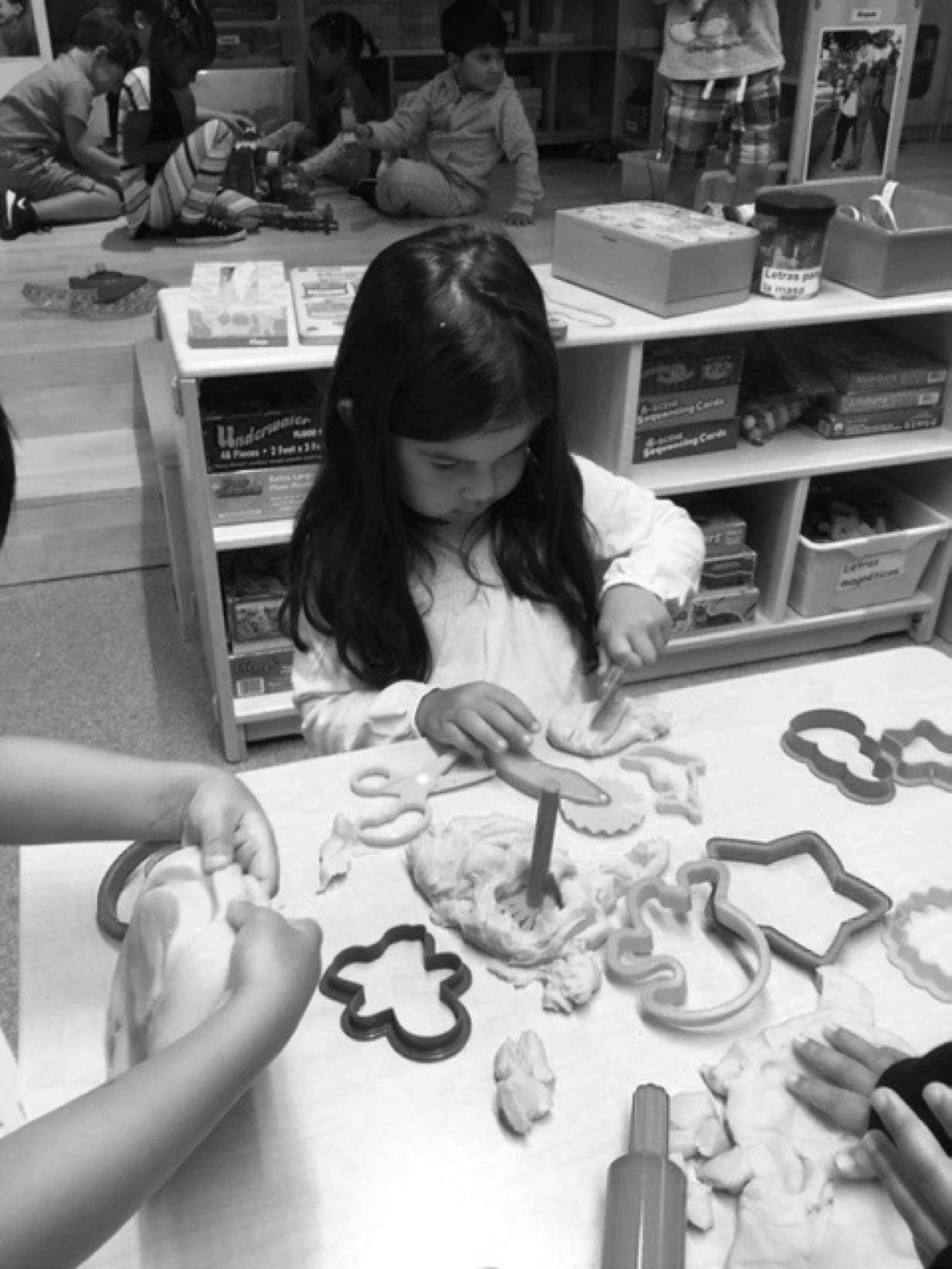

The bilingual child…
… exhibits creative and divergent thinking. … is more tolerant of differences.
… understands better how language itself works.
A good preschool builds the foundation for a lifetime of learning and there is no better time to introduce your child to another language. Come learn about Manhattan’s oldest accredited Spanish-English dual language preschool. Needs based tuition reduction is available.
225 West 99th Street
LaEscuelitaNYC.org
156 Advertising
157 Advertising
158 Advertising
159 Advertising
Tribeca Community School, a preschool for Ages 2 - 5.
A beloved fixture of Tribeca since 2006, “TCS” takes its inspiration from the Reggio Emilia approach to early childhood. We focus on the development of the whole child, leaning in on creativity, problem-solving, and empathy-building.
We’re grateful for every day we’re able to bring creativity and joy to children and families!
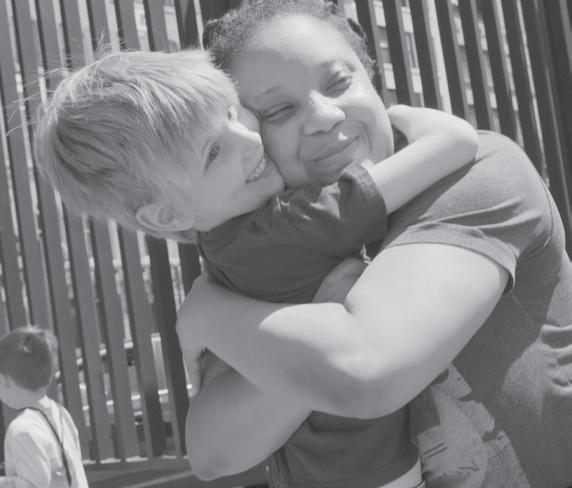
124 Hudson Street / 22 Ericsson Place
www.tribecacommunityschool.com
160 Advertising
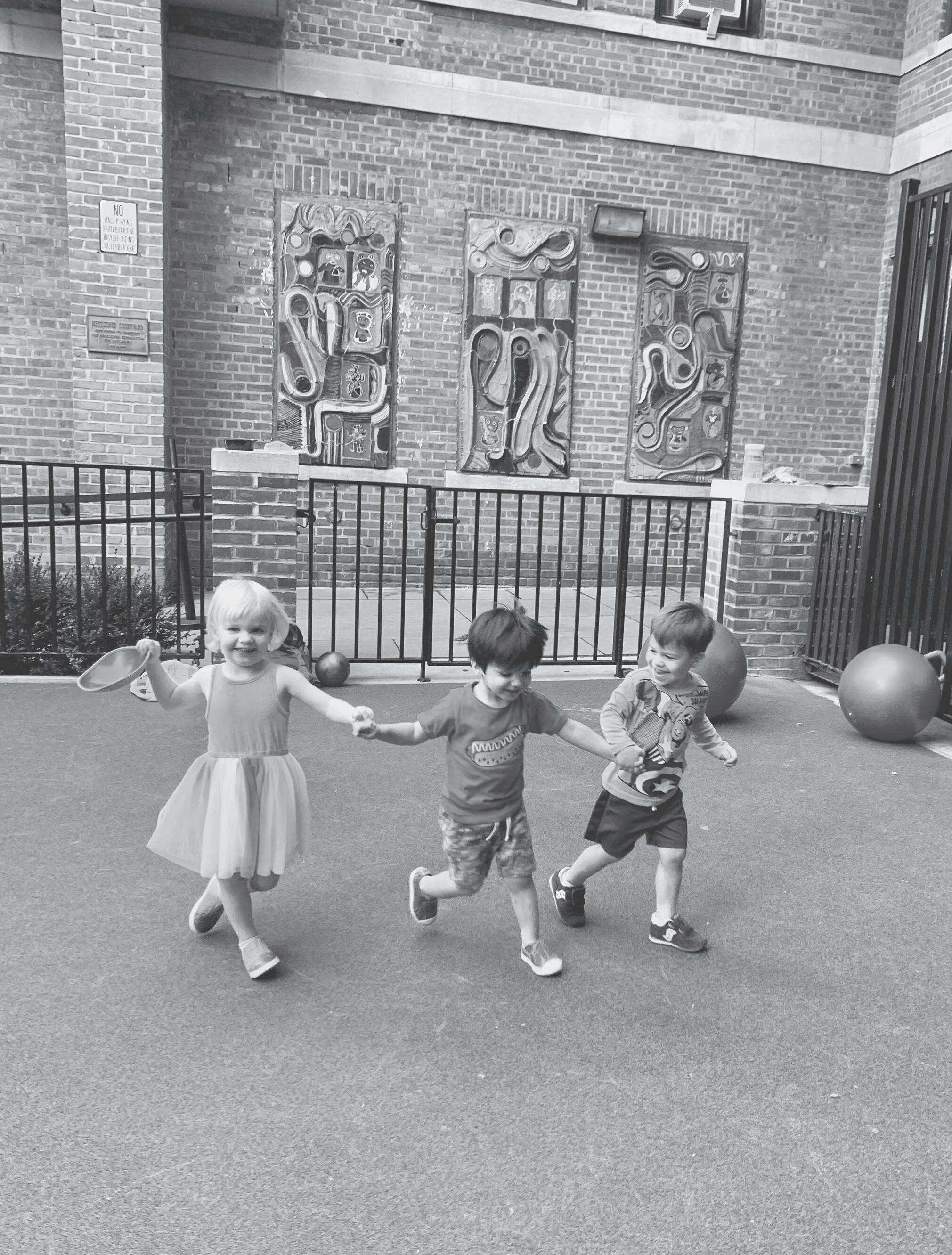

"I want children to
being
families to feel part of the

161 Advertising Third Street Preschool T h i r d S t r e e t P r e s c h o o l . o r g Where Music and Learning Meet! Tammy Dunn Director, Third Street Preschool 235 East 11th Street, NYC, 10003 TDunn@ThirdStreet.nyc 212-777-3240 x16
love
at school, and
community."
Tammy Dunn, Third Street Preschool Director
-
Care and learning, where you are
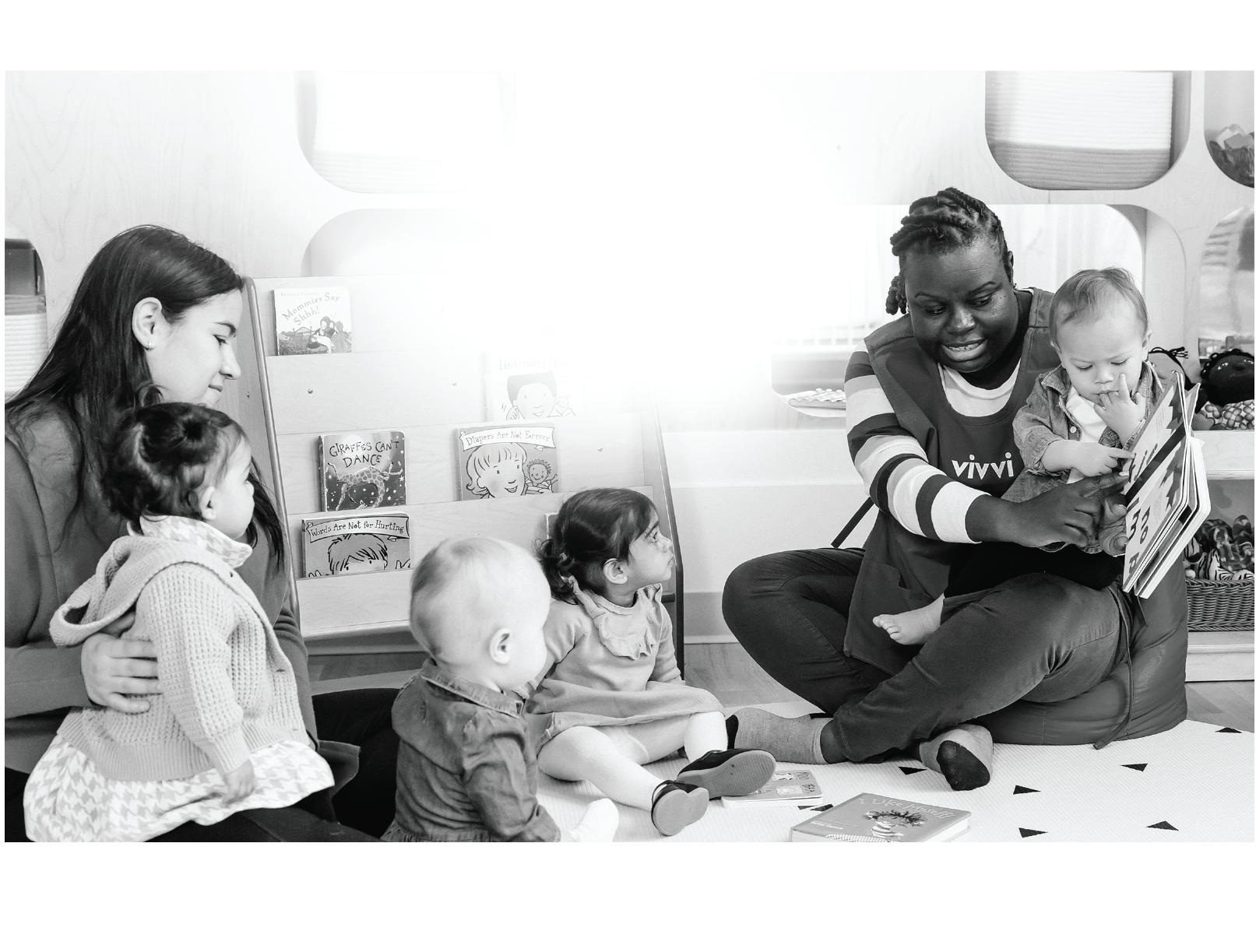
Infant - Toddler - Preschool
Vivvi provides child care and early learning for children ages 0-5, with unrivaled exibility and leading health and safety for today’s families. Our inquiry-based curriculum is facilitated by warm, experienced teachers who foster the joy of learning. With rolling admissions, unparalleled teacher retention, full day schedules and leading health and safety, Vivvi meets families where they are.
Enrolling Now
Unrivaled Flexibility
Open 7am - 7pm
Monday–Friday
Year-round schedules
2, 3, and 5-day programs
Meet us online for a virtual tour at vivvi.com
Convenient Locations
Hudson Yards | 55 Hudson Yards
Midtown West | 620 W 42nd Street
Tribeca | 75 Varick Street
World Trade Center | 50 Park Place
Dumbo | 55 Prospect Street
Upper East Side | 1285 2nd Avenue
162 Advertising
163 Advertising
164 Advertising
165 Advertising
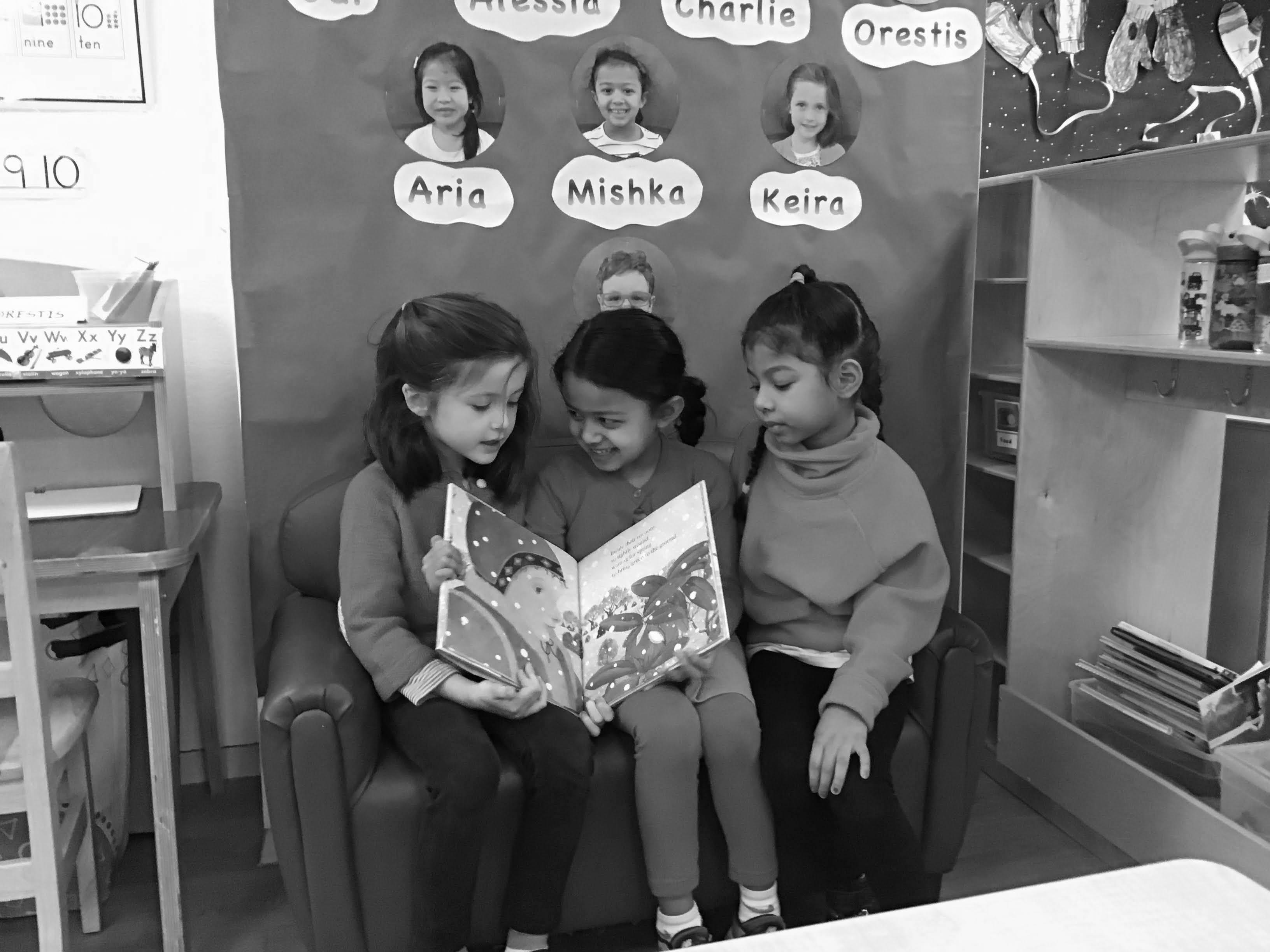

A Window to the World Programs for ages 1-5 345 East 86th Street
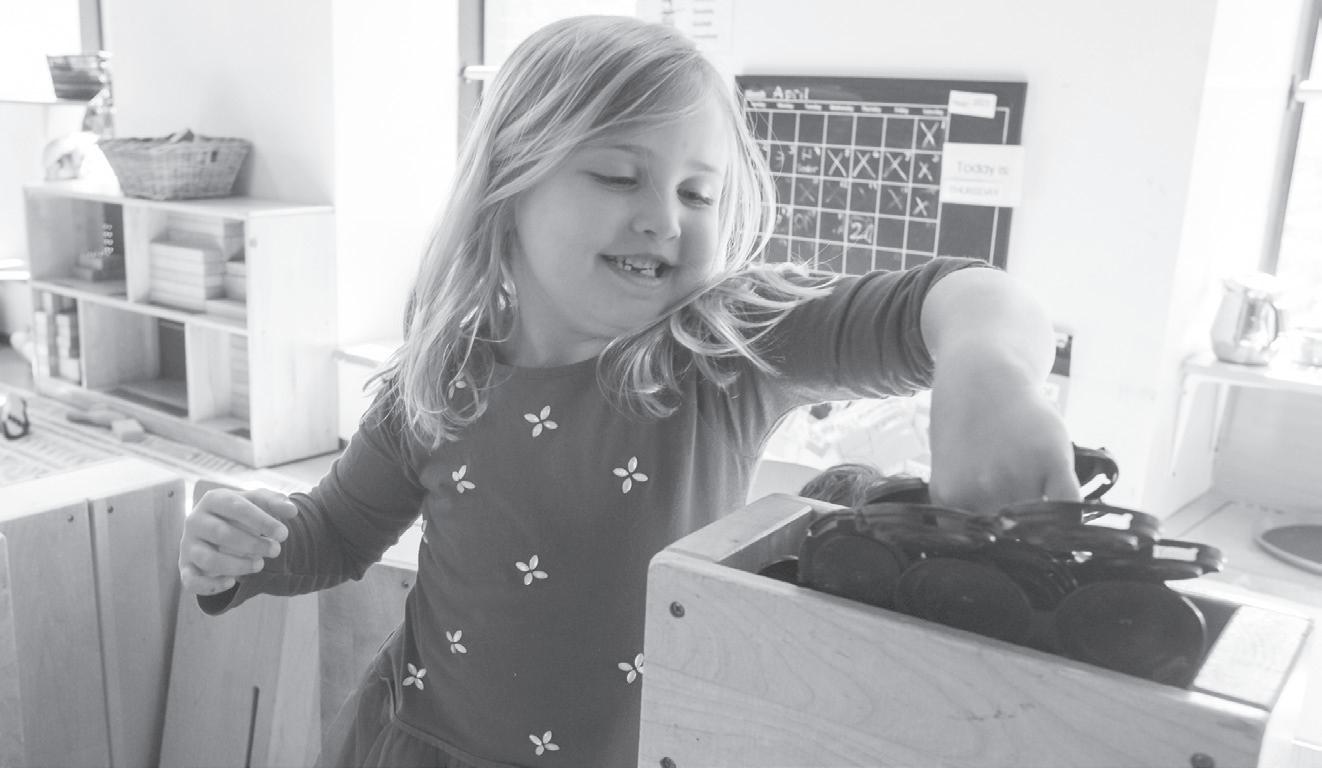
167 Advertising The Saul and Carole Zabar Nursery School Cultivating Curiosity, Creativity, and Lifelong Learning Through Play. 334 Amsterdam Ave, New York, NY 10023 | 646.505.4400 Please email admissions@mmjccm.org to learn more + receive a school tour. www.chelseadayschool.org CHELSEA DAY SCHOOL Preschool Ages 2-5 212-675-8541 319 5th Avenue New York, NY
• Dedicated to children’s growth and learning
• Experienced, nurturing teachers
• Children ages 2.0-5.3
• Specialists for Music, Movement, Studio, Gardening, & our Healthy Snack Program
• Large, airy classrooms, rooftop playground & an indoor play space

Prepare for Preschool Admissions
Our popular Preschool Admissions Virtual Workshop guides families through the admissions process: when to start, how to develop a list of preschools to consider, the application process, what to look for, and what to expect.
The workshop is included with your Parents League membership. Join at parentsleague.org or email us at info@parentsleague.org to
168 Advertising A non-sectarian program welcoming all children since 1952 The First Presbyterian Church Nursery School 12 West 12th Street, New York, NY 10011 | 212.691.3432 |
www.fpcns.org
Supporting Students with Special Needs
Kathryn Cappella Educational Advocate, Learning Disabilities Association of New York State
Peter Flom Board Member, The Learning Disabilities Association of New York State
Private special education schools have earned a secure place on the continuum of services for students with learning and associated disabilities. These schools have demonstrated many advantages for students who are unable to benefit from traditional or special education programs in public schools. The most obvious difference is that the classrooms and schools are smaller and there is typically a higher staff-to-student ratio. Private schools offer “structured flexibility”—a consistent, dependable, safe, well-organized, structured learning and physical environment where, at the same time, staff at all levels are prepared to be flexible and committed to ensuring each student receives what they need daily. Overarching goals are to engage each student; recognize their challenges, fears, and insecurities in learning; and ensure a positive, customized, student-centered educational plan that fits each child’s instructional style and physical and emotional needs. Special education private schools employ staff who are prepared to embrace and celebrate each student’s complex learning and personal profile. This holistic individualized instructional approach meets students where they are academically, emotionally, and socially rather than where we would expect them to be based on a student’s grade in school or age.
History: Parents Worked Together to Establish Private Schools for their Children Who Were
Failing or Not Welcome in Public Schools
Specialized schools for students who were blind and/or deaf were well-established in the first half of the 20th century. There were also well-established institutions to care for children with
169 Being There
developmental and mental health challenges. However, students we now identify with learning disabilities, Attention Deficit Hyperactive Disorder (ADHD), autism, executive function, and other neurological and health conditions that impair learning in traditional ways were often left out of our educational programs. These terms were not even in our vocabulary. The term “learning disabilities” was coined in 1963 by Dr. Sam Kirk, a pioneer in the field.
In the 1960s, if a student was disruptive in class, they could be deemed ineducable and not allowed to attend school. Parents were left with no options. This gap in programs and services resulted in parents grouping together and starting special private schools to help their children find alternative ways to learn and be successful. As one example, in 1965, Claire Flom and Elizabeth Friedus started the Gateway School for Peter Flom (who is a co-author of this article). Many dedicated researchers, professionals, and parents were determined to change the nation’s laws and policies, and promote scientific research to help their children find effective ways to learn, obtain an education, and become successful adults.
Now when a student struggles with learning differences or is not able to meet the demands and expectations of a public-school program, parents often ask whether a private special education school would be more appropriate and a better match for their child.
The Law and Requirements
While education law and regulations continue to evolve, the law that was crafted by parents, educators, researchers, public policy, and legislators still provides a strong statement of rights and responsibilities in easy-to-understand language. The initial legislation was enacted by the United States Congress in 1975. The law now commonly called Individuals with Disabilities Education Act (IDEA) was initially referred to as Public Law (PL) 94-142 and requires the education of all children with disabilities.
The Placement of Students Who Need a Private School Program and Placement Have Been Helped Through the Courts
In 1985, the School Committee of the Town of Burlington v. Massachusetts Department of Education, the Supreme Court
170 Being There
ruled that parents could be reimbursed for placing their child in a private school. Then, in 1993, in Florence County School District 4 v. Carter (usually called the “Carter Decision”), the Court opened the door to reimbursement of unilateral placements by parents in special education schools, saying that if a parent can prove the public school program offered was inappropriate, the private school program was appropriate, and the cost comparison was equitable or comparable, the school district could be brought to a hearing by a parent and be awarded a private school placement. In NYC there is another court decision, called the “Conner Decision,” which recognizes the need to provide funding for private school placements before impartial hearings are completed to safeguard a child’s right to an education at public expense.
Three key provisions of this federal legislation that assist parents in obtaining an adequate education for their child are:
• Child Find: Under federal law, public schools must look for, find, and evaluate kids who need special education. This is called Child Find and covers kids from birth through age 21. It applies to all kids, including those who are homeschooled or in private schools, plus kids who are migrants or without homes.
• FAPE: Public schools are required to provide each child who is eligible for special education with a free and appropriate education (FAPE) in the least restrictive environment that is consistent with the child’s needs. FAPE usually includes an Individualized Educational Plan (IEP) that is designed to meet the unique needs of a student who is eligible for special education. An educational program is appropriate when a student receives meaningful and measurable educational benefit, that prepares them for further education, employment, and independent living.
• Least Restrictive Environment is a principle that students with disabilities should be in school with their peers without disabilities as much as possible; and where the student will
171 Being There
be able to obtain the individualized education plan that is designed to give the student measurable progress. For many students with learning disabilities, the appropriate school program is one where the student will be able to be with other students with similar needs, learning challenges, and instructional and program requirements.
What Parents Need to Know
Continuum of services: School districts may believe they are well prepared to meet the needs of all students either through their own internal programs and related services or through an approved set of external programs and services that may or may not include special education private schools. While public schools have a legal obligation to educate all children, and a well-funded district can have more resources and a better-trained staff, private schools that specialize in teaching students with learning disabilities may offer more appropriate interventions, remediation of skill deficits, and improve a student’s self-esteem and confidence. Public school districts cannot always provide the appropriate programs and placements in their districts to meet the needs of all children. When a child has no option in our public school system, a private special education school may be appropriate and supported by public funds.
Similarity of needs: Students with learning disabilities, ADHD, speech and language, and emotional disabilities are a very diverse group. This umbrella term encompasses many students and each student needs a plan that addresses specific challenges. Those challenges could impact memory, attention, executive function, speech and language, reading, and math. Each child is different. Public schools may not have the programs and services needed, and parents must advocate for new programs if students were left out and could not benefit from traditional classroom settings. Private schools are then needed on the continuum of services.
Fair does not mean the same for everyone. An appropriate educational plan can be very different for each eligible student.
172 Being There
The law supports the position that “What’s appropriate must be made available.” This objective is often revised to “What’s available must be made to be appropriate” for a wide range of reasons including funding, staffing, and school districts reluctant to support out-of-district programs and placements. Trying to fit students with disabilities into existing programs can waste a student’s time and increase their frustration and possible failure.
Three practical steps for parents to obtain an appropriate education for their child with special needs: a good evaluation leads to a good program plan that leads to an appropriate placement where the educational program can be properly monitored and accountable. This process is repeated on an annual basis for each child in special education.
Step One: Comprehensive Evaluation and What are the Student’s Needs?
There is the initial evaluation to determine eligibility; then there should be periodic assessments and evaluations to measure progress and identify met needs and new needs. Once a year, each student deserves an annual review to ensure the program plan for the prior year was effective and to make the necessary revisions based on the prior year. A good evaluation is the start of the process to obtain an appropriate program. While disabilities may be life-long, a student’s learning and instructional profile still requires annual updates. The law requires an annual evaluation to determine if measurable progress has been made in skill development, content level classes, and all aspects of the program that has been offered. If not, the program is required to be changed. When programs and services have not resulted in measurable improvements, districts must revise the program and possibly the placement.
Outside Independent Evaluations
• Parents have a right to disagree with the school’s evaluation if they find it does not adequately describe their child’s specific needs and educational program requirements. If they disagree, they can request, at school district expense,
173 Being There
an outside independent evaluation to ensure a student’s evaluation adequately describes a student’s academic, social-emotional, behavioral, physical, medical, and sensory management needs.
Transition Plans
• Evaluations for students over the age of 12 should include transition assessments to help students explore and identify their career and life goals after high school. Educational programs should support a student’s post-secondary goals.
Step Two: Individualized Education Plan (IEP). What will meet the student’s needs?
An IEP is a unique and individualized agreement forged by a multidisciplinary team, parents, student, medical, and other therapeutic professionals. A student’s IEP is developed based on the needs identified in the evaluation. The IEP must ensure that the student can make measurable progress in addressing their needs and goals. How can they stay on grade level for content while learning to read, compose stories, complete math calculations, and add new concepts while the student gets necessary remediations of basic skills? A student does not need to fail to prove need. An IEP can include “instructional style,” similarity of needs with other students, related services, accommodations, and other important program requirements critical for a student’s ability to benefit from instruction.
Step Three: Finding an Appropriate Placement in the Least Restrictive Environment
Once an IEP is properly developed, the third step is where the plan can be successfully implemented. With programs based on comprehensive evaluations and assessments and review of progress on a regular basis, an individualized program and placement is well-designed to meet the specific needs of the student. What size should the class and school be? What special education programs, interventions, and accommodations are necessary for the student to be successful in learning? What are skills needed for instructors? What is the learning profile and
174 Being There
the similarity of needs for other students? The placement should meet the goals of “least restrictive environment.” For many students with learning and attentional disabilities, the private special education school is the appropriate placement – and the least restrictive environment where a student will receive the program they need and belong. The student will be with peers with similar needs, finding success and satisfaction, and making progress towards long-term goals.
Program and placement alternatives need to be considered and assessed to ensure a program that meets a student’s ongoing (and changing) program needs.
Helpful Resources for Parents
Federal Parent Centers, www.parentcenterhub.org/the-parentcenter-network
LDA of America, www.ldaamerica.org
National Center for Learning Disabilities, www.ncld.org
Understood, www.understood.org
Wrightslaw, www.wrightslaw.com
Kathryn Cappella, of the Learning Disabilities Association of New York State (LDA NYS), is an educational advocate with more than 40 years serving students with learning disabilities.
Peter Flom is a Learning Disabilities Association of New York State (LDA NYS) board member and trustee of the Lang School, New York.
175 Being There
Social-Emotional Challenges
Are Education’s Greatest Opportunity
Carrie Catapano Head of School, West End Day School
I wholeheartedly believe what is stated in that title. Why? Because for the last 25 years, I have seen first-hand how the right environment, the right supports, and the right therapies can meet any social, emotional, or learning challenge to create opportunities for students that they—and their families—likely never thought possible. It’s amazing to see. After 25 years working with children, I still find myself in awe of what can be when we commit to providing a nurturing academic experience for students who need it most.
For those who are just starting their educational journey for their vulnerable child, it can all be extremely overwhelming. The labels can feel polarizing. (“My child has anxiety.”) The terminology can be daunting (“What is executive function? What about self-regulation? What do they have to do with my child’s ability to learn?”) The road can be long. (“We’ve had evaluation after evaluation after evaluation and recommendation after recommendation after recommendation.”)
I am not one to sugarcoat. It’s not easy. Now, more than ever, children need a school model that is there for them and their families. I have been a part of one of these schools, West End Day School, for 22 years. Sixteen of those years, I have had the great honor and responsibility to serve as head of school. I get to be part of a remarkable team of people who reshape children’s lives.
How special education teachers do it? In many ways. But no matter what we’re doing—no matter how hard it may be to discuss or confront or demystify or destigmatize—we must always put our students first. I’m happy to share a few of the lessons I have learned about special education.
176 Being There
Mental Health Affects Everything—and We’re Not Afraid to Talk About It
Today, one in four adults and at least 15 percent of children struggle with mental health issues. And still there is something scary, something almost taboo, for parents about counseling and therapeutic school models. The truth is that schooling has very deep roots in cognition and behavior, but we seem to lack comfort in talking about emotions and therapeutic needs in education. One of my greatest passions is to demystify what it means to be a therapeutic school and share why it’s not scary nor negative nor a crutch, but an incredible community to be a member of—whether you’re a student, faculty, or family member.
We Know Therapeutic Settings are Successful Settings
Life is full of conflict, stress, feelings, and emotions, and that is certainly true within the school environment. Skilled counselors and teachers help label and identify feelings and help children understand their own personal stressors and triggers and how they can better manage them inside the classroom and out. They help children articulate these feelings—and be unafraid and unashamed to share them. In a larger sense, therapy means I see you, I understand you, and I am going to help you see yourself and understand yourself so you feel better. Skilled counselors and teachers help label and identify feelings to help children understand their own personal stressors and how they respond to conflicts. In my opinion, this should be a critical part of all school models, but especially for our most vulnerable students.
We Have a Different Point of View About “Bad Behavior”
My one wish for children (and for parents and educators) is to shift their thinking about behavioral issues. Teachers and parent know that behavior issues are a child’s defense against something painful or unpleasant. For instance, an anxious child may become overly rigid when it comes to making small changes. Or a sad
177 Being There
child may become very angry as it’s much more powerful to be angry than sad. Children who come off as “rude” are often scared of rejection or being hurt by others. My point is, often when children are “acting out” on the surface, sadness or shame or anxiety is happening underneath. “Bad behavior” is really a child telling us that they are desperate to feel better and daring you to find a way to let them in.
Shame Has No Place in Our Classrooms
Even in the most nurturing classrooms, when a child is dealing with a learning, social, or emotional issue, I am always thoughtful of how much shame they are experiencing. Just think about the day-to-day classroom operations and how they might reinforce shame and feelings of self-doubt: the dread of being called on and exposed to a challenge they are not sure they can meet or being put on display and having to apologize for their “bad behavior” in front of the entire class.
At a therapeutic school the focus is on imbuing students with strength and never coming from a place of shame. By being mindful of how shame plays out for each child in the classroom, our teachers can create a safe learning environment and help decrease the intensity of shame, criticism, and rejection and lean into kindness and community.
A Social Emotional Learning Environment Can Also be an Academic One
A school like that is dedicated to social emotional learning can create more time for academic challenges, not less. Parents are convinced that they will have to sacrifice academics if they put their child in a therapeutic environment. I hear this concern all the time. And then, it happens. Children have the confidence and capacity to learn more than ever before. It’s never surprising to me because I understand how much anxiety, depression, and attentional issues can interfere with one’s learning and once those overwhelming emotions are addressed, there is finally space to take in what they were missing.
178 Being There
We See Parents as Partners
When a child suffers, the parents suffer more. Parents tend to take the brunt of what is happening with their child, and typically, they have very little support or resources to help them make sense of it all. At our school, we embrace parents and make them part of their child’s success story. Parents have weekly check-ins with their child’s counselors where they can talk about anything that is helpful to them—from homework advice to friendship dynamics.
I find that all parents need more communication about what happens in the six-plus hours their children are in school each day. When parents have a partner in worrying about—and caring for—their child, it can free them from constant uneasiness and help them get back to finding joy with their child.
We Know Learning is Not One Size Fits All
This is especially true when it comes to students with greater social-emotional needs. Our evaluations are not stringent or testbased or stressful. What we look for most in prospective students is whether they have the potential to engage in a counseling program and if they want help (even if they can’t express it). Children who come to us are probably at the point where they are most stressed and need the most flexibility so we are sure to not start with a lot of demands. We take it day by day and get to know one another by building a personal relationship—and a plan—based on what they need to be successful.
We Celebrate Often—and It Matters
I love a class party, but that’s not why we celebrate a lot and often. Events that celebrate something a child has worked towards, and positively reinforcing the hard work and emotional energy involved in doing so, is beyond empowering. Children will be celebrated for something they are working on that is deeply personal to them. It could be something as simple as a child who always wants to be first practicing being second, or a student working through a difficult writing challenge. No matter the “win,” big or small, celebrations, awards, and praise go a long way in encouraging confidence.
179 Being There
As I embark on year 17 as head of school of West End Day, I wonder what the next 25 years will have in store for me. My future promise to every student struggling and their family remains the same: Take every challenge and create the kind of opportunity it so deserves.
Carrie Catapano has served as head of school at West End Day School since 2009, overseeing the individual learning styles and needs of students from kindergarten through seventh grade in New York City.
180 Being There
A Parent’s Perspective: Finding the Just-Right Educational Setting for My Daughter
Julie Kandall Director, Columbus Pre-School
I have been an educator far longer than I have been a parent. For the past 25 years, I have worked primarily with children between the ages of two to ten years old and for the past 8 1/2 years I have had the awesome privilege and responsibility of parenting one amazing little girl. Over the years I have sat across from many parents sharing the wonderful things I have observed their children doing and also, at times, needing to share concerns I have regarding an aspect of their child’s development. This is never an easy conversation to have because no matter if a child is six months old, two, six, 11, or 16 years old, our children are “perfect” in our eyes and to be told they may benefit from some type of specialized support can be difficult information for parents to process.
This past school year, as my daughter moved through her second-grade year, I found myself sitting on the other side of the table as she began to struggle academically. My hope is that by sharing my journey of finding the right support and educational placement for my daughter, I can alleviate some of the fear and uncertainty many parents may feel when faced with a challenge that could be impacting the well-being and positive progress of your own children.
Recognizing Need for Change
When I first held my daughter, Marlow, in my arms I immediately knew I would do whatever I could to protect her from pain, suffering, and hardship. Now don’t get me wrong, I knew that as she grew and began walking down this path known as life, there were going to be bumps, twists, and turns along the
181 Being There
way. I also knew these obstacles would help build her character and give her the strength to persevere. My job would be to help her navigate her path, lending support and guidance when she encountered obstacles.
When Marlow began second grade, I had concerns regarding her reading and writing skills, both of which were behind where they should have been. However, I was reassured that she was making progress and was a hard worker. I was told time and time again that because she had not had a typical kindergarten year, due to Covid, she might not quite be at grade level. However, as the year progressed, her academic struggles were having an affect on every aspect of her well-being at school. By November I saw an increase in anxiety around all things related to school, saw her self-esteem plummet, and observed her behavior at school change. My once easygoing child began to leave the classroom when she felt overwhelmed or frustrated and refused to come back inside. Her stress level rose, which caused her to become emotionally unpredictable when teachers or peers tried to engage with her. For about a month, it was unusual for a day to go by without receiving an email or phone call from her teachers letting me know she had another “hard day.” I asked about having her evaluated, but was assured it wasn’t necessary yet. Instead, she began receiving reading support three times a week in school and I hired a tutor who met with her once a week outside of school. I didn’t hear from my daughter’s teachers or reading specialist from November to February, although her behavior continued to be a struggle at school.
Then one day in February, I received a call from her teachers informing me that I would be receiving a “promotion in doubt” letter, which meant that due to Marlow being behind in reading, writing, and math, the school was thinking of holding her back. I was shocked, but knew to take matters into my own hands. As an educator, I realized an evaluation was necessary and immediately arranged to have a full neuropsych evaluation conducted privately. What was revealed was that Marlow’s
182 Being There
struggles stemmed from being dyslexic, dysgraphic, and having ADHD. I always say to parents information is power and the more information you have regarding your child, the better the choices you can make to best support them. The information I gained from her neuropsych helped me realize that her current educational placement wasn’t adequately meeting her needs, which meant it was time to embark on a journey to find a school setting that would empower her to thrive.
Visiting Potential Schools
Visiting prospective schools was a crucial step in the decisionmaking process. I made appointments to tour different institutions as well as having Marlow visit the schools, spending time in the classrooms in order to get a feel for what it would be like as a student at one of these schools. I will never forget what she said after spending a half-day at one specialized school. She emerged from the classroom and said, “Mom, can I start going here NOW?” I asked her what it was about the school that she liked so much and she said, “They teach the way my brain thinks.” What do you mean by that? I asked. “When it was writing time, they didn’t just tell me to go and write a story. There were steps that made sense, the room was quiet so I could concentrate, and when I felt confused the teacher was able to explain things so clearly. It was the first time this year I didn’t feel stupid.” Well, that was all I needed to hear. If in three hours she was able to feel so empowered and excited about learning, I knew we were on a better track and that a special education setting for students with language-based learning differences was where Marlow needed to be.
Evaluating Teaching Approaches and School Values
One of the essential factors in selecting the right school for my daughter was understanding the teaching approach used to support dyslexic students. I sought schools that emphasized multi-sensory teaching methods, such as Orton-Gillingham, and structured literacy programs known to effectively address
183 Being There
dyslexia. It was crucial to me that all educators at the school were well-trained in these techniques and could tailor instruction to suit my daughter’s learning style. It was also just as important to me to find a school committed to providing an atmosphere where students can thrive socially and emotionally. Factors such as class size, peer interaction opportunities, and the school’s overall culture played a significant role in determining whether it would be the right fit for my daughter.
Making the Transition
After a number of school visits, talks with administrators, parents who currently had children at each of the schools, and many discussions with the people in my support system, I finally made a decision that felt right for my daughter. Marlow is now continuing down a new path. It is important for parents, myself included, to understand that a change in path might feel scary, but sometimes it is exactly what is needed to best support our children. With that said, I encourage anyone reading about my journey to look up the following short essay called “Welcome to Holland” by Emily Perl Kingsley. It is a one-page essay written by a parent of a child with special needs.
My very first professor in graduate school passed this out on the first day of class. Since then, for the 13 years I spent as a classroom teacher and still today, I hand this essay out to parents because no matter what, at some point in their lives, all children will face a challenge (i.e., a speech delay, social anxiety, trouble reading, or any other bump in the road), and finding another path or simply taking a detour from the current path will be necessary.
“Welcome to Holland” helped me realize Marlow needed to move off the path that was no longer working for her so she could begin traveling a path where she will have, not only me, but teachers and tools to help her discover she is brave, smart, and capable of handling any future bumps, twists, and turns.
The experience of transitioning from educator to parent searching for the right school for my child with dyslexia has been both challenging and enlightening. Through thorough research,
184 Being There
visits, and assessment, I am confident I have found an educational institution that not only recognizes my daughter’s unique learning style, but also celebrates her strengths. Parenting is NOT easy and there is no guidebook, and although we are the experts of our own children, my advice is to trust the educators and other experts who know your children and see them in a different context than you do. Remember that knowledge is power and the sooner you learn if there is something more your child might need to reach his/her full potential, the better.
Julie Kandall was a classroom teacher and worked in kindergarten admissions before becoming the director of Columbus Pre-School in 2011. The program opened over 30 years ago and remains on New York’s Upper West Side.
185 Being There
186 Advertising

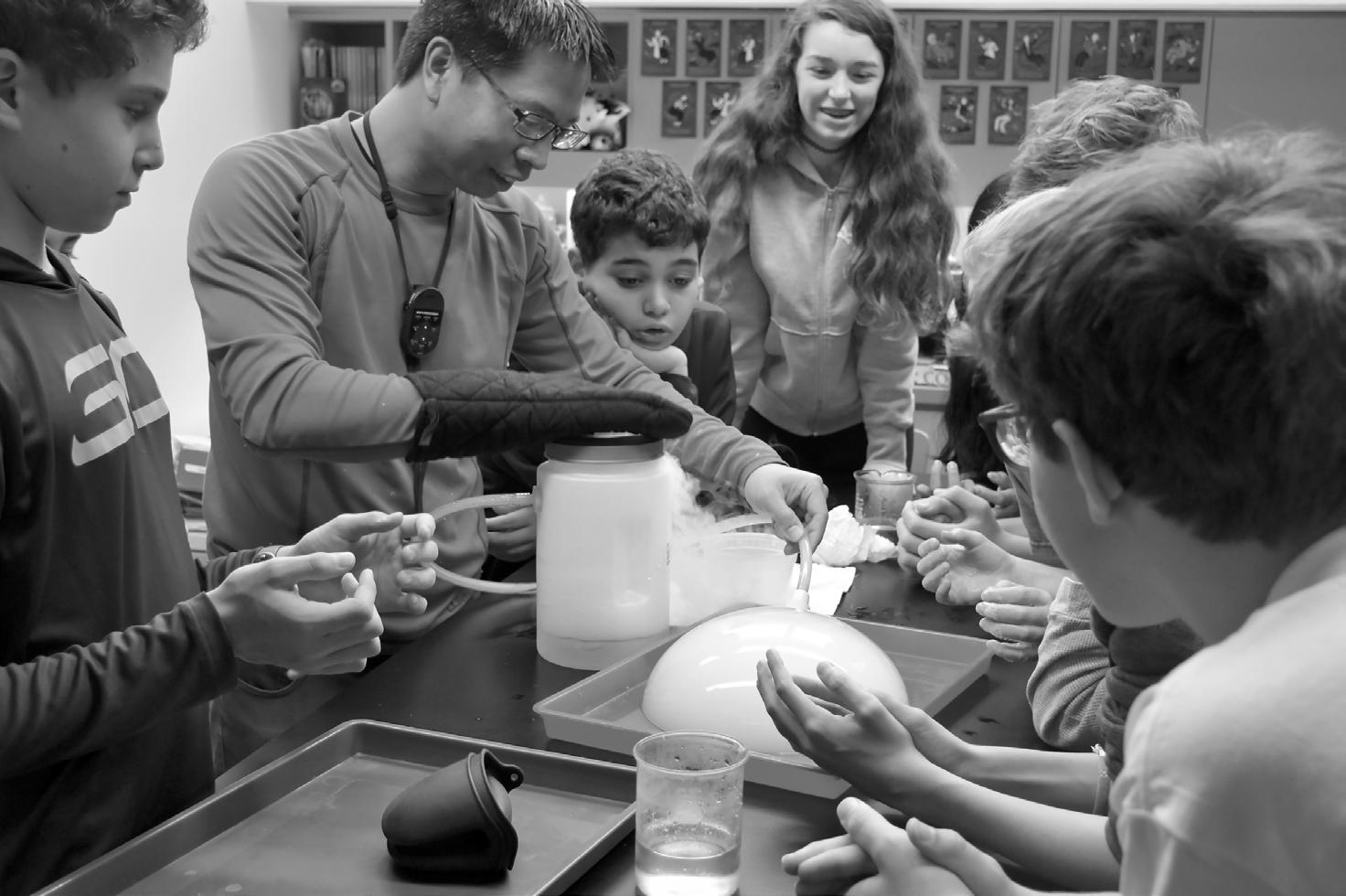
187 Advertising
pioneer in special education, Stephen Gaynor School is an independent, Pre-K, Lower, and Middle School for bright students with learning
Founded in 1962, Stephen Gaynor School provides a highly individualized educational
in a rich, rigorous, and nurturing environment in which
confidence necessary
A
differences
program
students gain the skills and
to learn, grow, and reach their full potential
148 West 90th Street, New York NY 10024 // 212.787.7070 www.stephengaynor.org
Unlocking Each Student's Potential
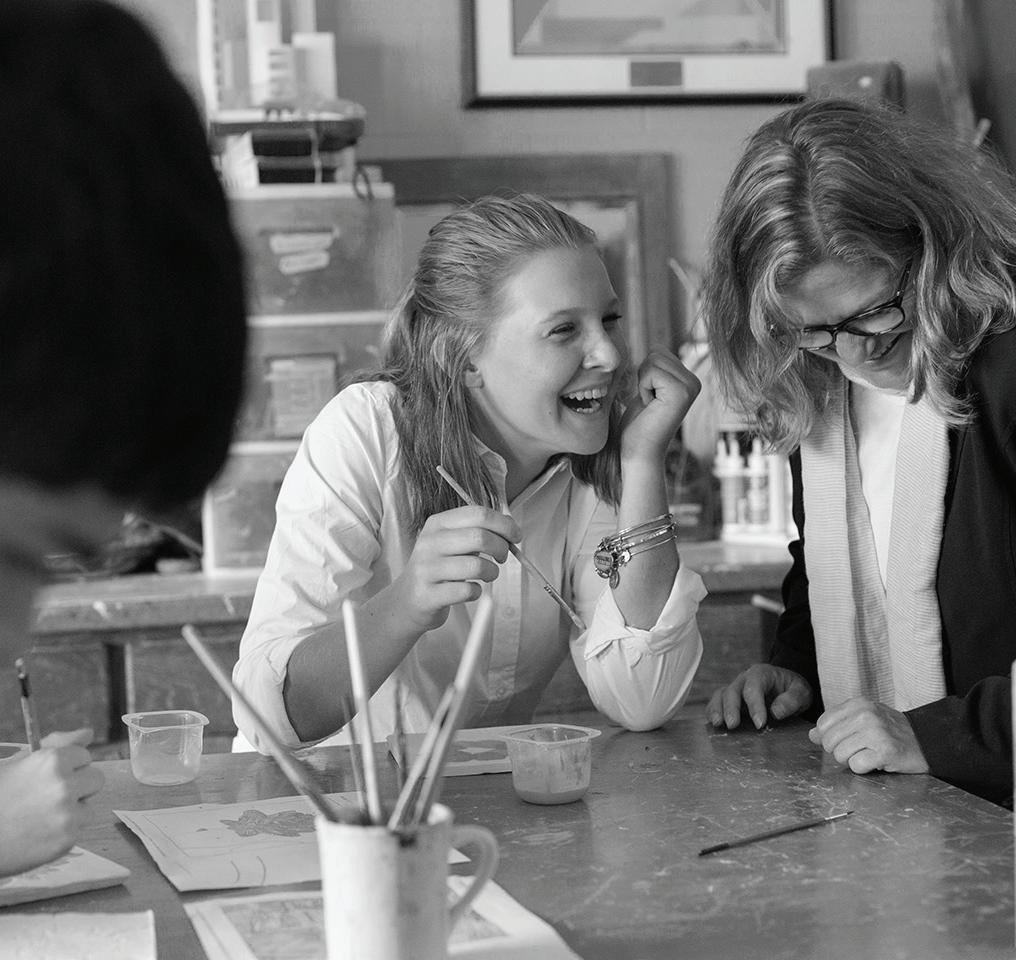
The Gow School is a college-prep boarding and day school for students, grades 6-12, with dyslexia and similar language-based learning disabilities.
Gow provides the right environment and the right tools for dyslexic students to rethink the learning process and reinvent themselves.
Come explore Gow.
gow.org
2491 Emery Rd
188 Advertising
•
• P
•
South Wales, NY 14139
716.687.2001
F 716.687.2003
189 Advertising
190 Advertising

191 Advertising RT A N SFORMING EDUCA T I NO for twice-exceptional students The Quad Preparatory School The premier college preparatory school for gifted neurodivergent students in grades K–12 25 Pine Street, 4th Floor, New York, NY 10005 | (646) 649-3913 www.quadprep.org | admissions@quadprep.org
Revealing Brilliance
Mary McDowell Friends School is an independent K-12 college preparatory Quaker school dedicated to the success of students with learning disabilities
We empower our students to be engaged learners and confident self-advocates.
• Small class size with low student to teacher ratio
• Rigorous and comprehensive curricula
• Specialized instruction including Orton-Gillingham reading and Judith Hochman Basic Writing Skills programs
• Rich performing and visual arts programs, athletics, and extracurricular programs
• Grounded in the Quaker values of equality, integrity, and social responsibility
Apply today : www.marymcdowell.org
Contact Admissions: admissions@mmfsnyc.org
192 Advertising
193 Advertising
The Gow School Summer Program is for students who have been experiencing academic difficulties, or have been diagnosed with dyslexia or specific learning disabilities. Five weeks of learning and fun for ages 816.



194 Advertising
Emery Rd • South Wales, NY 14139 P 716 687 2001 • F 716 687 2003 gow.org/summer-programs
The best way to get to know Gow, is to visit! The Gow School Summer Program Virtual Open Houses are scheduled Call 716.687.2001 or visit gow.org/summer-programs to reserve your spot! 2491
Academics
Morning
Afternoon Activities Weekend Adventures

195 Advertising












196 Advertising 91 Hill Street Southampton, NY 11968 www.southamptoninn.com * 631.283.6500 90 Guest Rooms Pool |Tennis | Pickleball Croquet on Lawns and Board Games by the Fireplace Events and Claude's Restaurant Your Year Round, Family Friendly Getaway
197 Index of Advertisers The Abraham Joshua Heschel School 31 Academics West 190 Academy of St. Joseph 130 All Souls School 158 The Allen-Stevenson School ................ 129 Avenues New York.................................. 28 Avenues The World School .................... 28 Bank Street School for Children 128 Barrow Street Nursery School 157 BASIS Independent Schools 36 The Beekman School 42 The Berkeley Carroll School 37 Brooklyn Heights Montessori School 126 Brooklyn Waldorf School ..................... 168 The Browning School.............................. 32 Brunswick School .................................. 111 Buckley Country Day School 108 The Caedmon School 129 The Calhoun School 40 Chelsea Day School 167 Children’s All Day School and Pre-Nursery 163 Choate Rosemary Hall .......................... 85 Columbia Grammar & Preparatory School .................................................. 30 Concord Academy 82 Corlears School 119 The Diller-Quaile School of Music, Inc.165 Dutchess Day School 117 Dwight School 24 Dwight-Englewood School 116 Ethel Walker ............................................ 87 The Family School ................................. 121 Family School West .............................. 121 Fay School 88 The First Presbyterian Church Nursery School 168 The Frederick Gunn School 83 Friends Academy 112 Friends Seminary 27 The Gateway School ........................... 189 The Geneva School of Manhattan ...... 34 The Gow School ................................... 188 The Gow School Summer Program 194 Greene Hill School 127 Greenwich Academy 110 The Harvey School 107 High School Admissions Workshops 42 HudsonWay Immersion School 123 Hyperfluent............................................ 196 The IDEAL School of Manhattan........... 33 The International Preschools ............... 166 International School of Brooklyn 128 ‘Iolani School 84 The Kew-Forest School 35 La Escuelita 156 The Lang School 195 Little Red School House & Elisabeth Irwin High School (LREI) 25 Loyola School 42 Lycée Français de New York 38 Lydia Sussek, Douglas Elliman 79 Manhattan Country School ................ 132 Marianapolis Preparatory School ......... 88 Marvelwood School............................... 80 Mary McDowell Friends School 192 Marymount School of New York 41 The Masters School 114 Middle School Admissions Workshops 42 Montclare Children’s School 155 Montessori Day School of Brooklyn 166 The Montessori Schools - Flatiron and SoHo ........................................... 159 Nord Anglia International School New York 41 NYC School Admissions 132 Parents League Advisors 40 The Parkside School 195 Preschool Admissions Workshops 168 Professional Children’s School 43 The Quad Preparatory School ............ 191 Riverdale Country School ..................... 43 Robert Louis Stevenson School ........... 193 Rodeph Sholom School 130 Ross School 113 Rudolf Steiner School 29 Rye Country Day School 117 Sacred Heart Greenwich 116 Saddle River Day School 115 St. Bartholomew Community Preschool ........................................... 164 St. Luke’s School ................................... 131 St. Mark’s School 81 Saint Thomas Choir School 125 The Saul and Carole Zabar Nursery School at the JCC 167 Schechter Manhattan 131 The School at Columbia University 118 South Kent School .................................. 88 Southampton Inn ................................. 196 Speyer School ....................................... 124 Stephen Gaynor School 187 The Studio School 122 Tessa International School 117 Third Street Preschool 161 The Town School 120 Trevor Day School 26 TriBeCa Community School ................ 160 Tuxedo Park School .............................. 109 UWC-USA ................................................. 87 Village Community School 132 Vivvi 162 West End Day School 186 Woodberry Forest School 86 Xavier High School 39
Advertisers
Index of
New York City Member Schools
Aaron School
The Abraham Joshua Heschel School
Academics West
Academy of St. Joseph
The Acorn School
Alexander Robertson School
All Souls School
The Allen-Stevenson School
Avenues: The World School
Bank Street School for Children
Barrow Street Nursery School
Basic Trust
BASIS Independent Manhattan
BASIS Independent Brooklyn
Battery Park Montessori
Bay Ridge Preparatory School
Beansprouts Nursery School
The Beekman School (& The Tutoring School)
Beginnings Nursery School
The Berkeley Carroll School
The Birch Wathen Lenox School
The Brearley School
The Brick Church School
The British International School of New York
Broadway Presbyterian Church Nursery School
Brooklyn Friends School
Brooklyn Heights Montessori School
Brooklyn Heights Synagogue Preschool
Brooklyn Schoolhouse
Brooklyn Waldorf School*
Brotherhood Synagogue Nursery School
The Browning School
The Brownstone School
Buckle My Shoe Preschool
The Buckley School
The Caedmon School
The Calhoun School
The Cathedral School
The Cathedral School of St. John the Divine
Central Synagogue May Family Nursery School
The Chapin School
Chelsea Day School
Children’s All Day School and PreNursery
Christ Church Day School
The Church of the Epiphany Day School (CEDS)
The Churchill School and Center
City and Country School
The Co-op School
Collegiate School
Columbia Grammar & Preparatory School
Columbia Greenhouse Nursery School
Columbus Pre-School
Corlears School
The Dalton School
De La Salle Academy
Dillon Child Study Center at St. Joseph’s University
The Downtown Little School
Dwight School
The École
The Episcopal School in the City of New York
Ethical Culture Fieldston School
The Family Annex Nursery School
The Family School and Family School West
The First Presbyterian Church Nursery School
The 14th Street Y Preschool
French Institute Alliance Française (FIAF) Preschool
Friends Seminary
Fusion Academy Manhattan*
Fusion Academy Brooklyn
Garden House School of New York
Garden School
The Gateway School
The Geneva School of Manhattan
George Jackson Academy
German School Brooklyn (GSB)*
The Gillen Brewer School
Grace Church Nursery School
Grace Church School
Greene Hill School
Hannah Senesh Community Day School
The Hewitt School
Hollingworth Preschool
Horace Mann School
HudsonWay Immersion School
The IDEAL School of Manhattan
The International Preschools
International School of Brooklyn
The Jack and Jill School at St. George’s Church
JCP (Jewish Community Project)
Early Childhood Center
Kane Street Kids
Kaplan Nursery School of Sutton
Place Synagogue
The Keswell School*
198 New
York City Member Schools
The Kew-Forest School
La Escuelita
La Scuola D’Italia New York
The Lang School*
LearningSpring School
Léman Manhattan Preparatory School
LREI - Little Red School House & Elisabeth Irwin High School
Loyola School
Lycée Français de New York
Lyceum Kennedy French American School
The Madison Avenue Presbyterian Church Day School
The Madison Playgroup
Manhattan Country School
The Marlene Meyerson JCC Manhattan - The Saul and Carole Zabar Nursery School
Mary McDowell Friends School
Maryel School of New York*
Marymount School of New York
Merricat’s Castle School
Montclare Children’s School
Montessori Day School of Brooklyn
The Montessori Schools - Flatiron & Soho
Morningside Montessori School
My Little School: Tribeca Jewish
Preschool
New Amsterdam School*
NY Preschool
The Nightingale-Bamford School
92nd Street Y Nursery School
Notre Dame School of Manhattan
Nursery School of Habonim
O’Gorman Garden Montessori
Open House Nursery School
The Packer Collegiate Institute and The Packer Early Learning Center
Park Children’s Day School
The Parkside School
Penn Family Early Childhood Center at Park Avenue Synagogue
Petits Poussins Daycares and Preschools
Pine Street School - Green Ivy Schools*
Plymouth Church School
Poly Prep Country Day School
Professional Children’s School
Purple Circle Early Childhood Program
The Quad Preparatory School
Reade Street Prep
Rebecca School
Regis High School
Resurrection Episcopal Day School (REDS)
Rivendell School
Riverdale Country School
Riverdale Presbyterian Church Nursery School
Robert Louis Stevenson School
Rockefeller University Child & Family Center
Rodeph Sholom School
Rudolf Steiner School
Sacred Heart
Saint Ann’s School
St. Bart’s Preschool
St. Bernard’s School
Saint David’s School
St. Hilda’s & St. Hugh’s School
St. Luke’s School
Saint Thomas Choir School
St. Thomas More Play Group
Schechter Manhattan
The School at Columbia University
School of the Blessed Sacrament
The Shefa School*
The Smith School
Smith Street Arts et Lettres (Preschool)
The Spence School
Speyer School
Staten Island Academy
Stephen Gaynor School
The Stephen Wise Free Synagogue Early Childhood Center
The Studio School
Temple Emanu-El Nursery School
Temple Israel Early Childhood Learning Center
Temple Shaaray Tefila Nursery School
Third Street Preschool
The Town School
Trevor Day School
TriBeCa Community School
Trinity School
Twin Parks Montessori Schools
United Nations International School
University Plaza Nursery School
Village Community School
The Washington Market School
The Weekday School
West End Day School
West Side Montessori School
West Village Nursery School
The William Woodward, Jr. Nursery School
Williamsburg Northside Schools (Preschool)
The Winchendon School
The Windsor School
The Windward School
Xavier High School
York Avenue Day School
York Preparatory School
199 New York City Member Schools
Country Day & Boarding Member Schools
All Saints Episcopal Day School
Applewild School
Bard Academy at Simon’s Rock
Bement School
Berkshire School
Blair Academy
Brehm Preparatory School
The Brook Hill School
Brooks School
Brunswick School
Buckley Country Day School
Buffalo Seminary
Buxton School
The Cambridge School of Weston
Canterbury School
Cate School
Chatham Hall
Cheshire Academy
Choate Rosemary Hall
Church Farm School
Clongowes Wood College SJ
Concord Academy
Dana Hall School
Darrow School
Deerfield Academy
Dublin School
Dutchess Day School
Dwight-Englewood School
Eagle Hill School (Greenwich, CT)
Eagle Hill School (Hardwick, MA)
Eaglebrook School
East Woods School
The Elisabeth Morrow School
Emma Willard School
Episcopal High School
The Ethel Walker School
Fay School
The Fessenden School
The Forman School
Foxcroft School
The Frederick Gunn School
Friends Academy
Garrison Forest School
George School
Georgetown Preparatory School
The Governor’s Academy
The Gow School
Green Meadow Waldorf School
The Green Vale School
Greens Farms Academy
Greenwich Academy
Greenwich Country Day School
The Greenwood School
Groton School
Hackley School
The Harvey School
Hawthorne Valley Waldorf School
The Hill School
The Hotchkiss School
The Hun School of Princeton
Hyde School - Maine
Idyllwild Arts Academy
Indian Mountain School
Interlochen Center for the Arts
‘Iolani School
Kent School
The Knox School
Lakefield College School
Lawrence Academy
Lawrence Woodmere Academy
The Lawrenceville School
Léman Manhattan Preparatory School
Loomis Chaffee School
The MacDuffie School
Madeira School
Marianapolis Preparatory School
The Marvelwood School
The Masters School
Mercersburg Academy
Middlesex School
Millbrook School
The Miller School of Albemarle
Milton Academy
Miss Hall’s School
Miss Porter’s School
New Canaan Country School
New Hampton School
North Country School
Northfield Mount Hermon School
The Oxford Academy
Peddie School
The Pennington School
Perkiomen School
The Phelps School
Phillips Academy Andover
Phillips Exeter Academy
Pomfret School
Portledge School
Portsmouth Abbey School
The Putney School
Rectory School
Ridley College
Rippowam Cisqua School
Ross School
Rumsey Hall School
Rye Country Day School
Sacred Heart Greenwich
Saddle River Day School
St. Andrew’s School (DE)
St. George’s School (RI)
St. Mark’s School
St. Paul’s School
St. Stephen’s Episcopal School
Saint Thomas Choir School
St. Thomas More School
Salisbury School
Sandy Spring Friends School
Santa Catalina School
Solebury School
South Kent School
Stanstead College
Stevenson School
200 Country Day & Boarding Member Schools
Stoneleigh-Burnham School
Suffield Academy
Tabor Academy
The Taft School
The Thacher School
Thomas Jefferson School
TMI - The Episcopal School of Texas
Trinity College School
Tuxedo Park School
UWC-USA
The Vanguard School
Vermont Academy
Walnut Hill School for the Arts
The Webb Schools
Westminster School
Westover School
The White Mountain School
Wilbraham and Monson Academy
The Williston Northampton School
The Winchendon School
The Windward School
Woodberry Forest School
The Woodstock Academy
Wyoming Seminary
Adjunct Members
A Better Chance
Early Steps, Inc.
Educational Records Bureau, ERB
International Coalition of Girls’ Schools
New York Interschool
New York State Association of Independent Schools (NYSAIS)
Oliver Scholars
Prep for Prep
TEAK Fellowship
* Parents League Applicant School
Learn more about our requirements for Member and Applicant Schools at www.parentsleague.org/about/ membership-schools and www.parentsleague.org/schools/ applicant-schools
201 Country Day & Boarding Member Schools
Parents League of New York 2023-24
Our Team
Chantal Aflalo
Liz Ainslie
Anne Burns
Mary Ann Clerkin
Evie Gurney
Julie Hubert
Ann Levine
Board of Directors
Deborah Arnowitz Ashe
Rashwinder Bardha
Laurie Barrada
Ellen Birnbaum
Noah Drapacz
Tara Christie Kinsey
Elijah Duckworth-Schachter
Nina Li
Vivian Lin
Ex Officio Directors
Laura Mazzaro
Barbara H Scott
Blair Talcott
Allison Trief-Sheller
Erika H. Matt
Natalie Myshkina
Amanda Newman
Liza Oneglia
Panos Pantazis
Caryn Pass
Jacqueline Pelzer
Karen Rogala
Barbara H Scott
Erica Corbin, Head of School, The Cathedral School of St. John the Divine
Stephen S. Murray, Head of School, The Lawrenceville School
Nicole Pappas Ferrin, Director, Barrow Street Nursery School
William J. Knauer, Head of School, The Harvey School
Review 2024
Liz Ainslie
Julie Hubert
Ann Levine
Helene Lowenfels
Laura Mazzaro
Amanda Newman
Barbara H Scott
Erin Velandy