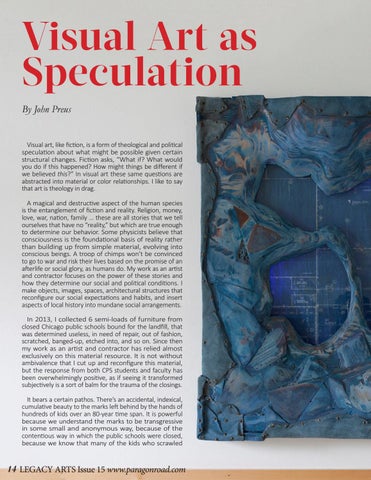
Visual Art as Speculation By John Preus Visual art, like fiction, is a form of theological and political speculation about what might be possible given certain structural changes. Fiction asks, “What if? What would you do if this happened? How might things be different if we believed this?” In visual art these same questions are abstracted into material or color relationships. I like to say that art is theology in drag. A magical and destructive aspect of the human species is the entanglement of fiction and reality. Religion, money, love, war, nation, family … these are all stories that we tell ourselves that have no “reality,” but which are true enough to determine our behavior. Some physicists believe that consciousness is the foundational basis of reality rather than building up from simple material, evolving into conscious beings. A troop of chimps won’t be convinced to go to war and risk their lives based on the promise of an afterlife or social glory, as humans do. My work as an artist and contractor focuses on the power of these stories and how they determine our social and political conditions. I make objects, images, spaces, architectural structures that reconfigure our social expectations and habits, and insert aspects of local history into mundane social arrangements. In 2013, I collected 6 semi-loads of furniture from closed Chicago public schools bound for the landfill, that was determined useless, in need of repair, out of fashion, scratched, banged-up, etched into, and so on. Since then my work as an artist and contractor has relied almost exclusively on this material resource. It is not without ambivalence that I cut up and reconfigure this material, but the response from both CPS students and faculty has been overwhelmingly positive, as if seeing it transformed subjectively is a sort of balm for the trauma of the closings. It bears a certain pathos. There’s an accidental, indexical, cumulative beauty to the marks left behind by the hands of hundreds of kids over an 80-year time span. It is powerful because we understand the marks to be transgressive in some small and anonymous way, because of the contentious way in which the public schools were closed, because we know that many of the kids who scrawled
14 LEGACY ARTS Issue 15 www.paragonroad.com