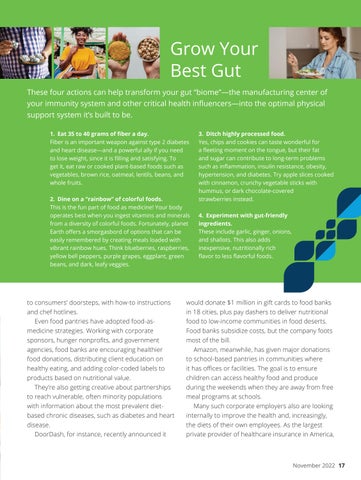
Grow Your Best Gut These four actions can help transform your gut “biome”—the manufacturing center of your immunity system and other critical health influencers—into the optimal physical support system it’s built to be. 1. Eat 35 to 40 grams of fiber a day. Fiber is an important weapon against type 2 diabetes and heart disease—and a powerful ally if you need to lose weight, since it is filling and satisfying. To get it, eat raw or cooked plant-based foods such as vegetables, brown rice, oatmeal, lentils, beans, and whole fruits. 2. Dine on a “rainbow” of colorful foods. This is the fun part of food as medicine! Your body operates best when you ingest vitamins and minerals from a diversity of colorful foods. Fortunately, planet Earth offers a smorgasbord of options that can be easily remembered by creating meals loaded with vibrant rainbow hues. Think blueberries, raspberries, yellow bell peppers, purple grapes, eggplant, green beans, and dark, leafy veggies.
to consumers’ doorsteps, with how-to instructions and chef hotlines. Even food pantries have adopted food-asmedicine strategies. Working with corporate sponsors, hunger nonprofits, and government agencies, food banks are encouraging healthier food donations, distributing client education on healthy eating, and adding color-coded labels to products based on nutritional value. They’re also getting creative about partnerships to reach vulnerable, often minority populations with information about the most prevalent dietbased chronic diseases, such as diabetes and heart disease. DoorDash, for instance, recently announced it
3. Ditch highly processed food. Yes, chips and cookies can taste wonderful for a fleeting moment on the tongue, but their fat and sugar can contribute to long-term problems such as inflammation, insulin resistance, obesity, hypertension, and diabetes. Try apple slices cooked with cinnamon, crunchy vegetable sticks with hummus, or dark chocolate-covered strawberries instead. 4. Experiment with gut-friendly ingredients. These include garlic, ginger, onions, and shallots. This also adds inexpensive, nutritionally rich flavor to less flavorful foods.
would donate $1 million in gift cards to food banks in 18 cities, plus pay dashers to deliver nutritional food to low-income communities in food deserts. Food banks subsidize costs, but the company foots most of the bill. Amazon, meanwhile, has given major donations to school-based pantries in communities where it has offices or facilities. The goal is to ensure children can access healthy food and produce during the weekends when they are away from free meal programs at schools. Many such corporate employers also are looking internally to improve the health and, increasingly, the diets of their own employees. As the largest private provider of healthcare insurance in America,
November 2022 17