









Wagler Dair y

Brown Count y Architec t Steve Miller
Being in Ukraine
David & Shelly H ayes

Shaping the Success of BCMC
Brown County Model Trains
A be Mar tin and his Crea tor
FIELD NOTES
MUSINGS
Upcoming Events





Give your heart some love!

Brown Count y Architec t Steve Miller
Being in Ukraine
David & Shelly H ayes
Shaping the Success of BCMC
Brown County Model Trains
A be Mar tin and his Crea tor
FIELD NOTES
MUSINGS
Upcoming Events
Give your heart some love!

Try substituting extra virgin olive oil in place of less healthy fats like butter, mayonnaise, margarine, and other cooking oils. Not only is it good to use for roasting, frying, or sautéing, but it’s also good as a butter substitute in baking. Extra virgin olive oil is rich in heart-healthy fats, vitamins E and K, and antioxidants which help fight inflammation and chronic disease.

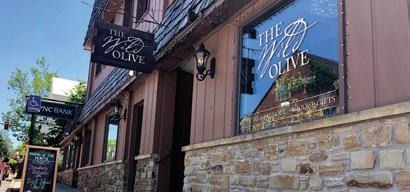
We’ve been bringing great taste to you since 2012 from our inviting little shop in the heart of Brown County, Indiana.
We have curated a flavorful collection for your tasting pleasure with plenty to offer for foodies, the experienced cook, or the novice. It goes well beyond the high-quality olive oils and balsamics we built our reputation on. We’ve added jams, pastas, dipping oils, salsas, sauces, and much more. Come in for a tour of tastes and let us be your guide. You’ll be wild about our shop. Shop us online from anywhere, anytime at www.thewildolive.com
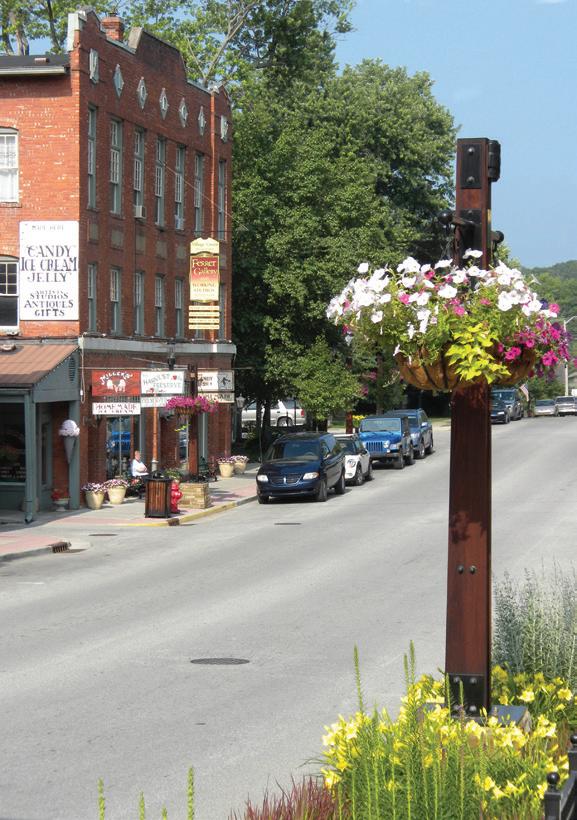




























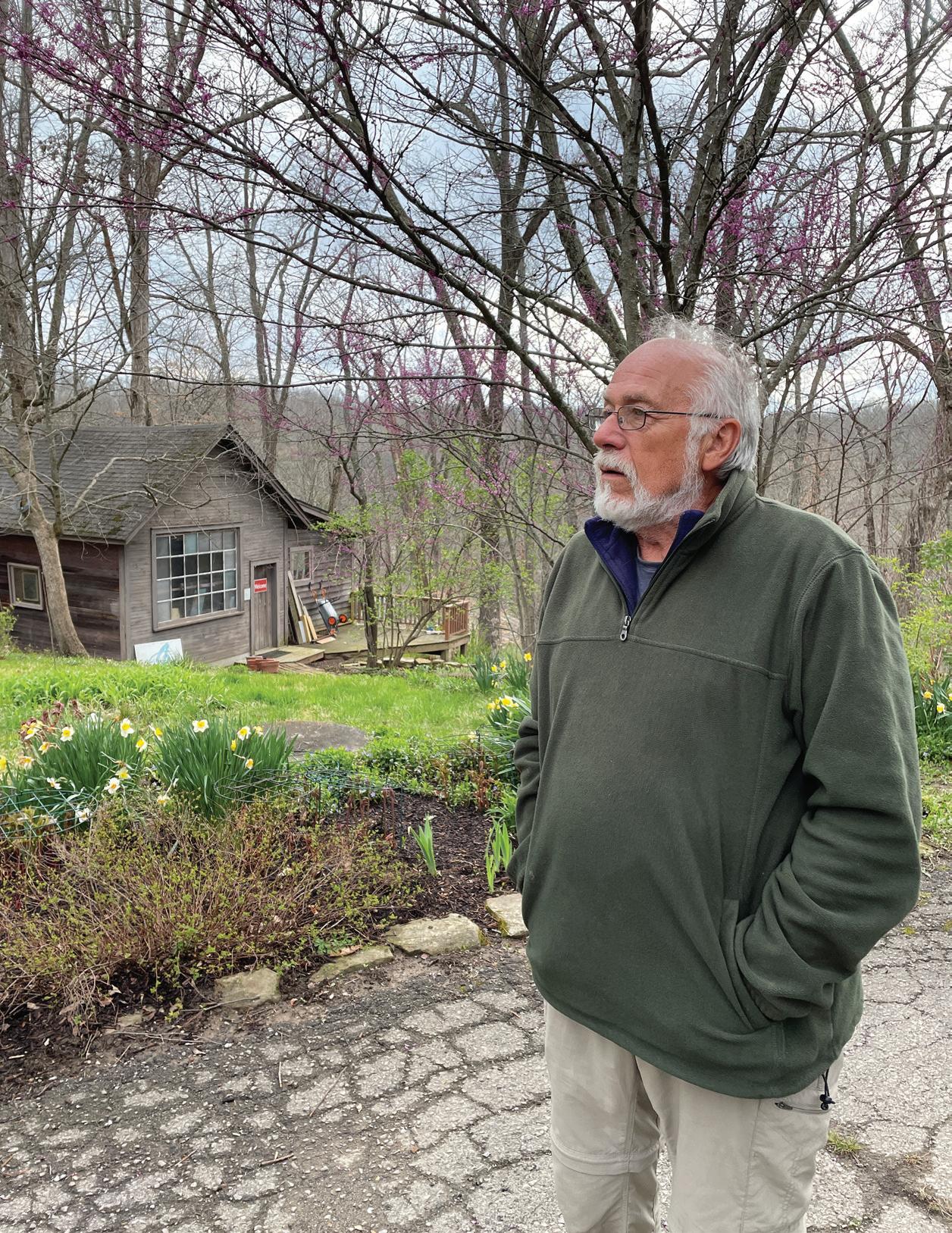
Cover: Steve Millerat his Nashville home, Anne Ryan Miller glass studio in the background ~by Cindy Steele
ourbrowncounty.com ourbrown@bluemarble.net Also online at issuu.com/ourbrowncounty OR search in the mobile app ISSUU and on Facebook for OUR BROWN COUNTY P.O. Box 157 Helmsburg, IN 47435 (812) 988-8807

Bob Gustin worked as a reporter, photographer, managing editor, and editor for daily newspapers in Colorado, Nebraska, and Indiana before retiring in 2011. He and his wife, Chris, operate Homestead Weaving Studio. She does the weaving while he gives studio tours, builds small looms, and expands his book and record collections.

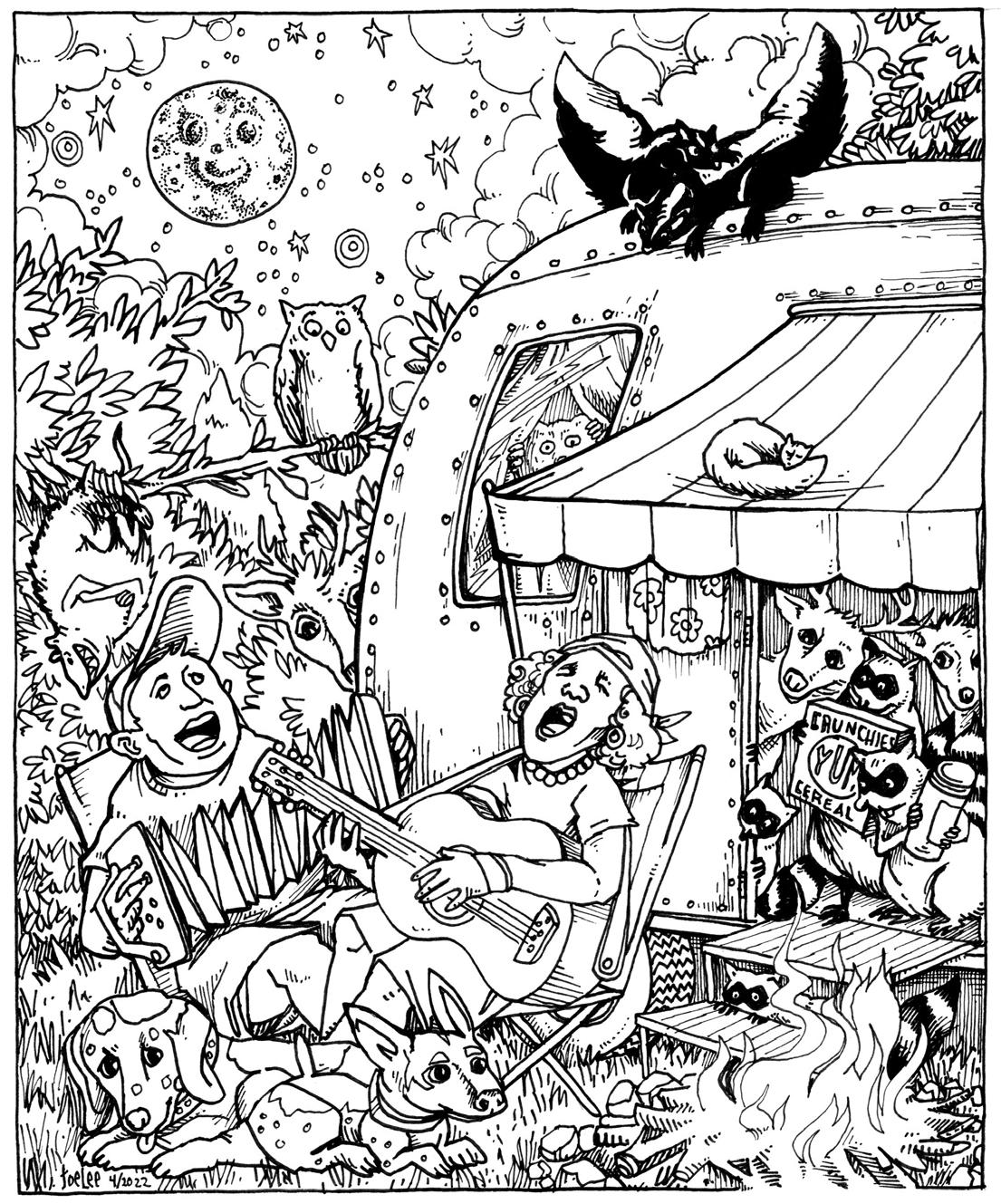
Joe Lee is an illustrator and writer. He is the author of Forgiveness: The Eva Kor Story, The History of Clowns for Beginners, and Dante for Beginners. He is an editorial cartoonist for the Bloomington Herald Times, a graduate of Ringling Brothers, Barnum & Bailey Clown College, and a veteran circus performer.

Chrissy Alspaugh is a freelance writer and owner of Christina Alspaugh Photography. She lives in Bartholomew County with her husband, Matt and three boys. She can be reached at <christina_alspaugh@yahoo.com>. View photos <ChristinaAlspaughPhotography.com>.

Jim Eagleman is a 40-year veteran naturalist with the IN DNR. In retirement, he is now a consultant. His program “Nature Ramblings” can be heard on WFHB radio, the Brown County Hour. He serves on the Sycamore Land Trust board. He enjoys reading, hiking, music, and birding. Jim and his wife Kay have lived here for more than 40 years.

Evan Markley was raised in Brown County. He has been a zipline guide at eXplore Brown County and a lifeguard at area pools. He graduated from Indiana University in 2019. He ushers for Pacers Sports and Marketing at Gainbridge Fieldhouse. He enjoys hiking and following NBA basketball. He plans to start his own podcast.

*Cindy Steele is the publisher and editor of this magazine. She sells and designs ads, sometimes writes, takes photos, and creates the layout. For fun, she likes to play the guitar or banjo and sing.
Mark Blackwell no longer makes his home in Brown County where “the roadway is rough and the slopes are seamed with ravines and present a meatless, barren, backbone effect.” He now resides within sight of the sixth green of an undisclosed golf course. He was born in the middle of the last century and still spends considerable time there.
Julia Pearson wrote for a Franciscan magazine for ten years and served as its human interest editor. She and husband Bruce now reside in Lake Woebegone Country for life’s continuing adventures. Julia enjoys traveling and visiting museums of all types and sizes, with her children and grandchildren.

Boris Ladwig is a Columbusbased journalist who has worked in print, online and TV media in Indiana and Kentucky and has won awards for features, news, business, non-deadline news, First Amendment/community affairs and investigative reporting.

Ryan Stacy and his wife recently moved to Pennsylvania and continues to stay connected with our Brown County. He appreciates good movies, good food, and enjoys cultural events. His other interests include reading, photography, and playing music.

Paige Langenderfer is a freelance writer and communications consultant. She writes for numerous publications. She earned her Bachelor’s degree in journalism from Indiana University and her Master’s degree in public relations management from IUPUI. Paige lives in Columbus with her husband and daughters.
Michele Wedel is a photographer and visual imaging artist in Nashville. She is the house photographer for the new Brown County Music Center. She finds inspiration for her art in the natural beauty of Brown County and in the variety of amazing people that live here. You can view more of her work on Facebook at Michele Wedel Photography.
Thanks, Mom, for making it happen!
copyright 2022











































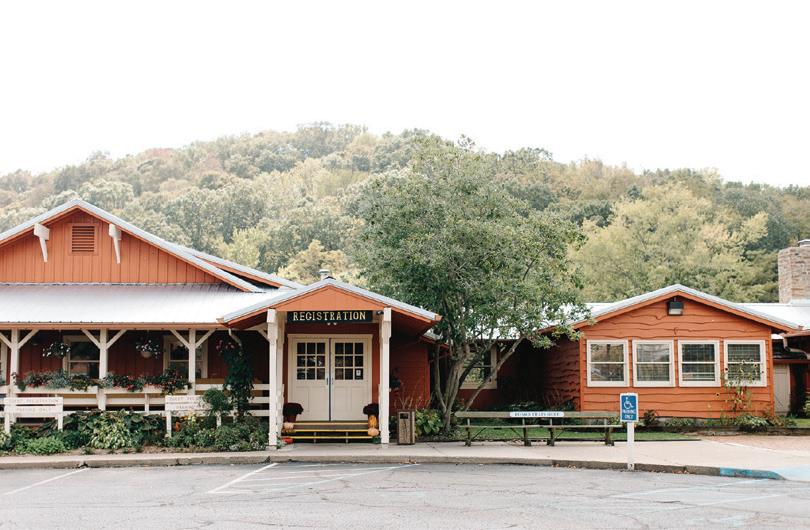

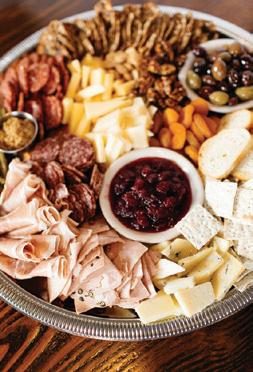


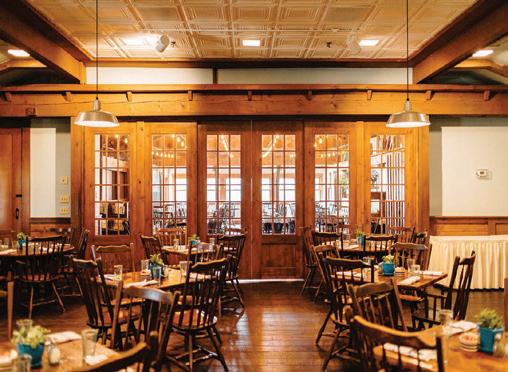
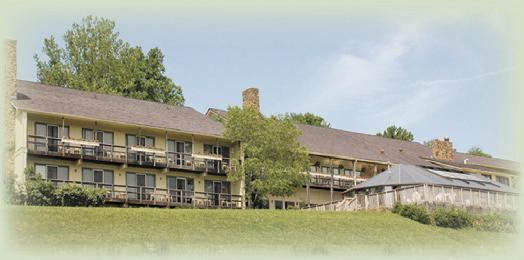








~story and photos by Paige Langenderfer
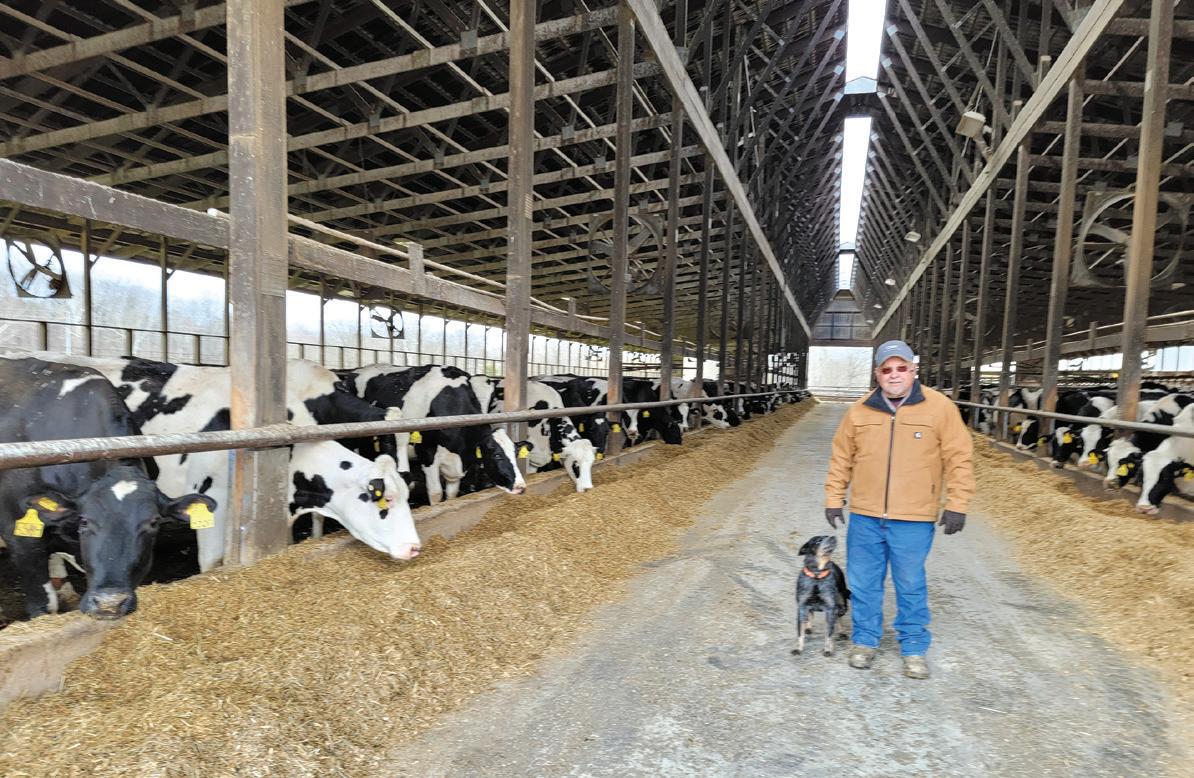
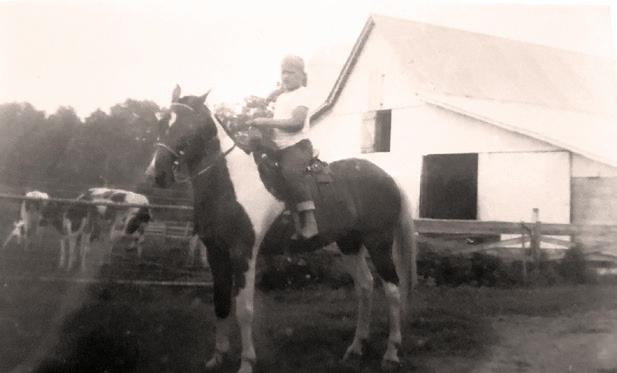
Growing up in a family with eight children meant everybody had a job. Kenny Wagler was not fond of his first childhood chore, the dishes.
“The two oldest brothers got to go out and work with dad on the farm,” Kenny said. “Dave, Dorothy, and me, got stuck with the dishes. And there were a lot of dishes. Three meals a day for 10 people makes a lot of dishes.”
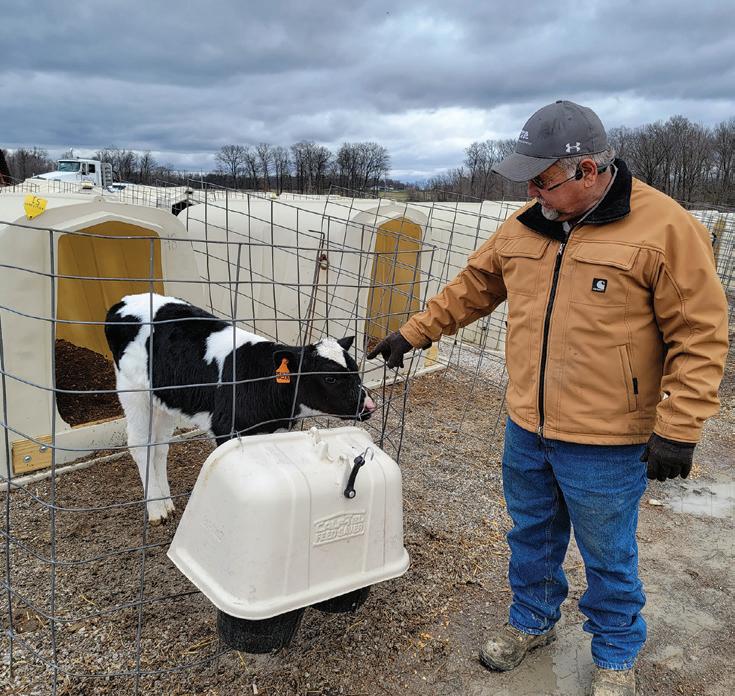
Luckily for Kenny, when he turned 10, he was promoted to taking care of the calves.
“I made sure they were fed (bottles of milk) and had feed every morning and night,” he said. “And the older I got, the more I got to do with dad.”
Kenny and his seven siblings grew up on the Wagler farm near Morgantown.
The farm was founded in 1952 when Henry and Frances Wagler, moved from their Daviess County home in southern Indiana to help grow the Bean Blossom Mennonite Church.
“Mom and Dad grew up Amish,” Kenny said. “They were married in the Mennonite Church and had a calling to help grow the church.”
Henry and Frances moved to Brown County and bought the original Wagler farmstead. They had 167 acres, 18 cows, 4 sows and a farrowing barn full of piglets.
“We milked cows, raised pigs and sold eggs at the Morgantown hardware store,” Kenny said. “That’s where they bought the coal to heat our house too.”
With so much work to do, the Wagler children were not allowed to participate in any extracurricular activities until their sophomore year of high school.
“There was just too much work to be done,” Kenny said.
After graduating from high school, Kenny said he was ready to look for opportunities away from the farm.
“The older boys were working on the farm with dad and I went out and found a different job,” he said. “I went to work at a rock quarry in Brown County and found out that was harder work than working on the farm.”
Kenny left the quarry for a job in Indianapolis with Detroit Diesel Allison as a machinist. While it didn’t turn out to be a lifetime career, he learned things he
has used his entire life. “I learned how big businesses were run, how to recruit employees and how to treat employees,” Kenny said.
In 1977, Kenny married his wife Lesa, and in 1978 he took a 75 percent pay cut to go back to work on the family farm.
“I had a really nice 1969 Corvette that I sold to buy cows,” he said. “It was a huge pay cut, but I believe that God moves you where you need to be.”
Kenny bought into the family farm at 25 percent share. His brothers Lloyd and Howard also held 25 percent share and their father Henry held the remaining 25 percent share.
In 1985, Henry retired and the three brothers owned equal thirds of the farm. In 1990, Howard felt called to join the ministry and left the farm to go to seminary. Kenny and Lloyd split the shares equally until 2014, when Lloyd chose to opt out of the dairy farm to focus on crops.
Kenny has managed Wagler Dairy on his own since 2014, and takes great pride in the strides the farm has made since its humble beginnings with 18 cows.
At the time Kenny bought in, Wagler Dairy owned approximately 100 animals and milked 75 cows, two times a day. Each cow produced close to 50 pounds of milk per day.
Today, Wagler Dairy has grown considerably. Cows are milked three times a day now and produce approximately 90 pounds of milk.
Transponders on their legs let Kenny know vital statistics like how many steps per day each cow takes, how much milk each cow produces each day, and the somatic cell count. “Fewer steps could mean the cow isn’t feeling well or is having hoof problems. More steps could mean they are in heat and need to be put in with the bulls,” Kenny said. The somatic cell count helps Kenny know if a cow is having issues with their udder. The higher the count, the greater the chance a section of the udder is infected. A mastitis infection can be devastating to a cow and a dairy farm.
Kenny said he has been able to increase milk production by focusing on animal health, nutrition, and comfort. “We don’t want any animal standing for more than three hours a day,” he said. “We want them to be comfortable, eating the proper nutrition, and feeling free of any stress.”
A hoof specialist visits the farm every three weeks to trim hooves on a rotating basis. “Keeping the cows’ hooves healthy is vital,” Kenny said. “If a cow doesn’t feel well, or her hooves hurt, she will not produce as much milk.”
One fact Kenny is extremely proud of is that the farm has only purchased 13 cows the entire time the family has been farming.
“We put a lot of focus on our breeding program and buying the right bulls,” he said. “We look for bulls with good legs and good feet.”
While Kenny has enjoyed the work, the hours have been tough.
Continued on 20


















Pizza & Wings, Groceries, Ice
Large Selection Domestic/Craft Beer & Wine LOTTERY, Tobacco Products
Camping Supplies, Live Bait & Tackle
Hunting & Fishing Licenses
Check Station, Firewood State Road 45 and Helmsburg Road Intersec tion • (812) 929-7797



Calvin Place Franklin & Van Buren Streets Nashville, IN • (812) 988-1058 www.amygreely.com
GALLERY AND MUSEUM
48 S. Van Buren Street
Nashville, IN 47448
812 988-6185
BrownCountyArtGuild.org
Offering affordable instruments to inspire the beginner and locally handcrafted beauties to awe the professional
Musical instruments for all ages and skill levels Lessons, workshops, and more... Your favorite lil’ music store in Brown County, Indiana 58 E. Main St. Nashville (by courthouse) www.weedpatchmusicshop.com 812-200-3300












WAGLERS continued from 17
When he and Lloyd were partners, they would switch who had to milk each morning. “One of us would get up at 1 a.m. to go milk and the other got to sleep in until 4 a.m.,” he said. “Then we would farm all day and wake up and do it again the next day, but switch who got up early.”
In 2005, they began milking the cows three times a day, and decided that hiring help was a necessity.
“We decided if we were going to have any kind of life at all, we were going to need help,” Kenny said. “It’s been a good life. No matter what, we have tried to put God first, then family, then work. Sometimes you get those things mixed up and you have to get them back in order.”
Kenny’s wife Lesa grew up in Nashville. Her parents worked at Cummins and her grandparents owned Cox Drugs.
Now the farm’s full time bookkeeper, Lesa said she loved raising her family on the farm. “There are times when the work seems to never end, but there have been so many blessings,” she said. “It has really been a good life. God has blessed us.”
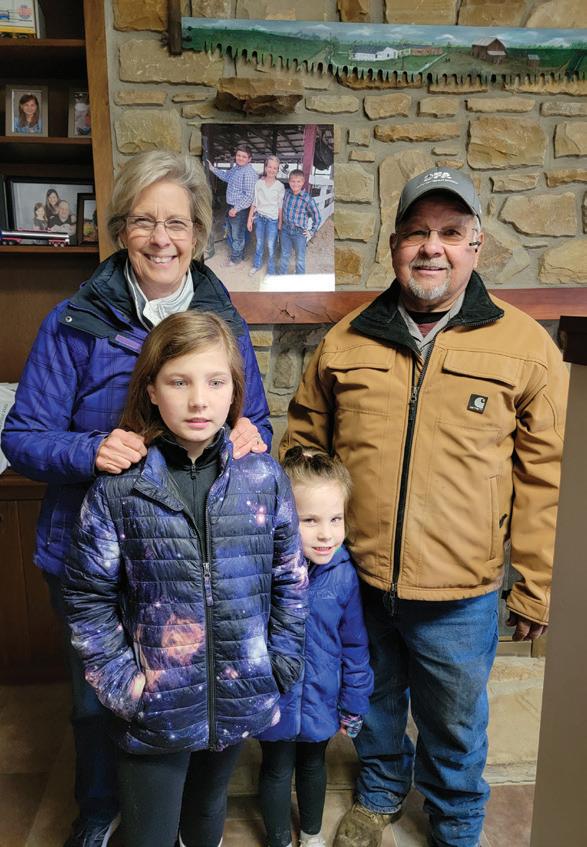
Kenny and Lesa have two children, Shannon Verhaeghe
and Justin Wagler, and five grandchildren. Shannon is an ag education teacher in Plymouth and Justin owns a custom application business next door to the dairy farm.
In his limited free time, Kenny enjoys participating in tractor pulls with his son, Justin. They have been pulling together for 27 years, and have twice won the Lucas Oil Pro Pulling National championship.
Kenny said if there is one thing he could change it would be the misconception people have about the negative impacts farming has on the environment.
“People think that the dairy industry has this major negative impact on greenhouse gasses,” he said. “According to Frank Mitloehner, Ph.D., professor and air quality specialist in the Department of Animal Science at the University of California, Davis, the dairy industry contributes just two percent of all greenhouse gasses in the U.S. The majority of the gasses come from transportation, power production, and the cement industry.”



































~by Chrissy Alspaugh
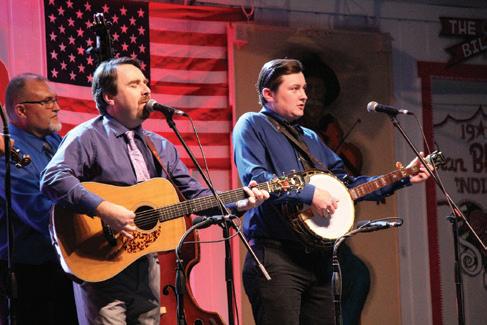
Twonew festivals and one American favorite will entertain crowds with bluegrass, blues, rock, and even Cajun beats, this May and June at Bill Monroe Music Park.
“The bands are back out, the food trucks are back out, and the crowds are so ready to come out,” said park promoter Debbie Dunbar. “We can’t wait to welcome back old friends, as well as meet a lot of new ones.”
The music park got its starts in the early 1940s, when Hoosier musicians began flocking to Bean Blossom on Sunday evenings, causing traffic jams in the little town north of Nashville. The weekly jam sessions grew and drew local musicians as well as stars of the Grand Ole Opry. Opry entertainer Bill Monroe purchased the jamboree grounds in 1952, turning the park into a musical history destination that draws crowds from around the world.
Festival attendees can enjoy entertainment and workshops on two stages, visit the Bill Monroe Museum and Hall of Fame, fish, and more. Campers can bring tents, motorhomes, or rent a camping cabin.
To purchase tickets or get more details visit <billmonroemusicpark.com> or call 812-988-6422.
Indiana Cajun/Zydeco Crawfish Festival | May 20-21
The inaugural Indiana Cajun/Zydeco Crawfish Festival will bring the sounds and traditions of Louisiana to Indiana and will feature a live crawfish boil, dance lessons, second line, crawfish races, crawfish eating contests, a gumbo cookoff, golf cart parade, and of course live Cajun and Zydeco music.
The festival’s musical lineup will include Dwayne
Dopsie & the Zydeco Hellraisers, Marcella & Her Lovers featuring Anne Harris, Craig Brenner & The Crawdads, Chubby Carrier & The Bayou Swamp Band, Jeffery Broussard & The Creole Cowboys, Creole Stomp with Dennis Stroughmatt, and Mojo Gumbo.
Dunbar said many of the bands traveling to Indiana for the festival are excited to host cultural and music workshops to help preserve the Cajun culture.
Gates will open 10 a.m. both days, and the party continues until 11 p.m. each night. The festival will be held rain or shine.
The inaugural Americana Bean Jamboree music festival, June 2-4, will showcase a diverse blend of musical genres including roots, rock, blues, bluegrass, country, and folk.
The Americana Bean Jamboree will welcome crowd favorite bands as well as award-winning musicians who will perform and lead workshops at the park for their first time.
The festival’s lineup includes Ryan Shupe and The Rubberband, Flat River Band, Roe Family Singers, Anne Harris, Nick Dittmeier and the Sawdusters, The Rainwater, The Strings of Indian Creek, Banister Band, Jim Richter & Will Kimble, Della Mae, Jon Stickley Trio, Georgia Rae Band, Restless Leg String Band, Davey & The Midnights, Shiny Shiny Black, The Box Band, Mike Martin & The Beautiful Mess, Jack Whittle Trio, Hogslop String Band, Veronica Lewis, The Kody Norris Show, Cruz Contreras of the Black Lillies, Midwest Rhythm Exchange, Highway 9 Blues Band, Kade Puckett, The Long Seasons, and John Ford. Bill Monroe’s Bluegrass Festival | June 10-18
The 56th annual Bill Monroe’s Bluegrass Festival will be held June 10-18 and feature daily bluegrass bands, workshops, campfire jam sessions, a free Bean Dinner, and for the first time Sunday bluegrass jam sessions.
This nine-day summer staple started as one of the smallest festivals in the country when Bill Monroe created it in 1966. Now the longest-running bluegrass festival in the U.S., Bill Monroe’s Bluegrass Festival entices regulars from as far as Hawaii,” Dunbar said.
Continued on 34















Glass Baron Hand-blown Glass
Jim Shore Collec tibles • Lori Mitchell Figurines
Inner Beauty Ornaments • Painted Ponies
Lang Graphics Calendars & Paper Goods
Gooseberr y Pa tch Cookbooks
Blue Mountain Greeting Cards
Handmade Soap & Bath Bombs
Wind Chimes • Music Boxes • Children’s Books Halloween & Christmas Gifts & Décor





~by Bob Gustin
The walls and shelves of David and Shelly Hayes’ home in Nashville are sprinkled with art and artifacts from Ukraine. Brightly patterned pysanka, also known as Ukrainian Easter eggs, traditional nesting dolls, landscape and cityscape paintings, and more.
The cultural artifacts are reminders of a land and people now bearing the scars of a brutal Russian invasion. But David and Shelly know first-hand the resilience and determination of the Ukrainians.
He was pastor of the Parkview Church of the Nazarene just outside Nashville from 1986 to 1992 and again from 2005 to 2014. But he spent two full years working in Ukraine, 1992–1994. He made periodic visits back, staying for months at a time in 2016, 2017, 2018, and 2019, living in Kyiv and travelling to Russia, the Republic of Georgia, Belarus, and throughout Ukraine.
After his last Parkview assignment, David spent the next five years in consulting, training, and coaching
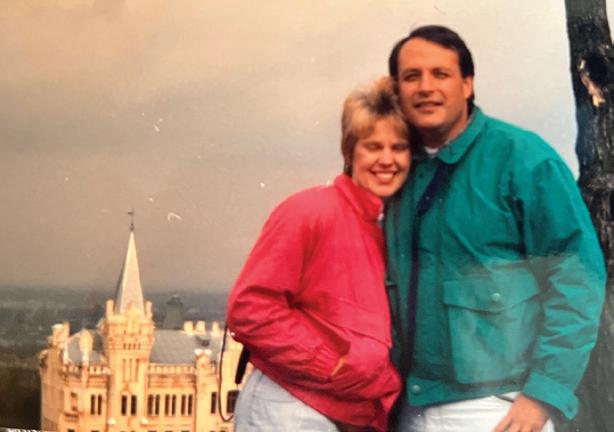
David and Shelly visiting Kyiv in 2018.
roles for the church, and is now hospice chaplain for SouthernCare Hospice in Bloomington, while continuing online mentoring and training of church leaders across eastern Europe and Asia.
An Indiana native, David earned his bachelor’s and master’s degrees at Olivet Nazarene University in Bourbonnais, Illinois. After graduation, he was a youth pastor in Anderson, Indiana, then an admissions counselor for the university.
It was his work as an admissions counselor, and the travel and speaking it required, that gave him a taste of the ministry.
But he was drawn to mission work.
“I can’t describe it to you,” he said, “but I can still feel the angst. For three years, I told them I wanted to go behind the Iron Curtain.”
Shelly was born and raised in Valparaiso, Indiana, but her parents had a second home in Brown County. She met David when both were students at Olivet Nazarene University, and they were married in 1979.
She has a degree in business administration and marketing, previously working as marketing director for Gaither Family Resources in
Alexandria, Indiana, and in graphics design and marketing at the international Wesleyan church headquarters in Fishers, Indiana.
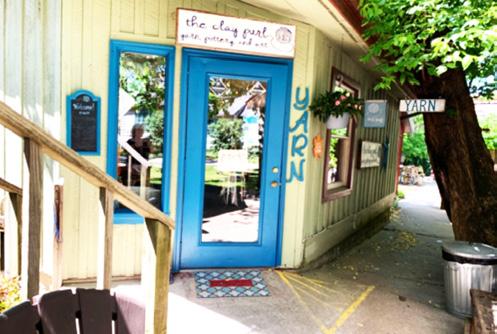
She started the Clay Purl yarn store in Nashville in 2011.
The Hayes’ opportunity for mission work arose when the Soviet Union broke apart, and the church got word of a businessman passing out Bibles in Kyiv, which turned into a makeshift church with 100 people meeting at a school. David was sent to Ukraine in 1992 as a pastor and compassion director.
David and his family lived and worked in Ukraine for two years, during the chaotic years just after the breakup of the Soviet Union, a time and place sometimes known as the “wild, wild east.”
A typical factory worker in Ukraine made the equivalent of $8 a month at the time David and Shelly did mission work there. Life was rugged and the streets were dirty. Lightbulbs were routinely stolen from hallways and even elevator panels.
“We were robbed five times the first seven months we were there,” he said. Practicing in front of a mirror, he learned not to smile at others on the streets, to avoid becoming a target. But he noted that much has changed for the better since those early days of Ukrainian independence.

by Bob Gustin
“Living in Ukraine in the early 1990s can be easily described with the Charles Dickens line—’It was the best of times, it was the worst of times,’” Shelly said. “We walked into a beautiful, yet very run-down city, nothing was familiar to us, everything seemed backwards to our way of thinking, food was scarce, the currency was in free-fall, and everything was fearful and chaotic.
“Yet, we met beautiful, proud, hospitable, well-educated people who loved their country, who loved their city, who loved being ‘Ukrainian,’ and who were beginning to taste freedom from centuries of oppression,” she said.
“You would go into homes and get to know people” David said. “There was a depth in that culture that you loved.
“They had so little, but they had deep love,” he said.
He left the mission over concerns for the health of his family and the hardships of life in general. After that, he served as pastor in Chandler, Arizona, as well as Alexandria and Westfield in Indiana before returning to Parkview. But he continued to make visits to eastern Europe and never lost contact with some of the people he met there.
“We left Ukraine in 1994 and didn’t return until 2010. What we saw was nothing short of amazing. The city was truly beautiful, people held their heads high, we could see that the business climate had greatly changed. We were so excited to reconnect with our friends,” Shelly said.
“Then we were able to spend extended time in Ukraine between 2016 and 2019. I believe the biggest observation I had during this time was that things had continued to move forward. We sensed the freedoms that they treasure, we saw the national pride increased (this was post Revolution of Dignity, 2014), we witnessed a free election when President Zelensky was elected, and we also saw the evidence of the continuing war taking place in the east.”
Continued on 31




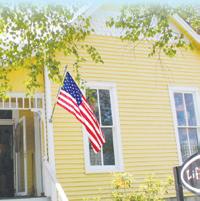



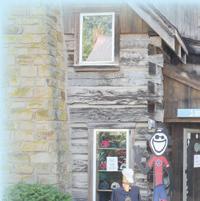

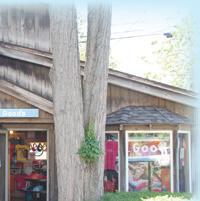












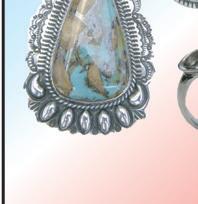












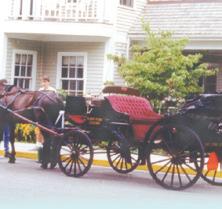
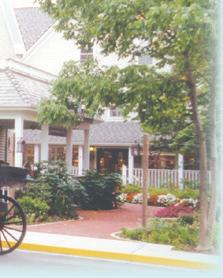


Hoosier Buddy o ers more than 150 di erent beers, including more than 80 craft, micro, and impor ts. We proudly o er a wide variety of beers from Indiana’s nest brewers
Hoosier Buddy is a wine -lovers type of store With more than 200 wines to choose from, we’ve got something for ever yone. Check out our “A ordable Impor ts” and “90+ Point” selections.
Hoosier Buddy o ers an ever expanding array of top -notch spirits. Our whiskey categor y alone includes more than 75 di erent choices. Whether you’re look ing for a Single Barrel Bourbon or a Single Malt from Islay— we stock them.


Van Buren •
IN (next to Subway) 812-988-2267



Slats Klug Musical Tribute
MAY 1 at 2:30pm
The Nelons
MAY 7 at 7:30pm
Barefoot in the Park A Neil Simon Play
MAY 13, 14, 20, & 21 at 7:30pm
MAY 15 & 22 at 2:30pm
Keillor & Company
Featuring Garrison Keillor, Prudence Johnson and Dan Chouinard
MAY 16 at 7:30pm
Dueling Pianos w/Jeff and Rhiannon
MAY 28 at 7:30pm
Golden Age of Radio
A Triple Play, Live Retro Radio
JUNE 3 & 4 at 7:30pm
Tab Benoit with Lightnin’ Malcom
JUNE 10 at 7:30pm
Abba Fab
JUNE 18 & 19 at 7:30pm
812.988.6555





















David and Shelly have two children, daughter Alyssa Stanley, who teaches at Brown County Middle School; and Paul, who is an administrative and outreach professional at Brown County Visitor’s Bureau and the chamber of commerce.
The ongoing war between Russian and Ukraine began in 2014 and included the Russian annexation of Crimea. Russia launched a new full-scale invasion on February 24, a campaign which has resulted in thousands of civilian casualties, widespread destruction, with reports of human rights violations and wartime atrocities.
Accurate statistics are hard to get. During the first six weeks of the war, the Associated Press reported 4.5 million Ukrainians became refugees from the fighting, and the total continues to grow. Estimates of civilian deaths in the war ranged from 2,000 to more than 23,000, depending on the source. The economy was shattered, buildings and infrastructure stood in ruin.
“If Russia levels every building and kills everybody in their way, the people of Ukraine will still fight.
They won’t quit. Their resilience comes from a love of freedom,” David said.
He said there are many ways Americans can help Ukraine in its struggle against Russia. Among his favorites are the Nazarene Compassionate Ministries and Come Back Alive. He also urges people to write to their senators and representatives in Congress, and to President Biden, urging them to support aid to Ukraine.
Shelly’s Clay Purl yarn shop is accepting donations to help victims of the war, and 100 percent of the money donated will go directly to Ukrainian relief through the Nazarene Compassionate Ministries charity.
“Ukraine has never been ‘Russia,’ they have their own beautiful and rich history,” Shelly said. “They have been oppressed, and murdered senselessly under the czars, under the Soviets, and now by the Russians. They will not give up their homeland. We are seeing their grit, their fortitude, and their love of their land, their freedom, and their democracy. They are a proud people—as they should be. They will not quit, and they deserve our support so that they may continue to live free.”









~by Ryan Stacy, photos by Michele Wedel
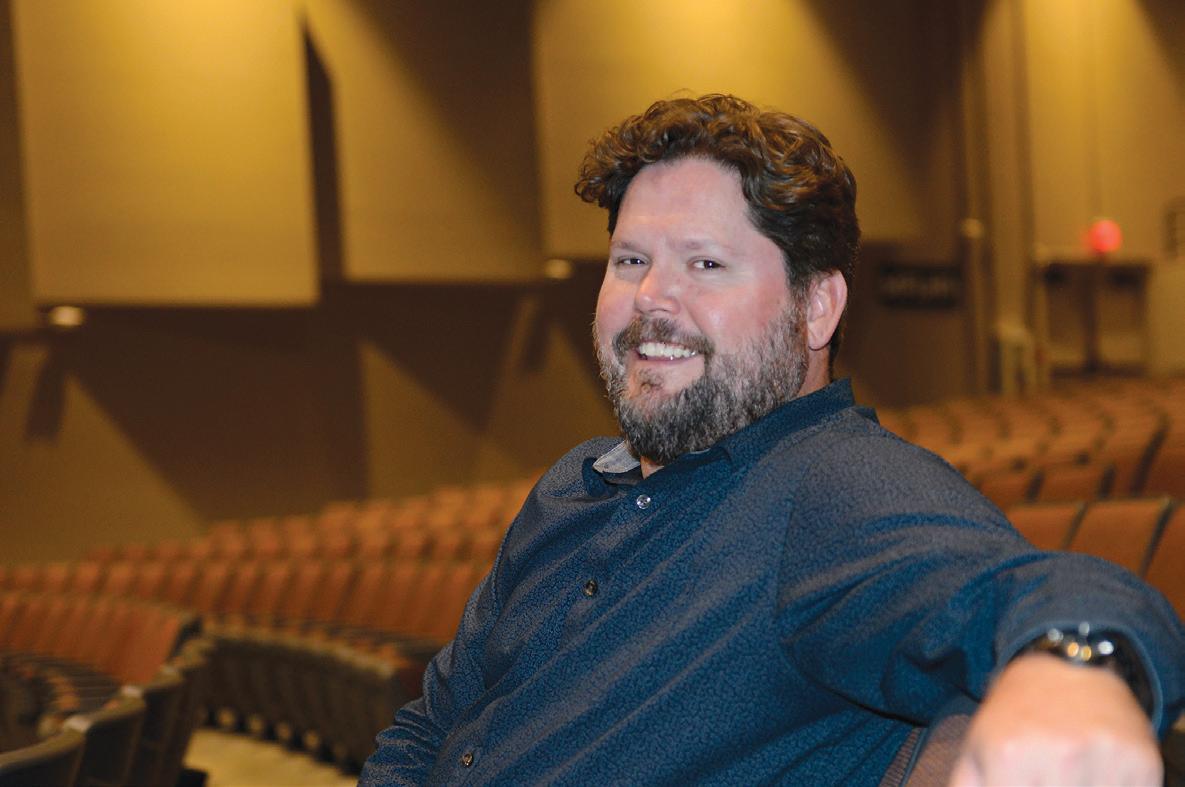
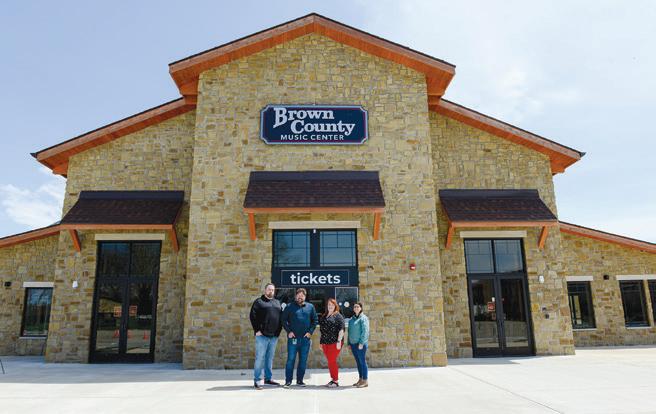
From the beginning, priorities for the Brown County Music Center were clear. The new venue had to offer top-quality entertainment, bring visitors to Brown County, and remain a communityowned facility. And thanks to the talent and hard work of the planners involved, the Center’s path from conception to completion—though not always the straightest or easiest to travel—was ultimately forged, with its priorities intact. But once the venue was built, who was going to run it?
Fortunately for Brown County, another path was about to cross ours. When a longtime pro in the largescale events business named Christian Webb saw that the Music Center was looking for an Executive Director, he jumped at the opportunity.
Christian’s journey started in the 1990s, when he was a freshman at the University of San Diego. Fusing his love of sports with his interest in business, he took advantage of the school’s new tourism program; a
few internships later, he had experience in sporting events operations and sports radio on his resume. After college, he found himself working for the San Diego Chargers, where he eventually became their Stadium Operations Manager. A few years as the Venue Manager at an Olympics training facility in Carson, California followed, and Christian figured his path in life was pretty much laid out for him.
Then came the call from Live Nation. The higherups at the entertainment giant had gotten word of Christian’s success in athletic events, and wanted to see how he’d do with live music and other non-sports entertainment. The offer was a management position in the Midwest, which meant moving to Indianapolis. Having visited Indiana family growing up, Christian already liked the area, so he took the job, getting to know the ins and outs of the live performance world. “Unlike with sports events, where some of the audience is always going to go home unhappy, ninety-
”….It’s been tremendous to take my history and apply it here. It’s my chance to do something unique. ”
—Christian Webb
nine percent of everyone leaving a music venue is happy. Plus people in the Midwest are just handsdown nicer,” he says.
Things were going great at Live Nation, but a few years in, Christian had to step away unexpectedly. His parents, who had followed him to Indiana, were now in poor health, and he chose to focus on helping them instead. What he didn’t know at the time was that another opportunity would soon present itself, as the new Brown County Music Center’s Executive Director. It was a more workable prospect given his family obligations, and he started in this new role in December 2019.
Starting from scratch was a change Christian welcomed. “That was one of the things that was so
intriguing with this brand-new venue,” he recalls. “As an operator, you always want to put your personal stamp on something, to be the leader and decisionmaker. It’s been tremendous to take my history and apply it here. It’s my chance to do something unique.” And while executive directors at larger companies might be out of view day to day, staying hidden in an administrative office, that’s not the case at the Music Center, which employs only a handful of staff. “I oversee all of the contracts and bookings, liaison with all the contractors like concessions and security, and even do things like change light bulbs and unclog toilets,” Christian explains. Along with his staff, “We’re all willing to do what it takes to make things happen.”
Another key difference with the Center—unlike at a privately-owned for-profit venue, there’s no pressure to pack the calendar as full as possible. The result is a more carefully-curated schedule of events, which Christian sees as a huge benefit. He can respond to homegrown popular demand for country and americana acts, he says, while also presenting the community with genres outside the norm.
Continued on 34


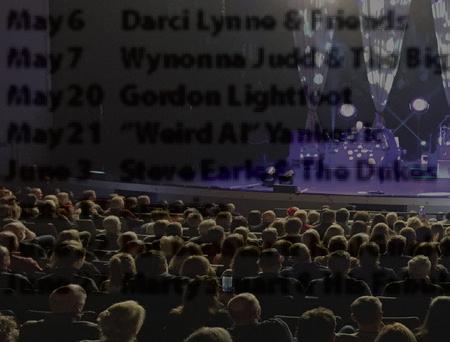









“We need to have comedy, hip-hop, rock,” he maintains. “We’re going to continue to push the envelope.”
So far, the response has been tremendous, with locals and out-oftowners alike filling the 2,000-plus seats at Brown County Music Center reliably. Besides the roster of national performers—which has included Vince Gill, Martina McBride, Peppa Pig, and Weird Al Yankovic—audiences love the pristine sound system as well as the venue’s layout. For Christian, that’s confirmation that the Center’s philosophy of providing a superior customer experience is a winning one. “People don’t have to spend their hard-earned income on concerts. This isn’t putting gas in your car or feeding your children. We’re making memories. This could be the only show somebody goes to this year. We had a couple get engaged here the other night. When people leave here, we want them to say ‘I will never forget this show.’”
Christian gives the credit for delivering those memories to his staff, and to the Center’s volunteers in particular. “We call them the red vest army,” he says. “They do our ushering, ticket-taking, greeting, checking bags….They’re the backbone of how this all happens.”
All in all, Christian says, his first two years at the Center have exceeded expectations. “I’ve been able to meet incredible families and businesspeople in this community. The passion the people here have for this venue is why it will succeed. We will build a legacy.”
For more information on the Brown County Music Center, visit <browncountymusiccenter.com> or call 812-988-5323.
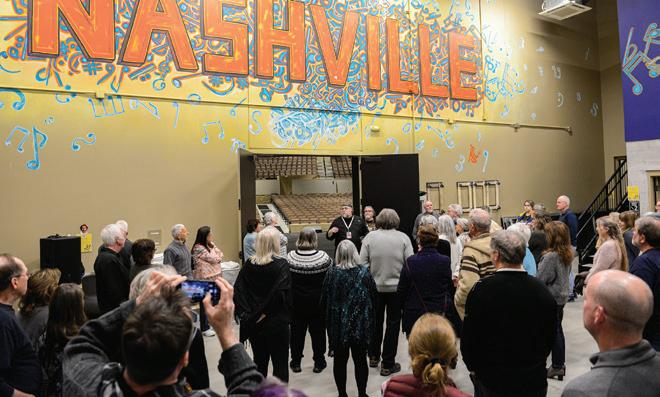
Volunteer coordinator Dave Jones gives a tour during the 2022 Volunteer Party.
continued from 22
“For some of our bands, it’s been their dream to someday play on the stage at Bill Monroe Music Park,” she said.
Included in this year’s lineup are Rhonda Vincent & The Rage, Terry Baucom’s Dukes of Drive, Southern Wind, Gavin & Ashton, The Johnson Brothers, The Cleverlys, Joe Mullins & The Radio Ramblers, 7 Mile Bluegrass, Caney Creek, Deeper Shade of Blue, Blue Flame, Hoosier Tradition, The Po’ Ramblin’ Boys, Donna Ulisse, The Price Sisters, New Again, The Tim Shelton Syndicate, Stoney Creek Bluegrass, Kenny Stinson & The Perfect Tym’n, Three Rivers Bluegrass Band, Appalachian Road Show, Danny Paisley and the Southern Grass, Kentucky Shine, Brayden Williamson & Friends, Russell Moore & IIIrd Tyme Out, Alan Bibey & Grasstowne, Open Highway, New Outlook, Ralph Stanley II, Tim Raybon, Jim & Lynna Woolsey, Kaintuck Band, The Grascals, Kenny and Amanda Smith, Nectar Valley, and Larry Efaw & The Bluegrass Mountaineers.



~by Mark Blackwell
If you have ever driven between Nashville and Bloomington, you passed through Belmont, but you probably didn’t notice or stop. Most folks don’t because there’s not much to stop for, these days. But even a hundred years ago there wasn’t much happening either.
Picturesque Brown County Indiana, a guide book from the 1920s, states that Belmont is “A little country store community…located about 8 miles from Nashville.” That’s all they had to say.
An article from the July 1929 edition of the Hoosier Magazine expands our knowledge of the area, somewhat, by reporting that, “State Road No. 46 is daily dragged in winter and is always good in summer.” But still no indication of what Belmont is.
I went online looking for some history of the place. I, of course, went to Wikipedia first and it told me that Belmont is an unincorporated community in Washington Township, Brown County, in the U. S. State of Indiana.” But what about the history of the place?
Well, it goes on to say, “A post office was established in 1884 and discontinued in 1916.” After that, the article veers off to the topic of T.C. Steele and his residence one and a half miles south of Belmont, as did the guide book, and the 1929 magazine article.
Then I came across an article on a website called “Kiddle” under a sub-heading “Belmont,

Indiana facts for kids.” There, I found a brief but suspect history of Belmont.
The site stated that, “Belmont was originally the settlement of the Shakers, who quickly died out. However, they left the bell from their church. The bell went with the land in the government auction. The bell remained until 1920 by that time the name Belmont had become official.”
At this point in the narrative, I feel it incumbent on myself to admit that I am a curmudgeon. That is, I am old, cranky, and skeptical. And the afore mentioned article smacked of something made up by a fact deficient sixth grader.
First off, I should explain that the Shakers were a religious sect akin to the Quakers but there were more than a few differences between them. One of the important ones was that the Shakers believed in living communally. And they established a number of communities in North America. They even established one in Indiana but not close to Belmont.
There was a short-lived settlement in Knox County, north of Vincennes. A group of Shakers settled there in 1811, before Indiana was a state, and gave up their
Hoosier experiment in 1827, before Brown was a county. And they did not quickly die out, they just dispersed to other, more successful communities back east.
That means there was no Shakers and no bell in Belmont. But there was a Post Office in Belmont from 1884 to 1916. I know this because Wikipedia says so and because I have come into possession of a few postcards that are postmarked, Belmont Ind. 1909.
In fact, I have over a hundred of turn-of-the20th-century postcards that were mailed from places that no longer exist and some that do, like Belmont. At least the idea of Belmont exists. There are signs indicating this. I am having some fun trying to find these places and imagining life in those times and places.
I can only imagine how lonely it must have been for people who lived outside of reasonably sized villages. No internet, no cell phones—in fact there were darned few to no phones at all. What they did have was a little country store and a Post Office. These were probably one and the same.
In most small communities the Post Office was situated in the local general store. They were places to run into a neighbor, buy a sack of flour, and pick up mail—some postcard tokens of affection from the wider world.
of the Salt Creek valley to get to Bloomington. The next time you’re headed out on Highway 46 and you come around a curve and see a sign that says Belmont, at least slow down and give a thought to a young girl in another forgotten rural community, who, on a mid-August day, in 1909 received a postcard with a color picture of an attractive young couple, with a caption that said, “I love you.”
I bet she was thrilled silly.


My guess is, that when Belmont’s Post Office was abandoned so was the little country store. A Post Office would guarantee some traffic for the store. So, that means that after 1916 there was no longer a community center left, just a name on a sign.
This was cause and effect and happening all over the country. It was around the time that Rural Free Delivery (RFD) was being instituted, so country folks were getting their mail delivered to their doors or at least to their mailboxes. But it must have been a real loss for most people living out in the hills.
Since Belmont is about half way between Nashville and Bloomington that meant that if you got a serious craving for society, you had to travel eight to ten miles to get to a population center.

812-988-7305 • 145 S. Van Buren Nashville, IN Next to Ar tist Colony Inn, Back-to-Back Complex OPEN 11 to 5, sat. to 6 • closed MONDAY & tuesday


I know that ten miles doesn’t sound too terrible today but imagine having to travel by buggy or horseback in 1909. I don’t care how well kept the State Road was it couldn’t have been easy going over Kelley Hill to Nashville or climbing the hill out



Brown County Playhouse
May 1 Slats Klug Musical Tribute (2:30) Proceeds to BC Humane Soc.
May 7 The Nelons
May Barefoot in the Park 13, 14, 20 & 21 at 7:30 | 15 & 22 at 2:30
May 16 Keilor & Company
May 28 Dueling Pianos Jeff & Rhiannon
June 3,4 Golden Age of Radio
June 10 Tab Benoit w/ Lightnin’ Malcom
June 18, 19 Abba Fab
June 30 Jenn & Eric Simply Acoustic
70 S. Van Buren Street 812-988-6555 www.browncountyplayhouse.org
Brown County Music Center
May 6 Darci Lynne & Friends
May7 Wynonna Judd
May 20 Gordon Lightfoot
May 21 “Weird Al” Yankovic
June 3 Steve Earle & The Dukes
June 17 America
June 22 Pat Benatar & Neil Giraldo
June 23 Marty Stuart
June 26 Ben Folds
June 28 Ann Wilson of Heart
July 2 Killer Queen
July 23 Little Feat 812-988-5323 www.browncountymusiccenter.com
Brown County Inn
Open Mic Nights Wed. 6:00-9:00 Hill Folk Series Thurs. 7:00-9:00 Fri. & Sat. Live Music 8:00-11:00 Acoustic Brunch Sat. Noon-3:00
May 5 Monique Rust, Chris Wolf, John Whitcomb
May 6 Dan Whitaker-The Shinebenders
May 7 Steve Smith & Conga J
May 12 Eric Lambert & Char
May 13 Sean Lamb & Janet Miller
May 14 Gene Deer Band
May 19 Coot Crabtree
May 20 Zion Crossroads Duo
May 21 Top Hat Blues Revue
May 26 Roger Banister & Deniese
May 27 Jan Bell & Opal Fly Trio
May 28 The Grasshounds
June 2 Dietrich Gosser, Jamie Nichole,
County
The schedule can change. Please check before making a trip.
Tom Harlan
June 3 Big Daddy Caddy
June 4 The Movin’ Hips
June 9 Kenan Rainwater
June 10 Sean Lamb & Janet Miller
June 11 Otto and The Moaners
June 16 Jennifer Jane Nicely & Feathered
June 17 Dakota Curtis Trio
June 18 Gordon Bonham Trio
June 24 Ruben Guthrie
June 25 Live Music
51 State Road 46 East 812-988-2291 www.browncountyinn.com
Country Heritage Winery
Music Fri. & Sat. 6:00-9:00
May 6 Live Music
May 7 Bakersfield Bound
May 13 Tony Hopkins
May 14 Dan Kirk Band
May 20 Open Mic Night
May 21 Live Music
May 27 Coner Berry Band
May 28 Ryan Paul Wilson
June 3 Live Music
June 4 Ruben Guthrie
June 10 Paul Bertsch Band
June 11 Gene Gillham
June 17 Open Mic Night
June 18 Gary Applegate & Joe Rock
June 24 Steve Fulton
June 25 Coner Berry Band
225 S. Van Buren Street 812-988-8500 www.countryheritagewinery.com
Nashville House
Music Fri. & Sat. 6:00-9:00, Sun. 1:00-4:00
May 1 Cody Nelson Williams
May 6 Jan Bell
May 7 The Faze
May 8 Keith Rea
May 13 Travers Marks
May 14 Dakota Muckey
May 15 Buck Knawe
May 20 Brian Koning
May 21 Will Scott
May 22 Kit Haymond
May 27 Ruben Guthrie
May 28 Richard Groner
May 29 Gene Gillham
June 3 Coot Crabtree
June 4 Malachi Jaggers
June 5 Austin James
June 10 Steve Hickman
June 11 Robert Federson
June 12 87 Southbound Trio
June 17 Monon Troubadors
June 18 Travers Marks
June 19 Forrest Turner
June 24 Common Ground
June 25 Dakota Muckey
June 26 Gina and Joel Duo
15 S. Van Buren Street 812-988-4554 www.nashvillehousebc.com
Ferguson House Beer Garden
Music Fri. & Sat. 6:00-9:00, Sun. 1:00-4:00
May 1 Jan Bell
May 6 Forrest Turner
May 7 Robert Federson
May 8 The Hammer & The Hatchet
May 13 Steve Plessinger
May 14 Kit Haymond
May 15 Travers Marks
May 20 Dave Sisson
May 21 Monon Troubadors
May 22 Jess Jones
May 27 Austin James
May 28 Ciara Haskett
May 29 Frank Jones
June 3 TBA
June 4 Edward Fry
June 5 Brian Koning
June 10 TBA
June 11 The Blankenships
June 12 Richard Groner
June 17 The Hammer & The Hatchet
June 18 Will Scott
June 19 Cody Nelson Williams
June 24 Matthew Marcelle
June 25 Buck Knawe
June 26 Gene Gillham
78 Franklin Street 812-988-4042
Big Woods Pizza
Music Tue. & Fri. 5:00-8:00
May 3 Rich Hardesty
May 6 Ken Wilson
May 10 Island Party
May 13 Scott Clay
May 17 Justyn Underwood
May 20 Bob Schneider
May 24 Jon Shoulders
May 27 Moonshine Mary
May 31 Ken Wilson
June 3 Scott Clay
June 4 Sweet Mash Bash 6-10
June 7 Rich Hardesty
June 10 Breanna Faith
June 14 Island Party
June 17 Creatio
June 21 Justyn Underwood
June 24 Moonshine Mary
June 28 Mike & Todd 44 N. Van Buren Street www.bigwoodsrestaurants.com
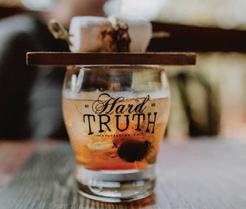
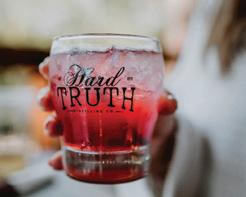
Hard Truth Hills
May 5 Mother’s Day Paint Party
May 6 Moonshine Mary 6-9
Florals Workshop 6:00
May 7 Trace Thompson Trio 6-9
Florals Workshop 10am, 1
May 8 Mother’s Day Brunch
May 13 Homemade Jam 6-9
May 14 Scott Clay 6-9
May 20 Boogie Knights 6-9
May 21 The 1-4-5s 6-9
May 22 Scooter Hanes 12-3
May 27 Vinyl Escape Band 6-9
May 28 Ken Wilson 11-2
David Ackerman Duo 3-6
Crush Bon Jovi 7-10
May 29 Matixando 11-2
Gina and Joel Duo 3-6
The Blue 32 6-9
May 30 Roger Osburn 11-2 Past Tense 2-5
June 3 Strings of Indiana Creek 7-10
June 4 Mike and Todd 11-2
Austin James 3-6
Sweet Mash Summer Bash 4-10
June 5 Past Tense 12-3
June 10 Grace Scott Band 7-10
June 11 Whiskey Chaser 8am
Jonah Leatherman 3-6
The Sherwood Club 7-10
June 12 Gina and Joel Duo 12-3
June 17 Wildheart 7-10
June 18 Creatio 11-2
Cody Ikerd & Sidewinders 7-10
June 19 Camp Quaff all day
Tommy Lamar 12-3
June 24 Cosmic Situation 7-10
June 25 Cannon & Cole 11-2
Bomar & Ritter 3-6
The Big 80s 7-10
June 26 Paul Stout Duo 12-3
418 Old State Road 46 812-720-4840 www.hardtruthhills.com
19th Hole Sports Bar
Music 8:00-11:00 | Karaoke nights till 12
May 7 Karaoke
May 14 Past Tense
May 21 Austin James
May 28 Tyler Poe
June 4 Karaoke
June 11 Homemade Jam
June 18 Tyler Poe
June 25 Hamilton Creek
2359 East State Road 46 812-988-4323 www.saltcreekgolf.com
Line Dancing with Billy
Mon. 6:30, Mike’s Music & Dance Barn 2277 State Road 46 812-988-8636
Village Art Walk
Fourth Fridays, 4:00-7:00 April-October
Free self-guided walking tour of downtown Nashville art galleries. Free entertainment at Playhouse 6:30
Nashville Farmer’s Market
Sundays 11:00-2:00, Brown Co. Inn parking lot at State Road 135 & 46 intersection Local produce, herbs, bedding plants, flowers, food, music
18th Indiana Wine Fair
May7, Story Inn, 1:00 to 6:00 Indiana wineries, food trucks 6404 State Road 135 812-988-2273 www.storyinn.com
Morel Sale & Festival
May 7, State Park Nature Center
Morel sale, mushroom presentations 812-988-5420
Spring Blossom Parade
May 7, downtown Nashville Sponsored by Brown Co Lions Club
May 13-15, Needmore just off SR 45 at 4600 Plum Creek Road
Music, Art, Yoga | Vendors, performers
Lions Club Pancake Breakfast
May 14, Parkview Nazarene Church, 7-10:30 1750 State Road 46
Dawg Gone Walk & Fiesta
May 15, Deer Run Park, noon-2:30 Brown Co Human Society fundraiser www.bchumane.org
Indiana Cajun/Zydeco Crawfish Festival
May 20-21, Bill Monroe’s Music Park 5163 N. SR 135 812-988-6422 https://billmonroemusicpark.com/
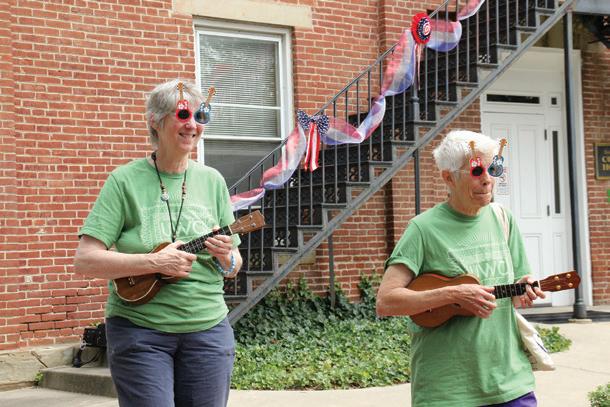
Ukulele World Congress
June 3-5, Needmore just off SR 45 at 4600 Plum Creek Road. Free gathering of ukulele players-all levels. Open mic. Camping.
Quilt Show/Exhibit
June 3,4, Brown Co History Center Fri. 10-5, Sat. 10-4
Americana Bean Jamboree
June 2-4, Bill Monroe’s Music Park 5163 N. SR 135 812-988-6422 https://billmonroemusicpark.com/
Shelby Spring Fling
May 20-21, Brown County State Park Car show, vendors, picnic. Info: 812-483-1818 www.insaac.org
44th Indiana Heritage Arts Show and Sale
June 11-July 8, Brown Co. Art Gallery
June 10 Reception by reservation $20 Corner of Main Street and Artist Drive 812-988-4609 www.bcartgalleryonline.org
Bill Monroe Bluegrass Fest
June 10-18, Bill Monroe’s Music Park 5163 N. SR 135 812-988-6422 https://billmonroemusicpark.com/
~by Boris Ladwig
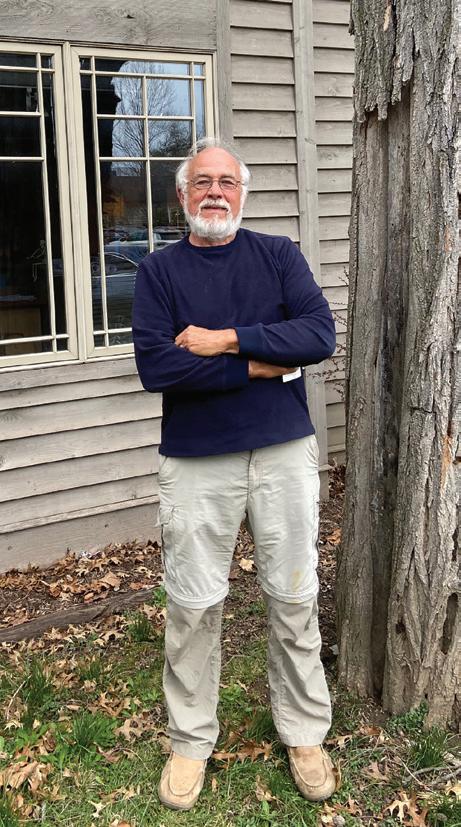
When Steve Miller graduated from architecture school in 1972, he returned to his native Nashville with the intention of staying for a year, just to reconnect, before moving to Boulder, Colorado, to focus on timber frame design.
At the time, Miller doubted that a town as little as Nashville could provide enough work to support the fledgling architect.
Fifty years later, at age 77, Miller remains as busy as ever, and people who’ve benefited from his designs say his impact on the community’s architecture can hardly be overstated, as he has designed anything from public spaces in the center of town to homes that appear to have grown straight out of the county’s natural beauty.
“His footprint is all over the town,” said Lyn LetsingerMiller, president of the Brown County Art Gallery and Museum, the expansion of which Miller designed.
Miller said his career choice and his approach to designing structures have their origins in the arts and sciences to which he was exposed while growing up in Brown County.
As a child, in the 1940s and 1950s, he often peeked over the shoulder of Brown County art colony members, which included his grandfather on his mother’s side, Dale Bessire.
Miller sat recently in his studio in downtown Nashville and recalled that when he ventured from his childhood home on North Jefferson Street to stroll to Greasy Creek to look for little turtles and snakes, he often walked through the gardens/studios of Brown County
artists such as Adolph and Ada Shulz, and Marie Goth and V.J. Cariani.
Miller said spending time with the artists ingrained in him an appreciation for nature, wildlife, music, and poetry.
He also spent a lot of time with his father, Maurice (Pods) Miller, who had taken over his father’s pharmacy in the building that houses the Hobnob Corner Restaurant.
“I think that’s the blend of the art and science that led me to be an architect,” he said.
His architecture studies at the University of Cincinnati awakened in him a fascination with internationally known architects as well as the era’s writers, artists, and jazz musicians.
After he moved back to Nashville, his connections quickly got him jobs. He worked on a local bank building, the courthouse, a downtown church, the Calvin Place shopping area, and the Brown County Art Guild.
Miller said he was inundated by a flood of work as Nashville went through a growth phase that brought prominent arts and crafts artisans, including blacksmiths and wood workers, who inspired one another.
“That was fun and creative,” Miller recalled. His public works prompted people to ask him to design homes for them in Brown County, and he developed a reputation for residences that he designed to blend into their beautiful Brown County surroundings. Word of mouth spread, and clients came knocking from Bloomington and Columbus.
“I was just in heaven as a young architect,” he said. Eventually he got so busy he had to expand and hire draughts people and other architects. He moved into his current office, South Jefferson, in the early 1990s.
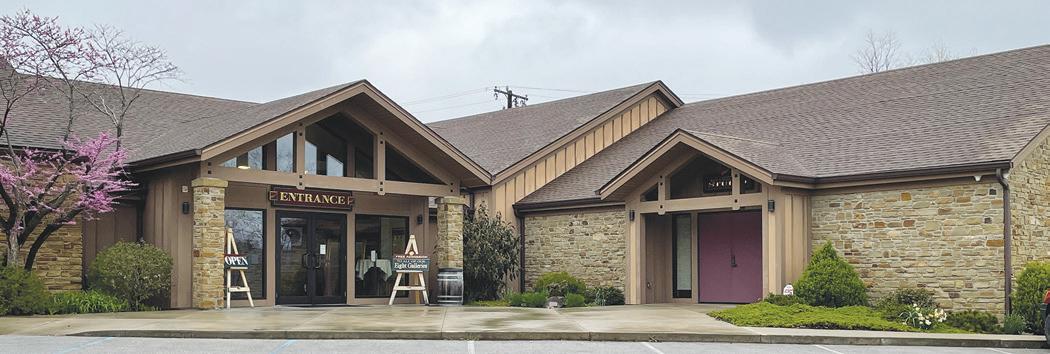
Miller said the favorite of his designs is the Brown County Art Gallery expansion, in part because of its sound mechanical and structural integrity, but also because of its purpose: education and art. Miller said he also has a personal connection to the project. His grandfather and other artists were still showing at the gallery when Miller was growing up.
“So here they are, on display in an environment that I helped create,” he said. “I feel good being in that space.”
Letsinger-Miller said Steve’s design boosted the gallery’s square footage from 7,000 to near 15,000. The













expansion features a multi-purpose area where people hold meetings and host baby showers, but it also needed wall surface on which art can be hung easily, and its flooring needed to be tough enough to withstand the roughly 10,000 annual visitors.
She described Miller as a very warm person who really listens to his clients and thinks a lot about how everything fits together, from the interior and where to place what kinds of light fixtures to the exterior and how things look from different angles and whether the design fits into its surroundings.
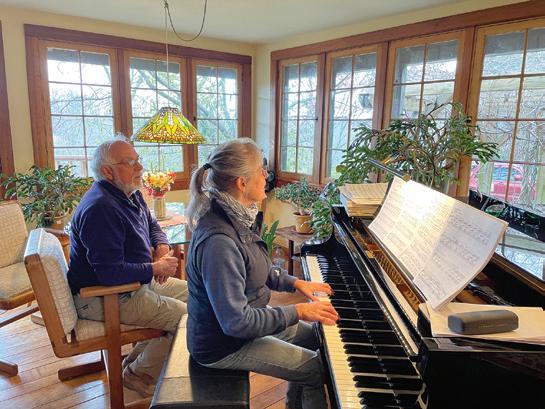
Miller said that he is very “right-brained” during the design process, focusing on intuition. Before beginning his sketches, he typically walks around an area to get a feel for the sunlight, the slope, the views and then conjures in his mind something that fits organically into the landscape, something that preserves the site’s natural beauty.
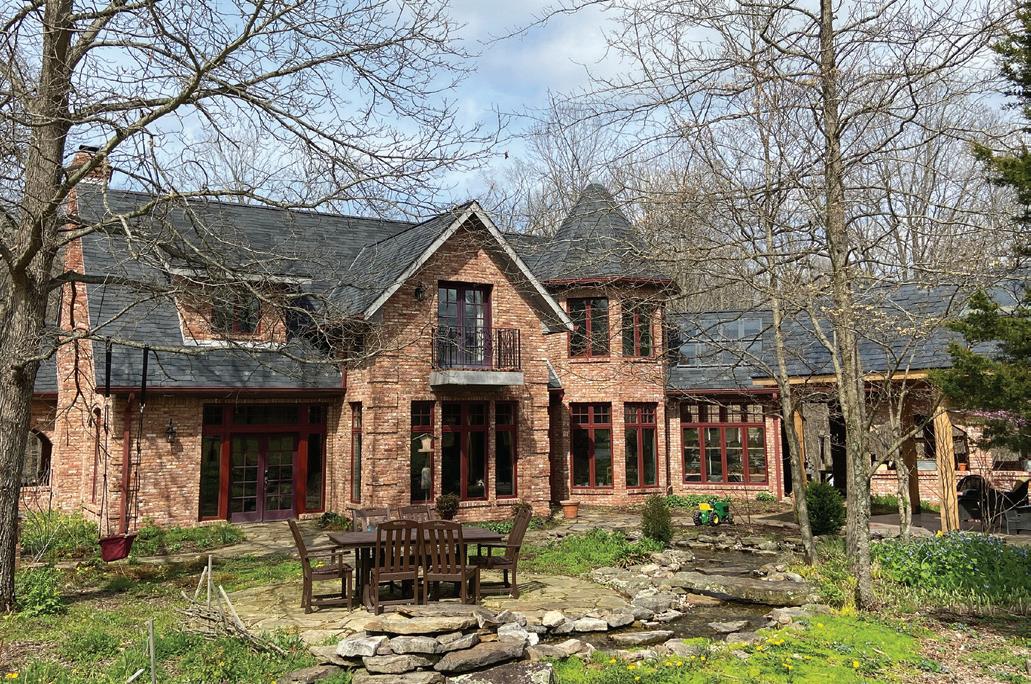
Brown County Inn owner Barry Herring moved to Brown County with his wife, Debbie, about 11 years ago. The couple had some land about 15 minutes north of Nashville where they had a cabin they had used for getaways while living in Chicago, where Herring worked as a shopping center developer. The couple had approached architects in Indianapolis for their Brown County home, and even got designs and a small model, but it didn’t mesh with their vision.
Herring said the couple sat down with Miller, of whom they had heard through word of mouth, and
knew after their first meeting that they had found the architect of their dream home.
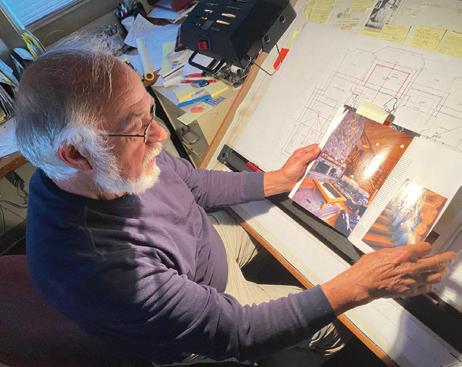
Herring said that he remembered being impressed by Miller’s sketching skills. Herring and his wife struggled a bit to describe what they wanted, almost as if trying to articulate a feeling, but as they were sitting at a table, Miller began to sketch.
The Herrings’ home looks out over a 10-acre field with a lake. The property also features rolling hills and wooded areas, in which the couple ride golf carts, hunt for mushrooms and ginseng, and tap trees for maple syrup.
These days Miller spends about half his time working on residences and the other half on shops, churches, and other nonresidential structures.
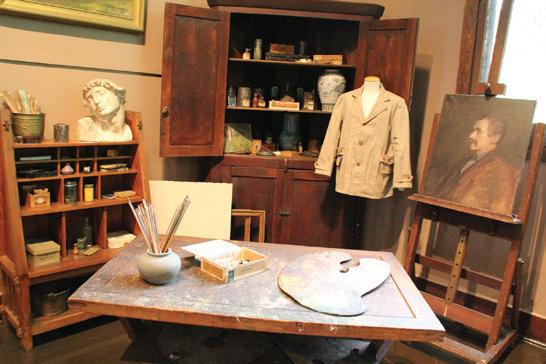
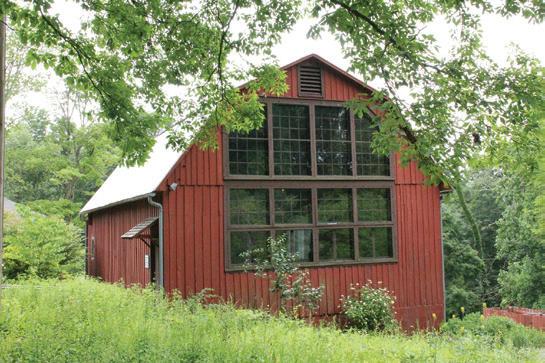
The architect and his wife Anne, a stained glass artist, inherited his grandfather’s home and still live there. Anne creates her glass designs in the more than a hundred-year-old studio where the impressionist painter worked, and where Steve started his career.
The Millers occasionally go scuba diving and sailing in the Caribbean or visiting mountains out West with their children and grandchildren, but they remain firmly rooted in southern Indiana. They still go on hikes in Brown County or look for nests of great blue herons along the Salt Creek.
Miller said he plans to continue designing so long as he remains healthy.
“There’s still more to do,” he said.

~story and photos by Evan Markley
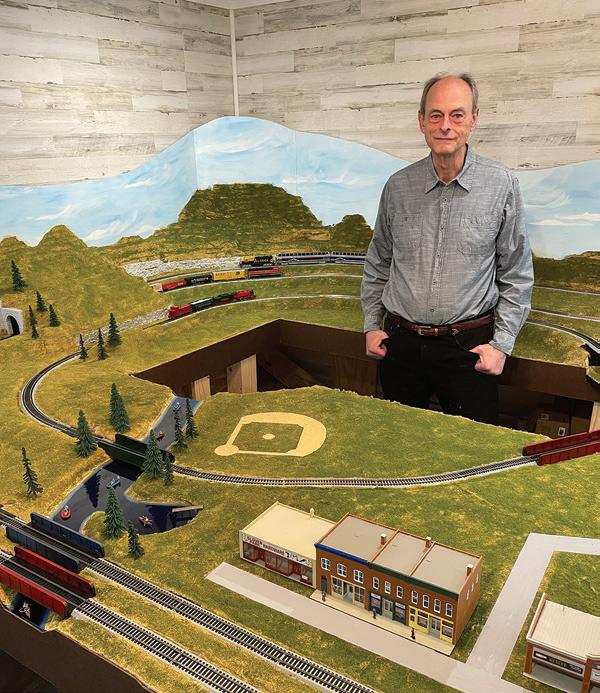
Imagine yourself at seven years old, walking with your parents through Nashville. Your family enters a quaint shop in Antique Alley where the sign reads Brown County Model Trains. As your eyes adjust to the change of light, a fantastic miniature landscape enters your field of view. Three small trains wiz by your gaze. You look at your parents with suspicion and glee, and then back at the trains to track their path. The table stretching from one side of the shop to the other is the perfect height to see the tiny people in the station, waiting for their ride. The trains’ speed is fast, but slow enough to stay on the tracks. Your curiosity shifts your vision around, scanning for secrets. There is a farm, a river, a neighborhood, a baseball field, a carnival, restaurants, stores, and a tunnel.
The shop owner asks you if you want to run the trains and your parents give you the
nod. Mouth agape, you put your hands on the controls and turn the nobs. After making the electric trains zoom around more times than you can count, you pull them each into the station with a sigh. You are hooked!
At Brown County Model Trains this is storeowner Dave Hoggatt’s vision. His goal is to create an immersive environment that introduces kids to model trains. Dave’s a retired architect who’s had a passion for trains since his childhood. His shop, tucked away in Antique Alley next to South Jefferson Street, is both a hobby and a career for him.
Dave also has previous experience as a Brown County shop owner, so he is familiar with the ups and downs of seasonal, smalltown tourism. His former shop was called Peaceful Valley Arts and Crafts. He has been putting his crafting skills to work creating his display.
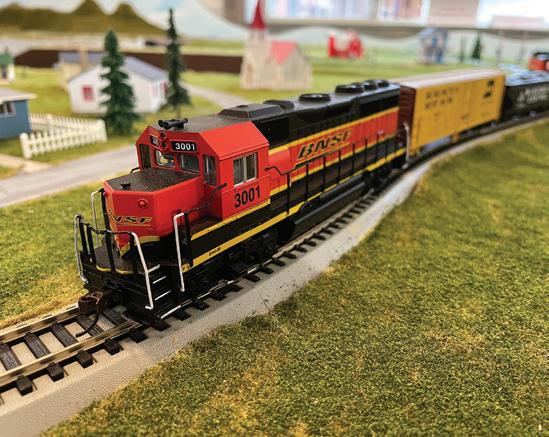
He has already spent an enormous amount of time building, designing, and engineering a three-train course with all the fixings for a lively little town. A freight train, a passenger train, and a Christmas train all call the display home. He continues to add new things every day. Dave





























Jams, Jellies, Preser ves, Specialt y Linen, Rugs, Candles, Cur tains, Stitcheries
Antiques, Billy Jacobs Prints










E. Washington St. Nashville, IN 812-988-6362 • Open daily 9 to 5 BREAKFAST & LUNCH

BBQ, Chicken Salad, Soups, Pit Ham
Cinnamon Rolls, Cobblers, Cookies, Brownies Gluten Free Items, Co ees and Cappuccino nashville general store and baker y nashgenstore812




















Also: Elk, Boar, Buffalo, Venison, Gator, Rabbit, Salmon, Kangaroo, Turtle, Ostrich, Trout, Camel, Python, Ahi Jerky Seasonings & Dips • Peanuts

S. Van Buren St. Artists Colony Shops (Between Toy Chest and Carol’s Gifts)
IN • (81 2) 988-1592




From fedoras and stingy brims to ivy caps and hiking hats —we’ve got you covered Also comfort footwear from Minnetonka and Acorn including slippers for the entire family onka andAcorn











Selling gently used items to bene t Brown County. Accepting clothing and household item donations. Women’s boutique, kids and teen clothing, men’s clothing, and household items

Tuesdays and Thursdays 9:00 to 5:00 Fridays 9:00 to 2:00
Buren

(812) 988-6003
feels it will take him six months to a year before he will be satisfied with the build, but the shop will continue to be open for business throughout the completion of the project.
Brown County Model Trains currently sells three physical products: Bachman HO scale model trains, Maxim wooden starter trains, and Magic Lamps that spin and display a moving image of a train. Bachman is one of the largest manufacturers of model trains and Maxim is one of the most popular wooden train manufacturers. BCMT is a licensed distributor of both.

The Bachman train sets are electric. They look and run like the trains Dave has set up on his display. HO scale is 1:87 and they look incredibly realistic. Dave also sells some electric, Bachman, Thomas the Train sets that are great for younger kids. The Maxim wooden trains remind me of some of my favorite toys as a kid, and the Magic Lamps would give any bedroom atmosphere.

Dave Hoggatt’s financial model is split between three sources of income: Donations from visitors physically running the trains in his shop, selling brand named train box sets/Magic Lamps, and selling prefabricated train sets that he fashions to large wooden boards. These board sets are ready to take home with no set up.
As Dave adds more buildings to his trainscape, he hopes to sell miniature advertisement by adding little shops that mimic those in Nashville. He would then charge that store/restaurant a one-time fee for the exposure. Dave wants to involve the community as much as possible. He hopes to eventually have school groups and afterschool programs visit the shop.
Dave expects his clientele to be both locals and tourists. BCMT is not necessarily meant for hardcore collectors, although Dave can order you anything from Bachman’s catalog and ship it to his store. It is instead meant to be an introduction to model trains for kids. Sets range from 20 to 130 pieces and cost from $25 to $215. BCMT welcomes all ages, but is geared for families with a 7 to 12 year old.
It is important to understand that you can’t touch the display. Some kids need the occasional reminder, but Dave is gentle with his warnings. This does not take away from the pleasure of running the trains.
Dave’s model train display is unbelievably realistic. You cannot help but smile thinking about all the stories hidden in the details. You can feel Dave’s passion for his craft. Its hard not to chat with him about your own childhood train interests.
Brown County Model Trains has been open since the beginning of April and is looking to become a staple of Nashville. Come visit Dave Hoggatt in his shop. There is currently a Facebook page and a website is in the works. If you enjoy your visit, and get to run the trains, remember to donate whatever you see fit. Dave appreciates all the support and is excited for all that the future has to offer.





~by Jim Eagleman
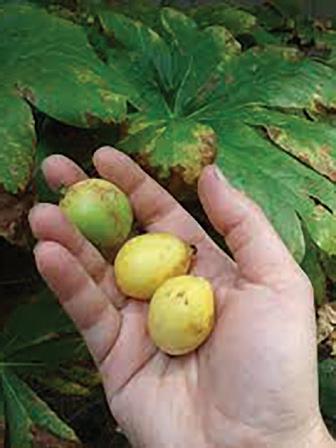
The spring perennial mayapple, sometimes referred to as mandrake, is now growing commonly in our Brown County woods. Other wildflowers often appear alongside and are recognizable due to stems, blooms, and leaves. But the mayapple is unique; it only has two leaves and one flower, which grow in the axil, or “crotch,” of the leaf stems. The pale white to rose-colored flower has six to nine
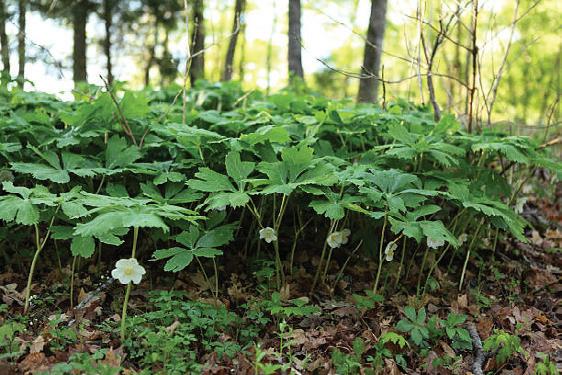
Down in the shady woodland where the fern fronds are uncurled, a host of green umbrellas are swifty now unfurled. Do they shelter fairy people from sudden pelting showers, or are the leaves but sunshades to shield the waxen flowers?
Mandrakes, —Minnie Curtis Walt
waxy petals and many stamens. The flowers are cross pollenated by bumblebees and other solitary bees with elongated sucking mouthparts. But it is the large, twin, umbrella-like leaves, deep green in color, and not the hidden flower, that make identification of this plant easy, compared to other spring ephemerals. The leaves remain unfurled as the stem lengthens, unfolding six to eight inches across when the plant has reached its full height of one to one-and-a-half feet. On occasion, the stem can spear a fallen oak or maple leaf as it grows.
Mayapple’s scientific name, Podophyllum peltatum, derives from podus (foot) and phyllon (leaf) as the plant is thought to bear some resemblance to a duck’s foot. The species name, peltatum, suggests a shield.
Large patches of mayapple can dominate the woodland floor in early spring, long before the canopy of tree branches leaf out. As they mature, the mayapple will colonize areas into dense mats, usually in damp woods where thick leaf litter retains moisture. Many plant stems arise from underground roots, called rhizomes. When I exposed the roots of a dense patch of mayapples I saw how prolific this plant can be. Growing from a single root, interconnected, reddish-brown tubers spread in all directions, producing stems and leaves that grow crowded together. It’s these patches of mayapple, rather than individual plants, that foresters
refer to as a “rich woods” environment. The term has been used to describe a forest and it can refer to a small woodlot left undisturbed and uncut, on up to a large tract with old timber in a multi-aged stand.
My collection of wild foraging texts, now admittedly old and dated, all agree that while the stem, root, and leaves of mayapple are poisonous, the fruit is edible when ripe and bright yellow. Years ago—anxious to try our luck with wild foods—several of us young Euell Gibbons disciples found a patch to sample. In his book, Stalking the Wild Asparagus, Gibbons cautioned that the mayapple, also called raccoon berry, hog apple, and wild lemon, possesses a poisonous chemical called podophyllin. It acts on the liver, in what is described as cathartic (cleansing), emetic (causing vomiting), and anthelmintic (acting to expel or destroy parasitic intestinal worms). This warning made us pay close attention in our search. The fruits we found were still a pale yellow. Our enthusiasm waned and we wondered if the chemical found in the plant could migrate to the fruit?
To find the ripened fruit at the end of the growing season continues to be a challenge. It is hard to beat squirrels, turkeys, chipmunks, and deer to the source. In a large patch I once found the soft and very yellow fruit (technically a berry), and bit into the interior. It was like a banana in consistency and was sweet. The flavor is described in some

texts like a strawberry, but to me it tasted more like a mango.
I am still fascinated with wild foods, but I am aware why small portions are advised. I was always reluctant and never became a true forager. Cautiously, I confirm my findings with expert botanists.
Mayapple juice can be added to lemonade, and with some effort, the fruit can be used to make a marmalade. This early fall, I’ll look in the places where I saw the leaves grow and will watch for a few bare and dried stems with the yellow fruit hopefully still attached. I might even try some recipes.
Differences in taste is a personal thing, and it may encourage you to sample the mayapple, ripe, and bright yellow. What is the faint taste you notice? Is it lemon, strawberry, mango, like a banana, or passion fruit?
Differences in environmental conditions can produce vigorous or stunted results. Strangely, the sunnier the habitat for mayapples, the earlier it goes dormant. This feature may not allow it to be used as a border, but the mayapple is a nice addition for naturalizing any woodland garden.
Favorite Hoosier poet, James Whitcomb Riley, must have sampled the mayapple fruit on one of his forest forays. In his “Time of Clearer Twitterings,” he asks “will any poet sing of a lusher thing, than a ripe mayapple, rolled like a pulpy lump of gold, under my thumb and finger tips, and poured molten through the lips.”
































































~by Chrissy Alspaugh
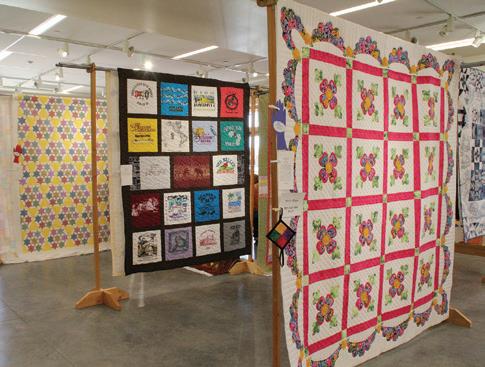
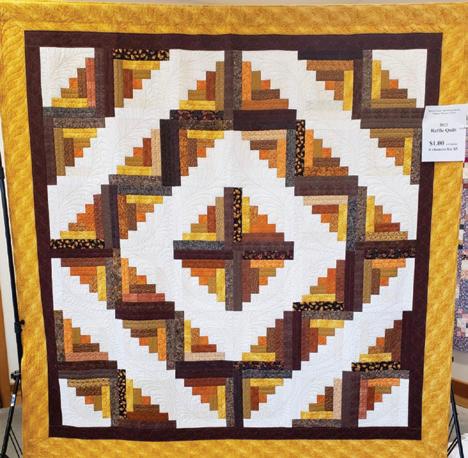
Thebeautifully intricate art of pioneer quilt making will be on display at the Brown County Pioneer Women’s Club’s 26th annual quilt show/ exhibit at the Brown County History Center, 90 East Gould St.
The exhibit, open from 10 a.m. to 5 p.m. June 3 and 10 a.m. to 4 p.m. June 4, will showcase more than 50 quilts. Pioneer club members will be on site to answer questions about the quilts’ histories, pattern names, ages, and more. Vendors with




offerings ranging from quilting and sewing products to pottery and wood crafts also will be available. Exhibit admission is free.
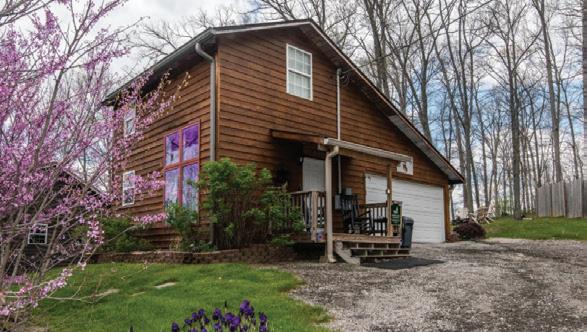
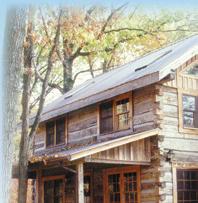
A raffle for one queen-size quilt—“The Cabin of Brown County” by Katrina Rose, Brenda Fowler, and quilted by Julia Crawley—and three craft-related baskets will support the Brown County Historical Society. Raffle tickets will cost $1 each or $5 for six tickets. Winners do not need to be present at the time of the drawing.
“Without events and groups like this, there’s just no way to keep these traditions alive,” said Brenda Main, Brown County Pioneer Women’s Club president. “There are just fewer and fewer grandparents or parents alive who can sit down and teach young people how to crochet, embroider, spin, weave, or quilt.”
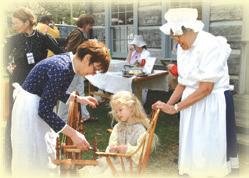
The Pioneer Women practice and teach domestic frontier crafts to keep traditions alive through the products they create as well as through their volunteer efforts that raise money to support the historical society. The local club meets weekly for educational workshops and to work on projects to sell in the gift shop to support the history center. New members are always welcome.
Main said the annual quilt show/exhibit draws around 300 quilting and fabric-art enthusiasts.
One unique draw to Nashville’s quilt exhibit, she said, is the pioneer village that attendees can enjoy across the street from the history center. The village takes visitors back to the late 1700s and early 1800s to tour a jail, log cabin with a cooking hearth and straw bed, blacksmith’s shop, loom room, pioneer tool shed, doctor’s office with medical equipment and books, smokehouse, school, garden, and more.
This year’s quilt exhibit is sponsored by Organized Solutions, LLC; Nashville Spice Company; and The Yellow Door Quilt Store. Vendors will include The Yellow Door Quilt Store, The University of Sewing, Quilting Memories, Granny Sue Quilts, Tree City Stitches, Presto Avenue Designs, Sewing the Good Life, Holly Pots Stoneware, Bear Creek Pottery, PWC Boutique, Indiana Quilt Depot, Machine Services, Gary Eickleberry Woodworking, artist Nancy S. Kays, and Panthers Candle Works.
For more information on the quilt exhibit, Pioneer Women’s Club, or Brown County History Center, visit <www.browncountyhistorycenter.org>.

























































~by Chrissy Alspaugh
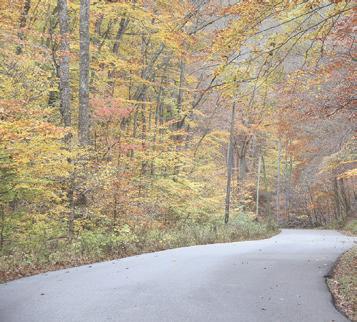
Aweekendof yoga styles, art, live music, drum circles and more are a few of the highlights planned for Brown Count’s inaugural M.A.Y. Fest!: A celebration of Music, Art, and Yoga.
The festival is planned from 4 p.m. May 13 until noon May 15 at the Needmore Community Field, about four miles north of Nashville on Indiana 45 at 4600 Plum Creek Road.
Attendees can enjoy daily yoga sessions led by local and regional instructors, nature walks, music based on yoga and meditation by local and touring musicians, art, vendors, reiki workshops, fireside drum circles, a tamale dinner, and spiritual guides.
Festival organizer Thom Pallozola, a musician and vendor experienced with yoga festivals, sought to create an event that matched the serenity and peace that yoga enthusiasts seek.
“When you look at most yoga festivals over the period of any given day, there might be 30 activities going on but folks can only attend five,” he said. “At M.A.Y. Fest!, the pace is slower, and you’ll be able to do everything going on.”
The festival’s yoga facilitators will include Mervyn Alphonse, who



gos, cymbals, and more to explore the depth of yoga and meditation.
May 13–15, 2022
has taught and practiced Hatha, Vinyasa, and Kundalini Yoga, is a certified Reiki Master, and utilizes a 34-inch gong in his Sound Healing practice; Trish Rieke, who received her first formal yoga training in India in 2005, and whose teaching style can be described as yoga therapeutics; Heidi Kline, with Yoga Nidra sessions; Debby Siegel, known as The Yoga Evangelist, leading three different hybrid yoga experiences; and Erica Weddle, Yoga instructor and owner of Brown County’s Simply Fitness.
The featured musical artist at M.A.Y. Fest! will be Shruti Nadis, performing improvisational music soundscapes during many of the weekend’s sessions, with special accompaniment by vocalist Heidi Kline. The group uses instruments including the ukulele, shruti box, djembe, bongos, wind chimes, cowbells, wood blocks, shakers, ektar, wooden hand drums, go-
Also performing will be singer and songwriter Trish Savage; Stella Lumina, a touring artist from the Pacific Northwest; Mandy Allen, from Rushville; St. Louis-based touring artist Flea Bitten Dawgs; and drum circle facilitator Lee Kram.
M.A.Y. Fest! attendees also can participate in a Reiki session led by Jordan Serpentini, a tea ceremony with facilitator Debby Siegel, or a paddleboard session with instructor Erica Weddle.
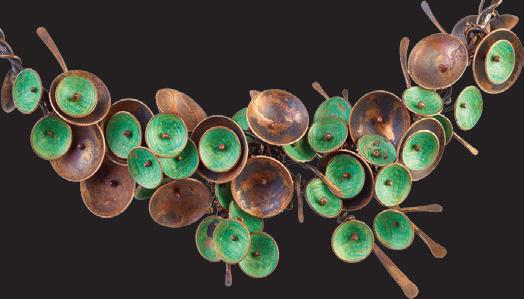
Vendors will include metal artist Denise Martin, of Femme Metale; pastry chef Lauren Bickel; tie-dye artist Jodi Damon Williams; Derik Gratz showing live demonstrations on the art of knapping chert into arrowheads; and wooden instruments and boxes by Thom Pallozola, of Thomdawg’s Music.
Primitive camping will be allowed beginning on May 12. The festival will have no water source, so campers should bring their own food and drinks. Dogs will not be permitted.
Festival updates will be available at the M.A.Y. Fest! Facebook page.
Advance tickets can be purchased at <https://tinyurl.com/ytackz4y>. Tickets at the festival will be cashonly, because of the lack of cell and Internet service at the field.







June 3–5, 2022
~by Chrissy Alspaugh
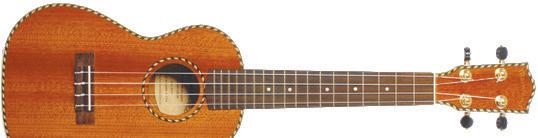
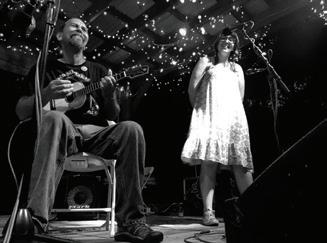
Ukuleleenthusiasts from around the world excitedly await this summer’s return of the Ukulele World Congress.
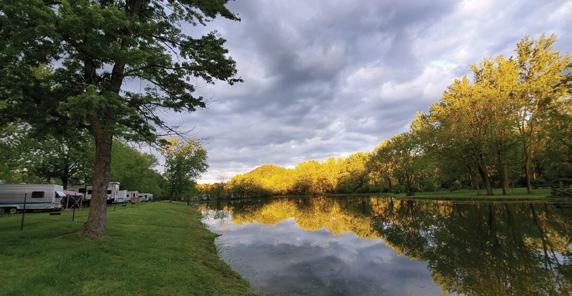
UWC XIII, a free annual gathering that’s been suspended during COVID, will be held June 3-5 in Needmore, about four miles north of Nashville on Indiana 45 at 4600 Plum Creek Road.
The event sells itself as little more than a friendly stage, insanely long open mic nights, and a welcoming crowd.
“What’s interesting is the variety of acts you’ll see—touring groups to total beginners,” said Thom Pallozola, volunteer stage manager. “Even with the total beginners, people are cheering them on like crazy. There’s no better way to get your confidence level up for performing than at the Ukulele World Congress.”
The event was launched in 2008 when Mike Hater, of Mainland Ukuleles, issued a simple invitation to some fellow ukulele players to come strum and camp. Since then the gathering has drawn as many as 1,000 musicians and spectators.
Professional musicians often can be seen teaching less-experienced ukulele players new techniques and tricks. Ukulele makers swap knowledge. And ukulele enthusiasts from around the globe who have been chatting for years in ukulele forums online, can finally gather to brainstorm and make music in person, Pallozola said.
The few scheduled activities that take place during the event include a Friday night potluck dinner, group picture on Saturday, and open mic nights Friday and Saturday that begin at 5 p.m. and often continue until 2–3 a.m. the next day.
The rules at UWC are simple, Pallozola said: 2 songs per open mic performer, and no dogs, drums, fireworks, or littering. Oh, and, “Don’t be a jerk.”
Organizers host an annual raffle during the gathering to help offset event costs. Raffled items
usually include attending performers’ CDs, ukulelerelated gifts, and a grand prize that allows the winner to select the ukulele of their choice from Mainland Ukuleles.
Primitive camping and portable restrooms will be available; the only permanent structure at the event is the stage. Attendees are encouraged to bring lawn chairs, and their own food and drinks, as none will be sold on site.
“It’s truly just a gathering and celebration of the ukulele,” Pallozola said. “You won’t find a more friendly crowd than all these musicians with nothing but passion for this beautiful little instrument.”
For more information, visit <ukuleleworldcongress. wordpress.com>.
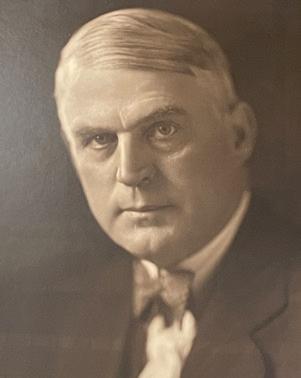
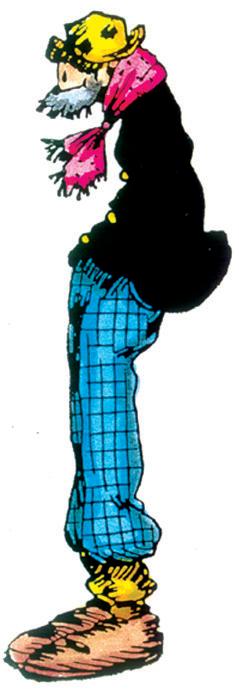
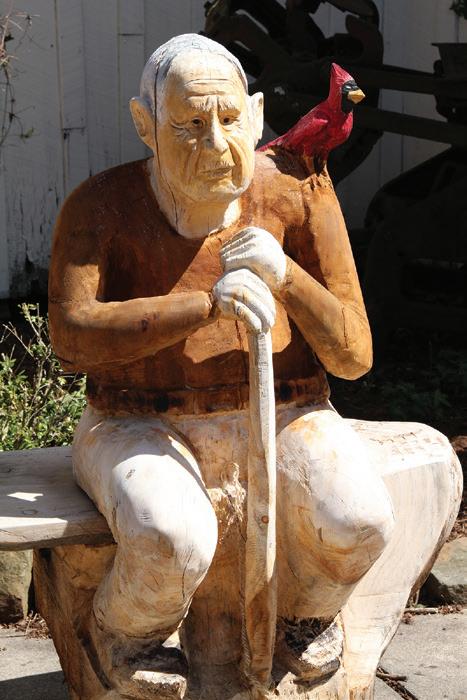
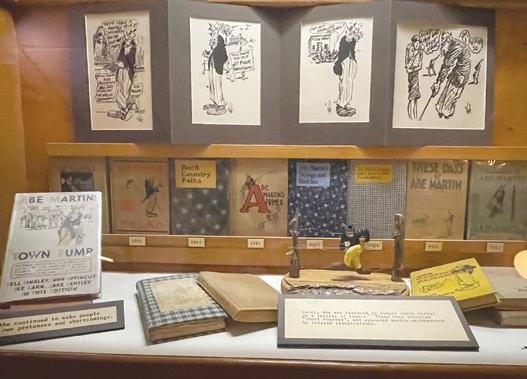
Abe Martin is the welcoming mascot to Brown County. Kin Hubbard was the cartooning rock star who brought the lanky character—looking like Uncle Sam’s country cousin—and his cool observations of human nature in plain speech, to daily national newspapers.
Kin Hubbard, born Frank McKinney Hubbard, on September 1, 1868, in Bellefontaine, Ohio, grew up in an eccentric family. He was the youngest in birth order, following Ed, Horace, Josephine, Ada, and Tom. His father, Thomas Hubbard, was a fiercely Democratic newspaper editor, and named Kin after an Ohio politician friend.
Kin’s artistic talents were obvious from a young age. With scissors, he cut finely-detailed silhouettes from paper. He dropped out of school before the seventh grade and began working in a paint shop.
Thought by his family to be a potential newspaper artist, sister Josie paid Kin’s board and tuition to the Jefferson School of Art in Detroit. His attendance didn’t last a week. Eventually returning home, Kin was the official seat duster at Bellefontaine’s Grand Opera House. He wrote to a friend in Indianapolis about a minstrel production, illustrating in the margins of the letter. Impressed with the drawings, the friend showed them to the owner and editor of the Indianapolis News, John H. Holliday. This led to a job and salary of $12 a week in 1891.
After three years, he left for a string of jobs: driving a mule team in Chattanooga, amusement park gatekeeper in Cincinnati, and artist for the Cincinnati Tribune and Mansfield News. He returned to the Indianapolis News, staying from 1901 till his death.
Known for his caricatures of politicians, his cartooning stardom was cemented by Abe Martin, who appeared first on December 17, 1904. On February 3, 1905, Abe moved to Brown County. Hubbard explains: “As a setting for Abe Martin I selected Brown County, a rugged almost mountainous, wooded section of Indiana without telegraphic or railroad connections—a county whose natives for the most part subsist by blackberrying, sassafras-mining, and basket-making.” He added characters named for Bellefontaine acquaintances and jury lists from Kentucky. Abe’s philosophy was humorously expressed in two unrelated sentences and was a daily feature on the back page.
In 1905, Abe’s audience grew when Hubbard released a collection featuring Abe and his sayings. This became a tradition of many years. Hubbard eventually signed with the George Matthew Adams Syndicate, bringing Abe’s wit and wisdom to 200 cities. The column-wide cartoon brought as much as $50 a week from some of the larger papers. Hubbard eventually got a private office at the Indianapolis News, and where he also produced a series of humorous essays for the Sunday section called “Short Furrows.”
Kin married Josephine Jackson, a vivacious and attractive blue-eyed blonde, in Indianapolis on October 12, 1905 at the bride’s home. Winning over her father had taken some time. Father Jackson’s first impression was that Hubbard “looked like an actor.” When Kin heard this, he was delighted. A train trip followed the ceremony, with a stop to introduce Josephine to the Hubbard family. As they approached Bellefontaine, Hubbard told his new wife, who was half his age and just out of Shortridge High School: “Don’t tell my folks yet that your people are Republicans.”
The family history bears out his concern. When Thomas Hubbard, an avowed Democat,
Continued on 66


















was editing a Dayton, Ohio, weekly, the Empire, he was thrown from a two-story window by an angry crowd of opposing political leanings. A well-placed awning of the first story saved him and he moved his family to Bellefontaine and started the Weekly Examiner. The local Democratic citizenry gave him a printing plant so that the Democratic side would be presented in that Republican stronghold. In their new home, neighbors found the family “the best people on earth but the queerest.”
Sadly, the Hubbard patriarch died around the time that Josephine and Kin first met. Kin was the only Hubbard progeny to marry, and his mother, Sarah, embraced Josephine with warm affection.
At the time of his marriage, Kin’s salary was increased by $5 to $35. Shortly after, Abe Martin’s sayings were compiled in book form in time for the Christmas buying season. This was such a success that it was done annually for twenty-five years
Josephine and Kin made their home in Irvington, with their family expanding with births of son, Thomas, and daughter, Virginia. The couple made their first auto trip to Nashville, county seat of Brown County, shortly after their purchase of a Buick in 1914.
Kin Junior was born in the spring 1918, a mid-life joy to his father. But tragedy occurred on Decoration Day, 1919. On a return trip from Greencastle, the car left the roadway and plunged down a steep embankment into a creek. Little Kin was thrown from the car and drowned. Two years later, another son died at birth. Hubbard’s life was deeply changed.
After nearly twenty years in Irvington, the Hubbards built a new home on north Meridian Street. It was completed in the autumn of 1929. On the evening of Christmas Day, 1930, Hubbard remarked to his family: “This has been my happiest Christmas.” The next morning, he had a fatal heart attack after getting out of bed. Flags flew at half mast at the Indianapolis City Hall and the State House.
A lasting tribute to Hubbard is his Abe Martin character is the namesake of the Brown County State Park’s Lodge, and the dedication of the State Park was an event of May,1932, on what today is known as Kin Hubbard Ridge, a serious and permanent tip o’ the hat to Abe’s creator.
















































































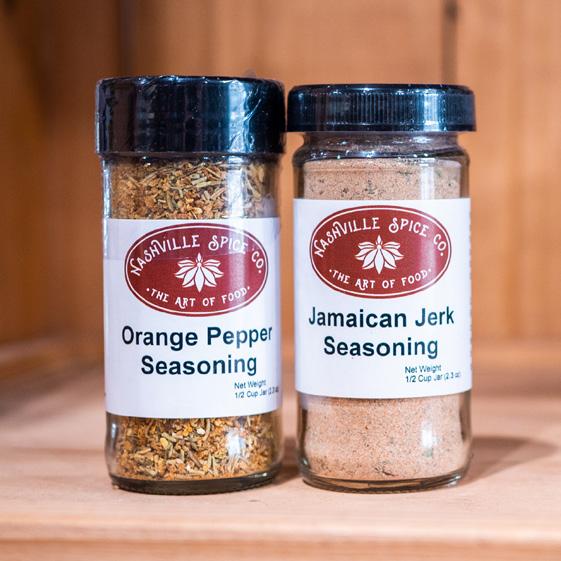
A twist on the classic lemon pepper, Orange Pepper Seasoning is bursting with fragrant Florida orange peel. Perfect on fish and seafood, chicken, pork and vegetables.
Jamaican Jerk Seasoning
Use as a Jamaican Jerk rub or sprinkle it on chicken, pork, beef, fish, or seafood (think shrimp) before grilling, roasting, smoking or baking.