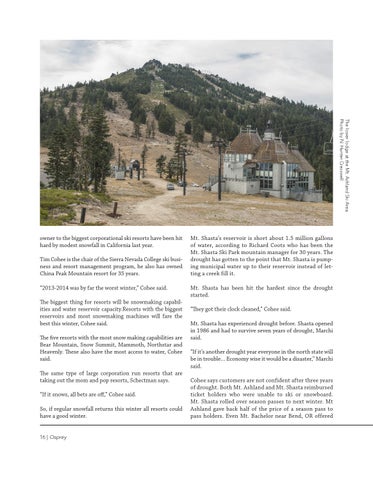
The lower lodge at the Mt. Ashland Ski Area. Photo by N. Hunter Cresswell
owner to the biggest corporational ski resorts have been hit hard by modest snowfall in California last year. Tim Cohee is the chair of the Sierra Nevada College ski business and resort management program, he also has owned China Peak Mountain resort for 35 years. “2013-2014 was by far the worst winter,” Cohee said. The biggest thing for resorts will be snowmaking capabilities and water reservoir capacity.Resorts with the biggest reservoirs and most snowmaking machines will fare the best this winter, Cohee said. The five resorts with the most snow making capabilities are Bear Mountain, Snow Summit, Mammoth, Northstar and Heavenly. These also have the most access to water, Cohee said. The same type of large corporation run resorts that are taking out the mom and pop resorts, Schectman says. “If it snows, all bets are off,” Cohee said. So, if regular snowfall returns this winter all resorts could have a good winter. 16 | Osprey
Mt. Shasta’s reservoir is short about 1.5 million gallons of water, according to Richard Coots who has been the Mt. Shasta Ski Park mountain manager for 30 years. The drought has gotten to the point that Mt. Shasta is pumping municipal water up to their reservoir instead of letting a creek fill it. Mt. Shasta has been hit the hardest since the drought started. “They got their clock cleaned,” Cohee said. Mt. Shasta has experienced drought before. Shasta opened in 1986 and had to survive seven years of drought, Marchi said. “If it’s another drought year everyone in the north state will be in trouble… Economy wise it would be a disaster,” Marchi said. Cohee says customers are not confident after three years of drought. Both Mt. Ashland and Mt. Shasta reimbursed ticket holders who were unable to ski or snowboard. Mt. Shasta rolled over season passes to next winter. Mt Ashland gave back half of the price of a season pass to pass holders. Even Mt. Bachelor near Bend, OR offered