WICKED
14
SPIRITS
THE ONTARION
1 5 | R OYAL CI TY ’S G HOSTS
1 8 | BAKER ST. BONES
@theontarion
D IARY O F A V E T S TU D E NT
The monsters found at OVC (NO, THERE ISN’T A ZOMBIE APOCALYPSE) C A R L E I G H C AT H C A R T
THE DATE IS OCT. 31. The Uni-
versity of Guelph is buzzing with chatter of costume ideas, candy sales, and crazy Halloween parties. Some students ponder taking advantage of their baby face and unseasonably warm weather to sneak in one more night of trickor-treating before surrendering to adulthood. Across the street, things are far grimmer. Whispers abound on the main campus regarding the mysterious creatures spotted at the Ontario Veterinary College (OVC). There, those who once appeared to be normal students have reportedly been spotted in a non-human state. Slowly, and with dark circles under their
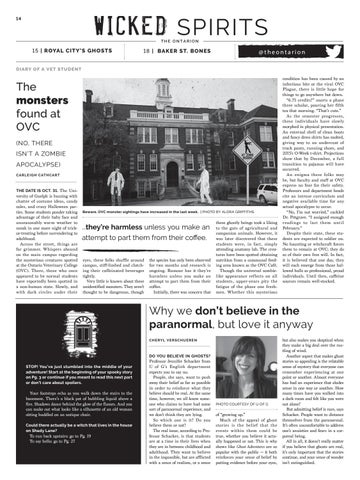
Beware. OVC monster sightings have increased in the last week. | PHOTO BY ALORA GRIFFITHS
...they’re harmless unless you make an attempt to part them from their coffee. eyes, these folks shuffle around campus, stiff-limbed and clutching their caffeinated beverages tightly. Very little is known about these unidentified monsters. They aren’t thought to be dangerous, though
the species has only been observed for two months and research is ongoing. Rumour has it they’re harmless unless you make an attempt to part them from their coffee. Initially, there was concern that
these ghostly beings took a liking to the guts of agricultural and companion animals. However, it was later discovered that these students were, in fact, simply attending anatomy lab. The creatures have been spotted obtaining nutrition from a communal feeding area known as the OVC Café. Though the universal zombielike appearance reflects on all students, upper-years pity the fatigue of the phase one freshmen. Whether this mysterious
condition has been caused by an infectious bite or the viral OVC Plague, there is little hope for things to go anywhere but down. “6.75 credits?” snorts a phase three scholar, pouring her fifth tea that morning. “That’s cute.” As the semester progresses, these individuals have slowly morphed in physical presentation. An external shell of clean boots and fancy dress shirts has molted, giving way to an undercoat of track pants, running shoes, and 2015’s O-Week t-shirt. Projections show that by December, a full transition to pajamas will have occurred. An enigma these folks may be, but faculty and staff at OVC express no fear for their safety. Professors and department heads cite an intense curriculum and negative available time for any actual apocalypse to occur. “No, I’m not worried,” cackled Dr. Petgrave. “I assigned enough reading s t o la st them until February.” Despite their state, these students are expected to soldier on. No haunting or witchcraft forces them to remain at OVC; they do so of their own free will. In fact, it is believed that one day, they will each emerge from those hallowed halls as professional, proud individuals. Until then, caffeine sources remain well-stocked.
Why we don’t believe in the paranormal, but love it anyway C H E RY L V E R S C H U E R E N
DO YOU BELIEVE IN GHOSTS? STOP! You’ve just stumbled into the middle of your adventure! Start at the beginning of your spooky story on Pg. 3 or continue if you meant to read this next part or don’t care about spoilers.
Your footsteps echo as you walk down the stairs to the basement. There’s a black pot of bubbling liquid above a fire. Shadows dance behind the glow of the flames. And you can make out what looks like a silhouette of an old woman sitting huddled on an antique chair. Could there actually be a witch that lives in the house on Shady Lane?
To run back upstairs: go to Pg. 19 To say hello: go to Pg. 27
Professor Jennifer Schacker from U of G’s English department expects you to say no. People, she says, want to push away their belief as far as possible in order to reinforce what they believe should be real. At the same time, however, we all know someone who claims to have had some sort of paranormal experience, and we don’t think they are lying. So which one is it? Do you believe them or not? The real issue, according to Professor Schacker, is that students are at a time in their lives when they are in between childhood and adulthood. They want to believe in the impossible, but are afflicted with a sense of realism, or a sense
PHOTO COURTESY OF U OF G
of “growing up.” Much of the appeal of ghost stories is the belief that the events within them could be true, whether you believe it actually happened or not. This is why shows like Ghost Adventures are so popular with the public — it both reinforces your sense of belief by putting evidence before your eyes,
but also makes you skeptical when they make a big deal over the rustling of wind. Another aspect that makes ghost stories so appealing is the relatable sense of mystery that everyone can remember experiencing at one point or another. Almost everyone has had an experience that eludes sense in one way or another. How many times have you walked into a dark room and felt like you were not alone? But admitting belief is rare, says Schacker. People want to distance themselves from the paranormal. It’s often uncomfortable to address one’s anxieties and fears in a corporeal being. All in all, it doesn’t really matter if you believe that ghosts are real, it’s only important that the stories continue, and your sense of wonder isn’t extinguished.