TheOne Farm Bureau family shares their lifetime of conservation leadership as they are recognized with the Oklahoma Leopold Conservation Award.
Spring 2025
The magazine of Oklahoma Farm Bureau
Beef on demand
A beef vending machine provides protein and educational opportunities
Forged with passion
A Farm Bureau family continues the tradition of crafting custom cattle chutes
Helping Oklahoma work
Oklahoma SBDC empowers rural Oklahoma businesses with mentorship
Communications Specialist
OKLAHOMA
COUNTRY MAGAZINE
ON THE COVER
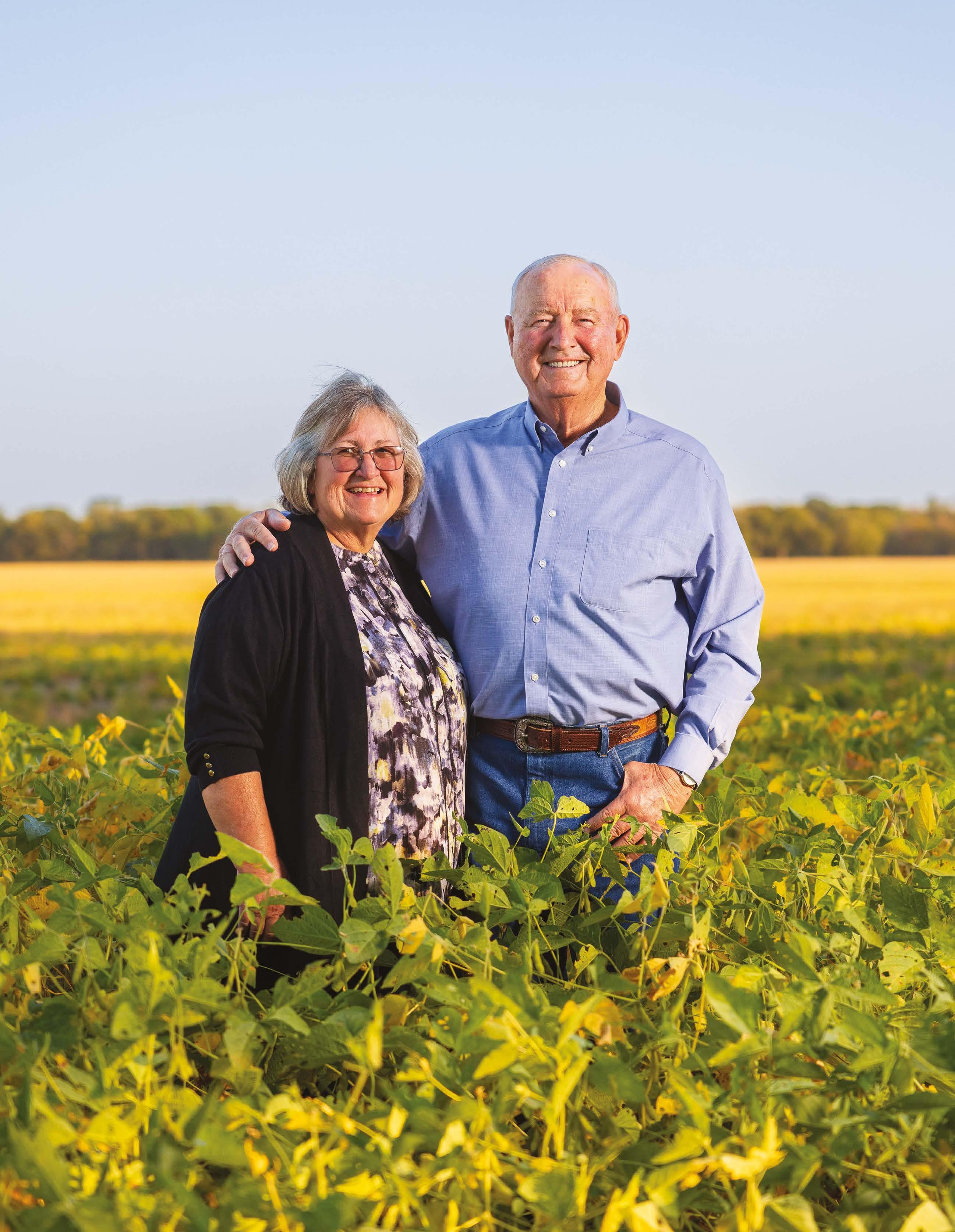
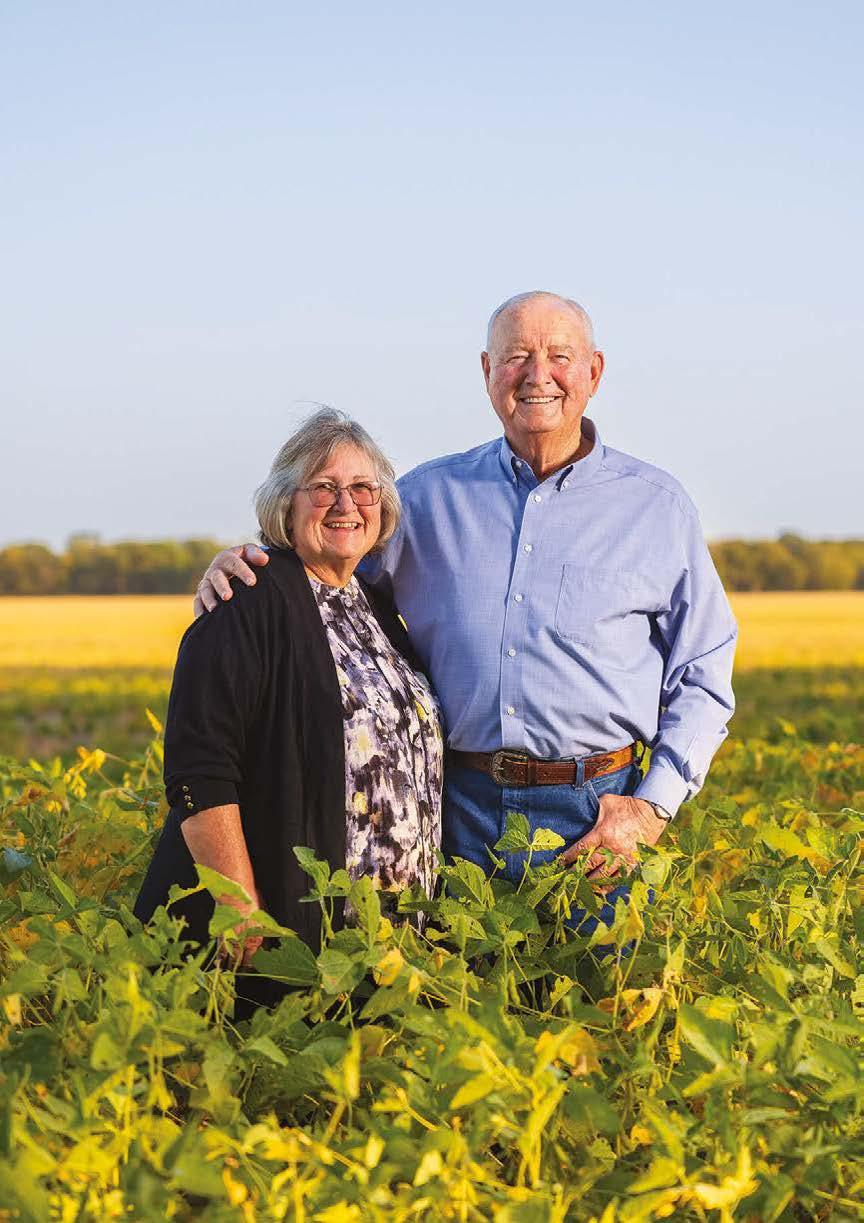
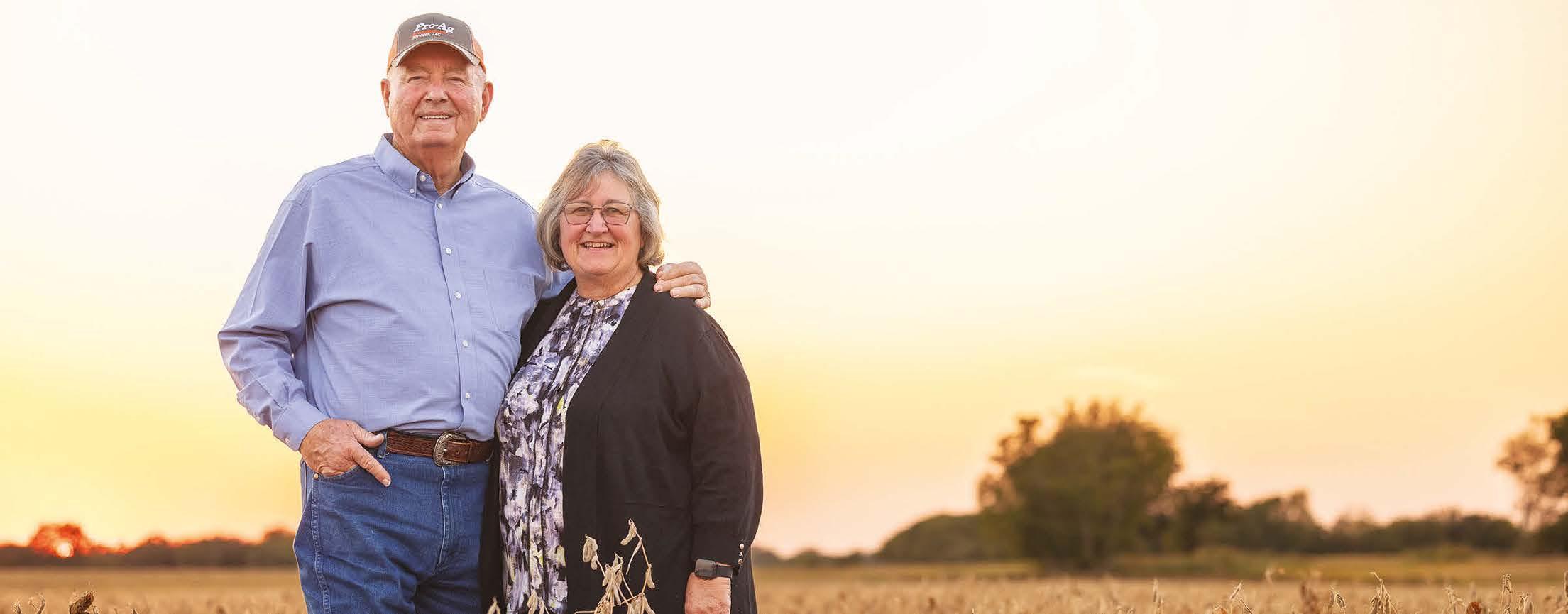
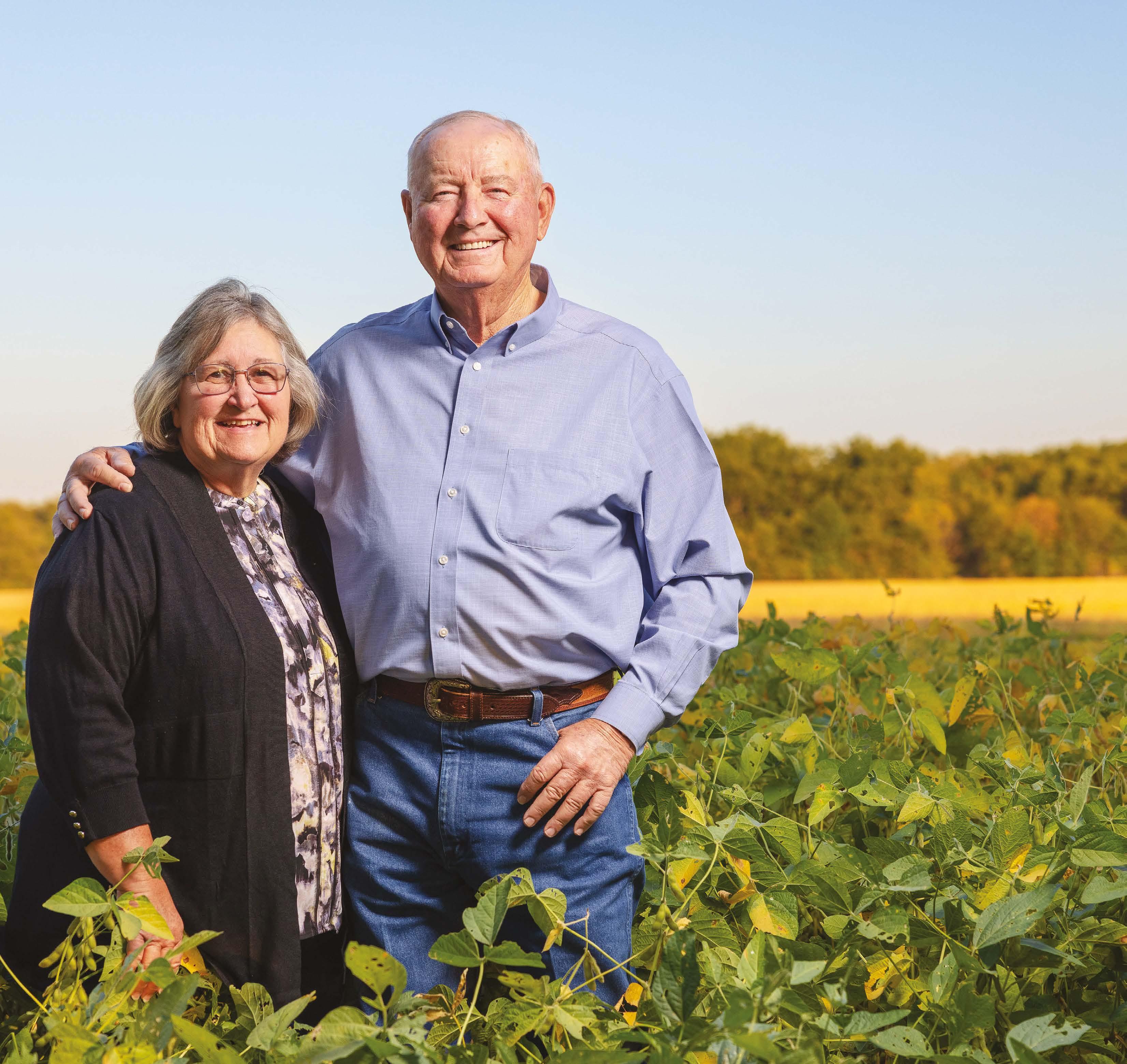
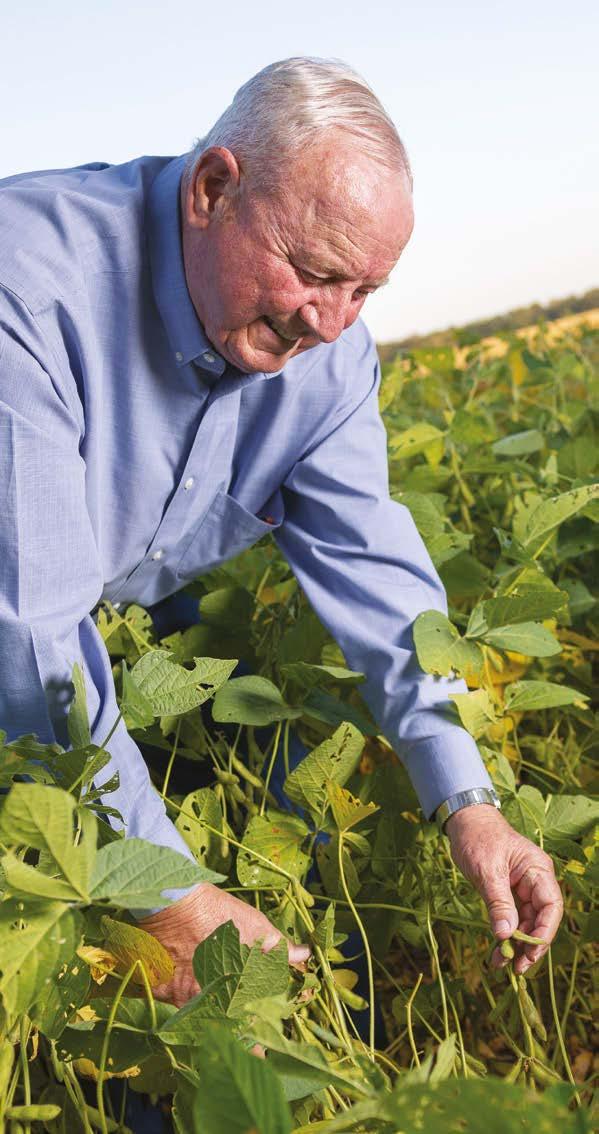
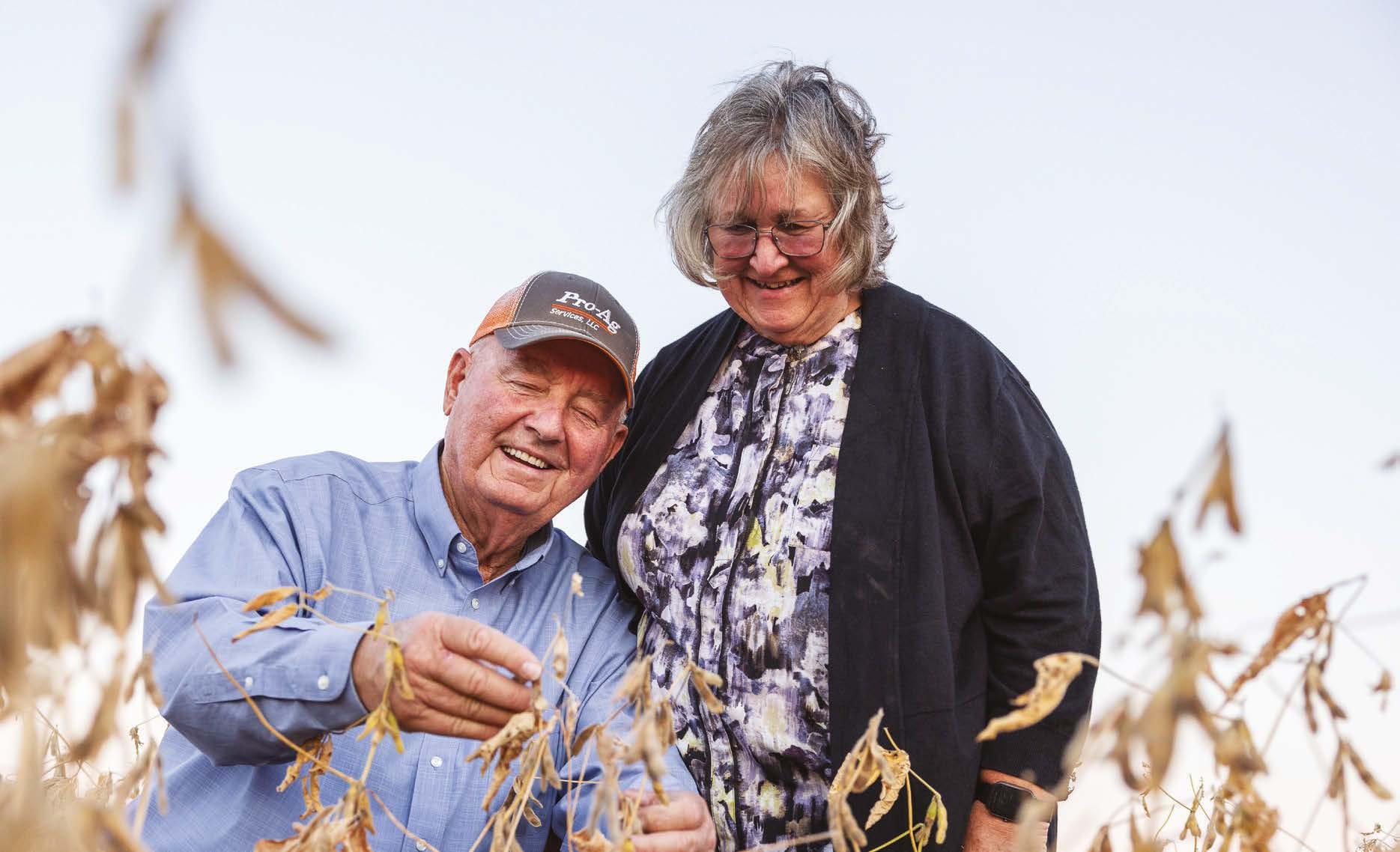
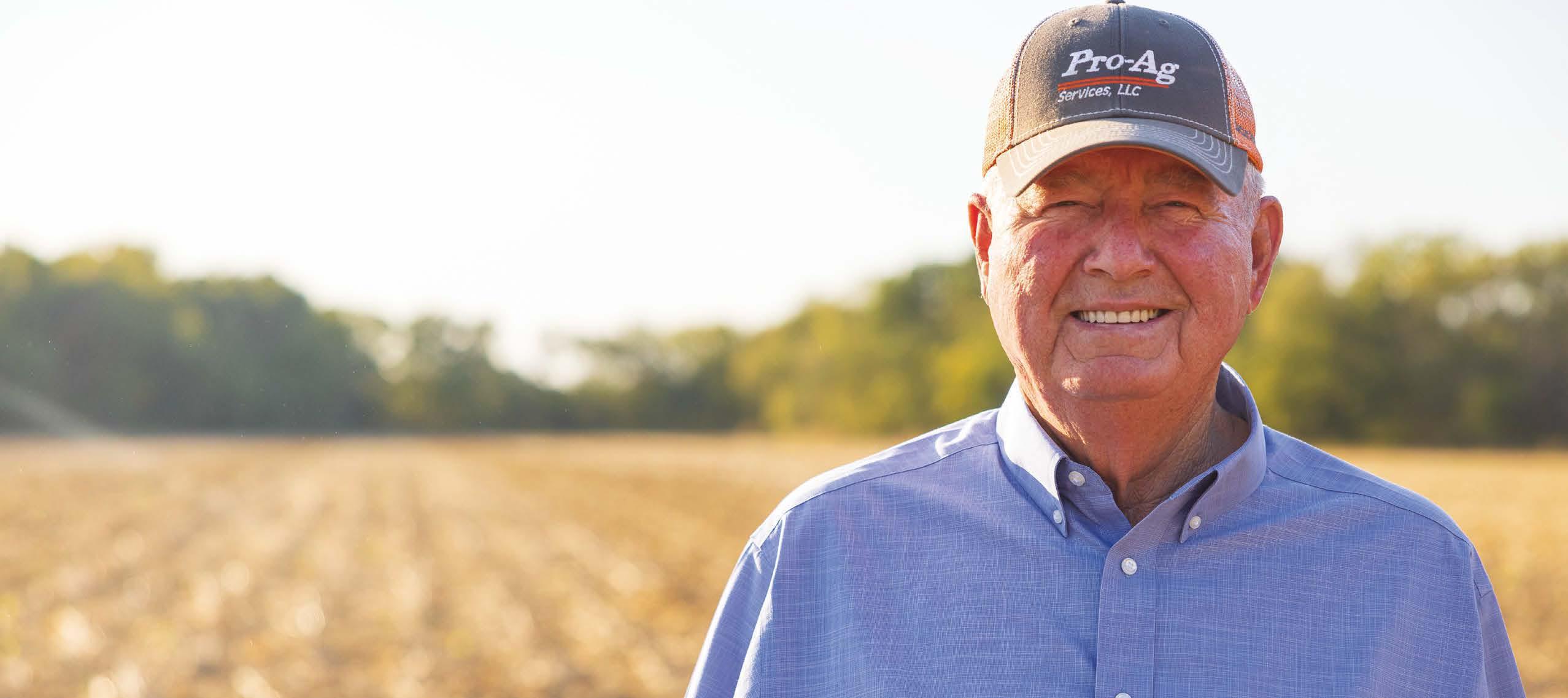
Photo by Dustin Mielke Scotty and Jo Herriman stand in a soybean field on their Nowata County farm in fall 2024. The Herrimans were named the latest Oklahoma Leopold Conservation Award winners.
Rachel Havens
Assistant Director of Media Relations and Advocacy Communications
Kate Jackson Publications Specialist
magazine is the official magazine of Oklahoma Farm Bureau, mailed to Farm Bureau members four times a year. magazine shares the story of Oklahoma agriculture and our rural communities through the eyes of Farm Bureau members, programs
ABOUT OKLAHOMA FARM BUREAU
Oklahoma Farm Bureau is Oklahoma's largest general farm organization, dedicated to supporting the agriculture community to improve the lives of Oklahomans. As a grassroots, member-led organization, OKFB gives a voice to family farmers and ranchers through advocacy, outreach, leadership development and supporting the future of agriculture.
For less than $1 a day1, you can make sure your family will have money to pay for things like a mortgage,
Presidentially Speaking
Insights from Oklahoma Farm Bureau President Rodd Moesel
Farm Bureau is watching out for agriculture at every level
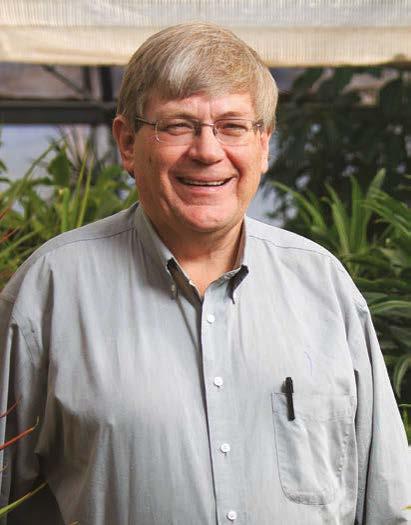
WRodd Moesel President Oklahoma Farm Bureau & Affiliated Companies
ith the days getting longer, the outdoor growing season beginning and the promise of balmy days on the horizon, the temperature outside is not the only thing that is heating up for our Oklahoma Farm Bureau members.
With the state legislative session in full swing, a new administration in the White House and agricultural issues in motion across Oklahoma reaching all the way to Washington, D.C., Farm Bureau is in the high season of our grassroots policy work.
Close to home, our grassroots policies and stances have been well represented at the state Capitol by our policy staff and numerous Farm Bureau members who have traveled to Oklahoma City to visit with legislators and even hosted local dinners to talk about the latest state policy developments.
As Farm Bureau members, I hope you have availed yourselves to all the opportunities to stay up-to-date with legislative information. From our Lincoln to Local video series to our weekly legislative updates with local Farm Bureau leaders to updates on social media, there are many ways to get into the action.
So far this legislative session, we have worked to uphold our long-standing position that private property rights are a foundational principle that allows our family farmers and ranchers – as well as all Oklahomans – to succeed. From cleaning up eminent domain laws to ensuring the use of such practices are appropriate to addressing over-aggressive annexation attempts by a municipality that would have sweeping implications across our state, we have been steadfast in monitoring challenges to private property rights as we make our voices heard.
We have also continued our discussions on renewable energy installations and their corresponding transmission lines to preserve Oklahomans’ rights to use their private property as they see fit while ensuring a fair balance of power between energy companies and rural Oklahomans.
We have also continued our multi-year work on water issues, including the formation of a Farm Bureau water working group that investigates and discusses water policy in order to make recommendations to the OKFB
board of directors. This work ensures we are advocating for equitable and responsible water accessibility and use for agriculture and all Oklahomans.
Halfway across the nation in Washington, D.C., the new administration and congress have ushered in a new era of federal action and policies along with new players in federal agencies with whom American Farm Bureau, along with state Farm Bureaus around the nation, will be working in upcoming years.
We are especially excited to have a healthy dose of Oklahoma representation at the U.S. Department of Agriculture with at least four different Oklahomans working at the chief of staff level or higher in the agency. This means we have folks who understand our issues, needs and opportunities in Oklahoma and can share that message at the federal level.
Of course, we will be working diligently on a new farm bill to ensure all of agriculture has a steady base of support that will allow us to continue to feed, clothe and fuel our nation and our world.
Part of what allows agriculture to be an integral player on the world stage is international trade, and specifically, access to markets around the globe for our high-quality Oklahoma agricultural products.
We have already experienced some wavering support from our traditional world trade partners in the last few years as we have witnessed our nation’s long-standing agricultural trade surplus slip into a trade deficit for the first time in my life. Combined with the new administration’s use of tariffs to maneuver in the worldwide political landscape, it will be imperative for Farm Bureau to represent the interests of farmers and ranchers by seeking improved market access and reasonable trade deals.
We know the long-term goal of the administration is to improve our trade balance and bolster America’s position on the world stage, but we also recognize there may be some tumultuous times as we move forward.
That makes it as important as ever for Farm Bureau members to step up, make their voices heard, share their agricultural story and work together to ensure our state will grow for generations to come.
Executive Outlook
Farm Bureau and agriculture commentary from Oklahoma Farm Bureau Executive Director Thad Doye
Moving Oklahoma agriculture forward into the future
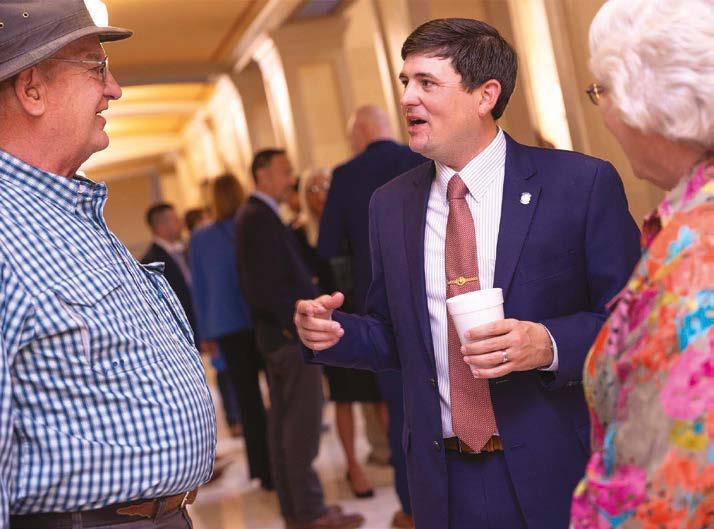
Acornerstone of Oklahoma Farm Bureau’s advocacy work for agriculture in our state is a steady stream of Farm Bureau members traveling to our state Capitol in Oklahoma City during the Oklahoma legislative session to share our agriculture story along with the importance of sound agricultural policy.
I got my start in our organization’s long history of legislative visits while I was still in high school as I traveled to the Capitol with my parents to visit with our legislators. During my first in-person legislative experience, we as Farm Bureau members asked for requirements to be put in place for brucellosis vaccinations in cattle, a bacterial infection that wreaked havoc in our herds for generations.
Today, due to the action of the agriculture community across the nation taking the message from their farms and ranches into the public policy arena, our nation’s cattle herd is brucellosis-free.
With as much impact as our organization has made in its long history, Farm Bureau members still travel to Oklahoma City – in addition to meeting their legislators at local meetings in hometowns across the state – to advocate for laws and policies that help the small portion of our population who continue to farm and ranch carry on the tradition of growing and raising food, fiber and fuel.
Sometimes it seems all we do in agriculture is fight the bad ideas and proposals that would have a negative impact on our industry.
But other times it is up to us as family agriculturalists to ask for reasonable laws, rules and regulations that allow us to operate in a sustainable way while showing consumers and the world that we are proud to hold ourselves to high standards.
As OKFB has worked throughout the past few legislative sessions to create a working water policy for our state’s agriculturalists and our non-farm friends and neighbors, some onlookers have asked why we even bother to engage in water discussions. They ask, “Why not just dig our heels in or walk away from the table?”
For me, it comes down to one simple idea: if we as agriculturalists do not write laws and rules that regulate our industry, who will?
There is no shortage of outside groups waiting in the wings who would love to write the rulebook that agriculture must play by. Of course, they have their own ideas of how we should grow crops, raise livestock and work our land. Remember those bad policies that I mentioned we spend so much time fighting? Well, there’s a better way to head those ideas off at the pass than just playing defense all the time.
Through Farm Bureau, we have a grassroots way to create and shape workable solutions from the lawbooks to regulatory agencies that allows Oklahoma family farmers and ranchers to use the best methods to efficiently and sustainably grow food and other farm products while showing the public that we are loyal partners in creating a future all Oklahomans can be proud of.
Having a seat at the table through important discussions that positively impact agriculture for today and generations to come is exactly where farmers and ranchers need to be. By creating effective and reasonable laws and regulations for our own industry, we have an opportunity to show consumers that we hold ourselves to the highest standards as we carry on our legacy as caring stewards of our natural resources and our livestock.
Farm Bureau is proudly making our grassroots voices heard so lawmakers and regulators hear the true story from the people whose hands are in the dirt and whose hearts are in rural Oklahoma.
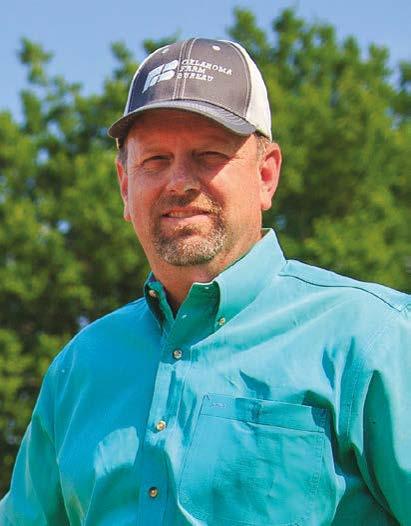
Thad Doye
Executive Director
Oklahoma Farm Bureau
“Having a seat at the table through important discussions that positively impact agriculture for today and generations to come is exactly where farmers and ranchers need to be.”
INGREDIENTS THE
INGREDIENTS FORSUCCESS
AND JO HERRIMAN
NOWATA COUNTY FARM BUREAU MEMBERS SCOTTY AND JO HERRIMAN SHARE THEIR CONSERVATION JOURNEY
THAT HAS TAKEN THEM THROUGH DROUGHTS AND FLOODS WHILE LEADING TO A LIFETIME OF LEARNING, SHARING LAND STEWARDSHIP PRACTICES AND RECOGNITION AS THE OKLAHOMA LEOPOLD CONSERVATION AWARD WINNERS.
STORY AND PHOTOS BY DUSTIN MIELKE
Every farmer or rancher relies on the same basic ingredients that compel crops to grow, animals to flourish and daily life to continue.
From the soil where life sprouts to the sunshine that warms the earth to the moisture that refreshes and sustains both crop and animal, agriculture — and our way of life — relies on a precious balance of some of the most basic elements of nature.
However, when this short, simple ingredient list is thrown off-kilter, it can have disastrous results.
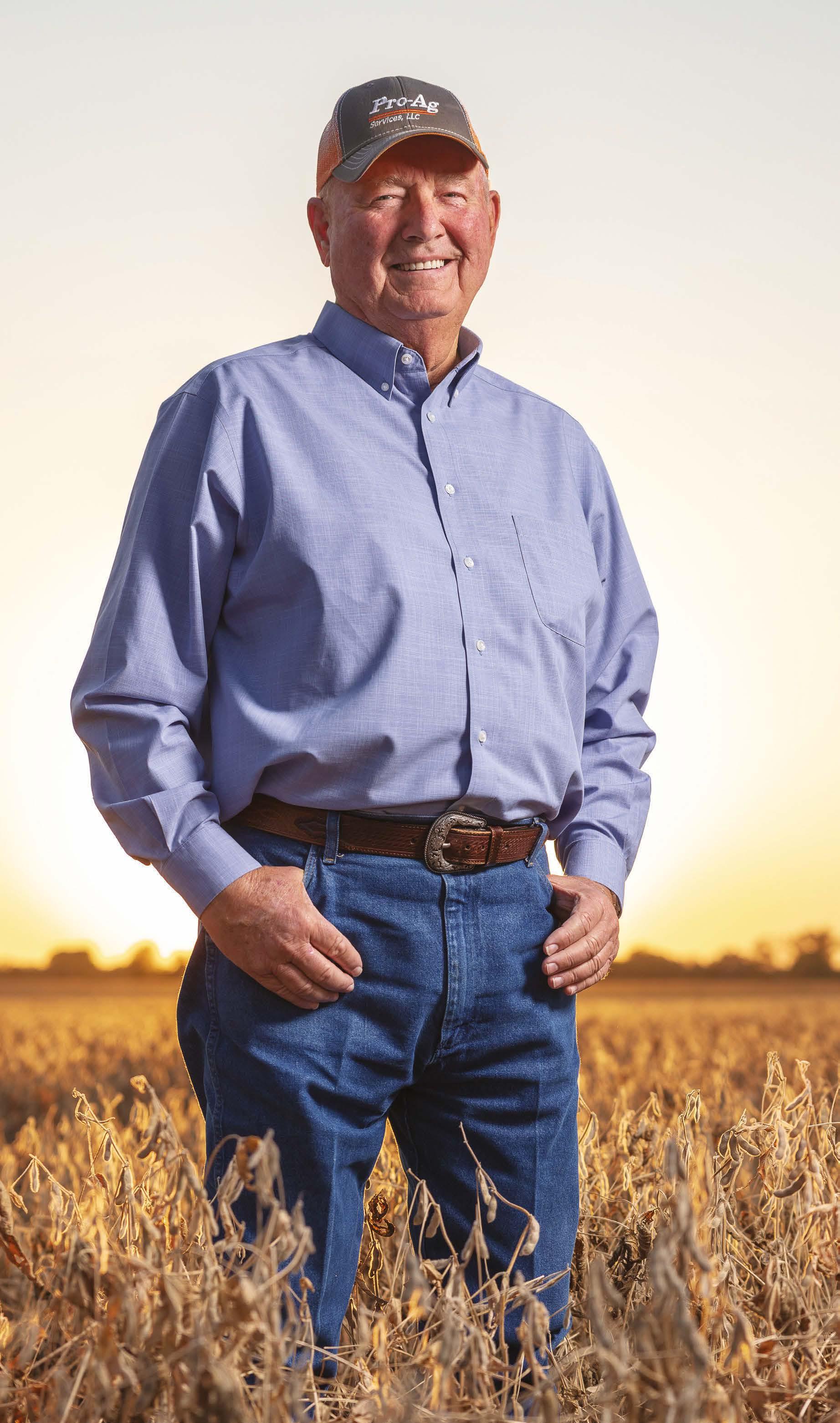
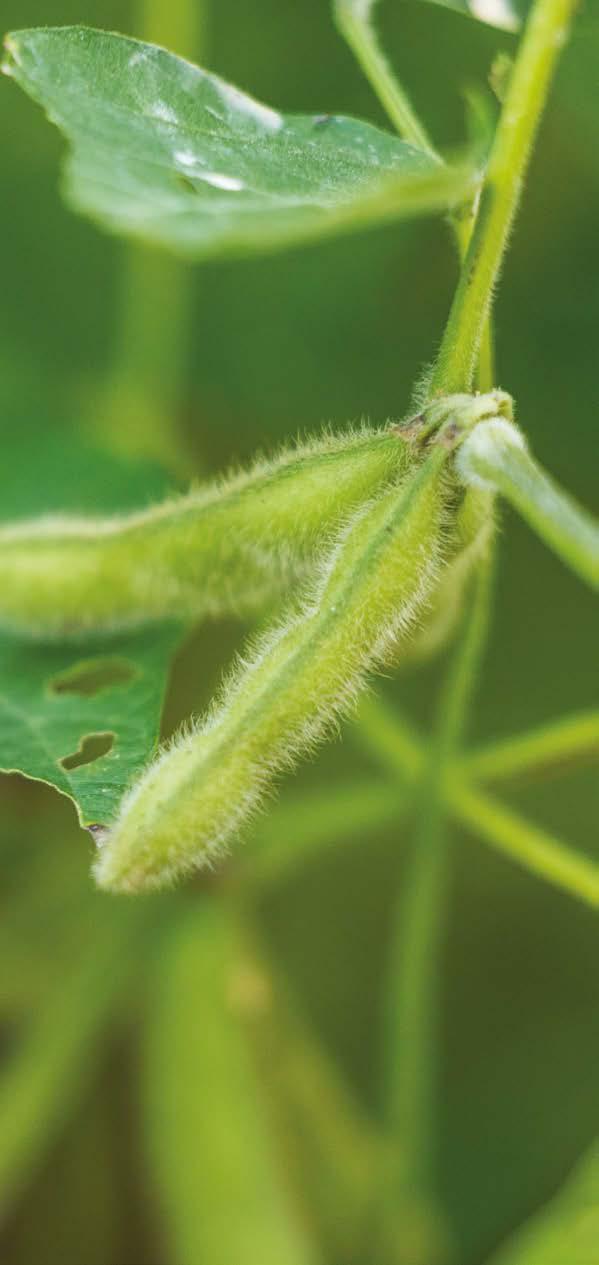
Nowata County farmers and Farm Bureau members Scotty and Jo Herriman have harnessed this delicate balance of soil, sun and water, which has allowed their family to grow corn, soybeans and wheat for decades on 1,500 acres of river-bottom land near the banks of the Verdigris River just outside South Coffeyville.
The Herrimans have a long history, known across the state, for being leaders in conservation practices as they work daily to manage the family farm’s soil health, water runoff, nutrient use and more, focusing on land stewardship.
Scotty has had a lifelong interest in implementing conservation practices on the family farm, including the use of terraces to direct water runoff from fields along with planting and maintaining grass waterways to absorb that runoff. With numerous years spent on his local conservation district board and involvement at the state level, Scotty understands the importance of implementing conservation practices to improve soil health and water quality.
“I've always had conservation on my mind,” Scotty said.
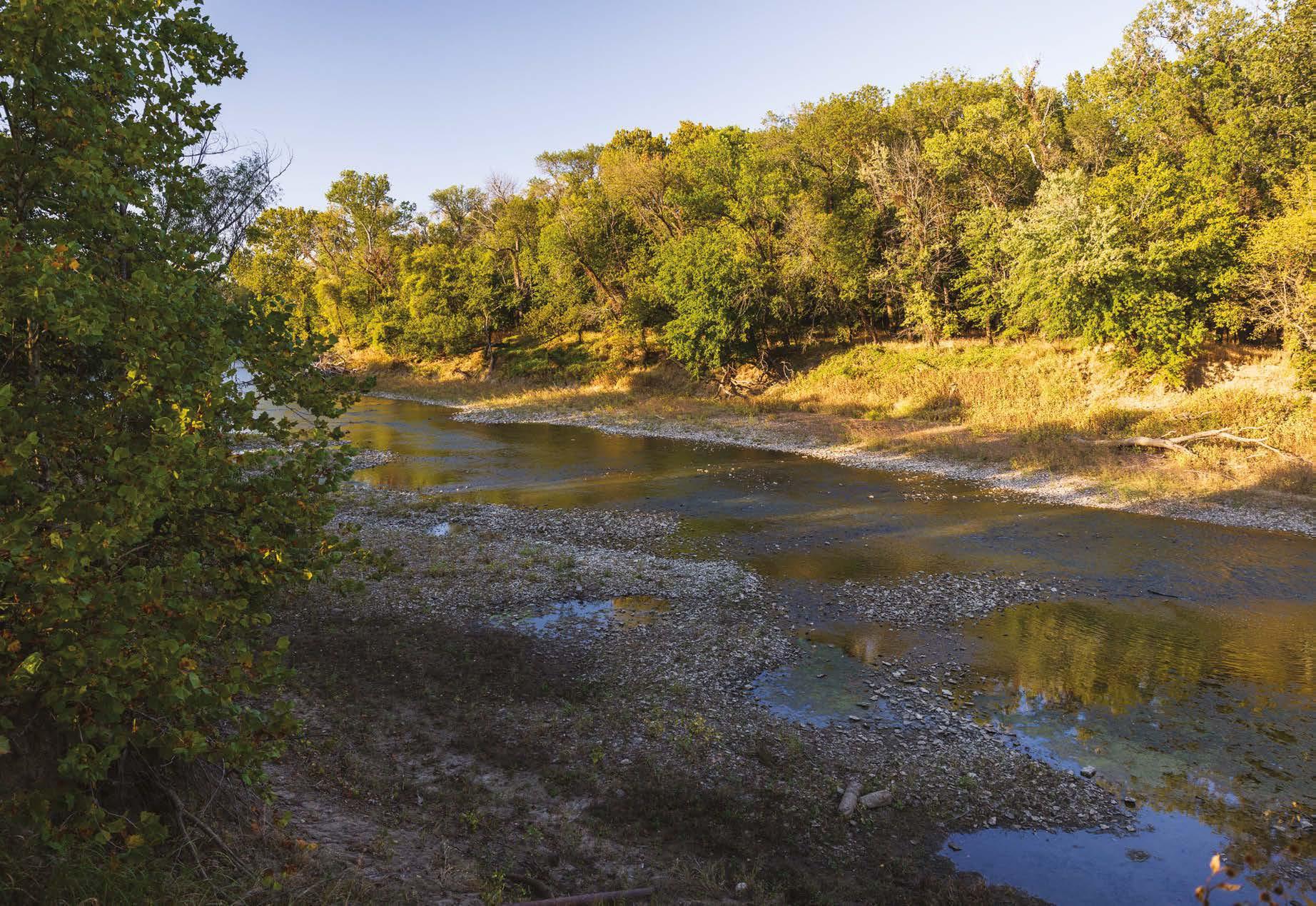
THE VERDIGRIS RIVER SNAKES THROUGH THE HERRIMANS' FARM NEAR SOUTH COFFEYVILLE. DURING THE JULY 2007 FLOOD, THE RIVER CRESTED AT AROUND 13 FEET ABOVE FLOOD STAGE.
“Jo will tell you — after a big rain event, I want to go look at the water. We're going to see how things are flowing, how the waterways are keeping up and if the terraces are maintaining."
But in the summer of 2007, the Herrimans experienced first-hand an unprecedented “big rain” event: a life-changing flood that devastated their farmland and inspired them to rethink their approach to farming.
Scotty said that having farmed river-bottom land for nearly 50 years, the family has come to expect the nearby Verdigris River to rise and waters to crest onto their farmland from time to time. However, the 2007 flood proved to be exceptional.
“We’ve seen several floods here on the Verdigris River bottoms over the years,” Scotty said. “In 1976 we saw a 100-year flood. In 1986 we saw another 100-year flood, so we thought that was probably as high as it was going to get.
“But in 2007, it started raining north of here about 50 miles — we’re talking real rainfall of 20 or 21 inches.”
Scotty said that when water had to be released from an upstream lake in Kanas, the river that they farm alongside and live nearby raised 12 feet in a single hour.
The family moved their farm equipment to
higher ground several different times as they tried to stay ahead of the increasing water levels. They also found themselves scooping up items that were beginning to float away in hopes of preserving their farm for a quick recovery.
As whitecapped floodwaters kept rising, Scotty said the family hunkered down as long as they could, but eventually had to be evacuated from their home by boat.
“We had never gone through this kind of a flood in our lifetime, even though we thought we had seen it all,” Scotty said. “But this one ravished everything."
Not only did their farmland and home flood, but floodwaters also overtook an upstream refinery, leaving a black line of oil on buildings and belongings as the waters eventually began to recede a full 10 days after floodwaters overtook their property.
The impact of the flood upon the Herrimans’ farm was quick and catastrophic. By the time the July floodwaters inundated their fields, the Herrimans had a wheat crop that was ready to harvest, corn was growing in their fields and they had plans to put in that fall’s soybean crop.
“It was a really depressing sight that we had to go through,” Scotty said. “We only got 13 acres of wheat harvested that summer.”
The corn crop was a total loss and the fields did not dry out in time to plant soybeans, leaving the family with only 13 acres out of the 2,000 they were farming at the time from which they were able to harvest a crop — and glean an income.
“We quite frankly didn't know how we were going to get back on our feet from that,” Scotty said. “It was simply a matter of turning it over to God because we knew we could not survive on our own. So we truly believe he took us by the hand and carried us on. So we're still farming today for that reason.”
Scotty said that for the first two years following the flood, he and Jo worked to recover and rebuild using the traditional tillage practices they had used for generations. Through those two full seasons of farming, the Herrimans realized something needed to change in the way they farmed that would enable them to use less labor and further increase their care for the land.
“We completely switched to no-till in 2010,” Scotty said. “We had gone through a year or two after the flood, and it just wasn’t getting any better. So we completely turned 100% around and no-tilled every acre we had, and had a good crop.”
Scotty said he had considered no-till before the flood, but he was worried the soils found in the family’s river-bottom fields would not work without turning the soil. However, leaning on his network of fellow farmers with whom he had connected through years of conservation efforts, the switch to no-till proved successful.
A few years later, the family took another step to transform their farming practices and added cover crops, a practice that incorporates planting crops that are not harvested, but are rather integrated into the family’s rotation for soil-health benefits.
“We started with cover crops in 2016,” Scotty said. “We learned about cover crops and learned they could hold the ground down. It armors the soil and it reduces runoff from fertilizers into the river — things that mattered to us. It really took hold.
“That has really brought us out of the fear of losing land, the fear of moving the soil off of site due to erosion. It has greatly reduced any of those hazards.”
Today the Herrimans also use strip tillage in their corn crop to precisely place a band of nutrients in the soil weeks or months before planting corn. Their corn crop is then planted in the exact same rows just above the band of fertilizer, ensuring that the corn crop has immediate access to the nutrients it needs while reducing nutrient runoff.
By transitioning their farming practices and integrating no-till, cover crops, strip tillage and more, Scotty said not only has the soil’s organic matter improved, but their fields now have either a crop, a cover crop or crop residue protecting the soil at all times.
“The no-till residue stays on the ground all the time,” Scotty said. “It is the armor that we need not only for hard rainfall, but also for the hot sun that's beating down. And the nutrients that are trying to leave the farm don’t leave because of the residue that's there. So that
NOW THAT I'VE DONE A LOT OF THIS WORK, I ACTUALLY LIKE TO SEEK OUT YOUNGER FARMERS THAT MIGHT LOOK TO SOMEONE THAT HAD SOME EXPERIENCE IN THAT.
– SCOTTY HERRIMAN
ground has improved over time because it's taken on a better structure.”
The Herrimans have not only improved their own farm through decades’ worth of conservation efforts and a focus on land stewardship, but they have also taken time to share their experience and knowledge with fellow farmers and ranchers.
Scotty and Jo have hosted on-farm field days for groups of farmers throughout the years who are interested in the latest improvements in soybeans, grain sorghum, soil management, and more recently, cover crops.
“We would have field days where folks could come in and hear people speak about what the soil is like, how the structure is, here's the root, look at the earthworms down here,” Scotty said. “So they could visually get tangible results of what we were trying to do. And that's what the field days provided. It wasn't something you'd read in the paper — no, they actually got to see it.”
In addition to hosting field days throughout decades, Scotty has spent years working alongside fellow farmers and ranchers both locally and across the state through his local conservation district and even serving two terms on the statewide Oklahoma Conservation Commission.
Scotty said he is committed to helping fellow producers, and especially younger producers, learn about conservation techniques and implement such practices on their own farms and ranches.
“Now that I've done a lot of this work, I actually like to seek out younger farmers that
might look to someone that had some experience in that,” Scotty said. “I'm not going to push on them, but I'm certainly going to give them any help they need.”
In recognition of the Herrimans’ commitment to conservation, the family was awarded the Oklahoma Leopold Conservation Award by the Sand County Foundation at the Oklahoma Association of Conservation Districts’ Annual Meeting on Feb. 25. The award recognizes landowners who inspire others to consider conservation opportunities on their land.
With awards and accolades to their name, the Herrimans continue to push forward, pursue even more opportunities to care for the land and the farm where they raised their three sons, and support fellow agriculturalists working to improve their own land.
“It is an occupation that all farmers will tell you that it's in their blood,” Scotty said. “You grew up with it. You love planting that crop, having an opportunity to see it grow and reach that harvest, which we're looking forward to as farmers. It’s an old cliché, but, I mean, it just is — it gets in your blood.”
Although Scotty and Jo may miss the smell of fresh-tilled soil and seeing fields of plowed earth stretching toward the tree line, today they know their soil is protected at all times by that layer of plant growth or crop residue that Scotty refers to as “armor.” That armor is helping the Herriman family continue to use the God-given ingredients of soil, water and sunlight to care for the land and sustain their family farm into the future.
ABOUT THE OKLAHOMA LEOPOLD CONSERVATION AWARD
The Oklahoma Leopold Conservation Award Program recognizes and celebrates achievement in voluntary conservation by agricultural landowners. Sand County Foundation, national sponsor American Farmland Trust, and conservation partners across the U.S., including the Oklahoma Farm Bureau Foundation for Agriculture, present the prestigious honor, which consists of $10,000 and a crystal award, in settings that showcase the landowners’ achievements among their peers. The Herrimans are the eighth recipient of the Oklahoma Leopold Conservation Award.
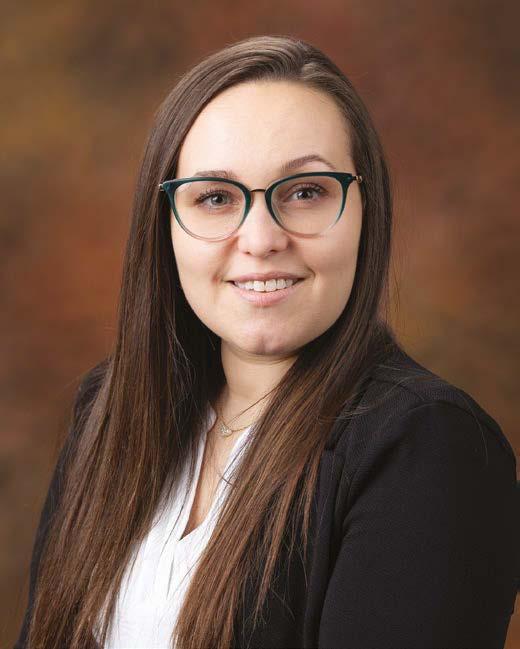
Jaclyn Darling
Beef on N Demand
Coal County Farm Bureau member Jaclyn Darling shares the story behind the first beef vending machine in Oklahoma.
Story by: Kate Jackson
Photos by: Dustin Mielke
estled right inside the door in a storefront in downtown Ada, consumers can get fresh, locally processed beef with just the touch of a screen and a quick swipe of a credit card.
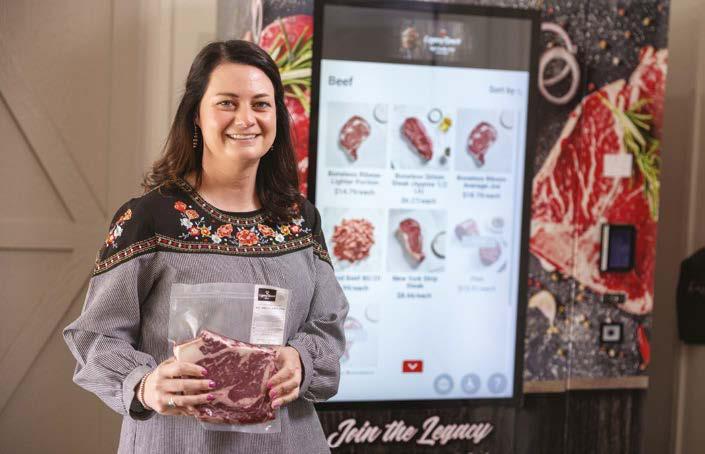
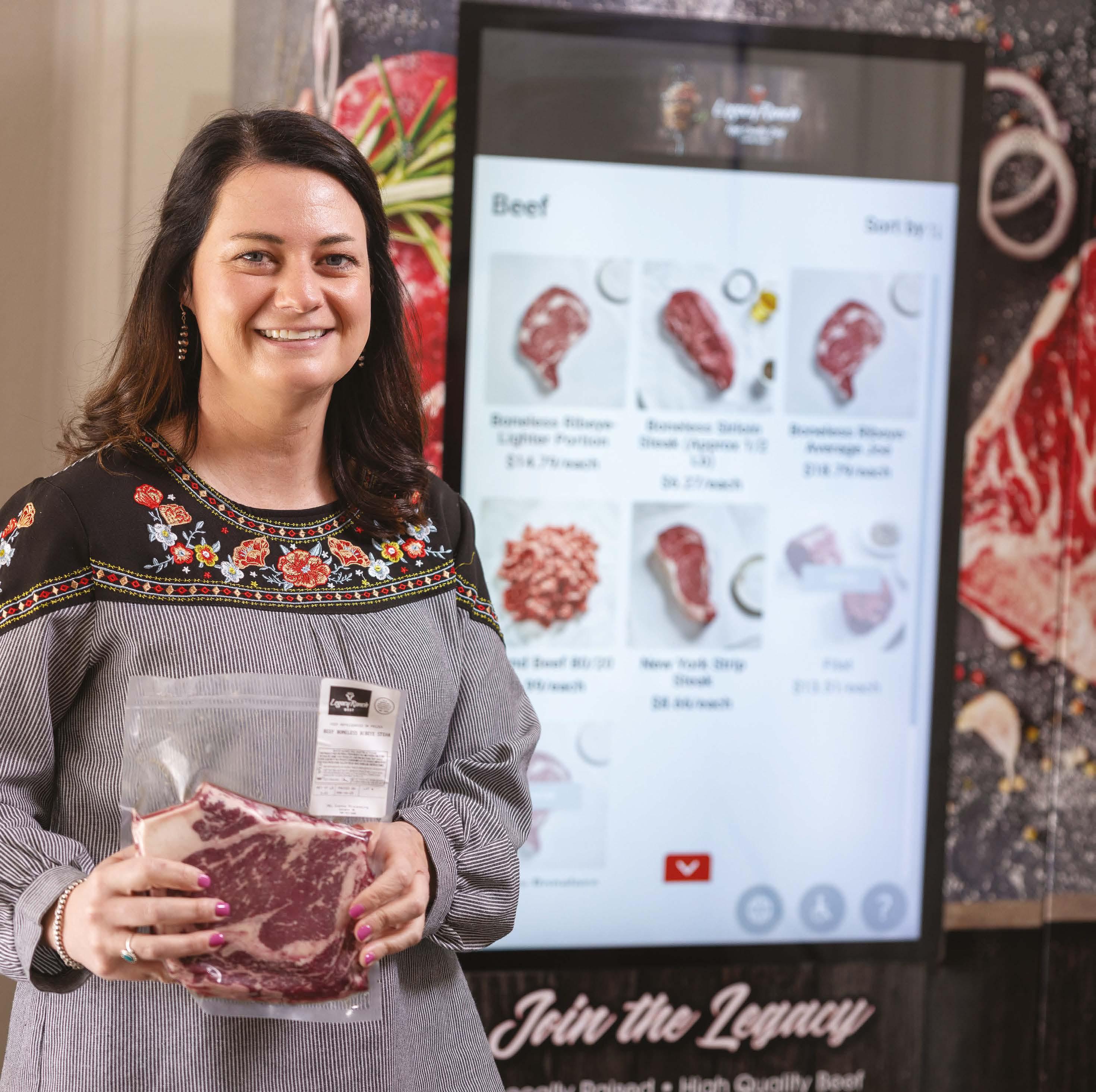
Coal County Farm Bureau member and District Eight Oklahoma Farm Bureau Young Farmers & Ranchers Committee member Jaclyn Darling oversees the operations of what she said is the first beef vending machine in the state of Oklahoma.
Darling, a third-generation cattle rancher from Coalgate, works, with National Livestock and their 1931 Legacy Ranch store in Ada to provide fresh beef any time of day to consumers in the Ada area.
As part of Darling’s role with the store and National Livestock, she works with the beef processor to get the cuts found in the store’s freezers and in the vending machine. She also coordinates beef purchases for a few local restaurants in Ada that want to use ranchfed beef.
Darling said the pandemic brought forth the idea of selling fresh beef directly to consumers, and the initial process began with an actual storefront with frozen beef.
“Since there was a beef shortage and processors were backed up during COVID, National Livestock wanted to get directly to consumers with fresh beef,” Darling said.
The 1931 Legacy Ranch store opened in February of 2024 to bring the ranch-fed beef dream to life. The vending machine followed suit shortly after in the fall of 2024 to provide fresh beef directly to consumers.
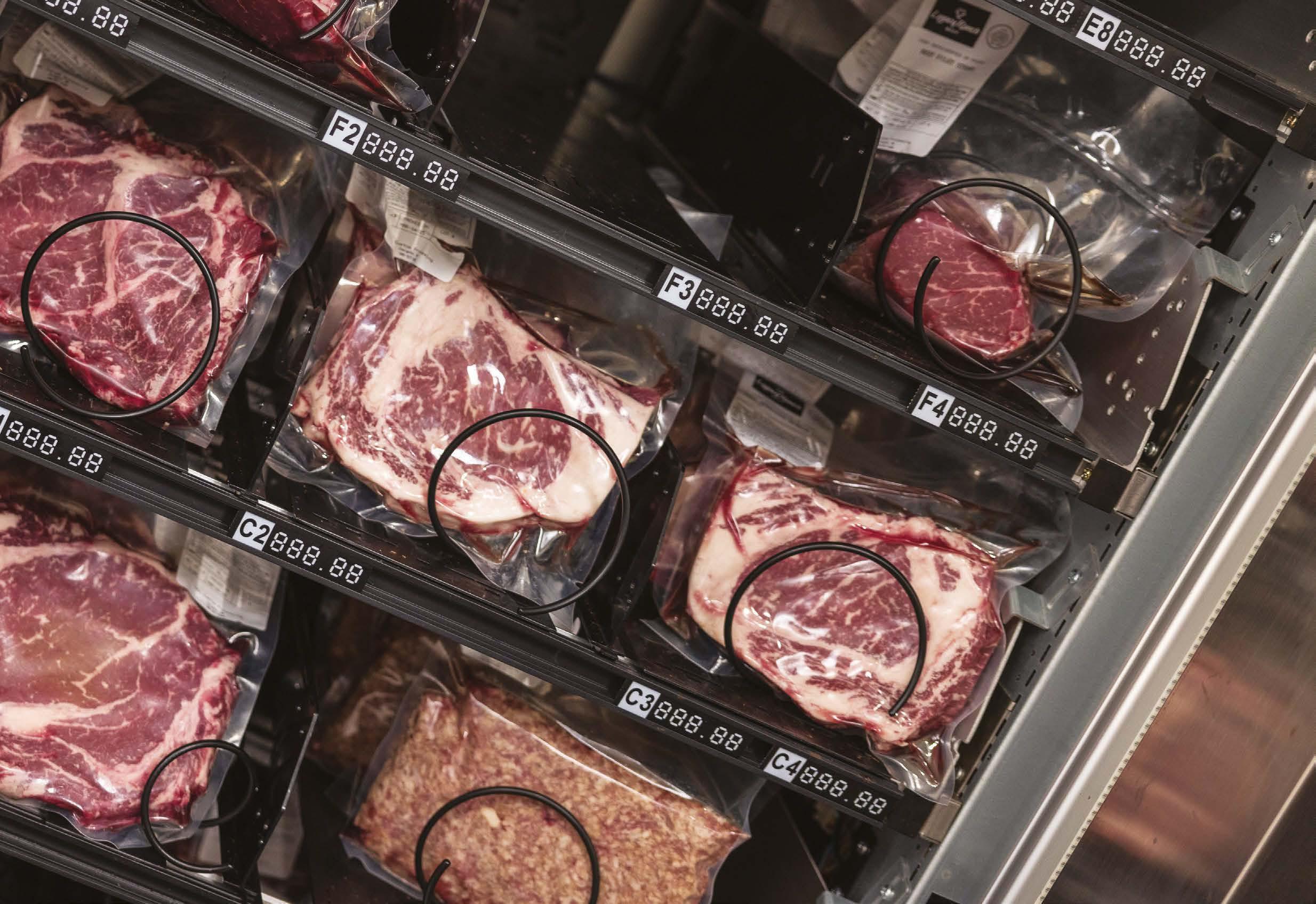
While the average vending machine is simple and designed to dispense items with uniform shapes and sizes like soda cans or candy bars, a beef vending machine is similar, but not all cuts of beef are the same shape or size.
Darling said the vending machine had to be special-ordered from a company in California. To get the coils that help dispense the beef configured in the correct size for specific cuts of beef, they had to mail selected cuts to the manufacturer to have the coils correctly sized for the vending machine.
“We have to be careful of what cuts we load into the vending machine,” Darling said. “Since the coils have been sized for certain cuts of beef.”
The vending machine sat for five to sixth months after it was delivered before it was available to the public as staff tested the machine. With the correct coils installed and the payment process set up, the vending machine was ready to be used.
The cuts of beef that are in the vending machine and available for customers includes ground beef, filets, New York strips and ribeyes.
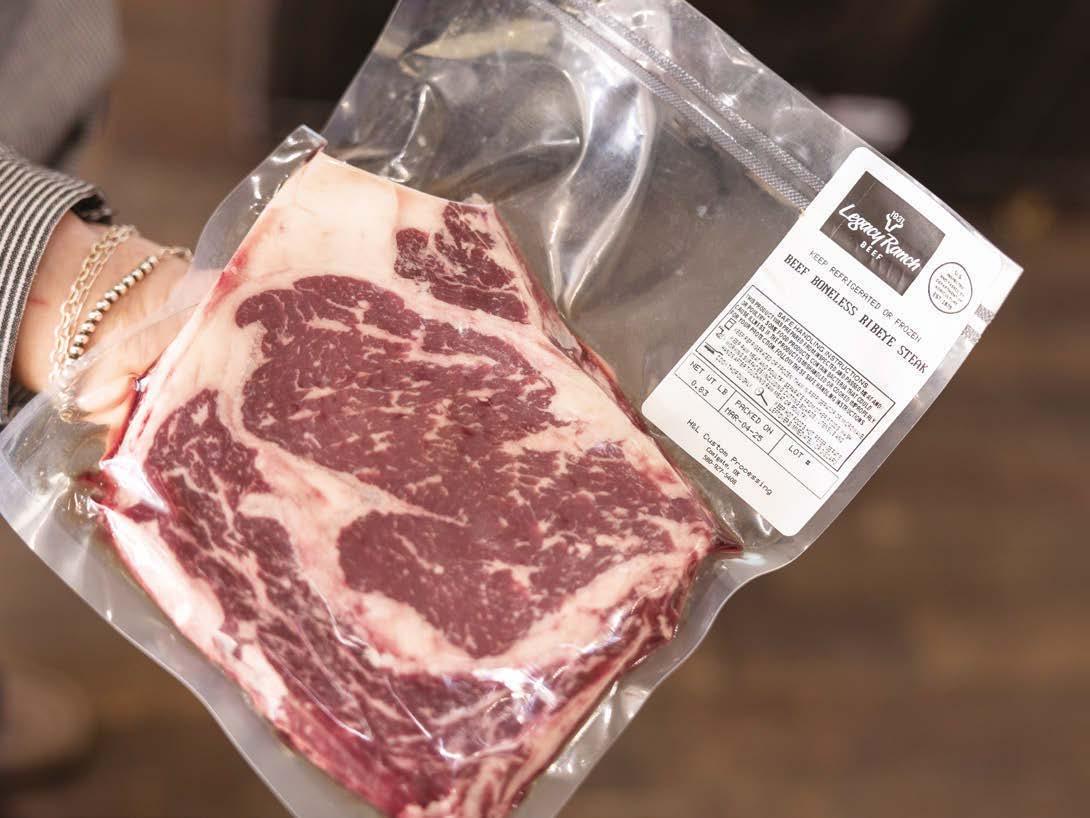
The meat is vacuum-packed and kept chilled inside the machine instead of frozen, allowing customers to swing by the store on their way home from work and purchase beef that they can cook that evening.
The temperature inside the vending machine stays between 33 to 35 degrees Fahrenheit to ensure the meat will not freeze.
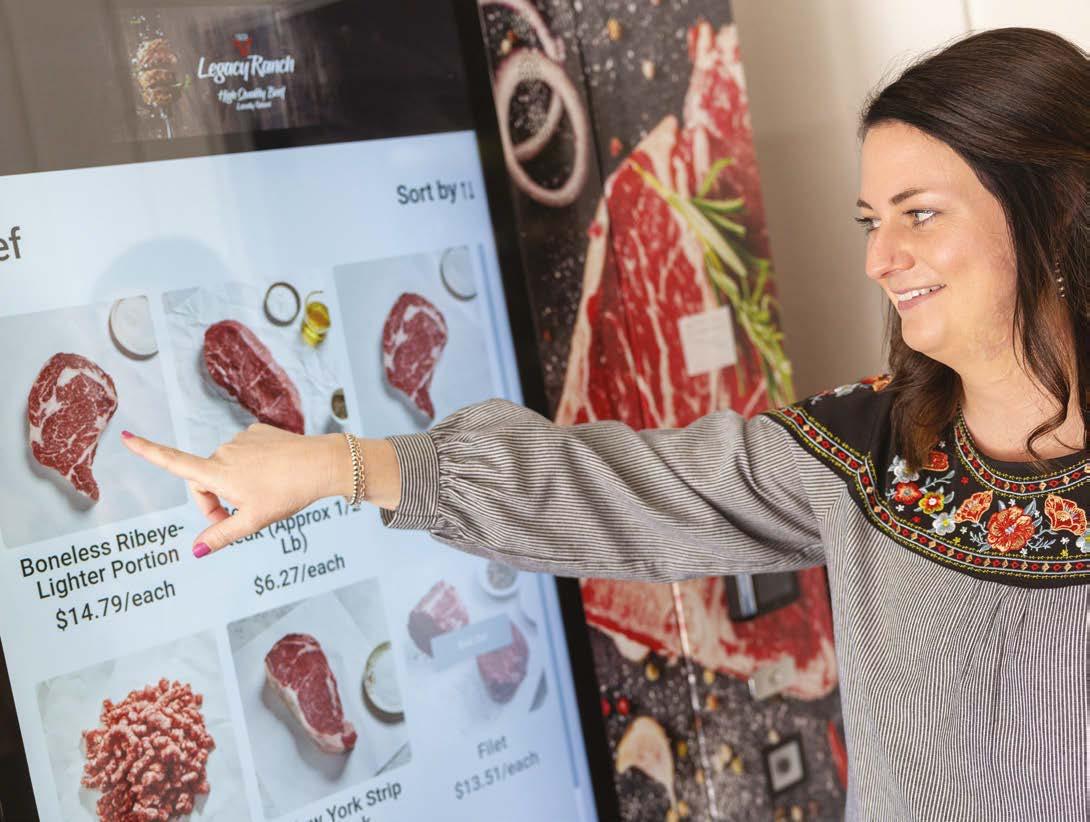
The vending machine has a large touchscreen on the front where customers can view the cuts of beef in stock and select their choice of meat.
Once the cut has been selected, customers are prompted to pay with a credit card. After the payment is processed, the cut of beef is dispensed from the bottom of the machine, then customers have fresh beef ready to cook.
Darling said its just like any other vending machine, the only difference is this one has beef in it.
The beef vending machine is open 24/7, since it is located just inside the foyer of the 1931 Legacy Ranch store making it easily accessible even after the store is closed.
“The vending machine is restocked every 21 days,” Darling said. “We take calves to the processor every three weeks, then they hang for 14 days, and it usually takes a week to get the beef cuts.”
Darling said depending on the specific beef cuts ordered from the processor, the vending machine can be sold out within 18 days. Due to its popularity, the machine can sometimes sit empty for a few days while fresh cuts of beef are prepared by the processor.
The beef sold in the vending machine and in the store comes from producers who sell their cattle through National Livestock. The beef is processed locally by H&L Processing in Coalgate.
“We try to keep the beef mostly from local Oklahoma families,” Darling said. “The cattle used are mostly from families that sell through National Livestock, that way we know where the beef we are selling comes from.”
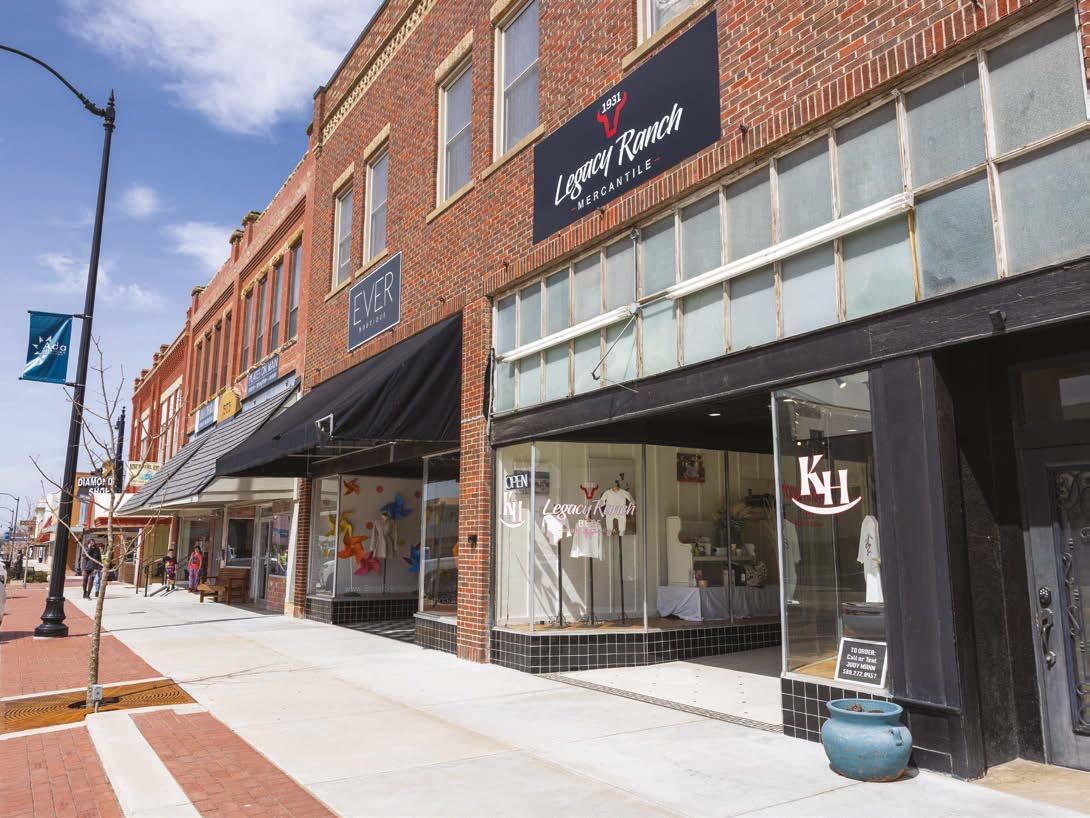
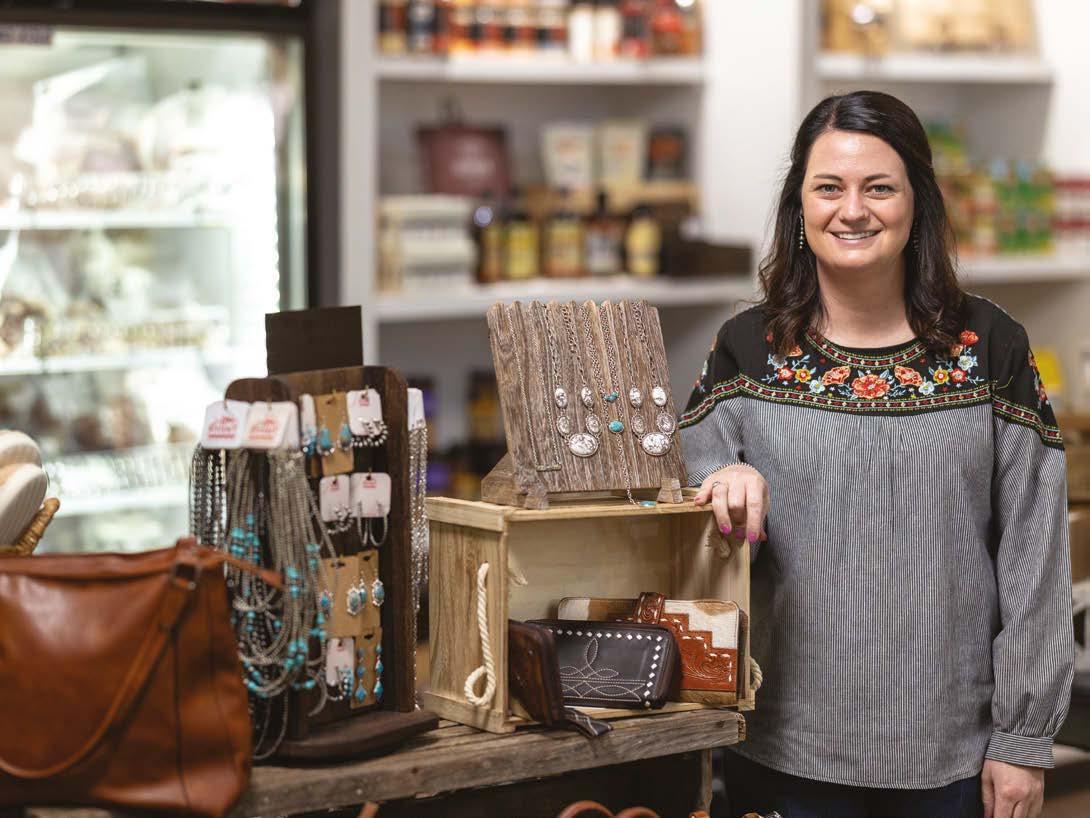
As customers walk past the entryway that houses the vending machine and step into the store, the 1931 Legacy Ranch retail space greets them with a range of boutique items like clothes and candles to a wall full of beef, seasonings and grilling supplies. The back of the store
The 1931 Legacy Ranch storefront in Downtown Ada.
houses a restaurant that features a daily lunch ranging from soups to salads to sandwiches.
All the beef in the store comes from the same producers as the chilled beef found in the vending machine. The cuts found in the store are also what you would find in a grocery store. However, this is family-raised beef.
Darling said working with the processor to get the beef cuts consumers like has been a learning experience for her and an opportunity to educate consumers who come to purchase beef.
“I think as cattle producers we’re really guilty of just assuming we know everything,” Darling said. “Once you are working with consumers every day and that’s your only focus, you realize you don’t know everything.”
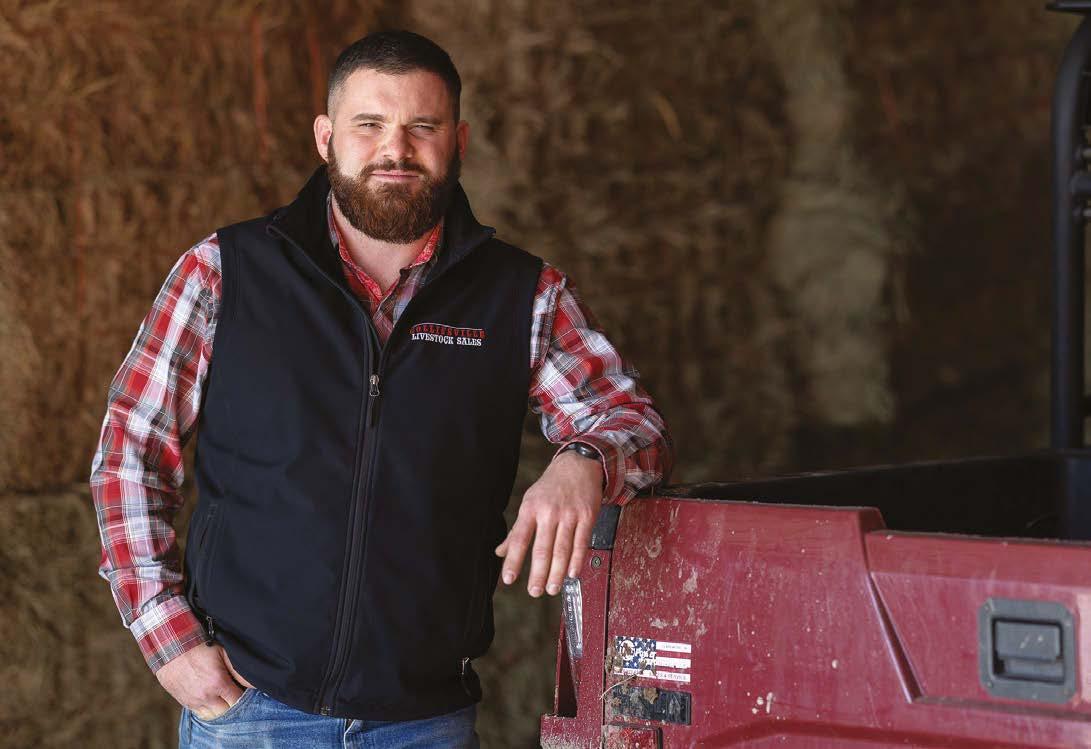
Darling said producers like herself are used to getting their own beef from the freezer and not paying much attention to the packaging or the look of the label. Consumers who come into purchase beef pay close attention to packaging and what it looks like.
The main customer base of National Livestock are cattle producers themselves and other agriculture producers who rely on National Livestock for their cattle marketing and
other cattle-related services. With the vending machine located in downtown Ada, Darling is able to market beef to everyone in the area, and not just interact with rural agricultural producers.
Darling said she has enjoyed educating the community about beef as the store uses the Oklahoma Beef Council’s flyers and cookbooks to share with customers how to prepare and cook beef.
“We have received a lot of praise stories,” Darling said. “People really appreciate having ranch-fed beef in the store. We have been told you really can taste a difference in our beef compared to what you would normally find at the grocery store.”
With the beef vending machine quietly humming along just inside the threshold of the 1931 Legacy Ranch store ensuring quality beef is available to Ada residents on errand runs around town, Darling and her staff have new and unique opportunities to provide quality agricultural products to their friends and neighbors while sharing the important work farmers and ranchers take on each and every day.
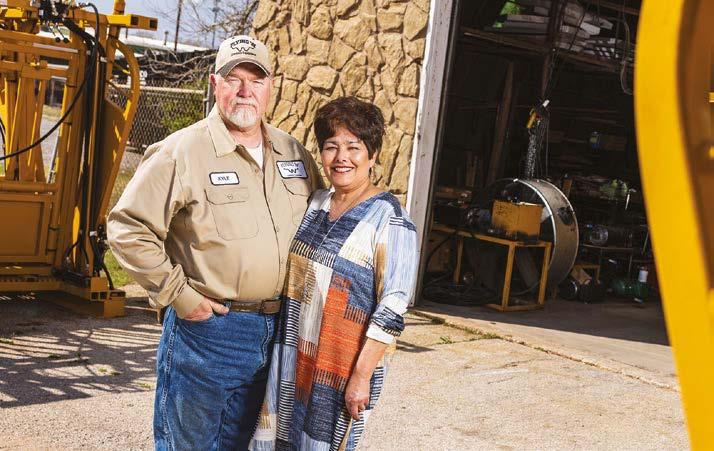
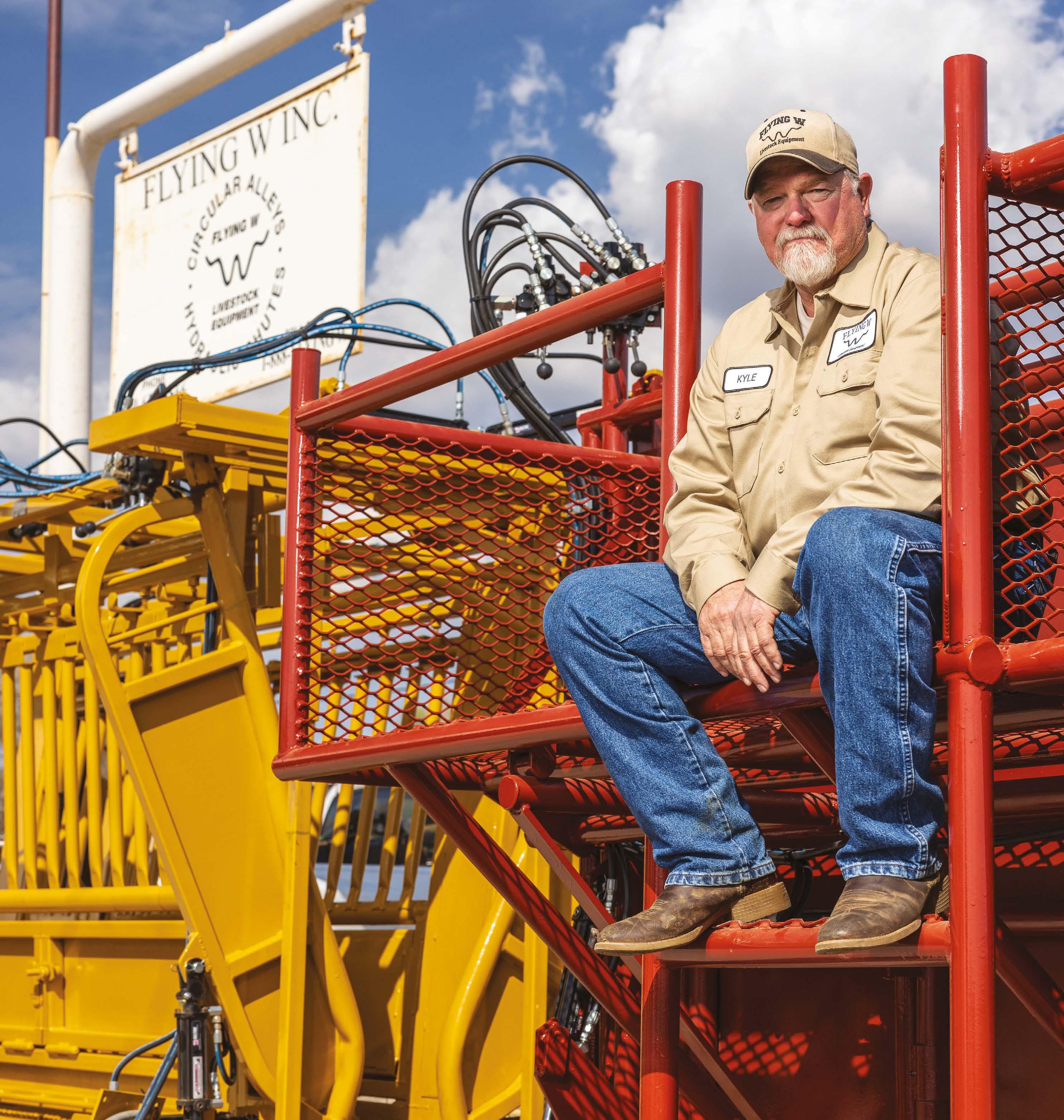
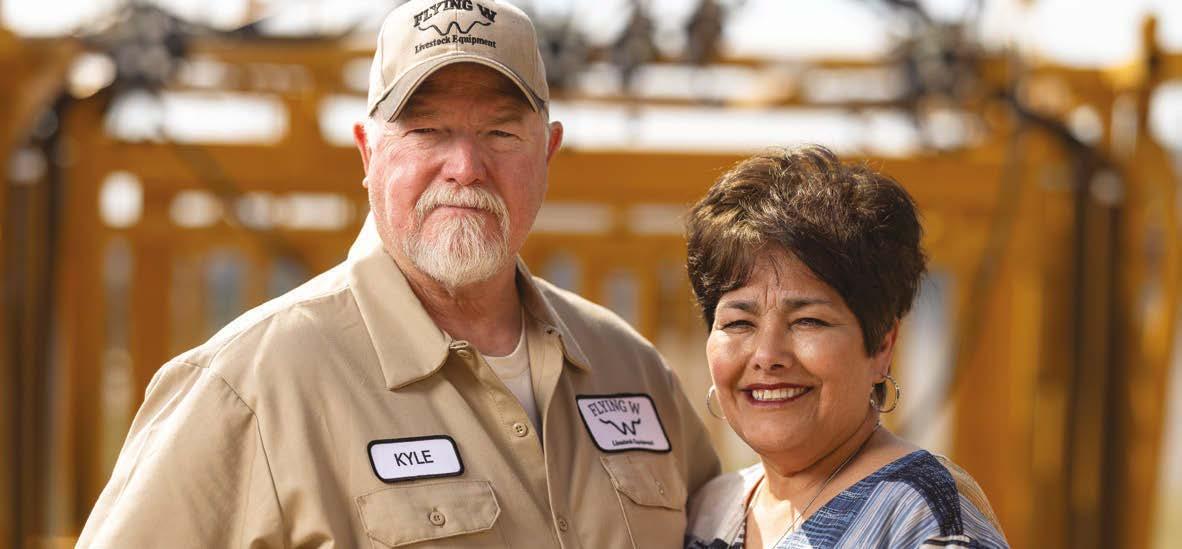
Kyle Widney, Owner of Flying W Livestock Equipment
Country
Forged With Passion Forged With Passion
The Widney family continues a tradition of building livestock handling equipment that keeps animals and agricultural producers alike safe and efficient.
Story by Rianna Chaney • Photos by Dustin Mielke
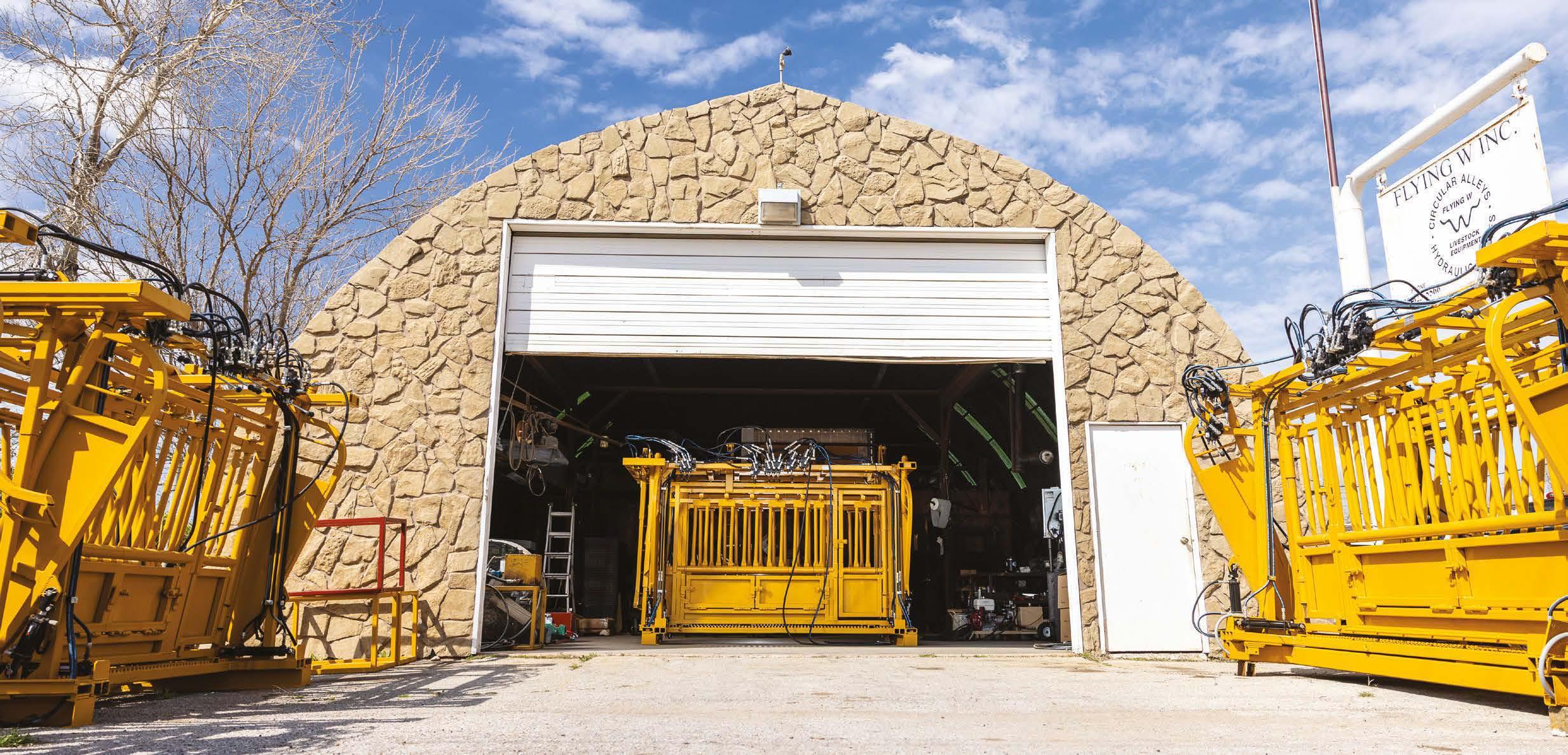
ibrant yellow livestock chutes draw drivers’ attention from the road ahead as the Flying W sign waves back and forth above them on the west side of Watonga along Highway 270. The outside of the Flying W Livestock Equipment headquarters provides just a glimpse of the history and passion that lies within.
“My dad always wanted an alleyway,” said Kyle Widney, owner of Flying W Livestock Equipment and Blaine County Farm Bureau member. “So he went and got some new steel and went into the shop and built the alley.”
That little cattle handling alleyway that Widney’s father built was the first of many to come, and it was just the beginning of Flying W Livestock Equipment.
Once Widney’s father finished building his first livestock alleyway, a neighbor liked it, so he built him one, and then another, and another, and it kept going, Widney said.
“That yellow alleyway was here before me and was the very first one,” Widney said. “I don’t run any livestock through it anymore, but it’ll stay there long after I’m gone.”
Flying W Livestock Equipment is a family-
owned and operated business in Watonga. The Widneys are celebrating 43 years in business this year with no sign of slowing down.
Beginning in the late 70s, Widney’s parents, Wilford and Darlene, started Flying W to supplement their farm income. In 1982, they officially started the business to provide their customers with high-quality livestock handling equipment to enhance their farms, ranches and agricultural operations.
Widney attributes some of his business success to growing up on a farm and gaining knowledge from working cattle himself. The family still runs a cow-calf operation and raises wheat on about 800 acres of their family farm, passed down from his grandfather. Being raised on a farm has help to strengthen Widney’s knowledge of what works when handling livestock and how to deal with cattle.
As he has worked with cattle on his family’s farm throughout the years, he has gained first-hand insight about what other farmers and ranchers might need in their livestock handling equipment while passing on some knowledge experience learned through experience to his employees.
Today, Widney works alongside his wife, Laura, a son-in-law and several dedicated employees who work together to handle everything from working with customers to building the livestock equipment to delivering it far and wide.
We don’t build just one chute and say, ‘Here’s what we got.’ We custom build our alleys, our chutes — everything.
— Kyle Widney
“When my dad started the business, he had some veterinary friends he visited with and used their ideas, and came up with the chute we have today,” Widney said. “I’ve made a few tweaks here and there, but pretty much it’s the same thing that he had going back in the day.”
The family has stayed true to emphasizing safety for both livestock and people in all their equipment. It is important to not only keep the animals safe, but also the worker guiding them through the chute as well. That is why Widney said the Flying W hydraulic chutes are built as heavy and as safe as they can be.
“When you are working with something as dangerous as cattle, you want to know it won’t fall apart,” Widney said of his livestock chutes. “We do the best we can to make a quality product.”
One safety feature that is special to Flying W chutes is a hydraulically-operated featured called a “headbender,” for which Wilford Widney received a U.S. patent. The hydraulic “headbender” safely moves the animal’s head to the side so livestock handlers do not have to contend with the animal’s head swinging back and forth. This not only protects the person operating the chute and workers tending to the animal, but also the livestock.
Another hydraulic feature the Widney family engineered holds the animal’s head in
place from the top as well a from the sides. Widney said that these two features work well together to help reduce the animal’s head movement and increase safety for all parties.
“That’s safety for you and the animal,” Widney said of the features. “You don’t want the animal whipping its head and hurting itself or hitting you up in front.”
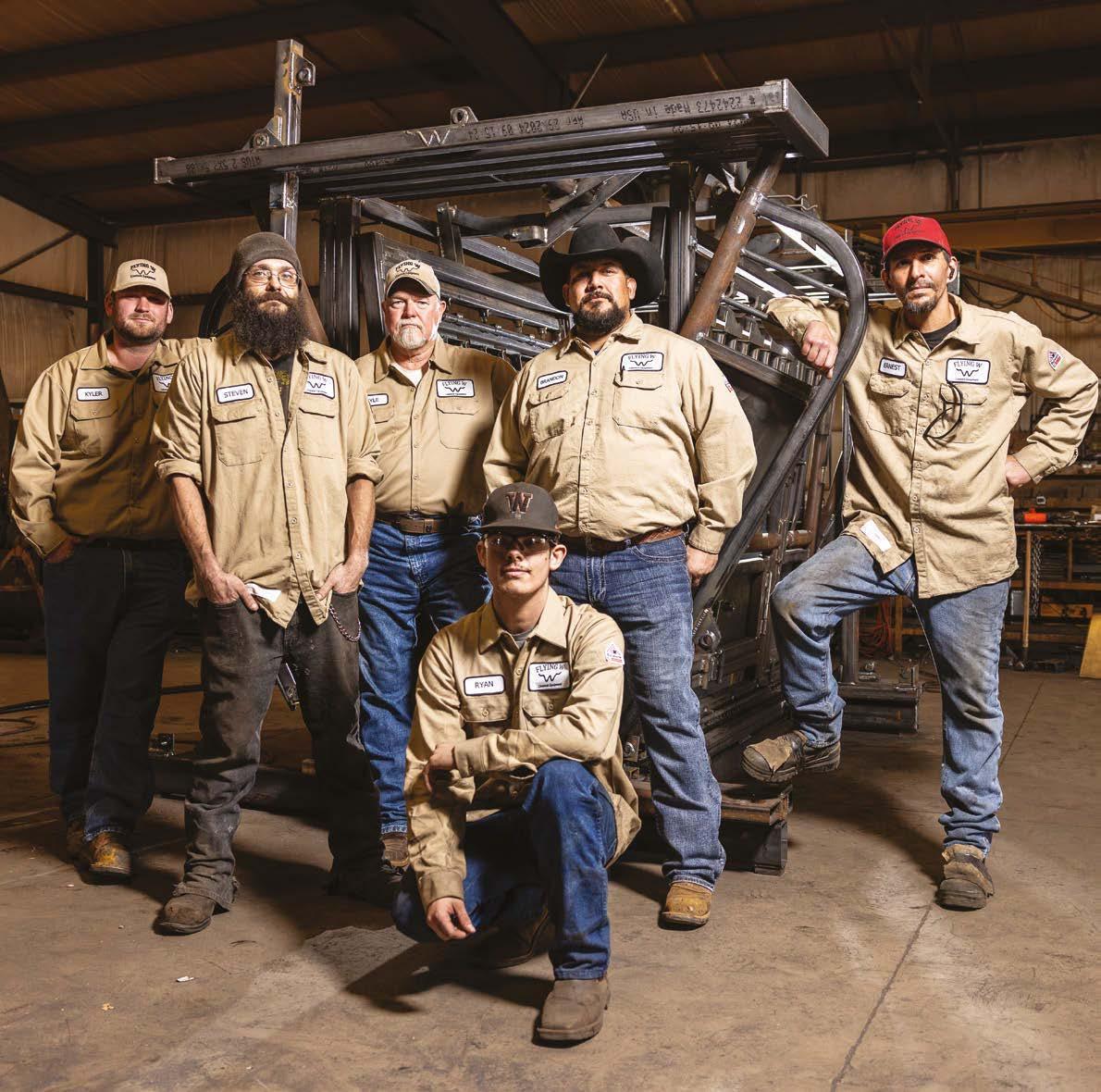
When it comes to the construction of the chutes, four to five Flying W employees work to fabricate each chute while two more workers assemble the chutes.
Each person has a specific function as they construct and assemble the chutes. One person might oversee building the side panels, while another puts together the chute floors. Once all the pieces are welded and prepared, they bring them all together to build a functional chute. After assembly, each chute gets moved into the paint shop and afterwards transitions to the hydraulic shop where all necessary hoses, manifolds and controls are added.
Widney said it takes between one and 1 1/2 weeks for a standard chute, tilt chute or big chute to progress from raw metal to assembly. Regular chutes can be built in as little as a week if everybody is on the same page and working steadily.
“Now, that is just getting it built out,” Widney said. “You still need to put hoses on, paint it, put everything on it and make sure that everything’s good. By the end of the whole construction process it ends up taking about two to three weeks.”
When it comes to chute designs, Flying W offers a multitude of options that can be
A newly completed livestock chute before it is ready to be delivered can go from raw metal to completion
Kyle and Laura Widney
customized for each customer, each of which is designed to accommodate the needs of a unique user. Widney said it comes down to being able to look at someone’s operation and see what they need to craft a final product that fits their requirements.
“We let the customer tell us what they want,” Widney said. “We don’t build just one chute and say, ‘Here’s what we got.’ We custom build our alleys, our chutes — everything.”
While Flying W is a well-known name brand amongst Oklahoma agricultural producers, they have also earned a nationwide reputation for their quality chutes.
Flying W has sold and shipped equipment to numerous farms, ranches and facilities from Florida to California and from Canada to Hawaii — even to Australia. Widney said the company has recently shipped several horse chutes to Oregon, Washington and Canada to be used by wild horse and donkey sanctuaries.
The company’s reach does not end at donkeys and horses, however. Widney said Flying W also offers chutes for bison and has even begun offering their own customized bucking chutes for rodeo stock. No matter the livestock, Widney said Flying W is prepared to make a chute to keep both livestock and workers safe and protected.
Widney said they can even provide specialized features for chutes that cater to universities and veterinarian clinics, such as head- and tail-gate guards. He said the feature is helpful for teaching purposes while also adding an extra level of safety.
A handful of universities currently use
Flying W hydraulic chutes, including schools in Colorado, Kansas, Louisiana, Alabama, Texas and several other states. Widney said that having the chutes in universities is one of the best advertisements they could have.
“As students learn at vet schools by using our equipment, when they get out and have their own facilities and get going, they’ll be used to using our equipment.” Widney said.
Widney and numerous Flying W customers will tell you that because of their quality and features, the chutes sell themselves. Widney said that the word-of-mouth reputation earned by building decades’ worth of quality chutes means the family does not advertise or market their products. Many customers will recommend the product time and time again and are loyal customers. Widney said that for the most part, customers’ only regrets tend to be not investing in one of Flying W’s chutes sooner.
“I love this business,” Widney said. “I love the people, and so many of the people we deal with are good country folk. It’s awesome to have someone see my cap and say, ‘Man you’re the person who built my chute I bought 20 years ago, and it’s still awesome.’”
From horses to cattle, from coast to coast and with multiple hydraulic equipment design options, Flying W has a chute for everyone. The family's values run deep and the passion for the business is embedded in each and every product that leaves the Widney family’s shop.
“Daddy always said that this is the good Lord’s business,” Widney said. “We’re just keeping it running.”
For more information on Flying W’s products, visit them on Facebook or check out their website at flyingwlivestock.com
Flying W’s crew builds livestock handling equipment from start to finish at the company’s location in Watonga.
chute undergoes final checks delivered to a customer. A chute completion in less than a month.
Oklahoma Helping work
Partner Profile: Oklahoma Small Business Development Center
Q&A
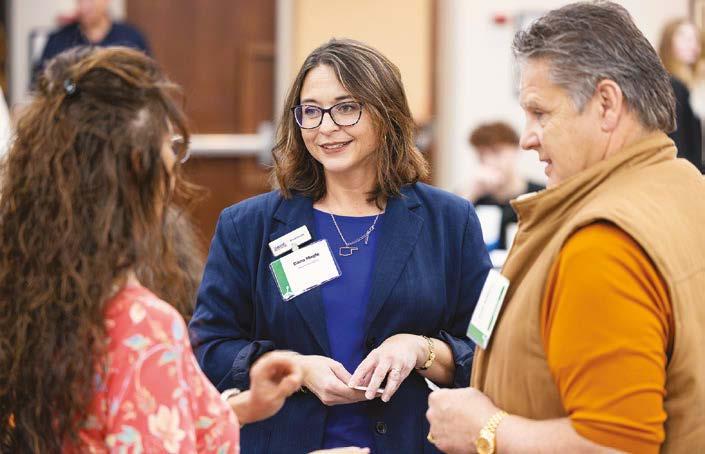
Oklahoma's Small Business Development Center serves a s a core partner of Oklahoma Farm Bureau's Oklahoma Grassroots Rural & Ag Business Accelerators Program. Together, the accelerators program, Oklahoma SBDC and other partners provide immersive business curriculum and development programming to rural Oklahoma innovators. We sat down with Dana Hugle, assistant state director of performance & operations for Oklahoma SBDC, to learn about the resources that SBDC provides for all Oklahomans and especially Oklahoma agriculture.
Q:
OWhat is Oklahoma SBDC, and how does SBDC help small businesses in our state?
ur goal at Oklahoma SBDC is to help Oklahomans start, grow, buy and sell, and expand small businesses. We follow the Small Business Administration's definitions for small businesses, which for most industries is businesses with 500 employees or less. That means 99% of businesses in Oklahoma are currently classified as small businesses. Many times, the businesses we work with have more like one or two employees or are even self-employed. We work with those types of businesses along with enterprises that are a little bit bigger and have 20 to 50 employees.
Our confidential services are available at no cost to our small business owners. Our team of approximately 30 people across the state helps support our business community. All of us have been small business owners, and we understand that not everything is black and white and that business owners function in multiple roles each day.
In that way, our advising comes from both a professional development standpoint and from real-life experience. We have areas of expertise that range from business start-up, lending, how to obtain diverse funding, marketing, sales, HR issues, buying and selling, and succession planning.
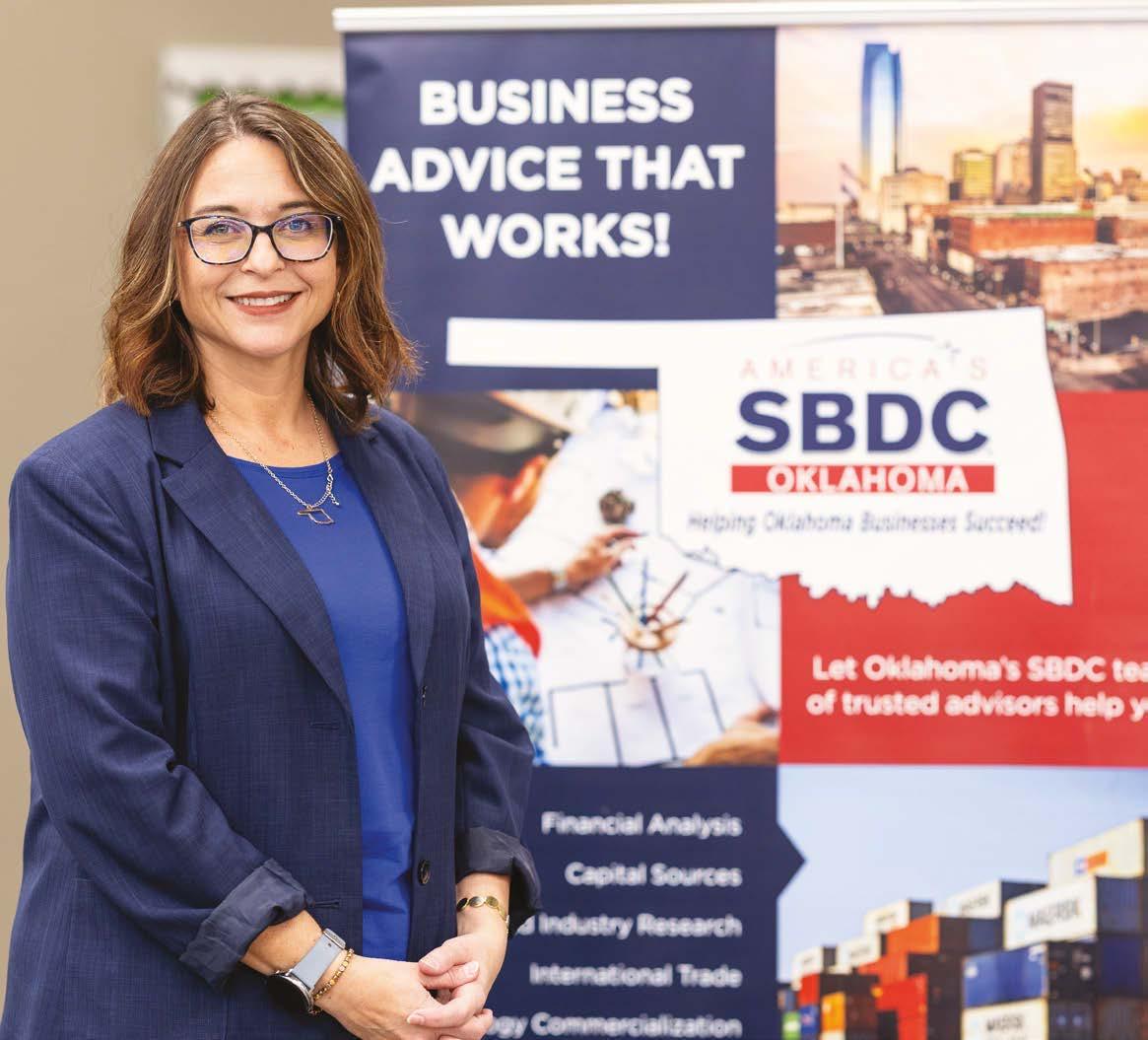
Meet Dana Hugle
Born and raised in southeastern Oklahoma, Dana Hugle grew up on farms and ranches in the Wilburton area, which instilled in her a love for rural communities.
Hugle got her start in entrepreneurship right out of college with an agritourism venture, which she later sold before shifting her career to working in healthcare administration. She then joined Oklahoma SBDC as an adviser before transitioning into the role of assistant state director of performance and operations.
We work across industries. From Main Street retail to farms and ranches and a wide variety of other businesses, our advising team provides support. It is important to note that all of our work is confidential within our team, which is really important to small businesses.
Q:
IAs you work in local communities across the state, what are some of the challenges that are unique to rural businesses?
n rural Oklahoma, we still deal with infrastructure challenges. Oftentimes that is limited internet access, but it can even be phone service issues. So in very rural parts of the state, there are struggles that can inhibit or change how someone might use technology.
We try to work with business owners to find available resources to either increase access or improve infrastructure. Sometimes that means even working with communities to identify what resources are available for the community to fix the infrastructure for all of the small business owners in that area.
That’s a great thing about our team being located across the state and having so many connections: you don't just get our team, you also get the wide network of resources that our team is familiar with. Oftentimes,
our small businesses are not able to easily identify diversification opportunities to access things like government contracts or international trade opportunities that could help them expand.
Many times business owners can feel isolated, or like they are the only one struggling with an issue or that no one else could identify with what their business is encountering. Having a business adviser who has encountered a variety of problems to use as a sounding board or to make connections to help overcome those challenges is really important.
Q:
WOur Oklahoma Farm Bureau members include many farmers and ranchers. How would our family agriculturalists benefit from connecting with Oklahoma SBDC?
e understand that farmers and ranchers are unique, and several of us who are advisers have farms or ranches of our own, which helps us understand that unique position. It truly is unique because farms or ranches are businesses, and it is important that our businesses operate at a profit.
For consumers of farm and ranch products, though, culturally there's a shift. People need some education, support and knowledge of where their food comes from. That creates an opportunity for agriculturalist to tell the story and market products, and that's not something that farmers and ranchers have always done, historically.
There's also a lot of opportunity for farmers and ranchers that don't necessarily exist in other industries. There's actually funding available to tell those stories. There's funding available to help diversify income.
I think if I could give farmers and ranchers two tips, the first would be to make sure that finances are being kept separately as a business and not being co-mingled with personal finances or assets. That can be really easy to do, especially for smaller farms and ranches.
My second tip is to work with an adviser, whether that is an SBDC adviser, an accountant, a lender or someone else who can provide an outside perspective of the farm or ranch as a business, so that producers can start to shift their mindset. Then additional revenue streams can be identified and considered.
Statistically, many of our farms and ranches have an off-farm income source. Maybe it's somebody who is working off the farm to help support the farming endeavor. That gives us a chance to ask how we can combine some of those skill sets to really bring back that knowledge and experience to the farm. I think there's a lot of opportunity there.
Q:
OAs a program partner, what role does Oklahoma SBDC play in our Oklahoma Grassroots Rural & Ag Business Accelerators program?
klahoma SBDC comes in alongside the Farm Bureau team and each one of the program applicants – and I say applicants because you don't have to be accepted into the program to work with an SBDC adviser. So even those who aren't quite ready for the accelerators program get the opportunity to work with one of our advisers so they can be prepared for the next cycle.
Innovators who are accepted into the program work not just with one SBDC adviser, but they have a whole team of advisers who come around them and offer support in multiple areas.
We help with the curriculum development with the Farm Bureau team and with other partners. We also have one-on-one meetings with our clients, and we have strategy meetings alongside the Farm Bureau team to help with the day-to-day work and the homework of the accelerator.
Our advisers work one-on-one with the entrepreneurs and the founders in the program to make sure they have a pathway forward. We help with day-to-day assistance when we are working to develop a business plan. There are many business tools available, but not everyone is comfortable with the language or space of business. Oklahoma SBDC advisers get to act as an interpreter and connector.
And then as cohort members move through the program, advisers come back and evaluate and help provide an additional support system. Once participants graduate from the program, advisers continue to work with entrepreneurs to identify other opportunities as they move forward, and they can continue to stay connected to their Farm Bureau resource team as well.
Q:
TIf a Farm Bureau member, or any Oklahoman, wants to connect with Oklahoma SBDC to learn more, what is the best way to do that?
he best way to connect with Oklahoma SBDC is to check out our website at oksbdc.org. You can register for advising, and a team member will reach out.
Another way to learn more is to check out our workshops. We do offer virtual workshops, but if someone is located in an area without great internet access, they can reach out to us via phone, and we will have our training coordinator work to bring an in-person workshop into that area.
Learn more about Oklahoma SBDC advising, workshops and more on their website at oksbdc.org.
OKFB supports ag youth with more than $70,000 in sponsorships at OYE
Oklahoma Farm Bureau continued the organization’s tradition of supporting Oklahoma’s agricultural youth by purchasing premiums at the 2025 Oklahoma Youth Expo Sale of Champions Friday, March 21, in Oklahoma City, in addition to overall sponsorships of Oklahoma’s largest youth livestock show.
OKFB’s financial support of OYE in 2025 totaled more than $70,000.
OKFB purchased more than $43,000 worth of premiums at the sale, supporting 64 4-H and FFA members who showcased their livestock in the sale ring.
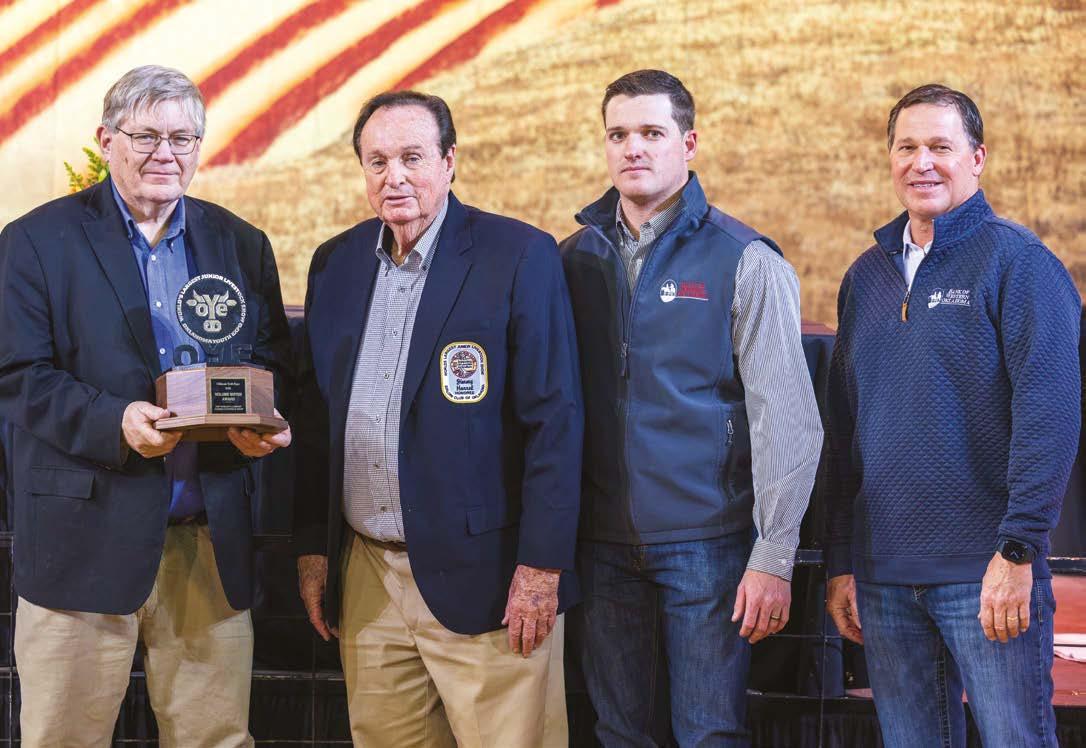
At the beginning of the sale, OKFB was recognized as the purchaser of the most animals at the 2024 sale with the
OYE volume buyer award.
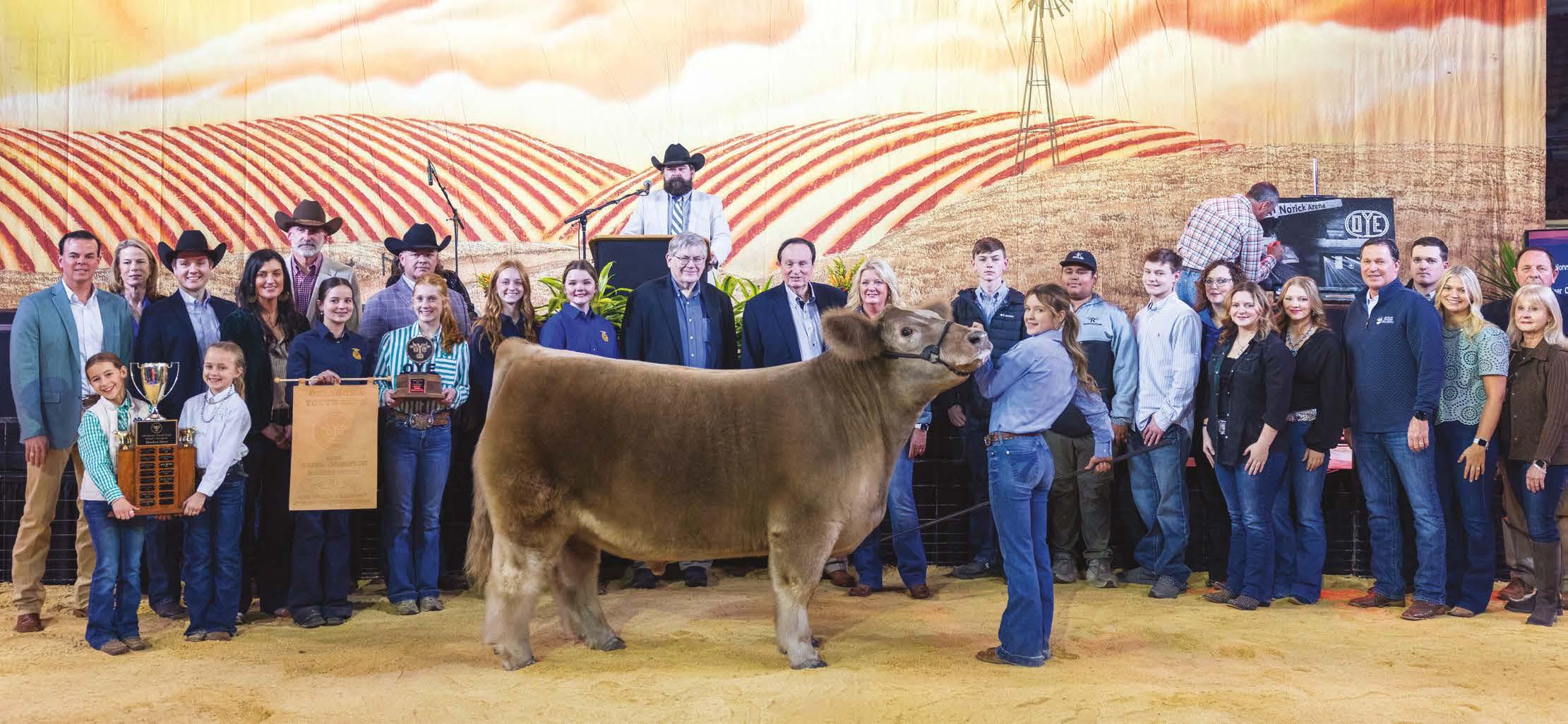
In addition to the support of students’ livestock projects at the sale, OKFB supported OYE as a platinum sponsor, including sponsorship of the ag mechanics and engineering contest. OKFB also purchased the chalice for the OYE grand champion steer, which was exhibited by Madilyn Norvell of the Amber-Pocasset FFA chapter.
Beyond monetary sponsorships, the OKFB Foundation for Agriculture hosted a hog carcass contest and collected donated pigs for the foundation’s Pork for Packs program, which provides protein sticks to hungry Oklahoma children in collaboration with the Regional Food Bank of Oklahoma and the Food Bank of Eastern Oklahoma.
Above | OKFB purchased the 2025 Oklahoma Youth Expo Grand Champion Steer chalice trophy which was exhibited by Madilyn Norvell of the Amber-Pocasset FFA chapter.
Above | OKFB President Rodd Moesel accepts the 2024 volume buyer award during the Sale of Champions.
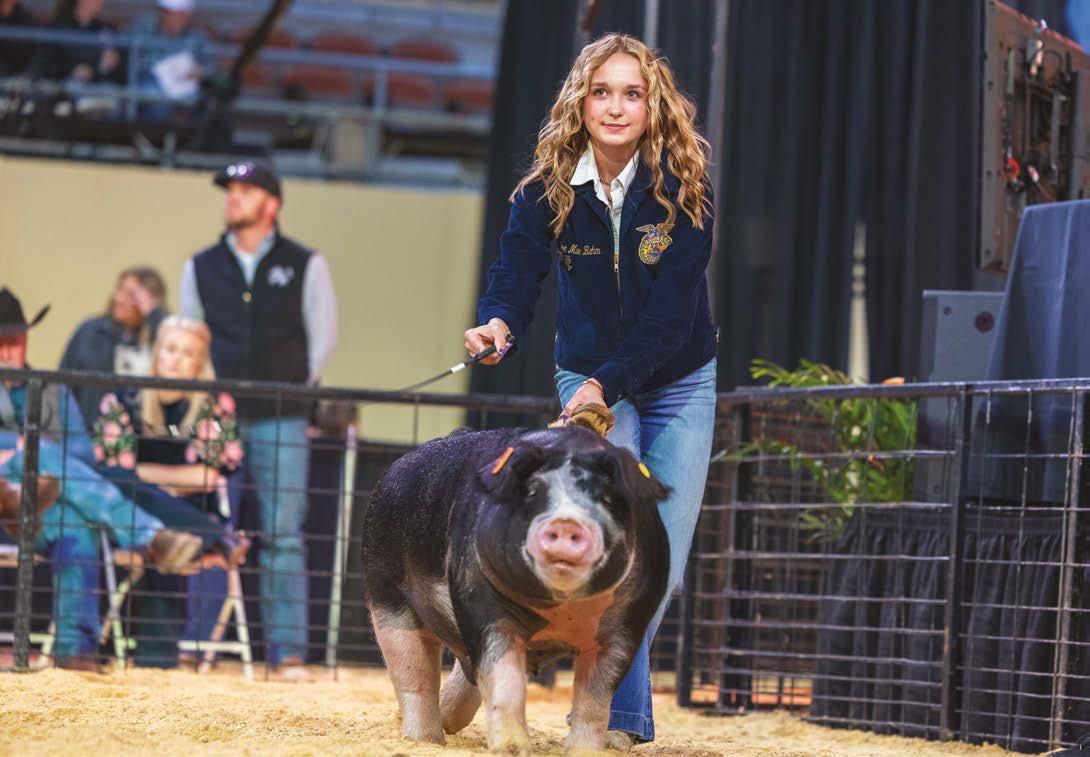
Above | Kilee Blehm, of the Mullhall-Orlando FFA chapter brings her Reserve Champion Poland barrow into the sale ring.
Legislators, celebrities and special guests participate in Legislative Showmanship contest during OYE
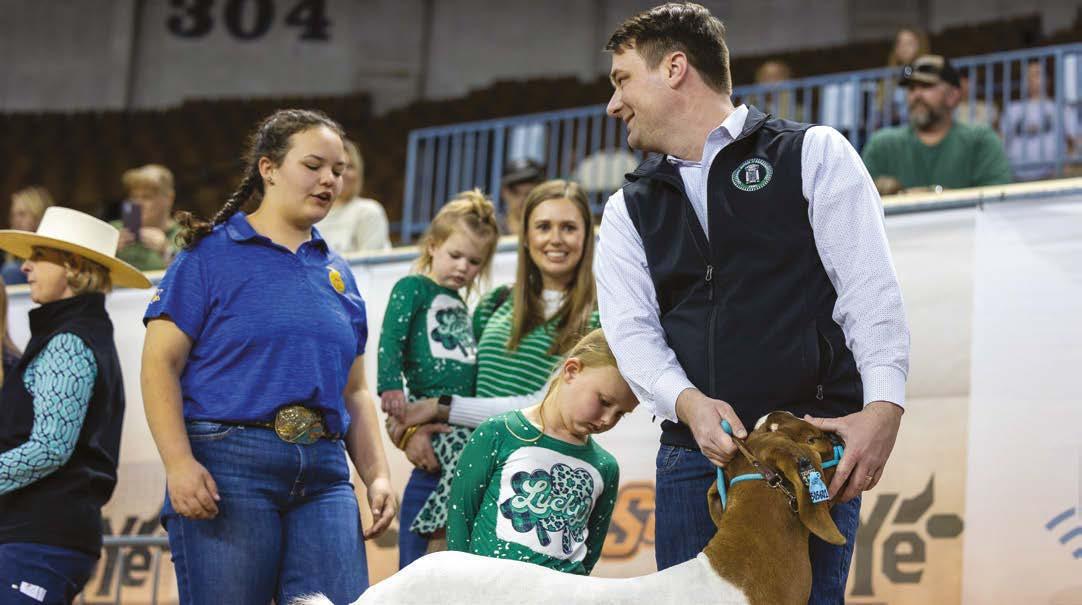
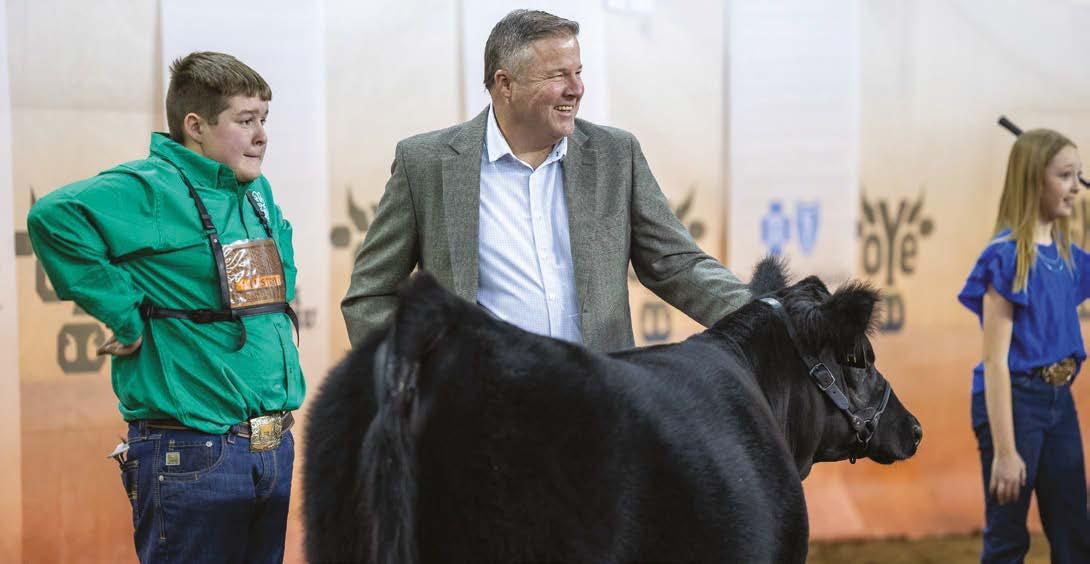
Oklahoma legislators, celebrities and special guests stepped into the show ring with Oklahoma Youth Expo exhibitors for the OYE and Oklahoma Department of Agriculture, Food and Forestry’s Legislative Showmanship exhibition Monday, March 17.
Legislators were paired with either a 4-H or FFA member who exhibited livestock during the show as they worked together to compete for top showman recognition.
Numerous rural legislators who participated included Rep. John Pfeiffer, Orlando; Rep. Anthony Moore, Clinton; Senate Pro Tem Lonnie Paxton, Tuttle; Speaker of the House Kyle Hilbert, Bristow; and Rep. Brian Hill, Mustang.
Through the event, legislators gained the hands-on experience of showing an animal in the show ring as 4-H and FFA members had the opportunity to coach the legislator with which they were paired.
OKFB Foundation for Agriculture hosts inaugural carcass contest with donated pigs during OYE
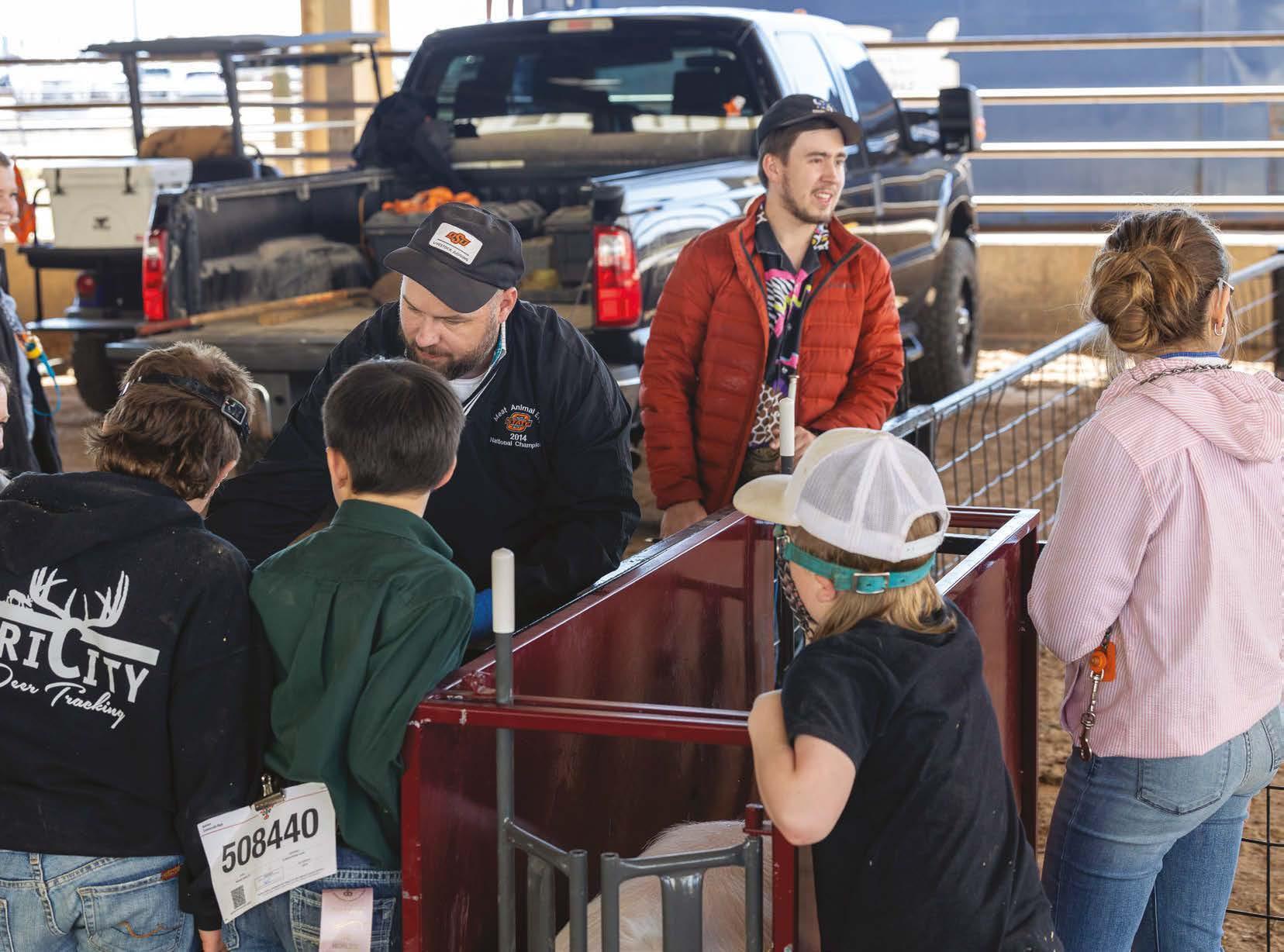
The Oklahoma Farm Bureau Foundation for Agriculture hosted inaugural carcass contest during the 2025 Oklahoma Youth Expo.
The carcass contest works as part of with the OKFB Foundation for Agriculture's Pork for Packs program to increase the amount of pigs donated to the Regional Food Bank of Oklahoma for protein sticks.
Oklahoma State University's Justin Crosswhite ran the ultrasound loin wand machine across the loins of pigs entered into the carcass contest to assess the quality of the animal.
Once the results are back from the loin scans, the students who donated the top 10 hogs will be selected to win cash prizes.
Above | Speaker of the House Kyle Hilbert sets up a goat during the 2025 Legislative Showmanship contest.
Above | Justin Crosswhite shows 4-H and FFA members the carcass score while scanning the pigs loin for the Oklahoma Farm Bureau Foundation for Agriculture Carcass Contest.
Above | Senate Pro Tem Lonnie Paxton poses with a steer for the judge during the 2025 Legislative Showmanship contest.
OKFB
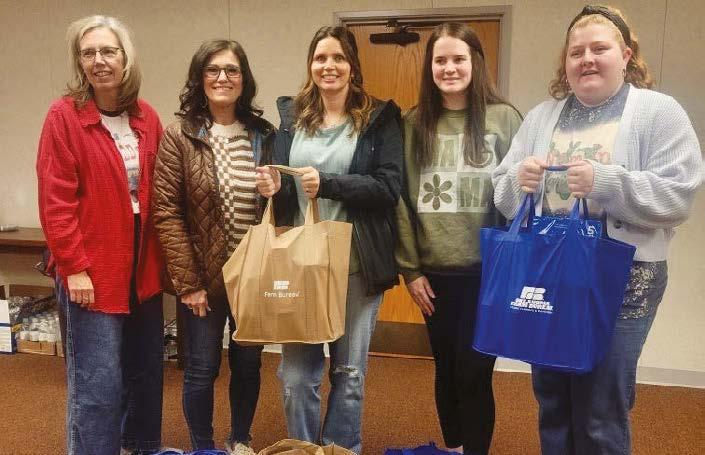
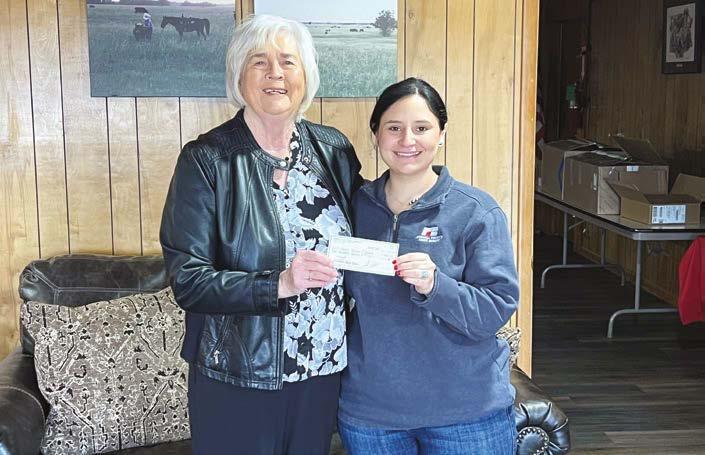
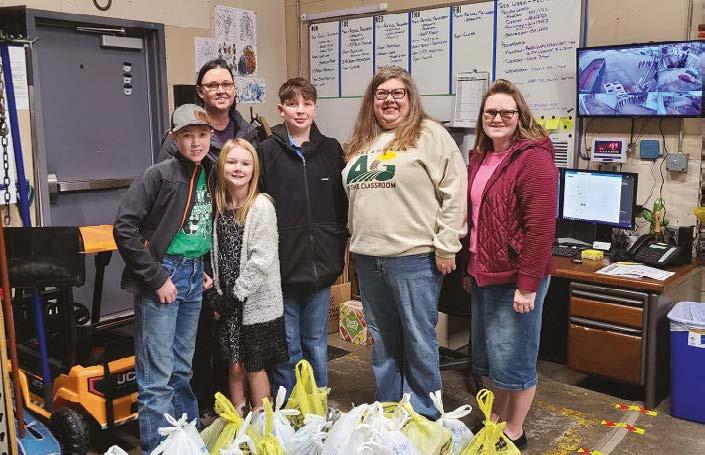
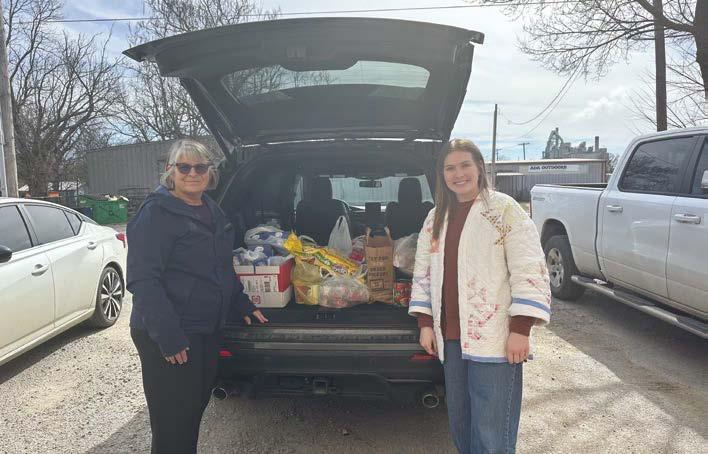
YF&R committee collects more than 2,000 pounds of food with Fill the Sack food drive
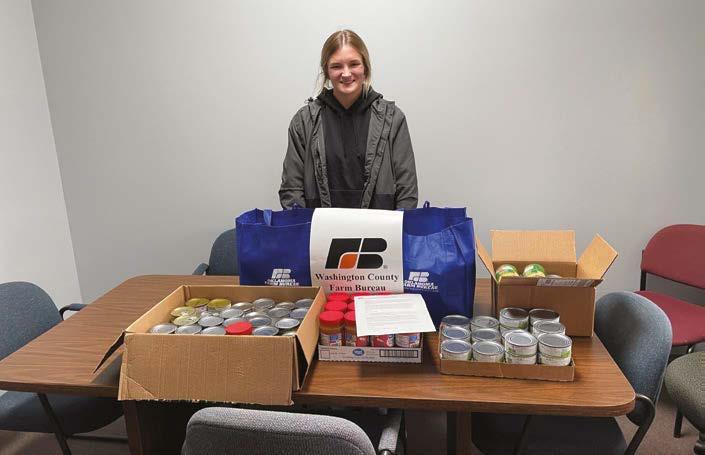
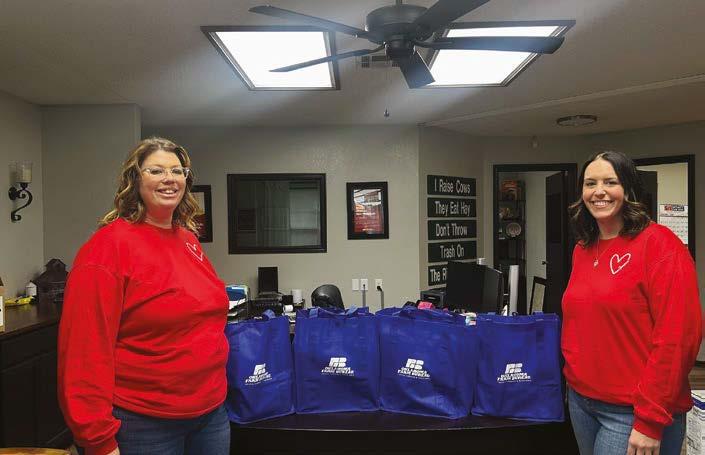
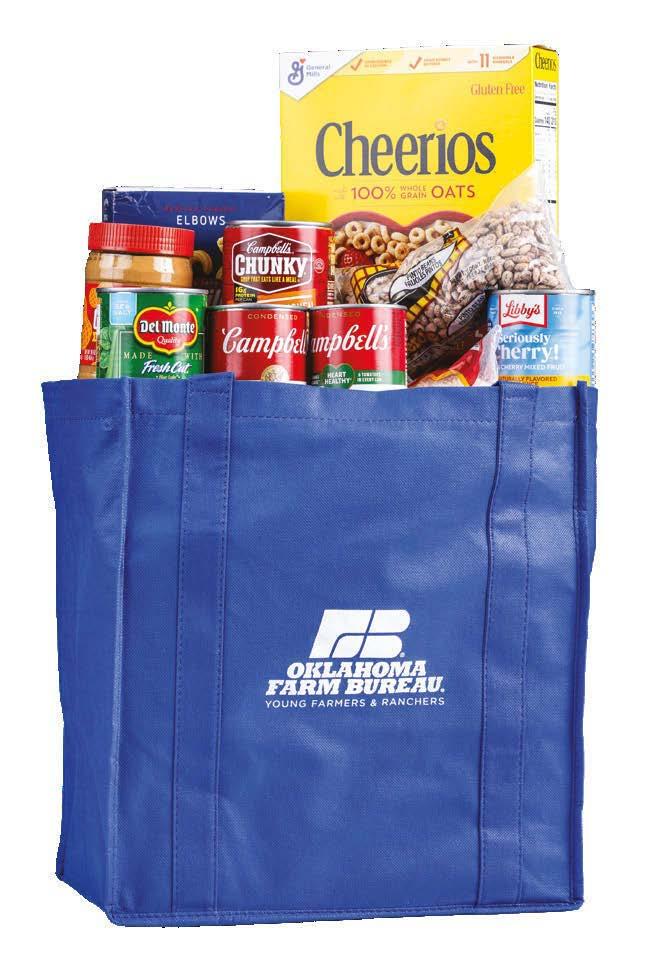
The Oklahoma Farm Bureau Young Farmers and Ranchers committee gathered more than 2,000 pounds of food plus cash donations to help feed Oklahomans facing food insecurity through the committee’s Fill the Sack food drive.
The food drive collected a total of 2,036 pounds of food items along with $1,425 in cash contributions that were donated to local food assistance programs across the state and to the Regional Food Bank of Oklahoma in Oklahoma City.
“Our Young Farmers and Ranchers are proud of the donations our Farm Bureau members and county organizations from all across our state made to help our fellow Oklahomans who face food insecurity,” said Jacob Beck, OKFB YF&R chair. “As farmers
and ranchers who are committed growing and raising the crops and livestock that help feed Oklahomans, it is important for us to do our part to ensure that no Oklahoman goes to bed hungry.”
County Farm Bureau offices served as donation collection points for local Farm Bureau and community members to donate food or money. More than 30 county Farm Bureaus directly contributed donations to the food drive along with the OKFB Women’s Leadership Committee and Farm Bureau staff.
The food drive ran from January through mid-February with the OKFB Leadership Conference on Feb. 18 serving as the main collection point for donations made by county Farm Bureaus.
2,036
$ 1,425
Number of county Farm Bureaus participating: More than
30 pounds Total pounds of food donated: Total cash contributions:
Washington County
Haskell County
Pontotoc County
Hughes County
Mayes County
Payne County
Five rural Oklahoma innovators share their ideas at OKFB accelerators program Demo Day
The Oklahoma Grassroots Rural & Ag Business Accelerators Demo Day gave five Activate Oklahoma rural development pipeline cohort members the opportunity to share their innovations.
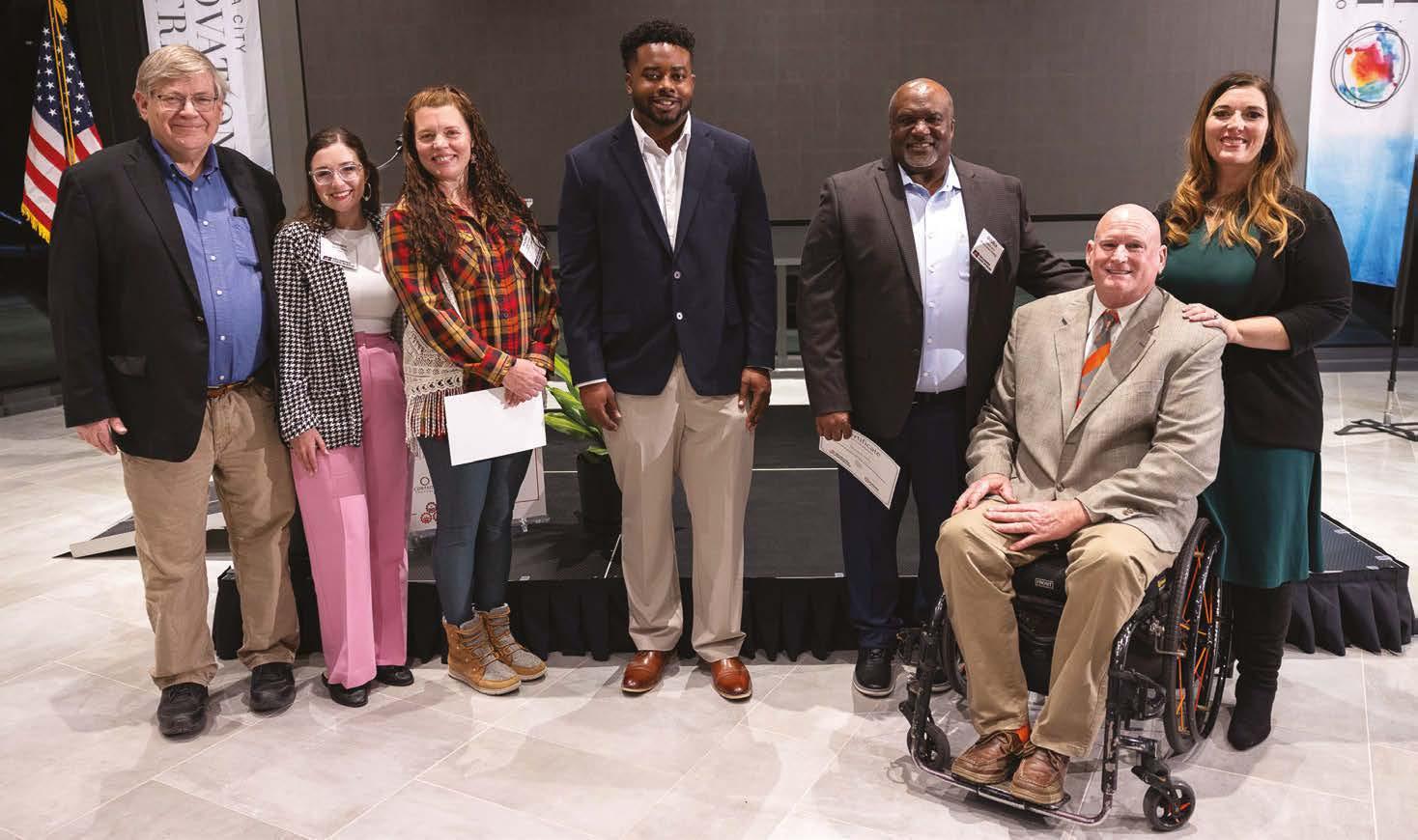
Five rural Oklahoma innovators presented their inventions and ideas to a gathering of investment partners and Farm Bureau guests at Oklahoma Farm Bureau’s Oklahoma Grassroots Rural and Ag Business Accelerators Demo Day Wednesday, Feb. 5, in OKC.
Demo Day was the culmination of the accelerator program’s Activate Oklahoma rural innovation pipeline for the Fall 2024 program cohort, which featured rural Oklahoma businesses located in Minco, Fairview, Wagoner and other local communities.
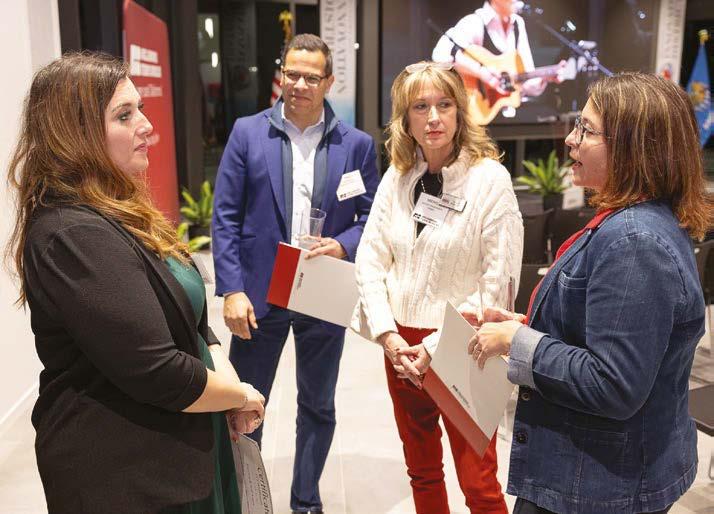
Activate Oklahoma participants had five minutes to present their innovative ideas to attendees during the program. The innovators each hosted a booth where they showcased their ideas and visited one-on-one with potential investors, Farm Bureau members and members of the news media.
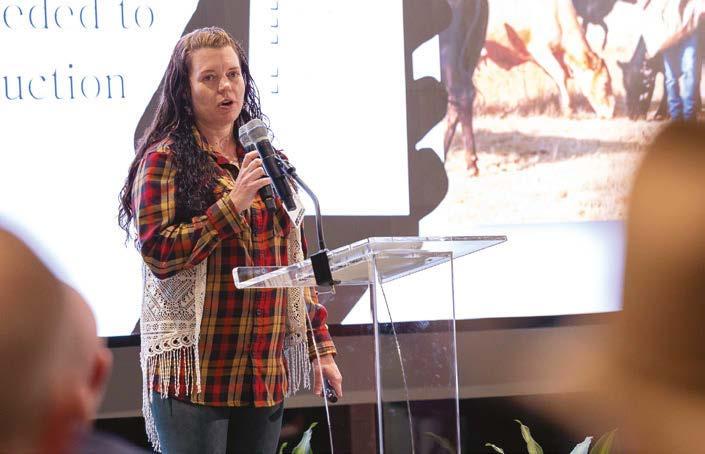
“I am thrilled that I decided to jump into Activate Oklahoma,” said entrepreneur and cattle producer Rachael Cooper with Well Fed, who presented during Demo Day. “I now feel like I really have the tools necessary to take the next step.”
Cooper presented her innovative cattle feed calculator during demo day, which she said can save cattle producers money on feed.
Also presenting innovations at Demo Day were A2Ag of Fairview, which integrates drone technology with targeted
herbicide application to eradicate invasive eastern red cedar trees; Blackjack Legacy of Minco, which connects Oklahoma cattle producers with consumers through a school-based fundraising program; CASSIE, which has developed a cutting-edge air filtration system; and Invision Smart Window, which has created a unique color-changing window technology that helps protect users from UV radiation.
The five businesses will now be considered for possible capital investment by investment partners who attended Demo Day.
“While we recognize that Activate Oklahoma can’t solve all the rural development issues in rural Oklahoma, the program is an excellent opportunity to help make a dent,” said OKFB President Rodd Moesel. “It sets an example and encourages more people to realize they can dream up businesses in rural Oklahoma.”
A graduation ceremony was held for the five businesses at the conclusion of Demo Day, marking their completion of the Activate Oklahoma program’s comprehensive, handson business curriculum.
“I think that there are other people out there who have ideas and just don’t know where to start,” Cooper said. “Activate Oklahoma really does give people the opportunity to take a step forward into a world that they’ve never been part of.”
Above | From (L to R) Rodd Moesel, OKFB president; Amarie Bartel, OKFB economic development coordinator; Rachael Cooper, Well Fed; Eric Garrison, CASSIE; Dunrick Yetts, Invision Smart Window; Matt Gard, A2Ag; and Katrina Avers, Blackjack Legacy
OKFB members “Step Up, Drive Forward” at 2025 AFBF convention
More than 60 Oklahoma Farm Bureau members traveled to San Antonio for four days of action-packed sessions, competitions, networking and more during the 2025 American Farm Bureau convention Jan. 25-28.
The event kicked off with the annual meeting of AFBF Women where OKFB Women’s Leadership Committee members represented Oklahoma in the business session. WLC members also attended the AFBF Women’s regional caucuses and a meet-and-greet breakfast with fellow Farm Bureau women from around the nation.
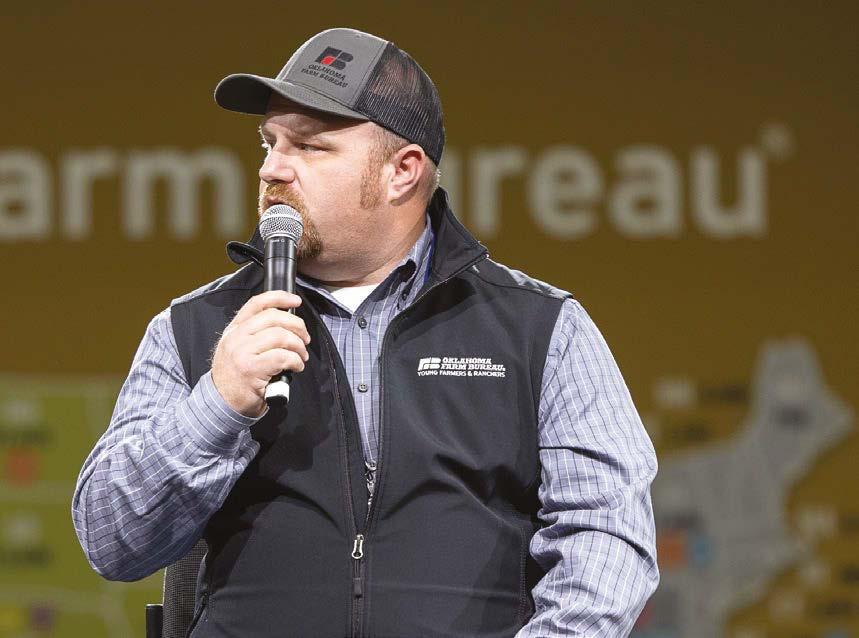
OKFB’s Young Farmers and Ranchers members represented Oklahoma in three AFBF YF&R competitive events held during convention. Jacob Beck of Logan County competed in two rounds of the YF&R Discussion Meet and Jaclyn Darling of Coal County shared her agriculture story with judges as
part of the Excellence in Agriculture competition. Garrett Haskins of Kay County represented Oklahoma in the YF&R Achievement Award competition, which recognizes agriculturalists ages 18-35 who earn the majority of their income from production agriculture.
OKFB members attended the three convention general sessions where they heard from AFBF President Zippy Duvall and several keynote speakers and Farm Bureau guests. Numerous awards were presented during the general session, including AFBF’s State Awards of Excellence. OKFB earned awards for outstanding activities and programs in all four SAE program areas.
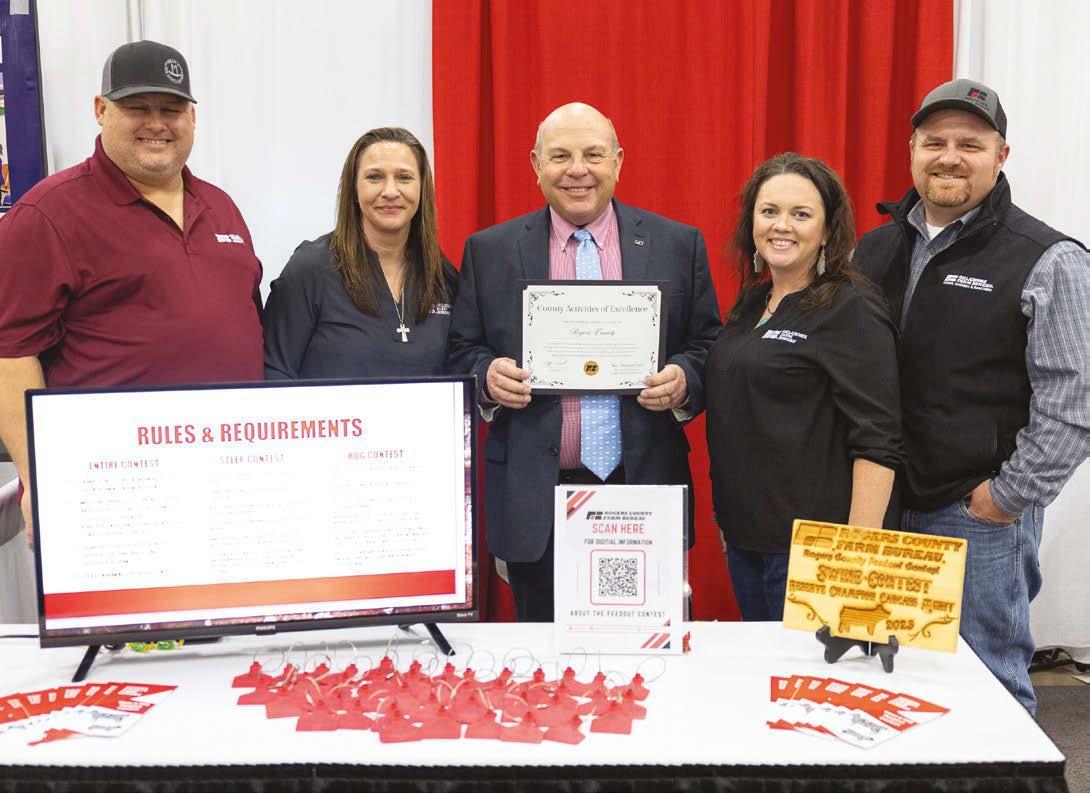
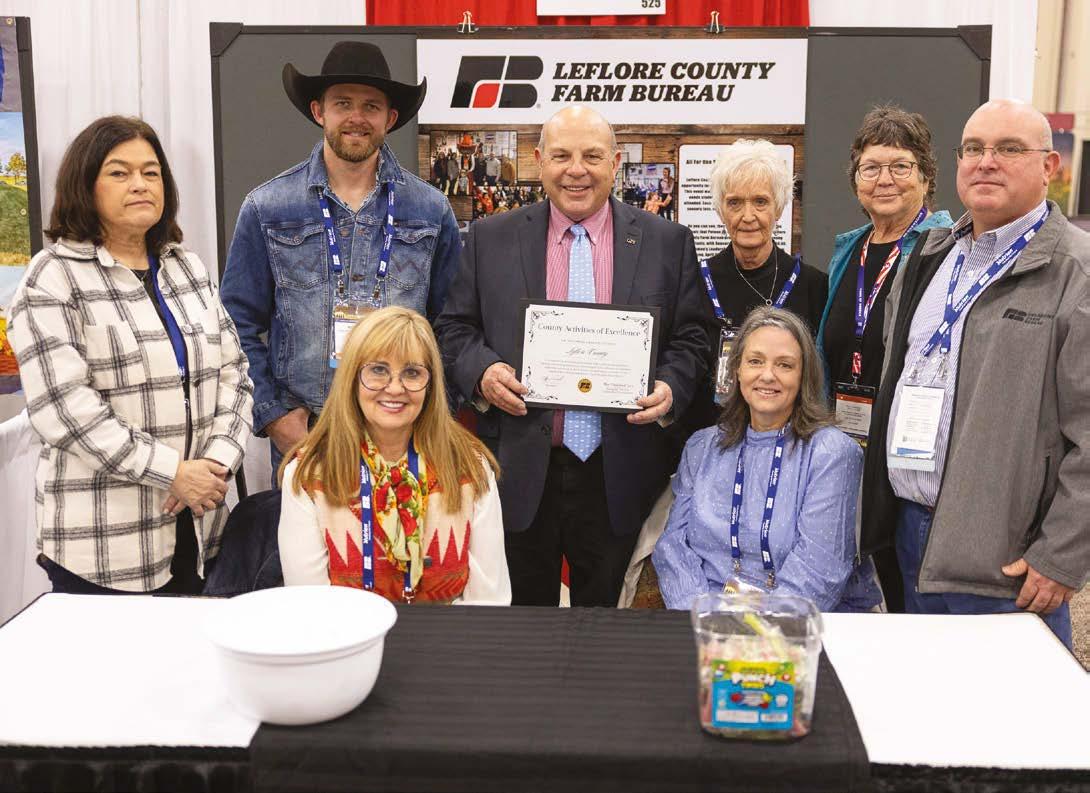
Members had the opportunity to attend the trade show where both Rogers County Farm Bureau and LeFlore County Farm Bureau hosted booths to showcase their award-
winning programs as part of AFBF’s County Activities of Excellence Awards program.
Numerous breakout sessions were offered to Farm Bureau members including updates on the farm bill, tips for sharing the agriculture story with consumers, member engagement and more.
Whitney Lawson, Canadian County Farm Bureau member, was featured as a panel participant in the “What Farmers Think About Stress and Mental Health” breakout session on Sunday, Jan. 26. During the session, Lawson and two fellow Farm Bureau members shared their stories and discussed their mental well-being journey to help share the importance of recognizing and addressing mental health in the agriculture community.
OKFB members gathered for a group breakfast on Monday, Jan. 27, to celebrate the contestants and
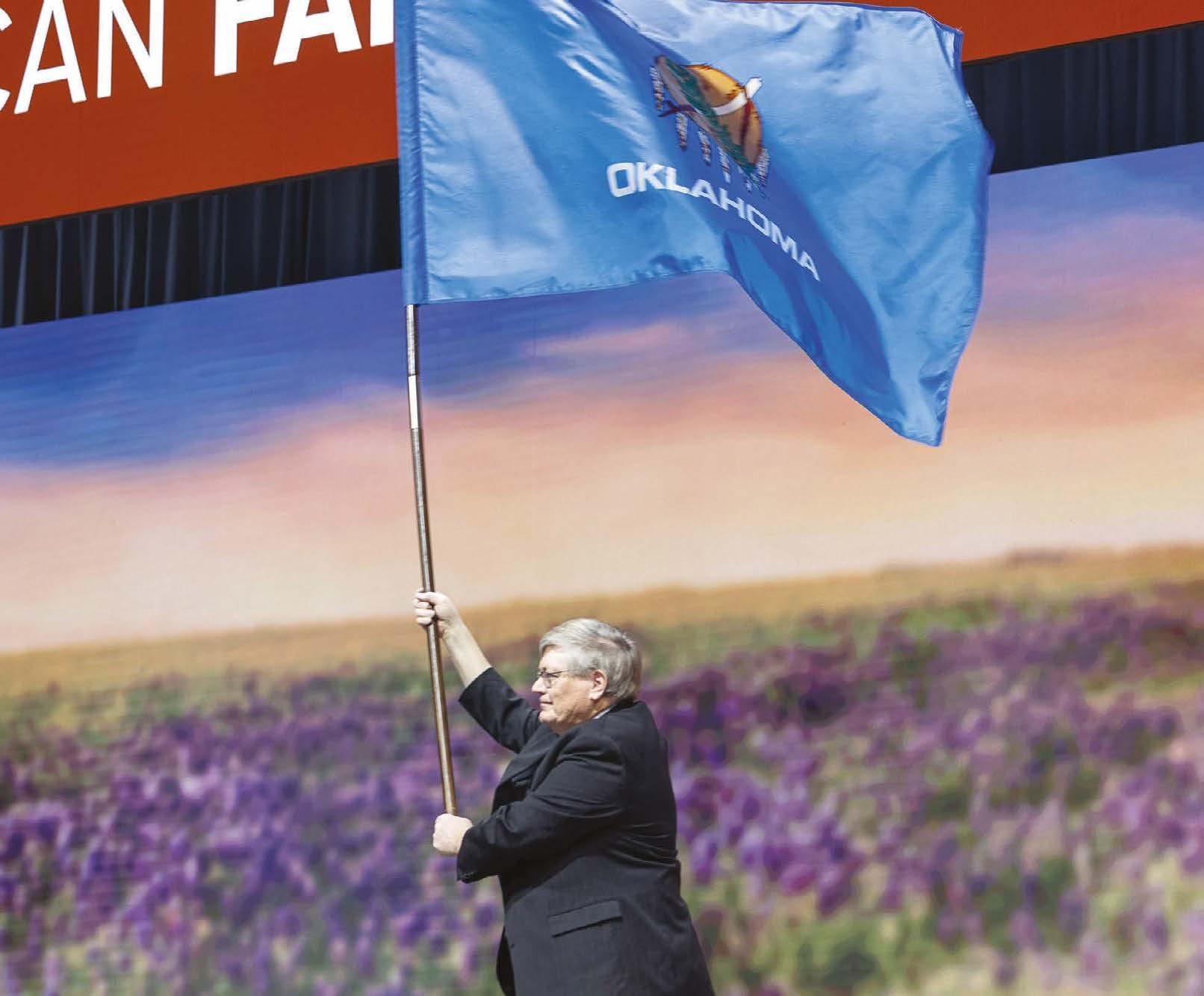
Above | OKFB President Rodd Moesel carries the Oklahoma state flag during the kickoff of the opening session during the 2025 AFBF Convention in San Antonio.
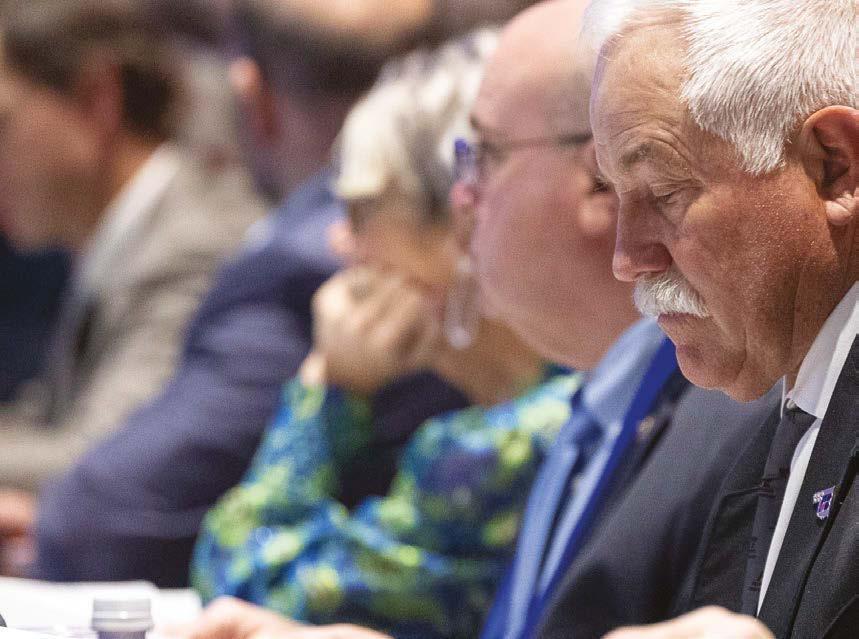
Top | OKFB voting delegates consider grassroots resolutions submitted from around the country during the AFBF business meeting.
convention in San Antonio
convention participants while sharing convention updates and details on OKFB’s activities and programs.
The meeting concluded with the convention business session where farmers and ranchers from around the nation considered and voted on grassroots policy proposals to set the organization’s policy for the coming year. OKFB’s five delegates represented Oklahoma agriculture during the discussions, which hit upon topics ranging from agricultural labor to tax policy and from alternative energy production to trade.
During the business meetings, OKFB President Rodd Moesel was re-elected to a two-year term on the AFBF board of directors.
For more information on the 2025 AFBF convention, visit annualconvention.fb.org.
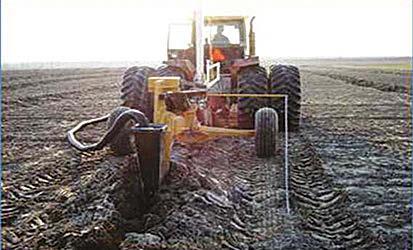
The soil on your farm or ranch is rich with nutrients and minerals... AND underground pipelines. CALL 811 BEFORE YOU DIG, in order to notify utility companies who will be afected by the excavation. The company will respond to your call and mark their facilities in your work area. This is a FREE service.
No one digs more dirt than America's Farmers and Ranchers. No matter if you're deep tilling, drain tiling, ditch cleaning or moving heavy loads. Understanding what's below ground will help you DIG SAFELY. CALL 811 BEFORE YOU DIG, EVERY TIME!!!!!
www.commongroundalliance.com www.call811.com
www.kindermorgan.com/public_awareness
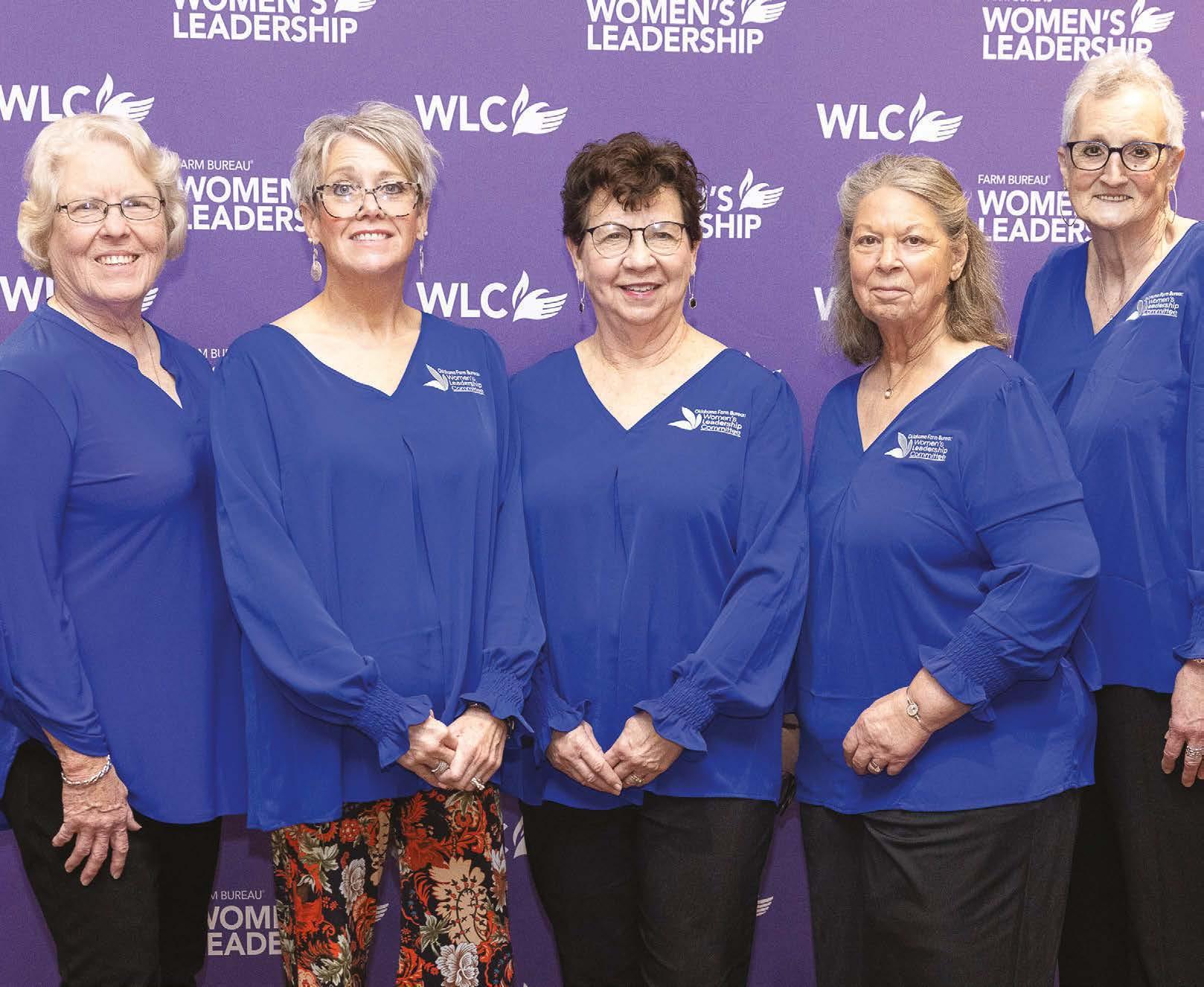
Above | OKFB WLC representatives (from L to R) Mary Jo Peeper, District 7; Cyndi Mackey, District 5; Mignon Bolay, WLC Chair; Cindy Schoenecke, District 9; and Robin Bryant, District 1.
Bottom | Rogers County Farm Bureau member Chris Hoskins shares his county's award-winning feed-out contest on the AFBF Cultivation Center stage.
LeFlore, Rogers County Farm Bureaus recognized with national awards at 2025 AFBF convention
Oklahoma’s LeFlore County Farm Bureau and Rogers County Farm Bureau were each recognized with County Activities of Excellence Awards at the 2025 American Farm Bureau convention in San Antonio, Texas, in January.
The counties were two of 24 counties recognized by AFBF for their commitment to offering quality programming to their counties to promote Farm Bureau and support their local agriculture communities.
“It’s a pleasure to recognize these outstanding volunteer-driven programs,” said AFBF President Zippy Duvall. “The county leaders responsible for these awardwinning programs are committed to supporting rural communities and helping their urban neighbors better understand agriculture.”
LeFlore County Farm Bureau was recognized for their Women’s Leadership Committee’s involvement in the local All for One special needs livestock show held during the local fair. The event gave more than 80 special needs students the opportunity to experience showing animals in the ring.
“It gave the students a chance to be acknowledged and celebrated, and it was just truly amazing,” said Susan Schaufelberger, LeFlore County WLC member.
“For anyone who likes to volunteer their time, it is just very rewarding,” Schaufelberger said. “You get those rewards back ten-fold, sometimes touching someone’s life
who may never have access to a farm, a ranch or anything agricultural.”
Rogers County Farm Bureau earned a CAE award for their steer and hog feed-out contest, which gave area students an opportunity to feed a steer or hog to be scored solely for carcass merit and rate of gain.
Rogers County member Chris Hoskins said the event teaches students real-world skills required to raise quality animals that will provide healthy and nutritious protein to consumers in the same way that farmers and ranchers in their area work every day.
“I think it’s an important program that lets kids go from start to finish,” Hoskins said. “At the end of it they have a product they can feed their families with or sell and help feed people in their communities with.”
Hoskins also had the opportunity to share details about the event to an audience of Farm Bureau members on the Cultivation Center Stage in the AFBF trade show.
“I was honored to be one of the counties they brought on stage,” Hoskins said of the opportunity to share their program. “We got to have a mic and be in front of everyone, and we had several people come up to us afterwards and say, ‘Hey, we need something like this.’
“There’s a lot of great programs here – programs like ours, programs for bringing people outside of agriculture into it and telling our agricultural story.”
Above | AFBF President Zippy Duvall presents Rogers County Farm Bureau with their County Activities of Excellence Award at the 2025 AFBF convention in San Antonio.
Above | AFBF President Zippy Duvall presents LeFlore County Farm Bureau with their County Activities of Excellence Award at the 2025 AFBF convention in San Antonio.
OKFB WLC, YF&R, Collegiate Farm Bureau members attend AFBF FUSION Conference in Denver
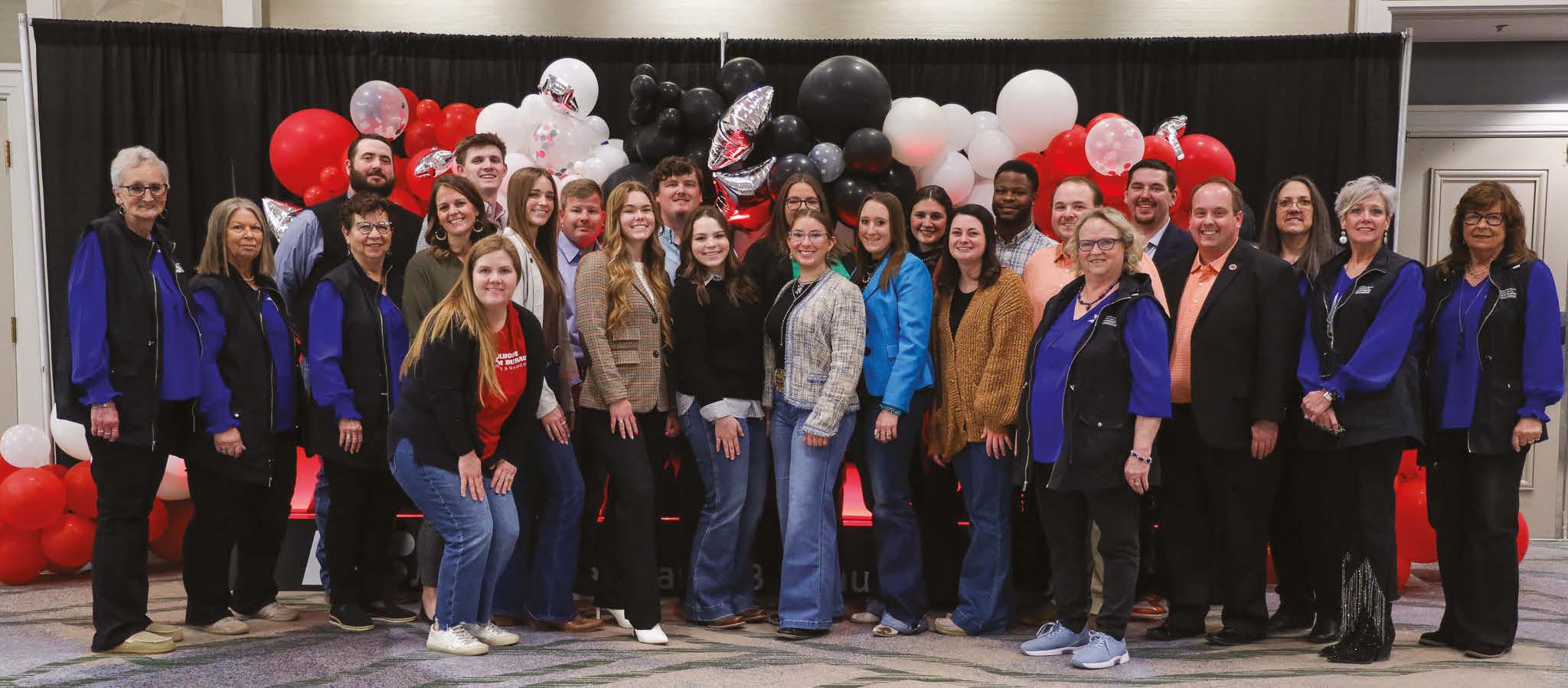
More than 30 Oklahoma Farm Bureau Women’s Leadership Committee, Young Farmers and Ranchers and Collegiate Farm Bureau members attended the 2025 American Farm Bureau FUSION Conference March 7-11 in Denver, Colorado.
The conference brought together more than 1,200 Farm Bureau members from across the country from four AFBF program areas, including WLC, YF&R, Collegiate Farm Bureaus and Program & Education.
Members at the event had the opportunity to hear from a multitude of distinguished keynote speakers including motivational speaker, comedian and bestselling author Josh Sundquist; AFBF President Zippy Duvall; and Colorado State University Distinguished Professor of Animal Science Temple Grandin.
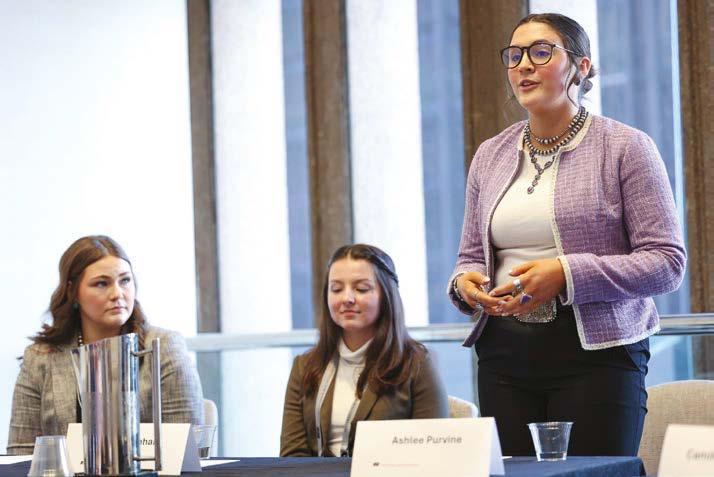
Northern Oklahoma College student Ashlee Purvine competed in the AFBF Collegiate Discussion meet, where students from across the country replicated a committee meeting where discussion and active participation are expected from each participant to arrive at an answer or solution. Purvine placed in the top four of the competition, alongside competitors from Tennessee, North Carolina and
Indiana. Purvine received scholarship funds in recognition of reaching the final four.
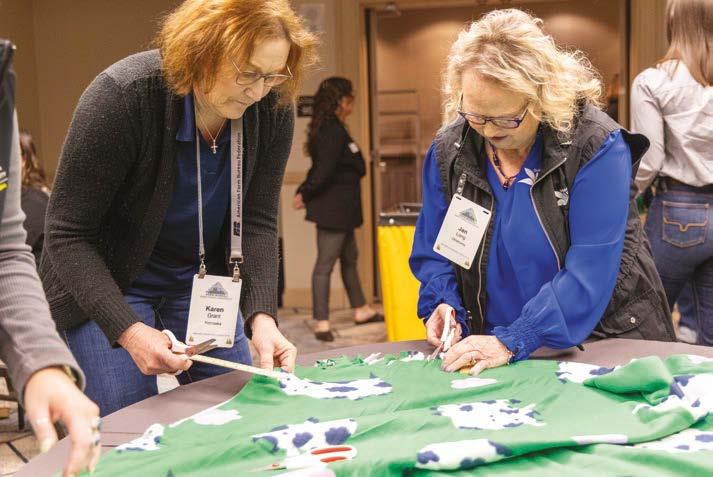
OKFB members also took the opportunity to give back during the conference through a community service project, participating in the Clothes to Kids Denver Undie 500, an opportunity to support local teenagers in need by donating fun, new socks and undergarments. They also created no-sew blankets for A Precious Child.
Members attended a wide variety of breakout sessions, including Optimize Your Grocery List for Better Mental Health, Campus Conversations: How to Navigate Tough Topics in College, and Creative Farm & Income Diversification.
Members closed out the conference by traveling to numerous locations across Colorado for various tours. Attendees learned how sugar beets are grown and processed at Western Sugar Co-Op; toured one of the largest meat processing facilities in the county, JBS; climbed to the highest summit of the southern Front Range of the Rocky Mountains, Pikes Peak; and learned about the production of candy at Hammonds Candies.
Above | District 8 WLC Committee member Jan Long (Right) cuts pieces of a tie blanket during a breakout session.
Above | Ashlee Purvine (Right) of Northern Oklahoma College competes in the Collegiate Farm Bureau Discussion Meet.
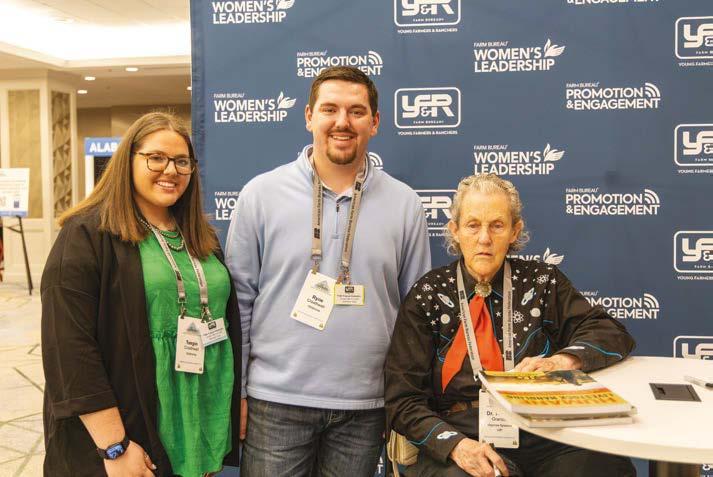
Above | Collegiate Farm Bureau members Teegin and Ryne Crosthwait met with Temple Grandin before her keynote speech.
Above | WLC Committee members, Collegiate Farm Bureau and YF&R members gather in Denver Colorado for the 2025 AFBF Fusion Conference in March.
OKFB members hone leadership skills with guest speakers at 2025 Leadership Conference
OKFB members braved the cold and gathered in Oklahoma City for the organization’s 2025 Leadership Conference held Tuesday, Feb. 13, at the downtown Embassy Suites.
The annual event brings Farm Bureau members together for a day of learning and fellowship with a variety of speakers and guests throughout the conference.
The event kicked off with Iowa Farm Bureau Vice President Brian Feldpaush who gave an update on the impacts of California’s Proposition 12, which specified space requirements for hog farms, has had on pork producers across the nation.
Feldpaush discussed how pork distribution has been affected by the Prop. 12 restrictions limiting how pork can be sold in California. He shared that certain stores across the country only want Prop. 12 certified pork.
He also gave an update on how Farm Bureaus across the nation have been working together to prevent
legislation like California’s Prop. 12 to be in the next Farm Bill.
Farm Bureau members also heard from Johnna Miller, senior director of media and advocacy training for American Farm Bureau, who provided a training on how to effectively share the agriculture story.
Miller advised that active listening is the key to gaining trust with someone to share the agriculture story while also being open-minded in order to listen to others who may not know anything about agriculture.
The main session speaker lineup concluded with Donelle Harder, senior vice president of Pinkston, who provided OKFB members with a primer on social media. She walked attendees through what social media is, an overview of each platform including Instagram and Facebook, and shared the key demographic groups who use each platform.
Harder said that 70% of the population is on social media of some
form and 54% of the population uses social media as a place to receive news and do their fact-checking.
She gave an example of a TikTok post from Oklahoma farmer and rancher Gatlin Didier that went viral as he gave a tutorial in a humorous way of how to break ice off the top of a water tank.
The afternoon began with two different breakout session opportunities for members to attend.
Miller hosted a breakout session on media training and Harder taught members how to build their brand on social media.
Miller’s session focused on advising members how to prepare themselves to speak to the media when asked about their farming operation or their agricultural practices.
Harder’s session focused on teaching members how to build their brand on social media and how to work with algorithms to increase their visibility across platforms.
Congressman Tom Cole
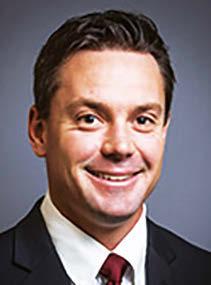
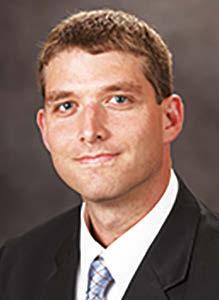
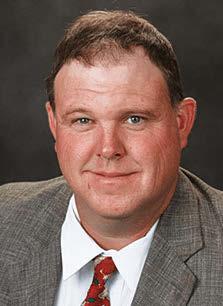
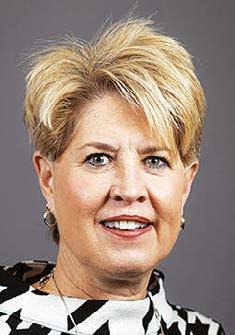
The evening concluded with an awards banquet to honor the recipients of the 2024 OKFB Champion award, which is given to state lawmakers who serve as exemplary advocates for Oklahoma agriculture, going above and beyond for the state’s farmers and ranchers during the 2024 legislative session. Meet the Champion Award recipients on page 36.
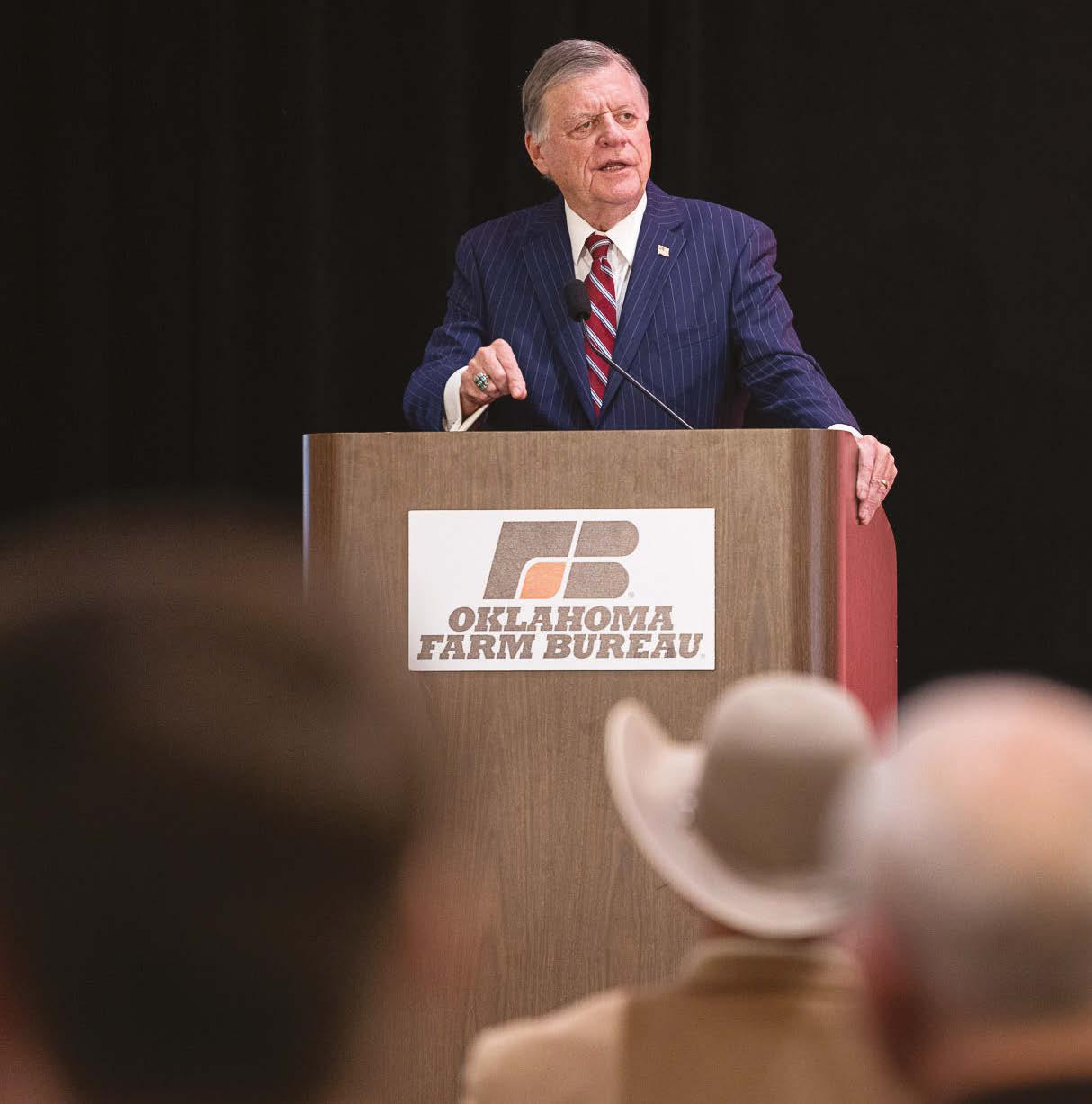
Following the awards, longtime friend of Farm Bureau Congressman Tom Cole shared with members an update on the action taking place on Capitol Hill since the 2025 election.
Cole also shared how the state of Oklahoma has federal entities, military bases and how important agriculture is to the entire state.
The evening wrapped up with Oklahoma Speaker of the House Kyle Hilbert and Senate Pro Tem Lonnie Paxton sharing legislative updates and policy priorities through the first three weeks of the 2025 Oklahoma legislative session.
DISCOUNT
Print your certifcate today!† Visit http://www.okfarmbureau.org/ CLINTON ROTHER BROS. INC. 580-323-1981 www.rotherbros.com
FAIRVIEW ROTHER BROS. INC. 580-227-2547 www.rotherbros.com
KINGFISHER ROTHER BROS. INC. 405-375-5349 www.rotherbros.com
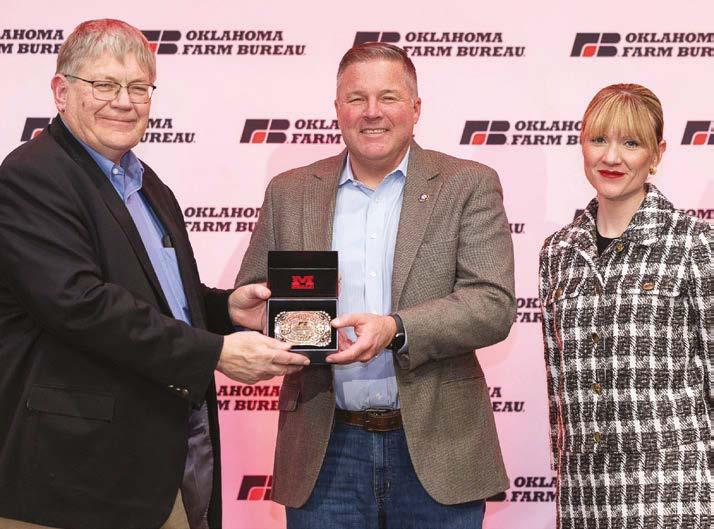
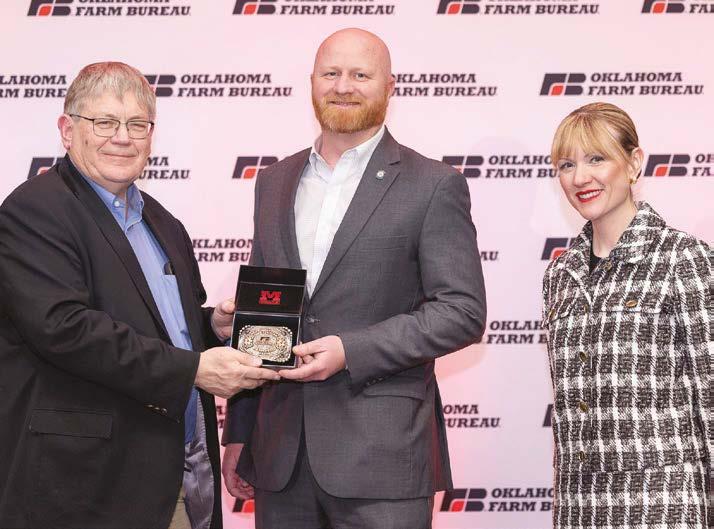
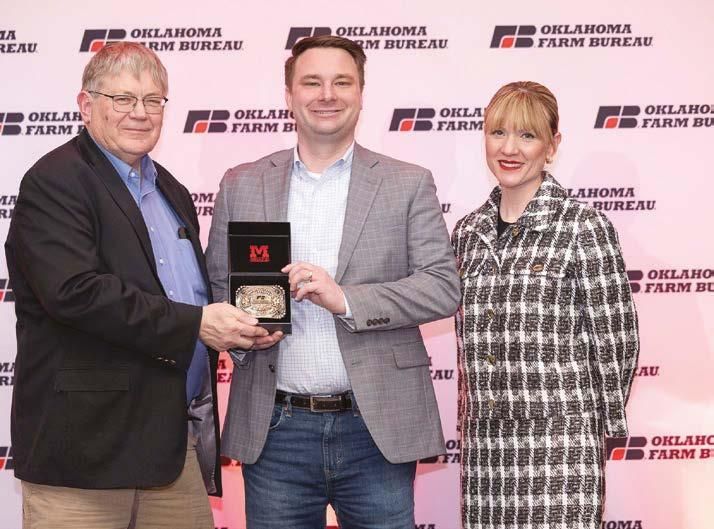
OKFB recognizes six legislators with Champion Awards for 2024 legislative efforts
klahoma Farm Bureau presented six Oklahoma legislators with the organization’s Champion Award during OKFB’s annual leadership conference Tuesday, Feb. 18, for their commitment to agriculture and Oklahoma’s rural communities during the 2024 legislative session.
OKFB’s Champion Award recognizes legislators who served as exemplary advocates for Oklahoma agriculture, going above and beyond for the state’s farmers and ranchers during Oklahoma’s 2024 legislative session.
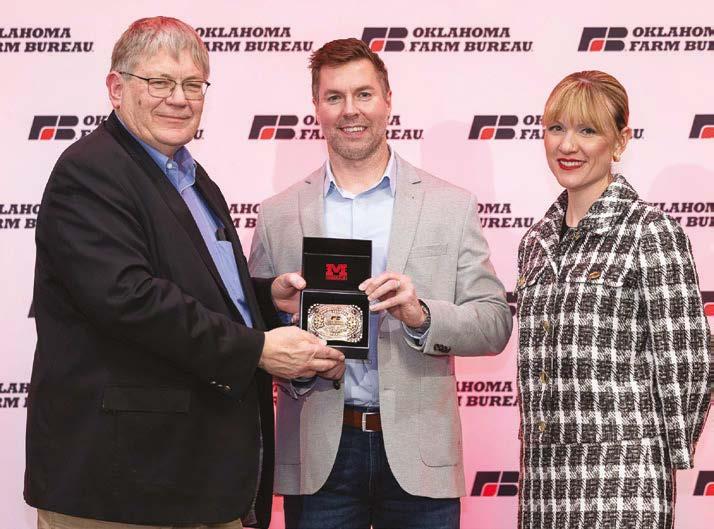
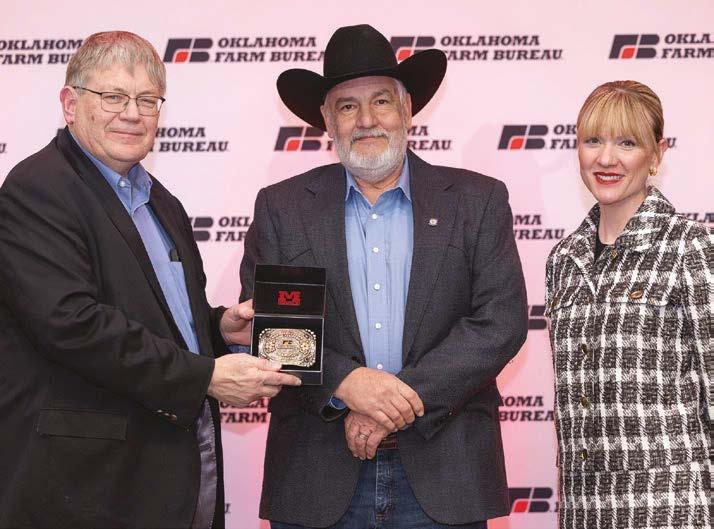
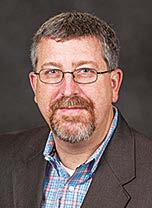
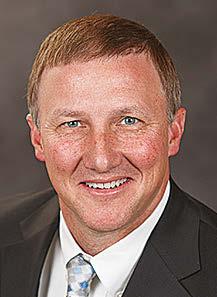
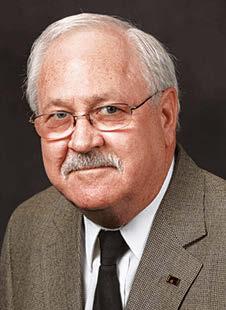
OKFB’s 2024 Champion Award winners included Speaker of the House Rep. Kyle Hilbert, Bristow; Rep. David Hardin, Stilwell; Rep. John Pfeiffer, Orlando; President Pro Tempore of the Senate Sen. Lonnie Paxton, Tuttle; Sen. Brent Howard, Altus; and Sen. Adam Pugh, Edmond.
“We are proud to recognize the hard work these six legislators invested during the 2024 legislative session to ensure the voices of Oklahoma agriculturalists and our rural residents were represented at the state Capitol,” said OKFB President Rodd Moesel. “Each of our Champion Award winners went the extra mile to ensure that our family farmers and ranchers can continue to feed our world while keeping rural Oklahoma a vibrant place to live.”
Each legislator received a customized belt buckle to commemorate their commitment to agricultural policy and representing family farmers and ranchers. The awards were presented during the legislative dinner at OKFB’s leadership conference in Oklahoma City.
Rep. David Hardin
Sen. Brent Howard
Sen. Adam Pugh
Rep. John Pfeifer
Speaker of the House Kyle Hilbert
Senate Pro Tem Lonnie Paxton
OKFB WLC hosts annual Farm City Festival at the Oklahoma State Capitol Thursday, Feb. 13
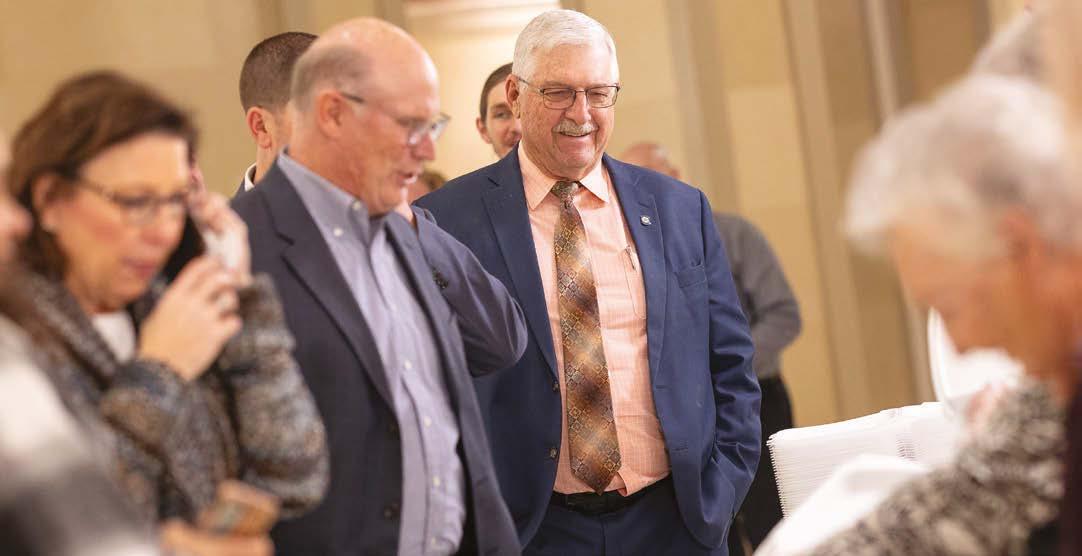
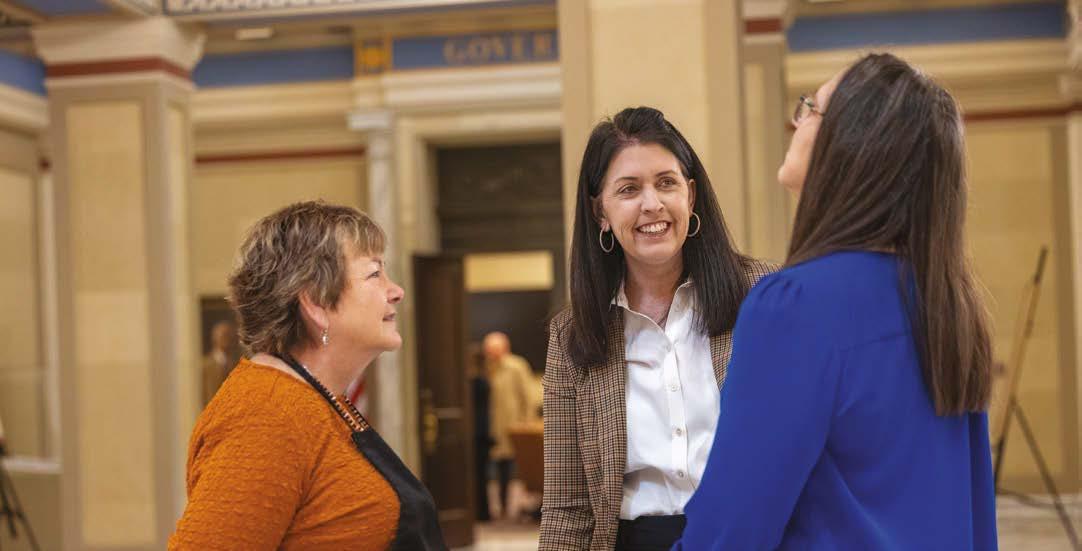
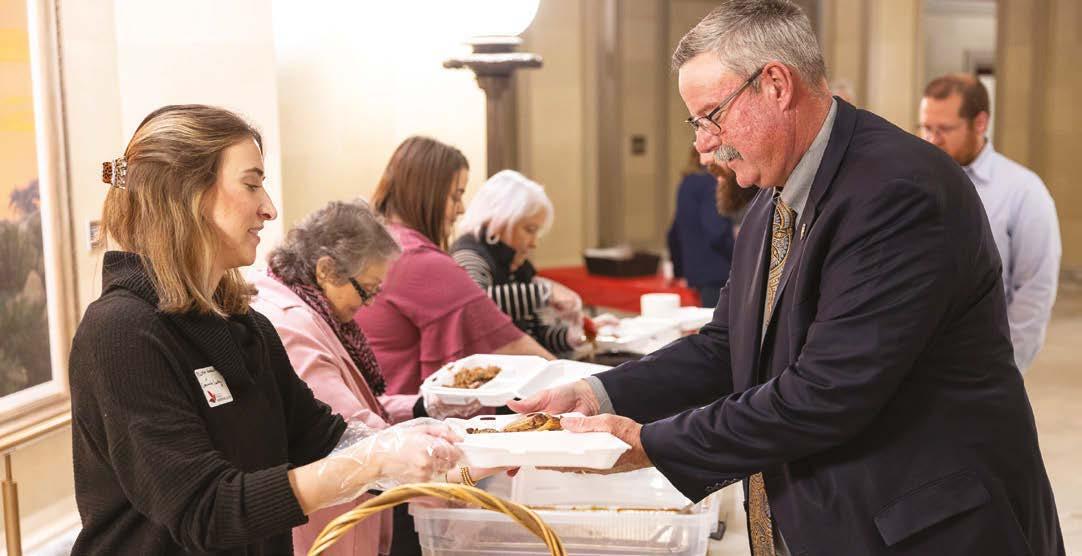
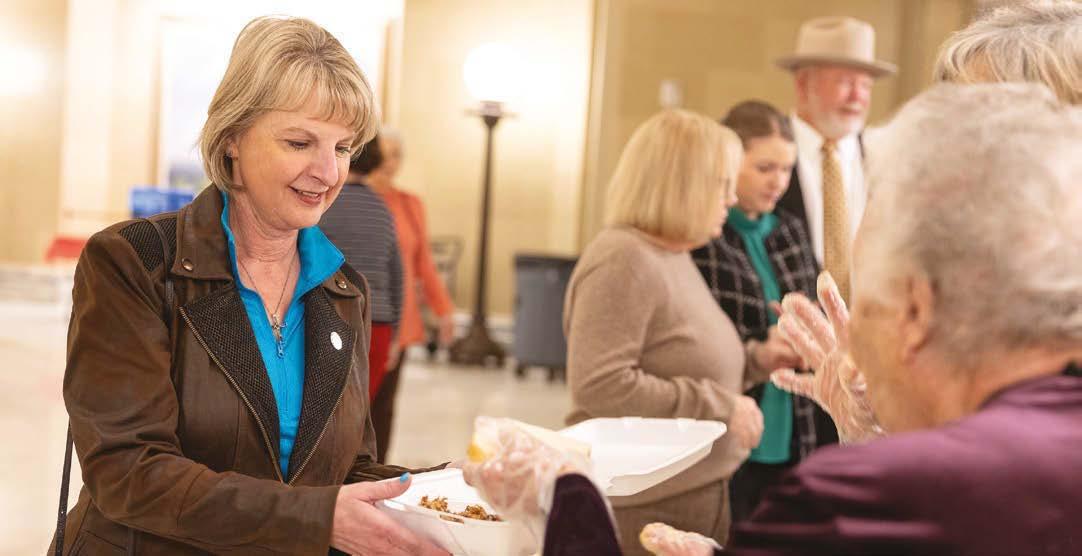
The Oklahoma Farm Bureau Women’s Leadership Committee served more than 400 meals during their annual Farm City Festival at the Oklahoma State Capitol, Thursday Feb. 13.
WLC members shared the agriculture story with legislators during the group’s annual event that connects Farm Bureau women with state legislators and their staff.
“We are proud to feed Oklahoma’s legislators as Oklahoma’s farmers and
ranchers,” said Mignon Bolay, OKFB WLC chair. “This is the largest group we have ever served, and we are very proud of that.”
WLC members hosted a lunch in the second-floor rotunda of the Capitol for legislators, their staff and Capitol employees to thank them for supporting policies that enable Oklahoma farmers and ranchers to continue providing food, fuel and fiber for a growing world.
The meal featured made-in-
Conserve Energy with Mastic Vinyl Siding & Windows
Oklahoma foods, which included home-baked desserts provided by county Farm Bureau members. OKFB Vice President David VonTungeln baked fresh bread that was served with each meal.
The meal was served to legislators, staff and guests by nine members of the state WLC committee along with 35 county WLC members from around the state. The Farm Bureau women took the opportunity to visit with legislators and share the important role agriculture plays in Oklahoma and how Farm Bureau supports family farmers and ranchers.
“It’s so important for us to do this, Bolay said. “It’s a way for our women to say, ‘Thank you,’ and let them know we are helping feed the world.”
M. Rhodes Company, LLC
Since 1937
Farm Bureau members will receive a 33 1/3% discount off nationally published retail prices. Call 405-721-2807 for an estimate.
our Farm City Festival video to see all the action from the event and hear from Oklahoma Legislators and OKFB WLC Chair Mignon Bolay at okfb.news/FCF25
All Around Oklahoma
Farm Bureau news, events and programs from around Oklahoma
Salisbury appointed to American Farm Bureau YF&R Committee
Tulsa County Farm Bureau member Tommy Salisbury has been appointed to serve on the American Farm Bureau Young Farmers & Ranchers Committee.
Salisbury farms about 3,200 acres of cropland, runs cattle, owns the Collinsville Livestock auction and owns the Collinsville feed store.
Salisbury has served on the Tulsa County Farm Bureau board, and he and his wife, Chalaynna, have served as the at-large representatives for the state YF&R committee.
“I saw this as an opportunity to make connections and network throughout the nation, but also to make a difference,” Salisbury said. “I try the hardest I can in to be involved in the legislative process, and I saw this as an opportunity to do it on the national level and use it as an opportunity to meet and share with 4-H and FFA members what Farm Bureau is and how to be involved.”
Apply for OKFB'S Bushels for Books program now through June 10
Leadership Committee
Oklahoma educators can now apply for a chance to receive a package of accurate agriculture books through Oklahoma Farm Bureau’s Bushels for Books program.
The program is a collaborative effort between the OKFB Women’s Leadership Committee and the OKFB Foundation for Agriculture with the goal of placing books in Oklahoma classrooms and schools to help tell the true story of farming, ranching and food.
Pre-K to eighth-grade teachers can apply now through June 10 for a chance to receive books that target
their class’ grade level and subject, and school librarians can apply for books that span multiple grade levels.
The 2025 Bushels for Books information packet and application can be found on the OKFB website at okfb.news/applications
Completed Bushels for Books applications must be submitted by Tuesday, June 10 to the address listed on the application.
For more information, contact OKFB Senior Director of Women’s Leadership Committee and Safety Marcia Irvin at (405) 523-2300.
OKFB members explore OSU’s Agricultural Hall during Generation Bridge winter gathering
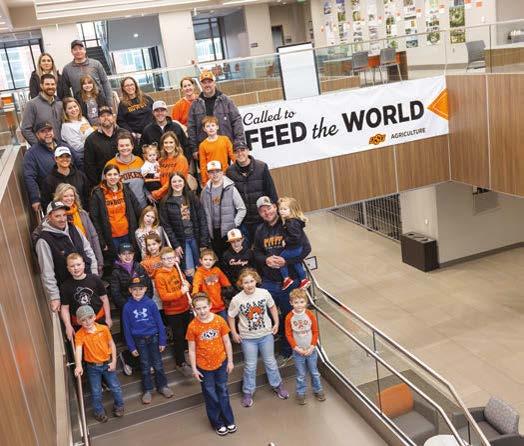
OKFB members ages 35-55 connected with fellow agricultural leaders and expanded their knowledge of Oklahoma agriculture Saturday, Feb. 15, in Stillwater at OKFB’s Generation Bridge Winter gathering.
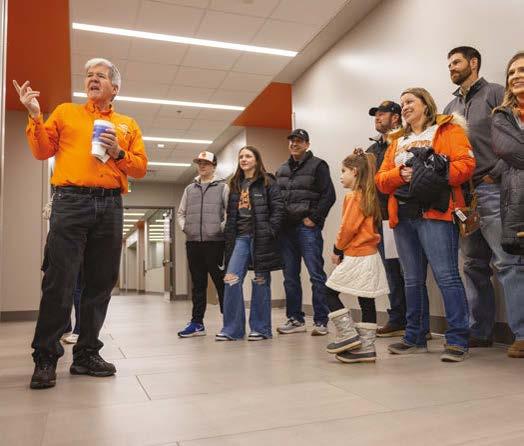
Nearly 40 event attendees went on a full tour of the new Agricultural Hall and learned about the recent construction of the building and the new learning and research opportunities it provides for students, faculty and staff at the Oklahoma State University Ferguson College of Agriculture.
Once the tour concluded, the attendees enjoyed lunch at Hideaway Pizza where they also received a legislative update from OKFB Director of Public Policy Gage Milliman.
The group rounded out the event with an OSU Cowboys basketball game against the Texas Tech Red Raiders.
Oklahoma Farm Bureau Women’s
Tommy Salisbury
Krag joins OKFB as executive assistant
Oklahoma Farm Bureau has named Brittney Krag to serve in the position of executive assistant in the organization’s executive offices.
In her role, Krag will help plan events for the organization and assist OKFB staff with wide variety of coordination efforts. She will also assist the OKFB president and executive director with planning, coordination and scheduling to help support the mission of the farm organization.
“I am excited to take on this new role and work with Oklahoma Farm Bureau leaders and members,” Krag said. “Having worked with the organization since 2018, I am looking forward to being even more deeply connected to our members, our programs and the agriculture community.”
Krag first joined OKFB and Affiliated Companies in 2018, working as the mail room manager in addition to a switchboard operator.
OKFB
recognized for achievement with four AFBF State Awards of Excellence
Oklahoma Farm Bureau was recognized for outstanding programs and achievement in 2024 with four American Farm Bureau State Awards of Excellence.
The awards were announced at the 2025 AFBF convention in San Antonio where Farm Bureau achievements earned during the previous year were celebrated.
OKFB earned SAE awards in all four program areas: Advocacy, Coalitions & Partnerships, Engagement & Outreach and Leadership & Business Development.
The Awards of Excellence is an annual AFBF program that recognizes state Farm Bureaus that demonstrated outstanding achievements in the four program areas.
OKFB was also recognized for contributions to the AFBF Foundation for Agriculture with the foundation’s scholar award and apex award.
Applications for OKFB WLC Nurse’s Scholarship are now open until July 10
Applications for the Oklahoma Farm Bureau Women’s Leadership Committee’s Nurse’s Training Scholarship is open now through Thursday, July 10.
The annual scholarship program awards three $500 scholarships to students studying in a nursing program at an accredited college, university, vo-tech or trade school. Students must be Oklahoma Farm Bureau members or a member of a Farm Bureau family.
Students can apply for the scholarship by completing the
online form available on the OKFB website at okfb.news/NursesApp25
The application includes contact information and several open-ended questions, and a proof of enrollment and transcript must also be submitted in either PDF or jpeg format.
Applications must be submitted online by Thursday, July 10 at.
For questions about the Nurse’s Scholarship program, contact Marcia Irvin at (405) 523-2300.
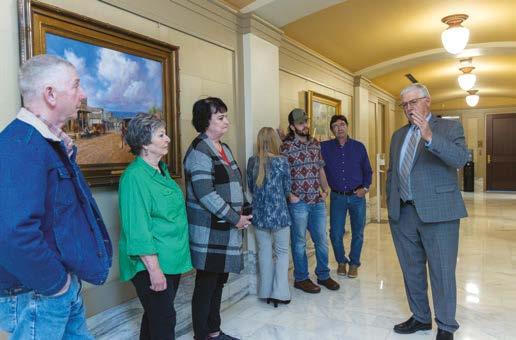
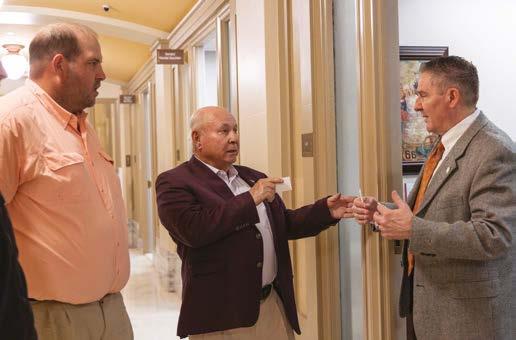
Grant, Tulsa County Farm Bureaus kick off OKFB’s County Capitol visit season
County Farm Bureau State Capitol visits have kicked off for the 2025 Legislative Session with Grant and Tulsa County Farm Bureaus.
Grant and Tulsa County Farm Bureau members visited the Capitol to speak with their legislators in mid-March.
Grant County Farm Bureau members visited with Rep. John Pfeiffer and Sen. Roland Pederson.
Tulsa County Farm Bureau members met with Rep. John Kane, Sen. Todd Gollihare and Sen. Aaron Reinhardt.
County Farm Bureau Capitol visits give members the opportunity to meet with legislators from their area and discuss rural issues that are directly affecting their way of life.
Brittney Krag
Peace of mind for life.
Peace of mind for life.
Brent Smith Agent Hominy 918-885-2420
Scott Abbottx Agent Muskogee 918-682-2091
Amanda Marshall Agent Pryor 918-825-1122
Jonathan Holloway Agent Tulsa 918-369-9990
Bill Mussett Agent Idabel 580-286-7696
Heather Kiser Agent Nowata 918-273-2957
Max Whipplex Agent Pryor 918-825-1122
Brian Kelly Agent Vinita 918-256-5531
Annelise Pool Agent Lawton 580-353-5173
Darrell Davidx Agent Oklahoma City 405-912-5021
Bobby Johnsonx Agent Skiatook 918-396-3149
Christie Yoder Agent Wagoner 918-485-5538
Broc Mcguire Agent Madill 580-795-3418
Sam Barrick Agent Marietta 580-276-3246
Kent Washburn Agent Oklahoma City 405-912-5021 Travis Hammerx Agent Oklahoma City 405-912-5021
add a punch of color and flavor to different foods. Above | Microgreens are easy to grow on a windowsill year-round.
Small but mighty: The benefits of growing microgreens
By Trisha Gedon
Gardeners looking for low-maintenance plants that can be grown indoors and have a big health punch should look into growing microgreens.
Nutrient-dense, full of flavor and easy to grow, microgreens are young, densely grown seedlings of certain vegetables and herbs, said David Hillock, Oklahoma State University Extension consumer horticulturist.
“Microgreens are the same seeds gardeners would plant in a traditional garden, but they’re harvested much earlier in the growth stage,” Hillock said. “Just about all of your garden favorites can be harvested as microgreens, as long as they have edible leaves, including lettuce, arugula, Swiss chard, beets, peas and radish. Popular herbs such as dill, cilantro and basil are more options.”
People may ask themselves what is the difference in microgreens and sprouts. Sprouts are seeds that are germinated in a high-humidity system. When it is time to harvest, the entire plant, including leaves, stems and roots, is harvested for consumption. In comparison, microgreens are seeds that are germinated in soilless media or on hydroponic mats, and only the stems and leaves are harvested for consumption.
Why should gardeners grow microgreens? They have multiple uses and can add flavor, texture and color to meals. They can be used as a salad additive or be the salad itself. They are great added to a sandwich because they boast a bit of a crunch. For those who appreciate visual interest on a dinner plate, microgreens also make a wonderful garnish.
Not only do they look and taste great, they are also packed with phytonutrients.
“In some cases, microgreens contain up to 40 times more nutrients than their mature counterparts,” Hillock said. “Research has shown certain microgreens have high levels of vitamins C and E, lutein, beta-carotene, zeaxanthin and violaxanthin. Some examples of nutrientdense microgreens include red cabbage, cilantro, garnet amaranth and radish. These are especially nutritious compared to the fully-grown varieties.”
Everyone has heard the benefits of a diet rich in nutrients. For example, vitamin C is an important antioxidant. Beta-carotene helps protect cell membranes,
and lutein and zeaxanthin positively impact eye health.
One of the great things about growing microgreens is gardeners will benefit from a quick harvest. Most are ready to eat in seven to 14 days. They do not take much soil, water or space. As a bonus, microgreens can be grown yearround, which provides gardeners with fresh greens year-round.
“Microgreens are a great way to introduce children to gardening,” Hillock said. “Most parents can attest their children’s attention spans aren’t always long, but growing microgreens should keep their interest, research shows children are more likely to try a new food if they had a part in growing it. Parents might start by sprinkling some microgreens on a sandwich, soup or casserole. Work your way up to the kids consuming a microgreens salad.”
Growing microgreens is eco-friendly and sustainable because they require less water and space, and they do not need fancy equipment. They are relatively easy to grow because there are not strict planting practices. It is best to use a tray that has drainage holes and place it in a tray without holes. Put the growing medium in the tray and hydrate it to help with germination. Next, broadcast the seeds across the medium, leaving a bit of space between the seeds.
“In traditional gardening, seeds are covered with dirt,” Hillock said. “You can simulate this process when growing microgreens by covering the tray with another tray, after germination, expose the tiny plants to light and watch them green up fairly quickly.”
Keep the trays watered, but keep an eye out for signs of mold. Mold will appear with a spidery gray texture. It is easy to confuse root hairs with mold due to its appearance. To check for mold spray the root hairs with water they will lose the fuzzy look.
Hillock said to water the seeds from above through the germination stage, then start bottom-watering to help avoid mold growth.
“Your microgreens are ready to harvest in a week or two, depending on what variety you’re growing,” he said. “Keep them growing year-round. They’re cost-effective and allow you to pack a punch of flavor and nutrients into your meals.”
Microgreens
(PGM#
ALTUS
BILLINGSLEY FORD OF ALTUS 580-643-3047
BillingsleyFord.com
ARDMORE
BILLINGSLEY FORD OF ARDMORE 877-735-6646
BillingsleyFord.com
BROKEN ARROW
JIM NORTON FORD 918-251-3673 www.jimnortonford.com
CUSHING
QUALITY FORD, INC. 918-225-3807 www.qualityfordok.net
DUNCAN
BILLINGSLEY FORD OF DUNCAN 800-850-5501 BillingsleyFord.com
DURANT RED RIVER FORD 580-924-9458 www.redriverford.com
GUTHRIE JOHN VANCE COUNTRY FORD 405-288-1746 www.vanceautogroup.com
HUGO ED WALLACE FORD 580-326-6448 www.edwallaceford.com
LAWTON BILLINGSLEY FORD OF LAWTON 888-710-8549 BillingsleyFord.com
MADILL WOODY FORD 580-795-3323 www.woodyford.com
STIGLER DUNN FORD COMPANY 800-626-9645 www.dunnfordcompany.com
WEATHERFORD CUMMINS FORD 800-581-3673 cumminsfordweatherford.com