Understanding Green Jobs and Skills
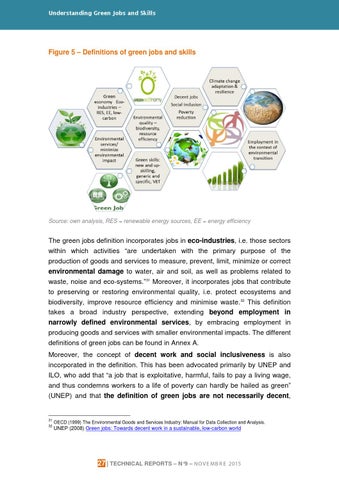
Figure 5 – Definitions of green jobs and skills
Source: own analysis, RES = renewable energy sources, EE = energy efficiency
The green jobs definition incorporates jobs in eco-industries, i.e. those sectors within which activities “are undertaken with the primary purpose of the production of goods and services to measure, prevent, limit, minimize or correct environmental damage to water, air and soil, as well as problems related to waste, noise and eco-systems.” 31 Moreover, it incorporates jobs that contribute to preserving or restoring environmental quality, i.e. protect ecosystems and biodiversity, improve resource efficiency and minimise waste. 32 This definition takes a broad industry perspective, extending beyond employment in narrowly defined environmental services, by embracing employment in producing goods and services with smaller environmental impacts. The different definitions of green jobs can be found in Annex A. Moreover, the concept of decent work and social inclusiveness is also incorporated in the definition. This has been advocated primarily by UNEP and ILO, who add that “a job that is exploitative, harmful, fails to pay a living wage, and thus condemns workers to a life of poverty can hardly be hailed as green” (UNEP) and that the definition of green jobs are not necessarily decent,
31 32
OECD (1999) The Environmental Goods and Services Industry: Manual for Data Collection and Analysis.
UNEP (2008) Green jobs: Towards decent work in a sustainable, low-carbon world
27 | TECHNICAL REPORTS – N°9 – NOV E MB R E 2015