








Go to the App Store or Google Play and search “NPMHU” to install and use at no charge
















FOR YOUR IPHONE OR ANDROID SMARTPHONE


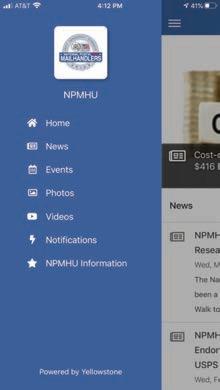
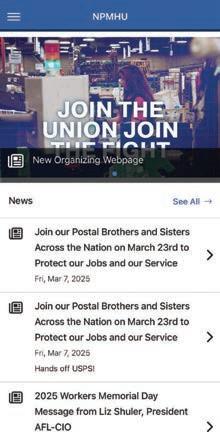
We are pleased to provide this communication tool to all Mail Handlers. You can access the latest news, updates, events, and information of organizational importance. THE APP’S FEATURES INCLUDE:

+ Current NPMHU news with periodic push notifications of importance
+ Legislative and Political NPMHU Action Center

+ Quadrennial Convention Information
+ NPMHU Women’s Committee
+ Current Wage Charts





NATIONAL
Paul V. Hogrogian
National President
Kevin P. Tabarus
Secretary-Treasurer
June Harris
Vice President Central Region
John A. Gibson
Vice President Eastern Region
Daniel W. St. Marie
Vice President Northeastern Region
John (J.R.) Macon
Vice President Southern Region
Don J. Sneesby
Vice President Western Region
The Mail Handler, ISSN:1098-5689, is published quarterly by the National Postal Mail Handlers Union, 815 16th St, N.W. Suite 5100, Washington, DC 20006. Periodicals postage paid at Washington, D.C. and additional mailing offices.
POSTMASTER: Send address changes to The Mail Handler, 815 16th St, N.W. Suite 5100, Washington, DC 20006. Copyright 2025: National Postal Mail Handlers Union. All rights reserved. Reproduction without permission is prohibited. The Mail Handler is published for the members of our union. For additional copies please send $2.00 to: National Postal Mail Handlers Union—National Headquarters, 815 16th St, N.W. Suite 5100, Washington, DC 20006, (202) 833-9095.



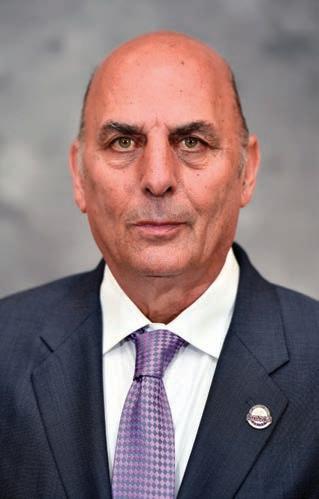
Paul V. Hogrogian, National President
Dear Members:
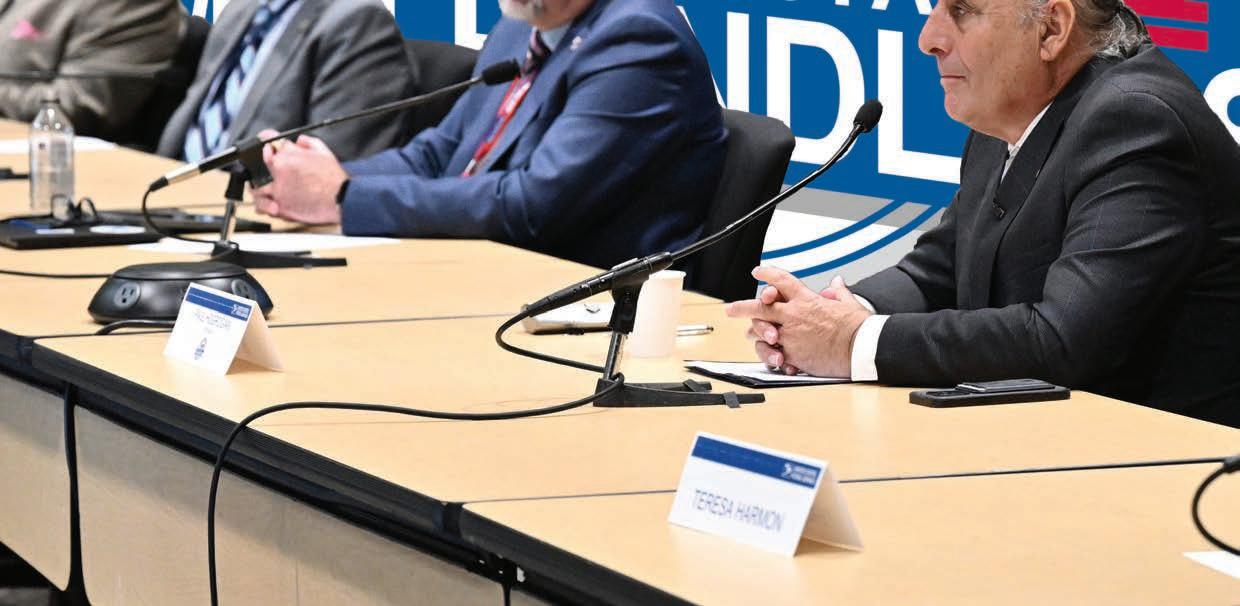
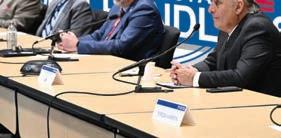
The collective bargaining agreement between the NPMHU and the USPS is set to expire on September 20, 2025. Negotiations officially opened on June 25th. The entire National Executive Board as well as the National CAD staff attended the opening session. During this opening session, the NPMHU and the USPS presented their opening statements, setting the stage for this year’s bargaining process. Videos of these opening statements can be viewed on our website (www.npmhu.org).
The NPMHU bargaining team is led by the National President and includes National Secretary-Treasurer Kevin Tabarus, Manager of Contract Administration Teresa Harmon, Executive Assistant to the National Officers Neil Ryan, National CAD Representatives Tom Ruther and Eugene Horton and our legal team from the NPMHU’s General Counsel’s office. The USPS team is led by the Acting Postmaster General and Chief Human Resources Officer Doug Tulino, Vice President of Labor Relations Mike Elston and Chief Spokesperson Patrick Devine. Our priorities in bargaining include:
1. A fair and just general wage increase
2. A continuation of our current Cost of Living Adjustments (COLAs)
3. Keep the No Lay Off clause
4. Improve the wages, rights and benefits for our MHAs
5. Increased MHA conversions to career status
6. Return subcontracted work to the Mail Handler Craft and stop future subcontracting
7. Minimize the dislocation and inconvenience to Mail Handlers subject to involuntary reassignments
8. Address the issue of MHAs serving as 204Bs.
9. Fixing the badly broken wage scale which hinders the recruitment and retention of new Mail Handler employees.
Preparations for this round of bargaining began early last year. A bargaining strategy session was held on the third day of our Semi-Annual Meeting of Local Unions (SAMLU) held
in Houston, Texas on November 4–6, 2024. Mail Handler representatives from across the country discussed the priorities for these negotiations. Our Field Negotiating Committee met in Washington, DC for five days from February 3-7, 2025, to thoroughly review, analyze, discuss, debate, and evaluate over 450 proposals that were received from the field and to produce proposals of its own. The Committee provided its recommendations, which were sent to the National Bargaining Team for their analysis and consideration. The National Bargaining Team then formulated formal contract proposals to be submitted to the Postal Service.
This is a difficult time to be entering into bargaining. The Postal Service’s financial situation and the continuing decline in mail volume (especially First-Class Mail) lead us to believe that these negotiations will be extremely difficult. We must also contend with a White House administration that is hostile to Postal Service and its Unions. There is also the specter of Elon Musk’s Department of Government Efficiency (DOGE) which is seeking to cut the wages and benefits of postal employees. This round of bargaining will be greatly affected by several circumstances beyond our control. These circumstances include:
1. As previously mentioned, a new President and Administration that has been openly anti-Post Office, anti-worker, especially Federal workers, and anti-Union.
2. A new Postmaster General and Vice President of Labor Relations
3. The bargaining and contracts of our three sister Postal Unions (NALC, NRLCA and APWU). What happens with the bargaining process of the three other Postal Unions will have a major impact on our negotiations and on our contract. The status of bargaining of the other Postal Unions is as follows:
•NALC: Interest Arbitration Award issued on March 21, 2025
•NRLCA: Membership ratified tentative agreement on June 16, 2025.
•APWU: Tentative Agreement pending ratification by its membership.
The National Negotiating Team will continue to meet numerous times to prepare our proposals that will be submitted to the Postal Service, as well as researching the issues and gathering documentation to support our proposals and arguments. These internal meetings will continue throughout the bargaining process.
If the bargaining process results in a tentative agreement, that agreement is subject to a ratification vote by the NPMHU membership. As required by the NPMHU National Constitution, the vote would be by secret mail ballot.
If the parties fail to reach a tentative agreement, either by the parties being unable to agree or a failed ratification vote by the membership, the Postal Reform Act (PRA) has a dictated procedure that must be followed unless the parties agree to an alternate dispute procedure themselves.
The PRA procedure contains multiple steps. First, the Federal Mediation and Conciliation Service (FMCS) would establish a three-person fact-finding panel. The fact-finding panel would have 45 days in which to investigate the bargaining dispute and issue a report of its findings. If an agreement still cannot be reached by the parties after fact-finding, the PRA requires the establishment of an arbitration board within 90 days of the expiration of the current contract. This board normally consists of three members-one selected by the Union, one member selected by the Postal Service and a third neutral arbitrator. The neutral member is selected either by the agreement of the other two members of the Board or by appointment of the Director of the FMCS. The board is required to make a decision within 45 days after its appointment. This arbitration decision is binding on both parties.
During its open session on May 9, the United States Postal Service Board of Governors announced the appointment of David Steiner as the seventy-sixth Postmaster General.
Mr. Steiner previously served as the CEO of Waste Management and sat on the Board of Directors of FedEx. He assumed the Postmaster General position in July. As the NPMHU prepares to go into collective bargaining with USPS, we are anxious to see how Mr. Steiner will interact and negotiate with our Union to protect our pay and benefits, ensure workplace safety, and fight any threats of privatization that would impact not only Mail Handlers but also postal customers.
I remain confident that through the work of our Contract Administration Department and our legal representatives, and through the hard work of our Regional, Local, and Branch representatives, we can successfully meet all challenges that lie before us.
The NPMHU is encouraged by Mr. Steiner’s commitment to maintaining the Postal Service as an independent establishment of the executive branch. The NPMHU looks forward to having a productive relationship with Postmaster General Steiner while we jointly work to maintain the Postal Service’s status as one of the most trusted agencies of the Federal Government. We will educate Mr. Steiner on the needs of Mail Handlers to successfully process the mail and how any changes to the network cannot be disruptive to the service standards our customers expect. It is the number one priority of NPMHU to protect our members while promoting the sustainability of the Postal Service.
* * *
Mail Handlers deserve to be rewarded for their dedicated and essential service with well-earned pay raises. It is time for the Postal Service to stand up and justly compensate all Mail Handlers for the hard work and dedication that they have demonstrated throughout the implementation of the Delivering For America (DFA) plan. Talk is cheap, now is the time for action.
The NPMHU bargaining team is up to the task at hand and will work tirelessly to achieve a fair contract for all Mail Handlers. The NPMHU will routinely and frequently keep the membership informed of the progress of these negotiations.
I remain confident that through the work of our Contract Administration Department and our legal representatives, and through the hard work of our Regional, Local, and Branch representatives, we can successfully meet all challenges that lie before us.
Fraternally,
Paul V. Hogrogian National President
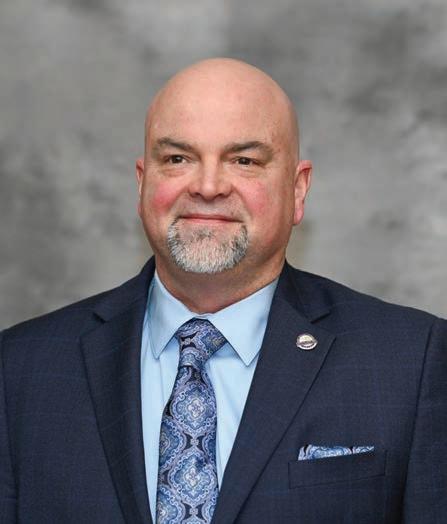
Kevin P. Tabarus, National Secretary-Treasurer
We face extremely dark times. What has been normal in the past is now subject to drastic adverse changes. Since January, we have been alert and vigilant, and we will be prepared.
There have been drastic changes directly affecting labor unions, specifically, Federal Sector Unions. These Unions represent federal employees working at different agencies of the Federal government. Since January there have been many Executive Orders. One of these directly affected the terms and conditions of employment for the Unionized Federal workforce. With the stroke of a pen, several Unions representing some federal agencies lost collective bargaining and their Union protections. Their union contracts were tossed away. The Executive Order claimed this was done ‘in the interests of national security’. Thousands of Union members lost their Union provided job protections. This Executive Order rolls back the hands of time to over 100 years ago when Unions were considered illegal in some places. We have learned from the past and must remain strong together.
Federal and State Employee Unions have had voluntary union dues automatically deducted from their members’ paychecks (just like we do — Article 17 of the NPMHU Contract) for decades. This system has been bargained for in national collective bargaining agreements. However, some unions have seen these automatic dues collection coming to a halt! This is just one more Union busting tactic — attempting to weaken Unions financially.
We have also seen cuts to staffing in several federal agencies. The Department of Agriculture, which oversees the safety of the food we buy, reduced its staff by 9,000; the Defense Department will reduce its staff by 61,000; the Department of Health and Human Service, which administers Medicare as well as conducts research on communicable diseases and cancer, will eliminate 20,000 jobs; and, the Department of Veterans Affairs will cut back on 80,000 jobs. These are just some examples of job losses. The majority of these jobs are union jobs. Surely, these adverse actions will be fought out in the courts.
Further impacting the federal and postal workforce, members of the House of Representatives passed a budget
reconciliation package that would impact retirement benefits. The changes proposed would affect Mail Handlers, all postal employees, and all federal employees in the Federal Employees Retirement System (FERS). The big budget reconciliation bill, passed along party lines in the House of Representatives on May 22 contained the following:
•Starting January 1, 2028, elimination of the FERS Supplement for those who retire before they turn 62, before they qualify for Social Security;
•New federal workers would be considered “at-will” employees — being able to be fired without union protections — or accept higher FERS retirement contribution rates; and,
•Charging fees for Merit Systems Protection Board (MSPB) appeals.
Due to united pressure from union members, labor unions and our friends in Congress, two other harmful provisions were successfully removed from the Reconciliation Bill: (1) Increasing the percentage amount for employee retirement contributions. (This would have resulted in a take-home pay cut of thousands of dollars each year.) And (2) Changing the annuity computation from a “high-3” to a “high-5” salary average for all employees. (This would have lowered the amount of retirement annuity payments.)
The bill now goes to the Senate for its review. It is up to Mail Handlers to continue to push back against this bill, ensuring all the provisions that undermine the unionized federal and postal workforces are removed.
We are fighting the fight. But we need all members to fight the fight too!
1. CONTACT YOUR MEMBERS OF CONGRESS.
It is easy. Go to www.npmhu.org Legislative and Political webpage. Click on the “Action Center” Let them know you
•Oppose any type of Privatization of the United States Postal Service.
•Insist that they leave my Pension alone! No adverse changes to FERS with increased contributions, a lowered annuity, removing the FERS Supplement.
Encourage family members and friends to register to vote too.
3. VOTE IN EVERY ELECTION.
Support candidates that support you! A Union Member, Mail Handler, Federal Worker, who works for the United States Postal Service. Also, push your family and friends to vote too.
4. DONATE TO THE NPMHU POLITICAL ACTION COMMITTEE (PAC).
Or if you currently contribute, increase your contribution. The Political Action Committee is not only for one political party. We support those members of Congress that support us. It doesn’t matter if their political party is democrat, republican, or independent. Donations to the PAC are used to help with their election campaigns. Union dues cannot be for political donations. Information about donating to the PAC can be found on pages 27–28.
Franklin was the first Postmaster General, and yes, we are older than the United States of America.
•The Postal Service isNOT FUNDED WITH TAXPAYER DOLLARS. We are not part of the federal spending budget.
•Buy a stamp, mail a letter or package, which is basically how the Postal Service generates revenue.
•The Postal Service is a not-for-profit organization. We provide a service to every American. We have had good and bad years.
•Yes, the Postal Service suffered a $9.5 billion dollar loss last fiscal year.
•We also had many good years turning a profit. But years ago, Congress saw that too. They wanted to lower the federal deficit. Seeing that the USPS was turning a profit, resulted in us paying for future retiree benefits, at a large cost — 75 years in advance. This stopped after Postal Reform.
5. PARTICIPATE IN UNION RALLIES, DEMONSTRATIONS, AND
There have been many rallies across the country protesting Postal Privatization. These rallies might not be a NPMHU rally, but all postal unions (NALC, APWU, and NRLCA) are in this fight together.
6. BE INFORMED.
Attend a local union meeting. Read the Union bulletin boards and publications.
7. MAINTAIN UNION MEMBERSHIP.
Pay your dues. Encourage and recruit new members into the NPMHU. Tell them to “Join the Union — Join the Fight!!!”
If you follow these steps, we will all be united. There is strength in numbers.
You may ask, how did we get to these dark times? In the 2024 elections, only 65 percent of eligible Americans voted. That’s 154 million voters. What happened to the other 35 percent that did not vote? A large percentage of the non-voters are registered to vote and decided not to!
What else can you do? Properly educate everyone you talk to about the United States Postal Service. There are many myths about the Postal Service. Let the facts about us be known.
•We are a service, not a business. We have a universal service obligation to deliver to every address in the United States, six (6) days a week. The Postal Service delivers more mail and packages than any other post in the world. We serve nearly 169 million addresses.
•The Postal Service was founded in 1775. Back then, we were called The Post Office Department. Benjamin
A few months ago, changes to the Postal Service that could lead to privatization were rumored. But they were just that — rumors. Potential postal privatization was reported in the media. That is all that happened. There are no proposals right now to privatize, but it still remains a threat. All four Postal Unions are united and prepared for any type of privatization. In fact, the legal departments from all Postal Unions have been meeting on a regular basis. We have not been standing around flat footed. We are working together, also with the support of LiUNA, AFL-CIO, and many members of Congress.
Now we will remain focused on these ever-changing times. We are ready for our contract negotiations to start in June.
Now we will remain focused on these ever-changing times. We are ready for our contract negotiations to start in June. We look forward to working with the USPS and the new Postmaster General to preserve — and improve — our national agreement, as well as preserving and improving the United States Postal Service.
Fraternally,
Kevin P. Tabarus National Secretary-Treasurer
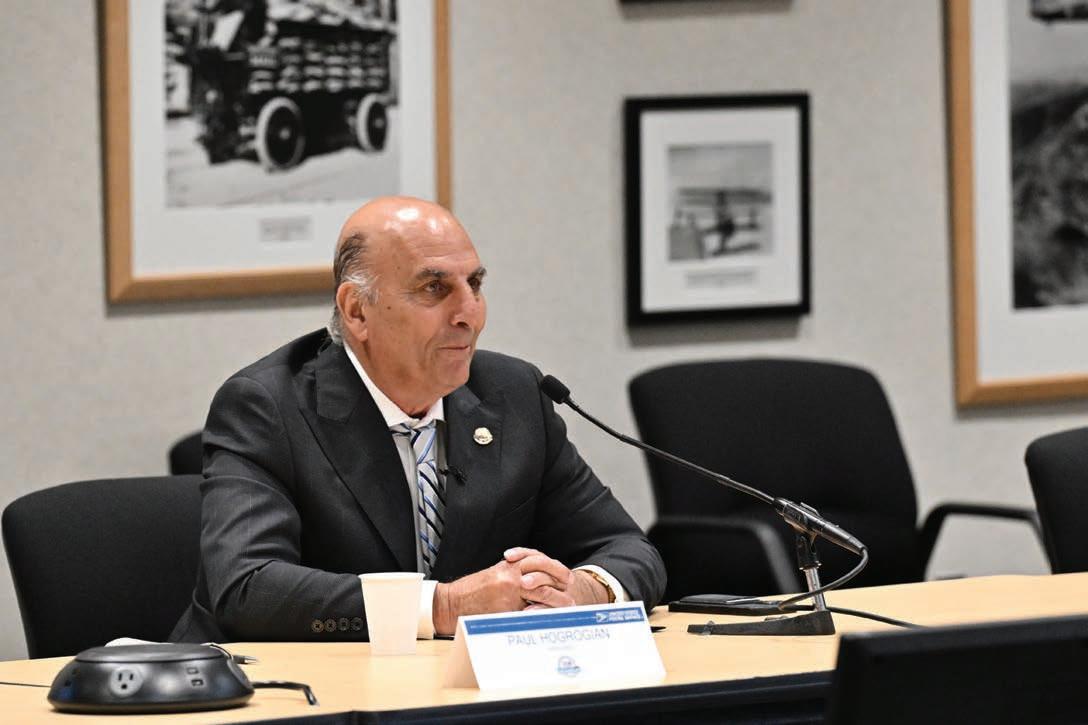
On behalf of the National Postal Mail Handlers Union and the 55,000 Mail Handlers that our Union represents, we are pleased to be here in the Benjamin Franklin Room to open the 2025 negotiations with the Postal Service. Although we expect a difficult round of bargaining, the NPMHU is committed to making every reasonable effort to reach an agreement that is good for our members, good for the Postal Service, and good for the American mailing public.
The Postal Service certainly is facing continuing challenges. Some of those challenges are caused by economic conditions, others by a decline in mail volumes, and still others by operational changes.
When the parties negotiated in 2011, 2016, 2019 and 2022, the Postal Service was seeking substantial reductions in labor costs from bargaining unit employees represented by the Mail Handlers Union, including substantial numbers of non-career employees earning less money and having fewer benefits than career employees. Some of those proposals actually were achieved by the Postal Service during those negotiations, especially from the 2013 Fishgold interest arbitration award. Based on these fundamental changes in our workforce, the Postal Service has reduced its overall labor costs for mail handling activities, and many of those reductions, including a revised wage scale for future career employees, are now scheduled to continue well into the
foreseeable future. But this revised wage scale has resulted in several unintended consequences as a result of several unexpectedly large Cost of Living Adjustments during COVID and the proportional COLA provision of our contract that was a result of the Fishgold award. The current wage scales are badly broken. They have created major inequities in pay and barely provide a living wage for employees at the lower steps of the scale.
The employees at the lower steps of the wage scale make significantly less than their counterparts in the private sector. The clearest and most recent example of this is the UPS/ Teamsters bargaining agreement.
In short, the current wage scales as set forth in the National Agreement make it extremely difficult, if not impossible, to recruit and retain new employees in the Mail Handler craft. In fact, Mail Handler wages have eroded to the level that the Postal Service has informed us that it has had to subcontract Mail Handler work so that it could pay workers higher wages to facilitate recruitment. At the low rates set in the National Agreement, the Postal Service claimed that it could not attract enough candidates. What is clear is that the Mail Handlers Union and the Postal Service have a shared interest in creating a fair wage scale that allows the Postal Service both to hire new employees and retain employees who will devote their careers to this public service.
The national recovery from the COVID-19 pandemic, and the return of the American economy to a pattern of normal growth, should mean a return to more normalized collective bargaining. This should be a time for the parties to agree on a period of relatively stable labor relations, without the massive disruptions and dislocations that may be caused by unnecessary subcontracting or privatization.
The Mail Handlers Union remains deeply committed to the negotiating process. Certainly, the NPMHU will continue to work with the Postal Service to address extraordinary circumstances. Mail Handlers were essential workers who reported to work every day during the pandemic, risking their own health and the health of their families. The NPMHU has worked with the former and current Postmasters General to ensure that the Network Redesign outlined in the Delivering for America plan is being implemented properly. Through several Memoranda of Understanding, the Mail Handlers Union provided the Postal Service with the additional staffing it needed during the roll out of the DFA. The NPMHU worked with the Postal Service to provide hundreds of millions of COVID test kits to the American public. The NPMHU also worked with the Postal Service to ensure that our nation’s elections were conducted efficiently and fairly.
We will continue to be a partner with the Postal Service to move the institution forward. But we also expect the Postal Service to work with the NPMHU to negotiate a contract that rewards Mail Handlers for the hard work and dedication that we have exhibited during the past difficult years. We expect, and will demand, that the Postal Service engage in good faith bargaining on all issues that are properly the subject of mutual bargaining.
Today obviously is neither the time nor the place for discussing specific proposals. Not only are formal negotiations just beginning, but the Mail Handlers Union does not believe it is productive to negotiate in public, in the newspapers, or in the halls of Congress.
Nonetheless, the goals of the National Postal Mail Handlers Union in this year’s round of bargaining can be stated simply. We seek a negotiated agreement that corrects a wage scale that is badly broken and that is keeping the Postal Service from hiring and retaining the employees that it needs; we seek an agreement that protects our jobs and improves our standard of living; we seek a negotiated contract that improves the status of all Mail Handlers, including both employees who have devoted their work lives to the Postal Service or our newest members who are the future of the Postal Service; we seek a contract that minimizes the dislocation of Mail Handlers whose careers may be involuntarily disrupted by subcontracting, excessing or downsizing; and we seek to stop future subcontracting and the continued return of currently outsourced work to the Mail Handler craft.
In short, we seek practical solutions to the problems faced by Mail Handlers, so that, working together, we can ensure that the Postal Service and all its Mail Handler employees can continue to provide the American public with the service that they have come to expect.
In closing, let me state that the National Postal Mail Handlers Union seeks to obtain a fair and just settlement with the Postal Service. We understand that these negotiations will be difficult. But if management makes reasonable proposals and counterproposals at the bargaining table, we certainly will recommend ratification to our membership. We also hope for and expect the same attitude from postal management – that reasonable proposals from the Union will be met with acceptance. If both parties are able to adopt this approach to bargaining, I remain optimistic that we will be able to reach a negotiated settlement.
Thank you very much.


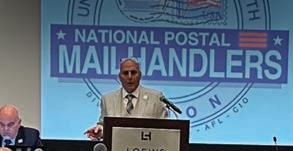

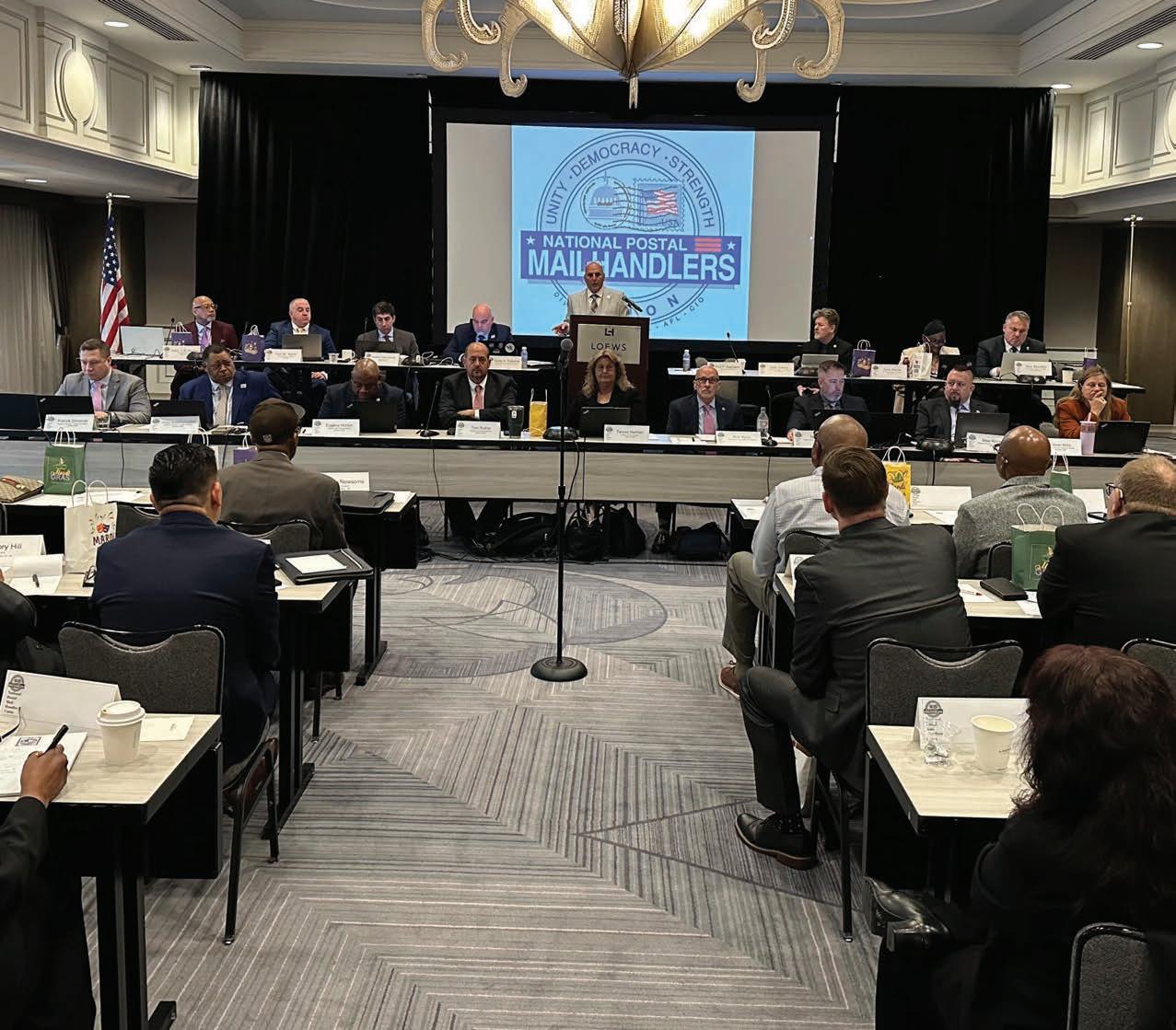



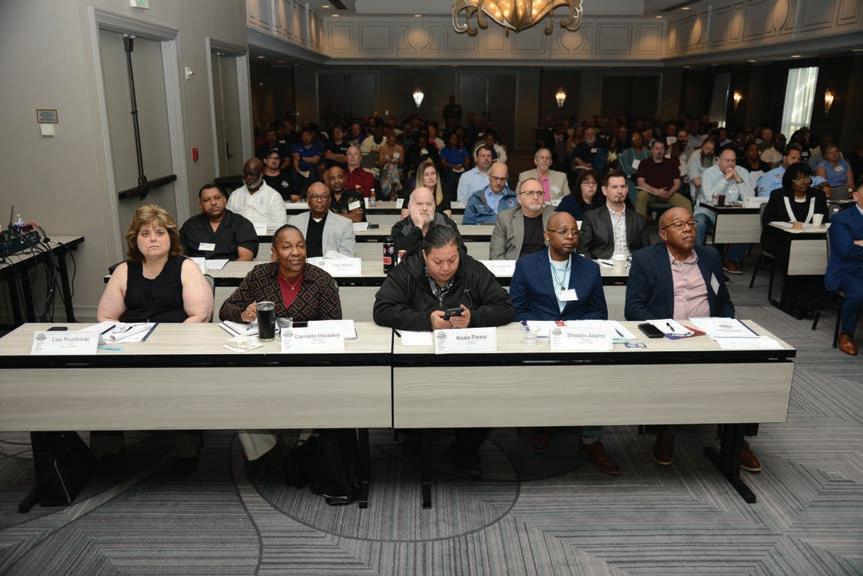
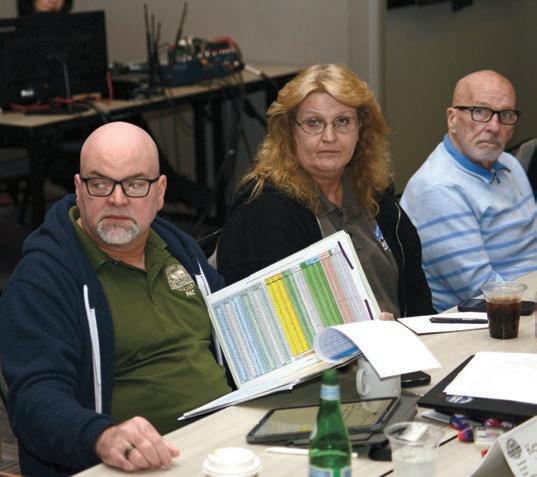
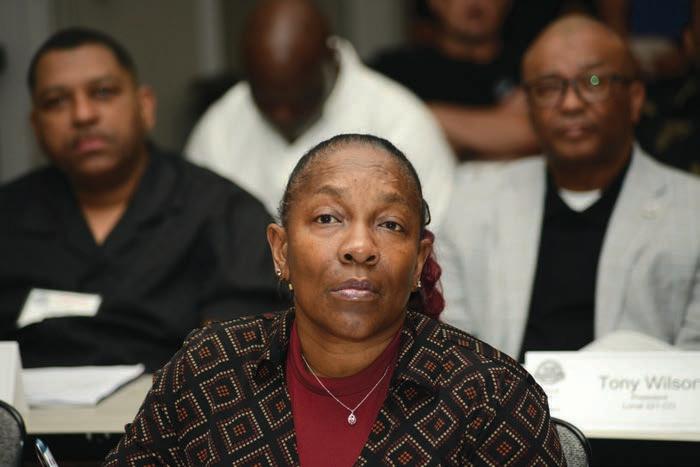
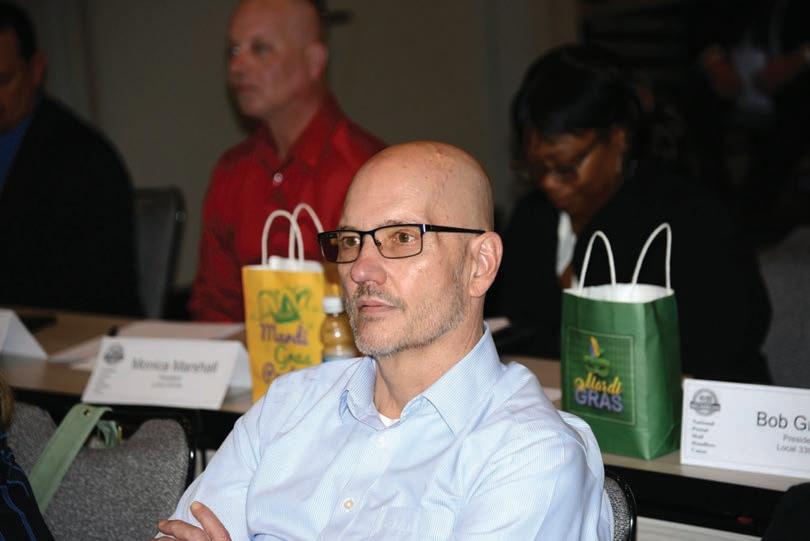
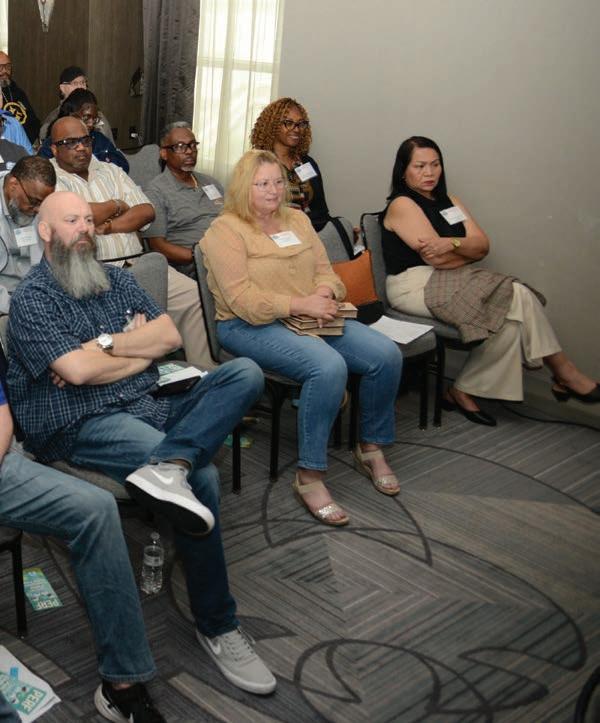
The Semi-Annual Meeting of the Local Unions was held in New Orleans, Louisiana from April 7, 2025 through April 9, 2025. In attendance were all members of the National Executive Board, all NPMHU National O ce Department Heads, National and Regional Contract Administration Department (CAD) Representatives, and various O cers and Representatives from the 36 NPMHU Local Unions.




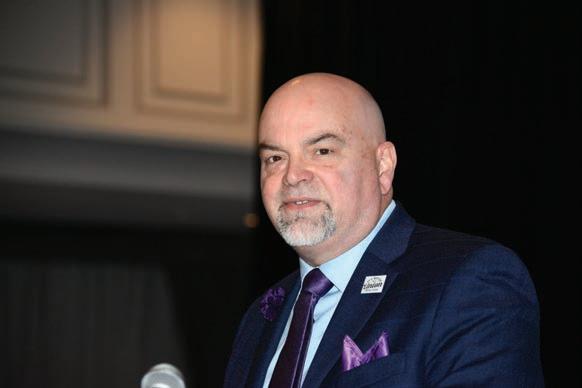
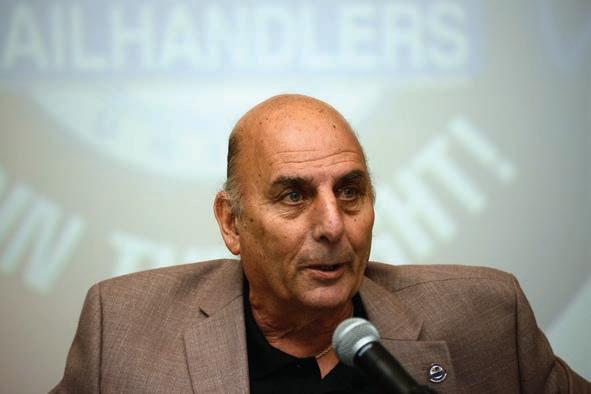
During his welcoming remarks, National President Hogrogian acknowledged re-elected Local Presidents Felandria Jackson (Local 305), Jim Haggarty (Local 307) and Bob Griffith (Local 330). In addition, National President Hogrogian congratulated other recently elected and re-elected Local Union Officers who were in attendance.
National President Hogrogian then began a comprehensive presentation of the activities of the National Union since the November 2024 SAMLU, starting with an update on USPS financial conditions and mail volumes by category for Quarter 1 of fiscal year (FY) 2025 (October 1, 2024 through December 31, 2024).
The USPS had a net profit of $144 million and an operational profit of $968 million for the quarter. The USPS reported that total mail volume was up 1.8% (542 million pieces) compared to the same quarter of last fiscal year.



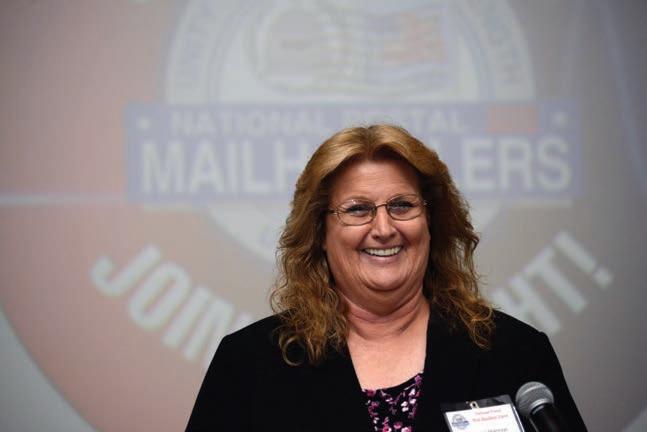


First-class mail volume declined 3.9% (down 464 million pieces). For the quarter, marketing mail increased 0.7% (1.1 billion pieces). Transportation expenses decreased by $326 million. Package/parcel volume decreased 0.9% (down 19 million pieces).
National President Hogrogian next discussed the make-up of the USPS Board of Governors (“BOG”) which consists of the Postmaster General (PMG), Deputy Postmaster General (DPMG) and nine (9) Presidentially appointed Postal Governors who are subject to Senate confirmation. The current sitting Governors include Amber McReynolds (Chair), Derek Kan (Vice Chair), Roman Martinez, Ron Stroman, and Daniel Tangherlini. There are four (4) vacant seats on the BOG which will be filled by President Trump. The Senate Committee on Homeland Security and Governmental Affairs will then hold confirmation hearings.
National President Hogrogian reviewed actions taken by the Trump Administration affecting the USPS including the circumstances surrounding the resignation of Postmaster General DeJoy.
National President Hogrogian next discussed the Voluntary Early Retirement (VER) and One Time Retirement Incentive.
National President Hogrogian reviewed the USPS Delivering For America (DFA) Ten-Year Plan, which sets forth a series of strategies by which USPS management (former PMG DeJoy) hopes to improve service and ensure financial stability. Acting PMG Tulino plans to continue the DFA plan. The major points of the 10-year plan include: (1) postal reform (passed); (2) a commitment to 6/7 day delivery (achieved with Postal Reform); (3) rate flexibility (Two times a year — implemented); (4) Package growth (new Ground Advantage); (5) service standard modifications (implemented include new 4 & 5-day delivery standards); (6) increased use of ground transportation versus air transport (implemented);
(7) consolidating and standardizing mail processing operations in select installations (On-going — network redesign) and (8) stabilizing the non-career workforce while retaining employee benefits (collective bargaining & MOUs).
Year Plan also includes the PMG’s goal to reduce the Postal Service deficit by $150 to $160 billion over 10 years March 2021); Medicare integration (from Postal Reform); ings $40 to $50 billion; increase revenue by $60 to $70 billion; rate flexibility, increase in parcel business, cost reductions in transportation with the utilization of trucks over planes, optimize network & routes, infrastructure (network redesign), and labor costs.
National President Hogrogian addressed closings and consolidations, including the creation of Regional Processing and Distribution Centers (RPDCs), which will process Originating Letters/Flats, all parcels, STC, THS, LPCs, SDCs, RTHs; the creation of Local Distribution Centers (LPCs), which will process Destinating Letters/Flats, Transfer Hubs, SDCs. RPDCs will affect up to 60 metropolitan areas.
The USPS is proposing consolidations in metropolitan areas that will impact Regional Processing and Distribution Centers (RPDCs) and Local Processing Centers (LPCs). The Postal Service identified the first round of sites to be impacted including: Sandston (Richmond) VA, Atlanta GA, Chicago (Forest Park) IL, North Houston TX, Charlotte NC, Indianapolis IN, Jacksonville FL, Portland OR, Boise ID, Phoenix AZ, Dallas TX, Greensboro NC (on hold), Royal Palm FL (on hold), Oklahoma City OK (on hold), Santa Clarita CA (on hold). Also mentioned but not on any recent reports are Nashville TN, San Antonio TX, and Los Angeles CA. The Postal Service has also noted that there are additional tentative sites. All of these plans are very fluid and subject to change. We anticipate that there is likely to be extensive excessing (estimated 50% to 75% in LDCs).

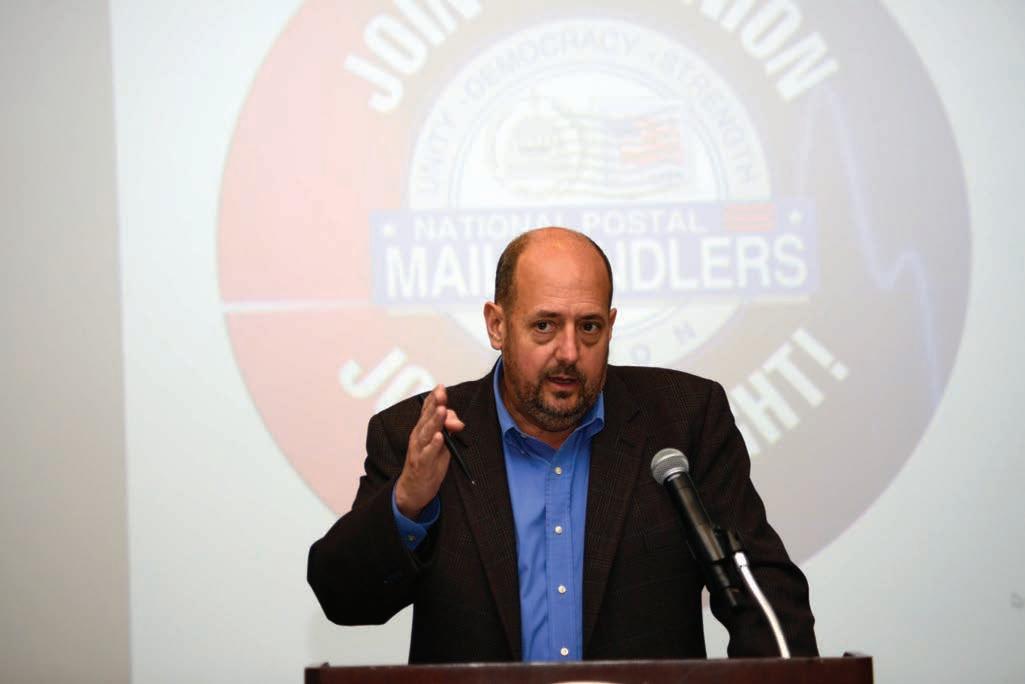

Mail Processing Facility Reviews (MPFR) PO-408: There have been approximately 60 MPFRs, with sham public hearings. The NPMHU’s goal is to ensure excessing is kept to an absolute minimum. Unofficially, 36 out of 60 sites have Local mail staying Local.
Regional Transfer Hubs (RTHs) will act as a transfer point for other RPDCs.
Dedicated facilities are in: Denver (Subcontracted), Dallas, Arizona, Kansas City, and St. Louis. Shared facilities are in: Atlanta RPDC, New Jersey NDC, West Valley, Memphis MPA, Denver (Subcontracted), Salt Lake City (inactive), San Francisco NDC, Indianapolis RPDC, Charlotte, Pennwood/ Pittsburgh, Los Angeles NDC, Des Moines, Seminole (Orlando), Jacksonville, and Chicago (April).
National President Hogrogian also addressed proposed modifications to Sorting and Delivery Centers (SDCs) and function 4 delivery and parcel sorting operations. There



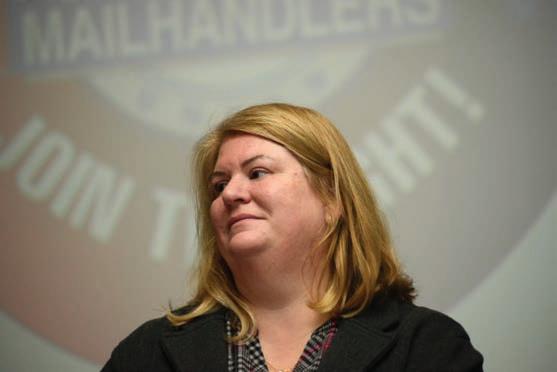
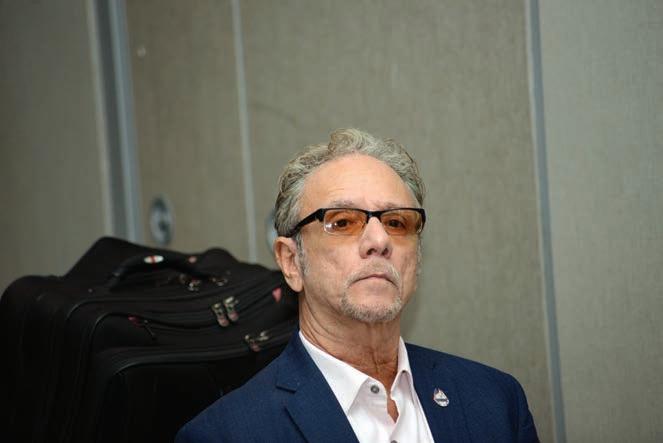

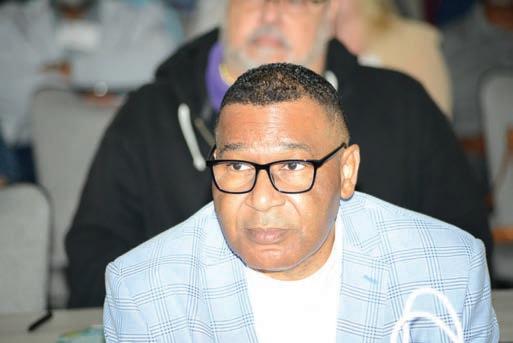





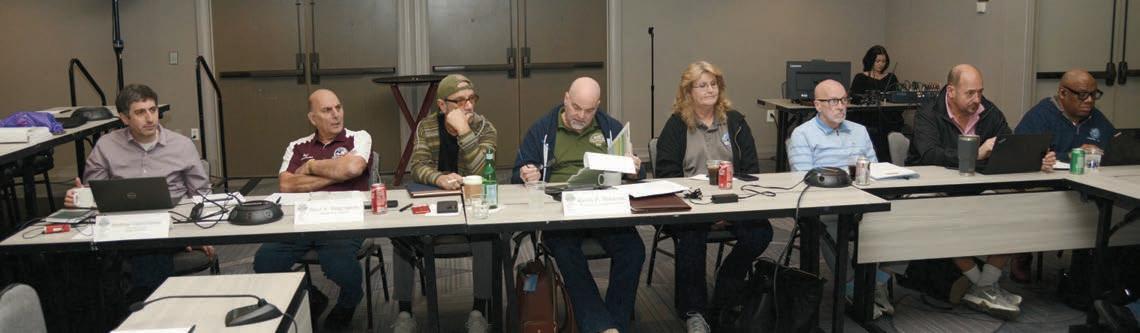
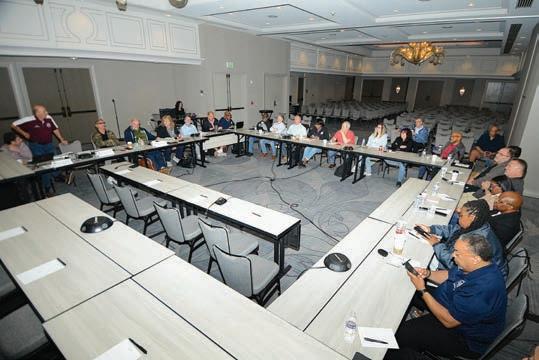










could be between 400–600 SDCs, (98 SDCs active as of now) with plans for 148 SDCs to be active by November. Some SDCs are to be located within RPDCs or LPCs. Some SDCs will be located within transfer hubs in Athens GA, Columbus GA, Macon GA, South Atlanta GA, Salem OR, Medford OR, Bend OR, Richmond VA, Charlottesville VA, Hampton VA, and Norfolk VA. We foresee more Mail Handler job opportunities at the SDCs.
Parcel Support Annexes (PSAs): Some closing and some serving as transitional facilities. There are no long-term plans for these facilites to remain open. COVID-19 Test Kits were deactivated by President Trump.
National President Hogrogian assured the body that the NPMHU will continue to oppose unnecessary consolida tions and will take steps to minimize the negative impact to mail handlers.
National President Hogrogian also addressed the NPMHU’s longstanding fight to challenge the Postal Service subcontracting of STC operations. The NPMHU has negotiated several MOUs to facilitate the return of STC operations to existing postal facilities to be staffed with Mail Handlers. The following STCs have been returned in house: Indianapolis, Memphis, Salt Lake City, Northern California, Atlanta, Washington DC (Cap Metro), Springfield MA, Kansas City, Southern California, and Chicago. STCs are still outsourced in New Jersey (partial return), Seminole (Orlando), and Dallas. National President Hogrogian also noted that RTHs could, and probably will, replace STCs.


The NPMHU has also made an agreement to bring Terminal Handling Services (THS) work back in-house. These operations tender mail to and receive mail from the airlines and FedEx. There are approximately 60 total sites and 35 are still subcontracted.
National President Hogrogian addressed Mail Handler craft complement and the Mail Handler Assistants (MHAs) path to career. He reviewed a series of Memoranda of Understanding (the Residual Vacancy MOU) that created thousands of new positions and resulted in the conversion of MHAs to fulltime career positions. There has been a total of 52,917 MHAs converted to career, with 50,461 of the MHAs being converted since the signing of the Residual Vacancy MOU. Also discussed was the positive impact that the new Auto-Convert language in the 2022 National Agreement is having on MHA conversions to career.
National President Hogrogian spoke about the successes of the Election Task Force during the 2020 Presidential Election and 2022 Mid Term Elections. He also noted that the USPS processed 99 million ballots in the 2024 Presidential election. Postal Mail Handlers help preserve the integrity of the election process by helping to ensure that 97.7% of ballots were delivered within 3 days and 99.6% within 5 days in 2024.





The 2024 figures were even more impressive with 99.9% of all mailed ballots being delivered within a week. Legislative and Political Director Katie Maddocks is our representative on the National Committee. Local Election Task Forces are to be formed.
The APWU at their recent national convention, passed a resolution calling for the establishment of a committee “to review the possibility of organizing the Mail Handlers Union under the APWU.” The NPMHU will continue to strive for even more success with gaining more Mail Handler positions through the dedicated and hard work of the Contract Administration Department and the Article 12 Task Force.

National Secretary-Treasurer Tabarus was the next speaker. He provided a comprehensive report on a host of topics that included Mail Handler complement; regular and associate membership trends and per capita analysis; revenue projections and allocation among our Union’s affiliated organizations; review of Cost-of-Living Allowance (COLA); and the NPMHU Revenue Sharing Program.





As part of the ongoing membership recruitment program, National Secretary-Treasurer Tabarus discussed membership trends and reviewed the “Join The Union, Join The Fight” recruitment tools available to Local Unions. The Form 1187 submission process was discussed in detail, including how to submit Form 1187 to HRSSC, common errors on the Form 1187, and how to file grievances when HRSSC fails to process Form 1187 within the required timeframe in accordance with ELM 924.5 Implementation of Dues Withholdings.
National Secretary-Treasurer Tabarus reviewed the NPMHU (unaudited) financial statements for the fourth quarter ending December 31, 2024 and 2024 year-end review; historic year-end Net Asset review; Deficit control measures; and quarterly and annual expense and revenue analysis.
National Secretary-Treasurer Tabarus concluded his presentation with a review of the planning for the 2028 Quadrennial NPMHU Convention in Detroit, MI. He highlighted new NPMHU merchandise available for ordering on the NPMHU website and reported on scheduled NPMHU national meetings, conferences, seminars, and training programs.
The attendees then received a report on the NPMHU Women’s Committee from Committee Chair and Vice President Central Region/Local 306 President June Harris. Sister Harris introduced Women’s Committee members in attendance. Sister Harris also reported on various projects including participation on the LiUNA Women’s Committee, and representation at the 2025 Women Build Nations Conference to be held in Chicago September 2025. In addition, several NPMHU Local Unions are starting their own Local Union Women’s Committee.
General Counsel Matthew Clash-Drexler reported on litigation and other pending legal matters involving the NPMHU National Union. There is currently no litigation pending against the National Office. The remedy hearing was discussed for the Subcontracting of the Kansas City STC. The arbitration involving the Kansas City STC is the first of thirteen pending grievances. An update was provided on the pending arbitrations, including the dispute regarding NACI background checks and recent Step 4 cases that were advanced to arbitration, including one focused on staffing of the S&DCs and one protesting an MOU between the APWU and the Postal Service declaring that distribution and mail processing duties at S&DCs is Function 4 work. In addition, General Counsel Clash-Drexler also highlighted that the General Counsels from all four (4) Postal Unions are meeting frequently to respond to any issues that may arise out of the Trump administration.
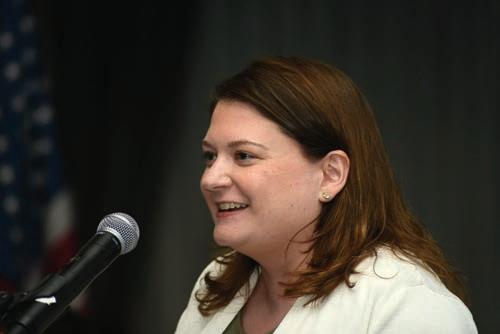
Legislative and Political Director Katie Maddocks provided an update on Capitol Hill developments. Director Maddocks informed the assembly of the recent adverse attacks on the United States Postal Service, Mail Handler jobs, and basic labor rights. But while we face these threats, there are bills in Congress that protect our work and our Union, which

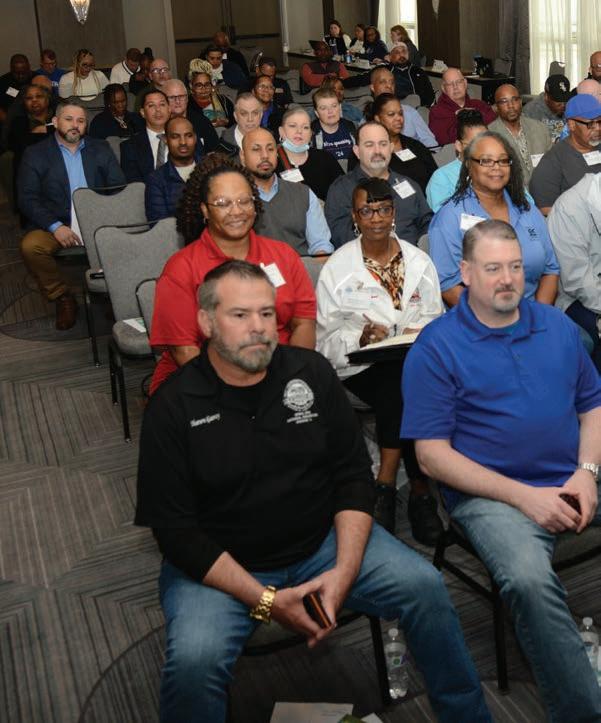









NPMHU will be promoting during the upcoming legislative conference in Washington, DC.
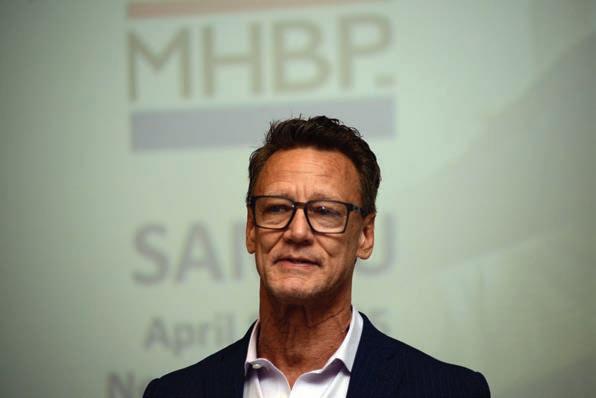
On Day 2 attendees received a comprehensive report regarding various matters related to the Mail Handlers Benefit Plan (MHBP) and successful Open Season from Schann Holladay, Aetna Manager of Accounts, and Executive Director Nina Gallauresi. Updates included a review of MHBP membership, health fair attendance, and marketing plans. Representatives from the MHBP presented an overview of the Postal Service Health Benefit Program which started providing health insurance benefits to USPS employees and annuitants beginning January 1, 2025. There are six (6) MHBP Health Plans now, three in FEHB and three in PSHB. All MHBP Postal Enrollees received new MHBP enrollment cards, with a new identification number.
Contract Administration Department Manager Teresa Harmon then provided a full report and entertained questions and comments from various attendees on the activities of the Contract Administration Department since the last meeting of the Local Unions. Sister Harmon’s presentation was based on the written report that was distributed electronically before the meeting (and is posted at the MAILS tab on the national website) and included the following topics:

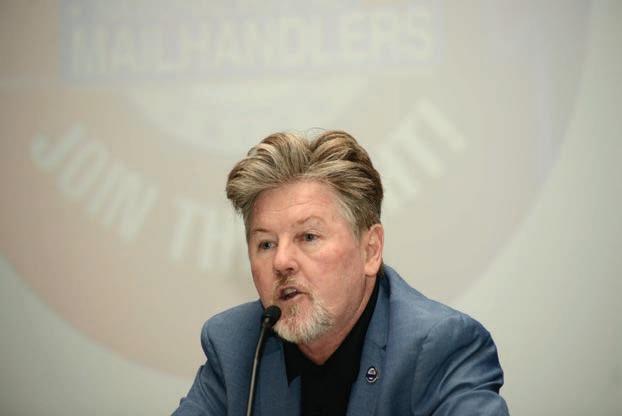

•Fifth COLA of 2022 National Agreement, one more remaining
•Bargaining for the 2025 National Agreement
In September 2024, the National President issued a call to all Mail Handlers for proposals, deadline was 1/31/25.
In February 2025, the Field Negotiating Committee met to review each and every proposal.
The first Bargaining Session with the USPS will be on 6/25/25
•There will be “main table” discussions and “sub-committee” discussions.
•The 2022 National Agreement is set to expire on 9/20/25
•MHA Peak Season Exception Period, within the same four (4) consecutive pay periods between October 1 and January 31 each fiscal year, nationwide.
The Postal Service has provided notification for the 2025 fiscal year designating PP2025-24 through PP2026-01 (November 1, 2025–December 26, 2025) as the peak season exception period.
•Article 26 Uniform Allowance Carryover
Any unused portion of an eligible employee’s annual allowance will be accumulated, and will be reflected at the end of each employee’s anniversary year.

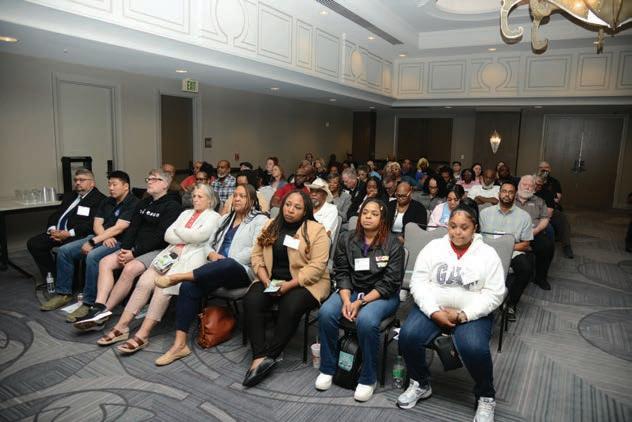
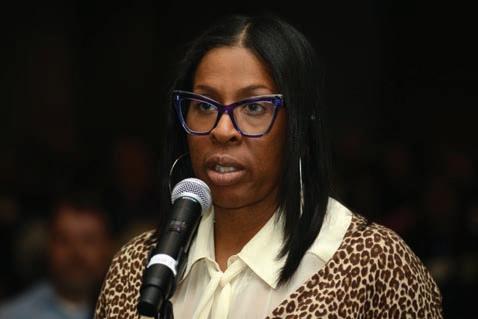
•Subcontracting Issues: SAC Vides, MTESCs, Regional Transfer Hub (RTH) in Denver
•Implementation of 2022 National Agreement
•Regional Regular/Expedited Arbitration Panels, National Arbitrator Nolan, and Arbitrator Margaret Brogan to serve as arbitrator on our National RI-399 panel.
•Article 26; Uniform Allowance Carryover
•MOUs: Annual Leave Carryover & Annual Leave Exchange Option 2025
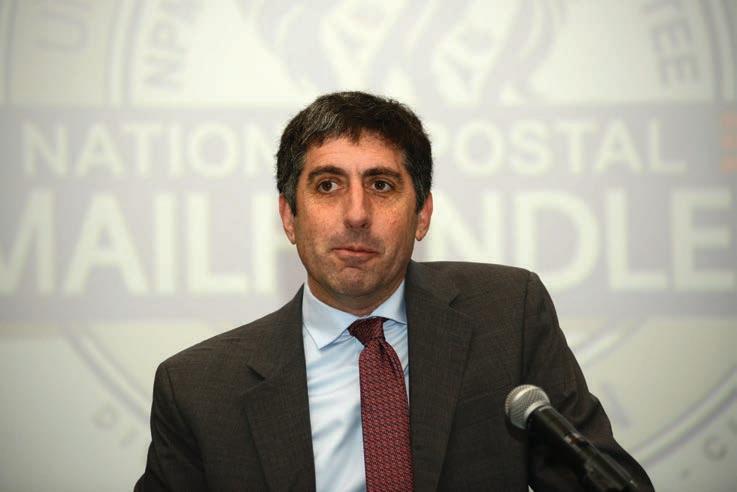
•Postal Policy on Accommodation of Pregnant & Nursing Workers
•Flexible Spending Account (FSA) new vendor for USPS. USPS claiming no rollover of funds to new vendor. Updates to be provided when the USPS responds to the Union.

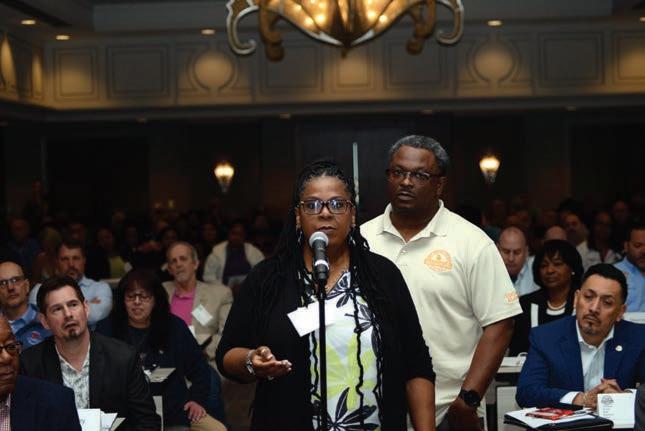
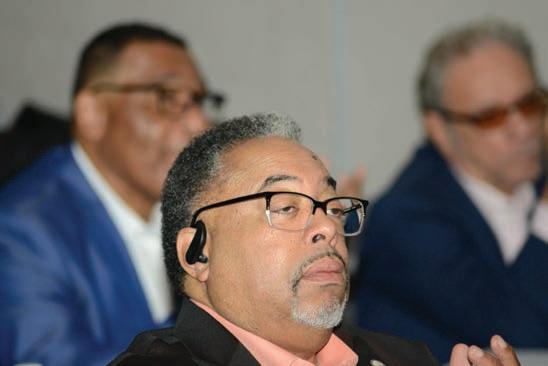


National CAD Representative Tom Ruther led discussions on the RI399 Update memorandum and provided a comprehensive report on the activities of the Article 12 Task Force. The CAD department is actively involved with discussions on new RTH, RPC, and LPC facilities. CAD Representative Ruther also provided updates on the RI-399 NDRC meetings, including discussion on new sorting machinery — MaRS, PILS, MEWS, MIMS, and RIS (Robotic Induction System) for the APBS. Representative Ruther stated that all LDRCs should still be meeting monthly. CAD Representative Ruther gave a detailed description on the status of SDCs, noting that a new complete inventory should be done asap. He reminded the assembly that we must show more than four (4) hours of Mail Handler work and that we have been successful at getting the Potsal Service to create a Mail Handler only SDC operation number.
As with each of these Semi-Annual Meetings of the Local Unions, a solicitation for agenda items was distributed to all Local Union Presidents in advance of this meeting. Agenda items that were sent to the National Office were distributed to all Local Presidents prior to the meeting and, to the extent possible, the submitted agenda items were addressed in the appropriate reports and through other discussion before the assembly. Several other topics were raised and discussed during the round-robin segment of the meeting.
On Day 3, the Field Negotiating Committee met. The focus of the meeting was on the NPMHU’s Bargaining Strategy and proposals for the 2025 National Agreement.
After the business session, and without any further business before the body, the Semi-Annual Meeting of the Local Unions was adjourned.


























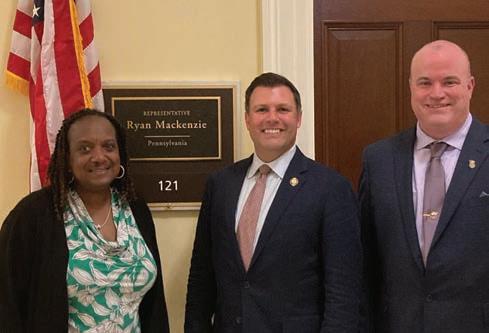


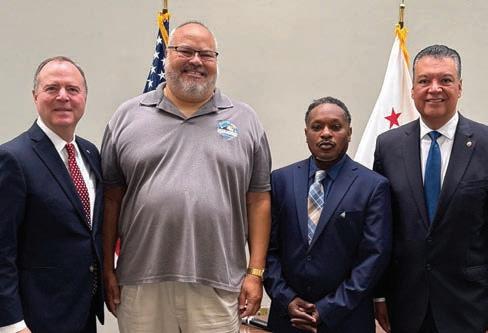
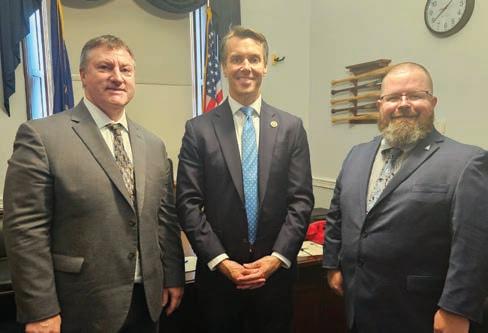
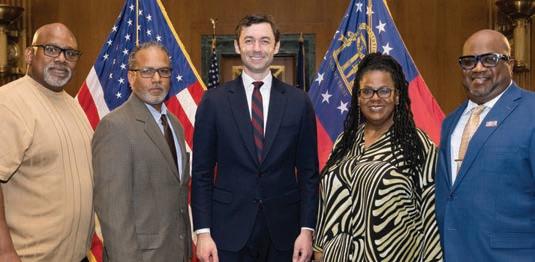
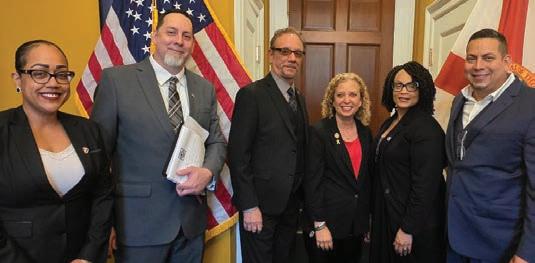
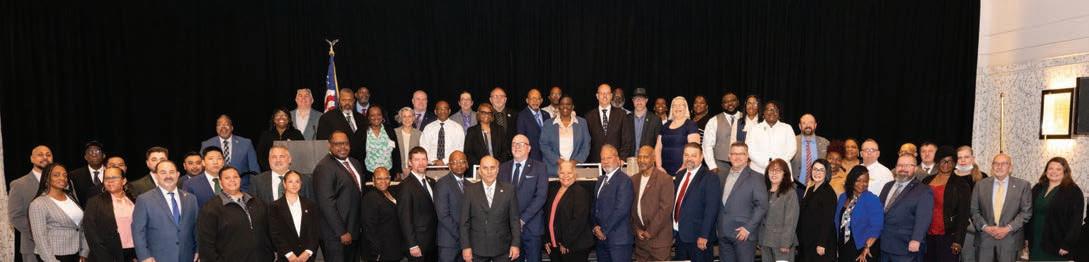
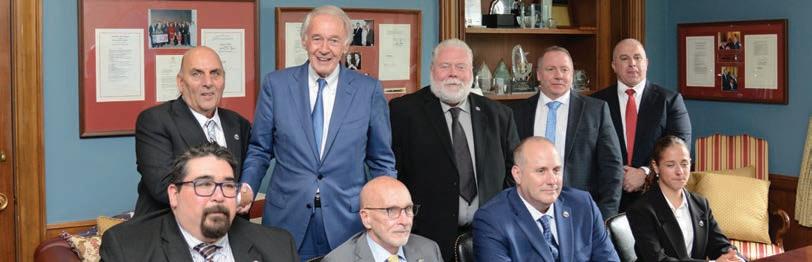
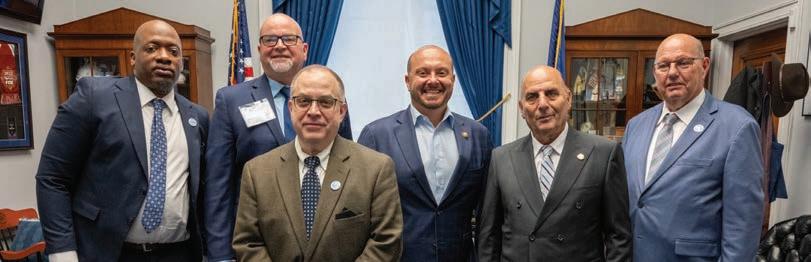
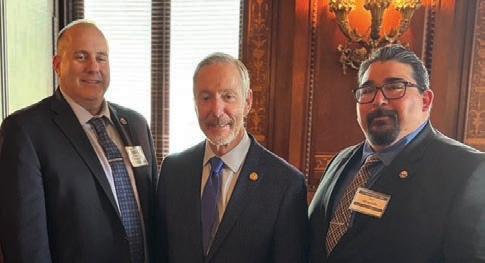
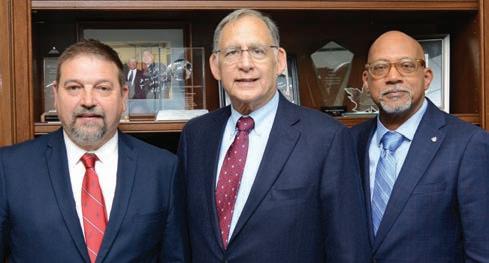
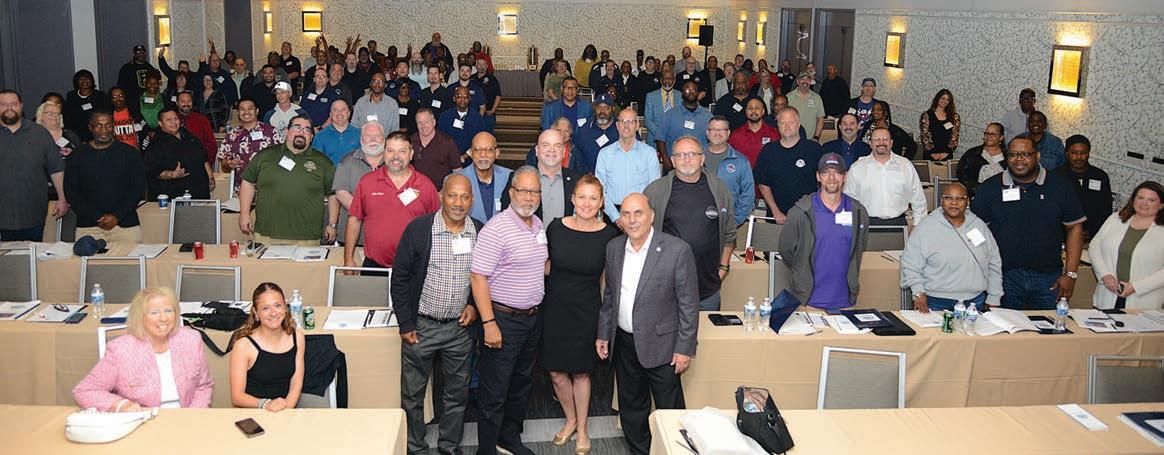
The 119th Congress began with rhetoric and legislative proposals that would drastically impact Mail Handlers’ jobs and benefits. In order to combat these attacks, the National Postal Mail Handlers Union met in Washington, DC, to learn more about the legislation that would impact them as well as what members can do to successfully educate and lobby their members of Congress on those issues.
The first day of the conference saw a full training program, with a host of speakers and panel discussions highlighting the issues the Postal Service and the labor movement are now facing in Congress and the needs for grassroots lobbying. National President Paul Hogrogian and Legislative & Political Director Katie Maddocks opened the program by highlighting the importance of the NPMHU’s representation on Capitol Hill, noting in particular that year-round legislative and political involvement must be part of the commitment made by all NPMHU activists.


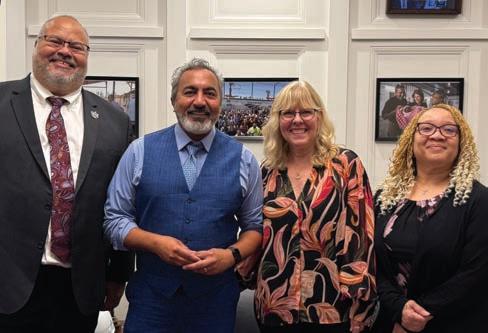



The first panel included legislative updates from Sister Maddocks, American Postal Workers Union (APWU)
Legislative Director Judy Beard, National Association of Letter Carriers (NALC) Chief of Staff Kori Blalock Keller, and



























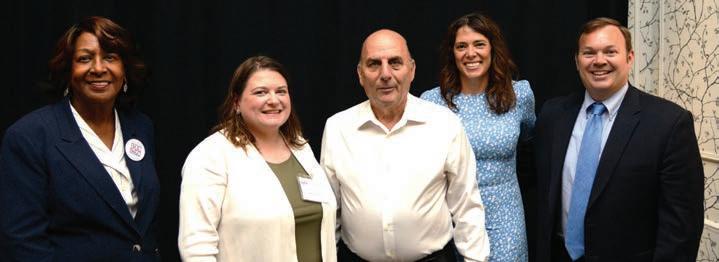



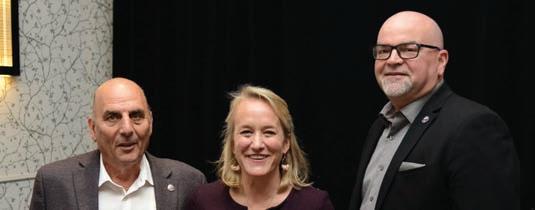











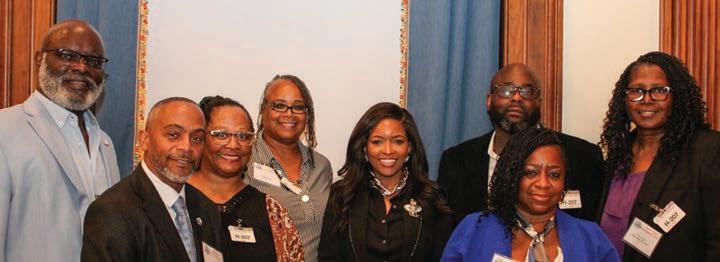

































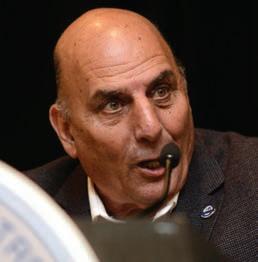



























National Rural Letter Carriers Association (NRLCA) Director of Governmental Affairs Paul Swartz. As there has been growing talk around privatization, the four unions have a collective voice on the need to protect the Postal Service. Not only would a privatized Postal Service result in the loss of jobs, but it would also jeopardize service standards across the country. This is why it is necessary for Representatives and Senators to sign onto H. Res. 70 and S. Res. 147, a nonbinding resolution that expresses USPS should remain an independent federal agency and not subject to privatization. Additionally, the four discussed the talks around the budget reconciliation process and how members of Congress are seeing cuts to postal employees’ earned retirement benefits as a means of reducing the federal deficit. Legislative conference attendees were tasked with talking to their elected officials on how these changes would impact their personal finances and retirement planning, and also job recruitment and retention within USPS.
The conference also heard from AFL-CIO Director of Advocacy Jody Calemine on the attacks those in the federal workforce are facing — attacks postal employees need to be aware of as they could be seen as the next target. Mail Handlers need to remain vigilant on legislative attacks on collective bargaining rights that most of the federal workforce are currently seeing.


In order for NPMHU members to effectively lobby on these issues, Mike Ingrao, a policy consultant for Republican members of Congress and Annika Olson, Political & Legislative Representative for the National Air Traffic Controllers Association, spoke on the need to work and talk with members from both parties. It’s relationships with all parties that effectively move policy forward.
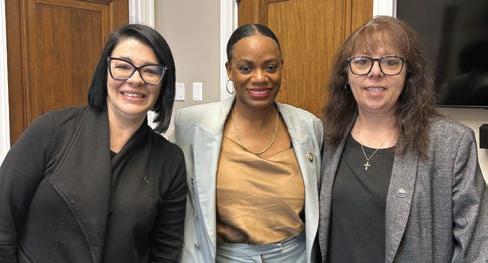
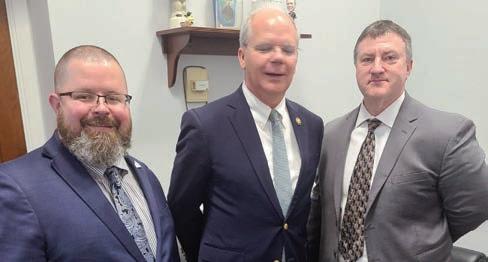
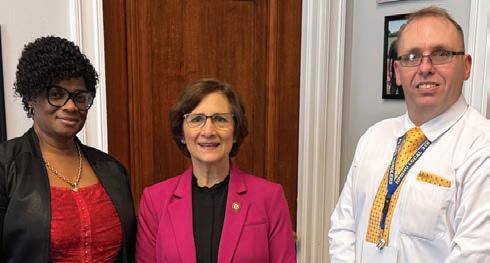
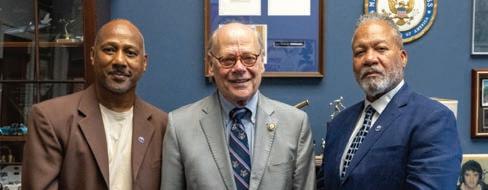
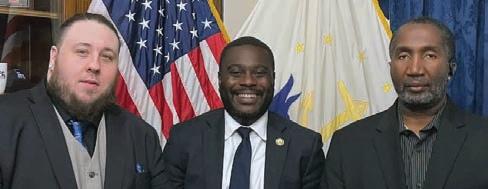
We were privileged to hear from Representatives Nikki Budzinski (D-IL-13), Melanie Stansbury (D-NM-01), and Stephen Lynch (D-MA-08). These members of Congress have a proven track record of supporting not only the Postal Service, but also Mail Handlers in particular and the union movement at large.

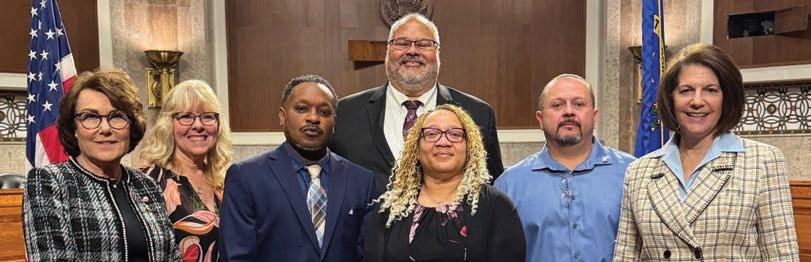
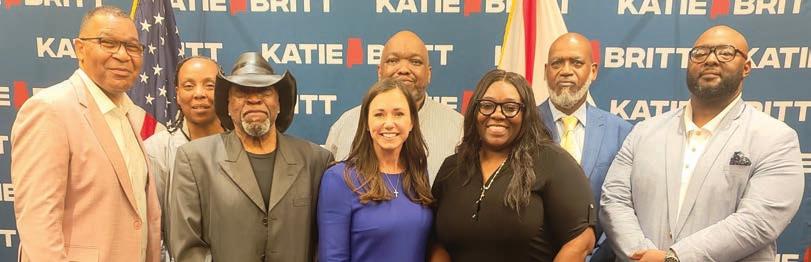
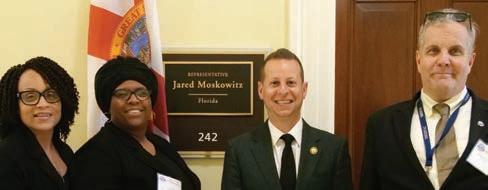
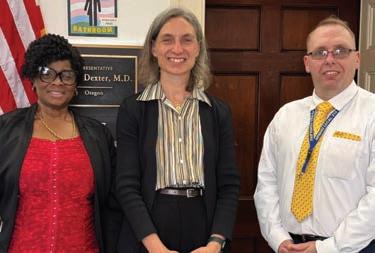
The second day of the conference allowed Mail Handlers — now trained on how to effectively lobby — to meet with Members of Congress and their professional staff. Not only were NPMHU elected leaders and Mail Handlers able to share their views on pending issues throughout their day on the Hill, but relationships forged during the conference will prove helpful throughout the rest of the 119th Congress.

The week after the conference, the House of Representatives voted on the budget reconciliation bill. Included were provisions that would directly impact Mail Handlers’ retirement benefits. The bill passed by the House included the elimination of the Federal Employees Retirement System (FERS) supplement for those who are eligible to retire before they qualify for Social Security benefits and, for new employees,


tied one’s FERS contribution rates to union membership. The bill passed mostly along party lines with a vote of 215–214. Now that it’s in the Senate, the Mail Handlers will work with Senators to ensure they fully understand how detrimental these changes to retirement benefits will be for current and future postal and federal employees. We will keep all Mail Handlers informed of any changes that happen with the reconciliation process.
After a battle with cancer, Congressman Gerry Connolly (D-VA11) passed away on May 21, 2025. He served not only the people of Northern Virginia, but all postal and federal workers. Because of his work, the Mail Handlers saw the passage of the Postal Service Reform Act in 2022; support of preserving service standards; protecting postal employees’ earned health and retirement benefits; and, tending to the overall sustainability of the United States Postal Service. In a statement on his passage, NPMHU National President Hogrogian commented, “He truly wanted to improve the Postal Service not only for its employees, but also its customers. We have lost a true friend and champion.”







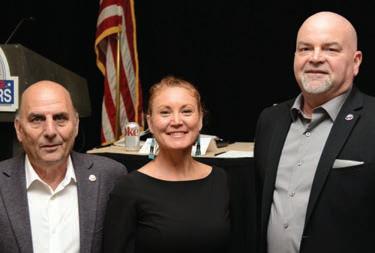



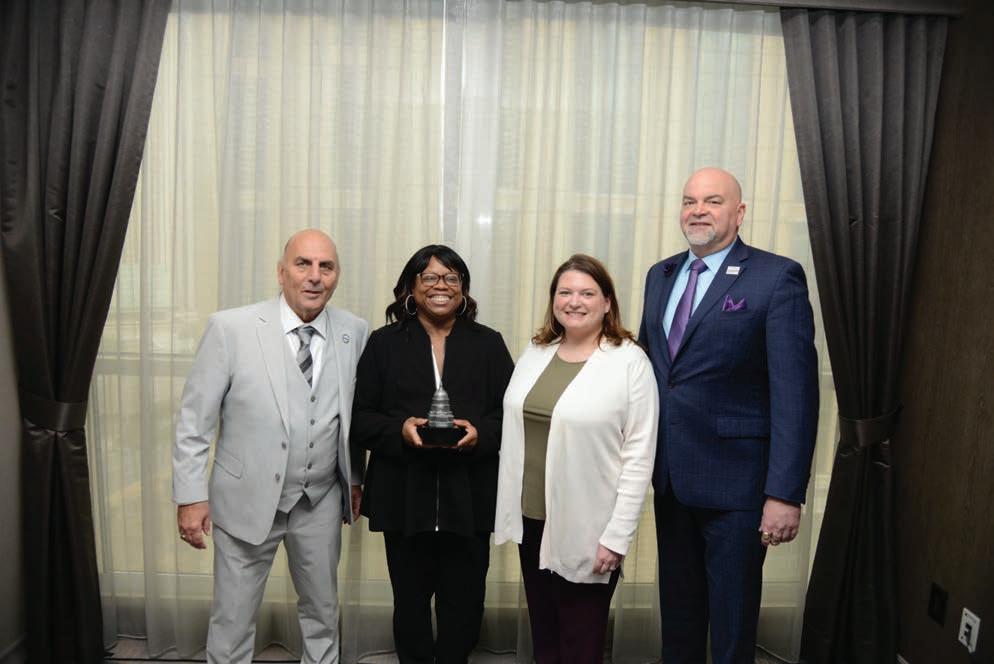
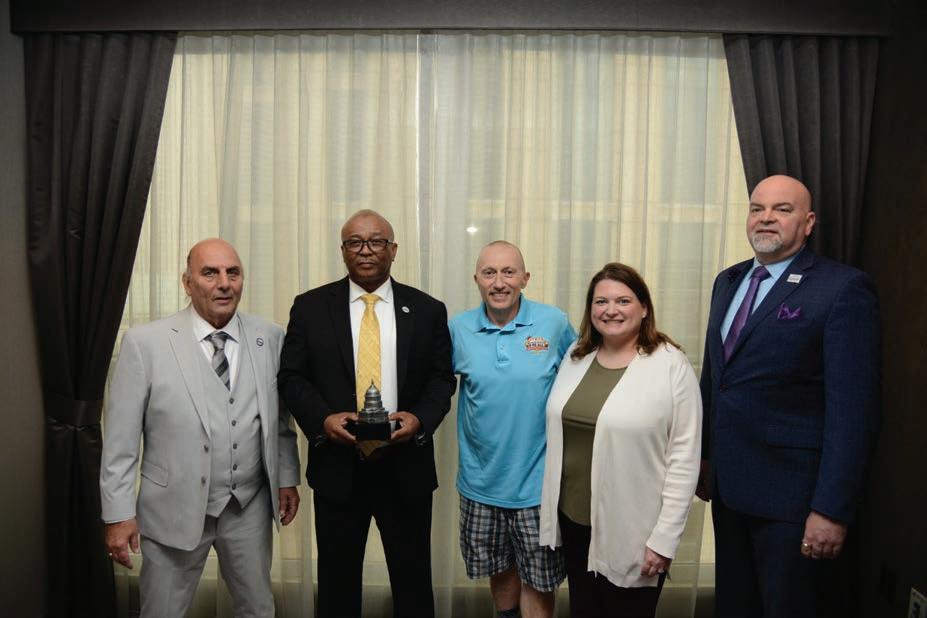
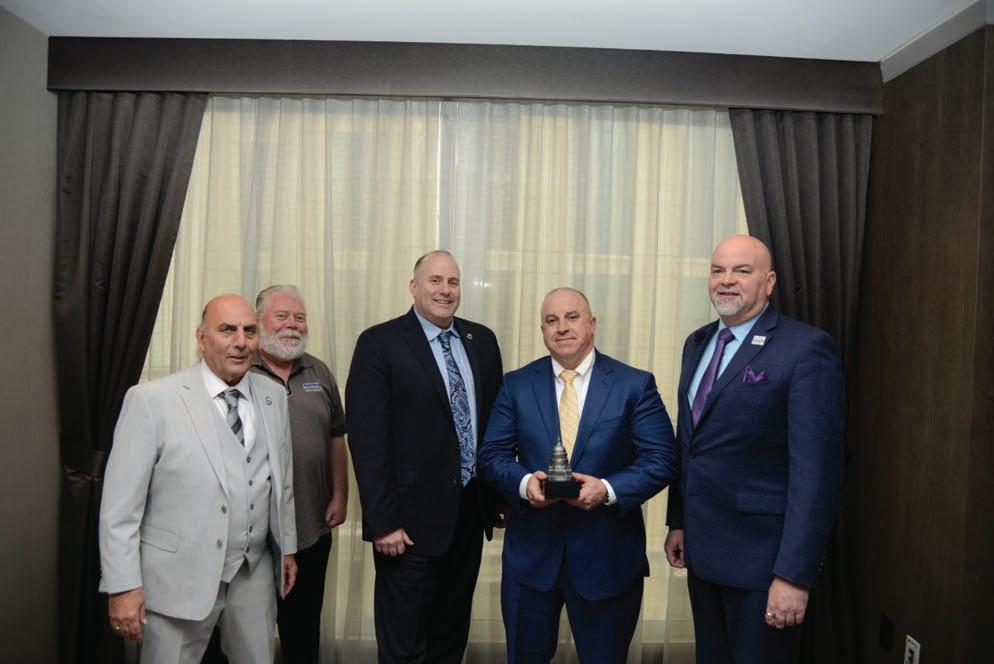
PACkie awards are accolades of recognition highlighting a Local’s commitment to the success of the The winners exemplify excellence amongst our NPMHU Locals.









Member
Sponsor
Activist
Leader
Ambassador
LEVEL DONATION AWARD
$26 ($1 per pay period)PAC Pin
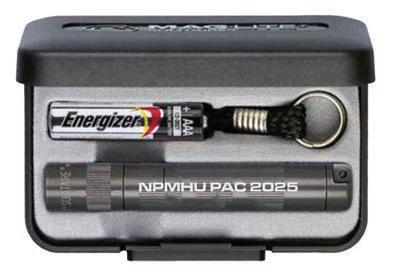
$52 ($2 per pay period)PAC Maglite Keychain
$100
$250
$500
Super Ambassador$1o00
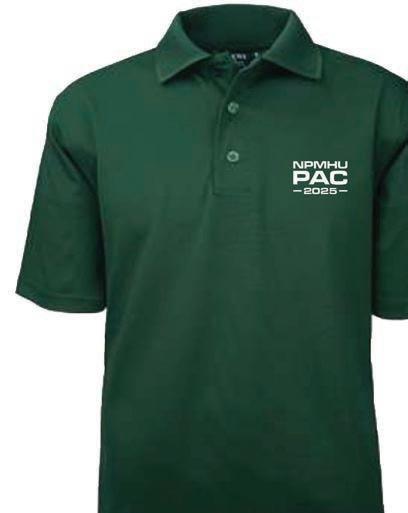
PAC Polo
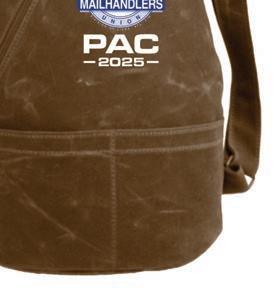
PAC Large Sling Bag
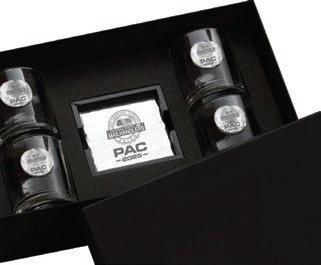
PAC Rock Glasses & Coasters
All Incentive Gifts



There is a quick way for Mail Handlers to contribute to the NPMHU PAC. Simply call in to the PostalEASE system, or visit the PostalEASE option on the web at www.liteblue.usps.gov Follow the instructions printed on pages 27 and 28 of this magazine. Your PAC contribution will be made directly from your bi-weekly postal payroll. You also have the option of sending in a personal check or authorizing a credit card contribution. Your contributions will also be entered in to the incentive award program that entitles you to an award based on your contribution level. There are six distinct PAC membership levels and awards. Awards are distributed based on membership level and will be mailed after the end of the year; awards will vary year to year.
Contributions to the Mail Handlers PAC are not deductible as charitable contributions for purposes of federal income taxes. In addition, federal law requires that the Mail Handlers PAC report to the Federal Election Commission the name, mailing address, occupation, and name of employer for each individual whose contributions in any calendar year total in excess of $200. Please also note that the Mail Handlers PAC has political purposes, and that all members have the right to refuse to contribute, and the right to revoke their authorization for any continuing contributions, without any reprisal.
You can contribute directly to the Mail Handlers PAC by filling out the following information and mailing it to:
Mail Handler PAC P.O. Box 65171
Washington DC 20035
Please enclose your check or money order, or provide authorization to charge your credit card.
(Cut here and return to NPMHU PAC)
This is to certify that I, _________________________________________________________, have voluntarily contributed the amount listed below, to the NPMHU PAC. I understand that this voluntary contribution is not a condition of membership in the union; I have the right to refuse to contribute without any reprisal; if specific contribution amounts are mentioned they are merely suggestions and I am free to contribute more or less; the Union will not favor or disadvantage me because of the amount of my contribution or my decision not to contribute; NPMHU PAC will use the money it receives to make Political expenditures and contributions in connection with federal elections; and only U.S. Citizens and lawful permanent U.S. residents are eligible to contribute.
Employer (if other than USPS)____________________________
Contribution Amount: (Please check one):
$26 (Member) $52 (Sponsor) $100 (Activist) $250 (Leader) $500 (Ambassador) $1000 (Super Ambassador)_____________________________
Please enclose your check or money order, or authorization to charge your credit card.
1. Dial 1-877-4PS-EASE—(877-477-3273) and follow the prompt for the Employee Services Main Menu.
2. When prompted, press #1 for PostalEASE
3. When prompted, enter your eight-digit USPS employee identification number.
4. When prompted again, enter your USPS PIN number. (This is the same as the PIN number you use for telephone bidding and/or other payroll allotments.)
5. When prompted, choose option #2 (to select payroll allotments)
6. Then choose option #1 (to select allotments)
7. When prompted, press #2 to continue
8. When prompted, press #3 to add the allotment
9. When prompted for the routing number, enter 054001220
10. When prompted for the account number, enter the following: 11260001 __ __ __—__ __—__ __ __ __ (the last nine digits of your account number is your social security number—this information will allow us to identify you as the PAC contributor).
11. Press #1 if correct
12. When prompted, press #1 for “checking”
13. When prompted, input the bi-weekly dollar amount of your PAC allotment.
14. Press #1 if correct
15.When prompted, press #1 to process
16. You will be provided a confirmation number as well as the start date for the salary allotment.
17. For your records:
· Record the confirmation number
· Record the start date of the salary allotment
18. Press #1 to repeat, or press #9 to end call
PostalEASE on the WEB:
To initiate your bi-weekly PAC contribution on the web, simply go to www.liteblue.usps.gov
1. Enter your eight-digit USPS Employee ID Number and your USPS PIN
2. Follow the link to PostalEASE— you will again be asked to enter your Employee ID Number and USPS PIN
3. Follow the link for PAYROLL – Allotments/NTB
4. Continue to the ALLOTMENTS section
5. Your ROUTING TRANSIT NUMBER is: 054001220
6. Your ACCOUNT # will be: 11260001 __ __ __—__ __ —__ __ __ __ (the last nine digits of your account number is your social security number—this information will allow us to identify you as the PAC contributor).
7. For ACCOUNT TYPE— please select “CHECKING”
8. When prompted, please input the AMOUNT that you would like to contribute to the PAC each pay period.
9.To process your PAC allotment, you will need to select the VALIDATE button, and to finalize the transaction, please select SUBMIT. Be sure to print out a copy of the confirmation page for your records.


The MHBP Standard Option is setting a higher standard for postal service employee health plans — at a lower cost.
The plan’s low copayments keep your costs down and out-of-pocket expenses predictable.
With network providers, the plan pays 100 percent for annual exams, lab tests, maternity care and more. For services like diagnostic tests or surgery, this plan has you covered.
• Up to $350 in wellness rewards
• No out-of-pocket costs for maternity care
• No cost for telehealth through Teladoc Health®
• No cost MinuteClinic® at a CVS Pharmacy®*
• 40 alternative care visits per year for chiropractic care and acupuncture
• No cost for Lab Savings Program
*

rates with comprehensive coverage and low copays for doctor visits and most services.
These rates do not apply to all enrollees. If you are in a special enrollment category, please refer to the PSHB Program website or contact the agency or Tribal Employer that maintains your health benefits enrollment.
(TTY:
24 hours a day, 7 days a week (except major holidays). Or visit MHBPPostal.com to schedule a one-on-one phone consultation, start a live chat, register to attend a webinar or learn more about MHBP plans.
is not available in all states. Aetna® and MinuteClinic, LLC (which
branded walk-in clinics) are part of the CVS Health family of companies. Aetna is the brand
and services provided by Aetna Life Insurance Company and its a liates. Teladoc Health is not available to all members. Teladoc and Teladoc physicians are independent contractors and are not agents of Aetna. Visit Teladoc.com/Aetna for a complete description of the limitations of Teladoc services. Teladoc, Teladoc Health and the Teladoc Health logo are registered trademarks of Teladoc Health, Inc.
Nina Gallauresi, Executive Director, MHBP
Your liver is one of the most important organs inside your body, and it’s also the largest. But do you know what it does or even where it’s located? One thing’s for sure: You can’t live without it. Your liver carries out hundreds of essential tasks every day.
The liver is a reddish-brown wedge-shaped organ about the size of a football. It sits just under your ribs against the right side of your stomach. Most people’s livers weigh about 3 pounds. But its size and weight can vary depending on your size.
“The liver is important for maintaining the health of the overall body, because it processes all the nutrients from the food that we eat. And it produces a lot of the proteins that the body needs to stay healthy,” says Dr. Marc Ghany, a liver researcher and clinician at NIH. “It also cleanses the body of toxins and breaks down substances that could be harmful to the body. And it stores most of the vitamins and minerals that we need to stay healthy.”
because they don’t cause symptoms early on. About 4.5 million adults in the U.S. have been diagnosed with a liver disease. Many more may have one but don’t yet know it.
Some liver diseases are caused by viruses. Others can result from drug or alcohol misuse. Some people have inherited disorders that affect the liver. Some have too much fat in their liver. When liver problems are chronic (long-lasting), they can lead to cirrhosis, or severe scarring of the liver. Cirrhosis is considered a pre-cancerous condition. It can sometimes lead to liver cancer.


The liver clears away old red blood cells. It also makes substances that help your blood to clot.
The liver is tough and resilient. Unlike most other organs, the liver can regenerate and repair itself after an injury. It keeps working even under stress. But over time, damage can build up and cause problems.
The good news is you can take steps to keep your liver healthy. And many liver diseases can now be treated or even cured, thanks in large part to NIH-supported discoveries.
There are many kinds of liver diseases and conditions. Unfortunately, many disorders go undetected for years
Warning signs of liver disease can include swelling of the abdomen and legs, changes in the color of urine or stool, or bruising easily. A yellowing of the skin or eyes, called jaundice, is another common sign of liver issues.
“But there may be no noticeable signs of disease until the liver has been severely damaged. And by then, it can be hard to treat,” says Dr. Arun Sanyal, a physician and liver expert at Virginia Commonwealth University. “That’s why it’s really important, even if you’re not having symptoms, to talk to your primary care doctor and ask about the health of your liver.”
If problems are caught early, you can take steps to protect your liver’s health.
An increasingly common type of liver disease arises when too much fat builds up in the liver. This condition was known as nonalcoholic fatty liver disease. But experts changed the name in 2023 to “metabolic dysfunction-associated steatotic liver disease.” Steatotic is a technical term for fat buildup in an organ. The new name highlights the
links between fat in the liver and metabolic conditions, like diabetes and obesity.
“About 1 in 3 adults and maybe 1 in 5 adolescents in the United States has fatty liver, or steatotic liver disease,” says Dr. Norah Terrault, a physician and liver researcher at the University of Southern California. “This is a condition that can, in some instances, lead to scarring in the liver. It can even lead to cirrhosis and liver cancer.”
Having type 2 diabetes or obesity increases the risk for getting steatotic liver disease. Drinking too much alcohol can lead to a similar condition called alcohol-related liver disease. This condition also leads to fat buildup in the liver.
Until recently, there were no approved medications to treat metabolic dysfunction-associated steatotic liver disease. But just last year, the U.S. Food and Drug Administration approved the first drug to treat a severe form of the disease. The drug is called resmetirom (brand name Rezdiffra). Other potential treatment strategies continue to be developed and tested.
The word “hepatitis” means inflammation or swelling of the liver. Most types of liver disease involve some sort of inflammation. Viruses, or viral hepatitis, is a leading cause of liver disease.
“Several different viruses can infect the liver. The main three that cause chronic liver infections are hepatitis B, hepatitis C, and hepatitis D,” Ghany says. These viruses usually spread through contact with an infected person’s blood or other body fluids.
Another virus, called hepatitis A, can cause a brief, mild illness. It often spreads by drinking or eating contaminated foods. Effective treatments and prevention strategies are available for all these conditions.
“Fortunately, we now have a curative therapy for hepatitis C. There’s an oral therapy that can cure more than 95% of people who are infected with the virus,” Ghany says.
Liver inflammation can also arise from exposure to toxic substances, too much alcohol, and certain drugs. For instance, the popular pain reliever acetaminophen, if taken improperly, can cause drug-induced liver injury. It’s a major cause of acute liver failure in the U.S.
“Acetaminophen is generally safe to take,” Ghany explains. “But some people may inadvertently take too much because they haven’t looked carefully at the product label.”
A combination of alcohol and acetaminophen can be especially harmful to the liver.
Since many liver diseases have no symptoms until they are very advanced, it’s important to get your liver checked at
annual physical exams. Many problems can be detected by blood tests. “Be direct. Even if you have no symptoms, tell your doctor: I want my liver checked out,” Sanyal says. “It’s important that you feel free to ask questions of your doctor.”
“If you have a liver disease, we have many good treatments for most of these conditions,” Terrault adds. “With treatment, you can reverse or at least stabilize your liver and not end up with serious complications like cirrhosis and liver cancer.”
•Keep a healthy weight.
•Get moving. Physical activity helps reduce the amount of fat stored in your liver.
•Avoid alcohol.
•Don’t smoke or quit if you do
•Don’t share personal items that can spread viruses, like toothbrushes, razors, or needles.
•Get screened for liver diseases. Ask your doctor what the results of your liver tests show about your liver’s health.
•See a health care provider if you have symptoms of liver problems, like jaundice or belly pain.
MHBP has extensive resources to assist you and your family to support your optimal health!
For healthy weight management, MHBP offers a Lifestyle and Condition Coaching Program, provides you or your covered dependents personalized support that helps you manage existing conditions, learn new habits and stay on their path to better health. Our Health Coach will partner with you to transform your health goals into action. Your Health Coach will provide guidance, support, and resources to help you overcome obstacles that may be keeping you from realizing optimal health. You can talk to a Coach Weight Management, Exercise, Nutrition, and Stress Management. To get started with Health Coaching call toll-free at 866-533-1410.
MHBP has a registered dietitian to help support your nutritional goals. MHBP also covers, when medically necessary, bariatric surgery and weight loss medications, including GLP-1 medications. If you have any questions or would like more information, please call MHBP at 833-497-2416.
If you have a health concern or need advice on what to do and where to go, MHBP offers a 24/7 Nurse Line, call 800-556-1555. If you have any questions or would like more information, please call MHBP at 833-497-2416
• National Institutes of Health https://newsinhealth.nih.gov/ •MHBPpostal.com
Teresa Harmon, Manager, CAD
In this issue, I want to give a brief update on some of the things that have been occurring in the last six months.
On March 12, 2024, the NPMHU initiated a Step 4 dispute to challenge the Postal Service’s discharge of non-probationary employees based on the results of a NACI background check. The Postal Service has taken the position that the separations of these employees are “administrative” separations and that, as a result, the Postal Service does not need to establish any cause — let alone just cause — notwithstanding that the employees have completed their probationary period. Moreover, as so-called administrative separations, the employees may not contest their discharge through the grievance and arbitration procedures in Articles 15 and 16 of the National Agreement.
All four Postal Unions filed grievances on this issue, and the grievance filed by the APWU advanced to arbitration first, with the hearing held on December 12, 2024. The NPMHU along with the NALC and NRLCA intervened in that arbitration.
The NPMHU argument at the hearing was straightforward: once employees complete their probationary period, any removal of those employees is subject to the just cause protections set forth in the National Agreement and subject to review under the grievance and arbitration procedures in Articles 15 and 16 of the National Agreement.
While the plain language of the National Agreement makes that argument clear, further cementing that point is the fact

that the ELM allows for separations “that results from the failure to meet conditions specified at the time of appointment (such as failure to qualify by conduct or capacity during the probationary period).” Dispositively, that type of separation “applies only to employees who have not completed their probationary period.” Accordingly, the NPMHU argued at the hearing, the only type of separation permitted under the ELM — consistent with the terms of the National Agreement — is a “removal” which, according to the ELM, must be supported by “cause.”
Post hearing briefs were filed and the decision will be distributed once an award is rendered. The next scheduled National hearing will be on October 21st and 22nd, 2025. The case has not yet been determined.
On April 2nd and 3rd, 2025, there was a National Level RI-399 arbitration held with Arbitrator Margaret Brogan that was appealed by the APWU. In 2021, the NPMHU was successful in several facilities, by having the USPS staff the AI/ATHS associated with the FSM 100 with Mail Handlers. Prior to this, local management staffed these two functions with Clerks. This action was in direct violation with the national determination on these operations. The USPS agreed that with the RI-399 Update MOU that the dispute from the APWU was withdrawn and that the proper staffing on the AI/ATHS was the MH craft. The Service moved the Clerks off these operations and properly replaced them with MH’s. The APWU filed a national dispute on this action stating that the parties must leave this staffing as is until all local and regional disputes are
April 2nd and 3rd, 2025, there was a National Level RI-399 arbitration held with Arbitrator Margaret Brogan that was appealed by the APWU.
adjudicated. The USPS countered that by failing to correct their errors immediately, it could cause a substantial financial remedy to be awarded to the MH craft. The NPMHU position is that this was not a national issue and should have been handled at the Regional level. A decision will be distributed once an award is rendered.
The next scheduled National Level RI-399 case will be November 18th and 19th 2025 dealing with the NPMHU disputes on the SDUS and SIPS.
On January 13, 2025, the NPMHU and the USPS reached an agreement on the terms of a One Time Retirement Incentive. The parties agreed that the Postal Service would make lump sum incentive payments totaling $15,000 (less applicable taxes and deductions) to eligible full-time career employees who choose optional retirement or retire pursuant to a Voluntary Early Retirement (VER). Eligible part-time career employees were eligible for a prorated amount based on their paid hours.
To be eligible to retire under the Voluntary Early Retirement (VER), there are minimum age and service requirements. The requirements are:
•At least age 50 with at least 20 years of creditable Federal service OR
• Any age with at least 25 years creditable Federal service.
•An employee must have at least 5 years of creditable civilian service to be eligible for an early voluntary retirement.
Eligible employees were sent notification to their home address on record by First-Class Mail in early February. There was a total of 13,809 eligible mail handlers, 9,580 of those were eligible for optional retirement and 4,229 were eligible for VER retirement. Eligible employees had to indicate on or before March 7, 2025, their intent to participate in the incentive program.
Under the terms of the Memorandum of Understanding, eligible Mail Handlers who choose to leave employment with the USPS through optional retirement or pursuant to the VER will receive incentive payments totaling up to fifteen thousand dollars (for full-time employees). The fifteen thousand dollars incentive for eligible full-time career employees will be paid as follows:
•$10,000 on August 15, 2025
•$5,000 on August 28, 2026
The incentive checks will be sent to the office where the mail handler was last employed. From there, the retiree can pick it up from the office. If the employee has filled out a PS 3077 — Request to Forward Salary Check, the manager will
mail the check to the address provided by the employee on that form.
Employees taking advantage of the incentive should complete the form, which provides the address where they would like the check sent (usually their final check/terminal leave) and give it to their manager/supervisor.
Then, when the check arrives at the postal unit, the manager will mail the check to the address provided by the employee.
There are a total of 1,626 mail handlers who retired with this incentive.
I am still being asked many questions regarding the new language in the 2022 National Agreement regarding the Uniform and Work Clothes Annual Allowance Carry Over.
Effective on March 13, 2024, the following provision of Article 26, Section 26.3 of the 2022 National Agreement was implemented:
Unused portions of an eligible employee’s annual allowance for uniform and work clothing will be carried over and available for use beginning twelve (12) months after the end of each anniversary year. An eligible employee’s uniform and work clothing allowance balance may not exceed the sum of two (2) years of the employee’s annual allowance entitlement. This uniform and work clothing program adjustment will be implemented no later than twelve (12) months from the ratification date of the 2022 Agreement.
Any unused portion of an eligible employee’s annual allowance starting 3/13/2024 would be accumulated and would be reflected in the employee’s uniform allowance accounts starting 03/13/2025 at the end of each employee’s anniversary year.
There has been a lot of confusion about when the actual carryover begins. While this provision was implemented on 03/13/2024, the unused portion of an eligible employee’s annual allowance for uniform and work clothing for 2024 does not rollover until starting 03/13/2025 with that being dependent on the employee’s anniversary dates. To explain this better an example of this would be an employee’s clothing anniversary date for 2024 is on June 1st, if that employee does not use the entire amount of their clothing allowance for 2024, the remaining balance would carry over to their 2025 allowance which would become effective on June 1, 2025.
With our National Agreement expiring later this year, the National Office has been busy preparing for the upcoming round of bargaining. Bargaining will officially begin on June 25, 2025.
Once bargaining starts, the National office will be sending out regular updates on its progress.
It has been nearly two and a half years since the Providing Urgent Maternal Protections for Nursing Mothers Act (PUMP) was signed by President Biden. You would think that after so much time has passed, that employers would get it right. WRONG!! According to the Reproductive and Maternal Health Compass organization, most employers are not fully complaint with the PUMP Act’s requirements. Nearly one in five employers do not offer lactation accommodations for pumping mothers. I am not surprised by this information. Our Women’s Committee is continuing to field calls from representatives and our members who are being denied this essential right.
The biggest concern is the failure of the United States Postal Service to provide adequate rooms for pumping moms. Hats off to those facilities who have stepped up and are following the requirements of the US Department of Labor. The DOL requires that the lactation space have a place for the employee to sit, a flat surface other than the floor where the pump can be placed. The employer must also provide employees a safe place to store the expressed milk while at work. The conversations that I have had with our sisters show that the Postal Service is in direct violation of this mandate.
The employers have women utilizing the bathrooms as a place to pump milk. Other deplorable spaces are locker rooms and abandoned office space. The rooms are not clean and sanitized, and the mom has no privacy. In fact, many women are complaining about individuals walking in while they are in the process of pumping. The US Department of Health and Human Services (HHS) has made clear that bathrooms aren’t permitted because breast milk is food and should be handled the same way other food is handled. They further explain “No one would be willing to prepare food in a bathroom and that includes breast milk”.
Running water should also be provided near the nursing employee. This will allow her the opportunity to wash her hands, and the breast pump parts, and prevent chemical exposure. The usage of special lactation pods would be awesome,

but until that can happen, there should be spaces provided that meet the PUMP Act requirements. Employees should not be degraded or feel forced to quit their job. This defeats the purpose and intent of the PUMP Act. This law provides benefits for both the employer and employee.
The Health Resources and Services Administration and the National Business Group on Health states that employers have a strong return on their investment when supporting breast feeding employees. 92% of breastfeeding employees return to work after childbirth when they are provided lactation support. This is compared to the national average of only a 59% return rate, according to HRSA data. “Lactation accommodations also reduce absenteeism and increases productivity, loyalty, and morale.”
To assist and educate the nursing moms in defending the rights given them through the PUMP Act, here’s some enforcement information.
•The Wage and Hour Division (WHD) of the U.S. Department of Labor administers and enforces the FLSA, including the pumping at work protections. You can call the toll-free information and helpline, at 1-866-4USWAGE (1-866-487-9243)- website address: http://www.dol.gov/agencies/whd/contact.
•The USPS also established a policy on accommodating pregnant and nursing mother. It is based on the Rehabilitation Act of 1973 and the Pregnant Workers Fairness Act (PWFA) The Rehabilitation Act requires employers to accommodate pregnancy-related medical restriction if an employee has a qualifying disability. PWFA requires employers to provide reasonable accommodations to employees with known limitations resulting from pregnancy, childbirth or related medical conditions, including lactation.
Hopefully, we will see the needle going in the right direction. Contact your Union representatives for help in navigating this process.





JOHN GIBSON, EASTERN REGION VICE PRESIDENT, LOCAL 308 PRESIDENT


The day-to-day horrors of mismanagement, mistreatment, and the never-ending barrage of contractual violations endured by mail handlers is our constant challenge. For example, I, along with scores of other representatives across the nation, have railed against the treatment experienced by many of our Brothers and Sisters by bullying managers “just trying to get their numbers”. Within the last several months the Postal Service has reaffirmed its “…position on violence and inappropriate behavior in the workplace.” The employer writes,
“Every Postal Service employee has a right to perform their assigned duties in an atmosphere free of threats and assaults. We are committed to ensuring a safe working environment for all employees.
Threats or assaults made directly or indirectly toward any employee, contractor, or postal customer, even in jest, will not be tolerated. This misconduct causes very real concern and apprehension on the part of employees and customers to whom this type of action is directed.
The Postal Service’s Zero Tolerance Policy places all employees on notice that threats, assaults, bullying, intimidation, or other acts of violence committed against other postal employees, contractors, or customers will be addressed and means that each and every act or threat of violence, regardless of the initiator, elicits an immediate and firm response, which will result in corrective action, up to and including removal from the Postal Service. This includes threats made through any form of social media.”
This reaffirmation of the Zero Tolerance Policy is dated February 27, 2025, and followed a January 2025 “Mandatory Stand-Up Talk” issued by the Postal Inspection Service. That


“Mandatory” Stand-Up Talk, I suspect, was not provided by management to everyone but was provided by the National Union to every Local Union so please see your local union leadership if you would like a copy. Is this a real and true effort by postal management to actually hold ALL employees accountable? I would really like to believe that, but it is ultimately up to Union representatives from every Local Union, all thirty-six of them, to call the employer out when they look the other way when managers violate this policy.
As a reminder, the original Joint Statement on Violence and Behavior in the Workplace date February 14, 1992 reads in part,
“We also affirm that every employee at every level of the Postal Service should be treated at all times with dignity, respect, and fairness. The need for the USPS to serve the public efficiently and productively , and the need for employees to be committed to giving a fair day’s work for a fair days pay, does not justify actions that are abusive or intolerant.
“Making the numbers” is not an excuse for the abuse of anyone. Those who do not treat others with dignity and respect will not be rewarded or promoted. Those whose unacceptable behavior continues will be removed from their positions.”
Sisters and Brothers, this passage is directed to those in charge, those concerned with “making the numbers” and we know who they are.
But now, in addition to those daily horrors, we face an even greater crisis, an existential crisis in fact that has arrived
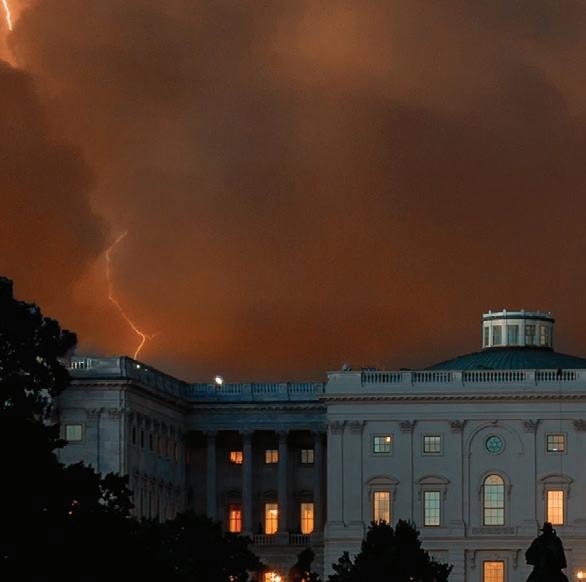
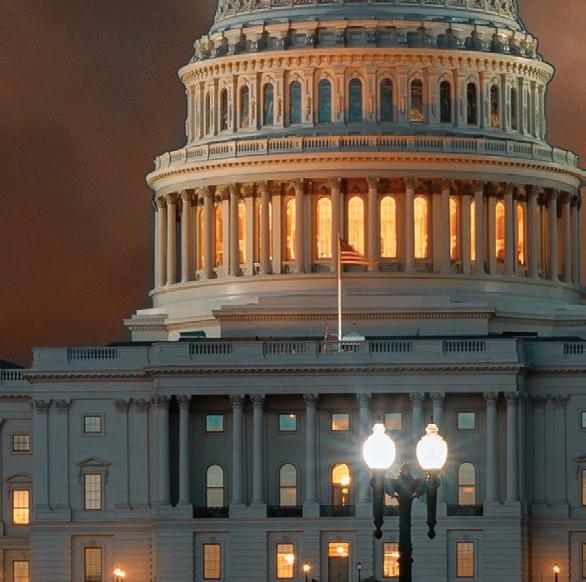
AS PROMISED by those who wish to dismantle the United States Postal Service and sell it off to the highest bidders. As many of you may already know and as fully reported by NPMHU national leadership, Congress, inspired by the Muskrun DOGE, recently trained its Union and benefit busting eyes on government employees including the hard-working craft employees of the Unites States Postal Service. After all, they still have to find ways to fund the proposed continuing and now increasing tax cuts for the millionaires and billionaires they serve.
The very wealthiest in this country and the corporate elitists will enjoy continuing and even greater tax breaks all on the backs of working folks just trying to put a roof over their heads and food on the table. I have to say, it doesn’t get much more disgusting than this.
As background, and reported across many news outlets, Congress intended to push through legislation that would make mail handlers along with all other postal and federal workers pay more, much more, into their annuity account and get less when they retire. The House Oversight and Reform Committee met Wednesday April 30th, 2025 “to consider the panel’s portion of the GOP’s budget reconciliation package to extend and expand tax cuts for the ultrawealthy, first implemented during President Trump’s first term. Atop the panel’s laundry list of benefit cuts involved the four-year phase-in of the 2013 Federal Employees Retirement System employee contribution hikes across government. When first enacted more than a decade ago, the increase of FERS employee contributions to 4.4% of basic pay did not apply to federal workers hired before December 2013, and those hired during 2013 would contribute 3.1% toward their FERS annuity.” This new

phase-in would require all employees to pay 4.4%. Let that proposed injustice sink in for a minute because they weren’t done. New hires, as suggested, would get even greater special treatment so that the very rich get even richer. The plan for new hires as explained by Government Executive’s Erich Wagner is “Coupled with the contribution rate increase for existing federal workers is a provision that would affect new hires into government. Although pitched as a chance to receive “higher take-home pay,” the proposal would have instituted a 5 percentage-point hike in employees’ FERS contribution to 9.4% of basic pay, unless the new employee elected to serve on an at-will basis, forgoing their civil service protections.” According to the article’s author, these changes to the FERS annuity program alone were projected to “save” over $32 billion. Yes, Brothers and Sisters, this “savings” would come out of your pockets and right into the pockets of the already ultra rich. But wait, there was more. As reported, they also intended to make adjustments to the Social Security Supplement. Wagner’s article reads in part, “The panel also proposed eliminating the FERS supplement for federal workers who retire before Social Security kicks in at age 62...” For those who have heard my pitch to contribute to the Mail Handler Political Action Committee over these many years know that we have said over and over again that our elected representatives can take things away from us with a stroke of a pen and the importance of engaging those allegedly working for us on Capitol Hill through political action. Well, that pen was primed and ready to cut our retirement benefits. This group has no qualms about taking away from us and giving to the very richest among us.

However, they still weren’t finished with slicing and dicing our retirement benefits. The bill also “...proposes shifting the calculation for federal retirees’ annuity payments from the average of their highest three years of salary to a new formula averaging the highest five years of salary”. This would have the effect of lowering your annuity upon retirement, if you can ever afford to retire.
All of these “tweaks” to our retirement accounts were designed to do one thing and one thing only and that is to make the rich richer. The plan was to take away what we have earned and hand it over to those who already have too much to spend. This shit, Brothers and Sisters, could not stand.
Fortunately, efforts by our National and Local Unions during our biennial Legislative Conference along with many other stakeholders raised the alarm on Capitol Hill and much of the catastrophe described above was taken out of the proposed legislation. To the thousands of activists across the country who wrote letters and made phone calls to their legislative representatives in Washington, D.C., you did it. You made a great difference because you engaged, raised your voices, and were heard. The House of Representatives has voted, and they have approved the reconciliation portion of the legislation and now it moves to the Senate, but there is still work to be done.




As stated, “much of the catastrophe described above was taken out”, but not all of it. Gone are the increases to our annuity contribution rates and gone is the proposed fiveyear average instead of the three-year average. What remains however is the elimination of the Social Security Supplement for those who retire before turning 62. This would obviously have the effect of making you stay longer than you want to, delaying your well-deserved retirement.
Make no mistake Sisters and Brothers, this is just the beginning of the assault on the working men and women of the United States Postal Service and this great Union.
Contact your Senators, let them know that your Social Security Supplement should not be screwed with. Let them know that you, their constituent, don’t like this retirement busting stunt and just like they were elected, they can be un-elected. Scan the QR Code above, call them and let them know that you exist and are paying attention to what they are doing to protect your job and you hard earned retirement benefits. There is no time to waste.
Make no mistake Sisters and Brothers, this is just the beginning of the assault on the working men and women of the United States Postal Service and this great Union. As we prepare to enter national negotiations for the next contract this June, we should expect the very worst they have to offer during bargaining, but they should expect that this Union will not back up and we will certainly never back down.





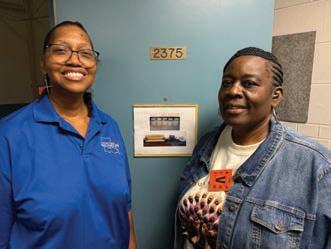
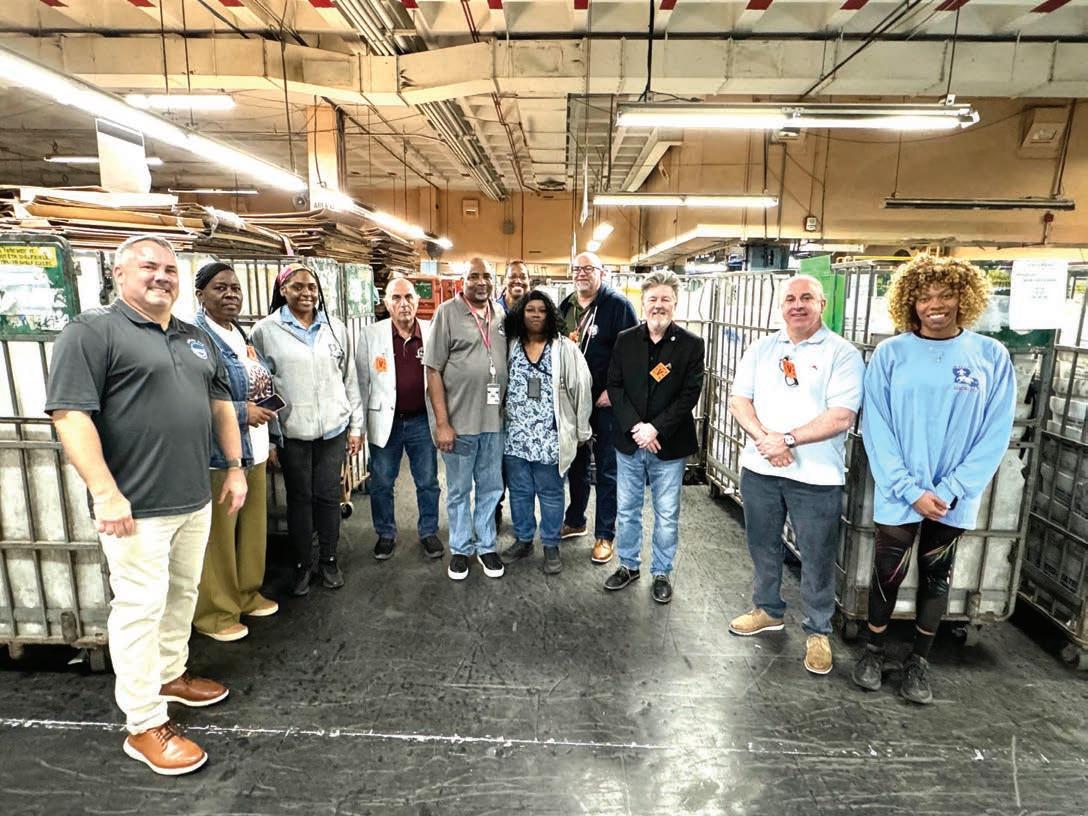

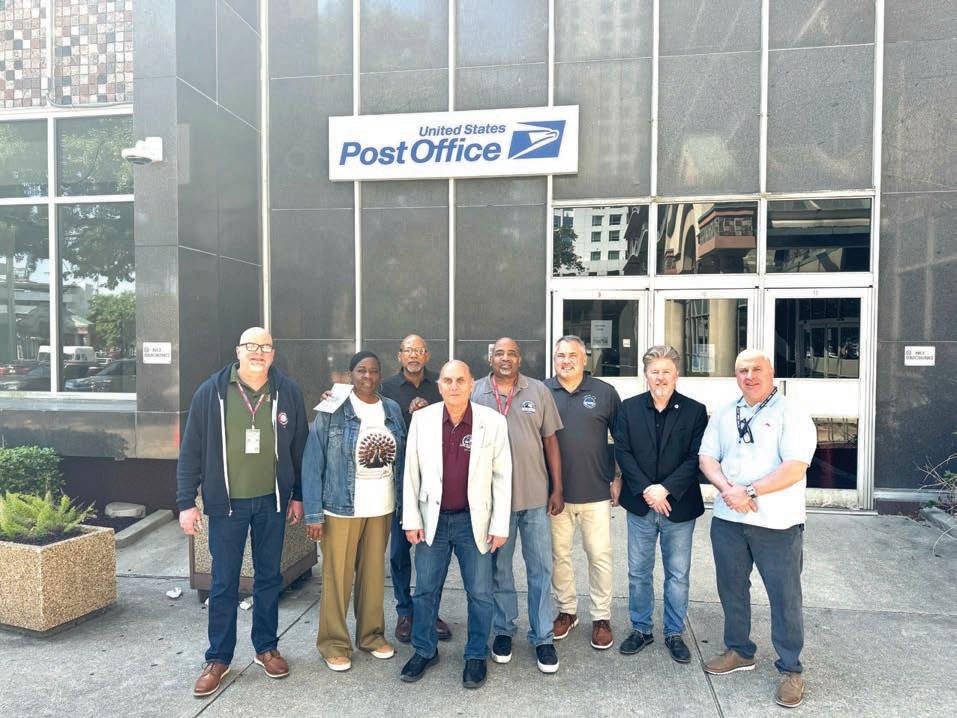


Following the Semi-Annual Meeting of the Local Unions the National Executive Board (NEB) toured the New Orleans P&DC with Local 312 President Troy Davis. The NEB was greeted by several Mail Handlers during the tour. NPMHU Vice President Central Region and Women’s Committee Chairperson June Harris stopped by the facilities Lactation Room a designed private accommodation for pumping mothers.
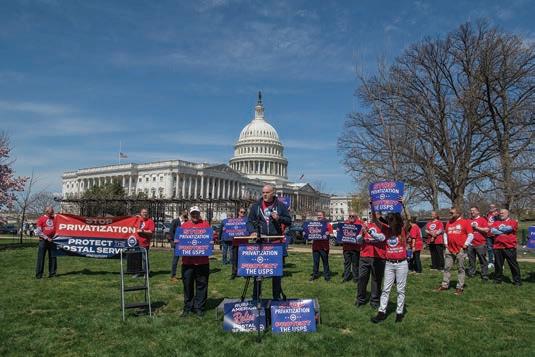
National Secretary-Treasurer Kevin Tabarus spoke at a rally to stop postal privatization hosted by the National Association of Letter Carriers on Capitol Hill.


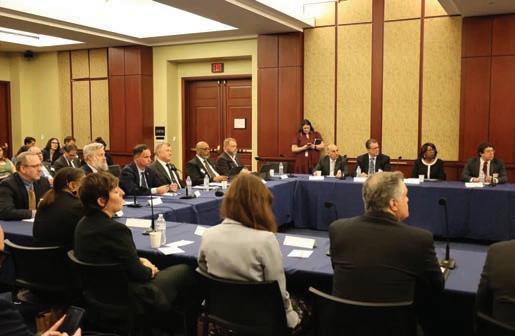
CAPITOL HILL ROUNDTABLE
National President Paul Hogrogian along with the heads of other postal unions participated in a roundtable discussion on provisions set to be included in the budget reconciliation package.




Get exclusive union savings and discounts you won’t find anywhere else, like lower monthly service charges on qualified wireless plans, discounts on select accessories, and waived activation fees on select devices for new lines of service.
















DANIEL ST. MARIE, NORTHEASTERN REGION VICE PRESIDENT, LOCAL 301 PRESIDENT

IN 1994:


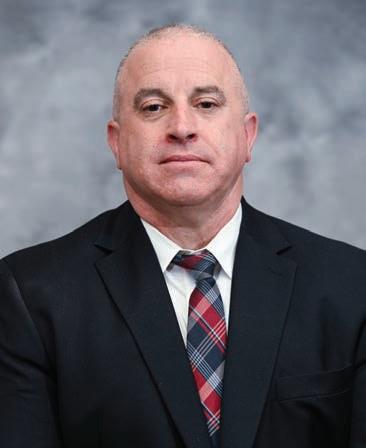
•Bill Clinton was President of the United States, Nelson Mandela was elected President of South Africa, and the North American Free Trade Agreement(NAFTA) was established.
•The Dallas Cowboys were the Super Bowl Champs, the New York Rangers won the Stanley Cup, and the Houston Rockets beat the New York Knicks 4 games to 3 to become NBA Champions. Unfortunately there was no World Series in 1994 because of a strike by the MLB Players Association.
•Forrest Gump was the top grossing picture in the United States, and would eventually win Best Picture at the Oscars (1995). Ace of Base’s song “Sign” was Number 1 in Billboard Magazine’s Top 100 Songs of 1994, Green Day had the Number 1 Rock & Roll Hit with “When I Come Around”, John Michael Montgomery had the Number 1 Country Hit with “I Swear”, and Boyz II Men had the Number 1 R & B Hit with “I’ll Make Love To You”.
•A loaf of bread cost $0.99, a gallon of milk was $2.88, a dozen eggs were .87 and a pound of ground beef was $1.39. A gallon of gas was $1.11, and a postage stamp was $0.29.
•The median household income was $32,264, the average cost of a new home was $154,500, the federal minimum wage was $4.25 per hour, and an ounce of gold was $383.25.
1994 was also the year that I became a card-carrying member of the National Postal Mail Handlers Union (Local 301). I started at the Springfield MA BMC/GMF in early September
as a Part-Time Regular, but in a month, with a grievance from the Mail Handlers Union became a Part-Time Flexible (PTF), as this would be the path to eventually making Full-Time




Regular (FTR). At this point in time, the Springfield BMC employed well over a thousand mail handlers. As a PTF in Springfield, you were either working Tour 1 or Tour 3 (Tour 2 was not an option). I was assigned to the West Inbound on Tour 1. I was a PTF for about 3 years when I made FullTime Regular. In 1994 there was no MOU: Filling of Residual Vacancies or Automatic Conversion after 24 months.
When I started, the last of Eight COLA’s from the 1990–1994 National Agreement had just kicked in. I started at an hourly rate of $10.23 (PTR), but when I was moved to PTF my hourly rate went to $10.61. The 38 cents difference was because PTFs did not get any paid Holidays, and because of that, were paid a slightly higher wage. In 1994, a Full-Time Regular Level 4 Mail Handler at Step O made $16.28 an hour. A Level 5 Mail Handler at Step O made $16.68 an hour.
At this same time Negotiations had just begun for what would be the November 21, 1994–November 20, 1998 National Agreement. William Quinn was the President of the NPMHU at that time, and Mark Gardner was Secretary Treasurer. Flash forward over 30 years. There are no PTF’s in the Mail Handler Craft in installations which have 200 or more man


years of employment. Mail Handler Assistants (MHAs) have taken their place as the supplemental complement. There are two ways for an MHA to be converted to career, the MOU: Filling of Residual Vacancies and the MOU: MHA Automatic Conversion To Career. Current wage charts show MHAs start at $19.02, a Level 4 Step P at $36.19 and a Level 5 Step P at $36.77. And currently the Mail Handlers Union is gearing up for another round of Contract Negotiations in June, 2025. The current contract expires September 20, 2025. NPMHU National President Paul Hogrogian and Secretary Treasurer Kevin Tabarus will lead our negotiating team into battle to improve wages, working conditions, and contract language for the 50,000 plus Mail Handlers across the country. Many things change over the years. Stamps are now $0.73, a gallon of gas is $3.00, a loaf of bread costs $3.49, and an ounce of gold is $3,317.50. But one of the consistencies over the years, and which I’m proud to be a part of, is the fight the NPMHU has always had on behalf of its members. Whether protecting Mail Handlers (FTRs, PTRs, PTFs, and MHAs) rights on the workroom floor, or fighting for better wages and working conditions at the bargaining table, this has never changed!!!
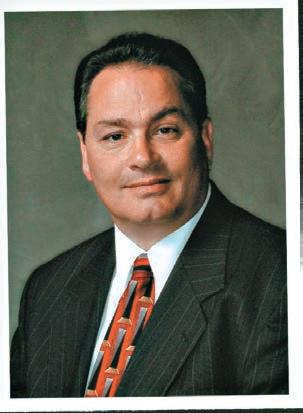



The NPMHU Scholarship Committee completed its task of evaluating many applications from well qualified NPMHU members and members of their immediate families. After careful review and consideration, a new group of Vallone Scholars have been awarded a scholarship for the next 4 years. Thirteen applications were selected out of a total of forty-one received by the March 15th, 2025 deadline.
The NPMHU National Scholarship was dedicated and renamed after Arthur S. Vallone after his untimely passing in 2005. Arthur S. Vallone served as the elected President of Local 309 headquartered in Buffalo, New York and represented approximately 1,500 Mail Handlers throughout upstate New York. Arthur S. Vallone also served 3 terms on the National Executive Board as the Northeast Region Vice President. Vallone’s deep understanding of education and learning are just a handful of reasons why the National Postal Mail Handlers Union dedicated this legacy to Brother Arthur Vallone.
The Arthur S. Vallone Scholarship is now in its 25th year of existence. This award was designed to offer deserving Mail Handlers and members of their immediate families some relief from the financial burden of paying for higher education. With fewer resources becoming available, it can be quite the challenge for families to absorb the cost of higher education. While some individuals and
families develop savings plans for higher education, there are many that do not nor have the ability to do so, and that is why the NPMHU has dedicated such an award.
Each NPMHU Region has been granted up to three scholarship awards in the amount of $1,000 each, renewable by the recipient for up to four years or until the completion of the students undergraduate or trade school degree, whichever occurs first for a maximum of $4,000 per recipient over four years.

The Education Data Initiative website reported that College enrollment in 2024 totaled 19.2 million in undergraduate students nationwide, this is down 8.43% from peak enrollment in 2010 (21.0 million). While there has been a slight downturn in the number of undergraduate enrollees in the past 14 years, there seems to still be a drive to seek higher education for the younger generation.
Like the downward trend in college enrollment, the NPMHU Arthur S. Vallone Scholarship has also received fewer applications in the past few years, showing a slight downturn in both the Mail Handlers themselves and their children seeking assistance through the scholarship for higher education. However, this statistic doesn’t mean that the quality of the applications we received has suffered. In fact, the quality of the applications continues to be a bright spot for the program.
This year, one of the applications chosen was from a Local 334 Mail Handler
out of the Eastern Region. Cassy Blasch works as a Mail Handler at the Greenville P&DC in South Carolina. Cassy is currently balancing the demands of working as a Mail Handler, raising 3-year-old twins and pursuing a bachelor’s degree in interdisciplinary studies. Cassy’s essay discussed how she manages the rigors of daily life; “As a wife and mother to twins, my life is a constant juggling act navigating

















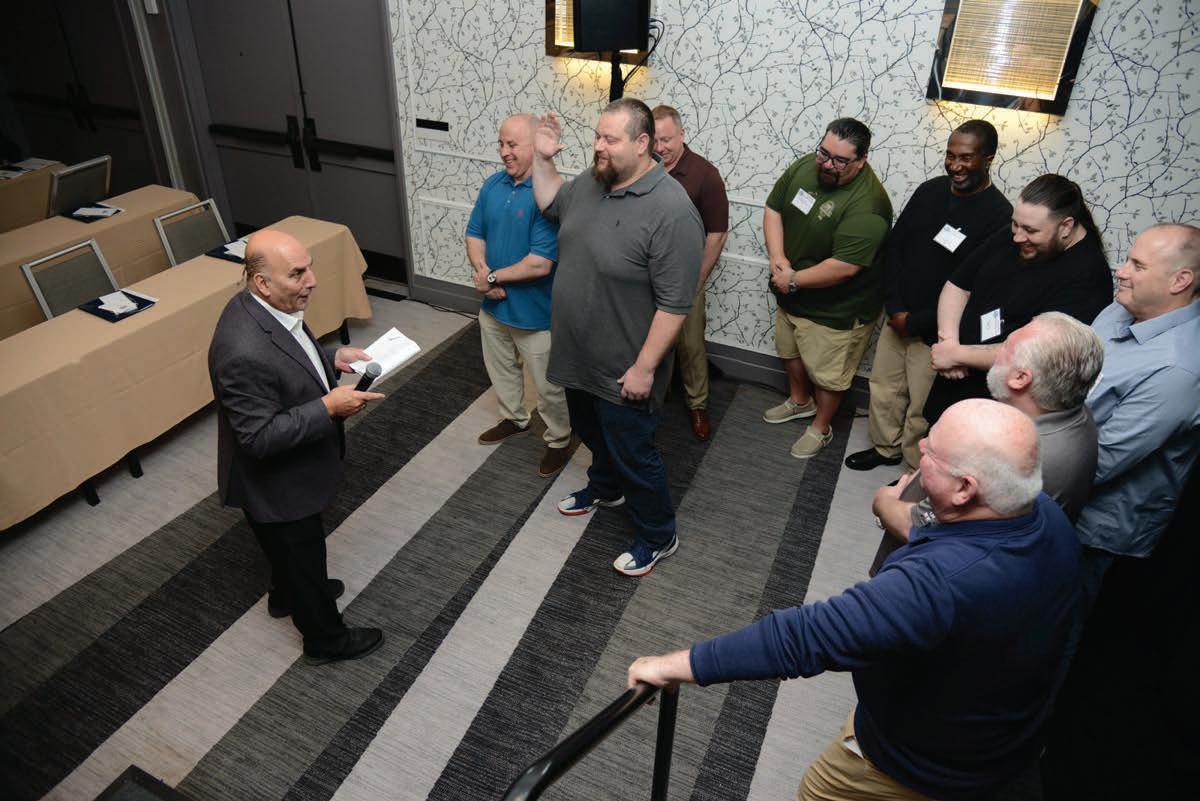



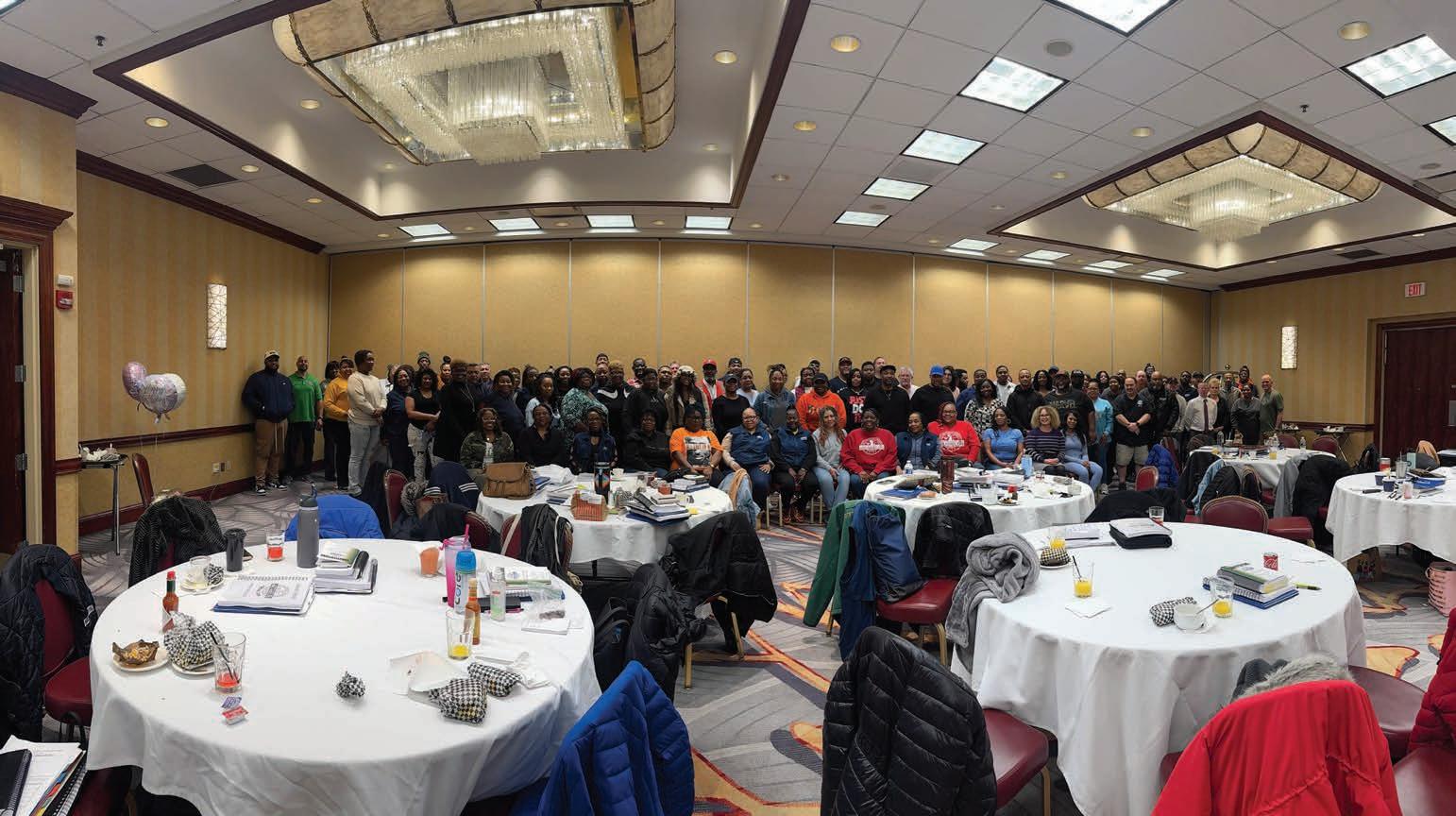



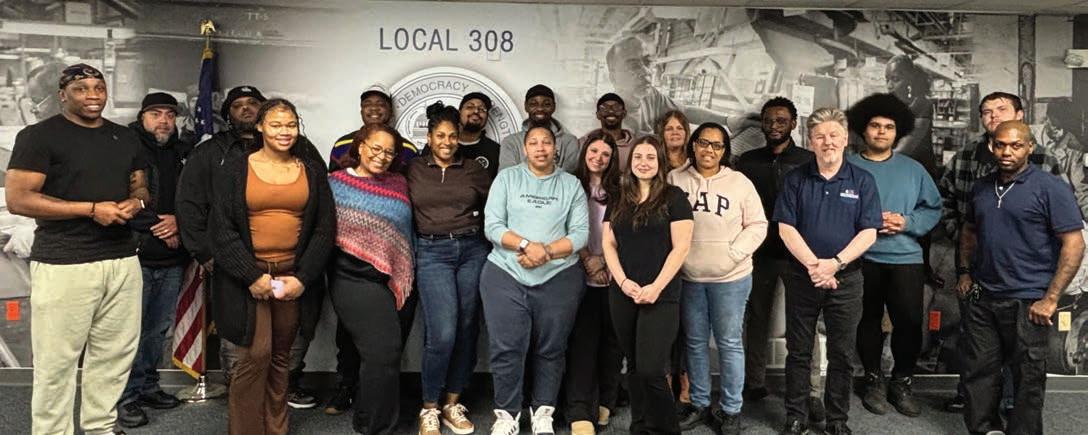

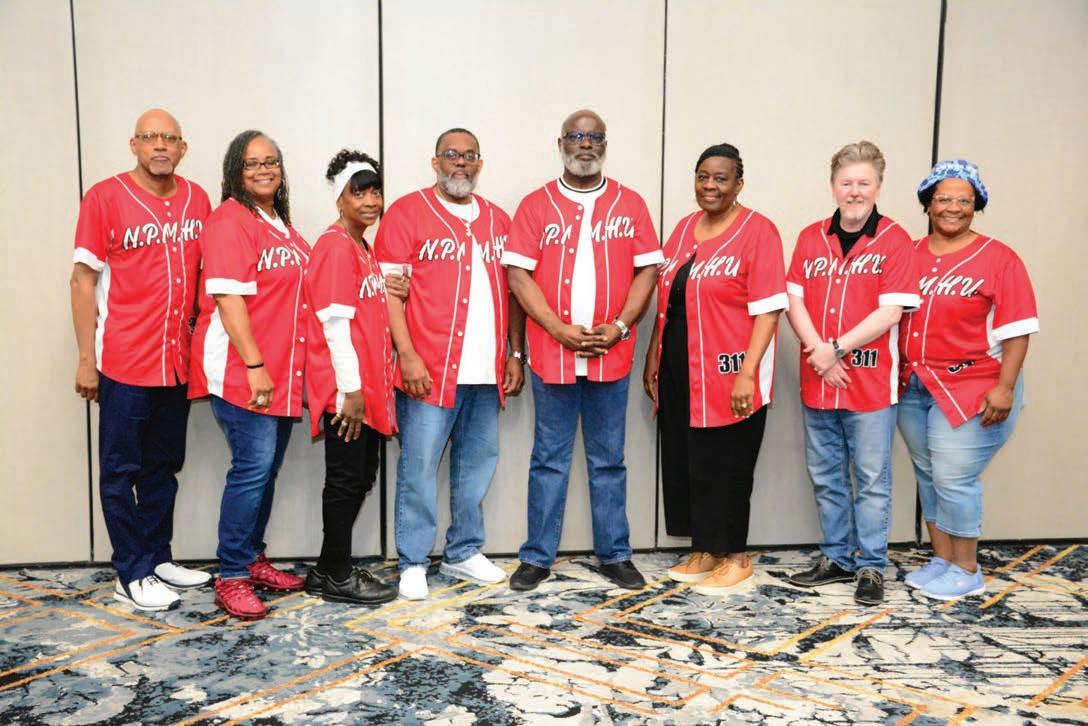

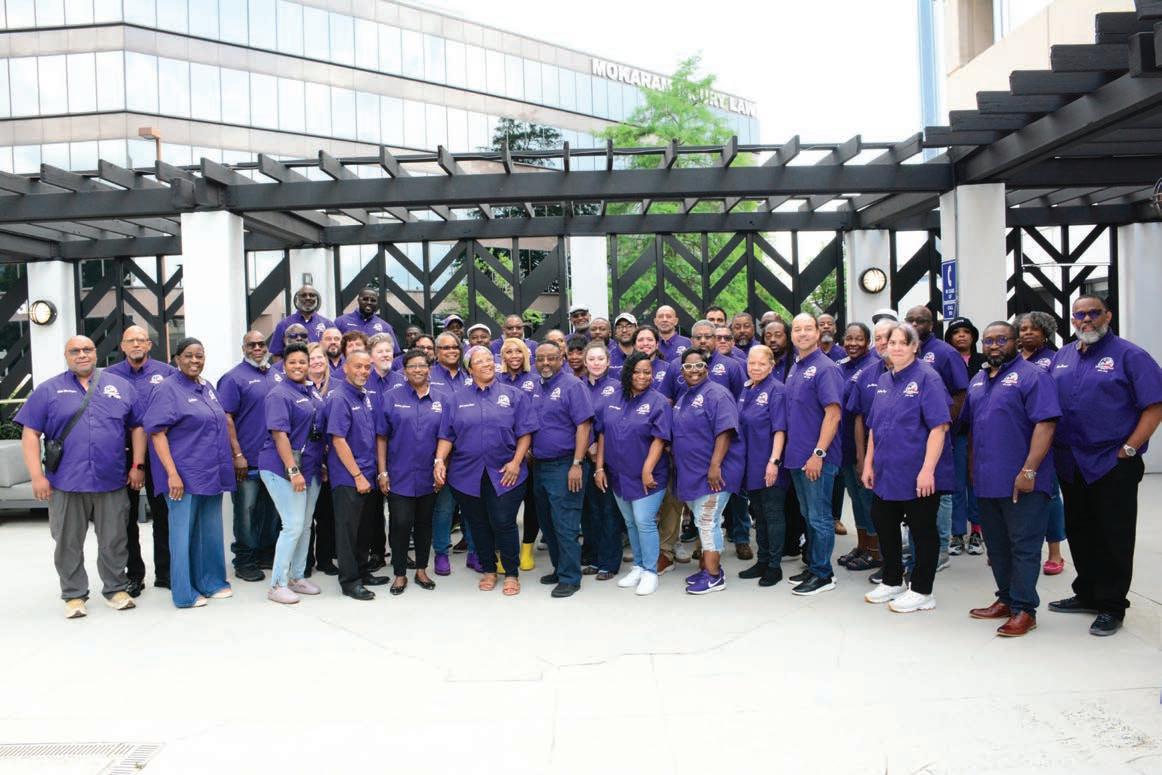


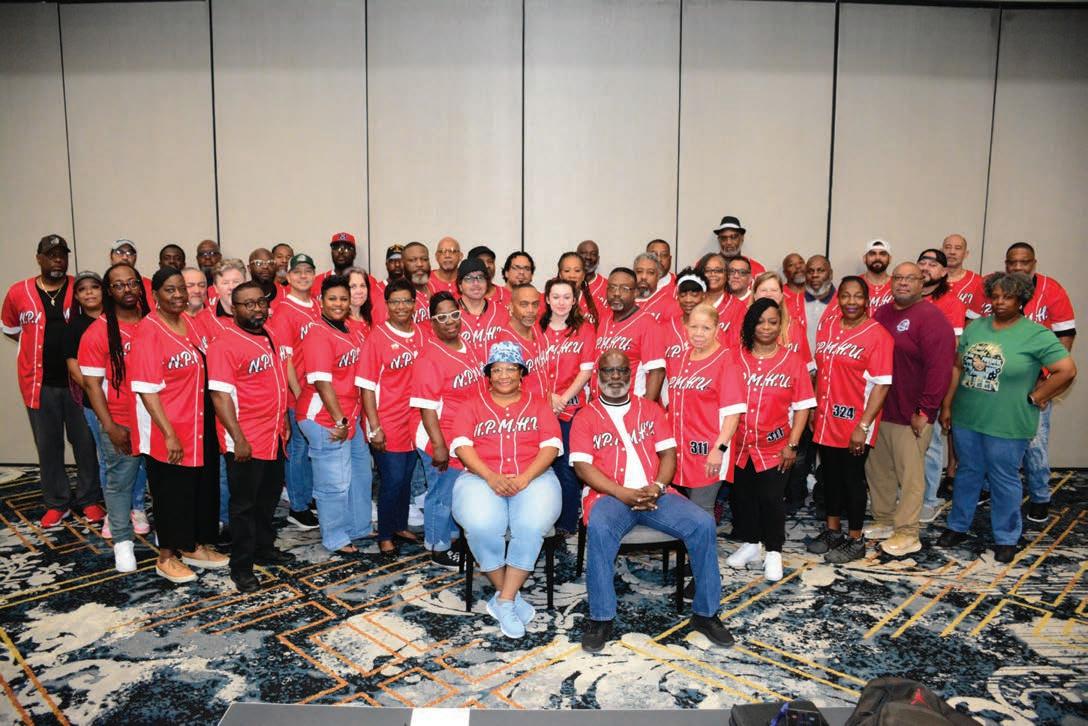

The LiUNA African American Caucus was out in force at the Coalition of Black Trade Unionist Conference.



Local 317 President Charles Harris welcomes National Executive Board Members
National President Paul Hogrogian, Vice President
Central Region June Harris, Vice President Eastern Region
John Gibson, Vice President
Southern Region John (JR) Macon, and CAD Director
Eileen Mills to its Steward Training.


National Secretary-Treasurer Kevin Tabarus joined Vice President Western Region, and Local 316 President Don Sneesby, and Steven Kim, AK SEBM & Anchorage Branch President, for his Anchorage Branch Meeting. The Anchorage Branch is proud of their 100% membership rate.

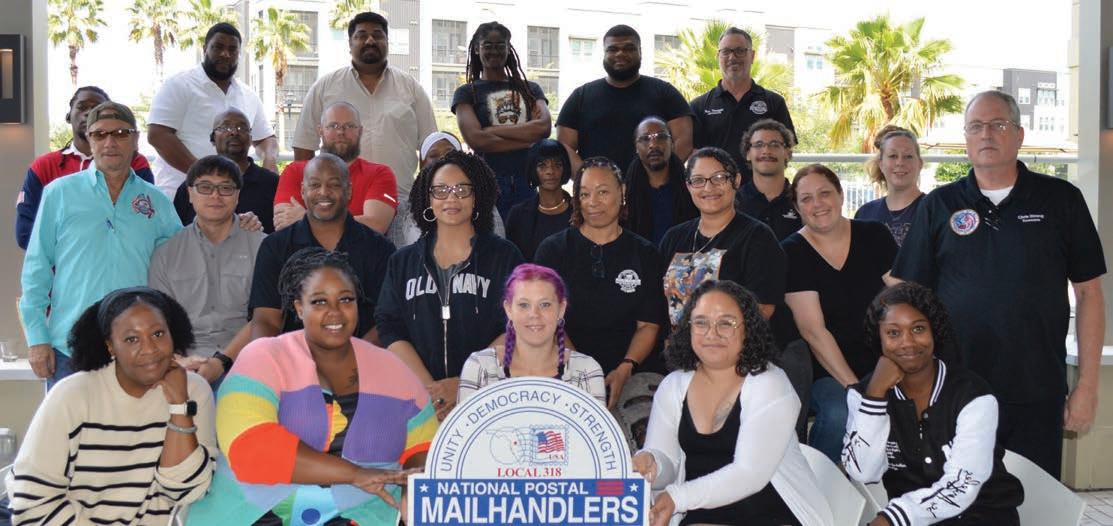
Local 318 held a new Stewards Training. Local 318 President Nick Mosezar and his Executive Board trained over 20 new Stewards to get them o the ground running in their new capacities.
Front row: Keren Williams, Chelsie Harvey, Patricia Rodriguez, Pepesina Tavita, Shantera Jackson.
2nd row: Nick Mosezar, Matthew Cam, Jason Hopper Shauna Jones, Tamika Thomas, Angela Franjul, Gali Kissil, Chris Strang.
3rd row: William Johnson Jr., Lynden Clarke, Jason Rogers, Riviann Jerry, Tiana Epps, Antonio Singletary, Alexander Martinez, Rebecca Peters.
4th row: Michel Eugene Jr., Titto John, Arshayla Mallard, Shaun Frazier, Ron Nordyke.

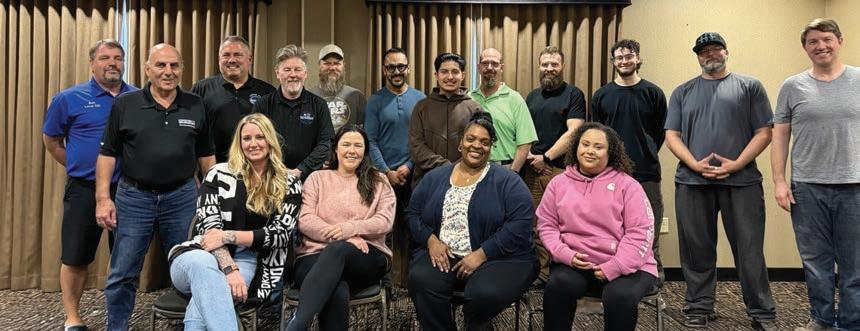

Local 330 President Bob Gri th hosted several members of the National Executive Board for his Locals Steward Training.
Front Row: Karli Kararic, Angela Streeter, Renata Ball, Maxine Ruvalcaba
Back Row: Local 330 President Bob Gri th, National President Paul Hogrogian, Vice President Western Region Don Sneesby, Vice President Eastern Region John Gibson, Jon Groninga, Jose Alvarez, Juan Arroyo, Robert McGuire, Faron Annan, Mason McPherson, Kevin
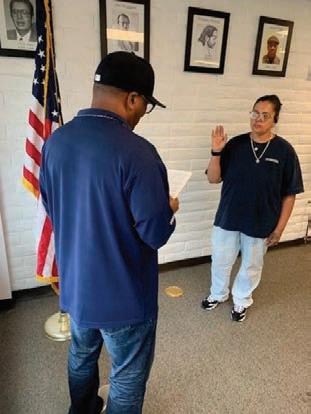
Local 321 President Tony Willson swore in newly appointed Recording-Secretary Annette Damian.

•
•
•
•