Handlers. The NPMHU will routinely and frequently keep the membership informed of the progress of these negotiations.
The Postal Service continues to aggressively roll out and implement its new, more comprehensive Network Redesign plan. The centerpiece of the Network Redesign project is the establishment of Regional Processing and Distribution Centers (RPDCs) in approximately 60 metropolitan areas throughout the country. These RPDCs would consolidate all originating letters, flats, and parcels and all destinating parcels from all mail processing facilities within a metropolitan area into one mega-processing center. Most of the processing plants from which originating mail was taken would continue to process destinating letters and flats and would be renamed Local Processing Centers (LPC).
The following is the latest update that we received from the Postal Service:
1. Sandston (Richmond), VA (significantly active)
2. Chicago, IL (significantly active)
3. Atlanta, GA (significantly active)
4. Charlotte, NC (significantly active)
5. North Houston, TX (significantly active)
16. Kansas City (RTH) (active)
17. Dallas, TX (RTH) (active)
18. Denver (RTH) (active)
NEW RPDC PROJECTS INCLUDE:
1. Dallas RPDC (Campus/Area Review)
2. Los Angeles RPDC (Campus/Area Review)
3. Denver
4. Denver PDC = Denver RPDC
5. Denver NDC = Denver RTH
6. Fargo
7. San Juan
The NPMHU will vigorously work to ensure that all dislocation and inconvenience to all Mail Handlers are kept to an absolute minimum in accordance with the provisions of Article 12 of the National Agreement. It is worth repeating that these plans are extremely fluid and subject to change. The National Office will provide updates on this project once we receive more information.
I remain confident that through the work of our Contract Administration Department and our legal representatives, and through the hard work of our Regional, Local, and
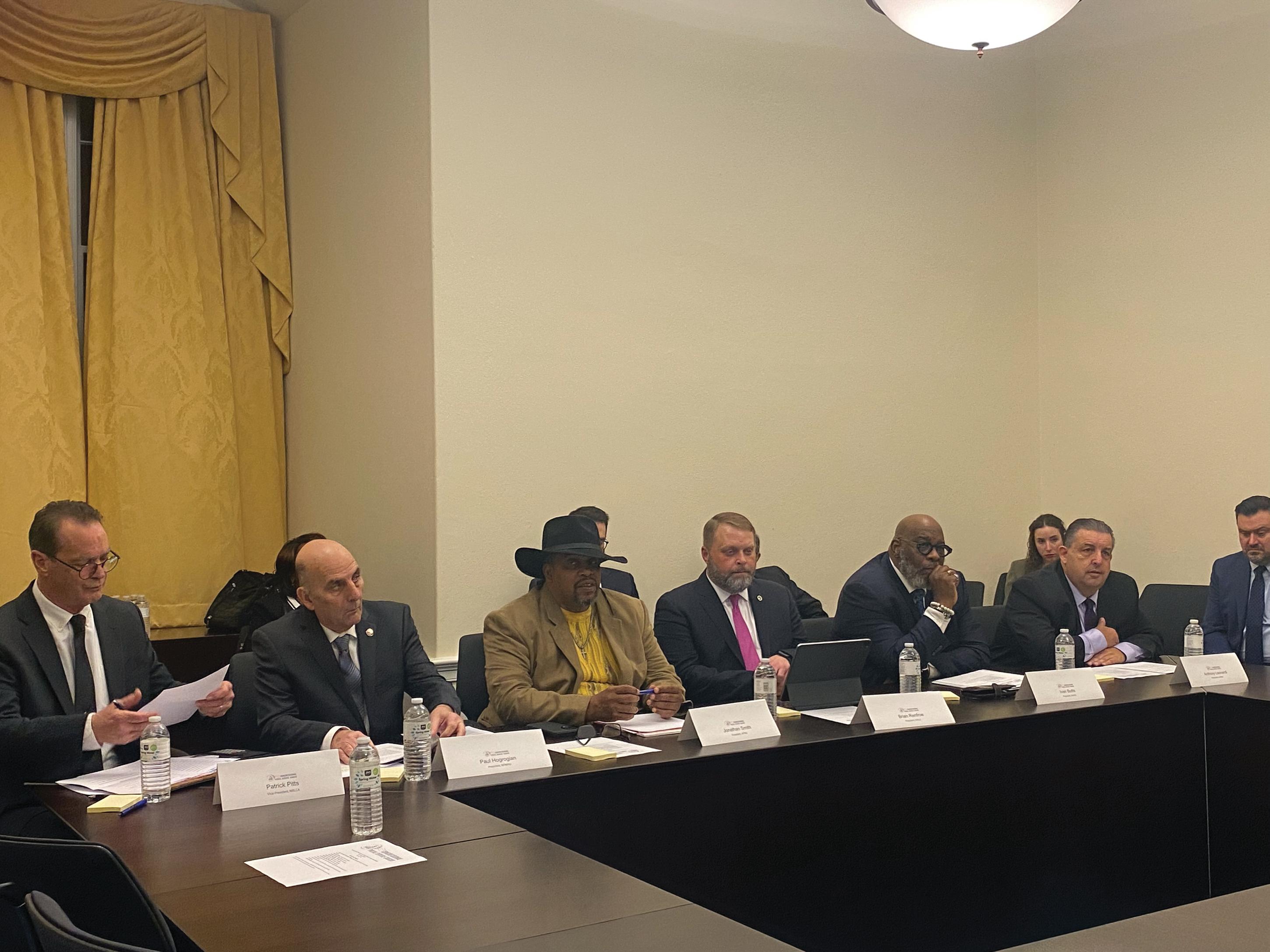
NPMHU President Paul Hogrogian is joined by the other union and management association presidents while speaking to the Congressional Postal Service Caucus.
WE NEED YOU TO HELP PROTECT YOUR JOB
Kevin P. Tabarus, National Secretary-Treasurer
We need your help. Union Officers and Shop Stewards of the National Postal Mail Handlers Union can’t do it all without your help. We have all heard Mail Handlers say on occasion, “the Union doesn’t do anything.” But what have you, THE MEMBER done? The members are the eyes and ears of this labor organization. We want AND NEED your help protecting your job.
What we need is more MEMBER INVOLVEMENT. When you see someone other than a Mail Handler doing Mail Handler craft work, you must report it to the Union. However, more information is needed besides telling a steward, “Hey, Joe Schmoe the supervisor is doing Mail Handler work on the platform!” More information is needed to properly file a grievance. Shop stewards can’t write in a grievance that a Member “told them” of the violation orally. That is considered only secondhand information. We need detailed information from the source of who observed someone who is not a Mail Handler, doing our Mail Handler work.
Getting involved could result in you or other members receiving a monetary grievance settlement and MORE MAIL HANDLER JOBS. Even if you do not directly receive money for that violation, you are helping the Mail Handler craft and protecting your job. If non-Mail Handler personnel are allowed to do Mail Handler work without grievance, we risk losing the jobs that we have been fighting for decades to have. Don’t let clerks and supervisors do Mail Handler work!
Only Mail Handlers should be performing Mail Handler craft work!
On many occasions, members will tell a steward about a violation, while a steward is on their own breaktime or even in the restroom. Please, request Union time! Go to the Union office and provide a statement. The following information is needed to help the Union file grievances and win the battle to protect jobs for the Mail Handler craft. Please provide all of this detailed information.
WITNESS STATEMENT INFORMATION NEEDED:
• Date of the observation
• Name of the person observed performing Mail Handler work
• Title of the person performing Mail Handler work (Plant Manager, Postmaster, MDO, Supervisor, Clerk, PSE, Letter Carrier, Clerk Casual, etc.)
• Describe Mail Handler work performed in detail (Unloading trucks, sweeping mail, dumping mail on APBS #2, etc…)
• The time they started doing Mail Handler work
• The time they finally stopped doing Mail Handler work
• Your name, sign it, and date it.
The National Postal Mail Handlers Union has been extremely successful with gaining more and more jobs on new mail processing machines. This trend will continue and shall grow even more as these new mail processing machines are deployed across the country.
Besides providing witness statements, you still can do even more to be an ACTIVE UNION MEMBER. Many members don’t…
• Attend a Union Meeting (too many don’t!)
• March in a Labor Day Parade
• Vote for Union Contracts and Officer Elections (also local, state, and federal elections too, for labor union friendly candidates)
• Participate in all Union demonstrations
You use the Union every day. Many don’t think they do, just because they don’t get in trouble or disciplined. Due to over 100 years of collective bargaining; Mail Handlers have a pension, TSP (with agency matching for FERS employees), medical insurance, life insurance, annual leave, sick leave, paid holidays, overtime pay, work hour guarantees, set salaries, scheduled days of rest, Sunday premium, night differen tial pay, non-discrimination, layoff protection, principles of seniority, work for injured (light/limited duty), safe work environment protections, grievance-arbitration procedures, higher level assignments, and much more.
The Union has been striving for more Mail Handler jobs. Even with mail volume in decline, since 2020 the number of Mail Handlers has increased substantially. The National Postal Mail Handlers Union has been extremely successful with gaining more and more jobs on new mail processing machines. This trend will continue and shall grow even more as these new mail processing machines are deployed across the country.
UNION FINANCES STRONG AND READY
As you can see from the financial report on page 8, the Union’s financial standing remains strong and ready for a costly contract negotiation. Arbitrated National Agreements cost much more than when negotiated contract settlements are reached. Should we have to declare that contract negotiations have reached an impasse, we are financially prepared to go to arbitration, sparing no expense.
*includes a small amount of APWU represented Nurses
Fraternally, Kevin P. Tabarus National Secretary-Treasurer
ASSETS
NATIONAL POSTAL MAIL HANDLERS UNION
A DIVISION OF LABORERS’ INTERNATIONAL UNION OF NORTH AMERICA, AFL-CIO DECEMBER 31, 2024 AND 2023
STATEMENTS OF ACTIVITIES
LIABILITIES
UP TO 50% OFF PLAN ENROLLMENTS
Digital safety solution
Access up to 50% off identity and financial protection plans from Aura, a top-rated identity protection service.
LEGISLATION ATTEMPTS TO UNDERMINE VOTING
Katie Maddocks, Legislative and Political Director
The ability to participate in elections is the most basic form of civic engagement. It allows eligible Americans to decide who will represent them at every level of government, making policy decisions impacting daily life. There has been a recent narrative, however, that voter fraud is rampant across the country. As a response, the House and Senate have introduced legislation that would require stricter proof of eligibility; impact the use of vote by mail and absentee ballots; and, move to a nationalized system of voting.
The SAVE America Act, S. 1383, as amended, would require all Americans to provide “documentary proof of citizenship” to change their voter registration, despite the fact that current laws already require verification of voter eligibility. This means that people moving or otherwise changing their voter registration would have to present documents like a passport, birth certificate, adoption certificate, or naturalization papers. Millions of people do not have easy access to these documents. Further, people who change their name, including married women, would have a hard time proving their citizenship because the name on their ID often does not match the name on their birth certificate. The bill also eliminates universal mail voting and voter registration by requiring people to submit proof of citizenship in person. Eight states and the District of Columbia already require universal vote by mail, while ten states offer permanent absentee voting. S. 1383 also would require Americans to have to request a mail ballot every single time they want to vote by mail — superseding these states’ laws.
As a reminder, the Constitution gives power to states’ legislatures to determine how elections are conducted. This provides a needed check and balance over federal influence on elections.
When these bills were introduced, sponsors often cited the need to curb voter fraud. However, there is no evidence of over whelming voter fraud that would actually impact the outcome of elections. The Heritage Foundation issued reports on voter fraud and found that during the 2024 elections, there were only forty-three cases of voter fraud that led to criminal conviction throughout the country. In 2020, there were thirty-one. Voter fraud is the intentional misuse of the electoral process to alter the outcome of elections. Most incidents the Heritage
The National Postal Mail Handlers Union is keenly aware of the safety of elections, especially vote by mail. Vote by mail has repeatedly shown to be an effective way to partake in democracy.
Foundation cited were more due to voter registration errors or an individual not knowing they are ineligible to vote.
Allegations of voter fraud instill doubt in the safety of elections and undermine voter confidence. Continual talk of illegitimate election results can turn voters away from polls, weakening the democratic process.
Additionally, the House introduced the Make Elections Great Again (MEGA) Act, H.R. 4700, which also calls for election reforms at the federal level. The bill calls to ban universal vote by mail and ranked choice voting; prohibits ballots from being counted after the close of polls; and makes it easier to purge voter rolls.
The National Postal Mail Handlers Union is keenly aware of the safety of elections, especially vote by mail. Vote by mail has repeatedly shown to be an effective way to partake in democracy. In the past three federal elections, a combined 288.4 million ballots were processed by the United States Postal Service. USPS conducts extraordinary measures during elections, prioritizing ballots, complying with local election laws, and delivering ballots to and from voters and elections boards on an average of three to five days.
These bills do nothing to protect elections, and NPMHU will continue to speak out against them.
2026 PAC INCENTIVE AWARDS
2026 PAC INCENTIVE AWARDS
Member $26 ($1 per pay period) PAC Pin
Sponsor $52 ($2 per pay period) PAC Tumblers
Activist $100 PAC Polo
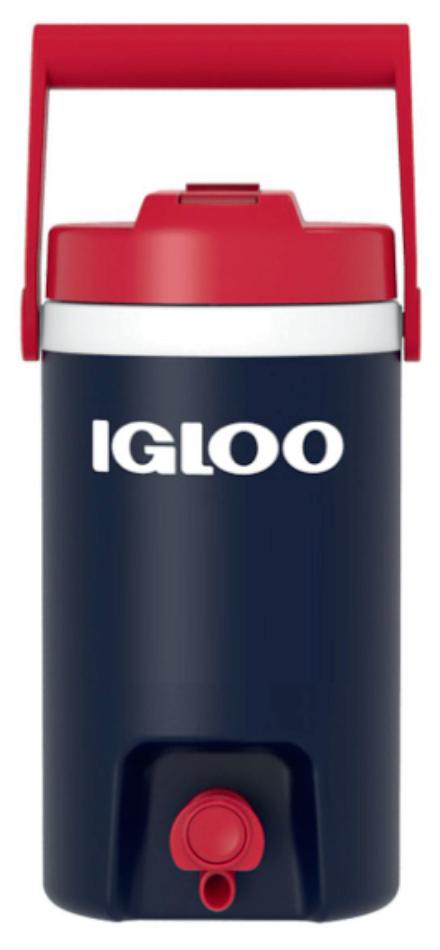
Leader $250 PAC Party Jug
Ambassador $500 PAC Tote Bag and Beach Towel Super Ambassador $1o00 All Incentive Gifts
YOU TOO CAN BECOME AN NPMHU POLITICAL ACTIVIST
There is a quick way for Mail Handlers to contribute to the NPMHU PAC. Simply call in to the PostalEASE system, or visit the PostalEASE option on the web at www.liteblue.usps.gov Follow the instructions printed on pages 12 and 13 of this magazine. Your PAC contribution will be made directly from your bi-weekly postal payroll. You also have the option of sending in a personal check or authorizing a credit card contribution. Your contributions will also be entered in to the incentive award program that entitles you to an award based on your contribution level. There are six distinct PAC membership levels and awards. Awards are distributed based on membership level and will be mailed after the end of the year; awards will vary year to year.
NOTICE CONCERNING CONTRIBUTIONS:
Contributions to the Mail Handlers PAC are not deductible as charitable contributions for purposes of federal income taxes. In addition, federal law requires that the Mail Handlers PAC report to the Federal Election Commission the name, mailing address, occupation, and name of employer for each individual whose contributions in any calendar year total in excess of $200. Please also note that the Mail Handlers PAC has political purposes, and that all members have the right to refuse to contribute, and the right to revoke their authorization for any continuing contributions, without any reprisal.
PAC CONTRIBUTION BY PERSONAL CHECK, MONEY ORDER, OR CREDIT CARD:
You can contribute directly to the Mail Handlers PAC by filling out the following information and mailing it to:
Mail Handler PAC
P.O. Box 65171
Washington DC 20035
Please enclose your check or money order, or provide authorization to charge your credit card.
(Cut here and return to NPMHU PAC)
YOUR CONTRIBUTION HELPS PRESERVE POSTAL JOBS
This is to certify that I, _________________________________________________________, have voluntarily contributed the amount listed below, to the NPMHU PAC. I understand that this voluntary contribution is not a condition of membership in the union; I have the right to refuse to contribute without any reprisal; if specific contribution amounts are mentioned they are merely suggestions and I am free to contribute more or less; the Union will not favor or disadvantage me because of the amount of my contribution or my decision not to contribute; NPMHU PAC will use the money it receives to make Political expenditures and contributions in connection with federal elections; and only U.S. Citizens and lawful permanent U.S. residents are eligible to contribute.
Please enclose your check or money order, or authorization to charge your credit card.
Contributions to the NPMHU PAC are not deductible as charitable contributions for federal income purposes.
You also can make your PAC contribution by bi-weekly salary allotment through PostalEASE (access by phone or on the web):
PostalEASE by TELEPHONE:
1. Dial 1-877-4PS-EASE—(877-477-3273) and follow the prompt for the Employee Services Main Menu.
2. When prompted, press #1 for PostalEASE
3. When prompted, enter your eight-digit USPS employee identification number.
4. When prompted again, enter your USPS PIN number. (This is the same as the PIN number you use for telephone bidding and/or other payroll allotments.)
5. When prompted, choose option #2 (to select payroll allotments)
6. Then choose option #1 (to select allotments)
7. When prompted, press #2 to continue
8. When prompted, press #3 to add the allotment
9. When prompted for the routing number, enter 054001220
10. When prompted for the account number, enter the following: 11260001 __ __ __—__ __—__ __ __ __ (the last nine digits of your account number is your social security number—this information will allow us to identify you as the PAC contributor).
11. Press #1 if correct
12. When prompted, press #1 for “checking”
13. When prompted, input the bi-weekly dollar amount of your PAC allotment.
14. Press #1 if correct
15. When prompted, press #1 to process
16. You will be provided a confirmation number as well as the start date for the salary allotment.
17. For your records: · Record the confirmation number
· Record the start date of the salary allotment
18. Press #1 to repeat, or press #9 to end call
PostalEASE on the WEB:
To initiate your bi-weekly PAC contribution on the web, simply go to www.liteblue.usps.gov
1. Enter your eight-digit USPS Employee ID Number and your USPS PIN
2. Follow the link to PostalEASE— you will again be asked to enter your Employee ID Number and USPS PIN
3. Follow the link for PAYROLL – Allotments/NTB
4. Continue to the ALLOTMENTS section
5. Your ROUTING TRANSIT NUMBER is: 054001220
6. Your ACCOUNT # will be: 11260001 __ __ __—__ __ —__ __ __ __ (the last nine digits of your account number is your social security number—this information will allow us to identify you as the PAC contributor).
7. For ACCOUNT TYPE— please select “CHECKING”
8. When prompted, please input the AMOUNT that you would like to contribute to the PAC each pay period.
9. To process your PAC allotment, you will need to select the VALIDATE button, and to finalize the transaction, please select SUBMIT. Be sure to print out a copy of the confirmation page for your records.
NPMHU PAC
2025 CONTRIBUTORS
The National Postal Mail Handlers Union Political Action Committee (NPMHU PAC) contributes to campaigns of candidates for and incumbents of Congress who repeatedly demonstrate “concern for working people and for [the] aims and objectives of the NPMHU and the entire trade union movement.”
The PAC is non-partisan in its operations, and, by federal law, is financed completely through voluntary contributions from members and groups who subscribe to the objectives of the Mail Handlers PAC. Your Union needs your active involvement in contributing to the Political Action Committee to assist candidates who will work to protect the wages and benefits of all Mail Handlers. Our PAC membership is small but growing larger. Below is a list of the 2025 contributors to the NPMHU Political Action Committee. It is an honor roll of members who have contributed to the growing political power of your Union.
PAC CONTRIBUTIONS FOR 2025
LEVEL:
300 Phillip Hester
301 Phillip Alvarado
301 Jason Demonico
301 Diane Libby
301 Patrick O’Rourke
301
301 Sean Sweeney
302
303
AMBASSADOR (contributed at least $1000 last year)
303
306
307
308
308 Michael Rembelinsky
309 Lisa Pruchnicki
310 Chawanda Parson
Larsen 324 Carmalita Mecaskey 329 John Macon
Nat’l Staff Paul Hogrogian
Nat’l Staff Kevin Tabarus
Nat’l Staff Andy Badilishamwalimu
Nat’l Staff Patrick Donovan
Nat’l Staff Katie Maddocks
Nat’l Staff Max Rehbein
Nat’l Staff Thomas Ruther
300
NEW ONLINE RETIREMENT PROCESS
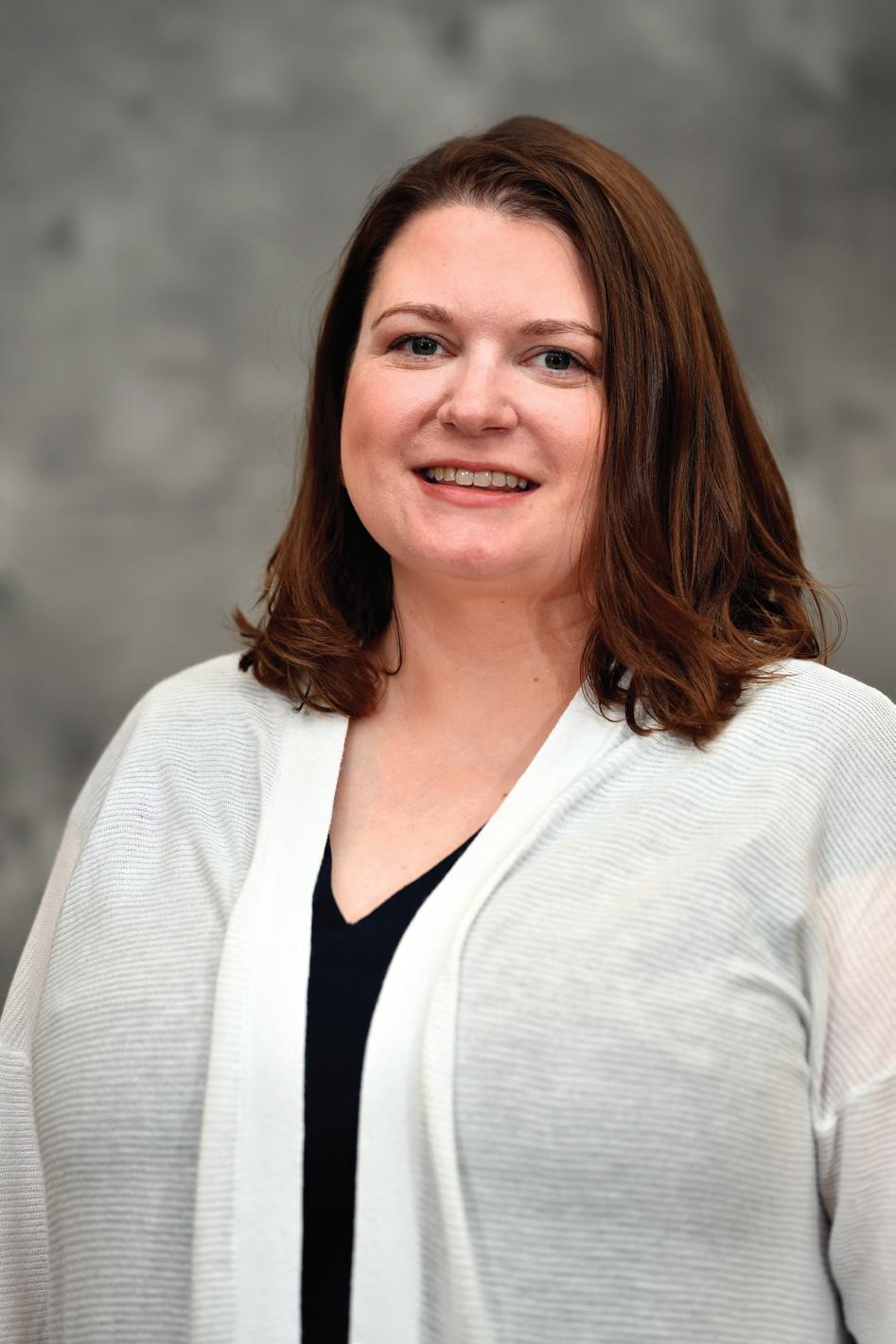
Teresa Harmon, Manager, CAD
Beginning January 1, 2026, the Postal Service has transitioned to an Online Retirement Application submission process, also known as ORA. This change is due to the Office of Personnel Management (OPM), the government agency that administers the Civil Service Retirement System (CSRS) and the Federal Employees Retirement System (FERS), mandate that all new retirement applications must now be submitted electronically.
ORA is a secure, fully digital system that is administered by OPM. The ORA platform will replace the paper-based application process for all USPS and Federal employees’ retirement requests. OPM created the system using more modern practical tools that will improve accuracy, save time, and make an easier experience for applicants, HR specialists, and payroll when processing the retirement application. OPM describes the ORA system as having the following:
• Pre-filled applications with OPM data: key records such as service history, high-3 salary, and sick leave balances are already included, reducing manual entry.
• Real-time annuity estimate: projected annuity updates can be seen instantly as benefit elections are made.
• Digital uploads: applicants will be able to attach supporting documents such as a marriage certificate or a DD 214 directly to your package.
• Status tracker and dashboard: applicants will be able to track their progress, see what is completed, and know what still needs attention using the dashboard.
• Seamless collaboration: applicant, HR, and payroll will share the same view of the application, reducing errors and improving coordination.
• Final readiness check: built-in-tools will confirm applications are complete, reducing rework, and helping retirees receive their annuity payments more quickly.
Effective January 1, 2026, all newly received optional (reg ular / immediate) retirement applications will be processed through this Online Retirement Application (ORA) platform. Optional retirement applications that were submitted prior to Jan. 1, 2026, regardless of the effective retirement date, will continue to be processed using the paper-based process and do not need to be resubmitted.
WHEN YOU ARE READY TO START THE RETIREMENT PROCESS
• Contact HRSSC at 877-477-3272, Option 5 or log into the eRetire app through LiteBlue at liteblue.usps.gov.
• You will need to provide a valid personal email address to start your application in the ORA system.
• HRSSC will create your account and confirm your retirement eligibility.
• Once your eligibility is confirmed, you will receive an email from DoNotReply@retire.opm.gov with instructions for completing the online application and providing any required documentation.
• You will also need to create a valid login. gov account to access the ORA system if you do not already have one.
• When you log in, you will see that much of your information is already prepopulated. You need to review this information carefully before continuing with your elections for health insurance, life insurance, etc and completing your application.
For more information on this process, you can go to the MyHR website and select “Planning for Retirement” from the “Retirement” drop down menu. Information about weekly retirement seminars is also available on this page
The Postal Service has stated that they will be provided a Frequently Asked Questions and additional information in the coming weeks on this process that they will be sharing as it becomes available.
If you have any additional questions, you can email them to retirementbenefits@usps.gov
BROTHERS & SISTERS, HAVE YOU ATTENDED A BRANCH MEETING?
DANIEL ST. MARIE, NORTHEASTERN REGION VICE PRESIDENT, LOCAL 301 PRESIDENT
If your answer is “No”, give one a shot! Maybe the question should really be, “Why haven’t you attended a Branch Meeting?”
Typical Branch Meetings consist of your Local Union Officers (President, Vice President, Treasurer, Recording Secretary, and State Executive Board Member) in attendance as well as your Branch President and Stewards. From there, meeting attendance varies depending on the Branch. You might expect a larger Branch to have better attendance but that is not always the case. I’ve seen smaller branches with better attendance numbers than a much bigger Branch. Don’t get me wrong, it’s not a competition, but why is there such a big discrepancy when these meetings discuss issues important to our livelihood.
mid-19th Century, as labor unions became more organized, formal meetings were established to discuss strategies, grievances, and collective bargaining efforts. The National Labor Relations Act (NLRA) of 1935 significantly influenced
Union Meetings serve as the democratic foundation where members discuss workplace issues, strategize on actions to be taken, and foster solidarity among members. Information can be disseminated about ongoing negotiations and workplace changes, while ensuring that the Union’s direction reflects the collective voice of its membership.
Union Meetings serve as the democratic foundation where members discuss workplace issues, strategize on actions to be taken, and foster solidarity among members. Information can be disseminated about ongoing negotiations and workplace changes, while ensuring that the Union’s direction reflects the collective voice of its membership.
Union Meetings began in the early 19th Century as workers sought to address poor working conditions and low wages. The meetings were often informal and focused on collective action, such as strikes and protests. By the
union meetings by legally protecting workers rights to organize and meet. This legislation encouraged more formalized and frequent meetings to discuss labor rights and negotiate with employers.
ARTICLE VII OF THE NPMHU UNIFORM LOCAL UNION CONSTITUTION COVERS MEETINGS:
• Section 1. The Branch President of each branch, subject to the approval of the Local President, shall
schedule branch meetings. Regular members shall be provided with reasonable notice of such meetings.
• Section 2. The order of business to be followed at meetings of this Local Union shall be determined by the Local Union President.
• Section 3. Reasonable efforts shall be undertaken to accommodate both smokers and non-smokers during meetings.
• Section 4. Members currently detailed to a supervisory or managerial position with the Postal Service (including any EAS position involved in discipline of employees or application of the National Agreement) or with the USPS Office of Inspector General or the Postal Inspection Service (or as a confidential informant), shall immediately be prohibited from attending any meetings of this Local Union to the extent that such meetings may discuss labor-management relations, terms or conditions of employment, or other matters related to the negotiation or administration of contracts and/or the filing or processing of grievances.
WHAT DOES AN NPMHU BRANCH MEETING OFFER?
• It’s an opportunity to meet and ask questions of your Local Union Officers and Branch Leadership.
• It’s an opportunity to meet fellow Union Brothers & Sisters.
• You can get an update on the financial condition of your Local.
• You can get an update on NPMHU Contract Negotiations.
• You can get an update on legislation affecting the USPS and its employees.
• You can get an update on contract administration within the Local, including recent Local and National Arbitration Decisions that may have an effect on Mail Handlers, and grievance activity within your Branch.
• You can get an update on safety issues in your Facility.
• It’s an opportunity to review the minutes from the most recent Local Executive Board and/or Council Meeting.
• You can voice your feelings/opinions on a particular supervisor, MDO, or Plant Manager or general issue without fear of retribution.
Branch Meeting notification is posted on the union boards in your facility. Branch Presidents try and pick the best day and time for optimum attendance. Location can be a union hall (LIUNA, IBEW, etc.), a hotel conference room, or a Tavern/ Restaurant. Our Southern Maine Branch is having an upcoming meeting at the Maine Military Museum. Some Branches offer coffee and doughnuts; at others you might get a slice of pizza.
Branch Meetings are for our Membership. They are an excellent in-person opportunity for the Union to communicate with our Members and vice versa. Information can be shared that might otherwise not be able to go up on a bulletin board in your facility. Give One A Shot!!!
MARCH—WOMEN’S HISTORY MONTH
June Harris, Central Region Vice President, Local 306 President, Women’s Committee Chairperson
March is the month designated as “Women’s History Month”. In this month, women are recognized and highlighted for their numerous accomplishments. As set by the National Women’s History Alliance, this year’s theme is “Leading the Change: Women Shaping a Sustainable Future”. This broad theme is intended to highlight women who are redefining “sustainability” in every sector: financial, social justice, education, and environment.
It’s a call to recognize the women who aren’t just surviving the present but are designing the future. And I believe that this holds true to the women of our great Union. The National Postal Mail Handlers Union have women who have consistently fought to create fair economic and workplaces for women. The resilient and persistent women of the NPMHU engage in protests, community services, volunteer work, and educational forums to help protect and enhance the lives of ALL women. I believe that these hard fighting women should be celebrated, and, therefore, I want to share a few of our stories. Since the inception of the NPMHU Women Committee in 2017, under the leadership of National President Paul Hogrogian, we have seen growth and advancement in the rights of our membership. We have been unrelenting in making sure expectant Mothers are given their lawful entitlements regarding such things as lactation rooms for nursing Mothers proper accommodations for pregnant workers, and protections from sexual harassment and intimidation in the workplace. Although we still have work to be done, we celebrate our accomplishments.
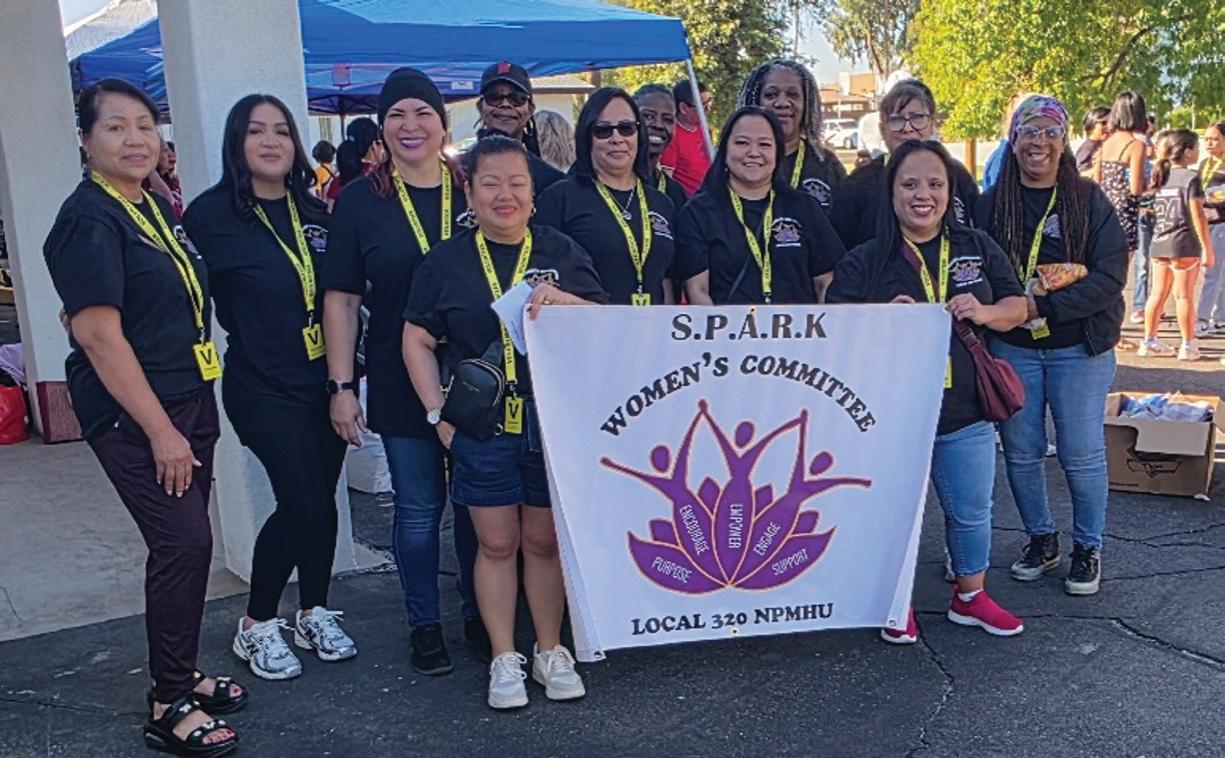
Local 320 in Arizona is one of our most recently created Women’s Committees. Their Local logo is awesome. Local President Bernie Gonzales, Chairwoman Marcosa Vargas and the entire Committee team are off and running—educating, volunteering, and adding value to their communities.
New York’s Local 300, the longest tenured Women’s Caucus of the NPMHU, is comprised of strong Unionists and fighters for our rights. Their quarterly newsletter, “Sister 2 Sister—A Feminine Touch to Progress”, highlights their willingness to fight and protect all workers. They educate our members on important issues including breast cancer awareness.
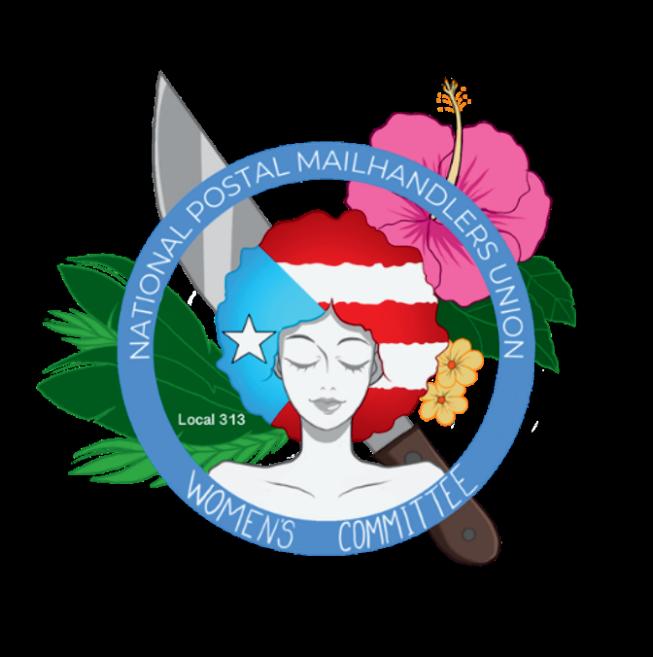
Another newly formed Women’s Committee based in Puerto Rico, Local 313, under the leadership of President Maurice Torres is on fire. The logo that they have was created by the daughter of Torres and displays important aspects of their heritage. The logo represents the strength, resilience, and cultural identity of the women who are part of the National Postal Mail Handlers Union Women’s Committee in Puerto Rico. At the center stands a woman with her eyes gently closed, symbolizing confidence, dignity, and trust. Her expression reflects the assurance that our rights are protected and that we stand united under strong union representation. Her hair incorporates the Puerto Rican flag, representing heritage, pride, and commitment to the island and its workforce. Behind her appears a machete, a powerful symbol of labor, resistance, and the historic struggle of Puerto Rican workers. It represents strength, perseverance, and the determination to defend workers’ rights and open pathways for future generations. The tropical flowers and green foliage reflect Puerto Rico’s natural beauty, cultural roots, and the resilience of Puerto Rican women. Encircling the design is a blue ring bearing the name National Postal Mail Handlers Union Women’s Committee, symbolizing unity, protection, and solidarity within the organization. This logo honors the women who serve, lead, and advocate with strength while proudly embracing their cultural identity.
We celebrate ALL of the Women in the National Postal Mail Handlers Union. Each and every one of you play a significant role in our future. I thank those Locals who have or are creating Women Committees. Iron strengthens iron!
Local 320
Local 313
TENSION HEADACHES, MIGRAINES, AND MORE
Nina Gallauresi, Executive Director, MHBP
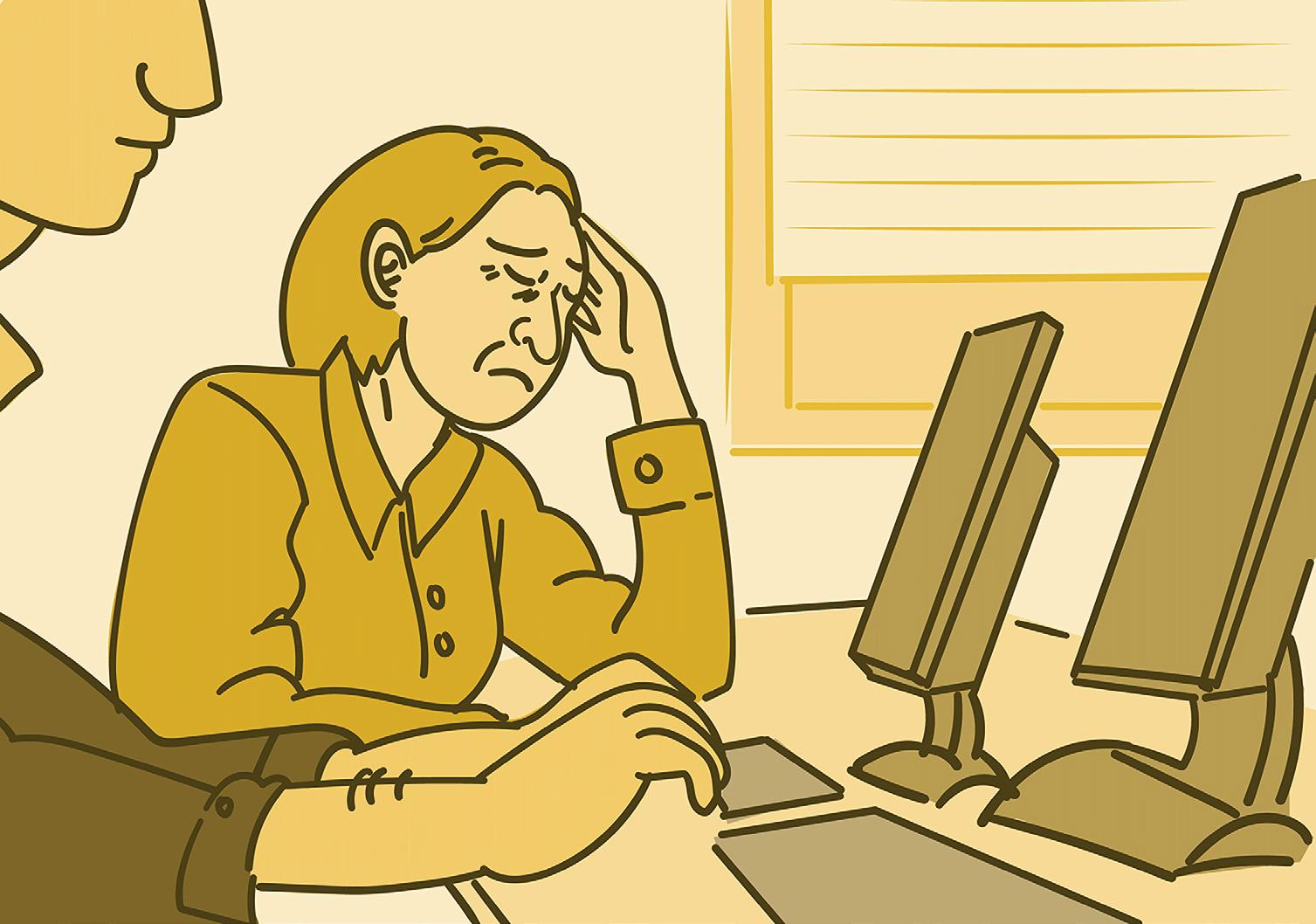
WHEN HEADACHES DISRUPT YOUR LIFE
Headaches come in many forms. Where you feel the pain, what other symptoms you have, and how long headaches last can vary. For many people, headaches are an occasional nuisance. For others, they can be chronic and disabling.
Some headaches can be prevented with small lifestyle changes. Drinking enough water, avoiding headache triggers, managing stress, or improving sleep can sometimes be enough. Other headaches may require more intensive interventions.
NIH researchers are working to develop more options for people who aren’t helped by current treatments.
TYPES OF HEADACHES
There are many types of headaches. Understanding the type you’re having can help you find the right treatment.
The most common is called a tension-type headache. These are often triggered by stress, which causes muscles in the neck, face, scalp, and jaw to tighten. Lack of sleep, dehydration, and poor posture can also lead to a tension-type headache.
The pain from a tension-type headache is usually mild to moderate and can be felt on both sides of the head. Some people have chronic tension-type headaches. These happen frequently and can last for hours to days, or even constantly.
“We define chronic headache as having more than 15 headache days per month. So, more days with headache than not,” says Dr. Michael Oshinsky, a pain expert at NIH.
Other common headaches are those caused by migraine. Migraine isn’t just a headache. It’s a complex brain condition. Migraine headaches often occur on one side of the head. But they can also be on both sides. Migraine attacks can include nausea, vomiting, mood changes, extreme tiredness, and sensitivity to light, noise, and smells. Attacks can last for hours to days.
“Migraine is a disorder where the ‘volume knob’ of the nervous system has been turned up,” explains Dr. K.C. Brennan, a migraine researcher at the University of Utah. “In people with chronic migraine, it stays turned up.”
There are many other types of headaches. One that causes extremely painful, sudden attacks is the cluster headache.
These attacks can happen around the same time each day or every other day for several weeks.
Some people, such as combat veterans, live with post-traumatic headaches. These are headaches that linger after a traumatic brain injury or a concussion. They can last long after the injury is healed. Other, rarer types of headaches can be caused by nerve problems in the head area.
Headaches can also be caused by other health conditions. Brain injury, stroke, seizures, infections, high blood pressure, and other conditions can all lead to headaches. These are called secondary headaches.
If you have headaches that disrupt your daily life, talk with your doctor. They can help you find relief or refer you to a specialist.
Some headaches may indicate a dangerous medical problem that needs immediate medical attention.
TRYING TREATMENTS
You can help take control of your headaches by keeping a headache diary. Track your symptoms, how often they happen, and what alleviates them.
“For at least a month, just note down when you have a headache, how you treated it, how long it lasted,” Oshinsky says. You can also include facts like foods or drinks consumed, sleep patterns, stress levels, and changes in daily routines.
This can help you identify what might have triggered the headaches so you can work to avoid them. Sharing your diary with your doctor can help them better understand the type of headaches you’re having and suggest a treatment plan.
Over-the-counter pain relievers can help some people with occasional headache pain. Others may need to try prescription drugs.
But frequently taking painkillers for headaches may make things worse, Oshinsky explains. “If you use painkillers more than three or four times a week, once the drug is out of your system you can get a rebound headache,” he says.
People with frequent or chronic headaches can try preventive treatments. These stop headaches from starting, rather than dulling the pain once they start. For example, a type of medication called CGRP drugs helps many people with migraine have fewer attacks.
But the available preventive treatments don’t work for everyone. Researchers are looking for other ways to stop headaches from forming.
Brennan’s team is studying a compound called glutamate. Glutamate is important for normal brain function and helps nerve cells communicate. But Brennan’s team has found that it may sometimes also play a role in triggering migraines.
“We need to figure out how this unusual glutamate activity works, in what brain cell type, and under what conditions, in order to develop a more tailored approach to migraine treatment,” he says.
Other treatments for headaches don’t involve drugs at all. Some people get relief with a type of talk therapy called cognitive-behavioral therapy, or CBT. This includes learning coping strategies and ways to think differently about pain.
“There are changes in the brain after doing CBT, just like there are changes in the brain after using medications,” says Dr. Hadas Nahman-Averbuch, who studies migraine pain at Washington University in St. Louis. Other people find relief using mind-body techniques such as mindfulness practice or biofeedback, she adds.
SMALL HEADS, BIG ACHES
Headaches are common in kids, too. Often, headaches in children and teens can be treated by drinking more water, having a healthier diet, getting enough activity, and solving sleep problems. Always talk to a doctor before giving headache medicines to a child.
Sometimes, it can be difficult to figure out what kind of pain a child is feeling. “A very young child with a migraine headache will often point to their stomach first and say, ‘my stomach hurts,’” Oshinsky says.
Migraine headaches often run in families. So parents who live with these headaches may want to be on the lookout for them in their kids, Oshinsky adds.
Puberty can trigger new or worsening migraine headaches in teens, especially girls, says Nahman-Averbuch. She and her team are studying how hormone changes may affect migraine pain. They want to develop tests to predict which teens at risk of migraine will develop headaches during puberty.
“If we can predict who will develop migraine, then maybe we can do something to prevent that from happening,” Nahman-Averbuch says.
Regardless of your age, it may take time to figure out the best treatment for your headache pain. Your health care team can help you find what works. “We have lots of tools at our disposal now,” Brennan says, “and we’re developing more.”
HEADACHE WARNING SIGNS
A headache can be a sign of another serious medical problem. Seek medical care as soon as possible for:
• A sudden, severe headache, possibly with a stiff neck.
• A severe headache with fever, nausea, or vomiting that’s not related to another illness.
• A headache with confusion, weakness, double vision, or loss of consciousness.
• A headache that gets worse over days or weeks, or changes in pattern or behavior.
• A headache after a brain injury.
• A headache with loss of sensation or weakness in a body part.
• Two or more headaches a week.
• A constant headache in someone who hasn’t had headaches before, especially over age 50.
• Recurring headaches in children.
• New headaches in someone with a history of cancer or HIV/AIDS.
ADDITIONAL MHBP RESOURCES TO ASSIST YOU
MHBP has resources to assist you and your family’s health! Whether headaches are caused by stress, brain conditions or other health conditions, MHBP can help connect you to a provider.
If you know the type of provider you would like to see, search for a provider using mhbppostal.com or call MHBP at 833-497-2416. If you have a health concern or need advice on what to do and where to go, MHBP offers a 24/7 Nurse Line, call 800-556-1555.
SOURCES:
NATIONAL INSTITUTES OF HEALTH HTTPS://NEWSINHEALTH.NIH.GOV/ | MHBPPOSTAL.COM
THE FIGHT IN THE DOG
JOHN GIBSON, EASTERN REGION VICE PRESIDENT, LOCAL 308 PRESIDENT
and ratifies, or a contract is imposed on them by an arbitrator, then the National Association of Letter Carrier (NALC) gets something very close if not identical to what the APWU ends up with and then the National Rural Letter Carriers Association (The Rurals) gets an almost fairly similar wage and benefit package after its all said in done. (I should note that the Rurals appear to be the least comparable to the other three National Unions). Then we come up to bat and start swinging. Yeah, yeah, you’ve heard and seen all this before, but there are nuances to this tedium Brothers and Sisters. There are variations to the three pillars of the contact negotiating process. These pillars you
There are variations to the three pillars of the contact negotiating process. These pillars you know as Wages, Benefits, and Working conditions. For good reason most of us focus on wages and benefits as these are the economic cornerstones of any contract between the workers and the bosses.
unions leaves much to be desired. In any event, the nuances referenced almost always focus on the conditions of employment and are generally non-economic. I say almost always as there are exceptions to this rule and we experienced a huge exception almost a decade and a half ago that has weighed and still weighs heavily on all subsequent rounds of bargaining. You know what it is—it is the divergent pay scales between the APWU and both the NALC and the National Postal Mail Handlers Union. That divergence is driven by the appropriately maligned proportional cost of living allowance. In 2011, the APWU agreed to eliminate five steps from the top of their
their pay scale and did not accept what the Postal Service was offering. On January 10th, 2013, Arbitrator Shyam Das ruled and “awarded” a proportional Cost of Living Allowance to the Letter Carriers. Roughly a month later Arbitrator Fishgold followed the lead of Arbitrator Das and shoved the same proportional garbage on us.
As a historical perspective, at the time of these seismic changes to the postal pay scales where one bargaining unit was willing to give up steps for a cost of living allowance and forever pitting one form of pay against the other, the cost of living allowance was a near de minimis increase in pay. The greater value at the time was of course retaining the top steps in the pay scale, providing not only a higher salary while employed but also providing for higher earnings for retirement purposes.
However, since the ill-fated 2011 agreement between the America Postal Workers Union and the United States Postal Service, the Service has gifted back some of the steps the
will be no agreement…
As we have said throughout these negotiations, our preference is to negotiate an agreement with the Postal Service. If a negotiated agreement is not possible, the NPMHU is prepared to carry the fight through to arbitration to ensure that the next National Agreement achieves the fair wages and working conditions that all Mail Handlers deserve. We will accept nothing less.”
Agreeing to terms that do not meet these criteria quite frankly is not acceptable. While the outcome of interest arbitration is never predictable, I am certain of the measure of the fight in the National Postal Mail Handlers Union, and I like those odds.
In Solidarity, John Gibson
CLIMBING THE SUMMIT INTO THE NEW AGE OF MAIL PROCESSING
JOHN (JR) MACON, SOUTHERN REGION VICE PRESIDENT, LOCAL 329 PRESIDENT
Montgomery Ward & Co. (starting in 1872) and from Sears Roebuck and Co. and J.C. Penney Inc. (the Golden Rule Store).
Over the years, our craft has transformed into the primary craft for operations of advanced sorting technology and for safer working conditions.
This transition to our great craft did not come easy. The necessity and raw ambition for increased Mail Handlers staffing started with National and Local jurisdictional victories, sorting machine modifications and transitioning from manual keying and scheme knowledge distribution to new machinery equipped with up to six (6) sided scanning technology.
The upgrading to the MARS, PILS, the USS(XL) and other similar sorters has transitioned the Postal Service away from the primitive stages of large sorters such as the Battleship in Chicago, IL with its iron and steel structure selling for up to (1) million dollars.
Other expansive Postal distribution centers in states touching the Arctic Ocean down to our favorite, Caribbean Sea location of Puerto Rico also contained tall metal structures modeled after Egyptian Pyramids with a crow’s nest for distribution and containerization. Overhead Singulators are also becoming extinct at BMCs, NDCs and STCs, along with NMO Machines with slides perched on wooden ‘Sawtooth’s’ for containerization.
The PILS and the AFSM 100 with ATHS and AI have also sent the SPBSs, APBSs, FSM 881/1000s and standard FSM 100s with no prepping stations, into a junkyard full of melted down rubble waiting for the next A.I. of, ‘who knows what!’
SDUS = Small Delivery Unit Sorter (the Baby ADUS)
• SIPS = Single Induction Package Sorter
• PILS = Parallel Induction Linear Sorter
• USS = Universal Sorter System
• CCS = Cascading Conveyor System
• FRS = Flexible Rover Sorter
• MARS = Matrix Regional Sorter
• MIMS = MULTIPLE Induct Matrix Sorter
• MEWS = Matrix East West Sorter
• EPPS = Enhanced Packaged Processing Systems
• HDUS = High Density Universal Sorter
• HOPS = High Output Package Sorter
• AMR = Automated Mobile Robot Flexible Tray Line
• MSA = Sort to Monitor (STM) and Sort to Light (STL)
Within the Postal Network, approximately eighteen Regional Processing and Distribution Centers (RPDCs), including Regional Transfer Hubs (RTHs) exist. These distribution centers and transfer hubs will handle large volumes of mail requiring the installation of several different processing machines: not limited to the MARS, USS (XL), NMO Sorters. This also includes the PILS, which is exclusively staffed by Mail Handlers and has shown to be much more efficient than the APBS.
most importantly, the volume of mail to be processed.
These substantial changes in mail processing should result in increased Mail Handler staffing and require the LDRC and the RDRC if necessary to memorialize the Mail Handlers’ functions into the local inventories. Meetings of the NDRC and arbitration may also be required to determine mail handler jurisdiction.
Within each processing region, Local Processing Centers (LPCs) will be located. Some LPCs were initially processing and distribution centers of various sizes. In other cases, the work and the existing machinery are moved into a new facility or new machinery will be installed such as the SDUS, ADUS, SIPS or the PILS. These changes require the convening of the LDRC.
Under Former Postmaster DeJoy’s 10-year Plan, numerous small Post Offices and Associate Offices (AOs) will continue to transition into Sorting and Delivery Centers (S&DCs), normally requiring the installation of an SDUS (a Baby ADUS), a RBUS, or a SIPS to process larger mail volume.
Some of these S&DCs had not previously employed mail handlers, while some initially employed mail handlers, but they may have been excessed, and others have reduced mail handler staffing. In all scenarios involving operational changes, the Postal Service is required to notify the National and Local levels, including the RDRC and the LDRC, at least 45 days prior to consolidated facilities occurring and prior to new work, new machinery or operational changes occurring.
nated to the mail handler craft, in accordance with the CBA’s RI-399 Implementation Criteria.
National Determinations and National Grievances have made it more than probable that mail handlers will be hired at SD&Cs and mail handler staffing will be increased at LPCs and other facilities where the task involve sweeping containers from machines, loading and unloading trucks and containers, transporting mail, operating motorized equipment, spreading mail to letter carriers. Other duties include separating presort bundles, performing MTE and the preparation, separation and repairing of mail.
When the NPMHU member does not agree with management’s determination/s, the member has 21 days to file dispute form/s to the LDRC by certified mail. After another meeting of the LDRC occurs and disputes cannot be settled, RDRC dispute form/s are then filed to the RDRC by certified mail. In addition, grievances for crossing craft under Article 7.2 of the CBA should be filed.
In Summary: NPMHU LDRC requests and disputes should always seek to enforce our jurisdiction and be processed in accordance with the Update MOU of 6/26/2018 and the 2/27/2024 SDC Taskforce talking points that were created by Local Presidents John Gibson, Kelly Dickey, Nick Mosezar and National CAD Representative Tom Ruther. Questions can also be directed to your Regional Director. This MOU and other RI-399 jurisdictional documents can also be reviewed under NPMHU’s Online MAILS Research Portal.
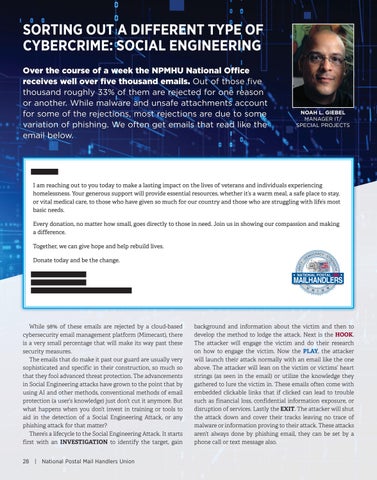
SORTING OUT A DIFFERENT TYPE OF CYBERCRIME: SOCIAL ENGINEERING
Over the course of a week the NPMHU National Office receives well over five thousand emails. Out of those five thousand roughly 33% of them are rejected for one reason or another. While malware and unsafe attachments account for some of the rejections, most rejections are due to some variation of phishing. We often get emails that read like the email below.
NOAH L. GIEBEL MANAGER IT/ SPECIAL PROJECTS
Sheldon,
I am reaching out to you today to make a lasting impact on the lives of veterans and individuals experiencing homelessness. Your generous support will provide essential resources, whether it’s a warm meal, a safe place to stay, or vital medical care, to those who have given so much for our country and those who are struggling with life’s most basic needs.
Every donation, no matter how small, goes directly to those in need. Join us in showing our compassion and making a difference.
Together, we can give hope and help rebuild lives.
Donate today and be the change.
Paul V. Hogrogian National President National
While 98% of these emails are rejected by a cloud-based cybersecurity email management platform (Mimecast), there is a very small percentage that will make its way past these security measures.
The emails that do make it past our guard are usually very sophisticated and specific in their construction, so much so that they fool advanced threat protection. The advancements in Social Engineering attacks have grown to the point that by using AI and other methods, conventional methods of email protection (a user’s knowledge) just don’t cut it anymore. But what happens when you don’t invest in training or tools to aid in the detection of a Social Engineering Attack, or any phishing attack for that matter?
There’s a lifecycle to the Social Engineering Attack. It starts first with an INVESTIGATION to identify the target, gain
background and information about the victim and then to develop the method to lodge the attack. Next is the HOOK The attacker will engage the victim and do their research on how to engage the victim. Now the PLAY, the attacker will launch their attack normally with an email like the one above. The attacker will lean on the victim or victims’ heart strings (as seen in the email) or utilize the knowledge they gathered to lure the victim in. These emails often come with embedded clickable links that if clicked can lead to trouble such as financial loss, confidential information exposure, or disruption of services. Lastly the EXIT. The attacker will shut the attack down and cover their tracks leaving no trace of malware or information proving to their attack. These attacks aren’t always done by phishing email, they can be set by a phone call or text message also.
Postal Mail Handlers Union
INVESTIGATION — HOOK — PLAY — EXIT
So how do we prevent and protect ourselves against these specific types of attacks.
Here are a few tips and some things to remember:
1. Carefully read over emails rather than glazing over them. Take your time.
2. If you think the email is suspicious and recognize the sender, email them to prove the email is legitimate.
3. Do not click on links
4. Be on the lookout for urgent threats or bad grammar
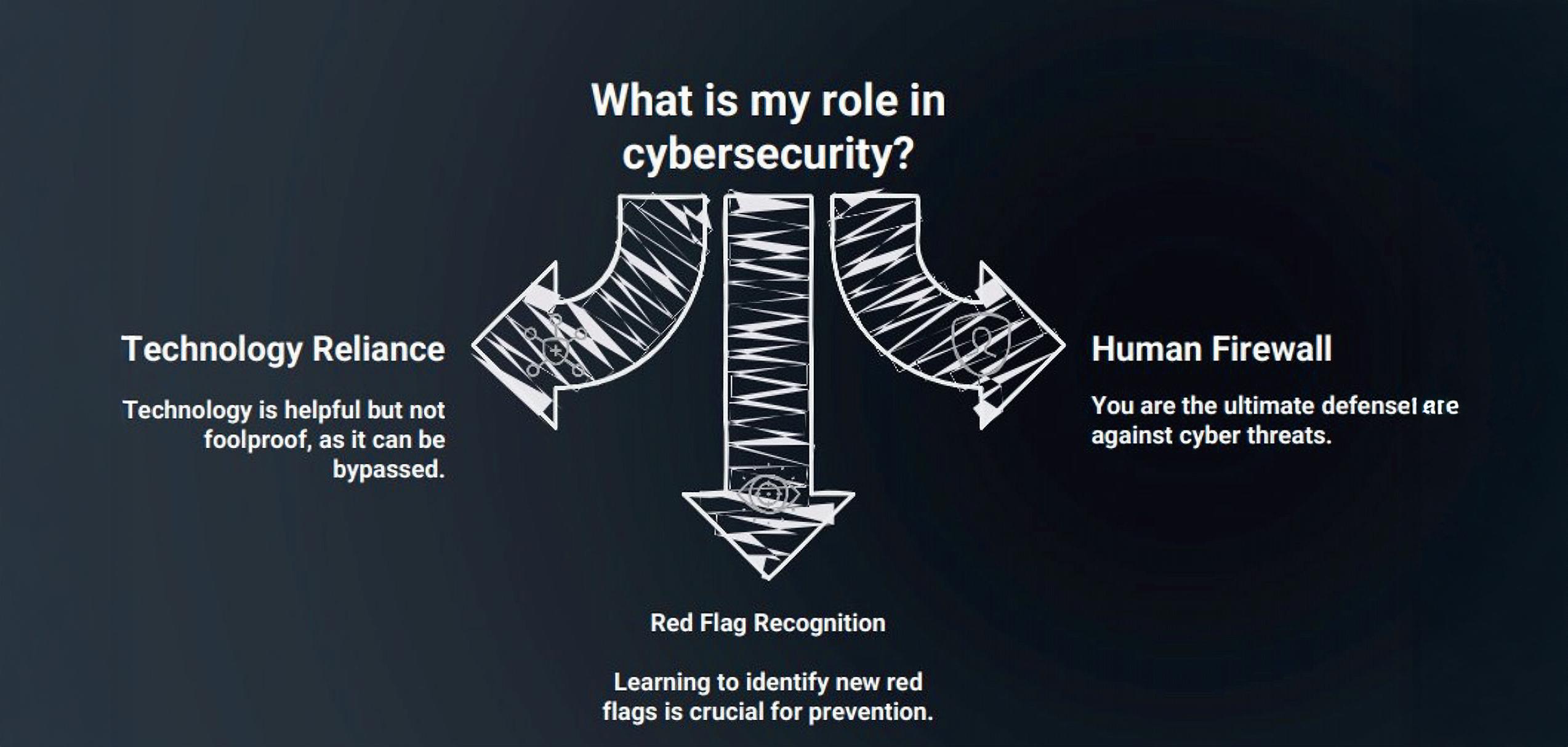
So finally, what’s your role in the world of cybersecurity both at home and on the worksite. This can be different for everyone but there are some important points listed in the graphic below that you can put in your back pocket to help you along the way.
PLANS
PLANS
THREE PLANS, ONE MISSION. A HEALTHIER YOU.
THREE PLANS, ONE MISSION. A HEALTHIER YOU.
MAIL HANDLERS
LOCAL 298
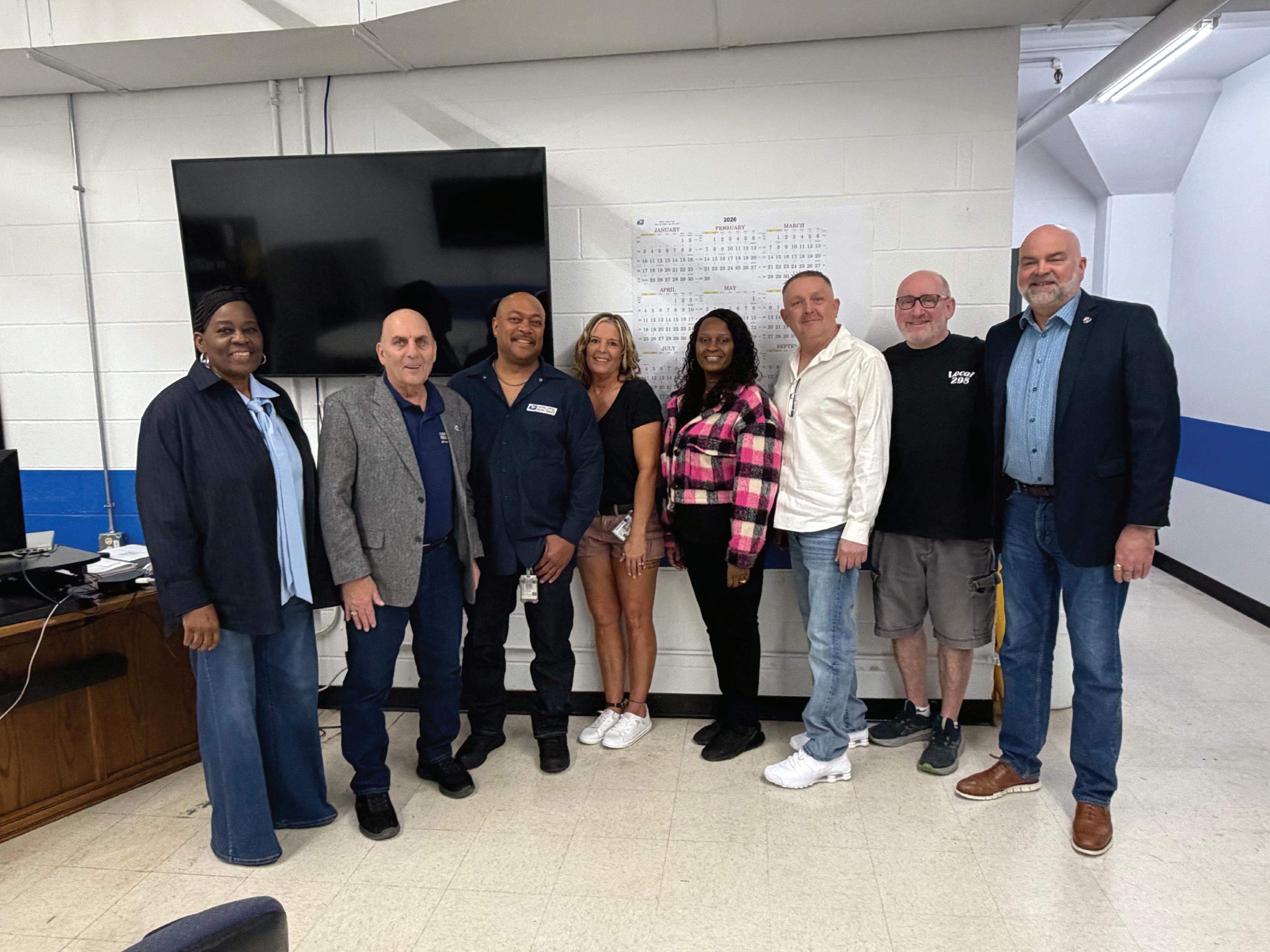
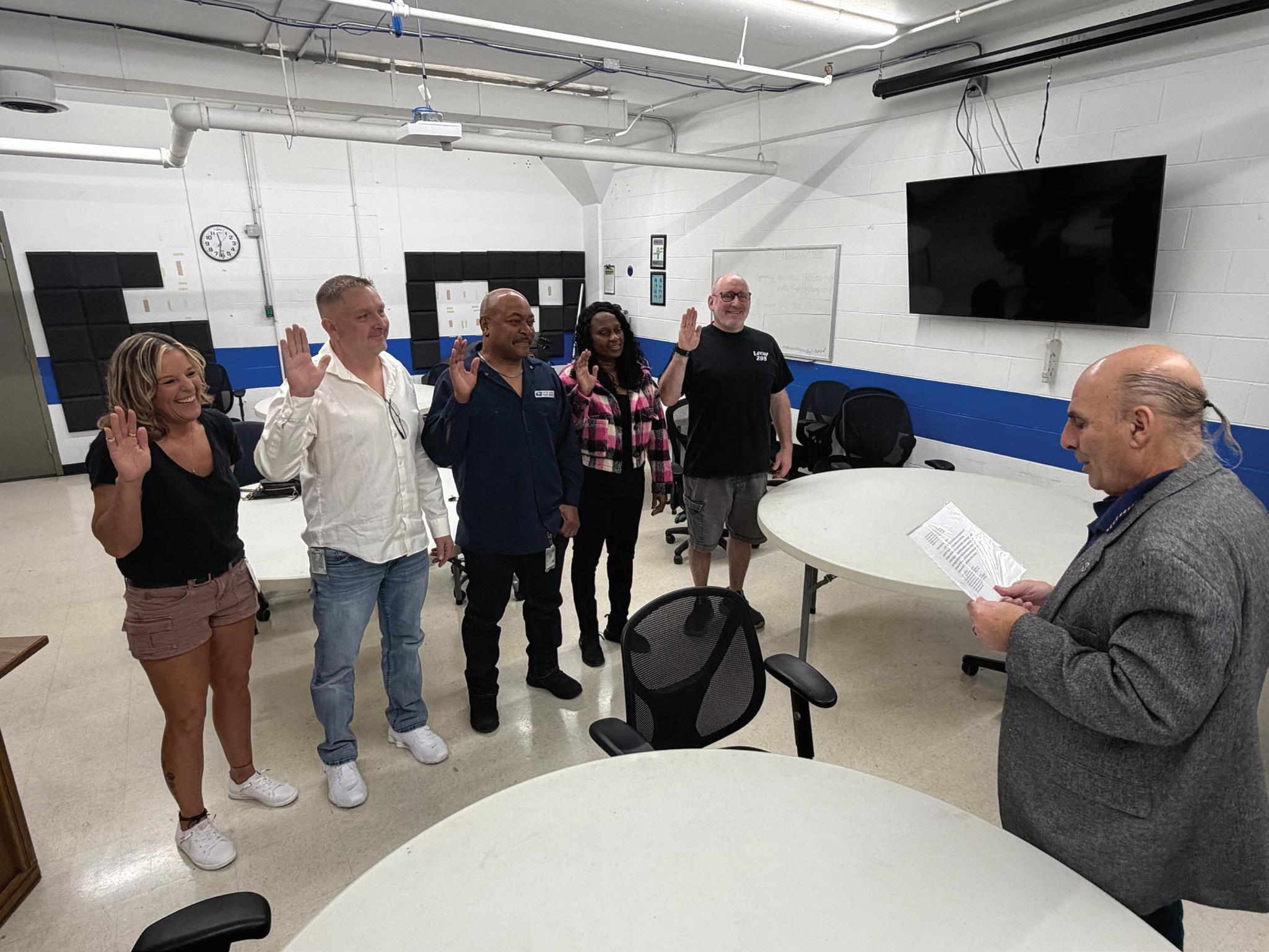
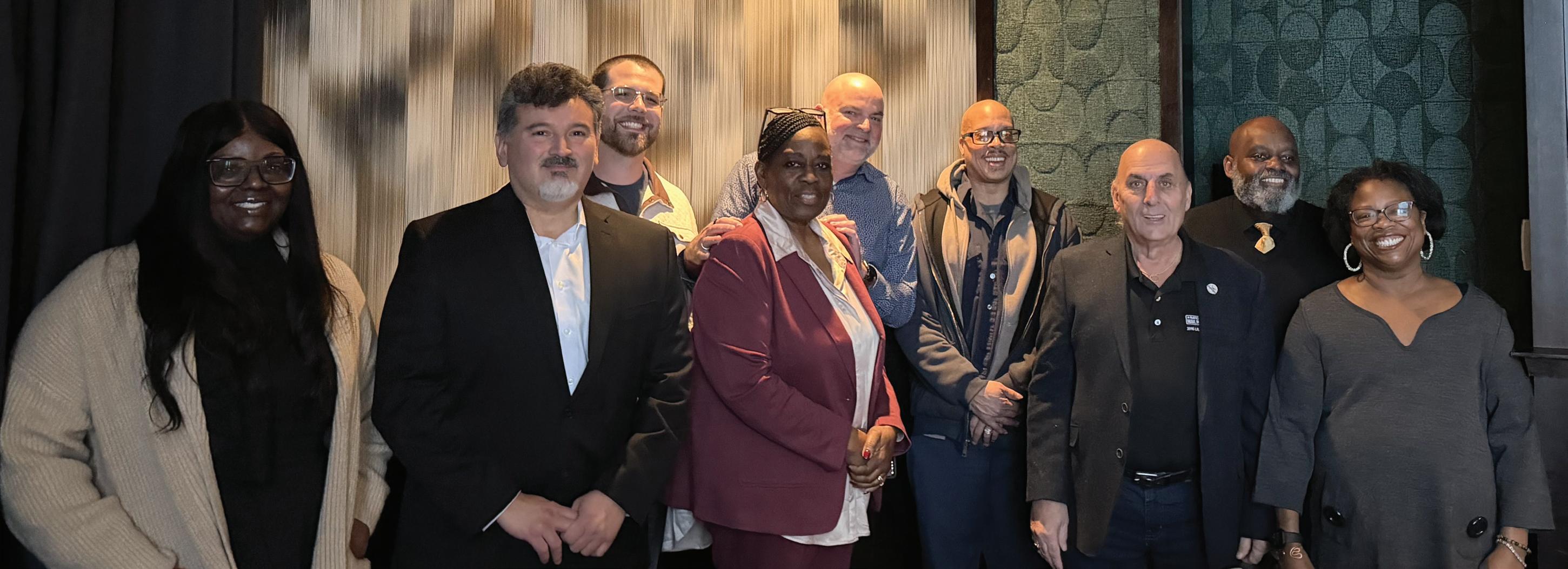
National President Paul Hogrogian swore in the new officers at Local 298. Both National Secretary-Treasurer Kevin Tabarus and Vice President Central Region June Harris were also on hand for the event.
Pictured (l-r) Vice President Central Region June Harris, National President Paul Hogrogian, Local 298 Vice President Kevin Ballew, Local 298 Recording-Secretary Rebecca Perkins, Local 298 SEBM Ada McCarty, Local 298 President Justin Kreikemeier, Local 298 Branch President Lincoln, NE Jeff Rigby and National Secretary-Treasurer Kevin Tabarus.
LOCAL 299
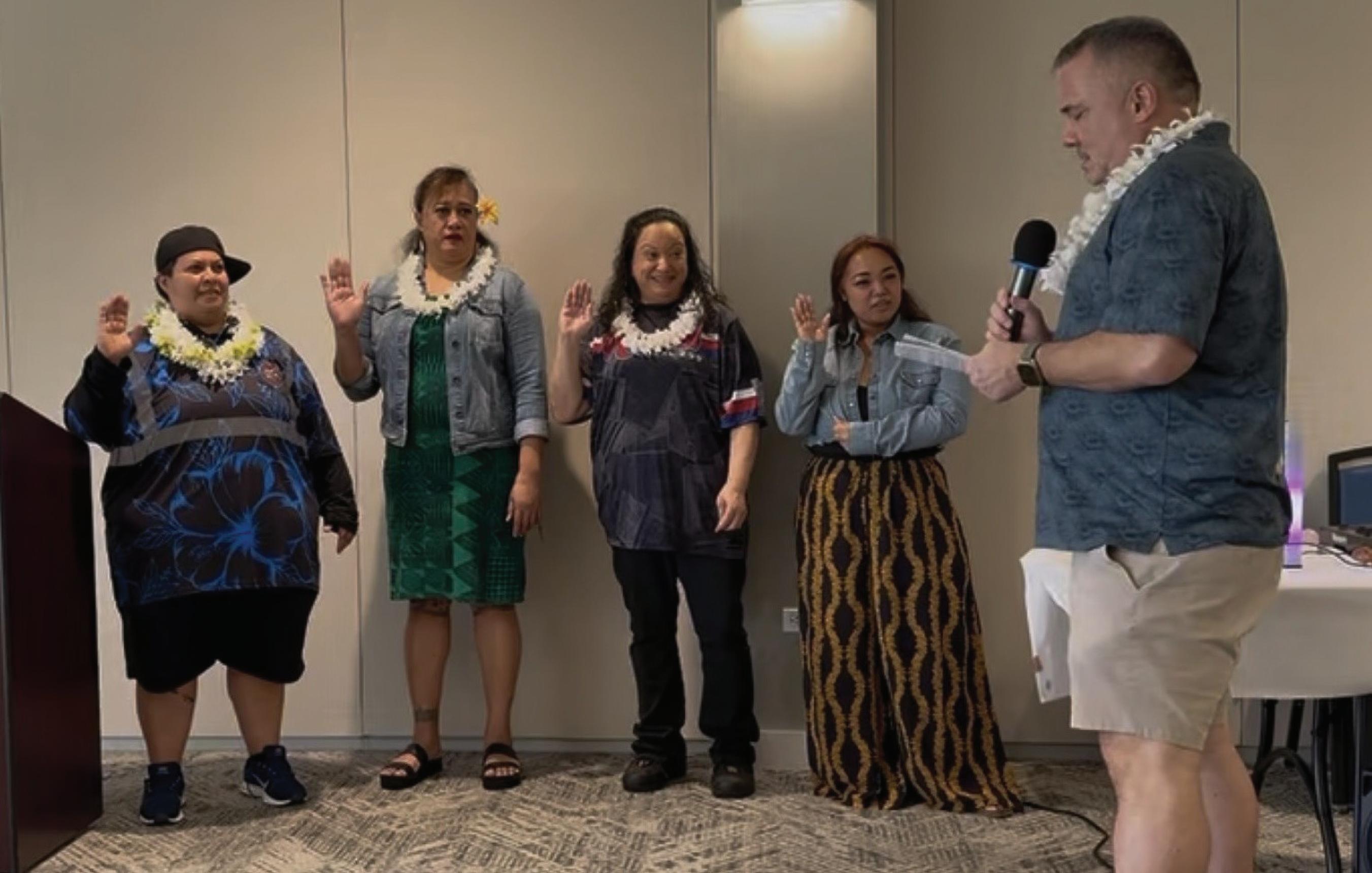
Vice President Western Region Don Sneesby was on hand to deliver the Oath of Officers to the newly elected Officers of Local 299. Pictured (l-r): Local President Keala Parker, Recording-Secretary Maina Galeai, Treasurer Davey Okamoto, and State Executive Board Member Angel Lorenzo.
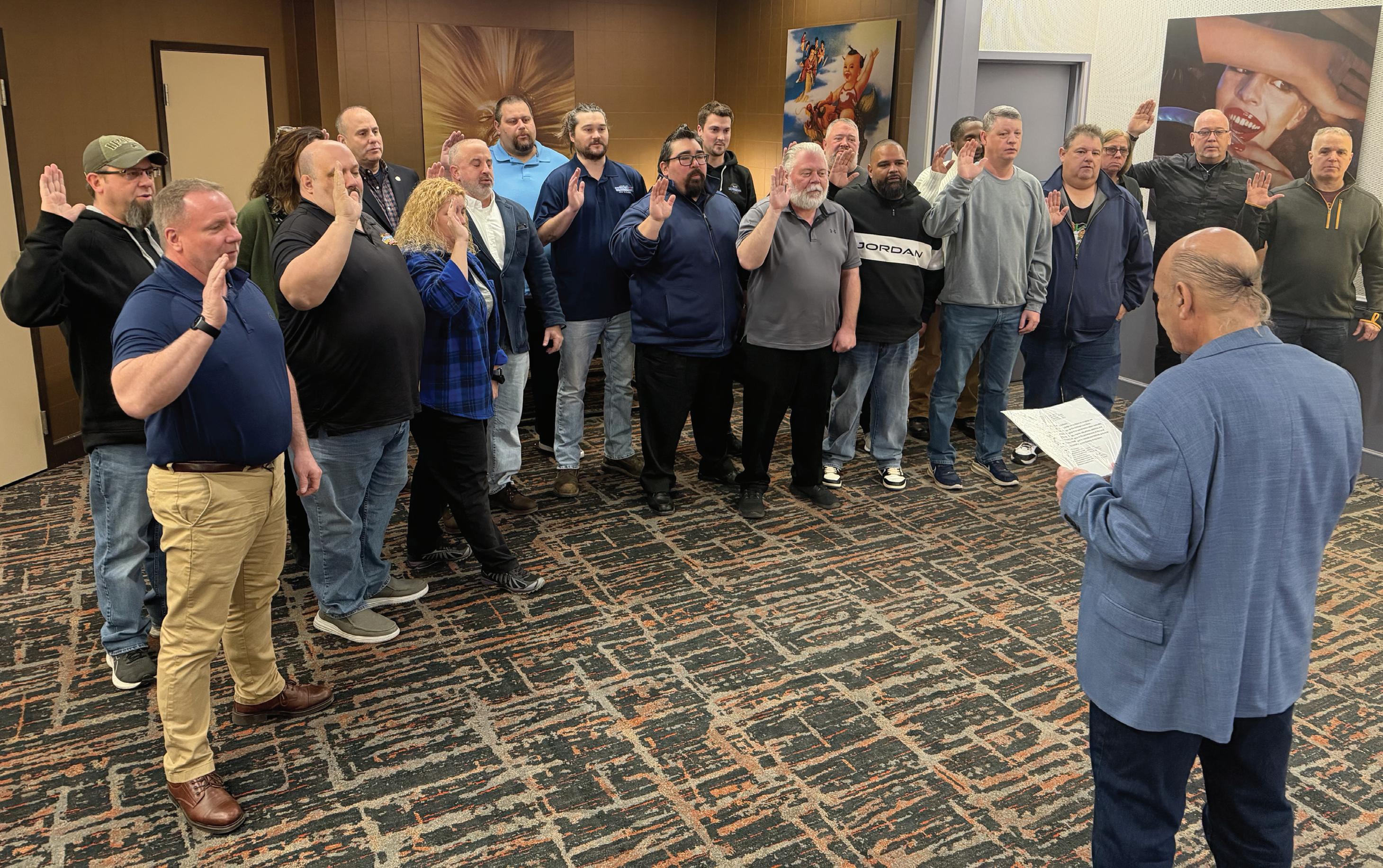
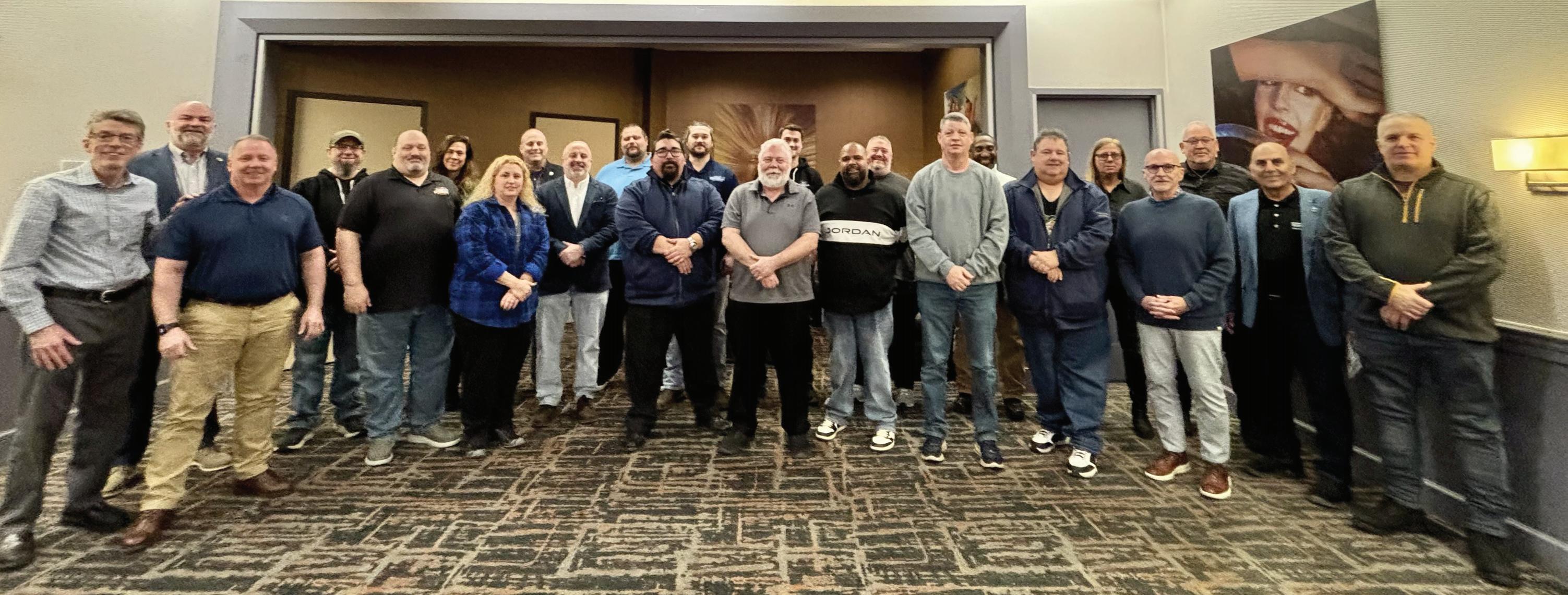
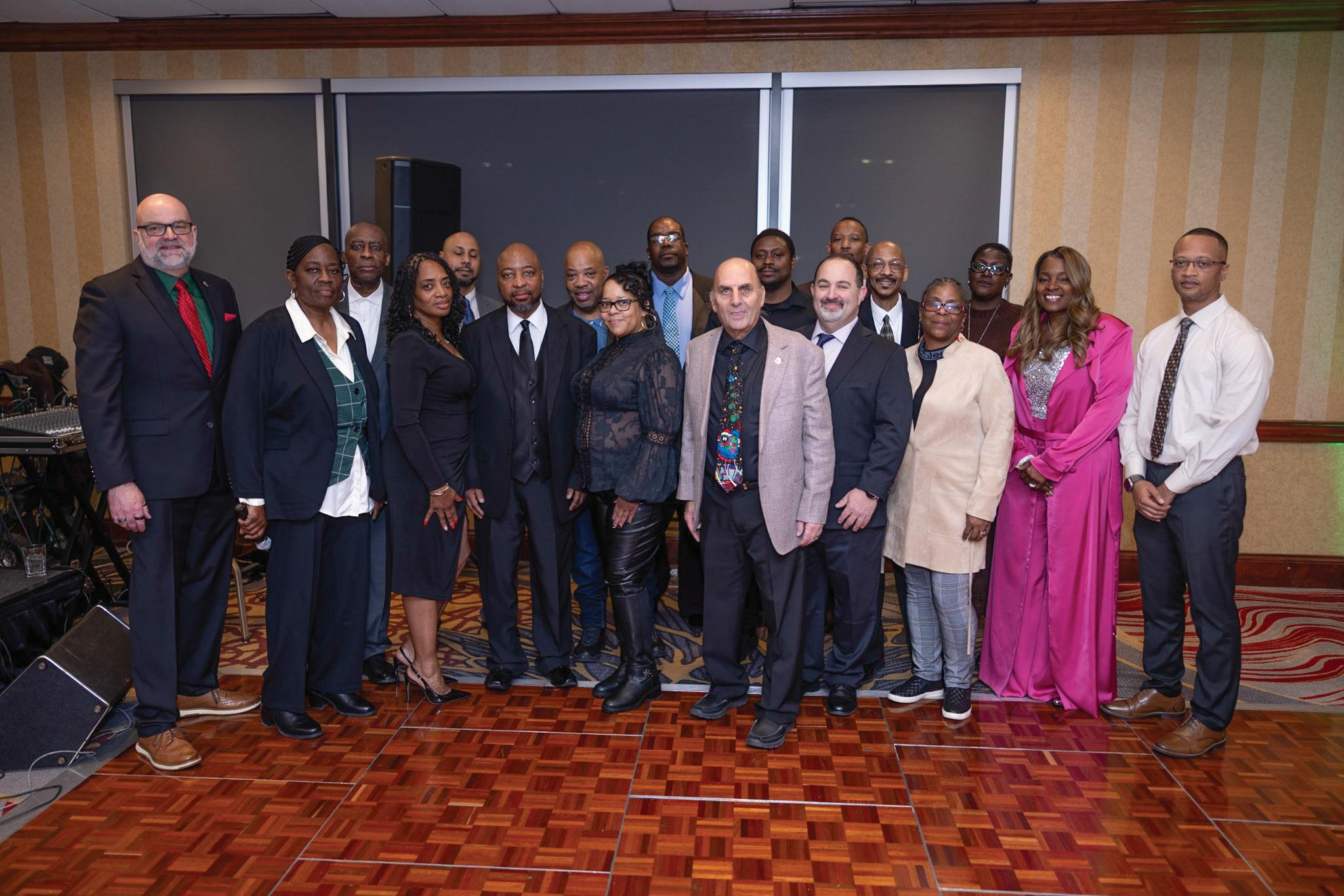
National President Paul Hogrogian administered the Oath of Officers to the newly elected Officers of Local 301. Also in attendance were National Secretary-Treasurer Kevin Tabarus, National President Emeritus John Hegarty, and Assistant to the National Officers Neil Ryan.
Pictured: MA SEBM Bob Corridan, Branch President Nashua NH Mike Normandin, Branch President Springfield, MA Keith Malloy, Local 301 Council Jocelyn Jones, Vice President Sean Sweeney, Branch President Bangor, ME Diane Libby, President Dan St. Marie, ME SEBM Josh
Jacques, Branch President Scarborough, ME Matt Carroll, Recording Secretary/Branch President North Reading, MA Phill Alvarado, VT SEBM Matt Dieringer, Treasurer John Bessette, Branch President Brockton, MA Bruce Sheehan, Branch President Providence, RI Mike Bisono, CT SEBM Joe Robinson, Branch President Hartford, CT Todd Bjunes, Branch President Manchester, NH Scott Curtis, Branch President Boston, MA Jackie Morris, RI SEBM Pat O’Rourke, NH SEBM Paul Bureau, and National President Paul Hogrogian
LOCAL 302
National President Paul Hogrogian administered the Oath of Officers to the newly elected Officers of Local 302. Also in attendance were National Secretary-Treasurer Kevin Tabarus and Vice President Western Region Don Sneesby. Pictured: (l-r) Front: Jennifer Escobar Reno BP, David Santos Fresno BP, Elizabeth Anderson Recording Secretary, Chrystal Wilson NDC BP & CA State Executive Board Member, and National President Paul Hogrogian. (L-r) Back: James Williams North Bay BP, Esteban Sanchez San Jose BP, Fernando Matta Vice President, Local President Tony Coleman, Shawn Dalton Sacramento BP & Treasurer, Western Region Vice President Don Sneesby, Ruben Martin Jr. SF BP, and National Secretary-Treasurer Kevin Tabarus.
LOCAL 304
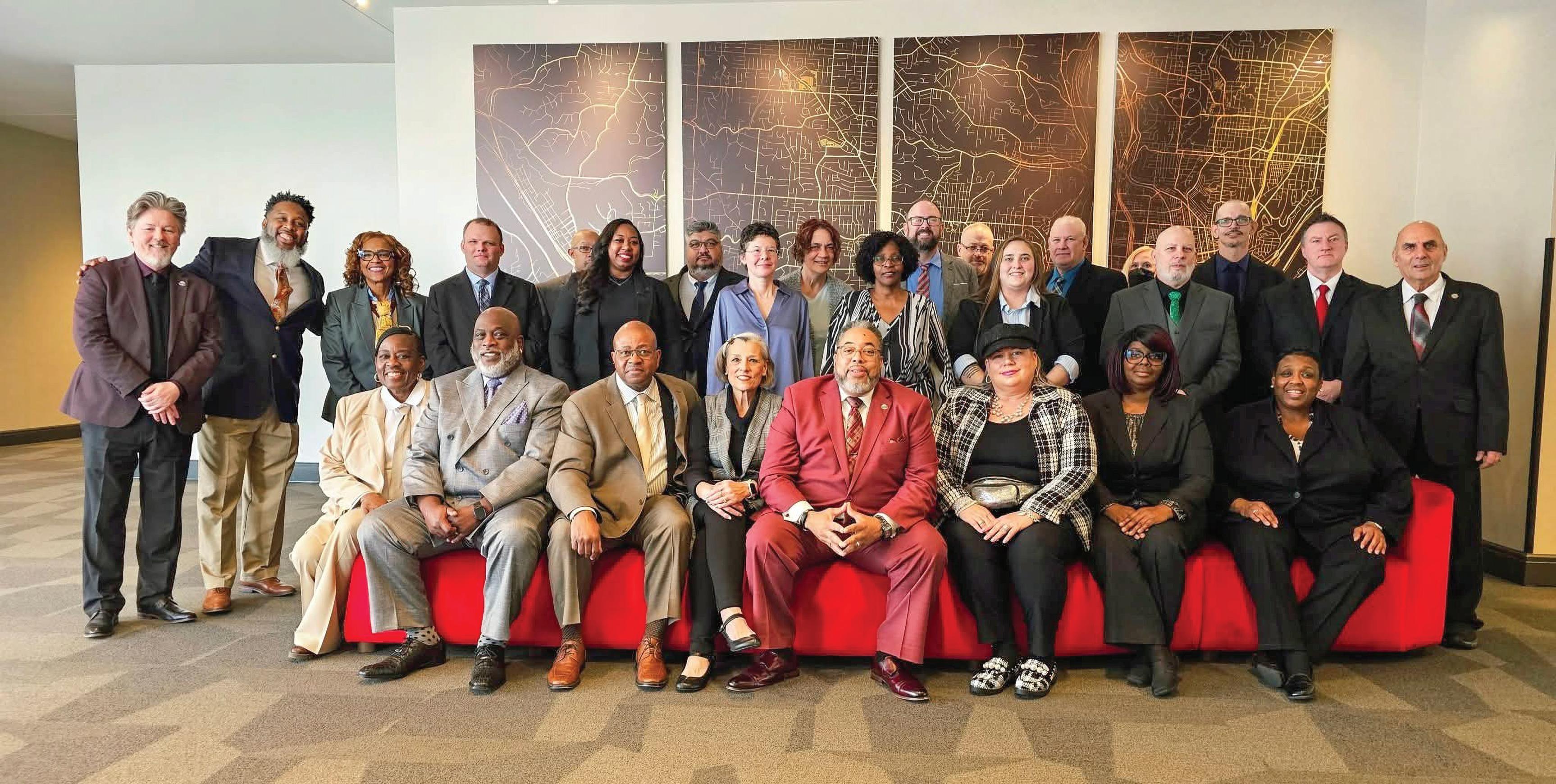
Local 304 held their Installation of Officers ceremony. National President Paul Hogrogian, Vice President Central Region June Harris and Vice President Eastern Region John Gibson were on hand to swear in the newly elected officers. From left to right standing up first: John Gibson, Eastern Region Vice President, Mike Roberts, Columbus, OH Branch President, Janet Jones, Lexington, KY Branch President, Donald Stump, South Bend, IN Branch President, Tim Jordan, Cincinnati, OH MPO Branch President, Brittany Williams, Indianapolis, IN Branch President, Jeff Cosaro, Akron,OH Branch President, Jesseca Tursich, Toledo, OH Branch President, Tracy McCombs, Youngstown, OH Branch President, Cynthia Starks, Gary, IN Branch President,
Phil Hubert, Mansfield, OH Branch President, Lee Branham, London, KY CAR, Tracy Moles, Muncie, IN Branch President, Dave Lucas, Canton, OH Branch President, Karen Knoerzer, Cincinnati,OH NDC Branch President, Jeramie Ott, Evansville, IN Branch President, Josh Lee, Kokomo, IN CAR, David Dowell, Louisville, KY Branch President, Paul Hogrogian, National President. L-R sitting, June Harris, Central Region Vice President, Otis Sturdivant, Cleveland, OH Branch President and Ohio State Rep., Darvis Wanton, Local 304 Recording Secretary, Maria Campoli, Indiana State Rep., Gregory Hill, Local 304 President, Conswela McLemore, Local 304 Vice President, Larlita Lipscomb, Kentucky State Rep. and Gloria Ward, Local 304 Treasurer
LOCAL 310
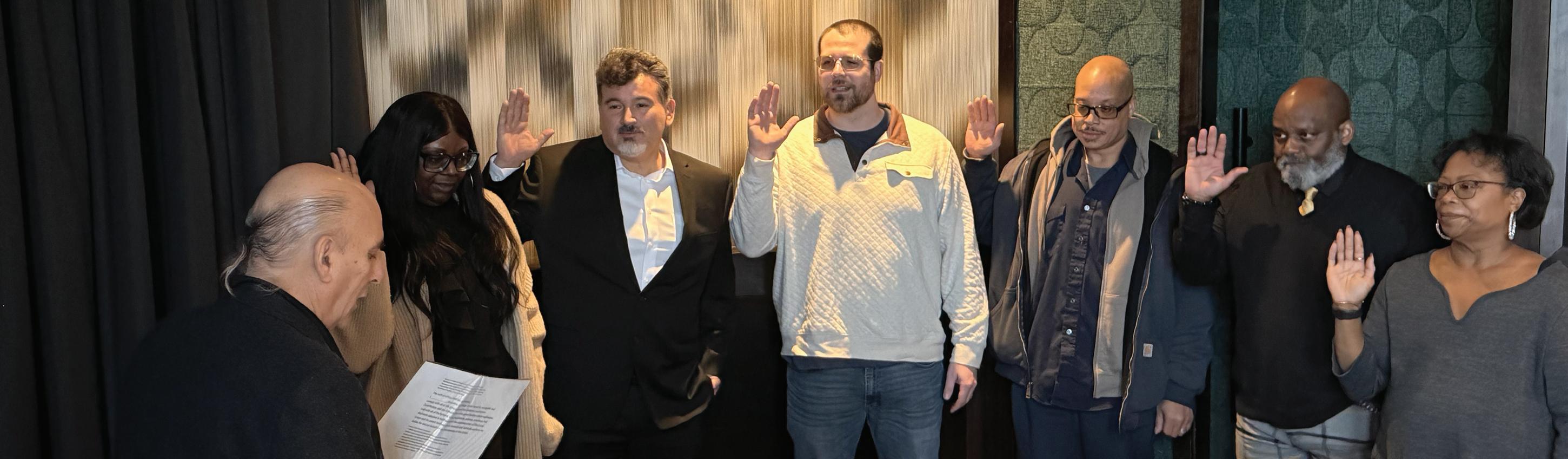
Members of Local 310 attended a function with US Senator Jon Ossoff (D-GA). Pictured (l-r) Local 310 Recording-Secretary Marvin Parker, US Senator Jon Ossoff (D-GA), Local 310 President Lisa Greer, and Local 310 Recording-Secretary Chawanda Parson.
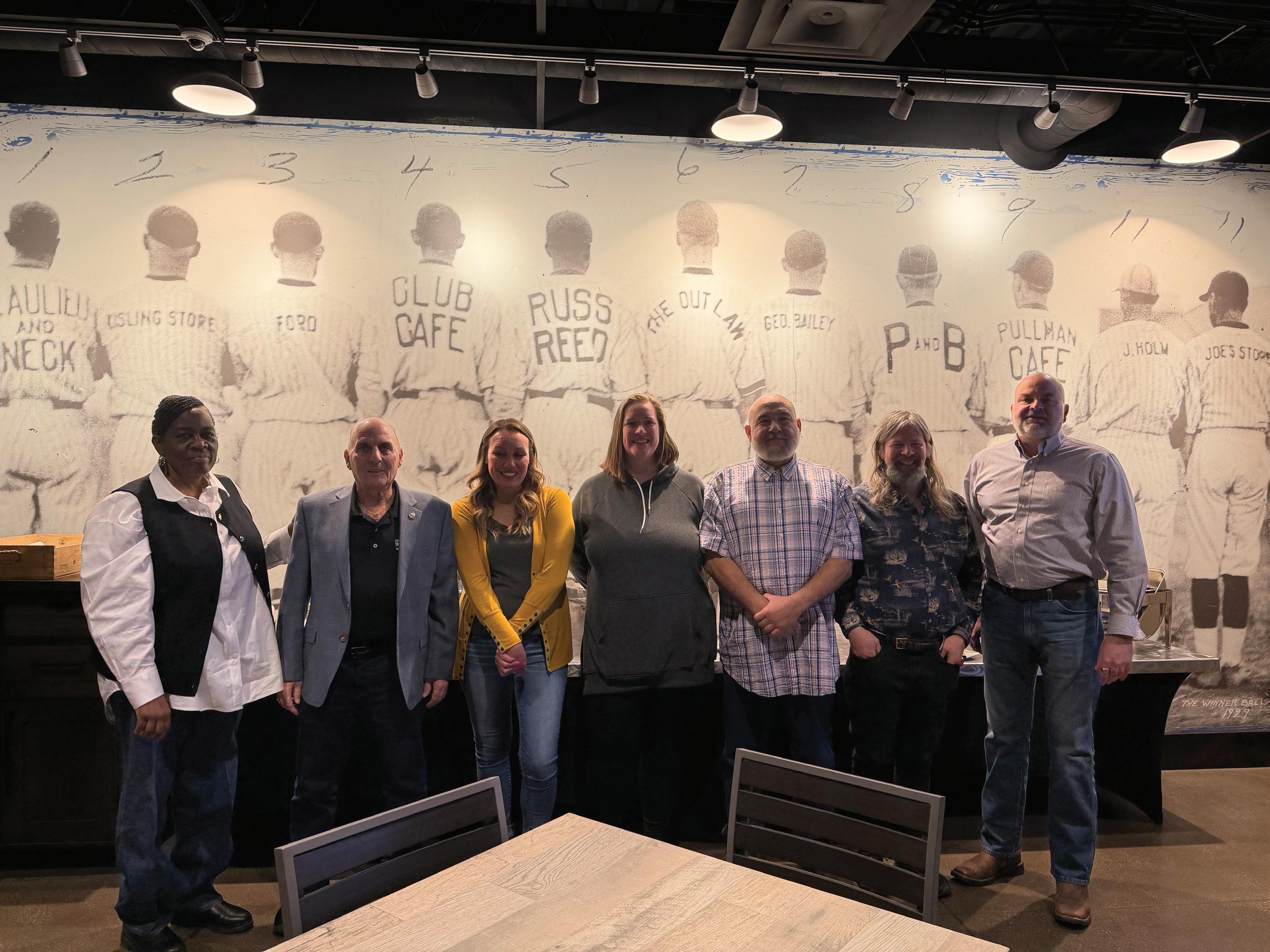
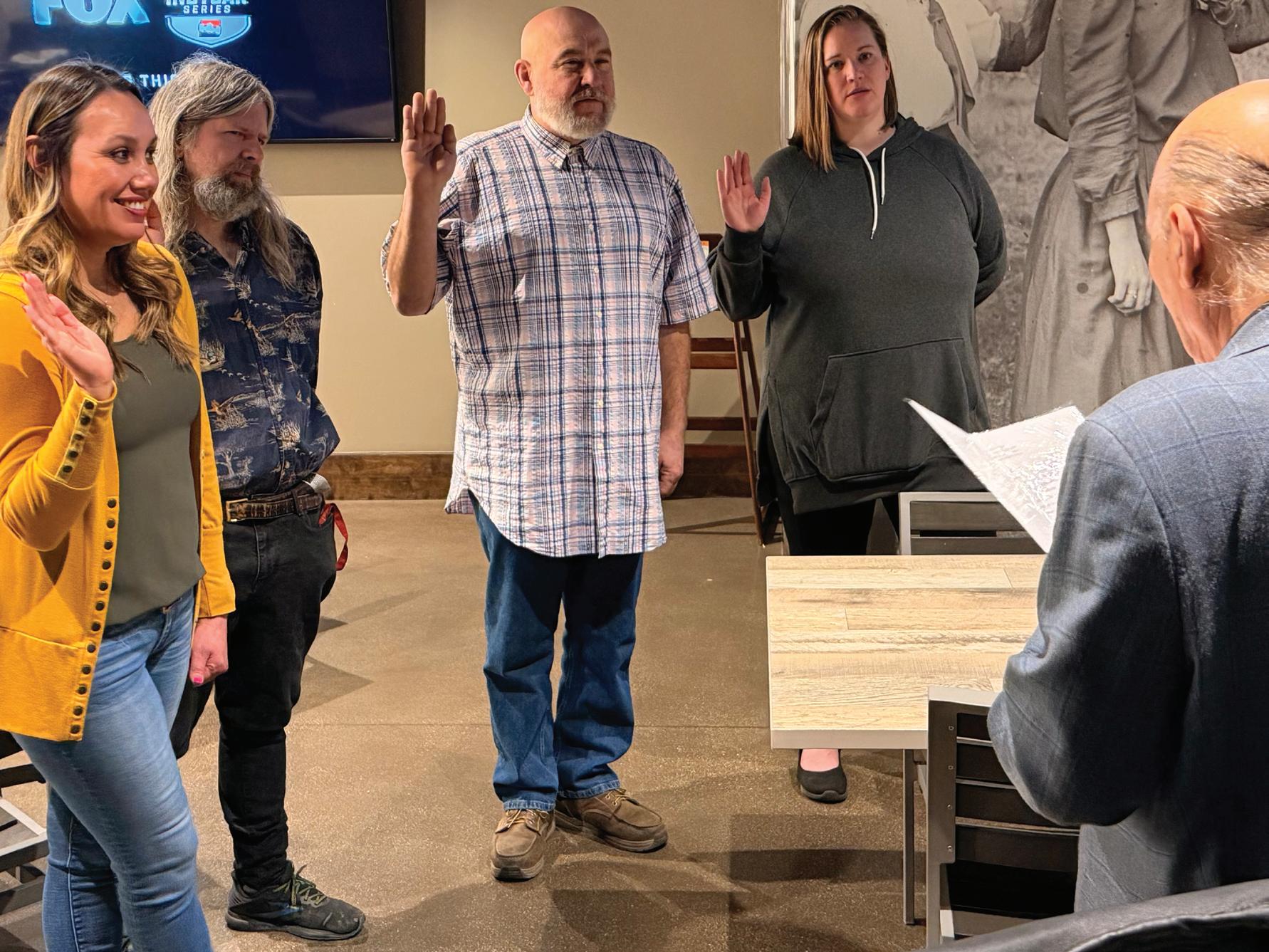
LOCAL 327
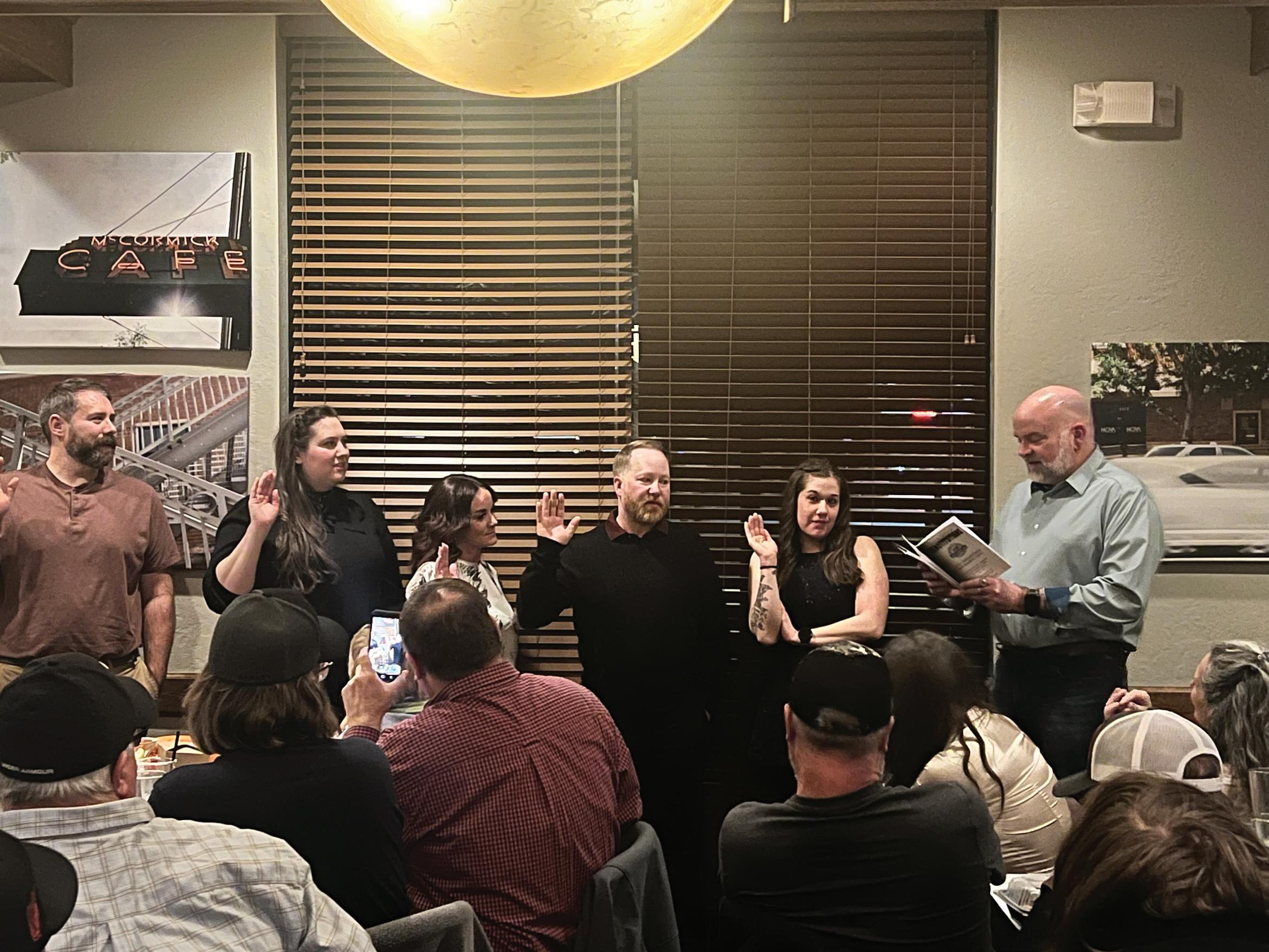
National Secretary-Treasurer
Kevin Tabarus traveled to the state of Montana to swear in the new Officers of Local 327.
Pictured (l-r) Local 327 SEBM Garrett Golubski, Local 327
President Alexandria Golubski, Local 327 Recording-Secretary Misty Mullenberg, Local 327
Treasurer Derek Mullenberg, Local 327 Vice President Sarah Moss, and National SecretaryTreasurer Kevin Tabarus.
Jason Kotschegarow and National Secretary Treasurer Kevin Tabarus.