

HANDLER

Go to the App Store or Google Play and search “NPMHU” to install and use at no charge


INSTALL THE FREE NPMHU MOBILE APP
FOR YOUR IPHONE OR ANDROID SMARTPHONE

We are pleased to provide this communication tool to all Mail Handlers. You can access the latest news, updates, events, and information of organizational importance. THE APP’S FEATURES INCLUDE:
+ Current NPMHU news with periodic push notifications of importance
+ Legislative and Political NPMHU Action Center
+ Q uadrennial Convention Information
+ N PMHU Women’s Committee
+ Current Wage Charts


Paul V. Hogrogian
National President
Kevin P. Tabarus
Secretary-Treasurer
June Harris
Vice President Central Region
John A. Gibson
Vice President Eastern Region
Daniel W. St. Marie
Vice President Northeastern Region
John (J.R.) Macon
Vice President Southern Region
Don J. Sneesby
Vice President Western Region
The Mail Handler, ISSN:1098-5689, is published quarterly by the National Postal Mail Handlers Union, 815 16th St, N.W. Suite 5100, Washington, DC 20006. Periodicals postage paid at Washington, D.C. and additional mailing offices.
POSTMASTER: Send address changes to The Mail Handler, 815 16th St, N.W. Suite 5100, Washington, DC 20006. Copyright 2025: National Postal Mail Handlers Union. All rights reserved. Reproduction without permission is prohibited. The Mail Handler is published for the members of our union. For additional copies please send $2.00 to: National Postal Mail Handlers Union—National Headquarters, 815 16th St, N.W. Suite 5100, Washington, DC 20006, (202) 833-9095.


“ELECTIONS HAVE CONSEQUENCES”
Paul V. Hogrogian, National President
Dear Members:
The old adage “Elections have Consequences” has once again been proven true as evidenced by the results of the 2024 Presidential and Congressional elections. The Republican Party now controls the White House, the Senate, House of Representatives, and the Supreme Court.
The new administration wasted little time in attacking the federal workforce by quickly issuing an Executive Order implementing a Federal Hiring Freeze, which halted any new federal hiring (Postal Hiring is not affected by this Executive Order). The new administration has also issued several other new Executive Orders which affected the federal workforce such as creating a Schedule F which exempted certain employees from adverse action procedures. Schedule F would essentially create at-will employees, thus making it easier to fire tens of thousands of federal employees. Another new Executive Order has rescinded a Biden Executive Order which promoted collective bargaining by federal agencies and protected union official time. President Trump has stated that he plans to fire over 1,000 officials appointed by his predecessor. Trump has also ordered the elimination of DEI (diversity, equity, and inclusion) programs throughout the federal government.
While these Executive Orders and policies affect the federal workforce, most will not have much effect on the Postal Service and its employees. However, the President and Members of both houses of Congress have indicated that they may soon turn their attention to the Postal Service and not in a good way.
During the first Trump Administration, President Trump, in addition to calling the Postal Service a “joke,” had on several occasions floated the idea of privatizing the Postal Service. While President Trump was not successful in carrying out his postal privatization plans during his first term, when recently asked about this, he responded that it was “not the worst idea I’ve heard.” President Trump has also created a Department of Government Efficiency (DOGE) led by billionaire Elon Musk which will make recommendations to reduce waste in the government. There are indications that postal privatization will be among its recommendations. The panel is also expected to recommend reducing

benefits (retirement and health benefits) for federal employees including postal employees.
In December committees in both houses of Congress which have jurisdiction over the Postal Service held hearings during which Postmaster General DeJoy testified. During the Senate hearing, then-Ranking Member Rand Paul criticized the Postal Service’s conversion of non-career employees to career status. Senator Paul also stated that he believed that the private sector was better equipped to provide postal services and called for the Postal Service to be privatized. During the House Committee hearing, Chairman James Comer, while not calling for the privatization of the Postal Service, suggested that the privatization of mail processing operations would be more appropriate. Postmaster General DeJoy, to his credit, pushed back against these ridiculous proposals. The privatization of the Postal Service is a very bad idea-bad for postal employees and bad for the American public.
The challenge we face over the next 4 years is to stop these plans. We cannot do this alone. Together with our sister postal unions (NALC, APWU, NRLCA), postal leadership (PMG), our allies in Congress, the AFL-CIO, and the American public, we will fight to protect the United States Postal Service from being sold to the highest bidder. “The US Mail is not for Sale.” * * *
The National Office has continued to prepare for the next round of contract negotiations. Our National Bargaining Agreement expires on September 20, 2025. Our contract establishes the wages, benefits and working conditions of the Mail Handler bargaining unit. Many factors will affect our negotiations, not all under our control. Our 3 sister postal unions (NALC, APWU, NRLCA) are in various stages of their bargaining process. Whatever happens during the negotiations of the other postal unions, good or bad, will have an effect on our negotiations.
Solicitation for contract proposals was sent to the field, and, in response, the membership submitted over 450 contract proposals. A bargaining strategy session was held on the third day of our Semi-Annual Meeting of Local Unions (SAMLU),
which took place in Houston, Texas on November 4–6, 2024. Our Field Negotiating Committee met in Washington during the week of February 3rd to review and discuss all the proposals that were received from the field. The Field Negotiating Committee will reconvene during the SAMLU in April to further discuss the submitted proposals.
The members of the Field Negotiating Committee were selected from large, small, and intermediate-sized locals and were reflective of the membership that we serve.
The members that I appointed to the Field Negotiating Committee are as follows:
1. Paul Hogrogian National President
2. Kevin Tabarus National Secretary-Treasurer
3. John Gibson Eastern Regional VP/President—Local 308
4. June Harris Central Regional VP/President—Local 306
5. Don Sneesby ................... Western Regional VP/President—Local 316
6. Dan St. Marie ............. Northeastern Regional VP/President—Local 301
7. John “JR” Macon ........... Southern Regional VP/President—Local 329
8. Marcenia “Yvette” Johnson ................... President—Local 300
9. Tony Coleman President—Local 302
10. Juan Torres President—Local 303
11. Greg Hill President—Local 304
12. Felandria Jackson President—Local 305
13. James Haggarty President—Local 307
14. Lisa Greer.................................................. President—Local 310
15. Charles Charleston .................................. President—Local 311
16. Nick Mosezar ............................................ President—Local 318
17. Kelly Dickey President—Local 322
18. Jeff Larsen President—Local 323
19. Todd Larson President—Local 328
20. Edvina Tesch President—Local 332
21. Sheldon Adams President—Local 334
22. Teresa Harmon Manager—CAD
23. Tom Ruther ................................................ CAD Representative
24. Eugene Horton .......................................... CAD Representative
25. Neil Ryan ................... CAD Representative/Asst to the National Officers
26. Matt Clash Drexler General Counsel
27. Joshua Segal Counsel
28. Annie Horowitz Paralegal
Our National Executive Board and our National Negotiations Team will analyze the submissions to prepare and present proposals at the bargaining table. Our bargaining kick-off with the Postal Service is scheduled for June of 2025.
Regular updates concerning the progress of the negotiations will be provided to the Local Unions and to the membership. * * *
The NPMHU and the USPS have reached an agreement on the terms of a One Time Retirement Incentive. The parties have agreed that the Postal Service will make lump sum incentive payments totaling $15,000 (less applicable taxes and deductions) to eligible full-time career employees who choose optional retirement or retirement pursuant to a Voluntary Early Retirement (VER). Part-time career employees shall be eligible for a prorated amount based on their paid hours. The January 13, 2025, Memorandum of Understanding (MOU) sets forth the terms of this agreement and is available at npmhu.org
To be eligible to retire under a Voluntary Early Retirement (VER), there are minimum age and service requirements. The requirements are:
• At least age 50 with at least 20 years of creditable Federal service OR
• Any age with at least 25 years creditable Federal service.
• An employee must have at least 5 years of creditable civilian service to be eligible for early voluntary retirement.
Employees must indicate their intention to participate in the incentive program on or before March 7, 2025 and retire effective April 30, 2025.
Although we are pleased to provide this opportunity to the membership, please be advised that the NPMHU neither encourages nor discourages anyone from taking this opportunity. Retirement is a very important and personal decision, and mail handlers should proceed very cautiously to evaluate what this offer means to them personally.
* * *
I remain confident that through the work of our Contract Administration Department and our legal representatives, and through the hard work of our Regional, Local, and Branch representatives, we can successfully meet all challenges that lie before us.
Fraternally,
Paul V. Hogrogian National President
SUCCESS AND FORESIGHT
Kevin P. Tabarus, National Secretary-Treasurer
We as a Union have had many instances of success. But we cannot just rest and admire our successful accomplishments. We must have the foresight to prepare ourselves for the future.
In August, we had a very successful 2024 NPMHU National Convention, with hundreds of delegates getting together to determine and pass amendments to our National Constitution and Uniform Local Union Constitution. Local Union Delegates also reviewed and passed several resolutions at the convention. These actions will determine how our Union is governed and administered. Changes to the Union’s rules and administrative policy cannot be modified until the next National Convention in 2028.
We have increased and plan to maintain our communication levels with Local Unions. When our local unions have more information, they are better able to keep you the member, informed. Local Unions meet two (2) times a year with the National Office. These Semi-Annual Meetings of Local Unions (SAMLUs) are very important. All thirty-six (36) Local Unions are invited to attend. All departments from the National Office provide reports to the Local Unions. Presentations are made by the National President, National Secretary-Treasurer, Legal Report from our General Counsel, Contract Administration (Grievance Department), Legislative/ Political, and Mail Handlers Health Benefit Plan (MHBP). All Local Unions are given the opportunity to provide feedback or ask questions on any issue. Our next scheduled SAMLU will occur in April of this year. In addition to SAMLUs, the National Office is in constant communication with Local Unions, providing information as it occurs.

phone. We have been providing more frequent ‘push notifications’ through our smartphone app. This technology allows us to communicate more effectively and efficiently with the membership when we have new news items.
The National Postal Mail Handlers Union continues its aggressive training programs. On March 4 th and 5 th of 2025, the NPMHU conducted its Financial Management Seminar. All Local Unions were invited to attend this comprehensive and informative seminar. The NPMHU Financial Standards and Practices were reviewed and discussed. Local Unions were trained on their obligations related to constitutional requirements, financial responsibilities, plus financial reporting for the Department of Labor and Internal Revenue Service.
Our health plan, the Mail Handlers Benefit Plan (MHBP) had a successful record-breaking Open Season for new enrollees. 18,000 new enrollees signed up with the MHBP. This is the best health plan out there, in my opinion. The MHBP uses Aetna’s large network of doctors. I have always found it easy to find the medical professionals that I need. Low-cost prescriptions with lower health plan premiums make MHBP the top plan for Postal and Federal Employees.
We will not be held back due to budgetary constraints. We have the financial ability to go as for as needed to attain a new National Agreement we can all be proud of.
The National Office also maintains and updates our website (www.npmhu.org) on a constant basis. We also have a smartphone application. Information can be found on page 2 of this magazine about how to download the app to your
Being enrolled in MHBP provides access to thousands of CVS Minute Clinics. I have used these clinics in the past, such as when I couldn’t get a quick appointment with my doctor. Every time I go, I have an amazing experience. I made an appointment online, for the same day. My wait time was only a minute. I guess that is where they got the name for the CVS Minute Clinic. By the time I was done with the exam, my prescription was there waiting for me. If you did not enroll in MHBP, be sure to check us out next Open Season.
This May, the NPMHU will hold its Legislative Conference in Washington, DC. All Local Unions have been invited to attend. Many Local Unions bring numerous attendees to

Lobby their Congressional Representatives on Capitol Hill. The timing of this Legislative Conference couldn’t come at a better time. There have been many attacks on the federal workforce from the new presidential administration.
As of this writing, no specific attacks have been focused on us. There has been much speculation of an imminent attack on the Postal Service due to one newspaper article in the Washington Post on February 20th. This reported that a Presidential Executive Order would be issued. The Executive Order would dissolve the independent USPS Board Of Governors (the leadership of the U.S. Postal Service) and absorb the Postal Service into the control of the Commerce Department. No such Executive Order has been signed, yet.
On February 17th, just a few days prior to the Washington Post report about the possible Executive Order, Postmaster General Louis DeJoy wrote a letter to the USPS Board Of Governors announcing that he plans to resign soon and they should seek his successor. Some speculate that this was not a coincidence.
Thankfully, we do have the foresight to be prepared for any sort of attack on the Postal Service and the terms of our collective bargaining agreement. The legal teams from all the other postal unions are meeting together periodically to discuss all the impending and potential issues and to plan for the worst. Rest assured that we are prepared for every scenario to fight back to protect what we have attained.
Our current National Agreement will expire in September. Contract negotiations will start in June. The membership will be provided with information throughout the bargaining process. Suggested changes to the current contract were solicited. The NPMHU Field Negotiating Committee met in February to review each and every suggestion. The committee has formulated plans to prepare us for collective bargaining.
We also have the foresight to be aware of the added expenses related to collective bargaining for our new 2025 National Agreement and to respond to any attacks on the Postal Service. While we hope to reach a tentative agreement with the Postal Service, we do have the financial resources to go to mediation and, if necessary, arbitration. And while we hope there will be no attack on the Postal Service by the new administration, we have the financial resources to respond to those attacks as well. The finalized 2023 National Financial Statement on the following page shows that our assets increased from the previous year. We will not be held back due to budgetary constraints. We have the financial ability to go as for as needed to attain a new National Agreement we can all be proud of.
Fraternally, Kevin P. Tabarus National Secretary-Treasurer
ASSETS
NATIONAL POSTAL MAIL HANDLERS UNION
A DIVISION OF LABORERS’ INTERNATIONAL UNION OF NORTH AMERICA, AFL-CIO DECEMBER 31, 2023 AND 2022
STATEMENTS OF ACTIVITIES
20232022
LIABILITIES
NATIONAL OFFICERS ACROSS THE COUNTRY

NPMHU National Officers attend signing of the Social Security Fairness Act


National President Paul Hogrogian, President of the United States Joseph Biden, and National Secretary-Treasurer Kevin P. Tabarus.
National Secretary-Treasurer
Kevin P. Tabarus, Former Senator (D-OH) Sherrod Brown, and National President Paul Hogrogian

Financial Management Seminar
The National Office held a comprehensive Financial Management Seminar at LiUNA Headquarters in Washington, DC from March 4–5, 2025. The Financial Management Seminar is conducted every three years. The two-day training sessions include presentations and group discussions on a wide variety of topics related to financial administration at the Local Union level. Topics included were the National and Local Constitutional fiduciary duties and responsibilities of the Local President, Treasurer and Executive Board Members; Internal Revenue Service and Department of Labor reporting requirements; budgeting; financial statements; records management;annual audits; payroll; and more.
The following trainers contributed to the success of the Financial Management Seminar; National Secretary-Treasurer Kevin Tabarus, General Counsel Matt Clash-Drexler, Comptroller Keanna Whitlock, Manager of Membership Services Rachelle Clark, MHBP Executive Director Nina Gallauresi, Legislative & Political Director Katie Maddocks, Manager of IT/ Special Projects Noah Giebel, Executive Assistant to the National Officers Ponise Shields and Certified Public Accountants Scott Price and Ashleigh Scott.
National President Paul Hogrogian and LiUNA General Secretary-Treasurer Michael Sabitoni also addressed the attendees.
Thanks to the sixty-eight attendees to the Financial Management Seminar.


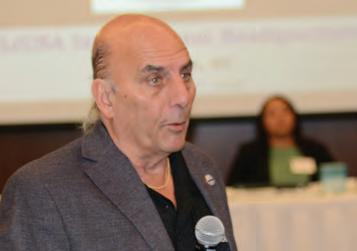


MAIL HANDLERS FACE ATTACKS FROM CONGRESSIONAL RHETORIC
Katie Maddocks, Legislative and Political Director
The new year started with a legislative victory for the National Postal Mail Handlers Union, but then quickly pivoted to vigorous defensive measures to protect the United States Postal Service, and Mail Handler jobs and benefits.
On January 5, 2025, then-President Biden signed the Social Security Fairness Act into public law, P.L. 118-273 This has been a legislative priority for the Mail Handlers for several decades and through a groundswell of grassroot support of those impacted at the federal and state level, legislation was able to pass in the U.S. House of Representatives by a vote of 327–75 and in the U.S. Senate by a vote of 76–20. The law now allows Mail Handlers and others in the public sector to access their full Social Security benefits, ensuring their spouses and dependents will have financial stability in retirement.
This legislative win was quickly overshadowed by threats on Mail Handlers’ retirement benefits as a means of national deficit reduction. In developing a federal budget plan for the next ten years, the House Budget Committee circulated a proposals that would impact current and future postal employees. Among the Budget Committee’s recommendations were previous proposals the Mail Handlers Union successfully fought against. These included eliminating the Federal Employee Retirement System (FERS) Supplement for those who retire before they are eligible for Social Security benefits; calculating FERS annuities with the average of the highest basic pay over five consecutive years, instead of the current three consecutive years; and, eliminating official time unless unions compensate the federal government. New proposals included: requiring all FERS-enrolled employees to contribute 4.4 percent of their pay to their benefits regardless of when they were hired; make newly hired employees choose between being at-will

and having a lower FERS contribution plan; charge a fee for employees who appeal adverse actions to the Merit System Protection Board; convert the Postal Service Health Benefit Plan to a premium-share voucher model.
These proposals would produce an estimated savings of $81.1 billion over ten years, but this does not take into account the contributions to deficit reduction the postal and federal workforces have already made. Since 2011, those who work across the federal government have contributed over $300 billion in savings. Additionally, these proposals fail to acknowledge that those who work for the federal government are mostly in the middle-class, often living paycheck to paycheck. Make no mistake, these proposed changes to FERS benefits will directly result in lowered pay. This means
Further adding to uncertainty for Mail Handlers was the rumor of an Executive Order (EO), in which President Trump would have eliminated the USPS Board of Governors and the Postal Regulatory Commission; move USPS under the Department of Commerce; and privatize certain aspects of the Postal Service — most likely mail handler jobs.
it would be more difficult for Mail Handlers to keep up with the price of inflation on everyday items. Additionally, it undermines the bargaining rights and the power of the union movement. We have seen firsthand the power in unionizing — through increased worker pay, workplace protections, and the appeals process. These savings are accomplished on the backs of workers. The National Postal Mail Handlers Union lobbied Congress, expressing concern on these cuts and will continue to do so as the federal budget process moves forward.
Further adding to uncertainty for Mail Handlers was the rumor of an Executive Order (EO), in which President Trump
would have eliminated the USPS Board of Governors and the Postal Regulatory Commission; move USPS under the Department of Commerce; and privatize certain aspects of the Postal Service — most likely mail handler jobs. After The Washington Post reported President Trump was considering signing this EO, NPMHU National President Hogrogian issued a statement, which included, “The Postal Service, through the work of its 640,000 employees, is responsible for ensuring that every American receives packages and mail ranging from Social Security checks, necessary medications, government correspondence, packages, and mail from loved ones. The Postal Service is an institution that is ingrained in our Constitution and older than the United States of America itself.” While the EO did not come to fruition, NPMHU remains vigilant on this existential threat and how it could impact our members and postal customers.
added, “Many federal workers — like postal employees — got their start in ‘non-career’ roles that do not count towards their retirement benefits. It’s long past time that we address this unfair loophole. Amidst growing uncertainty facing the federal workforce, I’m proud to introduce this legislation and ensure that all federal workers receive the full benefits they have earned.”
To help with this messaging, the NPMHU is hosting its Legislative Conference this May in Washington, DC. This will be an opportunity for Mail Handlers to learn our Union’s legislative agenda for the 119th Congress, as well as pointers on how to effectively lobby their elected officials in order to effectively make change on Capitol Hill.
Helping to protect the Postal Service from the threat of privatization, members of the House of Representatives introduced a resolution calling to protect the USPS. H. Res. 70, as introduced by Representatives Steve Lynch (D-MA08), Nick Lalota (R-NY-01), Andrew Garbarino (R-NY-02), and Gerry Connolly (D-VA-11), expresses the sense of the House the Postal Service should remain a public entity and not be subject to privatization. Commenting on the threat of privatization, Rep. Connolly stated, “Privatizing the Postal Service is an attack on Americans’ access to critical information, benefits, and life-saving medical care.”
It’s not all doom and gloom on Capitol Hill. Legislators introduced bills that would secure benefits for mail handlers and other employees throughout the federal government.
The Federal Retirement Fairness Act, H.R. 1522, would allow Mail Handlers hired as an MHA after 1989 to make additional contributions to their FERS benefits to make up for the time they worked but weren’t earning the benefits because of their part-time status. Reps. Gerry Connolly, David Valadao (R-CA-22), Nikki Budzinski (D-IL-13), and Don Bacon (R-NE-02) introduced the bill on February 24. Upon its introduction, Rep. Valadao commented, “For too long, federal employees who started their careers in temporary positions have been unfairly penalized when it comes to their retirement benefits. The Federal Retirement Fairness Act is a common sense, bipartisan solution to ensure our hardworking public servants can retire on schedule.” Rep. Budzinski
Shortly before publication, the House and Senate introduced the Protecting the Right to Organize (PRO) Act. The PRO Act strengthens current federal laws by allowing private-sector workers to organize and join a union and bargain for better wages and benefits. The bill passed in the House during the 117th Congress, after which bill sponsor Representative Bobby Scott (D-VA-03) commented, “Labor unions are essential to rebuilding America’s middle class and improving the lives of workers and their families. Unfortunately, over the past 70 years, union membership has dropped to the lowest level since just after the National Labor Relations Act (NLRA) was first enacted…. It is plainly obvious that the NLRA is too weak to defend workers’ rights against intensifying anti-union attacks from wealthy special interests.”
While members of Congress are hearing from the NPMHU national office, they also need to hear from their constituents on how these issues impact them back home. To help with this messaging, the NPMHU is hosting its Legislative Conference this May in Washington, DC. This will be an opportunity for Mail Handlers to learn our Union’s legislative agenda for the 119th Congress, as well as pointers on how to effectively lobby their elected officials in order to effectively make change on Capitol Hill.
As the Mail Handlers Union continue to see threats against our jobs, our union, and the services we provide, we will fight for our members and educate elected officials on the need for a public Postal Service while protecting postal employees’ earned benefits.
2025 PAC INCENTIVE AWARDS


2025 PAC INCENTIVE AWARDS LEVEL DONATION AWARD
Member
Sponsor
Activist
Leader
Ambassador
Super Ambassador
$26 ($1 per pay period)
$52 ($2 per pay period)
$100
$250
$500
$1o00
PAC Pin
PAC Maglite Keychain
PAC Polo
PAC Large Sling Bag
PAC Rock Glasses & Coasters
All Incentive Gifts

YOU TOO CAN BECOME AN NPMHU POLITICAL ACTIVIST
There is a quick way for Mail Handlers to contribute to the NPMHU PAC. Simply call in to the PostalEASE system, or visit the PostalEASE option on the web at www.liteblue.usps.gov Follow the instructions printed on pages 15 and 16 of this magazine. Your PAC contribution will be made directly from your bi-weekly postal payroll. You also have the option of sending in a personal check or authorizing a credit card contribution. Your contributions will also be entered in to the incentive award program that entitles you to an award based on your contribution level. There are six distinct PAC membership levels and awards. Awards are distributed based on membership level and will be mailed after the end of the year; awards will vary year to year.

NOTICE CONCERNING CONTRIBUTIONS:
Contributions to the Mail Handlers PAC are not deductible as charitable contributions for purposes of federal income taxes. In addition, federal law requires that the Mail Handlers PAC report to the Federal Election Commission the name, mailing address, occupation, and name of employer for each individual whose contributions in any calendar year total in excess of $200. Please also note that the Mail Handlers PAC has political purposes, and that all members have the right to refuse to contribute, and the right to revoke their authorization for any continuing contributions, without any reprisal.
PAC CONTRIBUTION BY PERSONAL CHECK, MONEY ORDER, OR CREDIT CARD:
You can contribute directly to the Mail Handlers PAC by filling out the following information and mailing it to:
Mail Handler PAC
P.O. Box 65171
Washington DC 20035
Please enclose your check or money order, or provide authorization to charge your credit card.
(Cut here and return to NPMHU PAC)
YOUR CONTRIBUTION HELPS PRESERVE POSTAL JOBS
This is to certify that I, _________________________________________________________, have voluntarily contributed the amount listed below, to the NPMHU PAC. I understand that this voluntary contribution is not a condition of membership in the union; I have the right to refuse to contribute without any reprisal; if specific contribution amounts are mentioned they are merely suggestions and I am free to contribute more or less; the Union will not favor or disadvantage me because of the amount of my contribution or my decision not to contribute; NPMHU PAC will use the money it receives to make Political expenditures and contributions in connection with federal elections; and only U.S. Citizens and lawful permanent U.S. residents are eligible to contribute.
Employer (if other than USPS)
Contribution Amount: (Please check one):
$26 (Member) $52 (Sponsor) $100 (Activist) $250 (Leader) $500 (Ambassador)
$1000 (Super Ambassador) Other
Please enclose your check or money order, or authorization to charge your credit card.
Contributions to the NPMHU PAC are not deductible as charitable contributions for federal income purposes.
PostalEASE by TELEPHONE:
1. Dial 1-877-4PS-EASE—(877-477-3273) and follow the prompt for the Employee Services Main Menu.
2. When prompted, press #1 for PostalEASE
3. When prompted, enter your eight-digit USPS employee identification number.
4. When prompted again, enter your USPS PIN number. (This is the same as the PIN number you use for telephone bidding and/or other payroll allotments.)
5. When prompted, choose option #2 (to select payroll allotments)
6. Then choose option #1 (to select allotments)
7. When prompted, press #2 to continue
8. When prompted, press #3 to add the allotment
9. When prompted for the routing number, enter 054001220
10. When prompted for the account number, enter the following: 11260001 __ __ __—__ __—__ __ __ __ (the last nine digits of your account number is your social security number—this information will allow us to identify you as the PAC contributor).
11. Press #1 if correct
12. When prompted, press #1 for “checking”
13. When prompted, input the bi-weekly dollar amount of your PAC allotment.
14. Press #1 if correct
15. When prompted, press #1 to process
16. You will be provided a confirmation number as well as the start date for the salary allotment.
17. For your records:
· Record the confirmation number
· Record the start date of the salary allotment
18. Press #1 to repeat, or press #9 to end call
PostalEASE on the WEB:
To initiate your bi-weekly PAC contribution on the web, simply go to www.liteblue.usps.gov
1. Enter your eight-digit USPS Employee ID Number and your USPS PIN
2. Follow the link to PostalEASE— you will again be asked to enter your Employee ID Number and USPS PIN
3. Follow the link for PAYROLL – Allotments/NTB
4. Continue to the ALLOTMENTS section
5. Your ROUTING TRANSIT NUMBER is: 054001220
6. Your ACCOUNT # will be: 11260001 __ __ __—__ __ —__ __ __ __ (the last nine digits of your account number is your social security number—this information will allow us to identify you as the PAC contributor).
7. For ACCOUNT TYPE— please select “CHECKING”
8. When prompted, please input the AMOUNT that you would like to contribute to the PAC each pay period.
9. To process your PAC allotment, you will need to select the VALIDATE button, and to finalize the transaction, please select SUBMIT. Be sure to print out a copy of the confirmation page for your records.
NPMHU PAC
2024 CONTRIBUTORS
The National Postal Mail Handlers Union Political Action Committee (NPMHU PAC) contributes to campaigns of candidates for and incumbents of Congress who repeatedly demonstrate “concern for working people and for [the] aims and objectives of the NPMHU and the entire trade union movement.”
The PAC is non-partisan in its operations, and, by federal law, is financed completely through voluntary contributions from members and groups who subscribe to the objectives of the Mail Handlers PAC. Your Union needs your active involvement in contributing to the Political Action Committee to assist candidates who will work to protect the wages and benefits of all Mail Handlers. Our PAC membership is small but growing larger. Below is a list of the 2024 contributors to the NPMHU Political Action Committee. It is an honor roll of members who have contributed to the growing political power of your Union.
PAC CONTRIBUTIONS FOR 2024
MEMBERSHIP LEVEL: SUPER AMBASSADOR (contributed at least $1000 last year)
300 Phillip Hester
301 Phillip Alvarado
301 Jason Demonico
301 Steven Drozd
301 Diane Libby
301 Patrick O’Rourke
301 Marc Sola
301 Daniel St. Marie
301 Scott Surette
301 Sean Sweeney
302 Anthony Coleman
303 Gary Doss
305 Felandria Jackson
306 June Harris
307 Derek Douglass
308 John Gibson
308 Michael Rembelinsky
309 Lisa Pruchnicki
309 David Wilkin
310 Chawanda Parson
329 Samuel Hudson
329 John (JR) Macon
333 Monica Marshall
Nat’l StaffPaul Hogrogian
Nat’l StaffKevin Tabarus
Nat’l StaffAndy Badilishamwalimu
Nat’l StaffPatrick Donovan
Nat’l StaffKatie Maddocks
Nat’l StaffThomas Ruther
308
308
309
309
310
NATIONAL NEGOTIATIONS
Teresa Harmon, Manager, CAD
With our National Agreement expiring later this year, the National Office has begun preparing for the upcoming round of bargaining. Since many of you are not familiar with the actual bargaining process, I have decided to write this month’s article on how this process works.
The framework for collective bargaining between the U.S. Postal Service and the NPMHU is governed by the Postal Reorganization Act (PRA) of 1970. Bargaining begins when one party to the contract serves a written notice to the other of its intent to modify the current agreement. Under Article 39 of our National Agreement, this notice must be served “not less than 90 or more than 120 days before the expiration date of the Agreement”. Our National Agreement is set to expire on September 20, 2025.
Bargaining
However, the preparation process begins many months before official bargaining starts. The first step is an official call for submission of bargaining proposals from all mail handlers and all Local Unions around the country. President Hogrogian issued this official call on September 9, 2024, which requested the submission of all proposals by January 31, 2025. In response, a total of 458 proposals were submitted to the National Office as suggestions for changes in the National Agreement.

From this time until bargaining officially begins, the National Negotiating Team will meet numerous times to finalize the preparations of the proposals that will be submitted to the Postal Service as well as researching the issues, gathering documentation to support why a change is needed, etc. These internal meetings will continue throughout the bargaining process.
will officially begin on June 25, 2025.
Negotiations will consist of Main Table meetings and Subcommittee meetings. The Main Table meetings are on-the-record meetings during which the parties exchange their official proposals.
Once proposals from the field are received, they are reviewed by the Field Negotiating Committee which is comprised of the National President, National Treasurer/Secretary, National Executive Board members, 14 Local Presidents, CAD staff and the Union’s legal team. During the first week of February, they reviewed each of the proposals that had been submitted and had in depth discussion on which of these should be proposed by the NPMHU in the upcoming round of bargaining.
Bargaining will officially begin on June 25, 2025. Negotiations will consist of Main Table meetings and Subcommittee meetings. The Main Table meetings are on-the-record meetings during which the parties exchange their official proposals. Both parties will bring submissions to the table. Main Table meetings continue during the course of the negotiation period with discussions to explain why the proposal is needed, answer any questions for the other party, the exchange of any documentation that supports the need for the change as well as counter proposals. Subcommittee meetings are not considered on the record. These meetings focus on particular portions of the National Agreement and provide an opportunity for the parties to engage in deeper discussions of the proposals. In the 2022 negotiations, there were subcommittees for Article 7 (Employee Classifications), 8 (Overtime), 11 (Holidays), 12 (Principles of Seniority, posting and Reassignments, 32 (Subcontracting), MHAs and Memoranda of Understanding and Letters of Intent (MOUs and LOIs).
If the bargaining results in a tentative agreement between the parties, that agreement is subject to a ratification vote by the NPMHU membership. As required by the NPMHU National Constitution, the vote would be by secret mail ballot.
If the parties fail to reach a tentative agreement, either because the parties did not reach agreement or because any agreement was not ratified by the membership, the PRA has a dictated procedure that must be followed unless
the parties have mutually agreed to a dispute resolution procedure themselves.
The PRA procedure contains several steps. First, the Federal Mediation and Conciliation Service (FMCS) would establish a three-person fact finding panel. Two of the members would be selected by the parties from a list of 15 names given to them by the FMCS. The third person would be selected by the other two, or if they cannot agree, by the Director of the FMCS. The fact-finding panel would have 45 days in which to investigate the bargaining dispute and issue a report of its findings.
an arbitration board within 90 days of the contract expiration. This board normally consists of three members — one appointed by the Union, one appointed by the Postal Services and a third neutral member. The neutral member is appointed either by agreement of the two other members or, if they cannot agree, by the Director of the FMCS.
Once bargaining starts, the National office will be sending out regular updates on its progress.
After the arbitration board is selected, it holds hearings in which both parties are given the chance to present testimony and evidence. The board is required to make a decision within 45 days after its appointment. This arbitration decision is binding on both parties.
If an agreement still cannot be reached by the parties after the fact finding, the PRA requires the establishment of
Once bargaining starts, the National office will be sending out regular updates on its progress.

SORTING AND DELIVERY CENTERS
TOM RUTHER, NATIONAL CAD REPRESENTATIVE

With the Postmaster General’s Delivering for America plan, the USPS created several new facilities, from Regional Processing Distribution Centers (RPDC’s) to Local Processing Centers (LPC’s) and the Sorting and Delivery Centers (S&DC’s). Each has different functions with the S&DC’s being the final leg of the mail process, the carrier station. As the name suggests, the Carrier Station is the facility where carriers prepare for the delivery of the mail and parcels. The S&DC’s are either former carrier stations that are modernized with new machinery and cleaner aesthetics or the result of a consolidation of several carrier stations into one larger facility in some cases utilizing former Processing and Distribution Centers that are no longer active. The S&DC’s include anywhere from 20 carrier routes to some well over 300 routes. The USPS is planning on creating more than 900 S&DC’s over the next ten years, with over 100 already operating.
Many of the operations in the S&DC’s should be performed by Mail Handlers. Previous determinations made through the RI-399 process make this clear, including unloading and loading trucks, processing empty equipment, the use of power equipment, and the spreading of the mail to the carriers. In addition, all S&DC’s will have either the Automated Deliver Unit Sorter (ADUS) or the Small Deliver Unit Sorter (SDUS) installed. The national jurisdictional determination on both of these machines have work assigned to the Mail Handler craft. One of the other functions of the new S&DC will be acting as a transfer hub, which is a cross-dock operation to sort mail going to and from carrier stations that are not consolidated into the S&DC, again work assigned to the Mail Handler craft.
Many often ask why there aren’t Mail Handlers in all of the current carrier stations if the work was assigned our craft.

The reason for this is that the RI-399 process contains a “Four Hours” rule, meaning that there must be 4 hours or more of continuous work in one or more operations designated to the primary craft for the work to be assigned to that craft. In many of the smaller Associated Offices (or carrier stations) there wasn’t sufficient work — that is, there wasn’t four or more hours of continuous Mail Handler work — to demonstrate the need for a Mail Handler. By contrast, we have been able to demonstrate 4 hours or more of continuous work in the larger offices, and, as a result, Mail Handlers have been staffed in those facilities for decades.
The NPMHU has been working with the Local Presidents to make sure our craft is assigned the work in these new S&DC buildings. In 2023. National President Paul Hogrogian created the S&DC Task Force, whose members are John Gibson Eastern Regional VP Local 308 President, Kelly Dickey Local 322 President, Nick Mosezar Local 318 President, Teresa Harmon Manager of Contract Administration and myself. The Task Force has had several meetings to discuss processes to ensure that when a new or consolidated S&DC is opened, Mail Handlers at the local level have the tools and the support to fight for our work. We have also done trainings at both the local and national level on these issues.
These efforts have been successful, as we have demonstrated that work at many S&DCs should be done by Mail Handlers. The APWU has, and will continue, to push back on our efforts, claiming that this work is Clerk work based on a false belief that all work in a station should be performed solely by their craft. This battle has been at every level of the RI-399 process, from the local level to the regional level and finally at the national level. The NPMHU will not back down and will continue to push for all work to be properly assigned to the Mail handler craft.
INTERNATIONAL WOMEN’S DAY
June Harris, Central Region Vice President, Local 306 President, Women’s Committee Chairperson
March 8 is International Women’s Day, which is a day that not only celebrates the achievements of women, and the progress made toward women’s rights, but also brings attention to ongoing struggles for equality around the world. This year’s theme is Accelerate Action. It is a worldwide call to acknowledge strategies, resources, and activity that positively impact women’s advancement, and to support and elevate their implementation.
At the current rate of progress, it will take until 2158, which is roughly five generations from now, to reach full gender parity, according to data from the World Economic Forum. Focusing on the need to Accelerate Action emphasizes the importance of taking swift and decisive steps to achieve gender equality. It calls for increased momentum and urgency in addressing the systemic barriers and biases that women face, both in personal and professional spheres.
With the current drive to reduce or eliminate Diversity, Equity, and Inclusion (DEI) programs, we have to look at how DEI programs benefit everyone, not just women. Diversity refers to the representation of all individuals, regardless of sex, gender, race, sexual orientation, ethnicity, country of origin, class or religious beliefs. Equity means the fair treatment of all individuals and equal access to opportunities and resources. Inclusion means a sense of belonging in an environment where all feel welcomed, accepted, and respected.
According to International Women’s Day, this year’s theme emphasizes the urgency of making faster, more effective strides toward gender equality because of the following:
1. PROGRESS IS TOO SLOW
To “Accelerate Action” means to move beyond ineffective practice and implement meaningful changes for bold, decisive action that positively impacts gender equality.
2. ADDRESSING GLOBAL SETBACKS
In recent years, events like the COVID-19 pandemic disproportionately affected women. “Accelerate Action” signals that urgent and coordinated measures are necessary to recover lost ground and ensure women are not left behind in the post-pandemic recovery.

3. INSPIRING MOMENTUM FOR CHANGE
The campaign focus encourages activism and engagement at all levels to motivate individuals, governments, and organizations to take concrete steps toward gender equality. It empowers those who are already working toward gender justice and calls on those who have been passive to join the movement.
4. TACKLING STRUCTURAL INEQUALITIES
“Accelerate Action” pushes for the dismantling of systemic barriers that perpetuate inequality, such as unequal pay, limited access to education, and under-representation in leadership. It encourages reforms in institutions and policies, creating a sense of urgency around addressing deep-rooted biases and outdated systems.
5. FOCUS ON IMPACTFUL SOLUTIONS
The theme calls for moving from awareness to action, focusing on measurable outcomes and long-term solutions rather than short-term, superficial changes.
6. INCLUSIVITY AND INTERSECTIONALITY
Accelerating action means recognizing that gender inequality affects different women in different ways—whether due to race, ethnicity, disability, socioeconomic status or further aspects.
7. A TIMELY CALL FOR ACCOUNTABILITY
The campaign focus serves as a powerful reminder that time is running out to meet global gender priorities. “Accelerate Action” holds institutions accountable, urging them to deliver on their commitments with greater speed and efficiency.
In essence, “Accelerate Action” is a call for urgency, inclusion, and transformative change. It signals that equality cannot wait, and that all sectors of society must work together to quicken the pace of progress for women’s rights and empowerment.

SERIOUS HEALTH CONDITIONS— FROM A LOVING PARENT OF A SICKLE CELL ANEMIA SURVIVOR
JOHN (JR) MACON, SOUTHERN REGION VICE PRESIDENT, LOCAL 329 PRESIDENT

Afew months ago, my daughter suffered a major sickle cell pain crisis which led to other serious complications. She was hospitalized for more than two months and continues to receive professional therapy. Through the prayers of many, a great team of physicians, nurses, technicians and most importantly through the grace of God, she is a survivor!
Through this crisis and her recovery, she has been cared for by family, friends and an outside team of quality physicians and dedicated professional therapists. It takes a loving and caring village.
Research has determined that the disease of Sickle Cell is not by happenstance. It does not suddenly appear, and it does not occur by living an unhealthy lifestyle. Sickle cell disease is one of a group of inherited disorders.
Her mother and I both have the trait but never had symptoms. It was a shock to be called into the doctor’s office to be informed that your beautiful baby has an incurable disease, not through her own making.
Through this crisis, we have become aware that sickle cell disease affects millions of people worldwide. It is particularly common among those whose ancestors came from parts of the world where malaria is or was common: Sub-Saharan Africa; Spanish speaking regions of {South America, the Caribbean and Central America); Saudi Arabia, India and the Mediterranean countries of Turkey, Greece, and Italy.
Sickle cell disease in the United States affects approximately 100,000 people. More than 90% of people with Sickle Cell Disease are non-Hispanic Black or African American {Black), and an estimated 3% - 9% are Hispanic or Latino. With about 1 in 13 Black or African American babies is born with sickle cell trait (inherited from a single cell gene from only one parent).
DO YOU KNOW OR WORK WITH SOMEONE THAT HAS ONE OF THESE MEDICAL CONDITIONS?
Sickle cell anemia is a genetic disorder. An inherited medical condition caused by a DNA abnormality. Other common types are: Down syndrome, Cystic fibrosis, Huntington’s disease, Duchenne muscular dystrophy, Hemophilia, Thalassemia and Fragile X syndrome. Genetics also play a significant role in the development of Type 1 Diabetes with a higher risk based on family history. Type 2 diabetes is the most common, accounting for approximately 90% of the cases caused by a combination of genetic and lifestyle factors, such as diet and exercise, which are controllable.
The need for leave due to Sickle Cell and other diseases that may be chronic or long term is protected under the Family Medical Leave Act (FMLA). This Act entitles eligible employees to be absent for up to 12 work weeks per year when they are unable to work or to care for a spouse, son, daughter, or parent with a serious health condition. An employee’s rights and entitlements under the FMLA and to utilize paid sick leave are listed in USPS ELM Chapter 5, and Article 10.6 of NPMHU’s (CIM) Contract Interpretation Manual’s (Version 6) which includes Q & A.
CAUSES OF SICKLE CELL ANEMIA:
Sickle cell anemia is caused by a change in the gene that tells the body to make hemoglobin. For a child to unfortunately have sickle cell amenia both parents must each carry one copy of the sickle cell gene (sickle cell trait or SCT) and pass both copies to the child.
If both parents have SCT, there is a 50% chance that any child of theirs will have SCT and a 25% chance (or 1 in 4) chance that any child of theirs will have Sickle Cell Disease. There is also a 25% chance that the child will not have either SCT or the disease.

Sickle cell anemia affects the shape of red blood cells, which are normally round and flexible and carry oxygen to all parts of the body. In sickle cell anemia, the red blood cells resemble a sickle, a farm tool used to cut wheat or a quarter moon for us ‘star gazers.’ These cells become rigid and sticky, which can slow or block blood flow. Normal red blood cells live up to 120 days, but sickle cells usually die in 10 to 20 days, leaving a shortage of red blood cells known as anemia. This shortage of red blood cells does not allow the body to get enough oxygen which causes fatigue.
SYMPTOMS
Symptoms of sickle cell anemia usually appear around 6 months of age and they may include:
• ANEMIA. Sickle cells break apart and die.
• EPISODES OF PAIN. Episodes of extreme pain, called pain crisis which affected my daughter.
• SWELLING OF HANDS AND FEET. Sickled cells block blood circulation in the hands and feet.
• FREQUENT INFECTIONS. Sickle cells can damage the spleen, raising the risk of developing infections such as flu, meningitis, and pneumonia.
• DELAYED GROWTH OR PUBERTY. Shortage of red blood cells can slow growth and delay puberty in teens.
• VISION PROBLEMS. Tiny blood vessels that supply blood to the eyes can be plugged with sickle cells.
Life expectancy for individuals with Sickle Cell has increased by more than 68% since 2016. There are simple steps that can help prevent and reduce the occurrences of pain crisis from sickle cell, including the following: managing stress; getting enough good quality sleep; drinking plenty of water; trying not to get too hot or
cold; trying to avoid places or situations that cause exposure to high altitudes (such as flying, mountain climbing, or visiting cities with a high elevation). They should also try to avoid places or situations with exposure to low oxygen levels or extreme exercising and training.
Preventing pain caused by the sickling of blood cells includes taking the prescribed medicines of hydroxyurea, Endari, voxelotor (Oxybryta), or crizanlizumab (Adakveo). Some patients such as my daughter benefited from the treatment of a blood transfusion which saved her life.
People with sickle cell disease are also at high risk for complications including stroke and kidney disease which can be worsened by high blood pressure (hypertension). Maintaining a healthy blood pressure level must be done in consultation with your health care provider and can include such steps as, being physically active for at least 30 minutes, 5 days a week, eating heart healthy foods such as foods rich in potassium, fiber, and protein, and low in salt (sodium) and saturated fat, reducing/quitting smoking, and limiting the intake of alcoholic beverages.
COMPLICATIONS OF SICKLE CELL DISEASE AFFECTING DAILY WORKING LIFE INCLUDE:
Stroke; Acute chest syndrome; Avascular necrosis; Pulmonary hypertension; Organ damage; Splenic sequestration; Blindness; Leg Ulcers; Gallstones; Priapism; Deep vein thrombosis and Pregnancy implications.
As we see, sickle cell disease is a serious health condition with no known cure but educating the public and with increased medical attention and testing, will hopefully develop cures for these other debilitating illnesses.
SOURCES:
• (CDC) Centers for Disease Control & The (NIH) National Heart, Lung, Blood Institute
MEETING THE CHALLENGES
JOHN GIBSON, EASTERN REGION VICE PRESIDENT, LOCAL 308 PRESIDENT

As we are now firmly into another new year that has already presented itself with new and possibly our greatest challenges ever, we should not expect any reprieve from the old nonsense we are faced with day in and day out in facilities across the nation. There can be very little argument that difficult times are on the horizon, and our only true option is that we remain immovably resolute in our protection of what we have already achieved as we strive for the improvements in our collective bargaining agreement mail handlers deserve. There is a regurgitated administration in Washington, D.C., and we have not forgotten how that leadership felt about the hard-working men and women of the United States Postal Service. Its overall disdain for working people will likely be delivered with greater fervor this time around. This, Brothers and Sisters, should come as no surprise as our federal sector colleagues are already feeling the heat. Any residual or revived anti-union, anti-mail handler venom must be dealt with at every turn. The good news in these potentially darkest of times is that members of this great Union should rest assured that scores of stewards and other representatives throughout the National Postal Mail Handlers Union, and all the way up to the very top guy, are poised to do just that. We are ready to deal with every misguided legislative misstep or contractual transgression against the members of the NPMHU. Each must be challenged, or we weaken our collective standing in the workplace and in this society. We weaken the rights and rules that have advanced the standing we have gained over decades of strife and struggle both through political action and hard-fought negotiations with postal management if we fail to stand up and push back at this most critical time.
Our concerns are many as the Postmaster General Louis DeJoy continues his crusade to reconfigure the entire mail

processing and logistical network. Although the PMGs most recent message to the employees of the United States Postal Service alleges otherwise, we are clearly not yet on our way to a stable and transformed mail service. At this point, it is not unreasonable to expect the historic changes that have already, in many locations, wreaked havoc on the mailing public as well as disrupt the lives of mail handlers and their families, to not only continue but to multiply. We must ensure that the changes to our network are carefully planned out and implemented.
But wait, that’s not all we have to worry about, as our own government appears to be plotting behind the scenes an even darker future for the Postal Service that does not have all of its dedicated employees’ best interests in mind. As many of you now know, a number of news outlets have recently released reports indicating the intent of President Trump to issue an Executive Order that would set the stage for the potential privatization of the United States Postal Service. Make no mistake Brothers and Sisters this would constitute an existential threat to all of our livelihoods. As reported by CNN, “President Donald Trump said he’s looking to change the US Postal service, including giving the Secretary of Commerce authority over what has been an independent organization for more than 50 years. It’s a move that could be a first step towards privatization that could upend how Americans get critical deliveries including online purchases, prescription drugs, checks and vote-by-mail ballots.
The Washington Post first reported late February 20th, citing numerous anonymous sources, that President Donald Trump planned to disband the US Postal Service’s Board of Governors and place the agency under direct control of the Commerce Department and Secretary Howard Lutnick. The

Wall Street Journal also Friday reported on the plan to dissolve the commission, citing government officials.”
With all of this as a grand backdrop, we also enter what will be a critical period of negotiations over the terms of our next contract. Meetings with the employers’ representatives are set to begin this very June in Washington, D.C., and your Union’s preparations for the next round of bargaining have been well underway for months at this point. Early in February, members of the National Bargaining Team met with Local Union Presidents from across the nation from both small and large sized local unions to review the hundreds of contract proposals submitted by members of this great Union. Suggestions covering a variety of important topics from correcting the flawed two tier pay scale and the proportional cost of living allowance which drives the growing pay inequities experienced by those hired after February of 2013 to curtailing the use of temporary supervisors (204b), members of the Field Negotiating Committee spent a full week discussing and at times passionately debating our contractual priorities. The Bargaining Team will continue this critically important work as we move forward in our preparations ahead of negotiations. As a reminder, this current National Agreement is set to expire September 20, 2025.
There is much at stake, both within the United States Postal Service as well as the complicated political machinations between the White House and Congress with all of our jobs hanging in the balance.
Of course, while we prepare for the worst coming out of the White House and Capitol Hill, our work continues across the country as violations of our rights on the workroom floor by management never take a day off. Fortunately, grievance activity and our settlement rates speak volumes about the commitment of our stewards in filing challenges against the obstinate and objectionable in management. I know this from personal experience in my home Local. Can we do more, of course, and we will. We file without fear or favor when violations occur. But it is you, the member, who always gets the ball rolling. If something smells funny, it probably is. Contact your Union rep, and let them know. At this moment this is the constant on which we can rely.
There is much at stake, both within the United States Postal Service as well as the complicated political machinations between the White House and Congress with all of our jobs hanging in the balance. There are obviously a significant number of moving parts, and changes to the future of an American institution can occur at a moment’s notice. As soon as details of any significant development become available you will know and the very best place to get that breaking news is npmhu.org. Stay tuned, stay informed, and stay strong.

VIOLENCE IN THE WORKPLACE
EUGENE HORTON, NATIONAL CAD REPRESENTATIVE

Charlie Withers, in his book, “The Tainted Eagle —The Truth Behind the Tragedy”, wrote a personal account of the tragic events of November 14, 1991, at the Royal Oak, Michigan, post office. In that book, he wrote that, at the time of the events, the “environment was so tense, it is hard to describe the hatred that was felt against management due to the way they mentally bullied the workforce.” He went on to note that, two years after this tragic event, “Nothing has changed.” Brother Withers’ account from 34 years ago, remains present in many postal facilities today.
Wind the clock forwards nearly 30 years to the date of the tragic events of Royal Oak, a similar tragedy occurred in Memphis, TN where an employee (with 2 years of service) entered his post office and took the lives of his supervisor, postmaster, and himself. The difference in this tragedy versus the one of 1991 is that the same labor organization protested through the Grievance and Arbitration Procedures of the National Agreement that the Postal Service had failed to take steps to address the systemic behavior and abuse of power that had gone unchecked in that district. The case was heard before Arbitrator Soileau who rendered an unprecedented decision as follows:
• Managers were immediately removed from their managerial positions, with an order that they may not under any circumstance supervise or manage any city letter carriers;
• District Manager was immediately removed from his current managerial position, with an order that the Manager may not under any circumstance supervise or manage any city letter carrier;
• USPS ordered to reimburse NALC for all costs in investigating the Oct 12, 2021 incident, as well as all costs in prosecution the case through the entire Article 15 process, payable within 30 of the USPS receiving an invoice from NALC;
• The Parties shall create the Memphis Installation Conflict Resolution Committee consisting of 6
individuals (USPS 3 members at least 1 member from the Area level and NALC 3 members, at least 1 from the Regional office) to assemble within 10 days. The Chairperson is Professor Selina J. Shultz Esq;
• The Committee shall meet twice a month for a minimum time period of 4 hours or as further directed by the Chairperson;
• The USPS shall pay all costs associated with the attendance of all committee members at all meetings, including travel and other ordinary expenses;
• USPS ordered to Cease and Desist from violating the Joint Statement on Violence and Behavior in the Workplace, Postal Service’s Policy on Workplace Harassment, and the Soileau Workplace Safety Violence Summary;
The Joint Statement on Workplace Violence and the Zero Tolerance Policy are not “new” and they have been reissued over the years. The USPS has even established a toll-free phone number — (877) 521-4272 — for employees and managers seeking guidance on what actions to take in the event of an incident of alleged harassment. Another resource is Publication 552 — Manager’s Guide to Understanding, Investigating, and Preventing Harassment. This publication details the steps each Manager must take when they receive a complaint alleging harassment. In particular, Publication 552 states: “Investigative actions you (management) must take when you receive allegations of harassment or become aware of harassing behavior”, “Action you must to take to stop any harassing behavior found in your investigation”, and “The follow up and appropriate corrective action you must take”. Lastly, this publication mandates that management must “Identify and stop workplace behavior that could constitute harassment” and “Respond promptly and appropriately to those who comes forward with complaints of harassing conduct.” These requirements reinforce the basic principle that when management fails to act, that failure defeats the purpose of the Postal Policy on Workplace Harassment.


PREVENTING DIABETES
SMALL STEPS CAN MAKE A BIG DIFFERENCE
Nina Gallauresi, Executive Director, MHBP
Chances are, you know someone who has diabetes. It might even be you. Diabetes is one of the most common disorders in the U.S. It affects about 1 in 9 Americans. Diabetes raises your risk for serious health problems. It can damage the eyes, kidneys, nerves, and heart, and it is linked to some types of cancer.
Now, what if you learned that there’s a low-cost, scientifically proven way to greatly reduce your chances of getting type 2 diabetes, the most common type? Would you give it a try?
More than two decades ago, a landmark NIH-supported study, called the Diabetes Prevention Program (DPP), released its results. It found that people at high risk for diabetes were much less likely to get the disorder if they lost a little weight through healthy eating and physical activity. Their risk of getting diabetes dropped by nearly 60% compared to people who did not aim to make healthy changes.
For those over age 60, the results were even more striking. Their risk of getting diabetes dropped by 71% when they made healthy changes. The benefits were so clear that the study ended a year early, after just three years. Participants in the comparison group were encouraged to also make the healthy changes to reduce their diabetes risk.

NIH-supported researchers continue to study new and proven ways to help people prevent or delay type 2 diabetes. But we already know that taking steps to prevent or manage diabetes can lower your risk of developing diabetes-related health problems.
ARE YOU AT RISK?
Diabetes is a disease that occurs when your blood glucose, also called blood sugar, is too high. Glucose is your body’s main source of energy. Normally, a hormone made by the pancreas called insulin helps glucose get into your cells to be used for energy. If you have diabetes, your body doesn’t make enough insulin or use insulin properly. Glucose then stays in your blood and doesn’t reach your cells.
For those over age 60, the results were even more striking. Their risk of getting diabetes dropped by 71% when they made healthy changes.
Anyone can get type 2 diabetes, even children. But certain factors can raise your risk. You’re more likely to develop type 2 diabetes if you are at least 35 years old or have a family history of diabetes. Black Americans, Hispanic/Latino Americans, American Indians, and Asian Americans are also at higher risk.
People who are overweight or have obesity and people who don’t get enough physical activity are also more likely to develop the disease. But these are changeable factors.
DPP has had a lasting influence on medical care in the U.S. and around the world. Since its initial results were reported, lifestyle change programs based on the findings have become widely available across the country.
A 10-year follow-up study showed that people in the original treatment group delayed diabetes by about four years. A later study found benefits even 22 years after the study began, with people in the lifestyle-change group having about a 25% reduced risk of developing diabetes.
“Even though the initial treatments lasted only three years, participants did have longer-term health benefits,” says Dr. William Knowler, an NIH diabetes expert.
About 1 in 3 American adults has a condition called prediabetes. It occurs when your blood sugar is higher than normal, but not yet high enough to be called diabetes. Most people with prediabetes don’t realize they have it. That’s because prediabetes tends to have few symptoms, and many people don’t get screened.
“We can diagnose prediabetes and diabetes with a very simple blood test known as a hemoglobin A1C. You don’t need to fast to do this test,” says Dr. Tannaz Moin, a physician and diabetes researcher at the University of California, Los Angeles. The A1C test reflects your average levels of blood sugar over the past three months.
“Prediabetes is viewed as a very strong risk factor for type 2 diabetes. But not everyone with prediabetes goes on to develop type 2 diabetes,” Moin adds. “That’s why it’s important to be screened and talk with your medical providers about your risk factors and things that you can do to prevent type 2 diabetes if you’re at risk.”
A ROLE FOR MEDICATIONS
Although making healthy lifestyle changes has proven effective for preventing diabetes, it doesn’t work for everyone. For those people, medications may help.
NIH’s DPP study looked at whether the diabetes drug metformin might also prevent or delay diabetes onset. It found that the drug could reduce the risk of developing diabetes by about 30%. For some patients, a combination of metformin and lifestyle changes might be best.
In recent years, a class of drugs called GLP-1 drugs has become widely available for weight management and diabetes treatment. These drugs have proven effective at reducing weight and keeping blood glucose in check. Some studies hint that they might also help to prevent or delay diabetes.
“Body weight is an important factor that determines the risk of getting type 2 diabetes. So the potential here is great,” says Knowler. “But the problem is, as with any new drugs, it takes many years to know how effective and safe they will be. And a huge problem with any kind of weight loss is sustaining it, not achieving it.”
Because GLP-1 drugs are still relatively new, it’s not entirely clear how outcomes will change if people stop taking the drugs. And possible side effects of long-term use are still uncertain.
HEALTHY CHANGES THAT LAST
“Making lifestyle changes is hard. So it’s important to get the support you need to make the changes last,” says Dr. Joshua J. Joseph, a physician and diabetes researcher at Ohio State University. “You can get that support through programs like the CDC’s National Diabetes Prevention Program (NDPP).”
NDPP is based on the findings of NIH’s DPP study. It aims to help people make long-term lifestyle changes that prevent or delay diabetes.
Local hospitals, health departments, libraries, senior centers, and faith-based organizations may also offer programs or seminars to help prevent type 2 diabetes. For physical activity, look for activities that you enjoy. Experts recommend brisk walking for a low-cost activity. Working out with others can be motivating for some people. Consider group classes like Zumba or Pilates.
“It’s important to think of diabetes prevention throughout the lifespan. So, it’s just as critical to work with children on healthy eating and healthy behaviors as it is to work with
older people,” Joseph explains. “If we work across the life course, it could lead to large reductions in the development of diabetes in the U.S. and around the world.”
AIM TO PREVENT DIABETES
• Maintain a healthy weight. If you are overweight, set a weight-loss goal. Start by aiming to lose at least? 5% of your current weight.
• Get moving. Get at least 30 minutes of physical activity 5 days a week.
• Eat healthy. Find tips for healthy eating at www.myplate.gov.
• Get support. CDC’s National Diabetes Prevention Program (NDPP) offers year-long programs nationwide. Participants work with a lifestyle coach in person or online to build healthy habits that last. It’s free to eligible participants. Find an NDPP near you.
ADDITIONAL MHBP RESOURCES TO ASSIST YOU
MHBP has extensive resources to assist you in supporting your health.
MHBP offers a Lifestyle and Condition Coaching Program that provides you or your covered dependents personalized support that helps you manage existing conditions, including:
• Diabetes
• Pre-diabetes
• Exercise Management
• Nutrition management
• Weight management
Our Health Coach will partner with you to transform your health goals into action. To get started with Health Coaching call toll-free at 866-533-1410.
Also, when medically necessary, MHBP covers weight loss medications, including GLP-1 medications. If you have any questions or would like more information, please call MHBP at 833-497-2416.
SOURCES:
• National Institutes of Health https://newsinhealth.nih.gov/
• MHBPpostal.com

MHBP STANDARD OPTION:



Comprehensive coverage at an affordable price
The MHBP Standard Option is setting a higher standard for postal service employee health plans — at a lower cost.
The plan’s low copayments keep your costs down and out-of-pocket expenses predictable. With network providers, the plan pays 100 percent for annual exams, lab tests, maternity care and more. For services like diagnostic tests or surgery, this plan has you covered.
STANDARD OPTION BENEFITS INCLUDE:
• Up to $350 in wellness rewards
• No out-of-pocket costs for maternity care
• No cost for telehealth through Teladoc Health®
• No cost MinuteClinic® at a CVS Pharmacy®*
• 40 alternative care visits per year for chiropractic care and acupuncture
• No cost for Lab Savings Program
*
not available in all states. Aetna® and MinuteClinic, LLC (which
rates with comprehensive coverage and low copays for doctor visits and most services.
These rates do not apply to all enrollees. If you are in a special enrollment category, please refer to the PSHB Program website or contact the agency or Tribal Employer that maintains your health benefits enrollment.
CONNECT WITH MHBP
(TTY: 711) 24 hours a day, 7 days a week (except major holidays). Or visit MHBPPostal.com to schedule a one-on-one phone consultation, start a live chat, register to attend a webinar or learn more about MHBP plans.
MinuteClinicbranded walk-in clinics) are part of the CVS Health family of companies. Aetna is the brand name for
and services
by Aetna Life Insurance Company and its affiliates. Teladoc Health is not available to all members. Teladoc and Teladoc physicians are independent contractors and are not agents of Aetna. Visit Teladoc.com/Aetna for a complete description of the limitations of Teladoc services. Teladoc, Teladoc Health and the Teladoc Health logo are registered trademarks of Teladoc Health, Inc.
CATCHING A PHISH CAN BE TOUGHER THAN YOU THINK


Have you received emails like the one you see here? Phishing scams are one of the most common ways a hacker can gain access to your data and personal information. The goal of Phishing email is to attempt to use various means of social engineering to deceive the recipient into clicking on a malicious link or download a malicious attachment. Social Engineering is the tactic of manipulating or influencing someone for the purpose of gaining access to a computer system for personal or financial gain.

These phishing emails can come in many forms but most recently we have seen an increase in impersonation attacks. An impersonation attack is when an attacker pretends to be a trusted person of an organization for the purpose of stealing data, financial gain or gaining access to a computer system or network.
NOAH L. GIEBEL MANAGER IT/ SPECIAL PROJECTS

It’s important to slow down and take the time to carefully read through an email before opening attachments, clicking on links or even responding. First look at the sender’s email address, is it correct? Next, If the email contains a link, hover over the link with your mouse to validate the credibility of the link. Lastly check the wording and spelling of the email, does the email sound right? If you have questions about the emails validity the best way to prove its legitimacy is to contact the sender. It’s tough work catching phishing emails, stay diligent and always remember to THINK BEFORE YOU CLICK.
COST-OF-LIVING ADJUSTMENT (COLA) SET AT $416
Effective March 8, 2025 (PP 07-2025) all career Mail Handler craft employees are scheduled to receive a cost-of-living (COLA) adjustment as outlined in Article 9.3 of the 2022 National Agreement. This is the fifth of six possible COLA increases under the terms of the current agreement. This COLA increase is based on the upward change in the relevant Consumer
Price Index (CPI) following release of the January 2025 Index, using the July 2022 CPI index as a base. The resulting calculation provides an annual increase of $416 for all Steps in Table 1 and for Step P of Table 2. The remaining Steps in Table 2 will receive the proportional COLA increase percentages as outlined in Article 9.3 of the National Agreement.
NOTE: This schedule reflects a $416 cost of living adjustment effective March 8, 2025 (PP 07-2025)
NOTE: This schedule reflects a $416 cost of living adjustment effective March 8, 2025 (PP 07-2025)
NOTE: This schedule reflects a $416 cost of living adjustment effective March 8, 2025 (PP 07-2025) NOTE: Full-Time Flexible Mail Handler (FTF) will move to Pay Table 2, Step AA after 48 weeks (unless converted to FTR prior to 48 weeks).
NOTE: MHA will advance to Step B after 26 weeks.
Scholarships
A scholarship
families
families
Union Plus Scholarships help union families with the cost of college. The Union Plus Scholarship Program has awarded more than $5.6 million to students of working families who want to begin or continue their post-secondary education. More than 4,000 families have benefited from our commitment to higher education.
Union Plus Scholarships help union families with the cost of college. The Union Plus Scholarship Program has awarded more than $5.6 million to students of working families who want to begin or continue their post-secondary education. More than 4,000 families have benefited from our commitment to higher education.

See more at
See more at unionplus.org/scholarship
MAIL HANDLERS ACROSS THE COUNTRY


LOCAL 301
A) Newly appointed Local 301 Treasurer John Bessette was formally sworn in by National President Paul Hogrogian at the Financial Management Seminar in Washington, DC. B) Branch 103, North Reading, MA held their annual social function at Kitty’s Restaurant. Pictured are National and Local Officers, Bob Losi and Branch 103 Shop Stewards. C) Branch 59, White River JCT, VT Branch President Dave Spencer is sworn into office by National President Hogrogian. D) Brother Charlie Masterson, Branch 18, Providence, RI was honored with the Elks Citizen of the Year Award for his volunteerism with numerous charities and support of veterans. Pictured: Steward Ralph Capaldi, Branch President Mike Bisono, Charlie Masterson, Local President Dan St. Marie, Local Vice President Sean Sweeney.


LOCAL 305
NPMHU Local President Felandria Jackson along with the Local 305 Council were sworn in during the Field Negotiating Committee meeting. Local President Jackson was sworn in by National President Paul Hogrogian with National Secretary-Treasurer Kevin Tabarus, and Vice President Eastern Region John Gibson in attendance. The Local 305 Officers were sworn in simultaneously virtually.

SWEARING IN OF LOCAL 330 OFFICERS
(l–r) National SecretaryTreasurer Kevin Tabarus, Local 330 President Bob Griffith, Local 330 Treasurer Karli Kararic, SEBM Renata Ball, Recording Secretary Jon Groninga, Local 330 Vice President, Angela Streeter, National President Paul Hogrogian, and Vice President Western Region Don Sneesby.


LOCAL 313
Local 313 President Maurice Torres along with Local Officers held a Shop Stewards Training. National Trainer and Vice President Eastern Region John Gibson lead the training. Also participating in the training were National President Paul Hogrogian, National Secretary-Treasurer Kevin Tabarus, Vice President Central Region June Harris, Vice President Northeastern Region Dan St. Marie and CAD Director Northeast Region Patrick Donovan.
Front Row (L–R) Steward Oscar Salas, National Trainer & Vice President Eastern Region John Gibson, Treasurer Elsie Dos Santos, Vice President Central Region June Harris, Steward Christan Torres, National Secretary- Treasurer Kevin Tabarus
Second Row (L–R) Steward Omar Cosme, Steward Audie Golderos, Recording Secretary Erika Villanueva, Steward Omar Elisa, Steward Sheila Ruiz, Steward Magali Ramos, Steward Nolan Maldonado, Vice President Northeastern Region Dan St. Marie, Steward Giovanni Velez, Local President Maurice Torres
Rear Row (L–R) Steward Angel Ortiz, Chief Steward Jese Carrion, Steward Luis Toyos, Steward Johnathan Perdroza, CAD Director Northeast Region Patrick Donovan, Vice President Juan Morales, Branch President Idelfonso Rivera, Steward Felix Cruz, SEBM Cesar Viana
MAIL HANDLERS ACROSS THE COUNTRY


LOCALS 315, 316, 327 JOINT TRAINING
Western Region Vice President, and Local 316
President Don Sneesby organized a joint Local Union training. In attendance were Officers and Members of Locals 315 representing Oregon, Local 316 representing Washington and Local 327 Representing Montana. National Trainer and Vice President Eastern Region John Gibson was point for the training also participating were National President Paul Hogrogian, National Secretary-Treasurer Kevin P. Tabarus, Vice President Western Region Don Sneesby and CAD Director Western Region Nick Lehto.


NALC RALLY AGAINST USPS PRIVATIZATION
Staff from the NPMHU National Office joined their Brothers and Sisters from various Unions to protest the possibility of privatization of the Postal Service. In attendance were: (l-r) Assistant to the National Officers Neil Ryan, Legislative and Political Director Katie Maddocks, Manager, IT Noah Giebel and (Not Pictured) Membership Representative Giselle Morch.

PERF Support the Postal Employees’ Relief Fund
The United States Postal Service comprises over 630,000 employees. The agency is a critical part of the nation’s infrastructure and supports our democracy by delivering election ballots to and from customers. And when natural disasters strike, postal employees are welcome sights, delivering vital supplies and mail.
But who takes care of Postal Service employees who also are victims of natural disasters? Fellow postal employees! The Postal Employees’ Relief Fund (PERF) exists to help active and retired postal employees—management and craft— whose homes are completely destroyed or left uninhabitable as a result of a natural disaster, displacing postal employees and their families for an extended period of time.
The fund provides small relief grants to help qualifying victims of such circumstances reestablish residences and help replenish basic necessities in the aftermath of a devastating loss.
PERF receives the majority of its contributions through payroll deductions authorized by postal employees and other federal employees during the annual Combined Federal Campaign (CFC). PERF also receives group and individual contributions by check or money order sent directly to the fund, as well as by credit card via the fund’s website.
PERF stands ready to provide assistance to those impacted by natural disasters. Please make a contribution to help your fellow postal family members.
-
DONATIONS CAN BE MADE:
• Online at postalrelief.com
• By sending a check made payable to “Postal Employees’ Relief Fund” to: Postal Employees’ Relief Fund PO Box 41220 Fredericksburg, VA 22404-1220
• By contributing to PERF through the Combined Federal Campaign (CFC); designate #10268 All donations are tax-deductible.
For more information, go to www.postalrelief.com
For more information, go to www.postalrelief.com
202-408-1869
202-408-1869
perf10268@aol.com
perf10268@aol.com

•
•