
THE MAIL HANDLER
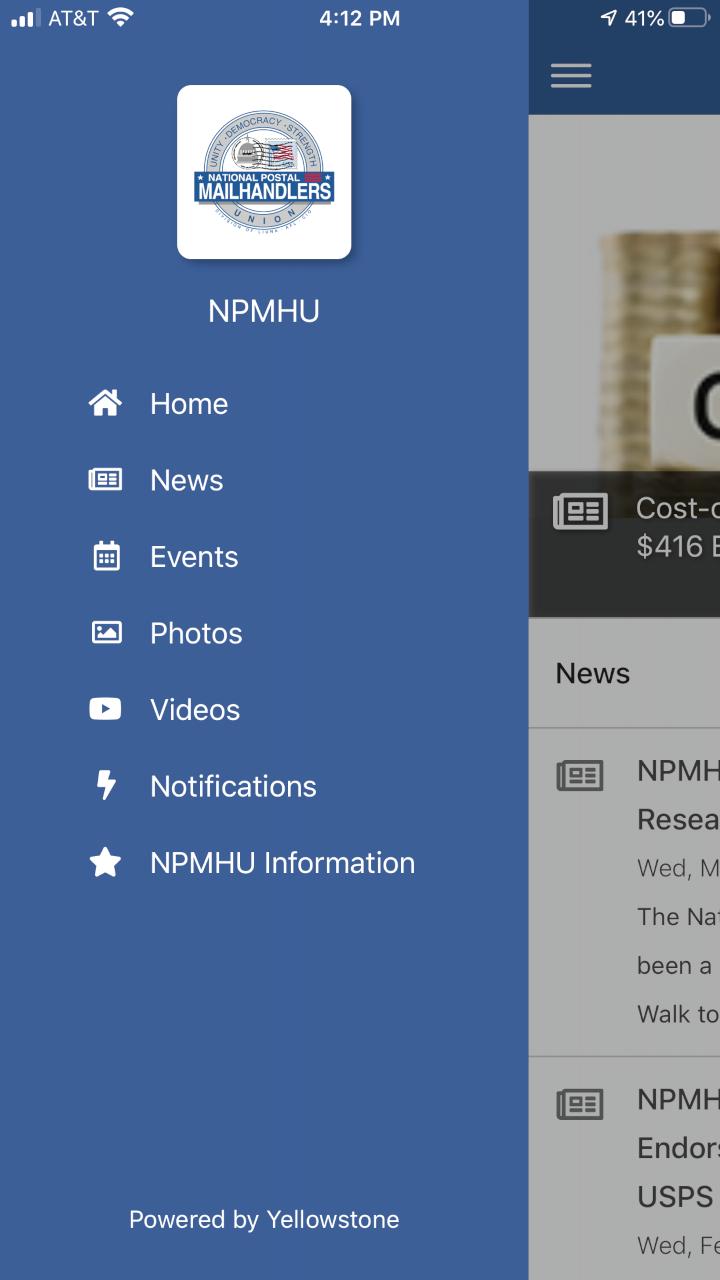
Go to the App Store or Google Play and search “NPMHU” to install and use at no charge

INSTALL THE FREE NPMHU MOBILE APP
FOR YOUR IPHONE OR ANDROID SMARTPHONE

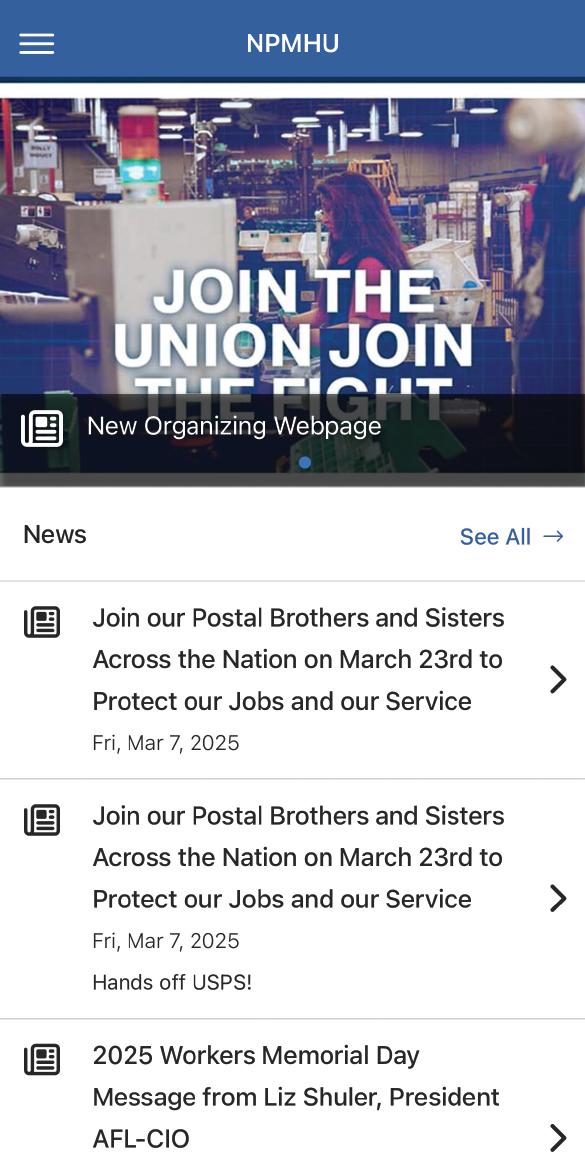
We are pleased to provide this communication tool to all Mail Handlers. You can access the latest news, updates, events, and information of organizational importance. THE APP’S FEATURES INCLUDE:
+ Current NPMHU news with periodic push notifications of importance
+ Legislative and Political NPMHU Action Center
+ Quadrennial Convention Information
+ NPMHU Women’s Committee
+ Current Wage Charts


NATIONAL
Paul V. Hogrogian
National President
Kevin P. Tabarus
Secretary-Treasurer
June Harris
Vice President Central Region
John A. Gibson
Vice President Eastern Region
Daniel W. St. Marie
Vice President Northeastern Region
John (J.R.) Macon
Vice President Southern Region
Don J. Sneesby
Vice President Western Region
The Mail Handler, ISSN:1098-5689, is published quarterly by the National Postal Mail Handlers Union, 815 16th St, N.W. Suite 5100, Washington, DC 20006. Periodicals postage paid at Washington, D.C. and additional mailing offices.
POSTMASTER: Send address changes to The Mail Handler, 815 16th St, N.W. Suite 5100, Washington, DC 20006. Copyright 2025: National Postal Mail Handlers Union. All rights reserved. Reproduction without permission is prohibited. The Mail Handler is published for the members of our union. For additional copies please send $2.00 to: National Postal Mail Handlers Union—National Headquarters, 815 16th St, N.W. Suite 5100, Washington, DC 20006, (202) 833-9095.

NATIONAL NEGOTIATIONS
Paul V. Hogrogian, National President
Dear Members:
The collective bargaining agreement between the NPMHU and the USPS expires on September 20, 2025. Negotiations officially opened on June 25th
The NPMHU bargaining team is led by the National President and includes National Secretary-Treasurer Kevin Tabarus, Manager of Contract Administration Teresa Harmon, Executive Assistant to the National Officers Neil Ryan, National CAD Representatives Tom Ruther and Eugene Horton and our legal team from the NPMHU’s General Counsel’s office. The members of the NPMHU National Executive Board have been actively involved in this process. Meanwhile, the USPS team is in flux with a new Postmaster General, a new Vice President of Labor Relations, and a new Chief Spokesperson with the abrupt and unexpected retirement of Patrick Devine, who announced his retirement at the end of the opening ceremony
Preparations for this round of bargaining began early last year. Mail Handlers nationwide were requested to submit proposals to amend the current national bargaining agreement. Mail Handler representatives from across the country discussed the priorities for these negotiations. Our Field Negotiating Committee met in Washington, DC for five days from February 3–7, 2025, to thoroughly review, analyze, discuss, debate, and evaluate over 450 proposals that were received from the field and to produce proposals of its own. The Committee provided its recommendations, which were sent to the National Bargaining Team for their analysis and consideration. The National Bargaining Team then formulated formal contract proposals to be submitted to the Postal Service.
The Field Negotiating Committee, the Bargaining Team and the National Executive Board established priorities in bargaining which included:
1. A fair and just general wage increase
2. A continuation of our current Cost of Living Adjustments (COLAs)
3. Keep the No Lay Off clause
4. Improve the wages, rights and benefits for our MHAs
5. Increased MHA conversions to career status
6. Return subcontracted work to the Mail Handler Craft and stop future subcontracting

7. Minimize the dislocation and inconvenience to Mail Handlers subject to involuntary reassignments
8. Address the issue of MHAs serving as 204Bs.
9. Fixing the badly broken wage scale which hinders the recruitment and retention of new Mail Handler employees.
We have submitted proposals that address all of our bargaining priorities.
This is not a particularly opportune time during which to bargain. The Postal Service’s financial situation and the continuing decline in mail volume (especially First-Class Mail) lead us to believe that these negotiations will be extremely difficult. We must also contend with a White House administration that is hostile to the Postal Service and its Unions. There is also the specter of the Department of Government Efficiency (DOGE) which is seeking to cut the wages and benefits of postal employees.
This round of bargaining will be greatly affected by several circumstances beyond our control. These circumstances include:
1. As previously mentioned, a new President and Administration that has been openly anti-Post Office, anti-worker, especially Federal workers, and anti-Union.
2. Republicans in Congress have been paying lip service to subcontracting out mail processing operations.
3. A new Postmaster General and Vice President of Labor Relations
4. The bargaining and contracts of our three sister Postal Unions (NALC, NRLCA and APWU). What happens with the bargaining process of the three other Postal Unions has a major impact on our negotiations and on our contract. The status of bargaining for the other Postal Unions is as follows:
a. NALC: Arbitrated/Mediated contract after Tentative Agreement was rejected by its membership.
b. NRLCA: Negotiated Agreement ratified by its membership
c. APWU: Negotiated Agreement ratified by its membership
September 8, 2025, was the deadline to submit non-economic proposals. While the NPMHU submitted over 70 proposals, the USPS submitted only 10. After September 8th, while the parties can discuss already submitted proposals and offer counterproposals, no new non-economic proposals can be introduced. If the bargaining process results in a tentative agreement, that agreement is subject to a ratification vote by the NPMHU membership. As required by the NPMHU National Constitution, the vote would be by secret mail ballot.
During the last round of main table discussions, the USPS introduced aggressive proposals to maximize its flexibility and to facilitate its subcontracting efforts going forward. The NPMHU will never accept any such proposal and will fight hard for more contractual protection against privatization.
On Saturday, September 13th, negotiations moved to a local hotel in Washington, DC so that the parties can remain focused on the bargaining process with the hope that the parties can reach tentative agreements on the outstanding issues. During hotel week, the parties had meaningfull discussions on economic proposals for the first time during these negotiations.
I remain confident that through the work of our Contract Administration Department and our legal representatives, and through the hard work of our Regional, Local, and Branch representatives, we can successfully meet all challenges that lie before us.
multiple steps. First, the Federal Mediation and Conciliation Service (FMCS) would establish a three-person fact-finding panel. The fact-finding panel would have 45 days in which to investigate the bargaining dispute and issue a report of its findings. If an agreement still cannot be reached by the parties after fact-finding, the PRA requires the establishment of an arbitration board within 90 days of the expiration of the current contract. This board normally consists of three members-one selected by the Union, one member selected by the Postal Service and a third neutral arbitrator. The neutral member is selected either by the agreement of the other two members of the Board or by appointment of the Director of the FMCS. The board is required to make a decision within 45 days after its appointment. This arbitration decision is binding on both parties.
Mail Handlers deserve to be rewarded for their dedicated and essential service with well-earned pay raises. It is time for the Postal Service to stand up and justly compensate all Mail Handlers for the hard work and dedication that they have demonstrated throughout the implementation of the Delivering For America (DFA) plan. Talk is cheap, now is the time for action.
The NPMHU bargaining team is up to the task at hand and will work tirelessly to achieve a fair contract for all Mail Handlers. The NPMHU will routinely and frequently keep the membership informed of the progress of these negotiations.
Beyond the main table and economic discussions, the subcommittees will continue to meet to make sure that all intricate details of each proposal are fully understood by the parties. As the contract deadline approaches, the NPMHU Negotiating Team remains more prepared than ever to achieve the goals that we established at the start of this process. The NPMHU Bargaining Team will remain committed that these issues remain the priority for the remainder of the bargaining process.
If the parties fail to reach a tentative agreement, either by the parties being unable to agree or a failed ratification vote by the membership, the process is by no means over. To paraphrase Winston Churchill: This is not the end, it is not even the beginning of the end, but rather the end of the beginning.
The Postal Reform Act (PRA) has a dictated procedure that must be followed unless the parties agree to an alternate dispute procedure themselves. The PRA procedure contains
* * *
I remain confident that through the work of our Contract Administration Department and our legal representatives, and through the hard work of our Regional, Local, and Branch representatives, we can successfully meet all challenges that lie before us.
Fraternally,
Paul V. Hogrogian National President
IS THERE REALLY NO TAX ON OVERTIME?
Kevin P. Tabarus, National Secretary-Treasurer
The Reconciliation Bill that passed Congress was signed into law on July 4, 2025, as Public Law 119–21 contained provisions for “No Tax on Tips”, “No Tax on Overtime”, “No Tax on Car Loan Interest”, and several other provisions.
The “No Tax on Overtime” is a provision that interests most Mail Handlers. It sounds great! However, it is not as great as it was advertised. It sounded like there would be no federal income tax on all paid overtime hours. The truth is that the federal income tax on overtime is restricted and limited. It does not make all overtime tax-free!
This is a new tax deduction, effective for 2025 through 2028. Individuals that receive overtime compensation as required by the Fair Labor Standards Act (FLSA) may deduct the “half” portion of the “time-and-a-half” compensation.
What does the “half” portion of “time-and-a-half” compensation, required by FLSA equal?
The straight time salary rate for a Level 4 top step Mail Handler is $36.57 an hour. The overtime salary rate for a Level 4 top step Mail Handler is $54.86 an hour. The “half” portion of the “time-and-a-half” compensation equals only $18.29 an hour. ($54.86 minus $36.87, equals $18.29). Only this “half” portion is deductible. But there are restrictions.
The deduction restrictions include: the maximum annual deduction is $12,500 ($25,000 for joint filers) and the deduction phases out for taxpayers with modified adjusted gross income over $150,000 ($300,000 for joint filers).
What is FLSA Overtime? The Fail Labor Standards Act (FLSA) is a federal statue which applies to the Postal Service. The FLSA provides that the Postal Service must pay employees covered by the overtime provisions of the Act (which includes all Mail Handlers) at least one and one-half times the employee’s regular rate for all hours of actual work in excess of 40 hours in any FLSA workweek. It is important to remember that, for purposes of the FLSA, actual work does not include any paid time off.
What this means is that if you have paid leave in a work week while also working overtime in the same work week (because you worked more than eight hours in a day), that overtime pay may not be eligible for the tax deduction. Similarly, if an MHA works four (4) hours of overtime early in a work week, but only works a total of thirty-eight hours in a
week, while the MHA will be paid for 4 hours at the overtime rate, that overtime may not be eligible for the tax deduction.
Because employers, like the Postal Service, are required by the new law to furnish the total amount of qualified overtime compensation paid during the year, it is our understanding that the new 2025 W2 Form issued to employees by the Postal Service will specify the amount of overtime compensation that may be deducted.

This deduction is available to those who itemize their deductions and those who non-itemize their deductions. To be eligible to claim this deduction you must include your Social Security Number on the tax return and must file jointly if married. If you are married, you cannot file tax returns separately, to claim this deduction!
Remember, this is just a deduction, not that all overtime is exempt from taxation. The deduction can only be claimed when you file your annual tax return. This means your paychecks will still have taxes normally withheld throughout the year. Some tax professionals estimate there will be only a small decrease in federal income tax.
This reconciliation bill concerning the deduction of only the “half” portion of overtime pay only applies to federal income tax. It does not apply to state (and local) income tax. Each state and locality has its own rules and some are considering exempting overtime pay from their state’s income tax. Overtime pay is still subject to federal Social Security and Medicare taxes.
Please discuss this new deduction with your professional tax preparer. This article is not intended to provide income tax advice. More information can be found at www.irs.gov. We expect that the IRS will be providing more guidance on how this overtime deduction will be implemented.
The so-called big beautiful bill is not as big and beautiful as advertised.
Fraternally,
Kevin P. Tabarus National Secretary-Treasurer
NPMHU MEMBERSHIP




SECOND PLACE
THIRD PLACE



NATIONAL OFFICERS ACROSS THE COUNTRY
ADDRESSING THE LABORERS’ INTERNATIONAL UNION LEADERSHIP CONFERENCE
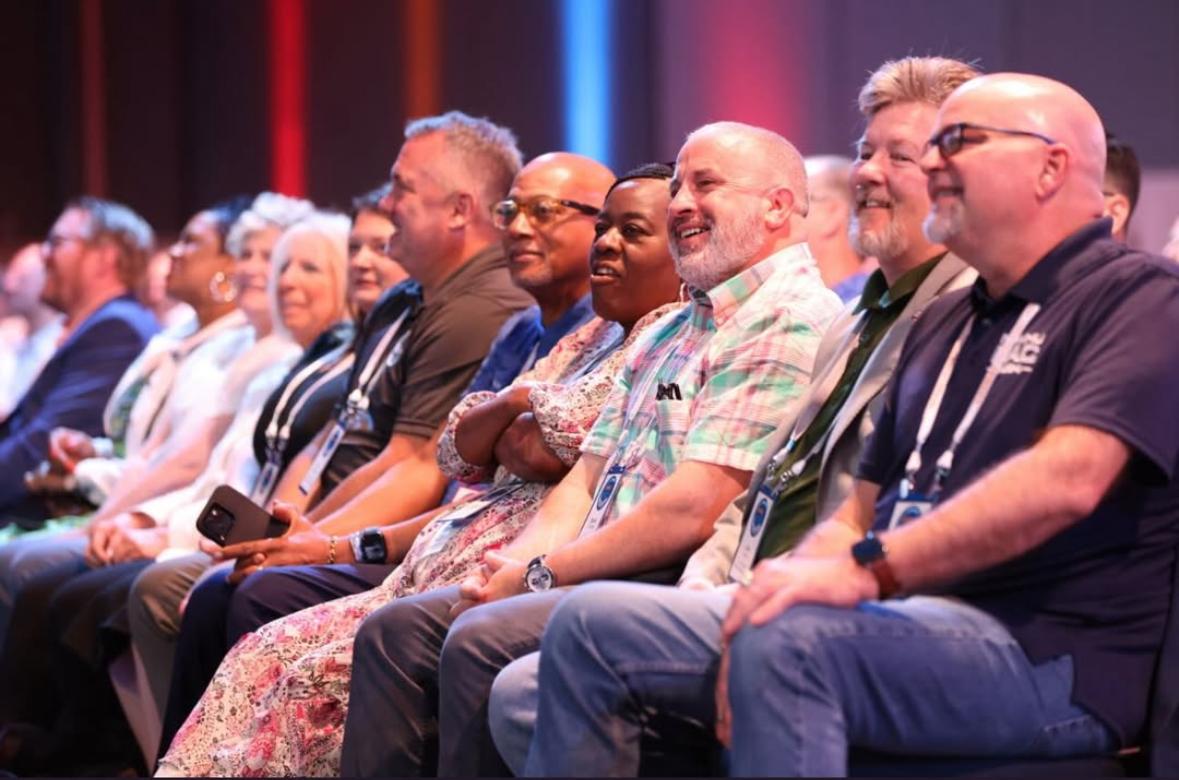
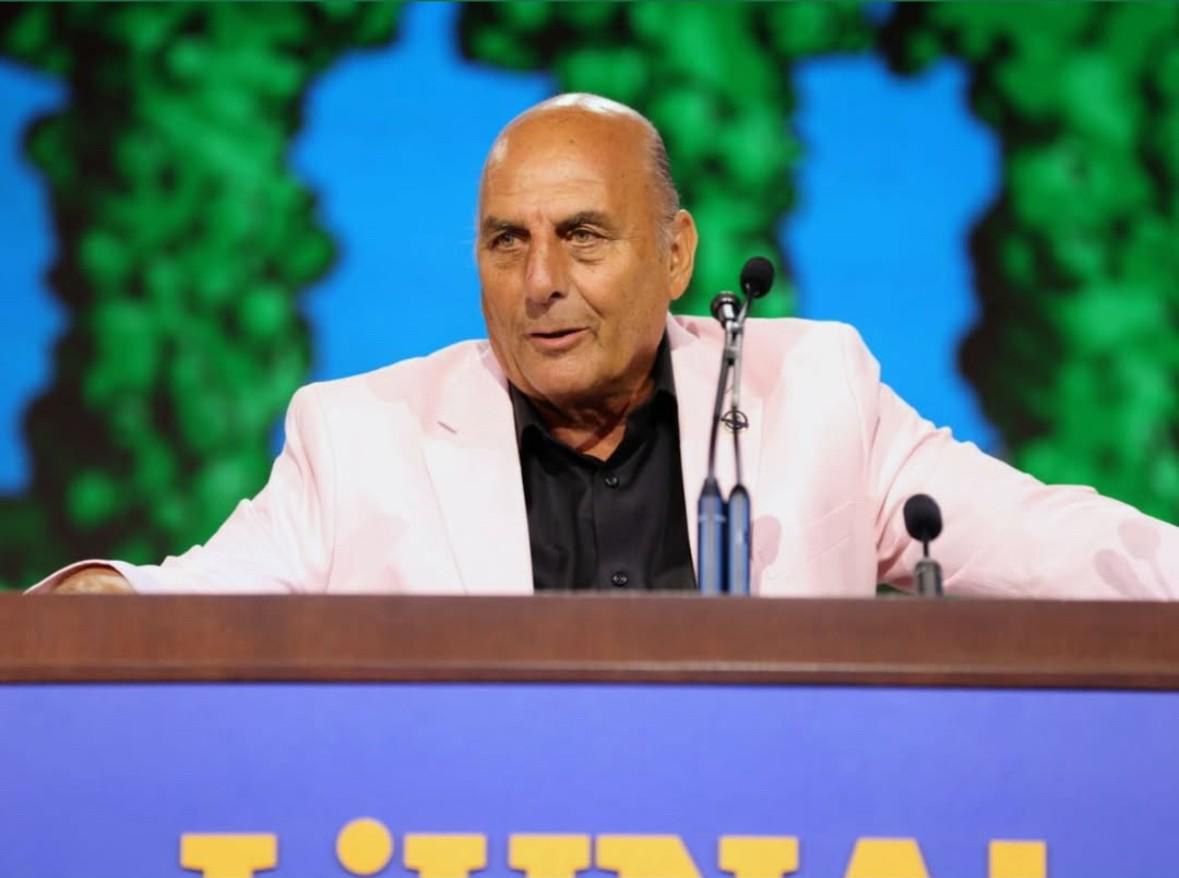
At the Laborers’ International Union Leadership Conference, National President and LiUNA General Executive Board Member Paul Hogrogian addressed the General Executive Board and members of the Union. In attendance were the National Executive Board of NPMHU.

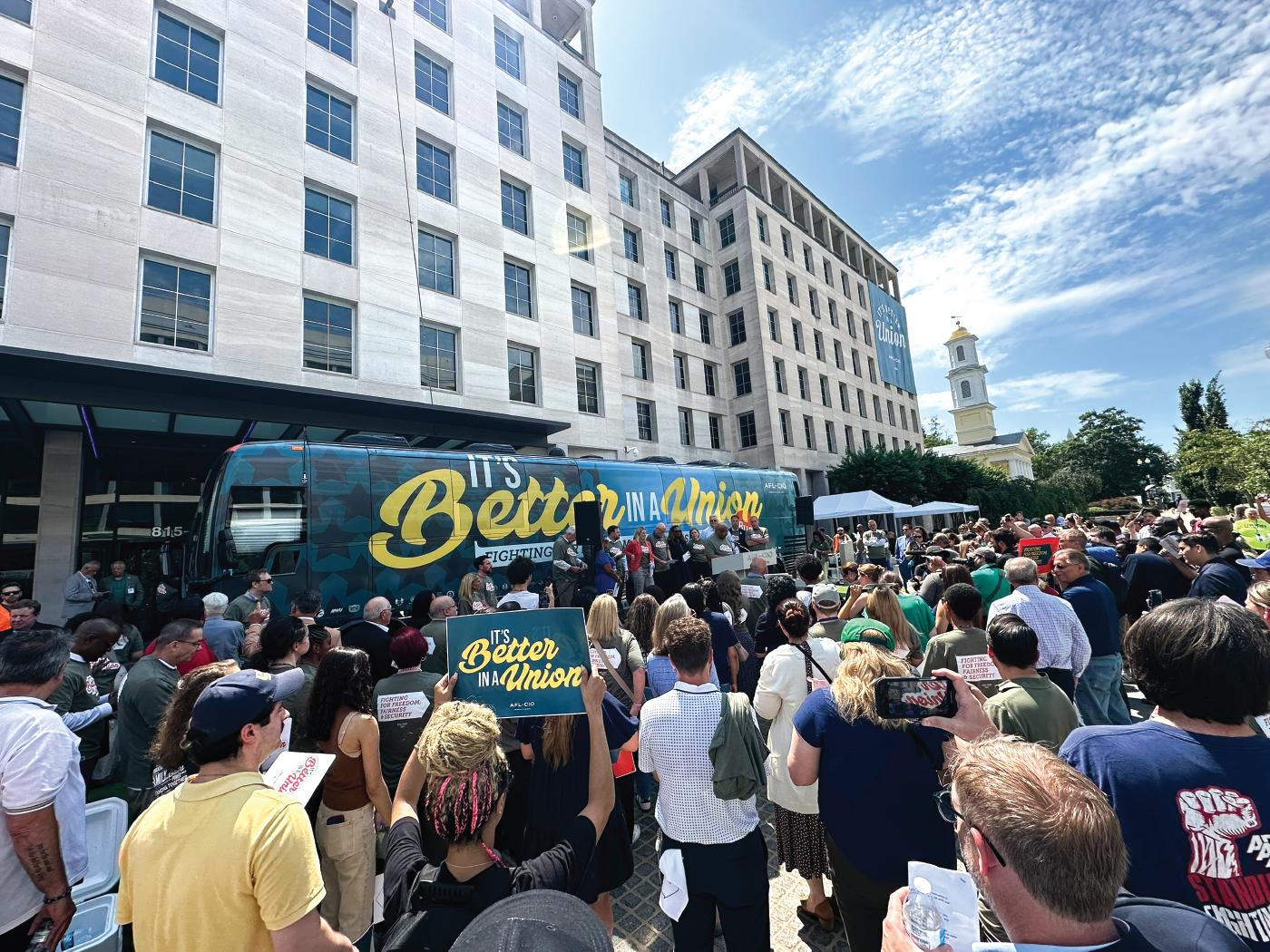
AFL-CIO BUS TOUR KICK OFF
National President Paul Hogrogian and National Secretary-Treasurer Kevin P. Tabarus along with members of the National Office attended the kick off of the AFL-CIO Bus Tour at its headquarters and home of the NPMHU National Office in Washington DC.
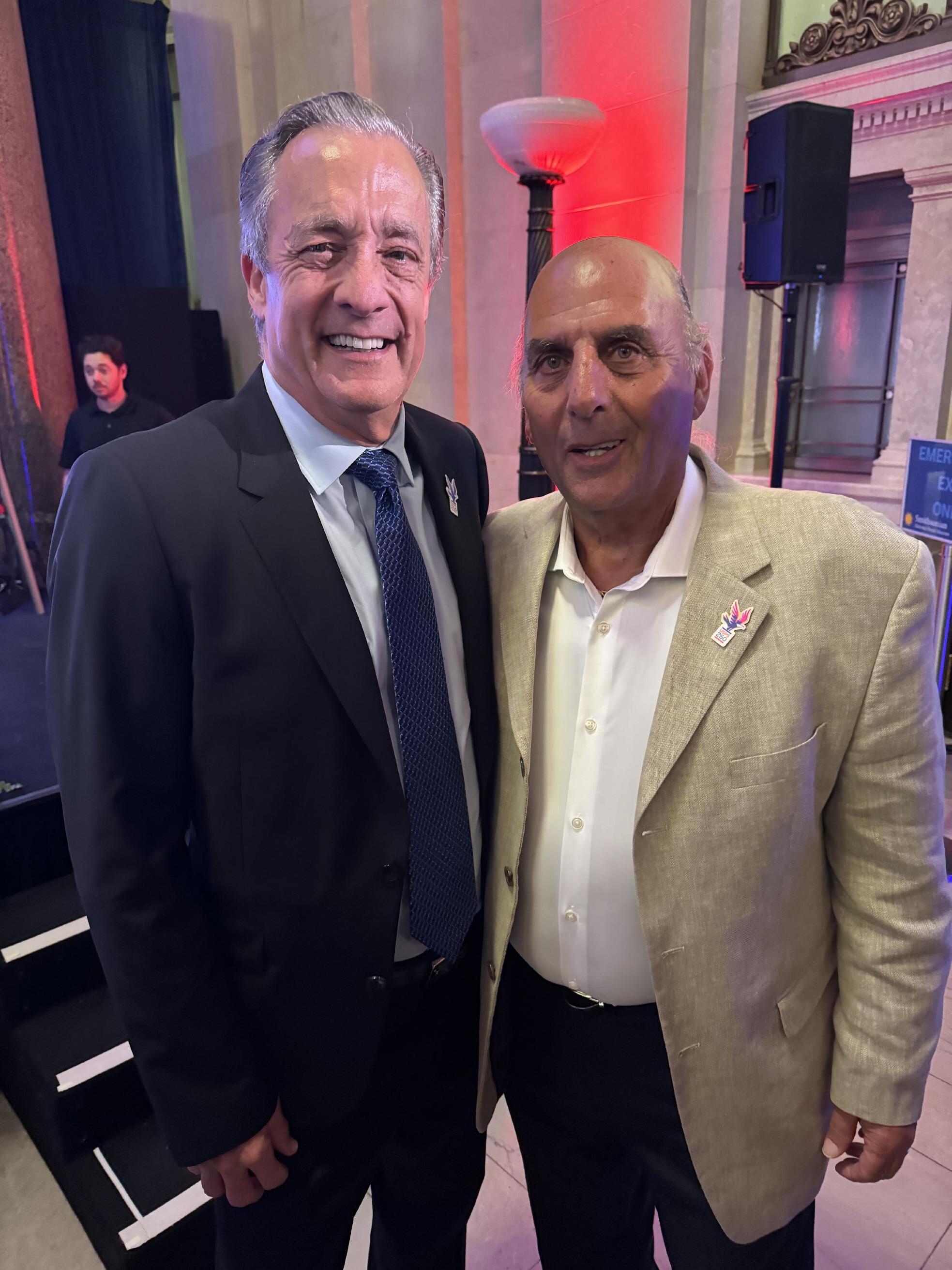
MEETING WITH PMG
National President Paul Hogrogian met with U.S. Postmaster General David P. Steiner.


SEMI-ANNUAL MEETING OF THE LOCAL UNIONS (SAMLU) WASHINGTON, DC
The Semi-Annual Meeting of the Local Unions was held in Washington, DC from August 11, 2025 through August 13, 2025.
In attendance were all members of the National Executive Board, all NPMHU National Office Department Heads, National and Regional Contract Administration Department (CAD) Representatives, and various Officers and Representatives from 35 NPMHU Local Unions.
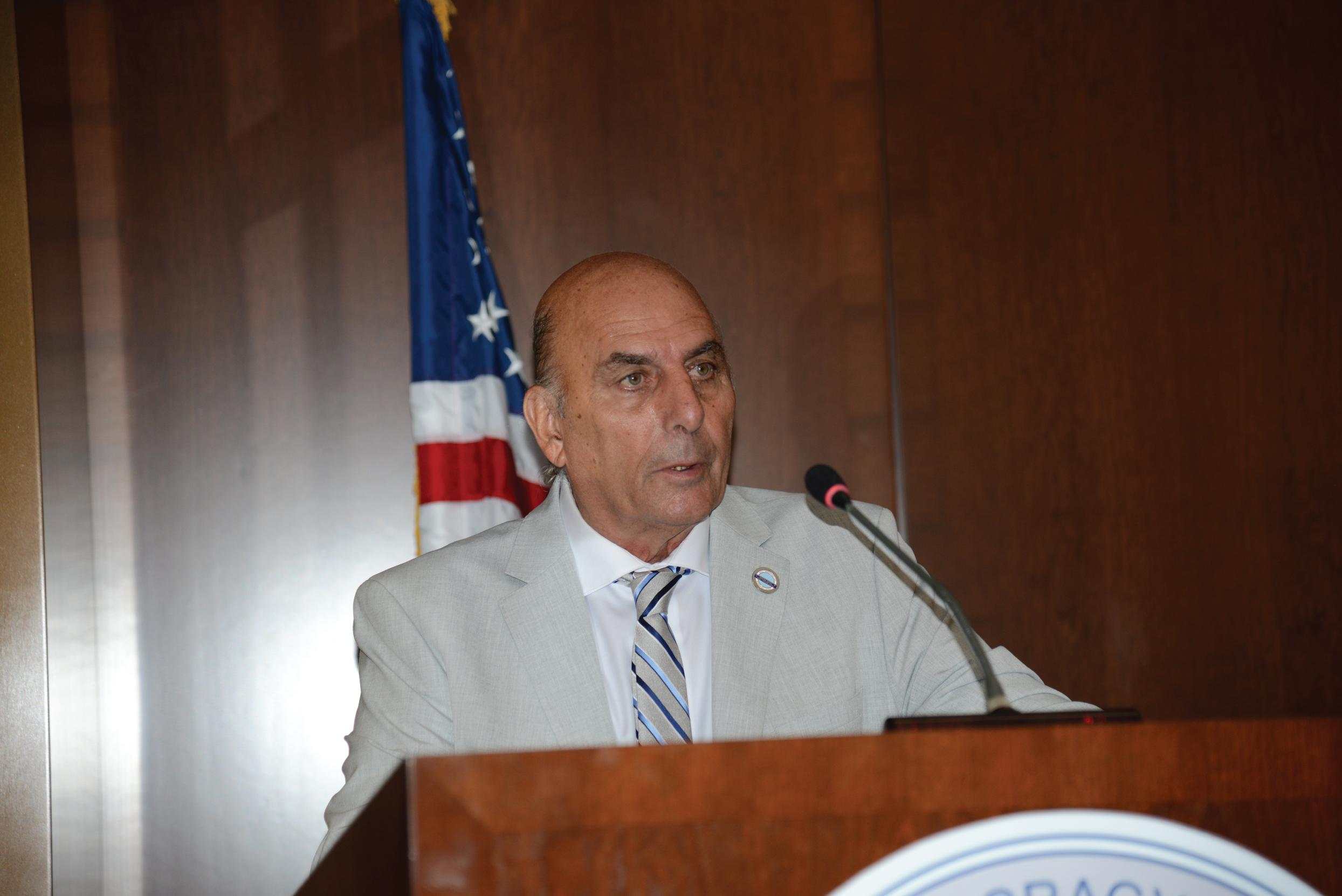
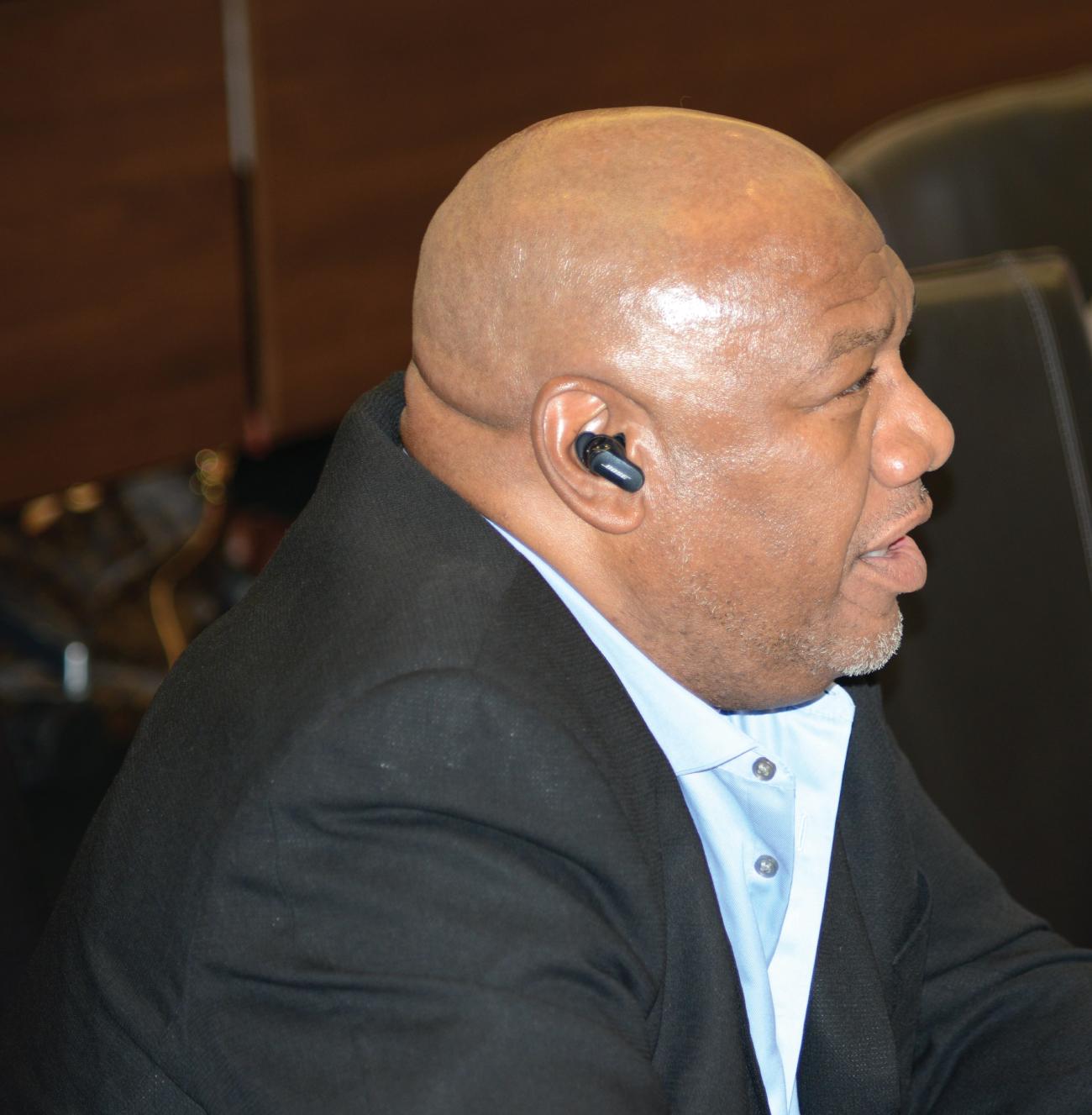
uring his welcoming remarks, National President Hogrogian acknowledged re-elected Local President Maurice Torres (Local 313) as well as new Local Presidents David Sevareid (Local 327) and Scott Green (Local 328). National President Hogrogian also congratulated other recently elected and re-elected Local Union Officers who
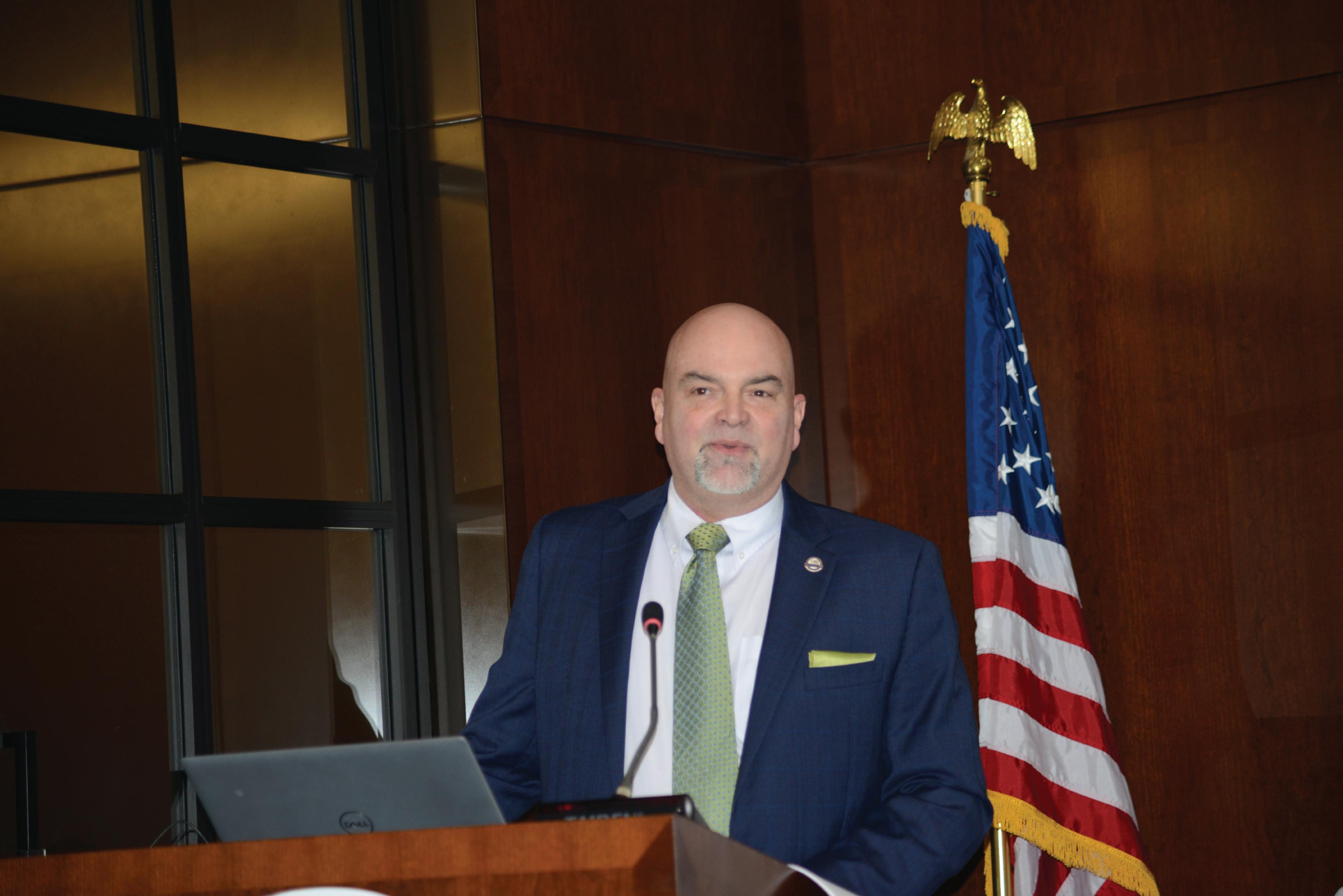
National President Hogrogian then began a comprehensive presentation of the activities of the National Union since the April 2025 SAMLU, starting with an update on USPS financial conditions and mail volumes by category for Quarter 3 of fiscal year (FY) 2025 (April 1, 2025 through June 30, 2025).
The USPS had a net loss of $3.1 billion for the quarter. The USPS overall loss for the first 9 months of fiscal year 2025 is
The USPS reported that total mail volume was down 2.8% (747 million pieces) compared to the same quarter of last fiscal year. First-class mail volume declined 5.4% (down 568 million pieces). For the quarter, marketing mail increased 0.5% (65 million pieces). Package/parcel volume decreased 6.5% (down

National President Hogrogian next discussed the make-up of the USPS Board of Governors (BOG) which consists of the Postmaster General (PMG), Deputy Postmaster General (DPMG) and nine (9) Presidentially appointed Postal Governors who are subject to Senate confirmation. The current sitting Governors include Amber McReynolds (Chair), Derek Kan (Vice Chair), Roman Martinez (on hold over year), Ron Stroman, and Daniel Tangherlini. There will be five (5) vacant seats on the BOG which will be filled by President Trump. The Senate Committee on Homeland Security and Governmental Affairs will then hold confirmation hearings. President Trump has nominated Anthony Lomangino (R-Waste Management) and John LaValle (R-Suffolk County Republican Party). Confirmation hearings were scheduled to be held for Lomangino and LaValle in July. However, these hearings had to be rescheduled due to the proper paperwork not being submitted.
National President Hogrogian reviewed actions taken by the Trump Administration affecting the USPS and also addressed the appointment of new Postmaster General David Steiner.
National President Hogrogian next discussed the Voluntary Early Retirement (VER) and One Time Retirement Incentive. A total of 1,620 Mail Handlers retired.
National President Hogrogian reviewed the USPS Delivering For America (DFA) Ten-Year Plan, which sets forth a series of strategies by which USPS management (former PMG DeJoy) hopes to improve service and ensure financial stability. The new Postmaster General Steiner has stated that he plans to continue the DFA plan.
National President Paul Hogrogian
National Secretary-Treasurer Kevin Tabarus
CAD Representative Eugene Horton
CAD Manager Teresa Harmon
National President Hogrogian addressed closings and con solidations, including the creation of Regional Processing and Distribution Centers (RPDCs), which will process Originating Letters/Flats, all parcels, STC, THS, LPCs, SDCs, RTHs; the cre ation of Local Distribution Centers (LPCs), which will process Destinating Letters/Flats, Transfer Hubs, SDCs. RPDCs will affect up to 60 metropolitan areas.
The USPS is proposing consolidations in metropolitan areas that will impact Regional Processing and Distribution Centers (RPDCs) and Local Processing Centers (LPCs). The Postal Service identified the first round of sites to be impact ing various metropolitan areas around the country. The Postal Service has also noted that there are additional tenta tive sites. All these plans are very fluid and subject to change.
Mail Processing Facility Reviews (MPFR) PO-408: There have been approximately 60 MPFRs, with sham public hear ings. The NPMHU’s goal is to ensure excessing is kept to an absolute minimum. Unofficially, 36 out of 60 sites have Local mail staying Local.
Regional Transfer Hubs (RTHs) will act as a transfer point for other RPDCs.
Dedicated facilities are in: Denver (Subcontracted), Dallas, Arizona, Kansas City, and St. Louis. Shared facilities are in: Atlanta RPDC, New Jersey NDC, West Valley, Memphis MPA, Salt Lake City (inactive), San Francisco NDC, Indianapolis RPDC, Charlotte, Pennwood/Pittsburgh, Los Angeles NDC, Des Moines, Seminole (Orlando), Jacksonville, and Chicago.
National President Hogrogian also addressed proposed modifications to Sorting and Delivery Centers (SDCs) and function 4 delivery and parcel sorting operations. There could be between 400-600 SDCs, (98 SDCs active as of now) with plans for 148 SDCs to be active by November. Some SDCs are to be located within RPDCs or LPCs. We foresee more Mail Handler job opportunities at the SDCs.
Parcel Support Annexes (PSAs): Some closing and some serving as transitional facilities. There are no long-term plans for these facilites to remain open.
National President Hogrogian assured the body that the NPMHU will continue to oppose unnecessary consolida tions and will take steps to minimize the negative impact to Mail Handlers.
National President Hogrogian also addressed the NPMHU’s longstanding fight to challenge the Postal Service subcon tracting of STC operations. The NPMHU has negotiated several MOUs to facilitate the return of STC operations to existing postal facilities to be staffed with Mail Handlers. The following STCs have been returned in house: Indianapolis, Memphis, Salt Lake City, Northern California, Atlanta, Washington DC (Cap Metro), Springfield MA, Kansas City, Southern California. STCs are still outsourced in New Jersey (partial return), Seminole (Orlando), Dallas, and Chicago.
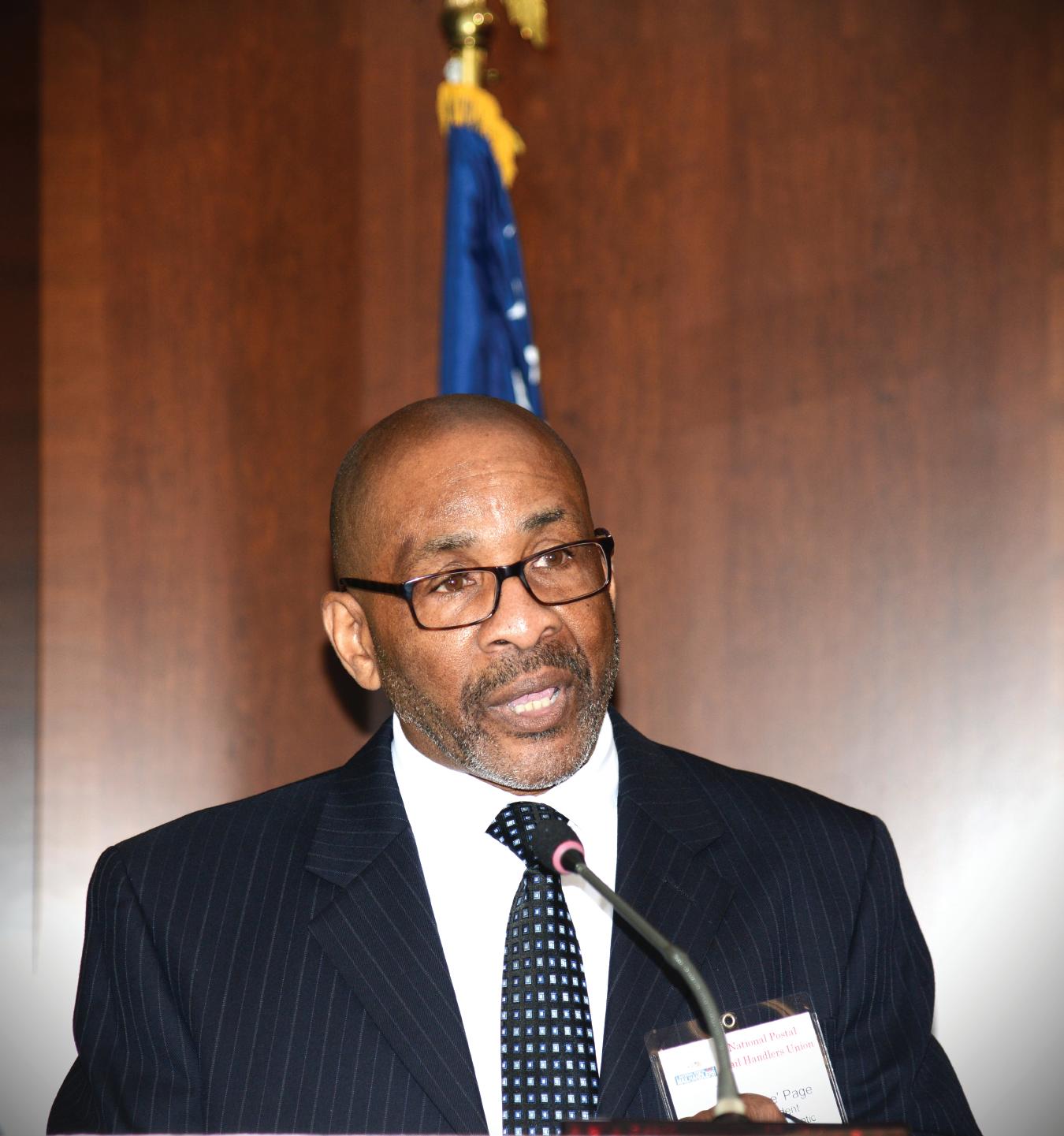

Local 305 Vice President Joe Page welcoming the SAMLU to DC
MHBP Executive Director Nina Gallauresi
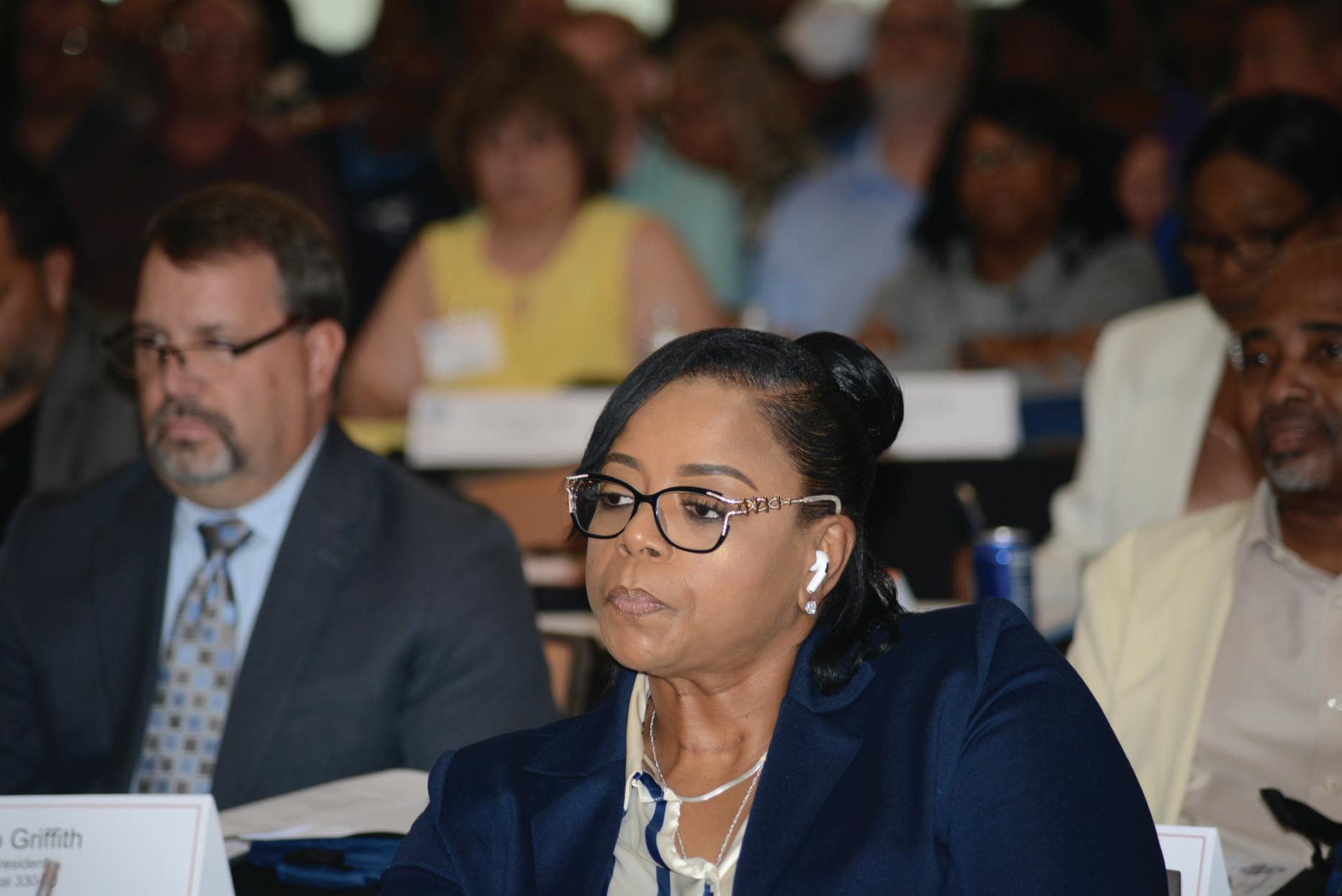
Local 330 President Bob Griffith
Local 318 President Nick Mosezar



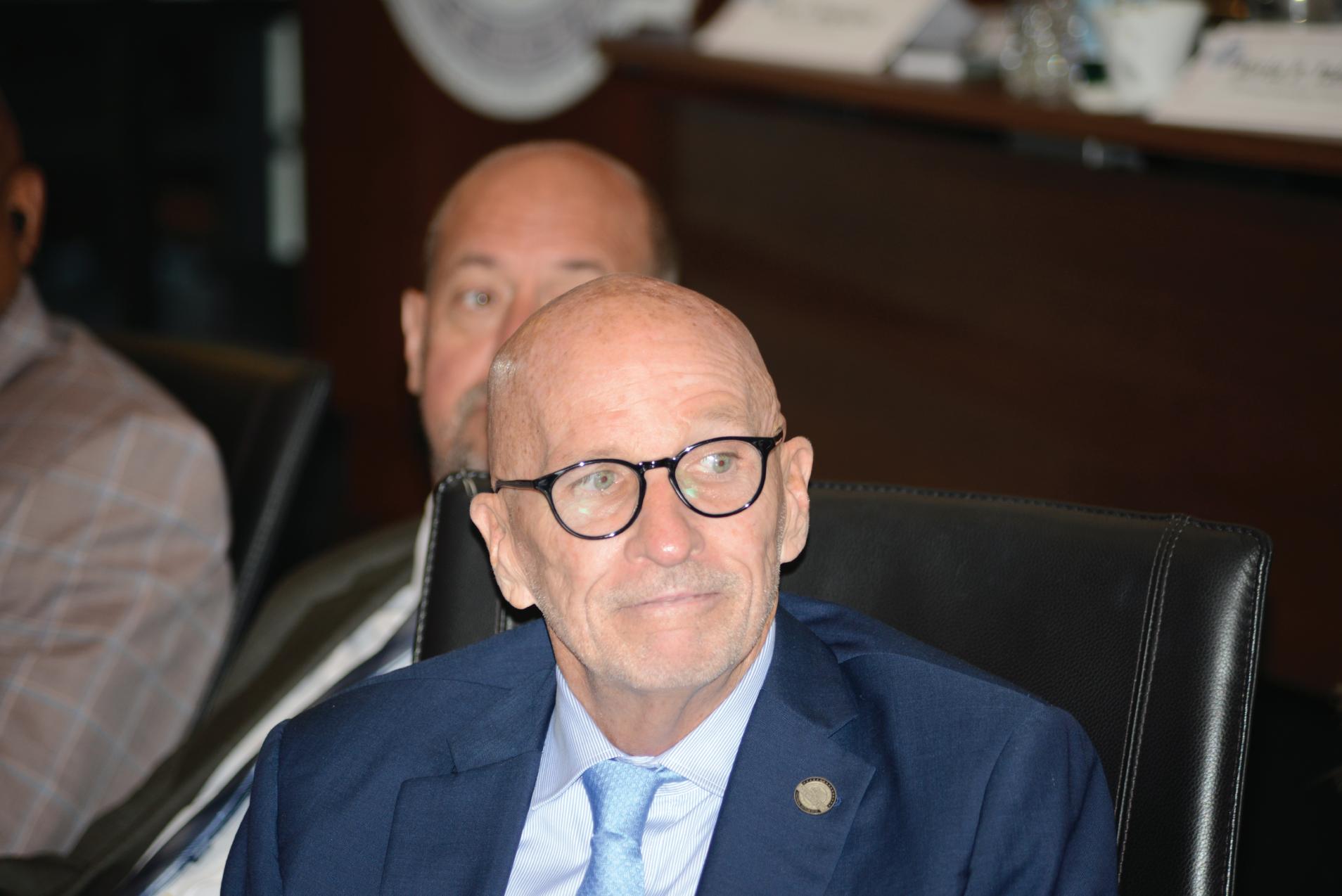
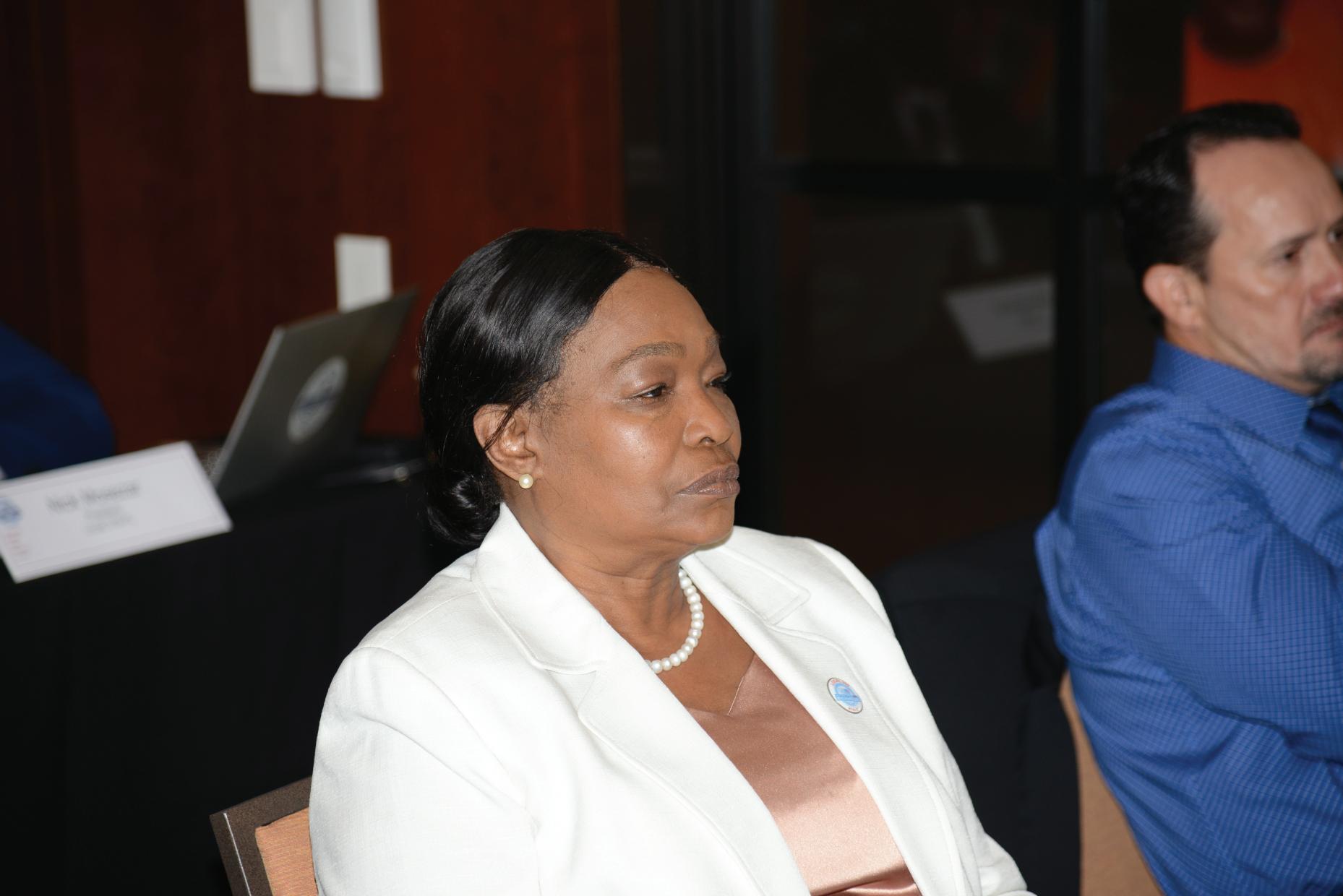
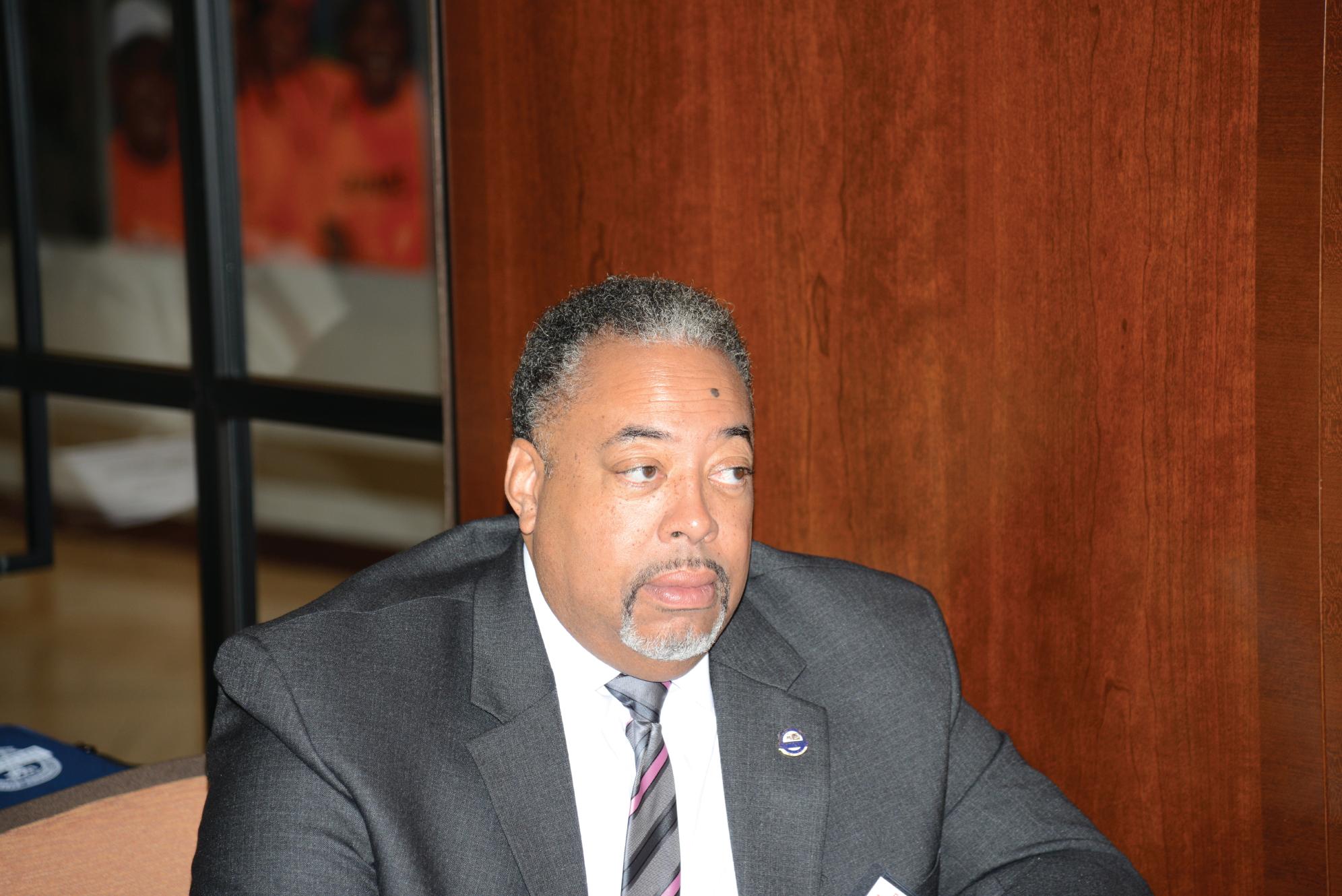



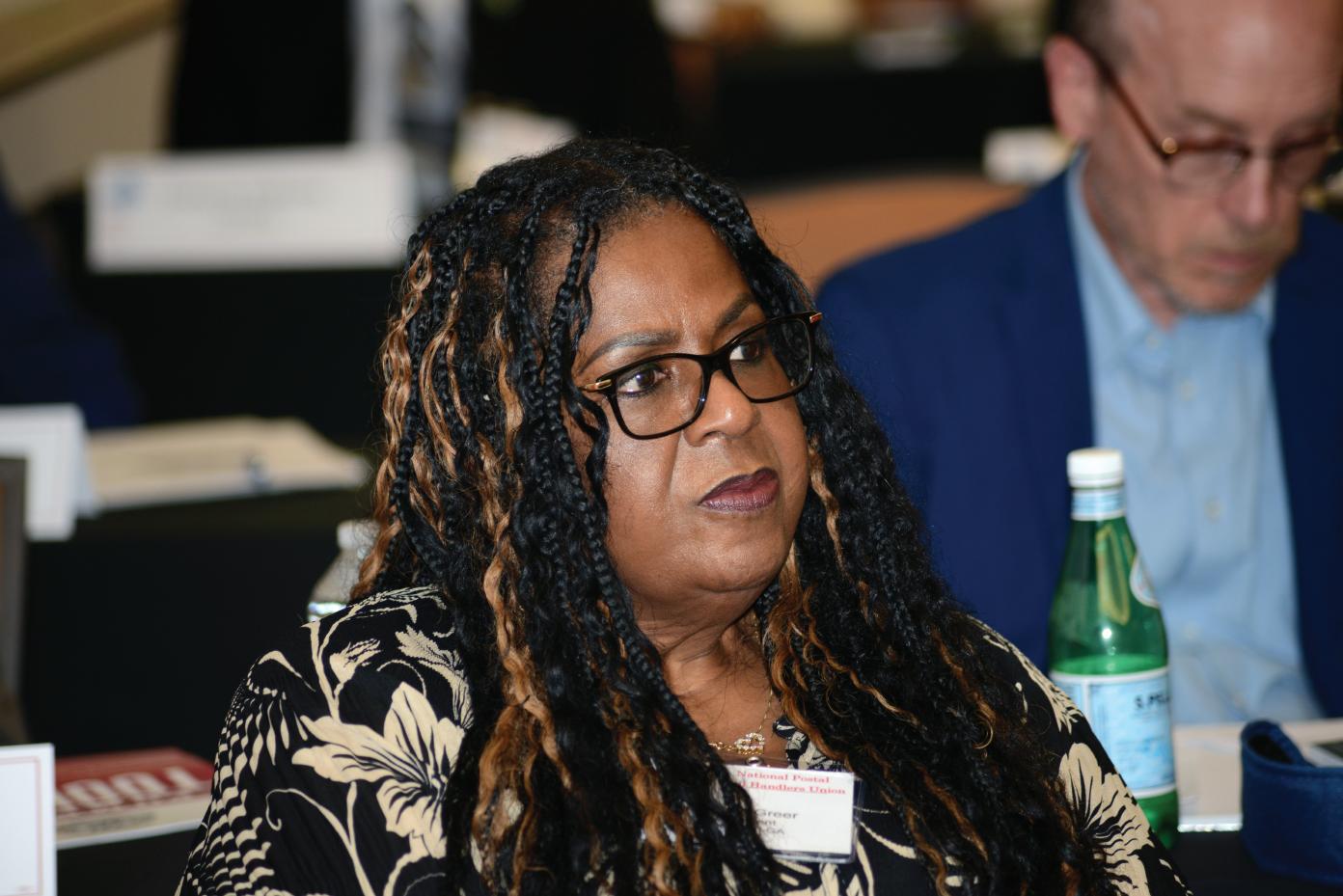
President Keala Parker
Charles Harris Local
James Haggarty
Yvette Johnson
Anthony Coleman
President Gregory Hill
Juan Torres
Local 310 President LIsa Greer
Local 297 President Chris Bentley
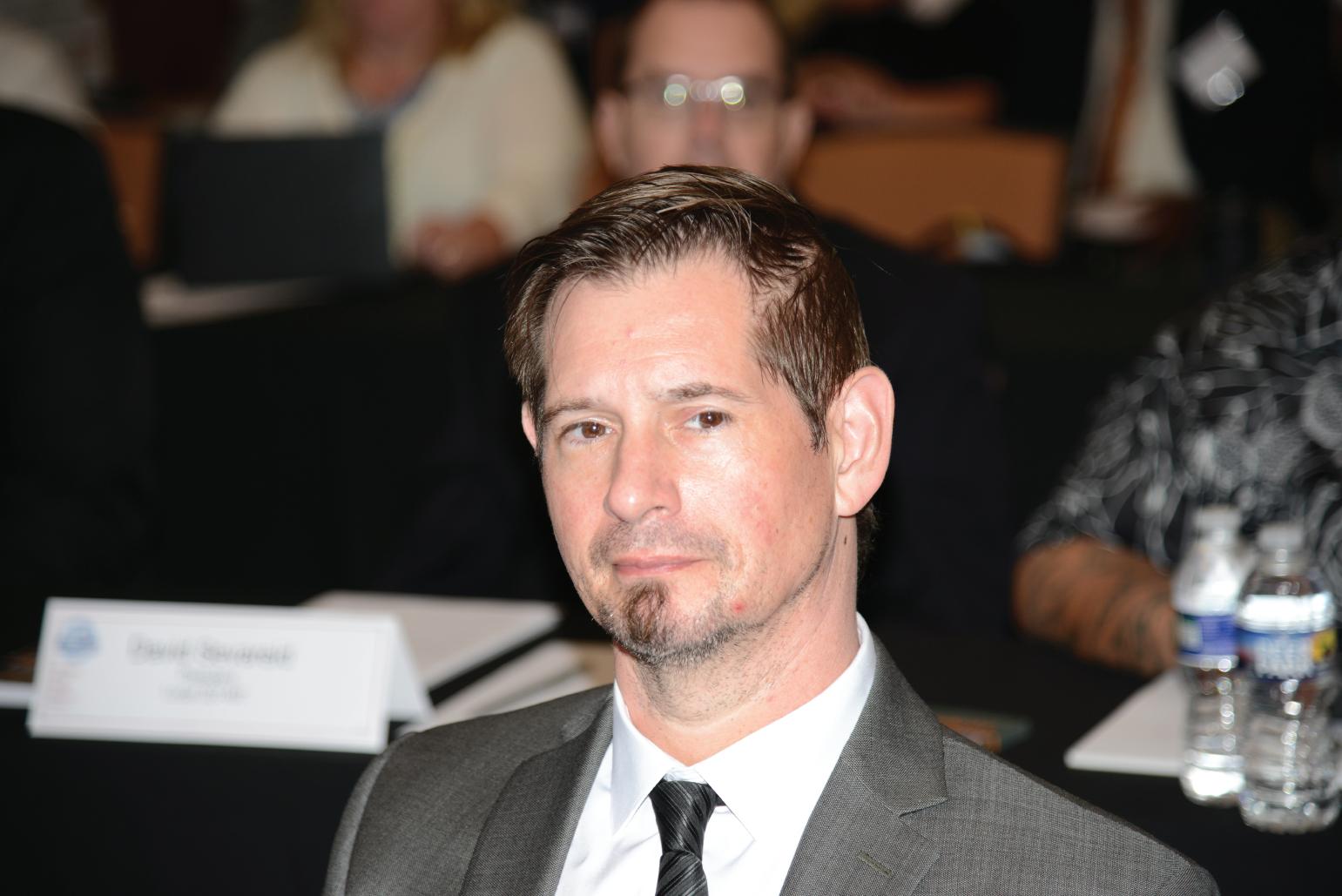
Local 327 President David Sevareid
NPMHU CAD Representative Tom Ruther
Director of National Accounts Aetna Schann Holladay
LiUNA General President Brent Booker and LiUNA General Secretary-Treasurer Michael Sabitoni
Assistant to the National Officers Neil Ryan
National President Hogrogian also noted that RTHs could, and probably will, replace STCs.
The NPMHU has also made an agreement to bring Terminal Handling Services (THS) work back in-house. These opera tions tender mail to and receive mail from the airlines. There are approximately 60 total sites and 35 are still subcontracted.
National President Hogrogian addressed Mail Handler craft complement and the Mail Handler Assistants (MHAs) path to career. He reviewed a series of Memoranda of Understanding (the Residual Vacancy MOU) that created thousands of new positions and resulted in the conversion of MHAs to fulltime career positions. There has been a total of 55,076 MHAs converted to career, with 52,620 of the MHAs being converted since the signing of the Residual Vacancy MOU. Also dis cussed was the positive impact that the new Auto-Convert language in the 2022 National Agreement is having on MHA conversions to career.
National President Hogrogian spoke about the successes of the Election Task Force during the 2020 Presidential Election and 2022 Mid Term Elections. He also noted that the USPS processed 99 million ballots in the 2024 Presidential election. Postal Mail Handlers help preserve the integrity of the elec tion process by helping to ensure that 97.7% of ballots were delivered within 3 days and 99.6% within 5 days in 2024. The 2024 figures were even more impressive with 99.9% of all mailed ballots being delivered within a week. Legislative and Political Director Katie Maddocks is our representative on the National Committee.
National President Hogrogian provided an update on contract negotiations for the 2025 National Agreement. Bargaining formally kicked off on June 25, 2025 in the Benjamin Franklin Room at USPS Headquarters. The NPMHU bargaining team and National Executive Board were present. The NPMHU has submitted sixty-eight (68) initial proposals. The National President will convene a meeting on September 24, 2025, with all Local Presidents, consistent with Article VII, Section 9 of the Constitution to discuss the status of national bargaining.
National Secretary-Treasurer Tabarus was the next speaker. He provided a comprehensive report on a host of topics that included Mail Handler complement; regular and associate membership trends and per capita analysis; revenue projections and allocation among our Union’s affiliated orga nizations; review of Cost-of-Living Allowance (COLA); and the NPMHU Revenue Sharing Program.
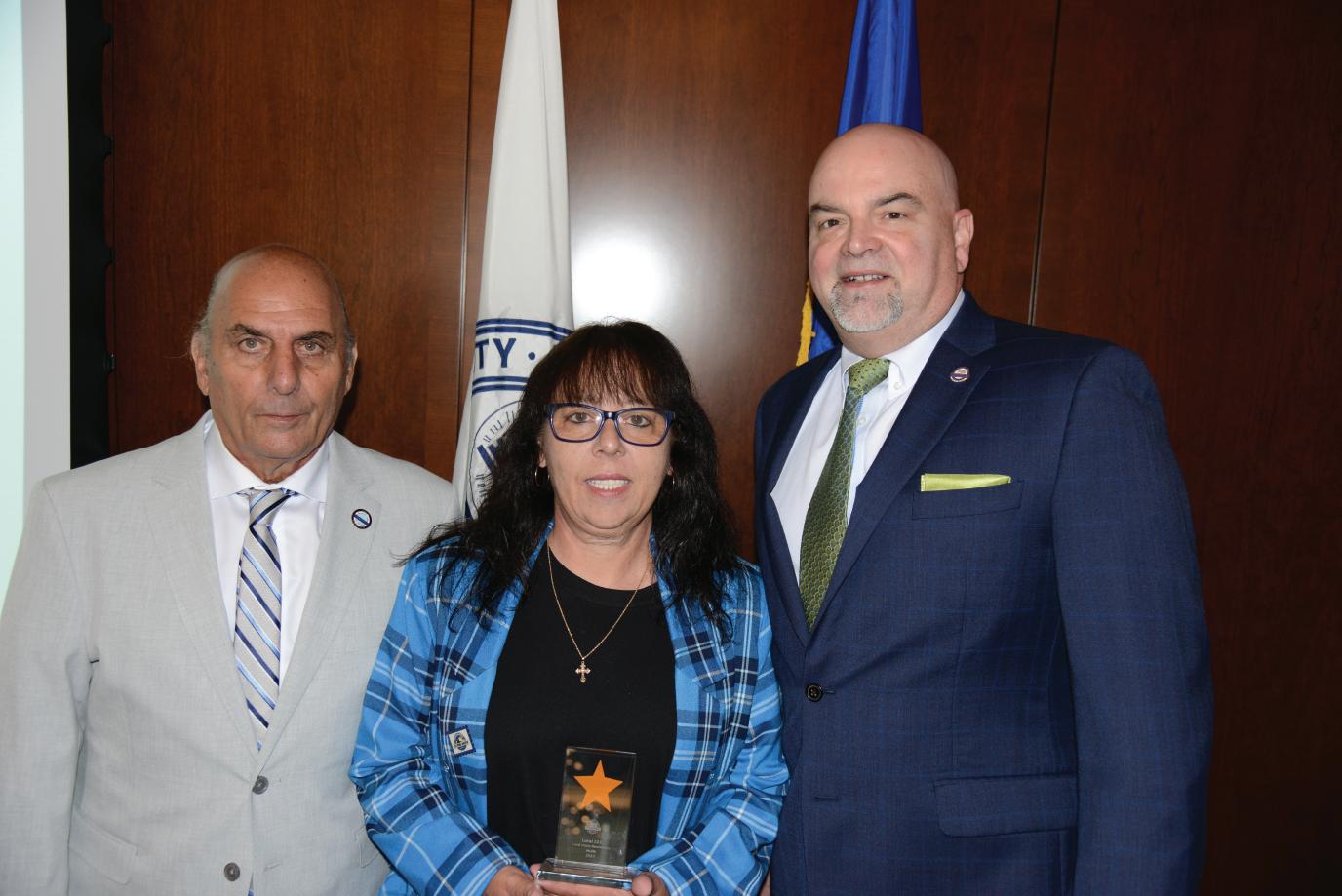
As part of the ongoing membership recruitment program, National Secretary-Treasurer Tabarus discussed member ship trends and reviewed the “Join The Union, Join The Fight” recruitment tools available to Local Unions. The top three (3) Local Unions with the highest regular membership percentages were awarded trophies for their outstanding
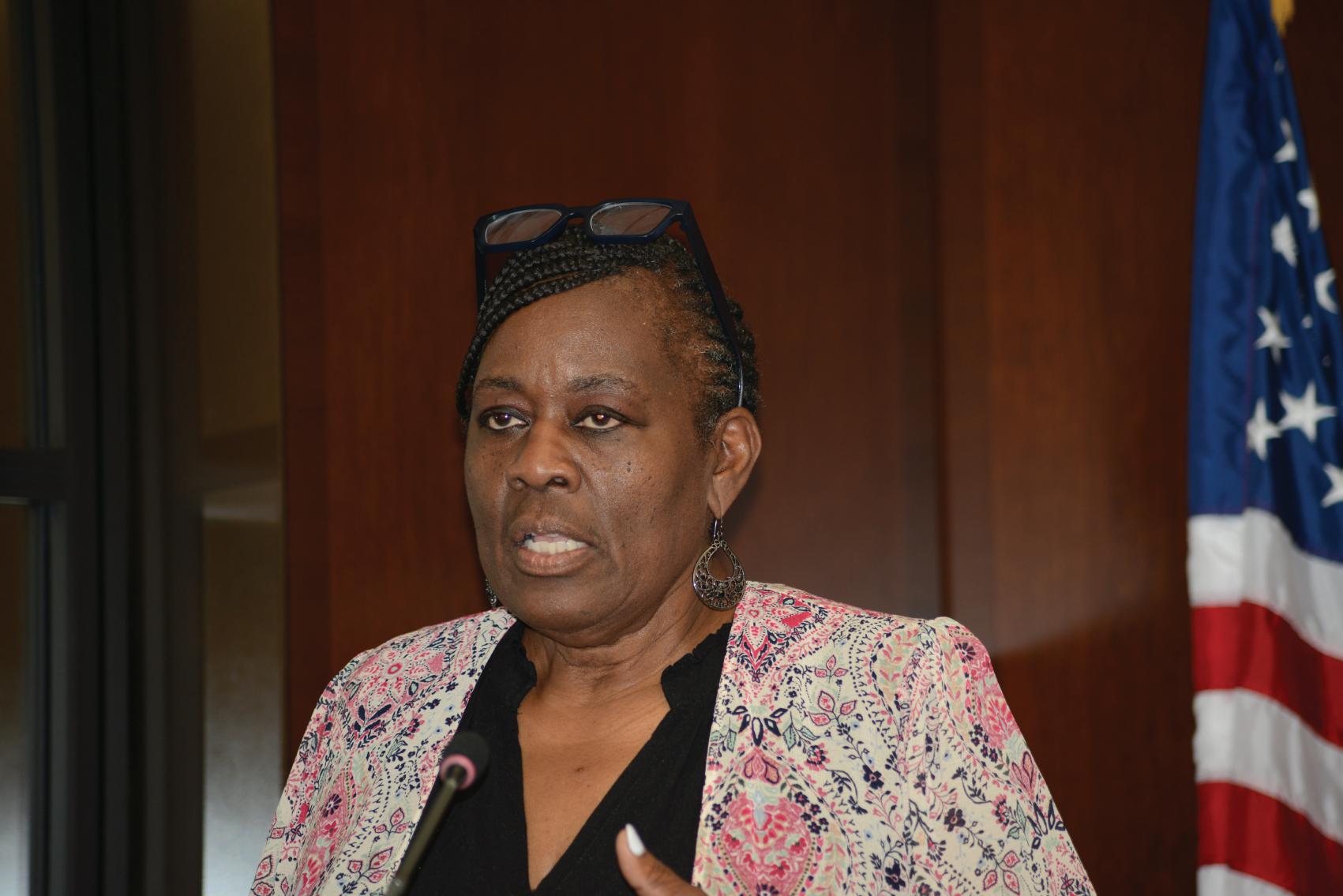


Local 314 President Latonia Johnson
Local 315 President Bryan Easley
Local 321 President Tony Wilson




Vice President Northeastern Region Dan St. Marie
Local 309 President Lisa Pruchnicki
Vice President Western Region Don Sneesby
Local 312 President Troy Lee Davis
Union Plus President Mitch Stevenson
Bill. Specifying that not all overtime work hours are considered tax free.
Legislative and Political Director Katie Maddocks provided an update on Capitol Hill developments. She informed the assembly of the various versions of the Reconciliation Bill as it progressed through the Senate and House of Representatives. In addition, describing the recent adverse attacks on the United States Postal Service, Mail Handler jobs, and basic labor rights. Director Maddocks discussed the 2026 Mid-Term elections and provided a report on increase of NPMHU PAC fund donations.
On Day 2 attendees received a comprehensive report regarding various matters related to the Mail Handlers Benefit Plan (MHBP) from Schann Holladay, Aetna Manager of Accounts, and Executive Director Nina Gallauresi. Updates included a review of MHBP: enrollment, attrition, federal new employee orientation, an update on Open Season, and marketing plans. Representatives from the MHBP presented an overview of the Postal Service Health Benefit Program which started providing health insurance benefits to USPS employees and annuitants beginning January 1, 2025. A review of the Partial Reimbursement Program was also provided for Local Unions attending Health Fairs.


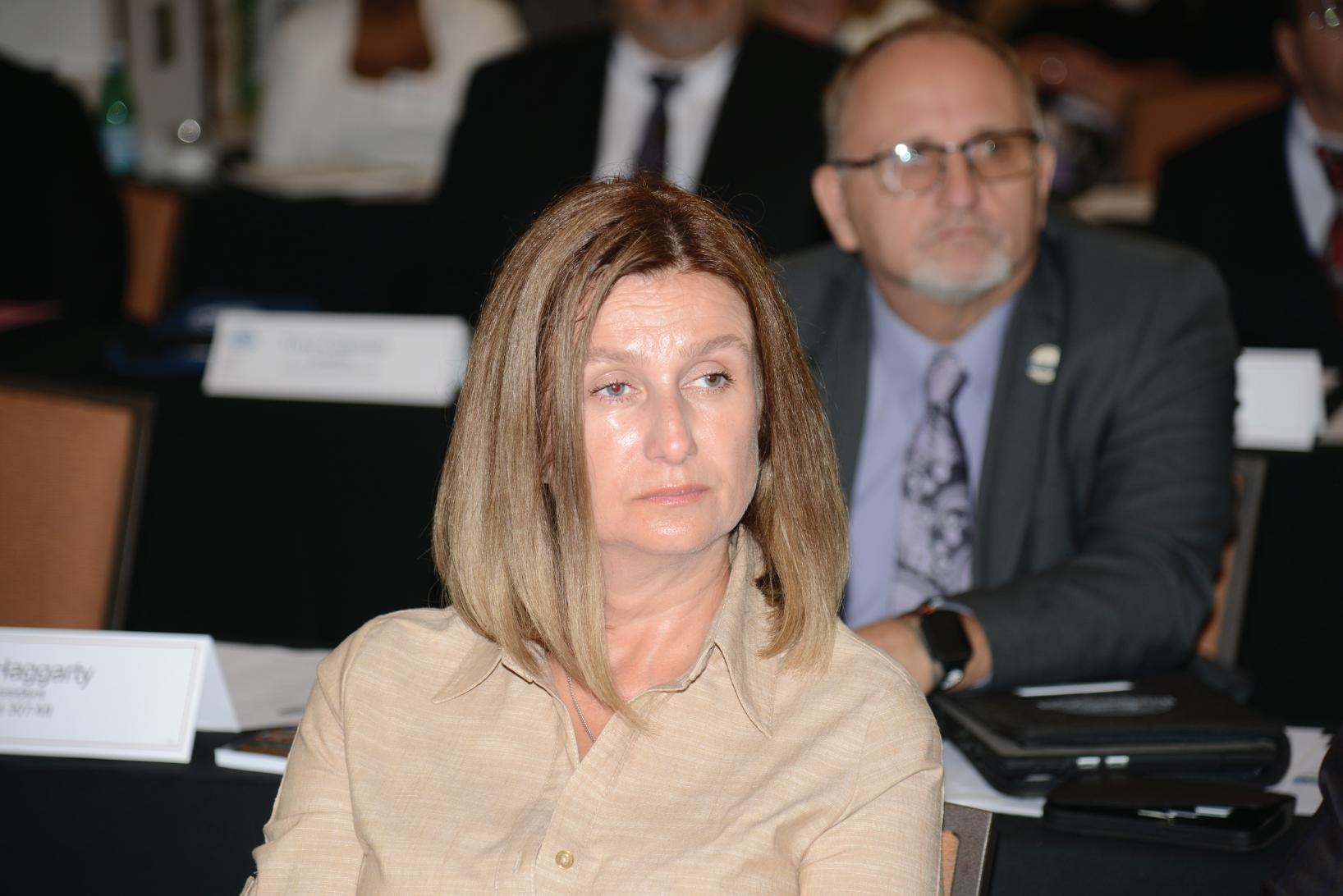
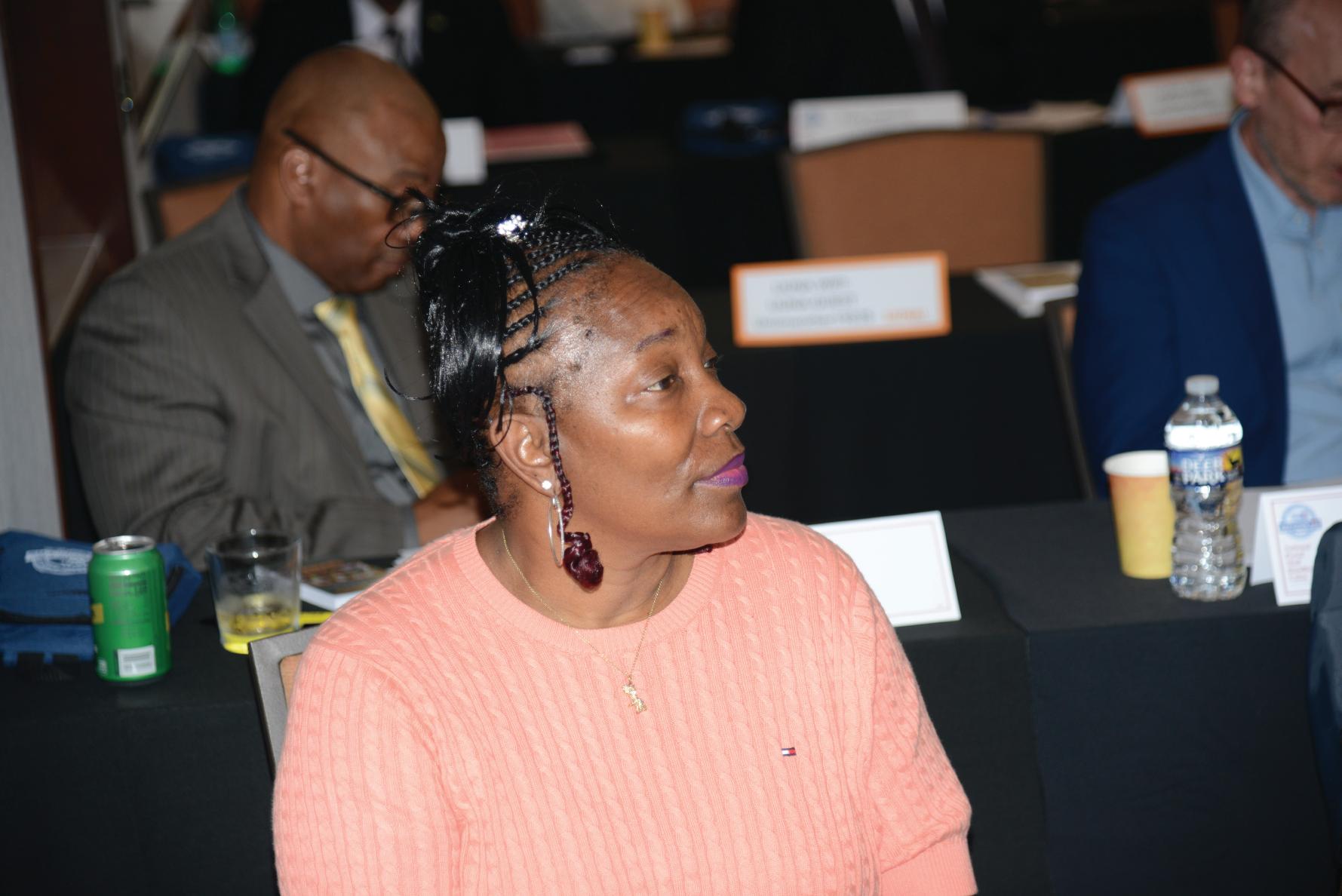


Local 334 President Sheldon Adams
Local 325 President Dwayne Williams
Local 332 President Edvina Tesch
Local 323 President Jeff Larsen
Local 333 President Monica Marshall
Local 324 President Carmalita Mecaskey
Local 331 President Dave Wisneski
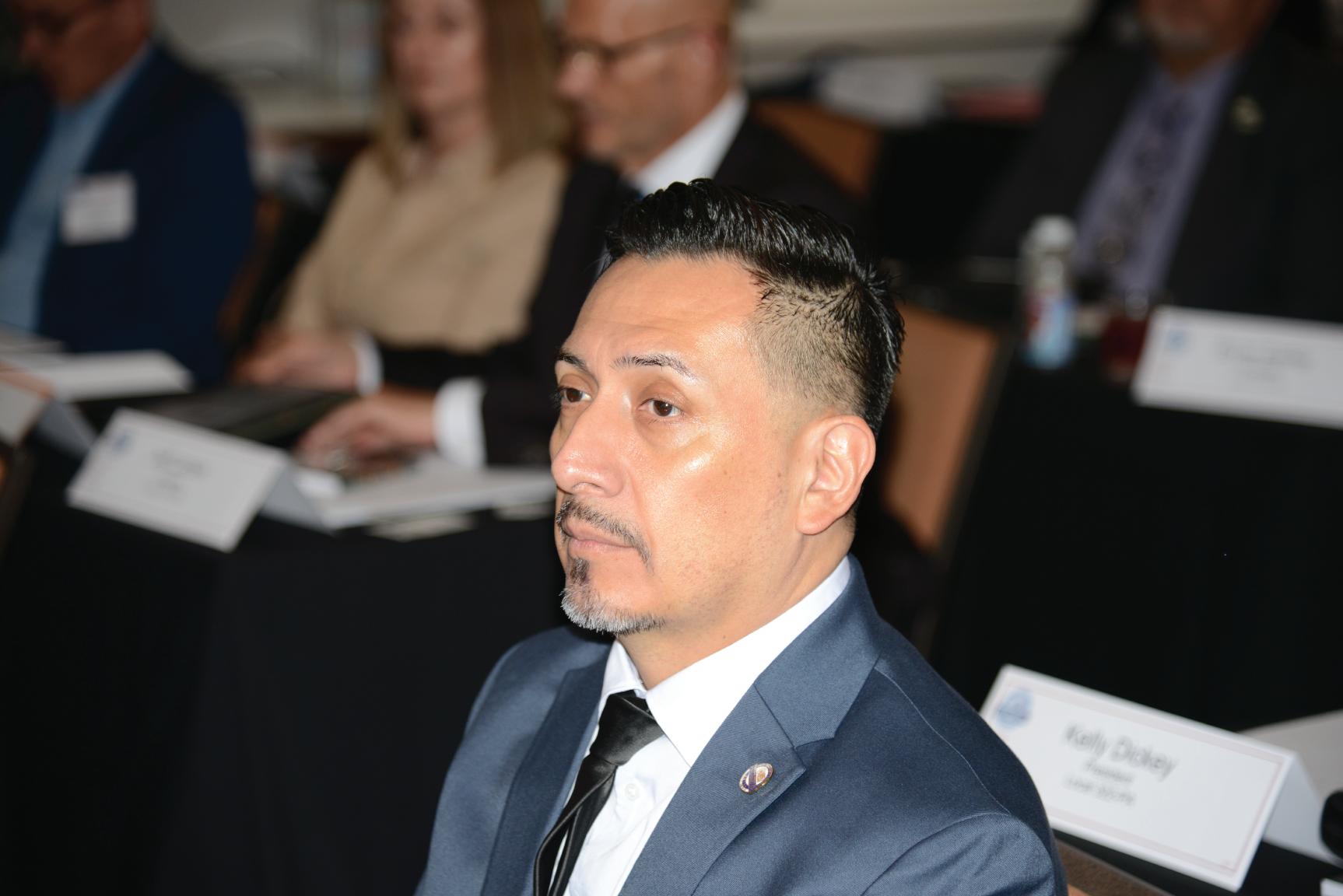
Local 322 President Kelly Dickey

The CAD department is actively involved with discussions on new RTH, RPDC, and LPC facilities. CAD Representative Ruther also provided updates on the RI-399 NDRC meetings. Including discussion on new sorting machinery — MaRS (still no craft determination for jurisdiction), SIPs and RIS (Robotic Induction System) for the SPSS and APBS. All LDRCs should still be meeting monthly. All new machinery should be added to Installation Inventory at LDRC. CAD Representative Ruther gave a detailed description on the status of SDCs; New complete inventory should be done ASAP, must show more than four (4) hours of Mail Handler work, now have a Mail Handler only SDC operation number. Brother Ruther noted that the next RI399 arbitration is for the SIPs, then HOPS and APBS ‘setup/breakdown’ will be scheduled.
The next speaker was Mitch Stevens, President Union Plus. He gave a presentation on the program. It was established in 1986. It is not funded with Union Dues. Union Plus pro vides savings for members including insurance, car rental, hotels, student loans, health savings, scholarship program, and disability.

A Membership Organizing Workshop was conducted by; Kevin Tabarus - National Secretary-Treasurer, John Gibson — Local 308 President & NEB, June Harris — Local 306 President & NEB, Jeff Larsen — Local 323 President and Kelly Dickey — Local 322 President. The workshop provided advice and tools available to organize new members into the NPMHU.
As with each of these Semi-Annual Meetings of the Local Unions, a solicitation for agenda items was distributed to all Local Union Presidents in advance of this meeting. Agenda items that were sent to the National Office were distributed to all Local Presidents prior to the meeting and, to the extent possible, the submitted agenda items were addressed in the appropriate reports and through other discussion before the assembly. Several other topics were raised and discussed during the round-robin segment of the meeting.
On Day 3, LiUNA General President Brent Booker and General Secretary-Treasurer Michael Sabitoni addressed the assembly welcoming all to LiUNA International Headquarters expressing their gratitude for the long-standing relationship with the NPMHU that has lasted over 50 years and com mitment to the lives and welfare of Mail Handlers through LiUNA’s ongoing activities.
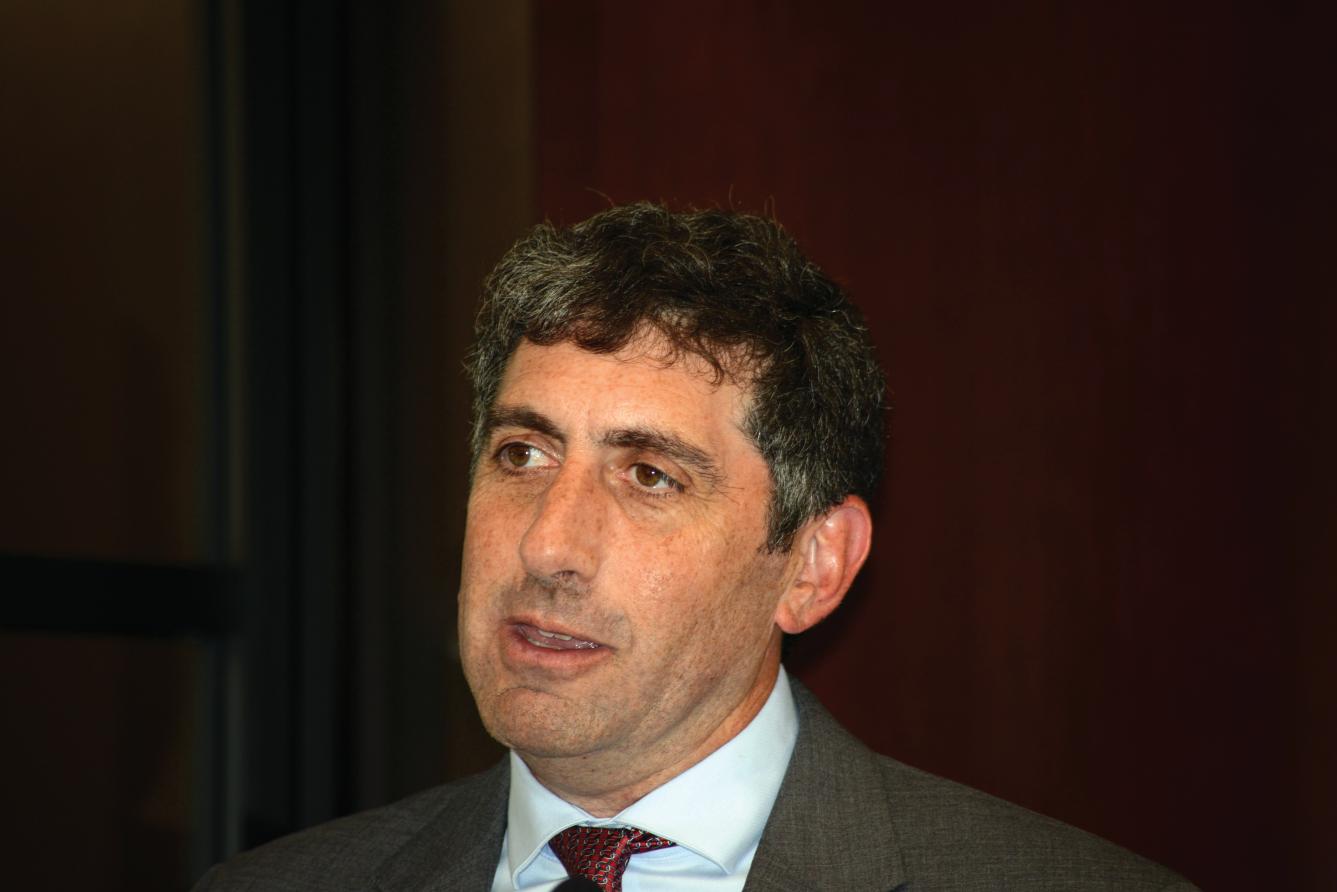


Brian Kaniewski, Fund Administrator, led a detailed pre sentation on the LiUNA Staff and Affiliates Pension Fund, with support from his team.
LiUNA’s Organizing Department gave an inspiring pre sentation on organizing new members called “Mail Handlers Rising”. The detailed presentation was led by Colleen Boyle.
After the business session, and without any further busi ness before the body, the Semi-Annual Meeting of the Local Unions was adjourned.


LiUNA General President Brent Booker
NPMHU General Counsel Matt Clash-Drexler
Local 305 President Felandria Jackson
Vice President Eastern Region John Gibson Legislative and Political Director Katie Maddocks
MHBP STANDARD OPTION:



Comprehensive coverage at an affordable price
The MHBP Standard Option is setting a higher standard for postal service employee health plans — at a lower cost.
The plan’s low copayments keep your costs down and out-of-pocket expenses predictable. With network providers, the plan pays 100 percent for annual exams, lab tests, maternity care and more. For services like diagnostic tests or surgery, this plan has you covered.
STANDARD OPTION BENEFITS INCLUDE:
• Up to $350 in wellness rewards
• No out-of-pocket costs for maternity care
• No cost for telehealth through Teladoc Health®
• No cost MinuteClinic® at a CVS Pharmacy®*
• 40 alternative care visits per year for chiropractic care and acupuncture
• No cost for Lab Savings Program
*
not available in all states. Aetna® and MinuteClinic, LLC (which
rates with comprehensive coverage and low copays for doctor visits and most services.
These rates do not apply to all enrollees. If you are in a special enrollment category, please refer to the PSHB Program website or contact the agency or Tribal Employer that maintains your health benefits enrollment.
CONNECT WITH MHBP
(TTY: 711) 24 hours a day, 7 days a week (except major holidays). Or visit MHBPPostal.com to schedule a one-on-one phone consultation, start a live chat, register to attend a webinar or learn more about MHBP plans.
and
Life Insurance Company and its affiliates. Teladoc Health is not available to all members. Teladoc and Teladoc physicians are independent contractors and are not agents of Aetna. Visit Teladoc.com/Aetna for a complete description of the limitations of Teladoc services. Teladoc, Teladoc Health and the Teladoc Health logo are registered trademarks of Teladoc Health, Inc.

SAFETY & HEALTH: COME OUT, COME OUT, WHEREVER YOU ARE!
JOHN GIBSON, EASTERN REGION VICE PRESIDENT, LOCAL 308 PRESIDENT
Sisters and Brothers, there are a number of important aspects of the work we perform day in and day out as employees of the United States Postal Service. However, for the thousands of representatives of this great Union, it can be argued that the most important facet of our representation of the mail handler craft might very well be keeping our fellow sisters and brothers free from job related illness or injury. Making sure that mail handlers leave the building in the very same condition they entered it is paramount. Life in a heavily mechanized environment is quite rightly no walk in the park and there are far too many examples where those who are responsible for ensuring the safety of all in the workplace do not meet the minimum standard. There seems to be a growing disrespect and at times an almost complete disregard for the safety and health of those who actually move the nation’s mail. I grant you that there may be those on the employer’s side of this equation who understand their responsibility, but they are few and far between.
For the scores of Mail Handler Representatives across all thirty-six Local Unions as well as our national representatives who enforce the contractual requirements of Article 14 of our contract and the dozens and dozens of postal handbooks, manuals, and publications regarding safety procedures and protocols, we thank you. You all recognize the great importance of protecting life and limb and we urge you to keep up the stellar work. Our “partners” in this endeavor to keep the safety and health of all employees as the highest priority, on the other hand, are not always as committed as we are. The opening paragraph of Article 14 of our National Agreement reads;
It is the responsibility of management to provide safe working conditions in all present and future installations and to develop a safe working force. The Union will cooperate with and assist management to live up to this responsibility. The Employer

agrees to give appropriate consideration to human factors in the design and development of automated systems. (underlining added)
The Union’s part in this cooperative effort is to “assist management to live up to…” creating a safe place to work. There is ample evidence that we meet our part of the bargain in a multitude of ways, including identifying unsafe conditions and practices through the submission of PS Forms 1767, Report of Hazard, Unsafe Condition, or Practice. This is one of many roles we play in this contractual partnership with the employer. For those who have had the boldness to identify an unsafe condition or hazard in the workplace and then expand their audacity by submitting a PS Form 1767, know all too well the typical response of those we are “assisting”. After decades of representation, I have yet to hear tale of a thank you from the management recipient of the 1767. The management response when we submit a 1767 is generally “What have I ever done to deserve this?” as though it were a disciplinary notice we just handed them. The point of the exercise is completely lost on the victimized manager. I am sure you wouldn’t be able to guess the purpose of the 1767 from the reaction of a vast majority of the managers who actually accept that 1767. Yes, I am aware that there are those in management who won’t even accept a PS Form 1767. The Employee and Labor Relations Manual states the purpose of the 1767 as,
PS Form 1767 is designed to encourage employee participation in the Postal Service safety and health program and to provide prompt action when employees report a hazard. This form provides a channel of communication between employees and management that promotes a prompt analysis and response with corrective action to reports of alleged hazards, unsafe conditions, or unsafe practices.
Here are the rules for the employer’s agents when receiving the 1767. (ELM 824.632)
The immediate supervisor must promptly (within the tour of duty):
a. Investigate the alleged condition.
b. Initiate immediate corrective action or make appropriate recommendations.
c. Record actions or recommendations on PS Form 1767.
d. Forward the original PS Form 1767 and one copy to the next appropriate level of management (approving official).
e. Give the employee a copy signed by the supervisor as a receipt.
f. Immediately forward the third copy to the facility safety coordinator. It is the supervisor’s responsibility to monitor the status of the report at all times until the hazard is abated. If the hazard remains unabated longer than 7 calendar days, the supervisor must verbally inform the employee as to abatement status at the end of each 7-day interval.
By the way, the Employee and Labor Relations Manual Chapter 8, Section 824.631 adds,
Discrimination against an employee for reporting a safety and health hazard is unlawful.
Yes, unlawful!
This is just a snippet of the unmet requirements of our continuing quest to make our workplace safe. As mentioned, there are scores of handbooks, manuals, and publications that require the employer to do a lot more than they are doing today. For example, the Supervisor’s Safety Handbook, the EL-801, (yea, there is one of those) requires, among many other things, the development of a Job Safety Analysis or PS Form 1783. The EL-801 reads in part
Doing a job the safe way is the same as doing a job the right way. Develop and teach safe procedures for each job. A useful way to review job methods and uncover hazards is to perform a job safety analysis (JSA) using PS Form 1783, On-the-Job Safety Review/Analysis (see Exhibit 8-14.1). Keep a complete and updated JSA for each job task in your work area.
It gets better when the EL-801 also instructs the supervisor,
When you distribute a completed JSA, it is your responsibility to explain its contents to your employees. If necessary, give your employees further training so they know exactly how to do the job — without accidents. Train new employees in basic job steps; a well-prepared JSA makes an effective guide for training.
Occasionally observe your employees as they perform jobs for which a JSA has been developed. The JSA allows you to determine whether or not they are doing their job safely.
Can anyone actually remember the last time a supervisor distributed a completed Job Safety Analysis (JSA) and provided safety instruction to a new employee working in an operation for the first time? Operations management has lost sight of its responsibility to promote a safe workplace and like many other aspects of employee-employer relationship the employer’s representatives now regularly demonstrate a lack of respect for the most important aspect of the United States Postal Service, its employees. The time has long since passed for us to collectively stand up and demand more from those who claim to know better. We urge you all to engage in the process of making our work safer and hold those responsible, accountable.
In Solidarity
John Gibson
ONE BIG BEAUTIFUL BILL LEAVES MAIL HANDLERS RELATIVELY UNSCATHED
Katie Maddocks, Legislative and Political Director
As part of the NPMHU Legislative Conference in May, Mail Handlers lobbied Congress opposing changes to their retirement benefits as seen in the initial version of the reconciliation bill, One Big Beautiful Bill Act (H.R. 1). While in Washington, DC, our members met with their elected officials sharing how these proposed changes to retirement benefits would not only result in a loss of takehome pay, but also impact their personal financial planning, hurt recruitment efforts for the Postal Service, and undermine collective bargaining rights.
Between the legislative conference and the final passage of the bill, there were various iterations of H.R. 1 impacting either postal employees or federal employees. The House Oversight and Government Reform (OGR) Committee put forth the first version of the bill’s language, which included increases for everyone enrolled to the Federal Employee Retirement System (FERS) to 4.4 percent regardless of hire date; elimination of the FERS Annuity Supplement for those who qualify to retire early; utilize an employee’s highest five earning years instead of the current highest three earning years to calculate annuity payments; require new employees would choose between the choice of being represented by union or paying an additional 5 percent to their FERS contributions — a total of 9.4 percent; and, require a fee for employees who file a Merit Systems Protection Board claim or appeal.
the elimination of the FERS Annuity Supplement; moving from the high-three to the high-five calculation; and, choosing between at-will employment and higher employee contribu tions to FERS. The House of Representatives voted on this version of H.R. 1 on May 22, again, mostly on party lines, 215 members voting for, and 214 voting against.
Following the House passage, the Senate Homeland Security and Governmental Affairs Committee (HSGAC) released its version of the text on June 12. Initial language in the Senate did not target Mail Handlers directly, but other federal employees faced changes to retirement benefits and collective bargaining rights. Two weeks later, HSGAC amended its version of the bill, and removed initial changes to collective bargaining rights, but

Through lobbying efforts and grassroots activity in opposition to this attack on benefits, the Senate Budget Committee and Senate Parliamentarian removed all language in H.R. 1 that would impact postal and federal employees. It is that version of the bill that was signed into law on July 4, 2025.
instead called for across the board increases to employee FERS contributions of 9.4 percent for all postal and federal employees, regardless of hire date.
On April 30, OGR Committee voted for the most part along party lines to advance its part of the bill. Congressman Mike Turner (R-OH-10) was the sole Republican who voted against it. He commented, “I oppose any and all efforts to reduce federal spending by taking money from the hard-earned pensions of federal workers. These pensions are not giveaways — they are promises to federal workers in exchange for their dedicated service.”
In the bill’s next move forward, the House Rules Committee changed the language, improving it slightly by only including
Through lobbying efforts and grassroots activity in opposition to this attack on benefits, the Senate Budget Committee and Senate Parliamentarian removed all language in H.R. 1 that would impact postal and federal employees. It is that version of the bill that was signed into law on July 4, 2025. To reiterate, there are no provisions in the law that would directly impact Mail Handlers’ federal retirement benefits or collective bargaining rights.
It should be noted that while H.R. 1 does not directly affect Mail Handlers’ benefits and labor rights, there is some language that could. NPMHU Secretary-Treasurer Tabarus discussed what the “no tax on overtime” provisions means to Mail Handlers in his article.

attacks in H.R. 1, anti-worker proposals in the bill can easily resurface. There are bills in both the House and Senate that target automatic union dues deduction from a member’s pay. The Paycheck Protection Act, H.R. 2174/S. 1597, prohibits federal agencies, specifically including the United States Postal Service (USPS), from automatically deducting labor organizations’ dues or political contributions from employees’ pay. Our brothers and sisters in the federal workforce are being further targeted with legislation that would require federal agencies to charge unions for use of agency resources and employee time. As NPMHU has seen attacks against collective bargaining rights through actions of the executive branch as well as these legislative efforts, we will remain vigilant against any calls to diminish the Union’s labor rights.
THE NEED TO PROTECT DEMOCRACY
There have also been threats against basic democratic rights not only against union members, but all eligible voters in America. On Monday, August 18, President Trump stated he would issue an executive order before the 2026 midterm elections calling for an end to mail-in ballots. He falsely claimed elections conducted by mail cannot provide an accurate count of ballots. There has been no evidence of fraud due to mail-in or absentee voting. Eight states and the District of Columbia only have mail-in voting; ten states offer permanent absentee voting; nineteen states offer no excuse absentee voting; and, the remaining thirteen states allow for absentee voting with an excuse. During the 2020 elections, the USPS processed over 135 million mail-in ballots; in the 2022 midterm elections, 82 million mail-in ballots were processed; and, in 2024, 59.4 million mail-in ballots were processed, or 30 percent of all ballots. For all three of these elections, ballots were processed at an on-time rate above 97 percent. Additionally,
States Constitution — the federal government cannot intervene in how states manage elections.
As there are tight margins between the parties in both the House and Senate, it is imperative that every eligible voter participate in the democratic process. With the 2026 midterms quickly approaching, Mail Handlers should be aware of when their congressional primaries take place, how and where they can vote, and of course, where candidates stand on policy issues that will impact Mail Handlers’ daily lives. Regardless of whether wanted or not, the outcomes of elections impact Mail Handlers’ lives. Make sure your interests are being protected. Beyond the act of voting Mail Handlers can also participate in the NPMHU Political Action Committee (PAC). The NPMHU PAC helps fund political candidates who are pro-labor, pro-postal, and pro-Mail Handler. The 2024 congressional elections cost $9.5 billion, and every dollar NPMHU PAC can put towards helping those who will fight for us on Capitol Hill counts. Mail Handlers can give as little as $1 a pay period, adding to the financial stability and political sustainability of the PAC. NPMHU encourages all of its members to be politically active at any level.
FOREIGN AFFAIRS IMPACTING POSTAL VOLUME
Following the Trump Administration’s implementation of trade tariffs, including taxing small packages entering the USPS system, duties on packages will see an increase between $80 and $200. This is resulting in the rise of prices in consumer goods. In response of these rising costs, 25 countries have suspended deliveries into the United States. The impact on mail volume is not yet fully known, but as 44 percent of global mail is processed through USPS, a loss of volume and revenue can be expected. As this is a new development, NPMHU will keep its members informed as to how these tariffs impact the Postal Service and Mail Handler jobs.
2025 PAC INCENTIVE AWARDS



2025 PAC INCENTIVE AWARDS LEVEL DONATION AWARD
Member
Sponsor
Activist
Leader
$26 ($1 per pay period) PAC Pin
$52 ($2 per pay period)
$100
$250
Ambassador $500
Super Ambassador $1o00
PAC Maglite Keychain
PAC Polo
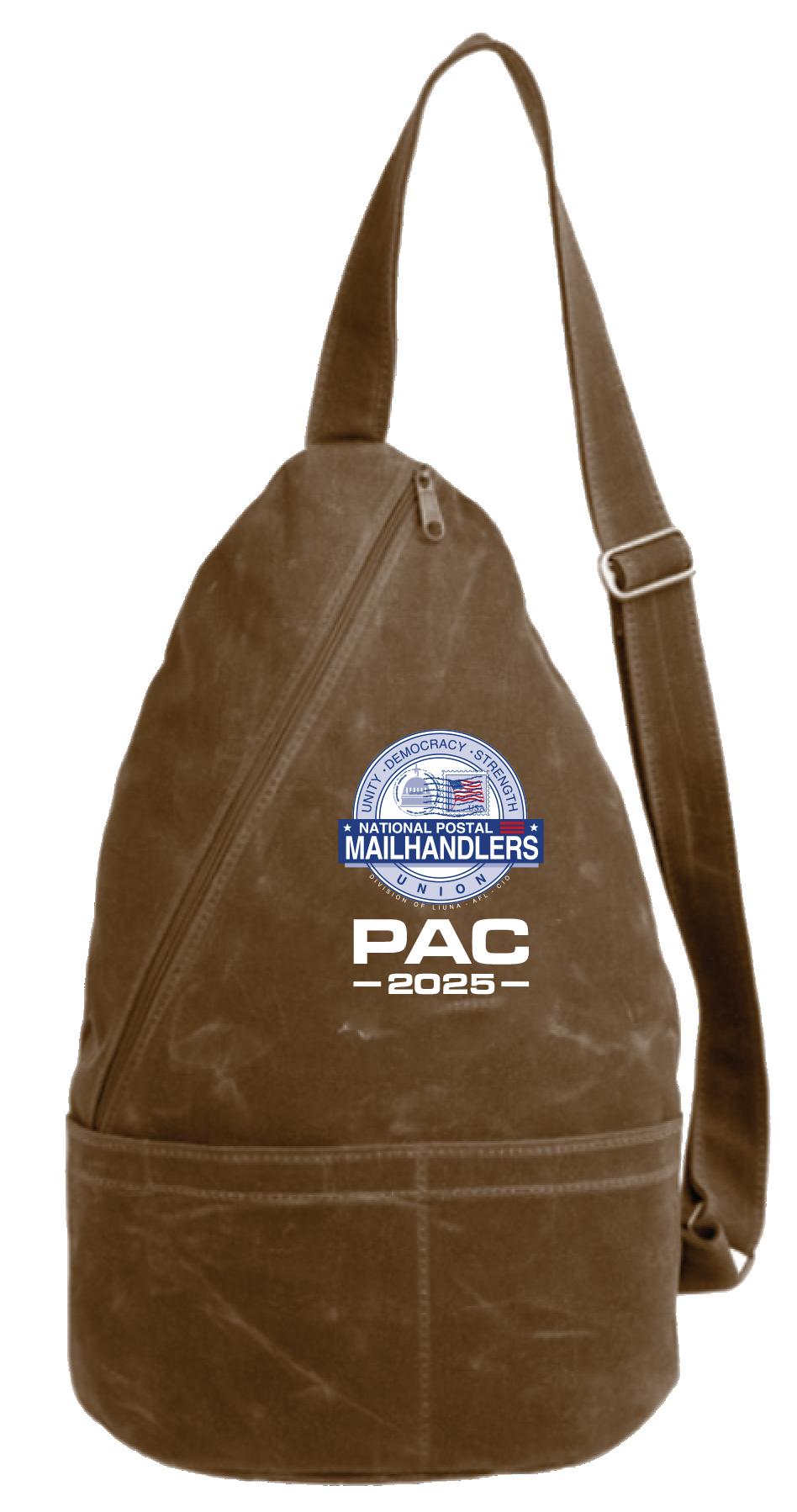
PAC Large Sling Bag
PAC Rock Glasses & Coasters
All Incentive Gifts
YOU TOO CAN BECOME AN NPMHU POLITICAL ACTIVIST
There is a quick way for Mail Handlers to contribute to the NPMHU PAC. Simply call in to the PostalEASE system, or visit the PostalEASE option on the web at www.liteblue.usps.gov Follow the instructions printed on pages 25 and 26 of this magazine. Your PAC contribution will be made directly from your bi-weekly postal payroll. You also have the option of sending in a personal check or authorizing a credit card contribution. Your contributions will also be entered in to the incentive award program that entitles you to an award based on your contribution level. There are six distinct PAC membership levels and awards. Awards are distributed based on membership level and will be mailed after the end of the year; awards will vary year to year.

NOTICE CONCERNING CONTRIBUTIONS:
Contributions to the Mail Handlers PAC are not deductible as charitable contributions for purposes of federal income taxes. In addition, federal law requires that the Mail Handlers PAC report to the Federal Election Commission the name, mailing address, occupation, and name of employer for each individual whose contributions in any calendar year total in excess of $200. Please also note that the Mail Handlers PAC has political purposes, and that all members have the right to refuse to contribute, and the right to revoke their authorization for any continuing contributions, without any reprisal.
PAC CONTRIBUTION BY PERSONAL CHECK, MONEY ORDER, OR CREDIT CARD:
You can contribute directly to the Mail Handlers PAC by filling out the following information and mailing it to:
Mail Handler PAC
P.O. Box 65171
Washington DC 20035
Please enclose your check or money order, or provide authorization to charge your credit card.
(Cut here and return to NPMHU PAC)
YOUR CONTRIBUTION HELPS PRESERVE POSTAL JOBS
This is to certify that I, _________________________________________________________, have voluntarily contributed the amount listed below, to the NPMHU PAC. I understand that this voluntary contribution is not a condition of membership in the union; I have the right to refuse to contribute without any reprisal; if specific contribution amounts are mentioned they are merely suggestions and I am free to contribute more or less; the Union will not favor or disadvantage me because of the amount of my contribution or my decision not to contribute; NPMHU PAC will use the money it receives to make Political expenditures and contributions in connection with federal elections; and only U.S. Citizens and lawful permanent U.S. residents are eligible to contribute.
Employer (if other than USPS)
Contribution Amount: (Please check one):
$26 (Member) $52 (Sponsor) $100 (Activist) $250 (Leader) $500 (Ambassador)
$1000 (Super Ambassador) Other
Please enclose your check or money order, or authorization to charge your credit card.
Contributions to the NPMHU PAC are not deductible as charitable contributions for federal income purposes.
You also can make your PAC contribution by bi-weekly salary allotment through PostalEASE (access by phone or on the web):
PostalEASE by TELEPHONE:
1. Dial 1-877-4PS-EASE—(877-477-3273) and follow the prompt for the Employee Services Main Menu.
2. When prompted, press #1 for PostalEASE
3. When prompted, enter your eight-digit USPS employee identification number.
4. When prompted again, enter your USPS PIN number. (This is the same as the PIN number you use for telephone bidding and/or other payroll allotments.)
5. When prompted, choose option #2 (to select payroll allotments)
6. Then choose option #1 (to select allotments)
7. When prompted, press #2 to continue
8. When prompted, press #3 to add the allotment
9. When prompted for the routing number, enter 054001220
10. When prompted for the account number, enter the following: 11260001 __ __ __—__ __—__ __ __ __ (the last nine digits of your account number is your social security number—this information will allow us to identify you as the PAC contributor).
11. Press #1 if correct
12. When prompted, press #1 for “checking”
13. When prompted, input the bi-weekly dollar amount of your PAC allotment.
14. Press #1 if correct
15. When prompted, press #1 to process
16. You will be provided a confirmation number as well as the start date for the salary allotment.
17. For your records: · Record the confirmation number
· Record the start date of the salary allotment
18. Press #1 to repeat, or press #9 to end call
PostalEASE on the WEB:
To initiate your bi-weekly PAC contribution on the web, simply go to www.liteblue.usps.gov
1. Enter your eight-digit USPS Employee ID Number and your USPS PIN
2. Follow the link to PostalEASE— you will again be asked to enter your Employee ID Number and USPS PIN
3. Follow the link for PAYROLL – Allotments/NTB
4. Continue to the ALLOTMENTS section
5. Your ROUTING TRANSIT NUMBER is: 054001220
6. Your ACCOUNT # will be: 11260001 __ __ __—__ __ —__ __ __ __ (the last nine digits of your account number is your social security number—this information will allow us to identify you as the PAC contributor).
7. For ACCOUNT TYPE— please select “CHECKING”
8. When prompted, please input the AMOUNT that you would like to contribute to the PAC each pay period.
9. To process your PAC allotment, you will need to select the VALIDATE button, and to finalize the transaction, please select SUBMIT. Be sure to print out a copy of the confirmation page for your records.
COLLECTIVE BARGAINING HISTORY
Teresa Harmon, Manager, CAD
In this article, I wanted to explain how we got to the collective bargaining that we have today. The National Postal Mail Handlers Union was first formed in 1912. Most of the terms and conditions of employment that we have now were not just given to us. Prior to 1970, all improvements to wages and benefits were established by federal law and achieved mostly through lobbying. The right to bargain over wages, benefits and working conditions did not start until 1971 with the Postal Reorganization Act.
HERE IS A BRIEF SUMMARY OF OUR HISTORY
1910s — We achieved the right to organize and to adjust grievances, an 8-hour workday, compensation for injury, and holiday compensation.
1920s — We improved compensation for injuries incurred on duty. We achieved a higher rate for overtime and night differential pay. Our job title at that time was Unskilled Laborer, which resulted in Clerks and Letter Carriers receiving a larger salary increases.
1930s — A 5-day work week established, gained retirement, sick leave, holiday benefits and a 44-hour work week.
1940s — Credit for military service toward retirement, higher wages won, time and half for overtime, paid jury duty. In 1944, our title changed from Laborer to Mail Handler. This enabled us to get a corresponding increases in salary with the Clerks and Carriers.
1950s — Sick leave accrual ceiling removed, liberalize retirement and survivor retirement benefits.
In 1963 - through Executive Order signed by John F. Kennedy, the Union obtained exclusive recognition to negotiate a number of working conditions directly with postal management.
In 1969 — Merged with the Laborers International Union of North America, (LiUNA)
1970 — The great postal strike of 1970 was caused by a combination of factors, including extremely low wages, poor working conditions, and the absence of collective bargaining. At that time, postal workers were not permitted by law to engage in collective bargaining. Postal workers felt wages were very low, benefits poor and working conditions unhealthy and unsafe. An immediate trigger for the
strike was a Congressional decision to raise the wages of postal workers by only 4%, while at the same time raising Congressional pay by 41%, and by the government’s subse quent failure to act on promised wage hikes.
Workers grew increasingly frustrated with Congress, and on March 18, 1970, thousands of New York City postal workers walked off the job in protest. Within days, they were joined by 200,000 others in 30 major cities. Mail service ground to a halt, and the plight of postal workers was brought to the public’s attention. The strike was soon settled after eight days, when it was agreed that upon the employees return to work, negotiations would be held between the Post Office Department and its then, seven recognized unions. Negotiations began on March 25, 1970, and, on April 2nd, the parties announced that

The Postal Reorganization Act of 1970 created the new U.S. Postal Service. This Act granted unions the right to negotiate with management over their wages, benefits and working conditions.
they had agreed to pay increases. This resulted in Congress approving a 6 percent wage increase, retroactive to the previous December. The parties also agreed to jointly develop and support a comprehensive reform package.
President Nixon signed the Postal Reorganization Act of 1970 on August 12, 1970, which created the new U.S. Postal Service, effective on July 1, 1971. This Act granted unions the right to negotiate with management over their wages, benefits and working conditions. In lieu of the right to strike, a binding arbitration process was established for resolving contract disputes. The law also granted postal workers an additional 8 percent raise and enabled them to advance more quickly to higher-paying positions.
1971 — The first negotiated agreement was completed for the period of July 21, 1971 – July 20, 1973.
NAVIGATING THE OWCP AND ECOMP SYSTEM
From the past to the future:
JOHN (JR) MACON, SOUTHERN REGION VICE PRESIDENT, LOCAL 329 PRESIDENT

How have times changed since the 1970s, from me working in Chicago, IL at an Ace Hardware earning $1.80 an hour, then taking the written exam in person and being informed by letter (which is now a rarity) that I was hired to work at Chicago’s Main Post Office as a (PTF) Mail Handler making 3 bucks and 96 cents an hour. Fast forward: with raises over the years, a new MHA now earns $19.02 per hour at Level 4.
At that time, communication by email did not exist, not becoming available to the public until the late 1980s and early 1990s. Mailgram, telegrams, payphones were in vogue. Cellphones were not commercially available until 1983. Wow!
After exiting the subway to attend orientation at Chicago’s Main Post Office, I gazed at this ‘one big beautiful’ 13 story stone structure, sitting along the Chicago River. So expansive that train tracks carrying loaded rail cars full of mail were unloaded daily. Deep in it’s under belly with vehicular traffic from the Eisenhower Expressway also buzzing through it… into the Congress Parkway. This sorting and processing center also employed more than 23,000 employees and contained a full cafeteria, a bank, a first aid center and a library.
During orientation, I was one of more than 100 new Handlers; lifting 70 to 100 pound canvas sacks, taking an oath of office and signing up as a dues paying member. One of the most important instructions we received during orientation: “work safely and if you sustain an on-the-job injury, report it immediately to your supervisor.”
When I hit the workroom floor as a rambunctious 18-yearold, I did not understand what working safely meant. I was just happy to make a decent wage. Unbeknown to me the Occupational Safety and Health Act had just been signed by President Richard Nixon in 1970 making the USPS subject to OSHA standards in April 1971, but unsafe working conditions still existed. In 1998: the Postal Employees Safety Enhancement
Act finally made the USPS subject to the OSH Act of 1970. A long time coming!
Safety talks and training were initially non-existent. We were unloading and loading trucks by pulling containers instead of pushing, lifting, and bending improperly, and never stretching to loosen up.
There were no seat belts or overhead bars on forklifts, which led to injuries and deaths. One important tidbit I remembered from orientation, “immediately report your injuries to your supervisor.”
My first accident involved me pulling an OTR up my heal and ankle. My supervisor was immediately informed. I was transported by Postal vehicle to the government medical center. My supervisor interviewed me and filled out the CA-1 for traumatic injury. Prompt notification and medical documentation allowed me to receive COP.
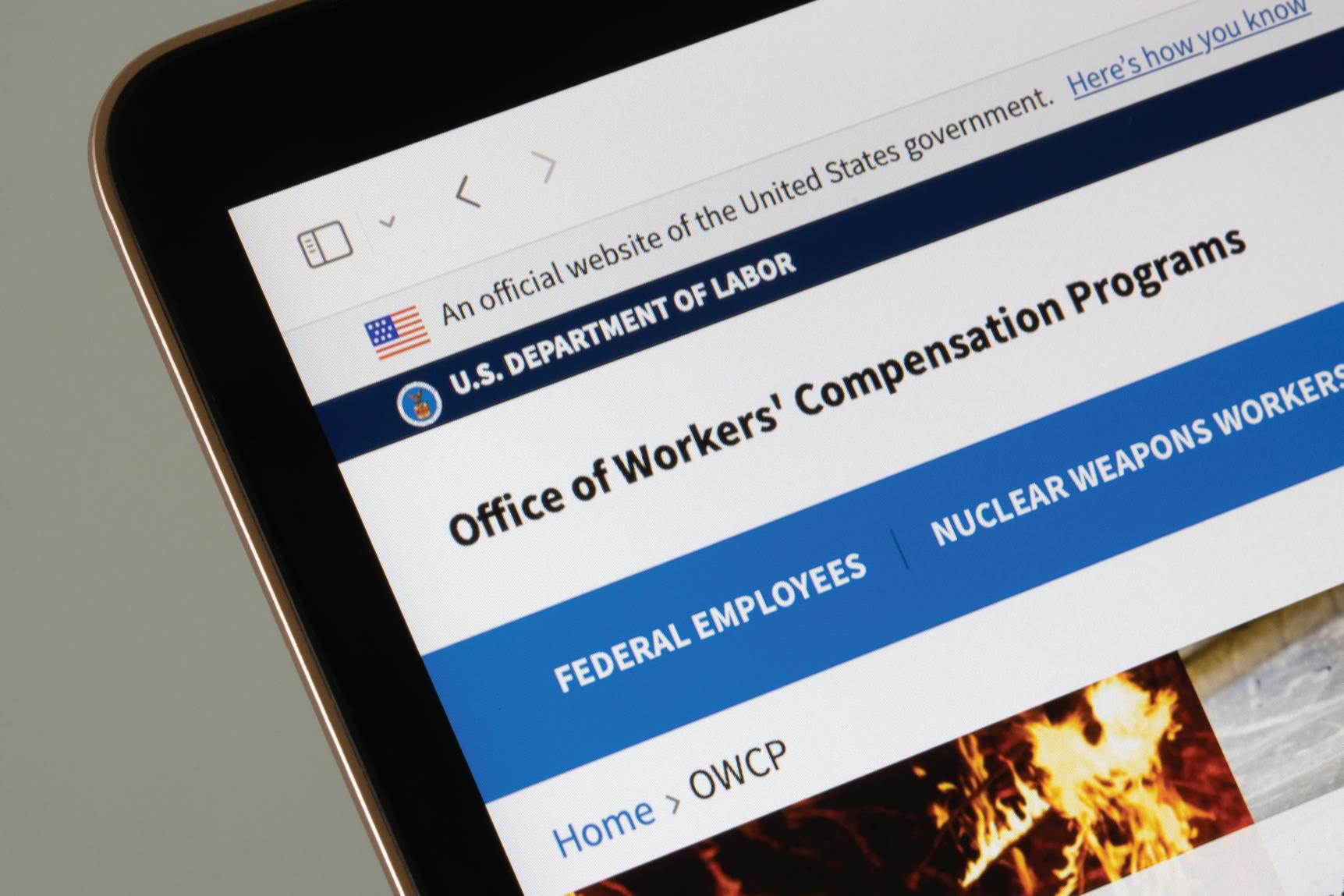
I believe this practice of always immediately reporting my injuries and unsafe working conditions resulted in all my injury claims being approved by (OWCP) Office of Workers’ Compensation Programs, which assisted in decreasing unsafe working conditions for me and my co-workers.
ECOMP (EMPLOYEES’ COMPENSATION OPERATIONS & MANAGEMENT PORTAL)
Since the spring of 2020 after the USPS piloted test programs, which allow employees to file claims electronically, the USPS have expanded ECOMP claim filing to all employees. After September of 2020, OWCP expected all claims to be filed via the ECOMP web portal. On occasion, based on the circumstances, paper claim forms from injured workers may be accepted but filing through ECOMP at https://www.ecomp. dol.gov/ is recommended.
When an employee sustains an on-the-job injury, even if it seems minor, they should immediately report the injury
to their immediate supervisor or someone acting in place of their supervisor (See EL-814). Promptly reporting an injury is essential to establishing a work-related injury claim and avoiding potential delays or jeopardizing the claim.
FECA requires that notice of injury should be given by the employee or person acting on their behalf within 3 years of the onset of the injury or condition. It is recommended to give notice immediately after a traumatic injury occurs Failure to give notice on Form CA-1 (through ECOMP) within 30 calendar days from the date of injury will result in a loss of entitlement to COP and may result in a loss of compensation rights if not filed within 3 years
The employee should also notify their union steward when injured to assist in navigating the claim process.
SUPERVISOR’S RESPONSIBILITIES:
• Upon notice of traumatic injury, the supervisor is responsible for ensuring that appropriate medical care is provided.
Emergency Treatment: if the injury is an emergency, the employee should be sent to the nearest available hospital. The supervisor may accompany the employee to facilitate prompt medical treatment (ELM 545.4).
A medical emergency is an injury or sudden and unexpected onset of a condition requiring immediate medical care. Some injuries are considered emergencies if not treated promptly they might become more serious, such as animal bites, eye injuries, deep cuts, broken bones, etc.
The manager or the supervisor must report all injuries and illnesses within 24 hours of the date of accident, the diagnosis of injury or illness, or the notification of the manager of the situation (EL-821.12).
• Discuss the facts of the injury.
• Provide the employee with ECOMP pamphlet.
• Assist the employee in filing their injury claim through ECOMP, registering within 24–48 hours at https://www.ecomp.dol.gov
• For medical treatment for a traumatic injury, the supervisor should complete the front of the Form CA-16 for authorization of medical care within 4 hours.
• Advise that the Form CA-1 for traumatic injury or Form CA-2 for Occupational Disease is to be completed on ECOMP.
• Advise they are responsible for electronically uploading all compensation forms and medical evidence of a disabling injury within 10 days after filing Form CA-1.
• They must advise the employee to elect Continuation Of Pay (COP) for up to 45 calendar days when filling out Form CA-1.
• Advise the employee they have a three-day waiting period before COP will be granted. Other leave may be used during this initial 3-day period.
THERE
ARE THREE TYPES
OF INJURIES UNDER ELM
540:
Traumatic Injury (Form CA-1): a condition of the body caused by external force, including a wound, stress, or strain. It must be identifiable as to time and place of occurrence and include damage to medical braces, artificial limbs, and other prosthetic devices. The injury also must be caused by a specific event or incident or a series of incidents or events within a workday.
Occupational Disease or Illness (Form CA-2): an illness or disease produced by systemic infections; continued or repeated stress or strain by lifting, keying, walking or manually operating equipment; exposure to toxins, dust, fumes, poisons, etc. or other repeated exposures to conditions of the work environment over a longer period of time than a workday.
Recurrence of disability and Recurrence of medical condition (Form CA-2A). Notice of recurrence should be promptly submitted to OWCP if it causes the employee to lose time from work and incur a wage loss or if the employee experiences a renewed need for treatment after previously being released from medical care. Injury Policies should be
HALTING HEART ATTACK AND STROKE
Nina Gallauresi, Executive Director, MHBP
GET MEDICAL HELP FAST
A heart attack or stroke can happen within seconds. Getting treatment fast for these medical emergencies can mean the difference between life and death or disability. But do you know the symptoms of these dangerous events? And do you know if you’re at risk for having one?
More than 1.5 million people have a heart attack or stroke every year in the U.S. Heart attack happens when blood flow to the heart gets blocked, most commonly by a blood clot. Stroke happens when blood flow to the brain gets disrupted. The most common type of stroke is caused by a blood clot stuck in a blood vessel that feeds the brain. Stroke can also be caused by a blood vessel in the brain that breaks open and bleeds into nearby tissue.
“Early treatment is key to improving your chances of survival,” says Dr. Gina Wei, a heart-health expert at NIH. Treatment may include either rapidly dissolving or removing the clot to open up the blocked blood vessel. For some heart attack cases, emergency surgery is used to redirect blood flow around the blockage.
Getting help immediately can save a life and reduce damage to the heart or brain. Less damage to these vital organs can also mean less disability afterward, and a faster recovery, explains Dr. Clinton Wright, a neurologist and stroke researcher at NIH. So it’s important to be on alert for symptoms of a heart attack or stroke for both yourself and the people around you. Every minute matters.
KNOW THE SYMPTOMS, ACT FAST
The most common symptoms of a heart attack are pain, heaviness, or discomfort in the center or left side of your chest. But they’re not the only symptoms. Women are more likely than men to have other symptoms, like pain or numbness in the left arm.
Some people may also feel a rapid or irregular heartbeat. Others feel pain or discomfort in one or both arms, the back, shoulders, neck, jaw, or above the belly button. You may also feel short of breath or suddenly sweat a lot for no apparent reason. Rarer symptoms include feeling extremely tired for no reason, nausea and vomiting, and dizziness.
For stroke, the most common symptoms are facial drooping, arm weakness, and trouble speaking. “There can also be a sudden loss of balance or coordination, or sudden trouble seeing in one or both eyes,” Wright says.
If you or anyone around you has these symptoms, call 9-1-1 immediately. Don’t wait. Treatment can start in an ambulance on the way to the hospital. This helps improve the odds of survival and recovery. Don’t drive yourself to the ER or ask someone to drive you. It may delay treatment.

Other health conditions can mimic symptoms of a heart attack and stroke. “But it’s better to be safe than sorry,” Wei says. “Call an ambulance to go to the ER and get checked out.”
ARE YOU AT RISK?
Most heart attacks and strokes happen in people who have certain risk factors. If you know your risk, you can be on the lookout for symptoms. You can also take steps to lower that risk.
One major risk factor for heart attack is high cholesterol in the blood. High cholesterol can also increase the risk for stroke. Cholesterol can build up on the walls of blood vessels, causing plaques. If a plaque breaks open, a blood clot can form. But cholesterol isn’t the only contributor to this process.
Dr. Paul Ridker from Harvard University is working to understand the role of inflammation in heart disease. His research has shown that high cholesterol and inflammation work together to increase heart-attack risk. “Heart disease involves both accumulation of cholesterol and an inflammatory fire lighting the match underneath it all,” he says.
In a recent study, his team measured inflammation using a test called hsCRP as well as blood cholesterol in women in their 30s. Women with high levels of inflammation had a higher risk of heart attack or stroke later in life than those who only had high cholesterol.
“Get these things measured,” Ridker advises. Knowing your numbers “can give you an opportunity to start prevention much earlier in life,” he says.
Hypertension, or high blood pressure, is another important risk factor for stroke and heart attack. High blood pressure has no symptoms. So you may not know you have it.
You can check your blood pressure at home with automatic cuff monitors. These are available at all major pharmacies.
Measuring your blood pressure at home if you have hypertension and getting your cholesterol checked by your doctor regularly can help you assess your health risk. Your doctor can advise you on how to lower your risk based on your blood pressure and cholesterol numbers.
LOWER YOUR RISK
If you’re at risk for a heart attack or stroke, lifestyle changes and medications can help you lower that risk.
“Eating more vegetables and less red meat, exercising, and quitting smoking all lower heart attack and stroke risk,” Ridker says. “And it turns out they all reduce inflammation as well.”
Other steps you can take to reduce your risk of a heart attack or stroke include maintaining a healthy weight, getting enough sleep, and managing stress.
“It’s never too early to start making healthy changes,” says Wei. “It’s easy to feel overwhelmed. You can start with small steps. Like taking the stairs instead of an elevator or parking your car a little farther away when you go shopping. Or adding one fruit or vegetable to your day. Then work your way up gradually.”
Sometimes, lifestyle changes alone aren’t enough to reduce your risk. Medications can also help.
Drugs called statins can help lower cholesterol levels. The U.S. Food and Drug Administration recently approved the first drug to lower inflammation in adults at very high risk of a heart attack or stroke. It’s called low-dose colchicine.
Drugs that lower blood pressure can also help. “As people get older, blood pressure naturally goes up,” Wright says. So it’s important to make sure to manage your blood pressure as you age.
A large NIH-funded study showed that using more than one medication to reduce blood pressure substantially reduced the number of strokes in people at high risk who couldn’t get their blood pressure low enough with only a single drug. “And we’ve continued to gain more evidence that the lower your blood pressure, the better,” Wright says.
“We all have the power to protect our hearts and lower our risk for heart disease and stroke,” Wei explains.
KNOW THE SYMPTOMS
Don’t hesitate to call 9-1-1 if you see these symptoms of heart attack or stroke. Every minute counts.
Heart attack:
• Chest pain or discomfort
• Pain, stiffness, or numbness in the neck, back, or one or both arms or shoulders
• Shortness of breath
• Cold sweat, nausea, dizziness
Stroke:
• Sudden numbness or weakness of the face, arm, or leg, especially on one side of the body
• Sudden severe headache, dizziness, confusion
• Sudden difficulty with vision, balance, speech
Are You at Risk for Heart Attack and Stroke?
• Many health conditions and other factors can increase the risk of a heart attack or stroke. These include:
• High blood cholesterol, or high levels of other fats in the blood (triglycerides).
• High blood pressure (hypertension).
• High blood sugar (diabetes).
• Overweight or obesity.
• Smoking.
• A lack of regular physical activity.
• Family history of heart attack or stroke.
• Previous heart attack or stroke.
• Older age.
• Preeclampsia or other pregnancy complications.
ADDITIONAL MHBP RESOURCES TO ASSIST YOU
If you ever experience an emergency, dial 911 immediately! But if you need medical care and it’s not life threatening, it pays to know your options. Choosing the right care setting can save your time and money.
MHBP has extensive resources to assist you with conditions that increase the risk for stroke and heart attack, such as an Enhanced maternity program and Transform Diabetes care program. MHBP also offers the Hello Heart program to manage hypertension.
MHBP has a Lifestyle and Condition Coaching Program that provides you with personalized support that helps you manage existing conditions that impact the risk for heart and stroke, including:
• Diabetes
• Pre-diabetes
• Exercise Management
• Nutrition management
• Weight management Contact MHBP at mhbppostal.com or call 833-497-2416 for more information about any of these programs.
SOURCES:
• National Institutes of Health https://newsinhealth.nih.gov/
• MHBPpostal.com
Power In The Pink
June Harris, Central Region Vice President, Local 306 President, Women’s Committee Chairperson
Hey Brother and Sisters, it’s time to shine in the awesome color of PINK! This is the prominent color used to signify Breast Cancer Awareness Month in October. This issue hits home for me, being in a family that has endured the fight with Cancer. I’ve learned the significance of consistent medical testing and personal awareness of changes in your body. Because I am considered as “high risk”, I have annual mammograms and breast MRIs. I am claustrophobic, and MRIs are a challenge for me. But I do it. Knowing and following through is key to winning this fight.
I WANT TO SHARE SOME STATISTICS WITH YOU FROM BREASTCANCER.ORG.
• Breast cancer is the most common cancer diagnosed among women in the U.S. Each year, about 32% of all newly diagnosed cancers in women are breast cancer.
• In 2025, approximately 316,950 women will be diagnosed with invasive breast cancer, with 59,080 new cases of ductal carcinoma in situ (DCIS), which is non-invasive.
• About 16% of women with breast cancer are younger than 50 years of age.
• About 66% of breast cancer cases are diagnosed at a localized stage — before cancer has spread outside of the breast — when treatments tend to work better.
• There are currently more than four million women with a history of breast cancer in the U.S. This includes women currently being treated and women who have finished treatment.
• About 42,170 women will die from breast cancer in 2025.
• Less than 1% of all breast cancers occur in men.
This is not to scare you, but to make you aware of the importance of early detection and self-care. Know your family history regarding health issues. Ask questions of your physicians and see what you can do to avoid this disease. Education is vital. All ages, genders, races, and ethnic groups are susceptible to breast cancer. The numbers speak for themselves. Be encouraged by the fact that the number of


people dying from breast cancer has decreased throughout the years. But you must be an active participant in your health care.
TAKE THE QUIZ: BREAST CANCER
When it comes to your breast health, don’t be fooled by rumors and misinformation. Get the facts. Test your knowledge of 6 common beliefs about breast cancer by taking the Breast Cancer Quiz from the American Cancer Society at www.cancer. org/cancer/types/breast-cancer/breast-cancer-quiz.html.
1. You can get breast cancer even if T or F it doesn’t run in your family.
2. If breast cancer runs in your family, T or F you’re sure to get it.
3. You still need mammograms T or F after menopause.
4. Men can get breast cancer. T or F
5. Surgery and needle biopsies can T or F cause breast cancer to spread.
6. There’s nothing you can do to T or F lower your breast cancer risk.
Show your support during the month of October for Breast Cancer Awareness by sporting the color PINK. My Brothers and Sisters look awesome in PINK
PROTECT OUR WORK
DANIEL ST. MARIE, NORTHEASTERN REGION VICE PRESIDENT, LOCAL 301 PRESIDENT

While it is primarily our Union Representatives’ responsibility to fight Job Abolishments and Reversions through the Grievance-Arbitration Procedure, it is every Mail Handler’s responsibility to help protect our work.
It is Management’s right through the National Agreement to Abolish or Revert a duty assignment. It is the Union’s right to grieve an abolishment or reversion, but we also have the burden of proof, and a violation must be shown. Article 12.2 D7 defines an abolishment as a management decision to reduce the number of occupied duty assignment(s) in an established section and/or installation. Article 12.2 D8 defines a reversion as a management decision to reduce the number of duty assignment(s) in an installation when such duty assignment(s) is/are vacant.
Assuming the Union’s verbal arguments regarding management’s proposed reversion or abolishment of a bid fall on deaf ears, we must then turn to the grievance process. We must show that the bid, once effectively reverted or abolished, is now being backfilled. We must demonstrate how employees are harmed through the elimination of each specific duty assignment. These arguments are critical as the elimination of duty assignments can hold up MHAs being converted, transfers being taken, or limit the number of jobs available for FTFs or FTRs to bid on. Backfilling of the reverted/abolished duty assignment can happen in a number of different ways:
• Overtime is used to cover the hours of the reverted/abolished duty assignment
• MHAs or FTRs from other work areas/ sections are used to cover the hours
• Cross Craft — Clerks being used to cover the hours (A separate grievance also)
• Supervisors being used to cover the hours (A separate grievance also)
Brothers and Sisters, while your Union Representatives will handle the filing and processing of these grievances, it is important for all of us to know what we can do to help protect our work. Our Mail Handlers are our eyes and ears on the workroom floor, and, among other things, should always make our Stewards aware of anyone other than a Mail Handler performing OUR WORK!!!

Cross Craft violations occur when a member of another craft (typically Clerks) perform Mail Handler work. Most, if not all, facilities have an RI-399 Inventory which lists what work is Mail Handler work and what work is Clerk work. If there is ever any question on whether another craft is performing our work, please request a steward. Violations are written up and depending on the frequency, these grievances collectively may assist in fighting a reversion/abolishment grievance or simply gaining another Mail Handler duty assignment.
Article 1.6A says Supervisors are prohibited from performing bargaining unit work at post offices with 100 or more bargaining unit employees, except:
• A1 in an “emergency” which is defined to mean an unforeseen circumstance or a combination of circumstances which calls for immediate action in a situation which is not expected to be of a recurring nature;
• A2 for the purpose of training or instruction of employees;
• A3 to assure the proper operation of equipment;
• A4 to protect the safety of employees; or
• A5 to protect the property of the USPS.
Article 1.6 violations should be immediately reported to your union steward. Even if you are not sure if it was a violation, report it, and let your steward decide. Supervisors should not be doing our work, PERIOD!!! And Christmas is NOT an emergency! It comes every year on December 25th, since about the year 336 AD. Managements’ unpreparedness for it is no fault of the unions. Again, as with the Cross Crafts, these Article 1.6 violations must be written up and, depending on the frequency, these grievances collectively may assist in fighting a reversion/abolishment grievance, or as with Cross Crafts, gaining another Mail Handler duty assignment.
Brothers and Sisters, Management is continually coming after our jobs, always looking to cut back on staffing, always looking to do more with less. If other people (clerks & supervisors) are allowed to perform Mail Handler work, with no repercussions, the next job that management abolishes could be yours! Your Union Representatives will write up and process the grievances associated with Reversions, Abolishments, Cross Craft, and 1.6 Violations but it is every Mail Handlers responsibility to assist and Protect Our Work!!!
COST-OF-LIVING ADJUSTMENT (COLA) SET AT $790
Effective September 6, 2025 (PP 020-2025) all career Mail Handler craft employees are scheduled to receive a cost-of-living (COLA) adjustment as outlined in Article 9.3 of the 2022 National Agreement. This is the sixth of six possible COLA increases under the terms of the current agreement. This COLA increase is based on the upward change in the relevant Consumer
Price Index (CPI) following release of the July 2025 Index, using the July 2022 CPI index as a base. The resulting calculation provides an annual increase of $790 for all Steps in Table 1 and for Step P of Table 2. The remaining Steps in Table 2 will receive the proportional COLA increase percentages as outlined in Article 9.3 of the National Agreement.
MAIL HANDLER WAGE RATES — SEPTEMBER 6, 2025 (PP 20-2025)
NOTE: This schedule reflects a $416 cost of living adjustment effective March 8, 2025 (PP 07-2025)
MAIL HANDLER WAGE RATES — EFFECTIVE SEPTEMBER 6, 2025
(PP 20-2025)
NOTE: This schedule reflects a $416 cost of living adjustment effective March 8, 2025 (PP 07-2025)
NOTE: This schedule reflects a $416 cost of living adjustment effective March 8, 2025 (PP 07-2025) NOTE: Full-Time Flexible Mail Handler (FTF) will move to Pay Table 2, Step AA after 48 weeks (unless converted to FTR prior to 48 weeks).
NOTE: MHA will advance to Step B after 26 weeks.
ARTHUR S. VALLONE SCHOLARSHIP APPLICATON CALLING ALL MAIL HANDLERS!
This November the NPMHU will announce the opening of the 2026 Arthur S. Vallone Scholarship Award year. November 24th the Application for the Vallone Scholarship will be available to Career Mail Handlers, MHA’s, and their families.
The Scholarship program has been providing education assistance to deserving recipients since 2001. In February 2005, the program was renamed in honor of Arthur S. Vallone. Arthur had served the NPMHU with distinction for over twenty-five years at his untimely passing in January 2005. Arthur was a true believer in the Union Movement, and a tireless advocate for Mail Handlers and all working people. His list of accomplishments and contributions to the NPMHU is lengthy. The National Postal Mail Handlers Union is proud to honor the legacy that Brother Vallone has left behind.
occurs first (for a maximum of $8,000 per recipient over 4 years). We hope you will take some time to learn more about the educational opportunities available to Mail Handlers and their families.

This year, thanks to a unanimous decision by the NPMHU National Executive Board the Arthur S. Vallone Scholarship program will increase the annual award amount from $1,000 to $2,000.
Please take some time to visit the NPMHU National website at www.npmhu.org where you can download the Arthur S. Vallone Scholarship application. The program will award a minimum of 15 scholarships (3 per region) in the annual amount of at least $2,000, renewable for up to four (4) years or until the completion of the undergraduate degree, whichever
Also available to Mail Handlers and their families are various education benefits offered through Union Plus www.unionplus. org. Union Plus currently has several education offerings, each offering has its own degree offering, application process and rules and regulations. We encourage Mail Handlers and their families to tap into these benefits uniquely designed for union families. Please take some time to visit the Union Plus website to learn more about the education benefits along with a plethora of benefits and savings all designed for Union households.
The Union Plus Scholarship is also a resource for education financial support. Since 1991, the Union Plus Scholarship has awarded more than $5.9 million to students of union families. Over 4,200 union families have benefited from their commitment to higher education. The application deadline for the Union Plus Scholarship is 12:00 PM (EST), Saturday January 31st.
MAIL HANDLERS ACROSS THE COUNTRY
LOCAL 309
Local 309 held their annual Council Meeting to discuss current and future matters important for the Local. In attendance (front row) National President Paul Hogrogian, Branch President Syracuse James Jennings, Local 309 Recording-Secretary and Branch President Albany Tanya DeRouville, SEBM Rebecca Bicksler, (back row) National Secretary-Treasurer Kevin Tabarus, Branch President NW Rochester Frederick Cowley, Local 309 President Lisa Pruchnicki, Branch President Buffalo Alois Raclawski and Local 309 Treasurer Joyce Miskell.
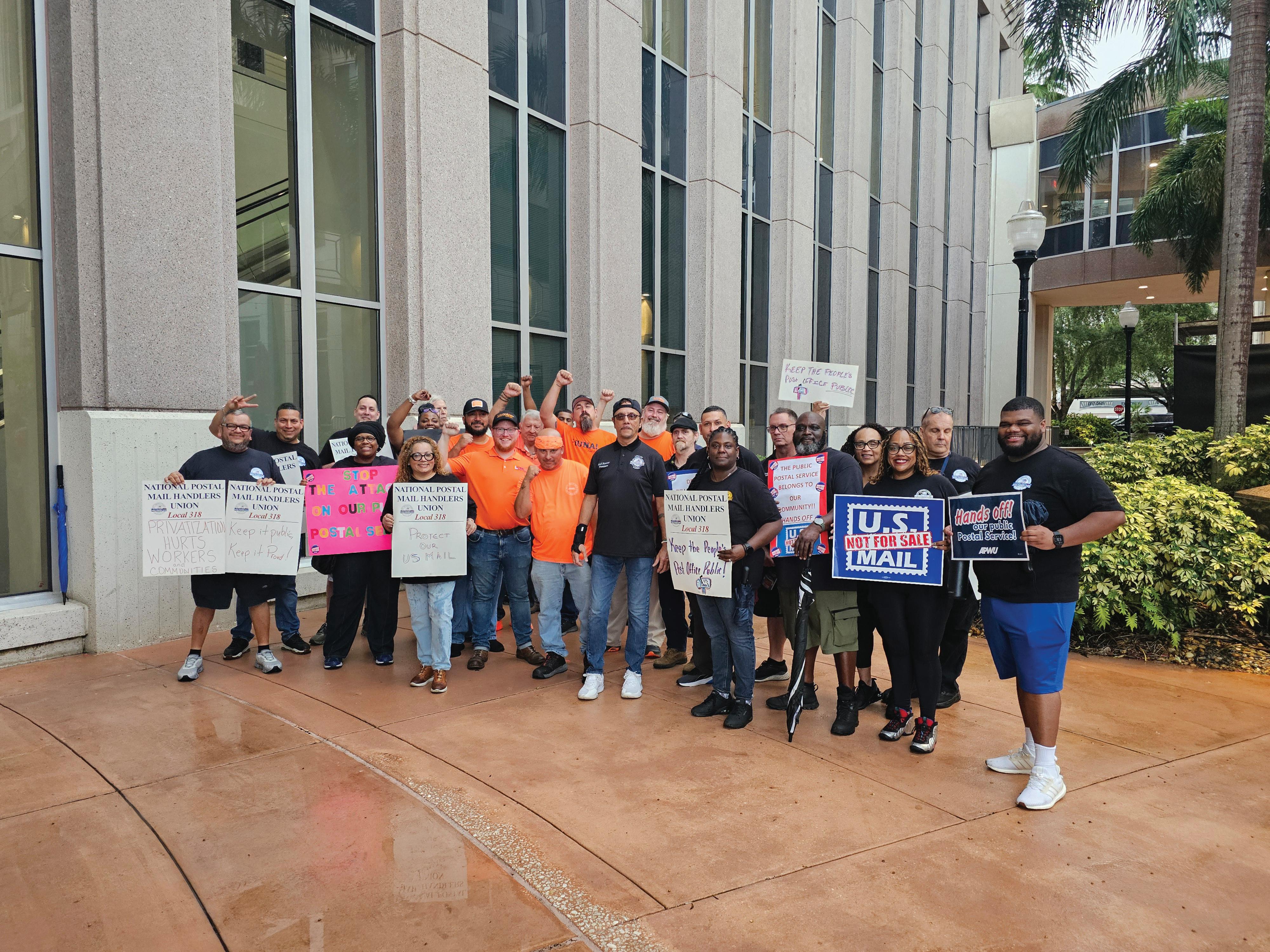

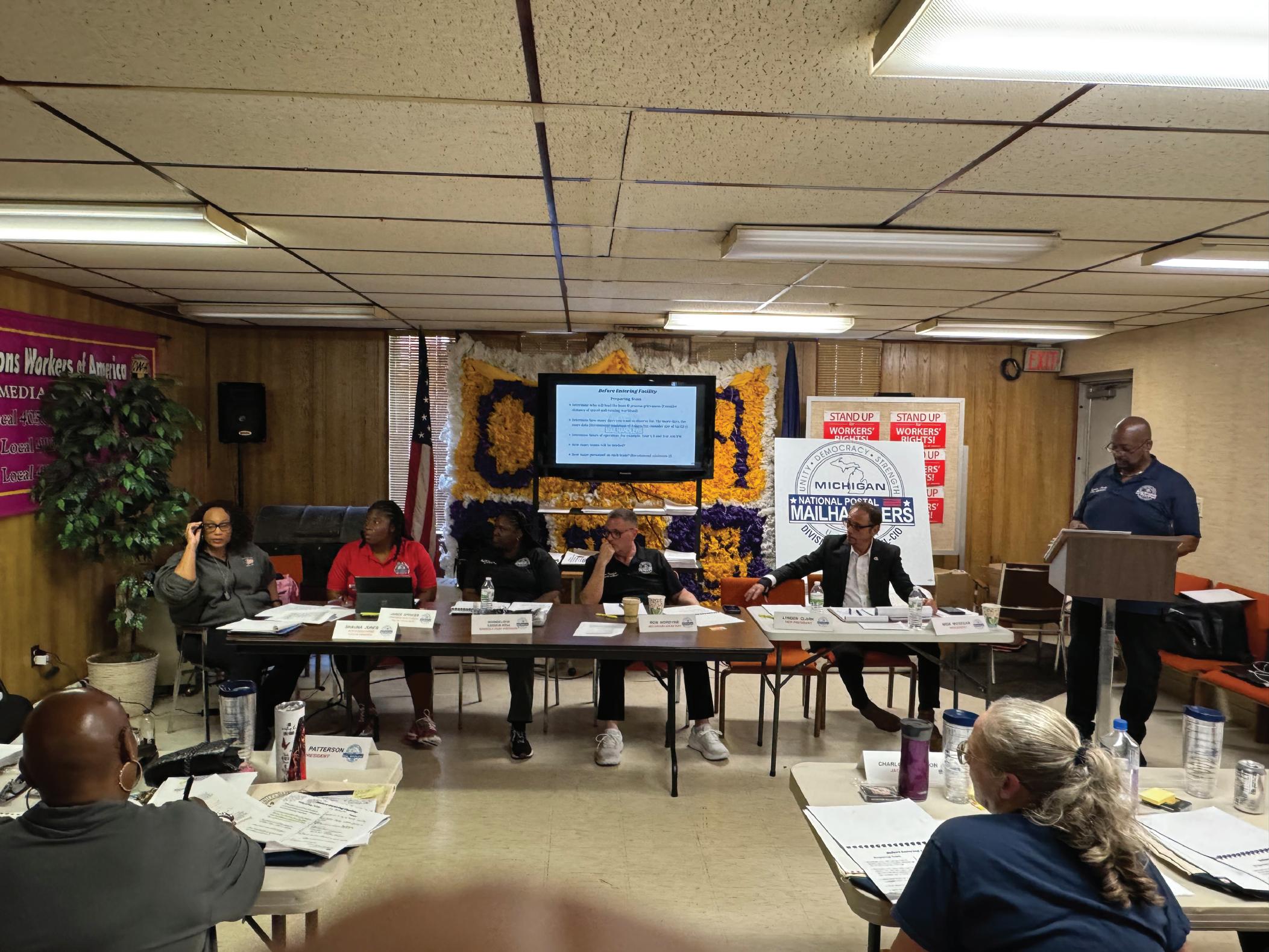
LOCAL 318
Local 318 has had an active several months. Members of Local 318 joined a postal rally held by the NRLCA during their National Convention. Union members from NALC, NPMHU, APWU and LiUNA joined together with the NRLCA on the footsteps of City Hall to defend the postal service against privatization.
Also of note, Local 307, led by President Jim Haggarty hosted a S&DC/ Function 4 Facility Workshop. Participating in the workshop were officers and representatives from Locals 307, 311, 312, and 329. Leading the training was Local 318 President Nick Mosezar and representatives from the 318 S&DC SWAT Team. It included Local 318 VP Lynden Clarke (Ft. Lauderdale S&DC), Local 318 State Executive Board Member Shauna Jones (Panama City S&DC), Local 318 Recording Sec. Ron Nordyke (Lakeland & St. Petersburg S&DC),Seminole P&DC Branch President ShanDelisa CardovaRosa (Daytona Beach Main Post Office) and Local 318 State Advocate Janice Spencer (Pompano Beach S&DC).
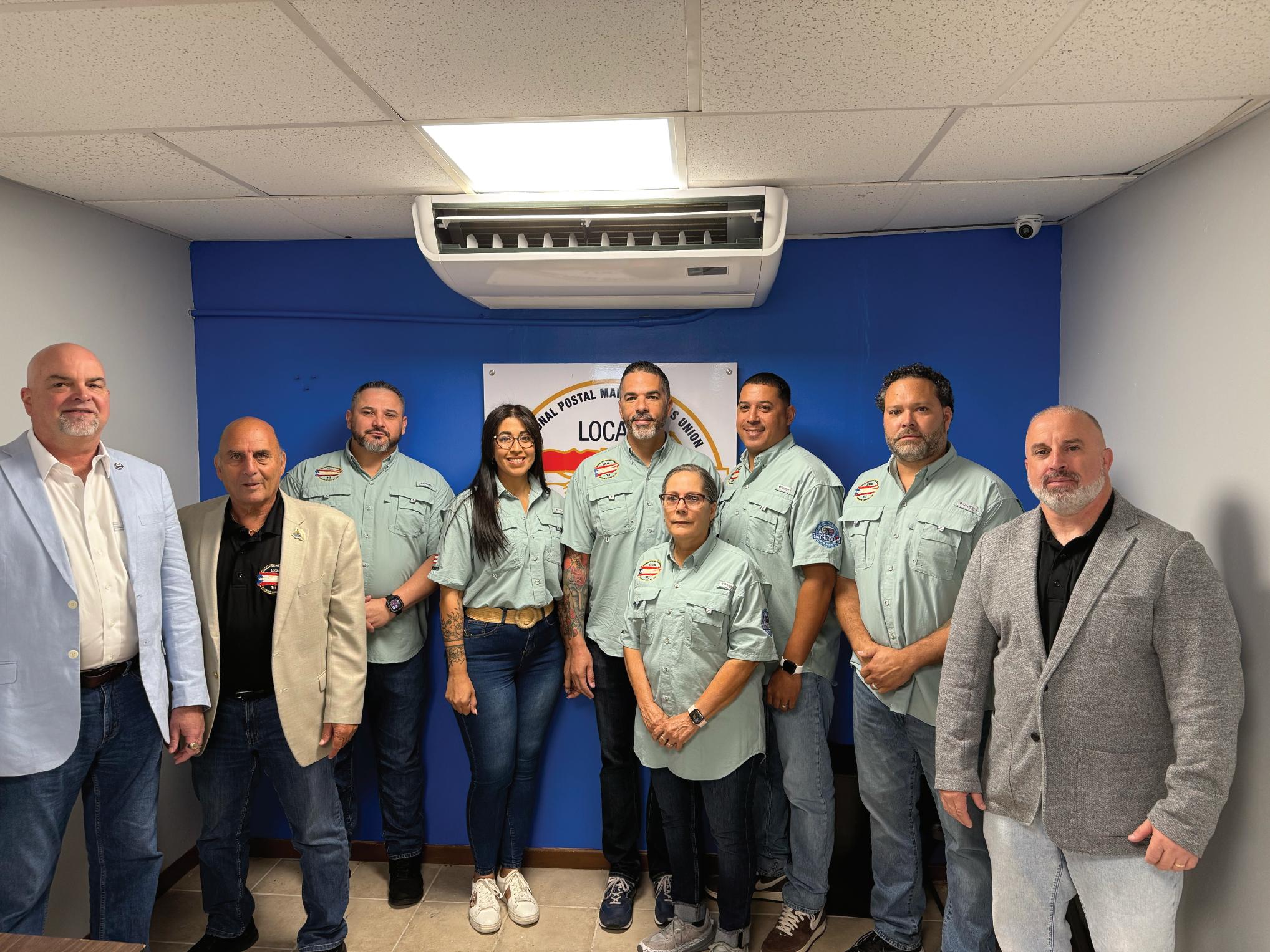
LOCAL 313
Local 313 held a swearing in ceremony for its newly elected officers. In attendance (l-r) National SecretaryTreasurer Kevin Tabarus, National President Paul Hogrogian, Ildefonso Rivera Branch President San Juan, Shelia Ruiz Local 313 RecordingSecretary, Elsie Rodriguez Local 313 Treasurer, Jese Carrion SEBM, Juan Morales Local 313 Vice President,
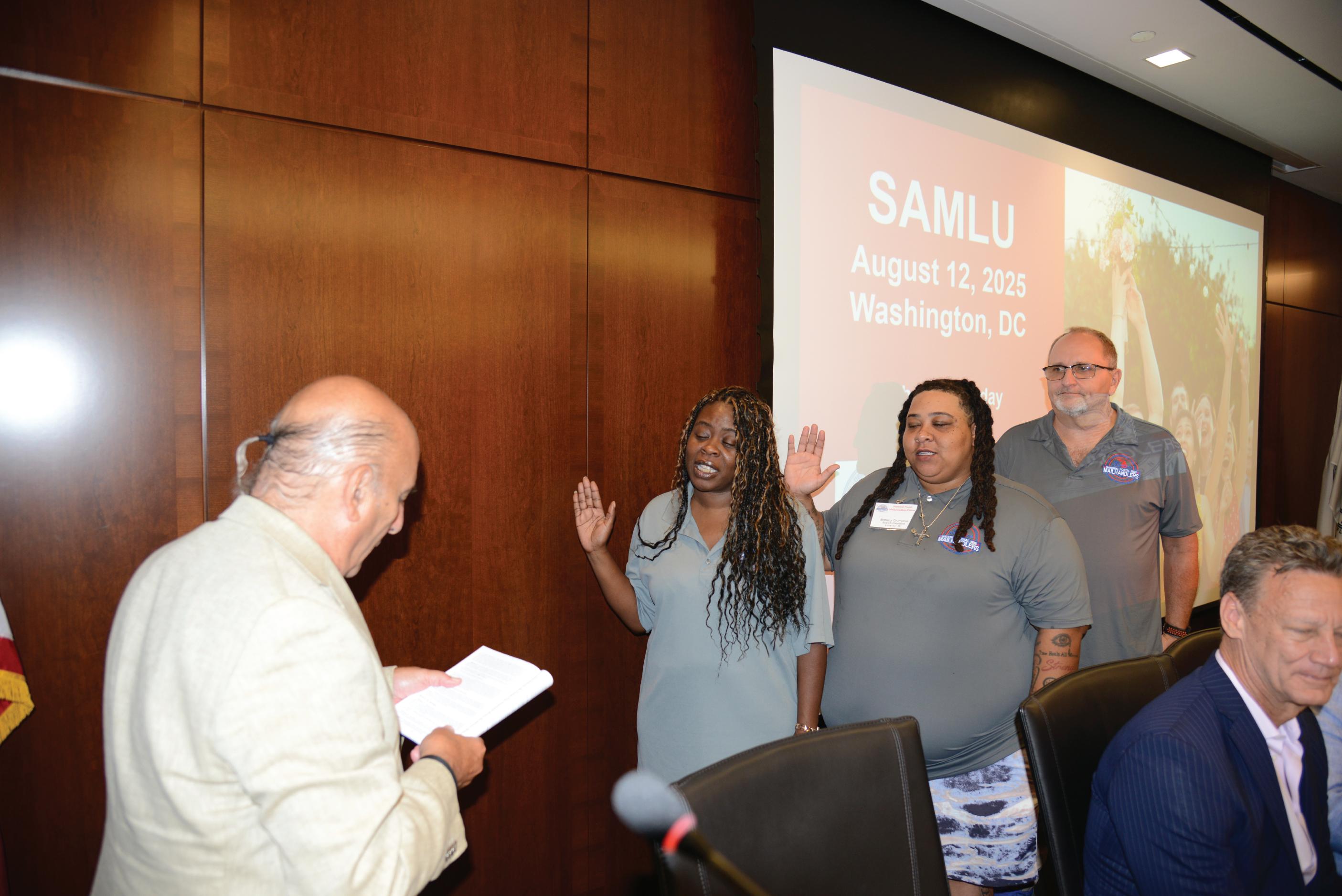
LOCAL 322
Local 322 Joined the Brothers and Sisters of the NALC for a Fight the Privatization of the Postal Service rally. Pictured: Bottom (L-R): Steward Charles Leviege, VP Jason Bankston, VP Emeritus Bill Best, SEBM Kam Collins, Local 322 President Kelly Dickey


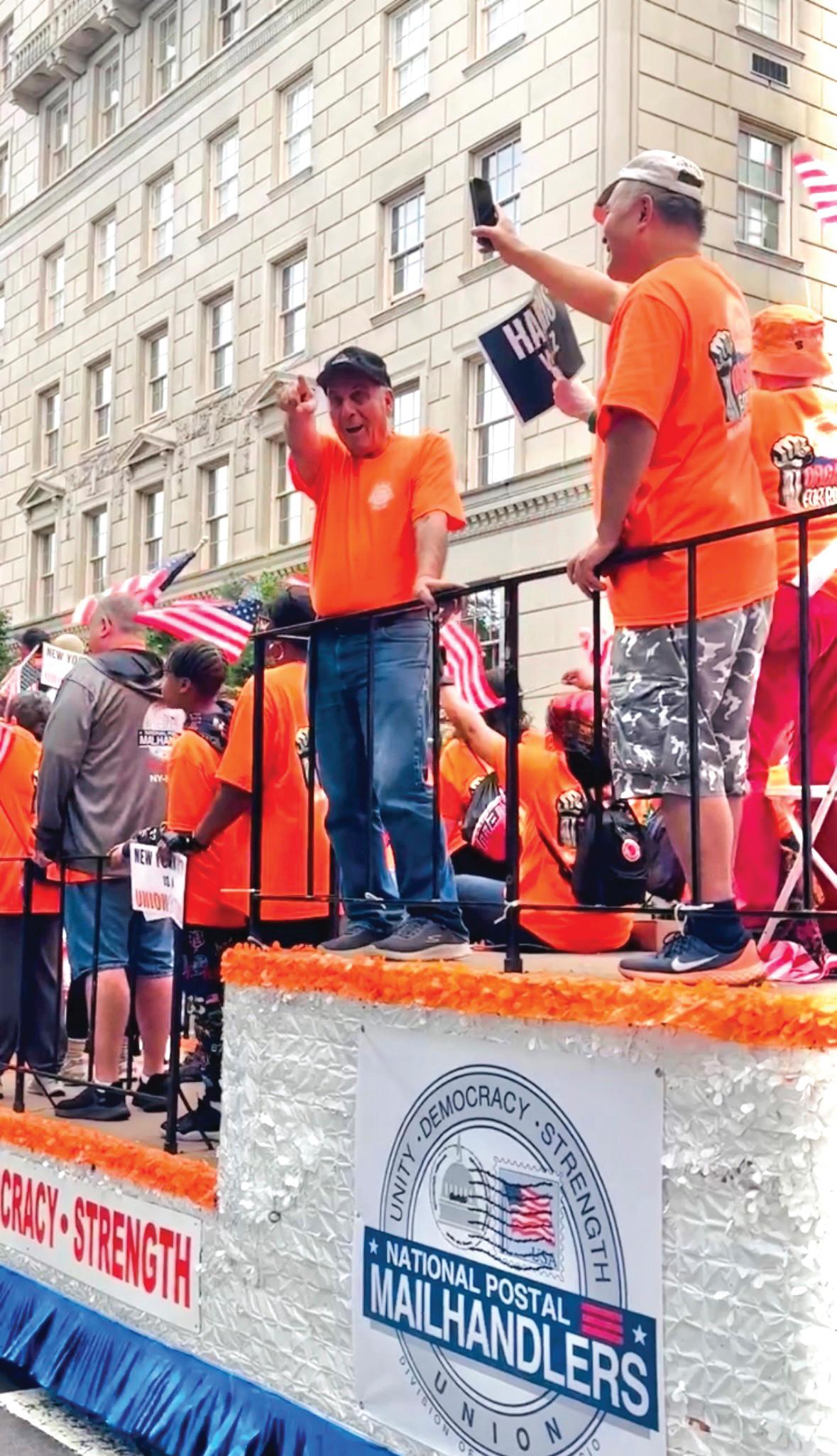

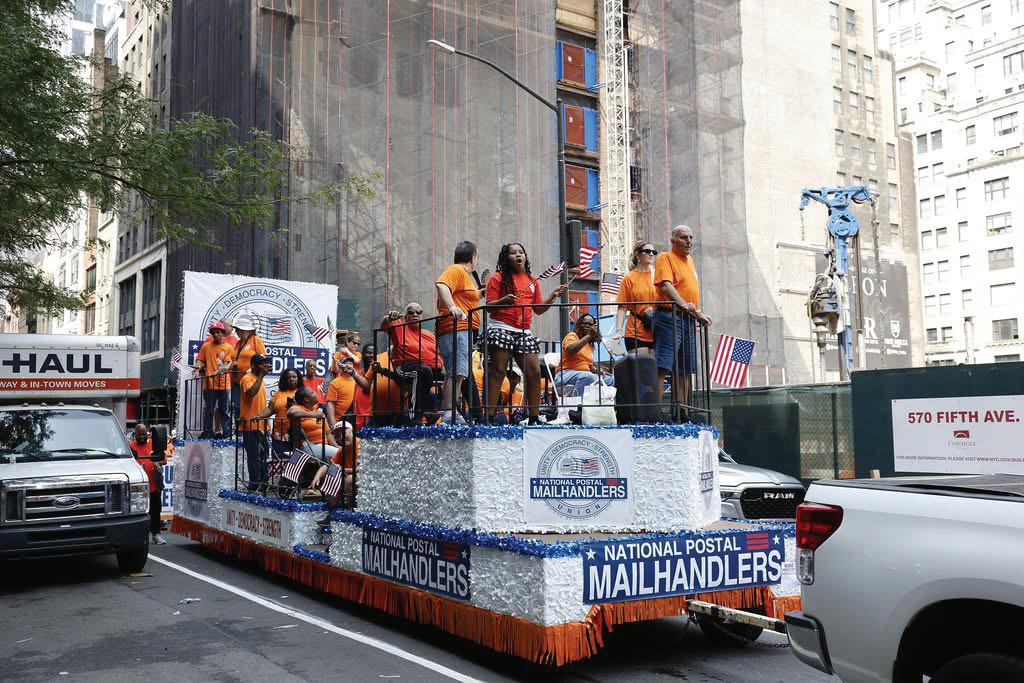



•
•
•
•