Rachel Hansen | Editor
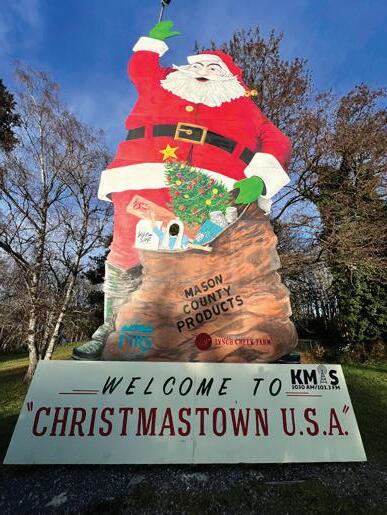
What makes life remarkable? Normally, this winter issue's cover would be sparkling with holiday light displays, a giant Santa Claus, or showing off the Kiwanis Christmas parade on railroad. 'Normally' meaning the last six years of winter issues—yes I checked!
Don't get me wrong. I love Christmas. Pretty much EVERYTHING about it with the exception of the expense. However, this year has been unusual and I'm not quite ready to throw on the tinsel in October.
"Remarkable" is defined as notably or conspicuously unusual I would say that our year has had it's own special mix of challenges—which I'm sure with hindsight we'll grow to be better because of. That's what its all about, right?
Instead let's celebrate the immediate. The small joys. The color of the leaves as they turn from brilliant lime green to vibrant orange. A gaudiness that only nature could get away with! Appreciate the fog as it hangs over the beach on the early morning harvest, until it lifts and reveals the shores across, leaving you in solitude with the dull thud of clams hitting the bottom of the bucket. Rejoice in the pure delight of a retriever plunging into the icy bay to grab a hurled stick, returning triumphantly to shake her salt water coating on you.
As the first south-easterlies strip the leaves off the trees and the frost brings down dahlias, I reflect upon the seasons we leave behind and welcome the rage of winter and rebirth of spring. An end to a remarkable year.
I'm thankful for change. Reflecting allows us to realize how short life is and how important it is to appreciate and live every moment. No time to be complacent.
So go forth! Enjoy your family, your kids. your friends. In nature, look up. See the trees, smell the air. Use all your senses. Eat the food you love, love who you're with. This winter issue of the Fjord touches on Christmas (of course it does, we love it!) but more so celebrates community and all the ways we can come together.
Thank you for supporting the Fjord and to all my contributors who send in stories, pictures, and events—you are remarkable!
EVENTS - 4
TAKING CA RE OF OUR STARS
Sea stars as keystone species in our marine ecosystem - 14
CANINE PARK VISIT TIPS - 18
OAKLA ND BAY COUNTY PARK
Romano Feature - 20
RECORD CHUM RETURNS ON THE UNION RIVER - 25
FESTIVAL OF THE FIRS- 29
SHOP LOCAL - 39
SHELLFISH TRAIL - 58
IS PRODUCED BY RACHEL HANSEN IMAGE IN ACTION DESIGN rachel@nwevent.org (360) 427-5599
PO BOX 622, SHELTON, WA 98584 © 2024 No reprint without permission
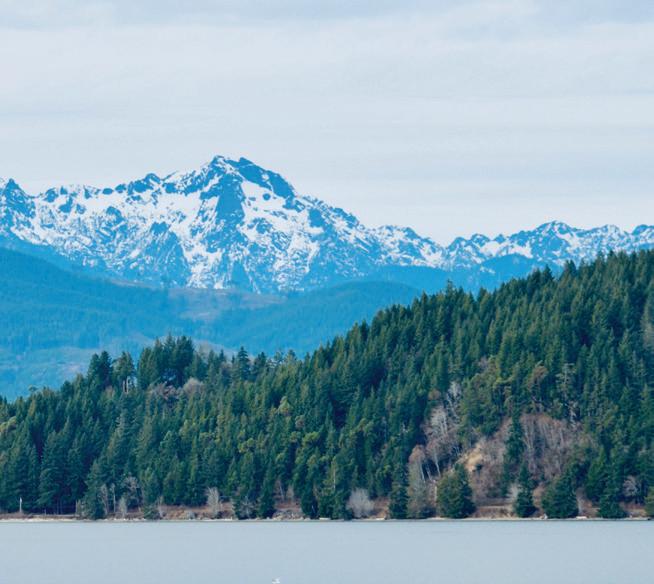
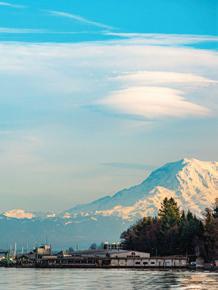
COVER IMAGE: Hood Canal from Union Marina | photo credit Zach Hansen
Christmastown
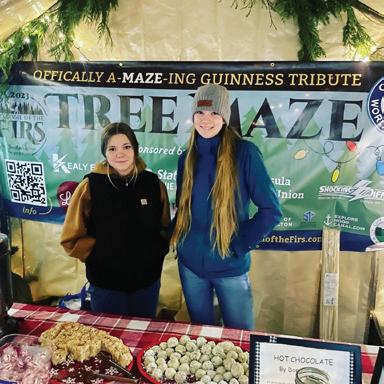
Guinness Tribute Maze
December 2024 | FREE
Open Evenings in Shelton Cota St, Shelton
Shelton School District Board Meeting
2nd and 4th Tuesdays, 6 PM Mt. View Elementary School
Hood Canal Kiwanis Sewing Club
Tuesdays, 2 - 4 PM, St Germains
600 Lake Cushman Rd, Hoodsport
Builder Tuesdays
Tuesdays, 10 - 2 PM, Shelton Library
Open Mic Night at El Serape Cantina
First Tuesday of each month
318 W Railroad Ave, Shelton
Bookmobile in Brinnon & Quilcene
Tuesdays, 10–12 PM Brinnon Comm Center Tuesdays,1:30 – 4 PM Quilcene Comm.
Trivia at High Steel Brew
Tuesday, Last of each month, 6-8 PM 10/29, 11/26, 11/28, 1/25
233 S 1st St, Shelton
Trivia Night at Alderbrook Resort
Wednesdays, 6:30 - 8 PM, Union
Dart and Cribbage at Bent Bine Brew
Wednesdays, 5 PM tournaments with cash prizes. 23297 HWY 3, Belfair
Sheriff Lunch at Fjord Oyster Bank
1st Thursday of the month, 11:30 AM 24341 N Hwy 101, Hoodsport
Hood Canalé (Union) Thursdays, Open Mic, 6-9 PM
Open Mic at Music at Bent Bine Brew Thursdays, 5 PM , 23297 HWY 3, Belfair
Shelton Family YMCA FREE Teen Night
Fridays, 5 PM - 8 PM 3101 N Shelton Springs Rd, Shelton
Trivia Night at Bent Bine Brew Co.
Fridays , 7 PM, FREE 23297 HWY 3, Belfair
North Mason Eagles Karaoke Fridays, 7 PM, 80 NE Alder Creek Ln, Belfair
Bookmobile in Brinnon & Quilcene Saturdays, 10 – 12 PM Brinnon Comm Center Saturdays, 1:30 – 4 PM Quilcene Comm.
Bingo at Brinnon Booster Club
Bingo Saturday night at 6:45pm 151 Corey Street. Brinnon
Craft Club at Marmo Caffè & Gallery
Every 2nd and 4th Sunday, 11 - 2 PM 217 W Cota St, Shelton
Bring a project you're working on, or help yourself to our collage supplies. Free, all ages. marmogallery.com (360) 401-2061
Live Music at Bent Bine Brew Co. Saturdays, 5PM, 23297 HWY 3, Belfair
Through the Garden Gate Educational Workshops
Hosted by the Mason County WSU Master Gardeners, this six-part gardening educational series is held on Saturdays starting at 9:30 AM on 1/25, 2/1, 2/8, 2/22, 3/1, and 3/8 at Mason County Public Works in Shelton. Topics will include soil health, botany, native plants, vegetable gardening, and more! Visit extension.wsu.edu/mason/ for registration.
Sewing Classes at Annie's anniesquiltshoppe.com
Wild Mushrooms of the Olympic Peninsula Field Tour Nov 1 - 3, 8, 10, 15-16, 22-23, 29 - 30.
306146 Hwy 101 N, Brinnon
Learn about edible and non-edible mushrooms, foraging skills and how to make a spore print! Foraging time is offered at the tail end of the tour. Field Tour $79. hoodcanaladventures.com
Tall Timbers Concert: Kate MacLeod
Friday, November 1 at 3:00 PM Hoodsport
Inspired by American Old-Time, Bluegrass, Celtic, and songwriters in the Folk genre. Kate plays fiddle, guitar, and Appalachian mountain dulcimer. Call 360877-5862 for reservations/directions. Suggested $15 to $20/ person donation for musician.
Winter Twig ID and Winter Craft
Friday, November 1, 1-2 PM
Shafer Park, 1365 W Schafer Park Rd, Elma
Lake Sylvia Park Aide will discuss the basics of the twig anatomy and how to identify local deciduous trees when they're nothing more than bare sticks! Following talk, you will be led on a stroll where you can identify some trees. There will also be a wreath making workshop. facebook.com/ FriendsOfSchaferLakeSylvia
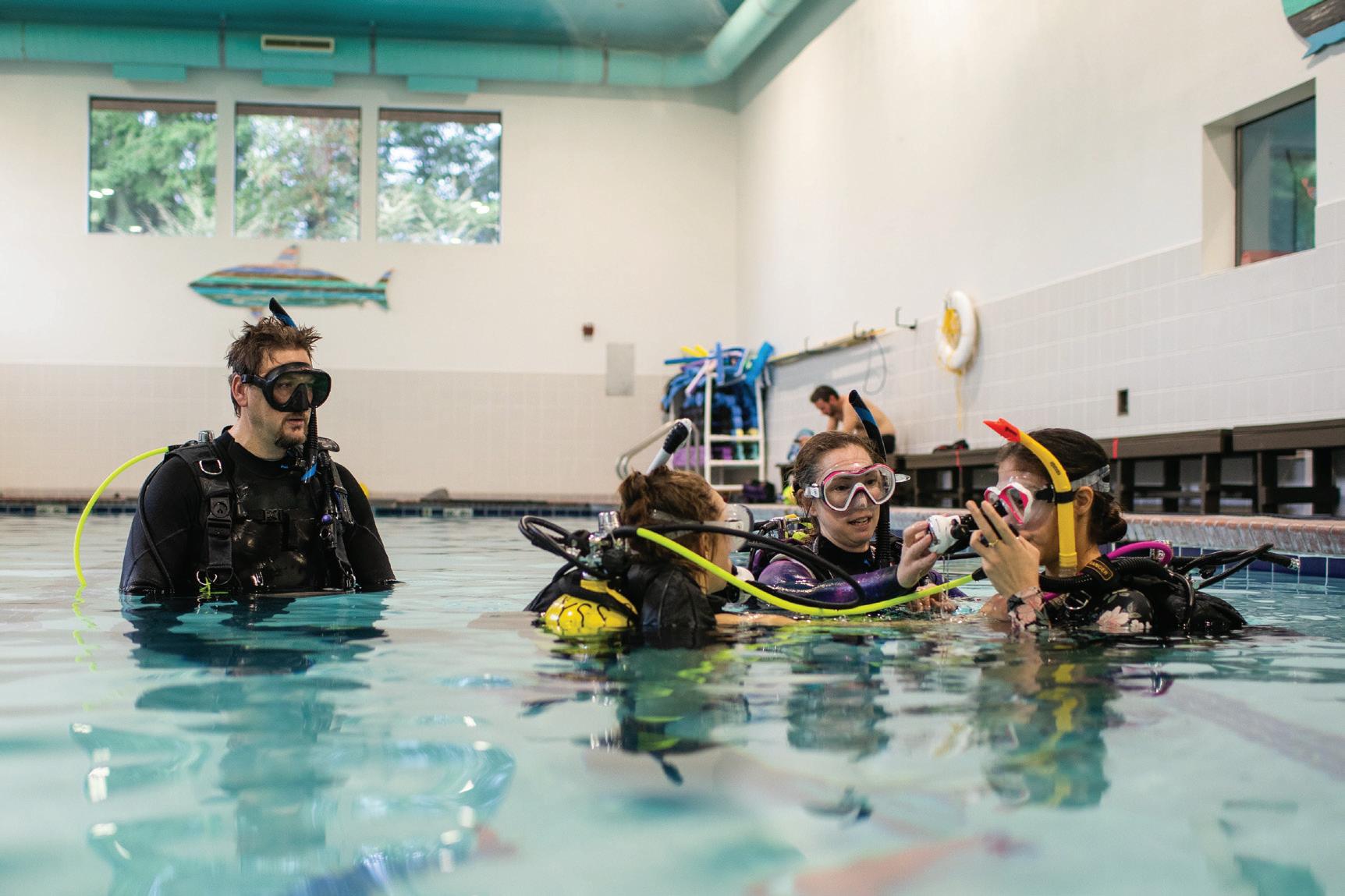
YSS Dive Paint and Sip
Saturday, November 2, 6-8 PM 24080 North Hwy 101, Hoodsport
Join YSS Dive and local artist BriAnne for another scuba tank paint and sip! $45 includes all painting supplies necessary (tank not included), along with the delightful bonus of two glasses of wine or sparkling cider.
Decommissioned scuba tanks available for purchase for $65. yssdive.com
Saturday, November 2, 10 AM - 3 PM
620 Cedar Ave, Port Hadlock
The sale takes place in the Hagen Building adjacent to the Library and features used books, audiobooks, DVDs, and music CDs.
Saturday, November 2, 10 AM - 3 PM
190 Sentry Dr, Shelton Shop for unique local gifts & homemade goodies. Proceeds support Mason County Senior Activities Center. Over 30 vendors, plus homemade baked goods from the Senior Center members.
Hymns to the Night at Marmo
Saturday, November 2, 12-8 PM
217 W Cota St, Shelton Halloween party co-hosted by House Flowers celebrates the thinning of the veil, Persephone's descent into the underworld, and laying the harvest to rest. There will be many fun surprises in store Costume contest! Photo booth! Guest DJs!
Haunted Shell Pile at Hama Hama
35846 N US Hwy 101, Lilliwaup November 2-3, 12- 3 PM
Come hear spooky stories from the intertidal! They're turning the giant pile of skeletons (aka shell pile) into a family friendly Halloween experience. FREE Our team of licensed
are proud to provide fast and reliable service with integrity & excellent value.

Martha Reed Chowder Cook Off
Saturday Nov 2, 1-5 PM
Bob's Tavern, 320 S 1st St, Shelton
Annual cook off and live auction. Sample some of the best local chowders. Free to enter; bring your best recipe. Purchase tasters of chowder and bid on prizes. Proceeds to Presley's heart transplant journey.
Layer Wood Pumpkin Craft Class
Wednesday, November 6, 6-8 PM
215 W Railroad Ave, Shelton
$60 includes supplies, instructions ,as well soft drinks and snacks. (360) 402-6453
Chimacum Ridge Public Tour with Jefferson Land Trust
November 6 ( repeats 11/15), 9 AM - 11 AM
Attendees meet at Valley View Forest parking lot (1717 Center Road, Chimacum), and carpool up for a mostly driving tour of the ridge. Register: act.saveland.org
November Craft
Wednesday, November 6, 5:30-8:30 PM
Railroad Ave, Shelton
Create a trio of sweaters pumpkins or pumpkin pompom garland. Supplies, snacks and drinks provided. Cost is $20
15th Annual Port Gamble Ghost Conference
November 8-10
Port Gamble Theater and Hood Canal Vista Speakers, classes, and night investigations of haunted locations, conference is suited for people interested in the paranormal to advanced and experienced researchers. $45 three day pass. portgamble.com
The Salmon Experience at Bayshore
Nov 9-11, 10:00 - 2:00 PM
800 State Route 3, Shelton
Every fall thousands of chum salmon return from the ocean to Johns Creek where their lives began. Salmon docents will be on hand to answer visitor questions. Enjoy underwater cameras each day to see the salmon up close. capitollandtrust.org/salmon
Christmas Bazaar
Saturday, November 9
Christmas Bazaar
St. Germain Church
600 Lake Cushman Rd, Hoodsport
Sunday Supper Backyard
Dining Pop Up
Sunday Nov 10, 5:00 - 8:00 PM
Marmo, 217 W Cota Street, Shelton
4 courses with 3 cocktail pairings. The menu will embrace methods of preservation. Squash, cranberries, cured proteins galore. Limited, $100/person. marmogallery.com
Free Day in the WA State Park
Monday, November 11 - all day!
Veterans Day Lunch, Program & Raffle
Monday, November 11, 2024, 12 PM
Hoodsport Fire Hall, 331 N Finch Creek Rd
Welcoming and honoring veterans of all wars, current active duty military and their families. Hosted by Hood Canal Kiwanis and Hood Canal Lions Clubs.
Hood Canal Improvement Club
Annual Chili Cook-off
Tuesday, November 12, 5-30-7 PM
Union Fire Hall, Union Calling all local cooks! $5 at the door (per person). Win prizes!
Business After Hours with OURCU
Wednesday, November 13, 6:30 -8 PM
Our Community Credit Union, 2948 Olympic Hwy N, Shelton
Learn how to Silk Screen Holiday cards at Flywheel Gallery
Saturday, November 16,12- 5 PM
24180 N Hwy 101, Hoodsport Instructor, Lisa Leggett leads workshop. Beginners are welcome and all supplies provided, $55/person. Sign up by stopping by the gallery, Saturdays 12- 5 PM or call (206) 300-0877. There will be a flat stock sale of Howard Leggett’s serigraphs open to everyone.
A Black and White Ball at Little Creek
Saturday, November 16, 6-10 PM
91 West State Route 108 , Shelton Mason General Hospital Foundation welcomes you to a formal event to ring in the holiday season while raising funds for medical equipment. masonhealth.com
Quilcene Brinnon Garden Club Monthly Meeting
Thursday, November 21, 1 PM
294952 Hwy 101, Quilcene
Handel’s Messiah
Friday, November 22, 7 PM
Sunday, November 24, 4 PM
Shelton United Methodist Church 1900 King St, Shelton
Performed by the Great Bend Chorale with a full orchestra, enjoy an unforgettable musical journey that has inspired and uplifted for centuries. greatbendmusic.org
3rd Annual Holiday Market
Saturday, November 23, 10-3 PM
Oakland Bay Junior High School
3301 N Shelton Springs Rd, Shelton
Free admission, accepting food donations for local food bank.
Santa Paws in Belfair
Saturday, November 23, 10-1 PM 51 NE WA-300, Belfair
Head to McClendon’s Hardware with your pets, kids, or just yourself for a festive holiday photo with Santa and Mrs. Claus. Capture the season’s spirit while supporting the Humane Society of Mason County.
“Twas the Night – The Art & History of the Classic Christmas Poem
Saturday, November 23
427 W Railroad Ave, Shelton
Pamela McColl discusses her research for her book at this museum talk
Alderbrook Resort Tree Lighting
Friday, November 29
Santa arrives by boat at Alderbrook Resort, kicks off festivities with family activities, live music, and tree lighting.
Free Day in the WA State Park
November 29 - all day!
Belfair Tree Lighting
Saturday, November 30 Belfair
Hoodsport Tree Lighting
Saturday, November 30, 5:30 PM
Port of Hoodsport Park (public dock)
Activities around town to celebrate Small Business Saturday!
Quilcene Holiday Craft Fair
Saturday, November 30, 10-4 PM Quilcene Masonic Hall
170 Herbert St, Quilcene
Holiday Market at Skookum Hall
Saturday, November 30, 9-3 PM
3480 SE Lynch Road, Shelton
Yule Log
Sunday Dec 1, 1 - 3:00 PM
1365 W Schafer Park Rd, Elma
Gather for a log hunt, delicious food, Carols and more to kick off the holiday season. Gingerbread and holiday baking contest. facebook.com/FriendsOfSchaferLakeSylvia
Belfair Christmas Parade
Sunday Dec 1, 5:00 PM 111 NE Old Belfair Hwy, Belfair
KMAS Holiday Christmas Party at Christmastown!
Friday, December 6, 3-8 PM
Shelton Civic Center, Cota St, Shelton Dance with DJ Jeff Slakey to holiday favorites, craft with the family Prizes, giveaways and visit with Santa!
Joel Gibson at El Sarape
Friday December 6, 6-8 PM
318 W Railroad Ave, Shelton
The Munn Bro's specialize in waterfront homes and acreage in the N.W. Hood Canal which includes Lake Leland, Dabob Bay, Quilcene and Brinnon areas. Enjoy the extended spring and autumn seasons of the Hood Canal. Munn Bro’s agents are thankful for the wonderful people in this pristine area that make it a unique place to live.
Experience outdoor activities, wild crafting mushrooms, wildlife, locally grown food, and an abundance of fresh seafood.
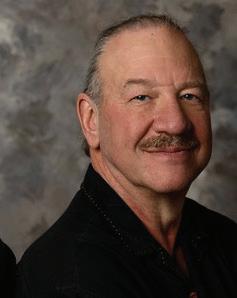
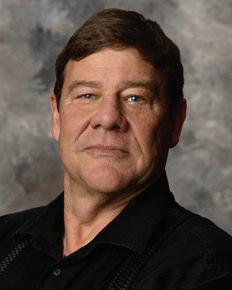
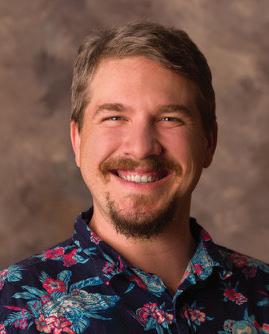
Owner/Broker
Select the most knowledgeable and experienced agents to guide you in the purchase or sale of your property. The Munn Bro’s team truly know the Homes and Land of West Hood Canal. Stop by our new office at 294772 Hwy.101 in Quilcene for maps, tide books and local insight of this beautiful area.
Members of the NWMLS, and the Jefferson County Association of Realtors ~Notary services available~
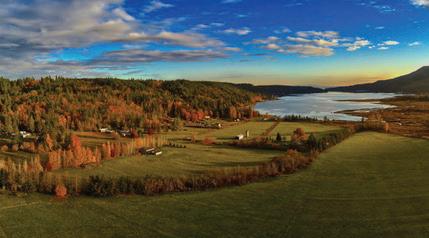


Shelton Holiday Magic
December 6-7, 5-8 PM
Railroad Ave, Shelton
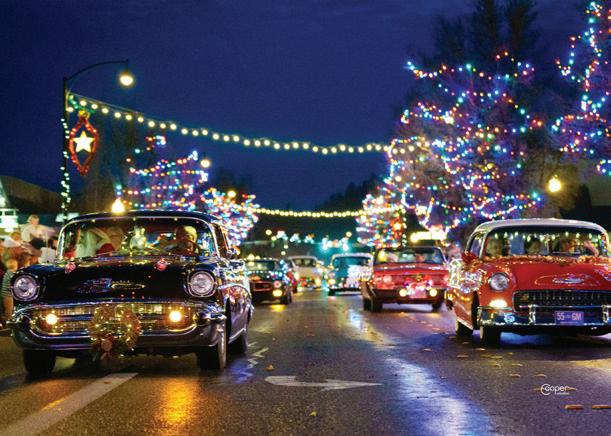
Tree lighting with Santa, music, and bonfires on Railroad (Friday) Saturday, attend Kristmas Town Kiwanis Santa Parade, 5 PM, floats, hot cocoa, and family fun. FREE
Annual Lighted Boat Parade
December 6-7, dusk
Hammersly Inlet, Shelton
A parade from Shelton's harbor to south of Arcadia Point. Weather permitting.
Olympic Peninsula Waterfalls Tour
December 7, 10 AM
306146 Hwy 101 N, Brinnon
Hiking Tour and Lunch - $75 hoodcanaladventures.com
Port Townsend Tree lighting
Saturday, December 7, 2 - 6 PM
Haller Fountain, Port Townsend
Hama Hama Holiday Market
Saturday & Sunday, Dec 7- 8
35846 N Hwy 101, Lilliwaup
Nutcracker Ballet in Shelton
December 7 & 8
Details at centraliaballet.com, page 15
HCIC Holiday Market,

Saturday, December 7, 10- 4 PM
New Community Church, Union Chris Eakes live music, there will be food, 25 vendors and raffles.
Southside Holiday Bazaar
Sunday, December 8, 11-4 PM
161 SE Collier Rd, Shelton
Stocking Fill Party
Saturday, December 14, 10 AM
123 S 2nd Street, Shelton
Hygiene/warming kits for at risk youth. Your help is welcomed to at the Youth Connection.
Port Gamble Country Christmas
December 14-15
4740 View Dr NE, Port Gamble Hayrides, fireworks (Saturday at 6PM), a tree lighting (Saturday at 5:45PM), carolers and shopping. portgamble.com
Hama Hama Holiday Market
Saturday & Sunday, Dec 14- 15 35846 N Hwy 101, Lilliwaup
Holiday Native Art Market
December 13-14, 11-6
2700 Evergreen Pkwy, Olympia
House of Welcome annual event features original art work by 50 artists. Fry bread, Indian tacos, coffee, beverages and desserts for sale. Parking is free Saturday but not Friday.
KMAS Holiday Christmas Party in Hoodsport
Friday, December 13, 5-8 PM
Fjord Oyster Bank deck/stage 24341 US-101, HoodsportDance with DJ
Jeff Slakey to holiday favorites, roast marshmallows and chestnuts, craft with the family or just sip mulled wine! Prizes and giveaways and rumor is Santa will be making an appearance! kmas.com
Yule Tide Celebration
Saturday, December 14
Hwy 101, Hoodsport
Crafts, scavenger hunts, visits with Santa, shopping, and more as the community carols down the boardwalks of Hoodsport. Join in at YSS Dive and finish celebrating at the Fjord Oyster Bank on Finch Creek with family activities, marshmallow roasting, chestnuts and live music! festivalofthefirs. com
2nd Annual Shelton Cookie Stroll
Saturday, Dec 14, 12 - 5 PM
Downtown Shelton
Join Downtown Merchants for a festive afternoon of indulging in delicious cookies. Purchase a ticket to receive a commemorative box and ornament, along with sweet treats; 12+ cookies made by talented local bakers.
Tickets: $35 (pre-sale) $45 (event day) sheltondowntownmerchants.com/tickets
Motorcycle Raffle
December 18, 4 PM
South Sound Honda/Suzuki 2115 Carriage St SW, Olympia Raffle tickets cost $10/each, proceeds go to youth motorcycle training, call Armstrong Foundation, (360) 229-6211.
Leah Justine Country live
Friday, December 20, 6-9 PM
324 W Railroad Ave, Shelton
Paint Watercolor Scenes of Winter on the Winter Solstice
Sat, December 21, 2 – 4 PM
24180 N Hwy 101, Hoodsport
Jan Morris will instruct class for all skill levels, supplies provided for beginners. $50/person. (206) 300-0877.
Dakota Poorman Live
Friday, December 27, 6-9 PM
324 W Railroad Ave, Shelton
Shelton Midwinter Bluegrass Celebration
Saturday, December 28, 6- 9 PM
3737 N. Shelton Springs Rd
Tickets $20 and available online or at the door. Kids 15 and under get in free! Refreshments by donation. Hosted by Kristmas Town Kiwanis. bluegrassfromtheforest. com
New Year's Eve with Toby Keith Tribute
Tuesday, December 31, 8 PM
Little Creek Casino 91 W US 108, Shelton
Drawing & Painting
Animals
January 7 & 14, 2 – 4 PM 24180 US-101, Hoodsport
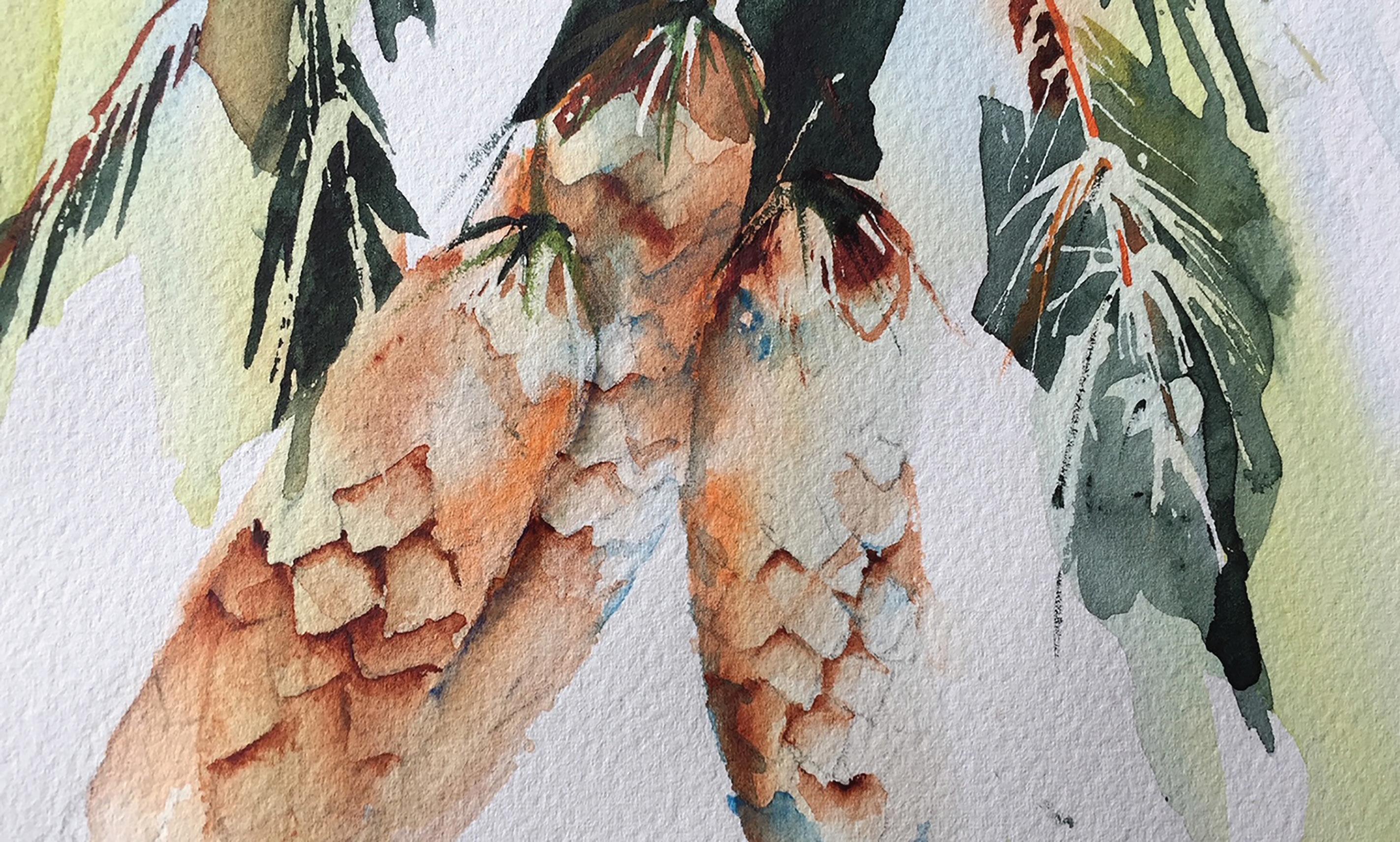
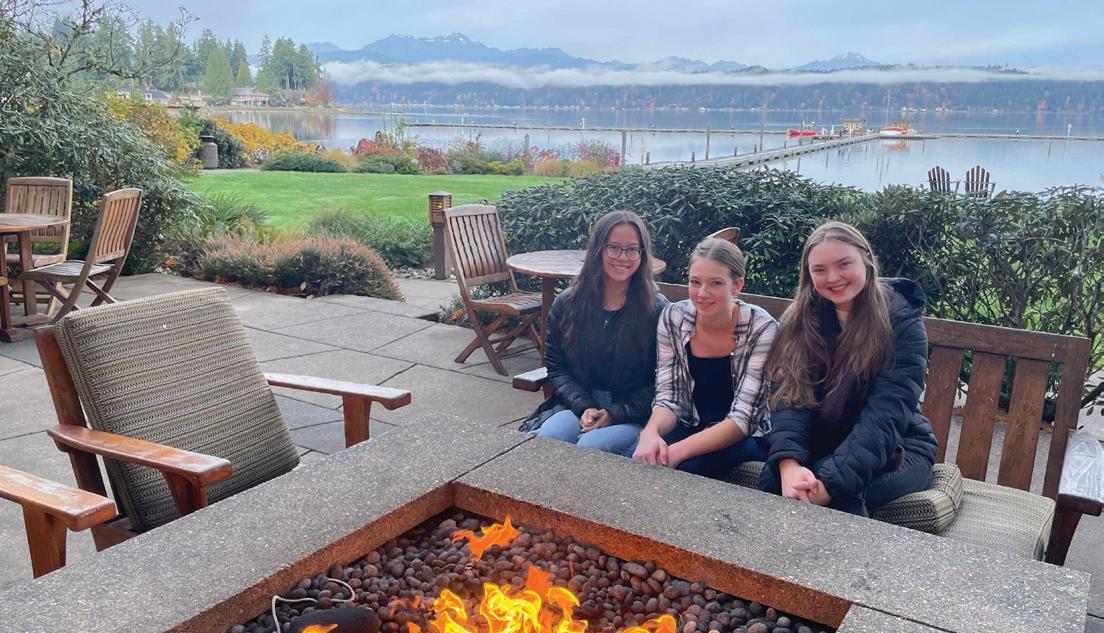
Pat Denney will lead this 2-day class where students learn the basics of drawing and painting animals. Suitable for beginner to intermediate, supplies provided, but bring a photo of the animal you want to paint, $75/ person. (206) 300-0877
Paint Decorative Rain Boots for Home and Garden
Saturday, January 18, 2 - 4 PM 24180 US-101, Hoodsport $55/person, class taught by BriAnne Waite. Open to beginners with all supplies provided. (206) 300-0877
Needle Felting Class
Wednesday, January 29, 2-4PM 24180 US-101, Hoodsport $40/person, class taught by Delores Brown. Open to beginners and all supplies are provided. (206) 300-0877
Paper and Ink Valentine’s
Greetings
Saturday, February 8, 3 - 5 PM 24180 N Hwy 101, Hoodsport Lisa Leggett, instructor, all supplies provided, including chocolates and one cocktail drink ticket, $50/person (206) 300-0877
Basics of Creating a Website
Tuesday, February 11, 2 – 4:30
PM 24180 N Hwy 101, Hoodsport
Kerry London Myers demonstrates
how to start a website for artists. Bring photos and information for the website. $60/person (206) 300-0877 SAVE THE DATE
Olympic Peninsula Waterfalls Tour
March 15, 10 AM
306146 Hwy 101 N, Brinnon Hiking Tour and Lunch - $75 hoodcanaladventures.com
MotoAmerica Superbikes
June 27th-29th, 2025
Ridge Motorsports Park, Shelton Rev your engines and get ready for the adrenaline-fueled weekend of a lifetime! Witness the return of MotoAmerica Superbikes as racers battle each other at the iconic Ridge Motorsports Park! Whether you're a die-hard motorsports fan or experiencing the rush of 160mph Superbikes for the first time, it’s more than just a race—it's a full-throttle experience! With food, drinks, live entertainment, and activities for all ages- there’s something for everyone! Get your tickets at www.ridgetickets.com.

Sound Learning has provided community-based education for adults in Mason County since 1991. We support economic development through education. We offer relevant, high-quality instruction that prepares students for family-wage jobs and helps individuals develop the skills needed to fulfill their potential as family members, workers, and community members.
Sound Learning provides instruction for: GED or High School + diploma, academic skills improvement to prepare for training or college programs, improve workplace skills, or get a job, English for Speakers of other Languages, and citizenship prep tutoring.
Get information or register at 360-426-9733
Email: staff@soundlearning.co

Hood Canal Communications is celebrating 90 years of keeping our community connected. To get best the internet service in Mason County call 360.898.2481 or visit hcc.net today!
Mason County PUD#3 annually partners with the Shelton-Mason County Chamber of Commerce, City of Shelton, and Shelton and Kristmas Town Kiwanis Clubs to provide LED displays in Shelton. In 2019 they helped to illuminate 800+ trees in the Guinness World Record Christmas tree maze. In 2020 they are decorating Railroad LED cafe lights across the intersections and are sponsoring the Lighted Display Competition hosted by the Shelton Mason County Chamber. Thanks!
Residential LEDs use 75% less energy, and last 25 times longer, than incandescent lighting – that means you can have 4X the number of lights for the same amount of energy by selecting LED lights over the old style incandescent Christmas lights!
360.898.2481 | www.hcc.net
By 2027, use of LEDs could save the equivalent annual output of 44 large electric power plants, and a total savings of more than $30 billion at today’s electricity prices.
Take time to lose yourself in the Christmastown Guinness tribute maze on Cota Street and be sure to check out the two giant Christmas trees in Shelton – Post Office Park and the gorgeous courthouse Sequoia this Christmas season
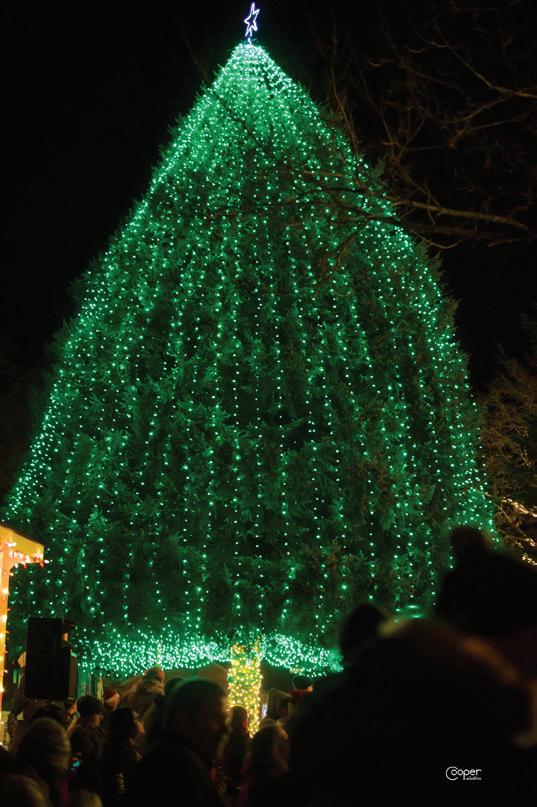
to see how bright the Season is downtown when it is #PoweredByPUD3.
Visit PUD3.org for even more great ideas to save energy this holiday season!

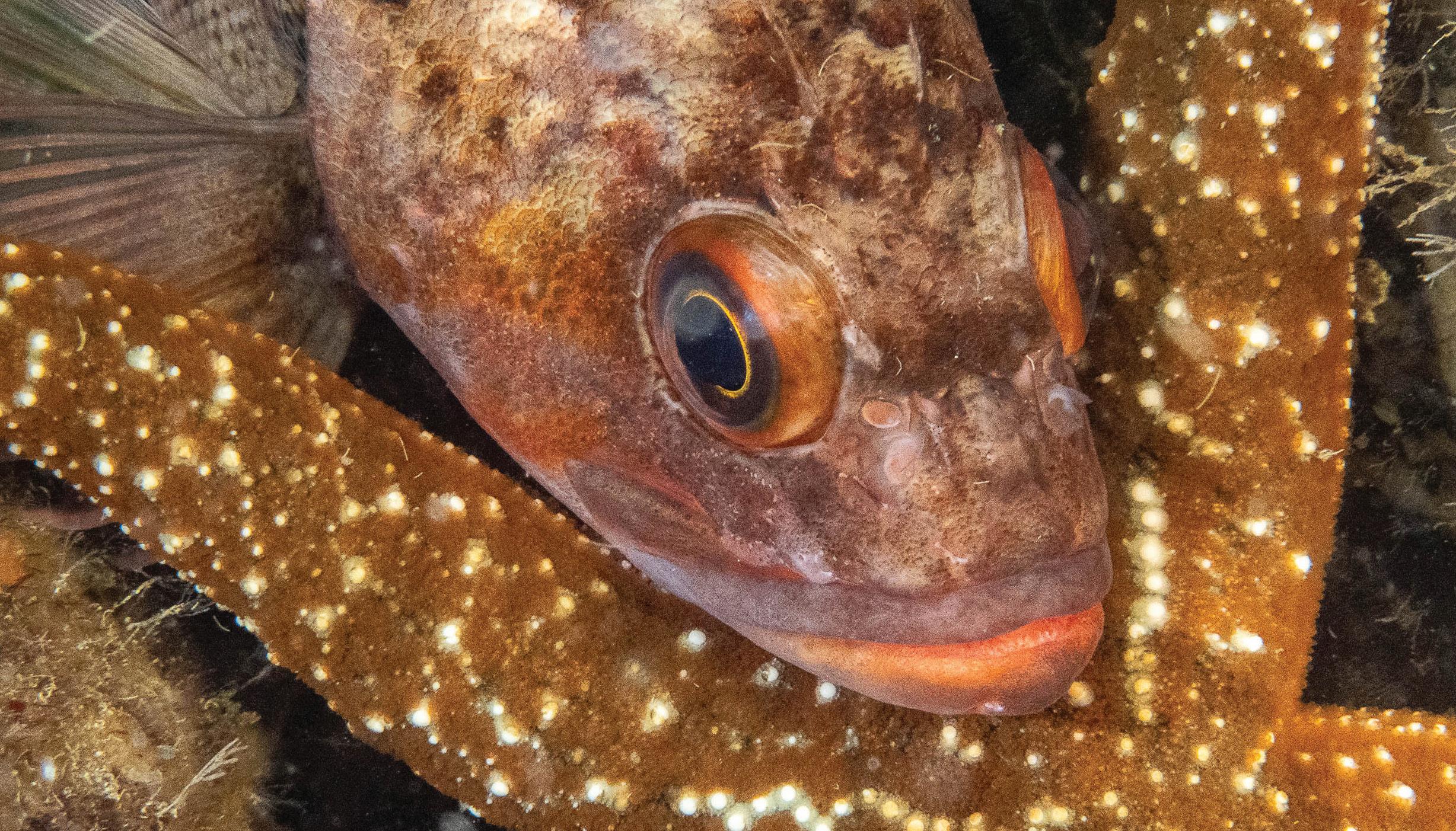
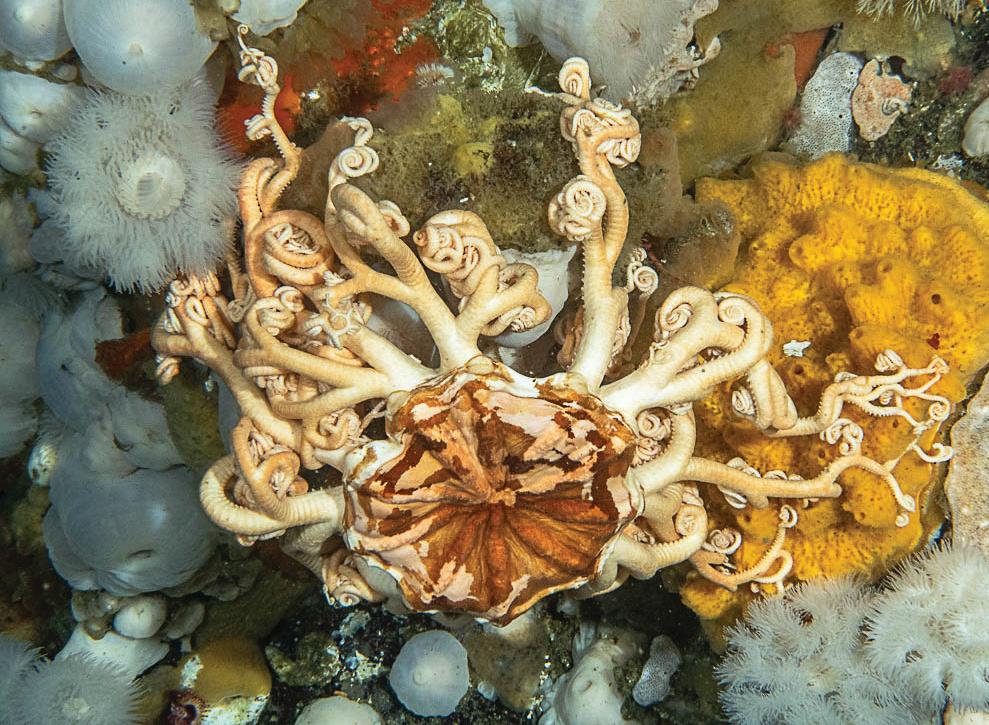
Starfish, or sea stars, are some of the ocean's most fascinating creatures. They lack brains and blood, digest food outside their bodies, and can regenerate lost limbs—sometimes even growing a new starfish from a single severed arm. In the colorful, thriving world of the Salish Sea, starfish stand out for their beauty and vital role in the ecosystem.
Beyond their striking appearance, starfish play a crucial role in maintaining balanced ecosystems. As keystone species, they regulate the populations of other marine animals, maintaining ecosystem balance. Without them, the entire system can become unbalanced, affecting many different species.
While 'starfish' and 'sea star' are often used interchangeably, sea star is the scientifically accurate name. The reason is simple: sea stars are not actually fish. They lack scales, fins, and gills, which are essential characteristics of true fish. Regardless of this, 'starfish' remains the popular term in everyday language!
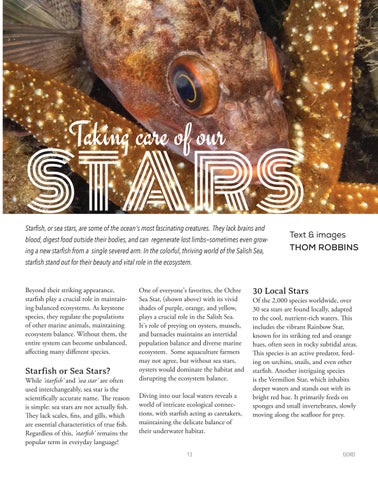
One of everyone's favorites, the Ochre Sea Star, (shown above) with its vivid shades of purple, orange, and yellow, plays a crucial role in the Salish Sea. It's role of preying on oysters, mussels, and barnacles maintains an intertidal population balance and diverse marine ecosystem. Some aquaculture farmers may not agree, but without sea stars, oysters would dominate the habitat and disrupting the ecosystem balance.
Diving into our local waters reveals a world of intricate ecological connections, with starfish acting as caretakers, maintaining the delicate balance of their underwater habitat.
Text & images THOM ROBBINS
Of the 2,000 species worldwide, over 30 sea stars are found locally, adapted to the cool, nutrient-rich waters. This includes the vibrant Rainbow Star, known for its striking red and orange hues, often seen in rocky subtidal areas. This species is an active predator, feeding on urchins, snails, and even other starfish. Another intriguing species is the Vermilion Star, which inhabits deeper waters and stands out with its bright red hue. It primarily feeds on sponges and small invertebrates, slowly moving along the seafloor for prey.
Starfish belong to a diverse group of marine animals called echinoderms, which include sea urchins, sand dollars, and sea cucumbers. Echinoderms are characterized by radial symmetry, often with a five-point structure, though some species can have more arms. They also have unique skin, which ranges from smooth and velvety to spiny and rough. Their internal skeleton is made of calcium carbonate plates, giving them strength and flexibility.
Instead of blood, sea stars pump seawater through a network of canals called the water vascular system. This system powers their movement, helps them breathe, and delivers nutrients throughout their bodies. By filtering seawater stars can absorb the oxygen and nutrients they need to survive.
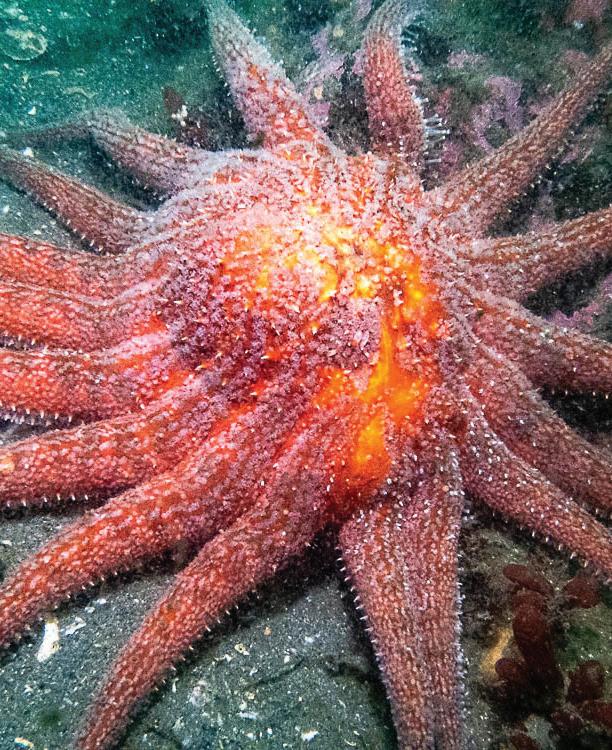
By pumping seawater, they extend and retract tiny tube feet on their arms, which act like suction cups. This enables them to crawl across the ocean floor, clinging to rocks and rough surfaces. Some species do this surprisingly fast. the Sunflower Sea Star can travel up to a meter per minute!
Some sea stars use their suction-cup tube feet to pry open mussels, clams and oysters, exerting pressure with their tube feet up to ten times their body weight, giving them the power to open even the most tightly closed shells. Once a starfish has pried open a shell just enough, it does something extraordinary—it extends its stomach out of its body and into the shell. This allows it to digest the prey externally, turning the meal into a liquid form that it can absorb into its body. This method of external digestion makes it easier for starfish to consume prey that would otherwise be too large to eat.
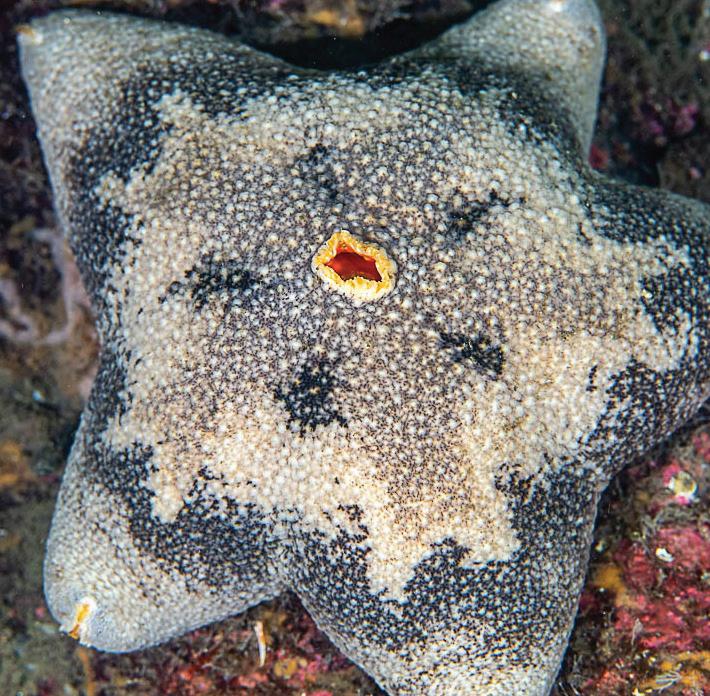
Each species has evolved distinct feeding strategies. For instance, the Leather Star has been known to drill tiny holes into the shells of its prey, providing access to hard-to-reach food sources.
One of the most fascinating features of starfish is their incredible ability to regenerate. Losing a limb isn’t the end for a starfish; it’s an opportunity for renewal. They can grow back a severed arm and, in some cases, even regenerate an entire body from just a part of a limb, as long as it includes part of the central disc.
This ability comes from specialized cells in their arms that can transform into the various types of cells needed for regrowth. This regenerative power helps them escape predators, heal from injuries, and even reproduce, making them incredibly resilient. Scientists are studying this ability not just to understand marine life better but also to explore its potential applications in medical research, offering new insights into how cells can regenerate and repair.
Each starfish species has adapted to thrive in its niche within the diverse marine environment. For instance, the Blood Star is well-suited to the cooler, deeper waters of the Pacific, where it feeds primarily on organic detritus and sponges. Unlike intertidal species, the Blood Star can be found on rocky reefs and sandy bottoms. Its bright red or orange coloration helps it stand out. Yet, it has developed the ability to blend into its surroundings when threatened, making it resilient and adaptable.
Deep-dwelling species like the Giant Pink Sea Star prefer the quiet, dark seabed. These starfish are found moving across the ocean floor, searching for prey like sponges and other slow-moving animals. The Velcro Star is known for its smooth, fluid movement. Their tube feet glide effortlessly over different surfaces in a coordinated, wave-like pattern. This technique lets it navigate tricky terrains, such as rocky crevices and dense kelp beds, with agility and speed. Its graceful movement, combined with a varied diet of algae, small invertebrates, and detritus, makes the Velcro Star highly adaptable across Pacific marine habitats.
The Bat Star, are often found in tide pools using their arms to sense the world around them. Each species has found a way to survive and thrive, whether braving the harsh intertidal zone, navigating the deep sea, or at home in tide pools.
Starfish have a decentralized nervous system rather than a central brain. This system consists of a nerve ring around their mouth, which connects to radial nerves running down each arm. Each arm acts independently, allowing the starfish to respond to its environment without a central control center. The radial nerves help the starfish detect changes in temperature, light, touch, and the presence of chemicals in the water. Starfish may not have eyes like ours, but their keen sense of their surroundings helps them survive and thrive in a complex and sometimes harsh environment. Through research, conservation efforts, and sustainable practices, we may ensure that these celestial emblems of the ocean continue to thrive.
The lifecycle of a starfish begins with species releasing vast clouds of sperm and eggs into the water, allowing fertilization to occur freely in the open sea.
Once these eggs are hatched, starfish begin life as tiny, free-swimming larvae called bipinnaria. The larvae look nothing like their star-shaped adult selves. They resemble translucent creatures with cilia that help them move. Feed on microscopic plankton, life is perilous for these young starfish.
They drift with the currents, exposed to predators and other dangers, with only a fraction progressing to the next development stage.
This December, Centralia Ballet Academy will bring their renowned production of The Nutcracker to Shelton High School's Performing Arts Center on December 7 & 8.
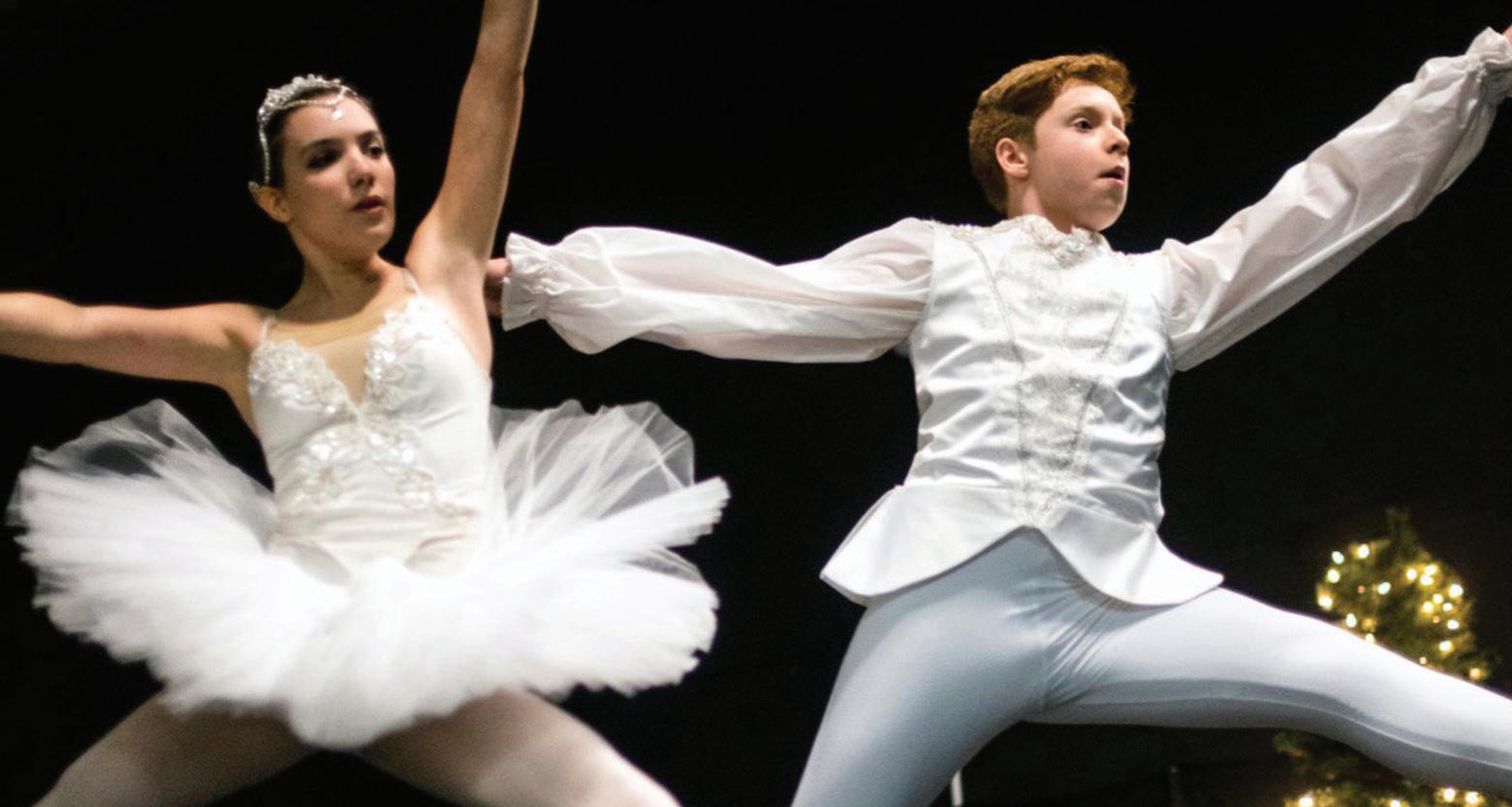
The show will feature beautiful sets, amazing costumes, and incredible dancing from the company members and students of Centralia Ballet. In addition to CBA's dancers, the show will also feature kids from Shelton who are part of an outreach program created to give local youth the opportunity to participate in this holiday classic. This is part of Centralia Ballet's mission to create outreach opportunities to ensure that kids and families get to experience the performing arts regardless of their financial situation or geographic location.
This free program was first done in Pe Ell where a TV station in Portland did a story about it and it became national news. In addition to the outreach program, CBA will also be donating 100 tickets per performance to local foster family support groups, and other organizations that benefit kids and families in and around Mason County. Tickets will go on sale in early November. If you would like more information, contact Mickey Gunter at 360-623-9010 or email at mickgun24@msn.com.
They gradually transform into brachiolaria larvae, developing the first signs of the star-like body.
After months of drifting, the larvae transform dramatically, settling onto the seafloor and developing into juvenile starfish. This stage is crucial as they switch from a free-swimming lifestyle to one anchored to the ocean floor. Once settled, they start to look more like the familiar star-shaped adults, with their tube feet ready to help them move and search for food. Different species have their unique spawning behaviors. The Sunflower Sea Star, known for its speed and many arms, can produce thousands of eggs simultaneously, increasing the chances that some will

survive despite the high predation risk. In contrast, the Leather Star releases fewer eggs throughout the season, spreading their reproductive efforts. Starfish have surprisingly long lifespan. The Red Sea Star lives up to 20 years. Their longevity allows them to play a vital role in maintaining the balance of their ecosystems. Each stage of their lifecycle, from tiny drifting larvae to powerful adult predators, is a testament to their resilience, intricately linked to the currents and tides.
The way climbs a little hump before making a gradual descent toward the river. While the surrounding forest can be dark at times, come spring hundreds of trilliums line the way adding whites, pinks, and purples to the emerald landscape.
Soon the Duckabush River’s roar becomes more audible. During the wetter months it is quite loud. You are almost there. The trail makes a short steep drop and emerges along the banks of the Duckabush. A short distance beyond reach the famed fishing spot. Here the river crashes and thunders through a narrow rocky chasm to a deep pool. Frothy gurgling waters crash up against the narrow cleft. Be sure to keep children and dogs nearby while admiring this landmark.
Sea stars are adapted to withstand harsh conditions, like as pounding waves, intense heat, and dry low tides.
When the sun is shining, its ray reach this spot, providing a little warmth and light and providing a nice contrast to the dark and damp surrounding forest.
forest. A secret spot you don’t have to reveal to anyone!
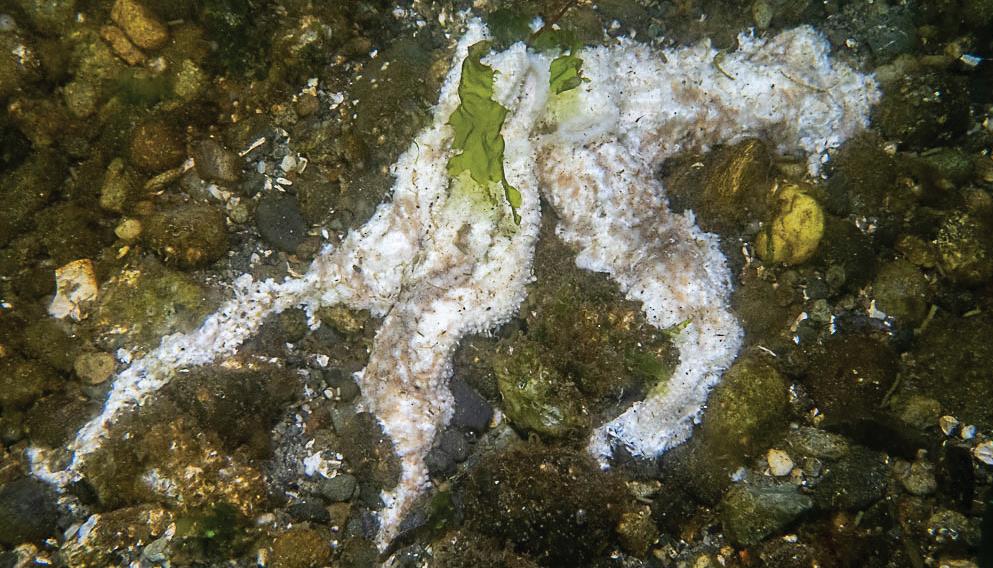
However, during the 20142016 marine heatwave, ocean temperatures made them more susceptible to sea star wasting disease causing a populations decline from Mexico to Alaska. Sea star wasting disease (SSWD) is a condition that causes lesions, limb loss, and disintegration. It has been linked to Sea Star-associated Densovirus (SSaDV).
Land Agency Contact: Olympic National Forest, Hood Canal Ranger District, Quilcene, (360) 765-2200, www.fs.usda. gov/olympic; and Olympic National Park, Wilderness Information Center, (360)565-3100, nps.gov/olym
Recommended Guidebook: Day Hiking Olympic Peninsula 2nd edition (Romano, Mountaineers Books)
Researchers have found higher concentrations of this virus in sick sea stars compared to healthy ones. The virus attacks their tissues, breaking down the body and spreading through shared habitats and even the water. This has been especially devastating for the Sunflower Sea Star. By 2021, it was estimated that up to 90% of the West Coast Sunflower



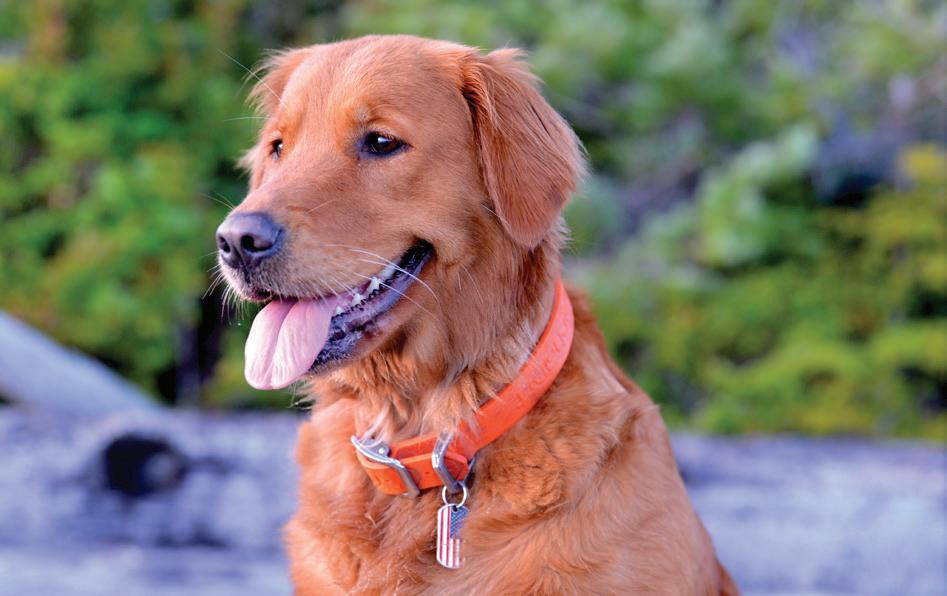
For dog families, it’s not a hike, camp out or road trip unless your four-legged trail buddy comes with you. While embarking on the adventure is optional, getting back healthy and whole is mandatory! Washington State Parks has some tips to leave you with only good memories when you visit.
Trail tips
We know your dog wants to run free, but leash rules are not a punishment – they’re there for everyone’s safety. Your pup may be a big softie, but even saying, “It’s okay, they're friendly,” won’t assuage some peoples’ fear. Keep your dog from approaching people unless someone asks to pet him or her.
Conversely, if your dog is not dog or people-friendly, please warn folks – especially children, before they get close.
In the natural pecking order, a dog can be seen as prey to some wildlife (raptors, big cats, coyotes, black bears)
and a predator to others (deer, rabbits, marmot, turkey, horses). Leashing your pet can be the thing that keeps them from dinner –both eating and becoming. Keep in mind that most prey will fight back, and getting gored by a deer is not how you want your pup to end their vacation. Also, when dogs chase wildlife – or
something they see or smell – they can get lost or into deep water. Even if your dog is behaved at home, parks are abnormal environments that might be tempting for an off-leash dog to ignore. Tricky whales, seals and waterfowl have been known to lure dogs out into the water and exhaust them.
Through the Garden Gate: Veggies in Abundance
Saturday, February 25, 9:30 - 12 PM Mason County Public Works, Shelton Through The Garden Gate is offering both in person and zoom options for the workshops this year. See page 22.
Adult Prom Fire and Ice
Saturday, Feb 25, 6 -10 PM 1060 West Eells Hill Road, Shelton
On mixed-use trails, heel or pick up your pooch if a horse or a mountain bike comes by. A horse can easily spook and injure itself, its rider or your party. Mountain bikes zip downhill at high speeds, and you don’t want your dog to chase and get in an accident.
Get dressed up and head to the Ridge to support our first responders and this 21+ event featuring DJ Topflight mixing your favorite hits. $45/person.
Camping with dogs is just fun. Pups provide warm cuddles and a feeling of safety for solo campers. And dogs + kids + snuggles in the tent go together like chocolate, graham crackers and marshmallows around the campfire.
Atomic Washington: Our Nuclear Past, Present, and Future
Sunday February 26, 1:30 - 3 PM 3371 E Harstine Is Road N, Shelton Washington State’s role in the nuclear era ranges far beyond the construction, operation, and ongoing cleanup of the Hanford nuclear reservation. Drawing from history, science, and popular culture, author Steve Olson reveals the ways in which our state has been a pioneer in the atomic age.
But dogs hear and smell things we don’t, and they often feel the need to alert us. Your neighbors, however, may not appreciate Fido howling a warning at 2 a.m.
OFFSHORE: Culinary Adventure Tent at Alderbrook
Thur- Sat , Mar 2- 4, 6:30 PM 10 E Alderbrook Drive, Union
Consider booking a campsite on the end and/or outside part of the campground loop. One Parks staffer says she parks her car between her site and her neighbors’ to minimize stimuli.
Be immersed in four courses of delicious locally sourced ingredients. alderbrookresort.com
Through the Garden Gate: Is a Victory Garden For You?
Saturday, March 4, 9:30 - 12 PM
Mason County Public Works, Shelton Through The Garden Gate is offering both in person and zoom options for the workshops this year. See page 22.
Free day at WA State Parks
Most state parks welcome dogs, but we do have a few culturally or environmentally sensitive areas where they’re not allowed. Look up your destination on parks.wa.gov to make sure bud can accompany you on all parts of your state park getaway.
Thursday, March 9, all day Celebrate the legacy of Billy Frank Junior's Birthday.
Through the Garden Gate: Native Bees a Buzzin' Saturday, March 11, 9:30 - 12 PM
Happy camping to you and your two-legged and fourlegged family members from Washington State Parks!
Mason County Public Works, Shelton n person and zoom options for the workshops this year. See page 22.





it seems like a daunting
to plan how you’ll make your money last in retirement, you’re in luck.
been there before, and we can help you get a handle on preparing for your
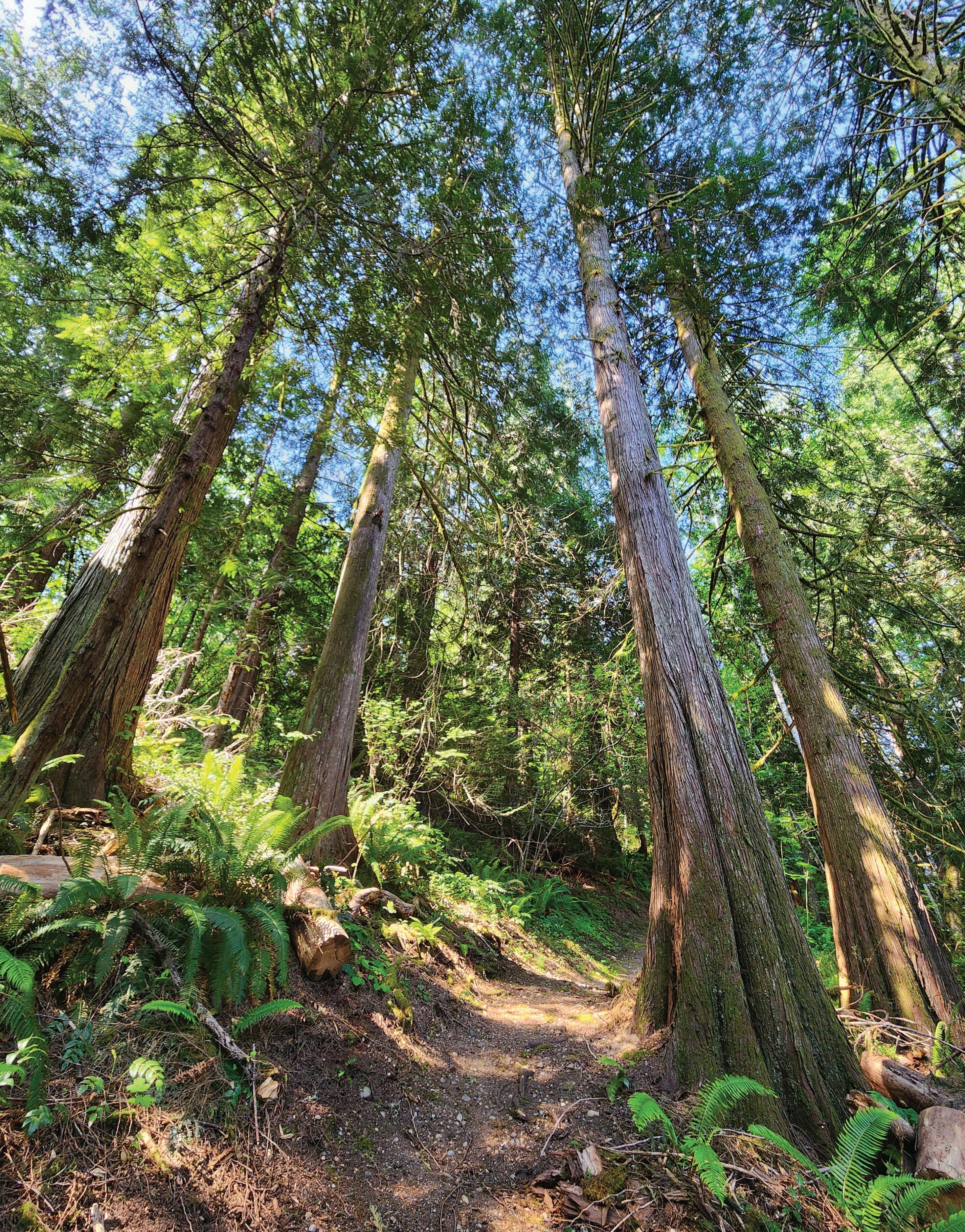
Walk back into the past exploring an old homestead at this quiet lightly-visited park on the northeastern end of Oakland Bay. Mosey through an old orchard and along oyster-rearing tidal flats. Then explore a mature grove of firs and salmon-bearing Malaney Creek flowing into the bay. Throughout the winter salmon eggs incubate in the creek’s gravel beds. And all throughout this 83-acre park nature is abounding. Human visitation is light at this fairly new park, but wildlife is abundant with copious bald eagles, deer, and raccoons will make sure you won’t feel alone.
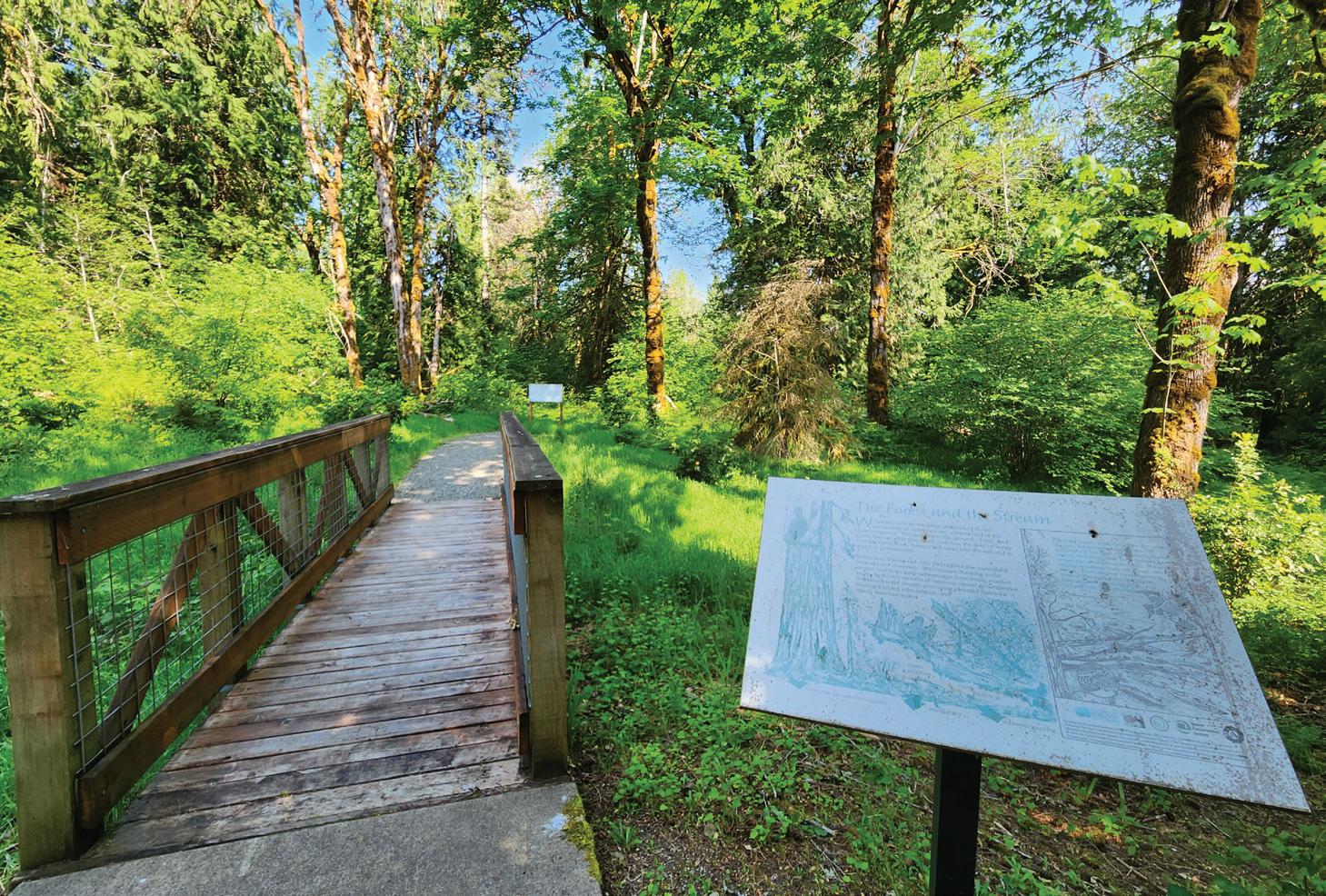
The trail begins from the parking area perched on a small hill. To the east is a gated service road used by the park steward and for visitors with ADAplates. You can certainly walk the half mile road—but the Upper Trail is the preferred way to go. Pass a few interpretive signs and one acknowledging the Mason County Youth 4H Forestry Crew that constructed the trail. This Oakland Bay County Park came to be through the Capitol Land Trust and a consortium of partners who purchased this property for Mason County Parks through a grant from the Recreation and Conservation Office (RCO).
The Capitol Land Trust has protected 6,600-acres and 19 miles of shoreline in the South Sound since its inception in 1987. The Trust was also responsible for the establishment of the nearby Bayshore Preserve. So far they have secured permanent protection for three miles of Oakland Bay shoreline. The bay although small and relatively shallow is a productive shellfish growing areas in the country. Twenty-one shellfish growers and the Squaxin Island Tribe work the bay harvesting more than three million pounds of manila clams and nearly two million pounds of oysters annually. Maintaining the health of this estuary is paramount.
An award-winning author, photographer, ardent conservationist, Craig is also a NW trails and hiking expert. He hikes, runs, paddles, and bikes and has written about these passions for more than two dozen publications, including; Seattle Met, Backpacker, Paddler, Northwest Runner, AMC Outdoors, and Northwest Travel and Life. Craig writes weekly content for Hikeoftheweek.com and is the author of more than 25 books. Craig has been a regular columnist in Tracing the Fjord
Distance: 1.2 miles of trails
Elevation Gain: 125 feet
High Point: 100 feet
Difficulty: easy
Snow free: year round
Notes: Dogs prohibited
Trailhead Pass Needed: None
GPS waypoints: Trailhead: N47 14.844 W123 01.273
Features: old-growth, tidal flats, salmon-bearing creek, historic home
Land Agency Contact: Mason County Parks
Recommended Guidebook: Urban Trails Olympia (Romano, Mountaineers Books)
Trailhead directions: From Shelton follow SR 3 west for 6.2 miles. Then turn right onto Agate Road and drive 1.5 miles turning right into park access road. (Turnoff is 0.5 mile beyond Pioneer Intermediate Middle School and directly across from East Julian Street). Then drive dirt access road 0.4 mile to trailhead.
Trailhead facilities: privy
PHOTO: CRAIG ROMANO
Now start hiking by traversing a stand of mature big-leaf maples soon coming to a junction. Either direction is part of the Upper Trail loop. The trail left is slightly longer than the one on the right. Head left and take the other trail on your return to the trailhead. Now descend passing big cedars and maples and reach a bench overlooking the bay before coming to the service road. The return section of the Upper Trail loop can be found just to the right a couple hundred feet up the road. It reaches the loop junction via a small ravine.
From here turn left and walk the service road. After crossing Malaney Creek reach the historic Malaney-O’Neill House. Near the old home is also the caretaker’s trailer, picnic tables, a privy and the Malaney Creek Loop. But before you hike that trail, check out the impressive home currently being renovated.
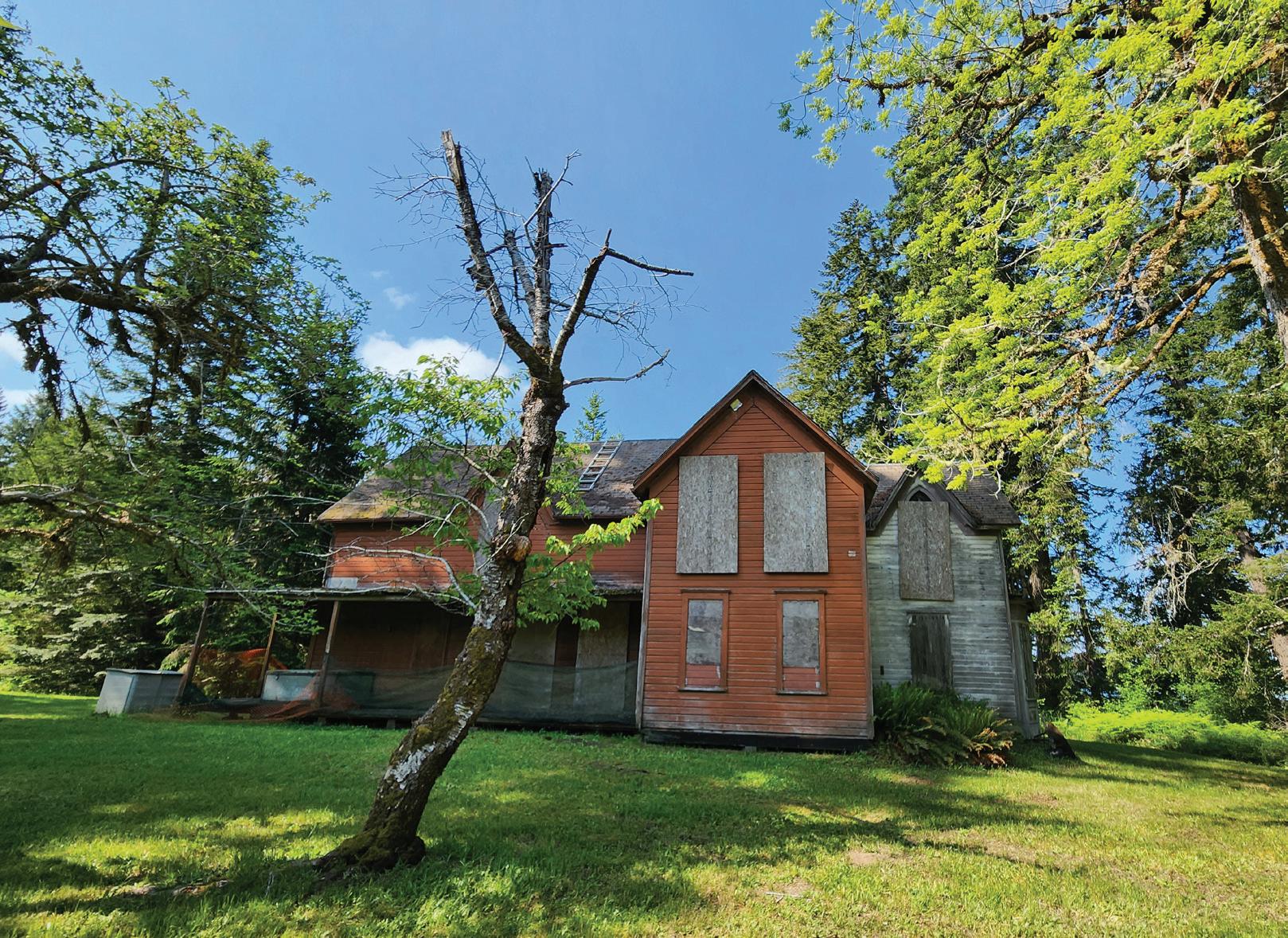
The home which is listed on the National Historic Register sits at the edge of the orchard beside some big old Douglas firs on a small bluff above Oakland Bay. The Malaney-
O’Neill House, originally built in 1892 and enlarged a few years later, is one of the best examples of the Carpenter Gothic style in Washington. Its size and craftsmanship capture the essence of a prosperous period in the county, when timber was king. It was originally built for logging magnate John Malaney The home’s second owner was Thomas O’Neill who was prominent in the oyster industry. O’Neill was a charter member of the Olympia Oyster Growers Association on Oakland Bay
After you spend some time admiring this structure, walk the short path behind it to overlook the oyster beds on Oakland Bay. Then head over to the Malaney Creek Loop. Follow this fairly level route through uniform Douglas-firs and by a swamp near Malaney Creek. The loop is just shy of a half mile with a short connector trail if you want to walk more by doing a figure-eight. There’s a short spur to an overlook of the creek where you may witness salmon. Once you’ve finished exploring this area, head back up the service road to the Upper Trail returning to the trailhead.
In 1941, new loggers looking for loans were being turned away by local banks. Union leaders recognized the need and a short while later, the credit union was established. Their vision was to offer fair savings and loan rates to workers unable to get basic financial services from the local bank.
The state-chartered credit union has seen many changes since that time, growing to 34,000 members with eight branches in our counties locally; but the commitment to their members remains constant.
Now known as Our Community Credit Union (OURCU), membership is available to all residents in the state of Washington. The member-owned financial cooperative is focused on helping members meet financial goals.
OURCU is a stalwart supporter of local law enforcement and continues to develop new approaches to educating youth about financial literacy. The cooperative participates in numerous non-profit sponsorships, events, and donated over 1,500 volunteer hours throughout Mason County last year.
Learn more online at https://www.ourcu. com/ or visit a friendly, local branch today.


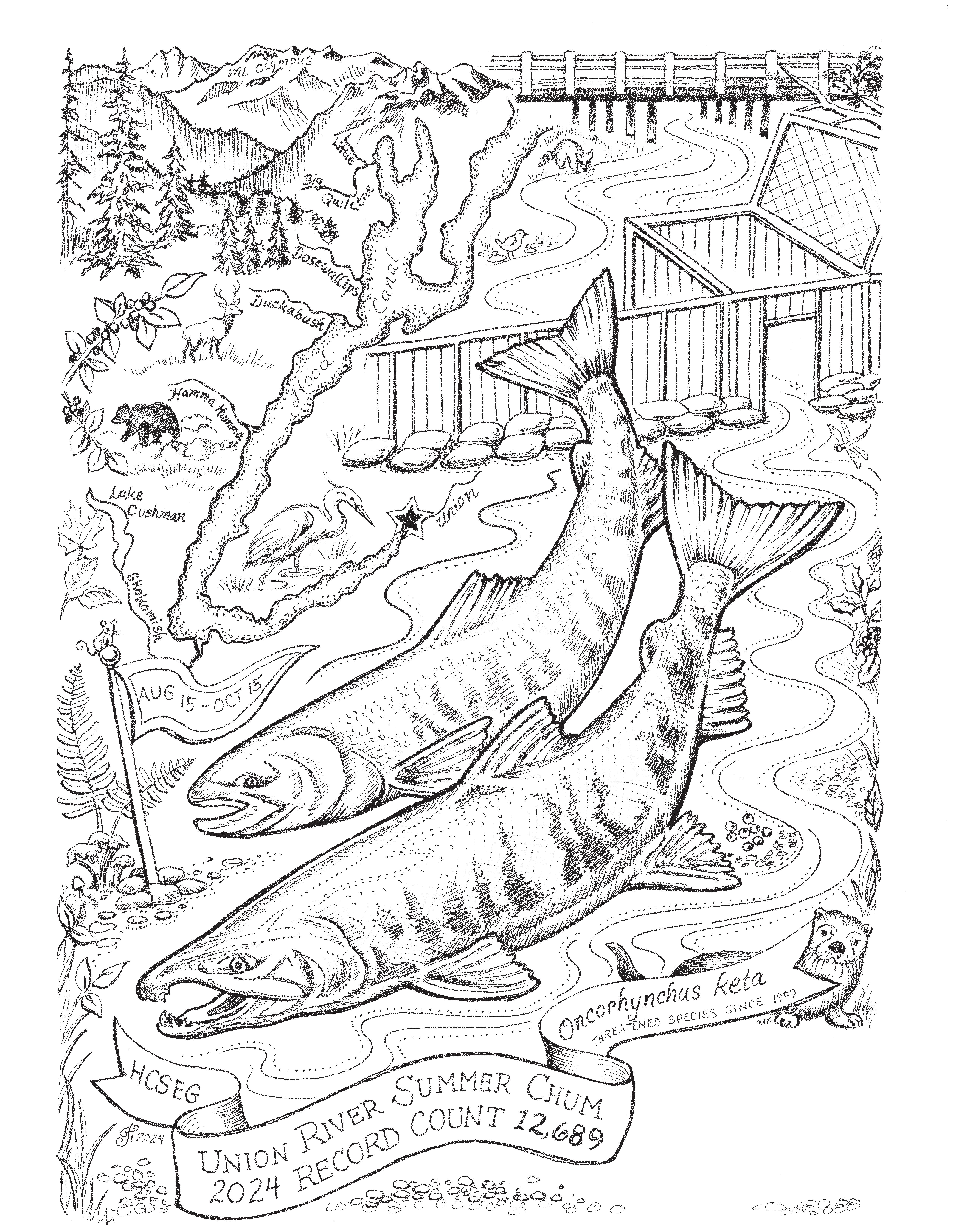
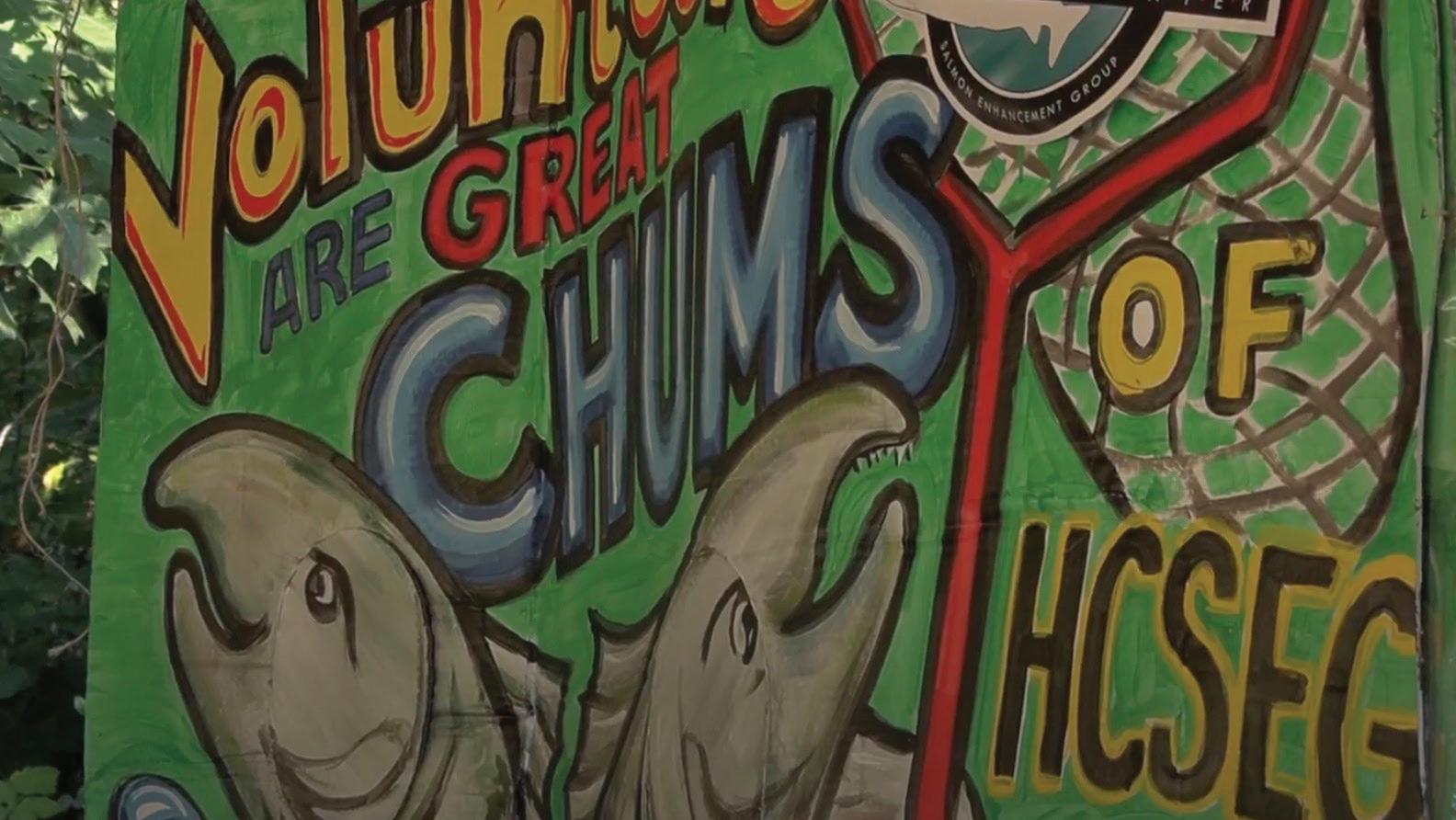
Each year, volunteers at the Union River Chum Trap count thousands of migrating chum salmon to help monitor fish returns and assess the impact of estuary restoration. The trap uses a weir system that directs the fish into a pen, where volunteers identify and count them based on their unique markings.
This season Tracing the Fjord journalist Jeff Slakey joined Hood Canal Salmon Enhancement Group volunteers and staff as they conducted their count on the Union River.
The majority of the fish are chum salmon, with distinct green backs and tiger stripes, especially on males.
The previous record of 11,916 in 2003 was due to hatchery supplementation, which ended that year, according to HCSEG.
Project manager, Mendy Harlow credited this year's healthy run to improving ocean conditions and HCSEG's 2013 habitat restoration project on the Union River.
Juvenile chum rely heavily on estuary habitat, Harlow explained. In 2024 Hood Canal summer chum returned to the Union River in record-breaking numbers, with 12,689. Final summer chum numbers were in on Oct. 16 when the trap was removed, according to Harlow.
Volunteers contribute nearly 10,000 hours annually, and the Salmon Enhancement Group credits improved estuary conditions for increased fish returns.
The project fosters community involvement, with families and kids encouraged to participate. For details visit pnwsalmoncenter.org and enjoy the coloring page celebrating this record!
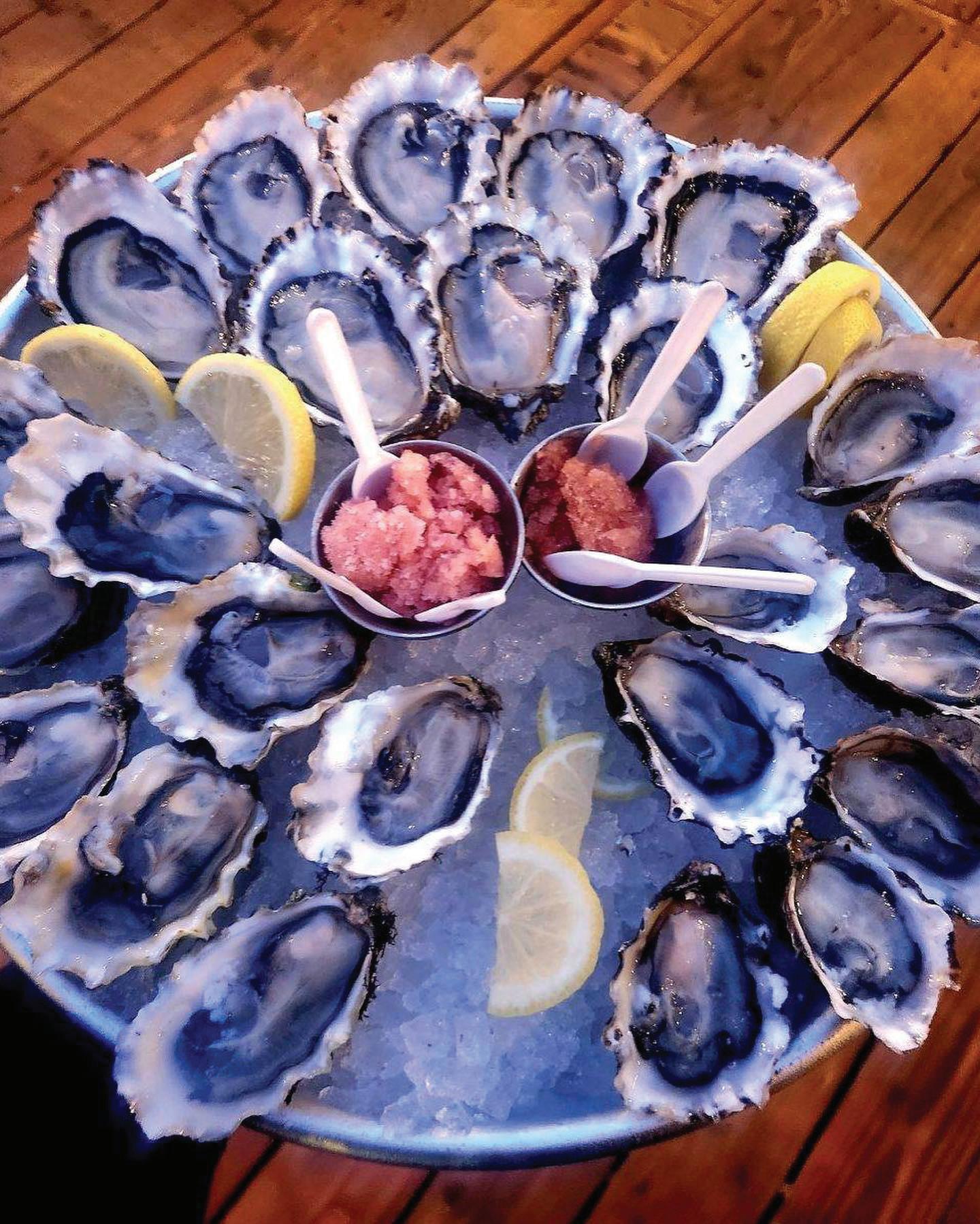
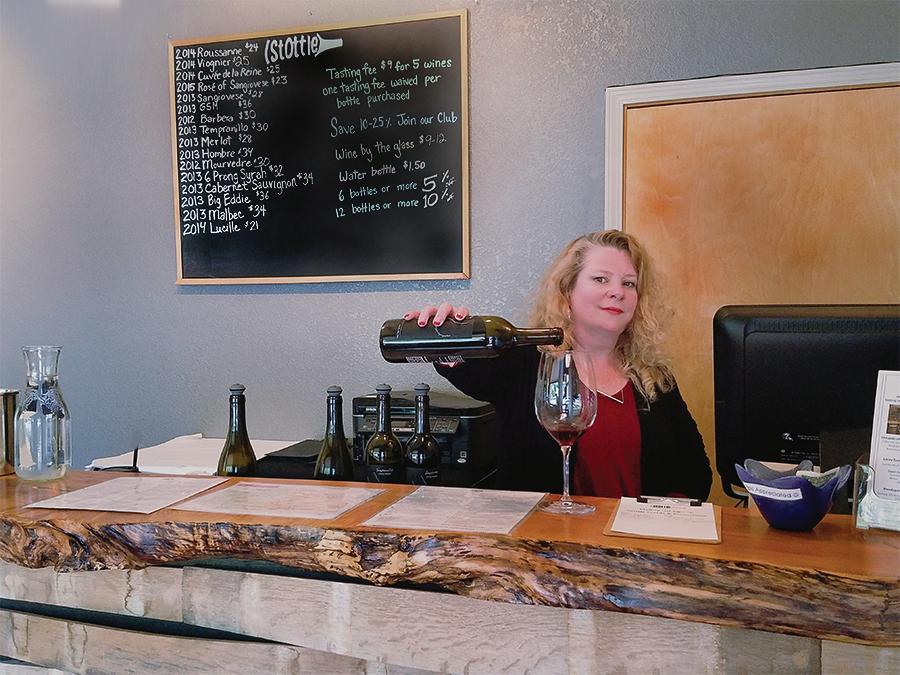
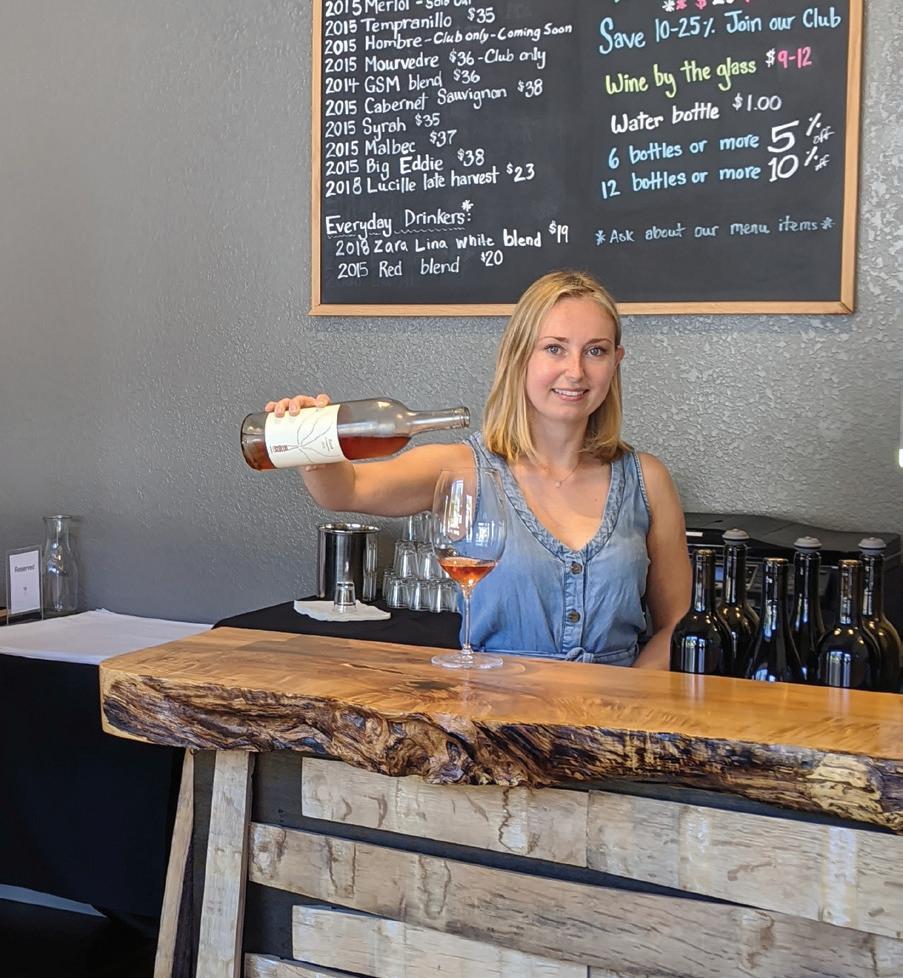
Proudly serving: High Steel Beer Potlatch Brewery Co. Stottle Winery Sea Nymph Oysters & Clams and the Culinary creations of Chef Xinh Dwelley
Stop by for FREE maps, Fjord Magazine, and local concierge service.
Located across from the Hoodsport Fish Hatchery on Hwy 101.
Open Friday 3-8PM Saturday & Sunday 1-7PM
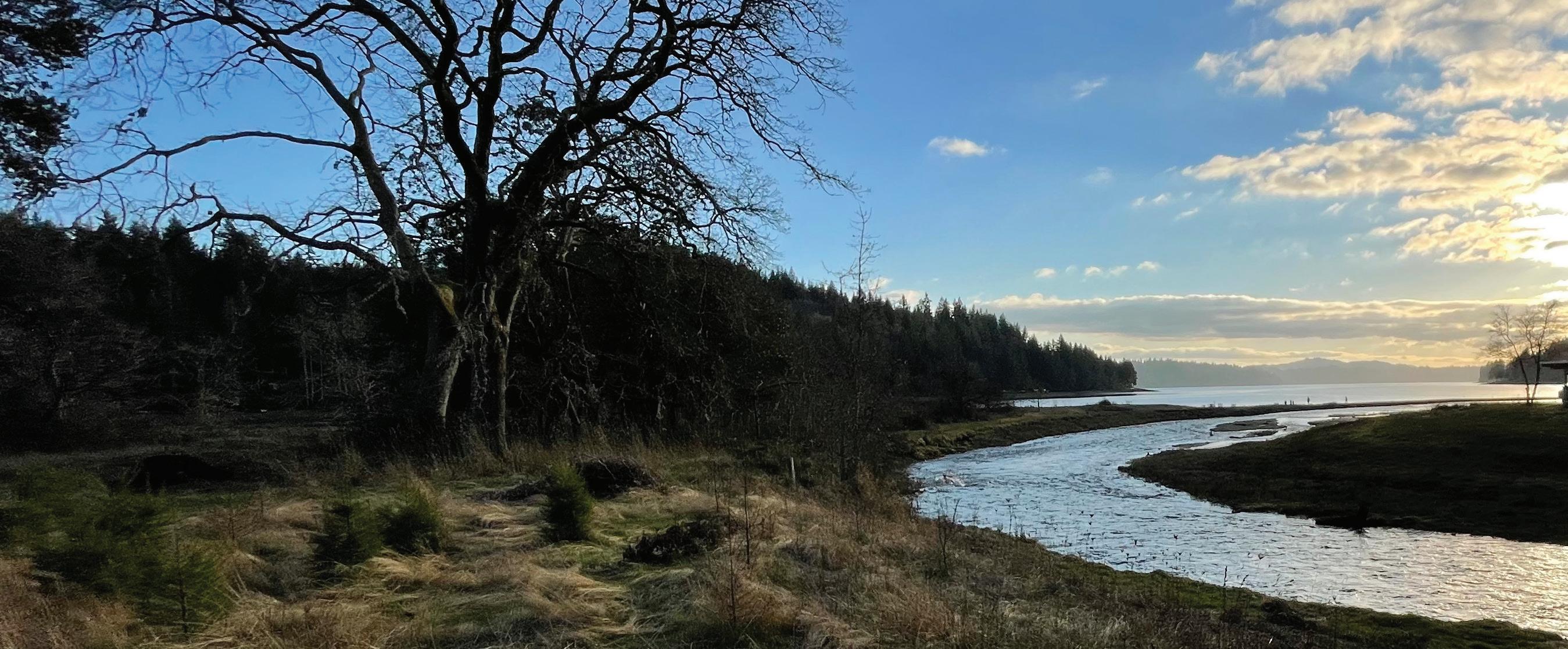
In past years, the peak salmon run at Bayshore Preserve has been the first half of November, so be sure to stop by for a visit. Volunteer salmon docents with Capital Land Trust will be stationed along Johns Creek to help answer salmon questions.
Salmon docents and underwater cameras will be at Bayshore Preserve on November 9, 10, and 11 from 10 AM to 2 PM. Docents will be there to answer your questions about salmon behavior and salmon habitat restoration efforts at Bayshore Preserve. It’s a great family-friendly activity! Don’t forget your polarized glasses for better salmon viewing.
See salmon in a whole new way with Puget Sound Estuarium’s underwater camera technology! Volunteers will use cameras set at multiple locations in the water to live-stream the action to tablets on the shore. Using wi-fi, visitors will be able to sync their phones to take real-time photos and videos in Johns Creek. See the underwater activity and get a view as if you were actually swimming with the salmon!
Parking is free at Bayshore Preserve. The preserve parking lot has limited parking. It can get very full this time of the year with visitors and people fishing at the Fishing Point. Look for a sign that says “Salmon Viewing Parking” just past the Bayshore Preserve lot. The address for Bayshore Preserve is 3800 WA-3, Shelton, WA 98584. Bayshore Preserve’s parking lot is immediately off Highway 3 across from the Texaco gas station.
Saturday, November 9
10a-2p: Shelton Timberland Library kids activity and prizes.
10a-2p: Meet Mary Boone, the author of School of Fish. School of Fish is a children’s book where students work together to raise salmon in the classroom.
10a-2p: Spanish/English interpretation available.

10a-2p: Wildlife spotting scope at estuary (#3), Black Hills Audubon Society
11a: Restoration and History Tour of Bayshore Preserve with long-time volunteer Tom Terry. *Meet at the kiosk Sunday, November 10
10a-2p: Wildlife spotting scope at estuary (#3), Black Hills Audubon Society Monday, November 11
10a-2p: Spanish/English interpretation available. *Meet at the bridge
10a-2p: Wildlife spotting scope at estuary (#3). Black Hills Audubon Society 1p: Restoration and History Tour of Bayshore Preserve with CLT’s Special Land Projects Manager Laurence Reeves. *Meet at the kiosk
Our conserved public-access preserves give families and individuals yearround opportunities to enjoy outdoor experiences and create fond memories in nature that will last a lifetime.
Shake off the holiday blues with the return of the 9th annual Midwinter Bluegrass celebration! The 2024 Band line up welcomes The Bluegrass Regulators, The Dirty Birds and Mason County's own , Runaway Train Bluegrass Band.
Saturday, December 28th, 6:00 -9:00 PM join Kristmas Town Kiwanis and the community at the Shelton High School Performing Arts Center, 3737 North Shelton Springs Rd in Shelton. Tickets are just $20 and available online or at the door. Kids 15 and under get are free. Refreshments are provided by donation.
Band Bios:
The Bluegrass Regulators formed in February of 2009 and played their first show at the Bluegrass from the Forest festival that year. Originally consisting of Martin, Josh, Jake, and Luke - Molly joined the team in the Summer of 2010. Over the next few years the young group toured all over the PNW, released two CDs and received National recognition. In 2013, the band stopped touring as members all pursued professions, education, and family. Now, over a decade later, all five of the Bluegrass Regulators are excited to get back together for this midwinter bluegrass celebration!
The Dirty Birds
Washington native Jake Monroe grew up playing music in the PNW Bluegrass community.
He was a very familiar face in the Leavenworth music scene until he moved to Nashville where he’s been a first pick for gigs in town. He can play anything (even electric kazoo) but we are thrilled to have him singing and picking the banjo!
Kaiti (Dewhirst) Monroe grew up coming to the Bluegrass From the Forest festival and playing bluegrass with her family all over the PNW. She moved to Nashville 4 years ago and recently resigned her teaching job in May to pursue music full time. These days she’s often on the road and in the studio - working as a songwriter, vocalist, and instrumentalist for multiple artists.
Runaway Train
They have been the host band from the festival’s conception and will be playing with members: Greg Linder guitar and vocals; Kent Powell bass and vocals;John White mandolin and vocals; plus special guest Luke Dewhirst who played banjo with the band for several years starting when he was fifteen and eventually left to join the coast guard where he is presently stationed in Puerto Rico.

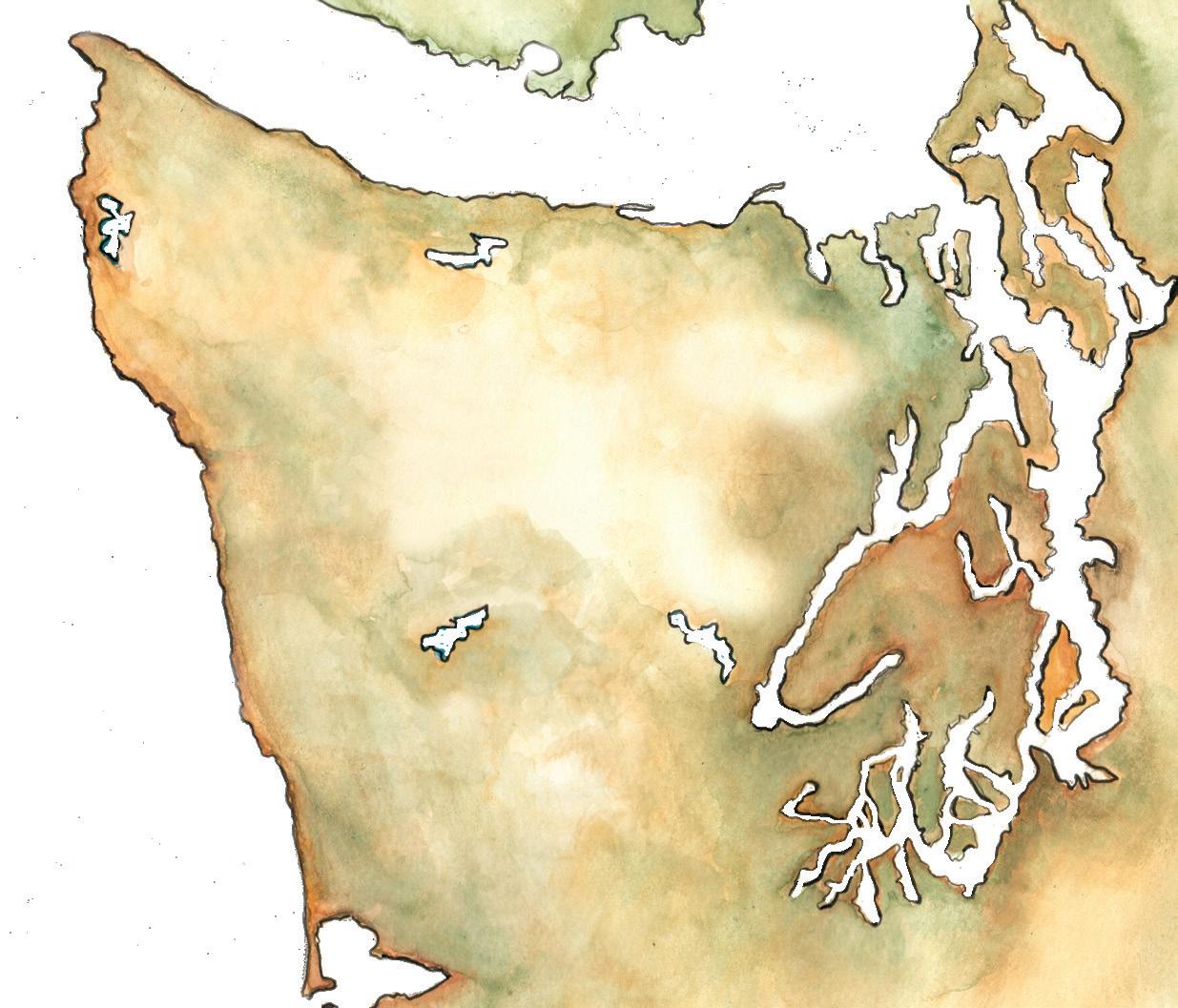
Receiving hundreds of inches of rain annually, the Hoh, Quinault and Queets Rainforests are located on the coastal foothills of the Olympics. With 21 feet of snow or rain at its peaks, it’s no wonder there is a myriad of waterfalls lacing the area. Explore this sampling curated by celebrated guidebook author and avid hiker, Craig Romano. Some are small, secret, and unique, others are popular but magnificent. All are worth the journey!
Olympia & Hood Canal
1. Tumwater Falls Loop (1 MILE – EASY)
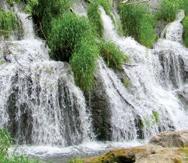
Olympia | Exit #103 off of I-5 S to Deschutes Way
Tumwater Falls Park, no pass required, kid/dog friendly
Iconic landmark, multi-tiered showy falls separated by gorge.
2. Kennedy Creek Falls (6.8 MILE RT – MODERATE)
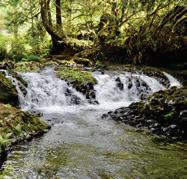
Kamiliche | US 101 N, left at Old Olympic , mile to gate
Forestry & WA DNR, no pass required, kid/dog friendly
Descend to a grove of big trees — and the falls. Here Kennedy Creek tumbles over basalt flow.
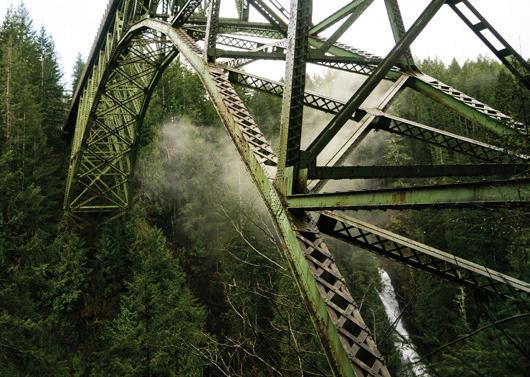
3. Vincent Creek Falls (ROAD ACCESS – EASY)
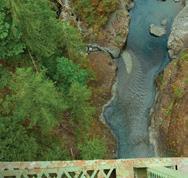
Skokomish Valley Rd; 5.6 miles to FR 23; 2.3 miles to FR 2340
Olympic National Forest, no pass, caution: low guardrail
Arched truss 685’ High Steel Bridge (1929) spans 375’ and is the 14th highest bridge in USA. Falls drop 250’ over canyon.
4. Big Creek Cascades Loop (4.2 MILE – MODERATE)
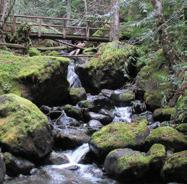
Lake Cushman / Hoodsport | SR 119 for 9.3 miles to trail head
Olympic National Forest, pass required, kid/dog-friendly
Loop utilizes old logging roads, new trails and series of bridges constructed by volunteers that continue to improve this loop.
5. Staircase Rapids Loop (2 MILE – EASY)
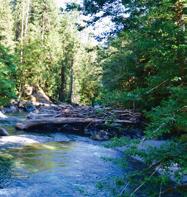
Lake Cushman/Hoodsport | SR 119; FR 24 for 14.7 miles
Olympic National Park, pass required, kid-friendly, no pets
Follow river to suspension bridge, cross river and complete loop on North Fork Skokomish River back to Ranger Station.
6. Hamma Hamma Falls (ROAD ACCESS – EASY)
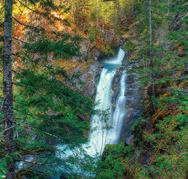
Lilliwaup | FR 25 for 13.3 miles
Olympic National Forest, pass required, kid-friendly
Bridge spans two-tiered falls (80’). Overhead view decent year round. On drive back, enjoy views of secondary falls along river.
7. Murhut Falls (1.6 MILES ROUND-TRIP – EASY)
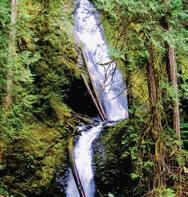
Duckabush River Valley | FR 2510 6.3 miles, FR 2530, 1.3 miles
Olympic National Forest, no pass required, kid/dog-friendly
Well-built trail to 130’ two-tiered waterfall. Pacific rhododendrons line the trail in May and June.
8. Rocky Brook Falls (QUARTER MILE – EASY)
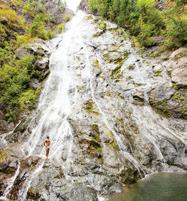
Brinnon | Milepost 306 on US 101, Dosewallips Road 3 miles
Private, no pass, kid/dog-friendly - check for closures
Classic horsetail waterfall crashes more than 200’ from hanging valley. Summer, the cascade pool is a popular swimming hole.
9. Dosewallips Falls (9.0 MILE ROUND-TRIP – MODERATE)
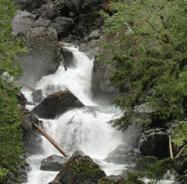
Brinnon | US 101 Milepost 306, Dosewallips Rd 9.7 miles to trail Olympic National Park, no pass, kid-friendly, dog-prohibited Spectacular 100’ waterfall previously had vehicle access but now to reach waterfall you must hike or mountain bike closed road.
10. Fallsview Falls (0.2 MILE ROUND-TRIP – EASY)
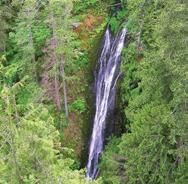
Quilcene | US 101 at Falls View Campground. Trail in picnic area Olympic National Forest, pass required, kid/dog friendly, ADA Trail is ADA accessible to a falls cascading 100’. By late summer it trickles—but during the rainy season the falls put on a little show.
Lake Crescent & Elwha River
11. Striped Peak Falls (2.2 MILE RT– MODERATE)
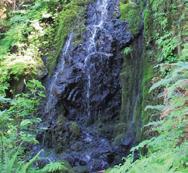
Salt Creek County Park | SR 112 , 7.2 miles, R. @ Camp Hayden Rd Clallam County Parks and WA DNR, no pass, dog-friendly Small but location in remote cliff-enclosed sea cove is stunning.
12. Madison Creek Falls (0.2 MILE ROUND-TRIP – EASY)
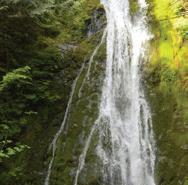
Elwha River Valley | Olympic Hot Springs Rd 2.1 miles Olympic National Park, no pass, kid-friendly, ADA, dog-friendly Short walk to mossy maple and cedar lined grotto. This path is one of the few within the national park that is open to leashed dogs.
13. Wolf Creek Falls (0.8 MILE ROUND-TRIP –MODERATE)
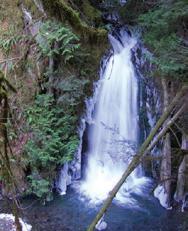
Elwha River Valley | US 10, milepost 240, Olympic Hot Springs Rd, 4.0 miles, left onto dirt Whiskey Bend Rd, 4.2 miles to trail head Olympic National Park, pass required, dogs prohibited After a steep descent to river walk along the gravel bank of Wolf Creek to a fanning 25’ falls. Step back to see another tier above it.
14. Goblins Gate (3.6 MILES ROUND-TRIP – MODERATE)
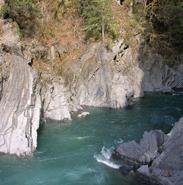
Elwha River Valley | milepost 240, Olympic Hot Springs Rd, 4 miles onto dirt Whiskey Bend Rd, 4.5 miles to trail head
ONP, pass required, kid friendly, dogs prohibited Hike to a Elwha River gorge to a series of rapids.
15. Boulder Creek Falls (8.4 MILES ROUND-TRIP – MODERATE)
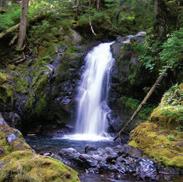
Elwha Valley | Milepost 240, Olympic Hot Springs Rd, 10 miles
Olympic National Park, pass required, dogs prohibited
A series of cascades in valley with luxuriant old-growth forest. The hike is an all-day event but is remoter than nearby popular sites.
Thank you.
Waterfall project made possible with Mason County Lodging Tax funding. explorehoodcanal.com
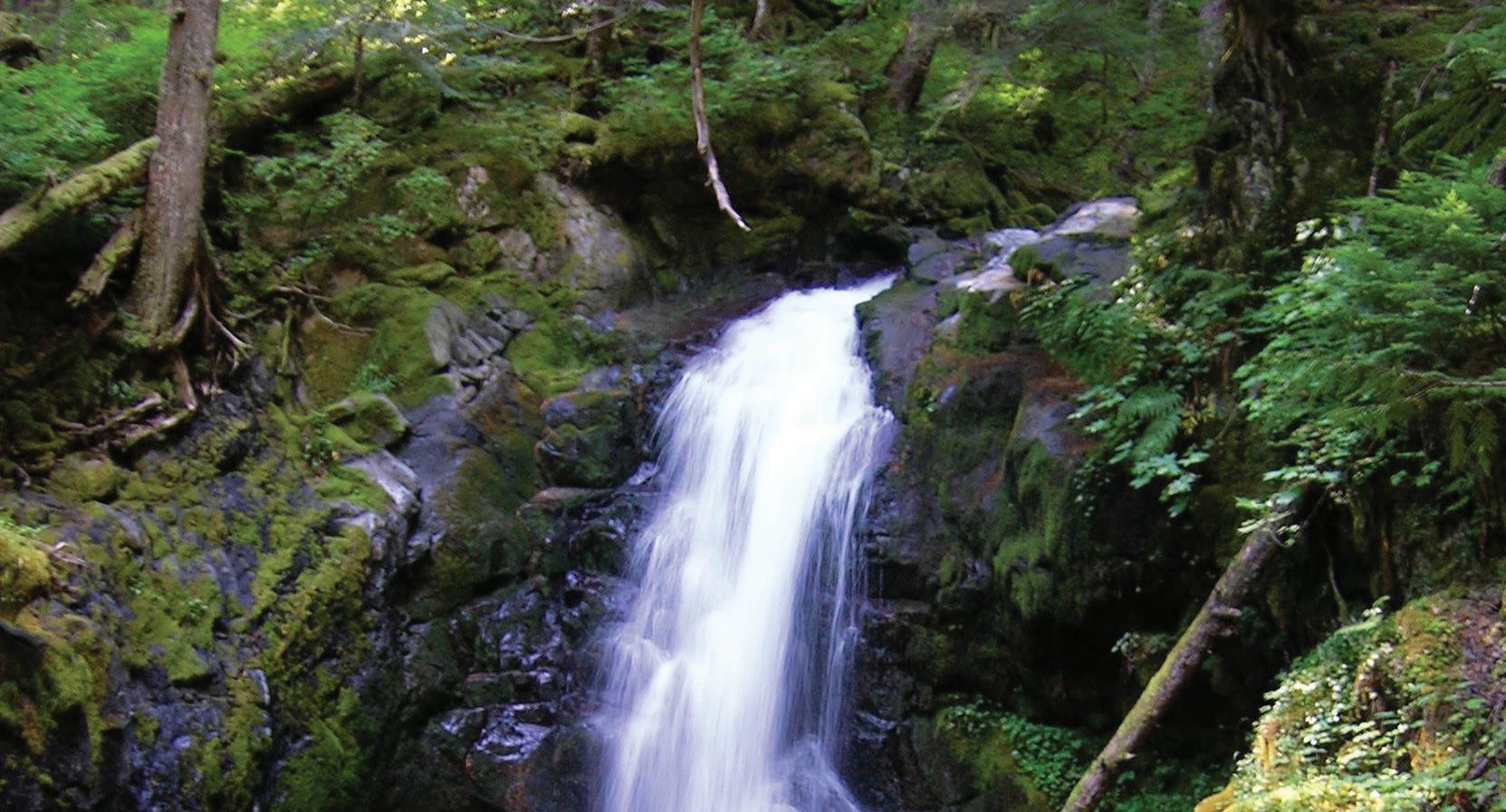
16. Marymere Falls (1.8 MILES ROUND-TRIP – EASY)
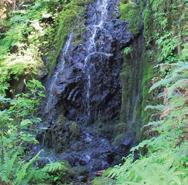
Lake Crescent | milepost 228, right at Lake Crescent Lodge
Olympic National Park, no pass, kid-friendly, dogs prohibited A popular waterfall on the Olympic Peninsula, if it was harder to reach, this 90’ horsetail cascade would still be well-visited.
17. Sol Duc Falls (1.6 MILES ROUND-TRIP – EASY)
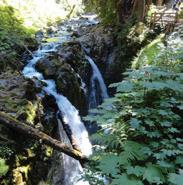
Sol Duc River Valley | Sol Duc Hot Springs Road, 14 miles to trail
Olympic National Park, pass required, kid-friendly, no dogs ONP’s most photographed waterfall. The falls tumble about 40’ into a tight slot and abruptly flow at a right angle into the gorge.
18.Strawberry Bay Falls (3.6 MILES ROUND-TRIP – EASY
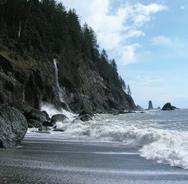
Olympic Coast | SR 110 to Quillayute Prairie, 3.8 miles to trail
Olympic National Park, no pass, kid-friendly, dogs prohibited Hike to Third Beach to witness this waterfall tumbling more than 100’ from a towering headland into the surf.
19. Mineral Creek Falls (5.0 MILES ROUND-TRIP – EASY)
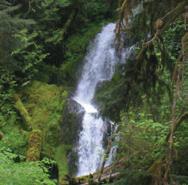
Hoh Rainforest | Upper Hoh Rd from US 101, 18 miles to trail
Olympic National Park, pass required, kid-friendly, no dogs
Tucked within towering Sitka spruces, firs, and maples in the rain forest this pleasant hike follows along the glacier-fed Hoh River.
20. Cascade Falls Loop ( .7 MILES LOOP – EASY)
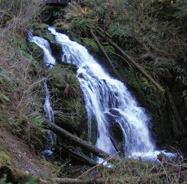
Quinault Rainforest | South Shore Rd 2.3 miles to trail
Olympic National Forest, no pass, kid / dog friendly
Not the tallest, nor most popular of the waterfalls within the Quinault Rainforest, Cascade Falls is perhaps the prettiest.
21. Merriman Falls (ROADSIDE—MINIMAL WALKING)
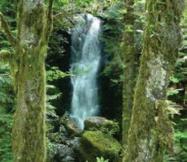
Quinault Rainforest | South Shore Rd from US 101, 6.7 miles
Olympic National Forest, no pass, kid-friendly, dog friendly
The falls plummet 40 feet over a mossy and ferny ledge into a mossy tangle of boulders and saturated logs.
22. Enchanted Valley of 10,000 Waterfalls
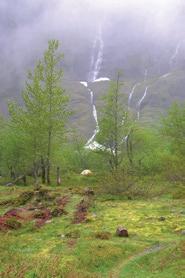
(26 MILES ROUND-TRIP – MODERATE BACKPACKING TRIP)
Quinault Rainforest | South Shore Rd from US 101, 13 miles to Quinault River Bridge,right on Graves Creek Rd 6.2 miles
ONP Wilderness Permits required, kid-friendly, no dog
Behold its stunning backdrop of sheer cliffs 3,000 feet high streaked with waterfalls and hanging snow and ice.
®2020 | Information and images courtesy of Craig Romano. Craig has written more than 20 guidebooks including Day Hiking Olympic Peninsula 2nd Edition www.waterfalltrail.org
For full descriptions on all these waterfalls including maps, updates and images, visit: WATERFALLTRAIL.ORG
23. Spoon Creek Falls (6 MILE ROUND-TRIP – MODERATE)
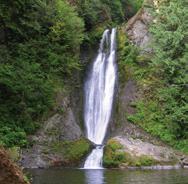
Wynoochee Valley | FR 22 34 miles, FR 23 2.5 mile to trail
Olympic National Forest, no pass, kid-friendly, dog friendly 93’ falls plunge into a box canyon. Trail goes through old-growth forest to a viewpoint of falls dropping into the gorge.
24. Maidenhair Falls (1 MILE ROUND-TRIP – EASY)
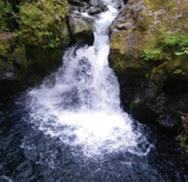
Wynoochee Valley | FR 22 34 miles, FR 2312 5.8 miles, FR 2385 Olympic National Forest, no pass, kid-friendly, dog friendly Overlooked by many due to its close proximity to Wynoochee Falls, this is a pleasant surprise in a quiet corner of the Olympics.
25. Porter Falls (1.6 MILE ROUND-TRIP – EASY)
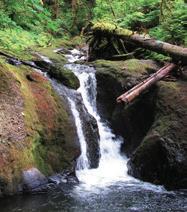
Porter Creek Rd, 2.9 miles B-0150 Rd, .5 mile, B-Line 0.9 mile Capitol State Forest, Discover Pass required, kid/dog friendly Located at the confluence of the South and West Forks of Porter Creek. Here one branch cuts through a cleft while the other plunges over a ledge into a big punchbowl.
Visit Mason County Sportsman’s Association's website to check out the list of classes and events in the indoor range in Shelton.
Questions? Message phone: (360) 427-1102
masoncountysa.org
Nov 12 Annual Chili Cook-off Union Fire Hall, 5-30-7PM, $5 at the door
Dec 6/7 Holiday Market -New Community Church of Union, 10-4PM, Chris Eakes live music, food, 25+ vendors, & raffles
Dec 15 Christmas Party McReavy House
info@hoodcanalimprovementclub.org HOODCANALIMPROVEMENTCLUB.ORG
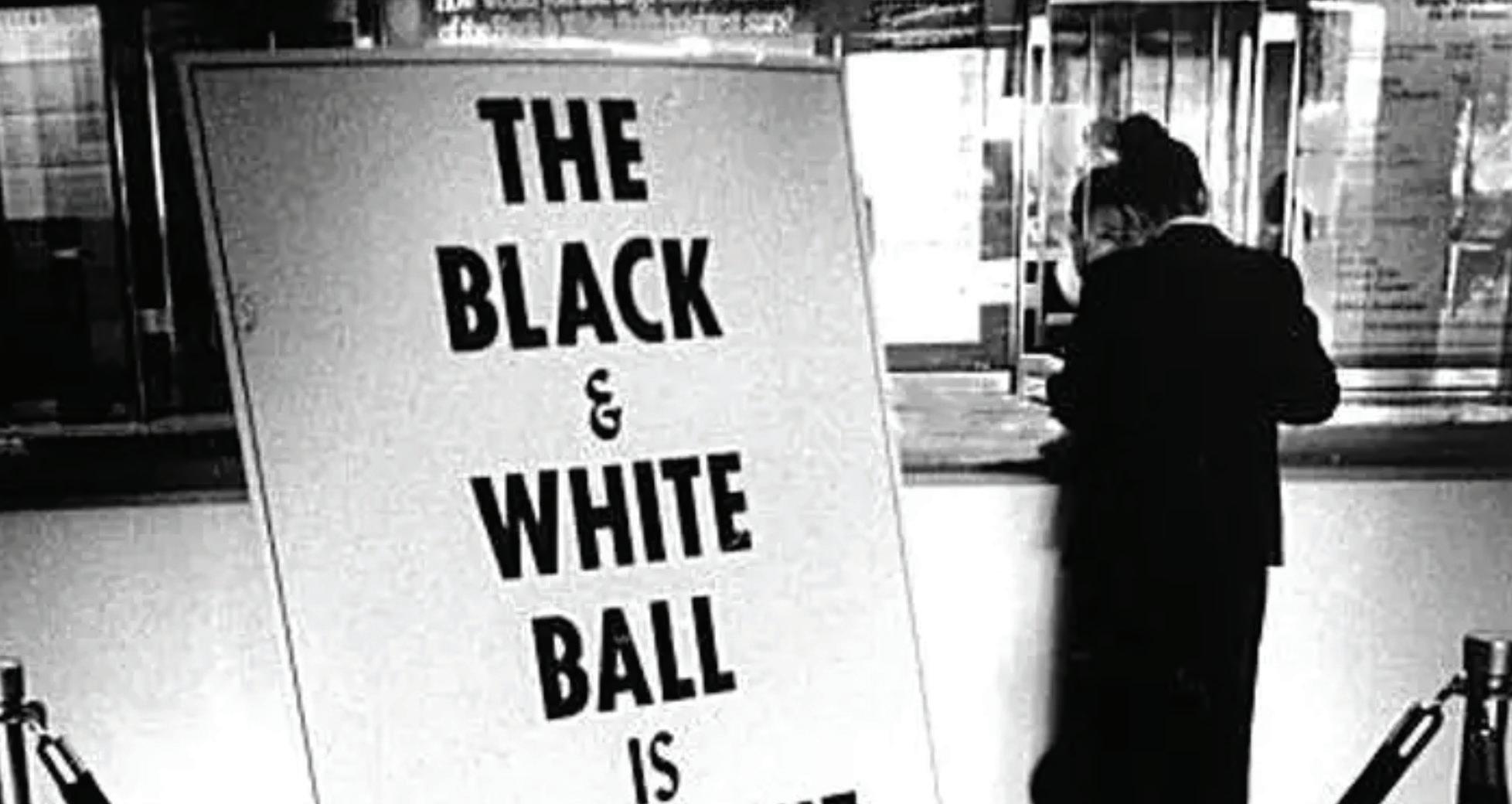
Step back into the enchanting era of Old Hollywood as Mason General Hospital Foundation presents a Black and White Ball, a night where the timeless elegance of classic cinema comes to life. Mason General Hospital Foundation welcomes you to a formal event to ring in the holiday season while raising funds for medical equipment at Mason Health.
Imagine yourself in a world of vintage sophistication, where the allure of black-and-white films is reflected in every detail, from the dazzling attire to the shimmering décor. Volunteers with Mason General Hospital Foundation will create an unforgettable evening filled with the glamour and style of a bygone era, in support of a great cause.
This auction experience will include a live and silent auction, holiday tree décor and a specialty curated gourmet meal experience.
This formal evening ushers in the holiday season in black and white elegance, while raising crucial funds for state-ofthe-art medical equipment at Mason Health. MGHF thanks Platinum Sponsor Sherrie Vig, Silver Sponsor Heritage Bank and Silver Sponsor EI. Kristyn & Son Construction, Inc. for their generous support to help make this evening possible.
Guests are invited to immerse themselves in the iconic glamour of the silver screen. With black-and-white décor reminiscent of classic films, the evening will be a magical experience filled with elegance, style and charity. A photo booth will be provided by Cooper Studios, where guests will be encouraged to channel their inner Hollywood stars and dress to impress.
The Foundation thanks Board President Eileen Bailey, Vice President Jaimie Hans, Secretary/Treasurer Lisa Welander and board members Laurie Brown, Stephanie Fyfe, Beth Gregg, Jeff McHargue, Selena Parker, Tom Strong and Karen Sullivan for bringing this event to fruition. Tickets are available at $200/person or $1,600/table (8). Proceeds support Mason Health’s mission to enhance patient care by helping purchase an upgraded openfield MRI machine. Visit masonhealth. com/foundation or call 360-427-3623.

Embrace the magic of the holidays on Hood Canal
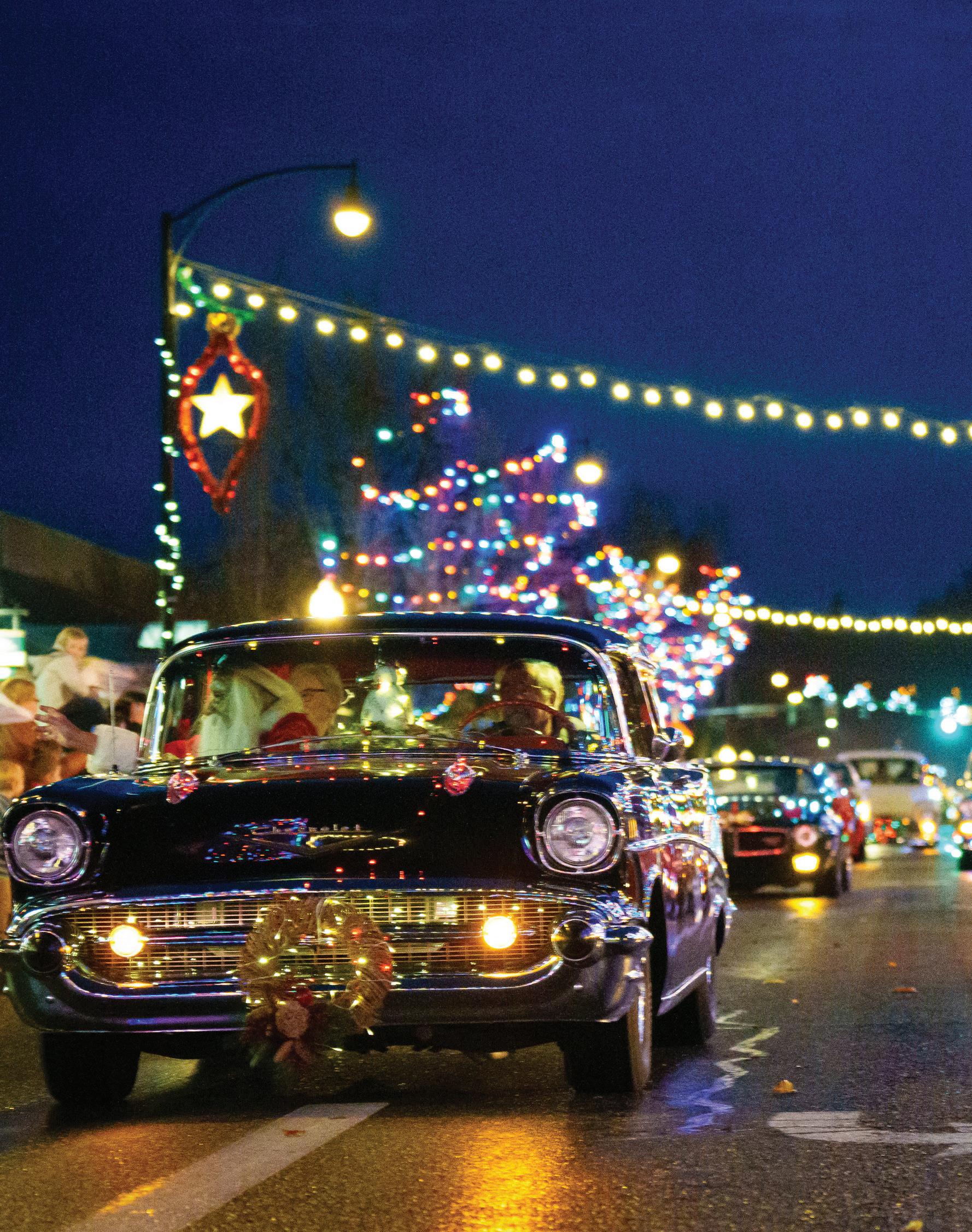

KMAS 24/7 Christmas Music from Christmastown USA and KMAS Christmas Parties all over the County!
SHELTON, DECEMBER 6, 3-8
UNION, DECEMBER 8, 3-8
HOODSPORT, DECEMBER 13, 5-8
Music, dancing, trivia, prizes, kids activities, crafts, food, drink and so much more! Its a community celebration to mark the season!
KMAS.COM/ Festivalofthefirs.com

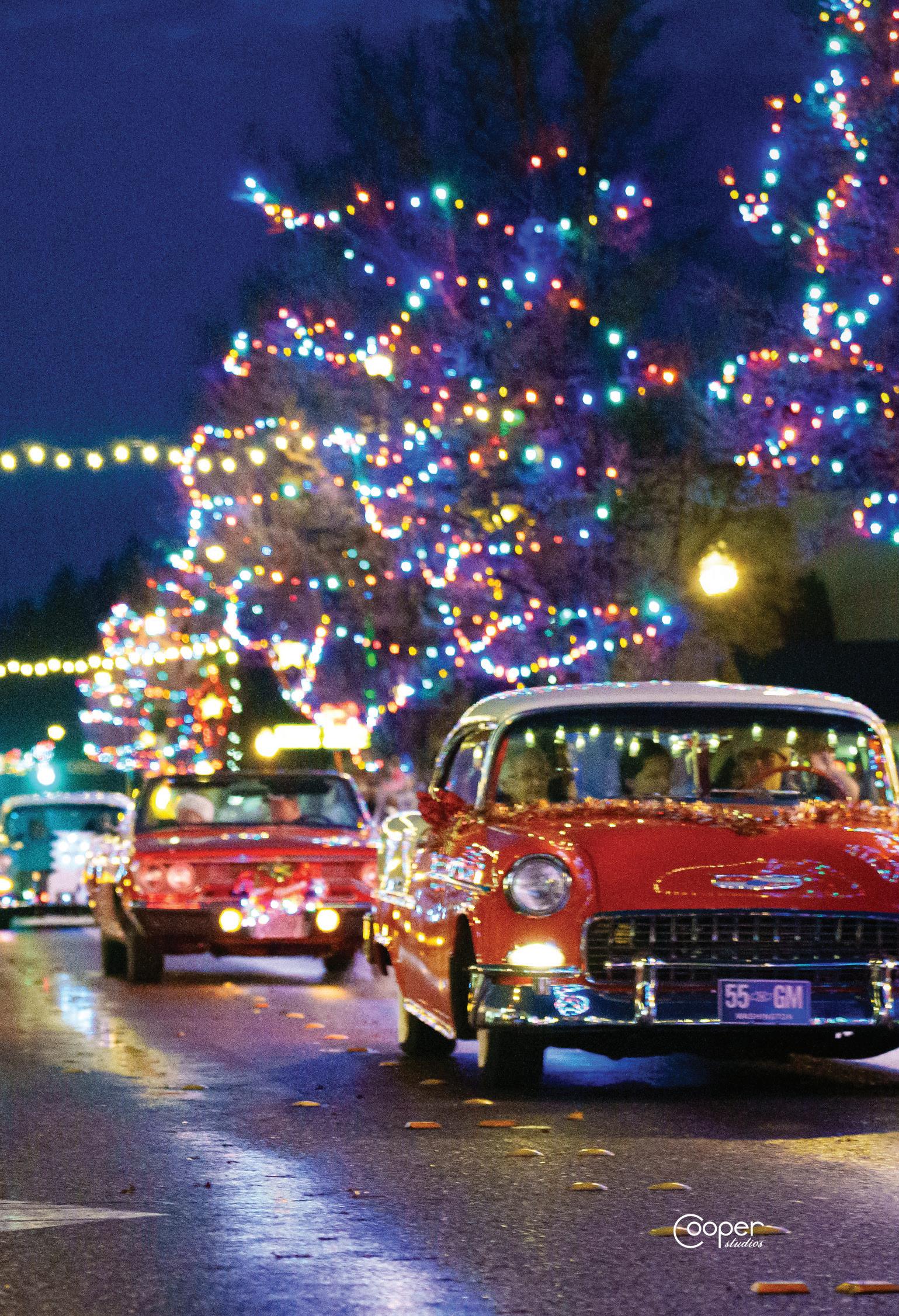
Cue the lights, music, parade, and street celebrations on the southern Olympic Peninsula! Festival of the Firs celebrations are kicking off with tree hunts and lightings beginning Thanksgiving long weekend!
Create a family tradition in the Olympic National Forest to find your Christmas tree. Get a $5 permit online, grab a saw, and enjoy exploring the charming communities along Hood Canal. Book a cabin or suite by the water and immerse yourself in the holiday spirit! Enjoy shellfish, markets, cozy restaurants, music, and family activities throughout the month. Don’t miss Shelton’s Guinness World Record Lighted Christmas Tree Maze and the parade of decorated boats on Hammersley Inlet!
Holiday Tree Lightings
NOVEMBER 29-30
On the 29th, Santa arrives by boat at Alderbrook Resort, kicking off the festivities with family activities, live music, and a tree lighting. Saturday, experience an avenue of Douglas firs in Hoodsport along Hwy 101 and join Belfair's parade for traditional celebrations on Sunday the 1st.
Christmastown, WA
SHELTON, DECEMBER 6-8
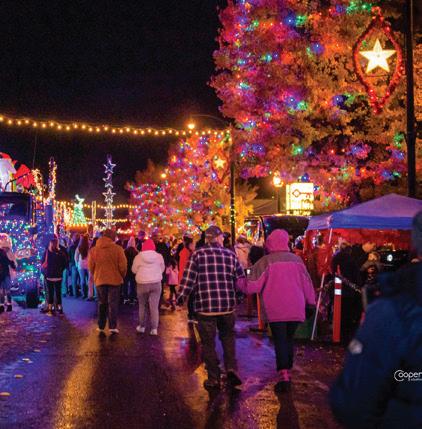
Shop Shelton First and explore the Maze and markets while enjoying the annual tree lighting with Santa, music, and marshmallow bonfire on Railroad Ave. On Saturday, attend the Kristmas Town Kiwanis Santa parade at 5 PM, featuring floats, free hot cocoa, and family fun.
LILLIWAUP, DECEMBER 7-8, 14-15
Food, music, crafts, vendors, hot mulled wine, and Santa are hallmarks of this 2nd annual event – now for two amazing waterfront weekends! Join us on the farm for some old-fashioned holiday celebrating!
HOODSPORT, DECEMBER 14
Enjoy activities, holiday scavenger hunts, visits with Santa, shopping, and boat rides with Santa, as the community carols down the boardwalks of Hoodsport. Join in at YSS Dive and finish celebrating at the Fjord Oyster Bank on Finch Creek with family activities, marshmallow roasting, chestnuts and live music!
SHELTON, DECEMBER 14, 12-5 PM
Purchase a commemorative box and ornament, along 12+ cookies made by talented local bakers. Explore 12+ merchant locations, each offering wonderful shopping options. Take this opportunity to discover unique gifts, holiday decorations, and more while enjoying the charm of our local businesses. This event is not only a treat for your taste buds but also a fantastic way to support our vibrant community.
Visit festivalofthefirs.com or explorehoodcanal.com for a guide to planning your Hood Canal holiday itinerary!
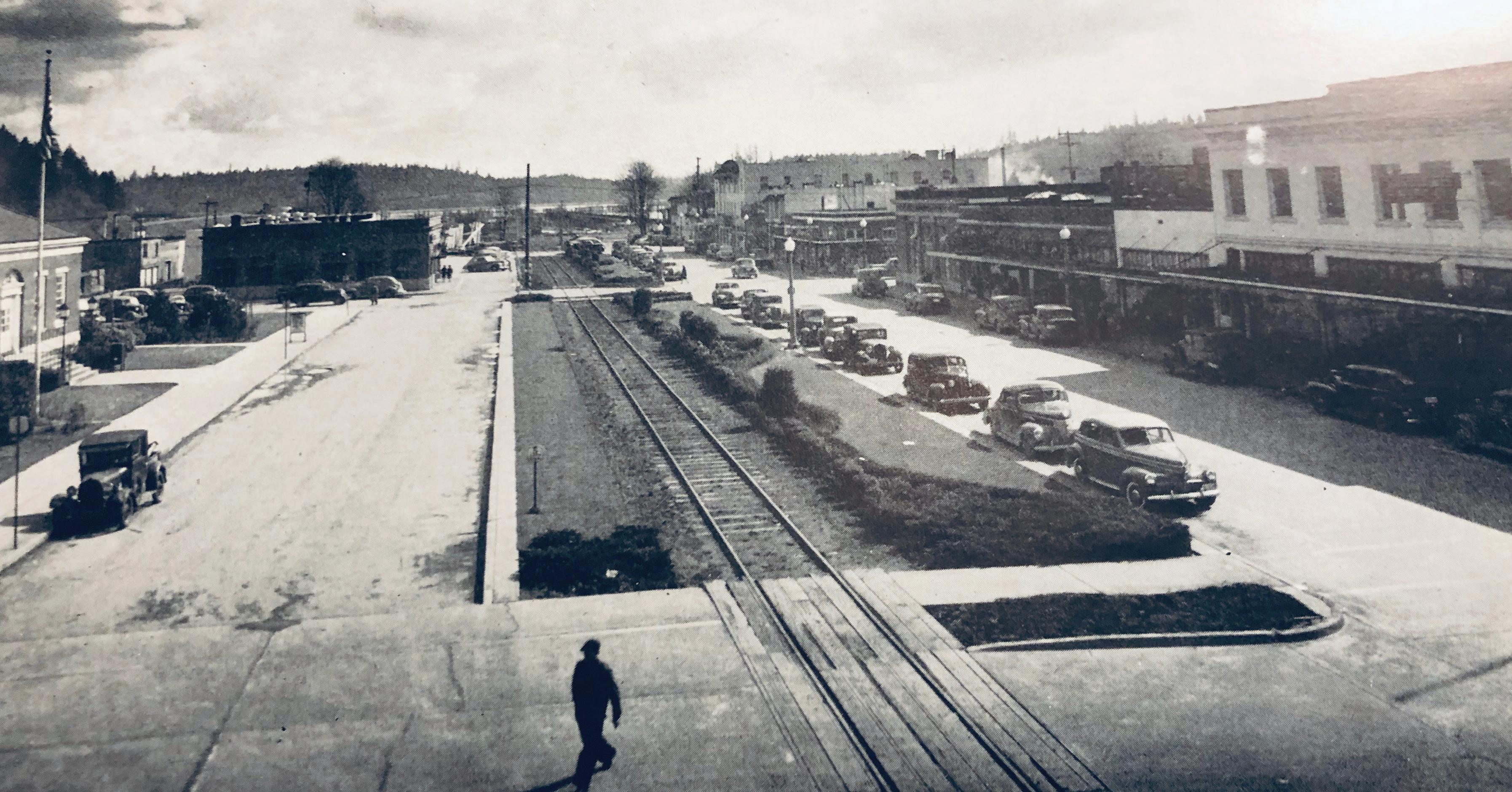
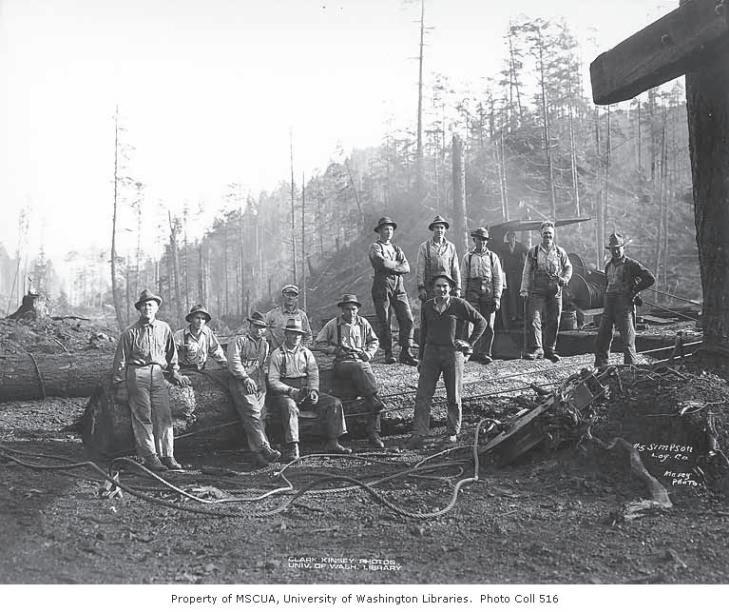
Shelton is typically branded as a logging community. Children were born in caulk boots and graduated to a peevee and pike pole when they were tall enough. The streets were built wide to accommodate the oversized logging trucks going down West Railroad Avenue to the mill. Sawdust made up the grit that produced many pioneer pearls. But trees weren’t just cut to make into boards or pulped into paper or cellulose products. Up until the 1990s, Shelton was known as Christmastown, USA –the Christmas Tree Capital of America.
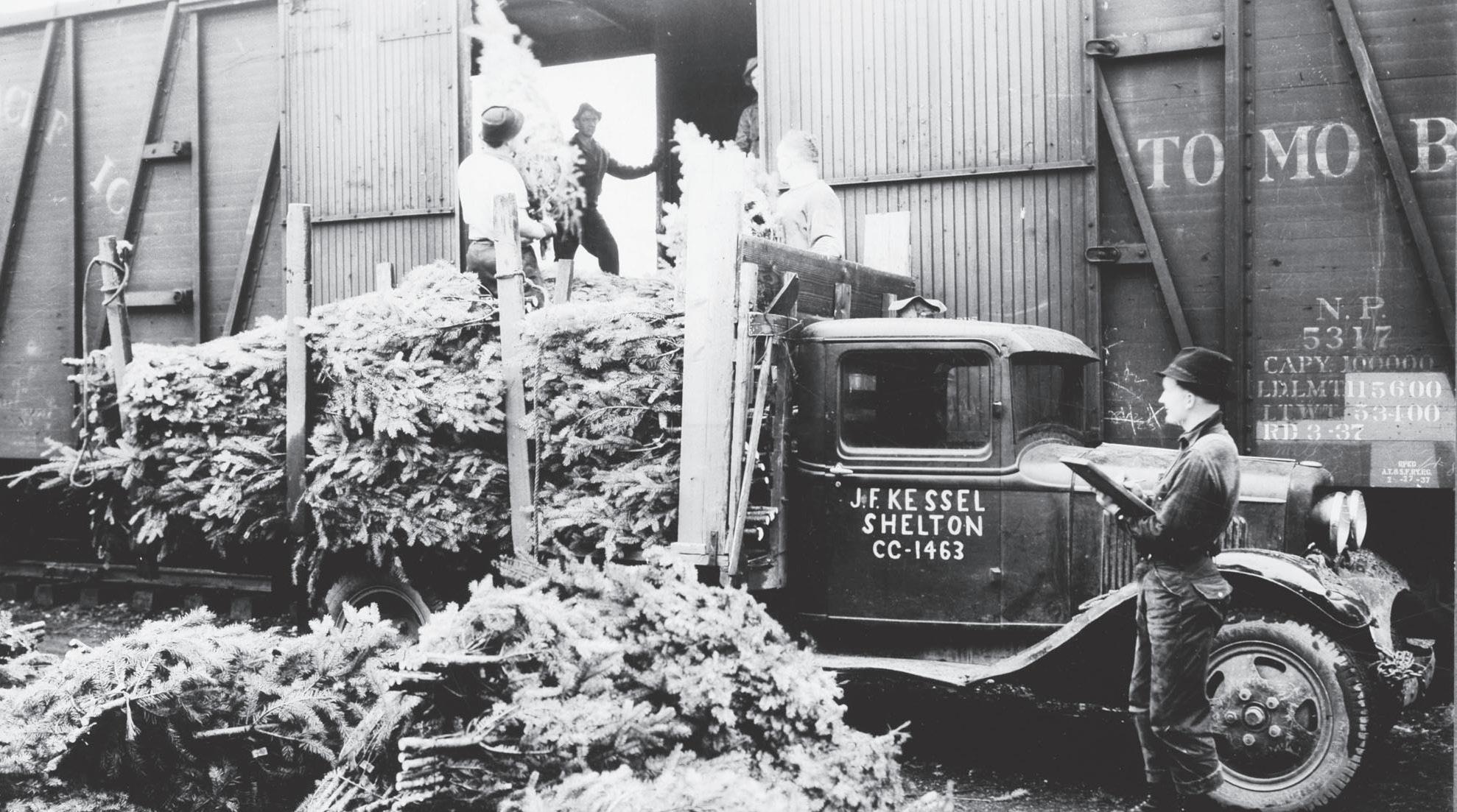
As early as the 1920s, wild-grown Douglas-firs (Pseudotsuga menziesii) were hand-cut to thin out already growing forests, such as logging cut-blocks and the Olympic National Forest. In 1918, G.R. Kirk was working as manager of a mill when he received word from his brother-in-law in El Paso, Texas requesting a train car full of wild-cut Douglas-fir trees for the Christmas market.
Initially doubtful, Kirk sent out the trees and was surprised to receive an order for two train carloads for the next year. Kirk cut three carloads instead and went down to Los Angeles to sell them himself, never returning to milling again. These wild Christmas trees were a major product shipped to markets in Seattle, Oregon, California, and Texas.
Early Christmas tree cutters based out of Shelton included the John Hofert Company and the G.R. Kirk Company, who developed methods of “culturing” – trimming wild trees with
long knives (look similar to machetes) to promote the fluffy, full growth consumers desired in their Christmas trees. Fertilizers, such as nitrogen, were also introduced to encourage deep greens of the tree boughs.
A serendipitous side effect of this fertilization is that it also boosted the growth of salal and evergreen huckleberries – two important harvested crops for the then budding floral greenery industry.
The superior quality of the trees of Mason County has long been recognized. In 1972 and 1977 noble firs (Abies procera) from the John Hofert Company were selected by the National Christmas Tree Association’s annual contest to grace the Blue Room at the White House. Trees from nearby Elma in Grays Harbor County (1999 and 2002) and Rochester in Thurston County (2004) were granted the honor of prominence more recently from the State of Washington. This year’s national winner was a Douglas-fir from Mahantongo Valley Farms in Pitman, Pennsylvania grown by Larry Snyder which will be delivered to the White House by horse and cart.
In the 1930s, the John Hofert Company and the G.R. Kirk Company diversified to Christmas tree farming, which had been popularized by growers such as Shelton’s own Fred Peste with his Douglas-fir Christmas Tree Company. Peste’s methods of trimming and fertilizing were very influential, with Peste often acting as an educator through programs such as 4-H. Peste founded the Pacific Northwest Christmas Tree Association, which still supports and educates Christmas tree growers and harvesters of Washington and Oregon. Peste was recognized for his distinguished service with the Herb & Helen Plumb award in 1975 by the Association.
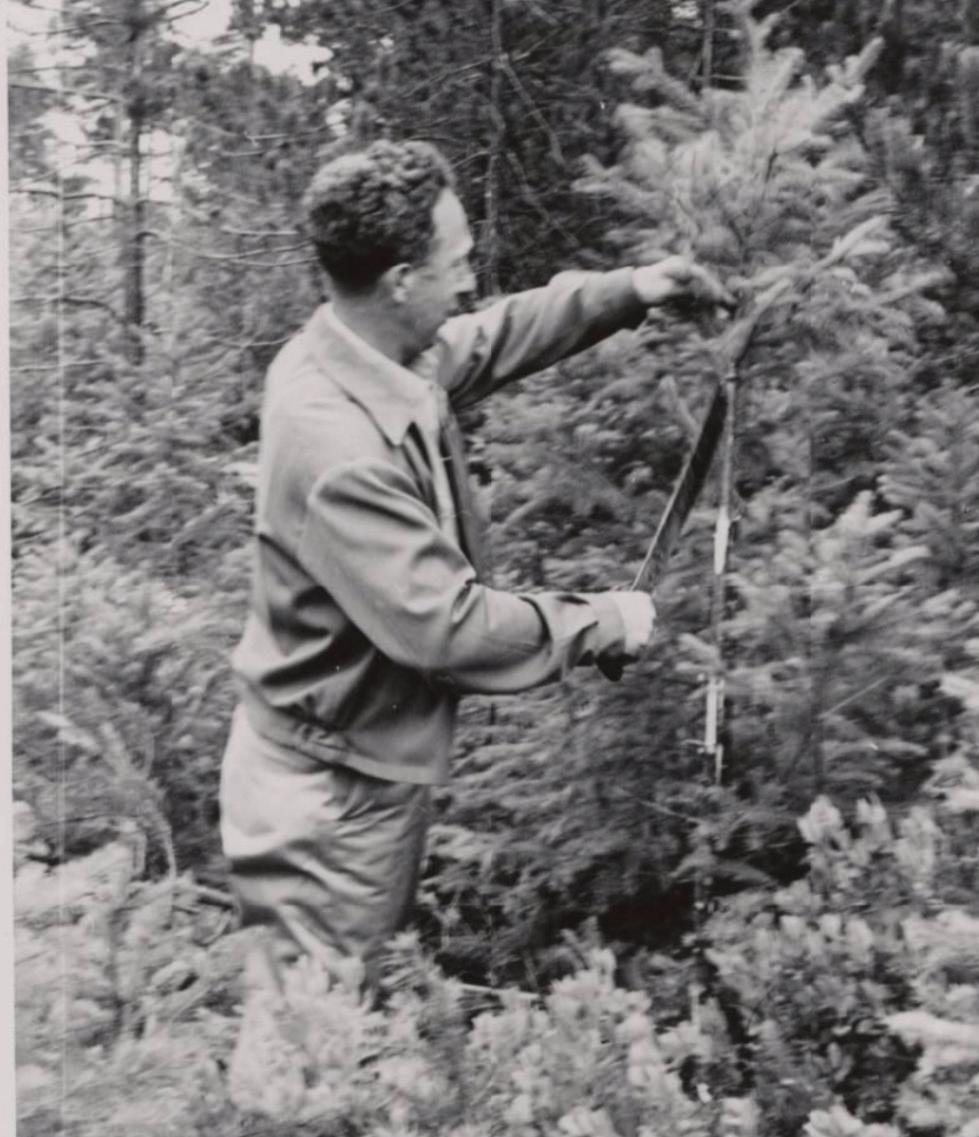
Peste was also an avid rhododendron hybridizer and is responsible for many popular varieties, including the purple “Centennial Celebration” which was awarded the privilege of Washington State’s centennial flower in 1989.
Later in Peste’s career, he became a shareholder in the large-scale Noble Mountain Christmas Tree Farm near Salem, Oregon. The large scale 1,000acre farm threatened to flood the western Christmas tree market in the 1970s with noble-fir, but partners Bob Stohr and Gary Bishop worked tirelessly to introduce the noble-fir to an Eastern market, where Douglas-firs and Scots pine had previously reigned supreme.
The Christmas tree market shifted in the 1990s from favoring the hardy natural Douglas-firs to the more perfect, cultivated noble-firs. This forced many growers to diversify and focus their growing operations in more agriculturally rich soils as Mason County’s glacial till soil could not provide the necessary nutrients. Jim Hunter of Hunter Christmas Trees has focused his business in Southern Washington.
Whereas the Kirk Company has Christmas tree crops across the nation and even in Canada allowing them to offer a variety of Christmas tree species –such as the Colorado blue spruce (, Nordmann fir , and Scots pine.
Although, it seemed in the 1980s that the fake Christmas tree might be threatening the “real kind,” the popularity of a true, fresh Christmas tree seems as strong as ever. A recent National Christmas Tree Association’s Christmas Tree Report revealed that Christmas tree sales are enjoying a resurgence due to environmentally conscious millennials. Not only are natural Christmas trees compostable, they are produced locally with sustainable practices and their purchase supports local tree farmers. There’s hardly anything that’s more quintessentially Christmas than decorating a handpicked Pacific North-
west Christmas tree and gathering your family around a tree that you brought home together from Hood Canal. Plus, getting a Christmas tree is an experience. Many of the U-cut farms now focus on fostering an annual family tradition with photo-opportunities, hot apple cider, cart rides, and some even have petting zoos. ALWAYS call the farm or store BEFORE YOU GO to confirm their supply, their hours and whether they have trees, are allowing choose-and-cut or just precut trees; and which attractions or winter activities are available.
In 2019 volunteers collaborated to stand 815 wild cut trees to form a maze in a Shelton parking lot. In the shape of two giant trees, the maze was powered by LED lights donated by PUD 3, and built of wood donated by Sierra Pacific and firs sourced from local tree farms that fast-tracked thinning to supply the maze. Of the 800-plus trees, 797 firs qualified for the Guinness World Record for the "Most Lit Christmas Trees in One Location." The previous record set by the Hallmark Channel in 2015 was 559 trees.
With the record win recorded in 2020, each year the Guinness Tribute maze is rebuilt and open to visitors nightly through the month of December to attend free of charge. Currently it is constructed and hosted by a group of school children and their families and helps raise money for local non-profits with nightly events and fundraisers.
The maze is hosted in concert with series of celebrations that further Shelton's rebirth as "Christmastown" – tree lighting, a parade, crafting, cookie and wreath workshops, cookie strolls and gingerbread contests, and even a lighted boat parade that travels
Hammersley Inlet from Shelton's Yacht Club for two evenings in December (6-7). In recent years marketing efforts have used Christmastown as the anchor point for Festival of the Firs events scheduled around the County.
Festival of the Firs embraces holiday events from Allyn to Matlock. Thanks to a sponsoring partnership with Tillman Christmas Trees of over 200 locally cultured Douglas firs, volunteers will create stands of decorated trees throughout the county! Volunteer groups and sponsors from all over Mason County have come together to promote a area-wide celebration of holiday events for locals and visitors beginning Thanksgiving weekend and spanning all the way through December!
The local radio station KMAS 1030 AM/ 103.3 FM is embracing its K-rist-MAS roots in Shelton with 24/7 holiday hits programming as well as weekend evening programming when families can load into their cars to follow neighborhood light display maps and listen to Christmas stories! Tune to KMAS or visit festivalofthefirs.com for updates, giveaways and exciting holiday adventures this season!

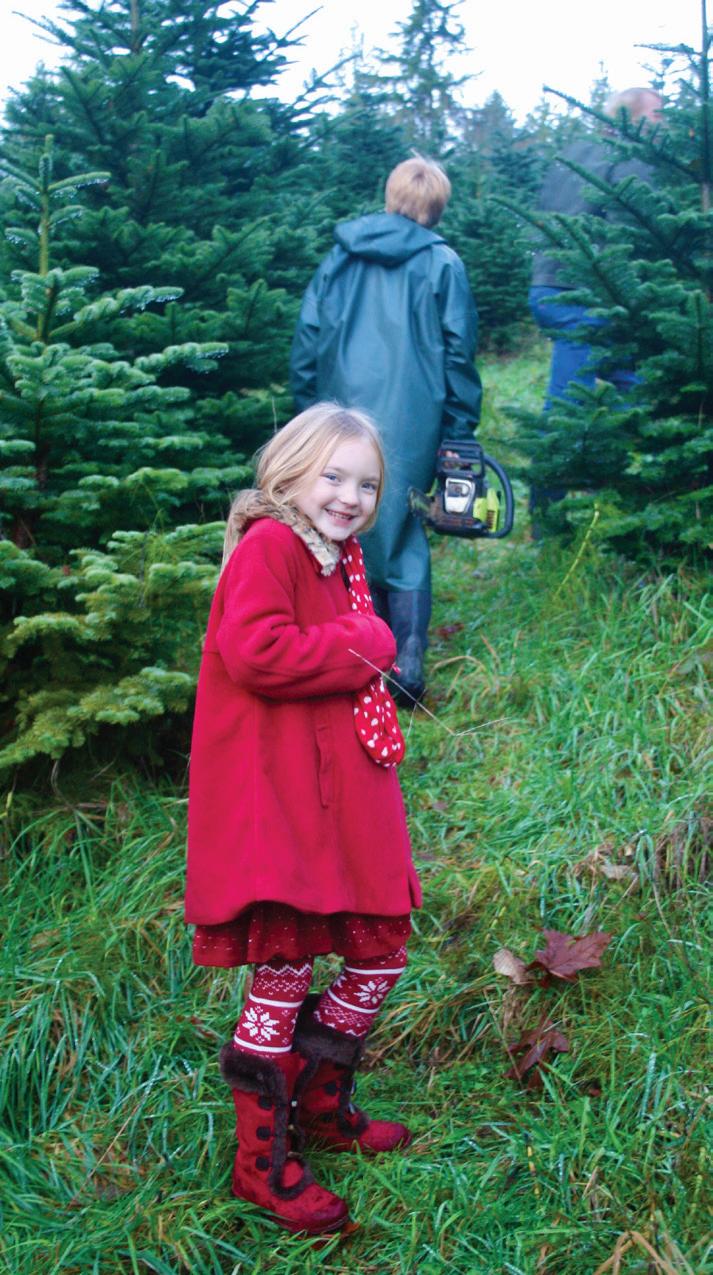
Dreaming of heading to the forest and cutting your own? It’s time to begin a new family tradition! Olympic Forest Permits are just $5 each and are good for one U-cut tree on the Olympic National Forest.
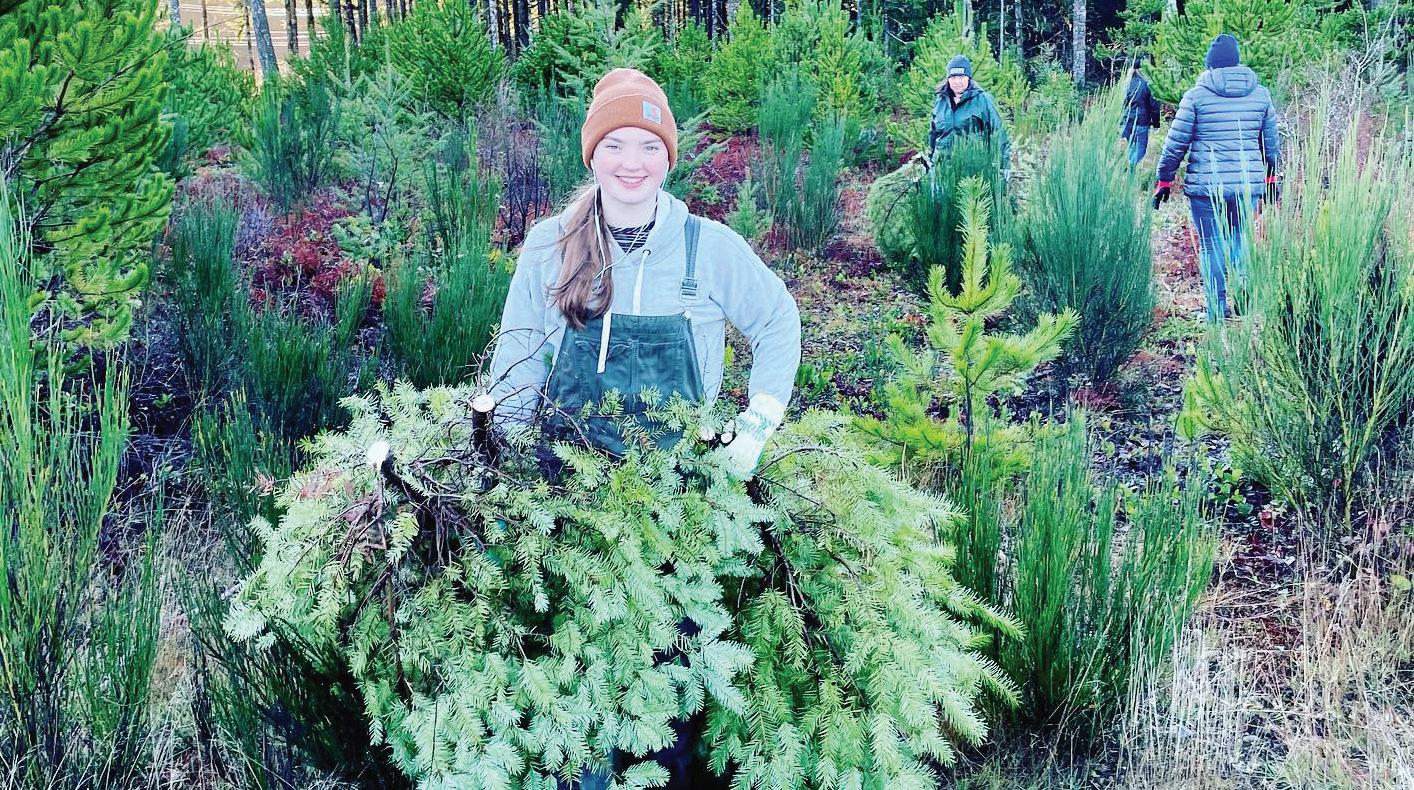
There are plenty of trees choose from and the selective picking allows other trees in the forest room for healthy growth. Tree Height: 15 feet maximum, Cut trees only if there is a standing tree within 10 feet to avoid denuding areas. Do not cut trees within 100 feet of campgrounds or trailheads. Permits for cutting Christmas trees in the Olympic National Forest are available beginning in October — and fourth-graders can get them free. Permits must now be purchased in advance online at www. recreation.gov/tree-permits.
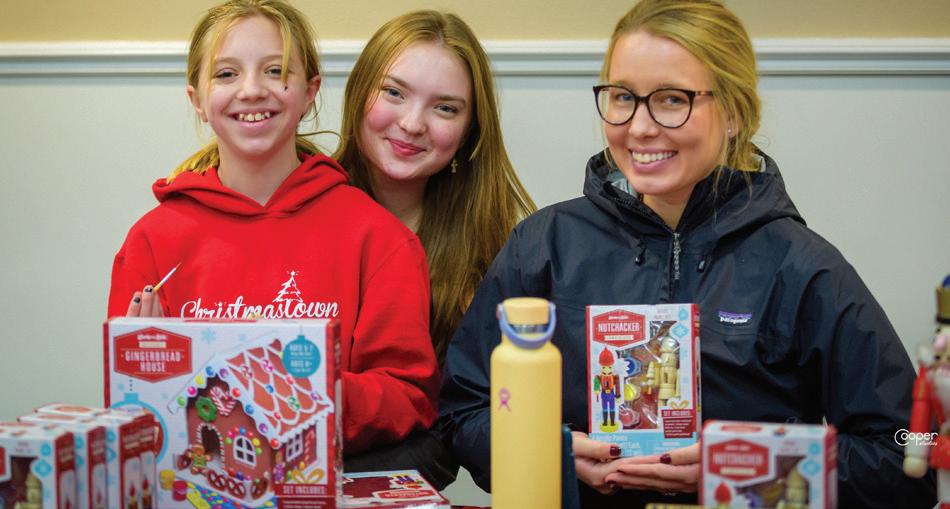
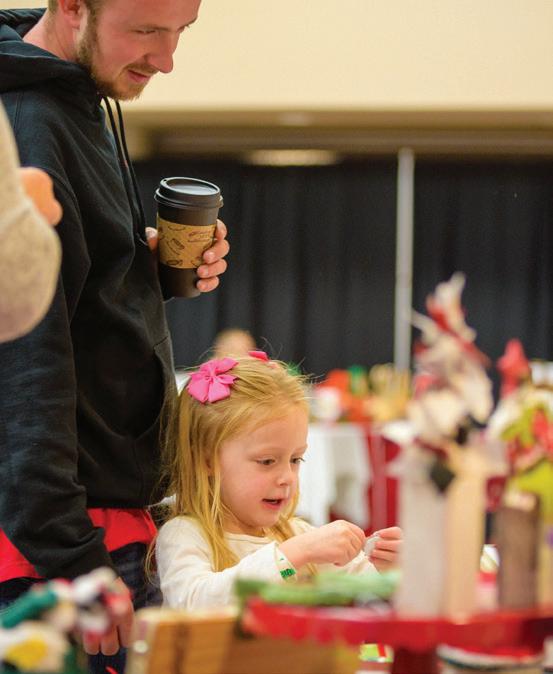
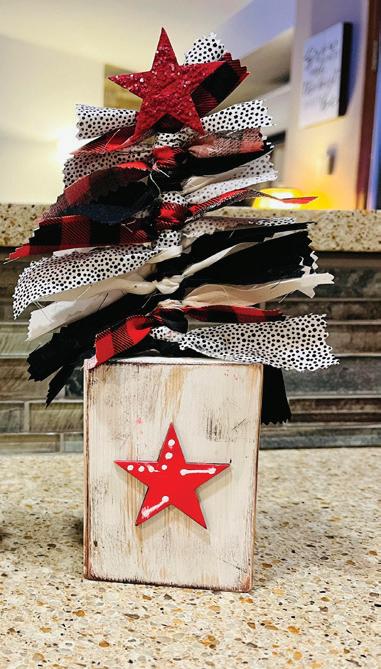
Mom and Dad are right, best gifts are the ones you make. But sometimes it’s good to have a little help. You won’t find any Popsicle sticks at our crafting workshops. Nope. We've got Lisa, and over the years her projects have been so amazing that families came back year after year -- and every day to build something new!
We’re not exaggerating. The craft workshop success even knocked our Christmas stockings off. Our volunteers routinely sneak away to make their own special crafts to put under the Christmas tree.
Our secret is Lisa Welander setting the bar high. She loves to make things and share with family and

We are blessed that she also likes sharing her craft skills. Each year she creates new project for Christmastown!
So join us in thanking the amazing Lisa – and join her at 2024 dates, December 6-8 at the Shelton Civic Center on Cota Street. It's free but limited



ISH PNW Railroad Ave, Shelton 'Date with a book' (handmade)
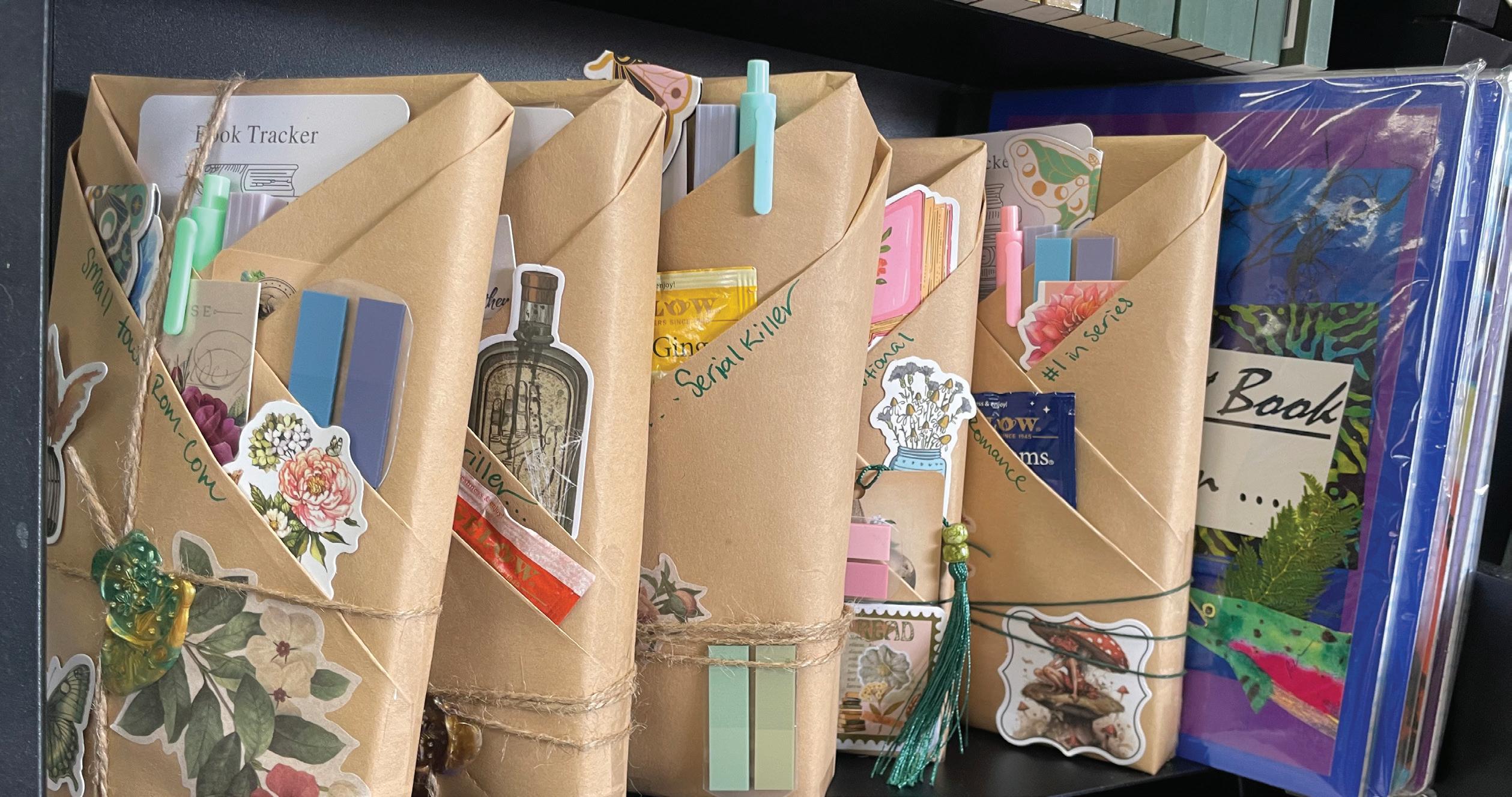
Saturday, November 30 is Small Business Saturday – a day to celebrate and support small businesses and all they do for their communities. The communities on the shores of the fjord and South Puget Sound have a unique personality. As always, we invite you to get to know them – shop, stay, dine and support local businesses. Christmas is just around the corner!
LILLIWAUP is located at the mouth of Lilliwaup Creek. Highway 101 passes through the hamlet. The small general store makes a great break for Olympic Mountain ice cream. Down the road at Hama Hama Oyster Farm, check out their retail store for gift ideas. Cookbooks, specialty foods, soaps, trinkets, shirts and hoodies in every size – you will find something for everyone on your list. As a special treat for out of town friends and family, Hama Hama offers direct shipping of their products. Wrapped for the season, clams, and oysters can be shipped across the country! Visit hamahama.com for inspiration.
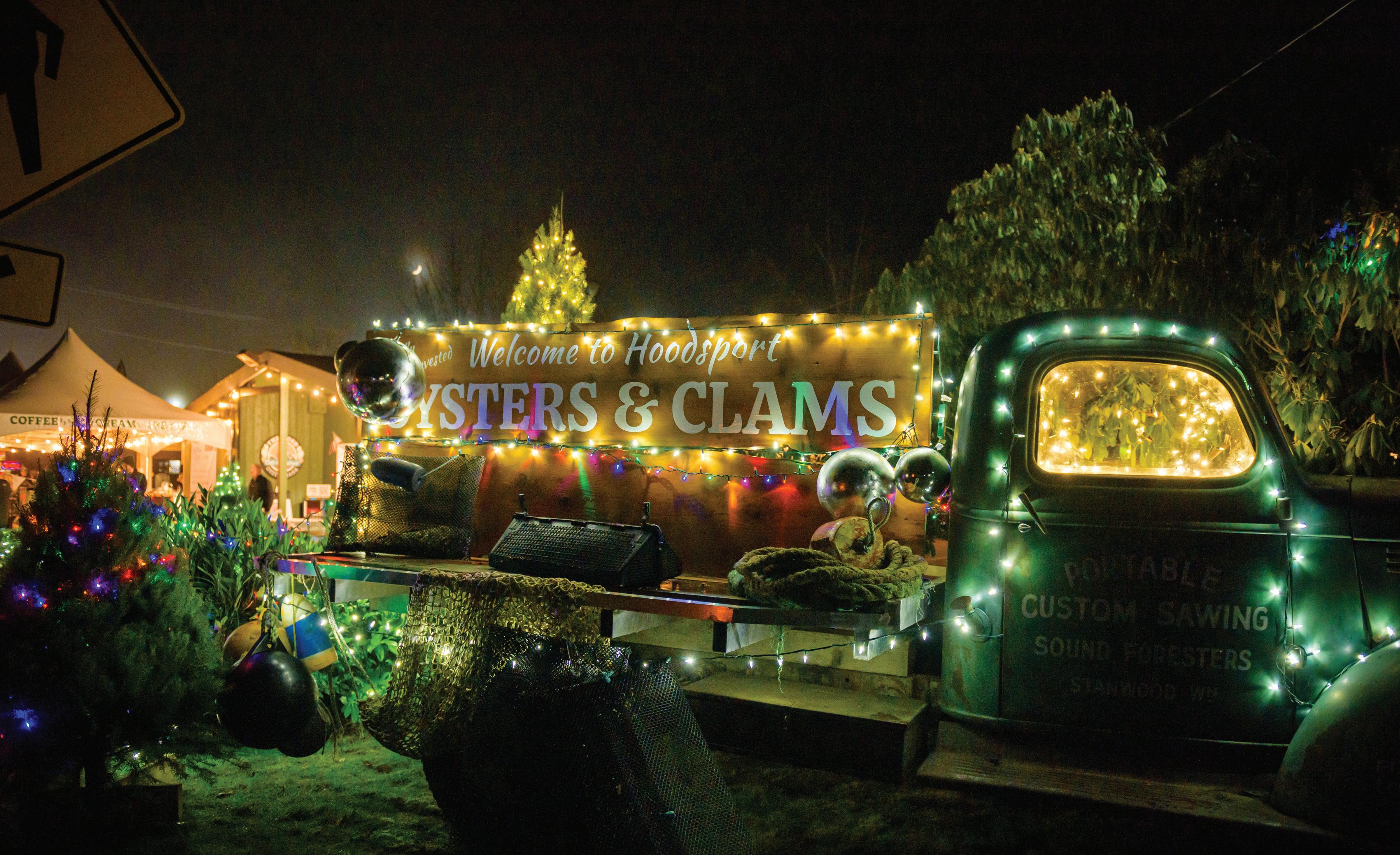
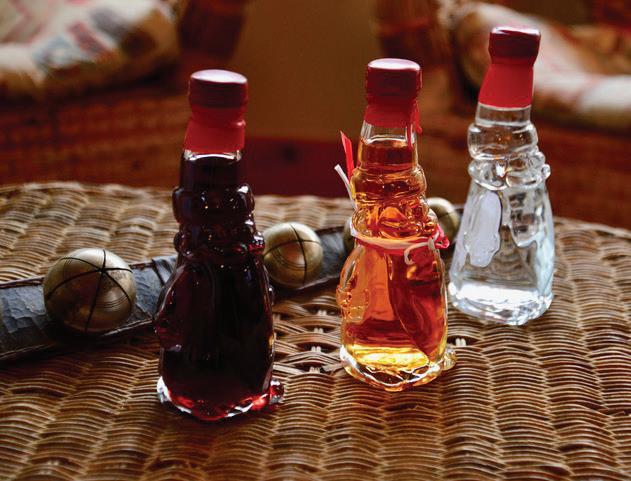
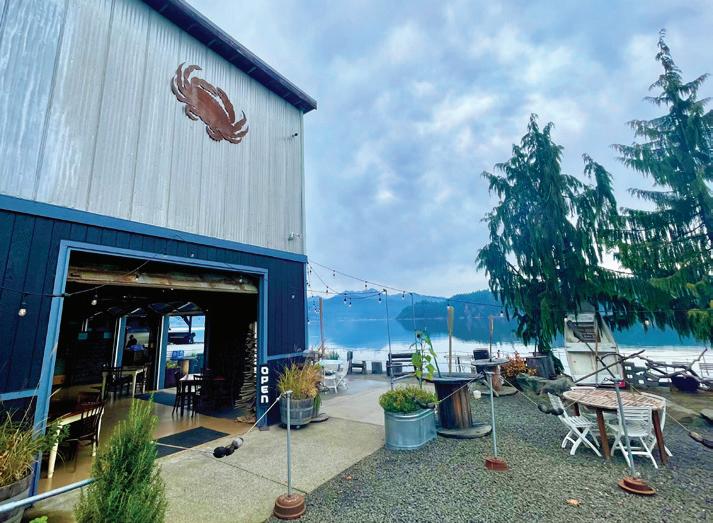
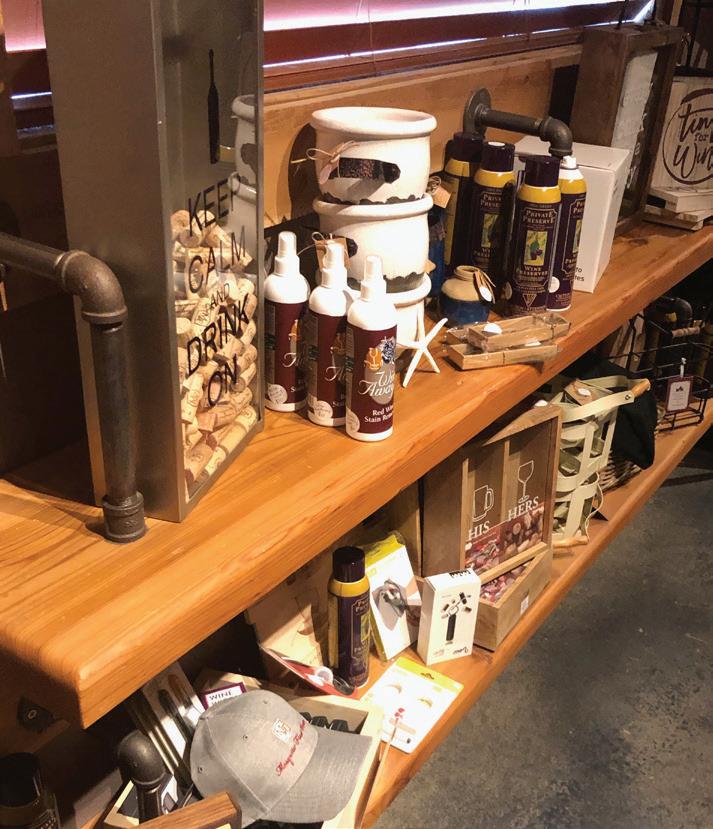
is a great place to find unique Christmas gifts. YSS Dive has deals on items for divers or those who would like scuba – masks, cameras, fins – diver's certification makes a unique gift for the person who has everything! Stop in at the Hardware Distillery to sample their "fjord spirits" and pick up a few gnomes with wax hats – starting at just $15, these are good stocking stuffers! Next door is Canalside. This store fills the imagination. We were especially enamored with the beaded octopuses that would look great on the Christmas tree. The Fjord Oyster Bank, on the north end of town, has a fun treasure trove of curated NW gifts

and books. Formerly a bank, the present owners preserved the vault, complete with over 300 safety deposit boxes and have converted it into a shop. The Fjord is open Friday through Sunday and serves food too!
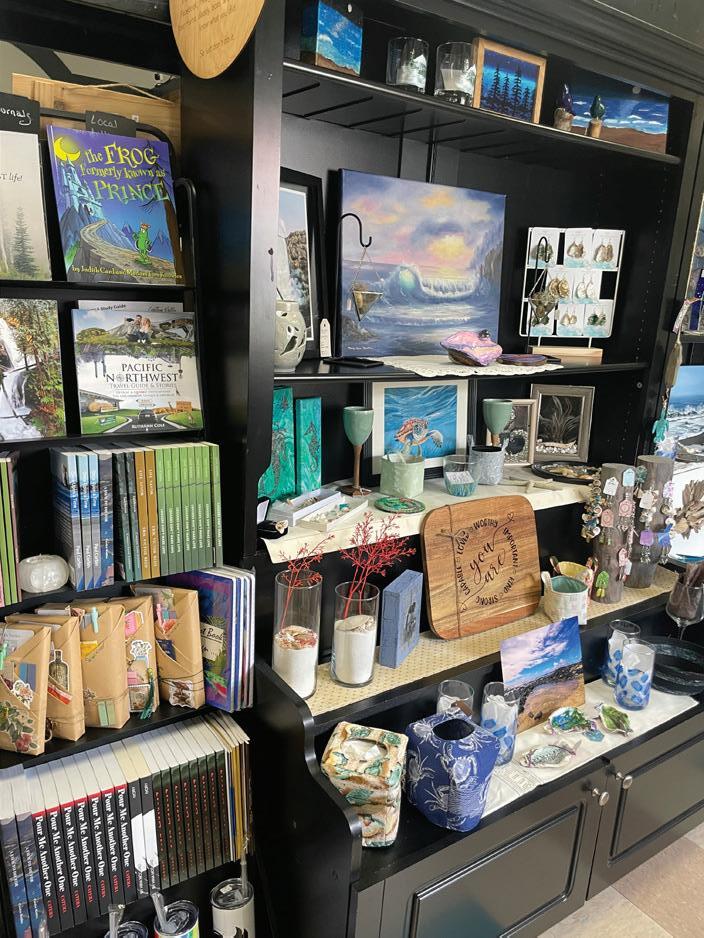
SHELTON, fondly known as Christmastown, epitomizes the Northwest small town experience The main shopping area is located on Railroad Ave, in the classic timber town core. Here you will find gift shops, a massive fabric and sewing shop, antiques and jewelry as well as some dining options and even a candy shop. Stop by William's Gifts for an array of gifts including ornaments, chocolates and flower arrangements.

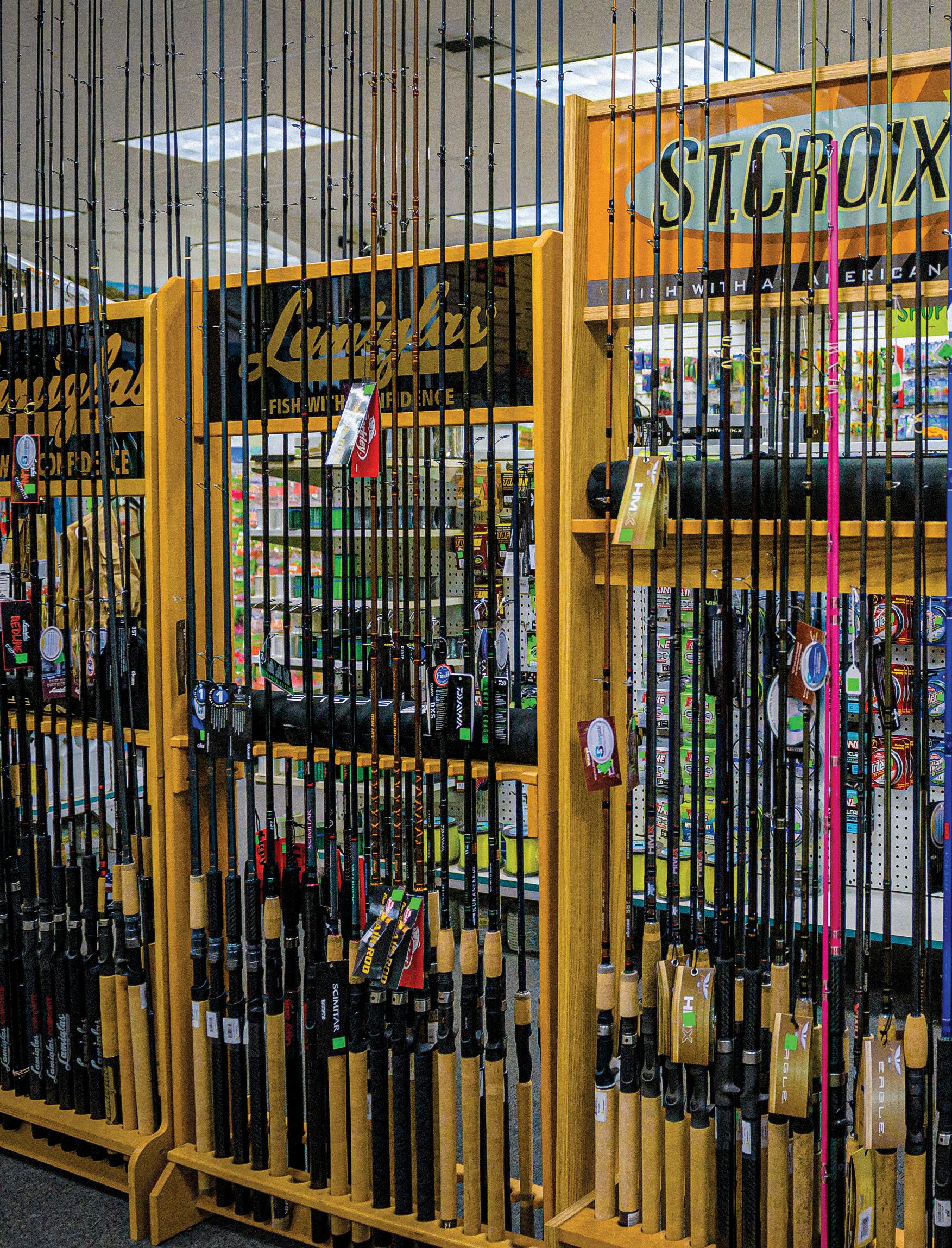
One of our very favorite shops on Railroad is ISH PNW. Here you will find an astounding selection of handmade gifts created by local crafters. We especially love the soaps and the jewelry and formed from upcycled silverwear. Trust me, Sharon has a hard time keep her shelves shocked they are so very creative! Around the corner is a treasure trove at Vintiques. Everything is so beautifully presented and host, Beth, is a gem herself! Be sure to venture off Railroad. Neil's Pharmacy on Franklin has an astonishing collection of gifts and is always well stocked during the holidays with Christmas ornaments and gifts. Have a difficult person to buy for? Head over to Verle's Sport & Marine, everything from clothing and lures, to hunting gear and boats can be found at this well-stocked store. Try Tozier Brothers on Mill Street. From bee balm hand cream to bird feeders, boots, and backhoes – there is something for every stocking at this store – including the stockings.
ALLYN, is famous for kayaking and boating. Stop in and enjoy the restaurants and shops. Don't miss the surprisingly wonderful chainsaw carving retail outlet, Bear in the Box. Next door is a great little wine shop and down the road visit the specialty wool shop.
BELFAIR is nestled in the tip of Hood Canal. Belfair hosts local and chain stores and restaurants along with major grocery stores and many small local shops. Mosquito Fleet Winery has a tasting room and has won numerous awards for their blends. Their shop has a selection of gift items as well as full line-up of superior wines. The winery is open for tastings on the weekends.
A favorite shop for the holidays, or any time of the year for that matter, is the White Barn Decor. Here you will find a host of beautiful quality decor for your whole home as well as your holiday decorating.
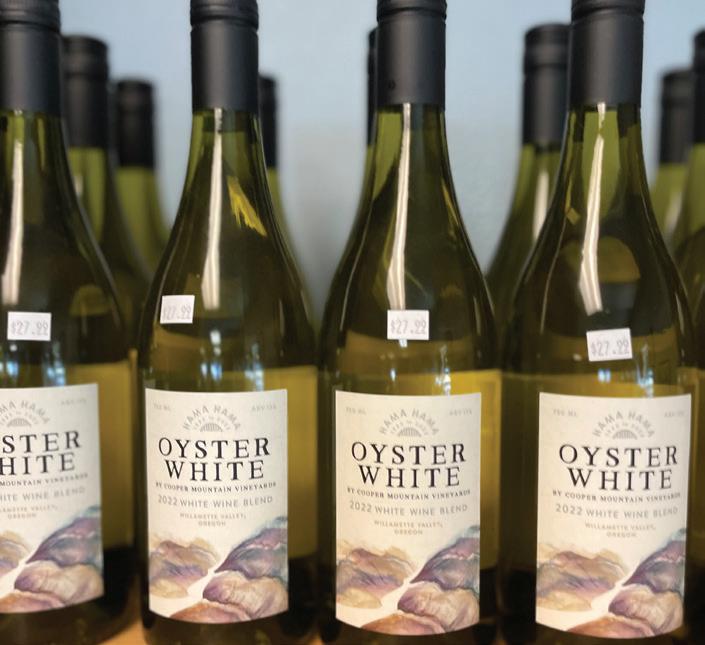
UNION is renowned as an artists’ haven. With a range of lodging options – from quaint cottages to inclusive resorts, the area was recognized as the “Prettiest Town in America.” Stop by the Union City Market for local produce and many gift ideas. Cameo Boutique carries a selection of wines as well as “Hood Canal” inspired tableware and gifts. Alderbrook Resort and Spa has a gift shop near the main lobby. A gift certificate is never a bad gift either!
, inland from the Hood Canal, is a friendly community of around 600 people. Here you will find a selection of stores and restaurants. Quilcene Village Store offers more than just gas and snacks they also stock a huge selection of interesting gifts sourced from all over the world as well as beer, wine, bakery and gourmet items that surpass gas station fare.
BRINNON has restaurants and interesting shopping options. Visit the seven acres of heritage plants at Whitney Gardens for some great gifts for the gardener on your list. After your garden walk, stop in the Geoduck for "after hike" food as well as great views of the Canal and tidelands.
Recently opened is the Hood Canal Adventures Base Camp. If you can't decide on gifts or books, buy your loved ones experiences with a kayaking or mushroom foraging tour! For more shopping ideas pick up a shop local flyer or visit festivalofthefirs.com
local art and
along with Hood Canal views.
SATURDAYS NOON-5 PM
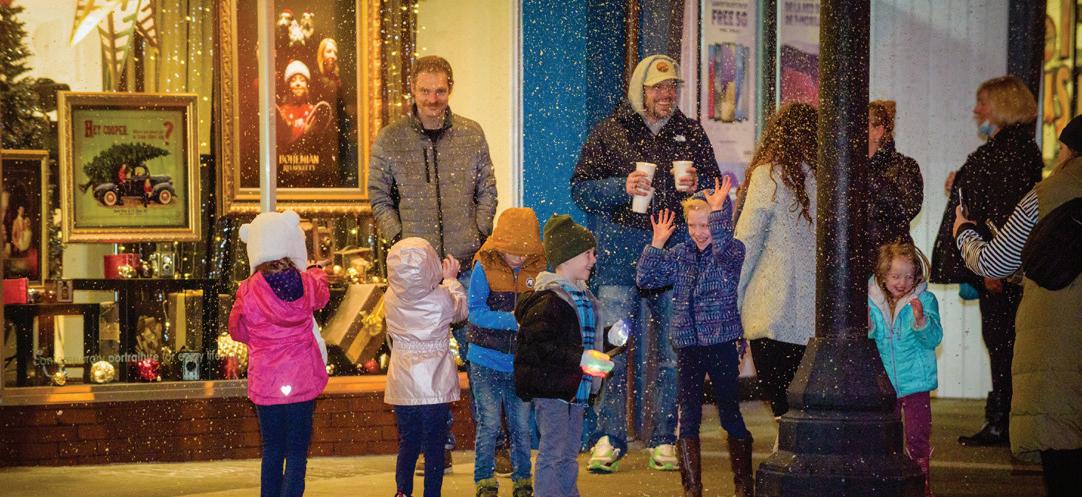
Small Business Saturday (November 30) and running through December 14, come see what beautiful Downtown Shelton has to offer.

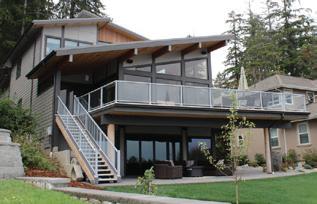
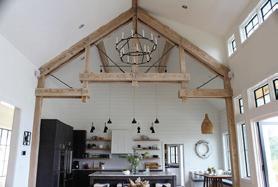
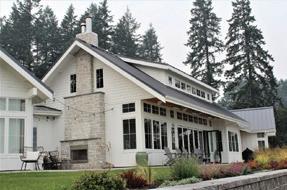

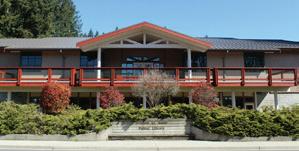

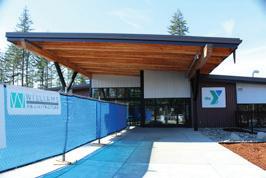
Qualifying purchases at participating merchants get you stamps on your card. Your stamped card is a ticket to an exclusive drawing for dazzling gift baskets filled with the finest downtown wares and gift cards!
It’s not just about shopping, it’s about supporting the heartbeat of our community. Every dollar spent locally helps keep our small businesses thriving and reinvests in the community we all call home. This season, let’s put our money where our heart is – right here in Shelton. Keep an eye out for the prestigious “Shop Shelton First”
logo proudly displayed in the windows of our fabulous partners.
The Reward Card lasts from Small Business Saturday (11/30/24) to 12/14/24, so mark your calendars and shop till you drop!
By shopping local, you’re doing more than scoring great finds – you’re helping to sustain and grow the small businesses that make Shelton special. The SHOP SHELTON FIRST Rewards Card is a chance to win prizes and a chance to make a difference in our vibrant community!
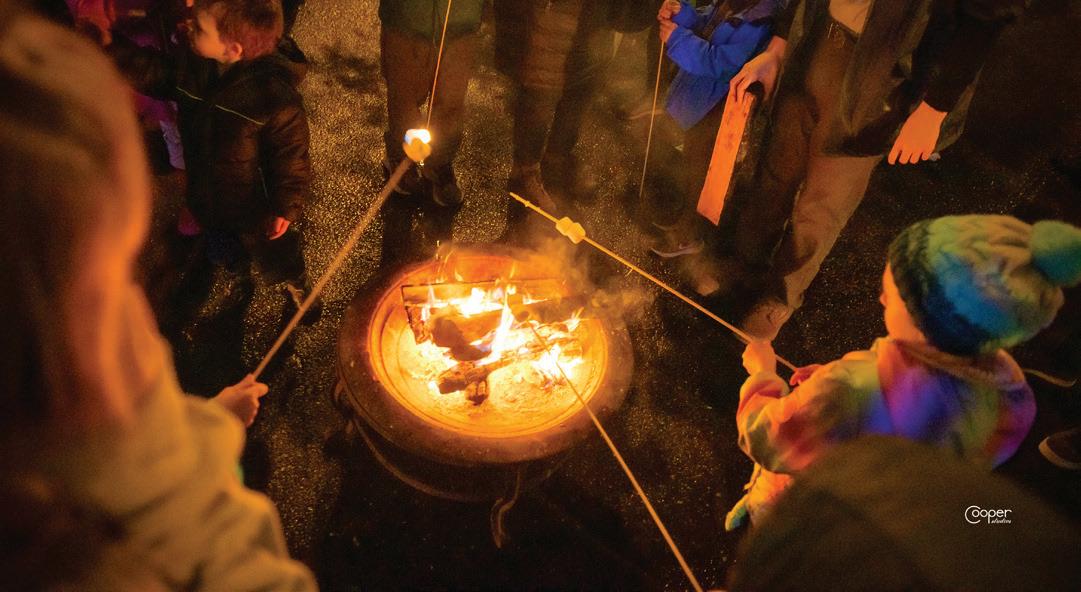

No one can deny the importance of safe handling of firearms, but have you ever considered learning more so that you can enjoy the skill of shooting?
The mission of the Sportsman's Association is to promote firearms safety. The club does this by providing classes as well by providing opportunities for shooters to practice and build skills at weekly events. The intention is to help people become proficient shooters who understand and respect firearm safety rules. The members value the range facility, club community and the efforts to promote firearms safety.
Anyone legally able to own or possess a firearm in the state of Washington is eligible to attend classes or events as well as become a club member. In addition, youth 8 years old or older are welcome at classes and events with their accompanying parent or guardian. Some of the current classes include: Pistol for Beginners, NRA Basic Pistol, NRA Basic Rifle, NRA RSO, NRA Pistol Instructor. Multi State Concealed Carry license, and NRA Concealed Carry.
For more information on classes and events and how you can be a member, visit masoncountysa.org or leave a message at 360-427-1102
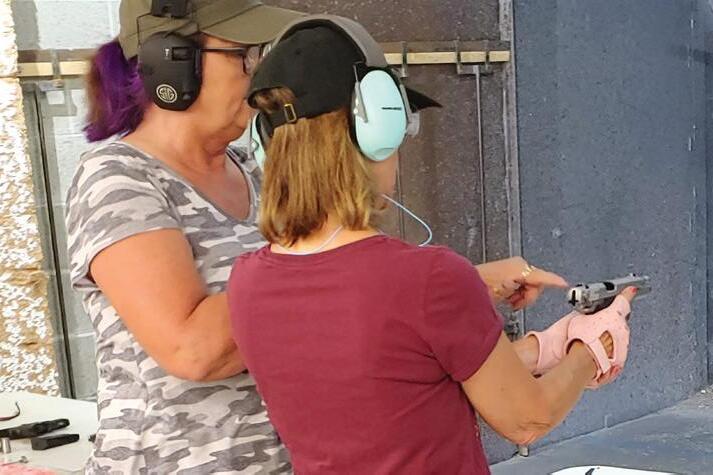
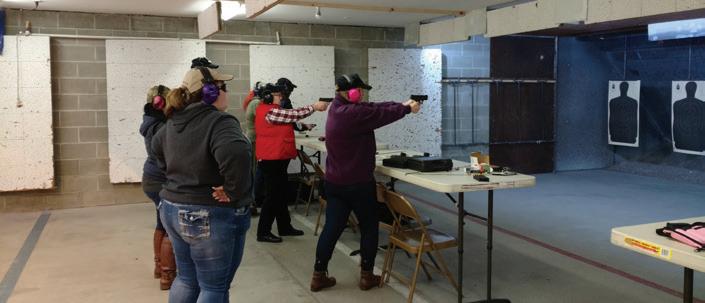
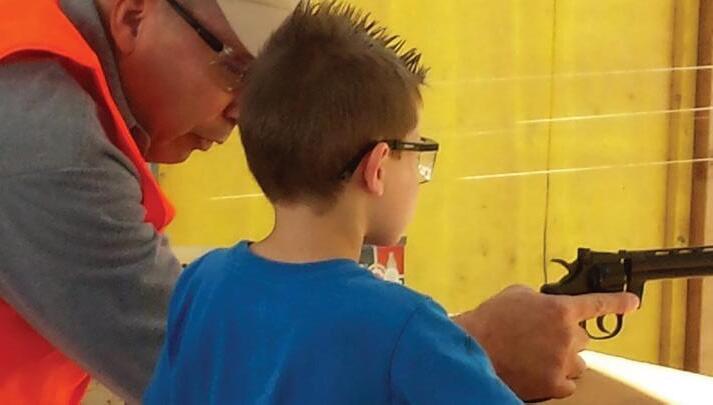
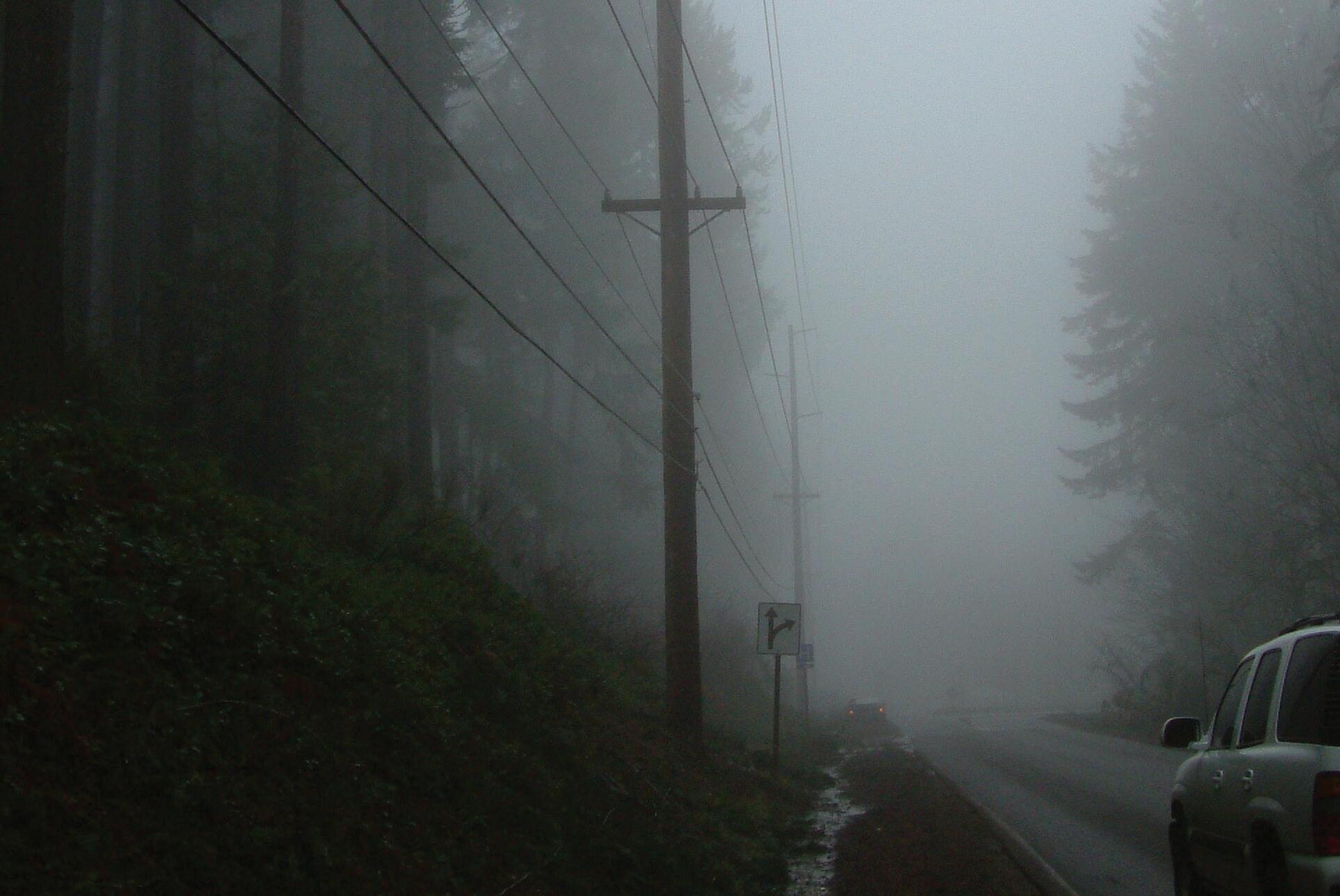
• Report your outage: Report outages with PUD’s SmartHub app or visit my.pud3.org.
• Have a plan B: Customers dependent on power for life-support equipment should have a backup plan for power outages. Consider purchasing a backup generator and/or have contingency plans in place.
• Stay at least 100 ft. away from downed lines: Assume power lines are live and dangerous. Report fallen power lines to 360-426-8255. If life-threatening, call 911.
• Be ready BEFORE the lights go out: Build an emergency preparedness kit, including a supply of non-perishable food and water, blankets, flashlights and a first-aid kit.

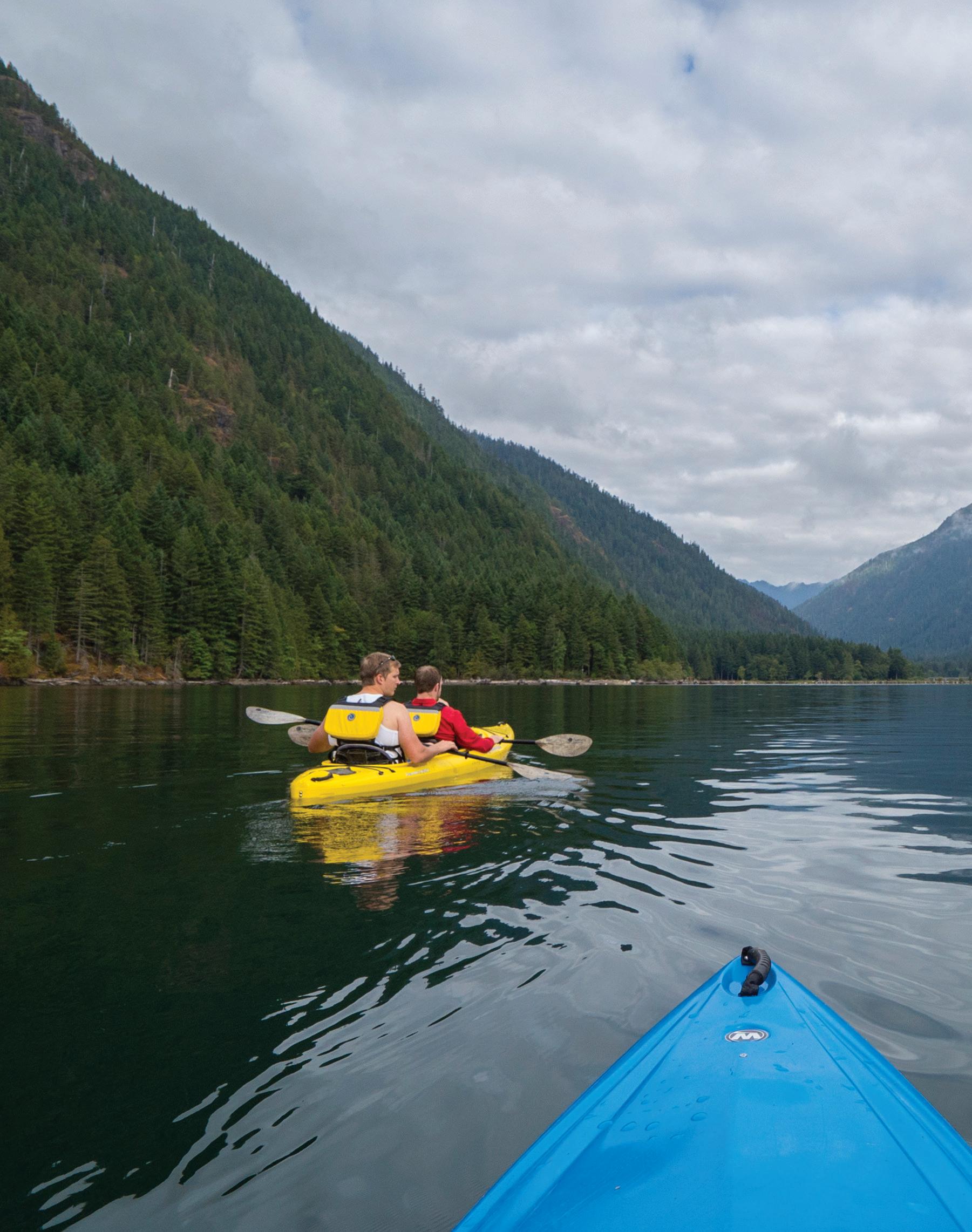
Situated between the Puget Sound and Olympic Mountains in Mason County, is Hood Canal. A place filled with world-class activities, wild-caught fare, lively events, and plenty of places to hide away from it all when you just want the world to yourself.
Hood Canal is Washington’s wild side. And it’s here for you, when you’re ready to discover yours. #WILDSIDEWA
Whether you seek tide-ripped saltwater passages, Challenging whitewater, or lakes big and small, Hood Canal is a kayaker, canoer, or paddleboarder’s ideal destination.
A rich paddling community supports any adventurer’s vision; rental packages and lesson opportunities for the budding kayaker or paddleboarder are not in short supply. Get out on the water and enjoy a fresh perspective of the canal with colossal peaks towering overhead.
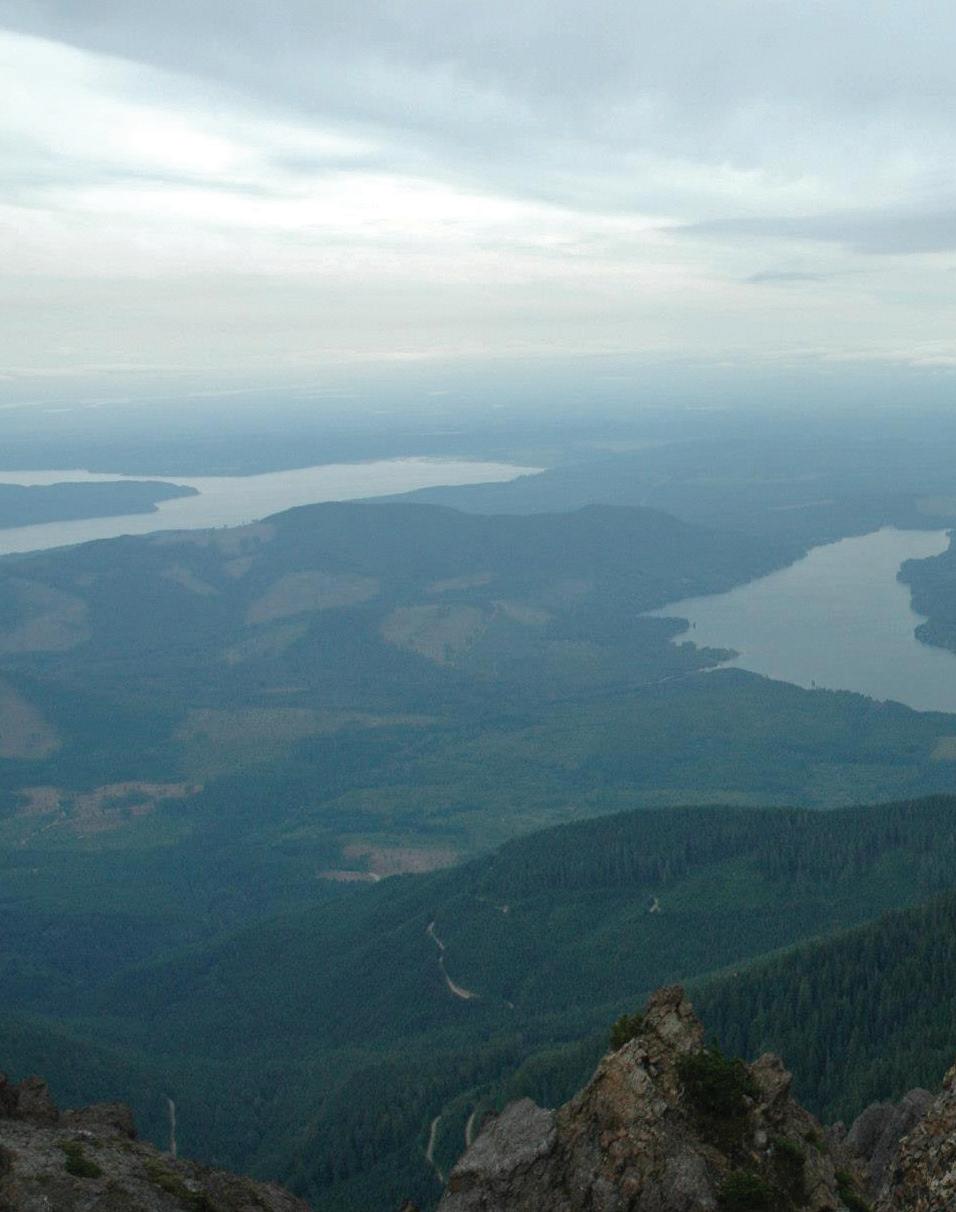
Like a giant fish hook weaving beneath the Olympics with a web of inlets, Hood Canal is poised to catch your Imagination and reel in memories for years to come. This majestic saltwater fjord hosts unparalleled shellfish, shrimp, crab, and salmon and is renown as a diving mecca with its glacial formation causing underwater biomes that appear nowhere else. Venture away from the canal to Olympic National Park and Olympic National Forest for hiking and Thrilling vistas. Choose from hundreds of easy access freshwater lakes or revel in waterfall views including the Iconic High Steel Bridge. Ablaze with wildflowers in the spring, hidden swimming holes in the summer, a chance To see spawning salmon in the fall, and snow-capped peaks in the winter, there is never an inopportune Time to visit Hood Canal.
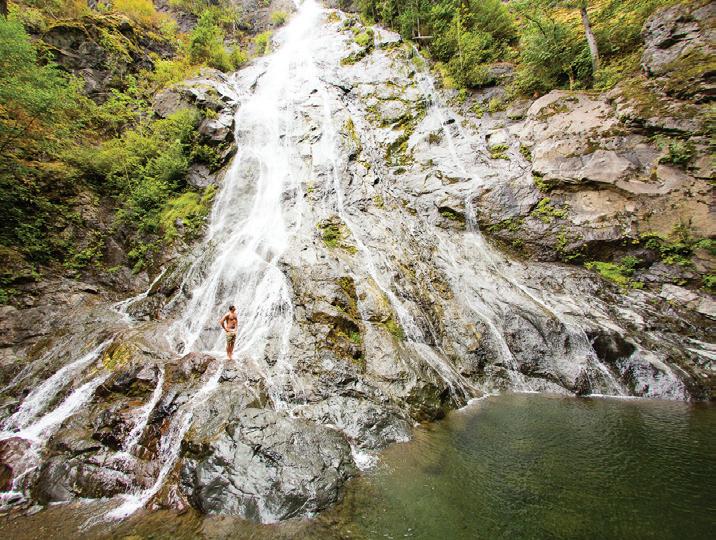
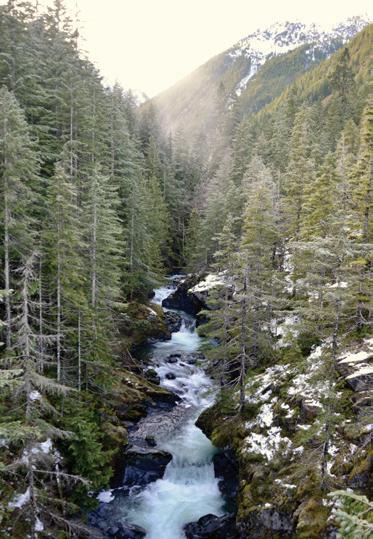
Hamma Hamma & Rocky Brook are just two of the many falls on Hood Canal waiting to be explored. Want to plan a waterfall getaway? Visit waterfalltrail.org for 25 unique and special places to visit.
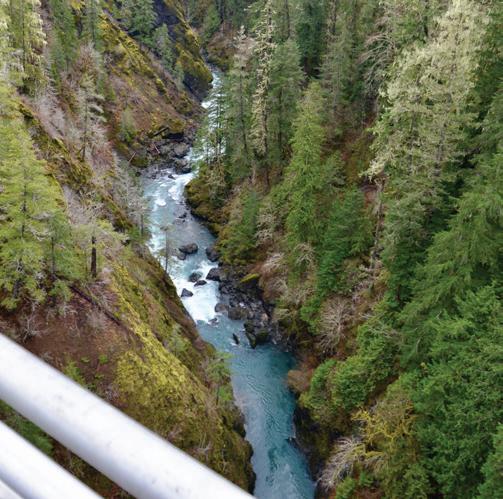
Soaring 420' above the Skokomish River, the High Steel Bridge (1929), is the highest steel truss arch bridge in Washington. You won’t even need to leave the car for this breathtaking view. Follow Skokomish Valley Rd 11 miles from Hwy 101 to reach the bridge.
The Ridge Motorsports Park racing course near Shelton includes a fantastic road course that's geared towards club racers and competitors. Head to the DNR forests for some unmatched off-road trail rides.
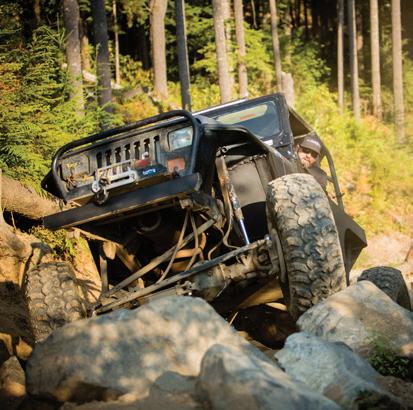
World-class hiking trails lace the Olympic Mountain wilderness, leading from mountain stream beds through old growth forest to high-altitude ridge lines with breathtaking views of Hood Canal and beyond.
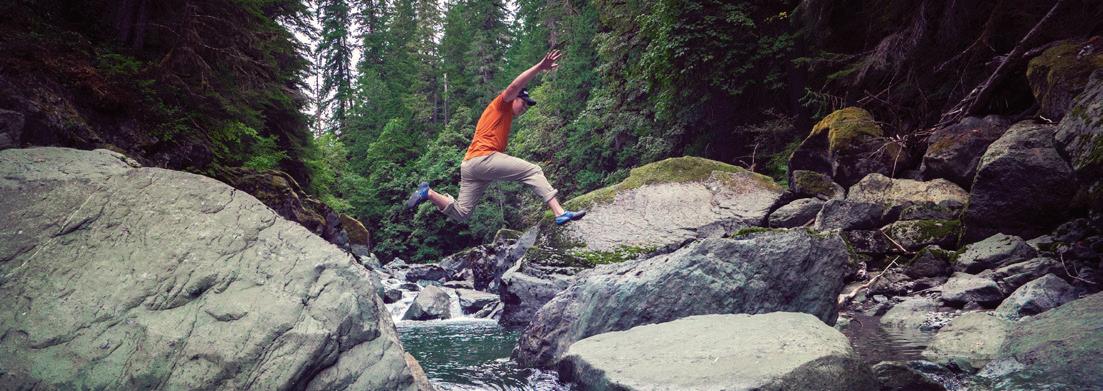
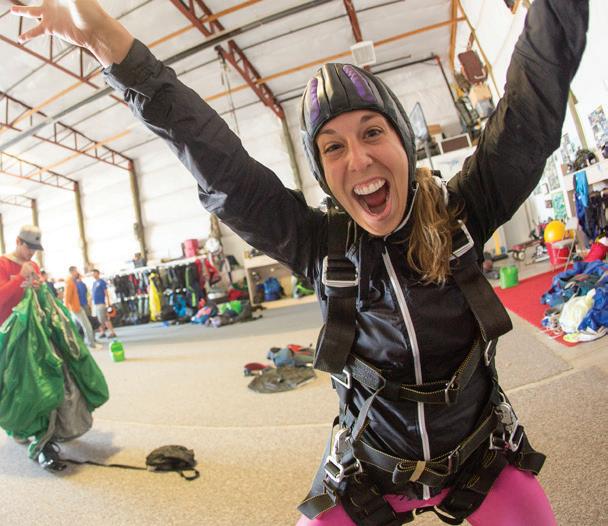
We love the folks at SKYDIVE KAPOWSIN! Feel the adrenaline pumping rush of free-fall and experience the freedom of the air with highly trained professional instructors. Views of the fjord and the Olympics and a seven minute free fall adrenaline rush from 13,000 feet will definitely change your outlook.
Do a farm-to-table dining loop experiencing some Northwest flavors – including Hama Hama, Hardware Distillery, Stottle, Hood Canal Winery, Olympic Mountain Ice Cream.
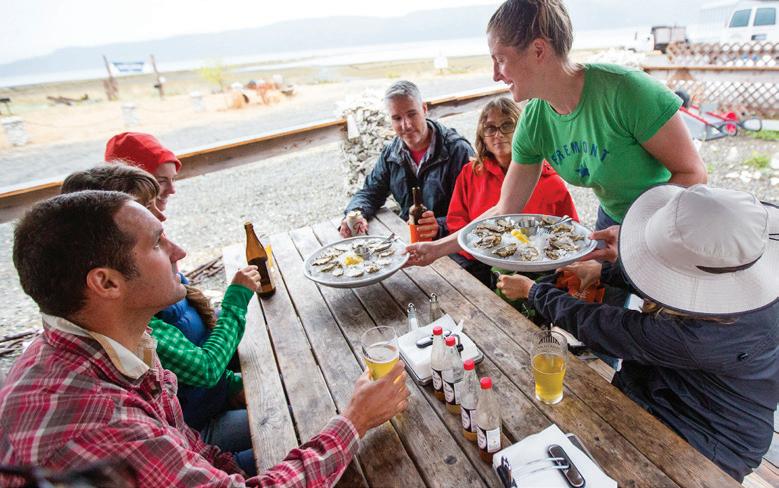
From easy day hikes with the family to overnights or “experience needed” excursions – you don’t
Have to go far for spectacular memories!
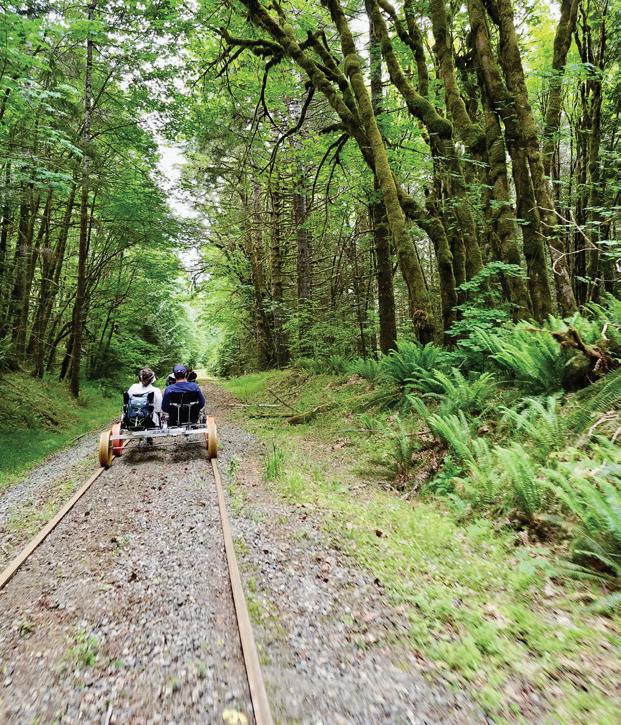
May through October experience nature and history pedaling the timber rail on a 2- hour quadricycle excursion. vancecreekrailriders.com
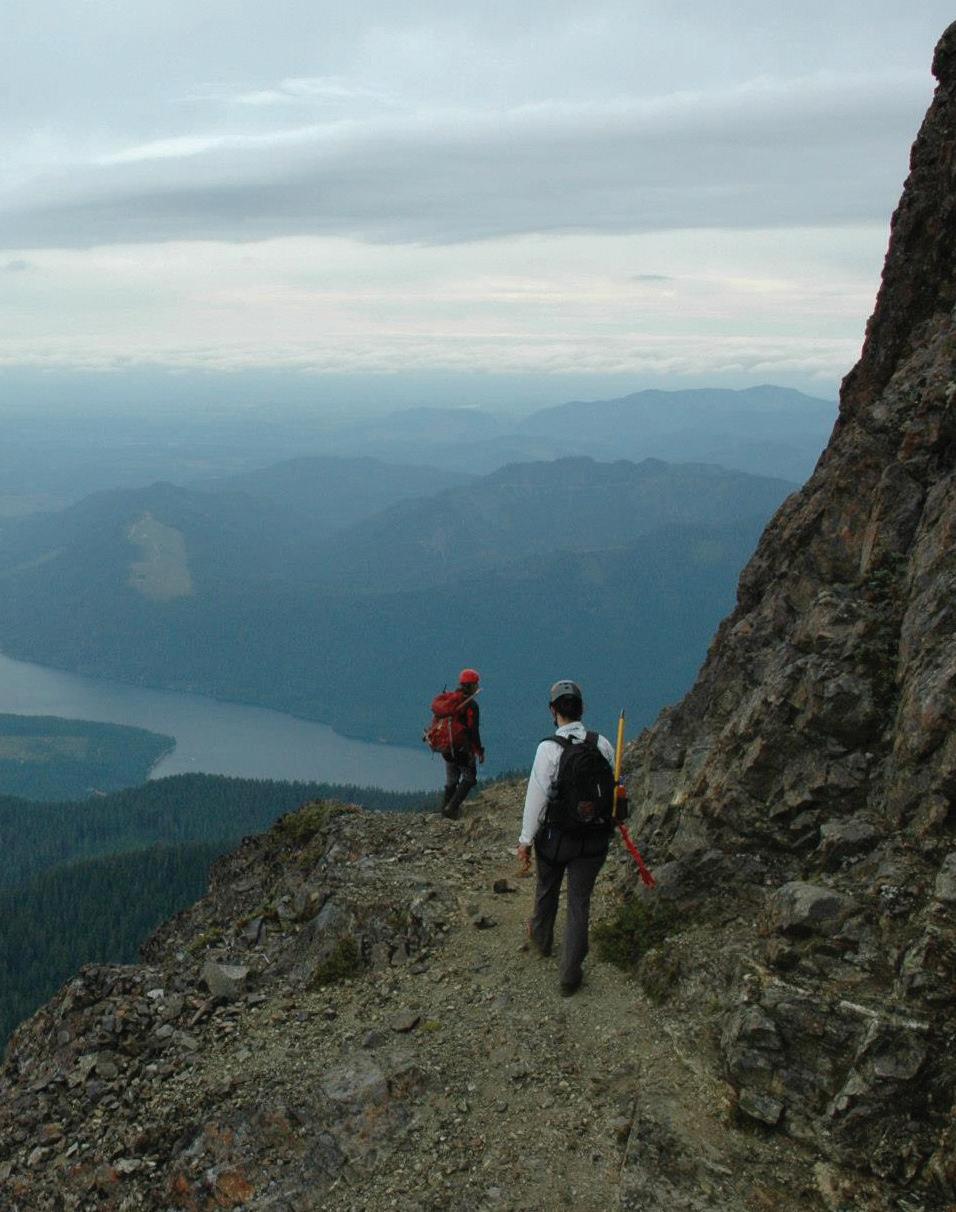
From open water trolling on the sound to throwing dry flies on small lowland lakes, there are plenty of fishing opportunities in the area. Seek colossal coho in the fall and hungry trout in the spring to see why every season is fishing season in Hood Canal.
Don the helmet and clip into your pedals, for there is no shortage of road or trail from which to experience the beauty and thrill of this landscape
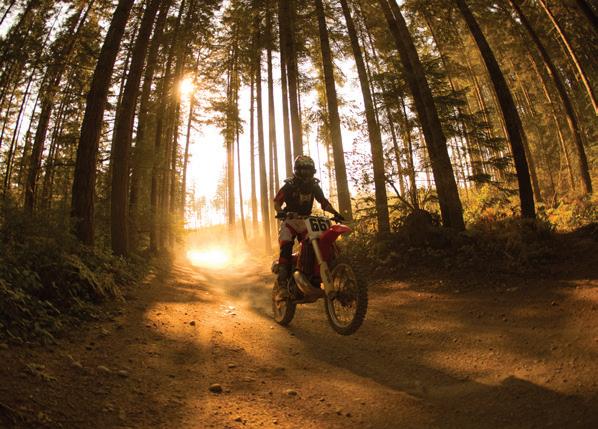
Award-winning courses with incredible views of the Olympics on lush fairways – Hood Canal and South Puget Sound are ideal destinations.
ALDERBROOK GOLF
(360) 898-2560 | Union alderbrookgolf.com
Par 72 course follows natural contours. Restaurant, lounge & proshop onsite.
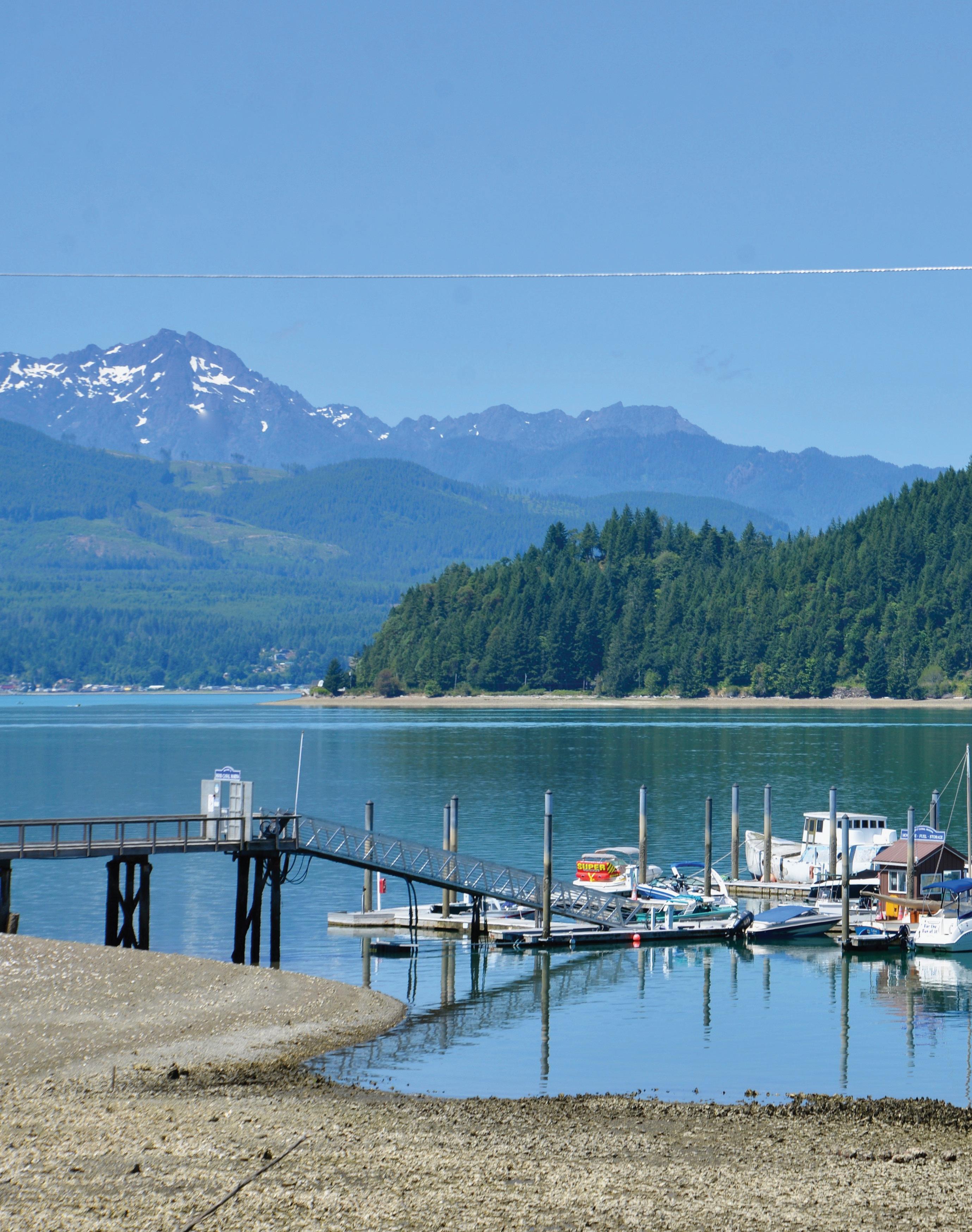
LAKE CUSHMAN GOLF
(360) 877-5505 | Hoodsport lakecushmangolfcourse.com
In the Olympic Mountain forest, this 9-hole course plays a challenging 18 holes.
LAKE LIMERICK GOLF
(360) 426-6290 | Shelton lakelimerick.com
The gentle hills make this a challenging round of golf. Restaurant & pro shop.
LAKELAND VILLAGE
(360) 275-6100 | Allyn lakelandliving.com
With views of the Olympics and Mount Rainier, the 27-hole course has world class dining.
SALISH CLIFFS GOLF
(360) 462-3673 | Kamilche salish-cliffs.com
18-hole par & 72 championship course is adjacent to LITTLE CREEK CASINO RESORT, a full service resort & casino.
SHELTON DISC GOLF
masoncountydiscgolf.com
Different type of golf? 18hole disc golf course located in the watershed at the intersection of Wallace Kneeland Blvd & Shelton Springs Rd.
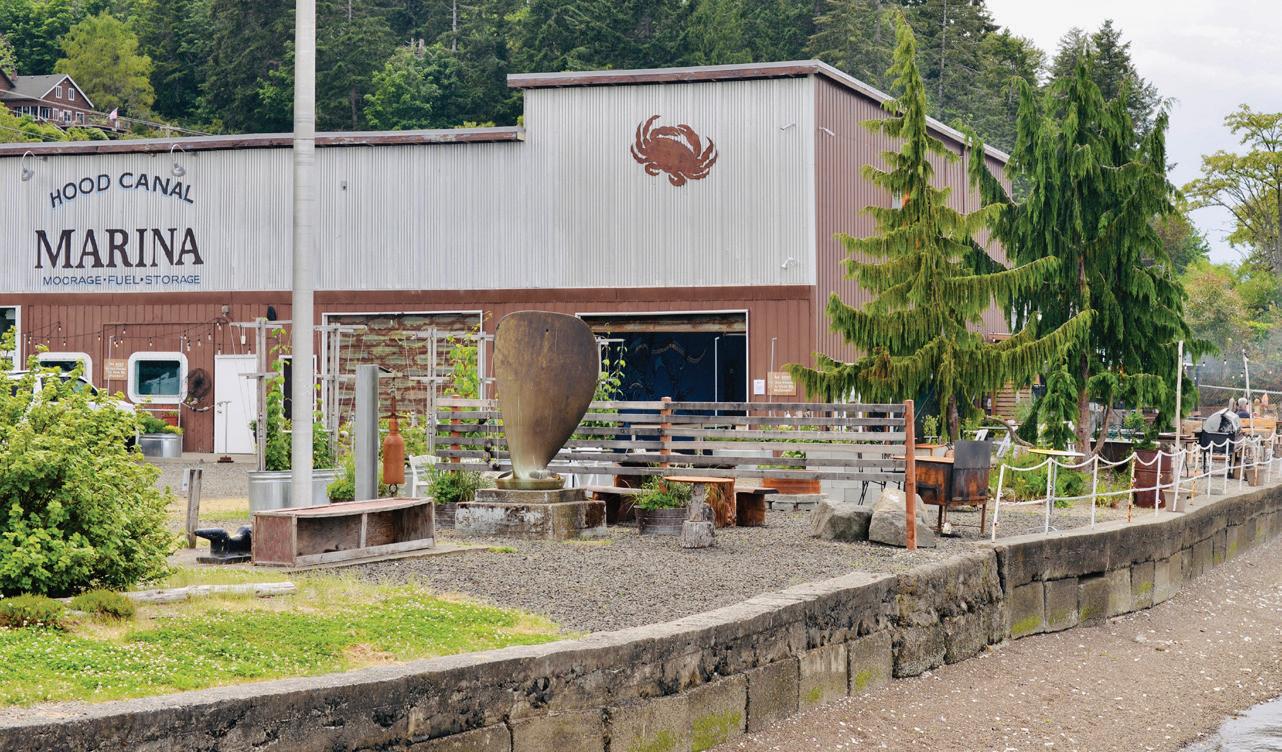
Explore the canal with your own boat or arrange with ALDERBROOK RESORT. Scheduled & private charters available. alderbrookresort.com
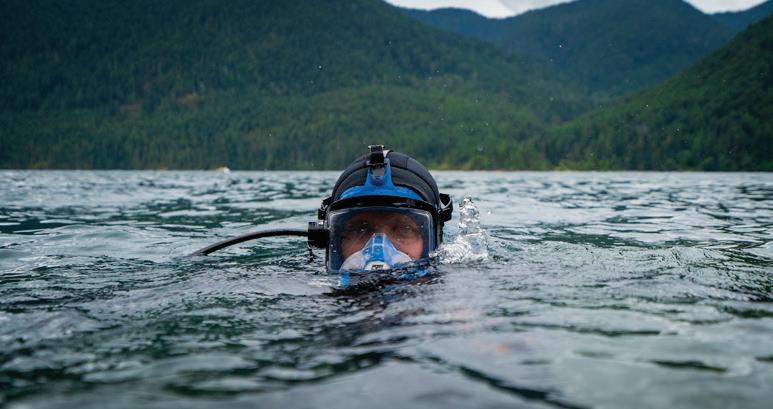
Scuba sales, air, training, rentals, and charters available at Hoodsport near renowned destinations like SUND ROCK and OCTOPUS HOLE yssdive.com
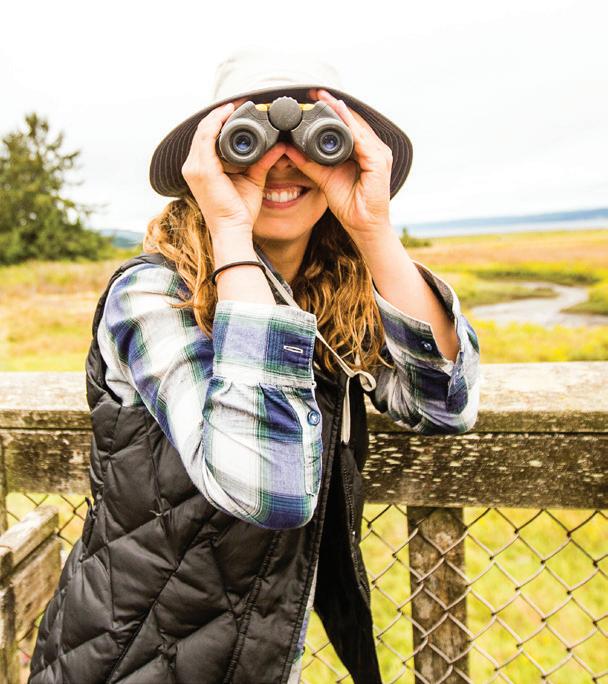
With a majestic and varied landscape, Hood Canal is a gorgeous place to come search for the over 250 species that call the Olympic Peninsula home. Chock full of life – birds like bald eagles, rhinoceros aucklets and more on premiere birding trails –this is a birder’s paradise! OLYMPICBIRDTRAIL.ORG
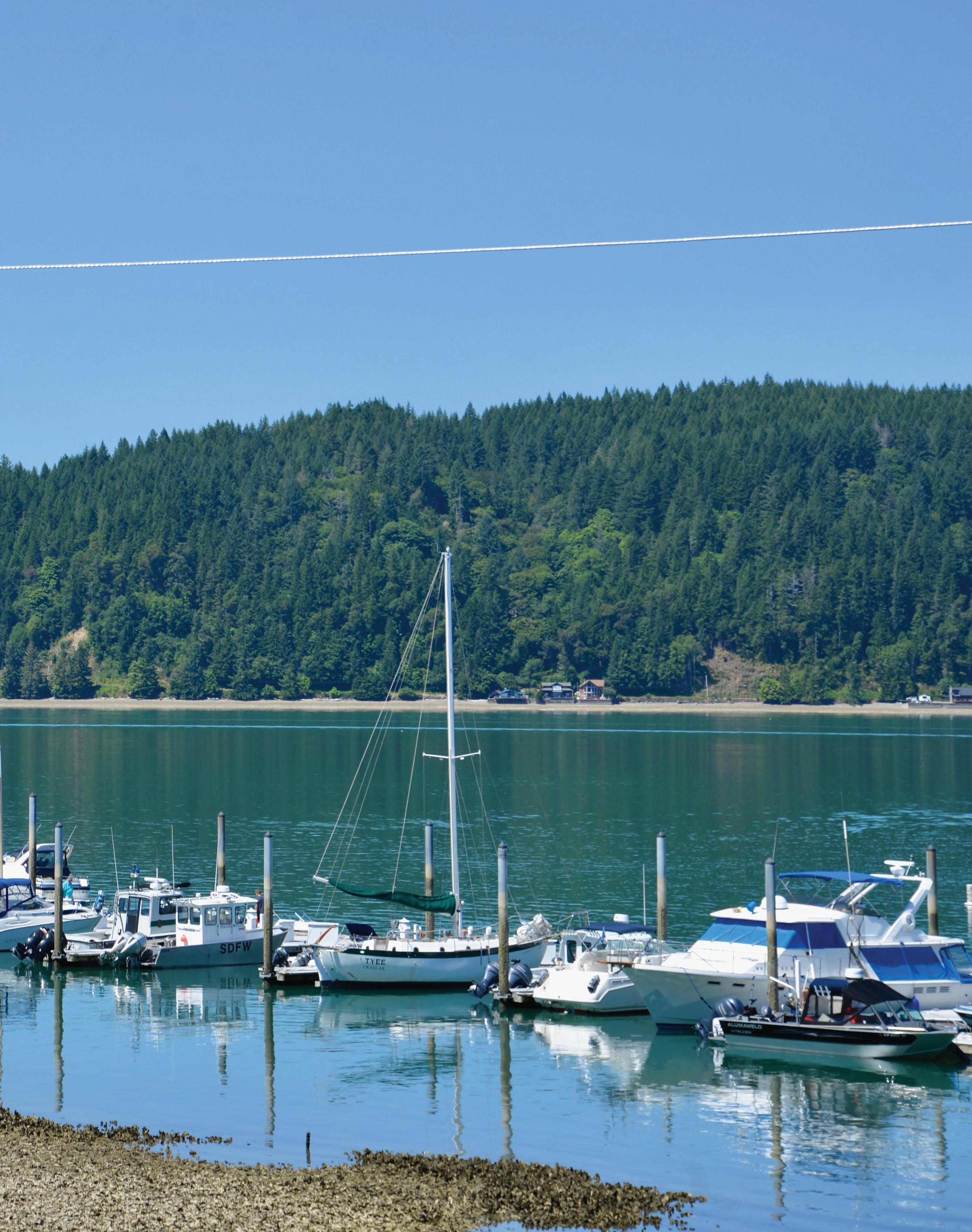
Hood Canal occupies 150 square miles of the Olympic Peninsula and bellies up to the Olympic National Park. It's home to thousands of species of fish and marine mammals and invertebrates like orcas, oysters, and octopus. There's hardly a better way to take it all in than on the water.
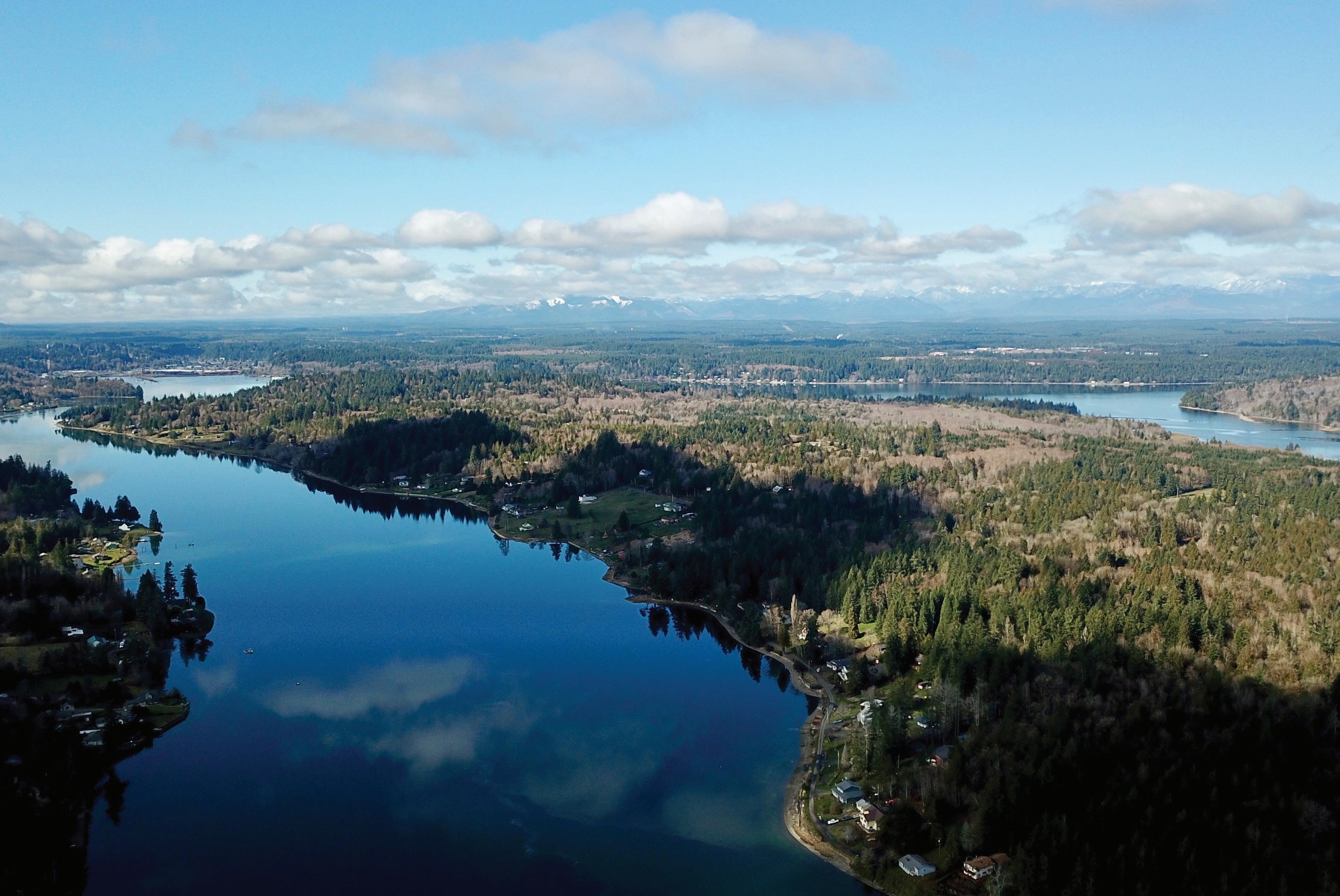
SHELTON is the westernmost city on Puget Sound. Featuring a bustling heritage core, its landscape is marked by colossal forests which led to a title of “Christmas Tree Capital of the World.”
Dubbed CHRISTMASTOWN, USA, since 1962, Shelton successfully won the Guinness World Record for Most Lit Christmas Trees in 2019.
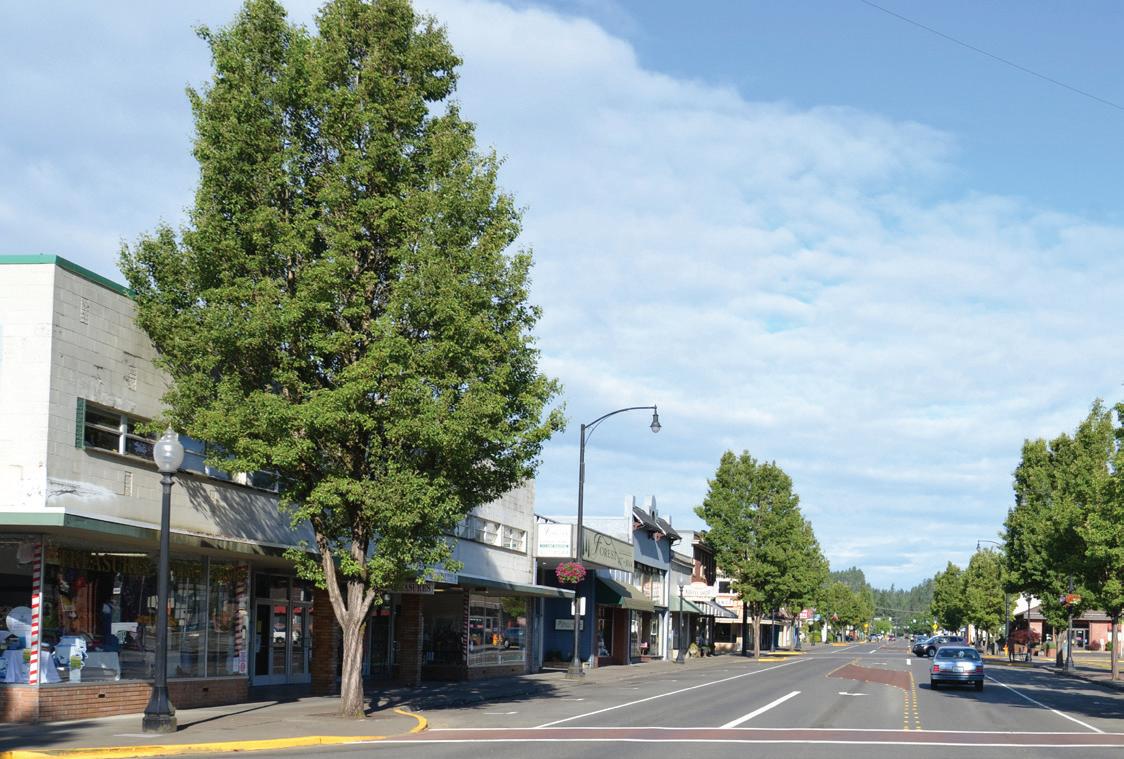
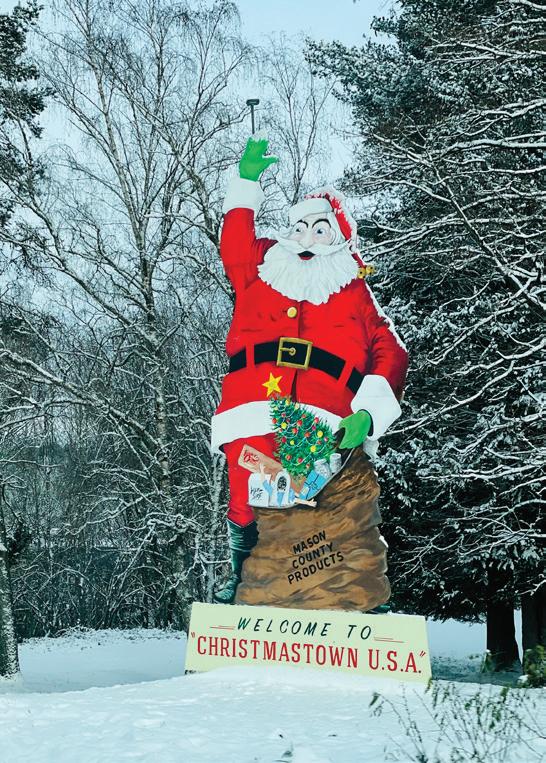


POTLATCH STATE PARK
Longest stretch of PUBLIC BEACH in Mason County with shellfish, kayaking, and Hood Canal water access.
DISCOVER PASS REQUIRED


SHELTON VISITOR CENTER
TO GO: Red Caboose on Railroad Avenue Information, handouts, and maps
ISABELLA LAKE TRAILS
EASY 2.5 mile loop, rolling meadows
TO GO: Hwy 101 exit at SR#3 to Golden Pheasant Rd, right on Delight Park Rd. DISCOVER PASS
HUNTER FARMS
Farm Market, seasonal events; Visitor Center
WALKER PARK Beach access, playground, restrooms, picnic shelter, kayak access. NO FEE/PASS
TAYLOR SHELLFISH STORE
Fresh seafood, tours available; open to public. Hwy 101 to Taylor Towne Exit.
SQUAXIN ISLAND TRIBE MUSEUM
Stories, photos, art, artifacts dating back over 500 years. TO GO: Hwy 101 to Kamilche exit , follow signs. ADMISSION CHARGE
SCHAFER STATE PARK TRAIL
Trails, interpretive center, swimming, fishing. TO GO: 12 miles north of Elma on the East Fork of the Satsop River. The park is also accessible via the Brady exit from Hwy 12.
DISCOVER PASS REQUIRED
OYSTER BAY
Beach,marshy estuary, for birding, salmon observing or fishing. TO GO: Parking pullout on Hwy 101, marker 356 /Old Olympic Hwy. NO FEE/PASS
Waterfront park features gazebo and lawns, play area, and beach access. NO FEE/PASS

HARSTINE ISLAND TRAIL
300 acres to explore EASY 1.5 mile, beach DISCOVER PASS
HOPE ISLAND STATE PARK
106 acre park reachable only by water. Old-growth forests, saltwater marshes, fruit trees, beaches, historical buildings, friendly deer. Destination for kayakers and boaters!
TO GO: access by boat, mooring available, beach landing, boats and kayaks can launch at Arcadia Point (0.5 miles). CAMPING FEES
Chum salmon are on view as they make their way up river TOPOGRAPHY: flat, viewing platforms, interpretive signs TO GO: Hwy 101, Old Olympic Hwy; weekends, seasonally. NO FEE/ PASS
Ranger Station is open in summer with information, exhibits, wilderness permits, map sales and wheelchair available. Road open year-round weather permitting. Call (360) 565-3131 NATIONAL PARK PASS
TO GO: HWY 101 to SR#119, follow FS#24 to Staircase Entrance.
RAPIDS LOOP: EASY family friendly 2 mile trail through old growth forest to a bridge over the North Fork Skokomish River; only 200-foot elevation gain. BIG CEDAR, a 0.6 mile spur trail, leads to a fallen cedar while a 0.5 mile section leads to a river viewpoint.
FOUR STREAM: EASY 1.2 mile to Beaver Flat, swampy section of alder/cedar forest. Elevation loss 100 ft.
WAGONWHEEL LAKE: MODERATE TO DIFFICULT climbing 2.9 miles (elevation gain of 3,365 ft).
FLAPJACK LAKES: DIFFICULT climbing 7.8 mile one-way hike (3,115 ft elevation gain).
Well maintained popular trail leads to a small lake
MODERATE TO DIFFICULT 3 mile climb,switchbacks
TO GO: Hwy 101 at Hamma Hamma Recreation Area
UPPER
Steep with unstable bed; camping.
MODERATE TO DIFFICULT 4.3 mile climb
TOPOGRAPHY: 3,800 foot gain to sub-alpine lake
TO GO: Same as Lower Lena Lake Trail above.
WILDERNESS PERMIT FOR CAMPING
NW FOREST PASS FOR PARKING
BIG CREEK
Great pack-in picnic destination with pools and footbridges.
MODERATE 4 miles
TO GO: Trailhead at FS#24 and SR#119 junction.
NW FOREST PASS

HAMA HAMA STORE
Beach access & parking, seasonal outdoor Oyster Saloon and fresh seafood market.
EAGLE CREEK
Beach access & parking across from Eagle Creek Saloon. NO FEE/PASS
HOODSPORT VISITOR CENTER
TO GO: Located just off Hwy 101 in Hoodsport – information, handouts, maps PASSES FOR PURCHASE
HAMMA HAMMA
LIVING LEGACY TRAIL
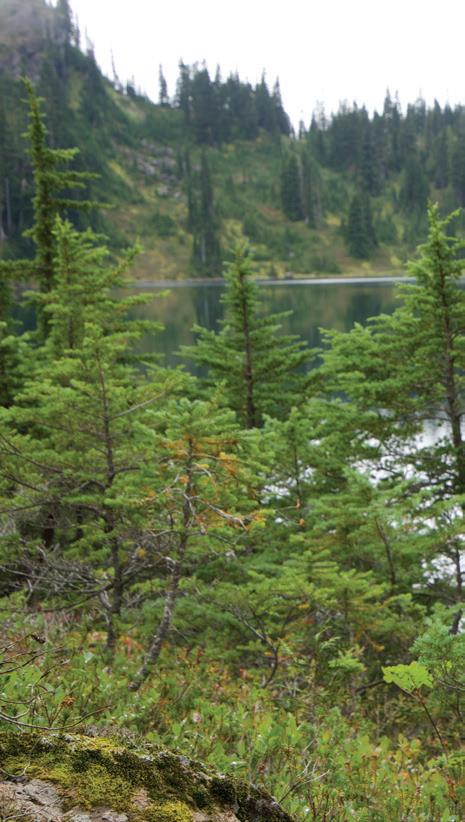
Spectacular views of the Mt. Skokomish and the Brothers ranges; interpretive signage. Trail passes Hamma Hamma Cabin built by the Civilian Conservation Corps (1930s).
EASY TO MODERATE 1.5 mile loop.
TOPOGRAPHY: First 0.25 mile is barrier free along the river; ascends bluff to creek. TO GO: Hwy 101 to FS#25, 5.5 miles.
WILDERNESS PERMIT REQUIRED FOR CAMPING
DEWATTO BAY Beach with dramatic view of the Olympics; excellent photography destination. Lots of ripe berries in late summer.
TO GO: Belfair-Tahuya Rd to Dewatto Rd, 4 miles.
SERVICES AT PORT OF DEWATTO CAMPGROUND
23,100 acre forest provides open spaces for sightseeing, camping, nature study, fishing, hiking,horse, ATV, ORV, and biking. A “working forest” trail may be closed due to forest management activities.
TOPOGRAPHY deep woods
TO GO: Hwy 300/Belfair
Tahuya Rd, 1.1 mile. DISCOVER PASS
MENARD’S LANDING

Expansive beach with panoramic views of Olympics. Picnic tables. NO FEE/PASS
VISITOR CENTER/ BELFAIR LICENSING
TO GO: On Hwy 3 in Belfair PASSES FOR PURCHASE Park/ vehicle/vessel/fishing/hunting northmasonchamber.com
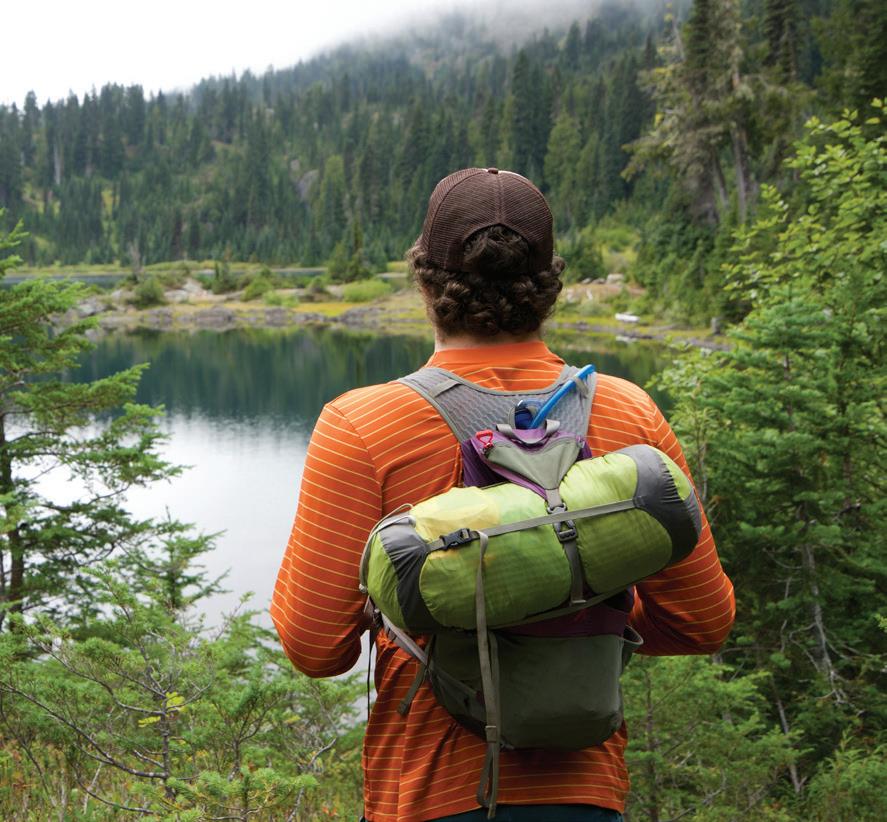
Clamber up the rugged trails, tiptoe through the quiet old growth forest, or careen through the pristine meadows of Olympic National Forest & National Park. Shoulder your pack and experience the sights and sounds of the vast wilderness home to some of the most beautiful flora & fauna in the world. Ablaze with wildflowers in the spring, cool hidden swimming holes in the summer, a chance to see spawning salmon in the fall, and snow capped peaks in the winter, there is never an inopportune time to hike Hood Canal.
HUG THE CURVES
As Hwy 101 navigates the bays of HOOD CANAL, imagine relaxing dockside of a beachside cabin, watching the seals roll off the rocks
CANAL SPIRIT
HOODSPORT WINERY, STOTTLE WINERY, and HARDWARE DISTILLERY offer tastings amongst shopping, dining and the famous Olympic Mountain Ice Cream.
Come prepared with buckets and boots. Check regs at wdfw.wa.gov before digging – or stop by HAMA HAMA STORE & OYSTER SALOON for freshly prepared seafood.
Giant octopus, wolf eels and swarms of ancient rock cod add to the wonder of this special place. AIR, GEAR & SCUBA LESSONS, RENTALS & CHARTERS available.
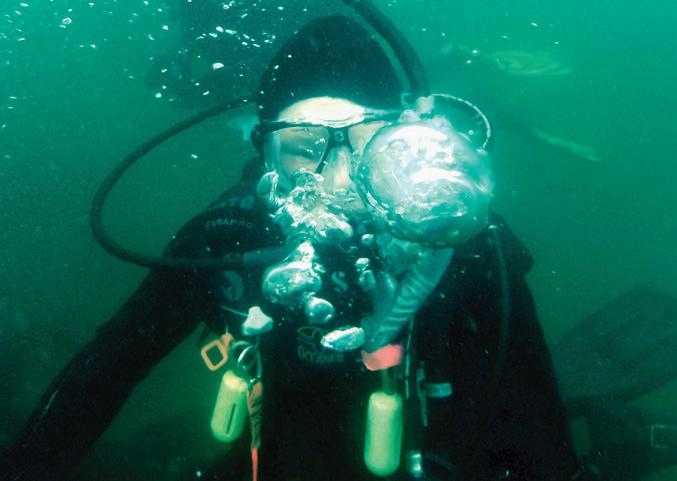
Alice’s Little Beach House | 112 N Allie Ahl Ln, Lilliwaup | (360) 877-9226 | aliceslittlebeachhouse.com
Glen Ayr Waterfront Resort | 25381 N Hwy 101, Hoodsport | (360) 877-9522 | glenayr.com
Mike’s Beach Resort | 38470 N Hwy 101, Lilliwaup | (360) 877-5324 | mikesbeachresort.com
The Moose House at Lake Cushman | Lake Cushman | themoosehouse.com
Pali-Kai Canal House | 327000 N Hwy 101, Lilliwaup | (360) 426-2224
Sunrise Motel & Dive Resort | 24520 N Hwy 101, Hoodsport | (360) 877-5301
Waterfront at Potlatch | 21660 N Hwy 101, Potlatch | (360) 877-9422 | thewaterfrontatpotlatch.com
Yellow House | 23891 N Hwy 101, Hoodsport | (360) 877-6818 | hoodsportndive.com
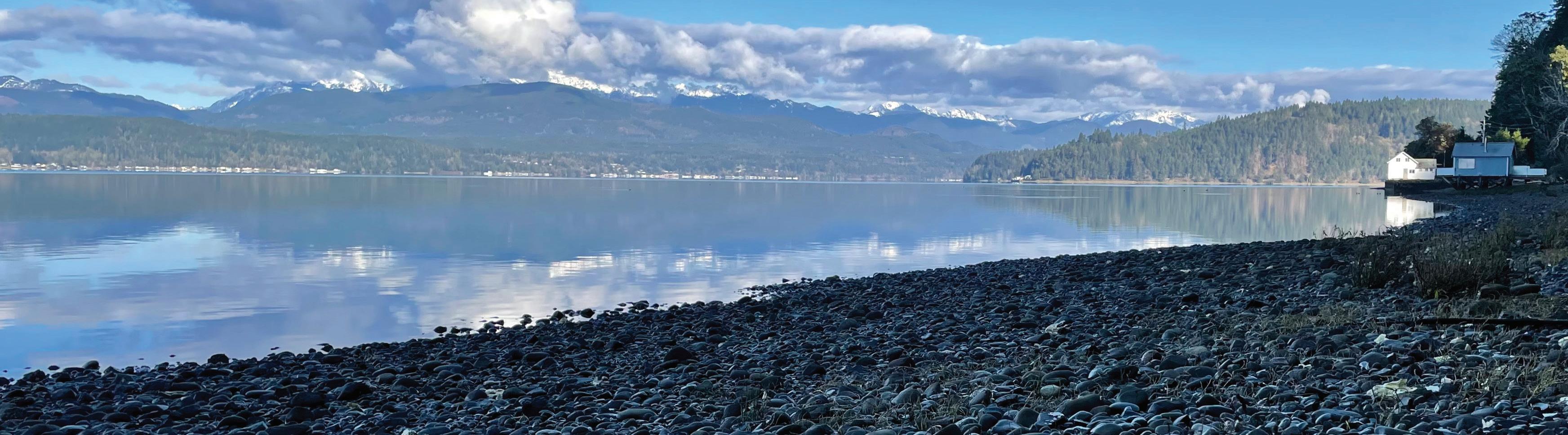
Allyn
Allyn House Inn | 18350 State Route 3, Allyn | 535-2198 | allynhouseinn.com
Belfair Motel | 23322 NE State Route 3, Belfair | 275-4485 | belfairmotel.net
Gladwin Beach House | 391 Gladwin Beach Rd, Belfair | (360) 337-2960 | explorehoodcanal.com
Sisters Point Waterfront Cabin | 12121 NE North Shore Rd, Belfair | (360) 275-6816
Summertide Resort | 15781 NE Northshore Road Tahuya | (360) 275-9313 | summertideresort.com
Alderbrook Resort & Spa | 10 E Alderbrook Drive, Union | (360) 898-2200 | alderbrookresort.com
Blue Heron Resort Condos | 6520 E SR106, Union | (360) 614-3191 | attheblue.com
Cottages at Hood Canale | 6871 E SR 106, Union | (360) 710-7452| booking.hoodcanale.com
Harmony Hill Retreat Center | 7362 E SR 106, Union | (360) 898-2363 | harmonyhill.org
Hood Canal Events Accommodations | curated short term rentals | hoodcanalevents.com
Hood Canal Resort Properties | 8761 E SR 106, Union | (360) 842-9779 | hoodcanalresort.com
Robin Hood Village Resort | 6780 E State Route 106, Union | 898-2163 | robinhoodvillageresort.com
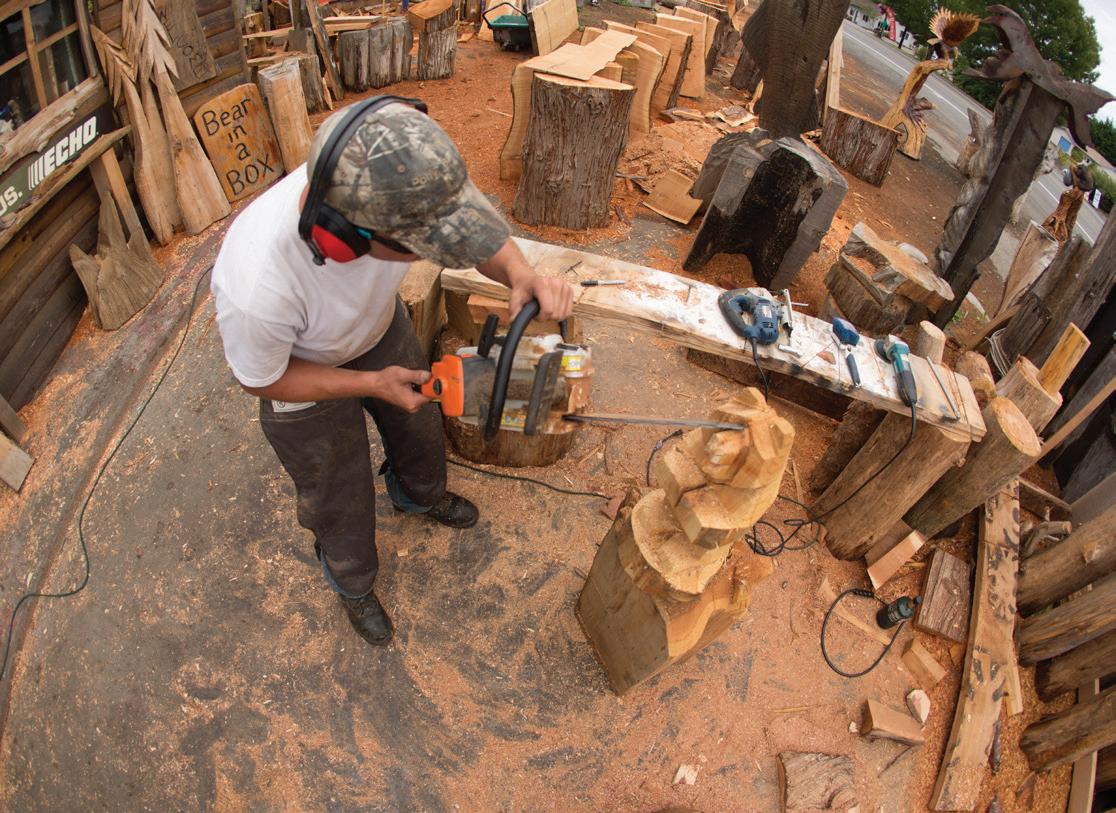
The largest chainsaw carving outlet, BEAR IN A is a great place to explore this unique art. They also teach chainsaw carving.
Waterfront Grapeview is the location of first winery and vineyards of the Pacific Northwest.
BEACH WALK
The area features quaint shops, a variety of restaurants, and beach parks.
There are plenty of great public beaches to explore and launch points for your kayaks.
ALLYN & GRAPEVIEW enjoy gorgeous views of the protected harbor waters of Case Inlet. The area features quaint shops, waterfront lodging, restaurants, and beach parks. Annually, the Grapeview area hosts the Water and Art Festival, a day-long event featuring entertainment and juried artists.
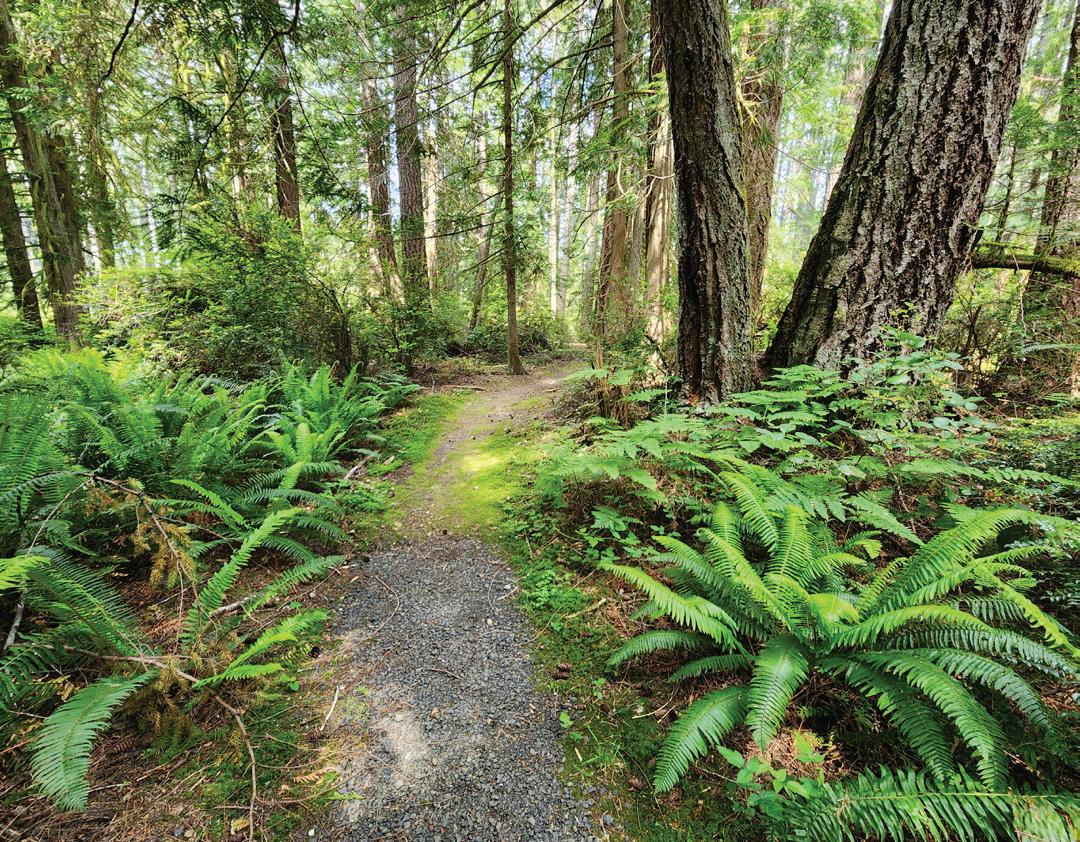
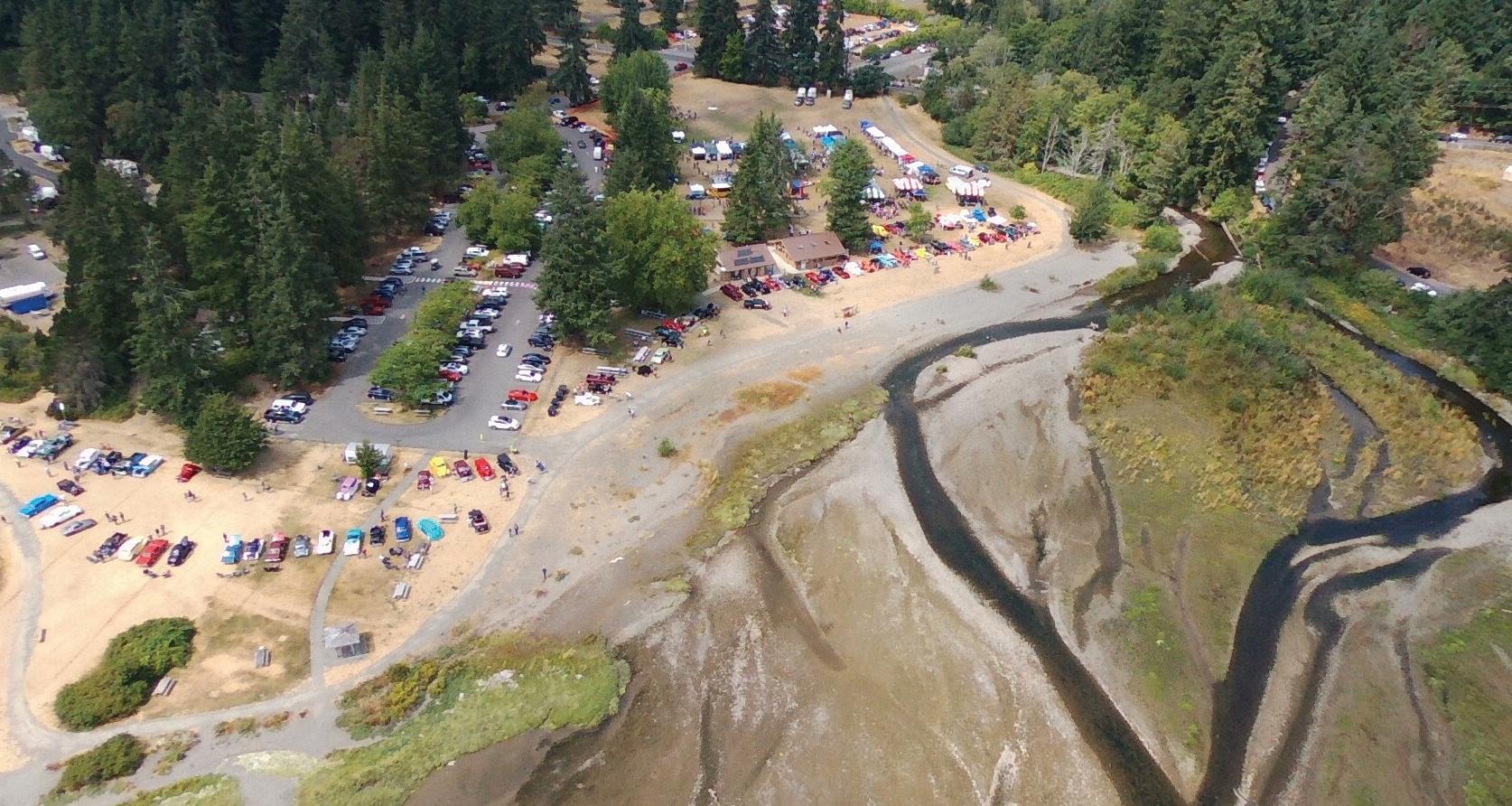
TAKE A WALK ON BOARDWALK
Hood Canal’s wild 139 acre THELER WETLANDS hosts two miles of trails. 1,700+ feet of floating boardwalk, native plants, and interpretive kiosks to experience wetland wildlife. olympicbirdtrail.org
SALMON STRONG
THE SALMON CENTER provides education and recreation through a series of collaborative activities at their certified organic farm. They also host seasonal events. pnwsalmoncenter.org
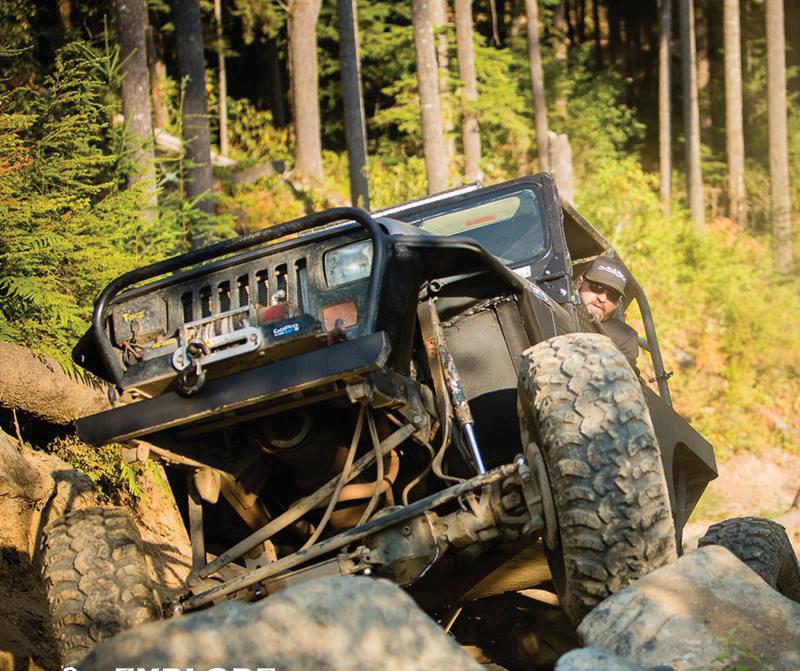
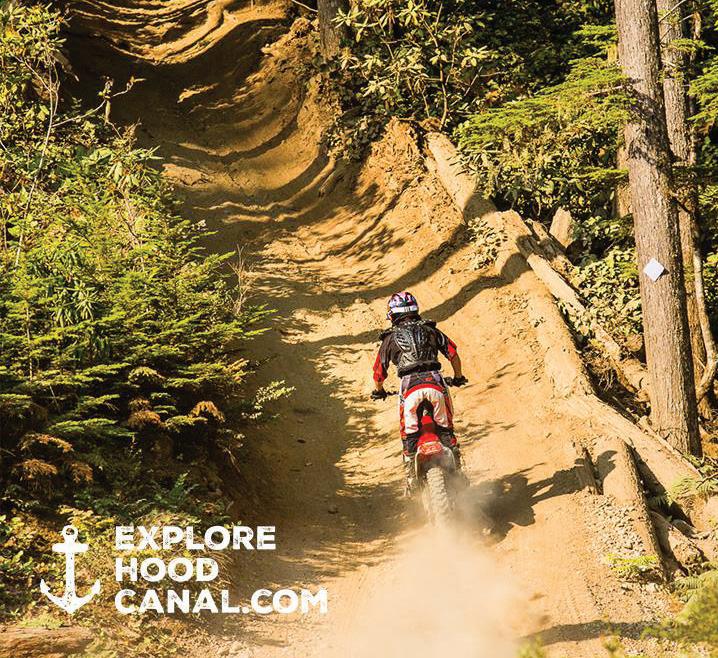
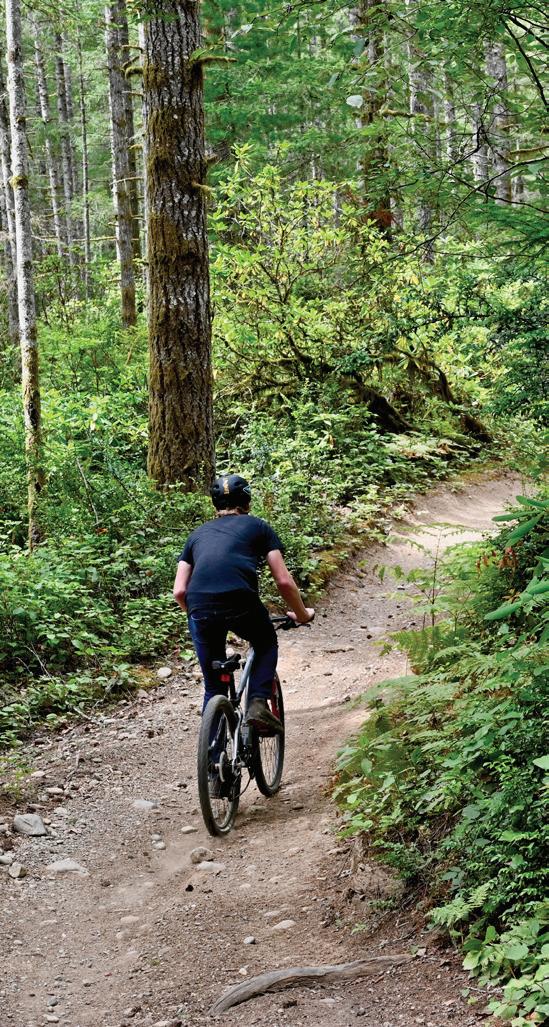
HOODSPORT VISITOR CENTER
150 N Lake Cushman Rd, Hoodsport, WA (360) 877-2021 | (800) 576-2021
BELFAIR VISITOR CENTER
30 NE Romance Hill Rd, Belfair, WA (360) 275-4267 | northmasonchamber.com
UNION VISITOR INFORMATION
Located at Hunter Farms, E 1921 SR 106, Union, WA
SHELTON CHAMBER
VISITOR CENTER
215 W. Railroad Ave, Shelton, WA | (360) 426-2021
Open 8 AM - 5 PM | Monday through Friday
MASON COUNTY HISTORICAL SOCIETY MUSEUM
427 W. Railroad Ave, Shelton, WA
11 AM - 4 PM | Tuesday through Saturday
23,100 acre TAHUYA STATE FOREST for camping, fishing, hiking, horseback riding, ATV, ORV, and mountain biking. dnr.wa.gov
FJORD WELCOME CENTER
24341 N US Hwy 101, Hoodsport, WA
FREE Concierge Service: maps, lodging, dining & hikes information (360) 877-2102
RIDE FREE IN MASON COUNTY
From ferries in Seattle to trailheads in Hood Canal, Mason Transit offers free rides – masontransit.org
OLYMPIC NATIONAL PARK nps.gov
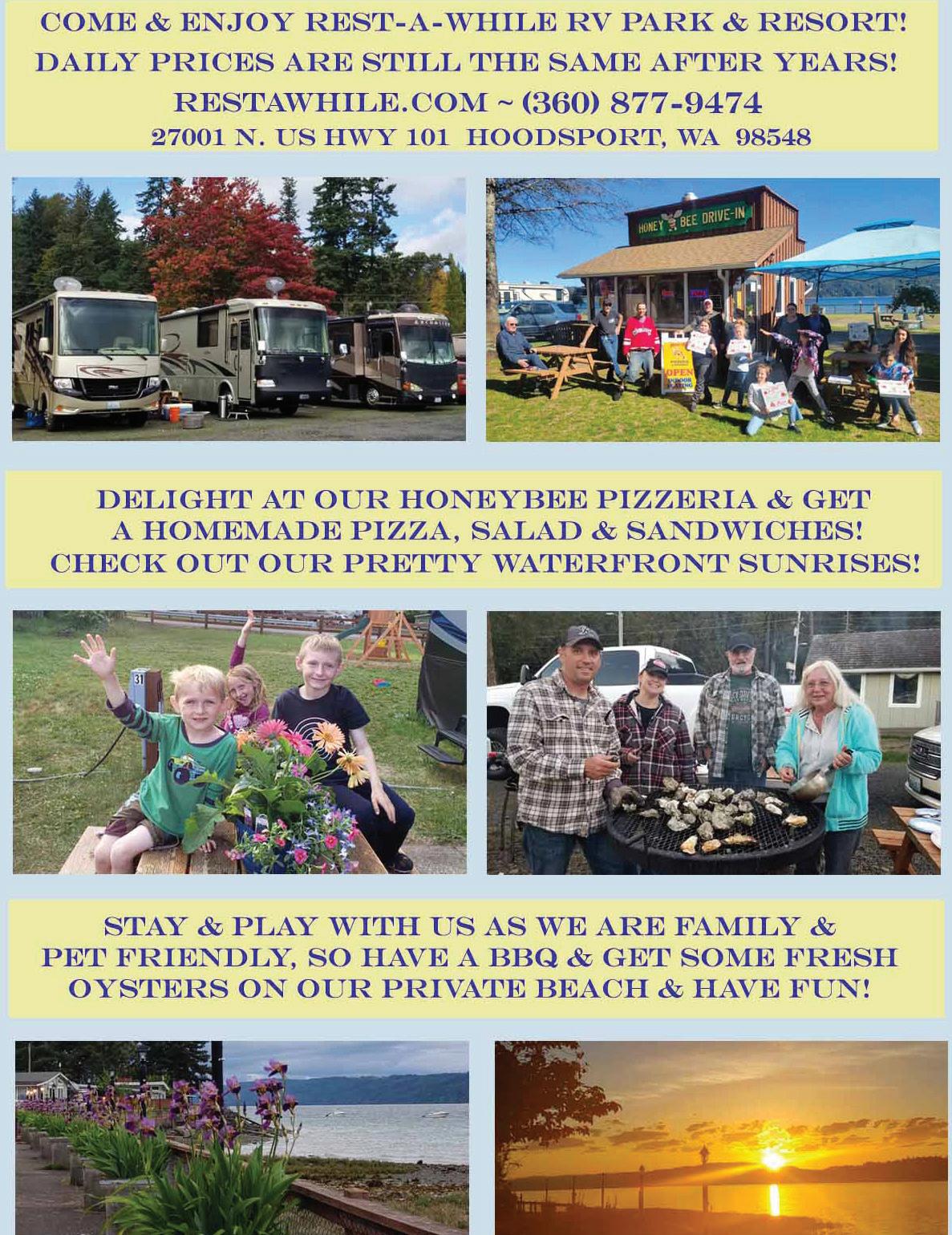
Caitlin Friedman, Quilcene Historical Museum
The morning of Saturday October 12th was foggy and just a bit chilly, but the sun came out mid-morning to make for a quintessential early fall PNW day. The 2024 Quilcene Fiber Festival, which is held each year at Worthington Park.
The weather was perfect for enjoying all the fiber arts have to offer in the glorious natural setting in Quilcene. There was sheep shearing, storytelling, fiddles, bag pipes, and even a Celtic harp. The Wool Waulkers beat and kneaded freshly woven wool to the singing of Gaelic songs. Local favorites A&H Curbside Grill and Halfway House Restaurant kept everyone deliciously fed while vendors filled the field and historic house with a wide range of fiber wares. The Quilcene Historical Museum, the non-profit that owns Worthington Park and benefits from events like this one, was open all day, offering cookies made by the Quilcene School Culinary Arts Class.
We are so grateful to all our sponsors, vendors, and volunteers that made this event possible! This Fiber Festival is shaping up to be a late season happening that cannot be missed, so mark your calendars for October 1, 2025 and plan your trip to Quilcene.
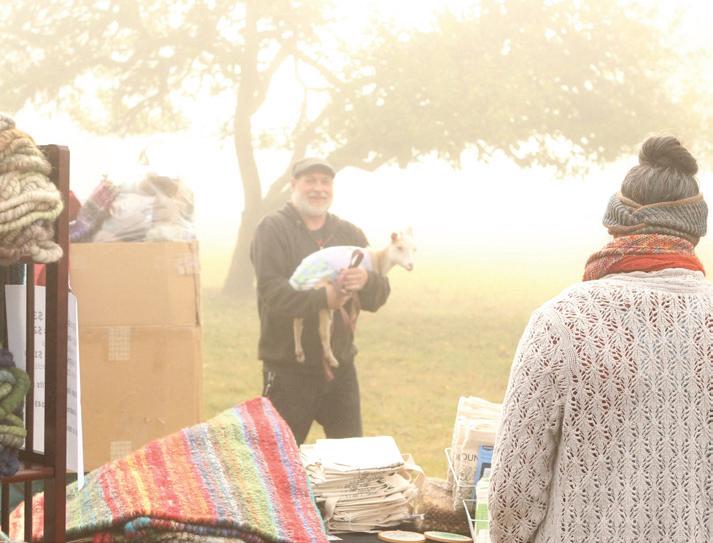

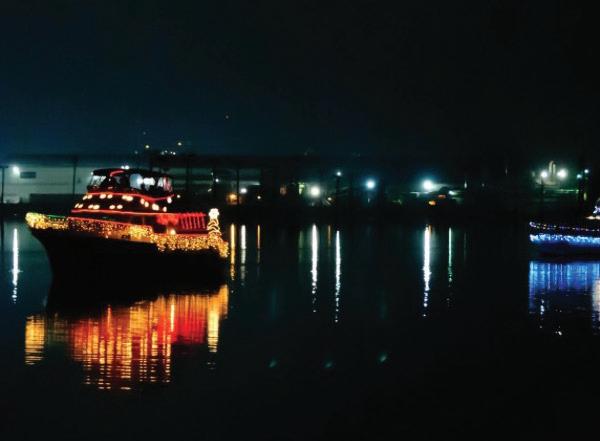
The 2024 Shelton Yacht Club Lighted Boat Parade will be held December 6 & 7. Boats will leave the marina at 6:30 PM (weather permitting) and travel down Hammersley Inlet. All boaters are welcome to join in the parade regardless if you're a yacht club member or not. The boat parade can be viewed from the club parking lot, Church Point and Walker Park. Check the yacht club website for additional viewing options. For information visit sheltonyachtclub.com. Enjoy the parade.
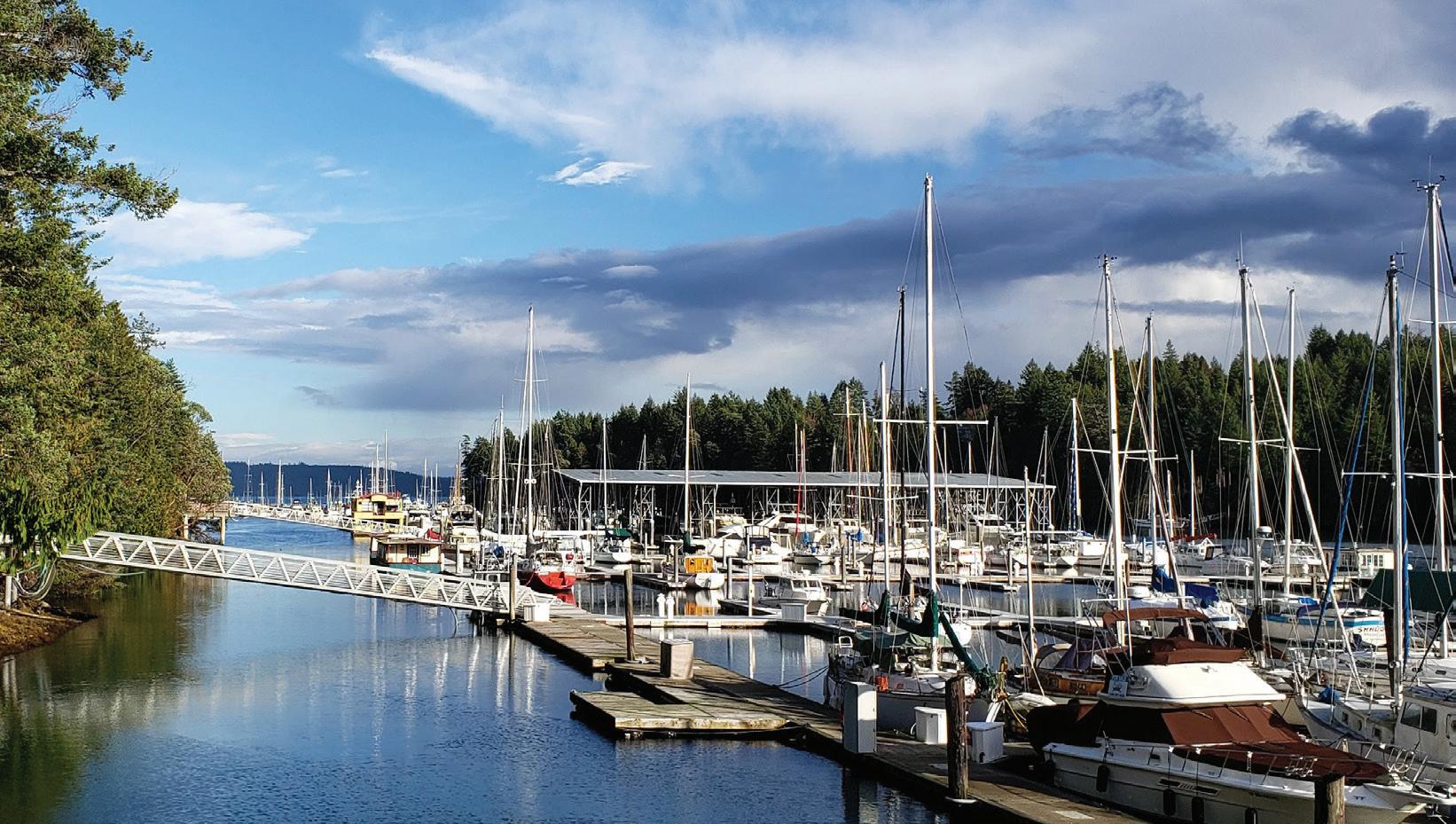
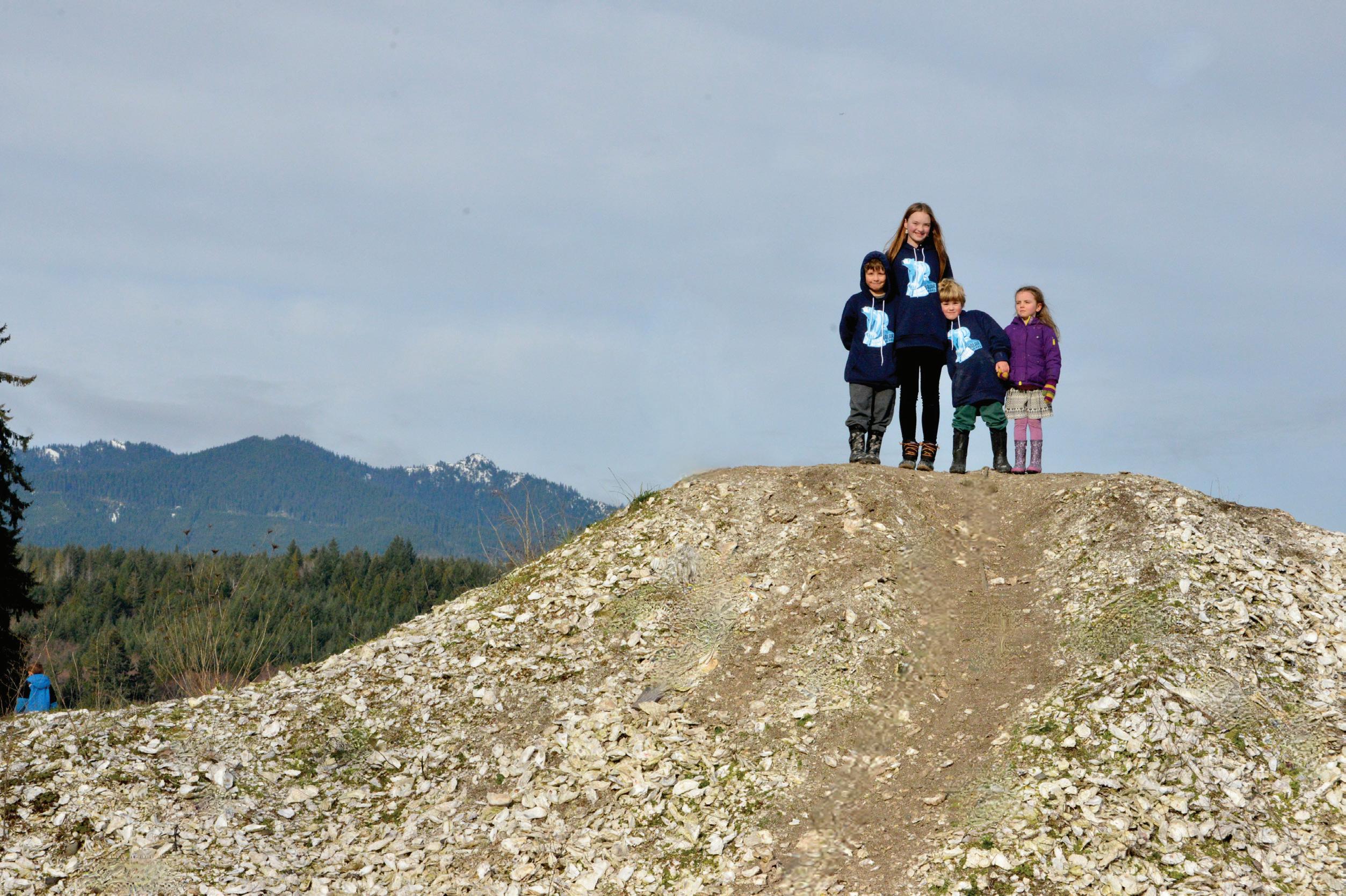
Want to immerse yourself in the local oyster scene? Winter is the prime time to explore more fresh oyster nirvana!
(26 MIN., 17 MILES | VIA SR 106 W)
Twanoh State Park’s saltwater shoreline and hiking trails.
Gather shellfish (open yearround for oyster harvest) or simply take a walk along the creek as it meanders the hillside. There is a campground as well as historic buildings.
19 MIN., 12 MILES | VIA SR 106 W)
Since 1913, generations of visitors have enjoyed this canal-side retreat. Along with a restaurant serving locally harvest oysters and clams, enjoy the dock, views and saltwater pool (10 E Alderbrook Dr., Union (360) 898-2200).
(18 MIN., 11.5 MILES | VIA SR 106 W)
The best vantage point to view the Olympics Hood Canalé restaurant serves delicious pizza and hosts live music most weekends. Pick up fresh in the shell oysters at Union City Market which stocks everything from gifts and collectibles to fresh oysters and offers outdoor dining (Hook and Fork) with a view – and yes, grilled oysters!
(16 MIN., 10 MILES | SR 106 or 101)
Family owned and operated, Hama Hama Oyster Company has been harvesting oysters and clams on Hood Canal for four generations. Their store and outdoor restaurant are located a shell’s toss from the tide flats.
Note: Distances are from Shelton.
As the road weaves around the Skokomish delta shoreline, you are treated to glimpses of the Olympics. Fall is a great time to visit Hunter Farms as they celebrate with a pumpkin patch and weekend events. Pet the animals, pick up produce and yes, fresh local oysters by the dozen.
(20 MIN., 13.5 MILES | VIA US-101 N)
With just under 10K feet of saltwater shoreline, Potlatch is popular swimming, camping, and for shellfish harvesting of oysters and clams. Potlatch is a favorite with divers, para-surfers and kayakers, too.
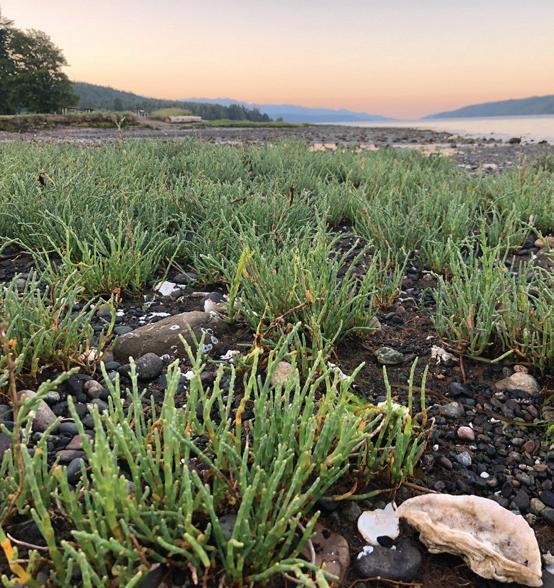

(23 MIN., 15 MILES | VIA US-101 N)
Hoodsport is a seaside town perched on the western shores of the Hood Canal beneath the shadow of the Olympic Range. Here you will find shops as well as two local wineries: Hoodsport and Stottle. Stop by the The Hardware Distillery and check out their newly opened FlyWheel Gallery,
featuring local art and serving handcrafted cocktails (Open Saturdays). Nearby Potlatch Brewery is also a great place to take in the local views (and brews). Oysters? After a long hiatus the Xinh Dwelley inspired menu at the Fjord Oyster Bank is is finally available to oyster lovers from near and far once again! Try the icy ginger migonette on a raw dozen or grill a few with Xinh’s garlic & hoisin butter sauce! Fjord’s head shucker, Michael, will be sure to tell you all about each oyster served.
(29 MIN., 19 MILES | VIA US-101 N)
On your way to the beach, stop in at the quaint Lilliwaup Store for a scoop of local Olympic Mountain Ice Cream. Just past the bridge you’ll see a pull off and large gravel area for the public harvesting beach. You’ll need a Discover Pass to park and a license to harvest. This beach is mostly rocky and digging is difficult, but there are some butter, native littlenecks, and Manila clams available. An excellent oyster beach.
(33 MIN., 22 MILES | VIA US-101 N)
This pretty little beach with great access and spectacular views of Hood Canal requires no pass but parking is limited to a small area and along the shoulder on Highway 101. If the beach is open for harvesting during minus 2' or lower tides, this site provides some access to geoducks. Take care not to cover oysters with sand while digging clams because this will potentially kill the oysters. Clam and mussels OPEN seasonally. Oysters OPEN for harvest year-round.
(37 MIN., 26 MILES | VIA US-101 N)
This high energy destination serves oysters pulled from the last tide and prepared to order with an ever changing menu of seasonal local ingredients. In their retail shop you can purchase a variety of local products including salmon and oysters smoked on site. Reservations are available for their famous dining A-frames on the shore.

“Over 82% of Americans listen to the radio each week, including over 87% of U.S. adults 35-64, 82% of U.S. adults from 18-49, and 75% of 18-24 year olds.”
statistica.com (2022)
Did you know that the KMAS 1030 AM/103.3 FM signal reaches as far as Tacoma, Bremerton, Aberdeen, and Centralia? (radio-locator.com). As the “Voice of Mason County” KMAS also reaches your friends and neighbors from Allyn and Shelton to Belfair & Hoodsport, as well as on their commutes to Bemerton, SeaTac, and Olympia. TRACING THE FJORD is proud to be a part of their family!
Radio is available 24/7 and is accessible to everyone.
The Fjord Magazine is celebrating 7 years of stories about South Puget Sound (Olympia, Allyn, to Elma and Matlock) and Hood Canal – from Port Gamble to Belfair!
Our FREE quarterly magazine is on the WA State Ferries and available for pick up at over 120 public locations, with 10K print copies & 15K + online downloads, the reach keeps growing!
Our readers, local & visiting, are your best prospects.
(41 MIN., 29 MILES | VIA US-101 N)
Third-generation farmers, Matthew and Sara are serious about producing some award winning oysters on site for market and available at restaurants. Guests staying on the active farm (aka Mike’s Beach Resort) stay in waterfront cabins and rooms, with view of the canal and have first dibs on some of the freshest oysters on the fjord!
(12 MIN., 9 MILES | VIA US-101 S)
Did you know that Taylor provides the oysters for the shucking contest at OysterFest? Stop in at their Shelton headquarters and visit their retail market. Taylor’s specialties include the Kumamoto (sweet fruity flavor) and the Virginica (Crisp, briny, and buttery). The company has been farming oysters on Puget Sound since the 1890’s. The store is open daily and stocks canned seafood and fresh local seafood in season.
(1 HOUR, 18 MIN., 58 MILES | VIA US-12 W)
Full service fish market located near Ocean Shores and Seabrook. Offering locally grown oysters that are being served at many of the booths at OysterFest. The retail shop is open daily, 10-5PM.
(30 MIN., 22 MILES | VIA US-101 S)
Chelsea Farmsis a local South Puget Sound Farm located between Shelton and Olympia. Family run, they have made a priority of farming the Olympia Oyster, the native oyster that was on it’s way to extinction. Specialties include their Chelsea Gems and Bonitas, along with fresh clams and geoduck. Visit their Oyster Bar in Olympia to get an ultimate seafood experience!
Need more information?
Call (360) 427-5599 or email PRINT & GRAPHICS: rachel@nwevent.org
RADIO & EVENTS: jeff@nwevent.org, KMAS (360) 426-1030.
Along with coffee and apples, Washington State is well known for having some of the best bivalves in the world. Yes, World! It helps to know where to find the freshest experiences. For destinations visit Washington's shellfish trail at shellfishtrail.org.
This November gather and give thanks as our friends at Mike's Beach Resort and Olympic Oyster Co have brought together local businesses offering even more reasons for a Hood Canal getaway
Gather & Give Thanks is available for stays from November 1 - 30, 2024 and offers 20% off cabin stays at the resort. But that's not all they are tucking into the deal. Guests can also enjoy complimentary S'mores kits to make those special memories around a bonfire under the stars. After, head into Steam and Soak Hideaway.
Want to learn something new? Check out the Oyster Master Class or order a bucket of oysters to your room! Explore the world of oysters, master shucking, and enjoy a fresh oyster tasting. It’s the perfect way to bond with friends.
This Friendsgiving season, Mike's is collaborating with local businesses to offer ideas that enhance your experience and make your stay even more memorable! For example nearby Fjord Oyster Bank Restaurant is treating guests to ice cream with any meal purchase, they are now open Friday-Sunday. In Brinnon, Hood Canal Adventures is offering 10% off their Guided Wild Mushroom Field Tour! And, just under 3 miles north of Mike's Beach Resort, Hama Hama Oyster Co. will also be featuring some of the finest seafood in the Pacific Northwest. Add a reservation of one of their famous A-frame eating areas to your stay on Hood Canal!
For these and more, visit mikesbeachresort.com or call 360-490-4760. The team at Mike's can't wait to help you plan a "Friendsgiving" itinerary!
Okay, so maybe that's a myth, but nobody can deny that shellfish are safer, firmer and generally "better" in the cooler months. Want to harvest your own bivalves? You are in luck! Each year, State biologists perform population surveys to stock public beaches with oysters and clams ready for the harvest!
You will need a license, boots, a bucket, and a guide to public beaches. Visit wdfw.wa.gov/places-to-go/ shellfish-beaches or doh.wa.gov/shellfishsafety. Clam and oyster season are beach specific and may change annually. For a quick list of local beaches, visit shellfishtrail.org.
Pay attention to beaches that may be closed due to toxins, read posted warnings or call the Marine Toxins Hotline 1-800-562-5632 before consuming product. If you harvest clams or oysters, keep them on ice or eat them soon after harvest. Heed rules for each beach.
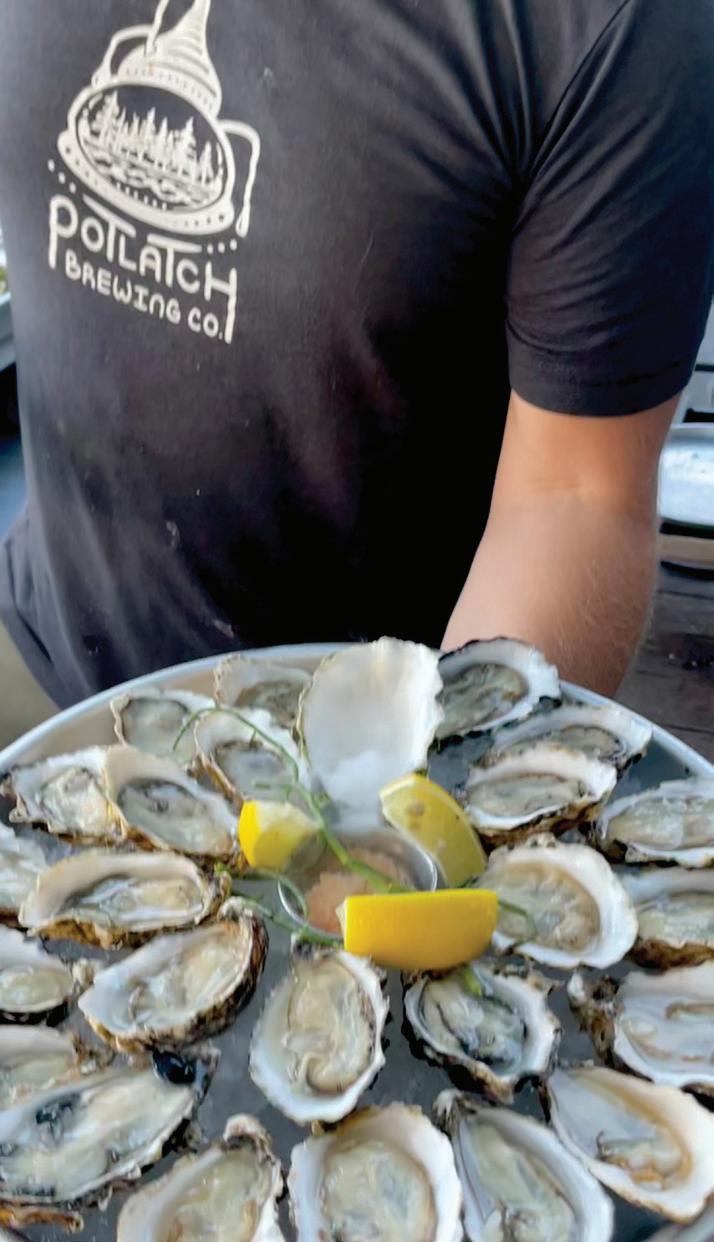
If you prefer to have the harvesting done for you, head over to a local farm retail store for a fresh selection. Taylor Shellfish, south of Shelton has a full service retail store open seven days a week. Farther north, Hama Hama's retail store in Lilliwaup is a great spot to grab fresh from the beach oysters and clams.
In Hoodsport, Fjord Oyster Bank is open Friday through Sunday and serves oysters, mussels and clams harvested from their farms on Hammersley Inlet. They also have fresh shellfish available for sale by the pound.
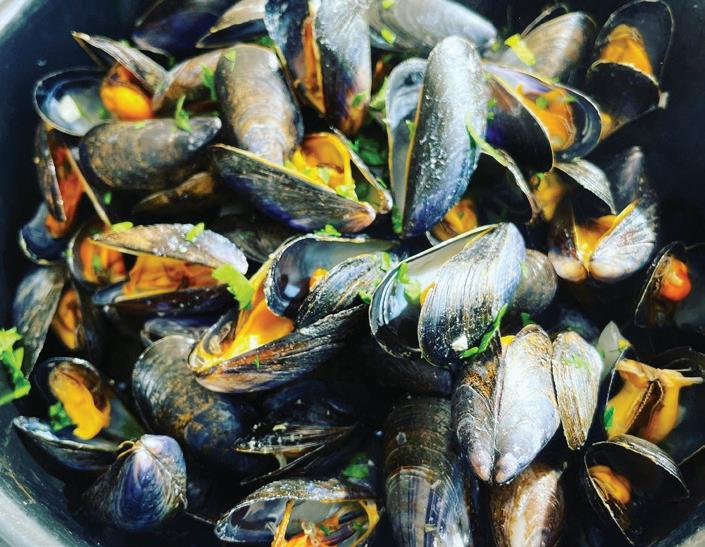
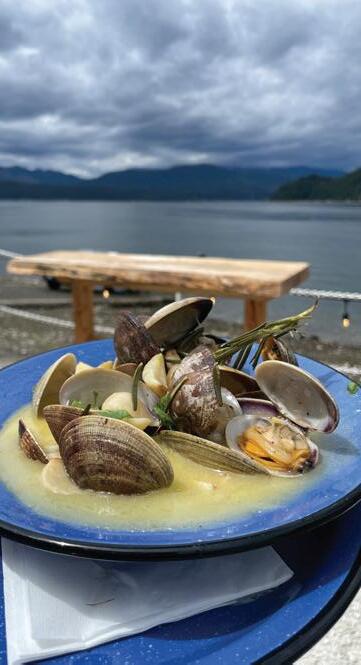
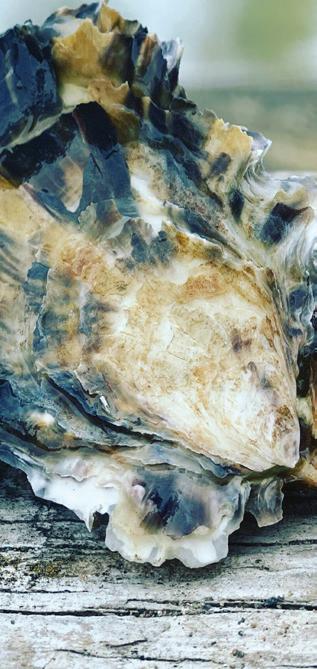
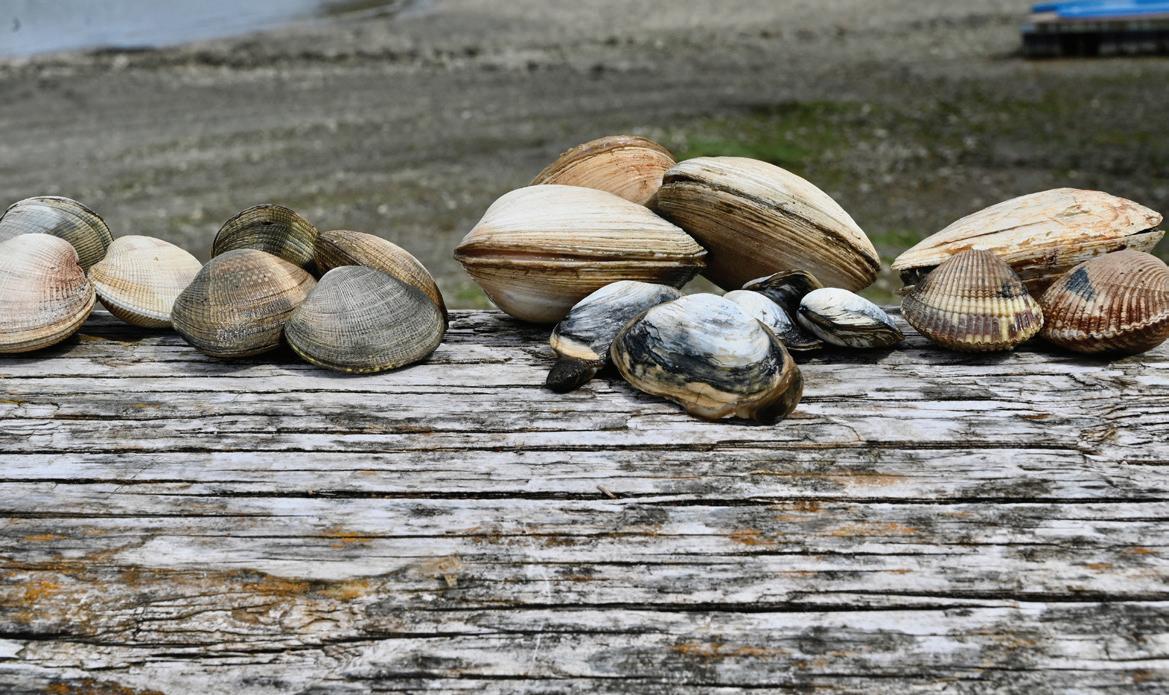
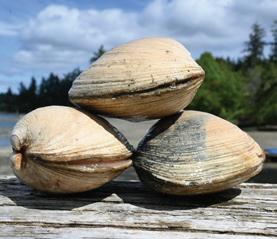
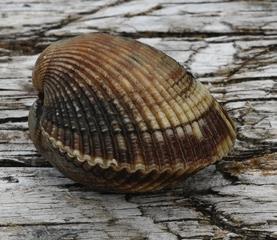
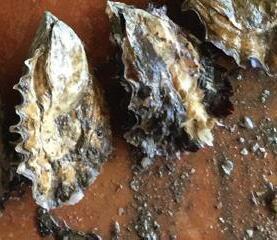
NATIVE LITTLENECK CLAM
Up to 3.5” with rounded shell displaying concentric rings and radiating ridge lines, cream, gray, brown, or mottled. White inside shell; found at 6-10” deep in gravel, mud, mid-tide level.
MANILA LITTLENECK CLAM (NOT NATIVE)
Up to 2.5”, oblong shell, Color can vary—typically gray,brown, or mottled and often times with what appears to be hand painted designs; some purple on the inside shell; found at 2-4” in gravel, mud, sand, typically above the half-tide level.
BUTTER CLAM
Up to 5”, shell with concentric rings (no radiating ridge lines), Yellow to gray/white colored; found at 1-1.5’ in sand, gravel, or cobble; lower intertidal or shallow sub-tidal zone. Butter clams retain marine biotoxins longer than other clams.
COCKLE CLAM
Up to 5” with round shell; prominent evenly-spaced radiating ridges fanning from hinge; mottled, light brown color; found at 1-2” in sand, mud in intertidal or sub-tidal zone.
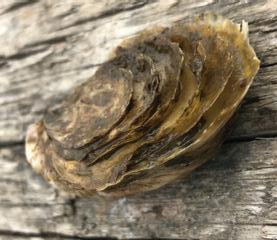
PACIFIC OYSTERS (NOT NATIVE)
Up to 12”, white/gray oblong shell with irregular, wavy edges; found in intertidal zone; tumbled (farmed) Pacifics have cupped shape with fragile shells.
Mason County’s saltwater bays and inlets along Hood Canal and South Puget Sound are renown for some of the tastiest and freshest bivalves in the Northwest. Visit for the pristine waters, open wilderness and public beaches stocked annually for families to enjoy!
LILLIWAUP STATE PARK
Full off on Hwy 101, stairway to beach at north opening of Lilliwaup Bay. Walk north or south when tide is out. Oysters and Clams. Eagles and osprey. Overnight RV camping permitted; no restrooms.
TAYLOR SHELLFISH
130 SE Lynch Rd Shelton (360) 432-3300
Taylor’s products include geoduck, clams, crab, mussels and oysters. Headquartered in Kamilche, retail store is open daily. taylorshellfish.com
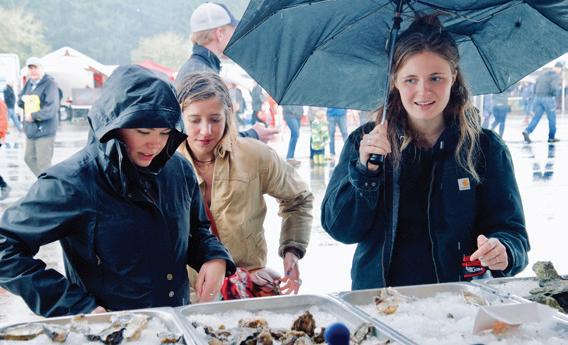
Public boat dock with beach access. Starfish and crabs at low tide. Closed to shellfish gathering. Picnic tables & restrooms,nearby dining, grocery and shopping.
POTLATCH BEACH PARK
Longest stretch of public beach, popular for swimming, kayaking, and picnics. Camping & restrooms.
Held October 5-6 at Shelton Airport, the two day festival features camping on site, seafood delicacies prepared by local non-profits as well as the Northwest Oyster Shucking Championship & live music. OYSTERFEST.ORG
OLYMPIA OYSTER
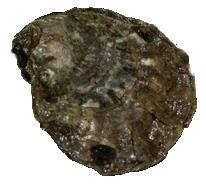
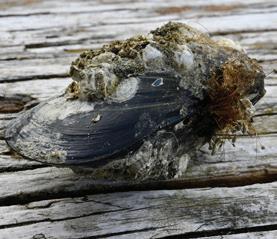
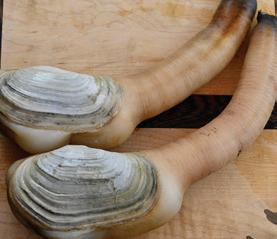
Up to 3”, rounded shell, white to purplish black and may be striped with yellow or brown; oyster’s flesh is a light olive green with a metallic flavor. Native oyster to the area and currently protected in wild habitats.
MUSSELS
Blue Mussel (native) up to 3”, California Mussel (native) up to 6”, Mediterranean non-native) up to 5”. Oblong shell, blueblack or brown, attaches to rocks, pilings, boats, gravel, or other hard surfaces in the intertidal zone with bissel threads.
GEODUCK
Up to 10”, 2.5 – 10 lbs. Gaping oblong shell with concentric rings; white shell with flaky brown skin; siphon and mantle are too large to withdraw; found at depth of 2-3’ in mud, sand, gravel in the sub-tidal zone (extreme low tides).
PARK
Beach access, playground, restrooms, picnic shelter basketball court. Olympic Hwy to Arcadia Rd, from Rd take Left on Walker Park Rd, Park is on right. No shellfish harvest. No passes required.
OYSTER BAY
Easy beach access on marshy estuary. Popular for bird watching and salmon observing/fishing. Pullout on Hwy 101 near Mile Marker 356; near KENNEDY CREEK INTERPRETATIVE TRAIL.
CREEK
beach when tide is out, obey
signs. Excellent oyster beach.
enough for swimming in summer.
across from Eagle Creek Saloon.
HAMA HAMA OYSTER SALOON 35846 US-101, Lilliwaup
5th generation farm serves oysters prepared to order with an ever changing menu of seasonal local ingredients. Retail store and farm dining. hamahamaoyster.com
Small beach with dramatic view of the Olympics. Lots of ripe berries in late summer. From Belfair: take the Belfair-Tahuya Road to Dewatto Rd. Continue four miles to Dewatto. Parking limited.
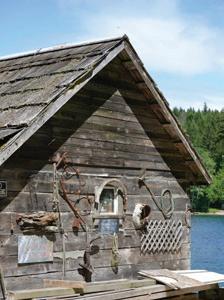
Nice beaches for walking and exploring with summer water temperatures surprisingly warm. Restrooms, camping and picnic facilities.
Expansive beach (at low tide), picnic area, and views of the Olympics.
RENDSLAND CREEK, DNR owned clams and oysters open all year.
Gazebo, garden, play area, pier, restrooms and beach access with boat launch.
Excellent camping, swimming, kayaking, picnic sites, and shellfish harvesting.
UNION CITY MARKET
5101 E State Route 106 | Union | (360) 898-3500 Art, gifts, seafood and grocery items and seasonal cafe within a working marina.
HUNTER FARMS
921 WA-106, Union | (360) 426-2222
Direct farm to market retail includes Hood Canal oysters at the general store located on the farm.
DNR 24/GRAPEVIEW, DNR beach clams and oysters open all year. Access by boat only.
CHECK: Health closures and advisories: doh.wa.gov/shellfishsafety Harvesting closures: wdfw.wa.gov/fishing/shellfishing-regulation Signs on the beach: Follow posted warnings and respect private property.
CHILL: Harvest shellfish on the outgoing tide and put on ice as soon as possible to prevent bacterial growth. Keep them cold until ready to eat. Cover in fridge with a wet cloth to prevent drying out.
COOK: Cook shellfish in summer months when Vibrio illnesses can occur. To kill Vibrio bacteria cook shellfish to 145° F for at least 15 seconds, cooking does not destroy biotoxins.
Do not harvest in areas with pollution closures. Ask your doctor before eating raw shellfish if you have any concerns about allergies, are taking medications, or have a weakened immune system (such as cancer, liver disease, or HIV). Shellfish are a great and healthy food.
Avoid illness by following the 3 C’s above and enjoy!
BAY
Community park offers beach access, a picnic area and portable restroom and is very popular with kayakers, fishermen and local residents. Located on SR-3 at the south end of Allyn. The parking area is open only during the shellfish season.
Here are a few locations that serve Hood Canal & South Puget Sound seafood on their menus.
Bistro at Lakeland Village
470 E Country Club Dr, Allyn (360) 277-4137
Boat House Restaurant 18340 E WA 3, Allyn (360) 275-2954
PARK
A 106-acre marine camping park reachable only by boat. Covered with old-growth forests and saltwater marshes, the park features a beach oneand-a-half miles long. Access by boat only.
CHELSEA FARMS OYSTER BAR
222 CAPITOL WAY N, OLYMPIA | (360) 915-7784
Eld & Totten Inlet, South Puget Sound Chelsea Farm have made a priority of farming the native Olympia oyster that was on it’s way to extinction. Visit their oyster bar in Olympia for local seafood experience! chelseafarms.net
Burger Claim & More 24171 WA 3, Belfair (360) 277-5141
The Fjord Oyster Bank 24341 N US Hwy 101, Hoodsport (360) 877-2102
Hama Hama Oyster Saloon 35846 US-101, Lilliwaup (360) 877-5811
Hook & Fork
5101 E State Route 106, Union (360) 898-3500
Restaurant at Alderbrook 10 E Alderbrook Dr, Union (360) 898-2200
Spencer Lake Bar & Grill 1180 E Pickering Rd, Shelton (360) 426-2505
Squaxin Island Seafood Bar 91 West State Route 108, Shelton (360) 432-7120
Taylor Station 62 SE Lynch Rd, Shelton (360) 426-8501
Tides Family Restaurant 27061 US-101, Hoodsport (360) 877-8921 View more area dining at explorehoodcanal.com