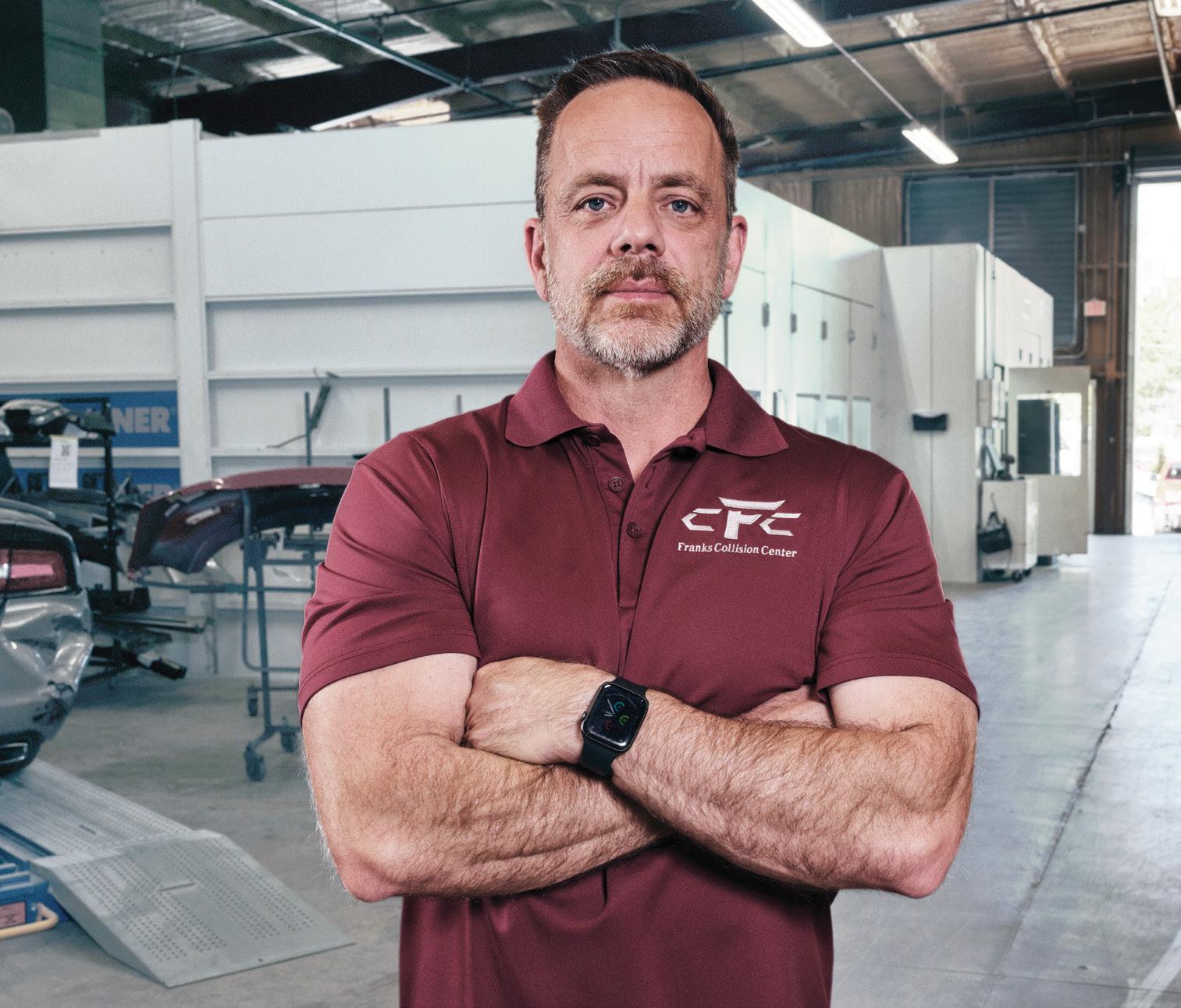
“With the help of PPG’s Trend Tracker, we went from losing money on paint and materials to making a profit and keeping our P&M down to around 5.5%.”
“ We greatly reduced redos using the Envirobase system.”
“PPG is more like a family relationship— they’re always on your side and will go out of their way to help.”
Frank Wilcox
P.O. Box 734 Neptune, NJ 07753
EXECUTIVE DIRECTOR
Charles Bryant 732-922-8909 / setlit4u@msn.com
2021 - 2023 OFFICERS
PRESIDENT Jerry McNee, Ultimate Collision Repair, Inc. 732-494-1900 / ultimatecollision@att.net
COLLISION CHAIRMAN
Dennis Cataldo, Jr., D&M Auto Body 732-251-4313 / jr@dnmautobody.com
MECHANICAL CHAIRMAN
Keith Krehel, Krehel Automotive Repair, Inc. 973-546-2828 / krehelauto@aol.com
TREASURER
Tom Elder, Compact Kars, Inc. 609-259-6373 / compactkars@aol.com
SECRETARY
Thomas Greco, Thomas Greco Publishing, Inc. 973-667-6922 / thomas@grecopublishing.com
BOARD
Brad Crawford, Livingston Collision, Inc. 973-992-5274 / livingston.collision@gmail.com
Gary Gardella, Jr., County Line Auto Body 732-363-5904 / countylineautobody@gmail.com
Dave Laganella, Peters Body and Fender 201-337-1200 / petersbandf@gmail.com
Sam Mikhail, Prestige Auto Body 908-294-1985 /prestige@goldcar.us
Ken Miller, 821 Collision, LLC (973) 949-3733 / kmiller@821collision.com
Ted Rainer, Ocean Bay Auto Body 732-899-7900 / ted@oceanbayautobody.com
Anthony Trama, Bloomfield Auto Body 973-748-2608 / anthony@bloomfieldautobody.com
BOARD ALLIED
Joe Amato, The Amato Agency 732-530-6740 / joesr@amatoagency.com
Mike Kaufmann, Advantage Dealer Services 973-332-7014 / mkaufmann@advantageds.com
PAST PRESIDENT ATTENDING Jeff McDowell, Leslie’s Auto Body 732-738-1948 / chacki@aol.com
PUBLISHER
Thomas Greco / thomas@grecopublishing.com
SALES DIRECTOR
Alicia Figurelli / alicia@grecopublishing.com
SALES REPRESENTATIVE
Bill Moore / bill@grecopublishing.com / (201) 209-1989
EDITORIAL/CREATIVE COORDINATOR
Alana Bonillo / alana@grecopublishing.com
MANAGING EDITOR
Chasidy Rae Sisk / chasidy@grecopublishing.com
OFFICE MANAGER
Donna Greco / donna@grecopublishing.com
PRODUCTION COORDINATOR
Joe Greco / joe@grecopublishing.com
CONTRIBUTING EDITORS Charles Bryant • Mario DeFilippis • Dennis Cataldo • Mitch Portnoi • Ron Ananian • Keith Krehel • Jerry McNee • Jacquelyn Bauman
Published by: Thomas Greco Publishing, Inc.
244 Chestnut Street, Suite 202, Nutley, NJ 07110
Corporate: (973) 667-6922 / FAX: (973) 235-1963
www.grecopublishing.com
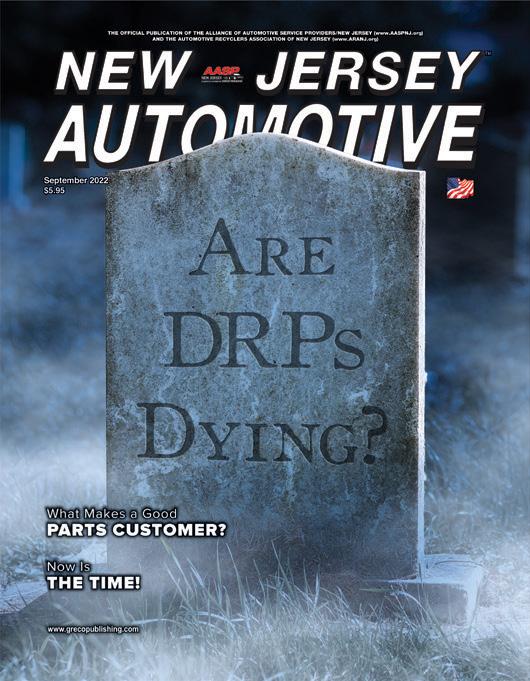
16 Repairers Gather for Education, Camaraderie & Fun at AASP/NJ’s Fall Kickoff Event by Alana Quartuccio Bonillo 18 Proud to be Loud: Make Your Voice Heard in the 2022 New Jersey Automotive Industry Survey
HOURS 20 Dean Massimini, Deaf Dalmatian Devotee by Alana Quartuccio Bonillo
FEATURE
To Calibrate or Not: What a Dangerous Question! by Chasidy Rae Sisk
Is I-CAR Still Relevant? A Q&A with CEO John Van Alstyne by Chasidy Rae Sisk SMALL, MEDIUM, LARGE
You Get a Horrible Post Repair inspection from Someone You Know. What Do You Do? AUTOMOTIVE RECYCLERS ASSOCIATION OF NEW JERSEY
Wharton Insurance Briefs by Mario DeFilippis
Demarest
Phil Dolcemascolo
Tom Elder
Bob Everett
Alicia Figurelli
Thomas Greco
Dan Hawtin
Rich Johnson
Wes Kearney
Nick Kostakis
Jim Kowalak
Keith Krehel
Joe Lubrano
Michael Lovullo
Jeff McDowell
Sam Mikhail
Ron Mucklow
George Petrask
Russ Robson
Jerry Russomano
George Threlfall
Cynthia Tursi
Lee Vetland
Paul Vigilant
Rich Weber
Brian Vesley
Glenn Villacari
Stan Wilson
The Fixer
For those of you who have read my columns over the years, it’s no secret that when it comes to fixing things, I am as clueless as Joe…Dirt. For years, I have not hidden the fact that I once used a baseball bat to knock a jack off of my ’78 Camaro because I didn’t know how to change the tire and I couldn’t get it off the rear panel. Forty-four years later, I still don’t know how to change a tire. But I sure can write about it!
Now, Greco Publishing Vice President (and 2021 AASP/ NJ Hall of Famer AND Women’s Industry Network 2022 Most Influential Women Honoree) Alicia Figurelli is the complete opposite of me. She possesses all those skills that seemed to have eluded me for the last 60 years. Fix a clothes dryer? No sweat. Put up shelves? Not a problem. Drill a hole in the wall to run an ethernet cable? Consider it done. She has saved me many phone calls to relatives and friends begging for help in these situations. She also gets this stuff done quickly and usually before I get into the office. Alicia is a natural born fixer. But she does have one problem: She spends so much time fixing everyone else’s shit, that she ends up neglecting her own. Especially when it comes to her car.
by THOMAS GRECO, PUBLISHER
I rarely get a chance to ride in her car but when I happened to get into it about two years ago, I noticed a small crack in the windshield. Knowing what we know from all the stories we’ve published, I asked her when she was going to get it fixed. She said she would get to it. About a year later, I once again got into the vehicle. And now the crack was about a quarter of the way across the windshield. And to boot, her TPMS light was on.
“I thought you were going to get that fixed.”
“Oh stop. I will.”
“You know how dangerous this is and how it makes us look bad when we see our clients.”
“I will get it done!’
“What about the tires???”
“I WILL GET IT DONE!”
After 19 years together, I have learned not to push.
So when we traveled out to an appointment a few weeks ago and I saw that the crack was almost all the way across the windshield, I had to pull rank.
“Okay, as your employer, I am insisting you get this fixed. I am not going to get a phone call saying our Vice President was beheaded when she got into a fender bender.”
“I PROMISE I will do it tomorrow.”
After 19 years together, she knows how to shut me up.
About a week ago, Alicia left the office and her number showed up on my cell phone shortly after. Of course I thought the worst. Had the windshield finally caved in?
Luckily, she was only stranded in our parking lot. Dead battery. When I went down to take a look (as if I would know what to do), she asked if I had jumper cables. I said sure, and proceeded to phone my wife and ask her. She advised that I hadn’t had jumper cables since we moved in 1998. With no jumper cables around, I told Alicia to hang on, I had an idea.
I took a chance that the guys at my mechanical repair shop, Mulligan Motors in Nutley, might still be at the shop, even though it was after 5pm.
Now allow me to give you a quick back story on Mulligan’s. They have been in Nutley since before I was born. I think I started going there back in the ’90s and they have always done great work for me. But what I always loved the most about Mulligan’s were the two owners, Nick and Ray, who were coincidentally two of my biggest fans. I kid you not. Every time I walked into the shop, they would compliment me on the articles I write in this magazine. What could be better than getting great service and fans who actually READ your stuff????
Will We Ever Wake Up?
All of us know a shop owner who gave up. They got sick of fighting, tired of the struggle between the investment in tools and equipment and the inability to find or pay their employees. We cannot afford to work for free, and our staff certainly doesn’t work for free!
Yet, insurers seem to expect us to do exactly that. They use this absurd notion of “prevailing rate” to argue that’s all our market warrants. And everyone just accepts it.
Let’s look at a scenario: If a shop is 150 percent efficient, that means it takes 10 hours to do a job that pays for 15 hours. Assuming the true labor cost for the technician (including benefits) is on the low side at $50/ hour, what does the shop make?
Based on a so-called “prevailing rate” of $50, the shop collected $750 but paid $500 to their tech. That business owner now has $250 left over to pay office staff, rent, taxes and utilities…and they’re going to need to use that same $250 to invest in training, tools and equipment upgrades. That’s $25 per hour – as long as there are no issues, delays or redos – if there’s anything left over at all. Profits are practically non-existent; many shops’ profit percentages are in the single digits!
Typically, shop owners make up for this deficit by grasping at whatever work they can find and trying to turn those cars over as quickly as possible. They’re too busy to really invest in their business.
COVID provided a slowdown that allowed many of us to get a better handle on our business and to use the time to reinvest in our employees through training. Those shops focused on learning new processes, breaking it down and learning it again so that they have a better understanding of the backend of the business, including what it costs to run the shop and how much to charge to collect a reasonable profit.
But each time a shop establishes its labor rate based on actual data, like the cost of doing business, insurers accuse them of “unnecessary” and “exorbitant” prices! Who makes that determination? Because it’s not our prices that are exorbitant; it’s the costs! Everything is inflated; just look at the cost of filling your gas tank. And my cost of doing business is different from anyone else’s.
A lot of guys and gals are tired of fighting. We’re so prone to giving everything away for free that it’s essentially become the norm in our industry, and it just doesn’t seem like it’s worth the effort to have these conversations with appraisers over and over again. But unless you’re paying your bills and your employees in peanuts, that business model doesn’t work.
by JERRY MCNEE
Meanwhile, let’s go back to our little scenario. Imagine that this shop has done their homework and identified the rate they need to charge based on their cost of doing business. They bill $85 an hour, invoicing a total of $1,275, which gives them $775 toward expenses beyond the technician’s pay. That’s a difference of $525 for the shop, yet insurers act like we’re asking for $500,000 more.
Adjusters claim they cannot pay our labor rate, but just look at the compensation received by insurance company CEOs in 2021.
• Jack Salzwedel (American Family): $6,808,360
• Jeffrey Daily (Farmers Insurance Exchange):
$7,980,763
• Olza “Tony” Nicely (Berkshire Hathaway/GEICO):
$8,087,616
• David Long (Liberty Mutual): $12,189,662
• Todd Combs (Berkshire Hathaway/GEICO):
$13,604,002
• Susan Patricia Griffith (Progressive): $14,462,961
• Thomas Wilson (Allstate): $18,368,991
• Michael Tipsord (State Farm): $24,507,574
That’s a total of $106,009,929 paid out to eight individuals; that’s an average pay of $13,251,241. But $525 is “exorbitant?!” We would have to collect an additional $525 on 252 repair orders to reach $13,251 –just one-tenth (0.1) percent of the average CEO salary. But you want to tell us that you can’t pay a real market rate…c’mon man! That’s nothing but corporate greed and our lack of education.
We’re not talking about tons of money, but we are talking about the profitability of your facility. Know your true cost of labor, your hard costs and all the expenses associated with running your business, and then hold your ground.
Every single shop owner has invested thousands upon thousands into their business, yet advancing technology and associated requirements increase our costs every year. Where is that money coming from?
AASP/NJ offers more for its members than any other association in the country, including training on best practices and the opportunity to network with your industry peers. Getting involved with the association can help you identify a multitude of ways to improve your business, and talking to other shop owners just might really drive home the point that you’re not “the only one.”
Slow down and take time to smell the roses. It seems like our industry is on a race to the bottom – what’s it going to take for us to wake up?
Man and Machine versus the Winter of 1709
With the recent trend of blaming bad weather events on “climate change,” allow me to introduce you to the European winter of 1709. Having been involved with snow plowing for the last 40 years, the weather really holds my interest. I have been actively involved in every winter storm over this time period, with the exception of two storms. One was due to surgery, and the other was an unexpected April storm which occurred when I was out of state. Thirty years ago or so, many experts commonly referred to unexpected weather as a result of “global warming.” For a few years, global warming did fit the narrative, as the Northeast had a few years of warmer temperatures. But weather changes, and when we experienced several cold winters with excessive snow – sometimes almost triple the normal snowfall – “global warming” could no longer legitimately be used to explain the situation, so “climate change” took its place as the new culprit.
In 1709, most of Europe was faced with an extreme winter. In England, it was referred to as the Great Frost. In France, it was referred to as Le Grand Hiver. I was surprised I was not taught this in high school or college. On the evening of January 5, 1709, Europeans went to sleep with normal temperatures; when they woke up, the temperature had dropped to the bottom of the thermometer with an average of -5 degrees Fahrenheit, and it began to snow. Since the temperature stayed below freezing for months, any precipitation that occurred came in the form of snow. As the days dragged on, people and animals struggled. Thousands of people died from hypothermia before many realized the seriousness of the situation. Reports indicate that entire households were found frozen to death. Snow blocked roads across the continent, while rivers froze over and were impassable.
Without modern equipment, the roads stayed closed,
by KEITH KREHEL
preventing transport of supplies and food. Rivers (such as the Thames in England, Garrone in France and Spain and the Rhone in France) froze over, with up to 11 inches of ice blocking ship transport. Germany’s hot springs and Amsterdam’s canals, along with the Adriatic and Baltic Seas, froze. Food went from scarce to non-existent, and there were reports of cannibalism. Parisians, as well as occupants of many other cities, were left to fend for themselves, as no supplies could get in. Trees froze so badly they cracked and shattered. Most food froze, including wine, bread and meat; well water also froze. Only hard liquor was safe from freezing. Cattle and large animals, such as deer, were the first to die, followed by smaller animals like rabbits and game birds. Entire populations of animals were wiped out.
It was the coldest month in 500 years. (How they could verify this is beyond me.) It was followed by six more cold snaps with freezing conditions lasting until March. By then, entire forests were destroyed, the ground frozen deep and the land covered with snow. Keep in mind there were no weather forecasters to assure the masses that spring was certain to return…just cold day after day, causing widespread fear.
When spring finally came, the melting snow caused horrific floods, and the misery and suffering continued. Entire crops that should have grown by spring were lost, and starvation continued. Civil unrest became common as hungry people descended on any building thought to contain food, often castles and churches. Again, incidents of cannibalism were reported, which was mostly consumption of the dead, while other people ate spoiled food out of desperation.
It is hard to estimate the damage the winter caused, but in England, the entire agricultural economy was destroyed, and gross domestic product (GDP) went down 23 percent. It is estimated that it took 10 years to return to pre-freeze productivity. It is impossible to place an accurate number to the carnage, but in France alone, it is estimated 600,000 people died – 100,000 from the cold, 200,000 from the immediate famine that followed, with another 300,000 dying from famine caused by crop failures and rampant disease.
Many possible causes have been touted, including:
• Sunspot inactivity
• Volcanic activity from hundreds of prior years
• Sun cycles that normally occur every 11 years
• Large chunks of Arctic sea ice traveling to warmer climates, disrupting normal currents and wind
There was no mention of “climate change.”
by ALANA
Repairers Gather for Education, Camaraderie & Fun at AASP/NJ’s Fall Kickoff Event
An enthusiastic crowd of collision repairers from across the Garden State assembled at Car Lofts in Fairfield on September 14 for the Alliance of Automotive Service Providers of New Jersey’s (AASP/ NJ’s) fall kickoff meeting.
In the words of Executive Director Charles Bryant, “It was great to see so many familiar faces come out to not only better themselves through valuable information, but also to stick around and socialize after the meeting! It’s encouraging to see our members taking the time to keep abreast of what resources are available to them.”
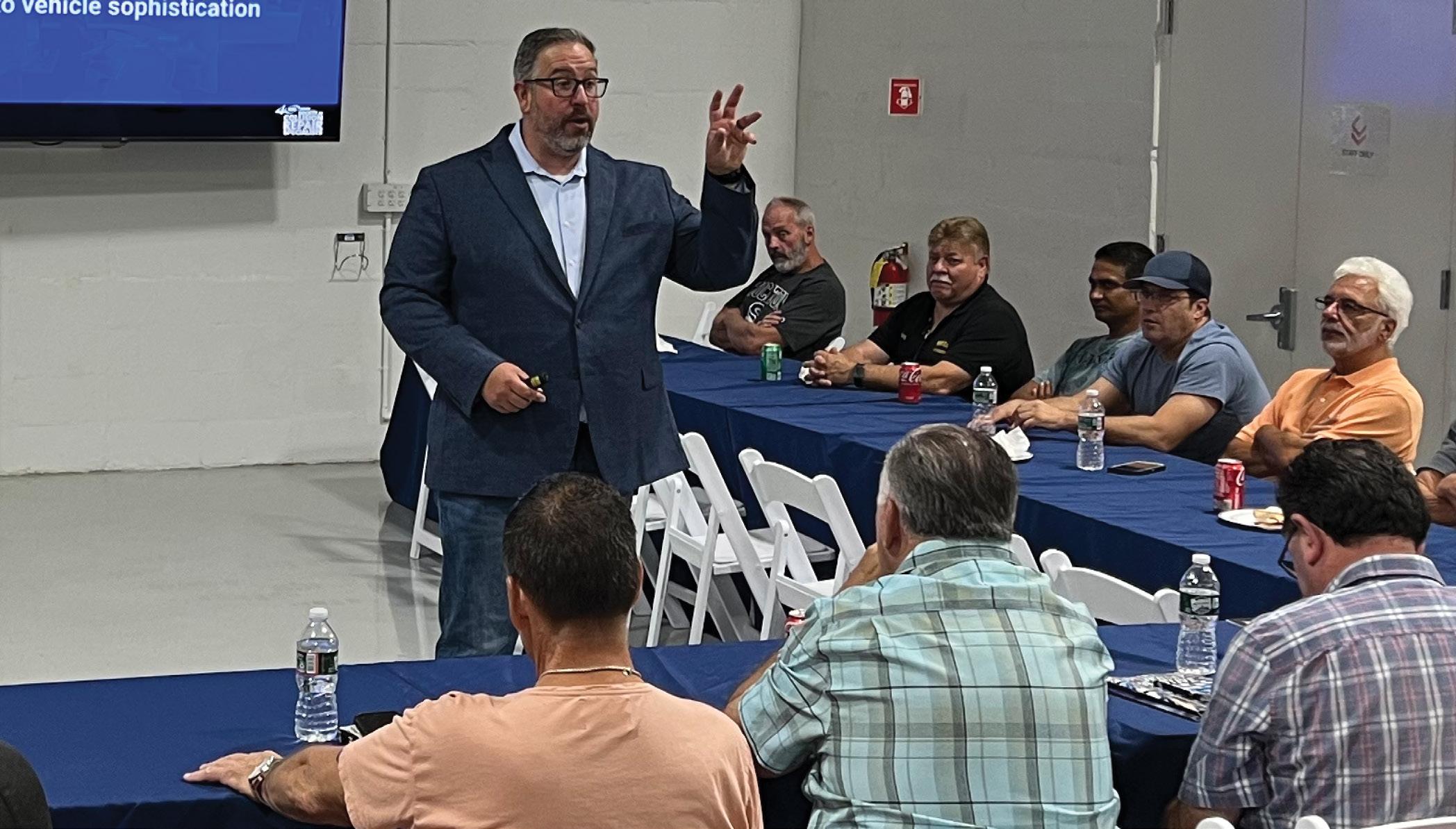
Attendees learned estimating best practices from Society of Collision Repair Specialists’ (SCRS) Executive Director Aaron Schulenburg, who set out to equip the audience with “new information that you can use immediately and things you can access for free” to combat the challenging world of collision repair.
“Our jobs are becoming
more complex due to vehicle sophistication,” he stated, reminding repairers they aren’t “the only ones” who have been challenged by bill payers when billing for proper repair procedures.
Documentation can go a long way toward getting properly reimbursed, and this can be achieved by using SCRS’ Blueprint Optimization Tool (BOT) software, which is able to immediately analyze and identify items that might otherwise be overlooked on an estimate. As Schulenburg explained using real world examples, the BOT was designed to make documentation of operations being performed easier for repairers by increasing accuracy and minimizing the need for supplements. Backing up a repair plan with data is critical in having a successful business, he explained.
“Everyone in the process prefers consistency, and that includes your bill payer. Your customer benefits when you are consistent with what you tell them, and you will be able to make
better commitments.”
Schulenburg also spoke about the benefits of the Database Enhancement Gateway (DEG), a free tool “the industry can lean on” to assist in helping to improve the quality and accuracy of collision repair estimates.
After the meeting, attendees enjoyed an open bar, buffet and relaxed networking on the upper level of Car Lofts, a luxury vehicle storage facility and social club.
“Oftentimes, what is discussed after the meeting can be almost as important as what’s presented during it,” Bryant notes. “Our fFall kKickoff meeting included a wealth of important information, which I know gave our members plenty of food for thought to take back to the shop the next day. And we couldn’t have had a better venue for mingling and networking afterwards! I look forward to continuing the conversation with our members and supporters on October 19 at our Annual Meeting.”
SCRS Executive Director Aaron Schulenburg addresses AASP/NJ members at the fall kickoff meeting at Car Lofts.
My take on this is that whatever caused this disaster will never be known, but if it occurs again, “climate change” would certainly be blamed, with modern man being at the root cause. In my opinion, weather is only partially understood as we only have an incomplete “Chilton’s manual” to use when trying to understand and predict it.
One thing I am confident of is that if Europe, or anywhere, faced this situation again, modern inventions
such as trucking, shipping and rail transportation (many of which would burn much maligned hydrocarbons) would bail us out, along with the petrochemical industry (fertilizer) teamed with modern agriculture. If a winter like that happened today, some people may go hungry at times; others might actually have to eat foods they don’t like (Brussels sprouts, anyone?), but large scale starvation would not be an issue.
Proud to be Loud: Make Your Voice Heard in the 2022 New Jersey Automotive Industry Survey
Many claims made about people from New Jersey are laughably off base, but it’s hard to argue that we’re a LOUD bunch – in fact, multiple studies have crowned New Jersey as the loudest state in the country!
It’s time for collision and mechanical repairers in the Garden State to put those big mouths to good use and make some noise by participating in New Jersey Automotive’s 2022 Industry Survey, available now through November 8 at https://bit.ly/NJA2022industrysurvey
We encourage participation from ALL collision and mechanical repairers based in New Jersey, both AASP/NJ members and non-members alike.
The automotive service industry continues to face new challenges each year, and this annual survey provides an ideal opportunity for shops to share their own thoughts… and also learn what problems other local shop owners are facing when we publish the results in the December 2022 issue of New Jersey Automotive. You may even find a quote that sounds suspiciously like your experience (but rest assured, your responses are safely anonymous; the names of respondents will NOT be printed).
Lend your Jersey-volumed voice to the collective to help the industry better understand where we’ve been, where we’re at and where we’re going. Your opinion matters…Now, make it count by taking 15 minutes to complete the 2022 Industry Survey (available now at https://bit.ly/NJA2022industrysurvey).
NJA
THOMAS GRECO PUBLISHING
THE FOUNDATION OF OUR BUSINESS SUCCESS IS YOUR LOYALTY.
OUR SUCCESS IN BUSINESS COMES FROM OUR RELATIONSHIP WITH LOYAL CUSTOMERS.
With years of service and commitment to the BMW brand, we reflect on our past and look to the future, thankful for your loyalty and dedication by allowing us to serve you. We also want to extend our services to new and existing businesses who are looking for something more than just a parts supplier.
• We are part of the BMW NA delivery program that delivers to us three additional times per day
• We have a highly-trained and experienced team of BMW parts advisors
• Our team of advisors can be counted on to be knowledgeable when you need technical support
• We update our inventory daily to ensure we stock the most current items to meet your demands
• All original BMW parts carry a 2-year limited warranty
BMW of Springfield
Wholesale Parts Hotline: 800-648-0053 Wholesale Direct: 973-671-9321 Wholesale Fax: 973-467-2185
391 Route 22 East, Springfield, NJ 07081
Orders accepted by phone, fax, and email to speed your delivery and your repairs. Ask about our next-day UPS delivery. Email: wholesaleparts@bmwofspringfieldnj.com or visit us on the web: bmwofspringfieldnj.com
Join our growing list of satisfied customers. Save time, improve profits and keep your customers loyal.
* If your order is placed by 10:30am, we will confirm availability and provide you with and ETA for delivery.
Dean Massimini, Deaf Dalmatian Devotee
The Oxford dictionary defines devotion as “love, loyalty and enthusiasm for a person, activity or cause.”
That definition surely holds true for Dean Massimini (Autotech Collision Service; Sewell) in various areas of his life, beginning with his work in the auto body field…but there’s also something else – or perhaps someone else he (and his whole family) have become quite devoted to – a dalmatian named Daphne.
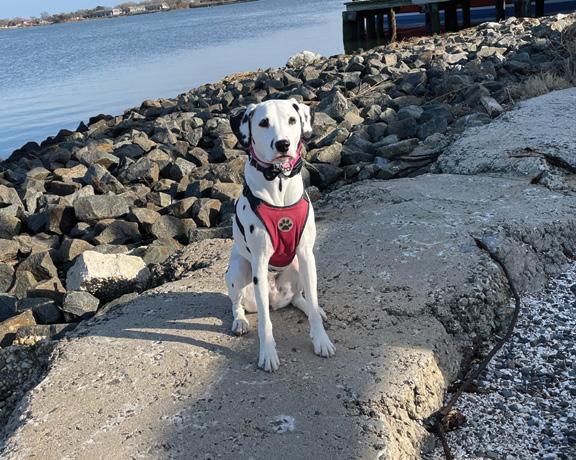
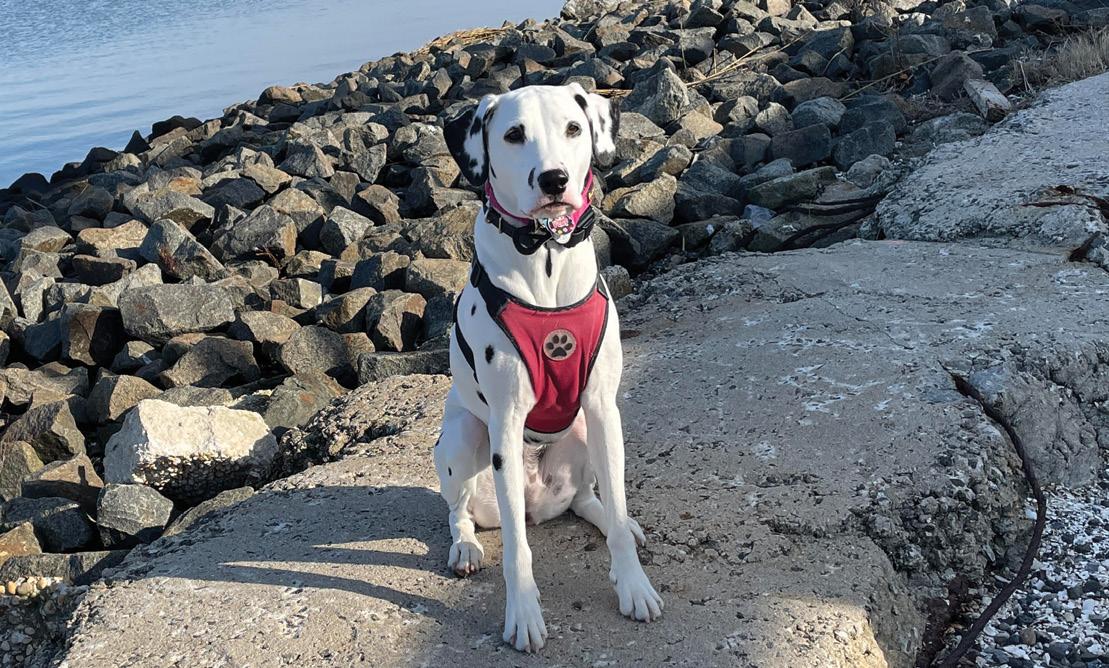
What’s so special about this dog, you may ask? Well, Daphne isn’t your ordinary canine. Loving her takes a bit more dedication than most, as Daphne was born completely deaf. Dean and his family learned sign language to communicate with their special pet.
Dean and his wife Darlene have always been dog people (especially dalmations, as Darlene has a particular affinity for black and white creatures, though she really loves all things). But they never had a dog that required special training before Daphne came into their lives two years ago. The couple didn’t set out to take home a deaf dog – but once her special needs were discovered, they certainly weren’t about to turn their backs on the sweet dalmatian.
“Right when COVID hit, our last dog, Daisy, took a turn for the worst and passed away. I told my wife we should travel and do things before we get another dog. But then lockdown came along, and we were stuck in the house,” Dean recalls.
Having had dalmatians as pets before, the couple set out to find a pup in need of a home.
Although the dalmatians carry a higher risk of deafness than other breeds, there was no indication that the precious pup they’d take home that day was deaf.
“We were in the breeder’s yard, and there were about three or four puppies running around. I squeezed a squeaky toy, and three pups quickly came running along with a fourth just following behind. At that time, we didn’t know that the fourth dog – the one we took home – didn’t hear the toy; she had just naturally followed the others.”
Once Daphne settled in at home, the Massiminis noticed she was a little different than other dogs they’d had in the past. She wouldn’t respond to sound, and Dean noted another telling sign: “She would just stare. I never had a dog just stare at me like that, so I started to wonder if she was deaf.”
Soon after, a veterinarian confirmed it.
“I wasn’t prepared to have a deaf dog,” admits Dean. “I didn’t know anything about it, and it was at the heart of COVID, so there weren’t many options. We followed a friend’s advice to take our time, foster her for a month or two and go from there.”
Looking to absorb as much knowledge as he could, Dean turned to the internet to find more information and came across Deaf Dogs Rock which featured videos on how to communicate with dogs through sign language.
Daphne and the Massiminis have come a long way in learning together as a family.
They completed dog training with an instructor and regularly practiced, researched and used American Sign Language (ASL) to teach Daphne signs for everything from bathtime to going for a walk.
“With a normal dog, you just shout their name, and they will come to you, but with Daphne, we have to use eye contact and ASL. That is the first thing they teach you.”
Instead of saying “good girl,” they give her a thumbs
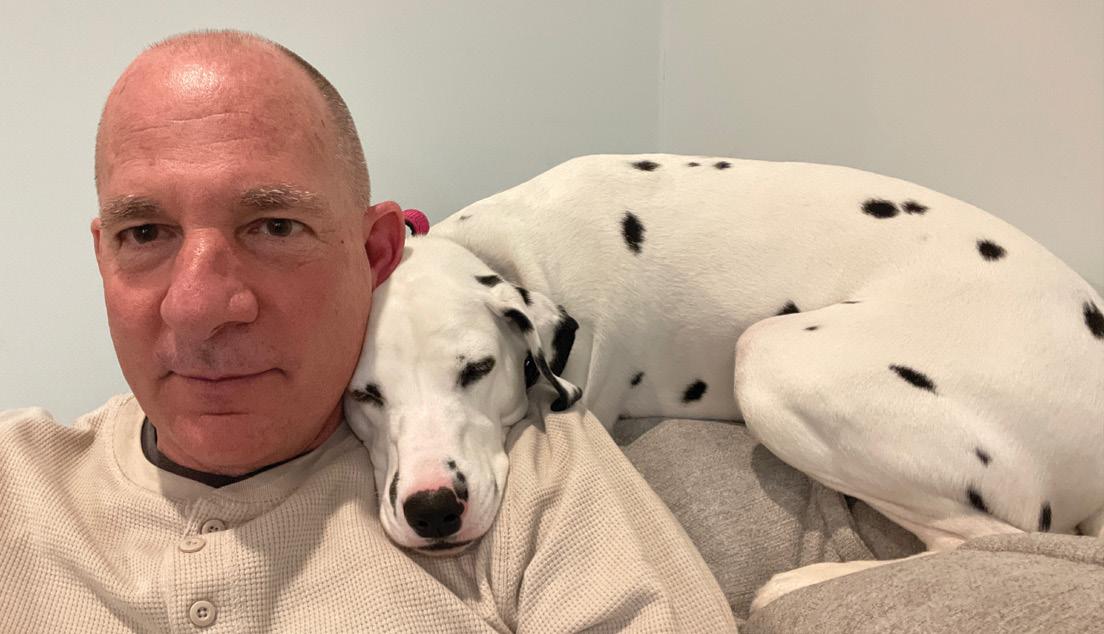
Dean with his loving dog Daphne
Daphne wears a special collar that will vibrate gently via remote to get her attention from afar.
To CalibraTe or NoT: WhaT a DaNgerous QuesTioN!
CRASH! A typical fender bender once required a fairly basic repair, but today’s vehicles aren’t that simple – advancing technology has created ADAS, the ultimate co-driver. These systems’ ability to process information faster than humans prevents accidents, but if they are not properly scanned, calibrated and repaired after a collision, the repercussions can be catastrophic!
“ADAS calibration isn’t rocket science; it’s much more complicated than that!” quipped George Lesniak (Autel), who emphasized that it’s also a vital component to ensuring a safe repair.
“ADAS systems save lives…but once they are repaired, they have to be repaired the right way in order to do their jobs properly,” Chuck Olsen (AirPro Diagnostics) stressed.
That begins with pre- and post-repair scans. According to the October 2021 “Who Pays for What?” survey on scanning and calibrations, 85.2 percent of shops pre-scan “all” or “most vehicles;” that number increases to 92.9 percent for post-repair scans.
But when it comes to calibrations, which I-CAR defines as “aiming, module setup, relearn, zero-point calibration, initiation or calibration is a required step following the removal, installation and/or repair of many safety and driver convenience system parts,” a different story is unfolding, and although the exact metrics vary from source to source, the overall message remains the same: auto body shops aren’t calibrating every vehicle that requires it.
“Sixty to 65 percent of vehicles that should receive a calibration didn’t, so when we ask where the industry sits on this, the numbers speak for themselves…We’re behind!” claimed Frank Terlep (Auto Techcelerators).
“The industry is missing about 85 percent of ADAS calibrations. That is, only about five percent of jobs have an entry for a calibration, when the number should be much closer to 33 percent,” shared Nick Dominato (Repairify). “If you’ve got a model year 2020 vehicle, there’s about a 50-50 chance that it requires at least one ADAS calibration.”
Unfortunately, less than a third of estimates for those vehicles included a line item for calibration, according to Repairify’s analysis. CCC Intelligent Solutions’ 2021 Crash Course Midyear Report indicated fewer than 17 percent of estimates on current year or newer vehicles included an appraisal line for “calibration/reprogram/flash.” And although the majority of respondents to the 2021 New Jersey Automotive Industry Survey reported they perform an average of two calibrations on each vehicle, just 14 percent stated they run as many calibrations as is required by the OEM.
“If you’re not following OEM repair procedures when you work with ADAS, you’re not calibrating the vehicle –you’re mis-calibrating it!” Dominato insisted.
“A calibration technician cannot rely on memorization; they need to constantly be researching and keeping on top of this evolution because things change continuously,” Olsen agreed. “From a workflow perspective, this work requires a different skillset.”
And the demand for that skillset is only going to grow with the government’s mandates related to vehicle safety forcing OEMs to include ADAS systems in virtually every new vehicle being manufactured. The Insurance Institute
continued on pg. 36
Superior customer service starts with Town Audi and Audi Genuine Parts.
• Our expert parts staff is ready to serve you with over $500,000 in inventory and a fleet of trucks to help ensure same-day delivery on most orders
• We respect your time, and offer a quick and accurate order process to help meet your needs
• Proudly serving the Tri-State area with Audi Genuine Parts since 1970
• Same-day delivery on stocked items, next-day availability on most non-stocked items
Town Audi
400 South Dean Street Englewood, NJ 07631
Parts Direct: 888 779 6792
Fax: 201 541 0314 Email: audiparts@townmotors com
Hours: Monday-Friday 7am-7pm Saturday: 8am-5pm
Maint ain Originalit y.
Training. Every profession changes and requires ongoing education to some degree, but these days, few industries are experiencing an incessant flux of advancing technology quite as dynamic as auto body shops have seen in recent years…which experts predict will continue for some time.
The best-known training option for collision repairers is I-CAR (the Inter-Industry Conference on Auto Collision Repair). As “an international not-for-profit organization dedicated to providing the information, knowledge and skills required to perform complete, safe and quality repairs,” I-CAR’s mission is to “deliver increasingly accessible, on-demand and relevant education, knowledge, services and solutions for the collision repair inter-industry.”
According to their website, “Ongoing changes in OEM technology, materials, manufacturing capabilities and standards make I-CAR more relevant than ever to the collision repair Inter-Industry.”
But is that true?
After hearing several auto body professionals cast aspersions on I-CAR’s relevance, value and motivations, New Jersey Automotive reached out to I-CAR CEO and President John S. Van Alstyne, who agreed to discuss some of the concerns shops have been voicing.
New Jersey Automotive: I-CAR has been making a lot of waves lately. You recently opened the Chicago Technical Center, and at the Society of Collision Repair Specialists’ (SCRS) recent meeting, Bud Center (I-CAR) mentioned soliciting industry feedback as part of efforts to enhance your curriculum. How is I-CAR using their customers’ feedback to make training more specific, detailed and relevant?
John Van Alstyne: I-CAR develops its curriculum in close collaboration with the inter-industry, significantly including collision repair shops, through our Voice of the Customer (VOC) processes. We engage members of the collision inter-industry (repairers, OEMs, insurers, suppliers, services and educators) to create loops for input and feedback. Through our Industry Knowledge and Skills protocol, we determine whether a course is needed, consider credentialing impact and build or update the course. Industry professionals help us test and pilot the new course for quality and relevancy before its launch.
At the end of 2019, we launched a complete overhaul of our educational program, developed directly based on feedback and input from the industry to ensure current relevancy, eliminate course-to-course redundancies and increase efficiencies through course design and new delivery methods with the goal of improving the overall student experience. We engaged different stakeholders, including a wide cross-section of SCRS shops and others across the country, to review our intended program and course adjustments – and we made significant
enhancements to our previous offering.
We’re requiring more online courses, less classroom time and more in-shop training focused on the increasing number of skills relevant to complete, safe and quality repairs today and tomorrow. For a typical shop of nine employees in the four key roles (Structural, Non-Structural, Estimator, Refinish), the former curriculum would have required 236 hours’ worth of non-skills courses to reach ProLevel® 3, but by tightening efficiencies, we’ve reduced that time to 139 hours, allowing technicians to learn what they need to know with less impact to the shop workflow. Skills courses increase that time – and yes, we’ve added more, including MIG brazing and spot welding, at the industry’s demands. Our curriculum has been driven by advances in vehicle technology and repair methods, so we provide more training in the skills needed, while we cover the other knowledge areas in a much more efficient way to save time for busy shops.
It’s also important to recognize that a single course is not representative of an entire portfolio or complete credential. Our program is designed to progressively and logically build knowledge and skills, equipping people to develop and do the right things. Our 2019 redesign implemented the foundational principle of “recognizing existing knowledge” before jumping into training.
Technicians accrue knowledge through experience and training, whether with I-CAR or our Alliance partners, so we maintain their historical records, and since 2019, we now get direct data feeds from our Alliance partners. This combined history gives us the starting point for the technician and shop journey to Platinum™ ProLevel 3 and thus shops’ path to Gold Class. We also offer “In-Shop Knowledge Assessments” where an I-CAR assessor meets with students in-shop and extends credit for ProLevel 1 knowledge areas the student demonstrates competency in. This can shorten the timeline to Platinum and Gold Class, while ensuring we minimize the need for potentially redundant training.
NJA: The biggest complaint we’ve heard from shops is that obtaining I-CAR Gold Class is too expensive and lacks value for the investment being made since I-CAR
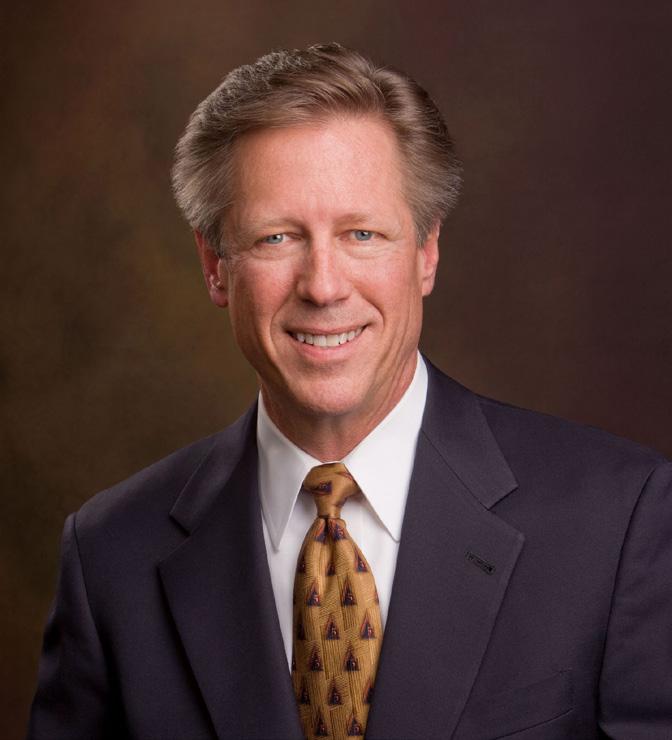
I-CAR CEO John Van Alstyne
BMW of Springfield
391-399 Route 22 E. Springfield, NJ 07081
Toll Free: 800-648-0053
Fax: 973-467-2185
bmwofspringfieldnj.com
BMW of Bridgewater
655 Route 202/206
Bridgewater, NJ 08807
PH: 908-287-1800
FAX:908-722-1729
bridgewaterbmw.com
Circle BMW
500 Route 36
Eatontown, NJ 07724
Parts Direct: 732-440-1235
Fax: 732-440-1239
wholesale@circlebmw.com circlebmw.com
Park Ave BMW
530 Huyler Street
South Hackensack, NJ 07606
PH: 201-843-8112
FAX:201-291-2376
parkavebmw.com
Paul Miller BMW 1515 Route 23 South Wayne, NJ 07470
PH: 973-696-6060
Fax: 973-696-8274
paulmillerbmw.com
Audi dealers strive to make you an Audi Genuine Par ts fan
• Audi Parts Professionals are your subject matter experts on collision parts, replacement components and mechanical items.
• Many Audi dealers offer technical service support hotline access that can reduce your repair times and help you meet an on-time promised delivery
• Installing Audi Genuine Parts contributes towards improved cycle time that makes both your customer and their insurance company happier
Helping you do business is our business. Order Audi Genuine Parts from these select dealers.
Flemington Audi
213 Route 202/31
Flemington, NJ 08822
Toll Free: 877 657 2787
Fax: 908 782 1795
email: rmuir@flemington com www.NJPARTS.com
DCH Millburn Audi
2211 Millburn Ave
Maplewood, NJ 07040
Toll Free: 800 553 9250
Direct: 973.762.0262
Fax: 973 762 2381 www dchmillburnaudi com
Paul Miller Audi
179 Route 46 East Parsippany, NJ 07054
Toll Free: 800 35 MILLER
Parts Direct: 973 575 7793 Fax: 973 575 5911 www.paulmiller.com
Audi Brooklyn 211 63rd Street
Brooklyn, NY 11220
Phone: 718 492 6400
Fax: 718 492 8899
rmerchant@audibrooklyn com www audibrooklyn com
Bell Audi
782 Route 1 Edison, NJ 08817
732 396 9360
Fax: 732 396 9090 www bellaudi com
Town Motors Audi
400 South Dean Street
Englewood, NJ 07631
201 227 6506/6536
Fax: 201 541 0314
www townmotors com
Jack Daniels Audi of Upper Saddle River 243 Route 17
Audi Bridgewater 701 Route 202-206 N B ridgewater, N J 08807
929 600 9156
F ax: 908 595 0237 parts@audibridgewater com www audibridgewater com
doesn’t publish a list, insurers don’t seek out Gold Class shops and consumers don’t know the difference. How do you respond to shops’ belief that I-CAR training is too expensive?
JVA: Over the past decade, the cost to repair has gone up for a number of reasons, largely related to advancing technology – and the industry’s interest in complete, safe and quality repairs for the ultimate benefit of the consumer. The cost of training has increased because of the same dynamics. Our actual pricing has not gone up…in fact, it has effectively gone down in most cases! We now offer an UNLIMITED training subscription option (excluding skills courses), allowing all shop employees to train as much as they wish and mitigating the risk of extra spending due to technician turnover – a cost savings for the shop while building broader shop-wide competencies. That said, there’s a different mix of courses with different pricing for online, classroom and skills courses, all of which relate directly to the associated costs for delivering that course. We require more skills courses that are taken in the shop to provide that hands-on training that techs need specific to their role.
Another factor impacting cost is the level of training now required. Whereas we previously only required one person to be credentialed in each of the four key roles (and one person could hold all four), the interindustry deemed this inadequate, and we now require credentialing at a higher level: 100 percent of structural technicians and 50 percent of estimators, non-structural and refinish techs; one person may hold no more than two roles. So, while our pricing has improved, the total cost is up; however, benchmarking against similar educational programs indicates that we’ve stayed very competitive, and we remain focused on making it as affordable as possible.
Our informational services through Repairability Technical Support (RTS) are free to those who train with I-CAR. Also, we absolutely do publish a list of Gold Class shops (bodyshopology.com), which is used by insurers and OEMs to research for potential network additions. Over the years, we’ve collaborated with multiple OEMs to help them identify, engage with and build their networks by virtue of our Gold Class population, which today numbers just under 9,000 shops in the US.
NJA: Shops are saying the opposite: They claim that the costs have increased, specifically for the welding program.
JVA: That’s true; the cost of the welding program has gone up, largely due to the level of training. Our 2019 updates included a revamp to our welding program, decreasing the period of reverification from five to three years since the five-year period was deemed too long given learning retention, age and health which can all impact welding
quality. But after taking the base course, reverification is a simpler process, at a significantly lower price point (compared to taking the entire course again, as formerly required). Shops will also enjoy an associated savings from a production time standpoint since the reverification course is shorter, but shops likely aren’t fully seeing that yet. We did increase the base one-student price to cover our cost, but the upcharge for extra students dropped by 50 percent. As a result, for our average Gold Class shop with two structural techs, the cost to train both did not change.
Implementing “scaling of training levels” in 2019 also impacted welding competencies required. Before, only one structural technician in a shop needed to be certified; now, 100 percent of a shop’s structural technicians must receive and maintain welding certifications for a shop to achieve or maintain Gold Class status. So, depending on the size of the shop, it may be more expensive, but VOC participants took that into consideration and determined that it was more important to elevate the level of training in collision shops. Repairers and OEMs advocated for scaling to ensure every Gold Class shop has an appropriate level of trained professionals. Our Sustaining Partners have helped offset the training costs, and through their support, we’ve been able to waive all shop fees for Alliance credits. And on a side note, our Sustaining Partners program has also allowed us to eliminate curriculum licensing fees for upwards of 250 Career Technical Schools that participate in our Fixed Training Site program for live classroom delivery, despite being shut out of these schools since March 2020.
NJA: The Alliance and Sustaining Partners programs might be more beneficial to shops if a large number of OEMs participated. Shops feel they’re often duplicating efforts to take extensive training through an OEM… only to be required to take a less-focused version to maintain their I-CAR status. If OEMs are the experts, shouldn’t their courses be sufficient?
JVA: While we have a portfolio of resources available for shops, we are also focused on strong collaboration with OEMs. We rely on their expertise from an engineering and technical perspective and refer the industry to OEM repair procedures in all of our courses and technical messaging – we 100 percent advocate the use of current OEM procedures as the starting point for repairs. I-CAR collaborates with OEMs on many fronts, but not all OEs offer training, and even fewer offer a program as comprehensive as I-CAR offers, thus I-CAR performs a real value-added service for those that don’t by providing the core training that most have adopted as their baseline, or complete, training requirement for network participation. Other OEMs that do offer training often require Gold Class as a baseline which their courses build upon. For the OEMs that offer their own training, we offer cross-credit through the Alliance program, but
unfortunately, we don’t have all the OEMs in there yet. We’ve had a challenging time gaining OEM participation in our Sustaining Partner program which has been our mechanism to also enable Alliance participation. Ford is a Sustaining Partner, and we have a total of 49 Sustaining Partners. We understand their reticence; and I-CAR does believe it’s important to engage more vehicle manufacturers in our Alliance program as a first priority, thus we’re actually planning to make changes in the upcoming months to attract more Alliance partners, OEMs included. We’re exploring offering Training Alliance independently to those that have not yet adopted the Sustaining Partners program, as an initial step toward Sustaining Partner. We hope this will attract more OEMs to the Alliance program, providing the opportunity to transfer more credits that repairers have already acquired and allowing us to better recognize technicians’ existing knowledge, one of our educational programming goals. We’re looking at different approaches to make it more appealing for the OEMs and more beneficial for the shops.
NJA: While we’re on the topic of who best knows how to repair vehicles, some collision repair professionals also take issue with the emphasis on cycle time and being taught to work with “insurance partners.” If I-CAR is training collision repair shops to perform safe, proper repairs, why hire insurance representatives who emphasize following OEM procedures – only to deny those same processes on an estimate mere days later?
JVA: I sense some of this is a flashback to prior years. Since most of our courses are now online, we only have a handful of insurers doing (instructor-led, web-based) I-CAR training. Most of our on-site skills courses require technical skills like MIG brazing and welding, thus teachers are typically former technicians and welding experts.
As far as “cycle time,” we consider cycle time to be an important dimension of the business process, whether you’re operating a repair facility, a manufacturer or a restaurant. Customers only wish to wait so long, and cycle time impacts many operational and financial outcomes. I relate cycle time in our industry to my experience in the OEM world prior to my I-CAR days. We operated under lean principles that required us to gear all operations involved in meeting customer demand around the notion of TACT time (units of output/time), but while we had TACT time targets, these never superseded the prerequisites of technical accuracy, quality, etc., which were required to remain in business…you need to do it all in a balanced manner to have a viable business model. It’s about running an effective business and meeting customer needs.
In regard to the direction insurers may give shops, we’re not involved with insurers at that level. It’s kind of the great industry fallacy that I-CAR is in the back pocket of the insurers. It’s complete nonsense. We have three insurers, three OEMs and four repairers on our Board;
our insurance reps are assuredly interested in having shops do good work, and they don’t unduly influence our programming to the detriment of repairers or OEMs. I-CAR stands for complete, safe and quality repairs, and our Board reads our vision statement at every meeting.
NJA: So, how else does I-CAR create value for shops?
JVA: I-CAR does everything we can to help shops, and we remain committed to ensuring our program remains relevant, adjusting initiatives based on industry feedback. Now, could we do it better? Of course we can, and we are committed to continuous improvement, a required component of our recently-earned IACET (International Accreditors of Continuing Education and Training Providers) accreditation, which requires us to follow strict process controls and undergo third-party audits to ensure we’re following best practices. As such, the industry can look forward to a few adjustments we will be announcing shortly, based on VOC garnered over the past year as the transition to our updated programming continues through the end of 2022 and then moves forward steady-state.
Our customer care team is our primary form of outreach to our customers, and they stay in contact with shops all year, though the second half of the year is usually focused on scheduling training to prepare for renewals. An obstacle we run into is a lack of responsiveness from shops; we leave messages, but call-backs often don’t occur…and we get that – shops are busy. But waiting until the last minute makes it difficult to react and support them effectively. Shops can also request to schedule face-to-face meetings with our field team, when necessary.
We also support the collision industry through RTS, which is free. While our online shop portal, MyI-CAR, offers business support, “Ask I-CAR” (our RTS portal and technical call center service) provides real-time technical support for shops that are struggling with a repair and need guidance. Through “Ask I-CAR,” our team coaches the shop through the process – they’ll even coordinate directly with the OEM to find any missing information and be the conduit between shops and OEs in that manner.
I-CAR recently announced a new initiative we’ve undertaken with the Collision Repair Education Foundation (CREF): the Industry Talent Programming initiative. We want to help the industry attract entry-level-ready talent across various channels by creating consistency in the industry’s image. We’ll offer marketing assets for shops and schools to use in their areas, create job boards and recraft our school curriculum to help schools improve (targeting to launch updated school curriculum in the 2023-2024 school year). We’ll also make the school curriculum available to shops that wish to develop their own entry-level technicians internally, and related, we intend to create an industry apprenticeship program.
Welcome to New Jersey Automotive’s latest feature, “Small...Medium...Large,” where we will present the same scenario to one small, one medium and one large shop and share their response verbatim. Does size really matter? Decide for yourself...
A HORRIBLE POST REPAIR INSPECTION FROM SOMEONE
YOU KNOW COMES TO YOUR SHOP. WHAT DO YOU DO?
Sq. Footage: 6,000
Employees: 9
0% DRP
If it was someone I knew, I would call them up first and have a discussion with them. If it comes from a shop that I don’t know, one that’s known for kind of whoring around, then it is what it is. The way I look at it, if the customer comes to me for the problem, I handle the problem. I don’t really get involved with who’s the shop and who’s the insurance company. I’m just trying to help the customer.
When it happened a few years ago, the shop owner came down and looked at it and said, ‘We messed up.’ So they straightened it out. They did the right thing.
If it happened now and it was a shop in the association or someone I knew, I would be very disappointed but I would still call and say, ‘This customer said you did this repair. I can’t believe it. I can send you photos or you can come see it. Tell me what you want me to do.’
The customer is asking for my expert opinion. I can’t lie to a customer to protect a shop who turned out something that was Godawful. If somebody makes a mistake or there’s a slight mismatch or maybe there’s a little dirt in the paint, that could happen to anybody. I think in that case they deserve the benefit of the doubt. But if it’s a total nightmare, I would probably have a private conversation with the shop. I may try to extract myself from the situation as well because, you know, if it is a friend, I don’t want to be stuck in the middle of it.
Sq. Footage: 10,000
Employees: 7
0% DRP
I would call them and invite them down. Show them what they’re doing, what happened. Do I turn them in? No, I don’t. But they have a choice. They can pay for it and I’ll fix it or take it back and fix it themselves.
It doesn’t matter if it’s a friend or someone else. A few years ago, I had one come in from a shop I knew very well. I had to call him and say, ‘You know you need to come down here and see this shit.’ He said, ‘Just freaking fix it, and I’ll pay you.’ I said, ‘No, you need to see it.’
But honestly, I try not to get involved. I tell the customer, “Please go back to the shop. Please go back and show them. I’m sure they want to make it right for you.” I don’t want to be a jerk to these guys. It’s just a common courtesy because we all make our mistakes. Yeah. It’d be a shame if somebody tried to bury a friend or a colleague because they may have had a bad day. That’s not fair. And it’s not good for any of us.
Sq. Footage: 14,000
Employees: 14 80% DRP
I’d give my fellow shop a call and work it out between the shop owner and myself. Most shops will appreciate that and be happy it’s in good hands with a fellow shop that’s understanding because things happen.
You have to try to take the high road. If they get defensive or cop an attitude...well, then they choose their own path. If you’re not willing to take constructive criticism and go along with a thoughtful re-repair process with me, then screw you. Because I’d expect the same courtesy.
When I had this happen with a shop, I called the shop and told them: ‘I got this.’ There’s no need to hurt each other. I discussed it with the owner and he was happy. Was that my place? Maybe. Maybe not. I wouldn’t hurt them. That’s not it at all. What the hell do I gain by hurting a fellow shop? Now, if the guy is going to be an ass, he should learn to be cooperative if that car is at another shop getting fixed.
I mean, why aren’t we as professional as doctors? Have you ever heard a doctor talk badly about another doctor? Why are we any different? Why do we not extend the professional courtesy amongst each other? I never hear a doctor talk badly about another doctor. Why? Because they know that fighting amongst each other doesn’t work. And it splinters and divides even further. That’s why they stick together. Because a unified front gets things done. That’s why.
ESTIMATING TIPS
The Database Enhancement Gateway (DEG) helps improve the information in collision repair estimates through repairer feedback about vehicle-specific errors, omissions and inaccuracies in the database and labor times. If you are performing automotive repairs of any kind - collision or mechanical - you need to utilize the DEG! Check out some recent Database Inquiries - and their resolutions - below!
All Three Systems: R&I Glass and Regulator for Door Skin Replacement
CCC – P Pages for Outer Panel R&R Replacement does not include glass & regulator.
Mitchell – P Pages for Door Repair Panel R&R not included operations: Remove and install or replace glass, hardware, mirror and channels.
Audatex – Audatex DBRM Door Outer Repair Panel Page 81 includes: Door Glass R&I/Vent Glass R&I.
All Three Systems: Clearing Customer Data NOT INCLUDED
CCC – DEG Inquiry 20794: “After review of your concern, this is not a MOTOR supported operation. The estimated work time for clearing data would need to be an on-the-spot evaluation mutually agreed upon by estimators.”
Mitchell – DEG Inquiry 20795: “Mitchell does not account for clearing data regarding navigation, HomeLink garage door settings or cell phone connectivity in any published labor allowance.”
Audatex – DEG inquiry 20793: “We have reviewed your inquiry. Audatex does not provide a labor operation for clearing data from the vehicle. Due to the amount of factors that can be involved depending on how the data is stored, it is not possible to define a standard labor time for this operation. The time should be added manually by the estimate preparer. No changes warranted at this time.”
Final DEG note: Always reference each database vehicle chapter footnotes or Labor Report (Audatex only) to verify if the operation is included or excludes specific operations which override general P-Page logic.
Note: The estimating databases are all intended to be used as a GUIDE ONLY. View these tips and others at DEGWEB.ORG.
AFTER HOURS
continued from pg. 20
up. And she gets excited just like any hearing dog would when Darlene lets her know “Daddy’s home,” except the good news is communicated with a non-verbal command.
“Instead of basic commands, we use ASL to let her know when to stay, sit, come, lay down or time to eat.”
Daphne has grown up to be a friendly dog who is beloved by all she meets.
“She’s really fun to walk around with. Everyone stops to meet with her.”
Daphne has become so well-trained that Dean is able to let her go without her leash when they go for their three-mile walks at the shore. Although most communication is done through ASL, Daphne wears a special collar that will vibrate gently via remote if Dean needs to get her attention from afar.
“I let her run, and if she gets too far, I buzz her collar, and she’ll run over. She knows to stay at my side when I point to it. We have a really good bond.”
It’s really quite incredible the way the Massiminis are able to communicate with their special dog. Daphne knows to trust Dean and only respond to his signals.
“I can walk into the middle of the street and wait for cars to stop. She’ll follow only when I signal to her. She’s really amazing.”
NATIONAL FEATURE
of Highway Safety (IIHS) indicated that 60 percent of registered vehicles on US roadways were equipped with at least one ADAS feature in 2021.
Yet, only 30 percent of collision shops are capable of ADAS component replacement due to complexity, expense or perceived lack of demand, reported Chris Gardner (Automotive Aftermarket Suppliers Association), expressing concern about the number of shops “working on [ADASequipped] vehicles without staying up-to-date on what’s changing. And that can be dangerous.”
At Ultimate Collision (Edison), 90 percent of calibrations are performed in house, with the remainder being sublet. Close to a dozen vehicles require calibrations each week, according to shop owner Jerry McNee, who indicated that the biggest challenges are related to “all the updates and new boards, tools, etc. that are required for all the different systems that we use in house.
“Most shops – owners and employees – have no idea that calibrations are even needed. They get a clear scan without realizing how many systems they’ve neglected to check, and when those systems aren’t properly calibrated, they might not work correctly. And that can be dangerous for the person operating the vehicle…and everyone else on the road.”
What’s the real story of calibrations? We don’t know… yet. We want to hear straight from the source – YOU! Please visit https://bit.ly/TGPADASpoll to share your thoughts in a brief reader poll. We can’t wait to hear from you!
continued from pg. 10
On top of that, all three of us agree that the pizza guy down the street is an ass.
Back to Alicia’s car. I ran over to Mulligan’s and wouldn’t you know it, Nick was just turning the key to lock up and leave. He opened the door when he saw me and asked what I needed.
“Alicia has a dead battery. Do you happen to have jumper cables?”
“I have a jump starter you can use.”
I gave him the kind of look that said, “I would have no clue how to use that thing and I want to be the knight in shining armor, not the guy who blows up the engine.” He took pity on me and said, “Take me to the car.”
I pulled into the parking lot and when Nick got out, Alicia gave me the “Wow, pretty impressive” look. At least that’s how I read it. She was most likely thinking, “Why the f#$k did you drag Nick here? All I needed were jumper cables!”
Nick got the car running and I drove him back to the shop and thanked him. Of course he didn’t charge me. That’s the kind of people you find at Mulligan’s.
Alicia replaced the battery the next day and bought two new tires that weekend.
But that goddamn windshield is still cracked!
Why Join WIN?
WIN offers education, mentoring and leadership development opportunities to build critical skills for success in the collision repair market.
• Local/Regional Networking Events
• Annual Education Conference
• Educational Webinars
• Mentoring Opportunities
womensindustrynetwork.com
• Scholarship Program
• School Outreach Program
• Most Influential Women (MIW) Award
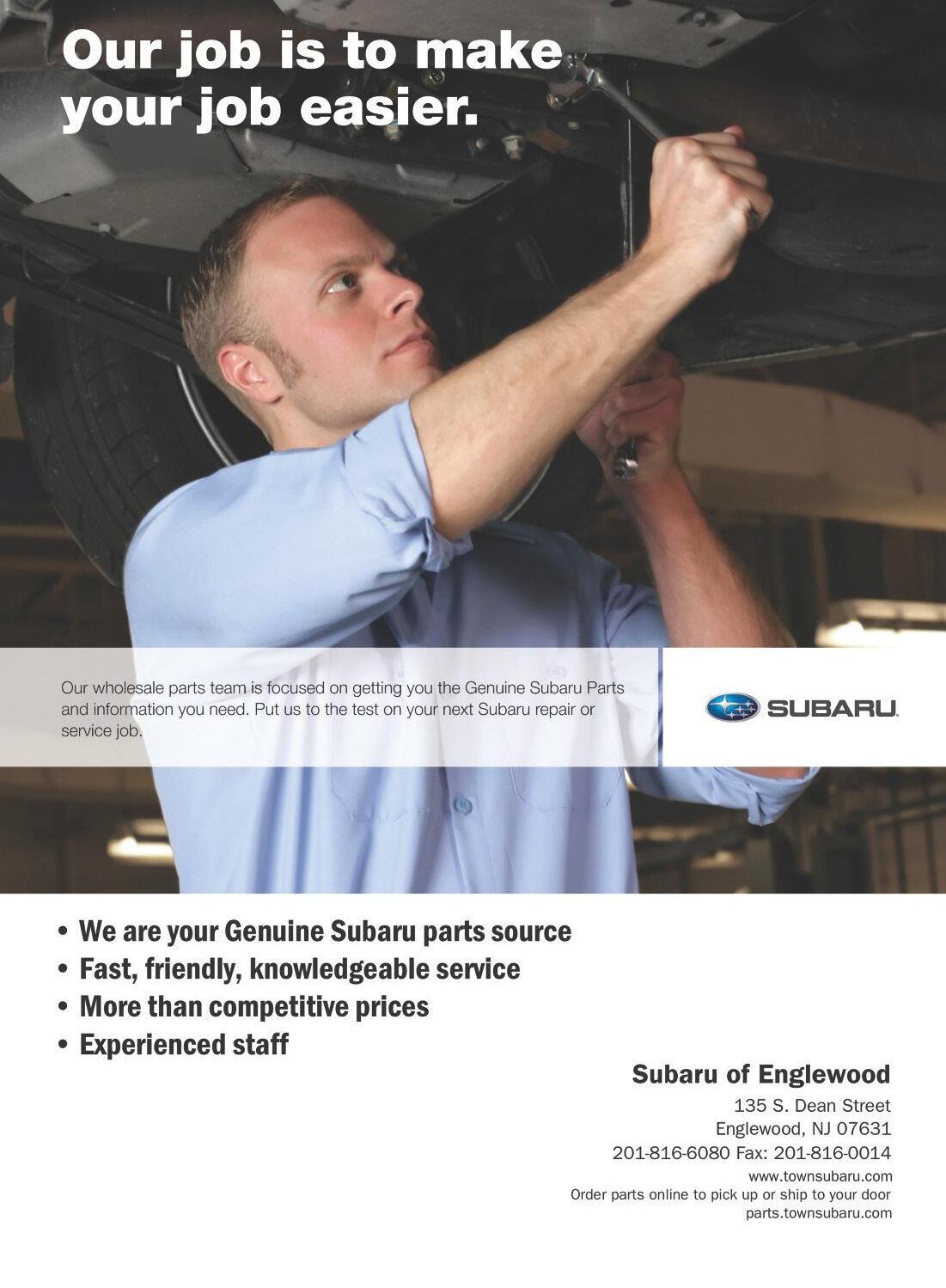
• Competitive prices
• Fast, accurate deliveries
• Genuine Subaru Parts that drive your business
continued from pg. 33
Since shops need help with retention, we also plan to offer HR best practices/training and mentoring programming, which we have found to be a key success criteria for entry-level technician success. As an industry, we need to attract more talent, but importantly, we need to retain our talent. To help offset the cost, we plan to pursue large foundation and government grants, and although it’s likely that there will be a nominal fee structure for shops and schools, we’re doing everything possible to prevent it from being burdensome or onerous.
When I-CAR coined the phrase ‘Technical Tsunami’ a decade ago, we knew that advancing technology would require a step up in knowledge, skills proficiency and business sophistication. That tsunami is rolling over the collision industry right now. At the end of the day, the level of training has increased as defined by the industry in response to the technological changes in vehicles. Training is an important component of running any business, but in collision repair, technicians need to be educated to perform safe and proper repairs. Ensuring customers’ safety and avoiding liability depends on those competencies. Shops that embrace training will not only survive – they can also thrive because they’ll be performing safer repairs and becoming better businesses along the way.
In Memory: Jeff Silver
New Jersey Automotive is saddened to report that Jeff Silver, former I-CAR chief staff executive and force behind the establishment of the Collision Repair Education Foundation (CREF), passed away on September 23.
Silver’s tenure in the collision repair industry spanned over 50 years as a collision facility owner, General Motors supervisor, equipment executive, I-CAR CEO and more. I-CAR’s Gold Class program was one of many initiatives established under his leadership.
Jeff was inducted into the Hall of Eagles, the collision industry’s Hall of Fame, in 1993, and also serves as the namesake of the I-CAR “Jeff Silver Award” honoring individuals holding the I-CAR Platinum designation for at least five years.
AASP/NJ and New Jersey Automotive extend our deepest sympathies to Jeff Silver’s family and friends, and the countless people he has influenced in this industry.
NJA
NJA
Photo courtesy of CollisionWeek
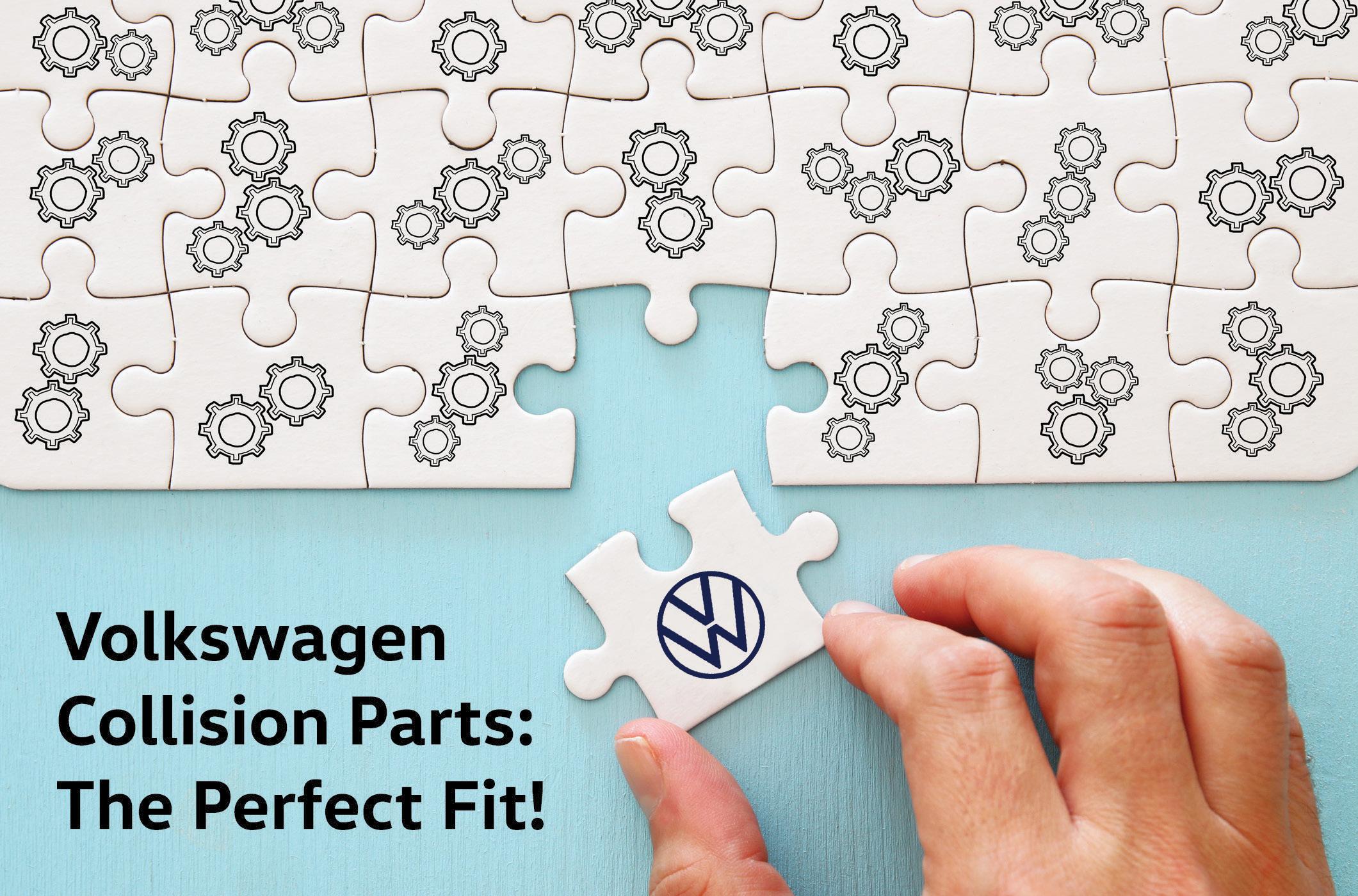
You’ve got the right tools, staff, technology and procedures to give your customers the best repair possible. The missing piece of the puzzle? Genuine Volkswagen Collision Parts. Contact an authorized dealer today and find your perfect fit.
David Yeager - EL & M Auto (800) 624-2266 / elandmauto@aol.com
Ed Silipena - American II Autos (609) 965-0987 / esilipena@yahoo.com
Norm Vachon - Port Murray Auto (908) 689-3152 / portmurrayauto@yahoo.com
Dillon Rinkens - East Brunswick Auto (732) 254-6501 / ebautonj@comcast.net
ARANJ Officers
President - Rodney Krawczyk Ace Auto Wreckers (732) 254-9816 / aceautonj@comcast.net
1st Vice President - Daryl Carman Lentini Auto Salvage (908) 782-4440 / darryl@las-parts.coms
2nd Vice President - Mike Ronayne Tilghmans Auto Parts (609) 723-7469 / tilghmans@snip.net
Past President - Bob Dirkes Dirkes Used Auto Parts (609) 625-1718 / dirkesauto@gmail.com
ARANJ
The Automotive Recyclers Association of New Jersey
Wharton Insurance Briefs
Dealer plate usage has been an ongoing issue for many years. Although there are different interpretations of the law and many clients have both won and lost court cases, several insurance issues should be reviewed. In general, dealer plates should be used by dealers to allow their prospective customers to test drive a vehicle for sale or to transport a vehicle from one location to another (i.e. auction to dealer lot/yard or dealer lot to buyer’s home, etc.). Dealer plates should only be used on vehicles for which you hold the ownership/title.
Dealer plates should not be given or lent to siblings, friends or relatives for use. Insurance carriers consider this “improper use” and can decline to provide coverage after an accident. You should review your insurance program with your agent to determine the scope of your coverage and any limitations, such as the driver’s age. Many programs limit drivers to a minimum age of 21 and owners’ children to age 19. Drivers under those ages may not be covered by your insurance program.
Please call me if you have any questions regarding this coverage in your insurance program.