News in Conservation, Issue 111, December-January 2026
Issue 111, DECEMBER -JANUARY 2026
FEATURES
Meet a conservator of the Shanidar Neanderthals
STUDENTS
Even comic books need care
LETTERS TO THE EDITO R
The truth about tin pest
NiCContributing Staff
Sharra Grow, Editor in Chief news@iiconservation.org
Marina Herriges, Editor for Reframing Conservation Through Sustainability marina.herriges@iiconservation.org
Alexandra Taylor, Book Reviews Coordinator and Associate Editor alexandra.taylor2@outlook.com
Ellie Sweetnam, Fellowship and Membership Programme Manager Ellie.Sweetnam@iiconservation.org
About NiC
Published six times a year, NewsinConservation(NiC) provides a platform for members of the conservation community to share the latest research, interviews, and reviews; to promote new events, products, and opportunities; and to call for papers, ideas, and involvement. NiCalso provides updates from the IIC Council and Regional Groups. NiCcontinues to evolve to better fit the needs and interests of our increasingly global conservation profession.
Join IIC Today!
Submissions
For the February-March 2026 issue, editorial submissions due 1 January 2026. Submissions and queries to news@iiconservation.org
Click for more on article GUIDELINES and the NiC sponsor RATE CARD
Get in Touch
NewsinConservationis published by The International Institute for Conservation of Historic and Artistic Works, 3 Birdcage Walk, London SW1H 3JJ Website: iiconservation.org Email: iic@iiconservation.org ISSN 1995-2635
Cover Image
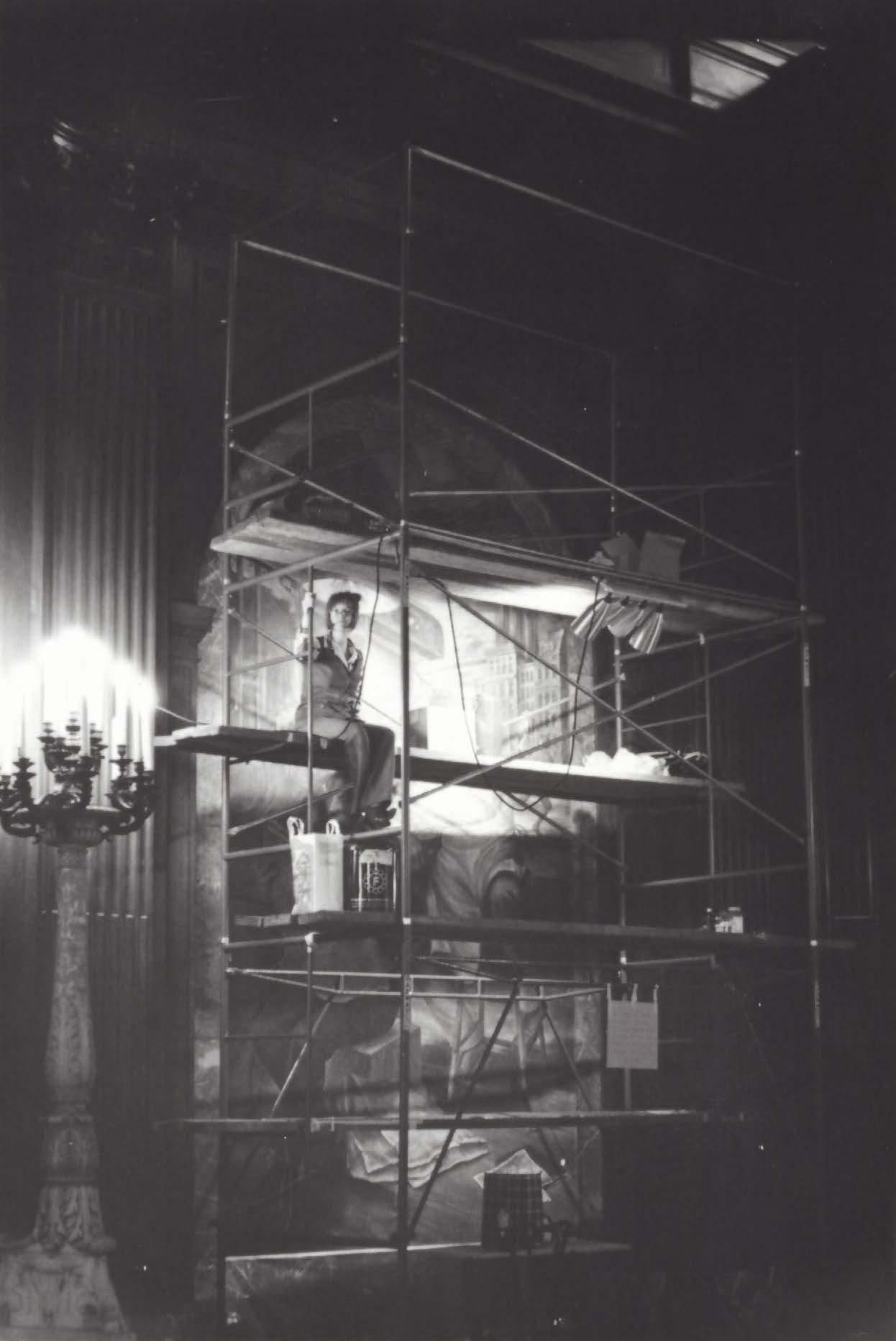
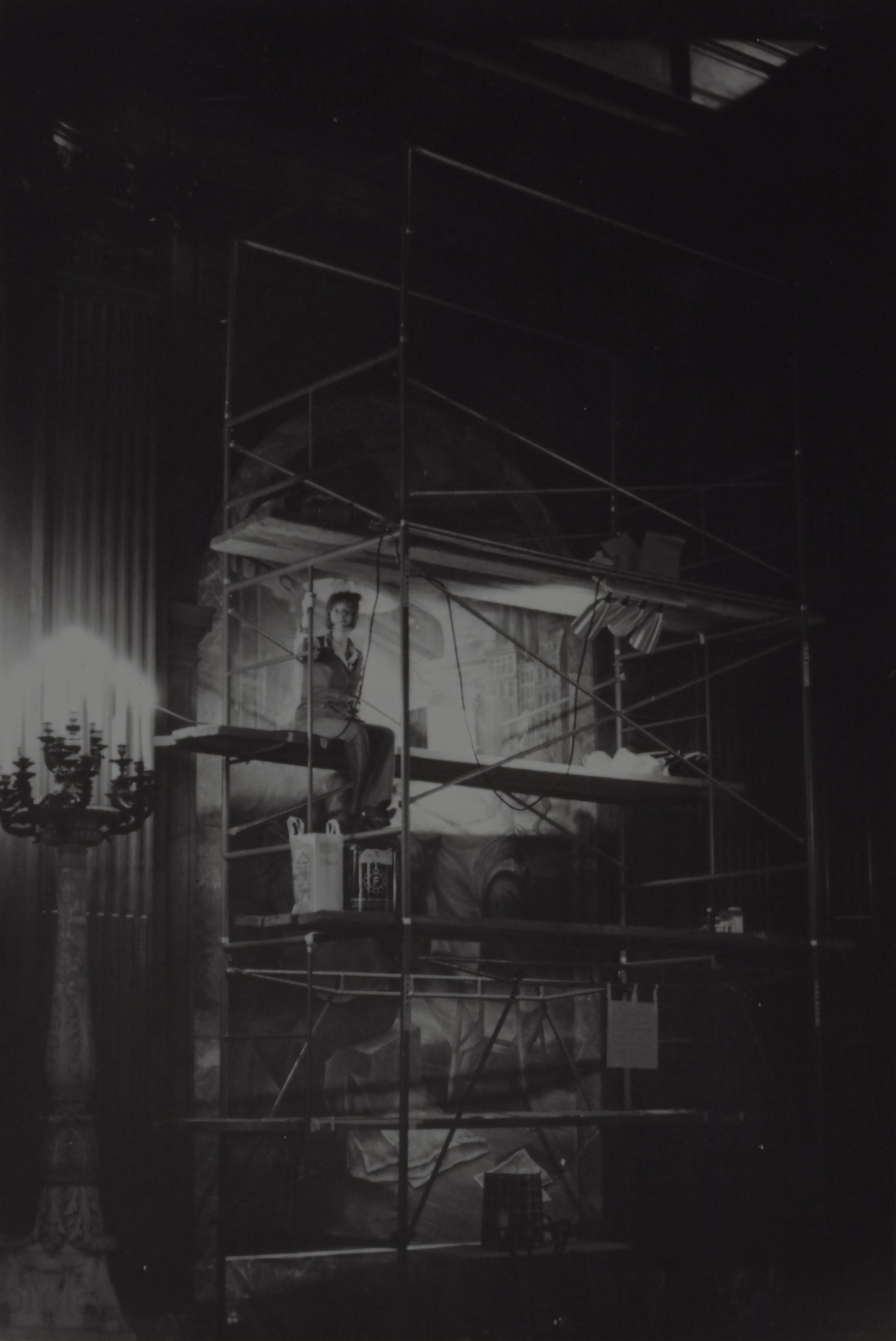
Front and back covers: Photograph of Joyce Hill Stoner on scaffolding while cleaning the 1938–1942 Edward Laning mural, TheStoryoftheRecorded Word , in the New York Public Library, 1970’s. Foundation for Advancement in Conservation (FAIC) Oral History Collection. Winterthur Museum, Garden & Library, Winterthur, DE. (Story on p. 58)
Disclaimer
Whilst every effort is made to ensure the accuracy, sufficiency and completeness of information contained in this publication, neither the IIC nor its Editors shall be liable to any party for any loss and/or damage arising from (i) any errors or omissions in such information and (ii) the use of, or reliance on, any method, product, instructions or ideas in this publication, in each case to the fullest extent permitted by law. The opinions stated in individual articles belong to the author(s) and do not necessarily reflect those of the IIC, its officers or Council. Information contained in this publication is strictly for educational purposes and aims to provide helpful information on the topics discussed. Any information relating to a product, method or treatment is not meant to be, nor should it be taken to be, an endorsement of such product, method or treatment.
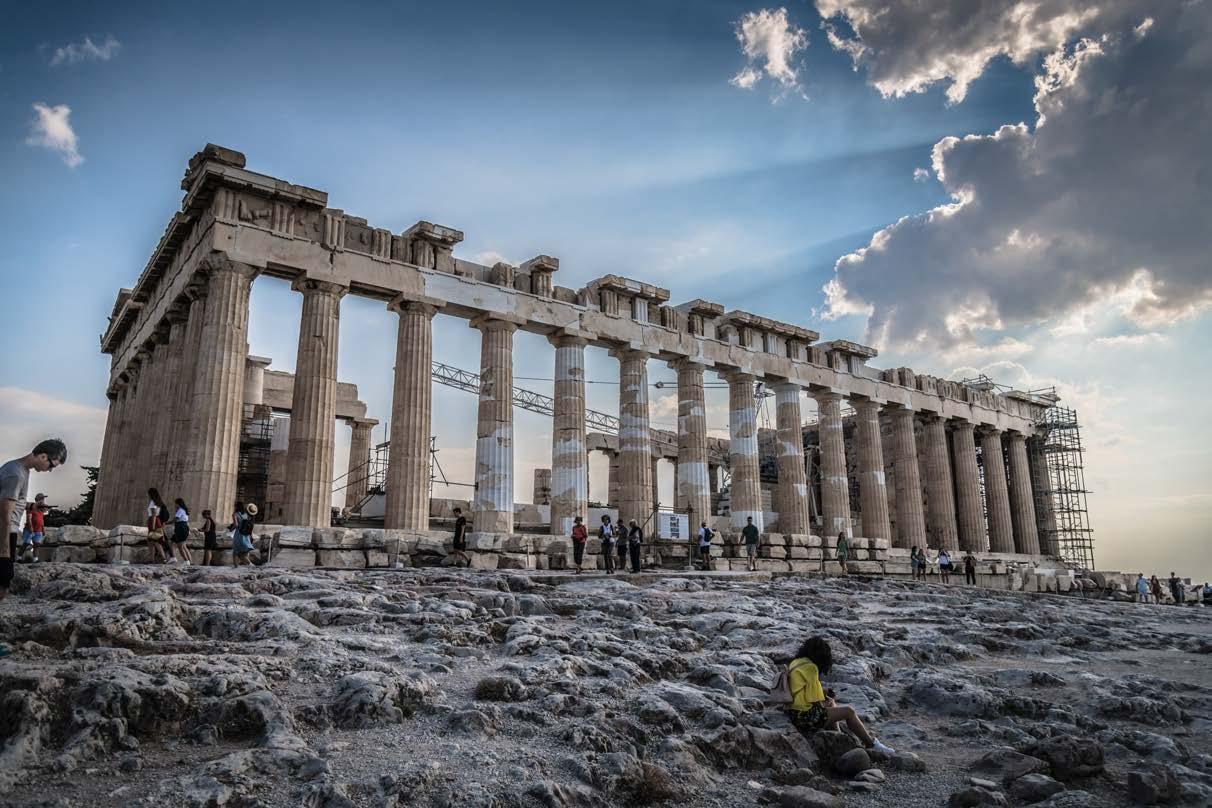
MindHack 2025 Winners Work to Preserve the Parthenon
UI Center for the Book Annual Kozo Harvest for Paper Making
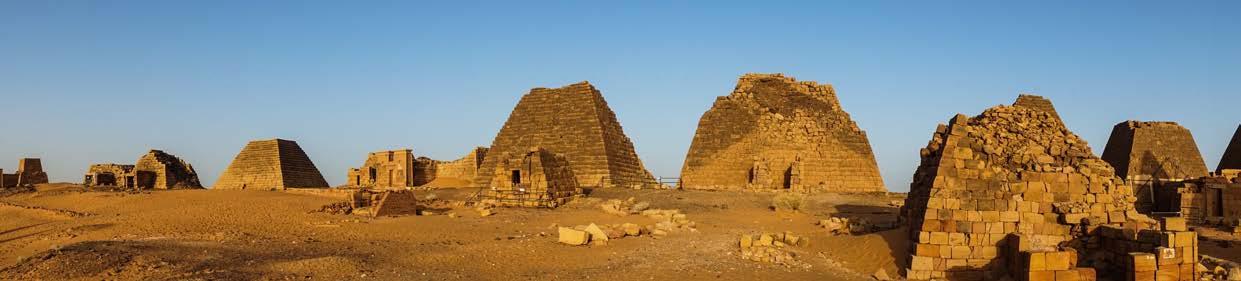
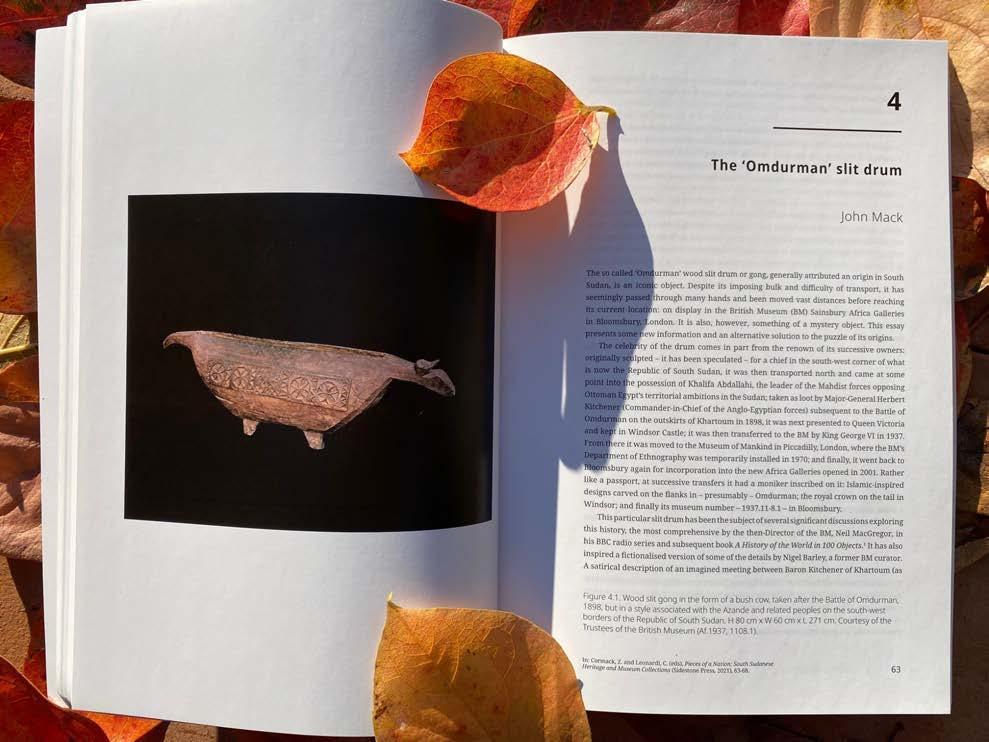
Racing Against Time: Preserving Sudan ’s Heritage Amid War
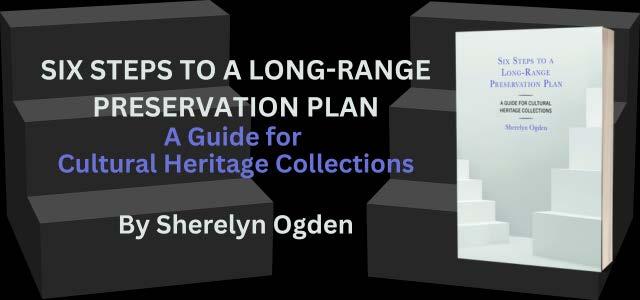
Six Steps to a Long -Range Preservation Plan 8 Feature Articles
The Conservation of Shanidar Neanderthals, by Dr Lucía López -Polín FIIC
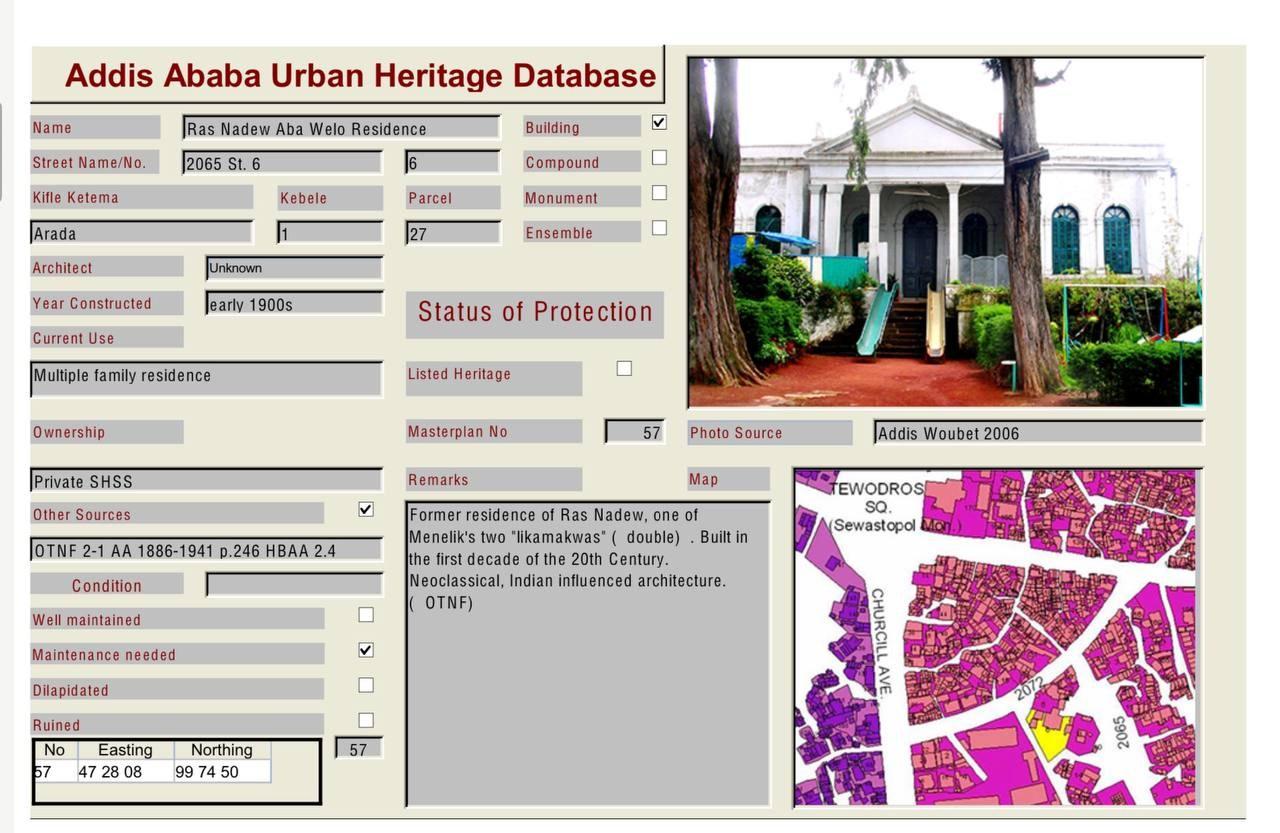
Urban Heritage in Addis Ababa: The case of Ras Nadew Aba Wollo ’s residence and the threats it is facing, by Araya Abrham with Beza Alemu and Amanuel Bayu
IIC News
In Memory of Prof. Dr. Manfred Koller , by the Board of IIC Austria
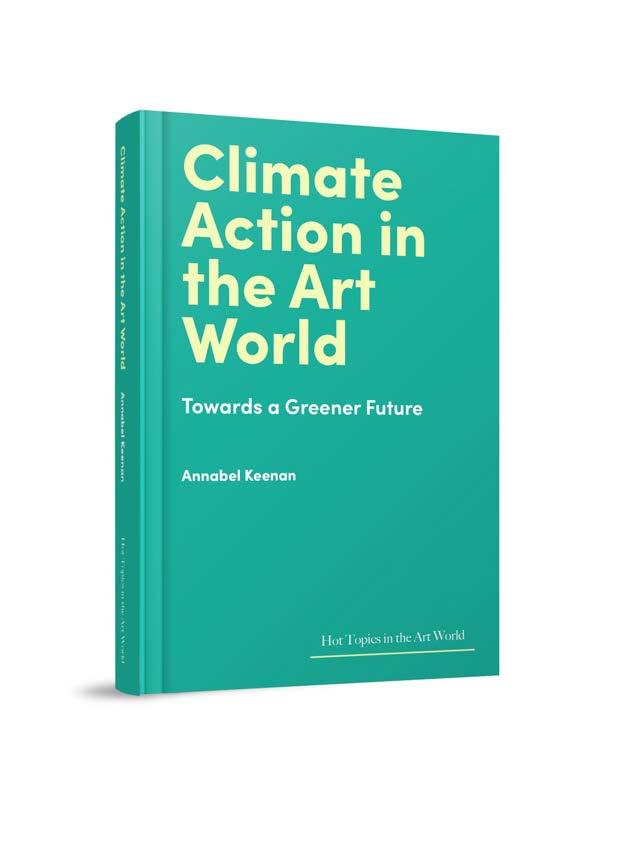
IIC Book Club Announcement: Climate Action in the Art World
IGIIC Event Announcements
New ISO Committee on Cultural Heritage Conservation , by Athanasios Velios
Fellowship Corner
42 Book Reviews
Performance: The Ethics and Politics of Conservation and Care (Vol. 1 and 2), reviewed by Nicole Savoy
Greener Solvents in Art Conservation, reviewed by Magdalena Wsół
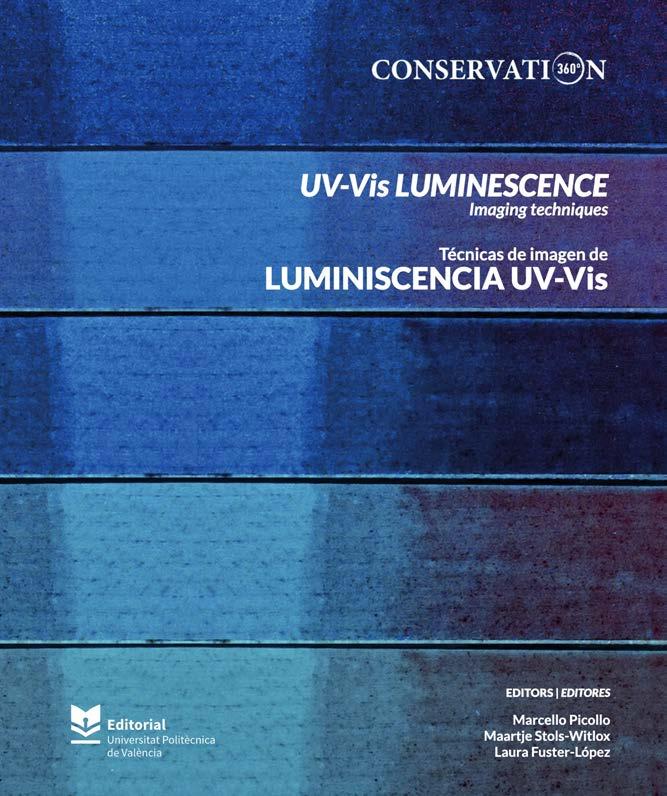
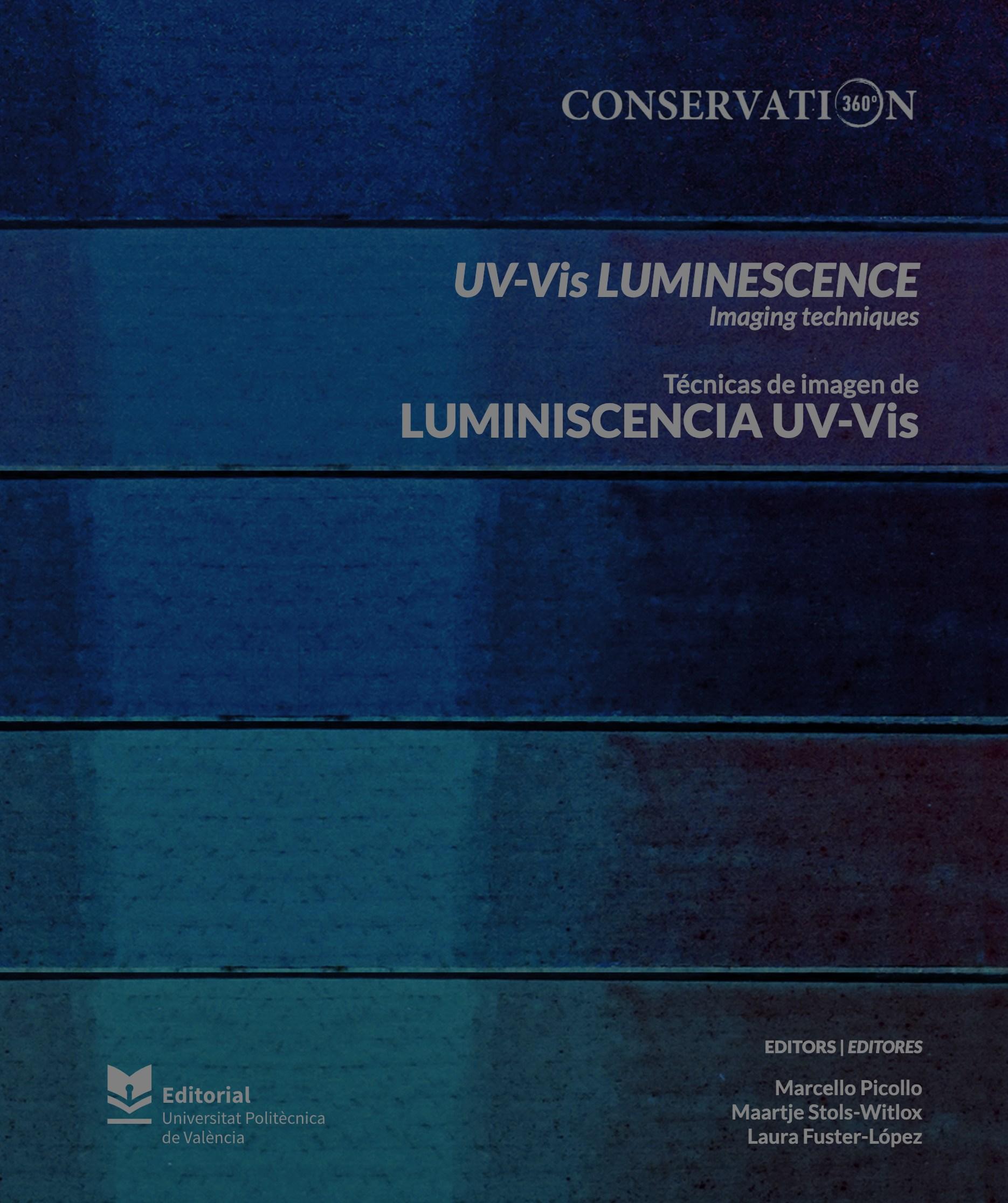
Reviewing Conservation 360°: UV-Vis Luminescence Imaging Techniques, reviewed by Victoria Zucchi
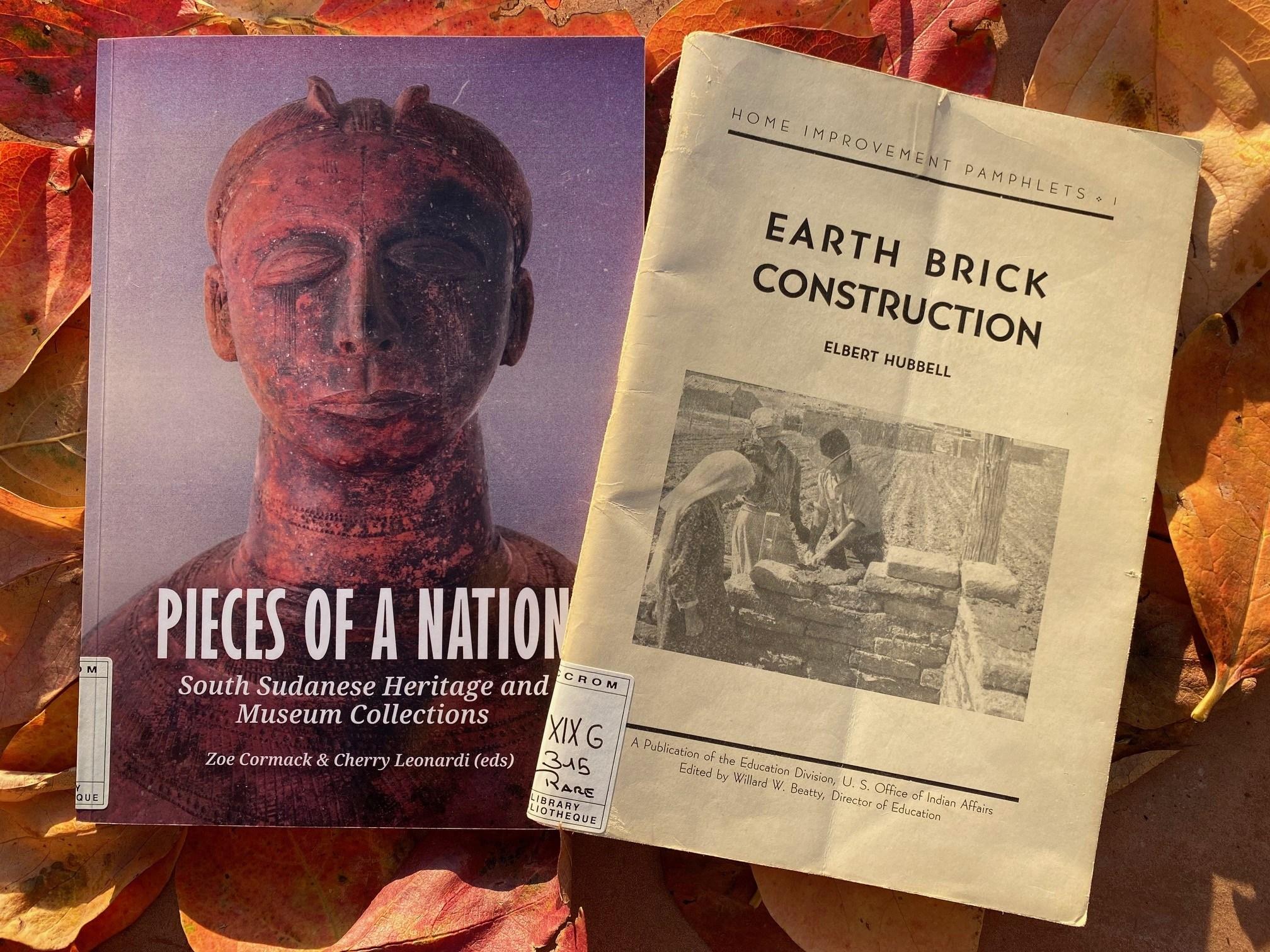
Recommendations for Reading from the ICCROM Library , by Daniela Sauer
Editor ’s Sounding Board
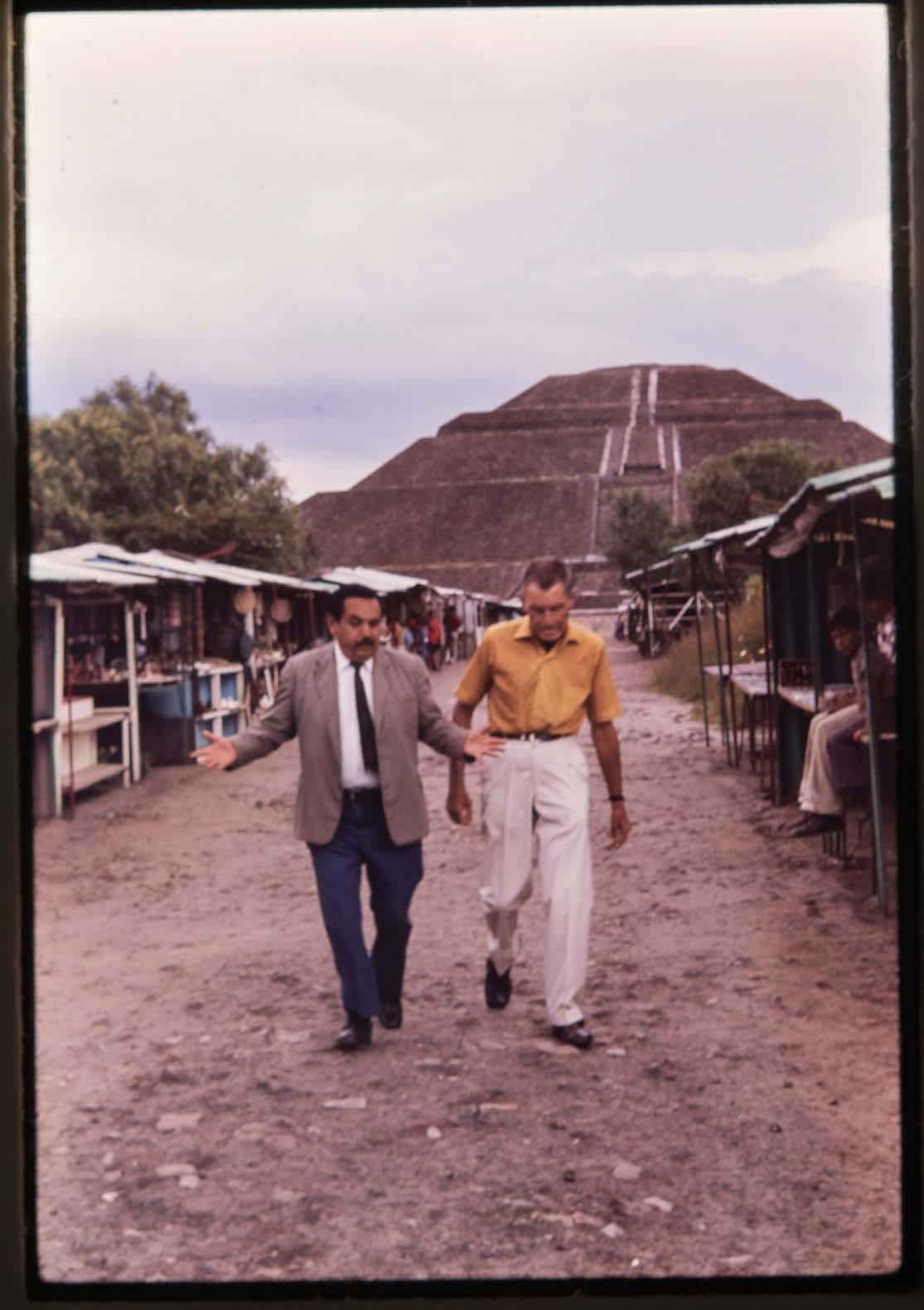
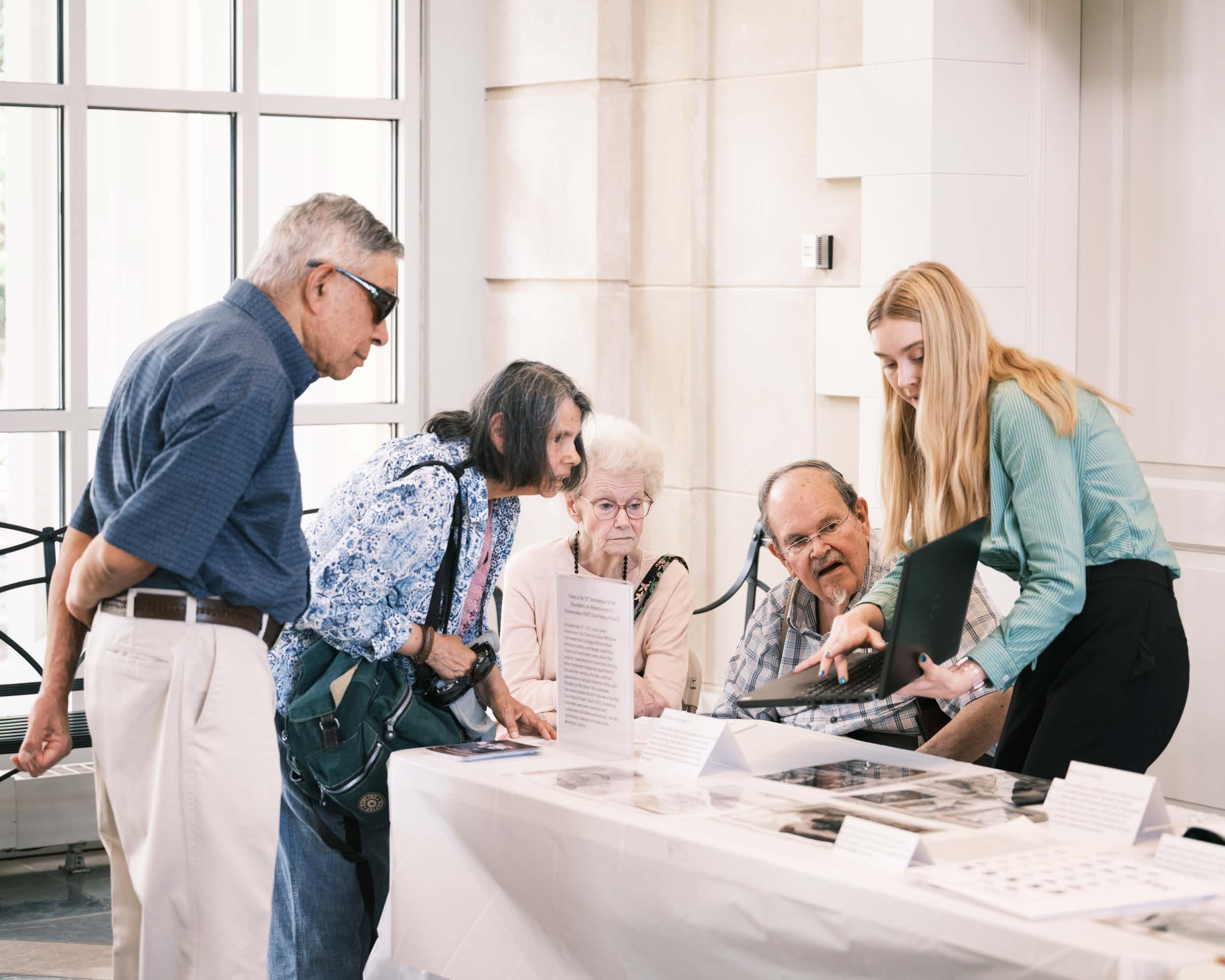
Iam fascinated by the history of our profession, and in my reflections on this past year, I take note that it is a particularly special one, marking 50 years from the start of the FAIC Oral History Project which began with the then young and bright -eyed Joyce Hill Stoner (featured on the cover) and Tom Chase conducting the first interview at the 1975 IIC -Mexico Group/AIC Conference in Mexico City. In these pages, Molly Mapstone and Rebecca Rushfield review the celebratory events from earlier this year and also share some of the history found within the archived interviews as well as more recent stories which evidence the richness found in these files and the need to continue growing them.
This issue of NiC also features the treatment of Neanderthal remains from the quite distant past, a lesson in the history of the Addis Ababa architecture style, a peek into an old trunk guarding the voice of a lost Kashmiri poet, and loving memories of the late Dr. Manfred Koller.
So, dive deep into the histories found within these pages as the end of the year comes upon us. And as we endlessly toil to preserve the heritage of cultures and communities around us, I hope we will put some of that effort toward preserving our own precious professional past.
Sharra Grow Editor -in-Chief, News in Conservation
News in Brief
MINDHACK 2025 WINNER S WORK TO PRESERVE THE PARTHENON
Two young sisters from Johannesburg, South Africa 12-year-old Mila and 13 -year-old Alexandra Papanicolaou have won First Place and Gold at the international competition MindHack 2025 in Bangkok. Their award -winning project, called CultureDNA Parthenon Heritage Preservation, is a sophisticated AI -powered platform built to protect the Parthenon Greece ’s iconic ancient monument.
Using real -world data, the platform analyzes environmental risks, structural vulnerabilities, and patterns that might accelerate decay or damage to the monument. Judges praised the project for its blend of
technical strength, research depth, and cultural purpose, highlighting how the sisters combined coding ability with a strong sense of responsibility to safeguard a global heritage site.
The sisters are students at SAHETI School, a longstanding institution founded by Johannesburg ’s Greek community. Their win underscores how the Hellenic diaspora remains closely connected to its roots, even thousands of kilometers from Greece. Their success bridging ancient heritage and cutting -edge AI is a testament to how new generations can honor history while shaping the future.
MindHack 2025 is a global coding tournament encouraging young innovators aged 7 to 17 to use modern technology (including coding, 3D design, and electronics) to find creative new ways to protect and promote cultural heritage, using the future to embrace the past. Learn more about MindHack .
UI CENTER FOR THE BO OK ANNUAL KOZO HARVEST FOR PAPER MA KING
Every fall, the University of Iowa Center for the Book (UICB) hosts one of only two university -run kozo (mulberry) tree harvests in the United States a unique tradition that blends community, craft, conservation, and art. On a crisp November morning at their small garden in Coralville, students, faculty, bookbinders, volunteers, and even children gather to cut branches from hybrid mulberry trees. Thanks to the dozens of volunteers, this year ’s harvest took less than two hours.
The process starts with removing large branches, bundling them, and then steaming them in a facility (a converted laundry building ) to loosen the bark. Once steamed, volunteers peel the bark, separate inner fibers, and hang them to dry. Later, the fibers are beaten, refined into pulp, and formed into handmade paper a modern take on traditional Japanese washi. The remaining pith wood, not used to make the paper, is then repurposed as firewood or other projects.
The paper produced is highly valued for restoration and conservation work not just for art projects, but also for repairing historical books and documents. Indeed, UICB ’s papers have been used in major archival conservation, including for the U.S. founding documents. The center produces between 30 kilograms of kozo per year, and each kilogram yields roughly 80–100 large sheets (each measuring two by three feet), a volume that has roughly doubled since 2020 under the guidance of their instructor Nick Cladis. “We grow our own food ” Cladis pondered. “Why don ’t we grow our own art supplies? Contemporary art could benefit a lot from re -finding the charm of that. ”
The annual harvest is more than a production line; it’s a labor of care, tradition, and collaboration. For participants, it ’s an opportunity to “touch grass, ” breathe fresh air, connect with others, and bring the source of their materials close to home. As Cladis says, they aren ’t just producing paper, they are preserving an age -old tradition while supporting “contemporary art and conservation made from plants grown here. ”
In an age where digital and mass -produced materials rule, the UICB ’s kozo harvest underscores the value of slow, handmade craft linking community, history, and the delicate art of paper -making.
RACING AGAINST TIME: PRESERVING SUDAN ’S HERITAGE AMID WAR
“I cry when I talk about this, ” are sentiments spoken by Shadia Abdrabo, a curator originally tied to the National Corporation for Antiquities and Museums (NCAM) in Sudan, when she thinks about her heritage that has been lost to war. Abdrabo hails from Nubia, a region dense with ancient monuments, pyramids, and archaeological sites a cradle of civilizations that once rivaled ancient Egypt. When the war erupted, she and her sisters fled Khartoum, escaping the violence even as their homeland ’s past was being stripped away.
Now at the French National Institute for Art History in Paris, Abdrabo studies digital records and photographs of pottery dating back some 9,000 years. This work delicate, painstaking, and urgent is more than an academic exercise; it ’s a personal mission rooted in love for her homeland. Her mission: to compile an online database cataloguing Sudan ’s archaeological sites, museum collections, and archival material before they vanish forever under the ravages of war.
Since April 2023, conflict between the paramilitary Rapid Support Forces (RSF) and the Sudanese Armed Forces (SAF) has escalated across Sudan. In that time, cultural institutions have been looted, destroyed, or abandoned, and priceless artifacts dating back millennia are at risk of being lost forever.
Two regional museums, located in El Geneina and Nyala, have reportedly been almost entirely destroyed. Meanwhile, in the capital,
the Sudan National Museum in Khartoum, once home to roughly 100,000 objects, was overrun. Militias posted videos from inside its storerooms, confirming the horrors feared by cultural preservation specialists. The museum ’s collections spanned Sudan ’s long history from prehistoric artifacts through the eras of the Kerma Kingdom, the Napatan era under Kushite kings, and the Meroitic civilization the very builders of Sudan ’s pyramids to later Christian and Islamic periods. Among the most irreplaceable treasures were mummies dating back to 2500 B.C., some of the oldest in the world, along with royal Kushite gold and artifacts.
But the damage extends beyond physical objects. Entire archives research records, catalogues, photographs, and historical documentation have vanished, stripping Sudan not just of art and relics, but of scholarly memory. “My heart was broken, ” Abdrabo said. “It’s not just objects that we lost. We lost research, we lost studies, we lost many things. ”
From her Paris workspace, Abdrabo is working to salvage whatever can be saved. With support from international institutions, including the Louvre Museum and the British Museum, she is meticulously entering information from surviving spreadsheets, older handwritten inventories, photographs, and whatever documentation remains.
To date she has logged around 1,080 objects from the national collection. But that covers only a tiny fraction of what once existed. Given unstable conditions, widespread looting, and the collapse of security across many regions, she
fears much more will be lost before preservation efforts can catch up. “Until the war finishes, we just don ’t know what is going to happen, ” she warns.
While the devastation has not gone unnoticed, Sudan ’s crisis remains under -reported compared with heritage emergency zones elsewhere. Researchers say narrow media attention and poor visibility have hindered a stronger international response. As a result, most of the burden has fallen on individuals like Abdrabo, working alone in exile to catalog and document.
The digital archive she is building may not restore what was lost the gold, mummies, artifacts, and shattered monuments but it might preserve the memory, the identity, and the evidence of a civilization now in peril. If Sudan ’s antiquities disappear physically, at least their traces names, descriptions, photographs, provenance have a chance of surviving history ’s ravages.
SIX STEPS TO A LONG -RANGE PRESERVATION P LAN
This new volume by Sherelyn Ogden, presents a straight -forward methodology for drafting a preservation plan in six easy -to-follow steps. This nuts-and -bolts approach prioritizes needs based on urgency and feasibility to ensure that the best use is made of valuable resources. The result is a practical document that will guide preservation activities and aid in fundraising for years to come. Special features include tips on using worksheets to organize information; a grid helpful in prioritizing; and a sample plan.
"This book is the missing link that takes a completed preservation assessment to a comprehensive and achievable preservation plan and has been needed for a long time. I will be recommending it to all of my preservation assessment clients as their first purchase after they receive their assessment reports. ” Rebecca Elder, Preservation Consultant
Sherelyn Ogden is a practicing conservator with 50 years of experience in the field of cultural heritage preservation. As Director of Book Conservation at the Northeast Document Conservation Center, Director of Field Services at the Midwest Art Conservation Center, and Head of Conservation at the Minnesota Historical Society, she consulted with staff from a variety of cultural institutions helping them determine and prioritize their preservation needs. She taught preservation at the graduate level as well as conducting half and full -day formal presentations and workshops. She trained staff, interns, and volunteers on -site in all aspects of preservation.
THE FUTURE OF OUTDOOR ART
We think of outdoor sculpture as being tough, but it needs more care and foresight than you make think. (Image: Storm King Toes (2010) by Hope Abrams/Flickr . Licensed under CC BY -NC -ND 2.0 )
THE SCIENCE OF THE SHATTER
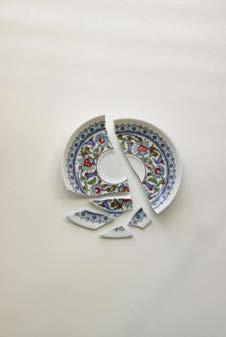
There is a new law of physics showing a predictable shatter pattern for objects from glass to bubbles. (Image: Broken Pottery Plate by Feyza Dastan/ pexels.com . Creative Commons)
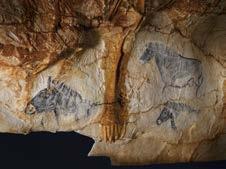
27,000 year -old cave art in Marseille is being documented and preserved before it disappears in the rising water. (Image of Cosquer Cave by Kleber Rossillon & Région Provence -Alpes -Côte d ’Azur / Sources 3D MC/ Wikimedia Commons CC BY -SA 4.0 )
More News
Click on the images to read more about the latest research and opinions on heritage preservation.
Sudan, Nubian pyramids (2016) by Nina R/Flickr . Licensed under CC BY 2.0
Book poster, courtesy of Sherelyn Ogden
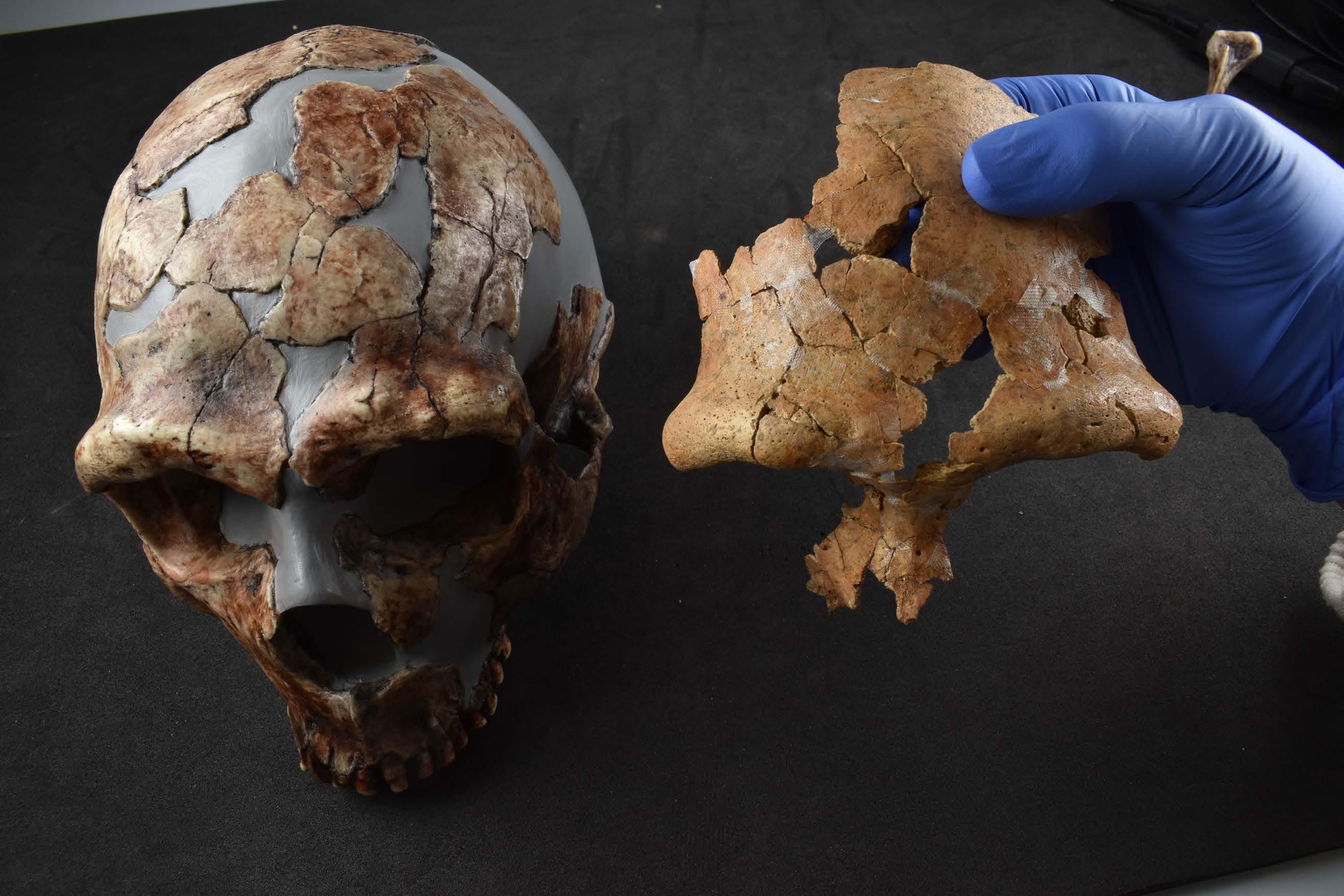
Frontal bone of Shanidar Z compared with a cast of another Neanderthal individual from the same site. Image by Lucía López -Polín
The Conservation of Shanidar Neanderthals
By Dr Lucía López -Polín, FIIC
The scope of conservation carried out in archaeological and palaeontological research settings extends beyond the restoration of damaged or unrecognisable finds and the safeguarding of objects for future preservation; conservation also plays a crucial role in preparing such materials for active research use and in unlocking their full informative potential through targeted intervention. This approach is exemplified by the conservation of the recently discovered Neanderthal remains from Shanidar Cave, Iraqi Kurdistan.
THE SHANIDAR CAVE NE ANDERTHALS
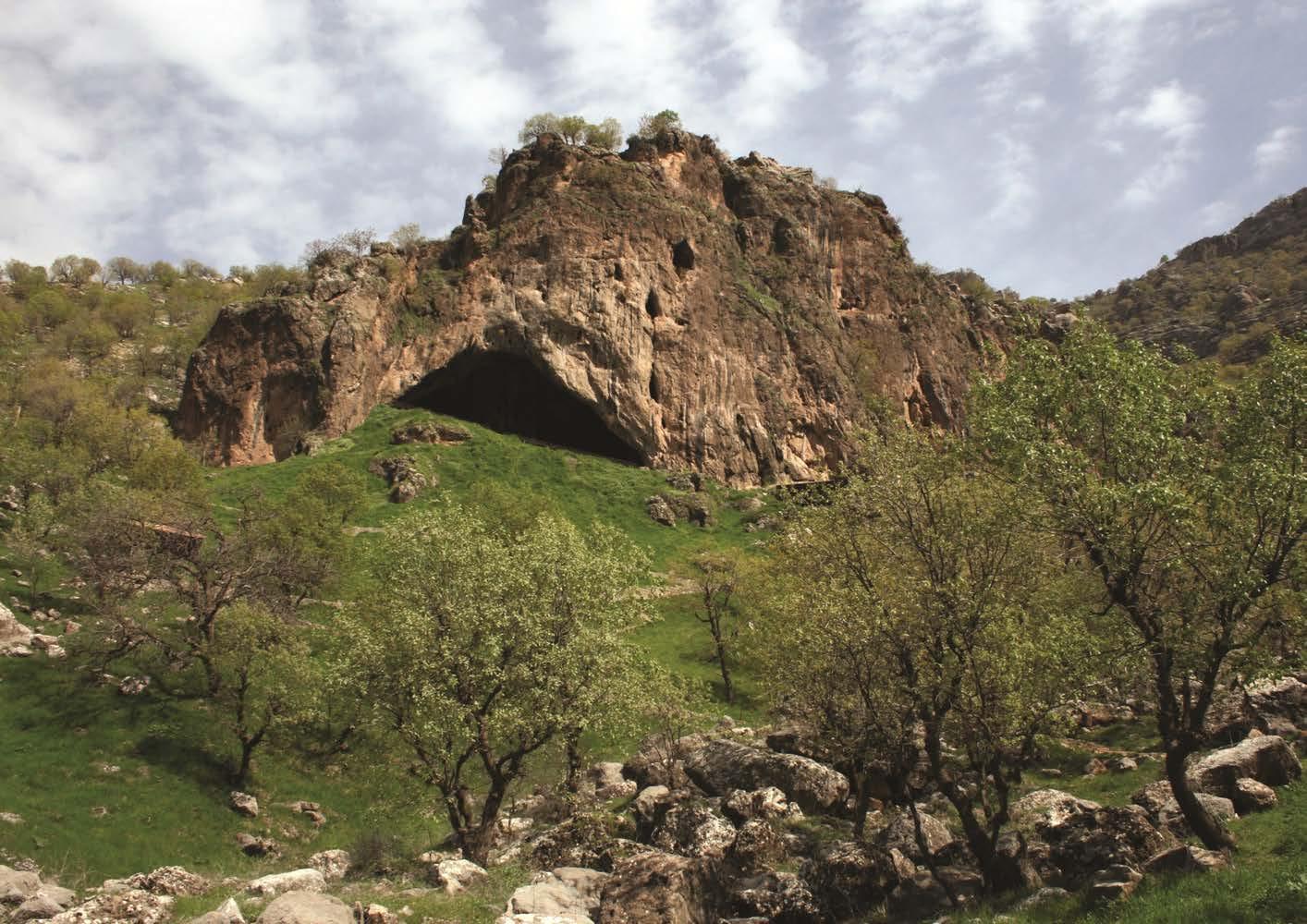
Shanidar Cave is a landmark site for the study of Neanderthal behaviour and the period of transition between them and Homo sapiens . Excavated in the 1950s by a team led by the archaeologist Ralph Solecki, the site played a key role in changing our perception of Neanderthals. Solecki's research challenged long -standing stereotypes by suggesting that Neanderthals were fundamentally no different to Homo sapiens a view that has since been reinforced by more recent discoveries.
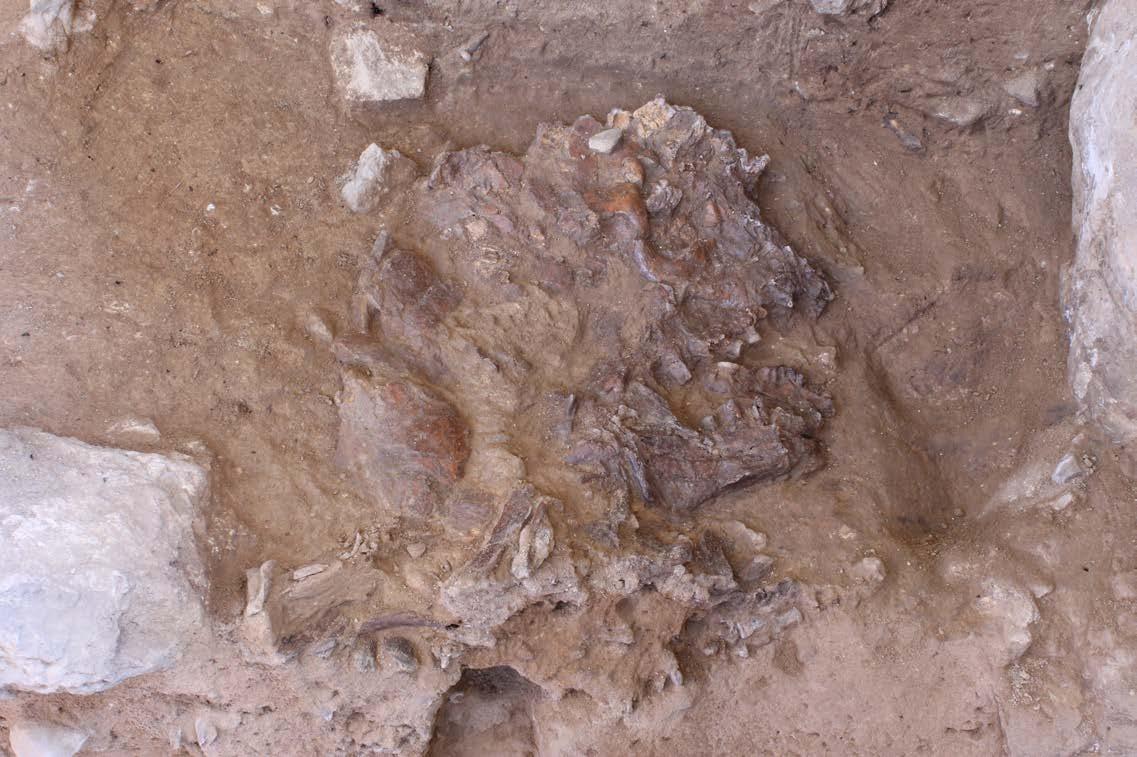
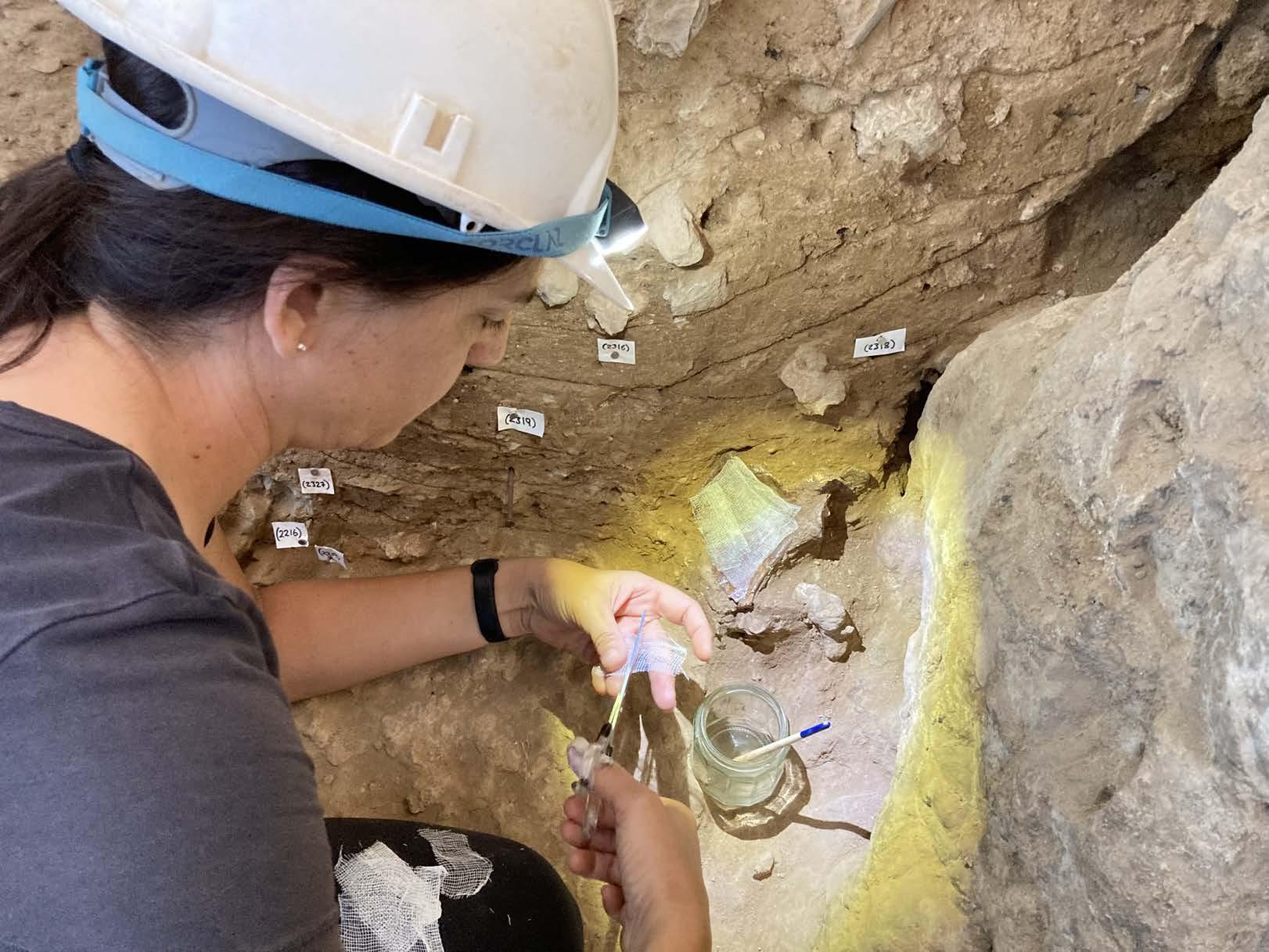
Following Solecki's final excavation in 1960, fieldwork at Shanidar ceased for several decades. Excavations resumed in 2015 under the direction of Graeme Barker, Disney Professor in Archaeology at the University of Cambridge, leading to the recovery of new Neanderthal remains. The project ’s bioanthropologist, Emma Pomeroy, was tasked with excavating the remains currently named Shanidar Z: the upper body of a female Neanderthal. These remains were fractured, displaced, distorted and so delicate that handling them posed significant risks to their integrity.
Drawing on her expertise in the field and her anthropological training, Pomeroy was able to define the outlines of the remains carefully, excavate them with precision, and prepare them for transport by consolidation in situ followed by removing the remains in small blocks containing the bones and
surrounding sediment. The remains were brought to Cambridge on loan from Iraqi Kurdistan ’s General Directorate for Antiquities and Heritage where Pomeroy conducted micro -CT scans of the remains to create a record before any intervention and made sure they were stored in stable, controlled conditions. Anticipating that the conservation process would be lengthy, she invested in a one -year contract to hire a conservator.
THE CONSERVATION WOR K
I was offered the position after responding to an advertisement seeking professionals with experience in conserving bone materials ideally hominin remains and with a background in research related to human evolution. My CV includes several years of experience working with skeletal remains, including hominin fossils, as well as a PhD focusing on the conservation of Homo antecessor fossils from Atapuerca in Spain. Although this specialised background has sometimes made it difficult to find work outside the field, in this case it was the perfect match. Thanks to a leave of absence from my job as a conservator at the Catalan Institute of Palaeocology and Social Evolution, I was able to relocate to the United Kingdom and spend 14 months working with the new Neanderthal remains.
My work on the Shanidar Z skeletal remains has involved direct intervention or remedial conservation. It was necessary to clean, remove sediment and consolidation materials applied in the field, and clearly define each fragment. Due to the extremely friable condition of the bones, consolidation by impregnation with acrylic products had to be alternated with cleaning. During the conservation process, the origin of each fragment was fully documented for accurate referencing. This information was crucial for the restoration of each anatomical element, which in many cases had been reduced to millimetre -sized pieces scattered among several blocks.
Above: The skull of Shanidar Z, flattened by thousands of years of sediment and rock fall, in situ in Shanidar Cave, Iraqi Kurdistan. Image by Graeme Barker.
Below: View of the entrance to Shanidar Cave. Image by Graeme Barker.
“Conservators not only safeguard the physical remains but also preserve the stories … that deepen our understanding of our closest evolutionary relatives. ”
Lucía López -Polín working on -site on the scapula of Shanidar A individual. Image by Emma Pomeroy
This was particularly important during the conservation work because the remains of the central individual (Z) were recovered as well as a few intertwined anatomical elements (arm bones, hand bones and teeth) which clearly belonged to other individuals. Accurate documentation of all the work facilitates depositional analysis in a similar way to the valuable records made during archaeological excavations.
Following 14 months of work in 2022, the remains of Z, along with a few associated remains of other individuals, were stable and sufficiently reconstructed to allow study to begin. Many small fragments could not be clearly positioned, and further work could improve the reconstruction of many bones. However, as resources are finite, once everything was reasonably stable and reconstructed, we had to stop.
The remains still needed to be properly packaged while ensuring that the elements were well organised and accessible for study. To this end, Katerina Theodoraki, another conservator, joined the team to package the entire collection. The boxes were designed to be used for final delivery to the curating museum in Iraqi Kurdistan. Until that moment arrives, there is still time to refine some aspects. Thanks to new funding obtained
through an individual British Academy Visiting Fellowship, I am currently working on refining the reconstruction of Shanidar Z's skull, organising the extensive documentation for future publication and working on individual remains that were recovered later and referred to as 'A'.
THE JOURNEY TO SPECI ALISM
In the vast field of heritage conservation, archaeological conservation is considered a specialism. However, for some of us, even that is too broad. Simply put, as someone whose career has focused on skeletal remains, I would approach the conservation of a metal object in a similar manner to that of a recent graduate.
Conversely, a task that appears technically simple, as described in the previous section, becomes more efficient and produces higher quality results after knowledge is acquired throughout countless hours working with similar finds that produce knowledge of the anatomy, giving agility and precision in the execution of this kind of work. Equally important is substantial prior experience that provides extensive knowledge of how bones are studied.
Anatomical features and other important characteristics are
preserved in bones and teeth at even a sub -millimetre scale. Ultimately, remains of extinct human species are scarce, so every bone and tooth is important. Studying cranial morphology, for instance, is crucial for recognising and analysing the species' distinctive traits and how these vary between individuals across time and space. Teeth can provide information about diet and enable the age of individuals to be estimated. The dimensions of long bones, such as those in the arms and legs, can be used to estimate height and infer behaviour. Traits on the bones and teeth that go beyond anatomy are also relevant. For example, knowing what tartar looks like during cleaning and understanding the origins of marks on bone surfaces inform the extent of cleaning intervention, and so forth.
It may be argued that all this information can be gathered through interdisciplinary discussion with the stakeholders during treatment planning and implementation. However, in my experience, knowing all this beforehand enhances conservation performance. This knowledge also ensures a more informed dialogue with others involved in developing the plan, and this guarantees efficiency and quality of the results, something that cannot be left out of the equation when devising appropriate conservation treatments.
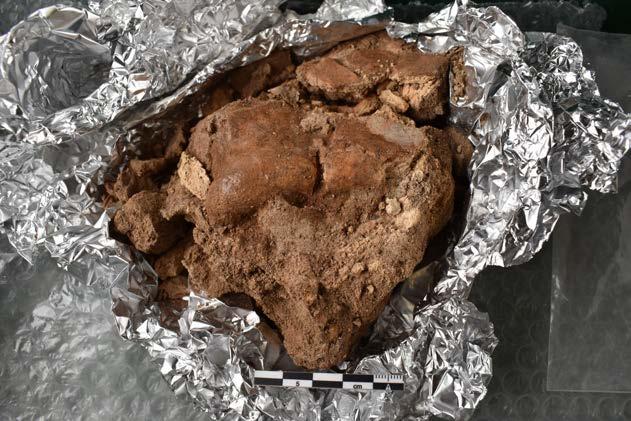
Left: Picture of the package containing the block with the frontal bone of Shanidar Z's skull just before starting the conservation treatment. Image by Lucía López -Polín
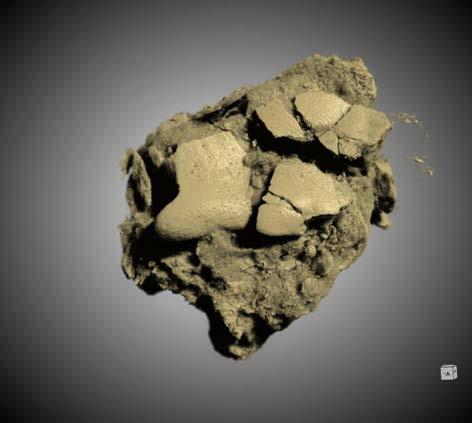
Right: Screenshot of one 3D image obtained from a microCT scan of the frontal bone of Shanidar Z. Image by Emma Pomeroy
There are many ways to reach this specialization, and much depends on how things work in different social environments. From my experience, getting involved was a natural path, as I am also an archaeologist by training. This led me to work on excavations and in research centres and universities within archaeological research teams. Along the way, I have been part of research projects in archaeology and related disciplines. To those conservators new to the field, I would
recommend that they do not forget to learn about other disciplines and to be open -minded as to how archaeological finds are used for research. It is essential to remember that, in contrast to other conservation specialisms, there are many other specialists in diverse fields who are involved in the handling and recovery of the finds during and after excavations; conservation is just one piece in a broader research framework.
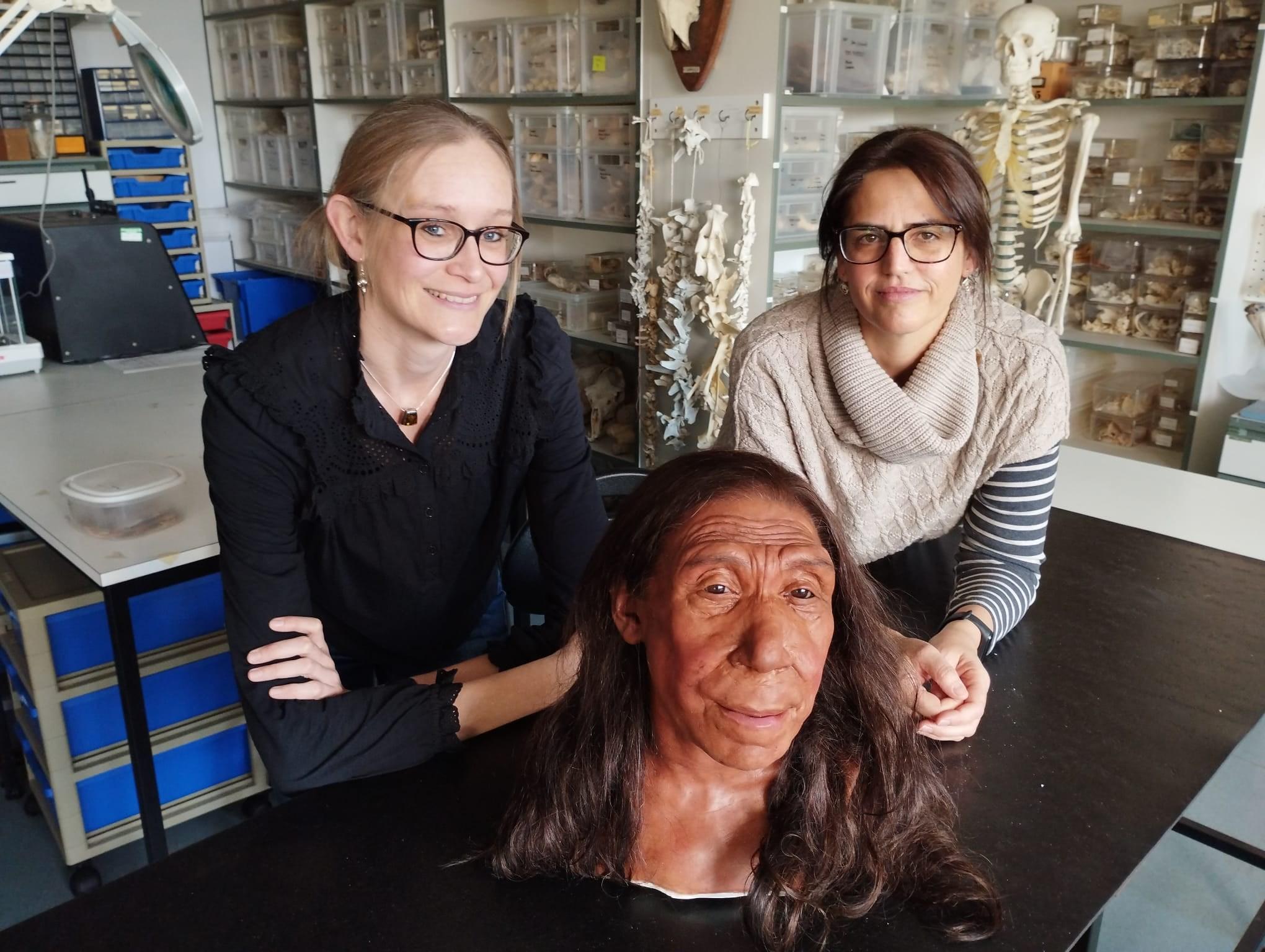
Lucía López -Polín (right), the bioanthropologist Emma Pomeroy (left), and the recreated head of Shanidar made by the Kennis brothers for the documentary: Secrets of the Neanderthals /Netflix. Image by Graeme Barker
DISSEMINATING THE PR OJECT
The restoration of Z´s skull was the basis for a facial reconstruction by palaeoartists the Kennis brothers which appears in the Netflix/BBC documentary, Secrets of the Neanderthals, released in 2024. The film focused on current knowledge about Neanderthal anatomy and behaviour with Shanidar Cave as a central site in the story.
Many hours of footage were filmed for what would become a documentary of less than one and a half hours.
In a documentary not focused on conservation, I wondered how of much my contribution would go to the final version. In the end, the documentary precisely captured the sentiment
You can access a poster on the conservation of Shanidar Z Neanderthal HERE
which I believe is shared by other conservators: conservation work involves a great deal of responsibility.
Conservators not only safeguard the physical remains but also preserve the stories they tell stories that deepen our understanding of our closest evolutionary relatives. Ultimately, this project affirms that investment in conservation is essential, ensuring that the knowledge contained in these rare Neanderthal remains is protected, understood, and shared.
This project was supported from 2021 to 2022 by the John Templeton Foundation and is currently funded by the British Academy ’s Visiting Fellowship programme.
Dr Lucía López -Polín , FIIC, is a researcher at the Catalan Institute of Human Paleoecology and Social Evolution (IPHES -CERCA) in Tarragona, Spain, with over 20 years of experience as an archaeological conservator. A member of the Atapuerca research team in Spain, she also works on the Shanidar Cave Project at the University of Cambridge.
Urban Heritage in Addis Ababa
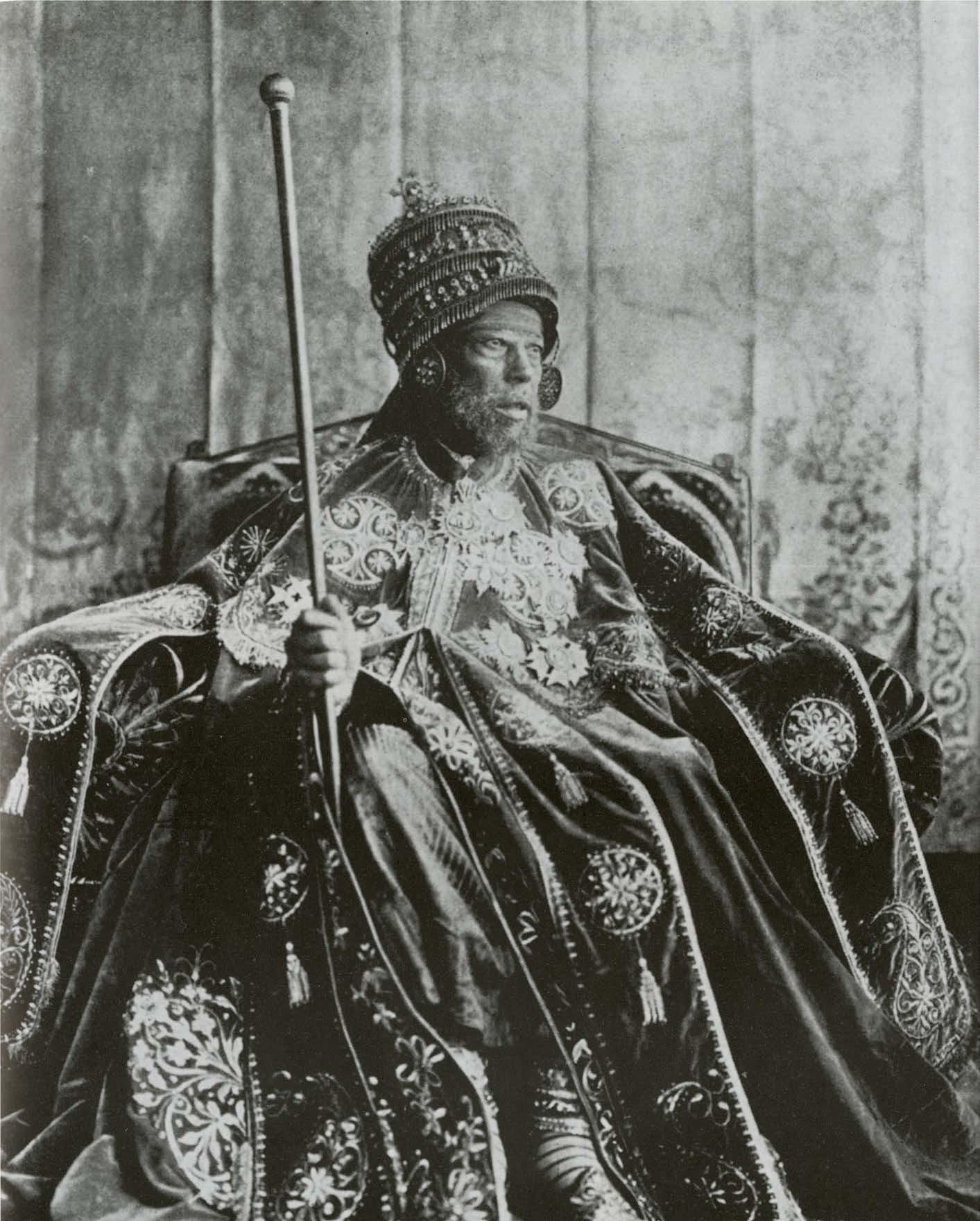
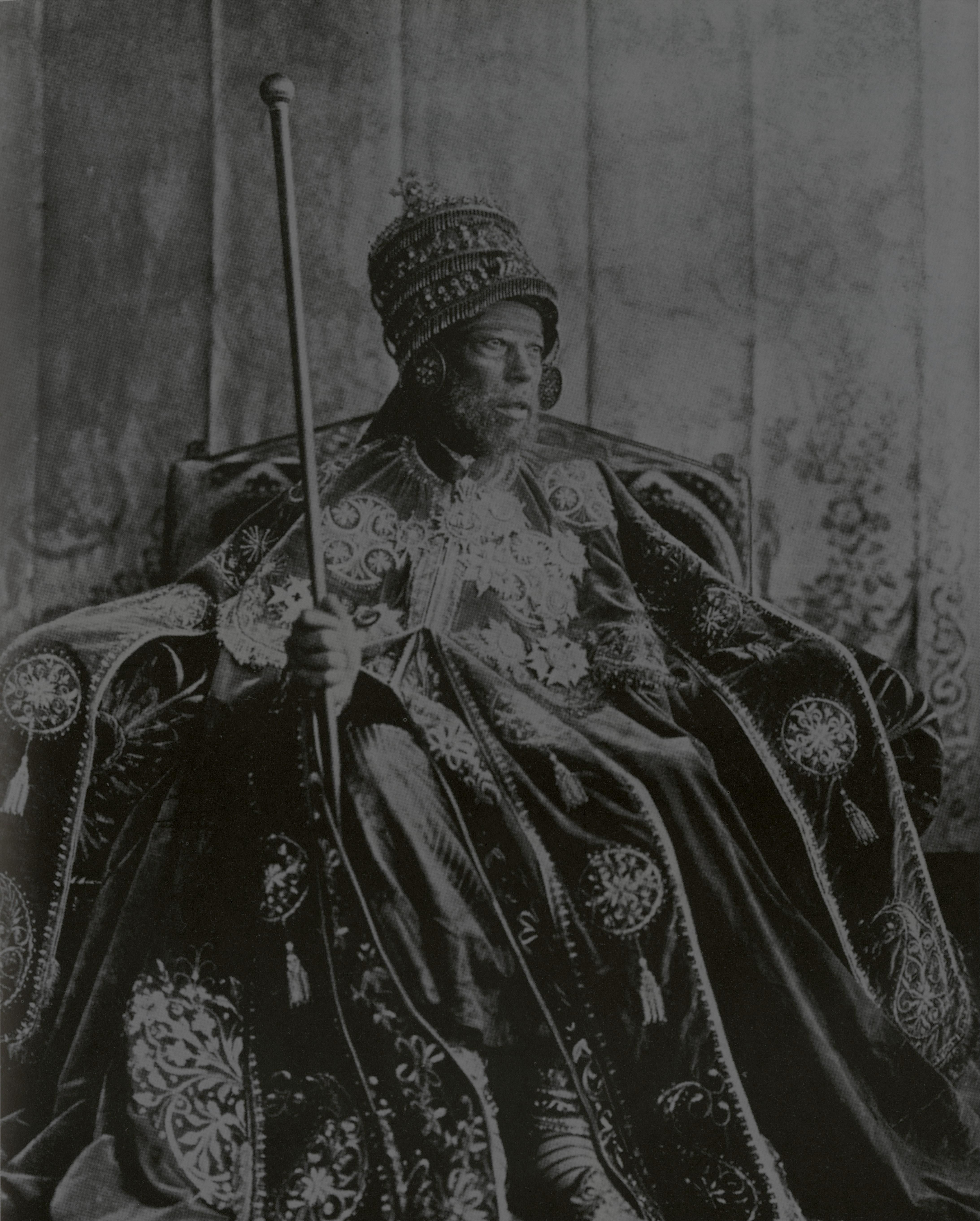
Ethiopian Emperor Menelik II Photographed on the throne in coronation garb. Photographer unknown. Late 19th -early 20th century. Wikimedia Commons/ Public Domain
The case of Ras Nadew Aba Wollo ’s Residence and the threats it is facing
By Araya Abrham with Beza Alemu and Amanuel Bayu
Ras1 Nadew Aba Wollo ’s Residence is a typical example of elite architecture that was constructed in Addis Ababa, Ethiopia during the reign of Emperor Menelik (pictured left), in the first decade of the 20 th century, who brought about prominent changes to the architecture of city. The Ras Nadew Aba Wollo Residence holds immense cultural, architectural, and historic prominence in building the typologies and construction modalities of its era, which is strongly affiliated with the Addis Ababa architectural style. Similar to other complexes that reflect the authentic styles of the
old Addis Ababa architecture, the building possesses its own distinctive craftsmanship and elegance.
Despite its importance, the edifice is currently at a crossroad between threats from physical deterioration and infrastructural encroachments that are both directly and indirectly facilitated by the government. While the infrastructural risks are mainly due to the building ’s location in one of the oldest urban quarters of the city (Piassa in the Arada sub -city, which is considered a high land -value district for urban development), the structural deterioration stems from the
residence ’s age and lack of proper maintenance. As a result, the house is on the cusp of potential collapse. And if these challenges continue, the building could soon fall, as has been the fate of many old complexes in the area. This erasure would directly contribute to the loss of culture and urban identity of the city.
HISTORICAL CONTEXT
Soon after its foundation, Addis Ababa became a city where several unique building complexes, now seen as illustrative architectural examples of that era, came to dominate the skyline. After its inception around 1887 (1879 E.c.), 2 the city started to reflect the infrastructural development in many parts of its inner domain. This mainly manifested in the built environment, where buildings (mainly royal, elite, and commercial) came to influence the scenery. The city has a unique flavor of architecture all its own that is referred to as the Addis Ababa style. This style is different from the rest of the country’s construction trend at the time, mainly due to the modernization ambitions of the Emperor and influence from foreign cultures that were extant at the time.
1. “ Ras” is a title used in Ethiopian nobility which is given to the highest ranking officials which literally means “he”
2. “E.c. ” refers to Ethiopian Calendar, which uses its own time frame that is 8 years behind the Gregorian.
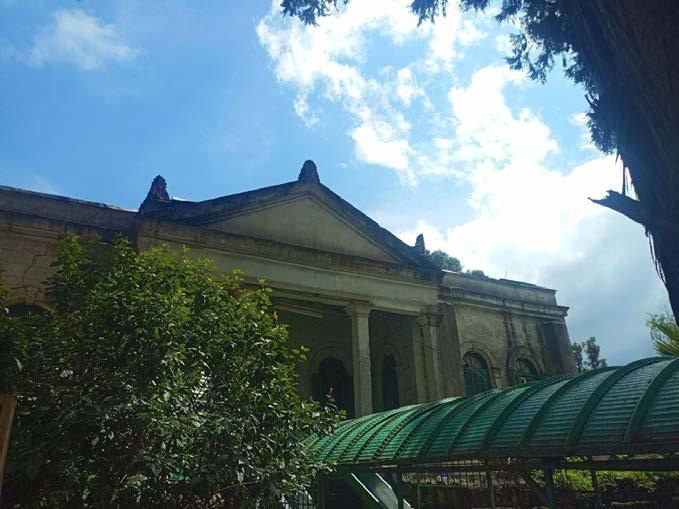
Pediment entrance of the Ras Nadew Aba Wollo house. (Photo by the authors)
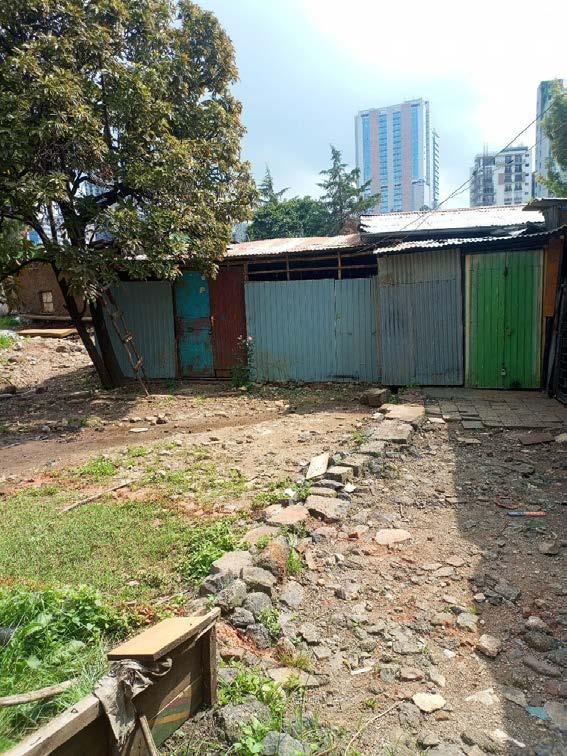
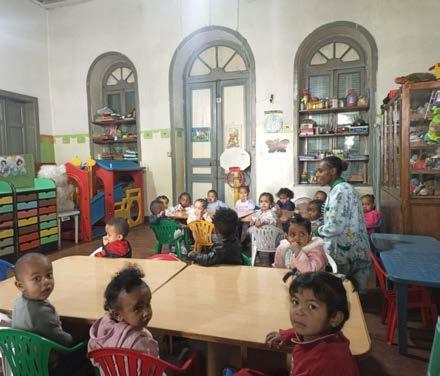
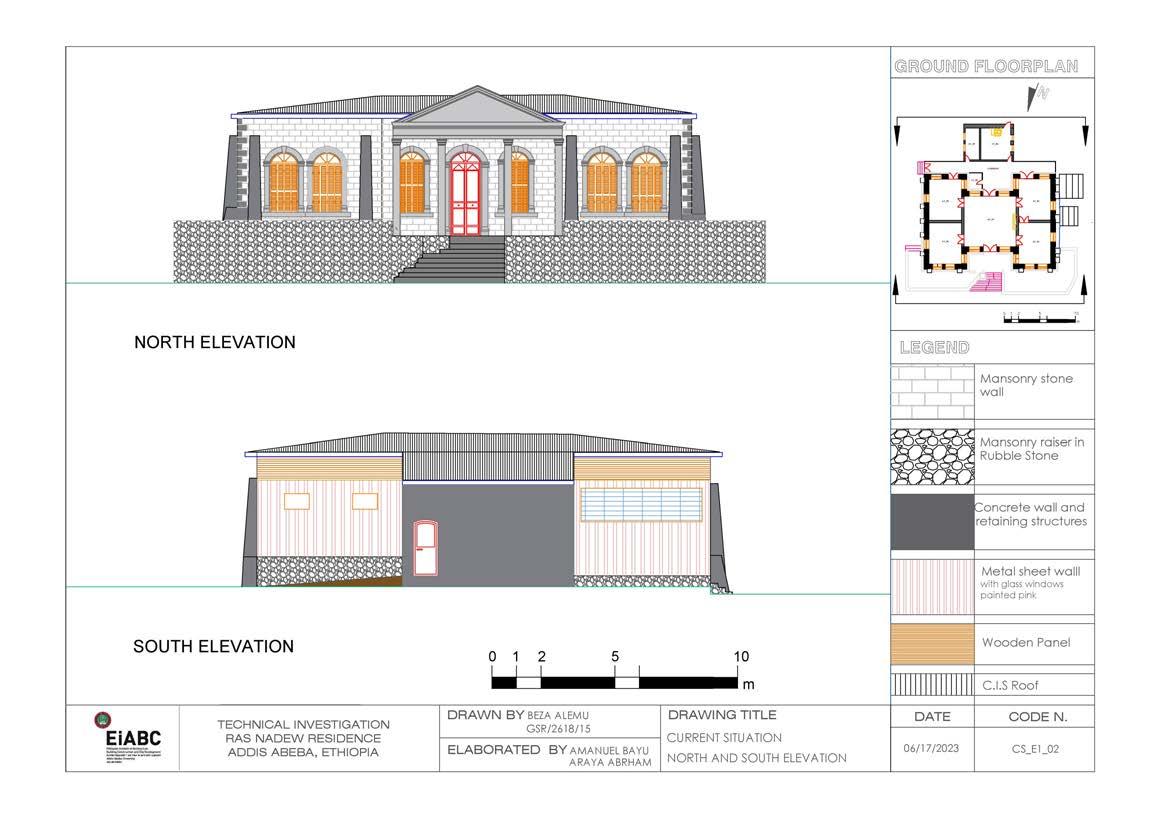
Images clockwise, starting in the upper left: The backyard of the residence and the architectural scene behind (Photo by the authors) / Image of the residence taken from the heritage database dashboard of the city / The onsite day care until for children (Photo by the authors) / Drawing of the front and rear side elevations (by the authors).
Unfortunately, due to the eager governmental development of the city, these old edifices are now being demolished or altered beyond recognition to fit the current infrastructural demands and desires. As a result the city is losing an overwhelming proportion of complexes that reflect a unique blend of architectural styles pointing to its historical origins. One such complex is the Ras Nadew Aba Wollo Residence.
This elite building was constructed in the early 20th century to serve as a residential seat of the nobility, Ras Nadew Aba Wollo, who was a high -ranking Ethiopian official during the reign of Emperor Menelik. Ras Nadew played a substantial role in representing the country on the international stage and also took part in the inter -governmental administration of the Emperor. Moreover, he represented the country after joining the League of Nations.
Currently, the building is occupied and owned by Hirut Gelaw, a close family member of Ras Nadew, and the main salon and some major rooms have been rented out.
ARCHITECTURAL CHARAC TERISTICS
The house was constructed mainly of timber specifically brought from the southern region of the country. Earth, cement, brick, mortar, and corrugated iron sheeting are also visible elements of the building.
The structure reflects elegance and embodies an architectural style that is an amalgam of traditional Ethiopian and Western classical architecture influences, which were dominant during the time of construction. The entrance of the complex is emphasized with a pediment which rests on five supporting columns currently in a state of deterioration.
The house -plan follows a rectilinear typology, which emphasizes appearance at the front with more functionality at the back end. These more function -focused spaces in the back were added as later extensions and became the center of culinary related activities.
THE BUILDING SITE AN D CHALLENGES
The property is located around Tewodros Square, behind the Lycee Gebre -Mariam ( Ethio -France) School and Churchill Street in the Arada sub -city of Addis Ababa. The nearby site is currently overwhelmed by active construction projects that are mainly for commercial purposes. Originally the property consisted of approximately 20,000 square meters but has now been reduced to around 500 square meters.
The proximate area around the complex, formerly open green spaces, has now become a high -interest destination for developers and investors. The active construction sites nearby are part of the economic development that is expanding in many other areas of the city as well. As can be seen from the image at the top left, the nearby setting is changing rapidly, where modern structures are becoming the dominant features.
This then creates an infrastructural encroachment on historical sites and complexes. Ambitious investors convince the government that these old complexes are nothing but worn -down and obsolete structures that are occupying highly valuable land that could be utilized for impactful commercial structures that will ultimately benefit society and the economy.
Another challenge in preserving the Ras Nadew building is the surrounding rugged terrain that has been exposed through erosion and dampness that passes through building ’s thick walls and semi -basement. This resulted in designers incorporating a semibasement under the building, which is only accessible through a single side of the structure.
According to Hirut Gelaw during a 2024 interview with the author, the building ’s integrity is threatened due to exposure to rainfall, particularly during the summer time. Although it has been renovated since its original construction, the complex is cracking everywhere, and as a result it is exposed to rain and dampness which are severely impacting the inner structure. Damage analysis has identified the rear and west sides as the most affected parts of the building while the most deteriorated part of the building are the walls and wooden beams that reside in the semi -basement.
CURRENT FUNCTION
The house ’s inherited caretaker, Hirut, lives alone and thus does not fill the entire building. It is therefore worth noting that, despite the lack of action from the authorities in preserving the historical structure, they have not restricted the renting of the property to another party. The main salon and two additional rooms are being used as day care units while the remainder of the rooms are occupied by families.
Due to the entrance of the semi -basement facing in the opposite direction, and illegal occupation issues, ownership of the basement is currently held by a separate individual althoug h it is still part of the main complex. Currently, there is an ongoing legal restitution case to have the complex fully returned to the rightful owners.
Addis Ababa is losing an overwhelming proportion of complexes that reflect a unique blend of architectural styles pointing to its historical origins.
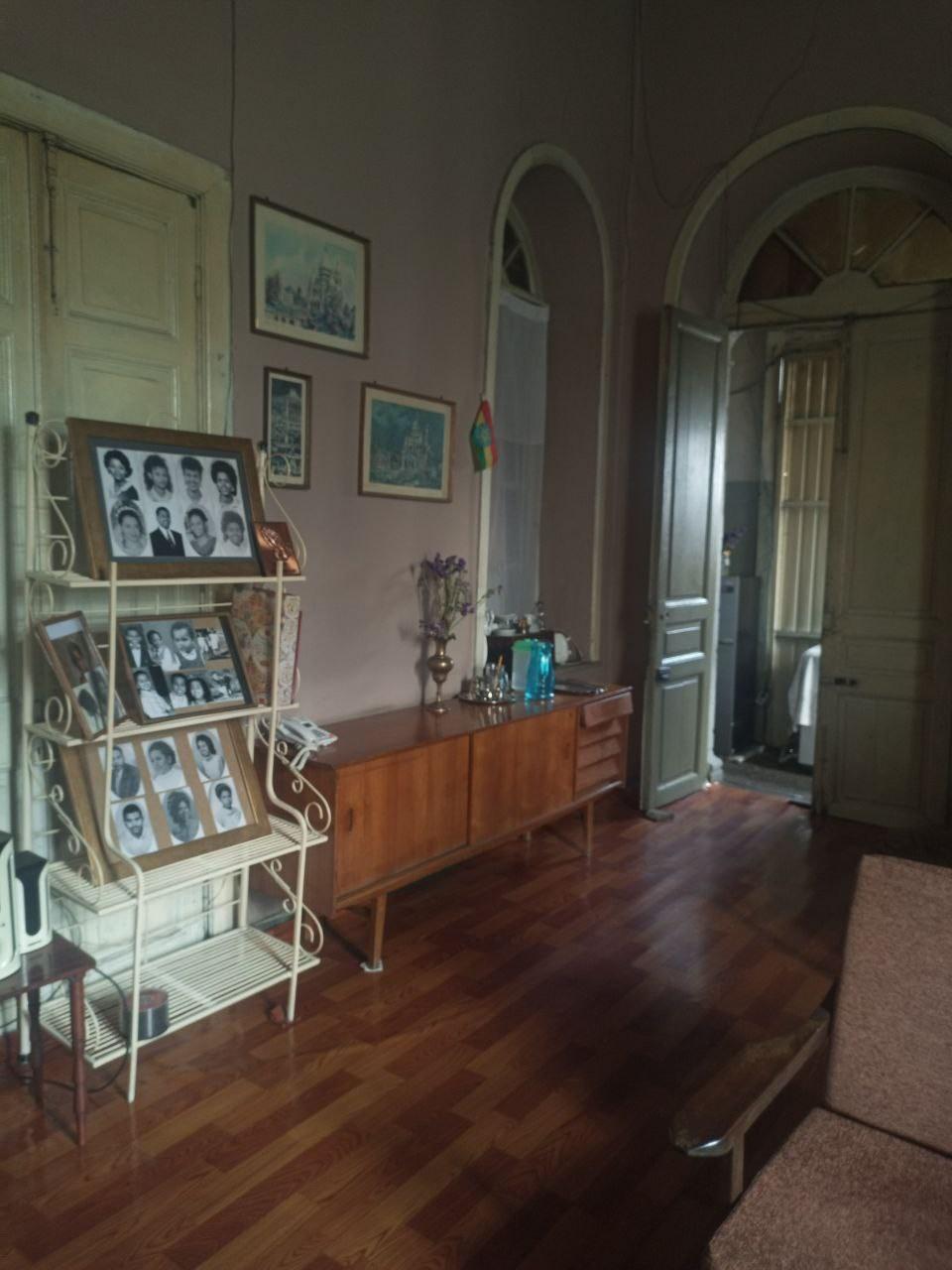
Interior room of the Ras Nadew Aba
Wollo Residence. (Photo by authors)
CONCLUSION
The city ’s heritage authorities have recognized the structure as a site of the urban heritage in its domain; nevertheless there have been no targeted efforts to maintain the structure. As stated by Hirut, the family has reportedly asked the appropriate officials to take measures against the deterioration of the house and yet no response has been given thus far.
For the family to take action privately, they would need permission from official authorities since it is registered as an urban heritage site. Thus, any measure taken by the owners without the permission of the office would be prone to possible rejection and would therefore be futile. As a result, the owners are in a dilemma, stuck between protecting the legacy
they have inherited and the serious bureaucratic challenges which could potentially lead to the final collapse of the structure.
The Ras Nadew Aba Wollo complex is an emblematic design that showcases the transitional time when Ethiopian traditional architecture was influenced by Western classical styles to produce a unique blend of architecture which came to be known as the Addis Ababa style.
The residence is among few complexes in the city that remain standing; however, due to the threats it is facing, without intervention it is only a matter of time before it is demolished either to accommodate the surrounding infrastructural encroachment or due to the physical deteriorations it is facing.
This article urges concerned officials, researchers, international organizations, and cultural heritage advocates to contribute to the protection and safeguarding of this structure by bringing awareness to the local and global conservation community and by helping preserve the authenticity of the historic Addis Ababa architectural style.
Interested parties and individuals can help in writing further research, preparing management proposals for the complex, arranging funding and possible external grants for its preservation, and creating awareness on the issue. Please contact Araya Abrham:
Araya Abrham is an MSc graduate in conservation of urban and architectural heritage from Addis Ababa University. His background is in architecture. Araya also taught as an assistant instructor within the department of architecture at Adigrat University and University of Gondar. He is an aspiring research enthusiast on cultural and architectural heritage.
Beza Alemu is an architect and urban planner who graduated in 2021 from Unity University. She is currently pursuing a master's degree in architectural and urban heritage conservation and is passionate about preserving cultural landscapes while integrating sustainable design. With a strong academic background and a keen interest in heritage, she aims to bridge the gap between historic preservation and modern urban development.
Amanuel Bayu graduated in architecture from Addis Ababa University (former EiABC) and is currently studying for his MSc in conservation of urban and architectural heritage. He is also a lecturer at Hope University in Addis Ababa, an academic and a researcher in the field of heritage and the built environment.
In Memory of Prof. Dr. Manfred Koller
With deep sorrow, IIC Austria mourns the passing of Prof. Dr. Manfred Koller , who passed away in Vienna on August 2, 2025.
Dr. Koller was one of the most influential figures in the field of conservation -restoration in Austria. As an art historian, conservator, and heritage preservationist, his life’s work has left an enduring mark on both scholarship and practice. His career combined institutional leadership, pioneering research, and an unwavering dedication to mentoring younger generations.
He studied art history and classical archaeology at the University of Vienna, earning his doctorate in 1972, while also training in conservation -restoration at the Academy of Fine Arts, where he assisted Professor Robert Eigenberger. Beginning in 1965, he served at the Austrian Federal Monuments Office, directing its Department of Conservation -Restoration (19802005) with exceptional foresight. Alongside this, he lectured on conservation and technology at Vienna’s leading universities and completed his habilitation (postdoctoral work) on this subject in
1982. Dr. Koller ’s research and publications profoundly shaped the discipline. As author or co -author of more than 580 scholarly works, he contributed to the understanding of painting, polychrome sculpture, murals, stucco, stone, and architectural surfaces, as well as to the history of artistic techniques and conservation methods. His publications remain a cornerstone of the professional literature.
Internationally, Dr. Koller represented Austria as government deleg ate to IC C RO M from 1972 to 1992. He was a founding member of International Institute for Conservation of Historic and Artistic Works (IIC) Austria in 1979, served as its president from 2003 to 2011, and guided the association with wisdom and generosity. For nearly four decades, he conceived and edited the annual periodical Restauratorenblätter , which continues to be a vital forum for conservation scholarship. At the IIC Congress London 2012, Dr. Koller was recognized for his lifetime achievements
with the Forbes Prize, the organization’s highest honour.
With his passing, IIC Austria has lost not only a distinguished colleague but also a guiding figure whose influence extended far beyond Austria. His curiosity, openness, and pioneering spirit shaped the very identity of our association. He was a steadfast mentor, advisor, and friend to IIC Austria, remaining an active member of the advisory board until the end of his life. He supported the association in challenging times, offered guidance in strategic decisions, and showed deep respect for the perspectives of younger colleagues.
We owe him our deepest gratitude for his knowledge, his example, and the countless moments of dialogue and exchange we were privileged to share with him. His legacy will remain alive in the work of those he inspired.
In solemn remembrance, The Board of IIC Austria
We are delighted to announce next year ’s IIC Book Club selection: Climate Action in the Art World by Annabel Keenan (How exciting!)
As you prepare your holiday wish lists, we encourage you to include this timely and insightful book in preparation for next year ’s programme. Keenan offers a clear overview of how museums, galleries, and conservation studios can respond meaningfully to the climate crisis, calling for practical action, transparency, and sustainable decision -making across the art world.
We’re also thrilled to welcome Gwendoline Fife as our guest researcher. Working for the Rijksmuseum in the EU Horizon funded GoGreen initiative, Gwendoline has helped lead the discussion to define what “green ” means in conservation and develop practical ways for conservators to assess and reduce harmful impacts in their decisions and practices.
By revising sector standards and developing green innovative methods, GoGreen is breaking down barriers and encouraging real, measurable change.
Keenan ’s themes and Gwendoline ’s work align closely, offering both theoretical insight and hands -on strategies for more
sustainable practice. We are equally pleased to share that Annabel Keenan will join us during the programme to discuss her book.
This is really looking to be a very apt, wholly engaging, and informative programme.
Keep tuned for the registration link!
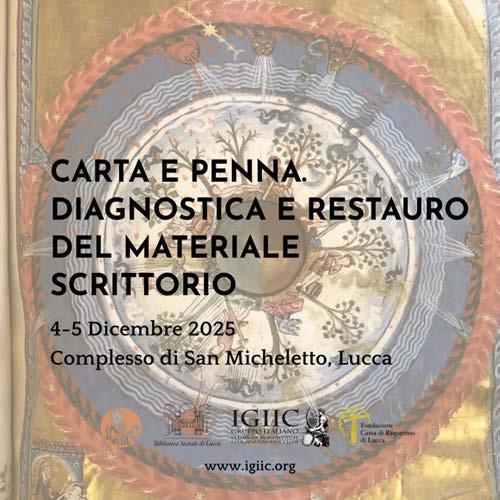
CARTA, PENNA E CALAMAIO. DIAGNOSTICA E RESTAURO DEL MATERIALE SCRITTORIO
Location: Complesso di San Micheletto, Lucca
Date: 4-5 December 2025
The eighth edition of the biennial study day organized by the University of Pisa and IGIIC will focus on writing materials, especially paper. The event welcomes contributions addressing the history, diagnostics, degradation, and conservation of writing supports, inks, dyes, and pigments. The aim is to provide participants with critical insights into materials and restoration methods.
Info and Reservations at: info@igiic.org
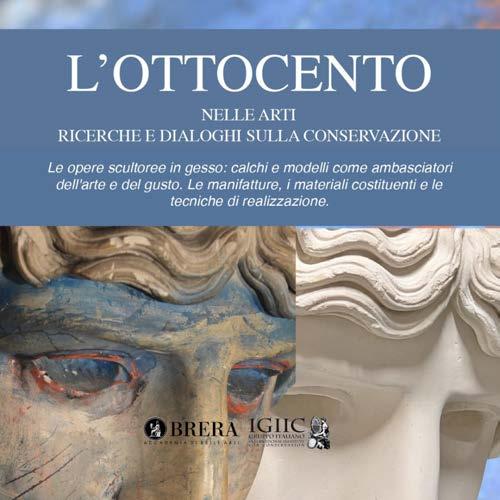
L’OTTOCENTO NELLE ARTI. RICERCHE E DIALOGHI SULLA CONSERVAZIONE CASTS AND MODELS AS AMBASSADORS OF ART AND TASTE. MANUFACTURES, CONSTITUENT MATERIALS, AND TECHNIQUES OF REALISATION
Location: Accademia di Belle Arti di Brera, Milan
Date: 24th November 2025
The Accademia di Belle Arti di Brera, custodian of a Gipsoteca with approximately 1,300 pieces, as well as a rich historical archive and photographic collection that connect its casts to the cultural history of Lombardy, Italy, and European institutions, is pleased to promote this meeting.
Reserve your spot at: info@igiic.org
New ISO committee on cultural heritage conservation
By Athanasios Velios
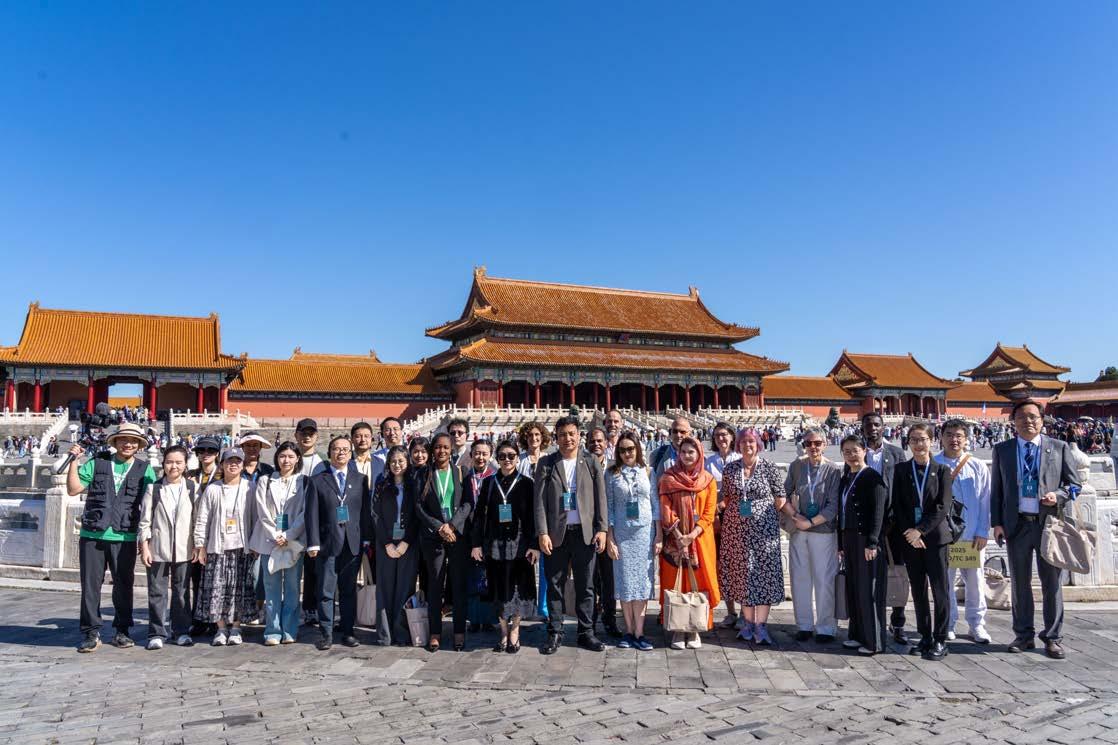
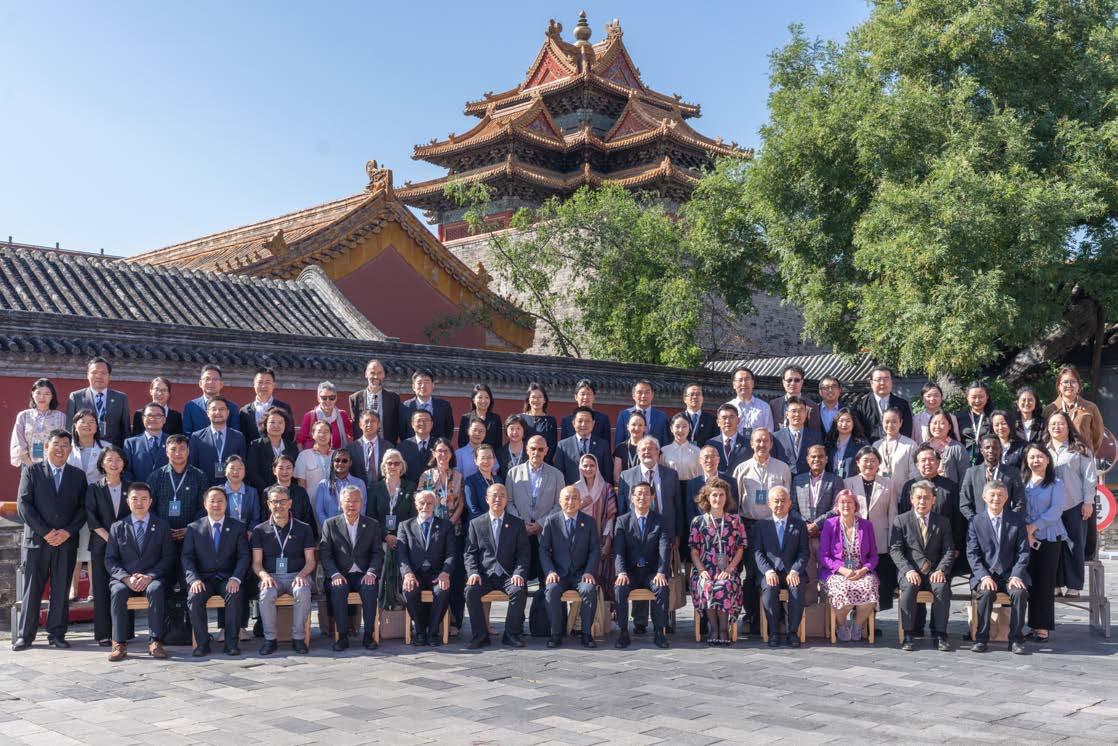
On the 17 th and the 18 th of September, the first plenary meeting of the new International Organization for Standardization committee (ISO/TC 349) entitled "Cultural Heritage Conservation" took place in Beijing. Our Chinese colleagues, with admirable care, have initiated this technical committee and have laid the foundations for an ambitious programme of standard development on conservation. This is an important step towards standardisation in the profession at a global level. Beijing welcomed delegates from Bulgaria, Finland, France, Germany, Greece, Iran, Italy, Jordan, Kenya, Mongolia, Nepal, New Zealand, Norway, Pakistan, Russia, Saudi Arabia, Sweden, Tanzania, the United Kingdom and the United States. Like the multi -cultural representation during IIC Congresses and meetings, the first ISO/TC 349 had representatives from across the world, although representation from Europe was disproportionally high. Such multicultural meetings highlight the different practices and approaches to heritage conservation and act as reminders to the value of international collaboration and exchange of experience and knowledge.
During the first meeting, various proposals were discussed, and resolutions on the following proposals were passed:
1) The development of a standard vocabulary for conservation based on submissions of existing terminologies by ISO members.
2) The development of a standard on the classification of wall -paintings.
3) The development of a standard on the damage types of silk artefacts.
4) The development of a standard on the classification of damage of calligraphy and painting.
5) The development of a standard on surface protection of stone and, in particular, in relation to penetration of water.
6) The development of a standard on the scientific characterisation of ancient ceramics.
7) The development of a standard on seismic protection of artefacts.
While the committee is large and has a strong capacity, the above still points to a high volume of work which will take years to develop. The emphasis on terminology in these initial proposals was noted. IIC has a special position in ISO/TC 349 providing advice and support to the committee but without any voting rights. Those readers who have been involved in drafting standard documents will know well how important it is to have expert members in standards working groups to allow confidence in the good quality of the drafted text and thus reduce the time required for revisions. IIC members and especially the IIC Fellows can play a key role in the development of standards in conservation, both by joining working groups and by contributing through the national standards committees and by becoming members of the ISO. IIC was presented with a certificate following the conclusion of the meeting.
If you wish to contribute to the development of standards, please get in touch with the IIC office via: iic@iiconservation.org
New ISO Committee on Cultural Heritage Conservation. Both images courtesy of The Palace Museum, Beijing and the Secretariat of the ISO/TC349
Fellowship Corner
Lisa Swedberg holds a master of science degree with a major in conservation from the University of Gothenburg, Sweden. She has over 15 years of work experience in conservation and is currently the Head of the Department for Paper Conservation at the Kiruna Centre for Conservation of Cultural Property, which is a state -owned foundation under the Ministry of Culture. In 2021 she initiated the NKF -S/IIC -Nordic Group Sweden Working Group on Transport, and in 2024 the NKF -S/IIC Nordic Group Sweden Working Group on Emergency Preparedness and Response. Since 2023 she has been the chair of NKF -S/IIC -Nordic Group Sweden. Her special interest in conservation includes ethical issues and immaterial aspects such as sustainability and inclusivity in conservation. In addition, she lives in Kiruna, which is in the heart of Sápmi, and is consequently interested in questions related to the cultural heritage of indigenous communities.
Ian Clark studied mechanical engineering and completed a traditional multi -skilled craft apprenticeship. During his early career he was given the opportunity to work for a private independent industrial museum where he provided commercial practical collections care solutions for museums and collections in the UK and overseas. In 1983 he established his own business providing support in all aspects of practical industrial, artwork, maritime and architectural conservation, project management and consultancy.
His conservation journey has taken him around the world and has allowed him to engage with many wonderful museums, institutions and leading practitioners in both the private and public sectors. Engineering exists within many disciplines, and it is this fundamental element that has afforded him the opportunity to expand his knowledge of conservation and its influence within the wider cultural heritage landscape. He is accredited by the Institute of Conservation and has achieved fellowship of the Institution of Mechanical Engineers and The Museums Association.
Lisa, FIIC, works at the Kiruna Centre for Conservation of Cultural Property. Image curtesy of Lisa Swedberg.
Ian, FIIC, established his own conservation business in the UK. Image courtesy of Ian Clark.
Alison Seed is a specialist easel paintings conservator heading a private studio in Hampshire, UK, where she treats paintings from private and public collections. Clients include the National Trust, Historic Royal Palaces, and Westminster Abbey. Following her training at the Hamilton Kerr Institute, Cambridge University (2004 -7), she undertook a year of internships at the Guildhall Art Gallery, London, and Southampton City Art Gallery. Alison has combined a teaching career with her private practice, appointed as conservator/lecturer at the Courtauld Institute of Art, and tutor and lecturer in conservation at the City and Guilds of London Art School (2011 -18). In recent years Alison has led major in -situ projects at St Paul ’s Cathedral, Westminster Palace (UK Parliament), and the Banqueting House, Whitehall. These projects have required multi -disciplinary and collaborative working and enabled her to offer further training opportunities for students and emerging professionals. Alison actively promotes conservation through her teaching and wider public outreach.
Aditya Prakash Kanth is an assistant professor at the Centre for Heritage Management, Ahmedabad University with over two decades of experience in the field of conservation. He has been associated with institutions such as the National Museum, New Delhi; Osian ’s Connoisseurs of Art; and the Indian National Trust for Art and Cultural Heritage (INTACH). He has conserved numerous modern and contemporary artworks as well as paper -based objects.
Aditya holds both a master ’s degree and a PhD in art conservation, along with a master ’s degree in chemistry. His research focuses on the scientific characterization of art and archaeological objects, as well as the advancement of conservation methodologies. His scientific investigations involved the analysis of ancient archaeological ceramics, copper slags, mild steel, and wall painting pigments. He has conducted several training workshops and has published extensively in peer -reviewed journals. He has also served in the governance of the IIC as Director of the Emerging Professionals Committee.
Alison, FIIC, is a specialist easel paintings conservator in Hampshire, UK. Image courtesy of Alison Seed.
Aditya, FIIC, is assistant professor at Ahmedabad University. Image courtesy of Aditya Kanth
Preserving the Panels
Conservation bindings for collections of comic books
By Amy Randall
omics are a series of narrative images, often supported by text, and designed to be read sequentially in a panel format. These publications are typically considered a form of ephemera a classification of paper -based materials not originally designed to last for a prolonged period. Similar to other forms of ephemera, like pamphlets and newspapers, comics present a number of challenges for conservation. In particular, comic books are typically made with paper that contains low quality mechanical wood pulp, leaving them prone to acidification. Furthermore, some publishers have the practice of binding collections together into larger volumes, grouping them into more complex structures. This can make them susceptible to other forms of deterioration, such as mechanical damage from a restrictive binding or unsupported handling of a heavy text block.
CURRENT BINDING STRUCTURES
Whilst studying for my master ’s degree at West Dean College, my dissertation research explored binding collections of comic books as a conservation practice. By conducting a literature review into the binding structures found in collections of comic books and related ephemera, I was able to evaluate how the mechanics of these bindings may impact the fragile text block within. Furthermore, I
surveyed a collection of bound comics books at the Rebellion Group archive, Oxford, to ascertain whether my literature review findings aligned with a real -world case study. My survey observations corresponded with the literature review research into bound newspapers, which both evidenced case binding structures used to collate ephemeral material.
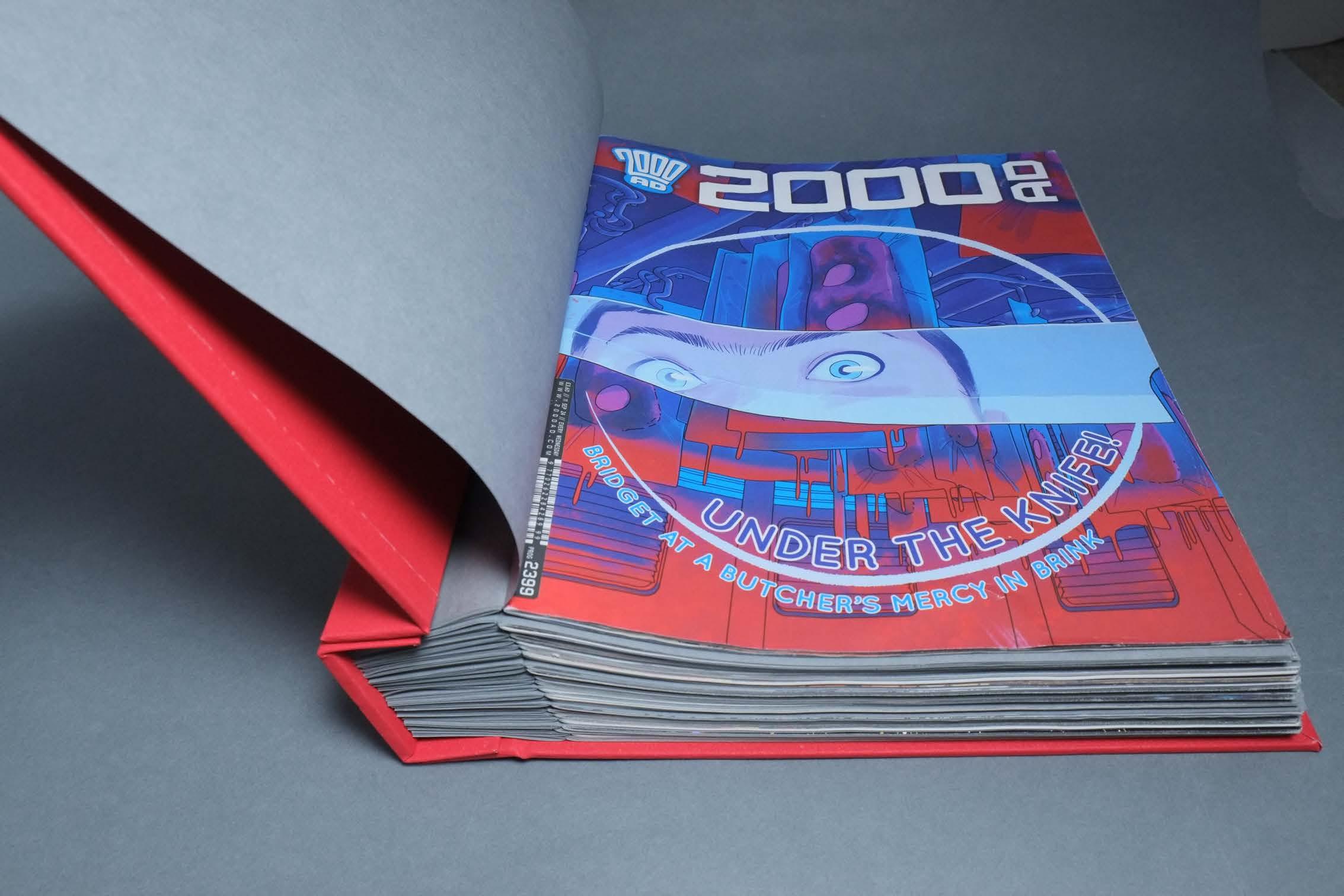
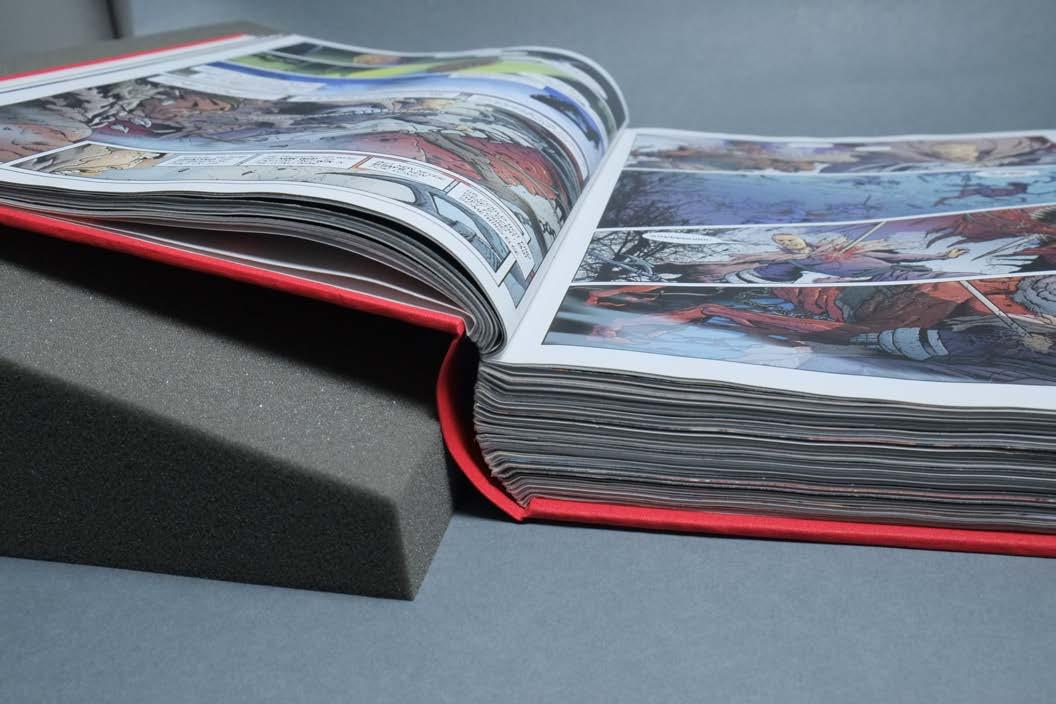
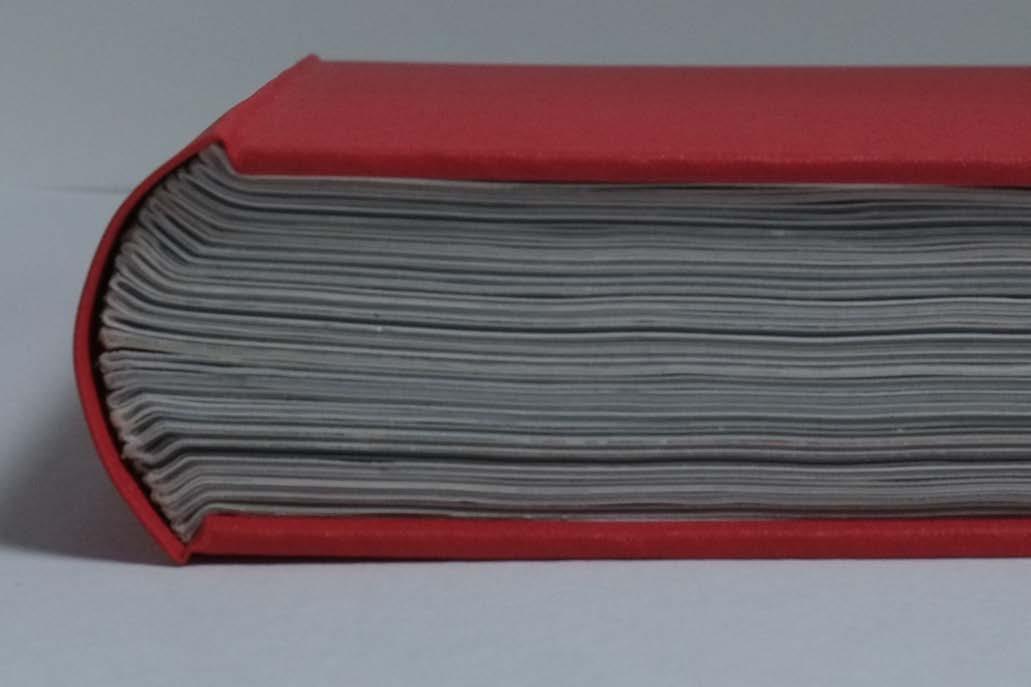
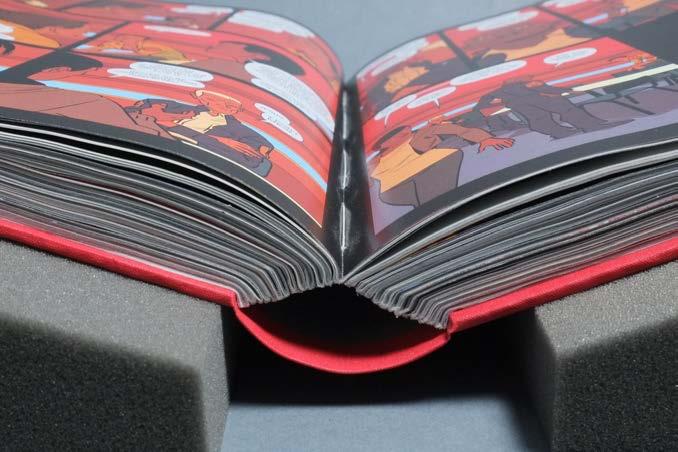
Case bindings are one of the most prevalent binding structures used today; you will have likely encountered them when reading a hardback book. To make a case binding, the printed pages of the text block and the cover boards are prepared separately. Then they are joined together in the last stages to create the finished book. Their quick, simple construction is desirable for mass production However, this efficiency can create structural issues. There is a process known as knifing in which the mechanical load from opening a book is not spread evenly across the spine and concentrates sharply in one area. For case bindings, these pressures focus on the weak shoulder attachments, where the text block meets the cover. This can cause damage to the outer pages of the text block such as tearing and page detachment, and this form of damage was observed in the surveyed comic book bindings. Furthermore, there was also evidence of text block sag, in which the weight of the text block was causing it to pull away from the
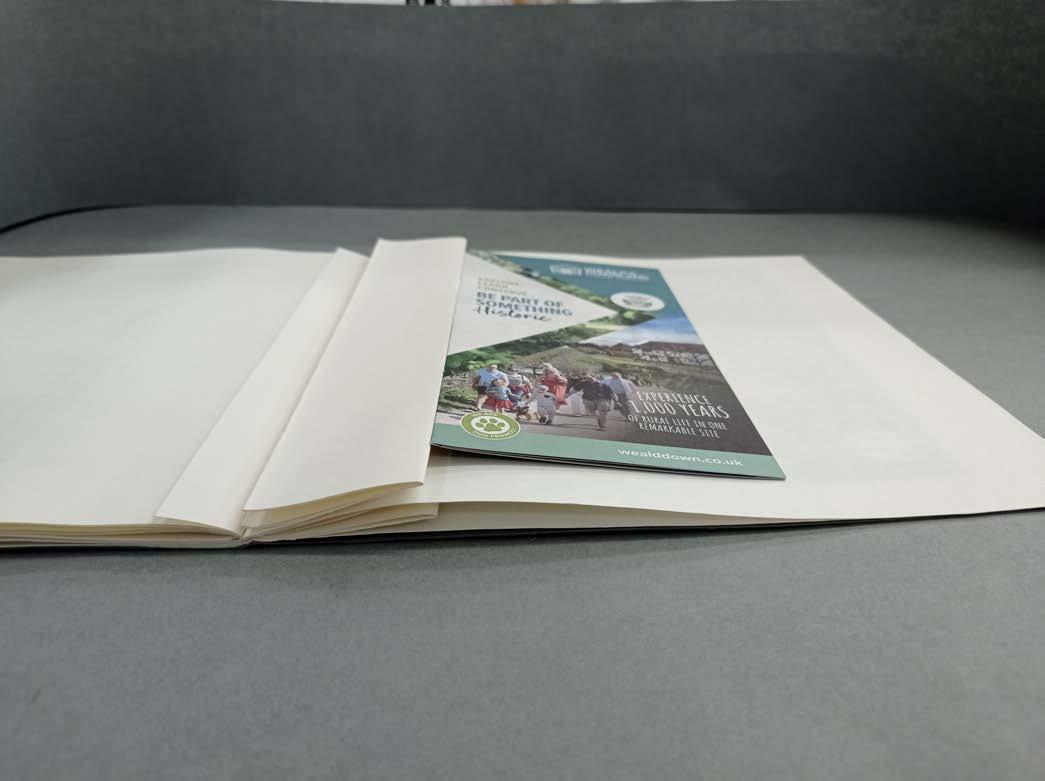
Above : An example of a pamphlet housed in a fascicule system, sewn to a folded stub.
Centre: Figure 3: Simplified cross -sectional diagrams of common stub constructions. The left side of each diagram represents the stub, the red line represents 25/3 thread, and the right side represents the comic text block. (a) Folded stub. (b) Reversed v -guard stub. (c) Bifolia stub.
Below: A facsimile binding model of a case binding structure typically found in collections of bound comic books.
All images by Amy Randall
cover board attachment leading to distortion and abrasive damage on the tail edge of the text block.
AN ALTERNATE STRUCTU RE
It was clear that case bindings were not suitable to house comic books, so it was essential that I develop a binding structure which could support this complex material. The literature review highlighted several conservation binding structures used to house ephemeral material. One of the most notable was the fascicule system wherein ephemera can be hinged into a larger pamphlet binding of guarded sections meant to accommodate the inserted material. This structure was originally designed for singlesheet items. However, it can be adapted to house small pamphlets by folding the guard several times to match the thickness of the inserted material, which is sewn into place via pamphlet stitching.
“... I found few literature sources to suggest that stub binding structures are being used in conservation binding practice. “
The earlier design. The case is made as one whole piece, and the cover hinges align with the stub attachment, restricting the text block ’s movement.
Below: Model making in action! Adapting screw post bindings to support a comic book text block. Images by Amy Randall
The improved model. Case made with separate cover. Image by Amy Randall
This folded guard structure is very similar to stub bindings, a bookbinding structure where gatherings (groups of folded pages) are connected to stubs of folded material. There are many ways to fold the stub material to build it to an equal thickness of the gathering attached. Once each gathering is connected to a stub, these stubs are often sewn together to form a text block.
There are many potential advantages to adapting this structure to a conservation context. For example, it can allow the stub folds to undergo bookbinding processes such as rounding and backing without manipulating or damaging the original material. Furthermore, there is little to no use of adhesives during construction. When considering re-treatability, the gatherings can be easily removed from the bindings by severing the pamphlet stitch that attaches them to the stubs. But despite these qualities, I found few literature sources to suggest that stub binding structures are being used in conservation binding practice. To explore the viability of this structure for binding collections of comic books, I had to then undertake experimental research.
MAKING MODELS: EXPER IMENTAL RESEARCH
One strand of my experimental research was to create a programme of physical models to explore the strengths and limitations of a stub binding structure. Making bookbinding models is something very familiar to book conservation students. It helps us to understand the materiality of books and their construction methods and allows students to trial treatment processes.
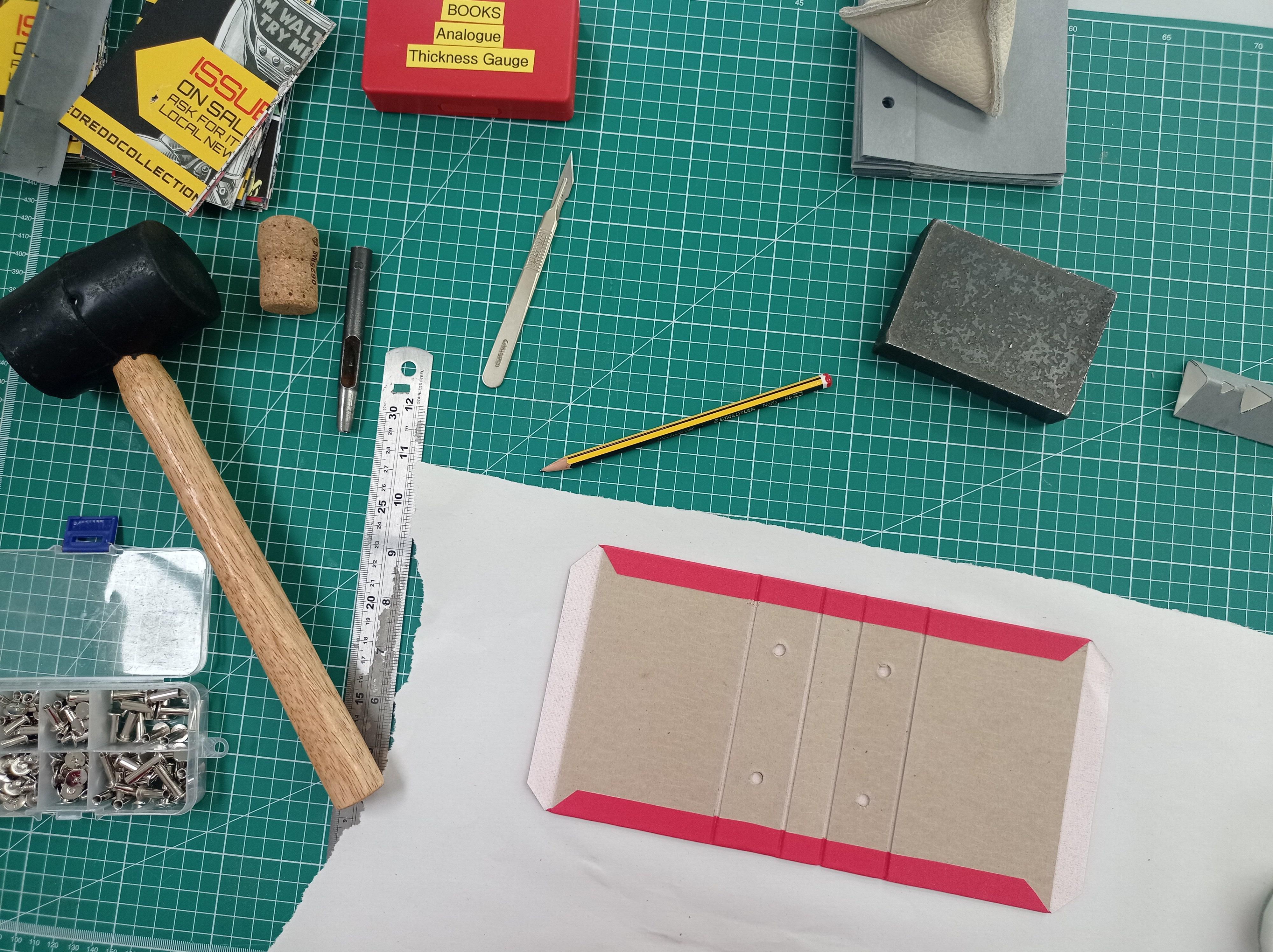
After testing several stub configurations and binding structures, I chose to develop a bifolia stub (figure 3c) in conjunction with a screw post binding case. A screw post structure is commonly used for commercial albums and portfolios but can also be adapted for conservation purposes to bind material encapsulated in polyester film. Its construction
requires no sewing and is non -adhesive. Instead, metal screw posts pass through the covering case, and stubs to hold the structure together. The use of screw posts also allows for greater reversibility, as the structure can be easily disassembled to remove complete sections. The concept of retreatability is a key principle in conservation, so having this feature incorporated into a conservation binding structure is highly desirable. Moreover, the simplicity of this design means that bookbinding and book conservation skills are not necessary to access the text block, thus improving accessibility to the bound material in an archival collection scenario.
MAKING MODELS: REFIN ING DESIGNS
I created several models. Firstly, to protect the comic book issues from potential abrasion caused by the connected stub and adjacent issues, a 90gsm pHotokraft outer wrap was placed around each comic. This material is pH buffered to help neutralise any acidic deterioration within the comic books. Furthermore, a sewing guard made from 18gsm Japanese tissue was placed in the centrefold of each comic book to protect the comic book paper from the sewing thread which attaches the comic to the stub.
In my early trial stub binding case designs, I constructed the cover boards as one whole piece which wraps around the text block, and the cover hinges align with the stub attachments. However, this restricted the movement of the outer comic book gatherings, which could lead to distortion. To counter this, I switched to creating wider stubs staggered from the cover hinge, thus allowing more freedom of movement. Additionally, I attached the spine covers as separate pieces from the cover boards rather than as one continual cover. This allows for easy replacement should the text block depth change with any future additions or removals of signatures. Because of these adaptations, this design was selected for the full -scale final binding.
THE FINAL DESIGN
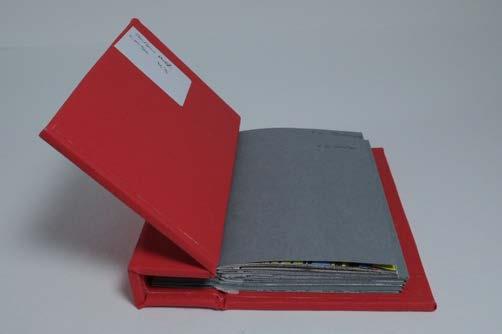
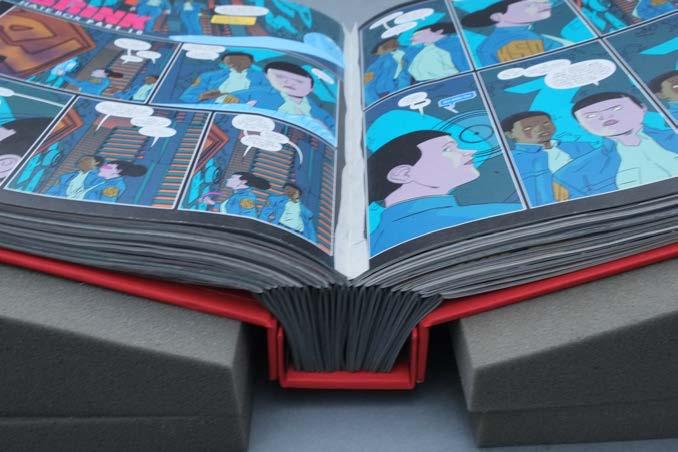
I created the full -scale stub binding along with a facsimile binding of the surveyed case bindings to use as a comparison to evaluate the alternate structure. The chosen stub binding design has an increased flexibility allowing each comic book issue to fully open with less strain on the sewing structure. With this increased flexibility, the opened text block is supported by the surrounding gatherings. This allows the mechanical strain to spread more evenly throughout the text block thus reducing concentrated knifing pressures, which minimises mechanical damage whilst increasing accessibility for readers. Furthermore, being able to easily remove the screw posts to fully access the text block allows for increased versatility in this binding structure.
With the addition of stubs, outer wraps, and sewing guards, this alternative binding is much larger
Above: details of the endcaps. Typical case binding (left) and final design using stub binding
than the facsimile. Consequently, it is also much heavier. Unsurprisingly, this model also suffers from text block sag, with the tail edge contacting the surface it rests upon. Further refinements to this structure will be required to reduce this issue, however, the addition of a support such as a book shoe could be used with the current model.
Nevertheless, the final model that has emerged from this dissertation has made several improvements upon typical comic book binding structures. It provides a more conservation friendly design that may be an adaptable solution to the challenges facing bound
ephemeral material as well as providing a starting point that future research could continue to refine.
ACKNOWLEDGEMENTS
I would like to thank my dissertation supervisors, Maudie Casserly and Jonathan Farley, for all their indispensable advice and support throughout this research project.
I would also like to thank Charlene Taylor at the Rebellion Group for allowing access to their amazing collection and for permitting the case study.
Amy Randall has been practising conservation since 2015. With a background in objects conservation, her current practice specialises in library and archival material. Amy completed her master ’s studies at West Dean College earlier this year and is now working as a conservator for the Oxfordshire History Centre.
Comparisons between the comic book case bindings (all images by Amy Randall)
(right).
Left centre: Greater flexibility allows for the text block to open more fully, supported by surrounding signatures.
Left bottom: Knifing pressures on the spine with open text block.
Walking
This Path Together
By Marina Herriges Editor for Reframing Conservation Through Sustainability
As I sit down to write this,
I am realising just how quickly time sneaks up on us. Five years have passed since I started this column in News in Conservation five years of learning, of shifting landscapes, of remarkable conversations that have shaped the way I see conservation and the world around it. When I looked back at the very first column I wrote for News in Conservation in August 2021, I found myself remembering each encounter, each exchange, with the inspiring professionals who generously shared their knowledge, their doubts, their experiments, and their hopes. This column has been, for me, a place of curiosity and connection, and I am deeply grateful for what it has allowed me to discover.
Flower in graduated cylinder.
Photo by Ron Lach/
“What we do to safeguard objects must be in harmony with how we safeguard this world that holds them. ”
During these past years, conservation has transformed in ways that feel both profound and overdue. Sustainability, once a peripheral topic, has moved to the centre of our practice, not as an optional consideration but as an essential responsibility. There is now a shared understanding that environmental awareness is not something separate from conservation; it is conservation. What we do to safeguard objects must be in harmony with how we safeguard this world that holds them.
As I reflect on my own journey since beginning my training in conservation (15 years ago again, time flies by), I can trace the slow, sometimes uncomfortable process of unlearning. I began, like many of us, with an ingrained idea that nature was something outside ourselves something to preserve, to protect, and to study, but ultimately something “other. ” When we see the Earth that way, it becomes all too easy to consume its resources without noticing the cost. But the more I listened to colleagues, to researchers, to community voices, and to Indigenous wisdom, the more I realised how limiting that separation is. We are not observers standing apart from nature; we are participants within it. When we allow that understanding to guide our practice, it becomes clear that conservation cannot be about assigning greater value to one thing over another. Objects, animals, ecosystems, people; we exist together in a delicate, interdependent weave.
From the many people I have had the privilege to speak with, I have learned that sustainability is not only an environmental issue. It is equally social, cultural, and personal. It is about how we relate to one another, how we hold responsibility for each other, and how we honour the interconnectedness of our work. It asks us to move away from thinking in rigid categories and instead recognise the fluid boundaries that shape the world.
Ripples on the water surface: Photo by Olga Shenderova/ Pexels.com
We are part of a network (messy, vibrant, and alive) and everything we do resonates through it.
Writing this column over the years has allowed me to witness that network more clearly. It has shown me how ideas spark across continents, how a small shift in one studio can inspire change in another, how conversations ripple outward in ways we cannot always predict. It has been a privilege to trace those moves with you. As everything in life is connected, the learning that grew through these texts also helped me shape the
proposal that led me to begin my PhD research a project I am truly in love with. With the passing of time comes inevitable change, and while this column will remain an important section in News in Conservation , I will no longer be its main author. Rather, we invite you all to fill "Reframing Conservation Through Sustainability" with your experiences, projects, and perspectives, shared in your own words.
Although this is officially my last regular piece for News in Conservation , it is not really a farewell.
The work continues, the conversations continue, and I will continue to engage with you, our NiC readership, from behind the scenes whether it be through scouting for NiC articles, through future collaborations, or simply in the shared paths our field so often creates.
This column has been one chapter in a much broader story, and I am stepping away with immense gratitude and a heart full of “see you soon. ” Thank you for reading, for thinking alongside me, and for engaging in our evolving practice. Until our paths cross again.
Marina Herriges is a textile and objects conservator based in Glasgow and serves as Regional Programme Manager at the International Institute for Conservation (IIC). Marina is currently a doctoral researcher at the University of Glasgow ’s School of Education, focusing on integrating anti -colonial practices and climate action into cultural heritage conservation. Marina is also a visiting lecturer for the MPhil in Textile Conservation at the University of Glasgow and has worked in Brazil, Portugal, Spain, and the UK.
Woven blue and gold.
Photo by Pixabay/
Performance
The Ethics and the Politics of Conservation and Care (Vol. 1 and 2)
Edited by Hanna B. Hölling, Jules Pelta Feldman and Emilie Magnin
Routledge (2023) and (2025)
Vol 1. 312 pages / Vol 2. 319 pages
PReviewed by Nicole Savoy
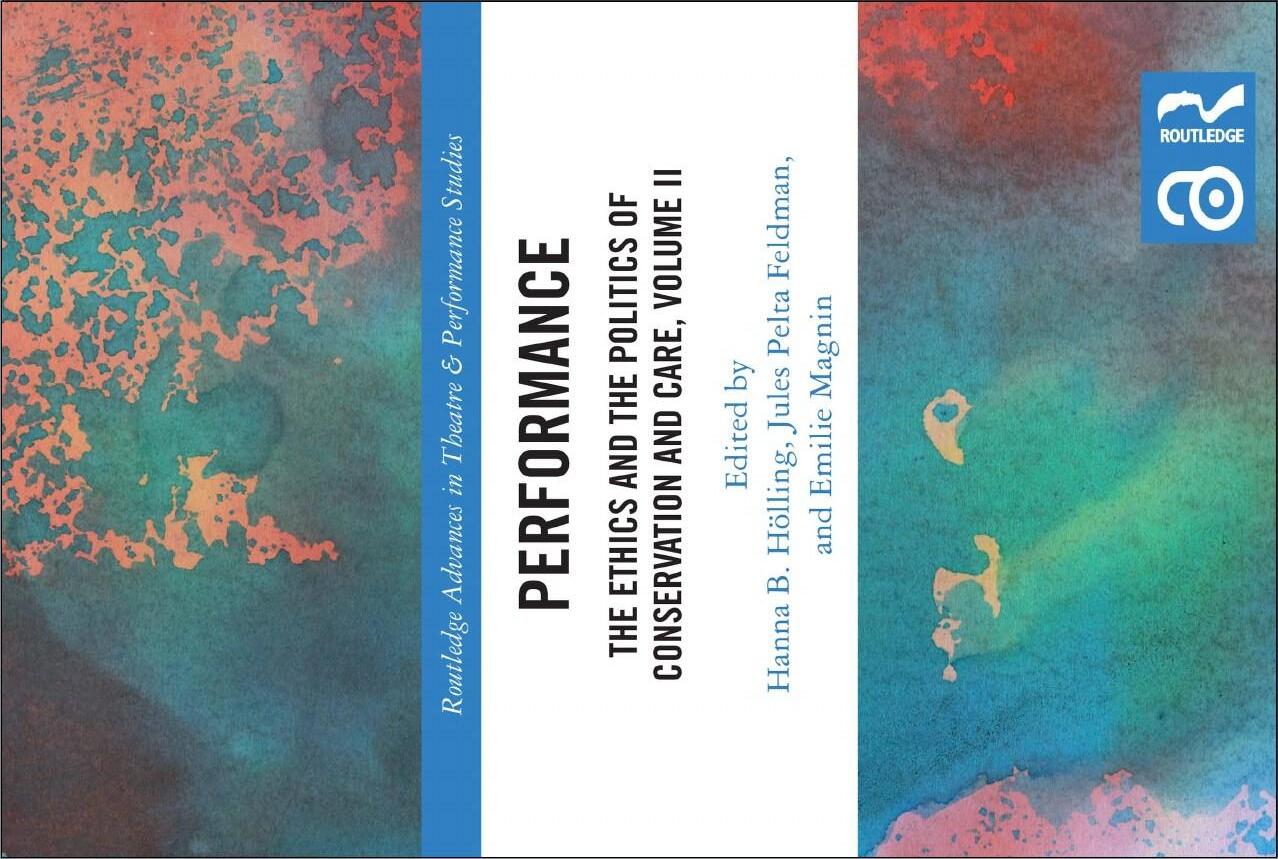
erformance: The Ethics and the Politics of Conservation and Care , Volumes 1 (2023) and 2 (2025), present a collection of research writings and dialogues by leading conservators, curators, scholars, and practitioners specialising in the diverse fields of the performative arts. The two books are the outcome of the research project Performance: Conservation, Materiality, Knowledge (PCMK ) funded by the Swiss National Science Foundation at the Bern Academy of the Arts (2020–2025).
This multi -year research project was conceived in response to the recognition that the conservation of performance remains undertheorised and that established frameworks and traditional methodologies do not account for performativity an omission that requires reconsideration as the number of performative works entering arts institutions and private collections continues to grow.
The project aimed to advance and simultaneously consolidate
pioneering theoretical and practical frameworks for performance conservation through research, colloquia, and workshops conducted within the interdisciplinary and global network of contributors. The books compile and contextualise the resulting discourse.
Both volumes begin with an introduction by the editors and are divided into three sections. Each section, focusing on a different theme, comprises five to seven essays, research reports, and discussions.
In Volume 1, Part I “Care: Theoretical Entanglements ” lays a theoretical foundation for rethinking conservation through the combined lenses of performance and care; Part II “The Politics and Institutions of Care ” evaluates how performance challenges established museum practices; and Part III “Living Conservation ” frames conservation as a dynamic relational process driven by collective artistic engagement and embodied practices. In Volume 2, Part I “Expanding Scholarly Approaches to the
Longevity of Performance ” examines storytelling, ritual, music, curation, and documentation as models for sustaining performance; Part II “Confronting Institutions ” investigates how institutions and legal systems need to adapt to environmental, indigenous, and racial justice perspectives to ethically sustain performance; and Part III “Conservation through Artistic and Embodied Practice ” highlights how artists and museum practitioners enact conservation strategies that embrace change through
embodied knowledge, reperformance, and critical interventions.
A thorough summary of each chapter is unrealistic given the range of perspectives and approaches covered across the two volumes; however, some fascinating common threads reappear throughout. Theoretical considerations spurred by the very concept of conserving performance reflect a current paradigm shift in conservation towards new materialisms, embracing non -
Untitled
(digital photograph)
Kongo Astronauts, courtesy of Axis Gallery, New York.
Western perspectives such as the non -dualistic nature of reality, post -anthropocentrism, and non -linear understandings of time.
Performance as an object of conservation has instigated a re -evaluation of the meaning of the ‘object ’ (of conservation) by challenging the traditional Cartesian ontological framework upon which institutional memory practices were built. In the introduction to Volume 2, the editors quote anthropologist Aaron Glass ’s research regarding indigenous cultures, for many of whom, “… objects or at least certain objects and materials have never been thought of as static in the first place, but rather as both active subjects and as subject to interconnecting webs of animating force and relationality ” (p. 12).
This ontological shift, initiated by the influx of timebased media and performance art in collecting institutions in the last decade and their often unclear object boundaries and durational nature leads to questioning the imposition of linearity and staticity on objects in conservation practices, the origins of those practices, and how those histories impact broader global issues.
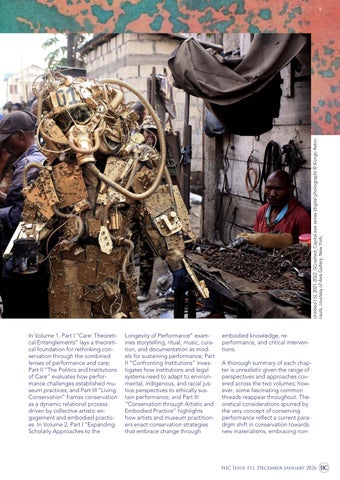
Several chapters demonstrate how performance itself can act as a form of cultural or critical conservation. For example, in Chapter 10 “Performing the ‘Mask:’ Kongo Astronauts (Eléonore Hellio and Michel Ekeba) on Postcolonial Entanglements ” (Vol.1), the collective Kongo Astronauts describe how they create costumes from reappropriated Western e -waste. These works critically reflect on the exploitation and mineral extraction of Congolese land while simultaneously reclaiming and preserving cultural practices in which the use of costumes in ritual has been suppressed.
Conservation, as a discipline situated in the public sphere, reflects the social, political, economic, and class systems embodied in the institutions where it takes place. These hierarchical structures were cleverly exposed by the artist Mierle Laderman Ukeles through her work, Transfer: The Maintenance of the Art Object: with the Maintenance Man, the Maintenance Artist, and the Museum Conservator ( 1973). In Chapter 12, “Conserving a Performance about Conservation: Care and Preservation in Mierle Laderman Ukeles ’s
“performance itself can act as a form of cultural or critical conservation. ”
Maintenance Art ” (Vol. 1), Karolina Wilczyńska describes how, by repeating the cleaning of a glass vitrine in a museum carried out by a maintenance worker, stamping it as art, and then handing it over to the museum ’s conservator to repeat the gesture as an act of conservation, Ukeles exposed how the meaning of a gesture shifts depending on who performs it within the institutional system of a museum. On a broader scale, the history of Western museum practices cannot be disentangled from their colonialist roots, which continue to shape perceptions of cultural heritage today.
Shifting perspectives occurring in performance conservation have led some museums to reorient their position from that of ownership to co -ownership, collective stewardship, or temporary custodianship. With this rebalancing of power comes the acknowledgment of the communities and networks that performative works need in order to continue, as well as the use of non-traditional measures of preservation.
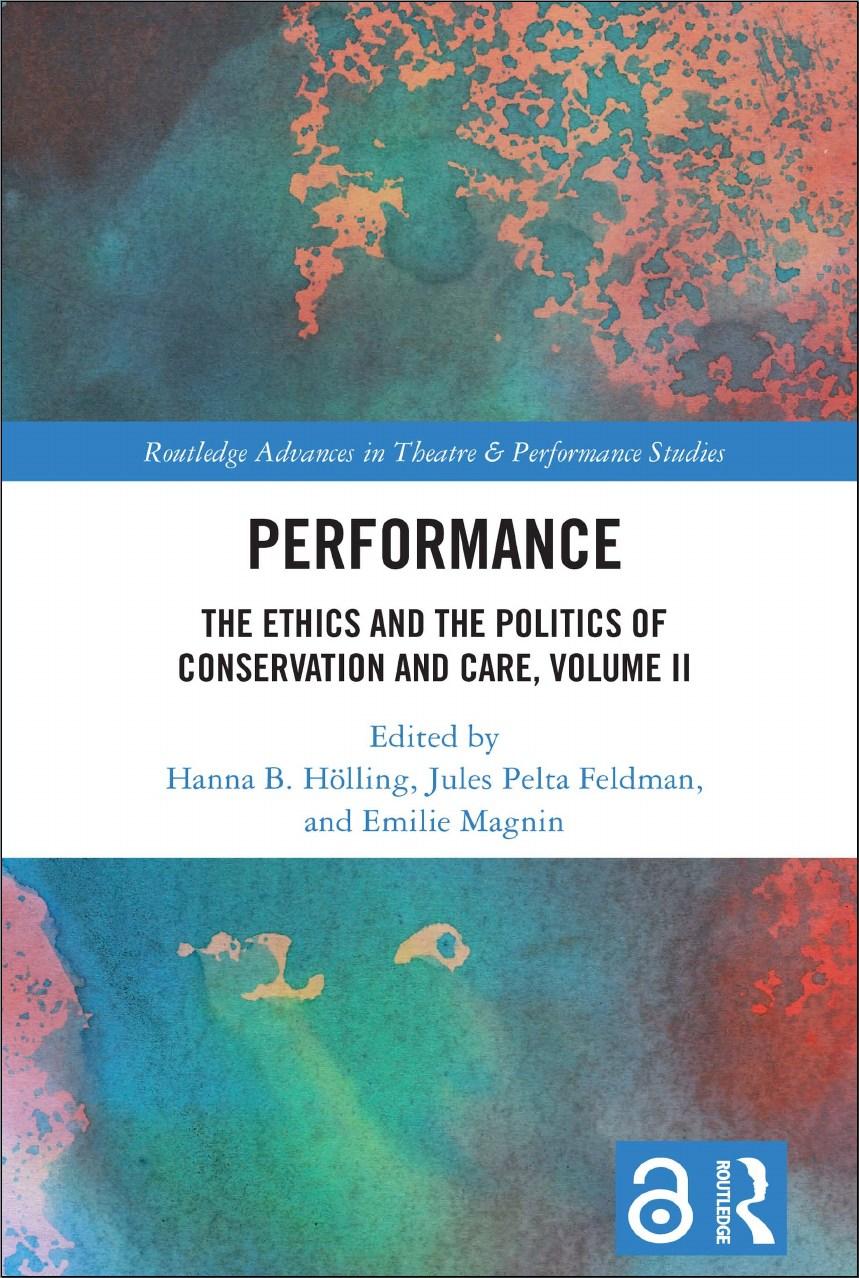
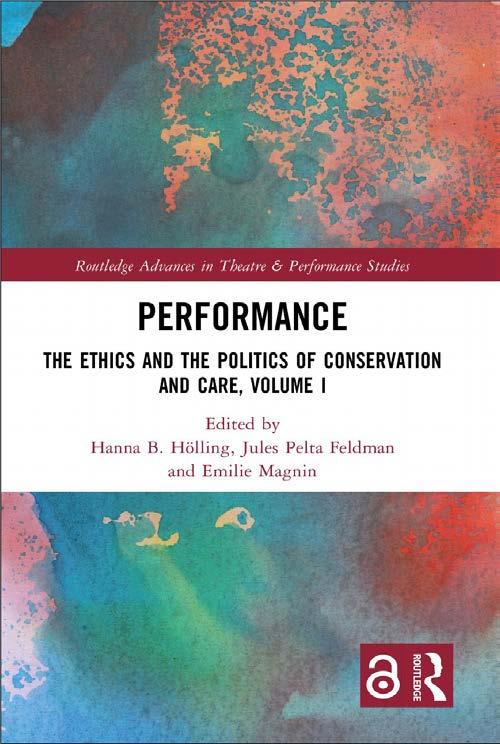
Above and below: Book covers for Volume I and II of Performance: the ethics and the politics of conservation and care . Images courtesy of Routledge
Many of the performance works discussed in the books exhibit modes of conservation inherent in their practice, such as the transfer of embodied knowledge and storytelling. Adopting these alternative conservation practices requires the cultivation of communities that support performance, as well as embracing notions of change and transformation as integral to the process of conservation and continuation. In Chapter 13
Materials Ethics and Principles for Embodied Stewardship
Cori Olinghouse and Megan Metcalf stress the importance of supporting an artwork well as involving tioners in acquisition, documentation and conservation processes” (p. 272).
In Chapter 6 “Performance in the Museum: Shifting Roles in Performance Art Stewardship
Emilie Magnin draws a connection between environmental and performance conservation ing both from a holistic perspective that recognises the interconnectedness of performance; the communities that make, perform, and care for it; and the environments in which it unfolds. Just as conserving biodiverse ecosystems is essential to sustaining the species they support, so too is it necessary to “cultivate ” a term Joanna Leśnierowska proposes in place of “conserve ” in Chapter 16
“Performance Conservation as a Political Act ”, Vol.
“... conservators occupy a unique position to reimagine both the field and their roles within it. ”
Nicole Savoy is a time -based media art conservator specialising in digital and network -based art. She holds an MFA from Cranbrook Academy of Art (MI, USA) and an MA in the conservation of modern materials and media from Bern Academy of the Arts (Bern, CH). She has worked as a time -based media and digital art conservator at Kunsthaus Zürich and currently serves as a digital art conservator for Rhizome. www.linkedin.com/in/nicole -christiane -savoy
Greener Solvents in Art Conservation
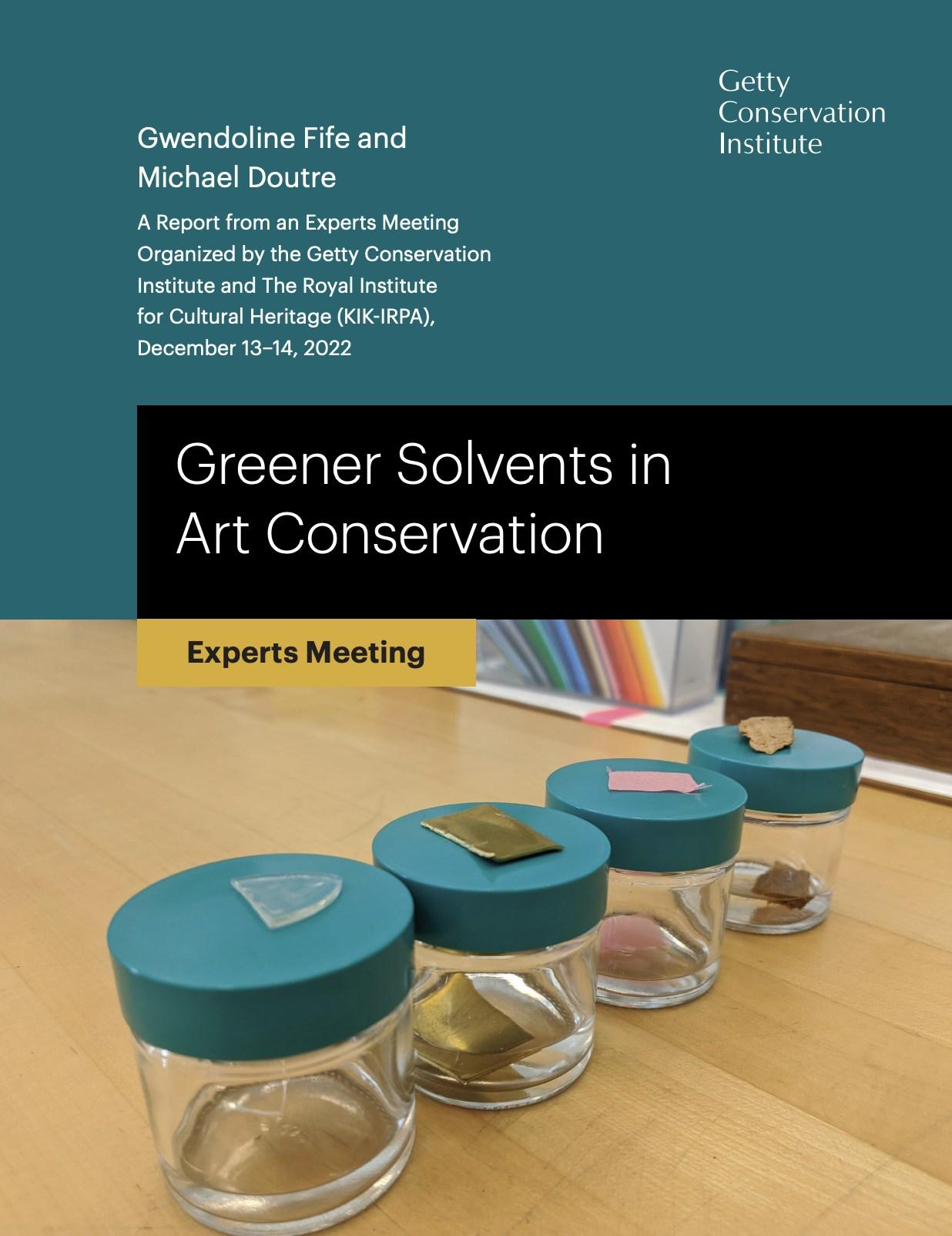
Greener Solvents in Art Conservation: A Report from an Experts Meeting Organized by the Getty Conservation Institute and The Royal Institute for Cultural Heritage (KIK -IRPA), December 13–14, 2022
Edited
by Gwendoline Fife and Michael Doutre
Getty Conservation Institute (2024)
Open Access publication available HERE
“Green conservation is a sustainable approach that involves holistic, balanced decision -making to reduce health, climate, and environmental hazards while adhering to professional ethics. Green conservation aspires to protect cultural heritage while minimizing harmful impacts on climate, human health, environment, and resources. ”
Reviewed
by
Magdalena Wsół
G reener Solvents in Art Conservation is a concise yet well -focused report produced after the two -day expert meeting organised by the Getty Conservation Institute and the Royal Institute for Cultural Heritage (KIK -IRPA) in December 2022. The main authors are Gwendoline Fife and Michael Doutre.
During the meeting, several professionals from the art conservation field across Europe and the United
States gathered to discuss criteria and assessment options for greener solvents and sustainability. The discussion began with an understanding of the origins and the three main pillars (environmental, economic, and social) of sustainability. When I think about environmental sustainability in conservation, I focus on how the materials and methods I use, as well as the conditions I create for storage or display, impact the environment.
New definition of “green conservation ” established by GoGreen Conservation in August 2025.
For me, this includes being conscious of energy use, choosing less harmful or more durable materials, and trying to minimise waste. With economic sustainability, I consider whether the decisions I make will hold up financially over time, from selecting treatments that reduce future costs to planning for ongoing maintenance so collections can be cared for in the long run. And when it comes to social sustainability, I think about the role conservation plays in supporting communi-
effectiveness, application, and toxicity, playing a crucial role in sustainable development. During the meeting, the experts reached some common understandings about the use of greener solvents in our industry.
The report explained why and when solvents are generally used in various conservation specialisms. The main focus was on their role in cleaning and in applying polymers, such as during consolidation, var-
CLICK to learn more about the twelve principles of green chemistry
ties and cultural continuity making heritage accessible, involving the right stakeholders, respecting cultural values, and acknowledging the broader educational and cultural benefits of preserving these objects.
It was agreed that conservation, as a profession, is very concerned with the needs of future generations. Due to multiple factors, particularly the use of chemical products in our field, conservators must adhere to specific guidelines to promote sustainable development. According to the European Confederation of ConservatorRestorers ’ Organisations ’ Professional Guidelines (II) Code of Ethics, sustainable development is already an integral part of our profession ’s ethical standards. Greener solvents and their environmental benefits are directly linked to their
nishing, and painting treatments. The discussion also touched on the most common surfaces on which solvents are used, and the polymers typically employed across different conservation disciplines. Experts discussed the criteria for selecting solvents, noting that sustainability was often the last consideration. They also explored the challenges associated with their use. It was agreed that while sustainability remains the final criterion, it currently has the lowest priority and clearly requires g reater attention, as harsh and toxic solvents are still widely used. It was estimated that around the world, 15,000 to 40,000 conservation professionals “in the ‘developed world ’” each use between one to two litres of solvents annually. Although this might seem like a small amount, it remains a significant issue. The environmental impact of these
solvents throughout their entire life cycle is considerable, primarily due to their toxicity and the high energy consumption of fume extractors. Based on my experience as a freelance conservator, I can confirm that many of us do not have access to these extractors and instead rely on PPE and room ventilation to ensure safety.
After these initial discussions, three key questions emerged: What is meant by “greener solvents ” in conservation? What research priorities should be pursued to promote sustainability in the field? And what challenges do conservators encounter when implementing changes? The primary reference for the questions was the twelve principles of green chemistry . Four of these principles relevant to conservation were emphasised, along with additional guidelines from regulatory authorities in Europe and the United States. The terms "green", "greener", and "sustainable" were discussed and compared. It was concluded that “greener solvents ” is the preferred term, as it allows comparison of how well different solvents perform while also considering their effects on health and the environment.
The next section focuses on toxicity and its effects on humans, animals, and the environment, highlighting the interconnectedness of these three elements and discussing the health impacts on us as conservators. The report emphasises the importance of incorporating toxicology and environmental training into conservation education. Additional challenges were noted, including the difficulty of replacing some of the most toxic solvents and the need for more guidance on alternative solutions.
I understand how challenging it can be to find the right resources and gather information on these topics. That is why I believe we need more educators and events featuring experts. However, there are already many actions we can take ourselves: reading safety data sheets, attending webinars about hazards in collections, reviewing instructions for extraction systems, regularly changing filters where necessary, and joining regional or international sustainability groups such as the Sustainability Group in Restauratoren Nederland of which I am a member. I believe change is essential here, and the report also stresses that a shift in mindset is a key part of our constantly evolving field. It encourages us to move beyond relying on familiar solvent choices (“just what we use ”), simply because they have worked in the past, and to instead make more informed decisions that account for toxicity, environmental impact, and long -term risks. This means moving from a “what works ” mentality when choosing materials toward a more holistic, informed decisionmaking process that weighs health, greenness, and long -term risks.
The final paragraph caused me to reflect on how decision -making around solvent use varies in different conservation contexts. By the time I finished reading, it became clear that our top priority should be to choose solvents that are as safe and non -toxic for humans as possible. As a freelancer, I feel I have greater freedom to eliminate certain solvents from my conservation toolkit or replace them with greener alternatives informed by my research. Many of us in conservation often prioritise the treatment and preservation of objects over our own health. I genuinely relate to this and am actively working to change this mindset in myself. It requires self -awareness and reflection to adjust
“By openly sharing results, and practical insights between and public sectors, we can genuine collective progress parallel, isolated efforts.
this mindset and prioritise our own health and longevity, which I believe should be standard practice, whether working privately or in museums. Freelancers often have greater flexibility to test greener solvents, adapt workflows quickly, and integrate new research into daily practice. Museums, on the other hand, have the institutional structure and authority to formalise safer procedures, implement training, and standardise the use of less harmful materials on a larger scale. I think both roles are essential: private conservators can drive innovation through hands -on experimentation while museums can anchor those innovations into widely adopted protocols. By openly sharing results, challenges, and practical insights between the private and public sectors, we can move toward genuine collective progress rather than parallel, isolated efforts. I completely agree with the closing thoughts of this chapter: it beautifully emphasises that our top priority should always be to select solvents that are the safest for people.
In the next part of the report, there was a focus on Life Cycle Assessment studies (LCAs), which are useful tools that reveal the total resources used and the environmental impact of a specific product, including CO 2 equivalents measured in kilograms. The report also mentioned the free carbon calculator provided by Sustainability Tools in Cultural Heritage (STiCH). Additionally, it briefly touched on an important point: being mindful of how we dispose of solvents and the potential risks of releasing them into the atmosphere. I believe it is worthwhile to explore this topic further, as it is quite significant. Understanding how solvent disposal affects fumes in the air and their impact on the ozone layer can help us grasp how this contributes to global warming. It is clear that this effect has
results, challenges, between the private can move toward progress rather than
become even more significant in recent years. The report's next chapter discusses market and regulations, emphasising that while changing them may not feel like our role, conservators can offer suggestions guided by the idea, “think global, act local ”. Our decisions can influence market demand for materials. A natural shift in purchasing would be towards lowercost, lower -impact solvents.
The chapter highlights the need for an assessment method for solvent sustainability in conservation and the potential of adopting the CHEM 1 system from the pharmaceutical industry, which provides a visual guide and flexibility. Minor tweaks could make it suitable for conservation, promoting eco-friendly solvents. Developing a form or chart with key parameters could also aid in selecting materials. An expert meeting diagram offers a useful tool for evaluating greener solvents.
The final paragraph of the report shares some exciting opportunities for future research and next steps, particularly around greener solvents and sustainability. I completely understand that delving into these topics can sometimes feel a bit overwhelming, and that is perfectly okay, but I genuinely believe that each of us has a wonderful opportunity, and indeed a responsibility, to learn more about these important issues. By taking the time to educate ourselves, just like we do with other inspiring conservation topics, we can truly make a positive impact. Ultimately, what this report reinforces is that sustainability is not an optional add -on to our work but something that should be woven into every decision we make as professionals. Whether we work independently or within institutions, our daily choices, from the solvents we select to the systems we support, collectively shape the future of our field. If we continue to share knowledge, question old habits, and prioritise safer and more environmentally conscious practices, we can help build a conservation community that protects not only cultural heritage, but also the people who care for it and the world it belongs to.
Magdalena Wsół is a paintings conservator specializing in 19 th - and 20th-century works. She is a member of Restauratoren Nederland ’s Sustainability Group, co -organizer and promoter of conservation education with Eukon Conservation (Poland), and host of the Konserwatorski Cocktail podcast featuring conversations on diverse topics with fellow conservators.
Reviewing Conservation 360°
UV -Vis Luminescence Imaging techniques
UV-Vis Luminescence Imaging Techniques
Edited by Marcello Picollo, Maartje Stols -Witlox, Laura Fuster López Universitat Politècnica de València (2021 )
Techniques is the first of the volumes that make up the Conservation 360° series, produced by the Polytechnic University of Valencia (UPV). The series is international, peer -reviewed, and open access (with the option of print -ondemand), comprising several books, each providing a comprehensive overview of a different topic within the field of conservation. The goal of this series is to create reference books that will contribute to the advancement of the
field in the coming years. You can read reviews of the two other books in the series Diagnosis: Before, During, After and Education and Pedagogy in issues 110 and 108 of News in Conservation
The books are written to be accessible at different levels, making them suitable for both students and professionals. This was true for me I felt comfortable reading it and appreciated that, as it is a project launched by UPV, the text is available in both English and
Spanish making it much easier for me, as a Spanish speaker, to understand.
The table of contents is evidence of the impressive quality of the included papers, as well as the diverse nationalities of the authors, representing different realities and material conditions. At the beginning of the text, there are several introductions to the series, explaining the motivation behind its creation, and an introduction to this specific volume. This
introduction is particularly interesting and necessary, as it focuses on terminology and provides some historical background regarding the titular technique. Before the main sections of the book, we find the foreword, “Some Observations about Images ”, written by Néstor Barrio an eminent figure in Argentina and one of my first professors when I began my conservation studies at university.
The remainder of the book is divided into two main parts. The first part is dedicated to the fundamentals and compiles several essays that explore the theory of luminescence phenomena. It explains, in a very detailed and clear way, how fluorescence occurs and how it differs from phosphorescence and luminescence. There are also many contributions that explain the types of lamps used, specifying longwave and radiation types. The correct terminology and the need for its standardisation are also discussed.
This section explains how, and for what purposes, this technology is used; indeed, it is a versatile technique with many applications. However, this part also discusses some of the technique ’s limitations and offers guidance to avoid misinterpretations. Another great advantage of this section is that it encourages you to practice the technique, providing information about the types of lamps, cameras, systems, conditions for image
capture, and methodological framework for interpretation (including how to use them, with helpful graphics) that you or your institution can acquire and apply in your work.
The final section of the book is devoted to cases studies. What can I say about it? It was one of the most engaging parts of the book; having read all the preceding papers, I was able to understand the cases in greater depth. The versatility of the technique is fully evident here. The first case concerns the examination of archaeological stone artefacts and the possibility of discovering pigment residues, as well as differentiating between two blue colorants.
There are also papers on the technique used to identify lacquers on historical musical instruments as well as to distinguish cadmiumbased pigments, explore titanium white pigments, and many other fascinating topics which I prefer not to mention to avoid spoilers for the readers.
Reading this book is an excellent opportunity to stay up to date with new applications of UV -Vis luminescence imaging, and it truly provides everything you need to begin using it. While some results require expert analysis for proper acquisition and interpretation, many other features can provide valuable information even for those without such specialised knowledge.
Victoria Zucchi is a conservator specialising in paper and documentary heritage. She holds a degree in conservation and restoration of cultural property from the Universidad del Museo Social Argentino. Since 2013, she has worked at the Historical Archive of the Argentine Ministry of Foreign Affairs where she is responsible for the conservation, restoration, and preventive care of archival documents. She also holds diplomas in audiovisual heritage preservation and archival management and has collaborated with various archival institutions on preservation and disaster response.
Book cover courtesy of Universitat Politècnica de València
By Daniela Sauer
As usual, in this issue the Library wishes to offer two recommendations. The first is a recent acquisition a newly published book that approaches heritage as a key factor in identity building and in fostering dialogue across communities. The second is a title we came across by chance while trying to reacquire some lost publications during our recent QR -coding project. The paperback booklet besides being remarkably well structured and informative on its subject is also a rarity, as it contains both a personal dedication and a letter from the series editor to the architect who designed its illustrations.
This discovery reminds us that, alongside valuing current publications something important both
for libraries and readers it is equally essential to broaden our view to include the literature of the past. Allowing this gaze to extend toward international production, including the unwritten and orally transmitted knowledge of Indigenous peoples, often leads to a deeper and more multifaceted understanding of the field of conservation.
As in previous issues, the Library has also prepared its lists of new acquisitions : a main list covering all titles received between April and December of this year, along with several thematic lists. All are accessible from the Library Catalogue homepage . In line with the reflections above, these lists include not only newly published works but also older titles, many from the Carbonara Donation as well as children ’s books dedicated to our Heritage Education Library.
Images of book covers by Daniela Sauer
Interior pages from Pieces of a Nation. South Sudanese Heritage and Museum Collections. Image
by Daniela Sauer
Interior pages from Earth Brick Construction. Image by Daniela Sauer
Pieces of a Nation. South Sudanese Heritage and Museum Collections
Edited by Zoë Cormack and Cherry Leonardi Leiden: Sidestone
Press, 2021.
ISBN: 9789464260120
ICCROM Library: ICCROM Library: III A 381
This volume offers a rare and timely exploration of the material and intellectual heritage of South Sudan, a country whose cultural identity continues to be shaped by histories of colonial collecting, civil conflict, and the search for self -definition. Through contributions by scholars, curators, and South Sudanese voices, Pieces of a Nation examines how artefacts dispersed in international museums can help trace and reclaim narratives of belonging, loss, and resilience.
The book ’s chapters follow the journeys of objects held in institutions such as the Pitt Rivers Museum (UK), the British Museum (UK), and the Ethnological Museum in Berlin, revealing how collections once gathered under the logics of empire now open paths toward dialogue and re -engagement. The authors explore themes ranging from the displacement of heritage during conflict to the challenges of documenting and interpreting cultural materials in contexts of political instability and migration.
Beyond documenting specific objects in collections, the book raises broader questions about the ethics and responsibilities of museums in postcolonial contexts and about the power of heritage to contribute to peacebuilding and social reconstruction. For the preservation sector, it underscores the importance of inclusive documentation, community involvement, and transparent dialogue between institutions and source communities. Ultimately, Pieces of a Nation reminds us that heritage is not only about the recovery of objects but about the recovery of relationships between people, places, and the stories that connect them across borders.
Earth Brick Construction
By Elbert Hubbell Home Improvement
Pamphlets series, Chilocco, Oklahoma:
CLICK HERE to explore the new acquisitions in the ICCROM Library.
U.S. Office of Indian Affairs, Education Division, 1943
ICCROM LIbrary: XIX G 315 Rare
Originally produced in the midst of the Second World War, this concise pamphlet reflects a period when material scarcity and the search for appropriate technologies inspired practical innovation. Earth Brick Construction was written to guide community builders and educators particularly within Native American reservations toward the use of local resources for affordable and climate -appropriate housing. Its clear illustrations and step -by-step explanations on preparing, molding, and laying earthen bricks embody a remarkable combination of simplicity, technical precision, and pedagogical intent.
Beyond its technical value, the publication documents an early example of government -led advocacy for sustainable building methods long before such ideas entered mainstream environmental discourse. It also opens a window into the educational policies of the U.S. Office of Indian Affairs, where architecture and self-building were intertwined with broader projects of social reform and self -reliance.
Revisited today, Hubbell ’s pamphlet invites reflection on how traditional and low -tech construction techniques rooted in local knowledge and environmental adaptation remain vital for the future of heritage preservation and sustainable development worldwide.
Daniela Sauer is the lead librarian and conservation specialist at the ICCROM Library. She oversees collection development, preservation, reference activities and cataloguing as well as various other library operations including project planning. Daniela holds a bachelor's degree in conservation of cultural heritage and a master's degree in conservation of mosaics from the Istituto Centrale per il Restauro in Rome, Italy. She later pursued advanced studies in library and information science at the University of Technology (Cologne, Germany).
Celebrating of the Foundation Advancement Oral History
By Molly Mapstone and Rebecca
Image taken during the public reception for the FAIC Oral History Project 50th Anniversary event. Images courtesy Winterthur Museum, Garden & Library.
Rebecca Rushfield FIIC
2025 marks the 50th
anniversary of the Foundation for Advancement in Conservation (FAIC) Oral History Project, and in celebration, a special day of events was held at the Winterthur Museum, Garden & Library on September 4th.
Molly Mapstone will discuss her experience with the public reception and Rebecca Rushfield will then share her insights from the afternoon ’s roundtable discussion.
PUBLIC RECEPTION, WI NTERTHUR GALLERIES
RECEPTION ATRIUM, 1:00PM
Our memories are unique parcels and strings of information that contain insights into our lives and the world around us. We rely on our memories every day to perform essential tasks and construct narratives that allow us to reflect on our experiences and share them with our communities. Oral history is a critical tool for documenting memories for future generations and researchers. Within the span of an hour or two, an oral history interviewer can capture details and stories from the life of their interviewee that may have otherwise been lost to time immemorial.
The Foundation for Advancement in Conservation (FAIC) Oral History Project began after Rutherford John Gettens delivered a talk on May 30, 1974, at the American Institute for Conservation conference in Cooperstown, New York where he urged his fellow conservators to begin writing the history of their profession to promote its continued development. Unfortunately, Gettens died just ten days after delivering this talk, but his call to action spurred a project that would later become a vital record of the profession capturing the memories of hundreds of individuals and stories of numerous critical events that shaped the field as we know it today.
Following Gettens ’ advice, on September 4, 1975, Dr. Joyce Hill Stoner and Tom Chase conducted a roundtable interview with Richard Buck, George Leslie Stout and Katherine Gettens at the IIC joint meeting with the IIC -Mexico Group in Mexico City which formed the foundation of the FAIC Oral History Project. To mark the occasion, Winterthur Museum, Garden & Library hosted a public reception and a roundtable oral history interview on September 4 th , 2025. The public reception took place at 1:00pm in Winterthur ’s Galleries Reception Atrium. Visitors and special guests enjoyed a display of items from the FAIC Oral History Collection archive and an oral history listening station.
In attendance were Winterthur staff members and students including many from the conservation department, Winterthur Library supporters, and conservation professionals who made the journey to Wilmington to celebrate the FAIC Oral History Project. Special guests included Dr. Joyce Hill Stoner (the Edward F. and Elizabeth G oodman Rosenberg Professor of Material C ulture, University of Delaware (UD), Director of the Preservation Studies Doctoral Program, and UD paintings conservator for the Winterthur/UD Program in Art Conservation) and Tom Chase (Former Head of the Freer Gallery labs and Founder of Chase Art Services), who both graciously discussed the project and shared their memories of the first interview. Tom Chase also brought an album with photographs from conservation conferences and other gatherings of conservators and allied professionals.
Thanks to a generous grant from the Berger Foundation, digitized interviews and transcripts are available through the Winterthur Library Digital Collections website . Guests learned how to access and use the website, browsed its contents, and listened to oral history interviews; a 1975 interview of Elisabeth Packard and a 1976 interview of A.E.A. Werner were played.
Items displayed from the archive included a series of watercolor paintings by George Leslie Stout that narrate the history of conservation from 1925 to 1975, the annotated transcript from the first interview, photographs of the project ’s founders and early interviewees, a magazine article about the 1966 Florence Flood, and paint samples from Golden Artist Colors found in Mark Golden ’s interview research file to demonstrate the wide breadth of materials in the collection. The celebration continued as guests made their way to the roundtable for which invited speakers gathered on Zoom, and the 50 th anniversary roundtable was broadcasted to a global audience.
Images taken during the public reception for the FAIC Oral History Project 50th Anniversary event.
Left: Photograph of Rutherford John Gettens in the Freer Gallery Technical Laboratory.
Below: Photograph of Harold Plenderleith receiving a medal at the International Council of Museums Committee for Conservation triennial meeting held in Edinburgh, September 1996. Images courtesy of Foundation for Advancement in Conservation (FAIC) Oral History Collection . Courtesy Winterthur Museum, Garden & Library.
Left: Photograph of Joyce Hill Stoner on scaffolding while cleaning the 1938–1942 Edward Laning mural, The Story of the Recorded Word , in the New York Public Library, 1970’s. Foundation for Advancement in Conservation (FAIC) Oral History Collection . Winterthur Museum, Garden & Library, Winterthur, DE.
FAIC ORAL HISTORY PR OJECT 50TH ANNIVERSARY ROUNDTAB LE, IN -PERSON/ZOOM, 4:00 PM
At 4:00pm, the 50th anniversary celebrations continued with a hybrid Zoom and in -person roundtable of ten people who have conducted and/or used FAIC Oral History Project interviews. The roundtable was moderated by Molly Mapstone who had prepared thoughtful questions for each participant.
Hines who had studied with Sheldon and Caroline Keck in the 1960s. She also spoke about the project she conceived with her colleague Heather Brown while they were students in the Winterthur/University of Delaware Program in Art Conservation to interview each other at ten -year intervals. They wanted to show that one did not have to be established and well known to have something to share and wanted to observe how the field would develop through the lens of their own careers.
...one does not have to be established and well known to have something to share...
Tom Chase, one of the participants in the first oral history interview, which took place on September 4, 1975 during the AIC meeting in Mexico City, reminisced about driving Rutherford J. Gettens to the AIC meeting in Cooperstown, NY which took place at the end of May 1974 at which Gettens called for the recording of personal recollections, anecdotes, and informal doings of the field. When asked whether he, as a young, new member of the field, was awestruck interviewing the heads of the field, Chase replied that he was too busy with the preparations for the interview to think about who he was going to interview and that George Stout and Richard Buck and Mrs. Gettens were his friends. He also mentioned the conversations about an oral history project that took place when he, Gettens, and Joyce Hill Stoner were all working at the Freer Gallery of the Smithsonian Institution.
Anisha Gupta, who has used the oral history interviews in her PhD dissertation research on the presence of conservators of color during the foundational years of the field, spoke on finding information about Felrath
Kelsey Wingel, who has interviewed both conservators and conservation scientists, spoke of being struck by the fact that every one of her interviewees had a pivotal moment with art which led them to the field. She noted that, for Paul Whitmore, it was being asked as a physical chemist to analyze the Rothko murals owned by Harvard University to help determine why they had faded. In answer to a question on how she prepares for interviews with conservation scientists, Kelsey shared that she Googles the interviewee, looks at their publications, and speaks with people who know them. Even with all this preparation, during the interview she is focused on what the interviewee is saying and decides in the moment which threads or thoughts to follow.
Ellen Cunningham -Kruppa used the oral history interviews while researching for her PhD dissertation on the education of library and archives conservators. The focus of her work was the 1960s and 1970s, and many of the primary figures were deceased by the time she began her work in 2009. In many cases, the oral history interviews were the only sources with information on what motivated them as well as information about their mentors in the 1950s. She did note one shortcoming of oral history interviews almost no one wants to be quoted saying something negative about a colleague.
Sarah Scaturro also used existing oral history interview transcripts in her doctoral dissertation research on the professionalism of textile conservation from the 1960s to the 1980s and conducted a number of interviews herself. She was interested in learning how textile conservators perceived themselves, especially in relation to issues of power, gender, and anxiety in the field. She stressed that oral history interviews are a coproduction between the interviewer and interviewee and that there can be a power differential between the two. She used reflective thematic analysis a qualitative research method that emphasizes the researcher's subjectivity in interpreting data allowing for a nuanced understanding of themes within the data to look at the interviews.
Tina Sitwell recalled being a young conservator in London in 1977 and being asked to interview Dr. Harold Plenderleith, a pioneer in the field. The interview took place in the country home in Scotland that he shared with his wife, Tibby. She was struck by his descriptions of how, lacking equipment and being housed outside of the museum proper, British Museum conservators in the 1920s and 1930s had to be inventive and make their own equipment. She also related Plenderleith ’s activities during World War II, when he had to decide where the collections would be sent for safekeeping, and even lived in the Museum for a while to watch for bombs. When she asked him about his relationships with curators and other colleagues, he said that because one could not smoke within the Museum but could smoke in his space, they all came there to smoke and talk. She shared some stories of Joyce Plesters and Norman Brommelle who were the subjects of two of her other interviews.
When it was my turn to share, I spoke about the radical change to the Oral History Program brought about by the COVID -19 pandemic and the introduction of Zoom and other virtual interviewing platforms which allowed the expansion of the geographical reach of the program and did away with the need to find an appropriate interviewer in the same town as the interviewee as the project had (and still has) no funds for travel. I also spoke about the research projects and lifelong friendships that were extra benefits of interviews, and encouraged young conservators to just try conducting one interview as they may find it is for them.
...personal stories are essential in showing where the field has been and where it can go...
Sarah Kleiner, whose work involves actively reimagining structures and systems in the field of conservation, is very interested in leadership and used the interviews to look at the roots and origin stories of the field to see who the leaders were and whose stories had been sidelined. She spoke of how, in the early years, women were pushed into paper conservation while men claimed the higher status paintings work and how women were expected to volunteer for years or take much lesser salaries than their male colleagues. She also stressed how much social history can be found within the interviews. Together with Anisha Gupta, she is working on a digital tool, “The Histories We Inherited, ” that will connect past and present through the stories of the field. Asked how initiatives like the FAIC Oral History Project can be used to advocate for
conservation, AIC/FAIC Director Lissa Rosenthal -Yoffe spoke about how personal stories are essential in showing where the field has been and where it can go as well as what gets lost if cultural heritage is not protected. She announced that this roundtable is just the beginning of a year of programs that will culminate in November 2026 with a program to mark the 60th anniversary of the Florence Flood.
Joyce Hill Stoner, who has been the driving force of the FAIC Oral History Project since its inception, reminisced about telling George Stout that she would be the Barbara Walters of conservation and then being told that she should listen and collect and leave the interpretation to others. She spoke about interviewing Paul Philippot in his home without electricity in the forest of the Ardennes and the art historian,
Ernst Gombrich, in his London home where he told her how the Germans influenced art conservation. Her interviews have allowed her to pursue topics of interest and have brought her in contact with people born in the 19th century through the 21st century.
After the end of the scheduled roundtable presentations during a question and answer period, Lisa Conte (Co -Chair of the Conservation Center of the Institute of Fine Arts, NYU) and Lindsey Tyne (Conservation Librarian at the Elmer Holmes Bobst Library ,NYU) were asked to speak about their project, started in 2024, which includes putting together a ranked wish list of book and paper conservators who have not yet been interviewed by the FAIC Oral History Project, the next step being, with a group of colleagues, to carry out those interviews.
Molly Mapstone is a project assistant at the Winterthur Museum, Garden & Library, and a PhD candidate at the Tyler School of Art and Architecture at Temple University. She serves as a bridge between conservation and allied professions through her work with the FAIC Oral History Project and in her interdisciplinary research practice. She holds an MA in American material culture and a BA in art history and French.
Rebecca Rushfield FIIC , a New York City based consultant in conservation, received her MA in art history at the Institute of Fine Arts of New York University and her diploma in conservation at the NYU Conservation Center. She is book review editor of the Journal of the American Institute for Conservation and was a co -editor of The Conservation of Easel Paintings . She is associate director of the FAIC Oral History Project.
A TRUNK That Kept ALIVE
By Imran Ali Buth
t started with a trunk. Old, heavy, rusty and locked for years, it was placed in the corner of a house in Srinagar.
Very few people knew what it stored; inside were the memories, words, and dreams of a Kashmiri poet whose voice had long fallen
When the trunk was finally opened, the air filled with the scent of time. The paper within was brown with age, the edges nibbled by silverfish, exhibiting stains and abrasive marks. Yet what emerged from that box of decay was a story of remarkable endurance. The manuscripts inside, once thought lost, reintroduced Darab to Kashmir ’s cultural memory.
THE POET AND HIS FOR GOTTEN WORLD
Darab belonged to a time when Persian still echoed in the homes and literary circles of Kashmir. He wrote devotional verses including naat and manqabat in praise of Prophet Muhammad and the great Sufi saints of Kashmir, respectively. His pen was steeped in veneration, rhythm, and discipline.
Like many private writers of his generation, his papers never reached an archive; after his death in 1979, they were dispersed among relatives. Some survived in drawers, and others were damaged over time because of improper storage and neglect. Years later, his descendant, Mrs. Nighat Shafi Pandit, took steps to recover what she could on her own. In the trunk she found, against all odds, a small world; drafts of poems, personal letters, and fragments of an unfinished autobiography.
The recovered notes, once analyzed properly, started revealing a story and connecting dots that constructed an image of the past. It portrayed a man devoted to both scholarship and spirit, a poet who had studied at the local Madrassa founded by the then chief cleric of Kashmir, Mirwaiz Molvi Rasool Shah and trained in calligraphy under Behram Ji, a local calligrapher. He was influenced by classic Persian poets including Hafiz, Saadi, and Saib, and he explicitly expressed his love for Allama Iqbal ’s poetry,
whose works he admired so deeply he once translated Iqbal ’s famous poem Saqi Nama into Persian.
WHEN THE PAST MEETS THE PRESENT
In November 2022, the rediscovery of Darab ’s trunk was made public. INTACH Kashmir, together with the family of Darab, organized an exhibition at Amar Singh Club, Srinagar. It received an overwhelmingly positive response from locals. Visitors, in front of exhibits displayed in customized boxes with captions, were astonished to see that such a literary trove had survived. For the family, it was a moment of pride and reflection that the poet ’s words, once on the brink of extinction from current memory, were now rejuvenated and receiving appreciation through this spotlight. The exhibition did more than celebrate one poet; it reiterated how fragile private archives can be.
In Kashmir, like in many parts of the world, valuable manuscripts lie hidden in trunks, cupboards, or attics awaiting rediscovery.
“The poet ’s trunk reminds us that culture often survives in the most ordinary—or sometimes in the most unexpected —places, in a wooden chest, under dust, waiting for someone to look again. ”
A POET WHO LOOKED BEYOND BORDERS
Darab ’s creative canvas of thoughts and poetic expressions was not confined to Kashmir. His chronograms verses that creatively correspond to dates linked him to events far beyond his homeland.
Curative conservation of manuscripts at Manuscript C onservation Center of INTACH Kashmir
One such poem celebrates and praises the remarkable achievement of Neil Armstrong ’s 1969 moon landing, which he rendered in English and tried to send to then U.S. President Richard Nixon. Another marked the coronation of Reza Shah Pahlavi in 1967 and was later acknowledged by the Iranian Embassy in Delhi.
Chronograms, a poetic genre of recording events, especially prevalent in the Islamic traditions of Southeast Asia, are often written as couplets or quatrains. Darab ’s verses show how a poet writing in Persian from Srinagar felt connected to a larger world. His words bridged regions, languages, and histories, placing Kashmiri literary expression within a global conversation.
SAVING WHAT TIME TRI ED TO ERASE
When I, as a conservator working in INTACH, first examined the manuscripts, I saw the marks of neglect, brittle paper, water stains, and insect damage, but I also saw resilience. The rediscovery of Darab ’s trunk became a small but meaningful example of what can happen when families and institutions work together.
We cleaned the manuscripts, stabilized them, and documented everything carefully. Each fragile folio was photographed and catalogued, creating digital copies available for researchers to study to minimize further deterioration due to human touch.
The process of rediscovering and conserving Darab ’s collection highlighted that family custodians often hold the key to heritage survival. Also, proper care, clean storage, stable humidity, and gentle handling make a significant difference in their longevity. This experience also highlighted the importance of collaboration between private owners and heritage organizations which can bring forgotten collections back into public life.
Chronogram composed by Darab on the historic landing of Neil Armstrong on the moon in 1969 written in calligraphy by the poet
The story of Khawaja Mohammad Amin Darab is not only about a collection of poetry rediscovered. It ’s about memory, association, inheritance, and care. The poet ’s trunk reminds us that culture often survives in the most ordinary or sometimes in the most unexpected places, in a wooden chest, under dust, waiting for someone to look again.
The manuscripts may be fragile or severely deteriorated, but the act of rediscovery makes them powerful. They speak of a family ’s affection, an institution ’s commitment, and a poet ’s voice returning to the light after years of silence. Every trunk, like Darab ’s, carries more than paper; it holds the heartbeat of a time we cannot afford to ignore, or it will vanish.
Imran Ali Buth , a manuscript conservator at INTACH Kashmir Chapter since 2019, holds a master ’s degree in mass communication and journalism. Passionate about heritage preservation, he specialized in paper conservation through IGNCA, New Delhi, and the Himalayan Society for Heritage & Art Conservation in Nainital, emphasizing the scientific conservation of manuscripts as vital documentary heritage.
All metals conservators have heard of tin pest: it is the transformation of metallic β-tin to grey powdery α-tin. This change only happens below 13.2°C but is accelerated at lower temperatures. It is frequently mentioned in textbooks as a threat to museum objects made of tin, but verified cases are very rare or indeed unknown.
IT IS NOT TRUE that the tin buttons on Napoleonic soldiers ’ uniforms disintegrated due to tin pest during the retreat from Moscow in 1812.
IT IS NOT TRUE that tin sarcophagi of the Austrian imperial family in Vienna were damaged by tin pest.
To resolve the question of whether tin pest really occurs on museum objects, I am offering a prize of £100 to anybody who can produce an example of an object from a museum or similar heritage collection that has been attacked by tin pest. Because tin pest cannot be distinguished by eye from normal tin corrosion, any claim must be accompanied by an identification of α-tin by X -ray diffraction.
I would be delighted to present the prize at the next Metals conference in 2028!
IT IS NOT TRUE that Captain Scott ’s fuel cans leaked due to tin pest attacking the solder joints, during his expedition to the South Pole in 1912.
Barry Knight obtained a PhD in chemistry and then turned to archaeological conservation. He worked at English Heritage for nearly 30 years and then spent 11 years at the British Library as Head of Conservation Research. Now retired, he is able to pursue interests that bridge chemistry and conservation.
vation of Historic and Artistic Works (IIC) is a learned society, a registered charity and a company limited by guarantee with no share capital. Charity No 209677. Company No 481522.