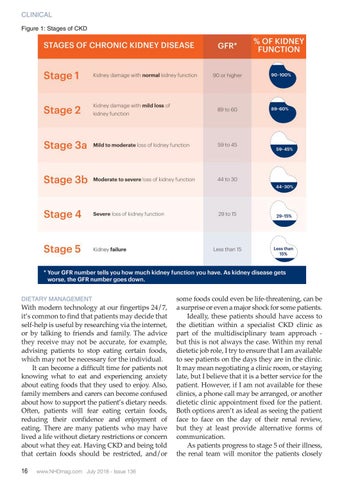
CLINICAL Figure 1: Stages of CKD
DIETARY MANAGEMENT
With modern technology at our fingertips 24/7, it’s common to find that patients may decide that self-help is useful by researching via the internet, or by talking to friends and family. The advice they receive may not be accurate, for example, advising patients to stop eating certain foods, which may not be necessary for the individual. It can become a difficult time for patients not knowing what to eat and experiencing anxiety about eating foods that they used to enjoy. Also, family members and carers can become confused about how to support the patient’s dietary needs. Often, patients will fear eating certain foods, reducing their confidence and enjoyment of eating. There are many patients who may have lived a life without dietary restrictions or concern about what they eat. Having CKD and being told that certain foods should be restricted, and/or 16
www.NHDmag.com July 2018 - Issue 136
some foods could even be life-threatening, can be a surprise or even a major shock for some patients. Ideally, these patients should have access to the dietitian within a specialist CKD clinic as part of the multidisciplinary team approach but this is not always the case. Within my renal dietetic job role, I try to ensure that I am available to see patients on the days they are in the clinic. It may mean negotiating a clinic room, or staying late, but I believe that it is a better service for the patient. However, if I am not available for these clinics, a phone call may be arranged, or another dietetic clinic appointment fixed for the patient. Both options aren’t as ideal as seeing the patient face to face on the day of their renal review, but they at least provide alternative forms of communication. As patients progress to stage 5 of their illness, the renal team will monitor the patients closely