An introductory guide for assessing and understanding common wounds with people who inject drugs
Preface
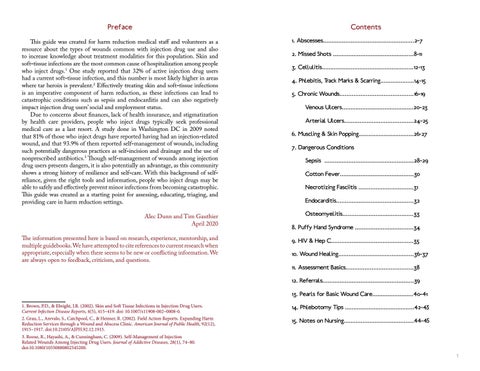
Contents
This guide was created for harm reduction medical staff and volunteers as a resource about the types of wounds common with injection drug use and also to increase knowledge about treatment modalities for this population. Skin and soft-tissue infections are the most common cause of hospitalization among people who inject drugs.1 One study reported that 32% of active injection drug users had a current soft-tissue infection, and this number is most likely higher in areas where tar heroin is prevalent.2 Effectively treating skin and soft-tissue infections is an imperative component of harm reduction, as these infections can lead to catastrophic conditions such as sepsis and endocarditis and can also negatively impact injection drug users’ social and employment status. Due to concerns about finances, lack of health insurance, and stigmatization by health care providers, people who inject drugs typically seek professional medical care as a last resort. A study done in Washington DC in 2009 noted that 81% of those who inject drugs have reported having had an injection-related wound, and that 93.9% of them reported self-management of wounds, including such potentially dangerous practices as self-incision and drainage and the use of nonprescribed antibiotics.3 Though self-management of wounds among injection drug users presents dangers, it is also potentially an advantage, as this community shows a strong history of resilience and self-care. With this background of selfreliance, given the right tools and information, people who inject drugs may be able to safely and effectively prevent minor infections from becoming catastrophic. This guide was created as a starting point for assessing, educating, triaging, and providing care in harm reduction settings. Alec Dunn and Tim Gauthier April 2020 The information presented here is based on research, experience, mentorship, and multiple guidebooks. We have attempted to cite references to current research when appropriate, especially when there seems to be new or conflicting information. We are always open to feedback, criticism, and questions.
1. Abscesses.....................................................2–7 2. Missed Shots ...............................................8–11 3. Cellulitis......................................................12–13 4. Phlebitis, Track Marks & Scarring....................14–15 5. Chronic Wounds..........................................16–19
Venous Ulcers..........................................20–23
Arterial Ulcers........................................24–25
6. Muscling & Skin Popping.................................26-27 7. Dangerous Conditions
Sepsis ....................................................28–29
Cotton Fever...........................................30
Necrotizing Fasciitis ................................31
Endocarditis.............................................32 Osteomyelitis.........................................33 8. Puffy Hand Syndrome ..................................34 9. HIV & Hep C................................................35 10. Wound Healing............................................36–37 11. Assessment Basics.......................................38 12. Referrals.....................................................39 13. Pearls for Basic Wound Care........................40–41
1. Brown, P.D., & Ebright, J.R. (2002). Skin and Soft Tissue Infections in Injection Drug Users. Current Infection Disease Reports, 4(5), 415–419. doi: 10.1007/s11908-002–0008-0. 2. Grau, L., Arevalo, S., Catchpool, C., & Heimer, R. (2002). Field Action Reports. Expanding Harm Reduction Services through a Wound and Abscess Clinic. American Journal of Public Health, 92(12), 1915–1917. doi:10.21t05/AJPH.92.12.1915. 3. Roose, R., Hayashi, A., & Cunningham, C. (2009). Self-Management of Injection Related Wounds Among Injecting Drug Users. Journal of Addictive Diseases, 28(1), 74–80. doi:10.1080/10550880802545200.
14. Phlebotomy Tips .........................................42–43 15. Notes on Nursing.........................................44–45
1
Abscesses Definition An abscess is an encapsulation of pus that builds up within tissue, caused by a localized reaction against pathogens. Although abscesses can occur anywhere within the body, they represent one of the most common skin and soft-tissue infections (SSTIs) among people who inject drugs. Abscesses are composed of blood, dead tissue, pathogens, and white blood cells. Abscesses are the body’s defense against infectious substances and pathogens; by walling off the area and flooding the area with white blood cells, the body is attempting to contain the infection. The act of injecting drugs places people at greater risk for acquiring an abscess by passing the body’s surface bacteria into deeper tissue, and they may occur more frequently as an SSTI when a vein is missed. Harm reduction strategies are essential in reducing the risk of acquiring an abscess (hand hygiene and the availability of alcohol swabs are absolute necessities), and careful recognition and appropriate management of these infections are essential in preventing these infections from advancing into deeper tissues or disseminating systemically. Risk Factors • Not cleaning injection site and hand before injecting. As nurses it is our responsibility to advocate for transportable cleaning resources to be available • Missing an injection • Injecting drugs cut with damaging substances (pathogens, irritants, vasoconstrictors) • Injecting cocaine or amphetamines, as they are vasoconstrictive and more inflammatory to tissue • Reusing needles, which makes venous access more difficult and damages tissue • Reusing cookers and cottons, which increases the microbial burden • Diminished immune function • Skin/mucosa colonized with aggressive pathogens (e.g., MRSA, IGAS) • Injecting into areas that show signs of damage and inflammation • Injecting into areas with poor circulation (e.g., venous stasis, diabetic foot) • Epidemiology—it is important to know pathogens that are endemic to your area that may be useful in the early detection of rapidly disseminating pathogenic wounds • Available drug supply—tar heroin is, in general, more damaging to veins than powder heroin
2
Fig. 1: An open abscess. Photo by Alec Dunn, 2015.
Fig. 2: An abscess that has spontaneously opened and is draining clear fluid. Photo: Centers for Disease Control and Prevention’s Public Health Image Library, public domain, 2014.
Fig. 3: An open abscess. Photo: Centers for Disease Control and Prevention’s Public Health Image Library, public domain, 2014.
3
Abscesses (cont’d) Signs & Symptoms Abscesses are encapsulations, so by nature they will begin as closed wounds. When they occur near the skin’s surface, they will be raised, red, swollen, and may be tender or painful. Deep-seated infections (muscular, internal...) may present in ways that are more subtle with regards to heat, redness, and swelling, but there will often be a brilliant pain associated with these wounds. Skin may be noticeably warmer around the site due to increased blood flow and inflammatory modulators. When deep-seated abscesses/infections are suspected, it is important to refer to a primary care provider who will likely make a decision to treat empirically with antibiotics or order imaging to determine if there is a collection of fluid beneath the tissue. Abscesses may open up over time due to mechanical manipulation (picking, scratching, squeezing), or they may swell and open up to the tissue’s surface as the body forces the contents to the surface. Other times, abscesses will heal without opening as the body deals with this issue internally, or they may require external intervention to open up and release their contents (incision and drainage). In most states and provinces, incision and drainage are outside of the scope of nurses except for nurse practitioners, so it is important to understand the scope of practice in the area in which you are practicing. An open abscess may drain any combination of purulence, clear/serous fluid, or blood. They may dry and scab over and, depending on the person’s immune system and circulation, may take a considerable amount of time to heal. Depending on the size of the wound, they will need to heal by primary or secondary intention, so wound care may be ongoing and will need to adapt to whatever changes occur within the wound bed and more generally for the person. Age, stress, nutrition status, drug of choice, homelessness, comorbidities, and immunodeficiency may all delay wound healing. Prevention • Hand and skin hygiene before and during injection process • Alcohol swabs prior to injection, but avoid the use of alcohol swabs post-injection as this decreases clotting factors and damages the injection site • Use clean/sterile equipment (cottons, cookers, rigs should not be reused) • Exclusive use of one’s own supplies: tourniquets, cookers, needles, filters. Any supplies used for injection that have been used by another person carries a significant risk in terms of infectious disease • Phlebotomy: Avoid missed shots and venous rupture. Choose injection sites that are easy to see and easy to feel and that have good perfusion. Avoid sites that are close to important structures (arteries, nerves, tendons…)
4
Fig. 4: Cross section of an encapsulated abscess—note the possibility of releasing abscess contents into bloodstream from manipulation.
Figs. 5 & 6: Two closed abscesses. Photo from San Francisco General Hospital Emergency Services, no date.
5
Abscesses (cont’d) Secondary Prevention • Apply warm compresses to small abscesses to promote blood flow and healing • Avoid picking or squeezing of the wound, which may exacerbate the inflammatory response, promote the spread of infection to surrounding tissues, and delay healing • Monitor for the spread of inflammation and infection into surrounding tissues (advancing erythema/redness, heat, tenderness, induration) • Assess for systemic illness: fever, chills, myalgia/arthralgia (muscle/joint aches), lymphadenopathy, lymphangitis (streaking), tachycardia, and tachypnea • In caring for people who have significant (or seemingly insignificant) wounds, we have an immense responsibility to rule out red flags that may indicate a catastrophic infection or death stemming from their wounds. Treatment Information Many abscesses may heal on their own over time. They may also spread beyond their border and become more serious infections. Keeping the area clean with soap and water, applying warm compresses, and not injecting in that site are primary first steps. Hot soaks or Epsom salts may help improve circulation to the area and support the body in drawing out pus as well as relieving irritation and surface tension. A New England Journal of Medicine review recommended that the size threshold for incisions and drainage of a closed abscess is greater than or equal to 2 cm.1 Below that size, the patient can apply local heat and follow it closely. Above that, the best treatment is incision and drainage is the best treatment, with or without systemic antibiotics. If an abscess needs to be incised, drained, and debrided, it should only be done by a medical professional, as there is real potential to inadvertently spread the infection to surrounding tissues, cause serious injury, and delay healing if done incorrectly. Abscesses that require incision and drainage may require packing to keep the wound open to enable continued drainage. Without packing, the body may try to close the incision prematurely, with subsequent encapsulation of the abscess being a possible outcome. Topical or systemic antibiotics may be required, depending on the pathogen, the extent of the wound, due to any signs of systemic infection (fever, chills, feeling unwell, swollen glands, muscle aches and pains) and the individual’s immune function. It may be necessary to educate or remind people that antibiotics need to be prescribed to treat specific infections, and that using the wrong antibiotics will be ineffective, may promote resistance, and can cause serious adverse reactions. Systemic antibiotics treat most infections but leave the individual immunocompromised and should be used cautiously. Antibiotics will 1 Singer, A. & Talan, D. (March 2014). Management of Skin Abscesses in the Era of Methicillin-Resistant Staphylococcus Aureus. New England Journal of Medicine (370), 1039–1047. DOI: 10.1056/NEJMra1212788
6
Fig. 7: An abscess with lymphangitis. Photos from Google Image search, unattributed, retrieved 2017.
target the bacterial infection in the tissues, and wound care can help manage the infection occurring on the wound’s surface. Complications As mentioned above, abscesses may resolve on their own, though they may also develop into more serious infections. Warning signs that require medical attention include: red or black streaks running along the veins away from the abscess (streaking or lymphangitis), a swollen and red area growing widely (and possibly rapidly) around the abscess (cellulitis), and the general signs and symptoms of systemic infection (malaise, myalgia, fever), which could indicate bacteremia or septicemia (a life-threatening blood infection). While this chapter focuses primarily on abscesses involving the skin and surrounding tissues, please keep in mind that abscesses can also occur internally (e.g., brain, spine, psoas muscle), as pathogens injected directly into the blood stream may cause infections wherever they find an opportunity. Staff should have a high index of suspicion for anyone who injects drugs and presents with systemic signs of infection and new onset of focal pain. Referral to an emergency department is essential in preventing death and disability for these deep-seated infections.
7
Missed Shots Definition A missed shot is a local site of inflammation that occurs when someone misses while injecting into a vein. The presentation of the missed injection depends on where the miss occurs. Missed injections most commonly occur in subcutaneous or muscle tissue, but they can also involve nerves and arteries. Injecting into an artery, aside from being quite painful, causes the substances to travel directly to the distal tissues, where an inflammatory and histamine cascade is usually provoked distally to the injection site. Arterial injections can threaten life and limb through thromboembolism, hemorrhage or compartment syndrome, with a high degree of risk when major arteries are accessed by mistake (e.g., femoral, carotid). Nerve injections are often described as sharp, electric, or burning, and pain will often radiate proximal and distal to the injection site. Complications from nerve involvement can lead to loss of sensation and function, and chronic pain to the tissues innervated by the nerve. Venous ruptures are not true misses, as the majority of the drug is contained within the vein, but the leaked drugs/contaminants may still cause pain, inflammation, or infection. Risk Factors • Missing a vein: dull or damaged needle, wrong needle type (too long, large gauge), rushed injection, poor lighting, injecting in a public space (fear of police, security, public), tremor/shakes, poor eyesight, misidentifying a vein, insertion angle too steep or too low, speed of insertion too fast or too slow (veins typically roll when the injection is slow) • Venous rupture: injecting into small/fragile veins (hands/feet), tourniquet too tight, injecting too quickly • Dehydration • Stimulants like cocaine (powder and freebase/crack) and methamphetamines are vasoconstrictive and irritating to body tissues, which provokes inflammation and delays healing. Crack cocaine also requires the use of an acid to free the cocaine from the base it is bound to for it to be injected. Vinegar (acetic acid) is commonly used and is corrosive to the vessels and inflammatory and irritating to the tissues. Lemon juice carries the risk of fungal infections. It is best to use ascorbic acid (prepared in the smallest amount possible) to break down the drugs until they are fully dissolved in water • Black tar heroin is inflammatory and also carries the risk of exposing the user to anaerobic pathogens such as botulism. Tar heroin may also be difficult to break down for injection and may require the use of an acid (e.g., ascorbic acid) Fig. 8 Missed shot. Photo by u/muaDeeeb from reddit.com/r/opiates, retrieved 2019.
8
9
Missed Shots (cont’d) Signs and Symptoms of Interstitial Injections Most of the time interstitial injections will present as a small area of redness, which may be flat or raised and warm to the touch. Some drugs are numbing to the tissues (e.g., cocaine is a powerful anesthetic) but even then bright and intense pain at the injection site at the time of injection is almost always reported. Disseminating erythema, pain, heat, and swelling are all signs of complications from a missed injection. It is important to continue monitoring for skin and soft-tissue infections (erysipelas, cellulitis, abscess) and their complications (lymphangitis, bacteremia, nerve compression, pain, disability, and disseminating infections). Treatment • Monitor closely for complications. Assess and treat for ulcerations, abscesses, cellulitis, or other signs of infection • Warm compresses can help increase circulation to the site of a missed injection, which can promote absorption of the missed drugs and an improved immune response • Provide education about safer injection practices: tourniquets, vein care and location (arms vs. hands, arms vs. legs and feet, avoiding the neck, wrist, and groin), injection hygiene • Advocate for safer spaces for people to use drugs • Advocate for and provide unlimited harm reduction supplies • Allow access to sinks to wash hands and injection sites • Arterial injections: due to the high-risk nature of these events, it is recommended that anyone showing signs and symptoms of an arterial injection seek prompt medical care • Treatment may include anti-inflammatories, pain control, and anticoagulation to prevent a thromboembolic event Missed Shot vs. Abscess A missed shot may present with similar properties to an unruptured abscess (red, painful, swollen). The symptoms from uncomplicated missed shots (injected into subcutaneous or muscular tissue) will, in most cases, ebb within 12 hours. Abscesses will typically take longer to develop. Any raised and swollen area that spontaneously opens or leaks fluid should not be considered a missed shot.
Figs. 9 & 10: Missed shot? Developing abscess? Cellulitis? Photos from Google Image search for “missed shot,” unattributed.
10
11
Cellulitis Definition Cellulitis is an inflammation of the deeper layers of the skin (the dermis and subcutaneous fat layers) caused by bacterial infection. Cellulitis may occur secondarily to an abscess or other wound type, or independently. It may appear in areas where there is no history of injecting but may still be related to injection hygiene or contaminated drug supply. Risk Factors • Not cleaning skin before injecting • Reusing needles, cookers, and cottons • Immunosuppression • Poor circulation in extremities Signs & Symptoms Cellulitis will appear as a red, swollen, area with diffuse, patchy, or loose borders. It is generally very painful and tender to the touch. The skin may be warm or hot. Erysipelas (an infection of the more superficial dermis) is often confused with cellulitis. Like cellulitis, erysipelas will present with pain, heat, erythema, and tenderness but the borders will be well defined or clearly demarcated. Erysipelas can overlap with cellulitis, making it difficult to distinguish between these two syndromes. Over time, erysipelas can extend into the deeper tissues (cellulitis) or can disseminate and become systemic. Therefore, the assessment and management of erysipelas remain the same the same as for cellulitis. Treatment Information Cellulitis moves outside the scope of localized wound/nursing care, as there is no topical treatment or care that will help resolve this type of infection. Suspected cellulitis should be referred to a primary care provider for diagnosis and antibiotics. It may be helpful to trace the border of the reddened area with a marker. It is important to regularly assess for signs and symptoms of systemic dissemination for anyone with cellulitis and to refer to an urgent care or emergency department when systemic signs and symptoms are present, as this may indicate bacteremia or sepsis. Systemic signs and symptoms may include fever, chills, malaise, increased respiration rate, tachycardia, and lymphangitis. Even when systemic antimicrobial therapy is initiated, it is important that wound care is still provided when open wounds are present. Systemic antimicrobials address the infection within the tissues, while wound care addresses the infection (and other issues) occurring in the wound bed and on the wound surface.
12
Complications Cellulitis may resolve unassisted, though typically it will need a course of antibiotics. Cellulitis leaves one at a high risk of developing more serious complications including sepsis, endocarditis, necrotizing fasciitis, and infections of the bones and lymphatic system. Cellulitis in the leg may be confused for deep vein thrombosis (clots in the large veins of the legs), which also presents as a unilateral red, swollen, painful extremity. Fig. 11: Cellulitis in the arm. Photo: Poupou l’quourouce, 2006, licensed under the Creative Commons, retrieved from Wikimedia Commons.
Fig. 12: Cellulitis in the left leg. Photo: Colm Anderson, 2006, licensed under the Creative Commons, retrieved from Wikimedia Commons.
Fig. 13: Cellulitis in the hand and wrist. Photo by Alec Dunn, 2015.
13
Phlebitis, Track Marks Definition Phlebitis is an acute, temporary, inflammation of a vein resulting from injury or infection. Sometimes phlebitis is caused by, or provokes, a thrombus at the site of infection, in which case the term thrombophlebitis is used. Suppurative phlebitis is a type of phlebitis that occurs in the context of systemic infection or bacteremia and is serious in nature and should be suspected when someone presents with symptoms of phlebitis and a high fever. Track marks are small scabs and scarring (possibly with localized inflammation) along areas of current injection. Scarring of veins may occur with recurrent usage of certain veins for injection. Signs & Symptoms Phlebitis is characterized by raised and hardened (often described as “ropey”) veins. Phlebitis will be painful and tender, and may also be red. Signs and symptoms of suppurative phlebitis are consistent with phlebitis as described above, plus erythema to surrounding tissue and a high fever. Pay specific attention to signs and symptoms of sepsis (increased resp. rate, pale/mottled skin, fever, tachycardia and hypotension in later stages). Scarring is characterized by raised and hardened veins, which may also be ropey and roll easily. Scarred veins without inflammation (nonphlebitic) will not be tender. Track marks will be a series of scabs or scars along frequently used veins for injection. Prevention • Accurate phlebotomy and access to appropriate equipment • New needles for each injection (to prevent blunting of needles and to reduce infection) • Use of alcohol swabs prior to injection, but not after (alcohol damages healthy tissue, provokes inflammation/scarring and delays coagulation and wound closure) • Adequate compression of injection site post injection to promote hemostasis and immediate wound closure • Rotating injection sites, especially avoiding injection sites distal to previous damage
& Vein Scarring fection, and increase the risk of thrombus formation. It is also recommended that injections sites immediately distal to the site of phlebitis be avoided for injection. Conservative management of simple phlebitis includes elevation, hot or cold compresses (to improve blood flow or decrease inflammation), and NSAIDs (for pain and inflammation). Most of the time phlebitis is self-limiting, but it is important to monitor phlebitis carefully as it may lead to more serious complications (suppurative phlebitis, thrombophlebitis, lymphangitis) and may co-occur with other serious pathological processes (e.g., deep vein thrombosis, cellulitis). Scarring and track marks may be lessened by topical treatments such as cocoa butter, aloe vera, or vitamin E oil or cream. Scarred veins have a much higher incidence of infection and should not be used for injection.
Fig. 14: Phlebitis. Photo by Alec Dunn, 2015.
Treatment Information Moderate to severe phlebitis should be referred to a primary care provider. If the person has signs of systemic infection or a thrombus, they should be referred to an emergency room. Prevention measures for phlebitis include education around injection hygiene, the rotation of injection sites, and phlebotomy techniques. Avoid injecting into veins that show signs and symptoms of phlebitis, as this will provoke an inflammatory response, delay healing, increase risk of in-
14
Fig. 15: Track marks. Photo by Alec Dunn, 2015.
15
Chronic Wounds Introduction Many IV drug users have preexisting conditions that make them more susceptible to acute and chronic wounds. Common preexisting conditions that reduce immune function include poor circulation, hepatitis B & C, and HIV. Susceptibility to injection related infections and wounds may be compounded by common chronic diseases like diabetes, hypertension, cancer, heart failure, and peripheral vascular disease. It is also believed that heroin may suppress some immune system functions (specifically T cell activity and wound healing).1 The damage to veins and vein valves from injecting drugs in one’s extremities may exacerbate preexisting problems for people with poor circulation. Poor circulation may prevent wounds from healing, and chronic wounds and chronic infections may develop. According to studies, the most common type of chronic wound in longtime injection drug users is venous leg ulcers.2 Arterial ulcers related to peripheral artery disease (PAD) should be understood, as well. A brief introduction follows. Peripheral vascular disease (PVD) is a catchall term that is generally applied to blood circulation problems in the legs. There are two main categories of PVD: peripheral artery disease and venous insufficiency (also known as venous stasis). Understanding the difference between these two conditions is crucial when assessing the different types of wounds and possible treatment plans. If we misidentify peripheral arterial disease as venous insufficiency and proceed with applying compression therapy to the leg (a standard of care for venous insufficiency), we run the risk of occluding the arteries, which may lead to necrotic injuries to the affected limb. Both venous insufficiency and peripheral artery disease can lead to chronic wounds that do not easily heal because of impaired circulation, increased pressure within the tissues, and prolonged inflammation. It is possible to have mixed arterial and venous insufficiencies, so a detailed lower leg assessment is imperative when making a nursing diagnosis. Venous insufficiency describes the poor return of blood from the extremities and almost always applies to the lower limbs. This is especially common with people with cardiac issues like heart failure (and of note for people who inject drugs, this can be a result of having a history of endocarditis, septic emboli/valve failure, and liver disease). When assessing IV drug users, have a high index of suspicion 1 Ebright, J.R. & Pieper, B. (2002). Skin and Soft-Tissue Infections in IV Drug Users. Infectious Disease Clinics of North America 16(3), 697–712. 2 Birk T.J., Kirsner R.S., Pieper B., & Templin T.N. (2007). Injection Drug Use: An Underestimated Cause of Venous Disease. Archives of Dermatology 143(10), 1305–1309.
16
Fig. 16: Mixed venous and arterial insufficiency. Notable signs of venous insufficiency include leg swelling, stasis dermatitis, and ulcer development. Arterial insufficiency indicated by dry ulcers. Photo: Charlie Goldberg, MD, ©2005
17
Chronic Wounds Venous Insufficiency Symptoms • • • • • • • • •
Pain or cramps while standing Dull ache in legs Relief with raising of the legs Edema/swelling of the legs Leg heaviness Varicose veins Itchy skin Shiny, thickened skin Discoloration/darkening of the skin in the legs (stasis dermatitis) • Pulse present but may be difficult to find due to edema • Ulcers most likely found along ankle, shin, and calf areas
for infective endocarditis when they present with new or sudden onset of heart failure symptoms, especially if they have a history of valvular damage or previous infective endocarditis. Furthermore, venous insufficiency may be made worse by damage to valves and vein walls secondary to injection (if injection occurs in the lower legs). When venous return is compromised in the lower legs, blood pools in the big veins in the lower extremities and begins to leak out into the tissues of the legs. Eventually, if the area becomes overwhelmed with the amount of fluid, the tissue will open and lead to weepy ulcers. Peripheral artery disease describes the poor perfusion of blood to the extremities because of narrowed arteries (secondary to hypertension and atherosclerosis), and it
18
Peripheral Artery Disease Symptoms • Pain with walking and activity (intermittent claudication) • Absence of hair on the legs with dry skin • Pain when legs are raised • Numbness • Cold extremities • Thready or absent pulse • Ulcers occur more typically in areas of feet, ankles, bony prominences
is important to consider agents that may further constrict the vessels (e.g., stimulants like cocaine, methamphetamine and nicotine all possess vasoconstrictive properties that may exacerbate venous/arterial wounds or delay wound healing). Peripheral artery disease may be asymptomatic in an estimated 50% of people, so any intensive compression therapies should only be initiated under the guidance of a certified wound care clinician or primary care provider. The standard of care for diagnosis of peripheral artery disease includes the ankle-brachial pressure index (a comparison of pressures between brachial and lower-leg arteries) and in severe cases, imaging/ vascular studies.
19
Venous Ulcers Definition Venous leg ulcers are the most common type of chronic wound in injection drug users. These ulcers occur when poor venous return leads to venous pooling, venous engorgement, and venous rupture/leakage. These events lead to an underwhelming immune response and to decreased oxygen and nutrients delivery, which becomes compounded by more and more fluid pooling in the legs. Eventually the tissues can no longer compensate for the increased pressure, and the legs ulcerate and begin to weep fluid. Risk Factors • Venous insufficiency • Injecting into the veins of the legs • History of frequent phlebitis • Hypertension • Smoking • Work that requires standing or sitting for long hours • Diabetes • Family history • Chronic conditions such as heart failure, liver disease, and diabetes Signs & Symptoms Venous leg ulcers are irregularly shaped, may be of any size (and may be quite large), and may be painless. Wound bed presentation will vary depending on chronicity, inflammation, microbial burden, necrosis, trauma, and adaptive changes. Healthier wound beds are red and granulated; chronic ulcers may have yellow to brown fibrin; dead tissue may present as loose and stringy (slough) or as dry and attached (eschar). Dead tissue significantly increases the risks for infection and should be removed in the safest way possible (autolytic, sharp, or mechanical debridement). This may require antimicrobial therapy (topical, systemic, or both) depending on whether signs and symptoms of infection are present. Venous ulcers are typically wet and weepy, and typically exudate a clear (serous) or pink (serosanguinous) fluid. The surrounding skin may be dark (hemosedrin staining is present in most limbs chronically affected by venous insufficiency) and the leg may be very edematous (assess for pitting edema). Prolonged venous engorgement will lead to varicosities in the lower leg, and a general inspection of both legs ought to be performed to support the assessment and diagnosis of venous insufficiency. It is essential to assess for tissue perfusion to the lower limbs, in order to distinguish between venous and arterial insufficiency—assess for color, warmth, movement, and sensation in the lower limb. Palpate pedal pulses of both legs and note any differences between limbs. Assess for hair growth of the lower legs, and note the absence of hair to the toes, feet, ankles, and legs, and whether this marks a status change for the individual.
20
Fig. 17: Lower arm venous ulcer. Photo from San Francisco General Hospital Emergency Services, no date.
Fig. 18: Venous leg ulcer. Photos from Google Images, unattributed, November 9, 2014.
Fig. 19: Large venous stasis ulcers. Photo: Milorad Dimic MD, 2009, licensed under the Creative Commons, retrieved from Wikimedia Commons.
21
Venous Ulcers Prevention People with any type of peripheral vascular disease should avoid injecting into the legs. For those who are unable or unwilling to cease injecting in their legs, it is important to communicate the benefits of rotating sites (to prevent phlebitis, sclerosis, repeated valve damage, and collapse), changing needles between injections (to prevent infection and dulling), and using the smallest gauge possible (to minimize trauma). Compression therapy (unless contraindicated due to arterial disease) is useful in supporting venous return, to prevent venous engorgement and pooling, and should be used even in the absence of active disease for anyone with venous stasis, especially with a history of venous ulcers. Compression stockings are costly but are easy to apply once an acute exacerbation has been resolved. Treatment Venous leg ulcers take a long time to heal. For some ulcers, debridement of the wound bed may be necessary to clear away necrotic or nonviable tissue. Compression therapy is the standard of care for venous insufficiency and promotes wound healing by improving venous return. Compression stockings may be worn over the top of dressed ulcers when there are no signs of active infection or when the infection is managed appropriately. For acute exacerbations of venous ulcers, or an increase in lower leg edema, more aggressive/reactive forms of compression may be recommended (e.g., compression wraps like Coban) until the edema is under control. When the lower leg edema is back to baseline, it is recommended to resume consistent compression therapy through stockings or stocking-like therapies such as Tubigrip. It may take weeks to months to regain control of an acute exacerbation of venous insufficiency and to fully approximate the ulcer. Please note that the healed/scarred tissue is not as durable as the original tissue and that venous ulcers may reopen easily if the venous insufficiency is not kept under control. Gentle exercise such as walking can help improve circulation through mechanical support of the lower venous system, primarily through the calf-muscle pump. Nursing care for venous ulcers may include gentle washing and antimicrobial support of the ulcer along with a topical dressing appropriate to the level of drainage (with dry gauze or alginates recommended for very wet wounds). Care should be taken not to compromise poor circulation when wrapping wounds on the legs or arms. Again, it is crucial that one is assessed for mixed arterial and venous compromise and that one does not apply any compression to limbs affected by arterial disease. Even mild compression applied to diseased arteries may cut off circulation and cause ischemic injury, including death to compromised tissues. Compression therapy should only be suggested or used when the person has clear signs of poor venous return, and when there are signs of arterial health (color, warmth, good capillary refill, movement, sensation, hair growth, palpable pedal pulses).
22
Complications Infection is the major risk of chronic open wounds with poor circulation. People with venous stasis/venous leg ulcers are also at a higher risk for developing deep vein thrombosis (DVT), which can lead to a pulmonary embolism.
23
Arterial Ulcers Definition Arterial ulcers are caused by poor circulation in the extremities due to arterial constriction. Poor circulation leads to inadequate oxygen and nutrient delivery to the area and will lead to chronic nonhealing wounds. Though they are most common in the lower extremities, they may also occur on other parts of the body. Arterial ulcers may also be referred to as ischemic wounds. Risk Factors • Hypertension • Nicotine use • Cocaine/methamphetamine use • Injecting into the veins of the legs • Diabetes • Stress • High cholesterol • Family history Signs & Symptoms Arterial ulcers will typically be round, pale, and sunken. They are generally small to midsize, though they may be quite deep. The surrounding skin may be black (necrotic) or gangrenous. They will typically be dry, and there may be no surrounding inflammation. General conditions that point to arterial disease may help in diagnosing these wounds, including: pain with walking or elevation, tightlooking skin, little to no hair on the legs, and signs of compromised circulation (e.g., cool to touch, poor capillary refill, weak pulses). Pain may be blunted with diabetics due to neuropathies. Ischemic wounds and arterial ulcers may be covered in a substance referred to as eschar, which is a scab-like formation of hard necrotic fiber over the wound. Though treatments of most other wound types involve removing dead tissue to promote healing, in arterial wounds it is typically recommended to leave the eschar in place, as it can work as a protective layer against opportunistic infection. Prevention Treat high blood pressure and avoid injecting into the legs. A referral to a primary care provider should be recommended to begin treatment as long-term peripheral artery disease can lead to gangrene, amputation, and death. Treatment Peripheral artery disease is difficult to treat. Lifestyle changes can help increase circulation in the legs, including mild exercise, healthy diet, and treating high blood pressure. There are surgical and medical options for treating PAD as well.
24
Fig. 20: Arterial ulcer. Photo: Wound, Ostomy, and Continence Nurses Society, ©2007.
As noted above, debridement may not be appropriate for arterial ulcers. Nursing care for arterial ulcers involves keeping the area clean, though covering the wound may not be necessary. Meticulous foot care should be encouraged and exercised. Healing will only occur with improvement of circulation to the extremities, so prevention and education is a key strategy. Complications People with PAD are at a high risk for serious infections in their lower extremities. Infections can easily lead to gangrenous or black (necrotic) tissue, amputations, catastrophic infections, and death. Fig. 21: Arterial ulcers. Small, round, “punched-out” appearance. Photos: Alex Banger, © 2011
25
Muscling & Skin Popping Definition Skin popping and muscling refer to two different injection practices. Skin popping is the injection of drugs into subcutaneous tissue or intradermal spaces, and muscling is the injection of drug intramuscularly. Due to the inflammatory nature of most drugs and their adjuvants, skin popping and muscling are generally damaging to body tissues. This is especially true for most stimulants, which also provoke vasoconstriction that in turn prevents absorption, prolongs inflammation, and delays wound healing. Heroin and morphine, on the other hand, are readily absorbed through intramuscular and subcutaneous routes and can significantly decrease risks of fatal overdose through delayed absorption. People may choose these injection practices for a variety of reasons, most commonly due to having collapsed, scarred, or difficult-to-find veins. People may also muscle as it offers an easier choice of sites to hide injection use, for a longer and more sustained high, or due to a lack of knowledge about basic injection/phlebotomy techniques.
Complications Infections are the primary danger of muscling, particularly deep infections that may not present themselves until they are well developed. These can be difficult to identify and treat. Any deep abscesses, cellulitis, muscular pain will most likely require imaging and antibiotic therapy and may also require surgical debridement depending on the severity of the insult.
Signs & Symptoms Wounds related to skin popping and muscling are not a specific type of wound in and of themselves but may be an assortment of abscesses, cellulitis, and scarring from repeated and multiple injections. Prevention If the injector would prefer to mainline, then education should be provided about phlebotomy and injection technique. All parenteral routes (IV, IM, SC) carry risks for infection and overdose events, so one should always be ready to offer support and education around other routes of ingestion that may minimize these risks. If muscling is preferred, there are several recommended practices: extremely thorough hygiene of the injection site, rotating injection sites, and the proper filtering of drugs will substantially reduce the risks of infection and injury, including wounds, phlebitis, vascular collapse, and scarring. Whenever possible, it is always recommended that drugs be heated/cooked prior to injection to reduce the risk of infection, which is especially true if using a wash (or washes) due to the opportunity for microbes to flourish between uses. Using the right size and length of needle is recommended to allow penetration into the highly vascularized muscle tissue–muscling needles are most commonly 1–1.5” long and generally a little bit larger, between 22 and 28 gauge. Muscling needles should be injected at a 90-degree angle to the skin. Because muscling needles go deep, they carry the risk of damaging or encountering nerves, arteries, and connective tissue. The safest sites for muscling are the vastus lateralis, the deltoid, and the ventrogluteus muscles.
26
Figs. 22 & 23: Photos from Powell, G. (2011). Wound Care for Injecting Drug Users: Parts 1 & 2. Nursing Standard, 25(46); Hennings, C., & Miller, J. (2012). Illicit Drugs: What Dermatologists Need to Know. Journal of the American Academy of Dermatology
27
Sepsis Definition Sepsis is a systemic and life-threatening inflammatory response due to an infection. It can cause a dangerous and drastic drop in blood pressure (septic shock) and, if untreated, will lead to death. Though uncommon, people who inject drugs are at a higher risk of developing sepsis secondary to localized infection and is much more common among people who inject drugs due to regular exposure of pathogens to the circulatory system. Sepsis may be easy to miss, so it is important to adequately assess anyone who may be at risk. Initially, the body mounts a response referred to as the systemic inflammatory response syndrome (SIRS) that is easy to confuse with other milder illnesses. SIRS is characterized by fever, tachycardia, and tachypnea, along with an elevated white blood cell count. As nurses working in the community, we may be unable to order lab work to assess for the white blood cell count (and waiting for those results could result in serious morbidity and mortality). So anyone with a risk for infection (effectively all people who are actively injecting), feel ill, and are tachycardic, tachypnic, and febrile should be encouraged to seek urgent or emergency care. SIRS symptoms have some notable similarities to opioid withdrawal. Sepsis and SIRS are frequently underdiagnosed in people who inject drugs. People who inject drugs are often very resilient and may appear to be in less distress than they actually are. Care should be exercised with any assessment and advice. Sepsis can develop quickly into septic shock, and once someone is in shock emergency care is essential to prevent imminent death. Visible signs of active septic shock include a decreased level of consciousness, a weak and thready pulse, and pale/gray skin. As a rule, if something (or someone) feels wrong or scary, trust your gut. Find another person to talk about it if you need a second opinion, or just take the person to the ER. Sepsis Signs & Symptoms • Fever and chills • Shortness of breath • Malaise and weakness • Confusion • Myalgia (muscle pain) • Severe abdominal pain • Hypotension • Tachycardia • Sudden swelling in legs/abdomen • Decreased urine output
28
Treatment Count the heart and respiratory rate, and, if possible, take the person’s blood pressure, temperature, and oxygen levels. Having 2 of the following 4 criteria meets the definition of systemic inflammatory response syndrome: • HR > 90 • RR > 20 • Temp > 38 C (100.4 F) or < 36 (96.8) • Elevated WBC SIRS criteria are sensitive but not specific, so people meeting SIRS criteria should raise flags for further investigation. Additionally, if the individual is hypotensive (SBP<90) and is hypoxic, then septic shock should be suspected. Hospital treatment for sepsis will involve antibiotics, IV fluids, and may need to involve respiratory and circulatory support.
29
Cotton Fever Definition Cotton fever is a rare complication from aspirating drugs (prior to injection) through cotton filters. Among drug users, cotton fever was commonly thought to be a reaction to loose threads of cotton floating in the bloodstream. With the increasing availability of sterile single-spun cotton filters at harm reduction sites in the last two decades, cotton fever was regarded by professionals (even in the harm reduction community) as an outdated myth. Many health care professionals believed that IV drug users suffered from a short-term inflammatory reaction that was thought to be the result of contaminants in the drug supply, not related to cotton. New research about cotton fever is inconclusive but points to evidence that cotton fever is a real (though uncommon) reaction to injecting drugs filtered through cotton. Research has proposed that cotton, commonly colonized by Enterobacter anaerobic bacteria, carries endotoxins that can trigger an inflammatory response (as has been seen in workers in the cotton industry). Cotton fever then is thought to be a result of the release and denaturing of endotoxins from these bacteria. It is also theorized that the heating of drugs during preparation releases the endotoxin complex, leading to more pronounced symptoms in people who inject drugs.1 Signs & Symptoms Cotton fever will present with symptoms similar to sepsis and endocarditis: fever, weakness, tachycardia, nausea, dyspnea, hypotension, and pain. Treatment Cotton fever is difficult to diagnose from endocarditis or sepsis. Time may be the only significant differential in that cotton fever may come on very shortly after injection. Regardless, if the participant presents with these symptoms, they should be referred to an emergency room immediately due to the difficulty in differentiating the diagnosis of cotton fever from life-threatening conditions such as sepsis or endocarditis. If the participant is admitted to a hospital, their workup may reveal an elevated white blood cell count but ultimately with negative blood cultures and with normal heart function. Time will help differentiate the diagnosis, as cotton fever will typically resolve within 12–24 hours.
Necrotizing Fasciitis Definition Necrotizing fasciitis (sometimes referred to as the “flesh-eating bacteria”) is a rare infection of the deep layers of the skin and connective tissue, which typically affects immunocompromised individuals and has a higher prevalence among people who inject drugs. With necrotizing fasciitis, toxins released by bacteria destroy tissue while also causing severe localized inflammation that isolates the area from the body’s immune response. This can lead to a cascading infection that destroys skin, fat, muscle, and connective tissue and that spreads throughout the body. To clarify, the bacteria involved are common bacteria with other infections (e.g., Staph. aureus, Strep. pyogenes, E. coli), so necrotizing fasciitis describes an infectious process, not a specific type of flesh-eating bacteria. Signs & Symptoms The surrounding tissue may exhibit red, pink, yellow, brown, black, and green tones. These wounds may be large and weepy or may not be open at all. They will be painful and may be swollen and shiny. Systemic symptoms include a high fever, dehydration, weakness, and other septic-like symptoms. Necrotizing fasciitis may develop secondary to untreated/unresolved cellulitis or abscess. Treatment People with suspected necrotizing fasciitis should be referred to an emergency room. This needs prompt, serious medical attention and may lead to sepsis, gangrene, amputation, and death. Treatment will involve IV antibiotics to resist the spreading of the infection and will involve surgical debridement of necrotic tissue as well as a long course of healing. Figs. 24: Advanced necrotizing fasciitis. Photo: Smuszkiewicz, P., Trojanowska, I., and Tomczak, H., 2008.
Complications Once again, due to the possibility that the participant may be septic or have endocarditis (which have increased prevalence among people who inject drugs), cotton fever should never be considered to be the first diagnosis. 1 Torka, P. & Gill, S. (2013) Cotton Fever: An Evanescent Process Mimicking Sepsis in an Intravenous Drug Abuser. Journal of Emergency Medicine (44), 385–387.
30
31
Endocarditis
Osteomyelitis
Definition Endocarditis is an infection of the inner lining of the heart (the endocardium), in which bacterial microbes adhere to heart valves, eventually causing permanent damage. People who inject drugs are at a higher risk of developing infective endocarditis due to the frequent exposure of external bacteria into the circulatory system, especially when they have preexisting endocardial/valvular damage, as these increase the risk of microbial attachment. Bacteria that grow within the heart and break off in clumps are called septic emboli. These may cause organ damage, pulmonary embolism, and stroke.
Definition Osteomyelitis (OM) is an infection of the bone. It is difficult to diagnose based on overt signs and symptoms. Osteomyelitis should be suspected for any wound where bone or tendon is exposed or where it is possible to probe directly to the bone during wound care. Deep wounds that are slow to heal and that recur frequently in the same site should raise some suspicion for OM. Acute or persistent pain and tenderness along a bony prominence or within and around a joint in the context of an infectious process should also warrant a high degree of suspicion. Osteomyelitis of the peripheral bones, the spine, and the hip are common sites for infection among people who inject drugs. It is important to regularly assess vital signs for anyone with a diagnosis or suspicion of OM as there is an increased potential for these infections to become systemic. Several comorbidities carry a high association with OM, particularly diabetes, chronic immunosuppression, and peripheral vascular disease.
Signs & Symptoms The early stages of endocarditis may present with several ominous but inconclusive symptoms including: • Fever (may be on/off in chronic infections) • Weakness/fatigue • Anorexia • Dyspnea • Persistent cough • Pulmonary crackles • Chest discomfort • Myalgias/arthralgias • Night sweats • Splinter hemorrhages and petechiae • Sudden or progressive swelling in the legs/abdomen • A new heart murmur • Late stage endocarditis may present with symptoms similar to septic shock (endocarditis is often accompanied by sepsis) Treatment As with sepsis, if endocarditis is suspected the person should be immediately referred to emergency care. Treatment will most likely involve long-term IV antibiotics, and if there is damage to the heart valves, then surgical valve replacement may be indicated and necessary. Prevention Prevention and education are very important for people with a history of endocarditis, as they are at a higher risk of reinfection and, as has been documented, many surgeons may refuse to treat repeat infections. Prevention includes meticulous hygiene prior to injection and not reusing needles for injection. Education should be clarified about the early symptoms for endocarditis, particularly for people with a history of this type of infection.
32
Signs & Symptoms • Fever and chills • Malaise and weakness • Bone pains • Loss of function of the affected extremity • Localized swelling, deformity, or pain Treatment Osteomyelitis will be diagnosed by imaging, biopsy, and lab work. Treatment will usually require longterm IV antibiotics and possible surgical intervention. People who have experienced OM in the past, or who have hardware in situ, are more at risk for developing future infections at the same site. Treatment typically requires antibiotics and possible surgery.
33
Puffy Hand Syndrome
HIV & Hep C
Definition Puffy hand syndrome is a condition in which long-term IV drug users may develop chronic, nonpainful hand swelling. It is a complication of injecting into one’s distal extremities (injecting into the hands or feet may result in puffy hand or puffy feet, respectively). The exact cause is unknown, but research speculates that repeated injections into the extremities lead to the breakdown of the lymphatic system in that area, causing lymphatic fluid to back up and lead to the puffy appearance. The destruction of the lymphatic networks in the hands and feet is exacerbated by missed shots, but infection and inflammation may also contribute to this process. It is also speculated that the use of quinine in cutting drugs may also contribute to puffy hand syndrome.1 Other research has shown a correlation between staph infections and puffy hand syndrome.2 Puffy hand syndrome tends to be more common in women than men.
There are many resources within harm reduction addressing hepatitis C and HIV/AIDS. Exploring these topics is beyond the intention of this guide, but participants at harm reduction services may come in with questions about physiologic changes, some of which may be concerning and should lead to further testing and diagnosis. As the sharing of injection gear increases the risk of bloodborne diseases, it is prudent to remember some of these possibly benign symptoms of these two common diseases.
Signs & Symptoms Chronic, nonpainful swelling of the extremities. Prevention • Avoiding injection into hands or feet • Hygiene before and during injection • Accurate vein identification • Using a tourniquet • Hitting the vein correctly Treatment Information Some success has been found using longterm compression therapy (the same basic treatment modality as used to treat lymphedema). Compression stocking gloves are available at many drug stores (and, as noted elsewhere, compression therapy should not be used with extremities compromised by arterial disease). Elevating the extremity will most likely not help. Puffy hands will continue to remain swollen even with abstinence from injection drug use.
Hepatitis C Early signs typically point to liver dysfunction and may include: • Dark urine • Fatigue • Jaundice • Nausea and vomiting • Prolonged bleeding • Easy bruising • Ascites and leg edema • Rashes, itchiness, hives
Fig. 25: Photo from Google Images, unattributed, retrieved 10/10/18.
1 Chouk, M., Vidon, C., Deveza, E., Verhoeven, F., Pelletier, F., Prati, C., & Wendling, D. (2017). Puffy Hand Syndrome. Joint Bone Spine, 84(1), 83–85. doi:10.1016/j.jbspin.2016.05.001. 2 Amode, R., Bilan, P., Sin, C., Marchal, A., Sigal, M.-L., & Mahé, E. (2013). Puffy Hand Syndrome Revealed by a Severe Staphylococcal Skin Infection. Case Reports in Dermatological Medicine, 2013, 376060. http://doi.org/10.1155/2013/376060.
34
HIV Early signs typically involve signs of ongoing immune dysfunction and may include: • Persistent illness • Ongoing swollen lymph nodes • Unexplained weakness and myalgias • Thrush • Ulcers around the mouth or genitals • Night sweats
Health care workers in harm reduction settings should strive for testing to be made available on site. If that is not possible, information and referrals to free or low-cost testing should be made available and kept current.
35
Wound Healing T
he emphasis of this guide is the assessment and understanding of wounds and soft-tissue infections. Basic nursing care in harm reduction settings can be most effective in preventing harmful or catastrophic infections when wounds are in their acute stages. These prevention strategies include simple cleanings and dressing changes, astute assessment, and triage. As stated numerous times previously, there should be a low threshold for referring out wounds and infections that are concerning or beyond the capacity of the clinic or practitioner. Health care workers in harm reduction who wish to practice effective wound care need to appreciate a level of complexity in the wound healing process. This includes a foundational knowledge of the basic stages of wound healing: hemostasis, inflammation, proliferation (granulation/approximation), and maturation. An understanding of these stages allows us to consider what might be hindering or helping the wound to heal and what basic strategies we need to pursue. Each of these stages are necessary for wound healing, and a disruption or stagnation in one stage will derail the entire process. Studies have shown that the main barrier to wound healing is the wound being trapped in the inflammatory stage. Wounds not effectively treated in their acute stage often develop a high microbial burden, which perpetuates the inflammatory process and hinders the formation of granulation tissue. This, in turn, leaves the wound bed open for a prolonged period of time and increases the risks of infection penetrating deeper into the tissue. Wounds that are colonized by bacteria produce a biofilm that reduces, or even eliminates, the efficacy of topical treatments. The inflammatory stage of most wounds is thought to last 3–5 days, inflammation persisting beyond this time frame should be viewed with suspicion. With chronic nonhealing wounds, debridement
36
Stage 1: Hemostasis
Platelets and clotting factors stop bleeding by clot formation. Fibrin matrix forms. The primary action of this phase is to stop hemorrhage and preserve surrounding tissue.
Stage 3: Proliferation
Formation of granulation tissue, or the extracellular matrix. This is a fragile, highly vascularized, tissue that is composed of collagens, proteins, and elastins. Capillaries begin regrowing and remodeling and wound contraction begins. The primary action during this phase is the preliminary steps of tissue rebuilding.
Stage 2: Inflammation
Fibrin matrix degrades and blood vessels become more permeable to allow protective fluids into injured area. Inflammatory mediators are present, and neutrophils, immune system first responders, are deployed. Following neutrophils, macrophages and lymphocytes are deployed. The primary action of this phase is mobilization of initial immune response and phagocytosis.
Stage 4: Maturation
Characterized by further maturation of new tissues, continued approximation, and scar formation.
(whether by mechanical or chemical means) may be necessary to remove the wound’s biofilm/ bacterial burden. Signs of increased bacterial burden in ongoing, nonhealing wounds include: prolonged inflammation, increasing pain, prolonged or new development of pus/purulent drainage, foul odor, or an increase in the size of the wound. In this situation topical antimicrobials, like betadine, silver, honey, or mupirocin, and possibly mechanical debridement (performed by a trained professional), may be necessary for wound healing. However, using antimicrobials that are very cytotoxic (alcohol and hydrogen peroxide come to mind, notable because of their prevalence and easy accessibility in harm reduction projects) can cause extensive damage to new granulation tissue. These products may keep the wound in an acute inflammatory stage, which will exacerbate the healing process. There is a place for antimicrobials (e.g., for the immunocompromised and with no alternatives) but there is no one-product-fits-all solution for all wounds. For harm reductionists working in settings with high levels of institutional/medical support or in areas with extensive health care networks, referring to wound clinics or independent practitioners may be part of one’s daily process. For harm reductionists working in more ad hoc or informal environments, referring participants out to emergency rooms or urgent care can feel disempowering, but it is important to recognize the limits of nursing diagnoses and nursing care in these environments. In these settings we may often encounter microbial burden overload, ongoing infections, respiratory distress, SIRS, or possibly sepsis. At this point, the participant is beyond the capacity of basic nursing care and needs medical diagnosis and interventions that focus on disease states, pathogens, and hemodynamics.
37
Assessment Basics Initially seek out why they are concerned. Keep in mind a holistic view of the participant. What is the problem? The wound itself? How they feel? Not finding a vein? Or... what? General assessment questions • How long have you had the wound(s)? • Have you been injecting in and around the wound(s)? • What self-care have you been using on the wound(s)? • What problems has it been causing you? • What self-care strategies have worked in the past and what have not? • Are there any issues at home, work, or with your health that may be delaying the healing of the wounds? Physical/Wound Assessment1 • Color • Size and depth • Odor • Drainage (exudate) • Temperature on site and around site • Any clinical signs of infection? • Swelling (edema) • Pain or tenderness • Description of the wound and surrounding tissue • Presence of cellulitis (red, taut, edema, pain) • Check for pulse in extremity of wound site • Is there a loss of function in the extremity?
Referrals Treat Locally and Monitor • Acute wounds • Uncomplicated wounds • Healing wounds To Primary Care, Urgent Care, or Similar Medical Services: • Chronic wounds with need for antibiotic treatment • Wounds associated with chronic conditions • Wounds in need of incision and drainage or debridement • Large wounds and ulcers that are stable Refer to ED or EMS: • Large abscesses that are spreading, painful • Necrotic/dead/black/gangrenous tissue • Abscess or infection over a joint (fear of joint involvement) • Systemic infection (fever, chills, myalgia, tachycardia) • Systemic infection symptoms with a heart rate over 100, systolic blood pressure under 90, with or without a fever should be very concerning for septic shock • Exposed bone • Sudden/acute swelling of extremities • Obvious abnormalities (does it feel wrong/scary)? • Signs of infiltration or infections along veins • Patients who appear acutely ill or for whom any delay of care could have dire consequences to their life
Remember the signs of systemic infection (malaise, myalgias, fever). Remember the signs of a spreading localized infection.
1 Adapted from Spradley, E. (2014). Wound Care and Injection Drug Users: Wound Care 101 (PowerPoint presentation).
38
39
Pearls for Basic Wound Care Modern wound care practice bucks against several old medical and self-care traditions. Most, but not all, wounds are best healed by removing dead tissue (except arterial ulcers), improving circulation, and keeping a moist and clean environment around the wound.
•
Topical antimicrobials are essential in managing infections and microbial burden overload occurring on a wound surface, although they do little in addressing infections that occur deep within the tissue. Topical antimicrobials are ineffective, and may even be harmful, as a primary treatment for wounds. Gentle cleanings with soap and water and appropriate nursing care should be the first line of treatment for most acute wounds.
•
In the interest of creating a moist, healing, and clean environment topical antibiotics and other clean ointments (wound salves, vitamins A and D) can be used, but should be used thoughtfully. Moisture balance is delicate—too much can macerate and destroy healthy tissue, which will delay healing. Too little and the cells won’t regenerate.
•
Closed abscesses require regular monitoring and can benefit from warm compresses to help with circulation and to allow the body to bring the infection to the surface. Open abscesses carry a higher risk of infection. Lancing, draining, incision, and debridement is often a necessary intervention but should only be carried out by a trained professional.
Some basic take-home points: •
Signs of infection and inflammation may be blunted in immunocompromised and diabetic individuals.
•
Users should avoid injecting into areas around wounds and areas distal from wounds along the same vein path.
•
Alcohol pads or hydrogen peroxide are portable and helpful in cleaning supplies and prepping skin but should not be used for ongoing wound care as they are cytotoxic to new, healing tissue. Keep in mind that many antibacterial wound products are also cytotoxic, so they should be recommended with thought and care.
•
Irrigating with sterile saline is appropriate for most wounds, though gently washing with soap and running water is also effective. Research shows the safety of using tap water in wound care (in areas with functioning public water supplies).1
•
Specific antibiotics affect specific types of bacteria. Antibiotics not prescribed for the specific wound and infection should not be used as they will be ineffective, often have side effects, and can contribute to immunosuppression.
•
Packing wounds with antimicrobial dressings is an important intervention for deep wounds with microbial overload and for wounds that are at risk for closing prematurely. As there is debate about the efficacy of packing, the choice of whether a wound needs packing should be left to a licensed independent practitioner.
1 Fernandez, R., Griffiths, R. (2013), The Cochrane Review: Water for Wound Cleansing. The Cochrane Library (2).
40
41
Phlebotomy Tips Being able to safely and accurately inject within a vein drastically cuts down on potentially harmful side effects of injecting drugs. The veins in the arms are usually the easiest to find. The best recommendation, for safety, is to inject into shallow veins distal to the injector. Blowing a vein reduces the chance of an effective injection distal to the injection site, so one should work from the outside toward the core. Many injectors know how to identify veins by site but may be less familiar with palpating viable veins. Education about phlebotomy may help the injector be able to palpate their veins more effectively. Healthy veins will offer some resistance when you press on them, often described as bouncy or feeling like hamburger. The diagrams on the facing page show an idealized version of a person’s vasculature. It is helpful to understand where large veins typically exist, but each person’s vasculature is unique and will not necessarily conform to the vein map to the right. Tips for finding veins • Use a tourniquet • Gentle exercise to increase blood flow, pumping one’s fist, lifting weights, and doing pushups are all effective • Warming the injection site will dilate the veins in the area making them easier to palpate and see. • A very bright flashlight held directly against the skin in a dark room can illuminate large veins and also small superficial veins, which may be helpful in assisting the injector to better find anatomical landmarks. • Note: the veins in the feet and the legs are often easy to see and feel, but due to the high incidence of arterial compromise in the lower extremities, these sites may need to be avoided (depending on the health status of the injector) due to increased risk of infection. The lower limbs also depend on valves within our venous system to keep blood moving toward the heart. Injecting into the legs can damage these valves and significantly increase the risk of venous stasis and infection.
42
43
Notes on Nursing D
o you need to have a licensed independent practitioner to work with most ailments that come into a harm reduction site? In my experience, in most occurrences, you do not. It is above the budgetary or structural capacity of most sites to offer state-of-the-art medical examination areas, and it is often beyond the capacity of most licensed practitioners to put in the volunteer time needed. In North America, in general, nurses are legally allowed to assess conditions but not allowed to diagnose or prescribe treatments except under the supervision or consent of a licensed independent practitioner (an MD or NP/PA, depending on local practice laws). It is prudent to understand the limits of your license by consulting your area’s nurse practice acts. But what nurses can or can’t do is somewhat of a gray area. RNs regularly staff community health fairs and take blood pressures. Dangerously high blood pressures are referred to emergency care, but with stable high blood pressures, nurses can safely discuss lifestyle changes and recommend a visit to one’s PCP. When providing nursing care at harm reduction sites, the work of assessment and triage can be seen in that framework. One should avoid making a diagnosis and should only practice or educate within one’s limits and knowledge. However, one should be able to assess, educate, triage, and perform basic nursing care on wounds. Even with safeguards in place, there is a chance your license could come under question, so working in this environment should be a choice one makes deliberately. I would recommend, especially with nursing care in these environments, being very careful and precise with the language you use. “I am concerned about this. It looks infected. We can clean it, cover it, and give you some supplies to keep it clean and covered until you can get to a doctor,” or, “You feel sick, and this looks like cellulitis to me, so you should go to hospital to get this checked out.” I recommend setting up some kind of documentation system (keeping in mind anonymity and confidentiality concerns specific to your harm reduction site) and carefully documenting instances where things feel unclear or unsafe. Even if you are unable to get a licensed practitioner on hand, you may be able to get one as an on-call reference. The most basic care involves a good amount of detective work and triage. Why did this wound develop? Does it look frightening? What can we do to help this now? What can be done to prevent this from happening again? Do you need to go somewhere else? Skin and soft-tissue infections often spiral out of control because people who inject drugs wish to avoid interacting with a dehumanizing health care system. Careful assessments, simple cleanings, and open discussion about injection hygiene can help prevent or mitigate potentially catastrophic infections. I believe that harm reduction nurses can effectively and safely treat most conditions that come through our doors, and that the impact of providing basic nursing care in these settings is substantial. -Alec Dunn, RN, 2020
44
A ccess to health care is a basic human right for everyone. This includes people who inject drugs. People who inject drugs, whose access to health care is often
limited due to many structural barriers, a problem that becomes compounded when we consider the intersection of other marginalizing factors such as gender, sexuality, race, poverty, criminalization, and trauma, to name a few. People who inject drugs are often marginalized by a system that diminishes their worth by moralizing their behaviors, their socioeconomic position, and their health status; that trivializes their complaints and attributes all of their health and social problems to substance use. Efforts to place nursing and medical intervention within a harm reduction paradigm must be promoted as we work to mitigate some of this momentous inequity. As health care providers in harm reduction, we have a responsibility and ethical obligation to give people who inject drugs the highest level of care and the attention they deserve and to screen them for sepsis whenever they present with any signs of a systemic illness. In the supervised consumption setting, nurses frequently encounter individuals who screen positive for systemic inflammatory response syndrome/sepsis, and lives have been saved because of this surveillance. There are limits for RNs (and other nurses) in attempting to establish a medical diagnosis, so it is our responsibility to use these encounters to assess, triage, and provide accurate and up-to-date information. -Tim Gauthier, FNP, 2020
This guide was originally created in 2015 as part of creating a wound care program at Prevention Point Pittsburgh by Alec Dunn. Tim Gauthier came on board to help in 2019 and added a great deal of depth and knowledge to the project. It was finished in the dark days of April 2020. Many thanks to Gregory Nipper, XXXX for help and feedback.
45
The authors Alec Dunn is a critical care registered nurse, a volunteer at the Portland People’s Outreach Project, and a former volunteer at Prevention Point Pittsburgh. He is an illustrator and designer and is a member of the Justseeds Artists’ Cooperative. He lives in Portland, OR. Contact: alec@justseeds.org Tim Gauthier is a family nurse practitioner and the former clinical coordinator at InSite’s Supervised Injection Site. He is the vice president of the Harm Reduction Nurses Association. He lives in Vancouver, BC. Contact: timgthr@gmail.com
Except where otherwise noted content in this guide is licensed for public use under the terms and conditions of the Creative Commons Attribution-NonCommercial-ShareAlike 4.0 International Public License.