NEW VISIONARY
CONTEMPORARY ART + PROFESSIONAL DEVELOPMENT
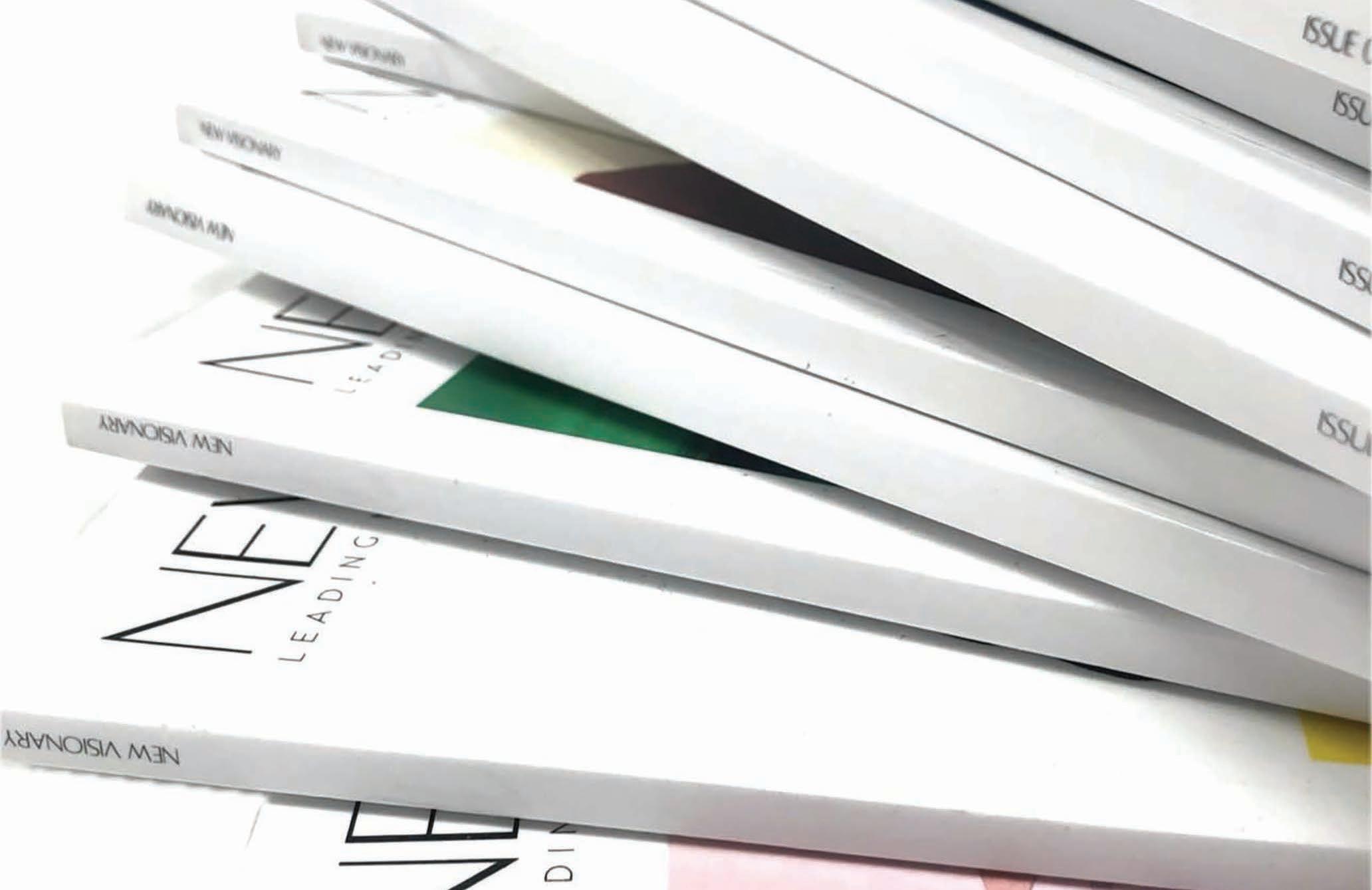
Our mission at Visionary Art Collective is to uplift emerging artists through magazine features, exhibitions, podcast interviews, and our mentorship programs.
Our mission at Visionary Art Collective is to uplift emerging artists through magazine features, exhibitions, podcast interviews, and our mentorship programs.
VISIT OUR WEBSITE www.visionaryartcollective.com
FOLLOW US ON INSTAGRAM @visionaryartcollective @ newvisionarymag
FIND US ON FACEBOOK www.facebook.com/VisionaryArtCollective EMAIL info@visionaryartcollective.com
SUBMIT TO OUR PLATFORM www.visionaryartcollective.com/submit
LEARN MORE OR SUBSCRIBE www.visionaryartcollective.com/magazine
We post all submission opportunities to our website and social media pages.
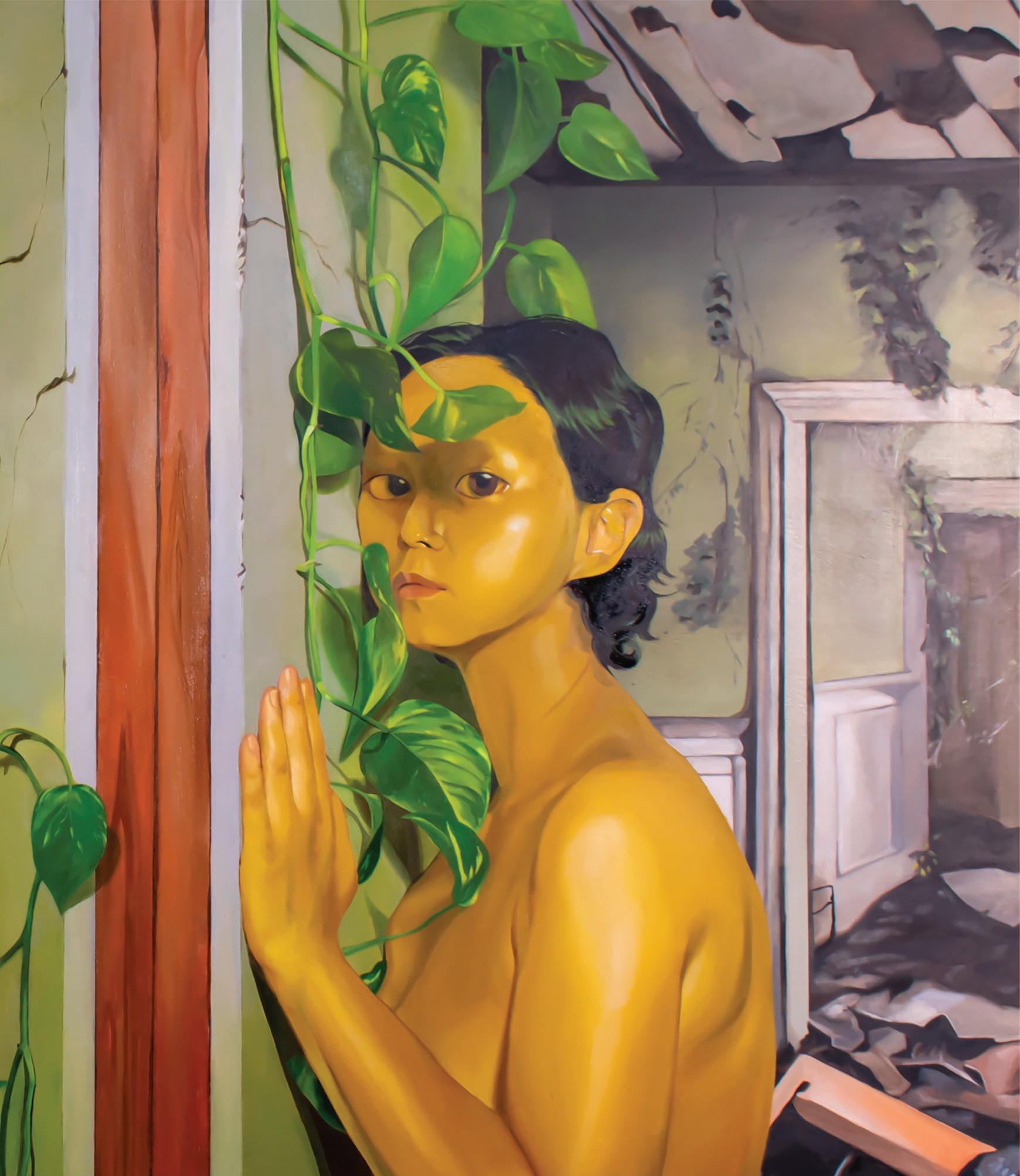
COVER ARTIST SONG WATKINS PARK Dream (detail) oil on Linen, 54x40in
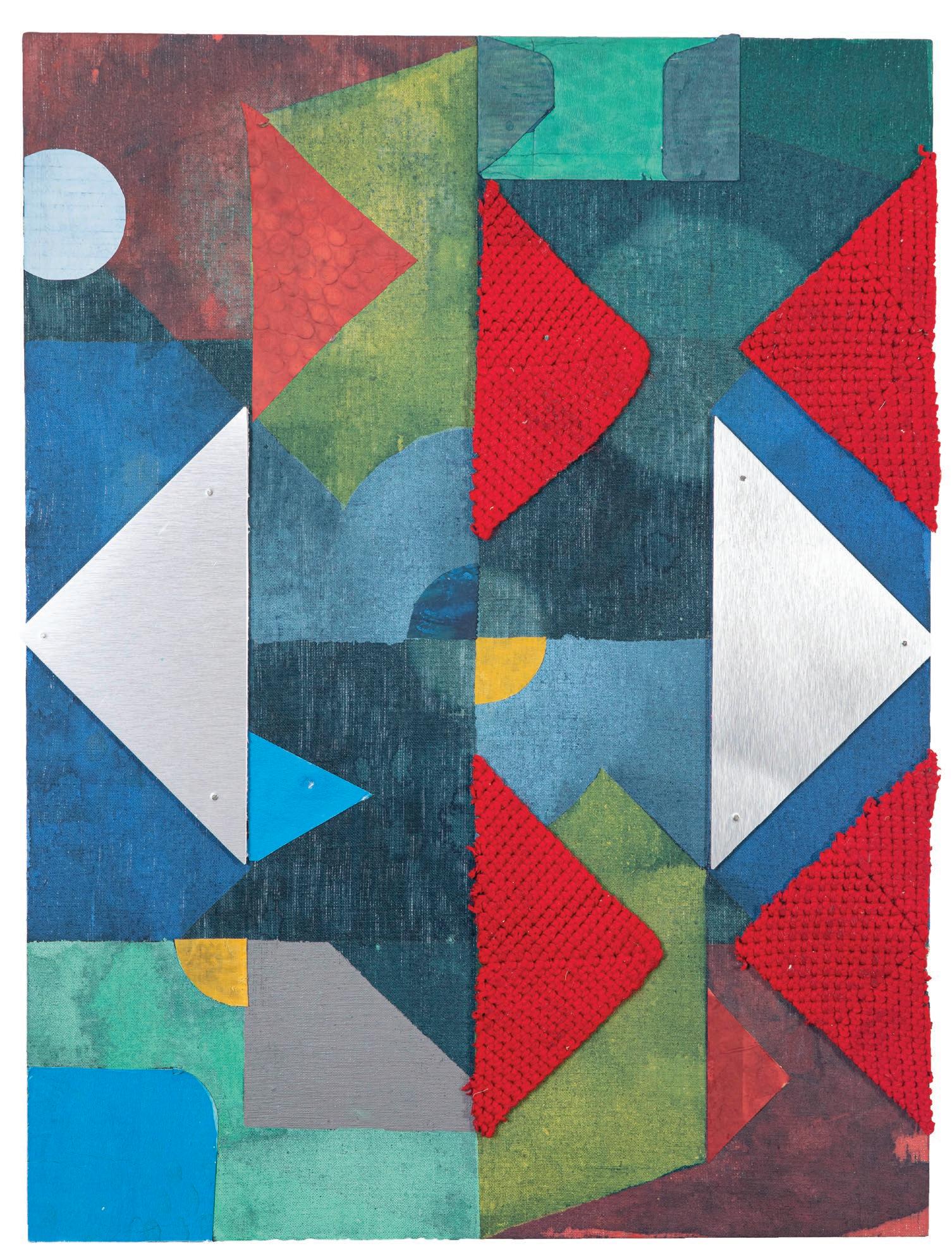
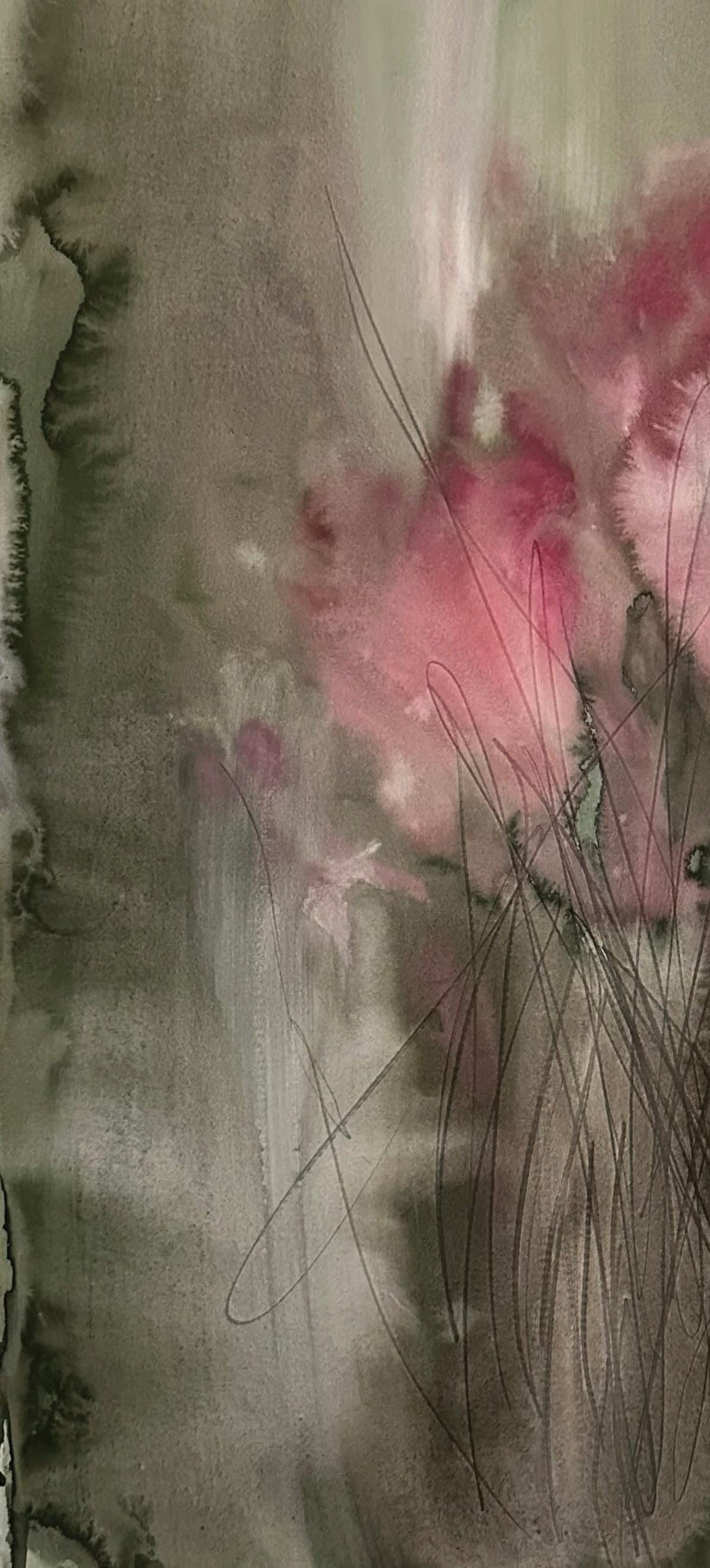
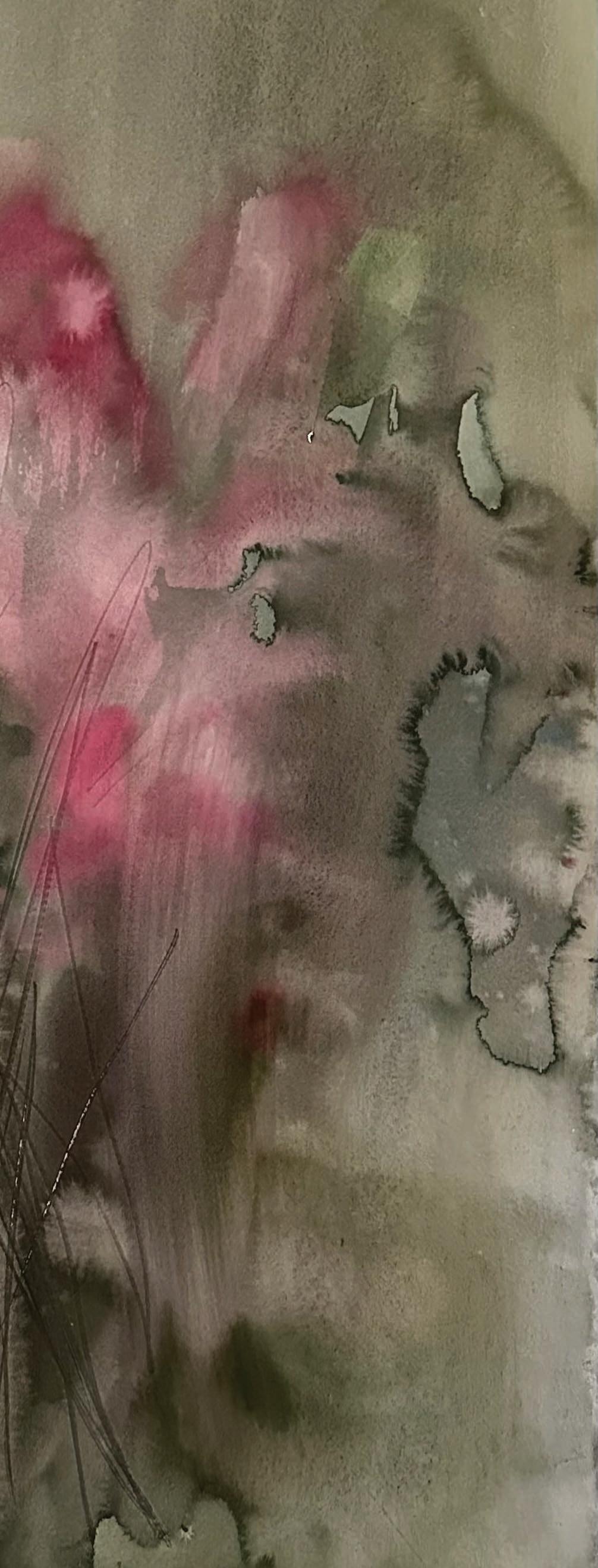
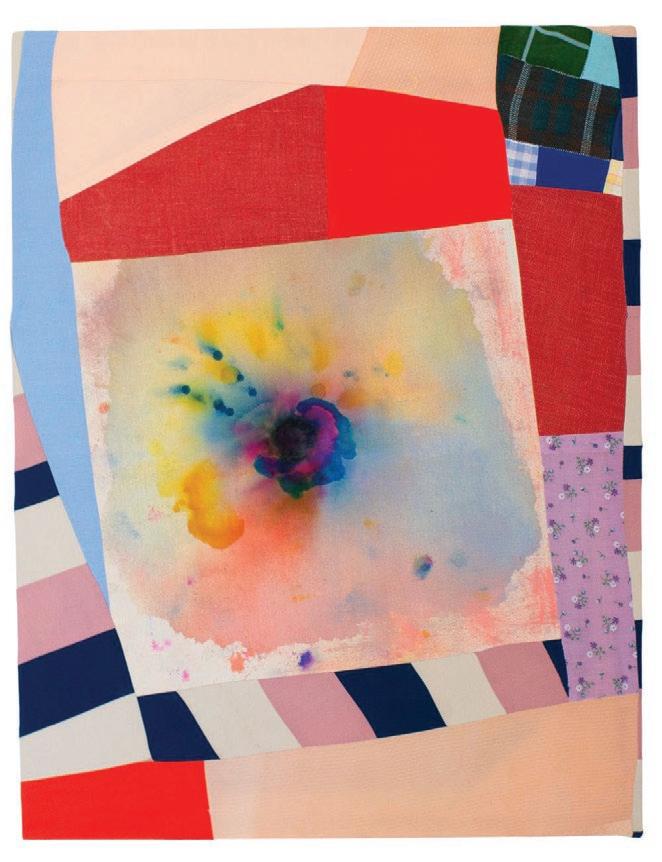
BACK COVER ARTIST JODI HAYS The Middle of Something, dye, cardboard, aluminum Dibond, found potholder, pencil, cyanotype, and gouache on Belgian linen, 24x18in
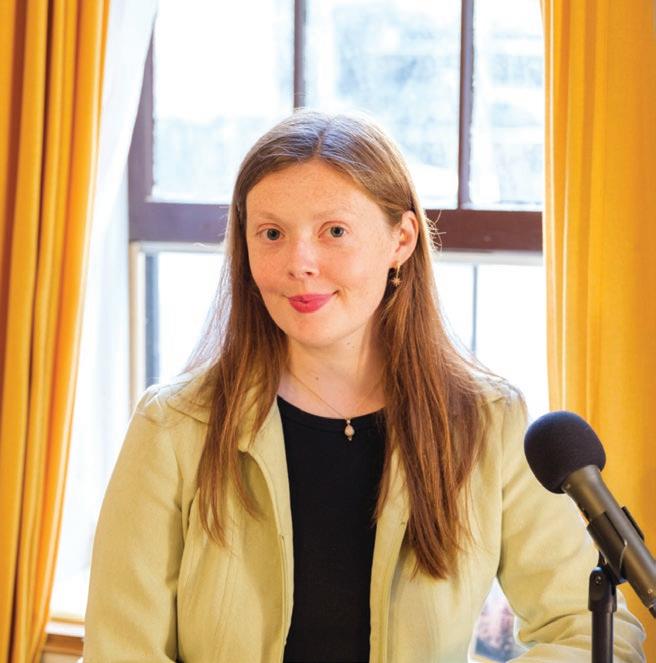
VICTORIA
J. FRY Founder
of Visionary Art Collective +
Editor
in Chief of New Visionary Magazine
For Issue 16 of New Visionary Magazine, we are honored to welcome Johnny Thornton as guest curator. A dedicated artist, curator, and community leader, Johnny has played an instrumental role in creating opportunities for artists throughout the Gowanus neighborhood of Brooklyn, where he continues to champion creativity and connection.
In this issue, Johnny brings together a diverse and inspiring selection of artists, each offering a unique perspective on contemporary art today. Through their work, we see powerful reflections of identity, transformation, and the evolving dialogue between artist and environment.
We’re thrilled to share this issue with you and to celebrate the incredible artists featured within its pages, each one a testament to the spirit of creativity that Johnny continues to cultivate in Brooklyn and beyond.
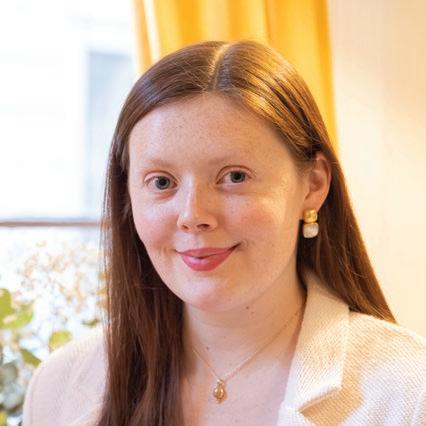
VICTORIA J. FRY she/her Editor in
Chief
Victoria J. Fry is a New York City-based painter, educator, curator, and the founder of Visionary Art Collective and New Visionary Magazine. Fry’s mission is to uplift artists through magazine features, exhibitions, podcast interviews, and mentorship. She earned her MAT from Maine College of Art & Design and her BFA from the School of Visual Arts.
victoriajfry.com victoriajfry
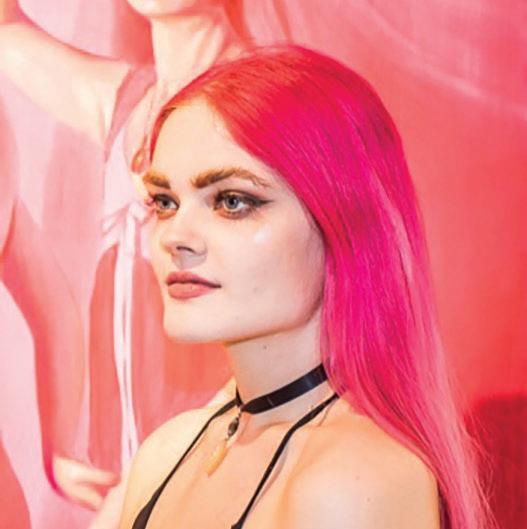
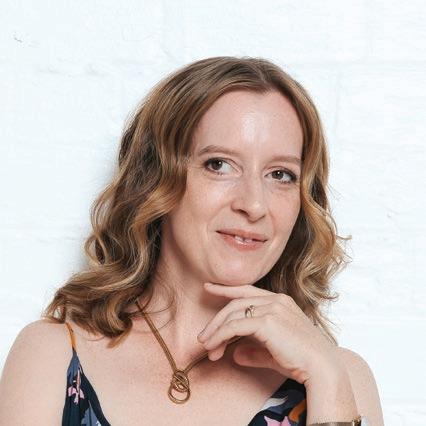
EMMA
HAPNER she/her
Director of Business Administration + Writer
Emma Hapner is a New York City based artist and educator working primarily in oil on canvas to create figurative works that reclaim the language of classical painting from a woman’s perspective. She graduated from the New York Academy of Art with her MFA in 2022.
www.emmahapner.com emmagracehapner
VALERIE AUERSPERG she/her Graphic Designer + Artist Liaison
Valerie Auersperg is an artist, illustrator and designer living in Auckland, New Zealand.
She describes her work as a dose of optimism with a sprinkle of escapism. When she is not painting on canvases or walls she works as a graphic designer and illustrator for companies in New Zealand, Switzerland, Austria and the U.S.
valerism.com iamvalerism
Writer
Brittany M. Reid is a visual artist, creative strategist, and educator based in Upstate NY. Reid’s work explores the wide spectrum of nuanced human emotion through paper collages and acrylic paintings. When working with clients, they bridge the gap between art and technology, helping artists build digital fluency and develop sustainable creative practices.
brittanymreid.com brittany.m.reid
Writer
Chunbum Park, also known as Chun, is an artist/writer, who received their MFA in Fine Arts Studio from the Rochester Institute of Technology in 2022. Park’s main area of interest or focus lies within figurative painting, but they are also enthusiastic about all types of art, including performance and photography. Park wishes to promote emerging and mid-career artists who pioneer strong, original visions and ideas.
www.chunbumpark.com chun.park.7
Writer
Suso Barciela, an art historian and critic, specializes in curating and coordinating exhibitions. He was trained at the University of Seville and the NODE Center in Berlin. His expertise in art criticism and cultural dissemination is reflected in his collaborations with national and international magazines. He has worked with international artists and is renowned for his blog “El Espacio Aparte” where he analyzes art and exhibitions in Seville and Madrid. elespacioaparte.com forms.follow.function
As part of our ongoing interview series, we chat with artists, curators, entrepreneurs, authors, and educators. Through these interviews we can gain a deeper understanding of the contemporary art world.
www.kevinhopkinsart.com
kevinhopkinsart
Hopkins transforms childhood dreamscapes into sculptural effigies that affirm identity and protect vulnerable narratives. His works confront erasure while invoking a deeply spiritual sense of guardianship. Together, they envision liberated futures rooted in Black queer resilience and possibility.
Your Fushintexme series uses body pillow sculptures instead of flat paintings. What inspired you to explore this new, three-dimensional form?
The shift from flat paintings to three-dimensional body pillow sculptures was driven by a desire to have my artwork exist outside the confines of a frame. My brothers and I spent our childhood frequently engaged in shared daydreams, collectively negotiating and navigating the space we conjured. We acted through imagined personas to navigate these worlds. By reimagining this idea, I aimed to see these characters transcend our minds and materialize in physical space, transforming our internal mythology into a tangible reality for both us and the viewer.
You create characters inspired by Southern traditions, pop culture, drag, and humor. How do these worlds come together in your storytelling and worldbuilding?
These worlds - Southern tradition, drag, anime, and humor - form an archive of references that fuels my worldbuilding. Pop culture phenomena like drag and anime personas were my essential lessons in selfconstruction. They revealed how to build and embody an aspirational identity, becoming a tool for claiming the space and desires I wanted for myself.
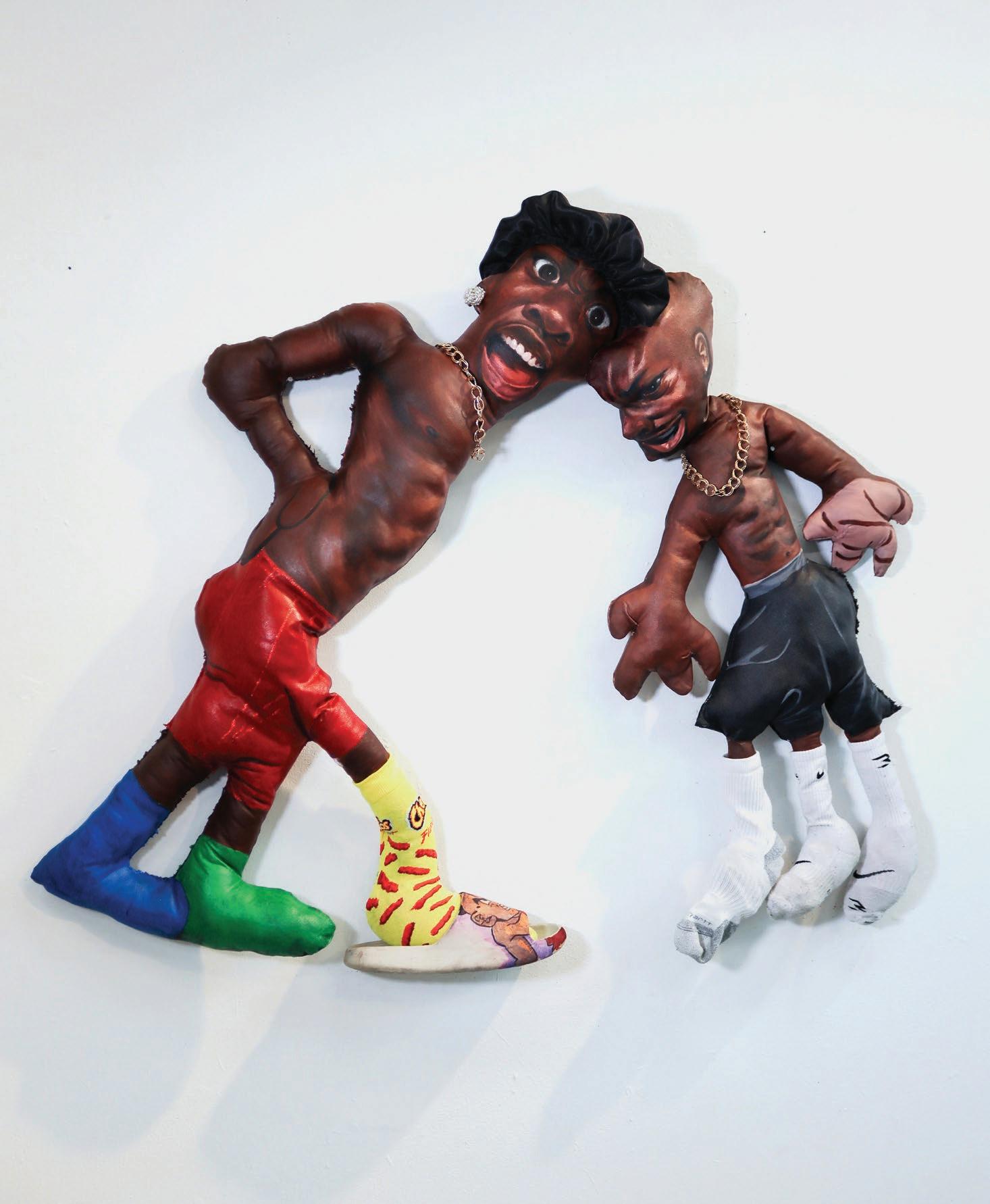
This archive originated in the daydreams my brothers and I shared, where these concepts naturally collided to create our collective mythology. Now, in the sculptures, they act as familiar entry points for the viewer. Whether through the energy of drag or the heroic narratives of anime, these collisions offer a handhold to grab onto, allowing viewers to step into and navigate the narratives of the work confidently.
Your work often touches on memory, grief, and identity. Can you share a recent piece that feels especially personal to you, and what story it tells?
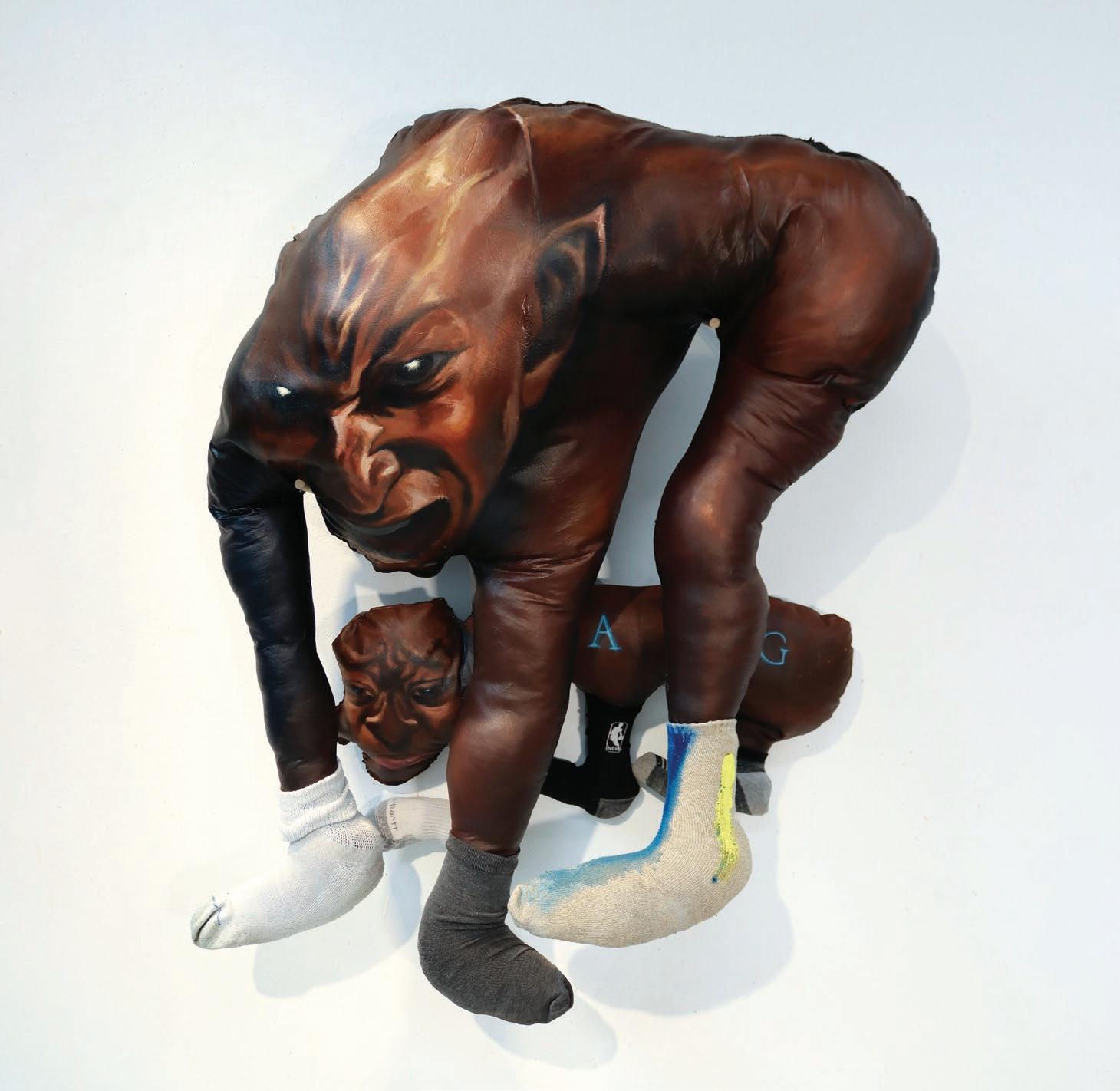
We Seen the Sun is a deeply personal piece that imagines a Black queer youth, represented as a small cub, sheltered
beneath a parental figure. This figure is reminiscent of the titans in Attack on Titan, but they are grounded in reality by details like mismatched socks, a direct material reference to my childhood home life in the Lowcountry.
The installation features the slur “FAG” written on the cub, strategically blocked by the parent’s leg. This obstruction forces the viewer to circle the piece to verify the hidden text, mimicking a predator’s stalking motion. As the viewer intrudes, the parental effigy returns a fierce gaze, countering the ostracization often faced by queer individuals. The work ultimately instigates a “dance” between the viewer and object, designed to conjure a powerful vision of familial acceptance and safety for Black queer people.

As your practice evolves, what new directions or materials are you most excited to explore next?
I am most excited to transition my language around the sculpted figures from “body pillows” to “effigies.” This shift reflects the deepening spiritual and aspirational purpose in the work.
I now view the pieces as spiritual objects made to envision aspirational futures for Black Americans. I’m eager to explore how this reframing impacts the materials I use and the presence the figures hold in the space. The next phase will focus on manifesting these objects as powerful, protective, and visionary embodiments of hope and possibility.
You often mix Black identity and anime imagery in your work. How do you hope that combination speaks to viewers or challenges expectations?
Mixing Black identity and anime imagery is an act of affirmation. I hope this combination speaks to viewers by validating and empowering the multiplicity in Blackness.
While anime wasn’t always broadly accepted, it has become an important part of the Black American experience and offers a way for individuals to express
themselves outside of a singular, expected monolith of Black identity. By incorporating it, I aim to challenge the idea of a fixed Blackness and show viewers how embracing a complex, layered, and multifarious identitydrawing from diverse sources - is a powerful and inherent aspect of Blackness that should be acknowledged and nourished.
When someone sees your work for the first time, what do you hope they feel or take away from it?
When someone encounters my work for the first time, I hope they feel a sense of inevitability and urgency. The sculptures are meant to be seen as foretelling a future that is owed - a necessary, aspirational reality for Black Americans, particularly Black queer youth.
The initial feeling should be one of being confronted with a milestone yet to be claimed. I want them to grasp that the world depicted is not a distant fantasy, but an inevitable reality. Perhaps the work can be seen as a question: “How can I contribute to achieving the reality the work foretells?” I hope viewers walk away feeling activated, recognizing their (our) role in closing the gap between the present and the realities embodied by the effigies. It’s an invitation to participate in the necessary, ongoing work of realizing that justice.
www.kaylancreates.com
kaylanbuteyn artistmotherpodcast.com artistparentpodcast www.kinhouseart.com kinhouseart
Artist and curator Kaylan Buteyn’s multidisciplinary practice investigates how materials can hold memory and meaning. Using textiles passed down through her family, she bridges generational stories while challenging traditional hierarchies between fine art and craft. Through projects like the Artist/Mother Podcast and Kinhouse Gallery, Buteyn creates platforms for connection, visibility, and collective care.
Your work deeply explores generational care through both materials and processes. Can you share how the act of incorporating your grandmother’s textiles into your paintings and quilts transforms your relationship to memory and legacy
Genealogy records, oral histories, and unchanging traditions are not something I experienced in abundance in my family. However, over the past nine years, I have lost three biological grandparents I was very close with, and I experienced a personal longing to understand more about my family. Practically, incorporating my greatgrandmother’s textiles into my work created a direct connection to a generation of people I never knew but whose lives influenced so much of who I am. I work in my studio with those textiles, paint, and other mixed media, but my artistic practice is also enriched by research. I speak with family members and collect stories about our past, our identities, and our legacy. This nuanced and sometimes complicated unearthing of where I come from helps me understand who I am and provides motivation for building a legacy of integrity and intention for my children.
Abstraction, collage, and textile-based practices often exist in different spheres of the art world. How do you navigate and merge these traditions to create a visual language that feels both personal and universal?
Initially, incorporating textiles into my practice was more a matter of function rather than form. I found painting to be a difficult practice to juggle while caring for small
children, and during my early years of parenthood, I needed to be able to “put down and pick up” my artmaking with more ease and less transition.
Hand quilting, stitching, and collage became a means of entering into making in the margins of my time, while painting was reserved for special occasions when I could string together two, three, or four hours in the studio. Eventually, though, textiles became an obsession and a love. Learning the language of quilting has only enhanced my understanding of composition as a painter and deepened my awareness of color theory. While the legacies of textile and painting have been two different routes for much of history, I am thrilled to be making during a time when those tracks are crossing and aligning. I think we are seeing a shedding of boundaries like never before and a disassociation with categorical “sorting” of work. At the end of the day, isn’t it all a form of “mixed media” anyway?
Community-building is a central part of your practice, from founding the Artist/ Mother Podcast to codirecting Kinhouse Gallery. How has cultivating these spaces for others shaped your own studio work?
My artist life and my work have been so enriched by community! Initially, as I started the Artist/ Mother Podcast and built that network, I was really seeking validation for my identity as an artist and parent. I went to graduate school after I was already a mother to a toddler and had my second child during
studio visits, facilitating their work in exhibitions in our space, and more.
In your artist statement, you speak about your work functioning as “portals.” Could you elaborate on what this means for you - both conceptually and in terms of how you hope viewers experience your art?
Due to its patriarchal and gatekept history, painting can often feel like a legacy that is shrouded in mystery and not easy to access. Sometimes a lot of guiding or hand-holding is required for viewers to be able to enter a painting and understand a tradition with materials they have never used. Textiles, however, are innately
my program, so there has always been a need for integration of those two roles for me. I was living rurally and really not connected in person to a network of contemporary artists, so the virtual outreach a podcast could afford me was essential. And of course, the perk of a public, free podcast is that every time I published an interview, it created an outlet for hundreds of other artists to receive that validation and community so many of us longed for.
As I moved away from rural living and my family migrated to Fort Wayne, Indiana, a small Midwestern city, I felt a desire for an internal shift growing within myself. In 2024, my friend Dana Caldera and I launched Kinhouse Gallery, and in January of 2025, we started an artist residency that hosts artists for one- to two-week residencies.
The brick-and-mortar gallery and residency opportunity mean I am connecting with artists every week - doing
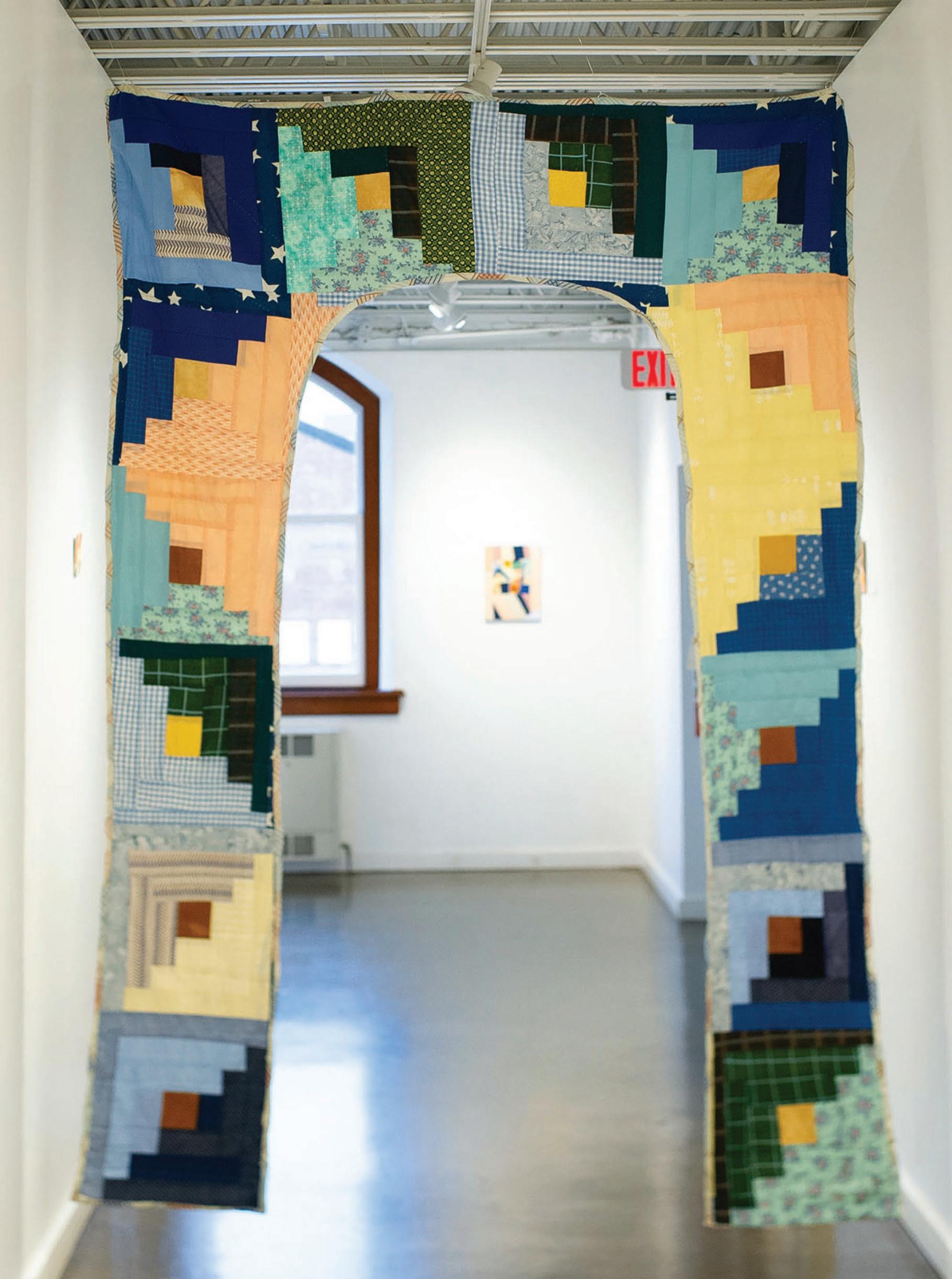
understood. From our very first moments as infants, our bodies are almost constantly touching textiles. They are universal and provide an accessible way to enter an artistic experience. Thus, the very act of incorporating textiles in my work is a portal - an entry point of understanding, of conjuring memories, nostalgia, and feelings. I have also been creating portals as a structure recently in my practice - a large textile that people can walk through as they view my work. This physical act of entering an art experience through a hand-sewn portal directly confronts the labor involved in art-making, juxtaposed with a whimsical sense of space.
The exhibition Those Who Tend at Warnes Contemporary brings
together artists whose work is rooted in caregiving and creativity. How did it feel to see your practice contextualized within this theme, and what conversations emerged for you through that exhibition?
As always, I am reminded that there is so much nuance to this experience as an artist parent. While a lot of what the Artist/Mother platform has done is provide folks a place to connect with others who are like them, the reality is that caregiving takes so many forms and comes with so many unique joys and challenges. Jurying this exhibition reminded me of that and reinvigorated my interest in the complexity of our individual journeys and in making sure there is space for all of us. Conversations around care for elderly parents, care for ourselves, and care for community enriched the experience of putting together this show. I was also just inspired by the work! I absolutely love jurying exhibitions because I am so amazed by what people are creating, and I adore finding the connections
between different artists and pieces of work and pulling it all together in a cohesive way. Jurying fulfills me creatively just like creating my own art does, and I love that I am getting out of my own head and investigating the work other people are making in the process.
The Artist/Mother Podcast has become a vital platform for amplifying the voices of working artists who are also mothers. Looking back on its growth since 2019, what have been the most surprising or impactful insights you’ve gained through these conversations?
The two words that come to mind are visibility and validation! The labor of art-making and the labor of
parenting are things that often go unnoticed and unappreciated by everyone else but the people who are doing the work. So to create a platform that provided so much visibility through the podcast, Instagram, and exhibitions for those two roles was such a privilege. It is also very validating to hear from others who are doing the same work and going through the same challenges. You are reminded that you are not alone in the struggle. I appreciate other platforms that amplify artist parents so much, and the partners we have had in facilitating exhibitions for underappreciated artists, like Warnes Contemporary and Visionary Art Collective. Thank you!
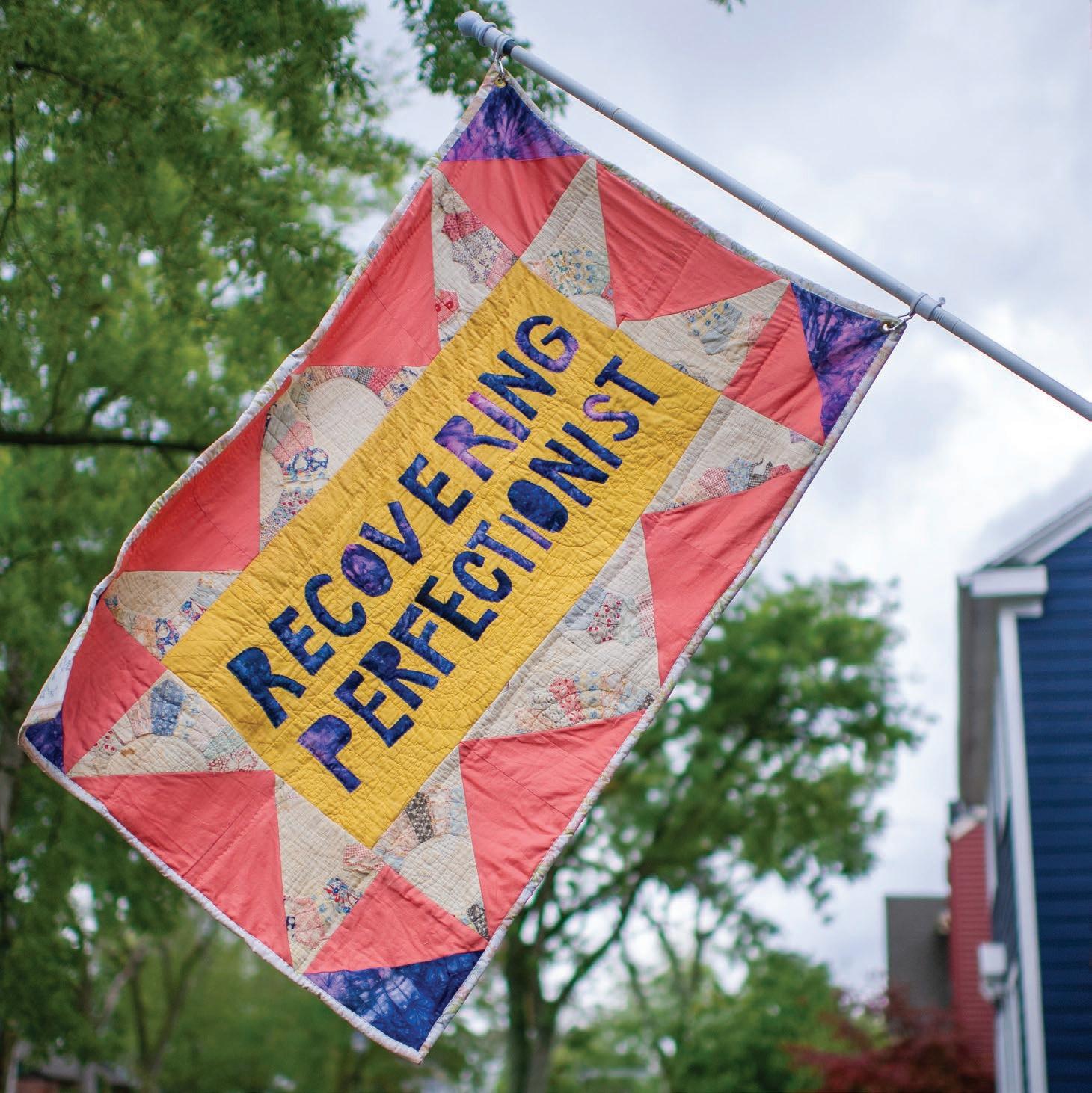
johnnythornton.com
_johnnythornton
www.artsgowanus.org artsgowanus establishedgallery.com established_gallery_
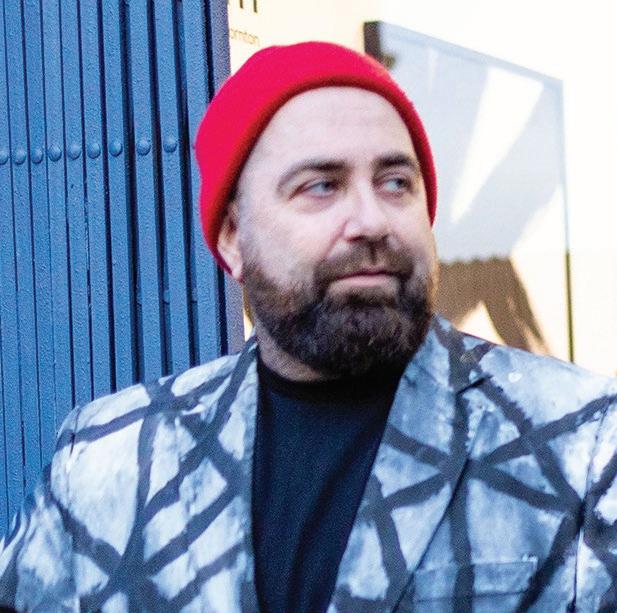
As both a practicing visual artist and the Executive Director of Arts Gowanus and Established Gallery, Johnny Thornton has spent the past years shaping Brooklyn’s creative landscape while navigating the challenges of maintaining his own studio practice. In this conversation, he reflects on the evolving the Gowanus art scene, the power of community advocacy, and how embracing chaos has redefined his approach to art-making and leadership.
As someone who’s both a practicing visual artist and a leader in the Brooklyn art world, how do you balance your personal studio practice with your work supporting other artists through Arts Gowanus and Established Gallery?
Due to my time limitations, keeping an active art practice is a constant struggle for me. Being the Director of Arts Gowanus and Established Gallery has changed my practice immensely over the past seven years. A lot of my work is creative in nature, but the need to create my own art is ever-present, so my practice has shifted into a more ephemeral one. I make work in bursts now instead of trying to maintain a daily or even weekly art practice. I typically try to do one big project a year, whether it’s an exhibition or a large-scale mural. Making art in a time crunch is actually something that I enjoy these days; I’ve learned to embrace the chaos of it all. These new parameters have changed my work stylistically and conceptually, and forced me out of my comfort zone. I come from a photorealism background, so the shift from meticulous, time-consuming paintings to fast, projectbased work is a challenge that I find really cathartic.
Brooklyn’s art scene has evolved so much over the years. From your perspective, how has the community changed, and what excites you most about where it’s headed?
Gowanus has really been my whole life for the past seven years, so I can only really speak to that part of Brooklyn. There has been such a huge shift in Gowanus over the last
few years because the Gowanus rezoning has completely transformed the neighborhood and will continue to do so until all the new developments are complete. What excites me about the artist community is how resilient and welcoming it is. We have seen so many changes, and the art community has remained steadfast in its efforts to keep Gowanus a vibrant and exciting place. The entire creative community has been so supportive of each other and of Arts Gowanus’s efforts to keep it a neighborhood for artists.
Through your role at Arts Gowanus, you’ve helped foster an incredibly inclusive and dynamic creative ecosystem. What do you think makes this community so unique, and what challenges come with leading such a large network of artists?
Gowanus has always been an art-centric place - for decades, artists flocked there and inhabited the old warehouses and industrial buildings because they were affordable. From my point of view, cultural vibrancy does not happen unless it has input from as many voices as possible, and affordability is the key to that diversity of perspective. Fighting to ensure things remain affordable is always a huge challenge, and I am proud of our advocacy in securing all the affordability we did in the rezoning.
Though we secured about 120 subsidized studios and a community center through this advocacy, the challenge will always be fighting for more affordability, more inclusion, and more vibrancy. I (and many others) view Gowanus as an island away from the larger art world - we view art as more than commodity trading for the top 1%. I view art as a catalyst to build a stronger community.
At Established Gallery, you’ve shown a wide range of emerging and mid-career artists. What do you look for in an artist’s work when curating an exhibition?
I always describe Established as my “happy place.” I don’t think I have a solid methodology for what I’m looking for in an artist’s work. I see a lot of work on a daily basis through Arts Gowanus, so if something excites me and I can’t get it out of my head, I’ll approach the artist or artists. We typically only do solo shows because it gives me the opportunity to work with the artist and learn more about their practice. I think I took a page out of the Arts Gowanus playbook - I view the gallery as an island away from the larger art world. I don’t really concern myself with how a mid-sized gallery “should” operate or pay much attention to the larger art market. I do what feels right to me. This attitude has made Established such a joyous place for me; it feels like home.
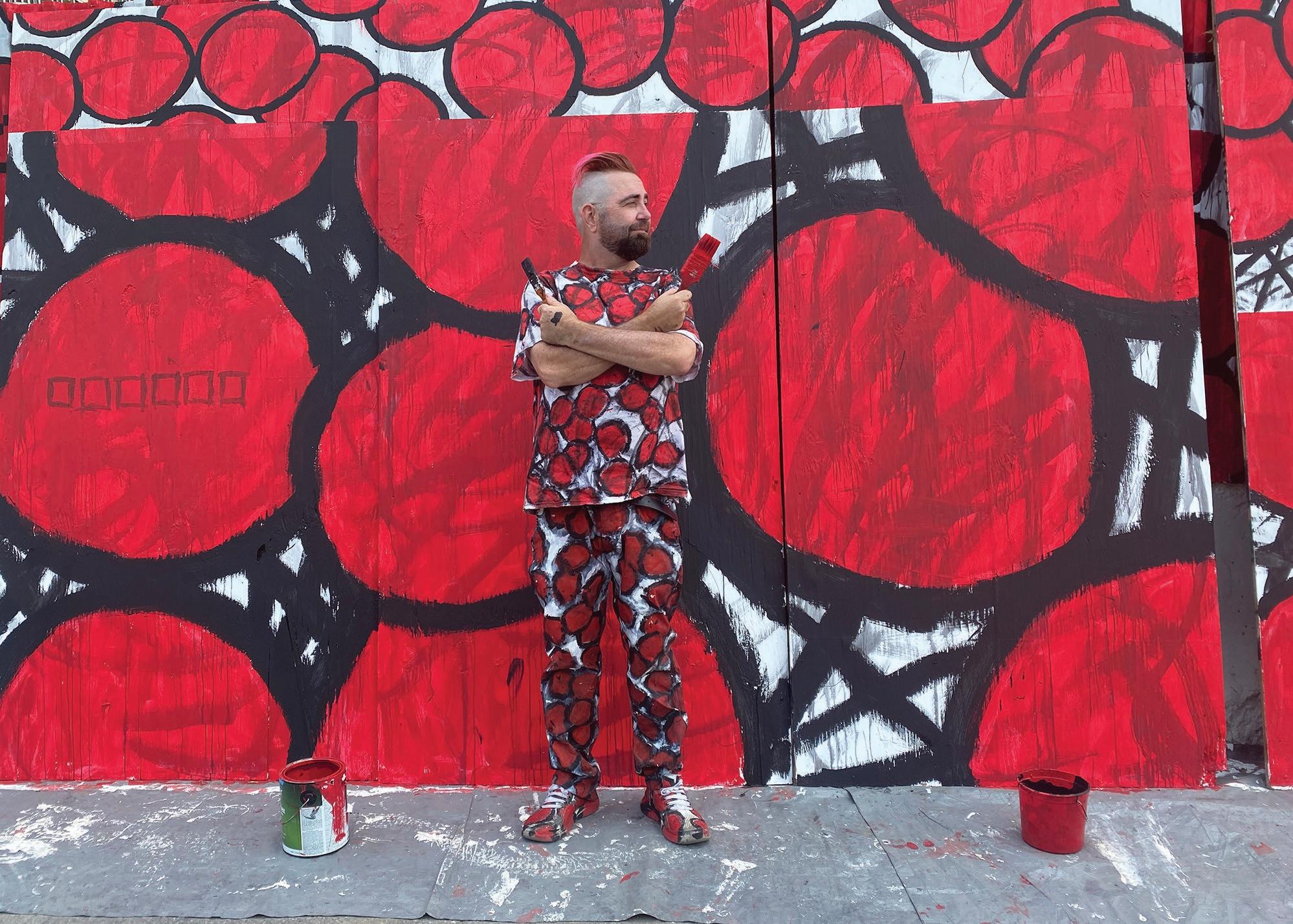
Can you share a bit about your own art practice, what themes or ideas you’re currently exploring, and how your administrative and curatorial roles inform your creative process?
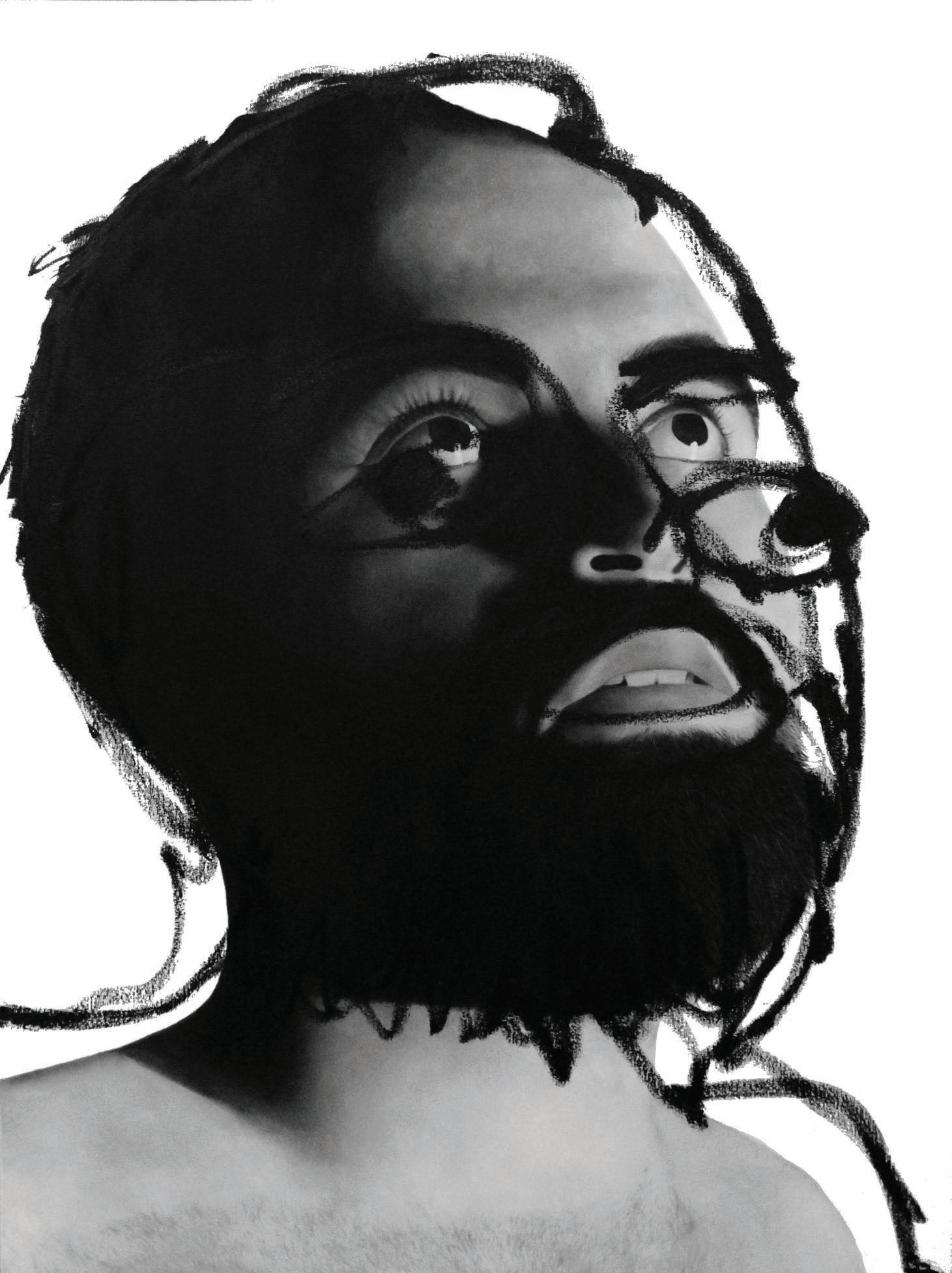
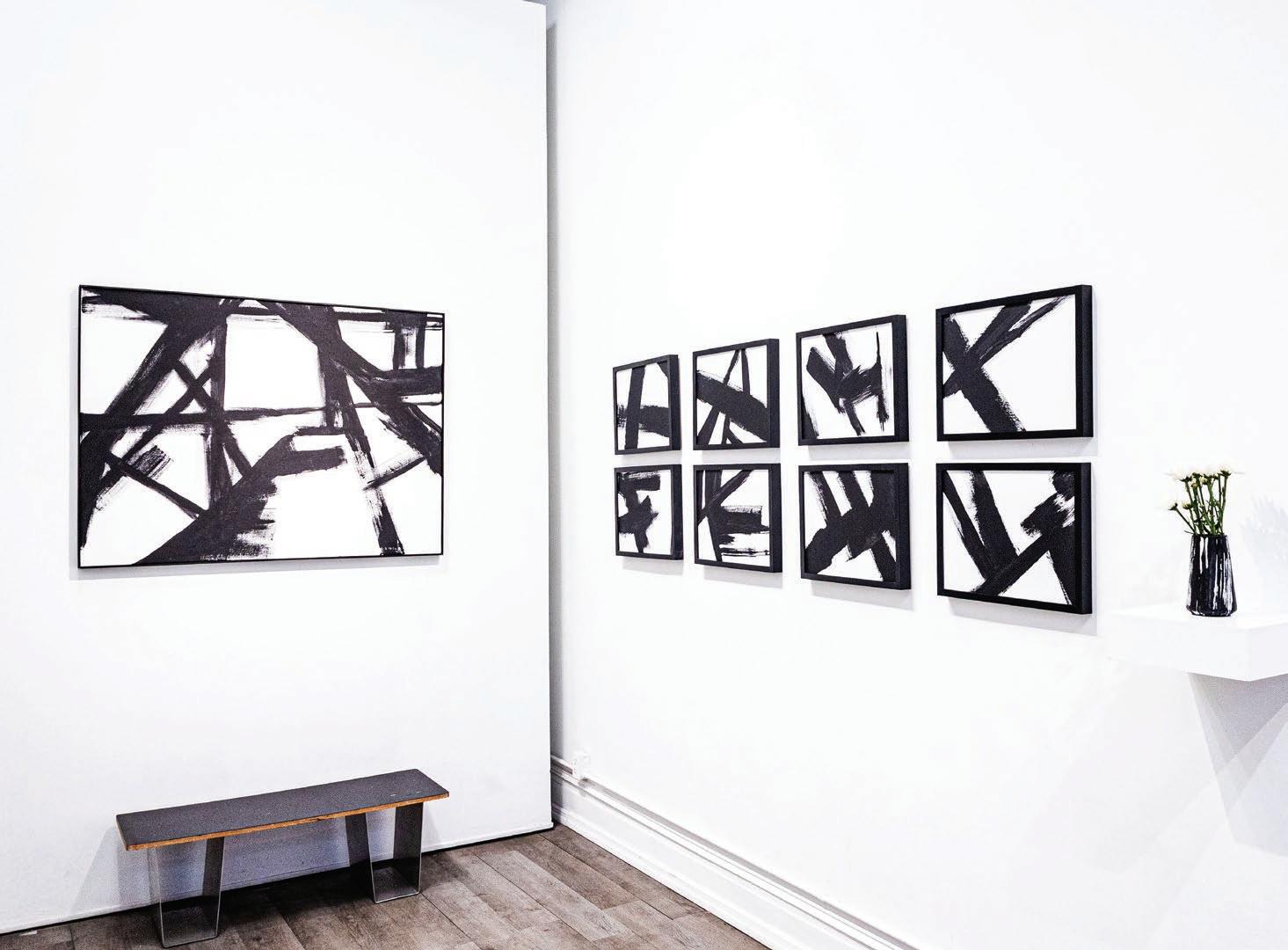
I have put aside photorealism for the last several years for a more “reactive” art-making process. My current art practice always mimics what’s happening in my life and the larger ideas at play. Last year I did a show called In the Interim, a black-and-white abstract exhibition that was 100% catharsis for me. I was under so much pressure with my other roles that I used the series as a way to recenter myself during a chaotic time in my life.
This year I did something similar with my friend and collaborator Emily Chaivelli. I spend a great deal of time with Emily, as she is the other Director of Arts Gowanus and helps my wife Hally and me run Established Gallery as a co-director. We are very similar people, and our lives are filled with many of the same inputs - community, civic planning, art programming, advocacy, etc. - so this naturally transitioned into an art collaboration, too. We created a collective called “somebody” to make artwork within the parameters of our chaotic lives and use these inputs as a starting point to create work from.
For artists who are looking to get more involved in their local art communities or start building meaningful relationships with galleries, what advice would you give?
Show up! Volunteer! Get involved!
Much of art is solitary making, and every artist should try to spend time finding their niche of like-minded people (I know, easier said than done). It’s vitally important to an artist’s practice, life, and mental health to find community. A supportive community will do more for your practice and career than anything else. Every artist should try to have an idea of what success looks like to them. The one thing I’ve learned in the art world (that also applies to a lot of life) is that despite what people tell you, there aren’t really any hard and fast rules. Do whatever you can and whatever you want.
In this section we invite contributing writers to share their perspectives on contemporary art, education, and other notes of interest related to visual arts.
written by Brittany M. Reid
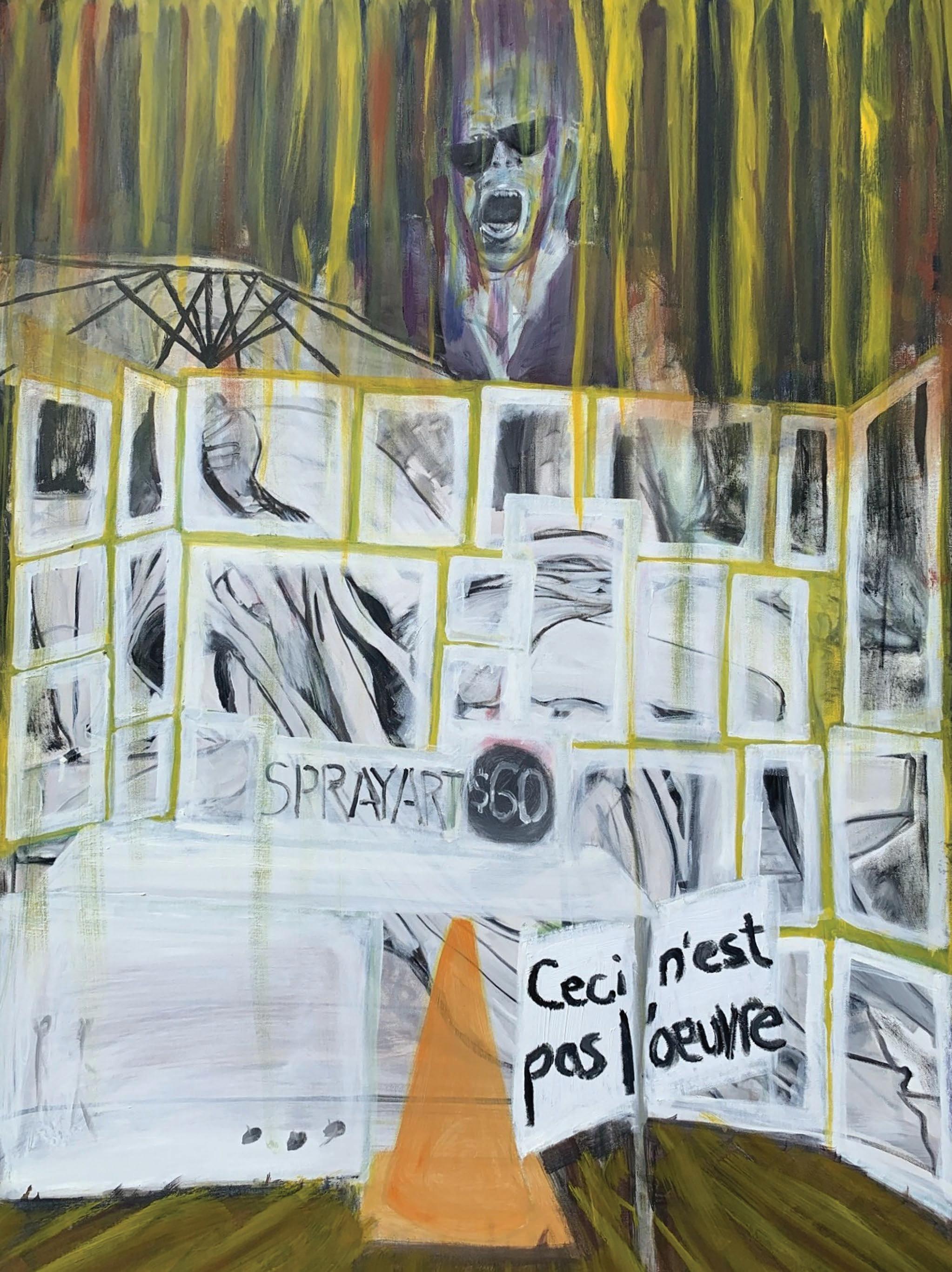
When you create art, how do you accept that your work will inevitably change once others view it? What happens when our art is no longer about us? After we share it, does it mutate?
Sharing our work in a public setting forces it to take on a different meaning (not necessarily a greater one). Outside the safety of our studios, our innermost expressions are exposed to an audience and left at the mercy of interpretation. Some would say this is the whole point. But what if this shift doesn’t just change how our art is perceived by the audience, but also how we perceive our art?
All of this came to mind following a recent visit to the Montreal Museum of Fine Arts. I had the pleasure of experiencing Marie Claire Blais’ solo exhibition, Streaming Light. The show invites viewers into Blais’ process, immersing them in the surround sound of her brushstrokes as she drenches burlap in layers of sunset-hued pigments. In that moment, I was overcome by feelings that couldn’t be named in a single word. It was the sensation of witnessing something too intimate to belong to anyone else.
As I walked through the space, I imagined how it must feel for the artist to grant access to something forged in solitude and invite strangers inside. I reflected on the experience weeks later and couldn’t help thinking about my own practice. Sharing my work transforms it, irrevocably so. It asks me to relinquish control and let the work become something else: a shared relationship between me and whoever is looking.
Our work begins as one iteration, but as others experience it, it transforms over and over, infinitely. This is both beautiful and destabilizing. It’s as if someone has both taken something from us and simultaneously become a part of us.
I view this as less of a dilemma and more of an evolution. Exposure is a necessary part of connection and community. Each time we share our work it stretches far beyond any limits we impose on ourselves, while still remaining tethered to its maker.
written by Chunbum Park
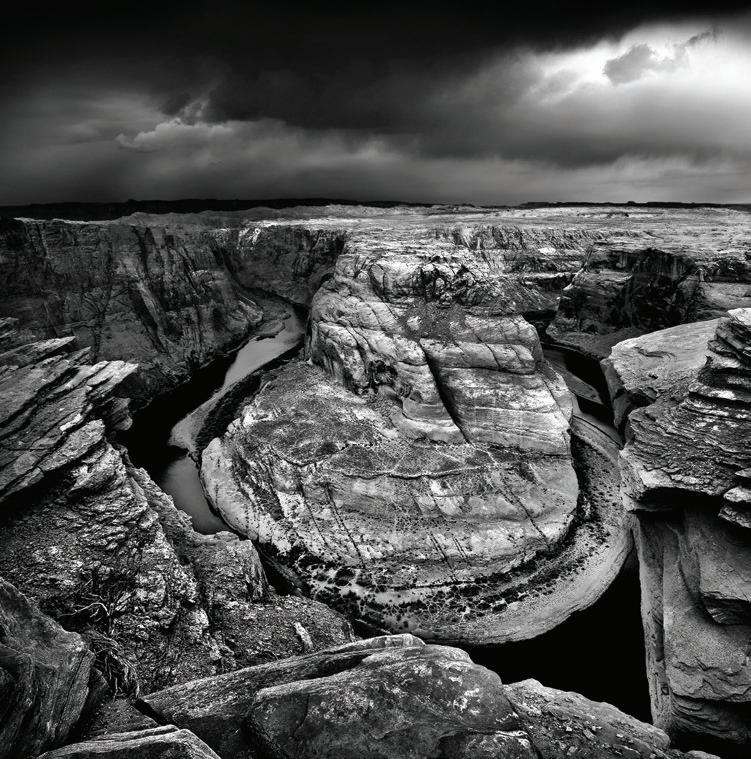
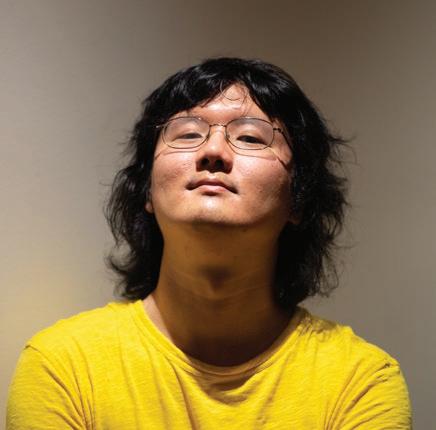
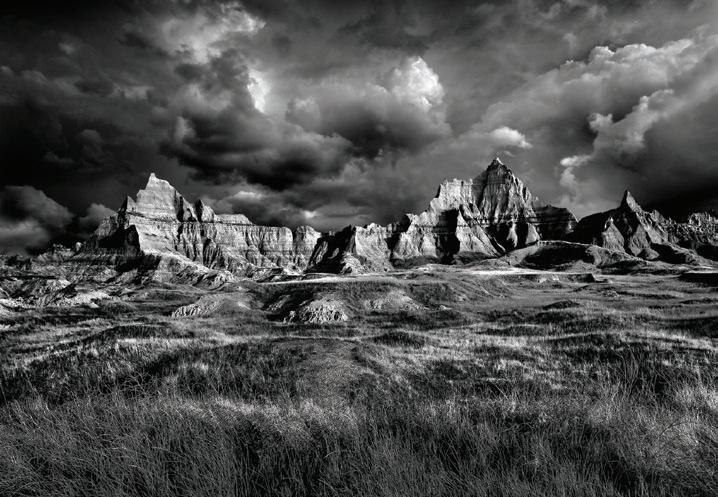
Park Joon’s solo show titled, “America the Beautiful: An Outsider’s Perspective,” at the Roundcube Contemporary (a popup gallery in NYC) is a sight to behold. Curated by Julie Jang, the exhibition is Park’s 30th solo show and the culmination of a monumental project by the firstgeneration Korean American photographer to capture the extraordinary beauty and the sublime of America’s natural landscape from a viewpoint at the periphery. He has travelled tens of thousands of miles on the road, making 40 trips around the continental United States and Alaska (which he reached via the roads through Canada). The artist was born in Korea in 1956 and immigrated to the United States in 1983.
Park describes nature as non-discriminatory unlike the American society dominated by the whites. In the distant landscape, unlike the city, there is no social construction of hierarchy. Everyone is equal as a survivor, an observer,
and a zen philosopher who exists purely in the moment.
America is said to be the land of the brave, of freedom and the oldest continuing democracy. However, a dark history of colonialism, racism, and genocide lurks beneath this propagandistic image. The same force of racism and white supremacy that took down the Native Americans exerts existential pressure against Park and the other darker-skinned immigrants like himself. Can Park connect the dots? Does he see the impossibility of submitting to the land that originally belonged to the Native Americans, as an outsider who originates from Korea several thousands of kilometers away?
The American land, which is continental in scale and limitless in terms of the resources, is completely different from the Korean landscape, which can be said to be “local” or “regional.” The geography is a key factor that allowed America to become a superpower, isolated by oceans on both sides and limited in terms of competition from the surrounding states (unlike China, which is surrounded by hostile states). The Koreans rarely had to fear the intrusion of tornadoes due to the narrowly carved valleys and mountains, unlike the Americans who are hit by the powerful, dynamic vortex that arises from the continental geography and atmospheric condition.
To a Korean like Park, the first sight of the infinitely expansive American landscape, as in the Great Plains, or the Appalachian mountain range, must have reflected on the unlimited might and reach of a superpower.
Human society has built false symbols for value, desire, and power. Money may be something that gets you food or water from a store, but mother nature does not recognize it. Beauty may be something that attracts other people towards you, but mother nature does not care for it. The mainstream Americans may label and treat Park as inferior, Asian, and an outsider, but mother nature could not care less about how a certain group of people perceive others.
In most of Park’s landscapes, humanity ceases to exist on a metaphorical level, and the photographer is the only one who survives, only to eventually fade away within
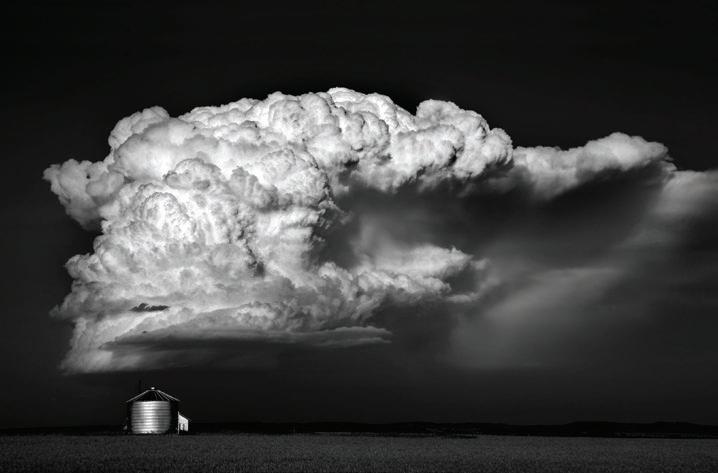
the landscape. Park is the lone witness to the beauty of the American land, if not the society, because he is an Asian outsider, living in solitude.
As evidenced in “Badlands National Park South Dakota 303” (2011), “Horseshoe Band Utah 29” (2022), and “Anza Borrega State Park 761” (2023), Park often treasures landscapes that have been carved and sculpted. The process of formation in these kinds of parks are two-folded, involving deposition (usually by sea or river water and wind) and erosion (usually by river water). This geological formation process is akin to drawing and erasing, or painting and scrubbing. Why is Park drawn to this kind of extraordinary landscape motif that is multi-layered, beyond their visual appeal?
These photographs suggest that Park’s own identity as a Korean American is one of render and erasure, and he too is a complex individual with a multi-layered psyche and perspective. This is the exact nature of the Korean American identity… what he perceives to be an eternal outsider, especially as a first-generation immigrant, with a high language barrier and the burden of a difficult life. The erasure or the denial of identity occurs immediately at the very moment that the identity is othered as Asian and non-European. And the erasure is executed at the level of the self and not by others, since Park erases his own ego first before others can erase him. The self-erasure and acceptance open the void on the canvas onto which he can render a new kind of drawing… one that initially embraces the rejection (in a somewhat rebellious and self-destructive manner) but ends up being refined and elevated to a higher plane of expression.
The United States, upon the ending of World War II and the establishment of a new world order based on the rule of law and international trade, rebuilt Western Europe and Japan from the ashes of the world wars, in response to the Cold War reality. However, in this policy, we see the line that the US perceived (and still continues to observe) in delineating the winners and the losers. Everyone who was non-European, with the exception of the Japanese, were the losers. And South Korea was put on the periphery as a buffer state to North Korea and China.
The trauma of being an outsider for Park has translated into the fear of being an eternal outsider (an artist who remains forever unknown and eventually erased). This is almost similar to the national identity of Joseon-Dynasty Korea as a “hermit kingdom,” after the war with Japan from 1592 to 1598 and the Jurchen invasion after that in the early 17th century.
And this trauma and fear has led to an internal reaction formation within Park’s psyche, which has led to acceptance and embrace of this new identity as an immigrant.
And in this place of nowhere, in this psychological space of nothingness, one can imagine that a profound transformation took place for Park… of crushing solitude, a neverending struggle with the self and the never ending question of death and suicide, mental anguish and struggle, and eventually… artistic power through the lens and a profound philosophy and outlook towards life.
In the middle of nowhere, Park suffered… and found there a relief in the form of an oasis… a spring of resolution and determination from an infinite source. This is the idea of justice and karma… God’s revelation and covenant to Park… who transforms into an Abrahamic or Moses-like figure who is just one helpless mortal, but carries the firm conviction to carry on with his gargantuan project… of landscape photography in documenting not only the sublime beauty but also the immense might of the American landscape (as resource and projection of power in the atomic era, continuing on into the information age).
In the middle of nowhere, Park stands helpless as a nobody but infinitely empowered by his religion and a firm conviction (as a photographer and a Christian) to carry on despite having very little (as a Korean American and a first-generation immigrant). Solitude and suffering, powerlessness and prayer, and the eventual transformation and triumph… These are what make Park’s story so great. In the pursuit of the love of the land for the next-generation Korean Americans, Park finds a truth in the name “America” (or “Mi-Gook” in Korean), which, based in Chinese characters, translates to “The Beautiful Country.” Park’s story and work are, then, quintessentially American and pulchrous, despite the racial discrimination and social hierarchy, if we are to believe that America is metaphorically a melting pot of coexistence and diversity.
written by Emma Hapner
Since the earliest cave paintings and carved idols, artists have turned to myth and legend to make sense of the world around them and within them. From the gods of ancient Greece to the folktales of forgotten cultures, myths have served as vessels for collective memory, morality, and meaning. Across centuries and civilizations, visual art has been a key medium through which these stories are told, retold, and transformed.
Whether etched into temple walls or rendered in Renaissance frescoes, mythical imagery has always held a special place in the artist’s toolkit, offering a bridge between the tangible and the transcendent. But what happens when these age-old symbols are reimagined through the lens of the modern world? How do today’s artists engage with ancient narratives, and what new myths are being shaped in the process?
In a dreamlike collision of color and form, Amy Beager reimagines ancient myth through a contemporary lens. Her paintings, populated by ethereal female figures and ghostly swan silhouettes, evoke the atmosphere of a fairy tale unfolding in real time. In Swan Maidens, her debut solo exhibition with Kristin Hjellegjerde Gallery in 2022, Beager draws inspiration from folklore, particularly the legend of women who transform into swans, to explore the tension between two worlds: the human and the otherworldly, the physical and the spiritual.
The title of the exhibition may allude to the Swan Maiden folktale, a story with roots across many cultures but most famously recorded in Britain by folklorist Joseph Jacobs. In his version, a man secretly observes a group of maidens who transform from swans into women by shedding their feathered cloaks to bathe. He hides the cloak of the youngest, preventing her from returning to her swan form, and eventually marries her. Though she bears him children and appears to accept her new life, the tale ends with her rediscovery of the cloak and her return to the skies, leaving her human family behind. This narrative of enchantment,
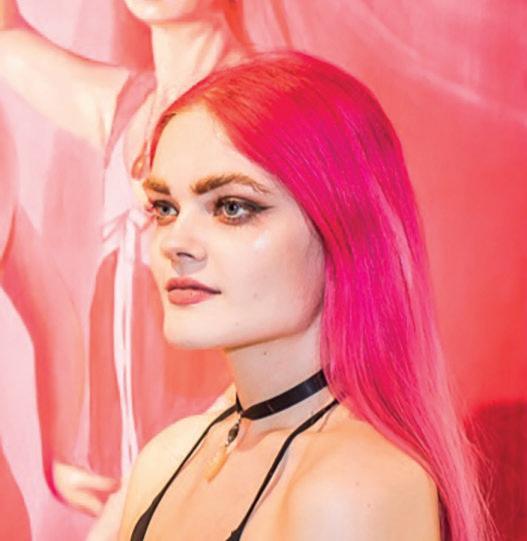
loss, and female autonomy resonates throughout Beager’s work, not as literal illustration but as emotional and symbolic undercurrent. Her figures, suspended in moments of transformation, speak to the inner conflict between freedom and belonging, and the timeless allure of escape.
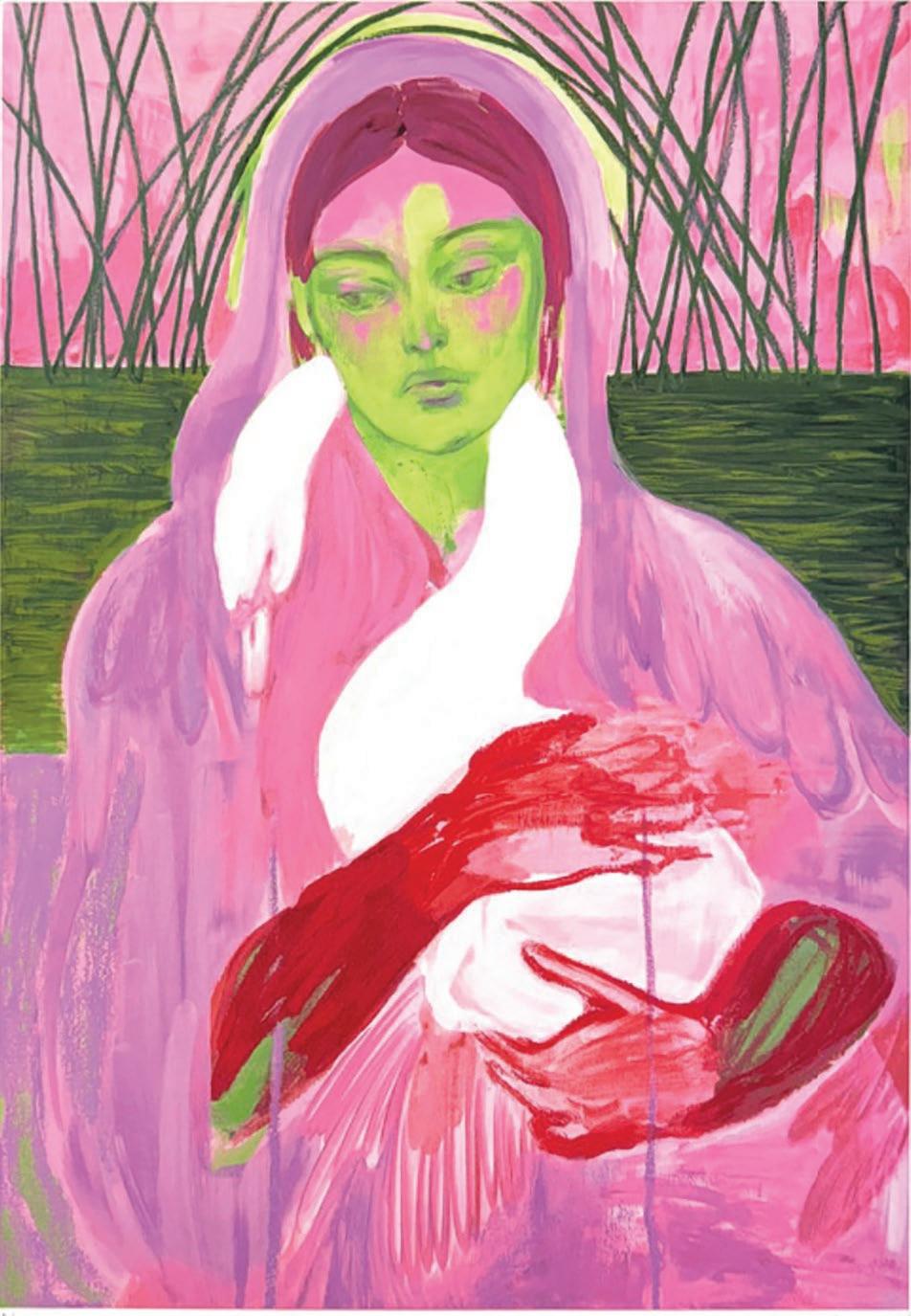
Xanthe Burdett’s work explores myths of transformation where the boundaries between human and nature dissolve. Central to this may be the story of Daphne and Apollo. Pursued by the god Apollo, Daphne calls upon her father, a river deity, to save her and is transformed into a laurel tree. This myth of escape through metamorphosis captures both violence and resilience, themes that echo throughout Burdett’s practice.
Her works also recall archetypal figures like the Green Man, whose foliate face emerges from medieval stone, and visionary voices such as Hildegard of Bingen, who linked the body and nature through mysticism. By referencing these symbols while rooting her imagery in lived experience, Burdett creates what she calls a “personal mythology,” one that threads together past and present, myth and memory, the monumental and the intimate. By invoking myths of transformation, Burdett’s work resists closure. Instead, it offers a vision of bodies and environments in flux, reminding us that myths are not relics of the past but living frameworks through which we continue to understand change, vulnerability, and survival.
Canadian artist Janice Sung creates dreamlike paintings and illustrations that blur the boundaries between the human, natural, and spiritual worlds, a space long explored through mythology. Rooted in both Eastern and Western art traditions, her
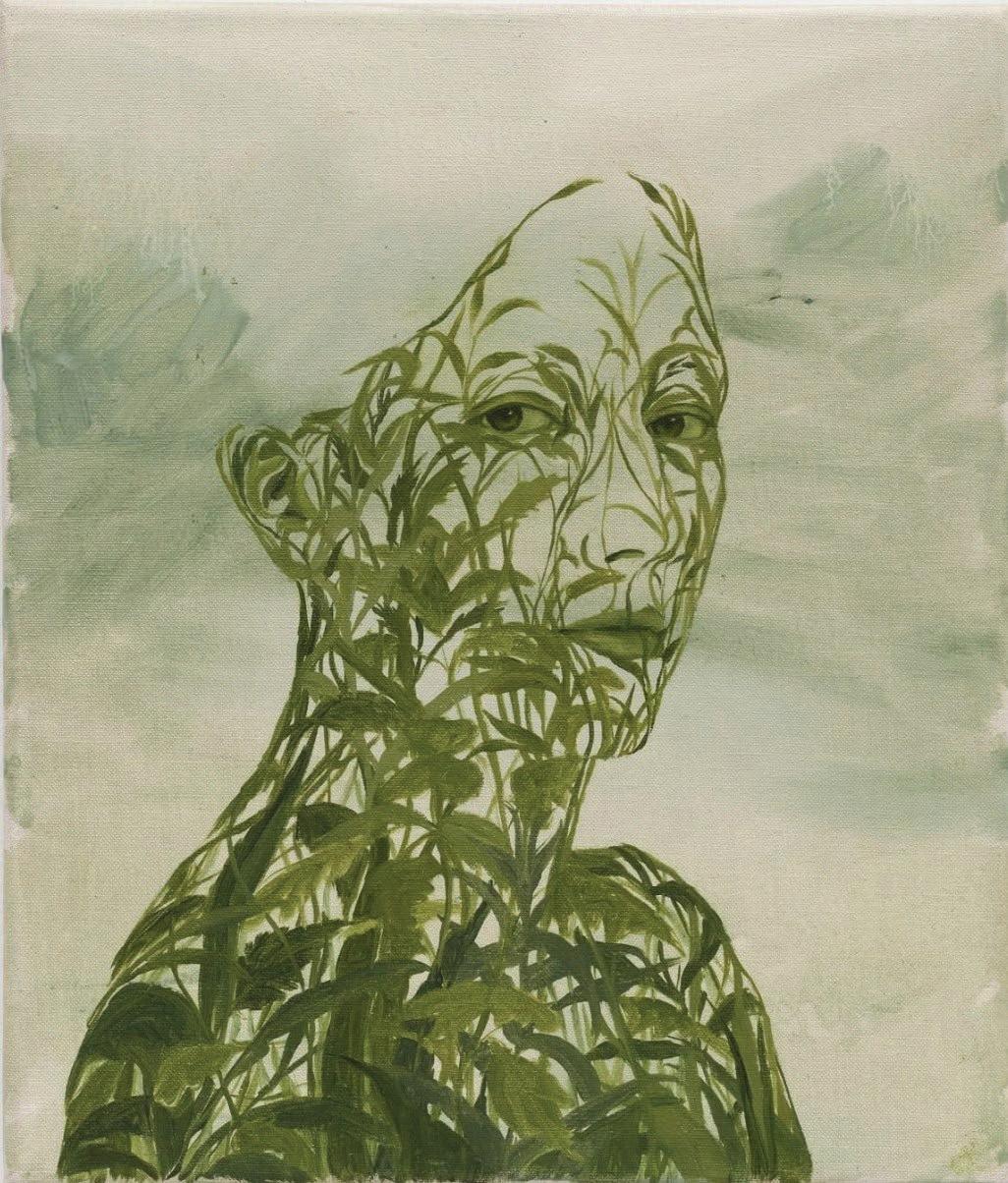
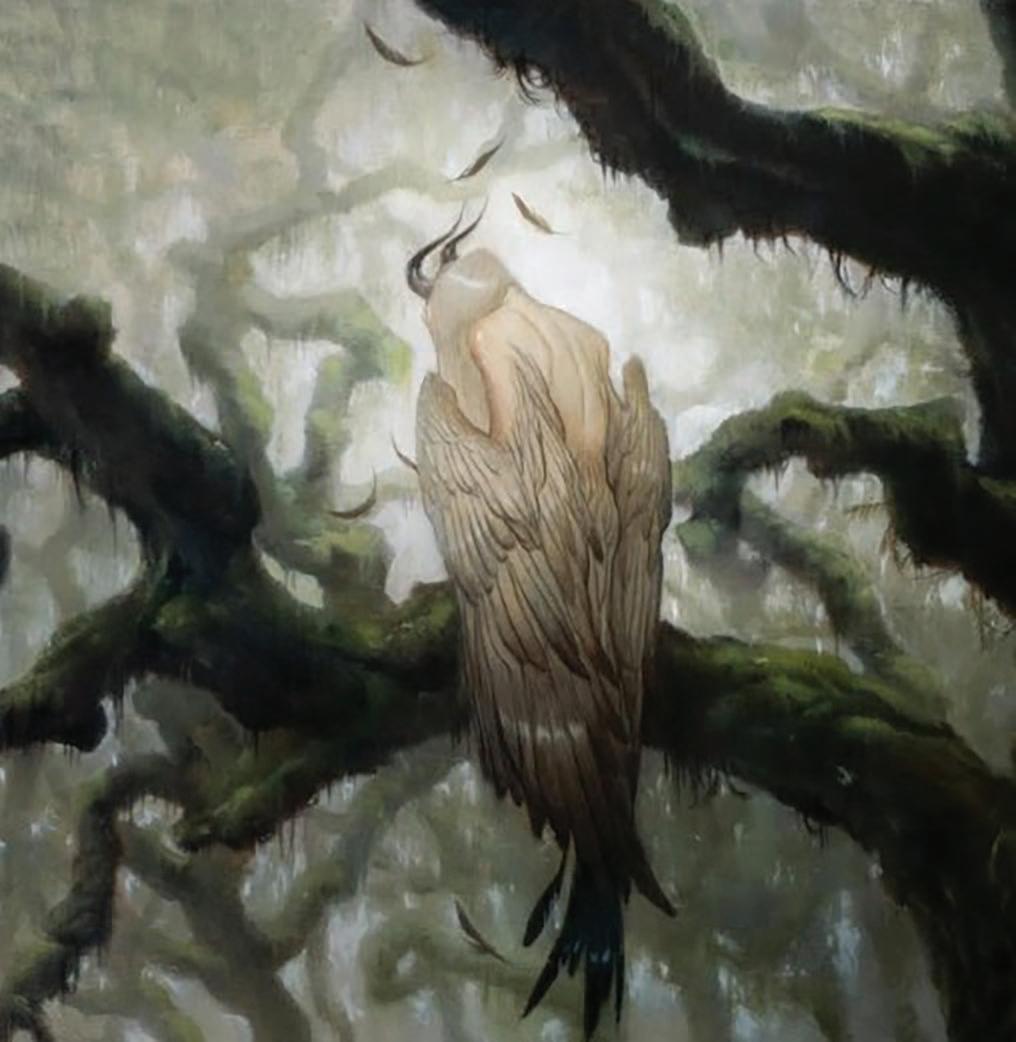
work often portrays ethereal female figures suspended in luminous, otherworldly settings, surrounded by plants, animals, and flowing light. In series such as The Abyss, Sung’s figures drift in dark waters among koi fish and blossoms, evoking mythic beings who exist between realms, such as water nymphs, sirens, or spirits of transformation. Her compositions capture the timeless essence of myth: a sense of mystery, power, and connection with forces beyond the visible world. By merging Renaissance grace with East Asian symbolism and contemporary technique, Sung reimagines myth as a living language of beauty, femininity, and rebirth, revealing how the mythic continues to flow quietly beneath the surface of modern life.
Sung’s painting Ocypete reimagines the harpy of Greek mythology as a hauntingly elegant figure, embodying both vengeance and allure. Described by the artist as “a harpy sent by the gods to punish and steal what mortals hold dear,” the work captures the tension between divine wrath and human desire, transforming a creature of punishment into a symbol of power and mythic beauty.
written by Suso Barciela
We’re always told to look to the great masters. To study Picasso, Caravaggio, the names that appear in art history books. And yes, of course they matter. But there’s something bigger, more honest that happens when you start to recognize that your true artistic genealogy doesn’t live only in museums. It’s everywhere. In places you might not have even considered relevant until now.
Maybe what really shaped you wasn’t a Renaissance painting, but that scene from a movie you watched when you were fifteen that you haven’t been able to forget. Or that song you listened to on repeat while drawing in your notebook. Perhaps it’s the fabric your grandmother wove with her hands, those repeated patterns you now see reflected in the way you compose an image. Or the aesthetic of that indie video game that made you feel something different, something you couldn’t name but that stayed with you.
Real artistic genealogy isn’t linear or academic. It’s a map of personal constellations, a network of points that only you can connect. And when you start doing it honestly, without filtering what “should” be there according to some external canon, that’s when your work starts to have true personality. When you only look where everyone else is looking, you end up speaking the same visual language as a hundred thousand other artists. But when you recognize that your way of seeing the world was built as much with Rothko as with the graphic design of nineties album covers, or with your neighborhood’s architecture, or with the way your father fixed broken things, then you start to have something to say that’s truly yours.
It’s not that traditional influences don’t count. It’s that they’re insufficient. Limiting yourself to them is like trying to explain who you are using only your first and last name, when your identity was also built with everything you’ve lived, touched, felt, and even dreamed.
The hardest thing, I admit, is allowing yourself that breadth without feeling like you’re cheating. There’s this toxic idea that only “serious” references count, the ones you can cite in an interview without anyone raising an eyebrow. But that’s playing at being an artist by someone else’s rules. And the art that truly moves us, the kind we recognize as genuine, always comes from someone who stopped playing by those rules.
Do the exercise. Write your real genealogy. Not the one that would look good in your official biography, but the true one. The one with bad movies, the pop music you were embarrassed to admit you liked, the comics you were told as a child, the textures of the places where you grew up. Everything counts. All of that actually shaped you. And when you start to recognize it, to consciously incorporate it into your work, that’s when your voice becomes unmistakable, your own. No one else had exactly those influences, in that order, with that intensity. No one else is you.
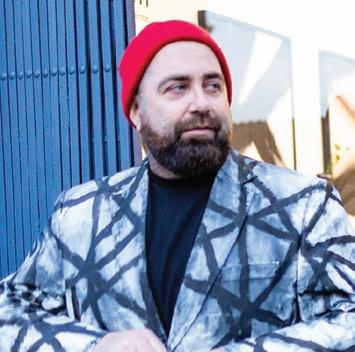
This issue of New Visionary Magazine is curated by Johnny Thornton
Johnny Thornton is a Brooklyn-based artist, Gallery Director and co-owner of Established Gallery, and Executive Director of Arts Gowanus. A strong advocate for emerging and mid-career artists, he has helped shape Brooklyn’s contemporary art scene through thoughtful, inclusive programming that elevates underrepresented voices.
Born in Connecticut and raised in Johannesburg before moving to Tucson, he studied Fine Arts at the University of Arizona and earned his MFA from Parsons in New York. His work has been exhibited across the United States and is held in private collections. He currently works from his Gowanus studio while continuing to build meaningful, communityfocused arts infrastructure.
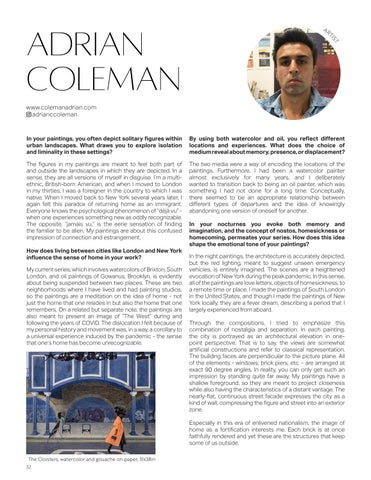
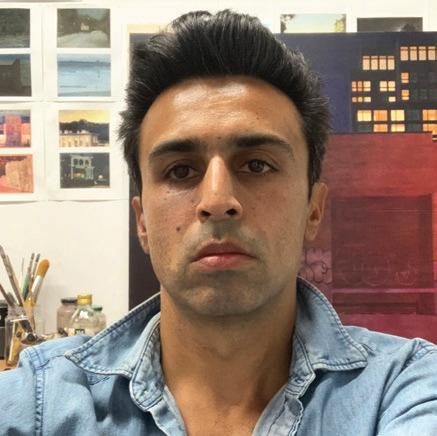
www.colemanadrian.com adrianccoleman
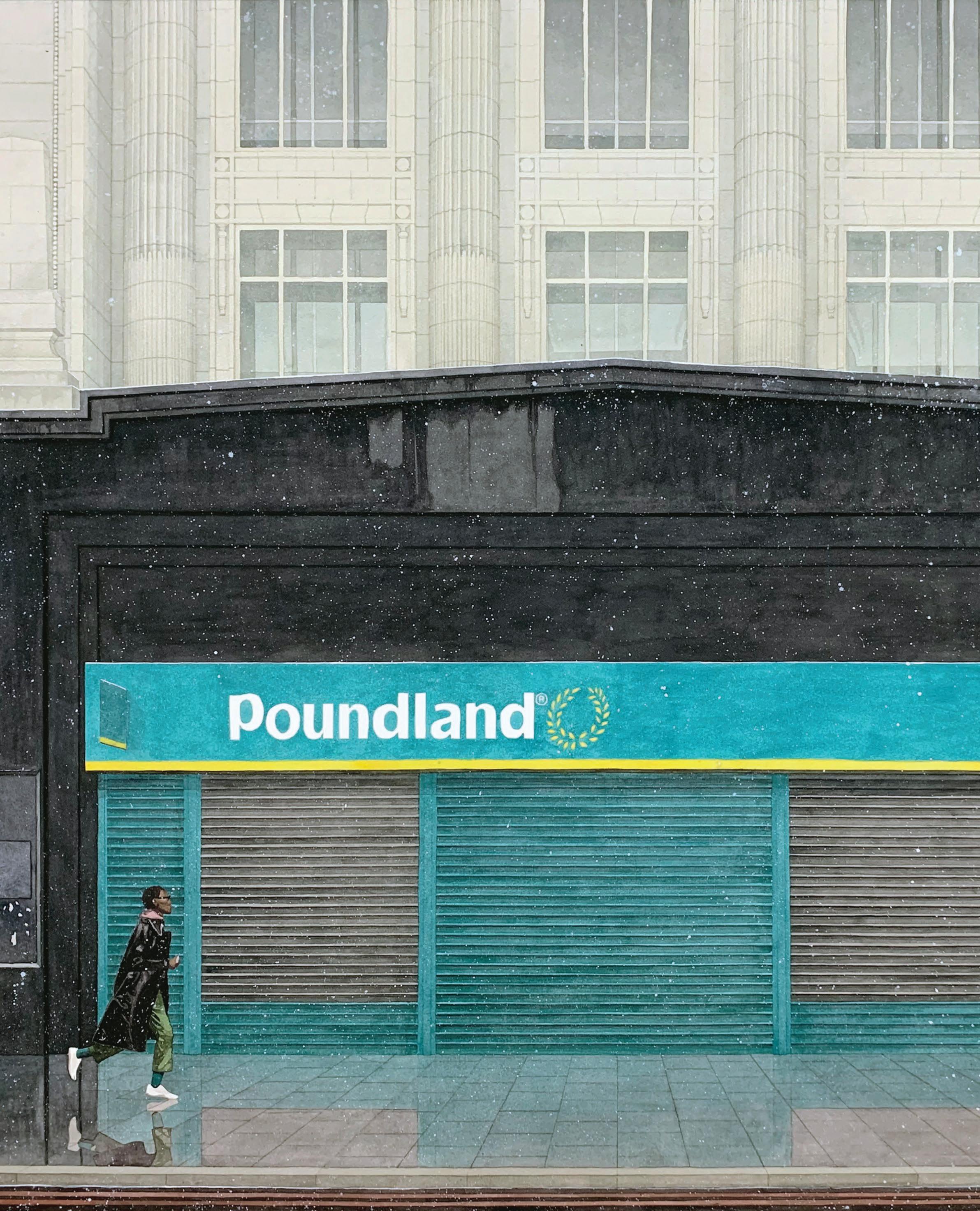
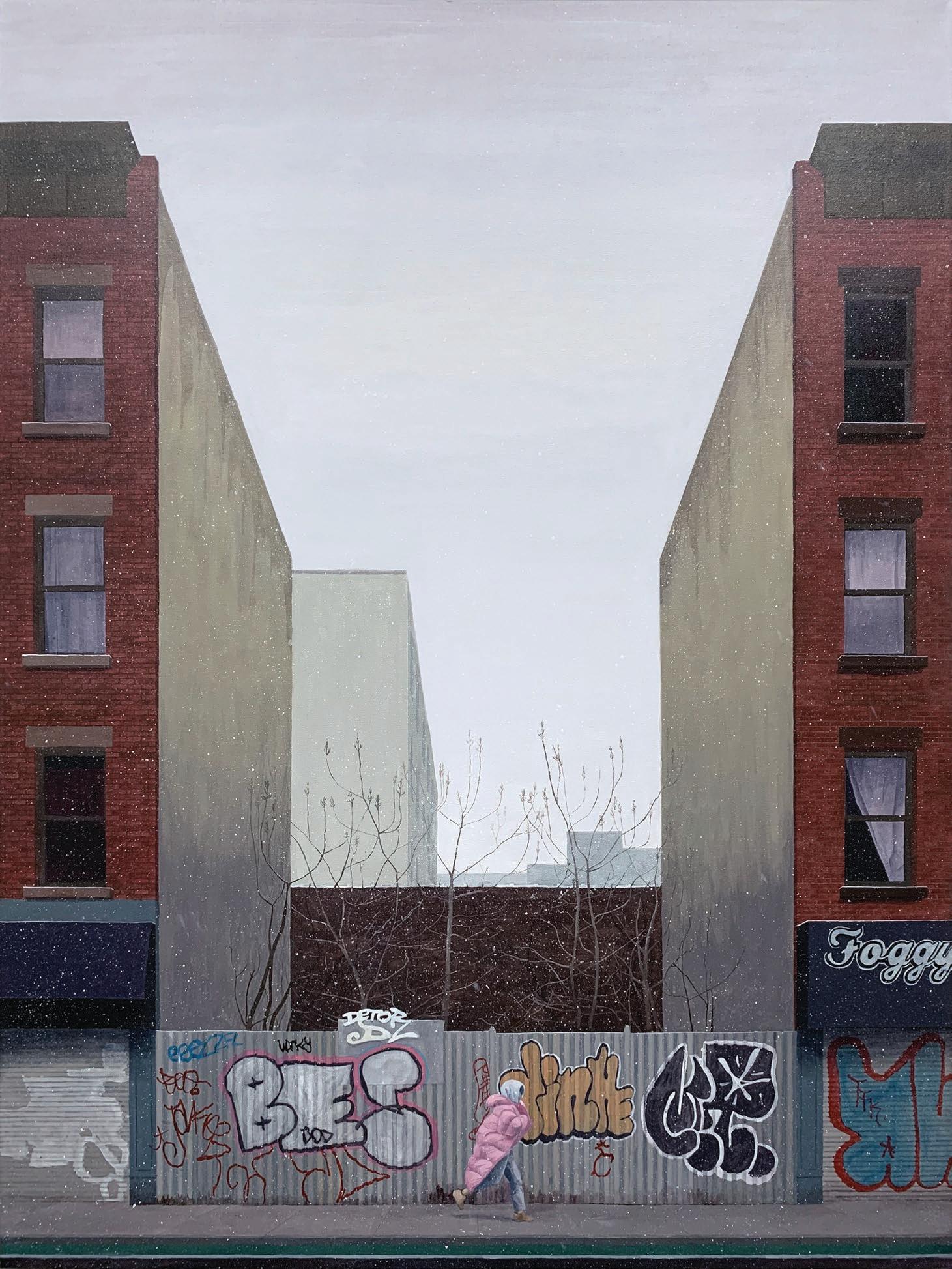
In your paintings, you often depict solitary figures within urban landscapes. What draws you to explore isolation and liminality in these settings?
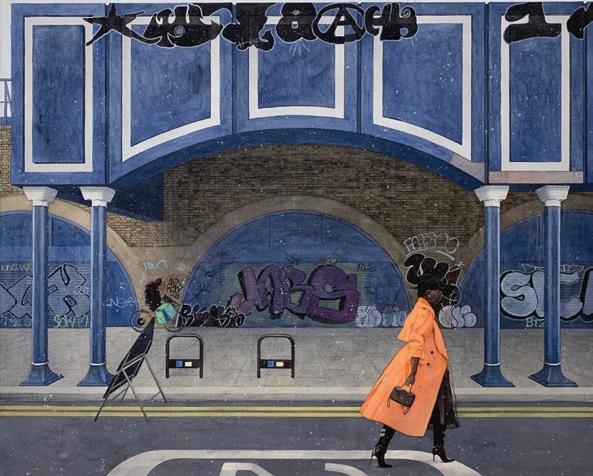
The figures in my paintings are meant to feel both part of and outside the landscapes in which they are depicted. In a sense, they are all versions of myself in disguise. I’m a multiethnic, British-born American, and when I moved to London in my thirties, I was a foreigner in the country to which I was native. When I moved back to New York several years later, I again felt this paradox of returning home as an immigrant. Everyone knows the psychological phenomenon of “déjà vu”when one experiences something new as oddly recognizable. The opposite, “jamais vu,” is the eerie sensation of finding the familiar to be alien. My paintings are about this confused impression of connection and estrangement.
How does living between cities like London and New York influence the sense of home in your work?
My current series, which involves watercolors of Brixton, South London, and oil paintings of Gowanus, Brooklyn, is evidently about being suspended between two places. These are two neighborhoods where I have lived and had painting studios, so the paintings are a meditation on the idea of home - not just the home that one resides in but also the home that one remembers. On a related but separate note, the paintings are also meant to present an image of “The West” during and following the years of COVID. The dislocation I felt because of my personal history and movement was, in a way, a corollary to a universal experience induced by the pandemic - the sense that one’s home has become unrecognizable.
By using both watercolor and oil, you reflect different locations and experiences. What does the choice of medium reveal about memory, presence, or displacement?
The two media were a way of encoding the locations of the paintings. Furthermore, I had been a watercolor painter almost exclusively for many years, and I deliberately wanted to transition back to being an oil painter, which was something I had not done for a long time. Conceptually, there seemed to be an appropriate relationship between different types of departures and the idea of knowingly abandoning one version of oneself for another.
In your nocturnes you evoke both memory and imagination, and the concept of nostos, homesickness or homecoming, permeates your series. How does this idea shape the emotional tone of your paintings?
In the night paintings, the architecture is accurately depicted, but the red lighting, meant to suggest unseen emergency vehicles, is entirely imagined. The scenes are a heightened evocation of New York during the peak pandemic. In this sense, all of the paintings are love letters, objects of homesickness, to a remote time or place. I made the paintings of South London in the United States, and though I made the paintings of New York locally, they are a fever dream, describing a period that I largely experienced from aboard.
Through the compositions, I tried to emphasize this combination of nostalgia and separation. In each painting, the city is portrayed as an architectural elevation in onepoint perspective. That is to say, the views are somewhat artificial constructions and refer to classical representation. The building faces are perpendicular to the picture plane. All of the elements - windows, brick piers, etc. - are arranged at exact 90 degree angles. In reality, you can only get such an impression by standing quite far away. My paintings have a shallow foreground, so they are meant to project closeness while also having the characteristics of a distant vantage. The nearly-flat, continuous street facade expresses the city as a kind of wall, compressing the figure and street into an exterior zone.
Especially in this era of enlivened nationalism, the image of home as a fortification interests me. Each brick is at once faithfully rendered and yet these are the structures that keep some of us outside.
www.jocelynbenfordart.com
jocelynbenford
You began painting as a hobby and quickly turned it into a full-time practice. What sparked this transition, and how has it shaped your creative life?
During the first months of the COVID lockdown, I was feeling a little stir-crazy without access to the social and cultural activities I was used to. On a whim, I purchased some watercolor supplies and started experimenting. I quickly realized that painting not only tapped into an exhilarating form of creative expression for me, but it also helped to soothe and center me, bringing some equilibrium during our challenging times. That feeling became addictive, and I knew I needed to make some changes in my life to give myself more time to paint. I walked away from my full-time teaching job, rented an art studio, and began painting every day.
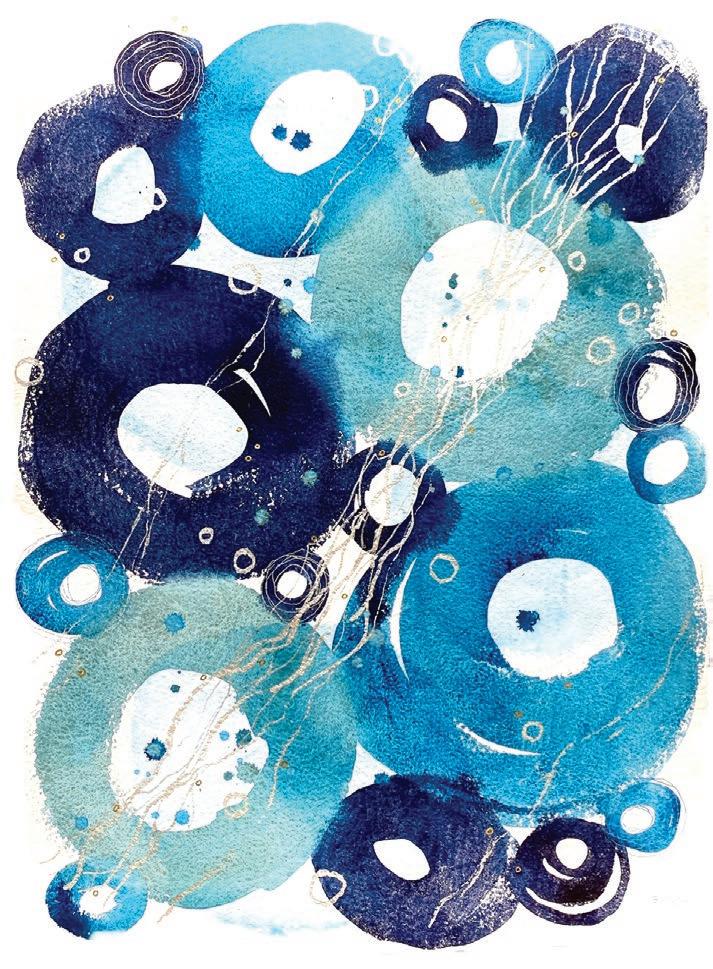
What draws you to the rounded, organic shapes like bubbles, eggs, and nests featured in your work, and what do they represent for you?
My work is frequently inspired by the shapes, colors, and textures of nature. Some of my shapes appear rock-like, and when I compose them in a stacked formation, they represent balance, strength, resilience, and harmony. Some of my shapes resemble bubbles, and I typically layer multiple bubble shapes together to depict the uplifting and effervescent qualities of air or water. My egg and nest shapes evoke the welcoming and protective qualities of home.
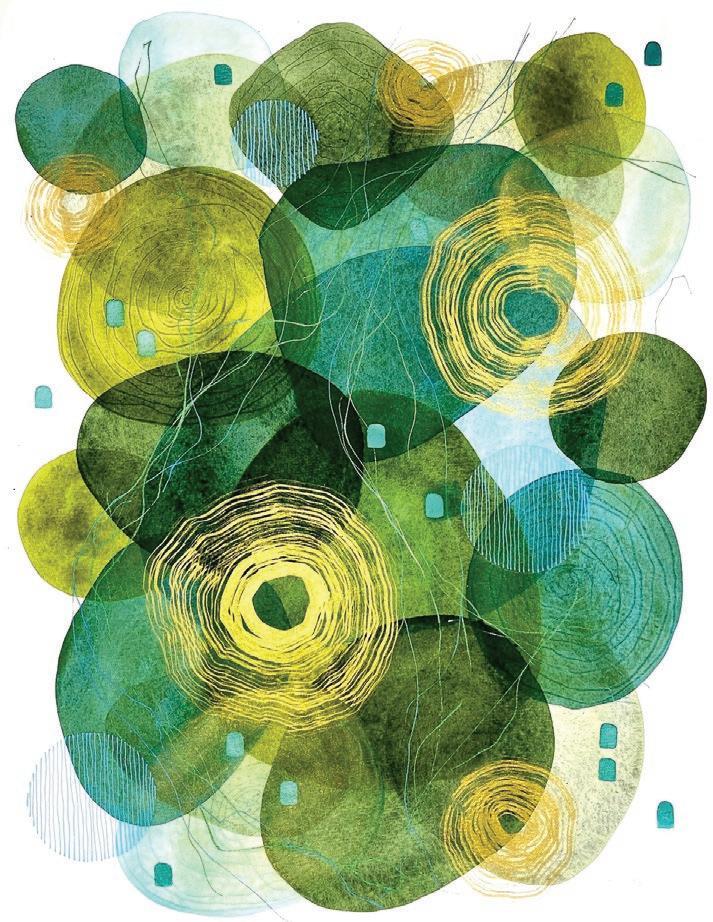
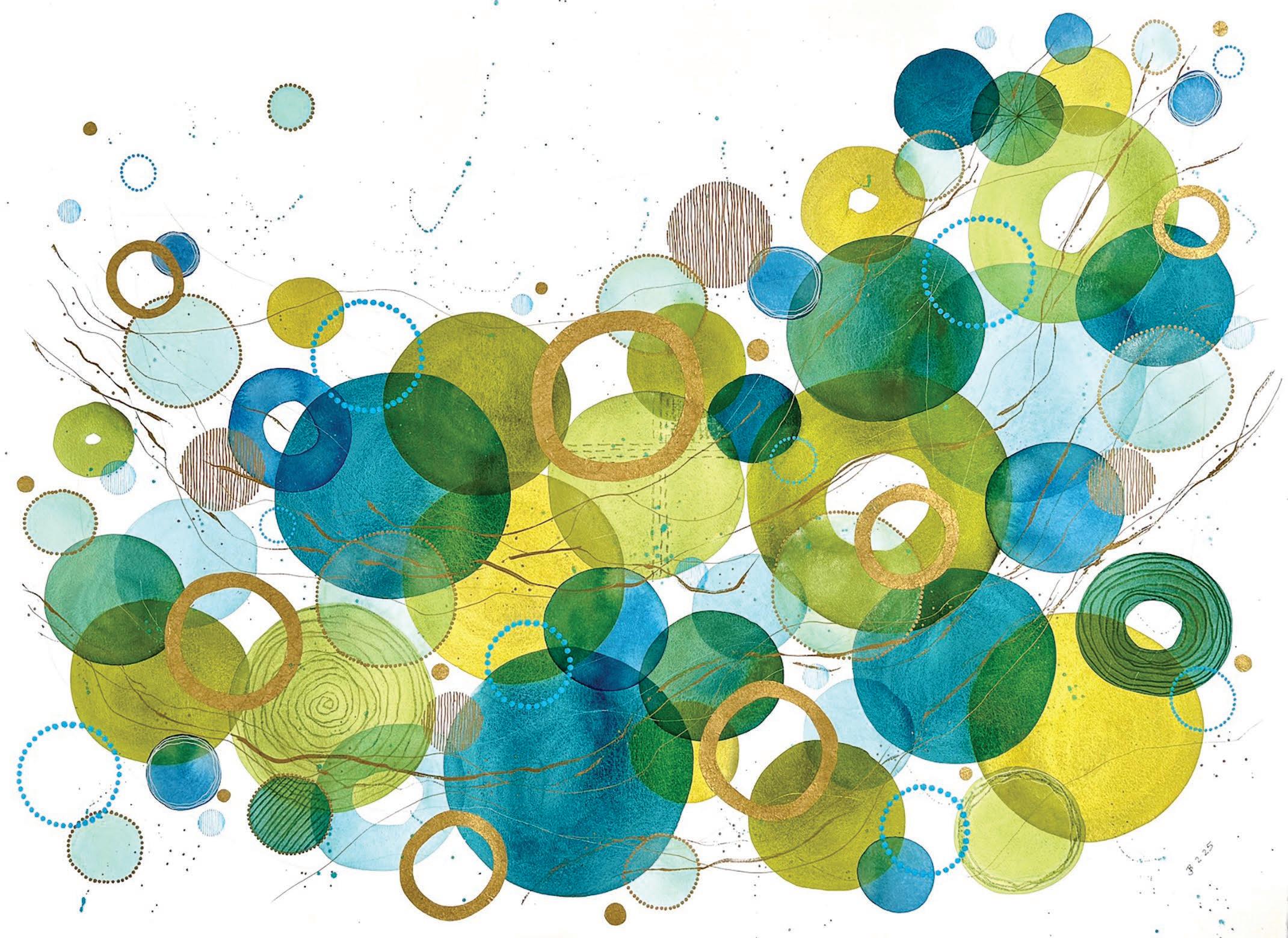
Watercolor is central to your practice. How does the fluid, unpredictable nature of the medium influence the way your paintings evolve?
I love that working with watercolor forces me to give up control of the process. I have to - literally - go with the flow. After years of trial and error, I have a pretty good idea of how different conditions, such as the amount of water I use, the particular paint mixtures I like, and even the weather, will affect the outcome of the painting, but there are always wonderful surprises when working with watercolor. That is part of the appeal for me.
You describe your process as a conversation with your materials. Can you share an example of a painting where the work surprised you or guided you in an unexpected direction?
I work very intuitively, and at every step I’ll pause and see what the painting seems to be asking for. I always start with a foundation of watercolor, but then I layer in a variety of mixed media materials, including acrylic paint pens, pencil, crayon, and collage.
I remember once when I was working on a large layered piece. I had created several layers, and most of my white space had disappeared. The whole piece was feeling too dark and heavy, and I was worried that it was unsalvageable. On impulse, I grabbed a very pale iridescent color and painted one more layer, which actually brightened things
Boundless, watercolor and mixed media on paper, 32x41in
up. I added some gold dots - a common motif for me - and drew in some Queen Anne’s Lace, and the whole thing suddenly came to life.
That was an interesting lesson: sometimes when I think I’ve gone too far with a piece, going farther can actually elevate it. I often come up with the most creative solutions when I think I have “wrecked” a painting because once I let go of the idea I thought I was working toward, that frees me up to experiment and play. For that reason, I no longer fear making mistakes in my work. I view them as an opportunity to grow.
Having lived and worked in both Brooklyn and San Miguel de Allende, how do different environments affect your color choices, forms, or overall artistic approach?
I have found that my environment always seems to influence my work. Without even realizing it sometimes, the colors and textures I’m seeing around me will begin to emerge in my paintings. In Brooklyn, I often paint in cooler colors as a way of creating some peace and calm at the heart of the urban energy. In San Miguel, my color palette tends to be warmer and more vibrant, as a direct reflection of the vitality of the town. I also “collect” new botanical motifs to add to my work from the places that I live and travel. In this way, my paintings have become a visual diary of my physical and emotional state.
jacksondaughety.com daughetyjack
What inspired you to focus on internet status symbols and male posturing as the central theme of your work?
The internet was quickly understood to be a haven for financial criminals and merchandise hucksters. Whether it be Rogan, SBF, Andrew Tate, Tai Lopez, Alex Jones, Elon Musk, or Donald Trump, many of the most influential men of our time have achieved a level of cultural accreditation with the help of effective posturing and coordination of status symbols. This visual language is then used to attract and convert views into merchandise sales.
I am interested in the way this process illustrates hierarchy through a visual evolution. While the signifiers of authority evolve and change to match the desires of the culture, the underlying apparatus of power evades understanding by constantly making visual updates.
Can you describe the process of translating digital culture into physical media like printmaking and collage?
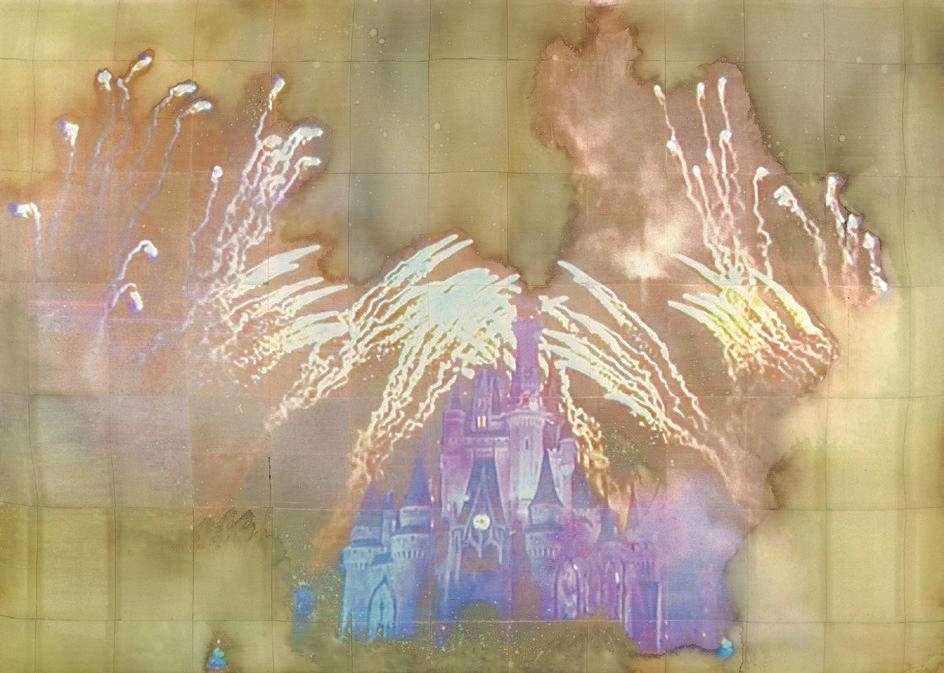
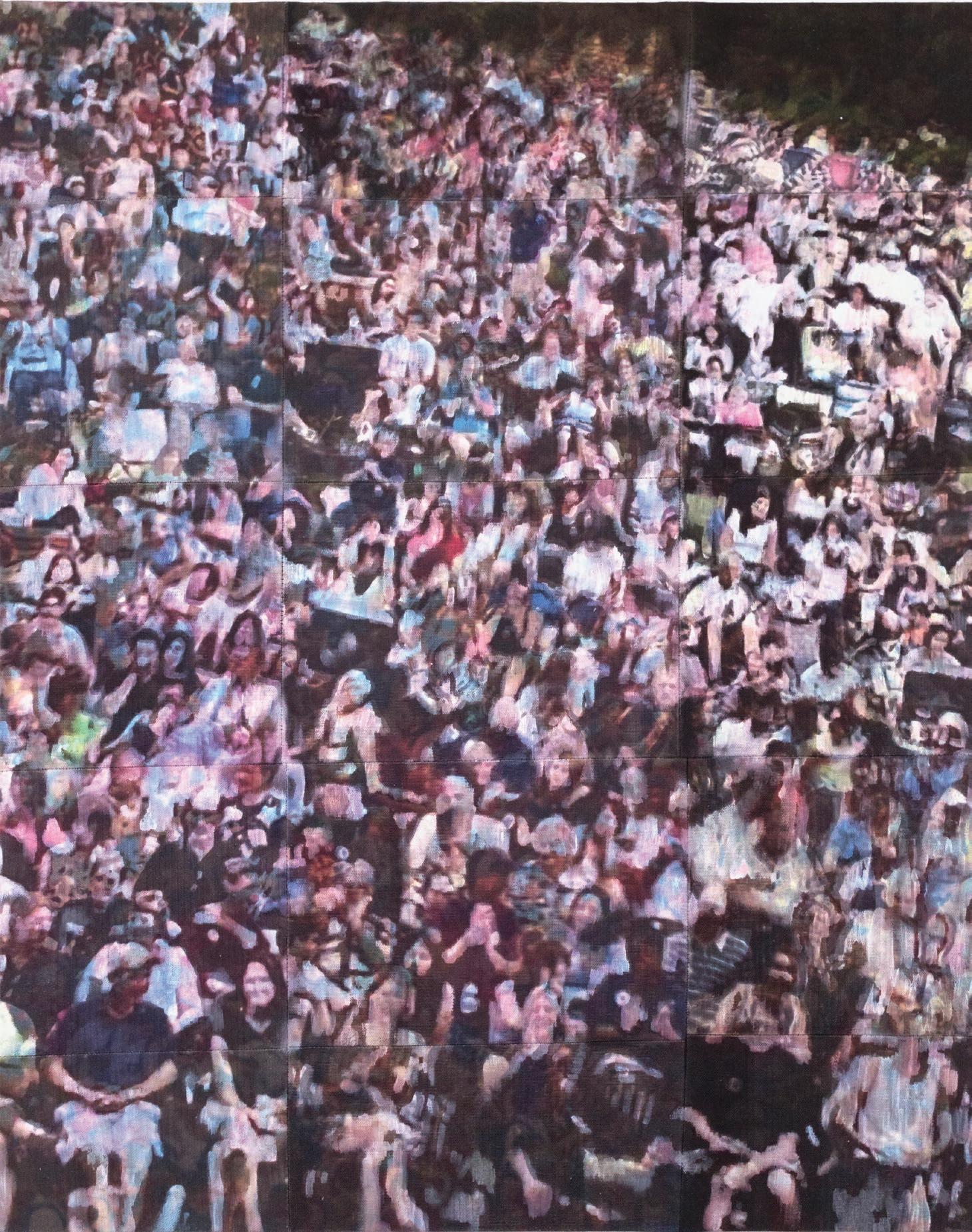
I use a mixture of inkjet printing, gesso, and transparent layers of ink. The work negotiates a composition out of a
series of compromises. The final image leaves evidence of misaligned layering, discolored panels, and uneven stretching. The images themselves, usually idyllic and glossy, are undercut by their idiosyncratic, homespun construction.
In what ways do gaming, tech, and finance aesthetics intersect in your compositions?
These sectors contribute to and profit from the upholding of the colonial status quo through visual media. I am interested in how this visual culture has been created by a network of companies and government organizations to imply a sense of authority through screens. This sensibility has been heavily influenced by the military-industrial complex, which acts as a de facto authority figure. By appropriating or recreating this kind of media, I want to emphasize how ubiquitous it is in everyday life and how it functions to stifle dissent.
How do you balance critique and visual appeal when addressing cultural hegemony?
I think the aesthetics of cultural hegemony are, for the most part, appealing. Whether they are characterized by legibility, an abundance of resources, or a notion of security, profit-motivated imagery frequently feels positive - if not like a celebration of wealth. Putting these images through a process that implies a level of authenticity and individual voice emphasizes how out of touch the messaging really is with the lives of most people.
What role does frustration or abundance play in shaping the narrative of your pieces?
I am really drawn to imagery that elicits an unintentional sense of humor or irony. What is not being said becomes the subject even more than the content of the image. As the country continues to further consolidate wealth, the fiction of capitalist stability appears more absurd to the masses.
www.xiaoruihuangart.com orlennn
What drives you to focus on human rights, social justice, and marginalized voices through your paintings?
What drives me is a lifelong anger toward unfairness - an emotion that has shaped both my worldview and my work. Growing up in a traditional Asian household, I witnessed gender discrimination in my family, school, and community. Women were praised for their endurance rather than their ambition, expected to serve rather than dream. I saw how inequality hid behind the veil of culture; even love came with rules about who was allowed to dream.
I remember standing before my family’s ancestral hall, where women were forbidden to enter because they were considered “unclean.” That rule, like many others, was justified as “tradition” - a word I learned to distrust early. When I moved abroad, I realized my anger wasn’t just personal but part of a larger awakening to systemic injustice. Art became my resistance - a mouthpiece for those society keeps at its margins: children, women, and people with disabilities - and a way to translate frustration into empathy and reimagine what justice could look like.
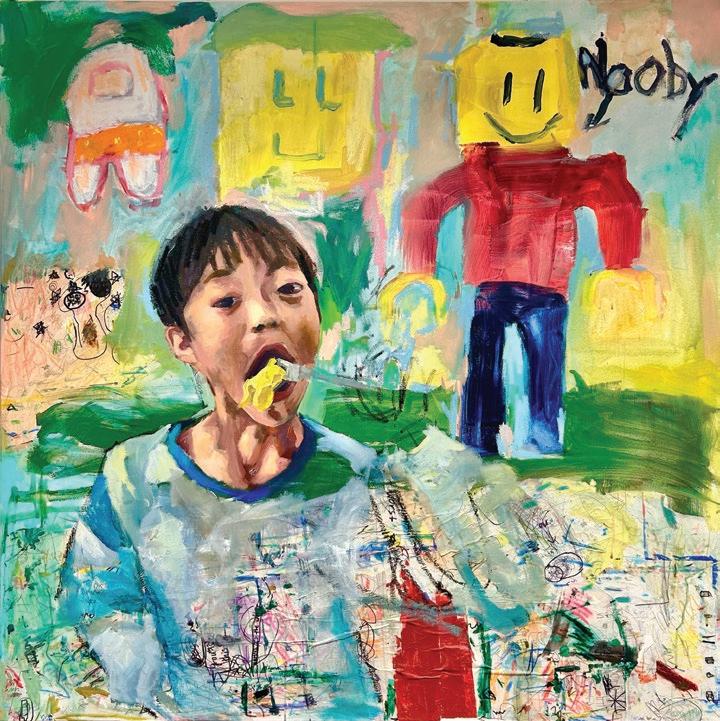
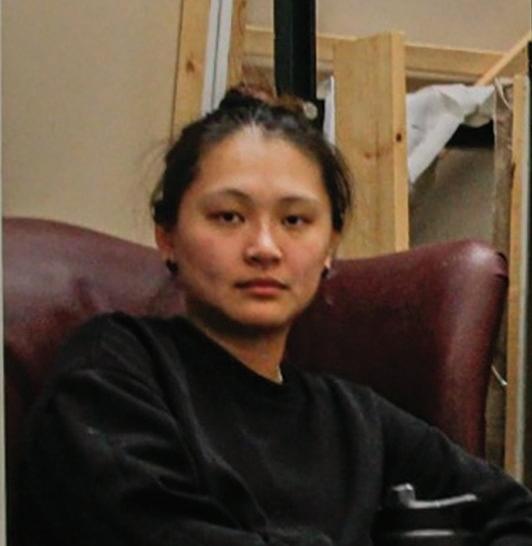
How has working closely with children with disabilities, both in your family and classroom, influenced the emotional core of your work?
My understanding of resilience deepened through my cousin and nephew, both born with disabilities. Within my family, I observed two distinct types of care: one shaped by shame and protection, the other by love and empowerment. My aunt - who raised my cousin - always told her, “There’s nothing wrong with how you look. You are as normal and talented as anyone else.” That simple truth changed how she saw herself.
Later, while teaching in a special education program, I witnessed the power of that mindset. When a child creates without fear of correction, something sacred happens. Their drawings - imperfect, raw, and honest - express emotions beyond words and reveal strength where others see fragility. These moments taught me that vulnerability is not weakness - it is the foundation of creative power.
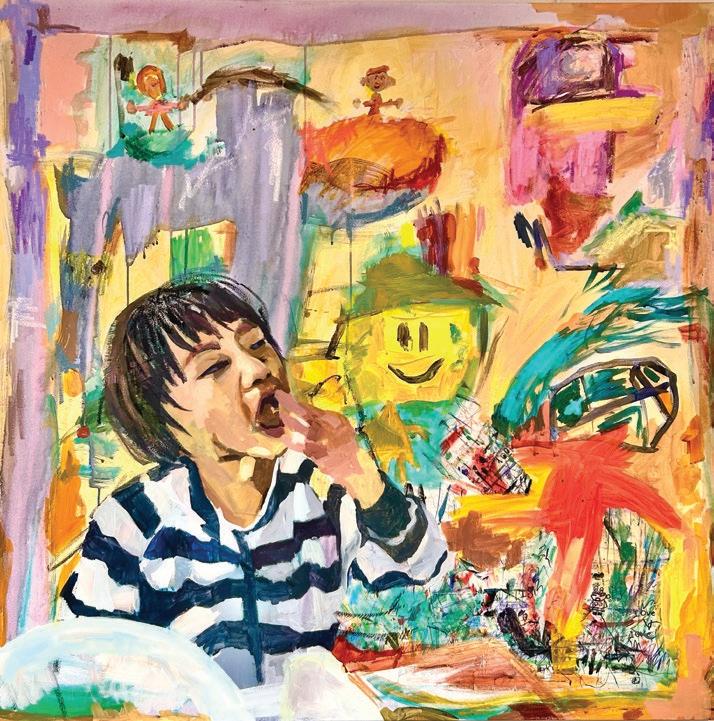
By integrating children’s drawings into your paintings, you invite collaboration. What do you hope this approach communicates about agency and authorship?
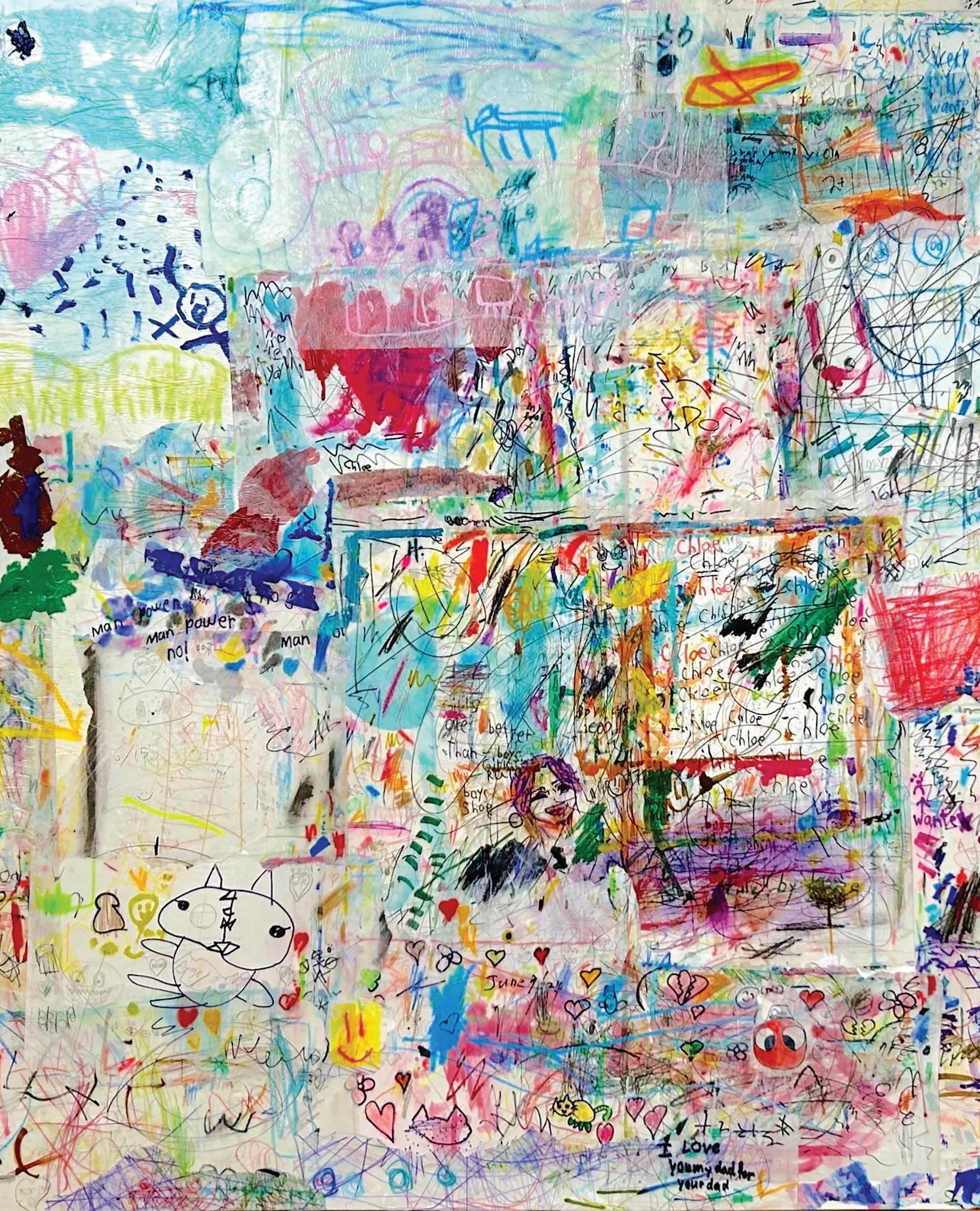
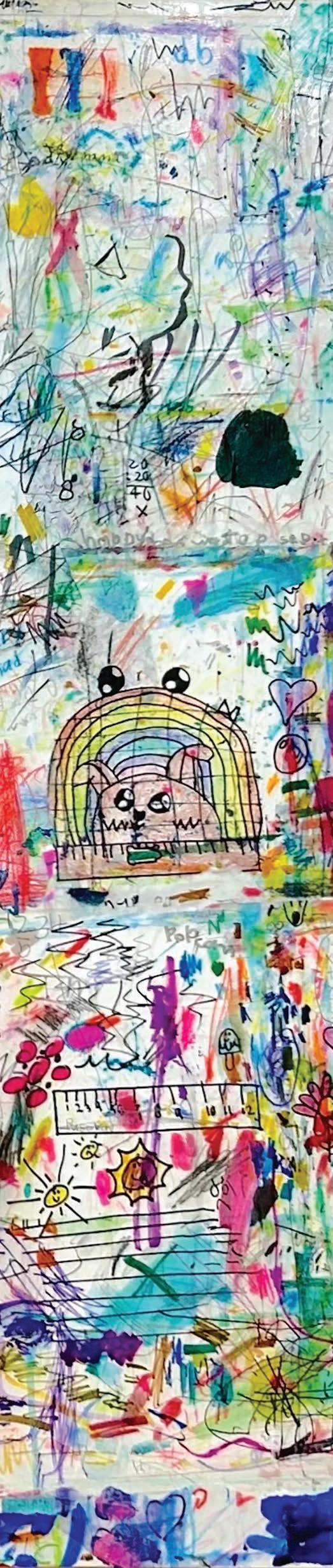
I often collect the papers children discard - drafts, table covers, scraps filled with sketches. To me, these are more honest than finished artworks. They embody what the Surrealists called “automatism,” where the hand moves before the mind intervenes. In these unfiltered marks, I see the subconscious speaking freely, untouched by judgment.
When I collaborate with my nephew and niece, we begin by discussing what creation and authorship mean. They draw and scribble while their parents look on, sometimes unsure how to value these marks. My role is to preserve their gestures, framing them within a broader visual dialogue that shows art belongs to anyone brave enough to express themselves. Our canvas becomes a shared language, where every mark - whether by an adult or a child - matters equally.
All collaborating children participated with informed consent from their guardians. While my niece and nephew are compensated collaborators, some classroom materials - such as table covers marked by students - are incorporated as found traces of a shared creative space rather than formal contributions.
Your practice is informed by both lived experience and philosophical ideas, such as Kant’s concept of perception. How do these perspectives guide your artistic decisions?
Kant’s Critique of Pure Reason has profoundly shaped my understanding of perception. He suggests that we never see the world as it truly is, but only as we are conditioned to perceive it. This idea runs through my collaborations with children - especially those with disabilities - whose realities are often shaped by how others see them.
In one project inspired by Kant, I collaborated with my nonverbal nephew to explore how emotions color perception. His spontaneous gestures - his joy, hesitation, and bursts of color - revealed a truth unmediated by convention. Painting together became a bridge between silence and speech: though he rarely spoke, the act of creating inspired a new form of communication. Later, while watching a video of our session (https://youtu. be/6d0h9HVgDl8), he began narrating what he saw. I layered his voice into the final work - a dialogue between color, memory, and perception. Children - especially those with disabilities - live under other people’s definitions, but when they draw, they reclaim their power.
What impact do you hope your portraits have on viewers’ understanding of empathy and social awareness?
I hope my work slows people down. In a world obsessed with perfection and progress, I want viewers to sit with imperfection - to look at a child’s marks and recognize the dignity within them. My portraits are constructed from layers of stories, emotions, and materials that reflect the lives of marginalized individuals - women, children, and
those silenced by systems that equate difference with deficiency.
Through each brushstroke, I aim to question what we consider “normal.” I want to make visible the quiet strength that persists in those who are overlooked. My art is both a personal reconciliation and a public invitation: to see, to feel, and to believe that empathy itself is a radical act.
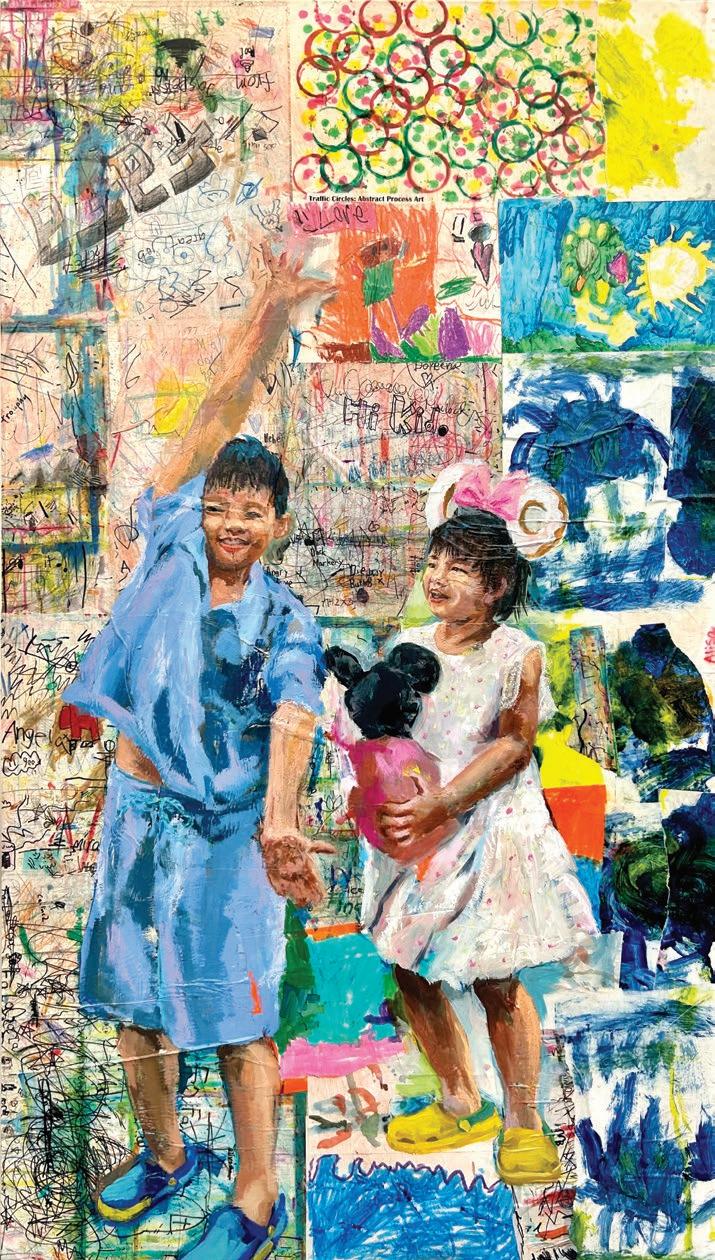
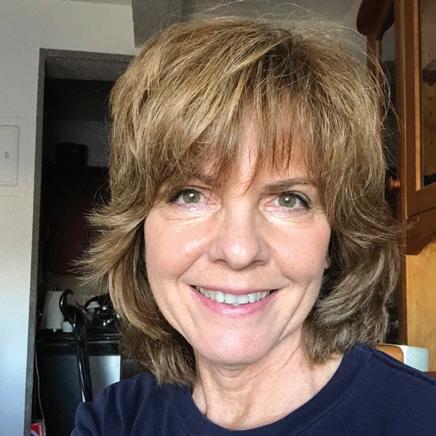
subscribepage.io/PatriciaD patricia_dattoma.art
Your paintings are deeply rooted in memory. What draws you to explore the intersection of recollection & abstraction?
I think of memory as something fluid - fleeting, dreamlike, and constantly shifting shape. Those qualities of memory naturally draw me to abstraction. Because memories are often colored by emotion, the passage of time, and perspective, they often lose their “literalness” when recalled over time. I’m less interested in reconstructing a literal image than I am in capturing the emotional echo that a moment leaves behind. For me, color and form often express those sensations more faithfully than representation ever could. Through abstraction, I try to capture the way a feeling lingers long after the details fade.
When translating an emotion or fleeting image into paint, what guides the first marks on the canvas?
When I begin a painting, I try to sink fully into the feeling of the memory. If it carries joy or excitement, my first marks are quick, bold, and full of energy. When the emotion is sad,
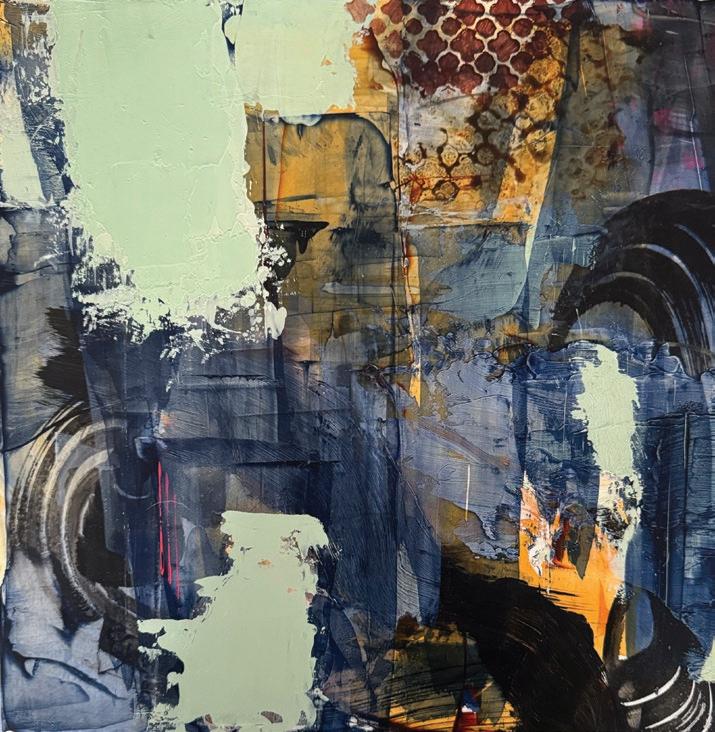
bittersweet, or nostalgic, the gestures and mark making become slower, more deliberate - almost contemplative. Those initial marks act as symbols of feeling, capturing the emotion and thus setting the tone for what follows. From there, I build layers of shape and color, allowing the work to unfold through a kind of call and response. The process becomes a dialogue between the memory, the emotion it stirs, and the painting itself.
How has your experience as both an artist and educator shaped the way you think about creativity and process?
As an artist, it is easy to get caught up in overthinking, which is often the quickest way to stall a painting. When I am in the process of painting and catch myself beginning to overanalyze, I think back to teaching art to my middle school students and remember watching them dive into projects with much enthusiasm and curiosity. Their willingness to simply try things and experiment - with, for example, unexpected color combinations, adding collage elements to their work, or various mark making - without worrying about the outcome has always inspired me. That mindset is what helps to keep a painting fresh and alive. Not every experiment works, but it opens up new possibilities. I’ve long encouraged my students to stay observant and curious, and I’ve found the same holds true for my own practice. Creativity, I believe, is inherent in all of us; it simply requires attention, openness, and the courage to follow what excites and moves us.
The city of New York appears to be both your backdrop and your muse. In what ways does its energy find its way into your visual language?
New York City is in my DNA. My parents were born and raised on the Lower East Side of Manhattan nearly a century ago, so I grew up immersed in their stories of the “old days,” when the city was both tough and tender. Growing up in New York City, I was constantly surrounded by and fascinated with the city’s rhythm and pulse - the neon shimmer of Times Square, the sweeping grace of the bridges, splashes of graffiti on buildings, the roar of the subways, the sights and sounds of every distinct neighborhood. All of these things have influenced my visual vocabulary. Those impressions of the city surface in my work as flashes of fluorescent color, elongated vertical shapes, bold text, and arch-like
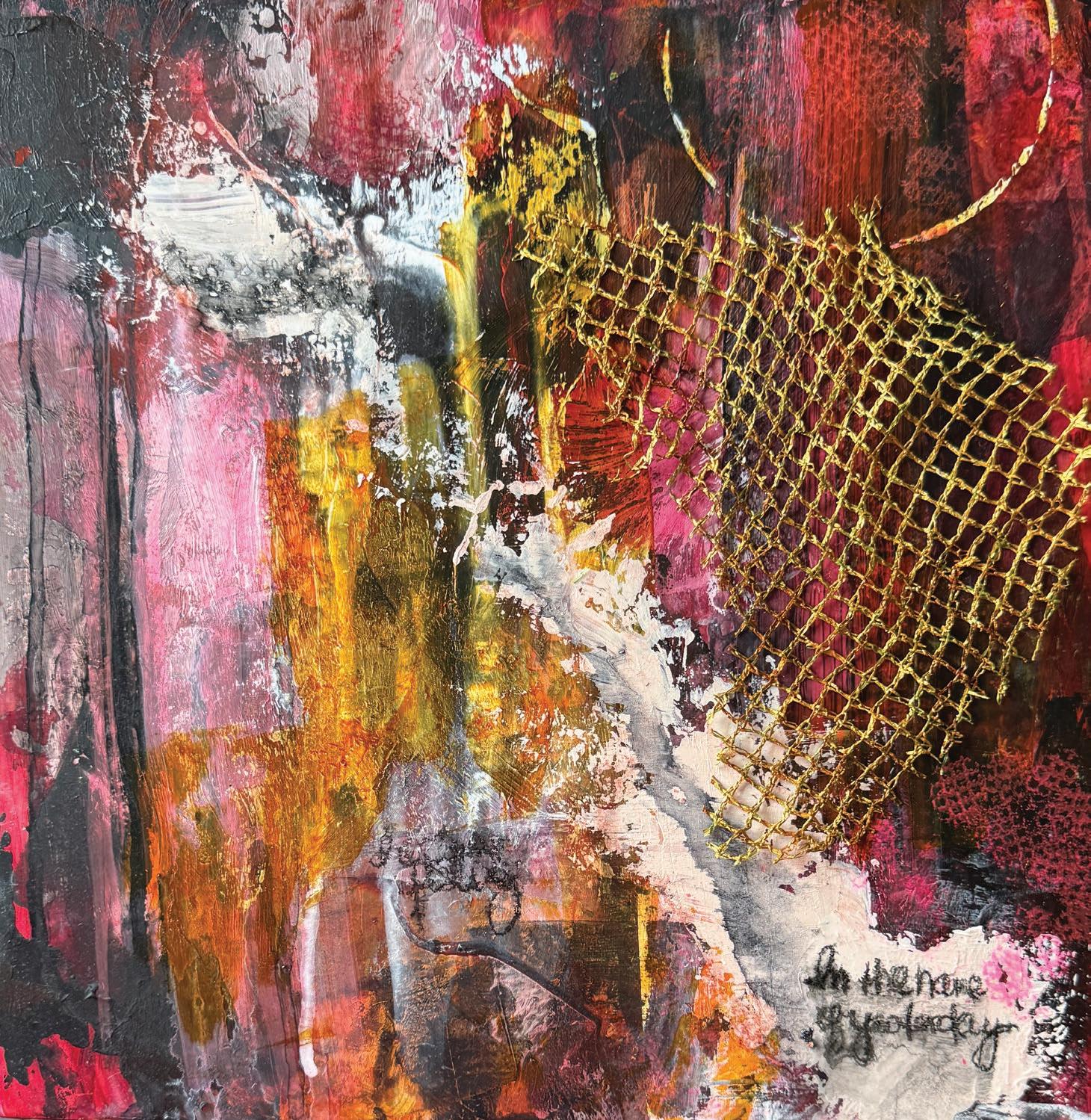
forms. Even when I’m not consciously referencing New York in my work, its energy finds a way of painting itself into my compositions.
Your work invites viewers to connect through shared emotion and memory. What kind of dialogue do you hope your paintings spark?
I hope my paintings allow viewers to connect with them in a way that resonates with their own memories, emotions, and experiences. A particular color combination, shape, or composition can awaken a feeling or recollection unique to them. The titles I choose for my work also act as gentle
prompts, inviting a deeper engagement - a quiet dialogue where the painting meets the viewer’s personal experience, and together they explore the resonance of feeling and memory. However that dialogue unfolds, I welcome every way of seeing and feeling; each encounter is its own meaningful experience.
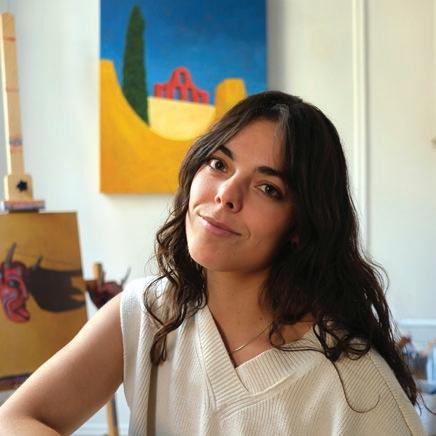
regina-vargas.com reginavargas
You were born in Mexico City and now live in New York City. How does your Mexican heritage inform your work, and how has your experience in NYC changed or deepened that connection?
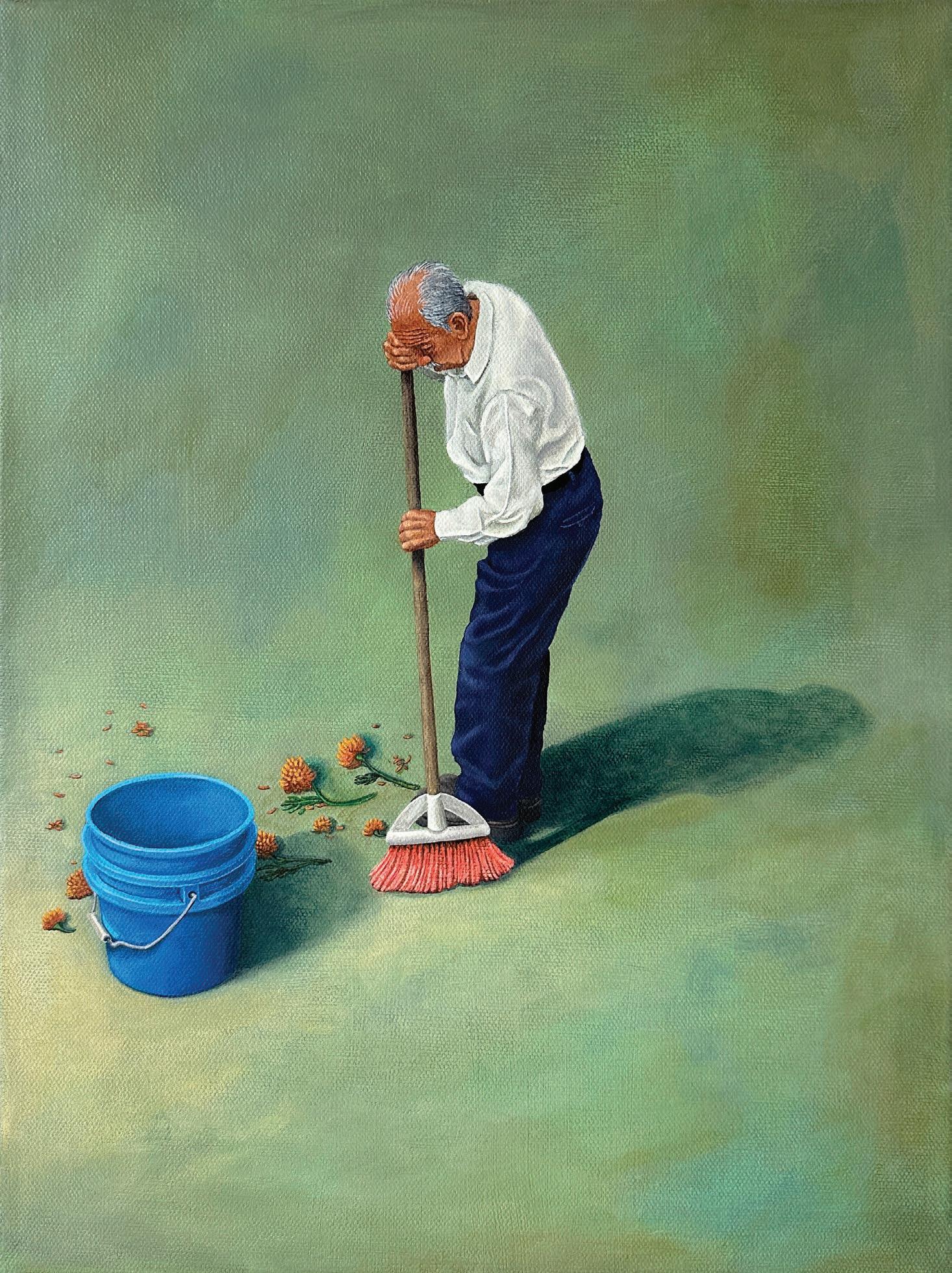
My work is rooted in the beauty of Mexican objects, people, and architecture. I’m endlessly inspired by how vibrant color lives in the mundane there - how even a plastic bucket on the street radiates. New York City has its own magic, but it isn’t as chromatic, and living here has actually deepened my appreciation for Mexico’s visual maximalism. That contrast makes me long for the color-saturated world I grew up in, and that yearning fuels my work. Painting becomes a way to stay connected to the vibrancy of Mexico while interpreting it through the lens of my life in NYC.
How do you balance the personal and the universal when capturing memory through still life and architectural motifs?
When I paint personal memories, my intention shifts depending on the story I want to tell. Sometimes I want to transport viewers into a world entirely unfamiliar to them, shaped by my own lived experience. Other times, I aim to create a shared memory by anchoring the scene with objects that feel universally recognizable. Instead of recreating a specific spacelike my grandmother’s dining room, for example - I might focus on a worn antique linen that many people associate with their grandparents’ homes. I’ve recently shifted my art more toward conveying feeling through color and atmosphere rather than literal accuracy. Whether the memory is uniquely mine or meant to be familiar, I’m always looking for that emotional bridge between my world and the viewer’s.
Could you walk me through your process from concept to finished work? Do you begin with sketches or photographs, or do you let the painting evolve organically?
I usually begin with photographs I’ve taken. Photography is a big passion of
mine and how I capture a lot of my inspiration. From there, I hone in on the colors I want to emphasize and what additional tones could heighten the composition. I then mock up a loose version on my iPad as a guide before moving on to the canvas. Once I begin painting, the piece evolves on its own terms. I work intuitively until every detail feels resolved, which is deeply rewarding but can also be taxing in its precision.
Are there any upcoming projects or themes you’re excited to explore in your future work?
I’ve been kind of obsessed with the idea of painting raw meat for a while. The fascination began after seeing Fernando Botero’s art in his museum in Medellín, and later intensified when I photographed a butcher at a market in Mexico City. Raw meat is grotesque yet strangely beautiful; organic but vibrant in color. I’m excited by how polarizing it is, and how it can challenge viewers’ comfort while still inviting them in through its visual richness.
Do you feel a responsibility, as an artist with a strong cultural heritage, to preserve or reinterpret that heritage for new audiences?
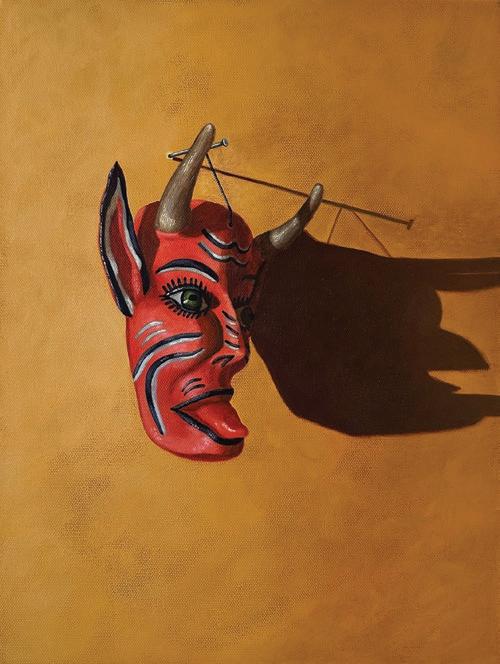
I try to let my culture inspire me without restriction. While I do feel a responsibility to honor it with the respect it deserves, my work is ultimately a personal form of connection - to Mexico, to my family, and to the parts of myself shaped by both. Having moved to the United States at a young age, I grappled with identity in ways many immigrants do. Painting has become a way to reclaim my heritage on my own terms, with admiration and experimentation.
sher.art sherartstudios
What draws you to your meditative approach, beginning in stillness and presence, to creating art?
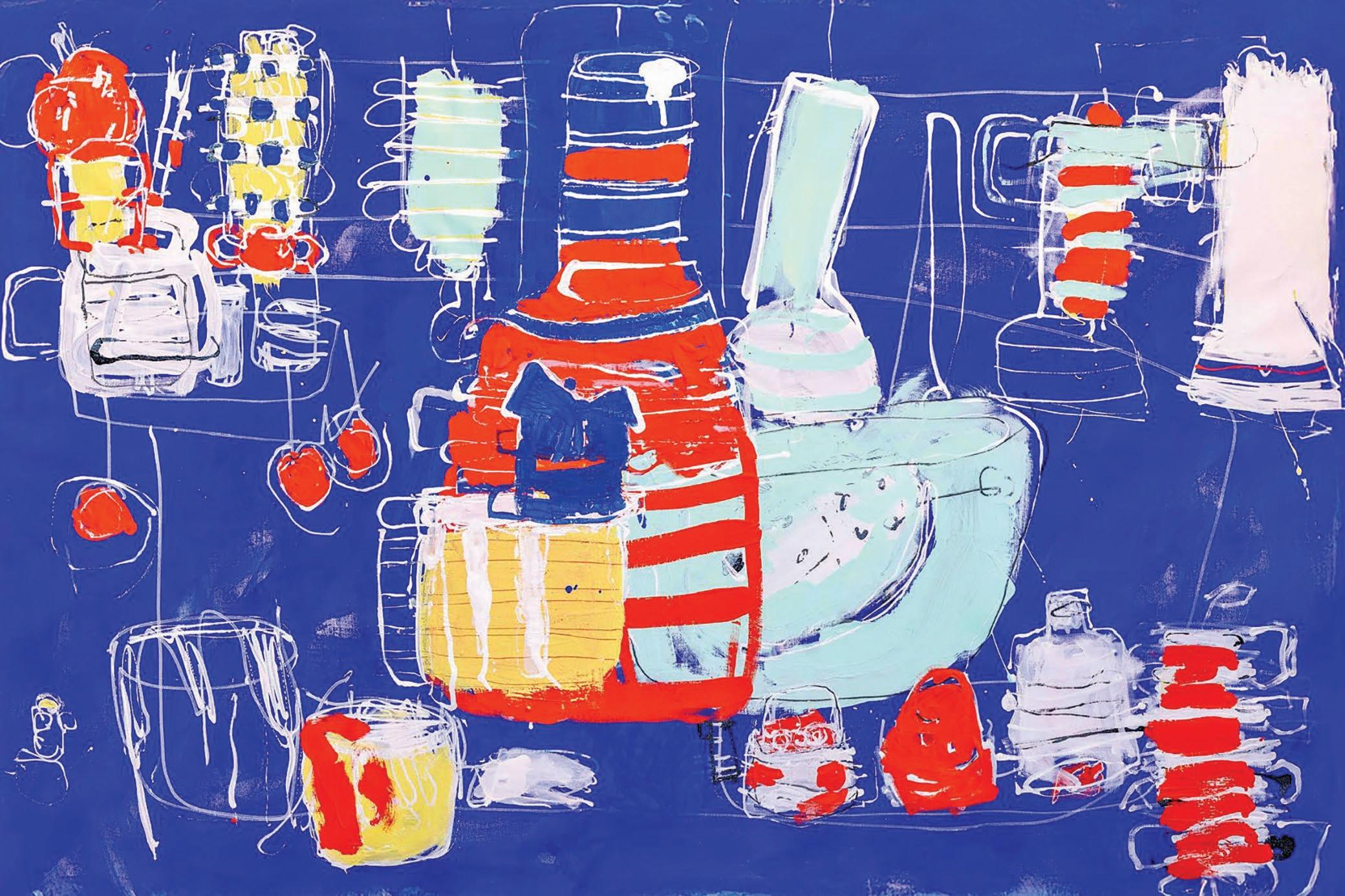
Meditation became a deeper practice after I realized how stillness could quiet the mind and create space for presence. Reading Mihaly Csikszentmihalyi’s work on flow helped me understand what was already happening when I painted. Beginning in stillness allows me to enter that flow state, where thought falls away and awareness guides the work. When I paint from that place, the canvas becomes an extension of meditation, translating quiet into movement and energy. It is a moment of release where form emerges naturally from formlessness.
How does working with your non-dominant hand or with your eyes closed influence the energy and intuition in your pieces?
Using my non-dominant hand began as a psychological practice to enhance creativity and emotional release. Bringing it into painting allows me to bypass the analytical mind and connect directly to intuition. I always begin with my eyes closed, letting energy move freely without expectation. The marks carry life and emotion that cannot be planned. This approach encourages flow, deepens presence, and creates space for genuine creative expression. It is less about control and more about surrender, allowing the painting to emerge naturally.
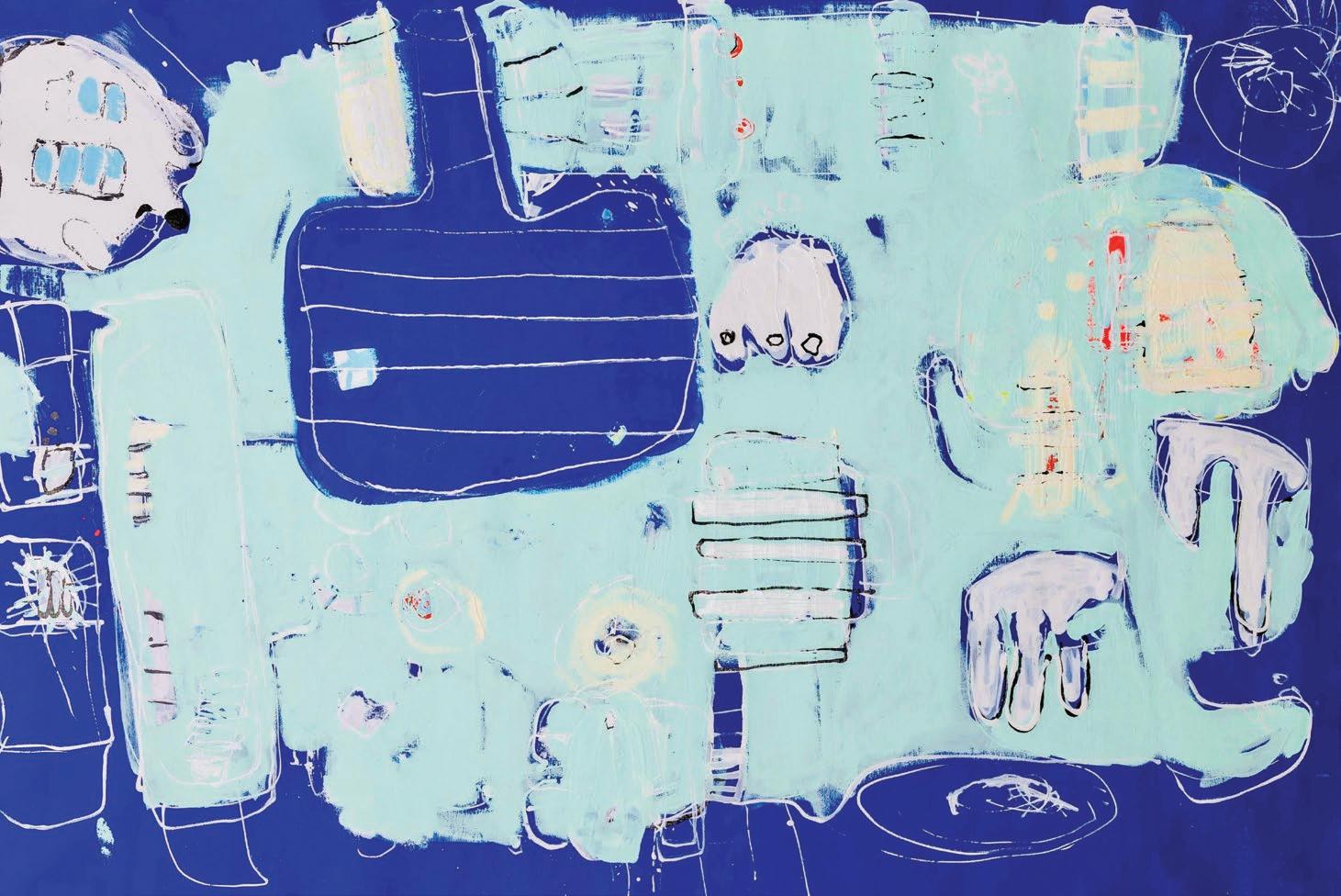
While seeking to manifest intention and alignment, what role does the viewer play in experiencing or completing this process?
I initially used my art to visualize what I wanted to manifest, but I learned that manifestation is about presence rather than attraction, which creates attachment. When viewers encounter my work, I hope they experience a similar shift. The abstract forms invite them to be present and let go of the need to recognize shapes. In that stillness, they enter their own state of flow so that they do not just see the work but feel it - that it mirrors something already within them. Their presence completes the process, making the painting a shared field of awareness.
You describe art as a way to transform the invisible into form. How do you translate abstract concepts like presence or meaning into visual language?
Painting is meditation in motion. Presence flows through me and shapes the work. Yves Klein was the first artist whose pieces revealed to me that art could exist beyond recognizable forms, suggesting presence without
representation. Jay DeFeo inspired me with forms that are alive yet cannot be labeled, showing how energy itself can create shape. My work invites viewers to explore feeling rather than seeing familiar objects. Presence, energy, and intuition guide the process, letting the invisible reveal itself through movement, color, and composition.
In moments of contrast or chaos, how does your practice help you, and others, return to a sense of centeredness?
Finding stillness is not always easy. There were times when noise or chaos made it difficult to meditate or create, but I began incorporating that into my practice. Meditating despite distraction became a way to let go of the need to control and allowed me to strengthen my connection to inner stillness. When I paint now, I carry that same awareness with me. I can find peace even within movement or sound. That is what I hope my work offers others - a reminder that calm does not come from escaping chaos but from being fully present within it. My art is that space of return, where energy softens and the self becomes formless.
www.heavenstudios.store heavenstudios4art
Your work beautifully bridges ancient Egyptian influence with contemporary abstraction. How do you balance tradition and modernity in your creative process?
For me, tradition and modernity are not opposites but parallel energies that meet within the work. I’m deeply influenced by the tactile surfaces, symbolism, and permanence of ancient Egyptian art - yet I express those roots through an abstract, contemporary lens where color, light, and texture become language. My process is intuitive: I build, layer, and refine until the piece feels both timeless and alive, holding echoes of the past while reflecting the rhythm of the present.
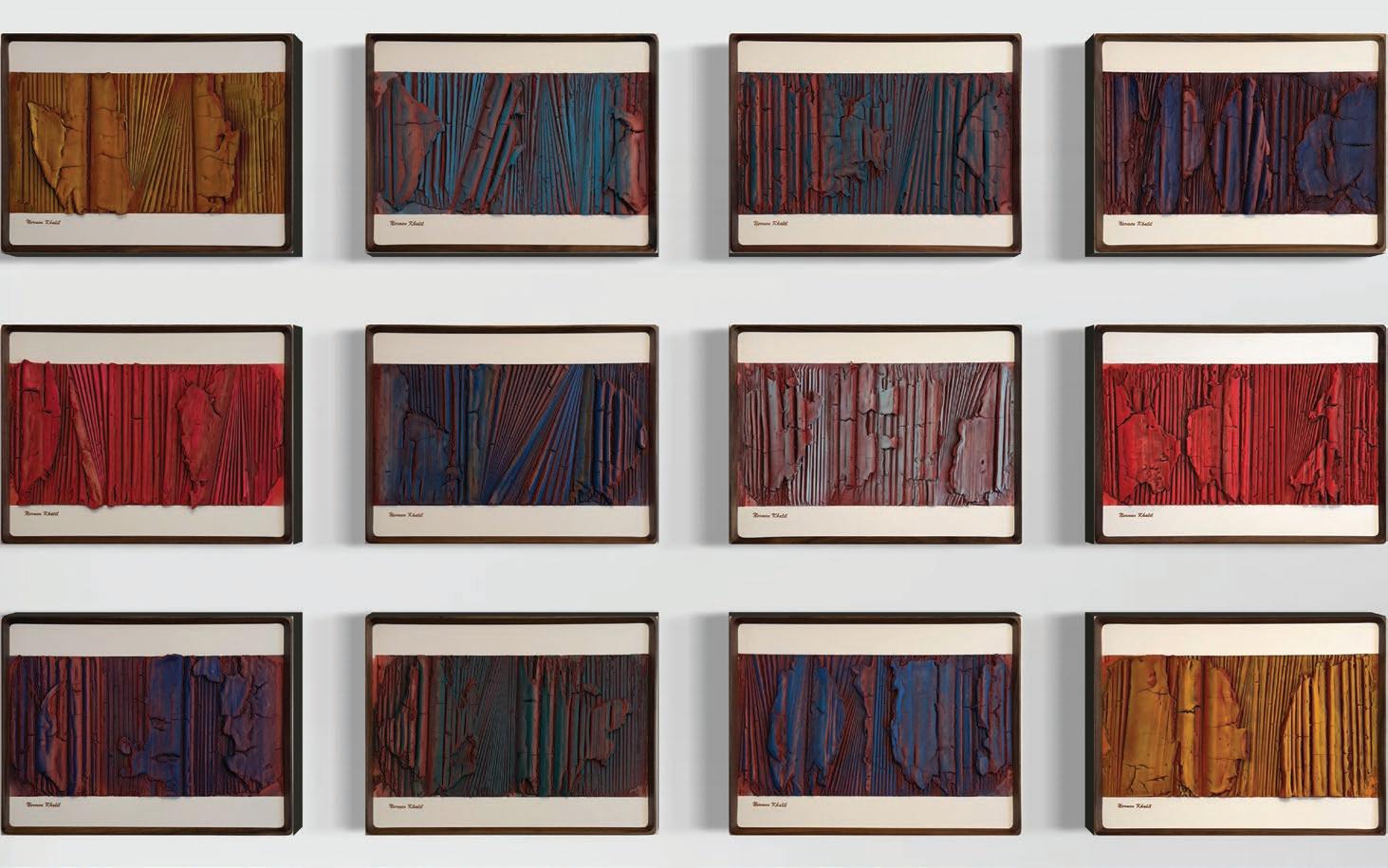
What draws you to materials like cement, mesh wire, and sand as tools of expression?
I’ve always been drawn to materials that hold memoryelements that carry weight, texture, and a quiet kind of resilience. Working with cement, mesh, pigments, modeling paste, and acrylic adhesive allows me to sculpt emotion into movement. These materials don’t just sit passively on the surface - they push, respond, and transform. They react to touch and light in ways that feel human: imperfect, layered, and full of history.
There’s something powerful about using elements that feel ancient yet reinvented through color and kinetic change. Each layer is a quiet act of transformation - a reminder that creation is not just seen but felt.
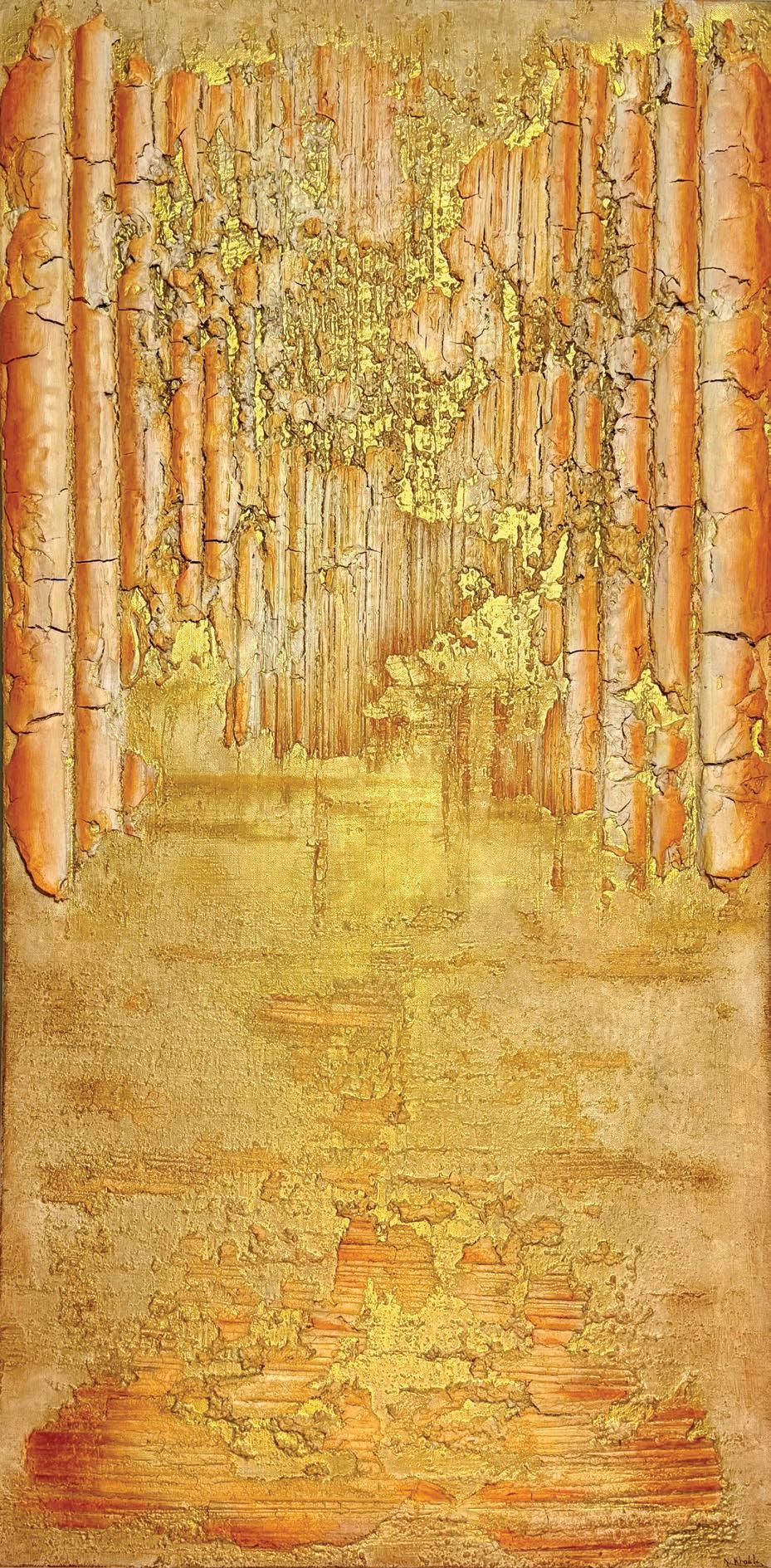
Much of your work explores transformation and self-discovery. How has your own personal journey shaped these recurring themes?
My art is a mirror of my inner evolution. Every layer, every shift in color or texture carries something of my journeymoments of rebuilding, rediscovery, and release. Growing up in Egypt shaped this deeply. Being surrounded by history, light, and ancient textures taught me that transformation is not sudden; it happens slowly, through layers, time, and patience. I learned that even the simplest surfaces can hold memory and that beauty can live within rawness.
I’m fascinated by how transformation unfolds quietly over time - how each phase of life leaves a trace that becomes part of who we are. Creating is how I process that - by translating emotion into matter, movement, and light. The result often feels like both a personal reflection and a universal language of becoming.
Growing up surrounded by Arabesque design and craftsmanship, what lessons from that visual heritage continue to inform your artistic language today?
That heritage taught me discipline, rhythm, and reverence for detail. The repetition in Arabesque patterns isn’t about decoration - it’s about harmony and balance. I carry that philosophy into my own work, not through direct motifs but through structure, flow, and the balance of chaos and order. The process itself becomes almost spiritual - a dialogue between control and surrender, precision and intuitionmuch like the craftspeople who turned geometry into poetry.
Many of your pieces evoke the feeling of ancient artifacts. What do you hope viewers uncover when they engage closely with the textures and layers of your work?
I hope they sense both history and movement - as if the piece has lived many lives and continues to evolve with light, time, and emotion. When someone stands close, I want them to feel a quiet dialogue between surface and depth, permanence and change. My intention is for the viewer to uncover something within themselves - a reflection, a memory, a stillness. The textures and color shifts are simply pathways toward that moment of connection.
rlfitzpatrick.com
In your work, you capture the subtle interplay of light, shadow, and texture on urban surfaces. What first drew you to these architectural details as a source of inspiration?
What initially drew me to architectural details was my fascination with how shadows and colors shift on surfaces. I’ve always been interested in worn-out surfaces because their textures tell stories and make me curious about their history. But what really caught my attention were the shadows - how they change and move, revealing the moment’s fleeting beauty. Shadows demand present-
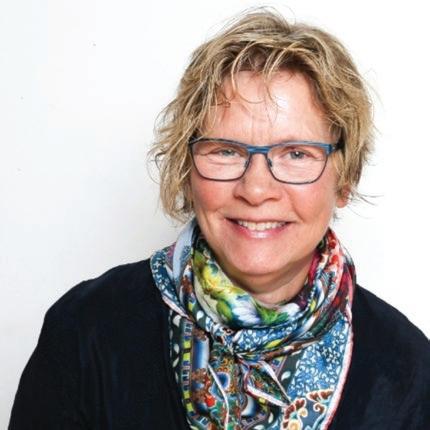
moment observation that highlights transient beauty often overlooked in urban environments. It’s this ever-changing play of light, shadow, and texture that keeps me inspired.
Can you describe how your process of layering oil paint, natural pigments, and cold wax allows the work to balance precision with spontaneity?
My process balances precision and spontaneity through careful planning and gestural application. Precise geometry provides a calming structure, while the spontaneous layering of oil paint mixed with cold wax introduces an
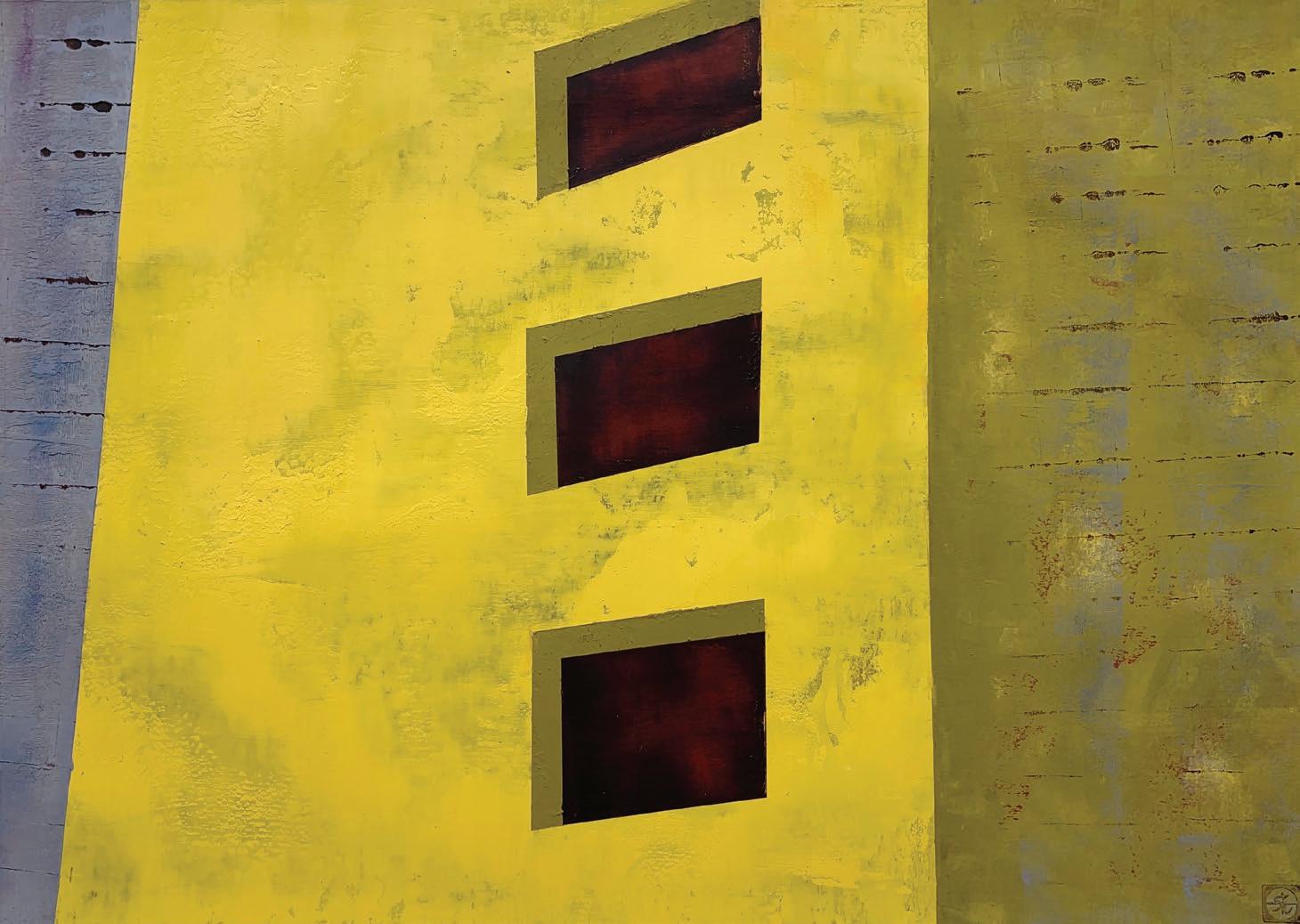
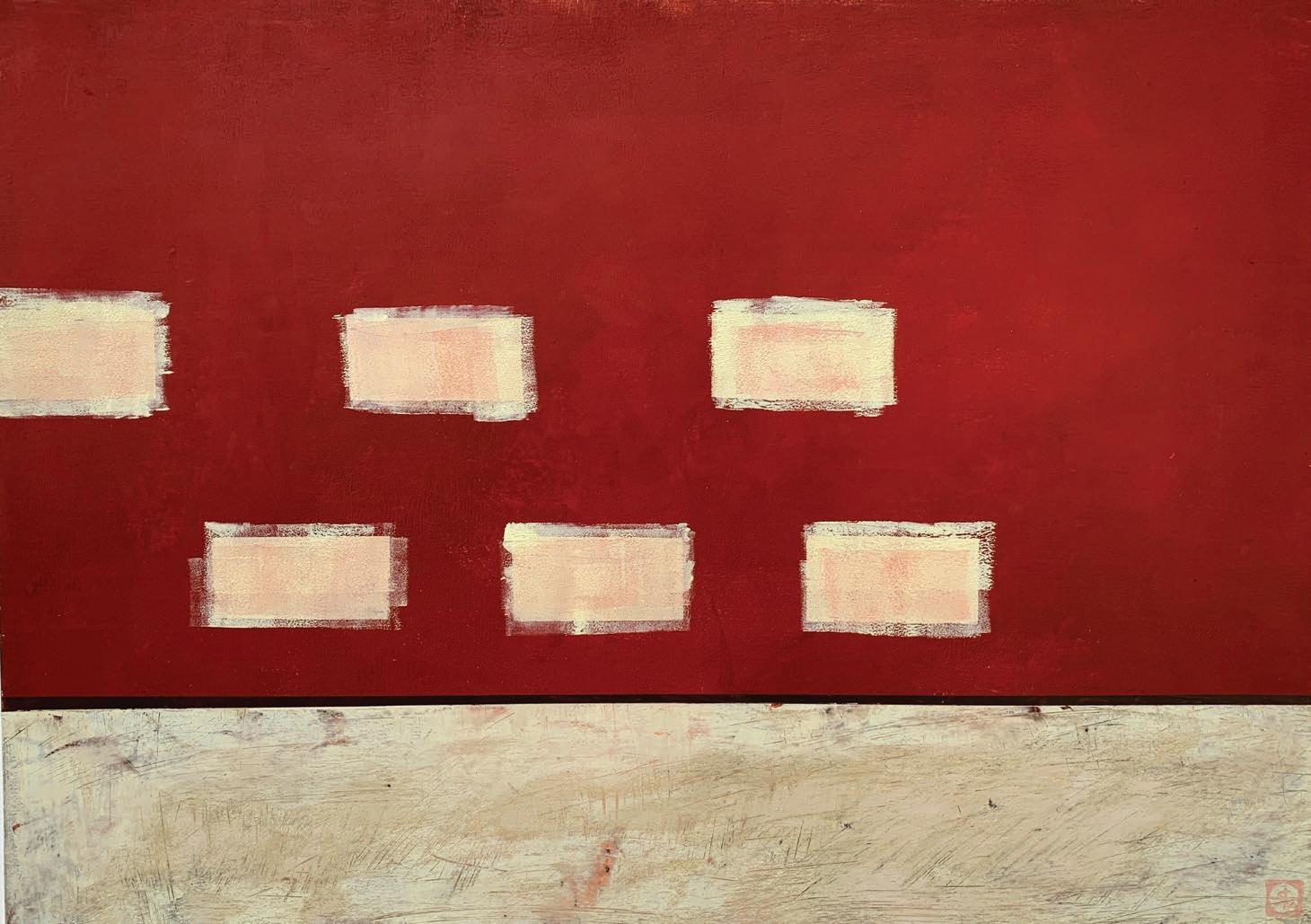
element of freedom. Cold wax creates a buttery texture that influences color during application and drying, requiring me to respond and adjust as I go. Varying pressure and reacting to colors add expressiveness to the work. Natural pigments contribute texture, tooth, and unexpected color surprises, enhancing the dynamic interplay between controlled structure and spontaneous mark-making.
The surfaces in your paintings often feel both physical and ephemeral. How do you navigate that tension between materiality and atmosphere?
I navigate the tension between materiality and atmosphere by emphasizing both the solidity of architectural forms and their fleeting shadows. The architecture symbolizes strength and permanence, while the shadows evoke transience, creating a sense of passing moments. The softness in the painting contrasts with the angular design, adding a delicate, ephemeral quality. This contrast invites viewers to experience both the physical presence of the structures and the temporary, changing qualities of light and shadow. The interplay between these elements allows the painting to feel both grounded and transient, capturing a moment that is at once tangible and fleeting.
Light seems to function almost as a collaborator in your work, shifting perception and mood. How does observation of light guide your creative decisions?
Observation of light guides my creative decisions by emphasizing contrast and the interplay between darkness
and illumination. In my urban shadows work, I focus on fostering mystery and surprise through contrasting light, avoiding overly precise or rigid compositions that diminish curiosity. Shadows serve as a reminder that darkness hints at light’s presence, creating psychological reassurance. This dynamic between light and shadow shapes my approach, allowing me to evoke intrigue and emotional depth, making light an active collaborator in shaping perception and mood.
Minimalism in your paintings evokes stillness and introspection. What emotional or philosophical ideas do you hope viewers take away from that quiet visual language?
I hope viewers take away a sense of mindfulness from my paintings and become curious about their perspectives. The minimalism and stillness invite them to pause and reflect on the simple beauty that surrounds us daily. By highlighting contrasts and focusing on essential elements, I aim to encourage a deeper awareness of the present moment. This quiet visual language serves as a reminder that often, less is more, helping viewers to accept and embrace the now. Ultimately, I want my work to inspire a sense of inner peace, encouraging a contemplative, peaceful experience.
www.leopsaros.com
psaros_paints
How do you think your early experiences in communication and design inform the way you approach a blank canvas today?
What’s funny is I feel like painting is the opposite of design. While there are some synergies, design is about execution. It is about turning an idea into a finished product. I remember back when I was a graphic designer, a copywriter would come up with a specific concept, and it was my job to bring it to life as quickly and efficiently as possible.
Painting, on the other hand, is a process. Guston talked about how he viewed the canvas as a living organism, not a static substrate. So, in a sense, my painting practice is the opposite of the design process - the final product only comes after an uncertain process, with no copywriters holding your hand.
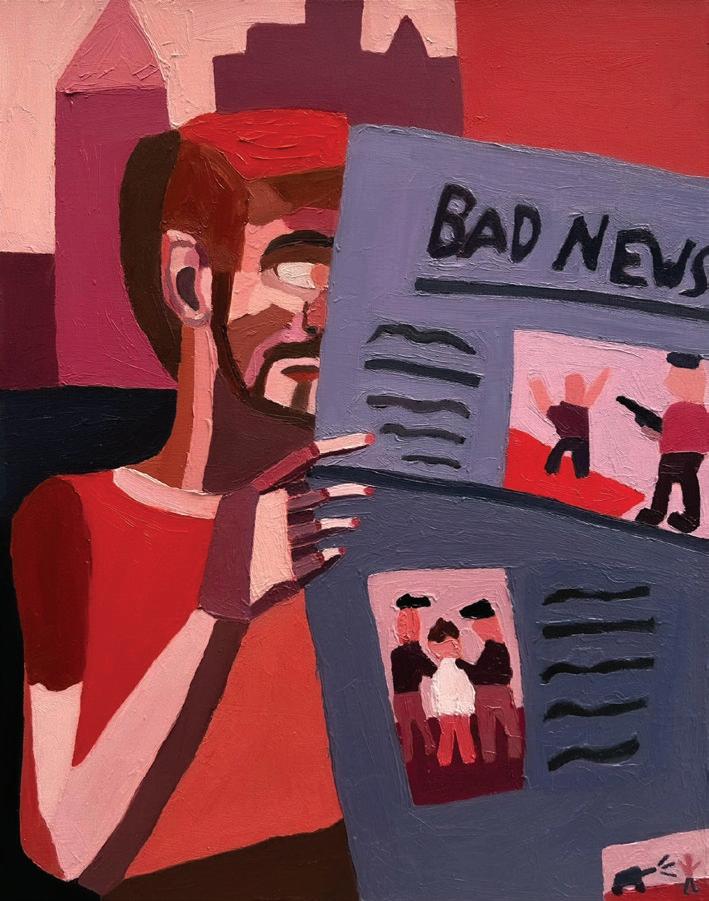
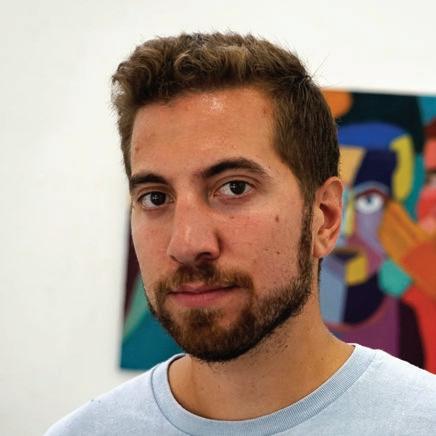
You describe painting as a return to simplicity. What does simplicity mean to you now, and how does it manifest in your work?
When I say simplicity, I don’t mean minimalism. In fact, I would say my work is more maximalist than anything.
What I mean when I say simplicity is essentialism. What are the essential elements of painting necessary to get across the visual experience? I was taught at the New York Studio School that the last thing you want your paintings to be is “busy.”
Nowadays, you see paintings that are trying to say and do everything, and I don’t think that’s the right approach. You don’t want your work to be overbooked.
Coming from a background in digital design, how did shifting to painting change your understanding of creativity and control?
When I started painting my senior year of college, I never wanted to open Photoshop again. I say this because graphic design always has limitations. You have to use Photoshop for this, Illustrator for that, Lightroom for God knows what. The computer becomes a middleman in the creative process, and that takes away the human touch and creativity that makes art great.
Painting, on the other hand, is a limitless medium. There’s nothing you can’t do with it. So, for me, the creative freedom painting provides has greatly shifted my understanding of my creative potential.
Your work focuses on the idea that the world is made up of colors and shapes. How do you translate that philosophy into your visual language?
Last semester in my MFA program, I painted from the model every day. No matter how hard I tried, I couldn’t help but see the figure as a shape positioned within a larger geometric space made up of other shapes. That’s simply how my brain translates what my eyes observe into what my hand creates.
On that note, I think it’s important for artists to identify how their brain sees the world and the canvas. Too often, artists
try to emulate others or chase a particular “style.” I would be lying if I said I haven’t done the same before. But I’ve come to realize that developing a personal language in art isn’t about trying things out; it’s about distilling what’s uniquely yours - recognizing the tendencies, patterns, and instincts that make your work feel like you.
As a student at the New York Studio School, what have you discovered about your artistic process that continues to surprise or challenge you?
I feel like the unofficial motto of the Studio School is “create, create, create.” It’s not about the end product; it’s about the process of painting and what you learned from it. And the moment you are finished, you take what you learned and move on to the next thing. You aren’t working on the same handful of paintings each semester; you’re expected to have a body of work that fills a room.
This requires you to work fast on multiple paintings at once and to juggle ideas and processes you haven’t thought of before. For me, who previously worked on one painting at a time, this greatly challenged my understanding of the painting process. I thought painting had to be a painstaking, laborious process where you should take your time. But the New York Studio School has taught me that painting is a lifelong process that doesn’t stop for one painting.
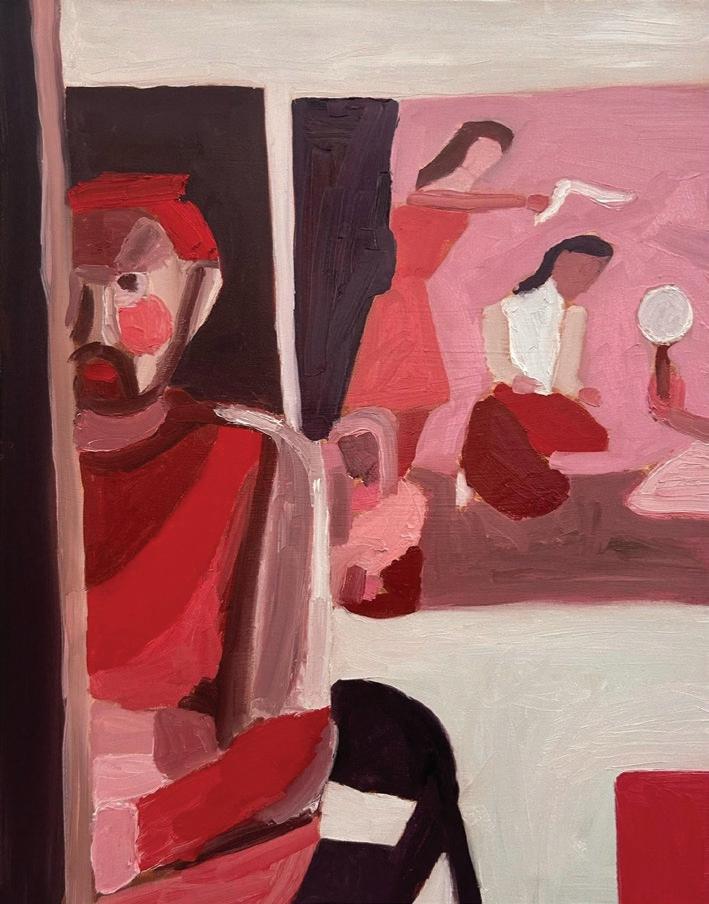
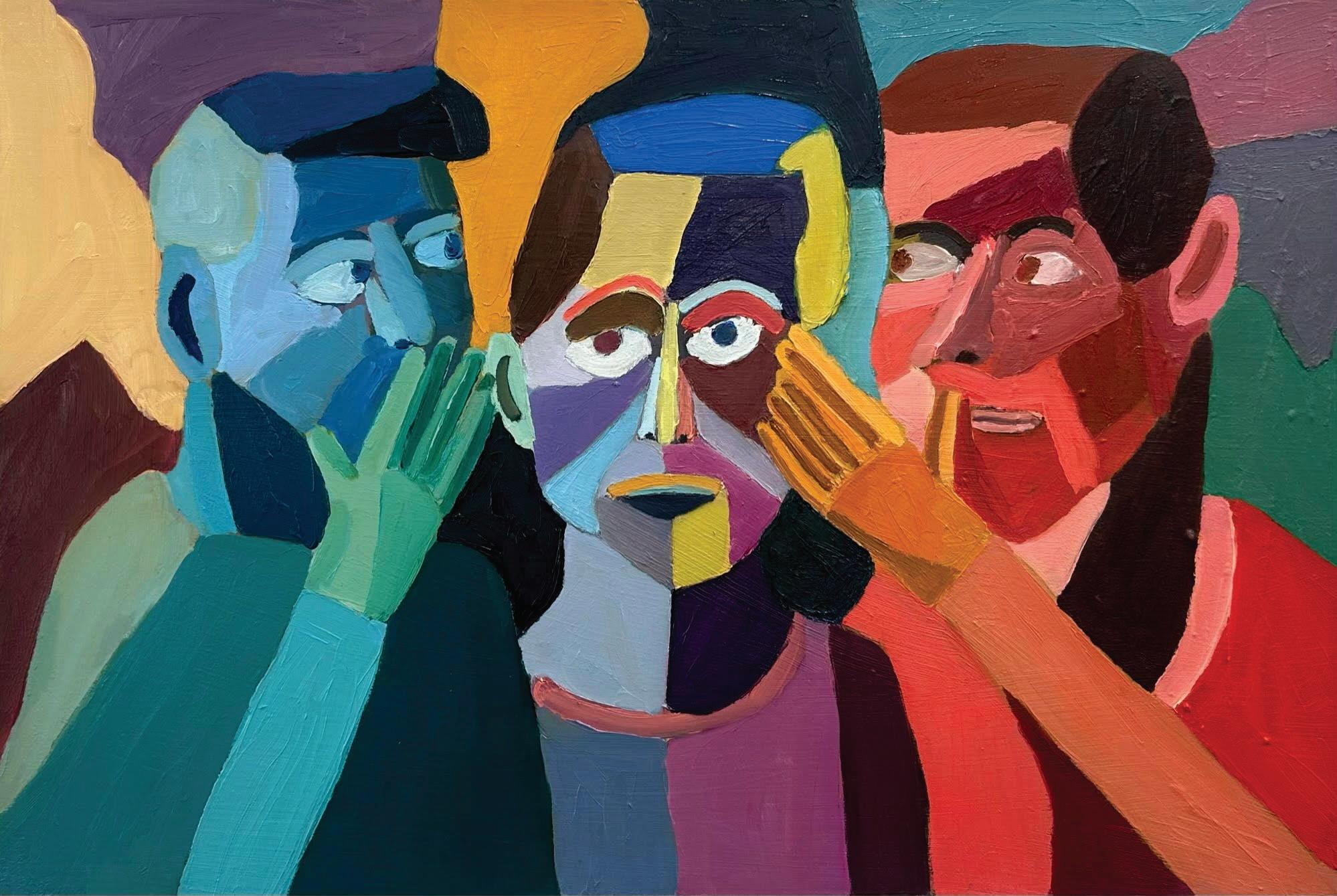
abbygoldstein.com
abby_one_one_zero
How do observations of nature persisting within urban environments translate into your abstract marks and forms?
The imagery in my work references the tangled and unmanicured leaves, vines, branches, seed pods, and natural debris that thrive in these overlooked environments.
Dance and movement play a key role in your process. How does improvisation shape the final composition of your paintings and drawings?
Movement is a primary sensation in how I weave lines, patterns, and forms through a two-dimensional space. In dance, I am able to move my whole body and imagination through real time and imagined spaces, feeling the pattern and rhythm.
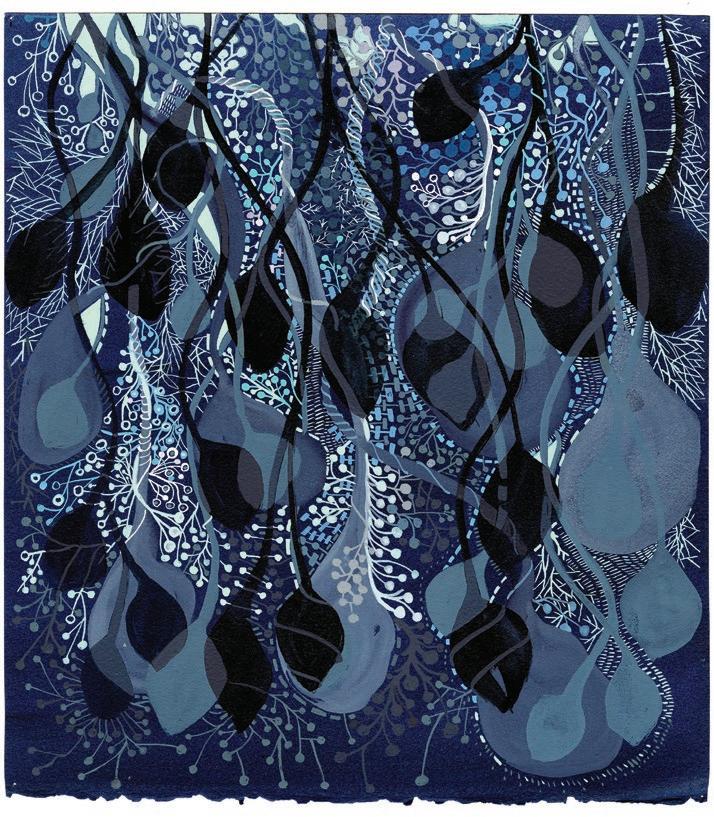
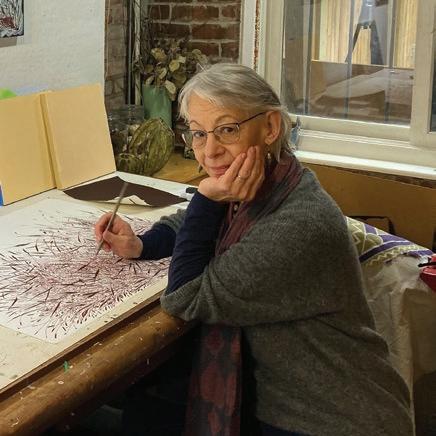
In what ways does your background in typography and graphic design intersect with your painting practice?
Paying attention to the smallest details, which then make up the whole, is foundational to my practice as both a designer and an artist. I also believe that my need to make order out of chaos suits both of these practices.
What strategies do you use to capture fleeting moments of light and color on a two-dimensional surface?
By overlapping colors, breaking up shapes into smaller bits, and painting in transparency, I try to achieve a sense of light flickering through a densely packed surface.
Your art often highlights overlooked or marginal spaces. What draws you to these sites, and how do they influence the emotional tone of your work?
Ah, yes. I am drawn to areas where humans have not recently tread. I live on the edge of a manufacturing area of Brooklyn near the Gowanus Canal. For a long time, the abandoned building lots were the only areas of open green space, and I coveted them for their quiet, tangled, and neglected beauty within the ruins. My anxiety has risen along with the insane amount of development of oversized buildings that are going up around me and blocking out the landscape. What little bits of green space are left are more manicured and much less interesting to me. Now I search for areas farther away from urban development to find inspiration and solace.
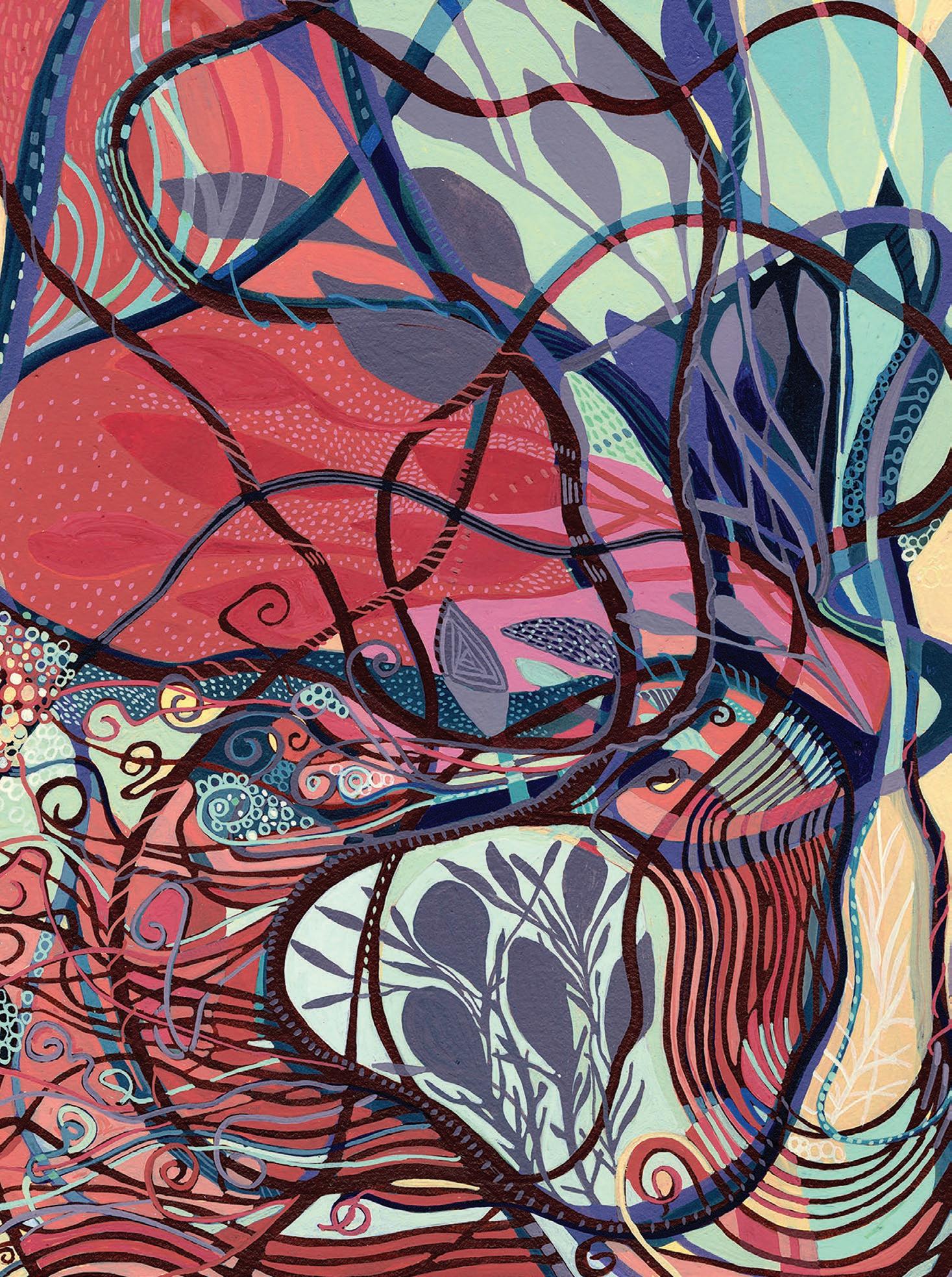
www.sblarts.com sblarts
While exploring intimate struggles with depression and anxiety, how does art serve as a means of processing these emotions?
I honestly don’t know how I would be able to navigate a lot of my battles with depression and anxiety without art. The means of being able to express these difficult emotions undeniably comes through the process of making art. Art also provides form to those feelings. I will spend a day or two without drawing, and it is something I truly miss. However, the most profound validation comes from the relatability my work finds in others. Being able to share a personal emotion that someone else can connect with is reason enough for creating. It shows we aren’t alone.
How do digital tools like Procreate influence your creative process compared to traditional media?
Procreate plays a big part in getting me to draw on a daily basis. It has become my everyday tool for sketches and final compositions. There is a bit of a sense of freedom in the decisions I make digitally. Perhaps I feel less precious about choices, and there is an inherent level of flexibility that digital tools provide compared to traditional mediums. I have dedicated preset color palettes and rely on the same three or four brushes for every painting, streamlining my workflow. On the other hand, my sketchbooks are a source of considerable anxiety. I tend to overthink each drawing and strive for a certain level of perfection. I think a lot of this anxiety comes from comparing my own sketchbooks to those of artists who fill every page. This comparison leads to overthinking simple sketches, while digital art, which is a bit more forgiving, helps me break free from it.
Your paintings often feature dreamlike portrayals of femininity with vibrant colors and unique shapes. What draws you to this visual language?
I’m particularly drawn to the juxtaposition of vibrant, striking colors and shapes next to the
softer, more organic feminine forms. This interplay creates harmony and balance within a space, despite their seeming differences. The vibrancy of the colors, such as fiery red, deep blues, and sharp yellows, speaks to a depth and intensity of emotions. My appreciation for clean lines and the stark contrast of geometric forms largely stems from my graphic design background. Complementing this, the organic feminine form often serves as a representation of my identity and experiences as a female.
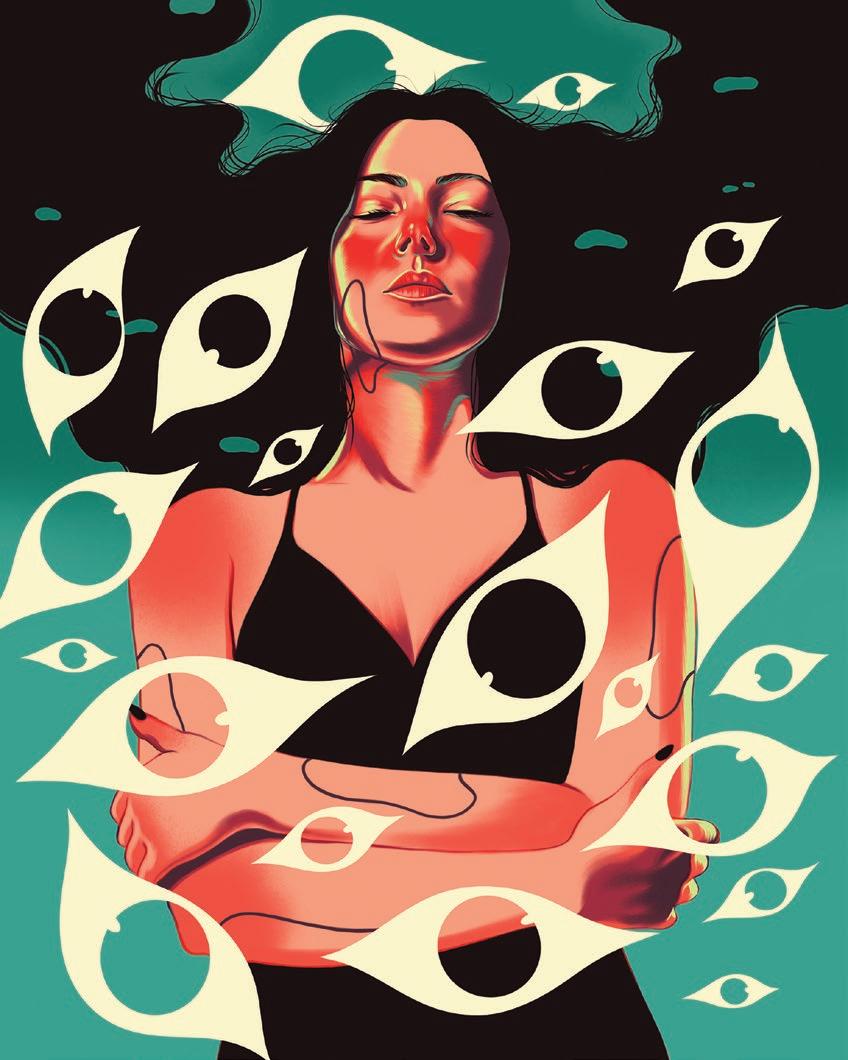
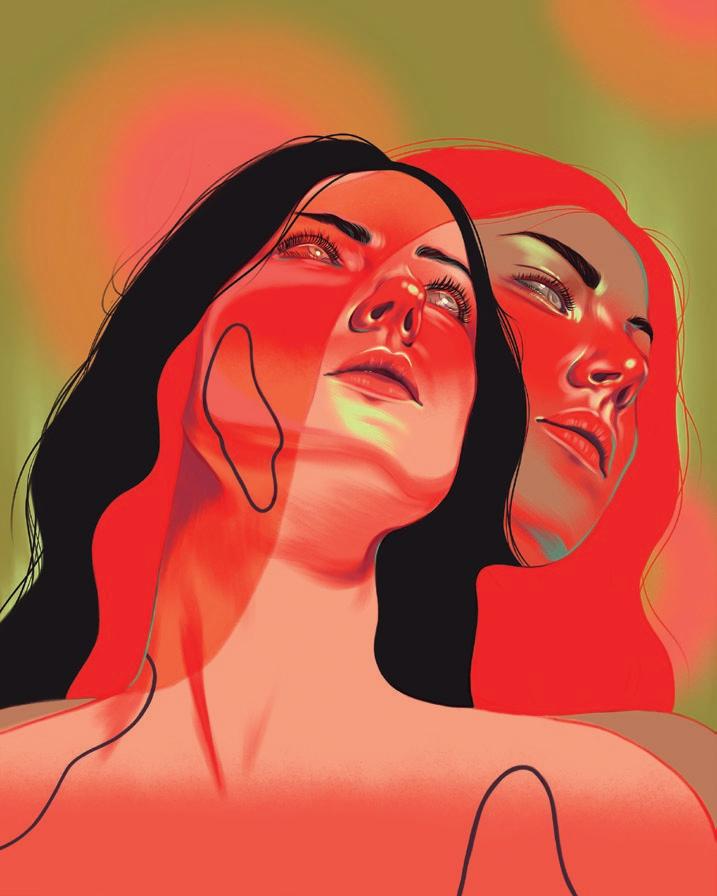
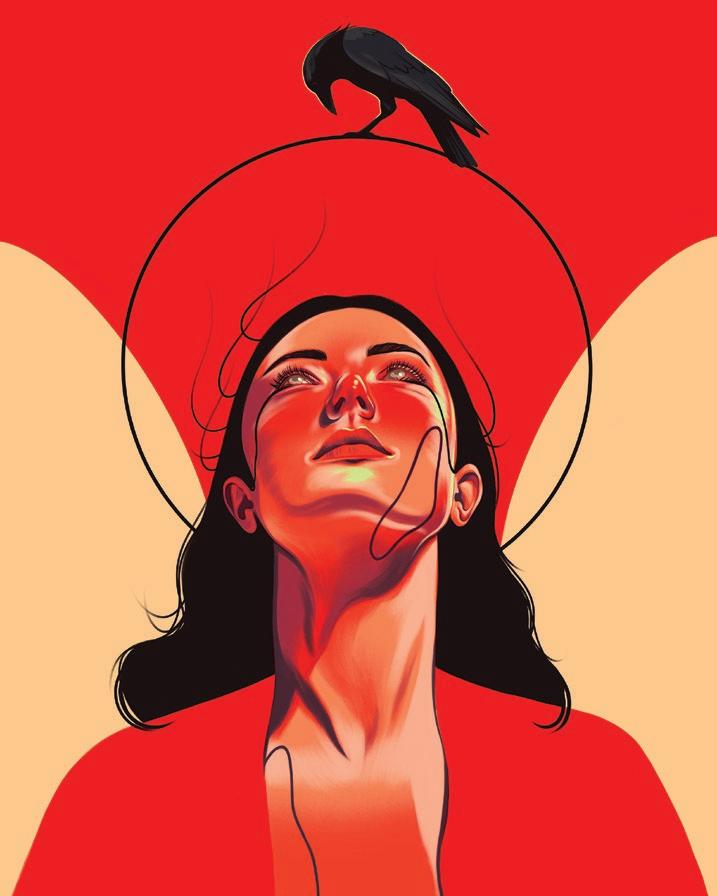
While balancing a full-time career in motion graphics with your independent art practice, how do these two creative worlds inform each other?
After years dedicated to the motion graphics industry, I recently made the significant decision to leave that fulltime career and concentrate entirely on my independent art practice. The two creative worlds are quite different. While my motion design work offered professional satisfaction and a necessary level of creative flexibility, it operated within the constraints of client briefs and branding guidelines. There was a constant sense that a part of my own artistic voice was missing. The shift has been transformative. My professional work demanded a mindset focused on tailoring to external needs, whereas my independent practice is driven by self-expression. I now approach my art with a distinct clarity. I found that what I lacked in creative ownership during my full-time career, I make up for by producing work that is unequivocally my own.
In experimenting with oils, acrylics, and other traditional mediums, what discoveries have emerged that differ from your digital work?
The experience of creating art with traditional mediums presents a distinct challenge compared to digital. For one, there is the absence of “undo” functions or convenient shortcuts. While this doesn’t imply digital painting is easier, it requires a different, more methodical approach. I often try to translate my digital studies to canvas. My work relies on maintaining a certain consistency and theme within the color palette, and the most significant challenge I encounter with traditional mediums is the process of color mixing. There is no instant color accuracy provided by a digital color picker in this case. This necessitates careful planning of my color palette and choices beforehand, ensuring that the hues I blend and apply to the surface accurately represent what I develop in my initial digital study. It’s certainly something I am still learning with time and continued practice.
www.jodihays.com jodihayspainter
What first drew you to using reclaimed materials as the foundation of your practice?
I began using reclaimed materials for their embedded history and emotive content. Most of my painting at the time depended on conventional materials - canvas, paint, size, wood - and I was often stenciling or painting stripes to quote familiar patterns. I became interested in those material boundaries of what makes a painting, including the conceptual framework of the grid. So the line of questioning began to include using reclaimed curtains and spent sheets, carrying the thought through to materials similar to textiles, with embedded and printed stripes and grids.
Your process of dyeing, pressing, and reassembling cardboard evokes a kind of domestic ritual. How do you see the relationship between this labor and feminist or generational histories?
The home determined the labors of my female ancestors. But I see the possibilities for my practice as imaginative, not diminutive. In my studio, I am quoting their labors - once employed only in service to others.
The transformation of everyday materials into painterly surfaces feels both intimate and monumental. What does this act of transformation mean to you?
I like to be part of a group of artists who are working at the edges of a known canon. I am becoming aware of a transmutation and wonder if some of this mystical sense comes from having been.
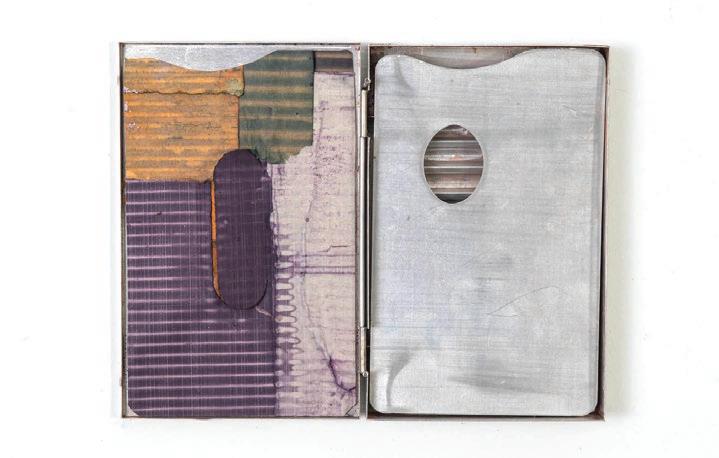
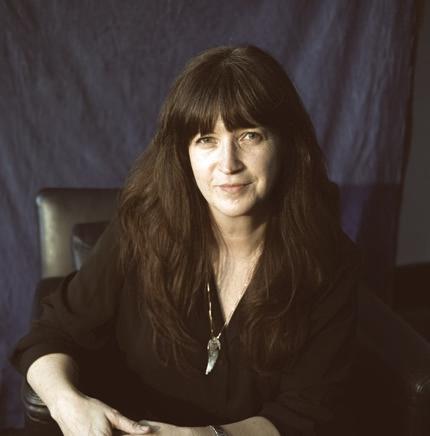
Collaboration and community seem central to your career. How have exchanges with other artists shaped your perspective or process?
Though I have a fairly traditional studio, not a lot of hand in the making other than my own, the firm belief that nothing is worth it if done alone comes from rural culture. I have taken the long road to get here, which has included having a family and living a life that is financially stable so I can make my work. This life includes many players–fellow Moms, public school teachers, fathers and friends.
Your work has been described as existing in the “expanded field of painting.” How do you define painting within the context of your own practice?
My work is deeply informed by a history, formally and conceptually of artists pushing back on conventions. I suppose the work is to believe in a world where categories do not have to define the work.

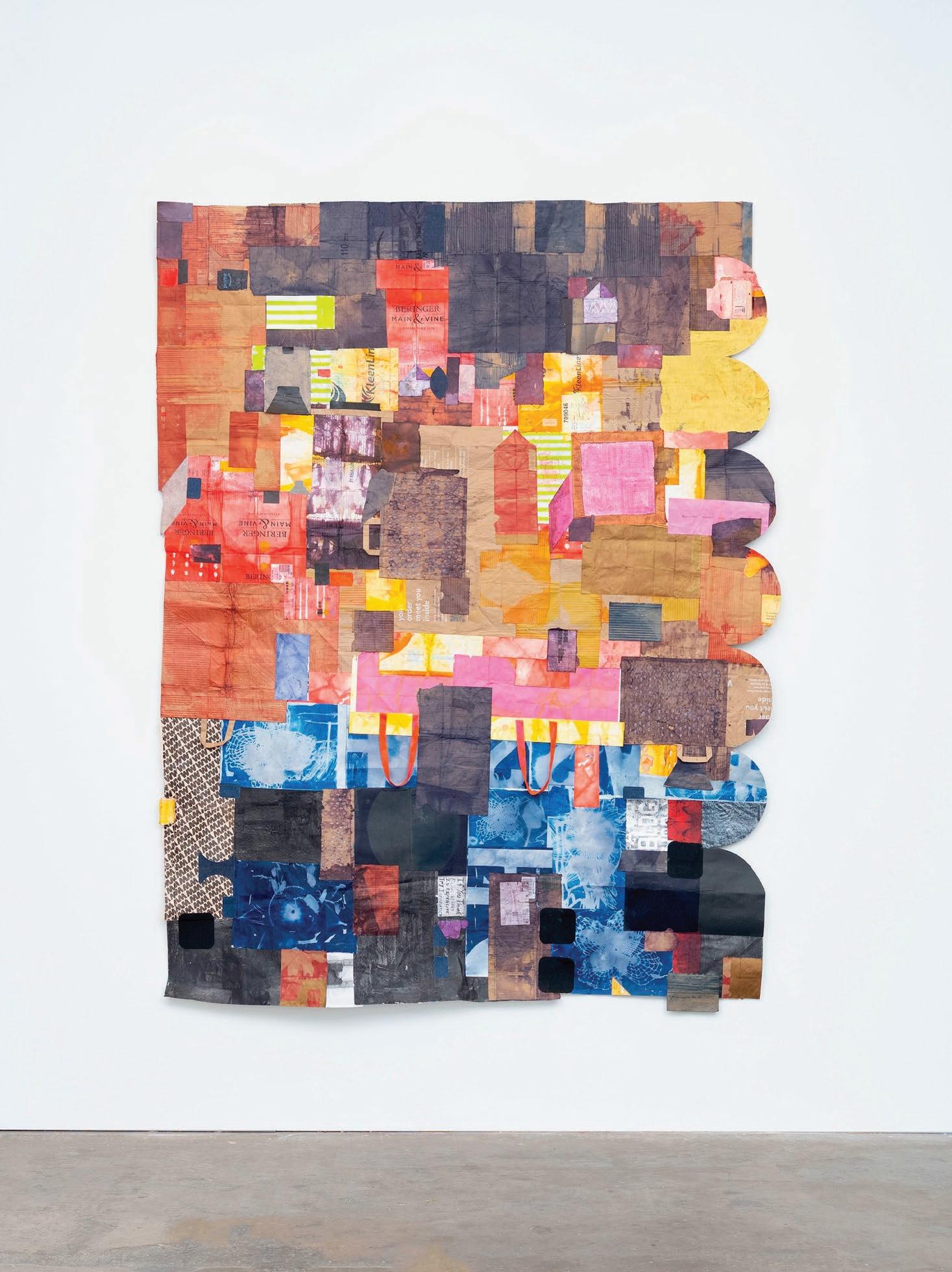
www.jillinbarphotography.com
jillinbarphotography
How do you approach capturing such varied subjects, from urban landscapes to family life and natural environments, while maintaining a cohesive vision?
Everything I photograph I approach with the goal of showing the essence of the subject with a clear sense of itself. No matter what I am photographing - whether the urban landscapes of Gowanus, Brooklyn, the everyday life of my family, or the natural landscape - I’m drawn to the stories that are conveyed in the moment of capture. I’m attracted to how each subject contains within itself a coherent narrative that comes together in the image.
Light and geometry play a significant role in your work. How do these elements influence the mood and composition of your photographs?
I’m drawn to light and the way it frames and transforms a scene. It is the first thing I notice when I am composing a picture, and it definitely impacts the mood of an image. I try to photograph at different times of the day to create varied atmospheres - even when photographing the same location or person. The light and how it falls can sculpt the scene, but the inherent geometry of a scene often dictates my composition. I like the challenge of ordering chaotic details in one image while still allowing elements to stand apart independently. Often, I compose my photographs within implicit grids, whether in portraiture, architecture, landscape, or street photography. Not all these decisions are conscious; many are instinctive and become evident in the review and editing process.
Having transitioned from law to photography, how has your previous career shaped your perspective as an artist?
I’ve always been interested in cities and their transformations. As a law student, I wrote an article called “A One Way Ticket to Palookaville: Supreme Court Takings Jurisprudence and its Implications for New York City’s Waterfront Zoning Resolution,” 17 Cardozo L. Rev. 331 (1995), analyzing the constitutionality of a NYC Waterfront Zoning Ordinance and arguing for the ordinance to further waterfront access in the public interest. Currently, zoning ordinances like that one are rapidly transforming the Brooklyn neighborhood surrounding the Gowanus Canal (a notoriously polluted waterway and Superfund site) from
an industrial manufacturing neighborhood into a dense residential area with waterfront access. For approximately the last ten years, I’ve been walking along the Canal and its neighborhood, photographing the Canal and its surroundings for my series “My Gowanus Souvenir”. I aim to create a non-sentimental record of Gowanus over a time of great change and celebrate the beauty of light on the canal and the patina of peeling paint.
Your work often reflects transformations in both personal and public spaces. How do you decide which moments or locations to capture?
In “My Gowanus Souvenir”, so much of the experience of walking through the neighborhood is the juxtaposition of new and old. It is sensory and tactile. The sights, sounds, and smells of the co-existence of history and its current modern form captivate me. I see the past in old signs, aging architecture, broken beer bottles, and the inertia of the towering new apartment buildings, as well as in the unplanned but thriving plant life co-existing within the contaminated landscape. These elements speak to me of the people who lived and worked here and those who do so now. It is these contradictions and underlying stories that pique my interest in making a photograph. Similarly, on a recent visit to Japan, I found the juxtaposition of new and old, colors and movement, nature and the industrial landscape, had a familiar energy and attractiveness.
As a mother and photographer, how do family life and daily routines inform your artistic practice?
Moving to Brooklyn in 2009 allowed me to reimagine my life, choosing to retire from my career in law to focus on raising my three children. The daily rhythms of family life gave me time to take classes pursuing photography and then challenge myself to start working as an artist in my 40s. They also allowed me the opportunity to photograph my family from the point of view of motherwife-sister-daughter-photographer, chronicling our family in the busyness of everyday life for my series “In The Magical Kingdom”. The photographs in that series reveal personalities, relationships, and intimate habits not typically memorialized in family snapshots. They also gave me time to explore our neighborhood and nearby areas.
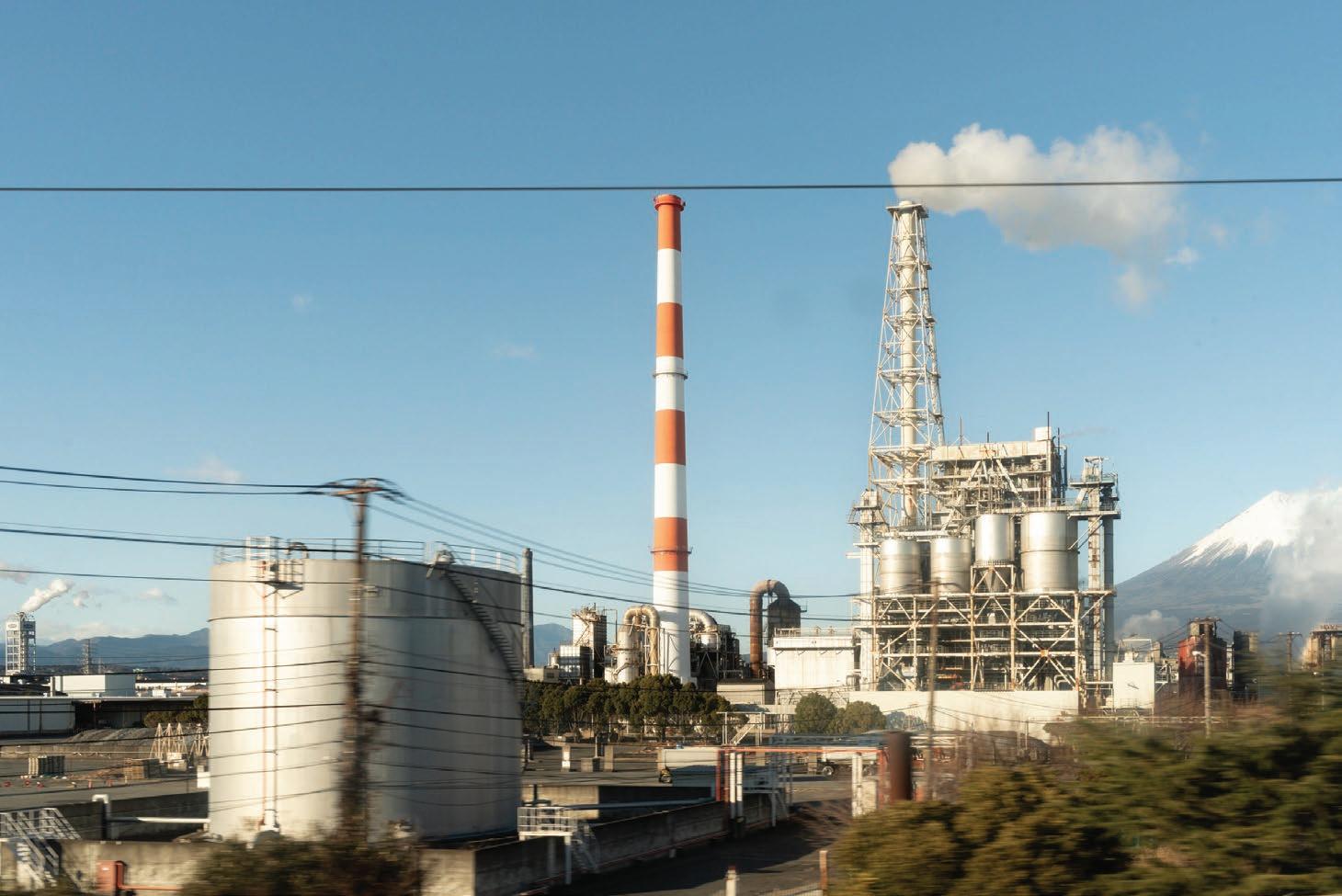
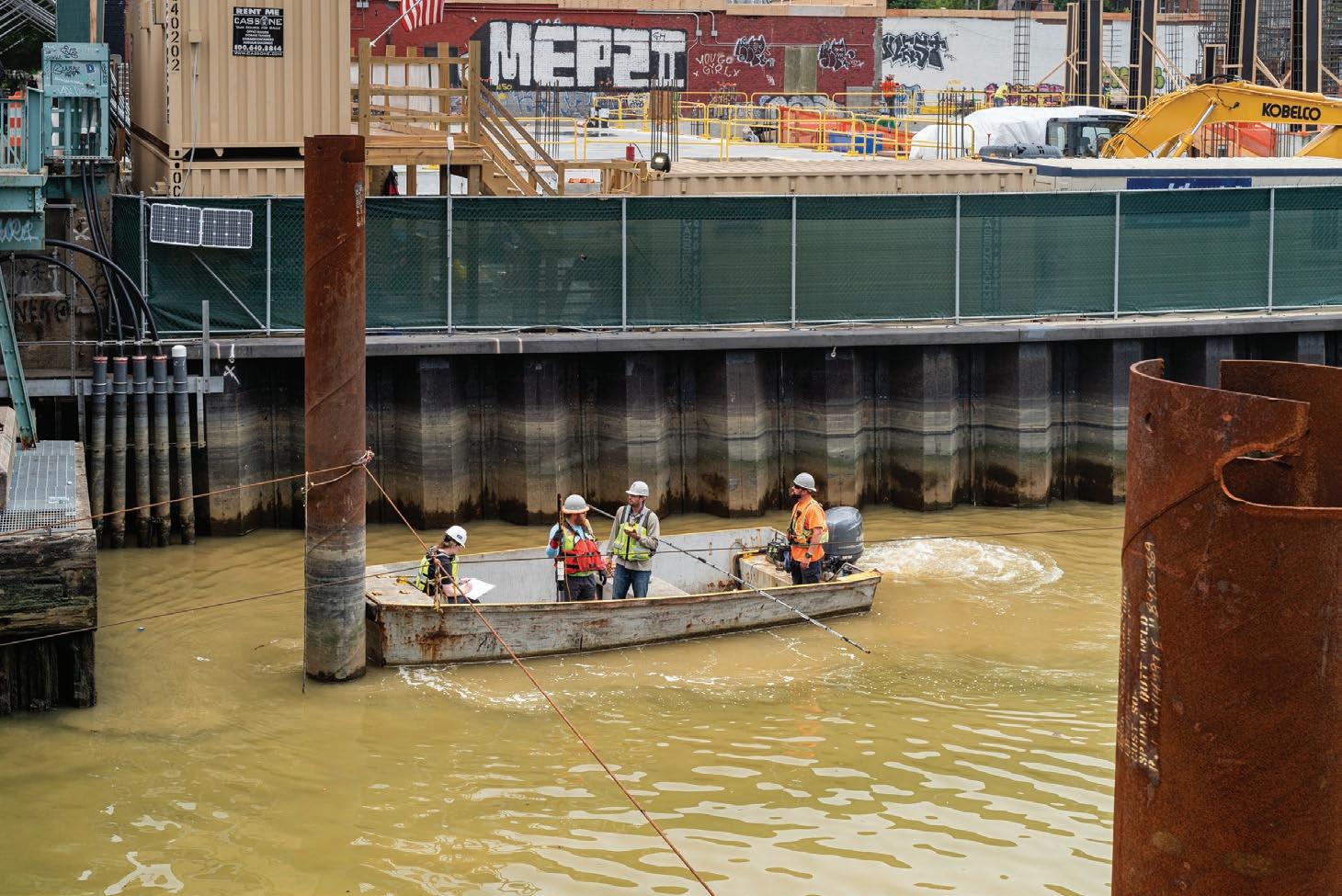
chrismontelldennis.com montellthesage
Your work often explores existential crises and questions of belonging. What draws you to these themes in your paintings?
I remember being in my junior year of high school, feeling lots of angst and panic. As I’ve gotten older, I feel like I’ve gotten a better handle on it, but it’s still here. I gravitate
toward these feelings because they need to be confronted and assessed, or they will only persist. Ignoring the problem gives no solutions. For me, painting is the best way to tackle it. I also know that there are others who may relate in some way, so it’s an added bonus to let someone else know that it’s not just them.
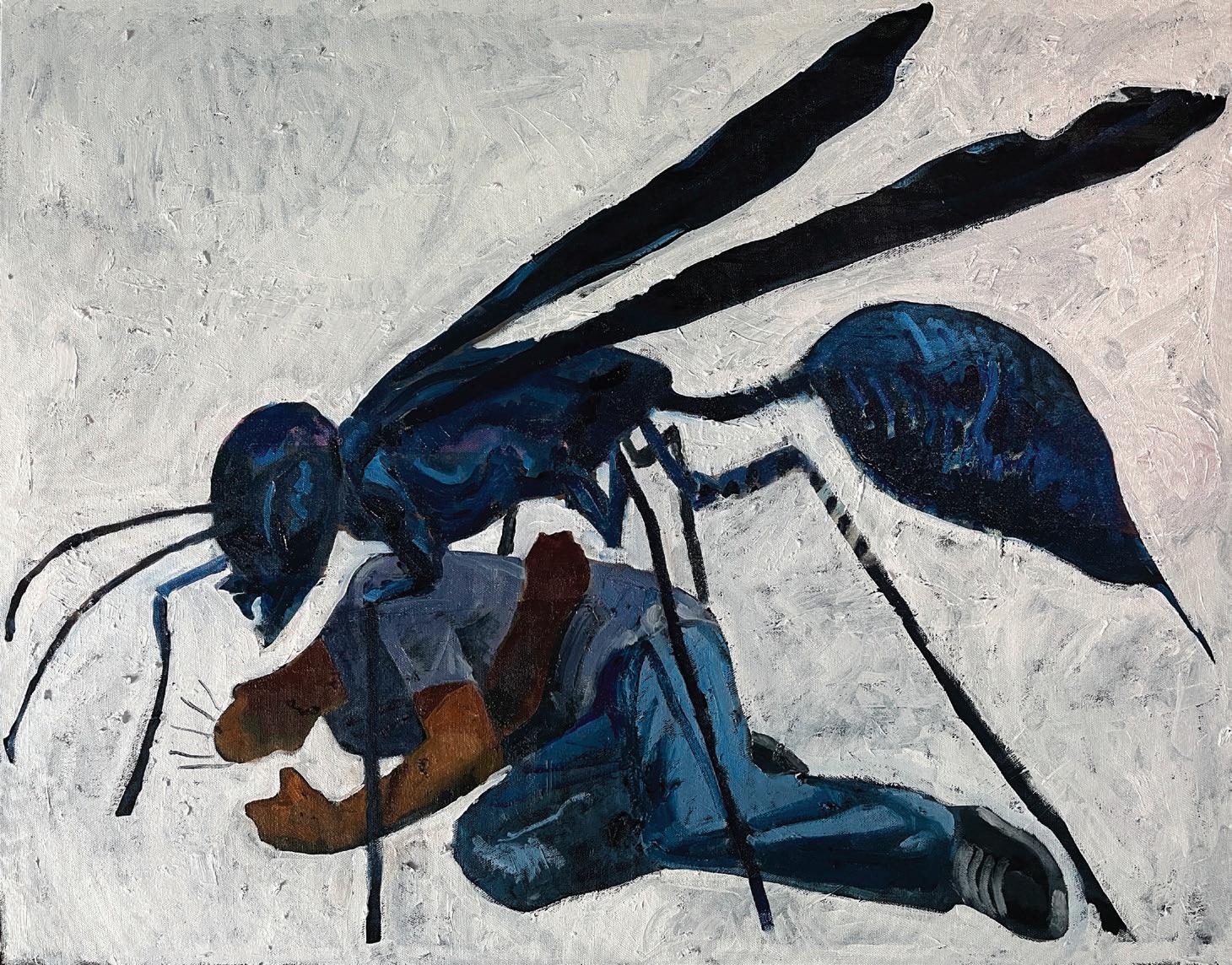
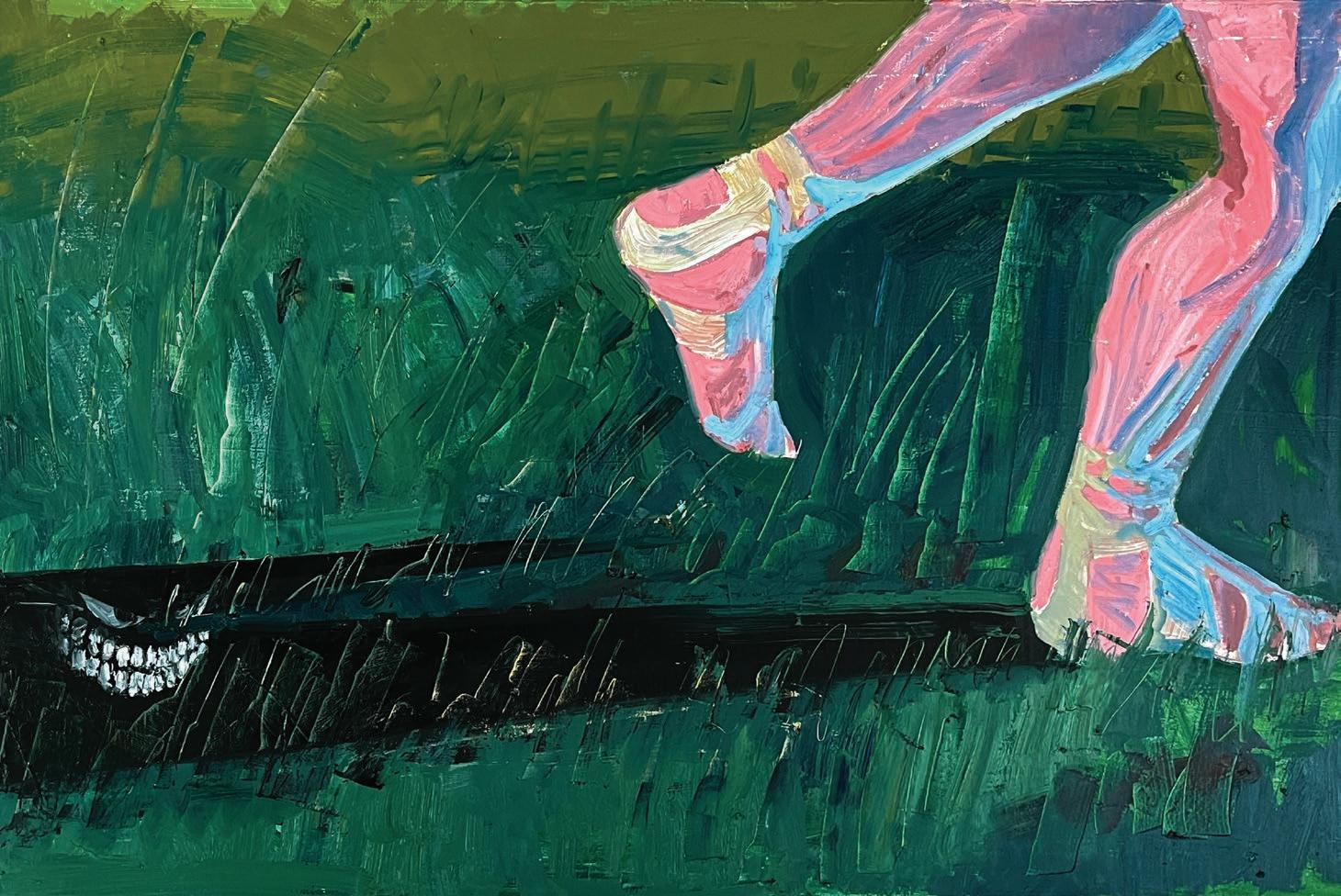
How has moving throughout the southern United States influenced your sense of place and impermanence in your work?
When you move around a lot, it does mess with your sense of permanence. People and places don’t remain in your life, so you have to try and settle with the next set. My work tends to place figures in empty environments. I think of these spaces as liminalities between landmarks, like there’s an endless journey to and from, with no clear end in sight. It’s how I sort of navigate through my own life personally.
Music seems to play a major role in your creative inspiration. How do artists like Earl Sweatshirt and King Krule shape the tone or mood of your paintings?
I Don’t Like Shit, I Don’t Go Outside by Earl Sweatshirt and Man Alive! by King Krule forever changed my brain chemistry. There’s no going back to how I was before hearing them. Of course, there are many more artists I can credit, but these two take the top of the list. Earl Sweatshirt’s music pushed me in a direction to embrace my emotions and channel them into something new and constructive. King Krule’s music made me reconsider why I like what I like and what purpose it serves in my life. The way I’ve approached work - with an unfiltered attitude and later refinement to create something stronger - has changed thanks to him.
Your paintings balance absurdist and surreal elements with reality. What do you hope viewers take away from this tension?
I’d like for the viewer to acknowledge that there is a clear tension between everyday norms and these crazy, intangible, indescribable feelings. For those who recognize these feelings, I’d hope for them to know that they aren’t alone and that they aren’t crazy - someone else gets it too. For those who don’t recognize them, I’d like for them to reconsider what their norm is and to be open to the possibility that there are different perspectives they may not be fully acquainted with.
Mortality and transfiguration are recurring themes in your work. How does painting help you process these existential questions?
I do my best to try and identify these vague feelings with no names. At the end of the day, though, I feel like everything sums up to the fact that we won’t be here forever. For a time, it really messed me up thinking about it too often, but now I see the work I produce as a form of journaling - just trying to find something to work with while the facts remain true. It’s a work in progress for the rest of your life. The older you get, the more differently you look at things, and the more you shape into different versions of yourself. I don’t expect to find any absolute answers, and I won’t ever claim to have them, but I can keep a record of what I come across and let you know what I find.
opachydiscus
With your background in geology, how do scientific perspectives influence your artistic process?
Geologists tend to be concerned with establishing a sequence of events and visualizing objects and landscapes in three dimensions. We are usually only able to observe a two-dimensional surface, like an outcrop or a map view, so we have to extrapolate the third dimension in order to understand the fuller context. Part of my current series is based on considering the horizontality within the framework of many of Rothko’s paintings as if they were strata, and manipulating that framework. Faulting, folding, erosion, intrusions, and unconformities deform the structure, forming new spaces and relationships that
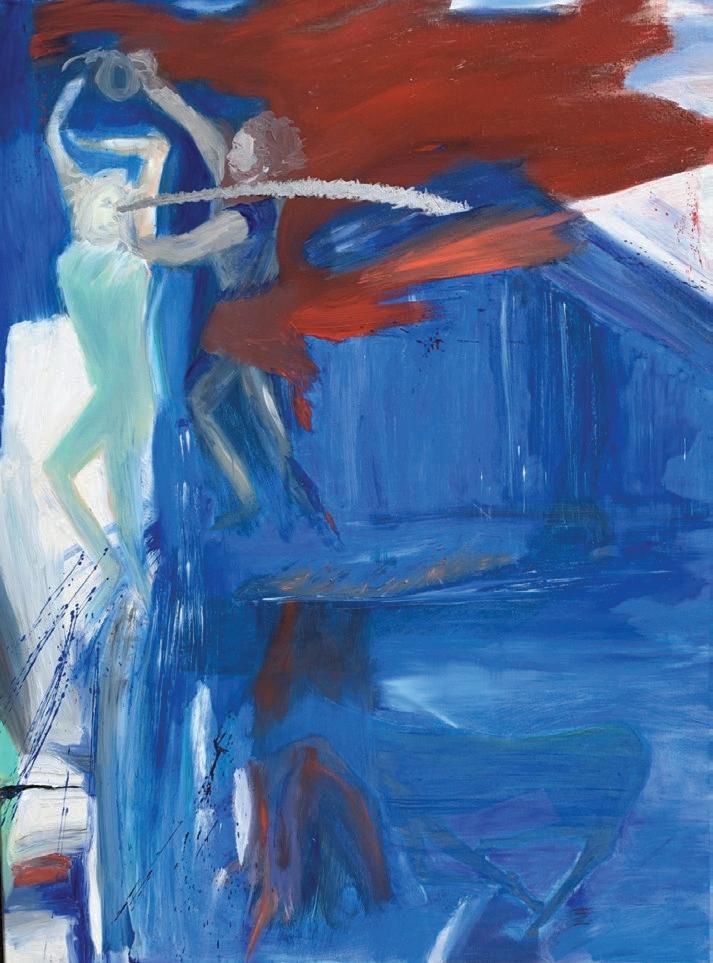
create opportunities for exploration. That exploration may include forming a three-dimensional volume or introducing figurative context that is either deformed by or gains perspective within the altered abstraction. This forms a new landscape populated with new imagery.
The series Spoilers and Spandrels explores hidden motivations and architectural byproducts. What inspired this conceptual framework for your work?
I enjoy investigating thrift-found paintings, identifying artists, and trying to understand their motivations. I realized a painting found from an artist’s estate that resembles a de Kooning is an abstraction of Rubens’ Rape of Europa. Reviewing de Kooning’s body of work, it seems many of his paintings can be interpreted in terms of classical artists he admired. The title of a de Kooning that resembles my found painting is Tree in Naples, which I think is a red herring for what is actually a rendering of Andromeda. Biographers report that de Kooning struggled with his creations. Why? He was walking the fine line between honoring the expression of the artist while rendering an abstraction and making the source unrecognizable. He wanted his work considered free of preconceptions of the source and didn’t want the viewer to be fixated on a title. I had no way of reporting this idea to an audience, so I decided to paint it.
How do figuration and abstraction interact in your paintings to create new meanings or perspectives?
I struggle with the point at which a figure becomes an abstraction and an abstract form becomes figuration. I’ve been inserting figures into an abstract framework and abstract forms into a figurative landscape or structure. In the case of Minerva, when the form derived from an abstract work by Franz Kline can be used as a stand-in for Whistler’s Mother, is the painting of the abstract form still an abstraction? Whistler may have been somewhat less than forthright when he insisted that, since his model did not show up, he used his mother as the model. One might conclude that, in light of the similarities of the painting to Rembrandt’s depiction of Minerva, his intent was always to raise his mother to the status of the god. Then, the figurative aspect of the painting becomes an abstraction of his vanity or hidden intentions.
You describe your practice as a conversation with and between artists. Can you share an example where this dialogue shaped a piece in an unexpected way?
In Doubletake - Bridge the Space, the Twombly-esque roses were initially intended as an experiment with the pushpull of the red on a complementary green background. The portrait is derived from a Degas sketch of Manet at the races and was meant to be an impressionist anchor balancing the contemporary abstraction of the roses and the uncontrolled dripping. In the sense of my current series, this would be a spandrel, where the empty space Twombly left to the right of his roses is embellished with a figure. I had initially intended to include several more components to make a more complicated painting, but Manet’s doubletake gaze at the contemporary abstraction while he presumably strolls through a gallery struck me. I found myself pondering the journey from the dawn of modern art with Manet’s revolutionary work to contemporary work like that of Twombly, which continues to find ways to challenge our understanding of what art is. What would Manet have thought of Twombly’s abstractions?
As a self-taught painter, what has been most rewarding about developing your style through experimentation and study of art history?
I certainly use the act of reproducing images as a guide to learning. By incorporating different artists’ work, I discover connections that hadn’t been apparent or forge connections that make something new. For example, Picasso’s painting of Gertrude Stein and Freud’s painting of Elizabeth II are already connected since they are both unflattering paintings of prominent women. The paintings’ subjects and notoriety elevate them to being two of the most important works of their eras. I simply put the elephant on the table, and the viewer is confronted with the fact that neither sitter was likely entirely happy with the result. They are either consoling or glaring. I hope the juxtaposition can draw the conversation away from whether a person likes, dislikes, or is offended by either portrait, toward an appreciation of their places in the history of art. Since I cannot totally figure out contemporary art, there’s plenty to play with in history - and that makes me laugh.
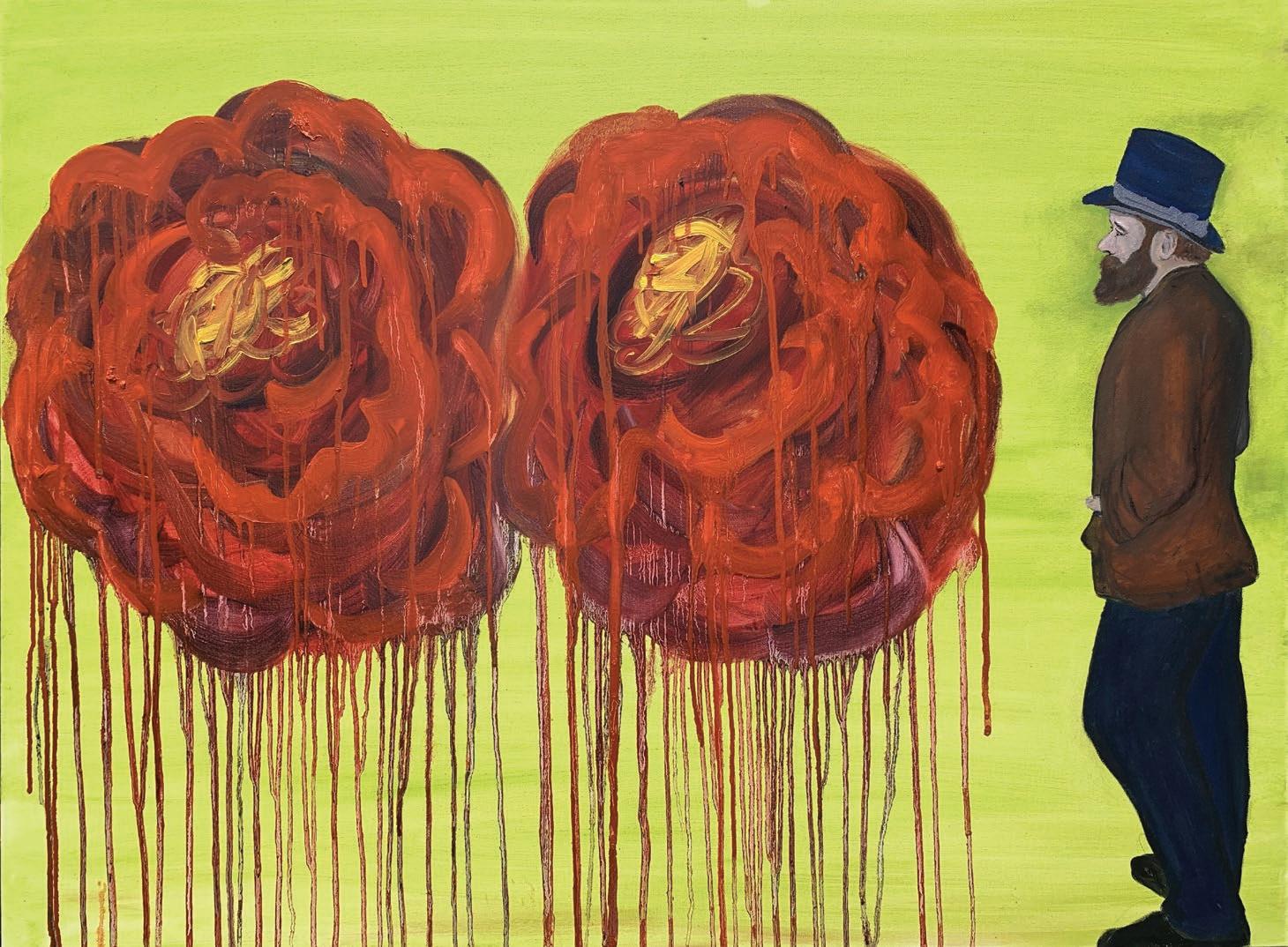
vadimstudio.art
kondakovvadim
What draws you to explore the dialogue between natural elements and industrial materials when using water to inform metal structures?
I’m primarily interested in water as an element and its interaction with other materials. It is an element that leaves traces and transforms its surroundings, and I explore its interactions with metal - both in terms of form and volume, and in terms of a certain space, a trace within the metal. Water is a provocative material, capable of altering space and its surrounding elements, simultaneously prompting the metal to flow and transform, sometimes - to return to its ore state. At the same time, their physical interactionwhen intense water pressure expands the space within an object - interests me as a kind of creation and exploration of space.
How does the process of letting the material guide the form influence the final work?
Observing both elements - water and metal - I try to find a balance between them. In this combination of water, material, and technology, I try to create a space for play and interaction. As an artist, I can step back a bit and give free rein to experimentation and see what happens, understanding
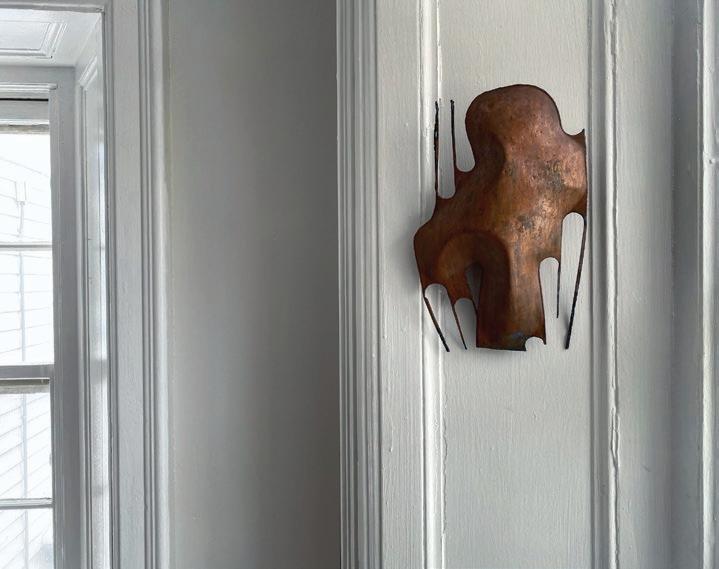
in advance my goal: that I am creating an object in which time will be fixed. That is, it will not be an infinitely inflated form, but a fixed one. And this is the question that hangs over the movement of everything in nature - material, time, etc. - what constitutes the final result?
You describe a conversation with possibility rather than a fixed outcome. How does this approach shape your creative decisions?
Much of this comes from limitations - limitations of form, material, technology - the entire toolkit I use to create art. All of these limitations combined, I observe the possible transformation of these elements and processes, searching for freedom within this labyrinth of obstacles. As a result, I discover that metal oxides are a certain property of the material to return to its primordial state, or the expansion of welded-together metal sheets through water is an expansion of space to certain limits, to some boundary; and when the boundaries break, what happens next - does it continue to react with the surrounding world, with the surrounding elements? When water leaves and everything else remains, the question is what happens next. It is, again, the question of the end result, of the final form of this material. The objects I create are sort of vessels containing ideas and questions about this entire world, about whether in nature everything is pre-determined.
In your work, process, technology, and natural forces converge. What role does each play in developing a sculpture’s unique language?
Technology defines limits that cannot be removed, and through them, the properties of materials come to the fore. By combining these two constraints, I inscribe them within the physical form of a given material - a metal sheet. Plus, let’s add conditions: if it is a site-specific project, I include the context of the surrounding space; or if it is a series of small objects not oriented toward a specific space, the specificity of the material’s form plays a role - that is, the patterns I find in scraps of metal. I’m inspired by industrial metal, where forms are reminiscent of organic ones; I seek out natural forms in it. Just as generative design seeks organic structures to solve technical problems, I, conversely, seek out beautiful form, imitating this language through handcrafted production, thereby removing utilitarianism and retaining aesthetics.
What does it feel like when a piece begins to “live on its own” and exhibit movement or response?
The main goal of this entire work is to define limitations and then experiment within these set parameters. I sense a spontaneity in the production of art, which allows me to see freedom in the material itself, in its free flow (be it water or metal). It also leaves a mystery, an interesting one to ponder - I am creating a certain space (the sculptures are hollow inside), and it is inaccessible for me as a viewer, and it has a certain vector toward the future: when the
material itself disappears, does this space disappear altogether? Does it return to two-dimensionality or merge with the multidimensional when this boundary disappears? When, as a child, I found a butterfly chrysalis hanging on a branch, it gave the impression of a curled leaf; but when you touch it, it begins to react with movements, wagging, and confuses you - if it is a leaf, why is it moving? Without breaking this boundary, you will not know what is inside. But if you break it, you kill life. Life exists as long as there is mystery.
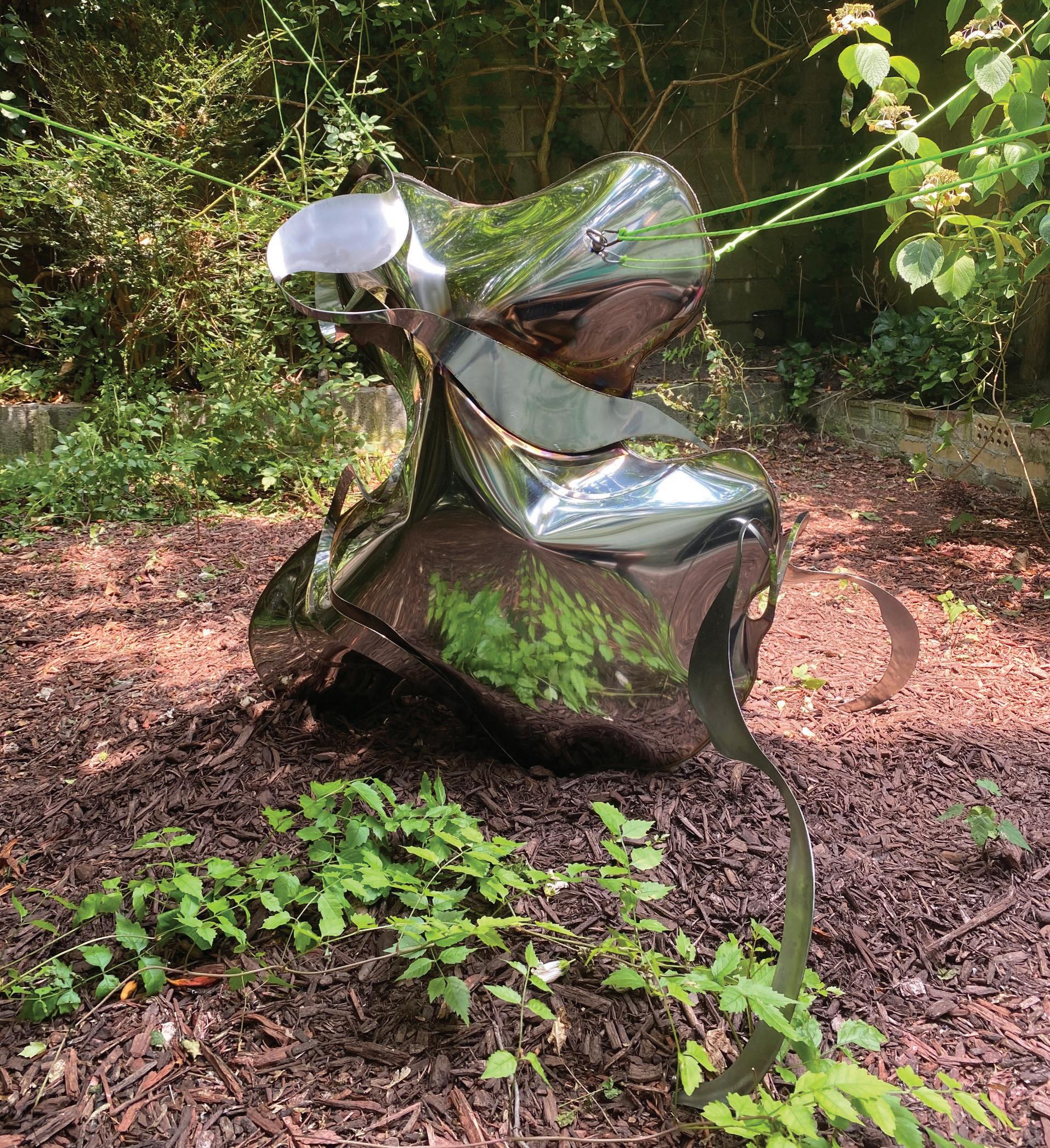
latika.art
latika.tbd
While exploring identity through fragmented and surreal portraits, what draws you to visualizing dissociation in this way?
The multi-face motif came about naturally while creating the first portrait of this series. At the time, I’d been experiencing some intense dissociative episodes that I struggled to process. My intention was to reconstruct these memories and capture my distorted sense of reality in those moments. There had been a few instances where I looked in the mirror and saw my reflection disintegrate and warp into a weird face soup. That image haunted me and felt like a perfect microcosm of the experience. While painting, I intuitively combined multiple iterations of my face into one figure. The multiple-face composition really
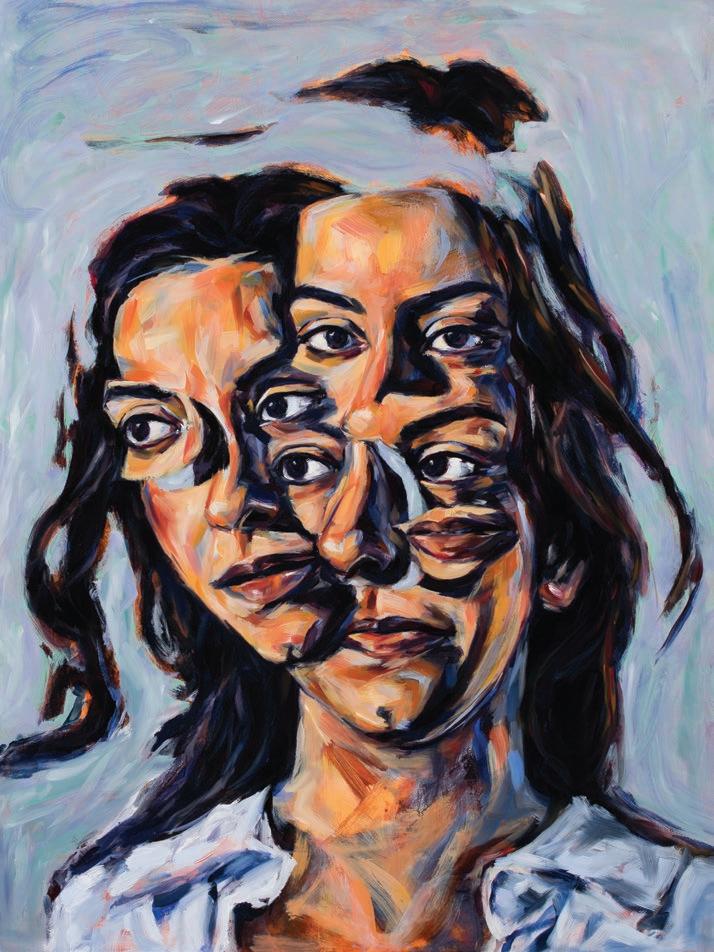
spoke to me, so I continued exploring and evolving this format through a series of portraits. Over time, I started to think more about identity, rupture, and integration, and I liked that the fragmented portraits connected these ideas on a symbolic level as well.
How has your background in engineering, design, and music influenced your approach to painting?
Ironically, a lot of my practice is about getting away from my instincts as an engineer. Visual art, which I came into after years of studying and working as an engineer and industrial designer, requires a different creative approach because the stakes are different. With engineering and design, I was thinking about a problem I had to solve. That approach helps for practical applications but is counterproductive for expressive work.
Music helped me understand that. When I first moved to New York, I started writing my own music but struggled to create songs that felt connected or emotionally honest. I was approaching songs like engineering problemsoverthinking technical aspects and writing with a thesis in mind instead of allowing myself to wander and discover nuggets of truth organically. When I started painting, it finally clicked that in art, the process is the work. My process intentionally follows an intuitive painting approach to practice this new way of creating.
The work transforms subconscious feelings into tangible images. What does the process of reconstruction reveal to you about yourself?
It’s a practice in observing myself without judgment, which has allowed me to see more of myself in greater detail. Dissociation was my body’s way of dealing with difficult feelings that didn’t align with certain narratives I had about myself. Our brains do such a good job of shaming and obscuring feelings that don’t feel good to us. I became curious about those feelings, and painting helped me slow down and bring them to the surface.
Reconstructing these memories helped me see them with fresh eyes. It’s helped me notice the many contradictions that live in me and appreciate the humanness of a complicated existence. That idea is mirrored in the figures of my portraits, which, despite their disjointed and unresolved appearance, I find strangely beautiful.
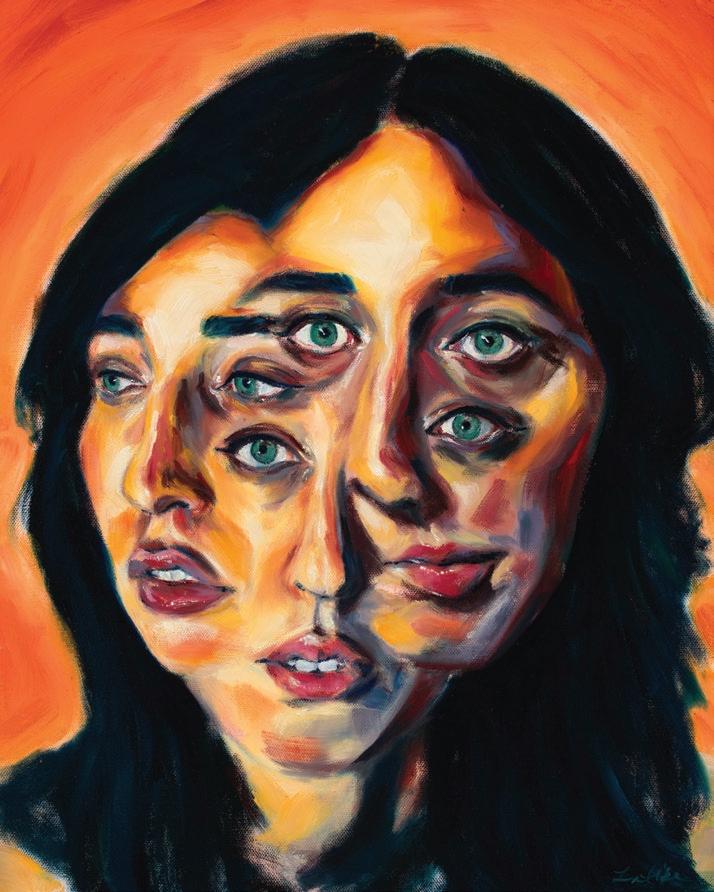
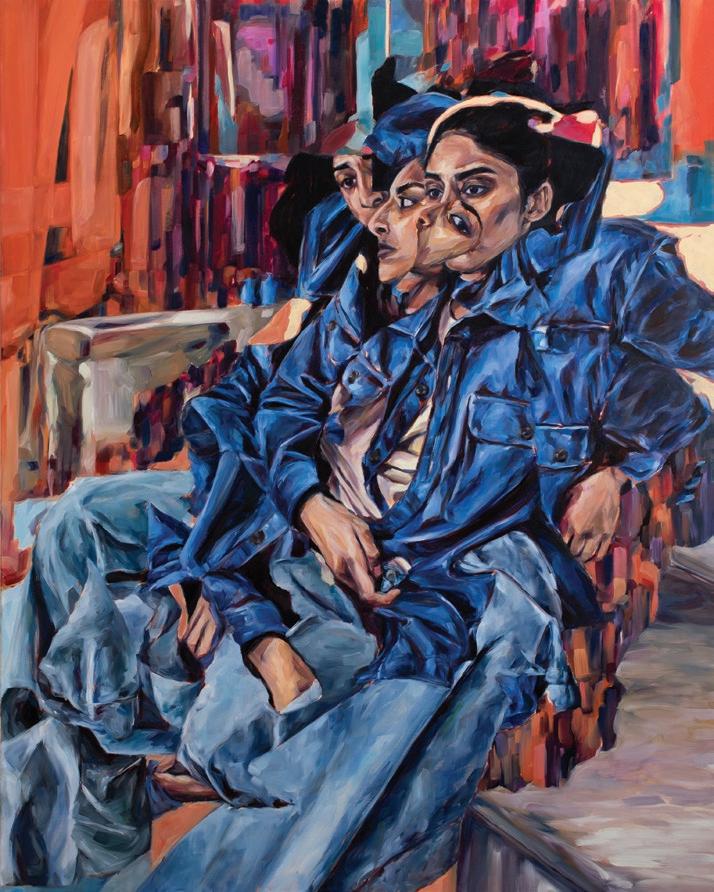
Your first solo exhibition was titled Strange Mirror. How does this concept relate to the way you perceive personal identity?
Spoiler: It’s not the mirror that’s strange - it’s us. Strange Mirror alludes to this idea that we walk around with a simple, resolved self-concept but, in the mirror, are confronted with inconsistencies and incongruities that make us unrecognizable to ourselves. The reflection is the reality of identity - an incoherent, dynamically shifting assemblage of parts that don’t fit neatly together. It’s something that can’t be analyzed or defined. There’s something liberating about that shapelessness.
Color and texture play a striking role in your portraits. What role do they have in conveying emotional or psychological states?
A textural element I use often is leaving small unpainted edges in my top layer of paint that expose the contrasting
underpainting below. Those little cracks of bright pigment peeking through give the figures a transient, ghost-like quality that contributes to a feeling of uncertainty.
Color is an element that I like to play around with. I experiment with variation in color scheme, value range, and underpainting tone. My paintings with analogous color schemes and less saturated tones tend to feel more still and pensive, while high-contrast complementary palettes and saturated colors evoke instability and a higher emotional intensity. My color decisions are usually made spontaneously, based on intuition or curiosity - like wondering what a certain color palette might look like or challenging myself to use an unconventional base color. That approach keeps me grounded in process and allows the emotional tone to develop naturally as I work.
www.paulasaneaux.com paulasaneaux
Your paintings often explore vulnerability, resilience, and the masks we wear. What draws you to these themes?
I’m drawn to the quiet contradictions within the human condition - the ways people perform strength while concealing their fragility. For me, vulnerability and resilience are not opposites; they coexist in the same gesture, in the same silence. These themes often emerge from my own experiences and from the lives of others I’ve witnessed or learned about - stories of illness, mental health, displacement, and the fragile architecture of life itself. The mask becomes both protection and performance, a necessary adaptation to survive within social expectations. My paintings inhabit that liminal space - where the façade begins to slip and the raw interior self is momentarily visible. In those moments of exposure, I find a form of beauty that is both unsettling and deeply human.
How do mental health and human behavior influence the narratives you construct in your work?
Mental health and human behavior are at the core of how I construct visual and emotional narratives. My work often begins with observing how people hold themselves together - how they perform normalcy, repress emotion, or seek moments of quiet relief. I’ve experienced and witnessed how fragile the mind can become under pressure and how healing often happens in silence or through repetition. These realities shape the gestures, colors, and atmosphere in my paintings. I see each work as a psychological space where resilience and collapse coexist, where ordinary scenes carry invisible weight. Through these layers, I explore how our internal worlds - our anxieties, memories, and coping rituals - manifest in the physical and domestic spaces we inhabit. Painting becomes a way to translate the unseen conditions of the mind into something tangible, offering a form of empathy and reflection for both myself and the viewer.
The imagery in your interiors often feels theatrical yet intimate. What role does symbolism play in creating these layered spaces?
Symbolism allows me to translate emotion into visual language. In my interiors, every object - a curtain, a chair, a window, a mirror - carries psychological weight. These elements are not mere props; they hold traces of memory, silence, and human presence. The theatrical quality comes from my interest in how we stage ourselves within private spaces - how domesticity becomes a kind of performance.
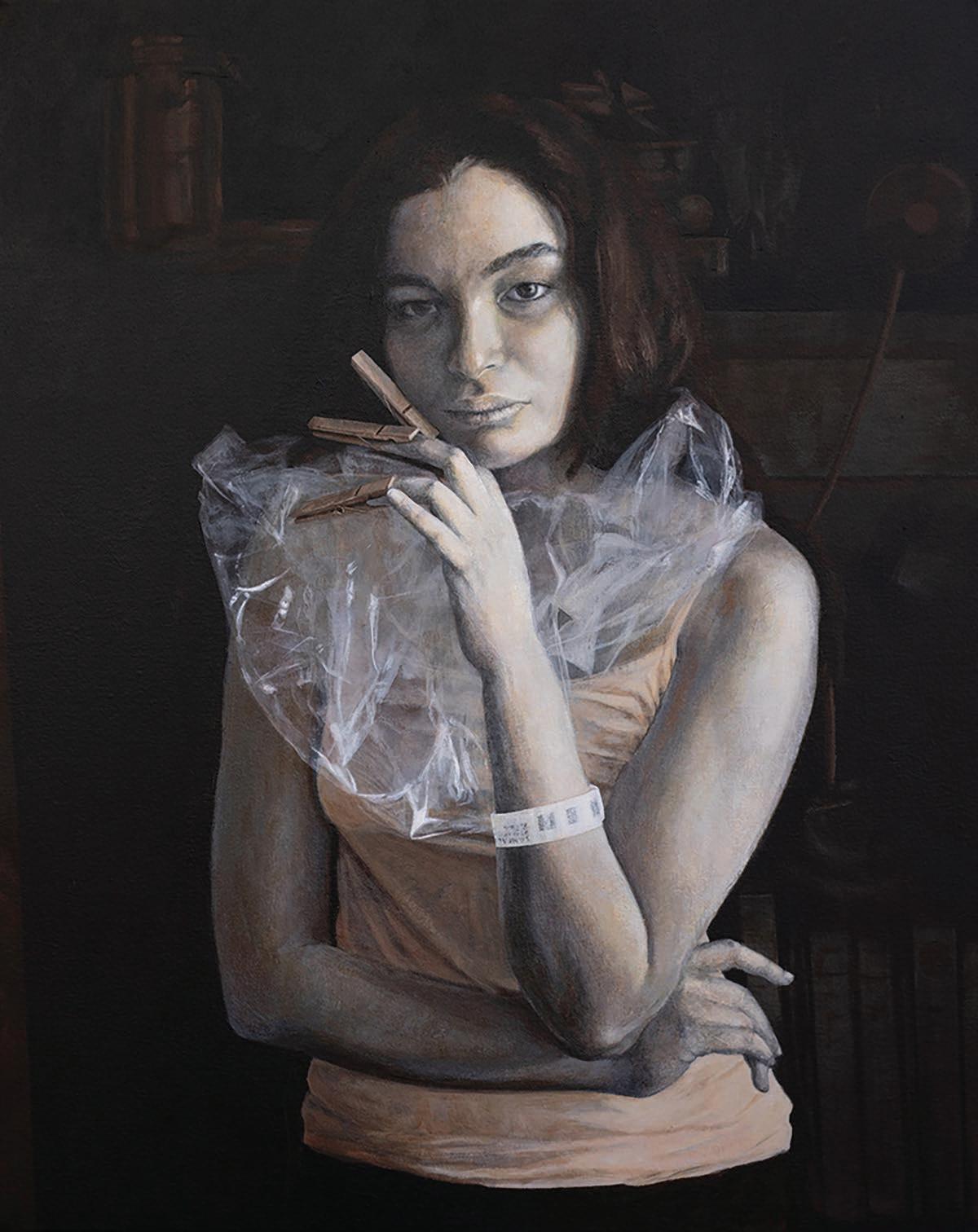
Yet the intimacy lies in what is left unsaid - the pause, the stillness, the way light touches a wall. I use symbolism to weave together fragments of personal and collective experience, to create spaces that feel both familiar and unsettling. Each painting becomes a room of contradictions - shelter and exposure, beauty and discomfort - inviting the viewer to enter, recognize something of themselves, and linger in that ambiguity.
Your work spans personal experience and collective histories. How do you balance these influences while keeping your narratives open-ended?
My work often begins from personal experience - memory, migration, illness, survival - but it never ends there. I use my own story as a point of departure to reflect on broader human conditions that repeat across time and place: care, displacement, loss, endurance. These experiences are not isolated; they echo within others. When I paint, I think about how the personal can become collective - how an intimate gesture can speak to shared histories. To keep the narratives open, I avoid resolving the story too neatly. I leave room for silence, for absence, for the viewer’s interpretation to complete the scene. What matters to me
is not to tell people what to feel but to create an emotional space where they can recognize fragments of their own lives. In that openness - between my experience and theirs - the work finds its truest meaning.
Many of your figures reclaim the gaze and assert agency. What do you hope viewers take away from these moments of empowerment?
For me, empowerment lives in quiet defiance - the act of being seen without apology. My figures reclaim their presence through stillness and self-possession, revealing that strength and fragility can coexist. I hope viewers leave with a sense of recognition, understanding that even in vulnerability there is power, and in silence, a profound kind of freedom.
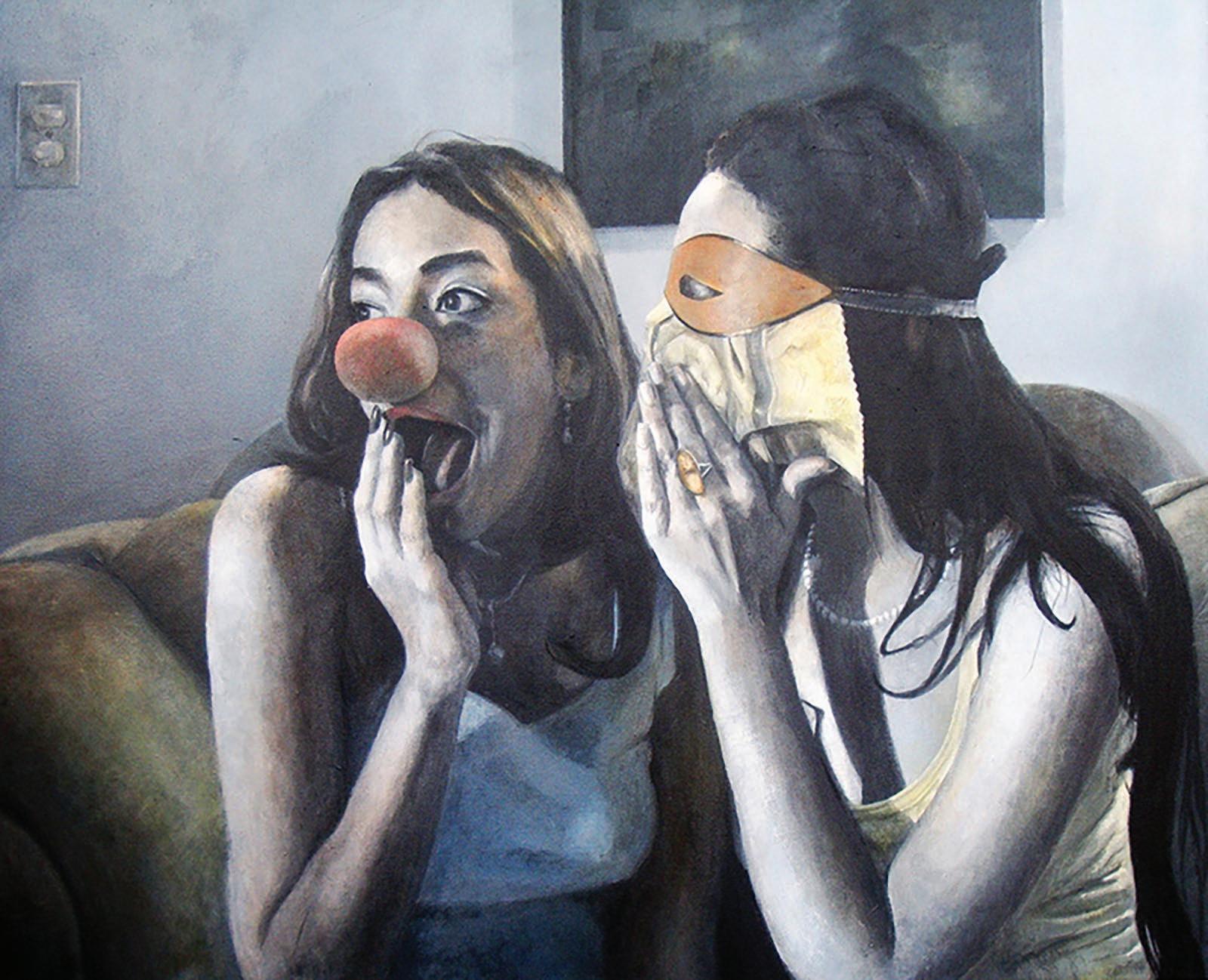
www.songwatkinspark.com
songwatkinspark
In your paintings, you often place your own body at the center of deeply personal narratives. What led you to use self-portraiture as a means of reclaiming and redefining the female figure?
In my paintings, using my own body is a way to reclaim authorship over how images of the female figure have been seen and understood. Historically, women’s bodies have been framed through an external gaze - idealized, eroticized, or detached from emotion. By painting myself, I shift that viewpoint from object to subject, allowing the body to speak from lived experience rather than through the male gaze.
Self-portraiture lets me explore vulnerability, desire, and belonging on my own terms. It’s about exploring how the body holds memory, identity, and emotion. The process of painting becomes a dialogue between the physical and psychological - between what’s visible and what’s felt.
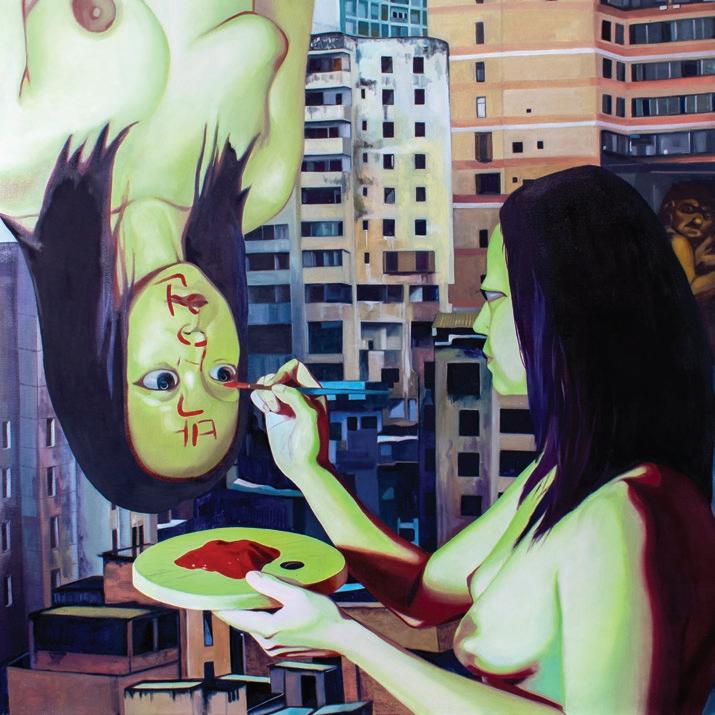
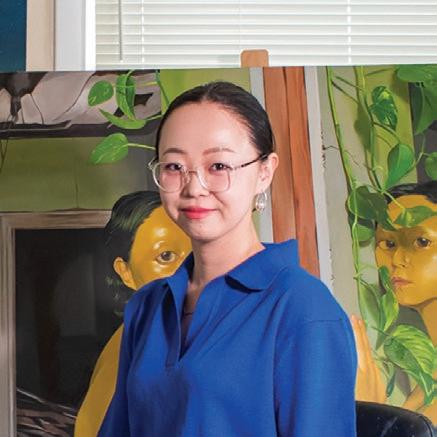
Through this practice, I aim to redefine the female figure as an active, thinking, and feeling presence. Each work becomes a quiet act of resistance and self-definition - a way to claim space for a body that has often been spoken for, and to reimagine it as both deeply personal and universally human.
How does nostalgia influence the stories you tell through your paintings?
Nostalgia within the Asian diaspora carries layered meanings that extend beyond personal memory - it becomes a way of navigating displacement, hybridity, and the act of remembering across cultures. In my paintings, nostalgia emerges not only from longing for the past but also from reconciling fragmented identities shaped by migration and distance. The memories of childhood, family, and cultural rituals I evoke through color and symbolism are refracted through the lens of diasporic experience - where familiarity and estrangement coexist. This sense of inbetweenness informs both the imagery and atmosphere of my work, allowing me to reflect on how cultural memory persists and transforms in new contexts. By blending memory and imagination, I translate nostalgia into a visual language that bridges personal and collective experience. It becomes a space of emotional return, where the past is neither fixed nor lost, but continually reshaped - an act of reclaiming belonging through remembrance and art.
What emotions or ideas guide your use of color when depicting internal states?
Color is my primary language for expressing internal states, translating emotion into visual form. I approach it intuitively, guided by the moods and energies I want to conveywhether intimacy, tension, longing, or introspection. Warm tones can evoke closeness or desire, while cooler hues often suggest distance, reflection, or melancholy.
I also consider how colors interact to create subtle shifts in perception, allowing me to represent the complexity of human emotion. Shadows, highlights, and muted transitions help me capture the fluctuating nature of internal experience rather than a fixed or literal feeling.
Beyond personal expression, color sets the tone and mood of the painting and serves as a bridge between viewer and subject, inviting empathy and emotional resonance. Each choice is deliberate, aiming to evoke a sense of immediacy and presence. In this way, color becomes a mirror, charting the contours of the psyche while giving form to emotions that are often intangible.
The settings in your paintings often feel both natural and psychological. What draws you to these liminal, undefined environments?
I am drawn to liminal, undefined environments because they let me explore the intersections of memory, imagination, and emotion. These spaces are neither fully real nor entirely imagined - they exist in the tension between perception and feeling. By placing figures within these ambiguous settings, I can give form to inner psychological states. Nature often becomes a dual landscape, offering both comfort and estrangement. The nude figure, seemingly natural in this environment, contrasts with man-made objects such as a chair, desk, or pencil, transforming the scene into something uncanny and surreal. This juxtaposition blurs boundaries between the organic and the constructed, the intimate and the detached. Through these uncertain spaces, I seek to capture how human experience constantly shifts between presence and absence, certainty and ambiguity. Ultimately,
these paintings become thresholds - sites where memory, desire, and imagination converge - revealing not just a physical environment but the emotional terrain of being.
As both an artist and educator, how does teaching influence the way you think about storytelling and selfrepresentation in painting?
Teaching has profoundly shaped the way I approach storytelling and self-representation in my own painting. Guiding students through the process of translating personal experiences into visual narratives encourages me to reflect on my own practice more critically and intentionally. Watching students experiment with identity, memory, and emotion reminds me of the power of honesty and vulnerability in art.
In the classroom, I see how the act of making oneself visible - through pose, gesture, or expression - can open dialogue and invite empathy. This reinforces my own interest in selfportraiture as a way to explore complex internal states while connecting with viewers. Teaching also encourages me to articulate the choices behind my work, clarifying how narrative, composition, and color work together to convey experience.
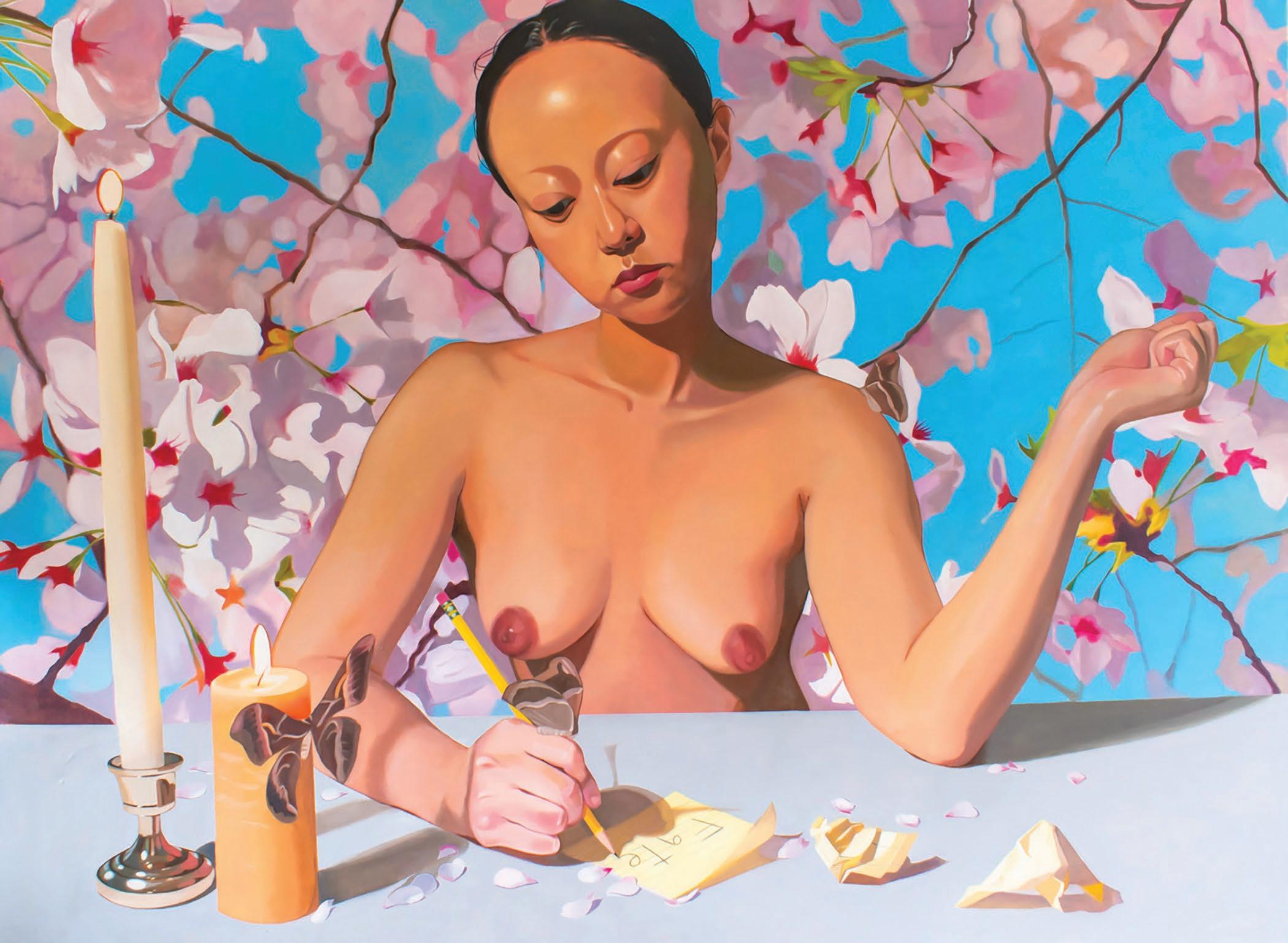
www.mdwart.com
michaelwatsonart
What draws you to elemental materials like wood, rice, and fire, and how do they shape the emotional tone of your work?
I am drawn to their primal and essential qualities. When I break wood with a pickaxe or char rice into it, I try to bring out its innate power and potential while creating mysterious, layered compositions. Particularly in the charred rice panels, the act of burning rice leaves an expansive and emotive image on the wood surface, capturing the simultaneous feelings of despair and hope that arise from cycles of destruction, death, and rebirth.
Rice carries deep cultural and spiritual resonance in your practice; did it evolve from a personal symbol into a central material for exploring broader themes of being and interconnectedness?
I have always been interested in themes of metaphysics, interconnection, and the afterlife. In 2010, I started using rice because I was looking for a material that could relate to these and represent the body without relying on figurative representation. Growing up in a Filipino American home, we ate rice every day. You could say our bodies became
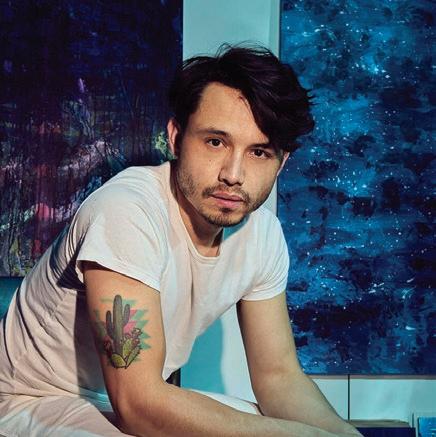
rice. It was only natural to use it in this way in my work, but I was also aware that rice would connote associations that were broad and far-reaching across many cultures, belief systems, and traditions - from shared meals to weddings to funerals. In that sense, by using it, I wanted to illustrate its potential to be a connective tissue.
Many of your pieces involve acts of burning and transformation. How do you see destruction functioning as part of creation in your process?
Destruction is fundamental to how I approach materials and meaning in my work. I believe that by pushing a material to its limit, I can release its essential qualities, unlocking something more expansive and potent. By burning the rice, I liberate it from its delicate physical form to reveal its metaphysical body. The resulting images depict a cosmos of tiny, overlapping, porous bodies. I hope for viewers to project themselves into this vast field and feel the gravity of this intertwining between the physical and metaphysical. I am also drawn to the unpredictable nature of destructive processes. We are all forces interacting with one another, and my work captures this interaction rather than any sort of premeditated composition.
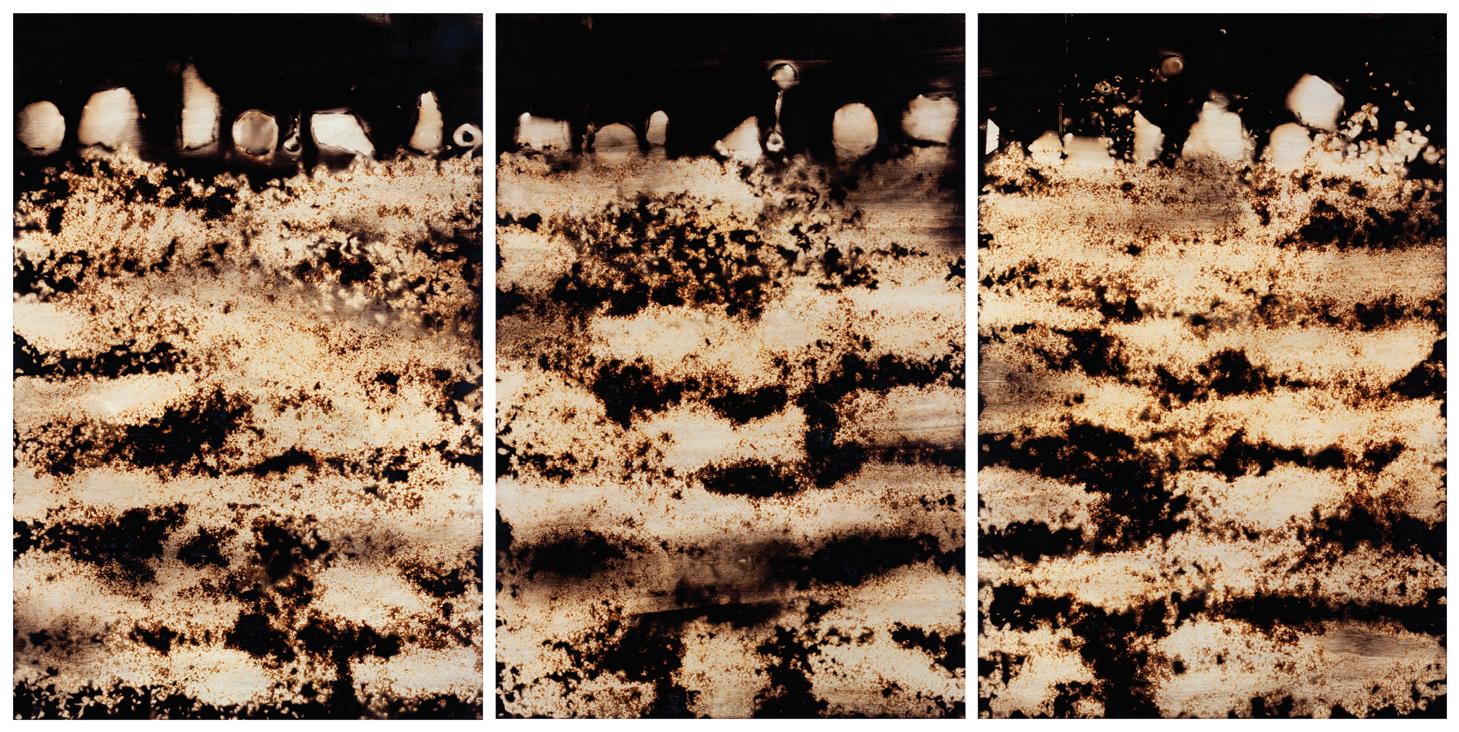
When developing a new piece, what guides your decision to let it take shape as a painting, sculpture, or performance?
I find it challenging to categorize my work because I am interested in allowing a multitude of concurrent activities to coexist, balancing destructive and regenerative processes while questioning the line between image, object, and ritual. As my artistic practice has evolved, I have chosen not to worry too much about fitting into traditional categories. Rather, I focus my energy on letting the work be real, unrefined, and open-ended. I try to trust my instincts and curiosity, letting the process drive the direction of the work. It’s often helpful for me to move between painting, sculpture, and performance within a body of work, as each medium reveals new layers of meaning. For example, the act of preparing the site for a burn and charring the rice is a form of ritual or performance, whether I do it publicly or privately. Once the ritual is done, I approach the resulting image as a painting, and I keep the charred ricenow charged with meaning - for use in future performances or mixed-media works. In this way, I am constantly learning from and responding to the act of creation as it evolves.
How do you maintain a sense of authenticity and intimacy within larger public contexts?
When I do a public burn or other performance, I select elements, write a script for the ritual, and practice the sequence in advance. However, it’s important to me to allow for moments of improvisation, because the audience is another force participating in the work that both shapes and is shaped by it. This allows me to maintain a sense of authenticity and intimacy because each viewer is allowed to occupy the space opened up by the performance and become an active part of the creative process.
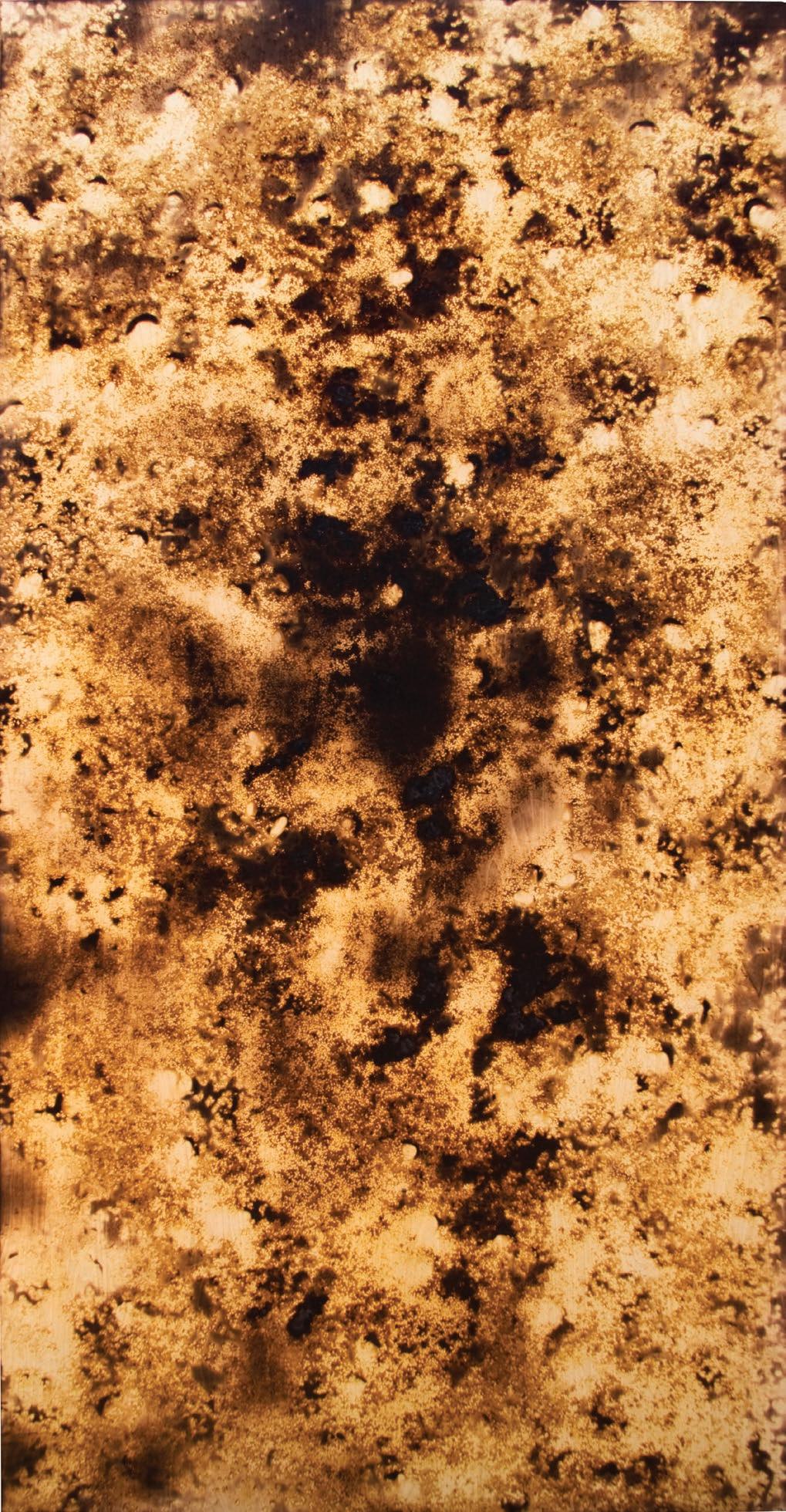
www.nycdrawings.com
chriswellernyc
What first drew you to charcoal as your primary medium, and how do you see it shaping the tone of your work?
I earned my Bachelor of Fine Arts in painting and continued to work in oil for almost 20 years. When I finally moved to New York, everything changed. I have always been a draftsman at heart. I continued to draw the figure and keep a sketchbook. The longer I lived in New York, the more the city influenced my ideas and eventually my choice to give away my oil paint and express those ideas in drawings, rather than paintings, as a finished medium. The connection between the sooty feel of charcoal and the urban landscape is obvious. As my subject matter became the city itself, as well as our and nature’s relationship to it, my connection to the medium grew.
Your drawings capture both the beauty and decay of New York City. What compels you to explore that tension?
There is a fragile balance between nature and the imposed, built environment of the city. My work is about our impact on nature, such as global warming, light pollution, and habitat encroachment. It is also about our place in both of these worlds. The city decays at the hand of nature and requires our upkeep. At the same time, it destroys the place we and the rest of nature live. I am compelled to see and express the raw beauty of that truth.
In The Locals, you move from urban architecture to portraiture. How did that shift expand your exploration of belonging and place?
After spending four years completing the bridge drawings, I turned toward less technical subject matter. I wanted to explore portraiture in order to speak more about the complexity of being human and our impact on both the
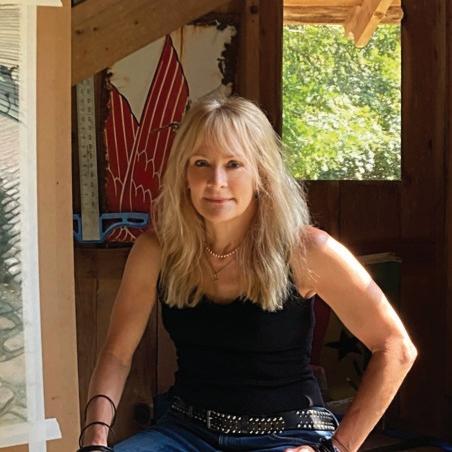
planet and one another. My drawings The Cat King of Red Hook, Portrait of Lemon Anderson, and The Locals are all portraits that speak to finding and creating a meaningful life in difficult times. My painting Note on the GW is a portrait without a figure. It is my homage to Tyler Clementi, who jumped to his death from the GW in 2010 after being outed on social media. In all of my work, I try to show a kind of beauty that shapes our reality without a veil of romance.
You’ve spoken about the “continual state of decay and reclamation by nature.” How do you translate that slow, cyclical process into still images?
My work can be very technical, but my desire is always to communicate emotion. I am interested in how it feels to navigate the world in the face of our impact on it. My drawings often become time capsules as the city changes. They capture part of our mark on the world, and I hope the feelings they evoke can both change our perspective and anchor us in a moment.
Having lived in wilderness, suburban, and urban environments, has your sense of home or connection to place evolved through your practice?
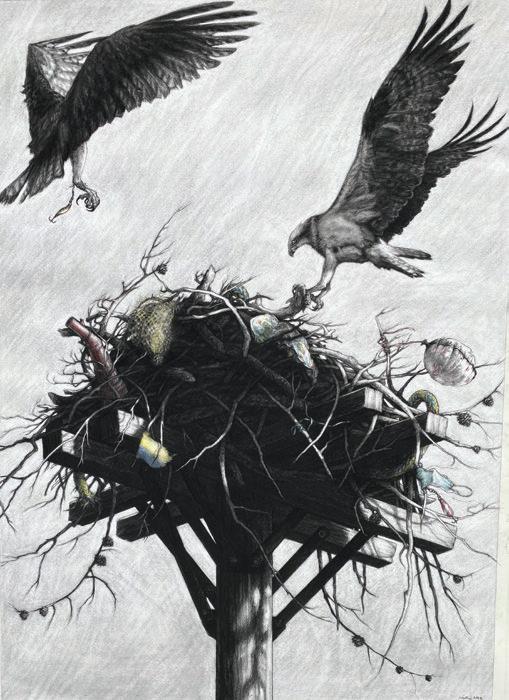
I was born in Calgary, Alberta, Canada, and lived in northern Michigan, southern Michigan, Baltimore, MD, Duluth, MN, and Chilmark, MA. I never felt a sense of home until I moved to New York. The diversity, complexity, and scale of the city grounded me. That feeling of connection deepened as I became rooted here. Always, there is more - holding a mirror up to being a part of a global community. The harshness of the urban landscape and the beauty of being a part of nature collide here and are the endless source that informs my work.
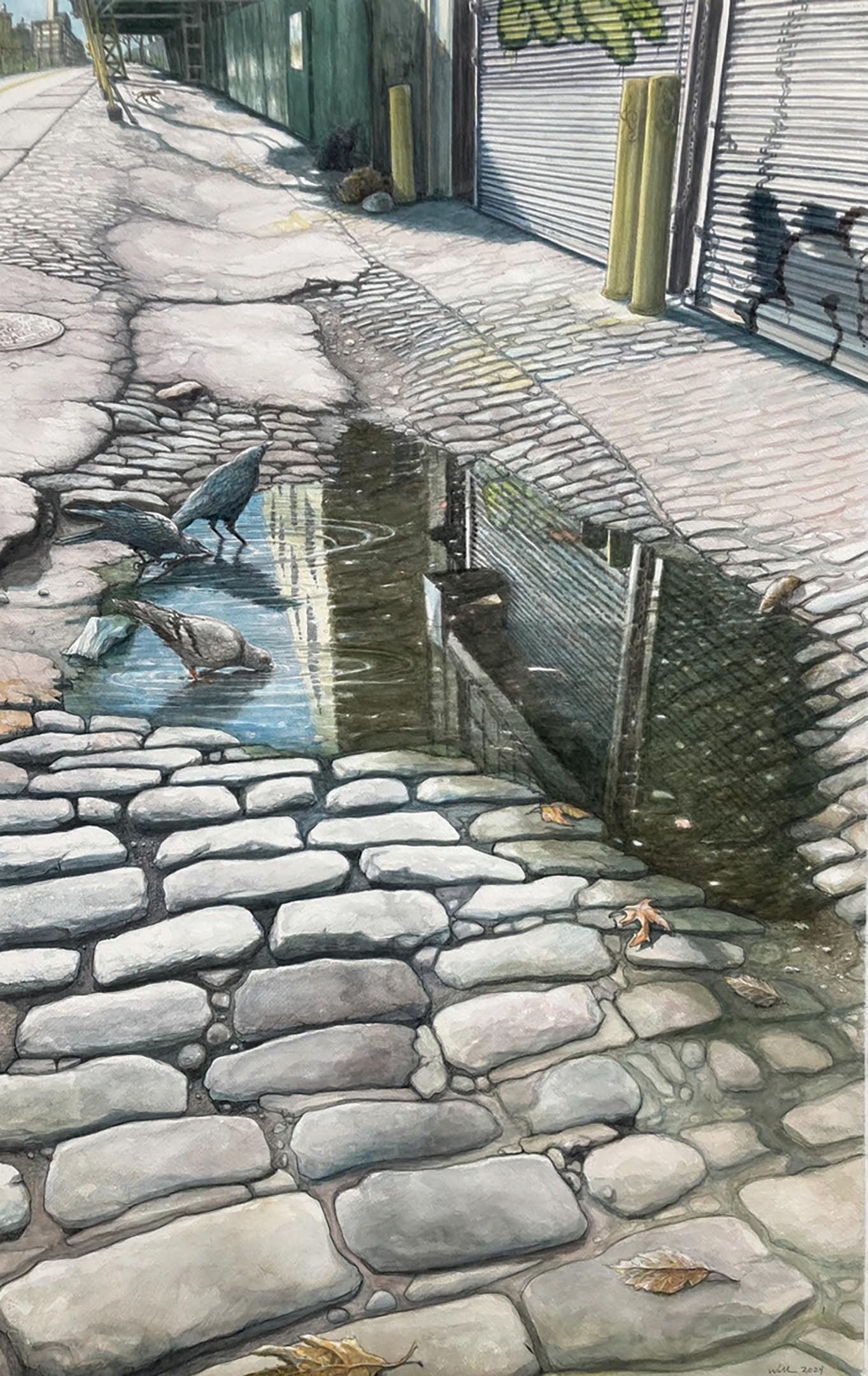
www.tracijohnson.art kailuaa
How have both your upbringing and your education shaped the foundation of your artistic practice?
I was a very creative child, always dancing, playing trumpet, crocheting, and playing sports. I constantly needed something to occupy my time and release that creative energy. I majored in Fine Art in both high school and college, but I didn’t truly believe I could have a career in art until after college.
I attended classes at institutions like Pratt and Cooper Union while in high school. Being able to infiltrate these different art schools before even going to college exposed me to varied teaching approaches and philosophies. Seeing how different educators approached art showed me there were multiple paths to creation. This foundation shaped my artistic practice by helping me hone my vision and understand the discipline required. It taught me that art wasn’t just something I loved - it was something I could commit to seriously and build a practice around.
What early memories or influences first drew you toward working with textiles, sculpture, and installation?
I went to high school in Chelsea, the art mecca of New York, and visiting galleries after school became part of my routine. I’d scour spaces along 10th and 11th Ave, seeing works by Richard Serra and Yayoi Kusama. During that time, immersive experiences were everywhere - the Museum of Feelings with its sensory rooms and scents, a dark purgatory exhibit in the Meatpacking District that felt like a maze, even Lady Gaga’s Art Pop experience filled with clothing and sculpture. I was constantly going to these free, immersive installations, and they really pushed me toward wanting to create similar experiences and work with tactile materials.
In college, I started honing in on textiles, crocheting pieces, and building small-scale installations with wood. But it wasn’t until the pandemic that everything clicked. I loved painting but wanted that 3D aspect. Seeing people make rugs online felt like the perfect fusion of painting with yarn. I just loved the medium and have been working in it ever since.
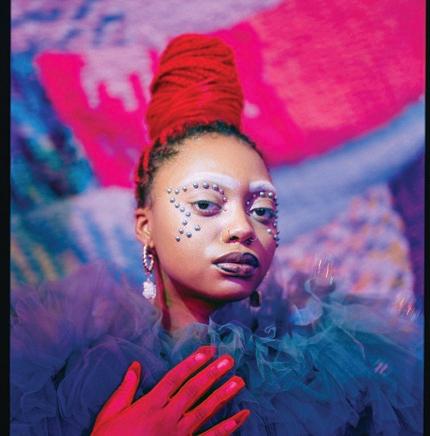
How has your style evolved over time, and what factors have influenced these changes?
My style has definitely evolved over time. When I first started making textile paintings, I was more focused on shape and form through landscape. But I eventually moved into narrative and figurative work, using myself as the subject matter. I went deeper, pulling in nature and sacred geometry as forms within the pieces.
I was influenced by wanting to evolve the work and figure out how to communicate what I needed to say without explicitly stating it. Through landscape alone, I wasn’t able to fully convey that. Moving into figurative work allowed me to lead people toward understanding what I’m trying to express. It became about finding the visual language that could carry my message more directly, using the body, symbolism, and geometric forms to create that connection between what I’m feeling and what viewers can interpret.
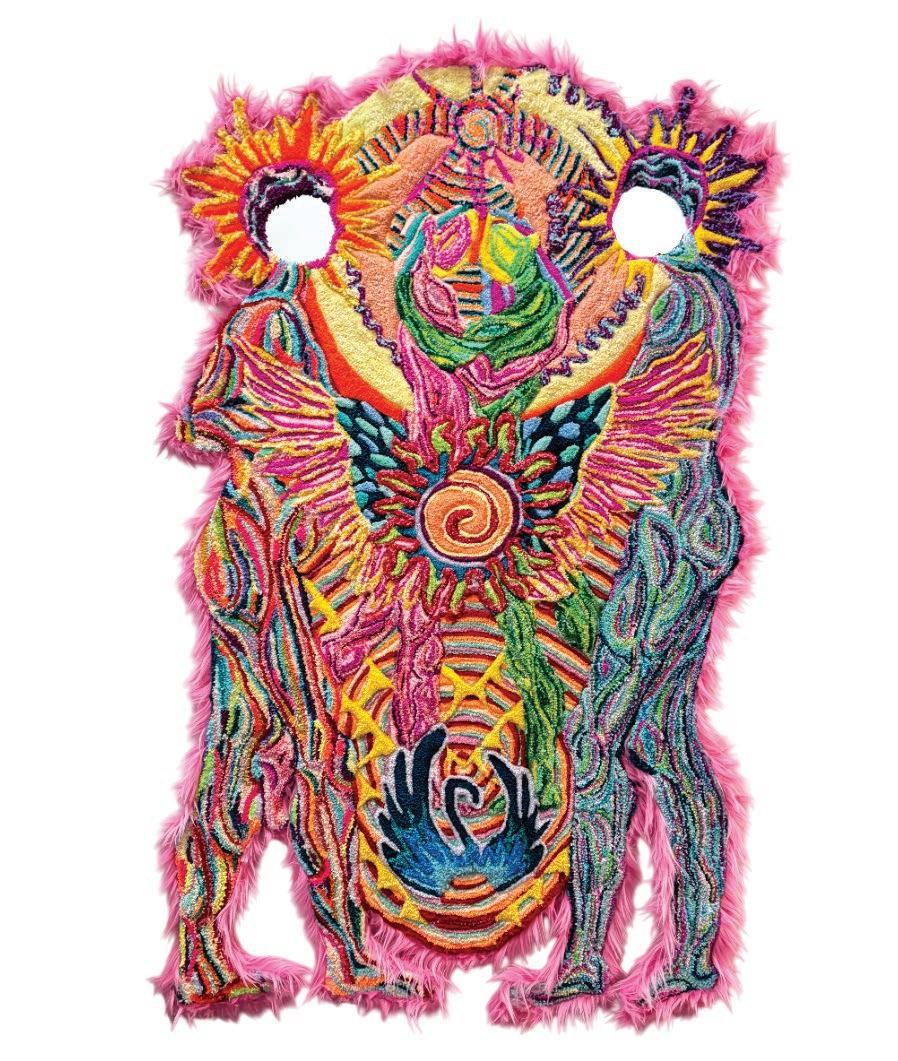
Your work explores the complexities of femininity and the expectations placed on women. How did this theme become central to your practice?
This theme became central to my practice because there was a time I felt like my femininity was seen as a weakness. I grew up in a predominantly Christian environment where submissiveness was emphasized. I didn’t have a say in what I wanted to do, how I looked, or how I appeared. When I did have an opinion, it was met with shame or dismissal; I didn’t have opportunities to speak up.
That stayed with me. My first solo show happened when abortion rights were being taken away, reminding me of times I felt I wasn’t in control of my own body. Society still doesn’t believe women should have autonomy over their bodies, identity, or sexuality. I started creating avatars inspired by me, putting my body on display without protection so people would recognize their own reactions. Growing up, I always heard, “Cover yourself, don’t show too much.” Now I show these nude, colorful bodies as offerings to reclaim autonomy. I’m ultimately trying to heal pieces of myself that haven’t been healed.
While challenging and subverting societal structures around the feminine form, are there particular cultural narratives you’re actively pushing against?
I’m creating an environment of sanctuary for people to find their way back to their most authentic selves, dialing back into their past, present, and future. These tapestries act as vehicles or roadmaps, showing that the signs around us are beacons of the unlost. You don’t have to be defined by one thing.
There are so many labels, so many expectations of what you have to be. I’m actively building a safe space where I’m participating in the healing of figuring out who I am, who I want to be, and who I’m becoming through that enlightenment. Specifically, I’m pushing against having to change who I am to fit the mold of what a woman should be. I’ve seen women making sacrifices because that’s supposedly how love is shown. I want to be enough for myself - to be safe in my mind, body, and soul - without others’ perceptions defining me.
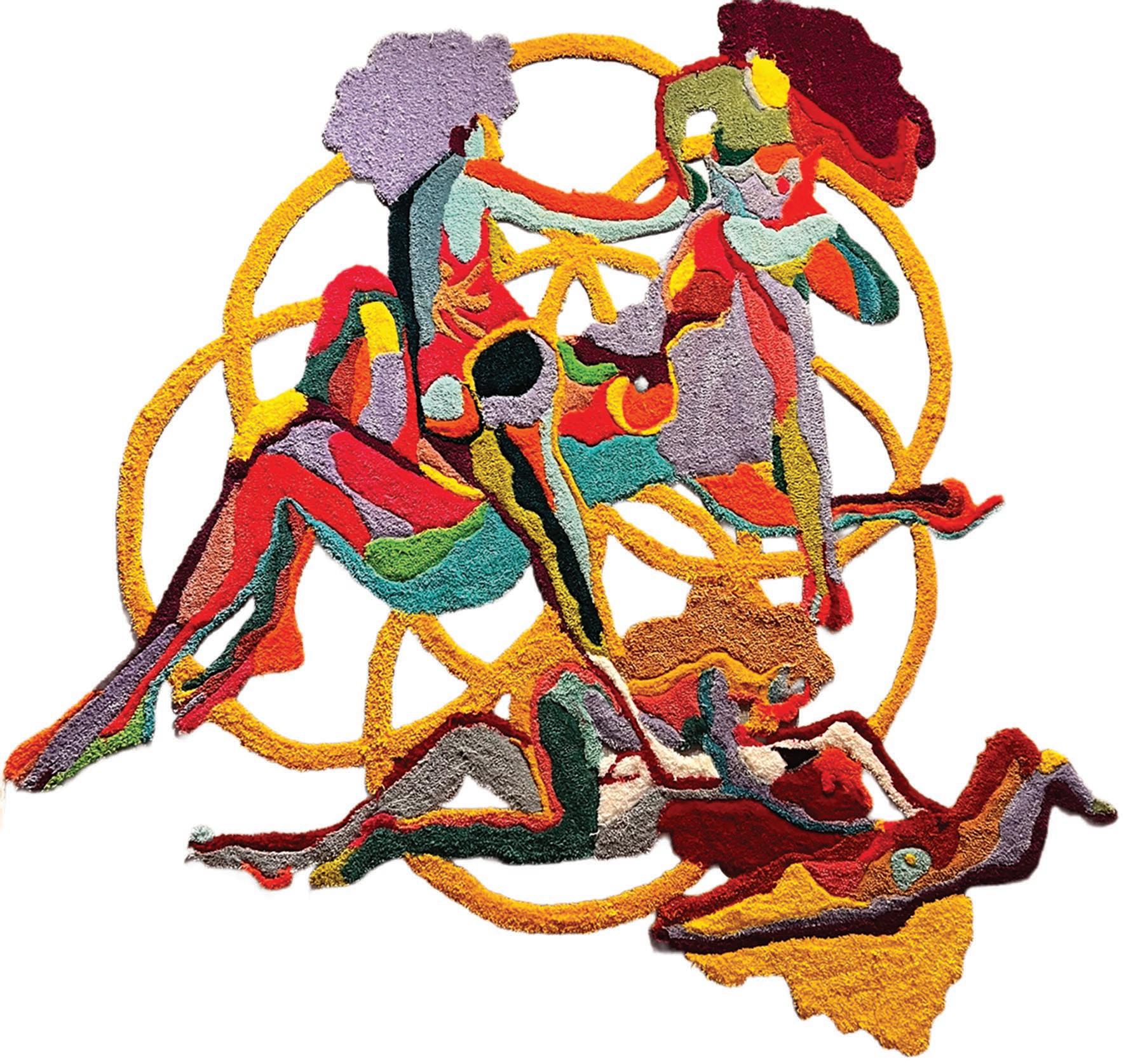
www.gingersnowart.com gingerellasnow
In your paintings of children and teens, you explore innocence and complexity. How do you approach capturing that balance in your work?
There’s something really natural to me about physical affection in friendships. When two young people share a moment of closeness, it’s so often reinterpreted through an adult lens - given meanings that were never there to begin with. I’m drawn to that in-between space, where innocence and complexity overlap.
In my paintings, I try to create moments that feel both tender and a little charged, where the viewer can decide what they’re seeing. Touch especially carries that dualityit can feel soft and safe, but also slightly uneasy. I like that it makes people question how we read intimacy, vulnerability, and connection.
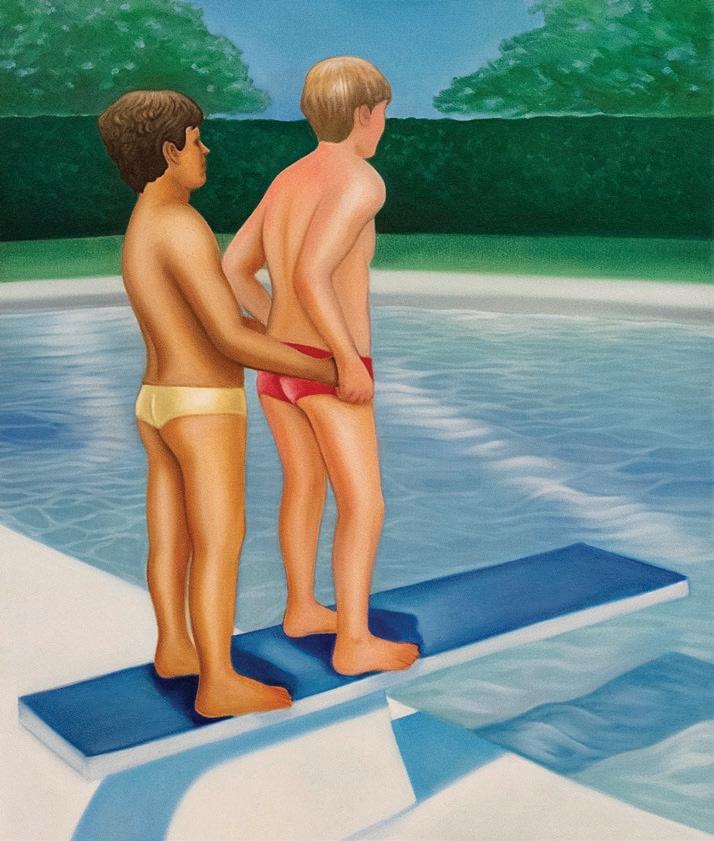
Softness is central to your depiction of masculinity. What does tenderness allow you to convey that more traditional representations might not?
In my work, I focus on a side of masculinity that’s often overlooked. I paint friends who share genuine comfort with one another, showing that men can express liking and care without it being romantic. This tenderness allows me to challenge the typical idea of male bonding as rough or stoic - it shows that masculinity can also be gentle, nuanced, and human. I’ve always seen the world through a kind of “chewy filter,” and that’s how I’ve painted women and girls too - I’ve just carried that same sensitivity into depicting men.
How have childhood memories influenced the settings, gestures, and interactions in your paintings?
While some of my paintings come from real experiences, many are built from imagined or “manufactured” memories and fantasies. I paint from my perspective now, as a young woman reflecting on the interactions I’ve observed among my male friends over the past decade. Most of my subjects are close friends whose gestures and connections I’ve seen firsthand, so capturing those moments feels instinctivealmost like painting from memory.
The settings are guided by the action and color that feel right for each painting. I often dream up the scene, and it evolves as I work - sometimes changing multiple times before it feels settled. I’ve noticed that many of these settings are places I’ve actually been, emerging from my subconscious only after the painting is complete. So while my work is influenced by memory, the actions themselves are often imagined. When real spaces meet invented gestures, the result feels both personal and familiar - like remembering something that never quite happened.
Your work examines how identity is perceived and misread. What do you hope viewers take away about projection, desire, or societal assumptions?
I hope viewers see my paintings and recognize the sincerity of platonic love, but also find humor in them - the absurdity of male bonding has always fascinated me. I began painting these scenes to poke fun at the macho persona and reveal its tender underbelly: those rare moments when men are completely at ease with each other. When people look at
my work, I want them to question their own biases - why does this image feel unusual or even controversial? Society often overlooks the tenderness men share, and when it is shown, it’s usually read as romantic. Through my paintings, I hope people see that softness between men can be playful, genuine, and even a little funny.
Across your bodies of work, the absence or presence of facial features plays a significant role. How do you decide when to obscure or reveal a subject’s identity?
I find that avoiding the face allows the viewer to focus on body language, which is, to me, the most important aspect of a painting. I want the work to be less about who
the subject is and more about what they’re doing - so the viewer engages with the gesture rather than the emotion. That said, I do have paintings where the face is fully visible, but even then, the same principle applies: action over identity.
I reveal a face only when it feels essential to the composition - when the expression itself becomes the focal point. Because I paint people I know personally, capturing their likeness carries weight. For this series, I wanted the work to feel intimate and personal without being selfrepresentational, so deciding when to obscure or reveal a face became a way of balancing familiarity with universality.
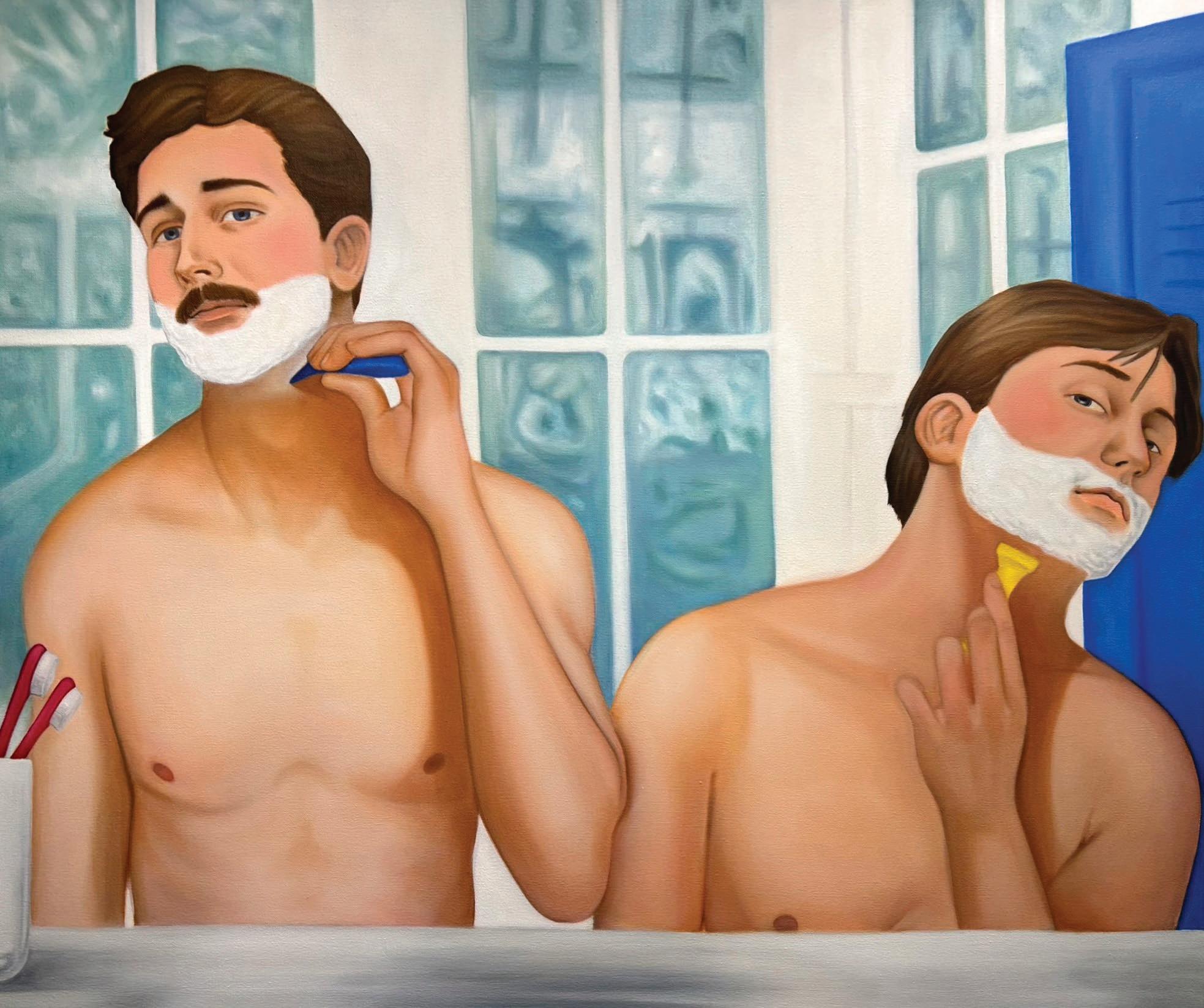
www.miguelangelreyes.net maqueloreyes
Growing up in Mexico, were there particular landscapes, memories, or environments that first drew you to nature as a subject?
When I was around seven or eight years old, due to my father’s work, we had to move from Mexico City to the state of Guanajuato. It was there that I first truly came into contact with nature. That stage of my life was full of new experiences: climbing the hills around Guanajuato City and the volcanoes of the Santiago Valley, going hunting with my father, grandfather, and brother, running through cornfields, climbing trees, feeling the earth under my bare feet, the warmth of the sun, and the coolness of stream water. It was a happy time that left a lasting mark on my life.
Your work focuses on nature and small, evocative paintings. What is it about smaller formats that appeals to you?
What I enjoy about painting in a small format is the sensations it conveys. It feels as if the immense world could be captured and placed into a small space. It’s like the feeling of picking up a dry red leaf in autumn, a shiny stone found along the way, or a simple handful of earth - bringing home something precious found in nature. Painting landscapes and nature in a small format gives me that sense of being able to carry textures, colors, or a ray of light in my hands.
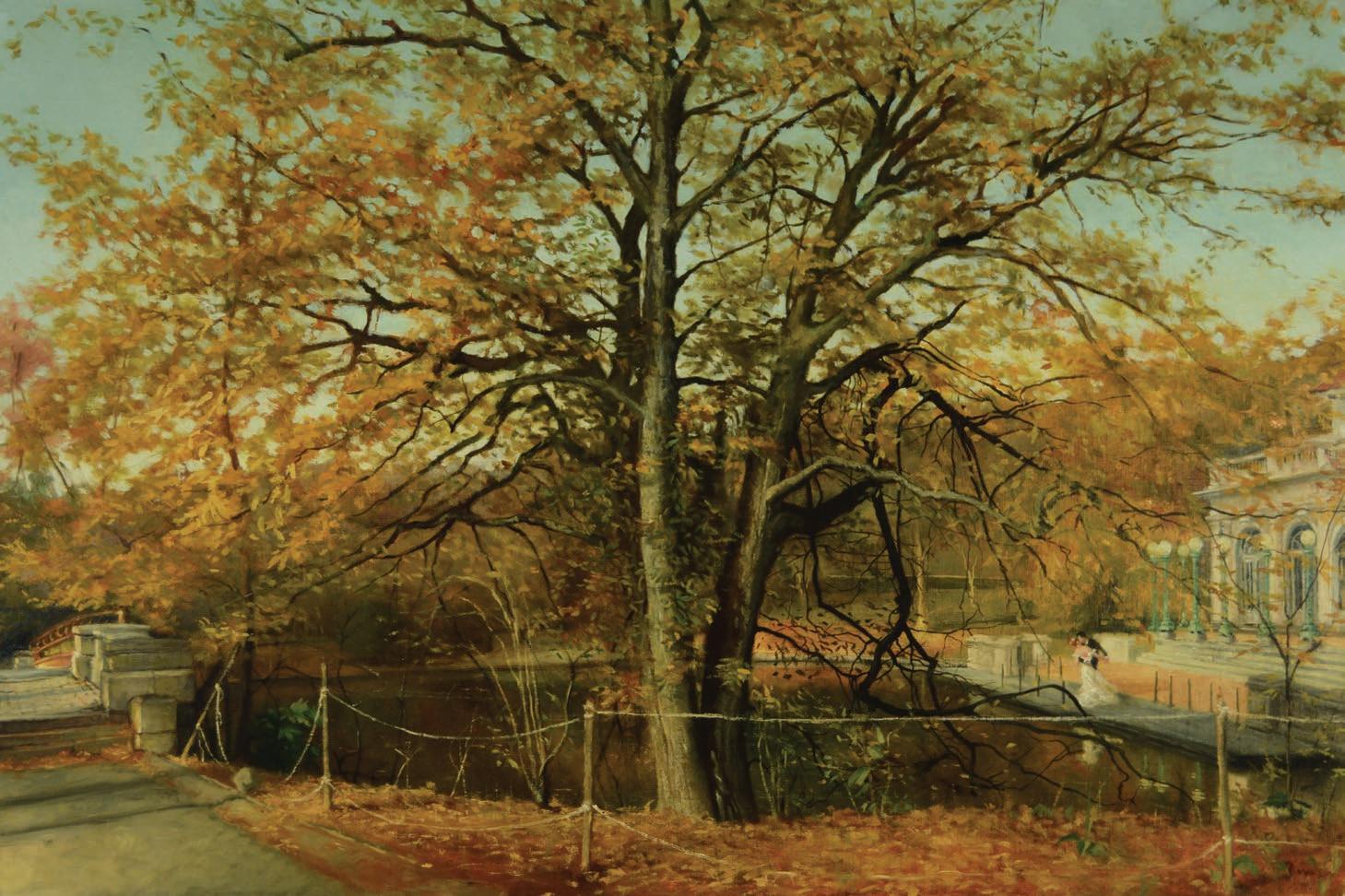
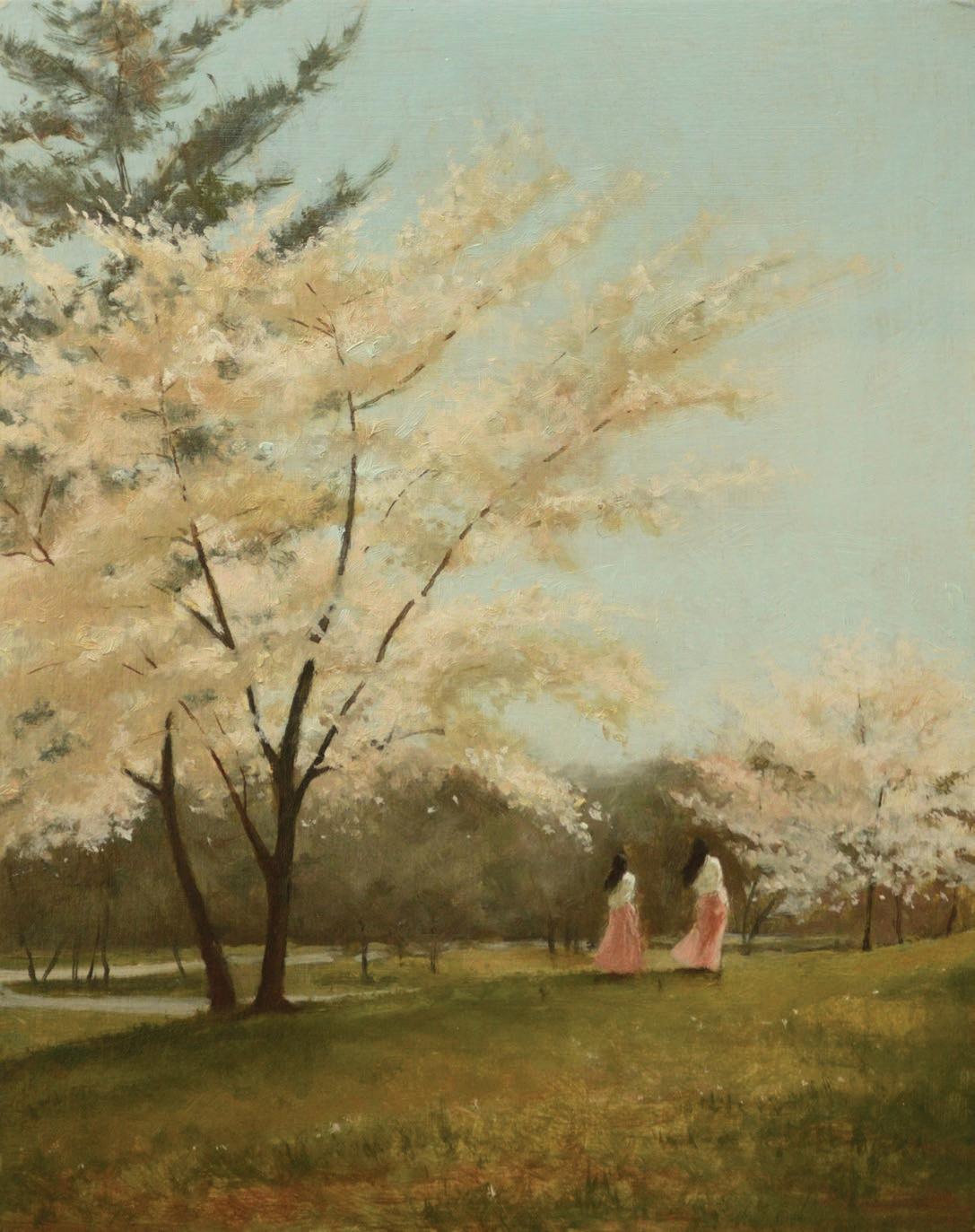
How has your style evolved over time, and what factors have influenced these changes?
I think I started by seeking forms in the landscape, then moved on to color, and later to light. My most recent work features an earthy color palette, with some blues and very few intense colors. I now paint with less intense colors because they are rare in nature and give me a sense of being artificial.
How do you choose the elements of nature you depict - are they from memory, observation, imagination, or a combination?
I enjoy walking, especially when surrounded by nature. During these walks, even in familiar places, I try to stay attentive, like a hunter. Sometimes I capture a scene that
caught my attention, like a wedding or a picnic; other times, a feeling, such as the cold of winter. Occasionally, what I see brings back memories from my childhood or adolescence, and I try to capture those memories in paint. Sometimes I succeed, and other times they simply fade away.
Are there rituals or practices (listening to music, being outdoors, etc.) that you rely on to get into the mindset for painting?
Yes, I like walking in the morning - looking, feeling, remembering, and living along the way. Then I prepare my colors on the palette, which takes me about 20 minutes. I make some sketches of the idea in my mind. When I’m in the studio, I usually listen to music, and when I paint outdoors, I enjoy listening to the birds and the wind moving through the trees.
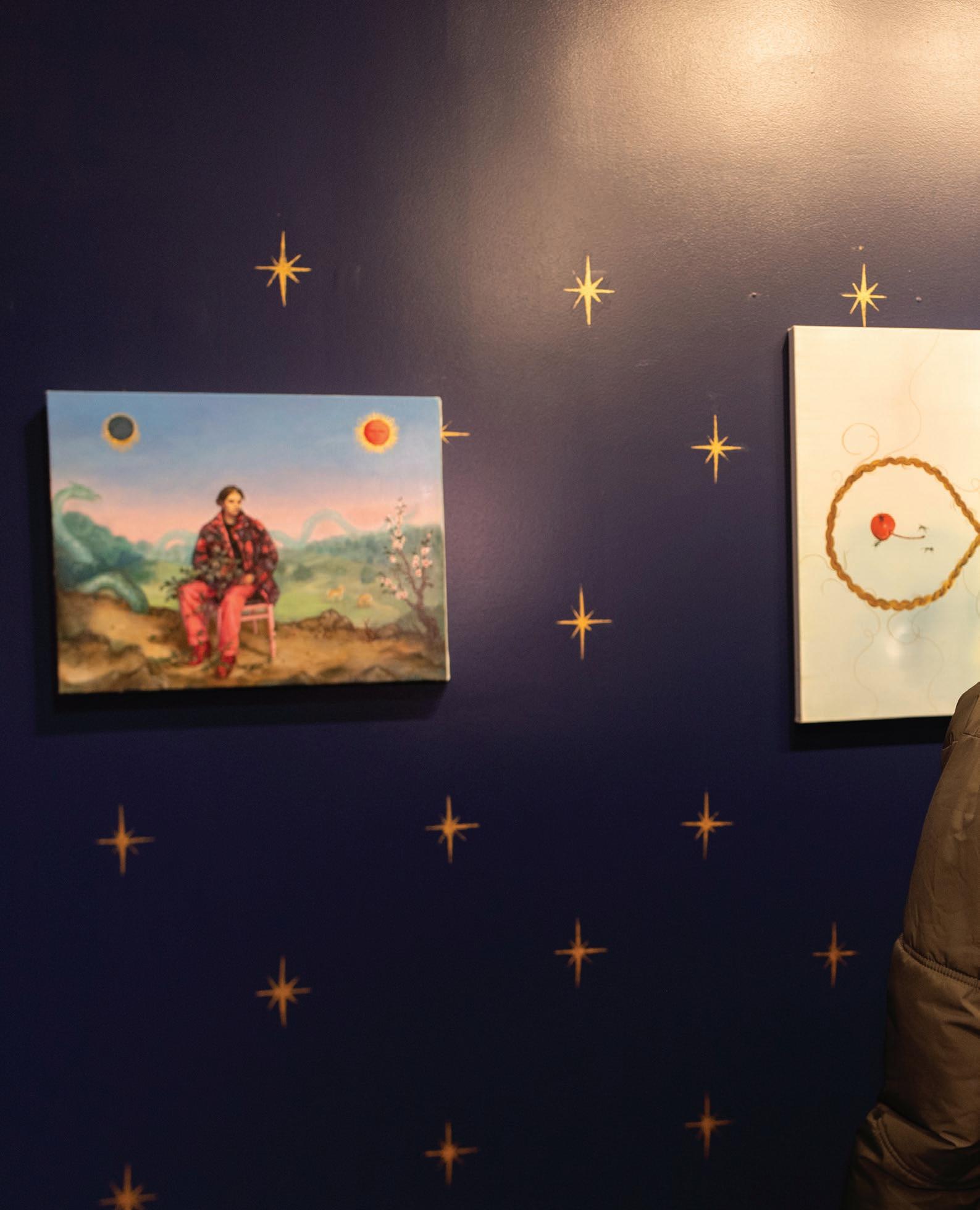
Coinciding with our mission to highlight emerging artists, we’re shining a spotlight on selected exhibitions, Fairs and Galleries in New York City that have inspired us.
Curated by Marina Granger
Visionary Art Collective opened Warnes Contemporary, a gallery in Brooklyn, NY to exhibit work by emerging artists.
www.warnescontemporary.com warnescontemporary
Warnes Contemporary is pleased to present Lunation, curated by Marina Granger - a group exhibition featuring works by Katherine Bradford, Margaret Zox Brown, Jen Dwyer, Richard Glick, Kristy Gordon, Alannah Farrell, Palmer Earl, Victoria J. Fry, Brianna Lance, Jessica Libor, Sarah Alice Moran, Ekaterina Popova, and Kristin Reed. The exhibition explores our connection to the moon - its cycles, myths, and the ways it illuminates both our world and our relationships with one another.
The Moon as Phenomenon
The exhibition opens with Kristin Reed’s Totality (2024), a synthesis of sacred geometry, energy art, and eclipse imagery. Rooted in metaphysics and reiki, Reed’s practice reminds us of the cosmic precision that allows total eclipses to occur - events possible only because of the rare alignment between the moon’s orbit around Earth and Earth’s orbit around the sun. Not every planet with a moon can experience this phenomenon.
In conversation with Reed’s work, Ekaterina Popova’s Dusk over Pond (2025) and Jen Dwyer’s Weekend Escape (2025) offer more intimate encounters with lunar light. Each painting captures the moon as a steadfast guide through the night, quietly illuminating the physical and emotional landscapes we inhabit.
Though positioned separately in the gallery, Victoria J. Fry’s Many Moons Ago (2023) conceptually aligns with this section. Her depiction of multiple moons recalls the passage of time and memory, emphasizing how lunar cycles echo both natural and human rhythms.
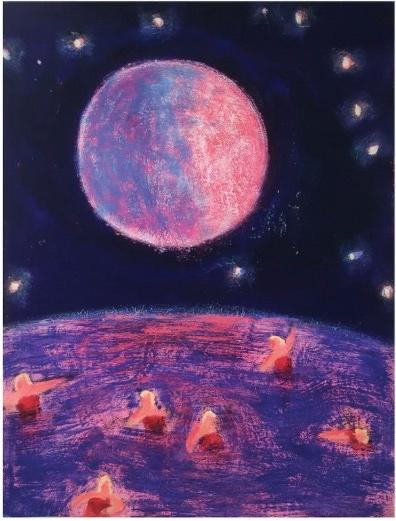
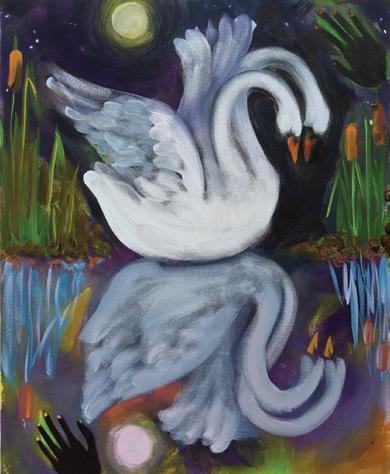

The Moon as Storyteller
The next grouping turns to how the moon shapes our myths, dreams, and sense of wonder. Jessica Libor’s Silver Lake (2023) conjures a fairy-tale tableau - a distant castle and a woman floating serenely beneath the moon’s glow. The work bridges fantasy and illumination, suggesting how moonlight blurs the boundary between real and imagined worlds.
Palmer Earl’s series - Goddess Genesis (2025), Bull and Lions (2022), and Waxing, Waning, and Full Moon (2025) - draws inspiration from 15th-century manuscript illuminations yet replaces biblical narratives with ancient matriarchal deities. Here, the moon becomes a keeper of cyclical wisdom, evoking pre-Christian cosmologies where feminine power and lunar cycles were one and the same.
Extending this theme into sculpture, Margaret Zox Brown’s My Little Prince (2024) presents a low-relief ceramic work of a boy holding a crescent moon by a string. Hung on the wall, the piece alludes to Antoine de Saint-Exupéry’s timeless tale of innocence and longing, merging earthly materiality with celestial storytelling.
The Moon as Connector
The exhibition culminates with works that explore human connection through the moon’s reflective light. Richard Glick’s Twilight Patrol (2022) reimagines the optimism of the spacerace era in a rhythmic lunar grid - once a symbol of unity through technology, now an introspective meditation on belonging and isolation.
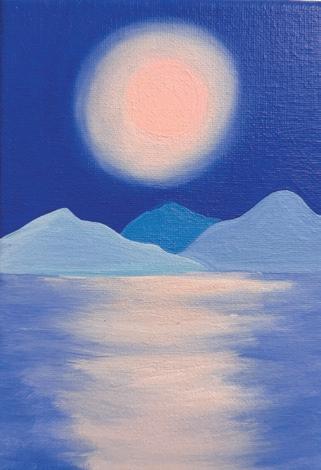
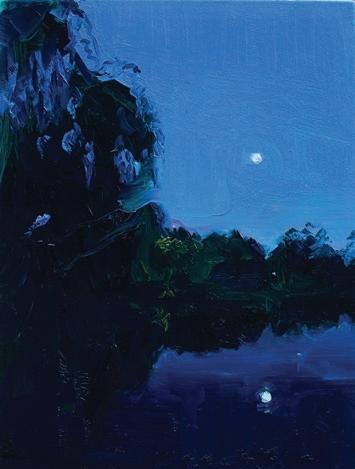
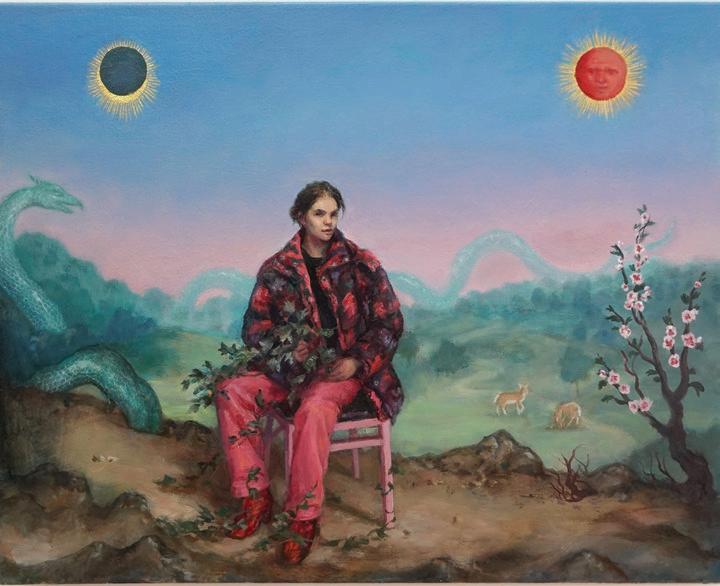
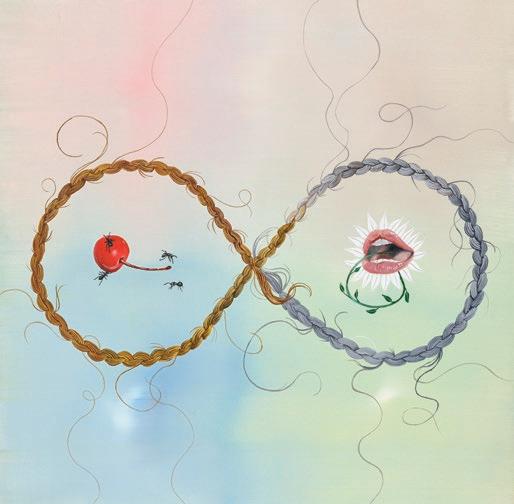
Katherine Bradford’s print Swim Team Outer Space (2020) similarly envisions communal joy among cosmic swimmers, evoking the iconic photograph Earthrise (1968, Bill Anders). The image reminds us of our shared planet and collective vulnerability.
Brianna Lance’s What Kind of Loop Are We In? (2025) expands this reflection to the dimension of time. Depicting a snake devouring its own tail, the work visualizes eternity and cyclical renewal - mirroring how the moon itself measures time.
Sarah Moran’s Double Swan (2022) continues this exploration of reflection and perception: a swan glides across a moonlit pond, its mirrored image subtly distorted. The moonlight reveals that appearances, like reflections, are never complete truths.
Alannah Farrell’s Silver (2024) closes the exhibition with intimacy - a reclining figure (the artist themself) bathed in ambiguous light. Whether lunar or urban, this illumination evokes solitude, tenderness, and the comfort of knowing that even in isolation, we are all touched by the same light.
Kristy Gordon’s The Mystic (2024) completes the constellation, suggesting transcendence and inner illumination - our eternal search for light in the darkness.
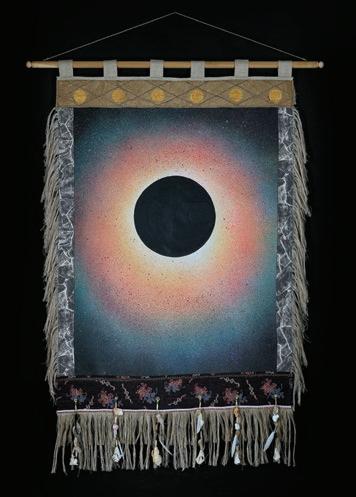
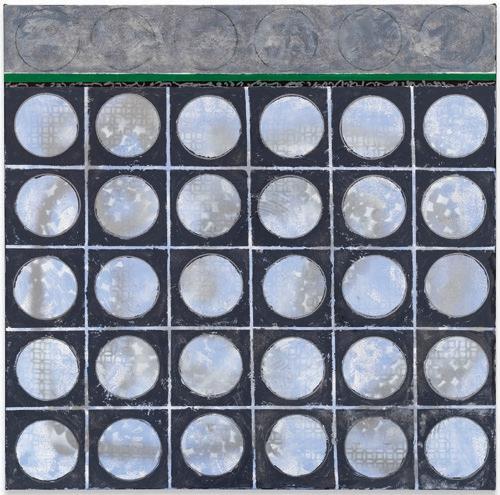
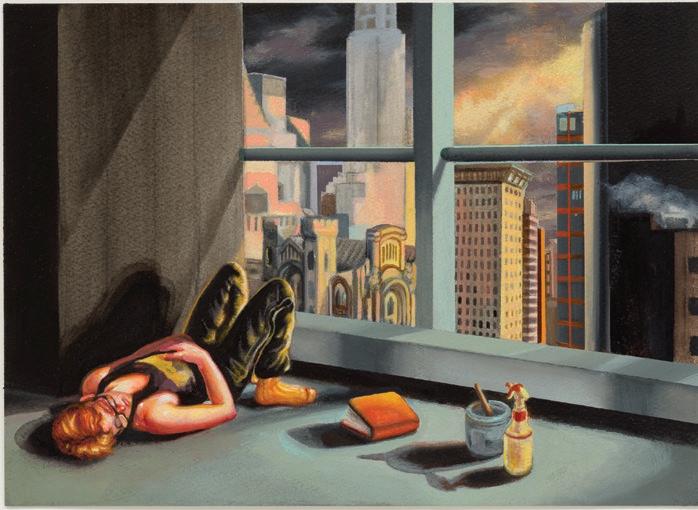
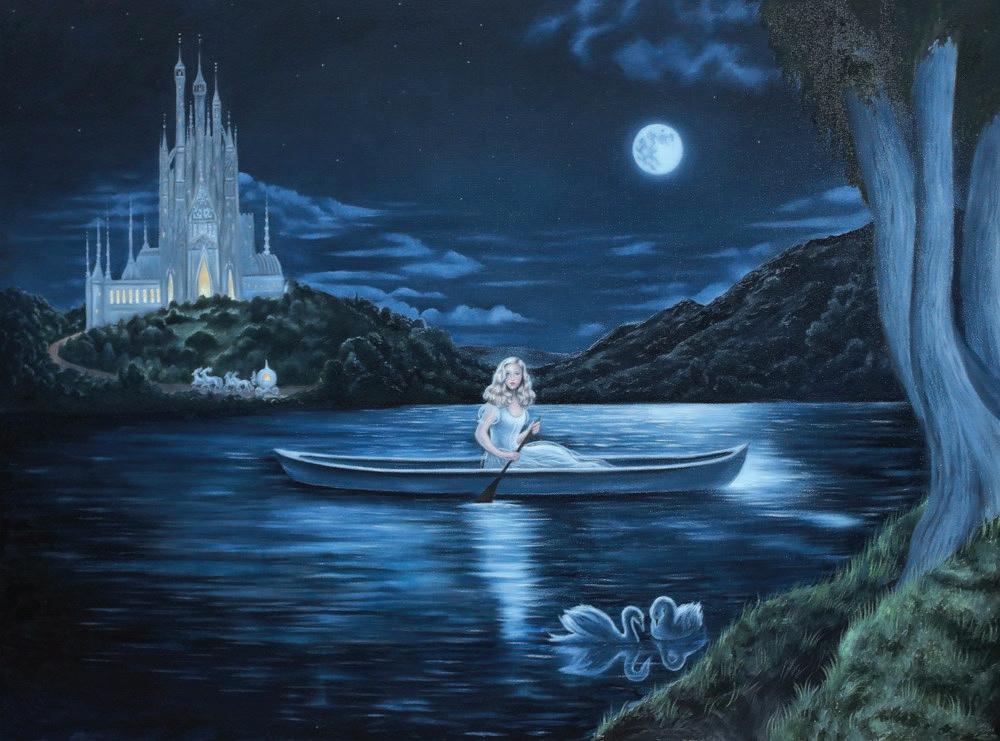
Warnes Contemporary is honored to have participated in another edition of the Affordable Art Fair NYC as part of the Fellowship Program, spearheaded by Erin Schuppert.
This fall’s fair was an incredibly energizing experience for our gallery. We connected with so many new collectors, met wonderful artists and art lovers, and felt deeply supported throughout the entire process. We’re thrilled to return for our third presentation as a Fellow in spring 2026, and we cannot wait to continue building on this momentum.
Erin Schuppert shared that the Fellowship Program, now entering its fifth year, has supported five participating galleries (Established Gallery, Eleventh Hour Art, SHEER, Harsh Collective, and Warnes Contemporary) and has facilitated more than $290,000 in art sales to date, with an average artwork price on par with the fair overall. The program has consistently fostered substantial growth for its Fellows, with sales averaging 160% higher in a participant’s second edition than in their first. This September, Warnes Contemporary saw a 77% increase in sales during our own second edition, and it was exciting to introduce three new artists to the fair’s audience.
Looking ahead, the program will begin supporting one Fellow at a time to offer even more personalized guidance from first edition through graduation and on to becoming a veteran exhibitor. Applications for the next Fellow, beginning Fall 2026, are now open.
We’re deeply grateful for Erin’s leadership and for the platform the Fellowship provides emerging galleries. We’re already looking forward to presenting again in spring 2026 at the fair’s new home, the Starrett-Lehigh Building.
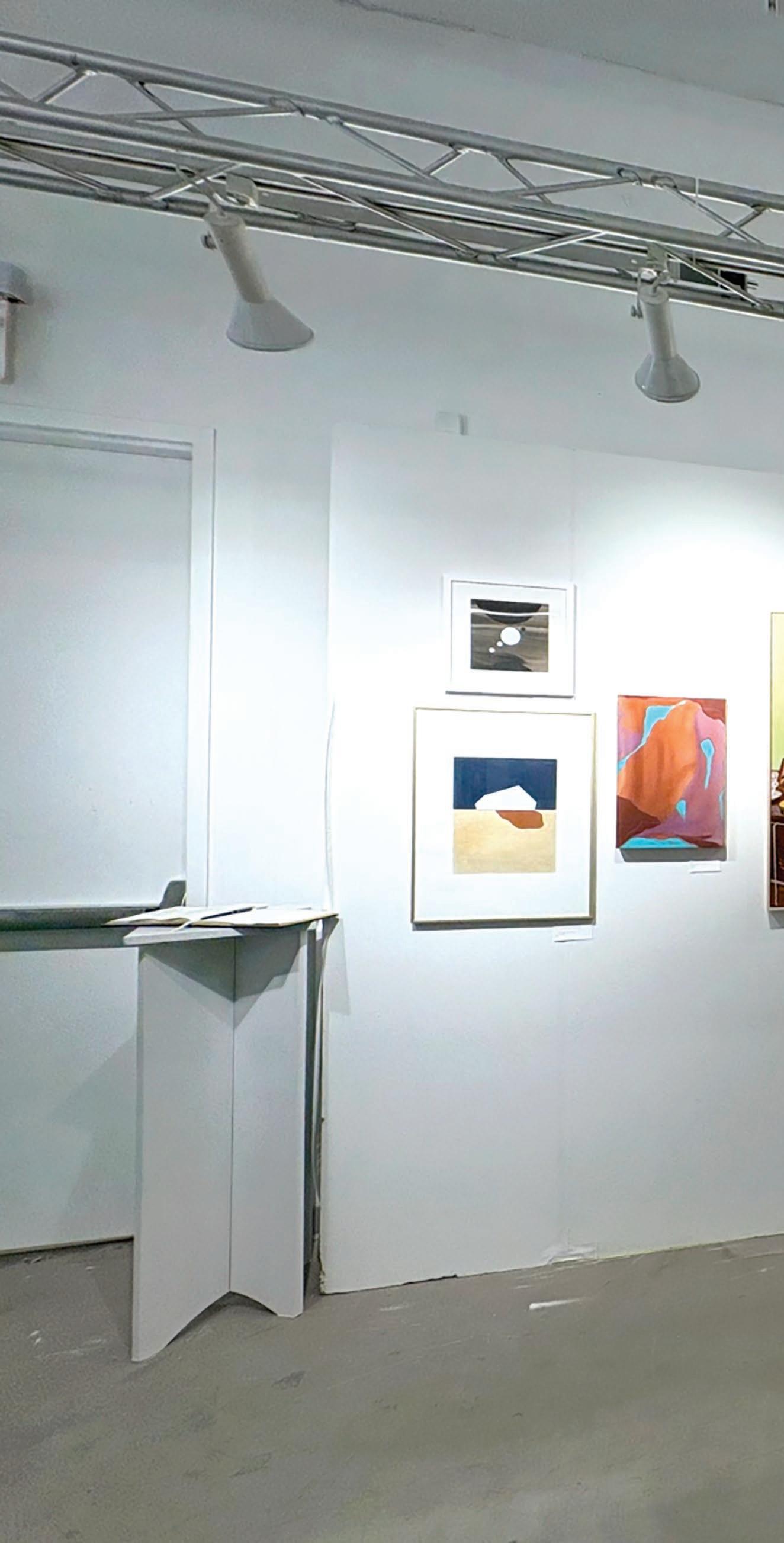
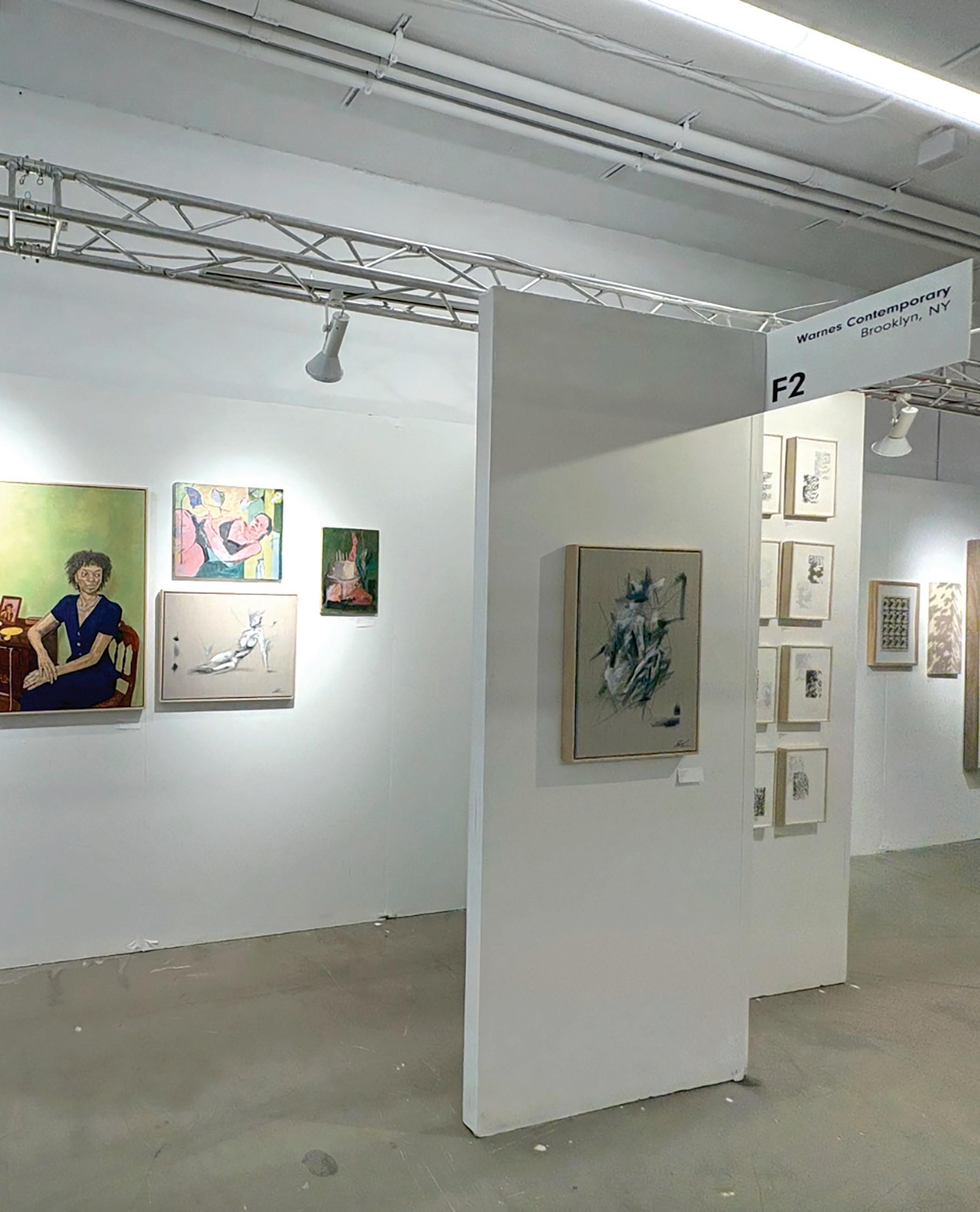
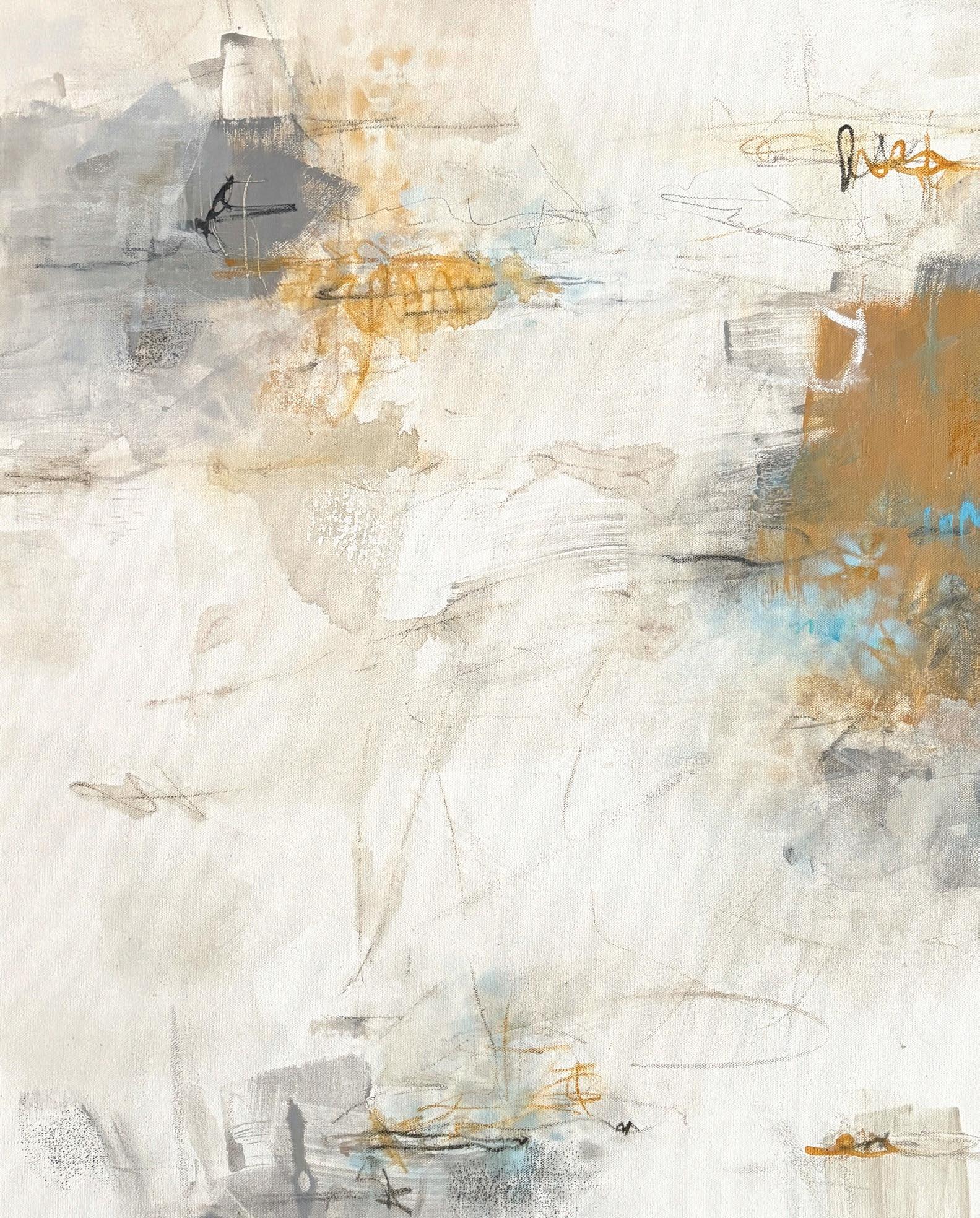
We are proud to feature a wide range of talented artists in the Visionary Art Collective Directory. Coming to you from numerous states and nations, our directory artists work across a wide range of mediums and disciplines.
visionaryartcollective.com/directory
www.heimann-art.com
elviraheimann_artist
Elvira Heimann comes from an old French Huguenot family on her father’s side, where music and art were integral parts of daily life.
In 1975, she began studying art and music at JLU Giessen, Germany, later expanding her studies to philosophy, theology, and psychology. After a professional career as a Protestant minister and, from 1990 onward, as a clinical psychologist, she returned to art with renewed intensity 15 years ago. She has since deepened her artistic practice through ongoing education and master classes with national and international lecturers.
Her work has been featured in solo and group exhibitions across Germany, Denmark, Switzerland, France, Spain, Sweden, England, Paris, China, and New York.
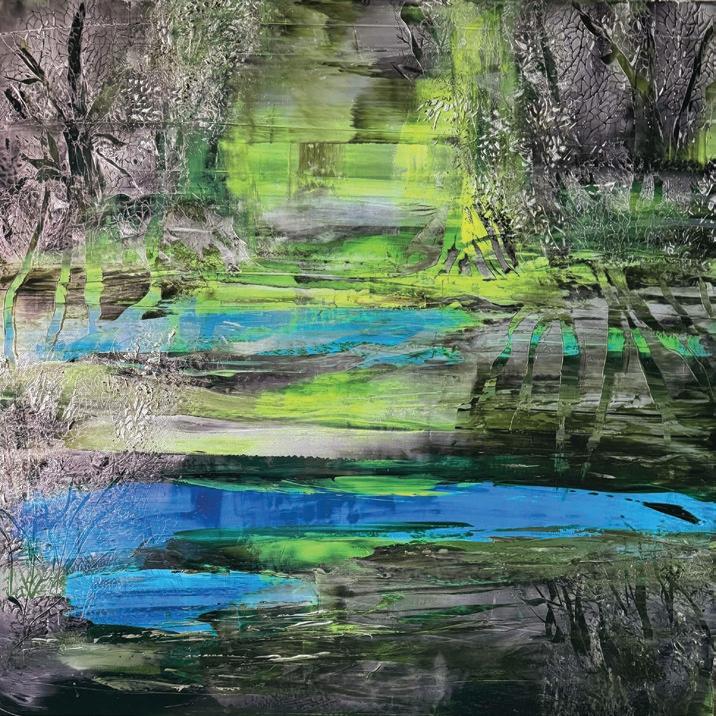
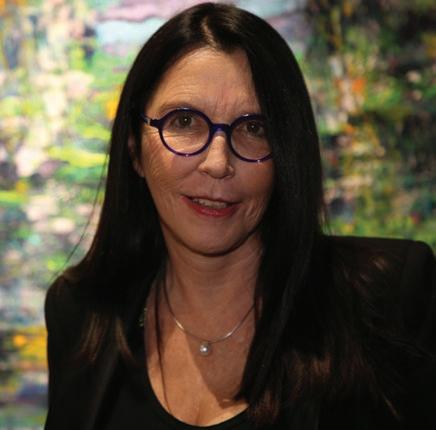
My abstract paintings are a sensory exploration of nature, balancing chaos and order while evoking the childlike freedom of play. Through intuitive mark-making and expressive movement, I create a visual language that reminds us there is more beyond what we see - that we are deeply connected to the natural world.
As both an artist and a psychologist, I explore how we navigate and adapt to reality, which often feels chaotic. My work reflects the process of building inner structure - a way of filtering and shaping experience, much like nature itself.
By embracing uncertainty and fluidity, my paintings invite viewers into a deeper, more expansive dialogue with themselves, fostering a sense of connection, resilience, and presence.
For me, the highest form of art is nature itself - its intricate structures, its power of adaptation, its beauty, and its truth. The symphony of the senses allows me to feel the origin of my being and points toward the absolute. Our perception of nature, shaped by our five senses, is influenced by the infinite power and unique structures inherent in all things. These elements came into existence without human intervention and hold an intrinsic right to be.
I find beauty in the delicate structures of leaves and trees. I see colors and forms beyond the reach of logical thought. In my self-exploration as a human being, I approach the metaphysical - its light and its mystery. I sense hidden forces in nature, continuously discovering new wonders, and subjectively experience a deep silence within such beauty.
Through my paintings, I seek to make this other logic - the logic of the metaphysical - both tangible and perceptible.
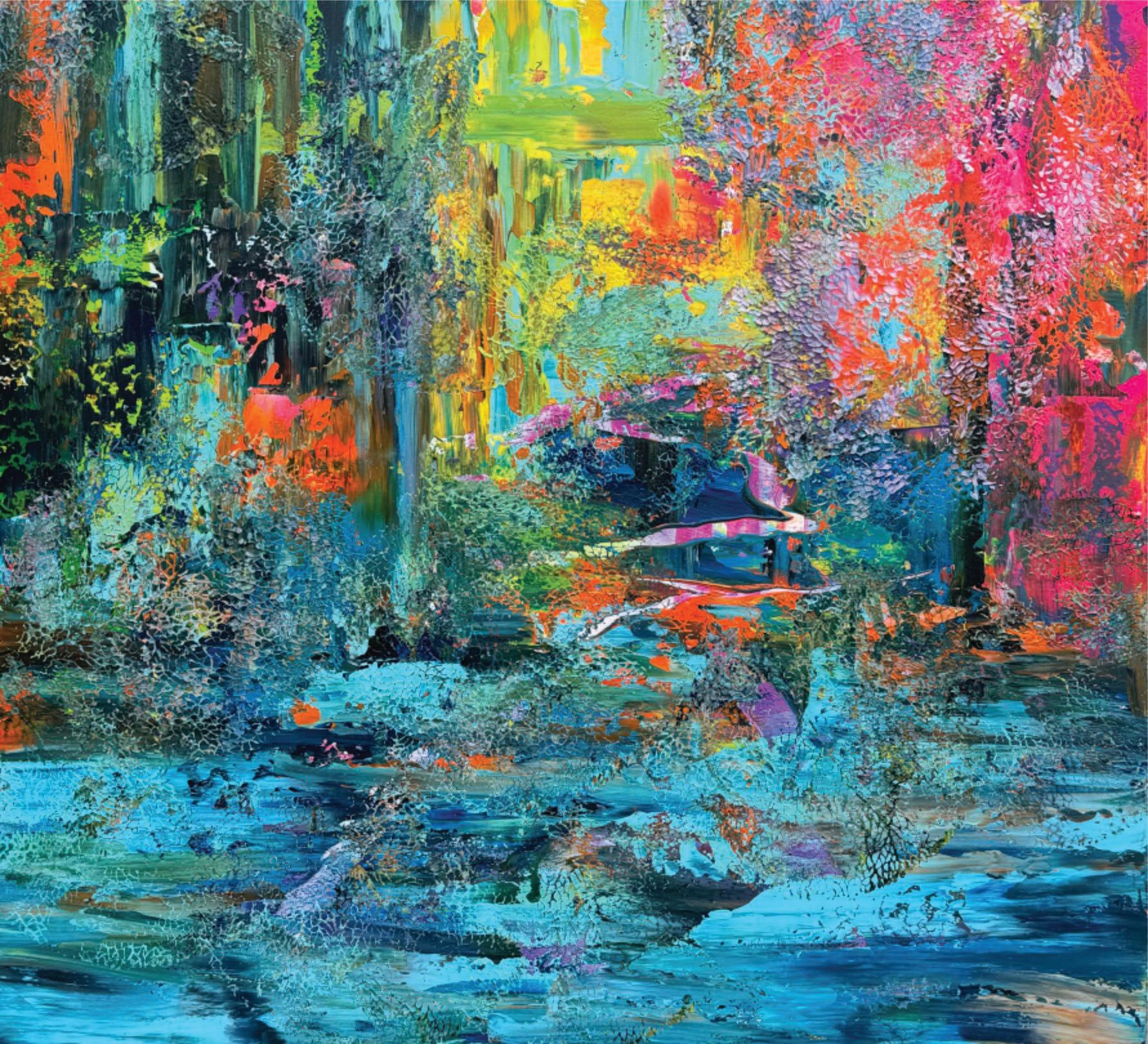
celestenovakstudio.com
celeste.novak
Celeste Novak, FAIA, is an artist and architect based in Virginia, recently transplanted from Michigan. She has painted and drawn since childhood, earning a degree in art that grounded her in abstract expressionism, color theory, Eastern art, and mysticism.
As a licensed architect for over 25 years, Novak was honored with Fellowship in the American Institute of Architects (FAIA) for her contributions to sustainable design and environmental stewardship. Her architectural work reflects a deep sensitivity to the interplay between humans, nature, and built form-a relationship that continues to inform her artistic practice.
Today, Novak channels her passion and concerns for sustainability and design into painting and drawing, where color, rhythm, and structure converge. Her work explores how human perception engages with form, sound, light, water, and the natural world-revealing the interconnectedness between art, architecture, and the environment.
Like the early abstract expressionists, Novak’s paintings seek to express the internal landscape of perception and emotion. Through her art, she conveys the intuitive, often unseen harmonies that arise when intellect, intuition, and nature intersect.
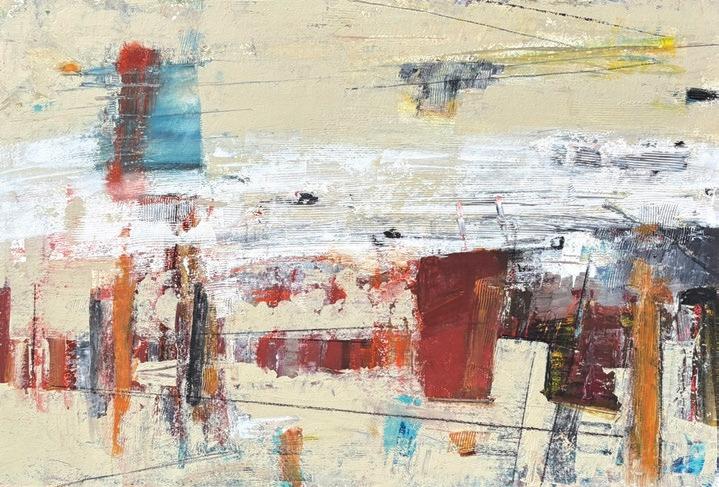
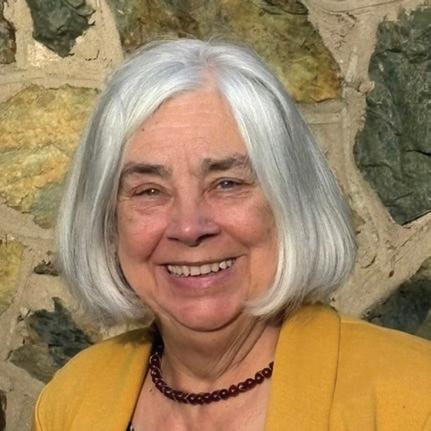
My artistic practice involves the deliberate layering of paint and pencil to explore the neural pathways that connect emotion, perception, and aesthetic experience. Through abstract expression, I investigate the intersection of color theory and neuroaesthetics-the emerging field that examines how the human brain responds to art.
Our perceptual systems interpret color, form, and composition in ways analogous to rhythm and harmony. Color theorists have long examined the physiological mechanisms through which the eye perceives wavelengths of light. Recent advances in neuroscience extend this understanding, identifying, and mapping the brain’s specific responses to visual stimuli. These insights inform my work, which is characterized by a minimal structural framework, improvisational execution, and rhythmic gestural movement. I approach each composition as a conductor orchestrating a visual symphony of color and line.
My creative process begins with direct observation of the natural and built environments. I document visual and textural details-water, shadows, rocks, leaves, light, sidewalk patterns, architectural surfaces, movement, and sound-through photography and sketching. These observations serve as catalysts for abstract explorations of color, form, and emotion.
This current body of work reflects my experiences in Northern Michigan. Striations, Sunlight and Stratus reference the ancient mineral formations of the Pictured Rocks National Seashore on Lake Superior. Whirligigs examines the reflective and kinetic qualities of water, as well as the dynamic ecosystems beneath its surface, where fungi and insects animate hidden worlds.
1 SCOTT ACKERMAN
www.lovescottart.com
lovescott3
2 ROBIN ADLER
5 SUNNY ALTMAN
www.sunnyaltman.com
sunnyaltmanartstudio_
6 JAYN ANDERSON
www.jaynandersonart.com jaynandersonart
Scott Micheal Ackerman is a self-taught artist from upstate New York. Usually working within the traditions of Folk and Outsider art, Ackermans process is driven by intuition and instinct, using acrylic, pencil, and spray paint: “When I sit down to work , I typically don’t know what’s going to happen”. Scott lives in Margaretville, NY with his wife, daughter, and son. 1
My art is inspired by nature and its spiritual connection to human life. My work celebrates the natural world and its profound impact on human experiences. I use a combination of mediums and techniques to bring to life the emotional depth and spiritual connections in all living things, inspiring viewers to appreciate and cherish the beauty of the world around us while reflecting on the deeper aspects of our existence.
robinadlerart.com
robinadlerart
Robin Adler is a Woodstock, New York-based abstract artist who transcribes emotional experience into visual form. Using line, shape, and color, Adler works intuitively, pushing past limitations toward freedom and possibility. She works in various media including oil, acrylic, encaustic and print. While expressing boundless enthusiasm for abstraction, she explores her inner landscape and the natural environment for inspiration.
Adler is a member artist of BAU Gallery, in Beacon, NY. Her work has been featured in solo and group exhibitions in galleries throughout the East Coast. Adler is a member of two art collectives, Spliced Connector and The Drawing Galaxy.
3 JENNIFER AGRICOLA MOJICA
jenniferagricolamojica.com jenniferagricolamojica
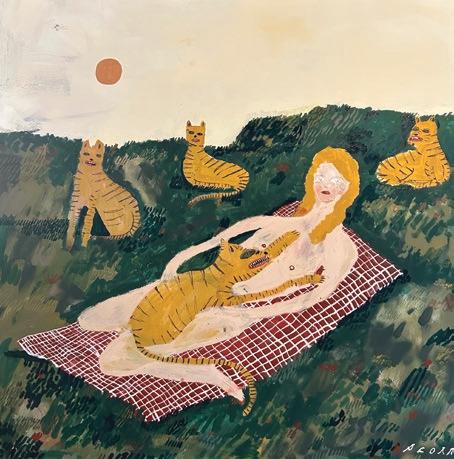
2
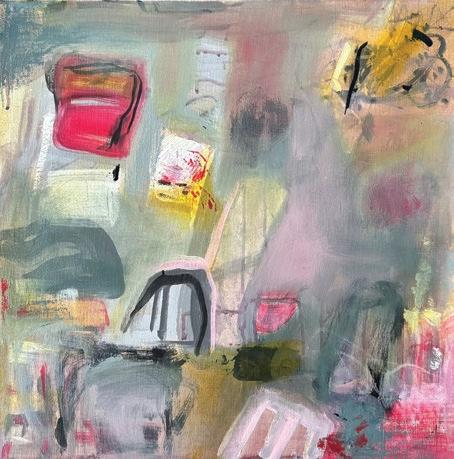
Jennifer Agricola Mojica is a contemporary painter, educator, and mother based in San Antonio, Texas. She has exhibited nationally and internationally. Her paintings can be found in private collections and has been featured in multiple publications. In her process, a painting begins with a disruptive start and ends with a harmonious stillness. Planes shift and shapes repeat, forms are portrayed at different vantage points, and figures become fragmented. The chaos then becomes a calm meditative process as she weaves concepts and elements together. 3
4 CAROLINA AIEX
carolinaaiex.com
carolina.aiex.art
Carolina Aiex is a Brazilian photographer with a background in Physics and Literature. She delves into themes of time and memory through innovative photography and video art. Her work - including photographic series Flux and Rites of Passage and video pieces Present and Recollections of a Dreamexplores the delicate interplay between reality, perception, and the unconscious, unveiling the poetic nuances of human experience.
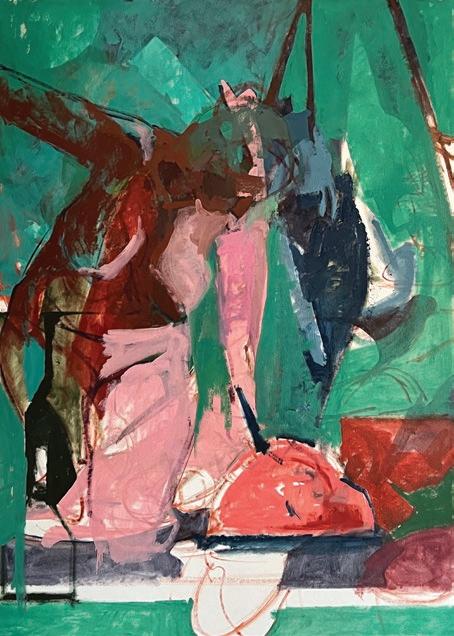
Jayn Anderson is a North Carolina-based abstract painter. Her work is inspired by life experiences, emotions, music and how they all relate to fundamental humanness. She creates to uncover the deeply personal and at times, uncomfortable parts of life. Through her work, she strives to present a visual language that we can all relate to on a deeper level. Jayn’s desire is to provide a safe space for others to feel the freedom and vulnerability to connect to their innermost thoughts through art.
4
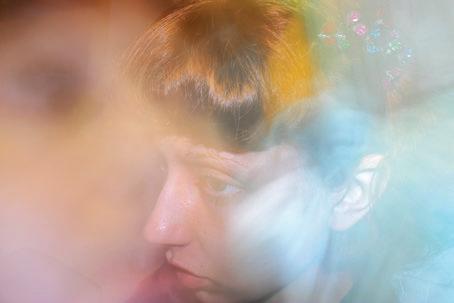
5
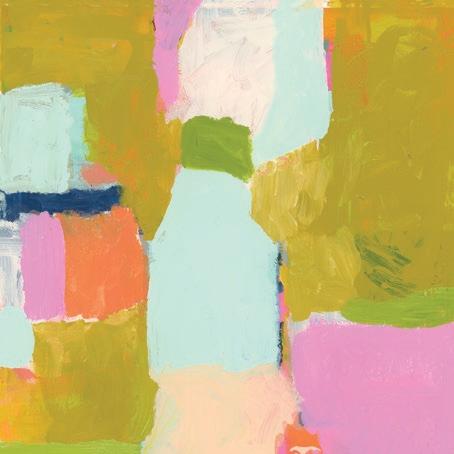
6
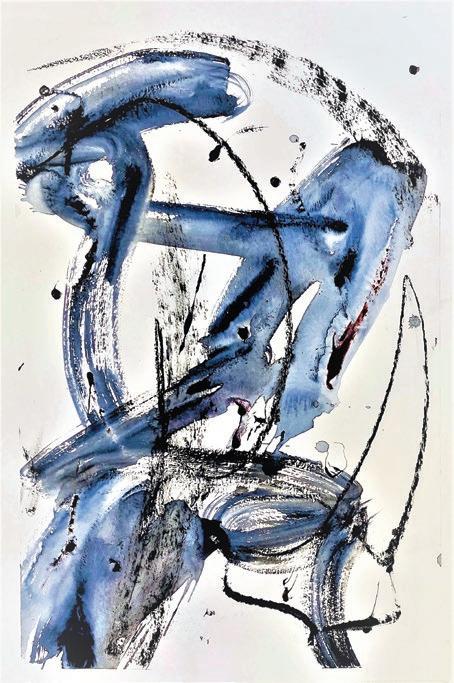
7 PHYLLIS ANDERSON
www.phyllisandersonart.com phyllisandersonart
Phyllis Anderson is an award-winning artist living outside Denver, CO. She received a BFA at the University of Texas. Her work explores dreamlike mountain landscapes, featuring fantastic color, image fragmentation, and drawing. She belongs to Core Art Space, an artist co-op in Lakewood, CO, and her work is available at Framewerx Gallery in Winter Park, CO.
8 REBECCA ANNAN
www.rebeccaannanart.com
rebecca_annan_art
Rebecca Annan is a multi-disciplinary artist from England, U.K. who returned to her art practice in 2021 after a decade in nursing. She is inspired by the world around her to create art that captures the temporal and impermanent. Her most recent series “Look Above” focuses on the transitionary time of dusk as the trees become silhouettes against the sky- instilling a moment of peace and reflection as the day turns into night.
9 LAUREN SKELLY BAILEY
www.laurenskellybailey.com
skelly__bailey
Lauren Skelly Bailey is a ceramic artist based out of Long Island, NY. She holds a Master of Fine Arts, Ceramics from Rhode Island School of Design. As well as a Bachelor of Fine Arts from Adelphi University in Fine Arts. Skelly works in layers, in a sometimes modular recursive process. The foundation of her ceramic practice is her relationship with abstraction, the vessel, nature, color, and texture. Her works are formed by integrating the use of coiling, pinching, painting, and thrown clay structures to connect her sculptural vessels and corals.
10
www.melissabenedek.com
melissabenedek_art
Melissa Benedek is a Contemporary Artist whose work is focused on Abstract Expressionism. Her portfolio demonstrates her vision and passion for colors and movement. She is guided by her intuition. Her work is known for her beautiful color combinations and fluid brushstrokes that intersect, overlap and react with one another, until they unite into a wonderful rhythm.
11 MARTHA BIRD
www.marthabirdart.com marthabirdart
Martha Bird is a Minnesota-based artist specializing in sculptural basketry. She uses basketry techniques to create expansive conceptual forms that both carry forward the traditional craft and challenge its utilitarian assumptions. Martha’s work explores the human body and concepts of resilience, energy, and growth. She exhibits regionally and nationally and her work can be found in collections around the US.
12 ASHLEY BLANTON
ashleyblanton.com faint.as.fog
Ashley Blanton is entangled in a desire to find magic in the mundane, for looking closely at details and disparate parts helps her cultivate and connect to the sense of wonder that she seeks. Combining watercolor, gouache, cut paper, collage, and transfer techniques, Ashley creates mixed media works on paper that are evocative of emotional and visceral felt senses.
7
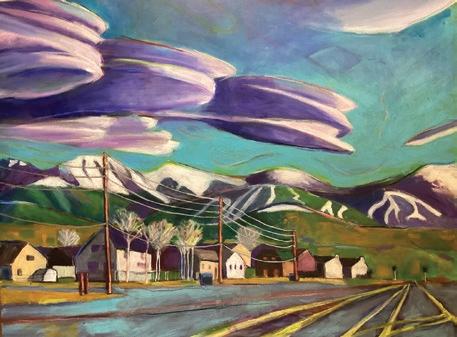
8
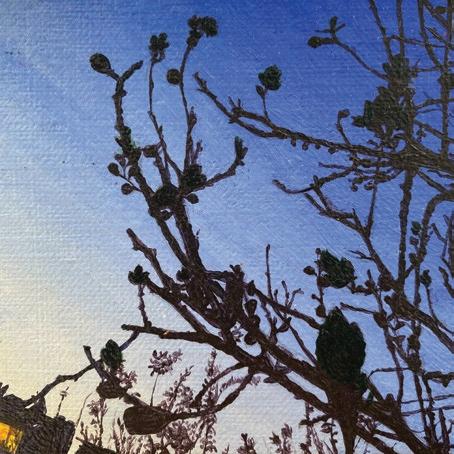
9
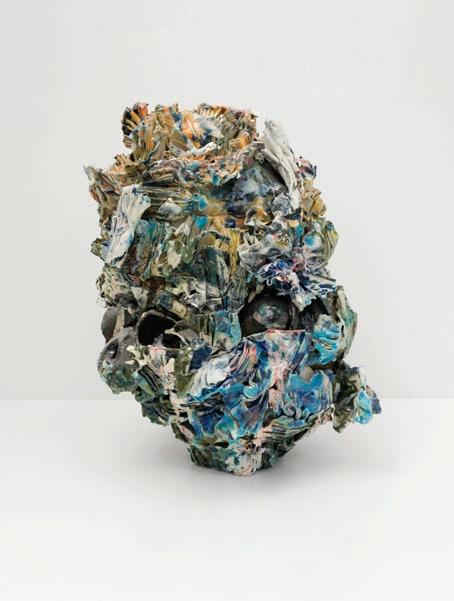
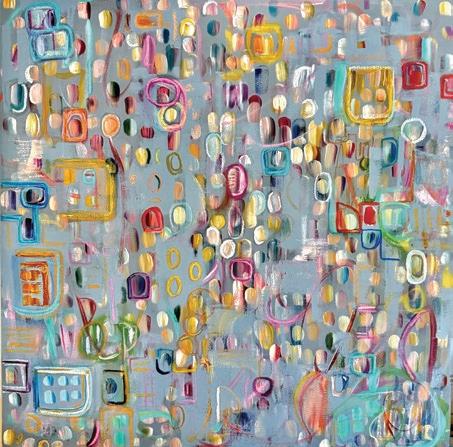
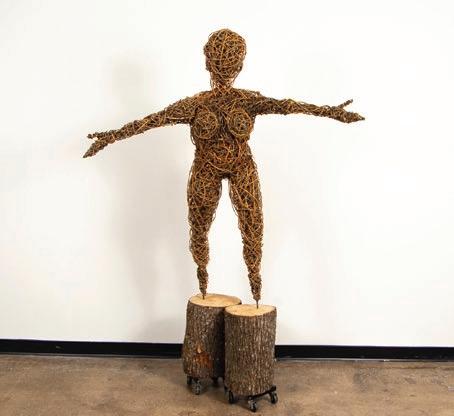
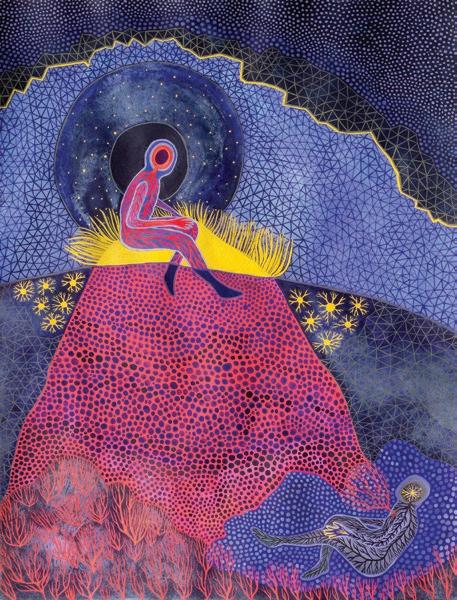
13 LAURIE BLESSEN
www.laurieblessen.com
laurieblessen
Working in abstraction allows the fullest expression of my life. Prolific and driven to get out the complex emotions that words fail to express. I use colors to set the tone and lines the movement. Together they tell my narrative.
14 STEPH BLONDET
www.stephblondet.com
stephblondetart
Steph Blondet is a Puerto Rican artist based in Tampa, FL. Blondet creates textured and dimensional paintings as a form of visual journaling. In her work, Blondet explores themes of personal growth, grief, and the societal pressures placed on women. She creates intuitively and communicates her story through color and composition to reflect the duality of the human experience, and to convey that through darkness there will always be light.
15 SARAH E. BOYLE
saraheboyle.com
saraheboyle_painting
Sarah E. Boyle is a Chicago-based painter who explores connections to place through memory and landscape. Her Night Windows series is named after Edward Hopper’s 1928 painting and references the everyday experience of gazing at a lit interior and the introspective pause that follows. Her paintings are a catalyst for concepts of voyeurism, escaping in, and longing.
16 VALERIE BROWNE
www.valeriecbrowne.com
valeriecbrowne
Valerie Browne is a graduate of SAIC where she received her BFA in 2017. In her paintings, she explores social isolation and the internal tension introverts may experience while yearning to join “the party”, alongside layers of emotions that cross one’s mind when experiencing social and sensory overload. Much of her work is inspired by figurative works of the 16th and 17th centuries and traditional techniques of the Old Masters.
17 PAULETTA BROOKS
www.paulettabrooks.com
PBWearableArt
Pauletta Brooks creates unique and eclectic ‘wearable art’ jewelry utilizing raw minerals and gemstones. Her signature is unmistakable: sculptural, organic and bold, often straying from traditional techniques and concepts of jewelry. Many pieces have been shown in galleries and magazines including Vogue, Harper’s Bazaar and Ornament Magazine. All are handmade and one of a kind, designed in her NYC studio.
18 OWEN BURNHAM
www.owenburnham.com
owen.burnham
Owen Burnham is a Brooklyn based photographer and multimedia visual artist creating from the investigation of movement and abstract imagery. Spanning photography, painting, and collage their practice contextualizes motion as a means to abstractly deconstruct identity. Collections are reflections, reclamations - who and what makes us move? An NYU Tisch Alumni (BFA, Dance), they currently capture New York City dance, with their visual art collections showcased in various virtual exhibitions.
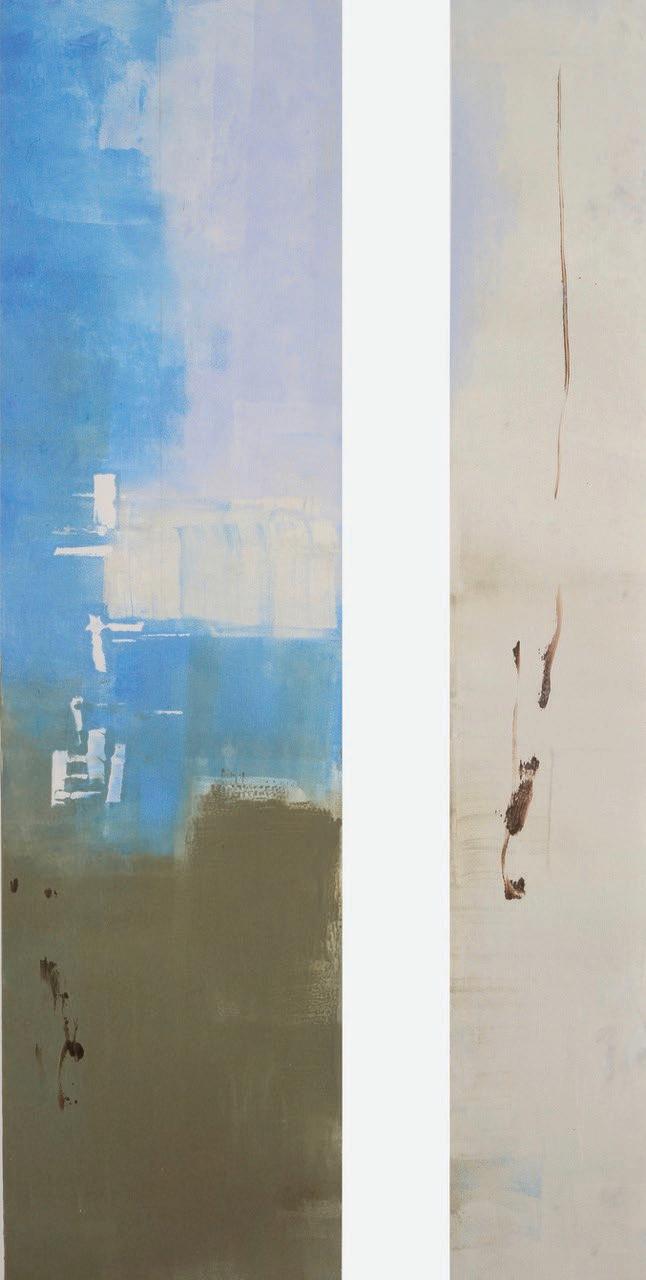
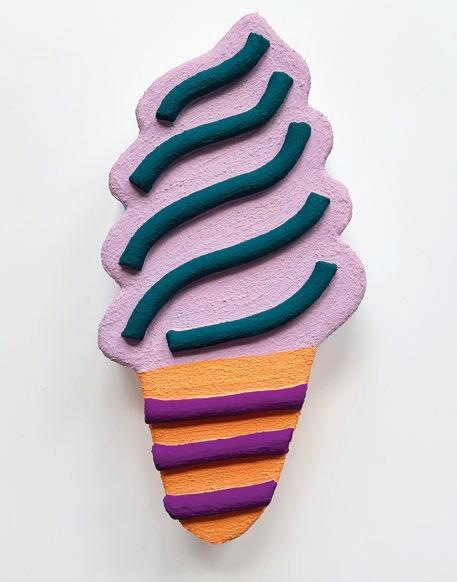
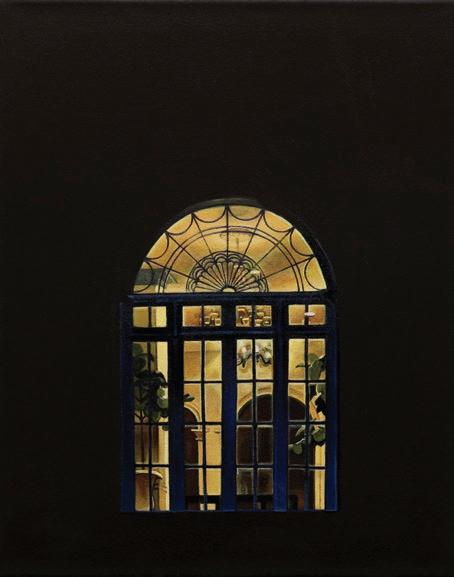
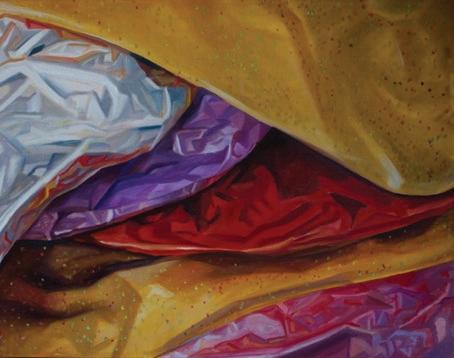
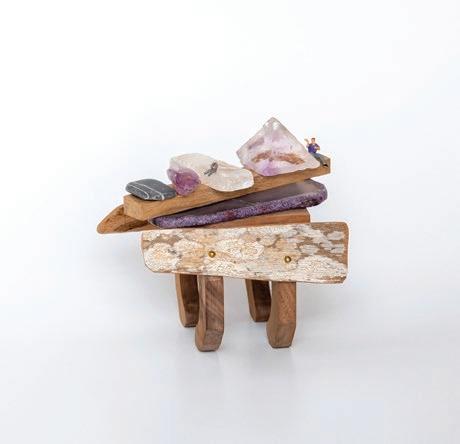
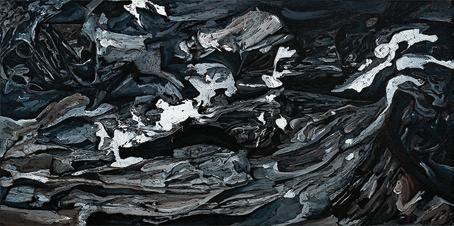
19 INGRID BUTTERER
ingridbutterer.com ingridbutterer.art
Ingrid Butterer is a multidisciplinary artist living and working in Brooklyn, NY. She earned her B.F.A. from the University of Michigan and EdM from Columbia University, Teachers College. Her work has been published in Orenda Arts Journal, Quarentine Magazine and Womxn Artist Project. Ingrid’s work has shown at Lincoln Center, A.I.R. Gallery, Atlantic Gallery, 440 Gallery, Benheim Gallery, Kyoto Shibori Museum and Yamashita Gallery (Japan).
20 VIVIAN CAVALIERI
www.viviancavalieri.com
vc_artworks_
Vivian Cavalieri is a visual artist with a studio on Chincoteague Island, VA. Her threedimensional miniature scenes prompt conversations on a range of social issues. They have appeared in numerous group exhibitions in the US and abroad. Her work has been published in Suboart, Art Seen, Modern Renaissance Magazine, Collect Art, and Artists Responding To …. She is represented by Hambly & Hambly Gallery, Northern Ireland, UK
21
www.lauraclearywilliams.com
lauraclearywilliams
Laura Cleary Williams’ abstract spaces are an ode to an imperfect language. Through motion, she makes marks that translate thought - subconscious – a viscerally understood language. Williams works from her hometown of Chattanooga, TN. In 2009 she received her B.F.A. from Tufts University and the SMFA, Boston and her Master’s in Printmaking in 2012 at SCAD-Atlanta. Williams founded, managed, and co-owned Straw Hat Press, which specialized in fine art publishing and contract printing.
22 MARCIA CONLON musingwomen
Marcia Conlon likes working with materials that are a little rough, grungy, maybe a little dirty. She juxtaposes feminine images from vintage magazines or antique photos next to found material like cardboard, vintage paper and deconstructed book pages. Conlon has been drawn to artistic practices most of her life, even though she has had an eclectic professional life. Conlon has a degree in Art History from the University of Michigan but is mostly a self taught artist. She was born in Detroit, but has lived in Traverse City for 23 years.
www.debcookshapiro.com
debcookshapiro
Debra Cook Shapiro is a San Franciscobased painter whose vibrant, expressive oil paintings and collages celebrate the joyful chaos of human connections. Drawing from her own life experiences, Shapiro’s work captures the energy and intimacy of festive gatherings, weaving personal milestones and relationships into dynamic compositions set against lush, sun-drenched landscapes. Shapiro studied art in Florence, Italy and San Francisco, drawing influence from Botticelli, Hockney, and Bay Area figurative painters.
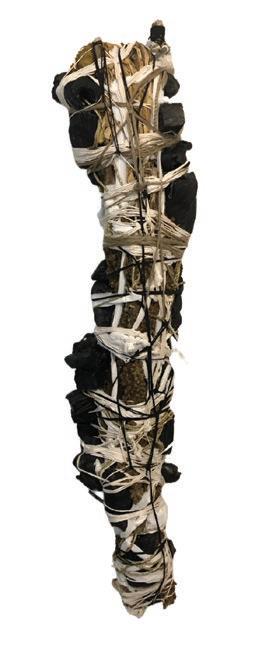
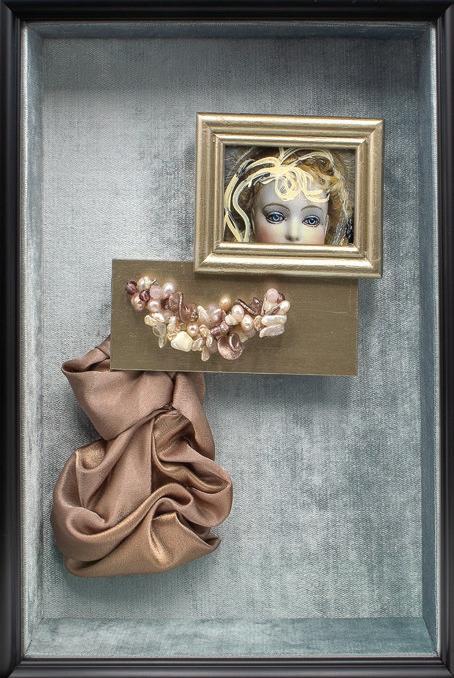
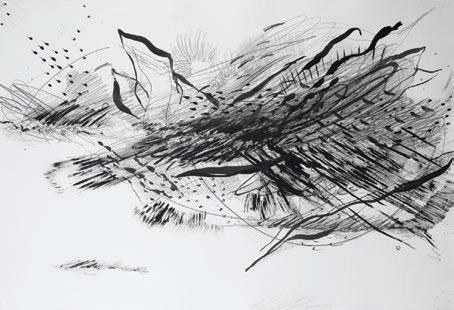
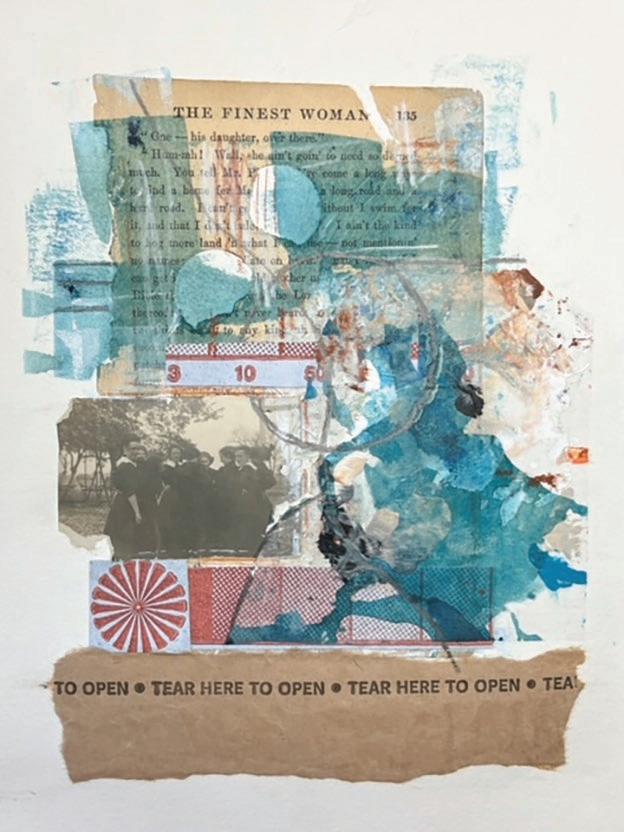
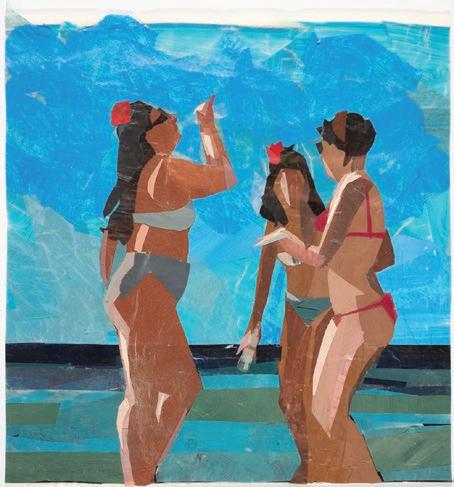
24 PATRICIA DATTOMA
subscribepage.io/PatriciaD patricia_dattoma.art
Patricia Dattoma is a NYC based artist, art educator and lifelong New Yorker. Her abstract paintings are a visual response to her environment. She explores a sense of place through color, shape and texture. Whether in NYC, at the beach, or in the Southwest, Dattoma internalizes her surroundings which produce a rhythm and harmony that emerge abstractly onto her canvas.
samanthadavies.art
Samantha Davies is a contemporary sculptor and silk artist whose work explores light, texture, and the subtle beauty of movement. Drawing inspiration from nature and emotional depth, her sculpted silk pieces on canvas evoke a sense of peace, fluidity, and harmony. Through her work, she seeks to create immersive experiences that resonate with the viewer’s own journey of self-discovery.
26
www.margotdermody.com
margotdermody
Margot Dermody is a Pittsburgh-based artist whose work primarily focuses on painting and sculpture. She uses abstraction to explore memories and emotions, examining the connections between human experiences and the natural world. She works in stone and glass for sculpture and mixed media for painting. In abstract layers of opacity and translucency, her works ask how to locate beauty in the shadows and bring light into life.
www.jacquelinediesing.com
jacquelinediesing
Over the past 10 years in Chicago, IL, Jacqueline Diesing has come to realize she processes her feelings and heals herselfc through her mixed media artwork comprised of detailed, freehand micron ink and soft pastel drawings. Diesing’s journey began with a desire to restore crumbling, architectural masterpieces in her hometown of Detroit to their former beauty by surrounding them with colorful life. Since then, she has been drawn to examine her own health and healing by digging deeper into issues stemming from childhood. The art Diesing is working on now depicts her path towards wellness.
28
greyeckert.com
nelliegreyeckert
Grey Eckert (she/her) subtracts text from found cross-stitch, a process akin to erasure poetry. Transforming lengthy verse into short instances of speech – sweet nothings, passionate ramblings, and lovelorn pleas –imposes a contemporary love affair upon the traditional marital practices in which crossstitch is historically ground: the feminine virtues, domestic responsibilities, and spousal devotion that they describe attracted potential suitors.
29 TARA ESPERANZA
www.taraesperanza.com
taraesperanza
Tara Esperanza’s paintings share her intimate viewpoint of succulents. She feels deeply connected to her subject and is inspired by the abundant varieties of textures, colors, forms, and shapes. Esperanza imagines herself as a bee as she delves into the plants and explores what they reveal. Her paintings celebrate the diversity in the world of succulents. They are magnified images that illuminate the distinct beauty that she sees.
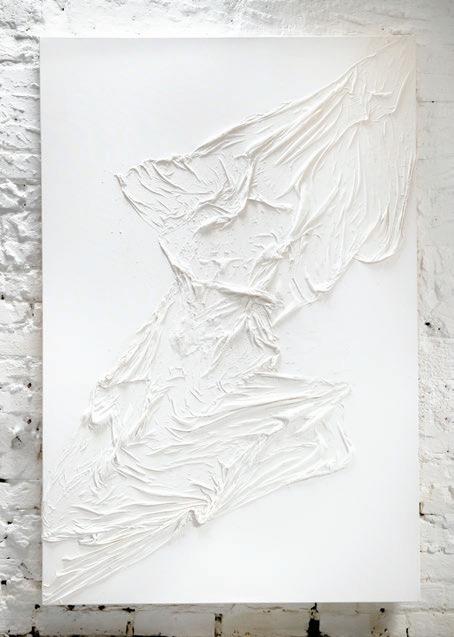
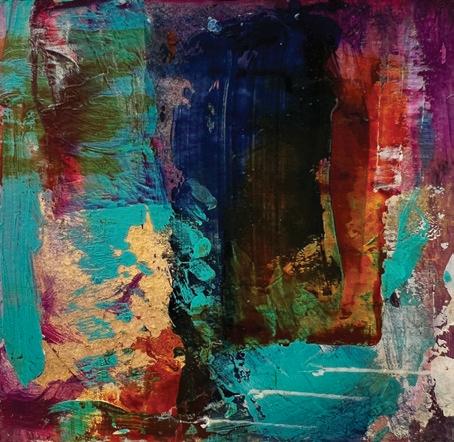
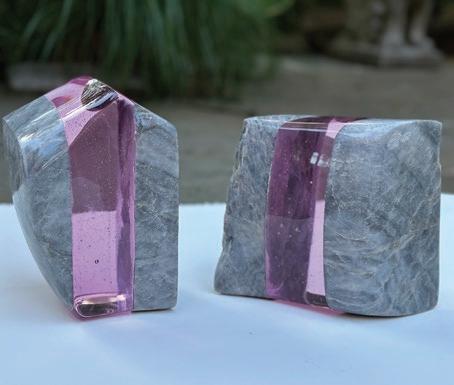
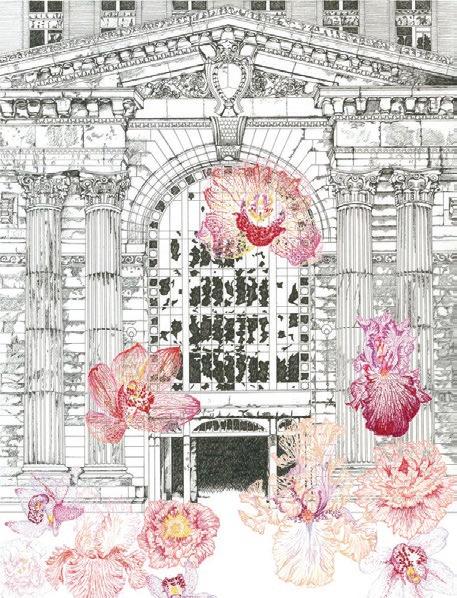
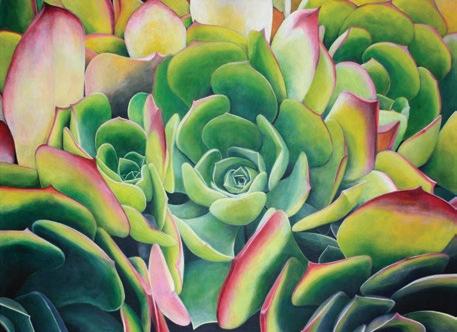
30
www.susanfeldmanart.com susanfeldmanart
Susan Feldman is a self-taught mixed media artist. Her practice often centers on a sense of place, evoking architecture and the fantastical nature of history and memory. Feldman was born in LA and has exhibited my work throughout CA and NY for over 3 decades. She has a background in graphic design, and is also a vinyl only DJ.
31 KAREN CHRISTIE FISHER
www.karenchristiefisher.com karenchristiefisher
Karen Christie Fisher’s nonrepresentational paintings are an immersive exploration of color and texture. Her intuitive and tactile process employs a variety of mediums and tools to investigate the landscape of emotion. Raised in NYC and inspired by modern design, she now lives and works in the foothills of Oregon.
32 ERIN FRIEDMAN erinfriedmanart.com erinfriedmanart
Erin Friedman is an abstract artist just outside of Washington, DC in Bethesda, MD. Using acrylic paint and oil pastels, Erin’s work is an accumulation of feelings and experiences over time that transfer onto the canvas. Inspiration comes from moments and reactions to everyday life and her emotions. Erin will make marks, alter her ideas, add layers and change directions. We all experience conflict, change, joy and sadness. Erin does her best to embrace this process and allow those feelings to be revealed throughout her work.
33 RICHARD GLICK
www.richardglickstudio.com richardglickstudio
Richard Glick’s paintings explore his inner travels through the universe and his way of seeing stars, planets, moons and other celestial bodies. While Glick’s work is abstracted and reflects representational matter, he focuses on each work’s formal qualities; its shapes, colors, textures and overall composition. Many of his works have circular and free flowing forms that seem restrained by distinct, unyielding grids or borders. Perhaps this alludes to Glick’s inner turmoil about being open and authentic in hisworld. Come fly with Glick into space.
www.josephgoldfedder.com josephgoldfedder
Joseph Goldfedder is a visual artist based in New Jersey and Pennsylvania. While initially trained as a fine artist, Goldfedder’s experience of living in New Mexico inspired him to pursue becoming an acupuncturist. Through this understanding on how energy or “Qi” circulates through the body, acupuncture reshaped his approach to making art. This experience deepened his understanding of the connection between science, creativity and healing that continues to inspire him.
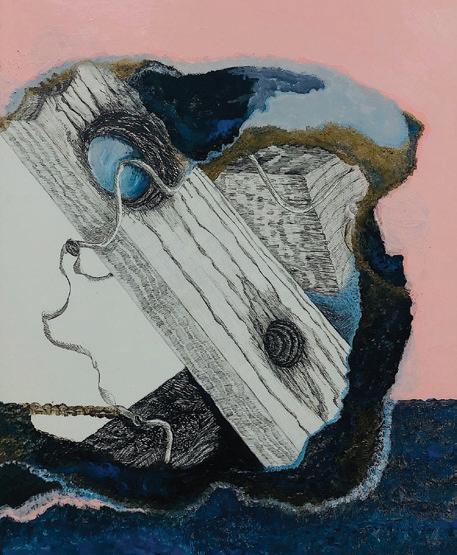
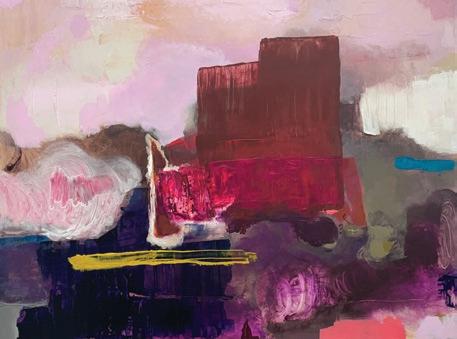
32
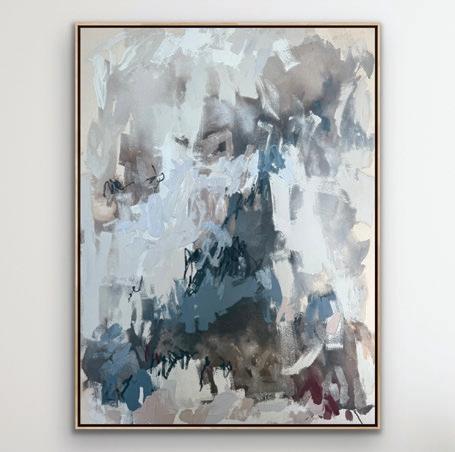
35 SUSAN GRACE
www.susangracestudio.com/ susangracestudio
Susan Grace is a contemporary figurative painter. Her oil paintings have their basis in the human form, but each portrait captures a figure in a stage of transformation. She sees the figures as participants in unfinished dramas in which they are continually evolving, exploring possibilities for metamorphosis, delighting in the fluidity of identity, and remaining indifferent to a final resolution.
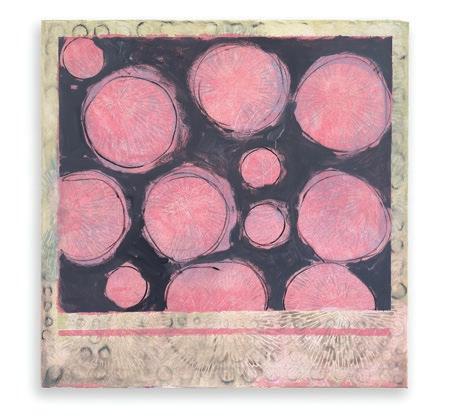
34
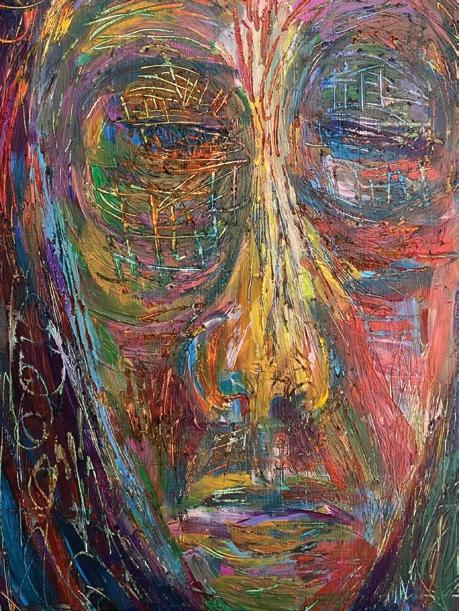
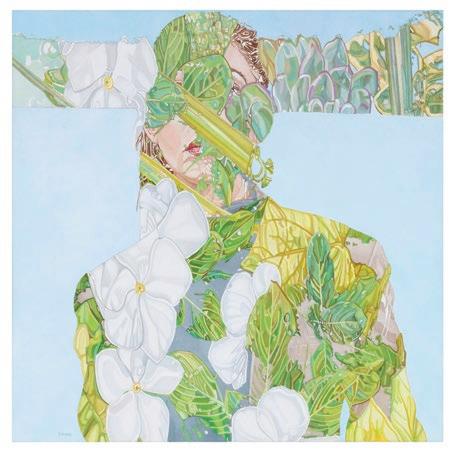
36 LUCY JULIA HALE
www.walltowallsecrets.com
Lucy Julia Hale is a Georgia feminist / social activist artist and art educator. She often selects scenes from our cultural archives of mass-produced publications or vintage vernacular snapshots to which she adds drawn, painted, and/or collaged images to portray a deeper history. She serves as an advocate supporting the dignity and wellbeing of vulnerable populations, which unfortunately now include all inhabitants of Earth. Her work has been selected by prominent jurors for numerous national exhibitions. She holds an Ed.S. and an M.Ed. in Counseling and Educational Psychology, and a B.S. Ed. in Art Education.
37 MEAM HARTSHORN
meamhartshorn.com meamhartshorn
Meam Hartshorn is an abstract painter. Her work explores the relationship between landscapes, geology, and natural phenomena with expression, emotion, and memory. Her paintings create undulating and constantly deconstructing landscapes that often draw inspiration from the geology and ecosystems of the Western United States. Meam currently lives and works in Austin, TX and she is the founder The Artful Collective, a platform for connecting and supporting emerging artists.
38 ALEXIS HERMAN
www.alexishermanstudio.com alexishermanstudio
Alexis Herman (b. 1962) is a contemporary representational painter based in Coastal New Jersey who explores water’s regulating qualities. Her paintings feature simple organizing compositions and richly saturated colors capturing waters transfixing moments. Her process includes sanctifying the painting in the ocean. Her work has been exhibited at Kelly-McKenna Gallery, 14C Art Fair Showcase Artist, Mattatuck Museum and Monmouth Museum.
39 SARAH HESSINGER
www.sarahhessingerart.com sarahhessinger
Sarah Hessinger is a self-taught contemporary artist living and working in Hana, Hawaii. Hessinger’s work portrays nature through ethereal expression, using drawing and painting techniques informed by the natural world and her imagination. Her paintings are displayed in many private homes and public exhibitions.
40 TAYO HEUSER
www.tayoheuser.com tayoheuser
41 COLLEEN HOFFENBACKER
colleenhoffenbacker.com colleenhoffenbacker
Colleen Hoffenbacker’s work inhabits the fertile crossroads of nature and technology, where traditional fine arts entwine with AI to expand the boundaries of creativity. As the first painter granted US copyright for AIcollaborative works crafted by human artistry, her celebrated paintings weave past and future, illuminating a vision rich with promise while advocating for an eco-conscious world.
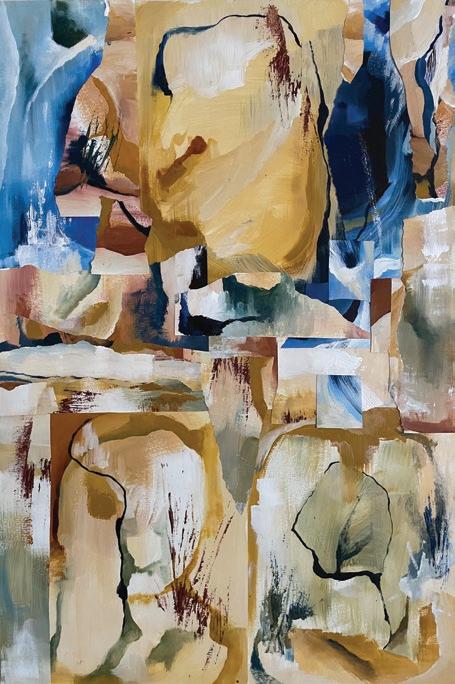
Heuser’s artwork is a confluence of her cultural experiences both visual and spiritual. Heuser describes her paintings as portals in that they represent a world of infinite possibilities allowing time for reflectivity and timeless tranquility. Her work addresses the central theme of cosmic balance between light and darkness, spirit, and matter. 41
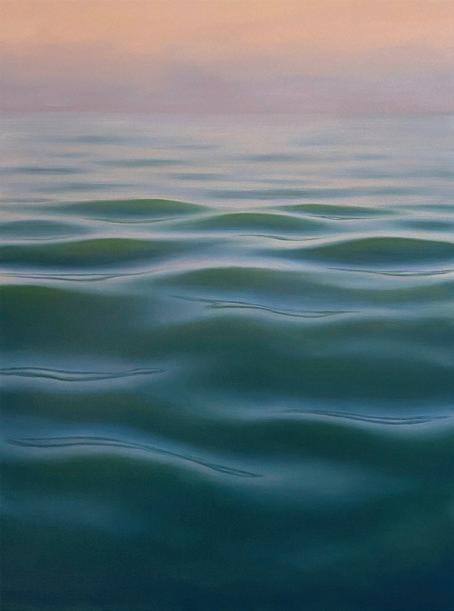
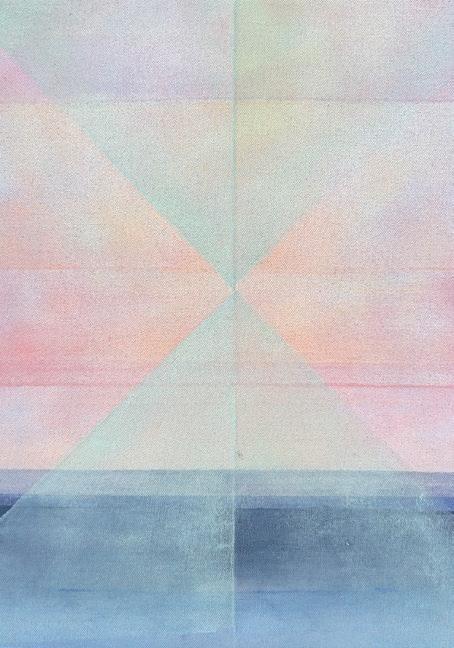
42 ROBERTA HOINESS
www.robertahoiness.com robertahoiness
The world can be a noisy and complex place. Roberta Hoiness creates organic abstract landscape art with the hope of inspiring moments of calm. She layers hand-painted paper, pigment, oil pastels and occasional touches of metallic leaf to recall the “feeling” of a place rather than the details. Hoiness is continually inspired by the quiet, stillness & rustic beauty of the Canadian prairies where she lives with her husband and three children.
43 CHRISTINE HONG
christinehongstudio.com christinehongstudio
Christine Hong, a Korean-American artist based in New Jersey, presents “Barlight,” a mixed media painting that explores the fragility and resilience of human relationships through the act of carving. By cutting through multiple layers of paint and revealing the raw canvas beneath, Hong symbolizes the peeling back of outer selves, exposing the deeper connections that lie within.
44 KIM HOPSON
www.kimhopsonstudio.com kimhopsonstudio
Kim Hopson is a multidisciplinary artist based in Brooklyn, NY. In her work she explores themes of ableism, caregiving, and identity. Experiencing life with a disability has given her a unique viewpoint that is reflected in her paintings, drawings and collages. She focuses on the body’s relationship to the world, both physically and emotionally.
45 ANNA HVID
www.annahvid.dk annahvidart
Anna Hvid is a self-taught, Copenhagenbased painter. Her subjects are usually semiabstract figures, and her works are composed of solid blocks ofcolors and suggestive lines. At the very core, Hvid’s visual inspiration comes from her grandmother’s tapestries. Her grandmother had an enormous loom, on which she would weave all sorts of magical creatures. Those tapestries are always at the base of what Hvid does.
46 DEREK JACKSON
derekjacksonartist.com derekjacksonartist
Derek Jackson, a Pop artist from Harrisonburg, Virginia, explores loneliness, longing, and nostalgia through vibrant, sugar-coated aesthetics. Self-taught in acrylic painting, pottery, and glassblowing, he examines how social media and opinions shape art perception. His work, challenges viewers to engage with art beyond instant judgment and digital noise.
lea_jerlagic
Lea Jerlagić, born in Sarajevo in 1984, is an artist and Assistant Professor at the Academy of Fine Arts in Sarajevo. Specializing in printmaking and painting, her work explores human nature,inspired by spiritual practices and sacred erotic art. Combining traditional and experimental techniques, her art is a meditative process, inviting us to explore deeper aspects of ourselves and the universe.
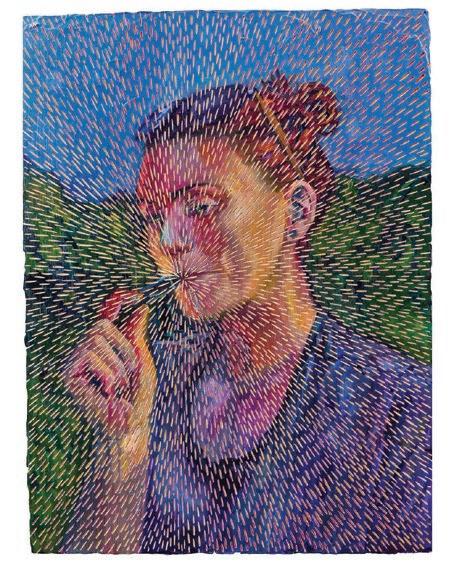
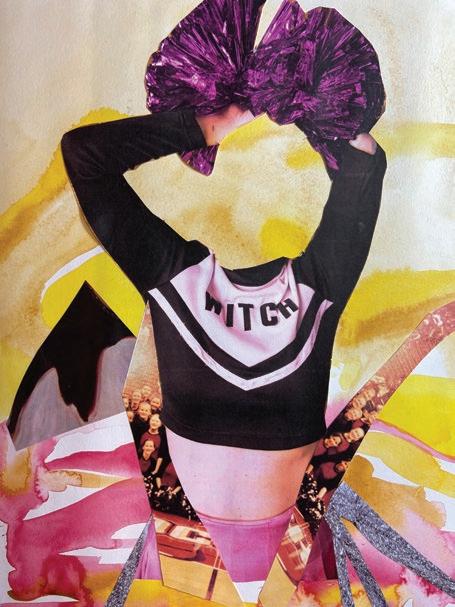
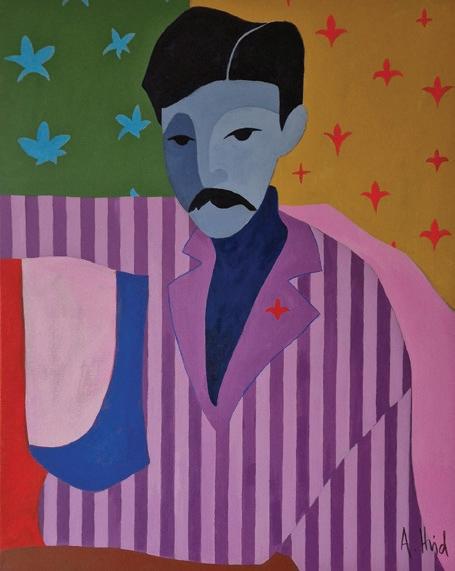
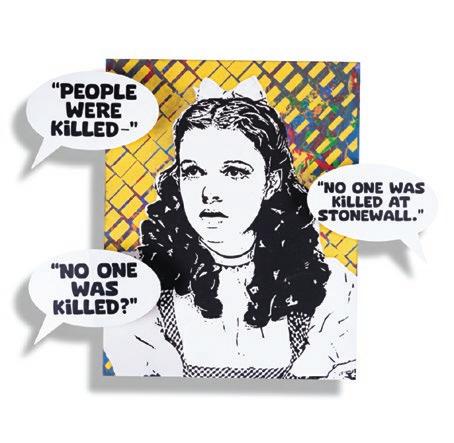
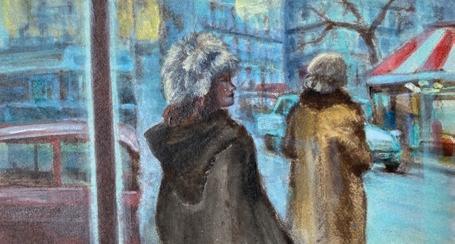
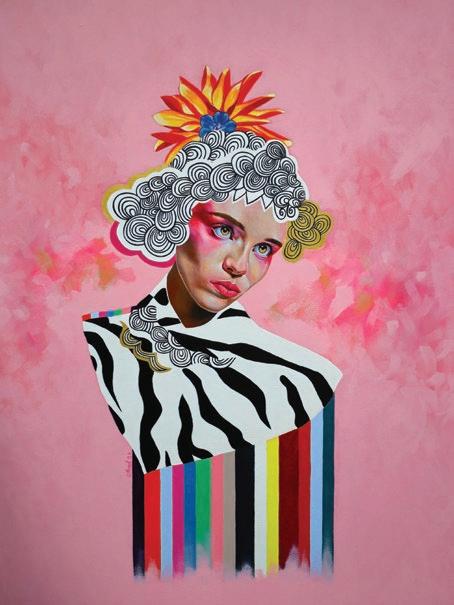
48 ANDREA
www.modandart.co.uk
andrea_jones_art
I am an artist from Liverpool, England and for the past eleven years I have worked as an art teacher in a prison. My artwork has featured in several magazines of art and literature in the U.S., U.K. and Berlin, Germany. One particular style that I work in is based on my alter ego, this is inspired by wanting to be somebody else, taking elements from different people to create new characters, I call these characters my alter ego people. The images are painted in acrylic on canvas or drawn onto paper.
49
www.zarakand.com
zarakandart
Zara Kand is an oil painter based in Southern California. She has exhibited throughout numerous venues within the US and has been featured in many online and print publications across the globe. Her work is often highly symbolic and focuses on figurative elements within dreamy environments. She currently lives in the hi-desert, spending her time painting, art writing for various art magazines, and dabbling in curatorial projects. She is also the editor of The Gallerist Speaks, an international interview series focusing on gallery directors, arts organizers and curators.
50
www.yulastudio.com
yurajoanrobinakim
Yula (b. 1996, South Korea) is a London-based contemporary painter whose work seamlessly bridges the natural world and urban spaces through her distinctive use of lines, abstract shapes from natural creatures, vivid colors, and dynamic spatial arrangements.
51 TOSHIKO KITANO GRONER
www.toshikokitanogroner.com
toshiko_kitano_groner
Toshiko Kitano Groner is a visual artist who lives and works in New York City. She was born and grew up in Japan. These works are color field paintings emphasizing the coordination of colors. She uses color to exude passion in her compositions. The floral scenes spontaneously arise in her imagination based upon fleeting random images briefly seen and experienced.
49
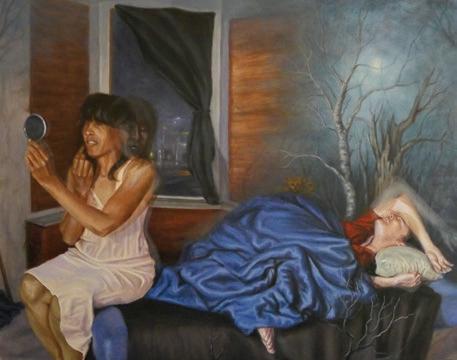
www.laurenknollmeyerstudio.com laurenknollmeyer
Lauren Knollmeyer’s work explores the concept of balance, weaving together themes of nature, motherhood, and mental health. An engineer turned visual artist and mother, Knollmeyer strives to balance these oftenconflicting identities and finds herself seeking refuge in nature and memory. An oil painter based in Seattle, WA, she now paints moments of reflection in the form of landscapes and portraits.
www.sandylang.art sandy_lang_art
“Creating is like telling yourself a tale of the world you feel.” Born 1980, Sandy Lang is a self taught artist located in Germany. She mostly works with oil colours since she loves their brightness and texture. It allows Lang to explore strong dark and light effects and to express the themes her paintings deal with. Being a lover of symbolism, Lang is working with allegories in a figurative manner of painting with a very personal approach to themes such as shadow and light, memories in time, and love – or its absence.
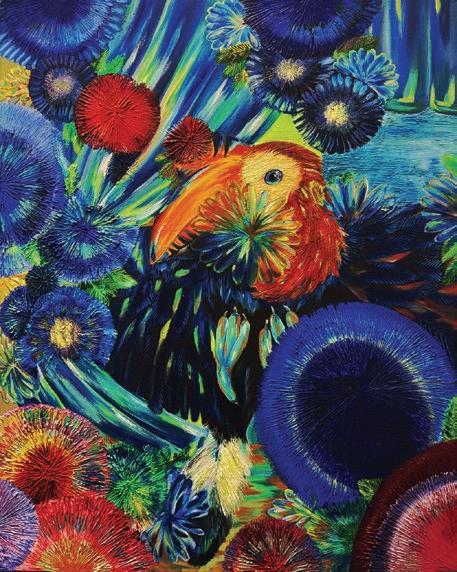
50
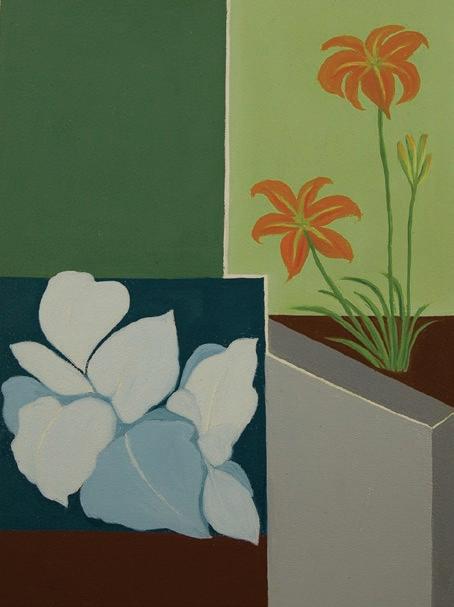
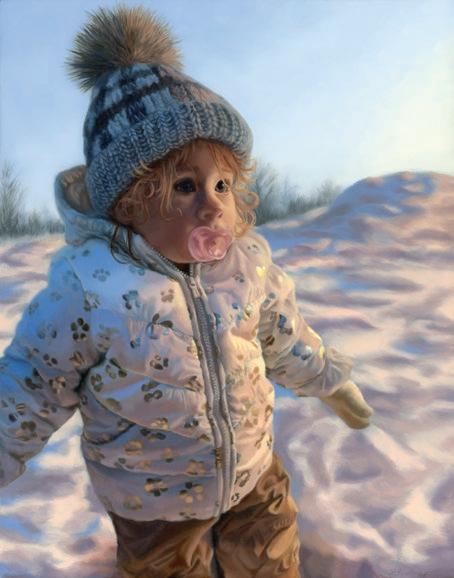
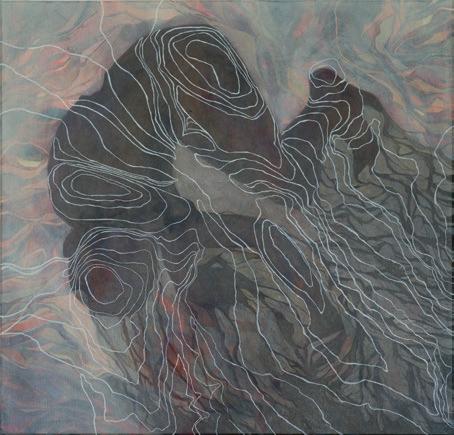
54 CHARLES LEAK
charlesleakstudio.com charlesleakstudio
Charles Leak (b. 1953, Dallas, Tx ) is an artist who lives and works in New York City and East Hampton. He combines oil paint, enamel, gold, copper powder, and graphite on canvas and paper. “I am influenced by all the great artists from Da Vinci to Diebenkorn. And all the great writers, musicians, and filmmakers. But more importantly, my greatest influence is the wonderful natural world we were given that surrounds us all”
55 JENN LECOUR
www.jennlecourart.com jennlecour_art
Jenn Lecour is a Canadian abstract painter living on an island off the west coast where she is surrounded by the drama of nature. Using cold wax and oil, she seeks to evoke a sense of timelessness that is embedded in the landscape. Through scraping and rebuilding layers, she explores the visual impact of what has been left behind.
56 DIANE LAMBOLEY
www.dianelamboley.com dianelamboley
Diane Lamboley is a contemporary photographer who strives to brighten the lives of others by helping them free their imaginations from the cage of their conditioning. She embraces adventure and finds much of her inspiration exploring the beauty earth offers. Lamboley is called to capture the wonders of nature through her photographs which are digitally transformed for people to experience a visual journey. Her artwork is printed on aluminum enhancing the contemporary feel.
57 MOLLY MARTIN
www.mollymartin.com mollymartinartist
Driven by a deep passion for the environment and women’s freedoms, Molly Martin’s art explores the intrinsic connection between humanity and nature. She reimagines 19th century photographic portraits of women to reflect environmental issues. Each piece evolves intuitively, allowing Martin to express both her concern and hope for the future.
58 SHAWN MARSHALL
www.shawnmarshallart.com shawn_marshall_art
Shawn Marshall is a Kentucky-based mixed media artist with a background in architecture. Her work explores themes of human presence, environmental interconnectivity, and sometimes societal perceptions of gender. Marshall’s work is frequently published, she has extensive exhibition experience in both group and solo shows, and she has received multiple Artist Enrichment Grants, supporting her creative development and international experiences.
59 GINGER MARTINEZ
www.saatchiart.com/gingerlianne gingerlianneart
I create abstract paintings that reflect emotion, movement, and healing. Layer by layer, I explore resilience, using color and texture to transform pain into beauty. Inspired by nature and personal experience, my work is a visual journey..raw, expressive, and deeply felt. Through art, I connect with others who seek meaning in transformation.
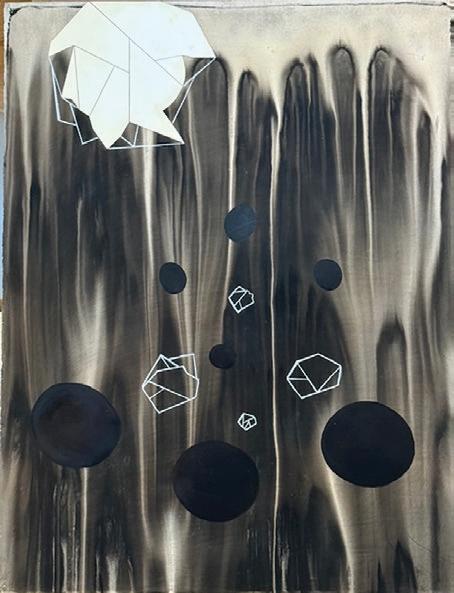

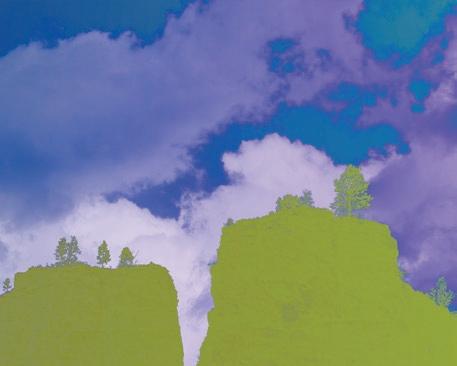
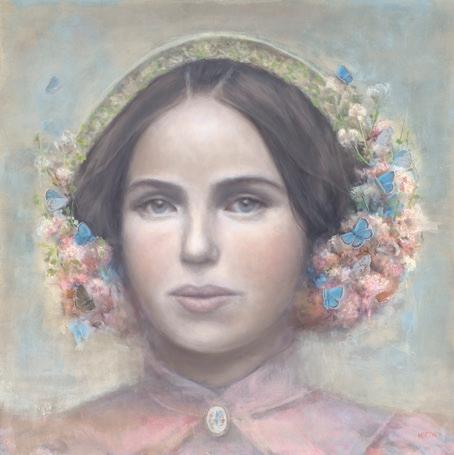
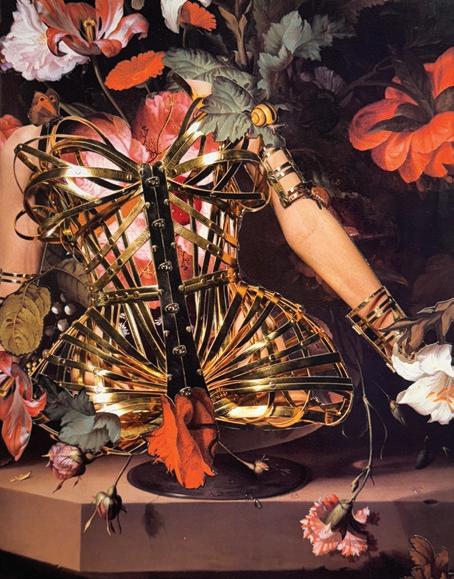
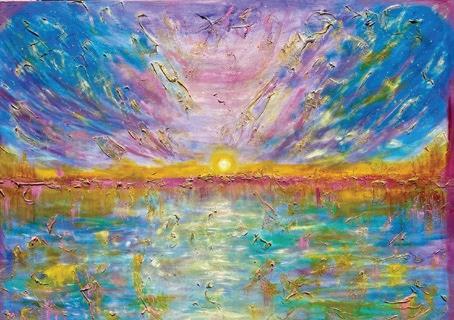
60 JODI MILLER
www.jodimillerfineart.com
jodimillerfineart
Jodi Miller is a Canadian prairie-based contemporary, impressionist painter. Her work explores connections with our roots, our stories and our surroundings. Drawing on her childhood on a family farm and years spent in the Royal Canadian Air Force across Canada, her landscapes are familiar yet fictitious. “Each painting begins with a memory, then evolves to tell a story of its own.” Jodi’s work focuses on human connections as observed through our environment using the metaphor of our imprints on the land as an entry point for personal narratives.
61 NICOLE MILLER
www.nicolemillerart.com
nicolemillerartist
Nicole Miller is an artist who shares her passion through teaching. With degrees in Studio Art, Interior Design, and Education, her artwork reflects a journey filled with joy, happiness, and gratitude. Using brayer techniques combined with oil pastels and acrylic paints, Nicole explores organic objects and pushes the boundaries of color saturation. Each piece is thoughtfully crafted, with heavy influences from her family and life experiences.
62 STEPHANIE MULVIHILL
stephaniemulvihill.com
smulvihillart
A NYC-based artist and educator, Stephanie Mulvihill works primarily with the drawn image on paper because of its tactile surface and fragile, impermanent quality. By drawing with graphite, she taps into the tradition of drawing as a means of investigation and dissection of both nature and ourselves. In her work, Stephanie explores themes of creation, motherhood and personal evolutions: physical, spiritual and intellectual. Visual references to the body and internal anatomy overlap, meld and transform to create totems honoring our individual and collective transformations.
63 CAMILLE
www.camillemylesart.com
camillemylesart
Camille Myles is an emerging Canadian contemporary artist living on the shores of Georgian Bay in Tiny, Ontario. Park Superintendent & formerly an archaeologist, Myles has a deep connection to nature & history bringing hope and transformation to her community. Working in painting, sculpture, installation and public art, she creates conversations about identity, motherhood and celebrates change and growth in her work. She’s exhibited extensively and is part of private collections internationally.
www.sepiandart.com
shokous
Sepi Naghashian, a self-taught Nashville artist, draws inspiration from Ed Ruscha and Anselm Kiefer to transform mountains into abstract forms that float against a minimalist background representing a silent universe. Her work is a subtle exploration of the coexistence between humanity and nature through the integration of conceptual themes, highlighting human and urban footprints on mountains in ordinary yet nuanced ways.
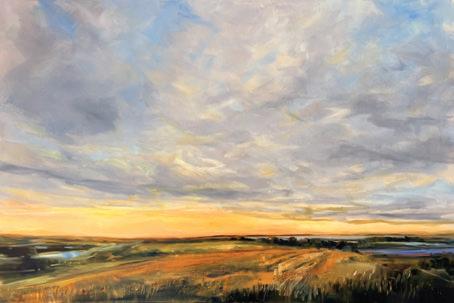
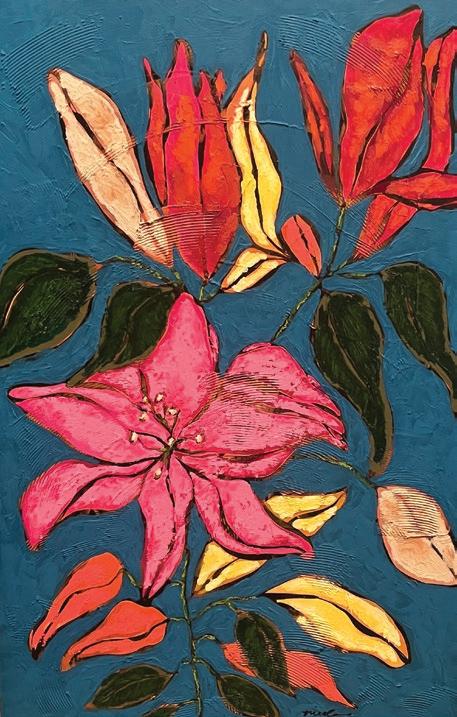
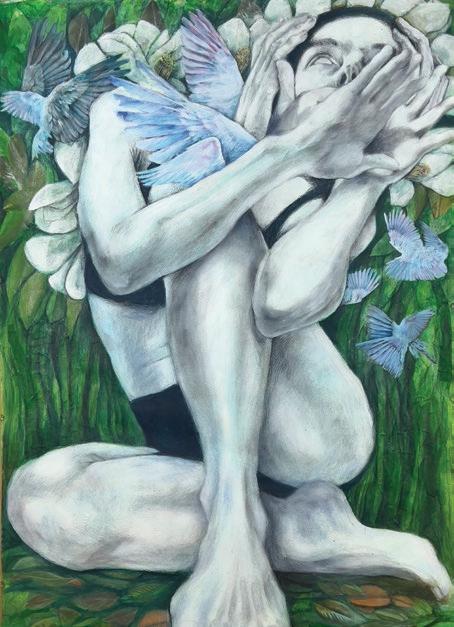
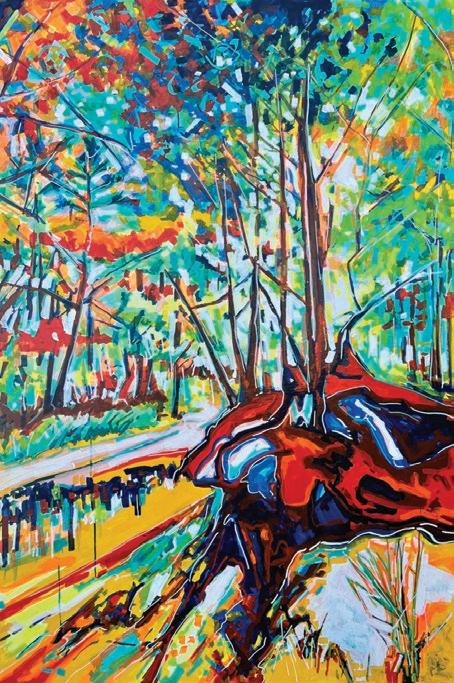
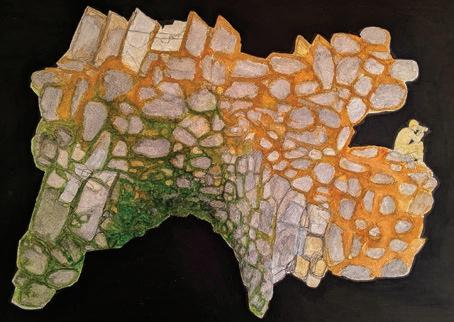
65 JESSICA OLIVEIRA
www.jessicaoliveiraart.com jessica.oliveiraart
Imitating the unreliable and fluctuating nature of her memory, Jessica Oliveira (b. 2000, Yonkers, NY) works to develop worlds that can be explored and experiences that can be rediscovered. In remembering, we can reflect and in reflection we can learn. Jessica is assessing how different people, places and objects are remembered and what happens to her memory over time.
66 RACHAEL O’SHAUGHNESSY
rachaeleastman.com/home.html rachael.oshaughnessy
Rachael O’Shaughnessy witnessed every consecutive ocean sunrise of the last decade, and translated them into atmospheric paintings to merge her coastline with the timeless, the ethereal, and the sublime. An honors BFA from MECA, Europe, and work with Wolf Kahn prepared O’Shaughnessy’s balance: “The intimate carries the infinite. I’m here here to render nature as felt, breathed in, and condensed.”
68 STEPHANIE PEREZ
stephanieperez2018.wixsite.com/perez-artistry perez_artistry
Florida native Stephanie Perez is a visual artist who uses portraiture to explore the Anthropocene and issues of climate change. Her work examines the human condition, consumer culture, and society’s influence on individuals. Inspired by climate change, influential consumer graphics, and bold colors in merchandise design, she emphasizes the interconnected nature of these dynamics and their impact on humanity.
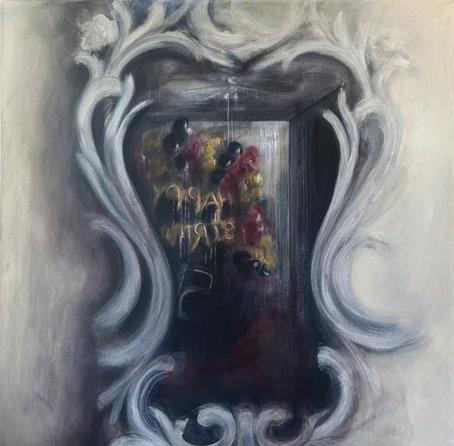
69 REBECCA POTTS AGUIRRE
ww.rebeccapotts.com pottsart
Rebecca Potts Aguirre is an artist based in Southern California. She explores themes of motherhood and gendered labor, memory and visibility, trauma and healing. She sculpts polymer clay and play-dough, building “paintings” with slight relief. Her materials draw connections to craft and childhood, while her imagery reflects flickering memories and the early fog of motherhood. Through her art practice, she seeks connection and asks: how do connections persist?
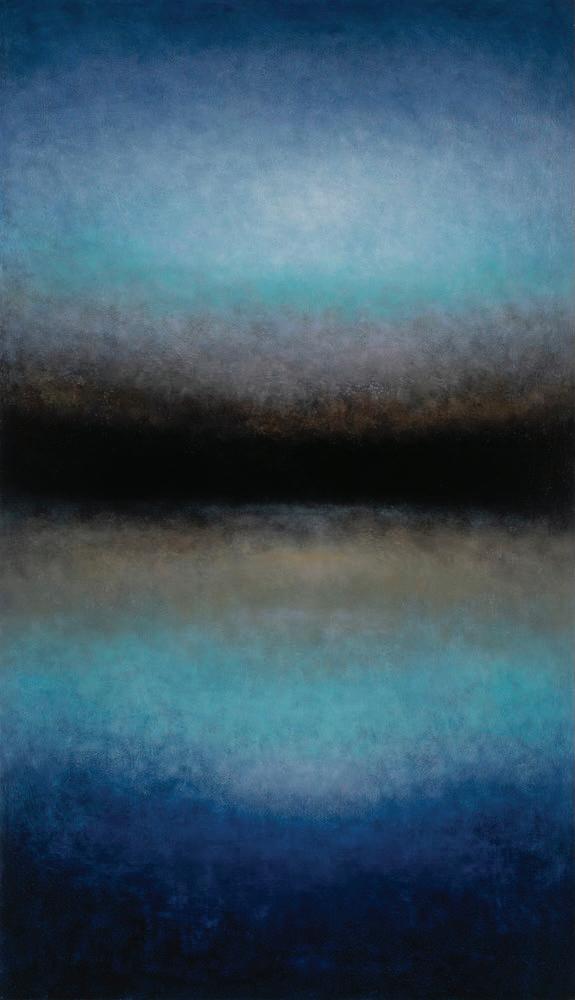
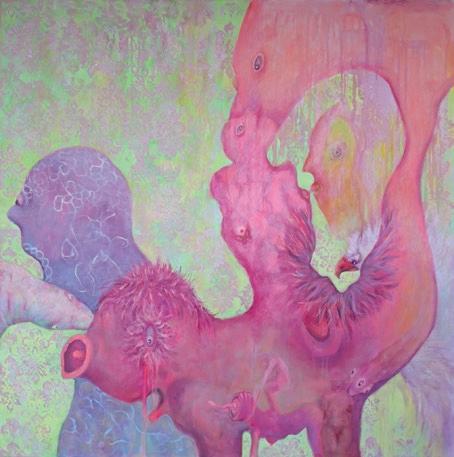
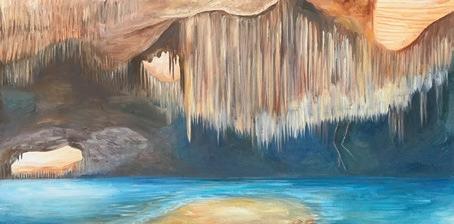
70 LISA PRICE
www.lisamarieprice.co.uk lisapriceart
Lisa-Marie Price is an abstract painter based in Hertfordshire, UK, creating eco-conscious art using handmade watercolours from foraged minerals and offcut linen. Her work explores themes of climate change, mindfulness, and our connection with nature. Through delicate, textured compositions, she encourages reflection, invites stillness, and inspires a more grounded, eco-conscious way of living.
67 ANNA PACHOLIK
annapacholik.com
annapacholik_paintings
Pacholik graduated from the Academy of Fine Arts in Łódź. She creates in cycles, exploring identity, our relationship with the environment and femininity. She extracts images from her subconsciousness and reaches for archetypes and symbols, taking inspiration from the philosophy of Jung. She won the Hommage à Łódź Award and has participated in collective and individual exhibitions.
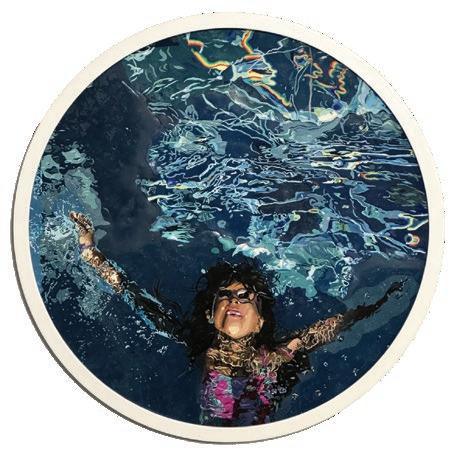
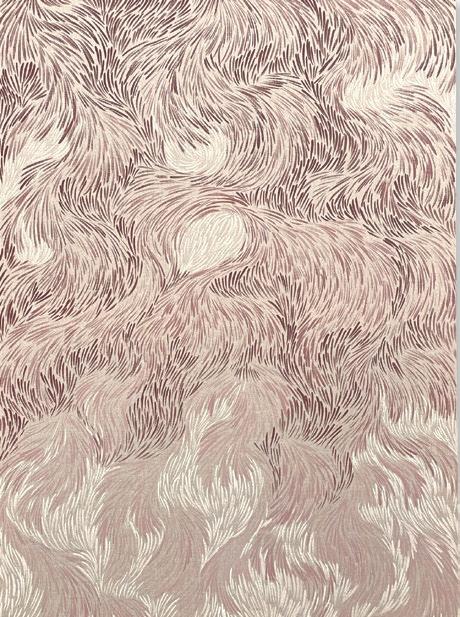
71 PAULINA REE
www.paulinaree.com
paulinareeartist
Paulina Ree is an Oslo-based painter, educator, curator, and researcher. Born in Ecuador, Ree moved to the United States as a teenager, it was during her time there that she first trained in Art, pursuing her long life passion of learning about painting and art history. Her art practice revolves around regular and continuous research, as well as participating in in-person and online art related workshops. Ree explores drawing, and painting in different mediums. Ree’s focuses on portraiture and figurative art.
72 BRITTANY M. REID
brittanymreid.com
brittany.m.reid
Brittany M. Reid lives and works in Rochester, NY. Shapeshifting between mediums has become second nature, with their current focus on painting. Their recent work captures the moments where our minds wander into nebulous daydreams, featuring amorphous shapes and fantastical dreamscapes. This shift to painting marks a deliberate departure from their earlier collage work, which was characterized by bright colors and crisp lines, and reflects an evolving exploration of abstract visual storytelling.
73 MICHELLE REEVES
michellereevesart.com
michellereevesartnashville
75
www.artjanne.com
jannereuss
Janne Reuss’s layered photographs evoke poetically charged compositions. She was born in Mexico and studied Fine Arts at the Academy of Art & Design in Stuttgart, Germany and History of Art in Mexico City. Janne’s work is held in private and public collections including the Donovan Art Collection at St. Michael’s College (Canada) and the Municipal Gallery of Ostfildern (Germany).
76
www.alirouseart.com
ali_rouse_artist
Ali Rouse’s artistic creations are reflective of the power of beauty, death and rebirth, and the eternal cycle of Life. Born of death becomes reincarnate Life.
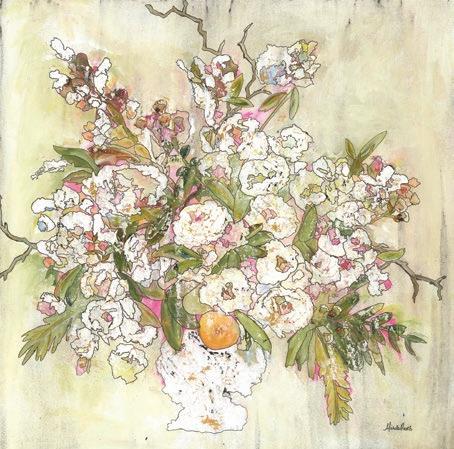
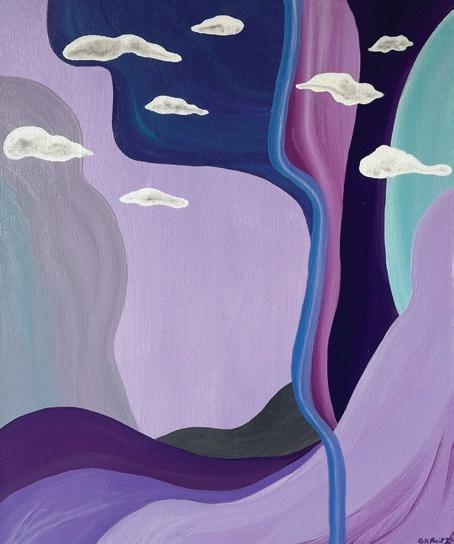
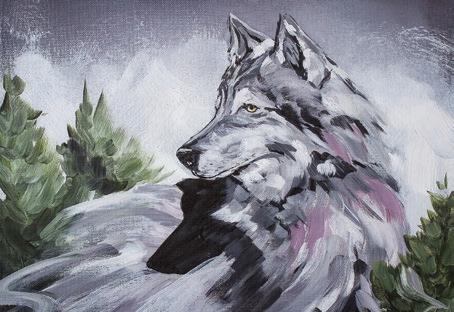
71
Michelle is a botanical/floral artist who lives with her husband and son in Nashville, TN. She began painting at the age of 52 after a gentleman asked, “What are you passionate about?” during a job interview. This question led Michelle back to school to pursue an Interior Design degree, but through coursework she started to paint. Her latest paintings are inspired by pages from her childhood coloring books. Bold outlines of brush strokes and intricate backgrounds fill the canvas. 73
74
www.maddiereiss.com
maddiereissart
Maddie is a landscape painter based in Greater Philadelphia. She works primarily in acrylic but enjoys sketching in ink and watercolor. Nature and wildlife are her main sources of inspiration, but she also relies on words, song lyrics, and poetry to guide the look, feel, and mood of her visual work. Her current collection of paintings is centered on western landscapes from her travels, featuring scenes from AZ, CO, and Big Sur.
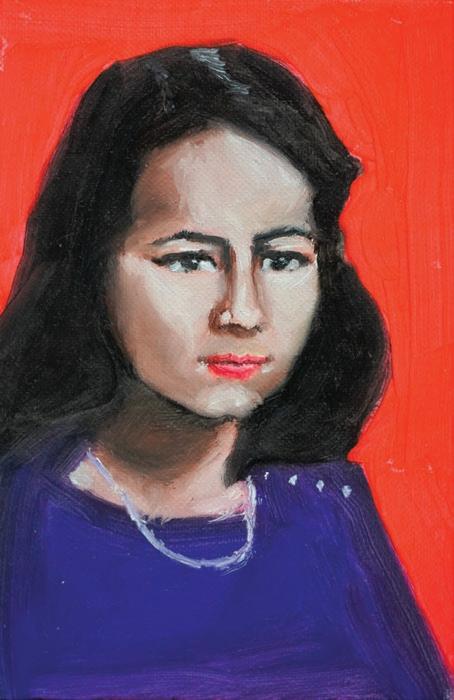
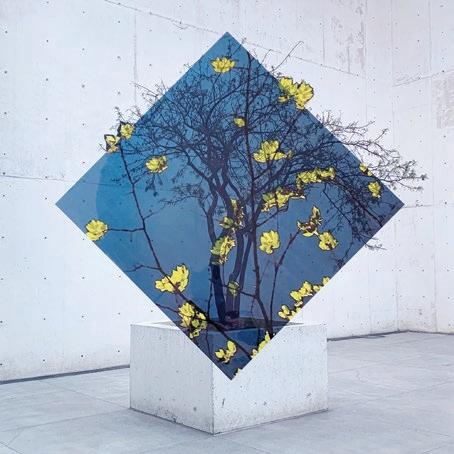
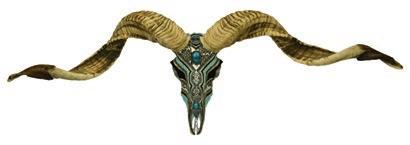
77 RACHEL ROSE
www.rachelmo.com rachelrose_art
Rachel Morrissey is based in Massachusetts. She received her MFA in 2016 from MassArt. Morrissey makes highly saturated narrative paintings that employ organic forms to convey her daily experiences, which include motherhood, anxiety and more recently, life with a chronic illness. The motifs oscillate along the continuum of her lived experience, love and joy at one end and utter despair at the other. She is represented by Voltz Clarke Gallery and 19 Karen.
78 JANA body_wilderness
Jana, a German self-taught artist, creates watercolour and line art celebrating female bodies and nature. Her work, inspired by conversations about womanhood, challenges societal norms and fosters self-love. Through series like ‘Vulva Discoveries’, Jana aims to break taboos and offer new perspectives on often misunderstood body parts. Her art is a journey of growth and an invitation for viewers to reconsider their own attitudes towards bodies.
79 LINDA SIEVERS
sieversartstudio.com lindasieversstudio
Linda Sievers prefers the beauty of a simple palette to create a sense of elusive quiet in her abstract paintings. Her work has a soft, subtle, yet underlying strength. She graduated with a degree in social work and feels strongly that both professions share an emotional action. The same sense of observation and sensitivity come into play. Her home in Bloomington, IN, influences her work.
82 EKATERINA
art_ekaterinas
Over the years, Ekaterina Stolyarova increasingly understood that her art should not only be a means of expression but also a way to show people that nature needs protection. Using eco-friendly materials is her way of saying, “We can create without harming the environment.”
77
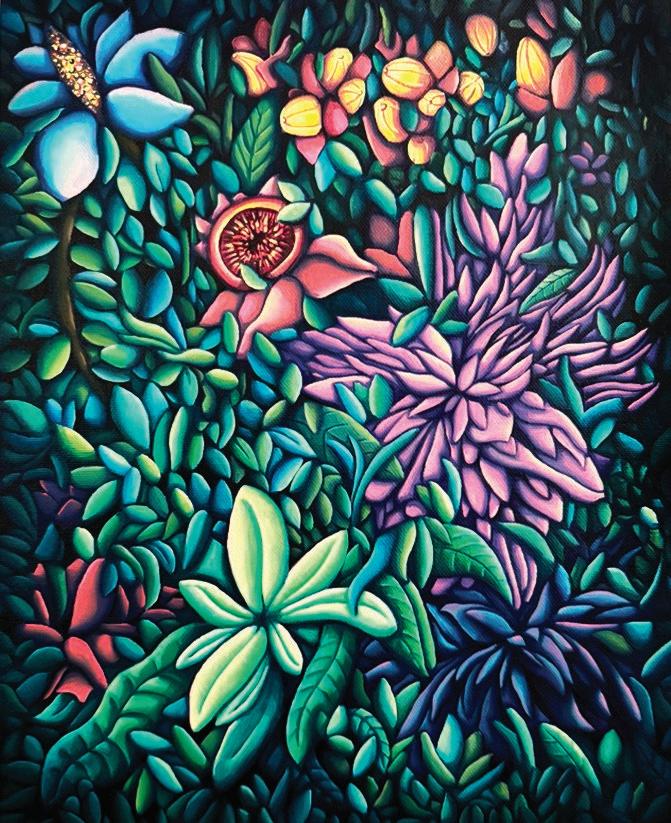
80 MEGAN
megansilvaartist
Megan Silva is a South African born acrylic painter who lives in North Carolina with her husband and two kids. Megan started painting after losing a sense of self through a difficult pregnancy and motherhood in a foreign country. Through her paintings she hopes to draw you in, to join her in the quiet moments and pleasures that are found throughout an often loud and hectic day.
81
libbysipe.com libbysipestudio
Libby Sipe is a process-driven multidisciplinary artist currently living in Maine. Her work represents her playful and resilient spirit that has carried her through profound and challenging moments of her life. She breaks the rules of painting because she is enchanted with the idea of something like paint being able to stand without the aid of a traditional substrate.
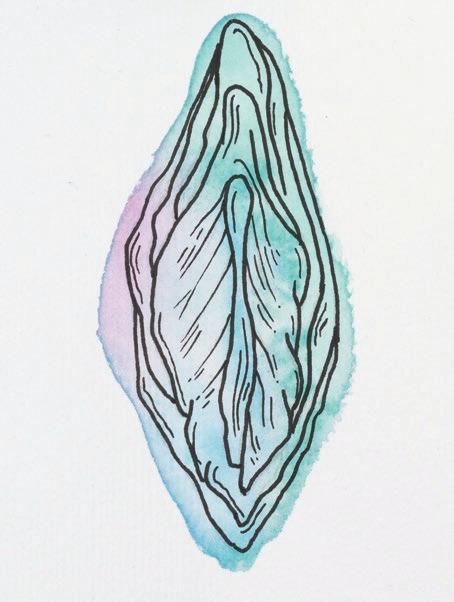
78
79
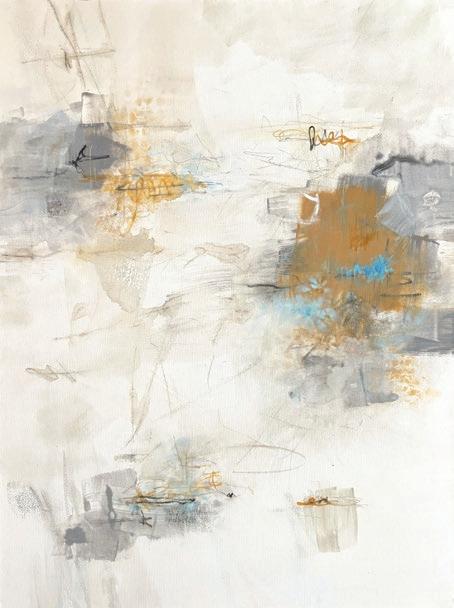
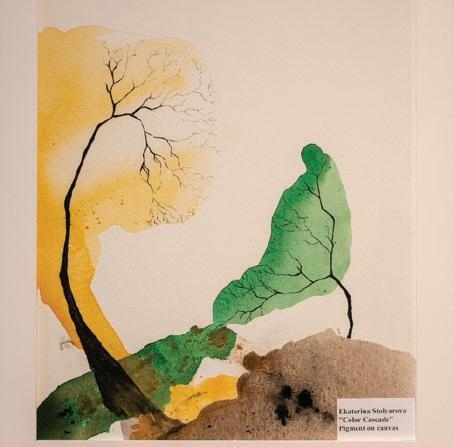
80
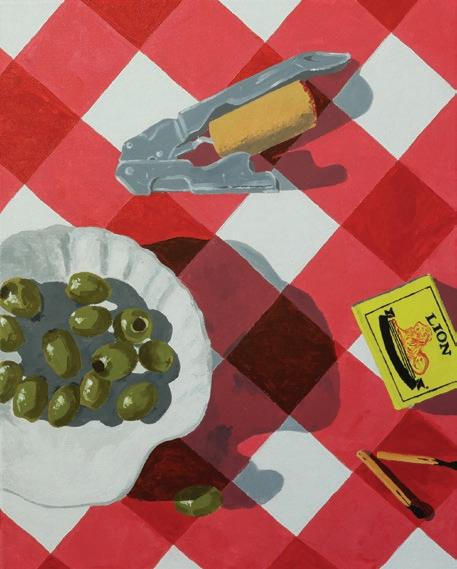
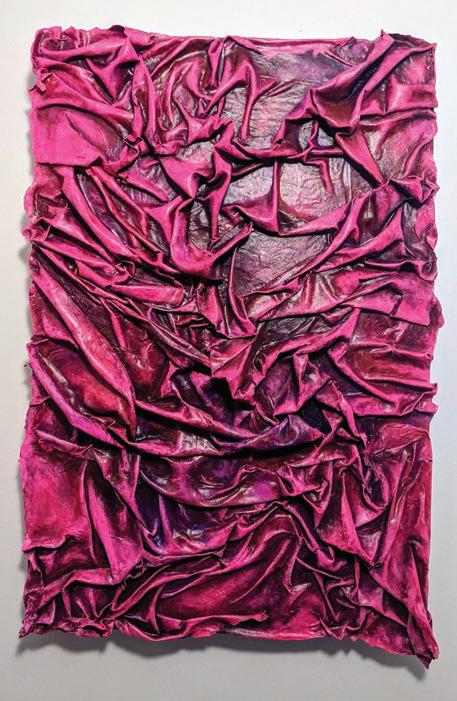
83 NAOMI THORNTON
www.spiritisaboneart.com spirit_is_a_bone_art
Naomi Thornton is a mixed media artist and psychotherapist living in the expansive beauty of Northwest Montana. In her art, she highlights the historically undervalued stories of women while emphasizing a connection to nature as a life-giving resource. Vintage portrait photographs are the inspiration of her work. She uses collage and paint to evoke a textured layering of desires, hopes and dreams using found images, handmade papers, and text from old books. Through her art, she intends to create a new narrative of empowerment, resiliency, and connection to the natural environment.
84 NINA URLICHS
nina.urlichs.de ninaurl
Nina Urlichs, a German artist, completed her studies in Fine Art in Paris. In her collage-like works, Nina explores themes of femininity and the relationship with the surrounding nature. She employs a variety of techniques, including drawing, cyanotypes, and photography, to create layered compositions that evoke a world of silence and nostalgia.
85 SIEGLINDE VAN DAMME
www.sieglindevandamme.com sieglinde.art
Sieglinde Van Damme is a visual artist based in CA, although she used to be an economist with European roots. Focused on abstraction as an open, undefined potential to new interpretations, her work reflects on the deep layers of our individual past histories and the complex dynamics behind big life choices. Her message: always “re-imagine what else is possible.”
86 SPENCER WELCH www.spencerwelchstudios.com spencerwelchstudios
As a self-taught artist and mother, my work speaks volumes to the radical work of caregivers in today’s society. I am inspired by the everyday moments in life that are often overlooked. I love to use color and texture to evoke an emotional experience for whomever is viewing my work and to bring light and love to those forgotten moments.
87 CHRIS WELLER www.nycdrawings.com chriswellernyc
Chris Weller, b. 1962 Calgary, Alberta, Canada, BFA Western Michigan University. Chris is a New York City based artist. “I make drawings to explore man’s relationship with the urban environment he has built, juxtaposed against his tenuous relationship with nature. My goal is to create work which communicates
83
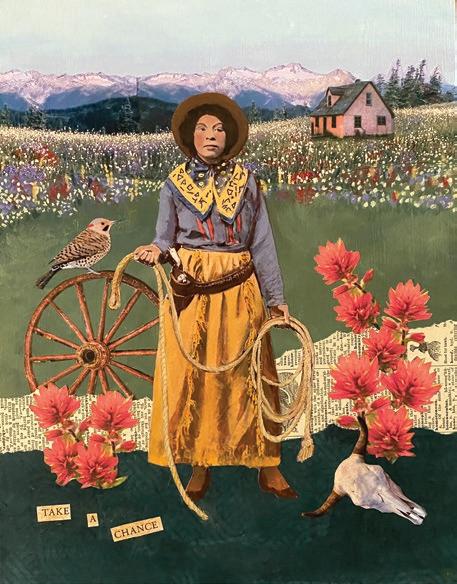
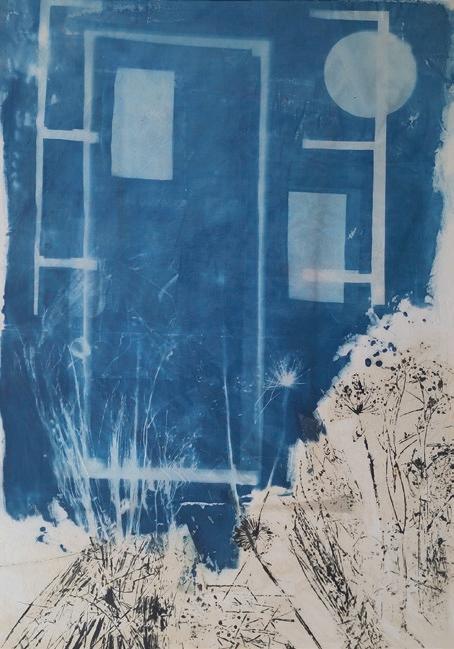
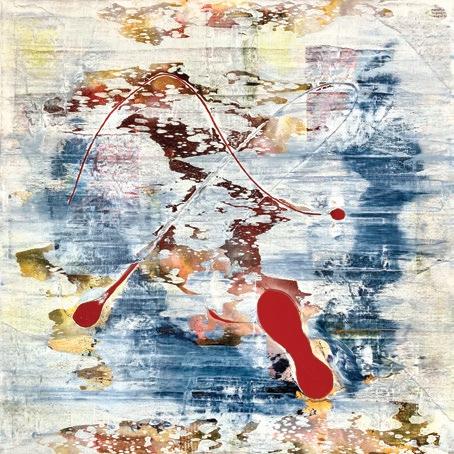
88 ERIN WHEARY
www.erinmonetwheary.com erinwheary
Erin Monet Wheary is an interdisciplinary artist. Her work explores concepts of growth and decay and order and chaos. “Visual art is my lens to see and understand the physical world and humanity.” Wheary’s recent exhibitions include the Female Artists Club, Belgium, and a site-specific installation at Swarthmore College. Artist residencies include Chateau d’Orquevaux, France (2020) and Casa Taller El Boga, Colombia (2023). She currently teaches at Western New Mexico University.
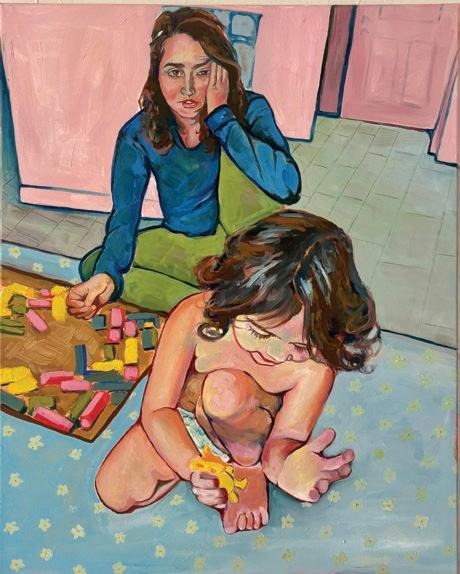
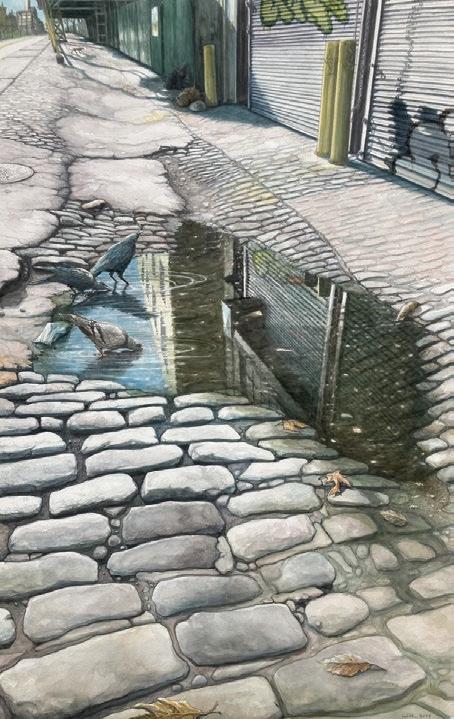
89 YAHEL YAN
www.yahelyan.com
yahel.yan.art
Depth is born from layers of paint, revealing a tapestry of hidden memories. Each painting brings forth underlying emotions and sensations - from joy and romance to grief and healing. My artistry thrives on a determined passion for creation. Whether capturing the essence of a chair, a whimsical landscape, or an abstract form, every collection embodies my optimistic spirit and my mission: to inspire joy in every viewer.
90 KATIE
katiedyaquinto.com
katiedumestreyaquinto
Katie Dumestre Yaquinto is a contemporary artist based in New Orleans. She attended the University of Louisiana at Lafayette and LSU where she studied fashion design and merchandising. My work primarily focuses on introspection. My practice allows me to process and express my innermost thoughts and feelings through various brush strokes and mark making. These distinctive marks have become my own private visual language and have developed over time through body movement and muscle memory
91 BRENDA ZAPPITELL
www.zappitellstudio.com zappitell_studio
Zappitell is a contemporary abstract painter. Ritual Paintings series, is characterized by her distinctive gestural marks of looped forms in subdued palettes that have been integrated with mantra-like phrases repeatedly inscribed in diminutive text across the canvas. These statements, quietly repeated by the artist during the act of painting, serve a dual purpose as both a seal and a disclosure, intricately intertwining with the abstract forms to convey a personal narrative.
92 ZINEFING ZANG
www.zifengzang.com
zifengzang
Zifeng Zang, an abstract painter based in Philadelphia, passionately explores the intuitive sense of color and how nature inspires and informs her work. Her love for art began at a young age, leading to dual BFA degrees from Jilin University in China and West Chester University of Pennsylvania. Her extensive career experience in graphic design and brand management in China honed her skills, but she always felt drawn to traditional painting. Now, Zifeng focuses on developing her favorite abstract style, a universal language for expressing personal experiences and emotions through color and form, connecting viewers to the natural world.
www.dashaziborova.com realtimeinink
Dasha Ziborova is a versatile multimedia artist born in St. Petersburg, Russia, who moved to New York in 1991. Her work has been exhibited at Art on Paper, Outsider Art Fair, The Center for Book Arts, Governors Island, DVAA, and Space776. Dasha’s artistic style varies depending on the project, spanning from collages and artist books to immersive performances.