Infrastructure and the Future
Afterword: Growing Middle Space Elizabeth Christoforetti 91
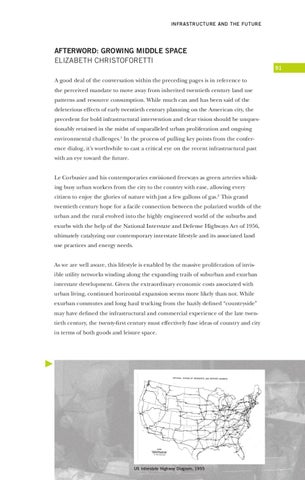
A good deal of the conversation within the preceding pages is in reference to the perceived mandate to move away from inherited twentieth century land use patterns and resource consumption. While much can and has been said of the deleterious effects of early twentieth century planning on the American city, the precedent for bold infrastructural intervention and clear vision should be unquestionably retained in the midst of unparalleled urban proliferation and ongoing environmental challenges.1 In the process of pulling key points from the conference dialog, it’s worthwhile to cast a critical eye on the recent infrastructural past with an eye toward the future. Le Corbusier and his contemporaries envisioned freeways as green arteries whisking busy urban workers from the city to the country with ease, allowing every citizen to enjoy the glories of nature with just a few gallons of gas.2 This grand twentieth century hope for a facile connection between the polarized worlds of the urban and the rural evolved into the highly engineered world of the suburbs and exurbs with the help of the National Interstate and Defense Highways Act of 1956, ultimately catalyzing our contemporary interstate lifestyle and its associated land use practices and energy needs. As we are well aware, this lifestyle is enabled by the massive proliferation of invisible utility networks winding along the expanding trails of suburban and exurban interstate development. Given the extraordinary economic costs associated with urban living, continued horizontal expansion seems more likely than not. While exurban commutes and long haul trucking from the hazily defined “countryside� may have defined the infrastructural and commercial experience of the late twentieth century, the twenty-first century must effectively fuse ideas of country and city in terms of both goods and leisure space.
US Interstate Highway Diagram, 1955