Infrastructure and the Future
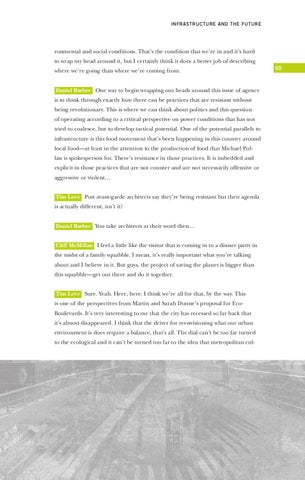
ronmental and social conditions. That’s the condition that we’re in and it’s hard to wrap my head around it, but I certainly think it does a better job of describing where we’re going than where we’re coming from. Daniel Barber One way to begin wrapping our heads around this issue of agency is to think through exactly how there can be practices that are resistant without being revolutionary. This is where we can think about politics and this question of operating according to a critical perspective on power conditions that has not tried to coalesce, but to develop tactical potential. One of the potential parallels to infrastructure is this food movement that’s been happening in this country around local food—at least in the attention to the production of food that Michael Pollan is spokesperson for. There’s resistance in those practices. It is imbedded and explicit in those practices that are not counter and are not necessarily offensive or aggressive or violent… Tim Love Post avant-garde architects say they’re being resistant but their agenda is actually different, isn’t it? Daniel Barber You take architects at their word then… Cliff McMillan I feel a little like the visitor that is coming in to a dinner party in the midst of a family squabble. I mean, it’s really important what you’re talking about and I believe in it. But guys, the project of saving the planet is bigger than this squabble—get out there and do it together. Tim Love Sure. Yeah. Here, here. I think we’re all for that, by the way. This is one of the perspectives from Martin and Sarah Dunne’s proposal for EcoBoulevards. It’s very interesting to me that the city has recessed so far back that it’s almost disappeared. I think that the driver for reenvisioning what our urban environment is does require a balance, that’s all. The dial can’t be too far turned to the ecological and it can’t be turned too far to the idea that metropolitan cul-
69