COVER PHOTO BY OWEN CRANDALL

TRANSPORTATION EXPERTS
Kyle Moody

Moody Blu 435-225-1614 moodybluexpress.com moodyblu2019@gmail.com



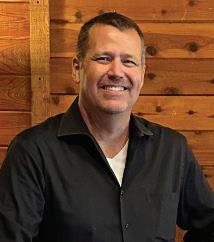

FINANCIAL SERVICES EXPERT
Zachary Anderson
Farm Bureau Financial Services 1268 S US-189 #600 Ut 84032
Zachary.Anderson@fbfs.com | 435-654-4110 www.zacharyanderson.fbfsagents.com
ELECTRICAL EXPERT
Heber Light and Power 435.654.1581 | heberpower.com customerservicesupport@heberpower.com
HOME FIXTURES EXPERT
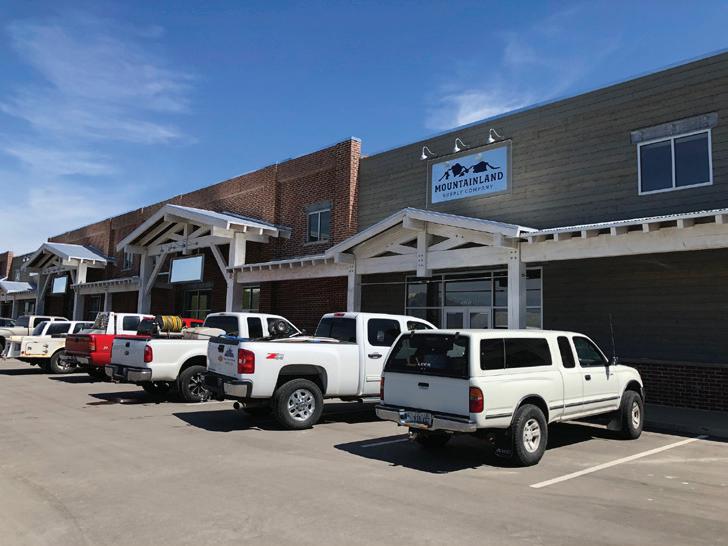
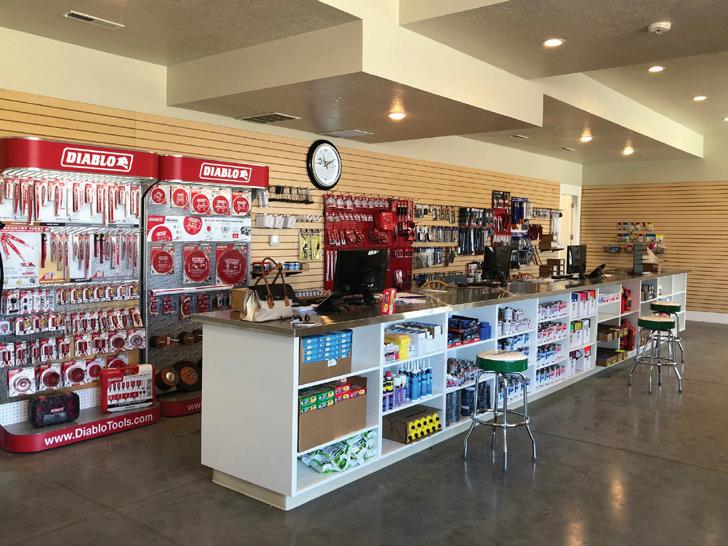
Tim White Mountainland Supply 2875 US 40 Daniel, UT 84032 tim.white@mc.supply | 801-224-6050
MIXOLOGIST AND BARTENDING EXPERT
Tom Brazill





REROOFING EXPERT
S and S Roofing
Emergency Repairs & Free Estimates Utah’s #1 Roofing Company 435-658-4344
INTERIOR DESIGN EXPERTS
Franky & Tam Studio Interiors & Co. franky@studiointeriorsutah.com tam@studiointeriorsutah.com 435-214-6951
REAL ESTATE EXPERT
Andy Emory
Summit Sotheby’s International Realty 362 N Main Street | Heber, UT 84032 www.andyemory.com | 435-800-3030 andy.emory@sothebysrealty.com
INSURANCE EXPERT
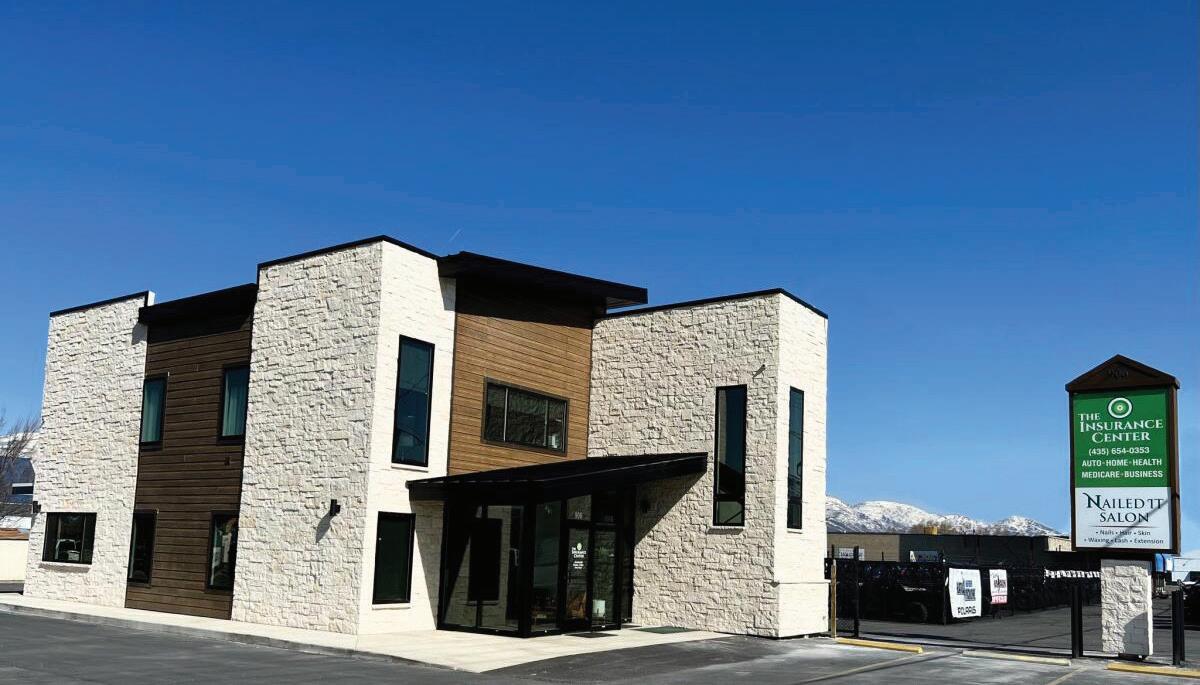
The Insurance Center 906 S. Main St., Heber City 84032



LIGHT CELL THERAPY EXPERT
Dr. David Tate
Valhalla Cell Therapies
321 W. 1300 S., Suite 120 ,Heber City, 84032 | 435-244-2919 www.valhallaplus.org
MASSAGE AND WELLNESS EXPERT
Crystal Joy, Mountain Elite Massage 32 South Main Street, Olde Town Square Building, Heber City, 84032 mountainelitemassage.com 435-315-3573

COUNSELING EXPERT
Meadowbrook Counseling Therapy for individuals, couples and families.
Meadowbrook Counseling 150 North Main Street Suite 201 Heber, UT 84032 office@meadowbrookcounseling.com 801-655-5450
Elevate Event Bartending | 801-477-4452 tom@elevateeventbartending.com elevateeventbartending.com PET KENNELING AND BOARDING EXPERT
PLUMBING EXPERT
Jonathan Cheever
Team Cheever Plumbing & Heating www.teamcheever.net (435) 252 7697
To learn more about becoming an expert contributor, contact Betsy DeMann at bdemann@bestversionmedia.com or 801-671-6315



InsuranceCenterUtah@gmail.com 435-654-0353 InsuranceCenterUT.com
AUTOMOTIVE & MAINTENANCE
REPAIR EXPERT
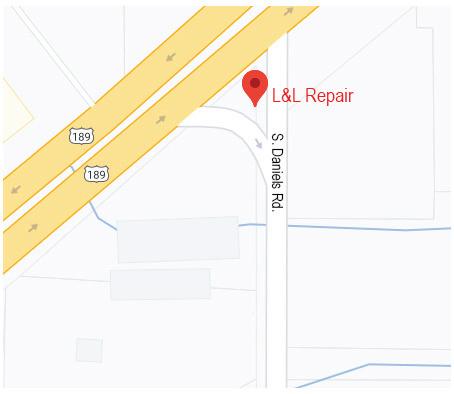
L & L Repair
1310 S Daniels Rd., Heber City, 84032 435-657-0715
ANIMAL WELLBEING EXPERTS
Stephen Jones, MVB, MS, DECVS 5373 UT-224, Park City, UT 84098 barkcityvet.com | 435.200.2160 info@barkcityvet.com
Molly Uhlig
Pete’s Adventure Pack petesadventurepack.com petesadventurepack@gmail.com 404-550-5633


150 North Main Street, Suite 201 • Heber 801-655-5450 • office@meadowbrookcounseling.com www.meadowbrookcounseling.com
Coombs Kenneling 1685 S Mill Rd Heber City Ut 84032 coombskennels.com | 435-657-2577 coombskennels@gmail.com
COLOR AND STYLE EXPERT
CONTRIBUTOR
Julie Hickam House of Colour
Julie.Hickam@houseofcolour.com 435.315.2258
CLEAN LIVING EXPERT
Dana Grinnell
Free Living Co. dana@freelivingco.com 208-869-6866

WOMEN’S WELLNESS EXPERTS
Marty Harger Natural Wellbeing Expert martyharger.com | 801-712-5406 martyharger1@gmail.com
Dee Dee Turpin
Grief and End of Life Expert anecessaryconversation.com deedee@anecessaryconversation.com 310-266-6936

Have feedback, ideas or submissions? We are always happy to hear from you! Go to www.bestversionmedia.com and click “Submit Content.” You may also email your thoughts, ideas and photos to: bdemann@bestversionmedia.com
FOR SUBMISSIONS ARE THE 5TH OF EACH MONTH FOR THE FOLLOWING MONTH.
IMPORTANT PHONE NUMBERS
Emergency 911 Administration 435-615-5000
Building and Fire Safety 435-615-5100
City Attorney 435-615-5025
Council
- PCFD 435-940-2500 Library 435-615-5600 Planning 435-615-5060 Police - Non Emergency 435-615-5500
Special Events 435-615-5000 Transit Bus 435-615-5301 Water 435-615-5305

BETSY DEMANN Publisher bdemann@bestversionmedia.com




Aimee L. Cook Writer
Aimee L. Cook is an award-winning journalist who loves sharing words about lifestyle, food, and entertainment. Her work has appeared in numerous publications across the Western region, offering insightful perspectives on diverse topics that aim to captivate and engage audiences. When she is not writing, she enjoys reading, cooking, golfing and spending time in West Yellowstone, Montana, where she heads for respite.
JACQUIE SYMES Content Coordinator jacquie@bestversionmedia.com




MITCHELL OLSEN Publisher molsen@bestversionmedia.com












BY AIMEE L. COOK
PHOTOS BY AIMEE L. COOK AND SIERRA KINKADE

“I love bold flavors, so I always try to think what is not going to be boring, like, how can we elevate pesto pasta. I spend a lot of time brainstorming ideas and coming up with so many ideas, and I am always thinking about the next season. My notebook is full of ideas”- chef Diane

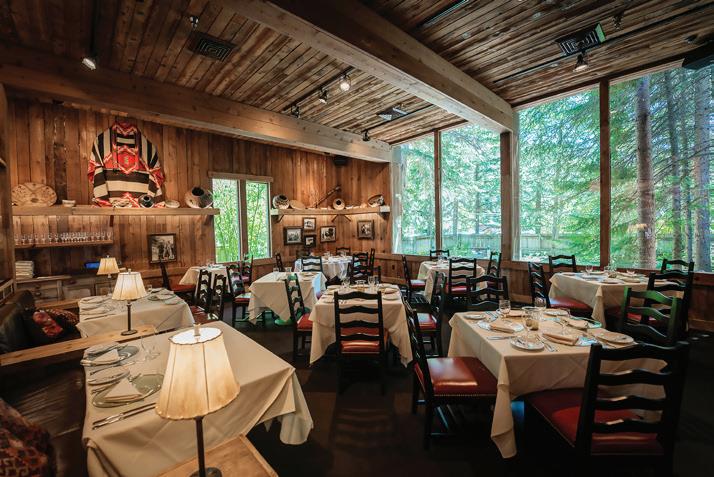
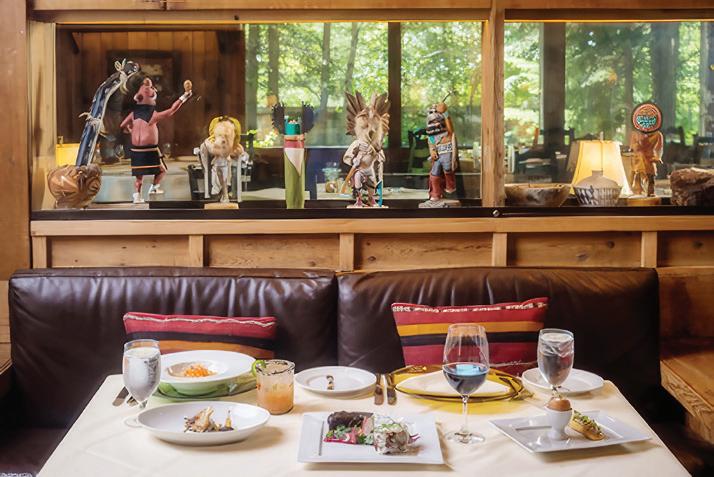
Within the beautiful landscape of Sundance Mountain Resort, the Tree Room restaurant, aptly named for the actual tree that still stands inside the restaurant, has held a special place in the hearts of locals, often serving as the backdrop for life's most memorable milestones. It has become synonymous with celebration, from weddings and anniversaries to graduations and birthdays. Since its inception in 1970, this culinary gem has evolved through various menu iterations, each more intriguing than the last. Yet, throughout history, one principle remains constant—the food tells a story.
Initially, the Tree Room focused on rustic homestyle favorites and comforting dishes that evoked a sense of familiarity and warmth. However, in 2013, under the new leadership of Alex Izatt, Director of Culinary and Executive Chef, the restaurant took a bold turn toward molecular gastronomy. The menu featured elaborate dishes with foams, edible powders, and multiple components per plate. While visually stunning, these avant-garde creations did not resonate with the loyal patrons who craved the familiar flavors of yesteryears.
Recognizing the need for change, the Tree Room staff shifted gears again in 2015-16. The new focus was on elevated comfort dishes, incorporating local ingredients, wild game, and dry-aged proteins. Even more elaborate offerings, such as tempura-fried lobster risotto and black truffles, found their place. These dishes, while sophisticated, were approachable and relatable, setting the restaurant on a path to finding a more permanent identity.
Two dishes have stood the test of time at the Tree Room—the Sundance Salad and Tree Room Pepper Steak. These signature items have been fan favorites since the early days, embodying the restaurant's commitment to flavor and tradition.
In recent years, the Tree Room has embraced a new era of "Elevated Mountain Fine Dining" under the guidance of Chef de Cuisine Diane Davidson, who joined the team in 2021 and Executive Chef Alex Izatt. Their philosophy prioritizes proteins from local farms and ranches, such as lamb, bison, and trout, paired with hearty grains and seasonal vegetables. Additionally, Chef Diane infuses her Hispanic heritage into the menu, blending classic Mexican dishes like mole and tamales with the Native American and Western influences of the restaurant’s décor.
“Chef Diane has really done a tremendous job over the last couple years that she has
taken over leadership of the restaurant to not only take the identity the Tree Room has but also fostered that into her development by influencing with some of her heritage and background,” Izatt said. “She has great stories and has reached into her own experiences and family history and built that into the menu. Our goal for the past two years has been ‘How do we improve storytelling.’”
Chef Diane's innovative spirit has brought weekly tasting menus to the Tree Room, featuring adventurous dishes inspired by her experiences in top restaurants worldwide. Each week, the menu shifts to include new, neverbefore-seen creations, keeping patrons excited and engaged. I tried her Rabbit Confit dish and enjoyed the medley of flavors on the plate. From the Pepita mole to the chipotle carrots, each bite offered a familiarity with the story behind the dish.
“I always try to sneak some kind of mole on the menu because I love mole,” Diane said. “I also love the depth of flavor that Mexican food has and all the spices, so I am using all the spices I can; we have quite a collection [in the kitchen]. The mole has a story—When I was little, my dad bought a boy & girl rabbit unknowingly, and we had more rabbits in our yard than a yard. For a family party, he prepared some in mole and didn’t tell us until after; it was the best mole we ever had. In honor of him, it is on the menu.”
Recently, the Tree Room and Owl Bar have achieved prestigious rankings in USA Today's "10Best" Readers Poll. The Tree Room secured the #3 spot for Hotel Restaurants, while The Owl Bar earned the #3 position for Hotel Bars in North America. Initially nominated by industry experts and USA Today editors, these venues stood out among more than 20 competing establishments for the "10Best" title.
The Tree Room at Sundance Mountain Resort is more than just a restaurant; it's a living, evolving testament to the art of dining. With its rich history, evolving menu, and commitment to quality, it remains a cherished destination for those seeking a memorable culinary experience.
“I do a lot of research on what is in season, and I study Michelin restaurants; I have been able to stage in a few Michelin Star restaurants, and I have learned a lot; it is important to make things interesting but approachable,” Diane said.
For those looking to explore the unique flavors and artistic presentations of the Tree Room, reservations are highly recommended. Visit the Sundance Mountain Resort website to book your table. Pro Tip: ask if Robert Redfords favorite table is available.

The leaves have changed and snow is on the horizon, let’s try to hold on to summer just a little bit longer.
This month’s cocktail is a warm weather classic.
The Mai Tai is the most famous tiki drink in the world. Composed of Rum, Orange Curaçao, Fresh Lime Juice, and Orgeat (an Almond Sryup). No Pineapple Juice!
This amazing cocktail was created by the great Trader Vic in the 1940’s to showcase the flavors of good quality Rum. After he created it, he had a Tahitian friend taste it and the friend cried out “Mai Tai Roe Ae” which translates to “Out of this world, the best!” Thus the name Mai Tai was born.
As the drink’s popularity increased, many bartenders took liberties with the recipe by adding other juices which in turn created overly sweet versions. A recent renewed interest in Tiki drinks have brought us back to the original recipe of this classic. No pineapple or other juices, just a fresh, balanced, rum forward masterpiece.
Prep time 5 minutes
INGREDIENTS:
• 1 ½ oz of White Rum
• ¾ oz Orange Curaçao
• ¾ oz Fresh Lime Juice
• ½ oz Orgeat
DIRECTIONS:
• ¾ oz Dark Rum
• Pineapple Wedge
• Cherry
Add White Rum, Orange Curaçao, Lime Juice, and Orgeat to a cocktail shaker with ice. Shake until chilled. Strain into a rocks glass filled with ice (crushed ice works best). Float Dark Rum on top. Garnish with a Pineapple wedge and a Cherry. Have a sip and let your body melt into the warm soft sand.
Try it and Hit me up on Instagram @elevateeventbartending

The Heber Valley Chamber of Commerce is committed to nurturing a community where residents, visitors, and businesses thrive. With a mission to promote tourism, connect businesses, and unite the community, the Chamber is a vital pillar of economic and social growth in the region.
"Our goal is to make sure that this community is successful; we are open and listening to the voice of the community," said Dallin Koecher, executive director of Heber Valley Tourism and Economic Development and Chamber of Commerce.
The Chamber offers a dynamic platform for local businesses to engage in professional networking, promotional activities, and economic education. Through its initiatives, the Chamber supports business growth and enhances community engagement. Currently, the Chamber has 330 members.
"It's been wonderful to be a Heber Valley Chamber member since we moved our factory to the Heber Valley," said Anna Seear, owner of Ritual Chocolate. "The valley is changing and growing quickly, and it's been helpful to connect with other business owners to figure out how we grow and adapt as businesses with this change while also focusing on increasing visitors coming to town. The business community here is also hugely supportive and one we are proud to be a part of."
One of the Chamber's largest events is the annual Heber Market, a lively
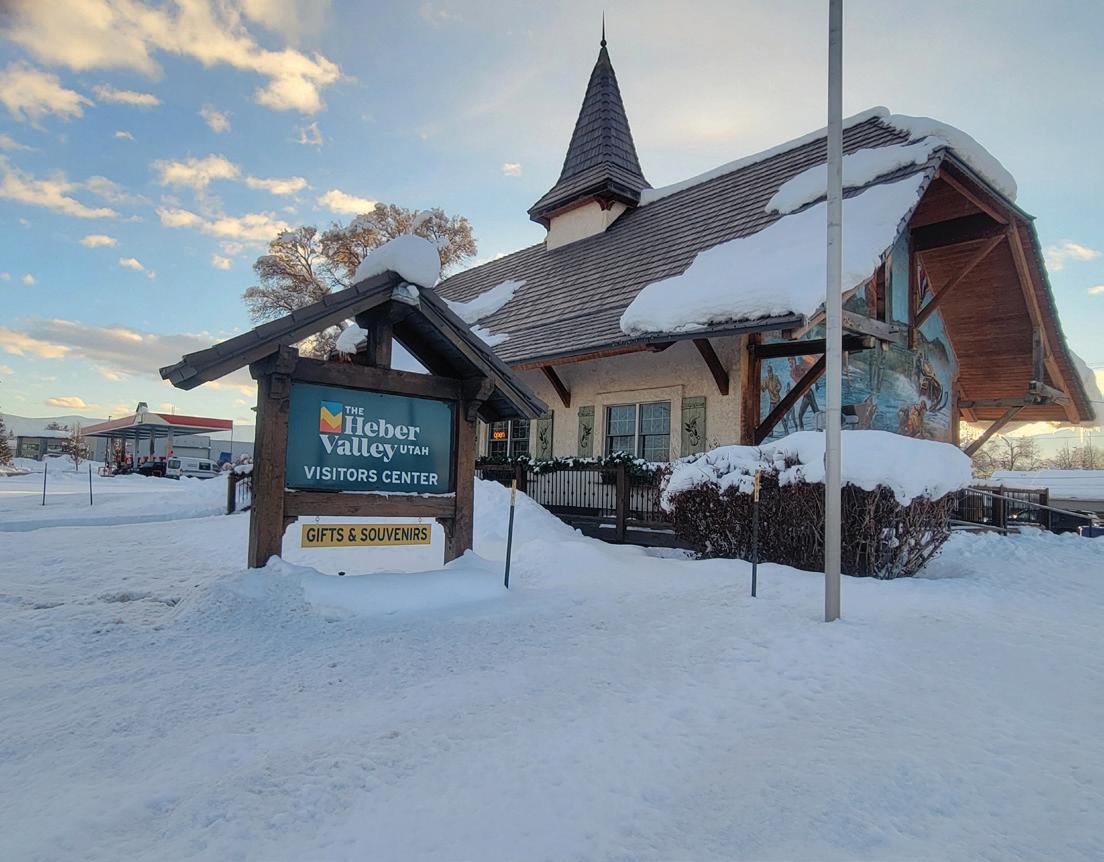
tradition that brings together diverse vendors, live music, and festive activities. The Heber Market is more than a shopping destination; it’s a community gathering that highlights local craftsmanship and creates camaraderie among residents and visitors alike.

In addition to large-scale events, the Chamber hosts monthly networking lunches featuring guest speakers from various industries. These gatherings provide an invaluable opportunity for business owners and community members to exchange ideas and gain insights into economic trends and strategies for success.
Monthly social mixers for members and public events such as "Ask Heber Valley Expo," organized by the Chamber, further strengthen community bonds. The Chamber rents out the local recreation center and invites all members to be vendors. The community is also invited to attend to interact and learn more about the businesses. These events offer casual settings for networking, allowing businesses to sell their products and for individuals in the community to connect with the businesses.
A unique initiative by the Chamber is the "Business of the Month"


spotlight, which recognizes outstanding contributions by local businesses to the Heber Valley community. This initiative celebrates business excellence and inspires others to strive for similar achievements.
"We are always looking at new ways to connect our businesses to the residents; we have done a shop local survey to understand how residents feel about hours of operation, the variety of stores we have here etc.," said Dallin. "Understanding the community and sharing that data with business owners has been helpful."
For community members and local businesses, the Heber Valley Chamber of Commerce embodies a spirit of collaboration and progress. With its proven performance and years of experience, the Chamber continues to be a driving force in building a prosperous and united Heber Valley.




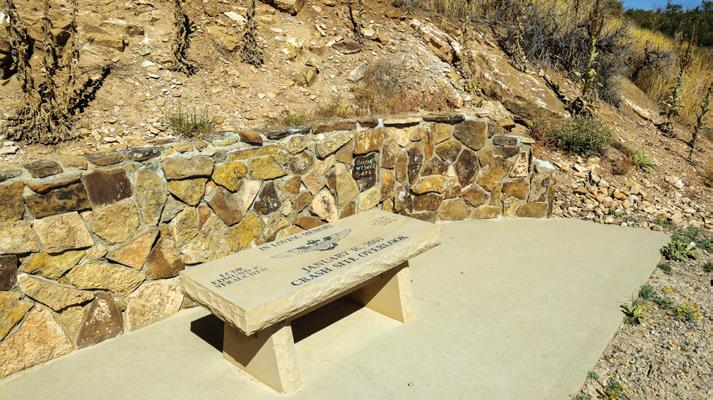
“To us in America, the reflections of Armistice Day will be filled with solemn pride in the heroism of those who died in the country’s service and with gratitude for the victory, both because of the thing from which it has freed us and because of the opportunity it has given America to show her sympathy with peace and justice in the councils of the nations…” –President Woodrow Wilson, November 11, 1919, (Library of Congress).
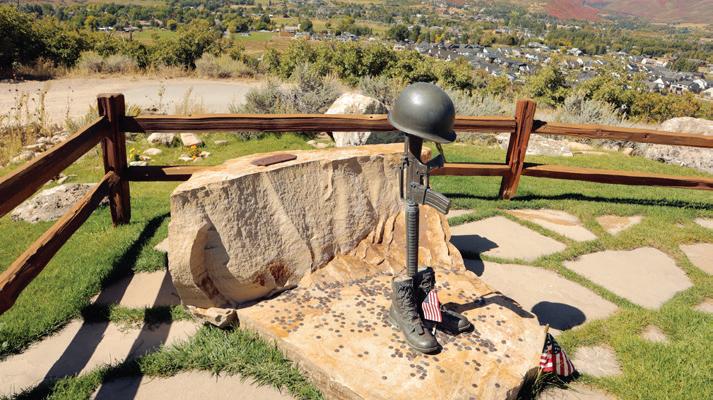
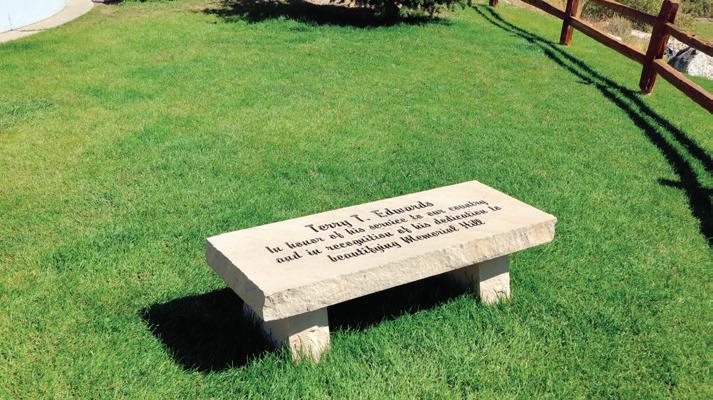
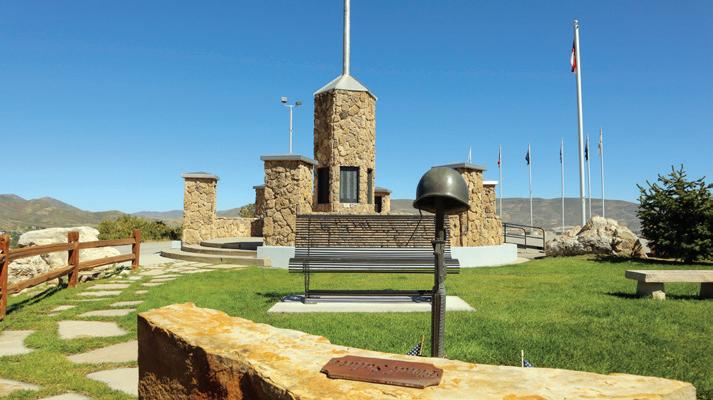
Just weeks before Veteran’s Day 1980, the bronze plaques honoring Veterans on Midway‘s Memorial Hill disappeared, clearly the result of theft, (Wasatch Wave, 6 Nov 2002). All the names inscribed thereon had to be researched anew. Decades had gone by and somehow, there was no other list. Veteran’s Day that year stirred emotions, anger being unfamiliar to the tradition. “The people in the [Wasatch] county and especially Midway are just sick about this,” reported Sheriff Mike Spanos (Front Page, Wasatch Wave, 1980).
In the early 1920’s, Wasatch County bought “Uncle Jesse’s Mound” from Elijah Watkins, the final private landowner of present-day Memorial Hill. Geographically, the “mound” is one of very few large hills in Heber Valley. Topped with American flags, it is prominent from most places in the area. By 1927, Veterans’ names inscribed in bronze plaques could be accessed by anyone, whether out of curiosity or mourning, (Memorial Hill Restoration).
The original plaques honored Veterans from the War of 1912, Indian Wars, and World War I,” (Wasatch Wave, 6 Nov. 2002). The new plaques honor all local Veterans, spanning from the War of 1812 up to the War Against Terrorism. It includes individuals who served in the Mormon Battalion during the Mexican War, (1846-1848).
Research began around 1990 to restore all the names in the area to a master list. The plaques were restored on Veterans Day 2002. We can read the names once again. Though our hearts yearn for more: who are these Veteran’s and what are their stories? Listed on the Vietnam War plaque, Killed in Action, is Blaine A. Welch. Jason Moulton, a historical curator at Heber Valley Heritage Foundation, said that his wife Barbara was classmates with Lance Corporal (LCPL - Marines) Welch.
Jason Moulton served in the United States Army 1971-1974 during Vietnam and traces family heritage to the founding days of Fort Heber. They ran cattle in the North Fields. His grandmother Catherine Moulton was
the Secretary for the Wasatch County Draft Board 1941-1956. According to Jason, “She was responsible for drafting her own son, John Bart Moulton, and many other of his cousins, friends and classmates during World War II and Korean War.”
“During the Vietnam War, Mrs. LeOra Lindsay called me from my grandmother's former office, in December 1970, on the second floor of today’s Grand Valley Bank,” recounted. Mrs. Lindsey called Jason to tell him he would be drafted the following month. “I was married at the time to Barbara Cheever. We had two children, so I chose to volunteer for Infantry Officers Candidate school rather than be drafted.”
And yet, others still alive in the community have stories to tell. Though this column cannot contain the history of each, here’s a snippet of conversations with Heber Valley’s elders.
John Keith Mair served in the Air Force during the Korean War, repairing aircraft. His brother, William, was a cook on a base. Both came home. During service, “John had taken leave for his grandmother’s funeral, made it as far as California, but was too late,” conveyed by his daughter-in-law, Claire. It was a failed leap-frog journey home.
For Lew Scovil, recently retired from 37 years of military service, Memorial Hill’s restoration is significant in a special way. He was never one for fanfare or recognition, although he always honored his duty–flying all manner of military helicopters. He became an excellent pilot because the people back home kept the gears turning. Lew honors his wife for maintaining their home, even remodeling it, and raising the kids while he was deployed. Behind every memorial name was a worried mother, a faithful spouse, and children who just wanted a big hug from that special person in combat’s theater.
There is a story behind every name on those plaque, graciously restored through countless hours of community research. But names are not the only connections between the dots. Remembering is rooted in connection and exploration.
Across Heber Valley and Midway, Veterans from the Korean and Vietnam wars are slowly disappearing, taking their memories with them. History books will never tell how during a muggy August day in 1968 Marine Lance Corporal Blaine Alfred Welch died fighting in Vietnam. What meals did William Mair enjoy cooking for fellow soldiers?




Welcome to The Local, your source for community news from your friendly neighborhood public radio station. KPCW is the only not-for-profit source of daily news across Summit and Wasatch counties.
We have hand-selected a few recent articles that reflect the happenings in our vibrant, eclectic and engaged community. Be sure to go to kpcw.org to read–and listen–like a local.
UDOT: 5 Heber bypass options no longer viable • By Grace Doerfler
In 2022, UDOT announced five possible bypass routes to pull traffic away from Heber’s Main Street. Since then, its final decision has been delayed and then delayed again.

And now, none of the five routes will be enough to meet the valley’s needs.
UDOT Executive Director Carlos Braceras admitted at a Wasatch County Council meeting Oct. 9, the agency “wasn’t forward-thinking enough” and now the process will be “much more painful.” He said UDOT needs to come up with new routes altogether and tweak the existing proposals.
He pledged to regain the community’s confidence.
“We will do what needs to be done to build back the trust of this council, of this community, to do the right thing in the right way,” he said.
By Grace Doerfler


Braceras said UDOT is setting up more meetings with local governments to discuss possible paths forward. But as before, the timeline is unclear. Get your Heber and Wasatch County local news in your email inbox every morning for free! Subscribe to “The Local” at KPCW.org. KPCW is a nonprofit, NPR affiliate located in Park City, Utah, that relies on reader and listener donations for our programming. Like our content? Please consider making a donation at KPCW.org.
At a recent meeting with the Wasatch County Council, High Valley Transit executive director Caroline Rodriguez said public transportation usage continues to grow in the Heber Valley, nearly two years after the service debuted in November 2022.
A new public transportation tax will enable the county to expand its transit offerings next year. Everyone agreed the county’s priority is to make paratransit available for people with disabilities in Wasatch County. But beyond that, the council couldn’t agree on how to move forward.
Councilmembers Kendall Crittenden and Erik Rowland asked about prioritizing rides for people over 65 or limiting young riders. Rowland also suggested implementing fares so fewer people would ride. Rodriguez pushed back against that idea.
“That, for a public transit agency, is the antithesis of why we exist,” she said. “We exist to serve the community and give access to anywhere in the community for any reason that people want.”
The county will have more conversations to address residents’ questions about public transit and determine priorities for the new tax. The tax will add a cost of three cents for every $10 in purchases, starting in January 2025.
By Amber Johnson
Wasatch High School’s StingTV student journalists recently snagged trophies in two student production awards categories at the annual Rocky Mountain Emmys in Arizona.
The awards recognize the work of outstanding high school and undergraduate college students while incentivizing them to pursue a career in journalism.
StingTV was honored for both its daily newscast and a Hollywood-themed prom commercial. In addition to the daily news reports, the students cover sporting events, scholarship nights, graduation, concerts and dances. The programs air in classrooms, on StingTV’s website, its YouTube channel and on social media.
Kaylie Lange was one of eight students who flew to Phoenix to walk the red carpet on awards night. She was shocked when StingTV won and said the trophies were far from the only reward.
“We got to go and see all these different shows which brought fresh ideas and motivation so we could come back and change our program and tweak some things so we can really improve,” she said. “And it was really cool to see how we can grow even further.”

BY WHITNEY HEBBERT

For military veterans, the battlefield often follows them home, placing them at high risk for post-traumatic stress disorder (PTSD), which can severely affect daily life. An estimated 11-20% of veterans from the Iraq and Afghanistan wars experience PTSD annually, along with many others facing depression and anxiety. While traditional therapies like talk therapy and medication have been beneficial, advanced treatments such as Eye Movement Desensitization and Reprocessing (EMDR), ketamine infusions, and Transcranial Magnetic Stimulation (TMS) provide new hope for long-lasting healing.
PTSD symptoms can include intrusive memories, nightmares, hypervigilance, and emotional numbness, often triggered by reminders of trauma. These untreated symptoms can profoundly affect veterans’ relationships and quality of life. Traditional treatments, including cognitive-behavioral therapy (CBT) and medications, have helped some but not all. This has increased interest in alternative therapies targeting the brain more effectively.
Eye Movement Desensitization and Reprocessing (EMDR) is gaining attention for its effectiveness in trauma processing. Developed in the late 1980s, EMDR helps patients recall distressing memories while following a therapist’s hand movements. This technique assists the brain in reprocessing traumatic memories, leading to significant reductions in PTSD symptoms—often more effectively than traditional therapies. Veterans report feeling more at peace and experiencing overall emotional improvement after EMDR.
Ketamine infusions offer a groundbreaking alternative for veterans resistant to conventional PTSD treatments. Originally an anesthetic, ketamine promotes rapid symptom relief for depression and trauma-

related disorders, often within hours, by "resetting" the brain and fostering new neural connections. Administered in a clinical setting over several weeks, ketamine can provide veterans struggling with treatment-resistant PTSD a renewed sense of hope and normalcy.
Transcranial Magnetic Stimulation (TMS) is another promising treatment for veterans with PTSD. This FDA-approved procedure stimulates specific areas of the brain that are underactive in PTSD patients, helping to "rewire" neural circuits disrupted by trauma. Many veterans report feeling calmer and more focused after TMS, making it a viable option for long-term symptom relief without the side effects of medication.
Despite the encouraging results from EMDR, ketamine infusion, and TMS treatments, access remains limited due to cost, availability, and lack of awareness. Healthcare providers, policymakers, and veterans' organizations must advocate for broader access to these therapies. While the U.S. Department of Veterans Affairs is making strides in integrating these treatments, expanding coverage, increasing trained therapist availability, and educating veterans on their options are crucial for improving mental health outcomes.
The mental health challenges faced by veterans are complex, but there is hope. As therapies like EMDR, ketamine infusions, and TMS become more widely available, veterans gain access to powerful tools for healing their invisible wounds. By expanding access to these innovative treatments and breaking the silence surrounding veterans’ mental health, we can help those who have sacrificed so much find the peace and healing they deserve.
BY ERIC RAMIREZ




Veterans and First Responders often witness or experience unsettling levels of trauma during their careers. Emotional and mental healing requires a special kind of care. They are physical wounds, detectable at the neurological level, and exhibited in behaviors. It affects daily life, sleep, and relationships. Insurers barely cover clinical counseling, if at all. Whitney Hebbert, owner and forerunner of Meadowbrook Counseling, quickly found that while growing her business, something had to be done to help First Responders and Veterans heal.
Shortly after opening Meadowbrook Counseling in May of 2019, Veterans started booking appointments. Along with First Responders of all varieties, she found deeply rooted, unresolved trauma. Gone unprocessed and tucked away, the brain and body experience disrupted neurological functions. As time goes on, these individuals struggle to keep their calm, and to separate their experiences at work from their home life.
Externally, it affects their relationships with spouses, children, and just about everyone else. Since emotional healthcare is hard to quantify, it is equally difficult to know how long it will take to heal. This factor makes insurers wary to cover counseling costs. The Department of Veterans Affairs offers some counseling services but, like other insurers, does very little for those seeking effective, private therapy.
“The trauma keeps affecting their life. They can’t help it. It’s not a choice, it relates to how the trauma has affected their brain,” Whitney explains. “These

people chose a noble profession and got traumatized, and now they need help.”
Starting out with different treatments known to help with PTSD, depression, and other diagnoses, Whitney discovered a treatment that was far more effective and longer lasting. The use of Ketamine in clinical settings is not new, but about 12 years ago treatment was tested with other therapy techniques which yielded fantastic results.
“We’ve had people all over the Wasatch front come in for this ketamine treatment,” says Whitney. “A year ago, we got a TMS machine which synergizes with Ketamine. Ketamine helps regrow neurons, and TMS reconnects them at a rate of 150,000 in 20 minutes.”
After a series of treatments, millions of neurons have been rewired. The research, and each new case, exhibit healing, overcoming the effects of trauma and depression.
With her partner and husband, Brandon, Whitney opened the non-profit Healing for Heroes in May 2023. They sought grants and donations to fund the gap between what Veterans and First Responders were able to cover, however, the 501c3 foundation is still too new for some bigger grants, which they need to continue treatment for patients. Recently, the center has begun receiving more donations. Driven to heal, the clinic has absorbed some costs through the foundation. In fact, Healing for Heroes couldn’t exist without the success of Meadowbrook Counseling.
Now in its 5th year, Meadowbrook employs therapists across the country with varying
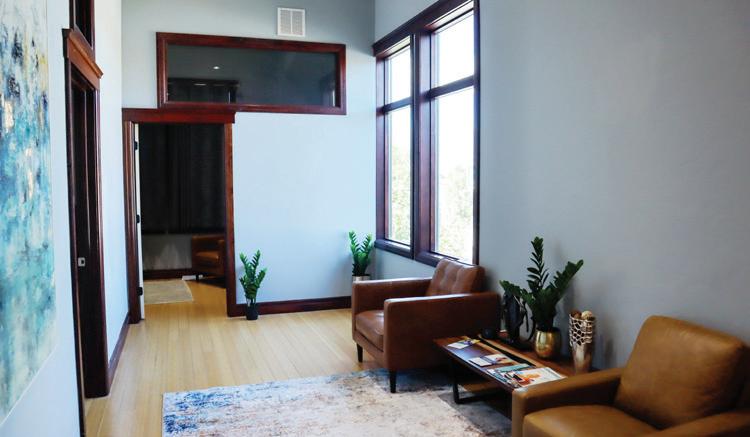

skill sets, meeting their clients needs. With in-person and telehealth counseling, they can connect with anyone, anywhere. In Heber, they recently opened an office in the clocktower on Main Street where therapists Britney, Erin, and Caitlin work with families and kids. Even though Meadowbrook is based in Orem, the practice supports mental wellness in Heber Valley. Brandon and Whitney directed their education to help people live healthy lives. Both were all-star runners, nearly attaining the Olympic level, while pursuing Masters’ Degrees in Exercise Science from BYU. In fact, they met on the track.
After they married, Brandon pursued a career in IT and Whitney discovered many people were not yet ready for exercise or fitness plans. “They needed to overcome emotional barriers holding them back.” She returned to school for another Master’s Degree in Clinical Counseling with an emphasis on Marriage and Family Therapy.
Whitney Hebbert carries a kind smile and seeks to understand, a refreshing approach in a culture so anxious to share a perspective or thought, interrupting others impatiently, and demanding to be heard. This characteristic appears to have informed her decisions to open Meadowbrook Counseling, start Healing for Heroes, and even pursue that second Master’s Degree.
Healing for Heroes can bring change with well researched techniques to those who’ve been at the frontline of trauma; welcomed home with a healing embrace.
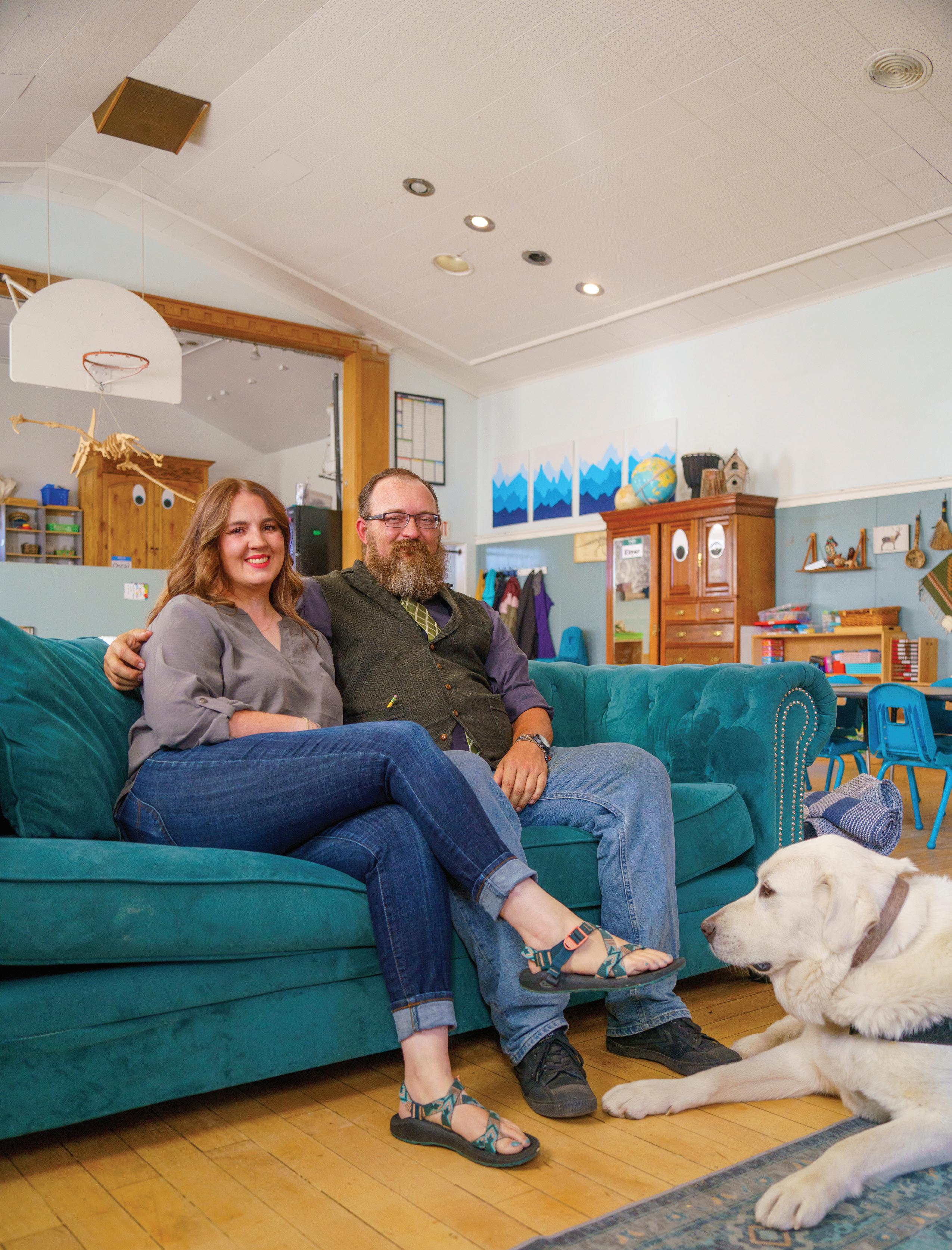
THE OLSENS OF STARRY GARDEN MONTESSORI KNOW THERE’S A LOT TO LOVE ABOUT LEARNING
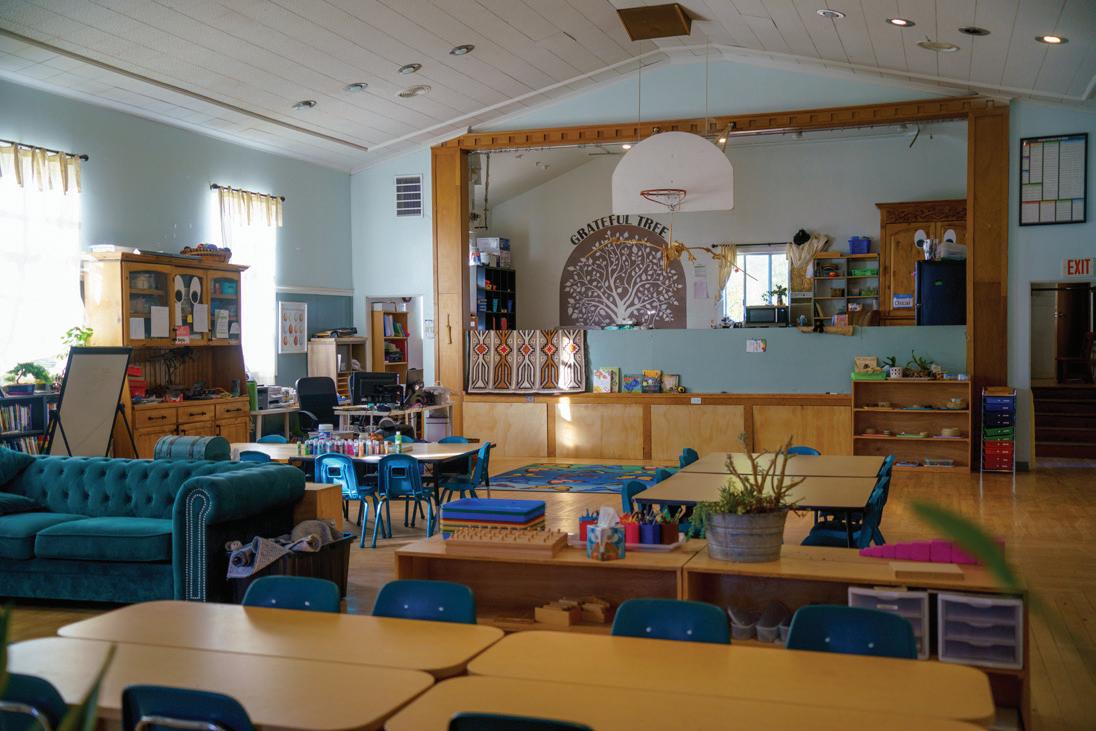


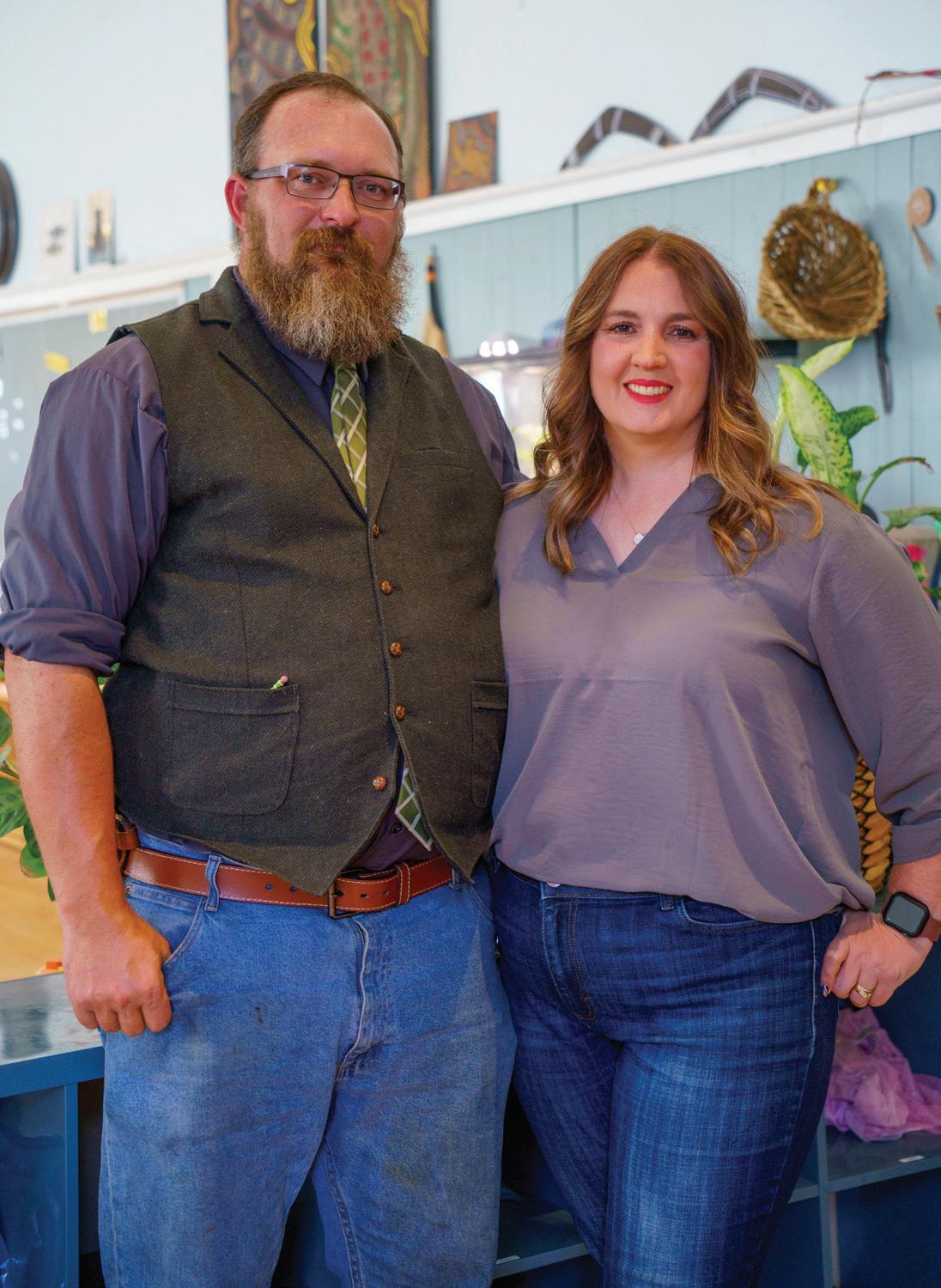
THE OLSENS’ DEEP CONNECTION TO LEARNING STARTED LONG BEFORE THEY ENTERED THE HEBER VALLEY. DAN AND RACHEL OLSEN––CHILDREN OF TEACHERS, INNOVATORS, AND FARMERS––GREW UP WITH A CURIOSITY AND DESIRE TO MAKE A DIFFERENCE. After an experience when their oldest son was 10, the Olsens had to come to terms with how they wanted their children to experience learning, and what we all have come to consider a “formal education.” Both supporters of public school and various methods of conventional and unconventional learning models, they set out to find a way to foster young learners’ curiosity through hands-on learning, a focus on the arts, and exploration. Through these priorities, they could prepare their own children, as well as other children in the community to shift into various forms of upper elementary and secondary learning environments with a love of learning and a multitude of strategies to advocate for themselves and navigate the world with success.
Dan grew up with diverse exposure to learning methods; born in Salt Lake City (but quickly moving to Savannah, Georgia), Dan would live in Reno, Nevada, Alaska, and Delta, Utah all before finding his life-match in Rachel during college at Southern Utah University. Dan grew up around educators, but his own passions were in the field of sports medicine. Rachel’s family has deep roots in Southern Utah, her family were some of the original settlers of Cedar City. She was born in Southern California, where her grandfather was one of the builders of Knott's Berry Farm in Buena Park. The theme park was a familiar place where she spent a lot of time. A farm girl

at heart, with a lot of street smarts, she honored her ancestors' legacy by herding sheep, yet carved her own path as a standout track athlete. Despite pursuing interests beyond education, the two couldn't escape its gravitational pull, eventually being drawn into teaching and laying the groundwork for their future as creators and caretakers of a vibrant community school.
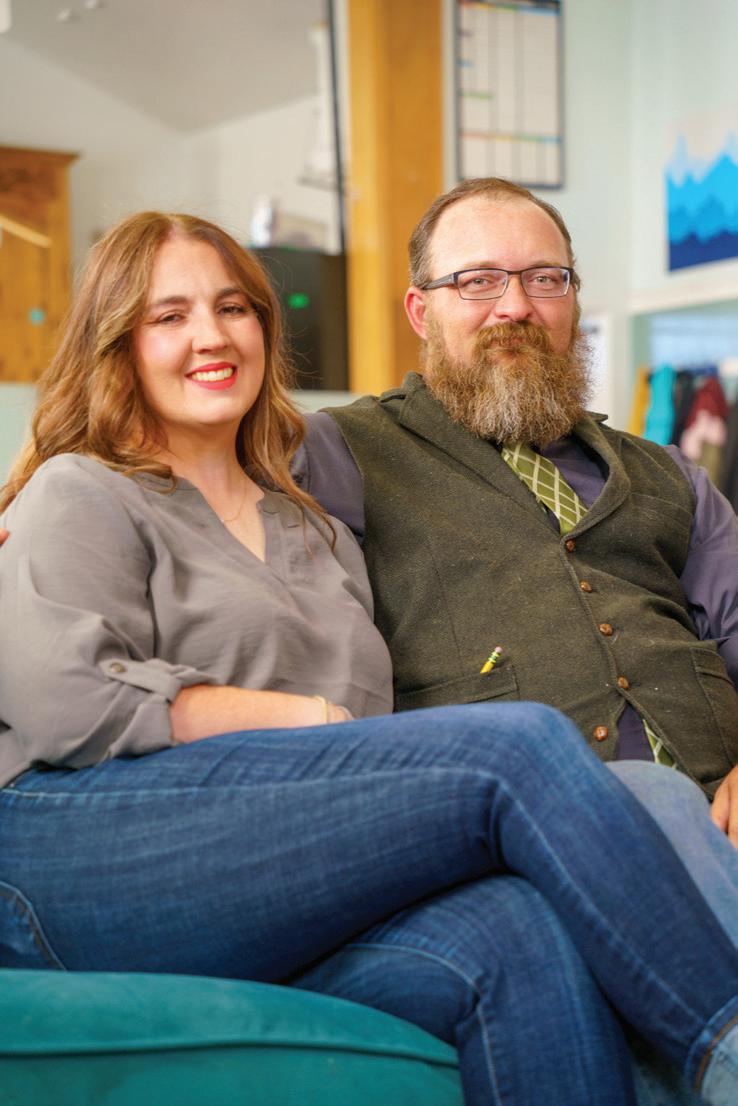
Dan and Rachel bring to Starry Garden Montessori a shared love of education, lots of outdoor learning, a deep connection to animals and nature, and blend the excitement and practicality of ancestral skills all while inviting their own children to get involved and participate.
“We will never bash public education, that’s just not an opinion we’ve come to form,” Rachel explained. “Public education allows students to access a lot of resources. In older years, electives allow kids to take classes with experts to learn many skills and trades. Sure, I can find materials and utilize the tools at my disposal to expose my kids to ceramics, for example, but I am not an expert in that field and the schools hire experts in many areas to give kids amazing exposure and access to trades and skill building hard to find anywhere else.”
Dan and Rachel have raised five
children. Their oldest, and their inspiration for seeking out a more enriching and personalized approach for his education, Isaac (who is now 22), is starting college. A neurodivergent learner, Isaac is a hard worker with experience building computers. “His current hyper-focus is writing and learning more about the art of storytelling,” Dan shares.

Their oldest daughter, Bryn, 20, left school with her associates degree and is currently working full time at Starry Garden. She started out working at the school’s summer camps, but has expanded to learning the ins and outs of teaching full time. “She found great interest in the color guard in high school and is the assistant coach at Wasatch High currently,” Rachel said.
Next in line, Lily, 17, is a tenderhearted animal lover with the gentle sweetness of her favorite animal, the rabbit. Ella, 15, is full of life and enjoys being a member of the color guard, where her older sister is her coach. “She has great body control and mechanics, she’s just a fun, energetic girl and she goes through life with a lot of vibrance,” Rachel said. Their caboose, Libby, is 11. She is talented at art and drawing and has a passion for science.
“She has strong opinions, we are fans of people with strong opinions,” Dan said proudly.




Bearded dragon - Sam, 14 years old.
Eastern Box Turtle - Mike, 25 years old
Corn snake - Poppy, 15 years old
Ball Python - Willow, 4 years old
Animals’ favorite activity: being read to.
“The kids can choose between reading and math activities to engage with the animals as well as responsibilities like keeping the plant life alive, taking care of enclosures, feeding–– to name a few. The enclosures are all bioactive, which means they have living ecosystems in them, including plant life. Rollie Polies eat extra waste which keeps them clean and smelling nice. The animals are all great reading partners. Eli, the therapy dog, is there of course, and he's a good reading partner/listener. All the animals listen free of judgment and truly like to engage in these activities. Mike, in particular, likes Gerald and Piggy books, they are his favorites.”
“She does use some of her skills of persuasion on us, but I guess we find it to be such a strong quality that we tolerate it as parents!” Rachel highlighted the greatest gift of all is that the family truly enjoys spending time together.
“Our kids still want to spend time with us, we aren’t embarrassing to them and we value that we genuinely enjoy being around them, and they like having us around.” Eli, the family’s certified therapy dog, spends a lot of time at Starry Garden serving the students and teachers there. He’s also just one of three family dogs––the other two, Dash and Caleb, spend most of their time at the family home.
The Olsens have been rooted in Heber since 2016. “People in Heber have always been really loving and welcoming people,” Dan said. It’s something that has made them confident in their decision to relocate after living in the Pacific Northwest for the greater part of most of their family’s growing-up years, though Libby was young enough when they relocated to go through all of her young schooling years as a student at Starry Garden.
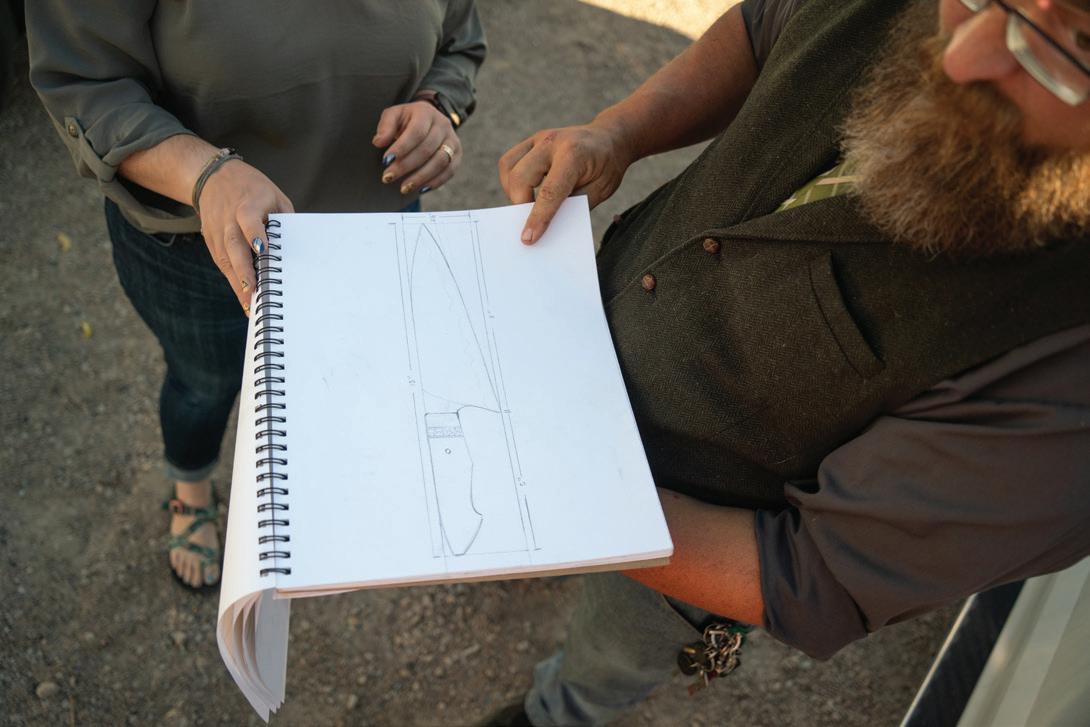
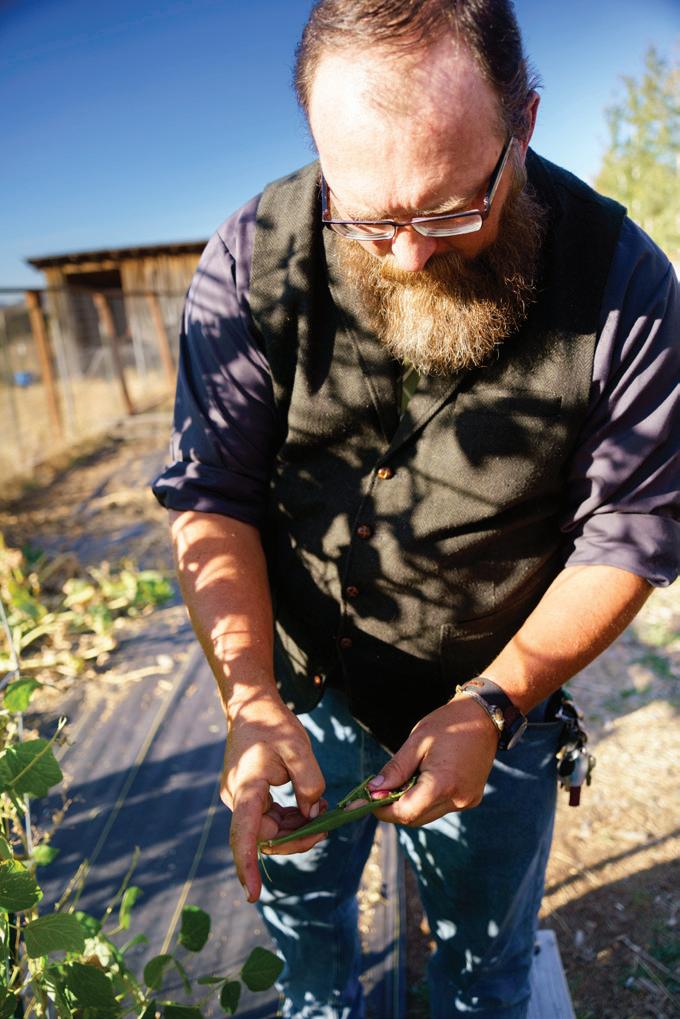
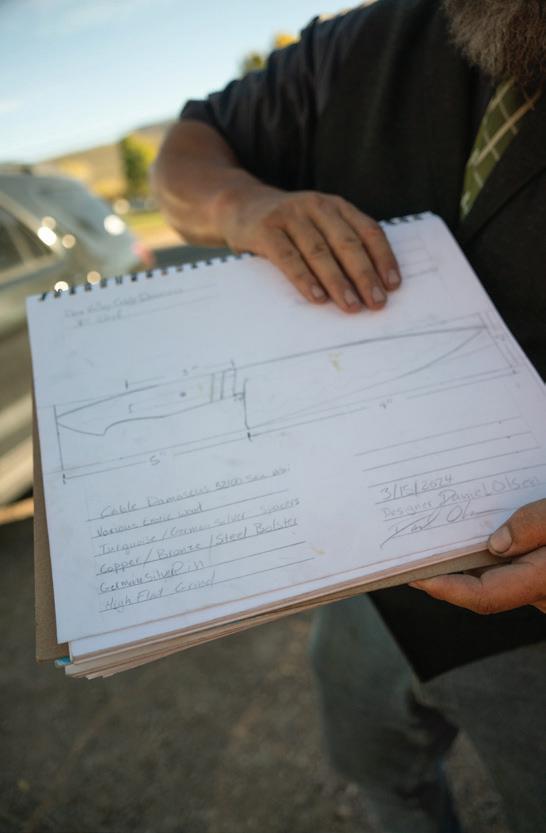
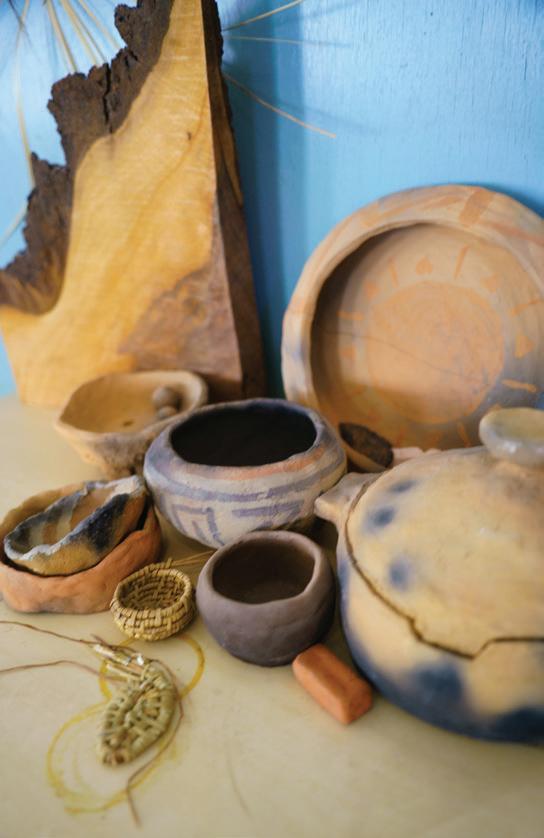
Some of the unique talents Dan and Rachel enrich the curriculum at Starry Garden with, as well as the community at large, includes Rachel’s skills in basket weaving; she teaches how to make adirondack style pack baskets. They are both survival instructors, with Dan being an expert knife and blade crafter. “The kids have inherited a love of making things - and since our kids have spent a lot of time

at Starry Garden, they’ve had a lot of ‘on-the-job-training' for encountering many different types of people and interest areas.”
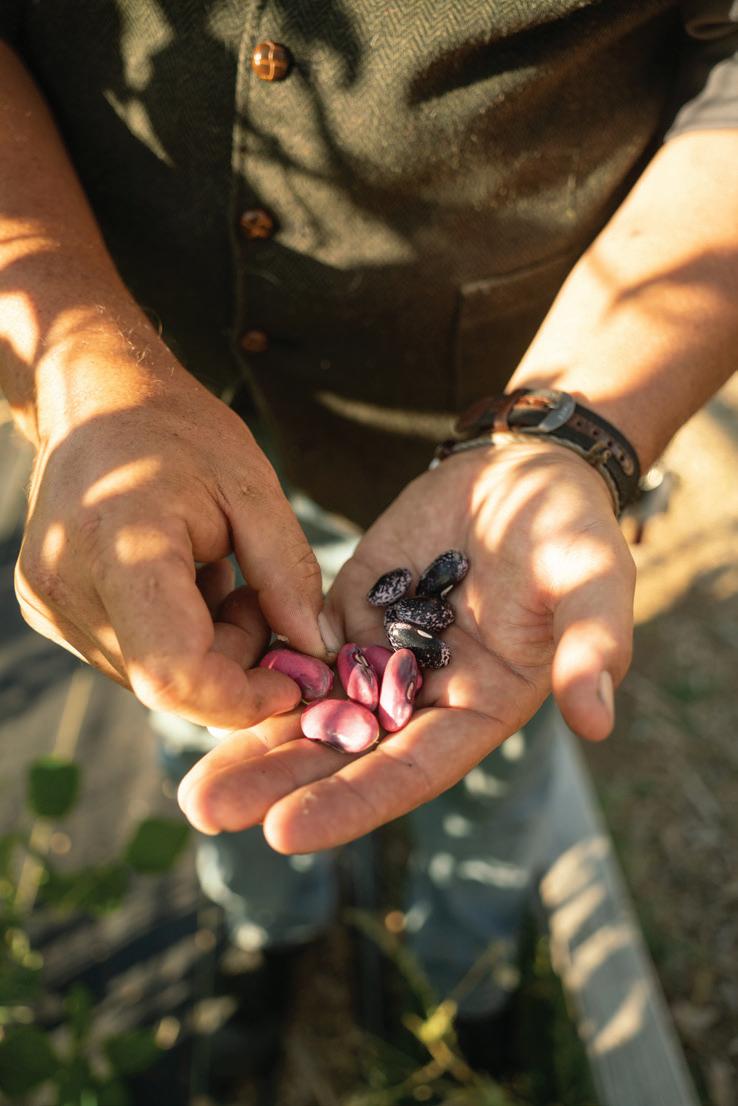
So where did Starry Garden get its name? Dan’s mother, Sandra Olsen, has a great love for gardens and growing things. Starry Garden is a metaphor, reflecting the family’s desire to grow children who love learning with an emphasis on children being able to work at their own pace, learn through doing, and take care of their environment. It’s important to Rachel and Dan that they reach children who are diverse learners, accommodating neurodivergent and atypical learning styles through their methods. “Even though we don't have stars, we do have a garden at the school,” Dan said. “The kids are our stars,” Rachel added. “One of my favorite things that we do every year is we give the kids big handfuls of sunflower seeds and we turn them loose. They spread them all over the playground. During the summer, we watch these sunflowers come up all over the playground, so our philosophy with planting sunflowers should look like you turned a bunch of three, four, and five year olds loose with handfuls of seeds. That's exactly what it looks like.”
The school’s focus on holding a high regard and respect for nature and wildlife is confronted often, with many plant and wildlife experiences built-in for their students. From encounters with skunks, owls, hawks, deer, and raising chickens, kids can witness the beauty and have authentic encounters with nature. Dan shared his inspiration with

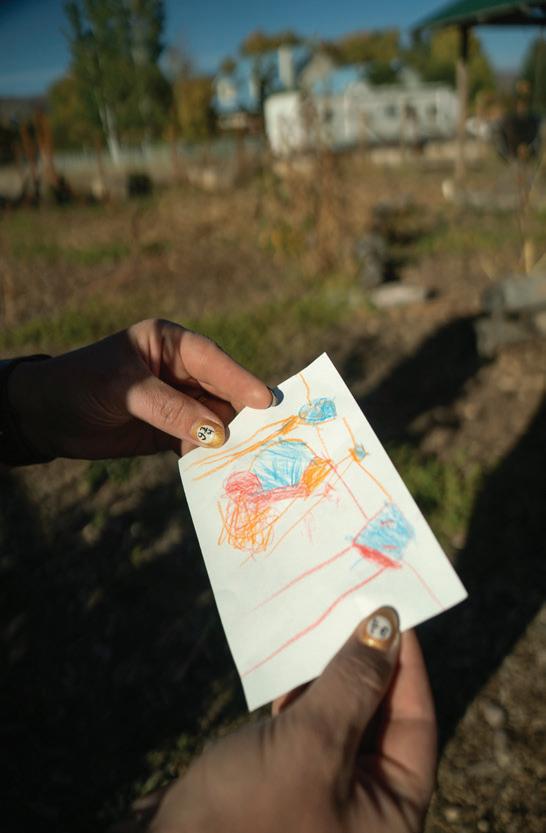

prioritizing high exposure to science from as young as possible. “When children are able to engage and explore science before they turn six, they have a trajectory to be lifelong lovers of science.” Starry Garden holds a science fair every year, with some of the youngest scientists engaging in the activities.
The Olsens’ lasting legacy will be a community where children and adults are encouraged to embrace curiosity, independence, and a love of lifelong learning. “It’s hard for us to separate ourselves from the school. It’s part of who we are.”
By Aimee L. Cook • Photos by Monica Wroblicky
Small business owners often find themselves juggling countless responsibilities, from managing dayto-day operations to ensuring their financial health. Enter Megan Lawrence, the dynamic force behind Cornerstone Accounting Group Inc., who is redefining accounting services for small enterprises with 1-10 employees.
Megan is a certified public bookkeeper [NACPB] with a keen eye for detail. She’s also a dedicated mother of two, seamlessly balancing family life with her professional aspirations. Currently enrolled in a master’s degree program for Forensic Accounting, Megan is always on the move, personally and professionally.
“I have a very helpful husband; he’s great, he helps me juggle everything,” Megan said.
Cornerstone Accounting Group Inc., Megan’s brainchild, is rooted in a simple mission—to provide comprehensive accounting services that small businesses can rely on. Whether it’s bookkeeping, payroll, accounts receivable, or financial
clean-up services, Megan offers a one-stop solution for business owners looking to streamline their finances.
“I am also an employee of a construction company; I am their bookkeeper,” said Megan. I am growing my business. I would like to have at least ten clients and hire another bookkeeper. I love supporting local businesses, and they also support me.”
Megan’s approach to accounting is personalized for each client. She takes the time to understand her client’s unique needs and provides customized solutions that make a difference.
Megan’s commitment to excellence extends beyond providing top-notch services. She’s also dedicated to advancing her own knowledge and skills.
“I make sure when doing payroll that FICA taxes are set up correctly and that writeoffs are handled correctly for bookkeeping,” Megan explained. “I have a pro advisor account with QuickBooks that keeps me informed with different seminars and tips.”
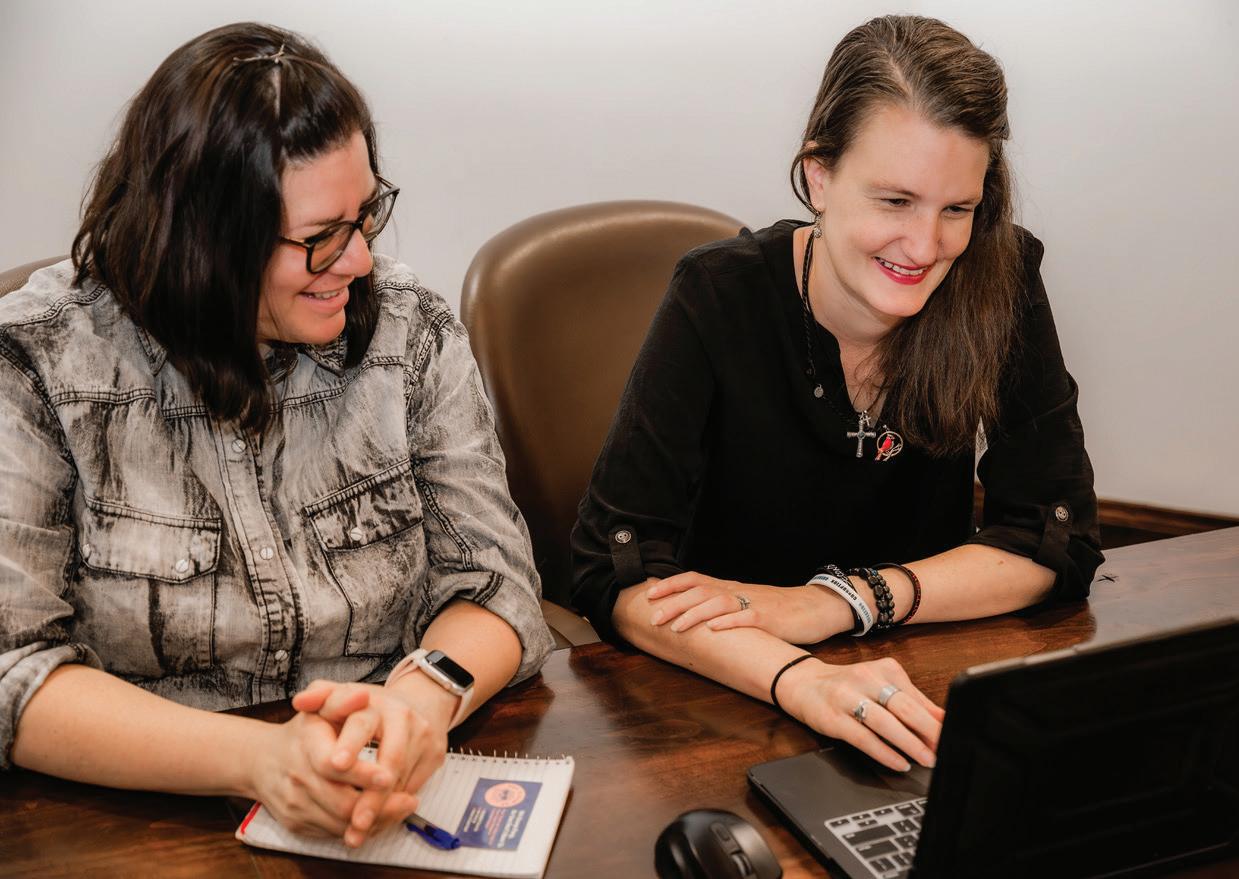

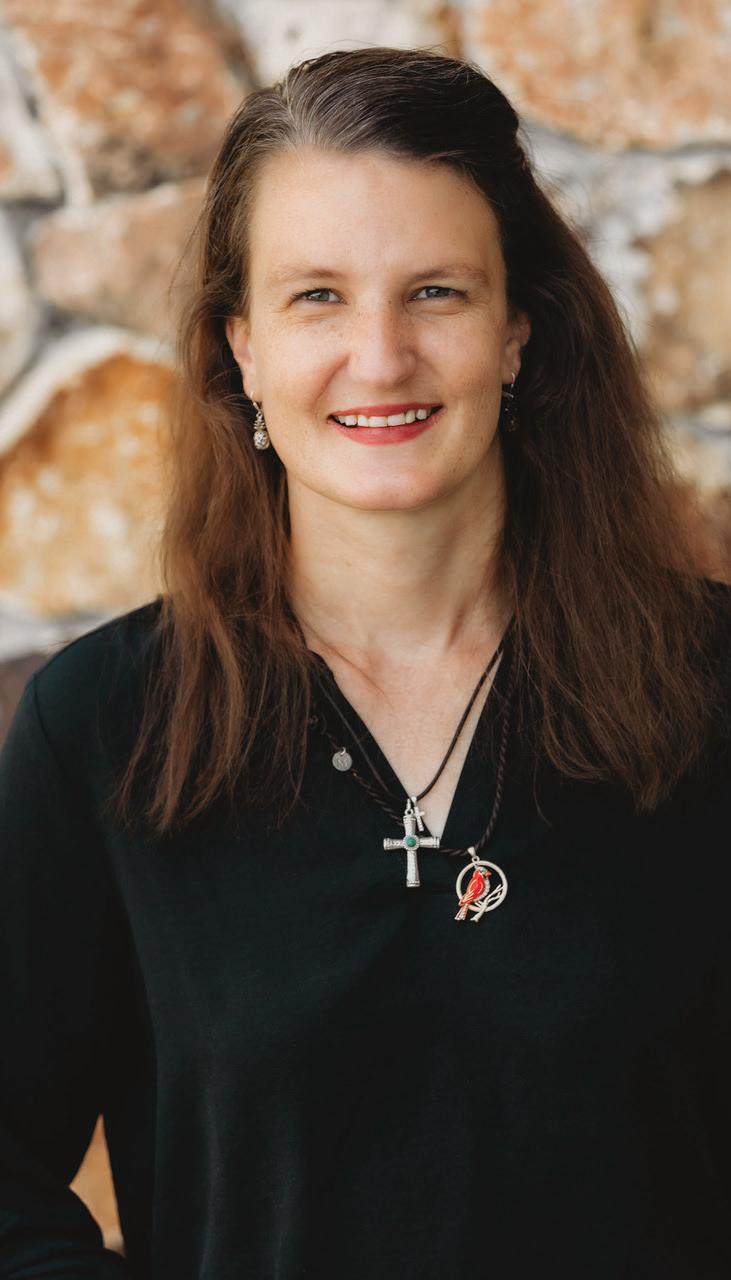
For small business owners seeking a partner in financial health, Cornerstone Accounting Group Inc. represents more than just accounting services—it’s about peace of mind. With Megan Lawrence at the helm, clients are assured that their financial matters are in capable hands, allowing them to concentrate on what truly matters—growing their businesses.

Days on the market, price per square foot, median sales price, affordability index, interest rates, cap rates, LTV, NOI, ROI, and XYZ! Phew! There is so much data in real estate! These are all essential tools to track and monitor the buying and selling of houses, and I use them everyday in my activities as a real estate agent. However, they are limited to describing the transactions of houses, and what is more important than the house that is bought or sold is the home that is created.
• A house can keep you dry with its roof and walls, but a home can be a refuge from all the storms we face.
• A house can provide a place to sit and eat meals together, but a home can also be a place where traditions are passed on and life lessons are shared.
• A house can provide walls to hang photos, but a home can set the backdrop for the memories captured in those photos.
• A house can put you near other residents, but a home can involve you in the care of a community.
• A house may be where we reside with those related to us, but a home is where family bonds are strengthened.
• A house can satisfy some of our physical needs, but a home fulfills us on a much deeper emotional level.
• A house comes through contracts and warranty deeds, but a home can be had regardless of ownership, location, or circumstances. The adage that “Home is where your heart is” is true.

As we head towards the conclusion of this year and begin thinking of the next, let’s all look for ways to not just improve our houses but to truly strengthen them. Let’s set aside more time for family and friends than we do for repairs and upgrades. Let’s focus on filling our homes with love and respect as readily as we fill our houses with groceries and Amazon deliveries.
In this season of gratitude and appreciation, I give thanks for both my house and my home. I am thankful for the people living within the walls of my house and within our wonderful community who truly converted our house into a home. I am also thankful for the people who have trusted me to help them buy or sell their homes with a value much greater than just the sales price.
Happy Thanksgiving!
Call me if you or someone you know is considering buying or selling. I’d love to discuss the specific data on our real estate market and the bigger-picture goals related to your home.


BY AIMEE L. COOK • PHOTOS SUPPLIED BY ASHLEY DUDAS
Ashley Dudas' passion for horses began in the English Performance World, but it took an unexpected turn when she met a horse that would change her life forever. This horse, initially perceived as problematic, was, in fact, misunderstood and terrified of the world. Through this experience, Ashley realized that traditional training methods were not effective for every horse. This epiphany led her to view horsemanship as an art form, fundamentally altering her approach to training.
Now, as the Director of Horsemanship at Liberty Sanctuary, a non-profit organization dedicated to rescuing horses from kill pens, Ashley has committed herself to helping both horses and their human partners reach their full potential.
At Liberty Sanctuary, Ashley builds trust with rescued horses and rehabilitates them for adoption. She believes that every horse has the potential to thrive, given the right environment and care. Her approach is rooted in patience, empathy, and a deep understanding of each horse's needs.
"Pedigree does not guarantee that you will have a good horse; it gives you an advantage but not a guarantee," Ashley explains. "Whereas horses that you don't know their background often have a lot more heart and desire to be better partners than the horses bred for it. It just really depends. Rescue horses are not throw-away horses, and you can find amazing partners who have just ended up in bad situations of no fault of their own."
Since taking on the role of Director of Horsemanship in May 2024, Ashley has made significant strides in her work at Liberty Sanctuary. Her innovative training methods and unwavering dedication have transformed countless equine and human lives. Through her guidance, rescued horses learn to trust again, and find their forever homes with loving families.
"When a horse first gets [to the sanctuary], we just allow them to be here and to find peace for weeks," said Ashley. "Many of the horses that come here are on the malnourished side; they are really emotional and scared. A lot of times, we don't know much about their background. You try to go right into training with a horse who is accumulating to the environment and it can be hard on them. After that, I hang out with them and observe their behavior through 'undemanding time.' Often, they will show you what they know."
In addition to her work at Liberty Sanctuary, Ashley founded her own business, The Savvy Equestrian. This venture aims to fill traditional horse and human training gaps, ensuring no rider feels left behind due to common training obstacles. Recognizing that not everyone can access in-person training, Ashley offers online courses and live streaming through The Savvy Equestrian. These courses cover various topics, from foundational horsemanship to advanced techniques and horse development, providing valuable insights and practical advice for riders of all levels. Ashley aims



to make high-quality training accessible to a broader audience, fostering a deeper connection between horses and humans, and empowering riders to overcome the challenges they face.
Ashley encourages everyone to get involved, whether they're interested in learning more about horsemanship or supporting Liberty Sanctuary.
“Horses can end up in terrible situations and it doesn't mean that those horses can't live very healthy and happy lives," Ashley explains. "What is required are humans that understand them a little bit more, humans that take the time to learn about them, and be more effective with them."
Fall is a season of change, and at the Christian Center of Park City (CCPC), we have some exciting changes going on. Long-time Executive Director Rob Harter has transitioned from his role of Executive Director to serving on CCPC’s board while starting his coaching and consulting business.
“I have loved being the Executive Director for Christian Center of Park City; where I continuously was inspired by our mission and the amazing work of our team, who serve our community so well every day,” Harter said. “I am really excited now to not only have the opportunity to serve on the Center’s board, but to also move into a coaching and consulting role which will allow me the ability to help expand CCPC’s counseling and wellness services, starting with offering two types of neurofeedback as well as life coaching.”
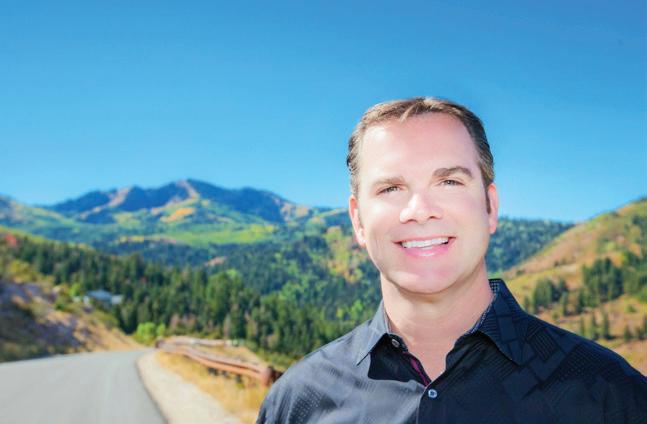
“Over Rob’s leadership tenure, he has embodied our mission at CCPC to meet people at their point of need as an expression of God’s love. Through his tireless and selfless leadership, CCPC has touched countless lives in our community”, said Chair of the Board of Directors Susan Swartz.
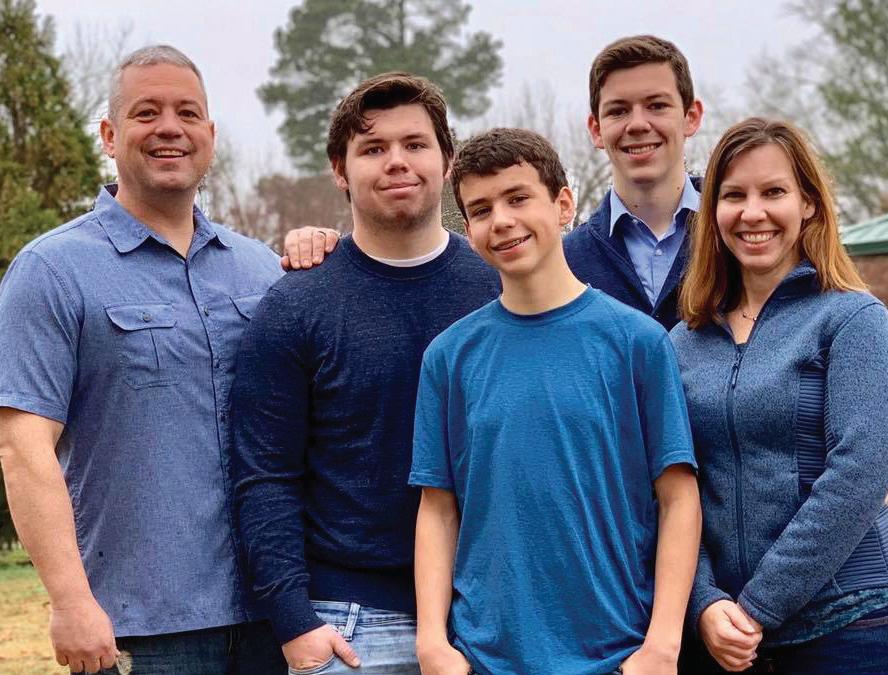
Steve Richardson is the Center’s new Executive Director, and he will serve as CCPC’s third Executive Director since its inception in 2000. Steve brings a wealth of experience to CCPC, with over 24 years of leadership experience. In addition to his executive leadership experience, Steve has a depth of educational experience including receiving his Doctorate and two Master’s degrees.
“Steve’s passion for inspiring people to flourish in addition to his past experience and leadership skills, all aligned very well with our mission at CCPC and has prepared him for this role. We are excited to welcome him aboard.” said Doug Schillinger, head of CCPC’s search committee and Board member. We would like to invite you to meet Steve Richardson personally. Here are three dates of open houses that will be hosted at CCPC’s Park City campus: Nov 7, Nov 12, and Nov 21. Join us in providing a warm Park City welcome to our next leader.



Fall is also a very busy season around CCPC. With Christmas right around the corner, our annual Operation Hope event is launching soon.
This is one of our largest events of the year. We served nearly 2,000 kids last year through our Operation Hope program and were so thankful for the over 450 volunteers who helped make this event a success. Your generosity and time make a huge difference in bringing joy to local families during the holiday season. If you’re interested in learning more about the event, donating toys, or volunteering, we would greatly appreciate your support!
Please visit ccofpc.org/volunteer-needs/ for more information.
There is a lot more going on at CCPC. To keep up on the latest happenings, you can follow our social media here: facebook.com/ChristianCenterofParkCity or our website here: ccofpc.org

YOGA: Free, Gentle Community Yoga Practice (Ages 55+)
@Wasatch County Library, Bowcutt Room 400 E 1200 S, Heber
Wasatch County YOGA FOR SERVICE Class Series. Join Yoga Instructor and volunteer, Marty Harger, for a yoga series intended to bring more grounding and less stress to your week. We use gentle movement connected to breathwork, mindful awareness, and meditation as practices you can learn to incorporate at home to stay calm and well. Presented by the Wasatch County Senior Citizens Center and Wasatch County Library. Please bring your own yoga mat and yoga block. Wear clothes that allow you to move and breathe freely. Being comfortable is key and all are welcome. The room is a beautiful space to practice together! Questions? Call or text Marty Harger at 801-712-5406.
Time: 8:30-9:30am
Cost: Free
Website: https://martyharger.com/event/ yoga-classes/
Veterans Day at Jordanelle State Park
@Jordanelle State Park 515 UT-319, Heber A Free-Use Day for all Veterans at Jordanelle.
Time: 9am-5pm
Cost: Free to Veterans
Website: https://stateparks.utah.gov/ parks/jordanelle/events-2/
Heber Valley Railroad North Pole Express Christmas Train
@Heber Valley Railroad 450 S 600 W, Heber
Join us on this fun and traditional train ride to the North Pole! A family favorite, this 90-minute round trip to the North Pole includes hot cocoa and Mrs. Claus' famous chocolate chip cookies. You'll sing along to new and traditional Christmas favorites on the way and be entertained by our hosts, elves cocoa chefs, and special guests. When we reach the North Pole Santa will join us for the return trip and greet each child and present them with a special gift.
Selling out quick! Book your train today! Time: Times vary by day, check schedule on website below
Cost: Prices Vary, visit website to reserve tickets
Website: hebervalleyrr.org/calendar/
Thanksgiving at Homestead
@Homestead Resort 700 N Homestead Drive, Midway
Let us cook while you relax, make memories, and enjoy Thanksgiving! Come for the day or stay all weekend with special lodging packages. Call 435-6541102 or visit OpenTable to book your reservation. Book early before spots fill up!
Time: 11am-3pm
Cost: Adults $65, Children under 12 $35 Website: homesteadresort.com/calendar/
Midway Tree Lighting Celebration
@Midway Town Square 100 N Main Street, Midway
Kick off the holiday season at the annual Tree Lighting Celebration at Midway Town Square. This small-town tradition includes festivities like holiday entertainment, candle lighting, live reindeer, Santa visits, fireworks, and the famous Midway City treat bag! We hope you will join us for this fun community Christmas celebration.
Time: 6-8pm
Cost: Free
Website: www.midwaycityut.org
Homestead Annual Treelighting
@Homestead Resort 700 N Homestead Drive, MIdway
Join us for our Annual Community Tree Lighting event at Homestead Resort. Special appearance by Santa! Bring your whole family and enjoy the lights and festivities! Complimentary Coffee, Hot Chocolate Station, and Cookies.
Time: 7-8:30pm, Tree lighting at 7:25pm
Cost: Free
Website: homesteadresort.com/calendar/
Heber City Tree Lighting & Old Fashioned Christmas
@Heber City Tabernacle Historic Square 75 N Main Street, Heber
This annual small-town event is open to all and includes festive holiday music, Santa Claus and Mrs. Claus, reindeer, cookie decorating, caroling, food trucks, ice sculpting, and the lighting of the large tree.
Time: 6-8:30pm
Cost: Free for all
Website: https://www.heberut.com/ events/christmas/


BY MICHELLE DEININGER

Two decades ago, Wendy McKnight was a mother of young twins dreaming of building a home on a piece of land in Heber Valley, Utah. It was a big, empty field owned by her children’s great-grandparents. There was plenty of space and they’d be able to live near relatives and friends. When she and her former partner broke up, the dream went with it, since the land belonged to his family…
…Then, things got really wild. Wendy’s phone rang, it was a representative from Habitat for Humanity saying her application looked promising and she was a candidate for a to-be-built house. Ironically, and if by some miracle, Wendy’s future house would sit squarely on the very land she used to dream about.
Read the full article on page 47.
BY AIMEE L. COOK
Utah homebuyers are discovering that partnering with a local real estate agent could be their most valuable asset. The intricate tapestry of the Heber, Park City and Midway communities is woven with unique market trends, evolving neighborhood dynamics, and specific zoning laws that only a local expert can fully comprehend.
Local real estate agents possess an unparalleled understanding of the community’s pulse. Their intimate knowledge of current market trends and property values equips them to price homes with precision. In a competitive market such as Heber, Midway and Park City, accurate pricing is critical for both buyers and sellers to maximize their investment potential.
Each neighborhood in these scenic locales adheres to a set of zoning laws and local regulations. A local agent’s familiarity with these guidelines ensures that potential buyers are well-informed about the legal landscape surrounding
their prospective purchase. This insight helps prevent future headaches that might arise from unexpected legal restrictions.
Local agents bring more than just expertise in real estate; they offer a deep connection to the community. Their insights into area schools, amenities, and neighborhood dynamics equip clients with the information needed to make informed decisions. A local agent has the answers to whether a buyer is looking for the best schools or the nearest hiking trails.
Beyond data and statistics, local agents like Reggan Jastram, Associate Broker at Coldwell Banker Realty, have cultivated a network of relationships with inspectors, contractors, mortgage lenders, and title professionals. These connections streamline the buying process, offering clients access to trusted professionals who can assist with every step of the home-buying journey.


In the busy real estate markets of Heber, Midway and Park City, Utah, leveraging the knowledge and connections of Reggan Jastram, Associate Broker at Coldwell Banker Realty, and her team, is not just advantageous—it’s essential. With their expertise, clients are not only purchasing a property but also investing in a community that aligns with their lifestyle and values.








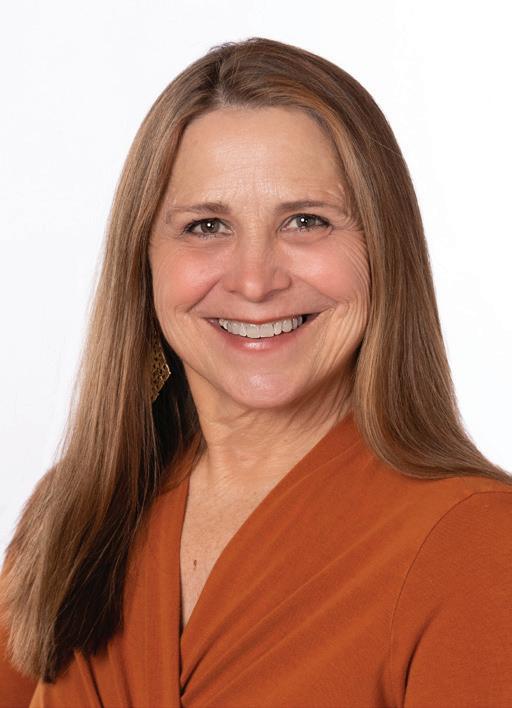






BY MARTY HARGER, OWNER, ESSENTIAL EARTH
Enjoy the travel experience-of-a-lifetime with my personally-escorted, Essential Earth Explorations program to Turkey in 2025! I offer small-group travel programs that are truly unique and purposeful international journeys. Each of my Explorations offer exciting cultural experiences, self-discovery and unique adventures wrapped in comfort, safety and style.
I just announced my 2025 TREASURES OF TURKEY EXPLORATION, September 25 – October 4, 2025 for 10 Days/9 nights.
Join me to explore the ancient and magical world of Turkey! A land whose legacy is displayed in its architecture; Turkey is surrounded by four seas that contain fascinating geologic wonders. It’s a country that surrounds you with color, texture and diverse experiences: from the contemporary comforts of Istanbul to its historic cobblestone streets and ethnic neighborhoods; from the tall, natural, rock spires of Cappadocia; to the warm sea breezes of Izmir.
Guided by a local Tour Manager, we’ll learn about the kingdoms and conquerors of this country situated at the crossroads of the Balkans, Caucasus, Middle East, and eastern Mediterranean. This part of the world has been inhabited by modern humans since the late Paleolithic period and contains some of the world’s oldest Neolithic sites. Our journey will take us to the bazaars and trading areas still in use today. We’ll sample Turkish cuisine with all its delicious spices and learn to cook our own meal! We’ve got lots of options for special healing experiences, a meditative ceremony of the whirling dervishes, and a ride high above the peaks of Cappadocia in a hot air balloon!
My Exploration visits three distinct areas: the historic city of Istanbul, the seacoast of Izmir, and the stunning volcanic landscape


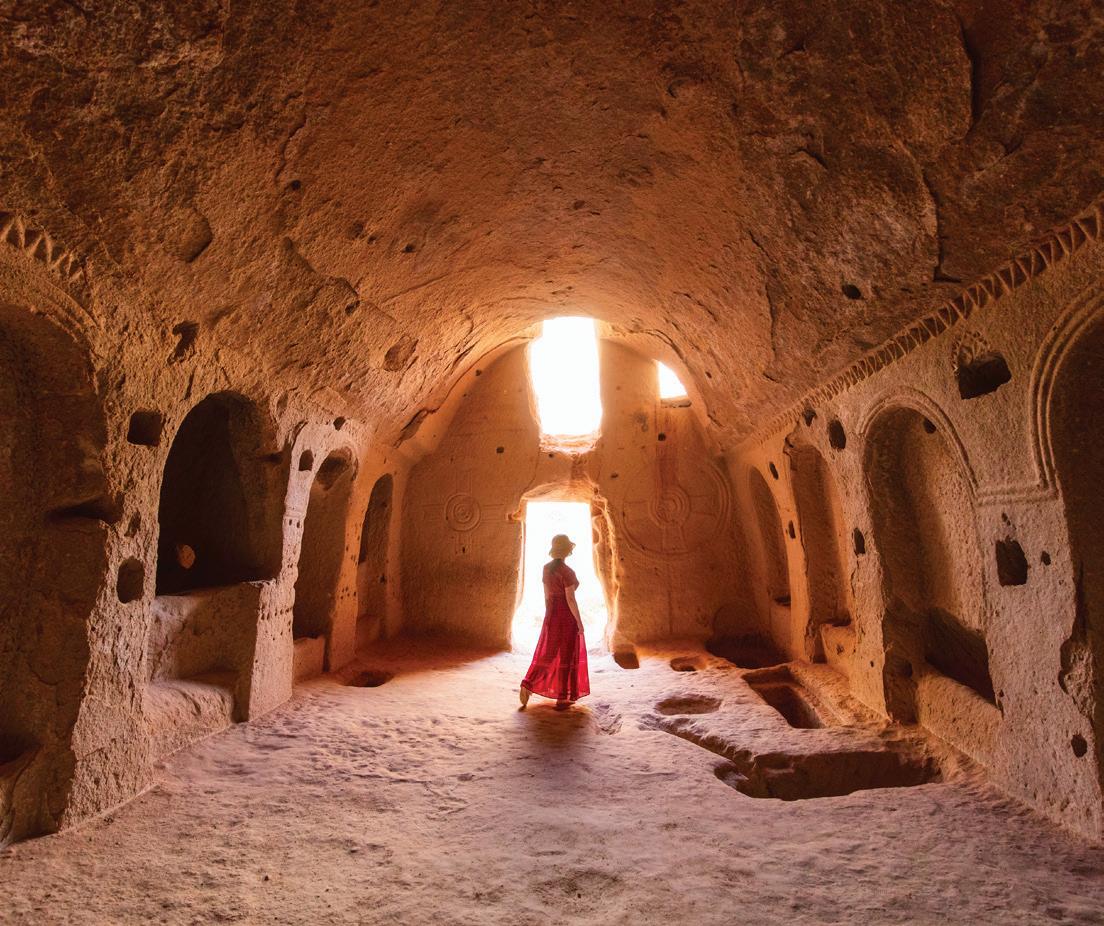
of Cappadocia. Each day offers deeper insights into Turkey, its people and the culture. The multiple UNESCO World Heritage sights we’ll visit highlight the important chapters of Turkey’s history. Not to worry though, we’ll make sure to have some fun with our belly dancing class, a wine tasting, a visit to an organic farm and so much more!
If you’re ready to discover the truly magnificent country of Turkey with a small-group of travelers, my 2025 Treasures of Turkey Exploration offers the perfect balance of activity, adventure, key historic sights, cultural understanding, relaxation, and always a few extra surprises to insure this Exploration is the journey of a lifetime. With limited space for my small-group travel program, get the details on my website at www.martyharger.com/travel, then reach out right away to secure your spot on my 2025 Treasures of Turkey Exploration!
BY ERIN SEAMONS
Have you ever wondered why daylight saving time leaves you feeling out of sorts each year? At its core, it disrupts our body’s circadian rhythms, which regulate essential functions such as sleep-wake cycles, hormone production, body temperature, and metabolism. These rhythms align with the Earth's natural daynight cycle and are controlled by the suprachiasmatic nucleus in the brain. When balanced, they help us anticipate changes in our environment, affecting everything from alertness to the release of key hormones like cortisol and melatonin, regulating energy levels and sleep.
Disrupting these rhythms can directly impact hormone production and timing. Hormones secreted by the endocrine system significantly shape our mental and emotional states. For instance, cortisol, known as the stress hormone, is closely tied to mood regulation. Chronic stress can lead to excess cortisol production, contributing to anxiety and depression. Balanced hormone levels, achieved through healthy habits like regular exercise and proper nutrition, promote emotional stability and resilience. Serotonin, a mood-related neurotransmitter, is influenced by hormones such as estrogen and progesterone, emphasizing the link between hormonal balance and mental well-being, particularly in women. Thyroid hormones affect energy levels and cognitive function, with imbalances potentially mimicking symptoms of depression or anxiety. Thus, the disruption caused by daylight saving time affects not only our sleep but nearly every biological system.
Circadian rhythms also impact neurotransmitters—chemical messengers in the brain influencing mood and mental health. The activity of neurotransmitters like serotonin, dopamine, and norepinephrine follows a circadian pattern. Serotonin peaks during daylight hours, enhancing well-being and alertness, while dopamine, associated with motivation, fluctuates with wakefulness and activity. When circadian rhythms are disrupted, neurotransmitter balance can be affected, potentially leading to mood disorders and cognitive challenges. Aligning our lifestyle with these natural rhythms supports optimal neurotransmitter function.
Two primary factors influence circadian rhythms: light and temperature. How we interact with light, especially sunlight, and expose ourselves to varying temperatures helps regulate our “internal clock,” enabling us to reset misaligned circadian rhythms.
Morning sunlight exposure is vital for hormone production

and sleep quality. Rich in blue light wavelengths, morning sunlight stimulates melanopsin receptors in the eyes, which communicate with the brain’s biological clock to help regulate hormone release. This exposure triggers cortisol production, helping synchronize our internal clock with the surrounding environment. Throughout the day, natural light suppresses melatonin and keeps us alert. As evening approaches and light diminishes, melatonin is released, promoting sleep. This daily cycle of light exposure is crucial for maintaining hormonal balance and restful sleep.
Temperature also influences circadian rhythms. Cold exposure, such as a morning cold shower, can increase cortisol production, boosting wakefulness. Conversely, warmth in the evening—like a hot bath—signals the body to release melatonin, enhancing relaxation and preparing for sleep. Such temperature cues help align our internal clock with the natural day-night cycle, optimizing energy during the day and improving sleep quality at night.
In an ideal circadian rhythm, cortisol peaks in the morning for energy and alertness, tapering off to allow melatonin to facilitate sleep. Healthy circadian rhythms also support insulin production, blood sugar regulation, and growth hormone release, crucial for cell repair during deep sleep.
To support healthier circadian rhythms, consider your daily routines, especially your engagement with light and temperature. Practices like a 1-minute cold shower in the morning, 30 minutes of moderate exercise early in the day, and regular exposure to sunlight can be beneficial. In the evening, reduce artificial light exposure, maintain a consistent sleep schedule, and create a cooler sleep environment (65-68°F). Trying intermittent fasting by avoiding food between 7:30 PM and 6-8:30 AM can also help.
These adjustments can restore balance to your circadian rhythms, enhancing hormonal function, neurotransmitter activity, and overall well-being.



Sean Marshall became a songwriter when he was 12 years old and got his first guitar. He has been writing all his own songs ever since. He has published three albums with ten songs, each under the artist collective label, Space Canoe Records.
“I am a folk song writer first and foremost,” says Sean, but you will also find songs that range from bluesy to country in his repertoire. This summer he did a residency at Café Galleria in Midway and regularly does shows at Lake Effect in Salt Lake City. Seasonally, he performs at the State Room in downtown Salt Lake City.
Sean and his wife moved to Utah from Columbus, Ohio, a few years ago. About a year ago, they welcomed their daughter into their lives. Being a parent has forced him to be deliberate about his creative time. He works part-time as a graphic designer.
Now he blocks out time for writing songs in his weekly schedule, as well as time for rehearsing, corresponding, booking shows, and press interactions. He is still trying to find more time for recording. At the Park City Song Summit, he debuted a song only his daughter and wife had heard before. I hope to find it on a future album.
“The Song Summit has a great vibe. People want to hear original
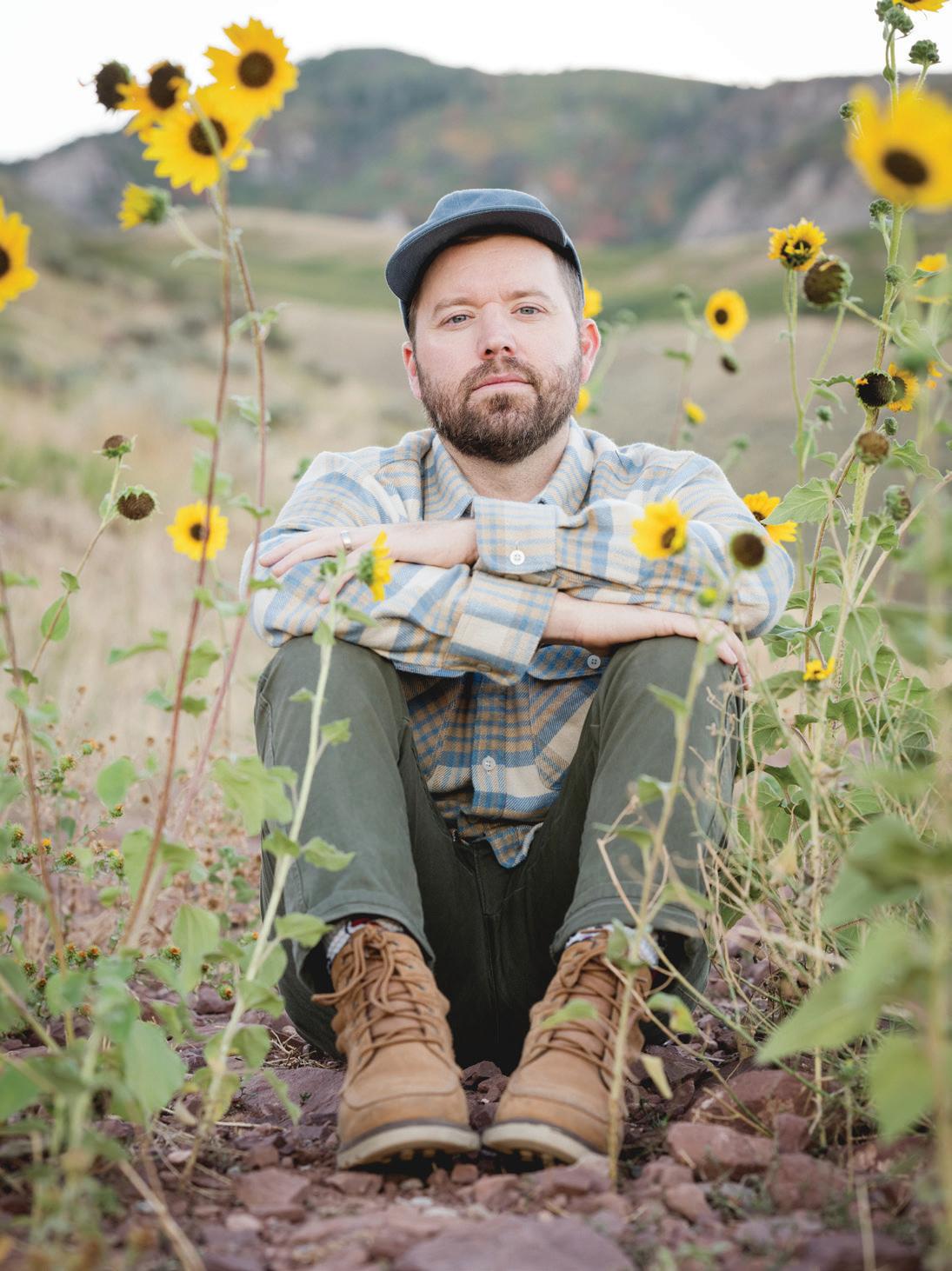





music here. It’s eclectic, extremely open as to what they see as a song and a songwriter. Here they understand that songwriters take many shapes and songs,” explains Sean. He performed on the Forum Stage last year as well, and attended the Park City Song Summit the year before that.
Sean draws from all of his experiences in his songs. He is truly an American singer/songwriter, having grown up outside of New York City before starting his journey west with stops on the Jersey Shore, the Midwest, and now the Mountain West. When I talked to him, he was dealing with lack of sleep since his daughter was going through teething pain. That could lead to a song we can all relate to. In the meantime, Sean recorded a new single called “Want it All” that came out on September 27. This time he worked with Daniel Young, a



local songwriter/engineer, at his studio, Orchard Studios.
Check out his music online at itunes, Spotify, and Bandcamp or see him perform in person at the Commonwealth Room on Nov. 24, where he will open for Blind Pilot.

Whether it’s a deep tissue massage, pedicure, or a Sanctuary Signature Stretch with CBD, we hope you’ll feel relaxed and refreshed from the moment you walk in the door. Please feel free to book your appointment online or call the spa directly at 435-315-3573. We look forward to seeing you soon!




KIRSTEN KOHLWEY
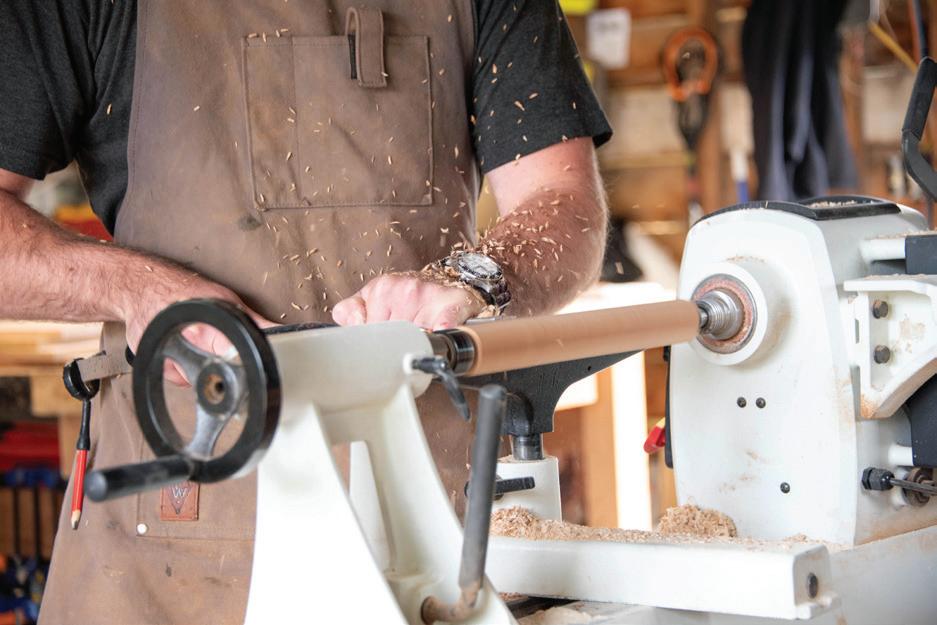
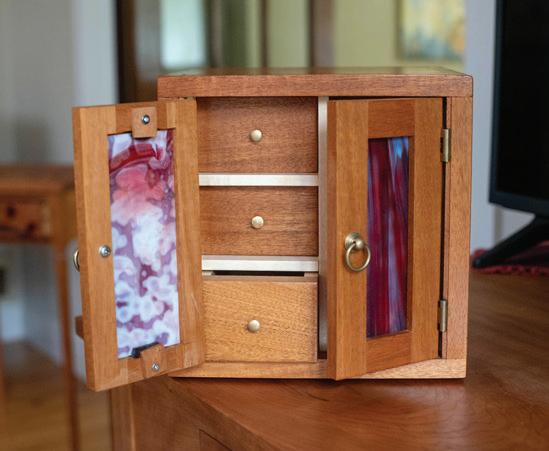
Heber artist, Frank Hucek, dove into wood-working when his son was born. Frank grew up on a horse farm near the Wisconsin border by Chicago. His father was a veterinarian. Frank learned how to do blacksmithing on a forge he built himself, work with stained glass, and then took two years of pottery in college.
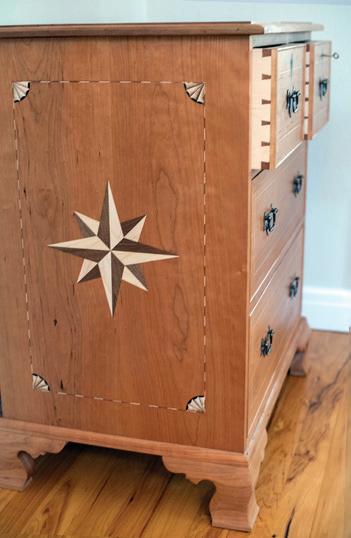
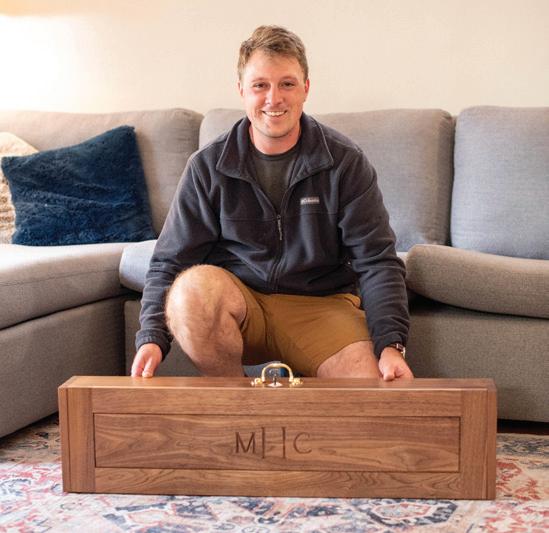
The birth of his son inspired Frank to create heirloom furniture. He is self-taught and started three years ago. Once he had furnished the whole house he started selling furniture. That was in 2023. Frank Hucek does mostly custom work for people who stumble across his website, www.hucekwoodworks.com or his Instagram account.
He has learned that “it definitely adds a bit of complexity as far as people accepting or not accepting artwork that is meant to last a lifetime, and then some. Creating furniture is a reward in and of itself though.” Most of his custom work is mid-century art nouveau style.
This summer Frank showed his work at the first annual Wasatch Back Art Festival and received a commission for a kitchen tabletop. Frank Hucek also does his own wood turning and displayed some of his live edge bowls at the festival in Heber City. He is a big fan of Dale Nish, a BYU professor, who wrote books on woodturning and taught for almost three decades.
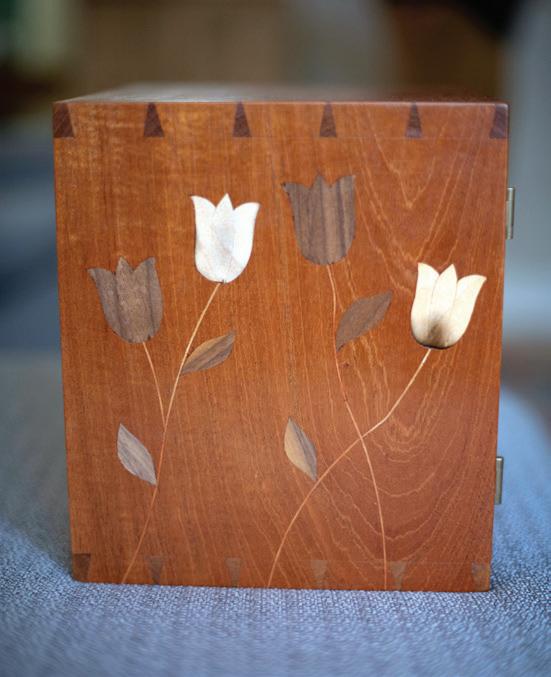
Frank’s real passion though are antique recreations. He is a member of the Society of American Period Furniture Makers and is checking into starting a local chapter. He does his own inlay work and carving with no power tools. He uses saws, chisels, and homemade tools.
At the Wasatch Back Art Festival, Frank Hucek met Mitch Bedke, a glass artist from Park City. They are now cooperating on an art piece. Mitch Bedke will create the glass artwork and Frank Hucek is working on a wood stand with light in the bottom that will illuminate the glass artwork.



At L & L Repair, a family-owned business with over 20 years of experience, the team knows that regular oil changes are your vehicle's lifeline. They believe that understanding the intricacies of oil, its role, and the importance of filters can significantly extend the life of your car.
Think of oil as the blood of your vehicle. Just as blood circulates through your body to keep it functioning, oil flows through your engine to ensure its smooth operation. It lubricates moving parts, reduces friction, and helps dissipate heat. Without adequate oil, engine parts can grind against each other, leading to wear and tear, overheating, and, ultimately, costly repairs.
At L & L Repair, one of the first lessons in car maintenance is understanding the numbers on a quart of oil. These numbers, such as 5W-30 or 10W-40, indicate the oil's viscosity—how thick or thin it is under different temperature conditions. The "W" stands for winter, representing the oil's viscosity at low temperatures, while the number after the dash shows its viscosity at high temperatures. For example, a 5W-30 oil is less viscous at lower temperatures than a 10W-30, making it better for cold starts. However, both oils perform similarly at higher temperatures. Understanding these numbers helps ensure you choose the right oil for your vehicle's needs and operating conditions.
In recent years, the industry has seen the introduction of 0W16 oil, designed primarily for newer, high-efficiency engines. This super low-viscosity oil allows for better fuel economy and reduced emissions, making it a popular choice for hybrid vehicles and modern cars that demand peak performance.
While 0W-16 oil provides excellent lubrication at low temperatures and enhances engine efficiency, it's essential to consult your vehicle's manual before making the switch. Using the wrong oil can lead to inadequate lubrication and potential engine damage.
Oil filters might not get as much attention as the oil itself, but they are equally crucial in maintaining engine health. These small yet mighty components trap contaminants, dirt, and metal particles, preventing them from circulating through your engine. Over time, however, filters can become clogged, reducing their effectiveness and potentially leading to engine damage.
Regularly replacing your oil filter, along with your oil, ensures that only clean oil circulates through your engine, keeping it running smoothly and efficiently.
Oil changes are more than just a routine service—they're an investment in the longevity and performance of your vehicle. At L & L Repair, experts emphasize the importance of using the right

oil and changing it regularly. They also stress the need for proper filter maintenance, ensuring your engine stays clean and efficient.
Whether you're considering switching to 0W-16 oil or need advice on the best oil for your car, the L & L Repair team is ready to help. With their expertise and commitment to quality service, you can trust that your vehicle is in good hands.
Small business owners are constantly seeking ways to stay ahead of the competition. While competitive strategies have long been favored in the corporate world, a growing body of evidence suggests that collaboration, rather than competition, may be the key to long-term success. By working together, businesses can foster a culture of transparency, accountability, and innovation, all of which contribute to a stronger, more resilient organization.
“Collaborating with other organizations can significantly enhance your business opportunities, bottom line, and reputation, especially with those targeting the same audience,” said Ann Marie Wallace, state director of the Women’s Business Center of Utah. “By working together, you can more effectively serve a broader community, achieving greater impact than by competing. At the Women’s Business Center of Utah, we encourage women entrepreneurs to embrace collaboration as a powerful strategy for growth and success.”
Working collaboratively also helps build stronger relationships both within and outside the organization. Internally, collaboration promotes trust and camaraderie among team members, which can lead to a more cohesive and motivated workforce. Externally, businesses that collaborate with partners, suppliers, and even competitors can create mutually beneficial relationships that drive growth and innovation.
Another advantage of collaboration within the business community is the opportunity to leverage different strengths for referrals. By working closely with other professionals and businesses, you can tap into a diverse range of expertise and networks. Each business has unique strengths and areas of specialization, which can complement your own capabilities. This cross-functional collaboration enables you to refer clients or partners to others who can better meet their specific needs, fostering a reciprocal relationship.

By Aimee L. Cook


Collaboration is a catalyst for innovation. When diverse perspectives and expertise come together, it sparks creative thinking and problemsolving. This collaborative approach allows businesses to adapt more quickly to changing market conditions and customer needs, giving them a competitive edge.
Moreover, collaboration can provide businesses access to new markets and customer bases that may be challenging to penetrate independently. By partnering with other companies that have established presence and credibility in different regions or demographics, businesses can tap into previously unreachable audiences. This expanded reach not only opens up new revenue streams but also enhances brand visibility and market presence. For instance, collaborating with a company that has strong ties in an international market can offer invaluable insights and pathways for entering that market, reducing the risks and costs associated with such ventures.
Internal collaboration also encourages personal accountability among team members. When individuals work together towards a common goal, they are more likely to take ownership of their responsibilities and hold themselves accountable for their contributions. This sense of ownership not only boosts morale but also ensures that tasks are completed efficiently and to the highest standard.
For small business owners looking to thrive in a competitive landscape, fostering a collaborative work environment can be a game-changer. By promoting transparency, accountability, and innovation, collaboration not only enhances individual performance but also strengthens the organization as a whole. Building strong relationships and leveraging collective strengths can lead to new opportunities and sustained growth.
Ultimately, the choice between collaboration and competition is not an either-or decision. Instead, businesses can find a balance that incorporates the best of both worlds, driving success through a combination of teamwork and strategic competitiveness. In the words of Helen Keller, “Alone we can do so little; together we can do so much.”
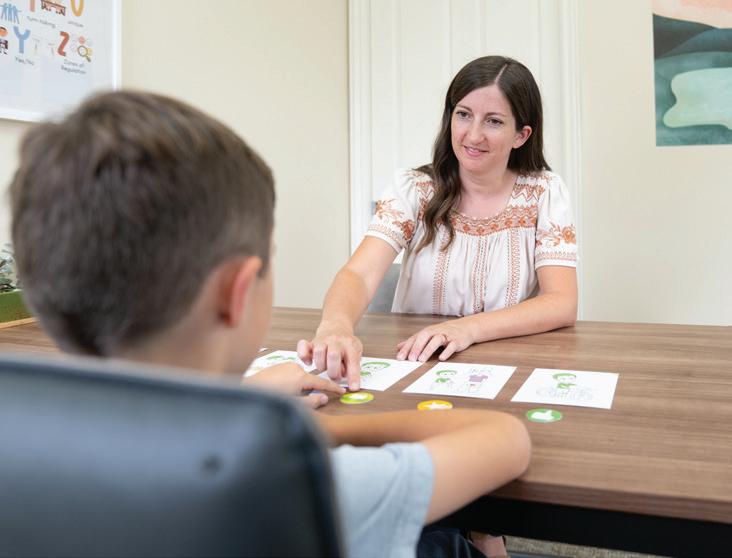

By Aimee L.
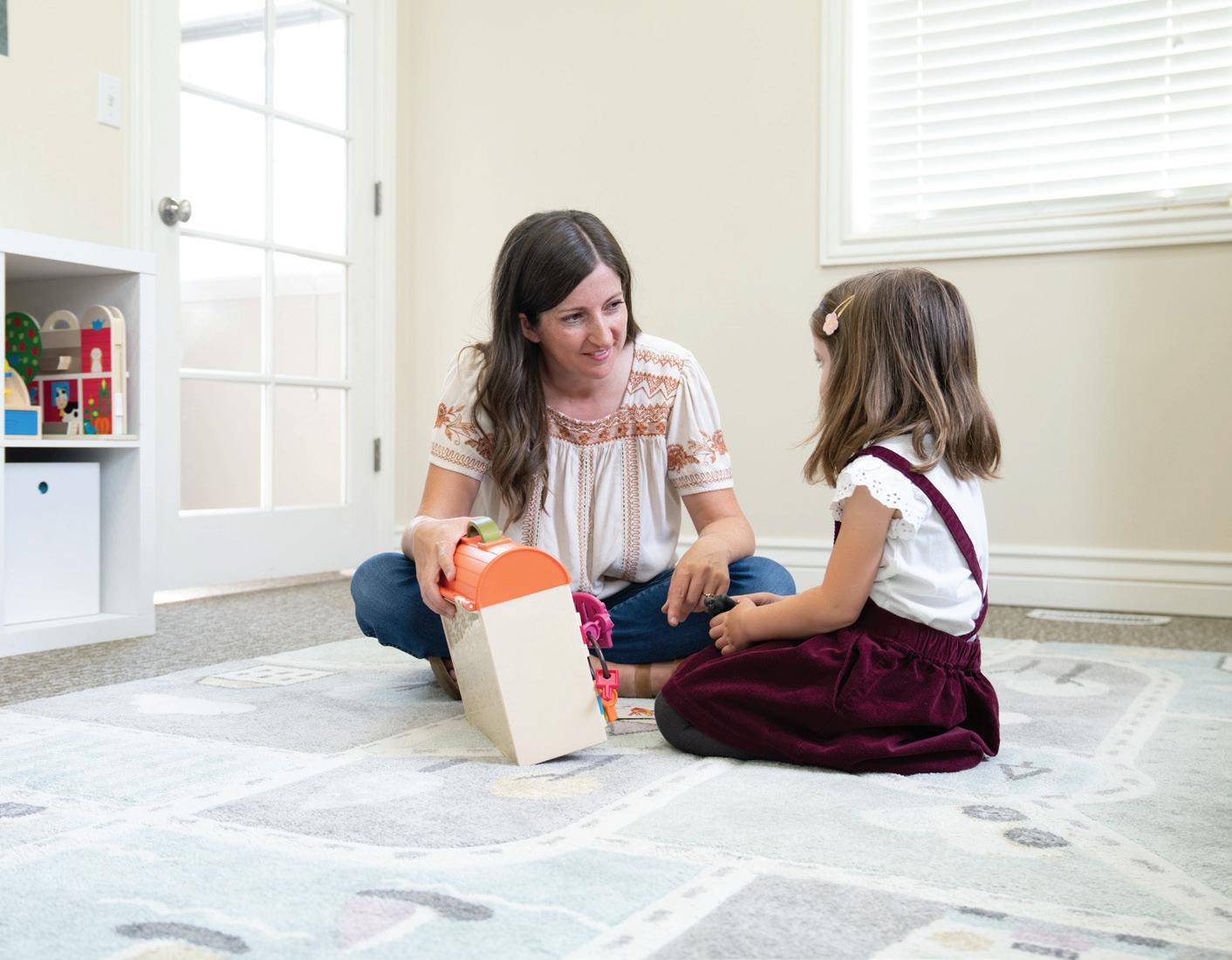
Devany Browning, M.S. CCC-SLP, is the driving force behind Pathways Speech Therapy. With over 12 years of experience in Special Education and nine years as a licensed and certified Speech-Language Pathologist (SLP), Devany brings a wealth of knowledge and expertise to her practice. She holds a Master’s Degree in Speech Pathology from the University of Utah, has specialized training in PROMPT therapy and Social Thinking, and is a Certified Autism Spectrum Disorder Clinical Specialist.
Devany’s areas of expertise include language disorders, social skills, articulation, autism, and literacy/dyslexia. Her dedication to continuous learning and clinical techniques ensures that Pathways Speech Therapy remains at the forefront of speech therapy practices.
“I went to school for English literature, originally, but since high school I have had a passion for working with kids with disabilities; I just didn’t make the connection between that and a career until I started working as a
paraprofessional in the schools after college,” Devany said. “I then went back to school for speech pathology and had the goal of working with children. I have always felt that I was able to connect with kids with disabilities.”
Pathways Speech Therapy offers a range of services tailored to meet each child’s unique needs. The clinic provides evaluations, speech therapy, and tutoring based on proven clinical techniques.
The team at Pathways Speech Therapy is experienced in treating a variety of conditions, including speech disorders, language delays, autism spectrum disorder and dyslexia. Additionally, the clinic offers tutoring in handwriting, math and reading, ensuring a holistic approach to each child’s development.
“I think helping a child is a community effort; even as a speech-language pathologist, I needed support for my kids in the areas that they struggled when they were younger,” Devany said. “I have collaborated as much as possible with different providers in the area, including Literacy Utah.”
SUPPORTING THE WOMEN-OWNED BUSINESSES OF HEBER VALLEY
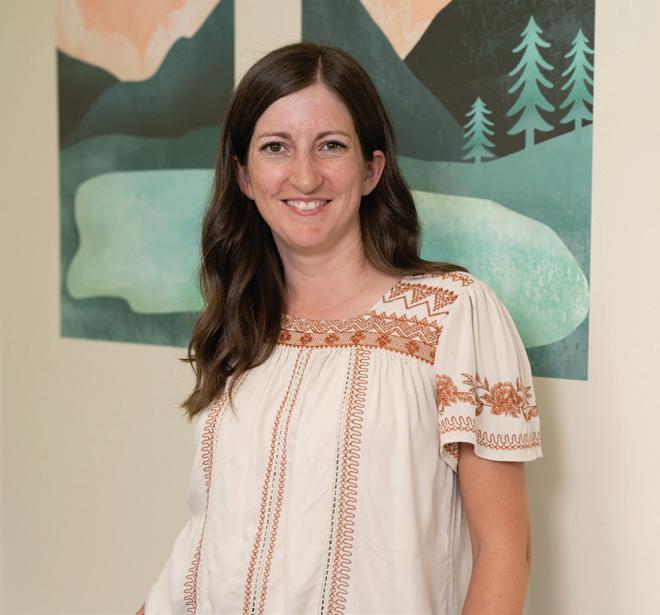
Devany is a dedicated therapist and a busy mom of two young children. She skillfully balances the demands of motherhood with running a thriving business. Despite her hectic schedule, she finds time to engage in personal activities that bring her joy and relaxation. She enjoys practicing yoga and hiking, which provide her with a muchneeded escape and help her maintain both physical and mental well-being.
For more information about Pathways Speech Therapy, visit their website (www.pathwaysforspeech.com) or contact the clinic directly to schedule an evaluation (435) 776-5692.
As I walked across the patchy grass and muddy terrain to the Provo River’s edge I paused for a brief moment in awestruck wonder of her beauty. My husband had already entered the river at the location described as “his spot,” a gentle collection of water amidst the river’s quick flowing current forming a small and cozy pool protected by the rocks surrounding it.
“You have to just get all the way in and fast! Otherwise, you’ll get a headache and ruin the whole thing!” He shouted.
His judgment of my hesitation by clear observation of my wide eyes and quick, reflexive gasp upon plunging one foot into the 50 degree waters was correct. I didn’t want to submerge my whole body, it’s really cold! The headache would have been caused by the rapid vasoconstriction and increased heart rate. The instructions to get in quickly and practice slow and controlled breathwork played like a mantra in my mind.
“Just count to three and go!” He confidently urged, from the comfort of his spa.
On three, I took the polar plunge into the Provo River for the very first time.

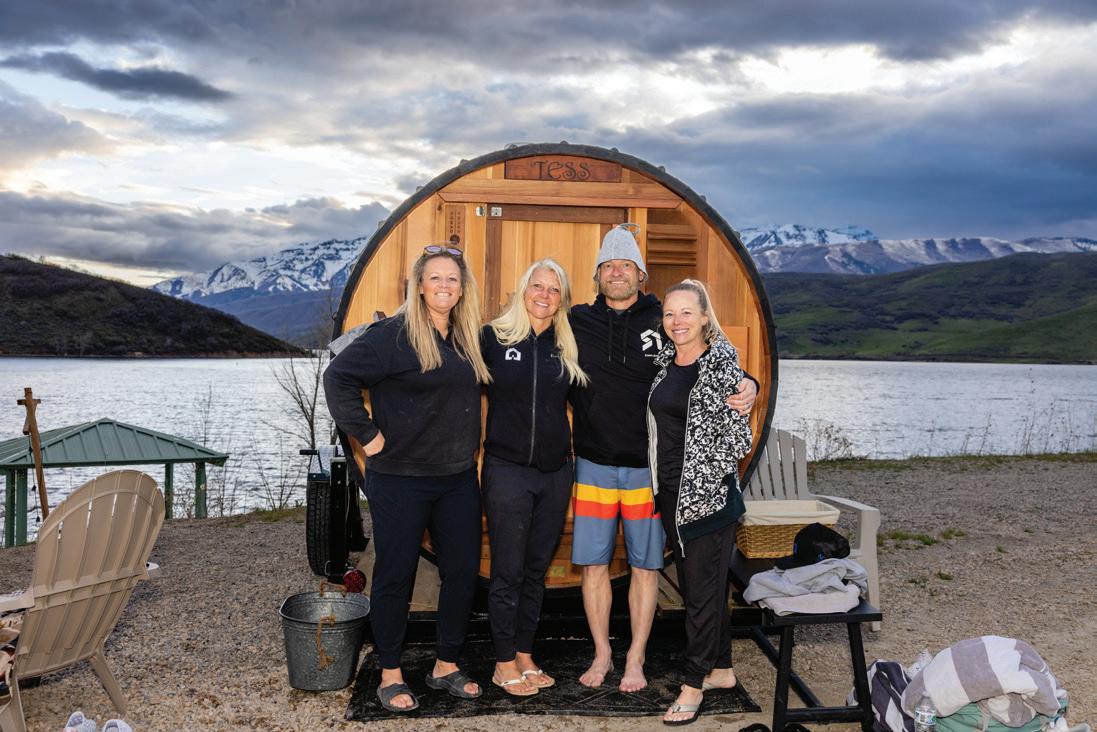
Bingham and her husband, Alan, are the owners of SaunaWild, a mobile sauna experience that serves our local community in the healing and restorative practice of contrasting heat and cold exposure. Cami’s story of cold exposure started in 2023. There was an
As winter approaches take the time to get your home ready for the cold.
• Have your furnace serviced so it is running at maximum efficiency.
• Weatherize your house:
O Seal windows, siding, roof, or whatever has openings and cracks.
O Check weather stripping on windows and doors. Replace if needed.

ever-quiet voice beckoning her to come to the water for her own healing and restoration from a lifelong struggle with moderate anxiety and depression that went hand in hand with an unwanted reliance upon pharmaceuticals.
“Everytime I approached the river, there was a calling, ‘get in the water’, I had been in the water waist down after long runs, so it wasn’t odd for me to get into the water, but this calling was different, ‘come to the water’, so there was definitely a spiritual calling.”
“I knew that I needed to get in, so I gathered friends that had done it before. It was exhilarating, and so healing. Running was always for my brain, the cold water therapy was for my body.” That sense of community, and a gathering of people in cold immersion, is where the idea of heat therapy was born––among the chattering teeth and shivering souls of their friends who wondered, “Wouldn’t it be great if there was a sauna we could get into after the river?”
A few days later, while scrolling Facebook, Cami happened upon a friend’s post, now the co-founder of SaunaWild, reveling in the unlikely experience of participating in a cold camp in Minnesota. People would gather tents on the ice, drill holes three feet deep to reach the freezing waters and plunge for 1-3 minutes and then reemerge to take refuge in the contrasting and toasty embrace of a 190 degree dry sauna.
“I had been dealing with seasonal depression after leaving the heat of Las Vegas and enduring long, harsh winters here in Utah. It was something I was struggling with, and I heard God saying, ‘this is where your healing is’, and after leaving the experience of sauna and cold and feeling so good and wanting to do this again, our minds began to offer the idea of bringing a sauna to the river.” Alan researched the neurotransmitters and hormonal uptake when you do something stressful to the body but not detrimental, it actually stimulates healing through the brown fat which houses your mitochondria, an organelle in your cells whose primary function is to produce energy through the process of oxidative phosphorylation. Besides this, it is responsible for regulating the metabolic activity of the cell. It also promotes cell multiplication and cell growth. A renewed cell is a healthy cell.
In the spring of 2024 Cami and Alan tested their theory and reached out to their community members. The response was overwhelming. The rented sauna was a long cargo trailer that had been built out to accommodate stadium seating for 16. The reservations were maxed out, and their trial rental sauna had paid for itself on the first day.
Cami, Alan, and their business partners Stacy Jensen and Alli Bills combined their energies of a coagulated and connected community from Cami and Alan, a 10 person mobile sauna from Stacy and Alli, and the free (and shared) healing waters of the Provo River into what is now, SaunaWild.
“What differentiates us from other models is that we are offering an outdoor wilderness experience,” Alan elaborates. “We do 1-3 minutes in the cold, depending on the current water temperature, sauna for 10-15 minutes, then cold, then heat, then cold, then heat and ending again on cold.”
Participants in the cold-plunge group (upon successful cold sessions) will then remove their shoes, ground themselves to the earth on their walk back to the sauna, and reacclimate their bodies to the surrounding temperature before heading into the heat session.
“That’s a core element of the healing, the walk through the woods, bare feet pressed into the ground, and the reacclimation from the cold.”
While the Bingham family and their partners are champions of all business seeking to bring balance and healing into this world, they felt deeply that for them, a brick and mortar couldn’t replicate the healing that happens in nature, so they chose to offer an alternative. After sitting with countless men who struggle with depression, suicidal ideations, and just a heaviness and weight they carry on their own, Alan has vowed to bring the sauna to the open water as often as
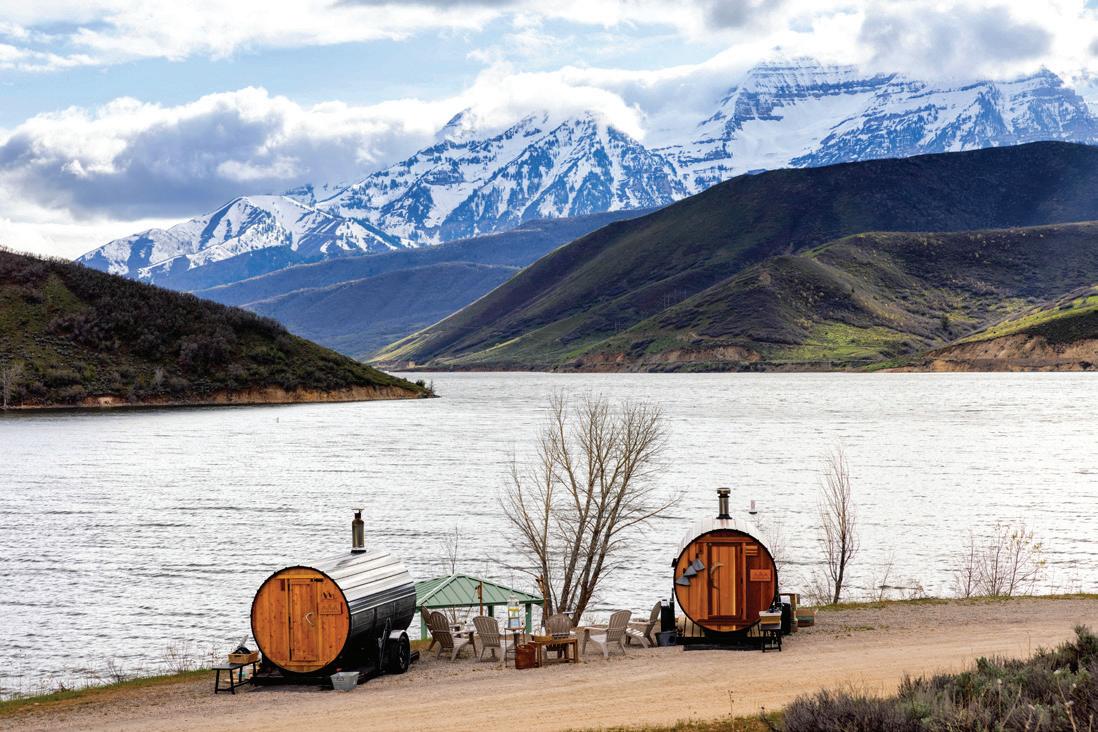
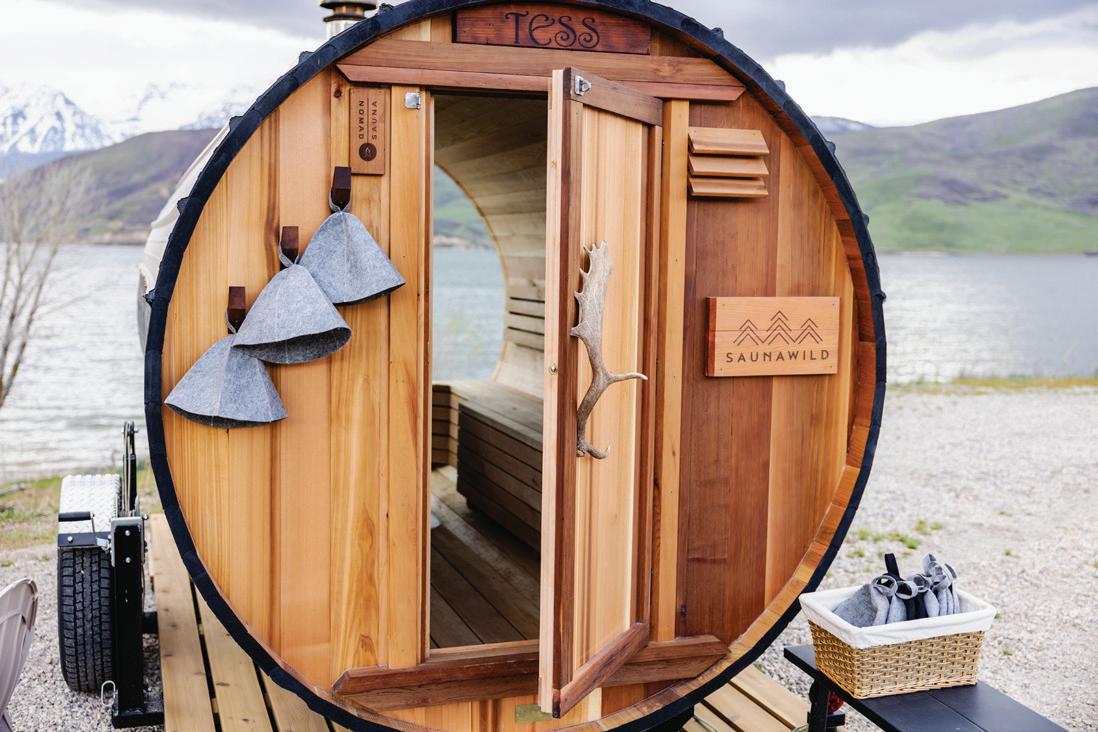

possible to facilitate gathering and healing for all who are stressed and in need of soulful detoxification.
SaunaWild has two barrel saunas and one box sauna with windows to allow participants to enjoy the stunning views, further providing a unique, holistic experience through contrast therapy, grounding, and community connection in three local areas within the Heber Valley; Provo River, Jordanelle, Deer Creek, and portable cold-plunge tubs for private events at homes or businesses.
To contact Cami and Alan check out their Instagram @saunawild or visit their website; www.gosaunawild.com
This is not medical advice. Always consult your physician to discuss the benefits and risks of deliberate cold and heat contrast therapy.
Bloating and constipation are common issues that can make you feel uncomfortable and frustrated. Understanding the potential causes is the first step toward finding relief. Here are some of the most common reasons you might be experiencing these symptoms:
1.DEHYDRATION
One of the easiest causes to address is dehydration. When you don’t drink enough water, your body struggles to pass stool, leading to constipation and bloating. Aim for at least eight 8-ounce glasses of water a day to help keep things moving smoothly through your digestive system.
2.
A diet low in fiber can also contribute to constipation and bloating. Fiber adds bulk to your stool, making it easier to pass. The Dietary Guidelines for Americans recommend 25 grams of fiber per day for women and 38 grams for men. Include more fiberrich foods like vegetables, fruits, whole grains, and legumes to boost your intake.
Habits like chewing gum, drinking carbonated beverages, or eating too quickly can cause you to swallow excess air, leading to bloating. Simply slowing down when you eat and cutting back on fizzy drinks can help reduce this issue.
4.
Food intolerances, such as lactose or gluten sensitivity, are a common cause of bloating and constipation. If your
Imagine having a tool that offers a complete snapshot of your body’s health—from bone strength to muscle mass and even hidden visceral fat. The revolutionary DEXA Scan, now available at Dr. Spenser Reed’s office, provides this detailed insight in a quick, painless procedure. Whether you’re an athlete aiming to enhance performance, a health enthusiast seeking precision, or someone looking to take charge of your health, a DEXA Scan can guide your wellness journey.
Known as the gold standard for evaluating body composition and bone health, DEXA Scans provide precise measurements of body fat, muscle mass, and bone density. This makes it a powerful tool for detecting early signs of serious health risks like heart disease, diabetes, stroke,

body has trouble digesting certain foods, they can ferment in the gut, causing gas and discomfort. Keeping a food diary and eliminating suspected triggers can help you pinpoint problematic foods.
5.
MEDICATIONS AND HORMONAL CHANGES
Some medications, like pain relievers or antidepressants, can cause constipation and bloating as a side effect. Hormonal fluctuations, particularly during menstruation or menopause, can also affect digestion and lead to bloating.
6.
If your bloating and constipation are ongoing or severe, you may have an underlying condition like Irritable Bowel Syndrome (IBS), Celiac disease, or Small Intestinal Bacterial Overgrowth (SIBO). It’s essential to seek professional help if your symptoms persist.
GET TO THE ROOT CAUSE
If you’ve tried lifestyle changes without success, it may be time to dig deeper. At Whole Essentials Nutrition, we offer the Gut Restore Assessment, which uses comprehensive stool testing to uncover hidden causes of digestive discomfort, such as bacterial imbalances or food sensitivities.
Go to the website, Whole Essentials Nutrition, for more information or to purchase the Gut Restore Assessment.
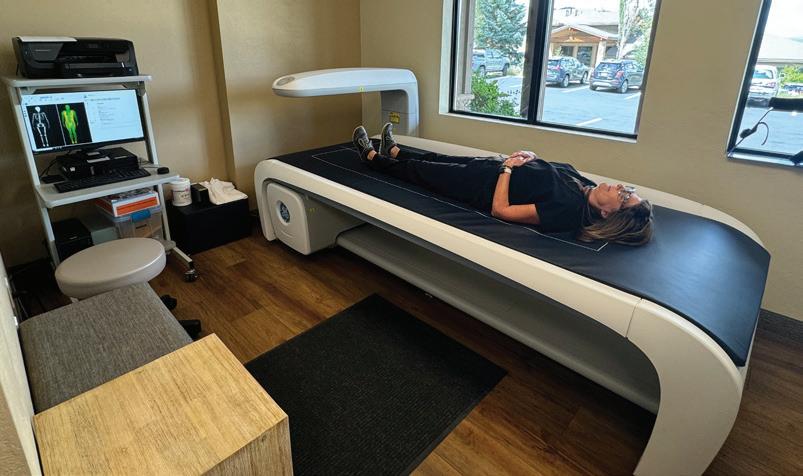
and osteoporosis. For older adults, it’s especially valuable for early osteoporosis detection, while those concerned about visceral fat can benefit from its accurate readings, leading to better health decisions.
Ideal for athletes, health-conscious individuals, and those looking to take proactive steps, the DEXA Scan provides critical health insights tailored to your needs.
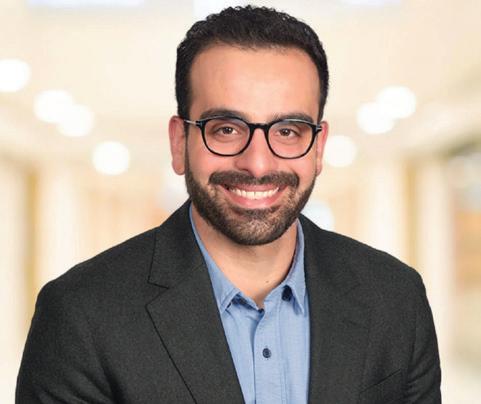
Dr. Reed’s office is committed to making this advanced technology accessible to the community. Book your DEXA Scan today and start your journey to better health. Learn more about how this stateof-the-art technology can benefit you by visiting Dr. Spenser Reed’s website or call 866-360-3945.
Ah, summer! It's a season bursting with joy, laughter, and unforgettable adventures—especially for my husband and me. This year was particularly special as we embarked on our first overseas trip since the pandemic. We visited lands where whisky flows like water and beer is celebrated as a national treasure. It shaped up to be a boozy bar-hopping extravaganza!
Before you judge, let me clarify: I don’t harbor any ill will toward alcohol. When someone mentions an “authentic Scottish pub crawl,” you’ll find me at the front of the line (and the karaoke mic). But by the time the kids returned to school, I felt like a flickering neon Guinness sign, and it was clear—a detox was in order.
STEP
I decided to discuss the detox with my husband—my greatest ally and worst enabler. He often persuades me to get up early for yoga while also tempting me with a beer at 5 PM. To my surprise, he was more open to this detox than I anticipated. Perhaps his cells were ready to detox, too!
STEP 2: ESTABLISHING
Together, we set our game plan. We’d kick off our no-booze journey on Labor Day and continue until his birthday— four weeks of clarity and commitment! Simple? Yes. But it was definitely a stretch goal for both of us.
In our quest for alternatives, my husband discovered Athletic Brewing, which was a game-changer! Meanwhile, I loved Kin Euphorics functional beverages. Both choices satisfy our cravings for a cold drink without the drawbacks of alcohol.
Our home happy hours evolved wonderfully; the urge to pour a glass of wine or beer faded away effortlessly. We adjusted


our social calendar, opting for family hikes and daytime gatherings with friends. Hydration became our new mantra— more water, iced teas, and sparkling water filled our glasses. Surprisingly, no one batted an eye at our alcohol-free choices!
The results? We turned early bedtimes into a new habit, worked out more, and woke up rejuvenated. Our wallets felt lighter, too—no more expensive liquor store trips or hefty dining bills. We both felt leaner, noticed reduced inflammation, and my skin looked brighter and tighter. Honestly, what’s not to love about this detox journey?
Surprisingly, letting go of alcohol became much easier with our commitment and accountability. Did we indulge on his birthday? Absolutely! We celebrated with a nice bottle of wine. But the day after? We seamlessly returned to our alcohol-free lifestyle.
Looking ahead, we’ve set our sights on Thanksgiving as our next alcohol-free goal. The benefits of our detox are undeniable, making short-term goals feel less necessary. Will we eliminate alcohol completely? Probably not. But will we consume less than in years past? Absolutely!
Have you ever taken a break from drinking? How did that experience shape your habits? And for those who haven’t tried it yet—why not now? Let’s embrace Sober October together!
Live free, Dana



Nov 01 • Black vs Gold @ Wasatch Aquatic Center • 3:45 pm
Nov 09 • Wasatch Kickoff Invite @ Wasatch Aquatic Center • 10:00 am
Nov 15 • Thanksgiving Invite Day 1 @ South Davis Rec Center • 12:00 noon
Nov 16 • Thanksgiving Invite Day 2 @ South Davis Rec Center • 9:00 am
Nov 19 • @ Olympus HS @ Olympus HS • 3:45 pm
Nov 21 • Conference Game @ Wasatch Aquatic Center • 3:45 pm
Dec 13 • Wasatch Winter Invite @ Wasatch Aquatic Center • 10:00 am
Nov 20 • @ Brighton Brighton HS (SLC) • 7:00 pm
Nov 21 • @ Layton Christian Academy Layton • 7:00 pm
Nov 23 • @ Pleasant Grove Pleasant Grove HS • 2:00 pm
Dec 02 • Judge Memorial Wasatch HS • 7:00 pm
Dec 06 • @ Clearfield Clearfield HS • 7:00 pm
Dec 09 • Box Elder Wasatch HS • 5:15 pm
Nov 22 • Park City Wasatch HS • 7:00 pm
Nov 26 • Brighton Wasatch HS • 7:00 pm
Dec 03 • Timpanogos Wasatch HS • 7:00 pm
Dec 06 • @ Pine View Game in St George • 8:00 pm

BY JESSICA DAVIS

Name: Emily Ho • Age: 14
Disciplines: Women’s Artistic Gymnastics - Xcel Gold Level
She’s committed, compassionate – and now a coach too!
It’s no surprise to anyone who spends time inside Black Diamond Gymnastics & Sports Center in Park City that Emily was chosen as the Athlete Leader of the Month for November. Known for her positive attitude and natural ability to influence others, Emily leads by example with her work ethic and commitment to the sport of artistic gymnastics.
Despite recently recovering from ankle surgery, Emily hasn’t let the setback slow her down. She remains motivated, focusing on conditioning and staying dedicated to her training. "She shows up to every practice with a smile and inspires her teammates to work as hard as she does," her coaches said.
In addition to her role as an athlete, Emily is also a valuable member of BDG's recreational staff. She’s using this first job opportunity to learn employee teamwork, communication skills and how to motivate others, including her young students.
She successfully translates her love for gymnastics and knowledge of the sport into coaching beginner athletes. "I love to teach and show kids why I love gymnastics, and show them why they should love it too," she explains.
Emily’s positive influence extends beyond the gym as well. She’s involved with the National Charity League, where she gives back to her community through multiple service projects. Her favorite has been working on the Little Miracles project, where she’s able to make a meaningful impact on the lives of others.
Emily’s dedication, resilience, and positive energy make her a natural leader, both in the gym and in her community. Congratulations to Emily for being recognized as Athlete Leader of the Month—a well-deserved honor for someone who consistently shines!


By Jessica Davis, Black Diamond Gymnastics & Sports Center
At Black Diamond Gymnastics & Sports Center, we are intentional about setting employees up for success. Why? Because we value the opportunity to teach skills that benefit both our business and our staff— which includes local students, former athletes, neighbors, and even member parents.
“We strive to provide tools and resources that help people of ALL ages and experience levels grow and succeed, from seasonal hires to part-timers to full-time staff members. That’s why we encourage candidates as young as 14 to apply and start learning key skills that will serve them in school and beyond.” – Katy Heddens, Owner
For us, it’s less about an applicant’s level of experience and more about who asks questions such as, “What will I learn here?”
Career hack: Start early. And start with communications.
Which skill touches nearly every interaction, decision, and relationship in both our personal and work lives? Ok you guessed it – communications.
At BDG, we give every employee the opportunity to develop new and hone existing communication skills in multiple areas, including:
• Practicing active listening skills
• Giving clear instructions and setting expectations
• Delivering and receiving effective feedback
• Managing conflicts & maintaining constructive interactions
• Leading collaborative discussions and public speaking
Develop communications skills now = make more later.
While some might put communications on a list of “soft skills” or label them “nice to have”, we’re going to let Warren Buffett help to convince you otherwise:
“One easy way to become worth 50 percent more than you are now at least is to hone your communication skills—both written and verbal.”
If these are the types of skills you want to add to your first resume, or you’re looking to level up as you’re building your career, we’d love to meet you!
Stop by the gym or go online to blackdiamondgym.com/park-city/ employment/ and fill out an application today.
Think your teenager doesn’t “need” a part-time job? Think again!
For younger employees, including those in high school and college, it’s been well proven that holding at least one part-time job leads to much higher success in multiple areas, including:
• Higher graduation rates and better academic outcomes
• Quicker employment post-graduation and higher career readiness levels
• Lower student loan debt due to money management and savings skills gained
First jobs are critical for kids to find their sense of responsibility and purpose, learn time management, develop a work ethic and resilience, and build teamwork and leadership skills.
So encourage your teenager to start building and honing these skills outside of school as early as possible. What they get paid in experience will pay off exponentially in the long term.

By Aimee L. Cook and Jonathan Cheever
Hey homeowners, it’s Jonathan Cheever, your go-to plumber and Olympic snowboarder here in Park City. Winter is just around the corner, and with nights already dipping into the 30s, now’s the time to get your home winter-ready!
First on the list is disconnecting your garden hoses. Make sure they are not connected to the hose bibs, and shut off the water supply to them. If you skip this step, you might end up calling us in the spring to fix a leak. And trust me, hose bib repairs are more involved than you’d think!
Got a boiler? Now is the perfect time to tune it up for the cold months ahead. A well-maintained boiler ensures you’ll have hot water and that your radiant heating and snowmelt systems work flawlessly. Maintaining your boiler is crucial for its efficiency and longevity, and leaving this task to a professional plumber is essential. Boilers operate under high pressure and temperatures, and a minor oversight can lead to significant safety hazards, including gas leaks. Professionals have the training and experience to identify potential issues before they escalate, ensuring your system runs smoothly.
Boilers aren’t something to DIY, so give us a call at 435-252-7697. We’ll take care of the manufacturer-recommended annual maintenance, ensuring your home stays warm all winter long.
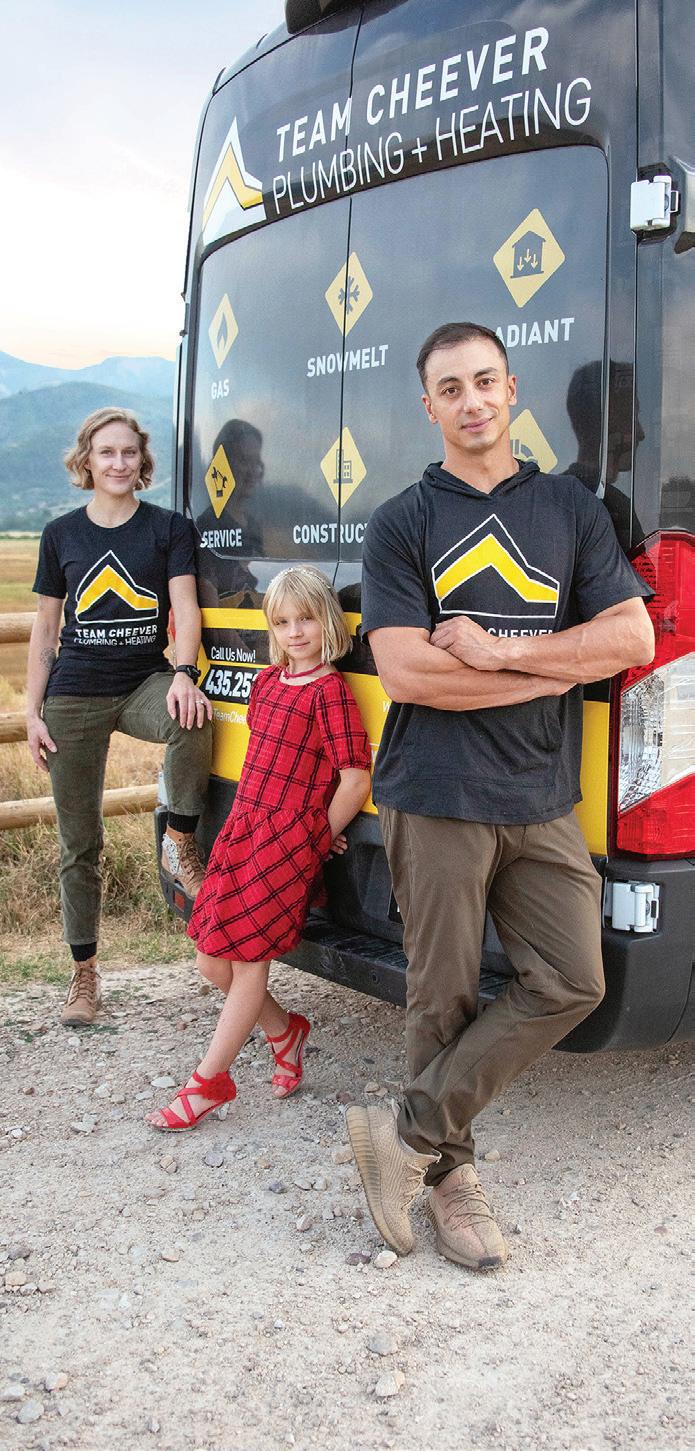
If you have a forced air system, remember to change your filters every few months. This simple task keeps the air in your home clean and your furnace running efficiently. Additionally, have your igniters cleaned yearly to keep everything running smoothly. A little maintenance goes a long way in preventing unexpected breakdowns during those chilly winter months.


CONTACT US FOR ALL YOUR PLUMBING AND HEATING NEEDS
If you have any other plumbing or heating issues that need attention, give us a call and mention this article—you’ll get $50 off your service! Whether it’s a minor repair or a major overhaul, we’re here to ensure your home stays comfortable and safe all winter long.

Jonathan Cheever grew up in Saugus, Massachusetts, a town just outside of Boston. His dad owned his own business and from a young age, Jonathan witnessed what it was like to grind in the world of plumbing and HVAC. Following in his dad’s footsteps, he became a licensed plumber shortly after high school while still spending his first year in college. After which, he decided to move out west to chase the snow. Always with a career to fall back on, Jonathan moved to Park City in 2004 and found success quickly, making the US Snowboard team in 2005. At breakneck speed, he started competing in World Cups during his 2005-2006 seasons, eventually racking up ten X-Games appearances in snowboard cross, and making the Olympic team in 2018.
Between 2004 and 2011, Jonathan accumulated 38 top 5 finishes across all events, topping the podium in nine of those. He was only the second American to be ranked first in the world.
With a 16-year span of top level, elite performance as a professional snowboarder, Jonathan looks back on his time in the sport with a lot of pride and fondness. “It was insane. You know, World Cup podiums, National Champion, just a really cool career, getting to travel the world and snowboard.” While it doesn’t keep the lights on anymore, he is lucky to have stood on his dad’s shoulders to land himself in such a lucrative career in a place like Park City.
“My fiance, Madeleine, and I are easily working upwards of 55-60 hours a week and staying busy. We live in Pinebrook, where we can ride our mountain bikes after a long day before the sun goes down, maybe catch a couple laps, and enjoy these activities with my stepdaughter, she’s 9. It’s really exciting to see her doing her thing, but we just love what we do.”
In 2020, while the world stopped for all of us, Jonathan also went through a divorce, lost his mother, and was confronted with the decision to turn the page on his professional career. “We're all human and go through our ups and downs. The world's going to keep turning whether we are sad or grieving or not.” He acknowledges the particular difficulty of that year, but it really put into perspective the point he was at in his life. “I still wanted to try to make the 2022 Olympics, just see what happens. And there were some flashes of brilliance. I think mentally, I was already checked out. After that season, it was time for something new. Time to make some money. I wanted to get to the mountains and do some more mountaineering, ride some powder, get back into snowboarding for the original reason why I got into it.”
Plumbing and Snowboarding may seem like two very separate careers to most, but for Jonathan he’s rooted deeply in both. Going from a plumbingsnowboarder to now a snowboarding-plumber, his career-long sponsors are still part of his day to day. Having always repped American-Standard fixtures, Bradford White Water Heaters, and Viega, he’s more of their ambassador now. In a growing industry, Jonathan knows first-hand the opportunities he has in this field. “For every 11 plumbers leaving or dying in the trade, there's only one getting back into it. There is so much work out there. The home services industry is growing by about $5 billion every year. I just feel lucky that this is my life right now.”
From prestige on the slopes, to having great appreciation and breadth of knowledge in his massive industry, this decorated snowboarder is serving his community in the plumbing and HVAC trade, but brings with him the ambition and grit of a world-class winter athlete––exemplifying the Park City lifestyle in such a unique way.
Contact Team Cheever Heating & Plumbing for all your HVAC needs and mention 'ATHLETE OF THE MONTH' for a $100 voucher. One time use only, until February 1st, 2025.


“You know, the secret sauce to owning a business and making money is there is no secret, you have to do what you hate like you love it. You have to grind and work hard. And if you're working hard, try to do it right, try to have some type of strategy. And that's what I carried over from my athletic career.”



We’re all guilty of riding our trail bikes and then putting them away dirty. As with any endeavor in our lives, on and off the trail, maintenance can be a struggle to get on the calendar (and doesn’t always mean the work will get done), which is why March is the first, and last, repair stop for many enthusiasts. In a rush, the bike appears from cold storage with excessive chain lube and Cedar City road-salt deposited 4 months earlier. Arriving at the bike shop, snow falling outside, there’s a queue of trail-loving, fun-havers thinking the same thing: “My bike needs love and I can’t ride it like this.”
That’s when the momentum blurs to a stop. Instead of packing for Southern Utah, bikes are lined up with countless others at the shop, which is still on a winter skeleton crew. Along the Wasatch Back, many bike technicians are still mounting skis and prepping next season’s Super G race boards. It’s a challenging time of year for bike shops and bike owners alike.
At Trek Heber City, they maintain a winter special, according to Manager Tori Broughton. Last year’s was a $50 savings on certain maintenance packages, so look for that at your favorite shop. If you can get ahead of the curve on repairs in January or February, the shop guys will be grateful for the work, and you’ll

LOCATION! 2211 W. 3000 S. Charleston UT 84032

“A lot of bikes need a fifty-hour suspension service at the end of the season, and that’s one of those things they could do going into winter, as well as a tune.”
- Mickell Nagel, Trek Mechanic
A host of bike technicians, who ride and fix bikes (and eat bike-shaped cereal for breakfast) would love to see more repairs when it’s snowing. Mickell Nagel, a Trek Mechanic and Utah native, recommends to riders that, “Winter storage starts with a full tune minus tire sealant,” indicating that it’s best to add sealant when the riding starts. Mickell added, “A lot of bikes need a fifty-hour suspension service at the end of the season, and that’s one of those things they could do going into winter, as well as a tune.”

Powerlifters lift as heavy as possible (a 1 rep max) on the 3 core movements-the squat, the bench press, and the deadlift.
Tactical Training: The Tactical Program works with individuals from both law enforcement and multiple branches of the military. With the Tactical programming, you can expect a mix of strength and conditioning exercises that help increase overall strength and improve conditioning based on the unique demands members of the armed forces and LEOs are put under.
End of season tunes help identify problems that could be remedied during the off-season, so it’s already done. For instance, if you have a Specialized Epic Brain, the rear suspension unit cannot be serviced many places. This can take months during the riding season. A broken or frayed cable, or a dead battery, could ruin that first ride on the trip south!
While they bring the machine to life, lubricants break down and cause problems. Over time, they become waxy, and the tiny moving parts inside shifters, hubs, and suspension that rely on oils and grease to work smoothly, begin exhibiting internal stickiness. Shimano shifters can altogether stop working and will need service.
Suspension degrades and can make for rough rides. Some of you may remember the squeal from Mavic’s rear hub at high speed, the result of a dried-out, waxy oil seal.
Seals also oxidize and break down, secreting an oily mess. In our dry climate, seals can easily have a shorter service life. Remember, if oil is getting out, dirt and water are getting in.
Taking it one step further, and technically not a lubricant, hydraulic oils found in forks and brakes thicken and oxidize rapidly from factors like pressure and heat. Blackening is a characteristic mechanics have seen during a Shimano brake system flush. It indicates increased corrosivity. As a result, infrequent brake bleeds on these systems can destroy the seals that allow pressure accumulation, which is required for braking.
Youth and Kids Classes: The Youth and Kids program provides individuals between the ages of five and seventeen with a portion of their described physical activity in a fun and engaging format. and Isolation exercises used to sculpt and tone the body than strength, with the goal of developing muscle size to the eye.

While the bike should be clean, and a tune-up would serve it well, I recommend tucking your bike into its winter quilt having freshened up hydraulics to avoid internal damage from degraded fluid. Ask your mechanic to note anything else you ought to do, because there is often a lot more. You’ll get ahead in the off-season, riding smooth, quiet, and worry-free in the on-season.
Put the bike first this November.
“To feel is to live.”
The joy of life is that it does not have to be casual. It does not have to be boxed away and armored up. It does not have to be diluted or hidden behind closed doors. The greatest gift we have in life is to feel.
To feel even when it’s scary. To feel even if it’s insecurities, overwhelm, anxiety, fear. Because the other side of that coin is to feel the magnitude of life. It is an act of bravery to open your heart to the world. To the good, the bad, and the ugly. To see things we don’t like, to hear things that hurt us, to feel emotions that stretch us. Choosing to feel even when it gets hard. To be brave enough to feel even when it’s hard.
It is a great pleasure to feel. When we feel we see how extraordinary the little things are. To feel is to let your heart be open and bare, to have love and to give it freely.
To know that life is rare, having enough love to cry when it’s gone, is rare. Having a warm enough home to miss when you’re not there, is rare. Having enough emotions to feel passion and dream, is rare.
Life is so beautiful when you feel. Even if it hurts sometimes.
The soft becomes softer only after we’ve felt the hard. Our hearts grow wider only after they’ve felt trapped.
We only know kindness because we’ve been without.
It is not embarrassing to feel. It is not weak. It is human.



It is real. It is brave.
To feel is a gift and it is something to be proud of.
To look for the stars, to know they are there even on a cloudy night.
For the world will only grow brighter, be kinder, and love harder, the more we feel.
Feeling only amplifies love and simplicity and connection and admiration.
It does not just mean anxiety and fear. It means joy, empathy, friendship and connection. Not just sadness. The grander, the butterflies, the beauty, the heartbreak, the chaos, and the brilliance of it all.
Feeling means seeing every color in the rainbow and all the colors outside the rainbow.
The good, the bad, and the ugly.
So cry when you need to.
Ask for help.
Be alone.
Sit in silence.
Hug your friends.
Tell them you love them.
Ask for forgiveness.
Post the pictures you like.
Be bold.
Compliment your friends.
Tell them you love them again.
Stand up for yourself when you’re angry.

Be sensitive, it’s okay.
Take a nap when you’re tired.
Send the nice text.
Be kind, it’s not weird.
Tell them you appreciate them. Hug tighter.
Love books, movies, songs, clothes, characters, foods.
Admit you’re overwhelmed.
Feel what you need to feel.
Embrace it. Embrace yourself. Embrace your feelings. Embrace your life.
Feeling is not weird. It is not embarrassing. It is brave, and it is a gift.
To feel is to live.










HOLIDAY TREE & GINGERBREAD HOUSE SHOW
Friday, December 6th and Saturday, December 7th
Utah Film Studios, 4001 Kearns Boulevard, Park City
Free Admission
Come see over two dozen beautifully decorated holiday trees, menorahs, and other holiday symbols on display. Each tree is designed and decorated by local businesses, designers, organizations, and community groups. We also have rows of stunning gingerbread houses, kids’ activities, and a pop-up holiday boutique!
Benefiting Habitat for Humanity of Summit and Wasatch Counties Homeownership Program
Information and online auctions at habitat-utah.org

BY MICHELLE DEININGER
Heber family has much to feel grateful for, thanks to Habitat for
Two decades ago, Wendy McKnight was a mother of young twins dreaming of building a home on a piece of land in Heber Valley, Utah. It was a big, empty field owned by her children’s great-grandparents. There was plenty of space and they’d be able to live near relatives and friends. When she and her former partner broke up, the dream went with it, since the land belonged to his family.
Wendy tried to move on and find a home as a single mother, but she struggled.“I filled out so many applications, I tried anything and anywhere,” she remembers. “It was always a no; never a yes.”
Every agency Wendy applied to had a different reason for turning her down. Some said she didn’t make enough money to qualify, others said she earned too much. The rejections piled up, meanwhile, she kept renting, working, and parenting alone. Wendy wasn’t completely sure what her needs were, but knew she wanted to give her children their very own place to play, decorate for the holidays, and feel permanently connected.
Then, things got really wild. Wendy’s phone rang, it was a representative from Habitat for Humanity saying her application looked promising and she was a candidate for a to-be-built house. Ironically, and if by some miracle, Wendy’s future house would sit squarely on the very land she used to dream about. Her ex-partner’s grandparents had sold the field to a buyer who later donated it to Habitat for Humanity.
“It’s like grandpa - he’s passed on now - he was looking out for me and my kids,” she says. “That’s how I see it.”
A core part of Habitat for Humanity’s ethos is to create and strengthen healthy, vibrant communities by working to ensure everyone has a decent place to live. As part of that mission, the non-profit connects homeowners to their new house through “sweat equity,” involving the buyer in the building process. Habitat homeowners also pay monthly mortgage bills to the organization, which is a non-denominational Christian entity, and an equal opportunity housing provider.
For Wendy’s family, their project broke ground at the same time her twins were high school freshmen. Strangely, her son was enrolled in a building class that lacked a project. Voila! The powers that be granted permission for the class to help build the house; the students pitched in on a variety of tasks, but their primary achievement was building the home’s roof.
Other community members played roles as well. While Wendy was working as an office manager for the police department, a local judge began directing those sentenced to community service hours over to Wendy’s home site. Through her job, plumbers, electricians, and other tradespeople arrived to volunteer and lend their skills and expertise.
In 2003, Wendy’s dream finally came true, the house was finished, and she and her 15-year-old twins moved into the home. To this day, Wendy can still recite the building materials and construction methods used to craft the house.
Now, Wendy works in the Wasatch County clerk’s office. Her daughter lives nearby and works at the county courthouse. Her son works for UDOT; he, his wife, and their two young sons are living with Wendy as

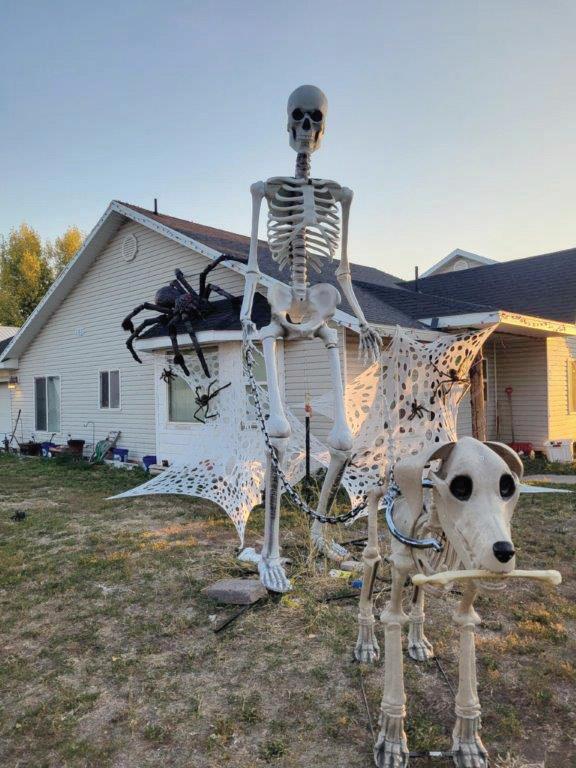

they navigate an economically prohibitive landscape for home buyers. “They’re having a hard time getting into anything in Heber because it’s so expensive,” Wendy says. “It’s sad, younger generations don’t have the opportunity. It’s just so hard to get a home here, so they leave.”
Leaving is not something Wendy wants to have happen when it comes to her children and grandchildren. “Our family is all about family,” she says. But high housing costs are a stark, painful reality in many parts of the country, with the Wasatch Back being particularly hard-hit by factors, including the COVID-era work-anywhere trend, and the seemingly endless popularity of Utah’s skiing, snowboarding, and mountain biking havens––dreamy for those who can afford it, lifechanging for those who can’t.
"Families who work in our community, from employees of small businesses to civil servants, have been priced out of buying a home in Summit and Wasatch counties for awhile now, and the gap between wages and home prices is only growing,” said Shellie Barrus, Executive Director of Habitat for Humanity of Summit and Wasatch Counties. “Owning your own home is a transformational experience for our families that lasts generations." Wendy agrees, feeling certain she would never have become a homeowner without the non-profit’s support.
Habitat for Humanity is a global organization founded in 1976; Utah’s chapter was formed in 1995––originally, as an all-volunteer operation––and since then has built homes and townhomes for 22 families and individuals. Building a home from the ground up is no small task, but their current goal is to begin constructing 10 homes per year.
Habitat doesn’t use a traditional waitlist approach. People can be placed on an “information list” by emailing programs@habitat-utah.org, which starts the process.
More information about Habitat for Humanity can be found at Habitat-Utah.org.
You’ve invested time and money into building a website for your local business. But did you know that one seemingly small oversight could be costing you valuable customers?
It’s a critical detail many local businesses, especially those that rely on foot traffic, overlook—and it could be hurting your bottom line.
Say a potential customer pulls up your website on a smartphone. They’re searching for a service just like yours and want to know if you’re nearby.
But as they scan your homepage, something crucial is missing. What’s absent?
Your business address.
That’s right—if you’re a brick and mortar business, your physical location should be one of the first things visitors see when they land on your website.
Seems like common sense, right? Yet, you’d be surprised at how often this crucial information is buried at the bottom of the page, only visible if you scroll all the way down.
In today’s fast-paced, mobile-driven world, if potential customers can’t find your business address right away, they’ll move on to a competitor who makes it easier.
In fact, 51% of mobile users search specifically for a local business’s address or contact information. They want to know where you are before deciding to visit or do business with you. If your address isn’t clearly displayed above the fold (the part of the page visible without scrolling), you’re unintentionally putting up a barrier between your business and its next customer.
Think of your website as the digital version of your storefront.


Would you hide your location from passersby on the street? Of course not! So why make it hard for your online visitors to find you?
The good news? A simple fix—like moving your address to the top of your homepage—can make a noticeable difference in how quickly customers find you and walk through your doors.
Looking to optimize your website further for local Search Engine Optimization (SEO)? Simple content adjustments, like placing your address prominently and adding relevant keywords, can boost both your online visibility and search rankings.
Does your website make it easy for customers to find your location?
Curious about other tweaks that can improve your website and help attract more foot traffic?
Visit www.queenbeecontent.com/website-content-reviews.html



Interested in our interior design services?
Have questions or inquiries about what we offer?
We’re here to help! Our team will reach out to you promptly to assist with any information or assistance you need.
With the holiday season just around the corner, many of us are planning festive meals to share with friends and loved ones. The abundance of large dishes and special treats often exceeds what we normally consume. Unfortunately, this often results in excess food being thrown out, eventually ending up in landfills.
Food waste isn't just a missed opportunity to feed others; it’s also a significant environmental concern. When food decomposes in landfills, it emits methane, a greenhouse gas far more potent than carbon dioxide. The resources used to grow, transport, and store that food—like water, energy, and land—are all wasted.
Did you know that food waste accounts for about 30-40% of the food supply in the United States? In our local community, roughly 80% of solid waste in the Summit County landfill could be diverted, with 4060% of that being food waste.
Park City has committed to changing those statistics. As part of its Zero Food Waste initiative, Park City Community Foundation has partnered with Momentum Recycling to offer curbside food waste collection for anyone living in the 84060 and 84098 zip codes. This program is easier to use than trying to remember your grandma’s casserole recipe! Unlike traditional composting, all types of food waste are accepted—fruit, vegetables, meat, dairy, prepared foods, and even fats, oils, and grease.
Residents who want to help Park City reach its Zero Food Waste goal by 2030 can easily sign up! To learn more about the Zero Food Waste efforts and to register for curbside collection, visit parkcitycf.org/ zerofoodwaste. For every 10 signups, Swaner will receive a grant from PCCF. Use the code SWANER5 for a 5-gallon bucket or SWANER16 for a 16-gallon bucket to support us!
As you prepare for the upcoming holidays, use these tips to help keep food waste to a minimum:

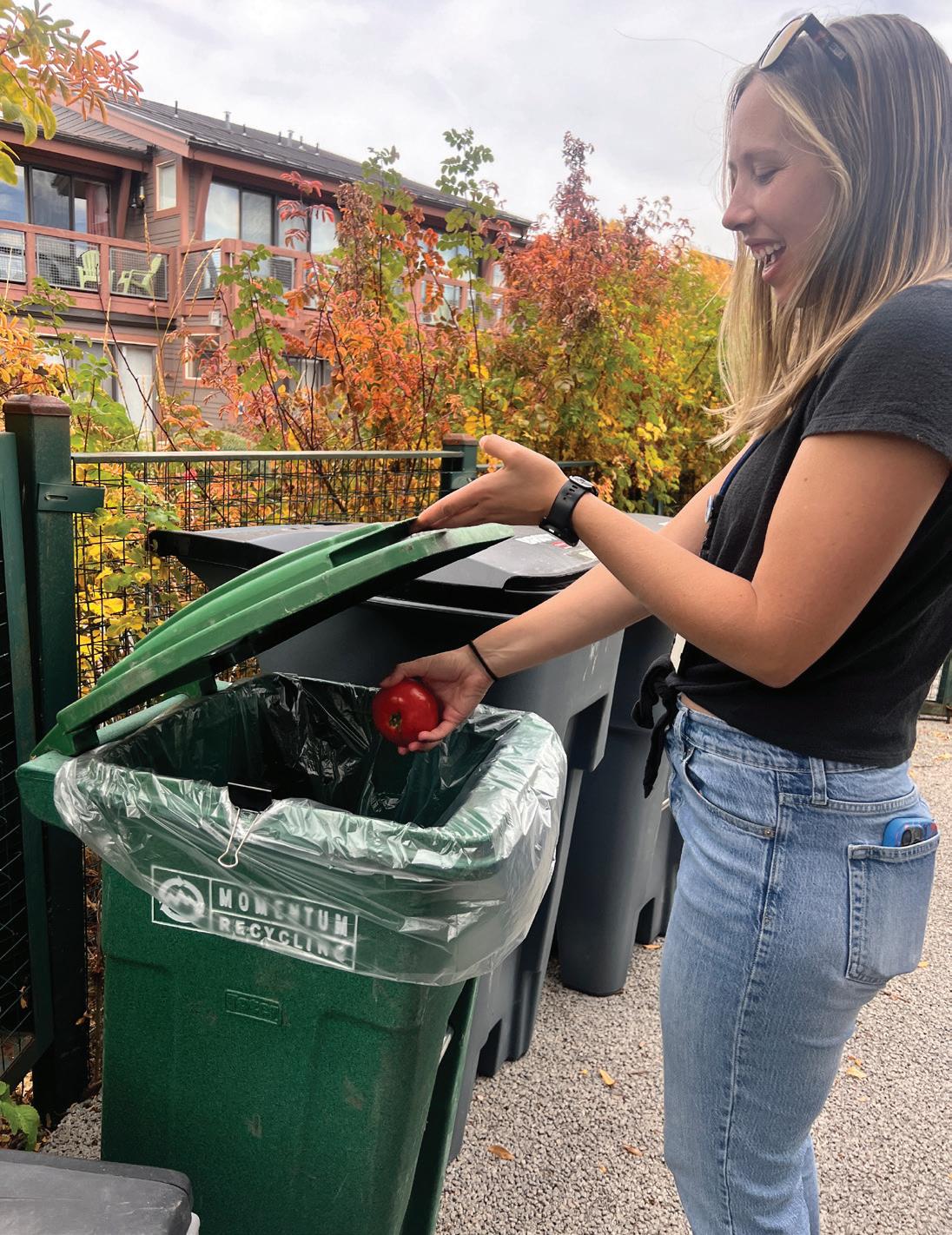
1.Plan Your Meals Wisely: Get a final headcount of who will be joining before shopping and cooking. Prepare only what you need by calculating servings and portions.
2.Get
Creative with Leftovers: Reinvent your leftovers into new dishes! Leftover turkey can be turned into sandwiches, vegetables can be added into breakfast omelets, and miscellaneous snacks can be turned into the perfect game day companion.
3.Share the Feast: If you end up with too much food, share with your neighbors, coworkers, or donate to local food banks to help those in need! Encourage guests to bring containers so they can bring home a variety of leftovers.
4.Freeze It: Many holiday foods freeze well. Store leftovers in freezer-safe containers for easy meals later on.
Intermountain Concierge Health – a step beyond traditional healthcare. This premium service offers members direct access to a physician and care team, ensuring personalized attention whenever you need it. It’s all about exceptional care, tailored to your schedule and convenience.
Experience the benefits of:
› More one-on-one interaction and time
› Longer appointments that are as frequent as you need
› Access to the Concierge Health team at any time
› Medical care navigation and collaboration with specialists
Our board-certified physicians and caregivers offer personalized, comprehensive care designed to meet your unique needs.

With multiple locations in the Wasatch Back, quality care is always close to home.
› Audiology
› Cardiology
› Dermatology
› Ear, Nose & Throat
› General Surgery
› Gastrointestinal
› Neurosurgery
› OB-GYN and Women’s Health
› Pain Management
› Sports Medicine and Sports Performance
› Sleep Medicine
› Urology
Scan the QR code to learn more, find locations, and view a complete list of available services.
Air pollution in Utah schools makes students worse at learning, but a University of Utah research team has a $6.5M grant to do something about it
In many public schools, American children inhale a smorgasbord of gasses and particles that not only hurts their academic performance, but increases their risk of mental illness and neurodegenerative disease. In Utah, we don’t know which schools have air quality problems, nor do we have systems in place to address their pollution.
That is why the U.S. Environmental Protection Agency (EPA) has granted $6.5 million to a University of Utah research team to monitor and mitigate air pollution in schools. The five-year study will cover 30 schools, rural and urban, spanning Utah, Nevada, and the Northern Arapaho Tribe in Wyoming.
“The reason for this mix of different schools is to help us better understand what factors are impacting indoor air quality at schools,” explains Dr. Nancy Daher, lead researcher on the project and Associate Professor in Occupational Environmental Health at the University of Utah. For almost two decades, she has studied air quality in settings ranging from subway stations to museums to retirement homes.









Indoor air quality is complex. Depending on where a school is located, it might be exposed to industrial fumes, freeways, Salt Lake dust, or agricultural chemicals. And, depending on how buildings and HVAC systems are designed, they may filter some pollutants while allowing others inside.
“We're not really sure what we'll find,” says Dr. Kerry Kelly, Associate Professor in Chemical Engineering at the University of Utah, and team member on the project. She serves on the state’s Air Quality Policy Advisory Board and is the founder of TELLUS, a startup company that designs cost-effective sensors for neighborhood-scale pollution and indoor air quality monitoring.








































During the study, each school will host two types of sensors: one for radon and another for monitoring carbon dioxide (CO2), volatile organic compounds (VOCs), dust (PM10), and particulate matter (PM2.5). “Part of the unknown is understanding what levels are considered harmful for a given pollutant. So, that's still up for debate,” says Dr. Daher, noting that there are no federal standards for indoor air quality.
Take CO2, for example. “I don't know if you've ever been in a meeting and you're like, ‘Oh my God, I can't stay awake.’ It might not be that the people are so boring. It could be that the CO2 levels are getting high, and it makes you sleepy,” Dr. Kelly explains. “The levels you typically see are not dangerous for you, but they can actually decrease academic performance and make you feel drowsy.”
For instance, a double-blind study at Harvard University tested participant’s cognitive abilities in environments that simulated different levels of ventilation and CO2. For every 400 parts per million (ppm) increase in CO2, cognitive scores fall by 21% on average, meaning 400 ppm of CO2 is enough to turn an A+ test into a C+.
For context, CO2 levels outdoors have risen from 280 ppm in the late 1700s to 420 ppm as of 2023. If poor ventilation adds 400 ppm to that base level, indoor CO2 levels easily reach 800 and 1,000 ppm, which is considered “safe” but is likely high enough to undermine learning.
Other studies have linked air pollution exposure to depression, anxiety, and suicidal ideation, especially among children and adolescents. Even allegedly “safe” levels of pollutants seem to change brain development among adolescents. Moreover, indoor air pollution appears to increase the risk of Alzheimer’s, Parkinson’s, and other neurodegenerative diseases.
“The nice thing about indoor air quality,” says Dr. Kelly, is that we “… can actually do something about it pretty quickly.”
The goal of the study is to develop air quality management plans tailored to each of the 30 schools. Often, the plans are inexpensive to implement. Upgrading HVAC filters or introducing portable air filtration devices might be sufficient. Even a DIY purifier consisting of a box fan and HEPA filter can lower pollution levels.
The crux is energy efficiency. The more insulated a building is, the less energy it requires for heating and cooling. But the less ventilation there is, the more polluted it tends to be. In trying to emit less CO2 outdoors, a school could introduce more CO2 indoors.
While children spend 30 to 40 hours at school each week, they still spend more hours at home. What can we do in our own spaces?
Monitoring air accurately is expensive. “Some air quality sensors are basically just random noise generators,” Dr. Kelly warns. She recommends researching sensors through the Air Quality Sensor Performance Evaluation Center (www.aqmd.gov/aq-spec/home) before buying one.
Another option is to buy purifiers, maintain them, and let them run. They won’t address CO2 levels, but they can address the dangers of PM10 and PM2.5. “Just Google ‘CARB certified,’” advises Dr. Daher. Also, skip the ozonators and positive ion generators. “You don’t want any of that,” Dr Kelly adds.
At 30 schools in Utah and beyond, this study could make a significant difference for student health and performance. But our state has some 950 public schools. In Park City and Heber, it’s up to citizens to advocate for better air in schools.






BY KIRSTEN KOHLWEY
KIRSTEN KOHLWEY AND CARL HENDERSON
Nine Mile Canyon is southeast of Price, Utah. It is known for its spectacular petroglyphs popularized by magazines like National Geographic. We decided to try what you may call “glamping” at Nine Mile Ranch.
We booked one of their three original settler cabins. This requires that you bring your own bedding, cooking equipment, dishes and food. They do have solar powered lights in the cabins, beds, a table with chairs, and a wood stove. Modern toilets are available within 30 feet of the cabins and showers are available near their main house for $3. Internet access was only available during check-in.
After packing our gear, we drove down to Price and stopped at Farlainos Café on Main Street. They have a good-sized parking lot out back with an entrance sign saying, “Where the locals eat”. Meals cost around $15 and were plentiful. I was thrilled to find Pesto Spaghetti with pine nuts on the menu. Served with a slice of garlic
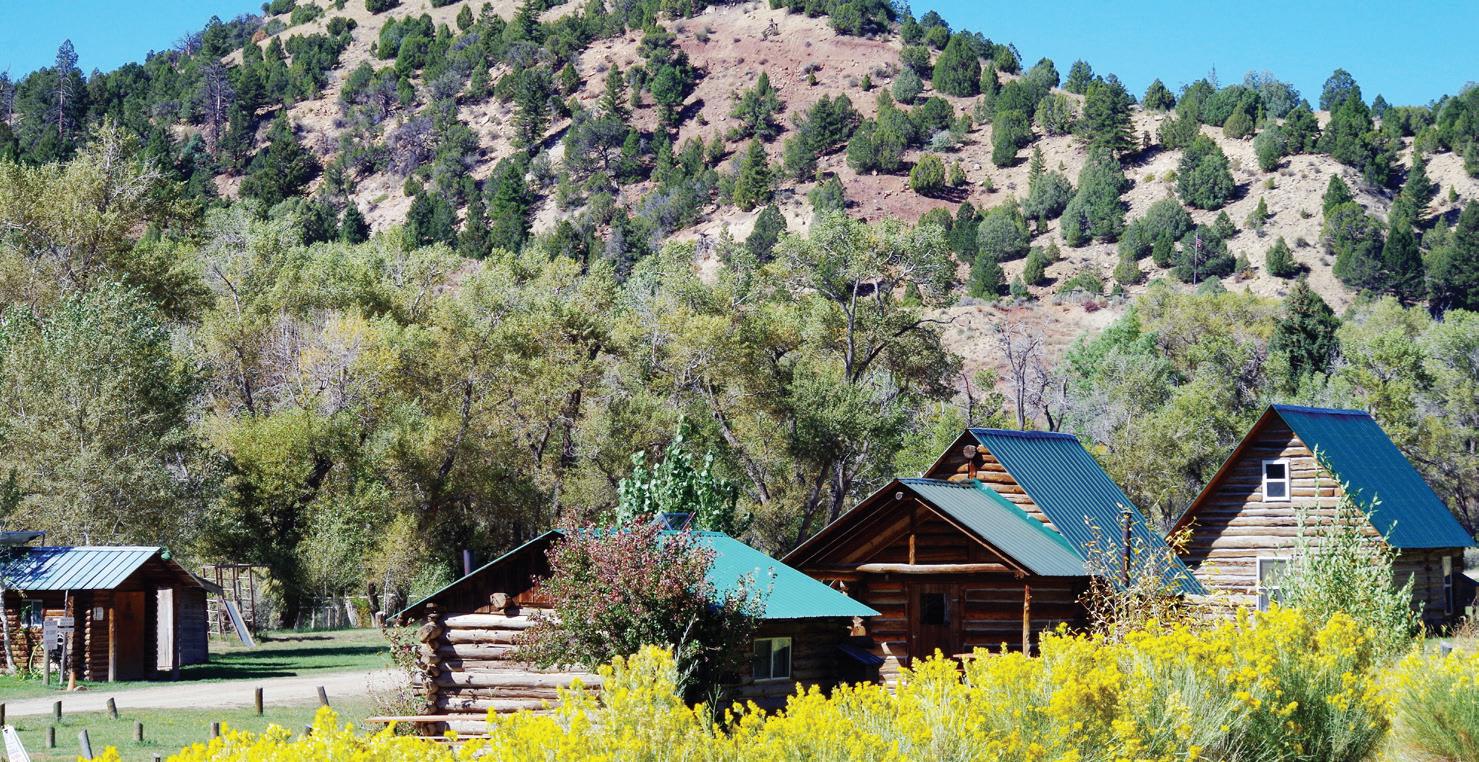
bread and a salad, the flavor was strong but not overpowering and the pine nuts provided just the right amount of texture. The breakfast dish with eggs, sausage, hashbrowns and biscuit and gravy was just as satisfying.
Outside, in the back of the restaurant, is
a mural easily 100 feet long depicting the history of Price. When we reached the end of the alley, there was a Black Lung Clinic across the street. I had never seen one before – a serene reminder of Price’s coalmining history. Just a few blocks up Main Street, the Prehistoric Museum is a gem, not


More than 80 years ago, our companies were founded to help meet the unique insurance needs of farmers. Today, we’ve grown to offer people in both rural and urban areas some of the most comprehensive insurance, investment and financial services on the market today. Though much has changed over the years, our commitment to integrity, service and helping you protect what matters most has remained the same. Working together, we can help you protect your family, your future, and what matters most in your world.

to be missed. It features a replica of a Fremont Village, like the ones the remnants of which were found off Nine Mile Canyon.
The dinosaur collection was my favorite. They have full-sized dinosaur skeletons with about 30% original bones and displays put on with a sense of humor.
Our instructions for heading to Nine Mile Ranch were to get gas in Wellington, the last town before entering the canyon from the south, so we did. The road into Nine Mile Canyon is paved past the ranch, all the way to the Great Hunt panel. Nine Mile Ranch is a family operation. It has a campground in Cottonwood Hollow, outdoor event space, and some bed & breakfast rooms in their main home. The Housekeeper cabin we stayed in was decorated with country-style bears, carved bear statues, bears on the curtains, bears everywhere. The covered porch was a definite bonus. When we checked in, clouds had pulled overhead, darkening the inside, but the lighting was adequate. We quickly made the bed and jumped back into the car to explore the canyon.
The road reminds me of the yellow brick road, except the yellow is from rabbit bushes lining both sides of the road. Warning signs indicate upcoming dips, which flood during rain. No two of these dips are the same and there are over a dozen. With ominous clouds overhead, we skipped all longer hikes on the way into the canyon. We expected First Site to be much closer than it was. Once we reached the third marked site, we discovered that accurate scale was not part of our map. Two of the sites have metal pipe guides for you to look through. These are great guides to finding the highlight of the site. I don’t think I would have found the Coyote placing the Stars without them.
Driving through Nine Mile Canyon is like a treasure hunt – so many historic and pre-historic wonders to see. Mooing alerts you to cows on the road, fast high-pitched squawking guides you to a flock of partridges, thunder scares you into skipping sites (you may want to come back to later).
We headed all the way into Cottonwood Canyon to see the Great Hunt panel. At this point, raindrops started falling. Knowing how many flood-prone areas we had to cross to return to our cabin, we saved all remaining hikes for the next day.
The evening was characterized by the smell of the fire from the wood-burning stove, cooking dinner outside on the picnic table, and the laughter coming from the other guests on the ranch. Many people were here to celebrate a wedding the following day. A local cat curled up by our door to stay warm.
Bright blue skies greeted us in the morning, and we headed back up the canyon to hike to the Owl Panel and other sites we had skipped. By noon we had left Nine Mile Canyon and headed to the Cleveland Lloyd Dinosaur Quarry at Jurassic National Monument. In total we drove 35 miles of dirt road, all in good shape. The visitor center at Jurassic National Park has some interesting panels on recent research. We also checked out the in-situ dinosaur bones in one of the buildings below and their Jurassic Journey hike. With no shade around, we were glad we brought along water even though the hike is only 1.5 miles long. There are quite a few hikes through the Jurassic landscape. Having driven there from Wellington and left through Elmo, I would recommend taking the route through Elmo. Both routes are marked with signs, which is great since there are side roads and cell phone reception is iffy. On the way back we checked out Helper. On a Sunday it is a sleepy town in the late afternoon. Main Street had a giant banner announcing Saturday Vibes. If you are headed this way next summer, check out the dates for Saturday Vibes, it features art booths, food trucks, and music every other Saturday.
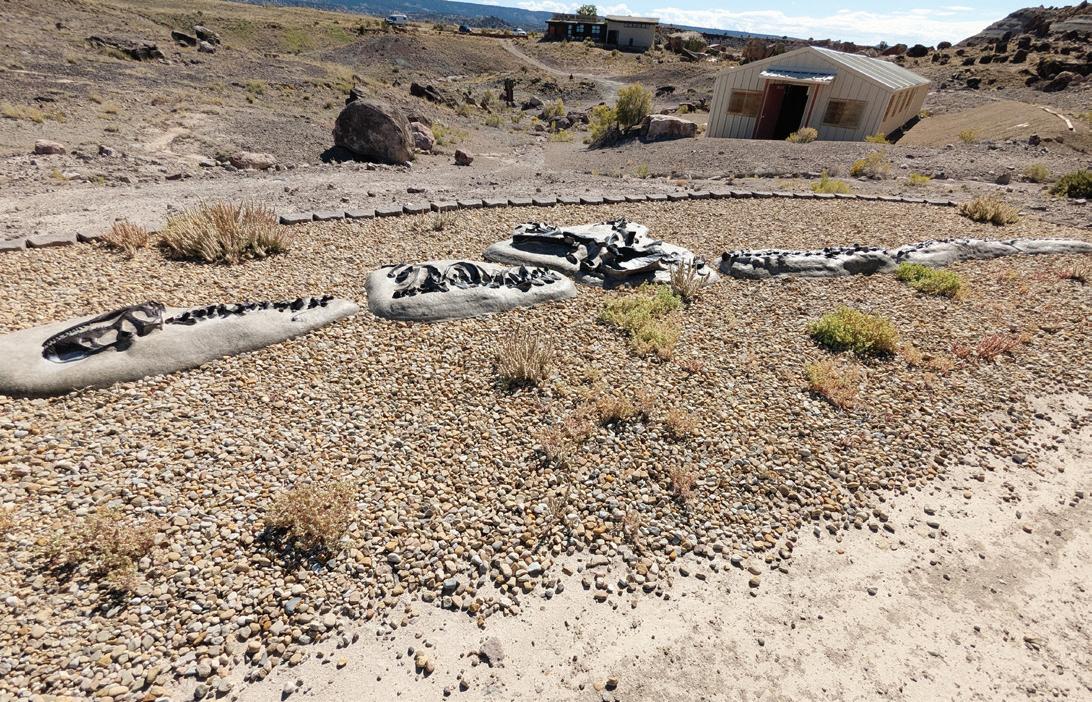


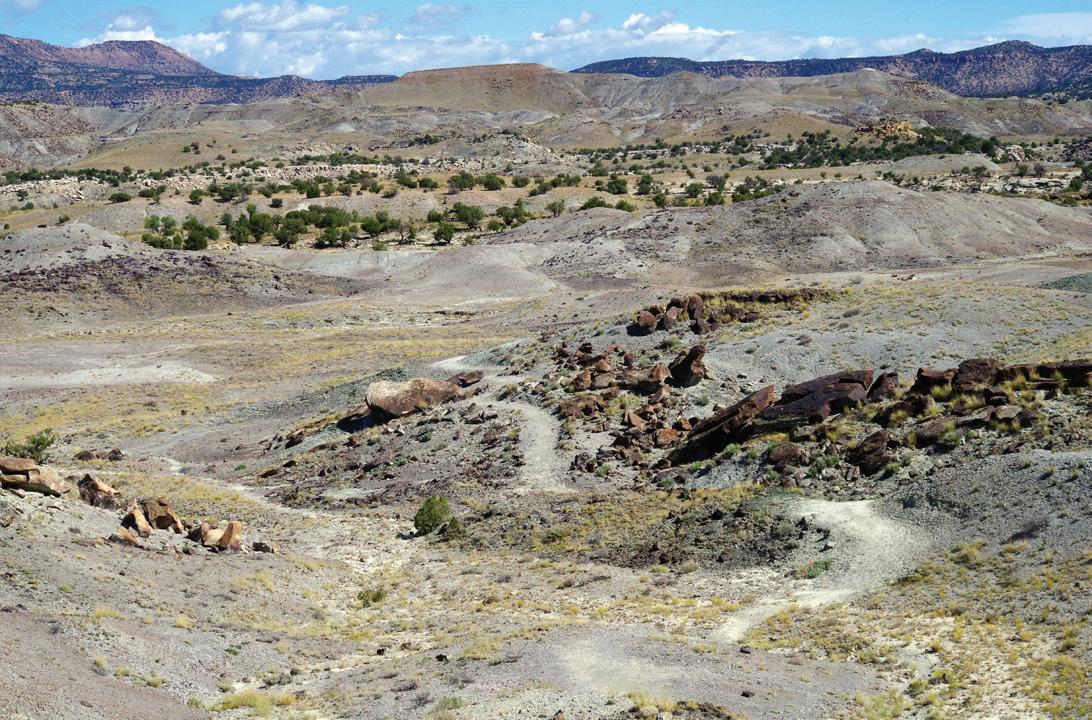
BY SANDY GELDHOF

CATHY KING, EXECUTIVE DIRECTOR, CANINES
For many disregarded and often overlooked segments of society, both the two-legged and four-legged variety, they know that not all heroes wear capes. For many who find themselves living with extreme trauma, a unique solution is available in the healing programming of Canines with a Cause. And founder Cathy King is undoubtedly one of those heroes.
Cathy has always believed in the healing powers of animals. Beyond the skills dogs can learn to help those with physical disabilities, she knew that on an emotional and even spiritual level, most animals have a sixth sense to understand and respond to people living with trauma. In her 25-plus years working with rescues and shelter animals, she has seen it time and time again.
A former volunteer with Best Friends Animal Sanctuary and Executive Director of Summit County’s Friends of Animals, Cathy, through circuitous routes, was exposed to the plight of veterans returning from their military service with trauma. She saw a similar hopelessness in the surrendered shelter animals she had worked among for years, and in her innate, empathic way, recognized an


opportunity and a synergy where she could help. In 2010, she founded Canines with a Cause with a dedicated mission to align these two groups, and along the way, incorporated another disenfranchised group, prisoners in several corrections facilities in Idaho, Nevada, and Utah. The program essentially is a three-
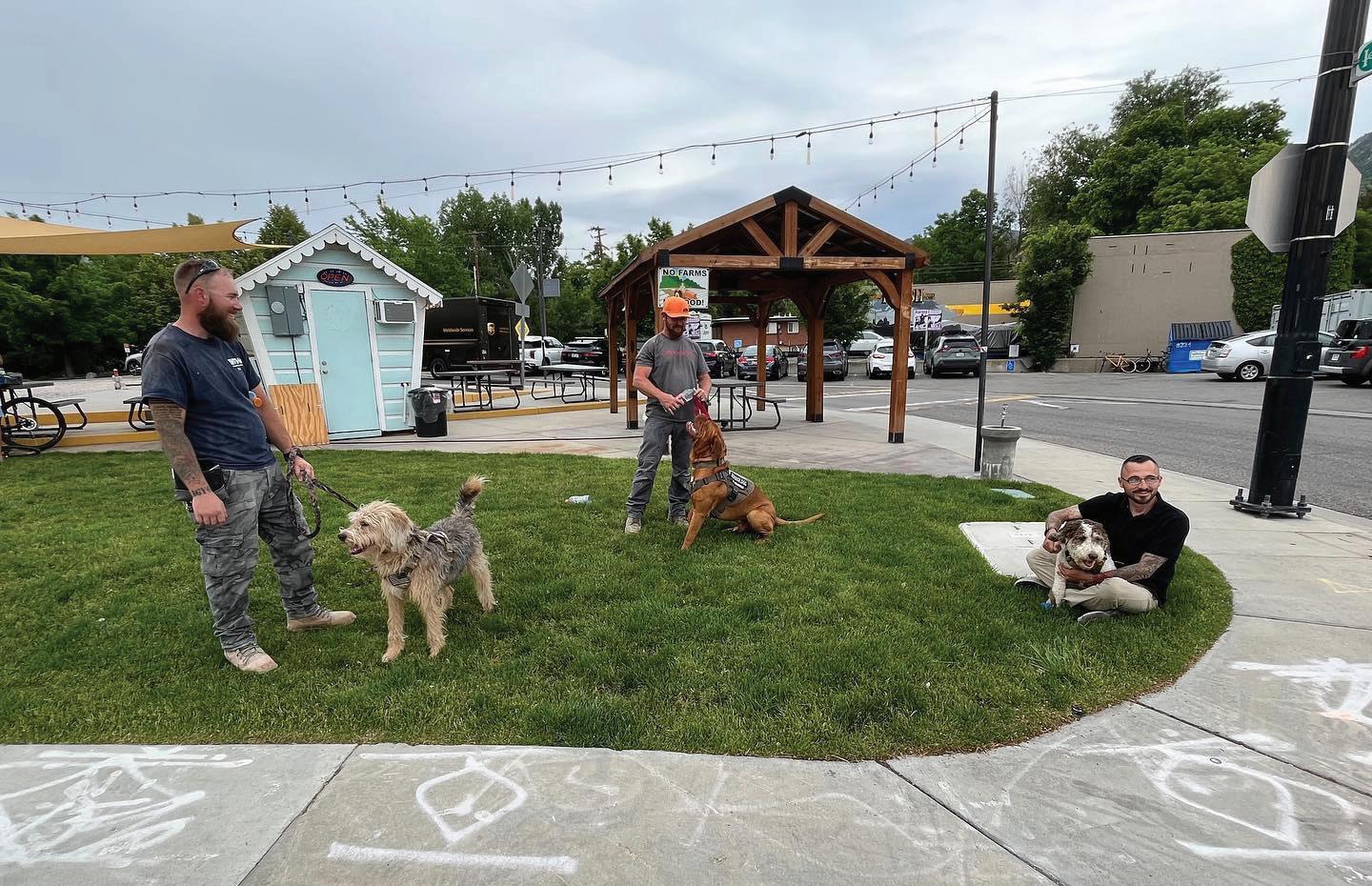
fold, symbiotic blending of a mission to heal. “Rescue dogs have a purpose to heal, and I recognized the need that was there with veterans with military trauma,” she said. She emphasizes that the key to the success of the program is in the training, which falls under a category called animal-assisted therapy. “Unlike mobility dogs, our dogs are trained differently to recognize and respond to the specific trauma of a veteran with many forms of PTSD. The dogs focus on providing therapeutic tasks by recognizing and responding to what their person is dealing with, in any given moment,” she explains. Some of these tasks include alerting and responding to anxiety, providing comfort, intervening when a social situation is overwhelming by creating physical space, and waking them up when they have a bad dream. “The dog’s presence and comfort they provide become a catalyst, and a bridge to get a person back to who they were.”
The concept is simple: Take homeless dogs from shelters and rescues and match their unique personality and skillset to a veteran with specific needs. CWAC’s training focuses
on bonding and tapping into a dog’s natural ability to recognize and respond to trauma.
For Cathy’s vision, it was a natural fit to focus on returning and retired veterans who were experiencing PTSD, sexual trauma, and other post-service mental challenges that few existing therapy programs could address.
Once the program was conceptualized, it wasn’t a stretch to consider another segment of the population that could provide a resource for what CWAC needed most…fosters. Cathy recognized that shelter dogs also shared a common denominator with those who found themselves in the prison system. “Men and women who wind up in prison, like our shelter dogs, are often broken,” she said. “Most have been let down and disappointed, have never been loved or been given the opportunity to love. We recognized the opportunity to pair inmates with dogs who were approved into our training program to provide a resource for socialization, training, and healing for both the inmate, and the dog.” The idea, incorporated in 2014, has proven to be exceedingly successful and has the participation of inmates in corrections facilities located in Nevada and Idaho.
Brian McNitt, a former resident of the Idaho Correctional Institution, was one of the inmates who participated in the CWAC training program while incarcerated. “It was a wonderfully rewarding experience for me. It helped me to be more disciplined and patient in all aspects of my life and I’m so grateful to [Canines with a Cause] for seeing the value, not only in the lives of the dogs, but in the value of humans who made mistakes in their lives and giving us the genuine opportunity to rehabilitate.”
Cathy explains that while the concept is simple, the process is not. Dozens of individuals over a four-year period lend cooperation and training for the success of just one such match, but time and time again, she has proven that the system works.
Since its inception, the program has not only proved effective, it has earned an unprecedented stamp of government approval. Initially, Cathy partnered with the local Veteran’s Administration in Utah to launch the program, and it has since evolved into an underwriting and financial commitment from the Department of Defense’s Wounded Warrior Program, in conjunction with the Walter Reed Hospital (the Maryland based research hospital) with a

mission to treat war-related injuries including PTSD, and mental and sexual trauma for returning veterans.
Oliver Tsuya, a combat medic who served in Iraq in 2005 and suffered extreme mental trauma, started experiencing severe symptoms of PTSD and began various forms of counseling but realized “something was missing.” The VA introduced him to the CWAC program as an alternative measure, and he testifies to the progress and healing he has benefited from since working with his therapy dog, Tasha. “I sleep better having her in my room, she is the second set of eyes I never knew I needed and provides the unconditional love every home needs. The mission of CWAC to save three lives––a dog, a veteran, and a prisoner––is magnanimous.”
The training process is intense, and Cathy recognizes that not every dog selected will ultimately fit well into the program, but her organization will never forsake them. “We will always work to find another career for our dogs, whether it be search and rescue, avalanche programs, or the foster care system. At the end of the day, all the dogs we rescue will find a home,” she says.
Cathy’s current initiative is to find companies who want to participate in CWAC’s Paw Squad fostering program by having employees become fosters where ongoing training can be facilitated in a company-based environment, as research shows that companies who engage in community-minded, collective projects create more efficient and satisfying work environments. “We are always looking for more ways to engage the community, and the more fosters we have, the more dogs and veterans we can save,” Cathy says.
For more information, please visit www. canineswithacause.org.



Great facilities and loving staff make our pet resort the best place for your pet.
(Boarding & Daycare Guests)
Monday- Friday 7:30am - 12:00 pm • 1:00 pm- 6:00 pm (closed from 12pm-1pm for lunch)
Saturday 8:00am-12:00pm • 3:00 pm-5:30pm.
We are closed Sundays and holidays for drop-offs and pick-ups.


Veterinary Urgent Care Available On Weekends!
Bark City Veterinary Specialists and Urgent Care offers Urgent Care services on Saturday and Sunday from 10 am to 8pm and a Veterinary Specialty practice Monday through Thursday. We are an easily accessible, walk in Urgent Care, for when your regular Veterinarian is unavailable. Our Urgent Care treats urinary tract infections, wounds, lacerations, vomiting, diarrhea, ear issues, broken bones, broken toenails, and many more common non-life threatening, but urgent medical concerns. We have x-ray, CT, in house lab, and Quick Scan ultrasound capabilities offering state of the art care for your pet when they need it most.


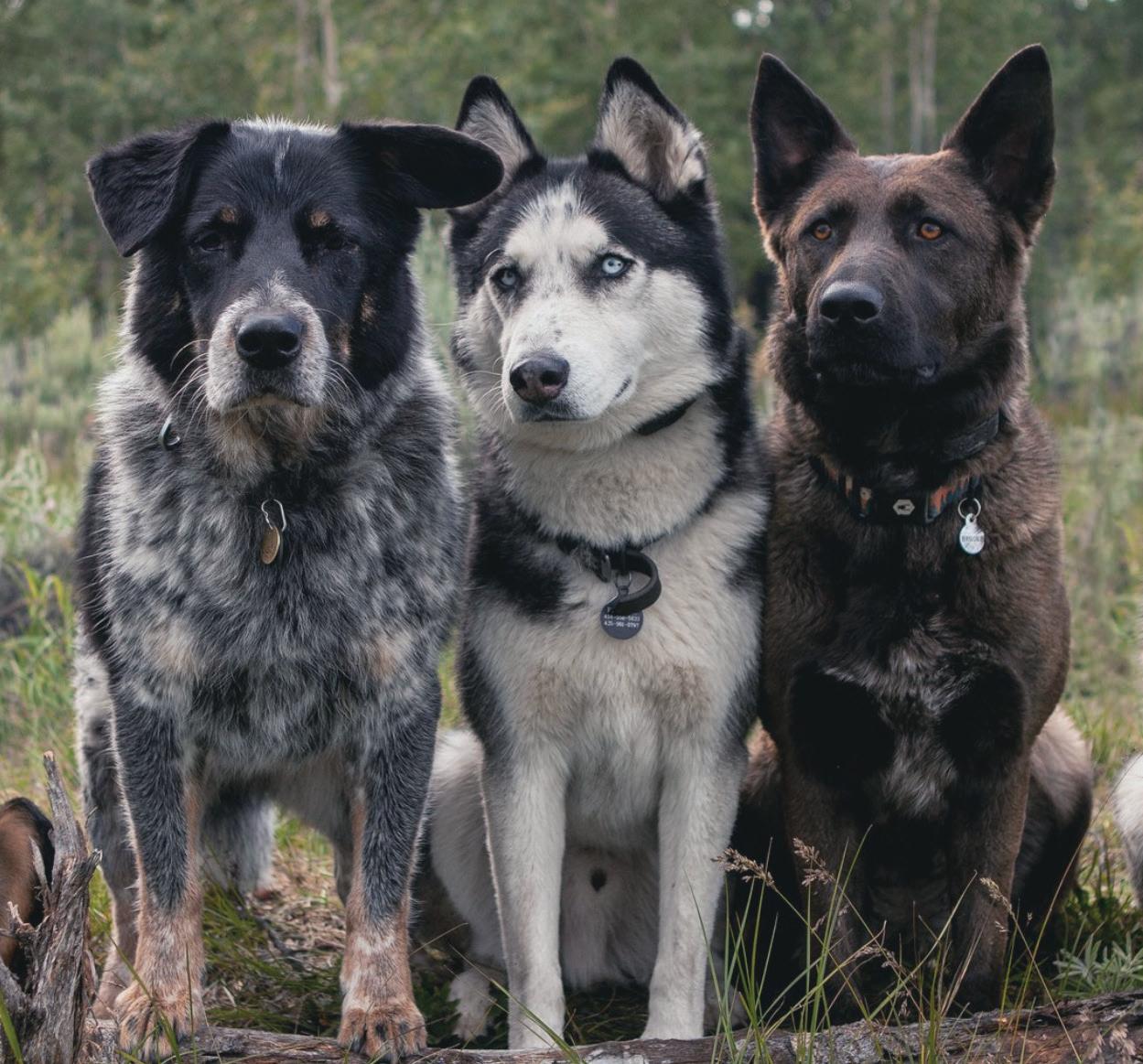

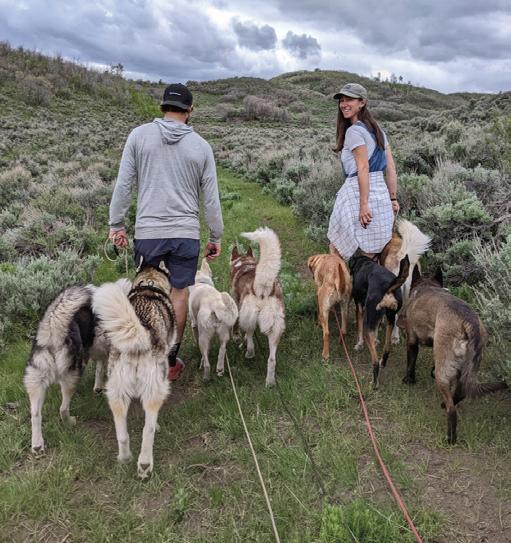

This fuzzy headed fella is still available for adoption. Have you ever wanted your very own muppet? Einstein is a 1 year old doodle looking for his forever home. One of the sweetest dogs I’ve met to date, he does well with other dogs and children. Einstein has a condition which is called Megaesophagus, he requires a chair in order to eat. This is very manageable with the proper care and research. Please reach out to Laura with the Sugar Face Foundation to meet Einstein and to learn more about his needs. (716) 969-7591