Interesting observations from autumn surveys
Research Grant recipients
Artist Residency Program recipients
Volunteer season kicks off Inaugural national gathering for junior rangers

Interesting observations from autumn surveys
Research Grant recipients
Artist Residency Program recipients
Volunteer season kicks off Inaugural national gathering for junior rangers
After the rain, the Buffel surges. Your gift this EOFY can hold it at bay.
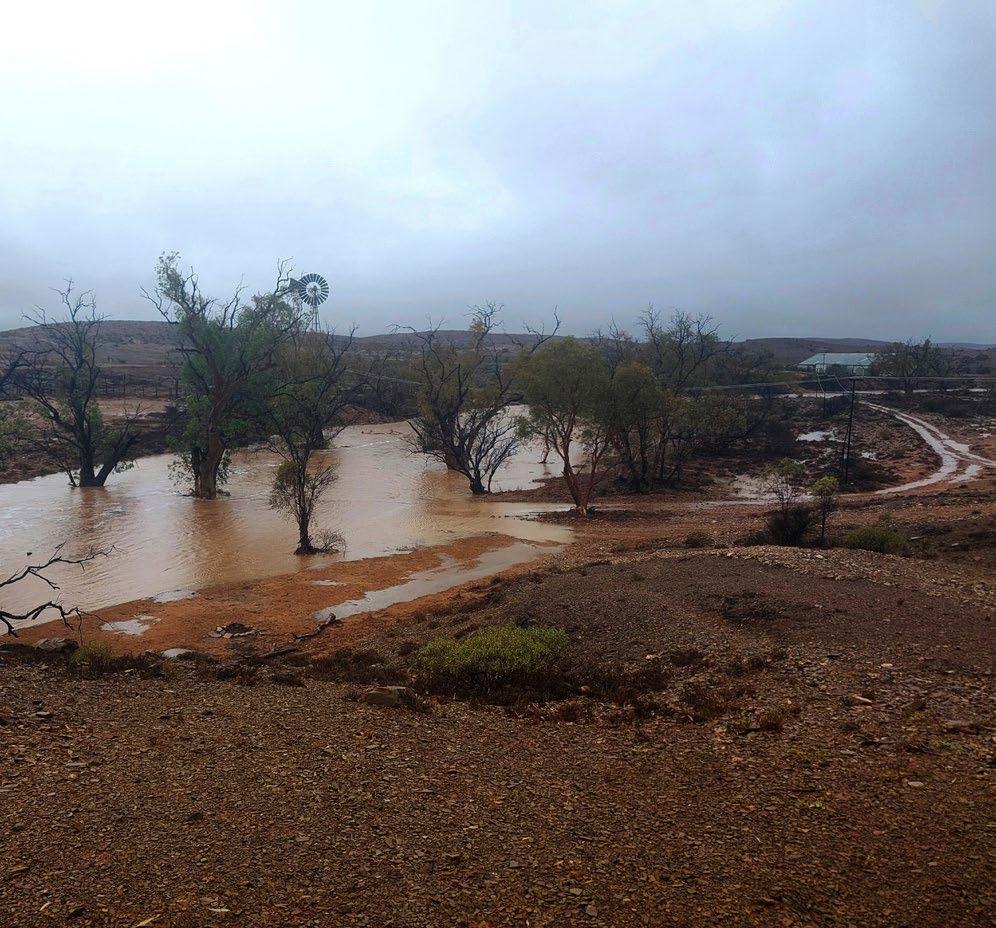
In a single March night, Witchelina received more rain than fell across all of 2025. The country responded with extraordinary speed — and so did the Buffel.
We’ve been managing Buffel grass at Witchelina since 2014. Twelve years of disciplined work has held it in check across most of the reserve. The March rains have undone a great deal of that work in weeks. We are now facing the largest Buffel outbreak in Witchelina’s history.
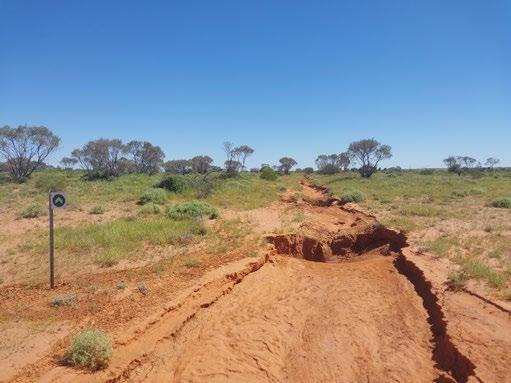
The seed has set faster than crews could reach the country due to the rain. The work in front of us now is twofold: control as much standing biomass as possible to reduce fire load and prevent further seed shedding and retreat emergent growth across the reserve to minimise spread.
This year’s Vital Work Appeal is focused entirely on holding the line.
A $150,000 collective effort will scale up Buffel control across Witchelina before the outbreak compounds. Your gift directly funds:
• Track repair and grading so crews can reach the worst-affected country.
• Herbicide, equipment, fuel and PPE for ground operations.
• Additional Buffel control crews through the critical treatment window.
• New spray-tech hardware that improves accuracy and record-keeping across the season. Put another way:
• $60 helps cover 1 hour of Buffel grass spraying labour
• $120 supports complete Buffel management across 1 hectare
• $300 helps repair 2 km of damaged road
• $1,000 covers the additional PPE required to allow the teams to safely treat the Buffel grass
• $6,000 would allow the purchase of new spray-tech hardware and software
I consider Buffel grass to be the single greatest invasive threat to our arid ecosystems. We must work together to stop its spread. It has had a tremendous boost in recent rains and presents a significant risk to biodiversity by competing with local species but also is a very significant fire risk.”
Jan Ferguson OAM, Chair, Nature Foundation.
Witchelina covers an area roughly the size of Kangaroo Island — one of the largest private nature reserves in Australia and one of the most ecologically significant arid landscapes in the country.
Buffel outcompetes native vegetation, fuels hotter and faster bushfires, and burns plants that would normally survive — including old-growth trees that have stood for centuries. What we treat in 2026 stays out of the seed bank for years. What we miss compounds, season on season.
Your contribution to Nature Foundation’s annual Vital Work Appeal funds the property maintenance and infrastructure improvements required across our growing network of nature reserves, enabling us to conduct and improve conservation efforts and achieve better results. It also allows you to see how your support directly helps protect biodiversity and nature, making you a vital part of on-ground conservation efforts.
Managing invasive species and threats is an ongoing task that ensures future generations can enjoy healthy habitats, and your support will secure that legacy.
Every dollar donated to Nature Foundation before 30 June is tax-deductible. We’ll send your receipt straight away and a consolidated record of your FY26 giving at the start of the new financial year.
Whether you can give $60 or $6,000, your gift goes directly to the on-ground work that protects Witchelina for the long term.
Prefer to support nature month by month? Become a Habitat Hero and start a monthly gift.
If protecting Witchelina over the long-term matters deeply to you, you can leave a gift in your Will through our Vision for Nature Society.
Thank you for your ongoing support of Nature Foundation and for helping us keep the Buffel at bay.
Donate here: naturefoundation.org.au/vwa26
Thank you to everyone who donated towards the 2025 Vital Work Appeal, which focused on funding vital infrastructure and equipment to assist our staff and volunteers in the field, along with supporting our ongoing fencing requirements across the growing nature reserve network, with a focus on our latest acquisition, Mongolurring Nature Reserve.
Our immense thanks go to everyone who contributed to last year’s appeal. Individual giving from Nature Foundation members, donors and supporters, combined with Major Gift donations, including matched funding from Macquarie Group Foundation, saw over $185,000 raised!
So far, these funds have provided:
• Two dedicated trailers, equipped for on-ground use; one at Hiltaba Nature Reserve, and a trailer for the Polaris vehicle at Witchelina Nature Reserve, which support Buffel grass management and other conservation actions across the reserve.
• Purchase of new fencing materials for the most pressing section of fencing at Mongolurring Nature Reserve. We are currently awaiting a cultural survey before proceeding.
• Specific Major Gifts donated in 2024 and 2025 have funded the development and installation of a new wheelchair accessible ablutions block at Hiltaba Nature Reserve, supporting visitors including Kids on Country camp attendees, researchers and volunteers.
• We were also able to replace a burst water tank at Witchelina and purchase two new water tanks to supply the new ablutions block at Hiltaba.
Your donations make a real difference for conservation actions across Nature Foundation’s reserve network and beyond. Thank you.
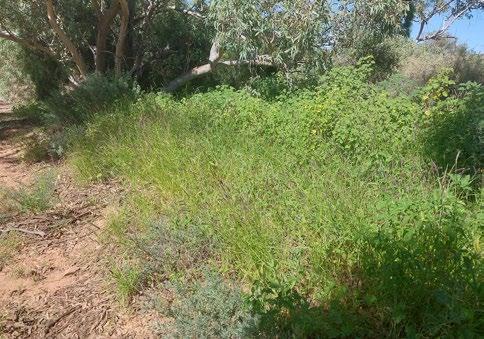
Buffel grass (Cenchrus ciliaris L.) is a perennial tussock grass native to Africa, India and Asia. The Cenchrus ciliaris seed was unintentionally introduced to central Australia during the 1870s in pack saddle stuffing used by Afghan cameleers. Since the 1920s Buffel grass was deliberately introduced to control erosion and dust and improve pastures, due to its fast growth and drought resistance. Over this time, it has spread beyond pastoral land, and in 2015 was declared a weed in South Australia.
In addition to competing with native vegetation for much-needed nutrients and sunlight, Buffel grass has an extremely high fuel load, making fires harder to contain and burning plants that are usually fireresistant. This aspect is increasingly relevant in a changing climate where fires are more frequent and intense.

I’m going to cut straight to the chase. We really need your help with this year’s Vital Work Appeal.
I am passionate about managing invasive species–particularly weeds–and Buffel grass is the single greatest invasive threat to our arid ecosystems. Nature Foundation has been managing Buffel grass at Witchelina Nature Reserve since 2014, and these 12 years of disciplined work have held it in check across most of the reserve. The recent rains have given the Buffel a tremendous boost. In addition to the biodiversity risks it creates through its strong competition with local native species, it poses a very significant fire risk. I lived in Alice Springs and saw first-hand the damage this grass does, the risk cannot be minimised it wreaks havoc on biodiversity, either by its dominance or the fires it causes. If you can give to this appeal–any amount–please do, as your support directly helps us control invasive species and protect native ecosystems. The team have quickly developed a strategic approach to managing the road and track damage sustained from the rains, along with Buffel grass management. We just need more funds to implement the plan quickly. These actions will get the Buffel back under control and put us in a better position to effectively manage it when the country inevitably dries out again.
Thank you to everyone who has donated previously–including the recent Wildlife Recovery Fund–your support has made a real difference. Thank you in advance for your continued help now. Moving from responding to impacts of bushfire to significant rains doesn’t surprise me–not much does these days! We have dramatically changed the landscape and now must continue our work together to improve it for future generations.
Thank you for your support and contribution. I want to welcome our new members and thank all those who have visited Hiltaba and Witchelina (before the rain-induced road closures).
We have had a wonderfully supportive response to transitioning nature reserve visitation to Nature Foundation members only, and it is incredibly pleasing to have so many new members join, including long-term supporters and previous visitors to the reserves. While the fuel situation has made the start of the visitation season challenging alongside the rain events, we are grateful for all those who have travelled and been able to experience these special places and witness conservation in action.
For those who haven’t or are no longer able to visit, I am glad you can still stay up to date with our actions and results through publications like this and our online updates.
I would also like to take this opportunity to thank all our volunteers–including my fellow Board Directors. We celebrated National Volunteer Week in May, and I am deeply grateful for the immense contribution of our volunteers. You can read about some of their recent activities in this edition.
And finally, I would like to thank everyone who took the time to complete the recent Member and Supporter Survey. It takes a bit of time but provides valuable data to help us understand our community of conservationists, who you are, what matters to you and how you want to engage with Nature Foundation. The staff team, Board and I will take this information on for use in alignment with our Vision, Mission and Strategic Plan.
Take care, and with a few events on the horizon for the coming months, I hope to see you in person soon.

Our conservation work is very much like a healthy ecosystem. There’s a lot that goes on behind the scenes, out of sight, that isn’t immediately obvious but provides a critical contribution to the landscape’s overall function.
The same can be said for many businesses and organisations; however, I’ve been reminded of it recently, where only a few months into the calendar year, and a few months from the end-of-financial year, we have had to quickly review and adjust our approaches, activities and budgets to respond to global economic impacts, and the immense rain impacts closer to home.
Thankfully, the work that’s been going on somewhat quietly, behind the scenes, over the past few years has led to measurable improvements in our operations, demonstrating our ability to respond quickly and appropriately to environmental and economic challenges.
The 2025 Science Strategy, alongside the Strategic Plan: Towards 2030, have kept us focused on our overarching goals and approach.
The Reserve Management Framework and individual Reserve Management Plans allow us to easily review the needs for each reserve and adjust appropriately where we can.
The Volunteer Program provides additional workforce to assist teams where priorities require, particularly in Reserve Management, and the Integrated Data Management System ensures all actions are logged, enabling us to track progress and compare results.
Our budgeting and financial systems (overseen by the Board and the Audit and Risk Committee) provide visibility into income and expenses, enabling real-time decisions on essential items. Our internal communications tools and systems ensure the team (working across various locations) stays connected and updated.
I’m not saying it’s perfect. We’re a small team given the area of land we manage, working with limited resources. Still, I want to highlight the dedicated staff and their vital unseen efforts that support our growth and stability, which I truly appreciate.
I am also immensely grateful for the additional support from our membership, led by the Board of Directors, as well as from our broader volunteer, donor, partner, and supporter base. Thanks to your support, we’ve successfully
rolled out the Nature Foundation Biodiversity Monitoring Program and are gaining valuable insights from the initial spring and autumn surveys. You can read more about these and other recent activities in this edition. Your ongoing support will help us achieve even greater conservation outcomes in the future.
Speaking of partners, through our partnership with GreenCollar, I was recently invited to the launch of GANE–Growing Australia’s Nature Economy–at a property in Louth, on the eastern side of the Darling River in New South Wales, Australia. The event showcased how our network of ten nature reserves, protecting over half a million hectares, contributes significantly to national conservation efforts.
Ecological recovery runs on decades, not funding cycles. The scale of the situation we are in requires consistent funding from multiple sources, and we are committed to achieving financial stability and conservation impact by balancing these inputs.
Your donations are crucial to sustaining this vital work and enabling you to make a meaningful difference in conservation. Thank you for your ongoing support, and please consider giving to this Vital Work Appeal to help us continue our efforts.
And finally, I want to thank Mark Ashley for everything he has done for Nature Foundation. Mark started as Deputy CEO in 2022 and became our Strategic Initiatives Advisor in early 2025 when he chose to move back to Darwin. He has now decided to focus on work closer to home, so his time with Nature Foundation has come to an end. Mark helped develop our reserve management system, secured major multi-year funding for the Kids on Country™ Junior Ranger Program, and improved how we acquire land to protect more areas for biodiversity. His work has made a real difference, and we are truly grateful for his dedication and leadership. We wish Mark and his family all the best in the future.
I hope you enjoy this edition of Nature Matters and know that your support has made it possible.
Throughout 2025, the Science and Knowledge team visited all Nature Foundation reserves, including Geegeela, and established the Nature Foundation Biodiversity Monitoring Program (NFBMP).
The NFBMP consists of standardised survey sites and techniques for vegetation, birds, reptiles, and mammals across all Nature Foundation reserves, which are monitored each autumn and spring, combined with targeted, appropriately timed, species-specific surveys to capture important information on key threatened species.
The number of survey sites per reserve depends on the reserve’s size and habitat types, with more than 120 monitoring sites and over 200 remote cameras across the ten nature reserves.
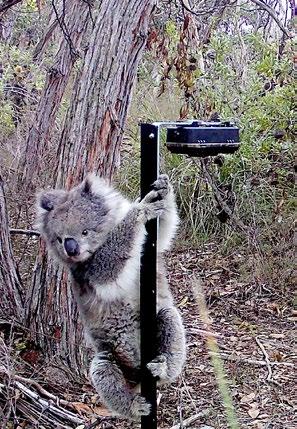
This curious Koala at Bullock Bridge Nature Reserve seems pretty interested and had to get in on the action!
Area 203-hectares
Location East of Kingston on the Limestone Coast, adjacent to the Mount Scott Conservation Park, South Australia
Traditional custodians Meintangk people naturefoundation.org.au/ bullock-bridge
See all Nature Foundation nature reserves here: naturefoundation.org.au/ reserves
Area 102-hectares
Location
As part of the autumn surveys the Science and Knowledge team visited Geegeela Nature Reserve. This 102-hectare reserve in South Australia’s southeast was donated to Nature Foundation by a generous benefactor, and its intact native vegetation contains buloke, an important food source for Southeastern Red-tailed Black-cockatoos.
Geegeela has 10 Biodiversity Monitoring Program sites. Each site has two remote cameras: one forwardfacing and one downward-facing, mounted above a gridded board to assist in identifying small species. Sites also include a series of roof tiles for monitoring reptiles and invertebrates, as well as defined vegetation monitoring transects. The Geegeela monitoring sites were established in October 2025. At that time, a bird survey was also conducted, and a visit was made in March 2026 to undertake the first autumn survey.
Reptile tiles had been deployed earlier, and during the October 2025 visit, the Science and Knowledge team flipped them and were pleased to find a Mitchell’s Short-tailed snake (Parasuta nigriceps)
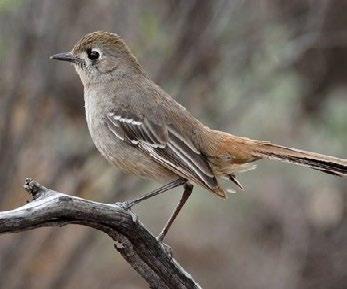
A highlight of the bird survey included the observation of a Vulnerable Southern Scrub-robin (Drymodes brunneopygia).
Volunteers experience exciting wildlife encounters
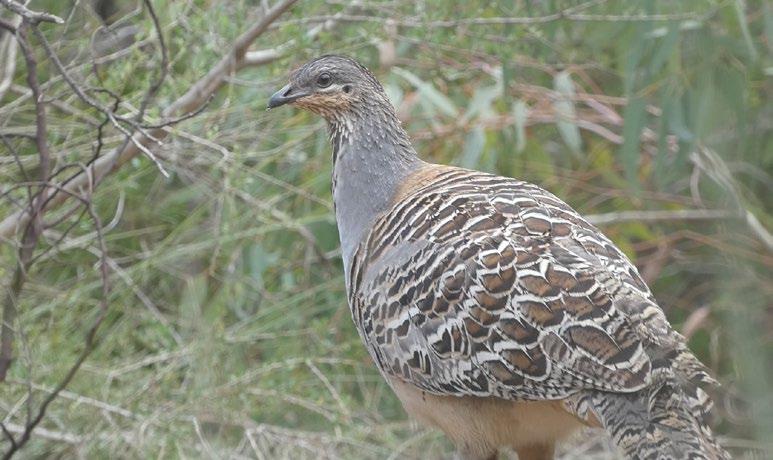
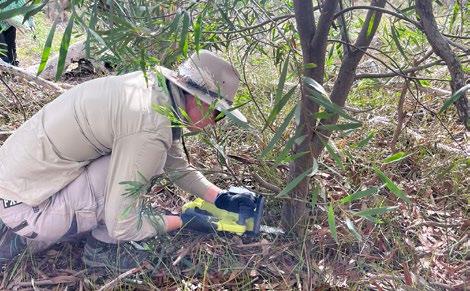
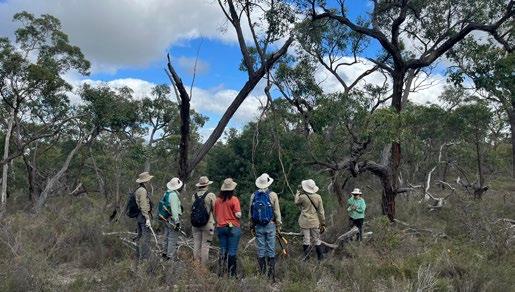
The first volunteer assignment* at Geegeela Nature Reserve was undertaken in April 2026, following a two-day activity at Bullock Bridge. Both focused on weed management activities and rubbish removal. While taking a break to explore Bullock Bridge, the group were surprised (and excited) to see a Malleefowl (Leipoa ocellata) tending a mound that was believed to be unused. Malleefowl are listed as Vulnerable both nationally and at the South Australian state-level.
Then while at Geegeela Nature Reserve the group were also lucky to see a small flock of South-eastern Red-tailed Black Cockatoos (Calyptorhynchus banksii) fly overhead–an amazing sight to see! South-eastern Red-tailed Black Cockatoos are listed as Endangered both nationally and at the South Australian state-level.
The seven volunteers logged 155 hours of work across the two southeast reserves, with a value of $7827.50, based on Volunteering SA&’s volunteering dollar replacement hourly rate figure for South Australia, which is currently $50.50 per hour.
20km from Frances in South Australia’s south-east
Traditional custodians
Bindjali people
naturefoundation.org.au/ geegeela
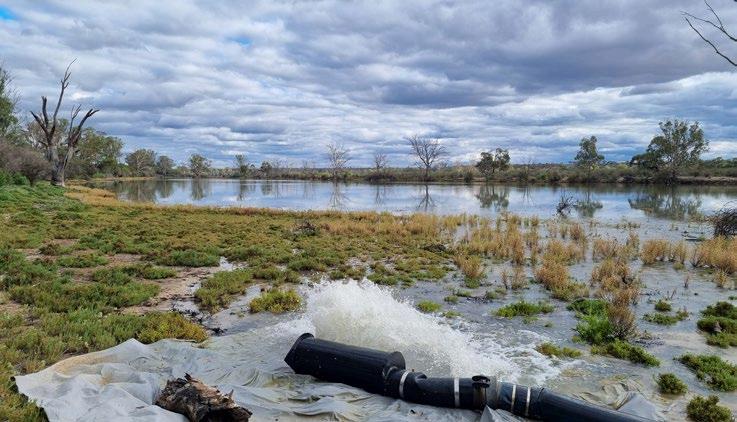
Recent reserve management activities at Murbpook Lagoon
Murbpook Nature Reserve is a 360-hectare wetland reserve on the western side of the River Murray between Blanchetown and Morgan, in South Australia’s Riverland region. Murbpook and its immediate vicinity support habitat for 17 state and nationally rated fauna species, including the Regent Parrot (Polytelis anthopeplus monarchoides), and five state rare flora species, including Purple Love-grass (Eragrostis lacunaria)
The reserve’s main landscape feature is the Murbpook Lagoon wetland complex, comprised of the Northern and Main Lagoons, edged by grand River Red Gums (Eucalyptus camaldulensis), which offer homes in their hollows for the Vulnerable Regent Parrots.
Recent reserve management activities have made an important contribution to Murbpook’s continued ecological health.
and drying regimes, supporting the local ecosystem by increasing wetland habitat for birds and providing water for the Red Gums surrounding the Lagoon.
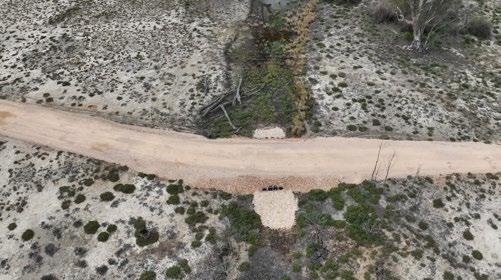
The Northern and Main Lagoons are linked by a narrow channel, intersected by a ford crossing along a vehicle access track. In late April, the crossing was upgraded to ensure continued access across the reserve during periods when the channel is wet or inundated.
The upgrade has also enabled us to initiate salt export trials from the wetland and floodplain as part of the environmental watering, aiming to improve ecological condition by flushing out accumulated salts and reducing soil salinisation.
Wetlands naturally accumulate salts through evaporation, groundwater intrusion, and rainfall. Salt export is the process by which accumulated salts are flushed out of a wetland ecosystem via water flows into larger bodies of water, preventing toxic soil salinisation. It is a critical mechanism for maintaining ecological balance and protecting flora and fauna.
Area
360-hectares
Location
Western side of the River
Murray between Blanchetown and Morgan, South Australia
Traditional custodians
First Nations People of the River Murray Mallee and the Mannum Aboriginal Community Association Incorporated naturefoundation.org.au/ murbpook
Annual environmental watering of the Northern Lagoon commenced in early May, with water pumped from the nearby River Murray. Murbpook’s Northern Lagoon is classed as a temporary wetland, usually receiving water only during River Murray flood events, which are rare nowadays.
This activity typically pumps about 74ML of water into the lagoon over a three-week period.
It seeks to mimic key parts of the natural wetting
We will continue monitoring the impact of these actions throughout the year, including scheduled tree health surveys and surface water monitoring in November, to ensure our efforts lead to lasting ecological benefits.
The environmental watering project is funded by the Murraylands and Riverland Landscape Board.
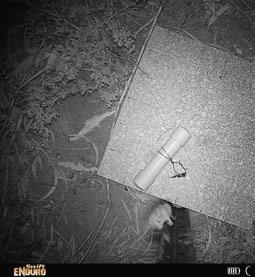
The key action of the 2025-2030 Science Strategy, the Nature Foundation Biodiversity Monitoring Program (NFBMP), plays a vital role in our collective efforts to conserve biodiversity. It includes standardised survey sites and techniques for vegetation, birds, reptiles, and mammals across all reserves, monitored each autumn and spring, with targeted surveys to gather crucial data on key threatened species. This consistent approach
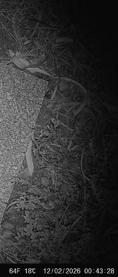
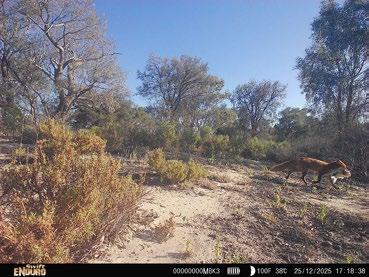
to monitoring ensures that we use resources effectively to maximise positive outcomes for biodiversity.
The Science and Knowledge team recently completed the autumn survey round, visiting all sites and conducting bird and vegetation surveys, inspecting the reptile tiles, and reviewing the remote camera images captured.
While the team are still analysing survey data, initial sightings from the remote camera images at Murbpook Nature Reserve highlight notable wildlife activity, including these interesting observations:
A remote camera captured this interesting and unusual sight of two feral species: a Red European Fox (Vulpes vulpes) carrying a large European Carp (Cyprinus carpio). While foxes are omnivores, they aren’t generally known to eat fish. We are unsure how the fox caught such a large fish and will keep this in mind during ongoing data analysis and reserve activities, in case we uncover further insights into this behaviour.
We were also delighted to spy this tiny Western Pygmy Possum (Cercartetus concinnus) on a remote camera image from Murbpook; the first known sighting of this species at the reserve!
While they don’t have threatened status locally, sightings have been limited, with only 5 records within a ~30km radius in the Atlas of Living Australia. Western Pygmy Possums are listed as Endangered in NSW largely due to threats like vegetation clearing, overgrazing, fire regimes, and introduced predators such as foxes and feral cats, highlighting the importance of nature reserves and conservation actions.
Western Pygmy Possum’s body length ranges from around 5-7.7cm with an 8cm tail. Despite their diminutive size, they are one of the largest pygmy possums in the world. The species prefer areas with bottlebrushes, banksia, and grevillea, and assist in pollinating these plants.
Like all pygmy possums, the Western Pygmy Possum enters mini hibernating periods called torpor. When temperatures dip below 12°C and food is scarce, they’ll fall into a deep sleep for several days.
This observation highlights the importance of routine monitoring, without which we likely would not have been aware of the pygmy possum’s presence.
We hope to see increasing encounters of Western Pygmy Possums and other small native mammals through our ongoing monitoring program and look forward to sharing further insights from the analysis in the coming months.
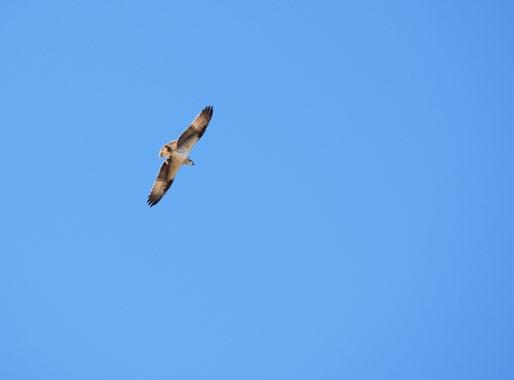
Last year, while spending time at our Murbpook Nature Reserve on the River Murray, Conservation Land Manager, Kelsey, snapped this photo of an Eastern Osprey (Pandion haliaetus cristatus) flying overhead. Eastern Ospreys are a medium-sized fish-eating raptor, classed as Endangered in South Australia. Our records indicate this is the first sighting of an Osprey at Murbpook, and Osprey records in the Riverland are quite low.
While the bird wasn’t seen landing on the reserve, it’s possible it spent some time there, and could have been scouting a nesting location. An exciting sighting and an indication of the important refuge protected areas offer, and we hope to record further sightings through our Biodiversity Monitoring Program.
The 2026 Nature Foundation Volunteer Season kicked off in late March with a three-day activity at Watchalunga Nature Reserve, tackling an ongoing management challenge: the invasive wetland reed, Phragmites australis (Common Reed).
Located on Ngarrindjeri Country, Watchalunga Nature Reserve protects approximately 92 hectares of low-lying Fleurieu Peninsula swamp along the lower Finniss River. This area forms part of a critically endangered ecological community and supports highly significant South Australian biodiversity. The reserve provides essential aquatic habitat for native fish species, including Golden Perch, Congolli, and the recently reintroduced, nationally vulnerable Southern Pygmy Perch. Flora surveys have recorded more than 50 native plant species across the property, highlighting the site’s conservation value.
Area
92-hectares
Location
2.5 km from Finniss on the Fleurieu Peninsula, South Australia
Traditional custodians Ngarrindjeri people naturefoundation.org.au/ watchalunga
Phragmites australis is an aggressive riparian plant species that has been encroaching into areas of low shrubland that provide critical habitat for the nationally endangered Mount Lofty Ranges Southern Emu-wren (Stipiturus malachurus intermedius), including several revegetation sites. While Phragmites is native to South Australian wetland ecosystems, it is considered invasive in some areas due to its rapid growth, its ability to outcompete native species, and its increased fire risk.
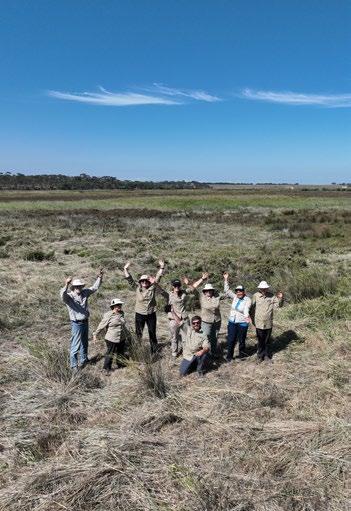
Over three days, Nature Foundation volunteers, and staff slashed an 11,997m2 area of Phragmites using brush cutters. Sustained effort over multiple seasons is required to keep this tenacious species in check, making this a crucial annual management activity. The results of this persistence were clearly visible this year, with a notable reduction in Phragmites in areas that had previously been of concern — an encouraging sign of progress.
In addition to reed control, volunteers assisted with maintenance of the tracks and areas of Emu-wren habitat revegetated through annual planting days, which began in 2017.
Weeding and tidying through the revegetation areas supports plant growth. Tree guards were repaired or removed as required. Healthy, vigorous growth had seen a large number of plants burst free of their guards providing a highly visible and satisfying indicator of the progress of this annual planting activity. We look forward to continuing restoration efforts at our next planting day in July. Members, keep an eye out for details and registration from mid-May.
Collectively the volunteers logged a valuable 90.5 hours of service. Thank you for your important contribution — here’s to an impactful season!
Learn more about and register for Nature Foundation’s Volunteer Program here: naturefoundation.org.au/volunteer and further in this edition.
This important work was partially funded through a Native Vegetation Council Restoration Grant.
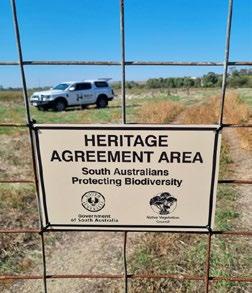
We are delighted to share that following the receipt of a Native Vegetation Council (NVC) Restoration Grant in 2025, Watchalunga Nature Reserve is now protected by a native vegetation Heritage Agreement!
In 2022, a research team led by Professor Mike Letnic, Dr Adrian Fisher and Associate Professor Will Cornwell from the University of New South Wales were awarded an ARC (Australian Research Council) Linkage grant in partnership with Nature Foundation and Bush Heritage Australia to investigate the impact high numbers of kangaroos are having on ecosystems at Witchelina Nature Reserve, Boolcoomatta and Fowler’s Gap.
The goal of the research project is to understand how kangaroo grazing influences the biodiversity value of arid conservation reserves and investigate the influence on functioning of brown food webs by preventing the accumulation of dead plant material, which in turn supports brown food webs involving termites, lizards and small mammals.
To understand the effects of kangaroos at Witchelina, the research team will monitor kangaroo numbers and experimentally assess their impact on ecosystems by excluding them from 16-hectare exclosures. The team has then been monitoring the responses of soils, invertebrates, plants and small vertebrates, including birds, reptiles and small mammals, both inside the exclosures and at nearby control areas where kangaroos graze.
In addition to time-lapse cameras, which have been installed to continuously monitor vegetation responses, the team is using drone and satellite imagery to monitor vegetation inside and outside the exclosures and analysing historical satellite imagery to investigate vegetation recovery on Witchelina since becoming a nature reserve in 2010.
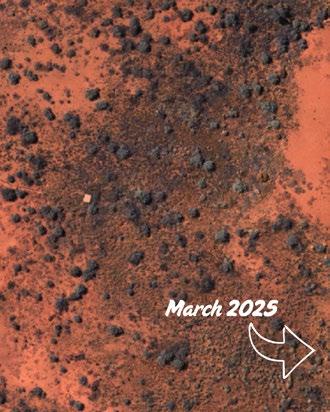
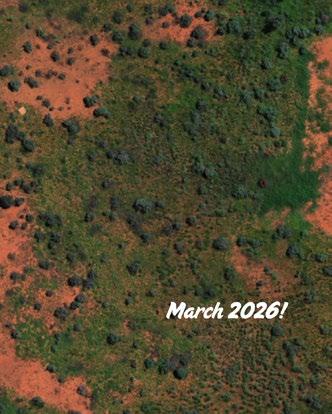
These drone images were taken by Dr Adrian Fisher over the same patch of ground within one of the exclosure areas
in March 2025 and again in March 2026. Witchelina received over 250mm of rain across three separate events from late February to early March 2026, already ~100mm above the yearly average.
On what these images demonstrate, Professor Mike Letnic says, “While some may think of desert landscapes as being dead or lifeless during dry periods, these photos illustrate the capacity of these ecosystems to come to life given the right conditions. This is because desert plants use one of two strategies to persist: endure or evade dry periods.
The blackbush and bluebush shrubs seen in the March 2025 photo use the endure strategy. These plants can survive drought, though they are unlikely to grow during it. After the rain, they renew their leaves and actively grow. This is evident in the greening of their foliage in the March 2026 photo.
However, most desert plants evade dry periods by persisting in the soil as seeds. The seeds germinate following rains, which would explain most of the greening seen in the March 2026 photo. Most evaders are shortlived and complete their life cycle in less than a year, by which time they will have produced seeds that will sit it out until the next rains. The dead tissues from the spent plants will be eaten by termites and other animals in the brown food web, and during dry times will provide an important source of energy for other animals in the ecosystem.”
Certainly, some interesting perspectives and insights into this remote and complex landscape.
Area 421,000-hectares
Location 51 km north-west of Lyndhurst, South Australia
Traditional custodians Adnyamathanha, Kuyani and Arabana peoples naturefoundation.org.au/ witchelina
Since 2000, Nature Foundation has awarded $2,045,786 in research grants to postgraduate students, academics, and the community to kickstart careers in research, supporting 471 researchers.
This year five student research grants were awarded in the 2026 round, along with the Mike Bull Award for Early Career Nature Scientists. We are delighted to share this year’s research grant recipients and their projects with you. We wish all our 2026 grant recipients well with their research and look forward to bringing you more updates.
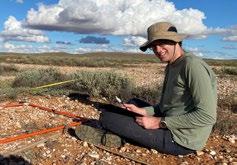
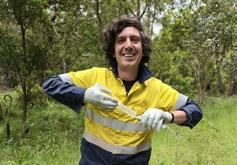
Bachelor of Science (Honours), Monash University
Banded vegetation patterns in arid South Australia
Jack’s project aims to identify whether a successional structure is present in banded vegetation under different landscape conditions. Banded vegetation is a phenomenon in arid landscapes in which vegetation and bare earth alternate in stripes. It occurs in near-flat regions where rainfall is insufficient for plants to reach full cover. In this manner, arid species can persist much further into the arid zone than otherwise.
There is a lack of fine-scale field data quantifying community structure and succession of banded systems, and Australian studies thus far have focused on NSW, WA and the NT. This project aims to characterise the community structure of banded vegetation in a South Australian case study and to improve understanding of arid systems to facilitate the management, conservation, and restoration of these landscapes.
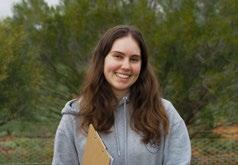
Bachelor of Science in Ecology and Environmental Science (Honours), Adelaide University
Functional Response of Dryland Vegetation to Herbivore Exclusion
Arid ecosystems host unique and biodiverse flora and fauna adapted to harsh conditions. As well as livestock, rabbits, goats, and kangaroos add to arid-zone grazing pressure. This can lead to high levels of grazing that were not historically possible in these ecosystems, which alters their natural functioning. While overgrazing is widely recognised as detrimental to arid environments, research is unclear about which grazing intensity best supports ecosystem function, and about how to disentangle the effects of livestock, feral, and native herbivores.
Peyton’s project will measure plant defence “traits” to understand the myriad ways plants in the arid zone defend themselves against herbivores and their impact not just on individual species but on the functional diversity of the ecosystem. This taxonomically agnostic approach means these findings will be relevant across arid zones across Australia and the world.
PhD Candidate, Adelaide University
Characterising subterranean biodiversity and assessing groundwater ecosystem response to anthropogenic pressures with environmental DNA
The groundwaters of South Australia’s Limestone Coast are critical to sustaining surface freshwater ecosystems. Frequently overlooked in conservation management but wholly dependent on groundwater, subterranean ecosystems host exceptional biodiversity of animals and microbes. Preliminary Limestone Coast surveys for stygofauna (subterranean groundwater animals) conducted in 2016 revealed a diversity of species that rivals that of Australia’s subterranean biodiversity hotspots, such as the Pilbara. Continued groundwater use by the region’s two main economic drivers (forestry and agriculture) has lowered the water table over the last 50 years, placing these keystone ecosystems at risk.
Improved understanding of anthropogenic impacts on groundwater ecosystems is critical to well-informed conservation management and restoration decisionmaking for high-value freshwater assets, ensuring the long-term sustainability of groundwater resources for economy and environment alike. The potential research outcomes from Jake’s project are transferable and applicable in informing management of groundwater-dependent wetlands, including Nature Foundation’s Watchalunga and Murbpook Nature Reserves.
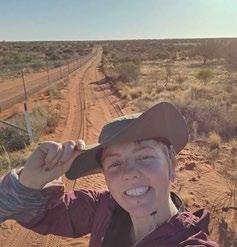
Lynette Aplin ‘Knowledge in Science’ Research Grant
Charlotte Hogan
PhD Candidate, University of NSW
Understanding the role of soil microbes in maintaining arid-zone brown food webs and biodiversity
The brown food web describes the gradual transfer of energy from senescing vegetation to detritivores, such as soil microbes and invertebrates, and ultimately to vertebrate consumers. Increasing evidence suggests that brown food webs are crucial in deserts, providing an energy source that allows biodiversity to persist during periods of limited moisture and primary productivity, which dominate these ecosystems.
Grazing pressure from feral and overabundant native herbivores reduces green vegetation biomass across Australian drylands, presumably limiting organic matter inputs to the brown food web. However, a limited understanding of the mechanisms regulating brown energy channels hinders our ability to predict the impacts of grazing on arid ecosystems. In particular, the role of soil microbes in influencing decomposition is unclear. Additionally, although mounting evidence suggests that soil microbes can use alternative energy sources to survive in nutrient-sparse deserts, how this contributes to the brown food web remains unknown.
Charlotte’s project—including field research at Witchelina Nature Reserve— aims to investigate the role of soil microbes in the brown food web, and how grazing pressure affects carbon cycling via this pathway.
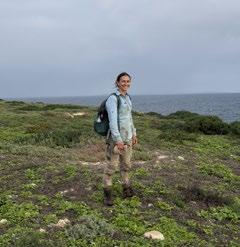
Roy and Marjory Edwards Scholarship
Caitlin La Rose
PhD Candidate, The University of Sydney
Investigating the Impacts of PFAS on the Health of Australian Pinniped Pups in South Australia
Australia’s marine ecosystems are increasingly affected by anthropogenic threats, including climate change, habitat degradation, fisheries interactions, and pollution. These human-induced stressors disrupt ecosystem function, amplifying the impacts of natural threats on marine species. Pollution is one of the most widespread and persistent threats to marine biodiversity. Of particular concern are per- and polyfluoroalkyl substances (PFAS), a group of contaminants described as “forever chemicals” for their persistence in the environment and global distribution. These toxicants have been detected in the blood and tissues of both live and dead Australian Sea Lions, Neophoca cinerea
Exposure to elevated PFAS concentrations has been associated with altered immune function, hormone disruption, and increased disease susceptibility in marine mammals and may amplify the effects of other anthropogenic and natural stressors acting on wildlife populations. While PFAS are being phased out in some regions, their environmental persistence and ongoing sources continue to expose marine species.
Caitlin’s project will use the Endangered Australian Sea Lion as a sentinel species for ecosystem health. It will explore the relationships among health parameters, maternal factors, and PFAS concentrations. The results of this project will provide critical insight beyond just a single species, with implications for other vulnerable taxa occupying similar food webs and environments.
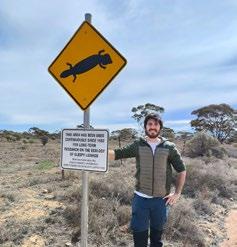
Mike Bull Award for Early Career Nature Scientists
Dr Pablo Recio Santiago
Understanding the endrocrine mechanisms driving pair bonding in animals, specifically the sleepy lizard
2026 Mike Bull Award recipient, Dr Pablo Recio Santiago has a PhD in Biology from the Australian National University (ANU) and is a Research Associate at the Lab of Evolutionary Genetics, Conservation and Sociality, at Flinders University.
Pablo’s research focuses on understanding the endocrine mechanisms that drive pair bonding in animals. His current project aims to understand the roles of mesotocin and dopamine in shaping social preferences in Sleepy Lizards (Tiliqua rugosa) and continues Mike Bull’s legacy by extending our understanding of the remarkable longterm bonds he discovered in this species. This project will also contribute to the field of behavioural ecology by linking hormonal systems to partner preference and social decision-making, an area with broad implications for understanding monogamy across vertebrates. By focusing on a lizard species with a well-documented natural history, the project makes a meaningful contribution to herpetology, particularly regarding the physiological and behavioural underpinnings of a mating system that remains rare and poorly understood in reptiles.
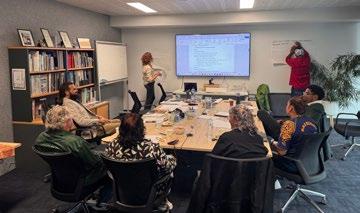
In April, our Kids on Country Aboriginal Advisory Group members joined Nature Foundation for the group’s first meeting of the year.
The Aboriginal Advisory Group was formed in early 2024 to provide advice on the delivery and future development of the junior ranger program. Members represent various Aboriginal groups, offering diverse perspectives to ensure Kids on Country continues to support a range of stakeholders.
Key topics addressed in this recent meeting include:
• Building employability skills and demonstrating training and employment pathways
• Supporting program participants to transition into land management jobs
• Reviewing the monitoring and evaluation framework for activity effectiveness and ongoing improvement processes
It was a day filled with dynamic and valuable discussion, and we greatly appreciate the time, experience, and insights shared by the group members. Their shared passion for the program and the positive impact it has on Aboriginal young people is strong and proud.
The inaugural Junior Rangers National Gathering took place in mid-May at Yitpi Yartapuultiku in Port Adelaide, South Australia, and Nature Foundation was honoured to support planning and preparation for the gathering and to participate in the program of presentations.
The Junior Rangers National Gathering was facilitated by Ninti One, who have been engaged by the National Indigenous Australians Agency (NIAA) to facilitate the Junior Rangers Capacity Building and Monitoring, Evaluation and Learning project to support the 59 provider organisations that deliver Junior Rangers on-Country learning activities at over 61 sites across Australia.
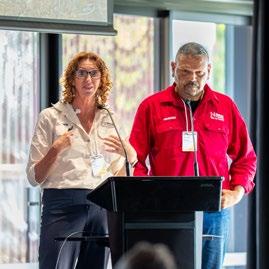
Nature Foundation is one of these providing organisations, having successfully applied for and received multi-year funding support from NIAA (extended to the end of 2027!) to assist with the delivery of our Kids on Country™ Junior Ranger Program.
Since its pilot in 2016, Kids on Country™ has delivered 53 camps, positively impacting 632 Aboriginal young people across South Australia. The two-day gathering brought together around 109 attendees including 38 Junior Ranger program provider organisations, from across Australia, comprised of Rangers, Junior Ranger Coordinators and team members, Engagement Officers from NIAA, researchers from ANU and 15 Ninti One team members. Tailored workshops were aligned to the three project priority streams: governance, curriculum design and data for decision-making, and served as the formal launch of the Junior Rangers Capacity Building Program.
A key theme for the gathering was the importance of collaboration and partnerships for successful delivery of and outcomes from Junior Ranger programs.
Nature Foundation’s Katie Perry (Youth Programs Coordinator) and Warren Milera (Youth Programs and Conservation Officer) shared insights, challenges, and learnings from 10 years of Kids on Country™, emphasising the importance of building relationships, starting with Aboriginal communities, and maintaining flexibility.
Following the keynote, Katie, Warren and Kids on Country™ team members and partners, including our Conservation Trainee Raijieli Bovoro, Cultural Facilitator John Solar, Community Engagement Officer from SA Arid Lands Landscape Board, Alice Allington and one of our Education Department champions, Golden Grove High School’s Aboriginal Education Teacher, Matt Ujhelyi, participated in a panel discussion on what genuine collaboration looks like when Aboriginal communities, young people, schools, and partner organisations come together with shared purpose.
Nature Foundation Conservation Trainee, Raijieli Bovoro and Timoci Tuikaba, a Kids on Country Aboriginal Advisory Group member, also presented at the gathering, sharing their experiences as participants in the Kids on Country™ Junior Ranger Program and how it has impacted and influenced their identities, schooling, and career choices.
We are proud that Junior Rangers have been placed centre stage, showcasing stories of success and positive impacts that extend well beyond the classroom and time spent on camp, and look forward to this initial gathering inspiring continued support and engagement from the broader community and partners.
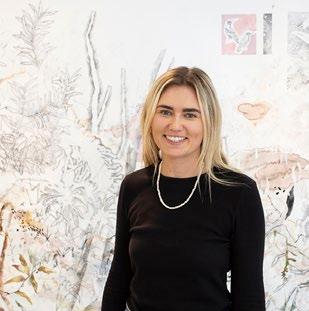
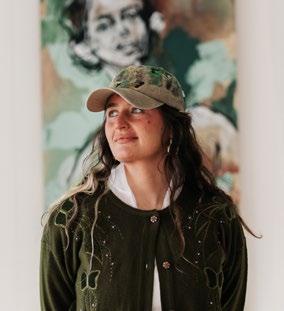
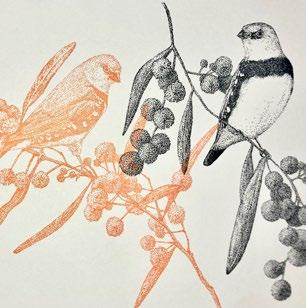

Initiated in 2019, Nature Foundation’s Artist Residency Program offers artists the chance to immerse themselves in the inspiring landscapes of Witchelina and Hiltaba Nature Reserves, responding to these remote South Australian landscapes through distinct but complementary creative practices. The 2026 artists are:
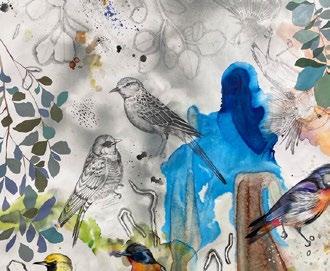
Sophie Chauncy
Sophie is a visual artist based in Yanco Creek, Riverina, NSW. Working in mixed media on paper and canvas with natural pigments, found materials, and layered mark-making, her art explores the relationships between people, place, and biodiversity, with a particular focus on atrisk birdlife and the fragile ecologies that sustain it.
During the residency, she plans to paint directly from life in the field, incorporating natural sediments and nature-stencilling techniques drawn from leaves, grasses, and other found materials, letting the environment itself shape the work.
Ariel Katzir
Ariel is a Perth-based multi–disciplinary artist whose practice spans painting, ceramics, drawing, murals, and textiles. Her work translates non-visual sensory experiences, sound, light, texture, and atmosphere into expressive, synesthetic visual forms. These elements are evident in her recent Silver Ears series.
Ariel will visit Hiltaba and during the residency, she aims to treat the nature reserve as places of active ecological listening, developing new work that interprets the lived experience of Country: from sweeping geological formations to the intricate life cycles of the plants and animals that inhabit them.
Thank you to all artists who applied to participate in this year’s residency program and to our Artist Residency Program Advisory GroupCatherine Bourne, Kirsty Darlaston, and Peter Hastwell-who reviewed all applications and assisted with the selection process.
We wish the three selected artists all the best for their residencies and look forward to seeing the artworks inspired by our remote nature reserves. Nature Foundation look forward to showcasing the resulting art at an exhibition in 2027. To be notified, subscribe below to our email updates or follow our social media accounts.
Nature Foundation gratefully acknowledges the Artist Residency Program sponsorship by the Helen James Endowment Fund.
Jade Zander
Jade brings a rare fusion of scientific insight and artistic expression to the program. A former Restoration Ecologist based in South Australia, Jade works in meticulous stippling, building each piece from hundreds of delicate dots.
At Hiltaba, she intends to create illustrated field notes documenting the often-overlooked native bird species of these reserves, pairing fine drawing with the ecological knowledge needed to explain each species’ role in sustaining its habitat.
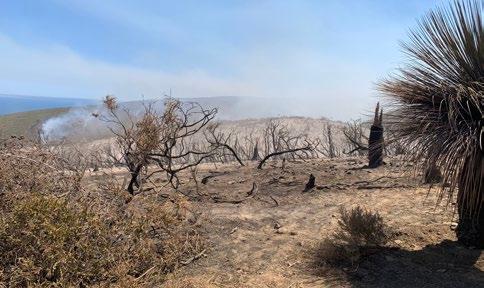
Thank you to everyone who generously contributed to the Wildlife Recovery Fund, lending support to the re-establishment of wildlife habitat in South Australia’s bushfireaffected landscapes following the Fleurieu Peninsula fires earlier this year.
We are delighted to begin seeing natural signs of recovery through these areas, though active support is also required.
Nature Foundation is now working with the state government to identify and fund onground recovery projects – such as fence repair, weed control, and habitat restoration – and to conduct monitoring and research to understand the effects of the fire and how populations of threatened species recover. These combined efforts will help provide additional habitat to support the recovery of native animals and plants, and improve scientific knowledge in future bushfires.
Keep an eye on our website, social media channels and emails for further updates.
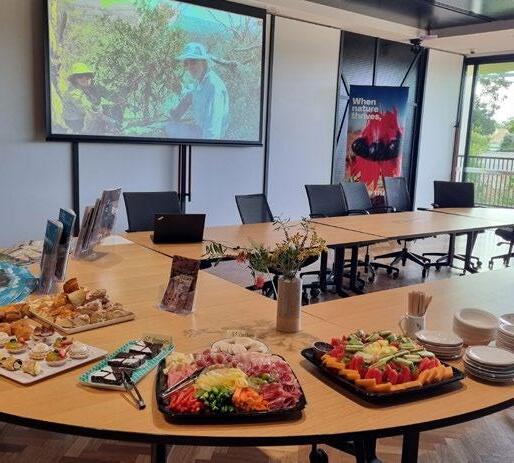
We celebrated National Volunteer Week in May with a morning tea that provided the opportunity for existing Nature Foundation volunteers to gather socially with the Nature Foundation team, and others who were interested in learning more about volunteering.
Board Director, Douglas Ransom, opened the morning by sharing his experiences of how he first became aware of and involved with Nature Foundation, that then led to his volunteer contribution on the Board.
Volunteer and Visitor Engagement Coordinator, Hannah Edwards, and Senior Conservation Land Manager, Jem Shimmield, then provided an overview of the Volunteer Program, including examples of recent volunteer activities and impact, and upcoming opportunities for the 2026 season.
It was a lovely morning and opportunity to socialise with like-minded people.
If you would like to learn more about volunteering with Nature Foundation, visit naturefoundation.org. au/volunteer and see more information further in this edition.
“I get a lot out of volunteering: satisfaction that I’m helping conserve habitat for endangered species, exercise and fresh air and meeting new people—great for the soul and mind. I love it.” – Tracey

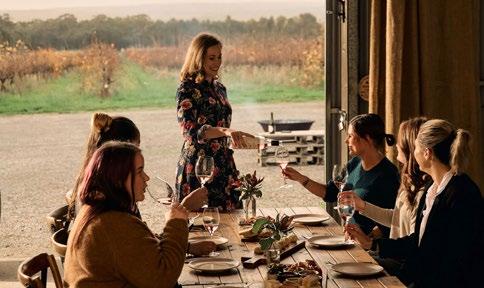
We are delighted to have the continued support of Bec Hardy Wines who are generously offering Nature Foundation members a complimentary wine tasting and seasonal dip plate throughout 2026.
Full details of how to redeem this offer have been sent to members. Please contact us if you have not yet received this information.
Nature Foundation members can enjoy complimentary Bec Hardy Experience wine tastings at Bec Hardy Wines in McLaren Vale, South Australia, for up to 8 people and a seasonal dip plate to enjoy after the tasting, valued at up to $136 throughout 2026.
Granddaughter of Nature Foundation co-founder, Dr Barbara Hardy AO, Bec Hardy is a passionate conservationist and Nature Foundation life member and Board Director. Bec founded Bec Hardy Wines in 2015 and became the first woman in the family to own vineyards and produce her own wine.
For location and opening hours please visit: bechardy.com.au
To see all Nature Foundation membership benefits and to join online, visit: naturefoundation.org.au/join
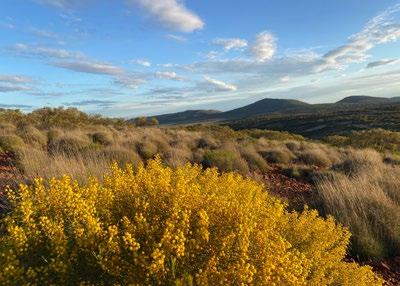
The opportunity to visit and stay at Hiltaba and Witchelina Nature Reserves, including experiencing nature drives is now a Nature Foundation member benefit.
Thank you to everyone who has visited so far this season, despite the challenges with weather and fuel prices. Bookings are required to stay at Hiltaba and Witchelina and/or experience nature drives, and we encourage you to book ahead to avoid disappointment. Please note the nature reserves may also be closed at times. You can check the status on the booking calendar.
We hope to see you at Hiltaba or Witchelina this year. See full details and check the booking calendar at: naturefoundation.org.au/visit
MypartnerandIthoroughly enjoyedourseven-daystayat Hiltabarecently–inallhonesty, itwasremarkable.Iamsoglad wevisitedfollowingafriend’s recommendation.Thediverse environmentandsceneryare spectacular,andweappreciate theethosbackingNature Foundation’swork.”
NatureFoundationmember
Are you considering becoming a volunteer with Nature Foundation?
We would love to have you join our team! Nature Foundation’s Volunteer Program offers four areas of voluntary service:
1. Conservation – science and conservation land management activities on regional reserves
2. Reserve Support – visitor support and conservation land management activities on remote reserves
3. Infrastructure – assisting with specific projects that maintain or improve existing or create new infrastructure on our reserves to support our conservation work
4. Projects – office-based science or business activities to support our conservation work, and event assistance
Nature Foundation volunteers are provided with a uniform, are covered by personal accident insurance when volunteering, are entitled to approved travel reimbursements, and receive regular volunteer program updates and invites to volunteer acknowledgment events. Volunteers undergo training whenever required to support successful and safe participation in programmed activities and are supported on-site by Nature Foundation staff. Nature Foundation is committed to managing its volunteers through ‘best practice’ following The Standards of Volunteer Involvement by Volunteering Australia. This means all our volunteers are registered with and coordinated through the MyImpact volunteering system, which you may be familiar with if you volunteer with other medium to large organisations.
The registration process involves several simple steps (outlined below). Once complete, you will receive details of all upcoming volunteering opportunities via email and within the MyImpact website and app.
If you have any queries about registering as a volunteer, please get in touch with our Visitor and Volunteer Engagement Coordinator, Hannah Edwards, through the head office.
Step-by-step:
How to become a Nature Foundation Volunteer
Nature Foundation uses the MyImpact system to manage its volunteers.
1. Visit the Nature Foundation website: naturefoundation.org.au/volunteer scroll down and click the “Express your interest here” link.
2. In the top right-hand corner of the new page that opens, click the “Fill in an application” button. You will need to either create a new MyImpact account or log into your existing MyImpact account. Please note: an email address is required.
3. Once logged in, you will be asked to provide your contact details, why you want to volunteer with Nature Foundation and other information about yourself. This process will take about 10 minutes. You will be sent a confirmation email when you have successfully
submitted your Expression of Interest. Please check your spam or junk folders if you cannot locate it in your inbox.
4. Within two business days of submitting your Expression of Interest form, you will be emailed with a request to book a phone call with Hannah, our Volunteer and Visitor Engagement Coordinator. This is a relaxed 15-minute chat, giving us a chance to get to know you, hear what draws you to this work and what you are hoping to get out of volunteering. We will talk about how we can best support you to connect with nature through our reserves and other volunteering opportunities, and your current capacity. It will also give you the chance to ask any questions you may have.
5. Following your phone call, you will be sent an email to complete some more information in your MyImpact profile. This additional information should take around 10 minutes to complete. If you already have a Working With Children Check (WWCC from the Department of Human Services), or National Police Check (NPC) you can scan or take a photo of these on your phone to send in. If you don’t already have a WWCC or NPC, you will be sent information to help you complete these applications and process them for free as part of your application. Once submitted, the relevant organisations can take 2-4 weeks to process.
6. While you wait for your compliance activities to be completed, you can complete the Nature Foundation Induction and Code of Conduct. This e-learning is found in your MyImpact Profile. Once completed, your profile will be automatically updated with this essential qualification. The e-learning takes around 30-40 minutes to read and sign off/submit at the end.
7. Once all these activities are completed, your status in MyImpact is changed to ‘Active’ and you will be able to see all available volunteer assignment opportunities. From there, you are ready to get involved, and we look forward to having you part of the team.
If you have any questions before or during this process, please contact our Visitor and Volunteer Engagement Coordinator, Hannah Edwards, on 08 8340 2880 or hannah.edwards@naturefoundation.org.au
Dates for your diary
July
Sunday 26th Member event
National Tree Day: Watchalunga Planting Day
August
Tuesday 4th Conservation Conversations (in person + online) Register now online: naturefoundation.org.au/cc26
September
Saturday 26th
Wednesday 30th
October
Friday 2nd
Saturday 3rd
Saturday 10th
November
Nature Festival: KIDS+BIGKIDS Art Sessions with The Beach Studio
Nature Festival and Salt & Samphire Festival: Birds & Bingo, Price, Yorke Peninsula SA
Nature’s Foundations 5: Artist Residency Program Exhibition Opening (running to 22 October), The Light Gallery, TAFE SA, Adelaide SA
Nature Festival: Birds & Bingo, Strathalbyn SA
Nature Festival: Birds & Bingo, The Wheatsheaf Hotel, Thebarton SA
Tuesday 10th 2026 Impact Report Presentation and AGM (Member event, in person and online)
Friday 20th Member and Supporter Thank You
December
Saturday 5th Volunteer Thank You BBQ
Full details of events including locations and timings will be provided closer to the date. Please check our website for updates: naturefoundation.org.au/events
Browse all recent editions of Nature Matters, along with our recent Impact Reports and other publications, including our Strategic Plan: Towards 2030 at issuu.com/ naturefoundation
Chief Executive Officer
Corporate
Science & Knowledge Program Manager
Senior Conservation Land Manager
Marketing & Communications Manager
Conservation Land Managers
Science & Knowledge Project Officer
Science & Knowledge Project Officer
Marketing Coordinator
Business Development Coordinator
Volunteer & Visitor Engagement Coordinator
Philanthropy
Youth Programs Coordinator
Youth Programs & Conservation Officer
Arbon
Field Ecologist Dr Hugh McGregor
Strategic Initiatives Project Officer
Conservation Officer (Trainee) Raijieli Bovoro
Phone: (08) 8340 2880 Email: info@naturefoundation.org.au
