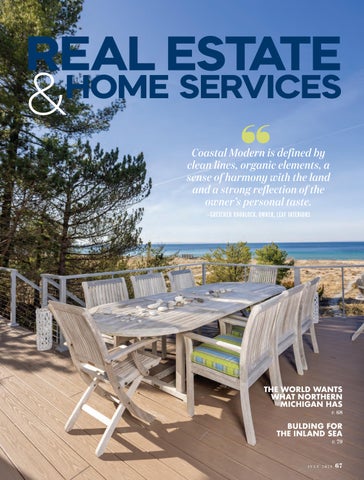
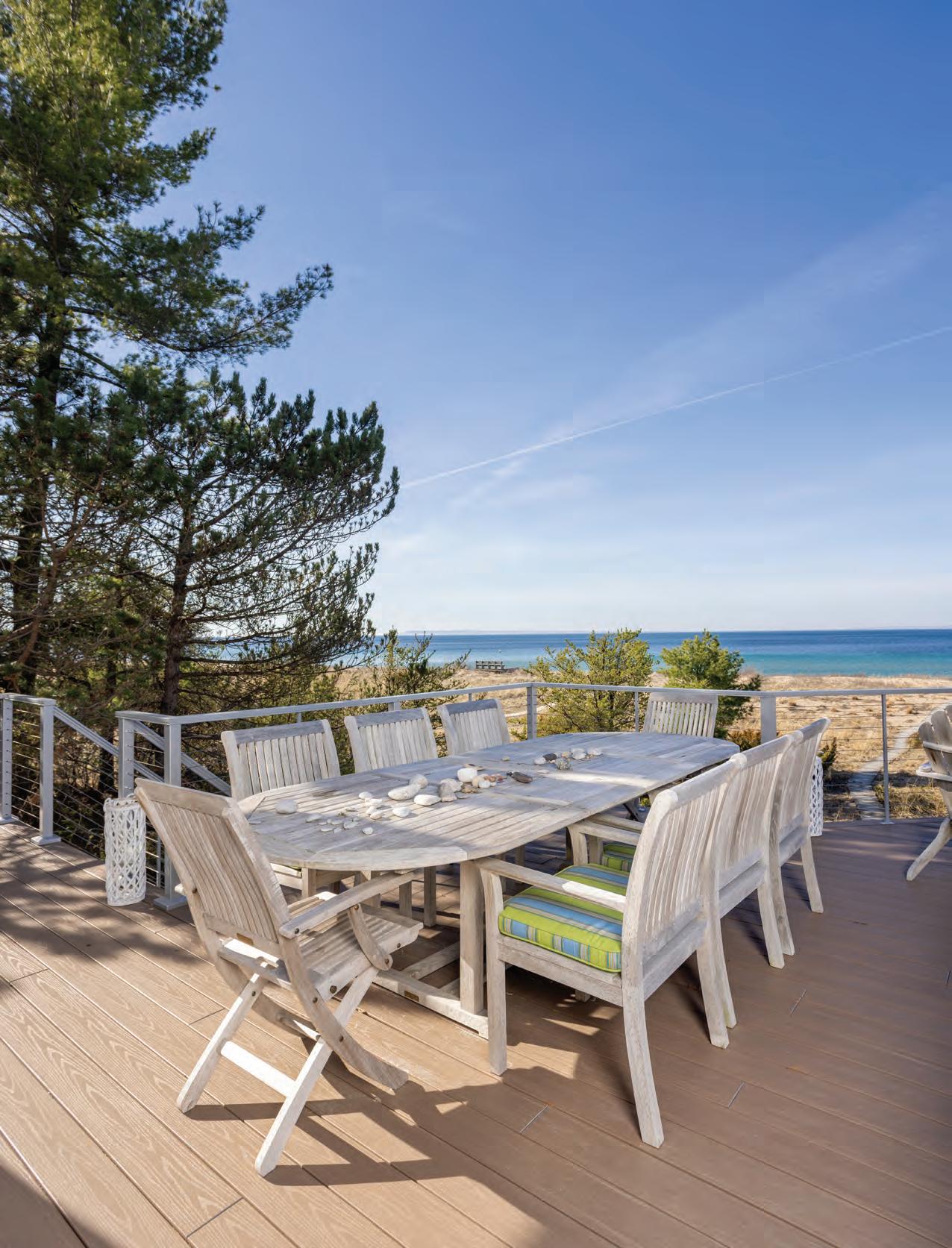
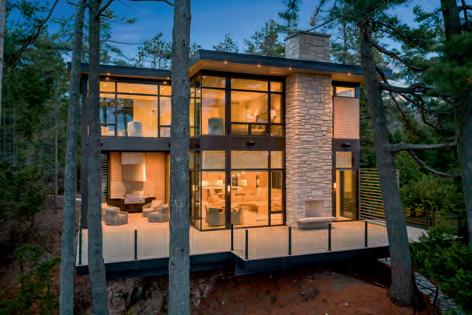
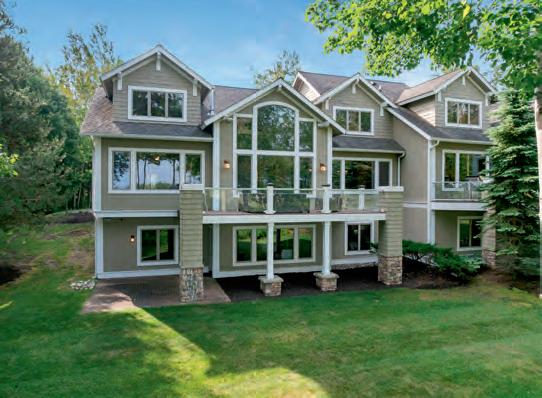
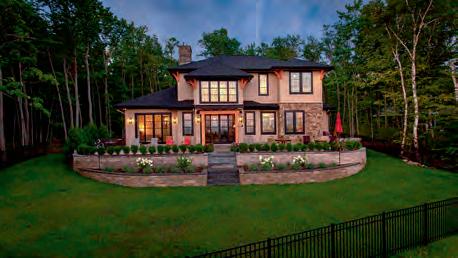
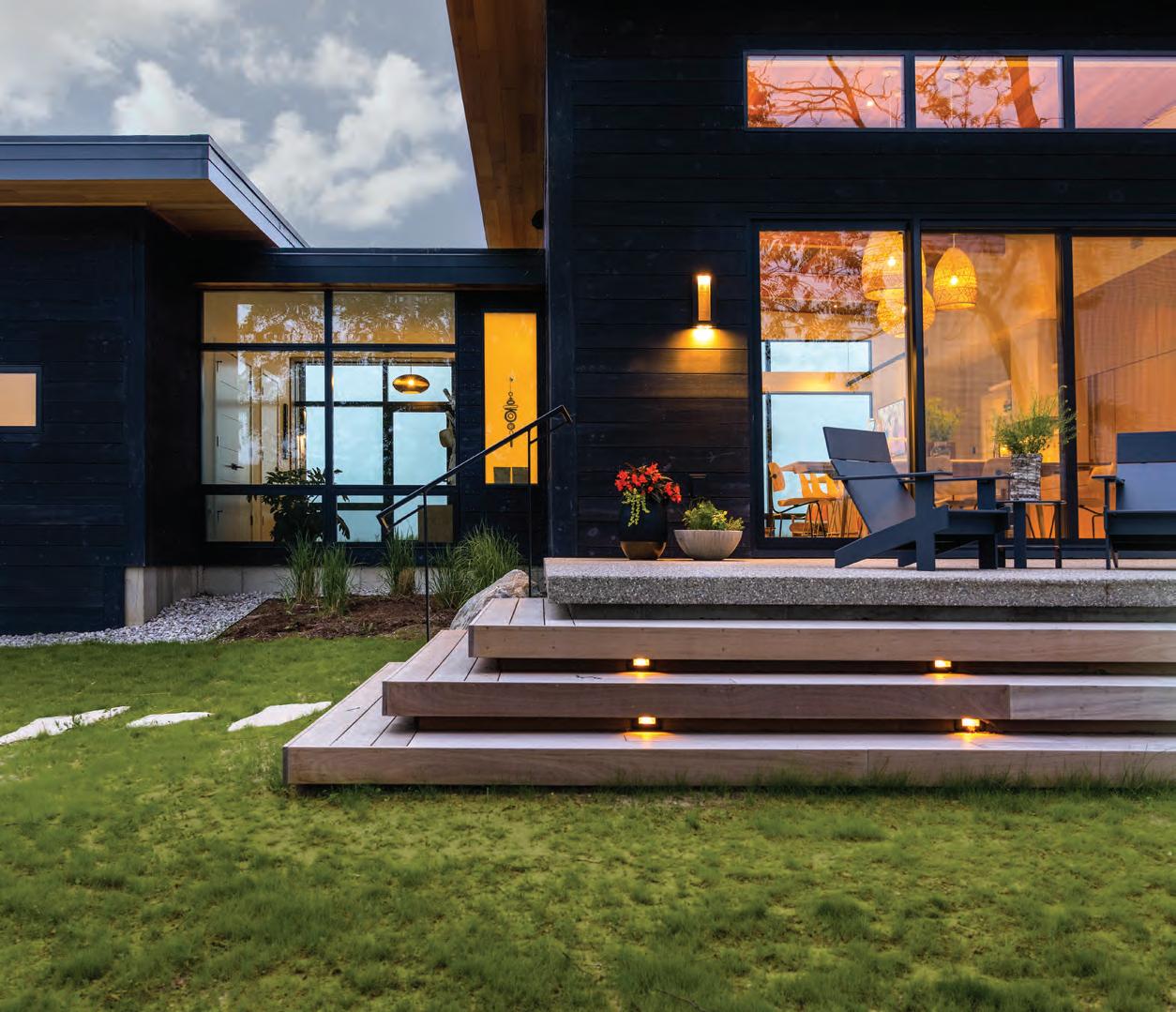
Coastal Modern is defined by clean lines, organic elements, a sense of harmony with the land and a strong reflection of the owner’s personal taste.
—GRETCHEN KNOBLOCK, OWNER, LEAF INTERIORS
THE WORLD WANTS WHAT NORTHERN MICHIGAN HAS P. 68 BULDING FOR THE INLAND SEA P. 79
The World Wants What Northern Michigan Has
Driven by lifestyle and limited waterfront, Petoskey is redefining the market and setting the pace for Northern Michigan.
by NICOLE LANE
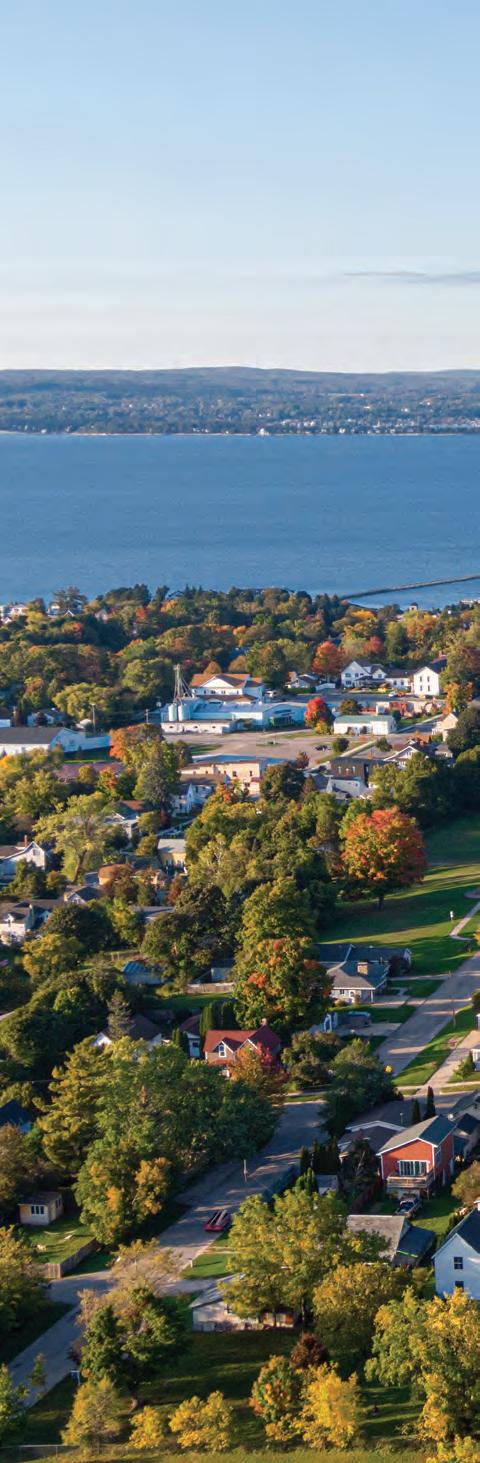
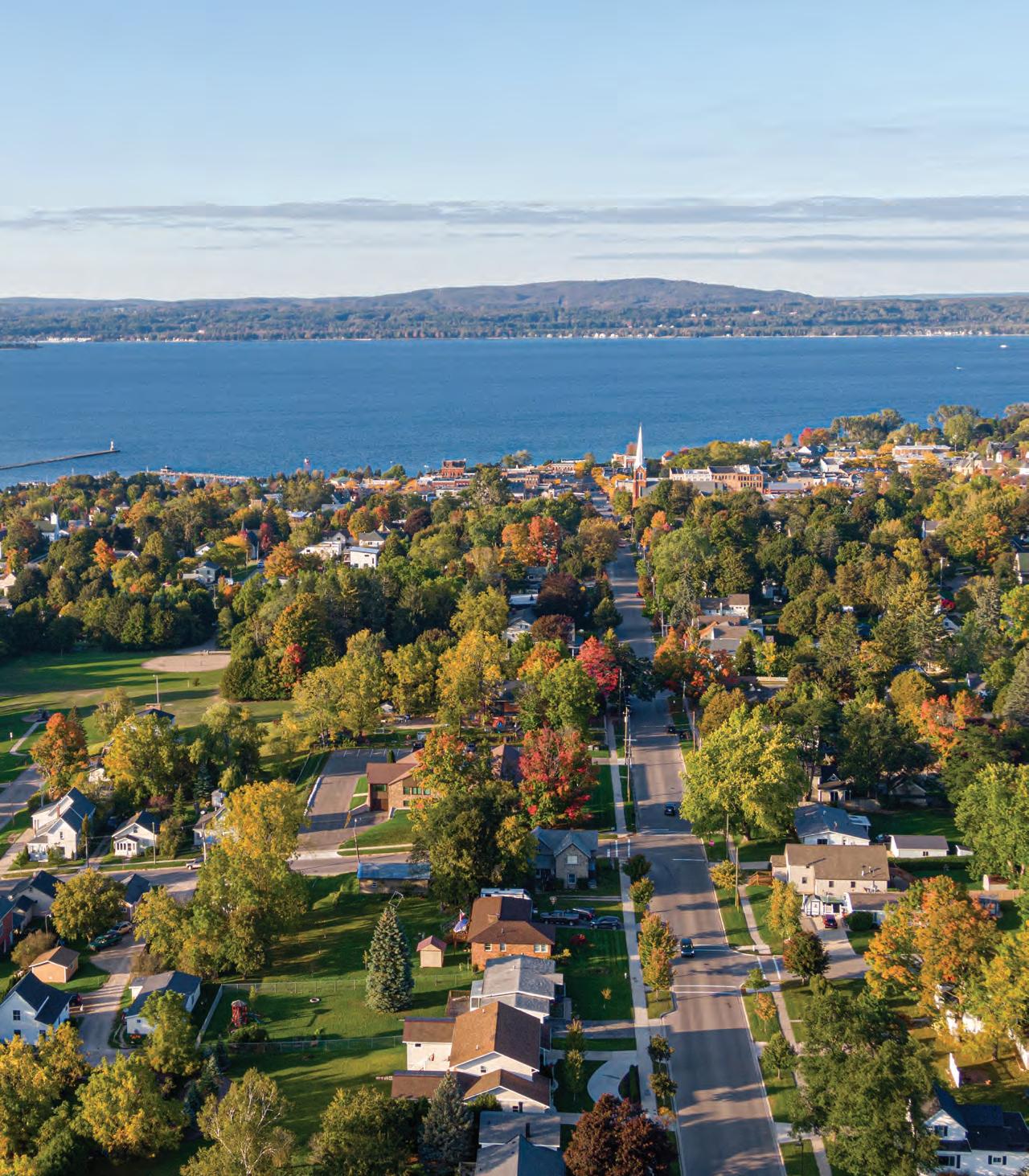
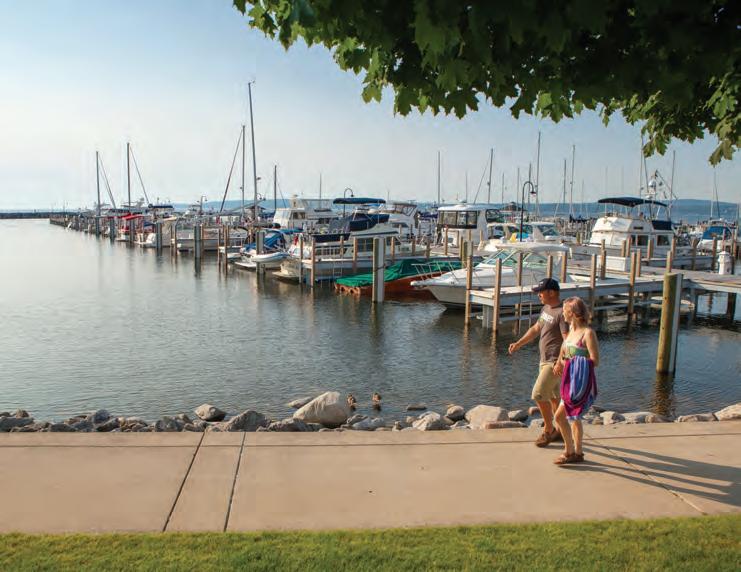
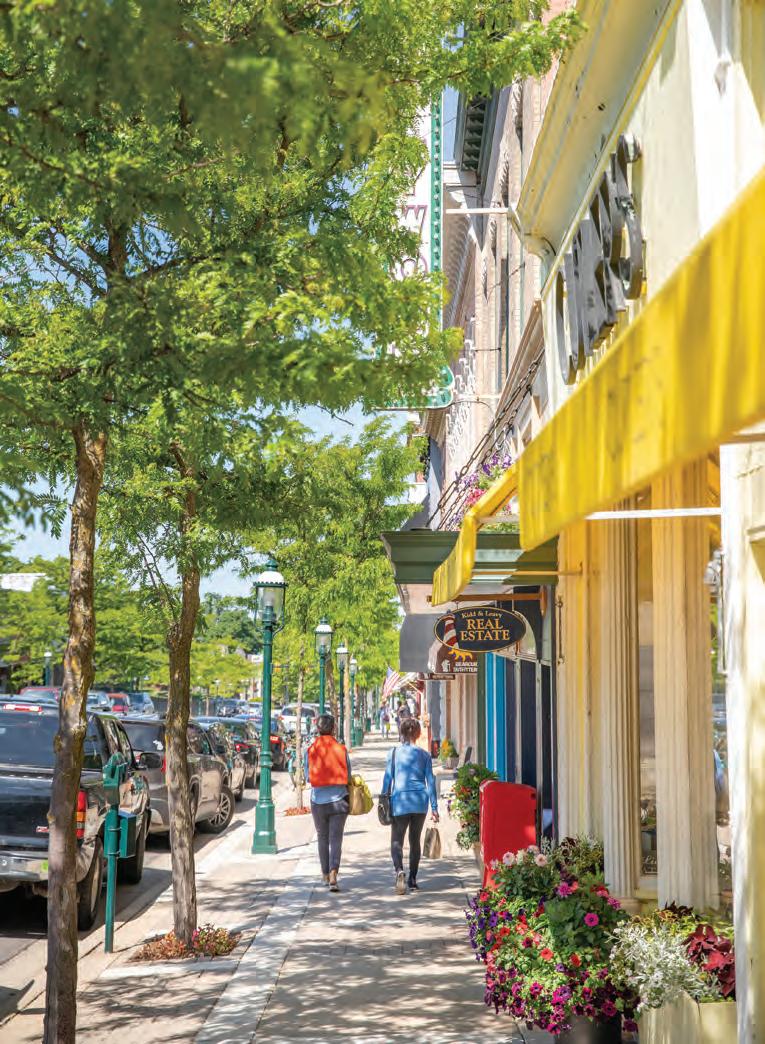
Morning light stretches across little traverse bay, turning the water a soft blue as waves roll gently onto the shore. Along the bluff, historic homes catch the sunrise. Downtown, the brick-lined streets of Petoskey wake slowly. Cafés are brewing coffee, storefronts open beneath Victorian facades and the first walkers trace the waterfront path. It’s a timeless, postcard setting—but for all its stillness, Petoskey has joined the ranks of rare company. And that upward transition is showing up in numbers.
According to a March 2026 report from Realtor.com, more than half of the town’s active listings exceed $1 million, with 53 percent priced at or above that threshold, landing this NoMI enclave at #11 of the top 13 luxury markets in the U.S., alongside spots like Nantucket, Napa Valley, Santa Barbara and Bozeman. Unlike markets where luxury exists in tight pockets, Petoskey’s designation reflects something broader: an entire housing ecosystem increasingly defined by high-end pricing, driven by lifestyle.
Petoskey seems to attract a very conscientious customer. Whether they are locals or vacationers, they seem to understand what a special and unique area this is.
—JULIE ADAMS, OWNER AND CHEF OF JULIENNE TOMATOES
“What sets Petoskey apart from markets like Napa or Cape Cod is the balance between seasonal appeal and long-term livability,” says Pat Leavy, owner of Kidd & Leavy Real Estate in Petoskey. Unlike the summer-only culture of Nantucket, for example, the four-season lifestyle of the Little Traverse Bay region fuels more full-time appeal for relocators and a yearround draw for second-home owners. There’s the ski trifecta of Boyne Mountain Resort, Nubs Nob Ski Resort and The Highlands—three of the most-trafficked and highly regarded ski resorts in the state. Bay View Country Club and Crooked Tree Golf Club sit minutes away from downtown. Four marinas offer premium amenities for boaters. Plus, state parks and nature preserves line the town for summer-time hiking and winter-time cross-country skiing. And all the while, Petoskey’s small-town character remains. “That consistency helps support more stable, long-term demand rather than purely vacationdriven spikes,” says Leavy. The balance helps explain the town’s rapid ascent in the housing market.
Johnny Crane, from The Crane Group at Berkshire Hathaway HomeServices Michigan Real Estate in Traverse City, is a luxury home collection specialist. He says that Petoskey shares some of the same fundamentals as Napa and Cape Cod: limited inventory, seasonal demand and buyers willing to pay the price for the lifestyle.
Accessibility also plays a role. Direct flights into Pellston, just 30 minutes from Petoskey, and service through Traverse City make the area reachable and attractive for out-of-state buyers. For most Michigan residents, it’s an easy drive, adding to its appeal for the second-home market.
Petoskey’s vacation-home appeal isn’t new—wealthy Midwestern families have summered here since the late 1880s, and many of the early structures still anchor downtown, with 19th-century buildings housing boutiques, galleries and
restaurants. But values have surged dramatically since 2020, when the median price hovered below $350,000—an increase tied in part to remote work trends during Covid-19 that brought new buyers from across the country seeking space, scenery and flexibility.
Petoskey’s arrival in the ranks of the official luxury market hints at a more universal truth: that geographical beauty, downtown charm and extreme scarcity (there’s only so much bay frontage) apply here, too.
Overall, the cost of waterfront homes in northwestern lower Michigan has increased 77 percent since 2020. On Old Mission Peninsula, waterfront homes typically sell for $1 to $3 million. And in Leelanau County, they command $800,000 and $3 million. According to a 2025 report, only 40 percent of buyers in Leelanau were locals.High-end inventory continues to expand, particularly near Bay Harbor, where new construction adds modern, turnkey homes to a market once dominated by historic cottages.
Petoskey’s rise brings up a bigger question: What happens to the towns just beyond its orbit? Intense competition for premium homes and an influx of affluent buyers will create a significant shift in all of Northern Michigan, toward towns that feel similar but remain just under the threshold. Farther down the coast, Charlevoix, Elk Rapids—each begins to look less like an alternative and more like the next chapter. When a town becomes too expensive, demand shifts, increasing property values and expanding development into surrounding areas. In real estate, momentum travels, and Petoskey’s ascent would mark the start of a broader reshaping of the region’s housing landscape.
For local businesses, however, the influx of higher-income residents often translates into a stronger year-round revenue and a more diverse customer base. Restaurants and retail shops benefit from increased spending. There’s a behavioral
Your land is an investment. Treat it that way.
Expert guidance for buying or selling land— backed by the nation’s leading land advisors.
The best land investments deliver value you can actually experience.
For decades, LandVest has guided institutional landowners through major timberland transactions across the country. Today, we bring that same disciplined, market-tested expertise to private landowners and buyers.
Whether you’re acquiring land for hunting, outdoor recreation, or long-term family ownership—or if you are considering the right time to sell—we help you understand your land’s full potential.
And when active management adds value, our in-house forestry team provides professional stewardship grounded in real-world results.
This is your land, your legacy, and an investment.
economic theory called the “wealth effect” that occurs when homes rise in value. People feel wealthier, more confident, and as a result, there’s a boost in consumer spending. More foot traffic leads to increased sales for home-related goods, and there’s a demand for local services—landscapers, painters, interior designers—as well.
At Julienne Tomatoes, a café and bakery in downtown Petoskey, owner and chef Julie Adams sees the shift firsthand. “Petoskey seems to attract a very conscientious customer,” she says. “Whether they are locals or vacationers, they seem to understand what a special and unique area this is.” Customers who care about the town are more likely to have long-term loyalty and support the local ecosystem. Someone who has an emotional connection to the region is a lifetime customer, not just a one-time passerby.
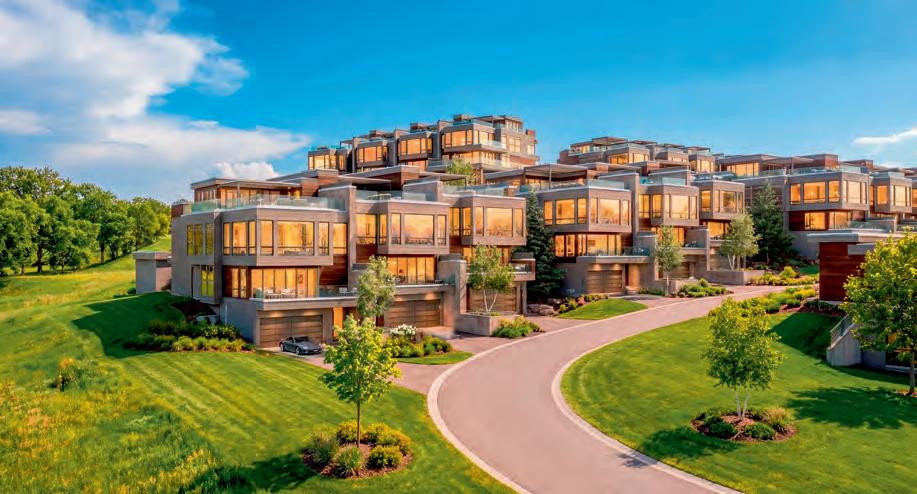
Adams says the business is looking forward to the next couple of years as all types of housing are becoming available in the area—from luxury housing developments like The Summit to more affordable homes in Pine Pond, which can support a more balanced community.
At the same time, business owners navigate a more complicated reality, where growth brings opportunity and strain. Rising home values strengthen long-term equity and support a more stable, yearround economy, but they push workers farther from the communities they serve. In 2025, The Block at Petoskey, a sleek new community a mile from downtown, opened apartments and drew overwhelming demand, with a reported 500-person waitlist—a sign of how tight the market has become.
Adams adds that housing is only part of the equation. The area needs a major infrastructure upgrade, like replacing old lead water lines, upgrading wastewater treatment facilities, expanding downtown parking, restoring the Little Traverse Wheelway and ongoing road repair. She’s hopeful that this new classification as a luxury town will motivate upgrades in the future.
Crane says Petoskey’s growth trajectory appears steady. He doesn’t think the area will see the same extreme spikes that show up in ultra-luxury coastal markets. “It’s more of a consistent, durable growth story than a fast-moving luxury cycle,” he says. Unlike ultra-luxury destinations that swing with global demand, this market remains regional and is built on consistent tourism and a growing number of full-time residents. Demand is supported by remote work flexibility, retirement migration and continued interest in lifestyle-driven living.
For all the numbers and rankings, the draw is simple and hard to quantify. It’s a feeling of place, access to water, woods and a grounded community. Those qualities don’t stop at city limits. As demand continues to ripple, neighboring towns will face the same opportunities—and pressures—that come with growth. Luxury, in Northern Michigan, may no longer be a single destination but a moving target.
Nicole Lane is senior editor of Traverse Northern Michigan magazine.
photo by Dave Weidner
It becomes real with a custom building relationship defined by clarity, timeliness, true collaboration, and the artistry of exceptional craftsmanship.
Built to Last: The New Luxury of Aging in Place
Subtle, smart design is helping homeowners create luxury homes built for comfort, beauty and long-term living.
by MEAGAN FRANCIS
Stunning lake views, spa-worthy bathrooms, chef’s kitchens: while these elements have long been considered the fundamentals of a beautiful home, today’s homeowners are increasingly asking a deeper question, too: Will this home still work beautifully for me 20 years from now?
The key is building and renovating homes that will evolve gracefully alongside the people living in them. At Traverse City–based Paul Maurer General Contracting, staff member Laura Sageser recently completed the National Association of Home Builders’ Certified Agingin-Place Specialist (CAPS) program, a certification focused on designing homes for long-term comfort, safety and independence.
Forget stainless-steel grab bars, obtrusive medical equipment hanging on the wall and other outdated, institutional stereotypes of aging-in-place retrofitting. The new approach to retirement-friendly design is about stealth practicality: architecture that anticipates changing bodies and routines while allowing for Northern Michigan’s unforgiving winters. And it does all this while preserving beauty and dignity.
“Nobody wants their custom home to feel medical,” Sageser says. “People still want warmth, style and luxury. The goal is to build in those supportive features so naturally that they almost disappear.”
LUXURY THAT WORKS HARDER
Many of the smartest features in forever homes already overlap naturally with luxury design. Wide hallways feel grand and airy, but also allow easier mobility and accessibility in the future. Curbless showers read as sleek and modern while reducing trip hazards. Layered lighting creates ambiance while improving visibility.
Even kitchens are being reimagined with subtle functionality built in. Pull-down shelving systems make upper cabinets easier to access. Under-cabinet lighting improves visibility for cooking and prep work. Open space beneath sinks can accommodate seated access if needed later in life without compromising aesthetics now.
The same thinking extends outdoors. Heated driveways and walkways, once considered purely indulgent, now serve
a practical purpose by reducing ice-related falls and eliminating the physical strain of winter maintenance.
“It’s about designing for comfort today and flexibility tomorrow,” Sageser says.
DESIGNING FOR REAL LIFE
One of the biggest takeaways from Sageser’s certification training was that aging-in-place design is rarely about old age alone. Sometimes it’s about recovering from surgery, accommodating a spouse with changing mobility, or simply planning ahead while options are easier and less expensive.
After tearing her ACL in a skiing accident earlier this year, Sageser experienced that reality firsthand.
“It completely changed my perspective,” she says. “Suddenly you notice every staircase, every narrow space, every awkward layout.”
For Sageser and her colleagues at Paul Maurer, that experience reinforced an idea central to emotionally intelligent home design: The best spaces support a homeowner’s needs without constantly reminding them of limitations, present or future.
Bathroom walls, for example, can be reinforced during construction so that stylish grab bars may be added later if needed. Closets can be strategically stacked between floors to allow for a future elevator installation. Exterior walkways can be gently sloped into landscaping so they never visually register as ramps.
In many cases, guests would never notice these details at all, and that’s exactly the point. Instead, homes are designed to remain beautiful, functional and deeply livable through every stage of life.
For homeowners building new or planning a future renovation, starting the conversation early can open up far more design possibilities. A consultation with an aging-in-place expert can help homeowners create a space that feels luxurious now while remaining comfortable and adaptable for years to come.
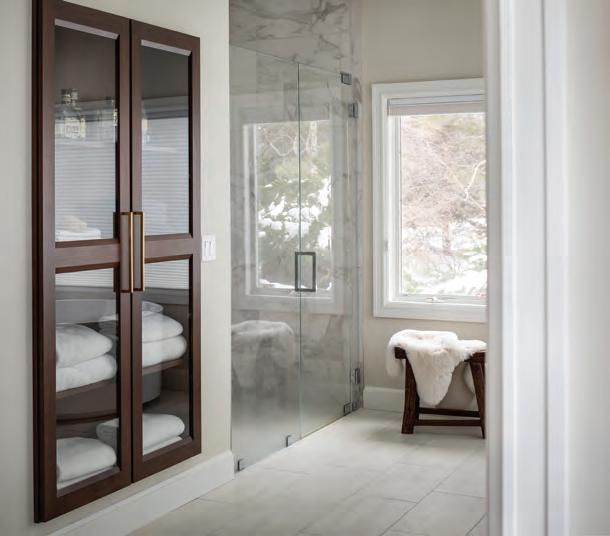
A curbless shower and spacious bath blend luxury with accessibility.
Photo by Beth Singer
Building for the Inland Sea
Northern Michigan architects, builders and designers are redefining Coastal Modern by responding to the moods, weather and demands of the Great Lakes themselves.
by LISSA MARTIN | photos by JACQUELINE SOUTHBY
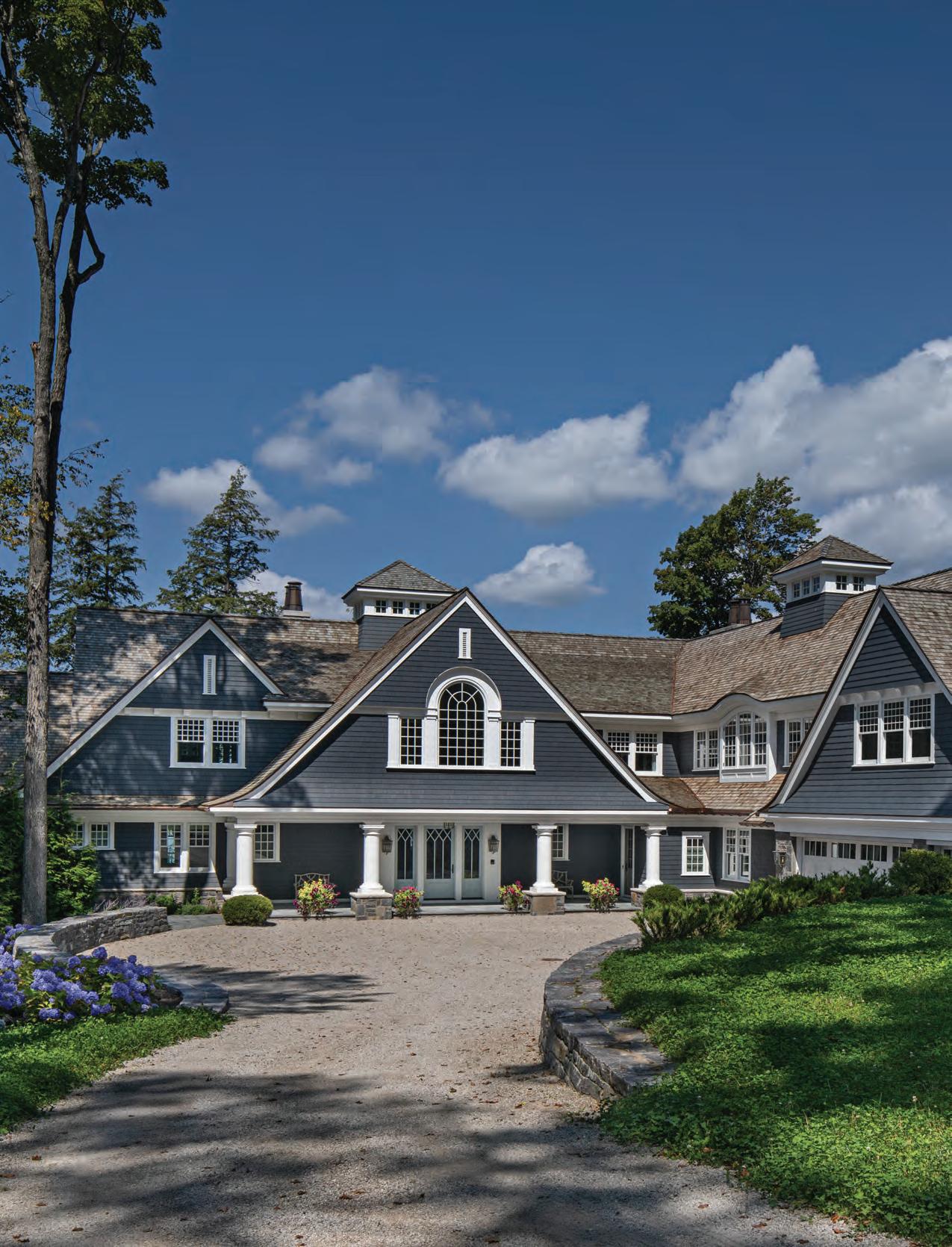
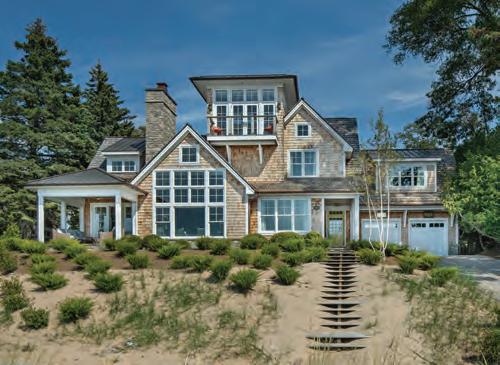
For most of us, the Coastal Modern trend conjures sleek, glass-filled West Coast structures or pared-down versions of classic East Coast beach houses—think Nancy Meyers, next generation. But three design-and-build
leaders in our region say Coastal Modern has less to do with a formulaic style and more to do with the individual site, the weather conditions and the way clients want to live.
Architect Keenan May was raised on Lake Michigan’s Sleeping Bear Bay, where he still lives today. That
landscape—constantly shifting with weather, season and light—has deeply informed his sensitivity to site. Add the influence of a father who was a fine craftsman and a mother who was an artist, and May brings a rare sensitivity to place, material and form. Together, those qualities have established him as one of Northern Michigan’s most thoughtful and influential architects.
“I understand Modern design to be a pragmatic, disciplined approach,” May says. “Aesthetically, it emphasizes a close relationship with the natural environment through restrained forms, natural materials, strategic glazing and carefully framed views.”
Building legacies from Frankfort to Harbor Springs
Equally important, he says, is that each home respond specifically to its site.
“Every site is unique,” May says. “Even neighboring properties can differ significantly in exposure, topography, vegetation and soils. In coastal settings, that means heightened attention to durability, building performance, weather exposure, energy efficiency and long-term maintenance.”
Justin Acker, owner of Asunto Builders, completely agrees. In 2015, Acker joined his parents in building their home on Lake Michigan in Leelanau County. The home was—and remains—a premier example of Coastal Modern design. That project launched Acker’s homebuilding career in Northern Michigan, where he
has since built a reputation for thoughtfully executing homes on challenging, highly distinctive sites.
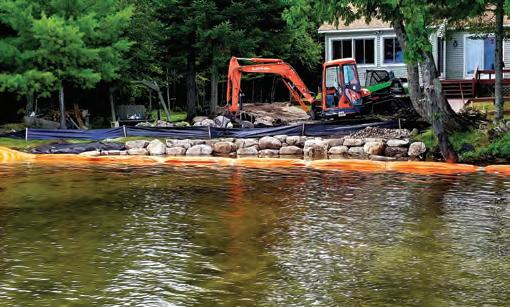
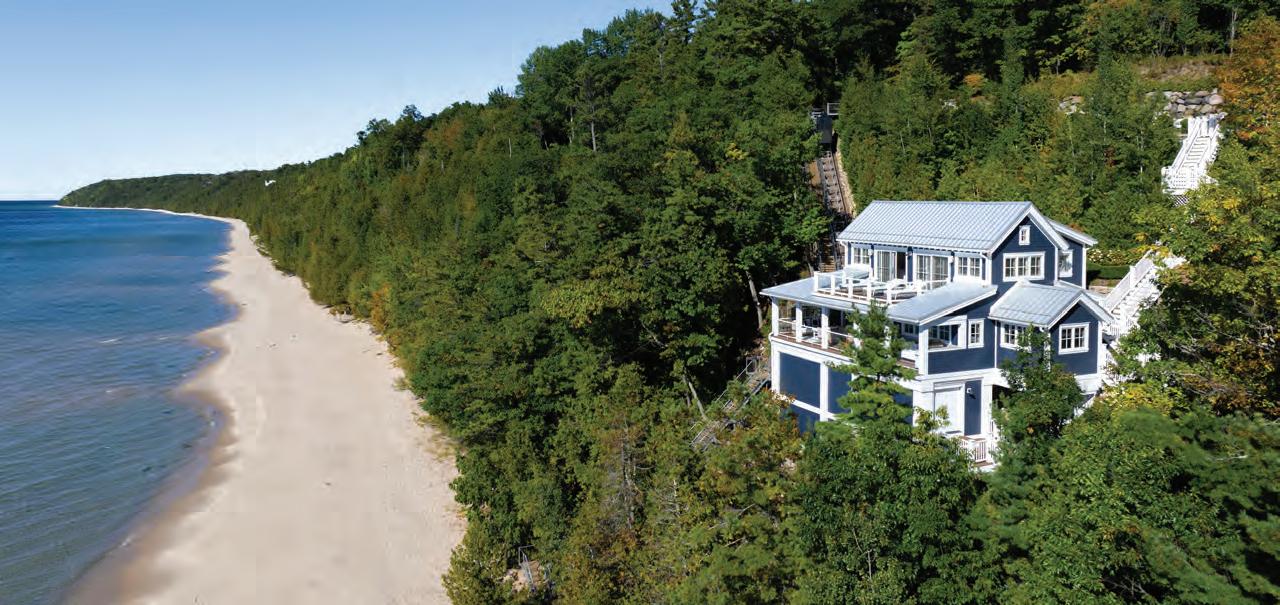
“Like all the homes we build on Lake Michigan, Coastal Modern homes must withstand winter winds that can rival hurricane-force storms on the ocean,” Acker says. “It’s remarkable what Mother Nature brings to Michigan’s western shore, and the structural integrity required is often very similar to an oceanfront build.”
Another major challenge, he adds, is windows. Modern design often calls for expansive glass, but those views come with technical demands.
“Large openings significantly impact the building envelope,” Acker says. “They reduce lateral shear strength,
requiring close collaboration with structural engineers to ensure the home performs as beautifully as it looks.”
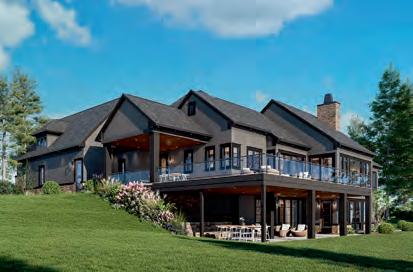
In Northern Michigan, Coastal Modern homes are not simply styled for their setting; they are engineered around it. The best ones respond not only to views, but to wind, weather, light and the demands of lakeshore living itself.
Similar ideas carry inside the home, says interior designer Gretchen Knoblock, owner of New Leaf Interiors in Traverse City.
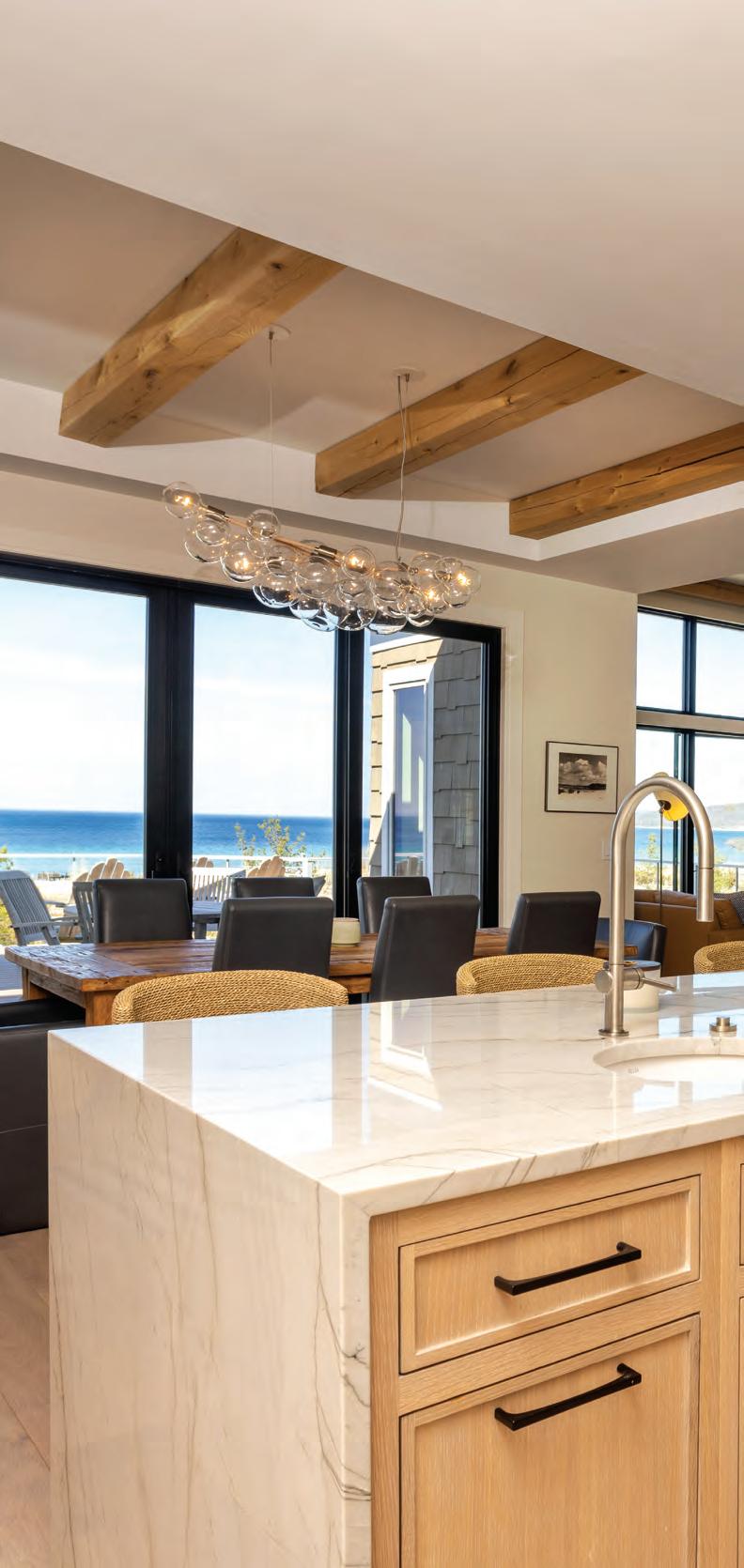
“Coastal Modern is defined by clean lines, organic elements, a sense of harmony with the land and a strong reflection of the owner’s personal taste,” Knoblock says.
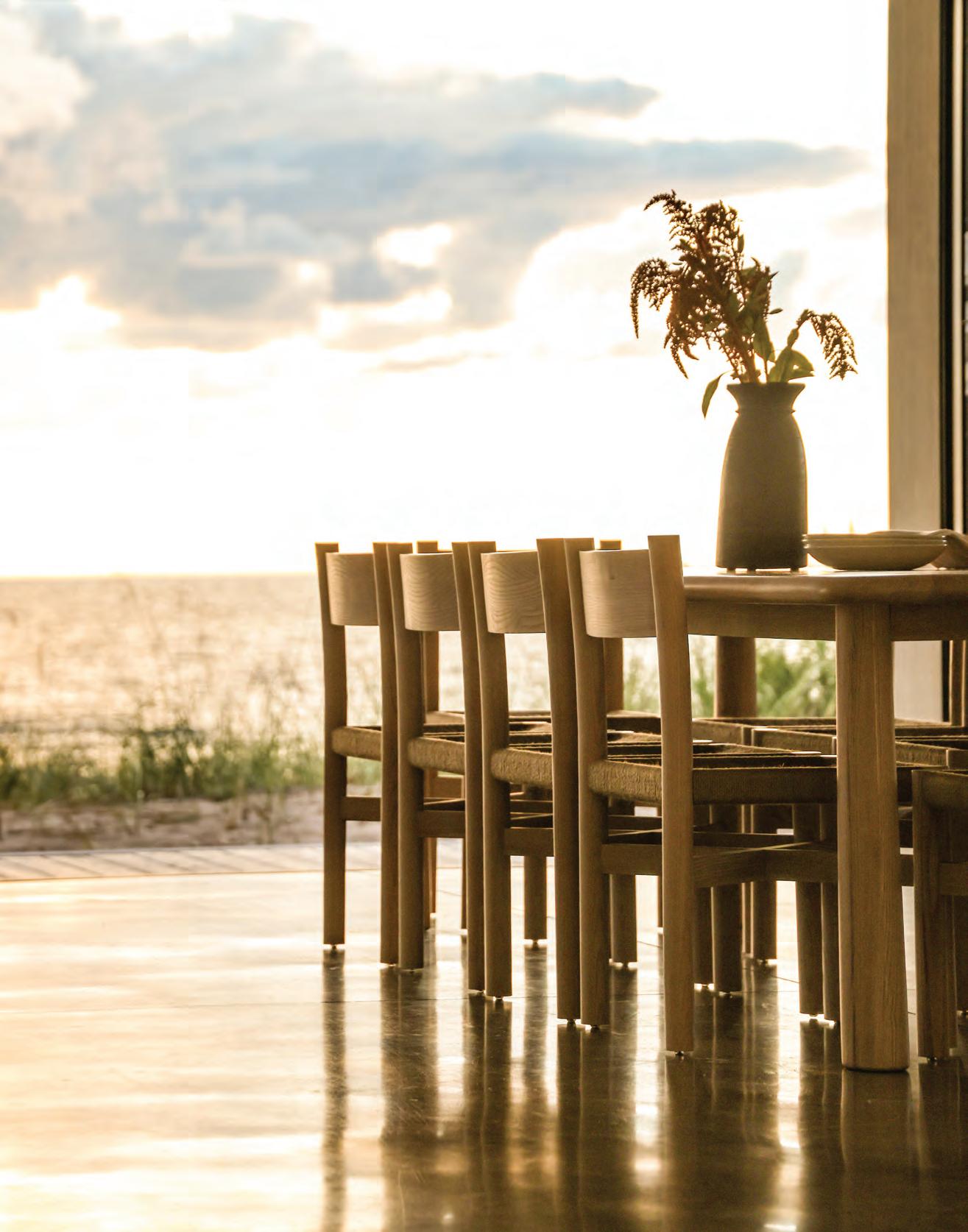
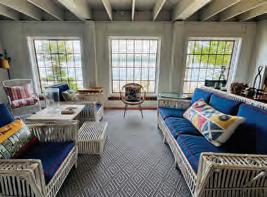
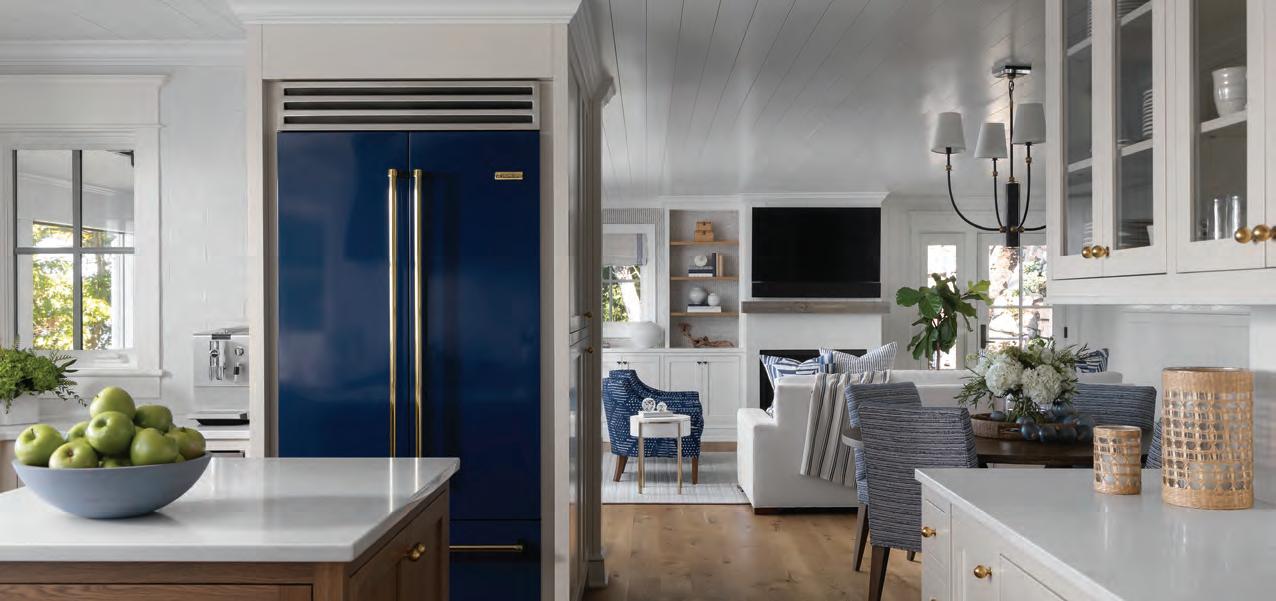
Coastal Modern pairs clean lines and natural elements—like stone, wood, linen, wool.
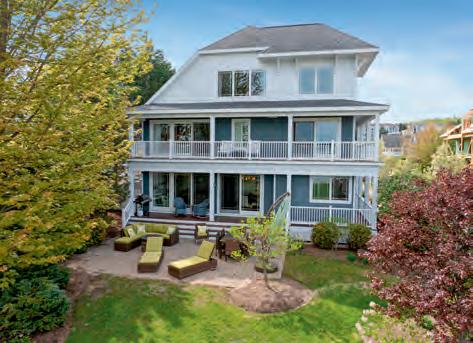
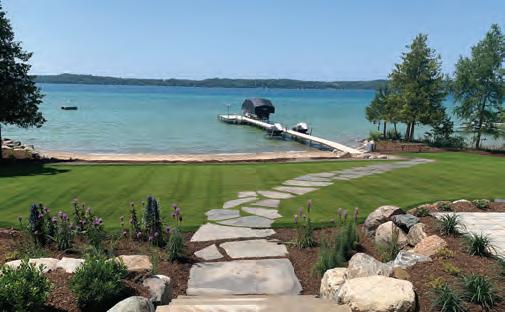
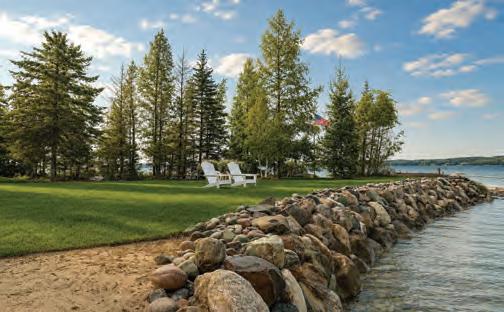
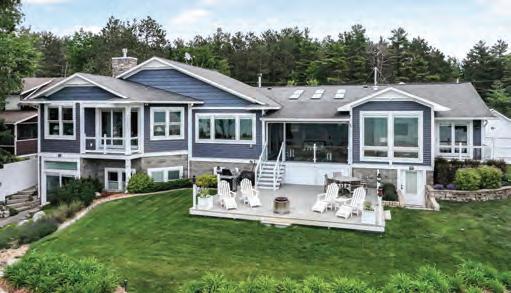
100 feet of private sandy beach with views of Wilderness State Park and awe-inspiring sunsets.
Chef’s Kitchen boasts Wolf and Sub-Zero appliances, custom cabinetry and walk in pantry.
Primary suite includes a marble en-suite bath, dual walk- closets, fireplace-warmed study, and private lake view balcony.
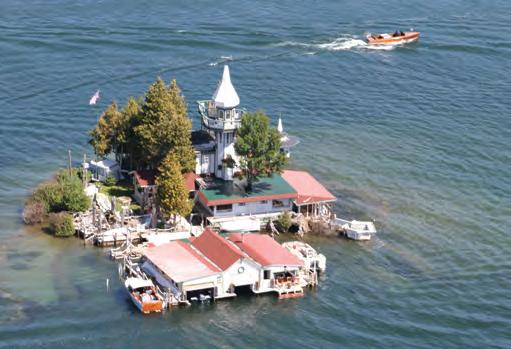
and Cedarville are
the renowned Les Cheneaux Islands, and this private island retreat sits geographically at the very heart of the chain! Located in Snows Channel, this historic 1913 cottage offers a 3-bed, 2-bath Lake Huron sanctuary with 575 ft. of deep-water frontage. Entertain in the waterfront gazebo, relax in the solarium’s hot tub, or unwind in the sauna. The property features a charming turret with a wrap-around balcony and a 3-stall boathouse with stained glass accents. Beyond the unparalleled local boating, Mackinac Island is just a short boat ride away. Secure this rare, legacy-defining island lifestyle today.
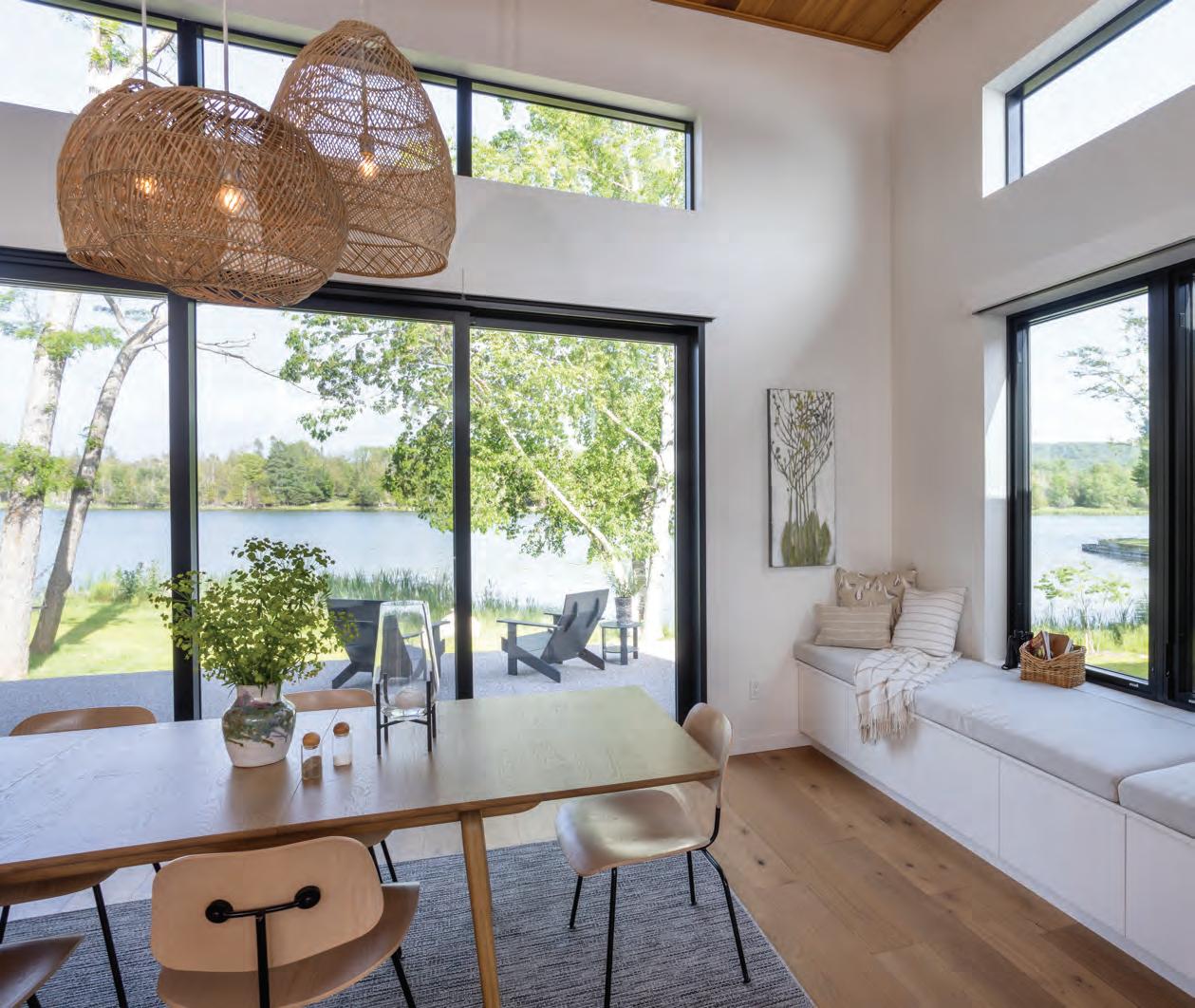
STRATEGIC GLAZING
In other words, it is less a style to copy than one to create. Today’s clients want more individuality in their coastal interiors—“not the cookie-cutter magazine version,” Knoblock says.
“I am especially drawn to furnishings and finishes that engage the senses: water, fire, earth and air translated into rooms in both practical and beautiful ways,” she says. “Stone, wood, leather, wool, grasses and other natural fibers bring texture and depth.”
Fewer permanent elements—accessories, artwork, lighting, paint, color and special finds—can introduce a more current note. Wallpaper, too, can bring another layer of personality. Used more thoughtfully than in decades past, it acts almost like an accessory: sometimes bold and expressive, sometimes subtle and textural.
“In Modern Coastal interiors, I often favor texture over themed prints,” Knoblock says. “Wallpaper can be the jewelry of the room.”
On these shorelines, the lake enters nearly every design decision: where a house turns, how it holds heat, what survives the wind and what kind of light fills a room at the end of the day. In Northern Michigan, Coastal Modern starts there.
Lissa Martin is a former Traverse Northern Michigan editor and writer. She lives in Glen Arbor.
THE COASTAL MODERN TOOL KIT
Expansive windows positioned around light, lake views and weather exposure.
LIMESTONE
Soft, sandy tones that echo the shoreline and bring warmth to modern interiors.
METAL ROOFING
Durable enough for lake-effect winters and clean-lined enough for contemporary homes.
SHOU SUGI BAN
Charred wood siding that weathers beautifully and blends naturally into wooded landscapes.
SALVAGED BEAMS
A little age and imperfection against all those crisp lines.
OUTDOOR ROOMS
Screened porches, covered passages and fireplaces designed to stretch the season.
MOTORIZED WINDOW COVERINGS
A practical response to walls of glass and constantly shifting lake light.
TEXTURAL FABRICS
Bouclé, wool, leather and woven natural fibers that soften minimalist interiors.
WALLPAPER
Used sparingly—grasscloths, subtle patterns and textured papers that add depth without overwhelming a room.
to plan for tomorrow
Life is for living. Let’s partner to help you make every single moment matter.
It’s a simple but powerful approach: Learning what’s most important to you and helping build the future you envision.
Traverse City
Heather Boivin, CFP®, AAMSTM
Heather Boivin, CFP®, AAMS™ Financial Advisor
Financial Advisor
3285 South Airport Road West Traverse City, MI 49684 231-933-5263
3285 South Airport Road West Traverse City, MI 49684 231-933-5263
Yancy Boivin, AAMSTM
Financial Advisor
Yancy Boivin, AAMS™ Financial Advisor
3285 South Airport Road West Traverse City, MI 49684 231-933-5263
3285 South Airport Road West Traverse City, MI 49684 231-933-5263
John W. Elwell, CEPA®, AAMSTM
John W Elwell, AAMS™ Financial Advisor
Financial Advisor
3588 Veterans Dr Traverse City, MI 49684 231-947-0079
3588 Veterans Dr., Suite 2 Traverse City, MI 49684 231-947-0079
Jamie Keillor, AAMSTM
Financial Advisor
Jamie Keillor Financial Advisor 4110 Copper Ridge Dr, Bldg D, Suite 202 Traverse City, MI 49684 231-252-3561
4110 Copper Ridge Dr, Bldg D, Suite 202 Traverse City, MI 49684 231-252-3561
Justin Liptak
Financial Advisor 513 S. Union Street Traverse City, MI 49684 231-933-0881
Justin Liptak Financial Advisor 513 S Union Street Traverse City, MI 49684 231-933-0881
Andrew Weaver
Jim Mellinger Financial Advisor 12935 S West Bay Shore Dr Suite 355 Traverse City, MI 49686 231-947-1123
Financial Advisor 125 Park Street Suite 250 Traverse City, MI 49684 231-947-3032
Jim Mellinger
Financial Advisor
Jon Lamb Financial Advisor 12935 S West Bay Shore Dr Suite 355 Traverse City, MI 49686 231-947-1123
12935 S. West Bay Shore Dr. Suite 355 Traverse City, MI 49686 231-947-1123
Jon Lamb
Financial Advisor
Joel Leipprandt
Financial Advisor
Alysia Boynton-Fisher Financial Advisor
806 S. Garfield Ave Suite B Traverse City, MI 49686 231-932-1290
12935 S West Bay Shore Dr Suite 355 Traverse City, MI 49686 231-947-1123 Andrew Weaver
12935 S. West Bay Shore Dr. Suite 355 Traverse City, MI 49686 231-947-1123
Leah Pierce
Financial Advisor
Interlochen
Bill Collin, ABFP™
Bill Collin, ABFPTM Financial Advisor
Advisor 9672 US Highway 31 Suite 400 Interlochen, MI 49643 231-276-1355
12935 S. West Bay Shore Dr. Suite 355 Traverse City, MI 49686 231-947-1123