WOMEN CARVING PATHS FOR THE YOUNGER GENERATION

ISSUE #6 2023/24


WOMEN CARVING PATHS FOR THE YOUNGER GENERATION
ISSUE #6 2023/24
I am so glad to be writing this. Our lovely magazine has been sitting on the back burner simmering for the past year and a half. We had just released our 5th issue of the publication and then Covid hit. We had to make some decisions and get creative. One of them was to let Mountain Women Magazine relax for a bit so the ladies running this company could keep revenue flowing through a few new hyper-local titles like our new title, Mountain Town Breckenridge. So many of you have asked when will we see Mountain Women Magazine again and I finally have an answer, right now!
A little bit of history as we stoke the flame and get things going again. Back in 2014, I was flipping through our kin publication, Mountain Town Magazine, and I noticed that almost every article we published was about a man. Honestly, it was a bit unsettling. Not that we do not love men, we most certainly do, but women do not get enough recognition in mountain town/ski and ride media. I looked around and saw so many badass women. Women athletes, entrepreneurs, artists, philanthropists, chefs, educators, musicians, mothers, and even those rocking the world with their skills in the grandma arts (you know, knitting, crocheting, needlepoint…). We decided right then to change that and introduced Mountain Town Magazine’s first issue of Women Who Rock the Rockies in 2015. We asked friends and friends of friends to nominate women they thought deserved that accolade and the responses were fantastic!
That edition and subsequent issues each year continued to celebrate women in our mountain towns who are significant in their contributions to their communities, have achieved personal successes in their field, and are recognized with stories that featured their talents. As we were preparing our 5th Annual Women Who Rock the Rockies edition I had an epiphany. Why not resurrect Mountain Women Magazine? It was a title I had created in 2003 but shelved so we could focus on making Mountain Town Magazine successful while in its infancy.
The desire to launch Mountain Women was so strong and felt so good that I went for it and now after a lot of hard work you are reading it! We are really excited and cannot wait to continue sharing the hard hours and good work women are putting in to help others and better themselves.
Mountain Women Magazine and our website mountainwomenmagazine.com have been live the whole time discussing favorite things, bits of news, food, the outdoors,
our homes, travel, life, kids, growing up, and growing old. Being a mountain woman does not necessarily mean that you have to live in the mountains to belong, it is more of having the spirit of the mountain in you. As John Muir said, “you are not in the mountains, the mountains are in you.”
A quick but very sincere shout-out to the people who helped make this magazine a reality. Kristen Lummis, aka The Brave Ski Mom. We met when we were both starting our blogs. She has been a continued source of inspiration and great editorial content for many years now. She has always been my cheerleader. Colin Bane, for his incredible writing skills and as a side note, is one of the best dads I know. Anna Sitton, a great writer, mom, and believer in
this magazine and our stories. She’s a Buena Viking who can make a mean burger and shred the gnar like a gnarly girl! W....and you, we Thank You for reading this! Please be sure to share with your friends and family. Let people know about us, and we will keep inspiring you with our incredible stories about wonderful women.
We are Girls, Mothers, Ladies, Lassies, Lovers, Babes, and Bad Asses! We are a magazine for women filled with a passion for living life in the mountains in the Colorado Rockies and beyond.
With Gratitude, Holly Battista-Resignolo
COVER IMAGE & PHOTO
CREDIT:
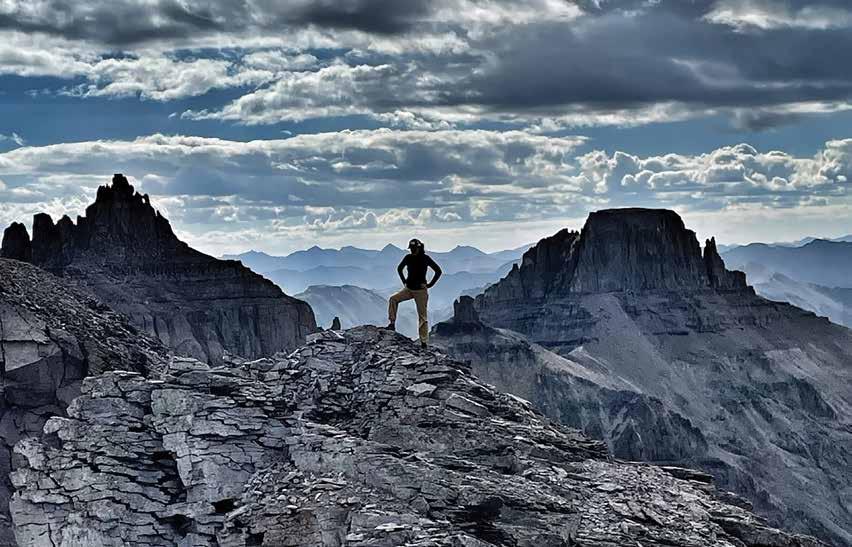
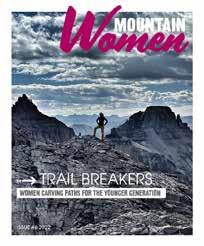
Eunika Rogers stands above Mount Sneffels after a day of adventure. She is Mountain Women Magazine’s Art Director and a woman who fell deeply & abruptly in love with ultra running, hiking, camping, and wild spaces. Eunika is also a world renowned artist residing in Telluride and is known for her paintings crafted with hand foraged clays from around the world. See her work at eunikarogers.com or follow her on social at @RedDirtGirl.
published by MTN Town Media Productions
publisher
Holly Resignolo
art director
Eunika Rogers communications
Gaynia Battista
sales & development
Anna Sitton, Noelle Resignolo
contributors
Kristen Lummis, Shauna Farnell, Holly Resignolo, Marsha Brownlee, Kara Armano, Bill Goldstein,Katie Klingsporn, Scotty Stoughton, Heidi KerrSchlaefer, Kate Lapides, Suzi Mitchell, Kim Fuller, Noelle Resignolo, Amy Schweim, Claudia Carbone, Mike Messeroff
visionaries
Eunika Rogers, Bryce Widom, Noelle Resignolo, Ami Vitale, Joe Hess, Regan Beroni, Linda Rokos Watts
cover image
Eunika Rogers
method behind the means Publications Printers, Online Distribution, Social Media Platforms, Chambers & Tourism Bureaus
get more
Please visit us at MountainWomenMagazine.com to subscribe to our publication released bi-annually promote you
Contact our corporate office or to request a Media Kit: MountainWomenMagazine@gmail.com Office: 970 485 0269
features
If you would like us to consider you for a feature, please contact us at 970 485 0269 or email us at MountainWomenMagazine@gmail.com



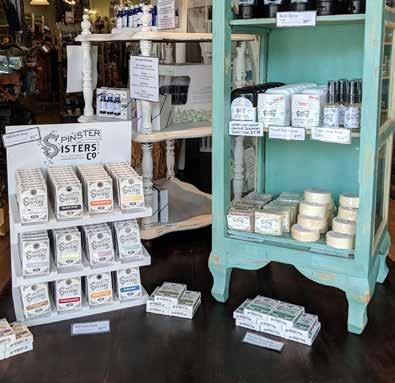
Spinster Sisters is a consciously crafted skincare brand on a mission to be plasticfree and make the best products for you and our planet. Their line of skin, hair, and bath products are made with only natural, clean ingredients, and their Microsoapery in Golden is powered by wind + solar. Check out theie Free From innovation, a line of solid, water-free bars for face, body, and hair in plastic-free packaging.
www.spinstersistersco.com
Alex Fitzgerald designs unique, superior-quality jewelry that lasts for generations while utilizing a transparent and honest supply chain. She sources from suppliers that care about what they do, the people involved, and the environment. Alex Fitz jewelry is made of recycled 18k gold, and precious stones sourced from companies that have complete confidence in their products being conflict-free. Alex produces her brilliant jewelry pieces out of her home and custom creates dream rings, necklaces, earrings, bracelets, and more. Alex also recycles heirloom pieces into something new and modern too. www.alexfitz.com

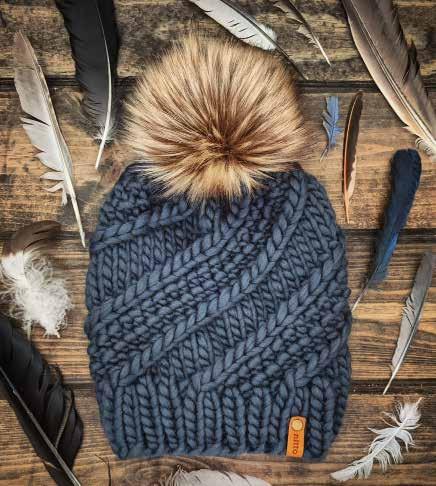
Lacey Von Riedel picked up her first pair of knitting needles in 2018. After lessons from her lifelong knitting mother and a year of trial and error, Nitto Mountain Knits was born.
Driven by her newfound love and inspired by nature’s brilliant hues and patterns, Von Riedel, 36, creates warm cozy winter beanies known for their incredibly detailed stitching. Nitto (the Japanese noun for “knit”) hats are composed of 100% merino wool and acrylic yarns and faux fur poms, all ethically sourced and hand dyed. Look for her popular custom matching hats for the whole family and a new line of mittens and handsewn home goods launching in 2022.
www.nittomountainknits.com
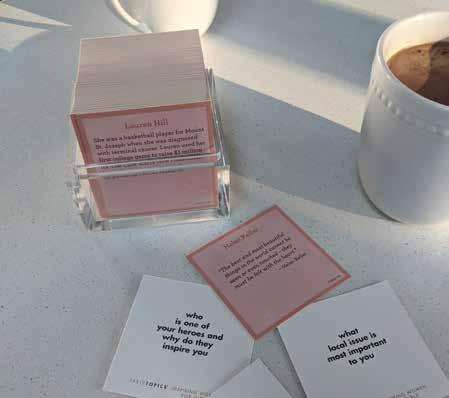
The questions in this edition will have you celebrating your friendships. You’ll appreciate your connection to each other and you’ll be reminded of all the things that made you “besties” in the first place.
You’ll also enjoy the tips and quotes we’ve included. They’re all about friendships—how to make them, how to keep them, and how to strengthen them.
www.tabletopics.com

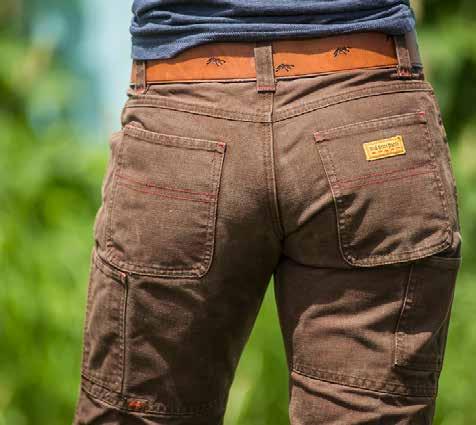
Red Ants Pants in Montana is crating exceptional work wear for woman young and old curve, straight narrow and wide. This company makes everything in the USA. That will never change. We don’t just assemble here, we start with fabric, trims, thread, buttons and zippers, cut the patterns and make the pants. The entire production happens on our soil.
www.redantpants.com
We love this woman-owned company producing delicious teas. The company is dedicated to the health of the consumer and was crafted after a cancer diagnosis that the owner created to help cure herself.
www.theteaspot.com
by Gaynia Battista
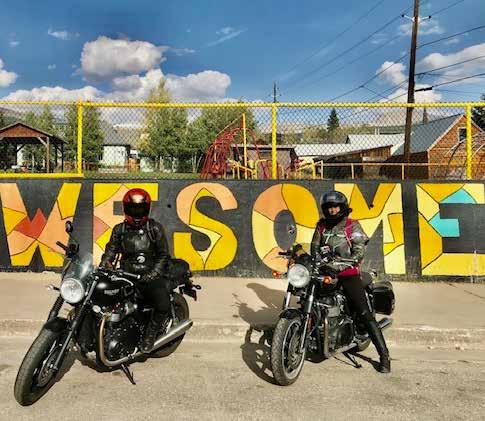
Long time locals Rori Miller and Jillian Turner have embraced the Colorado mountain lifestyle with humble exuberance.
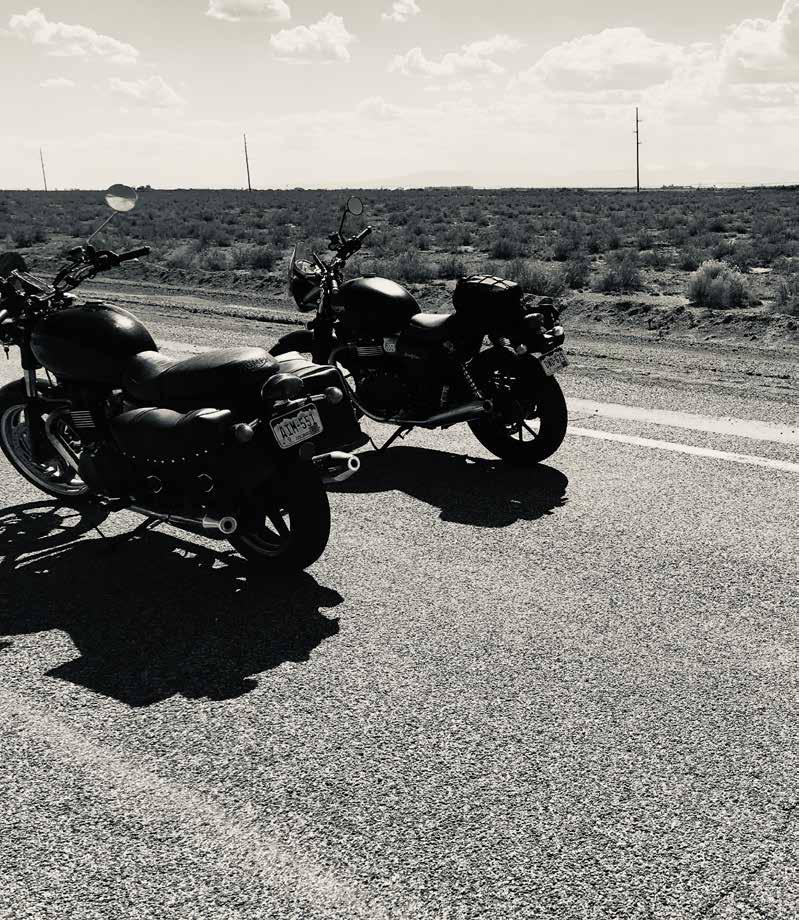
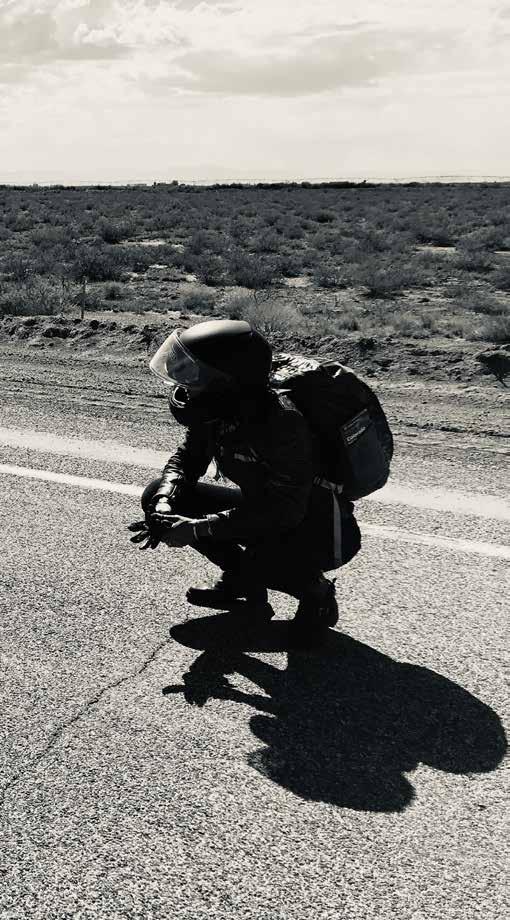
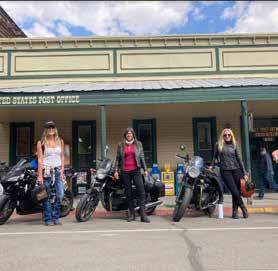
The high country of Breckenridge is where Rori and Jillian have called home for over 30 years. It’s where they make snowboard play-dates on Winter and Spring powder days and tour Colorado’s most intriguing highways and byways on their Triumph motorcycles throughout the temperate Summers and into the colorful and crisp Colorado Autumns.
The love of Colorado is where it all began for these bad-ass motorcycle babes. As their real estate businesses grew, their clients were intrigued with properties in other Colorado mountain towns and that’s where the idea of combining motorcycle touring and business building started gaining traction. “Our clients get to join us on our journeys, living vicariously through us as we show them the gorgeous Colorado landscapes and incredible real estate opportunities.” says Rori. “I agree, motorcycle trips aren’t just for sightseeing, we are on the hunt to find the most unique properties for our clients and interacting with them along the way makes it so much fun!” says Jillian. Going the literal extra mile for their clients has been an important part of what has led to their successes. These two dedicated real estate professionals love scouting for the perfect homes and land for their clients while hugging mountain curves on two wheels. Summiting over 30 Colorado
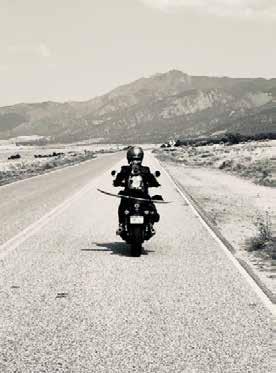
mountain passes and closing deals at sunset on hotel balconies, and even pulling over on the side of the road to discuss an opportunity that can’t wait has become a summertime tradition. “Touring Colorado’s finest mountain communities on 2 wheels is refreshingly authentic to both of us and our clients love it just as much,” says Jillian.
Of course these ladies can’t just make it all work and no play, every moto trip is packed with adventure! Each trip is carefully planned to incorporate some the best of what Colorado has to offer including hiking incredible waterfalls in Ouray and Alamosa, relaxing hot spring pit stops in Buena Vista, Pagosa Springs,
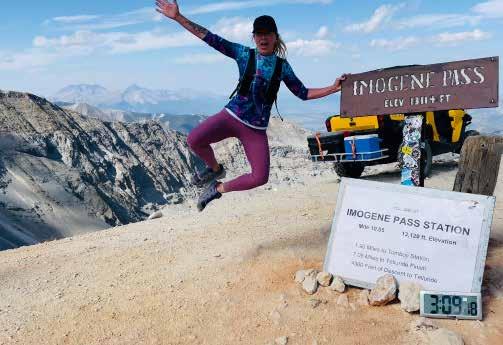
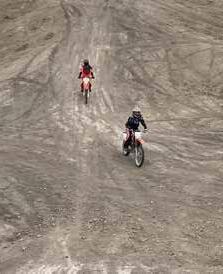
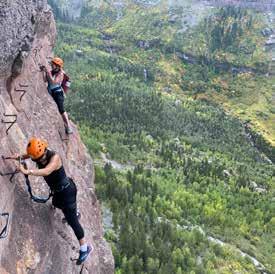
Steamboat and Glenwood Springs, strolling the farmers markets in Vail , Aspen and Crested Butte, Vineyard tours in Palisade, the added exhilaration of skydiving in Delta, climbing terrifying Via Ferratas in both Telluride and Ouray, dirt biking in Grand Junction, ziplining at Copper Mountain, running ultra races from Ouray to Telluride, wakeboarding and jet skiing in Turquoise Lake in Leadville, sandboarding the Sand Dunes National Park, 4-wheeling in Silverton, hitching rides to the iconic trail head of Zapata Falls (when they didn’t dare take their motorcycles up the boulder filled roads), winding and weaving their bikes down the famous Million Dollar Highway into Silverton and Trail Ridge Road through
Rocky Mountain National Park, all while experiencing Colorado’s rich history, flavor and personalities with each and every town they visit. With headsets and mics in their helmets, Rori and Jillian get to talk, sing and joke with each other the whole time they are on the road, swapping stories about everything from their struggles to life’s victories. “It is better than any therapy! Two wheels, the wind in your face and a never ending conversation with your best friend,” says Rori.
These ladies come from a long line of strong women and celebrate their gift of courage and independence by FaceTime-ing with both of their mothers everywhere from lazy river beds to windy



mountain tops. This lineage of strong women inspired both Rori and Jillian to embrace the uncomfortable, crossing boundaries and getting reacquainted with that inner ‘Tom-Boy’. “That feeling you had when you were a little girl before being blanketed with restrictions.
“That is the feeling we chase. As women, we slowly lose it, fading so slowly, a natural progression and before we know it, it’s gone, a distant memory, a distant sensation that at some point later in life becomes an obsession to reconnect with” says Jillian.
As mothers of independent adult daughters, it is imperative that we show them how to harness and bottle that feeling and never let it go. “I wish this for everyone! Too bad you can’t bottle and sell a feeling. We would be billionaires.” Jillian laughed.
“When you live in the most perfect state, find the perfect friend, the perfect motorcycle and the perfect job you’ve got yourself a recipe that feeds the soul. At a time when I didn’t have money to spend on anything extra, I knew that these kinds of experiences needed to become part of my new reality. I knew they would change my life forever. It has finally happened and now I can’t imagine my life without it. Riding motorcycles is as addictive as any drug. I am totally hooked and have Rori to thank for that” says Jillian.
Building professional and personal relationships, raising strong, independent children and staking claim as long-time locals in the high country can be challenging, but these mountain town ladies make it look like a full time adventure!

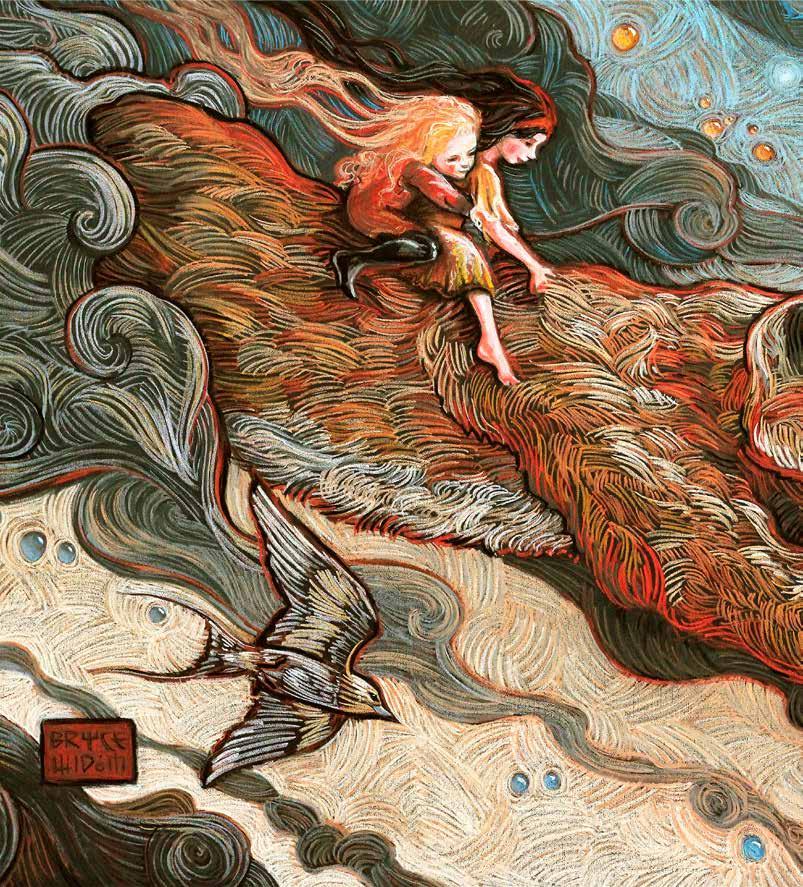
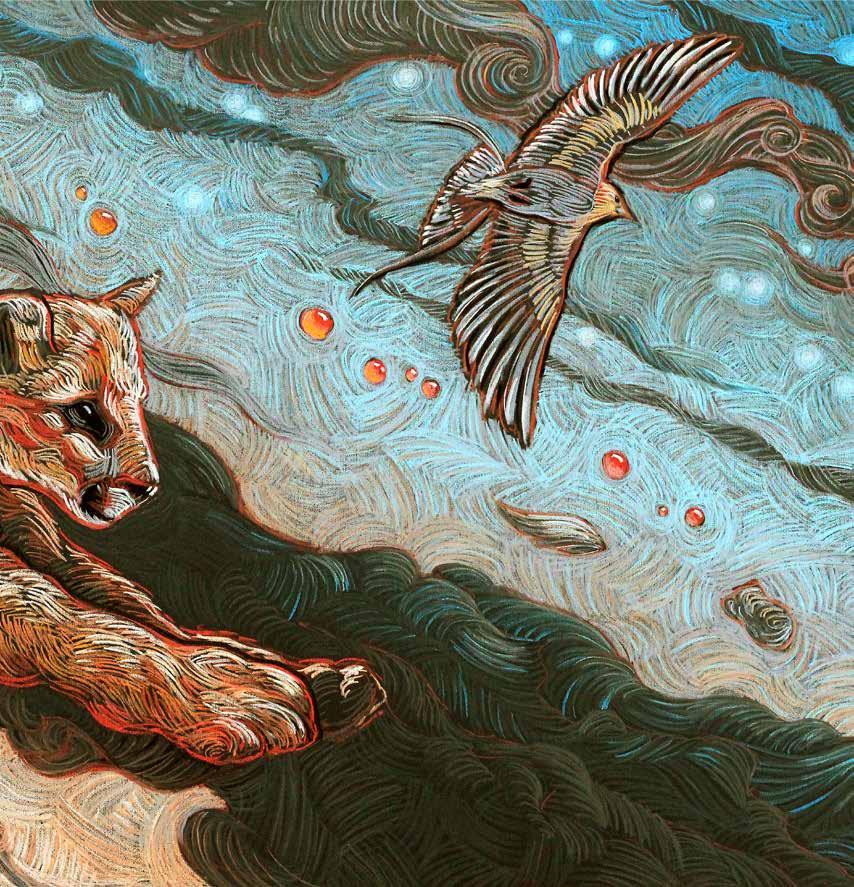
“Dream Threads II”
BY BRYCE WIDOM
aka ‘venture as in Adventure!
by Marcia Brownlee
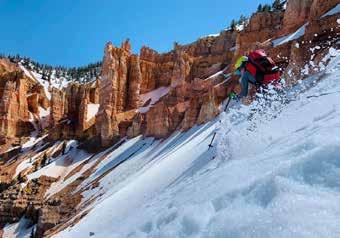
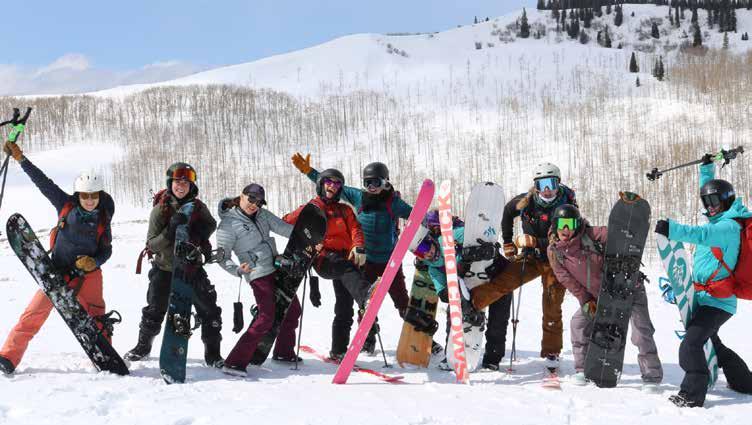
VNTRbirds (ven-ture birds) encourage women through outdoor education and adventure. Women-run and based in the heart of the Rocky Mountains, VNTRbirds brings women to the outdoors through mountain biking, backcountry skiing and splitboarding and community meet ups. Their main mission is to bring women together to grow the community and get them exploring with confidence, proper knowledge and self-reliance. Founded and owned by the Wren sisters, Leanne and Kelley have watched this company grow from small clinics in Breckenridge to large courses and workshops throughout the state of Colorado and beyond.
When Kelley first started VNTRbirds in 2011, she highlighted women in the outdoors by blogging about their experiences to show that there were women to look up to. Then, in 2020, Leanne joined the team and together they changed direction to not just show women in the outdoors, but to create a safer envi-
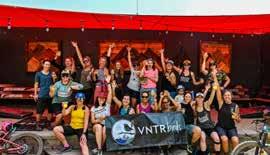
ronment for more women to gain experience in the outdoors themselves. Knowing that some of these activities are a financial burden, VNTRbirds wants to make their courses more affordable and therefore more inclusive by building a scholarship fund. For every VNTRbirds course you sign up for, you receive an automatic $30 off, plus VNTRbirds keep their ride days and workshops free so all women can learn with them.
Other scholarship opportunities include one of three aid grants that are chosen twice a year:
1. Intro to Outdoor Education: Receive a free VNTRbirds backcountry or mountain bike course
2. Mentorship to Guiding: Come shadow a VNTRbirds backcountry or mountain bike course, then receive a stipend to further your outdoor education for a Wilderness First Responder course, AIARE level 1 or 2 or BICP certification. This will encourage more women into guiding and coaching roles.
3. BIPOC Intro to Outdoor Education: Receive a free VNTRbirds backcountry or mountain bike course. Reserved for Black, Indigenous, and Women of Color to have more representation in the outdoors. Everyone belongs out here.
www.vntrbirds.com
VNTR BIRDS Co Founder Kelly thinks, “it is amazing what a community of women can accomplish together and how encouraging it can be to learn with and from one another. Especially now with our nation so divided I want women to know they can be self-powered and help find their voice through the influence of the outdoors”.
By Kara Armano
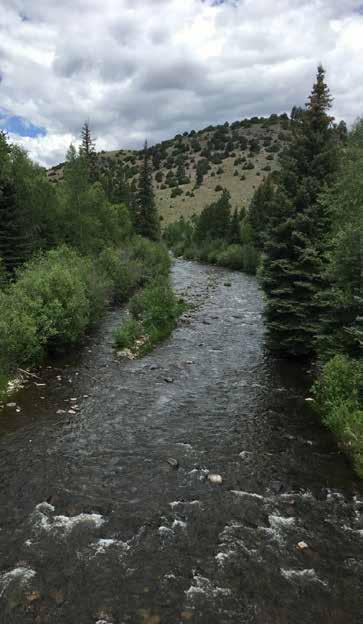
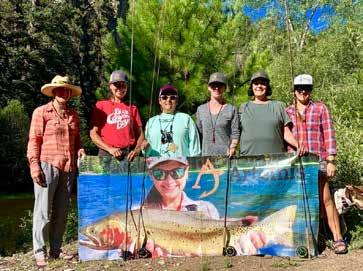
A Group of women gathered in the forests of northern New Mexico to fish and explore conservation issues while thoroughly enjoying each other’s company. With abundant water and afternoon thunderstorms, the waters of the Rio de los Piños ran a bit turbid, but that didn’t stop these determined anglers.
Hosted by women’s conservation group Artemis and community group Braided, eight women set out on an adventure – camping along the banks of the river, testing their angling skills (some of which were newly acquired) trekking to the not-so-close bathrooms, sleeping under the stars, eating tacos made from last fall’s elk, and gathering around a cozy campfire. This gathering was not only about camaraderie and fly fishing but also about protecting important places and advocating for them.
National Forests in Colorado and New Mexico are undergoing the plan revision process, so educating these ladies on how best to engage in that process and let their voices be heard was top priority. Protecting the functionality of watersheds is imperative to support aquatic and terrestrial life, and these women took that message away armed with knowledge and power to protect these wild places and the species who call them home.
National Forests in Colorado and New Mexico are undergoing the plan revision process, so educating these ladies on how best to engage in that process and let their voices be heard was top priority. Protecting the functionality of watersheds is imperative to support aquatic and terrestrial life, and these women took that message away armed with knowledge and power to protect these wild places and the species who call them home.
www.tu.org
by Bill Goldstein
I’ve known Christina Holbrook for well over 40 years, but really just for the last three. Chris and I are high school classmates who barely knew each other in school and then bonded at our class reunion (a union, in this case, more than a re-union) over our mutual activity of writing. Only unlike me, she’s the real deal. After a corporate career in publishing, Chris wrote an intriguing, often very personal, long-running column, “Lark Ascending,” in the Summit Daily in Frisco, Colorado; explored winemakers and vineyards growing grapes at the highest elevation in the northern hemisphere in “Winelands of Colorado”; and has had her short fiction, essays, and travel reviews appear in numerous publications, literary journals, and anthologies. And this month, with the publication of “All the Flowers of the Mountain,” Chris checks off the biggest writing hurdle yet: novelist. Early reviews are already heaping praise – “A haunting, evocative exploration of the enduring power of love, replete with the poignancy of Nicholas Sparks and the gritty authenticity of Delia Owens,” reads one by Emily Colin, author of the NYT bestseller The Memory Thief. And I’m not the least bit surprised. Chris is a deep thinker who has the unusual ability to translate those reflections into compelling writing and relatable, engrossing stories. I can’t wait to read it.
So where do I come in on this? Chris, now familiar with this blog site as well as my frequent presentations of themed playlists, particularly those centered in and around the music of the 1970’s, was nice enough to ask me to collaborate with her on what she hoped could serve as companion listening to her book. A short collection of songs that might connect some of the throughlines of “All the Flowers of the Mountain” – what Chris described to me for
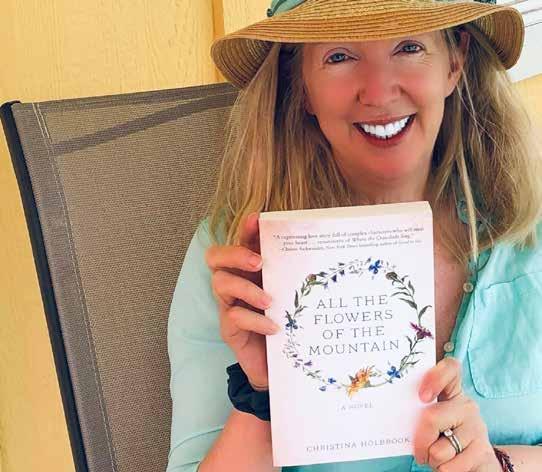
guidance as “a sort of romantic, melancholy vibe” – as well as evoking a sense of nostalgia for the music of the times, the ‘70’s, in which her story is set. “Many scenes in the novel were inspired by folk music,” said Chris, “and in particular how that music was interpreted by artists in the 1970’s.” We each picked some songs, we tossed a couple and added some others, Chris put together the final sequencing, and here it is: 24 memorable songs of love and longing from the 1970’s, by artists including Bob Dylan, Jackson Browne, Marshall Tucker Band, Loggins & Messina, Joan Baez, Simon & Garfunkel, Pure Prairie League, Seals & Crofts, and more.¹ One tune, “Wild Mountain Thyme,” has particular resonance within the plot of the story, and so appears here – not by accident – three times; an opening instrumental by Mark Knopfler, a gorgeous interpretation by James Taylor in the middle, and a traditional Irish version by The Chieftains to close the list out.
I’m quite touched and extremely honored that Chris chose to have me help out with this little project, and to play even a minuscule part in her book launch through the creation of our collaborative companion playlist. I hope you’ll enjoy some reminiscing through a little musical melancholia, and most importantly, I hope you’ll grab Chris’s book “All the Flowers of the Mountain,” which is available now in hardcover, paperback, and ebook, in bookstores, or through ever-popular on-line booksellers such as Amazon and Barnes and Noble:
Happy listening and reading. And I recommend going to your school reunions; you never know what friendships you might rekindle, or just plain kindle.
Listen Here:

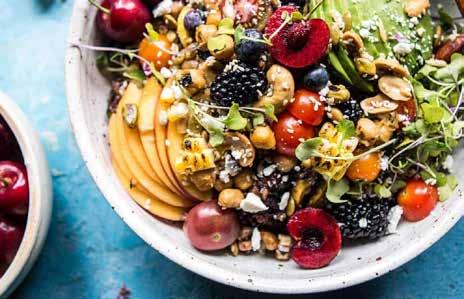
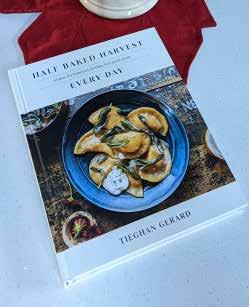
Te ighan Gerard’s recipes in her latest cook book are inspired by the people and places she loves the most. Her hope is to inspire a love for food in others, as well as the courage to try something new.
Gerard started a blog in 2012 and has since been featured on The Cooking Channel, Food Network, HGTV, Crate & Barrel, Shape Magazine, Self Magazine, the Huffington Post, and PopSugar, among others. Half Baked Harvest was named Readers’ Choice Favorite Food Blog by Better Homes and Gardens in both 2014 and 2016. She was also the recipient of Saveur Magazine’s 2016 Award for Most Inspired Weeknight Dinners as well as the 2016 Bloglovin’ Best Food Blog Award. www.halfbakedharvest.com


by Shauna Farnell
The notion that a person’s spirit can connect with another’s beyond death is not one that I wholeheartedly believe in.
But I am also not a whole-hearted non-believer.
An open heart is key when beginning a session with Becky Hesseltine, a medium and intuitive healer who connects individuals all over the world with their deceased loved ones.
A dear friend purchased the session for me after I’d lost two close friends in rapid succession. Following the sudden loss of her father years earlier, my friend had recently found comfort in speaking with Becky and hoped my session would also deliver some solace.
Becky conducts most of her sessions over Zoom, but I opted for an inperson meeting. When we sat down in her living room in Eagle, Colorado, Becky knew nothing about me other than that I was there for a medium reading.
Although I was slightly skeptical about what was about to unfold, I realized I was also feeling vulnerable and emotional, even tearful while thinking about the friends I’d recently lost. My friend Pati had died less than a year earlier when a neighborhood gas leak caused her house to explode. Dan, a “brother from another mother” had died in his sleep a few months later after an accidental mix of medications.
Becky advised that as she connected with the spirit realm and commented on the information she was receiving, I should say yes or no, indicating whether or not the input resonated.
After walking me through a few deep breaths, she began by saying a male spirit wanted to connect. She felt strongly it was a family member.
Still thinking of Dan, I smiled, remembering to myself all the times over the years in which strangers had mistaken us for siblings, on a couple of occasions, they’d even asked if we were twins.
Responding to Becky, I said “family member” was not accurate, at least not in the biological sense. She continued, asking if this person died unexpectedly and if the death had something to do with his chest. I affirmed that the death was unexpected, but the chest detail confused me. She said again that she believed it was a family member. She asked if it made sense that the person regretted not being a stronger, more positive presence in my life, that he should have been more involved and supportive.
It then hit me that this was not Dan she was talking about, but my father, who had died 12 years prior of a sudden cardiac episode. His passing came just as we had begun building a positive relationship following a long estrangement.
Becky’s input struck home profoundly.
As I uttered little more than a “yes” or “no” during our session, she also connected with Dan, Pati, another friend, and my grandmother, with whom I had been very close. As with my father, certain details Becky conveyed about each were strikingly accurate. She knew that Dan talked wildly with his hands, that Pati had left two children behind, that my grandmother had spent long days working in her garden.
I left feeling soothed, knowing that the spirits of my loved ones could still be with me, not only just in thought, possibly as something more. After what Becky had conveyed with zero background or information about me, it certainly felt like some valid –albeit not wholly comprehensible – force was involved.
“I look at it as a power, a greater intelligence, that holds the space for this communication,” Becky says.
Describing herself as a “super sensitive child,” from a young age, Becky often sensed “there were more eyes in the room than you could see.”
“I felt it, but I just wanted to close it off,” she says. “I didn’t want to feel or understand what I was sensing. Throughout my life, waves of it would come back.”
This awareness freaked her out as a child and well into adulthood. She was afraid to turn the lights off at night, afraid to walk into a new house or building.
Then her father, with whom she had always had a strained relationship, passed away in 2016. The onslaught of emotions that ensued sent her into a downward spiral. After a lot of soul searching, she realized that this ultrasensitivity she’d possessed since childhood was a unique
spiritual awareness that she could harness and use to help herself and others heal, especially after a great loss.
She quit her corporate job as a life and health coach and began pursuing mediumship as a profession, tapping into her sixth sense and using it to gather emotional data from people both in the physical world and the spiritual realm.
Becky articulates the emotions she gleans between loved ones as clearly as she can during a session, although sometimes not every single detail resonates or strikes a familiar chord with her clients.
“There’s no such thing as a 100-percent-accurate medium,” she says. “You have to understand what you’re sensing. You could get it wrong. That’s why I have you say yes or no and allow for the next bit of information to reveal meaning. Your spirit person knows what you need to hear for you to believe. It’s important to be an open-hearted skeptic so you know it’s real, so you know that this is your loved one.”
Becky names one common denominator that allows for this spiritual communication to take place, one factor that allowed her to transform what were once profound fears into a talent for connecting beloved spirits to the bereaved. That factor is love.
“The only way to connect with spirit people is through the power of love,” she says. “All the things you see on TV, in movies, in ghost stories, you don’t need to believe all of that. Doing this work, I now know for a fact that there’s nothing to be afraid of. It’s all rooted in love.”
In addition to conducting medium readings and spiritual guidance, Becky teaches a course on discovering one’s own inner wisdom and spiritual connection.
Find out more at www.beckyhesseltine.com

by Allison Battista


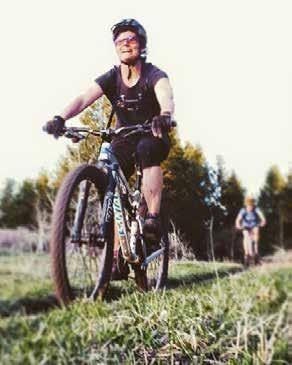
Meet Kate Schade, founding owner of Kate’s Real Food. Her passion for organic food and simplicity developed at a really young age. My Mom grew up on a family farm in NY that was passed on through generations spanning over 200 years. As an adult, I worked for a farm in Victor, ID called Cosmic Apple Gardens that really helped shape my perspective on food, caring for animals, the land, and the importance of soil health and organic agriculture.
In search of adventure, Kate moved to Jackson Hole, WY where she spent her day’s backcountry skiing, hiking, and biking. To sustain Kate’s busy lifestyle fueled by the great outdoors, she began to make great-tasting, whole-food, energy bars that conveniently fit in my pocket. Using the same food values she was taught during her time on the farm she incorporated them into her recipes.
After sharing her creations with friends area locals and fan-base insisted she sell her bars. There began a vision for ‘the good life’ - to enhance experiences, live a life of texture, and let delicious, organic foods be an integral part of life’s journey. After a few years of continued encouragement, Kate finally decided to take on her greatest adventure: Kate’s Real Food.
Today, her company is using a 20,000 square foot production facility located in Bedford, PA. Their USDA-certified organic snacks can now be found in 4,000+ retail locations across the country, including Whole Foods, REI, H-E-B, Amazon.com, and more.There’s a flavor for every palette, and you’ll find something you love!
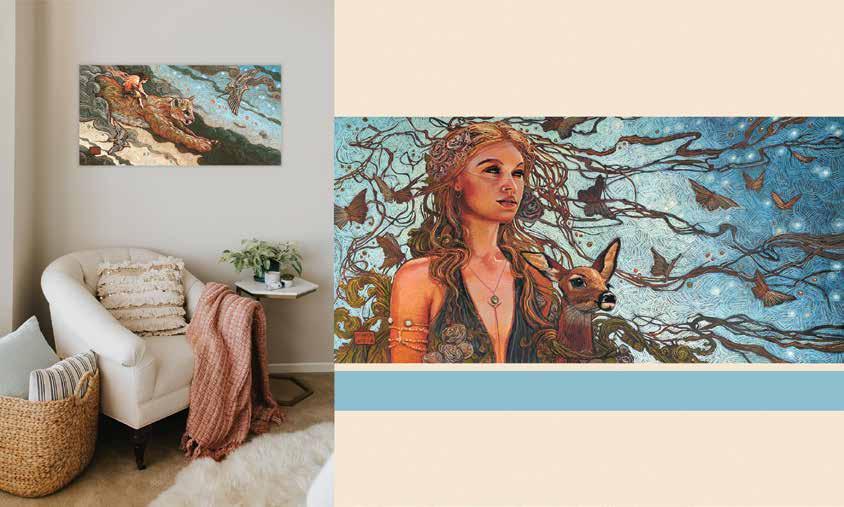

by Holly Resignolo
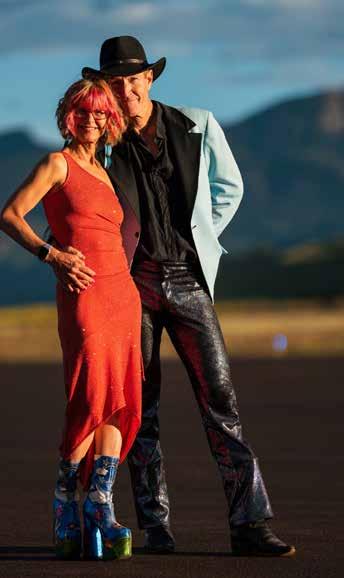
Erin Ries and her partner Chris Myers have been avid participants of Burning Man since 2011. Mesmerized by the ethos of the event and the incredible, mind-blowing art, festival participants are able to experience, Erin was inspired to help Burning Man’s artists flourish by bringing their creativity from the Nevada desert sands to the snowy peaks and streets of Telluride. With a remarkable amount of hard work and coordination, the pair launched the Telluride Fire Festival in 2015.
As a former Festival Director for Telluride Wine during its most successful years, Erin has first-hand experience with all aspects of producing festivals, from fundraising, acquiring sponsorships, promoting and marketing events, obtaining staff, enticing volunteers to be part of a fun festival, and more.
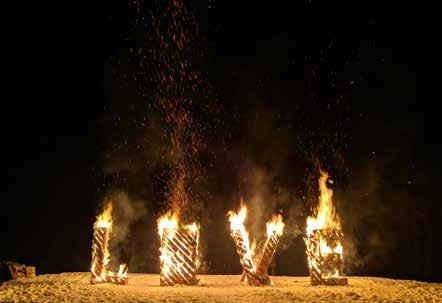
Erin has lived (and worked) in the Telluride region for 31 years and is well-versed in the nuances of nonprofit event production. For fun she makes the sexiest costumes for the TAB (Fashion Show), is co-creator of Telluride’s first art car at Burning Man (The Shack-To-Hell-U-Ride), is an advocate for San Miguel Resource Center and gives her all to whatever she does. And, as a former volunteer firefighter, she understands how to approach fire art safely.
Her partner in crime and love, Chris Myers, is an entrepreneur steeped in the world of lighting design for the past two decades (and owner of his own lighting design firm – enLIGHTen), Chris understands the power of light: fire being the first source of nighttime illumination for man.
At the very beginning, the duo was able to obtain nonprofit status and have been building upon each year’s successes. Covid brought some crazy days for Erin, Chris, and the many planners and artists involved in the event. Last year, as Covid’s numbers rose the events venue owner canceled the Saturday event; but with quick thinking and help from the entire community, a new, safer, and even cooler location was transformed into an incredible backdrop for the event’s exciting fire, art, music and dance. This unique and mesmerizing festival in Telluride gives a positive spin on the word pyromaniac and delights everyone who attends this unique happening.
Make plans to attend this year. With the restrictions of Covid tamped down, this year promises to be ablaze with a full schedule of events and activities that you can participate in, learn from and be WOW’ed! www.telluridefirefestival.org.
CHECK THE CURRENT AVALANCHE CONDITIONS BEFORE HEADING INTO THE BACKCOUNTRY

by Scotty Stoughton
WinterWonderWomen debuted during the Steamboat stop of WinterWonderGrass 2019. But why is it a part of WinterWonderGrass and how did it come about?
I’ve been in the bluegrass scene since I was 19 years old and it’s a predominantly male genre, as is most of music, and over the course of 17 years, I’ve watched badass women trickling into this scene, and an opportunity presented itself for these women to collaborate and support one another during the festival,” shares fiddler Bridget Law, one of the concept’s founders.
The idea was birthed when Law and keyboardist Megan Letts were working on the WinterWonderGrass
mentalist Lindsay Lou on all three bills during the 2018/2019 season, and WinterWonderWomen was born. Their debut at Steamboat 2019 would mark the first time a completely female lineup was presented on stage at the festival.
During the 2019 Tahoe and Vermont stops, and Campout For The Cause event, WinterWonderWomen incorporated performances from their male counterparts, and while men supporting women is awesome, Law is dedicated to presenting a full female stage presence for WinterWonderWomen performances again during the 2023 season in Steamboat.
“Most of us play with the boys in our regular band, WinterWonderWomen allows for a new type of col-
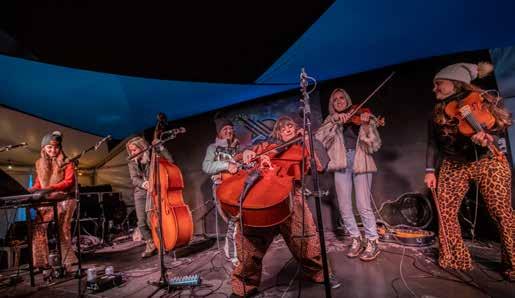
production crew. Law explains, “we’d get together at these WinterWonderGrass-type events, staff meetings, and luncheons, and we just thought, ‘we should really do this.’ In 2018, I was also producing a women’s festival and that ultimately led Scotty [Stoughton] and me to the concept of WinterWonderWomen.”
The all-female performance grew more probable with multi-instru-
laboration that’s truly empowering for the musicians and fans alike,” says Law.
WinterWonderWomen allows the musicians to perform songs that haven’t been introduced to their own bands just yet or play covers—like Beyonce’s “Daddy’s Lessons” featuring The Dixie Chicks—they don’t usually get to perform.
There is a common thread
throughout the tunes, however; All songs are vocal-heavy, which is energizing and empowering for the women to sing together.
It’s no small feat to put together a full band of women musicians from the festival’s lineup, ensuring all parts are covered, including bass which is not typically an instrument with many female players. To curb this during the 2021 season, Law enlisted the help of bassist Shelby Means to create a “house” bass player for the set. From there, Law built out a set of songs for each stop, compiling songs submitted by the musicians themselves, ensuring the tunes fit together, have collaborative parts, and are not too difficult to learn.
Up until the WinterWonderWomen take the stage, believe it or not, rehearsal time has been slim to none. Most of what comes together at the festival has been prepared remotely to accommodate busy lives, tour schedules, and the various locations each musician calls home. This all adds to the fresh, spontaneous, in-the-moment collaborations that come to life on stage during their performance, and as Law remarks, “it adds fun to the set!”
The sensation of WinterWonderWomen has continued to grow and has expanded outside of the WWG festival with Arise Music Festival in the past, and this January 2023, at ‘Denver Comes Alive’ at the Mission Ballroom.
This year Lindsay Lou, Bridget Law, Mimi Naja, Megan Letts, Emma Rose, Michelle Pietrafittac, and Kimber Ludiker will come together for an all-female performance to continue the tradition that celebrates Women musicians collaborating together onstage to craft brilliant performances.
See WinterWonderWomen in Steamboat Springs at WinterWonderGrass this 2023 season! www.winterwondergrass.com





by Mountain Town Magazine
Steamboat Springs winters are not always beautiful bluebird skies, sun and sparkling, powdery, champagne snow. This town knows winter and the kids who live here are a hardy bunch who understand what works best to enjoy a day out skiing, snowboarding or just building a snowman. That is the genius behind Robin Hall’s company, her “KID-sumer” consultants, aka the kids who advise her on the best way to craft Town Hall Outdoor CO gear for them.
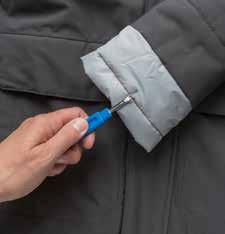
As a mother she wanted to create a product that met the needs of her children and other youngsters. Both she, her company founders and the kids she meets up with agreed that in addition to product performance, sustainability is a top goal. From the use of recycled fabrics, and grow with me seams that expand the size of the garment as your young one gets older Town Hall Outdoor CO is making sure they leave this planet a better place for the next generation.
This year’s product line of outerwear includes the Down Town puffy, Around Town cold weather jacket and the Mountain Town winter jacket. These jack-
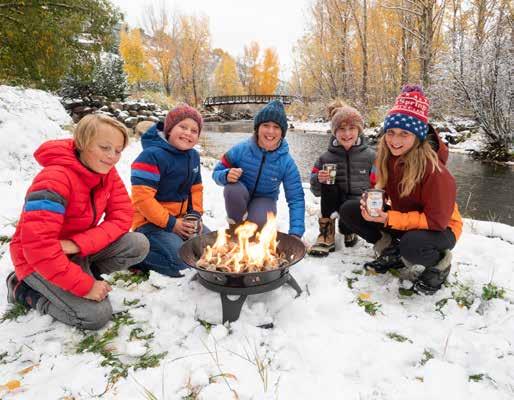
ets come in a variety of sizes and color combinations. The Mountain Town Winter Pants match up with the jacket colors and all offer sizes from youth XS to XL. Enhancing the outerwear’s warmth and protection from the elements are useful magnetic closures, zipper pulls for little hands, easy access pocket placement, pocket size and more. Check out their T-Shirts, Hats and the cutest Young Artist Collection Neck Gaiter too. You adults reading this might find something you like as well in their adult section.
Growing up also equals Hand Me Ups. We love the tag inside each jacket and pant that lets each kid “Hand Up” their jacket and pants to someone else once they have outgrown their outdoor gear. The company is also working on a trade up deal as well.
www.townhallco.com


by Holly GoSpritely

Only You Know Your Body! But the question is do you really know your body? Especially all the lady bits?
Pussypedia is a comprehensive guide and necessary atlas with accurate information on everything pussy...the authors would rather see us using this gender-and-organinclusive term as it is so much easier to say and encompasses all the parts that make up the female body.
383 pages are devoted to pussy parts, hormones and the menstrual cycle, sex and masturbation, abortion and contraception, infections, reproduction, and the shit the patriarchy tries to sell you.
The author-illustrator team is based in Mexico. Maria Conejo, the Illustrator, has collaborated with many feminist and human rights organizations. We love her lighthearted, accurate, and fun images of the female body.
Author Zoe Mendelson is a writer, researcher, and content strategist who felt it was time to help women around the world embrace their bodies, down to the littlest detail, without shame or humiliation. They also have a fantastic website www. pussypedia.net and Social Media outlets on Facebook, Instagram, and Twitter @ PwordPedia
Find their book on Amazon, Barnes & Noble, and their website.
www.pussypedia.net

TELLURIDE’S MEDICINE RANCH A VANGUARD OF INTEGRATED MEDICINE
by Katie Klingsporn
A couple decades ago, Telluride, like many mountain towns, was known primarily for its hedonistic aspects: powder skiing, rowdy music festivals and lively late-night bar scenes.
But that’s changing as these towns grow up, says Joshua Geetter, who’s been practicing acupuncture and Chinese medicine in Telluride for 16 years. These days, he says, mountain towns are also emerging as vanguards of health and wellness.
“Now people come from all around the world for integrated medicine, health, beauty and wellness,” Geetter says.
Geetter is living proof. He and his partner, essential oil expert Judy Godec, opened their integrated medicine business, Medicine Ranch, two and a half years ago in Telluride. And, they say, they launched the shop just in time to coincide with a wave of consumer interest in selfcare, wellness and natural health.
“We just jumped into a stream that was already starting to flow,” Geetter says. “What we’re doing is resounding with what people are looking for, and it’s just developing a life of its own from there.”
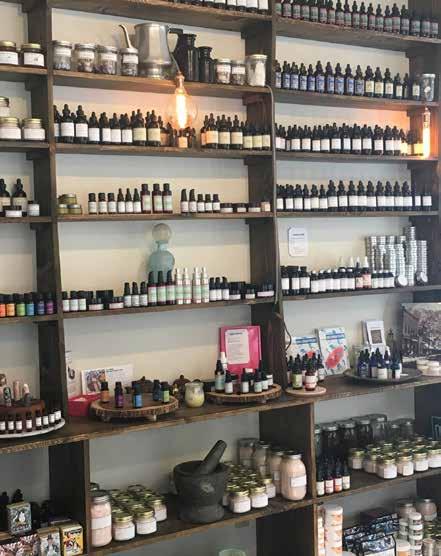
The brick and mortar shop is split into two parts. The front of the store is an aromatic and softly-lit retail space filled with tinctures, essential oils, crystals, gemstones, elixirs, soaps and herbs, along with Godec’s organic skincare line, Venus and Vetiver. You can find tinctures for respiratory rescue, salves for muscle recovery and gemstones known for particular healing properties.
The back of the store, meanwhile, is home to a treatment room, where Geetter practices acupuncture, herbology, bodywork and oriental medicine, as well as a production space where he prepares his medicine using organic ingredients, including plants, like arnica harvested in the San Juan Mountains. As a general practitioner, Geetter provides the gamut of care.
“What I try to bring to the table is the lineage-based wisdom that can work for anything from the common cold to cancer, and from anxiety to zygote health,” he says.
The pair met seven years ago as professionals and found they had much in common; both worked to provide effective medical care based on ancient healing traditions.
“It grew very naturally into us collaborating,” Geetter says.
While Godec ran her business through an e-commerce site, Geetter was selling his tinctures and herbs from a small treatment space. Neither was particularly interested in retail, but felt they had the momentum to launch a joint venture.
“It was kind of a leap of faith,” Godec says. “But it’s been so rewarding. It doesn’t really feel like retail, it feels like a living room. People come in all day and we chat about health and natural medicine.”
While they’ve been steeped in the world of integrated medicine for many years, both are delighted to find that the mainstream culture is developing a growing appreciation of self-care and natural medicine.
Ultimately, Geetter and Godec say their goal is to reach an even larger audience.
“We like to be low footprint, high contribution and right livelihood, and we want to spread that to the world,” Geetter said.
615 W Pacific Ave, Telluride, CO 81435 www.medranch.com
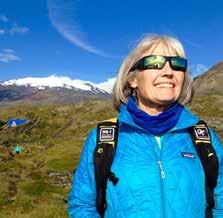
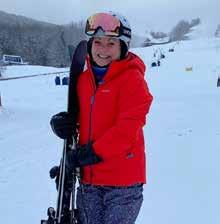
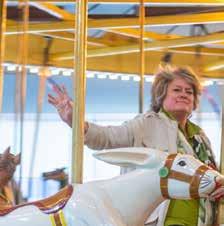
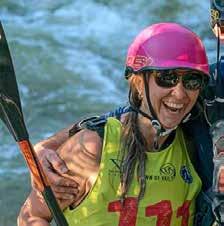
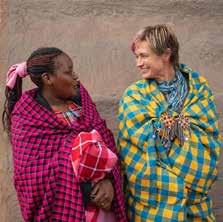
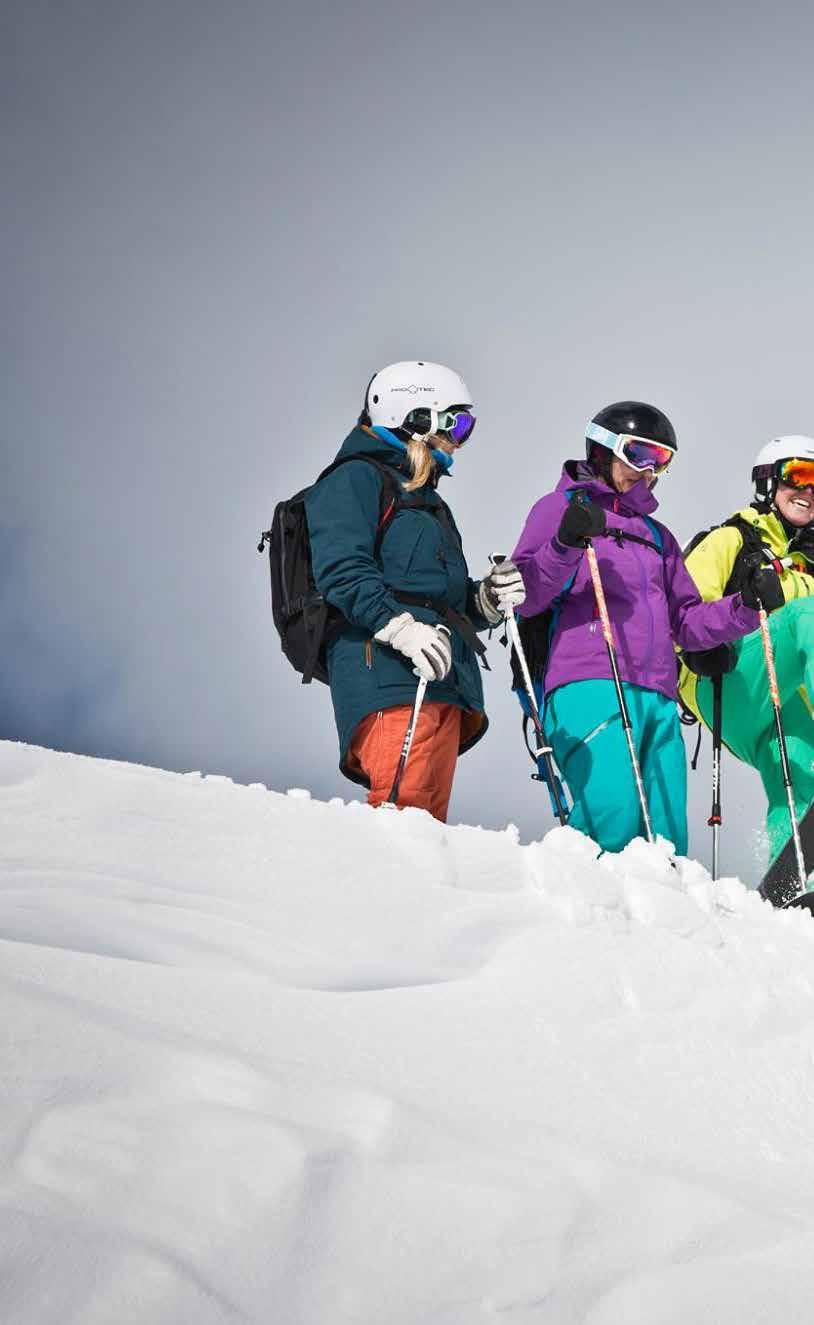
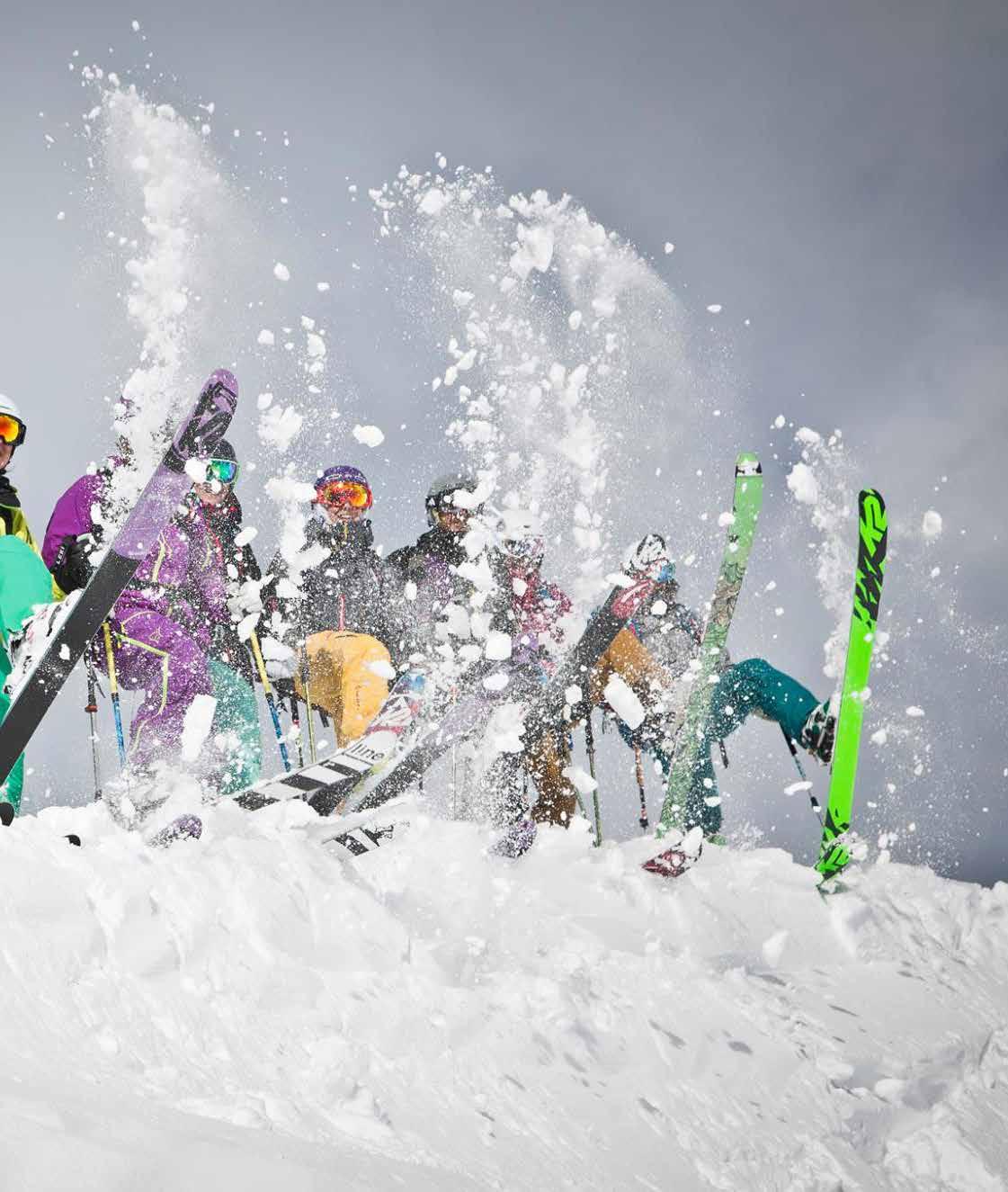
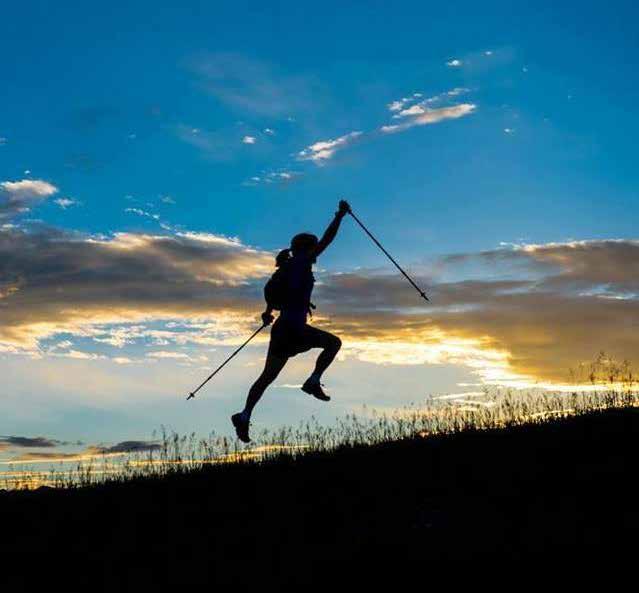
These are the women who have gone before many of you or they may be associates you have gone forward with. They are Women leading the way, breaking paths and blazing a trail for the younger generation to follow.
by Kim Fuller, Fuller Ink
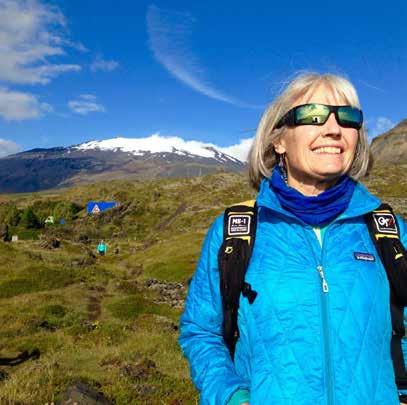
As Ellen Miller knows so well, climbing a mountain isn’t just about standing on the peak, but all the ascending and descending steps it takes to fulfill the journey
Ellen Miller, one of the Vail Valley’s most accomplished mountaineers, keeps inspiring those around her to continue the climb as she heals from injuries sustained during her lifetime of adventure and athleticism.
As Ellen Miller knows so well, climbing a mountain isn’t just about standing on the peak, but all the ascending and descending steps it takes to fulfill the journey.
As an incredibly accomplished mountaineer and coach, Miller says the past few years have been a time of intentional exploration of her physical, emotional and mental well-being. In the spring of 2017, Miller had a hip reconstruction on one of her two artificial hips. The metal in one hip was not interacting favorably with her bones. Along with a new artificial hip, her surgeon put in a metal plate and three screws, and Miller is the first to admit the recovery has been an uphill challenge.
“I’m a mountain climber, so I’ve been very fortunate that a lot of my rehab is to climb mountains,” Miller shared in early January 2018. “So I went up on Quandary last week, and I went up there again today. I’m just coming to terms, emotionally and mentally, with what it’s like to be in this body — it’s been through a lot in the last year; that I’m not the same anymore, and what will it take to get back to a place that I’m happy with?”
While Miller is incredibly humble about her achievements, she has accomplished so much in her 63 years of life. Miller is the only American woman to climb Mount Everest from both sides (one of five women in the world), among countless other mountaineering feats all over the world. In 2002, she was voted Colorado Sportswoman of the Year for longevity and achievement in athletics. She is currently a certified endurance and athletic coach and has worked as an outdoor fitness coach and caretaker in the Vail Valley. Miller is also coach and manager for the U.S. Women’s Mountain Running Team.
Miller says that she believes mountaineering trained her for all of the intense hip surgeries and the recoveries.
“I’ve learned tenacity; I’ve learned about attitude; I’ve learned about patience,” she shares. “I’m so glad that I was an athlete in my younger years because so much of those natural lessons that we learn are really applicable when you’re trying to get through these things — whether it’s a surgery or an illness or general aging.”
Miller’s focus hasn’t shifted away from climbing mountains and setting life goals, but she has certainly become more in tune with honoring the aging process, and also encouraging younger athletes to start caring for their bodies early.
“I think in the old days, we thought
more was better and higher mileage was better, and just more more more,” she explains, “and now we have a lot more science available; a lot more scientific evidence about training, and different modalities to recovery.”
Miller encourages athletes of all ages to create balance in their training, which includes high-intensity work, as well as ample recovery.
“Whether someone is in their thirties or forties, we can be smarter about the way we age,” Miller explained. “To understand the importance of high-quality rest, and the importance of high-quality nutrition, because I do believe all that stuff adds up, and it tends to really show itself as you’re aging.”
Connie Mazza met Miller after living in Vail for five years. Mazza says that although she was having fun, she wasn’t pushing herself out of her comfort zones. It was Miller, shares Mazza, who pushed her toward a path of purpose and self-discovery.
“Ellen, always with the utmost respect and support, taught me how to live intentionally and with clear goals,” says Mazza. “She showed me how to build up my self-esteem, self-care and self-love. She taught me how to tune in to my needs, my surroundings, and my greatest aspirations by taking conscious steps to live each day with strength, courage and gratitude.”
Among the myriad of lessons Miller shares with her “tribe” on a daily basis, Mazza said perhaps the most
paramount to her journey is the commitment to shaping one’s thought patterns, an exercise in neuroplasticity that happens in the prefrontal cortex of the human brain.
“Ultimately, success is achieved through mental toughness, a thing Ellen describes as grit,” shares Mazza. “And I take this lesson with me always.”
“Whether it’s strength training, or yoga, or meditation — there are so many great things that we can all tap into so that we can age a little more gracefully,” Miller says.
Every year, Miller adds, a couple of her friends drop out of sports or activities they once loved because of pains or injuries.
“And that’s very sad to me,” she shares. “They have aches and pains so they shy away from doing these activities that they once loved, and sometimes they are even simple activities like hiking. So my paramount message to young athletes is to take care of your body so that when you’re my age, you can do whatever you want to do.”
by Kristen Lummis
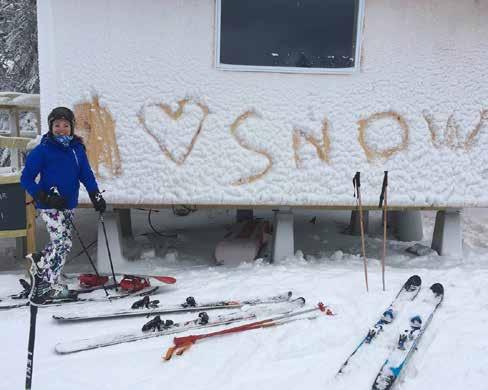
You’re the Founder of TheSkiDiva.com, the largest online ski community for women.
What inspired you to start TheSkiDiva.com and what makes you proudest?
The idea for the site came to me back in 2006. I remember waiting for the gondola at Steamboat, the only woman in a long line of men, feeling very much alone and thinking, ‘I can’t be the only woman who likes to ski.’
At the time I didn’t have any women friends who skied. And when I looked at ski magazines or went to one of the online ski communities, I didn’t see many women there, either. Women were perceived either as beginners or as being interested only in ski fashions or hanging out in the lodge. Women’s equipment or needs were barely discussed. And there was a lot of sexual objectification, too. I found it all pretty dismaying.
So I decided to put together a place where women skiers could come together to talk about skiing in a way that made them feel comfortable. Today, TheSkiDiva.com is the leading online community for women skiers. It’s fun, informative, and a great place to hang out. I’ve learned so much from the women on the site, and I’ve made tons of ski friends, too.
You’ve been a trailblazer for women’s skiing. I’ve always admired how
you promote women within the ski industry, from competitors to mountain managers.
Who are some of the most interesting women you’ve met through your website?
Wow, there are so many! The women who join TheSkiDiva come from such diverse backgrounds and have such varied life experiences. I’m completely inspired by their accomplishments, as well as their ability to juggle work and family and still make skiing a part of their lives. There’s everyone from doctors to attorneys to police investigators on the site. This makes for some interesting conversations. I’ve also had the pleasure of interviewing such champion skiers as Suzy Chaffee and Donna Weinbrecht and trailblazers like Jeannie Thoren. There’ve been women who’ve climbed mountains and started ski companies, held high positions in resort management, worked as patrollers, founded non-profits, and fought the good fight against climate change.
Where I really find community on your site is the forum. It’s an incredible community. Please share some more about it.
The forum is really the heart and soul of the website. Right now we have over 7,200 registered members from all over the world. And we get thou-
sands of visitors each week.
There’s everyone from beginners to the highest levels of experts; from women who know very little about equipment and technique to those with vast stores of expertise. We talk about anything and everything skirelated — gear, technique, resorts, and more. There are loads of firsthand gear reviews and discussions about various ski destinations. And there’s a lot of great advice, like what to do when you think your skiing has plateaued or how to handle fear or even why more women aren’t skiing.
I am by the women in TheSkiDiva community. They are supportive, friendly, good-natured, and respectful. It makes participating on the site an absolute pleasure.
The annual Ski Diva ski gatherings sound so fun. Tell us more please!
I started having SkiDiva get-togethers to get to know the people behind the user names. Plus there’s something freeing about skiing with a group of girlfriends. You laugh a lot. You have great conversations on the lifts. You’re free of the label of girlfriend, mother, wife, caregiver. It’s just you, the mountains, the snow, and TheSkiDivas. What could be better?
We generally have two events a year: one in the west and one in the east. The trips are open to members of
the forum and their families. Women come from all over. And even if we’ve never met in person, it’s like getting together with old friends. The whole thing is a testament to the feeling of community that pervades the site.
When did you begin skiing?
I grew up on the Jersey Shore and didn’t start skiing til I was 13 and we went on a family trip to the Catskills in New York. At first I absolutely hated it — I fell a lot, and the rope tow up the beginners’ slope was a nightmare. But I kept at it, mainly to get better at it than my sister.
I actually didn’t ski all that much — maybe 10 times a year — and stopped entirely in my early twenties. Life just got in the way. Fifteen years went by, and one morning my husband asked me if I wanted to go skiing. To put it in his words, it was like handing a crack pipe to an addict.
Now I live in Vermont and ski about 90 days a year. Most of my skiing is at Okemo, though I also manage to hit a lot of places throughout New England and go out west once or twice a year. Amazingly enough, my daughter didn’t ski when she was a kid. I’m a firm believer that you can’t force your passions on your children. It just creates problems. Now that my daughter is an adult, she’s begun skiing.
Looking at skiing as a whole, where do you see the sport headed?
I’m concerned about the consolidations that have taken place in recent years. I know ski areas are expensive to run, but I think the mergers make getting into skiing extremely difficult.. Sure, season pass prices are cheap. But day ticket prices are through the roof, so it’s really hard for people who might want to ski just a few days a year or try out a new resort. And since the larger companies can set ticket prices to whatever they want, I think they’re pricing out the smaller places where many people learn to ski and that act as feeder hills for the larger resorts. All this makes the pathway into skiing really anemic.
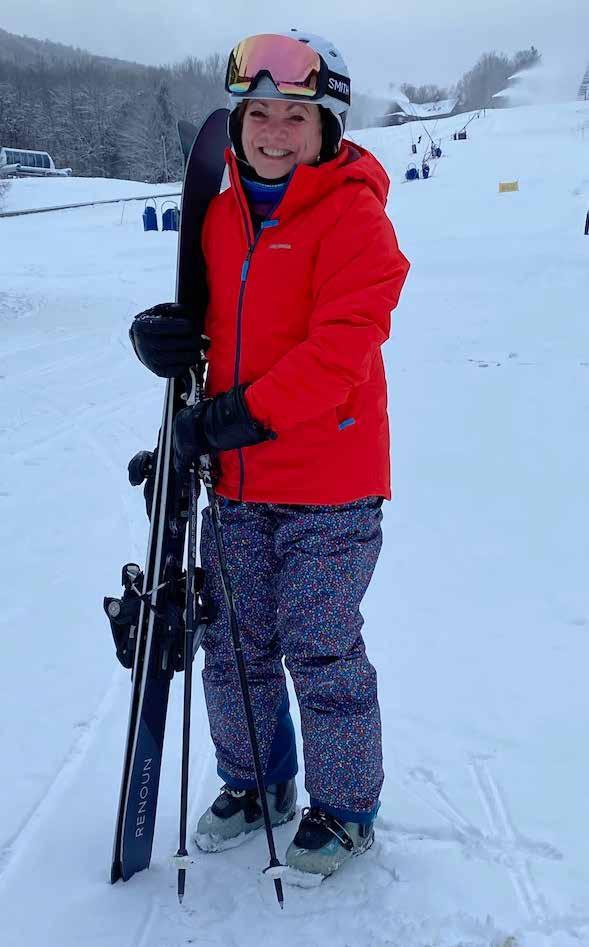
Do you have any advice for the younger generation of women ripping it up on the mountain?
Just keep at it. Find other girls who like to ski, too. That makes it a lot more fun. And don’t let guys talk down to you or treat you like you’re less of a skier than they are. Skiing like a girl is not an insult.
Finally, what puts the Diva in a Ski Diva?
That’s a good question. Diva has come to have a negative connotation: it can mean someone who’s temperamental and kind of a pain in the butt. But the original Latin meaning of Diva is Goddess, and I like to think that all women who love to ski are ski goddesses in their own right.
Kelli Hepler barely recognized that she was receiving an award at this year’s Colorado Governor’s Tourism Conference. She was busy uploading a photo she’d snapped of the last award winner when Hepler was named the winner of the prestigious Chairman’s Award and called to the stage. It started when Helper was in the fourth grade. That was the first time she received payment for her work, being awarded $50 for designing the winning Crime Prevention Poster Contest at her school.
“Who says art doesn’t pay?” she likes to say.
Hepler has always been able to draw. Friends used to follow her around in her school years because she could draw Snoopy. “Please draw me a Snoopy,” fellow students would plead, and she would oblige them. Years later, Hepler is still drawing, although after 35-years in business, she’s progressed well past the Snoopy phase.
Having attended Colorado Mountain College, Helpler started her own company, Graphox Design & Advertising a few years out of school. Doing her own thing was something that seemed reasonable to the no-nonsense Hepler. After all, her dad had a tool & die machine shop, and self-employment was in her blood.
Being around strong, independent women throughout her life, including her grandmother and mother, also influenced Hepler’s entrepreneurial path.
While growing a business, Helper also raised a family. Through the
birth of her two children, she never stopped working, even when motherhood was seen by some as a roadblock to a successful career.
Having married into the ranching business, Hepler became interested in agritourism, the place where agriculture and tourism connect in the form of farm visits, for instance. At first, she faced opposition from farmers and ranchers who thought tourists would “leave gates open” and couldn’t be trusted.
Ironically, trust was the eventual key to Hepler’s success in agritourism. Her practical, can-do attitude resulted in a contract with Delta County, the region west of McClure Pass and south of Grand Junction. Soon, Hepler re-introduced the idea of agritourism.
Knowledgeable about farming and ranching, Hepler gained the confidence of growers in Delta County, evolving an agritourism program that would open up the area to authentic experiences for visitors.
“I didn’t want the farmers to clean up their farms and make them look like Disneyland. If a visitor got poop on their shoes, they got poop on their shoes—that’s farming!” says Hepler.
Her passion runs deep and is based on solid evidence that agritourism can keep a farm afloat for multiple generations. The average farm generates an extra $60,000 from agritourism. While not a fortune, it is often enough to keep future generations on a farm.
Hepler has personal reasons for wanting to keep this lifestyle alive. Residing in the small town of Delta,
she commutes through picturesque rolling hills and over dramatic mountain passes, and she’d like to keep it that way.
Today, there is little doubt of Hepler’s impact on Colorado’s agritourism industry. Not only does she know nearly every farmer and winemaker on the Western Slope, Delta County has the highest concentration of natural and organic farms in the state, and thanks to Helper, nearly all of them have an agritourism component.
In addition to her business, Hepler has owned Prism Interpretive Services with her husband, Bob Marshall, since 1997. They provide roadside pull-out signage, museum signage, and other interpretive support and consulting services.
Hepler loves seeing how people respond to the brochures, logos, ads and interpretive panels she creates. For example, when driving over the Grand Mesa, Hepler is happy when she sees cars stopped and people reading the interpretive sign she designed.
This autumn, on Color Sunday, a celebration of fall foliage on Grand Mesa, Hepler saw a person wearing a t-shirt she designed for Color Sunday more than a decade ago.
“That’s just a cool feeling,” she says of the sight.
Her work has put her in close collaboration with the Colorado Scenic & Historic Byways, a program she was excited to shed light on during her acceptance speech in November.
“It was totally unexpected,” says Helper of the Chairman’s Award.

This was not Hepler’s first award from the tourism office. She had received two prior in 2006 and in 2011.
As a “card carrying rabbit lover,” Hepler often talks to her pet rabbit Bixby during her workday. After all, she works, for the most part, as a lone wolf. Knowing the rabbit can’t talk back, she has learned that sometimes ideas need to be bounced off of real people.
“I am thankful for those angels in my life,” says Hepler.
It seems that the tourism industry is thankful for Hepler, who is already focused on her next project. She wants to teach farmers how to educate tourists about regenerative agriculture, a farming method that improves soil and has a positive effect on climate change. Regenerative agriculture is already being imple-
mented at farms across Colorado.
“If we could just get people to understand it, they will only want food from those farms,” says Hepler.
Helper’s excitement is palpable, and so it goes on.
By Heidi Kerr-Schlaefer
by Holly Resignolo
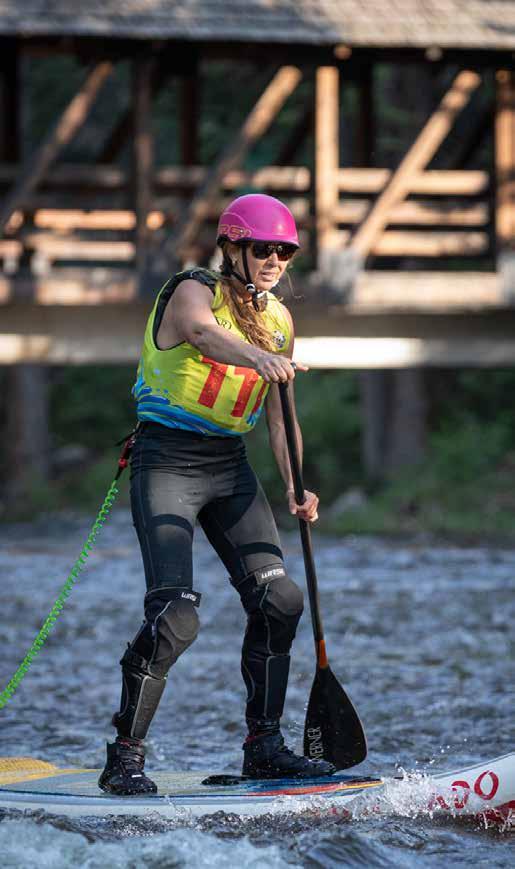
In 1993 Kerri Karcz had just graduated from college and like many of us was drawn to the mountains. She wondered what she was going to do now that she had accomplished obtaining her degree. She allowed the pull to manifest and landed in Summit County Colorado where she found a position at Keystone Resort. What she didn’t realize was the job would introduce her to a lifelong passion. Growing up she had always water skied. She figured she would meet fellow water skiers but the frigid water of Lake Dillon did not host that type of community.
Kerri’s first river experience was on a rafting trip. Keystone Resort at that time had its own White Water Rafting outfit. While her mom was visiting they took advantage of a trip down the Arkansas River. The hook was set. She discovered the local rafting community and would try to get out on the river as often as possible.
One day after enjoying a concert at Rancho del Rio, a quirky resort located on the shore of the Colorado River, she was floating the river and witnessed someone standing and paddling a craft along the current. She was mesmerized and could think of only one thing, I need to do that!
This was the early 2010’s and the sport of SUP was really beginning to take off. Peter Hall of Hala Gear had set up shop in Steamboat Springs, Mike Harvey and friends were craft-
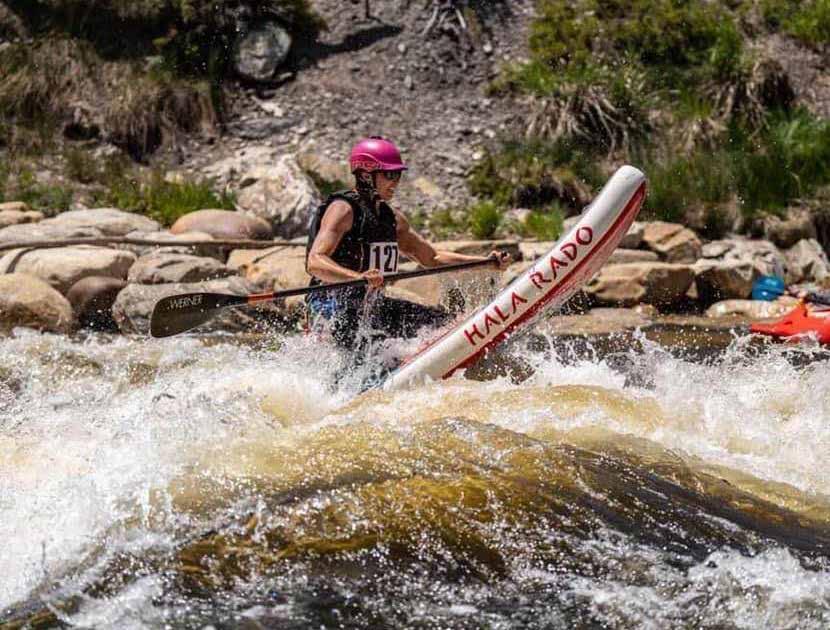
ing River Boards in Salida and Johnny Lambino was launching SOL Paddle Boards down in Telluride.
Paddle-specific events started popping up and Standup Paddle Board Colorado opened for teaching and tours on the Colorado River. Kerri wanted to learn more and took lessons with Javier Placer & Joey Suputo to learn some more of the technical aspects of the sport.
She recalls, “I did not know how to read the river. I didn’t know anything about it. How do I Eddy out, which side of the board to stand on so you don’t flip over? Which side of the river should I go down when it splits?
How do I get back on the board if I fall off.”
All of this was new and she was a literal river sponge soaking up the flow as she improved her skills.
CKS in Buena Vista had begun holding its annual PaddleFest back then and it was a mecca for those who discovered SUP Boarding. People were now racing their boards downriver. One of these events was in Vail, the Go Pro Games, and they were looking for participants for their paddle events. She signed up and then felt a bit jittery. Looking for more time on the river before the race she headed up to Steamboat to spend some time
on the Yampa River. She rolled into town not knowing about the Yampa River Festival. They too were having races, she entered the downriver race and came in 2nd. Her best finish in the GoPro games in Vail was in 2021 when she came in 3rd.
Kerris says, “It wasn’t just the sport itself that made it so enjoyable, it was the camaraderie. More and more women were embracing SUP. It wasn’t just young women, it was women of every age. The ages of all paddlers are so diverse. Age doesn’t seem to matter when it comes to the sport, they all want to participate and be a part of it. The energy is about the friendships and I have wanted to be there to encourage them in the sport too.”
She received certification from Charlie McArthur’s Aspen Kayak & SUP Academy and began teaching camps and giving private lessons for Alpine Kayak. She did some all-girl classes but ultimately discovered her love of bringing enthusiasm for SUP to all kids and adults alike. She loves to give back to children of all ages and get them out on the water. She says, “If I could be out on the river every day with teenagers I would. They love to play and bring that fun energy. Camping and getting together with these kids is a blast.”
Today, Kerri is a competitive downriver and SUP cross paddler who enjoys how it challenges her mind and body! She truly feels there is no better way to be in the moment.
In the winter Kerri can often be found on snow in the backcountry or skiing with her son. She believes that life is a journey and part of that journey is to help bring others joy.
story by Kate Lapides
photos by Ami Vitale
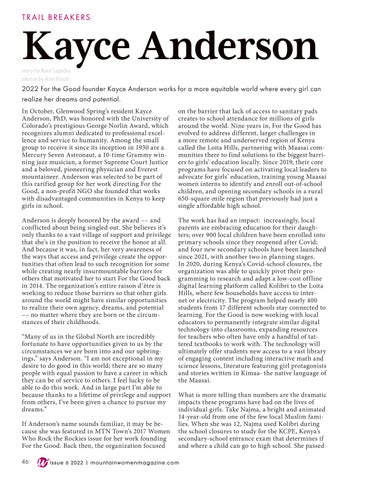
2022 For the Good founder Kayce Anderson works for a more equitable world where every girl can realize her dreams and potential.
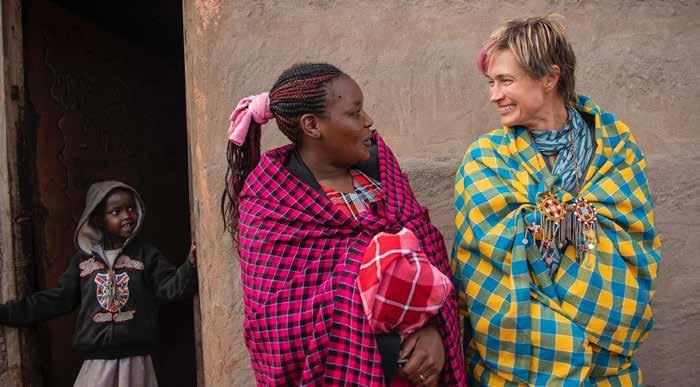
In October, Glenwood Spring’s resident Kayce Anderson, PhD, was honored with the University of Colorado’s prestigious George Norlin Award, which recognizes alumni dedicated to professional excellence and service to humanity. Among the small group to receive it since its inception in 1930 are a Mercury Seven Astronaut, a 10-time Grammy winning jazz musician, a former Supreme Court Justice and a beloved, pioneering physician and Everest mountaineer. Anderson was selected to be part of this rarified group for her work directing For the Good, a non-profit NGO she founded that works with disadvantaged communities in Kenya to keep girls in school.
Anderson is deeply honored by the award –– and conflicted about being singled out. She believes it’s only thanks to a vast village of support and privilege that she’s in the position to receive the honor at all. And because it was, in fact, her very awareness of the ways that access and privilege create the opportunities that often lead to such recognition for some while creating nearly insurmountable barriers for others that motivated her to start For the Good back in 2014. The organization’s entire raison d’être is working to reduce those barriers so that other girls around the world might have similar opportunities to realize their own agency, dreams, and potential –– no matter where they are born or the circumstances of their childhoods.
“Many of us in the Global North are incredibly fortunate to have opportunities given to us by the circumstances we are born into and our upbringings,” says Anderson. “I am not exceptional in my desire to do good in this world; there are so many people with equal passion to have a career in which they can be of service to others. I feel lucky to be able to do this work. And in large part I’m able to because thanks to a lifetime of privilege and support from others, I’ve been given a chance to pursue my dreams.”
If Anderson’s name sounds familiar, it may be because she was featured in MTN Town’s 2017 Women Who Rock the Rockies issue for her work founding For the Good. Back then, the organization focused
on the barrier that lack of access to sanitary pads creates to school attendance for millions of girls around the world. Nine years in, For the Good has evolved to address different, larger challenges in a more remote and underserved region of Kenya called the Loita Hills, partnering with Maasai communities there to find solutions to the biggest barriers to girls’ education locally. Since 2019, their core programs have focused on activating local leaders to advocate for girls’ education, training young Maasai women interns to identify and enroll out-of-school children, and opening secondary schools in a rural 650-square-mile region that previously had just a single affordable high school.
The work has had an impact: increasingly, local parents are embracing education for their daughters; over 900 local children have been enrolled into primary schools since they reopened after Covid; and four new secondary schools have been launched since 2021, with another two in planning stages. In 2020, during Kenya’s Covid-school closures, the organization was able to quickly pivot their programming to research and adapt a low-cost offline digital learning platform called Kolibri to the Loita Hills, where few households have access to internet or electricity. The program helped nearly 400 students from 17 different schools stay connected to learning. For the Good is now working with local educators to permanently integrate similar digital technology into classrooms, expanding resources for teachers who often have only a handful of tattered textbooks to work with. The technology will ultimately offer students new access to a vast library of engaging content including interactive math and science lessons, literature featuring girl protagonists and stories written in Kimaa- the native language of the Maasai.
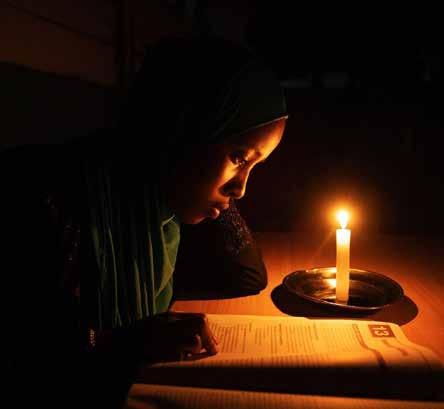
What is more telling than numbers are the dramatic impacts these programs have had on the lives of individual girls. Take Najma, a bright and animated 14-year-old from one of the few local Muslim families. When she was 12, Najma used Kolibri during the school closures to study for the KCPE, Kenya’s secondary-school entrance exam that determines if and where a child can go to high school. She passed
the exam with high marks and was invited to attend a girls’ boarding school, becoming the first girl in her family of 12 to go to high school and avoid the likely fate of being married off later that year, as her older sisters had been.
Another superstar that was almost buried by circumstance is the incredibly bright and sweet Nashipae. Orphaned at a young age, a grandmother stepped in to support Nashipae and help her continue in primary school, where, in 2021, she ultimately earned the highest KCPE score of all girls across the entire Loita Hills region. Her effort earned her an invitation to a national school, which only accepts Kenya’s brightest. But then, in short order, Nashipae got pregnant, and her grandmother died, making attendance at a boarding school impossible. Thanks to a new day secondary school For the Good opened with the community of Morijo in 2020, Nashipae, one of the region’s brightest talents, was able to return to school this year, because she can now walk to a high school in the morning for classes and return each afternoon to take care of her toddler. If she continues to excel, she will likely score high enough to get her university education paid for. These new secondary schools are only beginning to create their legacy of educated children that will change their communities.
“Every one of the parents from my community that I have talked to have now promised to take their children to school,” enthused For the Good intern Evelyn Sanau earlier this year, describing what she loved about her work. “Watching this change take place is important because our villages can gain needed doctors, teachers, and even pilots. I feel happy and excited when
I see girls going to school because it will help end early marriage and FGM (Female Genital Mutilation). It gives girls a voice in the community and helps end gender bias. The communities also benefit when they become the leaders of tomorrow.”
Sanau herself, along with the organization’s ten other interns and five program staff, constitute another of For the Good’s positive impacts in the Loita Hills. The organization prioritizes hiring and advancing local Maasai women. In return, these staff and interns provide critical insights that inform For the Good’s programs and a trusted bridge to the elders and families of local villages. For the Good’s Maasai Programs Manager, Josephat Mashati, is a respected local Maasai pastor and former longtime head teacher who earned university degrees in education and administration. Rebeccah Ledidi, the organization’s liaison to local schools, and Christine Mpoe, manager of their intern program, are both young Maasai women from local villages who possess university degrees and lived experience of the same struggles experienced by the young girls they work on behalf of. Importantly, as professional Maasai women in highly visible community roles, they also provide a tangible vision to local parents of the kinds of alternative futures that can be available for their daughters when they are allowed to stay in school –– and offer important role models to the local girls themselves.
Reinforcing this role modeling are For the Good’s 11 interns: Every one of the current cohort is a young Maasai woman from a local village who has graduated from high school in a region where historically, only about 16% of girls has done so. In return for volunteering with the organization three
days a week, these young women gain opportunities to develop professional skills and pursue higher education –– with tuition paid by the organization. Nearly all the staff and interns are fiercely proud of their Maasai culture and heritage while being equally impassioned to see several harmful aspects of it, like patriarchy, early marriage, and FGM –– evolve towards new customs that are healthier, kinder, and more equitable for women and girls. In an indigenous culture that experienced a long history of harm from Western colonialism and hegemony, their presence models the possibility of embracing Western ideas and knowledge that can help Maasai adapt to rapidly changing realities while also maintaining the many positive aspects of their centuries old culture.
“It’s very difficult for people to change,” said Mpoe during an interview early in 2022 in which she reflected on the painful community exile she experienced after running away from the marriage her father had arranged for her to pursue her university degree instead. “It’s like trying to build without the right materials. For a time, I couldn’t greet anyone in the village; because I had gone against the culture, many people said I was cursed. But these challenges are just stepping stones to a different, brighter future. To have vision and an education is the key to change.”
Along with continual research and program evaluation by Anderson, the input of staff like Mpoe and the local communities themselves plays a vital role in For the Good’s programming. “Listening hard to communities is one of the most critical ingredients to ensuring our work is responsive and compassionate –– and creating interventions that are effective and lasting” says Anderson. On a visit to Kenya last April, half the trip was spent training a new cohort of interns and the other half traveling along rugged, mud mired 4WD roads to meet with six different villages whom For the Good is in different stages of partnering with to build new secondary schools. The meetings were, first and foremost, opportunities for deep listening to the concerns and interests of community members as they stood up one-by-one to share their thoughts about the potential benefits and challenges of opening a high school in their village. Though most speakers are male and representatives of local leadership, women are increasingly invited to speak to share their own unique perceptions. The sometimes lengthy process offers an important forum through which For the Good can transparently share their vision to the entire village and the community can, in turn, air nuanced and hyperlocal community concerns about that vision that might otherwise have been invisible
to For the Good staff. The organization believes this intensive community input is key to ensuring their programs are addressing the most critical issues. It also helps develop consensus and buy-in to the community’s ultimate decision, which increases the chance that programs will be sustainable.
Anderson has found profound gratification from her work at the helm of For the Good. She sees the spark of extraordinary things in the girls the organization works on behalf of despite the extremely challenging circumstances they are often born into and treasures the opportunity to make a positive difference in their lives. “I deeply enjoy seeing the new trajectory of the girls’ lives and imagining where they will go and what they will do with their power, knowing even more than them that their futures look very different with education,” she explains. “Whether they choose to pursue a career or lead a traditional life, their lives will be fundamentally different from those girls that had no choice because they had no schooling. Being a part of that sliding door that shifts the trajectory of lives is incredibly humbling and rewarding. Someday I would love to see a future where every girl around the world can receive the support, education and opportunities that will allow her to make a powerful impact in this world –– and then be recognized for her effort with the kind of honor which CU has just bestowed on me. Ultimately, that is the future For the Good is working to create.”
www.forthegood.org


Fall in the mountains offers four seasons of temperatures and weather. we can ski, hike, bike, fish and enjoy all of our favorite sports if you watch the weather. Here are some women tested and approved products to keep you outside - wind, sleet, rain, snow and sun.
by Noelle Resignolo
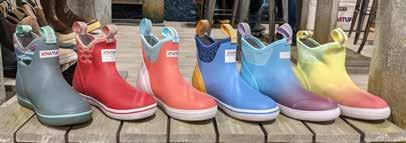
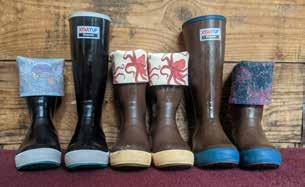
We are XTRATUF fans! This boot company is for more than just fishermen and women. All of their boots are perfect for mountain town romps and stomps, sunshine, rain, or snow. Just pair them up with the right sock thickness for the weather and you’re set to go. They look great with a skirt too.
www.xtratuf.com
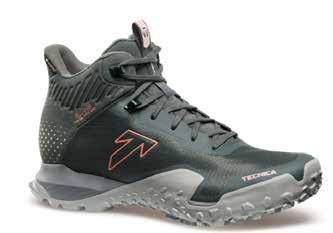
Tecnica Footwear’s – Tecnica Magma Mid S GTX hiking boots are love at first wear but the relationship gets better as you get them out. These boots are the ultimate trekking shoe great on slippery talus, cobblestone streets, or jungle: concrete or tropical. Read the full review on our website or buy them here: www.blizzard-tecnica.com/us/en
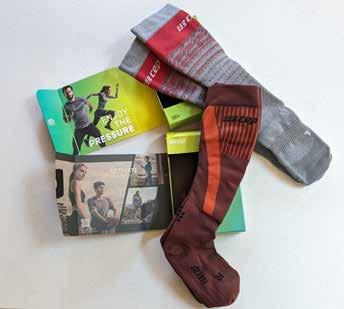
Compression socks help keep the pressure on whether you’re an athlete or someone needing everyday compression. CEP has a fantastic array of socks to meet your body’s needs and make a difference in your training, performance, and recovery.
www.cepcompression.com
Costa Salina Sunglasses
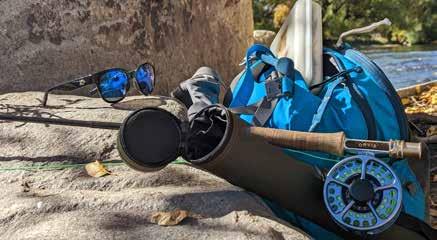
These are the greatest glasses for fishing and bright light outings. The filtering of reflective glare while casting for a fish is essential and these polarized sunglasses make you feel a little sexy too.
www.costadelmar.com
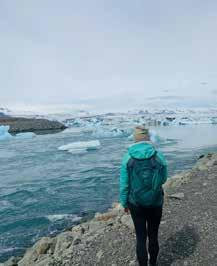
Packing for an adventure can be stressful, creating checklists and preparing what gear will best fit your journey can heavily impact your experience. My latest travel was a postgrad, two-month study and backpacking trip through Europe and Iceland. After returning there are two products that I would recommend, The Osprey Fairview 55 Travel Pack and the Technica Boots, on page 68.
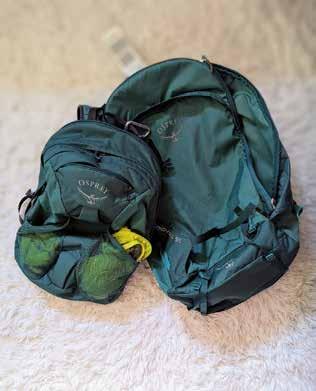
The Osprey Fairview 55 Travel Pack is more than just a backpack, it’s two packs in one. The backpack is designed to provide a 15 L removable day pack that zips on and off the larger pack. The day pack easily connects with a thick zipper and can be sinched down to downsize in a snap.
The smaller 15 Liter pack has one large section with a laptop nook and a small pocket where I stored sunglasses, power banks, snacks, and anything I needed easy access to. The smaller pack was slim enough for walking around cities, hikes, and running. The straps of the pack sat comfortably on my hips and had a secondary strap across the chest for traditional weight distribution.
I often wore the day pack on the front of my chest to carry personal items and stored my 40 Liter pack in the overhead cabin while in transit on planes and trains. Anyone who has traveled with a backpack as a carry-on knows the struggle of shoving loose straps into the compartment only for a strand to fall loose and get shut in the door. Osprey sought a solution, the backpack can transform into a duffle bag by unrolling a flap that is tucked into a small slot at the base of the pack and zipping it. No more loose straps. The 40 Liter pack has one large compartment that I filled with Osprey Packing Cubes which made organization effortless. I separated my gear in these cubes by clothing type. I was extremely grateful to have these cubes and this pack as they made my travels so much easier.
www.osprey.com
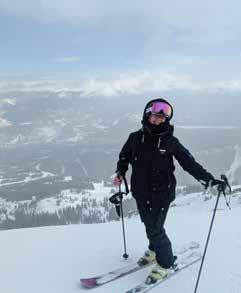
Here is a brand that has classic mountain looks, keeps you warm, and stands up to both the elements and time. We have been wearing Dope Snow’s Adept W Snowboard Jacket and Pants for the past two years. This is an all-mountain product with plenty of pockets, a spacious hood for your helmet, a snow skirt, wrist gaiters, a snuggly fleece chin guard, and cinch drawstring waist to adjust for layers. This Swedish company is doing it right. We love the soft, silent fabric they are using along with a superb fit. The prices are right too. Check them out
www.dopesnow.com
Montec has been rapidly growing in popularity on mountains around the United States. We thoroughly tested some of their Women’s Doom Ski Jacket, Fawk Ski Pants, and Scope Ski Goggles. You can read the whole review on this fabulous brand on our website. If you are looking for high-performance and stylish gear at an affordable price point, Montec has what you’re looking for. www.montecwear.com
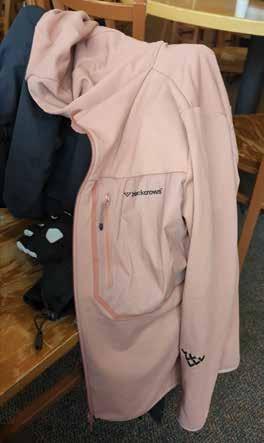
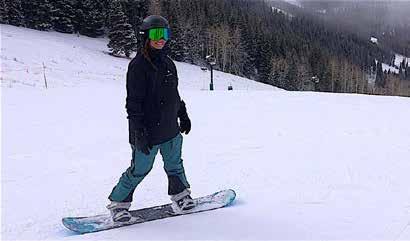
We found one of the most versatile pieces of outwear you could own. Who knew a jacket so simple could bring such joy to the owner and wearer. This Black Crows Freebird Polartec Jacket is made of a Polartec/ Pertex blend that combines warmth, thermo-regulation, and lightness. We have worn this jacket on its own on cool summer days, fall hikes and under our ski and snowboard wear as a layer. Lightweight and thin it packs up easily. It’s great for camping too. The trims detailing makes it feel fashionable too.
www.black-crows.com



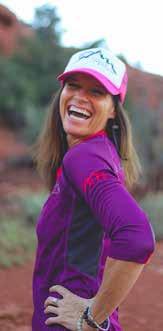
Amy Schweim is the owner of Womens Radical Pursuits. She is an Adventure Guide, Inspirational Leader, Goddess Yoga Teacher, Somatic Breathwork Facilitator, Embodiment Coach & Founder of Project Bike Love Lachatao.

Her mission is to help women connect to their true authentic sacred & sensual power, their passions & purpose and rise together stronger through Somatic Experience modalities of healing & International TravelAdventures that bring 2 wheel change to the communities they adventure to and through.


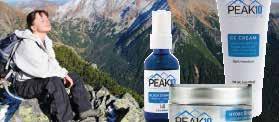


by Amy Schweim
Have you ever been on a ride or hiking with a group of friends and found yourself at the back of the pack suffering, struggling, and beating yourself up the whole time because your mind was telling you how much you suck?! Or maybe you don’t even go on group rides or hikes because you are afraid you won’t be able to keep up. Do you ever feel like your mind is against you sometimes?
I humbly admit, this sums up my early years of mountain biking when I first learned to ride in Crested Butte 20+ years ago and how I went through life off my bike from time to time as well; as though my mind was my worst enemy.
I’ll never forget the first time I rode clipless pedals with a former boyfriend who took me to Horse Thief Bench outside of Grand Junction, to learn. I’m not sure why he chose to take me to the most technical trail to torture me on, but nonetheless, my mind was pretty harsh with me that day as I struggled to keep up with him and stay on my bike! Many times, I found myself stuck in my pedals, tipped over on a pile of rocks with a trail of blood, sweat and mind full of defeat.
To try and salvage my pride, I tried to laugh it off and crack jokes through the sufferfest. I battled my mind all day long, justifying, arguing, and cursing myself. All the while trying to psych myself up after each fall and keep my attitude positive as I humbly slung my leg back over the saddle each time picking myself back up. I felt psychotic trying to maintain the happy face and claim how fun it was to my boyfriend while battling the gremlins of my mind. Mentally and physically exhausted, I survived. But sadly, I didn’t truly enjoy it because I let my mind negatively control my experience.
I spent the next ten years mountain biking the Gunnison Valley throughout my 20’s, battling my mind to some degree or another. Not only
on the bike, but off my bike too. I was a perfectionist and overly critical of myself in any endeavor I pursued.
Until I moved to South America….
After years of living in the land of extreme sports and enduro athletes, I picked up and moved myself to the Caribbean Coast of Colombia to teach internationally for two years. I went from a land of certain to the absolute unknown and uncertain. I moved from a small mountain town where I felt aligned, proud and falsely identified to the masculine energy side of my being. Upon moving, I found myself thousands of miles away from that masculine energy to the exact polar opposite vibe of the Caribbean embodied with feminine energy, the sea, and a subtle sense of ‘softness’ where I was able to tap into a more gentle way of ‘being’ by mixing up my recreation with mountain biking, surfing, yoga, and Latin dancing!
There weren’t many female riders and in the beginning, I rode alone a lot. What shifted the most for me was re-discovering why I loved mountain biking once I was out of the environment where I felt an invisible ‘pressure’ to perform. I was able to just enjoy the ride and stop fighting with the gremlins of my mind. I fell in love with mountain biking for the pure joy of it again. I let go of the feeling that I had to prove something on my bike, and also in life. I let myself simply be, in the flow state, happily experiencing joy!
It was like going back to being a kid in a way and learning again. Everything around me was new and I was beginning again: learning a new language, culture, country, singletrack and school system. Not even conscious of it at the time, I see that I had shifted from a fixed mindset to a growth mindset and was open to the process of learning, discovery, and the pure joy and bliss of the experiences! From that time in my life on, I really
embarked on a path of self re-discovery, healing, and embraced living life with a growth mindset; excited to learn, develop, and evolve into my full potential both on and off the bike.
Carol Dweck helps explain the difference between a fixed mindset and growth mindset:
“IN A FIXED MINDSET, PEOPLE BELIEVE THEIR BASIC QUALITIES, LIKE THEIR INTELLIGENCE OR TALENT, ARE SIMPLY FIXED TRAITS… THEY BELIEVE THAT TALENT ALONE CREATES SUCCESS–WITHOUT EFFORT. IN A GROWTH MINDSET, PEOPLE BELIEVE THAT THEIR MOST BASIC ABILITIES CAN BE DEVELOPED THROUGH DEDICATION AND HARD WORK.”
For so many years, I beat myself up feeling like I was never ‘good enough’ and didn’t have the talent on the bike, and in life, to succeed and reach my goals. Once I shifted to a growth mindset, I was able to accept where I was and recognize what I needed to do to continue to develop myself. I focused more on my inner qualities and the way I perceived my experiences, my focus, values, beliefs, and thoughts about what I set out to do. I allowed myself to develop my skills (on the mountain bike and in life) rather than hold myself to an unrealistic expectation to be perfect and attain my goals without effort and struggle.
In all honesty, I went through some serious rock bottoms in my personal life that really brought me to the realization that I needed to shift my mindset, because it turns out, I was my own worst enemy and the biggest barrier in my way. I’ll admit, heartbreak was the catalyst that dropped me to my knees where I hit one of my first rock bottoms and the story isn’t pretty how I initially dealt with it. But the silver lining was discovering how to deeply love my own self, heal, forgive and then set out years later to inspire and empower other women
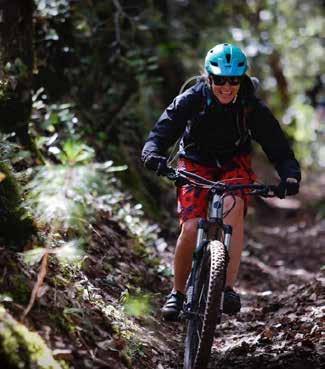
seeking to do the same through adventure travel, yoga, and mountain biking!
It kind of felt like a global ‘rock bottom’ in some ways from the effects of COVID-19, eh? But again, it depends on how you look at it! I think one of the greatest silver linings of this pandemic was taking advantage of the time we have had to connect, turn inward, and reflect on how we are showing up at life. Do you see through a lens half full or half empty? Rose or brown shaded? Here are a few tips to start to explore your mindset and move towards one of growth!
Understand the connection between thoughts and feelings – they create the reality of your experiences!
Start to build awareness around your thoughts and feelings. Pay attention to what you are telling yourself! Pay attention to how you feel! If you are beating yourself up STOP ALREADY! Take five deep breaths. Focus on your breath, change the story you are telling yourself to something softer and more loving! “You’ve got this! It’s not about the destination, it’s about enjoying the journey.”
Notice the beauty around you; the flowers, the trees, the beautiful sky, people you love. Then pay attention to how you feel after you shift your thoughts. It’s a really simple practice,
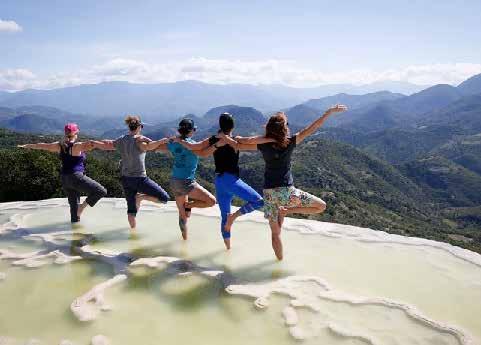
but it takes your awareness and practice.
YOU are in control of your mind; YOU are a powerful conscious creator!
Everyday, start your day by planting the seeds you want to watch grow in your life. You choose: will you grow flowers or weeds? Intentionally create affirmations to tell yourself every morning. Choose a mantra or word or whatever it is you will tell yourself every morning before your feet hit the floor that you can bring with you into your day for when challenges arise in life or on your bike. You have to take control of your mind rather than be at the mercy of your subconscious mind!
If you learn from the experience, you are a WINNER every time!
Even if you come in dead last, miss a deadline or you don’t finish what you started, you are winning as long as you learn from your experience. Every mistake you make is progress IF you take a valuable lesson away and apply it.
Choose Progress & Growth over Perfection!
Perfection is driven by the ego. Let it go! Remember that life (and mountain biking!) is about enjoying the journey – it’s not about the destination. Strive for progress, growth, and developing yourself along the way rather than doing everything perfectly. You will have lots more fun along the way!
My international experience living, working, and mountain biking abroad changed me on many levels, but the biggest shift was that it sparked and ignited my calling towards a bigger purpose and passion in my life. Two years after returning to the United States, I started my company Womens Radical Pursuits in order to help other women tired of the daily grind, seeking to break free from their comfort zones in order to discover ridiculous fun, connection, and adventure through transformational international mountain bike and yoga trips.
I built Womens Radical Pursuits with the intention to help build deep, meaningful and lasting connections; to oneself, to other like-minded women, and to cultures and people beyond borders and into the world. As human beings, we are wired for connection.
Many other woman have discovered their passions are their biggest turn on and have crafted something new from their discovery and turned them into something bigger than the initial pursuit.
Amy Schweim is the owner of Womens Radical Pursuits. She is a Breathwork Practitioner, Integration Coach, Goddess Yoga Teacher & Ignite Your Passions & Purpose Facilitator for Sedona Soul Adventures ~Transforming Lives One Soul At A Time. Learn morewww.womensradicalpursuits.com
story by Suzi Mitchell
photos by Regan Beroni
Restaurateur Bettina Neset cares nothing for the limelight. She is happy to be the hidden half in a husband-and-wife team, who have built up Rex’s Family of Restaurants in Steamboat Springs over the last two decades. However, if there is one thing that reflects her true colors, it is the interior design within each of their seven restaurants.
Despite being a self-confessed magazine junkie with a passion for Pinterest, Bettina chose to partner with Lindsey Jamison and her team at Rumor Design + ReDesign, a Steamboat-based interiors firm for a series of remodels. Their latest collaboration is a testament to the duo’s playful appetite for color and texture.
“In the restaurant business you want to be bold, and Lindsey is bolder than I,” Bettina shares, laughing. It’s clear the pair align. At the outset of the design plan for expanding Salt & Lime, the group’s Mexican-inspired eatery, Bettina presented a brightly hued, multiloop chandelier made of recycled soda pop bottles and basket covers as inspiration. The fixture serves as a talking point in the glass-walled private dining room, where a strip of Spanish tile packs a fun punch on the inside darkened walls.
Playful wallpaper wraps the site’s elongated walls, where booths mingle with oversized scalloped chairs and quirky covered seating nooks. Mixed media artwork by Denver-based Dolan Geiman provides a talking point, no more so than Rita, the recently named Burro sculpture who takes center stage at the bar.
time locals. “Steamboat is changing, and we have definitely seen an influx of people moving here who want what we offer with the cocktail bar experience, small plates and great food in fun settings.”
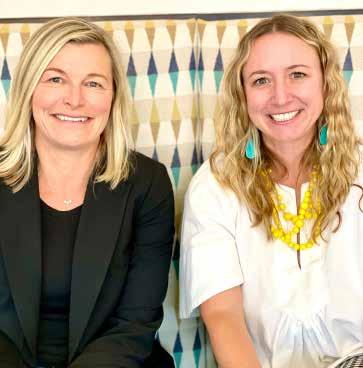
Despite Steamboat’s rural locale, Salt & Lime, like its sister venue, The Laundry Kitchen & Cocktails emanates an urban vibe, which was met with trepidation initially by long-
Lindsey echoes the sentiment which provided the impetus for her and business partner Valerie Stafford to open a larger homeware boutique, cafe and design studio downtown in 2021. “COVID had us all holding our breath, but people wanted to renovate, and our business just keeps growing,” Lindsey says. The business won a Designer of the Year Award from HGTV in 2021 and were finalists in two categories for 2022.
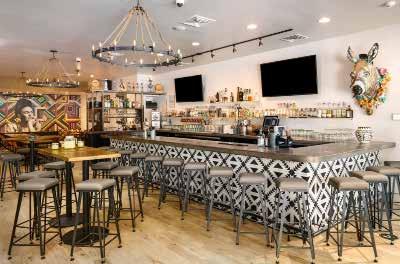
“I like being able to be the eyes and ears, and nothing makes me smile more than seeing our customers enjoying the spaces we worked so hard to create.
~ Bettina Neset


Steamboat maintains its ranching heritage and so far, the cosmopolitan injection over recent years has only added to the town’s allure. “We’ve definitely kept some of our restaurants more traditional such as Mazzola’s Italian, which has a large family following,” Bettina says. At The Laundry, Lindsey and Bettina opted to celebrate the rich history of the historic building, which once served as a laundromat. Fun imagery and the rust brick walls hint at the location’s past, which was paramount to Lindsey, a Midwestern transplant with a penchant for historic buildings.
Lindsey relishes the diversity of working on residential and commercial projects. “Commercial definitely allows more playfulness with color, funky lighting and taking risks,” she says. Both women believe customer service is the driving force behind their successful relationship, and their individual businesses. “If something isn’t right, I can call Lindsey and she will fix it, you can’t get that online,” Bettina says.
Customers want to experience a personal connection. “Many of our diners don’t know who I am when I walk into any of our restaurants,” Bettina continues. She is the behind-the-scenes visionary who found her style match in Rumor. “I like being able to be the eyes and ears, and nothing makes me smile more than seeing our customers enjoying the spaces we worked so hard to create.”
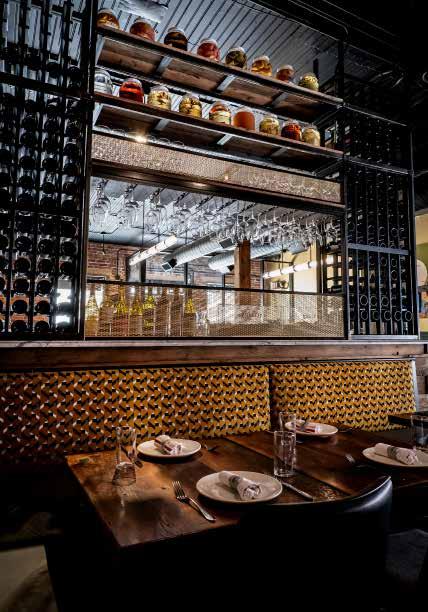
Salt & Lime, top left and lower right
Laundry, top right






by Holly Resignolo
Tina Leix of Grand County, Colorado, has always had a love for wreaths. To her, they’re not just for the holidays but she always had trouble finding a beautiful wreath that is well-made, with high end special touches. After the loss of her mother and having two small children Tina was inspired to begin designing her own products and leave the corporate life behind.
Tina’s Wreath and Home Co. produces everyday & seasonal wreaths
from her home workspace. Step into her colorful production studio and you will find a jungle of colorful silks, faux and dried flowers, along with other natural products that she crafts with care to last many seasons adorning your home. Choose from 38 different designs or work directly with her to bring your vision to life.
In addition to her remarkable wreaths, Tina is also designing stunning faux bouquets, boutonnieres, cen-
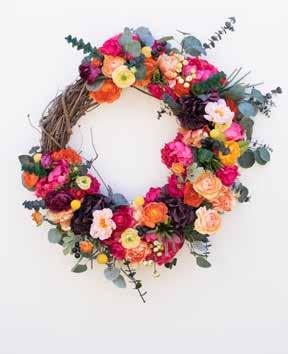
terpieces, and anything with a floral touch! These flowers could last a lifetime! Who doesn’t love coming home to a ‘just because’ bouquet of blooms? Send to a friend as special delivery that’ll bring a smile to their face every time to walk into a room. Sweeten up your own home or office with flowers that may last longer than that floral wallpaper you were so into five years ago.
www.tinaleixwreathco.com

by Claudia Carbone
It’s a chilly Sunday morning. Outside, snow falls lightly. Fire glows in the fireplace; the family is stirring. Soon they will want to feed their empty stomachs. Jennie Iverson has got you covered.
Pull out Ski Town Brunch cookbook, the third installment of her Ski Town Kitchen set that includes Ski Town Soups and Ski Town Apres Ski.
The brunch book features more than 140 sweet and savory breakfast recipes, sips and sides from more than 65 ski resorts and mountain towns in North America. Iverson has been to “nearly all of them” and collected recipes from greasy spoon cafes to fine-dining establishments, as well as hotel restaurants, B&Bs and ski resort lodges. She’s assembled them into a beautiful 226-page hardcover book chock-full of photographs.
The idea to compile ski town recipes came to her when she and her husband, Ross, took a 21-day road trip to ski resorts in western states when her boys were just two-and-a-half and 14 months old. They were living in Minnesota at the time.
“I thought, wouldn’t it be fantastic to feature all these restaurants in some sort of travel-style cookbook,” Iverson said. “I wanted to do something that was so sensational that Gorsuch would love to carry this book!”
Gorsuch, of course, is the high-end retailer in Vail, Beaver Creek/Avon, Aspen and Park City. Today, they are
one of Iverson’s most successful retail locations.
The first of the trilogy, Ski Town Soups, came out in 2012, about the same time the family relocated to Vail where they enjoy a gather, feast and adventure lifestyle. “I blended my love of skiing, traveling and eating into a unique passion project. As we travel, I ask chefs to share their recipes. Most are extremely willing because it’s difficult for them to do their own cookbooks.”
Ski Town Apres Ski launched soon after in 2014, the same year her third son was born. This is one busy mom! In this cookbook, Iverson pairs small plates and tapas with handcrafted cocktails.
For the brunch book, Iverson recreated “most” of the 140 recipes in her Vail kitchen. They came from resorts like Jackson Hole, Whistler Blackcomb, Lake Placid, Heavenly and Stowe, to name a few. A color photo and a blurb about the resort accompany each recipe.
Since the release of the Ski Town Kitchen books, Iverson is enjoying her growing celebrity as an expert on ski town cuisine. She found a business partner in Jen Baker, who also lives in Vail.
Ski Town Brunch costs $35; you can buy it at select retail stores and bookshops in mountain towns, as well as at online retailers like Amazon.
The Warren Store, Warren, Vermont
A ‘glorious’ way to start the day, Morning Glory Muffins combine the sweet taste and chewy texture of carrots with the pleasing flavors of apple, raisins, coconut, walnuts, and cinnamon.
2 cups all purpose flour
1 ¼ cups sugar
2 tsp. baking soda
2 tsp. cinnamon
½ tsp. salt
3 eggs
1 cup vegetable oil
2 tsp. vanilla
1 apple, peeled and grated
2 cups carrots, grated
½ cup raisins
½ cup shredded coconut
½ cup walnuts
Serves 12
Combine dry ingredients and set aside. Grate carrots and combine with raisins, coconut and walnuts. Grate apple and reserve. In a standing mixer with whisk attachment, whip eggs for one minute. Gradually drizzle in oil in a slow, steady stream, then add vanilla. Squeeze any moisture from apples and add to egg mixture. Switch to paddle attachment and mix in dry ingredients. Mix in carrot mixture.
Add to a greased muffin tin. Bake at 375 degrees for 25 – 30 minutes, until set and an inserted toothpick comes out clean. No need to adjust for high altitude.

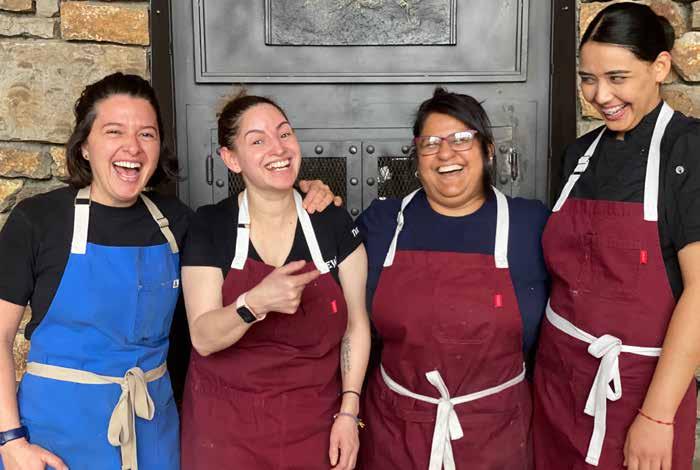
Meet Chef Perse Vordokas. Chef Vordokas recently arrived in Telluride to take on the role of the Executive Chef at The View Restaurant, a sixty-seat, full-service restaurant in beautiful Mountain Lodge Telluride. She is proudly serving a new menu influenced by her Latin American and Mediterranean influenced upbringing. I met with Perse this past summer and had a talk about the path she has walked in the Food & Beverage Industry prior to her arrival in Telluride, Colorado.
Born and raised in Miami, Perse is of Greek descent and was fortunate to have each of her summers in Greece with cousins, aunts, uncles, and grandparents. The Latin culture she grew up with in Miami along with the Mediterranean influence of her family’s cooking resulted in a nice marriage of the cultures that has contributed to her rise as a Chef.
“I was raised in a home where my mother cooked everything. There was never a need to go into the kitchen for anything. I was close to finishing my business degree when one day while eating dinner with my family I announced that I was going to finish my degree and start a Catering business. My mom almost choked. She asked me, “What
are you going to cook? I announced I am going to cook Greek food and cook in people’s homes for dinner parties. Fast Forward a month later, a friend asked me to Cater a Greek Easter Brunch. My mom kept asking me how many people I was cooking for. I was studying the recipes and told her I was good. I needed to make food for 20 people but I think I made enough for 100 people. I continued with that business. I was inspired to craft something that was missing from the local restaurant scene because I traveled so often to Europe, I noticed there weren’t many places to get delicious small bites to eat or grab a delicious coffee.”
You don’t have to go to Culinary School to be an excellent Chef
“During that time with my catering business, I was also working in the retail industry but decided to become a server. I found that I was always in the kitchen watching what the staff was doing. If they were short in the kitchen I would drop in and help. I would plate salad and drop food in the fryer. I wanted to help get food out and be sure our guests were getting the best service possible. I was always hanging out in the kitchen taking mental notes and learning. I then took on a Prep cook position after learning how the front of the house operated. Soon after, I became a Sa-
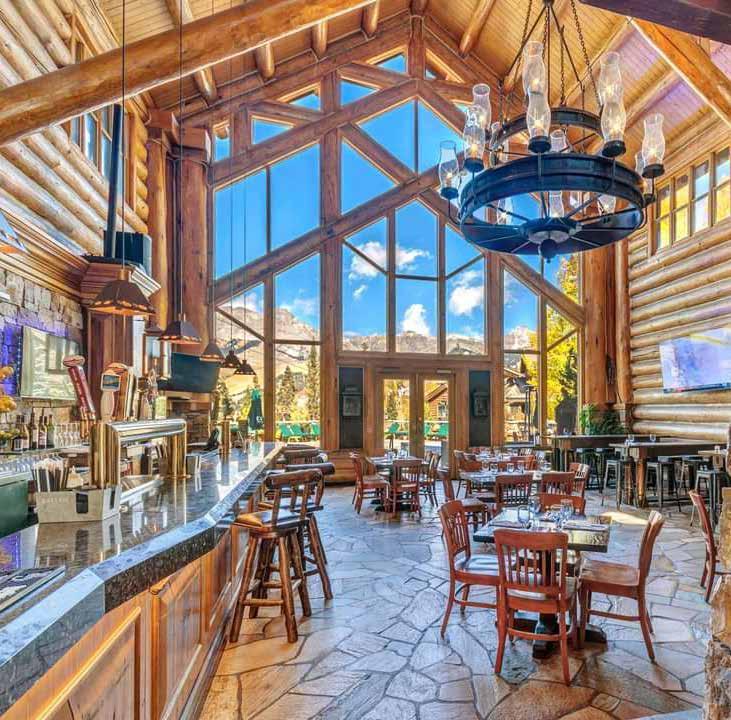
vory Chef in a Bakery that could do breakfast and lunch. I enjoyed the work but realized I was still so green in the Culinary industry. I needed to get out and work in another kitchen. Learned an appreciation for food restaurants to learn more from their chefs in order to excel.”
Welcomed in the Kitchen
“As a woman, I always felt welcome in the kitchen. I have worked for some incredible Chefs, some had temperaments, and some didn’t. You can have a nice knife and apron but it always boils down to your skills. My mind was open and I was always willing to learn. I would always take the apron off and do the dirty work and wasn’t afraid to admit failure and ask for someone to show me how to do a task but if I was drowning to ask someone to help me. People welcomed me in the back of the house as well as the front. Everyone has to prove their stripes but I have always felt welcome in the restaurant community.”
“There are always better ways of doing things than what I know. My philosophy in the kitchen is “if you can do it better, then do it. If you have a recipe from your grandmother that you think is fantastic, do it. If you know of something you have learned at home in your kitchen and can bring it to the restaurant, then do it. We can all learn
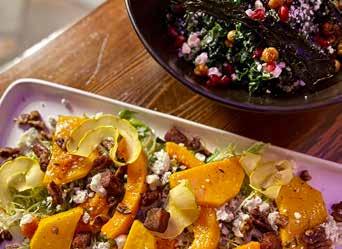
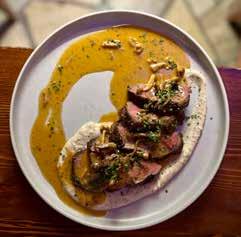
from each other; if it doesn’t work, it’s not failure but a learning lesson with an opportunity to do it a new way. I learned if you start a position being very humble, starting from scratch and being a sponge, you will excel anywhere.”
“There is very little room for error in simplicity. It’s much harder to get something really good that is straightforward and simple than something that is covered in a sauce where your mistakes can be hidden. I always get the question: What is your favorite thing to cook? I love preparing fresh salads and vegetables. Freshly prepared vegetables and salads don’t get the attention that they need. Do you remember the taste of a good tomato, strawberry, or fresh peach? It is so satisfying. When you experience that at a restaurant, it’s memorable.”
Since her arrival, everything has fallen into place, from the selection of her Sous Chef, Isaiah Davis-Toledo, to her line staff, and the opportunities to craft new menus and community events, Chef Vordokas continues to be her best and raise everyone up with her successes by doing better and being better. Enjoy a great meal by making a reservation at The View Restaurant to experience her delightful culinary creations. www.mountainlodgetelluride.com
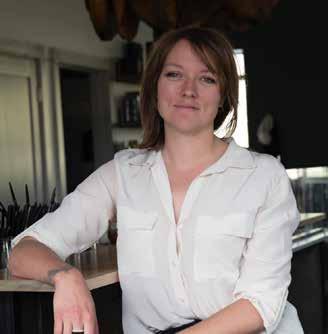
We always ask other women in the Food & Beverage industry to tell us about their favorite female-owned and led companies as well as notable women who work in the food service industry both in the kitchen and front of the house. Time and again Chef Laura PosiakTrider, aka Laura the Butcher, was mentioned. Hannah Hopkins who we featured in our last issue was especially enthusiastic about this rising star. Then Covid hit and time has since skewed how long-ago things have taken place. By the time I was preparing to meet Laura, she went ahead and opened up her own establishment in Steamboat Springs, Colorado.
Our Italian family has always coveted exceptional meats and cheeses. I also earned a Culinary degree that included a full class in butchering. I found the class fascinating. I was absolutely delighted to discover Laura and experience her lovely new restaurant, MEATBAR, offering exceptional charcuterie selections in her European-inspired eatery.
Laura is reviving a lost art here in Colorado, Butchery, and she is promoting the ethical side of animal husbandry along the way. In addition to MEATBAR, she also runs Laura the Butcher, a charcuterie catering company and private butchery, as well as MEATSKOOL, offering hands-on classes and workshops for kids and teens.
Food inside and outside of the kitchen, Chef PosiakTrider has always been attracted to the F&B Industry. After attending culinary school and working in San Francisco restaurants, she traveled the world to work on various organic vegetable farms.
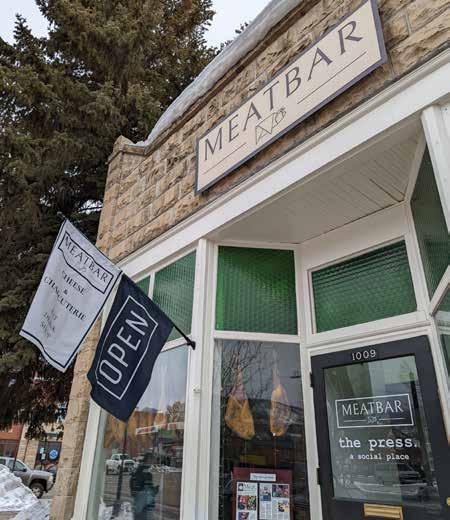
In Italy, at a bed and breakfast she worked at, the owners had raised two pigs. A local butcher came and stayed at the house to process the pig’s meat, crafting beautiful charcuterie. Every part of the animal was used, something she had not experienced before. That was an eye-opening and philosophychanging moment.
Upon her return to the states, she started curing meats at home and took a job at a whole-animal butcher shop and a deli to learn as much as she could about locally farmed meats. In addition, she discovered a passion for education while teaching butchery at a culinary school in Maine,
Laura and her husband, Dustin, began searching for a new place to call home. They’d heard about Steamboat Springs, threw caution to the wind, and moved to the Colorado mountain town. Here she began creating custom, upscale meat, cheese, and fruit boards for home delivery.
In 2020 she launched her new restaurant, MEATBAR, a women-owned and led eatery, which became an overnight hit. Laura’s establishment is not a butchery but rather a place where she showcases salted and preserved meats. She still provides learning experiences that feature whole animal breakdowns and these events are open to the public. MEATBAR is now offering classes in pasta making, chocolate crafts, and more.
This wonderful new addition to Steamboat Springs can be experienced by reservation or as take-out. You must try the Spanish Cured Jamon along with her small plates and dessert selections.
1009 Lincoln Avenue, Steamboat Springs www. steamboatmeatbar.com
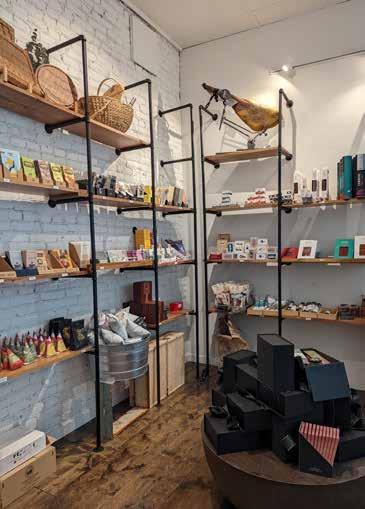
The American Institute for Avalanche Research and Education (AIARE) along with supporting partners Rab, Mammut, and the GORE-TEX brand, has launched the second season AIARE’s Women’s Mentorship Program. The program aims to welcome women across all levels of experience in the industry, build networks, and provide a mentorship framework for participants to replicate in future peer and mentor relationships. Women make up a disproportionately small number of avalanche educators in the U.S. and many women in the field find it difficult to grow and sustain their careers. The financial, sociological, and other barriers faced by everyone in the industry are often exacerbated for women. And those barriers can be even further ampli-
fied for women who are racialized, disabled, trans, mothers, poor/working class, and women who hold other historically marginalized identities. This season, AIARE aims to connect 40 mentees with 8 mentors who have deep experience in the avalanche industry. AIARE and its partners strive to create a program flexible enough to accommodate a wide variety of women—and lay a strong foundation for a robust mentorship lifecycle for women avalanche educators, from those embarking on their careers to those with decades of experience. Mentor applications are open now through August 15; mentee applications will be open from August 1 through September 1. In addition to running the Women’s Mentorship Program and offering women’s
affinity courses to train instructors and aspiring avalanche professionals this season, AIARE and its supporting partners will host four public networking events across the country this fall. These events will be facilitated by women in the avalanche industry and are open to anyone interested in learning more, building their network, or taking the next step in their career.
These events will be hosted in Denver, Seattle, San Francisco, and Jackson Hole. For additional information about the Women’s Mentorship Program or opportunities that AIARE offers to support women’s advancement, visit:
www.avtraining.org/womens-mentorship/.
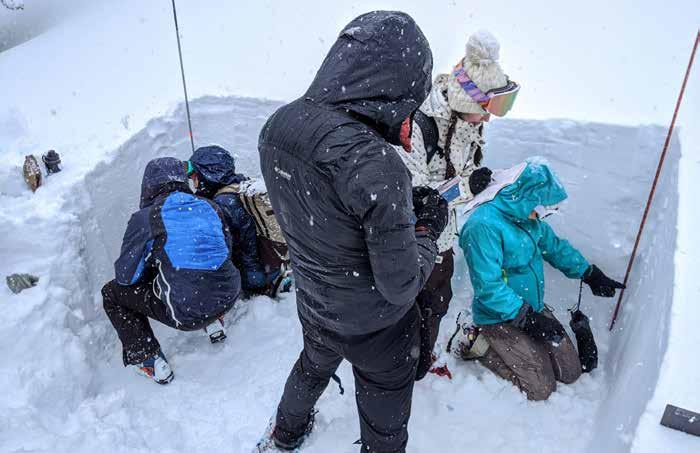



Could the Omega Man be the next rung up on the evolutionary ladder?
by Mike Messeroff
An indescribable peace is shattered. Lovely silence replaced by that familiar, intrusive voice: It’s fucking cold.
I know the insanity of complaining about the weather, so I laugh at the scene: one hundred or so layered up locals; yoga mats unfurled.
And me, on this wet field in Breckenridge, Colorado… covered head to toe in socks, thermals, sweatpants, a tank top, sweatshirt, and hat. Summer in the Rockies.
Within moments we will begin moving and the sun will fiercely warm this August day. Class begins. I take a few deep breaths. Silence. And then, just for a moment… I lose myself.
Whoa.
Lost in the scintillating sounds of the harp and the warm words of our cheerful yogi: “This time is yours”. As if floodgates surrounding my heart burst open, a rapturous wave beats throughout my body with undulating ripples, blasts through my lips as a joyous smile, and begins to emerge through my eyes…But I stop it.
Why the hell are you getting so emotional right now? I choke back tears but cannot suppress this grin. “Alpha Mike” could never feel something this beautiful.
That side knows that emotions, vulnerability, and, Godforbid, shedding a tear in public, are signs of weakness and must be avoided at all costs.
But, this man no longer flies with that flock… At least, not always.
A stranger catches my eye; golden-haired and graceful. Who is she?
Who cares!? Watch that body bend…twist…arch.
Oh, you primitive, reactive mind. I consciously return to the flow. But not without another glance in her direction. Perhaps I’ll introduce myself later.
Still a man. But not Alpha; the typically aggressive, often superficial, dick-measuring ‘macho man’. Nor am I a Beta; the scared suck-up.
Flowing now. I feel joy, peace, and…something crawling on my arm?
A formidable, fat-headed Daddy Long Legs appears. Squash the pest…the insignificant insect! No remorse! Kill it!
Today, thankfully, saner heads prevail. Calmly, I look at the culprit of my lightly-petted appendage; a beautiful being stopping by and saying hi with its own, quirky form of yoga.
I gently lower my forearm towards the grass, allowing the visitor to peacefully walk away. I smile as my new friend, and those eight, long legs, disappear into the dewy blades. A life is spared.
Shit.
There it is again.
The feeling that “real” men are not supposed to feel, or share. I choke it back.
Could there be another choice?
Could I be an Omega Man?
But the Omega, as many claim, is the Anti-Alpha; a testosterone-depleted outcast. Others, however, believe the Omega is Alpha 2.0; a man who leads without recognition, prefers cooperation over competition, and does not care what others think.
Perhaps, the Omega Man simply represents choice. Imagine.
A world filled with men who can slow down; Who stop to smell the flowers.
Men who enjoy time alone, Perhaps writing poetry for hours.
Men who don’t pride themselves, On pounds of pork ingested. Would rather travel a quiet path, Without the herd; noisy and congested.
Men who don’t rely, On others’ good opinions.
Warriors leading by example, Instead of following the minions.
Present men, connected; Inspirational, free, untamed.
Men guided by their emotions;
And who can shed a tear, unashamed.
Back in class, an affirmation is offered: “I Am Worthy”. Too late…no going back. A tear falls. A salty symptom of sentiment escapes and splashes onto the mat below. Here stands this teary-eyed tower of a man…unashamed.
Class ends. Amidst a sea of hugs, I remember…the blonde!
Just like my new spider friend; gone. No worries. If it’s meant to be, our paths will cross again. I roll up my mat and it becomes clear: I don’t need to choose.
The Omega Man isn’t about right or wrong, or even choice. The Omega Man represents the ability NOT to choose; to not conform to this label or that.
To me, that feels like progress and, in a word…freedom. But that’s just my perspective, and whether you agree or not, I don’t care...Too much.
Mike Messeroff is a Personal Freedom Coach, Writer, Speaker, World-Traveler, and Polyamorous Poet, sharing stories that inspire others to slow down, enjoy life, and follow their own intuition. Enjoy more of Mike’s writing on Instagram (@mikemesseroff) and learn about working with Mike at MikeMesseroff.com

Financial Advisor
Robin focuses on higher net worth clients with more complex financial needs. She is currently taking clients with a million or more in investable assets.
edwardjones.com/robin-drabant robin.drabant@edwardjones.com
Kelly Garoutte
Financial Advisor
Kelly makes investing approachable. She focuses on educating clients on the investment process and preparing for retirement.
edwardjones.com/Kelly-garoutte kelly.garoutte@edwardjones.com
Lara Saperstein Branch Office Administrator
Lara is the friendly, professional voice on the other end of the phone. She seamlessly helps our clients with all of their administrative needs.
edwardjones.com lara.saperstein@edwardjones.com