GET GROWING
START SOFT FRUIT PRUNING ■ Now is a good time to carry out a soil test in the garden to determine if your soil is acid, neutral or alkaline. Kits only cost a few pounds and are easy to use.
With blackcurrants the aim is to prune out as much of the old wood that’s already fruited as possible, leaving behind the new growth to fruit next summer. It’s a bit of a balancing act because as you cut out the old wood, inevitably you also remove some new growth. By removing up to one-third of the old stems low down in the bush, you keep enough new wood for a crop next year and encourage new shoots for the following season. Redcurrants and gooseberries are a little easier and what you are trying to create is an established framework of older branches with new sideshoots. At this time of the year cut back the new sideshoots by half or two-thirds and thin out congested growth in the centre of the bush.
CHECK APPLES BEING STORED
■ If rabbits are a problem in your garden, protect newly-planted fruit trees with a tree guard to prevent the bark being chewed.
■ December is a good time to start winter pruning apple and pear trees by removing weak growth and crossing branches to open the canopy.
■ Parsnips are hardy but when the soil is frozen they are difficult to lift. To prevent the soil freezing, cover part of the row with old compost or autumn leaves to act as a blanket.
■ If pigeons are a problem in your garden, net the brassicas to protect them from damage through the winter.
8 | DECEMBER 2018
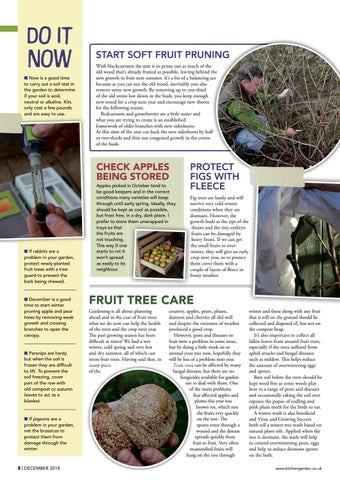
Apples picked in October tend to be good keepers and in the correct conditions many varieties will keep through until early spring. Ideally, they should be kept as cool as possible, but frost free, in a dry, dark place. I prefer to store them unwrapped pp in trays so that the fruits are not touching. This way if one starts to rot it won’t spread as easily to its neighbour.
PROTECT FIGS WITH FLEECE Fig trees are hardy and will survive very cold winter conditions when they are dormant. However, the growth buds at the tips of thee shoots and the tiny embryo fruits can be damaged by heavy frosts. If we can get the small fruits to overwinter, they will give an earlyy crop next year, so to protect them cover them with a couple of layers of fleece in frosty weather.
FRUIT TREE CARE
Gardening is all about planning ahead and in the case of fruit trees what we do now can help the health of the trees and the crop next year. The past growing season has been difficult at times! We had a wet winter, cold spring and very hot and dry summer, all of which can stress fruit trees. Having said that, in many parts of the
country, apples, pears, plums, damson and cherries all did well and despite the extremes of weather produced a good crop. However, pests and diseases on fruit were a problem in some areas, but by doing a little work on or around your tree now, hopefully they will be less of a problem next year. Fruit trees can be affected by many fungal diseeases, but there are no fungiciides available for garden use tto deal with them. One off the main problems tthat affected apples and plums this year was brown rot, which rots the fruits very quickly on the tree. The spores enter through a wound and the disease spreads quickly from ffruit to fruit. Very often mummified fruits will m ng on the tree through han
winter and these along with any fruit that is still on the ground should be collected and disposed of, but not on the compost heap. It’s also important to collect all fallen leaves from around fruit trees, especially if the trees suffered from aphid attacks and fungal diseases such as mildew. This helps reduce the amount of overwintering eggs and spores. Bare soil below the trees should be kept weed free as some weeds play host to a range of pests and diseases and occasionally raking the soil over exposes the pupae of codling and pink plum moth for the birds to eat. A winter wash is also beneficial and Vitax and Growing Success both sell a winter tree wash based on natural plant oils. Applied when the tree is dormant, the wash will help to control overwintering pests, eggs and help to reduce dormant spores on the bark. www.kitchengarden.co.uk