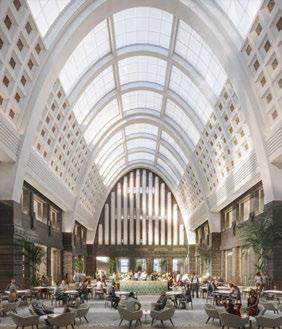
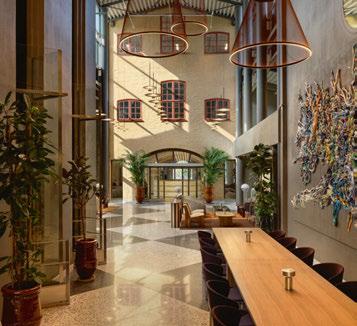
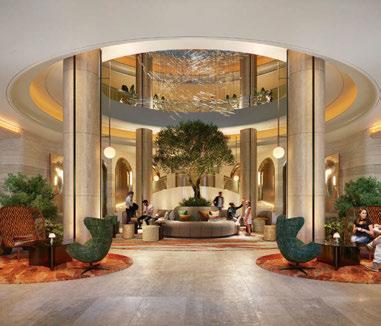
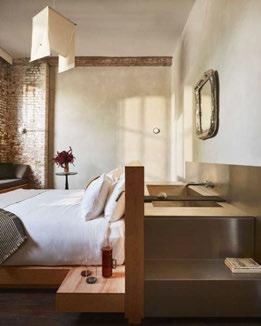
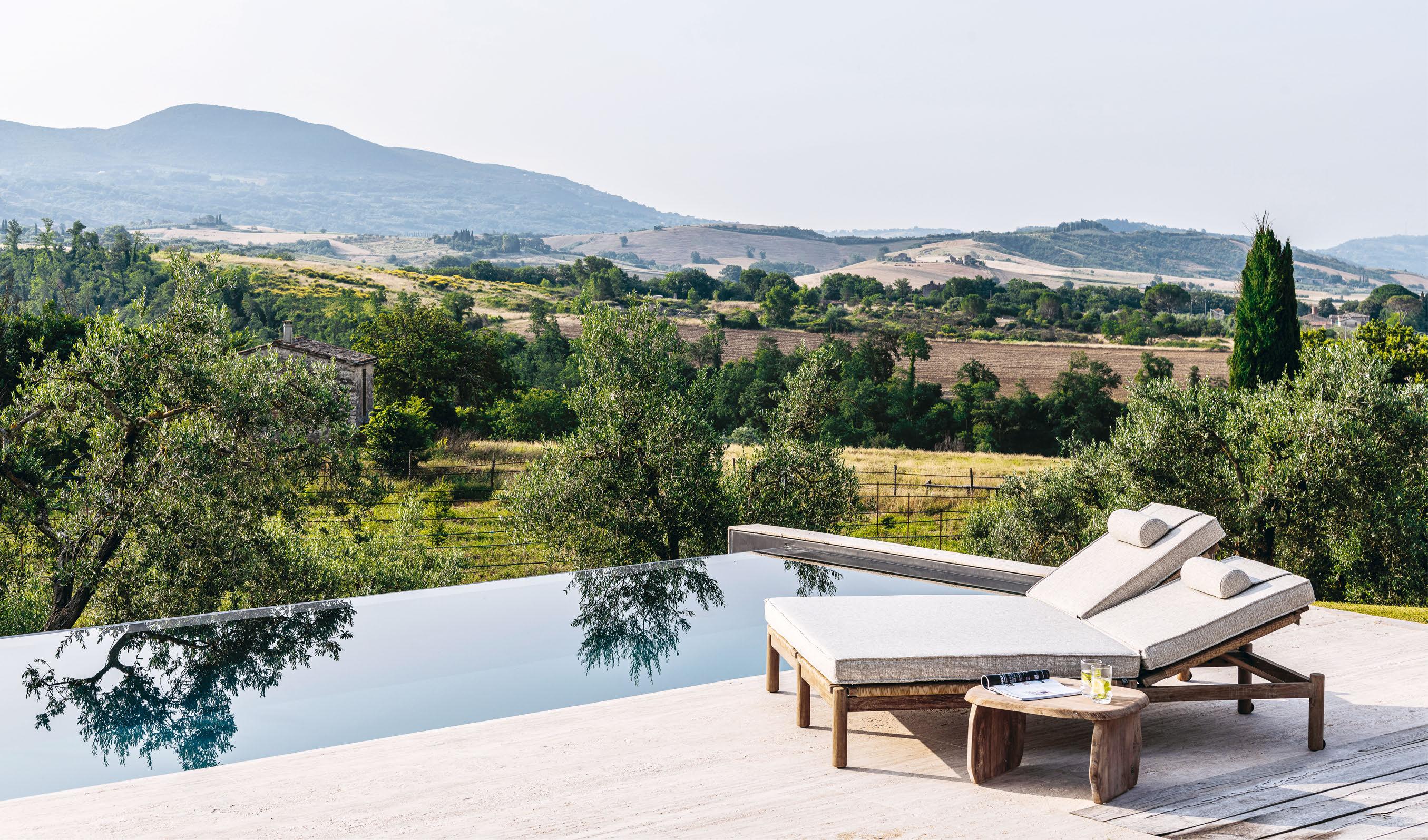
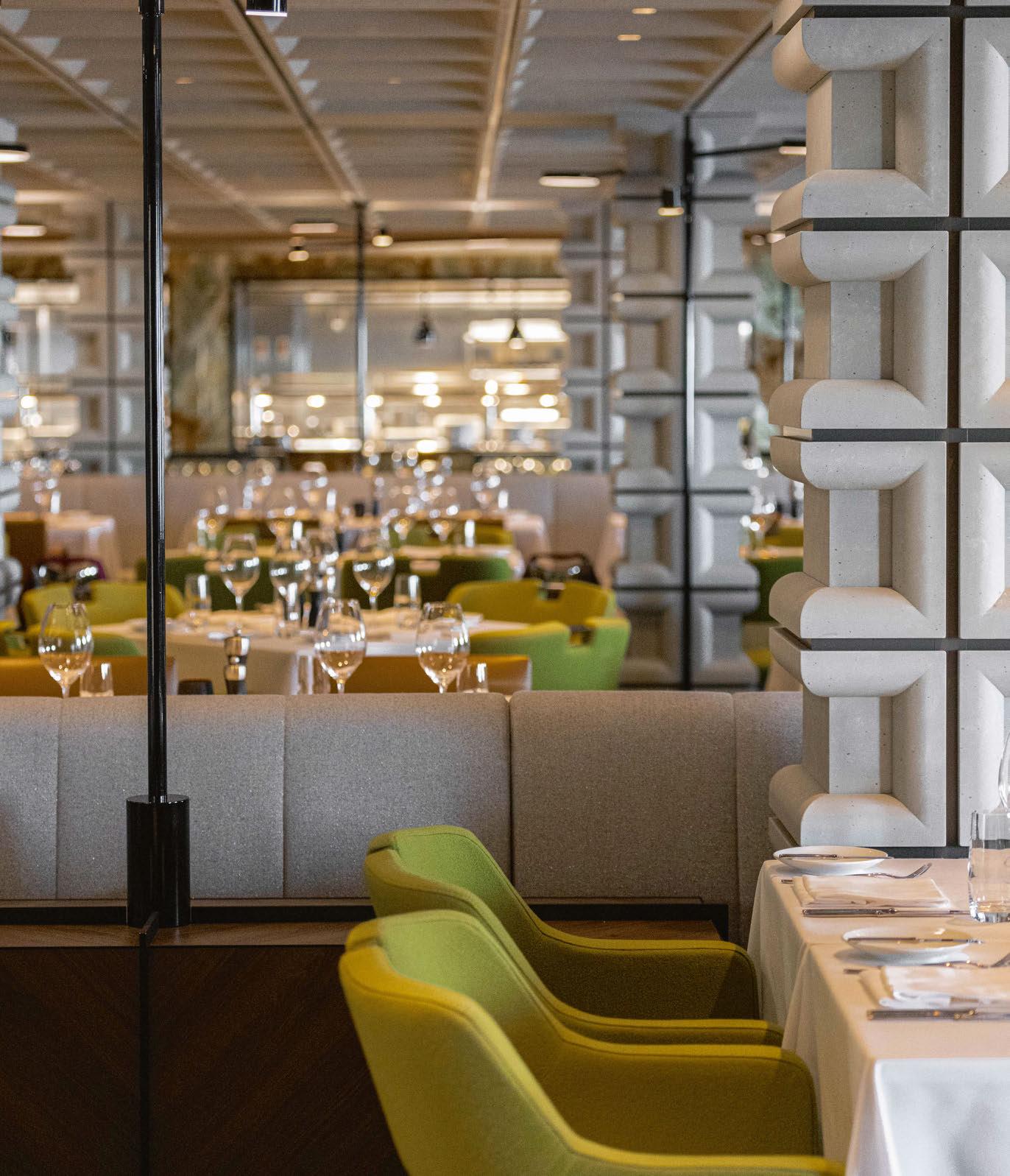
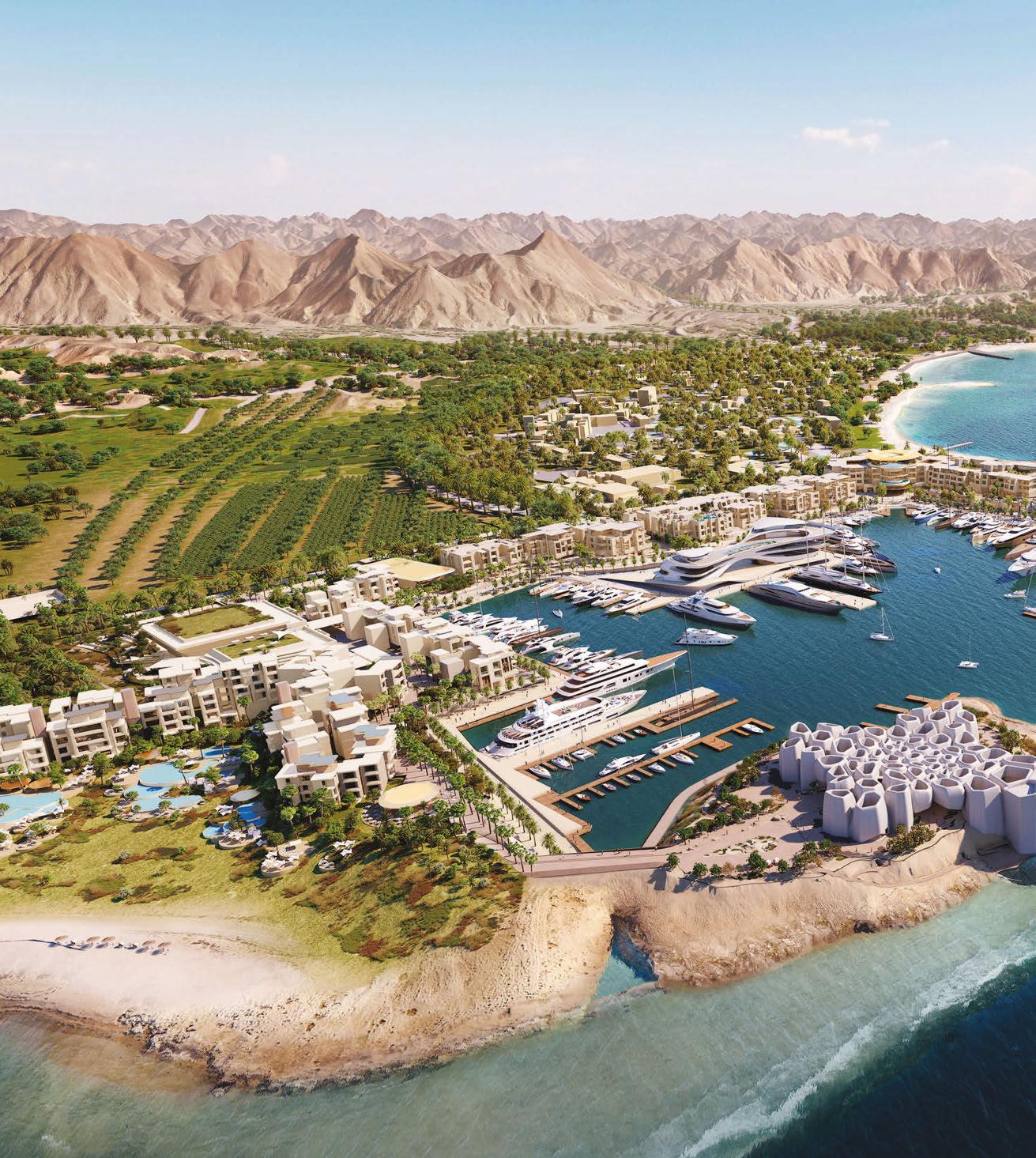
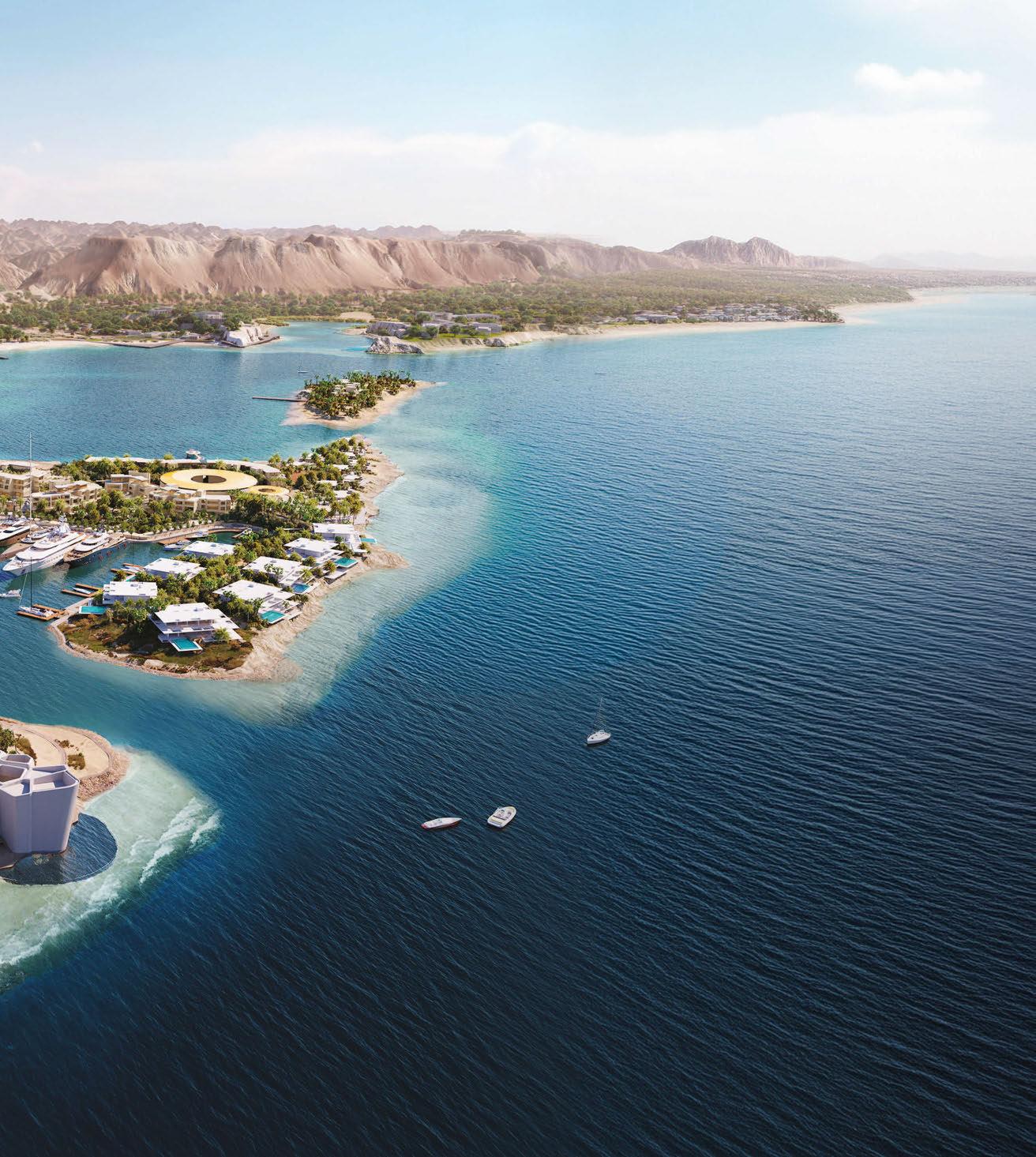
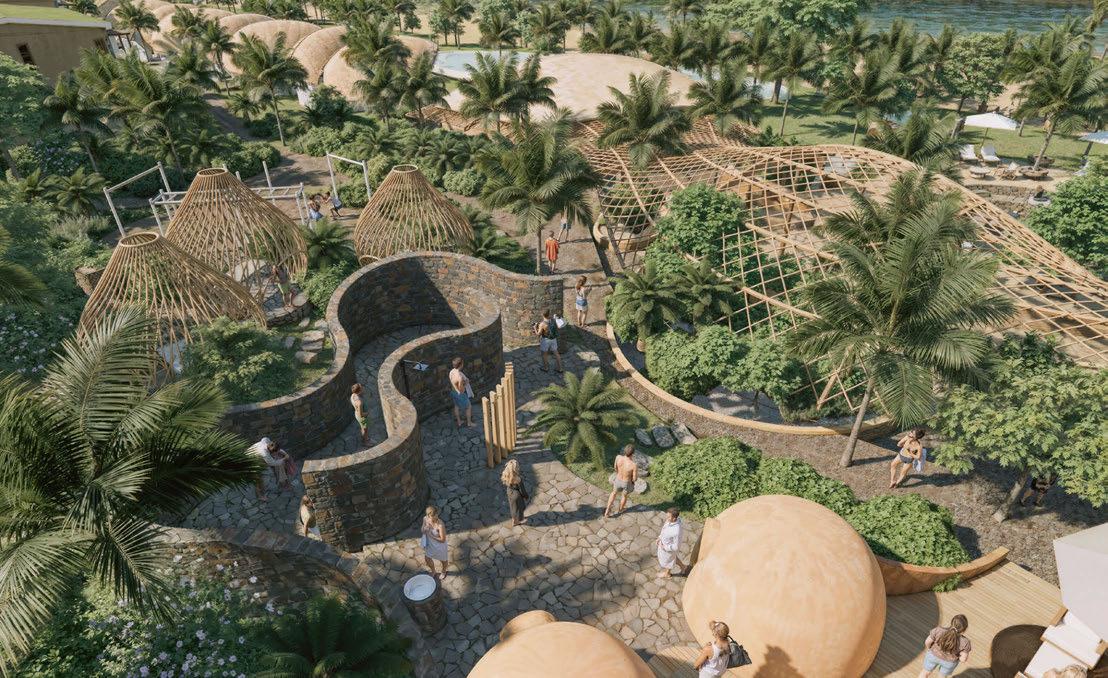
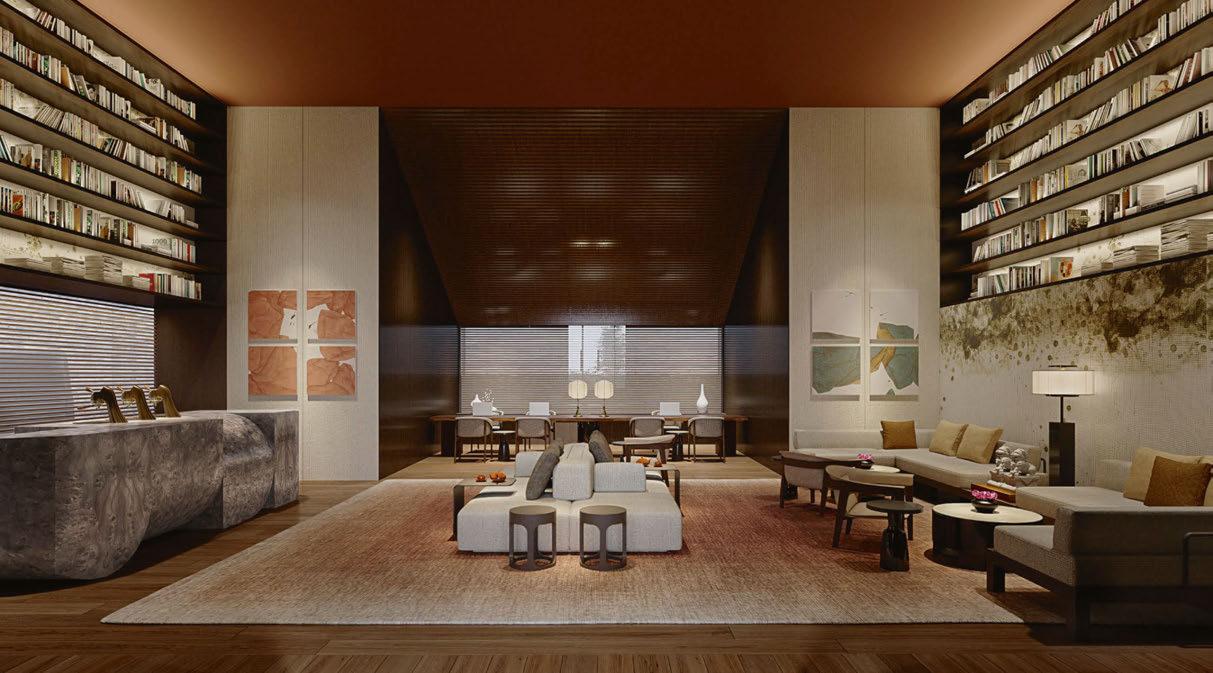
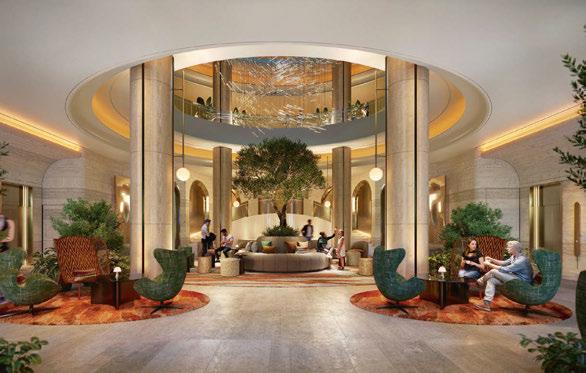
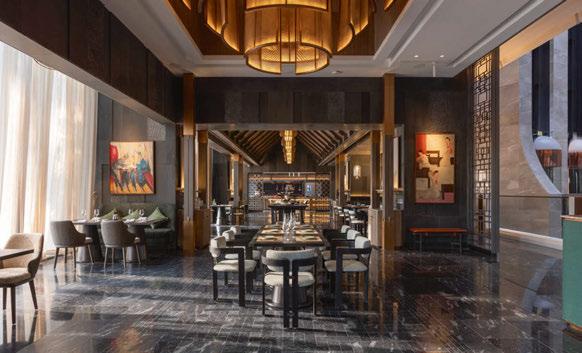
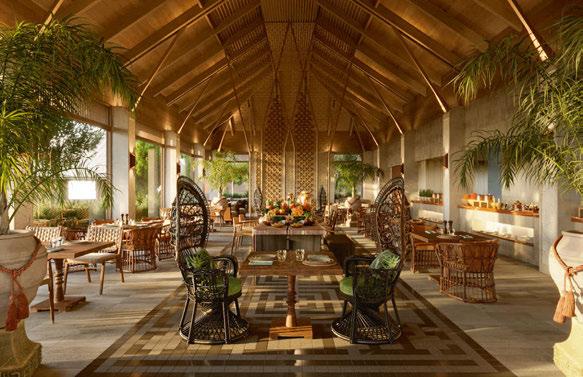
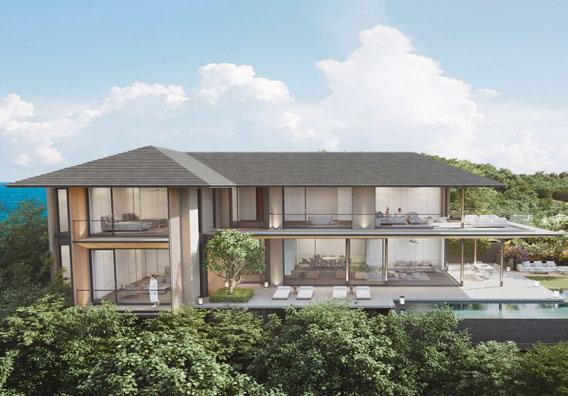
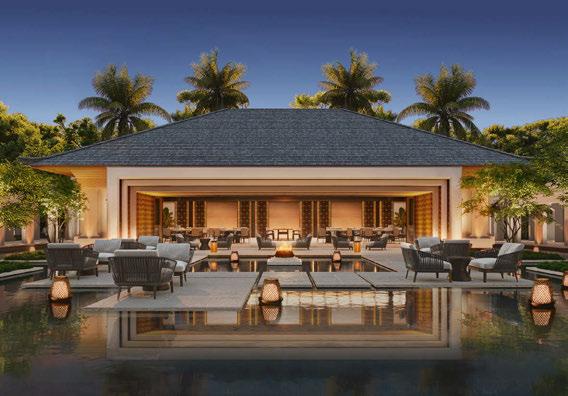
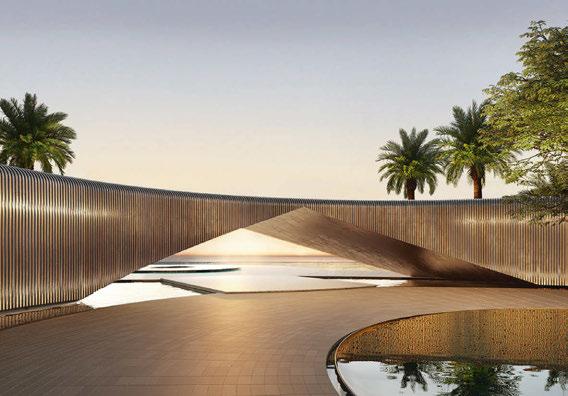
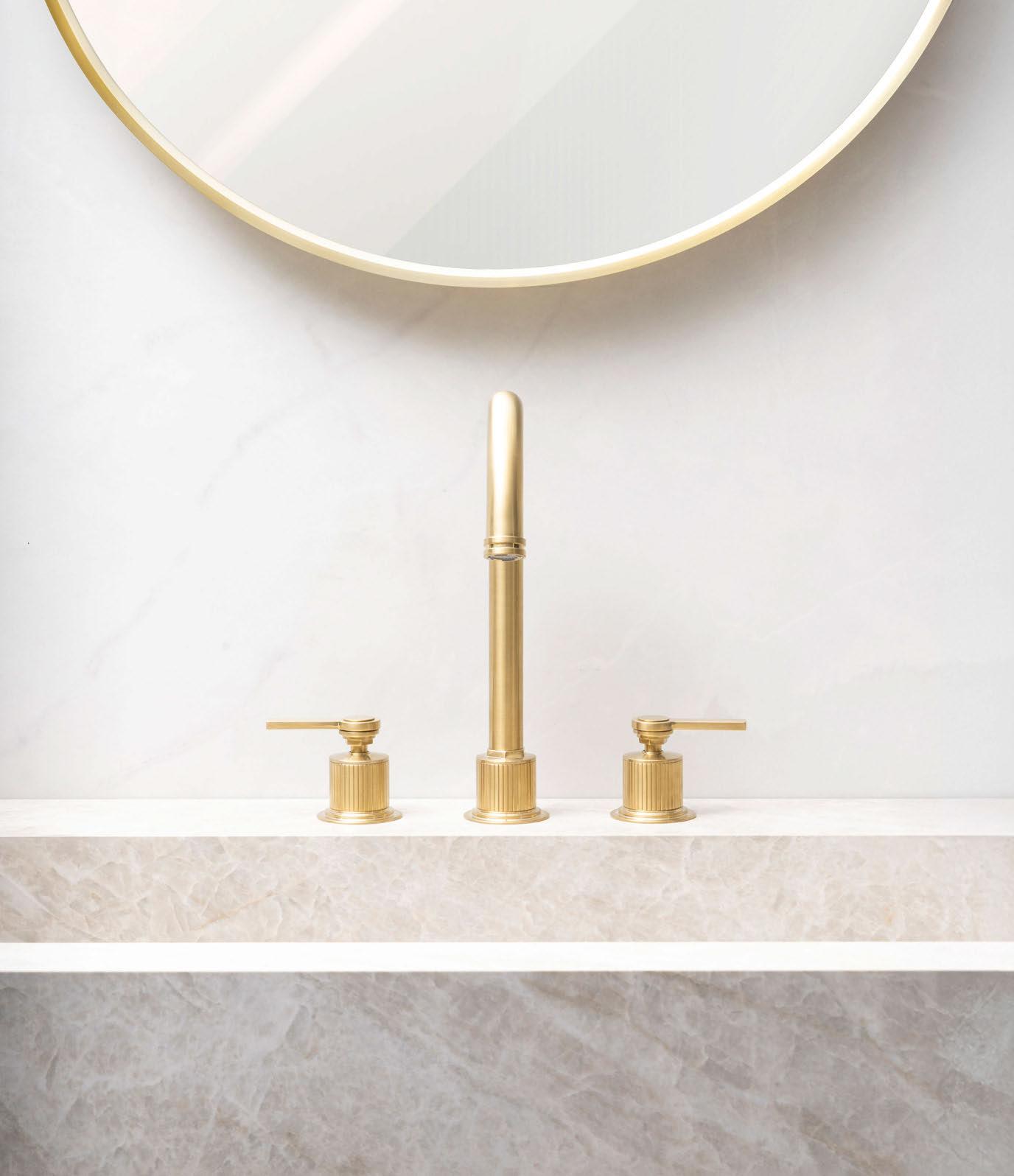
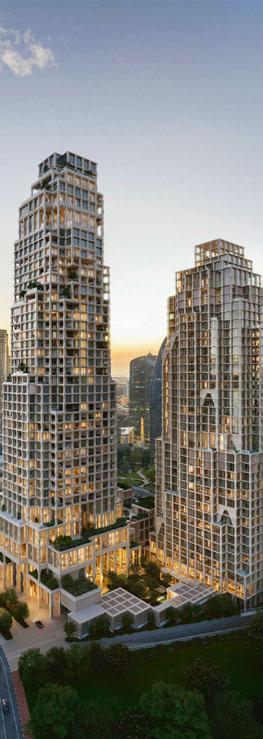
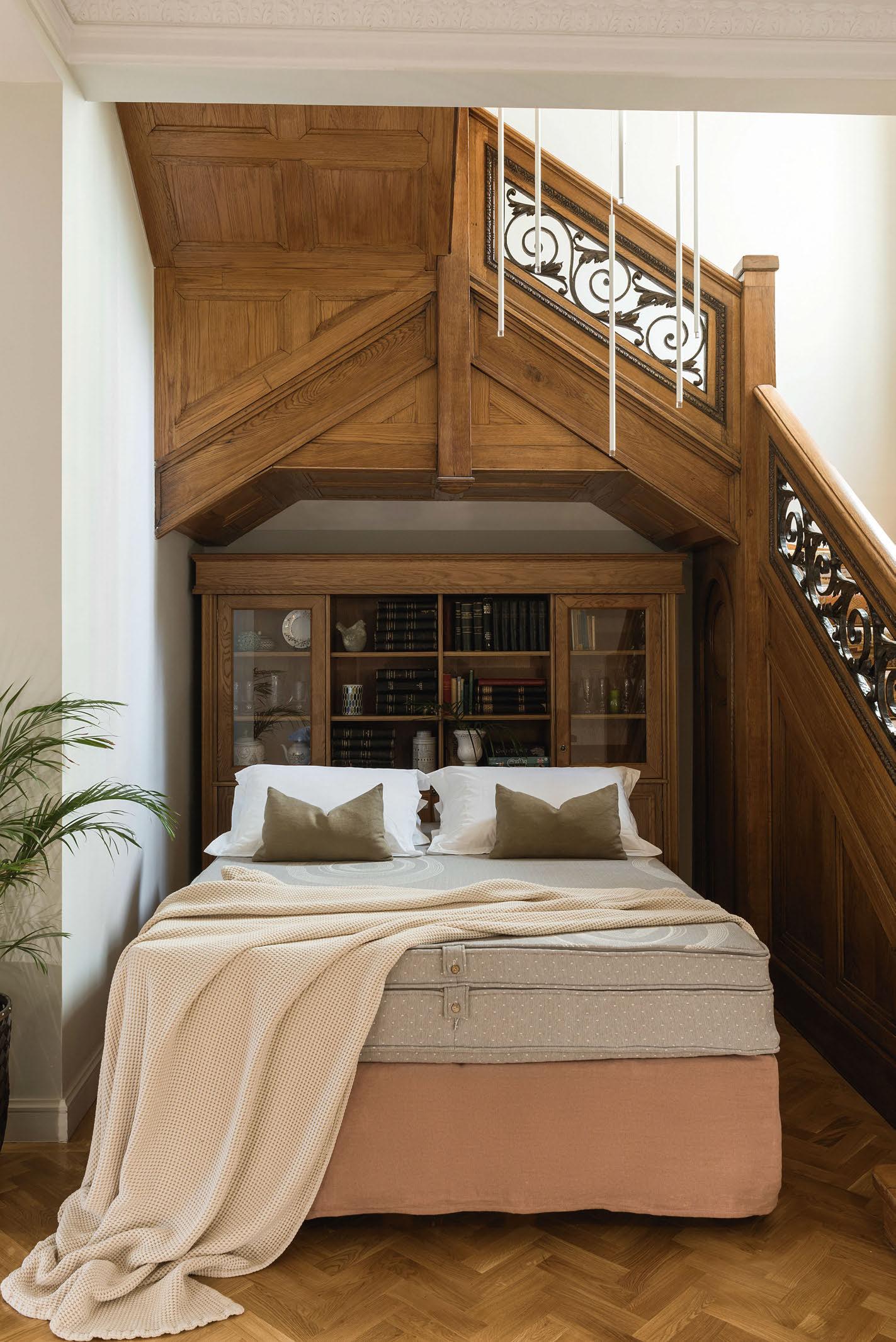
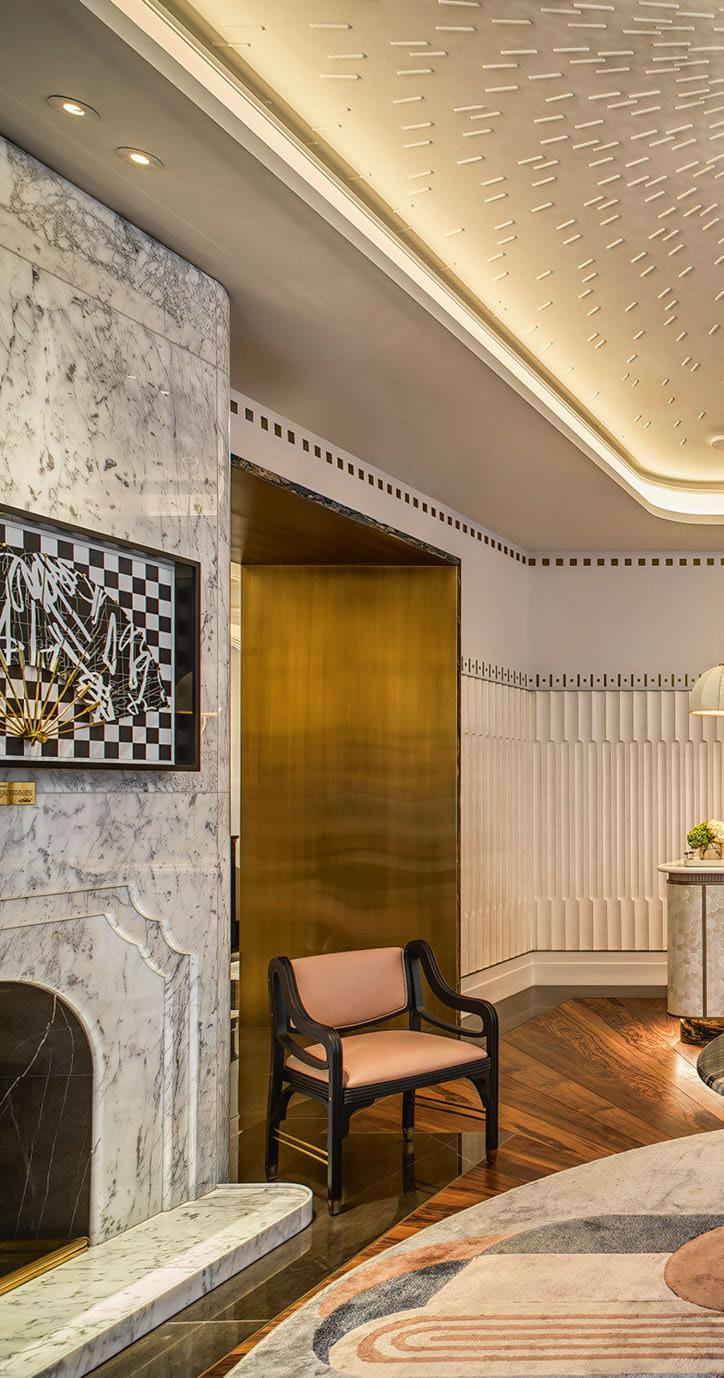
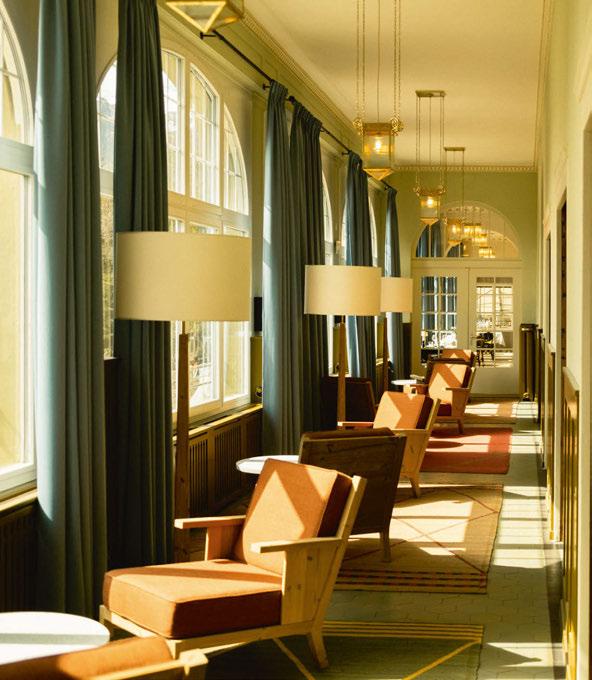
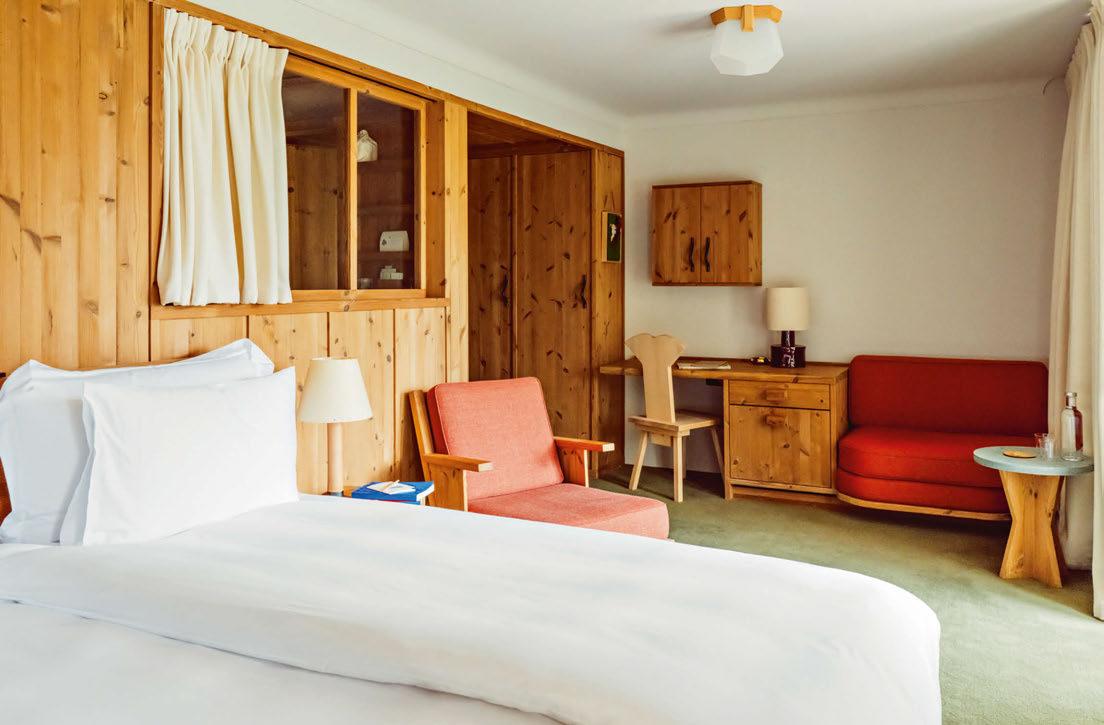
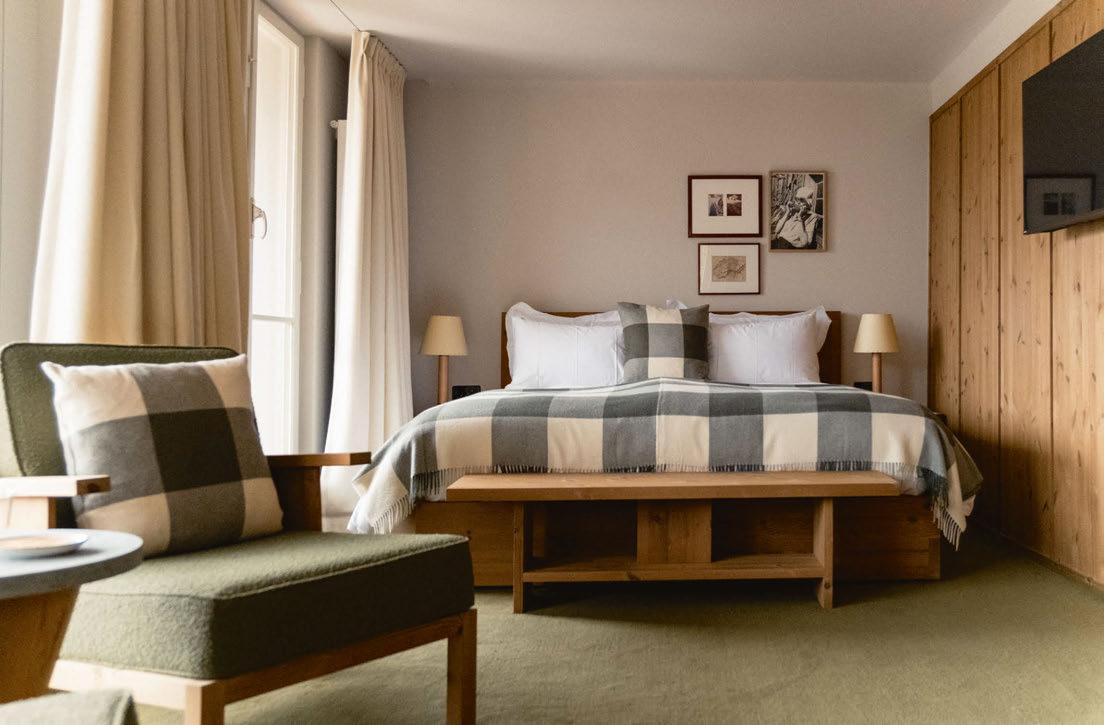
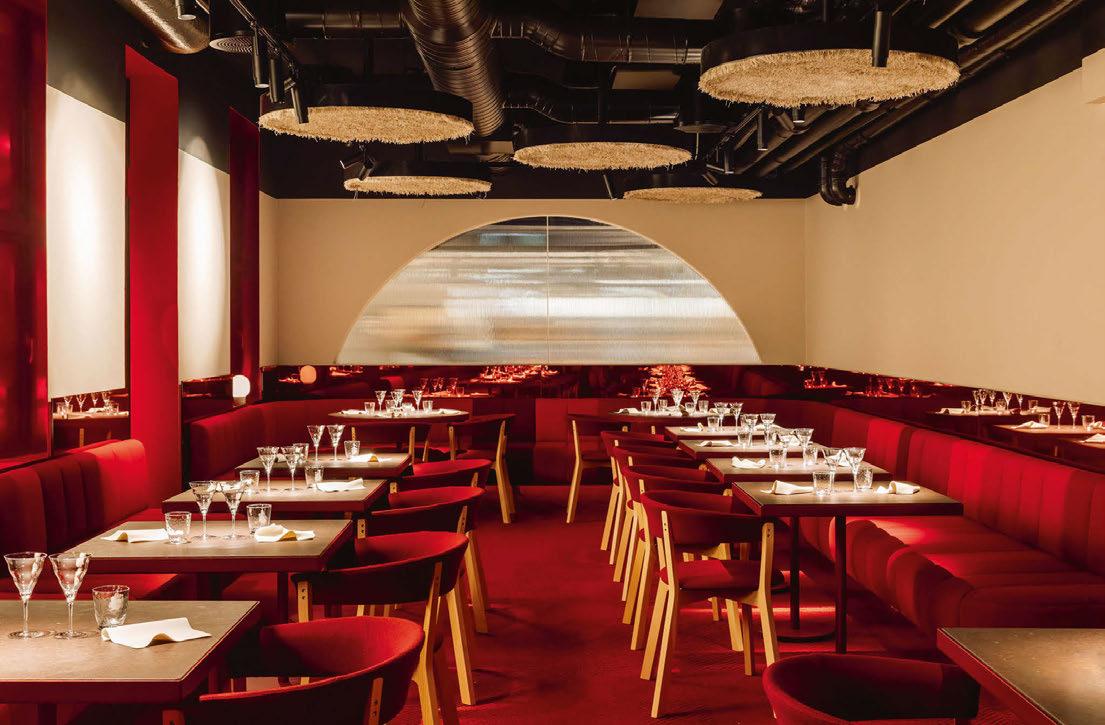
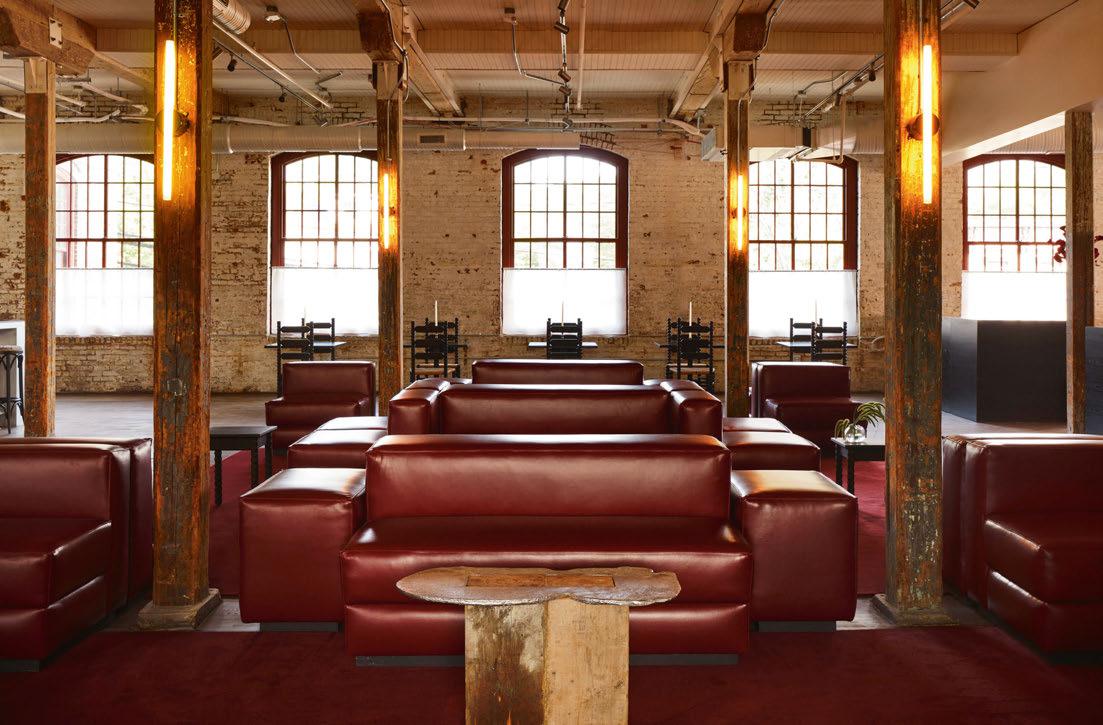
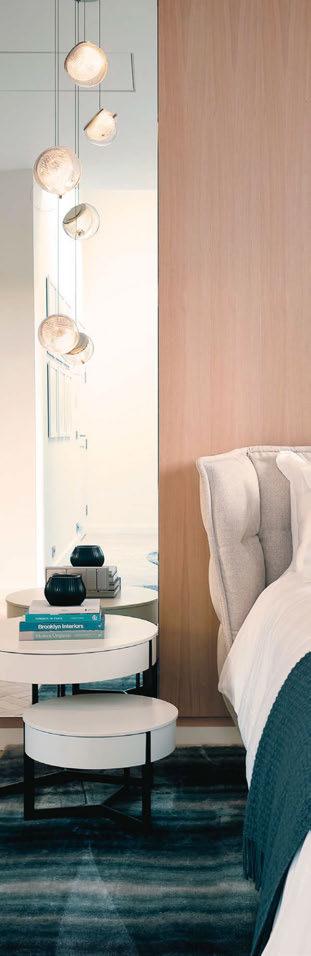
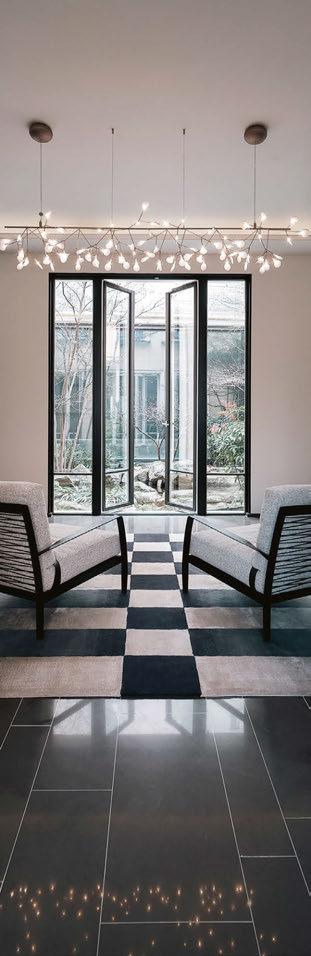
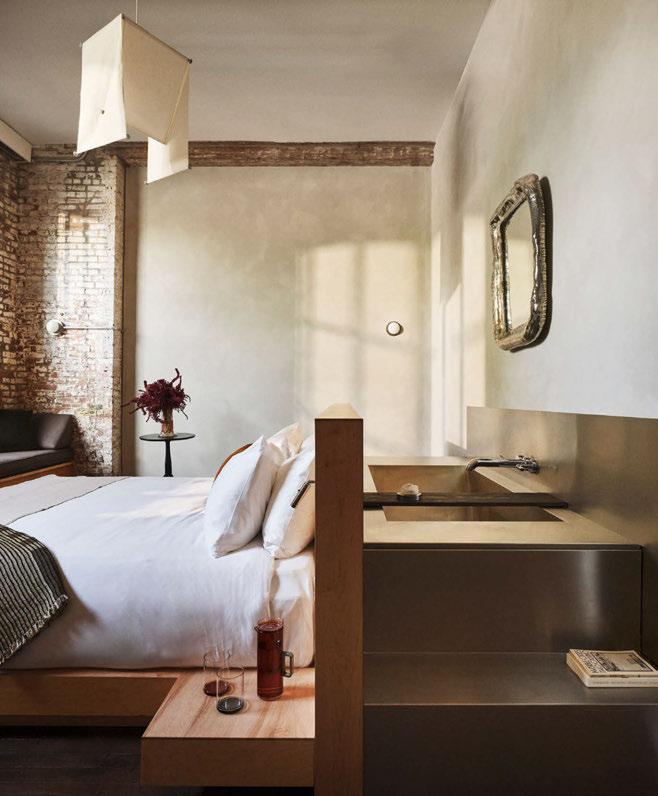
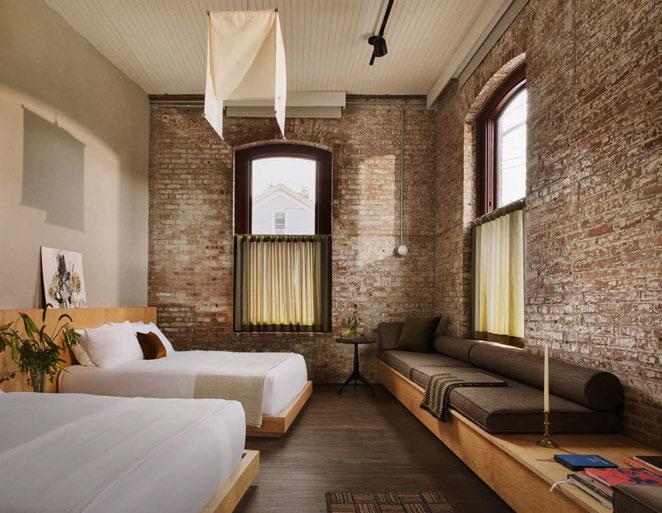
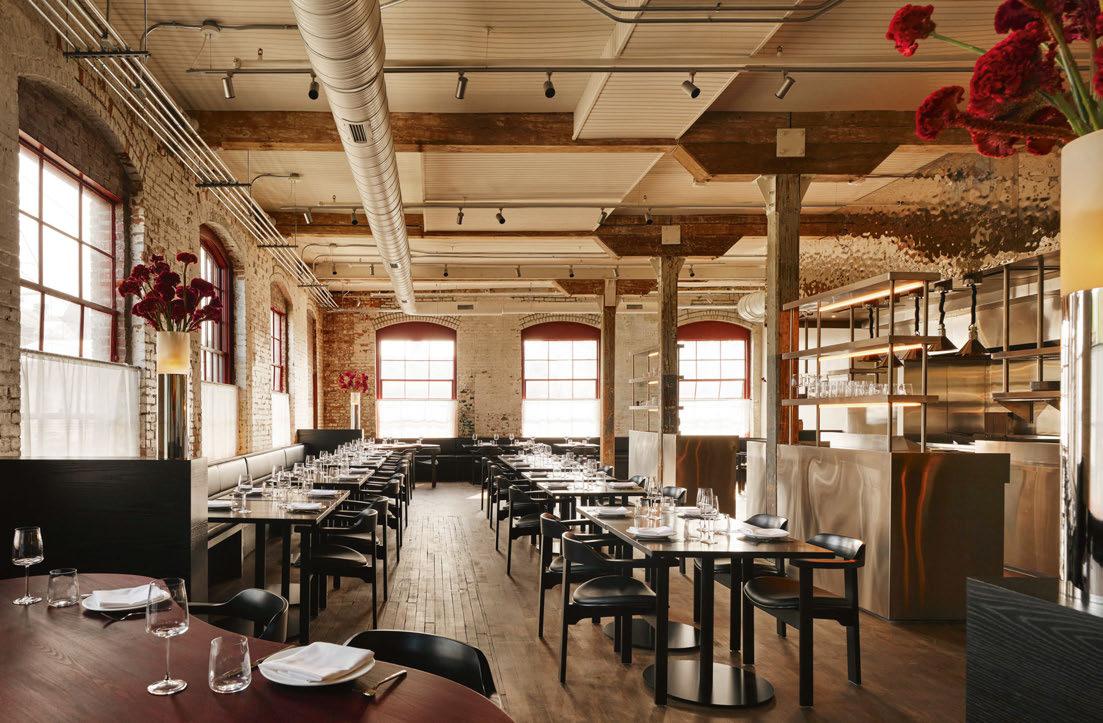
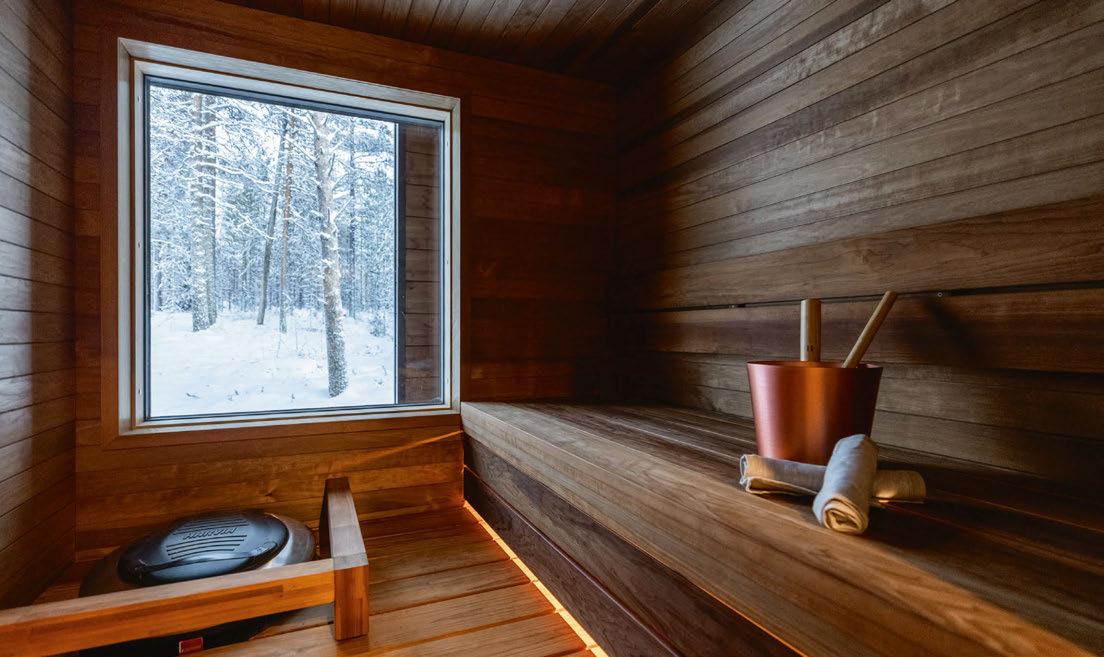
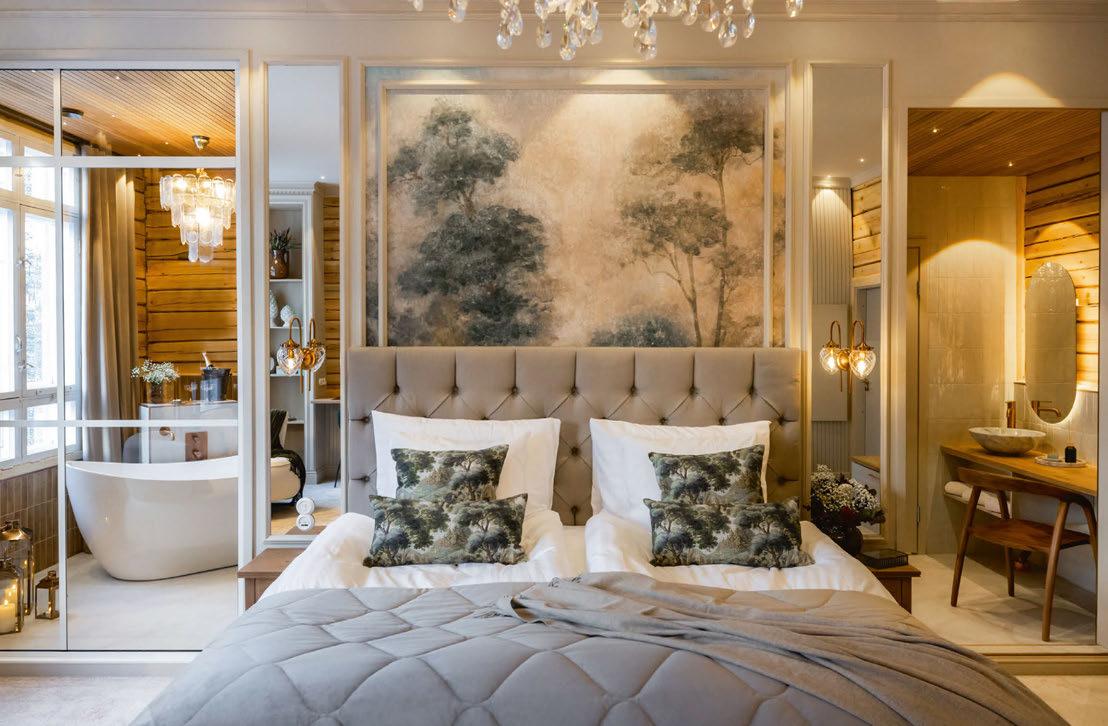
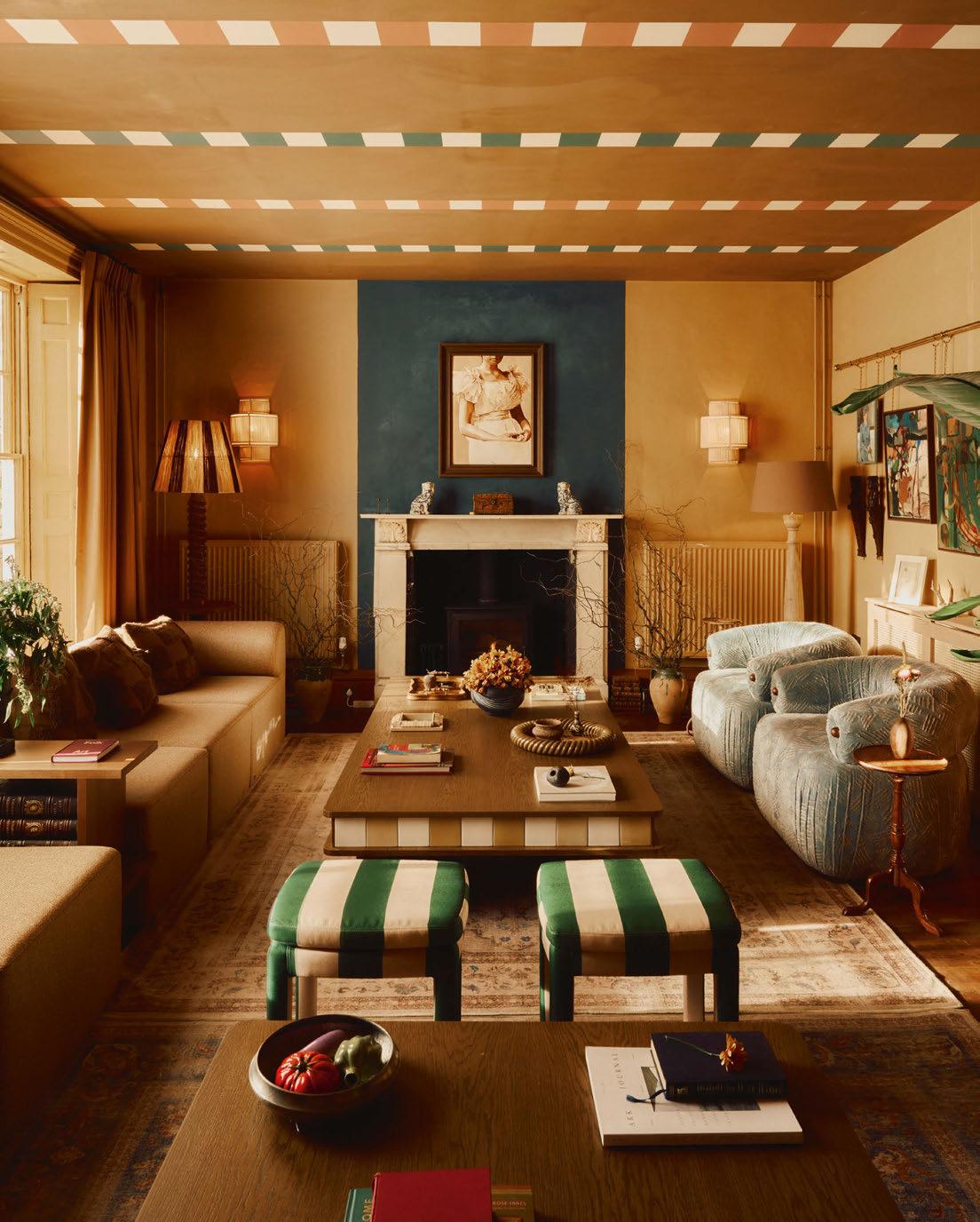
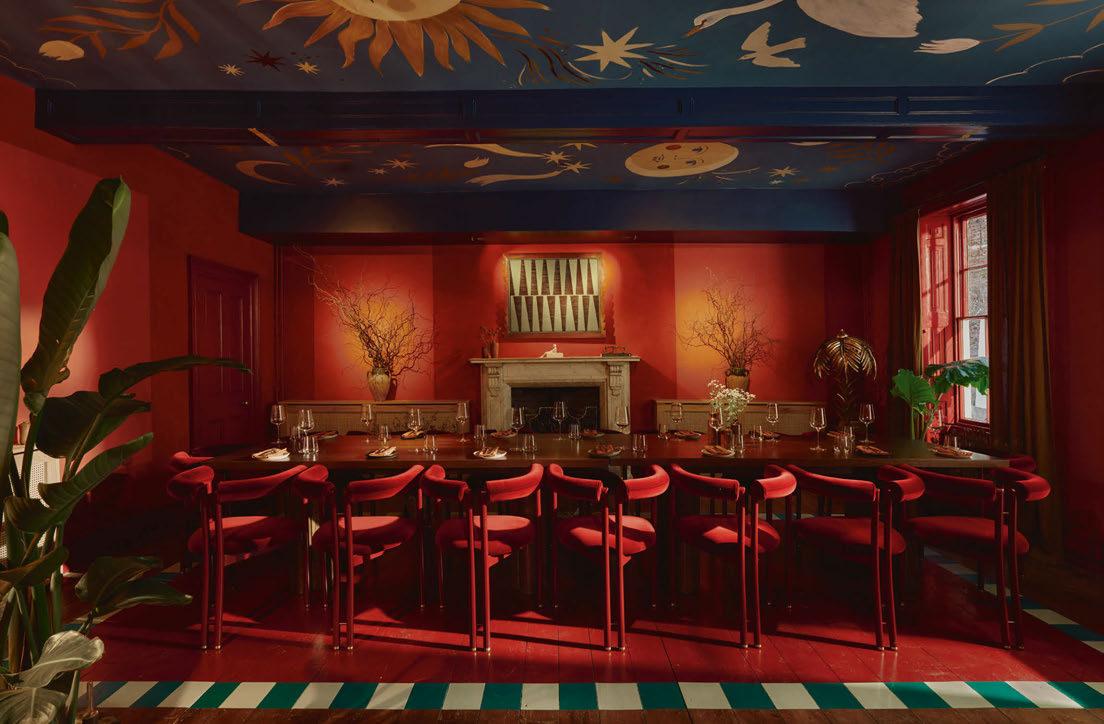
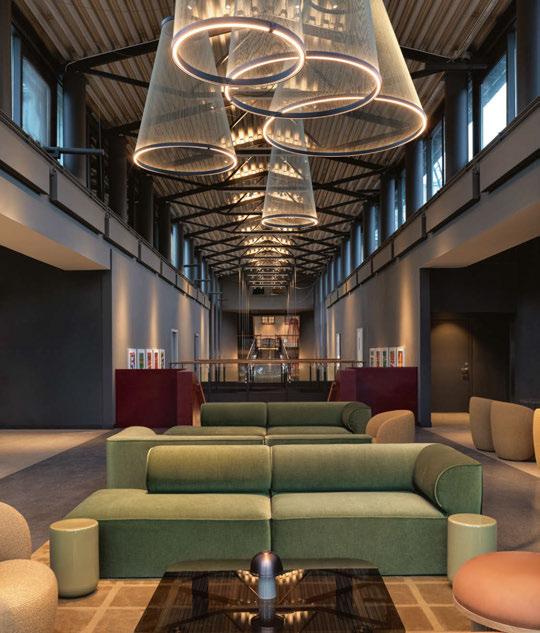
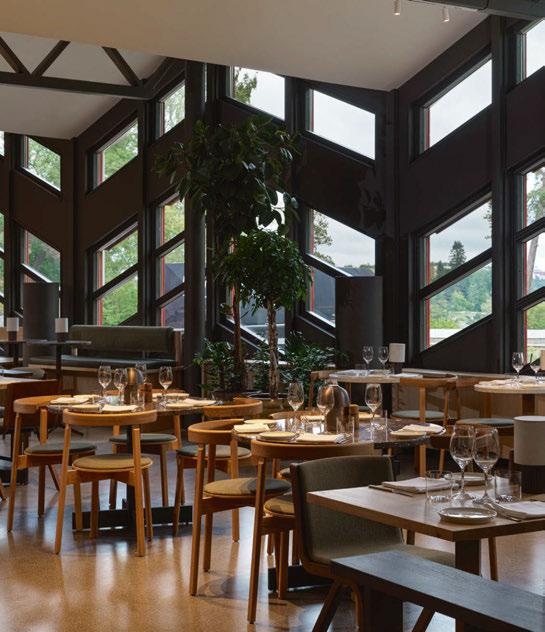
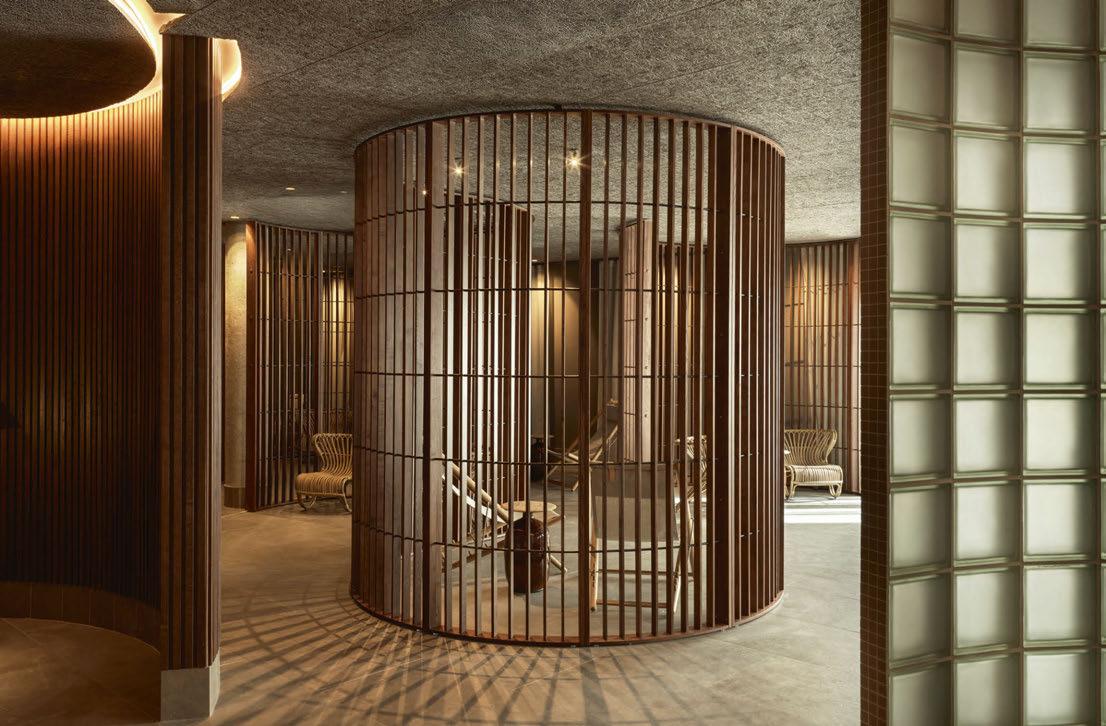
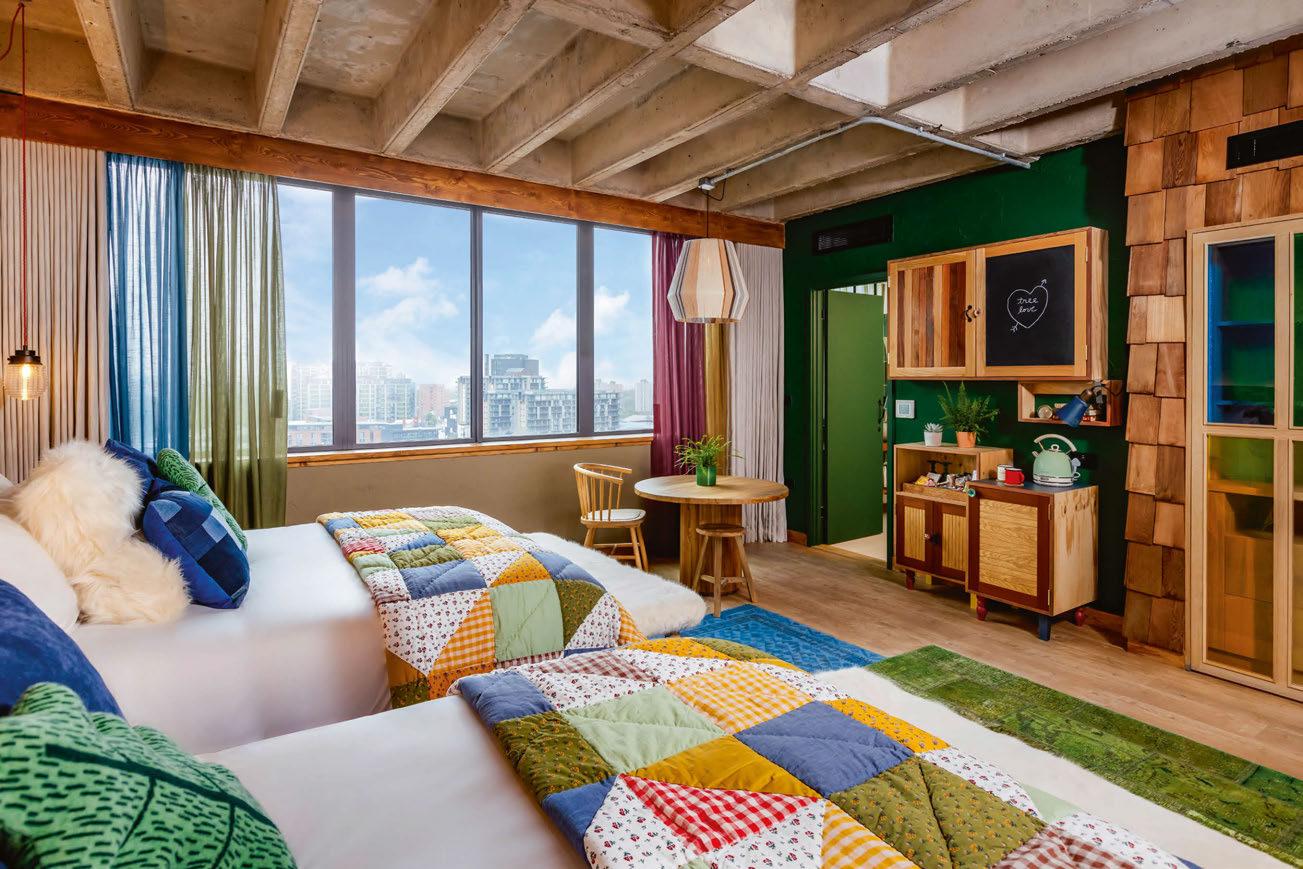
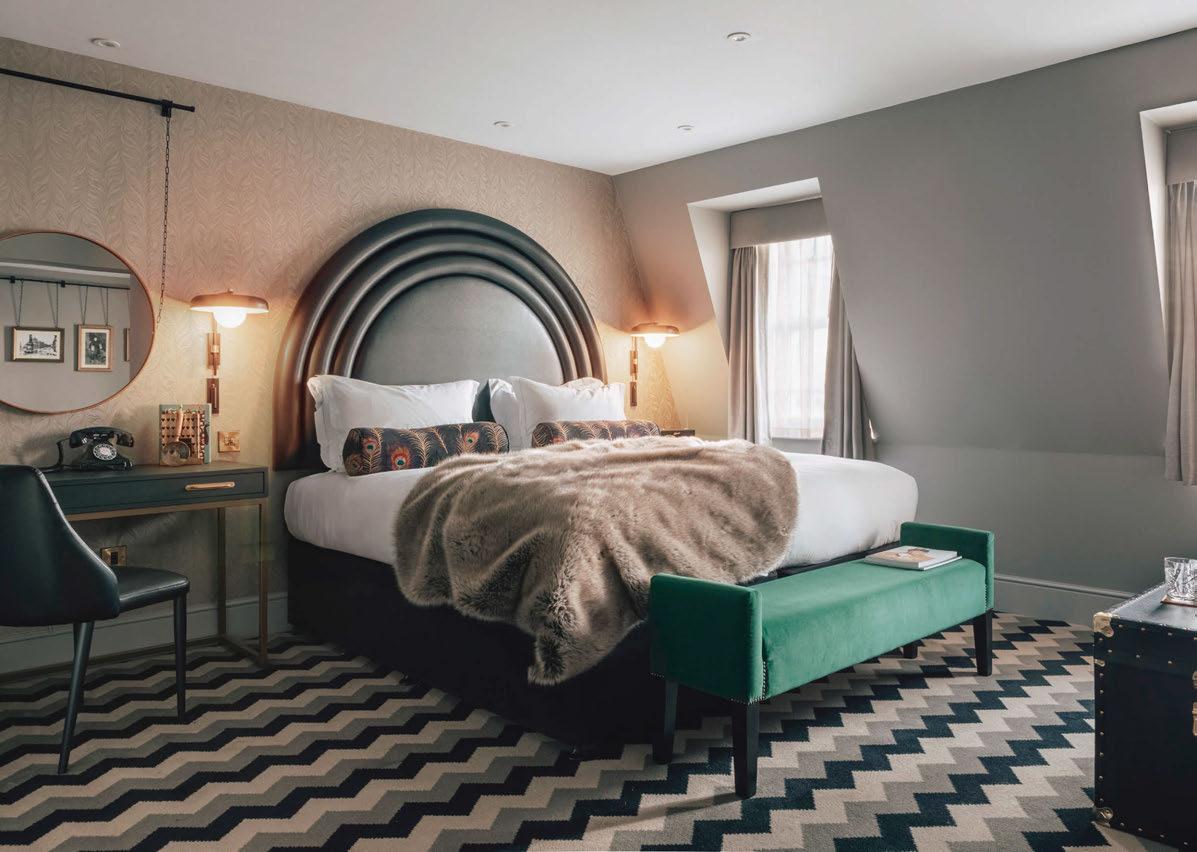
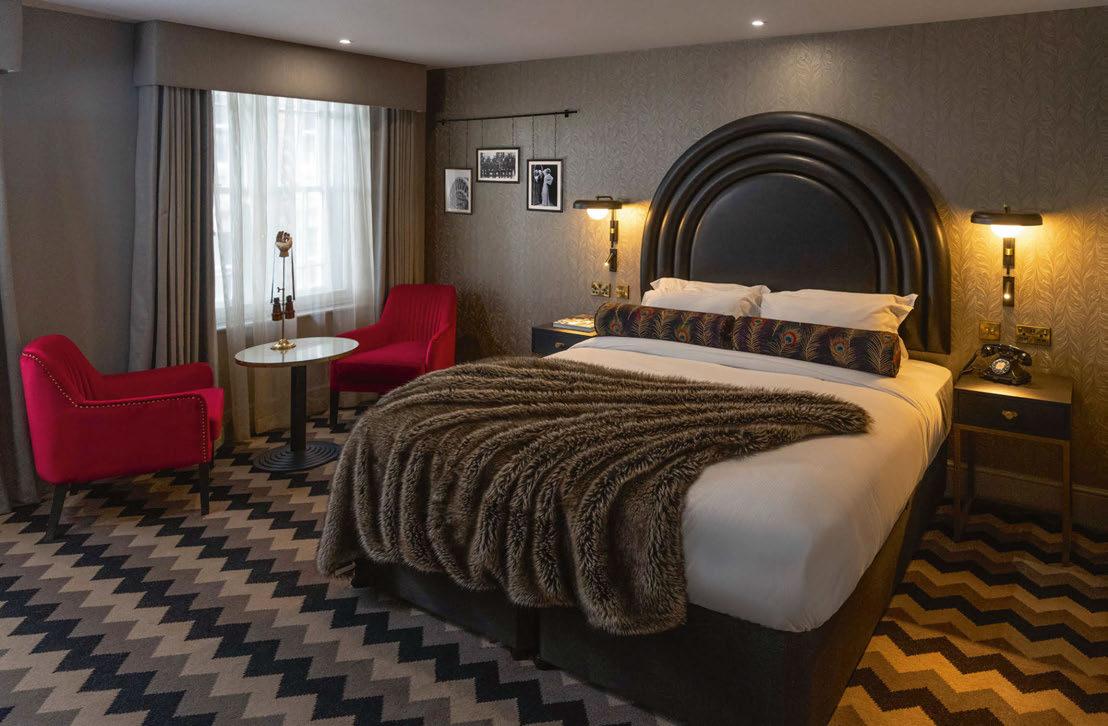
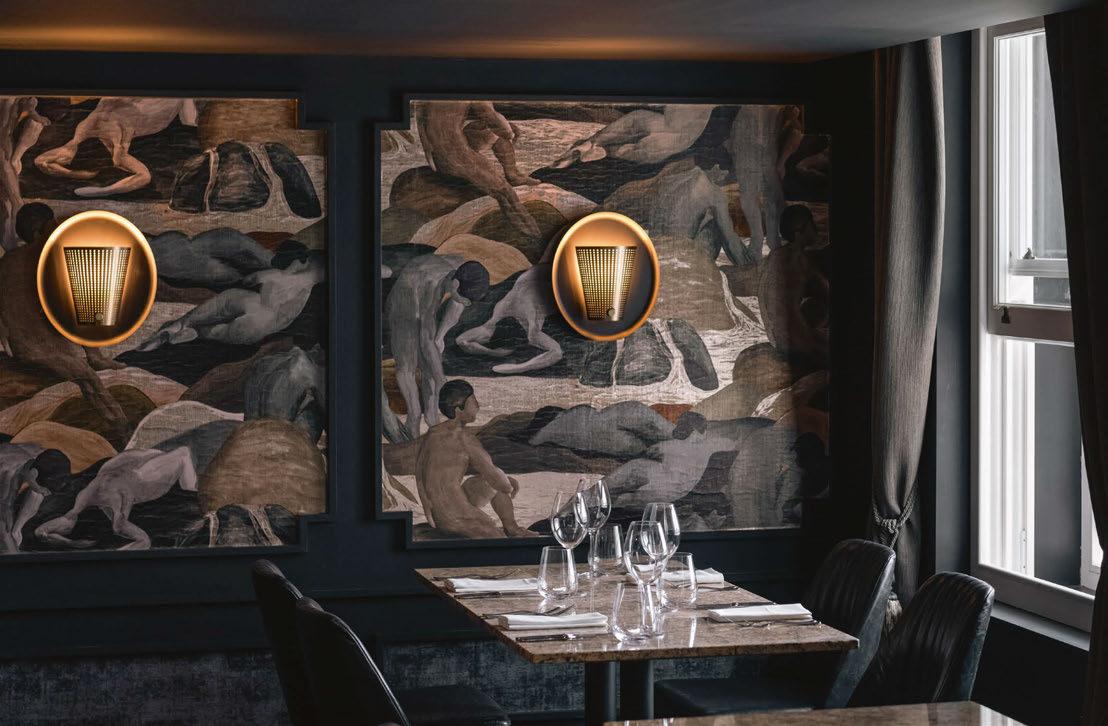
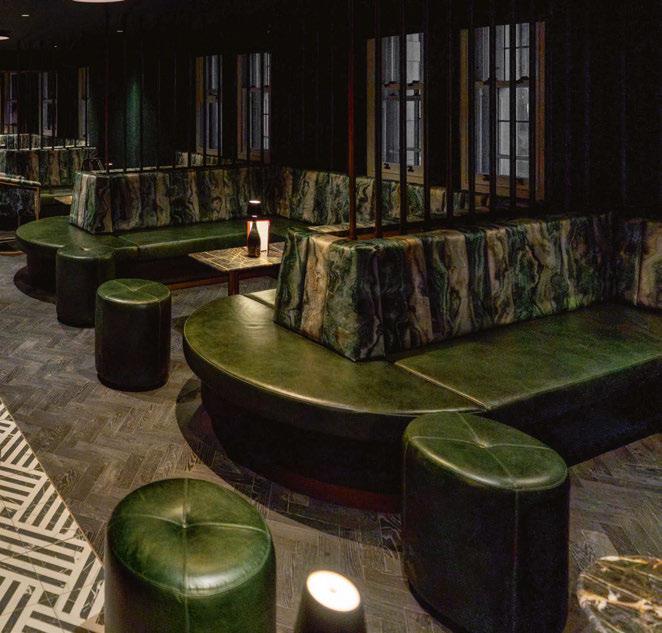
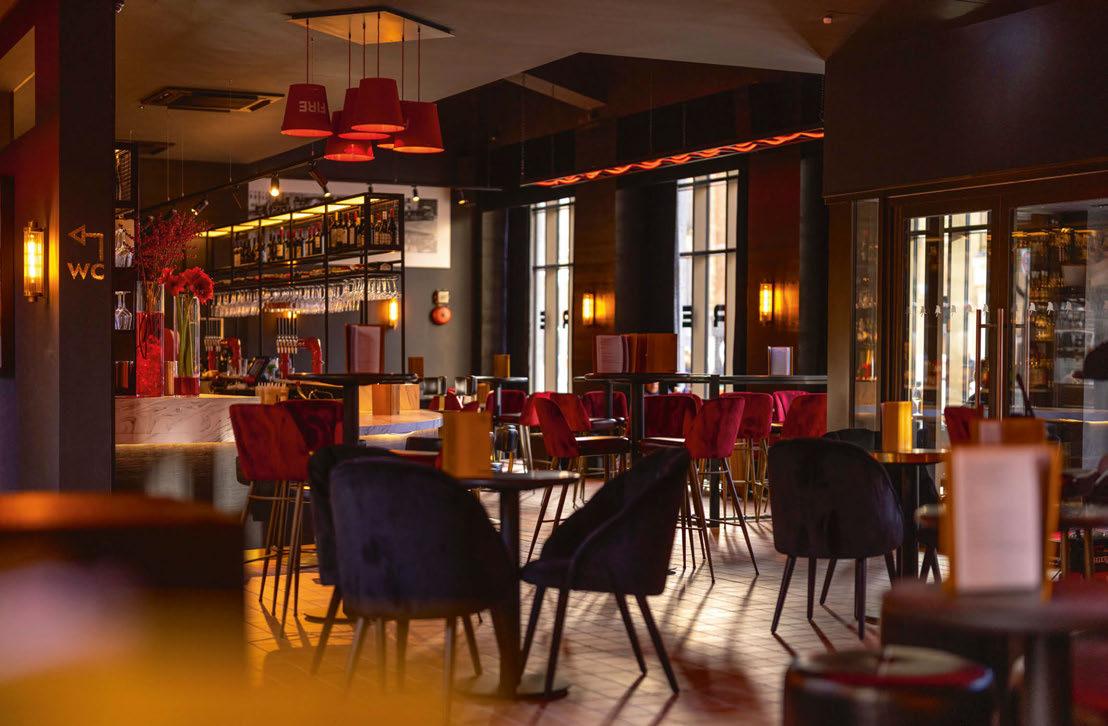
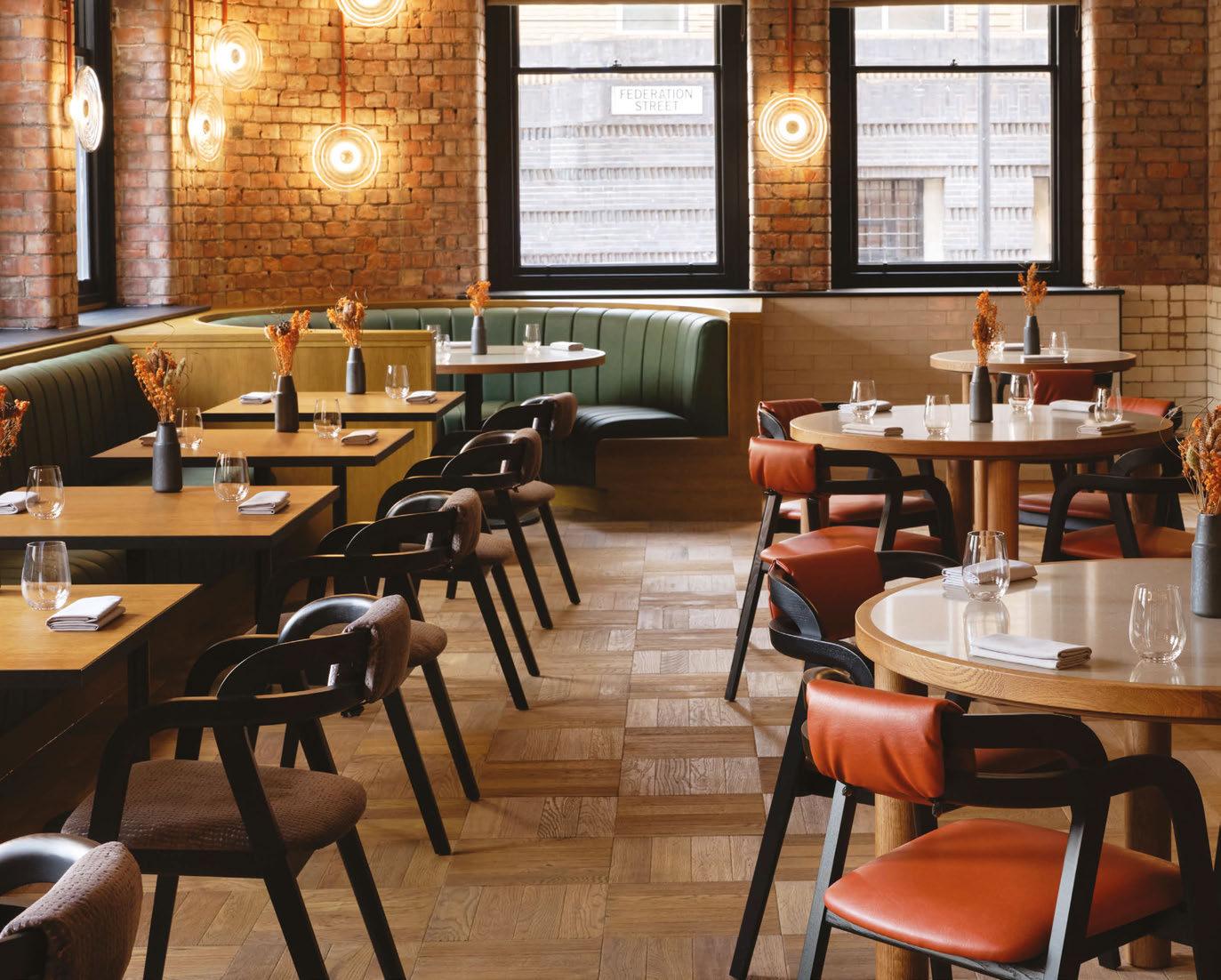
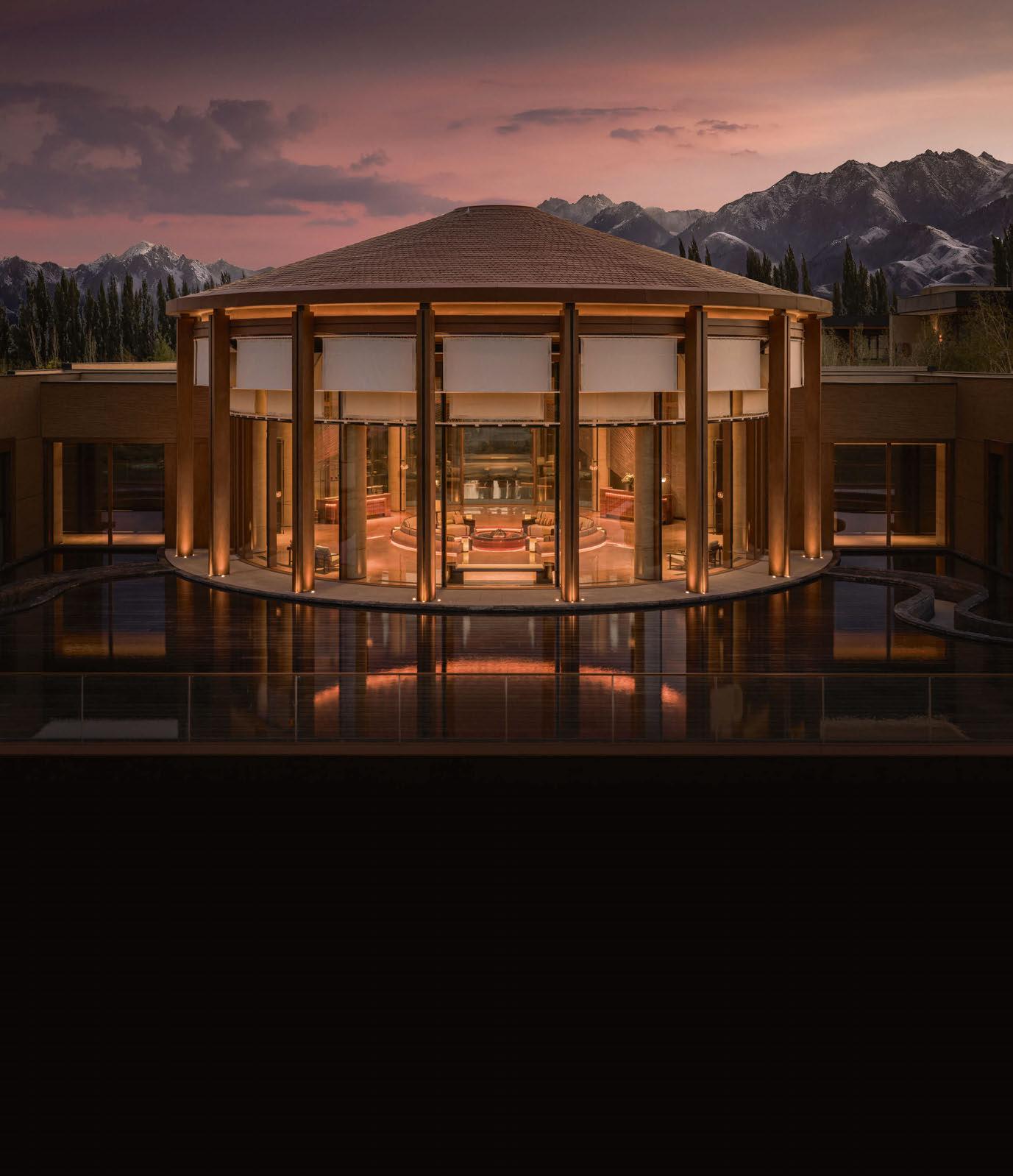
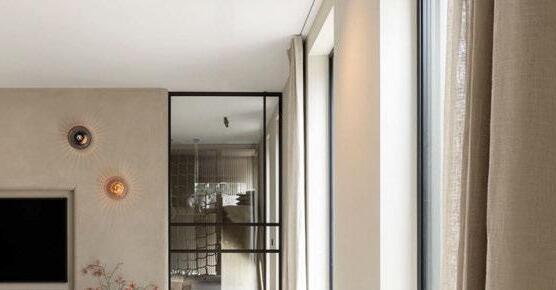
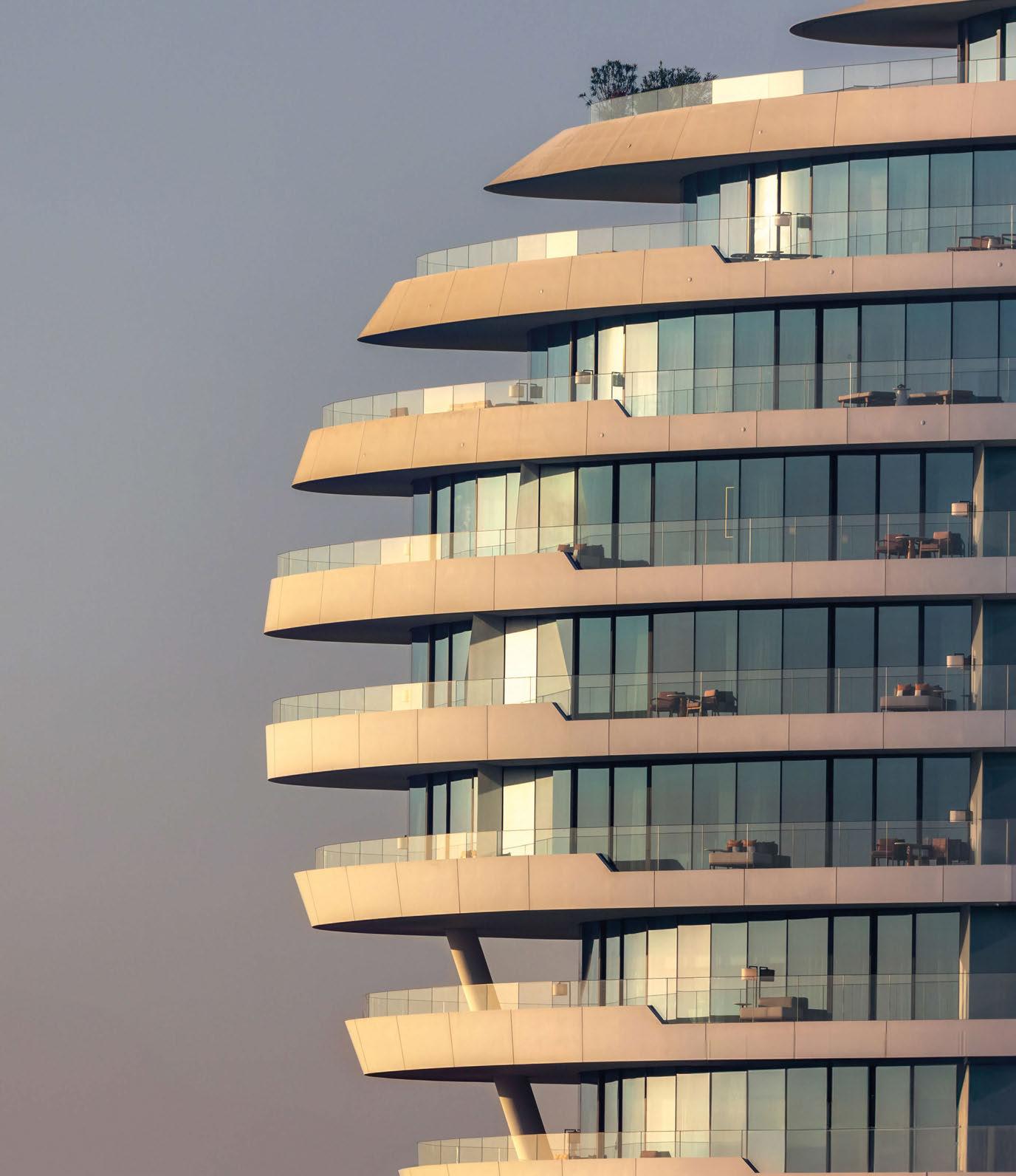
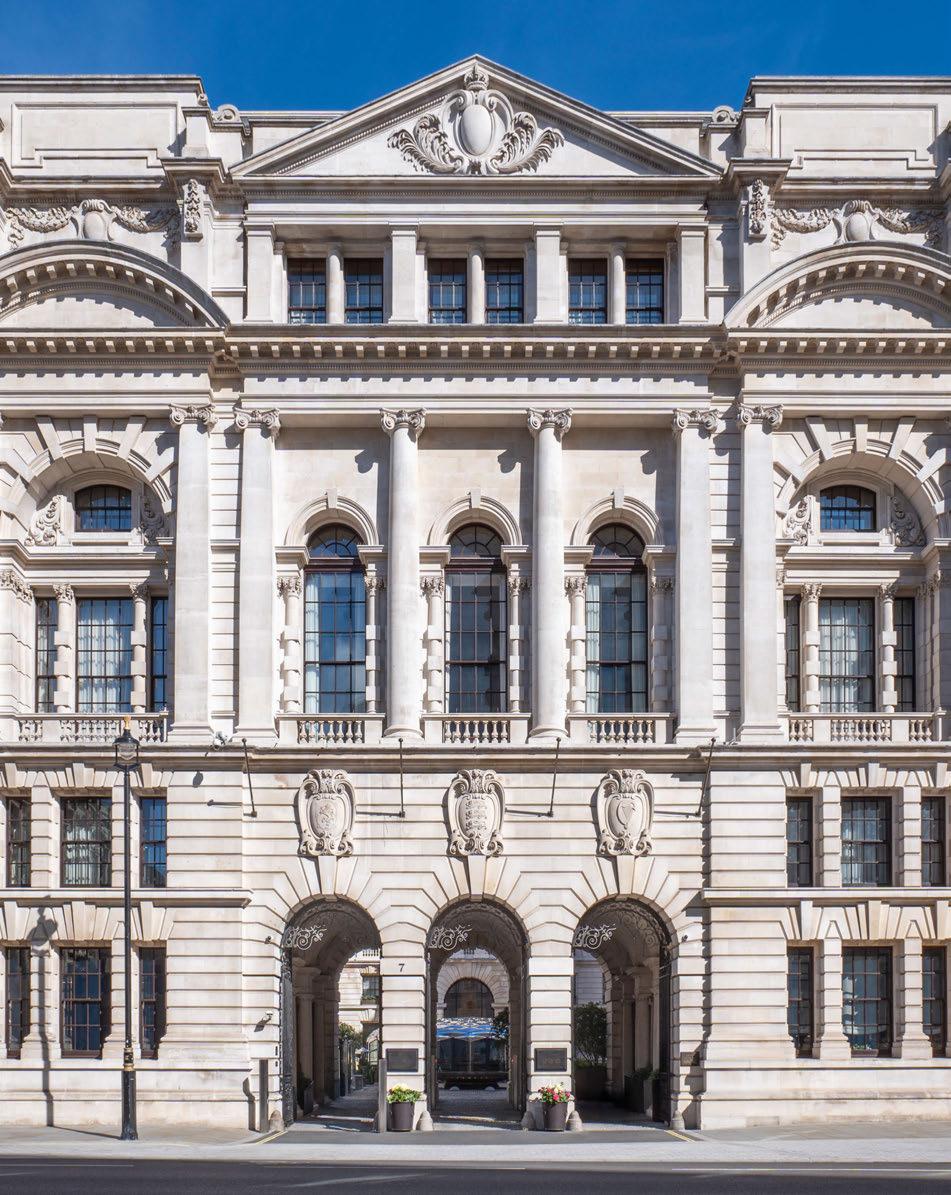
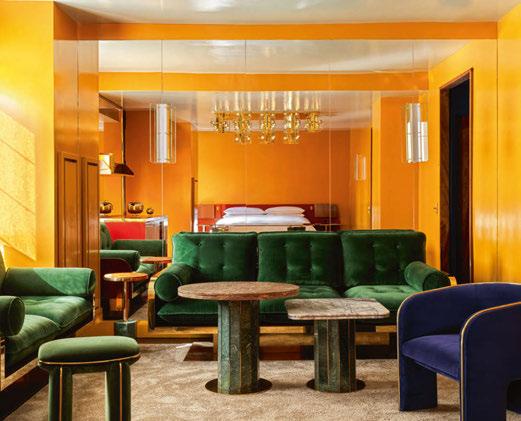
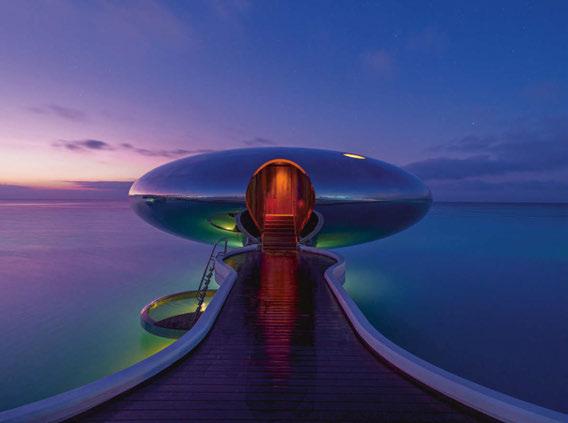
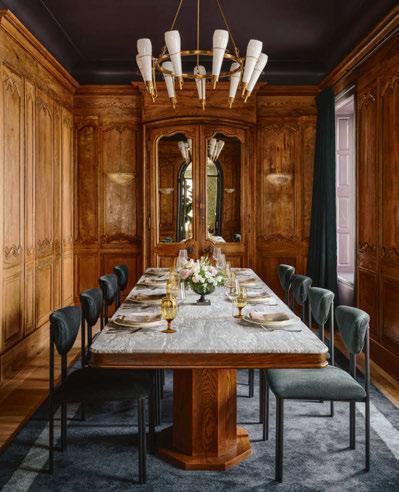
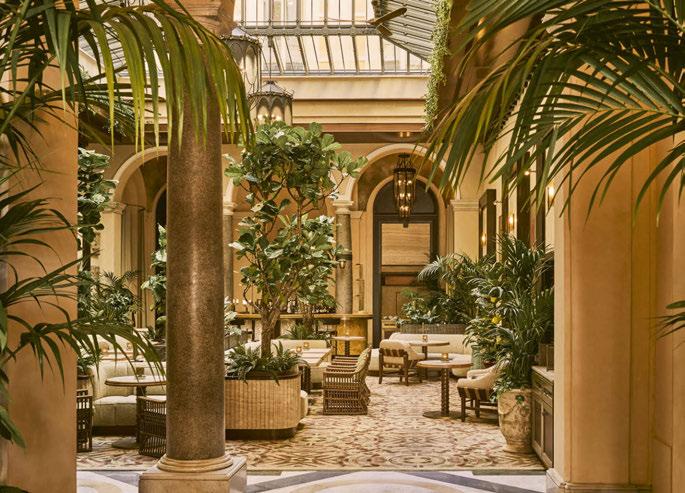
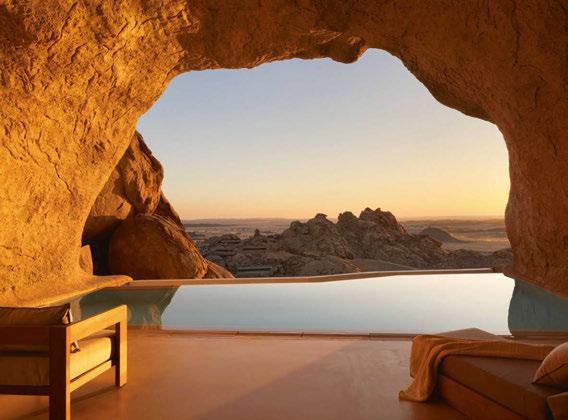
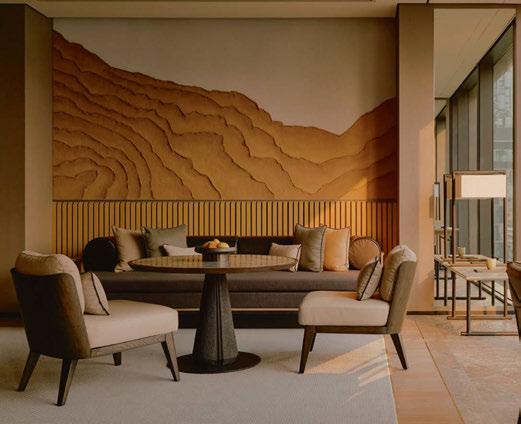
HOBO – OSLO • DAVID ZISSER – OMNAM GROUP • MANDARIN ORIENTAL – VIENNA
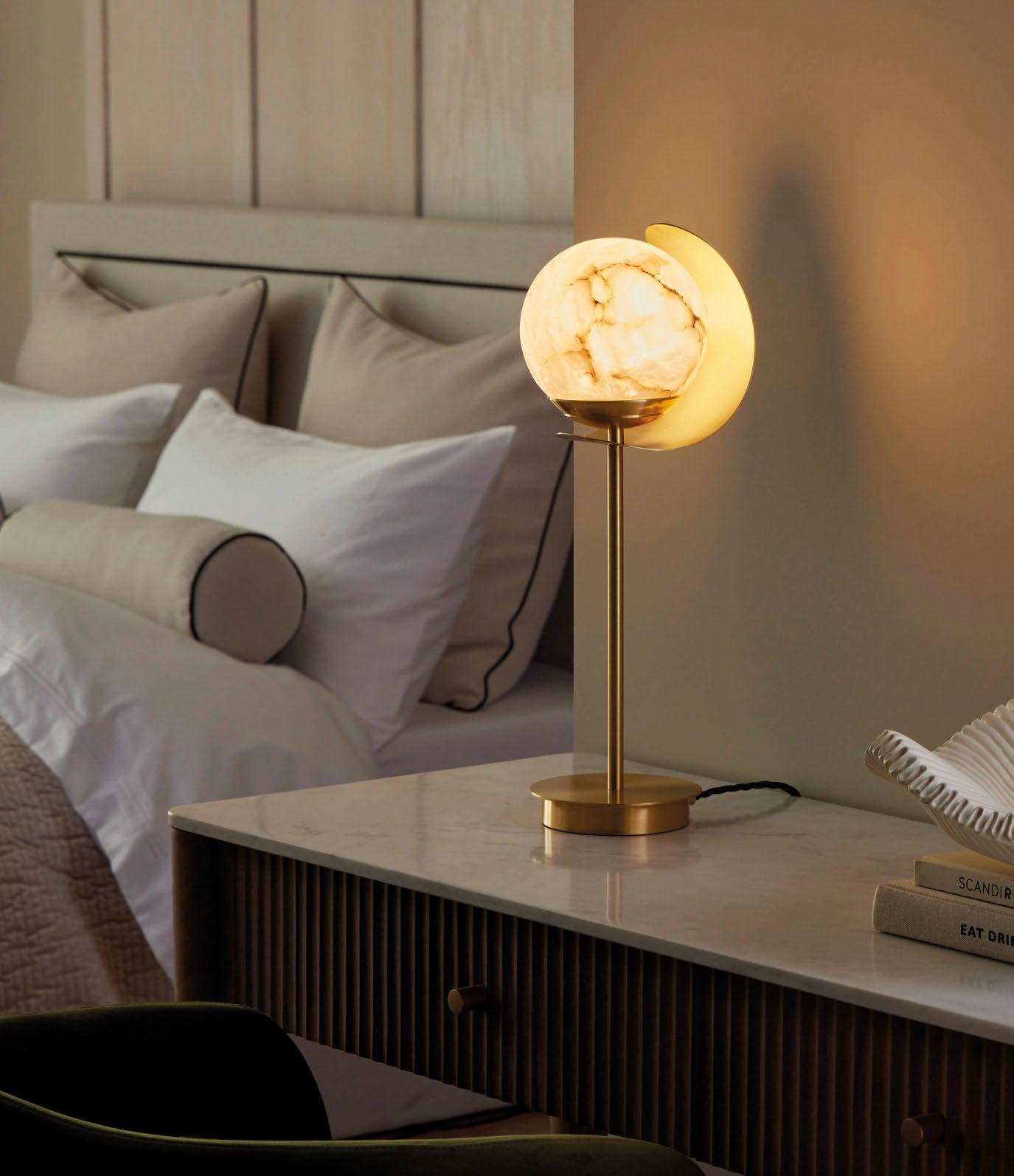
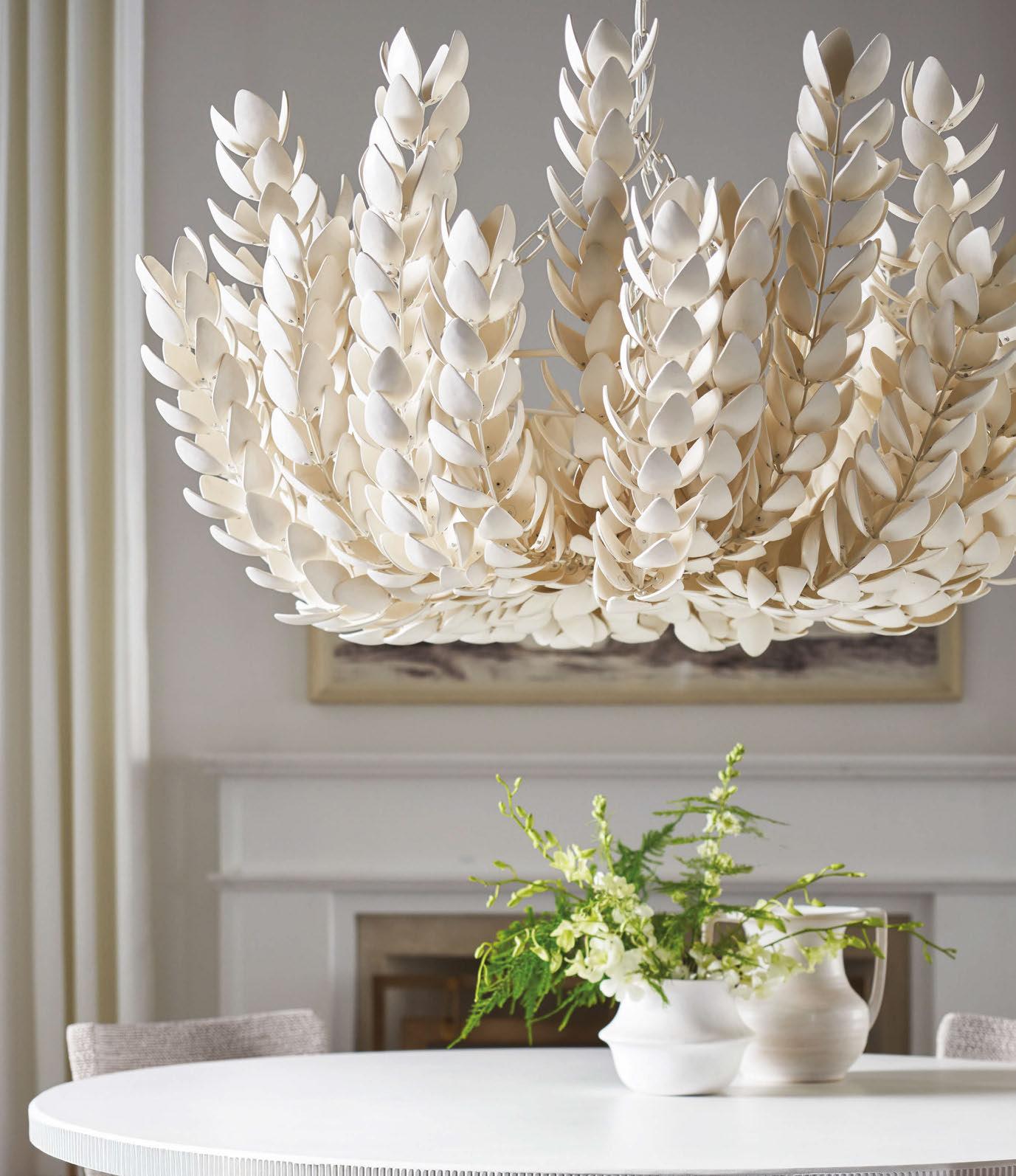
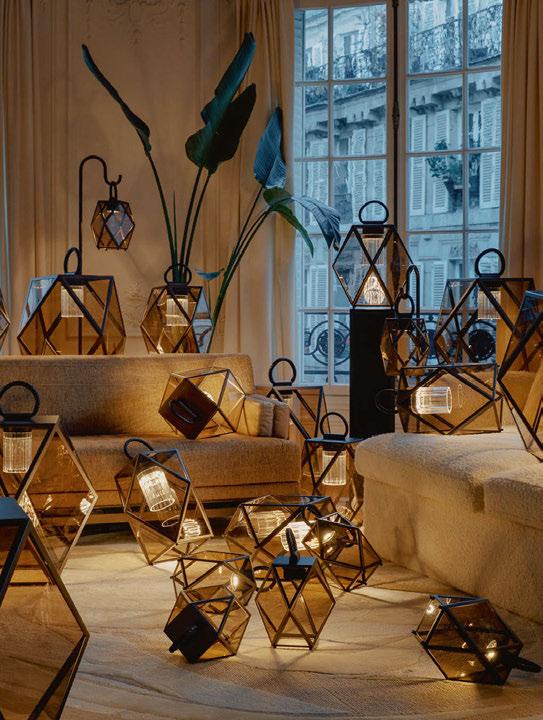
Lighting designed to stand the test of time
In the face of ‘S-word’ fatigue, an IHG initiative is supporting the design community in achieving sustainable impact through specification. Ticket
To Travel
A new report from Marriott International explores how new behaviours, motivations and technologies are reshaping travel, and their impact on the group’s portfolio.
Milo Hutchings
Mel Yates
Nogueira
FEATURES
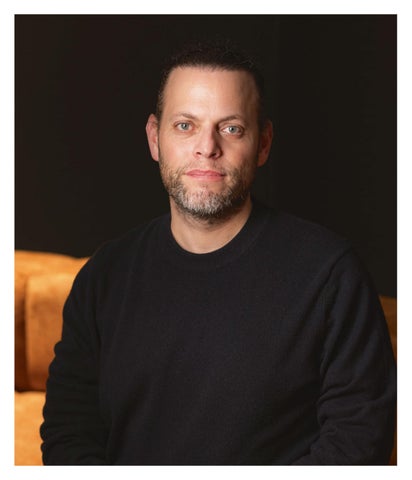
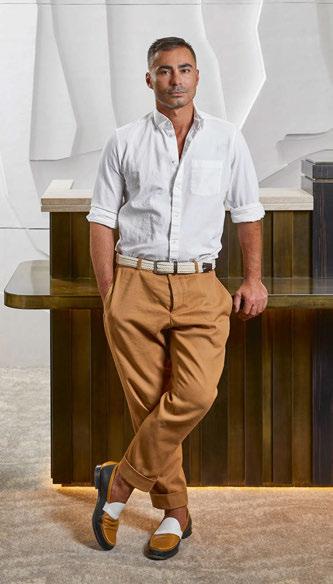
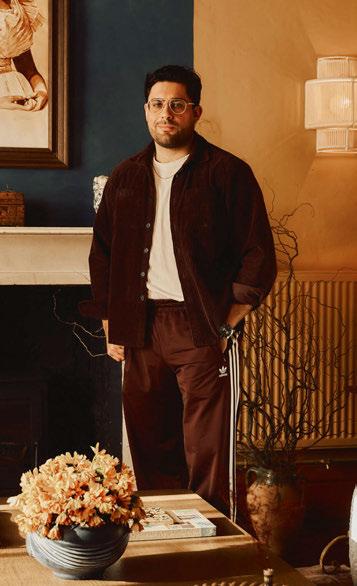
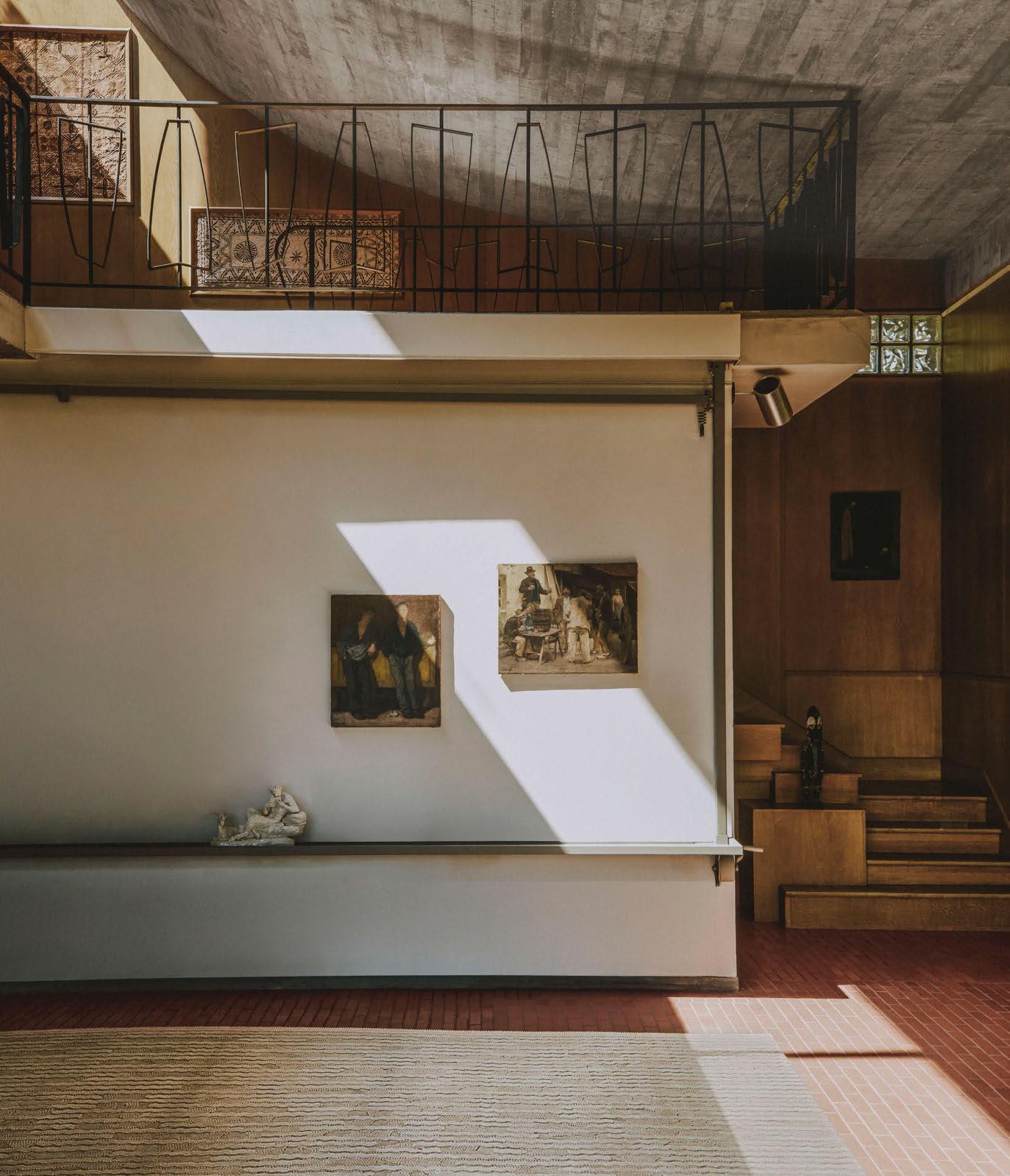
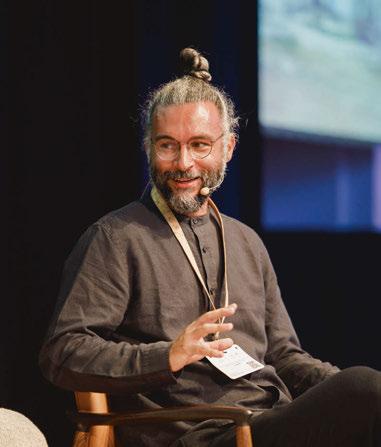
Meeting... David Zisser 042
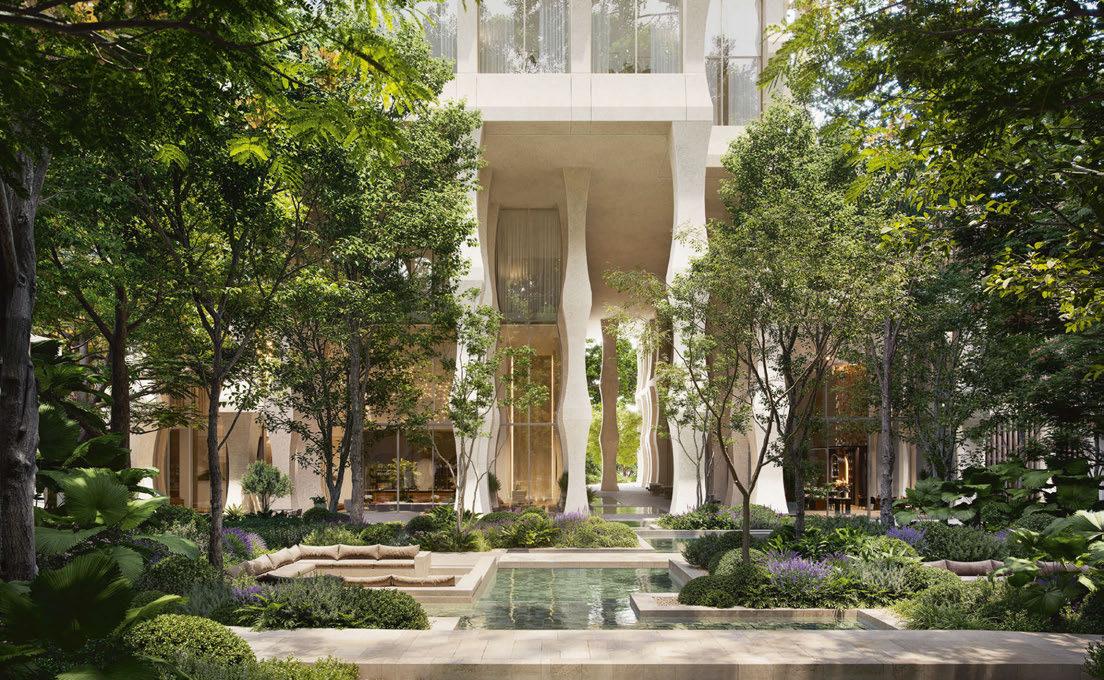
Having built a €2.6 billion portfolio of luxury projects across Europe, the founder of Omnam Group shares how he is redefining hospitality development through custodial responsibility, in-house design capabilities and collaborative partnerships.
Meeting... Victor Clavell 048
As The PuLi Group makes its debut, the newly appointed CEO sets out a refined vision for ambitious growth rooted in design, culture and a distinctly Asian perspective on luxury.
10 Years Of DesignLab 050
Upon celebrating a milestone anniversary, the cofounder of DesignLab discusses the past, present and future of hospitality design.
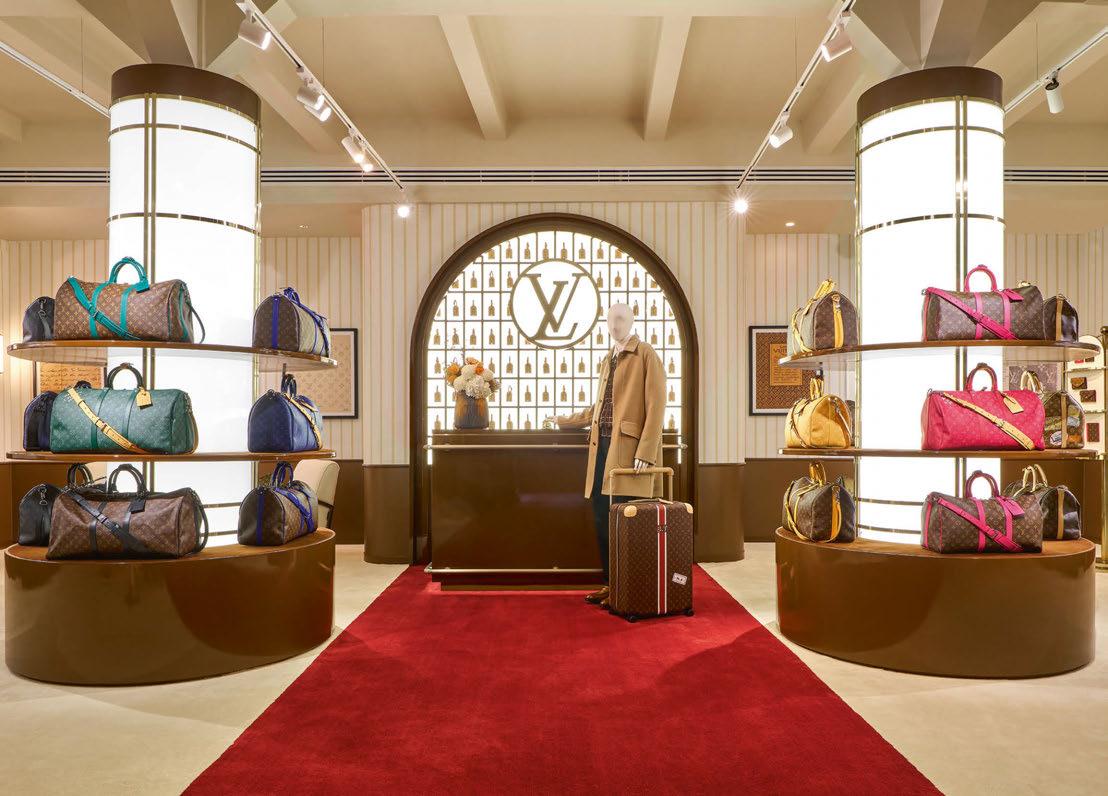
In the hospitality industry, the idea of retail within hotels is often framed as a new frontier – a ‘groundbreaking’ example of one sector borrowing from another to better serve their guest. But in reality, hospitality and retail have long shared the same space: the grand hotels of the 20th century frequently featured boutiques in their arcades, and it’s over a decade since Ace Hotel Shoreditch challenged convention with a floral studio at its door. What’s different today is not the presence of retail within hotels, but the way it is being reimagined.
Historically, hospitality has regarded goods and services as an add-on, offering up a corner of the lobby to sell travel essentials or tourist trinkets. Today, it is embedded in a hotel’s brand identity, becoming part of the guest experience.
This shift is closely tied to the rise of lifestyle hospitality. Hotels are positioning themselves not simply as places to stay, but as cultural hubs where guests and locals intersect. Retail concepts have evolved accordingly, moving away from traditional gift shops towards curated spaces that reflect the ethos of the property. Independent fashion labels, locally made products and limited-edition collaborations now sit alongside hotel-branded merchandise, and in many cases, the retail offer feels less like a store and more like a carefully staged extension of a hotel’s personality.
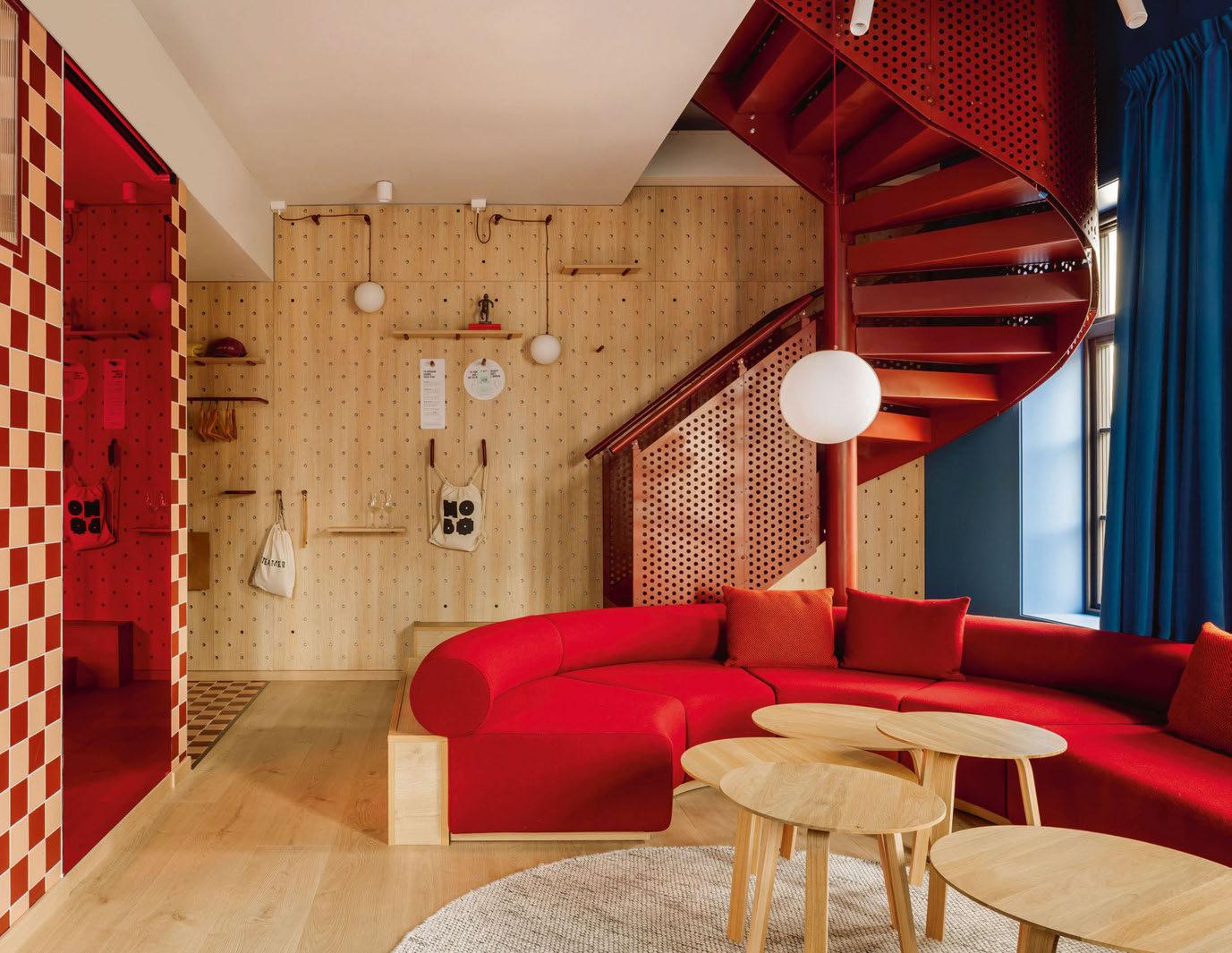
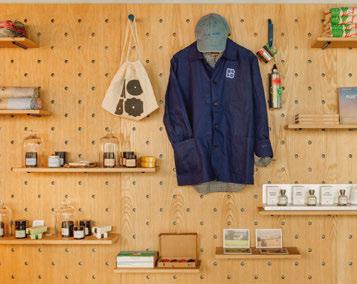
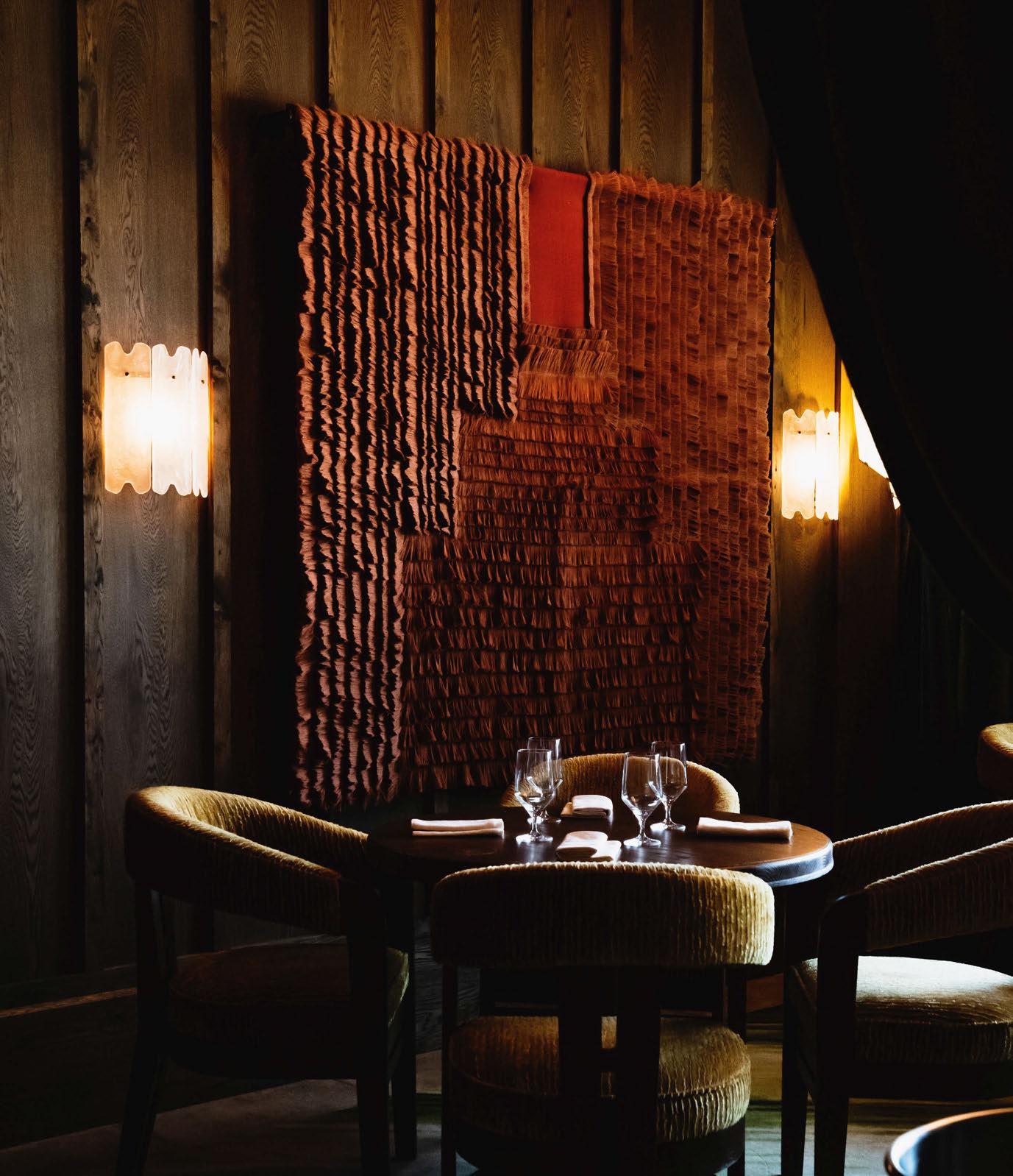
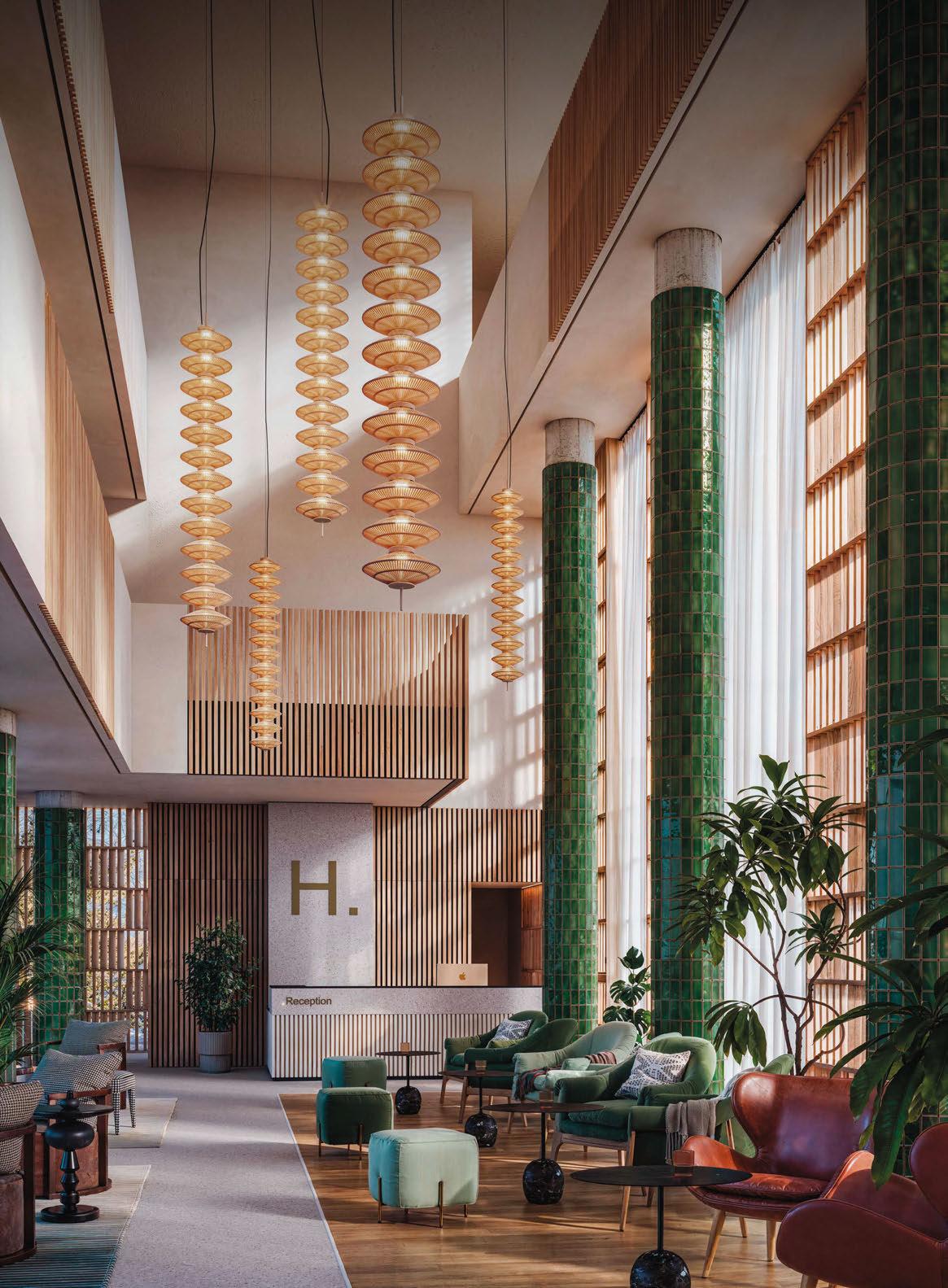
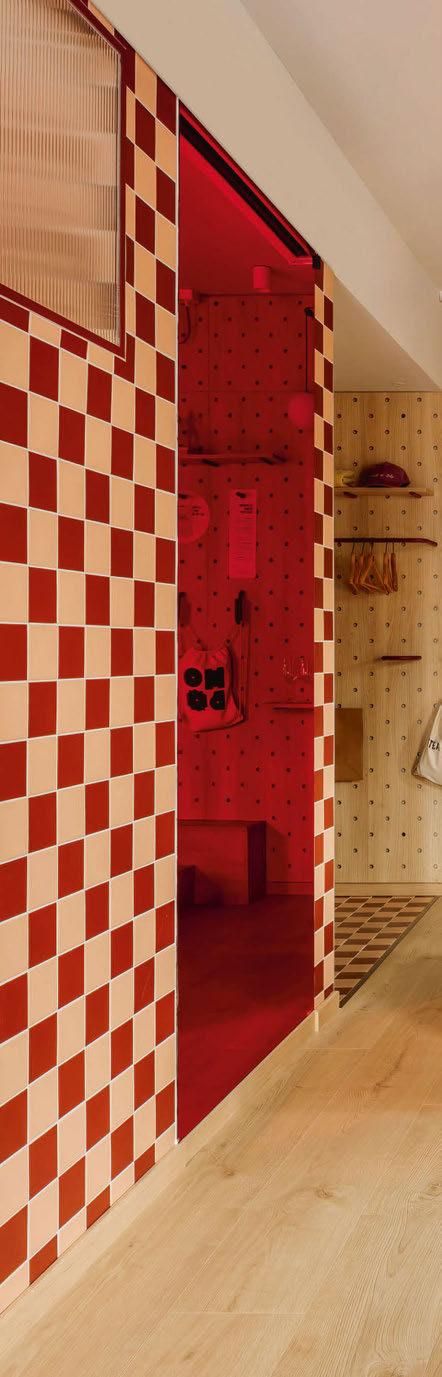
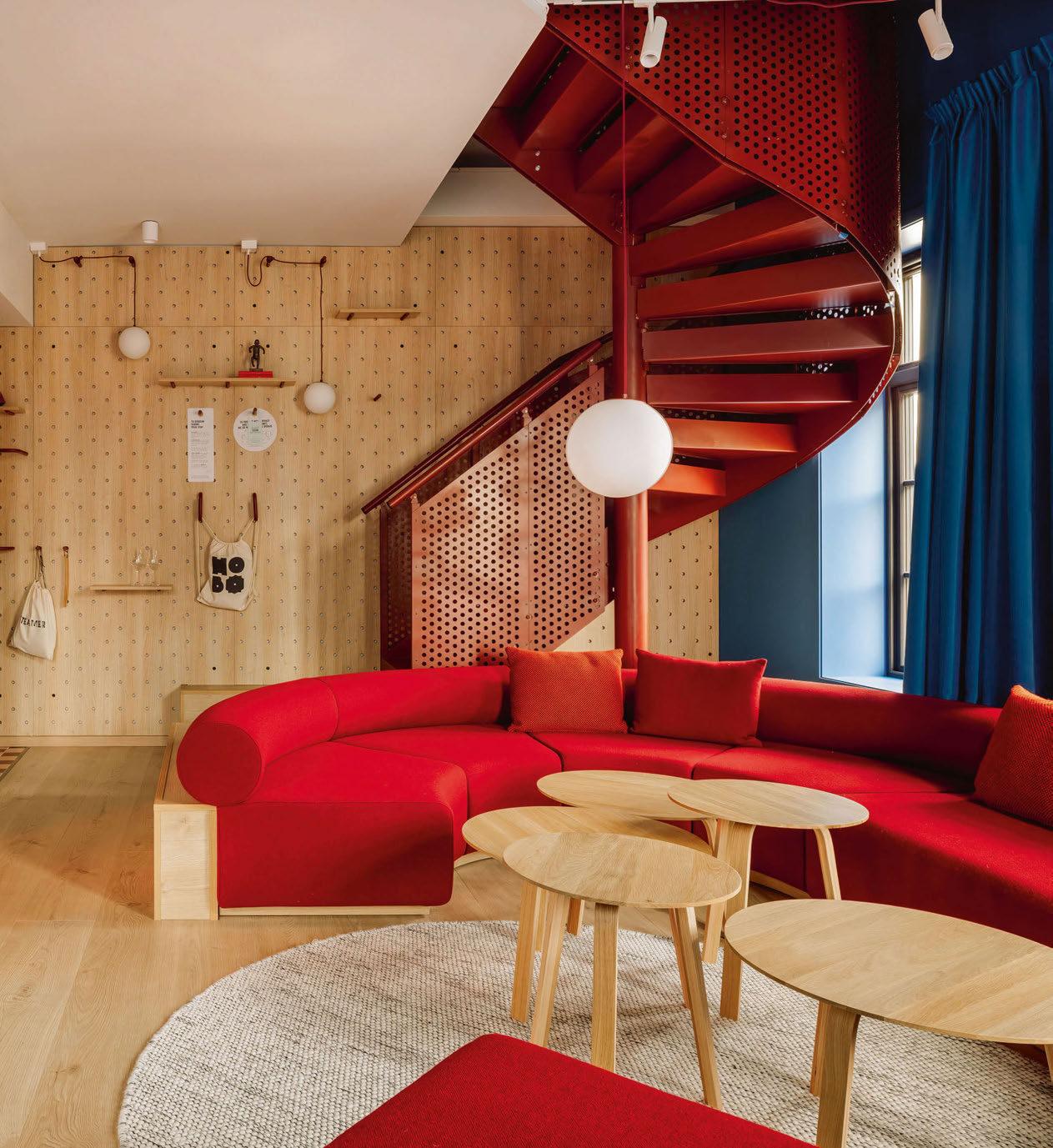
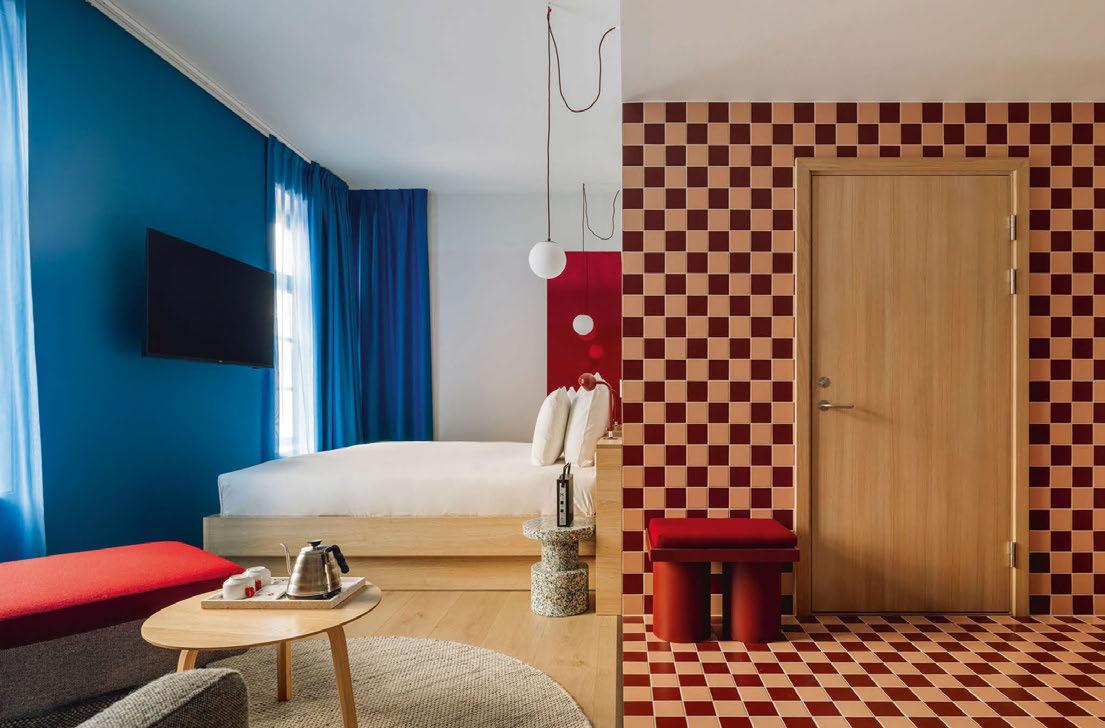
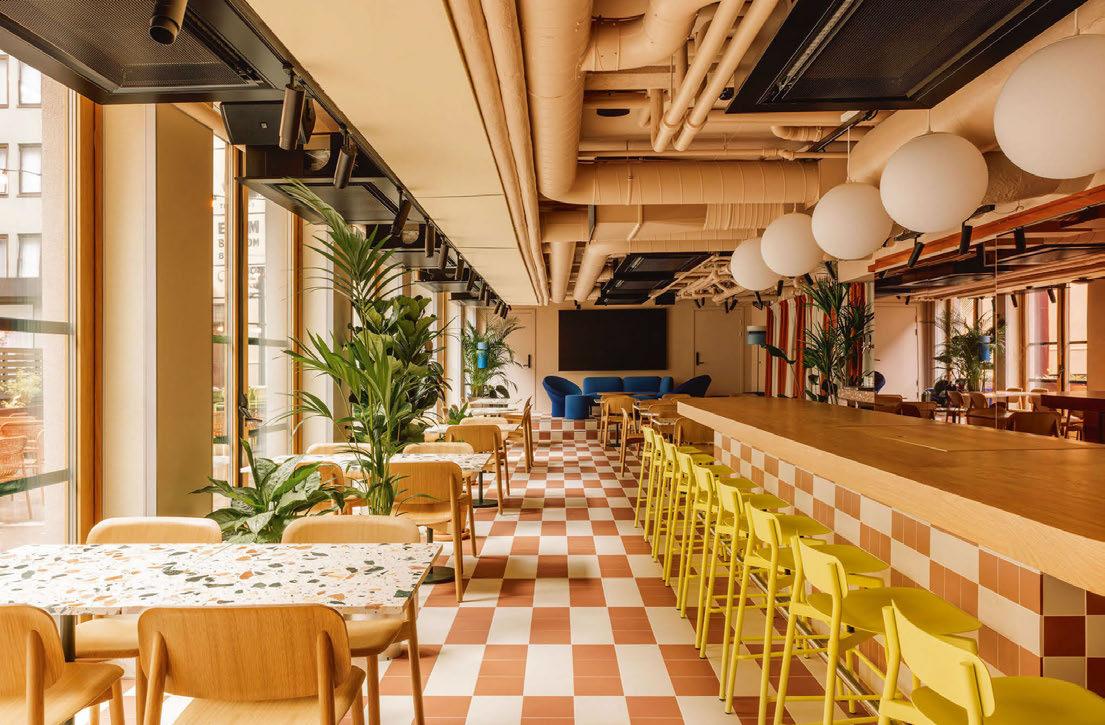
This is certainly the case at Hobo in Oslo, this issue’s cover story. The newly opened outpost may bear a resemblance to its sister sites, but the items sold in the boutique are very much of the destination. The approach not only aligns with the hotel’s overarching ethos of local-led hospitality, it supports micro-enterprises and independent artisans too. Furthermore, the retail offer is integrated into the design narrative. Studio Aisslinger’s fun yet functional pegboard is a key feature of the interiors, lending itself perfectly to the changing display. It also
forms part of a larger social environment, with the showcase acting as a centrepiece of the lobby and conversation-starter among arriving guests and the co-working crowd.
Spatial planning plays a central role in aiding this convergence. Retail areas are now incorporated into public spaces rather than tucked away, reflecting a broader shift in how hotels think about guest interaction. By blurring the boundaries between hospitality and retail, environments encourage exploration rather than transaction.
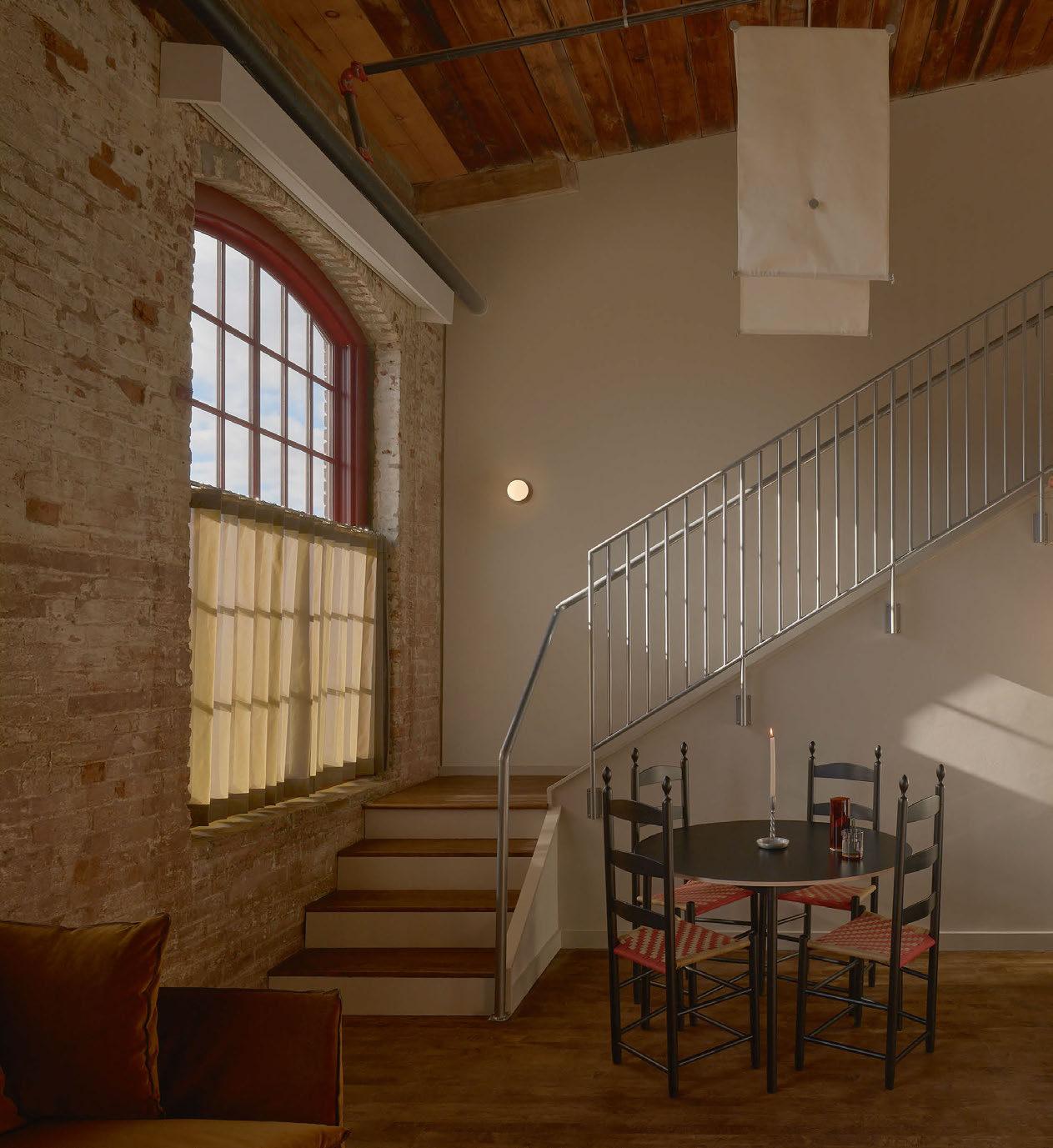
The same can be said for Pocketbook in Hudson, where a former textile factory has been transformed into a 46-key hotel with a collection of retail experiences. Rather than increase the room count, the developers opted to dedicate an entire floor to a hybrid exhibition space, where a mix of artists, designers and makers host installations and pop-ups, soon to be joined by fashion boutiques and bookshops. A sign that retail is no longer just a revenue stream, but a strategy.
There are further examples of hospitality-retail hybrids within this issue of Sleeper. For operators, such ventures present an opportunity to tap into new audiences and continually refresh the guest experience, though authenticity will remain crucial. Guests are attuned to environments that feel overly commercialised, so the most successful concepts will be those that feel natural within the context of the hotel – rooted in local culture, aligned with brand identity and thoughtfully integrated into the design.
Sitting at the crossroads of art, design and quintessential French style, Oscar Lucien Ono represents a new generation of interior architects capable of blending contemporary creativity with decorative heritage. Having founded Maison Numéro 20 in 2014, the designer approaches his projects as a form of storytelling, where material, texture and light contribute to an emotionally resonant narrative. It is this spirit that shapes his latest venture, an immersive hotel concept set to feature at Salone del Mobile.
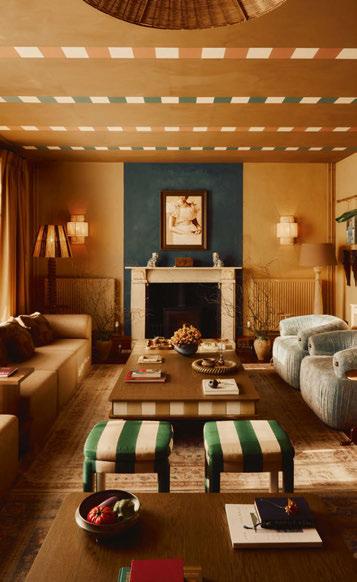
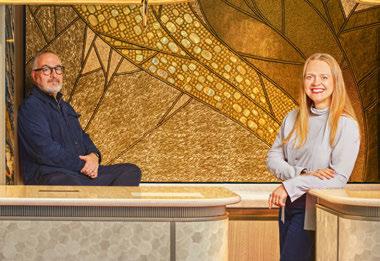
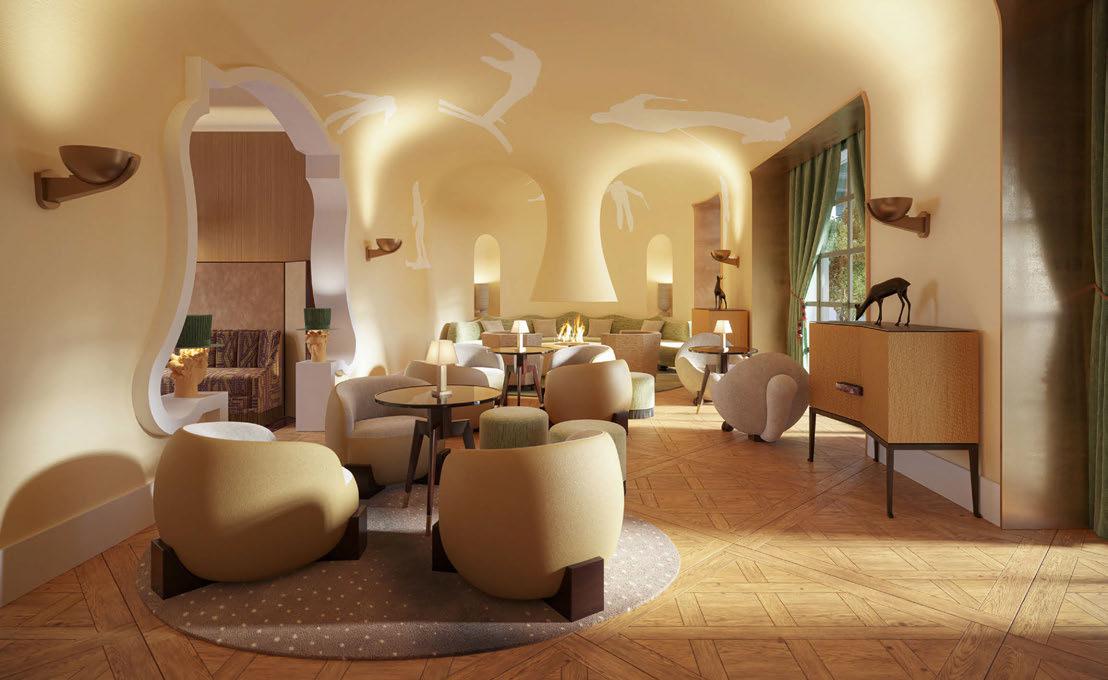
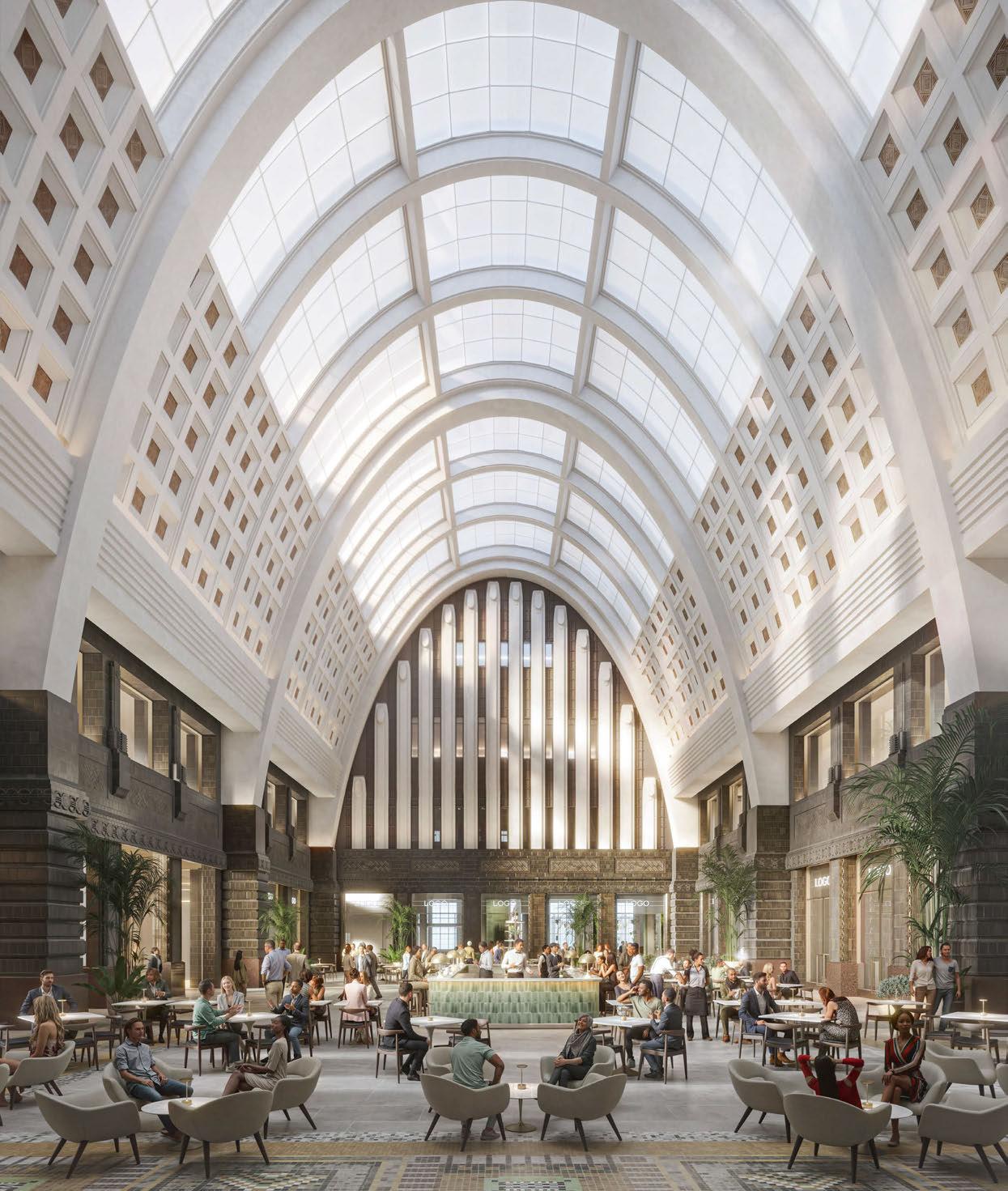
Martin Goddard and Jo Littlefair are no strangers to Vienna. In fact, the co-founders of the eponymous design firm previously spent several years transforming the city’s former military equestrian school into an Autograph Collection hotel for Marriott International. Now, the pair have returned to repurpose a heritage-listed former courthouse as Mandarin Oriental’s debut in the Austrian capital – subverting the building’s law-and-order past to craft a contemporary interpretation of the Secessionist movement.
097
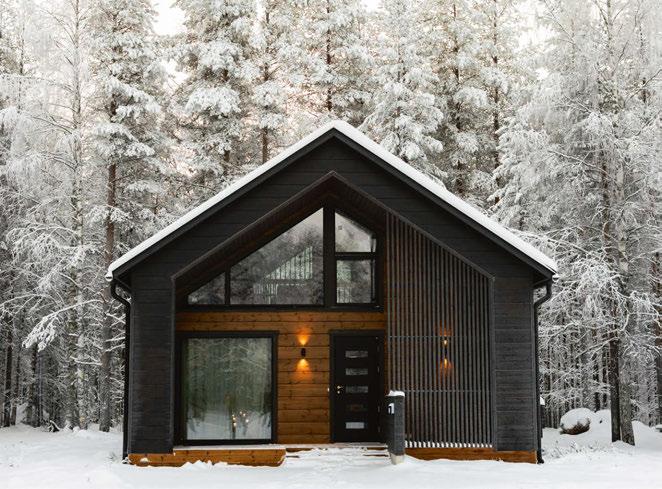
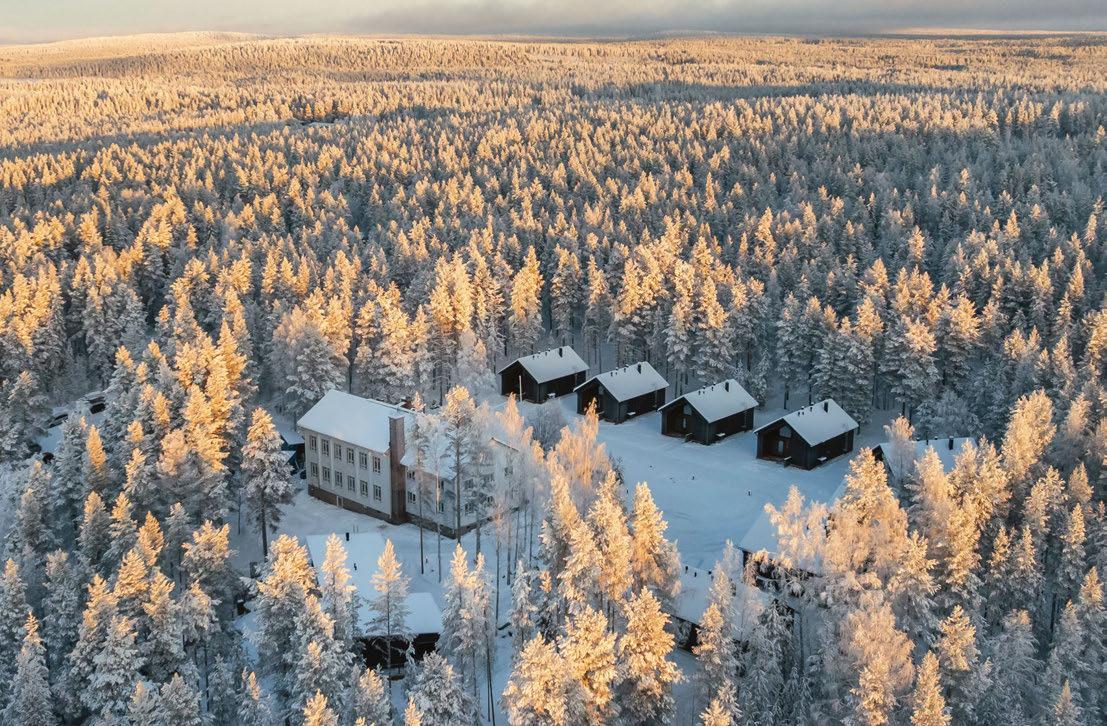
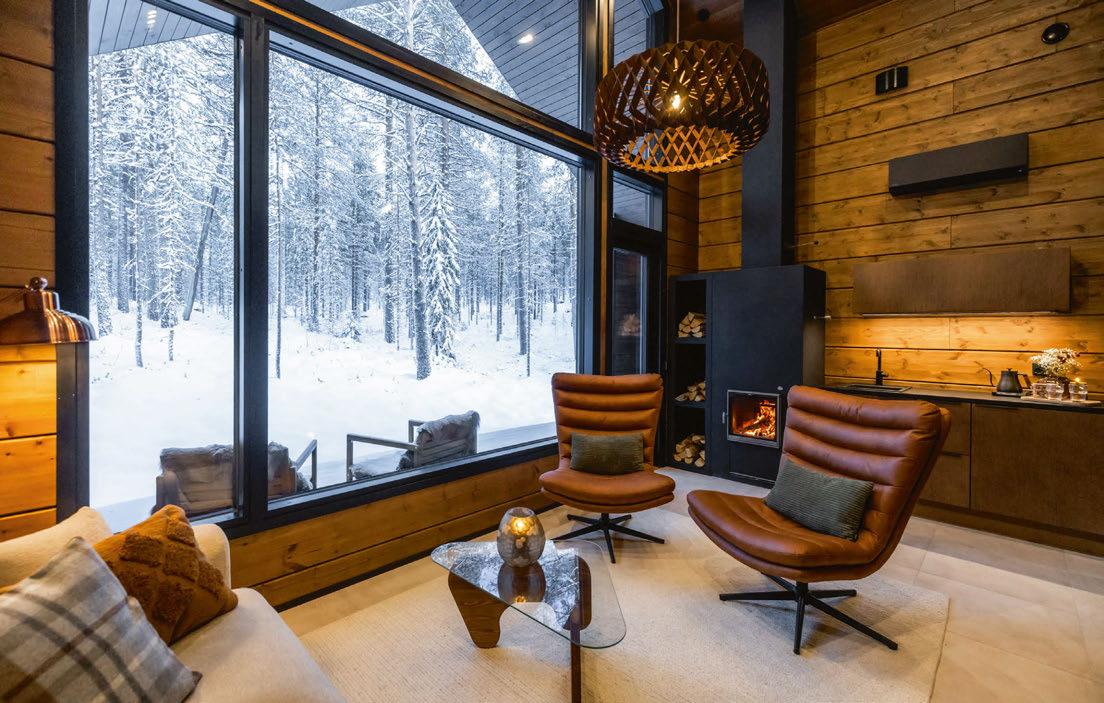
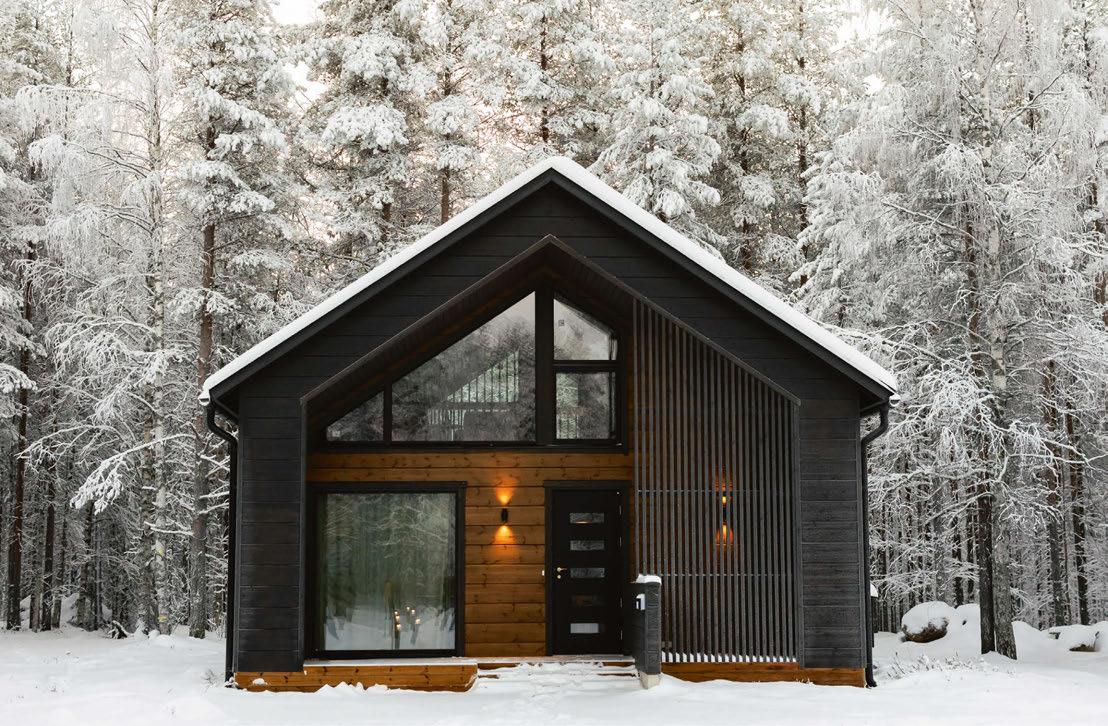
“Our ambition is to create a place where the quiet strength of Finnish nature, design and tradition meets contemporary comfort,” says Susanne Hulbekkmo, founder of Skýra Retreat. Driven by the belief that true luxury is found in authenticity, the entrepreneur has created a stay that is rooted in local culture and a connection to the natural world: “Every element, from the restored schoolhouse to the new log suites and spa, reflects our respect for Lapland’s landscape and the ingenuity of Finnish craftsmanship.”
Having established East London studio House of Dré in 2020, Andreas Christodoulou has brought his architectural expertise to a range of disciplines, from interiors to art and sculpture. Most recently, the designer was tasked with shaping the narrative for Crafted at Powdermills, a new lakeside hotel and members’ club in East Sussex. “We opted for a modern yet playful approach,” he says of the scheme. “We leaned into colour, texture and art as tools to create spaces that feel layered, lived in and welcoming.”
Visit the online store to subscribe and save across all Sleeper Media magazines.
Subscription records are maintained at Sleeper Media. For address changes, email enquiry@sleeper.media
Sleeper (ISSN: 1476-4075 / USPS: 21550) is published bi-monthly by Sleeper Media Ltd and is distributed in the USA by RRD/Spatial Global. Pending periodicals postage paid at South Hackensack, NJ. Send USA address changes to Sleeper, c/o RRD, 1250 Valley Brook Avenue, Lyndhurst, NJ 07071, USA.
EVENTS
Commercial Lead
Kieran Dean k.dean@mondiale.co.uk
Events Manager
Ellie Brown e.brown@mondiale.co.uk
Events Co-ordinator Charlotte Yiatrou c.yiatrou@mondiale.co.uk
Marketing & Events
Olivia Mavers o.mavers@mondiale.co.uk
Data & Marketing
Adam Cymbaluk a.cymbaluk@mondiale.co.uk
DESIGN
Design Manager David Bell
Production Jez Reid
CORPORATE
Chairman Damian Walsh
Chief Operating Officer
Amanda Giles
Accounts ar@mondiale.co.uk
SUSTAINABILITY
Natural • Renewable • Recyclable
Sleeper is printed by Buxton Press on FSC Mix-certified paper using 100% vegetable-based inks. Magazines mailed from Spatial Global are packaged in FSC-certified wrap that is fully recyclable.
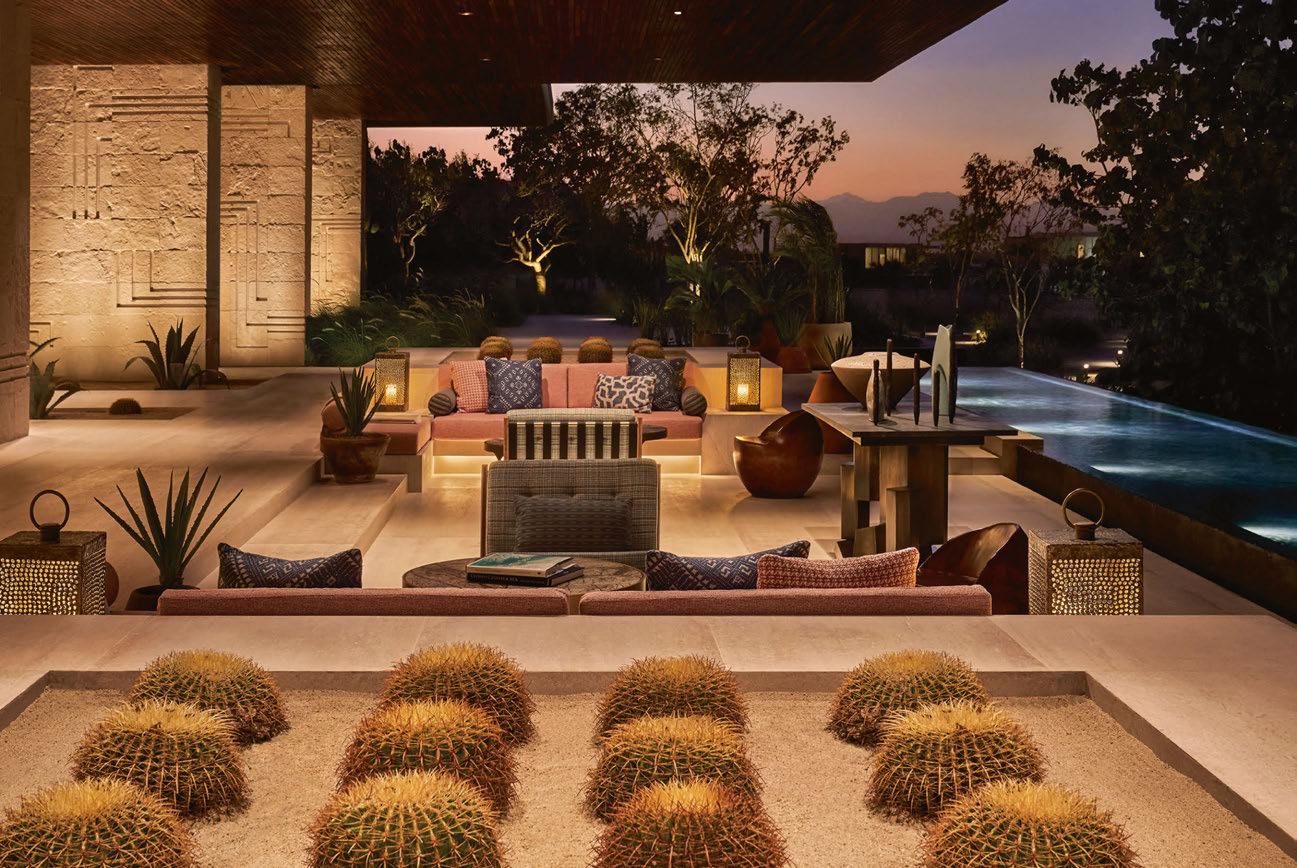
Mexico meets the Mediterranean at a fantasy retreat envisioned by Stephanie Barba Mendoza, where theatrical interiors and eccentric detailing set the scene.
Where are you?
A cliffside retreat on a sun‑drenched Mediterranean isle, surrounded by hidden coves and turquoise waters.
How did you get there?
A seaplane from the mainland, then a barefoot transfer aboard a gleaming powerboat.
Who is there to greet you on arrival?
Hotelier André Balazs: he’s delighted to show me his newly discovered favourite cove.
And who’s at the concierge desk?
The concierge from Hotel Esencia in Tulum, Mexico: they’re warm, quietly encyclopaedic and well versed in secret beaches.
Who are you sharing your room with?
A beloved real life friend who loves the sea as much as I do. Equal parts companion and co conspirator in midnight swims.
Is there anything you would like waiting for you in your room?
A selection of the sweetest seasonal fruits, a bottle of chilled rosé and a handwritten list of tide pools and moonlit tables.
Describe the hotel, your room and the view... My suite has impossibly high ceilings and features marble borders and terrazzo flooring, along with linen curtains that sway in the breeze.
A four‑poster bed is topped with embroidered sheer linens and handstitched pillows in ocean blues, while furnishings mix antiques, local ceramics and thoughtfully eccentric finds. Out on the terrace, there’s a half‑sunken seawater plunge pool and a wooden jetty that leads directly into the ocean. The horizon is generous, the weather perfect; luxury feels curated, intimate and exquisitely detailed, like staying in a beloved seaside secret.
Who designed it?
It’s a collaboration that channels Piero Portaluppi’s refined proportions and Renzo Mongiardino’s theatrical interiors – pure, tasteful luxury with extraordinary detailing.
What’s the restaurant and bar like?
Dusk brings lantern‑lit pathways that lead to a tucked‑away dining experience. It’s an open air space with linen canopies, rattan woven chairs and more lanterns. The bar is beautifully lit and faces out to sea; bartenders craft ice‑cold martinis and citrus‑bright cocktails, while conversation drifts with the tide.
Who are you dining with this evening?
André Balazs, Tilda Swinton and RuPaul, together with my father and my friend.
Who’s manning the stoves?
Massimo Bottura, the Italian chef behind Osteria
Francescana: here, he’s playful, sea‑minded and brilliantly inventive.
And what’s on the menu?
We begin with an amuse bouche of sea‑spray sorbet, followed by a starter of citrus‑cured sliced fish with wild fennel pollen and smoked salt. The pasta course is hand cut tagliolini tossed in a silken sea urchin cream, brightened with lemon zest, a drizzle of olive oil and shards of bottarga, and the main is wood‑grilled local fish with charred greens. For dessert, there’s local goat’s cheese with honeycomb and toasted pine nuts, and finally, an olive‑oil cake with lemon curd and thyme ice cream.
Would you like something to drink with that?
An dry vodka martini with a twist to start, followed by a minerally Vermentino.
What’s in the mini-bar for a night cap?
Artisanal dark chocolate and Japanese whisky.
What toiletries would you like to freshen-up?
Salt body scrub, calming bath salts and vetiver and fresh forest body oil.
Early morning alarm call or late check-out?
Late check out.
Bath or power-shower?
Power shower.
And for breakfast?
Smoked salmon and scrambled eggs on sourdough with artisanal butter and lemon.
DRAWING BOARD
Lifestyle brand Nammos is set to introduce its signature Mediterranean glamour to the Middle East this spring with a luxury resort in Saudi Arabia.
Marking the first new opening under the brand’s global expansion plan, Nammos Amaala comprises 110 accommodations including suites, pool bungalows and villas, as well as 20 private residences, crowned by the exclusive Cliff Villa. The destination is anchored by a private island featuring a collection of infinity pools and signature dining venues, including the famed Nammos Restaurant. Meanwhile, the dedicated wellness hub is home to the Amaala-exclusive Nammos Spa, where its proprietary philosophy of ‘Boundless Wellbeing’ will be powered by a partnership with Augustinus Bader.
Blending Greek and Saudi Arabian aesthetics, architecture by Foster + Partners draws inspiration from traditional Hijazi architecture, while interiors by Lazaro Rosa Violan Studio and Elastic Architects capture the timeless elegance of Cycladic style.
“For years, the global ultra-luxury landscape has been divided into two worlds: the social energy of the world’s most sought-after lifestyle destinations and the silent isolation of the resort,” says Carolyn Turnbull, CEO of Nammos Hotels & Resorts. “At Nammos Resort Amaala, those worlds collide. We are bringing our signature social connection into a destination built on regenerative luxury, creating a rhythm that the region has never seen before.”
EXPRESS CHECK-OUT
Owner: Kosta Miachin
Operator: Vikasa www.vikasa.com
Building on its established presence in Thailand, Vikasa is set to open a new yoga-led wellness retreat on the private island of Ko Lon, just off the coast of Phuket.
Accessed by a traditional longtail boat from the mainland, the resort reinforces a sense of separation from the hustle and bustle of everyday life. Upon arrival, guests will find the holistic wellness destination nestled amid verdant tropical nature, merging modern elegance and architectural flair in an escape designed to nurture relaxation and rejuvenation.
In addition to 50 elegantly appointed guestrooms, the exclusive beachfront retreat will incorporate an array of wellness facilities including four open-air yoga salas, a state-ofthe-art spa, an outdoor gym and an infinity pool overlooking the Andaman Sea. Guests will also have access to fire-pit lounge areas and the Life Café, serving a wellness-led menu of locally inspired dishes.
Marking the second property in the brand’s portfolio, Vikasa Phuket is an evolution of the original Koh Samui destination, which first opened in 2011 and will remain home to its yoga teacher training programmes and ‘Vikations’ – flexible and curated yoga holidays designed to suit individual needs and goals. The Phuket location will expand on these offerings, becoming home to the brand’s Personal Programmes and Signature Retreats, inviting guests to the island for a minimum of seven days for a stay that emphasises disconnection, rest and renewal.
Through its rich cultural programming, workshops and immersive experiences, guests will be encouraged to completely unplug and recharge. Supported by Western wellness professionals and a Thai hospitality team, guests are offered a structured opportunity to step away from daily routines and focus on wellbeing in a secluded island setting.
Vikasa PHUKET
Treehouse Hotel
MIAMI BEACH
EXPRESS CHECK-OUT
Owner / Developer: Keyah Real Estate Group
Operator: Starwood Hotels
Architecture and Interior Design: Rottet Studio www.treehousehotels.com
Rottet Studio has revealed the design concept for Treehouse Hotel Miami Beach. Slated to open in 2029, the project marks the first resort in Starwood Hotels’ Treehouse portfolio.
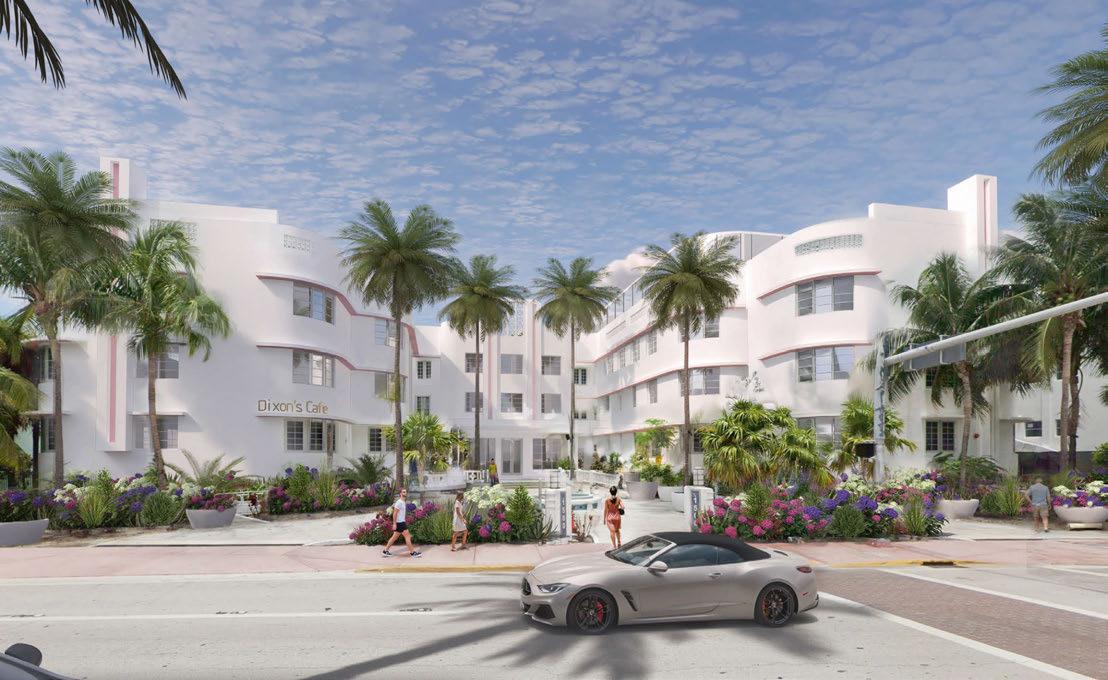
Developed by Keyah Real Estate Group, the hotel comprises two 1940s buildings – the Art Deco Haddon Hall and Campton Apartments – adjacent to a new seven-storey tower with an ocean-view rooftop. The design firm’s transformation draws inspiration from the Art Deco roots of the original structures, incorporating elements of Streamline Moderne, Spanish Mediterranean Regionalism and Miami Modern. Meanwhile, terraces and walkways will loosely overlap, representing the trunks and canopies of the spiritually-revered banyan tree that grows onsite.
Inside, Treehouse’s signature design language of warm, tactile and unexpected interiors will be present through the use of natural materials, handcrafted details and layered textures.
Haddon Hall’s original lobby and adjacent lounges will be restored, while the guestrooms will be fully reconfigured for modern layouts. At the centre of the development, the existing courtyard will be enlarged by demolishing a small guestroom building, allowing for greater connectivity between the three properties. Featuring a pool and abundance of tropical greenery, the al fresco area will become a hub of activity that unifies the property around F&B and social experiences. With wellness woven into the experience, a dedicated spa will serve guests and locals alike, while a rooftop pool offers as an elevated escape above Miami Beach.
“Treehouse Hotels is about capturing that carefree joy you had as a kid,” says Starwood Hotels Chairman, Barry Sternlicht. “Miami Beach has that same spirit of community, creativity and fun. Treehouse Hotel Miami Beach will be a place where guests can relax, laugh and reconnect with that carefree spirit.”
St Regis Papagayo
COSTA RICA
EXPRESS CHECK-OUT
Developer: Solana
Operator: Marriott International
Architecture: Sordo Madaleno Arquitectos
Interior Design: Chapi Design Space Planning: Gensler
Landscaping: Maat Handasa www.st-regis.marriott.com
Solana has appointed Chapi Design to lead the interiors for the forthcoming St Regis Papagayo, slated to open in 2027.
Set along more than a quarter-mile of beachfront in Costa Rica’s Guanacaste region, the 120-key resort – envisioned by Sordo Madaleno Arquitectos – will be deeply connected to its tropical terrain, while delivering relaxed comfort through thoughtful, contemporary design. “Chapi Design will bring its contemporary sensibility to the resort’s interiors, crafting spaces that balance complexity with a deep connection to place,” says Tatiana Sheveleva, Owner of Chapi Design. “Inspired by Costa Rica’s extraordinary natural beauty, our vision is to emphasise natural materials, layered textures and seamless indoor-outdoor transitions.”
Reflecting St Regis’ commitment to culinary excellence, the resort’s F&B offering spans six distinct concepts, ranging from a JapaneseCosta Rican fusion restaurant to the iconic St
Regis Bar and Speakeasy. Additional amenities take the form of multiple infinity pools, a nature-inspired spa, the St Regis Library and more than 10,000ft2 of indoor and outdoor meeting and event space.
Beyond the hotel, the resort will incorporate 143 private branded residences ranging from two to five bedrooms, each offering expansive ocean views and interiors that blend modern elegance with the surrounding landscape.
“Papagayo’s landscape offers an extraordinary foundation, and our design builds on that sense of place with warmth, restraint and enduring elegance,” adds Carlos Halabe, Partner at Solana. “We are translating the profound narrative of the Blue Zone into a built reality. By aligning our architecture, landscape and interior design teams, we ensure that every corner of this project from the arrival experience to the Wellness Golf course resonates with the authentic rhythm of Pura Vida.”
Kobo. collection designed by Stephane De Winter
Le Graal
EXPRESS CHECK-OUT
Owner: Fabrizio Di Amato
Developer: LVGH Management
Operator: Le Graal
Architecture and Interior Design: Achille Salvagni www.legraal.com/en
Italian entrepreneur Fabrizio Di Amato has launched a new brand of luxury hotels that celebrate Italian excellence in all its forms.
Named after the Latin term for sacred vessel, Le Graal combines iconic locations with a new image of contemporary ‘Italianity’ where art, design, architecture, eclectic luxury and community converge. “Le Graal is born from the ambition to create a collection celebrating Italian excellence, a place where people can truly feel at ease,” explains Claudio Ceccherelli, Director of Operations at Le Graal. “The highest expression of hospitality lies in this: making guests feel good through attentive service, refined spaces that welcome and details that reveal true quality.”
The first Le Graal outpost will make its debut in the Dolomites in Summer 2026, occupying an elegant 1920s chalet in the Alpine town of Cortina d’Ampezzo. Designed by Achille Salvagni, the 30-key retreat will evoke the
timeless elegance of grand alpine hotels while transcending their more classic conventions. The material palette will be defined by brushed light woods, marble, tone-on-tone stuccoes and richly textured surfaces that enhance depth and tactility. In addition to a sensorial spa, the hotel will offer a fine-dining restaurant and a café bistro with an American Bar, both overseen by Chef Giovanni Guarneri.
Le Graal is exploring further sites in Italy, with openings on the horizon including a private members club in Rome and a resort in Lake Garda. “Conceived as a cohesive yet differentiated ecosystem, Le Graal embraces hospitality and lifestyle to create immersive, personalised journeys that enrich the guest experience,” concludes Ceccherelli. “In the coming years, the brand will develop in various exclusive destinations across Italy where authenticity, beauty and the value of the territory can be enhanced and shared.”
CORTINA D’AMPEZZO
32060 OCRE
Janu
EXPRESS CHECK-OUT
Owner: Alia Developments
Developer: H&H Development
Operator: Aman Group
Architecture: Herzog & de Meuron www.janu.com
Aman Group has unveiled plans for Janu Dubai, a new hotel and residential destination developed in partnership with H&H.
Located in the heart of DIFC, the project – envisioned by Herzog & de Meuron – will comprise two sculptural towers emerging from a low-rise base, centred around a courtyard that is reminiscent of a traditional souk.
“Drawing inspiration from climateappropriate vernacular architecture of the region, the soft quality of desert light and the textured façades of Dubai’s early Modernist structures, the design is shaped by performance,” explains Olga Bolshanina, Associate Partner at Herzon & de Meuron. “Unlike more typical reflective glass towers on parking plinths, this architecture emphasises mineral presence and lived experience – grounded, porous and responsive to context.”
Framed by layered landscaping, water features and shaded walkways, the 18m-high
lobby connects guests and residents to a suite of amenities including a 1,700m 2 wellness and fitness centre, seven F&B venues and the inaugural Janu Club, all of which are oriented around framed views and shaded outdoor spaces. Spanning five typologies, the 150 guestrooms feature private terraces, gardens or plunge pools.
Above, the 57 branded residences – located in the most sculpted and panoramic part of the tower – offer a range of two-, three-, four- and five-bedroom configurations with expansive outdoor living areas and uninterrupted views. Design details include vast windows, handfinished plaster walls, natural wood floors and monolithic stone kitchens and bathrooms.
Bolshanina concludes: “In a city renowned for its spectacle, Janu Dubai offers an alternative approach by focusing on architecture that fosters community, comfort and cultural resonance, all while providing exceptional luxury.”
DUBAI
Salone Internazionale del Mobile, Milano Hall 22 Stand A04
Hoshinoya Nara Prison
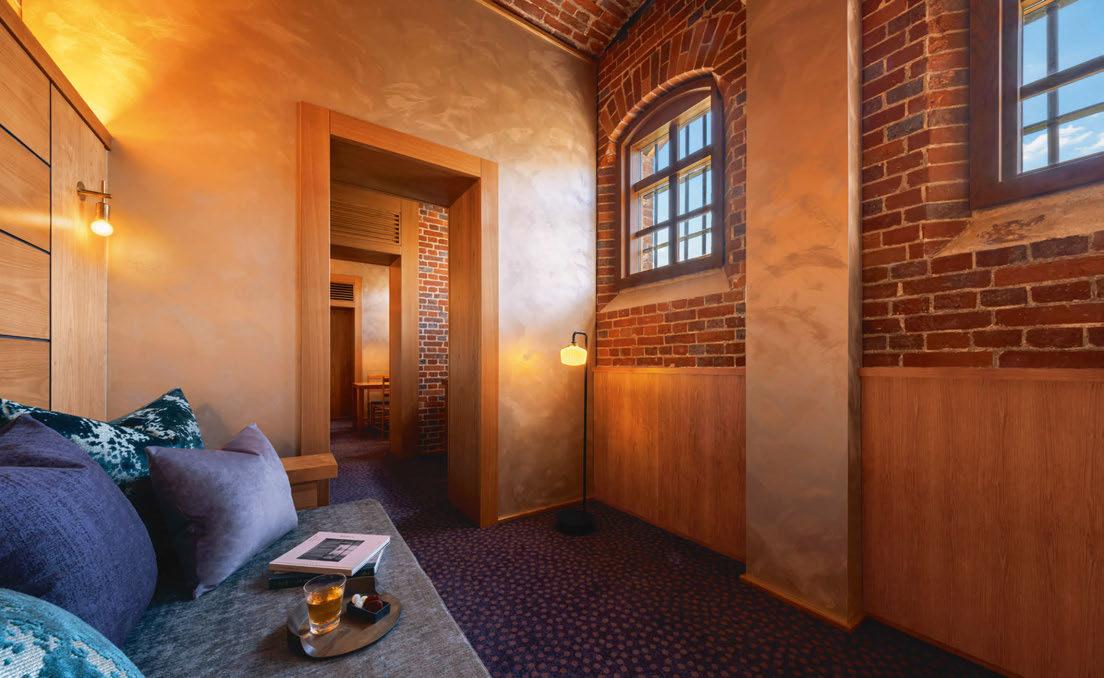
In a bid to preserve the only surviving structure of the Meiji government’s Five Great Prisons, Hoshino Resorts will reopen the former Nara Prison as Japan’s only luxury hotel set within an Important Cultural Property.
Commissioned in 1908 as a landmark national project and cornerstone of the drive toward judicial modernisation, the property was designed by architect Keijiro Yamashita to feature multiple wings radiating from a central guardhouse – a layout that remains a symbol of Japan’s modern penal history.
guestrooms, each created by combining former prison blocks to form private sanctuaries, with designated areas for sleeping, living and dining. Among them is the 10-Cell Suite, comprising ten individual solitary cells that are seamlessly integrated into an expansive hospitality space. In addition to a detached dining hall serving Japanese-French cuisine, the hotel will offer immersive programming that reflects the Hoshinoya brand spirit.
Owner: The Former Nara Prison
Preservation and Utilization Co
Operator: Hoshino Resorts
Architecture and Interior Design:
Azuma Architects & Associates
Landscaping: Studio on Site www.hoshinoresorts.com
Led by Azuma Architects & Associates, the transformation will involve meticulously preserving the architectural heritage of the prison’s 100-year-old handlaid red-brick walls, radial cellblocks and administrative buildings, while reimagining interiors through a modern lens with the harmonising of bold iron pillars and elegant wood panelling.
The all-suite property will feature 48
The site also houses the adjoining Former Nara Prison Museum, a public facility offering an educational exploration of the prison’s century-long legacy and architectural heritage. “I was immediately drawn to the fascinating idea of transforming the Nara Prison into a museum,” comments Art Director Taku Satoh. “Contemplating crime and punishment inevitably leads to a deeper exploration of what freedom means. I hope our exhibition will pose various questions to all who visit.”
Meeting… David Zisser
Having built a €2.6 billion portfolio of luxury projects across Europe, the founder of Omnam Group shares how he is redefining hospitality development through custodial responsibility, in-house design capabilities and collaborative partnerships.
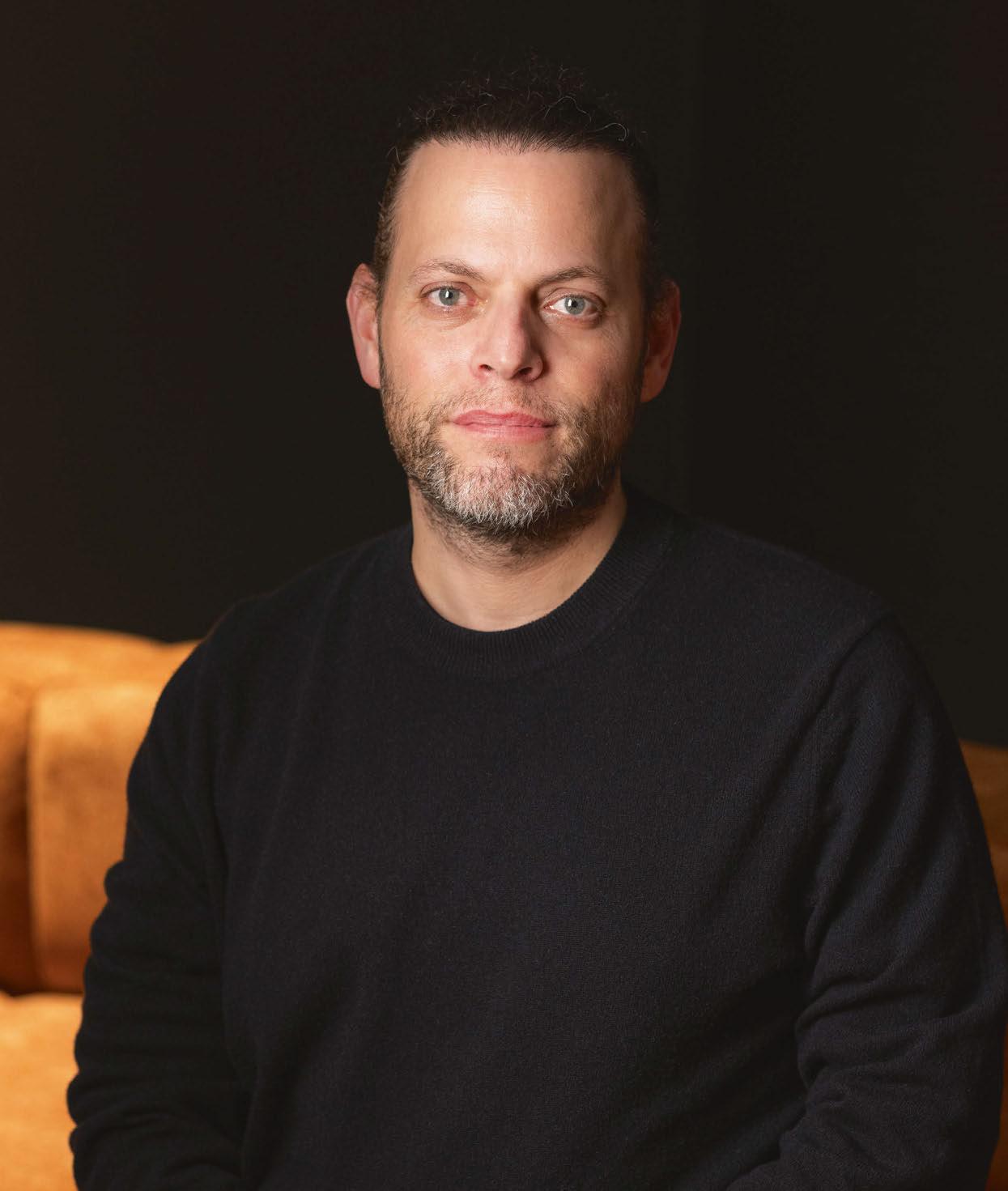
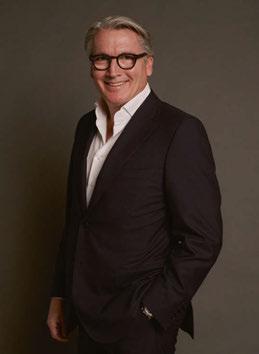
Hospitality brings together business and creativity in a way that has always fascinated me,” begins David Zisser, founder and CEO of Omnam Group, speaking from his hotel room during a whistlestop visit to one of his ongoing projects. “That curiosity has stayed with me all my life.”
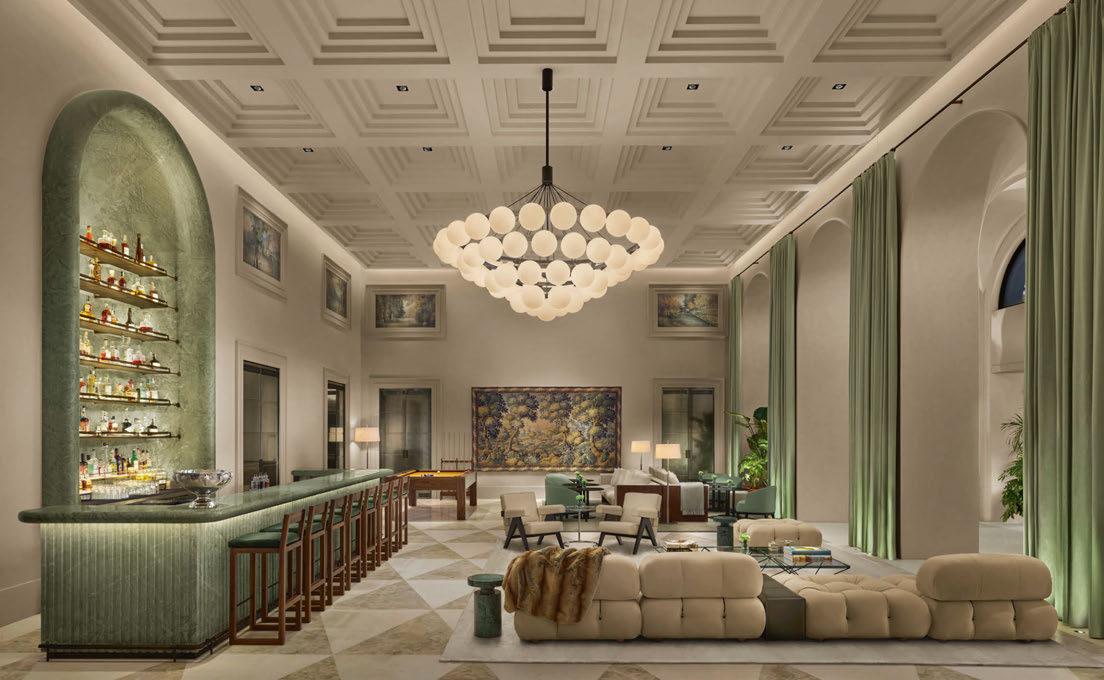
It is this enduring curiosity that has driven the success of Omnam, a pioneering hospitality development company that over the past 15 years, has built a €2.6 billion portfolio that prioritises restoration, sustainability and community benefit. Founded in 2011, the self-proclaimed ‘non-traditional’ firm was born from a vision to redefine the hospitality development process. “We pursue distinctive opportunities and manage every stage of the journey – from identification and inception through due diligence, concept creation, delivery, asset management and sale,” explains Zisser of their signature approach. “We transform raw potential into iconic destinations.”
Today, Omnam is best known for luxury, with Zisser having built the portfolio up from a solid base that comprises the likes of an extended-stay venture in Brussels and a sprawling mixed-use scheme in Amsterdam, comprising a 476-key Park Inn and 50 serviced apartments. It was while working in the Dutch capital that he was introduced to Marcel Wanders
and his furniture brand Moooi. “I don’t think he realised how much of a mentor he was to me at the time,” he reflects of his now friend. “The way Moooi incubates young designers and allows them grow really inspired me. It made me recognise how much I care about aesthetics and the design details. I realised that if I really wanted to succeed in this sector, I needed to build a team to help execute my vision.”
The greatest learning curve for Zisser came with the acquisition of Rotterdam’s former post office, a building that had withstood the bombings of World War II. Plans to convert the historic landmark into a 224-key Kimpton hotel alongside the construction of a new residential tower was initially met with hesitation: “I remember our first meeting with the municipality – we came in saying, ‘we own the building, this is what we want to do’, but they were quick to put us in our place and remind us that the building belongs to the city,” he explains. “It taught me that you don’t choose the building, the building chooses you, and it is our job to respect that and help it shine.” The experience reframed Zisser’s understanding of adaptive reuse – not as a commercial exercise, but as a custodial responsibility.
Guided by this newfound respect for heritage, Omnam set its sights on two 19th-century palazzos in Rome – a daring venture that signalled the start of Omnam’s love affair with Italy. “It’s funny to say today, but when we first acquired
Alongside
the asset in 2017, people thought investing in Italy was a crazy thing to do,” he reflects, citing lack of liquidity, political instability and complex conservation regulations as the main causes for hesitation. “But when you look at the country through the lens of culture, lifestyle and tourism, nothing has changed over the last 30 years – it remains a jewel.”
Confident in his instincts on Italy as a valuable investment opportunity, Omnam began working with local heritage authorities to convert the site into a new European flagship for W Hotels, with interiors by Meyer Davis. But the project wasn’t without its challenges; after being informed that two hotel permits were required – one for each building – the team unearthed a 200-year-old postcard sketch that proved the two buildings had once been connected, and therefore necessitated only one permit. The plans also involved excavating beneath the site to create a subterranean fitness centre designed to resemble a Roman catacomb – a risky endeavour that eventually paid off: “Sometimes, the less experienced are braver, because you aren’t blinded by the risks.”
Following the opening of W Rome, Omnam has continued to bolster its repertoire in Italy with recent openings including the 304-key Radisson Blu Florence and The Lake Como Edition, the latter a reimagining of the historic Hotel Britannia and Villa Gina as a luxury lifestyle retreat with interiors by Neri & Hu.
This steady growth has been supported by a strategic partnership with global investment platform Mohari Hospitality, targeted to increase the impact of its developments in lifestyle and luxury hospitality, F&B and leisure throughout Europe. “While we still have more to do in Italy, we also want to replicate our success in other European markets,” Zisser explains, adding that Greece and Spain are top of the list. France is also on his radar: the former
“We build to bring people together. Our achievements are measured not only in the quality of the finished products, but also in the depth of the personal relationships we cultivate along the way.”
the historic Bauer hotel is currently undergoing extensive renovation before reopening under the Rosewood flag. “Winning the opportunity to develop The Bauer is one of the high points of my career,” Zisser shares. “It was tough competition, but we were in a strong position because of our market knowledge and knowhow in terms of CapEx and performance. Now we’re full steam ahead, working onsite with top designers and advisors to restore the building to its former glory.”
Hotel Saint-James & Albany in Paris is currently under development with Pharrell Williams as Creative Director, and a deal for a new venture in the South of France is in the works. Together, these projects speak to a deliberate strategy: to identify undervalued heritage assets in culturally resonant European locations and restore them under the stewardship of leading brands.
Perhaps the most anticipated project in the pipeline is Baccarat Florence, set within the 14thcentury estate of Villa Camerata in the Tuscan hills. Blending heritage architecture with the French maison’s signature luxury and glamour, the hotel will seek to evoke a regal history of centuries past, balanced by crystal-faceted, contemporary interiors. Meanwhile in Venice,
On Italy’s southern coast, Omnam is working with Four Seasons to develop a beachfront resort in Puglia, with architecture by HKS and interiors by ODA. According to Zisser, the appointment of a New York-based studio was initially met with trepidation, yet it’s a collaboration that has since expanded, with ODA going on to work on several additional Four Seasons properties. For Zisser, moments like these reflect a broader measure of success for the company. Beyond delivering projects, Omnam places equal emphasis on fostering the creative partnerships that shape them. “We build to bring people together,” he explains. “Our achievements are measured not only in the quality of the finished products, but also in the depth of the personal relationships we cultivate along the way.”
Despite an ongoing desire to work with third-parties, Omnam recently launched its own design studio named ODS, which is leading the interiors for the forthcoming Park Hyatt Taormina. It’s an unusual move for a development company, but one Zisser views as necessary to lend a competitive advantage. “The intent is not to design all of our hotels ourselves, we still want to work with both well-known and emerging designers. Instead, having our own design studio means that from the moment we identify an asset, we can underwrite it more accurately and understand its full potential – spatially, operationally and
residential and retail offerings, the redevelopment of Rotterdam’s historic post office will include a Kimpton hotel
“Having our own design studio means that from the moment we identify an asset, we can understand its full potential – spatially, operationally and financially.”
financially,” he continues. “When that design capability is combined with our investment and asset management expertise, we gain a deeper understanding of what a project can become.”
Alongside ODS sits Omnam’s MultiDimensional Expression (MDX) department, which combines marketing, research, data and technology. Rather than simply underwriting deals in the traditional sense, MDX interrogates each asset from multiple angles, analysing cultural context, guest behaviour, generational shifts and market positioning to determine not only which operator is the right fit, but how that vision should be articulated to them. In practice, this means Omnam arrives at the table with a clearly defined creative and commercial vision, facilitating more collaborative conversations with operators and designers alike. It also informs how the company runs design competitions, carefully curating shortlists that comprise established names and emerging studios capable of interpreting both brand DNA and local identity.
Together, MDX and ODS represent how Omnam continues to differentiate itself – less as a traditional developer and more as a fully integrated creative and commercial platform. Such services also stand the company in good stead for when Omnam launches its own hotel brand, which could be as soon as this year.
“Many legends of the industry – such as Ian Schrager and Alan Faena – started out as developers,” he states. “Having worked with brands first-hand, learning from the good and the bad, this is a natural evolution for us.”
Though the details remain under wraps for now, Zisser reveals that he’s eyeing up the luxury lifestyle segment, competing with the likes of Edition and 1 Hotels. “It’s not as crowded as the ultra-luxury space and I think we have a lot to offer,” he concludes. “We’re waiting for the right opportunity; it’s just about being brave enough to jump.” For someone who once excavated beneath a Roman palazzo with little more than curiosity and conviction, bravery has never been in short supply.
Omnam is the developer behind
The Lake Como Edition, soon to open with interiors by Neri & Hu
As CEO of The PuLi Group, Victor Clavell is responsible for managing properties within the portfolio, enhancing operational excellence and leading its growth across Asia and beyond. With a career spanning 30 years, he has held leadership roles at Marriott International, Amaala and Rosewood, and is well positioned to showcase The PuLi Group’s understated elegance, thoughtful design and deep cultural connection.
Meeting… Victor Clavell
As The PuLi Group makes its debut, the newly appointed CEO sets out a refined vision for ambitious growth rooted in design, culture and a distinctly Asian perspective on luxury.
Words: Naomi Chadderton
With its meticulous balance of modernist simplicity, natural materials and serene proportions, The PuLi has set a lasting benchmark for understated luxury and contemporary living since its opening as Shanghai’s first urban resort.
Now, as the brand looks beyond a single address, the 2026 launch of The PuLi Group will see the hotel transform into the flagship of a growing global portfolio across some of the world’s most dynamic destinations. Spearheading the group’s strategic vision and development is newly appointed CEO Victor Clavell, who will continue to embody the brand’s philosophy of understated elegance, thoughtful design and deep cultural connection, drawing on PuLi’s Chinese meaning of ‘uncarved jade’. Here, he explains how.
A LEADER SHAPED BY GLOBAL LUXURY
It’s safe to say The PuLi Group is in good hands with Clavell – a globally recognised luxury hospitality executive with a distinguished track record of leading and growing iconic brands including The Ritz-Carlton, Bulgari, W Hotels, Edition and Rosewood.
With over three decades’ experience working across the Americas, Europe, the Middle East, Africa and Asia Pacific, his achievements range from leading the opening of The Ritz-Carlton
New York, Central Park, to playing a founding role in the creation and global roll-out of Bulgari Hotels & Resorts. “What attracted me to take on this new role was the chance to lead a brand that truly values individuality, destination authenticity and intimate luxury,” Clavell tells Sleeper. “The PuLi Group isn’t just another hotel operator – it’s a collection of stories waiting to be expanded with care.”
MEASURED GROWTH
Having initially been established as Urban Resort Concepts in 2009, the newly formed group comprises three existing properties – the Shanghai flagship, The PuXuan in Beijing and The RuMa in Kuala Lumpur. Poised for ambitious yet considered growth, The PuLi Group will initially focus on key Asian cities including Seoul, Hong Kong, Tokyo, Singapore and Bangkok, before venturing further afield. By 2035, the goal is to operate 20 hotels and branded residences as well as an expanding retail presence, maintaining 80% of its footprint in Asia and 20% internationally. Clavell calls this not a business strategy, but a promise to remain authentic to the brand’s origins while offering the world a uniquely Asian perspective on luxury. “The demand for refined, culturally rooted hospitality has never been stronger,” he explains. “The PuLi Group was born in Asia, and that is where its identity
is most strongly rooted. By keeping 80% of our portfolio here, we commit to depth over breadth – celebrating Asian craftsmanship, aesthetics and hospitality traditions.”
In keeping with the deeply rooted peoplecentred values intrinsic to Asian culture, Clavell places equal emphasis on those at the heart of the business, ensuring a service philosophy that is both intuitive and deeply human. “I believe in empowering teams, respecting local culture and delivering consistent excellence without sacrificing soul,” he says. “As we grow The PuLi Group, these values will anchor every decision, from design to service culture.”
A RENEWED FLAGSHIP
To mark this new chapter, The PuLi Shanghai is undergoing a complete renovation, thoughtfully reimagining the guest experience while preserving the essence that has defined the hotel since its inception. Scheduled for completion in Summer 2026, the project will be led by Layan; having envisioned the original interiors, the Melbournebased design studio is once again entrusted to respect The PuLi’s East Asian heritage while integrating modern Western forms.
“The PuLi Shanghai will see several thoughtful enhancements that honour its legacy,” explains Clavell. “It’s about crafting a holistic guest experience that will define the brand’s future,
with every touchpoint being carefully curated to foster deep connection and a sense of wellbeing.” This will play out across three dimensions: arrival and departure will be reimagined as meaningful rituals through the likes of Eastern tea ceremonies; dining will offer a layered experience with both expansive bar spaces and more intimate omakase dining counters; and wellness will see the group partner with French podiatrist Bastien Gonzalez to introduce his signature concepts to mainland China. “Throughout, our understated design ensures a cohesive, residential feel; a serene and culturally rooted backdrop for an allencompassing experience,” notes Clavell.
THE LANGUAGE OF LUXURY
For every future PuLi property, Clavell promises a consistent commitment to ambience, design and quality - an approach he defines as the language of luxury. “In today’s market, design must tell a story – one that resonates emotionally and reflects its location,” he explains. “Our guests don’t just want a beautiful room, they want to feel connected to where they are.”
As such, Clavell seeks partners who understand narrative and nuance, looking beyond simple aesthetics to truly understand how a space feels, flows and functions. “I look for studios with a proven ability to blend innovation with integrity, and who respect materials, light and locality,” he
continues. “Collaboration is essential. The best projects come from partnerships built on trust and a shared vision for understated elegance.” That said, he is keen to point out that each new property will express its own identity, mirrored around the city’s unique spirit. “Our role is to curate, not control, ensuring every hotel feels unmistakably PuLi and uniquely local.”
FORWARD THINKING
Looking ahead to future properties, what makes a destination right for the PuLi brand? “We look for cities with a strong sense of place, creative energy and a community that values understated luxury,” says Clavell. He points to Tokyo’s precision, Seoul’s blend of tradition and modernity, and Bangkok’s vibrant artistry as attributes that have already placed these cities firmly in the group’s sights. Wherever they choose must be a destination in which the group can contribute meaningfully to the cultural and hospitality landscape, not just enter a market. “In five years, I hope The PuLi Group is recognised as the benchmark for intimate, design-led luxury in Asia and beyond,” concludes Clavell. “Success means our hotels are not just places to stay, but destinations that inspire loyalty and conversation. I want guests to say: ‘The PuLi doesn’t just host you – it understands you, it moves with you and it stays with you.’”
Alvaro Paredes
Co-founder and Principal DesignLab
Founded in 2016, DesignLab is a global architecture and interior design firm specialising in luxury hospitality and residential. With offices in Singapore, Vietnam, Spain and Dubai, the company boasts an international portfolio of projects, ranging from tented camps to city skyscrapers.
Key Hotel Projects:
Mandarin Oriental Bai Nom, Vietnam; Hyatt Regency Cairo West, Egypt; Park Hyatt Phu Quoc, Vietnam; Six Senses Con Dao, Vietnam
10 Years Of DesignLab
Upon celebrating a milestone anniversary, the co-founder of DesignLab discusses the past, present and future of hospitality design.
Born from a desire to create meaningful, contextual spaces that connect people and place, DesignLab has cultivated a portfolio that is as diverse creatively as it is geographically, with projects ranging from a sail-shaped skyscraper on the shores of Vietnam to a luxury tented camp in Morocco’s Atlas Mountains. As the studio celebrates its 10th anniversary, co-founder and Principal Alvaro Paredes reflects on the journey so far.
ON THE INITIAL VISION
When we founded DesignLab in 2016, our vision was to build a studio rooted in a shared passion for hospitality, travel and architecture. We didn’t want to create a design firm defined by a recognisable style; we wanted to create one defined by its sensitivity to place.
From the beginning, our ambition was to approach each project as a unique response to its context. Site, local culture and the client or operator’s vision were never secondary considerations – they were the starting point. We believed, and still do, that hospitality design should be immersive and emotionally resonant, not just a matter of trends.
With our multicultural team and offices on different continents, the foundation of the studio was an inherently collaborative approach. We set out to engage closely with consultants, operators and clients, from the earliest site discovery through to delivery, ensuring every project was conceived holistically. Ultimately, DesignLab was born from a love of global exploration and cultural diversity. Ten years on, that intention remains unchanged: to create meaningful, contextual spaces that connect people and place.
ON ITS EVOLUTION
Over the past decade, particularly post-Covid, the studio has grown significantly. We now have a team of over 100 architects and designers working on projects in over 15 countries from our offices in Singapore, Vietnam, Spain and Dubai. With that growth has come stronger structure, deeper expertise and the ability to take on increasingly complex international projects.
Yet even as we have expanded, our approach has stayed the same. The project will always take the inspiration from its context, whether that be the site, the cultural aspects or the surrounding landmarks. That is what makes a project different and relevant, and respecting that it has always been part of our DNA. We have also been intentional about preserving a boutique, hands-on culture. Our clients do not navigate layers of hierarchy; they work closely with the founders and with integrated teams that share responsibility and design ownership from concept to completion. That continuity is important to us as it ensures quality, cohesion and a shared design language across the studio.
We are selective about what we take on. While we are equipped to deliver large-scale hospitality projects, we continue to embrace smaller, character-driven commissions, the kind of hidden gems where detail, craft and storytelling can truly shine. Those projects often allow for the most experimentation and intimacy. Growth has strengthened us, but it hasn’t diluted who we are. If anything, it has clarified it.
ON MILESTONE HOTEL PROJECTS
One milestone project for us is Mandarin Oriental Bai Nom in Vietnam. What makes it truly special is first
“We didn’t want to create a design firm defined by a recognisable style; we wanted to create one defined by its sensitivity to place.”
and foremost the site itself. It is an extraordinary peninsula spanning over 60 hectares, framed by dramatic cliffs and an untouched beachfront. The landscape feels almost cinematic: raw, powerful and deeply serene at the same time. Designing in a setting like this is not just about architecture; it becomes an act of stewardship.
The project also offered something rare in today’s market: genuine creative freedom. We were entrusted with the opportunity to shape the vision from the ground up, crafting a destination rather than simply inserting a building. That level of trust allowed us to explore a design language that is both bold and sensitive, contemporary yet rooted. Working with Mandarin Oriental Hotel Group further elevated the experience. The brand brings an international standard of refinement and operational excellence, while the location calls for a strong sense of place.
Ultimately, what makes this a milestone project is the convergence of exceptional land, a visionary client, worldclass operator and the rare opportunity to design with both freedom and responsibility. It is not just a resort; it is a dialogue between nature, culture and contemporary hospitality.
ON CHANGES IN HOSPITALITY DESIGN
Over the past decade, hospitality design has evolved in ways that are both subtle and profound, and we’ve witnessed this directly through our own projects and client requests. One clear shift is the demand for deeply immersive, experiential design. Clients now want hotels and resorts that tell a story – spaces that feel connected to their location, culture and landscape, rather than just a branded aesthetic. This has reinforced our philosophy of designing with a sense of place at the core, whether in Bali, Greece, Zanzibar or Ras Al Khaimah. Another significant change is the request for multi-
Key projects for the firm include (top to bottom): Pullman Al Marjan Island in Ras Al Khaimah, Dusit
Le Palais Tu Hoa in Hanoi and MGallery Phu Quo
Forthcoming projects include (top to bottom): Mandarin Oriental Bai Nom in Vietnam, Mandarin Oriental Bali and Armani Beach Residences in Ras Al Khaimah
layered functionality. Operators and owners expect spaces to be flexible, accommodating branded residences, wellness facilities, F&B experiences and social hubs, while still feeling intimate and human-scaled. For example, our cliffside resort in Bali required a seamless integration of public, semi-private and private zones across a challenging topography, all while maintaining drama and privacy for each villa.
Wellness and lifestyle have also become central to client briefs, beyond standard spa facilities. Owners now seek spaces that nurture wellbeing, connection and memorable moments, which has influenced how we think about circulation, light and interaction throughout each property.
Sustainability has emerged as a key consideration in nearly every project. Clients increasingly request passive design strategies, local materials and energy-conscious systems, not just for efficiency, but to create authenticity and a stronger connection to the context and culture of each location. Alongside this, there is a renewed emphasis on craftsmanship and bespoke detailing. Owners now expect spaces that feel curated and layered, with carefully considered finishes, custom furnishings and locally inspired design elements.
Personalisation has become central to hospitality design too. Beyond the spaces themselves, clients seek environments that can adapt to different guest experiences, occasions and preferences, challenging us to design flexibility while preserving intimacy. At the same time, owners are more engaged in the design process than ever. This close involvement allows for a level of refinement, cohesion and storytelling that ensures each project is not just a building, but a place that feels it belongs in its setting.
ON PROUD MOMENTS
I would say our proudest moments as a studio are when we are entrusted with a project in a country where we have never
“For us, growth is not just about scale; it’s about reach, dialogue and cultural discovery. Every new destination is a milestone in our evolution as an international studio.”
worked before. There is something incredibly powerful about expanding into new territories. It represents trust from a new client, in a new cultural context, often with different regulations, expectations and ways of thinking. It challenges us to listen more carefully, to adapt and to grow.
Each new country feels like expanding our frontier – not just geographically, but creatively. It exposes us to new traditions, materials, craftsmanship and ways of living. That exchange enriches our design language and strengthens our global perspective. For us, growth is not just about scale; it’s about reach, dialogue and cultural discovery. Every new destination is a milestone in our evolution as an international studio.
ON NEW OPENINGS
One of the privileges of reaching this stage as a studio is the diversity of geographies we are engaged in. While each of our offices has its regional focus, we are fortunate to work across a broad spectrum of destinations.
In Bali for example, we are developing a cliffside resort with branded residences for Mandarin Oriental, conceived as a contemporary interpretation of a Balinese summer palace and scheduled to open in 2027. Additional pipeline work in Asia includes a Grand Hyatt in India and a Park Hyatt in Vietnam, reflecting our ongoing collaboration with global luxury operators.
In the Middle East, our portfolio continues to expand. In the UAE, we are designing Armani Beach Residences Ras Al Khaimah – a collaboration with RAK Properties and SIE Group and the first venture of its kind for the brand. In Saudi Arabia, we are working on two Waldorf Astorias – one is a newbuild, the other is the refurbishment of an existing property. And
there are several other hospitality and mixed-use commissions throughout the Kingdom.
Across Europe, we have projects underway in Greece and Montenegro, in addition to other developments carefully attuned to their Mediterranean context. Africa remains a continent that fascinates us, and we are currently engaged in hospitality projects in Zanzibar and Kenya, exploring how design can respond to landscape, culture and climate in deeply contextual ways.
What unites all of these projects, regardless of scale or geography, is our approach to design: attentive, place-led and rooted in the unique character of each location. For us, every project is an opportunity to create architecture that feels at one with its surroundings, a design that could only exist there.
ON THE NEXT 10 YEARS
More than anything, I would like to be surrounded by the colleagues I have today. In such a demanding industry, being able to retain talented people who are genuinely excited about the projects we create and the atmosphere we have cultivated would be a true measure of success. If we manage to grow while preserving that sense of family, passion and shared ambition, I will consider that an achievement. And of course, hopefully we will be collaborating with great clients and producing inspiring projects.
ON HOTEL DESIGN IN 2100
In 2100, when everything else is optimised by algorithms, our hotels will be imperfect – a little wild, deeply sensory and unmistakably human. Let AI run the spreadsheets; we’ll design the magic.
For Six Senses Con Dao, DesignLab allowed the changing colours of the Vietnamese landscape to tell the story
projects
THE LOBBY
An Architectural Fiction
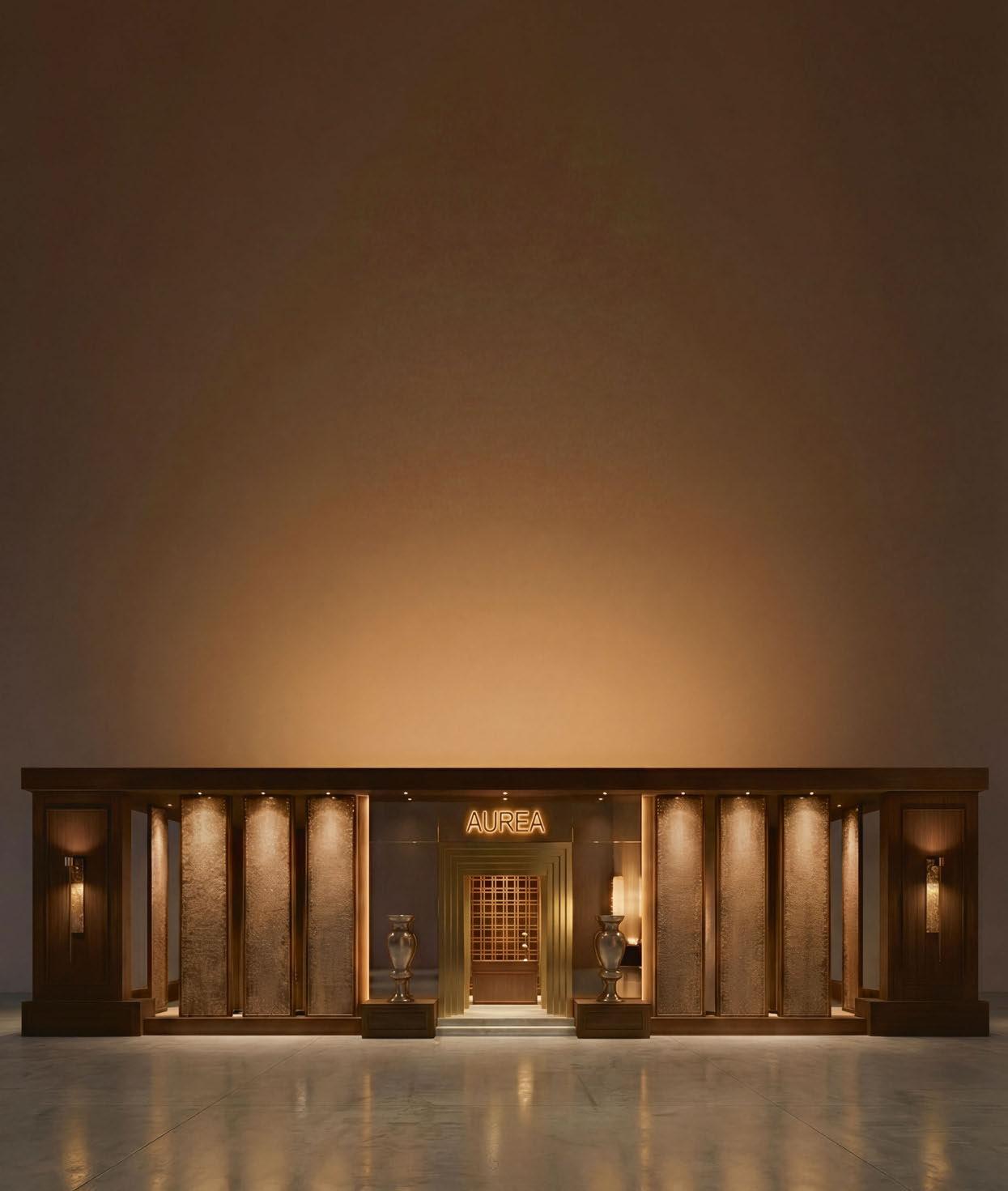
In many ways, hospitality design is about storytelling: looking to heritage, culture and location to develop a narrative that shapes the guest experience. It’s this approach that plays a central role in Aurea, An Architectural Fiction – an imaginative hotel concept set to open at Salone del Mobile in Milano.
The installation is designed by Oscar Lucien Ono, founder of Masion Numéro 20, who approaches his projects as a form of storytelling, where material, texture and light contribute to an emotionally resonant narrative. Though not a hotel in the typical sense, Aurea is a series of roomsets arranged as an immersive encounter.
Making its debut at Fiera Milano from 21-26 April, the timeless act of storytelling will be celebrated through the intertwining of Art Deco, surrealism and cinema d’auteur. From the outset, visitors can expect to be spellbound by otherwordly theatricality. The Hall of Dreams sets the tone with an entrance framed by dramatically-lit archways leading to a nostalgic lobby, where room keys hang on metal hooks behind the front desk. Inside, the Velvet Salon is fitted-out
with sumptuous furnishings around a fireplace, while the Forbidden Oasis is a sensual drawing room complete with lacquered palm trees, seemingly suspended in time. The Thousand Nights suite evokes a fairytale palazzo, with mother of pearl mosaics and silken drapes. And finally, the nocturnal charm of the golden-lit Midnight Bar fosters a clandestine atmosphere for guests to delve into their own imaginary world.
The hotel’s name – from the Latin term ‘aureus’ meaning ‘golden’ – is a reference to the golden ratio, the mathematical symbol of harmony and visual completeness achieved through balance. In Aurea, classical references meet contemporary expressions, combining heritage, innovation and emotion while embracing sustainability and circularity in a timeless dreamscape setting.
As Ono concludes: “This collaboration with Salone del Mobile gives me an opportunity to express a personal vision of hospitality, in which architecture and design give shape to intimate scenarios through a narrative composition and a sensitive dialogue between light and matter.”
Cabinet of Curiosities
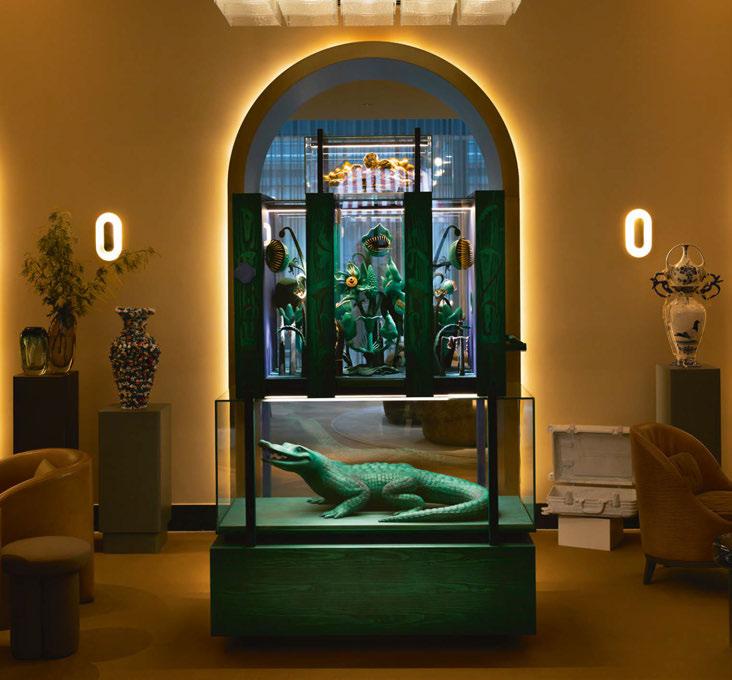
Part living gallery, part mobile boutique, part cabinet of curiosities, an imaginative retail experience is now roaming the historic halls of Rosewood Amsterdam. Created by Dutch jeweller and artist Bibi van der Velden, Jewels on Wheels is a whimsical display of intricate creations, inviting gemstone enthusiasts to explore craft through storytelling.
Catching the eye, a sculptural alligator at the base honours van der Velden’s signature collection, while the cart itself is a work of art: finished in natural linseed oil and stained malachite green, it is inlaid with intricate marquetry of botanical motifs, accented with Delft blue in tribute to Dutch heritage.
Within, a dreamlike jungle unfolds: verdant greenery and florals are brushed with gold leaf, and on closer inspection, golden scarabs feed on ‘pollen’ and ants scuttle through the ‘foliage’.
Hidden within the landscape, the installation presents a curated rotation of 30 pieces and one-of-a-kind creations from various van der Velden collections, with each piece crafted in 18k recycled gold and set with rare materials such as 60,000-year-old mammoth tusk, malachite and baroque pearls.
Whether it’s opening hidden drawers, trying pieces on or making purchases in a highly personalised setting, Jewels on Wheels encourages an intimate and tactile exploration of the local culture and artistry, demonstrating how curated retail experiences can be embedded into the guest journey.
“It’s like a tiny travelling theatre of treasures,” says van der Velden. “We’ve always believed our jewellery has a life of its own – now it has wheels too. My pieces are not just adornments; they’re stories, symbols and tiny worlds to explore.”
Contagious Creativity
Driven by consumer demand for memorable and immersive experiences, the lines between hospitality and retail continue to blur. Hotels are transforming their lobbies into curated pop-up stores, while retailers are pairing shopping with dining, entertainment and relaxation.
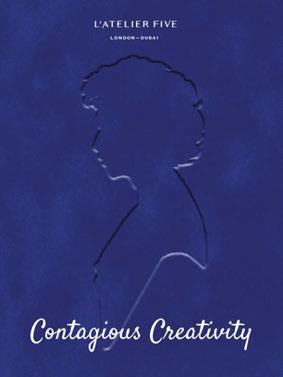
With that in mind, a new book from L’Atelier Five (LA5) offers insight into the world’s most luxurious retail experiences, from Cartier in Saudi Arabia to The Fabulous World of Dior at Harrods in London. Produced by Image Publishing, Contagious Creativity journeys through the portfolio of the multidisciplinary design studio, offering a behind-the-scenes look at activations for the likes of Hermès, Fendi, Patek Philippe and Audemars Piguet. Through interviews and commentary, the 304page monograph explores the process of bringing ambitious retail experiences to life, illustrating the balance between creativity, craftsmanship, technical considerations and logistics.
“This book is a love letter to creativity – to the power of making ideas real,” says Saina Attaoui, founder of L’Atelier Five. “When I started LA5 in 2015, I wanted to prove that you could build a studio driven by intuition, craft and collaboration – where big ideas meet human touch. Ten years later, that’s still what defines us.”
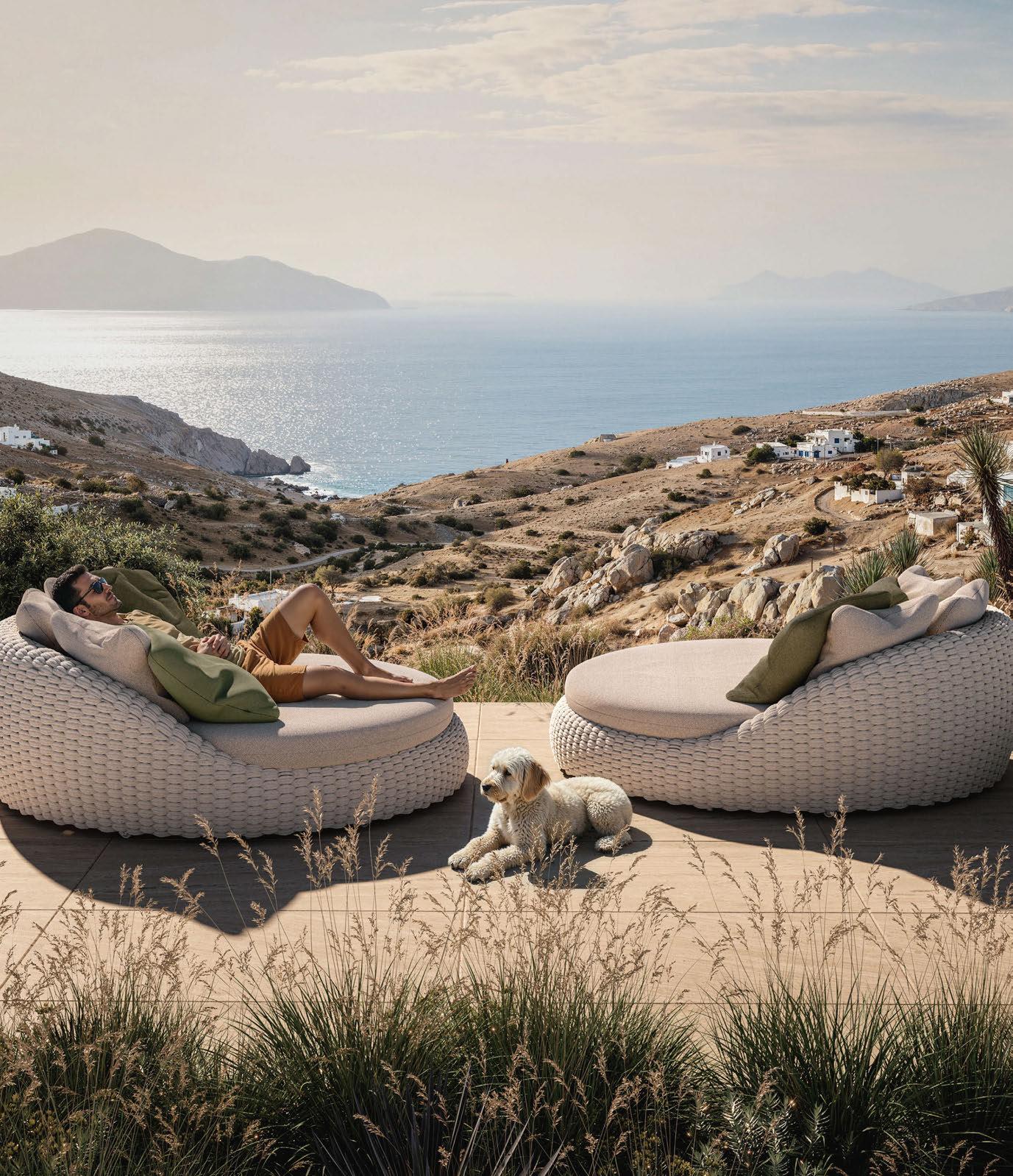
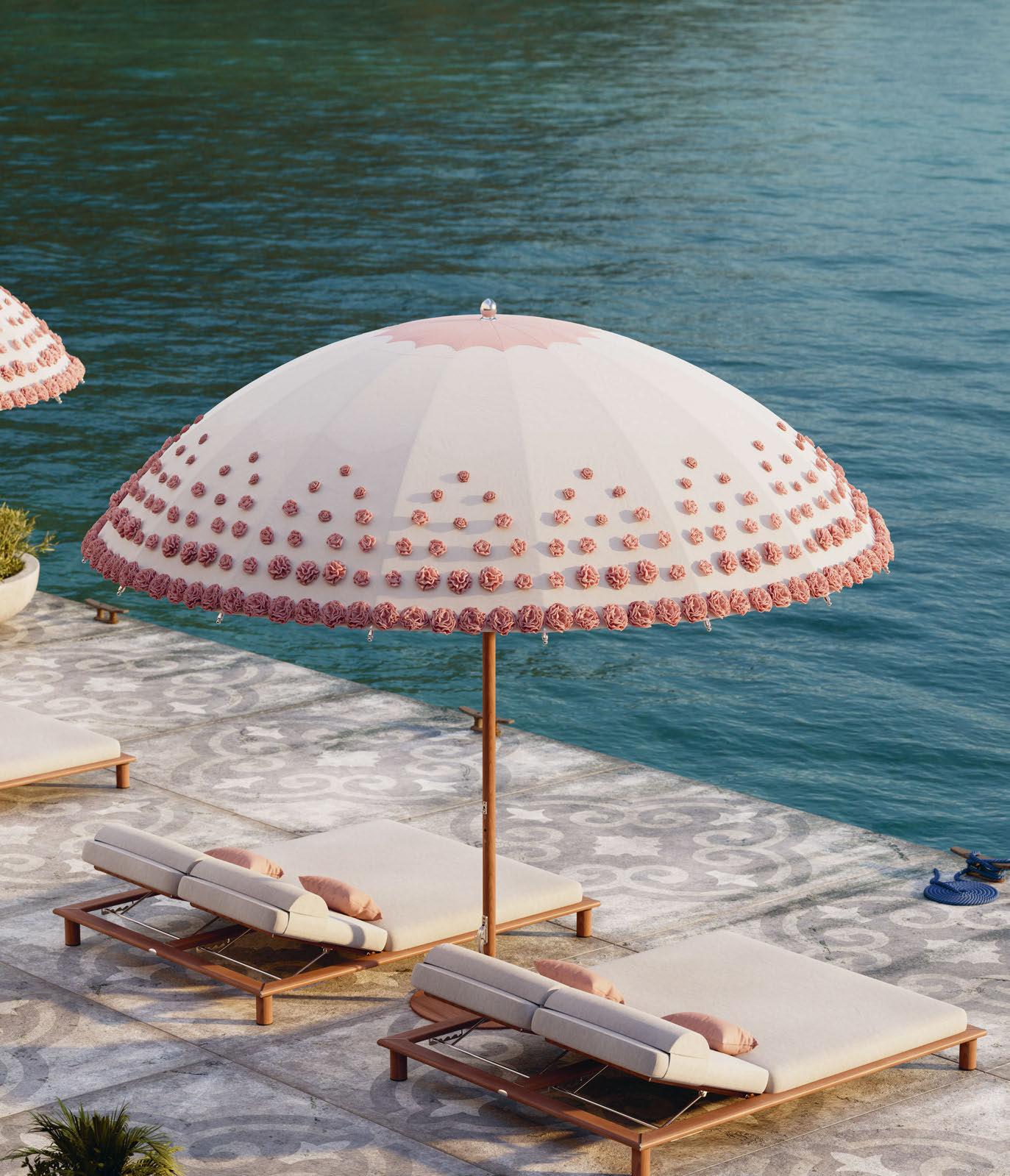
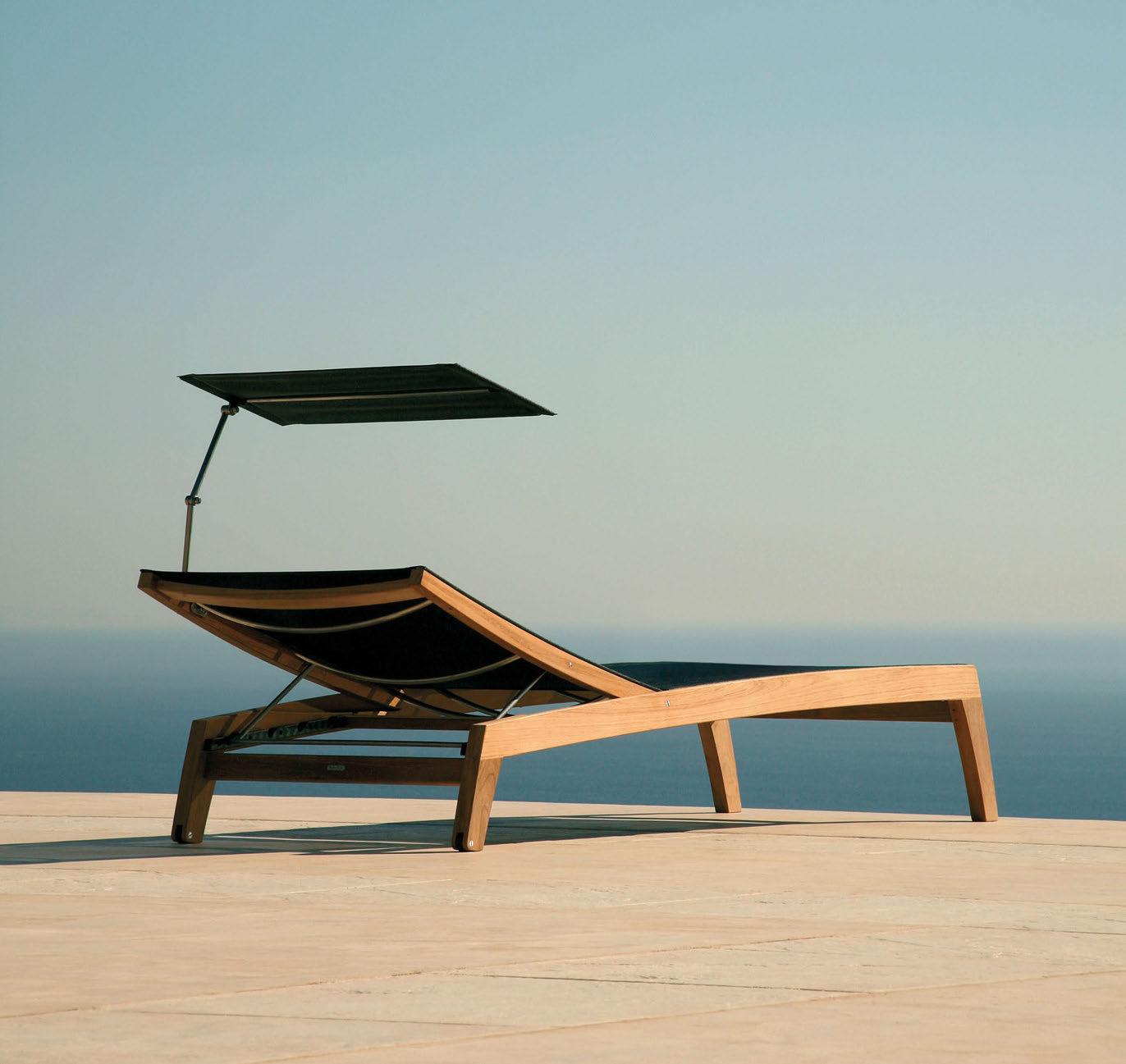
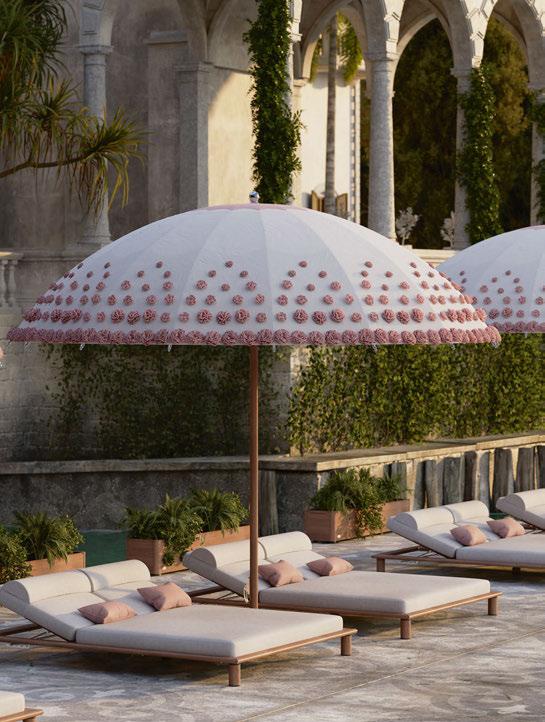
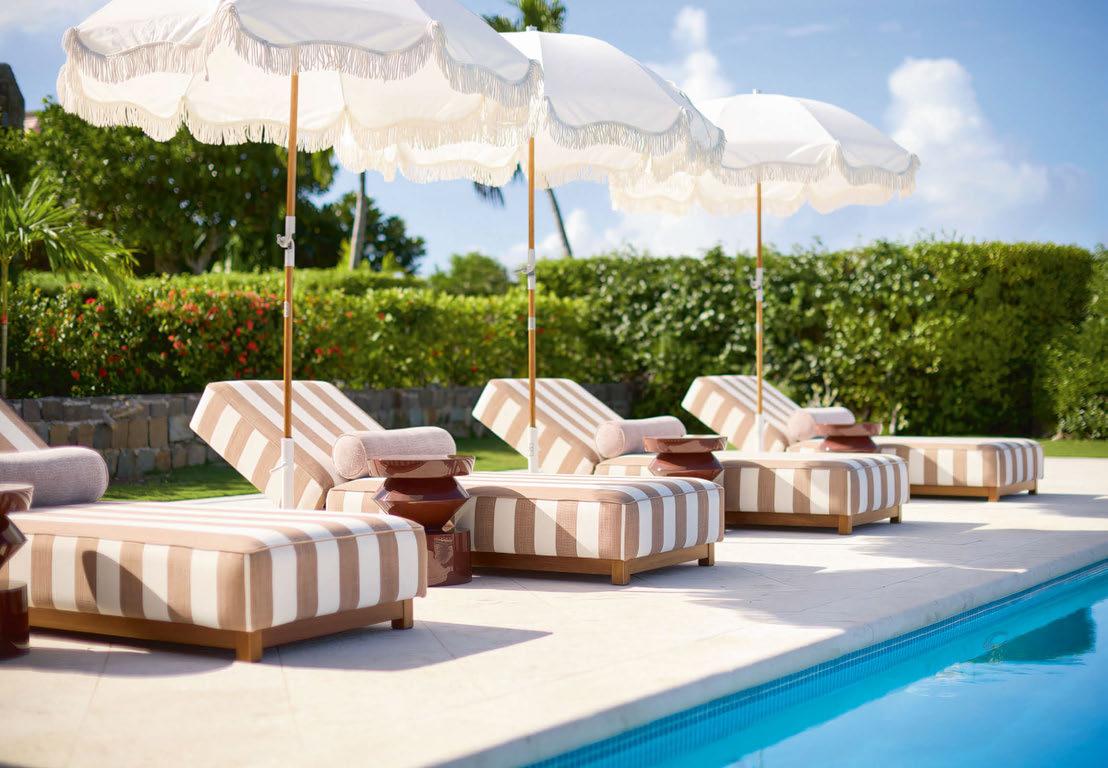
WHERE STILLNESS UNFOLDS, THE LIGHT SOFTENS AND DAYDREAMS DRIFT BY THE WATER’S EDGE. CRAFTED FOR MOMENTS WHEN TIME SLOWS AND THE DAY BELONGS ONLY TO YOU.
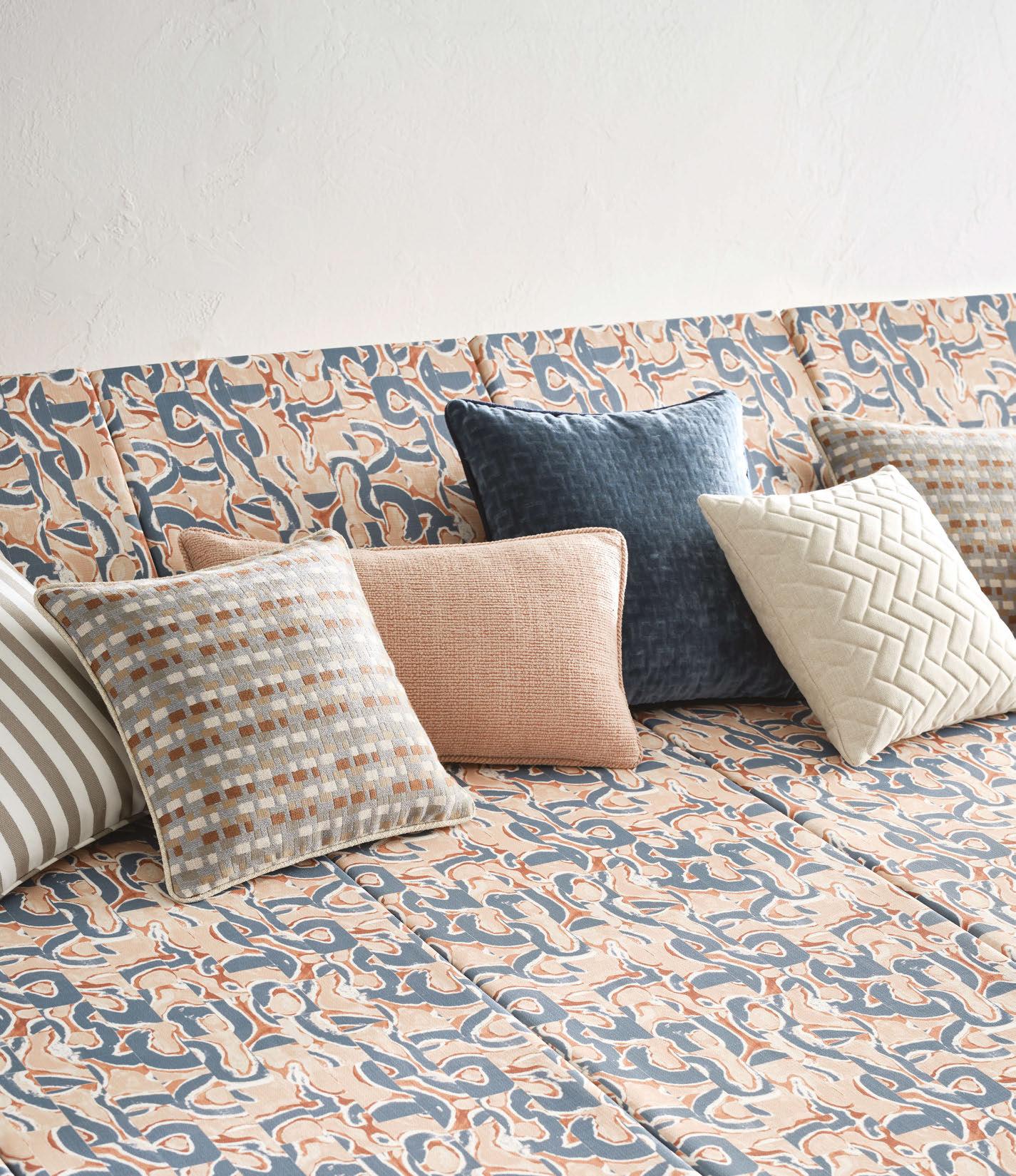
Ocean Master MAX Bolero: Ombré Blossom
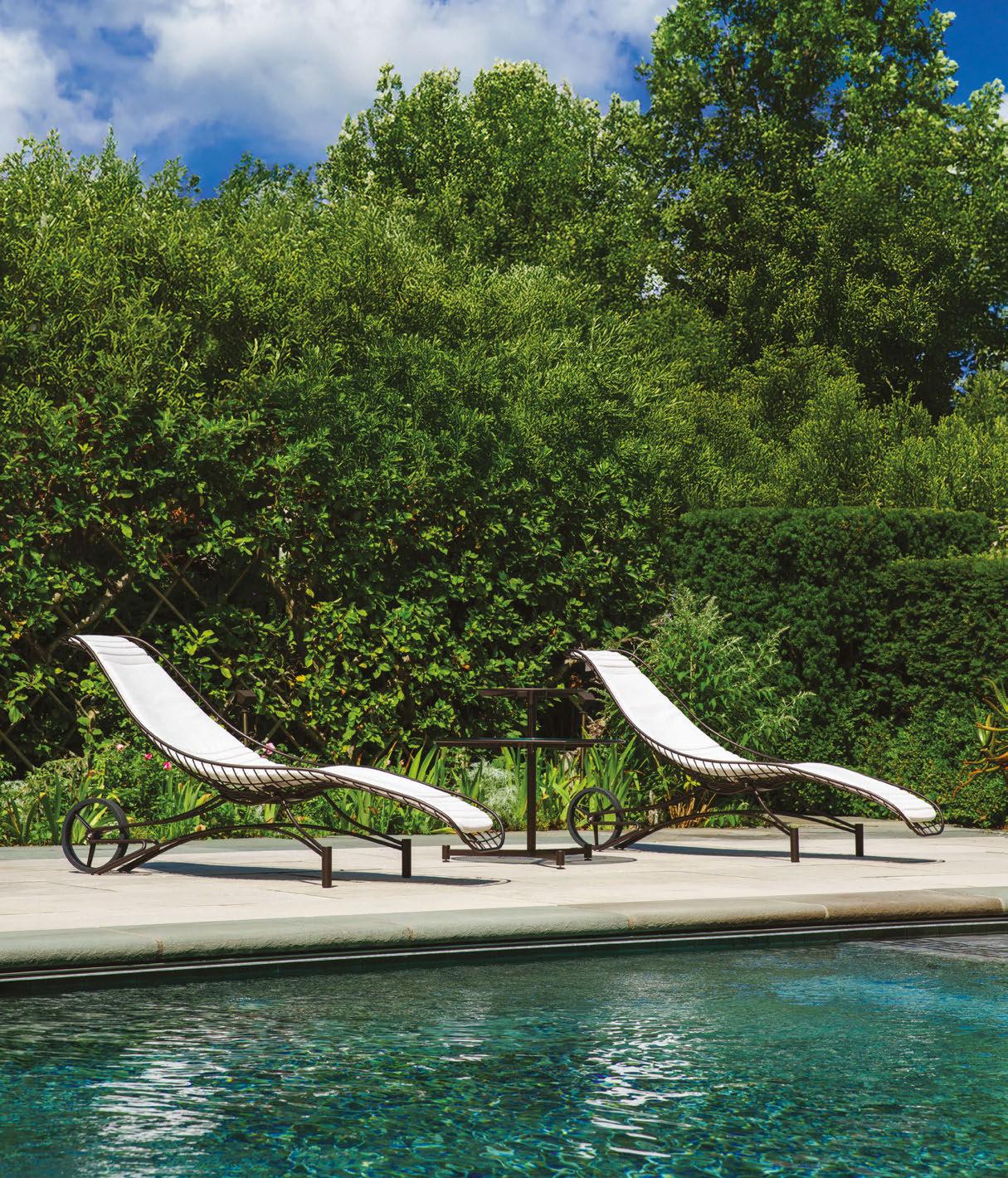
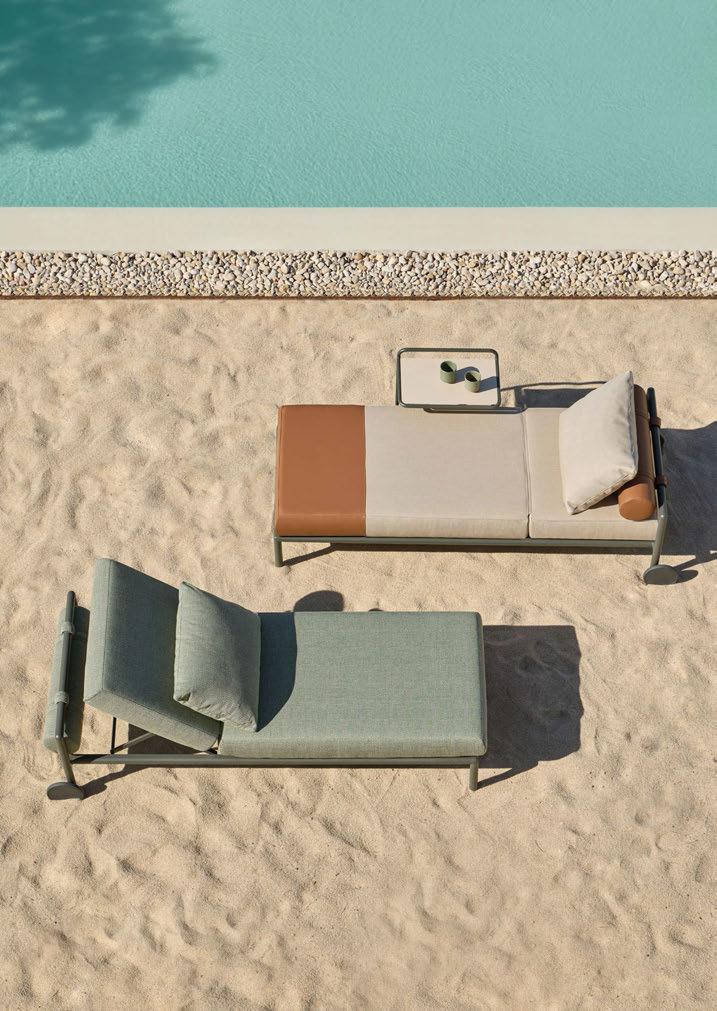
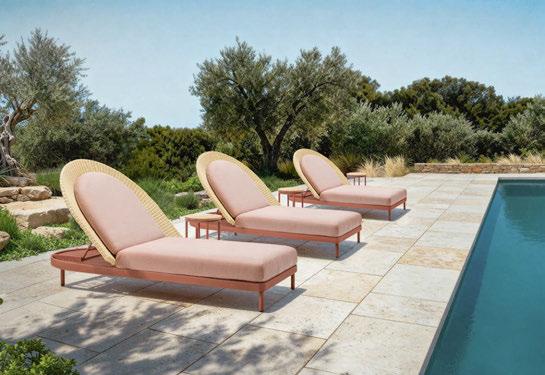
Marquesa Double Sun Lounge
Past Reveals Future
Rudy Guénaire looks to the past to create the guestroom of tomorrow at Maison & Objet 2026.
As an industry in constant flux – driven by emerging trends and ever-changing guest expectations – the hospitality sector must continually reinvent itself to remain relevant. And though there’s always one eye on the future, sometimes, the best way to stay ahead is to look to the past – as demonstrated at the January 2026 edition of Maison & Objet.
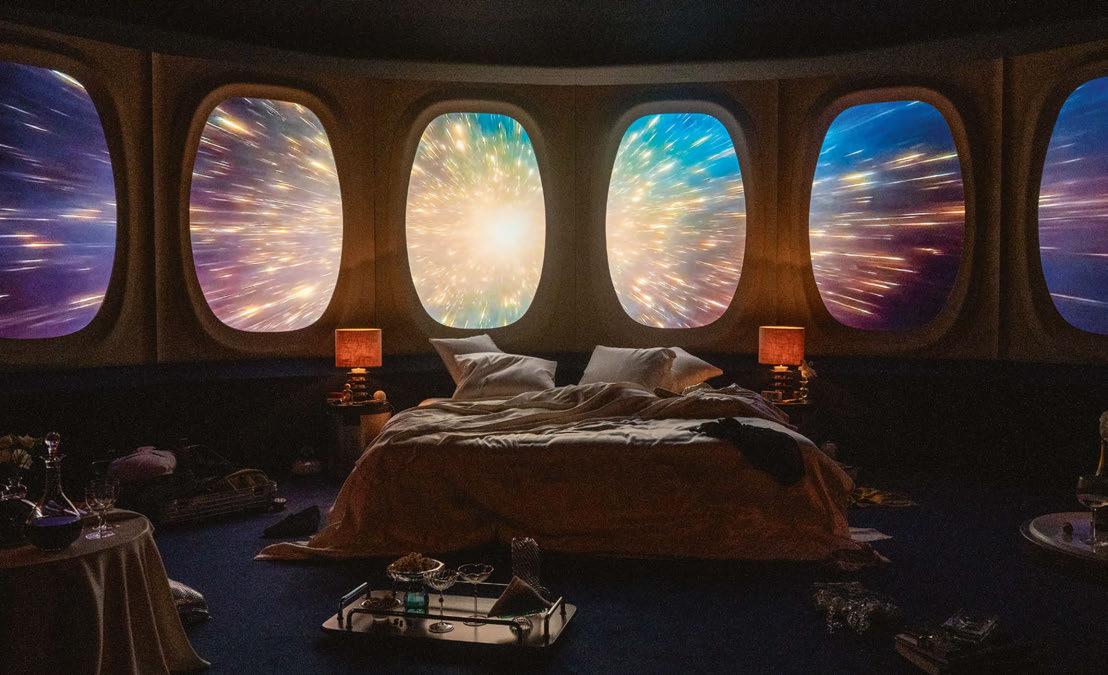
Under the trade fair’s overarching theme of Past Reveals Future, Rudy Guénaire created Suite 2046, a timeless space that blends the best of the past with bold steps towards the future. Building on the aesthetic established at Night Flight – a design studio taking a ‘new approach to modernity’ – interiors are furnished with a curated selection of products from European manufacturers, while ornamentation is grounded in the aesthetics of the 1920s-30s. The suite is set up as a lived-in guestroom, with the bed as the centrepiece and portholes looking out over a vibrant landscape. “A traveller at heart, I see the porthole as a window to the world, a reminder
of the nomadic spirit of travel, always gazing toward the horizon,” reflects Guénaire. “Suite 2046 is also a window to the imagination – a dreamlike room floating above the clouds.”
The suite formed part of a What’s New? feature covering décor, hospitality and retail, with each installation designed to decode the fair’s everevolving offerings through the lens of tomorrow. For Guénaire, this begins with resisting the urge to create the inconceivable. “Most stories have already been told – what matters is how you read them,” he reveals. “It’s the same in design: everything has already been done. Too often, creators get lost chasing effects or trying to be avant-garde. I admire those who look freely to both the past and the future – free spirits who stand outside of trends.”
Ultimately, Guénaire’s outlook on the future of hospitality centres around both ambition and restraint, imagining the architecture of tomorrow as one that “focuses on the essential and dares to dream big”.
In recent years, the luxury hospitality market has grown increasingly dependent on branded residences. What was once considered a niche extension of high-end hotels has evolved into a primary driver of project feasibility, profitability and investor appeal. Today, almost every luxury hotel development incorporates a residential component, not only to meet growing consumer appetite for serviced, brand-backed living, but also to unlock financing, diversify revenue streams and strengthen overall returns.
In London alone, recent and forthcoming ventures from Raffles, Rosewood and Six Senses all feature hotel guestrooms alongside serviced apartments. In fact, Marriott International
The BxR Boom
IHIF EMEA launches an ancillary programme dedicated to investment, development and strategy within the branded residences landscape.
recently shared that almost half of its new luxury hotel signings include residences, underscoring how integral the model has become to global expansion plans.
Recognising the rapid growth of this asset class, the International Hospitality Investment Forum (IHIF) EMEA, taking place in Berlin from 23-25 March, has unveiled BxR (Brand x Residential) EMEA, a new ancillary programme dedicated to investment, development and strategy within the branded residences landscape. The full-day deep dive will give attendees the opportunity to explore the intersection of brand power, investment strategy and real estate innovation.
The speaker line-up reflects the intersecting nature of the market, bringing together senior representatives from major hospitality groups such as Accor, Hilton, Marriott International and Starwood Hotels, alongisde luxury goods brands including Giorgio Armani, Bugatti and Pininfarina. Together, their combined perspectives will highlight how design, brand
equity, service standards and financial structuring intersect to create long-term value.
Programme highlights include a live contract negotiation between Hyatt and Cedar Capital Partners, seeking to offer a behind-the-scenes look at how deals are made. The case study will address brand standards and operating models along with licensing and risk factor. One session will bring together brokers, developers and marketers to examine how branded real estate is positioned, promoted and sold, while another will explore the sector’s growth drivers, addressing how developers structure deals, select brands and navigate market challenges. Also on the schedule is a data and trend insights presentation from
Savills Branded Residences, drawing on the latest research and development data to paint a clear picture of the market’s scale and direction in Europe, the Middle East and Africa.
“Branded residences have moved from niche to one of the most compelling investment opportunities in global real estate,” says Olga Andreevskikh, Senior Conference Producer, IHIF EMEA. “With BxR EMEA, we’re bringing together the developers, brands and dealmakers who are actively shaping this market, not theorising about it. The quality of speakers, the depth of debate and the appetite we’re seeing reflect just how central branded living has become to the future of real estate and hospitality.”
Further underscoring this shift, AHEAD – the Awards for Hospitality Experience and Design – has introduced a new Branded Residences category across its regional programmes, recognising residential projects that have successfully translated the hotel experience into a private living context.
Courtesy of H&H Development
Mandarin Oriental
Goddard Littlefair returns to the Austrian capital, bringing grandeur and glamour to a former Secessionist courthouse.
From the recently reimagined Wien Museum – its original 1950s Modernist building now sporting a glass pavilion lobby and central floating staircase by Austria’s Winkler+Ruck Architekten – it’s possible to take in a bird’s-eye view of Vienna. Along with an 18ft model of St Stephen’s Cathedral, complete with periscope so visitors can peer up inside its Gothic grandeur from beneath, there are two models of the city centre: one depicts the city with its defensive walls, built to withstand the sort of siege the Ottomans threw at it in centuries past; the other shows the city with its walls demolished and in their place the famous Ringstrasse boulevard.
Built over three decades in the boom years of the latter 19th century, the boulevard was a crowning achievement for the capital of the Austro-Hungarian Empire. Encircling the historic First District and lined with grand palaces, cafés and museums, it still defines the city today. And while its architecture has many excellent examples of neoclassical design, there are arguably more varied and interesting buildings to be found inside the Ring.
The new Mandarin Oriental, which recently opened after a decade of work and a two-year delay, occupies the former Commercial Law courts built in 1908 by Alfred Keller, an architect and artist who was part of the Secession. This was the fin-de-siècle movement that celebrated art for art’s sake, turning its back on the past and instead paving the way for Austrian Modernism. It bloomed in paintings such as Klimt’s The Kiss and structures including Otto Wagner’s
VIENNA
Stadtbahn pavilions and Joseph Maria Olbrich’s Secession Building, with its famous ‘golden cabbage’ headpiece. Keller’s courthouse is a relatively minor example, but it’s an elegantly stripped-back building – geometric on the outside with subtly fluted and textured concrete, its ironwork door framed by a paisley-like pattern on the stone surround.
“My first impression was that it was a timeworn yet beautiful building, set wonderfully into its surroundings,” says Martin Goddard, co-founder of London-based studio Goddard Littlefair, which designed the hotel. “Alfred Keller’s work has a disciplined and ordered quality that we really admire. He may be less celebrated than some of his contemporaries, but his architecture has a quiet strength and clarity that rewards close attention.”
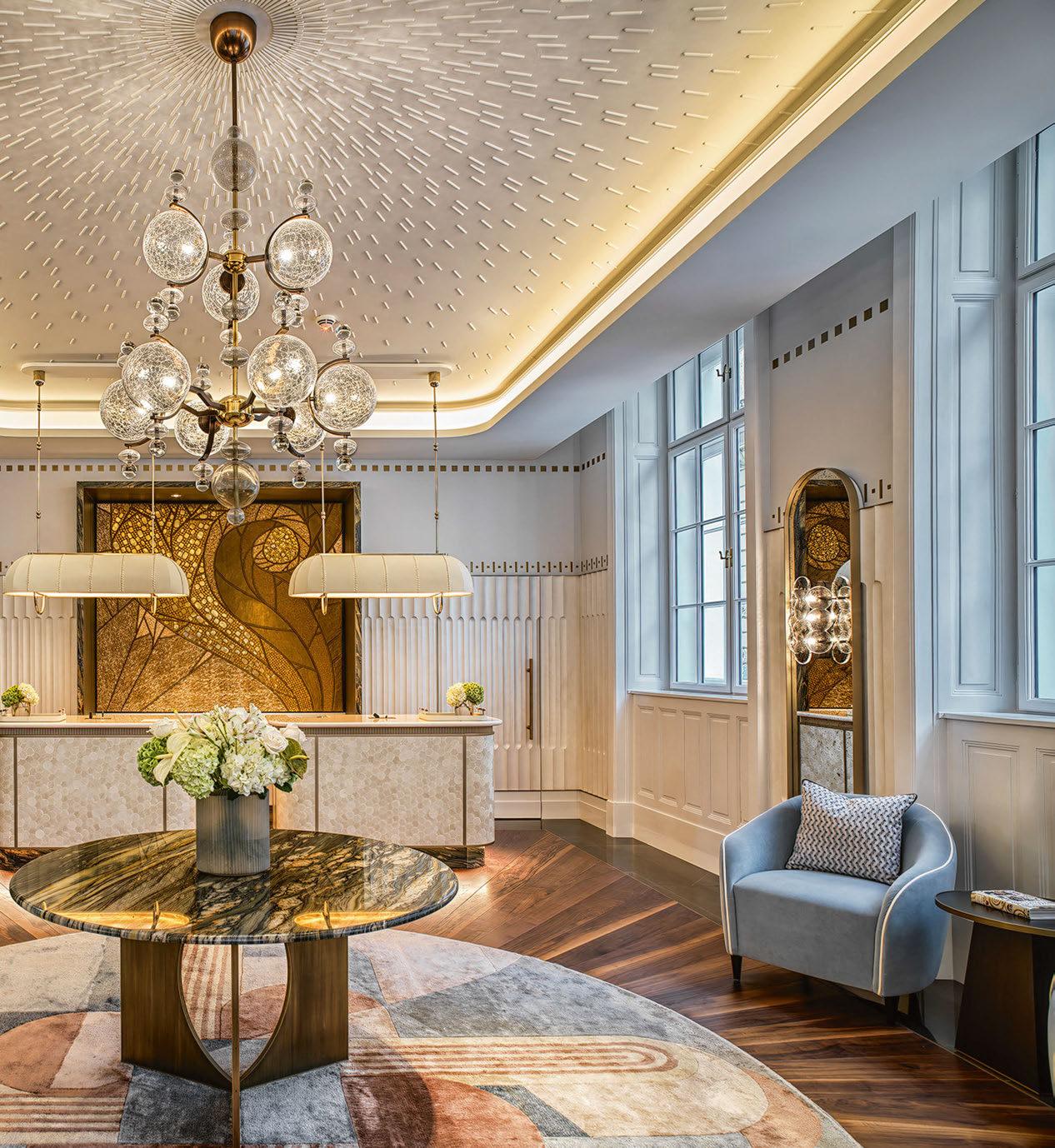
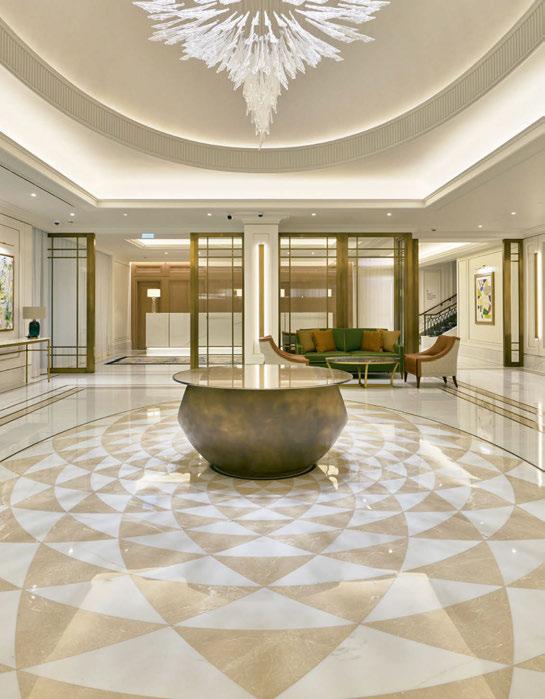
In a city that revels in baroque grandeur, the Mandarin feels discreet, tucked away on a quiet street in the First, though just a short walk from Vienna’s main sights. Heading into the marble-floored lobby, guests are met by a lighting installation that resembles champagne bubbles. The centrepiece has been developed in collaboration with DPA Lighting
Consultants – the London-based studio behind a property-wide scheme that is guided by restraint and warmth. The lighting is just one of the ways that Goddard Littlefair has softened what was originally a rather austere, municipal interior. “The courthouse wasn’t loved by the Viennese, for obvious reasons,” Goddard tells Sleeper in the lobby salon. “After all, it’s where they came to be divorced or settle debt by having possessions auctioned off – so it wasn’t a backstory we wanted to focus on. Considering its lawand-order background, we wanted to rebel a little.”
So the team delved deep into the Secession and associated Wiener Werkstätte movements, taking shapes and motifs from the original structure and around the city – including the nearby Museum of Applied Arts – and weaving them into marble floors, wall decoration and upholstery, the latter from the likes of Samuel & Sons. A pendant light fitting in crackled glass and brass is inspired by a necklace from the period; original fabric designs by Kolomon Moser and Josef Hoffmann, two of the Secession’s leading artists, were re-woven by contemporary artisans; and a dot-dash pattern from Wagner’s Austrian Postal
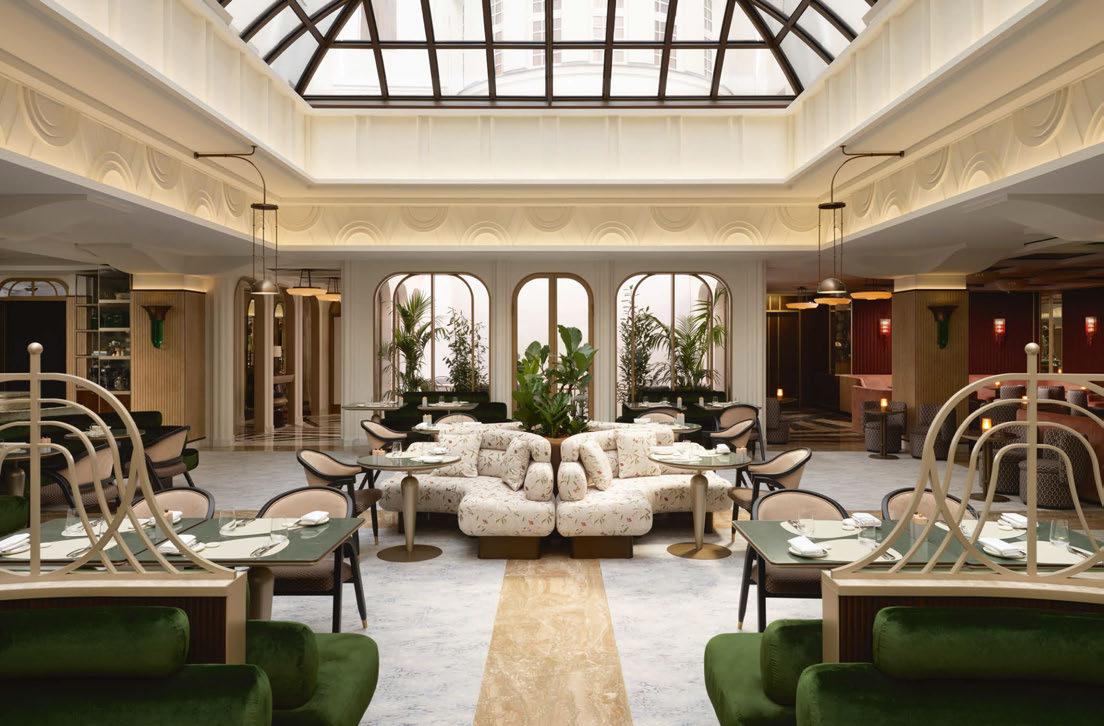
Home to four F&B venues, the courtyard features fluted walls, marble flooring and jewel-green sconces
Savings Bank was stencilled on plasterwork. Turn-of-the-century chairs have been faithfully reproduced, while a globular metal chandelier by Austrian maker 2F Leuchten hangs in reception, inspired by traditional Viennese sweet jars.
“The Secession era is rooted in creativity, a respect for nature and a strong sense of form and beauty,” says co-founder Jo Littlefair, who had already drawn on its palette for a previous project in Vienna, the Imperial Riding School. “There’s still richness in its visual language, but it is pared back in a way that feels contemporary, allowing it to translate very naturally into modern design. What we’ve done isn’t a pastiche: it’s intended to pay subtle homage to the period. Where we added enfilade effect architraves in the corridors, for example, they feel very clean and contemporary.”
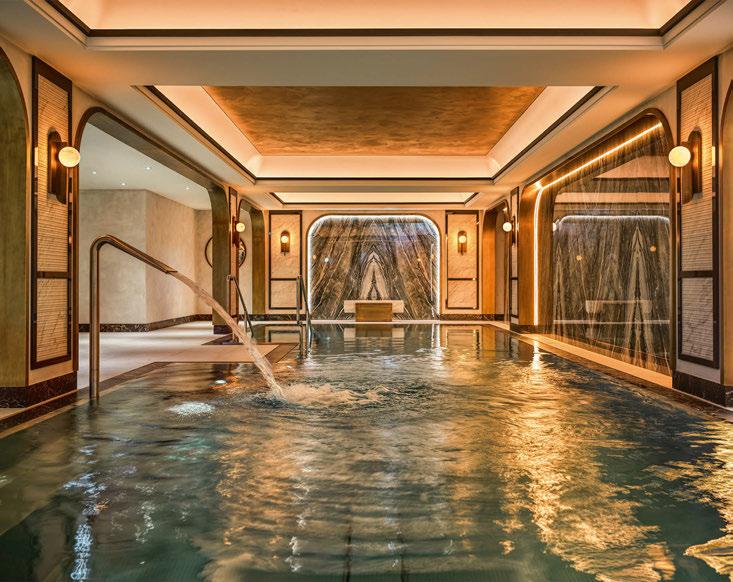
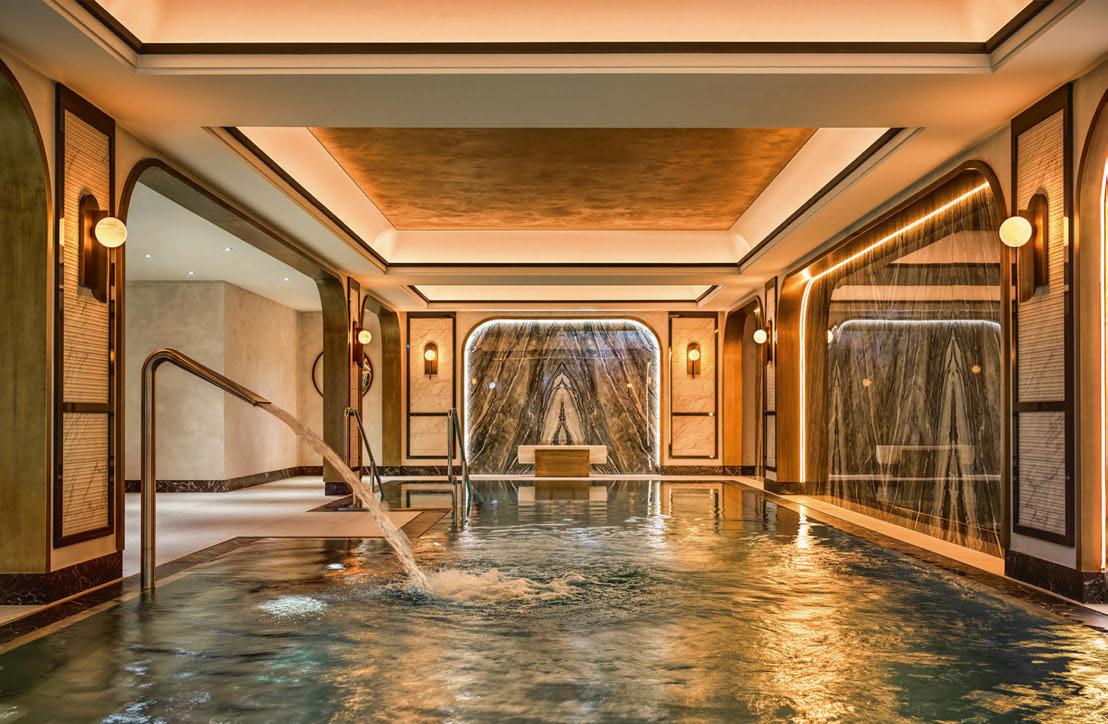
This feeling flows down into the hammamlike subterranean spa, a new level excavated by the team. “We had to be careful how deep we went as there’s a medieval burial ground further down,” reveals Goddard. Dominated by a
shimmering pool and sauna, the space features rounded archways, loungers upholstered in Perennials fabrics and panels of swirling brown-grey onyx marble, while circadian lighting adjusts with the time of day.
The centrepiece restaurant and bar on the ground floor, meanwhile, has been designed by Humbert & Poyet, though it continues the aesthetic with fluted walls, sunburst marble flooring, jewel-green sconces and geometric fabrics. Set below a huge glass dome, it’s a luminous space that combines a coffee house, bar, brasserie and fine-dining restaurant, all overseen by chef Thomas Seifried, whose menu steers clear of Viennese culinary clichés, instead serving inventive, seafood-forward plates including the only crab cakes in town.
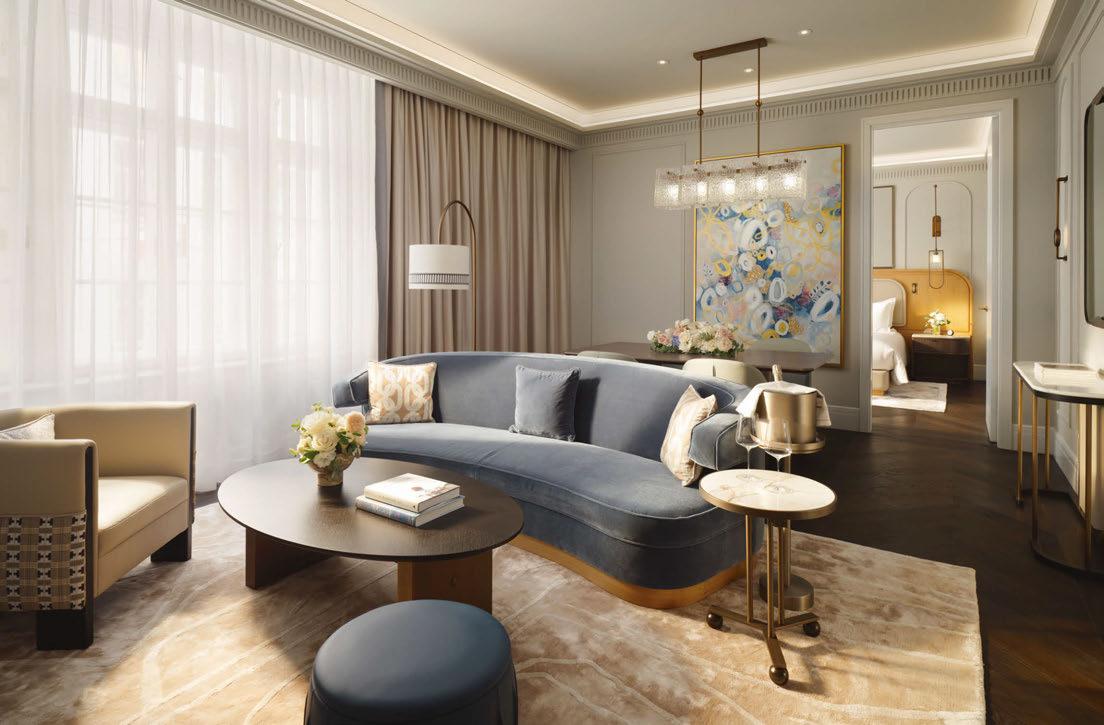
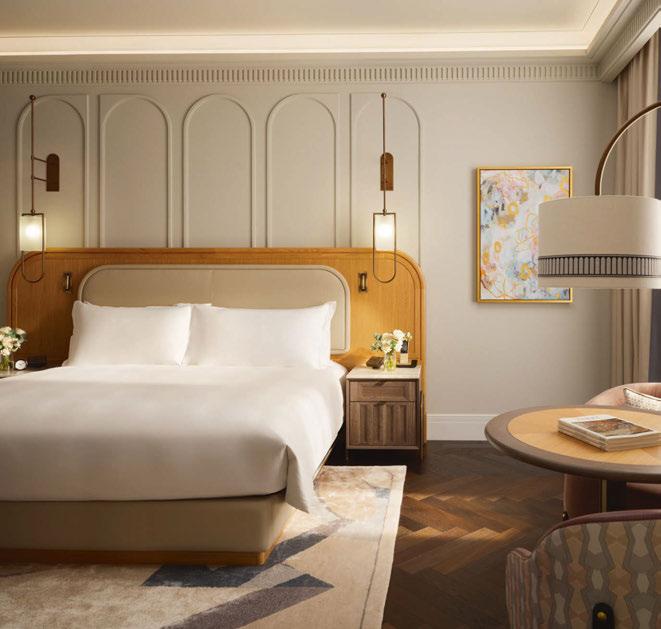
Set across four floors, the 138 guestrooms and suites have been softened with curvaceous sofas, chairs and floor lamps, as well as details including embroidered leatherwork headboards and hand-tufted rugs sporting angular patterns. Goddard Littlefair designed every single piece of
furniture from scratch. “We deliberately didn’t match the different timbers, as we wanted to create a more residential feel – as if they had been chosen by the occupants,” says Littlefair.
On the walls are striking abstract artworks by Barbara Pillar, almost Op Art-like in their intensity. With the Secession era largely a boys’ club, the hotel’s art collection, curated by London-based consultant Minda Dowling, draws mainly on contemporary female artists from Austria to redress the balance. A whiteon-white 3D relief by SvetLana hangs in a lounge; the meeting rooms are adorned with abstracts by Val Wecerka, based on letters between Klimt and Schiele; and executive suites are lined with mixed-media collages by Daniela Luschin. Above the reception desk is a Klimtlike golden swirl that glows in the light. These artworks join the one female figure who is as old as the building: Lady Justice, whose blindfolded face looks down on the lobby from the staircase. Her verdict on her home’s transformation can only be a positive one.
Main Contractor: Hagenauer www.mandarinoriental.com
CIRQL NU by Werner Aisslinger
info@bover.es | bover.es
Yuyun
by Joana Bover
Grand Hotel
Belvedere
WENGEN
Expanding across Europe, Beaumier applies its destinationdriven approach to the revival of a grand hotel in the Swiss Alps.
High in the Bernese Alps at an altitude of 1,274m, the picturesque village of Wengen captures the quintessential essence of Swiss mountain life. Snow-capped peaks and traditional timber chalets set the scene, while skiers step straight off the slopes for the obligatory après-ski.
Situated in the Jungfrau Region, the village is best known for hosting the Lauberhorn downhill of the Alpine Ski World Cup, attracting up to 40,000 spectators per day. It’s also recognised as one of the few car-free resorts in Europe, making for a quieter and healthier environment for local residents, but a logistical headache when it comes to hotel development – as the construction and operations teams at Grand Hotel Belvedere will attest to. “It adds complexity to simple tasks,” explains Lorenz Maurer, Area General Manager of the property. “There’s no road access, so all supplies have to be transported by train – not only construction materials, food and drink is shuttled up the mountain and waste goes back down.”
The remoteness of the fully refurbished hotel may come with its challenges, but for guests, a ride on the vertiginous Wengernalpbahn – the world’s longest continuous cogwheel railway – only adds to the experience. The 12-minute journey weaves through valleys and forests as it climbs to the summit, and from the station, an electric buggy takes care of the final ascent to the upper village, where the façade of Grand Hotel Belvedere comes into view.
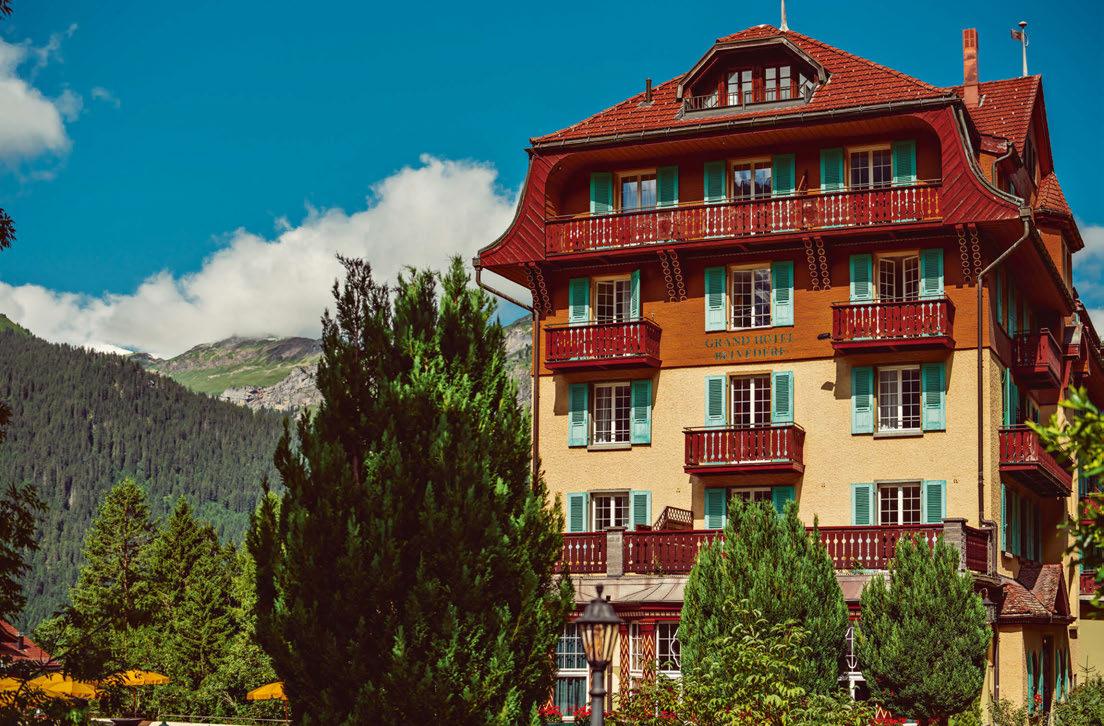
Built in 1912 as Wengen’s finest hotel, the Belle Époque masterpiece combines Art Nouveau forms and the regional Heimatstil; with its perfect symmetry, pastel-hued window shutters and characteristic mansard roof, it could easily star in a Wes Anderson picture. But it hasn’t always looked this good. Over the years, the hotel lost its sparkle: the building fell into disrepair, interiors deteriorated and upkeep was too costly for the family-run operation.
In 2024, the property was acquired by Beaumier, the Paris-based group behind gems such as Les Roches Rouges on the French Riviera
and Les 3 Vallées in Courchevel. With backing from KSL Capital Partners and under the leadership of new CEO Billy Skelli-Cohen, Beaumier is in the midst of an ambitious growth drive, expanding beyond its home nation to high-end leisure destinations with a strong sense of place – whether through heritage, culture or the surrounding nature. Hotel Belvedere fit the bill, not only for its panoramic views and proximity to ski slopes and hiking routes, but for its historic significance too. In its new incarnation, Grand Hotel Belvedere comprises 90 guestrooms, a brasserie, two bars and a lounge with outdoor terrace, as well as a newbuild spa. The facilities are spread across the sloping site – the majority occupy the heritage-protected main building, and further guestrooms can be found in the former Waldrand Hotel, accessed via a stepped path through the gardens.
Given the complexities of the project – access to the site, and the combinartion of heritage and newbuild components – some developers might have been tempted to demolish and rebuild, but modern-day regulations would impose height restrictions and stipulate the chalet-style architecture that has become somewhat homogenous. Instead, Beaumier wanted to restore the building’s grandness, marrying it with the brand DNA of destinationdriven hospitality. The approach required a diverse set of skills and specialisms, leading to the appointment of a consortium of Swiss creatives: Complete Works, Clavien & Associés and Crausaz Tremblay, all based out of Geneva, were tasked with the architecture and interior design, while Silveroc joined at a later stage to guide the project through to completion.
“Beaumier was looking for architects with knowledge of the Swiss mountains, its vernacular architecture and traditions,” confirms Arnaud Christin, founder of Complete Works, who collaborated closely with Valéry Clavien of Clavien & Associés. “The aim was to align with the group’s approach while translating the Alpine spirit specific to this region – in a contemporary interpretation for the Waldrand building, and in the tradition of the great mountain hotels of the 1900s for the Belvedere.”
With the original Hotel Belvedere under heritage protection, the project was driven by preservation and restoration. “Remarkably, a large part of the interior design of the hotel’s public areas dating from the time of its construction has been preserved, serving as a
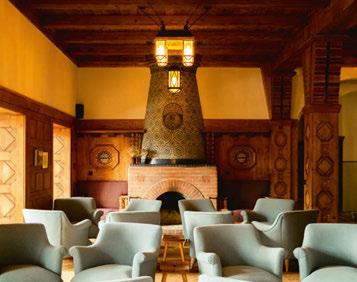
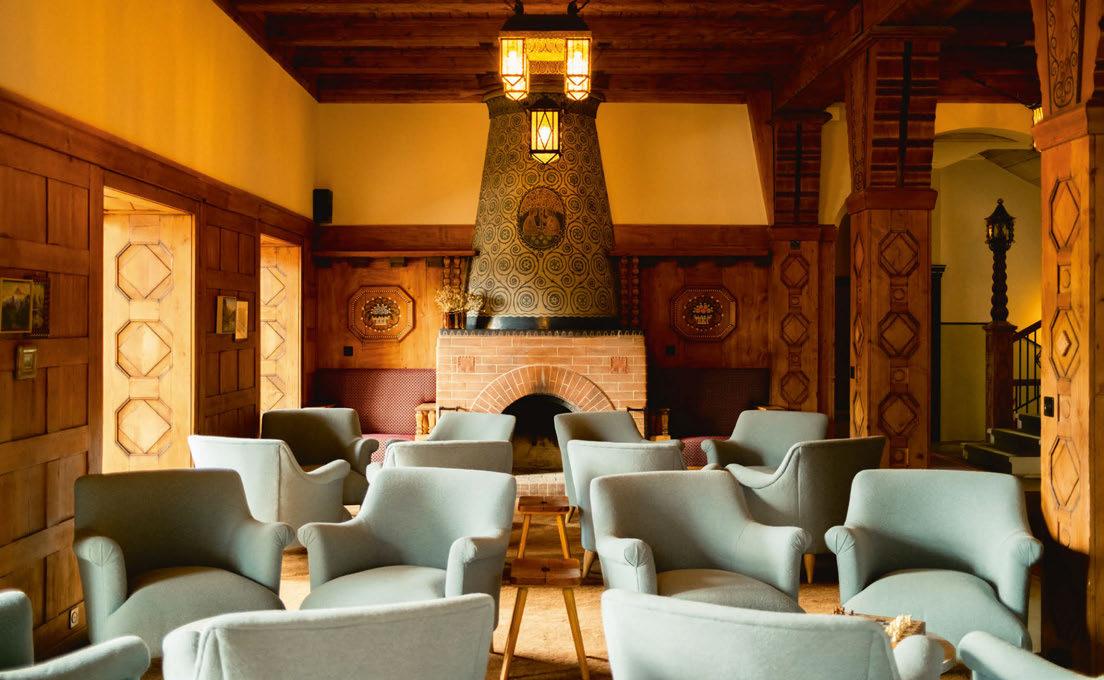
With its brick surround and highly decorated chimney, the fireplace is a focal point of the lobby lounge, accompanying ornate timber wall panelling
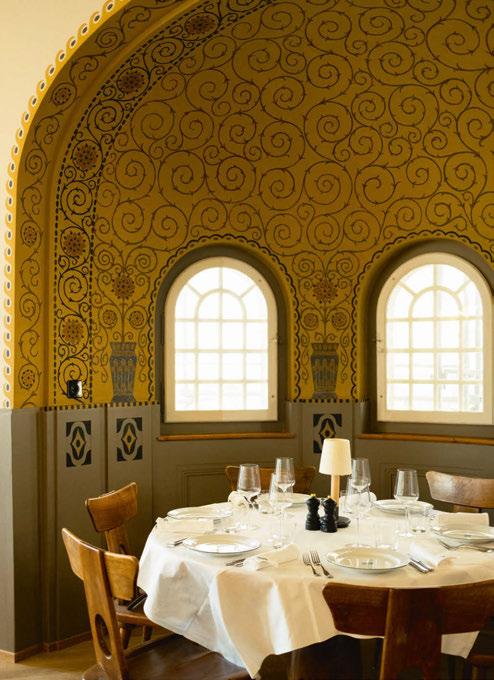
rare example of original hotel architecture from the 1910s,” Christin points out. “The fireplace is a magnificent illustration of this.” With its brick surround and highly decorated chimney, the fireplace is a focal point of the lobby lounge, accompanying ornate timber panelling that lines the walls, ceiling and archways, as well as framing bay windows. The pillars, flooring and chandeliers are also original, but it wasn’t as simple as leaving them untouched, as Maurer explains: “The frescoes were completely covered over and the panelling had been painted to ‘improve’ it; we added ventilation and modern day safety systems, then worked with a restoration company to scratch away the layers and take the interiors back to how they were in 1912.”
As the point of arrival for new guests – even before check-in, now discreetly tucked away to one side – the lobby lounge sets the tone. A careful balance between old and new, it’s designed as a place to linger, whether curled up in a secluded corner with a good book or gathering by the fire for board games. Beyond the main lounge, a winter garden features restored chandeliers and a colour palette to match the original, though it’s the views that are the main draw, particularly in the morning, as the sun rises over the peaks and floods the space with natural daylight. The panorama is even better from the outdoor terrace, where afternoons are spent indulging in local ales and light bites from the wood-fired grill.
Back inside, Belvi Salon is a cosy bar lined in bold Pimpernel fabric designed by William Morris in 1876, while the brasserie is a beautiful dining room featuring restored frescoes. Repeating motifs around the ceiling perimeter are eye-catching for their vibrancy, though the pièce de resistance is an alcove painted in sinuous curves and flowers that are typical of the Art Nouveau movement.
“It was essential to retain the codes of the 1900s while avoiding a pastiche,” Christin describes. “Following a stratigraphic study, we undertook the restoration of the original frescoes and decorative elements; this also enabled us to reinstate the natural colour of the wood panelling in the lobby.”
With the original materials and colourways informing the base palette, the design team was mindful that any new interventions be sensitive to the character of the building, so custom-made furniture is crafted to traditional Alpine techniques; the art collection includes tapestries of local landscapes alongside vintage
photographs of Wengen’s winter sports; and finishes range from textured bouclé to Andeer granite – a green stone quarried in nearby Graubünden. The cuisine is also of the location, with Executive Chef Will Gordon creating dishes that showcase the land.
Guestrooms in the main building follow the same approach, in which the mountain surroundings shape the aesthetic and a respect for local tradition takes centre stage. Knotted pine is used extensively across furniture, cabinetry and panelling, while thick woollen textiles bring a rustic warmth. Attic rooms come with the added cosiness of nestling beneath the rafters, and suites on the upper floors offer spectacular views of the Jungfrau summit and valley below.
By contrast, the Waldrand building is more contemporary in its design. Although the original construction predates that of the Belvedere, countless renovations through the 1900s left little in the way of heritage features. Yet rather than create an entirely new scheme, there’s a pleasing continuity between the two buildings: a commitment to local craftsmanship and natural materials remains, the differences being as subtle as a font change for the signage and deeper
hues in the colour palette. The lack of period details also granted the freedom to reorganise the floorplan. The result is a flexible annexe that can operate as an extension to the main hotel with guestrooms and an alternative F&B offer, or as a buy-out option for groups and private events.
Sitting between the two buildings, the spa is an intentional departure from the design of the public spaces. Part conversion, part newbuild, it occupies a former storage space in the basement of the Belvedere, adjoined to a new Brutalist-style bunker housing the wet areas. Facilities include a sauna, steam room and lounge with heated beds, as well as four treatment rooms offering rejuvenating therapies using Susanne Kaufmann’s nature-powered skincare.
A yurt on the edge of the forest hosts daily yoga and meditation classes to the sound of birdsong, while the two swimming pools foster a connection with nature through their considered design. Inspired by the military shelters of the Swiss Alps, the partially subterranean bathing areas are encased in concrete, adding drama to the swim-through between indoors and out. Emerging into the crisp mountain air, the
Knotted pine is used extensively across furniture, cabinetry and panelling, while thick woollen textiles bring a rustic warmth
panoramic views unfold to reveal forests, valleys and mountains, with the heated pools cleverly angled to face the highest peak.
For the guest, proximity to these peaks is the hotel’s greatest asset, but for construction and fit-out, it only added to the complexity. When the project began on site, Beaumier soon realised they would need specialist services, and so appointed Silveroc to represent them on the ground. “The project presented a combination of challenges: a car-free Alpine village, a historically significant building, Swiss regulatory requirements and the coordination of teams spread across different regions,” explains David Jeannet, Managing Director of Silveroc. “We supported Beaumier through the latter phases of the development, acting as an intermediary between the local project team in Wengen, the architect and interior designers in Geneva, and the client in France, helping to align their vision and operational requirements with the realities of the site.”
Communication and collaboration were key
to streamlining workflow, as was methodical planning. “Logistics in Wengen require particularly careful planning, from material deliveries to construction sequencing, all within a narrow seasonal window,” Jeannet continues. “Our role focused on stabilising processes and supporting coordination between design intent and on-site execution, helping to guide the project through to completion.”
Silveroc also had a hand in procurement, as Jeannet explains: “We took an active role in the sourcing of FF&E, OS&E and architectural finishes, working closely with the designers to ensure aesthetics, quality and functionality were maintained.”
This integrated approach across design, construction and operations has helped navigate the challenges of reviving a heritage building in a remote location, resulting in a hotel that successfully balances contemporary luxury with Alpine character, ultimately delivering on Beaumier’s considered style of destinationdriven hospitality.
EXPRESS CHECK-OUT
Owner / Operator: Beaumier
Investor: KSL Capital Architecture and Interior Design: Complete Works, Clavien & Associés, Crausaz Tremblay
Art Direction: Saint-Lazare
Procurement: Silveroc
Project Manager: Silveroc
Landscaping: Landers www.beaumier.com
A burgeoning boutique brand lands in the Norwegian capital, disrupting the hotel scene with its local-led approach and optimism-first design by Studio Aisslinger.
The stars aligned, making it a good time to launch Hobo here in Oslo,” says Emilie Stordalen, co-owner of Strawberry, the big-hitting hospitality group taking Scandinavia and the Baltics by storm.
Following successful openings in Stockholm, Helsinki and Copenhagen, the latest outpost for Strawberry’s boutique brand is situated on Karl Johans Gate and Dronningens Gate in Kvadraturen, close to Bjorvika’s Munch Museum, the Snøhetta-designed Opera House and the rippling waters of Oslofjord. The district has historically been a business hub and tourist thoroughfare, but times are changing. “It’s slowly seeing an identity shift: new restaurants are popping up and locals are rediscovering the area,” explains Stordalen. “True lifestyle hotels aren’t that common in Oslo, the city typically offers high-end luxury or business properties. Hobo is a middle ground: a designled, value-for-money stay for people who want to experience the authentic pulse of the city.”
This grounding in authenticity begins
with architecture and the collaging of three heritage buildings – two with pastel pink and yellow exteriors from the 1850s, the other in dove grey dating from the 1920s. “It was considered a strength for buildings to differ from their neighbours, with contrasting façade colours enhancing individuality,” explains Ajas Mellbye, Partner at Mellbye Arkitektur Interiør, responsible for converting the former offices into an 181-key hotel. As well as encountering various preservation statuses and differing volumes distributed across seven non-aligned floor levels, the firm was faced with the challenge of connecting the structures in a way that would enable seamless guest flow. As a result, a glass roof has been introduced over the courtyard, along with two new infill buildings constructed from recycled Høine bricks.
This union of architectural diversity chimes with Hobo’s inclusive, rooted-inthe-community ethos. “Travellers want more genuine experiences,” notes Stordalen. “Hobo Oslo lives and breathes local, showcasing new
artists and bringing culinary experiences and lively programming to the city.”
Indeed, the hotel’s F&B and events offering is varied and constantly evolving: there’s neighbourhood-hit Yeast for pizza al taglio and natural wines; the avante-garde conceptual dining room Kreatur; the multi-functional Hobo Bar; and Space By, a funky café-meets-popup-gallery for local artists, where exposed ductwork contrasts blush porcelain floor tiles, and purple cushions are mounted on an oak veneer pegboard.
The lobby is home to a small boutique stocking Hobo-branded merchandise designed in collaboration with local artists, alongside a curated collection of books, cosmetics and fragrances, the latter from nearby perfumery Son Venin. While there are DIY self-check-in screens for ease, the charming front-of-house team – clad in reworked overshirts and denim from Norwegian brand Livid – are a font of knowledge, eager to share neighbourhood tips.
The design DNA is conceived by Studio
Aisslinger – creative collaborators on the Hobo brand since inception – and builds on the signature ‘architecture of optimism’ inspired by the 1960s utopian communes in America. In Oslo, the Berlin-based studio has taken the approach a step further, taking inspiration from the hopeful spirit of NYC cultural newspaper The Village Voice, dreaming up the hotel as a modern-day urban village, where locals and travellers connect.
Hobo Bar, with its vaulted steel and glass roof, reflects this uplifting ambience in vivid colour. Dusky pink walls complement pixellike porcelain tiles in shades of blue and cream, which flow up from the floor to clad the host stand, palm-filled planters and bar front. Globular lighting on dahlia yellow powdercoated metallic stems, reminiscent of glowing lollipops, stretch upwards from a terrazzo-like bar counter made by Durat from up to 50% recycled materials. Mix-and-match seating and stools upholstered in vibrant Kvadrat fabrics in navy, crimson and sunset orange give the
Guestrooms feature Hobo signatures such as timber pegboards and modular oak bedframes, alongside vibrant pops of colour
LIGHTING THAT ELEVATES EVERY STAY
TRUSTED BY THE WORLD’S MOST PRESTIGIOUS HOTEL BRANDS, FROM CONCEPT TO ROLLOUT
everyone-is-welcome vibe of a deconstructed rainbow, while natural oak-finish tables and leafy planting cultivate an indoor-outdoor atmosphere. Furniture is arranged in a snaking pattern to foster interaction between guests, as Studio Aisslinger founder Werner Aisslinger explains: “We’re fighting for analogue connections, so creating social spaces, where communication is made easier and strangers talk to one another, is important.”
As well as being intentionally welcoming, Hobo Bar is imbued with locality. DJs such as Oslofønk spin tunes in front of a commissioned pastel landscape triptych by Norwegian artist Ilija Wyller, whilst office workers and hotel guests tap on laptops as they sample shorttravelled Norwegian wines, celeriac schnitzel and chips with brown butter sauce.
The main bar flows into a circular room with banquette seating upholstered in custom fabric by Oslo-based Kiki Plesner, patterned with whimsical figures representative of the hotel’s dynamic spirit. Designed for flexibility, the
Work with our seasoned team of advisors on thoughtfully curated art collections with rich design narratives to amplify your creative vision—from paintings & photographs to sculptures, tapestries, bas reliefs & more.
Saatchi Art was honored to be the art consultant for The REMI, Scottsdale, Autograph Collection, working closely with Rockwell Group on bespoke art for the public spaces.
adjoining pavilion is anchored by a stool-lined conference table with terracotta and cream Cipa Gres porcelain floor tiles underfoot.
Colour-drenched corridors in navy, forest green or red with matching Ege carpets create a jubilant journey to the guestrooms, also aiding wayfinding – a different colour is assigned to each building. Interiors feature Hobo signatures such as timber pegwalls with powder-coated hanging pegs, and space-saving bespoke modular bed frames in oak-effect HPL, which foster a cabin-like feel. Additional flourishes come in furnishings and accents in a combination of bold colourways. Teenage Engineering speakers atop white-and-rainbow chip Normann Copenhagen recycled plastic Bit Stools, bespoke globe lighting and colourful film-covered mirrors. Bathrooms, with silver Hansgrohe shower fixtures offer mood-boosting bathing with wraparound VitrA Colour 2.0 tiles in contrasting chessboard-like patterns of pine with soap green, or oxide red and rose cream. Another striking sanctuary is the property’s
tucked-away, crimson-saturated library –an immersive effect created through custom burgundy-lacquered oak shelving and a matching NewMat stretch reflective ceiling. The space is layered with vintage rugs, curving sofas in Kiki Plesner’s custom pattern, and baublelike Calotta chrome floorlamps from Kare. While the design is undeniably eye-catching, it is what the shelves house that make the space so special – furnished with retro Norwegian items that Aisslinger and his team sourced from the city’s flea markets and vintage shops. From a well-worn cross-country snowshoe to a brass euphonium and Nordic farmhouse-style embroidered cushion, these decorative objects not only “break the newness of the space, bringing patina and storytelling, but tell the story of the city,” explains Aisslinger.
Much like the entire hotel, it is a beautiful, creatively-executed tribute to Oslo and its communities, resulting in a gathering space that holds as much appeal for those who live here, as for those who visit.
EXPRESS CHECK-OUT
Owner: Eiendomsspar, Mette Borge Eiendom
Operator: Strawberry
Architecture: Mellbye Arkitektur Interiør
Interior Design: Studio Aisslinger
Art Consultant: Sune Nordgren
Lighting Design: Norlux
Landscaping: Multiconsult
Main Contractor: Vedal www.strawberryhotels.com
Pocketbook
HUDSON
A 19th-century textile factory is reborn as a boutique bolthole engaged in an ongoing dialogue between past and present.
In Hudson, New York – a town whose identity has long been shaped by cycles of industry, abandonment and return – Pocketbook arrives with an unusual degree of humility. Rather than positioning itself as a destination to be discovered, the hotel is presented as a place to belong: a welcoming, culturally porous space shaped by friendship, local collaboration and a belief that hospitality works best when it listens first.
Occupying the city’s largest landmarked building, a former textile and novelty factory dating from 1883, Pocketbook spans an entire city block and nearly 70,000ft2. Yet despite its scale, the hotel feels disarmingly human. This is not a monument to adaptive reuse, but a social project rooted in the rhythms of Hudson itself. Locals drift through its public spaces. Artists, designers and neighbours appear as collaborators – active participants in the life of the hotel. And the atmosphere is relaxed, convivial and deliberately unpolished. Stylish, yes, but never self-conscious.
This ethos is no accident. Pocketbook is the product of a close-knit group of partners: Sean Roland and Nancy Kim, together with Gabriel Katz of MacArthur Holdings alongside Jeremy Selman and Vipin Nambiar of HN Capital Partners. Kim and Roland, whose backgrounds include Ace Hotel and
The Standard respectively, bring a particularly fluent understanding of hospitality as social infrastructure. The influence of Ace: its gift for creating democratic, community-facing spaces that blur the line between hotel and neighbourhood living room, is felt here not as imitation but as lineage; generous public areas, thoughtful programming and a conviction that a hotel should serve its city as much as its guests.
The building itself has lived several lives. After its early years as a textile factory, it became home to Mohawk Novelty Company, producing parachutes, pocketbooks and industrial goods during the Second World War. Decades of dormancy followed before the consortium took on the challenge of reactivation. Their ambition was never to overwrite the past, but to work in dialogue with it.
This sensibility is articulated through the work of design studio Charlap Hyman & Herrero, for whom Pocketbook marks a first foray into hospitality. Rather than imposing a hotel logic onto the structure, the designers, trusted
by the owners with an unusually open brief, approached the former factory as something to collaborate with, not correct. Its physical memory is left legible. Original maple floors remain underfoot, around 70% retained, their scuffs and repairs quietly visible. Brick walls are exposed, oxidation intact. New factorystyle windows replicate the originals, drawing Hudson Valley light deep into the interiors while preserving the building’s industrial cadence.
Charlap Hyman & Herrero describes its work here as a negotiation between hard and soft, a tension that plays out in both material and mood. Zinc countertops and other non-ferrous finishes will be allowed to darken and patinate. Metals oxidise, woods mellow, surfaces evolve. Nothing feels sealed or overly resolved. Preservation, in this context, is not about freezing history, but allowing it to continue.
The 46 guestrooms, arranged across seven typologies including two-storey Loft Suites, deepen this sense of individuality. No two are identical. Each holds a small moment of
The lobby lounge is furnished with oxblood leather seating and tables crafted from salvaged beams
In the guestrooms, stainless steel contrasts with natural wood, creating a material tension between old and new
surprise – an offbeat furniture pairing, an unexpected shift in plan, an object that feels discovered rather than specified. Limewashed walls lend a soft, chalky texture, catching the light differently throughout the day, while natural-fibre mattresses by Naturalmat bring an added layer of comfort and craft. Locally made shaker-style chairs sit alongside Misha Khan tables, and millwork by local woodworkers Primary Visual anchors the spaces. The effect is playful yet restrained. Kim’s commitment to the local area is evident throughout. Carpets are patterned using scanned aerial photographs of the Hudson River, abstracted into graphic motifs. Bathrooms feature regionally made products and tactile fittings.
Contemporary art is threaded throughout the communal spaces under the guidance of artist WangShui, who served as artistic director. Works by Tschabalala Self, Martine Gutierrez and other emerging voices appear not as gallery statements but as part of the hotel’s everyday life - encountered casually, lived alongside. On the fourth floor, a hybrid exhibition and design space known as Show:Room spotlights a mix of contemporary artists, designers and independent makers, hosting installations,
Alessandro Munge
contardi-italia.com
pop-ups and limited-edition pieces that shift with the season. Later in 2026, curated retail, fashion and bookshops will animate other wings of the building.
On the ground floor, the restaurant Ambos continues the theme of thoughtful informality. With 65 seats, no two arranged quite the same, the room feels intimate and personal. The menu, described as New Argentine, is led by chef Norberto Piattoni, whose background in chemical engineering informs a quiet interest in fermentation and open-fire cooking. The food is serious without being solemn: rooted, curious and aligned with the building’s ethos of transformation.
Sound is treated with equal care. A discreet club occupies the former boiler room, equipped with a high-fidelity system by A for Ara and programmed with rotating DJs. During the day, the space shifts function, underscoring Pocketbook’s preference for symbiosis over fixed-use. Music, conversation and acoustics become part of the hotel’s material palette.
Looking ahead, that sense of layered time will deepen with the opening of the Baths in Spring 2026. Housed in a separate structure once used for textile storage, the wellness complex will draw on German and Japanese bathing traditions – sento, hammam and thermae –reinterpreted within massive timber beams and vaulted ceilings. It promises another chapter in Pocketbook’s ongoing dialogue between past and present.
Ultimately, Pocketbook Hudson is a project that distinguishes itself through restraint, empathy and a willingness to let things unfold slowly. It is not frictionless luxury, but something richer and more textured, a place that acknowledges its ghosts while making room for new rituals.
In all, it is a hotel that trusts in material intelligence, in human collaboration and in the quiet power of kismet. Rather than announcing itself, Pocketbook listens; and in doing so, creates a space that feels both entirely of Hudson and quietly, confidently its own.
EXPRESS CHECK-OUT
Owner: PBF Hudson
Sponsors: MacArthur Holdings, HN Capital Partners
Operator: HN Pocketbook Hospitality
Architecture and Interior Design: Charlap Hyman & Herrero, Pocketbook In-house (club and spa)
Lighting Design: MAP Design Studio
Art Consultant: WangShui
Visual Identity: Matthew Tsang
Procurement: Parker International
Landscaping:
Wagner Hodgson Landscape Architects
Main Contractor: Arco Murray www.pocketbookhudson.com
A family-owned company with nearly 70 years of expertise, Richloom Contract provides high-quality, sustainable fabrics and finished products for specifiers and purchasers serving hospitality and cruise projects worldwide.
Skýra Retreat
A new hideaway draws on local culture and the rhythms of nature to present a quieter, more authentic take on Finnish Lapland.
As the ‘official’ hometown of Santa Claus, Rovaniemi in Finnish Lapland attracts merry-makers in their millions, flocking from far and wide to experience Arctic adventure and the magic of Christmas.
Toy-making at the elf academy and a visit to Santa’s grotto are typically on the bucket list, along with reindeer rides, snowmobile safaris and husky sledding. But away from the star attractions, there’s an altogether quieter side to the country’s northernmost province – where sparkling lakes meet snow-laden forests and magic is experienced through tradition, culture and the beauty of the natural world.
It was this desire for authenticity that drove Susanne Hulbekkmo to open her own hotel. Having spent two decades in Lapland, previously serving as a development director for Santa’s Hotels and sitting on the board of Visit Rovaniemi, the entrepreneur fully appreciates the boost that seasonal travellers have brought to the economy, but she has also witnessed firsthand the social, cultural and environmental
impact of mass tourism. And with 2025 being a record year for arrivals at Rovaniemi Airport, there are more accommodation options than ever. “Tourism has grown rapidly, so we had to give careful thought as to what we would do,” Hulbekkmo begins. “We could have followed the same path as every other operator in the region, but this place is special, and we saw an opportunity to create something different.”
The place in question is Norvajärvi, a lakeside village within the Arctic Circle, which, despite being just 20km from Rovaniemi, feels a world away from the bustle of the city. Here, Hulbekkmo and her business partner Mika Pitkämäki acquired an old schoolhouse and set about creating a one-of-a-kind stay. Various concepts were considered in the early days, but after spending time in the community, they were soon discounted in favour of a more authentic approach. The result is Skýra Retreat – an intimate hideaway that is rooted in local culture and the rhythms of nature. “Through my journey in hospitality, I’ve seen how
ROVANIEMI
deeply people crave stillness, authenticity and something that feels real; Skýra Retreat was born from that longing,” Hulbekkmo explains. “Our ambition is to create a place where the quiet strength of Finnish nature, design and tradition meets contemporary comfort – it’s what we call Raw Luxury.”
This philosophy goes beyond the trappings of traditional luxury, taking in rest, renewal and the time and space to feel again. “Every element, from the restored schoolhouse to the new log suites and spa, reflects our respect for Lapland’s landscape and the ingenuity of Finnish craftsmanship,” Hulbekkmo continues. “We believe true luxury is found in authenticity, in the stories layered in these walls and in the warmth of welcome that guests experience from the moment they arrive.”
At the heart of the retreat is the former schoolhouse, now home to a cosy lobby lounge, dining room and six guestrooms, including two Grand Suites and the historic Teacher’s Chambers. And outside, nestled amongst the trees, are eight newly built log cabins and a standalone spa. In bringing her vision to life, Hulbekkmo enlisted two local studios – Design Saarinen for the interiors of the schoolhouse, and the Rovaniemi office of UKI Arkkitehdit for the newbuild components. “We wanted to find people who really understood the location – the history, the nature, the colours,” Hulbekkmo explains, adding that the brief called for special consideration of context.
The schoolhouse dates back to the 1950s and served as a cornerstone of village life for over five decades, providing early education for local children as well as lodgings for staff. While some spaces had little historic value, others offered a glimpse into the lives of the teachers, cooks
and caretaker who resided here. As Hulbekkmo delved deeper, she uncovered stories that deserved recognition, and so the project became about restoration and preservation. It required a gentle touch, and so Marjo Saarinen, founder of Design Saarinen, was tasked with developing a dialogue between Finnish heritage and modern luxury. “Marjo is an interior designer and an artist; she has a beautiful eye for colour and really understands the layering of materials, so I knew she could deliver,” Hulbekkmo reveals, before recounting the Finnish tradition of layering patterned wallpaper over timber –a practice born after World War II, when log construction was considered austere.
The history of the schoolhouse is best showcased in the Teacher’s Chambers, where a mounted plaque details the former occupant and interiors reflect their character. Vuokko’s Suite, named in honour of the school’s first cook, sees feminine florals accompany a spice-toned palette of cinnamon and mustard. Pirjo-Riitta’s Suite is a tribute to the 30-year tenure of the school’s first female headteacher, who provided many stories of life here as part of the research process. Anja’s Suite features pine green hues and leafy wallcoverings in ode to the teacher who raised her own children here. And finally, Olavi’s Suite is named after the caretaker, a now-elderly gentleman who maintained the building from the 1950s to 2018, when he relocated to the city. Here, Saarinen’s interiors incorporate earthy browns and handsome checked wallpaper – a reinterpretation of the décor during Olavi’s tenancy.
All four Teacher’s Chambers are full of character, each infused with the spirit of the past for a homely, lived-in feel. Though individual by design, they all feature the same original
log walls – the subject of a lengthy restoration process after decades of being concealed beneath layers of wallpaper. “We don’t want to hide the history of the building, so it was important to have as much of it on show as possible,” Hulbekkmo confirms. “For two years, we had a local craftsman here to restore the logs, it was all done by hand rather than machine, so you can still see the imperfections.”
In the same vein, parts of the building have been left untouched, with the design team opting for patina over perfection. The staircase, for example, is as it has always been – no fresh lick of paint or pristine carpet, just the timeworn treads that have survived 50 years of footprints. And in the basement, where the former woodwork room has been transformed into a yoga and meditation studio, an old cabinet bearing splashes of paint and designated slots for chisels and hand saws remains in situ, now used to store accessories and equipment for the daily classes.
Design Saarinen was also responsible for the two Grande Suites, formerly the classrooms, where historic features combine with classic detailing and a Mid-Century sensibility. Original casement windows and hand-restored logs remain, while contemporary additions include glass, mirror and metallic accents to accompany a neutral colour palette and nature-inspired fabrics and wallcoverings. A handcrafted bed takes centre stage, and further luxuries come in the freestanding bathtub and private sauna, both with a view.
Downstairs, the restaurant also looks out to the snow-covered trees and frozen lake, where locals can often be seen fishing through holes in the ice. The dining room itself occupies the former school gymnasium and interiors follow
Log Suites and private saunas offer views of the surrounding landscape to enhance a connection to nature
The Grand Suites feature original casement windows and handrestored logs, while contemporary additions include a freestanding bathtub and private sauna
the same approach to combine classic modern luxury with the raw beauty of natural materials. The logs make another appearance around the perimeter of the space, softened by textile wall-hangings and the warm glow of candlelight. Upholstery depicts flora and fauna, while table settings are kept simple – the main focus being the seasonal cuisine that is rooted in Nordic provenance. A traditional post-lunch pullakahvit comprises coffee and Finnish pastries, and evenings bring the likes of reindeer rillette and Arctic char. Many of the dishes have a story to tell too: the blueberry pie, for instance, nods to the days of children picking berries in the forest and bringing them to the school cook for a late-summer treat.
While the schoolhouse sits at the heart of Skýra Retreat, the site has been maximised through the addition of a newbuild spa and eight log cabins –both undertaken by UKI Arkkitehdit. “They really understood the idea of a matchbox cabin,” Hulbekkmo says of the studio’s appointment. “The Finns love cabins, so we wanted to create a private retreat that is guided by nature and offers a slower pace.”
The standalone accommodation units are located
just a short walk across the yard: though adjacent to one another, the elimination of side-facing windows allows for enhanced privacy, and to the rear, they open directly to the forest. The architectural design takes cues from the schoolhouse, mirroring the gable roofline and utilising the same log construction, while deep overhangs and vertical louvres take care of the practicalities, helping to protect from heavy snowfall.
Inside, the enclosed bedroom is a cosy, nest-like space, though the eye is drawn to the floor-to-ceiling windows and nature’s bounty beyond. The colour palette is once again inspired by the view, but not the dazzling white of freshly fallen snow, rather the off-white of winter’s end as it melts into the earth. The open-plan lounge features a log-burning stove for added warmth, and special attention has been paid to the selection of furniture – notably the armchairs that swivel to face the roaring log fire or the view. The private sauna is also positioned for forest views, while a mezzanine beneath the eaves – kitted out with a writing desk, sofa bed and yoga mat – serves as a space for quiet reflection.
A sense of place can be found in the details too:
a Pilke Signature lamp designed by Tuukka Halonen and made using PEFC-certified Finnish birch hangs overhead; sauna benches are handmade by specialists at Lapland’s Lapin Laude; sofa beds from Kota Company combine Scandinavian design with sustainable materials; and skincare products are by Purodoré and Osmia, the latter created to capture the essence of the Nordics in summertime.
Completing the facilities at Skýra Retreat is the spa, where nature and heritage combine for a truly immersive experience. It begins with a relaxation lounge set around a suspended fireplace, however the majority of facilities are outdoors. It’s a bold decision for an Arctic destination with only a few hours of daylight mid-winter, but one that undoubtedly pays off if the Northern Lights make an appearance during an evening dip. The spa journey itself is inspired by the Finnish thermal cycle – hot, cold, rest, repeat – and spans saunas with panoramic views of the forest and lake, as well as a series of hot-tubs beneath the trees.
Transitioning between the heated experiences is a refreshing scurry through the snow in the open air, or a more leisurely cool down takes place by the firepit, where carved seats are topped with reindeer hide. For those truly committed to the 2,000-year-old Nordic tradition, saunas are followed by a guided cold plunge in the lake – an invigorating boost for body and mind.
The hotel’s complimentary programming is also designed to support inner balance. The daily practices include morning yoga with somatic movement and breathwork; guided forest walks for a sensory connection to the surrounding nature; a folklore sauna with ancient rituals such as birch-whisking; and before bed, a deep-relaxation sound bath.
It’s this combination of tradition, culture and nature that gives Skýra Retreat a competitive edge, resulting in a hotel that invites guests to slow down, savour the stillness and experience Lapland in a new way. Santa Claus may well run the economy here for now, but it’s only a matter of time before the secret is out.
EXPRESS CHECK-OUT
Owners: Susanne Hulbekkmo, Mika Pitkämäki, Petteri Heinonen, Jussi Salmi
Architecture: UKI Arkkitehdit
Interior Design: Design Saarinen
Brand Identity: Venla Kiiskinen, Design Hanhis
Procurement: Praecom
Main Contractor: Lapin Laaturakenne (schoolhouse) Kontio (log suites) www.skyraretreat.com
Crafted at Powdermills
EAST SUSSEX
A team of creatives unite to envision a life-friendly hotel and members’ club centred around community, connection and craftsmanship.
People are always busy, but not with the things they love,” says hotelier Chris King of the observation that inspired his latest venture, Crafted. “I wanted to create a space that helps guests move away from autopilot and reconnect with what’s important; nature, creativity, food, wellbeing and one another.”
And so with the backing of Limestone Capital, a private equity firm dedicated to championing founder-led brands, King has developed a new ‘life-friendly’ hotel and members’ club concept centred around creativity, connection and nature-led living. The focus is as much on making, doing and exploring as it is on rest and relaxation – hence the name. In fact, Crafted has been recognised as the first member of the Crafts Council’s Creative Leaders Circle, a new corporate membership for brands that support and champion craft.
Keen observers will notice parallels to King’s previous hospitality venture, the fashionable yet fleeting Birch, which took the industry by storm back in 2020. Despite the similarities, he’s keen to emphasise how the vision has since evolved. “Birch was an incredibly formative chapter. It taught me many things, not least the power of multidisciplinary spaces and creative programming,” he reflects. “Elements like workshops, artist-led experiences and a communitydriven approach have carried through, but Crafted is built differently; it’s more connected to nature, more holistic in
wellbeing and more ambitious in creativity. This is more grown-up and very much its own ecosystem.”
The brand made its debut in late 2025 with Crafted at Powdermills, a 55-key hotel and members’ club nestled amongst 78 acres of ancient woodland, next to the historic battlefield of 1066. The East Sussex estate – a former gunpowder mill believed to have supplied the infamous Guy Fawkes – comprises a Grade II-listed Georgian house adorned with cascading wisteria, which stretches across the front door to adjoining wings acquired over the years in a somewhat piecemeal fashion.
Inside, a bright and bold scheme awaits, courtesy of Andreas Christodoulou, founder of East London-based studio House of Dré. Rather than restrictive, the designer chose to view the property’s heritage as creatively freeing: “At Crafted, history is overwhelmingly present, from Grade II*listed single plate windows to marble fireplaces and antique floors,” he notes. “This rich historic fabric liberated us from the pressure of adhering to a strict Georgian paint palette. Instead, we opted for a modern yet playful approach, often drenching spaces in a single earthy pigment, completely enveloping them in colour. By embracing this spirit, we’ve created a vibrant counterpoint to the Georgian architecture’s celebrated simplicity and balanced proportions.”
The result is a “patchwork quilt” of interiors that honour
the property’s industrial heritage while embracing contemporary aesthetics; each room comes with its own character and colour story, yet is tied together by the thread of craftsmanship. Nowhere is this approach more evident than The Library, an eclectic lounge, where emerald walls and a forest-green ceiling are anchored by sprawling scarlet bookshelves packed with verdant-toned volumes. A bespoke silk wallhanging by Tessa Layzelle crowns the fireplace –one of many pieces by local artists throughout in a collection curated by Despina Wotton.
The ground floor is also home to a suite of spaces accessible only to hotel guests and members: The Parlour follows a similar eclectic formula yet through a gold and navy lens. The seventies-inspired speakeasy The Green Room leans into a coral palette with chrome and copper finishes for a touch of Mid-Century glamour. And the scarlet-stained private dining room is centred around a celestial ceiling mural painted by Chiara Perano.
“The furniture and styling are deliberately eclectic. 19th-century antique tables sit comfortably beside chrome accents and velvet cocktail lounge chairs.
Contemporary art by local artists hangs next to classical still life paintings in worn gilt frames,” says Christodoulou. “Every space has something old, something new, something crafted and something blue. This approach created interiors that are layered, playful and fun, making spaces that don’t take themselves too seriously.”
Upstairs, the guestrooms deviate from the saturated scheme in favour of a subtle palette of soothing earth tones informed by the lake, woodlands and pastoral setting. Softened by plush Ege carpets, tactile woven blankets and amorphous table lamps made by local ceramicist Holly Dawes, the majority of furniture is handcrafted by Sebastian Cox – one of King’s collaborators from his Birch days – using oak, ash, chestnut and sycamore from across the estate.
“Having been a fan of Sebastian Cox Studio for such a long time, getting to work with Sebastian and his incredible team on the guestroom furniture was a dream,” reveals Christodoulou. “Everything was sourced locally, so we embraced the variety of species and let the pared back clay palette of the rooms act as a quiet backdrop. The result is a naturally inspired,
The private dining room –available to members and guests only – features a celestial ceiling mural painted by Chiara Perano
Elevate your space.
From headboards to coffee tables, guestroom furniture is handcrafted by Sebastian Cox Studio using locally
contemporary space that feels crafted, honest and deeply calming.”
This dialogue between craft and nature continues across the F&B offering. Inspired by traditional country house orangeries, the main restaurant is a bright and airy space with a central planting feature surrounded by an oval banquette. Mid-Century bentwood chairs and marble tables are offset by leopard print cushions and suspended lamps, cultivating an elegant yet relaxed atmosphere. The menu, overseen by Executive Chef Neil Armstrong, focuses on British fare with a French flair, using local ingredients including produce from the estate gardens.
Next door, the standalone pub is a true hidden gem, accommodating just 20 covers. The rustic yet timeless venue serves elevated classics –think shepherd’s pie and fish and chips – against a backdrop of oak panelling, cosy corner booths and leather bar stools with nostalgic nods such as the stove fireplace and the freshly painted gilt sign promoting the quality Guinness available on tap – a claim Sleeper made sure to verify during its stay.
“We imagined the pub as a space originally created by the workers of the old gunpowder mill so it is intentionally humble, layered with
sourced timber
history,” reveals Christodoulou. “We left weld marks visible on the zinc bar top and used bespoke ceramic tiles inspired by Hastings’ industrial past.”
Beyond the main hotel, guests and members are invited to explore the sprawling estate and everything it has to offer, from the Art Studio and Craft Barn, where Artist-in-Residence Holly Dawes leads pottery workshops, to the padel courts, kitchen gardens, fully-equipped gym and heated outdoor pool.
The wellness offering continues by the sevenacre lake, which has been partially dredged to facilitate wild swimming. On the banks sits a cold plunge pool, wood-fired hot tub and a Black Pines sauna with views across the water. “The lake is where everything begins,” reveals King. “Whether it’s a sunrise swim, a full-moon kayak or simply sitting on the deck outside the Lake House, it sets the tone for the whole property. It’s elemental, peaceful and a little wild. It’s what I first fell in love with here.”
There is a palpable energy charging through
the estate – one that emanates from the team and guests alike, as well as locals popping by to see what has become of ‘the old mill’. “It’s been incredibly energising – people have responded to the vision instantly,” says King. “The idea of a place where wellness, creativity, food and community sit side by side really resonates. The nature-led wellness, the design, the workshops, the lake, the cottages – they’re all sparking excitement and curiosity, which is exactly what we hoped for.”
And Powdermills is just the first chapter in a much greater story for Crafted. Still to come are a selection of ‘in-nature’ accommodations –“Think campfires, starry nights and waking up to the sounds of the forest,” states the website. Furthermore, King has aspirations beyond East Sussex. “The ambition is a collection of Crafted destinations, each shaped by its own landscape, community and creative ecology,” he teases. “Every site will be crafted differently, but always with nature, creativity and connection at the core.”
Overlooking the picturesque bay of Brunnsviken yet just a short drive from the city buzz of Stockholm, Hagastrand is a place of contrasts. Its architecture is a unique combination of buildings: a former army training barracks dating from 1922, and two extensions that were bolted on in the nineties during its first iteration as a hotel – a V-shaped accommodation wing and a sunfeather-like structure with characteristic window slits.
Despite years of neglect, CapMan and Nobis Hospitality Group, together with Swedish studio Wingårdhs, saw the potential to transform the property into a conference venue with a rooted-in-nature spa that is in keeping with the parkland surroundings. “Hagastrand combines modern conference and event facilities with the tranquillity of Nordic wellbeing traditions,” says Alessandro Catenacci, owner and CEO of Nobis Hospitality Group. “Here, guests can connect meaningfully, recharge mindfully and find a harmonious balance between work and leisure.”
As per Catenacci, the foundation of every Nobis design brief is to create an interior that stands the test of time, transcending trends and capable of lasting at least 25 years. As such the project became an exercise in restraint for Wingårdhs. “Instead of demolishing and rebuilding, erasing what was worn or unfashionable, it was about reviving the building and enhancing its inherent qualities,” explains Helena Toresson, the studio’s Vice President. “Anything used should be able to be renovated and age with dignity.”
This ethos is particularly evident in the lobby, a grand space with an 11.5m-high ceiling. “What was once a sad passageway has been transformed into a vibrant place to gather,” Toresson continues. Mint green pillars have been repainted in smoky grey, adding structure and gravitas, while unsightly blue foils have been swapped for elegant mirror details. The original ceiling and its steel trusses have been retained, and the damaged ceramic floor layered with black-and-white chequerboard marble.
The lobby’s impressive height is enhanced by a diverse lighting scheme designed in collaboration with Prolicht. Sculptural mesh shades by Vibia cascade from the ceiling, while Verpan’s Wire floor lamps are accompanied by the distinctive Peel light from Frandsen for an inviting glow. A custom gridded lightbulb installation on the underside of a suspended bridge bisecting the lobby strengthens the central perspective, under which sits burgundy-stained oak coworking tables that lead to a terrazzo-resurfaced staircase with new claret laminated railings.
Loose furniture upholstered in durable wool and leather, primarily from Nordic brands such as Fredericia and Lammhults, has been selected, while geometric details such as squares and stripes are a recurring motif. These gentle nods to nineties patterning – in line with the building’s Post-Modern roots – can also be seen in the likes of greyand-white striped carpets in corridors.
Adding further energy to the lobby, Matthias van Arkel’s
large-scale, kaleidoscopic tangles of silicone flow across walls. “I wanted something that would be truly breathtaking to encounter as you step into the hotel; van Arkel’s pieces offer exactly that sense of impact and originality,” says Catenacci, who curated the artwork throughout the hotel. The owner’s artistic nous is also visible in the guestrooms; having been enamoured by Lisa Larson’s ceramic plaques for Gustavsberg, he went about sourcing 215 individual pieces, one for each room. “I admit there were moments when I regretted the idea, but after several months, I completed the collection,” says Catenacci, who proudly hung each plaque himself.
Guestrooms, some with sea views, are “well-tailored sanctuaries; relaxing, yet fun,” says Toresson. Nordic natural materials – oak flooring and Ogeborg wool carpets – are layered with striped oak and white pigmented ash wall panelling, accompanied by a jovial striped Baba Armchair by Bebo Objects. Rooms on the fourth floor have extra jaunt, thanks to gable dormer
windows that conjure up Haga Park’s circuslike Sultan’s Tents.
A peaceful ambience is underlined by the concentric circles of Zero wall lamps and uncluttered bathrooms furnished with Axor chrome showers, wraparound white and grey terrazzo walls and Comfort Zone amenities.
Most zen is the 2,500m 2 spa, a former garage that has become Nobis’ most ambitious wellness offering to-date. Weaving together the art of sauna, sound healing and performance, contrasts continue; hot and cold, light and shadow, activity and rest, during a journey that unfolds from an outward-facing social wellness area to a more introspective thermal zone. At the heart of the social wellness area, an 18m swimming pool is presided over by a handcrafted Grotta Sonora gong. Aquamarine lights and beneath-the-surface speakers elevate underwater swims, while a gong strike by the sauna master signals the beginning of a ritual. The sauna itself is impressive too, built by Klafs and accommodating 60 bathers; inside,
Guestrooms are layered with Nordic natural materials such as striped oak and white pigmented ash wall panelling
Norwegian larvikite sauna stones glimmer and group sessions blend culture, music and aroma.
Sensual pebble-embedded flooring marks a transition into the thermal zone, where reconnection to the self is fostered. A low-lit central relaxation space is characterised by a natural palette of cream and warm slate grey tones, accompanied by undulating Höganäs Grynna ceramic tiles. Crescent slatted dividers cast shadows across Ceramiche Piemme porcelain stonework floors, sectioning Skargarden teak loungers into private relaxation hubs. A meandering layout is intentional: “curves force guests to move a little slower,” explains Toresson. From here, contrast therapy spaces unfold: a porcelain-clad hammam, a 70ºC smoked-elm aroma sauna, a 90ºC Nordic smoked-ash sauna and a teeth-chattering -10ºC TechnoAlpin snow room, alongside frequencyshifting neuroacoustic loungers that combine red light therapy and vibration. There’s also a cavernous space with Sommerhuber ceramic loungers, where a Gongmatic – a self-playing
gong – delivers grounding sound and light experiences. Further wellness hits can be found in the 350m2 gym, where Sanctum workout classes focus on energy frequencies, or in the four treatment rooms that offer blissful Oquist and Comfort Zone facials, massages, reiki and CO2 Cardisuit therapy.
Beyond wellbeing, the hotel also caters to business and social gatherings with a suite of flexible meeting rooms, a spacious conference hall and a grand ballroom. State-of-the-art technology and tailored service cultivate an environment that supports focus, creativity and flow.
A masterclass in the power of embracing contrasts, Hagastrand is an invitation to connect and spark the imagination as much as it is to relax and rejuvenate. “My hope is that guests pause – even if just briefly – and begin to reflect on the importance of taking care of themselves,” concludes Catenacci. No matter how guests arrive, they’re sure to leave feeling profoundly different.
EXPRESS CHECK-OUT
Owner: Nobis Hospitality Group
Developer: CapMan
Operator: Nobis Collection
Architecture and Interior Design: Wingårdhs
Lighting Design: Prolicht
Procurement: YLLW
Main Contractor: BJ Bygg, Arcona (Spa) www.hagastrand.se
Photography by Brad Matthews
Hotel Gotham, Newcastle
Hotel Gotham
NEWCASTLE
Bespoke Hotels reunites with Squid Inc to reimagine a former fire station in honour of its heritage.
It’s a Saturday night when Sleeper checks in to Hotel Gotham Newcastle. The city’s top-flight football team has just beaten Manchester City at St James Park, the Toon Army are out in force, and the town is buzzing, nowhere more so than the hotel’s appropriately named Fire Bar.
Its name is not so much a reference to its energetic atmosphere as the fact that this newest addition to the Newcastle hotel scene is housed within a former fire station – part of a larger, multi-functional civic complex that once included a police station and magistrates’ court.
Standing proud on Pilgrim Street – the city’s main shopping thoroughfare – the Grade II-listed structure was designed by Cackett, Burns Dick & Mackellar in the 1930s. With its Portland stone façade, carved detailing and lengthy forecourt lined with engine garages, the majestic edifice has been a cornerstone of the city’s streetscape for decades, becoming a much-loved local landmark.
After the fire station closed in 2005, there were concerns over its future, but thankfully,
hotelier Robin Sheppard stepped in with a plan. Transforming the architectural gem has been a real labour of love for the industry veteran, who is continuing to develop the Hotel Gotham brand, despite stepping back from his role as Chairman of Bespoke Hotels, the company he co-founded in 2000 with Haydn Fentum.
The project has been developed in partnership with the Reuben brothers’ Taras Properties as part of a wider regeneration of the East Pilgrim Street area, encompassing the prominent former Bank of England and Odeon Cinema site, set to become home to the UK government’s tax authority HMRC when it completes in 2027.
The disused building that now houses Hotel Gotham is opening in two phases. The fire station offers 57 guestrooms, the Fire Bar and fine-dining restaurant Siren. It is also home to Club Brass, a low-lit private members’ bar with velvet booths topping a distinctive herringbone floor, made bespoke by Ted Todd. Meanwhile, the police station and magistrates’ court are being converted into an additional 30 rooms,
launching in Autumn 2026. Both buildings are sensitively restored to retain their unique character, with modern glazed elements introduced to link the spaces. Bedrooms are accessed via balconies overlooking the central courtyard, which makes use of the station’s hose tower to form the lobby, while the enormous engine room facing out onto Pilgrim Street has now become Fire Bar, giving the hotel a direct connection to the surrounding city.
For the design, Bespoke Hotels turned once again to Oxfordshire-based studio Squid Inc, whose Lead Designer Oliver Redfern had previously worked on the group’s two Manchester hotels, Gotham and Brooklyn, as well as The Telegraph Hotel in Coventry. “The building’s history and character immediately resonated with us,” says Redfern. “We believe every property has its own essential story, and this one is rich with history that we were eager to preserve while infusing it with the glamorous, Art Deco spirit of Gotham.”
In public spaces, this equates to saturated
jewel tones, geometric motifs and opulent metallic accents, juxtaposed with quirky artifacts and memorabilia. Upturned fire buckets are repurposed as light fittings, vintage extinguishers top cabinets and an installation of hoses is suspended overhead. And, of course, the original fireman’s pole is still intact, taking centre stage in the lobby lounge.
Guestrooms have a distinctly Art Deco feel and feature bespoke wardrobes, fitted furniture and dark wood headboards custom-made by Curtis, along with monochrome zig-zag carpets and old-fashioned travel trunks repurposed as sideboards. Chairs upholstered in fire engine red fabric add a pop of colour, while desk lamps, clocks and Roberts Radios in black and gold evoke Gatsby-era glamour. “The guestrooms each have a character of their own with rich textures, graphic patterns and thoughtful references to Art Deco elegance,” explains General Manager Chris Thompson. “We’ve blended character with comfort to ensure every space feels both indulgent and welcoming.”
Squid Inc worked in close collaboration with Ryder Architecture and main contractor FYR Projects to deliver the complex scheme, which has been in development since 2021. “Hotel Gotham demonstrates how thoughtful adaptive reuse can drive both cultural and economic value for a city,” notes Ian Crow, Project Director and Principal at Ryder Architecture.
“By carefully restoring and reinterpreting the Grade II-listed former fire station, the design preserves historic character whilst meeting the needs of a contemporary hospitality destination. As Newcastle’s first five-star hotel, it sets the standard for hospitality and brings a unique character to the city centre economy.”
According to Thompson, the vision for Hotel Gotham Newcastle was never about convention: “It was about creating an experience with presence, personality and purpose,” he concludes. “The design is immersive and intentionally bold, referencing the heritage of the building while delivering something truly unique to the city’s hospitality scene.”
Rooted in tradition, the ever-practical yurt has been a place of rest for centuries, serving as a portable dwelling for nomadic groups living in the steppes of Central Asia. Comprising a timber frame and canvas tent, this simple structure is now the inspiration behind a newbuild hotel in northwest China.
Designed by H2 Architecture with interiors by Cheng Chung Design, Hotel Indigo Nalati draws on nomadic life in Xinjiang Uyghur Autonomous Region, with the culture and traditions of winter settlements woven into the design language. The hotel adopts a dispersed layout of individual structures linked by winding woodland pathways, taking guests on a journey as if following in the footsteps of migrating herders. Each building is circular in form, featuring a soaring dome that mimics the architecture of a yurt.
The main entrance is designed to evoke the sense of stepping into an Aul – a traditional Kazakh settlement – while the bar celebrates the rituals and blessings of local hospitality. In nomadic culture, the hearth is the heart of the home, so the intimate lobby lounge centres around a traditional firepit reimagined as a contemporary fireplace, inviting guests to gather, reconnect and share stories.
Completing the narrative, interiors are anchored in the theme of ‘A Grand Journey Along the Duku Highway, Through the Seasons of Nalati’. Cheng Chung Design has opted for natural materials, motifs drawn from local ethnic traditions and artworks crafted through native felt-thread techniques, collectively offering an experience that is rooted in the heritage and enduring spirit of its surroundings.
As adaptive reuse and sustainability continue to shape contemporary hospitality, designers are increasingly choosing to embrace the raw character of historic buildings while embedding new narratives around circularity and local production. Nowhere is this more evident than Jam Hotel in Ghent, where Studio Lionel Jadot has employed its Realistic Circle methodology to transform a former military barracks into an evolving artist’s workshop, where traceable materials, collaboration and architectural heritage shape the guest experience.
In preserving the building’s original charm, the Belgian design firm stripped away false ceilings and unsightly cladding to reveal grand volumes and historic masonry, which now set the stage for the innovative approach. At the heart of the hotel is the Salon, a
modular space that transitions from co-working hub to events venue, embodying the overarching opendoor philosophy. Interiors are the collective effort of more than 40 designers, artisans and artists – all from within a 50km radius – who were tasked with crafting solutions that focus on traceability, circularity, reuse, locality and uniqueness. Brussels-based designer Pierre-Emmanuel Vandeputte repurposed old school chairs, for example, while PermaFungi used mycelium to form lightweight, sustainable lampshades. Such pieces accompany an original fireplace framed by industrial shelving salvaged by Rotor Deconstruction, where a collection of makers’ moulds are on display. The result is a cheerful hodgepodge of recycled and handcrafted pieces that collectively capture the creative spirit of an artist’s workshop.
CONVERSION
Jam Hotel Ghent
Beyond The Buzzwords
In the face of ‘S-word’ fatigue, an IHG initiative is supporting the design community in achieving sustainable impact through specification.
Words: Hannah Wintle
When it comes to sustainable progress, there is no such thing as a quick fix.
While some are quick to point the finger at so-called wasteful industries, it’s becoming increasingly clear that it doesn’t fall to a single sector or solution to combat the effects of climate change.
Hospitality is no different. Is it the owner’s responsibility to drive lasting change? Does it fall to the architect and interior designer to embed sustainable solutions within the fabric of each project? Or should the guest take charge of making their own sustainable choices?
Each party certainly has the desire to make meaningful change, but putting this into practice can be challenging: convoluted jargon is daunting, costs are supposedly high, and there’s the assumption that only large-scale and farreaching initiatives reap rewards for both profit and planet.
“It’s not sustainability, it’s viability. If everybody made just one small change, we can make an impact.”
SAM HALL, IHG
THE IHG HOTELS & RESORTS APPROACH
At IHG, the narrative is shifting. In an initiative entitled Beyond The Buzzwords, the global hotel group is taking a collaborative approach, inviting the hospitality design industry to learn through a series of in-person panel discussions and networking. Spearheaded by Sam Hall, Director of Interior Design at IHG Hotels & Resorts Europe, the sessions derived from an ambition to “do better”, bringing sustainable conversations to the fore in an effort to drive lasting change.
Having previously worked on projects that see environmental progress given precedence, Sam picked up the reigns of ‘Green Gang’ – a collective of like-minded colleagues with a desire to make a difference, originally kickstarted by Emma King, Head of Premium, Luxury & Lifestyle Design, IHG Hotels & Resorts. The thinking aligns with IHG’s Journey To Tomorrow, a 10year responsible business plan for the group’s global network of more than 6,900 properties. Over the course of the decade, the commitment will champion positive change across multiple areas, from people and community to carbon and energy, waste and water – all in a bid to achieve the UN Sustainable Development Goals and help shape the future of responsible travel.
Beyond The Buzzwords supports Journey to Tomorrow by reinforcing how sustainability considerations are embedded and carried through at the design and development stage. Backed by IHG, the initiative represents the Green Gang’s ambition to make sustainability outcomes achievable for all. To encourage an open forum, they’ve teamed up with Sarah Duncan, founder of Sleeping Lion – a business consultancy specialising in sustainability and
ESG. As the host of each session, Sarah – a self-confessed industry outsider who is rapidly learning the nuances of hospitality design – is joined by a panel of speakers with the insight to share how meaningful specification changes can deliver sustainable progress.
Open to all those actively working in hotel design and specification, from IHG-approved studios to newcomers, each event centres around a specific product category, highlighting the opportunities to make manageable adjustments throughout the project. “It’s not sustainability, it’s viability,” Sam affirms. “We’re stronger together. If everybody in the room made just one small change, we can make an impact.”
No matter the product, the message remains the same. “Just do one thing,” Sarah stresses. “Don’t try everything at once, it’s impossible. Just do one thing, implement it across every project, then add something else.”
FATIGUE VERSUS COLLABOR-ACTION
In Spring 2025, Beyond The Buzzwords made its debut by exploring sustainability with an aerial view. The session kicked off by demystifying the word itself and acknowledging the ‘S-word fatigue’ that can arise at its mention. With the context set, the audience then heard how asking simple questions about a product’s composition, origin or recyclability can help to encourage open communication.
This notion has become a recurring theme throughout the events. As Sarah emphasises, embedding this mindset into everyday operations starts with acknowledging the importance of conversation over competition –if hospitality is to rise to the decarbonisation challenge, sharing best practice and embracing
collaboration is essential. IHG is taking the opportunity to accelerate progress through this approach, Sam adds, though she also offers an important reality check: “Hospitality design is behind other sectors, so there needs to be an industry-wide change. This is not just about IHG. It’s about us coming together with the wider industry to make a difference.”
Dubbing the approach ‘collabor-action’, Sarah clarifies that making such a difference means choosing to make small changes, even when there isn’t the legislative mandate to do so. “We want sustainable practice to become business as usual, but until measurables like carbon budgets are commonplace, we still need events such as these to reinforce the message and try to embed change into everyday practice.” Echoing these sentiments, Sam adds that policy changes are already happening elsewhere: “If we don’t keep the UK industry up to date, we’re not going to be able to compete in the European market.”
For now, in the absence of such legislation, the driving force behind positive change comes from the individual, as Sam explains: “What holds people back isn’t ambition. What they struggle with is knowing what to do.” The key here, she notes, is taking steps in the right direction without overwhelm. “It’s about progress, not perfection, because they can keep learning, but they won’t start doing better until there’s a vehicle to allow that to happen.”
SPECIFYING FOR IMPACT
As that vehicle for change, Beyond The Buzzwords provides an important education around what can be done at specification level to ensure lasting, sustainable impact. With each event revolving around a different product category – from window treatments
“On one side we have the data and on the other is the storytelling. On their own they don’t drive results: we need to bring both together to facilitate change.”
SARAH DUNCAN, SLEEPING LION
to floorcoverings, sanitaryware to lighting and controls – the particulars come into clearer focus, encouraging the benefits of detailed and accurate specification.
In January, Sleeper attended IHG’s first event of 2026, where attendees heard from a panel of leaders representing Kvadrat, Silent Gliss and Concept Contract, each of whom brought a unique insight into navigating window treatments. Among the key takeaways, it was noted that considered specification is vital, with greater detail leading to greater precision, saving possible reworks and therefore waste. Similarly, understanding how a product’s maintenance can impact its lifespan could be the difference in ascertaining whether a product is the right fit for a particular application. As such, open conversations between designers and suppliers are an important factor when assessing matters such as fabric quality, upkeep and long-term performance expectations, and should take place early in the process to avoid mistakes that typically come hand-in-hand with additional costs.
Further discussion at the event focused on the energy-saving potential of window treatments within guestroom management systems. For example, automating electric drapery can help maintain consistent room temperature, reducing heating and cooling energy use, and while the upfront cost is higher, the long-term energy savings shouldn’t be ignored.
The session highlighted the complexity of sustainable material decision - making , where perceived environmental benefits can involve practical trade-offs. Natural fibres, for example, are often assumed to be a more environmentally friendly option, but in practice, their unique characteristics can be limiting. A
greater reactiveness to natural environments means wear is often more unpredictable and upkeep can be a challenge, reducing lifespan and leading to a shorter refurbishment cycle. Even textiles of a natural-synthetic mix – which may sound preferable to a solely synthetic composition – reduce recyclability at end-oflife due to the inability to separate the tightly blended fibres. Together, these examples underline that sustainability outcomes depend on context, use case and lifecycle considerations rather than any single material choice.
A previous session focusing on floorcoverings came with its own set of challenges and opportunities. Choosing a wood that is sustainable means researching agricultural practices, for instance, sourcing finishes that are FSC- and PEFC-certified to ensure traceability and responsible forestry. The use of oils and lacquers were also addressed, a practice that extends lifespan yet can be a challenge in terms of circularity.
The conversation will continue to unfold through forthcoming events, too, with the nuances of yet more product categories set to be examined: wallcoverings and paint, tile and stone, smart room design, loose furniture, joinery and casegoods, sanitaryware, and lighting and controls are all on the agenda.
Through the initiative so far, it has become clear that there’s no one-size-fits-all solution. Sam’s recommendation is to assess all the options and select the most appropriate application for each situation, once again emphasising the importance of bringing suppliers on board early. “Design really is about problem-solving,” she summarises. “The best designs are those that solve problems.”
ACHIEVING AUTHENITCITY
Tackling such problems is undoubtedly good for the planet, and can unlock additional benefits, too. In some cases, the sustainable change might also be a social one – sourcing products locally, for instance, not only supports homegrown businesses but eliminates the need for carbon-costly shipping. As Sam points out, sometimes, conducting additional research can lead to finding more cost-effective, socially responsible alternatives.
Recounting one particular project, Sam recalls reassessing specification with authenticity at heart. “We set ourselves a parameter of 50 miles from London and explored what we could source within that proximity. There was some initial hesitancy, due to the belief that products are cheaper from overseas, but the developer pushed for authenticity, regardless of cost. In the end, it turned out to be significantly cheaper to buy in the UK, which went against pre-conceptions.”
Reflecting on the breadth of stakeholders involved and championing small businesses, Sam explains: “From concept through to manufacturing, hotel design relies on small agencies as well as large ones. For IHG, it’s important that our entire supply chain is capable of delivering to all IHG’s requirements.”
Sam also emphasises that, regardless of brand, the principles around sustainability remain the same throughout IHG’s global portfolio. Whereas Ruby might lean into mindful practices through the repurposing of vintage furniture, the likes of Holiday Inn might achieve goals through standardised selections across multiple properties.
SUSTAINABLE STORYTELLING
So, where does the guest come into this conversation? In an increasingly environmentally conscious world, does sustainability drive stays? Today, a growing number of industries are capitalising on the draw of green credentials. In F&B, restaurants are responding by placing greater emphasis on transparency, provenance and responsible sourcing to engage diners,
rather than relying on environmental metrics.
This approach is difficult to translate to interiors, but Sarah argues that creating a narrative is a smart strategy to communicate the sustainable measures in place. “On one side we have the data and on the other is the storytelling,” she explains. “On their own they don’t drive results: we need to bring both together to facilitate change.”
As Sam notes: “It doesn’t necessarily need to be a selling point. Is today’s leisure guest prepared to pay a premium for a sustainable stay? The reality is no. We are implementing these measures because it’s part of running a responsible business.”
What can’t be disputed is that storytelling is essential within the hospitality industry. Sam and Sarah’s call for collabor-action means sharing in-practice experiences – the successes and the failures – so that progress can be replicated. With Beyond The Buzzwords facilitating a knowledge exchange between suppliers and designers, meaningful progress becomes more achievable.
PROGRESS OVER PERFECTION
As the hospitality sector becomes more environmentally conscious, it is increasingly clear that treating sustainable design practices not as a secondary consideration, but an important element in its own right, could be the key to making lasting progress.
As such, detailed specification, and addressing issues early and with the right specialists, means that every project carries untapped potential to become another step in the right direction. Unlocking long-term benefits may start with small changes, but when sustainability is built into everyday practice, the rewards to be reaped can be deceptively impactful.
What remains important, Sam emphasises, is progress over perfection, and as Beyond The Buzzwords continues to platform these conversations and facilitate an industry-wide knowledge shift, the ripple effect that follows can only ever be positive, sustainable change.
CURTAIN SYSTEMS FOR SMART HOTELS
Forest Group offers different drapery hardware solutions especially made for the hospitality industry. Whether you choose for our motorised curtain tracks or rods, blinds or manual curtain tracks your hotel guest will experience ‘the Forest Factor’. Which stands for a unique combination of beautifully hanging curtains, comfortable luxury and optimal ease of use.
Architectural elegance with a recessed track.
Ticket To Travel
A new report from Marriott International explores how changing behaviours, motivations and technologies are reshaping travel, pointing to possible shifts within the group’s hotel portfolio.
Words: Eleanor Howard
Amidst increased competition and an ever-evolving brandscape, understanding the guest has become more important than ever. Recognising this, Marriott International has surveyed 22,000 travellers from across Europe, the Middle East and Africa, to gain insight into how new behaviours, motivations and technologies are reshaping travel in the year ahead.
“The desire to broaden horizons and forge meaningful connections through travel remains as strong as ever,” states Andrew Watson, Chief Commercial Officer in the introduction to the group’s 2026 Ticket to Travel report. “From practical considerations such as cost and accommodation priorities, to the types of holidays and experiences that inspire wanderlust, this report paints a vivid picture of what travellers desire.”
The report presents positive predictions for leisure travel in 2026, with four-infive consumers (79%) planning to go on the same number or more holidays than they did in the previous year. Furthermore, Marriott booking data has revealed the destinations that are generating interest among travellers –indicating where demand lies and helping to identify potential growth opportunities. Spain and Italy top the list for UK travellers, for example, while Middle Eastern holidaymakers are setting their sights on the Kingdom of Saudi Arabia and Switzerland.
Beneath this optimism lies deeper shifts in how guests approach travel. From the rise of passion-led itineraries to new forms of luxury and the growing role of technology in planning trips, three emerging trends are set to shape Marriott’s development pipeline, as well as hospitality design and experience more broadly.
RISE OF AI
50%
HAVE USED AI TO PLAN OR RESEARCH A HOLIDAY
68%
HAVE BEEN ON A PASSION PURSUITS HOLIDAY
HAVE PREVIOUSLY BOOKED A ‘LUX-SCAPE’ 59%
As the world grows increasingly interconnected, artificial intelligence has rapidly evolved from a novelty to a necessity in travel planning, particularly when it comes to researching destinations and booking accommodation. According to the report, 50% of respondents have used AI to plan or research a holiday; up sharply from previous years, this highlights not just curiosity, but a change in behaviour. The same proportion responded that they would feel comfortable booking accommodation directly through AI platforms in the future, reinforcing the growing familiarity and trust travellers are placing in the technology.
For hotel groups, the shift signals a desire for properties that are digitally discoverable, visually distinctive and operationally seamless. This new tech-forward mindset is reflected in the forthcoming W Riyadh, located within the LEED-certified King Abdullah Financial District. The hotel’s positioning within what is said to be one of the world’s most advanced mixeduse developments aligns with the expectations of AI-enabled travellers seeking efficiency, innovation and bold design. Its always-on programming and flexible events spaces cater to a generation comfortable with moving fluidly between work, leisure and social experiences –often coordinated digitally before arrival.
LUX-SCAPING
Another trend gaining traction across the region is ‘lux-scaping’, wherein travellers intentionally add short yet high-impact luxury
stays to the start or end of a trip – such as a night in a spa retreat or a gastronomic splurge. Not only does this allow travellers to access experiences that might otherwise feel out of reach within broader travel budgets, but it also provides emotional benefits that will enhance the overall travel experience. In fact, 46% of those surveyed claimed that lux-scaping helps them relax and get into the holiday spirit at the start of a break, while 43% said a luxury stay at the end of a holiday results in them returning home feeling refreshed.
Hotels in gateway cities are uniquely positioned to capitalise on this growing behaviour. The forthcoming St Regis London, for example, will offer a refined rest to travellers passing through the capital en route to other destinations. With spa suites featuring plunge pools, butler services and curated rituals such as Midnight Suppers and Bloody Mary experiences, the property is well equipped to deliver concentrated luxury in a tight time frame.
PASSION PURSUITS
Rather than being driven by destination alone, holiday decisions are increasingly tied to a purpose or personal passion – be that music, sport, culture, outdoor adventure or even volunteering. In fact, the report reveals that 68% of respondents have taken a passionled holiday before, with roughly a third doing so at least once a year, signalling a deeper reorientation in travel motivations.
Properties that align with these passions by forging partnerships with local businesses
and charities to offer curated programming are therefore not just places to stay, but platforms for passion-driven exploration and personal growth. For example, W Sardinia will set the stage for creative and cultural engagement through the brand’s immersive W Happening initiative, which spotlights local producers, artisans and performers through workshops, culinary rituals and artist-in-residence programmes. Elsewhere, Amoh, a Luxury Collection Resort in Rhodes, will invite guests to connect directly with the island’s heritage through a range of experiences, from ceramic workshops with local craftspeople to honey tastings and private cove dinners.
For designers and operators, the rise of passion-led travel also carries important spatial implications. As hotels are increasingly expected to offer a broad spectrum of activities – from creative workshops and culinary masterclasses to wellness retreats – interiors will have to adjust accordingly, moving beyond fixed hospitality formats to incorporate flexible, multi-purpose spaces that can easily shift between social gathering, learning and performance.
THE IMPACT
Alongside these broader shifts, Ticket to Travel also highlights a growing demand for flexibility and privacy, reflected in the desire for extras such as connecting rooms (15%) and paid access to exclusive lounges (19%). In response, hospitality designers may need to accommodate a wider spectrum of guest preferences, incorporating adaptable room
configurations and moving away from singular open-plan communal areas towards more layered environments comprising a network of smaller, exclusive zones.
Meanwhile, the environmental impact of travel has become an increasingly important factor, as 73% of respondents admit to looking at the impact of their plans. This growing awareness is likely to influence hospitality design in the coming years, encouraging greater emphasis on energy-efficient systems, responsibly sourced materials and design strategies that minimise environmental impact while still maintaining comfort and quality.
Ultimately, the 2026 Ticket to Travel report paints a picture of an industry in evolution –one no longer defined simply by destinations or nights spent, but by intent, emotion and innovation. Travellers are embracing AI tools, building trips around their passions and treating short-luxury moments as essential elements of a holiday. As such, the report demonstrates that the key to unlocking the next chapter in hospitality is in understanding not just where people are going, but why. “The future of leisure travel remains bright,” concludes Watson. “Domestic and regional travel continue to thrive, while international adventure remains deeply cherished. It’s exciting to see what lies ahead – the opportunities are endless.”
Hotel Construction Pipeline Asia Pacific
As the most active hotel development market in the world, Asia Pacific now counts 2,766 projects (572,153 rooms) in the pipeline according to the latest data from THP.
China remains the clear heavyweight, with 239,350 rooms in development, accounting for more than 40% of the entire Asia Pacific pipeline. This dominance is particularly evident at the city level, where urban hubs such as Shenzhen, Shanghai and Hangzhou feature prominently among the region’s hotspots.
Elsewhere, India continues to flourish, with its rapidly expanding pipeline driven by infrastructure investment and rising domestic tourism, as well as strong growth from both homegrown operators and international players. IHG for example, is set to more than triple its portfolio in India over the next five years.
Southeast Asia, meanwhile, is reporting promising growth across key leisure and gateway markets. Phuket in particular is benefiting from renewed confidence in resort and tourism-led projects with 7,137 rooms across 33 projects under development thanks to ventures from The StandardX, MGallery and JW Marriott.
In total, Asia Pacific is set to add more than 165,015 rooms to its inventory in 2026, with a further 98,073 due in 2027.
TOP CITIES
BANGKOK Projects 58
16,329
SHENZHEN Projects 49
14,722
SHANGHAI Projects 48 Rooms 11,823
HANGZHOU Projects 43 Rooms 8,495
TOP COUNTRIES
7,003
THP is a data service that supports the development of new hotel projects worldwide. The figures in this report are extracted from the THP construction database: updated daily by an international research team, it includes four- and five-star hotel projects across all phases, from vision to pre-opening. www.tophotelprojects.com
CONSTRUCTION PHASE
Of the 572,153 rooms in the pipeline, 55% (312,591 rooms) are under construction and 18% (105,695 rooms) are in the planning stage. It is within these phases that interior design schemes and FF&E fit-outs are being implemented.
GROUPS AND BRANDS
Following a record number of signings in 2025, Marriott International maintains its lead as the most active group in the region, powered by the growth of its flagship brand. Meanwhile, Hilton is on track to grow its luxury and lifestlye portfolio across APAC by at least 50% in the coming years.
Timeless quality, luxury comfort
Hotel Natural Splendour Shown on Plush Navy
The intelligence source for the hotel investment community
Branded residences move beyond the easy wins
Branded residences may still be one of the most profitable components of hotel-led developments, but debate at the Branded Residences Investment Summit in Madrid suggests the sector is entering a more demanding phase. Rising development costs, tougher brand terms and increasingly sophisticated buyers are narrowing the margin for error, even as global pipelines continue to grow.
The summit took place as part of the Atlantic Ocean Hotel Investors’ Summit and was organised by the global hotel owners’ association HOFTEL. It brought together developers, investors, brands and advisers to assess whether the rapid expansion of branded residences can be sustained as markets mature and competition intensifies.
Branded residences are now firmly embedded in hotel development strategies, particularly at the luxury end of the market. Bill Barnett, founder and managing director of C9 Hotelworks, said residential components have become central to many hotel group pipelines. “For so many hotel groups, there has to be a branded residence component,” he said, pointing to the scale of residential-led growth among luxury brands.
The economic rationale remains compelling. Development costs across Europe and other mature markets have risen sharply, compressing margins on standalone hotel projects and increasing reliance on residential sales to make schemes viable. Phil Golding, partner at Cedar Capital Partners, said the residential element continues to offer materially stronger returns than the hotel itself. “In the luxury space, the development cost on the hotel side is not that far off value now,” he said. “The residential piece still offers significantly accretive returns for the project.” He added that while luxury
hotels can cost close to USD1m per key to build, residential units can still be sold at multiples of construction cost, allowing developers to derisk projects earlier.
However, panellists warned that the residential upside is becoming more volatile. Mitra Ghamsari, founder and chief executive of Persepolis Investments, said branded residences are highly sensitive to sales price assumptions. “From an IRR perspective, we are very IRR sensitive,” she said, adding that “the volatility around the sales price is very difficult to sensitise” in newer branded residence markets and for emerging brands. While hotels may offer lower headline returns, she argued they often provide greater certainty once stabilised.
One of the clearest messages from the summit was that branding alone is no longer enough to justify premium pricing. Ghamsari said developers have learned that “you can’t just stamp a brand and put in a premium”, arguing that value now comes from product design, storytelling and alignment between the brand and the built form. Jose Antonio Pardo, director at Blasson Property Investments, reinforced the point, saying that differentiation needs to be embedded from the earliest stages of masterplanning through to interior design and amenity provision.
Panellists also highlighted a growing divergence between mature urban markets and less established destinations. Golding said premiums are typically easier to sustain in resort locations than in deep, mature cities. In markets such as London, he argued, the ability of branding alone to create incremental value is limited, whereas in emerging destinations branding still plays an important role in giving international buyers confidence on quality and standards.
Buyer behaviour was a recurring theme. Barnett said branded residences increasingly cater to two distinct user groups: buyers
focused on long-term lifestyle use and capital preservation, and buyers treating the unit as an investment asset that may be rented. Golding said that at the luxury end of the market, demand is increasingly driven by ultra-highnet-worth individuals purchasing additional homes rather than primary residences. “It’s about succession and estate planning,” he said, describing decisions that are often linked to long-term wealth structuring rather than short-term yield.
Pricing discipline is becoming more important as buyers grow more internationally referential. Ghamsari said buyers are typically “extremely sophisticated”, comparing opportunities not just within a single city but across multiple global markets. She warned that there are limits to how far relative pricing can move before demand shifts elsewhere, adding that tax treatment and ongoing ownership costs are increasingly influencing purchase decisions.
The role of non-hotel and lifestyle brands was discussed as a source of both opportunity and competition. Michele Galli, chief executive of The One Atelier, said buyer psychology differs between hotel-branded and lifestylebranded residences. She described hotelbranded buyers as more conservative and service-led, while lifestyle-brand buyers tend to be more emotional and aspirational, seeking differentiation and collectability. “The process is exactly the same,” she said, arguing that branding agreements remain fundamentally trademark licence structures, even if buyer motivations differ.
Galli also addressed concerns around service delivery where non-hotel brands are involved. She said service provision is typically handled by developers or specialist third-party managers approved by the brand, and argued that strong service culture is not exclusive to hotel operators.
Contractual complexity emerged as one of the
sector’s most significant challenges. Barnett said it can now take longer to negotiate the suite of branded residence agreements than a hotel management agreement, reflecting increased legal scrutiny and deeper brand involvement in sales and operating structures. Ghamsari warned that this complexity creates material risk for developers who fail to fully understand long-term obligations, while on the buyer side lengthy contracts raise the bar for sales execution: “The complexity is very high.”
Golding was more direct in his assessment of recent brand behaviour, citing examples such as deemed royalty fees on unsold inventory and upfront payments regardless of sales performance. He described some recent demands as “quite frankly outrageous”, while acknowledging that strong demand in certain markets has encouraged brands to push harder on commercial terms.
HA PERSPECTIVE
The Madrid discussions underlined that branded residences remain a powerful tool for unlocking value in hotel-led developments, particularly in an environment of rising costs and constrained hotel returns. But the tone of the summit made clear that the sector is moving into a more mature phase, where disciplined underwriting, realistic pricing assumptions and careful management of legal and operational complexity are increasingly critical.
Hotel majors press growth advantage as owners stay bullish
Net unit growth (NUG) remains one of the most closely watched benchmarks in global hotel development, but it is not without its critics. While NUG provides a clean view of whether a system is expanding once churn is stripped out, it says little about the quality or profitability of the contracts being added.
A high net growth rate can be achieved through lower-fee structures, heavy conversion incentives or rapid expansion into thinnermargin segments. As a result, NUG is best
read not as a proxy for earnings growth, but as a measure of strategic momentum and competitive positioning.
That distinction is particularly relevant in 2025. With development costs elevated and owners more selective, the tension between growing the system and protecting fee yield is becoming more visible. Against that backdrop, the way hotel groups disclose – or avoid disclosing – NUG is increasingly instructive.
Among the US-listed majors, NUG remains a core reference point. Marriott International reported net rooms growth of 4.3% for 2025, supported by the addition of more than 700 properties and close to 100,000 rooms. Marriott signed nearly 1,200 organic deals during the year, representing over 163,000 rooms, and closed with a global pipeline of roughly 610,000 rooms, up 5.7% year on year. Conversions again underpinned delivery, accounting for more than 30% of organic room signings and allowing a significant share of openings to be delivered within 12 months.
Marriott’s approach continues to prioritise scale and durability over headline growth rates. A mid-single-digit net growth rate applied to the industry’s largest base still produces substantial incremental fee income, and the group has consistently emphasised portfolio mix, regional balance and brand segmentation alongside growth. The implicit trade-off is slower relative expansion in exchange for greater confidence around fee quality and longterm earnings visibility.
Hilton Worldwide has leaned more heavily into growth rate. Hilton reported NUG of 6.7% for 2025, a rooms-based metric directly comparable with Marriott’s net rooms growth. The group added almost 800 hotels and around 100,000 rooms during the year and finished with more than 520,000 rooms in its development pipeline. In relative terms, Hilton is expanding faster, and sustained outperformance on NUG implies gradual convergence with Marriott over time.
That higher growth rate also sharpens the debate around quality. A greater reliance on
conversions, midscale and extended-stay formats accelerates net expansion, but typically comes with lower average fees and, in some cases, higher upfront incentives. For investors, the key question is not whether Hilton can continue to post higher NUG, but whether that growth translates cleanly into earnings without margin dilution as competition for assets intensifies.
Hyatt Hotels Corporation again sat outside this direct comparison. Hyatt did not disclose a net unit growth figure, instead emphasising pipeline intensity and loyalty-led value creation. The group ended 2025 with approximately 148,000 rooms in its pipeline, equivalent to around 40% of its existing system, following a 7% yearon-year increase. Hyatt’s case rests less on growth speed and more on revenue intensity, arguing that higher spend per loyalty member compensates for a smaller footprint. While that resonates with some owners, the absence of a net growth figure limits transparency around systemwide expansion.
The omission of NUG was more pointed at Choice Hotels International. Choice highlighted strong development activity, including record international onboarding, 13% growth in international rooms and continued momentum in extended-stay, but did not provide a consolidated net unit growth figure. Given Choice’s history of foregrounding favourable metrics, the absence is notable. It suggests that net system growth is unlikely to be a strong headline number, reflecting ongoing churn in legacy economy brands. The net figure is therefore expected to surface at the group’s Q4 results, where it is likely to be framed within a longer-term portfolio repositioning narrative.
Outside the US, Q3 results offered clearer signals. Accor reported net unit growth of around 2.5% at the nine-month stage and reiterated guidance for approximately 3.5% net growth for the full year, even as it refrained from leading with NUG in its development commentary. While that pace is materially below that of the US majors, Accor’s portfolio complexity and heavier exposure to managed
and leased models mean net growth is often balanced against margin considerations. The key issue at full-year results will be whether improving NUG is being achieved without increasing earnings volatility.
InterContinental Hotels Group provided the most detailed disclosure. IHG reported net system growth of 5.2% year on year through 30 September 2025, adjusted to exclude the removal of 7,092 rooms formerly affiliated with The Venetian Resort Las Vegas, which exited the system earlier in the year. On a reported basis, including that removal, net growth was approximately 4.4%. Regional performance was uneven but strong in parts, with net system growth of 9.1% in EMEAA and 9.8% in Greater China, while growth in the Americas lagged. The data points to improving momentum into year end, but also highlights how one-off exits can materially affect reported NUG.
Owner sentiment suggests that this more nuanced reading of growth is increasingly shared. Research from Wyndham Hotels & Resorts indicates that owners remain optimistic about expansion, but are placing greater emphasis on execution, technology support and net returns rather than headline growth. For owners, a lower NUG tied to stronger profitability can be preferable to faster expansion with weaker economics.
Accor’s experiential travel trends research reinforces that view from the demand side. As travellers place greater value on experiences and loyalty benefits, brands are under pressure to demonstrate that new additions are not only accretive in volume terms, but also capable of generating incremental spend and margin.
HA PERSPECTIVE
Taken together, the 2025 disclosures underline both the value and the limits of NUG. Hilton is gaining ground on growth rate, while Marriott continues to dominate in absolute scale. Accor and IHG are showing improving net momentum, with fuller disclosure expected at year-end. Choice remains more opaque, suggesting weaker net expansion beneath solid gross activity. As the industry looks into 2026, NUG will
remain a central benchmark – but increasingly one that must be read alongside fee mix, contract quality and earnings delivery, rather than in isolation.
Hilton pushes into apartments as refinancing pressure bites
Hilton’s launch of Apartment Collection by Hilton, seeded through a partnership with Placemakr, is best understood as a strategic response to two converging forces: changing guest demand for space and flexibility, and mounting capital pressure within the multifamily sector that is beginning to surface new types of hospitality-adjacent supply.
Hilton says the new collection will offer fully furnished apartments with hotel-style services, integrated into Hilton.com and Hilton Honors, with initial availability from the first half of 2026 in markets including New York City, Washington DC and Atlanta. The group says it already has around 10,000 apartment-style units within its system globally and expects Placemakr to contribute up to a further 3,000 units as the platform scales.
Announcing the launch, Hilton president and chief executive Chris Nassetta said: “Apartment Collection by Hilton represents the next chapter in Hilton’s growth story and the ways we are evolving to meet growing guest demand for this dynamic segment of hospitality,” adding that the brand would give guests “even more ways to choose Hilton for every stay, backed by our service and reliability”.
The decision to frame Apartment Collection as a ‘collection’ rather than a single, tightly defined brand is deliberate. It allows Hilton to aggregate heterogeneous apartment-style inventory while maintaining a degree of brand assurance, without forcing owners into the full cost and operational structure of a hotel conversion. Hilton has also been careful to stress that the launch is not dependent on a single counterparty. As the company put it in its release, the collection is designed to “scale through a variety of ownership and operating
models”, with Placemakr acting as an initial anchor rather than the sole source of growth.
For Placemakr, the partnership is framed explicitly around real estate optimisation. In the same announcement, the company said Hilton’s “industry-leading commercial engine and scale” would help “create even more value for our partners”, while accelerating Placemakr’s mission to “maximise the value of real estate through flexibility”. The positioning underscores that this is as much a capital markets play as it is a guest-facing one.
The obvious comparator is Marriott’s nowdefunct licensing agreement with Sonder. That partnership was similarly pitched as an assetlight way of pulling apartment-style inventory into a global loyalty and distribution system. When it unravelled, the issue was not demand, but operator fragility. Sonder’s lease-heavy exposure and weakening unit economics left it unable to support the scale implied by the deal, and Marriott ultimately terminated the agreement after default, even trimming its near-term net room growth expectations as a result. The lesson was clear: distribution-only partnerships still carry real risk when growth is concentrated in a single operator whose balance sheet is under pressure.
Hilton’s structure mitigates some of that exposure. Apartment Collection sits on top of an existing base of apartment-style supply, reducing reliance on Placemakr alone, and the company has explicitly signalled that further partners and franchisees will be added over time. Even so, the risks that undermined Sonder have not disappeared. They are closely linked to the refinancing environment in multifamily, particularly in the US.
In the US, refinancing stress is acute because of how the sector was financed during the lowrate cycle. A large share of multifamily assets were underwritten with short-duration or floating-rate debt and aggressive rent growth assumptions. As interest rates reset, many loans no longer meet debt service coverage tests at refinance, forcing equity injections, extensions on tougher terms or outright sales. This rolling
maturity wall has not yet produced a single wave of forced selling, but it has sharply reduced transaction volumes and pushed owners to explore alternative income strategies that can lift cashflow ahead of refinancing.
That environment creates opportunity and risk for apartment-hotel hybrids. For some owners, layering a branded hospitality operating model onto a multifamily asset can improve revenue per unit and stabilise income. For operators, however, the same refinancing pressure can be destabilising if the model relies on long leases or fixed rent guarantees. This tension sits at the heart of the Sonder precedent and remains relevant for Placemakr, even if its operating approach is generally viewed as more conservative.
Europe faces similar pressures, but with different timing and transmission. Multifamily and build-to-rent assets typically carry longer debt tenors, higher use of fixed or hedged rates and lower leverage. That has slowed the emergence of distress, shifting the focus towards amend-and-extend negotiations, gradual repricing and recapitalisations rather than abrupt maturity cliffs.
Regulatory constraints on rent growth in markets such as Germany and the Netherlands further complicate refinancing by limiting NOI growth, but also mean owners are less likely to be forced into rapid operational experimentation. As a result, the near-term opportunity for apartment-hotel hybrids is more pronounced in the US than in Europe.
Apartment Collection also sits alongside a broader push by Hilton to widen its brand coverage beyond traditional hotel formats. The launch of Outset Collection by Hilton last year followed a similar logic, targeting independent lifestyle hotels seeking access to Hilton’s distribution without sacrificing individuality. At launch, Hilton said Outset had more than 60 hotels in development and long-term potential for more than 500 properties in the US and Canada, with president of global brands and commercial services Chris Silcock describing it as a way for owners to “retain what makes their
property unique while benefiting from Hilton’s powerful commercial platform”.
The wider industry is moving in the same direction. The recently announced deal between Ian Schrager Company and Highgate to expand the Public brand internationally is another signal of sustained interest in formats that skew towards longer stays and lifestyle-led demand. Under the agreement, Highgate will operate and manage future Public hotels, while Schrager retains creative control. While Public is not an extended-stay product, the partnership reflects a shared focus on repeatable platforms, efficient operating models and guest segments that are less exposed to pure transient volatility.
In the UK, capital is already flowing into more explicit extended-stay assets. ECE Work & Live recently acquired two Staybridge Suites hotels – 132 rooms in Liverpool and 128 in Newcastle – in a deal reported at around GBP25m. In its announcement, ECE said the acquisitions marked the start of a planned UK portfolio and described extended-stay as offering “attractive recurring yields” and a “stable income profile”. Managing director Jan-Hendrik Walloch said the company saw “significant potential” to build a portfolio of regional UK hotels in a segment that remains “underrepresented by institutional investors”, with a stated ambition to deploy up to GBP150m.
HA PERSPECTIVE
Hotel groups and investors are responding to the same structural forces. Refinancing pressure in US multifamily is creating both supply and stress, accelerating experimentation with hybrid models that promise higher revenue density.
Europe is following a slower path, with capital constraints shaping strategy through selective acquisitions and portfolio build-up rather than forced conversion. Hilton’s Apartment Collection sits squarely in that context. The opportunity is clear, but the Sonder episode remains a reminder that success will ultimately hinge less on guest demand than on disciplined operator economics and the ability to navigate a more volatile real estate financing cycle.
Hotel Analyst is the news analysis service for those involved with financing hotel property or hotel operating companies.
For more information and to subscribe visit: www.hotelanalyst.co.uk
Performance benchmarking for the global hospitality industry
1. PARIS
Elevated by Christmas and New Year’s Eve celebrations, Paris posted its highest December performance on record, according to preliminary data. The market’s three metrics peaked on 31 December 2025: occupancy (93.3%), ADR (EUR586.11) and RevPAR (EUR547.00) – the highest since hosting the 2024 Summer Olympic Games.
December 2025 (year-over-year % change)
Occupancy 76.7% (+6.6%)
ADR EUR371.87 (+1.1%)
RevPAR EUR285.13 (+7.8%)
2. DUBAI
The holiday season brought a boost to Dubai’s hotel industry, marking its best December performance in almost two decades. Occupancy hit 94.1% on New Year’s Eve, while ADR (AED 2,286.60) and RevPAR (AED 2,151.40) surpassed AED2,000 for the first time, averaging at a double-digit increase year over year.
December 2025 (year-over-year % change)
Occupancy 84.3% (+3.4%)
ADR AED 1,042.11 (+11.1%)
RevPAR AED878.19 (+15.0%)
3. MELBOURNE
The Australian Open drove Melbourne’s room rates to new highs in January, surpassing last year’s tournament peak. “The most pleasing performance factor was demand,” comments Matthew Burke, Regional Director at STR. “The metric was up 4.9% for the month, more than doubling the year-over-year growth in new supply.”
January 2026 (year-over-year % change)
Occupancy 75.1% (+2.6%)
ADR AUD261.74 (+5.9%)
RevPAR AUD196.65 (+8.6%)
4. SYDNEY
New Year’s Eve and a run of concerts by Lady Gaga and Jimmy Barnes were among the catalysts for strong hotel performance in Sydney in December. All metrics peaked on the final night of the year: occupancy reached 95.4%, ADR climbed to AUD1,009.10 and RevPAR hit AUD962.95 – the highest on record.
December 2025 (year-over-year % change)
Occupancy 81.3% (+3.2%)
ADR AUD349.06 (+11.1%)
RevPAR AUD283.68 (+14.7%)
CoStar with STR benchmarking is a global provider of hotel performance data, collated from 90,000 hotels and 11.8 million rooms.
For more information and to subscribe visit: www.costar.com
Orient Express La Minerva – Rome, Italy
Barletta Group / Accor / Hugo Toro
Paying homage to the golden age of travel, the debut hotel from Orient Express opened to great acclaim, taking home four awards at AHEAD Europe. Judges described it as a “remarkable transformation” that is “exceptional in every aspect” – and the global panel agreed, voting it winner of the Ultimate Accolade.
Desert Rock – Tabuk Province, Saudi Arabia
Red Sea Global / Oppenheim Architecture / Studio Paolo Ferrari
As demand for nature-based hospitality soars, Desert Rock impressed with its integration into the ancient rocky landscape. The resort won Hotel of the Year at AHEAD MEA and is among the top openings globally; the panel called it “a truly visionary project that sets a new standard for regenerative luxury”.
Shebara – Tabuk Province, Saudi Arabia
Red Sea Global / Killa Design / Studio Paolo Ferrari / Rockwell Group
AHEAD Global judges were captivated by Shebara, a “unique, daring and bold” display of futurism and craftsmanship. The Red Sea resort is characterised by stainless-steel orbs that appear to hover over the ocean, resulting in a one-of-a-kind experience.
Aman Nai Lert – Bangkok, Thailand
Nai Lert Park Development / Aman / Denniston / Openbox Architects
Rooted in Thai craftsmanship, Asia’s top-ranking hotel in the AHEAD Global listings sets a new standard for luxury in Bangkok.
The design draws on culture and tradition for an authentic aesthetic described as “sophisticated, refined and elegant”.
Mandai Rainforest Resort by Banyan Tree – Singapore
Mandai Park Development / Banyan Group / WOW Architects / Warner Wong Design /
Having won multiple awards at AHEAD Asia, Mandai Rainforest Resort was triumphant on the global stage too. Built with minimal impact on the land, the precedent-setting regenerative design was praised for its “ongoing dialogue with the natural world”.
The decade-long restoration of Amsterdam’s former Palace of Justice ranks in the Top 10 for its masterful blend of architectural heritage and contemporary Dutch design, with judges hailing it “a Herculean transformation”.
Capella – Taipei, Taiwan
GPPC Development Corporation / Mori Building Group / Capella Hotels & Resorts / André Fu Studio
Designed as a ‘modern mansion’ that draws inspiration from the streets of Taipei, Capella was commended for its poetic narrative and elegant execution – worthy praise for the AHEAD Asia Hotel of the Year and Outstanding Contribution winner André Fu.
Mandarin Oriental Costa Navarino – Navarino Bay, Greece Temes / Mandarin Oriental Hotel Group / Tombazis & Associates Architects / MKV Design / K-Studio / Afroditi / Alexander Waterworth Interiors / Coopers Hill / Greenways
The sustainable luxury ethos of Mandarin Oriental Costa Navarino received recognition for its landscape-first approach, where bioclimatic architecture and energy-efficient designs nestle among the 2,700 olive trees and 500,000 shrubs planted onsite.
The Manner – New York, USA Sansiri / Hyatt Hotels Corporation / Standard International / Lubrano Ciavarra Architects / Hannes Peer Architecture /
With a handcrafted approach that touches every detail, The Manner was commended for its “immersive and confidently curated design” – a triumph for Standard International’s entry into the luxury sector.
The Bellevue honours its past through a thoughtful blend of French Renaissance heritage and Parisian style, which judges described as “a beautiful take on modernising traditional luxury”, earning the property the final spot in the AHEAD Global Top 10.
CALLING ALL ARCHITECTS, INTERIOR DESIGNERS, DEVELOPERS AND OPERATORS...
If you have recently completed a new hotel project, it could be eligible for an award.
THE CATEGORIES
There are 17 categories open to enter, taking in every aspect of a hotel. The same hotel can be entered into multiple categories.
Hotels that meet the following criteria are eligible to enter:
ASIA
TOP TIPS TO ENTER
• What’s the story? Tell us about the design concept, the inspiration and selection of furnishings and finishes
• Don’t underestimate the power of a picture: high-quality professional photography is crucial (avoid submitting renders)
• Submit a video: videos are optional, but they do help to bring the project to life
• For conversion and renovation projects, be sure to include before and after images to show the transformation
THE JUDGES
AHEAD’s judging panels comprise over 60 industry-leading figures, including owners, operators and developers as well as architects, interior designers and consultants. 2026 panels will be announced soon.
THE PROCESS
• Eligibility: opened between January 2025 and May 2026
• EntryDeadline: 24April(LateDeadline: 8 May)
AMERICAS
Once entries close, judges view the entries online and independently score each project based on a set of criteria; entries that showcase exceptional design and functionality, whilst demonstrating commercial viability will fare well. The highest-scoring projects in each category are then shortlisted.
• Eligibility: opened between January 2025 and May 2026
• Entry Deadline: 24 April (Late Deadline: 8 May)
MEA
• Eligibility: opened between January 2025 and June 2026
Following the shortlist announcement, the regional judging panels meet in person to discuss and deliberate the merits of every hotel shortlisted. They then cast their votes to determine the winners, including each regional Hotel of the Year.
• Entry Deadline: 19 June (Late Deadline: 3 July)
EUROPE
• Eligibility: opened between January 2025 and August 2026
• Entry Deadline: 31 July (Late Deadline: 14 August)
For further information, download AHEAD’s entry guidelines via aheadawards.com
11
2 NOVEMBER 2026
The Lobby: Moving Hospitality From Connection to Collaboration
Ahead of its return, The Lobby reveals the value of connection, community and collaboration.
The value of a strong network is undeniable in forming a viable business. Trustworthy relationships and shared ambitions close deals, making human connection one of the key elements of success. But meaningful connections rarely happen by chance: they require the right setting, the right people and the right mindset. This is where The Lobby has created a distinctive position within the hospitality design sector: it’s a place to be inspired, get motivated and think differently – where connections lead to collaborations.
The Lobby is not a traditional event, but a curated hospitality movement, where top decision-makers from the European hospitality industry meet to learn from one another, network and connect with suppliers who see the value in moving hospitality together. One of the core beliefs of The Lobby is that quality relationships drive better projects, stronger partnerships and more resilient businesses. Whether joining as a sponsor, partner or guest, participants step into a framework intentionally shaped to move beyond superficial networking towards genuine, long-term connections. This is done through a relaxed atmosphere, a curated guest list, high-quality speakers and insightful conversation topics. What sets The Lobby apart is its uncompromising focus on quality over quantity. Attendance is carefully considered, bringing together peers from across the hospitality industry who share both professional relevance and a willingness to engage – from architects, interior designers and brand leaders to HoReCa decision-makers. Grounded in shared challenges and ambitions, the guests connect peer-to-peer, making it easier to discuss opportunities, test ideas and explore potential collaborations. In contrast to fast-paced
fairs and crowded conferences, The Lobby is structured for a more relaxed and thoughtful approach. The programme allows time for conversations to unfold, relationships to develop and ideas to mature. Informal moments are designed not as add-ons, but as catalysts for interaction. The result is a setting where introductions don’t end with a handshake, but continue into follow-up meetings, shared initiatives and concrete projects. For sponsors, this translates to far more than brand exposure, offering organic partnerships developed through a shared table at dinner or a moment of alignment discovered in dialogue rather than a pitch.
The Lobby is known as a place where relationships form and extend beyond the physical setting: over time, projects are initiated, partnerships forged and networks strengthened. This continuity is not accidental; it is the result of a deliberate mindset where people are placed at the centre, and where network is understood not as a list of contacts, but active quality relationships. In an era where networking is often reduced to speed and scale, The Lobby offers a much-needed alternative. By providing an inviting setting, time, quality content and the right conditions for personal meetings, it transforms connection into collaboration and community into lasting value.
The next edition of The Lobby will take place in Copenhagen from 2-3 September 2026. This year’s theme is Celebrating Failures –focusing on learning, rebuilding and coming together in difficult times. For more information and attendance, visit the website or email info@thelobbycph.com. www.thelobbycph.com
Kodo cocoon by studio segers
SPOTLIGHT
OUTDOOR FURNITURE & ACCESSORIES
As the boundaries between indoors and outdoors continue to blur, hotels are transforming terraces, patios and gardens into al fresco lounges.
Atlas Concorde Nyra
Atlas Concorde presents Nyra by Alberto Apostoli, a stone-effect porcelain surface developed as an exploration of wellness architecture. An innovative blend of stone and fabric, Nyra’s texture has a lively aesthetic with a strong tactile component, with surfaces enlivened by reliefs that play with threedimensionality, from natural and sculptural geometries to light-responsive textures. The collection comes in seven shades and two options of 3D reliefs, as well as two mosaic styles: Favus, evoking the structure of honeycomb, and the Roman-inspired Opus. Alberto Apostoli says of the new collection: “I wanted to imagine not just a new product collection, but a living philosophy conveyed by multifaceted surfaces.” www.atlasconcorde.com
1. Gloster Ambient Compass
New for 2026, Gloster has unveiled Ambient Compass, a lantern that honours its namesake with panels of sustainably sourced, hand-finished teak that is arranged to represent compass points. Available in three sizes with rounded edges and an integrated handle, the luminaire’s handwoven shades of brushed fibre surround a weatherproof, remote-controlled LED unit, delivering a diffused glow. Danish designer Henrik Pedersen says of his creation: “A compass is meant to guide you, and that’s exactly what this design does. Like a compass rose, the four-star base marks the cardinal directions, while the lamp itself illuminates the way.”
www.gloster.com
2. Janus et Cie Besso
Designed by Janus et Cie Studio, the newly launched Besso collection completes a trilogy of wood furniture inspired by country homes around the world. Taking its name from the Japanese for ‘holiday house’, Besso draws inspiration from the architecture and design encountered in Japan’s Hyōgo Prefecture, as it pays homage to the restraint and rhythm of the country’s design and craft. Intricately handwoven in resilient Janusfiber, the backrest is reminiscent of the timeless artistry of the traditional Tatami technique. Besso is a companion to Janus et Cie’s Quinta and Relais lines, each reflecting the beauty of life in luxury countryside homes. www.janusetcie.com
Crafted from refined powder-coated aluminium, the Nami collection by Manutti translates architectural precision into a soft and inviting outdoor lounge concept. The signature silhouette is defined by fluid lines and gentle curves, while balanced proportions and tactile volumes integrate naturally into outdoor spaces. Fully recyclable and designed for versatility and ease of use, the Nami range comprises a modular sofa for flexible configurations, and coffee tables that can be nested and layered to create dynamic compositions. Enhanced resistance against corrosion, UV exposure and harsh weather conditions ensures long-lasting beauty in outdoor settings. www.manutti.com
4. Contardi Muse
To celebrate Contardi’s 20th anniversary, the Italian artisanal lighting brand has reimagined the Muse lantern by Tristan Auer with new contemporary lines. In Muse Wired, the light source is positioned at the base of a newly designed ribbed glass diffuser, creating a dynamic interplay of lines, while Muse Nomad radiates light from the top through an amber-tinted plexiglass diffuser, producing a gentle, understated glow. The graceful aesthetic of Muse’s metal frame has been enhanced by a woven leather handle to facilitate repositioning. The two updated lanterns are available in four new finishes: black, bronze, terracotta and cream.
www.contardi-italia.com
3. Manutti Nami
1. Talenti Elton
Talenti has teamed up with designers Ludovica Serafini and Roberto Palomba to present Elton, a family of furnishings created to evoke the musicality and charisma of its namesake rock and roll legend. Translating music into design, the collection comprises sofas with sinuous shapes and soft lines in an Accoya wood structure for resistance and sustainability. Tiltable back and armrests offer enhanced comfort, thanks to an innovative mechanism integrated into the structure; a first for Talenti. Elton also includes cushions available in neutral tones and vibrant colours, and coffee tables with back-painted glass tops in milk white, orange and blue.
www.talentispa.com
2. Holly Hunt Capricorn
Originally unveiled in 1952, Holly Hunt reintroduces Vladimir Kagan’s Capricorn – one of the designer’s most recognisable Mid-Century silhouettes. Thoughtfully reinterpreted by Chris Eitel, Design Director of Vladimir Kagan Design Group, the range preserves its original proportions and fluidity of form, with refined construction and materiality to meet the demands of contemporary outdoor environments. The 10-piece collection spans lounge chairs, chaises, dining and bar tables, each formed in powder-coated stainless steel. Enhanced longevity and comfort updates ensure Capricorn’s design endures as impressively as it performs.
www.hollyhunt.com
3. Indian Ocean Cruise
In a continuation of the company’s mission to deliver luxury outdoor furniture using the finest quality materials and finished to the highest specifications, Indian Ocean has unveiled Cruise, a contemporary outdoor seating range. Designed to be striking whilst offering heightened comfort, the collection comprises a chair, sofa and coffee table. Available with either teak or electropolished frames, Cruise’s precisioncrafted angles of A-grade premium plantation teak enhance the seamless continuity of its curved design. The collection joins Indian Ocean’s expansive catalogue of furniture, all designed to enhance enjoyment of the great outdoors.
www.indian-ocean.co.uk
4. Barlow Tyrie Zen
Having produced teak outdoor furniture for more than 100 years, Barlow Tyrie has unveiled its newest launch – Zen, a range of tables designed as contemporary accompaniments for outdoor living. Characterised by pedestal legs, the collection comprises coffee and cantilever side tables with straight legs, and a dining table – available in 3m or 4m varieties – with two wide curved legs. Each table is topped with Marble Rust, a durable and practical Italian ceramic that can withstand hot dishes and be easily wiped clean. As with all of its collections, Barlow Tyrie continues in its pursuit of the highest standards in materials, manufacture and aftercare service.
www.teak.com
1. Nth Degree
Pietra
Inspired by Wabi-Sabi and Japandi principles, Pietra brings calm and sophistication to outdoor spaces with its soft, organic forms and nature-inspired finishes. The Solla dining table in Moss (pictured) is characterised by a sculptural silhouette and soft green hue, creating a refined focal point. Its seamless microskin surface, with a stone-like texture, is durable and weather-resistant. The table is complemented by matching coffee and side tables, allowing for a layered and cohesive outdoor arrangement. Every piece is fully bespoke, with custom sizes and RAL colour options, allowing for adaptability while maintaining a harmonious, elegant design. www.nthdegree.co.uk
2. RH
Brera
RH has released its 2026 Outdoor Sourcebook, which “represents decades of dedication to building a collection of exquisitely designed, high-quality furniture”, according to CEO Gary Friedman. Among the new launches, Brera balances architectural rigour and a sculptural form. Anchored by a tulip-shaped plinth base, the barrelback collection is handcrafted from solid teak and paired with handwoven, all-weather rope for a seamless interplay of texture, transparency and lightness. Designed by Harrison and Nicholas Condos, the line showcases the beauty of blackened teak, with a new finish for RH Outdoor that accentuates the wood’s rich grain. www.rh.com
3. Point Escala
Designed to endure over time, Escala by Fabio Novembre is defined by carefully considered proportions, a clear structural language and an intricate handwoven pattern that adds both visual depth and tactile warmth. Combining traditional craftsmanship with contemporary design, the collection utilises Point’s Shintotex fibre, a high-performance material developed specifically for outdoor use that is made with 30% recycled material and is 100% recyclable. Escala is available in pure white and natural linen tones, conveying a timeless aesthetic and a refined sensitivity that allows it to integrate naturally into outdoor spaces while maintaining a distinctive presence. www.point1920.com
4. Tribù Nagomi
At the heart of Tribù’s 2026 collection is Nagomi, a dining and lounge range designed by Inoda+Sveje. Balancing craftsmanship, minimalist beauty and eco-conscious design, Nagomi features an ultra-light cast aluminium frame complemented by handwoven Canax detailing – a hemp-based fibre offering with exceptional strength and resilience outdoors. Nagomi also introduces Dark Bronze, a warm and sophisticated powder-coated aluminium finish.
“Nagomi is not just designed for the eye, but for the body,” say Inoda+Sveje.
“The collection is intended to evoke a sanctuary, with a sense of exotic serenity, while crafted with exquisite detail.” www.tribu.com
1. Luteca Oasis Lounge Chair
Crafted for both comfort and durability, the Oasis Lounge Chair by Luteca cofounder Sébastien Réant blends artisanal craftsmanship with modern innovation. Wrapped in handwoven twisted resin cord, the chair offers the rich texture and warmth of natural fibres while ensuring enhanced durability for outdoor living. Its sculptural, barrel-shaped silhouette provides a supportive embrace, making it suitable for patios, terraces and garden spaces. The Oasis collection represents the pinnacle of outdoor performance for Luteca, uniting ancestral weaving techniques with state of the art materials designed to withstand rain, salt, sand, sun and snow.
www.luteca.com
2. Roda Stresa
Following its preview at Salone del Mobile 2025, Roda has launched Stresa, a contemporary reinterpretation of classic metal garden seating characterised by a refined balance between tradition and modernity. Designed by Piero Lissoni, the collection comprises living and dining furniture elements for a complete and coordinated outdoor proposal. With clean lines and balanced proportions, Stresa is made entirely of powder-painted aluminium, combining lightness, strength and recyclability. The line forms part of the new Roda catalogue, a series of collections designed as a visual narrative celebrating harmony between nature, design and beauty.
www.rodaonline.com
3.
Marking the first collaboration between Ethimo and designer Cristina Celestino, Seeds is a modular collection of tables and benches that allows for versatility and adaptability in outdoor spaces. Inspired by the world of gardening, the range evokes a nursery table, with each piece notable for its stalk-like legs, natural teak and variegated terracotta – a handcrafted material that blends different clays to produce a marble effect in a nod to artisanal traditions and earthy simplicity. The Seeds pieces have a metal structure, available in Camouflage Green with Bronze feet, Camouflage Grey with Russet Scarabea feet, and Lime Stone White with Grey Gold feet.
www.ethimo.com
4. Varaschin Allegra
Designed by Monica Armani, the Allegra collection by Varaschin features an enveloping armchair, two-seater sofa and practical coffee table. Dryfeel foam cushions are encased in a frame of powder-coated aluminium tubes for enhanced strength and durability, as well as ensuring 100% recyclability at end of life. Suitable for a variety of outdoor aesthetics, the range is highly customisable with a choice of nine colourways for the structure, while the upholstery is available in any of Varaschin’s catalogue of over 200 fabrics. Completing the set is a practical coffee table with a handle, making it easy to move for multiple outdoor configurations. www.varaschin.it
Ethimo Seeds
1. Dedon CIRQL NU
CIRQL NU by Werner Aisslinger has entered a new chapter with a notable addition and new colourways. The collection, which takes inspiration from the rounded forms of African outdoor chairs, incorporates Dedon Invert Fibre – a blend of two fibre colours in a single strand. The result is a combination of textures and patterns with an iridescent finish, elevated by new shades: Invert Twilight and Invert Nightfall. CIRQL NU has also welcomed a bistro table, featuring a semi-transparent open weave. Its powder-coated aluminium base is paired with weatherproof HPL or ceramic tabletops, combining durability with timeless refinement.
www.dedon.de
2. Vincent Sheppard Wicked
The new Wicked sunlounger by Vincent Sheppard brings together an aluminium frame and handwoven wicker surface in an elegant dialogue between industrial precision and artisanal craft. Envisioned by Belgian designer Alain Gilles, the signature wicker wrap around the top adds a bold graphic presence to outdoor spaces. Its silhouette is built from two pure geometric forms: a half-circle paired with a rectangular base, subtly referencing Art Deco style. A discreet mechanism allows the backrest to be adjusted into three positions for comfort, lifting to reveal a perforated metal sheet that filters sunlight to create a delicate shadow play on the ground. www.vincentsheppard.com
3. Expormim Leku
Taking its name from the Basque for ‘place’ and inspired by the work of sculptor Eduardo Chillida, Leku is a collection of dining and coffee tables by Javier Pastor that combine art, architecture, craftsmanship and design. The oval and round dining tables feature robust sapele legs, upon which rest egg-shaped textured glass tops that serve as mirrors for the landscape. The coffee tables meanwhile, are designed as a non-imposing accompaniment without abandoning the architectural and sculptural spirit of the collection. Additionally, each table is built with an aluminium plate structure in a nod to Chillida’s work with steel.
www.expormim.com
Guided by the belief that the boundaries between indoor and outdoor should feel seamless, Belgian brand Gommaire creates collections with natural materials, timeless forms and thoughtful construction to ensure each piece endures for years. The Easy Chair Sachin for example, is defined by a low, reclining silhouette and generous proportions. Crafted in solid teak, the wood ages gracefully to reveal a natural grey patina, while its curved frame and carefully shaped slats demonstrate its craftsmanship. A matching footrest completes the lounging experience, transforming the chair into a place to completely unwind.
www.gommaire.com
4. Gommaire Easy Chair Sachin
1. Cassina Oasis of Now
Cassina has unveiled its 2026 outdoor collection, characterised by natural tones and harmonious contrasts. Among the new lines, Art Director Patricia Urquiola presents Vidalenta, a versatile system for living and dining, defined by the balance between its tubular metal frame and the soft contours of the seat padding. The 2026 collection also features targeted project updates, including the addition of a sunbed to Antonio Citterio’s Esosoft Outdoor system. Marking these transformations, a new selection of fabrics featuring original colours and patterns is now available, while a selection of new lighting designs and rugs completes the catalogue. www.cassina.com
2. Palecek Casey
The Casey Outdoor Collection brings a modern, streamlined presence to al fresco spaces through its combination of form, texture and long-lasting performance. Each piece is crafted from natural teak, renowned for its strength and warm golden brown colour, which naturally transitions into a soft silver patina as it weathers outdoors. The series features hand-wrapped all-weather synthetic rope along both the interior and exterior backrest, engineered for maximum UV protection. Finished in taupe or black, Casey is currently available as a lounge chair and sofa, though the range is set to expand with a dining chair, barstools and counter stools. www.palecek.com
3. Tuuci Ocean Master Max Bolero
Tuuci has introduced the Ocean Master Max Bolero and Ocean Master Max Bolero: Ombre Blossom (pictured), combining structural performance and sculptural design. The Ocean Master Max Bolero fuses Mediterranean charm and sculptural sophistication with its distinctive domed canopy and cascading struts that evoke the effortless elegance of coastal villas. Refined details, such as the gently scalloped valance and flowing structural lines, create a silhouette that feels both classic and contemporary. Meanwhile, the Ocean Master Max Bolero: Ombre Blossom blends nature and design, transforming the Bolero into a sculptural centrepiece. Adorned with hundreds of outdoor-rated, hand-tufted blossoms, the design brings softness, movement and artistry to the shade experience. www.tuuci.com
CASE STUDY
Set on the private Caribbean island of Mustique, Oceanus is a villa shaped around unhurried outdoor living. As part of the vision, Coco Wolf was selected to furnish the exterior spaces across the property, providing a considered collection of pieces that extends the language of the interiors while responding appropriately to the demands of an island climate.
British-made and fully bespoke, each Coco Wolf piece is made to order, allowing designers to tailor finishes and materials in seamless alignment with the design scheme. At Oceanus, this flexibility created a cohesive visual flow, ensuring the outdoor spaces feel naturally connected to the interiors.
Throughout the villa, Coco Wolf created a series of lounging and dining settings designed to accommodate both quiet retreat and social gathering. Generous seating and loungers are well positioned to accommodate long
afternoons by the pool, while thoughtfully proportioned dining arrangements support relaxed entertaining against a coastal backdrop.
Engineered in Iroko sourced from responsibly managed forests, each piece is paired with advanced outdoor fabrics that resist fading and mildew while maintaining a soft hand. Quick-drying upholstery further enhances performance, allowing the furniture to remain outdoors year-round, even in high temperatures, salt air and seasonal rainfall.
Oceanus reflects a broader shift in design, as the boundaries between inside and out continue to soften. With an emphasis on craftsmanship, material integrity and durability, Coco Wolf demonstrates how outdoor spaces can be shaped with the same level of intention as any interior, inviting a way of living that feels both effortless and enduring.
www.cocowolf.co.uk
Coco Wolf Oceanus
OUTDOOR LIVING BY C OCO WOLF AT VILLA OCEAN U S, MU STIQU E
Fabrics
Fabrics engineered for all seasons are bringing comfort and style to the great outdoors.
1. Perennials
Big Softy
Backed by nearly three decades of experience in creating high-style, resilient textiles for outdoor furnishings, Perennials has unveiled Big Softy, a luxurious velvet designed to suit a range of indoor and outdoor applications. Available in two colourways – Bluestone and Zephyr – the textile is made from 100% solution-dyed acrylic that is fade-, mildew- and UV-resistant for enhanced longevity. Big Softy joins an extensive offering of more than 900 fabrics by Perennials, all of which are easy to maintain and independently certified in accordance with industry standards. www.perennialsfabrics.com
2. Richloom Contract
Perform 2
Blending elegance and durability, Perform 2 is an outdoor fabric collection from Richloom Contract. The range features an array of textiles designed to withstand the elements, whilst also providing comfort and style. Capable of furnishing poolsides, patios and terraces, Perform 2 comprises 16 patterns and 42 colours, each inspired by one of three different trends: Tropical Chic embraces the vibrant spirit of the tropics; Desert Oasis is envisioned to facilitate a soothing sanctuary; and Verdant Harbour features a tranquil palette of oceanic blues that evoke the relaxing ambience of the coast.
www.richloomcontract.com
3. Vagenas Nao Longevity Hub
In collaboration with architecture and interior design studio Stones & Walls, Vagenas delivered the fabrics for Nao Longevity Hub at Minos Palace, Crete. To reinforce the concept behind the AHEAD award-winning spa, earthy shades were selected for the outdoor area to complement the timeless elegance of the space. Custom-made daybeds are dressed in durable fabrics, while outdoor vinyl upholsters the sofa beds. The resulting scheme cultivates serene feelings and a slow-moving mentality in all areas.
www.vagenas.eu/en
1.
Salone del Mobile, Milan 21-26 April
LONDON | HIGH POINT
SPOTLIGHT ART
Sweeney Co. Art Advisors
The Inn at Sundance Mountain Resort
Sweeney Co. brings stories to life by activating spaces through art. From international brands to boutique hotels, the firm creates meaningful experiences through thoughtfully curated collections, partnering with local and regional artists to connect visual storytelling with the communities that shape each destination. For The Inn at Sundance Mountain Resort in Utah, Sweeney Co. shaped a collection that honours the resort’s enduring traditions while celebrating the present. Creating a visual narrative where art and history converge, the scheme tells a story of land and legacy. As part of this vision, emerging artist Daniel Bailey was commissioned to create an original work inspired by 19th-century painter Albert Bierstadt. Bailey’s painting links the resort’s conservation legacy with the historic role art has played in advancing environmental awareness. Across its portfolio, Sweeney Co. transforms spaces into immersive environments that embody the character of each property. By bringing stories to life through distinctive, authentic experiences, the firm goes beyond decoration to create spaces that resonate, inspire and leave a lasting impression. www.sweeneyco.art
Jonathan Charles Hospitality JC Art, Decor & Lighting
Jonathan Charles Hospitality has launched a new creative division dedicated to original art, accent lighting and decor for the global interiors industry. Established to meet growing demand for curation services, JC Art, Decor & Lighting offers art consultancy for projects of every scale, from statement commissions to integrated decorative schemes. Based in Vietnam, the division is supported by dedicated production facilities and a talented team of artists, makers and artisans whose work is rooted in craftsmanship and elevated by innovation. Each creation is conceived as a considered design element, handcrafted to enrich a space and leave a lasting impression. This new chapter builds on the legacy of Jonathan Charles Hospitality, with the division reflecting the firm’s belief in craftsmanship, creativity and the power of beautifully made things to define extraordinary spaces. www.jc-hospitality.com
RareCulture
Sake No Hana
RareCulture shapes the visual and sensory identity of luxury hospitality environments by curating art programmes that respond to place, narrative and materiality. The global art consultancy brings together emerging and established artists while collaborating with designers, developers and hotel brands to curate collections that feel deeply embedded within their surroundings. For Tao Group Hospitality’s Sake No Hana restaurant at Moxy NYC Lower East Side, RareCulture delivered hand-embroidered wallcoverings that evoke the refined ritualism of Japanese textile traditions, while adding depth and shimmer to the venue. For the private dining room, a collaboration with a Peruvian artist resulted in a dramatic installation of hand dip-dyed horsehair tassels, individually crafted and richly pigmented to flow like suspended silk. Throughout the space, vintage Japanese kimono fabrics are integrated as layered accents to enhance authenticity and texture. The result is a collection of pieces that feel immersive, intimate and globally crafted, seamlessly blending traditional craftsmanship with downtown edge. www.rareculture.com
Saatchi Art The Remi
Saatchi Art’s Hospitality Art Advisory team has partnered with Rockwell Group to create a distinctive art collection for The Remi in Scottsdale. The team commissioned six bespoke artworks from international artists that seamlessly integrate with the hotel’s ‘Japanese Cowboy’ concept. Among them, a custom lobby painting by Iceland’s Guðmundur Thoroddsen features an anthropomorphised dog camouflaged within an earthy landscape, while in the Private Dining Room, an epic Japanese ink-inspired desert landscape series by French artist Frederic Fau captures Camelback Mountain’s majesty. The rooftop cabanas showcase vibrant mosaic interpretations of Franco E’s sensual figurative works, created in collaboration with Italian studio Sicis, and Korean artist Lee Gil-Rae’s intricate wire tree sculpture anchors the elevator vestibule. Through these carefully curated commissions, Saatchi Art’s advisors have told a distinctive cultural story while supporting emerging and established contemporary artists worldwide. www.saatchiart.com
SPECIFIER
Arte Luxor
Arte has launched Luxor, a collection of geometric wallcoverings inspired by the Roaring Twenties. Showcasing a natural colour palette, the series pays warm tribute to Art Deco and its Egyptian influences, reinterpreting inlaid grass weaves with innovative printing techniques. Available in seven colourways, Gizeh (pictured) takes its name from the Egyptian pyramids and reflects how these mysterious monuments shape and dominate the desert landscape. www.arte-international.com
Abstract
Abstract by Ege Design Studio transforms flooring into an expressive canvas, where artistic freedom and visual storytelling unfold underfoot. Available as both rugs and wall-to-wall carpet, the collection presents 13 bold patterns that blur the line between graphic composition and fine art with gestural marks, organic forms and vivid colour palettes inviting interpretation. Rooted in handcrafted techniques such as cutting, painting, weaving and drawing, every pattern carries a tactile, human quality. Diffused washes of colour sit alongside rhythmic geometry, creating dynamic and layered compositions. Large-scale motifs paired with a sculptural cut-and-loop construction add depth and movement, bringing a subtle three-dimensional texture that enriches both atmosphere and perception. The Abstract collection merges artistry and textile innovation to shape interiors that feel immersive, emotional and distinctly individual.
www.egecarpets.com
Brintons BRIXL
Brintons has introduced BRIXL, a new carpet by Senior Designer Francis Pye that merges traditional craftsmanship with modern digital artistry. The name – a fusion of bricks and pixels – reflects the collection’s inspiration drawn from urban architecture and city aesthetics. Blending Art Deco elegance with playful Pop Art energy, BRIXL features bold geometric forms and vivid colours across nine dynamic designs. Rooted in Pye’s childhood passion for Lego, the series embodies a philosophy of creative construction and reimagination, inviting clients to build their own world. Each design creates a multisensory experience through texture, pattern and colour interplay. BRIXL first launched at BDNY 2025, alongside immersive visuals and exclusive viewfinders, and is now available through Brintons’ website and Design Studio Online.
www.brintons.net
Topfloor by Esti Londinium
Topfloor by Esti has unveiled Londinium, a new rug collection inspired by the rich contrasts and layered character of London’s most distinctive neighbourhoods. It is named after the original Roman settlement founded on the banks of the River Thames, which evolved into today’s UK capital. Comprising four unique designs, the collection reflects the diverse spirit of the city – from its regal grandeur and architectural elegance to its eclectic, creative energy. Each rug embodies a distinct personality, ranging from quietly sophisticated to boldly expressive, while maintaining a cohesive design language rooted in texture, depth and refined artistry. Subtle tonal variations and painterly effects create movement and atmosphere, making each piece both a statement and a foundation for contemporary interiors. With Londinium, Topfloor by Esti continues its commitment to storytelling through design – translating history, place and personality into elevated rugs crafted for modern living. www.topfloorrugs.com
Wall & Decò
Contemporary Wallpaper 2026
Designed for contract, hospitality and residential environments, the Contemporary Wallpaper Collection 2026 by Wall & Decò transforms wall surfaces into architectural features, capable of defining identity, atmosphere and spatial experience. Conceived as a structured design journey, the collection is divided into three distinct yet complementary moodboards: Modern Roots (pictured), is inspired by Brazilian Modernism; Mother Earth is an homage to primordial landscapes shaped by time and the elements; and Wild Is The Wind is a study in radical minimalism. All designs in the Contemporary Wallpaper Collection 2026 can be printed on the brand’s new Sound System wallpaper, an innovative technical wallcovering developed to improve acoustic comfort in interior spaces, while preserving the brand’s distinctive aesthetic appeal. www.wallanddeco.com
Pooky Pooky Projects
Decorative lighting brand Pooky has launched Pooky Projects, a dedicated division created to support hospitality, F&B, commercial, and large-scale developments with tailored lighting solutions. Formalising the company’s longstanding expertise in large-volume and fully customised lighting, the new division offers a flexible three-tier model to suit every scale, style and budget, from bulk orders of existing designs, to fully custom pieces developed from scratch in collaboration with the brand’s Design Director. Pooky Projects is supported by a dedicated project manager and an inhouse technical team offering wiring guidance, certification advice and product suitability insights. All Pooky products (excluding bulbs) come with a five-year guarantee, and for semi-bespoke orders, the company holds 5-10% spare units at no extra cost to safeguard installation and long-term maintenance. With showrooms in London, Leeds, the Cotswolds and New York, Pooky Projects marks a significant new chapter for the brand as it directly targets the contract and specification market. www.pooky.com/pages/trade-pooky-projects
StoneCircle Bespoke stonework
StoneCircle works with architects, designers and contractors, fabricating and installing bespoke stonework for hotels and residences, as well as commercial and retail premises. Established in 1968, the Basingstoke-based company is one of the largest stone fabricators in the UK, working with free issue or supplied stone. Known for the quality of its service and craftsmanship, StoneCircle’s highly experienced team are poised to assist with the specification of any project. www.stone-circle.com
London-born brand Jimmie Martin has spent more than two decades rewriting the rules of luxury interiors. Established in 2004 and now based at Ham Yard in Soho, the studio has become synonymous with bold individuality, transforming traditional furniture into one-of-a-kind works of art. Whilst the brand is renowned for its handpainted, expressive originals that are tailored to each client’s space, Jimmie Martin also serves the hospitality sector, offering bespoke, one-off pieces alongside a range of designs suitable for large-scale orders such as sculptures, wallpaper, wall art, cushions, rugs and lighting. What sets the studio apart is not only its irreverent aesthetic, but the meticulous attention to detail – a philosophy that extends to its interior design practice, where residential and commercial projects are delivered with a high-quality finish and a distinctive sense of Jimmie Martin character. With a client list spanning private collectors and global brands, Jimmie Martin continues to push boundaries, proving that luxury is not about conformity, but about character. www.jimmiemartin.com
Varied Forms
Folio
Combining British design thinking with Italian craftsmanship, Varied Forms is a London-based brand specialising in the creation of tailored bathroom tapware. Its innovative modular engineering systems allow professionals to configure taps and showers using interchangeable or uniquely designed components such as spouts, handles and finishes, in the creation of brassware designs that are specific to each project and scheme. Launched in 2026, the Folio capsule collection comprises modular components that reference the archetypal forms of faucet designs throughout history. The clean-lined reinterpretation of these silhouettes has resulted in a range that is both timeless and yet distinctly modern in design, whilst sitting comfortably in all building types. Folio is available in four standard signature finishes with matching components for all areas of the bathroom space.
www.variedforms.com
Artist Bethany Holmes for Miiro Templeton Gardens
COCO-MAT
Natural Sleep Solutions for Hospitality
As hotels increasingly design the guest experience around rest and recovery, the quality of the sleep environment has become a defining element of the stay. Founded in Greece in 1989, Coco-Mat develops handcrafted products designed to support natural rest, using carefully selected materials such as coconut fibre, natural latex, cotton, wool, seaweed, horsehair, eucalyptus, cactus fibre, down and lavender. The company’s mattresses, beds, pillows and sleep accessories create breathable environments suited to the demands of hospitality. Working with a dedicated network of hospitality experts, Coco-Mat collaborates with hotel owners, architects and interior designers to develop bespoke solutions for hospitality projects. Through project consultation and product customisation, sleep products can be tailored to the concept, aesthetics and operational requirements of each property. Today, more than 9,000 hotels, resorts, boutique accommodations, airlines and yachts worldwide integrate Coco-Mat products into their guest experience, from boutique stays to large-scale developments, recognising that the quality of sleep is a defining part of memorable stays. www.coco-mat.com
DWR
Piaule Catskill
Piaule Catskill, a 50-acre landscape hotel in upstate New York, has partnered with modernist furniture brand Design Within Reach (DWR) to refresh spaces across the property. Spanning the Main House, Cabin Suites and The Oak House, the collaboration utilises DWR’s range of original and exclusive designs from makers and brands including DWR Studio, Herman Miller, Fritz Hansen, Louis Poulsen, Vaarnii, Carl Hansen, Risom, Cassina and Muuto. Each piece has been selected according to its effectiveness: glass to diffuse light; polished stainless steel for shimmering, hard-wearing fixtures; cashmere for warmth; wool for soft, durable floorcoverings; leather for supple upholstery; and solid hardwood for strong, longlasting furniture. The result is a series of serene indoor and outdoor spaces where everything has a place. “Piaule’s vision for modern design and its transformative impact is truly inspiring,” says Debbie Propst, President of Global Retail at MillerKnoll. “DWR has long championed education and inspiration, and this partnership with Piaule beautifully reflects those values. The hotel’s new spaces invite guests to stay with our pieces and engage with the DWR lifestyle on an immersive, deeper level.” www.dwr.com
As hospitality demands more in terms of sustainability and aesthetics, ABI reveals how its approach to delivering high quality products reinforces its commitment to environmentally responsible design.
How does ABI translate its design philosophy into hospitality environments while meeting higher performance demands?
In hospitality, durability, intuitive operation and compliance are especially important. As a family-owned business, ABI takes a long-term view: we focus on robust materials like stainless steel, refine internal components and select finishes that can withstand repeated use. We also consider installation from the start; if a product is complicated to fit, it will affect both quality and cost. By designing products that endure, we reduce the need for replacements and minimise environmental impact.
Why is longevity important in your approach to product development and long-term sustainability?
We’re focused on creating products that are designed to last well beyond their expected lifespan. One example is our use of advanced PVD finishes that resist scratching and corrosion, while being more environmentally responsible than traditional electroplating. By investing early in research, engineering and prototyping, we can simplify structures, use materials more efficiently and validate performance before production. This approach not only ensures products remain functional and cost-effective over time, but also supports long-term sustainable outcomes and reinforces our commitment to environmentally responsible design.
How do you ensure that ABI products perform reliably over time?
Having in-house manufacturing and PVD processing gives us close control over quality and a deep understanding of how our products behave. We simulate thousands of usage cycles with mechanical and abrasive testing, and user trials help us spot any potential misuse or design issues. Feedback from architects, specifiers and trade is also crucial, as it helps us refine products so they perform consistently in both residential and high-use commercial settings.
How does ABI see its role evolving within hospitality?
As hospitality design continues to prioritise durability, tactility and long-term performance, we see our role as creating products that are intuitive, resilient and built for high-traffic environments. Our in-house manufacturing and R&D enable us to explore new technologies and finishes while maintaining efficient, environmentally responsible production. As a carbon-neutral organisation, sustainability is embedded in our decision-making –from material selection to manufacturing processes. By responding to evolving design trends, user expectations and environmental challenges, ABI positions itself as a forward-thinking partner, delivering fixtures that perform consistently while supporting a more sustainable future for hospitality.
www.abiinteriors.co.uk
ADVERTISING INDEX ISSUE 125
A Moment For The Monogram
The iconic Louis Vuitton Monogram celebrates 130 years with a hotel-inspired pop-up to showcase its style.
For 130 years, the Louis Vuitton Monogram has endured as a symbol of style, quality and authenticity. Created as a tribute to the visionary founder, the emblem is instantly recognisable around the world, adorning wallets, handbags, suitcases and trunks. And now, in celebration of a milestone anniversary, the luxury fashion house has stamped its signature on a hotel too.
Occupying a restored shophouse in the heart of Bangkok’s Chinatown, the Louis Vuitton Hotel is an immersive pop-up that unfolds through a series of roomsets, each dedicated to an iconic Monogram bag.
The journey begins in the Keepall Lobby, named in honour of the travel bag first introduced in 1930. A traditional hotel check-in sets the scene to shop highlights of the collection, and a concierge is on hand for customisation services.
Upstairs, a gym-inspired setting emphasises the performance, resilience and versatility of the Neverfull carry-all, while the Noé bucket bag is centre of attention in the bar – a tribute to its origins as a champagne carrier.
In Speedy Room 1930, the evolution of the compact travel bag plays through a vintage telephone, while a glamorous dressing room presents a curated selection of charms and styling suggestions. Concluding the experience, the Parisian-style terrace pays homage to the Alma, a timeless classic defined by architectural lines and a structured silhouette.
Though fashionistas can book a visit to the hotel-retail hybrid, they can’t actually stay overnight. That luxury is reserved for guests at the soon-to-open Louis Vuitton Hotel in Paris –the brand’s hotly-anticipated hospitality debut.