bucket list #43
Quynh Anh Nguyen Nulty What
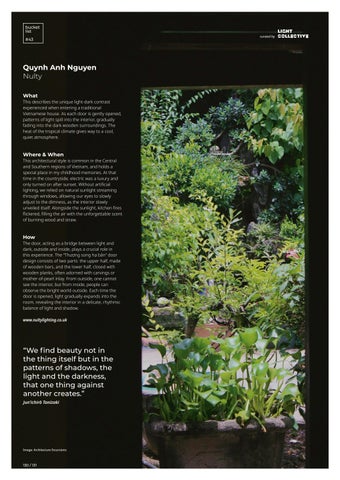
This describes the unique light-dark contrast experienced when entering a traditional Vietnamese house. As each door is gently opened, patterns of light spill into the interior, gradually fading into the dark wooden surroundings. The heat of the tropical climate gives way to a cool, quiet atmosphere.
Where & When
This architectural style is common in the Central and Southern regions of Vietnam, and holds a special place in my childhood memories. At that time in the countryside, electric was a luxury and only turned on after sunset. Without artificial lighting, we relied on natural sunlight streaming through windows, allowing our eyes to slowly adjust to the dimness, as the interior slowly unveiled itself. Alongside the sunlight, kitchen fires flickered, filling the air with the unforgettable scent of burning wood and straw.
How
The door, acting as a bridge between light and dark, outside and inside, plays a crucial role in this experience. The “Thượng song hạ bản” door design consists of two parts: the upper half, made of wooden bars, and the lower half, closed with wooden planks, often adorned with carvings or mother-of-pearl inlay. From outside, one cannot see the interior, but from inside, people can observe the bright world outside. Each time the door is opened, light gradually expands into the room, revealing the interior in a delicate, rhythmic balance of light and shadow. www.nultylighting.co.uk
“We find beauty not in the thing itself but in the patterns of shadows, the light and the darkness, that one thing against another creates.” Jun’ichirō Tanizaki
Image: Architecture Excursions
130 / 131
curated by